
Spicy Pork Duruchigi Set Meal: A Real Korean Lunch
Table of Contents
16 items
What Is Duruchigi and Why It's Not the Same as Jeyuk Bokkeum
I eat at local Korean set meal restaurants pretty often, and today I want to talk about dwaeji duruchigi baekban — a spicy stir-fried pork with kimchi set meal. Duruchigi is a Korean dish where pork and kimchi are stir-fried together, then simmered in a seasoned broth until the liquid reduces down to a thick, savory sauce. A lot of people confuse it with jeyuk bokkeum, which looks similar, but the cooking method and flavor are actually quite different.
For about $7 per person, you get the main dish plus rice, banchan (Korean side dishes), and ssam vegetables — the whole spread. When you want a cheap but satisfying meal in Korea, there's really nothing better than these neighborhood baekban restaurants (Korean set meal spots). Following up on the jeyuk bokkeum set meal I covered last time, today I'm showing you a duruchigi set meal — same protein, but with the added tang of kimchi making it a completely different experience.
What Is Duruchigi?
The word "duru" means "all around" or "evenly" in Korean, and the name comes from the idea of mixing various ingredients together. To make it, you first stir-fry pork, then add a broth seasoned with gochujang (red pepper paste) and let it simmer down until the liquid is just barely covering everything. Vegetables like kimchi, onion, green onion, and bean sprouts go in with the meat, and when you use well-fermented kimchi, the tanginess blends with the spicy seasoning to create this really deep, layered flavor. Depending on the region, some versions include tofu, and there are even seafood variations.
In English, it's often called Korean stir-fried pork with kimchi, or spicy pork and kimchi stew. "Dwaeji" (돼지) means pork, and "duruchigi" (두루치기) roughly translates to "stir-fry and simmer."
Duruchigi vs. Jeyuk Bokkeum — What's the Difference?
They look similar, but there's a key difference. Jeyuk bokkeum is pork stir-fried in gochujang sauce — that's it. It's cooked dry with no liquid, so the flavor is sweet-spicy and intense. Duruchigi, on the other hand, adds an extra step: after stir-frying the meat, you pour in seasoned broth and let everything simmer. So there's always a bit of sauce pooled at the bottom, and with the kimchi mixed in, the taste becomes more tangy and sharp — almost soupy-spicy rather than dry-spicy.
Put simply, jeyuk bokkeum is "stir-fry." Duruchigi is "stir-fry + simmer." Same pork, very different directions.
A Tiny Restaurant Hidden in a Residential Alley
The place I went to this time isn't a chain — it's a small, humble restaurant tucked into a residential neighborhood. You have to turn off the main road and walk into a narrow alley between houses to find it, and the sign is so easy to miss that you'd walk right past it if you didn't know. The menu is handwritten on the wall, there are only a few tables, and the owner cooks everything and does all the serving herself. It's small and worn down, but honestly, that's what makes it charming. I go to places like this all the time — nothing fancy whatsoever, but the food they put out is genuinely good.
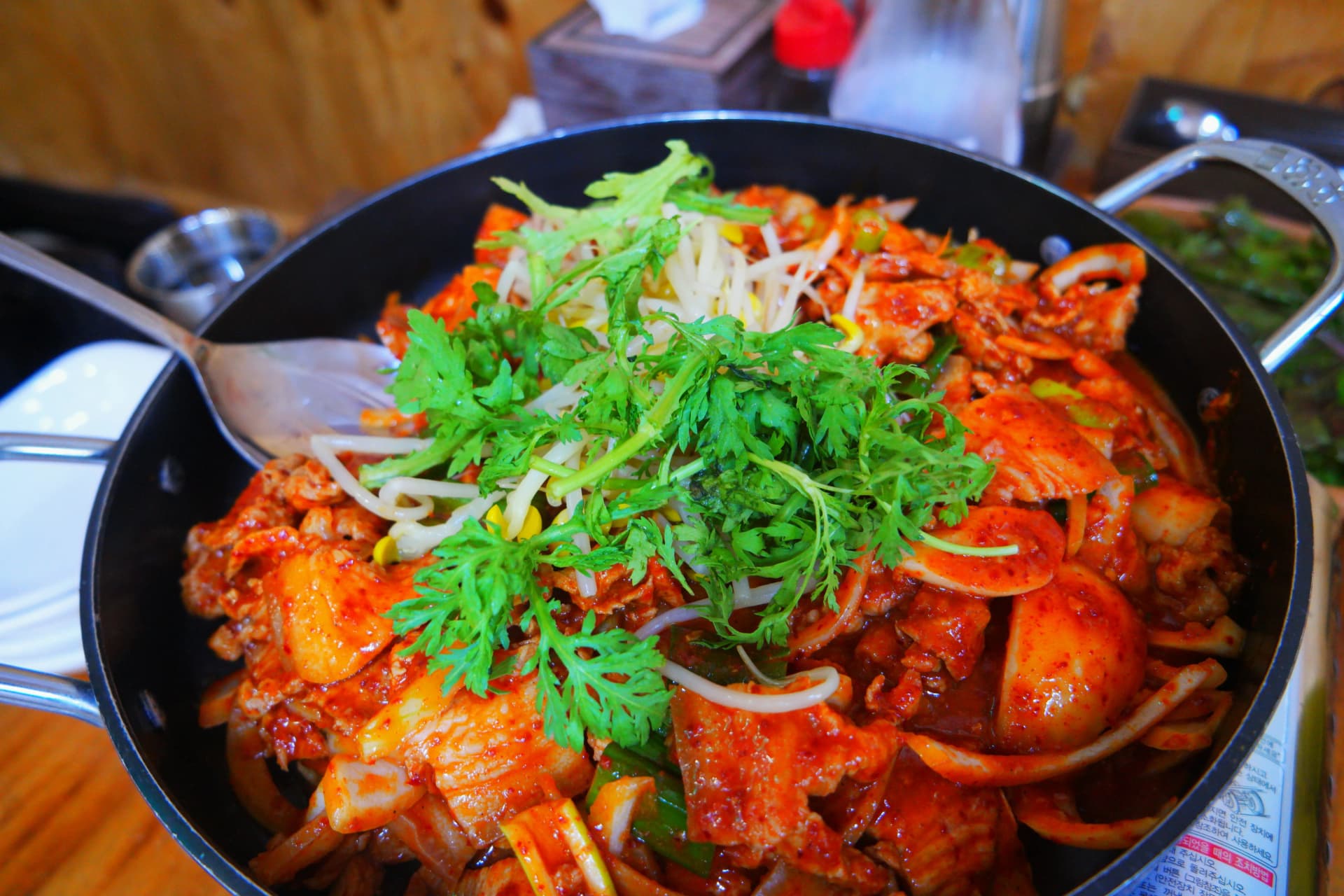
The moment it came out, the owner carried the whole pot to the table, and the sheer amount of food caught me off guard. Crown daisy greens (ssukgat) and bean sprouts were heaped on top, and underneath all that, pork and kimchi were coated in bright red seasoning. The burner wasn't even on yet, but the smell of chili flakes and kimchi had already spread across the table. I told my wife, "It's similar to the jeyuk bokkeum we had last time, but this one has kimchi in it." She's from a country where spicy food is pretty common, so I wasn't worried about the heat. Even before cooking, the pot looked packed enough to easily feed us both.
Side Dish Lineup — What Came Out Today
What Is Baekban?
Baekban is a Korean set meal built around rice, served with multiple side dishes and soup. It's the most common way Koreans eat lunch at neighborhood restaurants. You won't find it in most tourist guides, but if you want to eat like a local, find a baekban restaurant. The side dishes change depending on the restaurant and are always free to refill. For about $6–$7 per person, you get a main dish plus rice, soup, side dishes, and lettuce wraps — everything included.
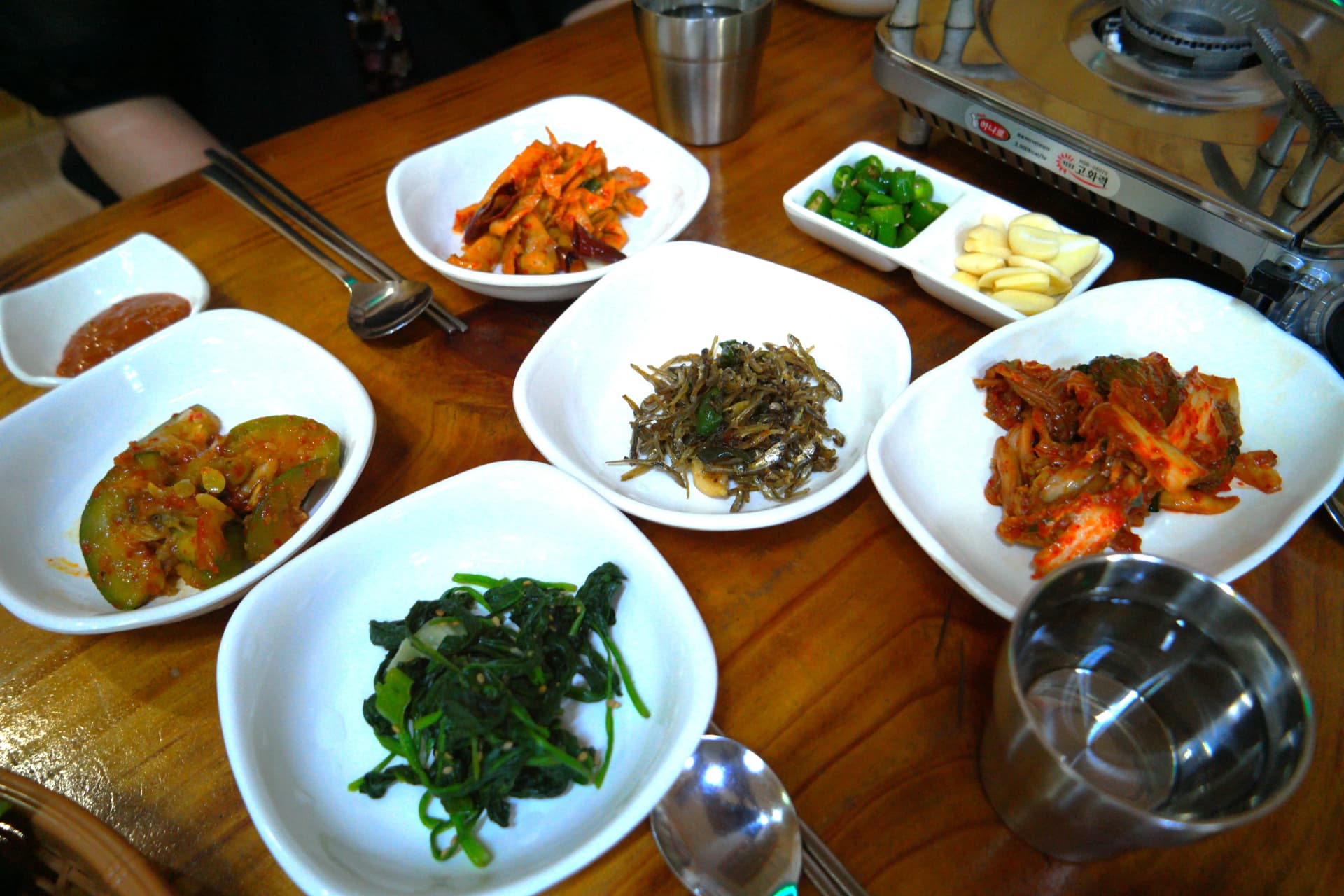
Five side dishes came out today. Sigumchi namul (seasoned spinach), myeolchi bokkeum (stir-fried dried anchovies), baechu kimchi (napa cabbage kimchi), musaengchae (spicy radish salad), and aehobak bokkeum (stir-fried zucchini). Plus ssamjang (wrap sauce), garlic, and chili peppers on the side. Compared to the jeyuk bokkeum set meal place I went to last time, there were fewer side dishes here, but this restaurant clearly puts its energy into the main dish instead. Honestly, I'd rather have a place with simple banchan and a killer main than somewhere that lays out ten side dishes but the main is underwhelming.
Seasoned Spinach, Zucchini, and Stir-Fried Anchovies
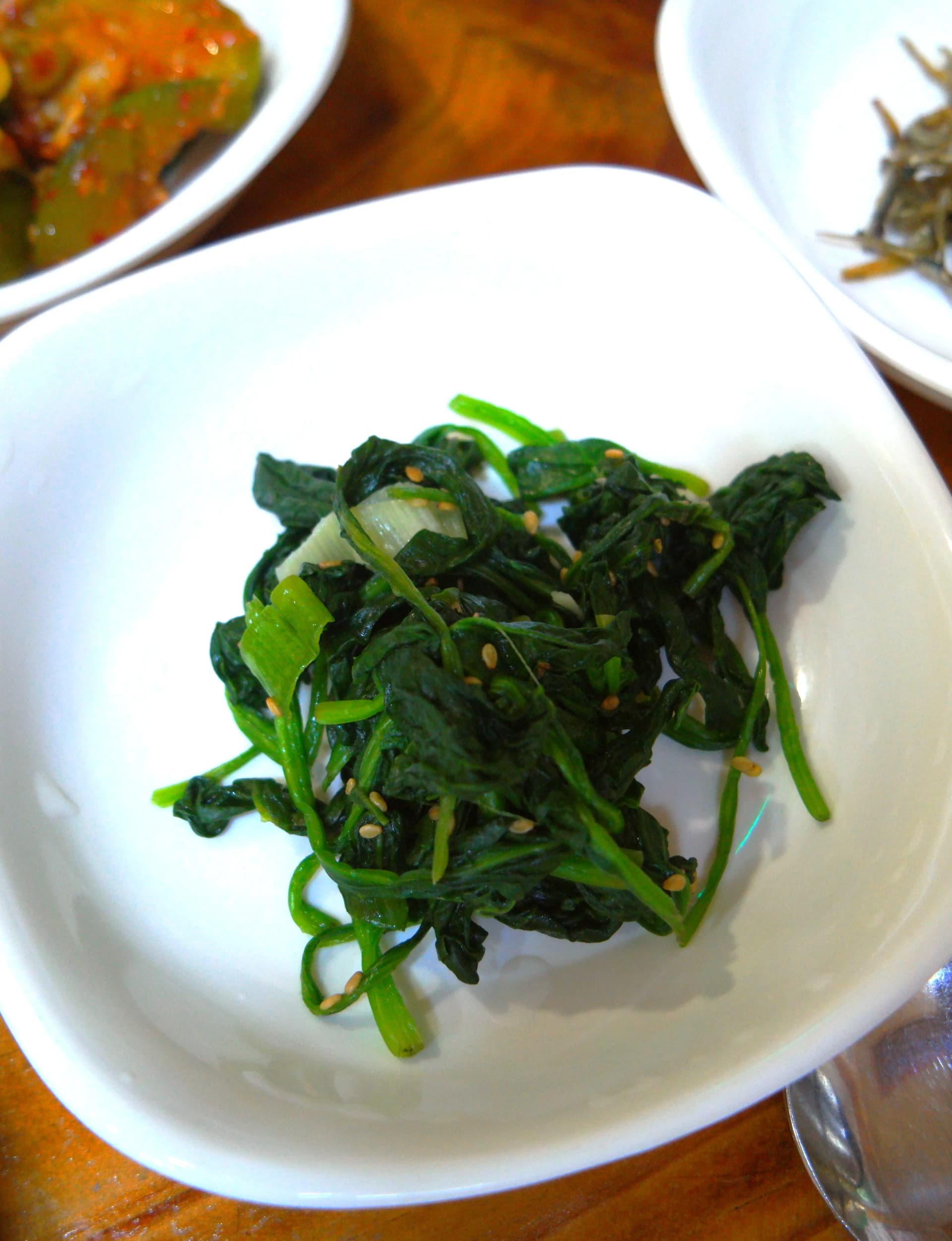
Sigumchi namul (seasoned spinach). Blanched spinach tossed with sesame oil and sesame seeds — this is probably the most basic Korean side dish there is. I've been to dozens of baekban restaurants and I can barely think of one that didn't serve this. It works as a palate cleanser between all the spicy dishes, so it's nice to have around.
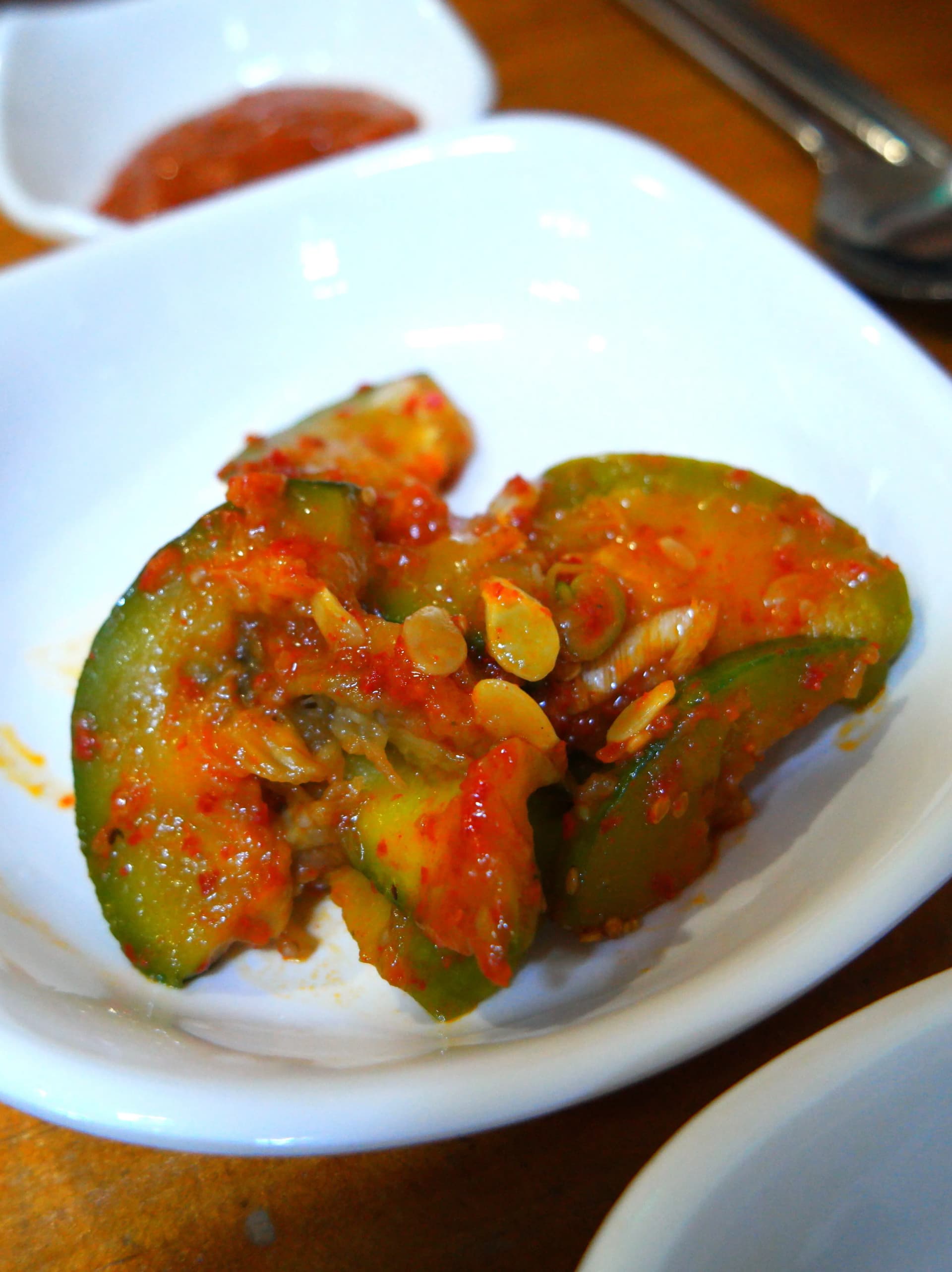
Aehobak muchim (spicy zucchini side dish). Sliced zucchini dressed in gochugaru (red pepper flake) seasoning. It's got a soft, slightly mushy texture. Better to eat it on top of rice and mix it in rather than eating it on its own.
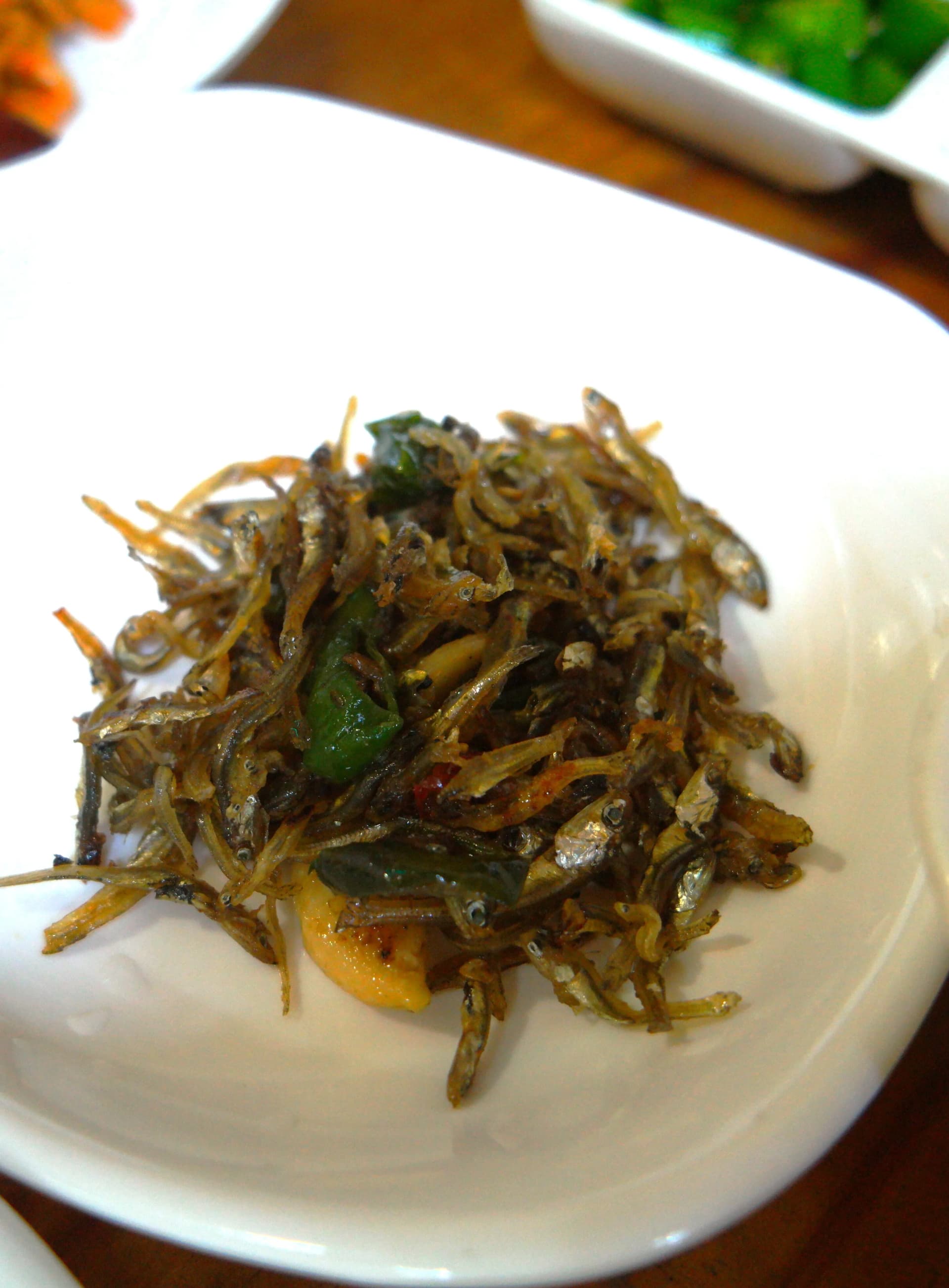
Myeolchi bokkeum (stir-fried dried anchovies). This one shows up at practically every baekban restaurant so there's not much to explain. Small dried anchovies stir-fried in soy sauce and corn syrup with peppers and peanuts mixed in. Crunchy, nutty, and perfect for snacking on between bites of rice.
Kimchi, Lettuce Wraps, and Stir-Fried Fish Cake
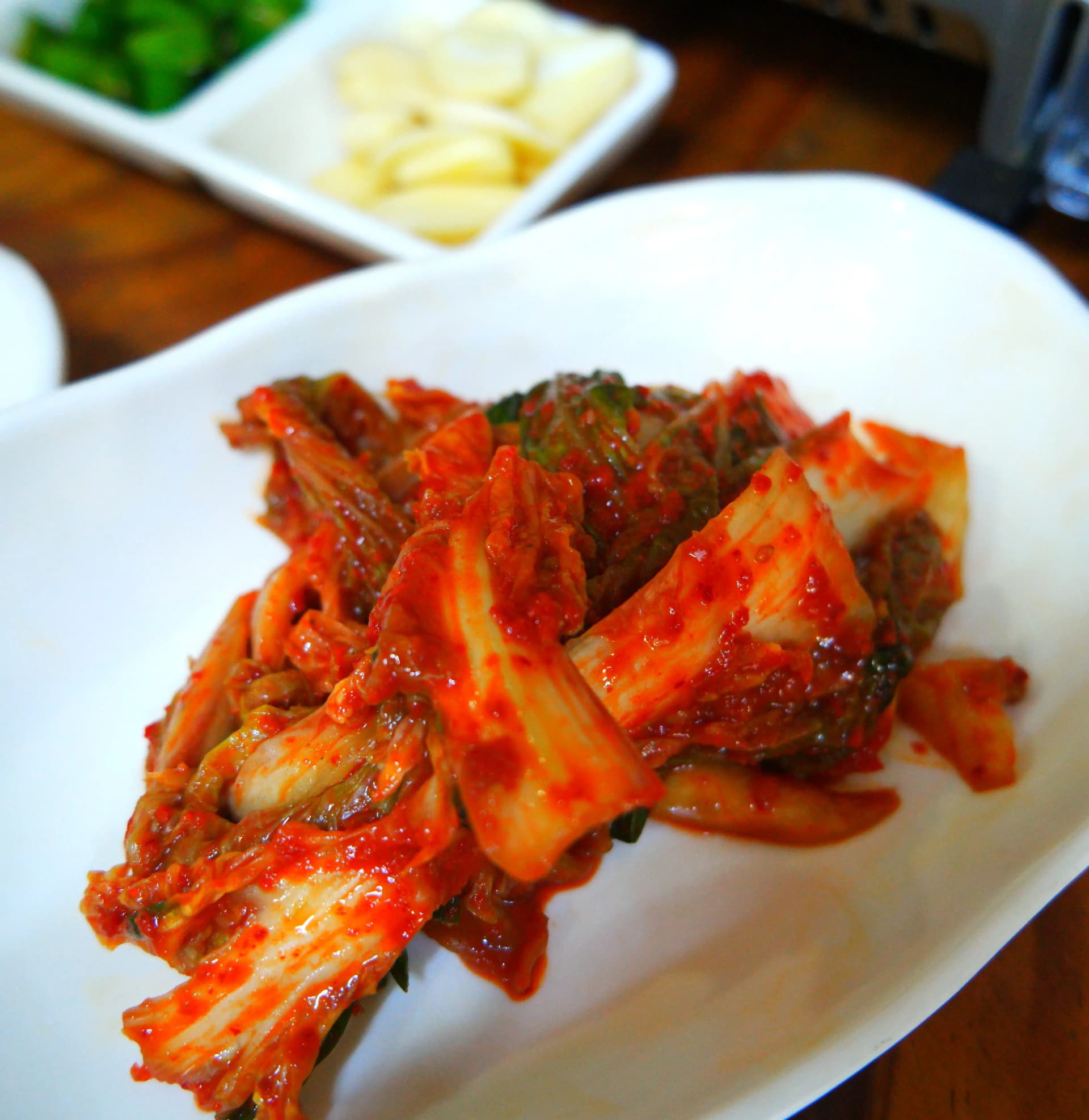
Baechu kimchi (napa cabbage kimchi). The photo didn't come out great, but it looked better in person. It was moderately fermented — spicy with just a hint of sourness, and not too salty, so it was easy to eat. I already talked about kimchi in detail in my jeyuk bokkeum set meal post, so I'll skip the deep dive here.
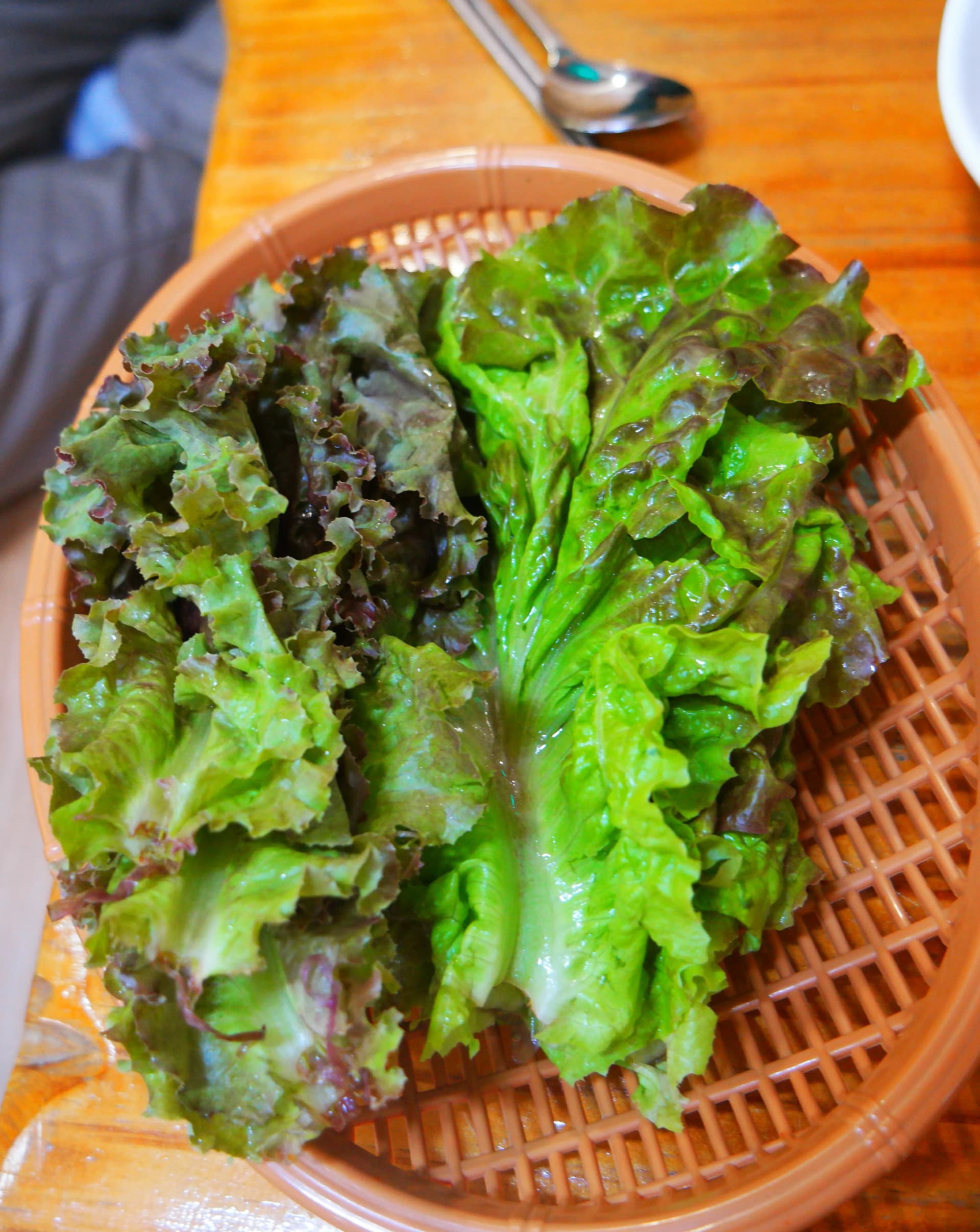
A basket of ssam chaeso (lettuce for wraps) came out too. It was a mix of green and red leaf lettuce — once the duruchigi finishes cooking, you use these to wrap up the meat. That's why the garlic and ssamjang came separately with the banchan earlier. In Korea, whenever a meat dish is served, lettuce wraps almost always come with it.
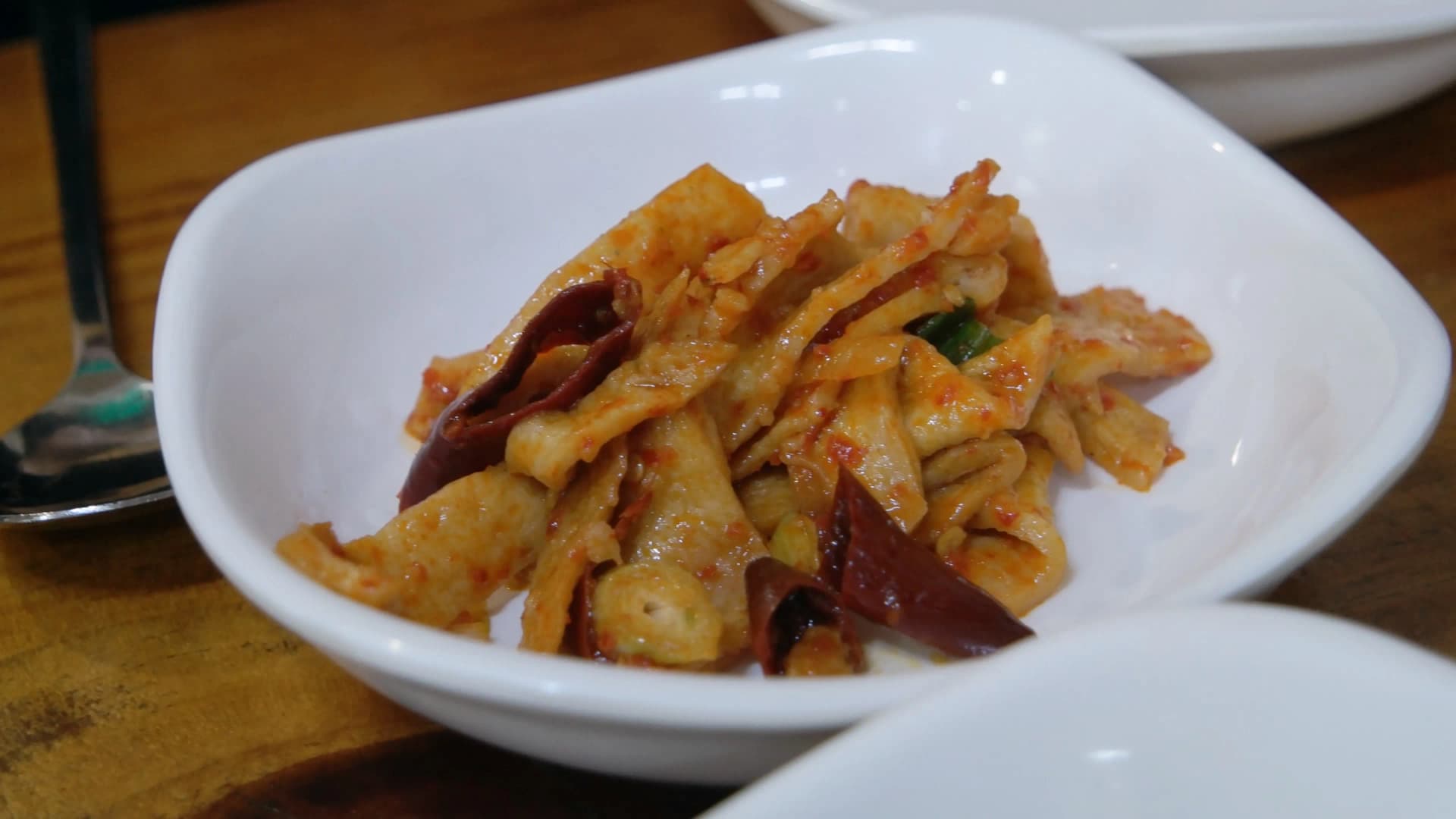
Eomuk bokkeum (stir-fried fish cake). This one wasn't visible in the full banchan spread photo — it came out separately. Chewy fish cake stir-fried with peppers in a soy-based sauce, slightly spicy. It's a pretty common side dish at Korean set meal restaurants.
How Do You Eat Banchan at a Korean Set Meal Restaurant?
At Korean baekban restaurants, all the side dishes are included in the price of your main dish. You don't pay extra. If you run out, refills are free too. Some restaurants have a self-service counter, and at others you just ask the owner and they'll bring more over.
The banchan lineup changes every day depending on the restaurant. Some places lean heavy on vegetable namul dishes, while others put out more fermented sides like jeotgal (salted seafood) or jangajji (pickled vegetables). There's no fixed menu, so part of the fun is seeing what shows up that day. One tip though — just take what you'll actually eat. You can always go back for more if you need it.
Pork Duruchigi Before Lighting the Burner
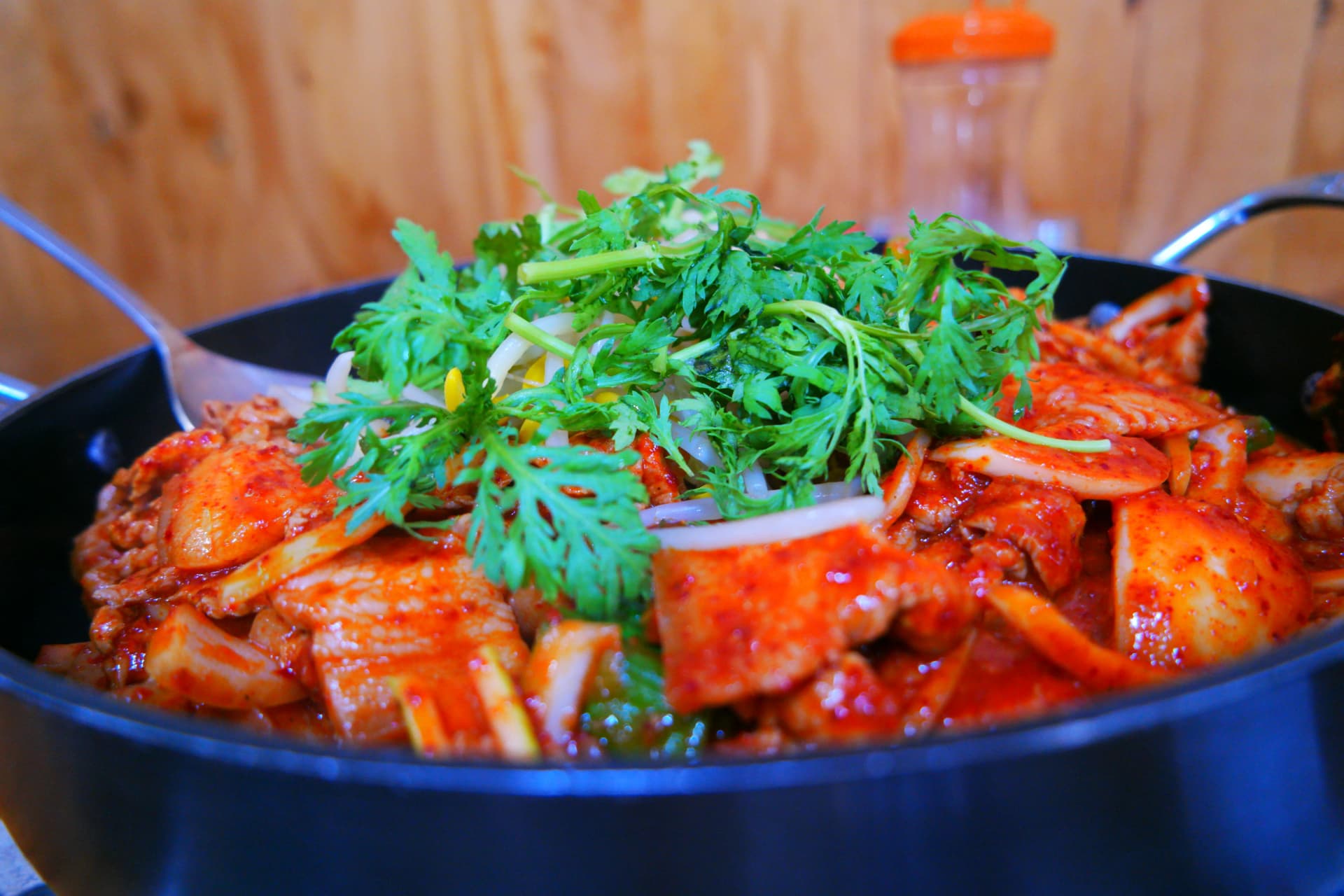
Looking at the duruchigi up close, you can see pieces of kimchi scattered between the pork, with plenty of onion and green onion packed in there too. The crown daisy greens and bean sprouts sitting on top will wilt down once the heat is on and get mixed into the seasoning. Everything — meat, kimchi, vegetables — is all in one pot, and you cook it yourself on the table burner, stirring as it goes. That's how duruchigi is meant to be eaten.
Burner On, Bubbling Away
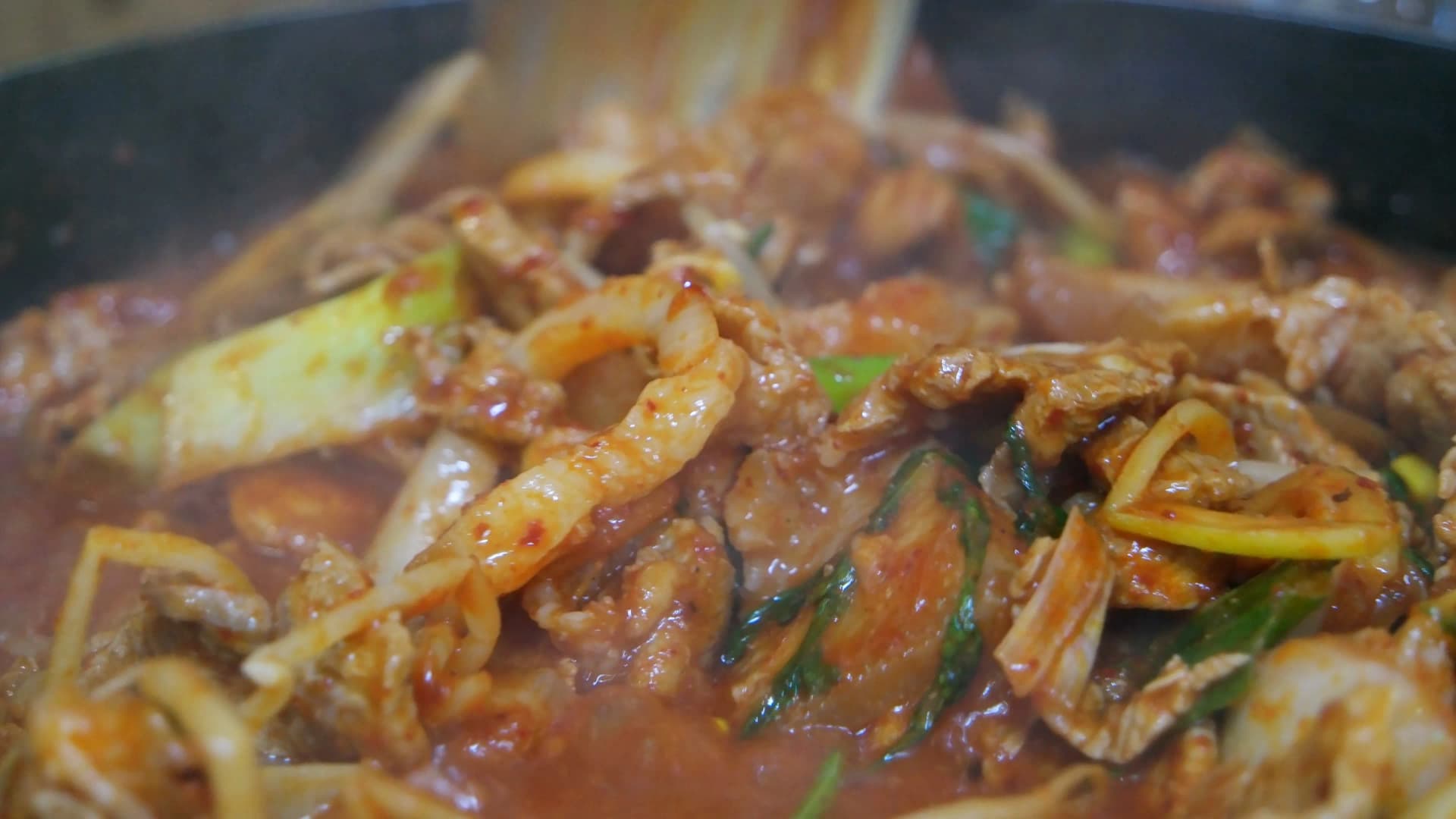
About 3–4 minutes after turning on the burner, the sauce started bubbling. The crown daisy greens and bean sprouts that had been piled high on top wilted down and sank, and the juices from the pork and kimchi had pooled into a rich, savory broth at the bottom. The smell at this point was intense — it filled the entire table. The scent of cooking kimchi mixed with sizzling pork was so strong that people at the next table were looking over. My wife had been picking at the side dishes while waiting, but once the aroma hit, she put her chopsticks down and just stared at the pot. This whole process of stirring and cooking it yourself is part of what makes duruchigi fun.
Almost Done
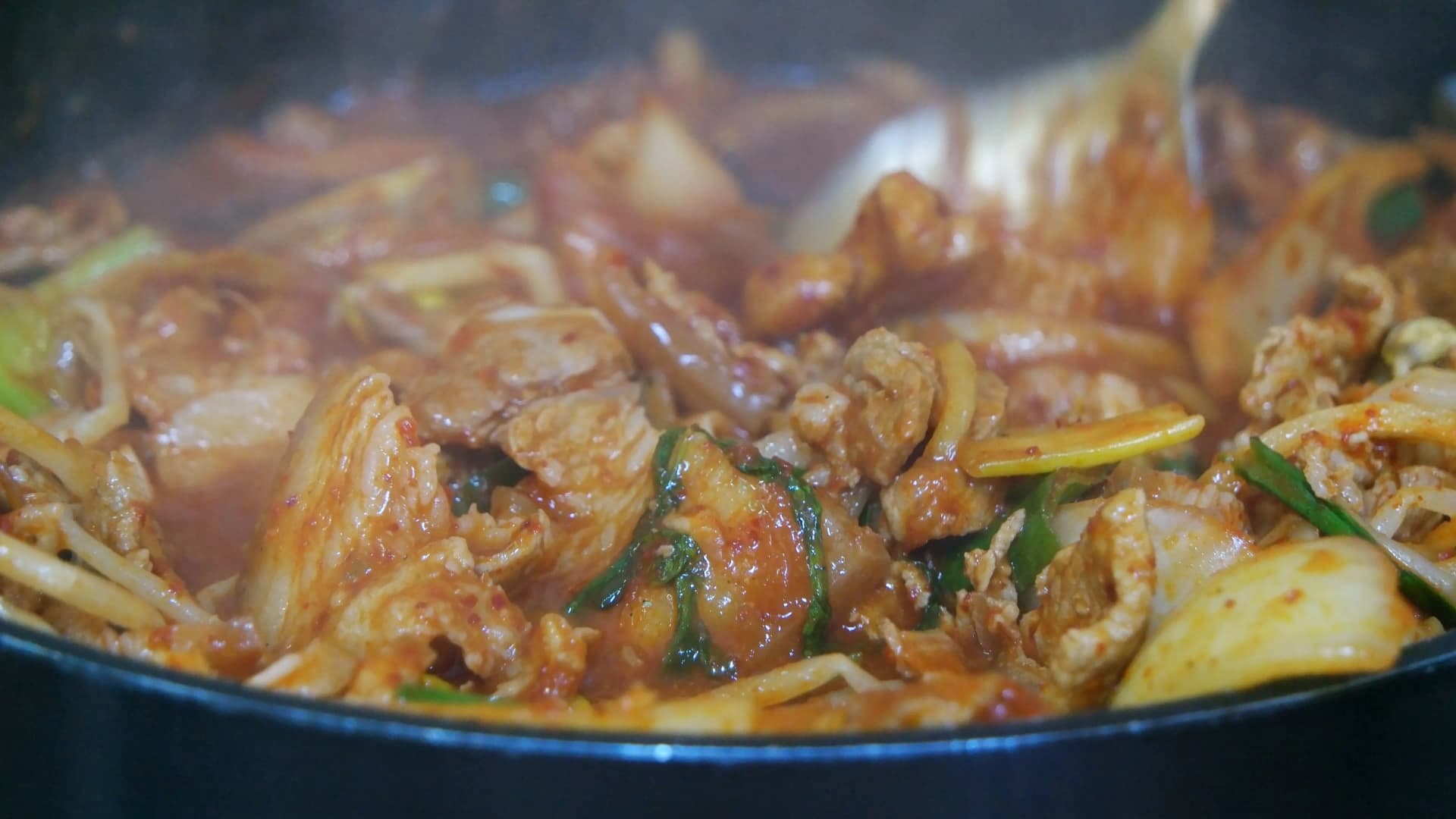
The sauce had reduced down and the pork was starting to glisten, and the kimchi had gone fully soft and turned a deeper shade of red. The bean sprouts and onion were soaking up the seasoning and just starting to stick to the bottom of the pot — and that's exactly when it's best to eat.
First Bite — How Did It Taste?
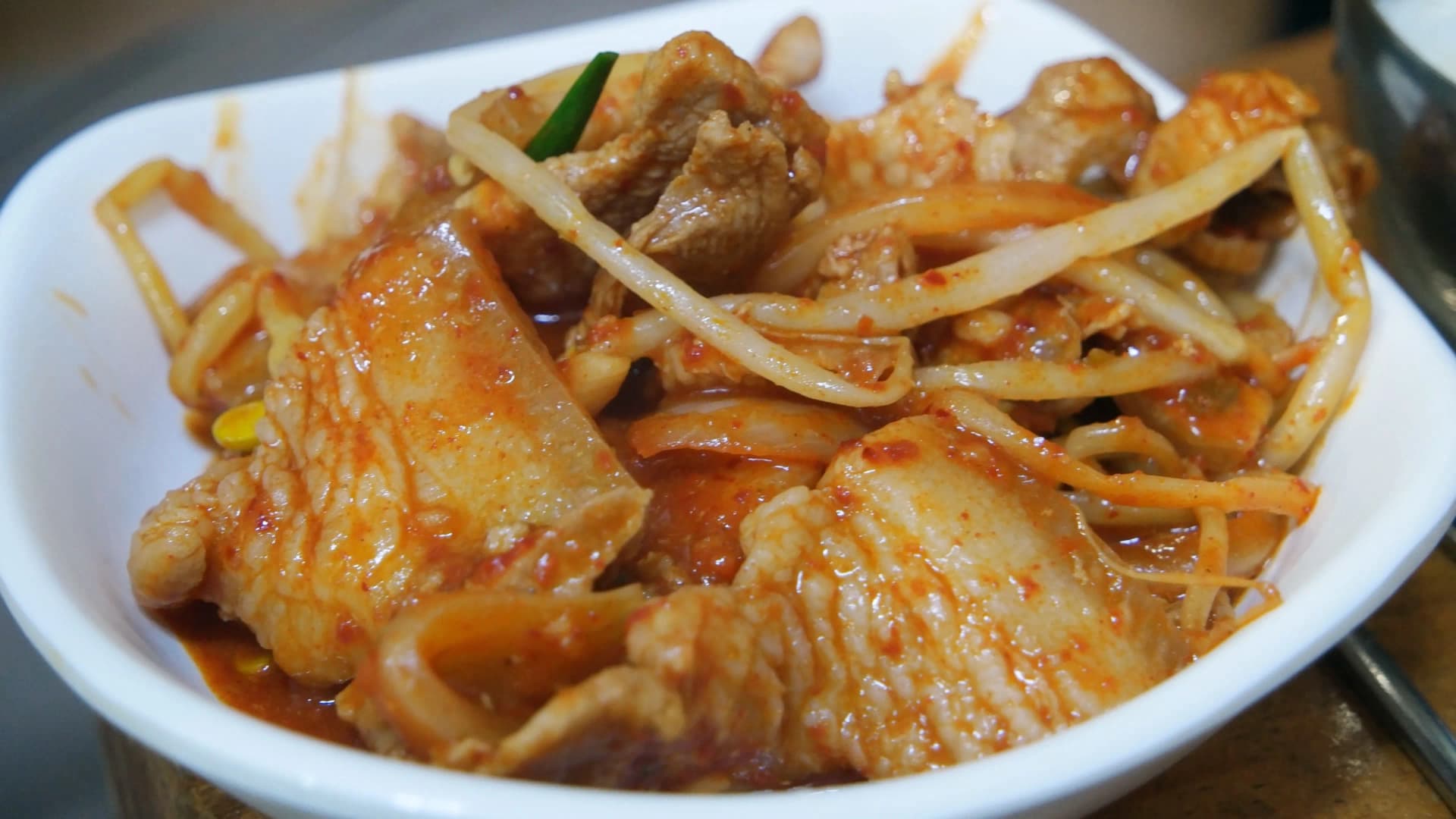
I scooped some onto a plate and took my first bite. The spice hit first, followed by this savory, almost umami-rich saltiness that lingered at the back. Not salty in a bad way — it's that deep flavor that comes from the seasoning and kimchi working together. And the pork was surprisingly tender. For a neighborhood baekban restaurant, this duruchigi was seriously well-made. The bean sprouts and kimchi had completely absorbed the sauce, so eating them together with the meat was way better than the pork on its own.
I asked my wife if it was too spicy, and she said since her country's food is pretty spicy too, this level was totally fine. After three years in Korea she's gotten pretty used to spicy food anyway. She actually said the tangy flavor from the kimchi was interesting, and that it was definitely a different taste from jeyuk bokkeum.
Can Foreigners Handle Duruchigi?
If you can handle some level of spicy food, it's absolutely worth trying. Duruchigi is on the spicier side since it has both gochujang seasoning and kimchi, but eating it with rice tones down the heat significantly. Wrapping it in lettuce also helps — the greens really cut through the spice.
If you're not confident with spicy food, you can pick a non-spicy option at the same restaurant, like grilled fish or doenjang jjigae (soybean paste stew). Baekban restaurants usually have multiple menu items, so just choose based on your spice tolerance.
Three Ways to Eat Duruchigi
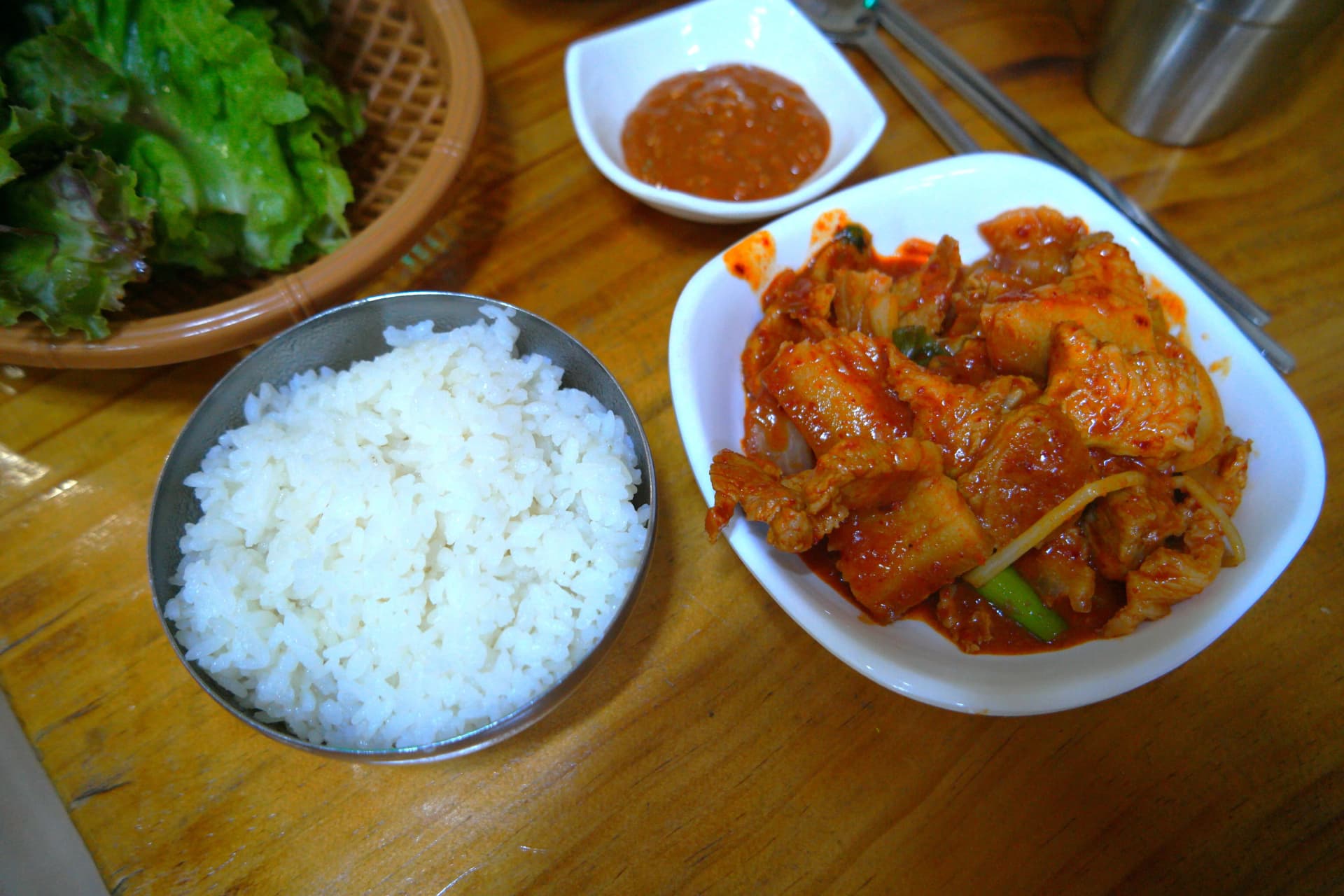
This is the full duruchigi eating setup. Rice, duruchigi, lettuce wraps, ssamjang. There are basically three ways to eat it.
First, you can pile it on top of rice and mix it all together. Scoop a generous amount of duruchigi onto your rice, drizzle some of the sauce over it, and stir it up into a seasoned rice bowl. This is the simplest way, and also the fastest way to demolish a bowl of rice.
Second, you can make ssam (lettuce wraps). Lay out a piece of lettuce, put some rice and meat on it, dab a little ssamjang on top, and pop the whole thing in your mouth in one bite. This is the most classic way to eat any meat dish in Korea.
Third, you can just pick up pieces with your chopsticks and eat them straight with rice. The meat is so well-seasoned that this alone is enough to power through a full bowl of rice in no time.
There's no right or wrong way, so just eat however feels comfortable.
Wrapping It in Lettuce (Ssam)
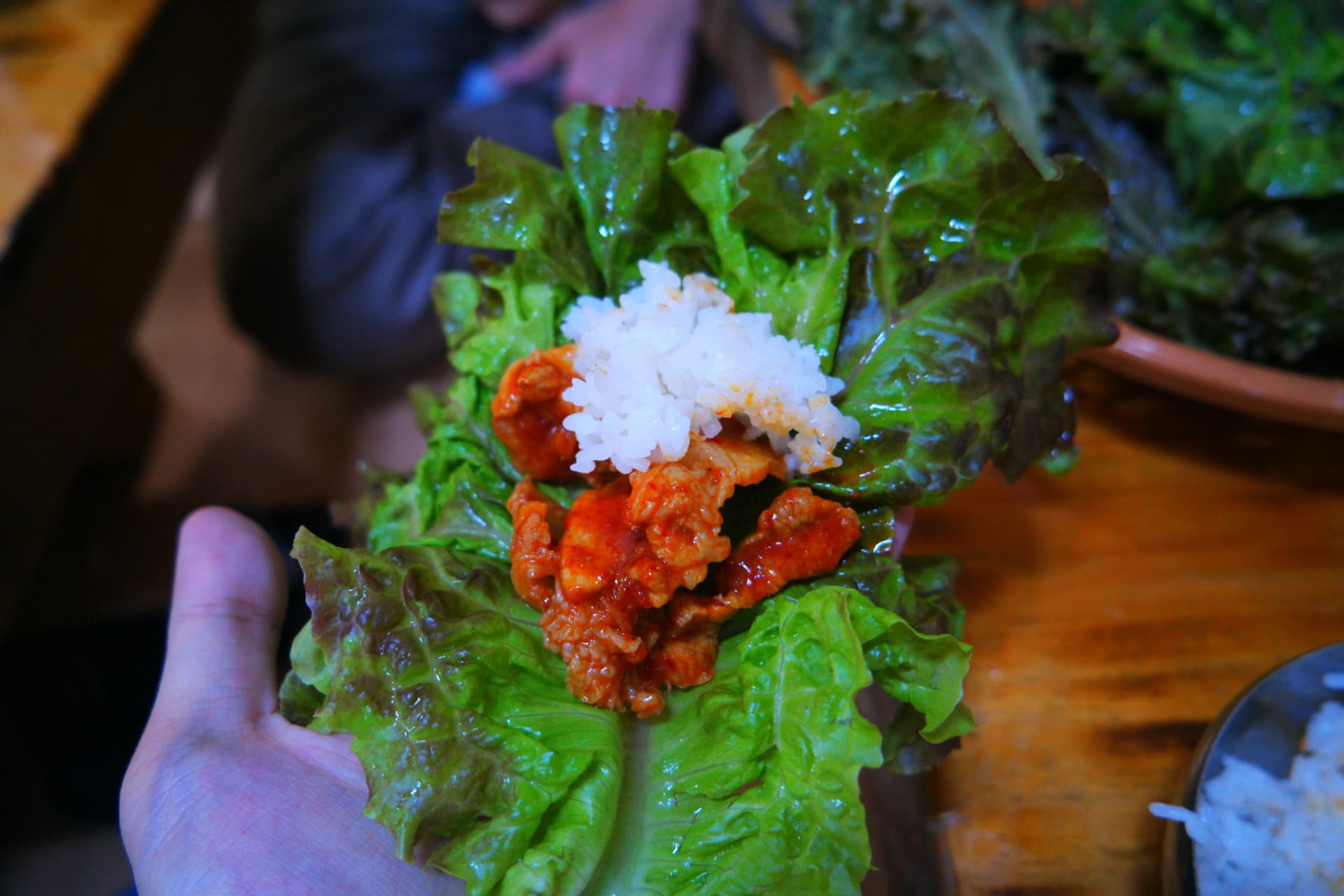
One piece of lettuce laid flat, a chunk of duruchigi placed on top, and a spoonful of rice added. Some people also add ssamjang or raw garlic, but I felt like the duruchigi seasoning was already plenty so I ate it as-is. You just fold it up and shove the whole thing in your mouth. My wife was awkward with ssam wraps at first, but after three years in Korea, she now makes them bigger than I do.
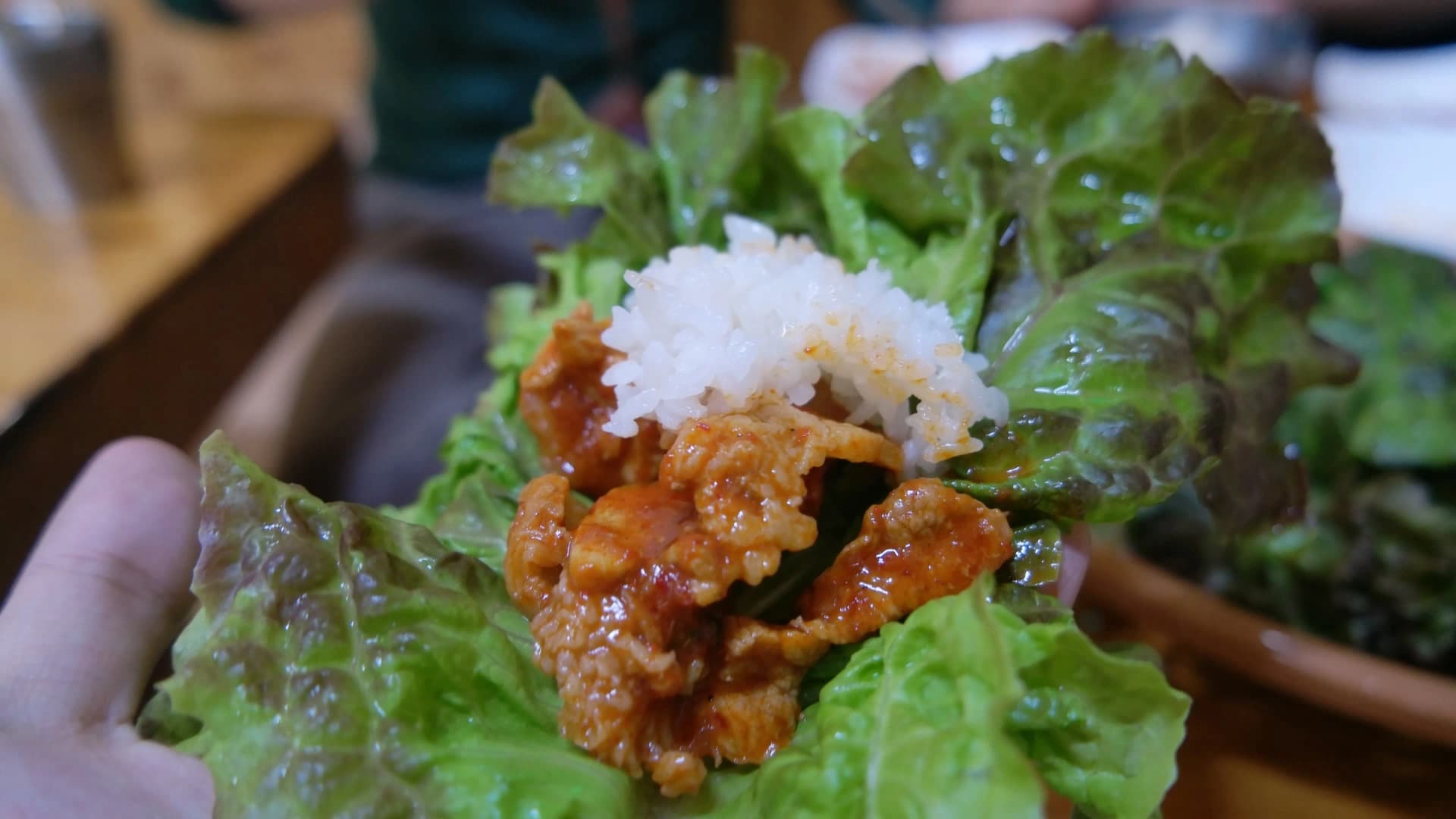
One more bite. This time I loaded on more meat. The sauce mixed with the rice and dripped down over the lettuce — it looks messy, sure, but the taste is undeniable. Making ssam isn't about wrapping it neatly. The whole point is to load it up as much as you want and stuff it in your mouth in one go.
Just Picking It Up with Chopsticks
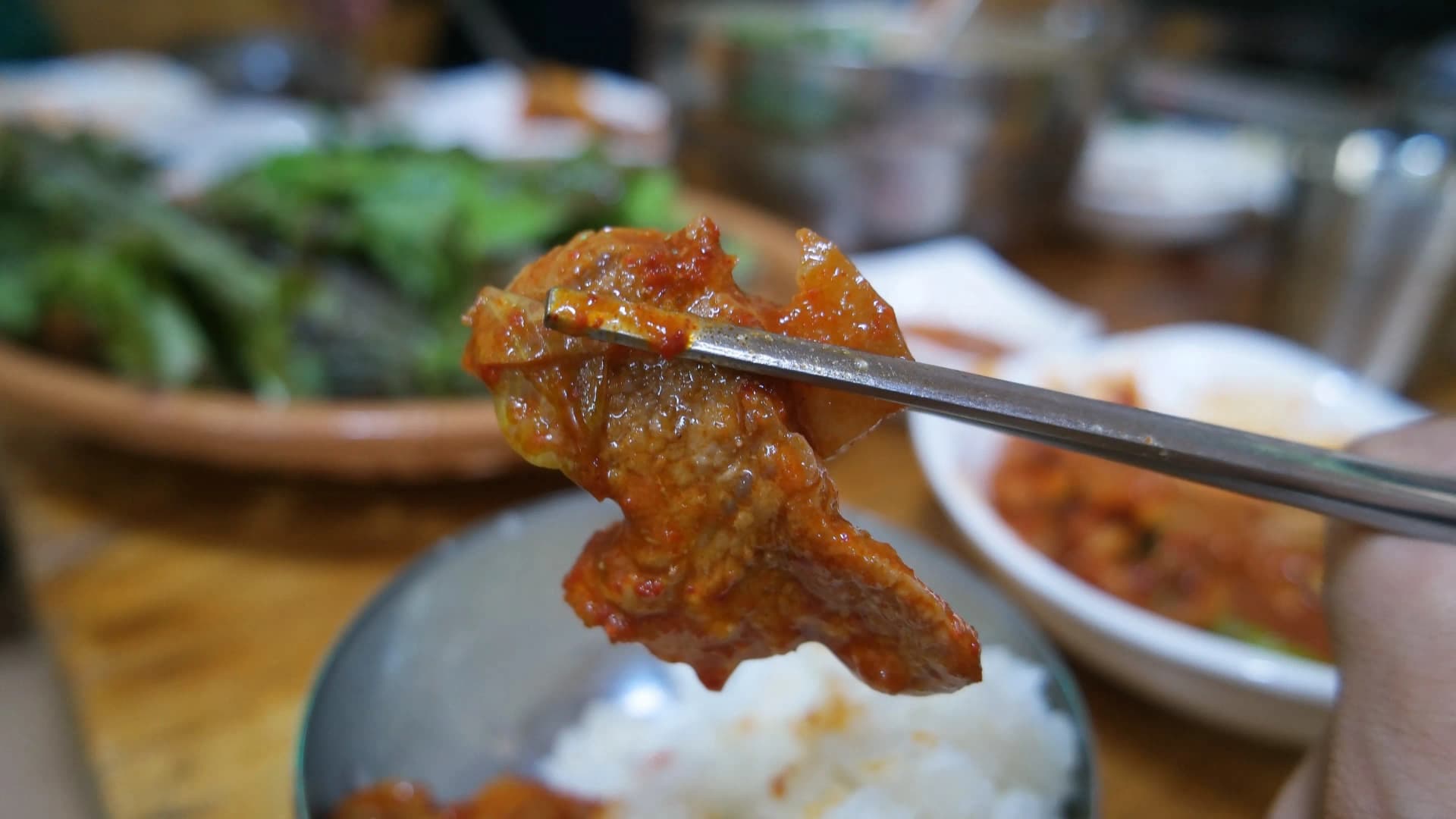
If wrapping lettuce is too much effort, just grab pieces with your chopsticks and eat them with rice like this. The seasoning has soaked in deep enough that this alone will get you through a bowl of rice before you know it.
One Bowl of Rice Wasn't Enough
At Korean restaurants, when you order a main dish, rice usually comes included. If you finish your rice and want more, you can get an extra bowl — most places charge about $0.70 for it. Some restaurants even give extra rice for free.
I'll be honest — both my wife and I ordered a second bowl of rice each. The duruchigi sauce is such a "rice thief" (a Korean expression for food so flavorful you can't stop eating rice with it) that one bowl just wasn't going to cut it. This place charged $0.70 for extra rice, and at that price for this much food, we definitely got our money's worth.
Kalguksu on the Side
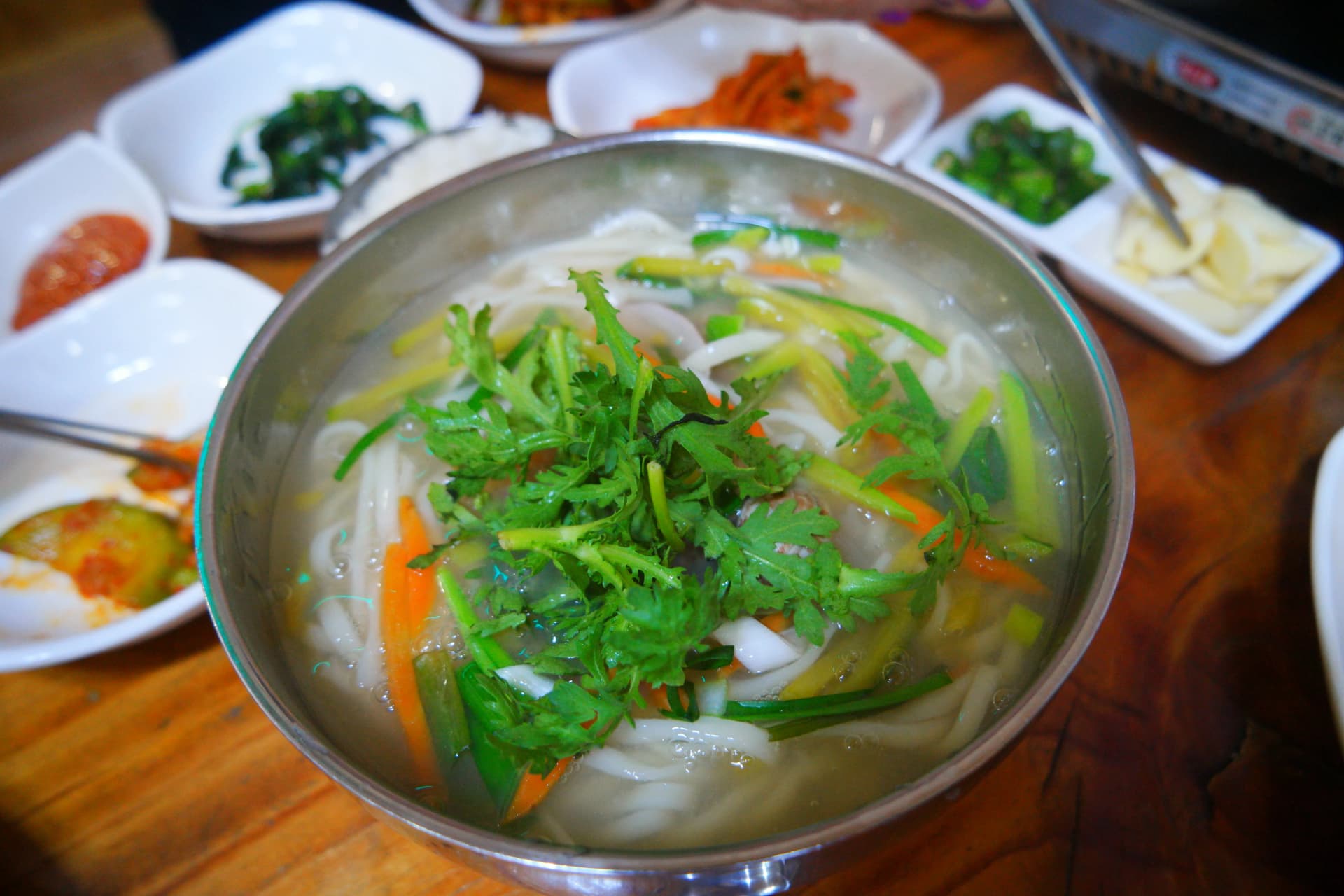
The duruchigi alone was more than enough, but something in me wanted more, so we also ordered a bowl of kalguksu (Korean knife-cut noodle soup). It came in a clear broth with crown daisy greens, carrots, and zucchini on top, and the noodles were thick and chewy. After eating all that spicy duruchigi, one spoonful of this broth just completely refreshed the palate. We ordered it as a side dish, but the portion was big enough that it could have been a meal on its own.
What Is Kalguksu?
Kalguksu is a Korean handmade noodle soup where the dough is rolled flat and cut by hand with a knife. Since the noodles aren't machine-made, the thickness is uneven, which gives them a chewy, rustic texture. The broth is typically made from anchovies and kelp, resulting in a clear, light soup, and vegetables like zucchini, carrots, and crown daisy greens are placed on top. In Korea, kalguksu is commonly ordered as a side at baekban restaurants or snack shops, and there are even restaurants that specialize exclusively in it — that's how popular it is.
"Kal" (칼) means knife in Korean, and "guksu" (국수) means noodle. So it literally translates to knife-cut noodles, which is why it's called Korean knife-cut noodle soup in English.
Kalguksu Up Close
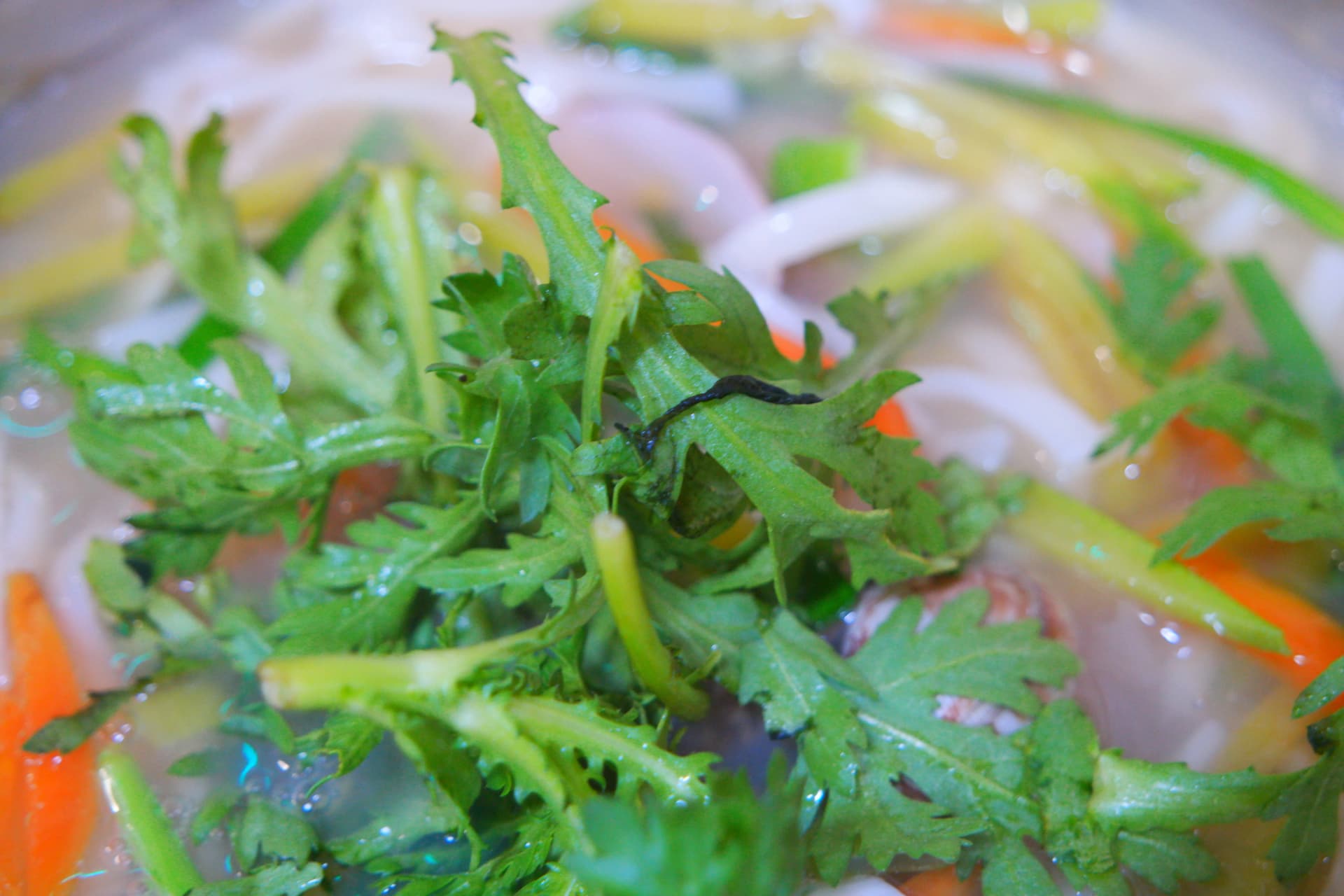
Up close, you can see the crown daisy greens floating on the surface with the noodles and vegetables underneath. This restaurant was pretty generous with the crown daisy greens on their kalguksu.
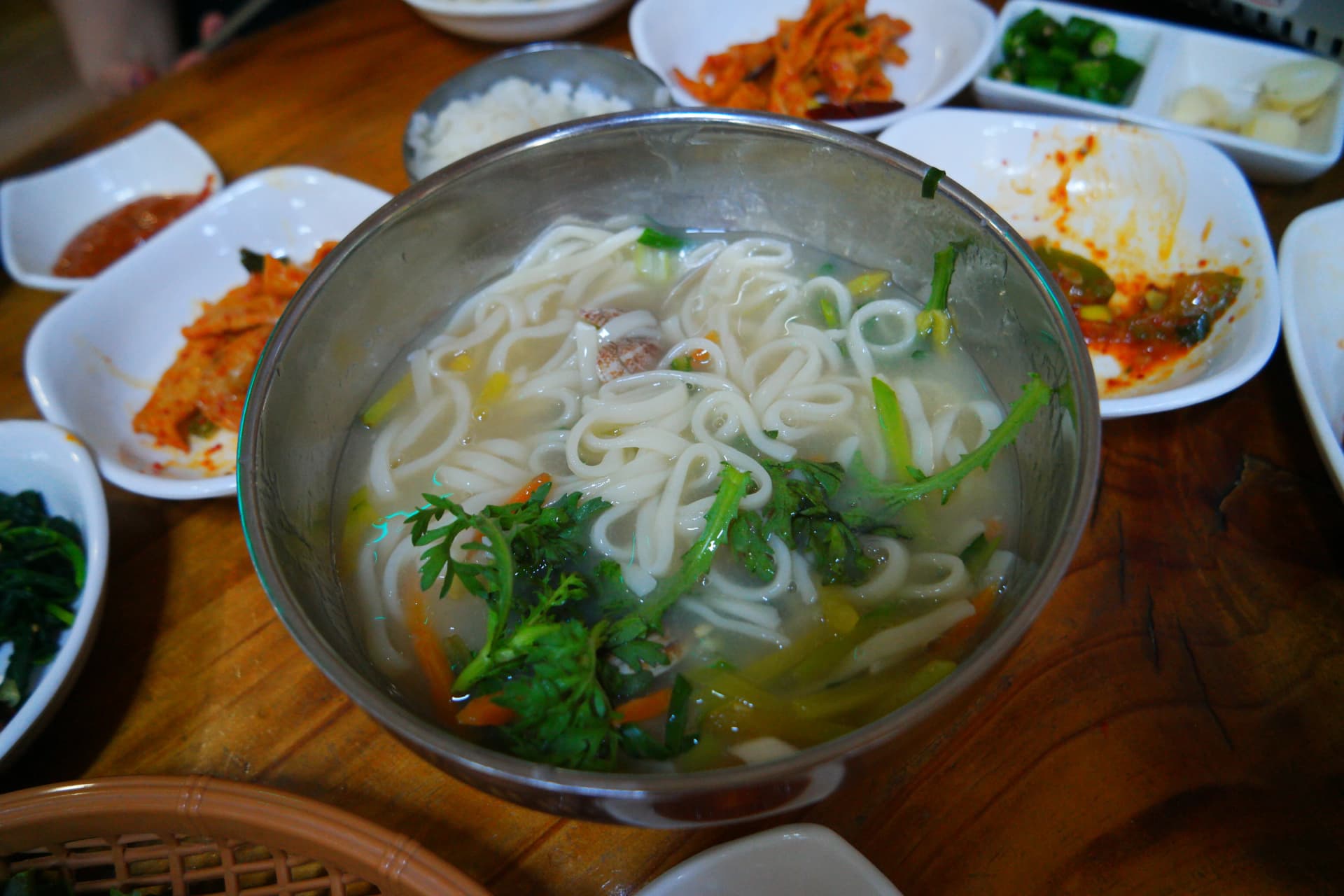
I lifted a chopstick-full and you can see how thick the noodles are. Since they're hand-cut, the widths are all different, but that's actually what makes them work so well with the broth. By this point we'd almost finished the duruchigi, and even though I was pretty full, the broth was light enough that I just kept going.
All This Food for This Price
Pork Duruchigi Set Meal — Price Breakdown
A typical banchan-focused baekban set meal runs about $6 per person, and when you order duruchigi as the main like we did today, it's about $7 per person. For two people, that's roughly $14 total, and you get the main dish, side dishes, rice, and lettuce wraps all included.
Extra rice is usually about $0.70, and some places offer it for free. Banchan refills are always free.
If you're traveling in Korea and watching your meal budget, look for neighborhood baekban restaurants like this. They're way cheaper than tourist-area restaurants, and you get to experience the exact same meal that Korean people eat every single day.
Between the two of us, we had the duruchigi set meal, added a kalguksu, and each got an extra bowl of rice — the total came to about $18. Ordering the kalguksu on top was a bit greedy, but even without it, the duruchigi set meal with an extra rice is plenty filling.
There's nothing fancy about any of this, but this is what real Korean food looks like at a neighborhood restaurant. Not food packaged for tourists, but the actual meal that Korean people sit down and eat for lunch every single day. If you're traveling in Korea, take at least one meal to step off the main road and duck into a baekban restaurant in some alley. Just look at the menu on the wall, pick something, and the side dishes will come out on their own — refills are free. There's nothing to worry about, even if it's your first time.
Next time, I'll be back with another baekban menu to show you.
This post was originally published on https://hi-jsb.blog.