
14 items
I was cleaning out old photos on my computer when one stopped me in my tracks. Sogopchang nakji bokkeum — spicy octopus and beef intestine stir-fry. It must have been around fall 2015. I can't remember the exact date, but the file timestamp puts it right around then. In the photo, small octopus and beef intestine are tangled together in a blazing red sauce, and the second I saw it, the flavor came flooding back. If you've ever traveled in Korea, you've probably tried tteokbokki or fried chicken at least once. But there are spicy Korean dishes like sogopchang nakji bokkeum that most visitors never get the chance to try. Even for me — someone who grew up eating Korean food my whole life — this isn't something I have often. But once you eat it, it haunts you for weeks. So I dug the photos out.
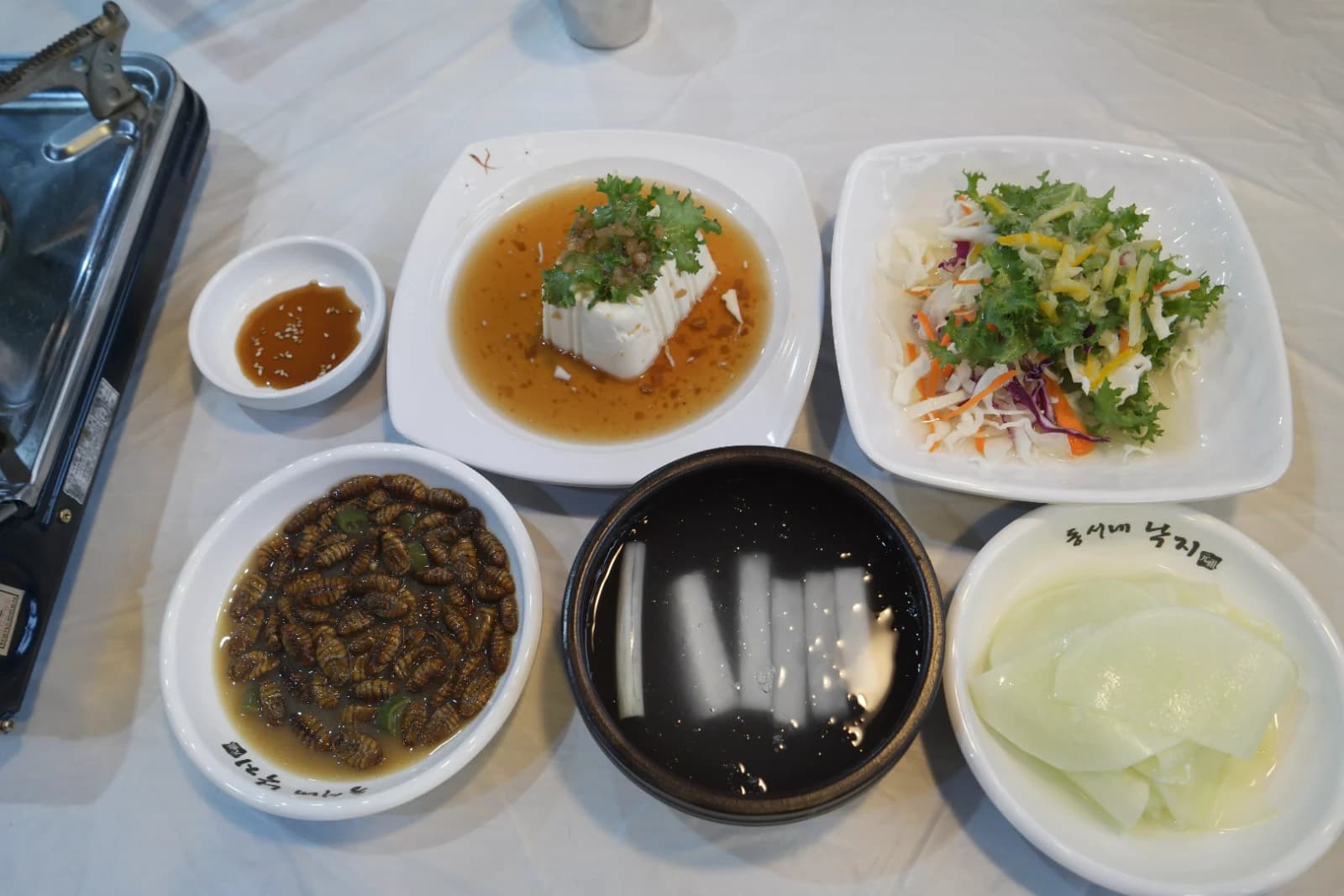
Before the main dish arrived, the side dishes — called banchan — were laid out first. Five or six plates covered the table, and when you actually look at each one, there's some pretty interesting stuff. Printed at the bottom of the plates was "Dongseone Nakji," the name of the restaurant we visited that day in Daejeon, a major city in central South Korea. That particular location has since closed, but I still wanted to write about this meal.
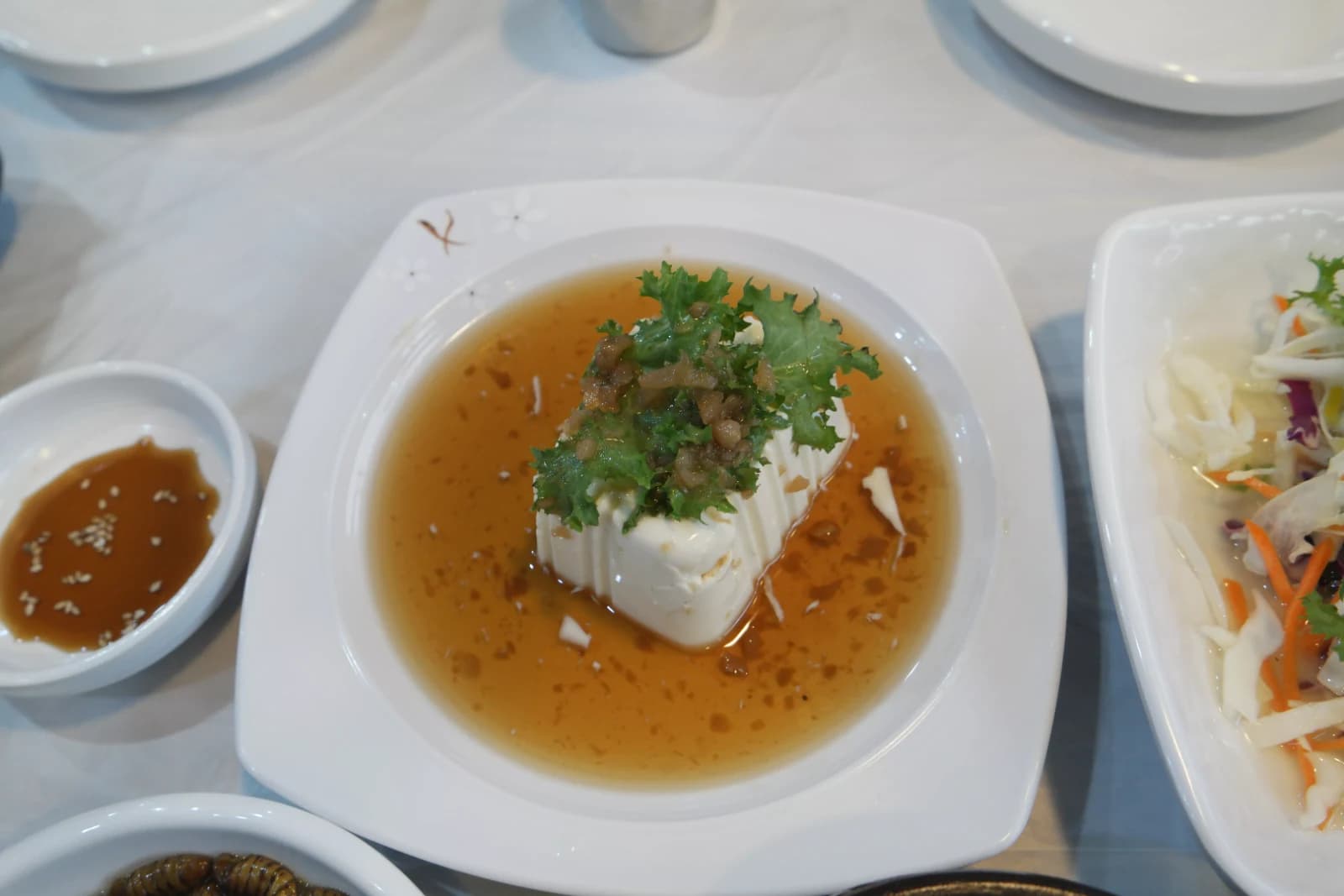
First up, silken tofu. This is a much softer variety of tofu than the firm kind most Americans know — it had scallion threads and seasoning on top, sitting in a shallow pool of soy-based sauce. Scoop it up with a spoon and it practically melts like pudding. Later on, when the spicy stir-fry was scorching my mouth, this was the thing that brought me back from the edge.
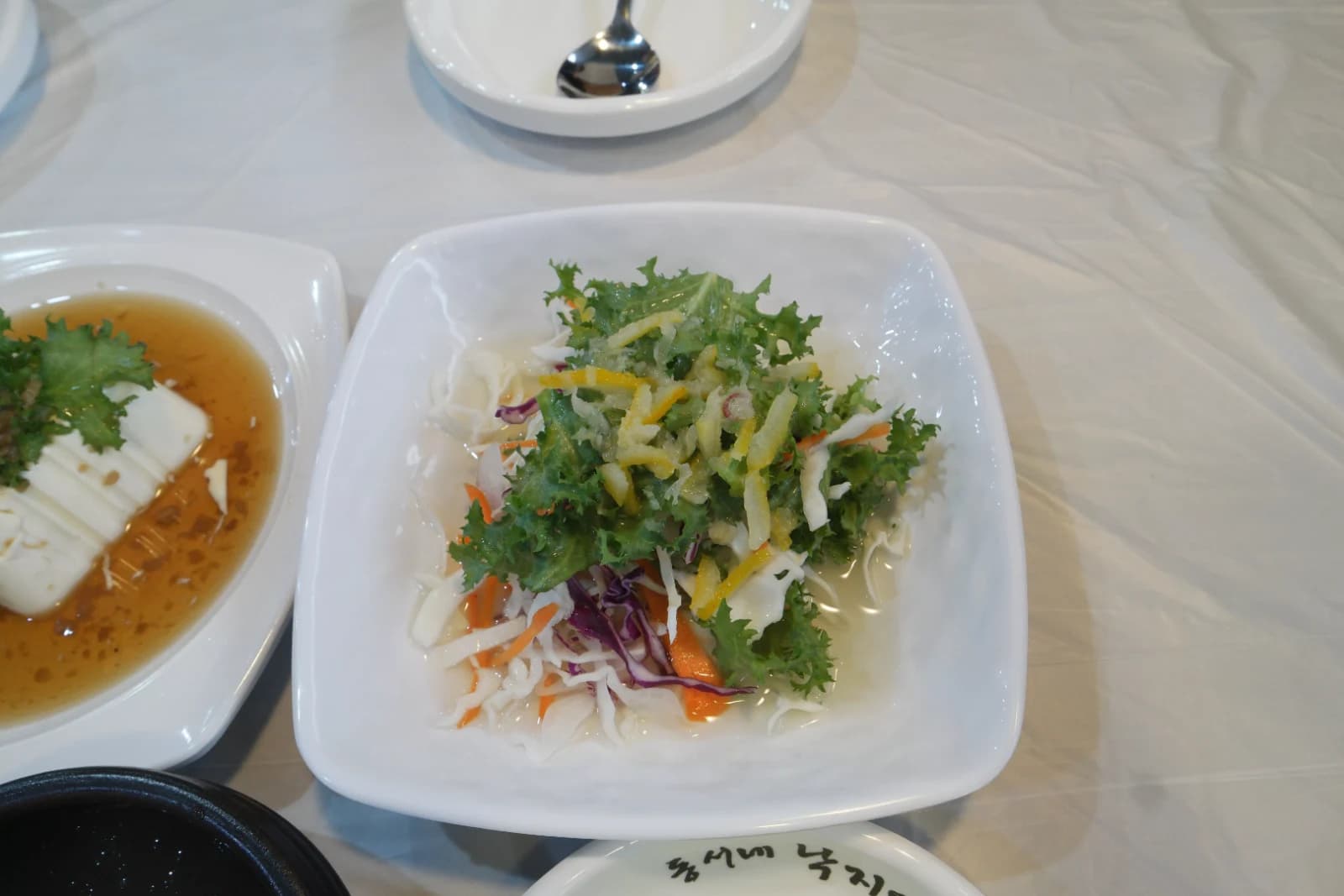
There was a salad too — red cabbage, carrots, bell pepper, and lettuce leaves. No dressing on the side, and eating it plain was pretty underwhelming. Honestly, this one could've been left off the table and I wouldn't have missed it.
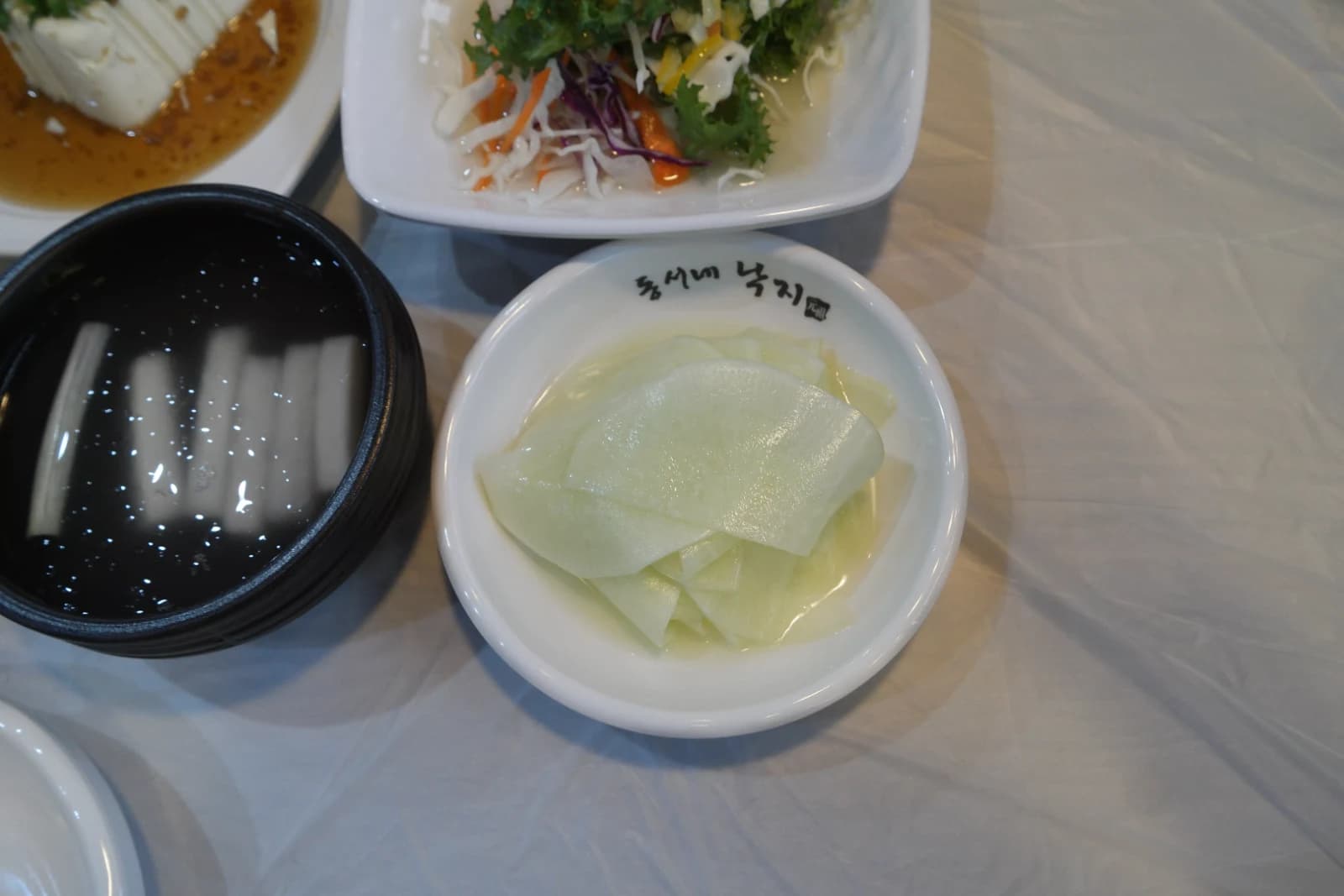
This one is chomuchim — radish sliced paper-thin and pickled in vinegar. The slices were practically translucent. One bite and the sharp tang of vinegar hits you first, followed by the cool, clean taste of the radish. When you're battling through something seriously spicy, having this on the side makes a real difference.
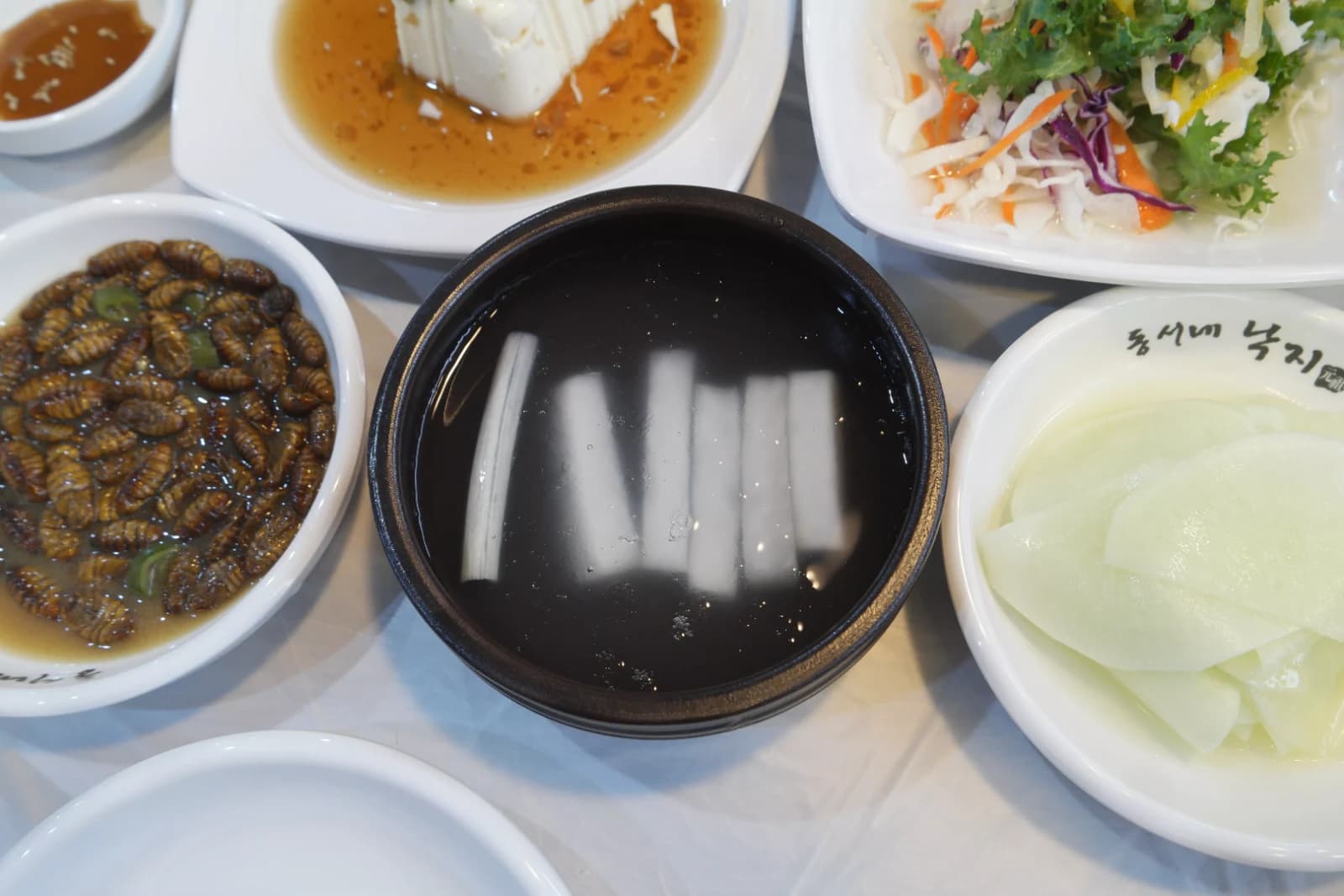
In the center sat a dark bowl of dongchimi — a type of water kimchi made by fermenting radish in salted brine. The broth is clear and ice-cold, with long sticks of radish floating inside. With fiery dishes like sogopchang nakji bokkeum, this kind of cold, brothy side dish almost always comes standard. Take one sip of that chilled liquid between bites of the spicy stir-fry, and it completely resets your palate.
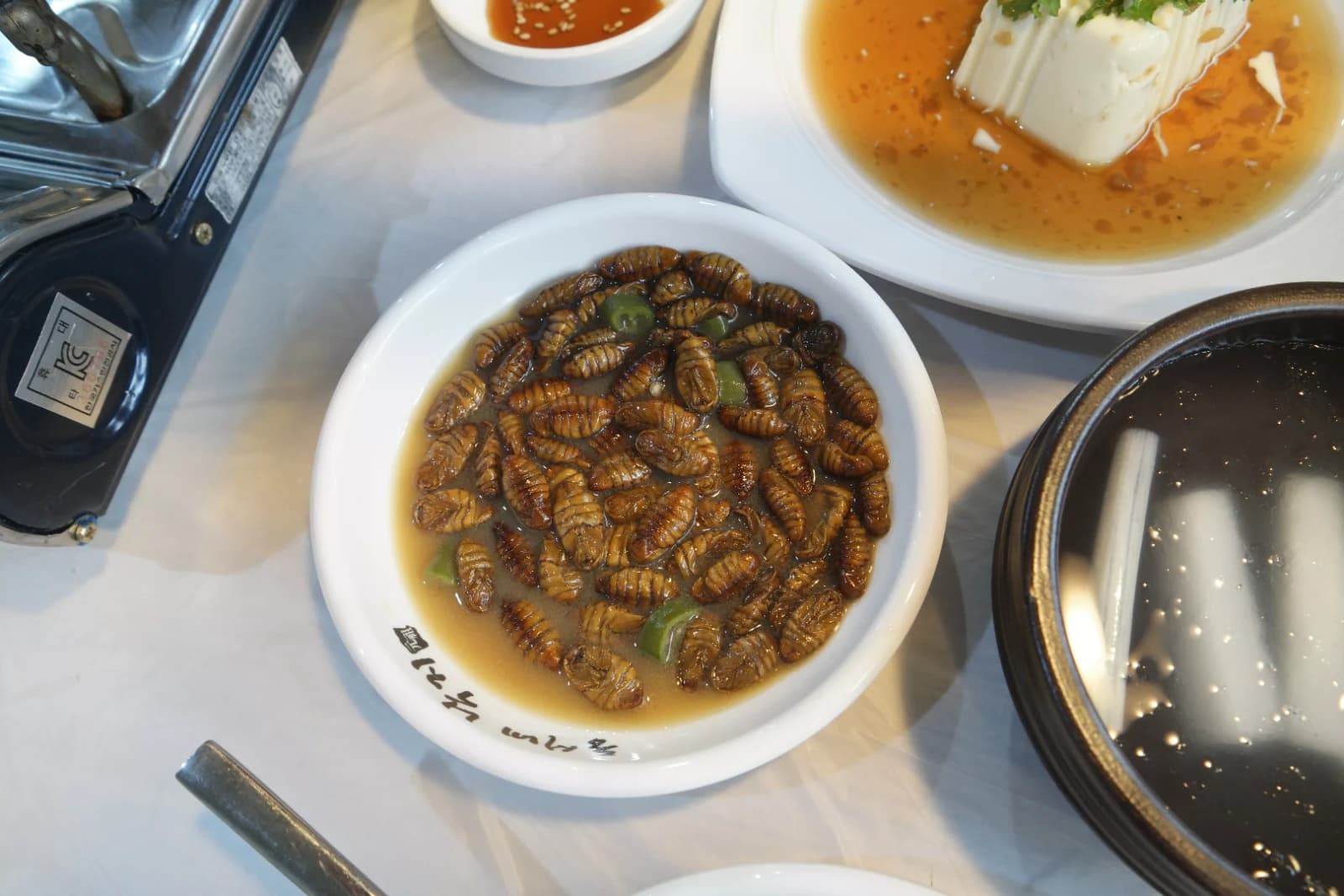
Beondegi. This one is extremely polarizing. These are silkworm pupae, boiled and seasoned — and a lot of people can't even look at them, let alone eat them. But in Korea, they've been a common street snack for decades. The flavor is nutty with a distinctive earthy undertone. I've been eating them since I was a kid, so I have zero hesitation. My mom, on the other hand, wouldn't touch them with her chopsticks.
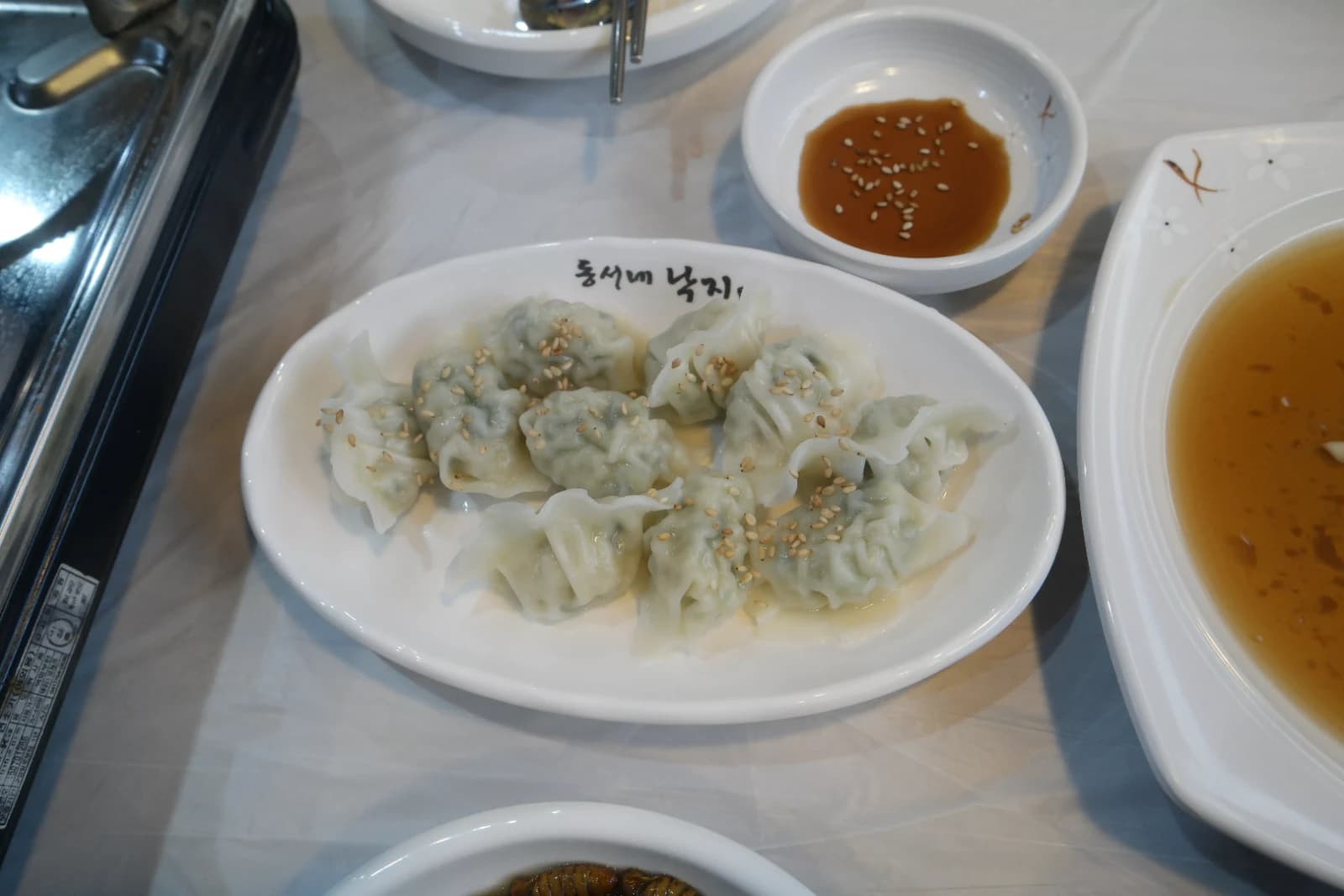
Boiled dumplings — mandu — came out as a side dish too. The wrappers were so thin you could see the filling through the skin, with sesame seeds sprinkled on top and soy dipping sauce on the side. My mom and I were picking at all these side dishes before the main course even showed up, and she said, "We're going to be full before the real food gets here." She was almost right.
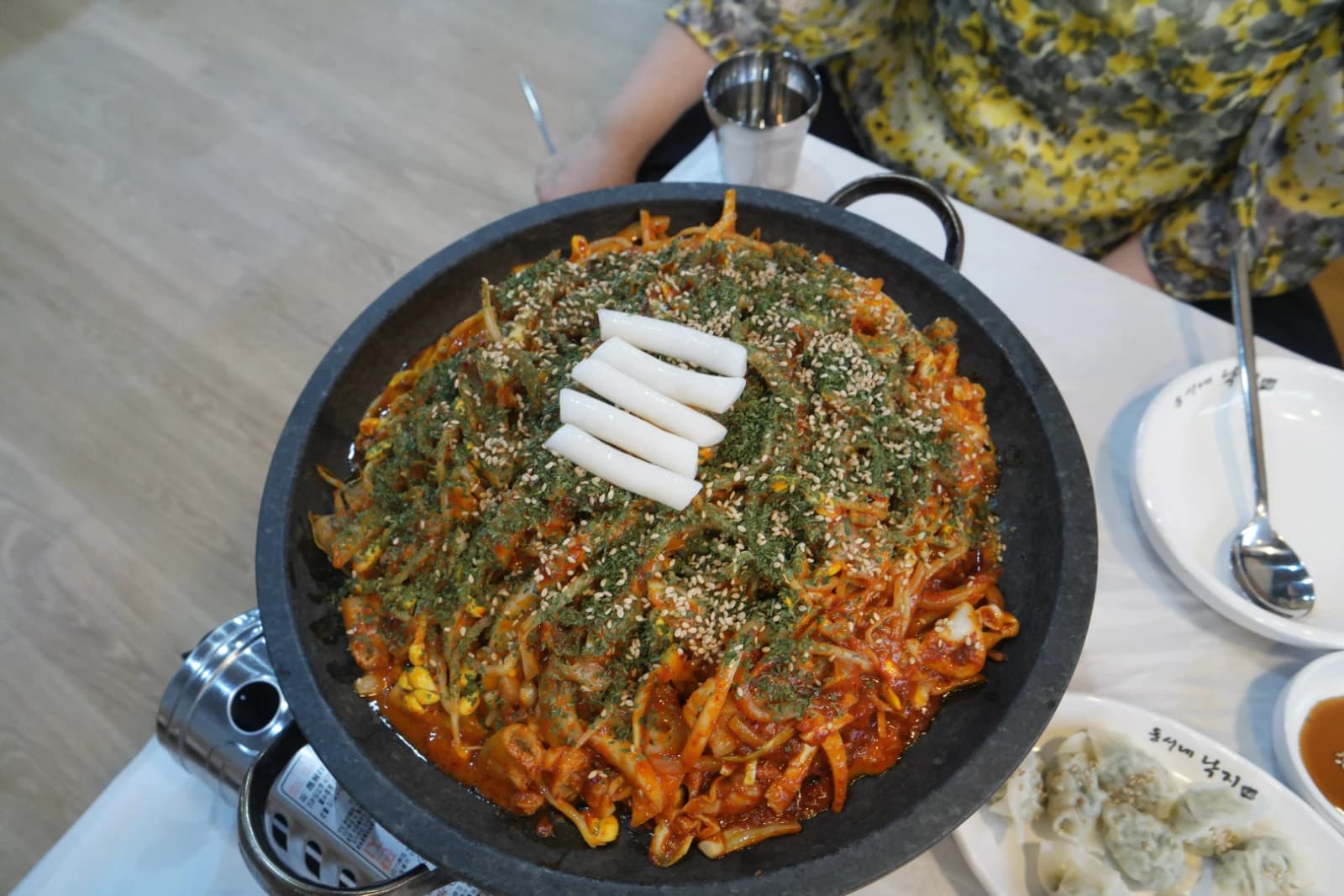
Finally, the main dish. Sogopchang nakji bokkeum — also called nakji gopchang for short — is a stir-fry of nakji (a type of small octopus) and beef intestine cooked together in a fiery gochujang-based sauce. It arrived heaped on a stone plate, the ingredients buried under a thick layer of seaweed flakes and sesame seeds, all of it blazing red. The white sticks poking out from the middle are garaetteok, Korean rice cakes, which slowly soften in the residual heat of the sizzling plate. The aroma hit the table before I could even pick up my chopsticks — and because the stone plate keeps everything bubbling, if you leave it sitting too long, the bottom starts to burn and stick. This is a dish that punishes you for taking photos, so I snapped a couple quick shots and grabbed my chopsticks immediately.
Sogopchang Nakji Bokkeum — Price Guide
Prices vary by restaurant, but a typical order for two people runs about $22–$37 USD. Portions are generous — often more than enough for two — and adding fried rice at the end costs around an extra $1.50–$2.25.
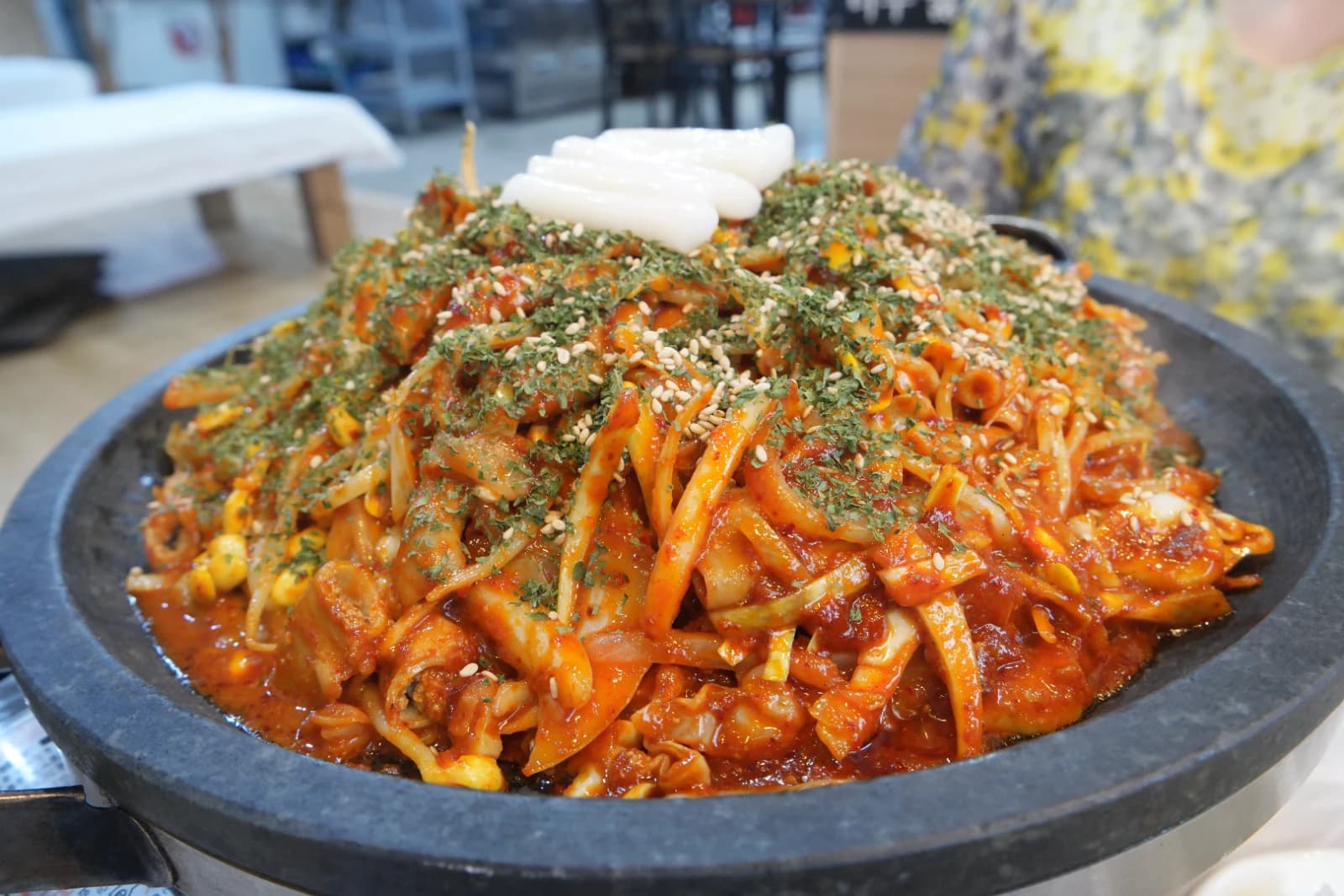
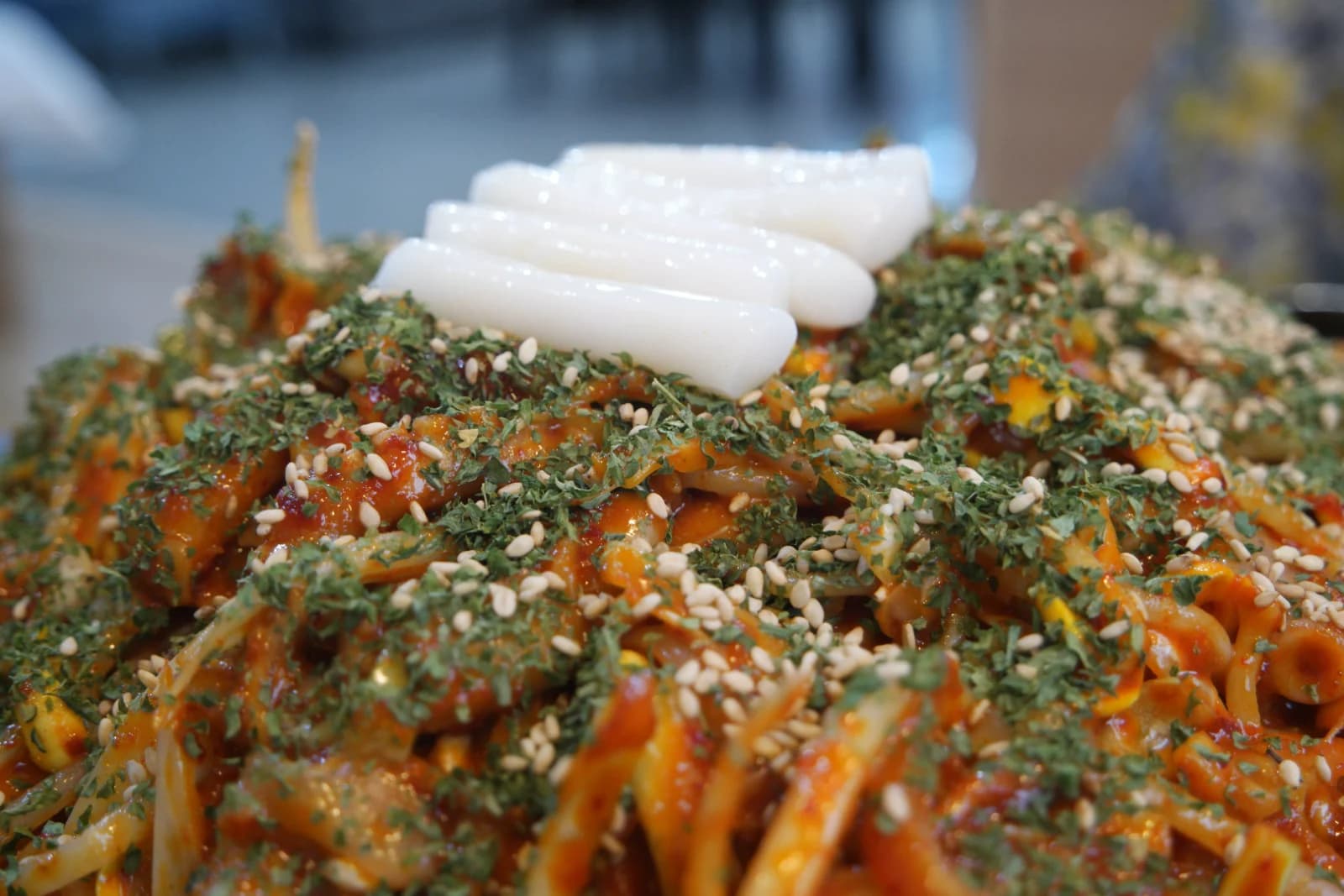
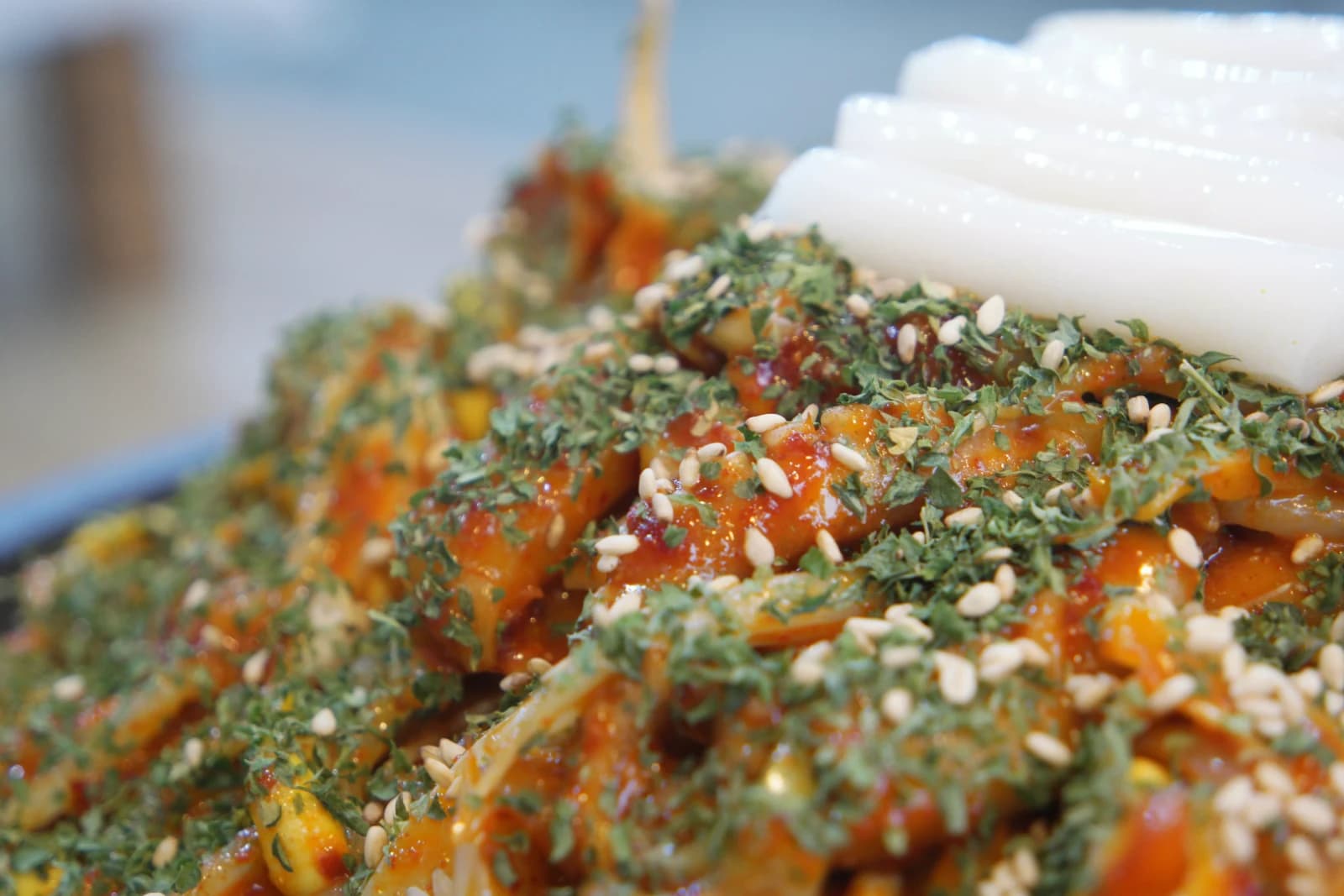
From the side, you get a real sense of just how much food this is. The stir-fry rises up off the stone plate in a mound, and when you look closely, those white sticks on top are the garaetteok — long cylindrical rice cakes made from pounded rice. Push them down into the bubbling sauce and they soak up the seasoning, turning wonderfully chewy. Seaweed flakes and whole sesame seeds blanket the surface, so from a distance it just looks like a big red heap, but up close there's actually a nice mix of green and white in there. Between the layers of sauce you can spot curled octopus tentacles, and the yellow bits are the heads of bean sprouts. Photos really can't capture it — sitting in front of this thing, the spicy gochujang aroma just keeps hitting you in waves.
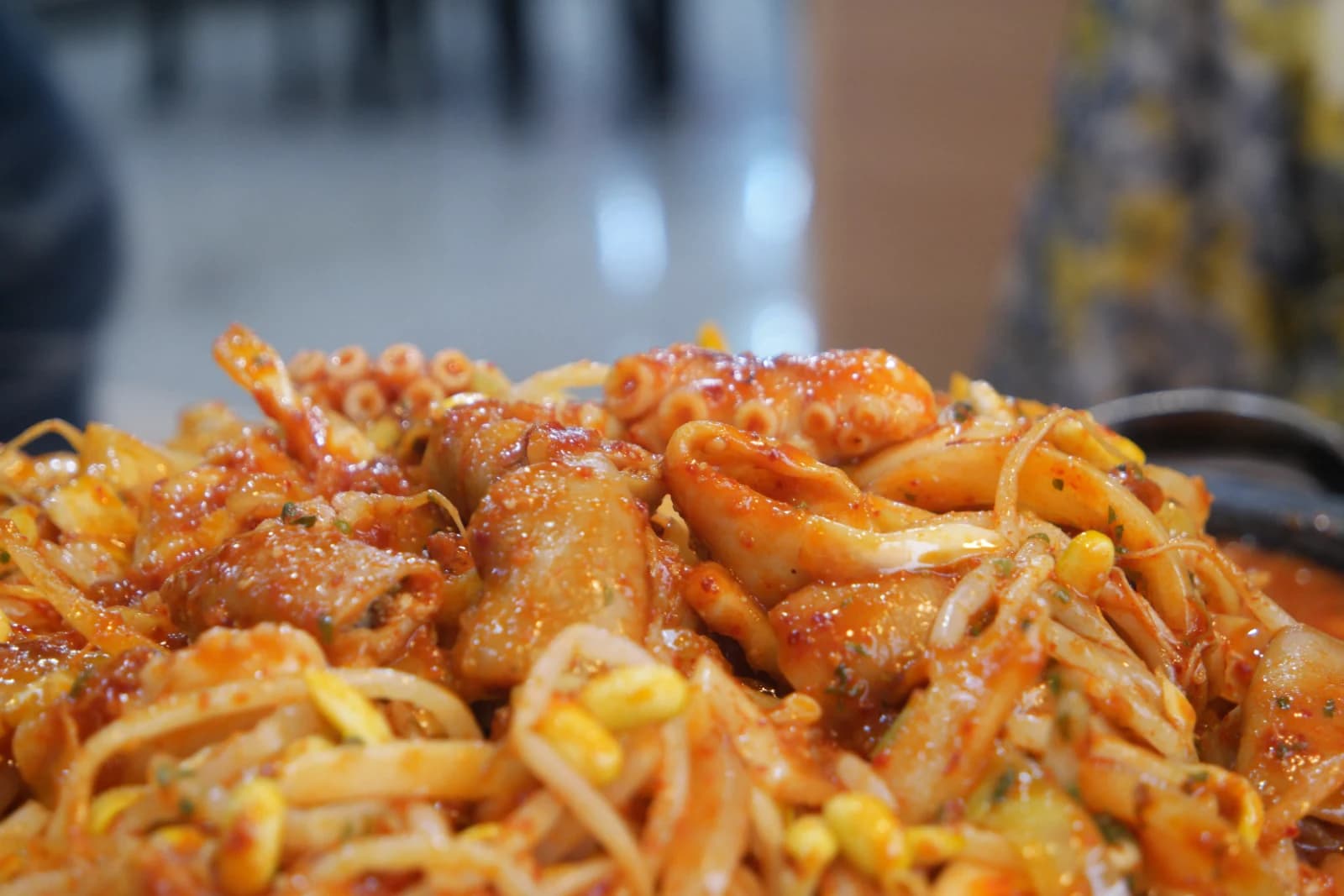
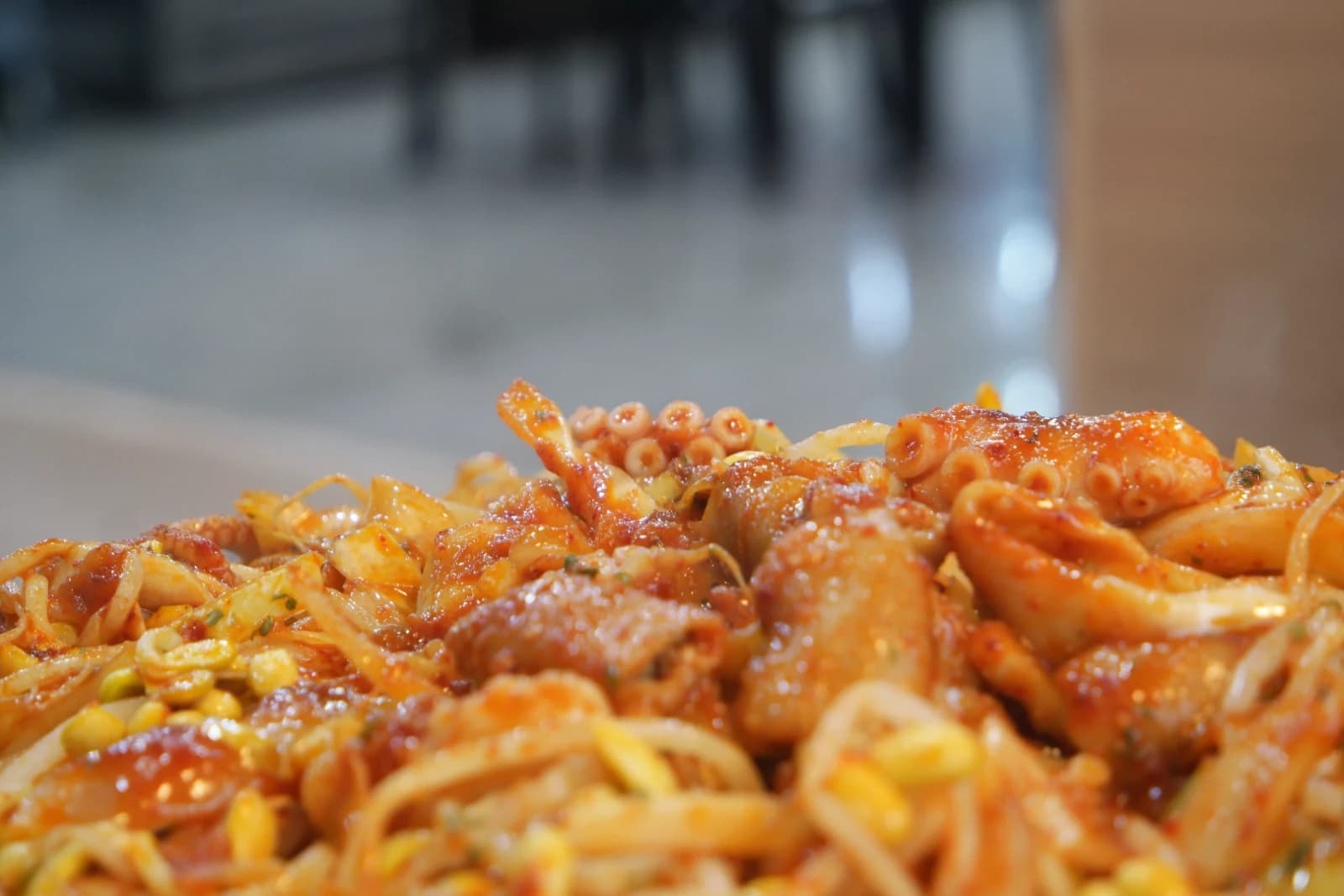
I brushed the seaweed flakes aside and dug into the layers underneath. The octopus tentacles were right there, tiny suction cups clearly visible, and nestled between them were thick pieces of beef intestine — gopchang — glazed and glistening in the red sauce. Gopchang is the small intestine of a cow; the outside is chewy and the inside has a layer of fat, so when you bite down, this rich, savory juice bursts out. Paired with that spicy sauce, it's not greasy at all — if anything, the umami just doubles. Underneath everything, a thick bed of bean sprouts lines the bottom of the plate. Without them, the richness would be overwhelming after just a few bites. The crunch of the sprouts is what keeps you reaching for more. Pick up one chopstick-full and you get an octopus tentacle, a chunk of intestine, and a tangle of bean sprouts all coated in sauce — that's the nakji gopchang experience in a single bite. Drop it on top of a bowl of rice and the rice just vanishes. We ordered two extra bowls of rice that day and still almost ran out.
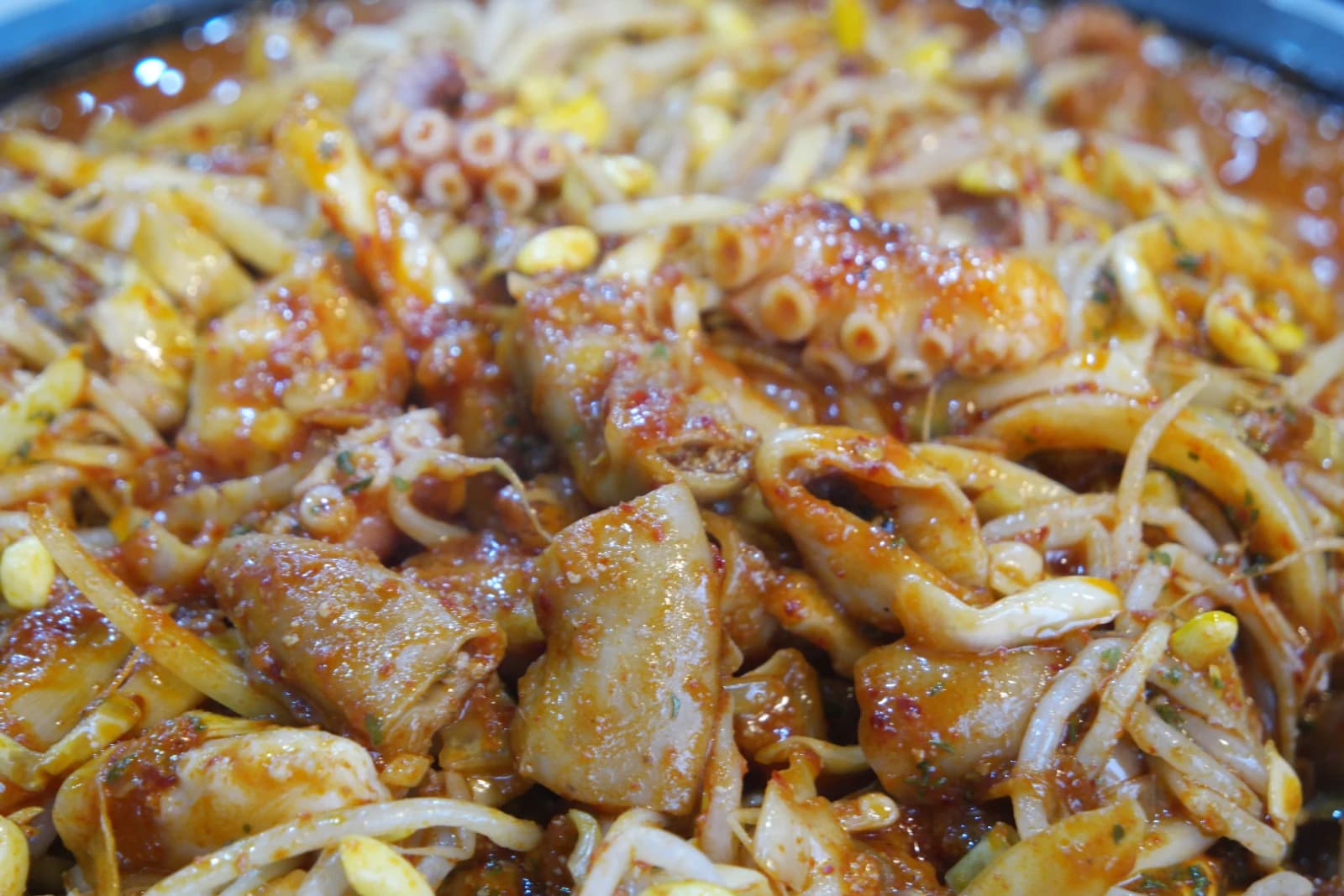
After mixing it around for a while, the sauce started to coat everything evenly.
With the seaweed flakes gone, every single ingredient was fully exposed. Those brown chunks in the middle are the beef intestine — look closely and you can see where some pieces were sliced open, revealing the inside. The outer surface had been reduced in the sauce until it turned slightly sticky-chewy, and the bean sprouts had wilted down, soaking up all that seasoned liquid. When it first arrived, the plate looked like a mountain of food, but after mixing, it seems like the volume shrinks dramatically. Along the edges of the stone plate, you could see the sauce bubbling away — any bean sprouts or intestine pieces that touched that hot rim got a little crispy and caramelized. There's a whole separate joy in scraping those stuck-on bits off the edge. My mom didn't know about this trick and kept scooping from the center, so I gave her a taste of the crispy edge pieces. After that, she kept going back for more from the rim.
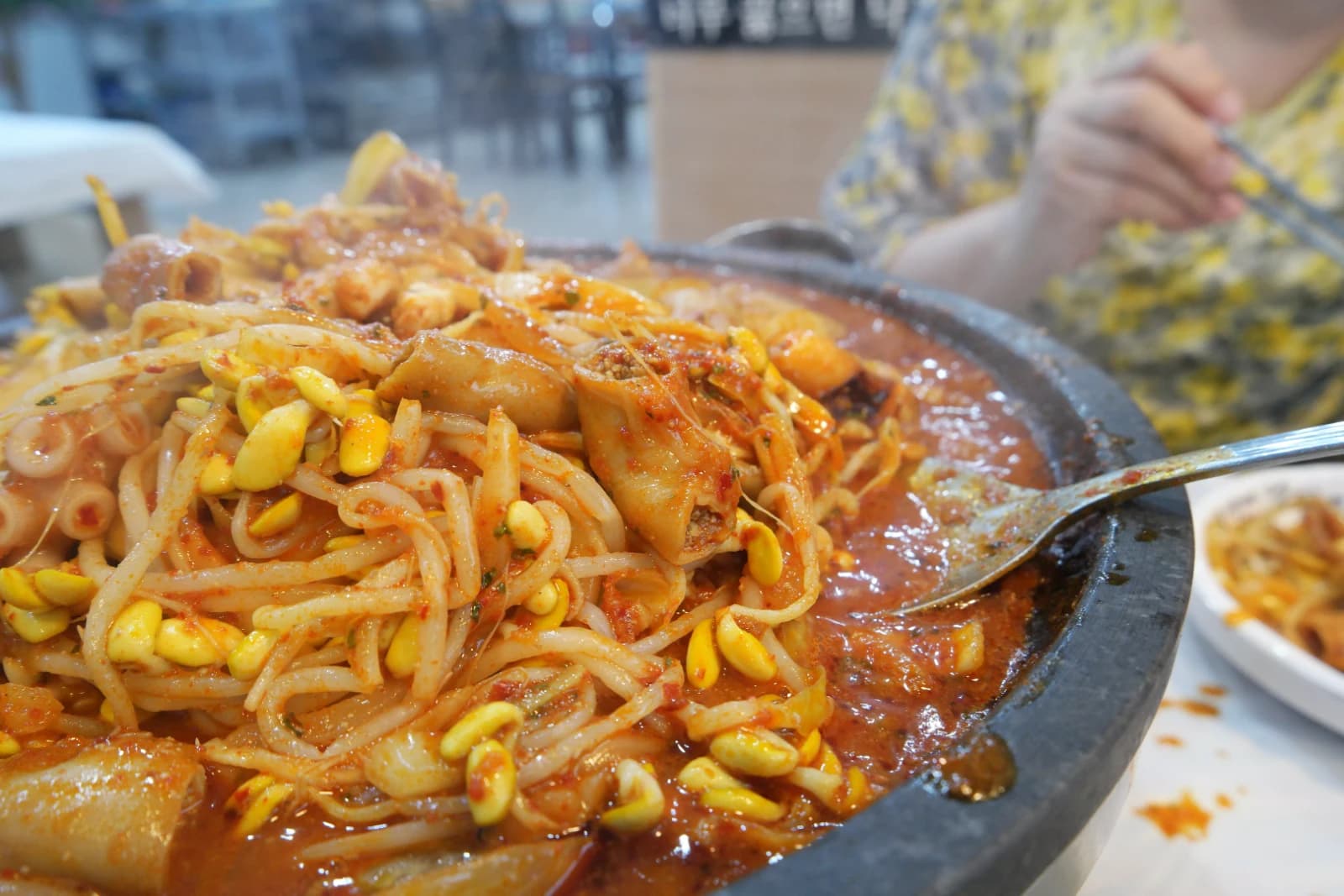
After a while, a pool of spicy sauce started collecting at the bottom of the stone plate. At first the dish was almost dry — more of a stir-fry — but as time passed, moisture released from the ingredients and the seasoning loosened up into a saucy, soupy liquid. And this broth is incredible. All the umami from the octopus and intestine merges with the gochujang sauce into something thick, rich, and intensely savory. Spoon some of that over a bowl of rice and you've got what Koreans call a "rice thief" — something so good it makes your rice disappear. The bean sprouts were saturated with this broth, so even just fishing those out was delicious on their own. By this point the garaetteok rice cakes had gone completely soft, fully infused with sauce — bite into one and you get that chewy stretch followed by a punch of spicy heat all at once. On the right side of the photo you can see a plate where we'd scooped some out — transferring the stir-fry to a separate dish and mixing it with rice is another common way to eat this. Eating straight off the stone plate is a great way to burn the roof of your mouth. I'm impatient, so I always eat directly from the hot plate and pay the price every time. That day was no exception — burned my tongue within minutes.
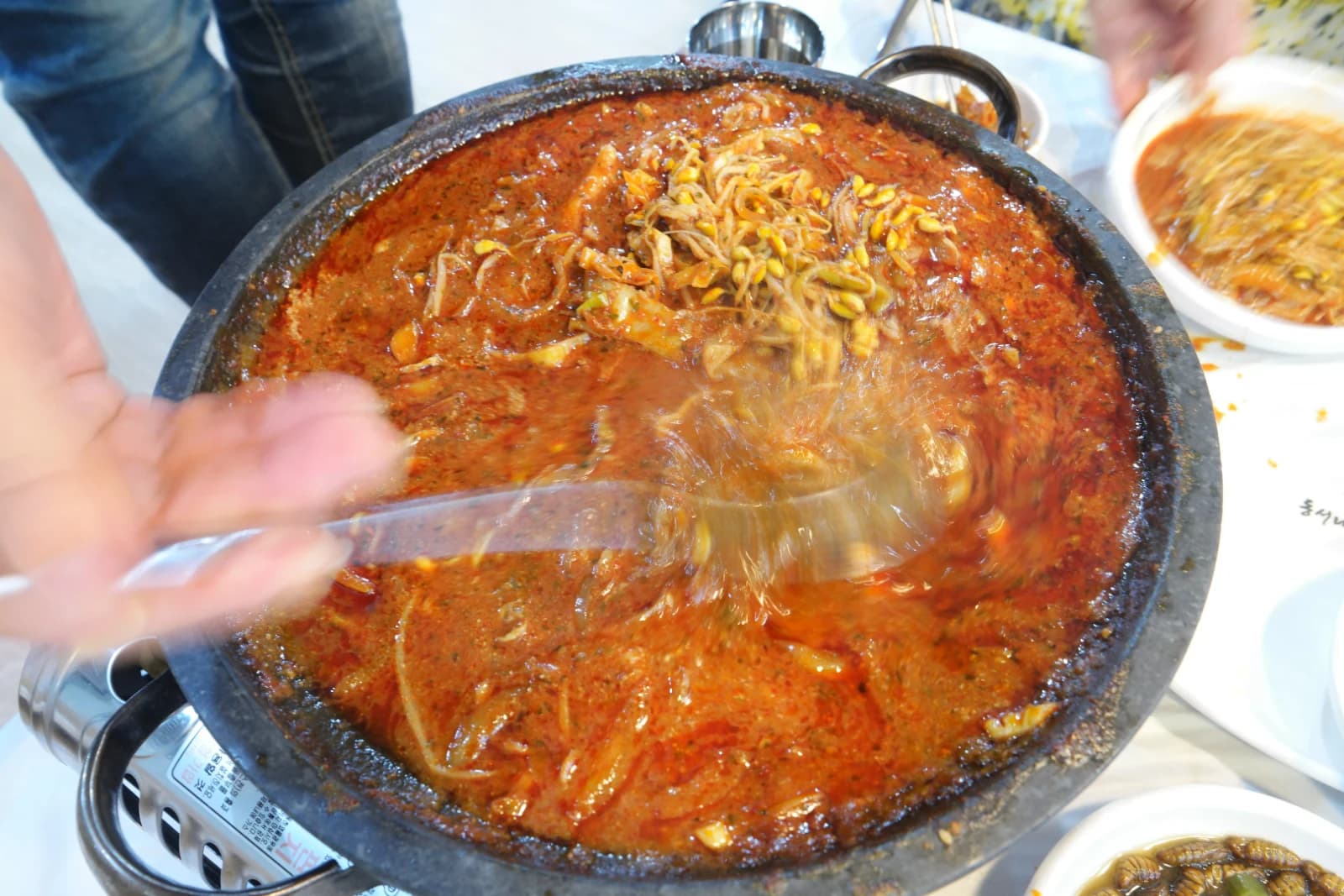
Once you've fished out all the solid ingredients, a pool of red, spicy broth is all that's left on the stone plate. But you don't waste it. A staff member came over and started adding rice directly into that broth, scraping and stirring with a ladle, coating every grain in the leftover sauce. Sogopchang nakji bokkeum doesn't end with the stir-fry — that's the whole point. All the umami from the octopus and beef intestine has dissolved into that broth, and it gets a second life as fried rice.
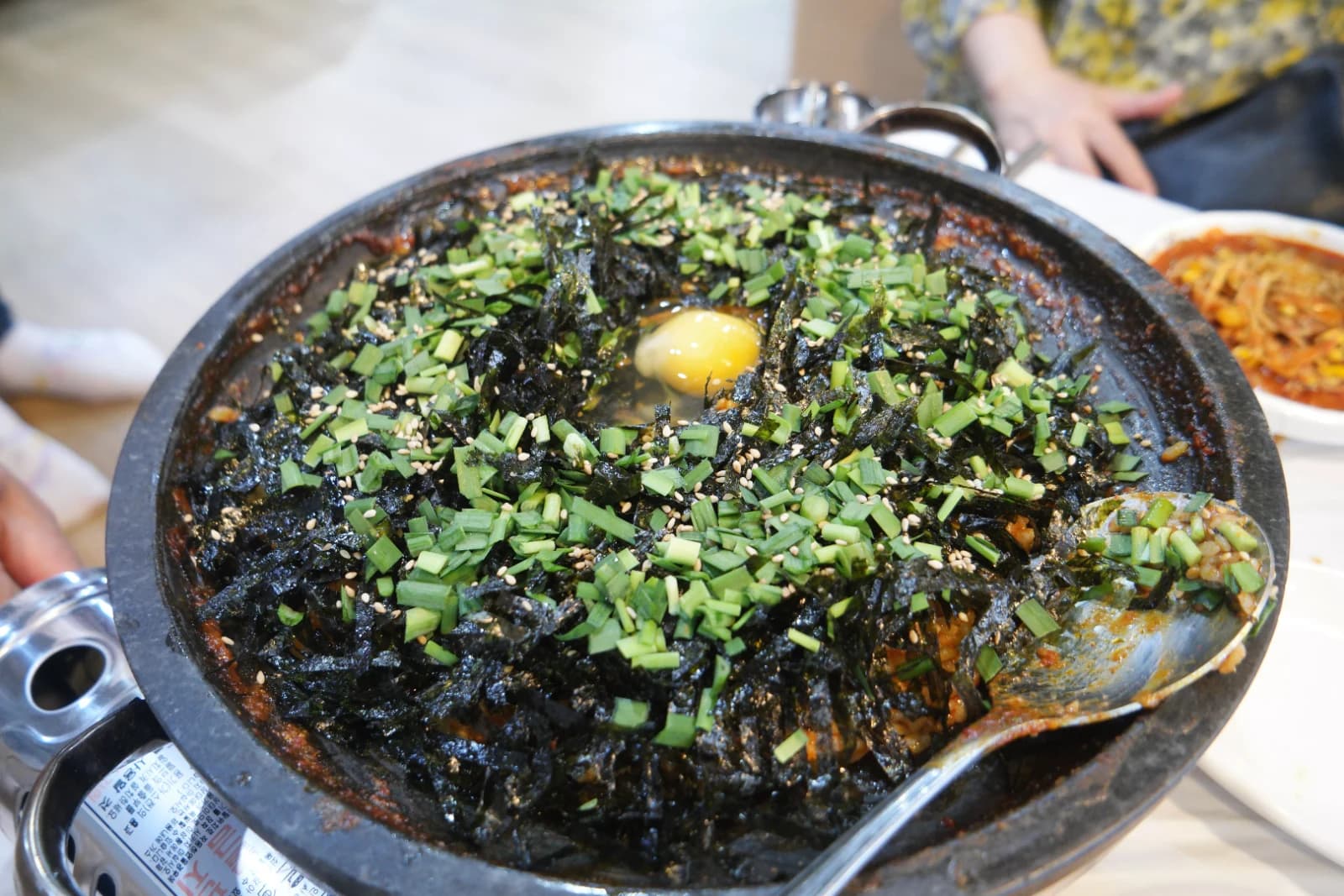
In Korean, this is called bokkeum-bap — fried rice — and it's made by tossing rice into the leftover sauce and cooking it right on the stone plate. A dark blanket of seaweed flakes covers the top, with buchu (garlic chives, a thin flat-leafed herb) sliced and scattered over it. That yellow circle in the center is a raw egg yolk — break it open and mix it in, and it adds a layer of richness to the already spicy rice. Remember, this isn't just rice fried in any old sauce. It's rice cooked in the concentrated drippings of octopus and beef intestine. All that seafood umami and the buttery richness of the gopchang fat are already in there, so without adding a single extra seasoning, every grain of rice is packed with flavor. The staff stirs and fries it for you at first, but halfway through you're on your own. And here's where you face a choice: do you keep it soft and loose, or let it crisp up on the bottom? I'm a fan of letting the rice stick to the hot plate and get crunchy, almost like a rice cracker. My mom, the moment the fried rice appeared, said, "I should've saved some stomach room earlier." We'd already demolished two extra bowls of rice by that point and were about to burst, but somehow neither of us could put the spoon down. That day was the first time I realized sogopchang nakji bokkeum isn't just a stir-fry — it's a full course that carries you all the way through to fried rice.
After scraping the fried rice plate clean, neither of us said a word for a while. We were just too full. My mom ordered a sikhye — a sweet Korean rice drink — and asked, "How did you even find this place?" Honestly, I'd just searched online for something near home. Nakji bokkeum restaurants exist in pretty much every major Korean city — Seoul, Busan, Daejeon, you name it — and if you search "nakji bokkeum" or "nakji gopchang," you'll find options near wherever you're staying. Dongseone Nakji, the chain we went to, still has locations operating in areas like Dunsan-dong in Daejeon, as well as in Iksan and Gwangju. This isn't street food you grab from a cart — it's a sit-down restaurant meal.
It's not as universally known as tteokbokki or samgyeopsal (Korean BBQ pork belly), but once you've had it, it's the kind of dish that pulls you back. On the drive home, my mom said, "Next time, let's bring your dad." That might be the most accurate review of this meal anyone could give.