
Hearty Korean Dumpling Hot Pot You Have to Try
Table of Contents
20 items
The Korean Food You Absolutely Cannot Miss: Mandu Jeongol
Welcome to the "Must-Eat Foods in Korea" series — and today, we're diving into mandu jeongol, a Korean dumpling hot pot that completely hits different in the winter. This series is an ongoing thing, and I'm going through all the dishes you genuinely have to try when you visit Korea. Today's pick? A bubbling, soul-warming pot of mandu jeongol that will make you understand why Koreans go absolutely crazy for this dish the moment the temperature drops.
If you've never heard the name mandu jeongol before, you're not alone. But mention it to any Korean person and watch their eyes light up. That's the kind of dish this is.
Steamed / Boiled Dumplings (Mul-mandu)
The dumpling itself is the star here. Thin dough packed with meat and vegetables, eaten dipped in a clear broth or soy sauce. Simple, but that simplicity is exactly what makes it so good. It's a solo dish — totally manageable to order and eat on your own without any fuss.
Mandu Jeongol (Dumpling Hot Pot)
Dumplings are in there, sure — but they're not the only star. Mushrooms, glass noodles, vegetables, and rich broth all come together in a pot that bubbles away right at your table. The whole experience of watching it cook is part of the magic. This is a dish meant to be shared around the table on a cold winter night.
First, Let's Talk About What Jeongol Actually Is
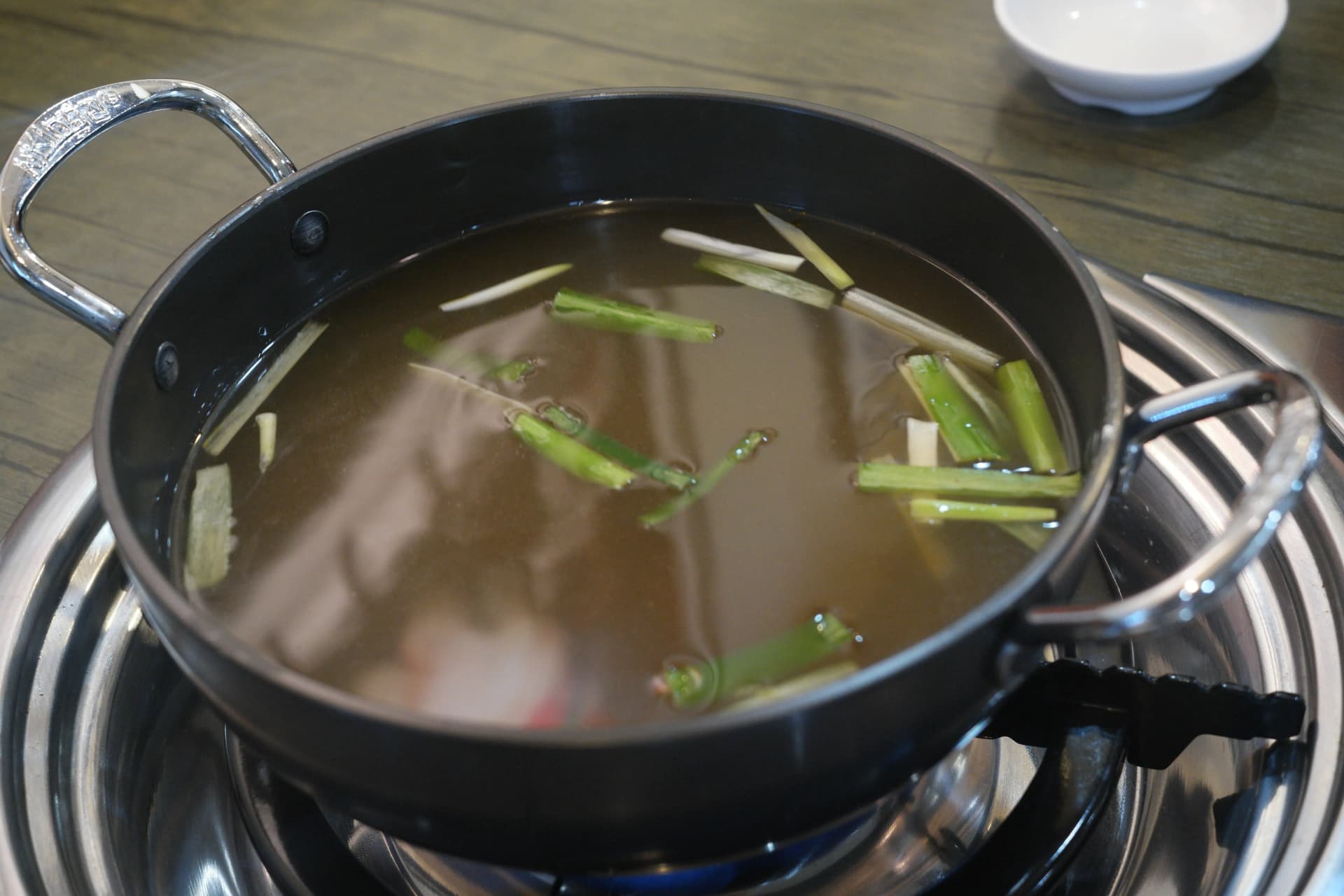
Jeongol is a Korean-style hot pot where a pot is placed on a table burner and you cook it yourself as you eat. This is how it comes out at first — a clean, clear broth with just a few green onion stalks floating around. Looks kind of underwhelming, right? But this is just the beginning. The dumplings and all the other ingredients get added one by one, and that's when mandu jeongol really comes to life.
The Star of the Show: The Dumplings Make Their Entrance
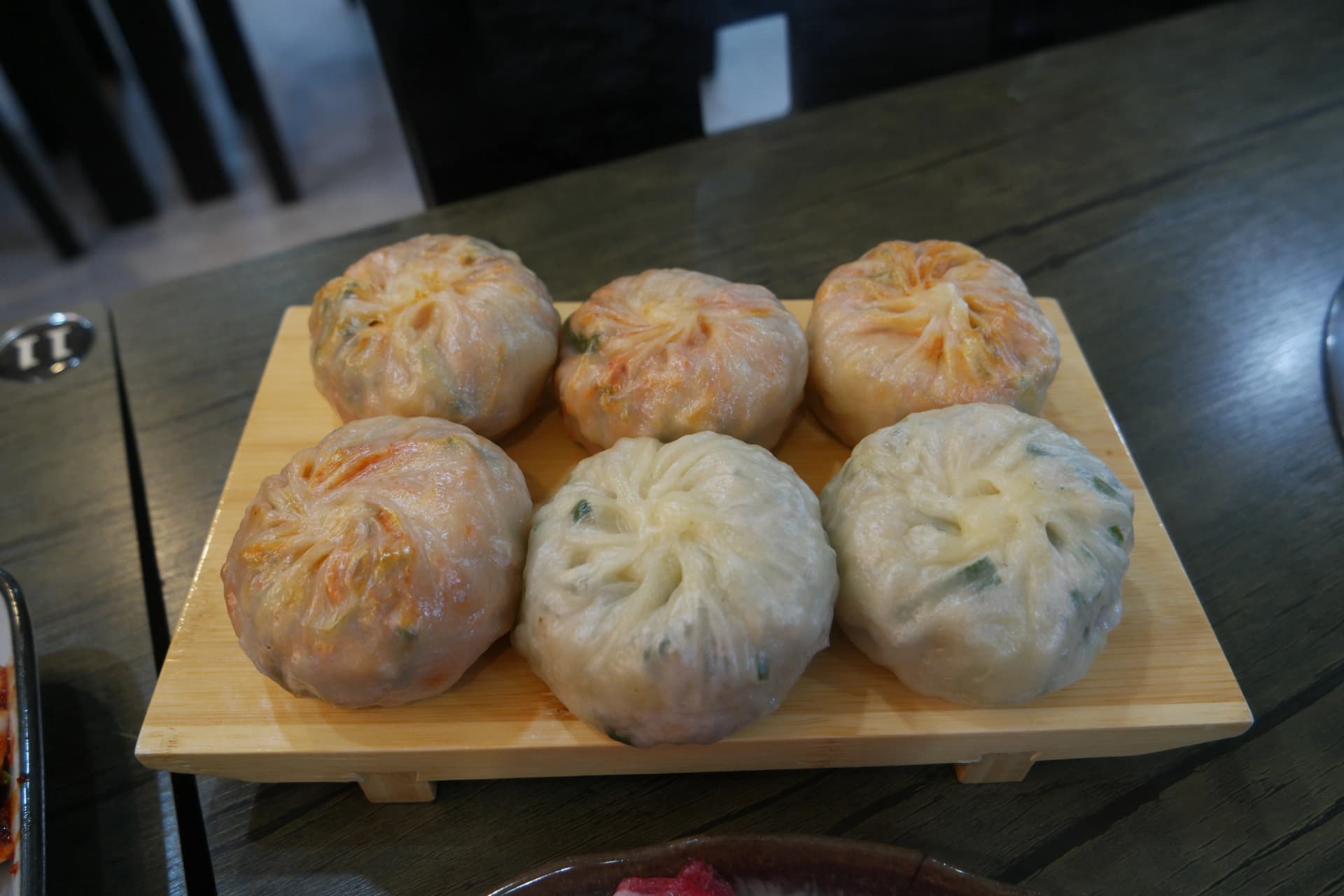
These are the dumplings. Big, right? When Korean dumplings are this size, it means they're absolutely stuffed on the inside — that's the telltale sign. You could honestly eat these on their own and be more than satisfied. But today, we're not just eating them plain. That bubbling broth over there is waiting for them.
It's Not a Jeongol Without the Vegetables
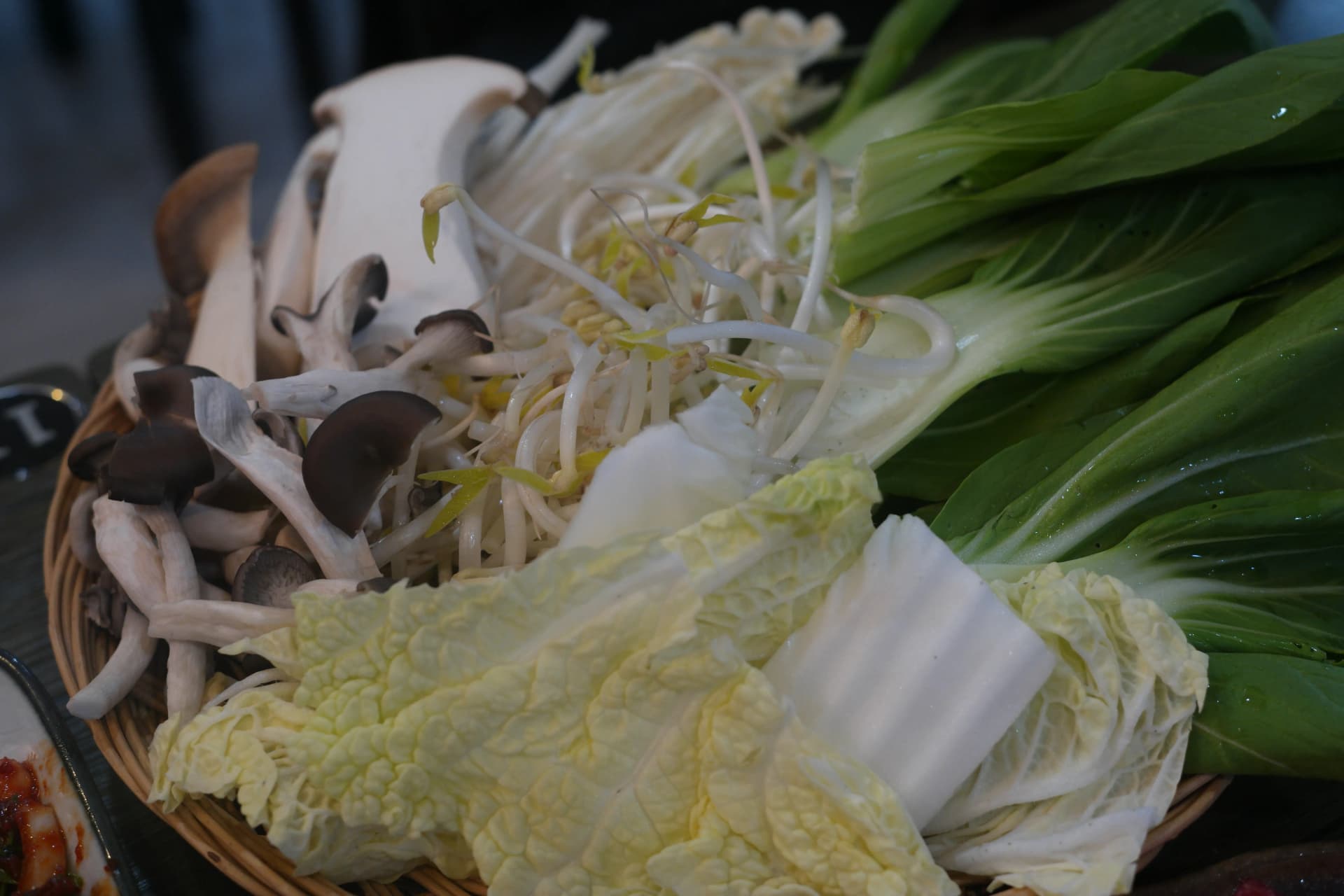
Just dumplings alone would feel a little incomplete, wouldn't it? Shiitake mushrooms, oyster mushrooms, bean sprouts, napa cabbage, bok choy — all of these go in together. And these aren't just side garnishes. As they slowly soften in the hot broth, they completely transform the flavor of the soup. You can actually feel the broth getting deeper and more complex as everything cooks down. What started out as a clean, mild stock turns into something entirely different.
The Beef: Shabu-Shabu Style
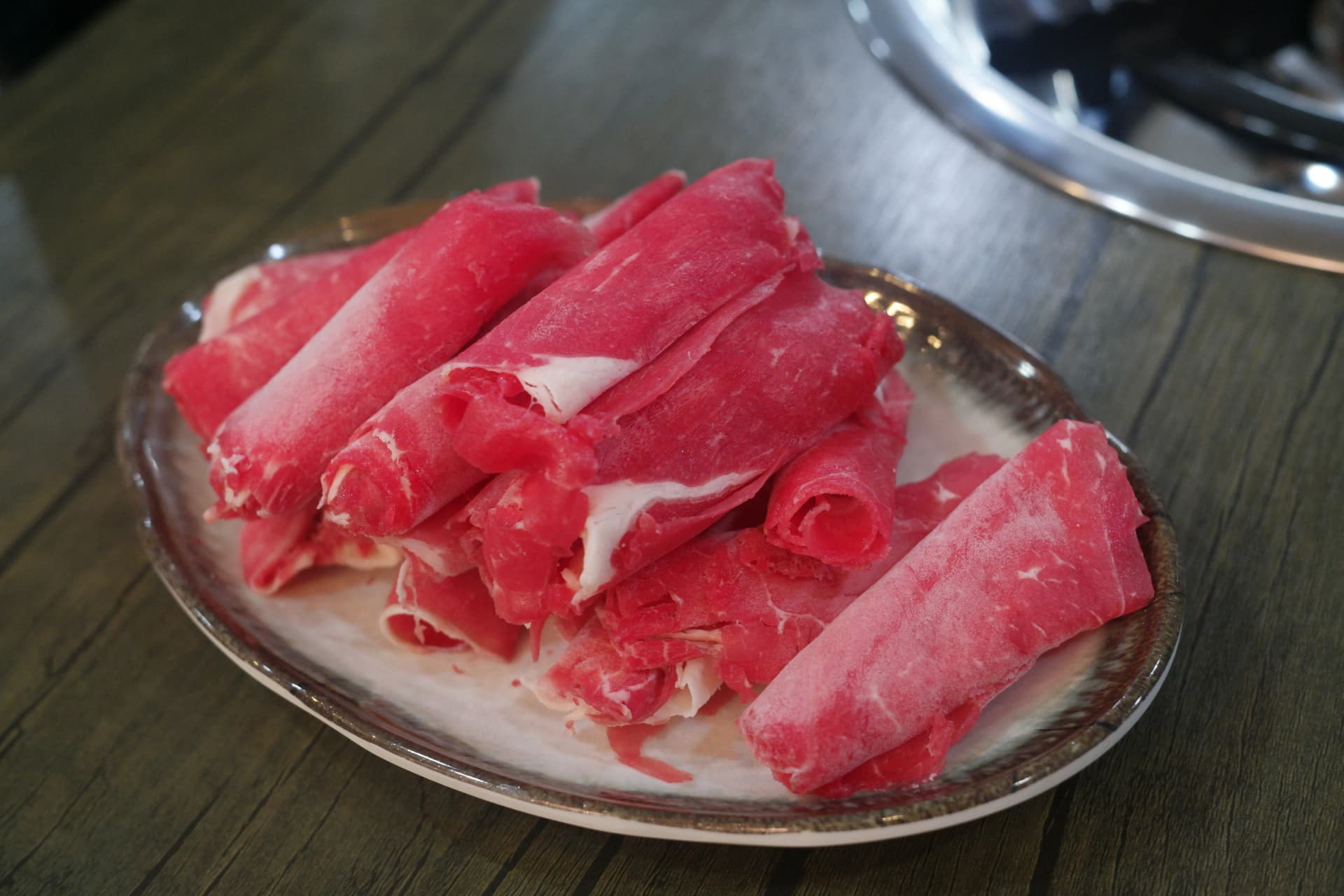
And then the beef arrives. This one works differently from everything else. While the dumplings and vegetables get a long slow cook, the beef absolutely cannot. You dip the slices into the boiling broth and the second the color changes, you pull it right back out. It's the exact same method as shabu-shabu. The slices are so thin that a few seconds is genuinely all you need. Leave it in too long and it turns chewy and tough. Hit that timing just right — right when the color changes — and it practically melts in your mouth. That's the whole point of this beef.
How Mandu Jeongol Comes Together, Start to Finish
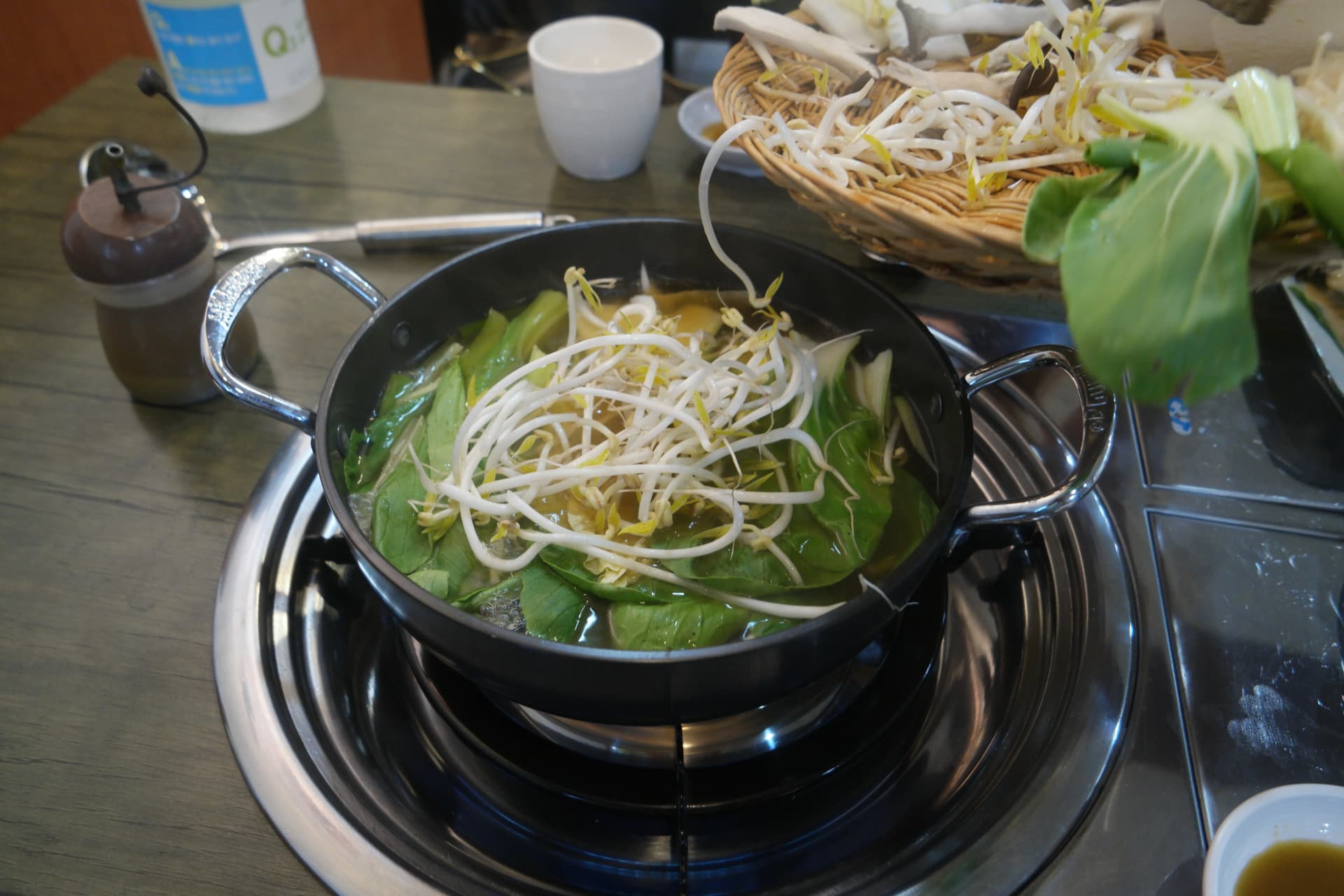
Alright, now the real cooking begins. The vegetables go into the pot and the flame goes on. At first it just looks like a heap of raw greens sitting in a pot. But this moment is actually where everything starts. The bok choy, bean sprouts, and napa cabbage begin to slowly wilt as the hot broth surrounds them. Don't crank the heat up right away — letting it warm gradually like this is what gives you that deep, developed broth flavor later on.
The Moment the Mushrooms Go In, the Broth Changes
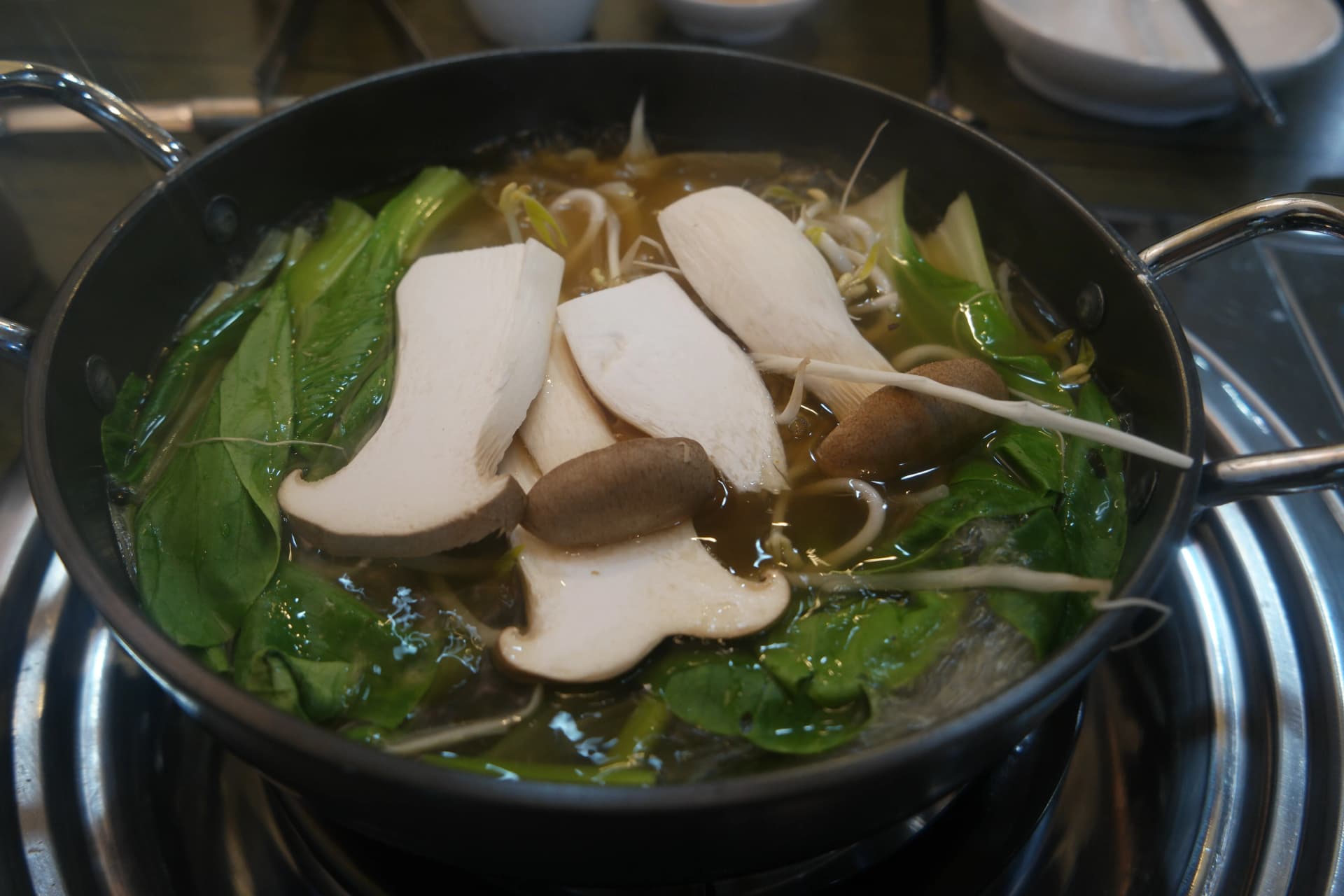
Once the vegetables have softened a bit, in go the mushrooms. It's still not at a full boil yet — the broth is slowly drawing in all the fragrance from the mushrooms and vegetables. The shiitake and oyster mushrooms gently release their deep, earthy aroma into the hot liquid, and you start to smell it rising from the pot. Honestly, this stage is the most important part. Mandu jeongol is not a rush-and-eat kind of meal. Each ingredient needs time to give its flavor to the broth before you get the real thing. Just sitting in front of the pot and breathing in that smell — that alone is already half the experience.
Bubbling Away: Time to Add the Dumplings
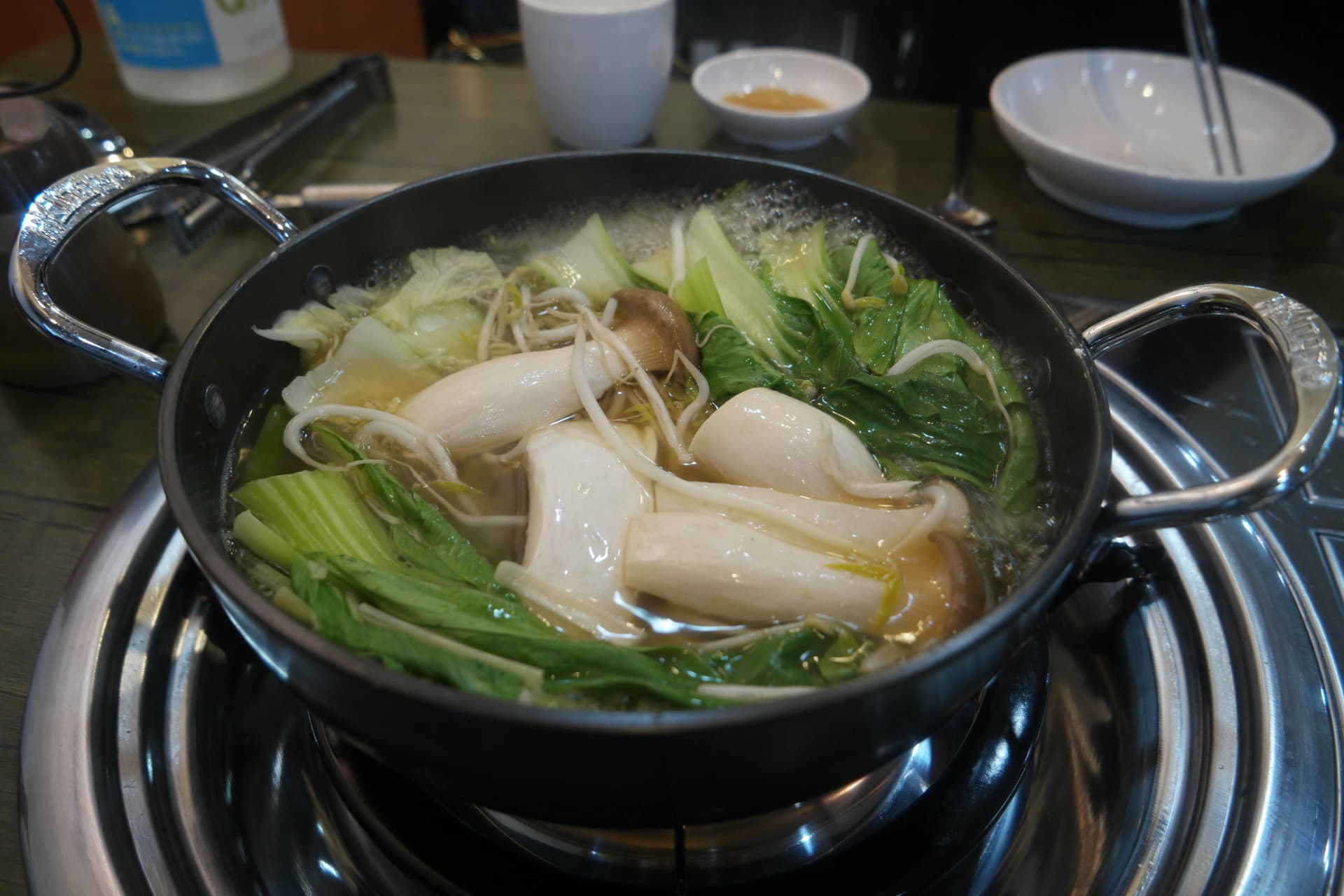
Now we're at a real boil. The sides of the pot are bubbling first, and then the whole surface is going. The broth that started out completely clear has turned a deeper color and smells completely different from how it did at the start. The vegetables and mushrooms have done their job. When this smell starts filling the room, people at the neighboring tables start sneaking glances your way — it's that kind of smell. Now it's finally time to drop the dumplings in.
The Moment the Dumplings Go In, the Broth Levels Up
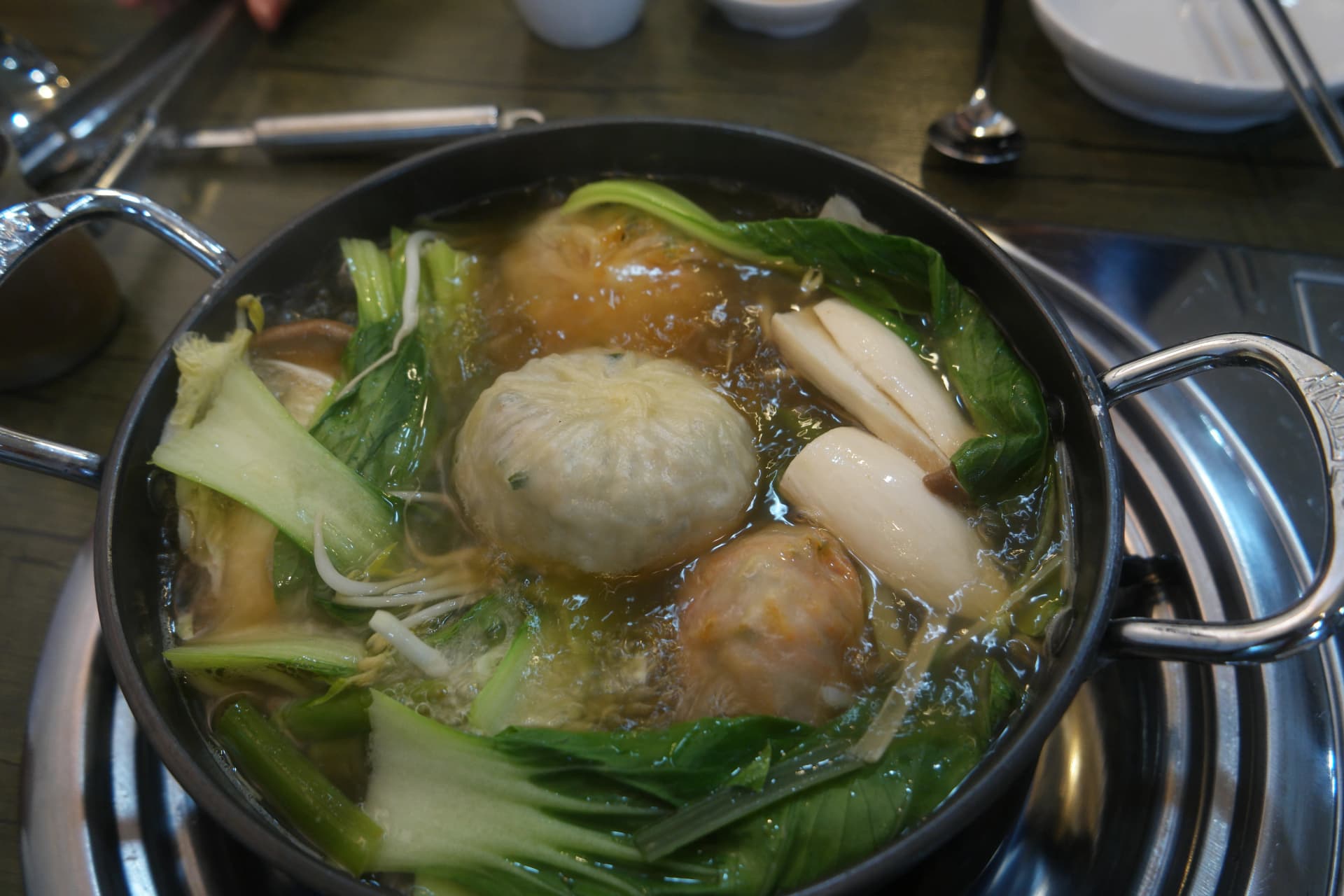
Once you've got a proper boil going, it's time to drop in the dumplings. Those big guys plunging into the bubbling broth one by one — you can practically hear the people around the table swallow. I'm not exaggerating. As the dumplings cook in the broth, the meat juices inside them slowly seep out, and the soup gets even richer. What was a vegetable broth becomes a dumpling broth. This is the core of what makes mandu jeongol special — every single ingredient you add changes the broth a little more. It keeps evolving the whole time.
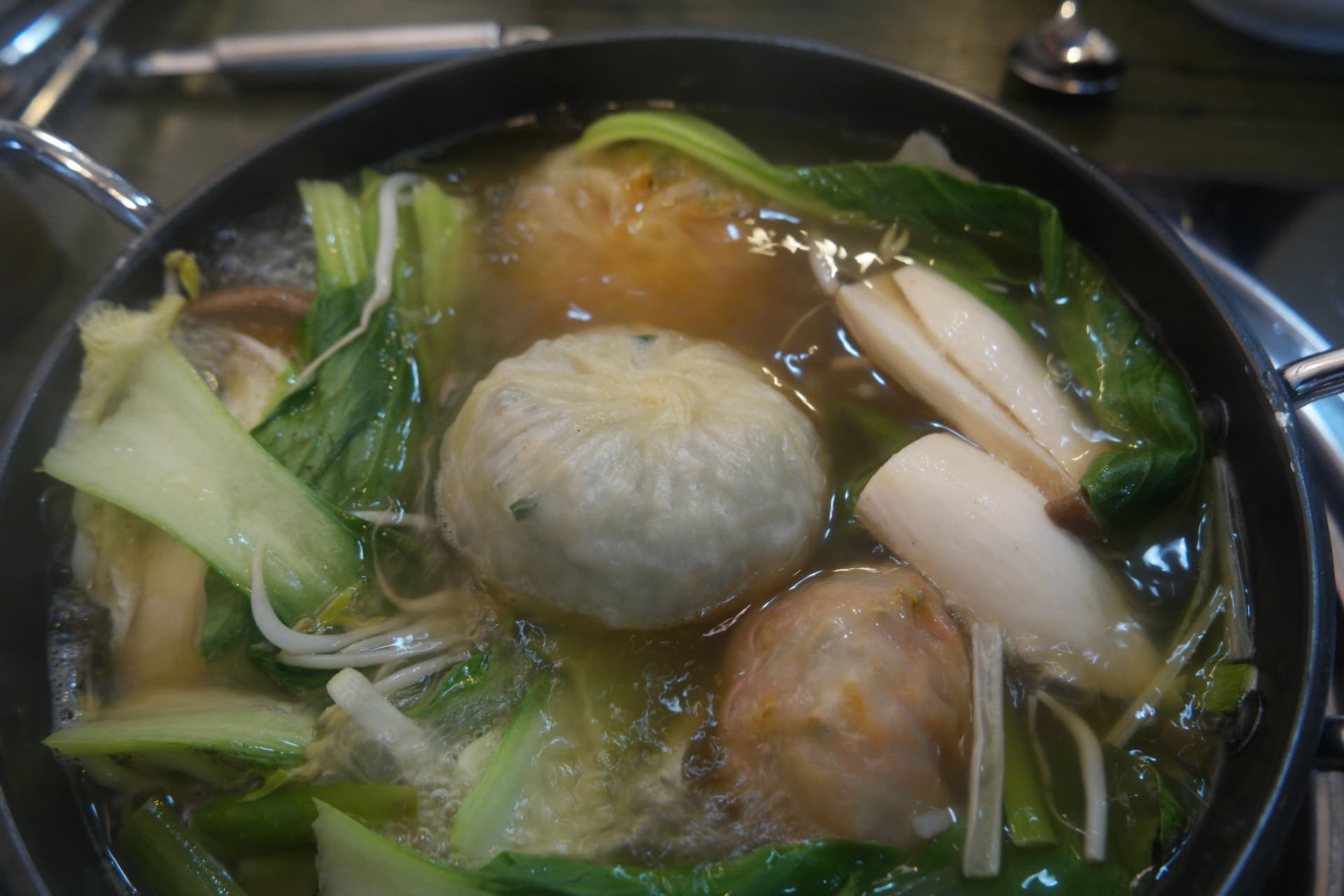
Look at those dumplings bubbling away. They've puffed up since you first put them in — the dumpling skin has been absorbing the broth and swelling up. The liquid is seeping right through the dough. This is the best moment to grab one. Leave them in too long and the skin gets mushy or can even split open. Right around now, pull one out and take a bite — hot broth floods into your mouth from inside the dumpling, and the flavor is absolutely incredible. Just be careful, it's seriously hot.
What's Inside a Kimchi Dumpling?
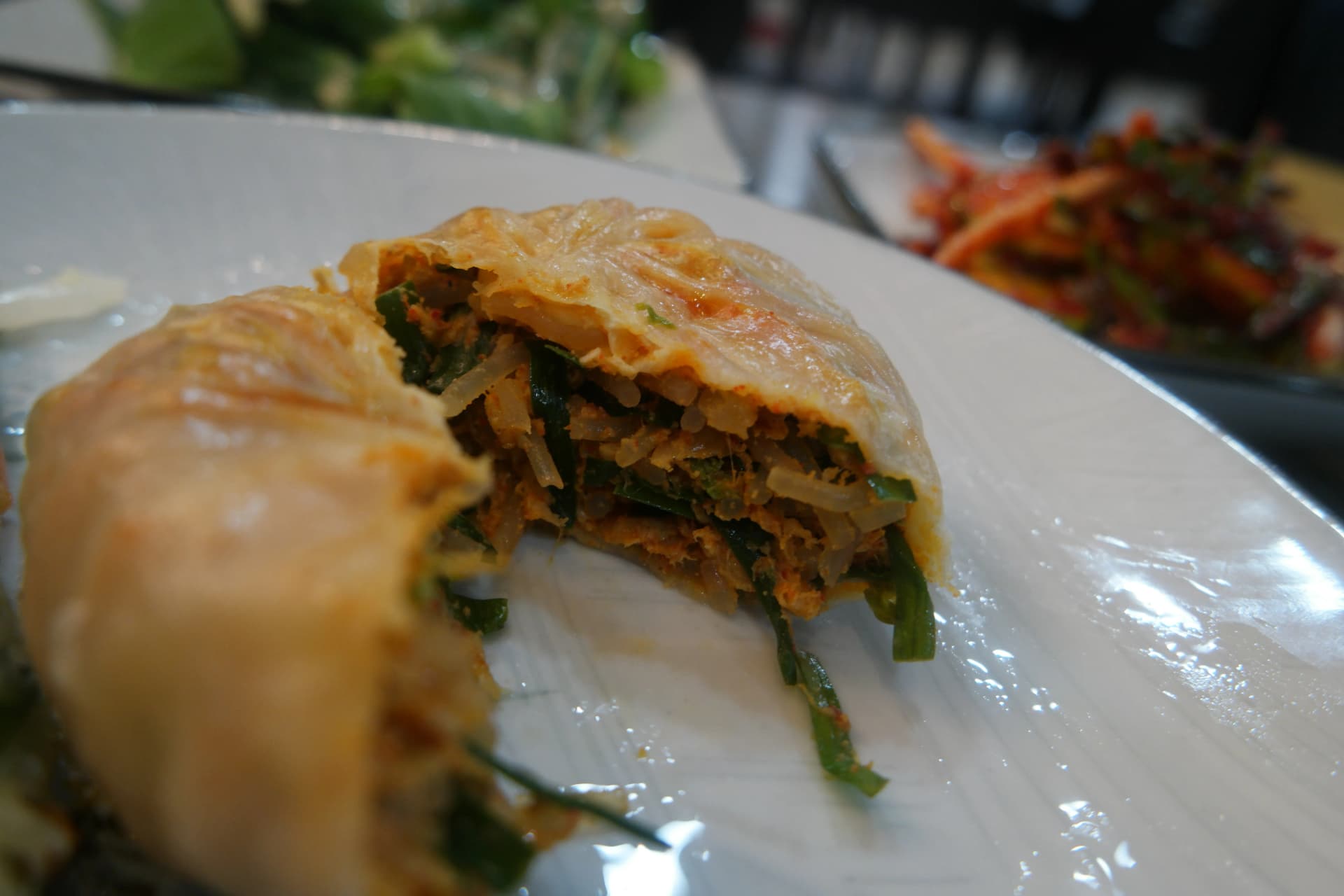
Curious what's in there? Here's a look inside. This is a kimchi dumpling (kimchi mandu). You can see it's packed with kimchi and glass noodles, and there's that reddish color from the kimchi. From the outside it's just a round dumpling, but cut it open and it's stuffed all the way through. As it cooks in the broth, the tangy kick from the kimchi slowly bleeds out into the soup and blends in — and honestly, the combination works way better than you'd expect. Even people who've never had kimchi in their lives tend to handle kimchi dumplings in a jeongol pretty well, surprisingly enough.
Meat Dumplings (Gogi Mandu)
Filled with pork, tofu, garlic chives, and glass noodles. Clean, savory, and slightly nutty with a little bit of meat juice coming through — this is the safe bet for anyone trying Korean dumplings for the first time. Drop these into the hot pot and the meaty aroma adds another layer of richness to the broth that takes it up a notch.
Kimchi Dumplings (Kimchi Mandu)
Filled with kimchi, pork, and glass noodles. Tangy and a little spicy. A lot of people try these for the first time and are genuinely surprised by how mild they actually are. Cook these in the jeongol broth and the sourness from the kimchi dissolves into the soup, lifting the whole flavor profile of the hot pot to another level entirely.
Add the Beef and the Broth Reaches Its Final Form
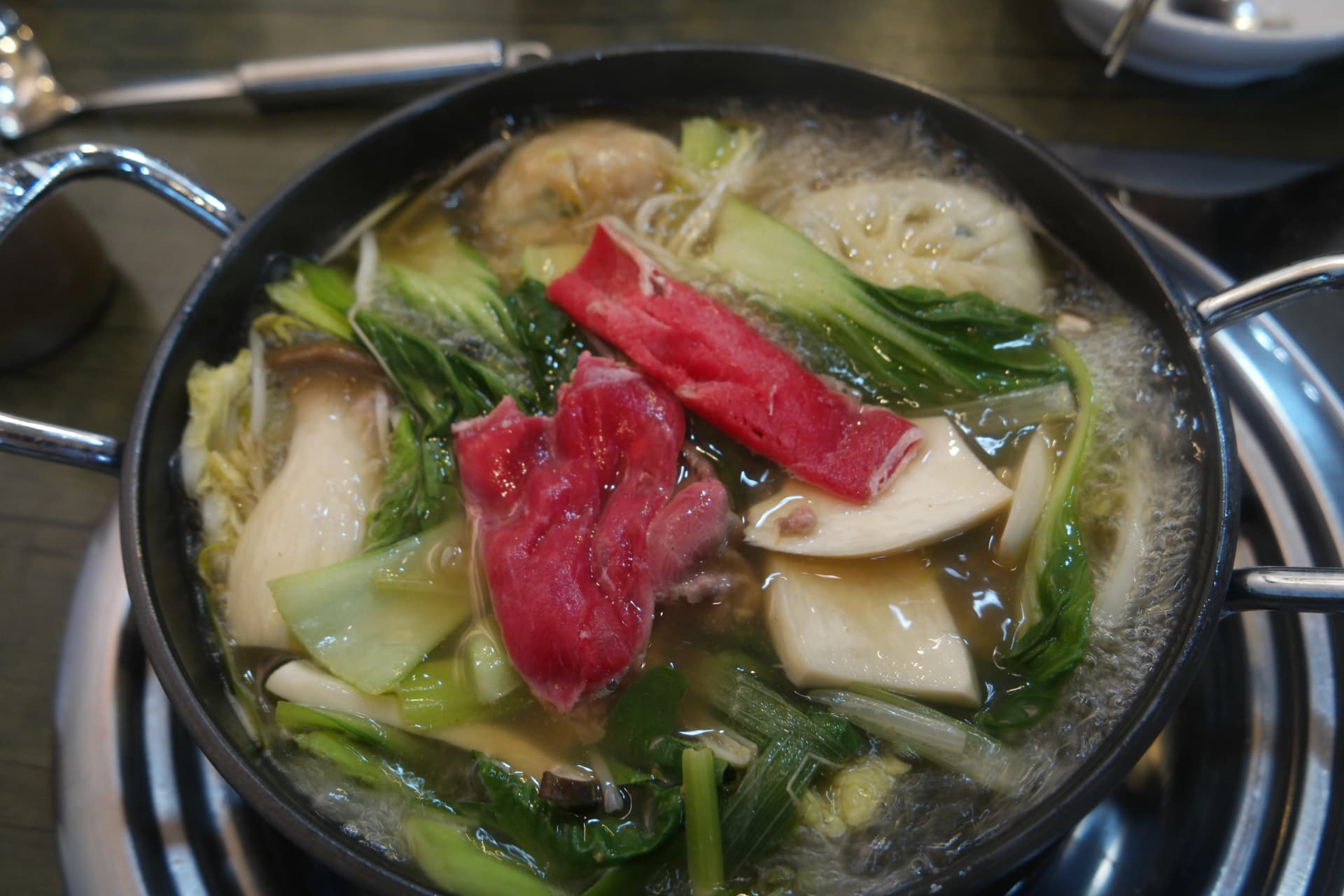
You've got vegetables, you've got dumplings — and now beef goes in too. Want to know what happens? The broth transforms completely. The deep, beefy savoriness spreads throughout the entire pot, and that clean light broth you started with becomes something thick, rich, and seriously bold. At most restaurants, you can order extra beef on top of the base portion. A lot of people start with the standard amount and then immediately order more once they taste it — and honestly, I get it.
A Few Seconds Makes All the Difference
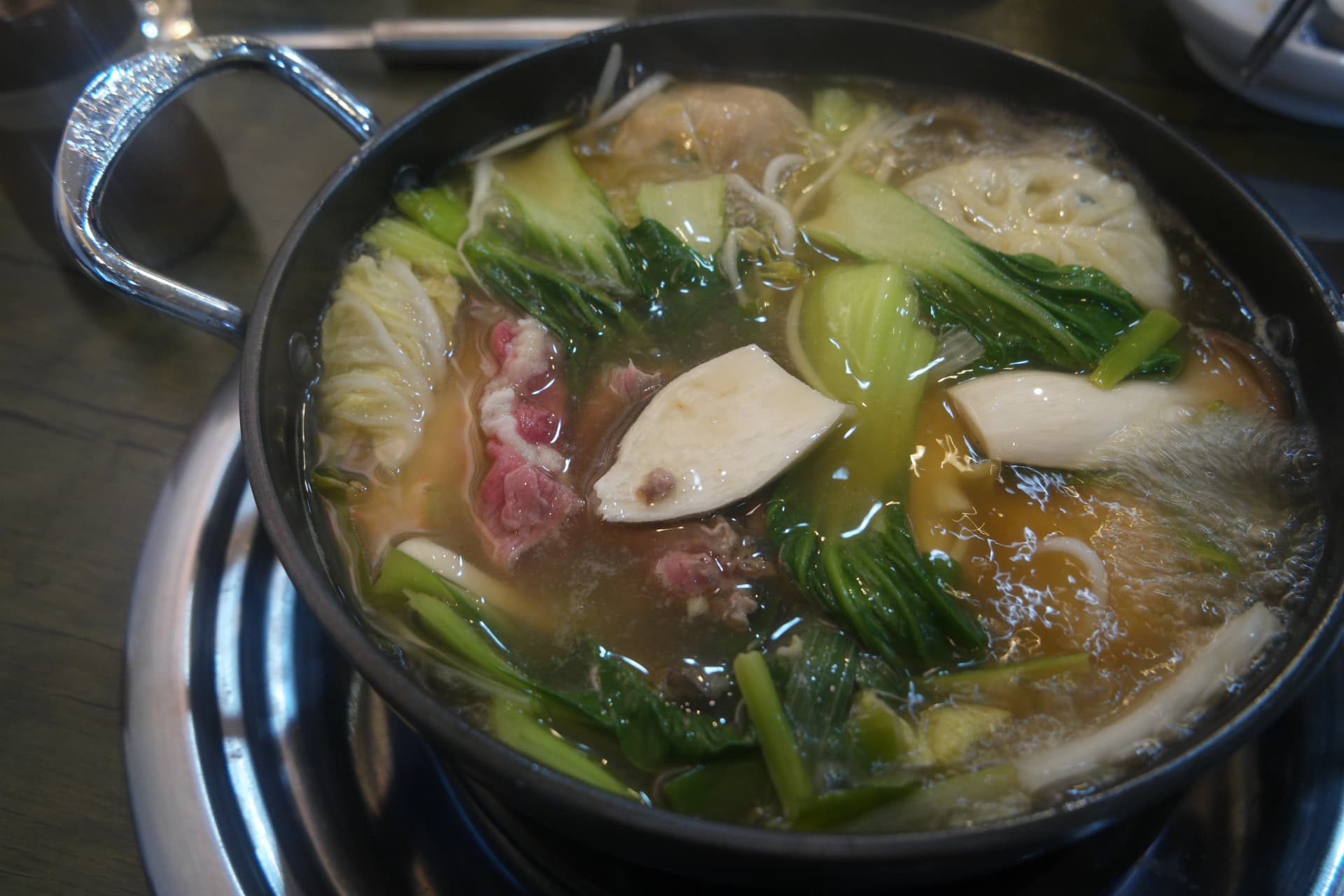
You don't need to cook the beef for long at all. Dip it into the boiling broth, and the second the color changes, pull it out and eat it. That's the shabu-shabu method. The slices are thin enough that a few seconds is genuinely all it takes. Miss that window and the beef goes tough. Hit it right when the color shifts — that's the sweet spot, and that's when it's at its absolute best.
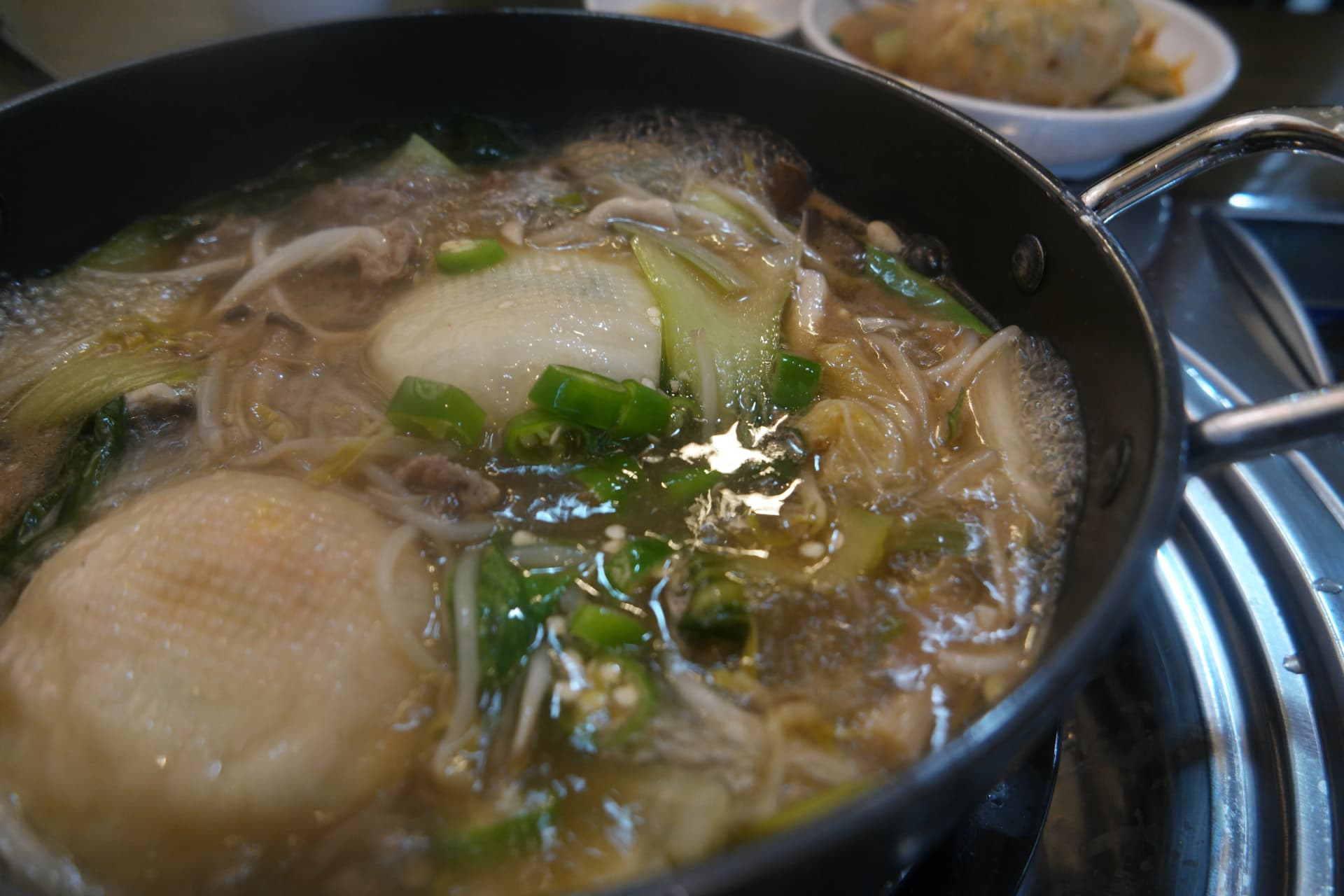
Once the beef starts cooking in the broth, the color shifts again. The clean base that the vegetables and mushrooms built gets layered with that deep beefy richness — the color deepens and the flavor becomes so much more intense. It's a completely different broth from what you started with. Take a spoonful of this and you'll instantly understand why Koreans reach for jeongol every single winter. It just hits that spot.
Finish It With Knife-Cut Noodles — This Is the Real Ending
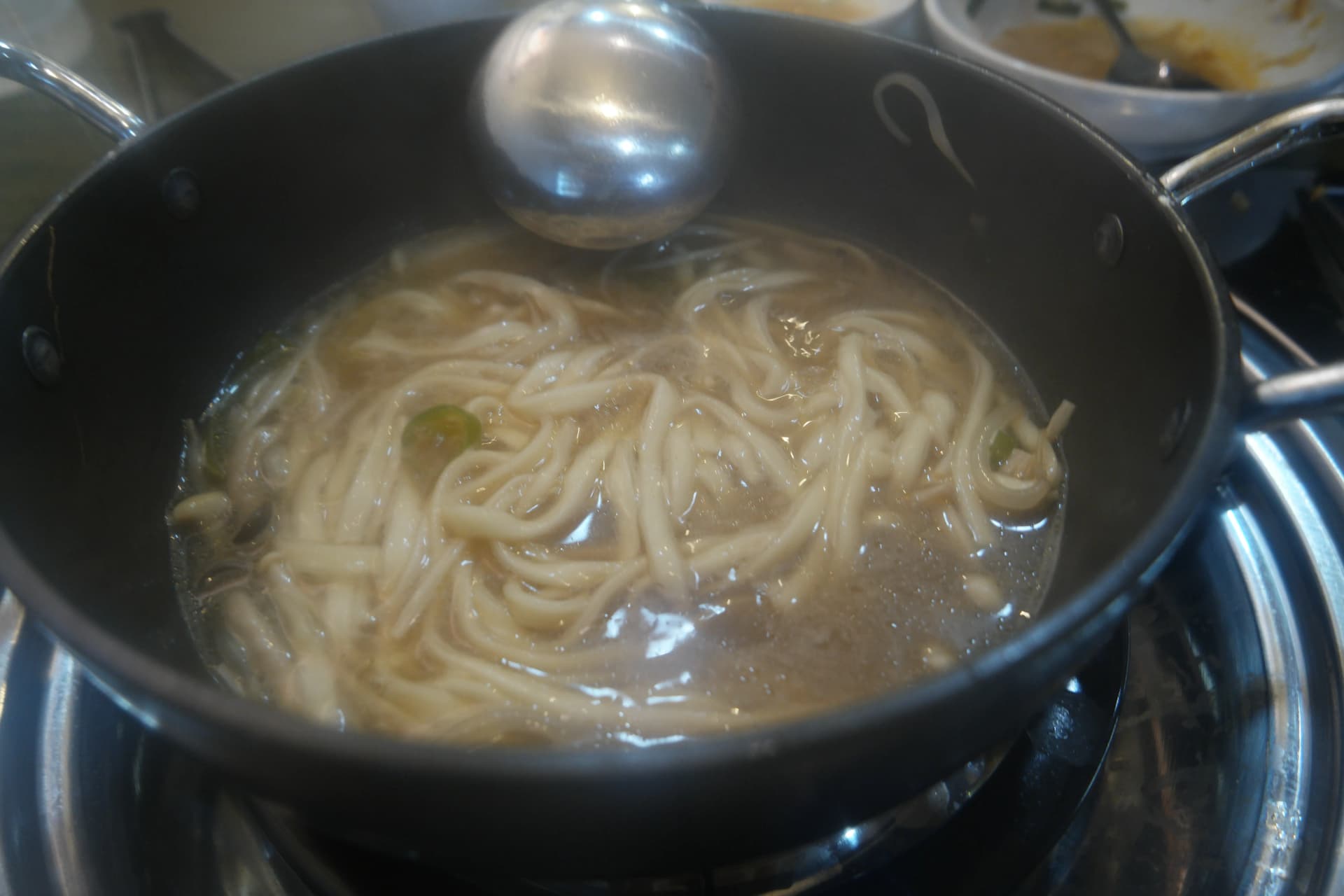
The meal isn't over when the dumplings are gone. All that incredibly deep broth is sitting at the bottom of the pot — you'd be crazy to just leave it. This is where you add the knife-cut noodles (kal-guksu) and finish everything off. When you order mandu jeongol at a restaurant, the noodles are brought out separately for this exact moment. Drop them into the broth that's been built up by all the dumplings, beef, and vegetables, and the noodles soak up every bit of it. That's the final bowl, and it's one of the best bites of the entire meal.
What Is Kal-guksu (Knife-Cut Noodles)?
Kal-guksu is a traditional Korean noodle made by rolling out wheat flour dough and slicing it by hand with a knife — the name literally means "knife (kal) noodles (guksu)." The noodles are thick and chewy, and because of that thickness, they absorb broth slowly and deeply, soaking up all the flavor right into the noodle itself. In a rich, ingredient-packed broth like mandu jeongol, those noodles take on every layer of flavor the pot has built up, turning the leftovers into a deeply satisfying final course. In Korea, kal-guksu can be a standalone noodle dish on its own, but it's also a classic way to finish off a jeongol.
Before the Hot Pot Arrives: The Free Side Dishes That Fill Your Table
At Korean restaurants, before the main dish even comes out, your table gets covered in small plates. These are called banchan — complimentary side dishes that come with every meal. They're free, and if you finish them, you can ask for more. If it's your first time, you'll probably spend a good minute just looking at everything and wondering what it all is. Here's a breakdown of everything that came out today.
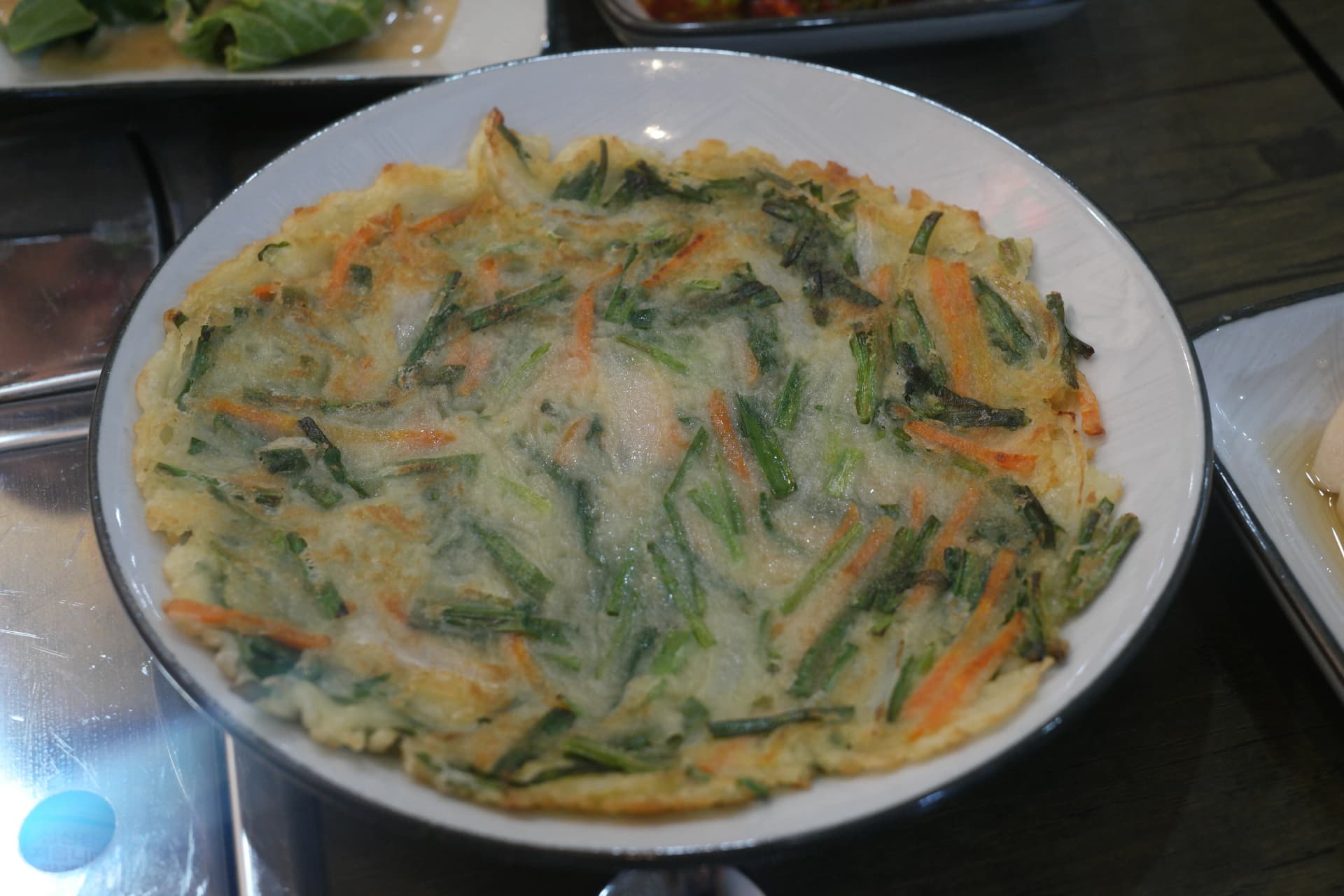
This is a savory pancake loaded with green onions. Crispy on the outside, chewy on the inside — dip it in soy sauce and it makes waiting for the jeongol feel like absolutely no time at all. Getting pajeon as a complimentary banchan is actually a pretty generous move by a restaurant. Not every place does this.
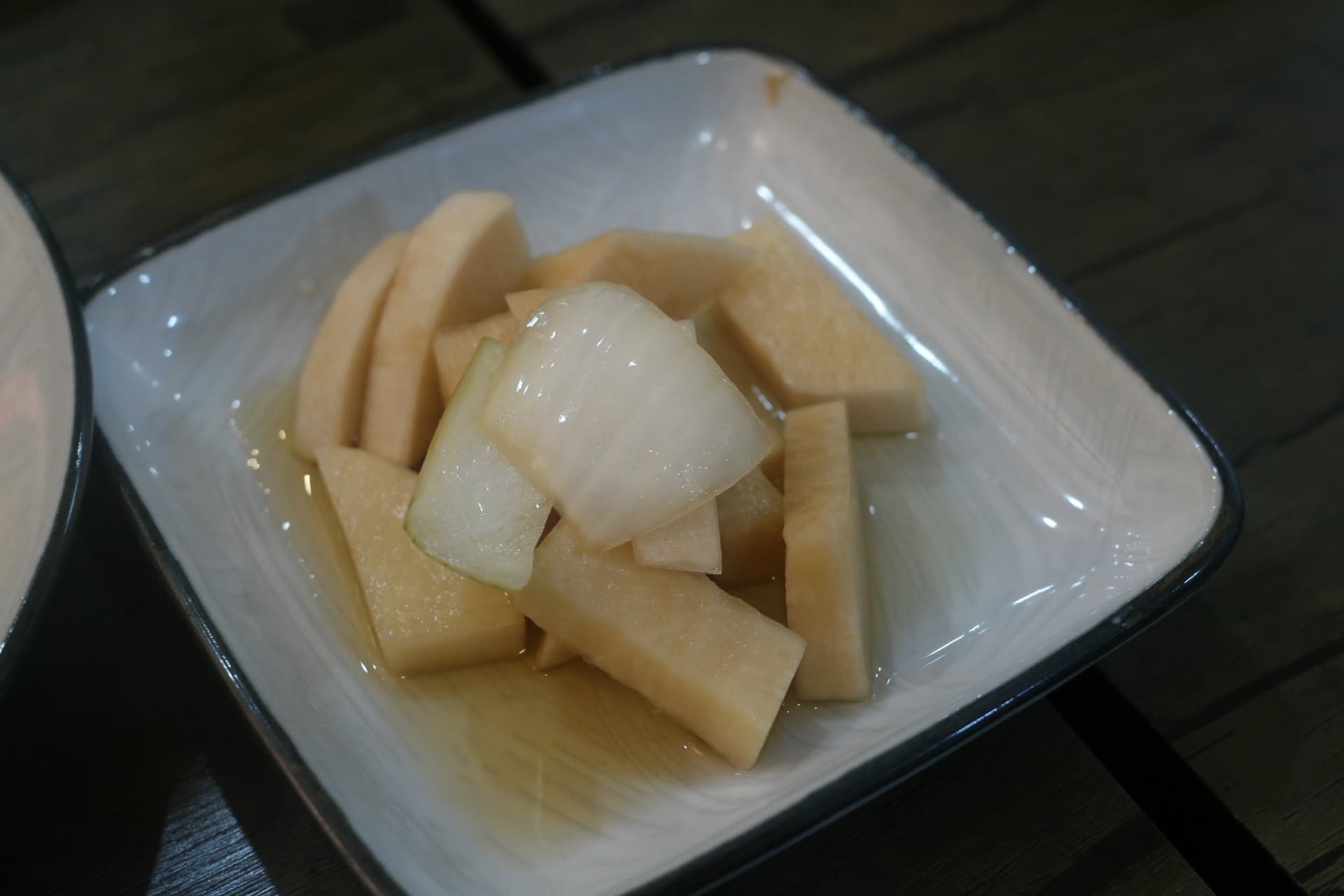
That bright yellow crunchy stuff is pickled radish (danmuji). Sweet and tangy, and when you bite into a piece mid-meal after all that rich, heavy flavor, your mouth just resets completely. It's one of those banchan that shows up at almost every Korean restaurant — seems simple, but you'd notice right away if it wasn't there.
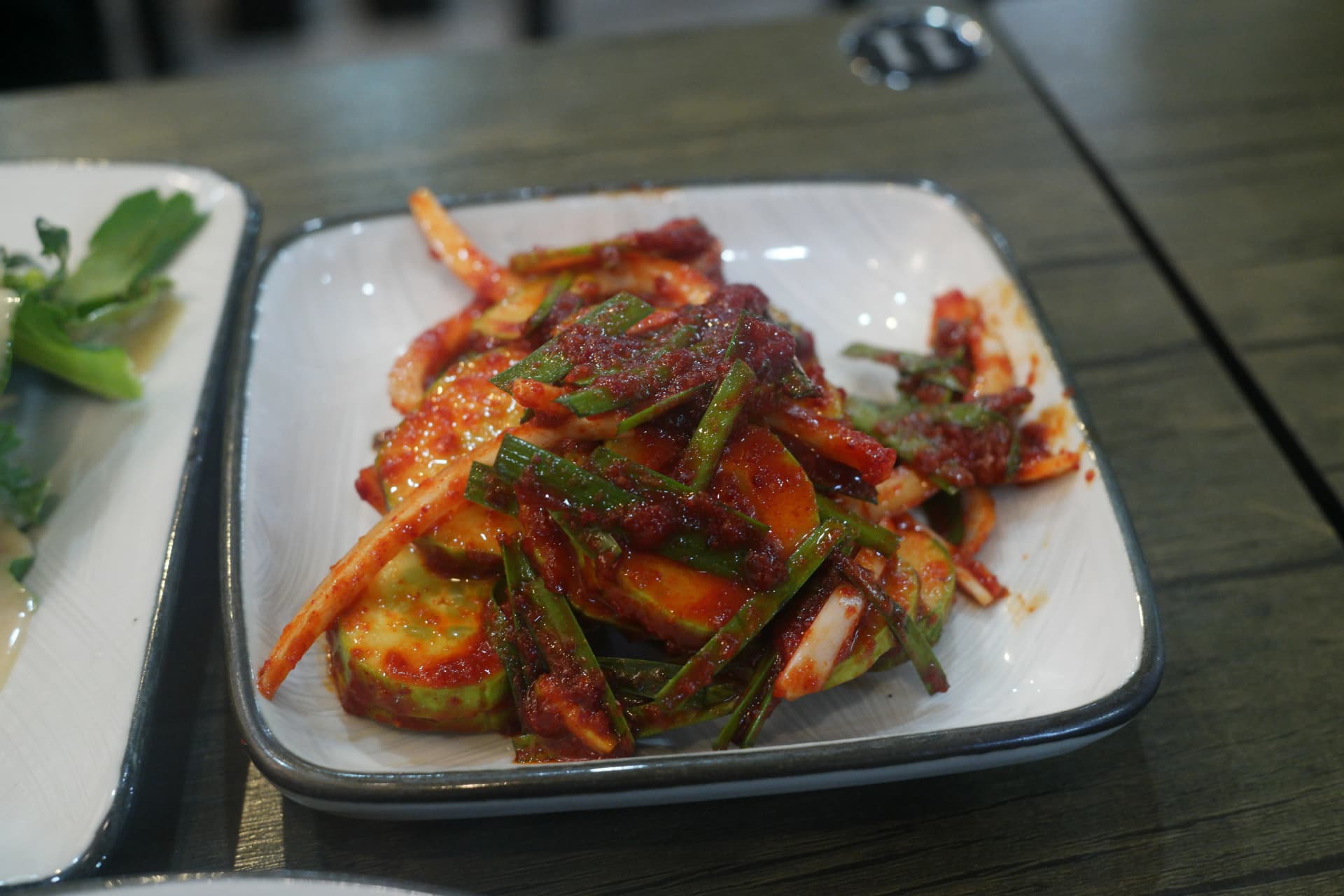
Cucumber tossed with red pepper flakes and green onion. The crunch of the cucumber hits you first, then the seasoning kicks in — spicy and cool at the same time, weirdly. You'll probably hesitate the first time thinking it'll be too much, but once you take that first bite you'll keep going back for more. Pairs especially well with the rich jeongol broth alongside it.
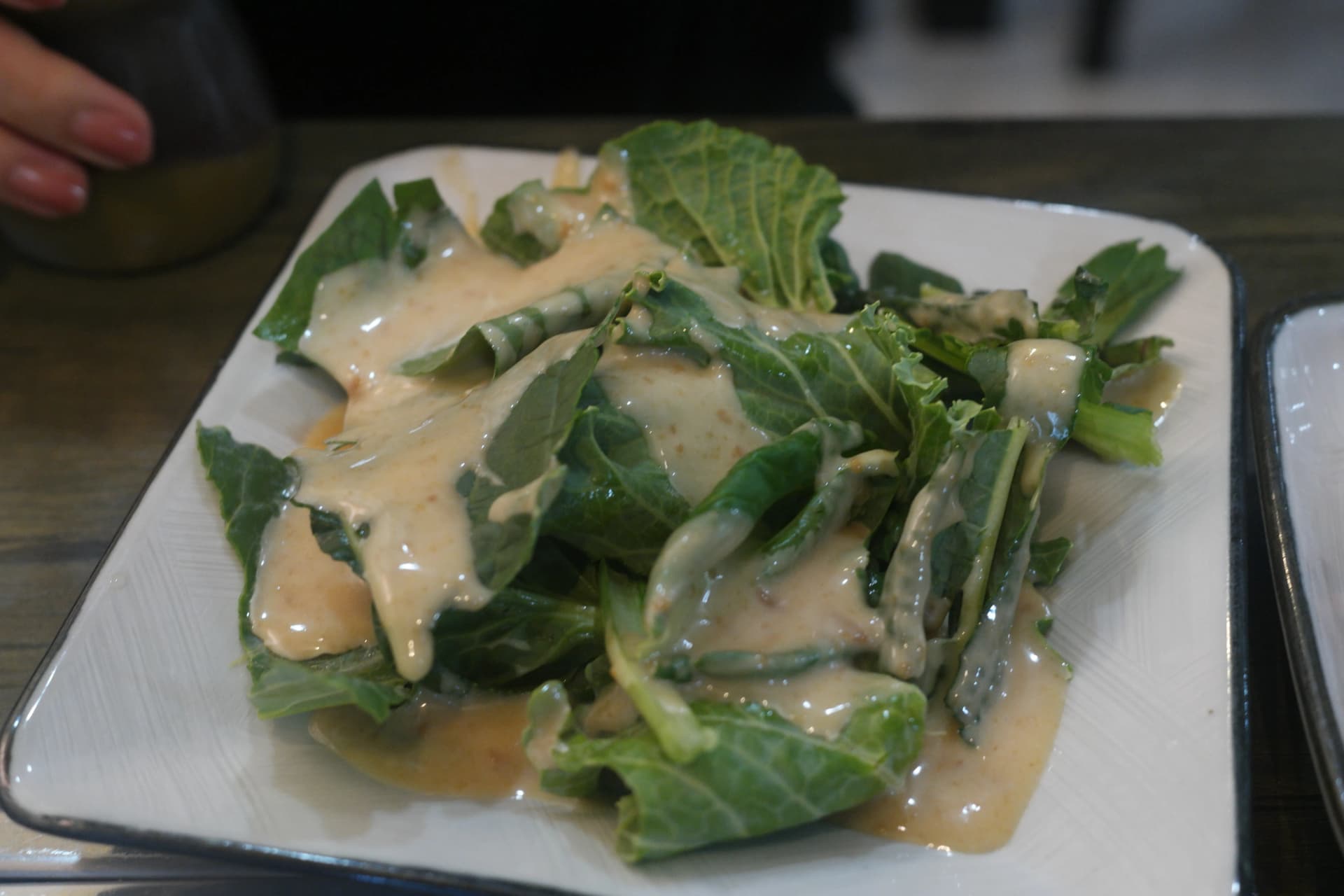
Lettuce with a dressing drizzled on top.
Mandu Jeongol FAQ: Everything You Were Wondering
Q. Is mandu jeongol spicy?
The base broth is not spicy at all. It's clean and mild. If you want heat, you can ask for gochugaru (red pepper flakes) or Korean green chili peppers added on the side.
Q. What kinds of dumplings come in the hot pot?
The standard is usually both meat dumplings (gogi mandu) and kimchi dumplings (kimchi mandu). It varies by restaurant, but most places include both types.
Q. Can I order this if I'm eating alone?
Jeongol is typically served for a minimum of two people. If you're dining solo, it's worth checking ahead whether the restaurant offers a single-serving version before you go.
Q. Are the banchan (side dishes) free?
Yes — banchan comes complimentary with your meal at Korean restaurants. They're included in the price, and you can ask for refills when they run out.
Q. When do you add the noodles?
After you've finished eating all the main ingredients and the broth has had time to develop its full depth, you add the knife-cut noodles at the end. The noodles absorb the rich broth and make the perfect final course.
Q. How much does it cost?
Usually around $9–$14 USD per person for the standard portion. Adding extra beef may bring it up a little higher depending on the restaurant.
Q. Will there be an English menu?
Restaurants near tourist areas often have English menus available. If not, using Google Translate's camera feature to scan the menu works surprisingly well and gets you through almost any situation.
If you're visiting Korea and looking for that one Korean hot pot experience that genuinely lives up to the hype, mandu jeongol is exactly it — a bubbling, layered, endlessly evolving pot that ends with the most satisfying bowl of noodles you'll have all trip. This post was originally published on https://hi-jsb.blog.