
Sizzling Korean BBQ: The Ultimate Seokgalbi Guide
Table of Contents
13 items
Seokgalbi: The Korean Stone Plate Galbi You Have to Try
If you're visiting Korea, there's one dish you absolutely cannot leave without trying — seokgalbi. It's a Korean-style galbi (short rib) dish where charcoal-grilled ribs are served on a super-heated stone plate, and honestly, it might be the most satisfying Korean BBQ experience you'll have on the whole trip. The stone plate keeps everything hot from the first bite to the very last piece, the char-grilled smokiness soaks right into the meat, and the whole setup is just... really fun to eat. It's one of those dishes that works for everyone, including first-time visitors to Korea who aren't quite sure what to order yet.
The great thing about seokgalbi is that it's not a regional specialty locked to one city. You can find it all across the country — Seoul, Busan, Daejeon, wherever you're heading. It's genuinely one of the most accessible Korean BBQ experiences out there.
Prices vary depending on the restaurant. Budget spots start around $9–$10 per person, while higher-end places can go up to about $18 per person. The pricier spots usually justify the cost with a much more generous spread of side dishes, so it's less about the meat quality difference and more about the overall table experience you're getting.
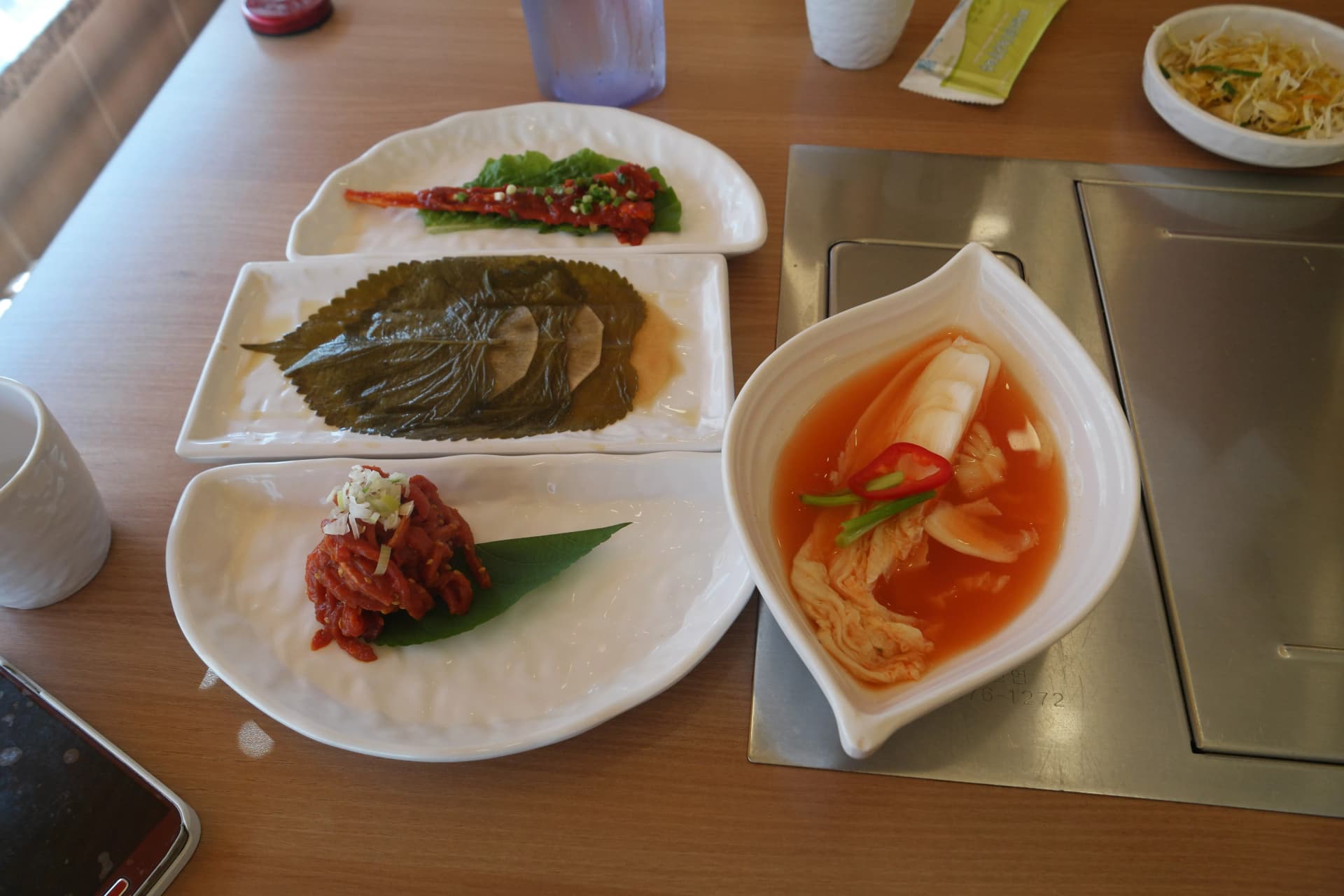
The Side Dish Spread at a Seokgalbi Restaurant
Korean dining culture is all about banchan — the collection of small side dishes that come out alongside your main order. It's completely standard, and seokgalbi restaurants are no exception. As you can see in the photo, you'll typically get perilla leaf pickles (kkaennip-jangajji), green onion salad, kimchi, and even yukhoe all laid out before the main event arrives.
The one that tends to surprise foreign visitors the most is the yukhoe. Yukhoe is a traditional Korean dish made from raw fresh beef, seasoned with sesame oil, Asian pear, and garlic. The idea of eating raw beef might feel a little daunting at first, but so many people who try it end up genuinely surprised by how good it is — the texture is silky soft, and the sesame oil and pear give it this sweet, nutty flavor you don't expect. You can absolutely skip it if it's not your thing, but if you're feeling adventurous, it's worth at least one bite.
Kkuk-kimchi — A Kimchi Even First-Timers Can Handle
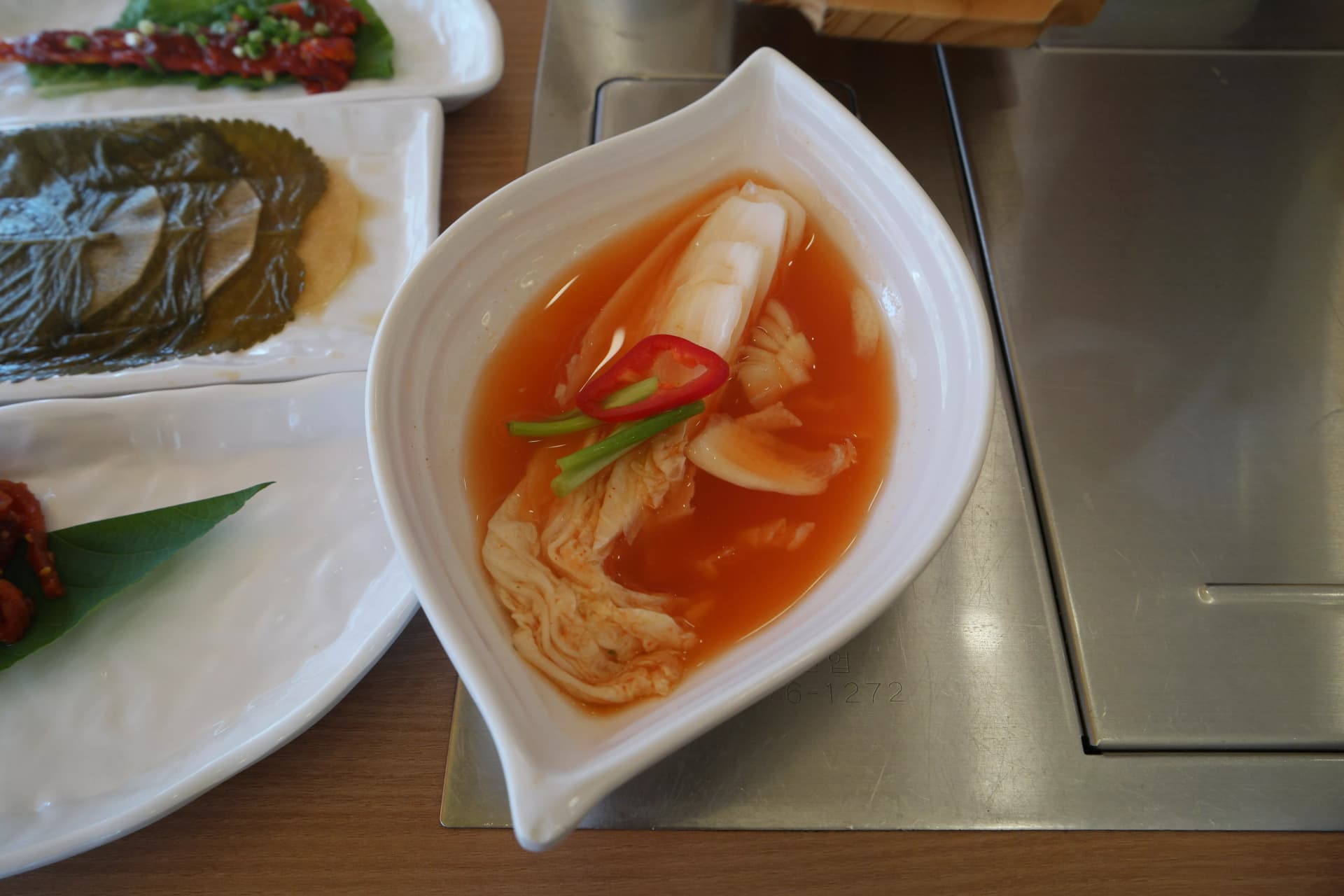
This is kkuk-kimchi, a style of kimchi that has a lot of brine and is less fermented than the standard version. The flavor is clean, cool, and not very pungent at all. If you've been a little nervous about kimchi in the past, this is genuinely a great starting point — it's mild, refreshing, and pairs really well with rich grilled meat.
Corn Cheese — A Korean BBQ Classic Side Dish
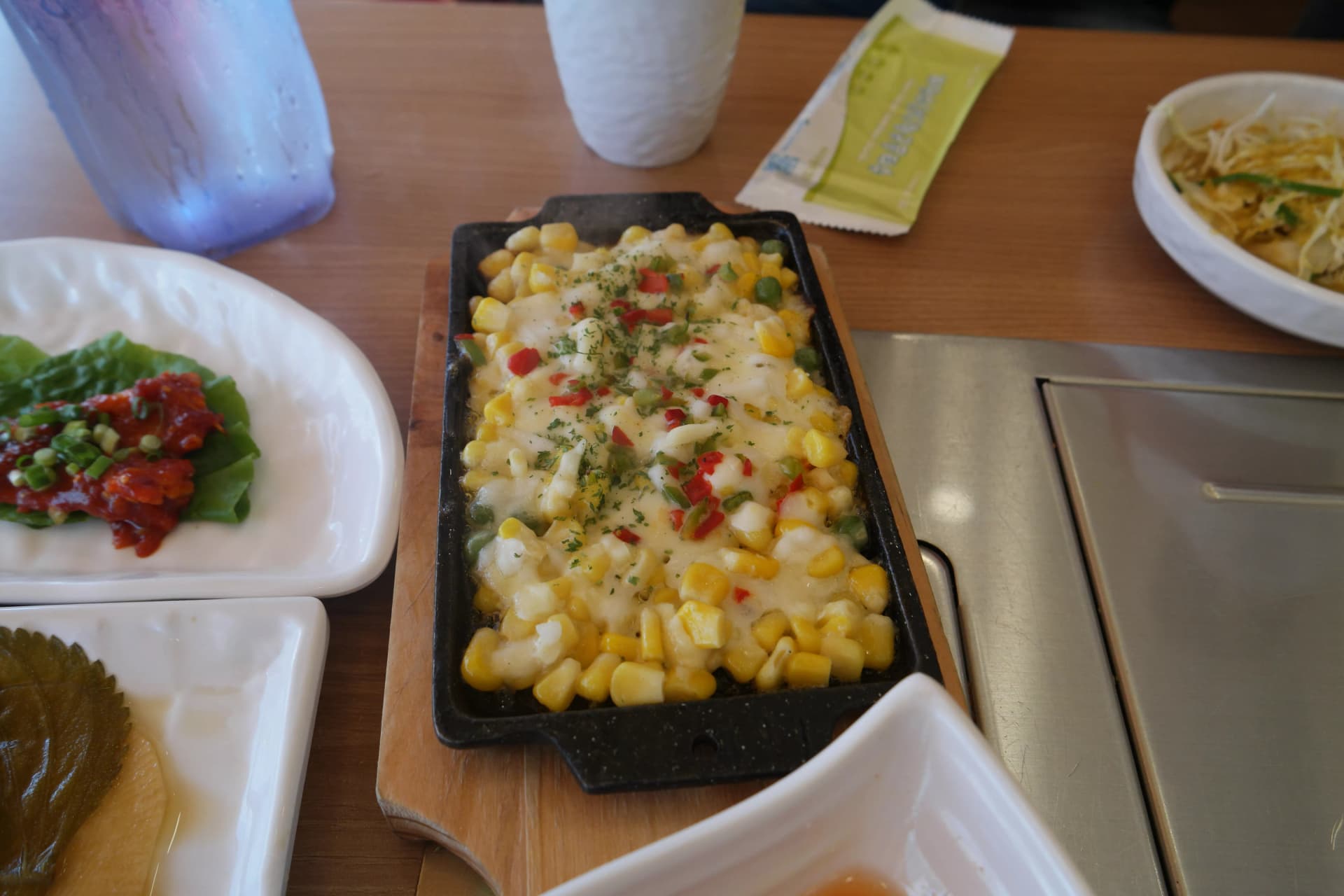
Corn cheese (콘치즈) is exactly what it sounds like — sweet corn loaded with cheese and grilled until it's bubbling and golden. It shows up as a side at Korean BBQ restaurants all the time, and it is universally loved. Sweet, savory, a little gooey — there's basically no learning curve here. Even people who are still figuring out Korean food tend to go back for seconds on this one.
Eggplant Tangsuyuk — Light, Crispy, and Surprisingly Fun
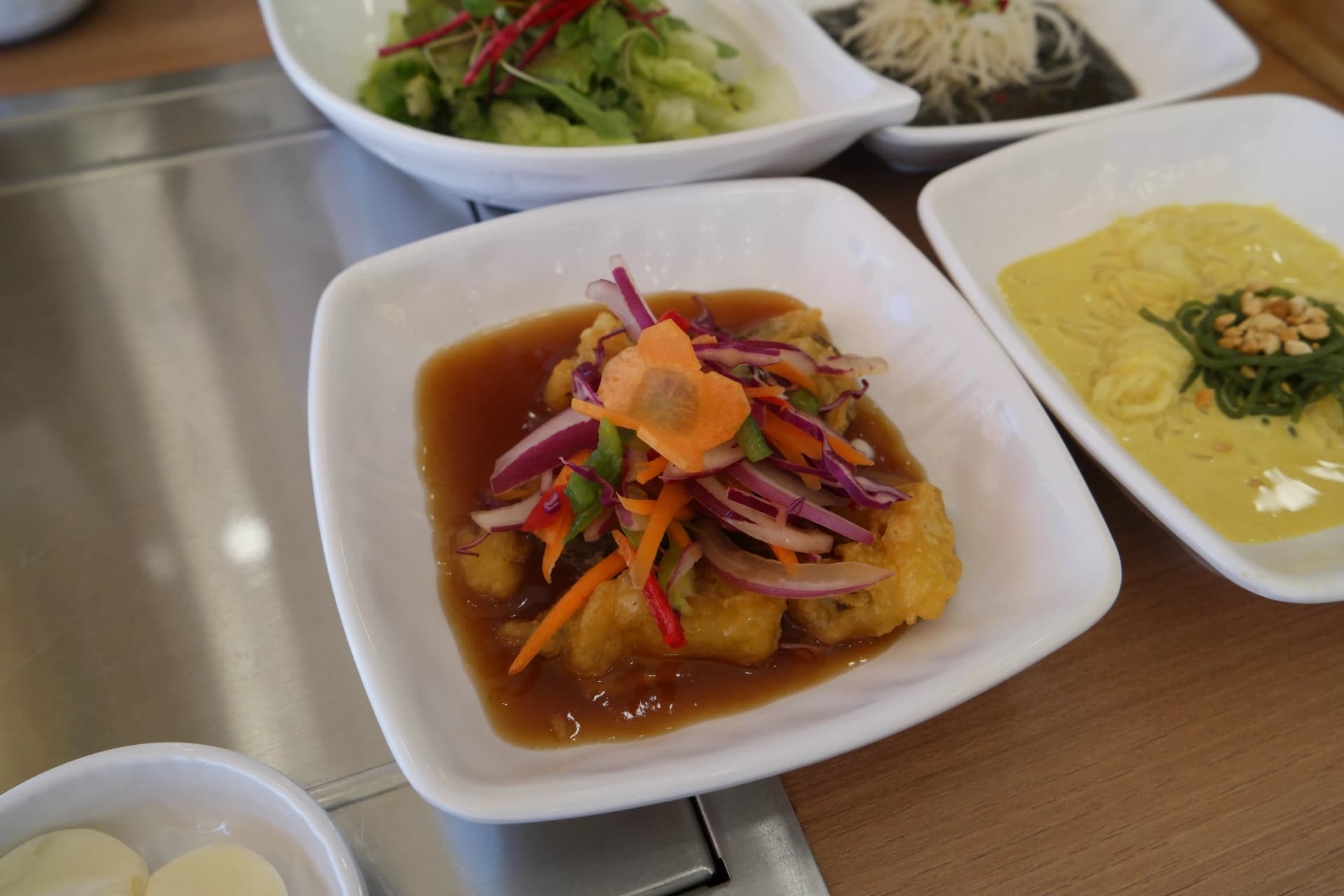
This is eggplant tangsuyuk — fried eggplant slices covered in a sweet and tangy sauce with julienned vegetables on top. It follows the same concept as classic Korean tangsuyuk (sweet and sour pork), but uses eggplant instead, which makes it lighter and gives it a really interesting texture. The eggplant soaks up the sauce beautifully and adds a nice break from the richness of the meat.
Mustard Konjac Noodles — A Bold, Zingy Little Side
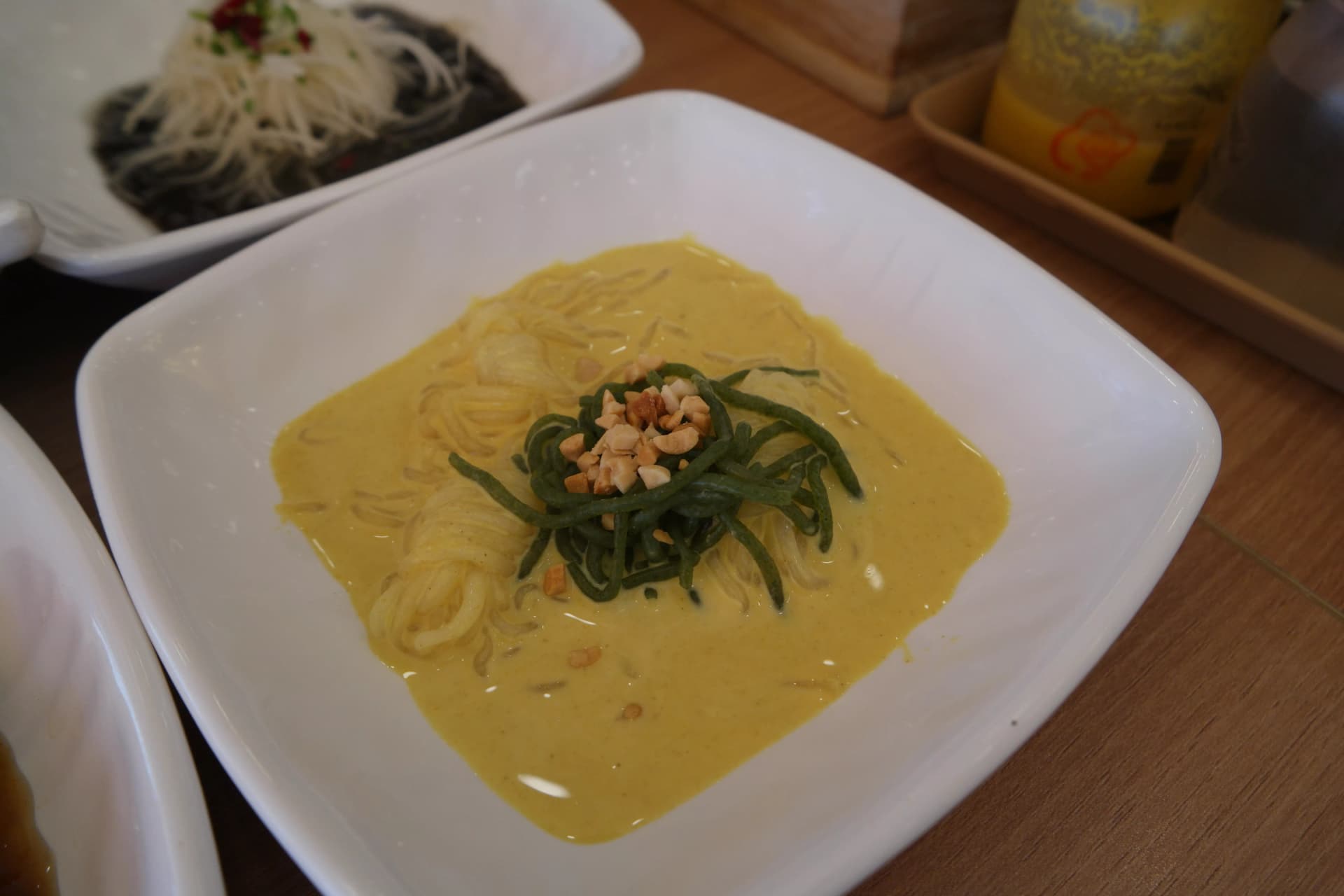
This dish is konjac noodles dressed in a thick yellow mustard sauce and topped with peanuts. The mustard flavor is quite assertive — that sharp, sinus-clearing kind of heat that's distinct from chili spice. If you're not used to mustard-forward dishes, the aroma might hit you pretty strongly at first. That said, it's a really fun contrast against all the heavier, meatier flavors on the table, so it's worth giving it a shot.
A Closer Look at the Side Dishes
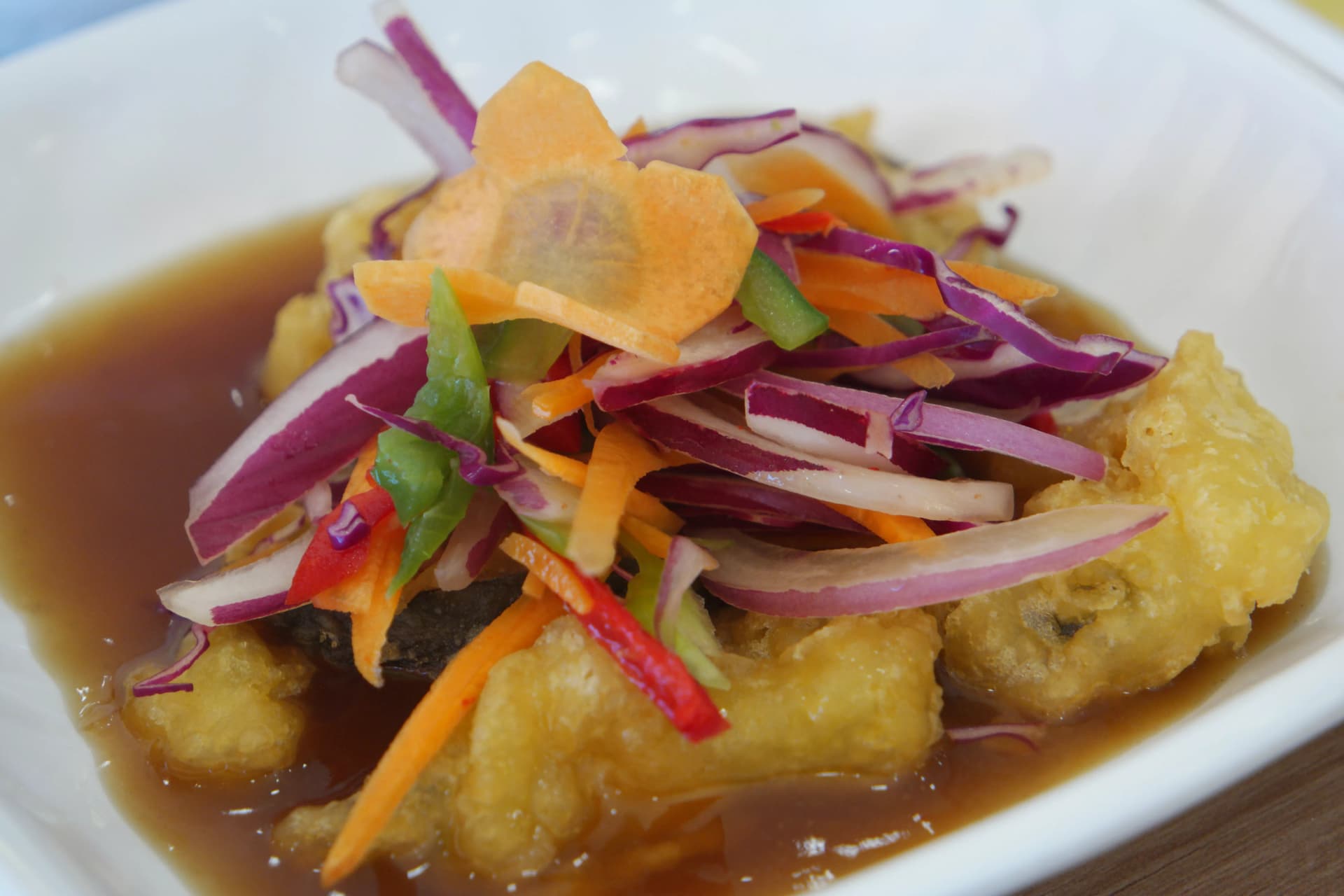
A close-up of the eggplant tangsuyuk. You can see how the sauce has really soaked into the crispy fried eggplant, and the colorful julienned vegetables on top make it look almost too good to eat. Almost.
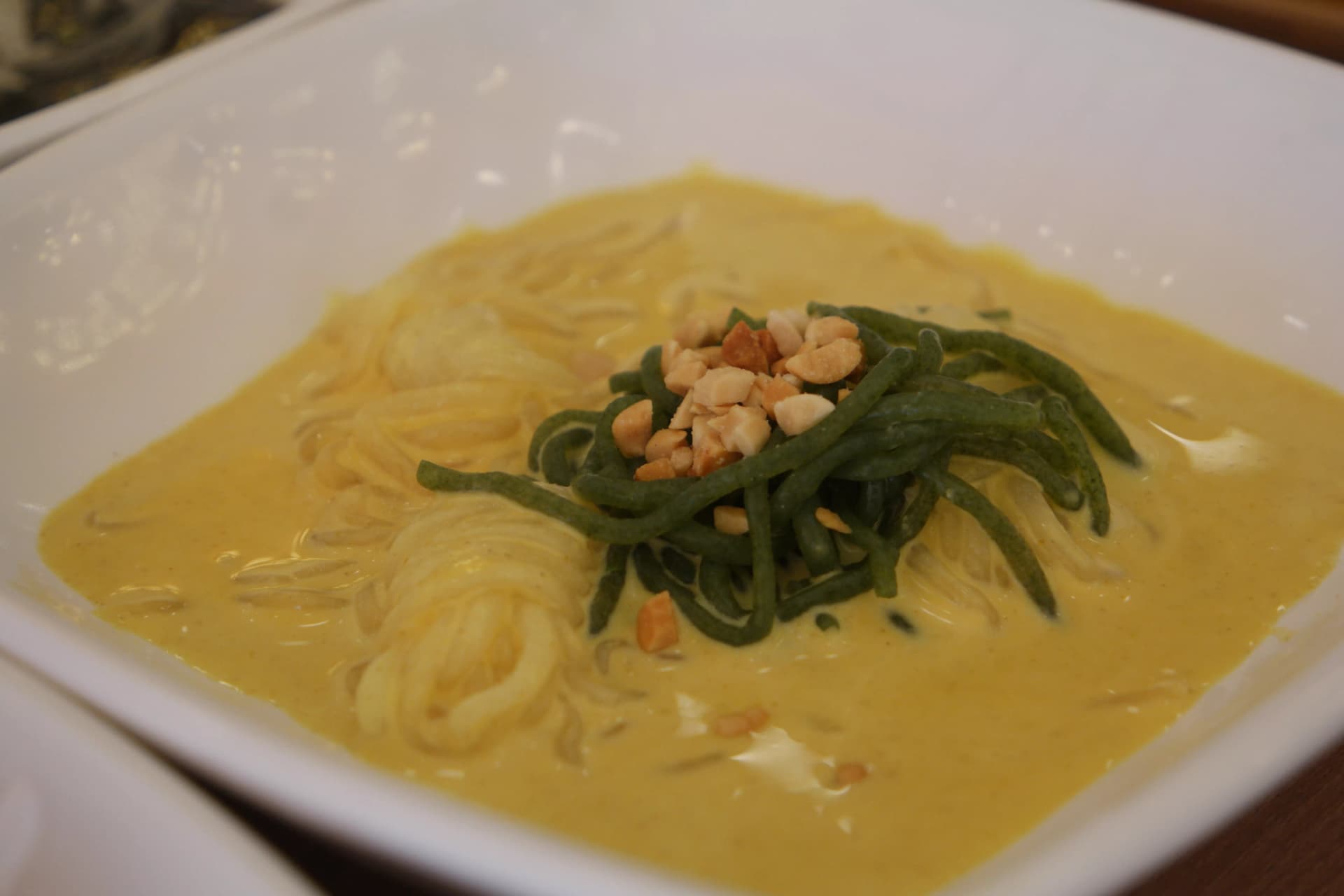
A close-up of the mustard konjac noodles. You can see the thin, translucent konjac noodles mixed in with some green noodles, all sitting in that punchy yellow mustard sauce with peanuts scattered on top. The mustard flavor is actually more well-rounded than it looks — it doesn't overwhelm, and it works as a surprisingly refreshing bite between pieces of grilled rib.
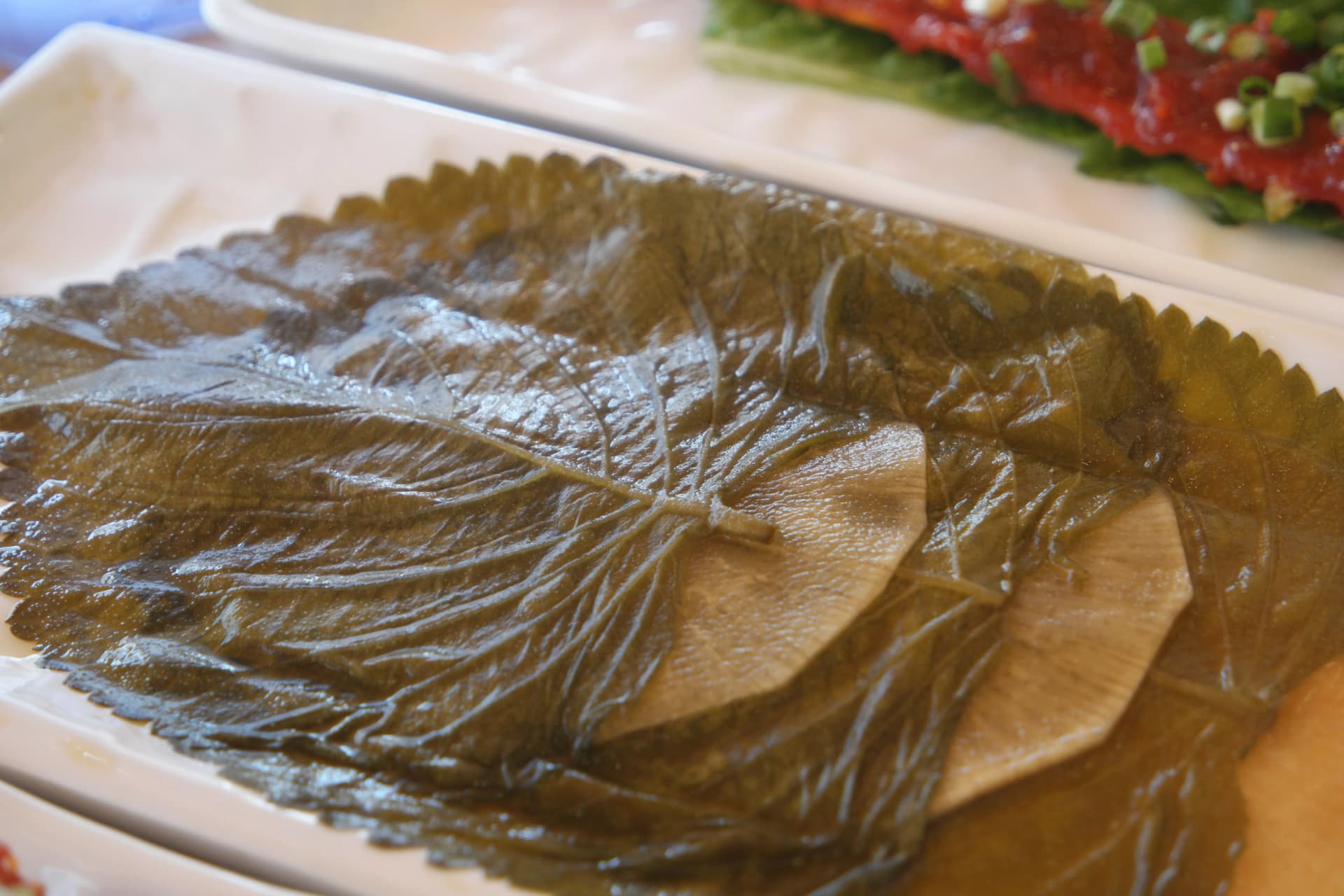
These are kkaennip-jangajji — perilla leaves pickled in soy sauce. For Koreans who grew up eating these, a meal doesn't feel quite complete without them. For first-time visitors, though, the reaction tends to be pretty split. Perilla leaves have a strong, herby aroma that's somewhere between mint and basil but distinctly its own thing, and not everyone takes to it right away. That said, it's such a classic part of Korean table culture that trying it at least once is a good call.
The Star of the Show: Seokgalbi on the Stone Plate
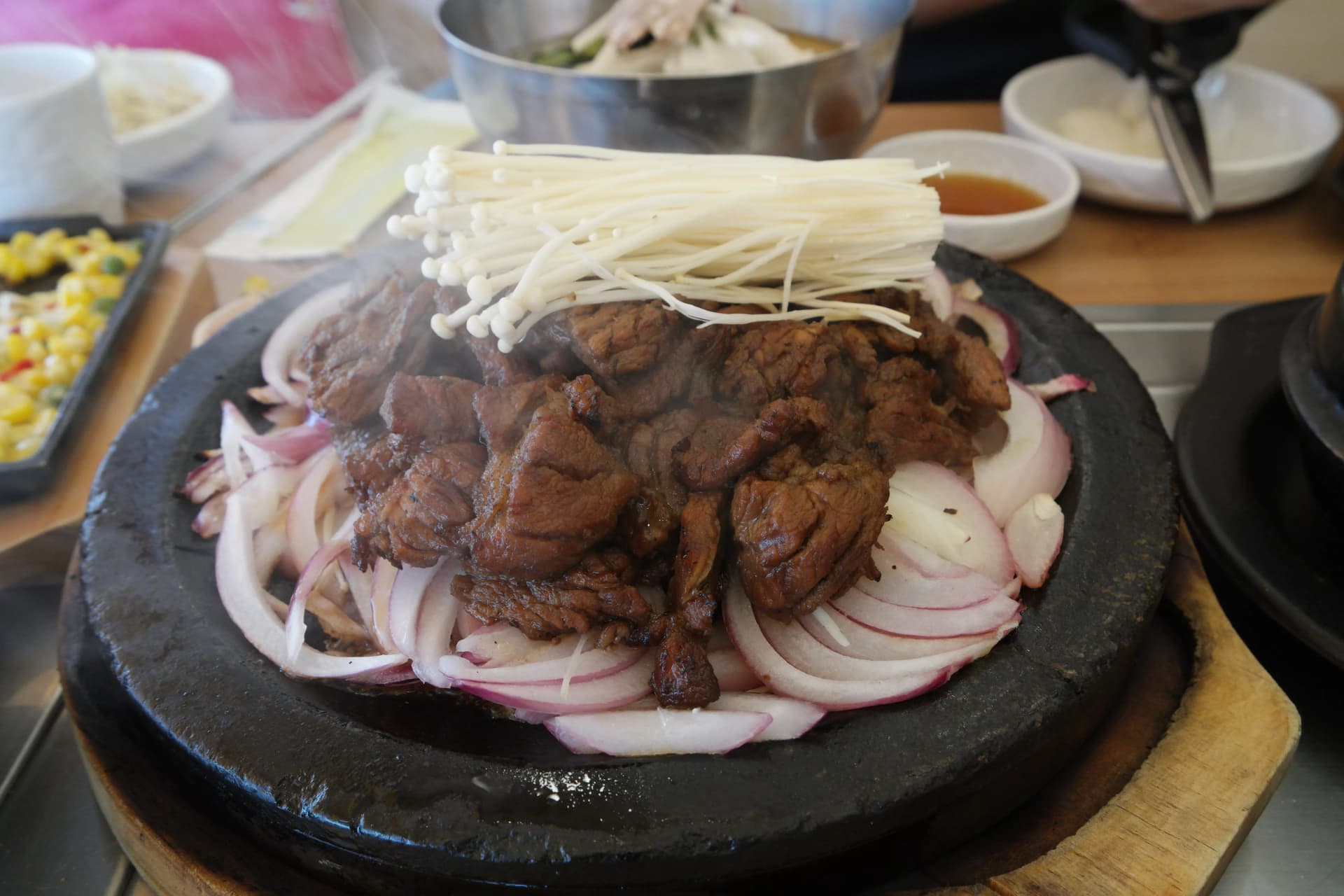
Here it is — the main event. Charcoal-grilled ribs land on a blazing hot stone plate, surrounded by sliced onions and enoki mushrooms. The moment it hits your table, the meat is still actively cooking and sizzling away, and the sound alone is enough to make your stomach growl. The stone plate holds heat so well that your last piece of meat is just as hot and juicy as the first.
Seokgalbi Close-Up — That Charcoal Grain on the Meat
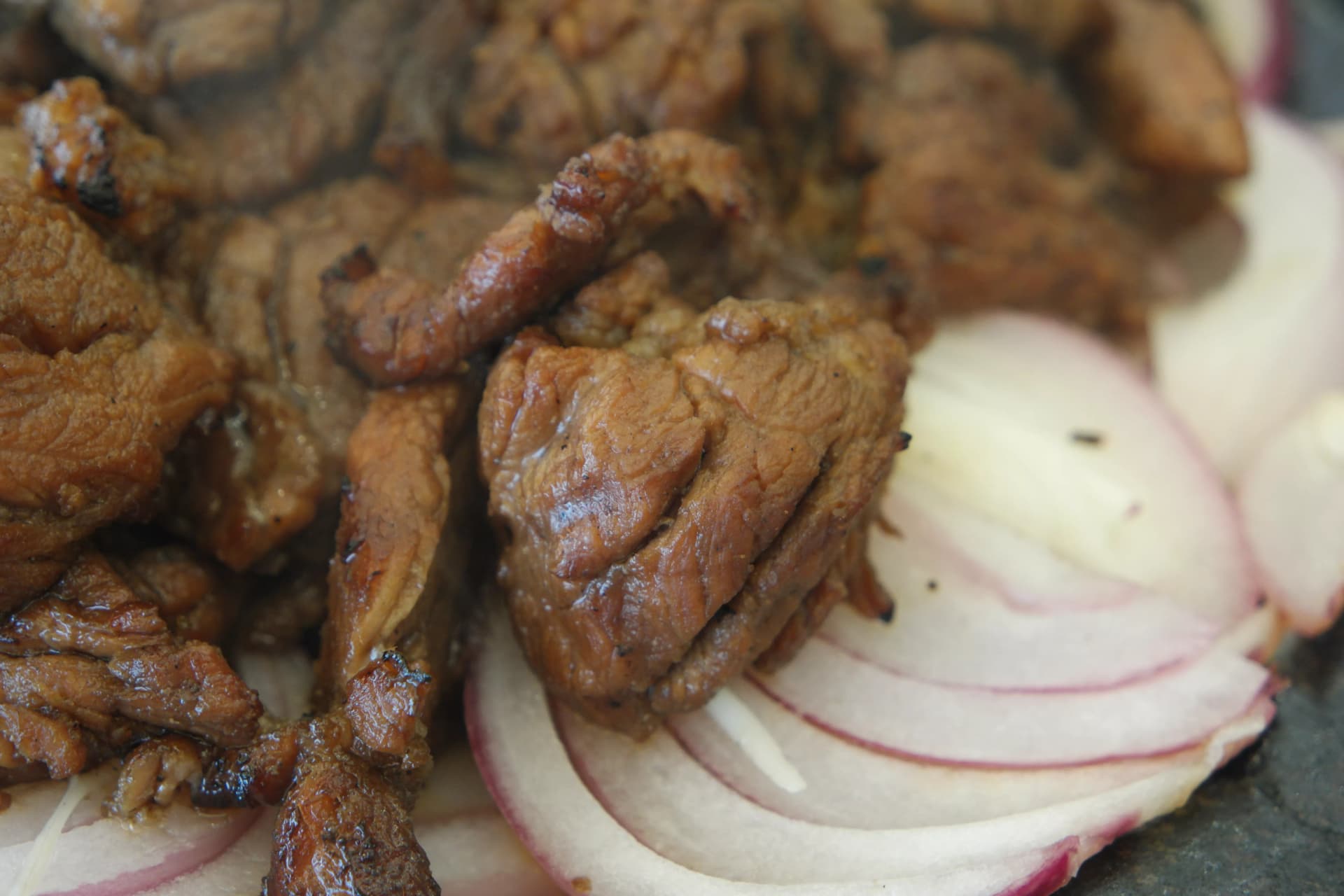
Up close, you can really see the texture of the meat — the grain of the rib is clear, the surface has that gorgeous charcoal finish, and the onions alongside it are slowly going soft and sweet from the heat of the stone. This is exactly what good seokgalbi looks like.
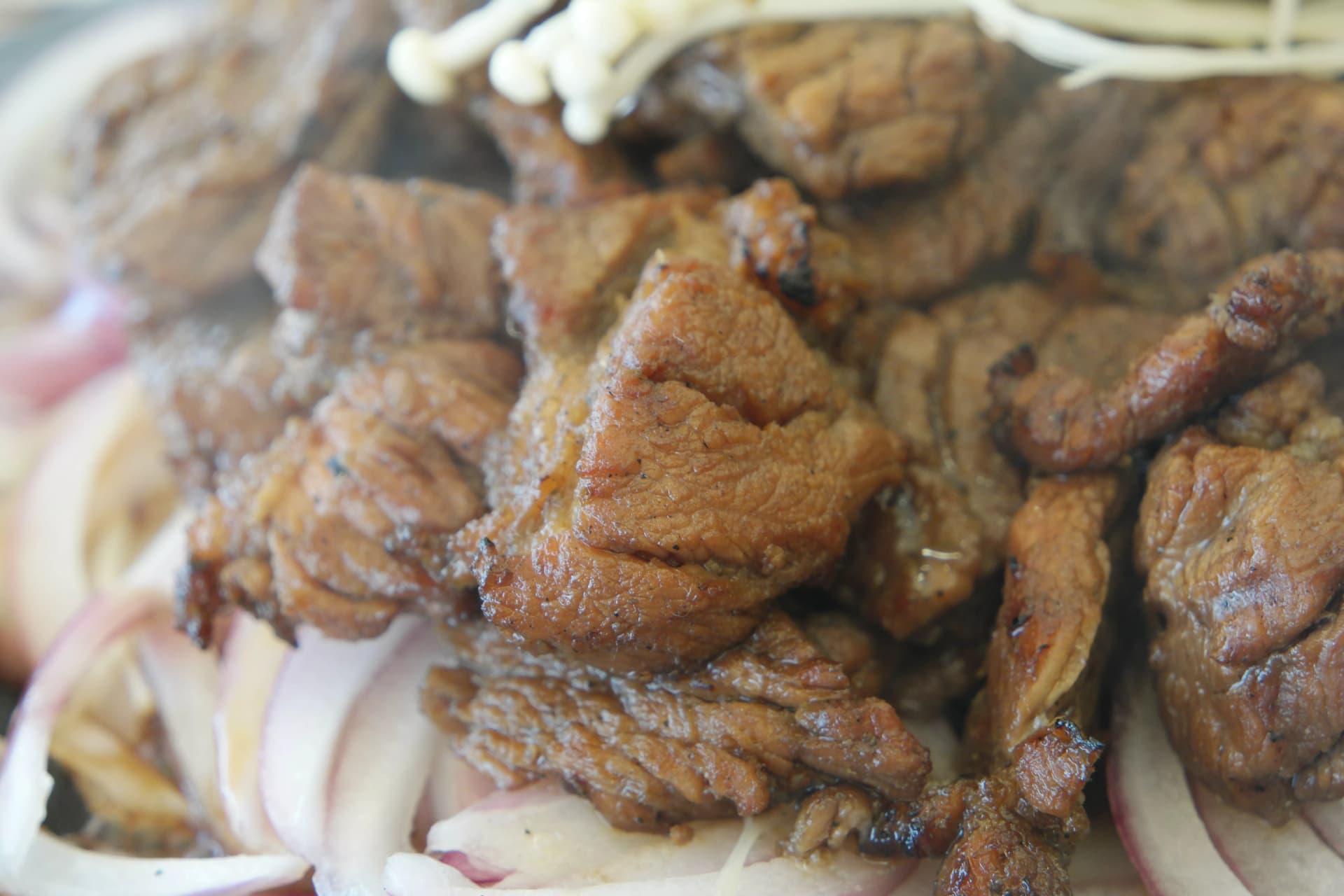
The meat is still actively cooking on the stone here, and the juices are very much alive. The enoki mushrooms alongside it pick up all those savory drippings as they cook, so grabbing a bit of mushroom with each piece of rib is very much the move.
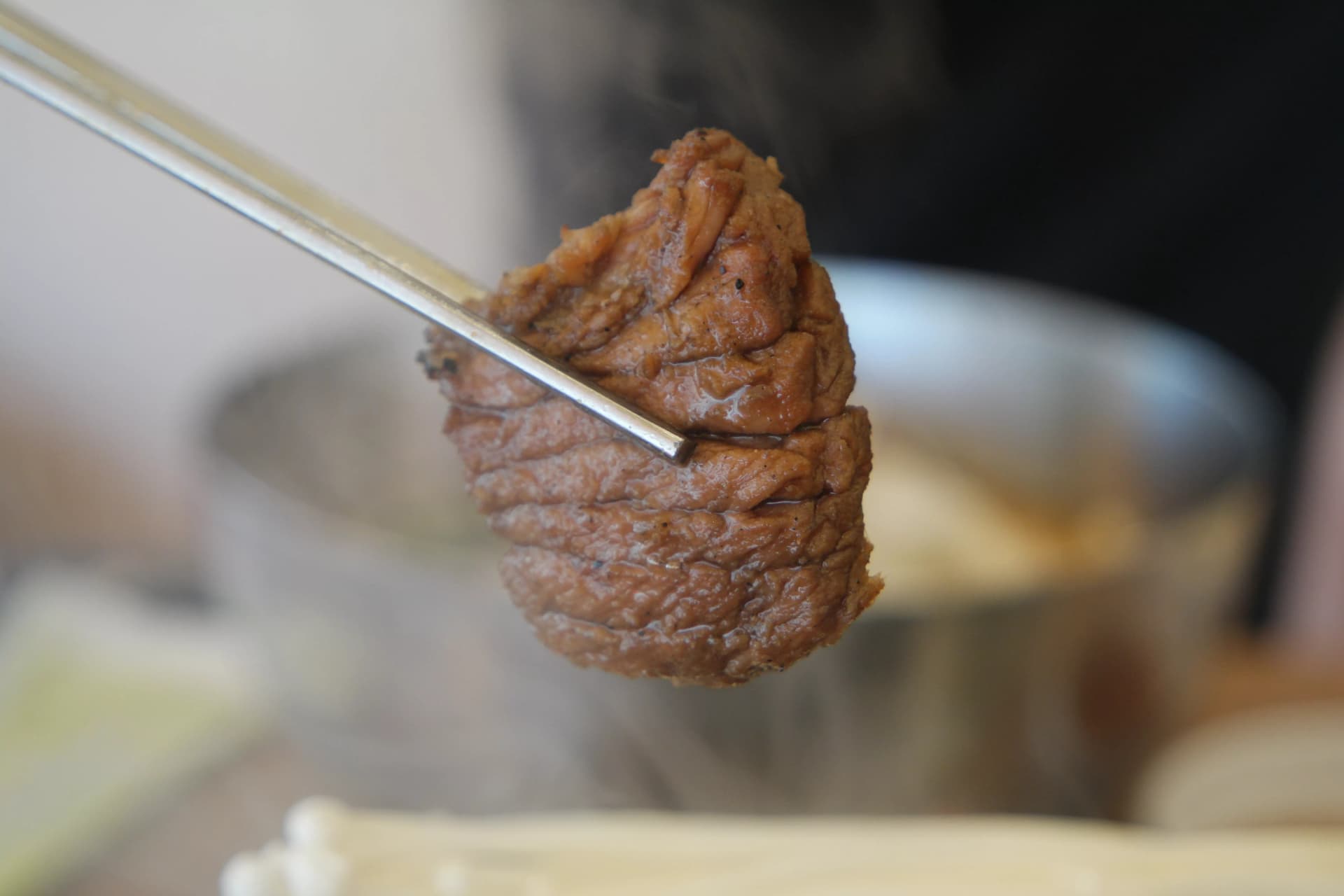
A single piece of seokgalbi lifted with chopsticks, steam still rising from the meat. This is the moment — straight off the hot stone, right into your mouth. That's peak seokgalbi right there.
How to Eat It the Korean BBQ Way — The Ssam Wrap
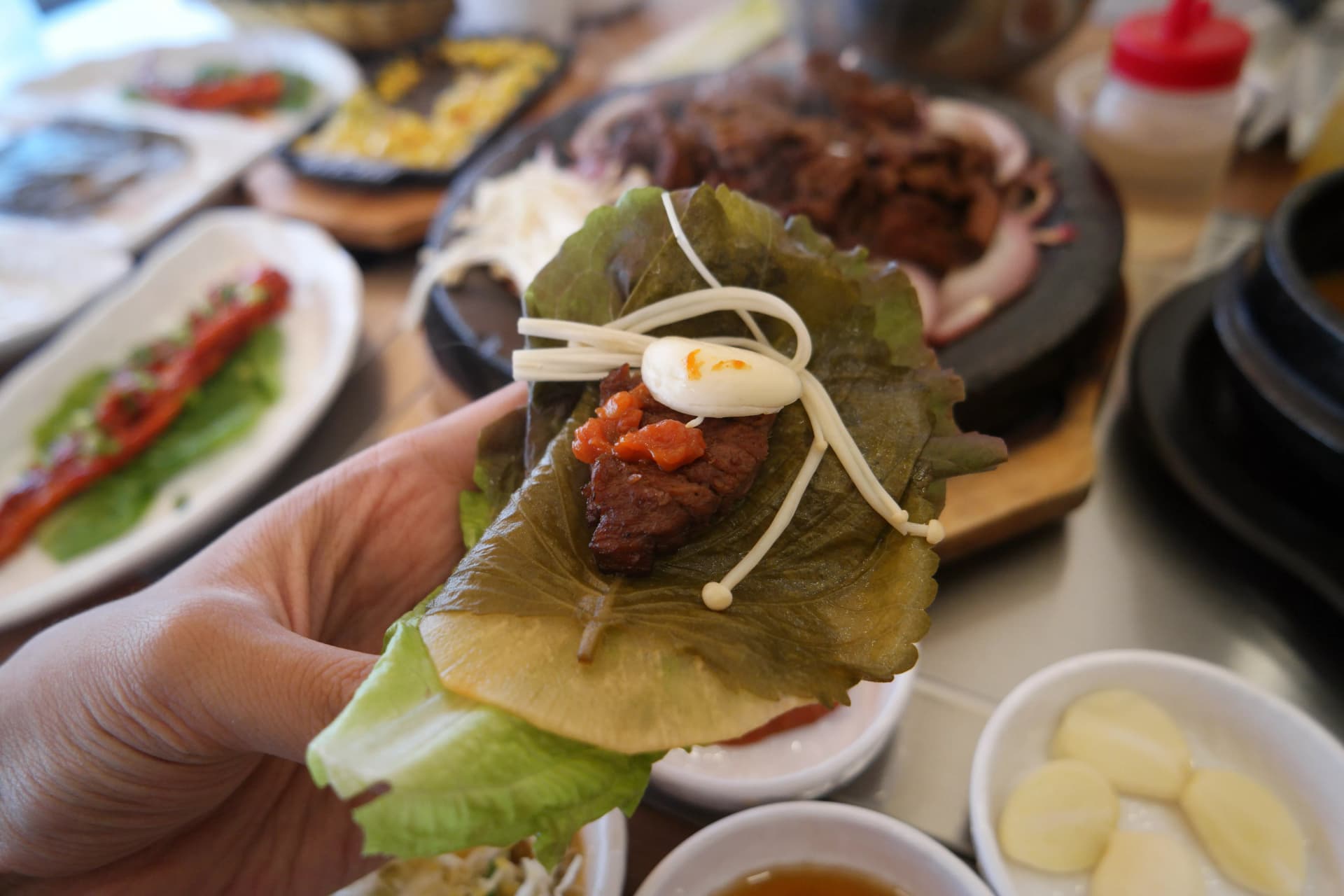
This is the ssam method — the Korean BBQ wrap. You lay a piece of lettuce or perilla leaf flat in your hand, put a piece of rib on it, add a small dab of ssamjang (a thick, savory paste made from fermented soybean), toss on some enoki mushrooms, and fold the whole thing into one big bite. It's the definitive way to eat Korean BBQ, and doing it at a seokgalbi restaurant is honestly one of the most "I'm really in Korea right now" moments of any food trip. Definitely try it at least once.
Naengmyeon — The Classic Korean BBQ Finisher
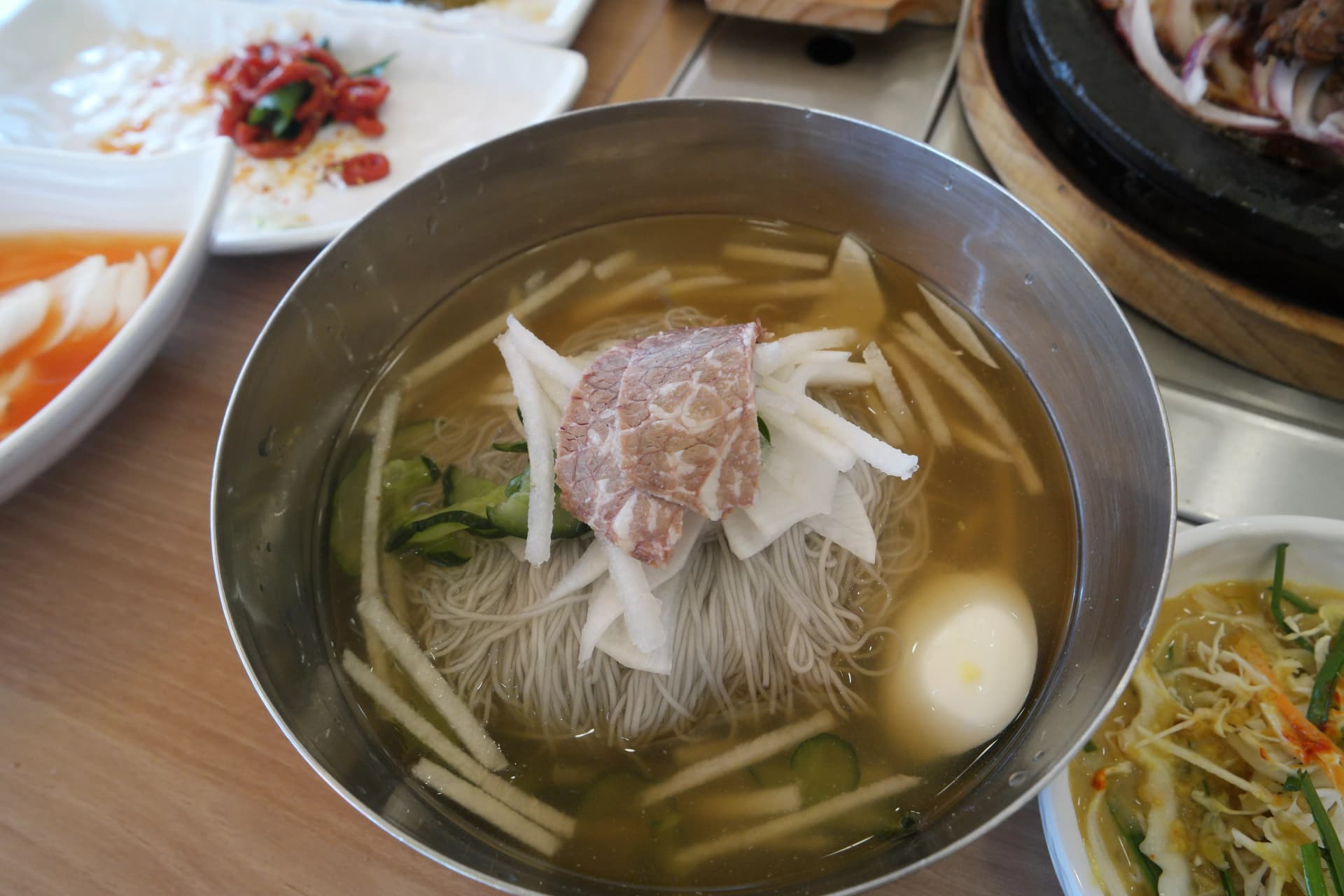
Naengmyeon (냉면) is cold noodle soup, and finishing a Korean BBQ meal with a bowl of it is basically a cultural institution. After all that rich, smoky meat, the chilled broth with thin chewy noodles, sliced beef, radish, cucumber, and a soft-boiled egg is the perfect palate cleanser. Koreans end basically every BBQ outing this way — it just feels wrong to leave without it. If you're at a seokgalbi restaurant and naengmyeon is on the menu, get it.
😊 Mild and approachable — great for first-timers
🔥 For people who love bold, spicy flavors
Doenjang-jjigae — Korea's Ultimate Comfort Food
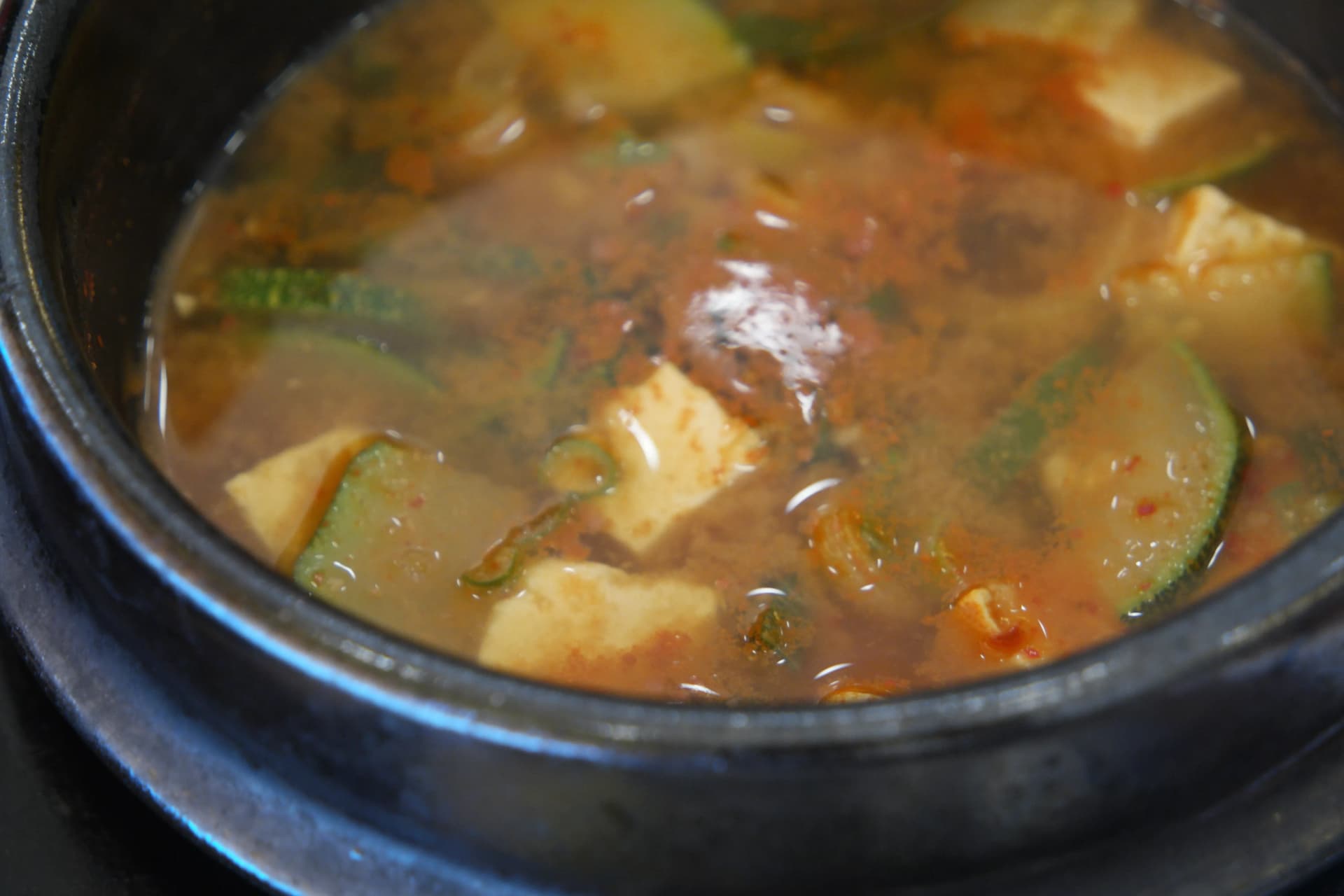
This is doenjang-jjigae (된장찌개) — Korean fermented soybean paste stew. It's made with doenjang (a deeply savory fermented paste), tofu, and zucchini, and it comes in a hot stone pot. It shows up as a complimentary side at a lot of Korean BBQ restaurants, and the rich, earthy, slightly funky flavor is genuinely one of the best things to eat alongside grilled meat and rice. For Koreans, a meal without doenjang-jjigae feels a little incomplete — it's that deeply embedded in everyday food culture. Think of it as Korea's version of comfort food in soup form.
Seokgalbi Is One Korean BBQ Experience You Don't Want to Miss
Seokgalbi isn't just a meal — it's a full experience that puts Korean food culture on the table in the most satisfying way possible. You've got charcoal-grilled ribs sizzling away on a stone plate, a whole spread of interesting side dishes to work through, a pot of doenjang-jjigae keeping things warm, and a cold bowl of naengmyeon waiting at the finish line. It's approachable for first-time visitors, reasonably priced, and available all over the country — which means no matter what city you're exploring in Korea, a great seokgalbi meal is never far away. Put it on your list.
Raon Seokgalbi Seongsu — A clean, modern seokgalbi specialist in the trendy Seongsu-dong neighborhood.
Jeonjuok Hibjiro — A stylish, atmosphere-driven seokgalbi spot tucked into the hip Euljiro district.
Sigoljip Myeongpum Seokgalbi — A long-standing go-to in Sasang-gu, beloved by Busan regulars.
Wolsan Bonga — Consistently ranks among the top seokgalbi restaurants in Daejeon's Daeheung-dong area.
Samo Restaurant — Famous locally for finishing the meal with a fried rice course — a much-loved local touch.
This post was originally published on https://hi-jsb.blog.