
Scenic Ocean Cable Car Ride With Jaw-Dropping Coastal Views
🚡 Seohaerang Jebu Island Cable Car — Complete Visitor's Guide
South Korea's longest sea cable car (2.12km) | ~1 hour from Seoul | Fly over the Moses Miracle tidal road
What Makes It Special?
📋 Essential Information
💳 Ticket Prices
💡 Our Take: The Crystal Cabin is absolutely worth the extra ~$2. Seeing the ocean right under your feet through the glass floor is an unforgettable experience. Skip it only if you're not great with heights.
💡 Tips from Our Visit
The West Sea sunset from the cable car is spectacular. Weekends get crowded with long waits — weekday visits are much more relaxed.
The view of the Moses Miracle tidal road is best right around the middle of the ride. If you're in the Crystal Cabin, don't forget to snap a shot of the glass floor!
The cable car shuts down in strong winds or rain. Call +82-1833-4997 before heading out, especially in winter or monsoon season.
📝 How to Ride — Step by Step
There are two stations: Jeongok Port (mainland) and Jebu Island. If you have mobility concerns, Jebu Island station has easier access.
Choose Standard or Crystal cabin, one-way or round trip. Tickets are sold on-site only — kiosks accept cards, or use the staffed counter.
Follow the signs after getting your ticket. On weekdays you'll walk right on — weekends and sunset hours can mean 30-60 minute waits.
The 10–15 minute ride takes you 2.12km over the West Sea. At the midpoint, look down for the Moses Miracle tidal road — the sea literally parts twice a day to reveal a 1.8km road to the island.
Spend time on Jebu Island's beaches and cafes, or ride straight back with your round-trip ticket. A free shuttle bus loops the island for cable car passengers.
❓ Frequently Asked Questions
Q. Is the Crystal Cabin upgrade worth it?
A. For just ~$2 USD more, you get a see-through glass floor with the ocean right below your feet. It's a completely different experience. We'd say skip it only if you're uncomfortable with heights.
Q. What if the weather turns bad?
A. The cable car suspends operations during strong winds, heavy rain, or lightning. It's best to call +82-1833-4997 before your visit to confirm it's running. The phone line is in Korean, but staff at the station can assist in basic English.
Q. Can I buy a one-way ticket?
A. Yes! A popular route is to take the cable car to Jebu Island, explore for a couple hours, then walk back to the mainland on the Moses Miracle tidal road — a 1.8km path that appears when the tide goes out (twice daily). Check the tide schedule beforehand.
Q. Is it stroller and wheelchair accessible?
A. Yes, the gondola cabins can accommodate both. However, the Jeongok Port station has a steep uphill walk to the entrance — if accessibility is a priority, start from the Jebu Island station instead.
Q. How long should I spend on Jebu Island?
A. 1–2 hours is enough to enjoy the coastal walking trails, grab fresh seafood, and relax at a cafe. A free shuttle bus (included with your cable car ticket) loops around the island with several stops. If the tide is right, walking the tidal road back is a must-do experience.
⭐ Our Rating
Soar 2.12km over the open sea and witness the Moses Miracle tidal road from above — all just an hour from Seoul.
At ~$15 round trip, it's one of the best-value scenic experiences near the capital. Go Crystal. 🚡✨
Table of Contents
14 items
How We Ended Up on a 2km Ocean Cable Car
We were driving back home to Daejeon (a major city about 1.5 hours south of Seoul) after running errands in Seoul. While scrolling through our phones in the car, my wife and I stumbled upon this ocean cable car near the west coast. A quick search showed discounted tickets were available, so I said, "Should we just grab these and go?" My wife laughed and pointed out it wasn't exactly on the way — but she didn't say no.
It was a weekday in early February, and we figured the crowds would be nonexistent. On weekends, these kinds of attractions are notorious for long lines, so this felt like the perfect window. Sure, it was freezing outside, but the car was warm and the idea of flying 2.12km over the ocean was way too tempting. We punched in the GPS and hit the road.
Ocean Views Before the Cable Car Even Starts
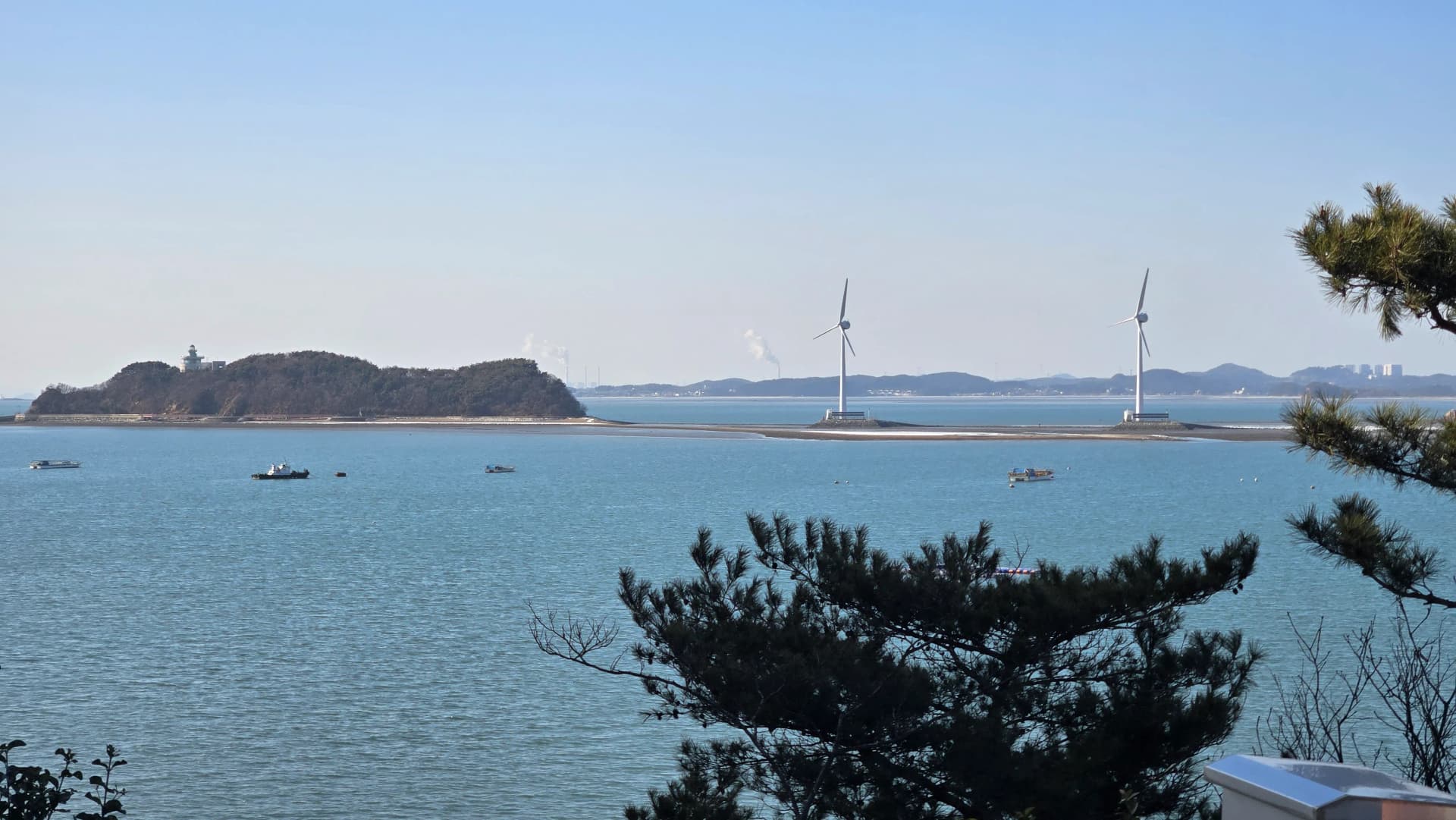
The moment we parked and started walking toward the ticket office, the view hit us. Through the pine trees, the sea stretched out wide, with a small island in the distance and two white wind turbines standing tall behind it. It looked like a painting. The sky was clear but the February wind was biting, so I pulled my coat tight and just stood there taking it in. My wife was already snapping photos, saying, "Are we sure we came here for the cable car?" If the parking lot view was already this good, I couldn't wait to see what it looked like from above.
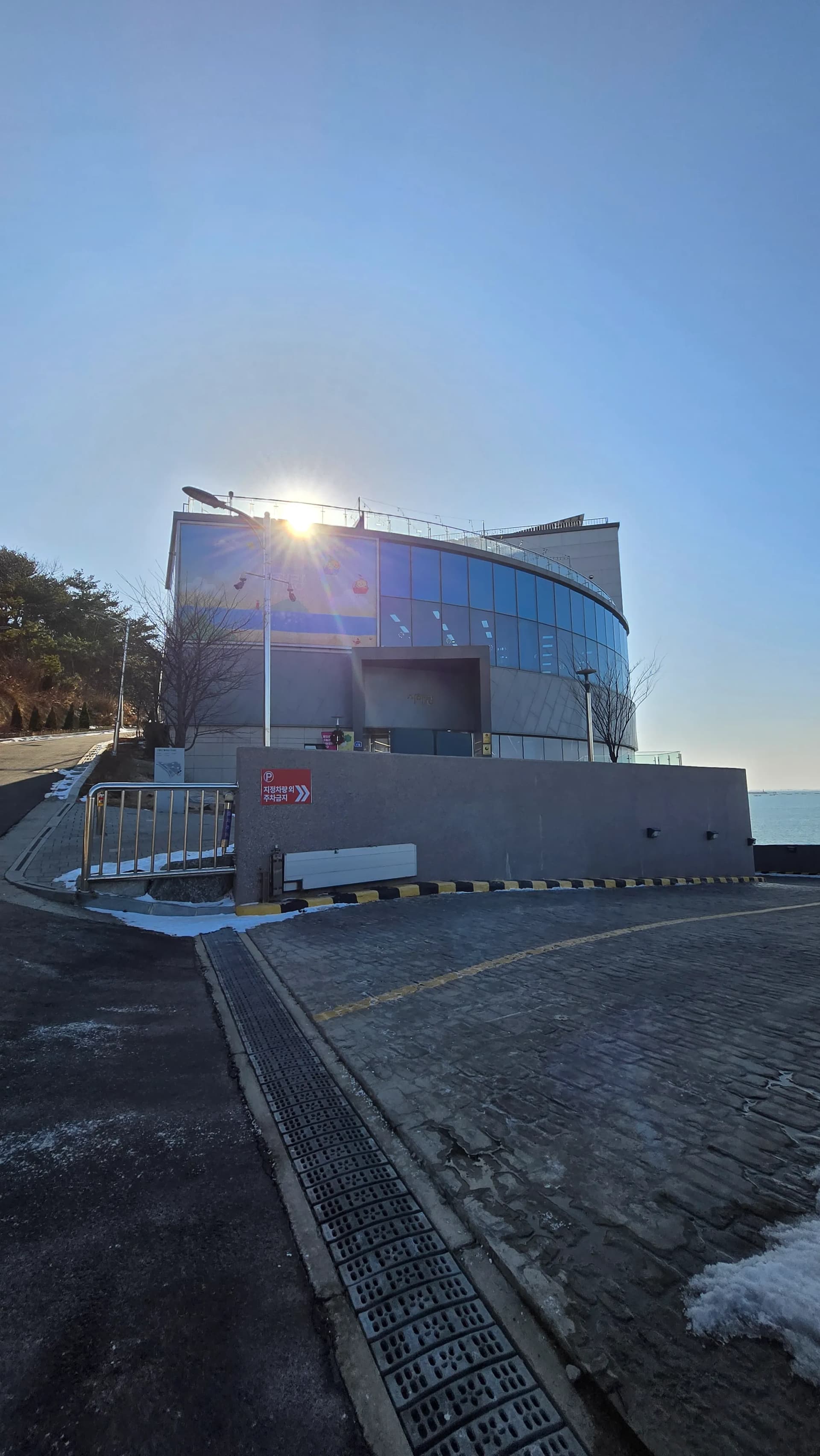
About a 100-meter walk uphill brought us to the station building. The slope was steeper than expected — something to keep in mind if you're traveling with elderly family or anyone with mobility issues. There are handrails, but it's a decent incline. My wife even said, "We'll need to be extra careful coming back down." The glass building was gleaming in the sunlight, and being a weekday afternoon, the whole place felt calm and uncrowded.
Buying Tickets — The Perks of a Weekday Visit
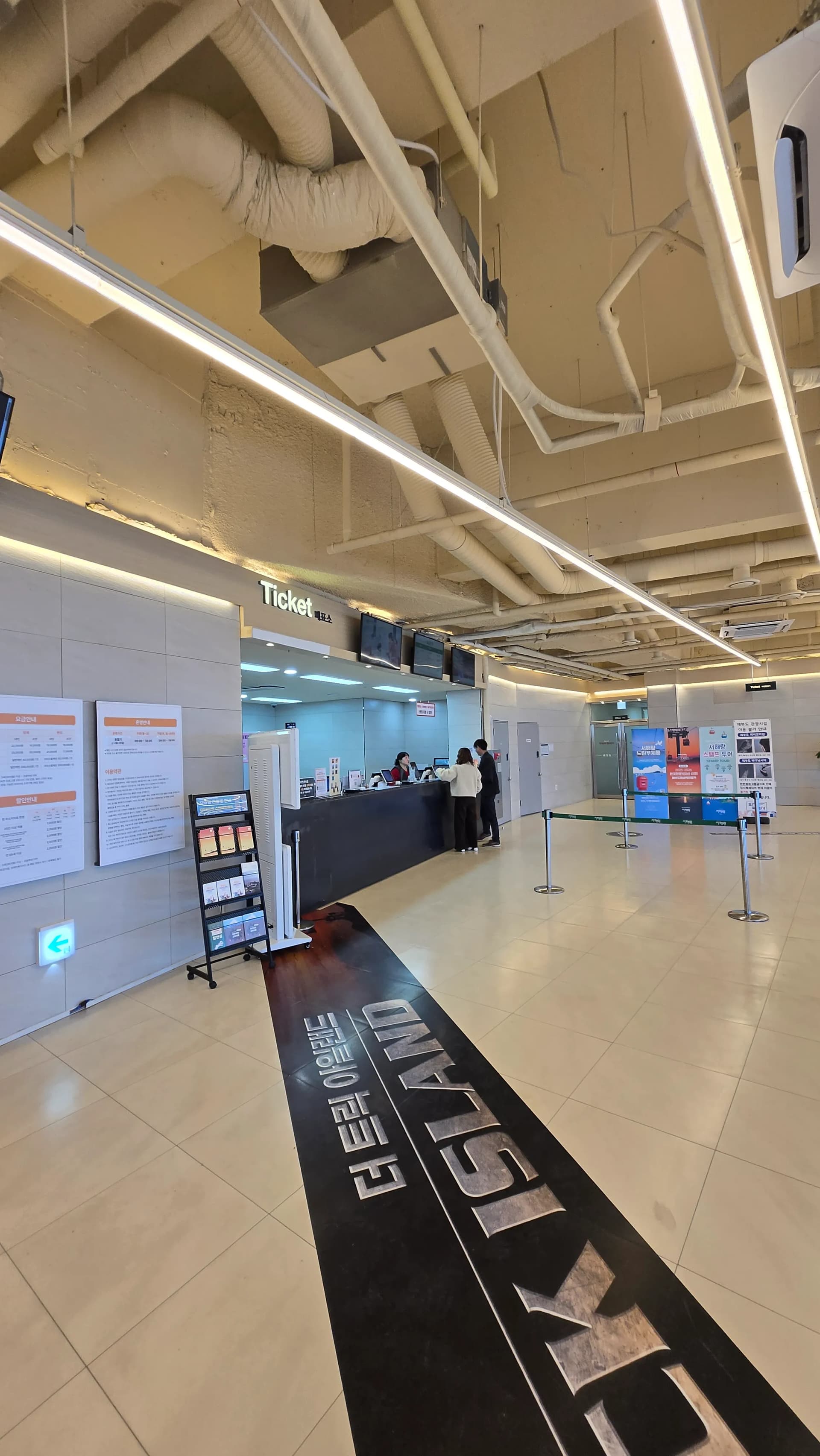
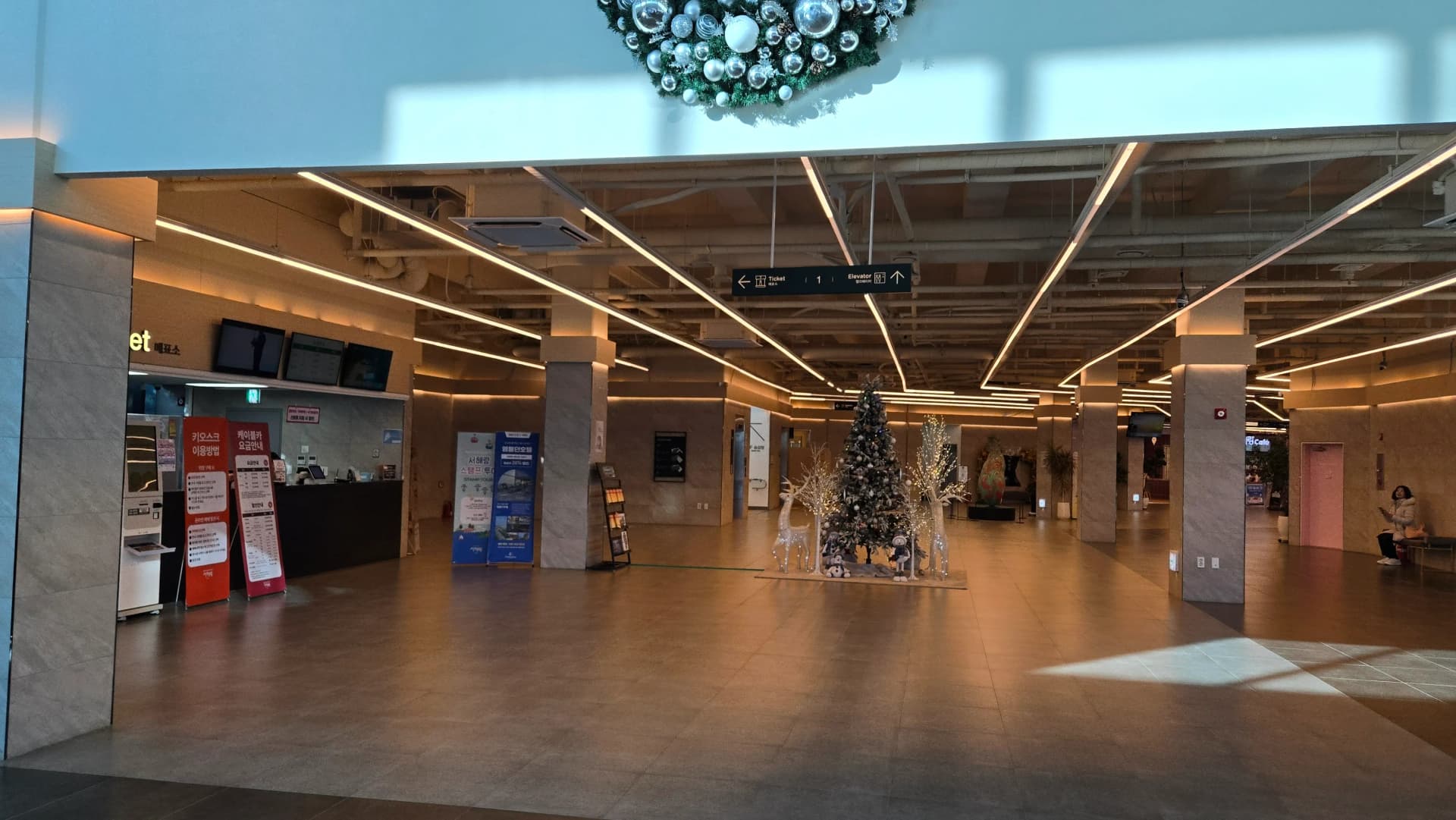
Walking into the first floor, the ticket office had high ceilings and a sleek, modern interior — way more upscale than I expected for a cable car station. I had booked our tickets online in advance, but if you show up without a reservation, you can absolutely buy them on the spot. The staff were friendly and helpful.
One of the best things about this ocean cable car is that it's only about an hour from Seoul, making it an easy day trip. It's also in the same direction as Incheon Airport, so you could even squeeze in a visit before a flight. That said, weekends and holidays apparently get packed — online reviews mention 30-minute to 1-hour waits as the norm. We visited on a weekday afternoon in February, and there was literally no line at the ticket counter. If you want a relaxed, crowd-free experience, a weekday visit is the way to go.
Self-Service Kiosks and QR Code Tickets
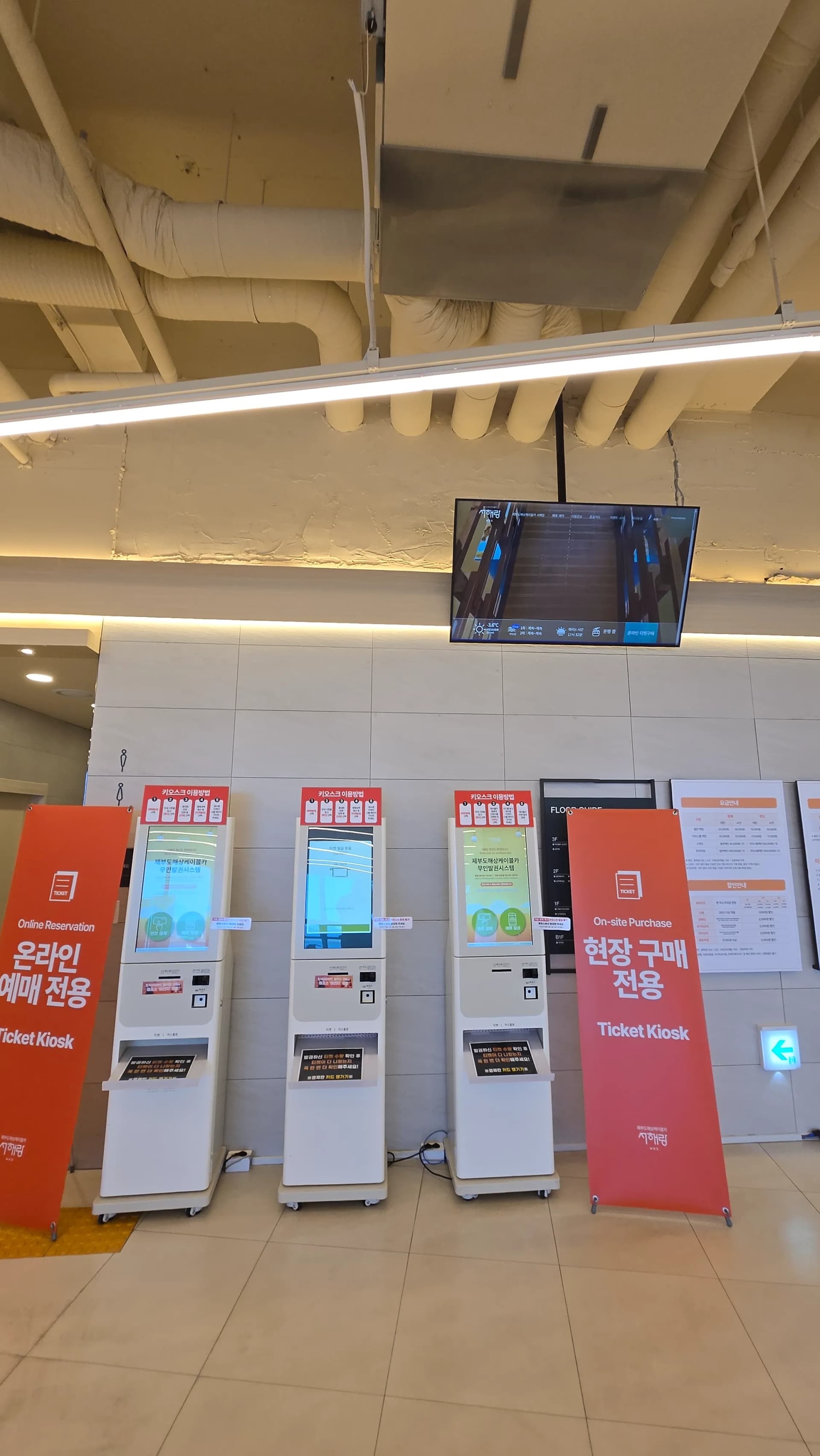
Next to the counter, there were three self-service kiosks lined up. South Korea is incredibly advanced when it comes to kiosk culture — even tourist attractions are largely automated. Almost nobody uses cash anymore; card and app payments are standard. I had pre-booked online, so I just scanned my QR code at the kiosk and my ticket printed out in seconds. Super convenient. That said, if you're a foreign tourist unfamiliar with the system, you might find it easier to just buy your ticket at the staffed counter.
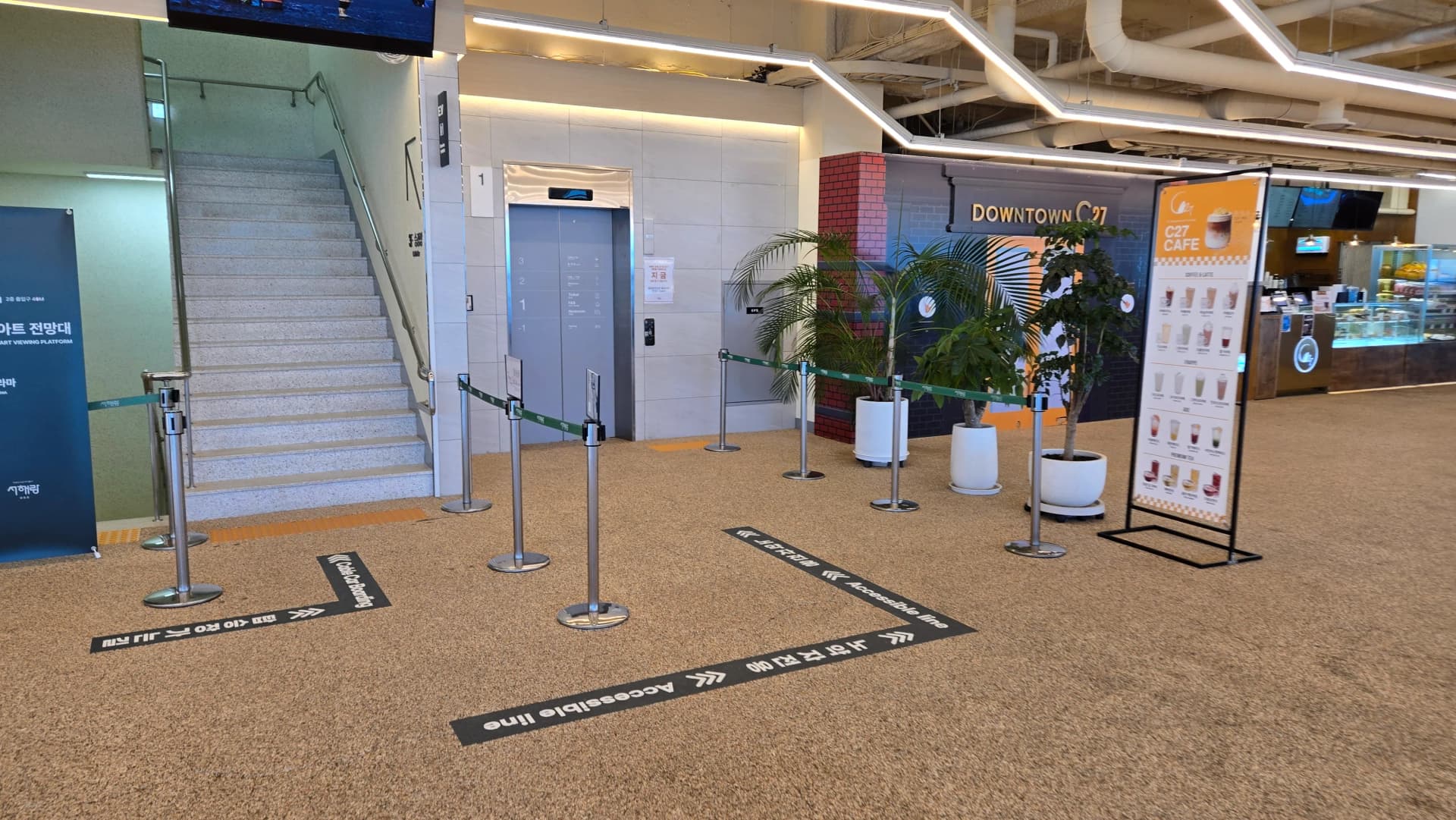
After getting our tickets, we spotted the stairs and elevator leading up to the boarding area. There were floor markings guiding the way and even a small cafe nearby. If you're feeling energetic, take the stairs — but I went straight for the elevator. My wife suggested the stairs for exercise, but after walking around Seoul all morning, my legs had other plans. On a weekday, the elevator came immediately. I imagine on weekends there could be a wait even here.
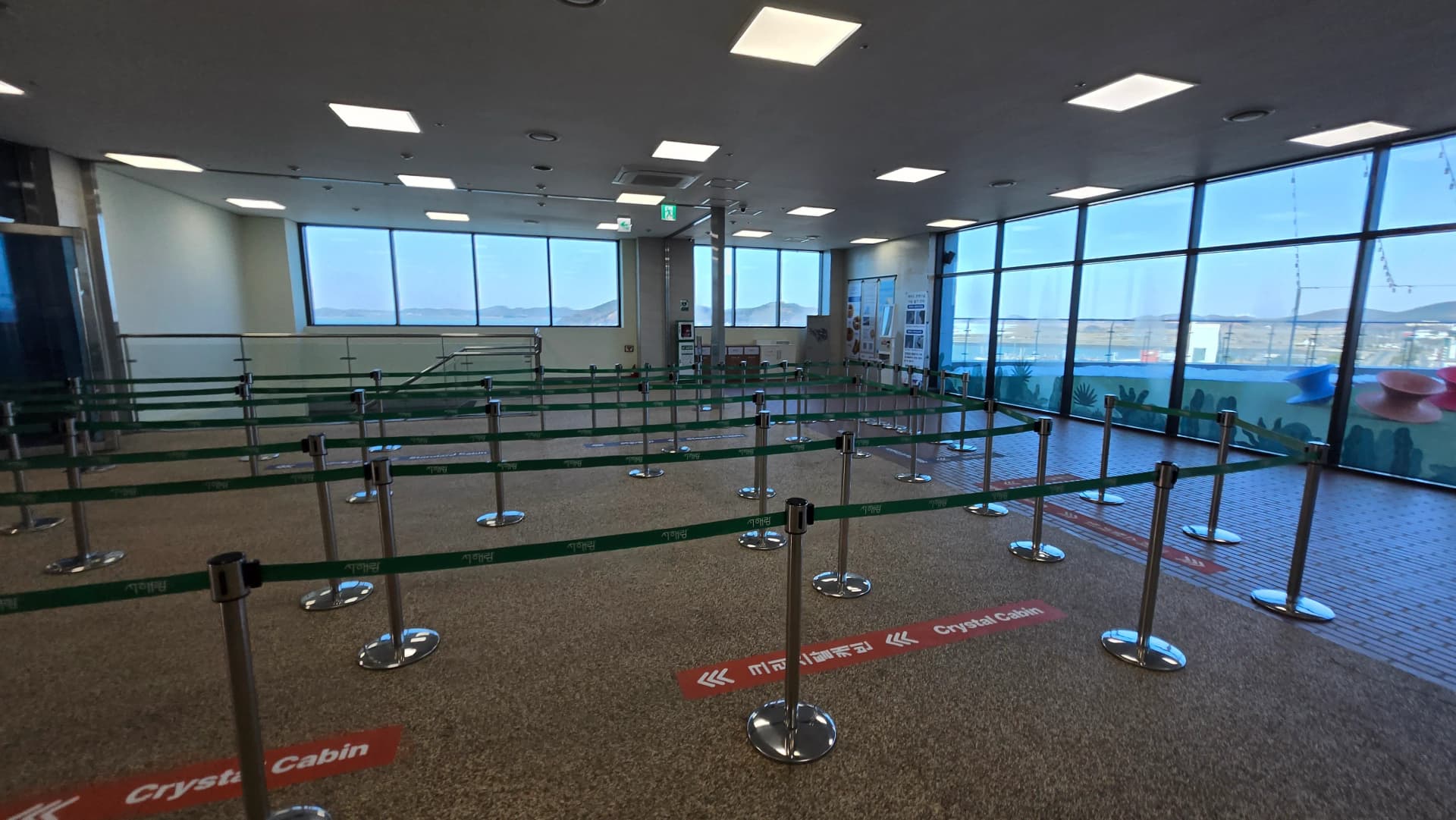
The Boarding Area — and Why Weekdays Are a Game Changer
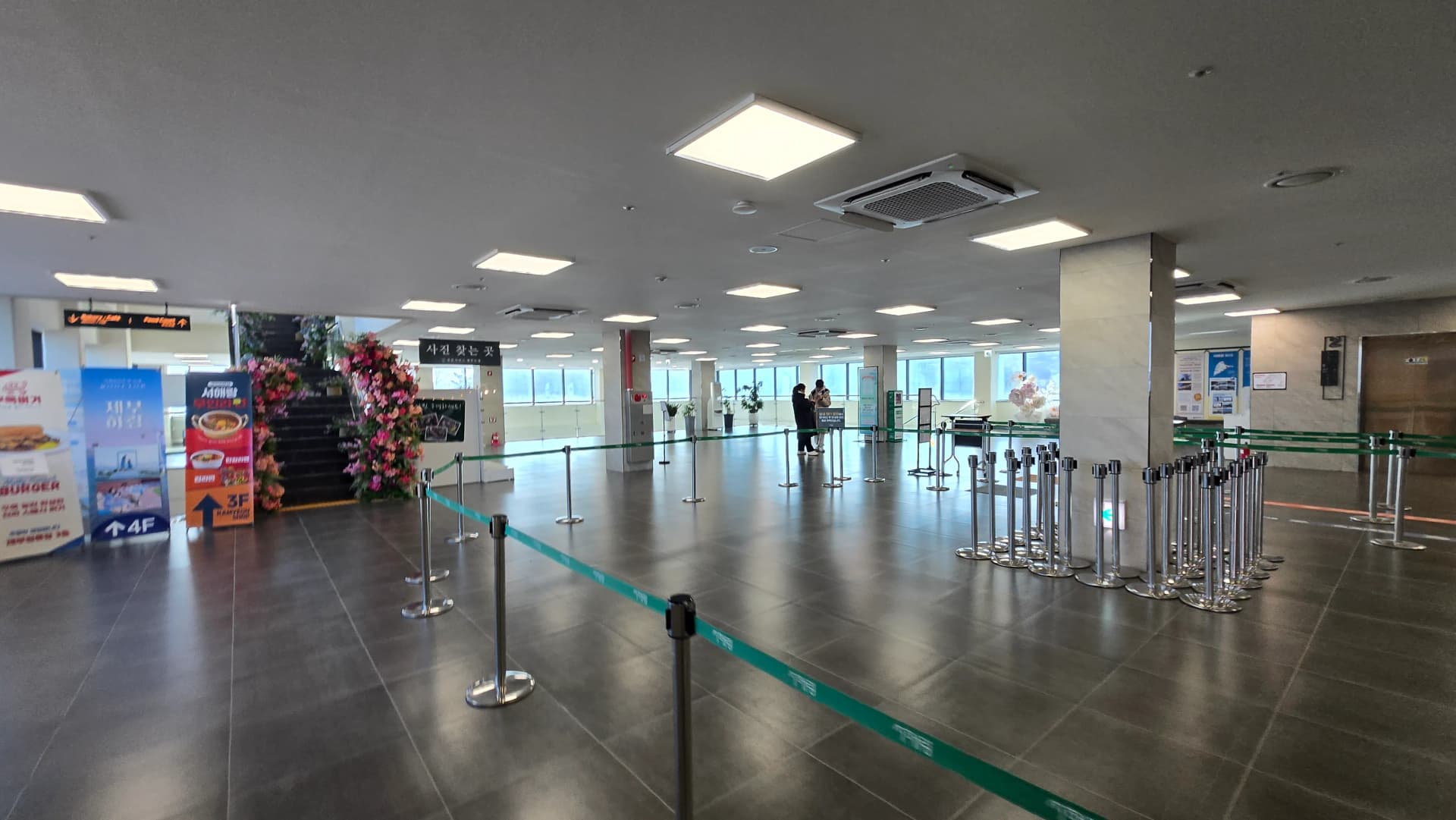
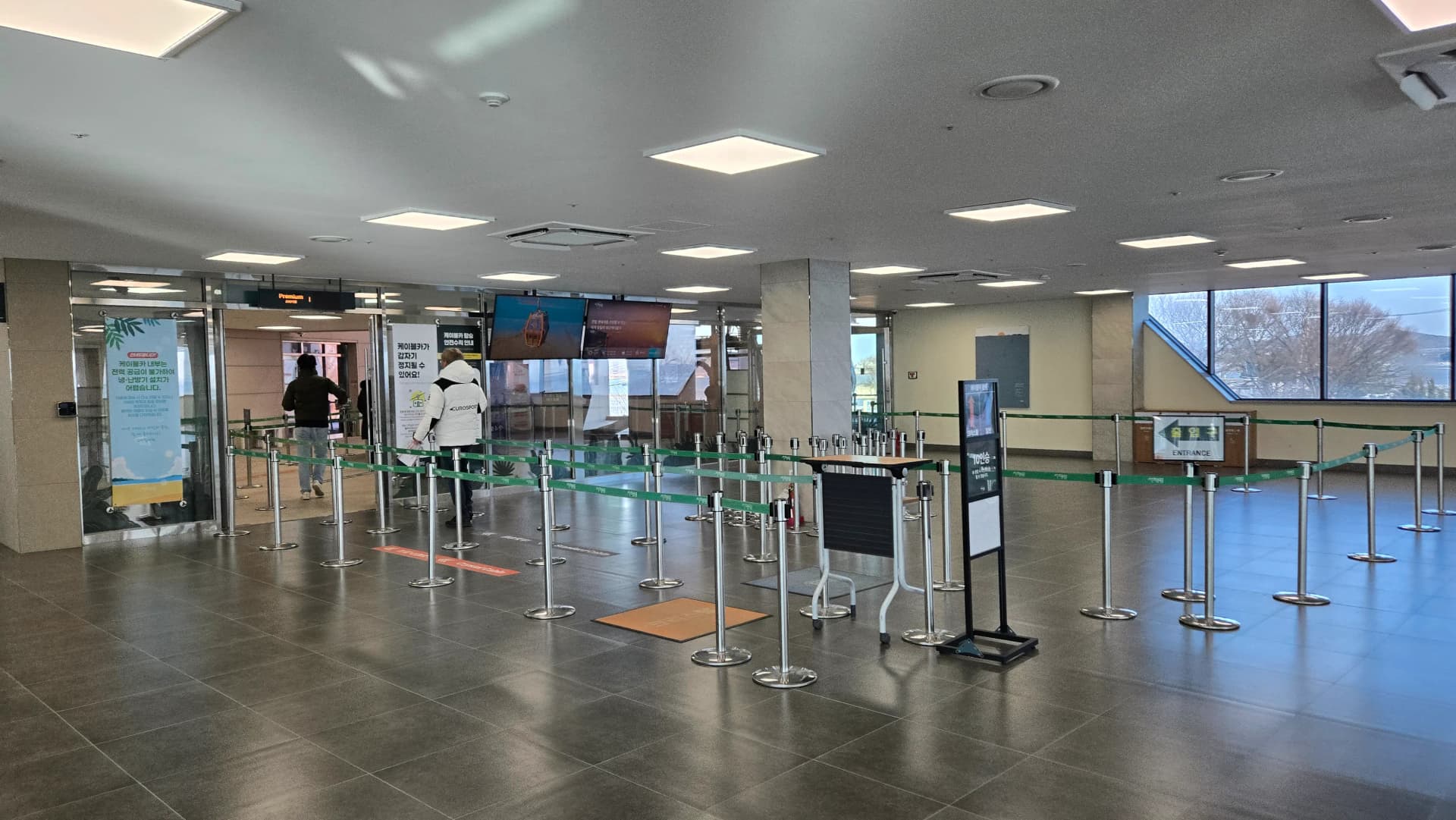
The elevator opened up to a waiting area that felt like an airport immigration hall. Zigzag queue barriers stretched across the room, and through the windows, you could see the ocean. On this weekday, the place was completely empty — just the two of us. But seeing all those queue barriers told the whole story: on weekends and holidays, this place must be absolutely packed with people.
I counted the rows of barriers and there were a lot. If they built this much queuing infrastructure, peak season lines must be serious. My wife said, "Coming on a weekday was the best decision ever." If you're planning a visit on a weekend or during summer, prepare to wait at least 30 minutes to an hour.
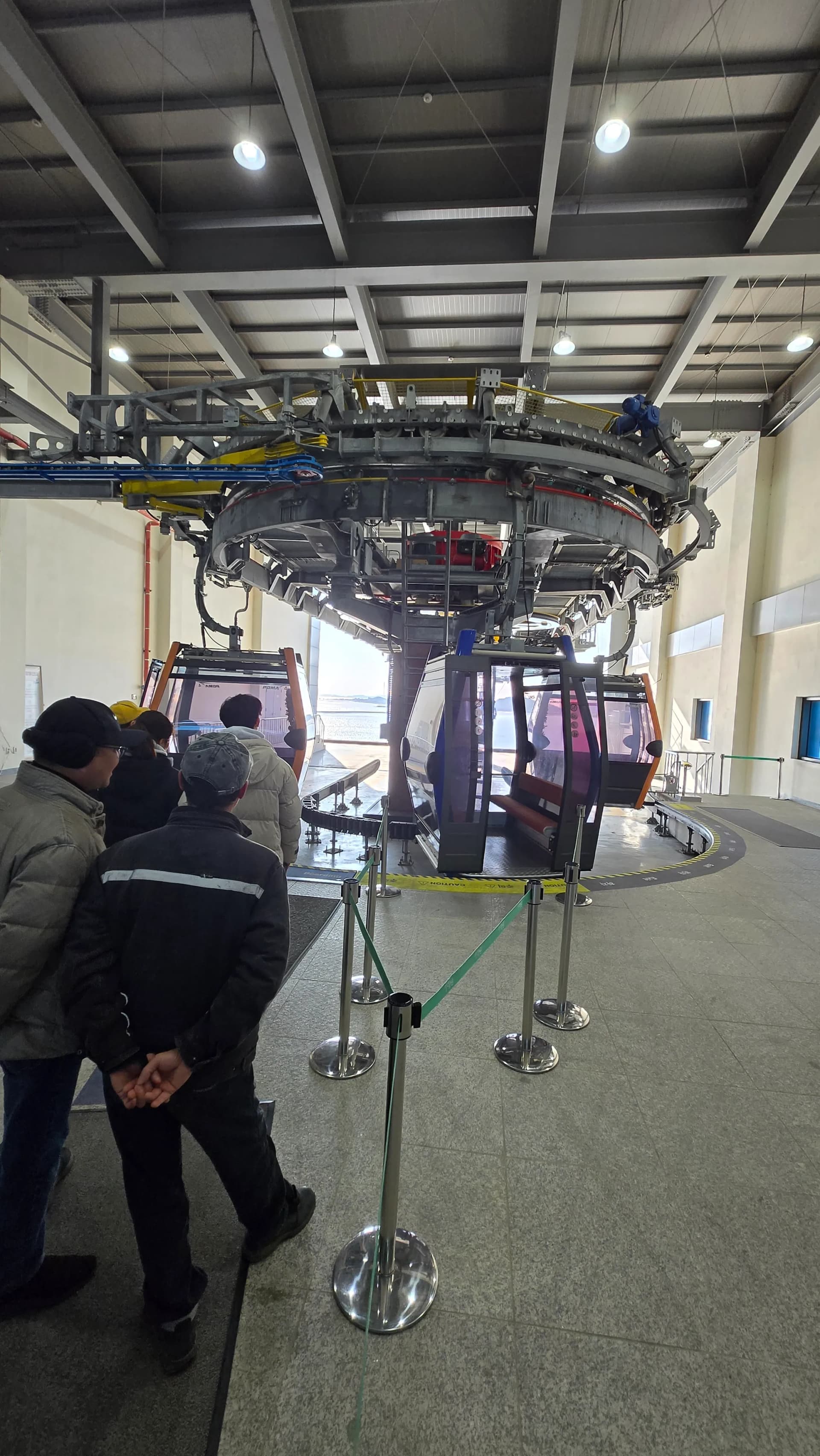
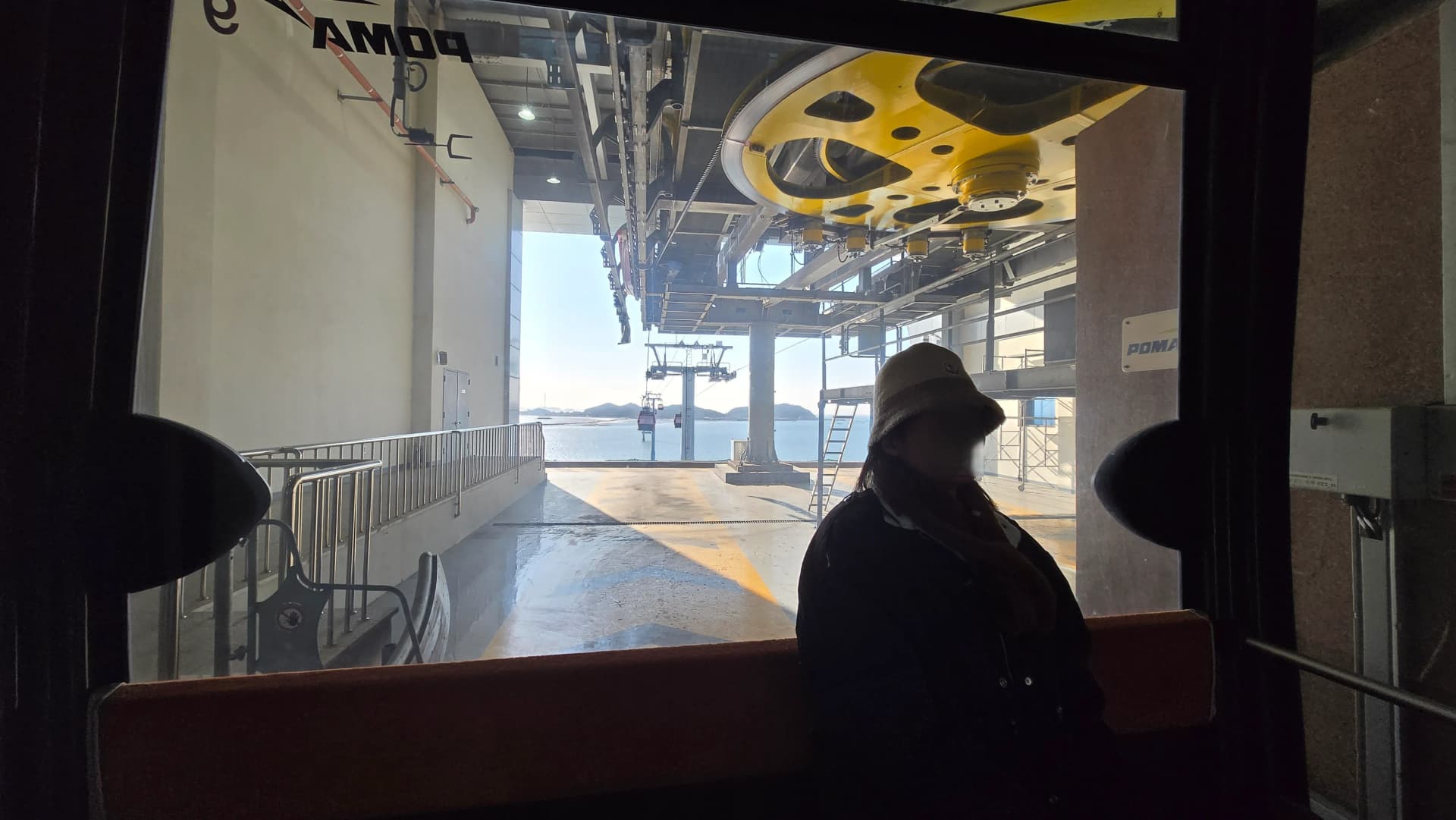
Past the waiting area, we reached the actual boarding platform. The cabins rotate through on a continuous loop — kind of like a ski gondola system where they don't fully stop. There were maybe two people ahead of us, and they boarded quickly.
The cabins were bigger than I expected — each one fits about 8 people. Since it was a weekday, they sent us off in our own private cabin. My wife was thrilled: "It's just us!" She immediately claimed the window seat. On weekends, you'd likely share with strangers, so having a cabin to ourselves was another weekday perk. Honestly, visiting attractions on weekdays almost always means you get your own space.
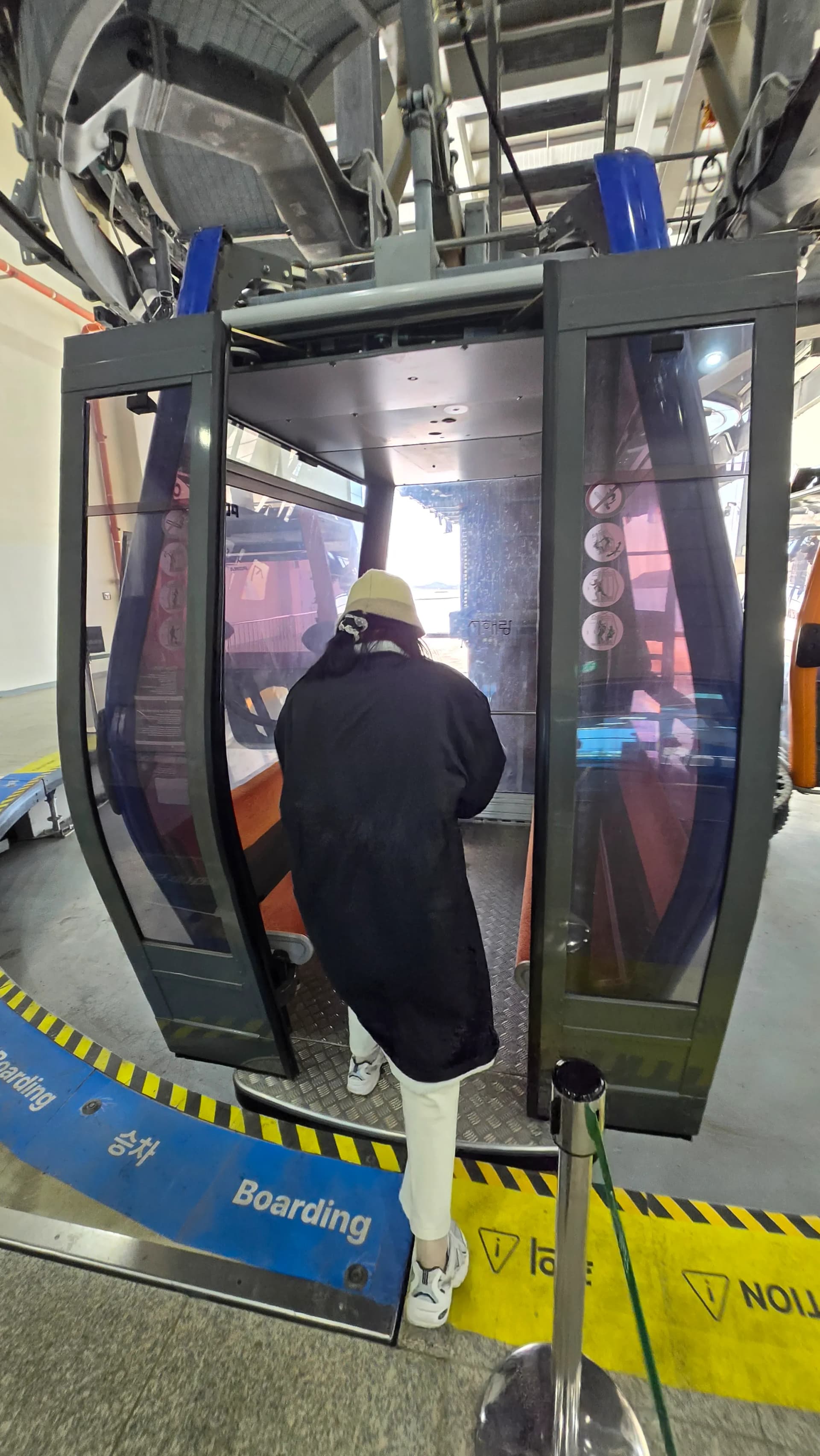
The staff held the door open and we hopped in. I used to be nervous about cable cars — I've got a mild fear of heights, sweaty palms and all — but after riding enough of them over the years, it doesn't bother me anymore. If anything, I felt excited. My wife was already glued to the window with her phone out.
Flying 2.12km Over the Sea — The Cable Car Experience
The door closed and we took off. The ocean opened up right in front of us, wide and endless. I just stared out the window, completely absorbed.
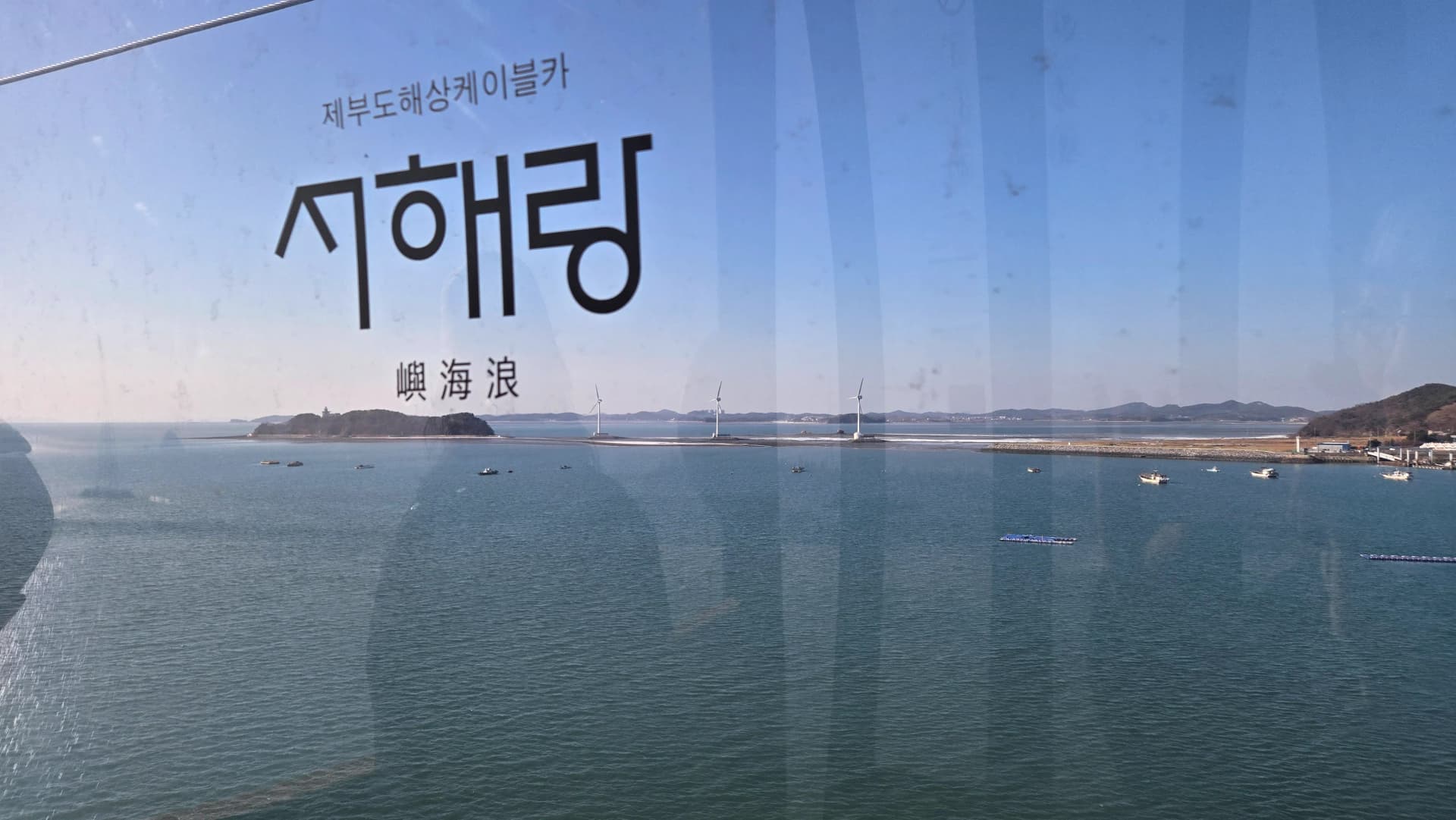
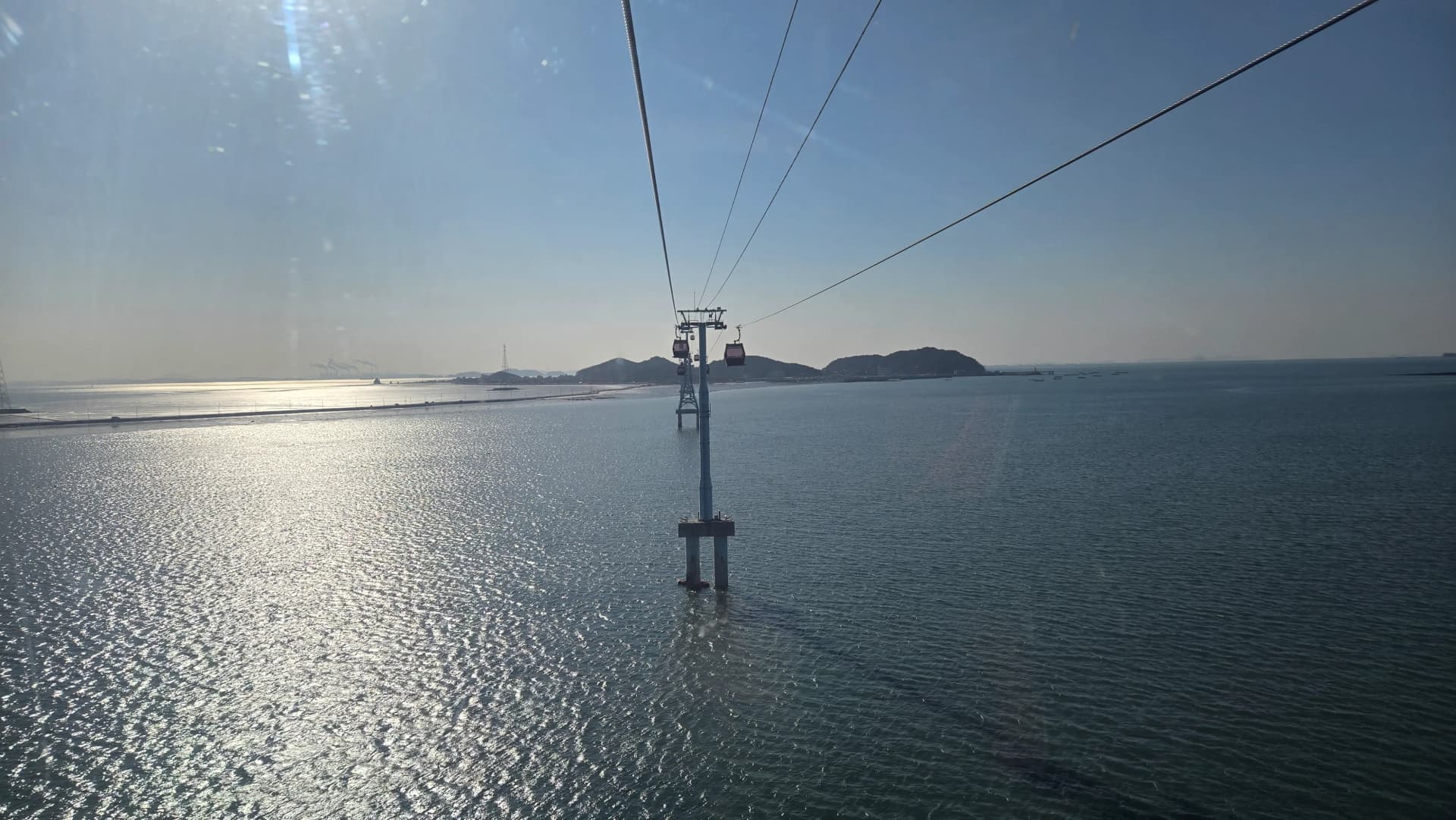
As the cabin climbed higher, the sea seemed to stretch wider and wider. Through the window — branded with the cable car's logo — I could see wind turbines and islands scattered across the horizon. Looking back, the cable car support towers stood right in the middle of the ocean, and the sunlight made the water shimmer and sparkle. My wife kept saying, "These views are insane," snapping photo after photo.
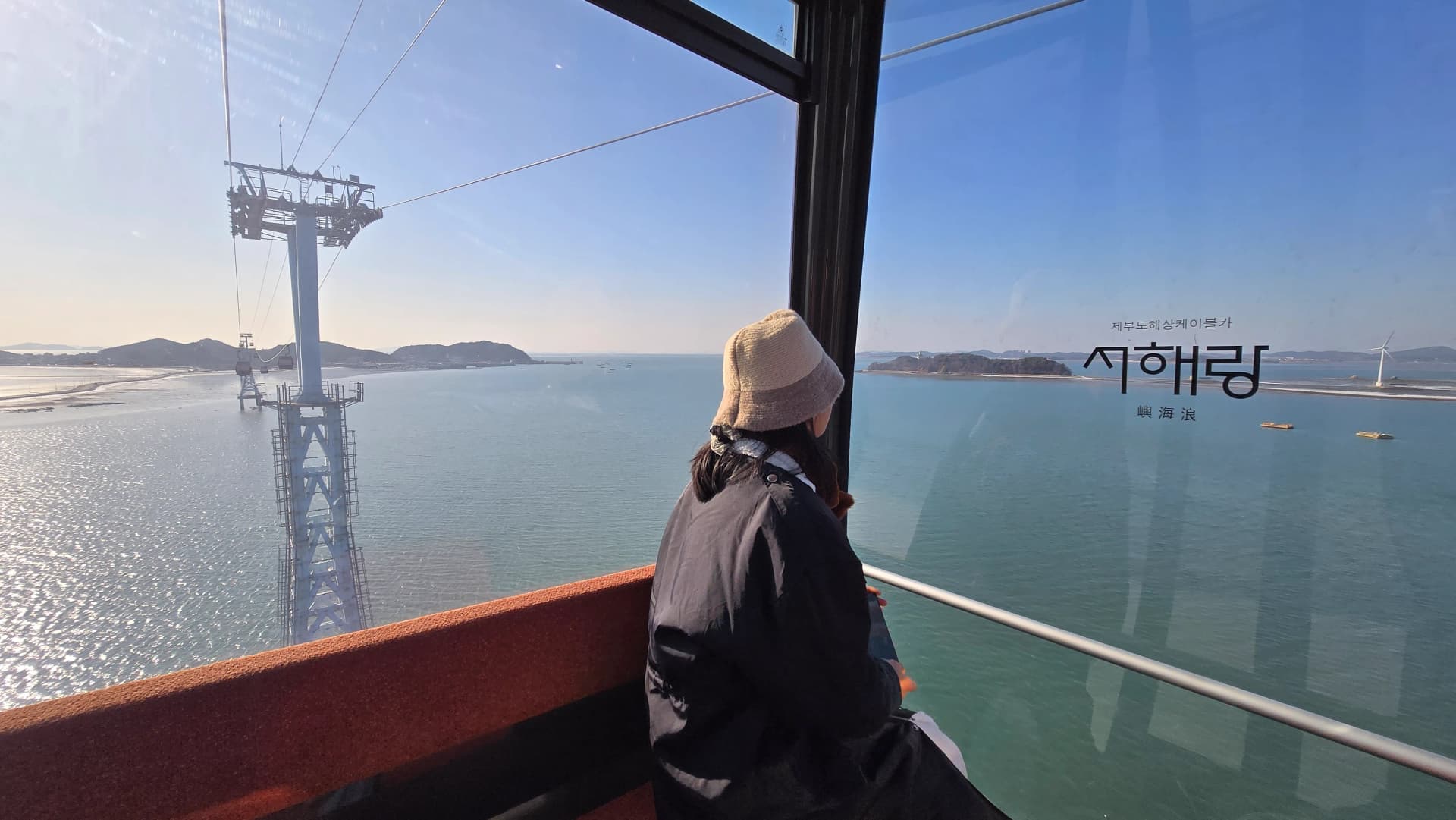
My wife was leaning against the window, completely lost in the view, and I instinctively snapped a photo. The silhouette of her in her bucket hat with the ocean and cable car towers in the background felt unexpectedly cinematic. The water had this beautiful greenish tint under the sunlight. Even though it was early February, the clear skies gave us incredible visibility. In that moment, I forgot all about our Seoul errands and the drive home — it was just us and the sea.
The Magical Tidal Road That Splits the Sea — Seen From Above
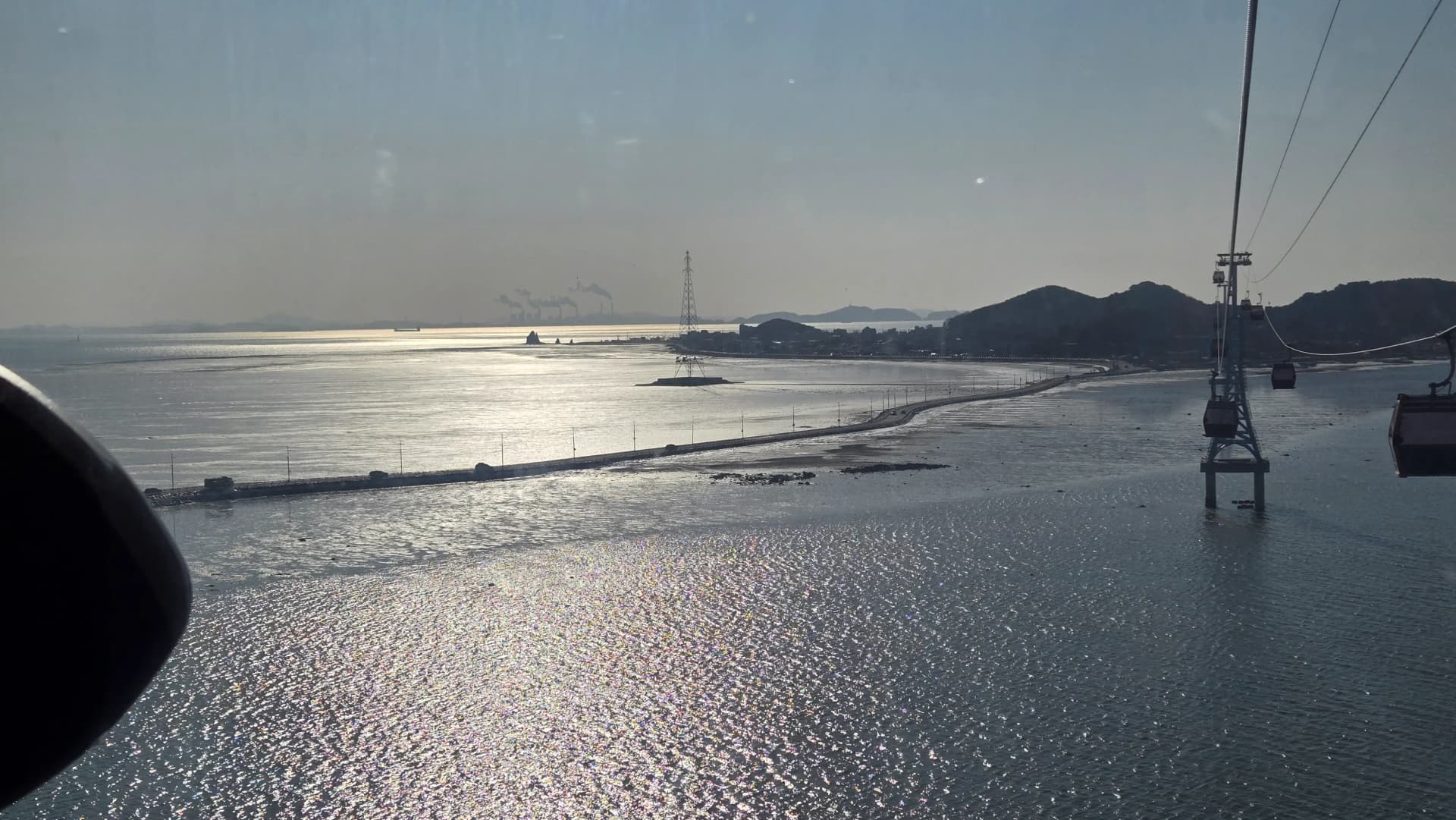
About halfway through the ride, I looked straight down and saw a road cutting through the middle of the ocean. This is the famous "Moses Miracle" tidal road — twice a day when the tide goes out, the sea literally parts to reveal a 1.8km road connecting the mainland to the island. When the timing is right, you can actually drive across it. But at high tide, the road completely disappears under water.
From the cable car, I could see the road flanked by exposed tidal flats on both sides, the wet sand reflecting silver in the sunlight. Apparently it used to be an unpaved mudflat path, but now it's a proper paved road for vehicles. Seeing a sea-splitting road from the sky — that's the kind of thing you can only experience from a cable car like this.
Massive Support Towers and the Scale of a 2.12km Ride
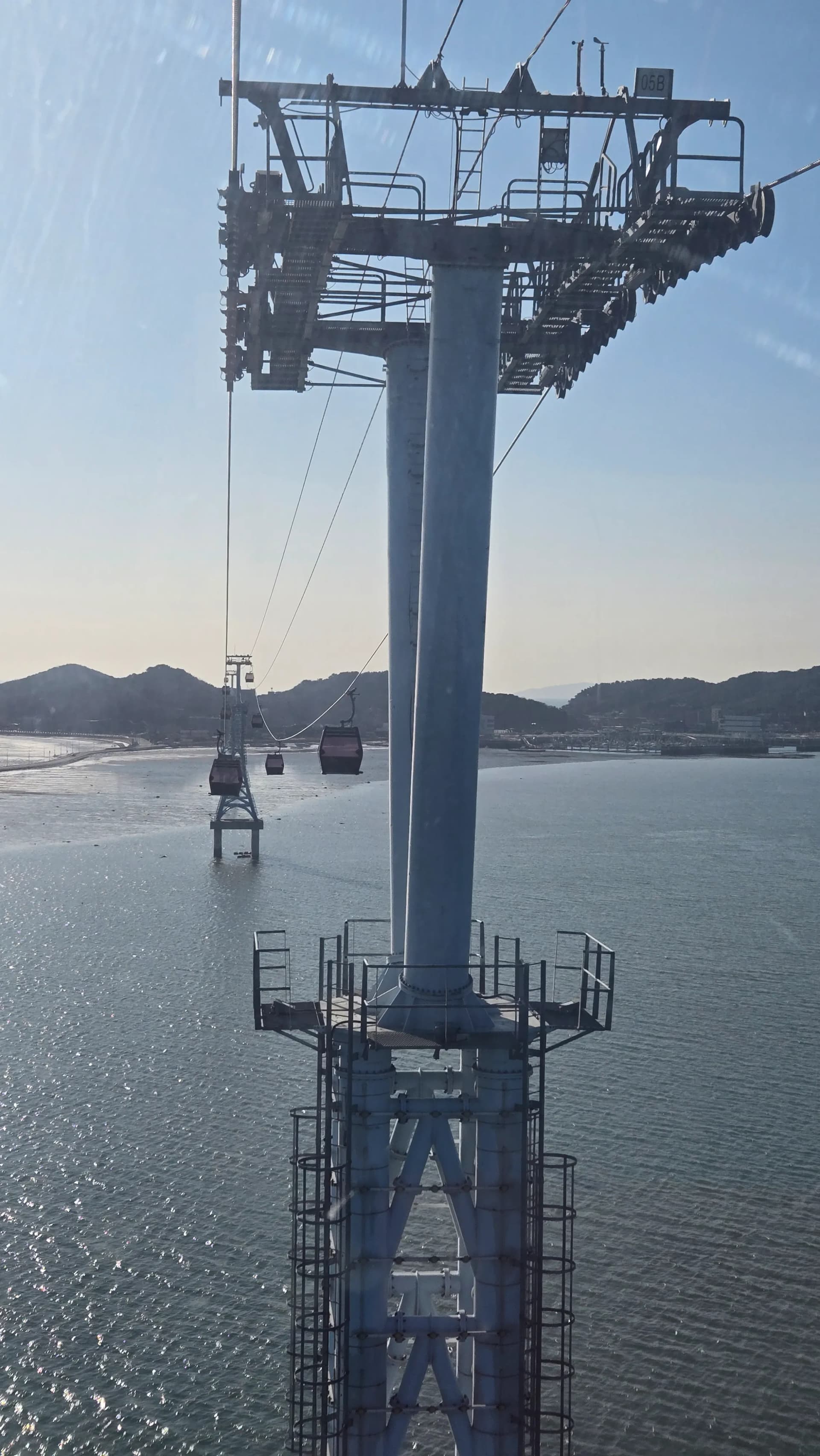
We passed right next to one of the main support towers, and it was way taller than I imagined. The fact that they built these enormous steel structures in the middle of the ocean is genuinely impressive. Below the tower, I could see complex wave-breaking structures at the base, while above, a steady stream of cabins moved back and forth along the cables.
Looking back, I could still see the station where we started, and ahead, the island was getting closer and closer. Floating through the air for 2.12km over open water is a surreal feeling. My wife asked, "That single tower holds all this weight?" I just said, "That's why cable car engineering is amazing."
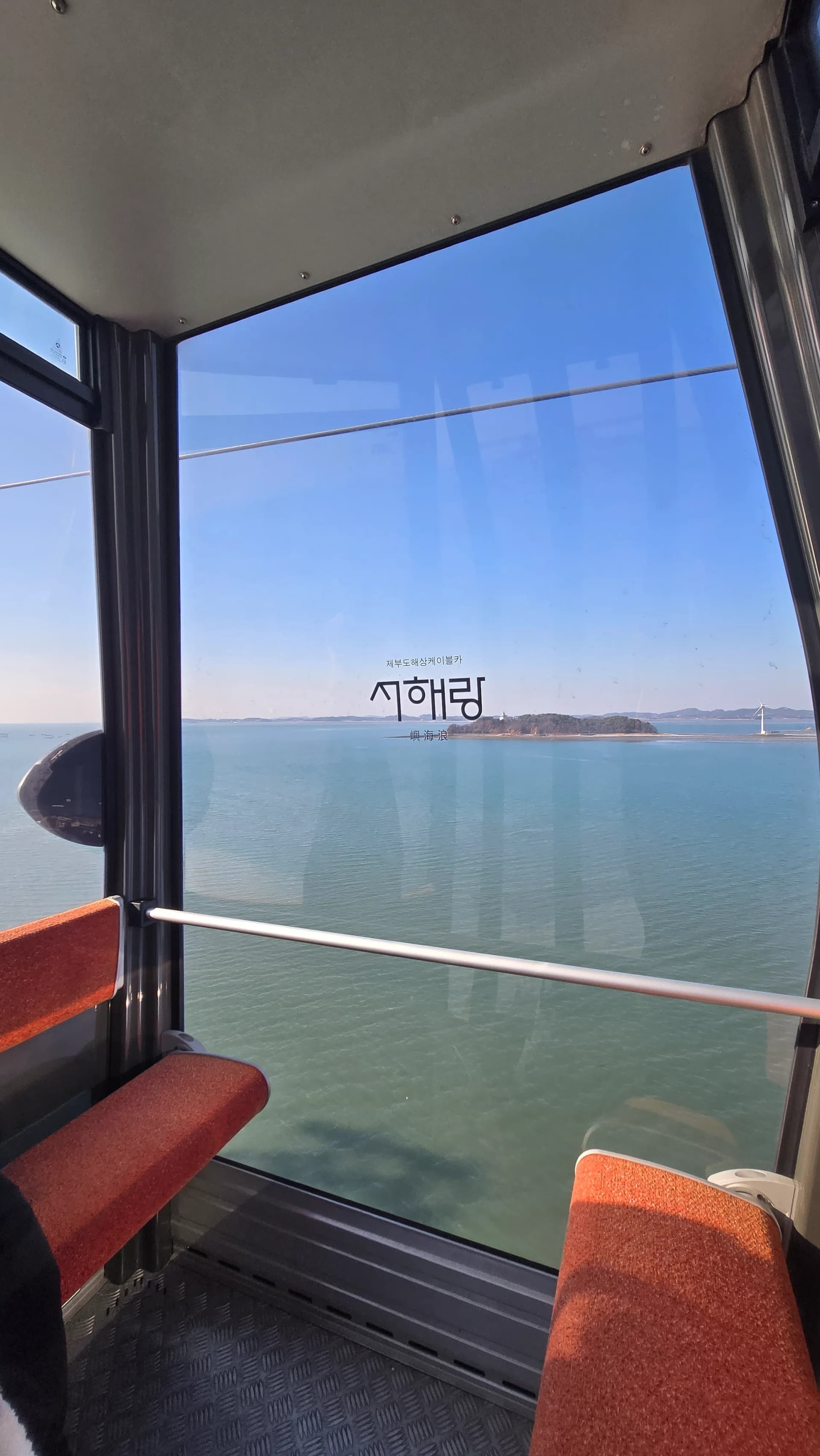
Inside the cabin, the windows were massive, giving us an unobstructed panoramic view. Sitting in the orange seats and looking out, the ocean stretched endlessly with the island visible in the distance. We rode in a standard cabin, but even the standard ones have glass panels in the floor so you can see the water below — honestly more than enough. They offer crystal cabins with fully transparent floors too, but the standard cabin views were already spectacular.
Having the whole cabin to ourselves made the experience even more relaxing — we could move around freely and take photos from every angle. The February sky was a deep blue and the ocean had this gorgeous blue-green tone. The whole ride took about 10 minutes, and it flew by.
Arriving on the Island — Free Shuttle Bus Loop
We arrived at the island-side station. The setup was just as clean and modern as the departure side, with promotional banners and floral wreaths suggesting the place had opened fairly recently. We had round-trip tickets, so we'd be heading back eventually — but it felt too soon to just turn around.
That's when we decided to hop on the free shuttle bus. If you have a cable car ticket, you can ride the island shuttle for free. It loops around the island, stopping at various scenic spots along the way. On a weekday, there were plenty of seats. On weekends or during peak season, though, I'd guess seats fill up fast. We decided to do the full loop.
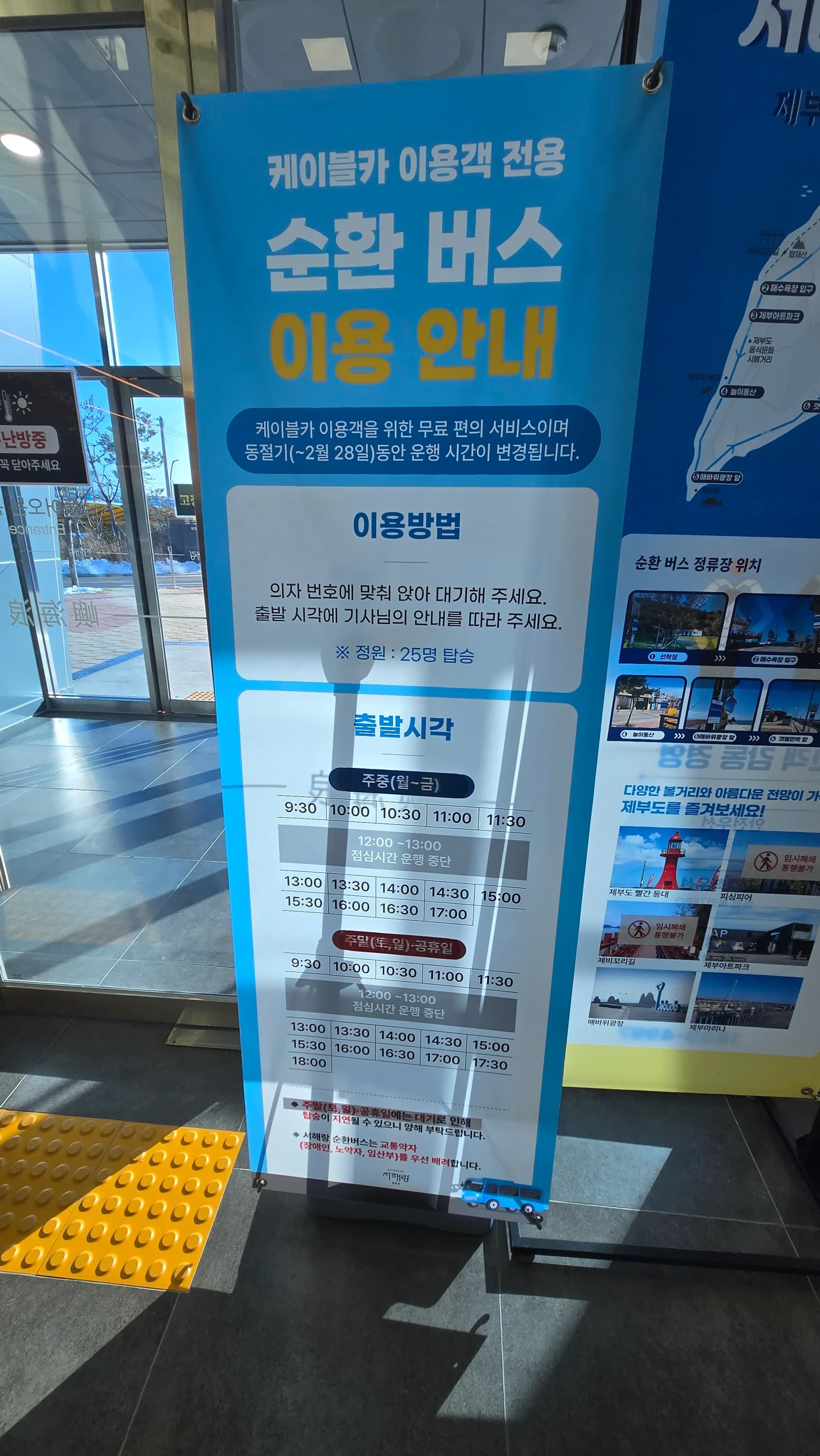
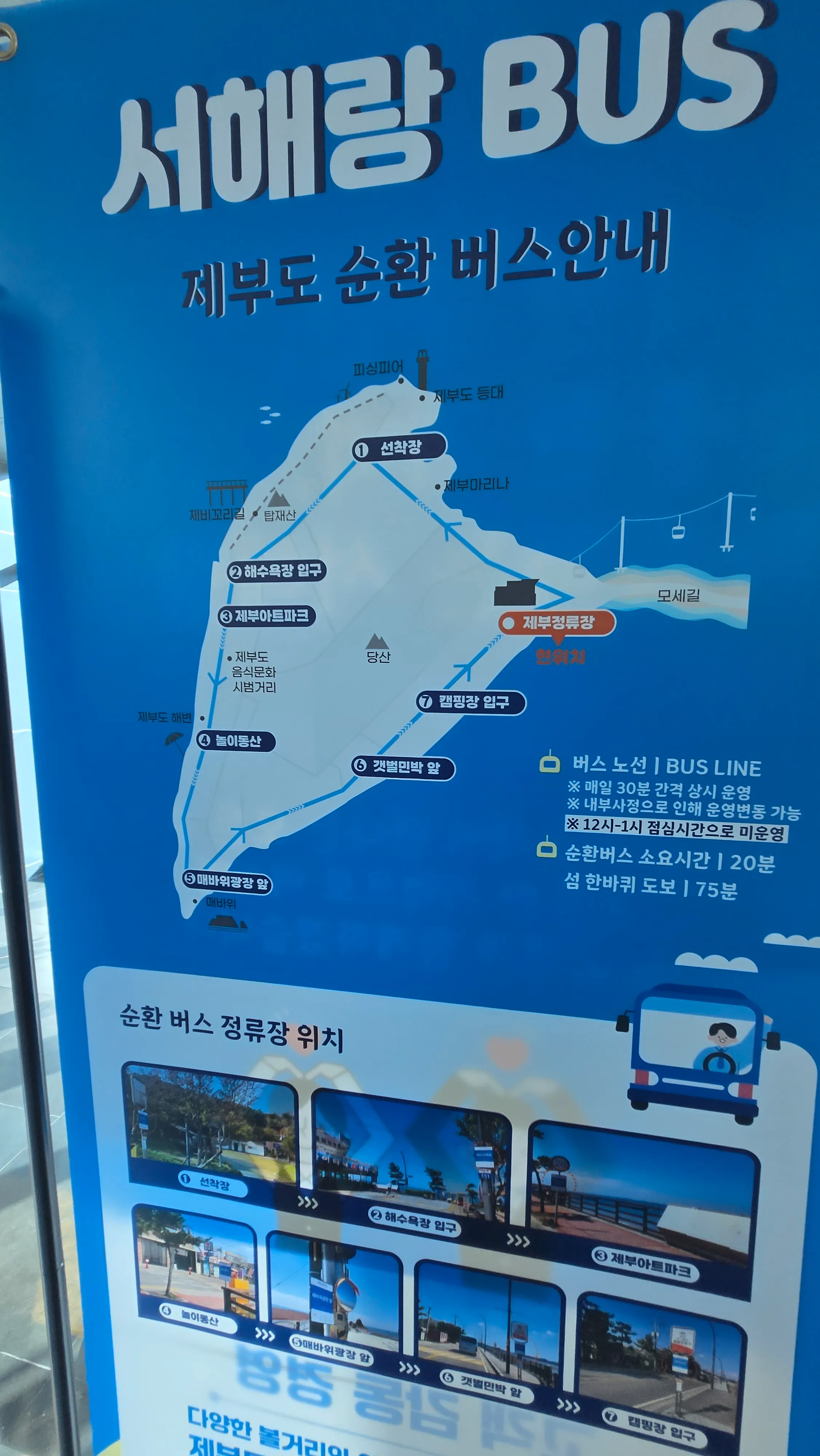
Free Shuttle Bus Route and Timetable
Right at the station entrance, there was a large information board for the free shuttle. The bus runs a loop around the island, and the schedule differs between weekdays (Monday–Friday) and weekends/holidays. Buses seemed to run about every 30 minutes. Stops include the ferry dock, a camping area, a tidal park, a scenic overlook, and several other spots. You can hop off wherever you like, explore, and catch the next bus. We were too cold to get off anywhere, so we stayed on for the full loop — but in warmer weather, hopping on and off would be a great way to explore.
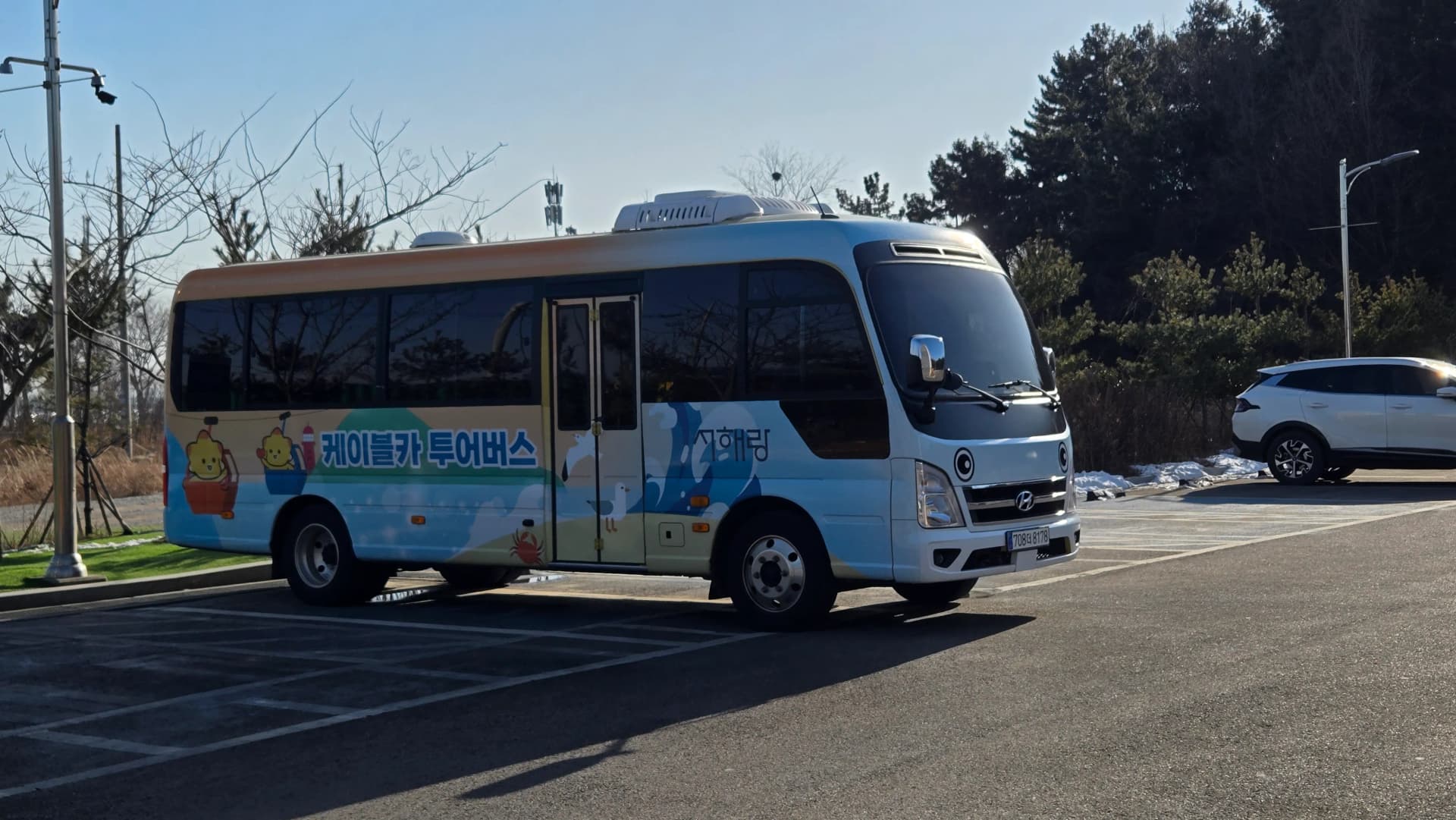
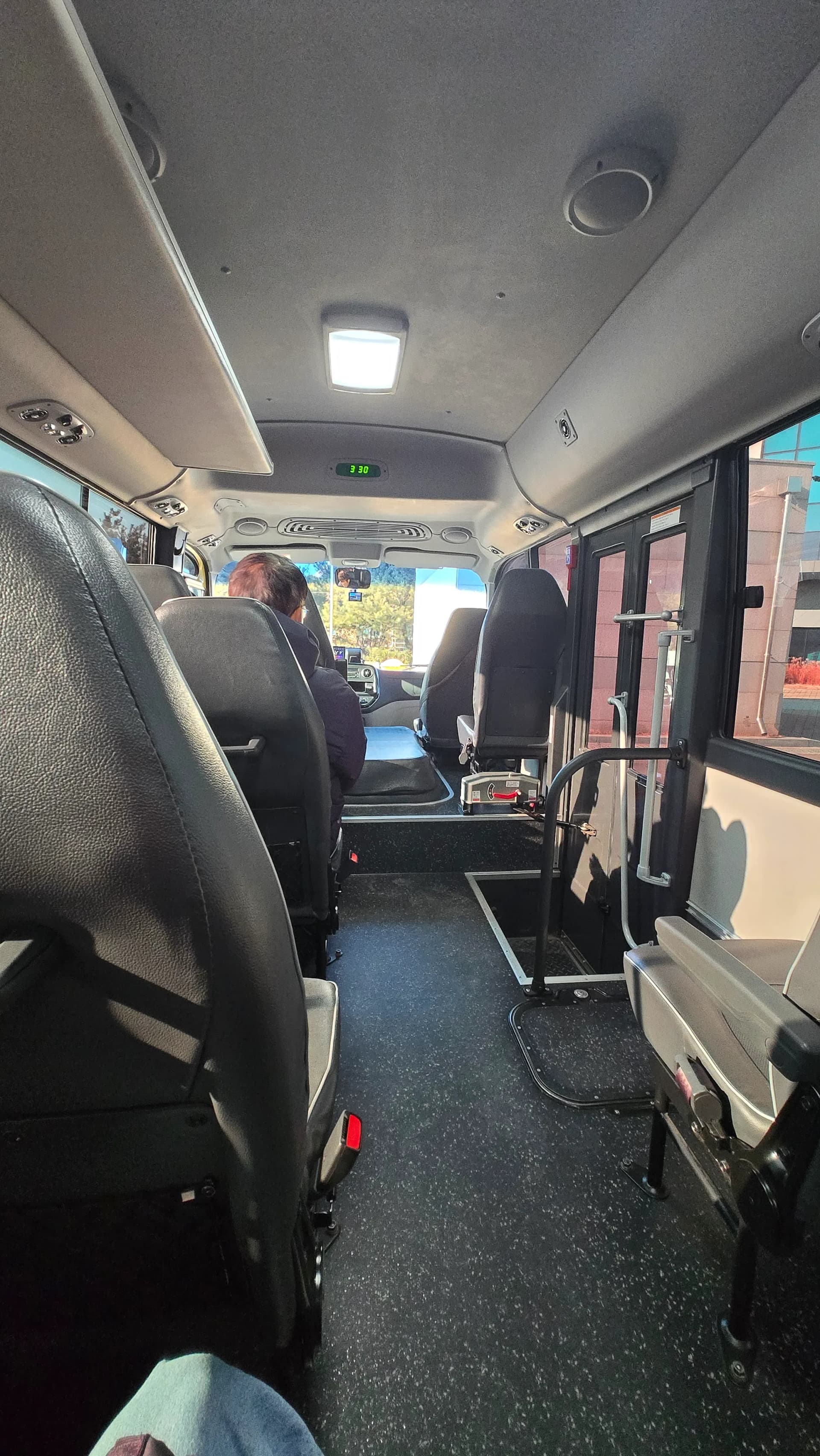
The shuttle turned out to be a compact minibus — smaller than I expected. Inside, there were maybe 10 seats. On a weekday, just a handful of us were on board, but I can easily see this filling up completely on weekends.
A 15-Minute Scenic Island Loop by Bus
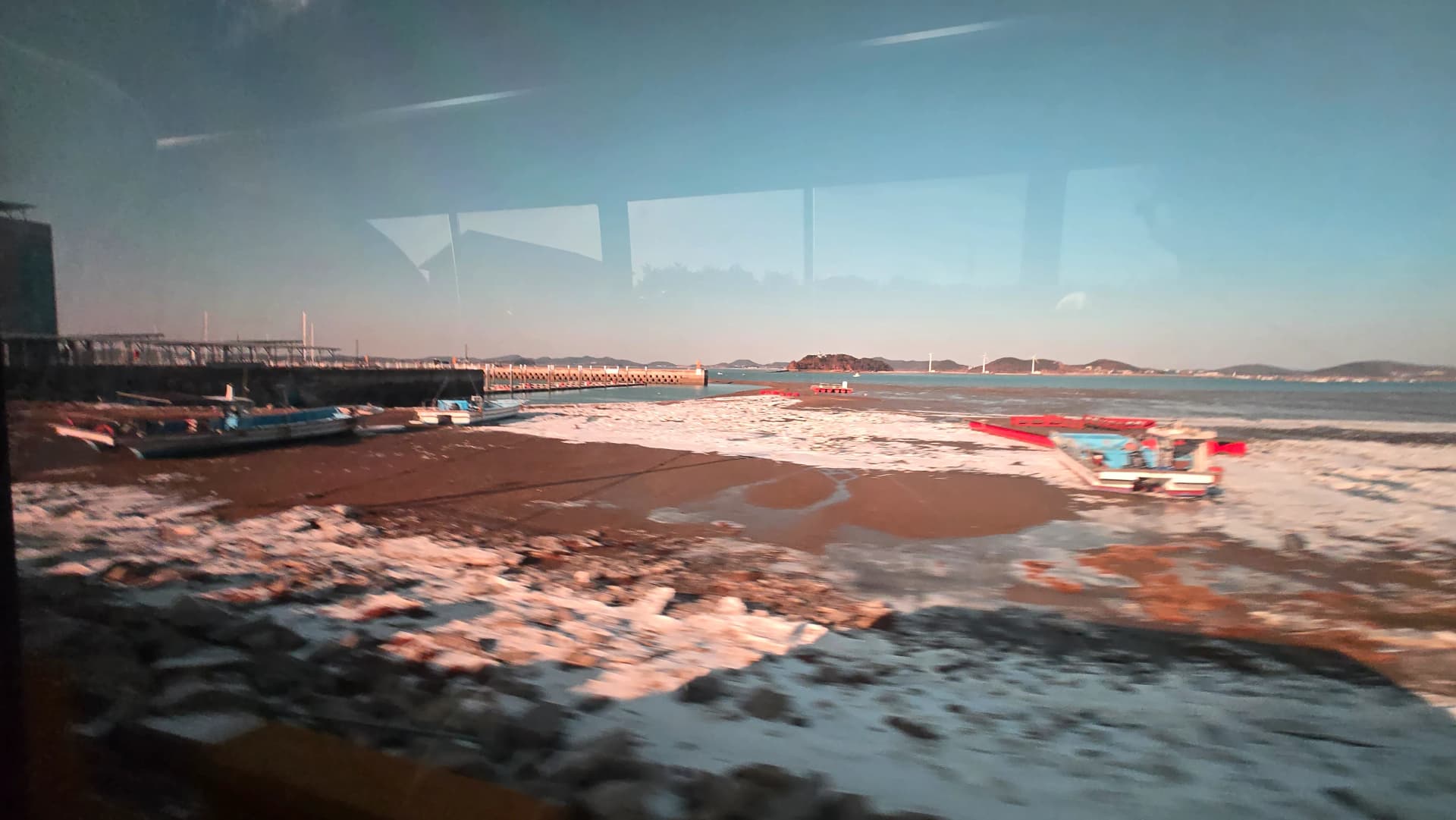
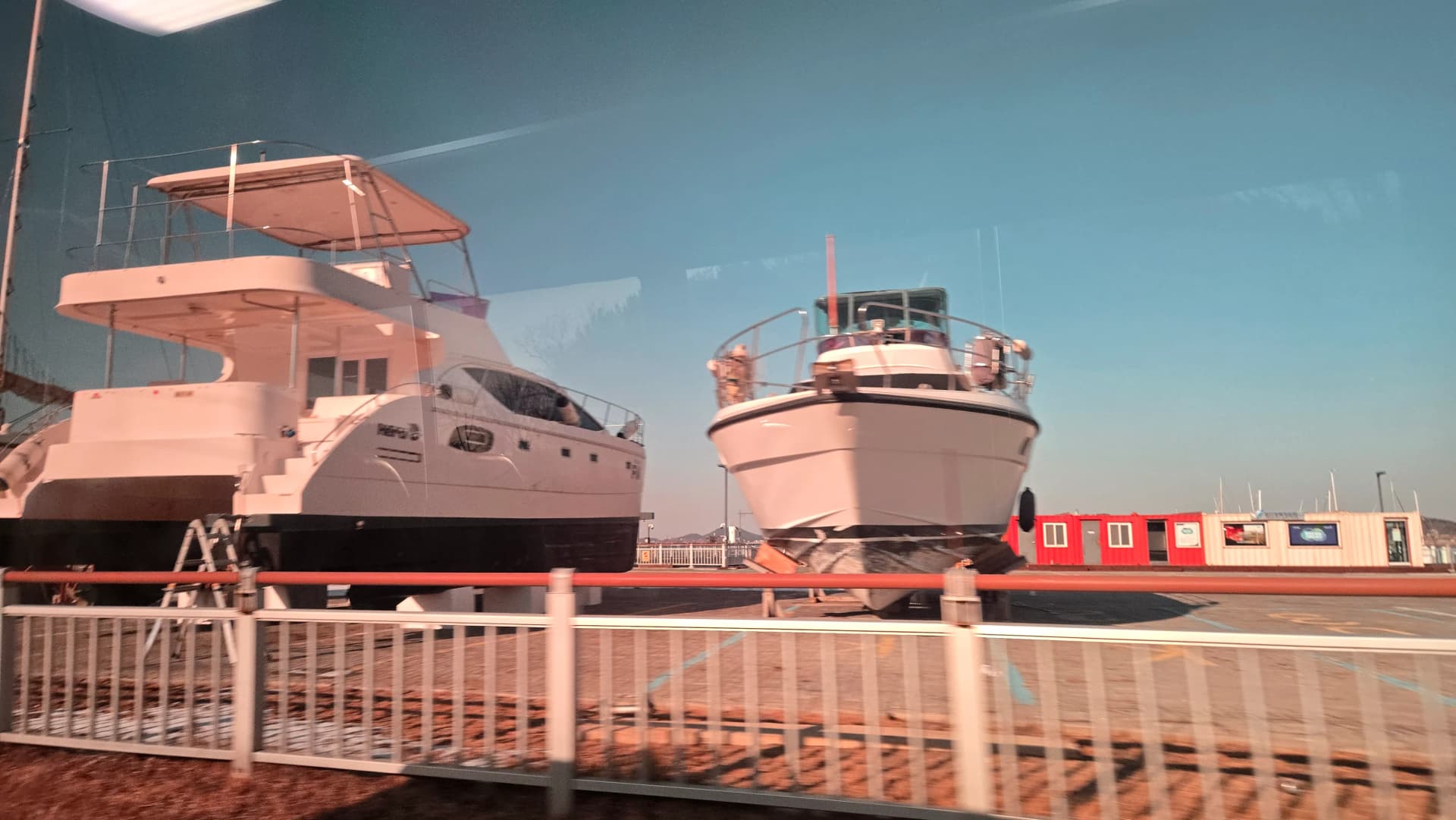
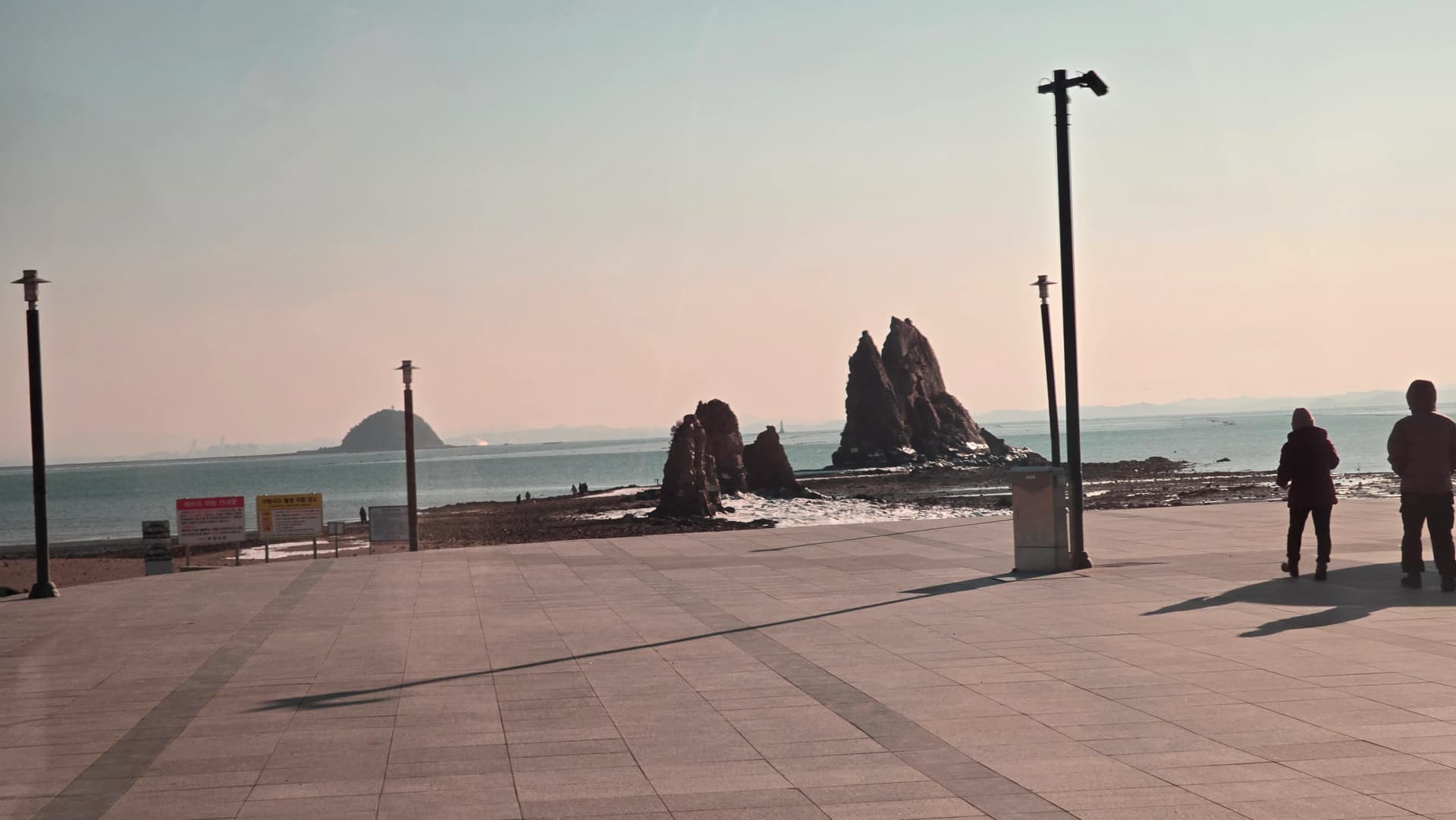
The full loop took about 15 minutes. Through the windows, we passed beaches, tidal flats, dramatic rock formations along the cliffs, and a harbor with yachts and fishing boats docked side by side. I tried to snap photos but the bus was bouncing around so much that most of them came out blurry — apologies for that.
The ride wasn't exactly smooth, honestly. Being a minibus, every little bump in the road was amplified. It was too cold to get out and walk around, so just doing the loop and soaking in the coastal scenery from the window was good enough. If I come back in warmer weather, I'd love to hop off at a few stops and explore on foot.
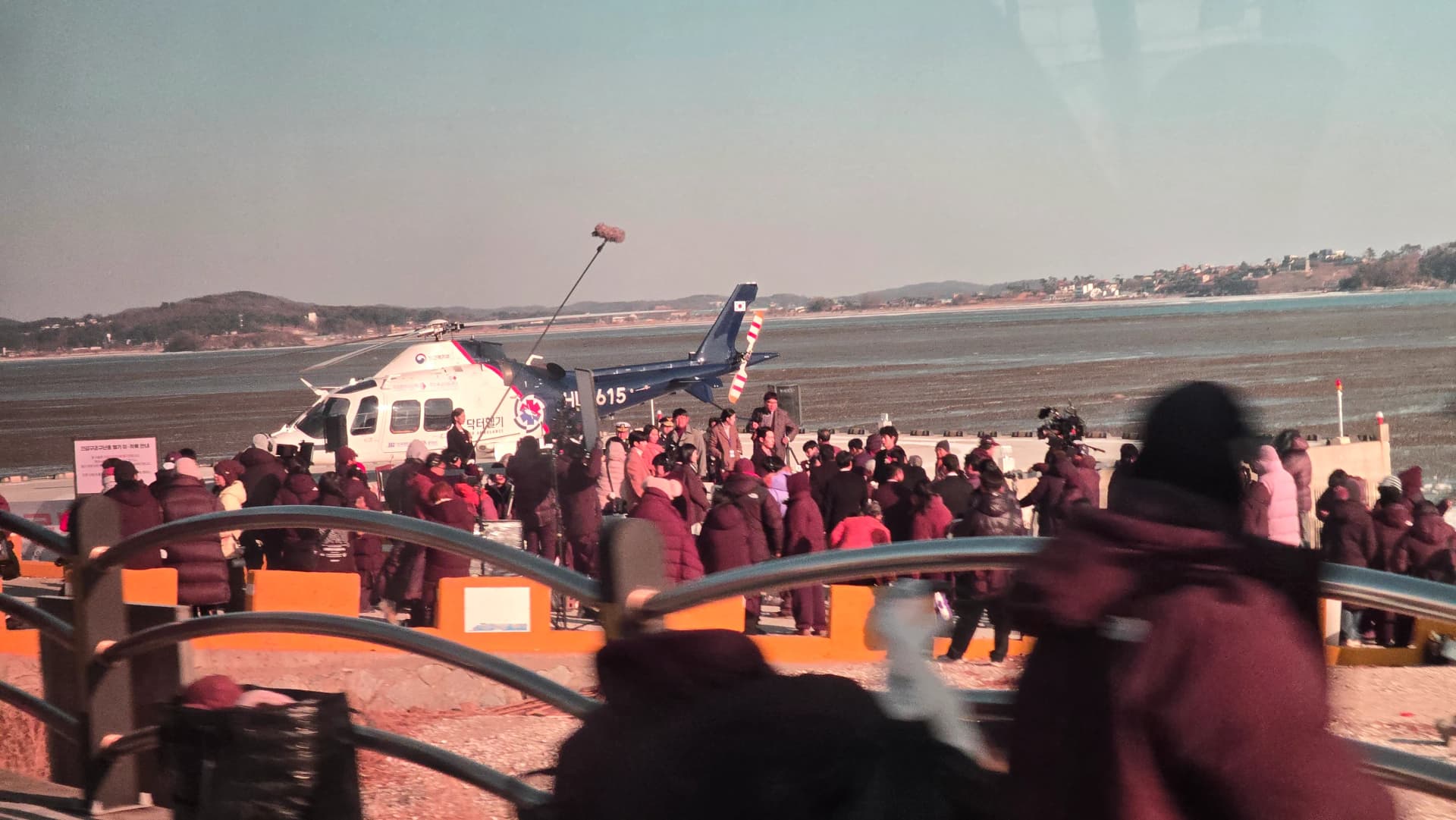
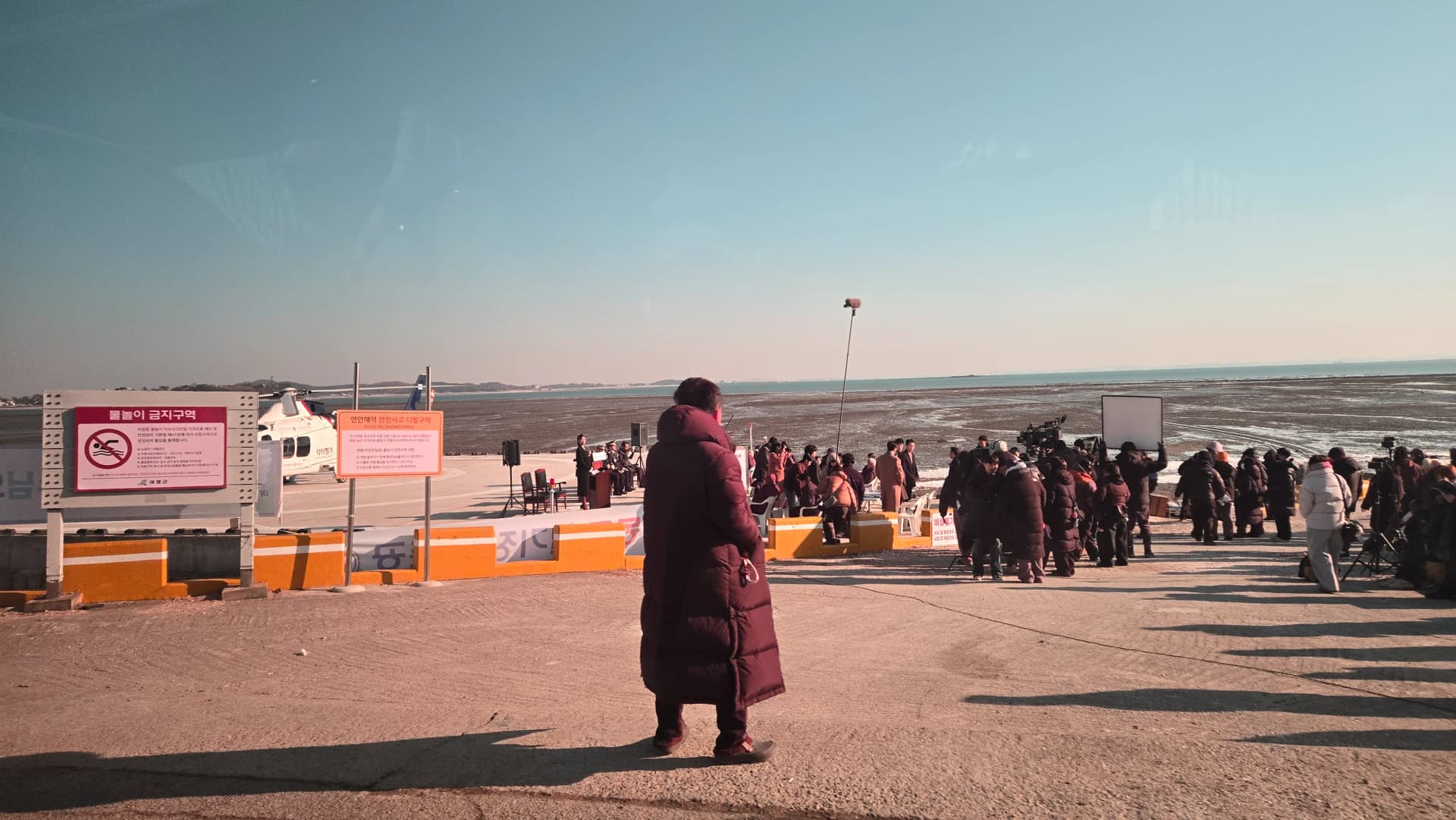
When we got off the bus, we noticed a crowd gathered nearby. Turns out, a TV drama was being filmed — there was a coast guard helicopter set up and actors surrounded by crew. My wife spotted it first: "Hey, is that a film shoot?" We both sneaked a photo. No idea what show it was, but if it ever airs, we'll be sure to look it up.
The Return Ride and Pet-Friendly Cable Car Policy
We boarded the cable car again at the island station for the return trip. The process was exactly the same as before, and with our round-trip tickets, we walked right on. Once again, we had a cabin all to ourselves. The ocean views were just as beautiful on the way back, though having already seen them once, the excitement was slightly dialed down. Still, we sat by the window chatting about coming back in summer and just enjoyed the peaceful ride.
Bringing Your Pet on the Cable Car
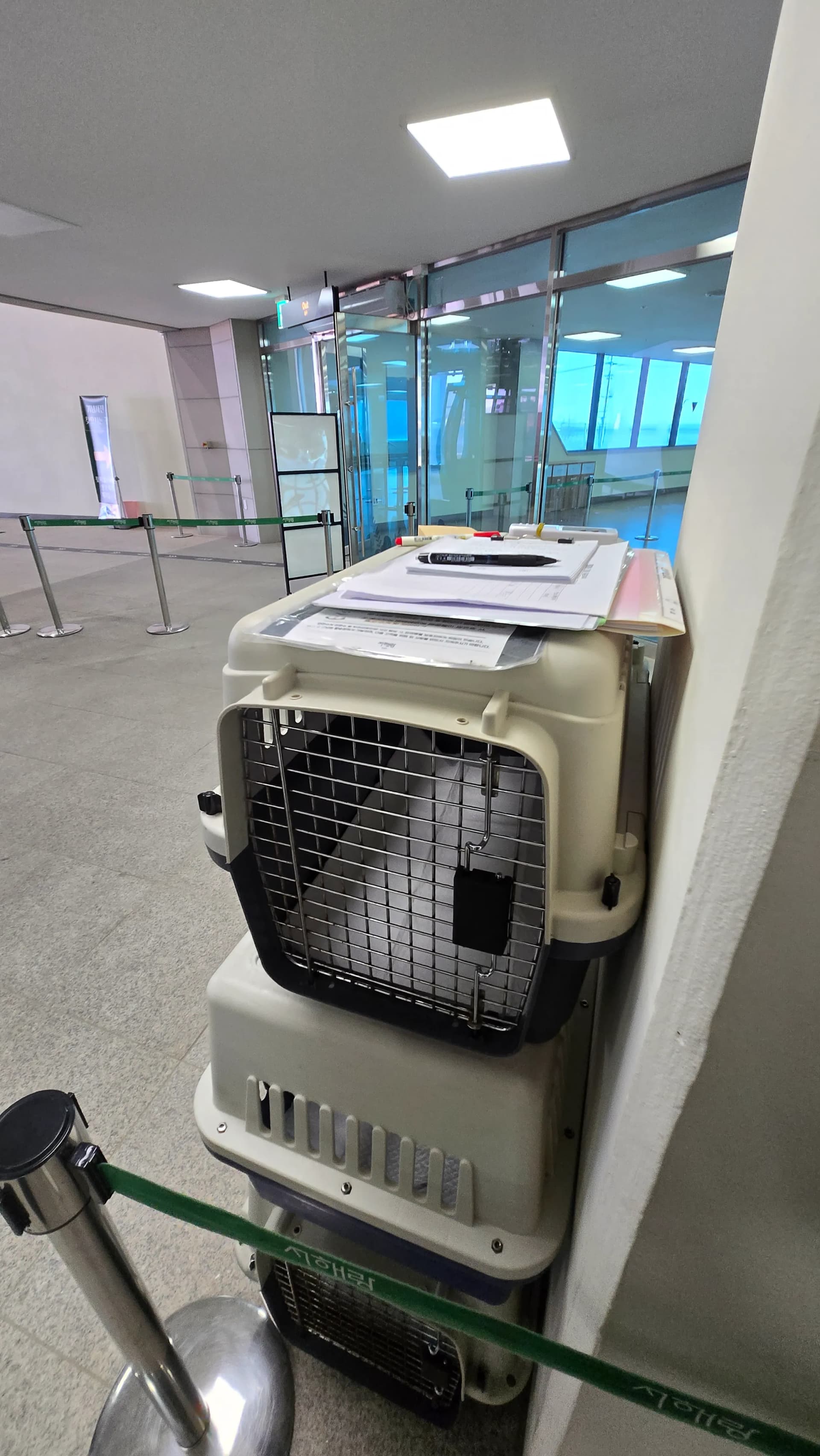
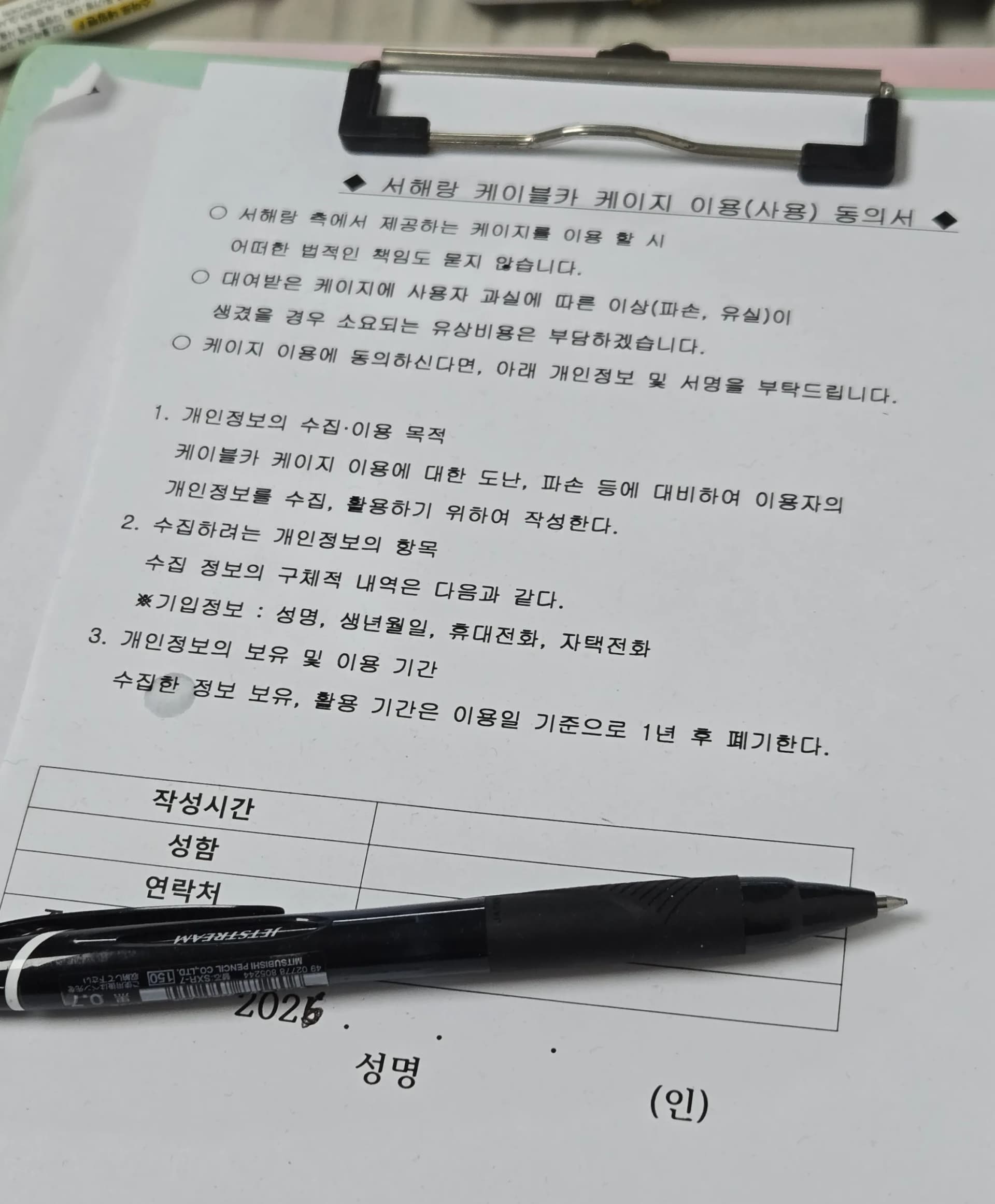
On our way out of the station, we spotted signs about the pet policy. This cable car does allow pets on board, but they must stay inside a carrier at all times — absolutely no taking them out during the ride. You also need to sign a waiver before boarding with a pet.
The waiver covers the basics: your pet must remain in the carrier for the entire ride, and you're responsible for any damage or loss to borrowed carriers. They collect your name, date of birth, phone number, and signature, and the info is deleted one year after your visit. Pet carriers are available to borrow on-site, and they looked big enough for small to medium-sized dogs. If you're traveling with a furry companion, it's definitely doable — just plan for the carrier requirement.
Final Thoughts — And Video Content Coming Soon
This turned into a longer post than I planned, but honestly, I've been thinking a lot about how to share travel experiences more effectively. Photos and words can only go so far — they can't fully capture the sound of the wind, the gentle sway of the cabin, or the thrill of gliding over open water. So I'm considering adding video content to bring these trips to life.
I'm still deciding whether to build a custom video player on our site with multilingual subtitles or just go the YouTube route — both have pros and cons. But what I can say for sure is that we're working on launching a VOD service later this year. The goal is to show you travel destinations in a much more vivid, immersive way. Stay tuned, and I'll keep sharing hidden gems like this ocean cable car!
This article was originally published at https://hi-jsb.blog.