
Spicy Braised Chicken Stew — A $25 Korean Comfort Meal
Table of Contents
13 items
The Morning We Were Craving Spicy Braised Chicken
Earlier this year, on a random weekend, my wife and I were going back and forth about what to eat when she said, "It's been forever since we had dakbokkeumtang." The second those words left her mouth, a vivid image of bubbling red broth popped into my head. Dakbokkeumtang is a Korean braised chicken stew — bone-in chicken pieces simmered with potatoes, carrots, and onions in a spicy gochujang (red chili paste) sauce. You might also hear it called dakdoritang, which is an older name for the same dish. Plenty of people make it at home, but there's something about the depth of seasoning you get at a restaurant that's hard to replicate in your own kitchen. We live in Daejeon, a mid-sized city in central South Korea, and there's practically a dakbokkeumtang joint on every block — so we didn't need to go far. It was still chilly out, the kind of weather where all you want is a hot, soupy meal. Among Korean dishes, this one hits that homestyle comfort spot perfectly. A bowl of steaming broth over rice, slurped down in one sitting — that's all you need to call it a good day. So around lunchtime, I threw on my slides and we headed out.
How Dakbokkeumtang Arrives at the Table
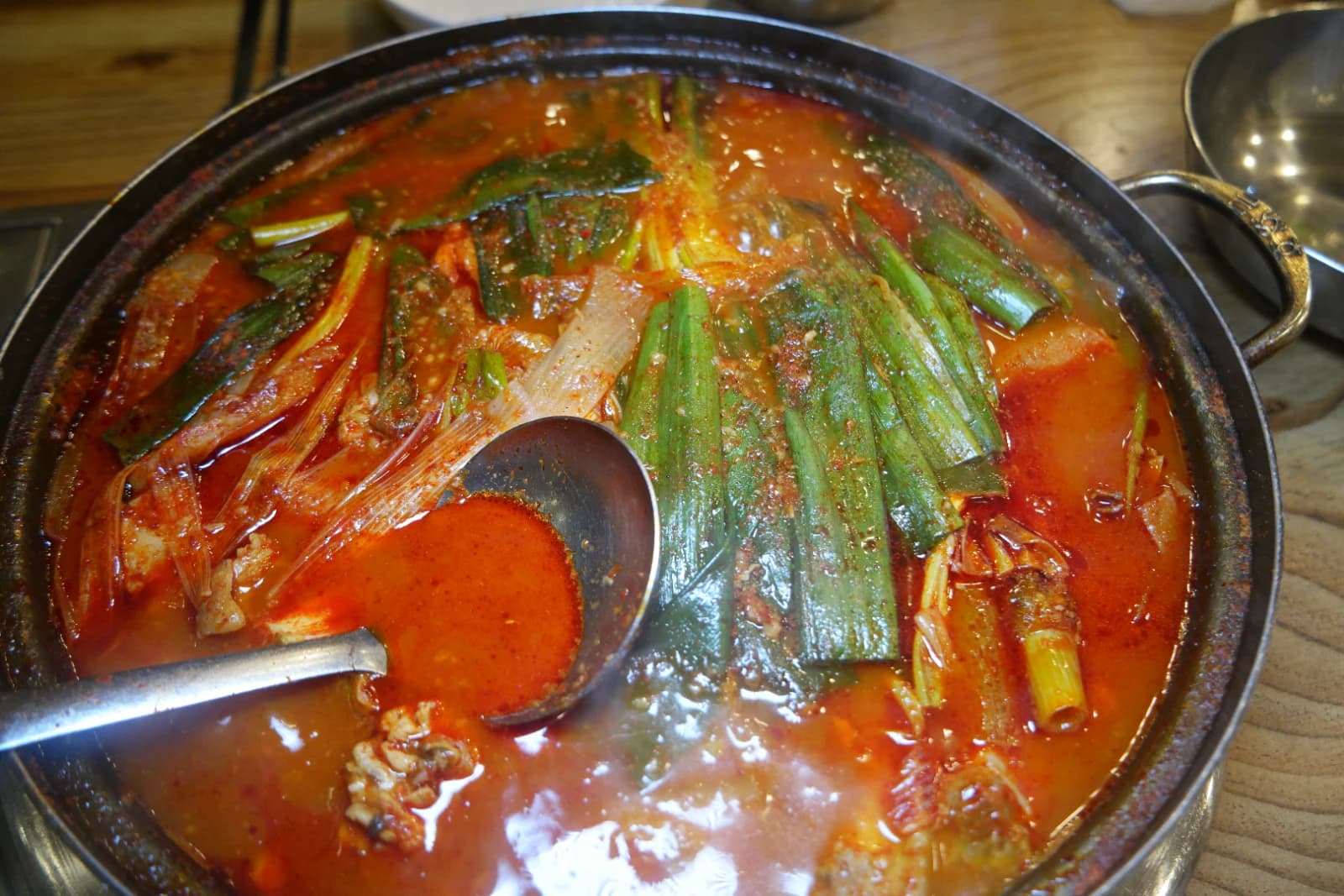
Dakbokkeumtang comes out like this — in a big pot, fiery red and already bubbling. Long slices of scallion sit across the top, while the chicken pieces, potatoes, and carrots are submerged underneath in that deep crimson broth. The whole pot goes right onto a tabletop burner, and you eat it while it simmers away. If you've been to Korea, you've probably tried samgyeopsal (grilled pork belly), fried chicken, or kimchi jjigae — they're the usual hits. But dakbokkeumtang is one of those dishes that somehow flies under the radar for visitors. You won't find many dedicated dakbokkeumtang restaurants near tourist areas, and the name alone doesn't really tell you what the dish is, so I get why people skip it. But once you dig in, you've got bone-in chicken you tear apart with chopsticks in this rich, spicy broth, and the real magic happens when the liquid reduces down and you mix rice into what's left. That ladle you see in the photo? You scoop up broth, pour it over your rice, and that's the whole meal right there.
How to Order — Small, Medium, or Large
On the menu, dakbokkeumtang comes in three sizes: small, medium, and large. Small serves two, medium serves three, and large covers four. Order a small and you get an entire chicken, chopped into bone-in pieces, plus potatoes and vegetables all loaded into the pot. Rice and side dishes come included — no need to order them separately. We went with a small for the two of us, and even that was no joke portion-wise. With rice on the side, two people can eat until they're stuffed and sometimes still have leftovers.
Before the Boil — What Makes the Broth So Red
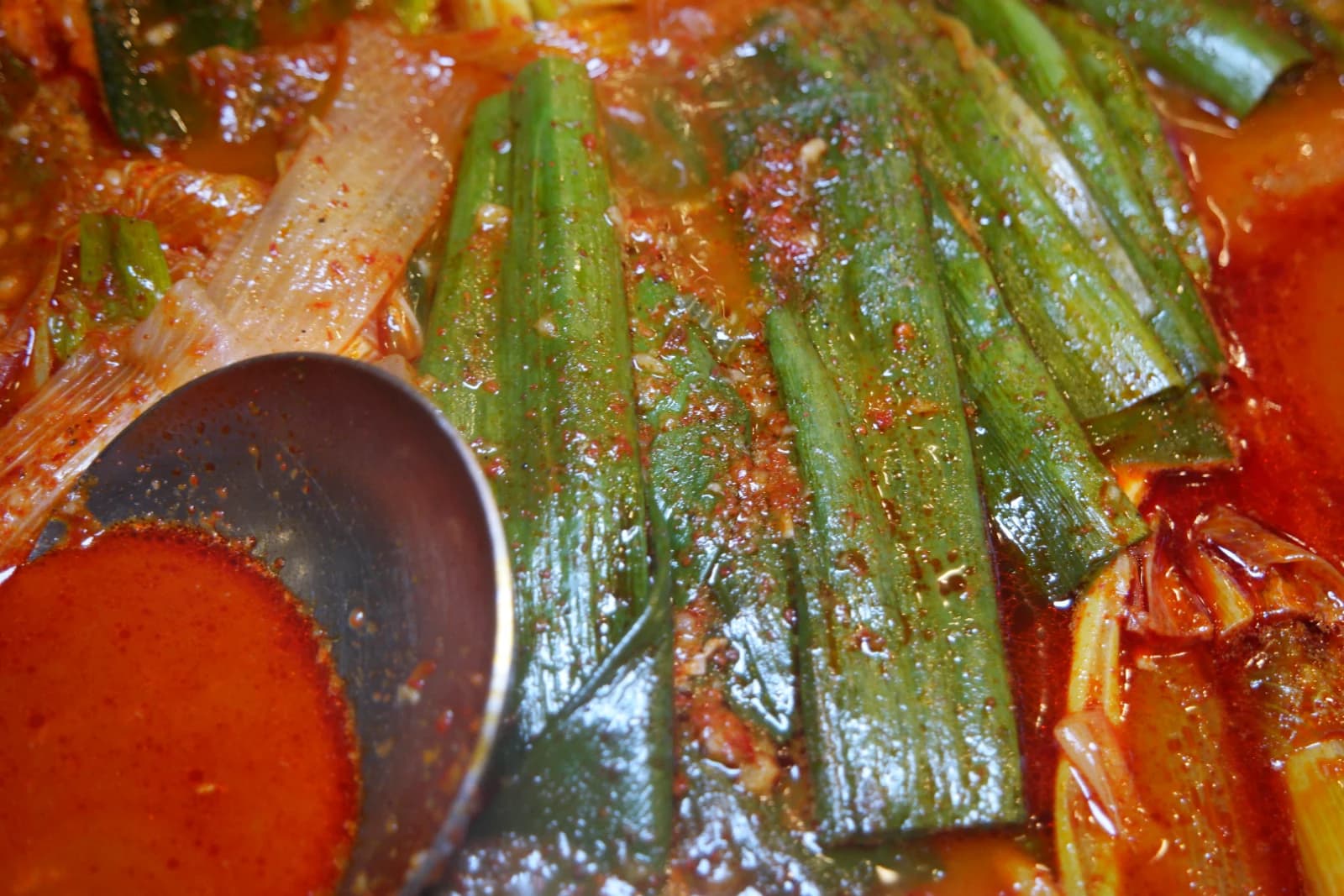
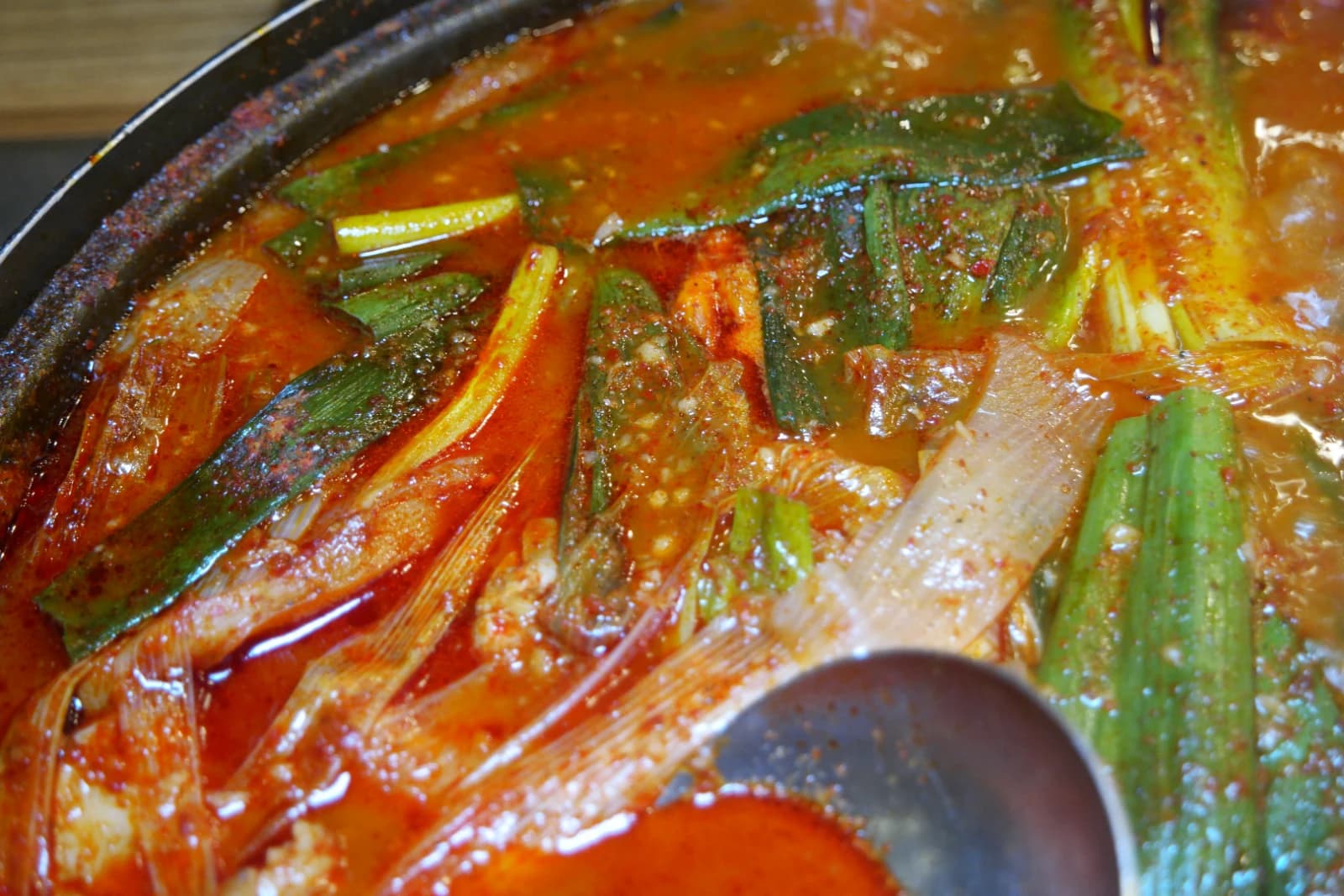
Up close, the broth is intensely red. Gochujang and chili flakes meld with the oil to form this slick of crimson fat floating on the surface, and with the pot already starting to bubble, the scallion pieces bob around lazily on top. I hadn't even picked up my chopsticks yet and the spicy aroma was already hitting hard. My wife tensed up — "Is this going to be super hot?" That's the thing with Korean spicy food: the color alone looks intimidating. But dakbokkeumtang is gochujang-based, so there's a sweetness running through it that balances the heat. At this stage you don't dive in yet — the seasoning needs another five minutes or so of simmering to really soak into the potatoes and chicken. So you sit there, watch it bubble, and wait.
The Full Rolling Boil
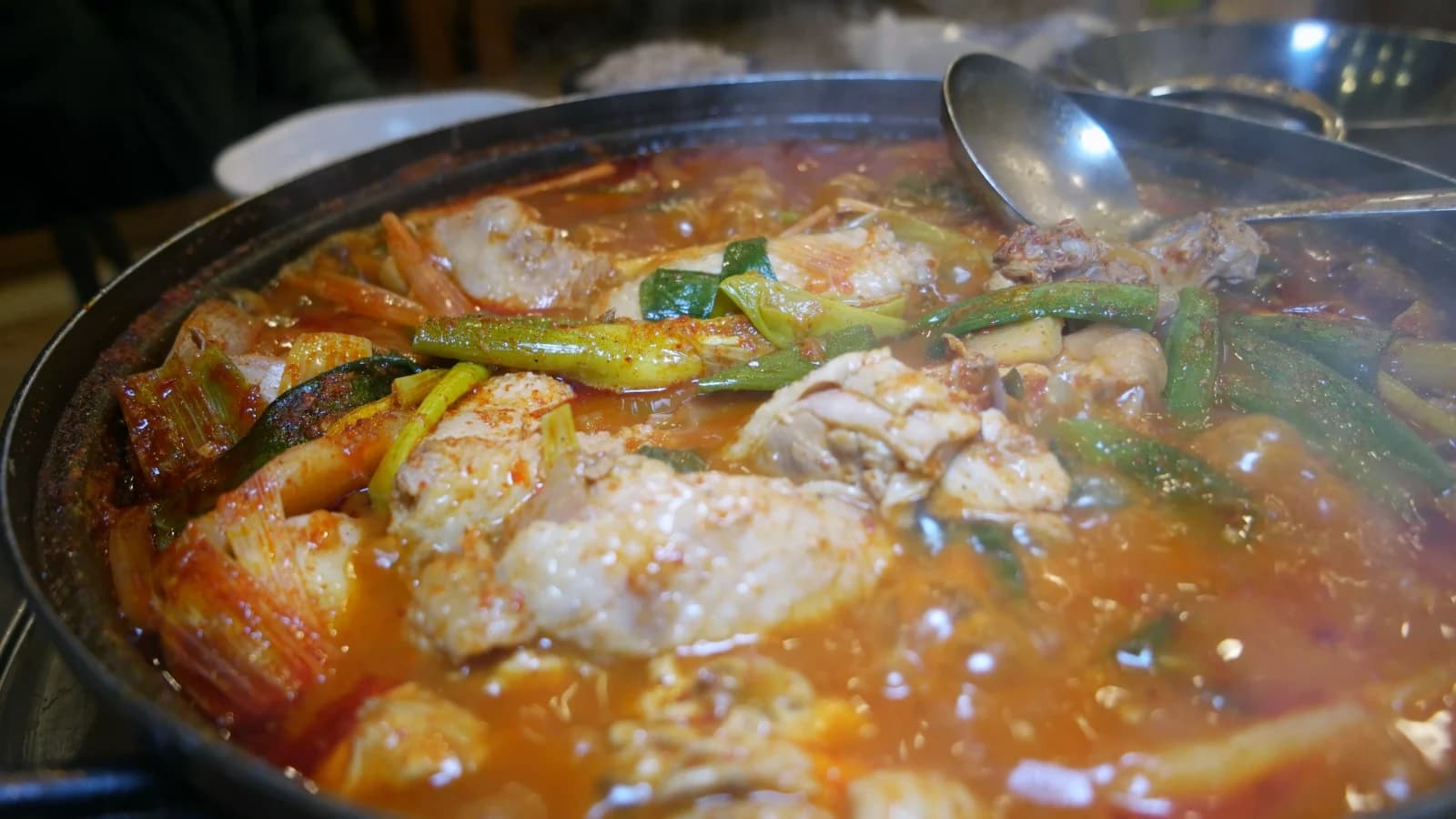
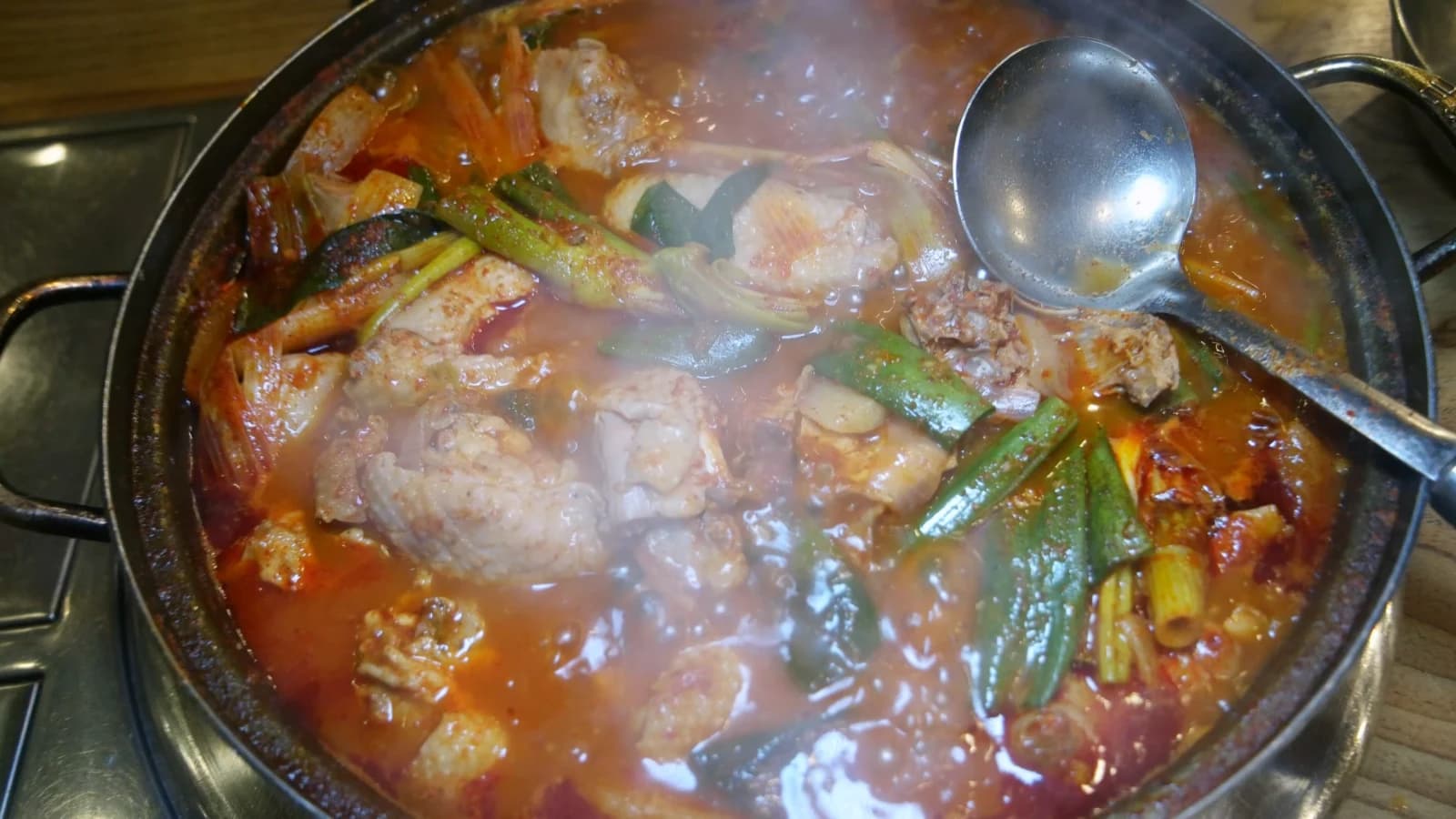
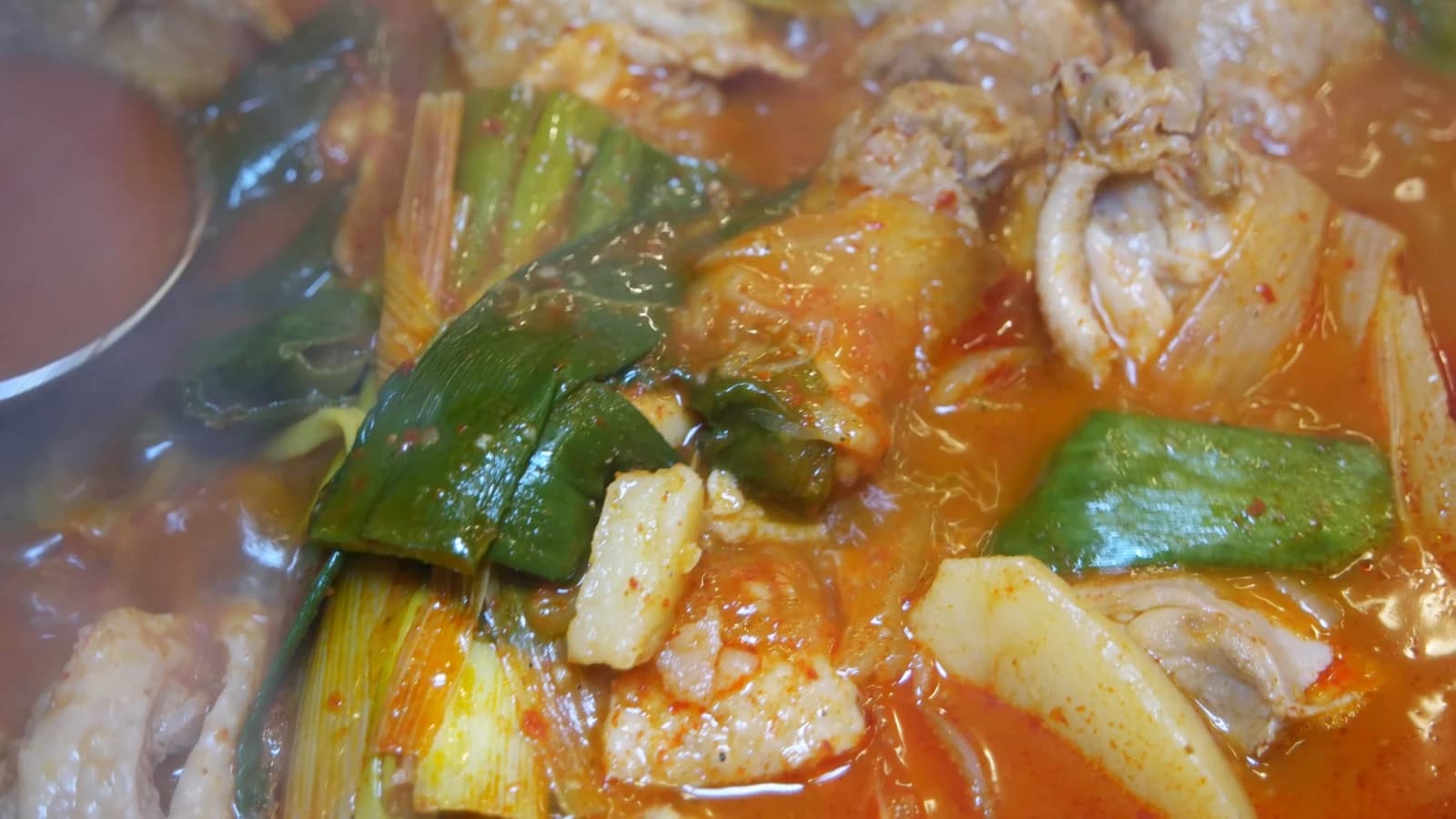
About five minutes in, the pot hit a full, rolling boil. The chicken pieces that had been hiding under the scallions started bobbing up to the surface. I could see three or four big bone-in drumstick portions, and between them the potatoes and onions were soaking up sauce, their color deepening by the minute. Steam was pouring off the pot, filling the space around our table with that spicy, savory smell — I caught the couple at the next table sneaking glances at our setup. Up close, you could see the sauce clinging to the chicken like a glaze, and the meat near the bone was just starting to pull apart, which meant it was almost ready. I gave it a stir with the ladle and up came carrot chunks and even some rice cakes that had been sitting at the bottom. My wife was next to me going, "Stop taking pictures and eat already," but come on — you can't just ignore a pot like this in full bloom.
Scooping Out the Chicken
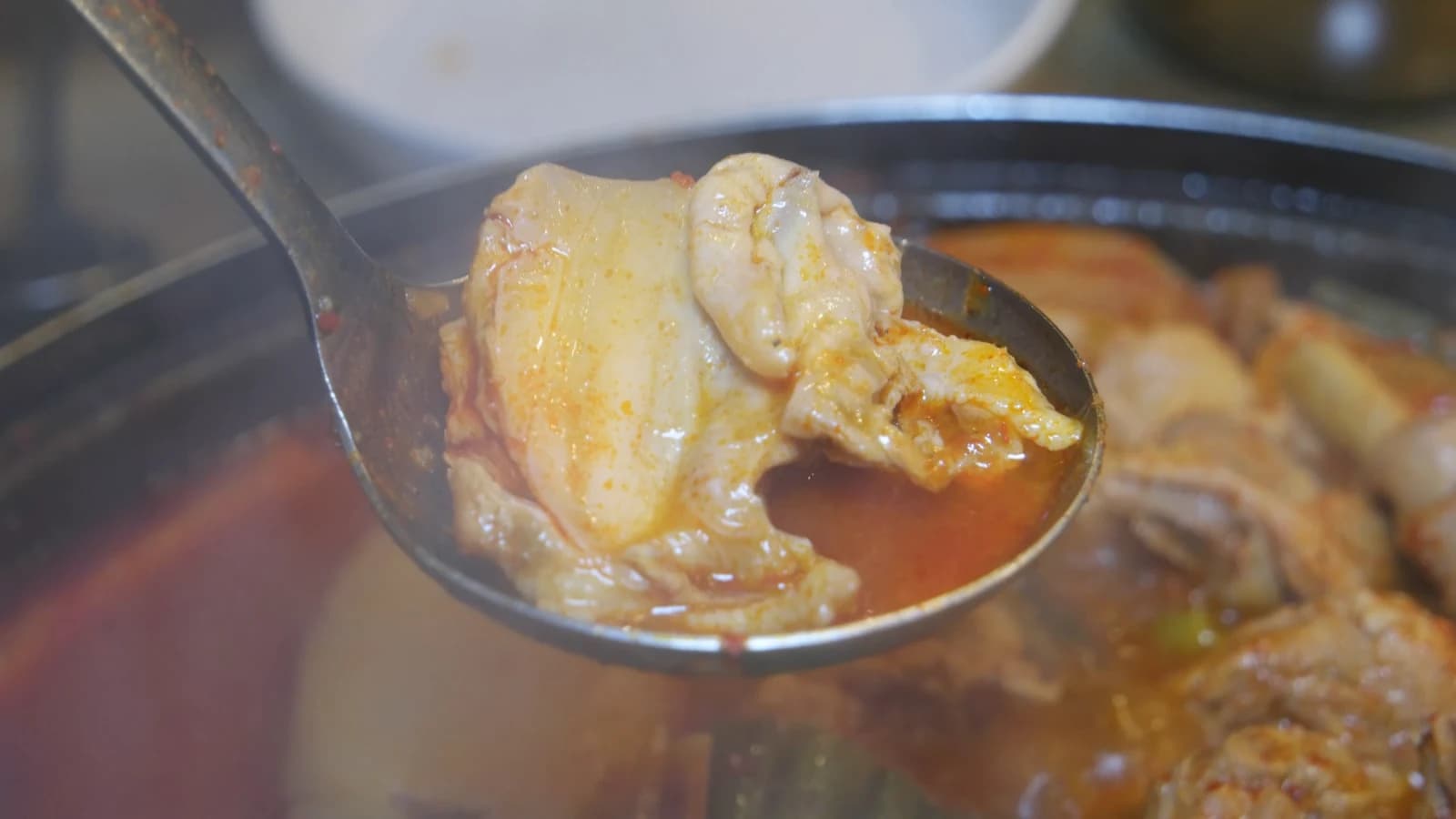
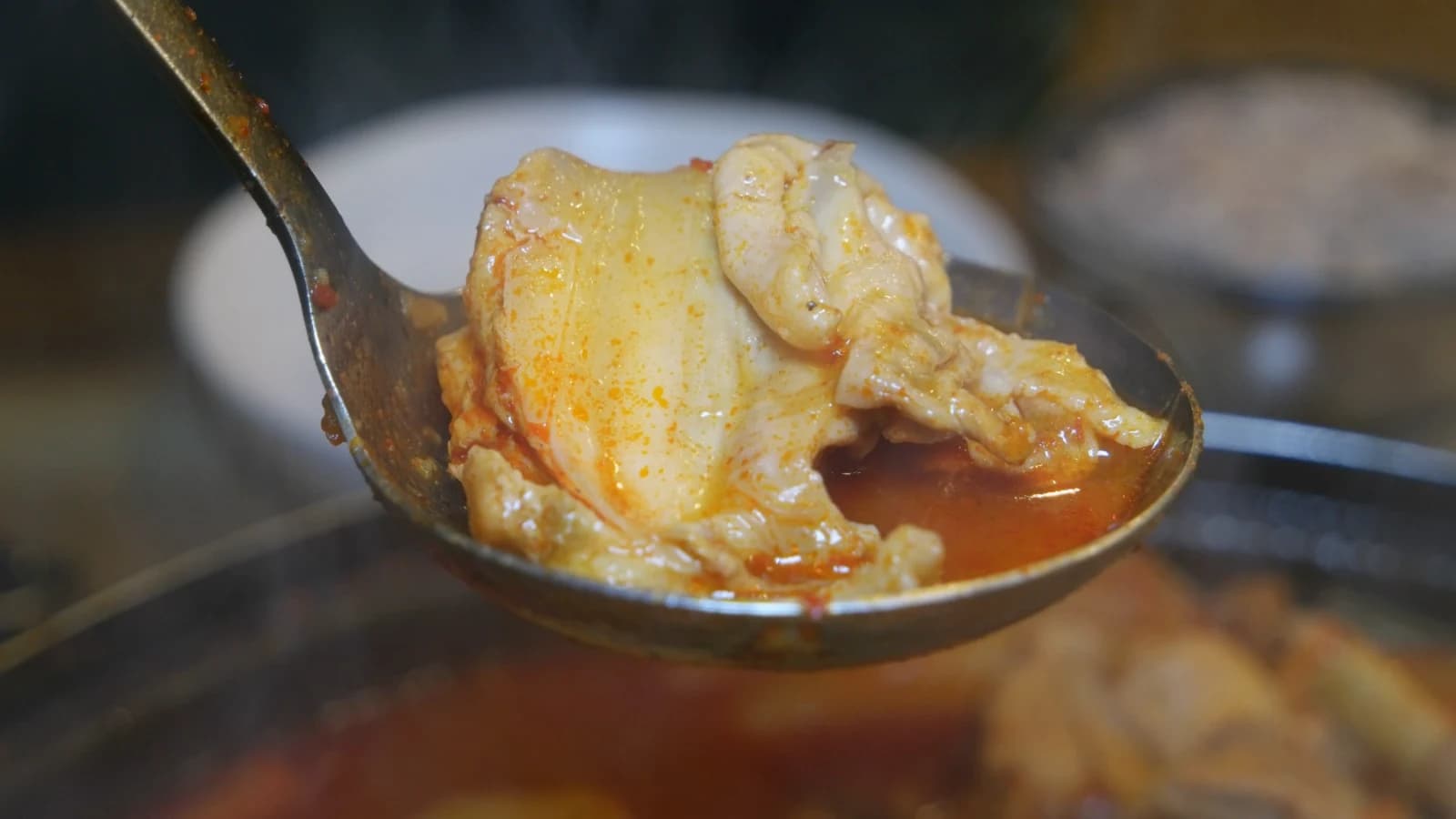
When I scooped the ladle in, a whole drumstick came up in one piece. It practically filled the entire ladle, with red-orange broth streaming off and the meat already halfway separated from the bone. At this point, one tap with your chopsticks and the meat falls right off. That's actually the test for whether your dakbokkeumtang is done — if the meat pulls away from the bone on its own when you lift it, it's ready. If it's still clinging tight, give it a few more minutes. On this day, the seasoning had soaked all the way through: the outside was deep red while the inside was a pale golden color, fully cooked. I plated a piece for my wife first, but she was already digging her own ladle into the pot and fishing out an even bigger chunk.
How to Eat It — Plate It Up Individually
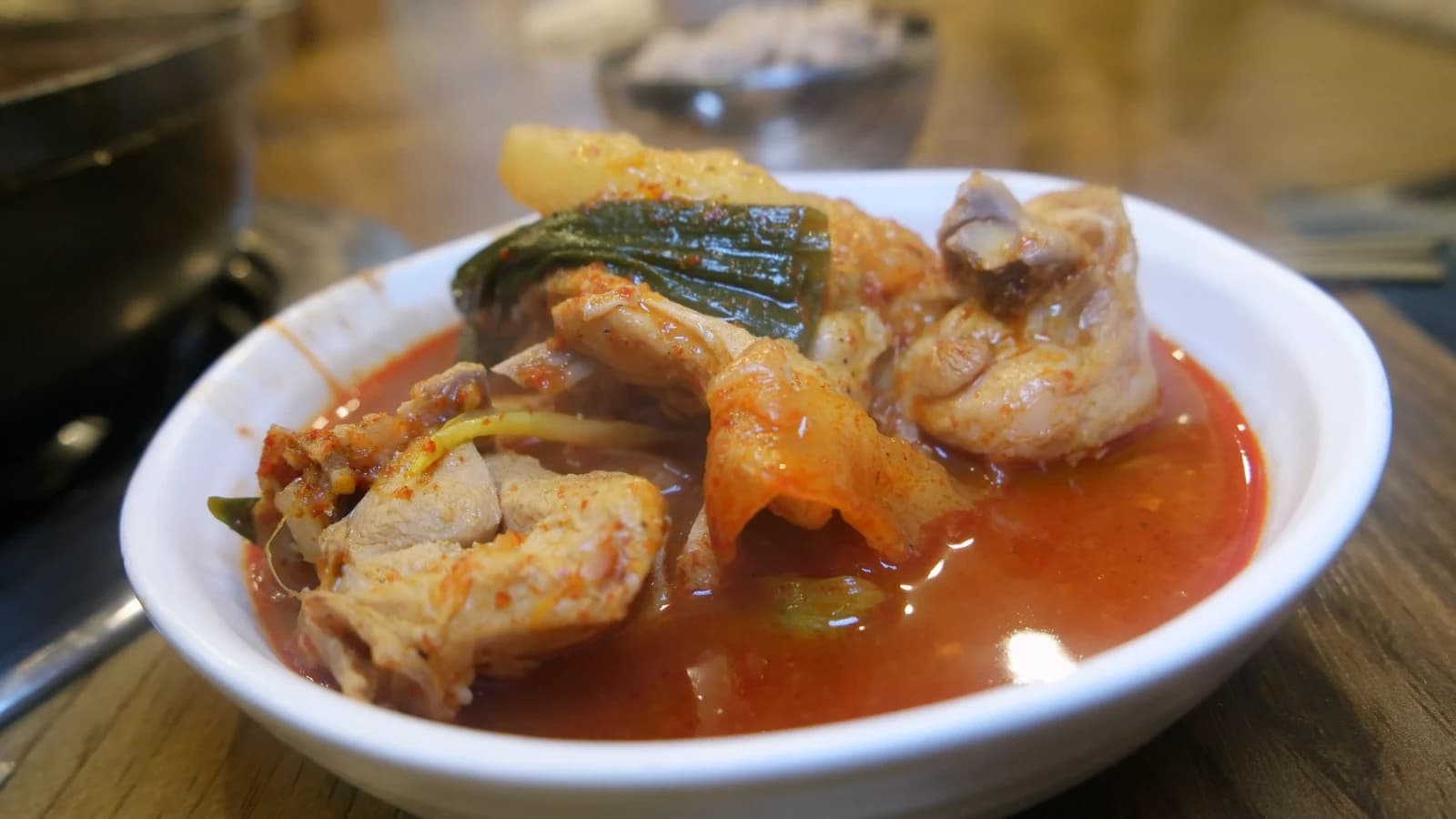
Here's what it looks like on your personal plate. You don't eat dakbokkeumtang straight out of the communal pot — instead, everyone ladles chicken and vegetables onto their own plate. A couple pieces of chicken, some potato, scallions, and a shallow pool of that red broth collecting at the bottom. From here, you pull the meat off the bone with chopsticks and eat it alongside rice. Some people just pick the pieces up by hand and tear at them — and honestly, plenty of Koreans do exactly that. I'm more of a chopstick person, but my wife went full hands-on from the start. "The meat right next to the bone is the best part," she said.
The Longer It Simmers, the Better — Reduced Broth Is the Star
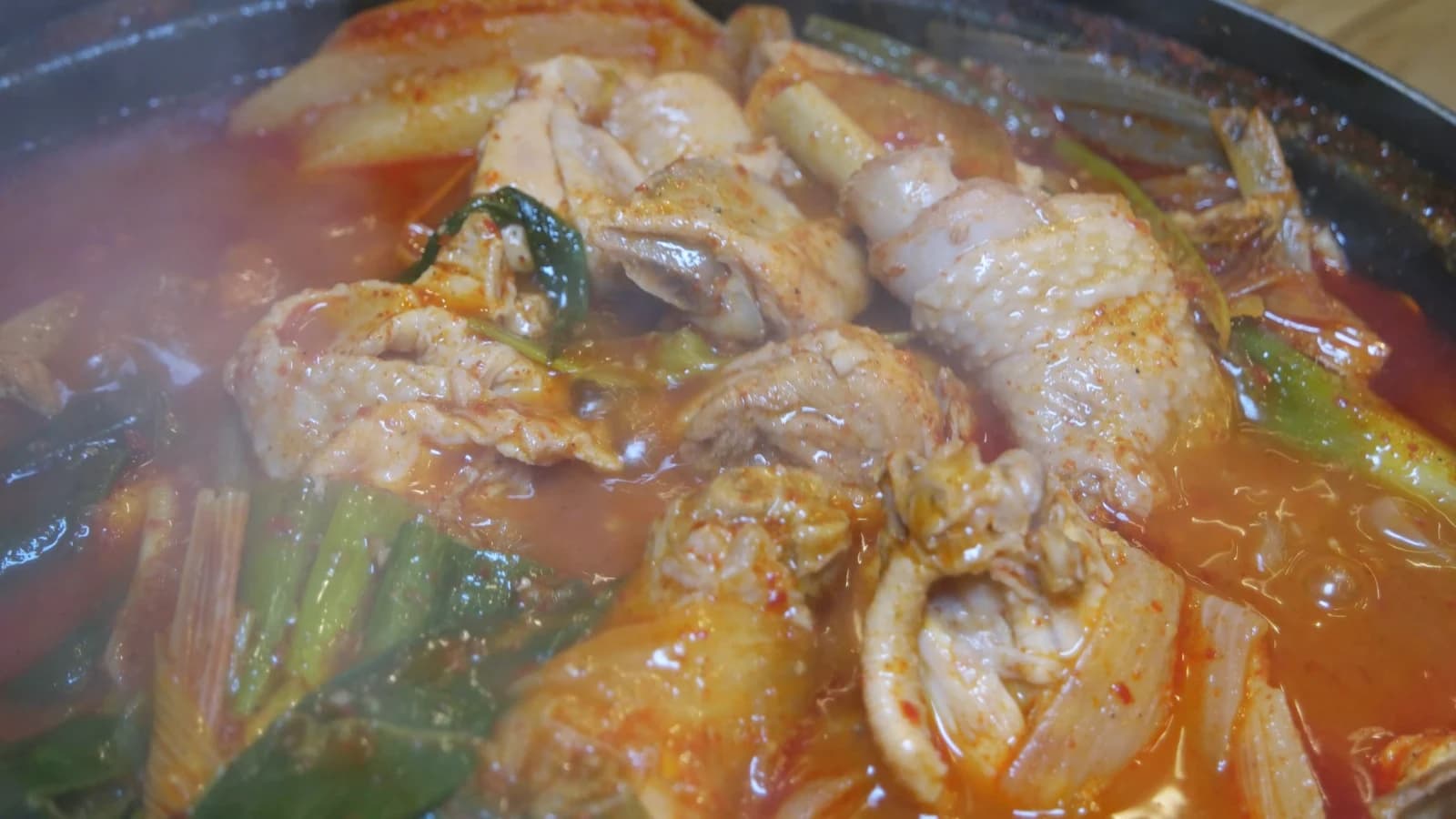
After a while of eating, the broth had reduced dramatically from where it started. Early on, the chicken was completely submerged; by now, the drumsticks and wing tips were poking above the surface, coated in a thick, sticky glaze. This is when dakbokkeumtang truly hits its peak. As the liquid cooks down, the sweetness and spice concentrate, and the potatoes — half-dissolved at this point — thicken the broth into something almost gravy-like. The flavor at this stage is a completely different animal from those first few spoonfuls. Honestly, when it first arrived, I thought it was a touch underseasoned. But after the reduction? Perfectly balanced. My wife agreed — "This is way better than it was ten minutes ago" — and she was already ladling broth over her rice nonstop. Mixing rice into the reduced broth at the end is the definitive way to finish dakbokkeumtang, and the way those half-melted potatoes make the liquid cling to every grain of rice is honestly the best part of the entire meal.
Side Dishes — Included and Free Refills
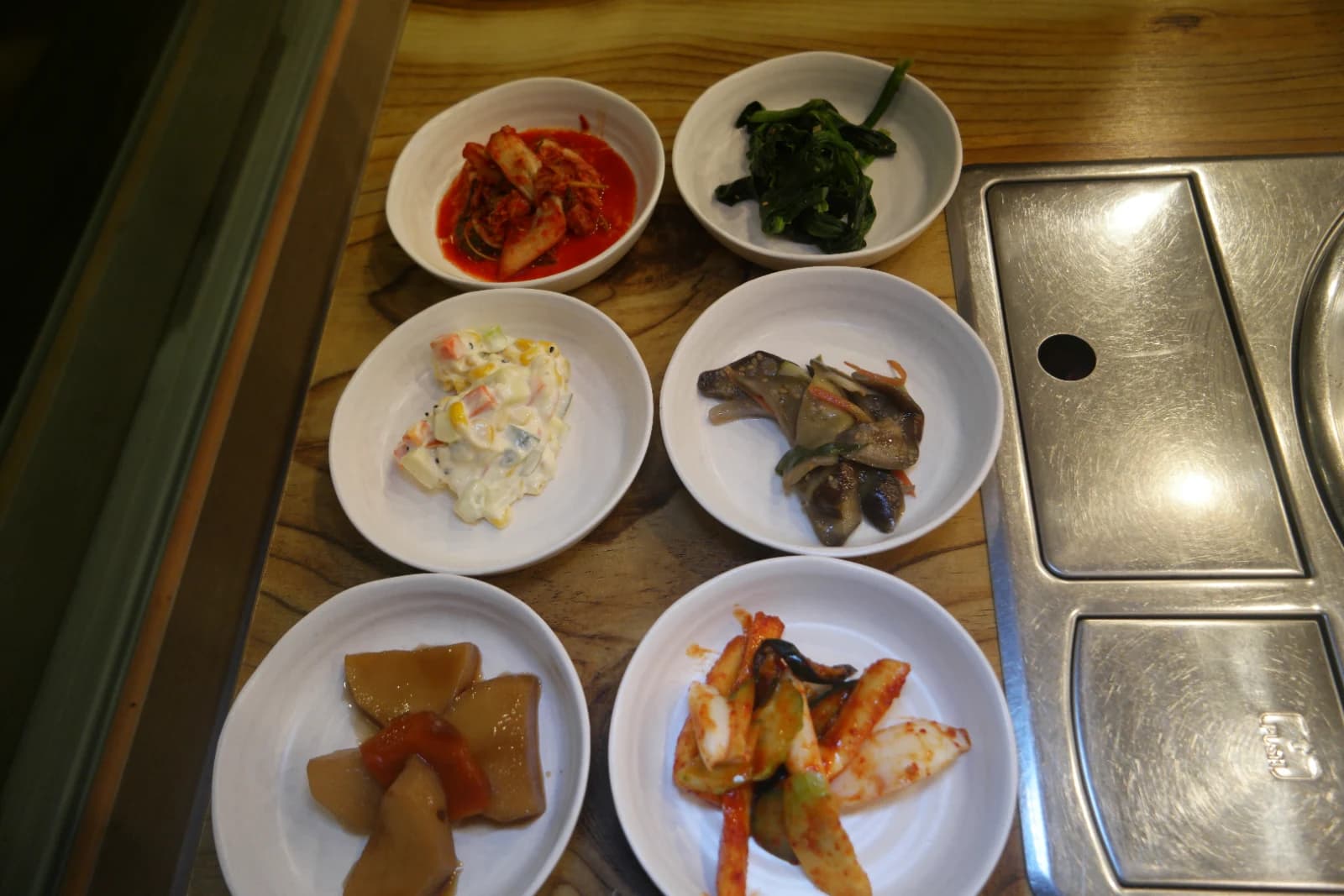
Just because dakbokkeumtang is a single main dish doesn't mean you eat it alone. We got six plates of banchan: kimchi, seasoned spinach, potato salad, marinated eggplant, pickled radish, and stuffed cucumber kimchi. In Korean restaurants, when you order a main, banchan — those small complementary side dishes — come out automatically, and you can get refills at no extra charge. No additional cost at all. The number and quality of banchan varies wildly from place to place, but six dishes is pretty decent. That said, the portions here were on the small side. A couple of the plates were basically empty after one or two bites. You can always ask for more, but having to flag down the server every few minutes gets old.
A Closer Look at Each Side Dish
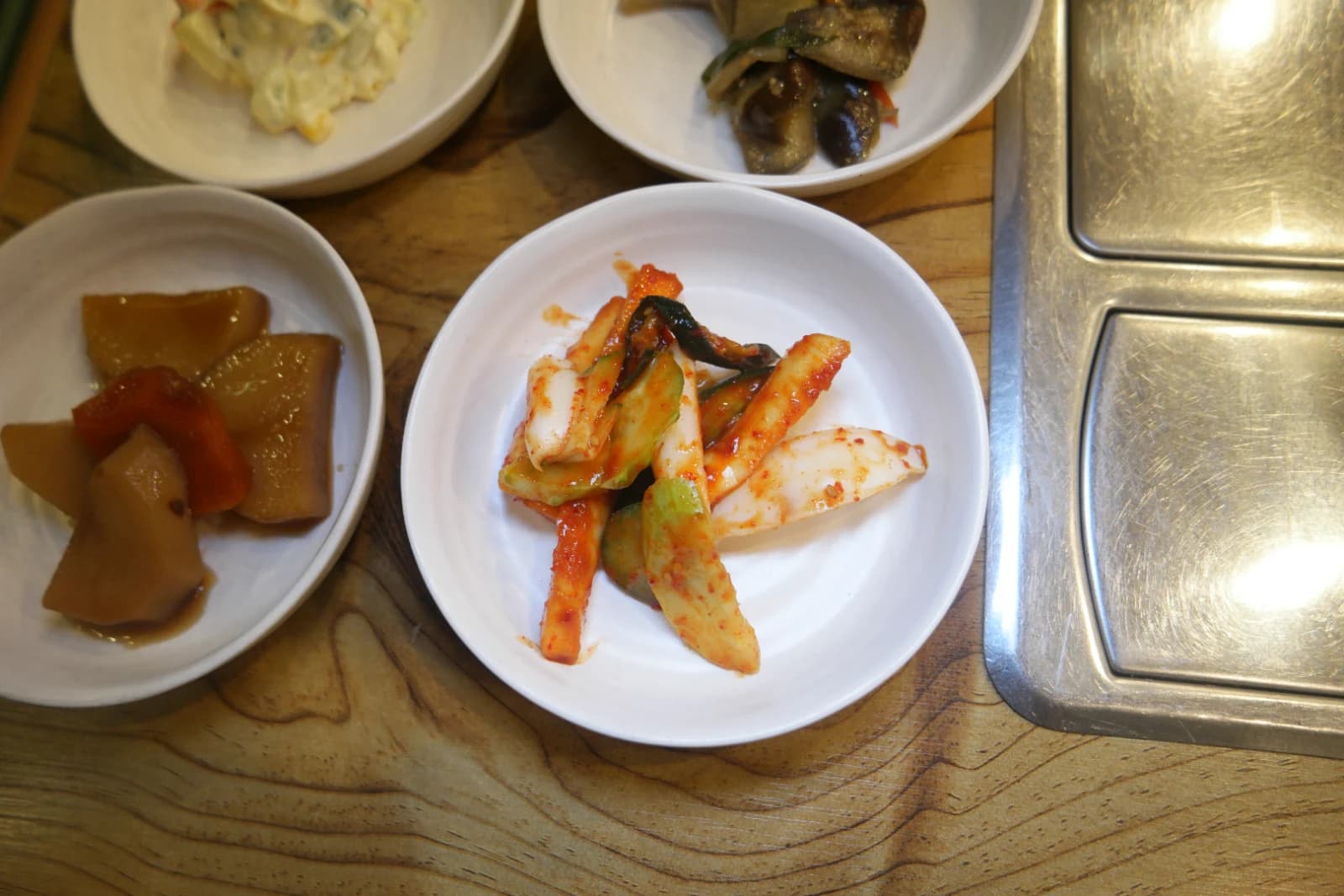
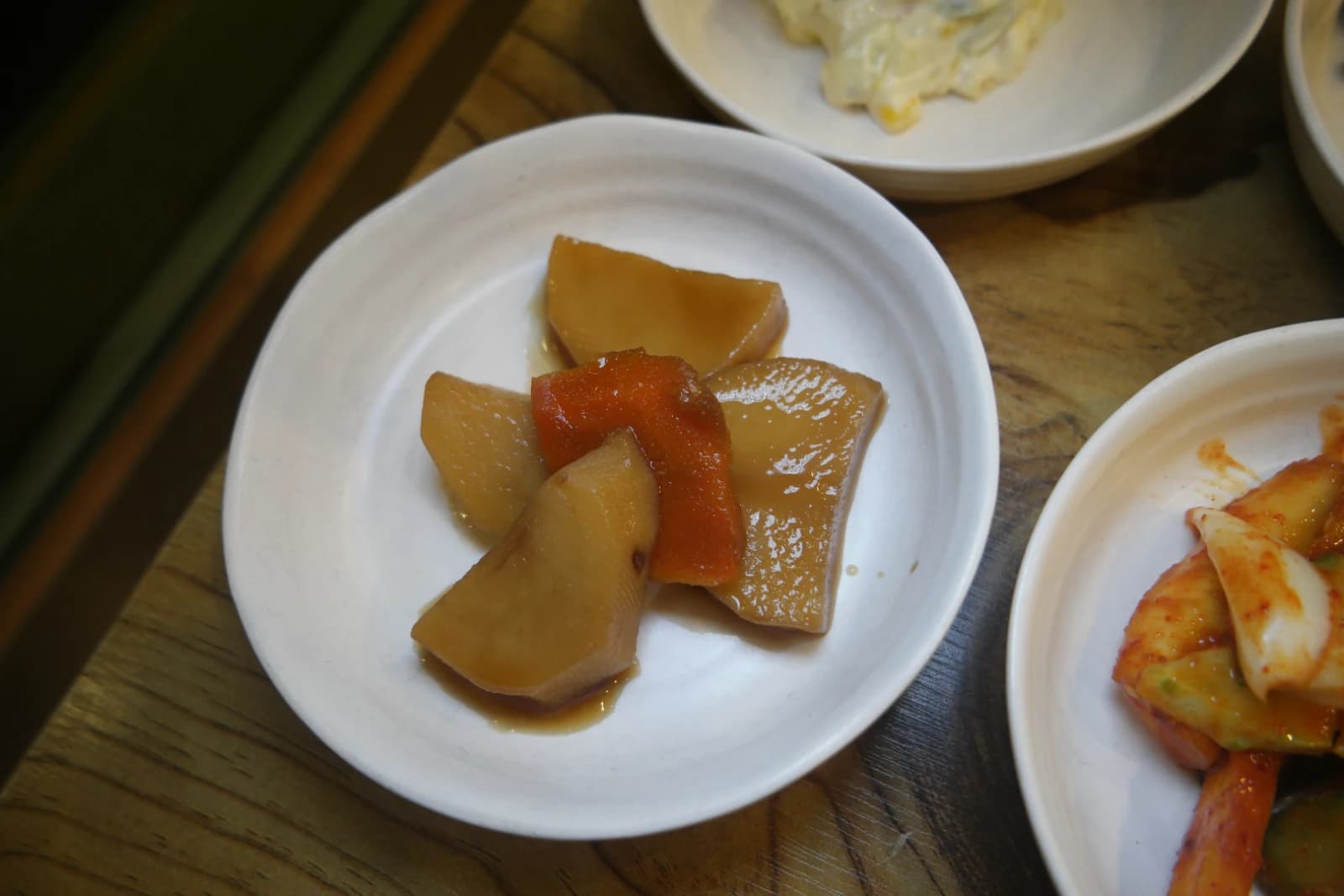
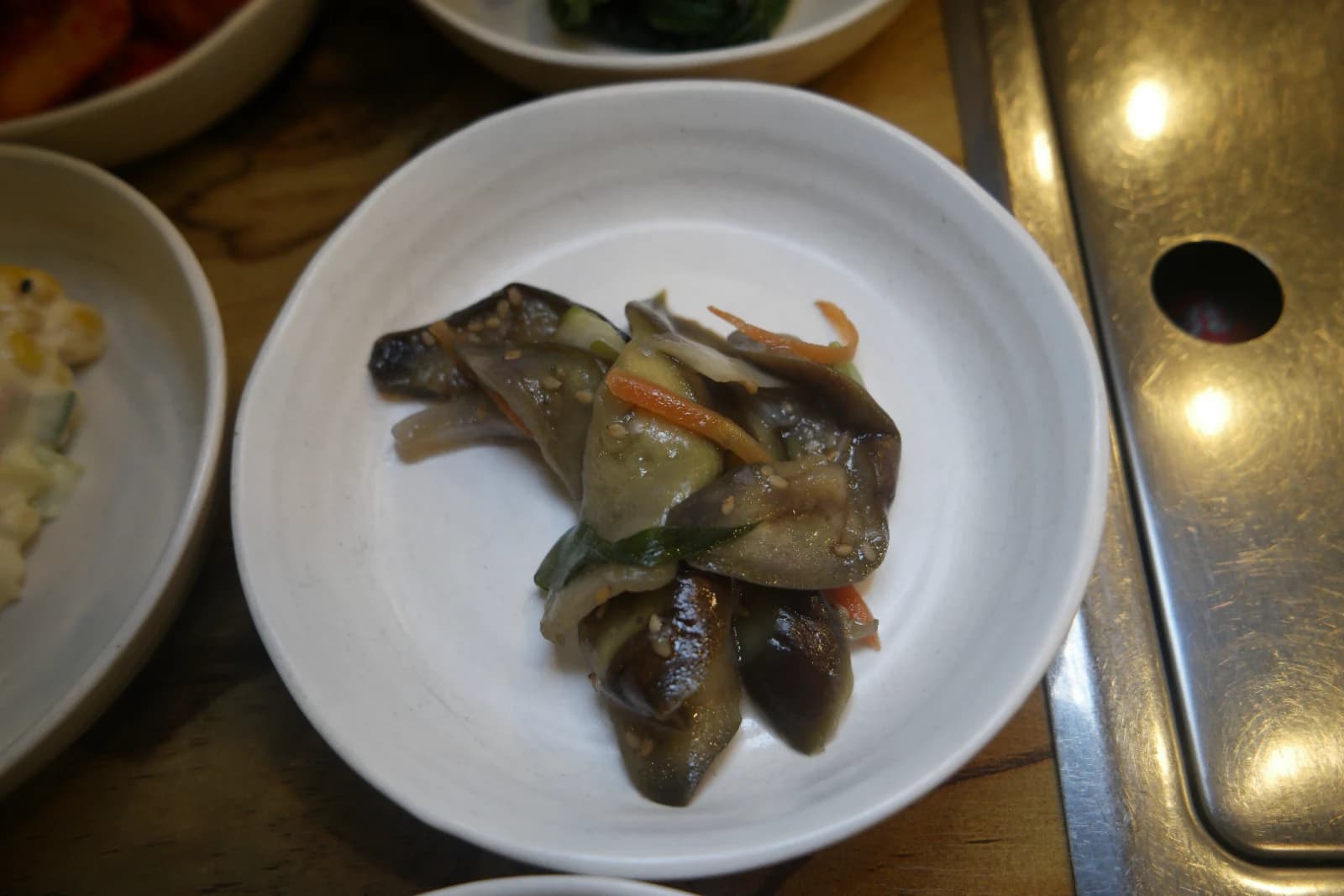
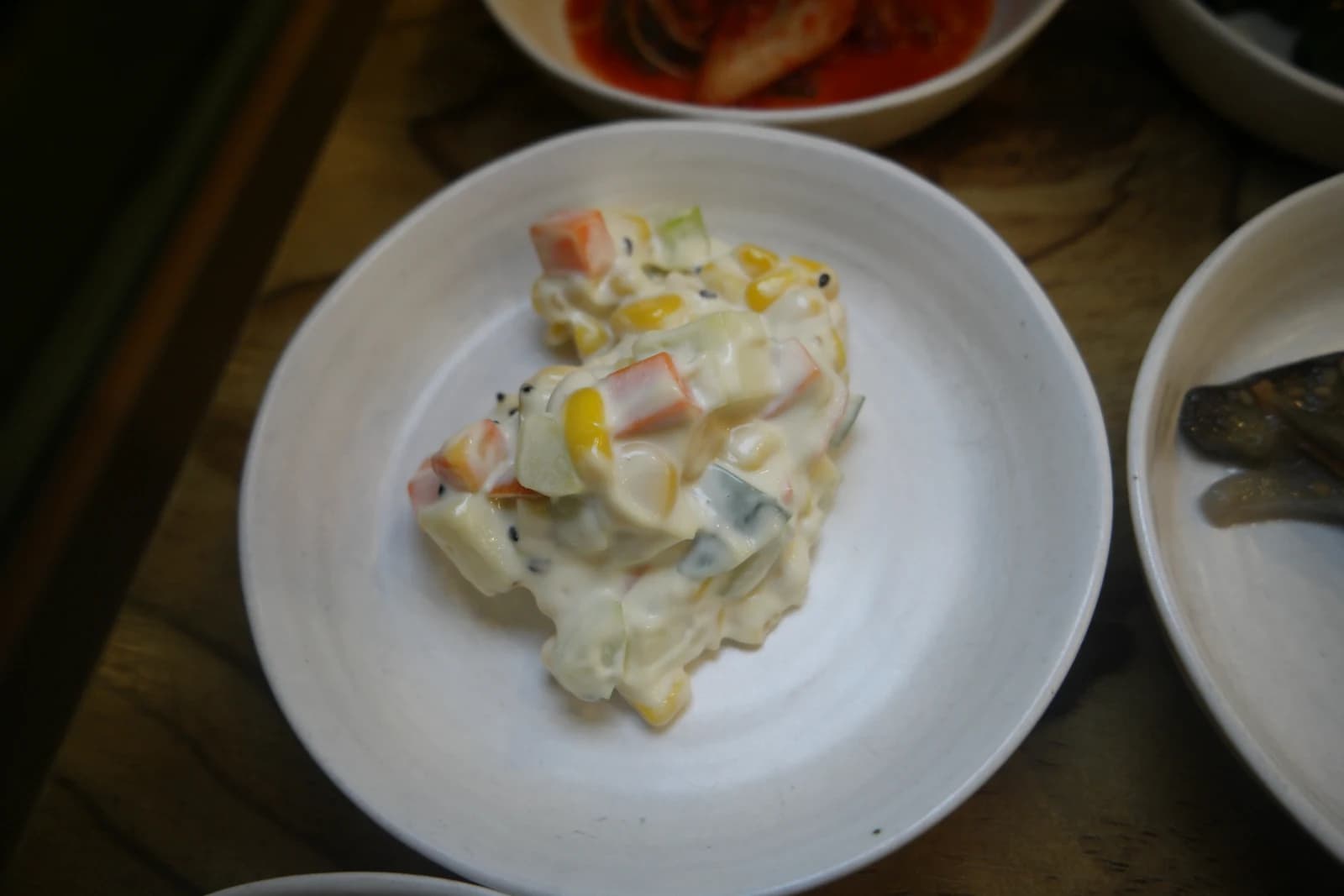
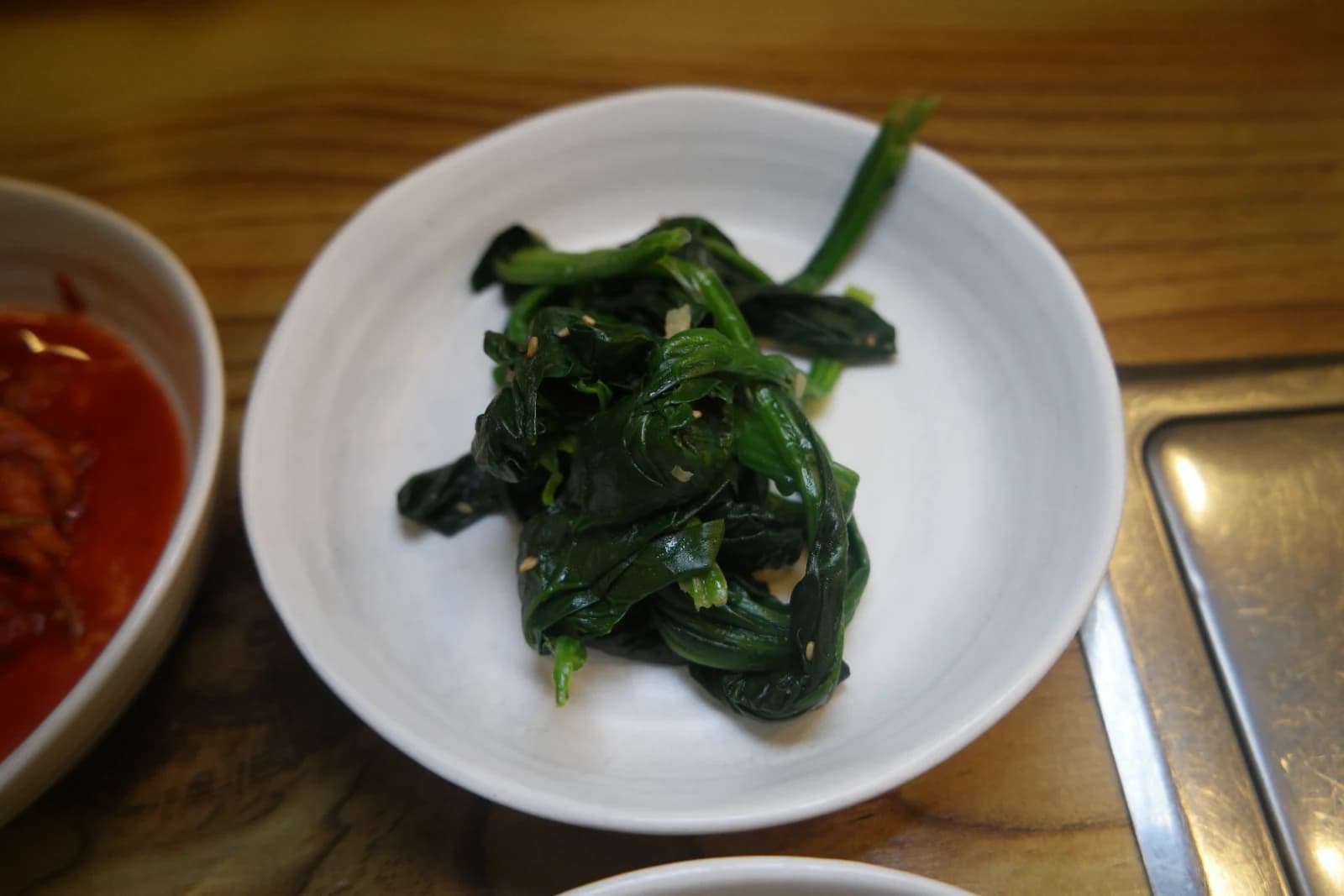
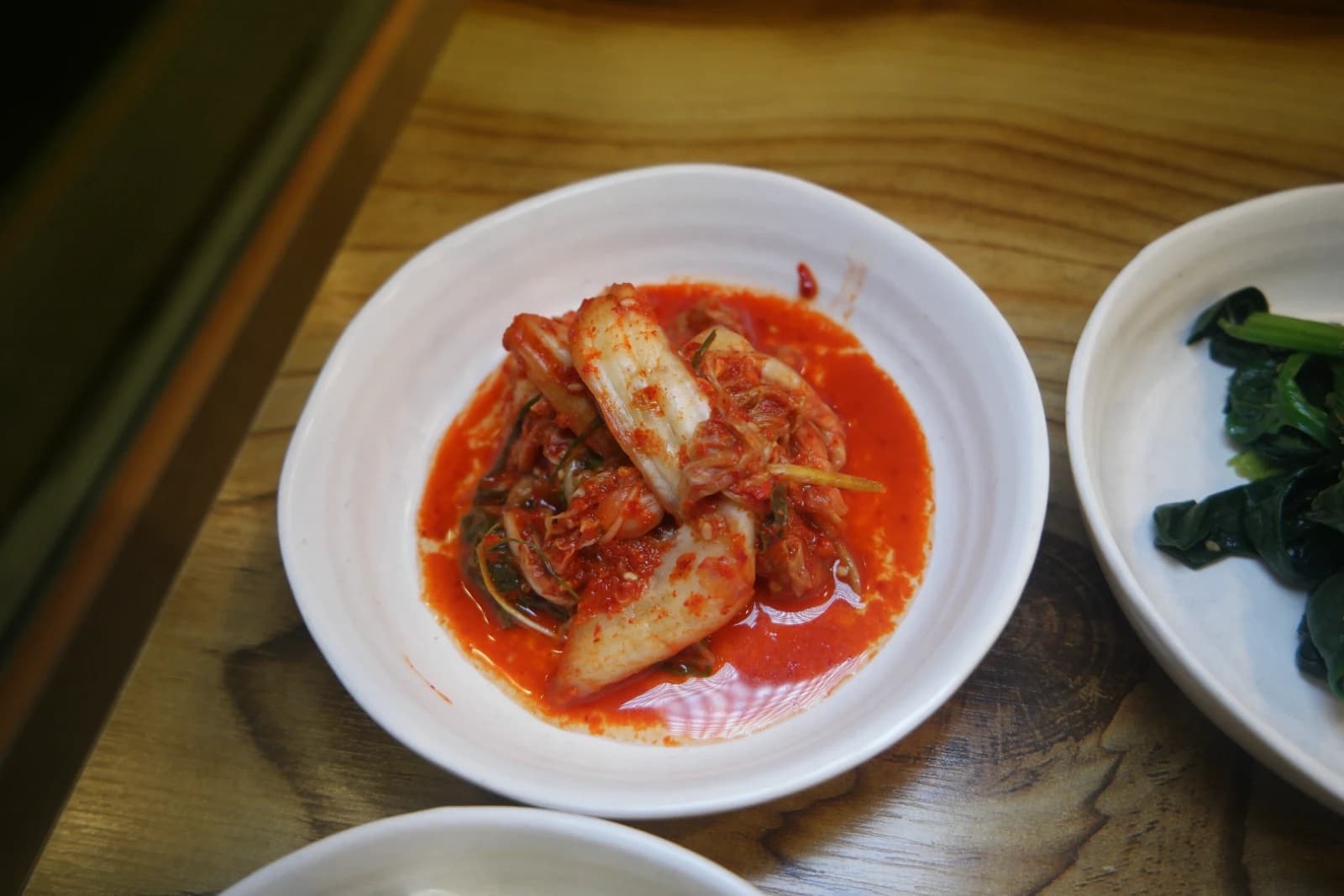
Breaking them down one by one: Oi-sobagi (stuffed cucumber kimchi) is cucumber scored and packed with a spicy chili filling — the crunch is great, and grabbing a piece when your mouth is on fire from the stew gives you a nice refreshing reset. Danmuji (pickled radish) is daikon soaked in a sweet soy brine; this place cut it thick, which gave it a satisfying chewy texture, though the sweetness was a bit much for my taste. Gaji-namul (seasoned eggplant) was dressed lightly with sesame oil and seeds, with a bit of shredded carrot mixed in — it's one of those love-it-or-hate-it banchan because of the soft, almost mushy texture. My wife doesn't do eggplant, so she didn't touch it. Potato salad — the Korean version with corn kernels and imitation crab in mayo — is a great palate cleanser when you're deep into something spicy. It's personally my favorite side at any meat restaurant, but they gave us such a tiny portion that three spoonfuls and it was gone. Sigeumchi-namul (spinach) was dressed in sesame oil, so it had that nice nutty flavor. And the kimchi was well-fermented napa cabbage with juices pooling on the plate — you'd think eating kimchi alongside an already-spicy stew would be overkill, but the tangy sourness of ripe kimchi actually cuts through the oily broth really well. I kept going back for more.
Make It at Home or Eat Out?
On the drive home, my wife floated the idea: "Maybe we should try making it ourselves next time." And ingredient-wise, dakbokkeumtang is actually pretty straightforward — bone-in chicken, potatoes, carrots, onion, gochujang, chili flakes, soy sauce, garlic, sugar. There's no reason you couldn't pull it off at home. But honestly, I don't think we'd nail that same depth of flavor. It's about the timing of the sauce reducing down just right, and the whole vibe of eating it while it's still simmering on the burner in front of you — eating dakbokkeumtang at a restaurant turns it into a different experience entirely.
$25 for Two — Not Exactly Cheap
The total came out to 35,000 won (about $25 USD), which was the price of one small pot. Rice was included, so we didn't add anything extra. When you consider you're getting a whole chicken, vegetables, rice, and banchan all in one package, the starting price still feels a bit steep for what's essentially a single menu item. One more thing that bugged me: after a meal like this, the smell really clings to your clothes. That spicy, oily aroma seeped into my jacket, and I had to toss it in the wash the second I got home. Should have taken my coat off before eating — didn't think of it at the time.
My wife was dozing off in the car and mumbled, "Meat just tastes better when you eat out." Funny, because wasn't she the one who just suggested making it at home? But yeah — I can't argue with that.
Dakbokkeumtang — Quick Facts
First Time Trying Dakbokkeumtang? Here's What You Need to Know
Are dakbokkeumtang and dakdoritang different dishes?
They're the exact same thing. The dish was originally called dakdoritang, but there was a debate over the word "dori" — some claimed it came from "tori," the Japanese word for bird. In 1992, Korea's National Institute of the Korean Language officially standardized the name as "dakbokkeumtang." To this day you'll see both names on restaurant signs, and regardless of which one is on the menu, you're getting the same dish.
How spicy is it?
It looks terrifying because of the color, but it's actually a medium level of heat. Since gochujang is the base, you get sweetness and umami before the spice really kicks in. By Korean standards, it's milder than tteokbokki (spicy rice cakes) and about the same as or slightly gentler than kimchi jjigae. At some places, you can ask them to dial it down when you order.
How do I order?
Just pick a size — small, medium, or large — based on your group. Say "dakbokkeumtang soja hanayo" (one small, please) and you're set. Rice and banchan come automatically, so there's nothing else to order. A small starts around 35,000 won (about $25), and since that includes a whole chicken, vegetables, rice, and side dishes, it works out to roughly $12–13 per person.
Is there a specific way to eat it?
When it first arrives, don't dig in immediately — let it simmer for about 5 minutes so the seasoning soaks into everything. Use the ladle to transfer chicken and potatoes onto your plate, then eat them with rice. The chicken is bone-in, so either pull the meat off with chopsticks or just pick it up and tear into it by hand. When the broth has reduced near the end, dump your rice in and mix it all together — that's the proper finish.
Can I eat this solo?
Honestly, it's tough. The smallest size is meant for two, and paying $25 just for yourself feels like a lot. A few places do offer single-serving dakbokkeumtang, but they're hard to find. If you're dining alone and craving chicken, you'll have better luck at a jjimdak (soy-braised chicken) or dakhanmari (whole chicken soup) spot — those tend to be more solo-friendly.
Will my clothes smell afterward?
Oh, absolutely. You're sitting in front of a bubbling pot of spicy sauce the entire meal, so that chili-oil smell will cling to your clothes. Take your coat off before you sit down, and if you have long hair, tie it back. Some restaurants lend out aprons — if they offer one, take it.