
3 Incredible Thai Street Foods at a Gas Station for Under $5
Table of Contents
13 items
Eating Lunch at a Thai Gas Station?
If you're traveling through Thailand and want to try real-deal street food, let me point you to a place you'd never expect — a gas station. When I tell Americans that some of the best local Thai food is inside gas stations, they look at me like I'm crazy. And I get it. In the U.S., gas stations mean pumping fuel and maybe grabbing a bag of chips or a sad hot dog spinning on a roller grill. Maybe a Subway if you're lucky.
I lived in Thailand for three years. My wife is Thai, and we lived together in Rayong, a coastal province about two hours southeast of Bangkok. That day we were driving home and stopped at a PTT gas station to fill up. My wife said, "Let's just eat here." PTT stations aren't just fuel stops — they're full-on complexes with convenience stores, cafes, restaurants, and even massage shops all under one roof. Today I want to tell you about the three Thai dishes we ate at that PTT station restaurant: khao kha moo (braised pork leg over rice), tom yum mama noodles, and kuay teow nam tok (pork blood noodle soup).
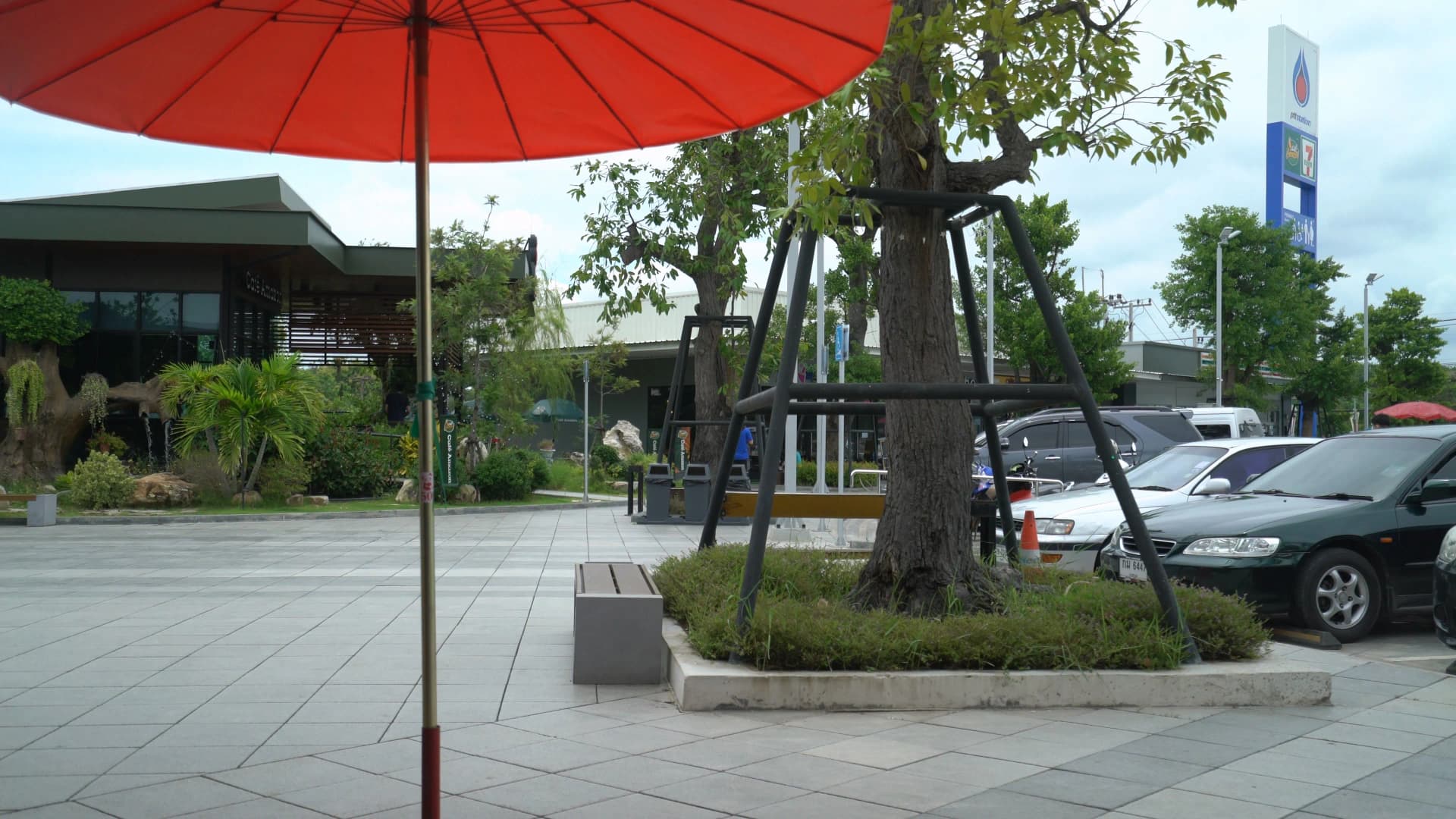
This is what the PTT station in Rayong looked like. Red parasols over benches out front, and behind them a 7-Eleven, a cafe, and a restaurant building all lined up. It felt less like a gas station and more like a small strip mall. The first time I visited Thailand as a tourist, I thought this was wild. After living there for three years, I totally understood why they're built this way.
American Highway Rest Stops vs Thai Roadside Stations
The road infrastructure in the U.S. and Thailand is fundamentally different.
🇺🇸 United States
The interstate highway system is sprawling and well-developed. Rest stops and travel plazas pop up every 30 to 50 miles with food courts, restrooms, and convenience stores. But regular gas stations on smaller roads? They're mostly just pumps and maybe a mini-mart with packaged snacks.
🇹🇭 Thailand
Thailand has some highways, but most travel still happens on provincial two-lane roads. So gas stations along these roads evolved into full-service complexes — convenience stores, cafes, sit-down restaurants, and even massage parlors. There are far more of these roadside stations than you'd find rest stops on any American highway.
In the U.S., highway rest stops serve as the traveler's pit stop. In Thailand, it's the roadside gas station that fills that role.
The U.S. built its food infrastructure around highway rest areas, and Thailand built theirs around provincial gas stations. Different approach, same human need — somewhere to stop, eat, grab a coffee, and stretch your legs before getting back on the road.
Here's What the Restaurant Looked Like
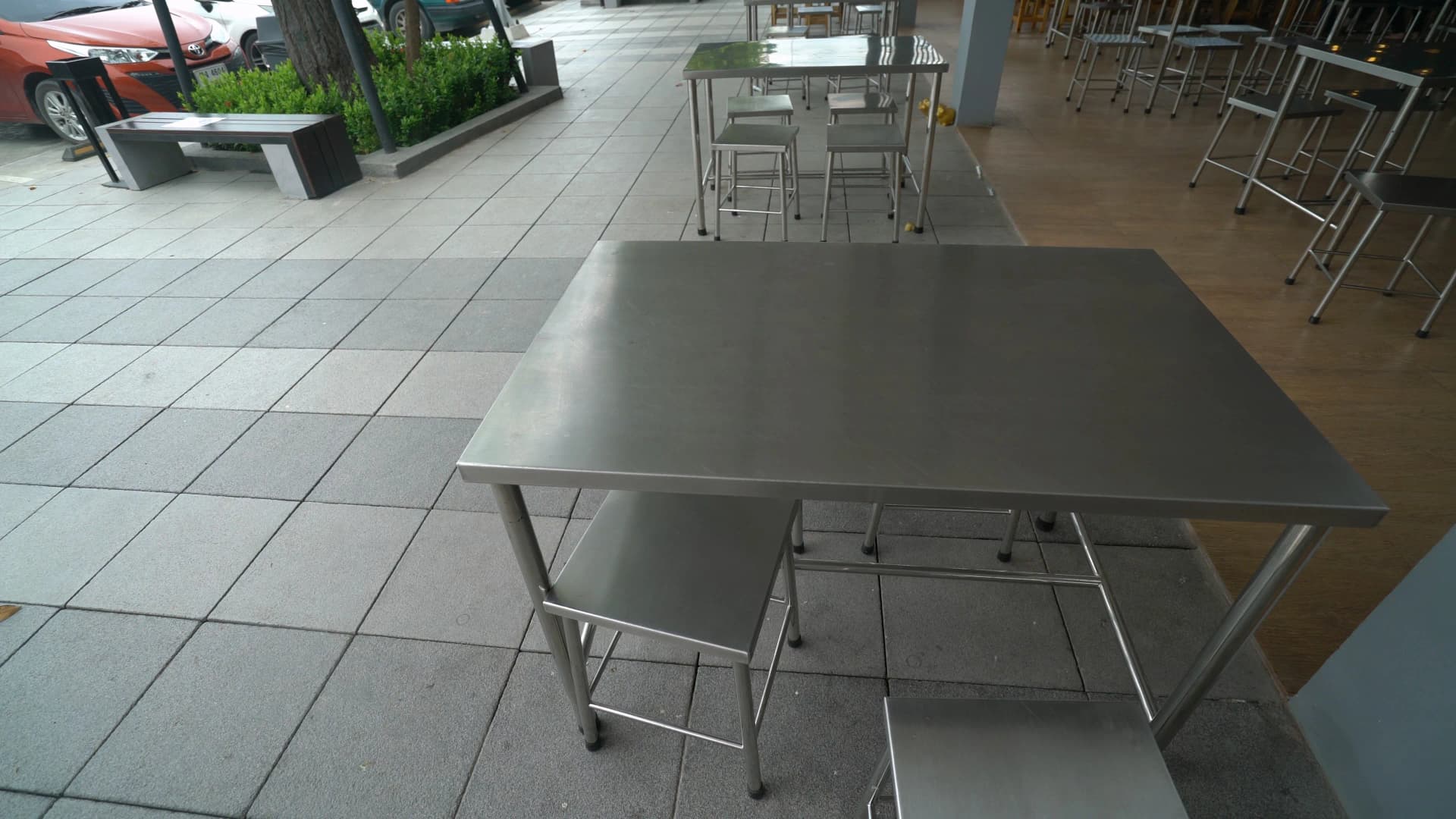
Out front of the restaurant, stainless steel tables and chairs were lined up in rows. It's the classic look you see at local Thai eateries everywhere — think of it like those metal picnic tables outside a roadside BBQ joint in Texas. It was semi-outdoor, semi-covered, so you got the breeze but also the heat. I'll be honest, sitting there in the Thai midday sun eating hot soup, sweat was pouring down my back. No AC, obviously. If there was a fan spinning somewhere, that was a win. But my wife actually preferred sitting outside. A lot of Thai people choose the open-air seats over air-conditioned indoor dining — it's just a cultural thing.
Pick Your Noodles, They Cook Them for You
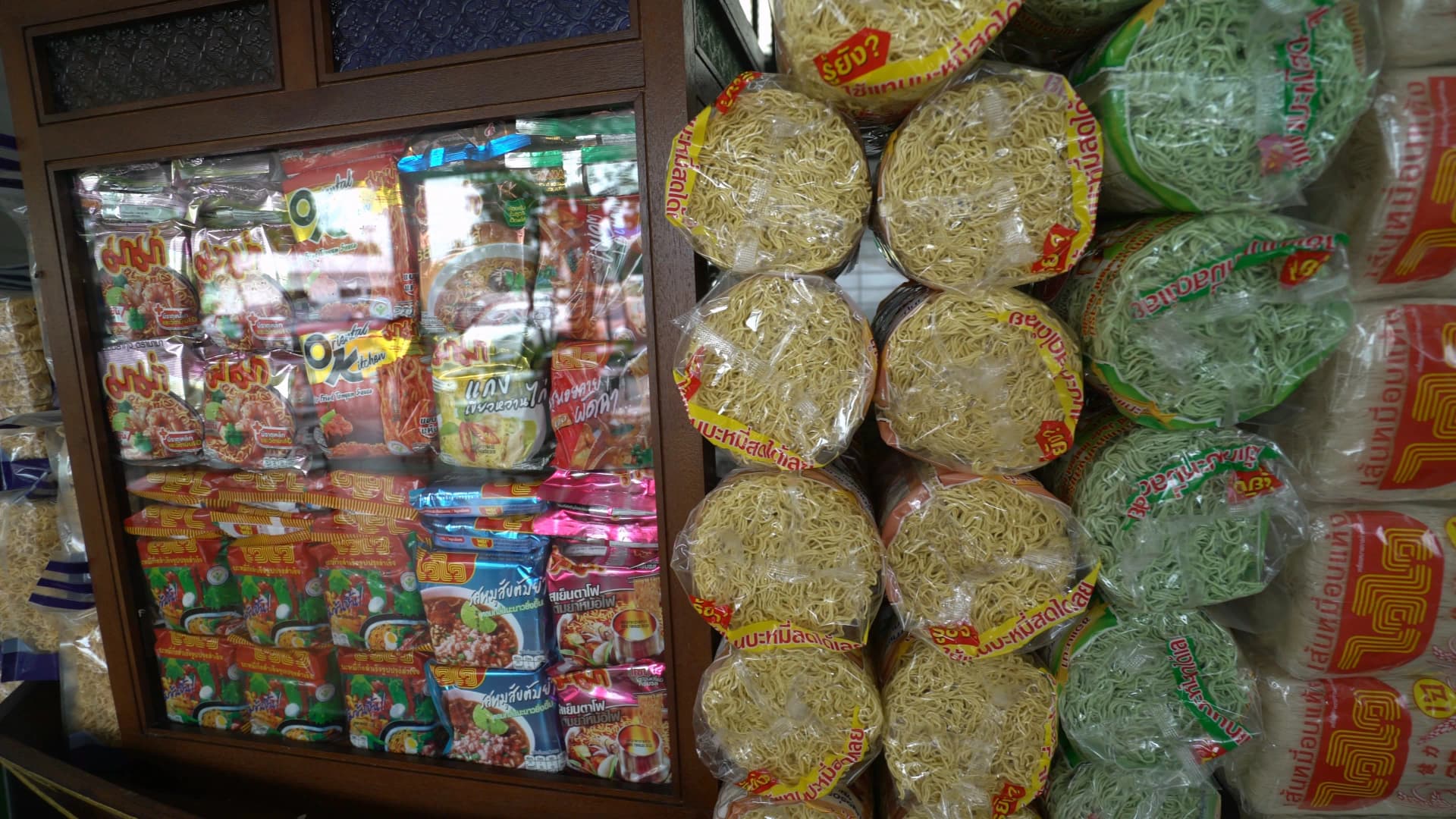
One wall of the restaurant had a whole shelf stacked with instant noodles and fresh noodle options. You pick the one you want, hand it over, and the kitchen cooks it up for you with all the toppings and broth. If you've ever been to a Buc-ee's or a Wawa where they make your sandwich to order, it's a similar vibe — except here it's noodle soup. But the cooking method is different from what you might expect. They don't simmer everything in one pot. Instead, they blanch the noodles in boiling water, drop them into a bowl, pour hot broth over them, then pile on meat, vegetables, cilantro, and other toppings. The noodles keep more of their texture this way, and the broth stays clear rather than getting starchy.
Wait, This Is Thai Braised Pork? It Looks Just Like Something From Back Home
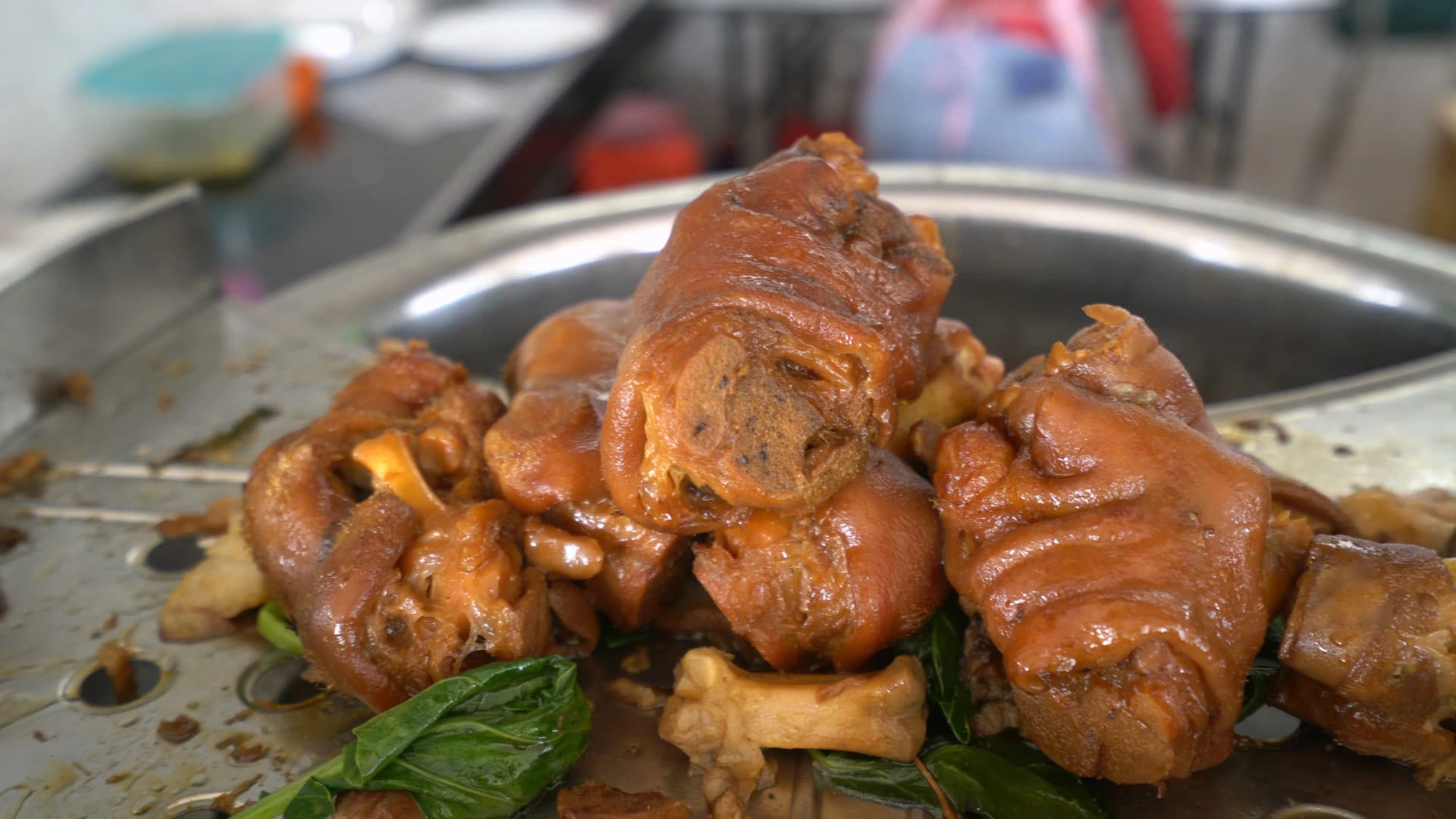
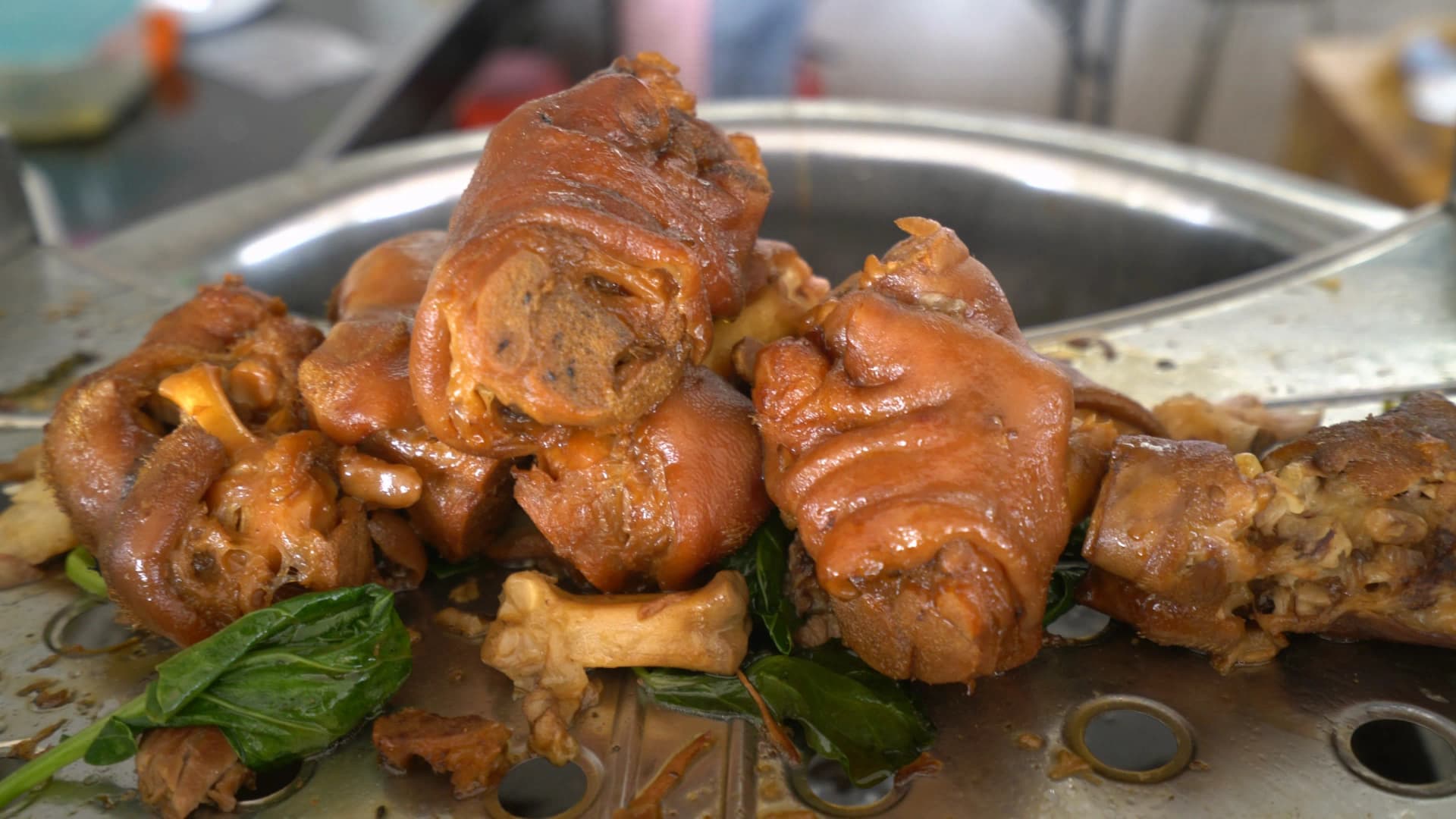
This is Thai-style braised pork leg. When I first saw it, I honestly did a double take. The glossy, dark brown skin. The meat so slow-cooked it was practically falling apart. The bed of greens underneath. It looked like something you'd see in a Southern pulled pork display or a Chinese roast meat shop window. The soy sauce base was obvious just from the color, and the skin had gone completely gelatinous and translucent — exactly like a well-braised pork shank you'd get at a good German beer hall.
When most people think of Thai food, they picture tom yum or pad thai — dishes loaded with lemongrass and chili. But khao kha moo is nothing like that. It's closer to a Chinese-style soy-braised meat dish, and that's no coincidence. It was brought to Thailand by Chinese immigrants, so it shares roots with Taiwanese braised pork rice (lu rou fan) and Chinese red-cooked pork. If you've ever had either of those, you already know roughly what this tastes like.
One Bowl of Khao Kha Moo — Thai Braised Pork Leg Over Rice
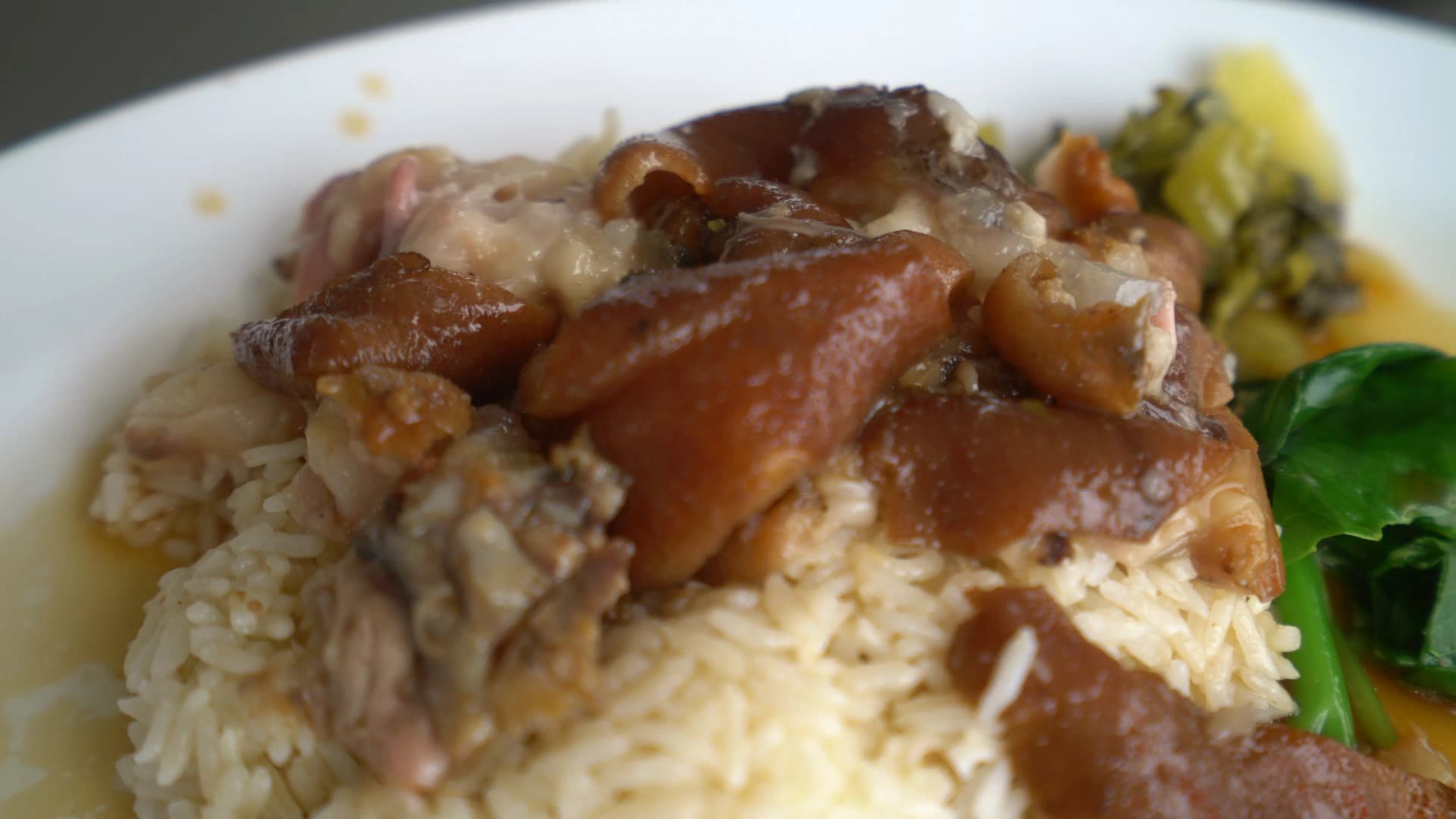
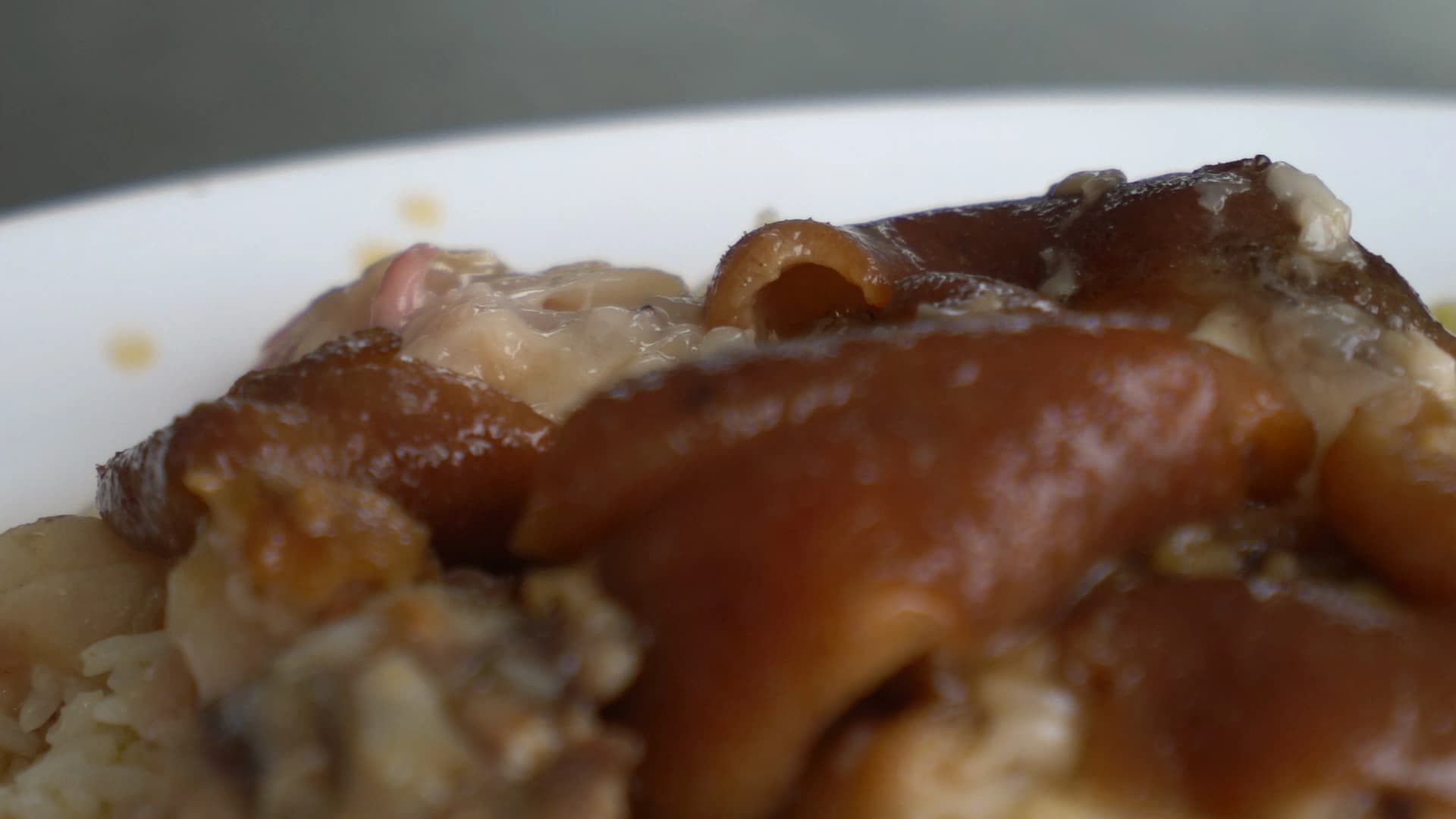
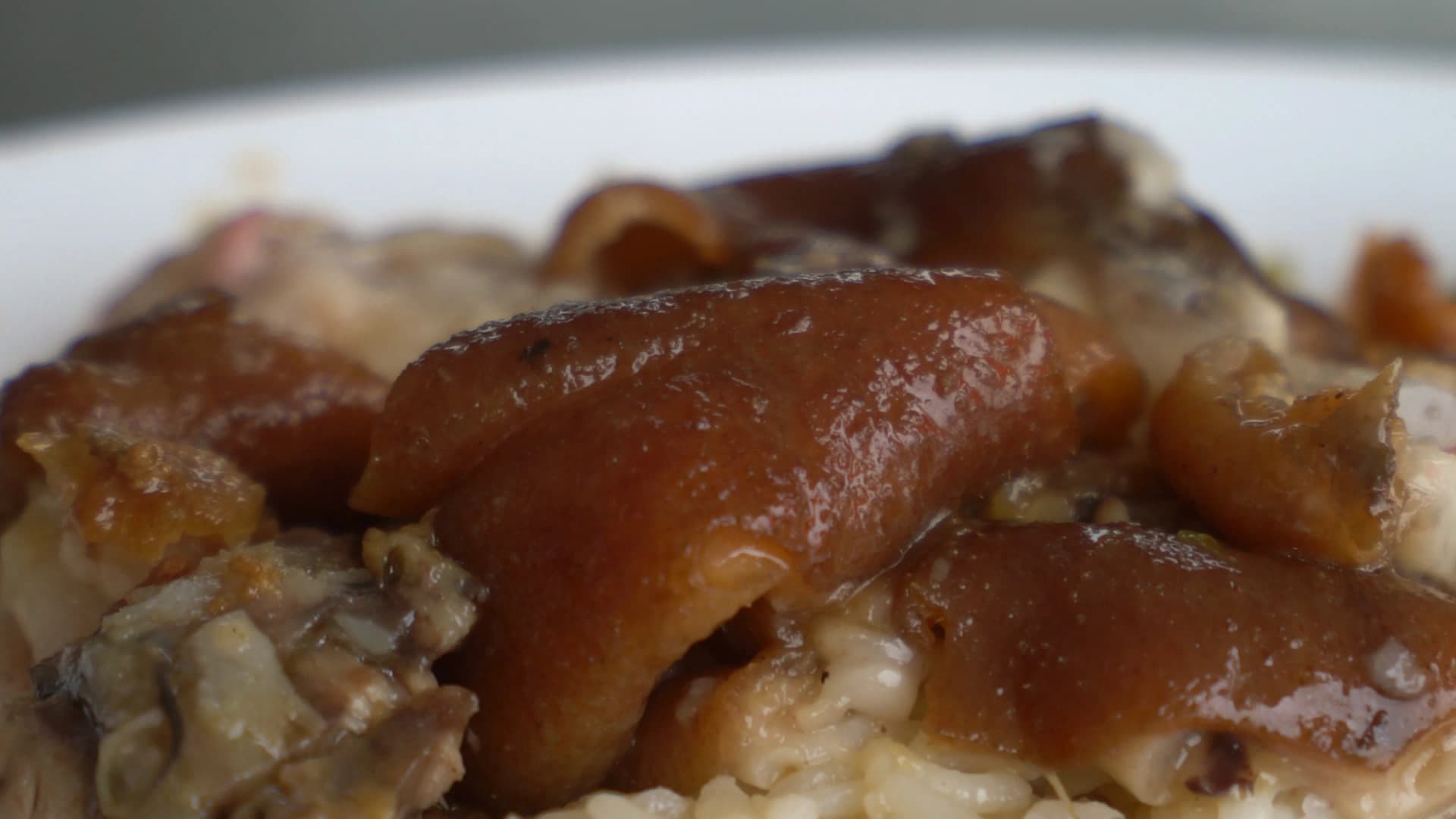
This is the finished khao kha moo — Thai braised pork leg over rice. My wife ordered it and we split it. A generous heap of slow-braised pork sits on top of jasmine rice, with the braising liquid ladled over everything until it pools at the bottom. On the side, blanched Chinese broccoli and pickled mustard greens.
In the States, if you order a pulled pork plate, the meat comes on a bun or on the side, and you eat it with coleslaw and sauce. The pork is the main event but it's not really a one-bowl meal. In Thailand, they just pile everything right on top of the rice and drench it in braising juice. That sauce soaks into every grain, and honestly, that's what keeps you scooping spoonful after spoonful. It's dangerously good.
The price? One bowl was 60 baht — roughly $1.80 USD. If you tried to get a braised pork plate at any decent restaurant in the U.S., you'd be looking at $15 to $20 minimum. Sure, the portions and cuts are different so it's not a perfect comparison, but as a complete meal with rice and sides, $1.80 is absolutely insane. The first time I ever had khao kha moo was at the Terminal 21 food court in Bangkok's Asok area, and even then the price blew my mind. This gas station in Rayong was even cheaper. We also used to grab it regularly at the night market near our house — it was always right around this price range no matter where we went.
The Texture Difference Is Where It Gets Interesting
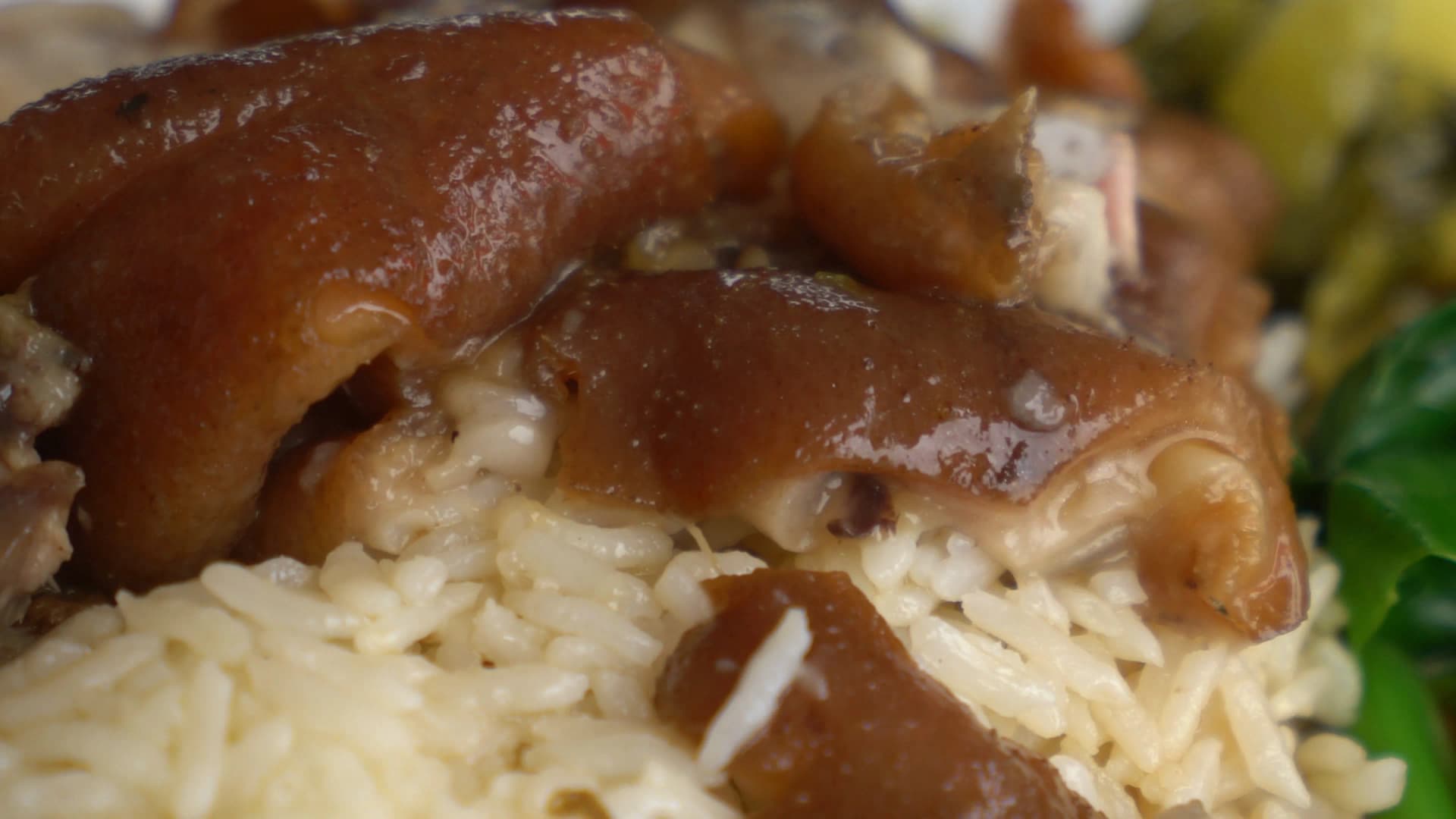
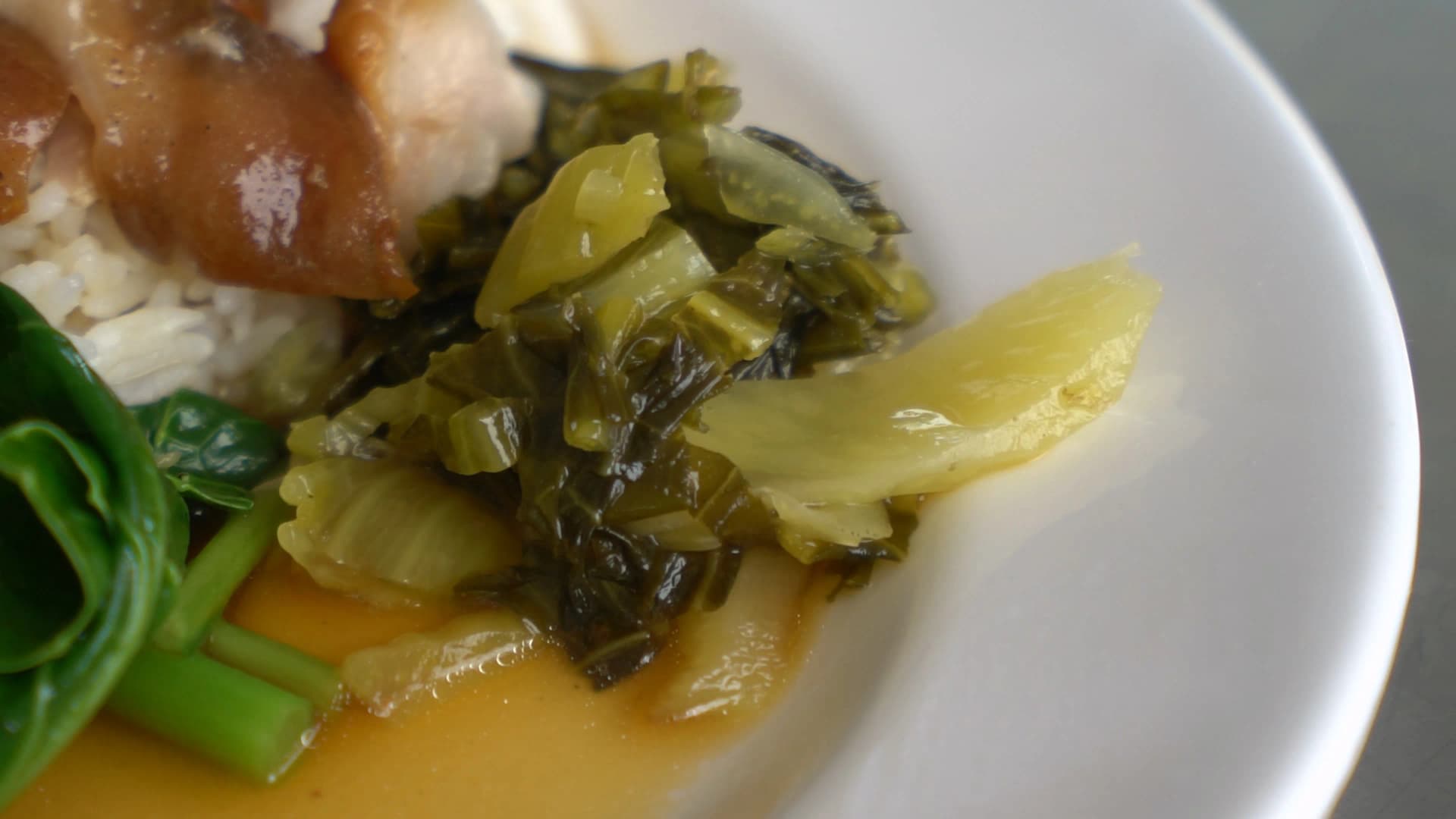
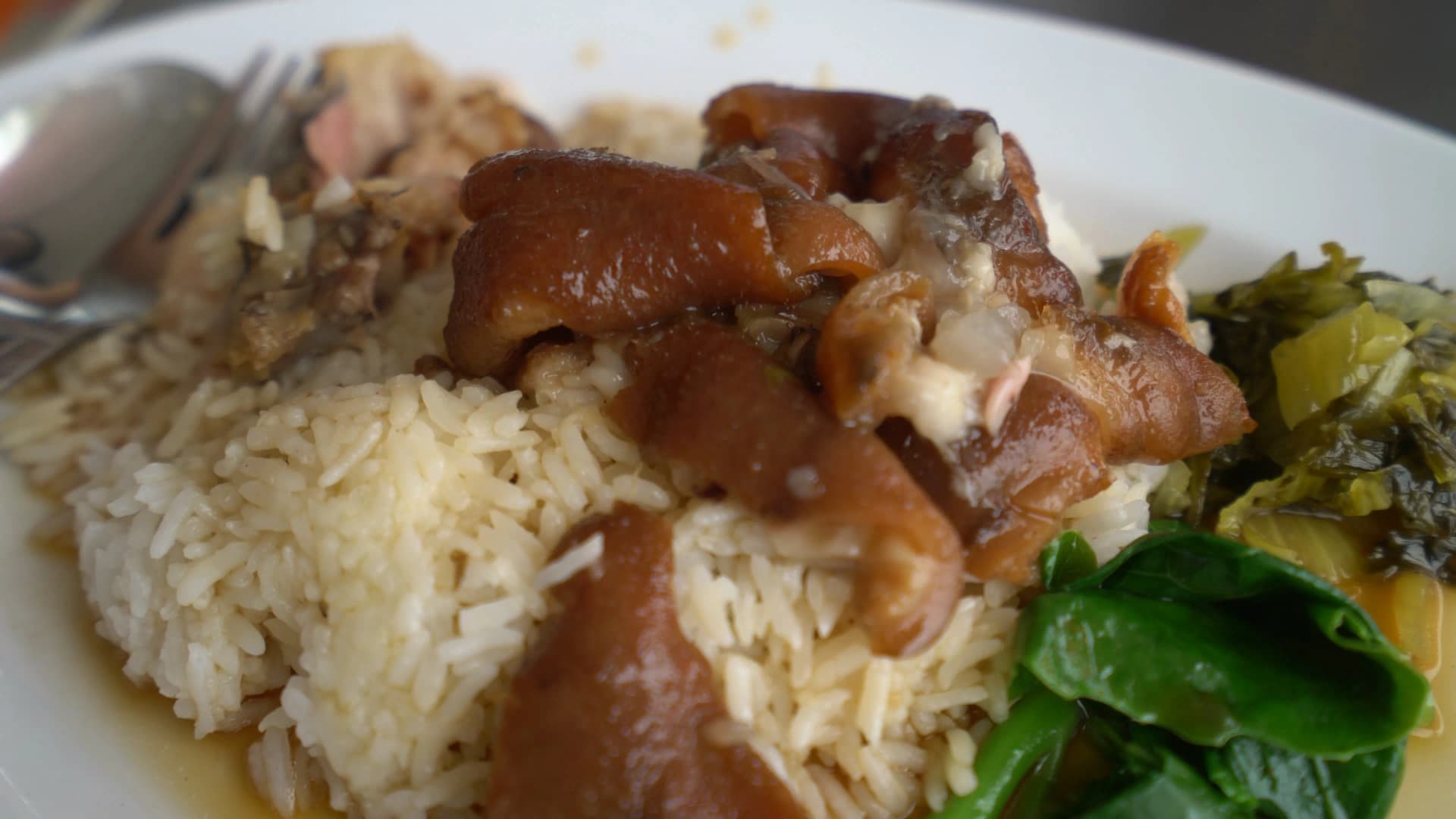
Up close, this is what it looks like. Braised pork on jasmine rice, pickled mustard greens on one side, blanched Chinese broccoli on the other. The dark braising liquid sits at the bottom of the plate like a shallow gravy.
When you actually eat it, the texture is quite different from what most Americans are used to with braised pork.
🇺🇸 American-Style Braised Pork
Think pulled pork or a braised pork shank — the meat shreds into strands with a bit of chew. The skin, if included, usually crisps up or gets discarded. Seasoning tends to be smoky, tangy, or vinegar-forward, and you typically add sauce on top — BBQ sauce, mustard sauce, or gravy.
🇹🇭 Thai Khao Kha Moo
The texture is melt-in-your-mouth soft. The skin dissolves on your tongue like gelatin, and the meat falls apart with just a press of a spoon. The flavor profile is soy sauce and sugar-based — noticeably sweeter than American braised pork — so it doesn't need any extra sauce. Just mix it with the rice and it's perfectly seasoned as is.
They look surprisingly similar, but the texture and flavor direction are quite different. Both are delicious in their own right.
The pickled mustard greens are a bigger deal than you'd think. The pork is sweet and rich, which could easily get heavy after a few bites. But those tangy, slightly sour pickled greens cut right through the richness and reset your palate. Think of it like the pickle slices on a pulled pork sandwich — the same idea, different execution. My wife told me that without the pickled greens, khao kha moo isn't really complete. It's a non-negotiable part of the dish for Thai people.
Tom Yum Mama — Thailand's Iconic Instant Noodle, Leveled Up
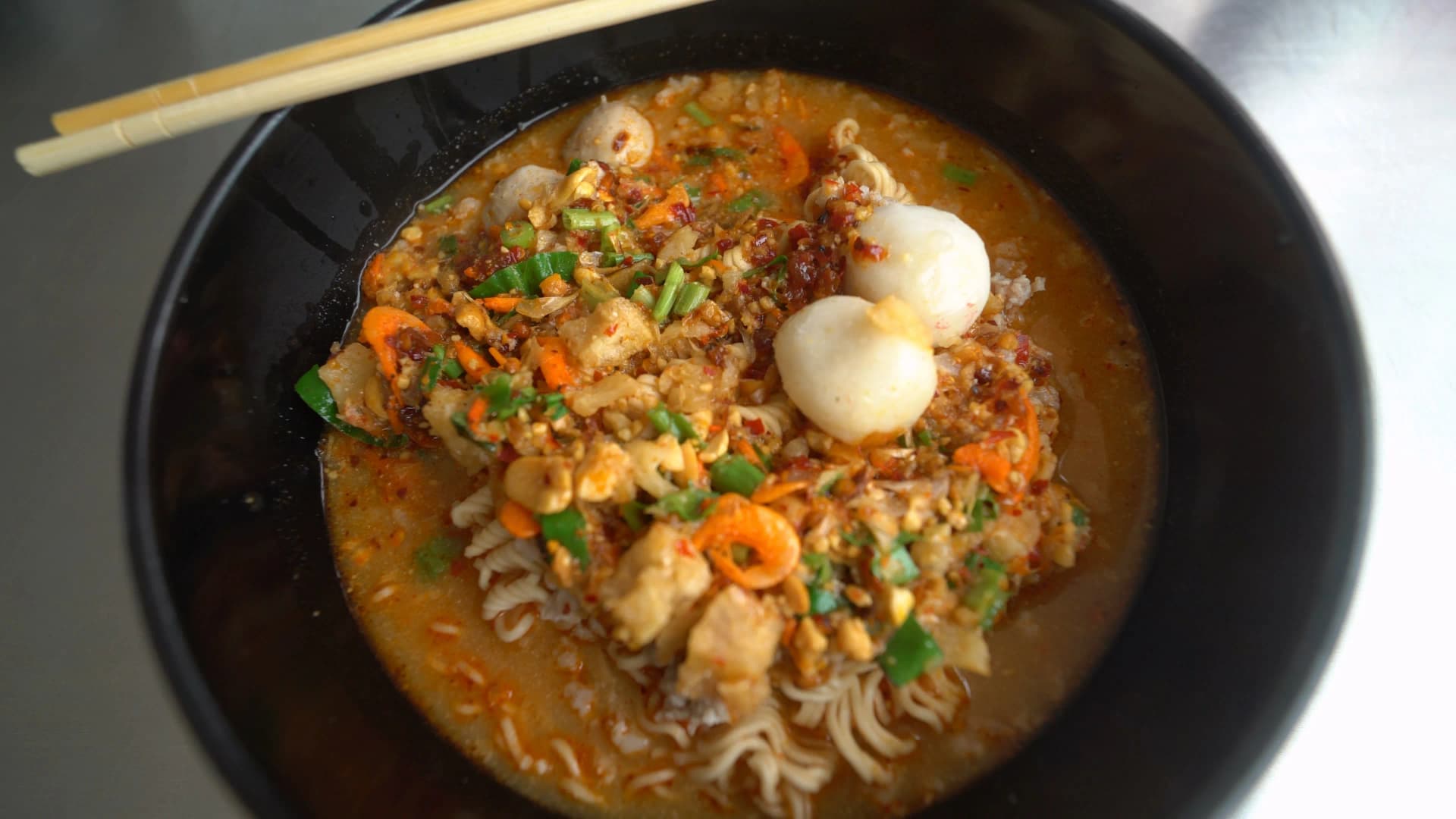
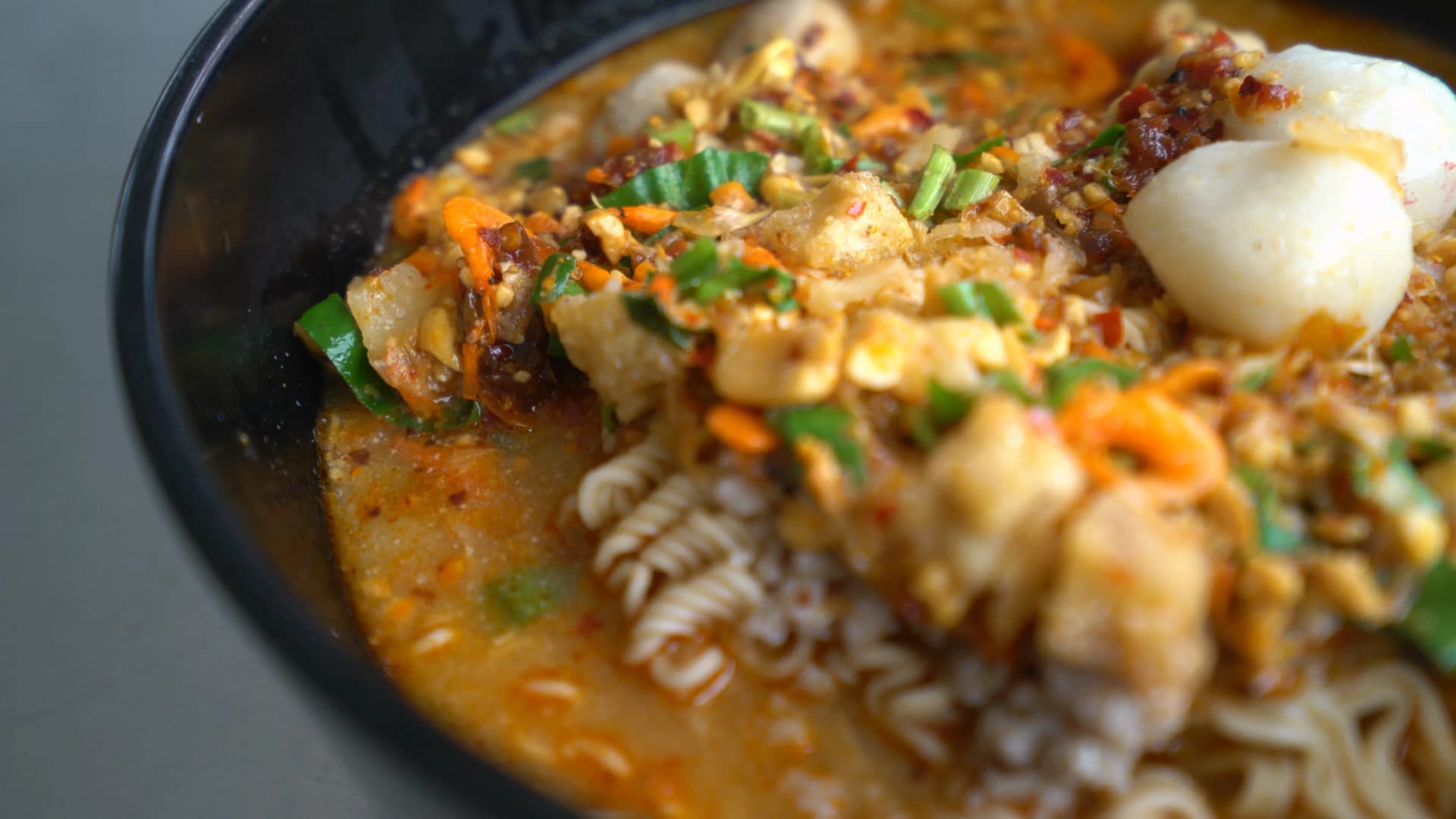
This is what I ordered — tom yum mama, basically Thailand's most famous instant noodle cooked in tom yum broth. Remember that noodle shelf I mentioned earlier? This is what came out after I picked my pack. Mama is Thailand's national instant noodle brand — think of it as Thailand's version of Maruchan or Top Ramen, except Thai people take it way more seriously. The kitchen cooked the Mama noodles in tom yum broth and loaded it up with fish balls, sliced pork, crushed peanuts, chili oil, scallions, and dried shrimp. You can also buy Mama at any 7-Eleven in Thailand and ask them to cook it for you, but the restaurant version comes with way more toppings.
I'll Be Honest — I Couldn't Finish My First Bowl
Let me be real with you. Most first-timers can't finish a full bowl of this. It's not because it's too spicy or too salty. It's because there's literally nothing like this flavor in standard American cuisine. Lemongrass, galangal, and kaffir lime leaves create this sour-herbal-spicy combination that your brain just doesn't have a reference point for. American spicy food is usually chili-pepper based — jalapeños, habaneros, cayenne — which is a familiar kind of heat. Tom yum's heat comes layered with an intense sourness and an herbal punch that hits completely differently. The first time you try it, you genuinely can't tell if you like it or not.
I definitely didn't like it at first. My first two trips to Thailand, I wouldn't even touch tom yum. It wasn't until my third visit that I started forcing myself to take one spoonful at a time — and then something clicked. Once that flavor unlocked in my brain, I started craving it constantly. While living in Rayong, I was eating it once or twice a week. Even now back in the States, I order Mama tom yum instant noodles online and make them at home, but honestly it's not the same. The fresh herbs in the street version versus the dried seasoning packets in the imported packs — there's just no comparison. This bowl cost 50 baht, about $1.50.
Kuay Teow Nam Tok — Thai Blood Broth Pork Noodle Soup
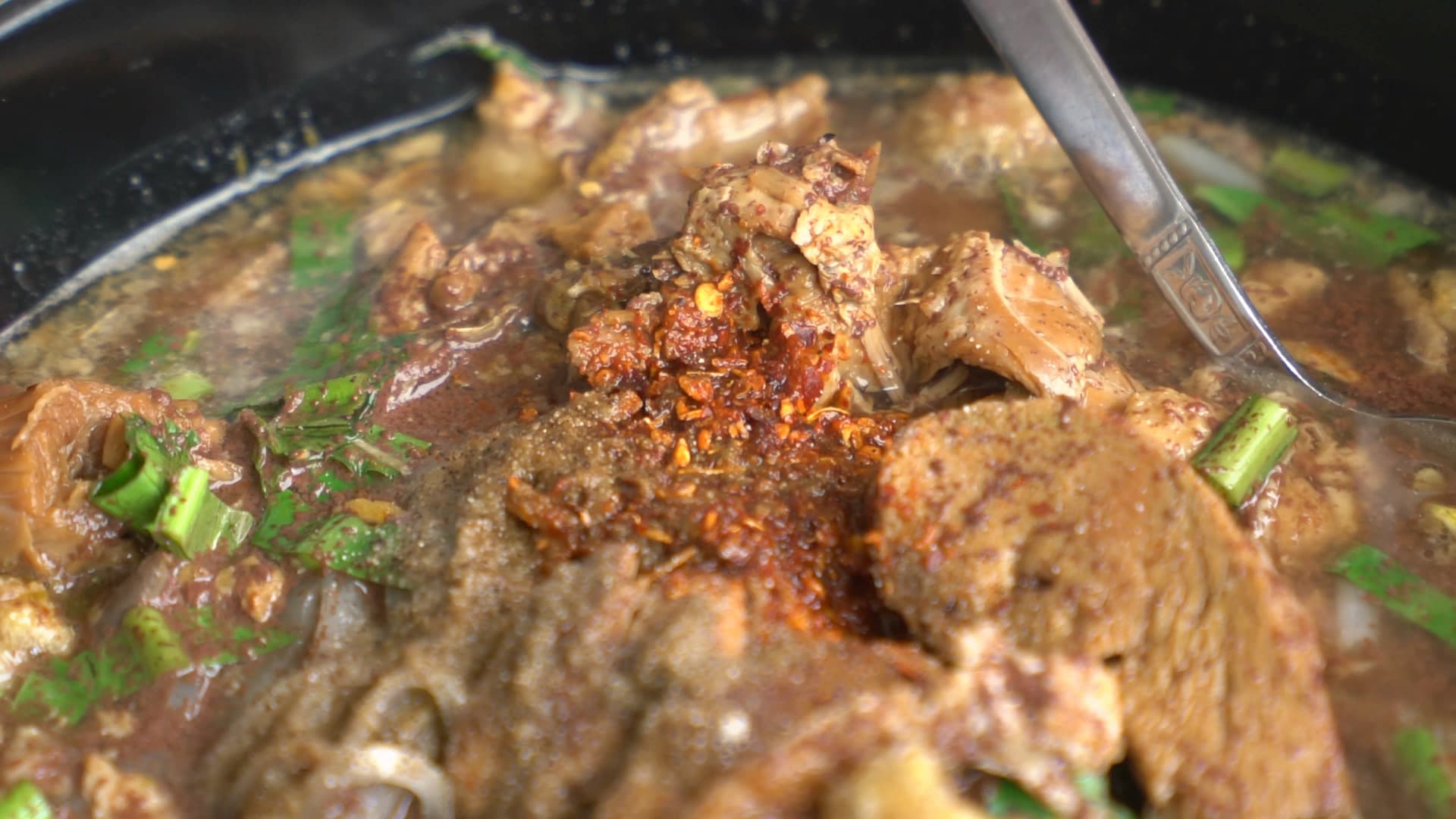
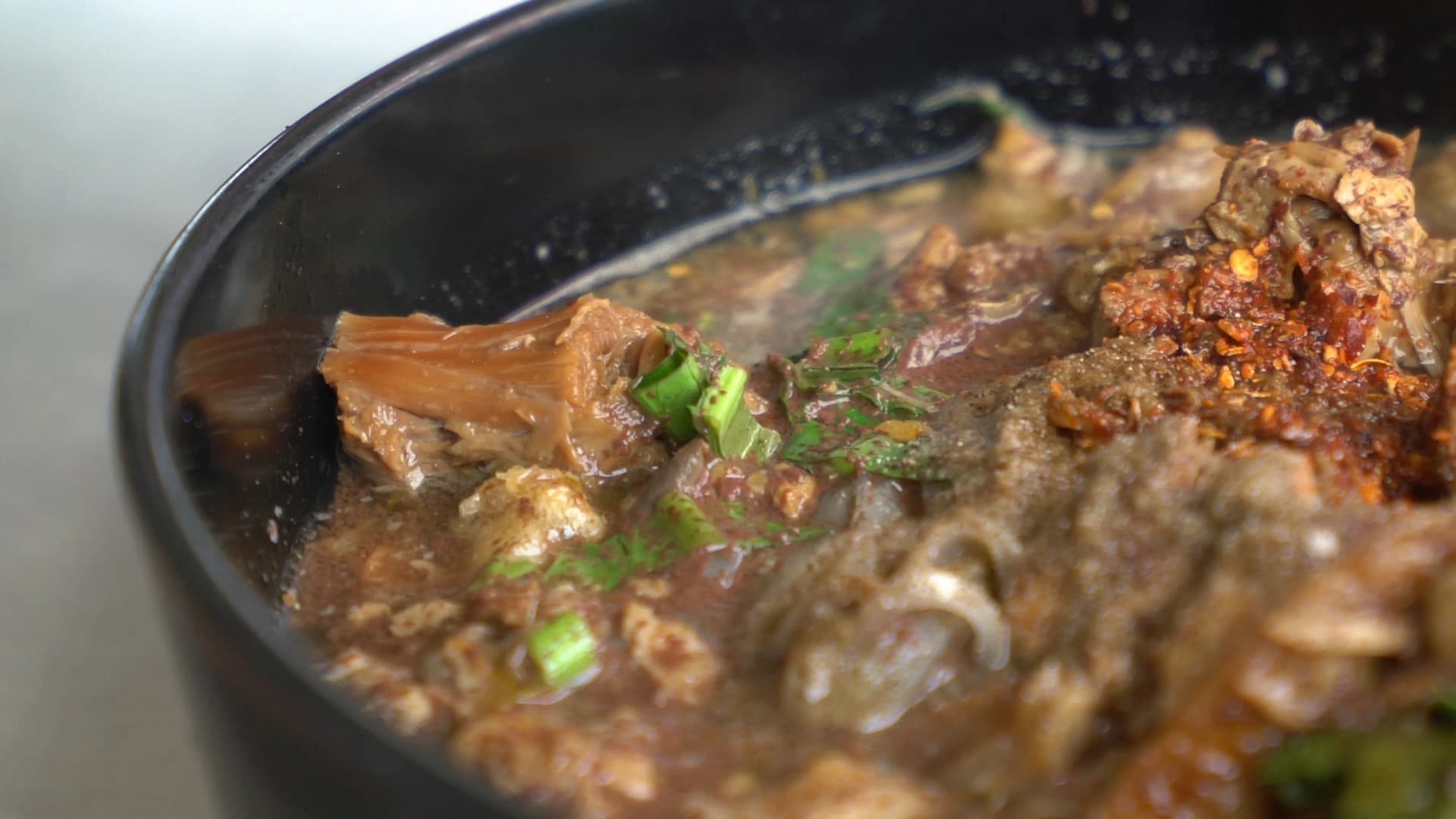
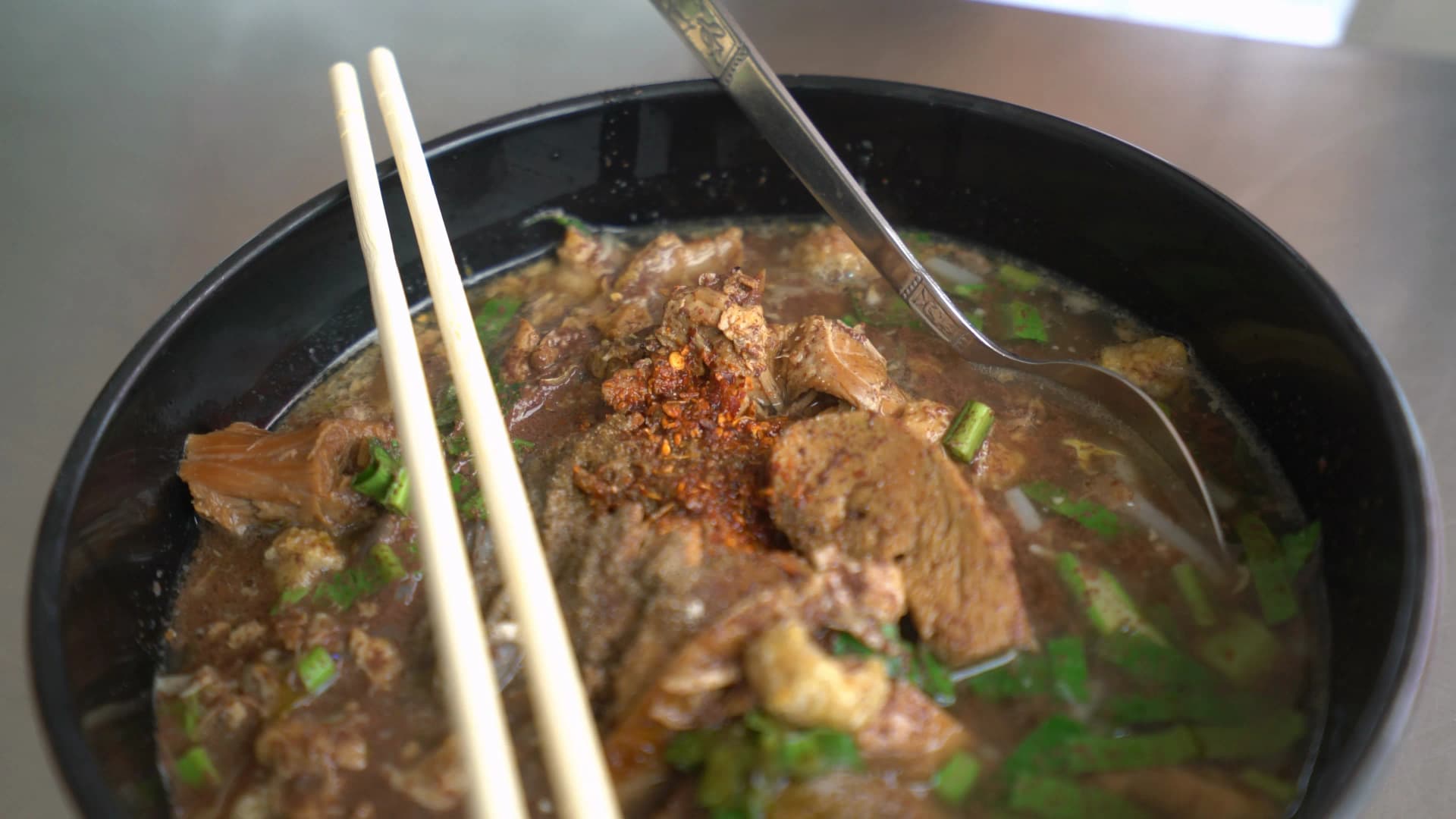
This is what my wife ordered — kuay teow nam tok, a Thai pork noodle soup made with blood-enriched broth. That dark, almost black broth looks intense, right? The color comes from pork blood mixed into the stock, giving it a thick, deeply savory quality. "Nam tok" literally means "waterfall" in Thai, and once you see the color of this broth, the name makes sense.
My wife grew up eating this. For Thai people, kuay teow nam tok is like what chicken noodle soup or a bowl of pho is for Americans and Vietnamese — not a special occasion dish, just a quick, satisfying lunch you slurp down without thinking twice.
Completely Different From What You'd Expect
If the idea of blood in soup sounds unfamiliar, think of it like European blood sausage or British black pudding — using blood as an ingredient is a tradition that exists across many food cultures worldwide. But the flavor direction here is entirely its own thing. The broth is a mix of soy sauce, vinegar, chili flakes, and sugar, creating this sweet-sour-spicy profile that's nothing like a Western blood sausage. Ground chili and chopped scallions float on top, and when you fish out a piece of the slow-simmered pork, it practically falls apart along the grain.
If you're planning a trip to Thailand, put this on your must-try list. It has a way higher success rate with Western palates than tom yum does. Tom yum has that herbal wall that takes a few tries to get over, but kuay teow nam tok is soy sauce-based, so the flavor is much more approachable. Slurping noodles in that rich, dark broth gives you the same kind of deep satisfaction as a bowl of good ramen or beef pho. It was also 50 baht — about $1.50.
Basil and Bean Sprouts Make All the Difference
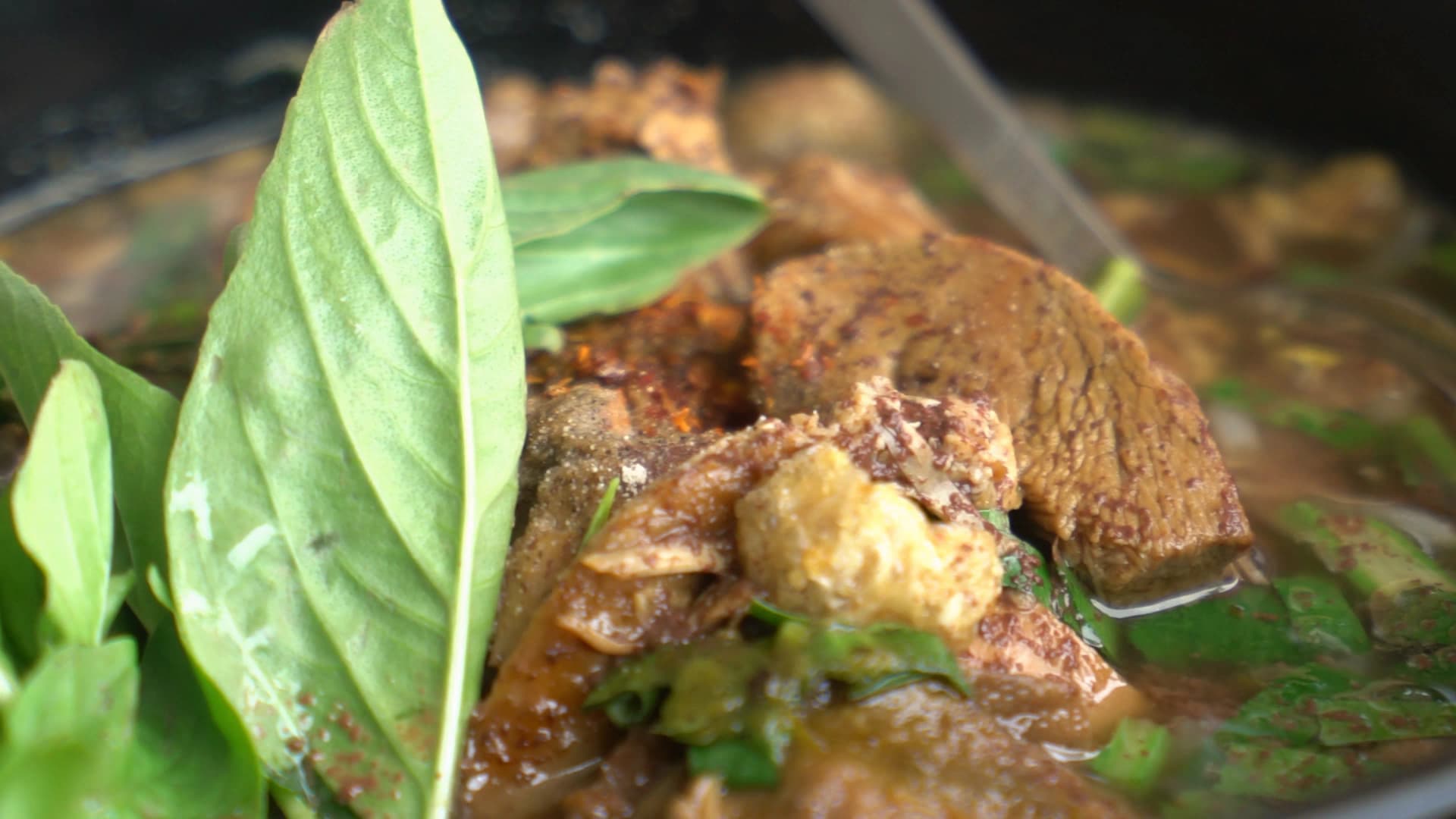
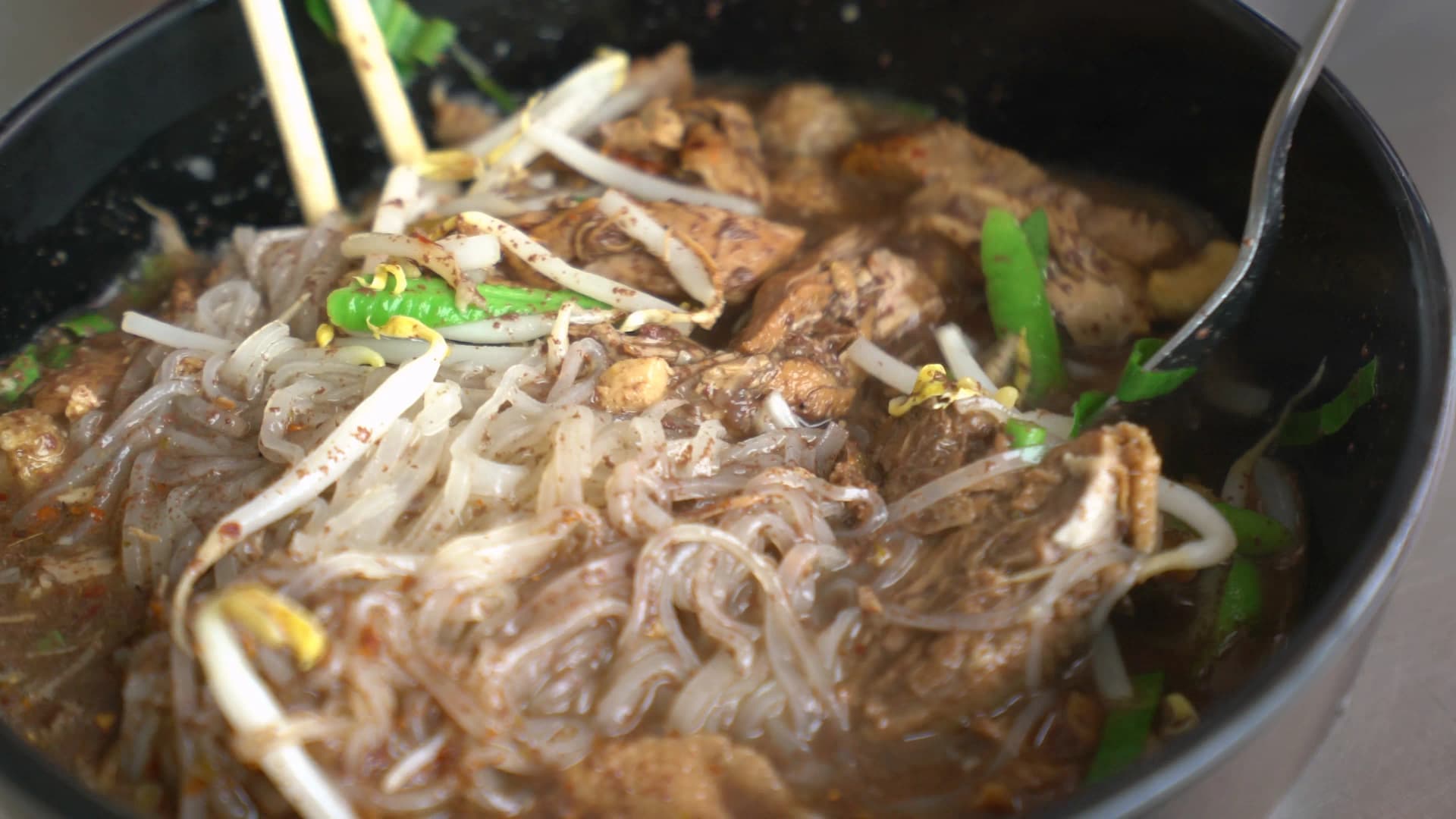
Here's a closer look. Fresh Thai basil leaves sit raw on top of the broth, and when you dip them in and eat them with a bite of pork, this gentle herbal fragrance comes through. The noodles are rice noodles — translucent with a slippery, silky texture — and the bean sprouts mixed in add a nice crunch that breaks up the richness. Without the basil and the sprouts, a broth this heavy could feel one-note. They balance the whole bowl out.
Three Bowls, Under $5 — Don't Drive Past Thai Gas Stations
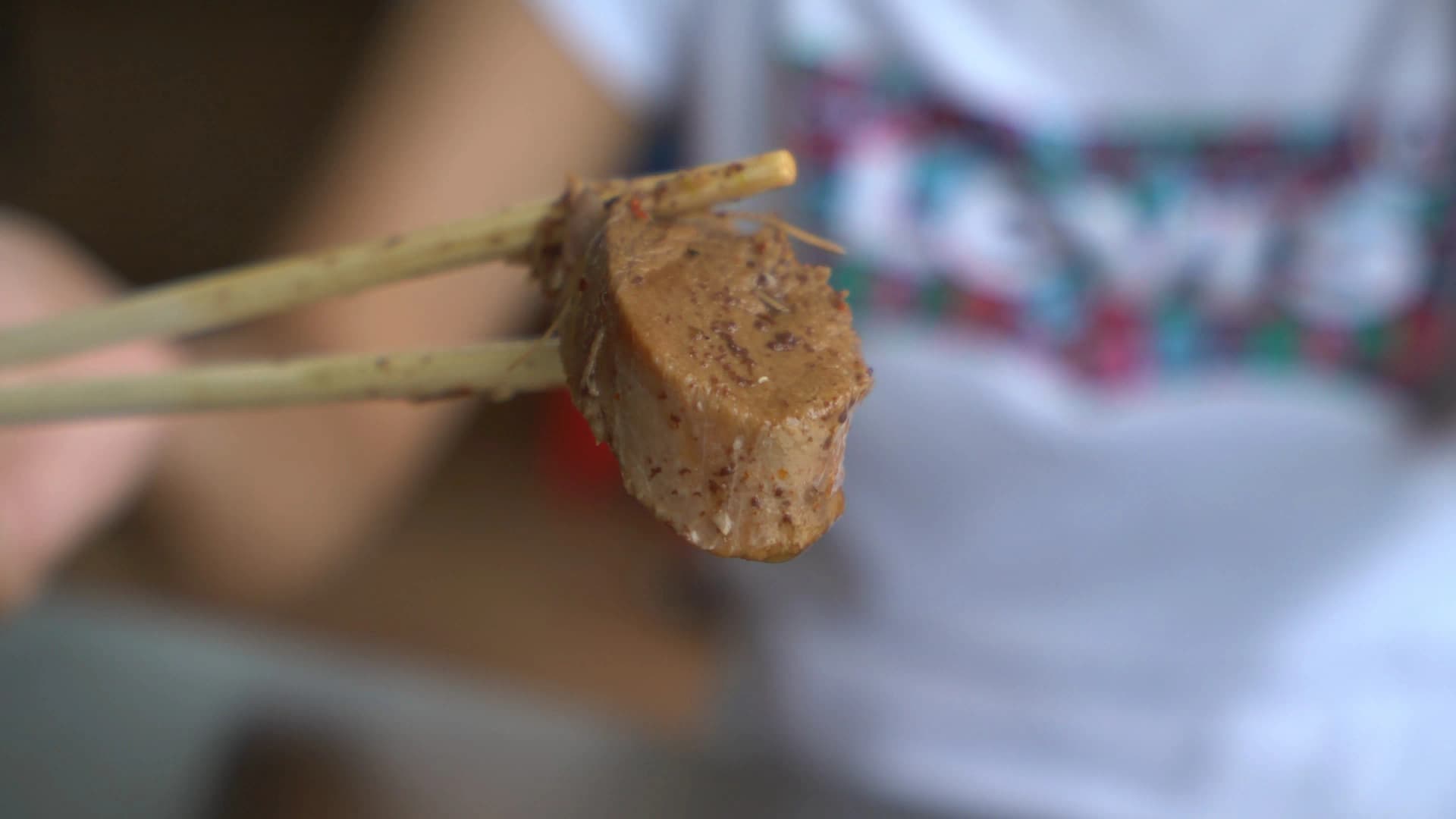
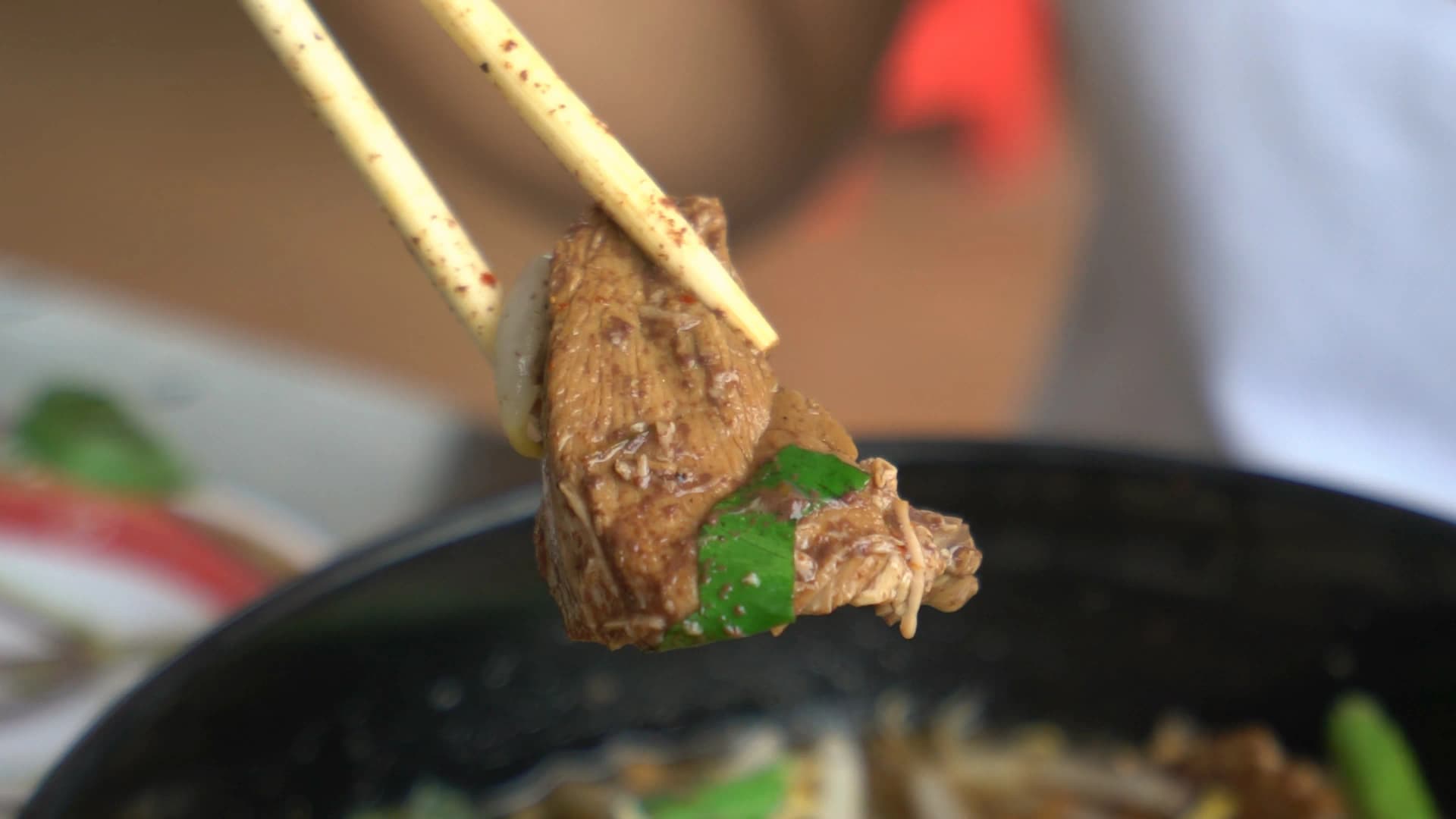
A piece of pork lifted straight from the bowl. You can see how the fibers have completely separated — that's hours of slow cooking right there. It held its shape just enough to pick up with chopsticks, but the second it hit my tongue, it fell apart with zero effort. The fact that food this good came out of a gas station restaurant genuinely surprised me. I asked my wife, "Is this place always this good?" She just laughed and said, "In Thailand, the best food is street food." After three years of living there, I can confirm — she's absolutely right.
When I tell people I ate lunch at a gas station, they always chuckle. But here's the math: khao kha moo 60 baht, kuay teow nam tok 50 baht, tom yum mama 50 baht — three full bowls, stuffed to the point of not being able to move, for 160 baht total. That's under $5. In the U.S., $5 barely covers a gas station coffee and a granola bar.
Were there downsides? Sure. Eating steaming hot noodle soup in a semi-outdoor seat under the Thai sun meant I was drenched in sweat by the end. And the restroom was the shared gas station bathroom, so let's just say it wasn't the cleanest. But after three years in Thailand, one thing became crystal clear to me: the most memorable meals aren't at fancy air-conditioned restaurants. They're at gas station diners like this one, at night market stalls, at roadside carts where locals actually eat every day.
If you're planning a Thailand trip, remember this. Don't just blow past the gas stations. If you're driving from Bangkok toward Pattaya or Rayong, pull into any PTT station along the highway and chances are there's a food stall or restaurant inside selling khao kha moo or noodle soup. Think of PTT stations like Thailand's version of Buc-ee's — they're part of the travel experience, not just a fuel stop. Don't worry about khao kha moo being too unfamiliar — it's soy-braised pork over rice with roots in Chinese cooking, so the flavor profile is something almost anyone can enjoy. And if tom yum knocks you out on the first try, don't give up. It took me three trips to Thailand before I could handle it. Now I can't live without it.
This post was originally published on https://hi-jsb.blog.