
Korean Street Food Guide: Tteokbokki, Kimbap & Twigim
Table of Contents
25 items
The Very First Flavor You'll Meet in Korea
It's not expensive. You don't even have to go looking for it. Just walk around, and the smell reaches your nose before you even realize it. Whether it's a back alley, a traditional market, or right outside a school — it's everywhere in Korea. A single plate for about $1.50 is enough to make you genuinely happy.
That's Korean bunsik (Bunsik) — Korea's beloved street food and snack culture.
For Korean people, bunsik isn't just food. It's the memory of running down the alley after school with friends, eyes lighting up over a single stick of tteokbokki that cost just 50 cents. That flavor hasn't changed in decades, and now, the exact same thing is waiting for you as you travel through Korea.
If you visit Korea and don't try bunsik even once, honestly, you've missed half the experience. Curious what it tastes like? One look at the photos and you'll get it immediately. Just keep scrolling.
This Is What You See When You First Sit Down
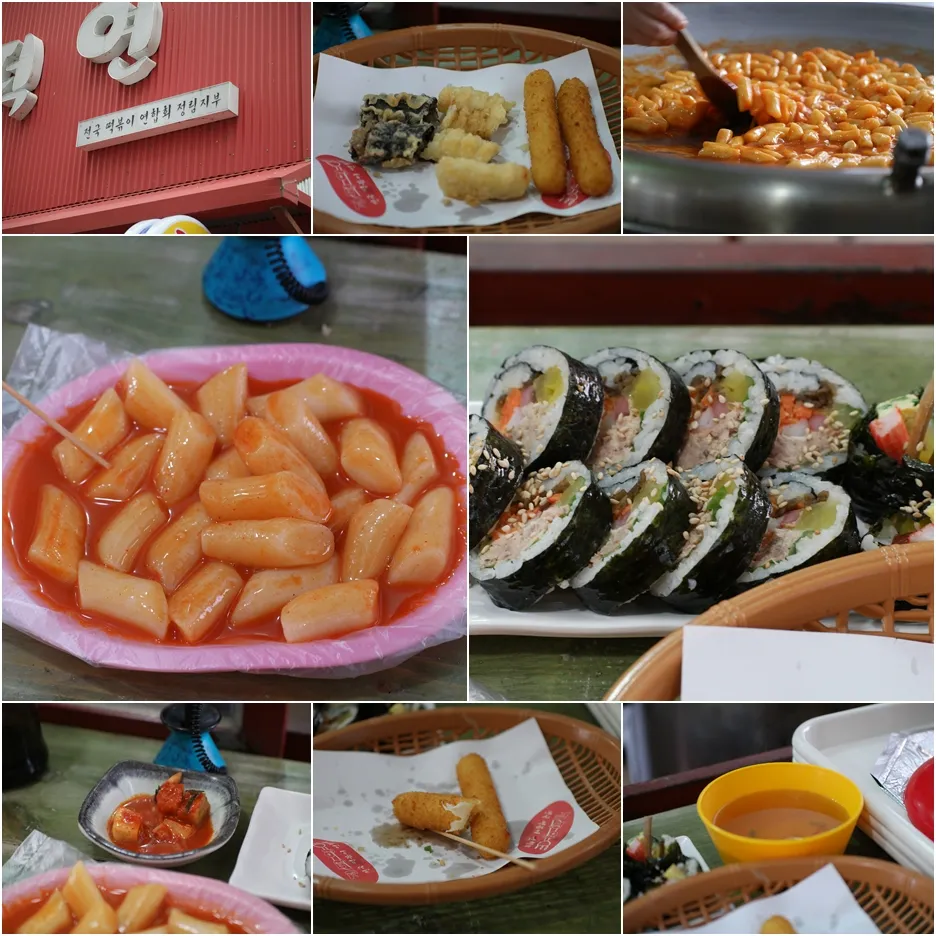
White stick-shaped things swimming in red sauce, crispy fried stuff, rolls wrapped in seaweed — if it's your first time, you might have no idea what any of it is. That's totally fine. I was the same way at first.
The white sticks in the red sauce are tteokbokki (Tteokbokki). They're chewy rice cakes simmered in a sweet and spicy sauce. It's THE iconic Korean bunsik dish. The crispy fried pieces next to it are twigim (Twigim) — various ingredients like vegetables, chili peppers, squid, and rice cakes coated in batter and deep-fried. Dip them in the tteokbokki sauce and it becomes a completely different flavor experience. And the seaweed rolls? That's kimbap (Kimbap). Rice, vegetables, ham, egg, and other fillings rolled up in dried seaweed and sliced into bite-sized pieces. It might look similar to Japanese sushi, but it's a completely different food.
When these three come together on one table, that's the complete Korean bunsik experience right there.
What is Tteokbokki?
Chewy rice cakes made from rice are simmered in a sauce based on gochujang (Gochujang). Gochujang is a traditional Korean fermented chili paste with a distinctive spicy kick balanced by a deep sweetness.
The texture of the rice cakes is wonderfully chewy and soft. With every bite, the sauce seems to seep out from within. Even if you're not used to spicy food, once you try it, you'll keep reaching for more.
Here's What It Looks Like Up Close
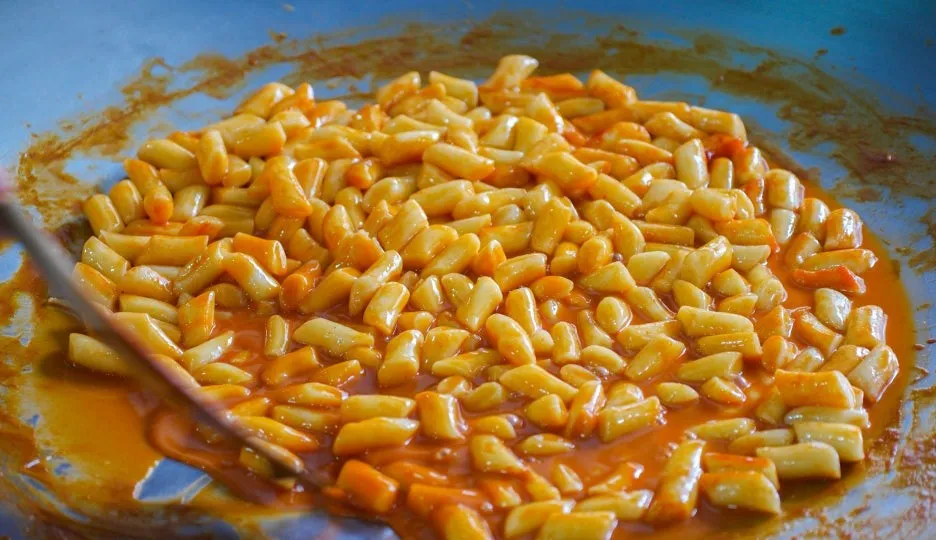
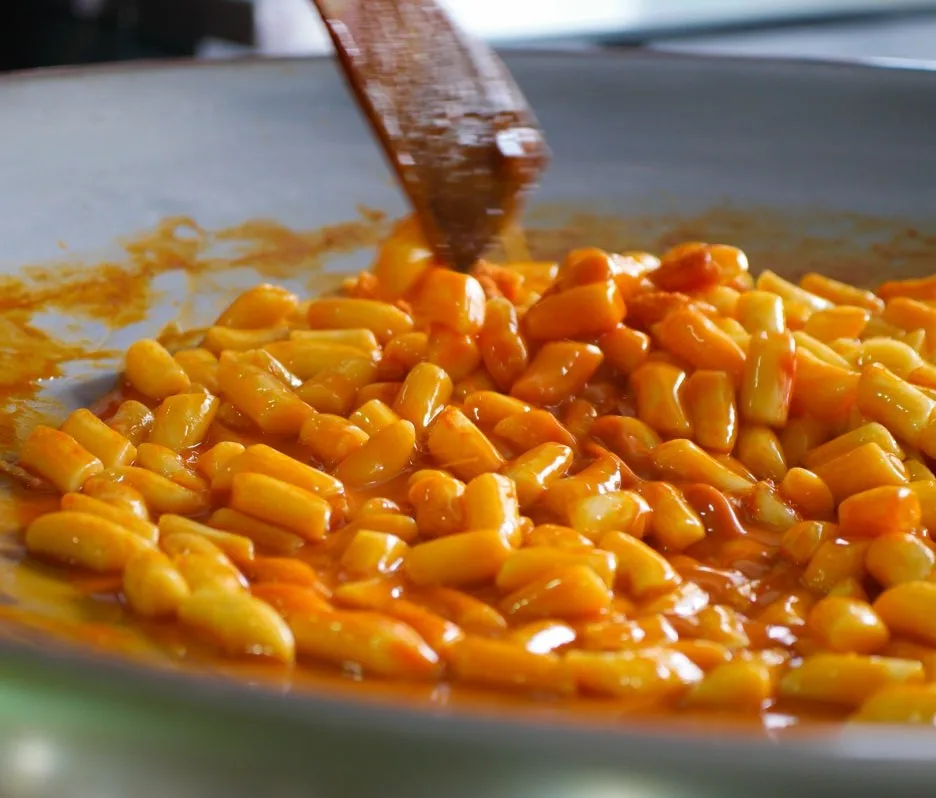
The little rice cakes are soaking up all that sauce, glistening with a gorgeous sheen. Every time the wooden spatula slowly stirs them, you can see the sauce seeping into every crevice between the rice cakes. This is the moment it looks the most delicious. Honestly, just looking at the photo makes my mouth water.
At Korean bunsik restaurants, they cook tteokbokki in bulk on big iron plates like this. It's not premade. When your order comes in, they pour the sauce right there and start cooking on the spot. That's why it always comes out piping hot and fresh. Notice the size of the rice cakes too? Every bunsik spot uses slightly different sizes. These small, plump ones soak up the sauce even better, and they're the perfect size to pop in your mouth in one bite.
It's Finally Right in Front of You
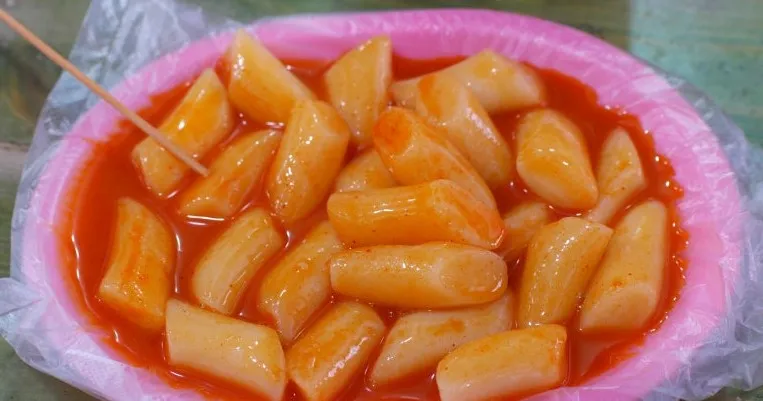
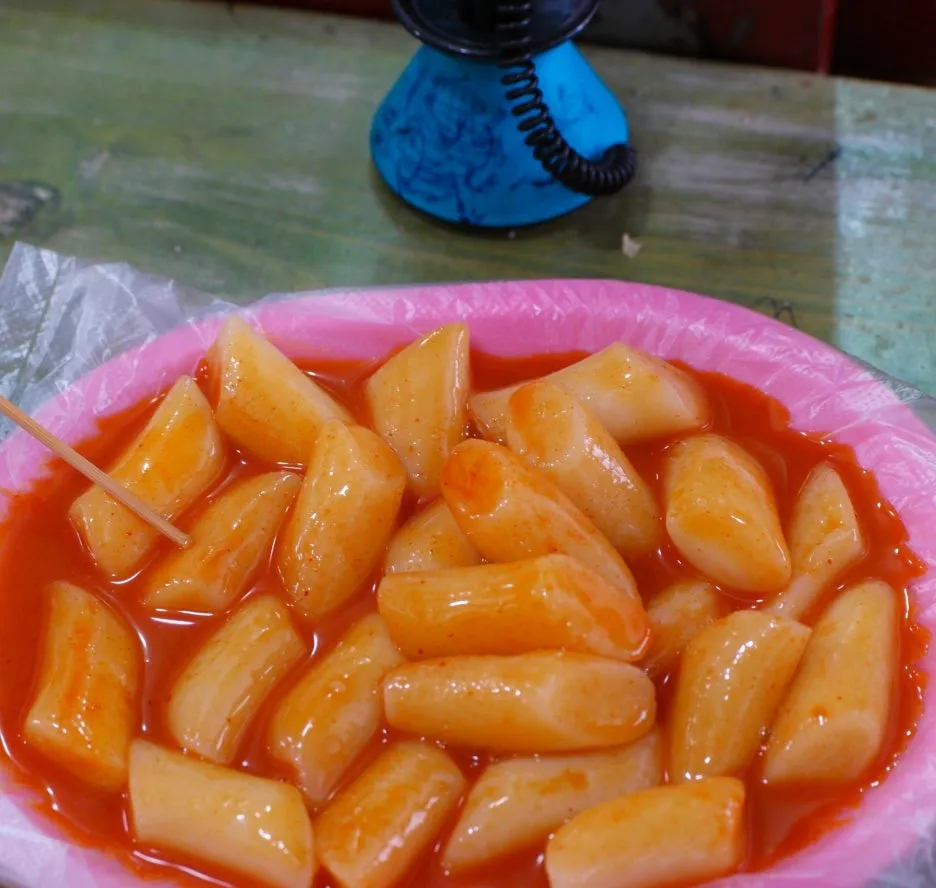
It came out on a pink plate lined with plastic, with the tteokbokki piled on top. See that single toothpick stuck in there? That's peak Korean bunsik vibes right there.
But wait — did you notice? It's only rice cakes. Nothing else.
Actually, at most tteokbokki places in Korea, when you order tteokbokki, it usually comes with eomuk (Eomuk, fish cake) mixed in. Chewy fish cake soaking up the sauce alongside the rice cakes — that's what most people think of as the standard tteokbokki combo. But this place is different. They just give you rice cakes. That's their style.
And it's not a bad thing. If anything, it lets you focus on the pure taste of the rice cakes themselves. A whole plate of plump rice cakes drenched in sauce — there's a charm to that on its own. At first I thought I'd miss the fish cake, but once I started eating, I totally fell for this place's style. Just know that when you're traveling in Korea, each tteokbokki spot might have a different setup — if you know that going in, you won't be caught off guard.
I Ordered These Alongside the Tteokbokki
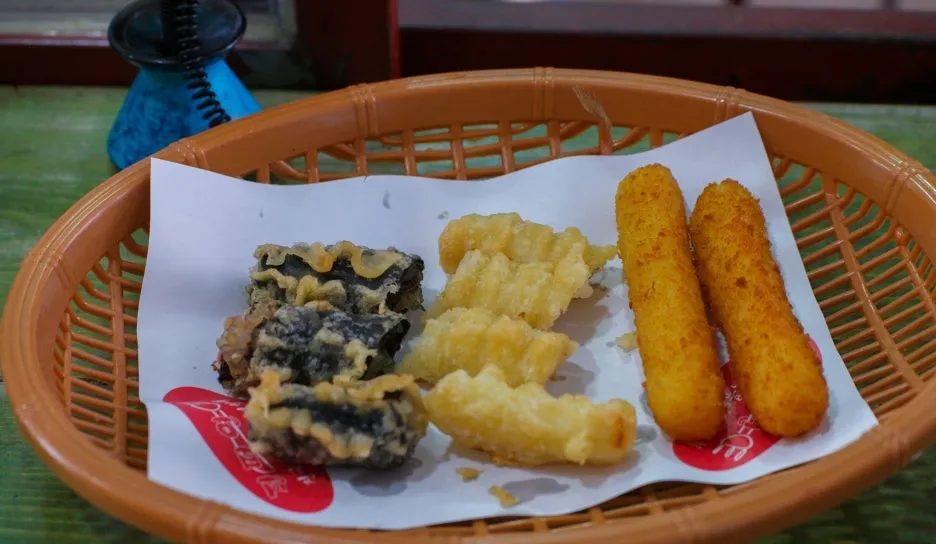
From left to right: gimmari (Gimmari), twigim (Twigim), and cheese sticks (Cheese Stick). They all came in one basket, and honestly, this combo is lowkey perfect.
Cheese sticks aren't actually a common item at bunsik restaurants. Usually you'd find them at chicken joints or fast food places. If a bunsik spot sells cheese sticks, it's usually their own special menu item. The cheese sticks here had a crispy coating and when you bit in, the cheese just stretched and stretched. Wait, is this real life? On the other hand, gimmari and the various twigim are staple items you'll find at any Korean bunsik place. When you order tteokbokki, these are practically the automatic side orders everyone gets.
What is Gimmari?
Glass noodles are rolled up in gim (dried seaweed), coated in batter, and deep-fried. The outside is crispy while the inside is packed with chewy glass noodles. It's one of the best-selling items at Korean bunsik shops, right after tteokbokki.
Dip it in tteokbokki sauce and that's the real deal right there. It's good enough on its own without any sauce, but the moment it meets that red sauce, it becomes a whole different level.
Types of Korean Bunsik Fried Snacks
Vegetable Twigim (Yachae Twigim)
Carrots, onions, chili peppers, and other vegetables coated in batter and deep-fried. This is the most basic of all bunsik fried items. The crispy batter locks in the moisture of the veggies, giving it a satisfying crunch.
Squid Twigim (Ojingeo Twigim)
Squid coated in batter and deep-fried. The chewy squid texture meets the crispy coating, and the flavor builds with every chew. Especially popular with seafood lovers.
Chili Pepper Twigim (Gochu Twigim)
Chili peppers stuffed with glass noodles or glutinous rice and deep-fried. Crispy on the outside, chewy on the inside. Perfect for those who love a bit of heat.
Rice Cake Twigim (Tteok Twigim)
The same rice cakes used in tteokbokki, coated in batter and deep-fried. Crispy outside, soft and chewy inside. Dip it in tteokbokki sauce and it's twice as good.
Seaweed Roll Twigim (Gimmari Twigim)
Glass noodles rolled in seaweed and deep-fried. Hands down the most popular fried item of them all. If you can only pick one twigim at a bunsik shop, this is the one I'd recommend.
A Closer Look at the Fried Goodies
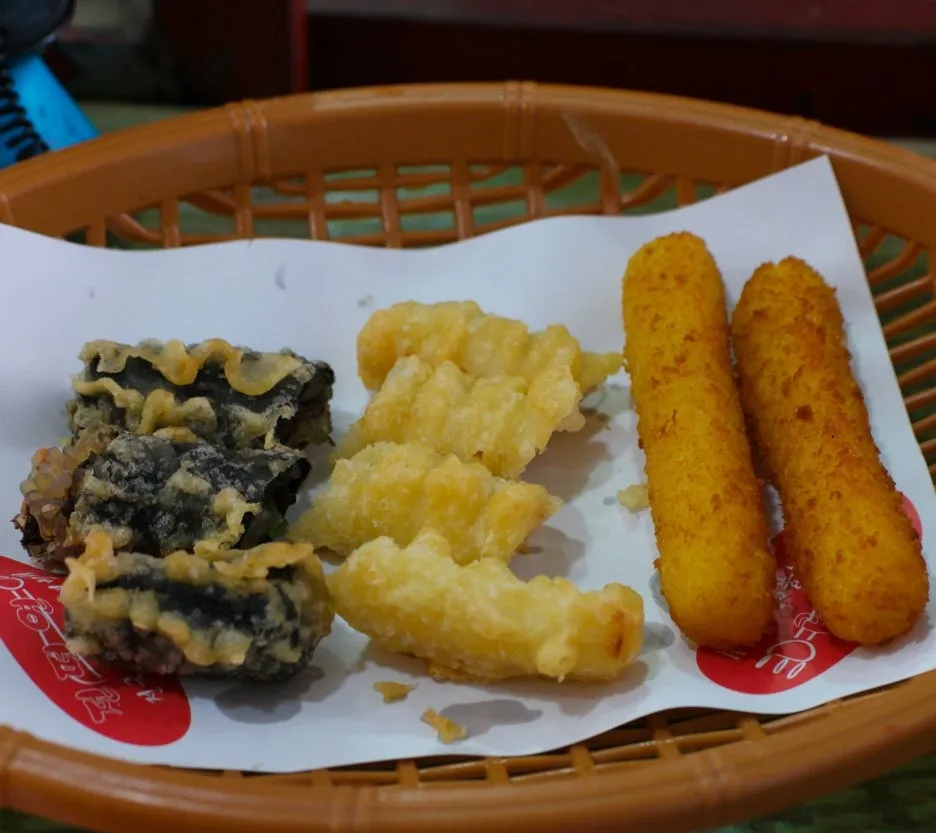
The dark-colored one on the left is gimmari (Gimmari). It's wrapped in seaweed before frying, which is why it has that dark color. It might look unfamiliar at first, but one bite and you'll immediately get it. The way the chewy glass noodles are encased in that crispy batter — the texture is seriously addictive.
The bumpy, irregular one in the middle is vegetable twigim (Yachae Twigim). That bumpy shape is actually the whole point. The batter fries up unevenly, trapping air pockets that make it extra crispy. The thick, golden one on the right is the cheese stick (Cheese Stick). It's coated in breadcrumbs, which is why it came out looking so rich and golden. Bite into it and cheese just stretches out endlessly — that moment is truly the highlight. The fact that all three come together in one basket already makes this a visual feast.
Cheese Sticks — If You Find Them at a Bunsik Shop, You're Lucky
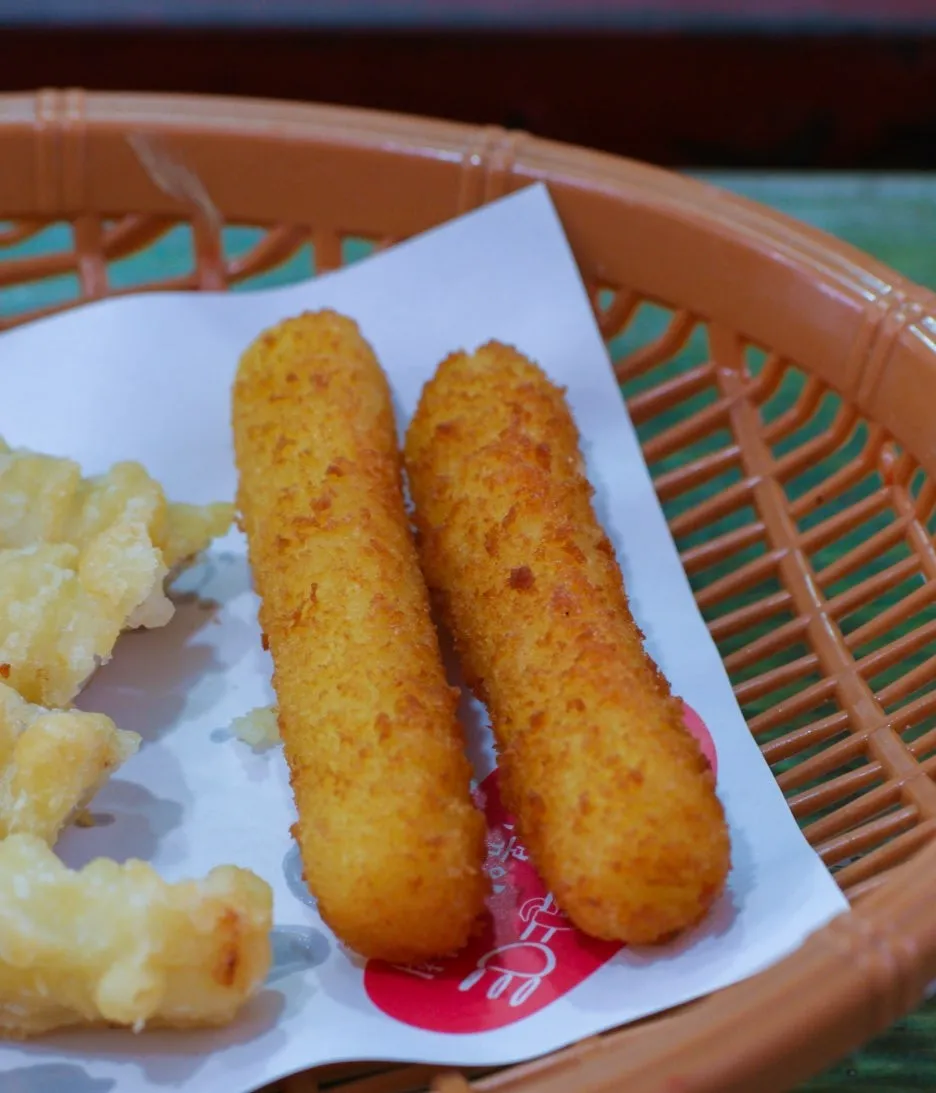
You can clearly see the golden breadcrumb coating. Just two of them sitting side by side and they already look mouthwatering. Crispy on the outside, stretchy melted cheese on the inside. If you find a bunsik spot that sells these, consider yourself seriously lucky.
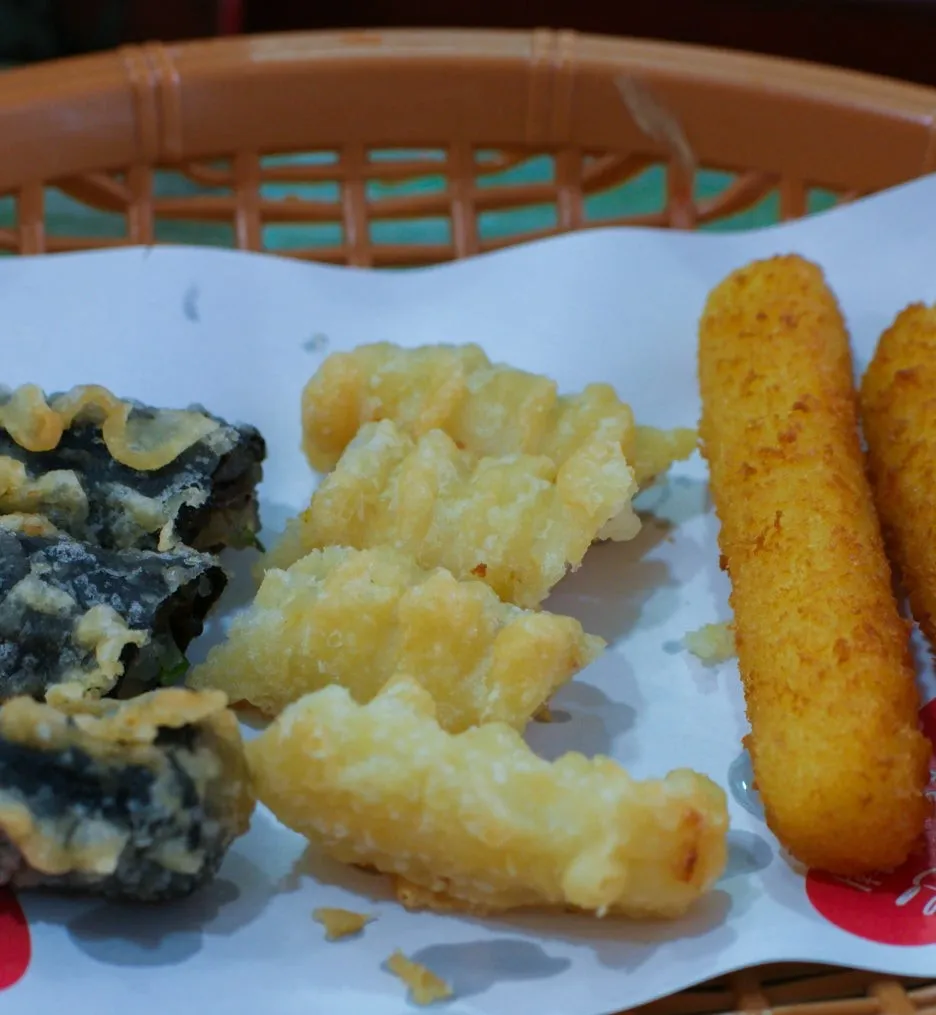
The Assorted Twigim Set — All in One Basket
All three in one basket. Gimmari (Gimmari) on the left, vegetable twigim (Yachae Twigim) in the center, cheese sticks on the right. Seeing them all laid out like this, can you feel what makes Korean bunsik fried snacks so special? Each one has a different color, shape, and texture. That's the whole point.
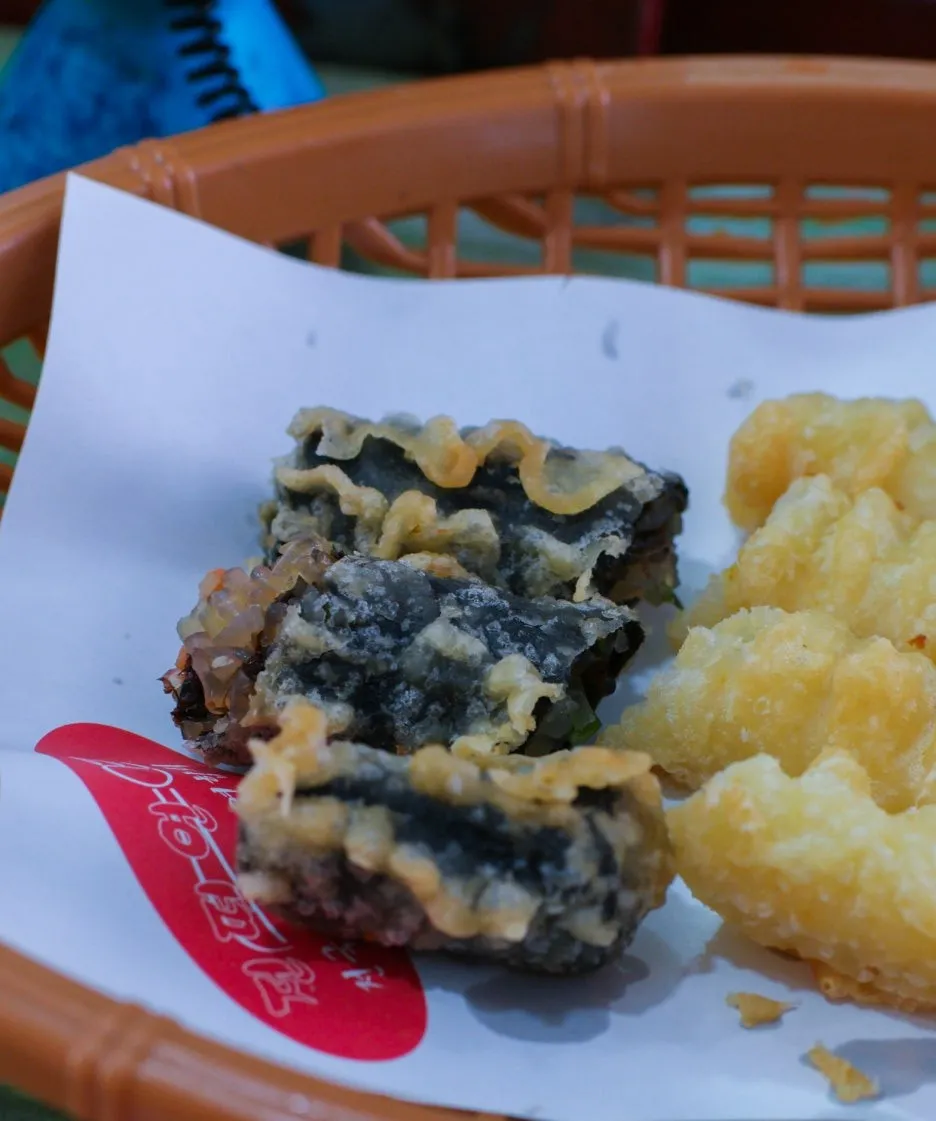
Gimmari Close-Up — You Can See Everything Inside
Up close, you can see right into it. The gim (dried seaweed) is packed full of glass noodles inside. The outer batter is thin and crispy, but when you bite in, you hit those chewy glass noodles. That contrast in texture is everything gimmari is about. Dip it in tteokbokki sauce and — well, you already know what that tastes like without me saying it.
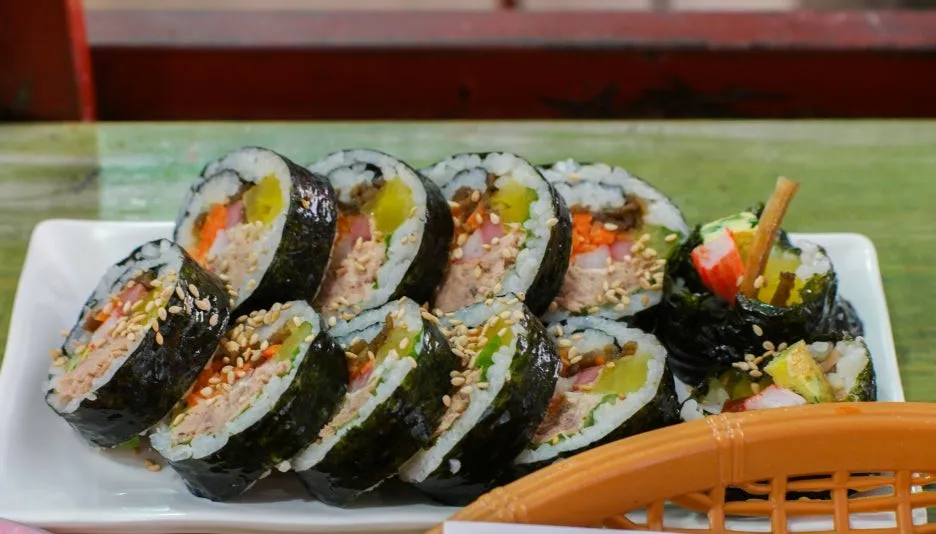
Next Up: Tuna Kimbap from the Bunsik Shop
A white plate loaded with tuna kimbap. You can tell exactly what's inside just by looking at the cross-section. White rice, pink ham, yellow pickled radish (danmuji), orange carrots, green spinach, and tuna. This color combination is what makes kimbap so appealing. Sesame seeds are sprinkled lightly on top, and on the right you can see some mini-sized rolls too, like little bite-sized kimbap.
When you order at a bunsik place, they slice a whole roll and arrange it on a plate like this. Each piece is bite-sized, easy to eat, and won't make a mess even if you eat on the go. It looks similar to Japanese sushi, but it's completely different. The rice isn't seasoned with vinegar — it's tossed in sesame oil, and the fillings are way more varied.
🐟 Tuna Kimbap (Chamchi Kimbap)
Canned tuna mixed with mayo and rolled into the kimbap. Thanks to its savory, creamy flavor, it's one of the most-ordered types at bunsik restaurants.
🥩 Beef Kimbap (Sogogi Kimbap)
Stir-fried beef seasoned in soy sauce. The savory-sweet flavor of the meat pairs perfectly with the rice. It feels like an upgraded version of regular kimbap.
🥗 Vegetable Kimbap (Yachae Kimbap)
No meat — just cucumber, carrot, spinach, pickled radish, and burdock root. The perfect choice for vegetarians.
🌶️ Kimchi Kimbap
Made with stir-fried kimchi inside. The tangy, spicy kimchi flavor bursting inside the rice is something else. It's a love-it-or-hate-it type of thing, but if you love it, you really love it.
🦐 Shrimp Kimbap (Saeu Kimbap)
Made with whole shrimp or shrimp meat. The bouncy texture of the shrimp contrasting with the soft rice is the whole appeal here.
🍳 Egg Kimbap (Gyeran Kimbap)
Made with a thin rolled omelette inside. It's mild and not overwhelming, making it the go-to recommendation for first-time kimbap eaters visiting Korea.
🍙 Mini Kimbap (Kkoma Kimbap)
Rolled much smaller than regular kimbap. The perfect snack-sized bite. Dip them in tteokbokki sauce and they become a completely different experience.
🌟 Chungmu Kimbap
Originating from Tongyeong on Korea's southern coast. It's rolled with just rice — no fillings inside — and served with cubed radish kimchi and spicy baby octopus on the side. A special kimbap that lets you experience Korea's regional food culture.
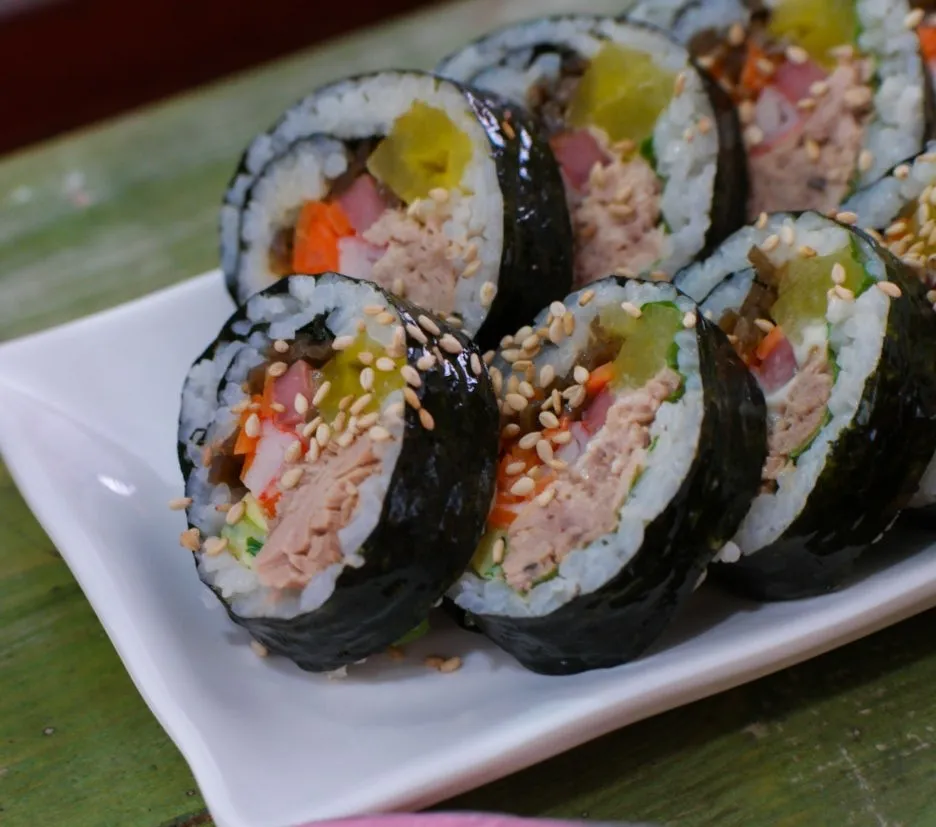
This Photo Says It All
You can see the cross-section right away. How much tuna is packed in there, how vibrant the pickled radish is. Sesame seeds dotting the white rice, red carrots, pink ham, yellow pickled radish, and tuna filling every gap in between. If you're eating kimbap in Korea for the first time, this right here is the classic.
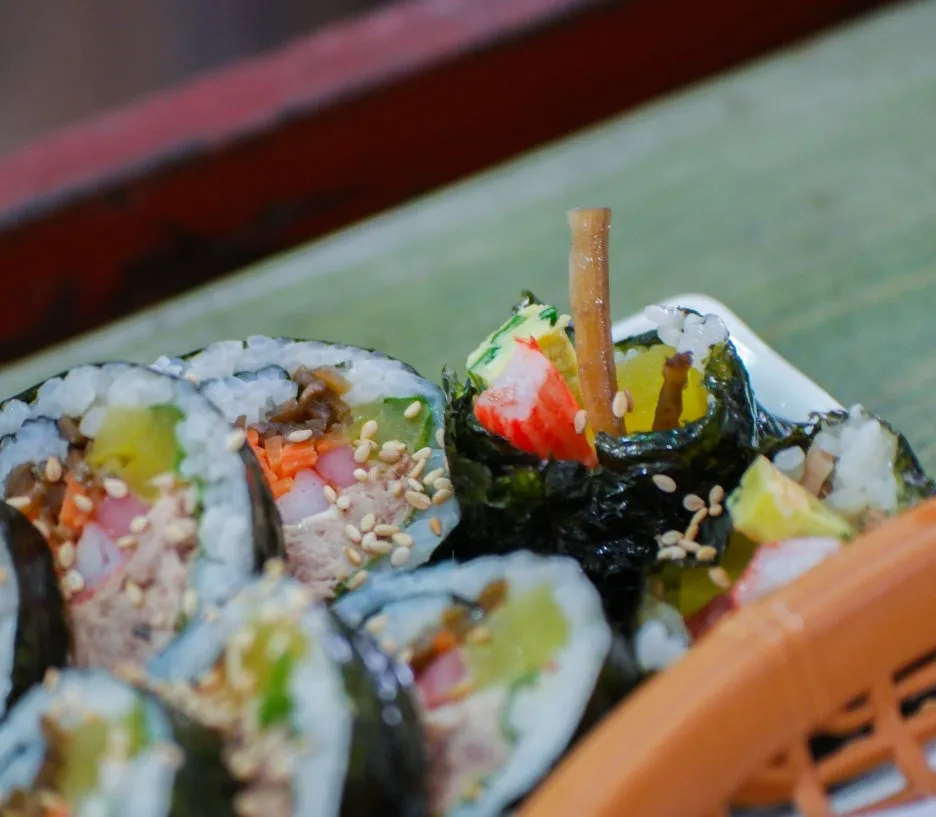
Burdock Root (Ueong) — Looks Weird but Tastes Amazing
See that thing sticking up from the center of the kimbap like a stick? That's burdock root (ueong). Braised burdock root is simmered in soy sauce until it's sweet and salty, and the more you chew, the more its nutty flavor comes through. In Korea, putting burdock root inside kimbap is completely normal. It might seem unfamiliar at first, but once you've had it, you'll actually miss it when it's not there.
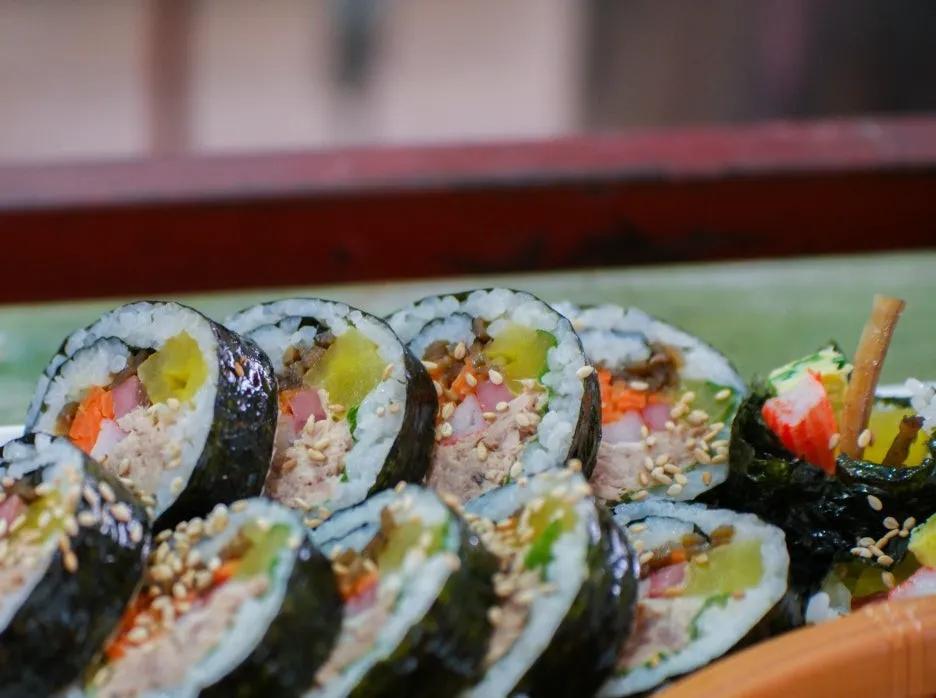
Same Kimbap, but Every Cross-Section Looks Different
These are the cross-sections lined up side by side. Looking at it this way, you can really see just how many ingredients go into a single roll of kimbap. White rice wraps around the outside, and in the center you've got tuna, carrots, pickled radish, cucumber, and ham layered together. It's all the same tuna kimbap, but depending on where it's sliced, every cross-section looks different. And that's part of what makes kimbap fun.
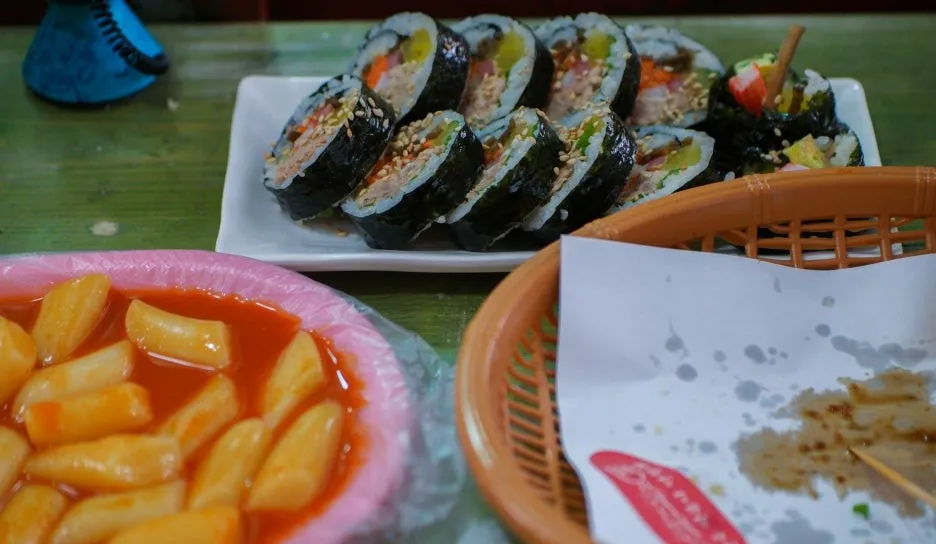
This Is the Classic Bunsik Combo
Finally, the full picture. Tuna kimbap on the white plate, fried snacks in the orange basket, tteokbokki in the pink dish on the left. This is how Korean people naturally order at a bunsik spot. One roll of kimbap, one serving of tteokbokki, a few pieces of twigim. There's no set rule about it. But somehow, everyone ends up ordering pretty much the same thing.
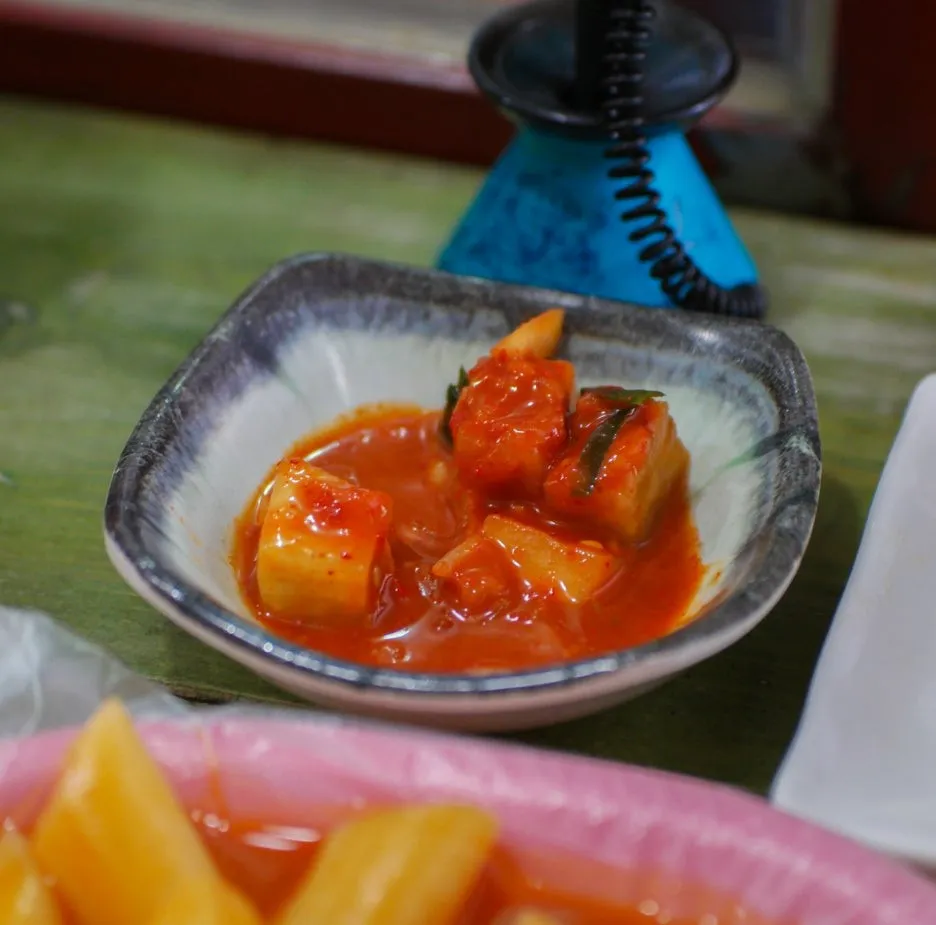
Kkakdugi (Cubed Radish Kimchi) — The Palate Cleanser
This is kkakdugi in a small ceramic bowl. Kkakdugi is a type of kimchi made by cutting Korean radish into cubes and seasoning it with chili flakes, garlic, and fermented fish sauce. Unlike regular napa cabbage kimchi, it keeps that satisfyingly crunchy texture. You can literally hear the crunch when you bite into it. Bunsik restaurants often serve it as a side dish, and when you're eating tteokbokki and the richness starts to build up, one piece of kkakdugi resets your palate instantly.
Other Dishes You'll Find on the Bunsik Menu
Beyond the tteokbokki, kimbap, twigim, and gimmari I've covered so far, if you take a closer look at a bunsik restaurant menu, there are quite a few hidden gems waiting. Knowing about them ahead of time means you can enjoy your visit even more.
🍜 Noodle Dishes
Jjolmyeon
Thick, chewy noodles tossed in a sweet-and-spicy gochujang sauce. The classic toppings are shredded cucumber and a boiled egg.
Rabokki
Instant ramen noodles combined with tteokbokki. As the ramen noodles absorb the tteokbokki sauce, the broth becomes incredibly rich and intense.
Bibim Guksu
Thin wheat noodles tossed in a tangy, sweet-and-spicy gochujang dressing. Especially popular in the summer.
🍲 Soup & Broth Dishes
Eomuk Tang (Fish Cake Soup)
Fish cakes on skewers served in a steaming hot broth. On a cold day, one sip of that broth is honestly the best medicine.
Sundaeguk (Blood Sausage Soup)
A rich soup made with sundae (Korean blood sausage) and offal. Add rice to the broth and you've got a hearty, filling meal.
🥢 Other Dishes
Sundae (Korean Blood Sausage)
Pig intestine casing stuffed with glass noodles and coagulated blood, then steamed. Dip it in salt or tteokbokki sauce — it's an adventurous but worthwhile taste.
Gyeran Mari (Rolled Omelette)
Egg cooked with vegetables and rolled up. Soft and savory — pairs really well with kimbap.
Odeng Kkochi (Fish Cake Skewers)
Fish cake on a stick, brushed with sauce and grilled. The perfect grab-and-go street snack to munch on while you walk.
Tteok Kkochi (Rice Cake Skewers)
Rice cakes on a skewer, brushed with a sweet sauce and grilled. Crispy on the outside, chewy on the inside.
Final Thoughts — That Smell Is Already Calling You
So, what do you think of Korean bunsik? It's not expensive. It's not fancy. But once you try it, the flavor just keeps coming back to haunt you. That's the power of bunsik.
One plate of tteokbokki, a few pieces of twigim, a roll of kimbap. This one combo has been making Korean people happy for decades. If you're walking down some alley in Korea and the scent of red spicy sauce hits your nose, don't just walk past it. That smell is already calling your name.
Frequently Asked Questions (FAQ)
Q1. Where can I find bunsik?
You can find it practically anywhere in Korea. Busy shopping streets, outside schools, inside traditional markets, near subway stations — bunsik restaurants are everywhere. Traditional markets in particular are the cheapest and most charming places to enjoy bunsik. In Seoul, Gwangjang Market, Namdaemun Market, and Sindang-dong Tteokbokki Alley are especially famous. In trendy areas like Hongdae, Sinchon, and Myeongdong, you'll stumble across bunsik spots just by walking around. Search 'bunsik' or '분식' on Google Maps and nearby shops will pop right up.
Q2. How much does it cost?
Bunsik is the quintessential Korean budget food. Prices in Korea have definitely gone up, but it's still one of the most affordable ways to get a full meal.
※ Traditional markets are often even cheaper. Order all three and it usually comes to around $7 total.
Q3. Is bunsik spicy? What if I can't handle spicy food?
Tteokbokki, the signature bunsik dish, is indeed spicy. But not everything at a bunsik shop is spicy.
💡 Try saying "Deol maepge haejuseyo" (덜 맵게 해주세요) when ordering — it means "less spicy, please." Some shops will adjust it for you.
Q4. Can I get takeout? Can I eat it while walking around?
Yes, most bunsik restaurants offer takeout. Just say "Pojang haejuseyo" (포장해주세요) — it means "to go, please." Kimbap is perfect for carrying around and eating on the go. Tteokbokki has broth, so be careful when carrying it. Twigim gets soggy over time, so it's best eaten right away. At traditional markets and food alleys, eating while walking is actually part of the culture.
💡 When ordering takeout, ask them to include utensils and toothpicks — they'll toss them in for you.
This post was originally published on https://hi-jsb.blog.