
Spicy Korean Noodles Review: How Hot Is Buldak? Scoville, Calories & Tips
Table of Contents
28 items
Have You Tried Buldak Noodles Yet?
Hey there! It's Hi-JSB here.
So, have you ever tried Buldak noodles? If you're planning a trip to Korea, this is probably the number one ramen you want to challenge yourself with. You've definitely seen those YouTube videos of foreigners sweating bullets while eating these, right? The "Fire Noodle Challenge" went absolutely viral worldwide, and this is THE noodle that started it all. So today, I'm going to give you my honest review after actually eating Buldak noodles myself.
How Were Buldak Noodles Born?
Before we dive into the review, let me give you a quick history lesson on Buldak noodles. Buldak Bokkeum Myeon (which literally translates to "Fire Chicken Stir-Fried Noodles") was launched by Samyang Foods in 2012. Fun fact: Samyang Foods actually created Korea's very first instant noodles back in 1963. This legendary company set out to develop "Korea's spiciest ramen," and that's exactly how Buldak noodles came to be.
When it first launched, sales were actually pretty slow because people complained it was "way too spicy." But everything changed around 2014 when YouTubers from around the world started posting mukbang (eating show) videos of themselves attempting the Buldak noodles. The "Korean Fire Noodle Challenge" exploded globally, and Buldak noodles became THE iconic Korean ramen. Today, it's exported to over 100 countries and accounts for more than half of Samyang Foods' total revenue—talk about a comeback story!
The Packaging Already Screams "SPICY"
>
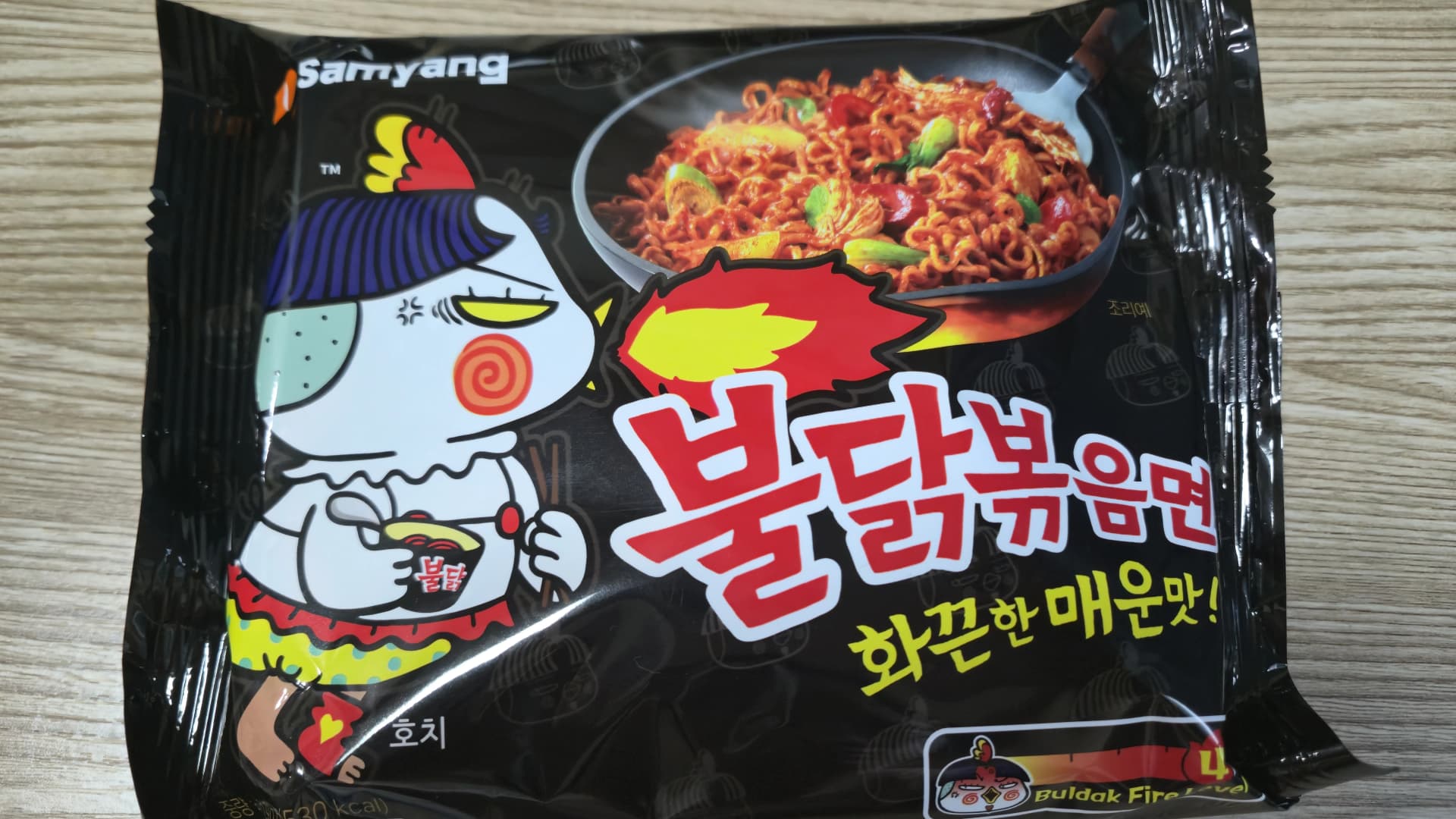
When you pick up a pack of Buldak noodles at the store, the packaging hits you immediately. Black background, red flames, and there's Hochi—the fire chicken mascot whose face is bright red from eating something spicy. The Korean text basically screams "FIERY HOT FLAVOR!" as a warning. Hochi is the mascot for the entire Buldak series, and his facial expression actually changes depending on the spice level. For the original flavor, he looks like he's really feeling the burn.
On the bottom right, you'll see the Buldak Fire Level indicator showing Level 4. Samyang rates all their Buldak products on a scale of 1 to 5, so the original sits in the upper-mid range of spiciness. For reference, the spiciest one—Haek Buldak (Nuclear Fire Noodles)—is Level 5.
The photo of the finished dish on the package shows noodles coated in that signature red sauce looking absolutely delicious. But that color... just looking at it makes my mouth tingle already.
Buldak Noodles Nutrition Facts: A Full Meal in One Pack
>
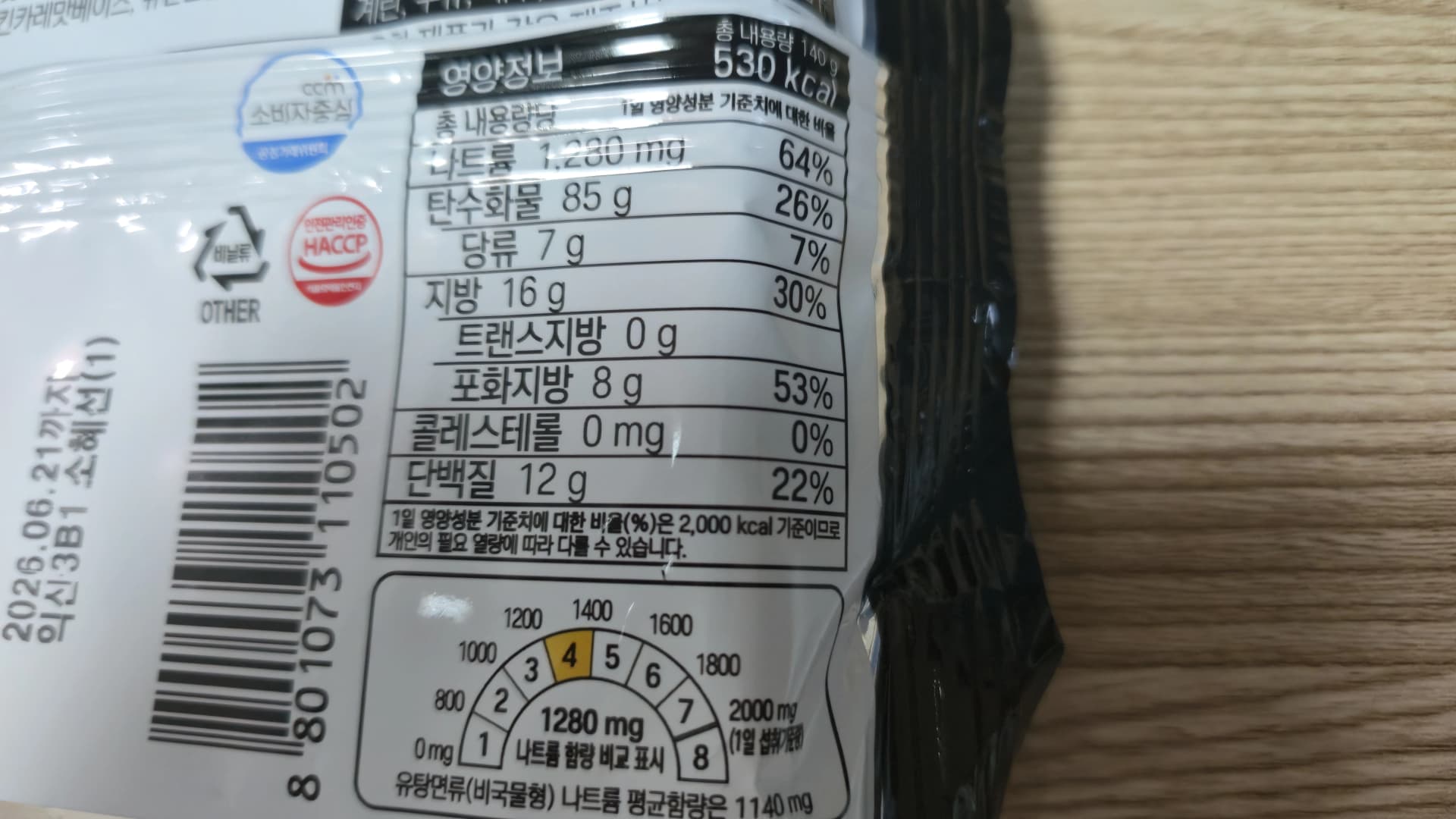
For those of you watching your calories or on a diet, here's the complete nutritional breakdown:
| Nutrient | Amount | Daily Value |
|---|---|---|
| Calories | 530kcal | - |
| Sodium | 1,230mg | 64% |
| Carbohydrates | 85g | 26% |
| Sugars | 7g | 7% |
| Fat | 16g | 30% |
| Trans Fat | 0g | - |
| Saturated Fat | 8g | 53% |
| Cholesterol | 0mg | 0% |
| Protein | 12g | 22% |
At 530 calories per pack, Buldak noodles are substantial enough for a full meal. Korean instant noodles were originally designed as meal replacements, not snacks, so this amount is perfect for lunch or dinner. The sodium content is 64% of your daily recommended intake, but since this is a stir-fried noodle (not a soup-based ramen), it actually has less sodium than most Korean soup ramens. If you drink all the broth in regular ramen, you're looking at 80-90% of your daily sodium. Still, that's a lot, so make sure to drink plenty of water!
Buldak Noodles Scoville Rating: How Spicy Is It Really?
When talking about spiciness, we can't skip the Scoville Heat Units (SHU). The Scoville scale measures the heat level of chili peppers—the higher the number, the spicier it is.
The original Buldak noodles clocks in at approximately 4,404 SHU. To put that in perspective, here's how it compares to other products:
| Product | Scoville Rating (SHU) |
|---|---|
| Jalapeño Pepper | 2,500–8,000 |
| Shin Ramyun | ~3,400 |
| Buldak Original | ~4,404 |
| Tabasco Sauce | 2,500–5,000 |
| Teumsae Ramyun | ~9,413 |
| Haek Buldak (Nuclear) | ~10,000 |
| Cheongyang Chili Pepper | 4,000–12,000 |
| Habanero Pepper | 100,000–350,000 |
So it's definitely spicier than Shin Ramyun (Korea's most famous ramen worldwide), but less intense than Teumsae Ramyun or the Nuclear Buldak version. Think of it as roughly equivalent to a Korean cheongyang chili pepper, or somewhere in the mid-range of a jalapeño. For Koreans, this is "moderately spicy," but for those not accustomed to spicy food, it can be quite the challenge.
How to Cook Buldak Noodles: Simple But With One Crucial Step
>
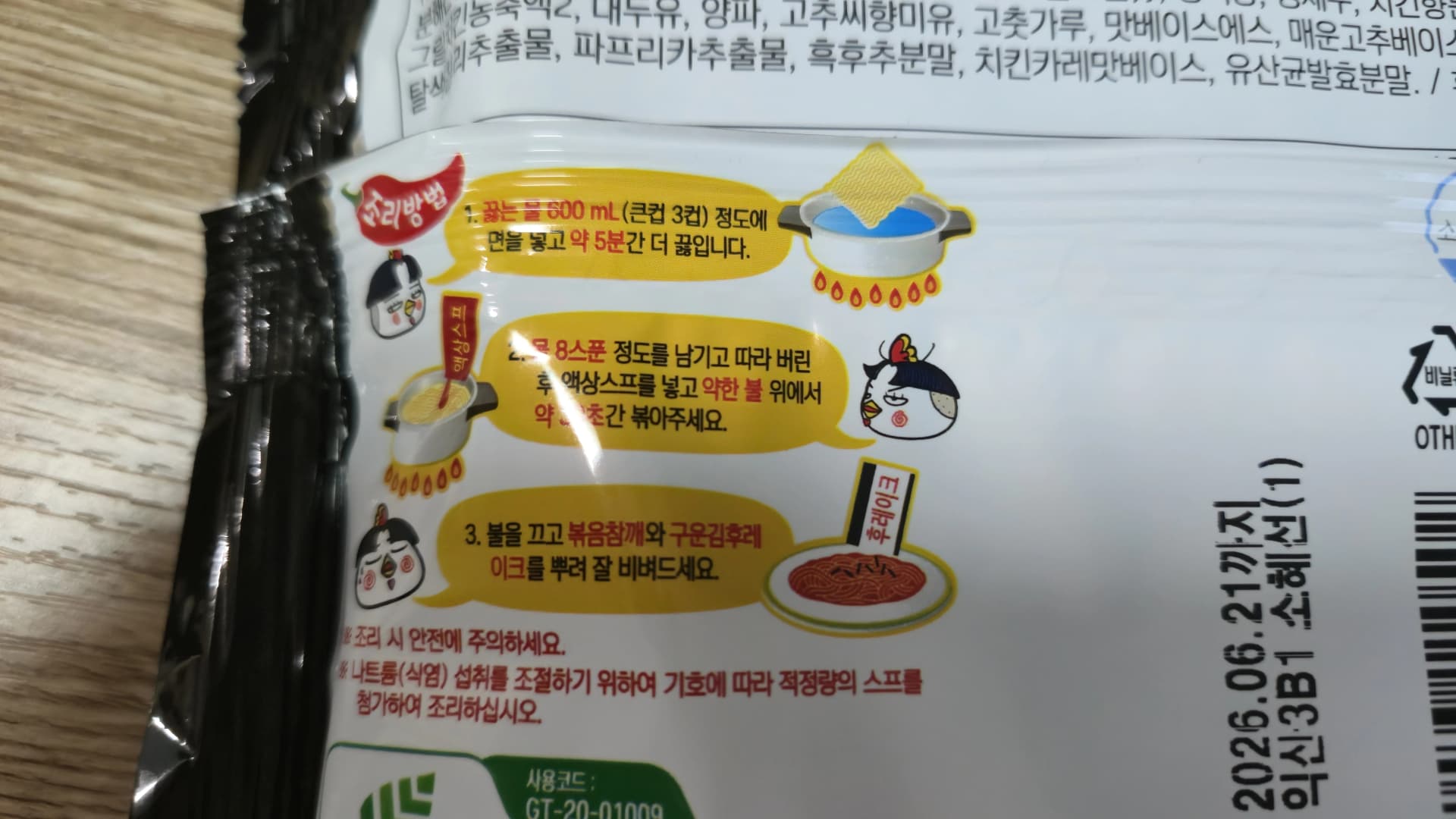
Here's what the cooking instructions say:
1. Boil 600mL (about 2.5 cups) of water and cook the noodles for approximately 5 minutes.
2. Drain the water, leaving about 8 spoonfuls (3-4 tablespoons), then add the sauce packet and stir-fry over low heat for about 30 seconds.
3. Turn off the heat, sprinkle the roasted sesame seeds and seaweed flakes, and mix well before serving.
Here's the absolutely crucial point: Buldak noodles are NOT soup noodles. You MUST drain the water before adding the sauce. A lot of first-timers accidentally leave all the water in and add the sauce, ending up with some weird soupy mess. DO NOT forget to drain the water!
The instructions say to leave about 8 spoonfuls of water, and there's a reason for this—it helps the sauce coat the noodles evenly. Too much water and your sauce gets diluted; too little and your noodles become dry and sticky.
Allergen & Religious Dietary Information
>
Ingredients
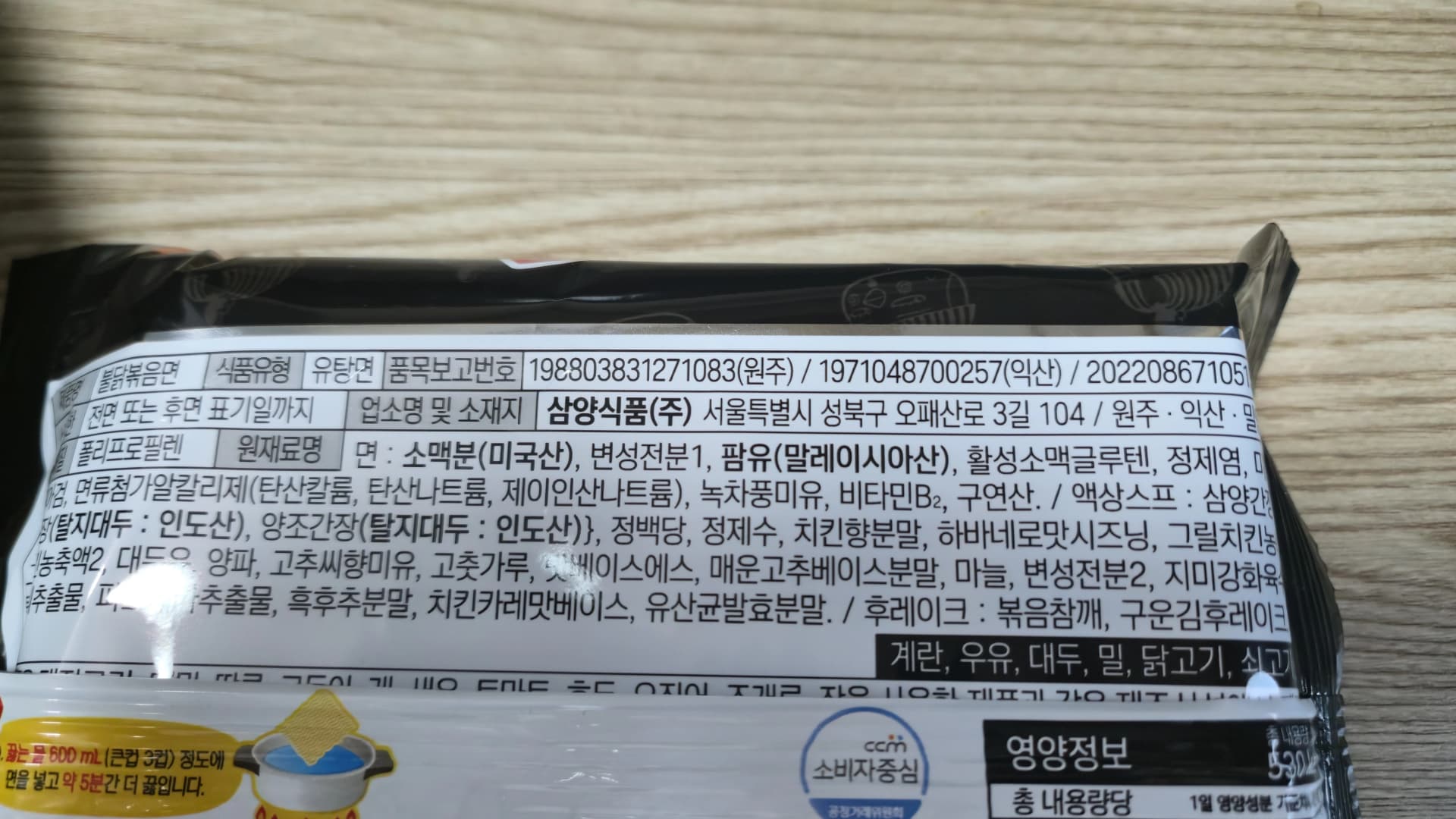
The noodles are made with wheat flour (US origin), modified starch, palm oil (Malaysian origin), and vital wheat gluten. The liquid sauce contains Samyang soy sauce, white sugar, chicken flavor powder, habanero seasoning, and spicy pepper base powder. That habanero seasoning is the secret behind the intense heat—habanero peppers have a Scoville rating of 100,000-350,000 SHU, and they've concentrated that into this seasoning.
Allergen Information
This product contains: Eggs, Milk, Soybeans, Wheat, Chicken, and Beef.
Please check this carefully if you have any allergies.
For Those With Religious or Dietary Restrictions
For international friends or those who can't eat certain foods for religious reasons, here's what you need to know. This product contains beef extract, so it may not be suitable for those following Hindu dietary practices.
Regarding pork: it's not directly listed in the ingredients. However, the package states that this product is "manufactured in a facility that also processes pork products." Korea is quite thorough about labeling these details for people with allergies or religious dietary restrictions. So while pork isn't an actual ingredient, it is produced in a shared facility. Muslim consumers should make their own judgment based on their personal beliefs and practices.
Important note: Buldak noodles sold internationally may have different specifications. Products sold in India likely don't contain beef extract, and products sold in Muslim-majority countries are probably produced in separate halal-certified facilities. If you're purchasing overseas, I recommend checking the package for halal certification marks.
What's Inside the Package
>
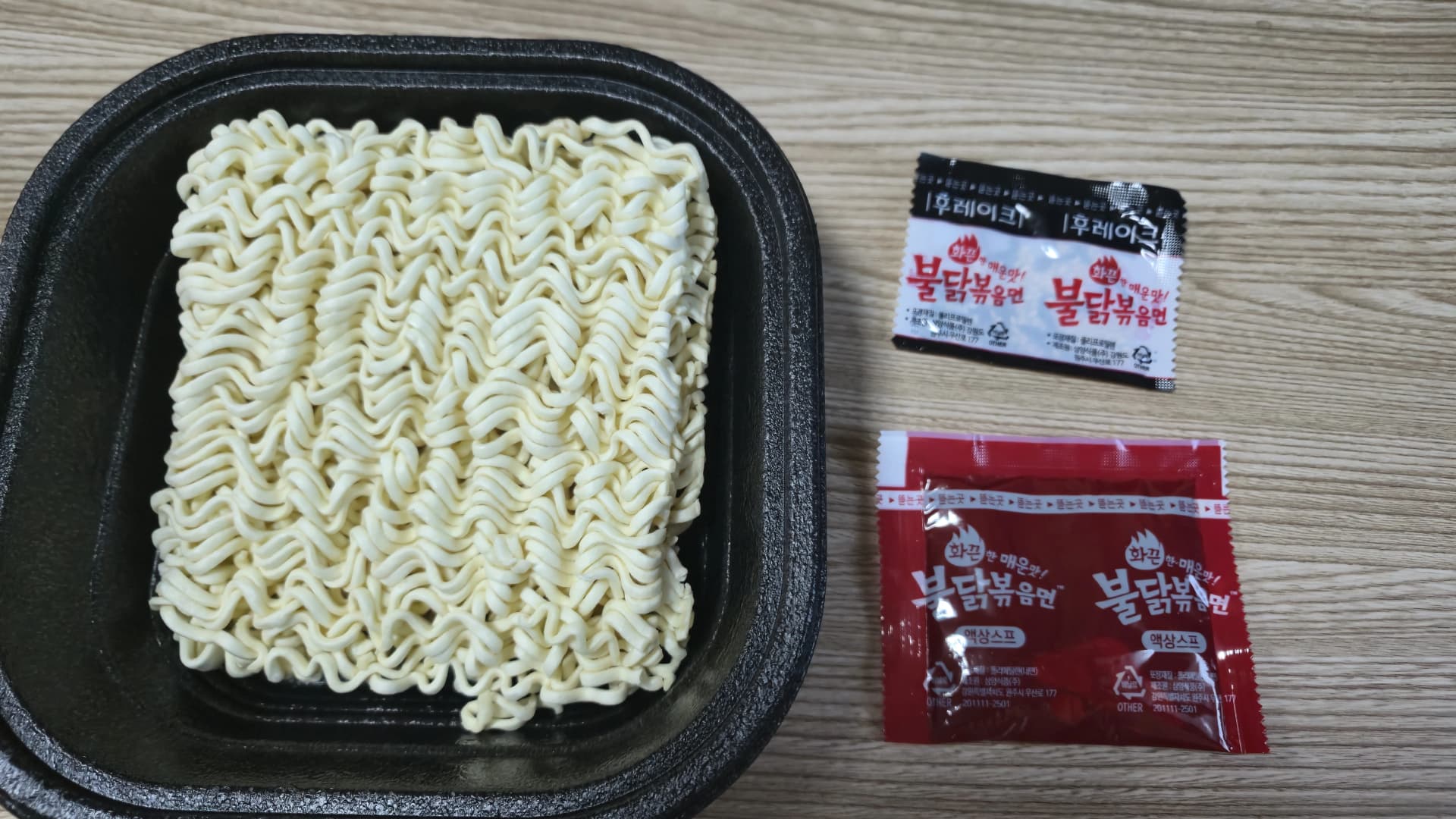
Opening the package, I found one block of noodles and two sauce packets. The noodles are square-shaped. Here's what you get: one block of fried noodles, one liquid sauce packet (the Buldak sauce), and one flakes packet (roasted sesame seeds + dried seaweed)—three items total.
>
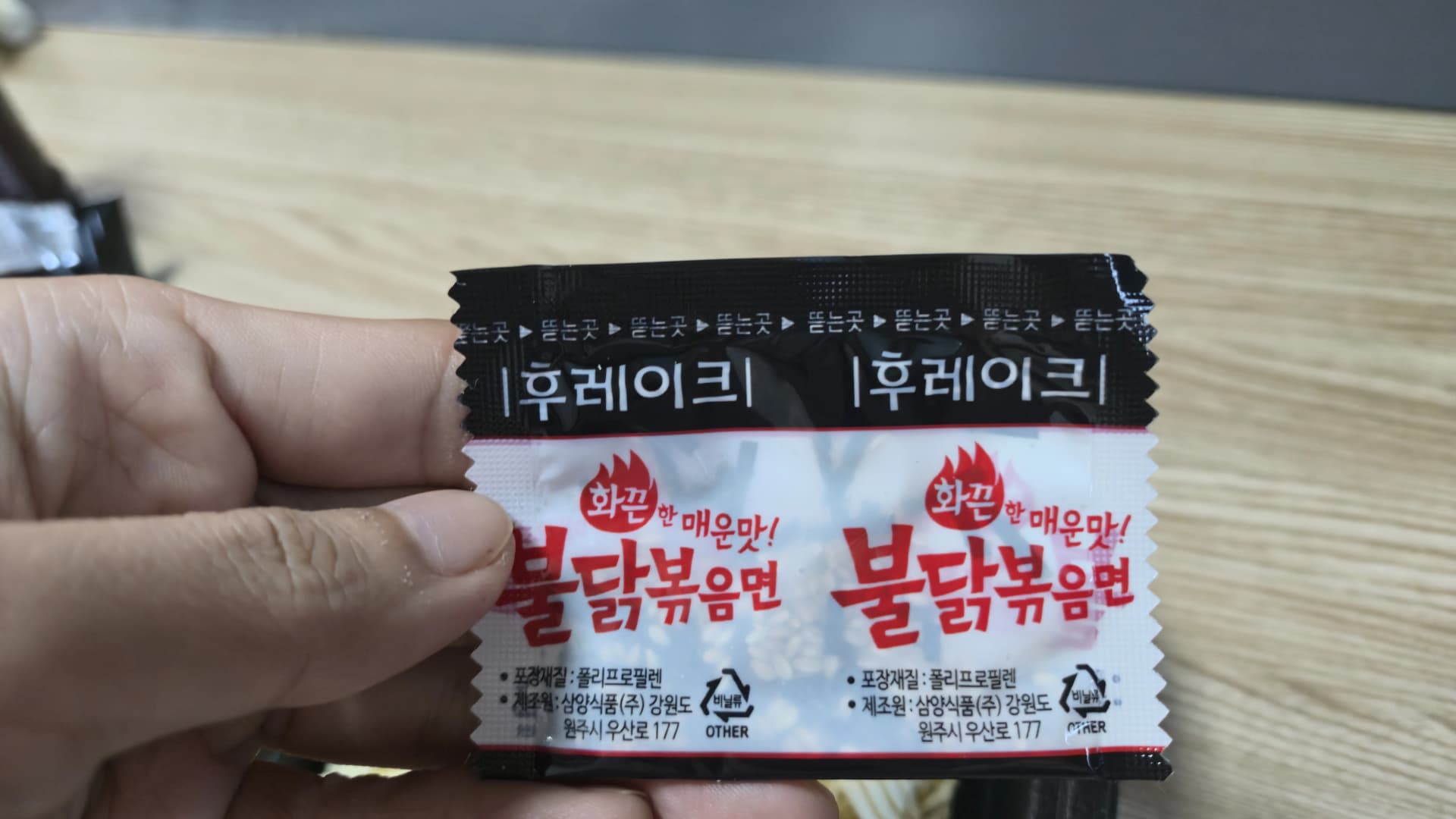
The black packet contains the flakes—roasted sesame seeds and dried seaweed. These add a nice nutty flavor later on. The nuttiness weaves between the spicy bites and helps balance out the overall flavor profile.
>
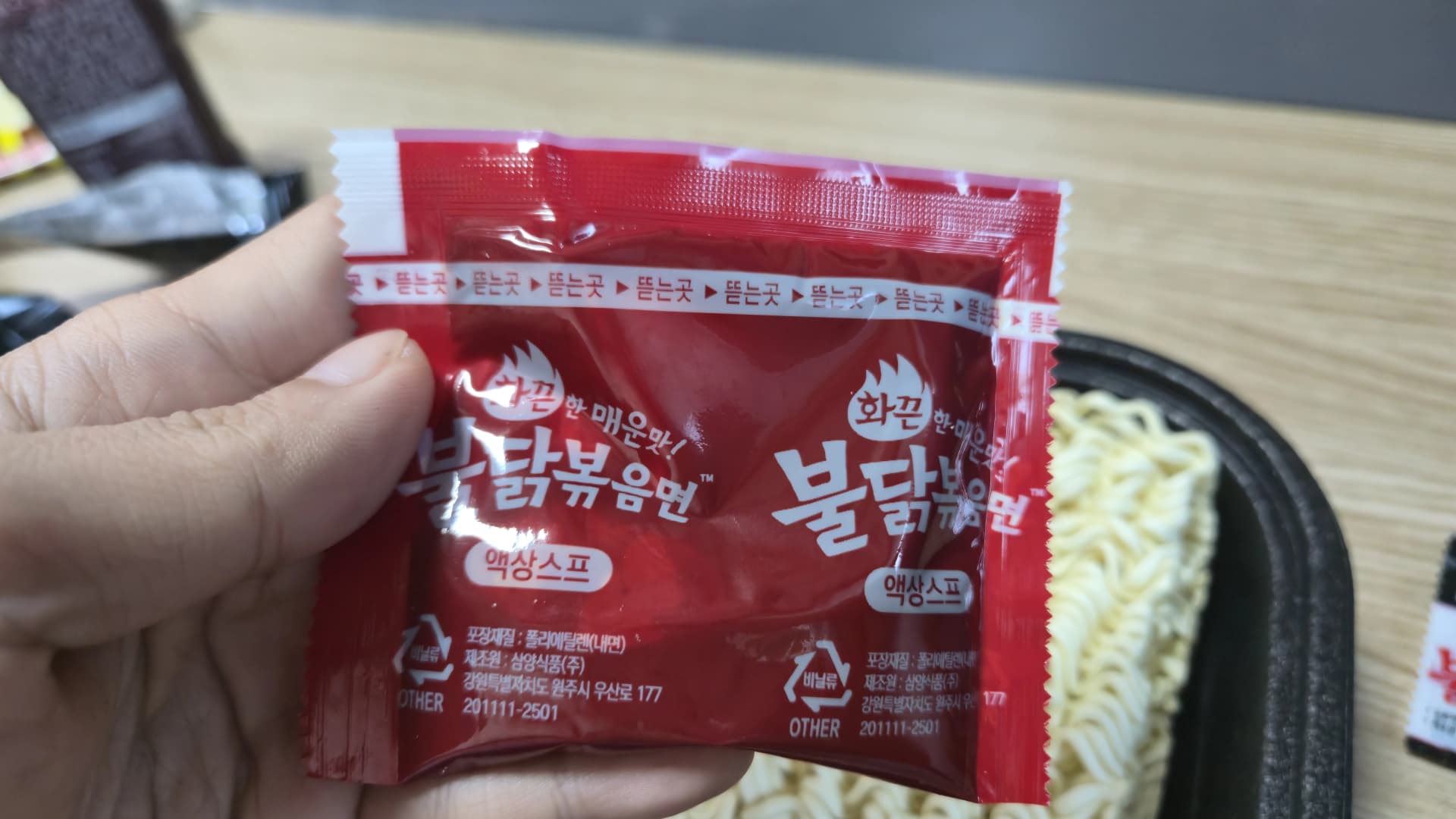
The red packet is the famous liquid sauce—the Buldak sauce itself. This sauce became so popular worldwide that Samyang now sells it separately as a standalone product. Buldak sauce has become a versatile all-purpose sauce that people use on chicken, tteokbokki (spicy rice cakes), pizza, and all sorts of dishes. Just looking at this packet, can't you already feel the heat?
Time to Actually Cook This Thing
Today I decided to cook mine in the microwave instead of on the stovetop. Why? Because most travelers visiting Korea don't have access to a gas stove. Hotels, Airbnbs, and guesthouses typically don't have gas cooking facilities in the rooms. So I wanted to show a method that travelers can actually follow.
Pro Tips for Cooking Ramen While Traveling in Korea
Want to cook ramen at your accommodation in Korea but don't have a stove? No worries! Head to any convenience store like 7-Eleven, CU, or GS25 and you can buy a disposable microwave-safe container for about ₩500 (roughly $0.40 USD / £0.30 GBP). Just put your noodles and water in there, pop it in the microwave, and you're done.
Even if your room doesn't have a microwave, most accommodations have one in their common lounge or shared kitchen area. You can cook there. And if your accommodation doesn't have a microwave at all, you can actually cook and eat right at the convenience store! Korean convenience stores provide free access to microwaves and hot water dispensers, and they have seating areas where you can eat. There's absolutely no extra charge for eating in-store. This is one of the best things about Korean convenience store culture.
>
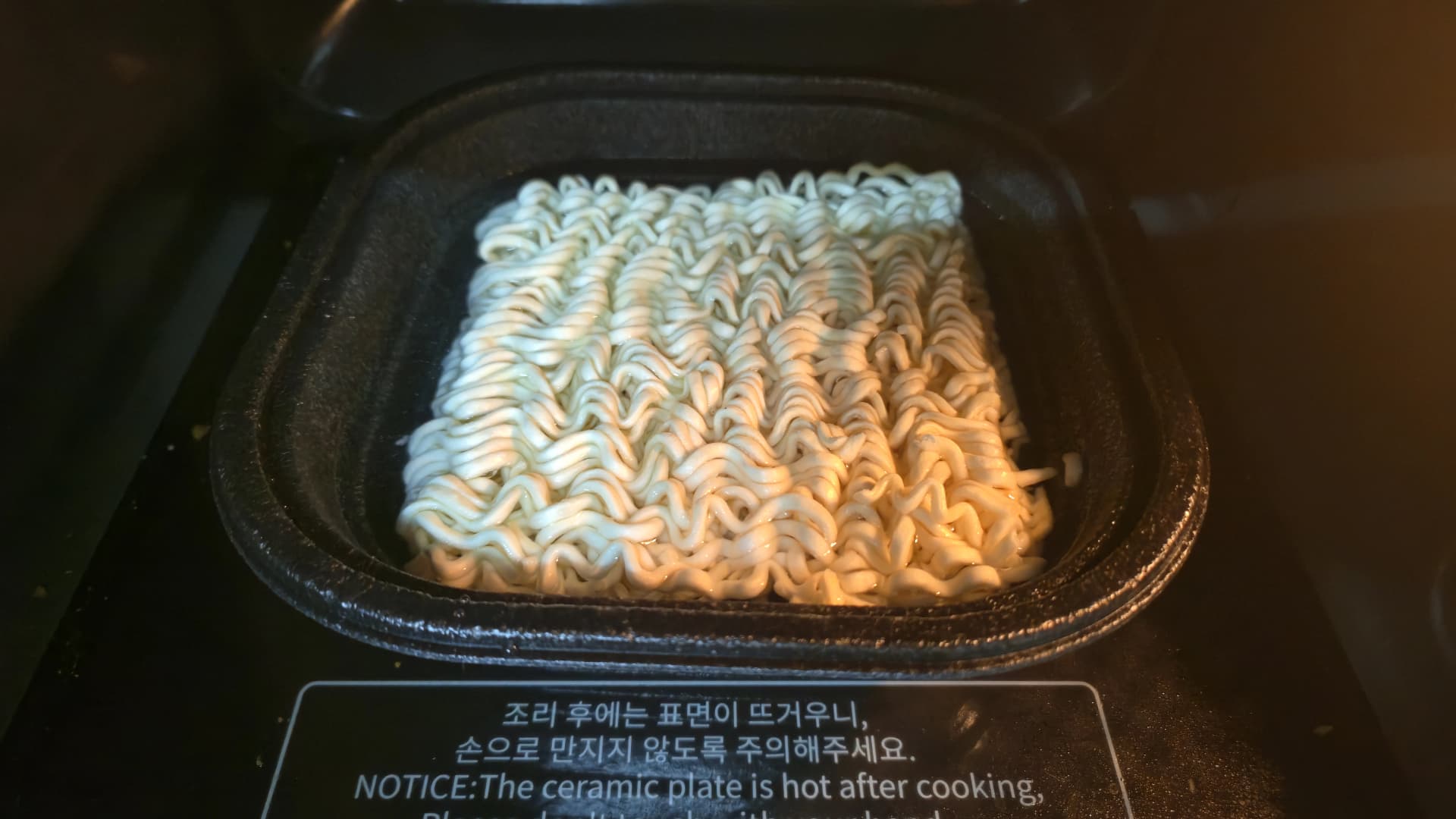
I put the noodles in a microwave-safe container, added water, and microwaved it for 3 minutes. If you're using hot water, 3 minutes is enough. If you're using cold water, go for about 3 minutes and 30 seconds. Microwave power levels vary, so adjust the time based on how your noodles look.
Drain the Water and Add the Sauce (The Most Important Step!)
>
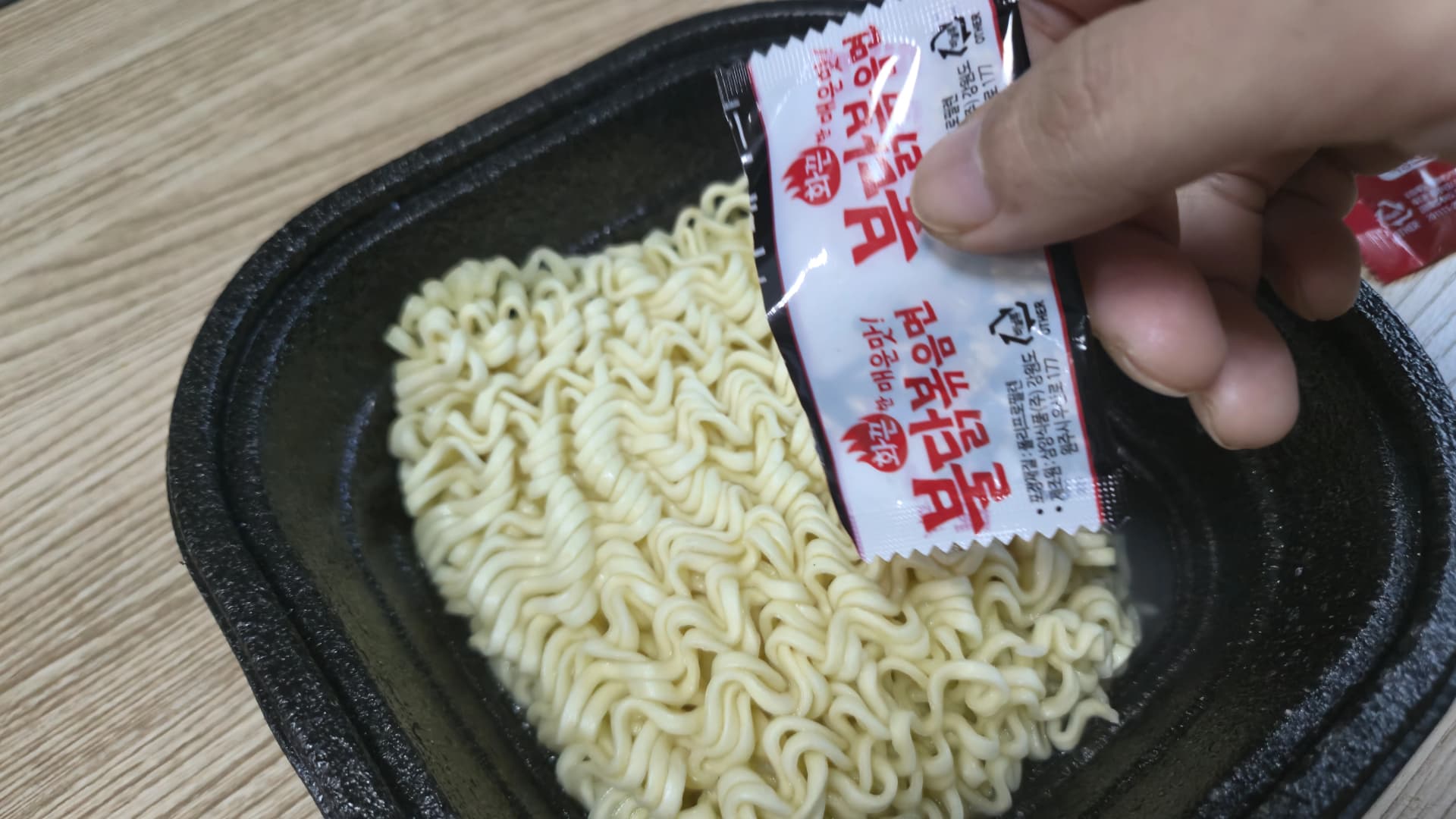
Once the noodles are cooked, drain the water leaving about 8 spoonfuls (3-4 tablespoons). Then add the liquid sauce. Let me emphasize this one more time: you MUST drain the water first before adding the sauce! This is NOT a soup ramen! If you don't drain the water and just add the sauce, the taste will be completely different and wrong.
>
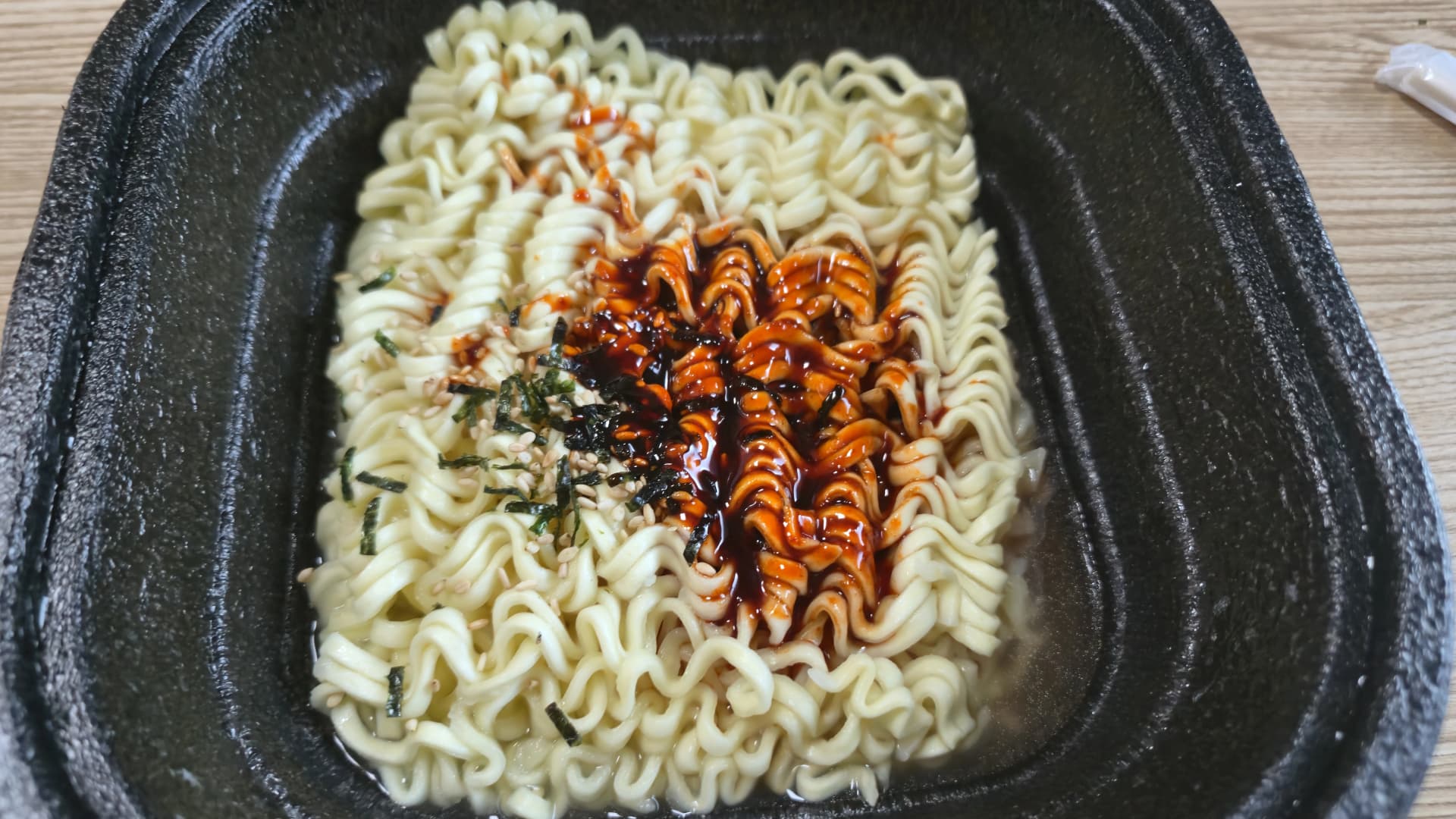
After adding the liquid sauce and flakes, this is what it looks like. The red sauce is drizzled over the noodles, and you can see the seaweed and sesame seeds on top. This is before mixing, and already the spicy aroma is wafting up. You know that feeling when your nose starts to tingle? Yeah, that.
It's Done! My Honest Taste Review of Buldak Noodles
>
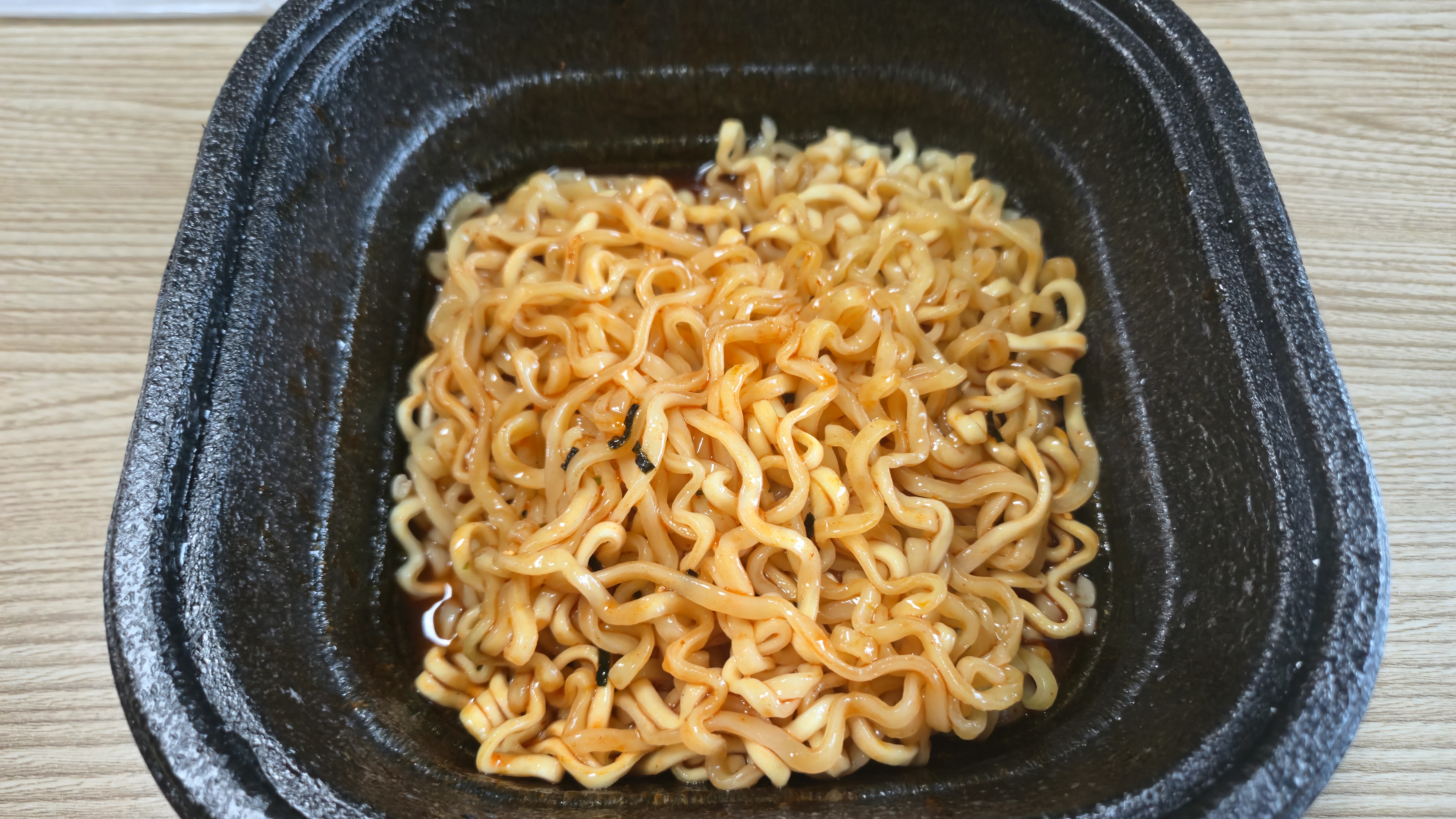
After mixing everything together with chopsticks, this is the final result. The entire surface of the noodles is coated in that red Buldak sauce, glistening beautifully. The seaweed and sesame are mixed throughout. Just looking at it makes my mouth water, but at the same time I'm thinking, "this is definitely going to be spicy."
First Bite Impressions
I picked up a bundle of noodles with my chopsticks, blew on them to cool them down, and took a bite.
Oh.
It's spicy, alright.
But here's the fascinating thing—it's not JUST spicy. Behind the heat, there's a sweetness that follows. That's because the Buldak sauce contains sugar and soy sauce. So even while you're going "oh man, this is hot, this is hot," your chopsticks keep going back for more. I think this is exactly what makes Buldak noodles so addictive. It's not like a capsaicin bomb that's just pure heat—it's that sweet-salty-spicy combo that keeps you coming back for another bite.
My mouth is tingling but I take another bite, and another, and before I know it, I've finished the whole thing. I'm saying "so spicy, so spicy" but my chopsticks never stop. That's the magic of Buldak.
Korean vs. Foreigner: The Spice Experience Gap
I'll be honest—as a Korean, it didn't feel like "death-level spicy" to me. Koreans grow up eating kimchi and gochujang (red pepper paste) from childhood, so we've built up a pretty solid spice tolerance. We eat spicy foods like tteokbokki, chicken feet, and Yeop Tteokbokki (the famous extra-spicy chain) on a regular basis. So by Korean standards, this feels like "nicely spicy and delicious." Of course, if you're Korean but can't handle spice well, you might still struggle.
But for people from countries where spicy food isn't common, this can be legitimately intense. Those YouTube videos of foreigners with tears and runny noses? Not exaggerated at all. Especially if you're coming from Europe or North America, you probably don't encounter this level of heat in your daily life. If you're trying Buldak for the first time, consider starting with only half the sauce packet. Taste it, and if you can handle it, add more. You can always add more heat, but you can't take it back!
How About the Noodles Themselves?
The noodles have a nice chewy texture. Since this is a stir-fried noodle dish (not soup-based), the noodles are more bouncy and springy than regular ramen. The sauce clings to every strand, so each bite delivers that spicy punch throughout your mouth. I was a bit worried since I cooked it in the microwave, but the noodles came out perfectly cooked—not mushy at all.
Samyang has a signature noodle texture that's slightly thicker and chewier than other brands. The sauce penetrates the noodles well, so even the noodles alone pack a spicy punch.
Is It Filling Enough?
One pack is 140g (about 5 oz), and after finishing it, I felt perfectly satisfied. It's definitely enough for one meal. I had this for lunch and didn't need anything else. If you want a bit more, fry up an egg and put it on top—perfect combo.
Pro Tips to Make Buldak Noodles Even Better
Here are some ways to make your Buldak experience either tastier or less deadly:
Add Cheese: Melt some mozzarella or a slice of American cheese on top. The creaminess of the cheese helps tame the spiciness. This combo is so popular that Samyang actually released a Cheese Buldak flavor.
Add an Egg: Top it with a sunny-side-up egg and break that yolk to mix in. The richness makes the heat more manageable while adding a lovely creaminess.
Add Mayonnaise: A drizzle of Japanese Kewpie mayo adds a creamy dimension that mellows out the spice while giving it a unique flavor twist.
Adjust the Sauce Amount: If you're a first-timer, start with only half the sauce packet. Taste it, and if you can handle more, add the rest. Once it's all in there, there's no going back!
Have Milk or Dairy Ready: Water doesn't really help with spicy food—it actually spreads the capsaicin around. Dairy products like milk or yogurt contain casein, which binds to capsaicin molecules and washes them away. Have some ready before you start.
The Buldak Series: So Many Flavors to Try
Since Buldak noodles became such a massive hit, Samyang has released tons of variations. Here's a quick overview:
Original Buldak: Fire Level 4—The classic that started it all.
Haek Buldak (Nuclear): Fire Level 5—Twice as spicy as the original. Only for the brave.
Carbo Buldak (Carbonara): Fire Level 1—Creamy carbonara sauce makes this smooth and much milder. Great for spice beginners.
Rosé Buldak: Fire Level 2—Rosé cream sauce gives it a milder, creamy kick. Super popular, especially among women.
Cheese Buldak: Fire Level 2—Cheese sauce adds richness and tones down the heat.
Jjajang Buldak: Fire Level 3—Korean black bean sauce meets Buldak spice. An interesting fusion.
If you're not confident about handling spice, I recommend starting with Carbo or Rosé first.
Frequently Asked Questions (FAQ)
How spicy is Buldak noodles?
With a Scoville rating of approximately 4,404 SHU, it's spicier than Shin Ramyun. By Korean standards, it's "moderately spicy," but for those unaccustomed to spicy food, it can be quite challenging.
Do I really need to drain the water when cooking Buldak?
Yes, absolutely! Buldak is a stir-fried noodle dish, not a soup ramen. You must drain all but about 8 spoonfuls (3-4 tablespoons) of water before adding the sauce and mixing.
How can I make Buldak less spicy?
Use only half the sauce packet, or add cheese, egg, or mayonnaise to mellow the heat. Drinking milk alongside also helps neutralize the capsaicin.
Is Buldak noodles halal certified?
Products sold in Korea are not halal certified and are manufactured in facilities that also process pork. However, Buldak products sold in Muslim-majority countries may be produced in separate halal-certified lines—always check the package for certification marks.
How can I cook ramen while traveling in Korea without a stove?
Buy a disposable microwave container at any convenience store for about ₩500 ($0.40 USD) and use the microwave. If your accommodation doesn't have one, Korean convenience stores offer free microwave access and eating areas—no extra charge!
Final Verdict
Buldak noodles are seriously delicious. There's a reason this became a worldwide phenomenon. If you love spicy food, you absolutely have to try this. When visiting Korea, you can easily find it at any convenience store or supermarket, and it's super simple to cook. The price is only about ₩1,500-2,000 (roughly $1.10-1.50 USD / £0.90-1.20 GBP) per pack—totally affordable.
But if you can't handle spice well, proceed with caution. It's legitimately hot. If it's your first time, I recommend adjusting the sauce amount. Or try one of the milder Buldak variations like Carbonara or Rosé first.
If you want to truly experience Korean spiciness, I highly recommend Buldak noodles. That exhilarating feeling of eating while sweating? You've got to experience it at least once!
Hope this review helped you out. I'll be back with more tasty stuff next time!
This content was originally published at https://hi-jsb.blog