A Lucky Find at the Supermarket: Rabokguri Big Bowl
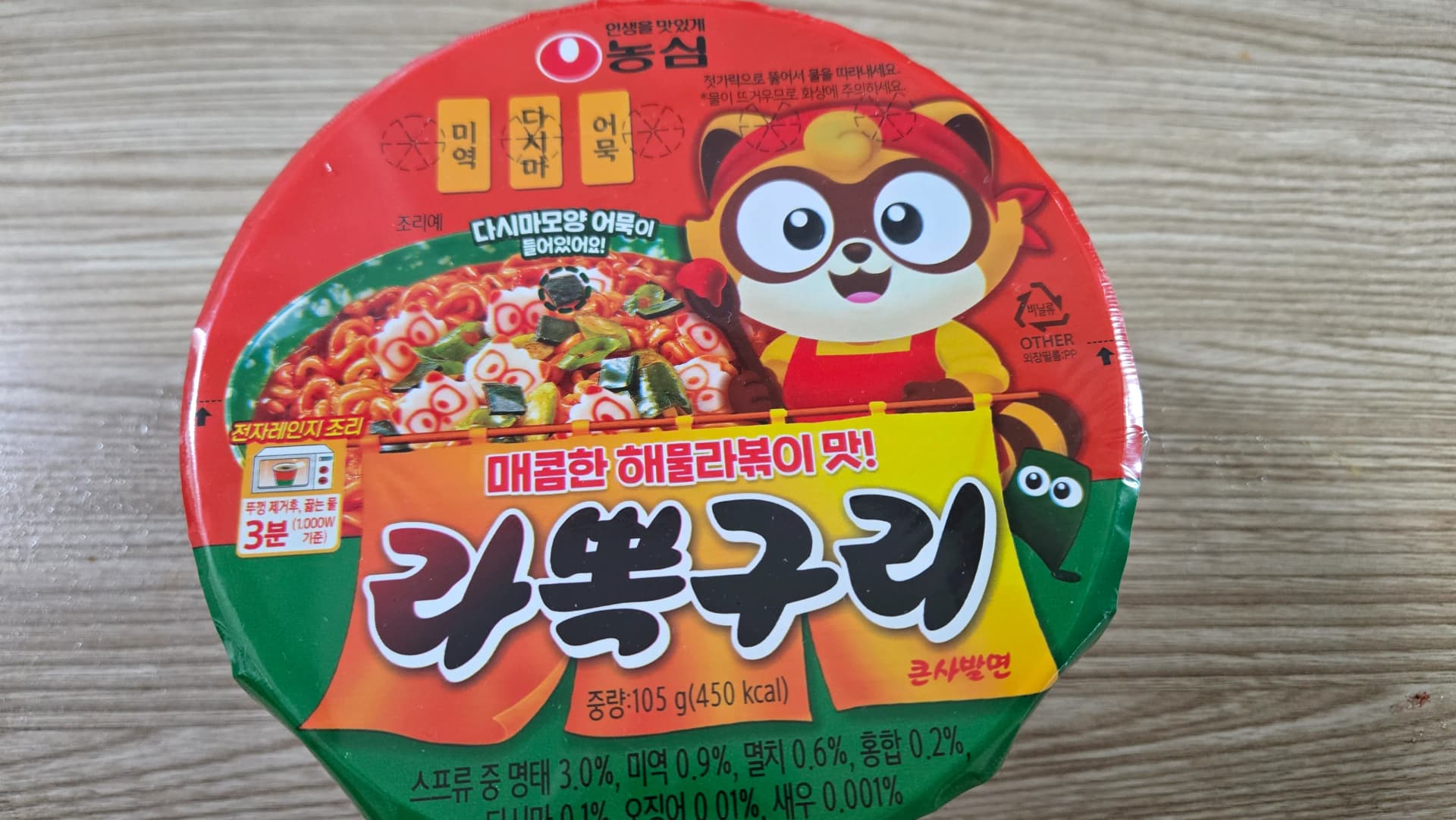
Today I stopped by a neighborhood supermarket I don't usually visit on my way home from work, and I stumbled upon something pretty interesting. There was this one package on the shelf that really stood out, so I walked over for a closer look — and there it was, the Neoguri raccoon character absolutely drenched in tteokbokki sauce, staring right at me. It was none other than the Nongshim Rabokguri Big Bowl, the spicy cup noodle that's been blowing up on social media lately.
I'd actually heard about the Rabokguri launch recently, but I couldn't find it at any convenience stores so I'd half-forgotten about it. But running into it like this at a random supermarket? It felt like destiny. A mashup of Neoguri and rabokki — how could I possibly walk past such a wild concept? I tossed it into my basket without a second thought.
So what happens when Neoguri's signature seafood umami meets a sweet-and-spicy rabokki sauce? Let me give you my completely honest take, starting now.
Rabokguri Packaging & Nutrition Facts: A Detailed Breakdown
First Impressions of the Rabokguri Big Bowl
The red lid features the little raccoon wearing red overalls, completely covered in tteokbokki sauce — honestly, the design is adorable. It says "Spicy Seafood Rabokki Flavor!" right on the front, and highlights the seaweed, kelp, and fish cake toppings. Apparently it includes kelp-shaped fish cake pieces, which is a cute little touch. The total weight is 105g at 450 kcal, and it says to microwave at 1000W for 3 minutes — but I'll get into all that in more detail below.
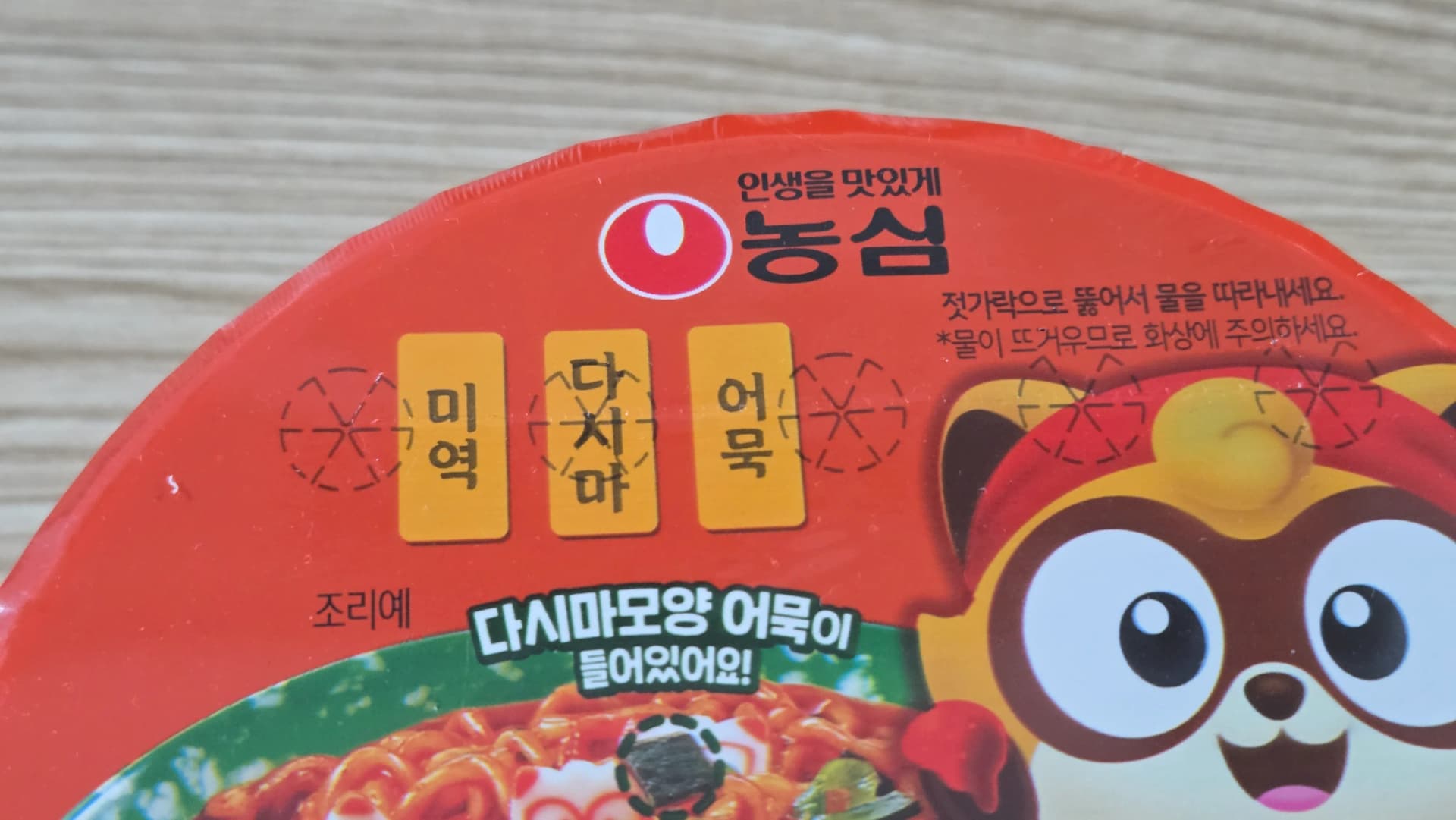
If you look at the top of the lid, there are three holes you can poke through with chopsticks, shaped like seaweed, kelp, and fish cake. I mean, look at that attention to detail — isn't that such a nice touch? You poke these open to drain the water out when it's done. There's also a warning about hot water burns printed on there, so definitely be careful when you're cooking this thing!
Rabokguri Sodium Content Comparison
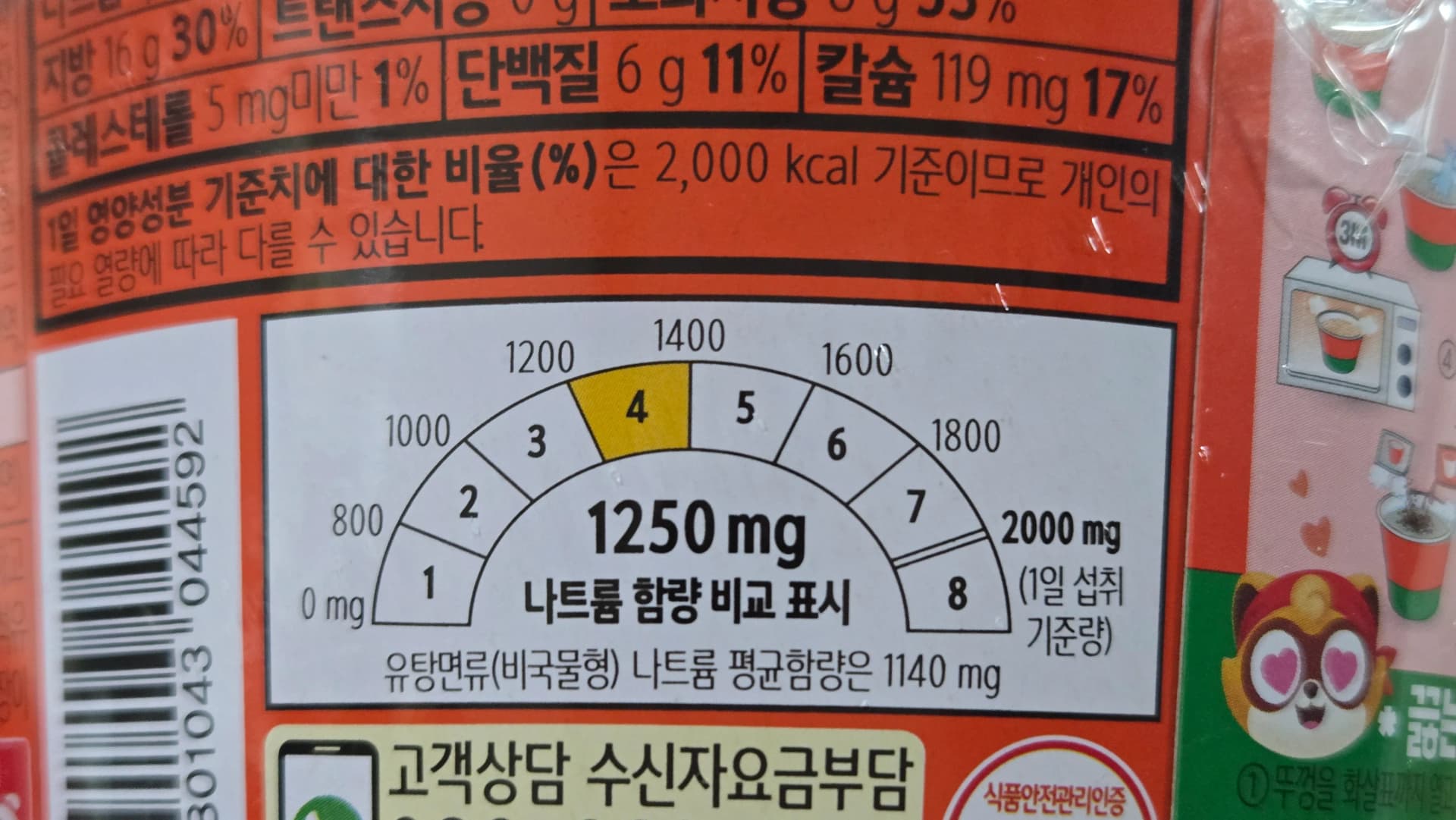
These days, probably because of the health trend, pretty much all Korean instant noodle products include this kind of sodium comparison chart. Rabokguri comes in at 1,250mg of sodium, which puts it at level 4 out of 8. The average sodium for fried non-soup style noodles is 1,140mg, so it's slightly above average. Honestly, for a rabokki-style product, I think that's not too bad — but it still blows past half of the daily recommended intake of 2,000mg, so if you're sensitive to salt, I'd recommend adjusting the amount of sauce you use!
Rabokguri Calories & Detailed Nutrition Info
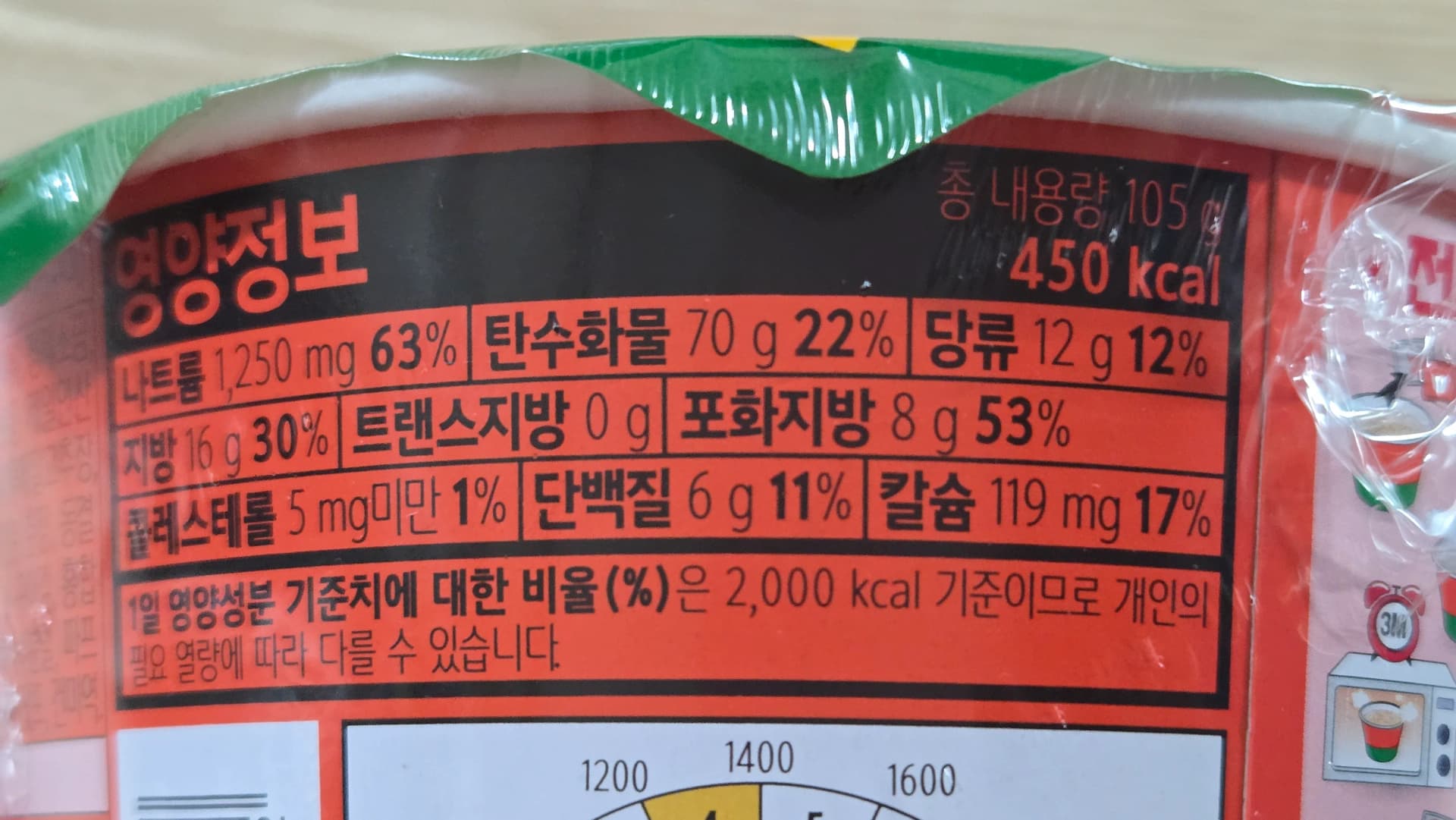
For those of you watching your health, let me break down the Rabokguri nutrition facts in detail. At 105g total with 450 kcal, it's pretty hefty for a cup noodle. The standout numbers are sodium at 1,250mg (63% DV), carbohydrates at 70g (22%), and sugars at 12g (12%). Fat is 16g (30%), and of that, saturated fat makes up 8g — a whopping 53%, which is a bit concerning honestly. Protein is a disappointing 6g (11%), though calcium comes in at 119mg (17%), which is decent. At least trans fat is 0g, so there's that. It's fine as an occasional late-night snack, but the sodium and saturated fat make it a tough sell for daily consumption — just keep that in mind!
Cooking the Rabokguri: Microwave Required!
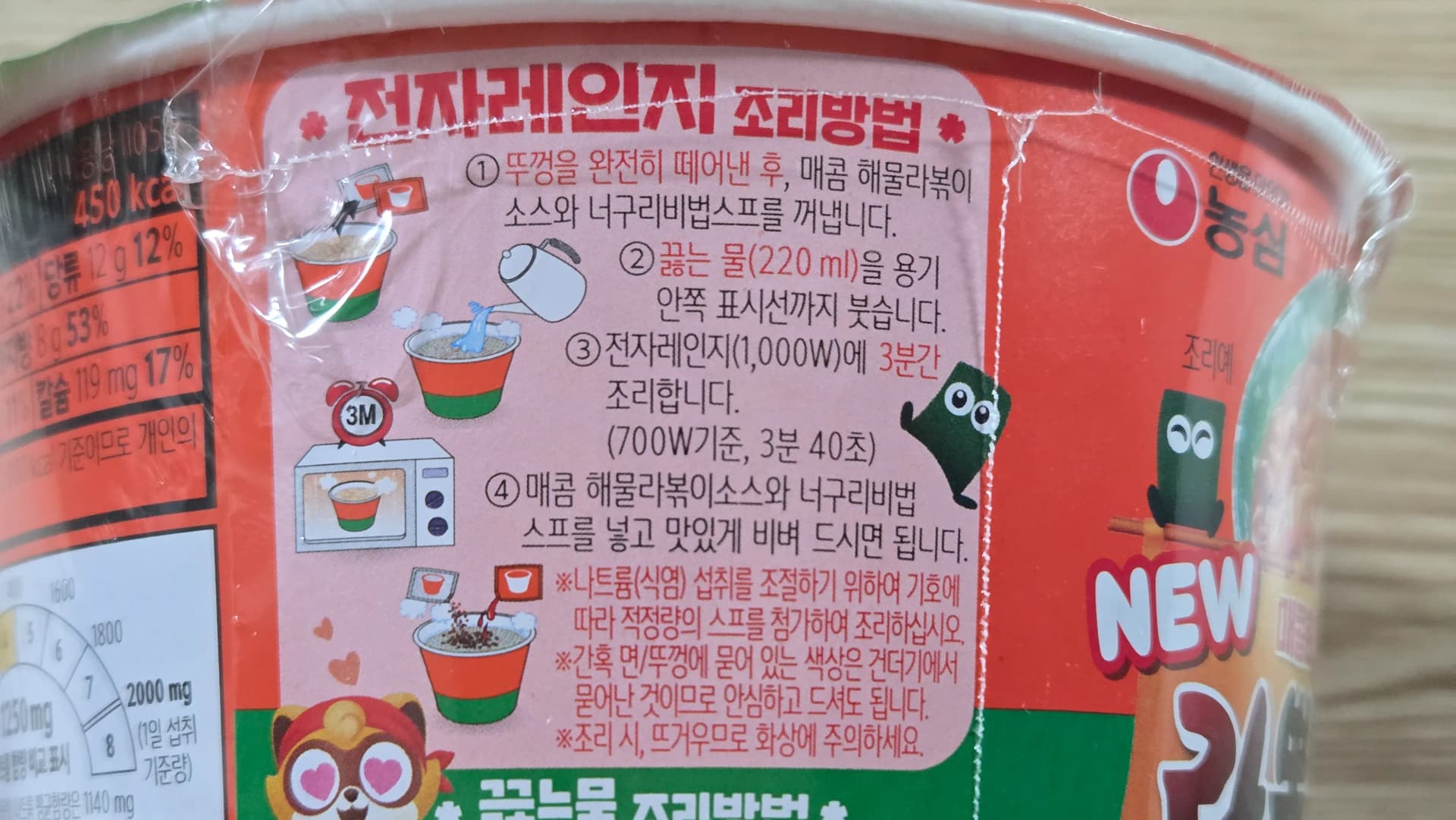
Rabokguri Cooking Instructions
This product is microwave-only! It's not the typical cup noodle where you just pour in hot water and wait, so make sure you read the instructions before making it. Here's the step-by-step breakdown.
① Peel off the lid completely and take out the Spicy Seafood Rabokki sauce and the Neoguri bibim powder. ② Pour 220ml of boiling water into the container up to the fill line. ③ Pop it in the microwave — 3 minutes at 1000W, or 3 minutes and 40 seconds at 700W for a standard home microwave. ④ When it's done, drain the water, add the Spicy Seafood Rabokki sauce and Neoguri bibim powder, mix it all up nicely, and you're good to go!
By the way, if you want to control the sodium, you can adjust the amount of seasoning to taste. Also, the packaging notes that if you see some coloring from the dried ingredients on the noodles or the lid, that's totally normal — nothing to worry about.
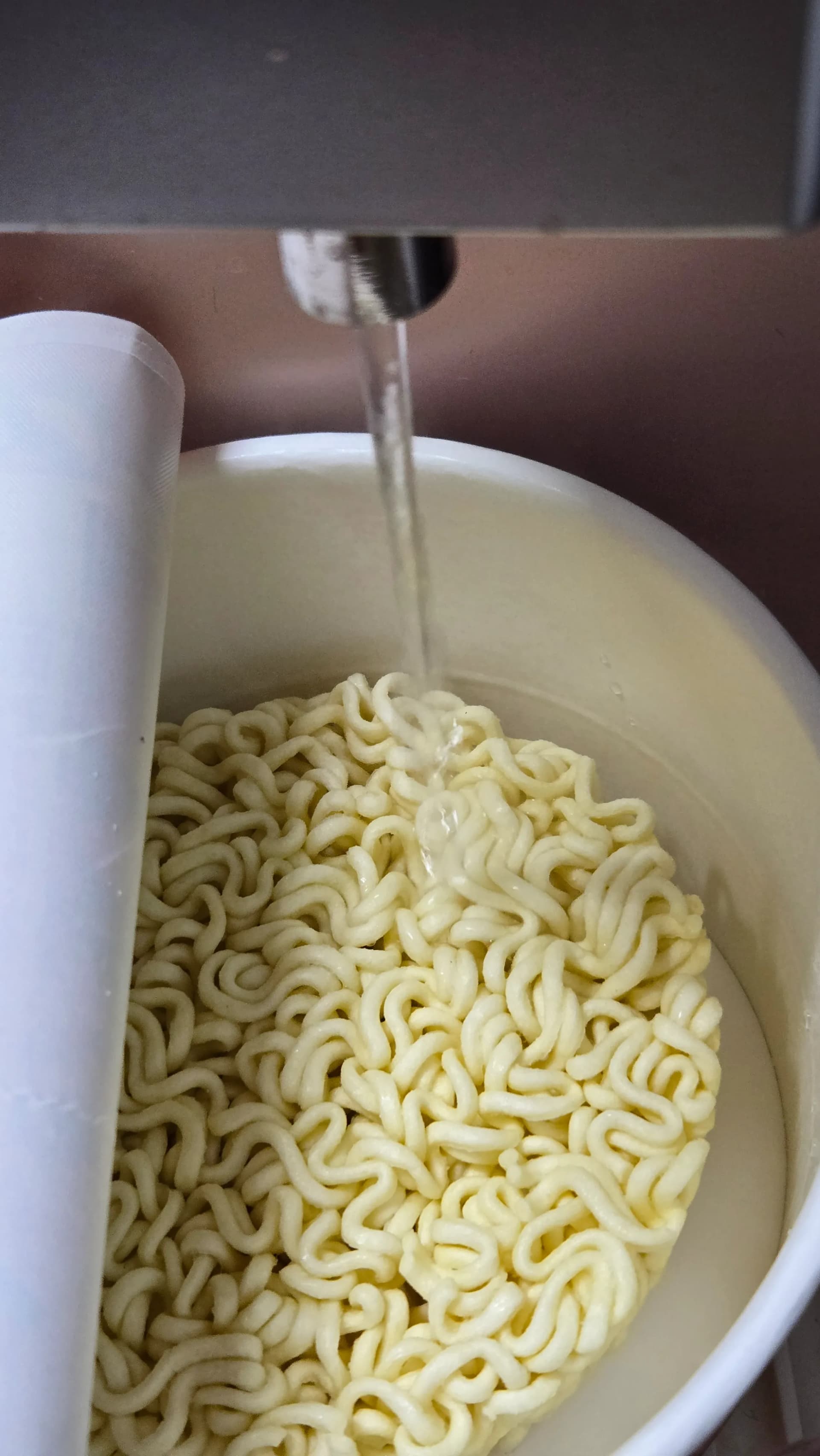
From Pouring Boiling Water to Microwaving
After taking out the seasoning packets, I poured boiling water right up to the fill line inside the container. You can already see those signature thick Neoguri noodles flexing their presence in there. This goes straight into the microwave next, and I'll warn you — the water level looks surprisingly low, so you might think "Is this really enough?" But trust the fill line and measure it exactly — that's the way to go!
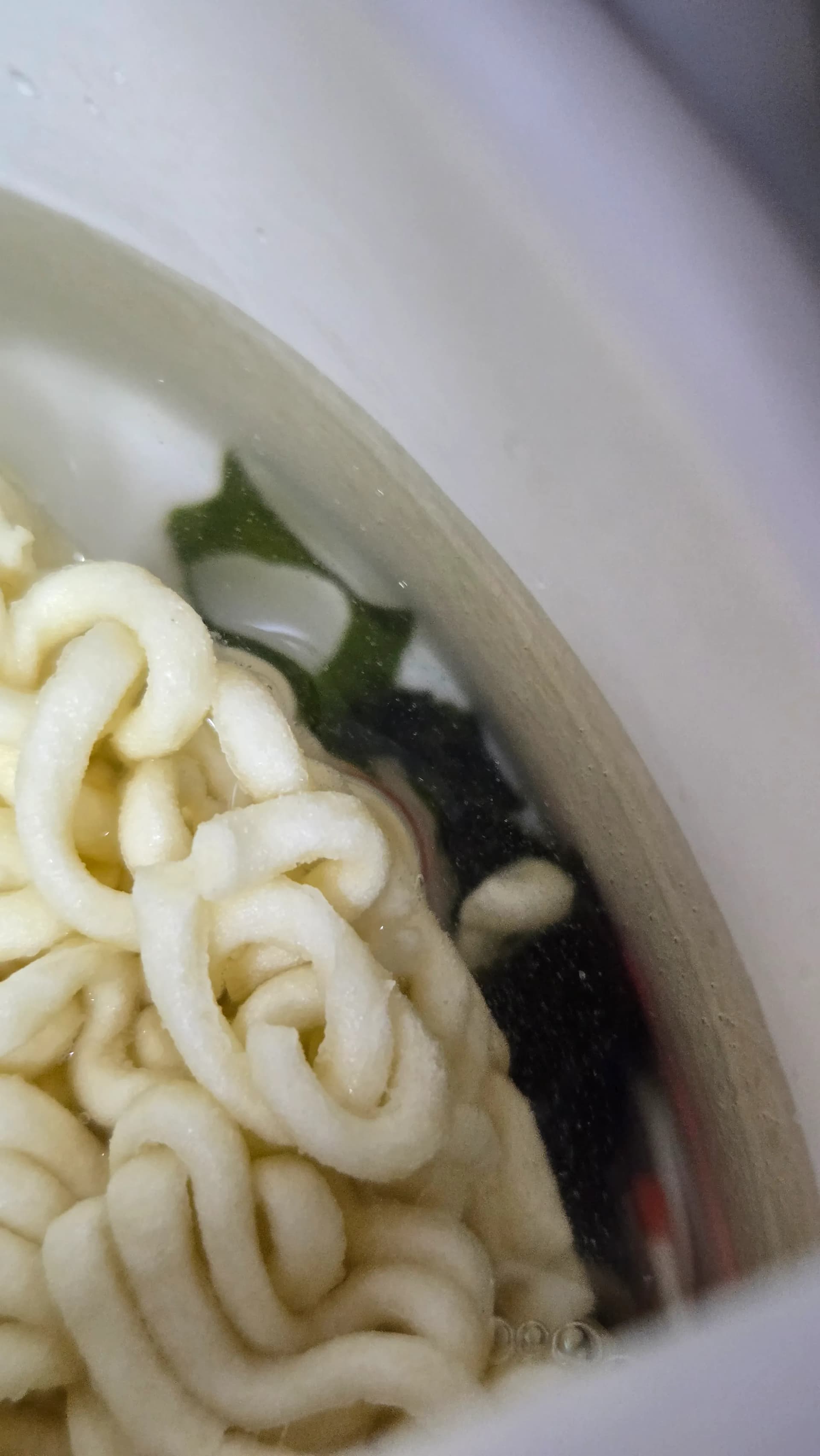
I hadn't even added the sauce yet, but I could already see bits of seaweed and other dried ingredients tucked between the noodles. These aren't from a separate garnish packet — they come built right in with the noodles. Once I poured in the water, the seaweed started slowly expanding and making its presence known. That Neoguri DNA really doesn't go anywhere, does it?
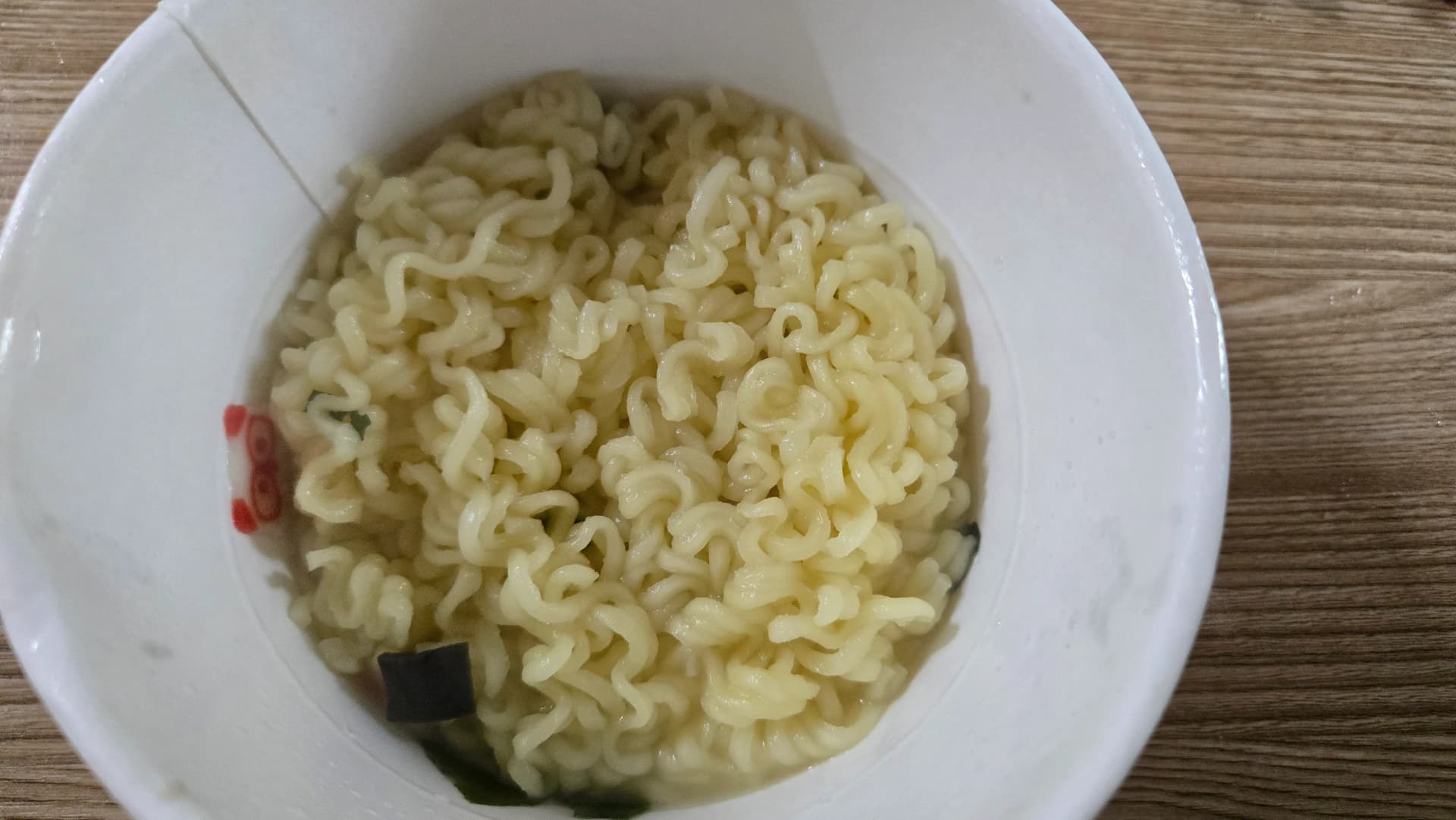
After 3 minutes in the microwave, the noodles came out perfectly cooked. The thick noodles had puffed up nice and plump, and I was already getting excited. But here's a major heads-up! The container gets insanely hot right after cooking. Like, if you grab it bare-handed without gloves, you could genuinely burn yourself — it's that serious. I strongly recommend having a kitchen towel or oven mitt ready. I got such a shock I nearly dropped the whole thing.
Adding the Sauce & Mixing It Up
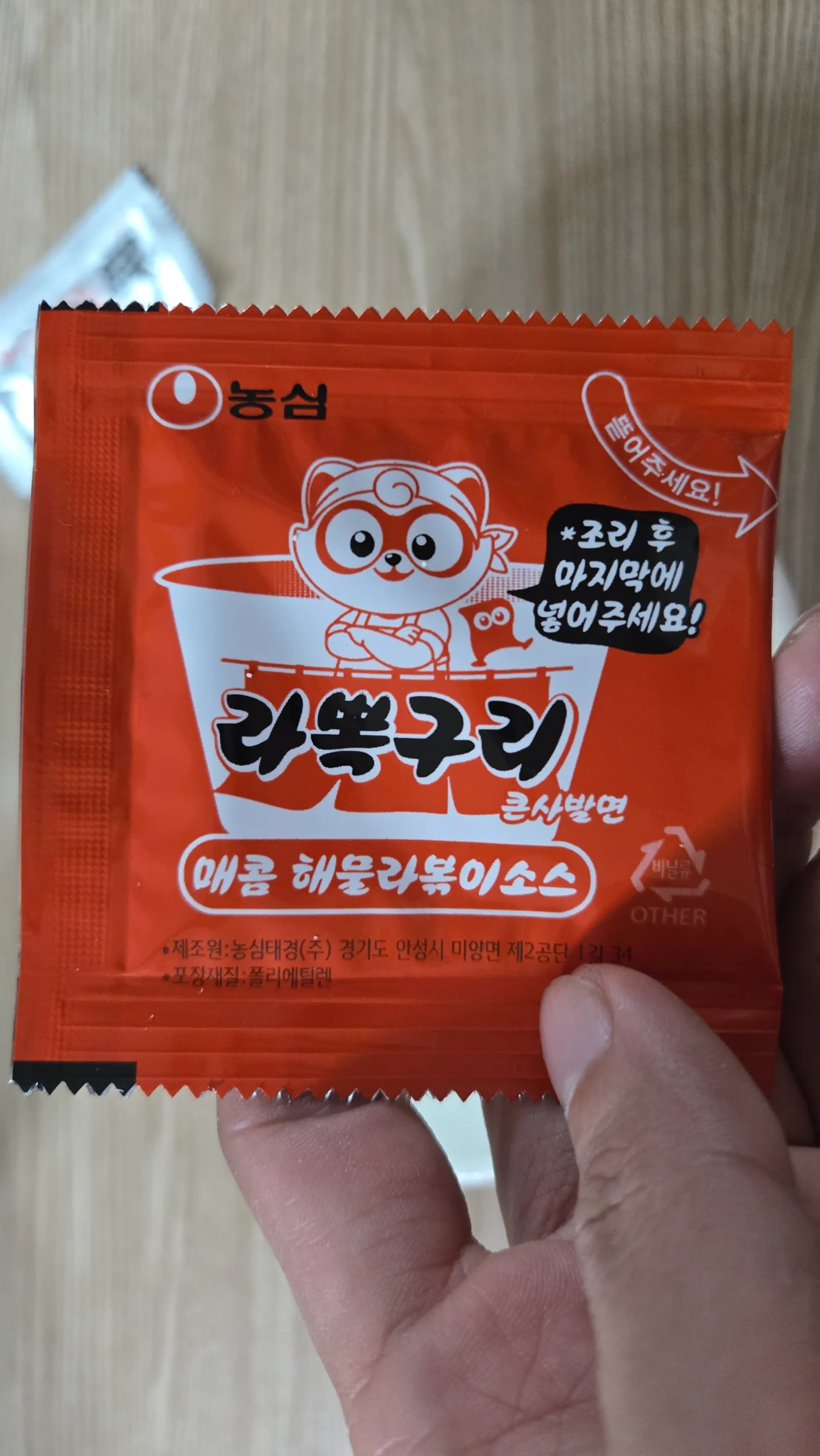
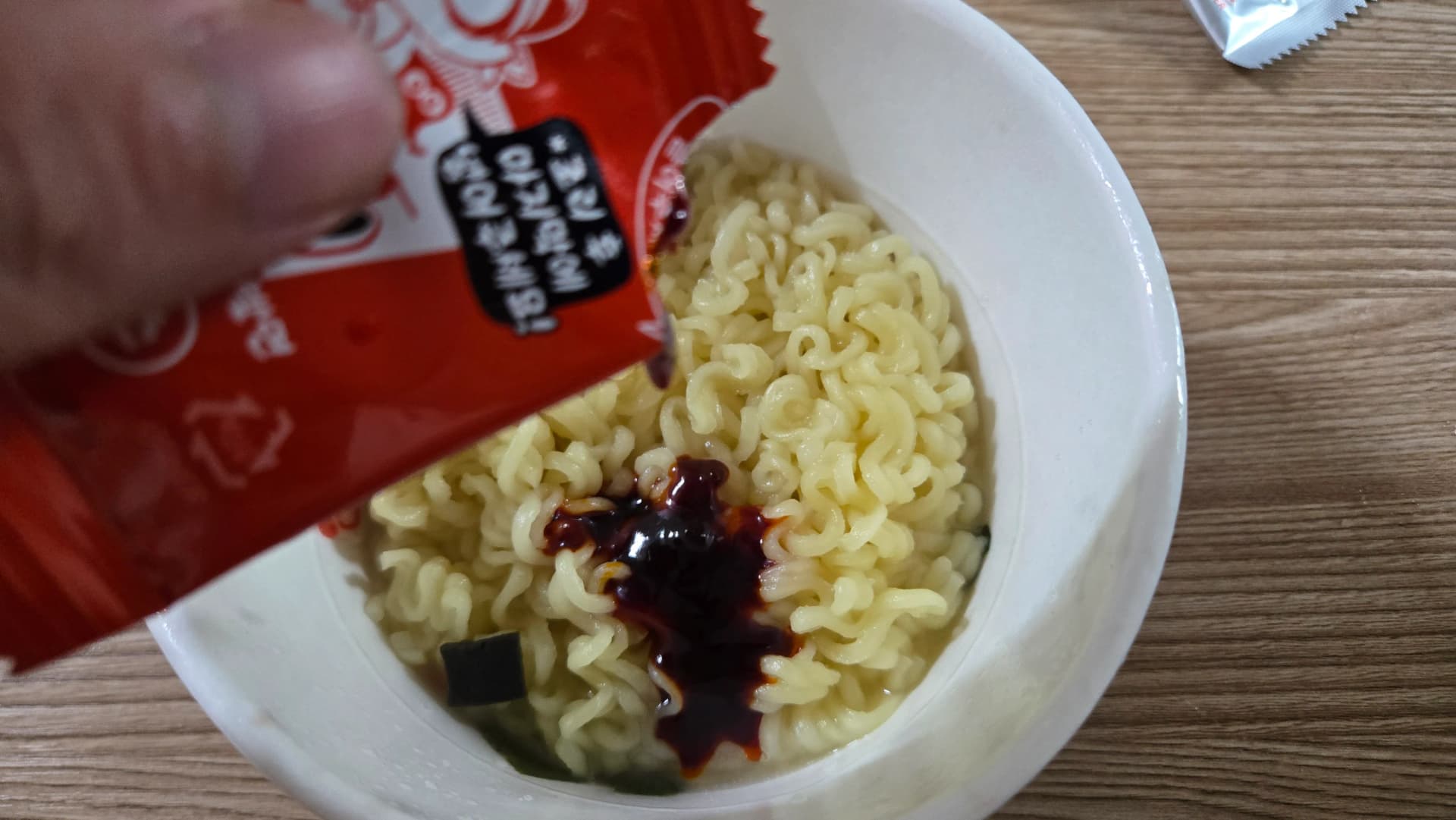
Alright, time to drain the water and unleash the star of the show — the sauce! First up is this red bad boy, the Spicy Seafood Rabokki sauce. Then you add the Neoguri bibim powder right after. Ready for launch? Let's go!
The moment I squeezed the liquid sauce out, this deep brown stream came oozing down — and doesn't that color look familiar? Yep, it's giving major Buldak Hot Chicken sauce vibes. The spicy aroma hit me right away, making my nose tingle just a little. With the Neoguri bibim powder still to come, I was getting seriously hyped about what the final flavor would be.
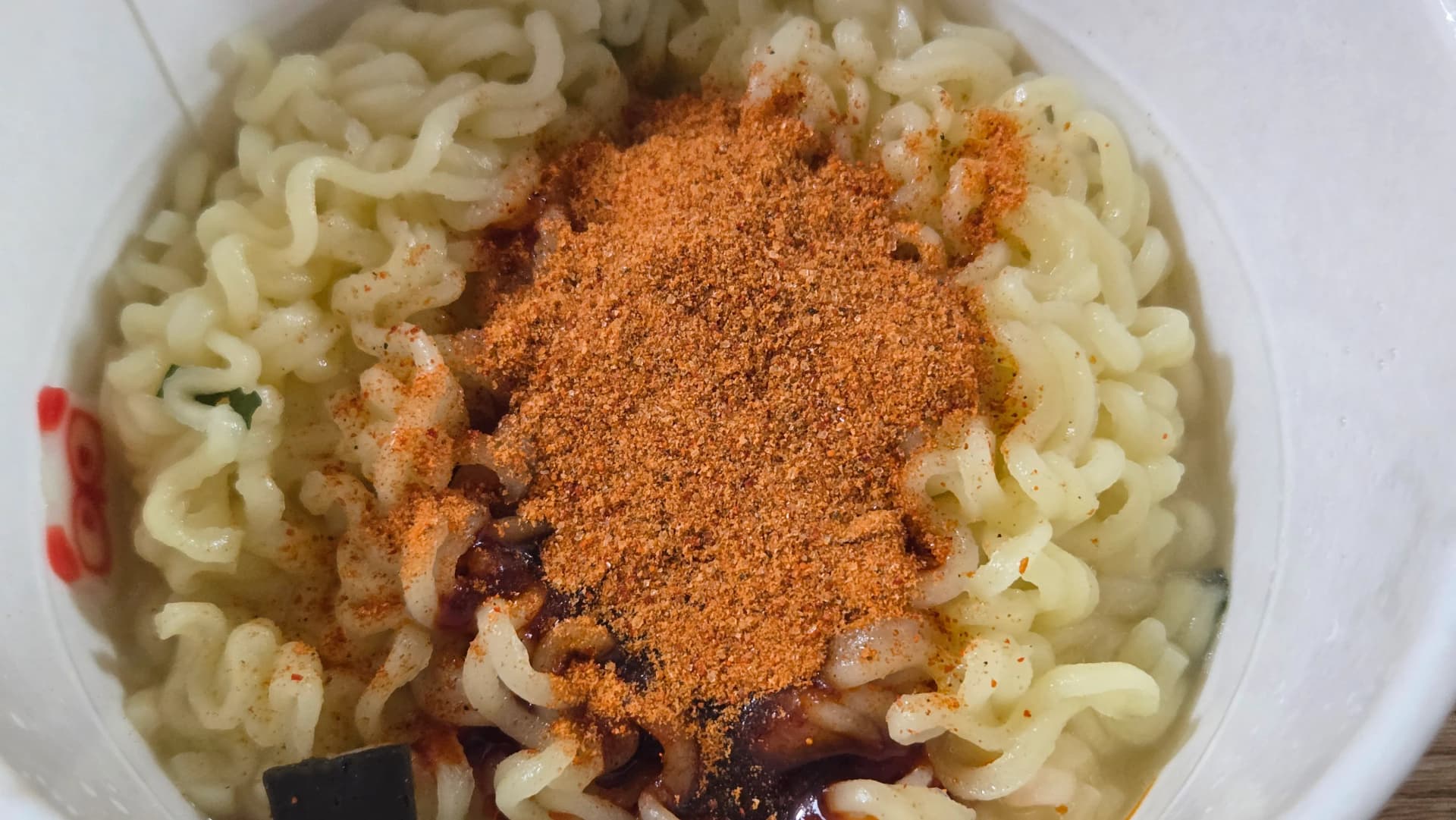
Shook out every last bit of the powder seasoning on top. Now, shall we mix this up?
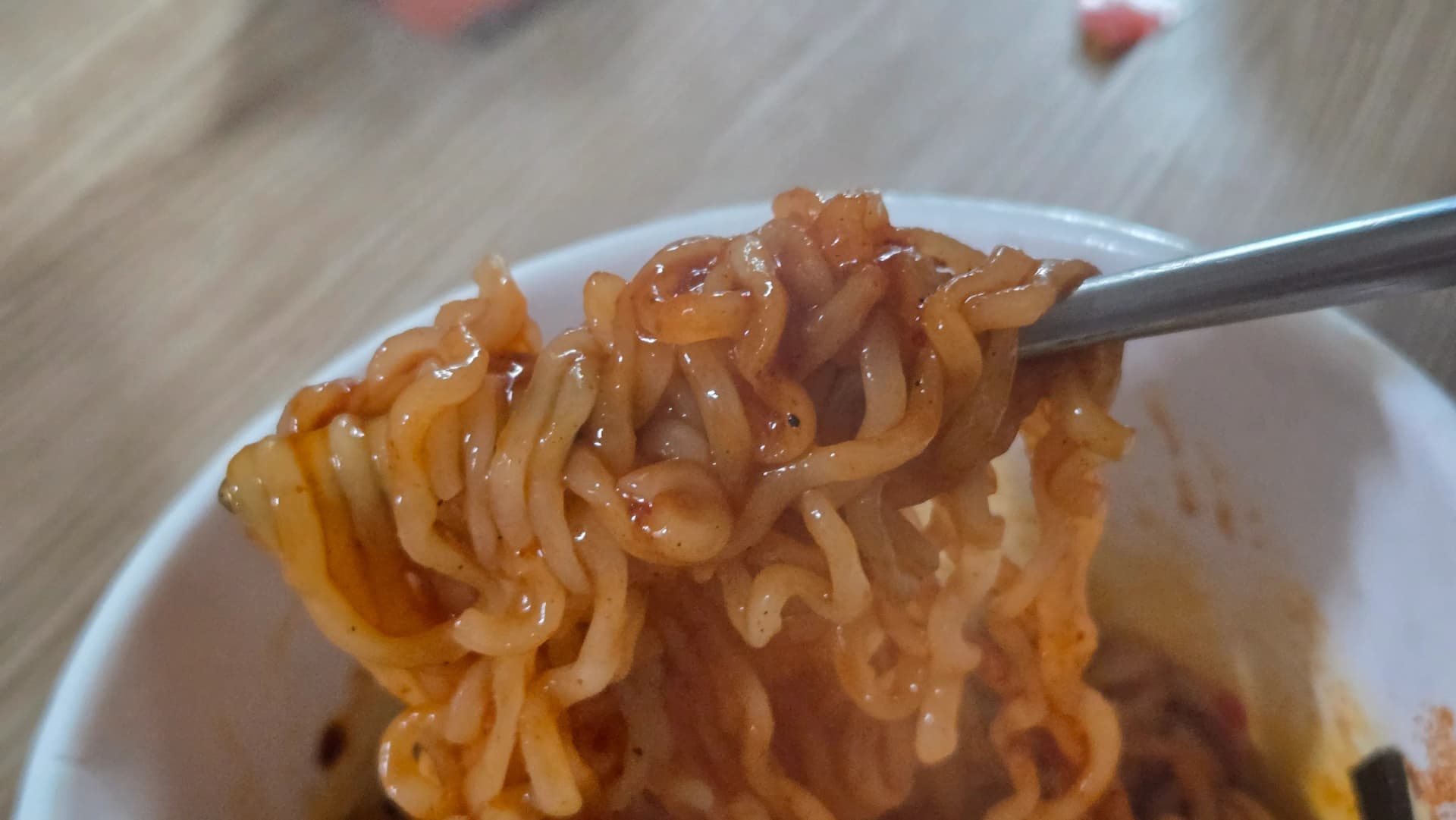
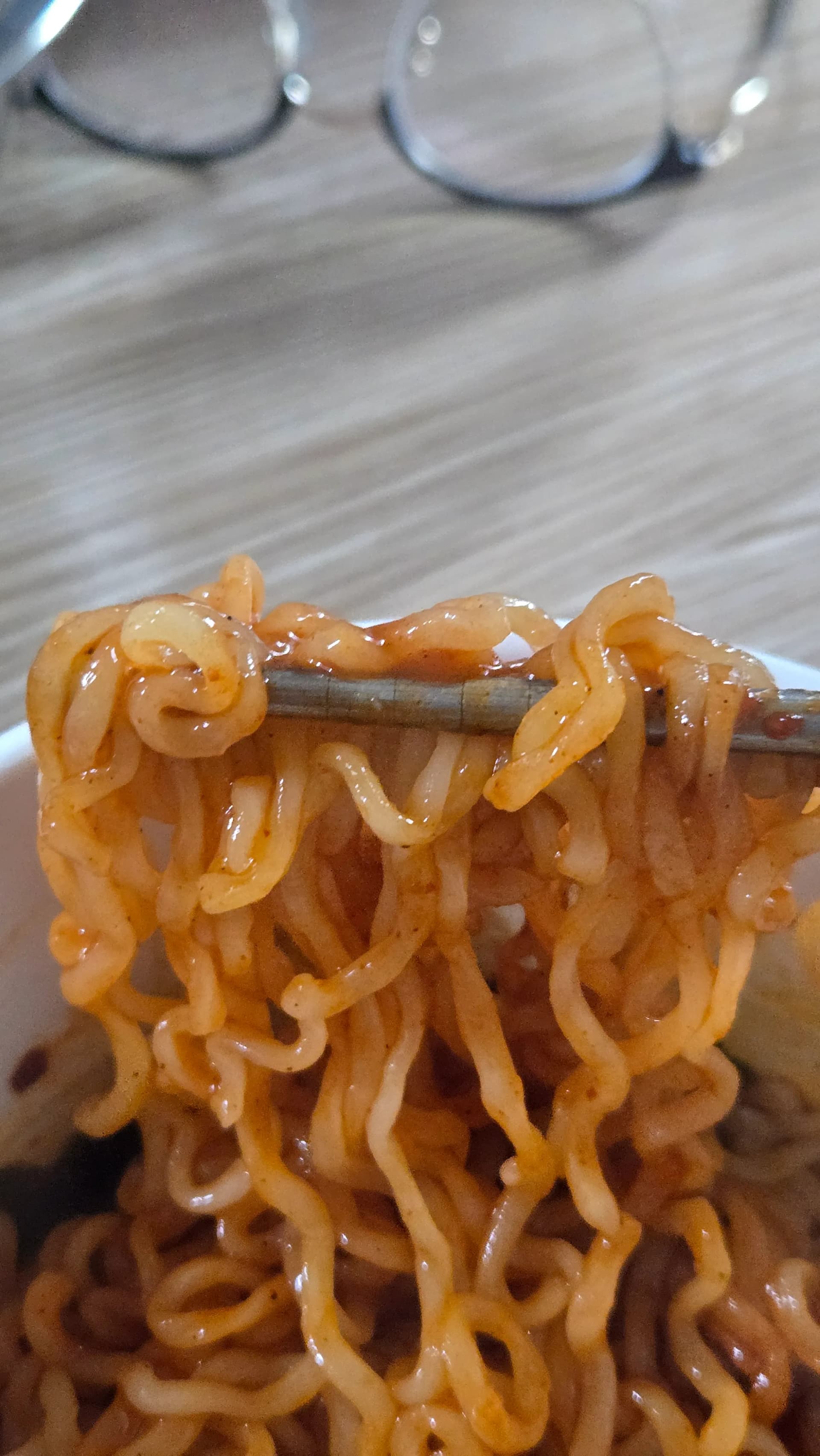
After mixing everything together evenly, the spicy sauce coated every strand of noodle, giving them this gorgeous glossy sheen. True to Neoguri form, those thick noodles grip onto the sauce like their life depends on it — every time I lifted a chopstick-full, the rich, saucy heft was no joke.
Rabokguri Flavor Review: My Honest Bite-by-Bite Verdict
Rabokguri Noodles: Surprisingly Chewy Like Cold Spicy Noodles
Okay, let's get to the most important part — the taste.
The very first thought that popped into my head when I took that initial bite was "Wait, is this chewy cold noodles?" To be precise, my honest impression is that it's closer to jjolmyeon (Korean chewy cold noodles) than actual rabokki. The texture of the noodles was particularly impressive — instead of that typical snappy, breaking-apart ramen feel, these had a surprisingly strong chewiness to them. Out of all the cup noodles I've ever had, I don't think I've ever encountered noodles this springy. They're not quite as tough as actual jjolmyeon, but to put it this way: if your regular instant noodles are like plain rice, Rabokguri is like sticky glutinous rice. That distinctive bouncy chew gets oddly addictive the more you eat.
Rabokguri Spice Level: A Note for Everyone
The sauce also had a slightly jjolmyeon-esque vibe to it. It's definitely a different beast from Buldak Hot Chicken's aggressive, straight-punch kind of heat. In terms of spice level, I'd say it's a touch milder than original Buldak — but that absolutely does not mean the spice is weak. It's not face-meltingly hot, but it's not a pushover either. It's that perfect middle ground where pretty much anyone can enjoy it without too much trouble.
For most people used to spicy food, this won't be a "I can't handle this" situation at all. If you're someone who regularly eats spicy cuisines — Mexican, Sichuan Chinese, that kind of thing — you'll breeze right through this. On the other hand, if you're from somewhere where spicy food isn't really a daily thing — like Japan or Scandinavia — you might find this one packs a decent punch.
But the best part? The spice never gets boring. You know how sometimes when you're eating a spicy ramen, you hit a wall halfway through and go "Okay, I'm done"? With Rabokguri, there's this subtle seafood umami lurking underneath the heat the whole time, so I never got tired of it and cleaned the entire thing out. The slightly sweet rabokki sauce wraps around the spiciness just enough to keep your chopsticks moving non-stop. I'll confess — after I finished, I scraped every last bit of sauce off the bottom of the empty container. Not a drop wasted.
Rabokguri Final Verdict: Would I Buy It Again?
Rabokguri — bottom line, it's "pretty solid." The Neoguri seafood umami and the sweet-spicy rabokki sauce blend together better than expected, and above all, those chewy noodles are the kind of thing that keeps popping back into your head. The microwave-only requirement can be a bit of a hassle, but that's exactly what gives it a texture that regular cup noodles just can't match, so it's definitely worth trying at least once. I grabbed this on a whim at the supermarket, and honestly? I'll probably be picking up another one next time. If you spot this spicy cup noodle at a convenience store or grocery shop, give it a shot! Catch you in the next review.
This post was originally published on https://hi-jsb.blog.