11 Types of Black Bean Noodles — Korean Menu Guide
Table of Contents
23 items
Jjajangmyeon — Korean Black Bean Noodles Explained
Jjajangmyeon is Korea's most beloved noodle dish: thick wheat noodles smothered in a glossy, sweet-savoury sauce made from fermented black bean paste called chunjang. There are actually over 11 different types on a single Korean-Chinese restaurant menu, and each one tastes genuinely different. This photo-heavy guide breaks down every variety so you know exactly what to order.
When you walk into a Korean-Chinese restaurant and open the menu to order black bean noodles, you'll find five or six different jjajangmyeon options staring back at you: jjajangmyeon, ganjjajang, samseon jjajang, yuni jjajang, sacheon jjajang, jaengban jjajang… Just looking at the names, you've got no idea what's what. Even most Koreans haven't tried them all.
I'm Korean, living in Korea, and my wife is from overseas. We hit up Korean-Chinese restaurants pretty much every month, and I still remember the look on her face the first time she opened the menu — "These are ALL jjajangmyeon?!" She was genuinely bewildered. That's exactly why I wrote this guide. So you don't have to stand there scratching your head at the menu, I've broken down each type with photos and descriptions. The photos aren't from one restaurant either — I've collected them from heaps of different Korean-Chinese places over time.
Jjajangmyeon — The Classic Bowl That Started It All
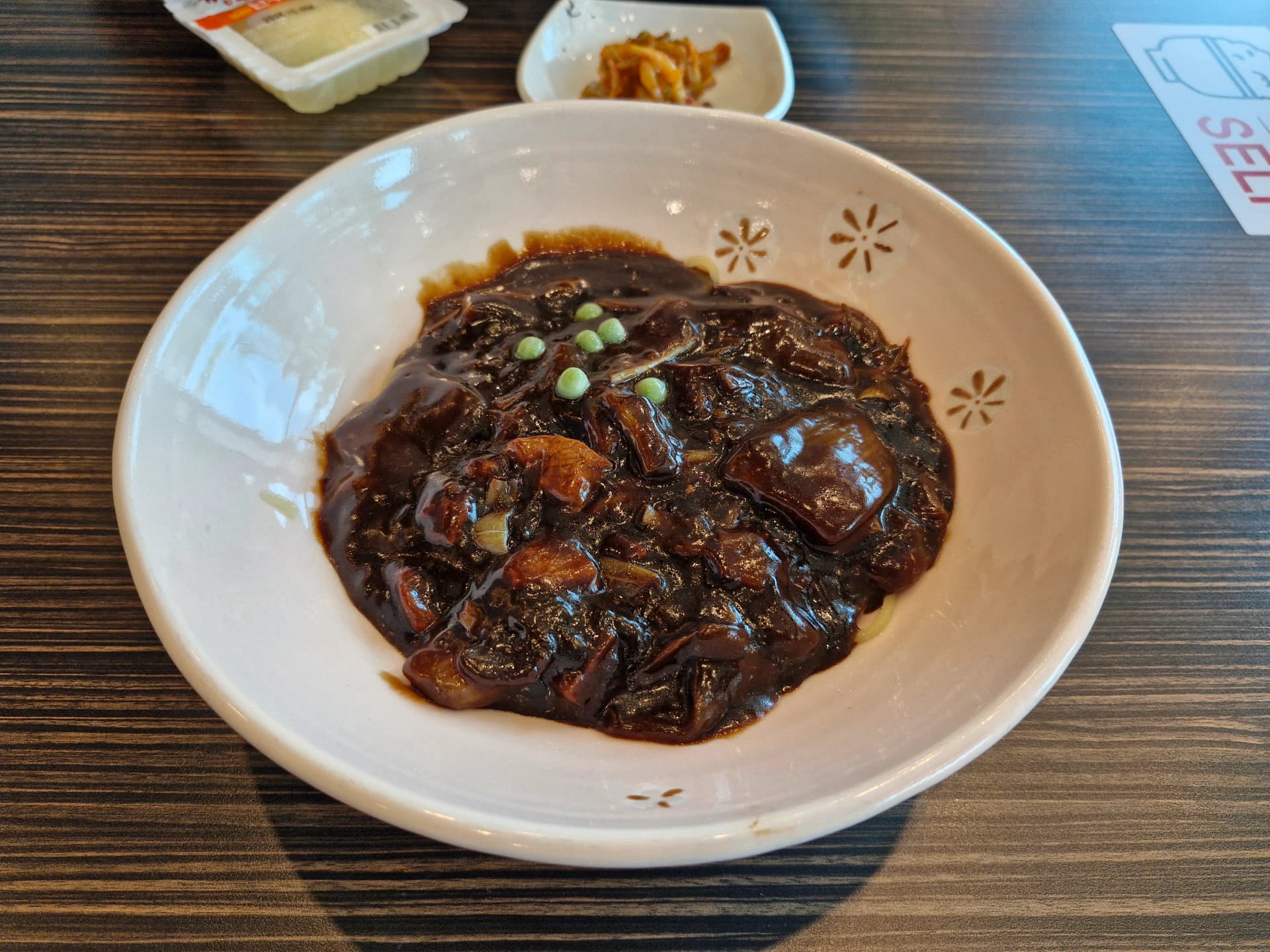
This is your standard jjajangmyeon. If you see just "jjajangmyeon" on the menu with nothing else next to it, this is what turns up. It comes in a classic cherry blossom-patterned bowl with jet-black chunjang (fermented black bean paste) sauce completely covering the noodles, and a few green peas sitting on top. On the side, you've got danmuji (yellow pickled radish) and pickled onion — these come standard with every jjajangmyeon order at Korean-Chinese restaurants. Their job is to reset your palate between bites of that rich, sweet sauce.
The sauce gets made in bulk each morning, and when your order comes through, they ladle it straight over freshly boiled noodles — so it arrives at your table quick smart. The flavour is smooth and noticeably sweet. There's a bit of saltiness from the chunjang, but overall the sweetness hits you first, and there's absolutely zero spice. If it's your first time trying black bean noodles, start here. No question.
This was the very first jjajangmyeon my wife tried when she arrived in Korea. She took one bite and went, "How is this Chinese food?" And honestly, fair point. If you order jjajangmyeon in China, you'll get something completely different. This is a flavour that Korea has spent over 100 years refining into something entirely its own — think of it like how a meat pie in Australia barely resembles a British pork pie anymore.
Samseon Jjajang — Black Bean Noodles with Seafood
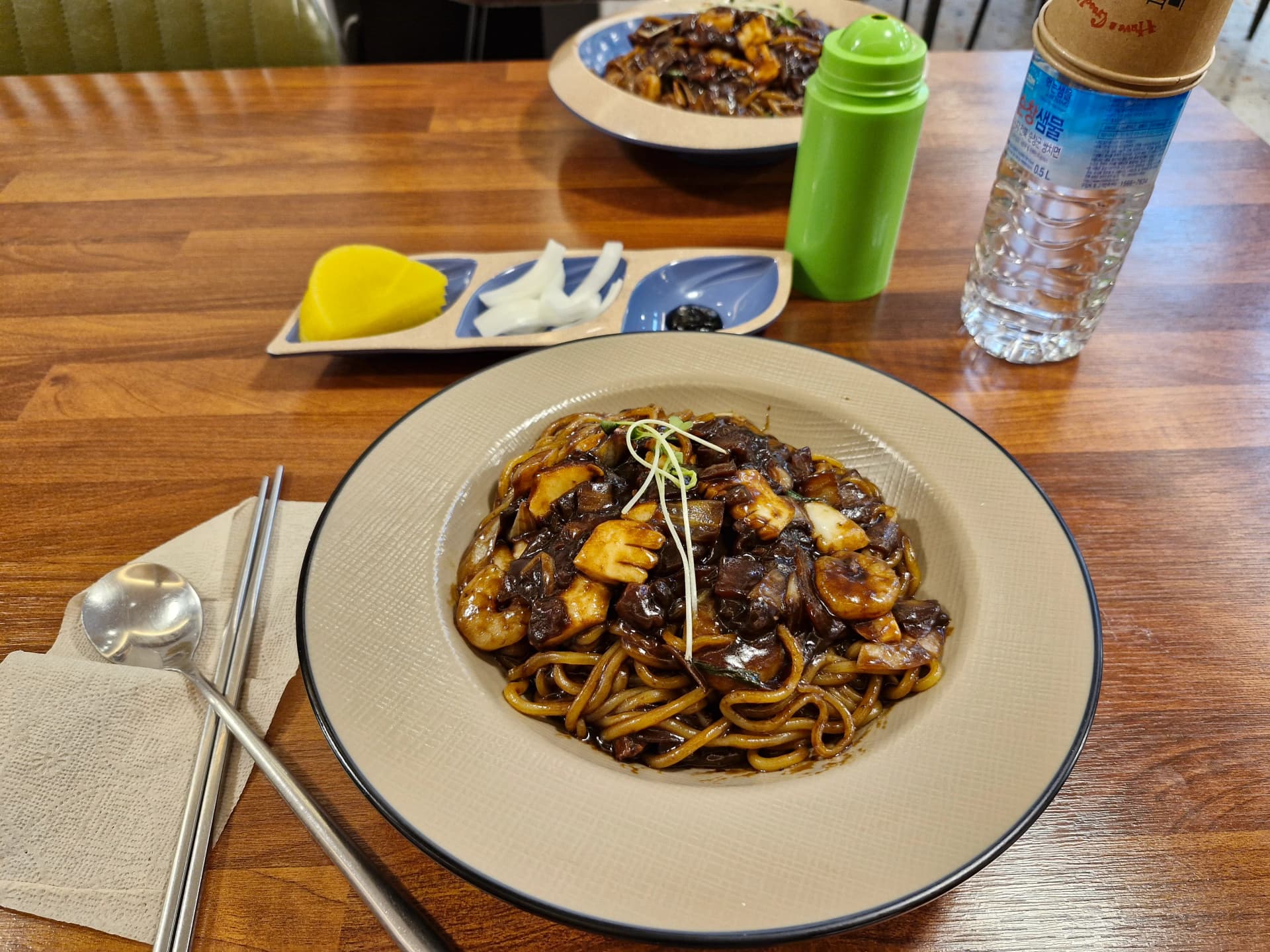
Samseon jjajang is a premium version of black bean noodles loaded with seafood like prawns, squid, and sometimes sea cucumber. It typically costs around ₩9,000 (roughly $10 AUD). This shot shows the whole table — samseon jjajang up front, ganjjajang behind it, with danmuji and pickled onion on the side. Most Korean-Chinese restaurants have self-service water, so we grabbed our own bottles.
Samseon jjajang is basically regular jjajangmyeon with seafood added on top. You can see the prawns and squid sitting right there on the sauce, so it looks noticeably different from the get-go. My wife's a massive seafood fan, so whenever we go to a Korean-Chinese restaurant, she picks samseon jjajang almost every time. At first she couldn't tell the difference from regular jjajangmyeon, but after that first bowl, she stopped even looking at the menu and just went straight for it.
Samseon Jjajang Noodle and Seafood Details
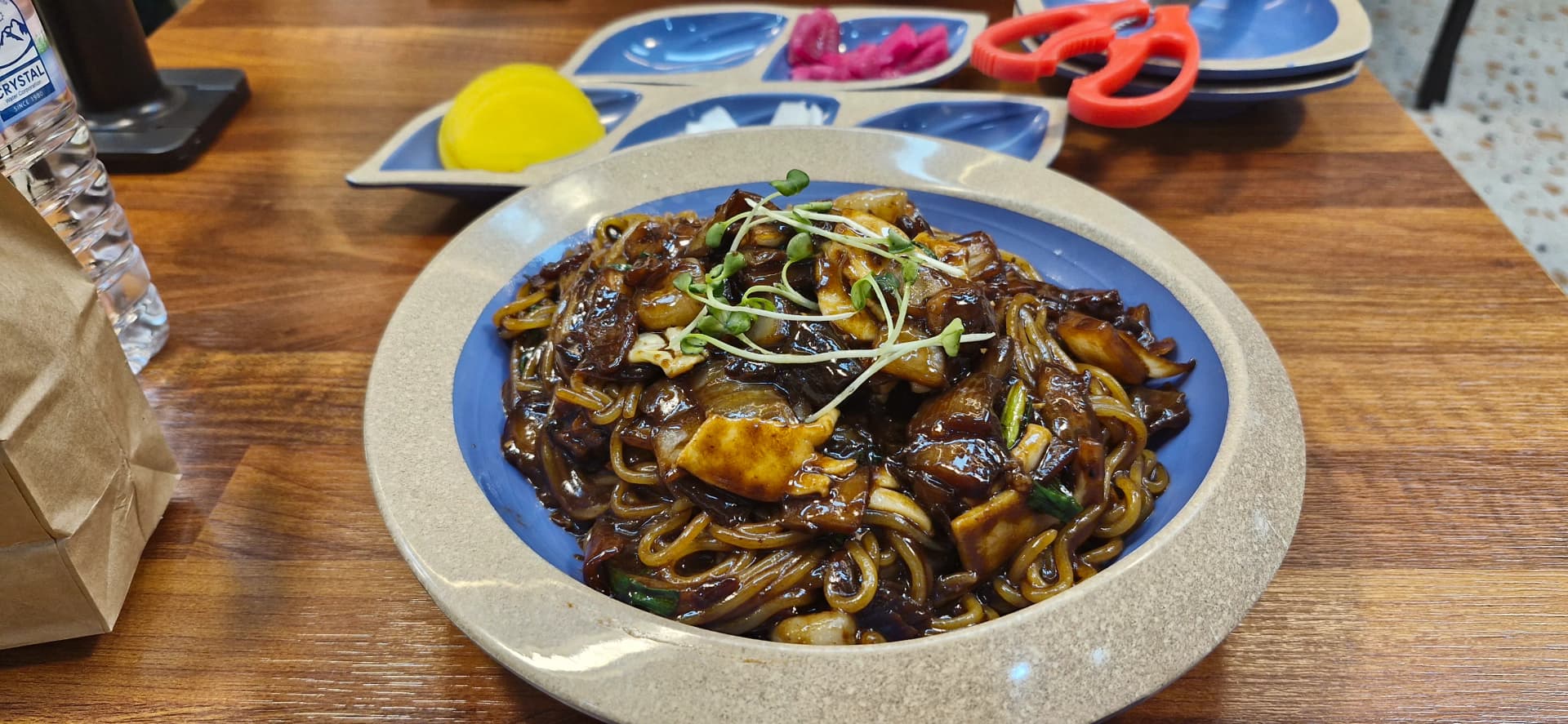
Up close, you can see the noodles and sauce have already been mixed together. Regular jjajangmyeon usually comes with the sauce sitting on top of the noodles, but samseon jjajang varies — some places serve it pre-mixed, others serve it separate. You can spot bean sprouts on top and chunks of seafood wedged between the noodle strands. The toppings are bigger and more varied than regular jjajangmyeon, so there's a proper chew to every bite.
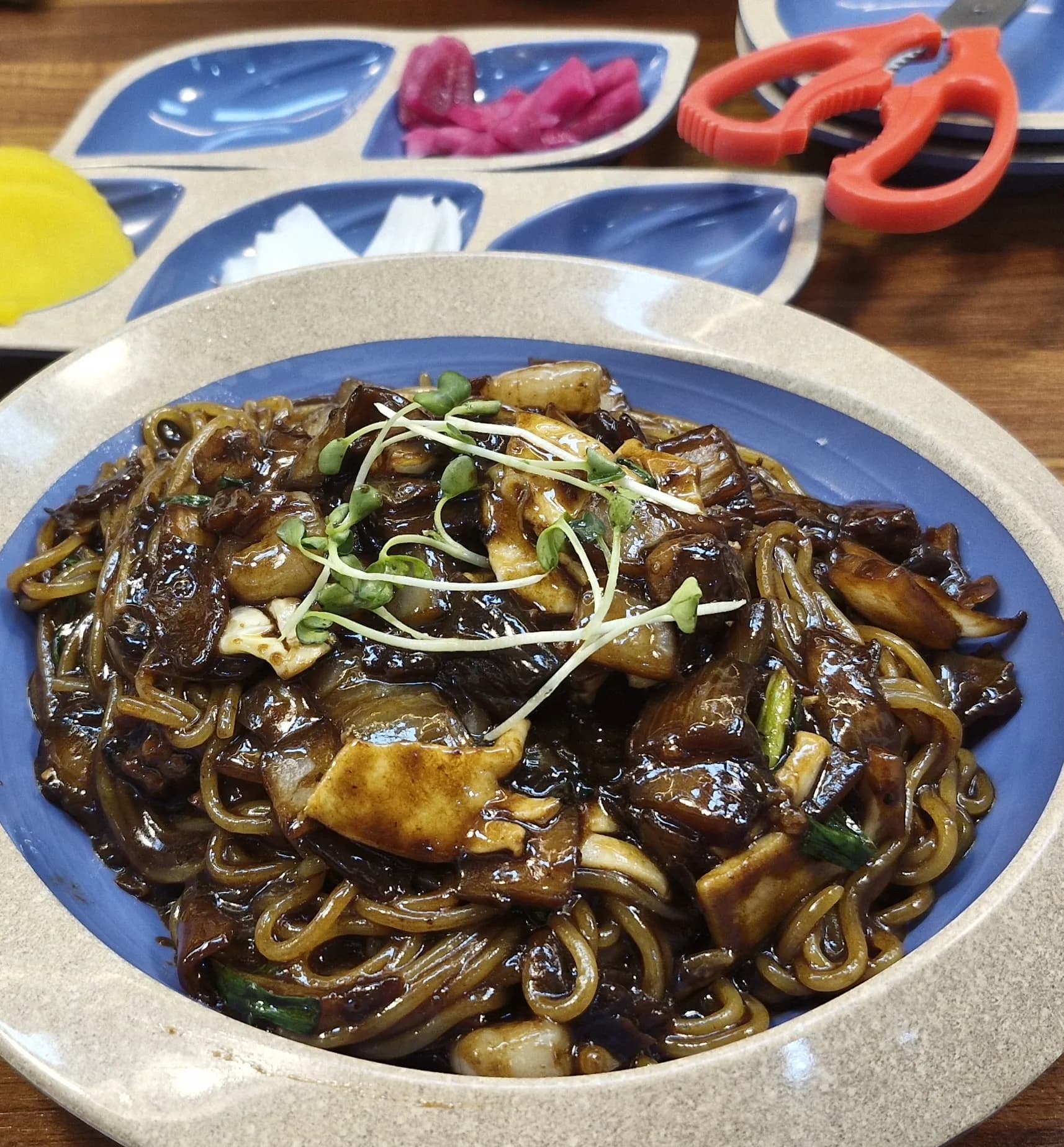
Zooming right in, you can properly see each piece of seafood. Squid and prawns coated in that glossy black sauce, with chunky onion pieces mixed through. Behind the main bowl, there's a sectioned plate with danmuji, pickled onion, and a pink condiment — that's pickled ginger (similar to the gari you'd get with sushi, but a Korean-Chinese version). The side dishes vary a bit between restaurants, but danmuji? That's at every single one, no exceptions.
Samseon jjajang is usually about ₩3,000–5,000 (around $3.50–5.50 AUD) more expensive than regular jjajangmyeon. On this day it was ₩9,000 (about $10 AUD), and honestly for the amount of seafood you get, that's a fair deal.
Ganjjajang — Black Bean Noodles Wok-Fried to Order
Now we're getting into ganjjajang (dry-fried black bean noodles) territory. This is personally my go-to whenever I'm at a Korean-Chinese restaurant. The reason is dead simple: it tastes freshly made, because it literally is.
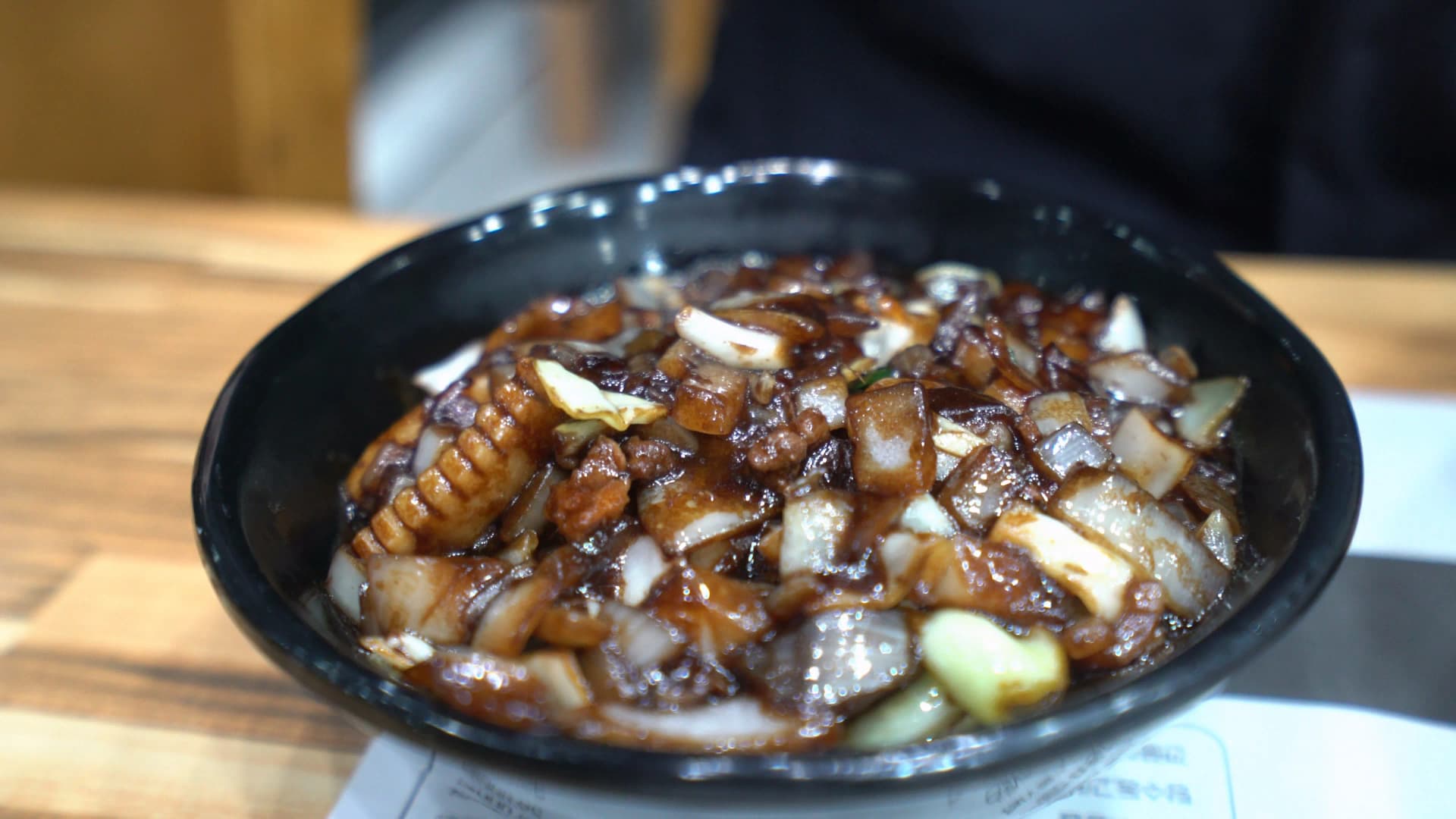
This is ganjjajang. Regular jjajangmyeon uses sauce that's been pre-made in bulk, then ladled over noodles when you order. Ganjjajang is the complete opposite — once your order goes through, the chef fires it up from scratch right then and there. No water, no starch, just the ingredients stir-fried straight in oil over high heat. The result is a sauce that's heaps thicker, with that incredible wok-charred "breath of the wok" flavour still alive in every bite.
In the photo, you can see chunky diced onion and pieces of meat sitting throughout the thick sauce. Unlike regular jjajangmyeon where the sauce flows and pools, this one holds its shape — the bits of veg and meat stay intact with real texture. The noodles are hidden underneath all of this, and you're meant to mix it all together yourself.
Ganjjajang Comes with the Sauce and Noodles Separate
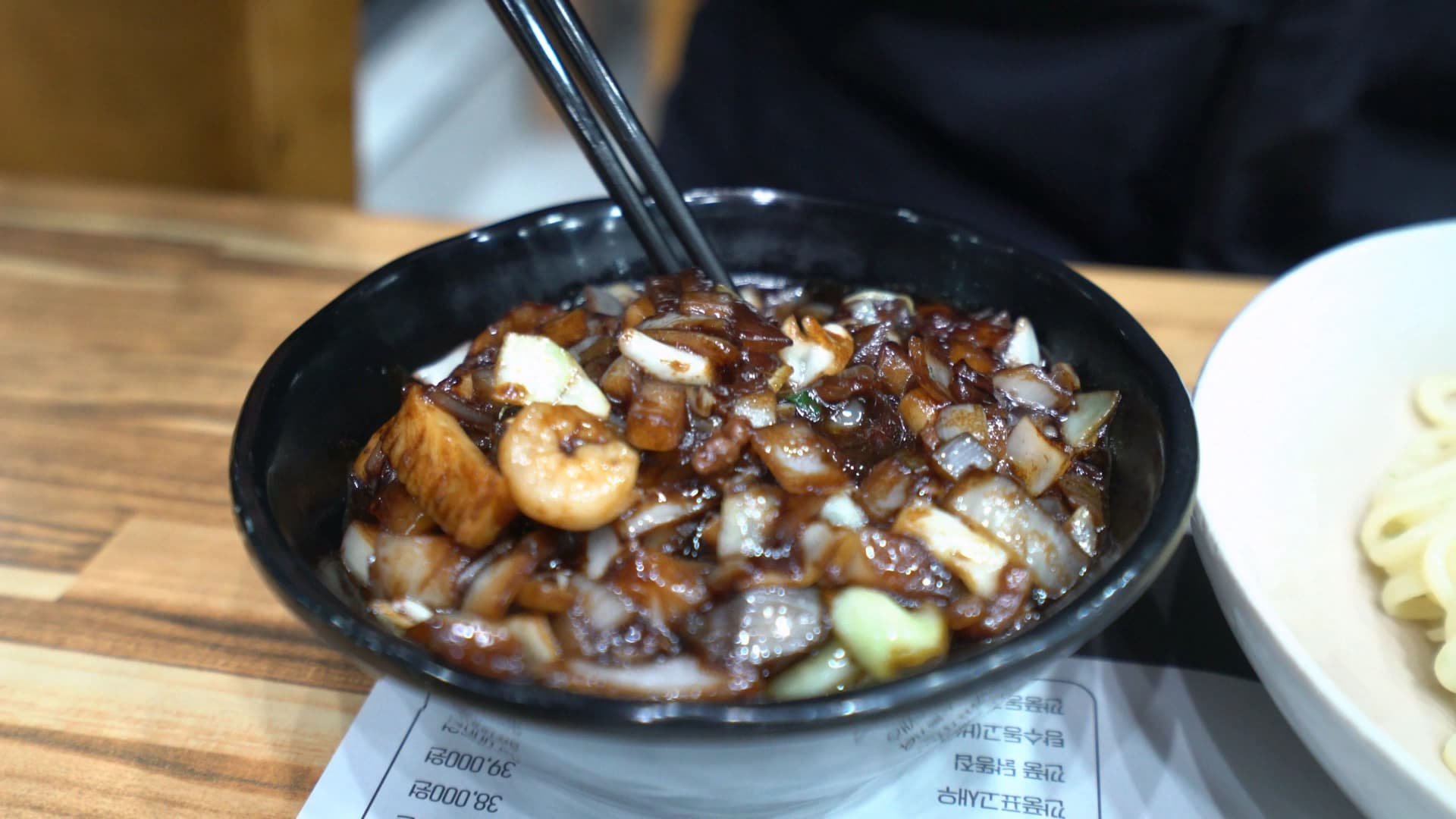
When you order ganjjajang, it arrives like this — sauce in one bowl, noodles in another. You can just see the noodle bowl peeking in on the right. Give the sauce a stir with your chopsticks and you'll notice the onion is still crisp and the meat tastes like it was literally just cooked moments ago.
With regular jjajangmyeon, the sauce is batch-cooked in the morning and ladled onto noodles as orders come in, so the onion is fully softened and the flavour is uniform throughout. That's not a bad thing — it's just a different approach. The trade-off with ganjjajang is that because of the made-to-order cooking, it's usually ₩1,000–2,000 (a dollar or two AUD) more expensive than regular. But when you factor in that fresh wok flavour and the texture of the ingredients, I reckon the ganjjajang is well worth the extra coin.
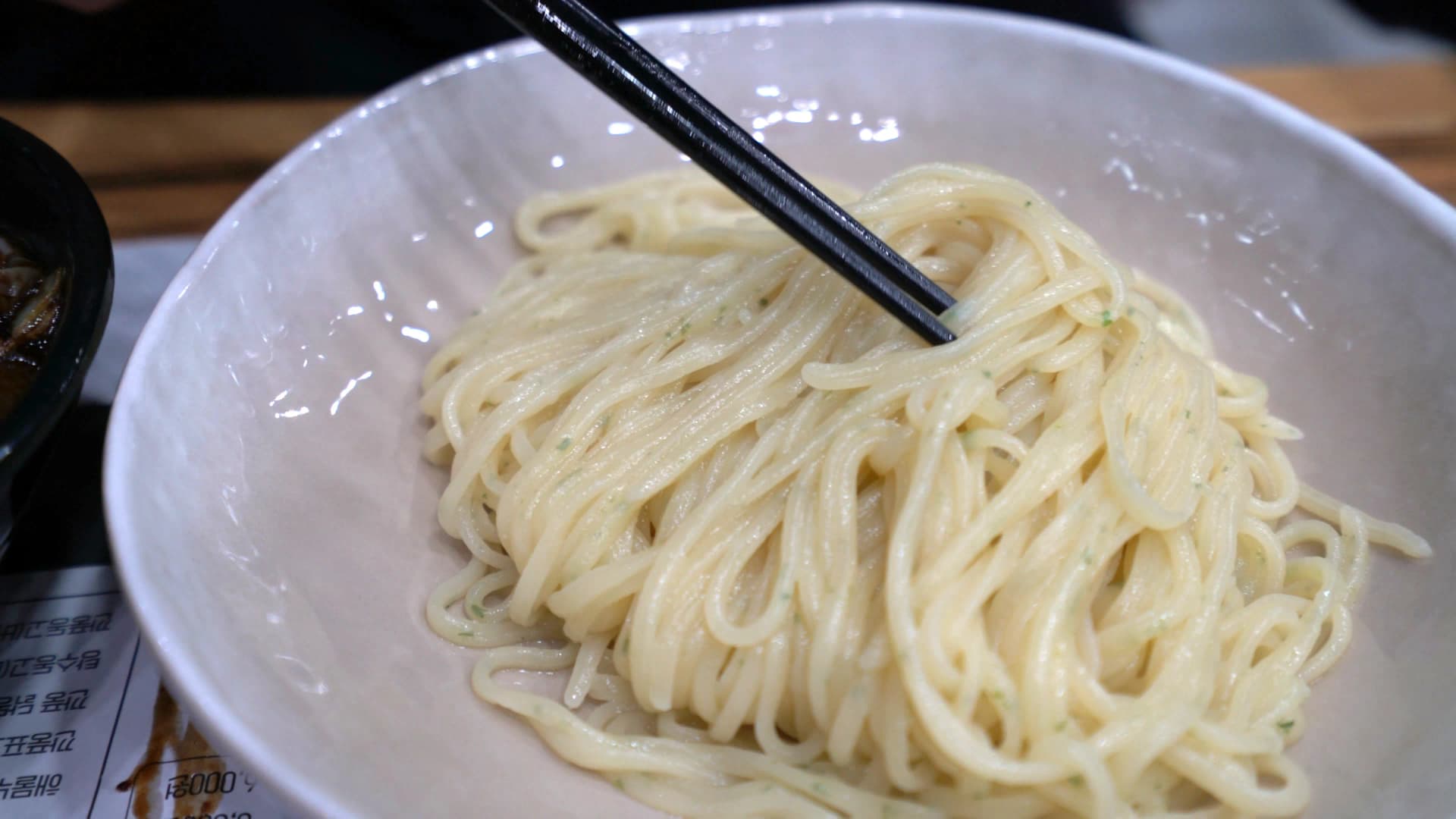
Most restaurants serve it just like this. Plain noodles in a white bowl, sauce in a separate dark bowl. It's up to you to pour the sauce over and mix it all together.
My wife was a bit thrown the first time ganjjajang arrived at our table. With regular jjajangmyeon, the sauce is already on the noodles so you just mix and eat. But this? She gave me this look like she genuinely didn't know what to do with it. I poured the sauce over the noodles and started mixing to show her, and she goes, "Oh wait, I'm supposed to do that myself?"
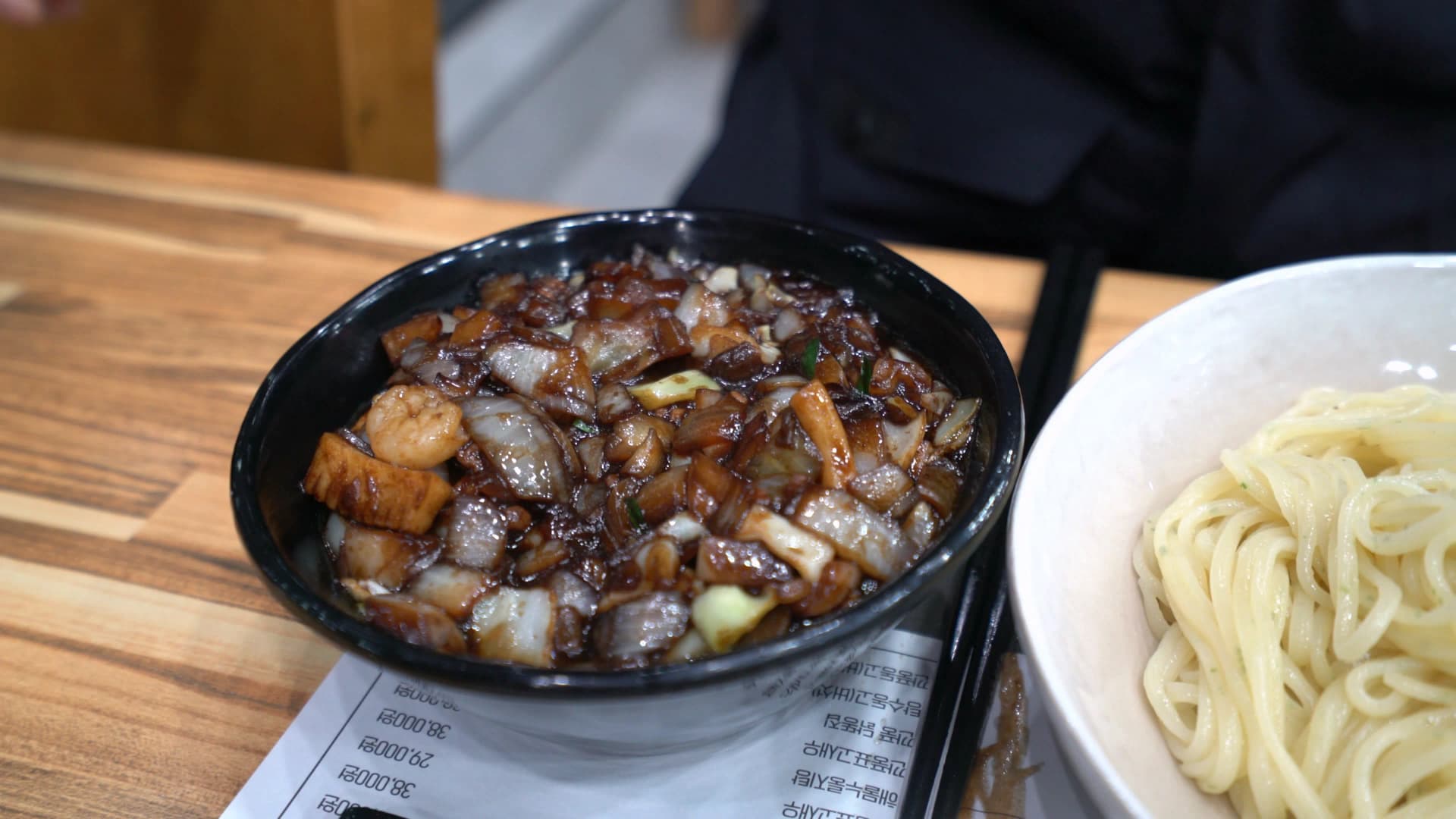
Here's the full setup — sauce bowl and noodle bowl side by side. The dark bowl of thick black sauce, the white bowl of pale noodles. Once this hits the table, it's your turn to get to work.
Mixing Ganjjajang — This Is the Best Bit
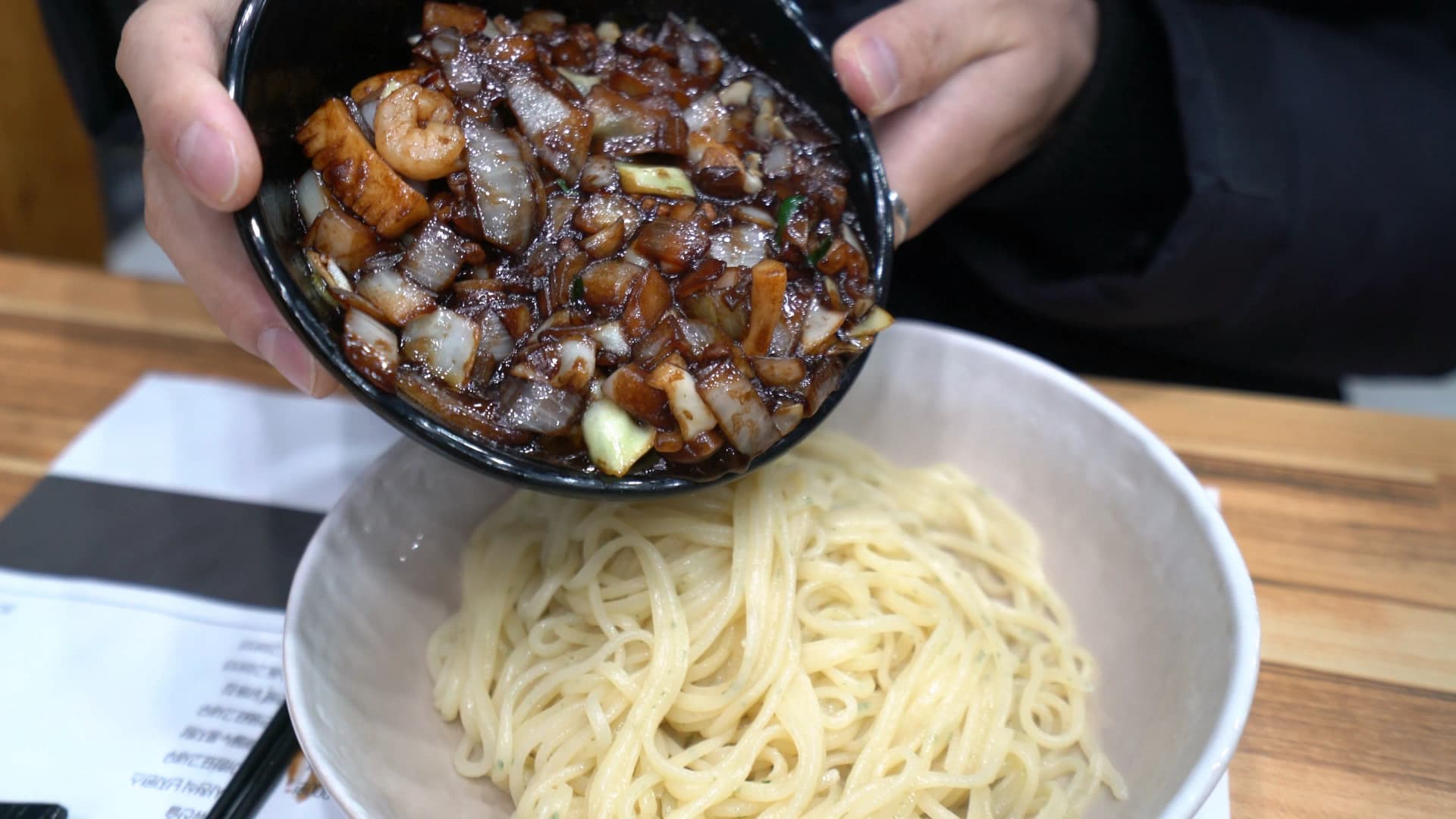
This is the moment you pour the sauce over the noodles. You pick up the sauce bowl and tip it over the white noodles — this right here is where the ganjjajang experience properly begins. You need to get in quick and start mixing so the sauce coats every strand.
Full disclosure: I missed the ideal mixing window taking this photo. One hand pouring sauce, the other hand holding my phone — meanwhile my wife's next to me going, "Mix it already, the noodles are gonna go soggy!" I completely ignored her and kept shooting. The life of a food blogger, mate.
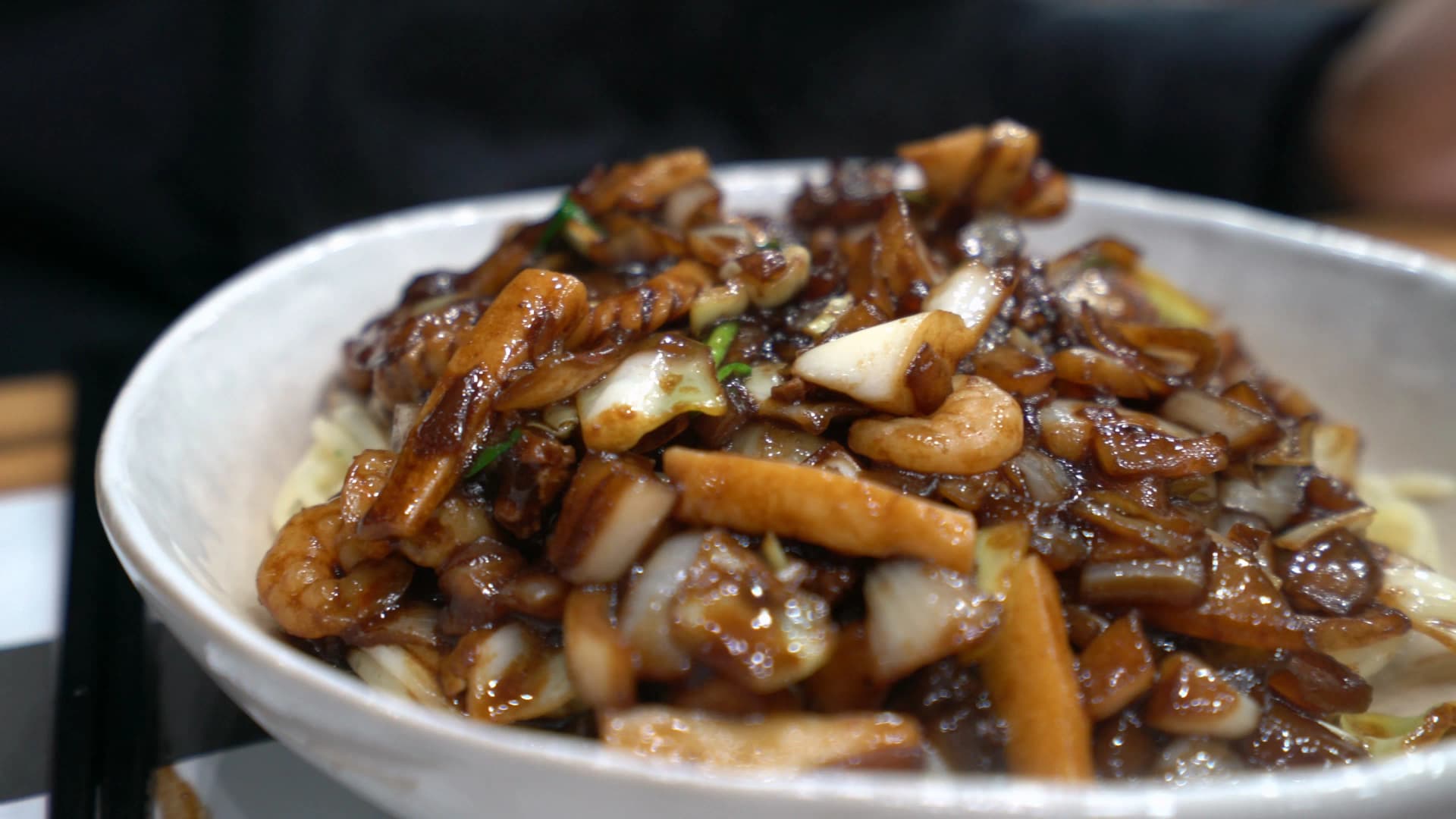
Once all the sauce is on, it looks like this. Onion, meat, and squid piled high on top of the noodles, everything coated in that shiny chunjang sauce. The noodles are buried underneath and still hidden — now you grab your chopsticks and start flipping from bottom to top like you're tossing a salad.
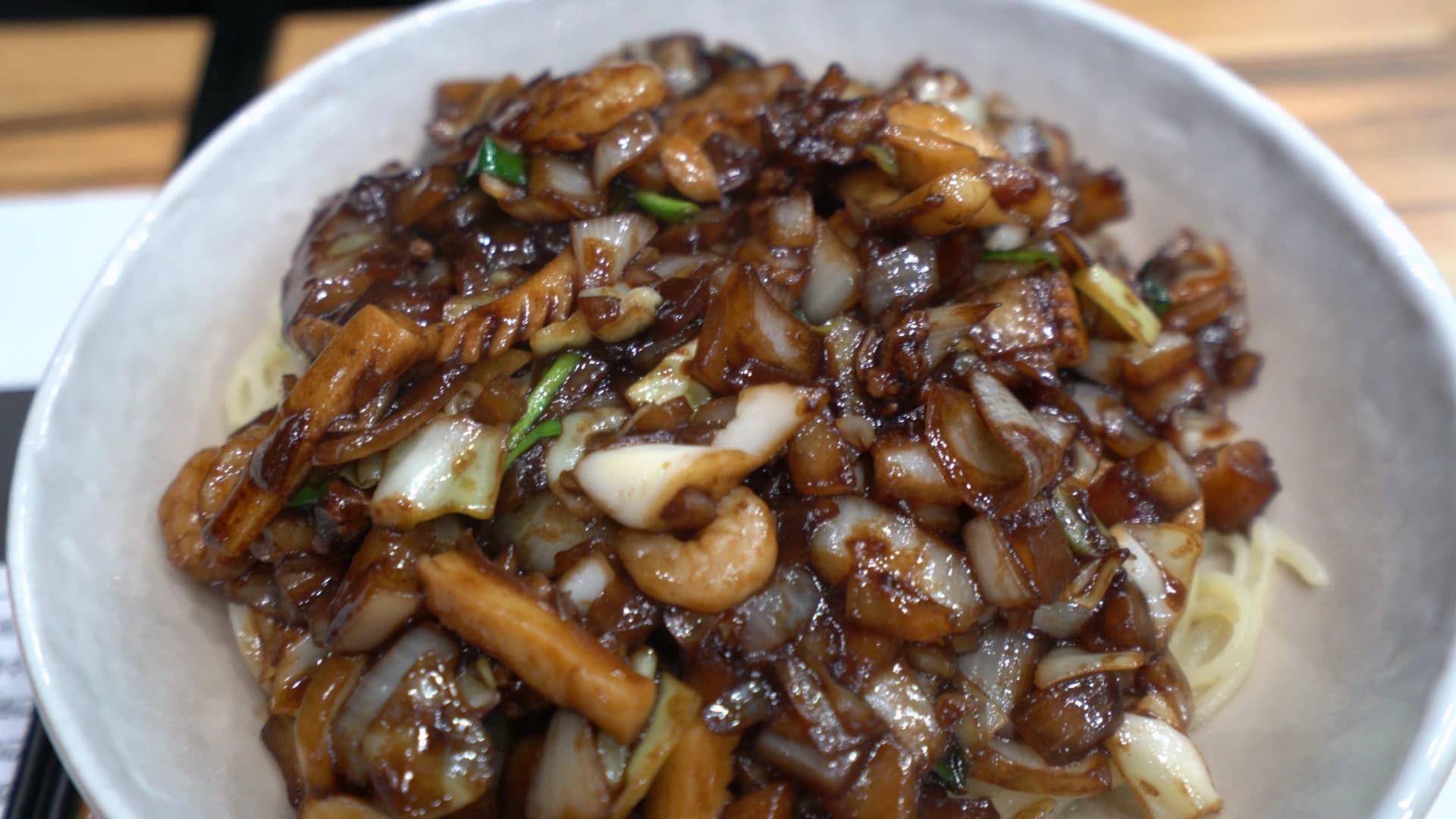
Get even closer and you can see every individual piece of filling. The onion has gone slightly translucent from cooking but still holds its shape beautifully, and the meat is cut to a good size. The sauce sits as a thin, glossy film on everything — not gloopy or wet, just a sheen that tells you this wasn't diluted with water. This is pure stir-fried-in-oil business.
Around the edges of the bowl, you can just see the noodles peeking through. Looking at the sheer volume of toppings here, I reckoned the sauce might actually outweigh the noodles once mixed. And yep — that's exactly what happened.
The Mixing Process — Do It Properly or the Taste Changes
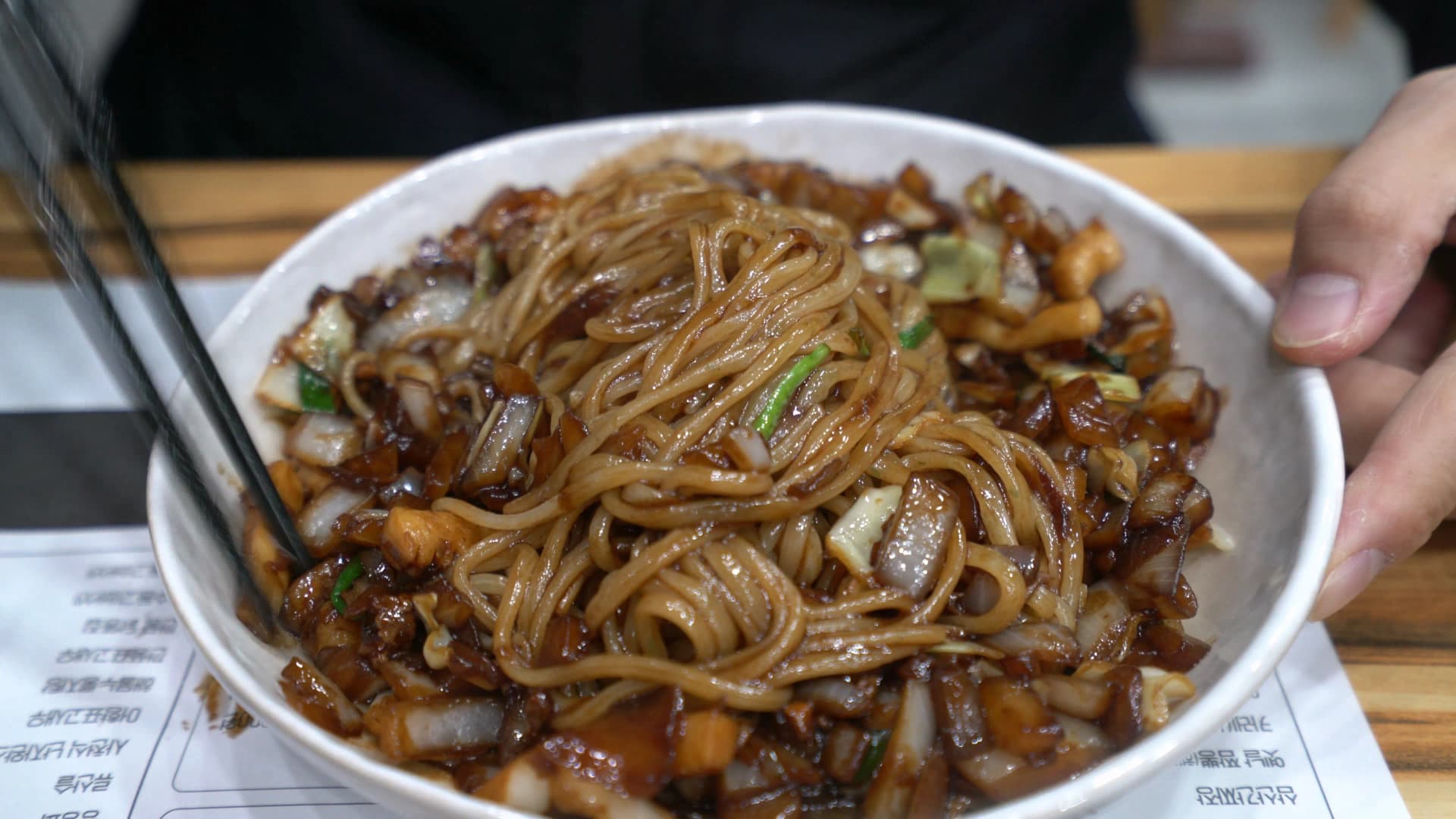
Once you start mixing, this is what happens. Chopsticks lifting noodles from the bottom and folding them through the sauce — those white noodles are already turning a deep brown.
Because ganjjajang sauce has almost no liquid in it, it doesn't blend as easily as regular jjajangmyeon. You need to keep lifting the noodles from the bottom and folding them over, almost like you're turning a stir-fry, so the sauce gets distributed evenly. If you half-arse it, you end up with some noodles drowning in sauce and others completely bare. A bit annoying, yeah, but if you do it properly, every chopstick-full tastes consistent.
My wife reckoned the mixing was a bit of a workout. Said her wrist was sore. And she's not wrong — ganjjajang genuinely requires more elbow grease to mix than regular jjajangmyeon. The sauce isn't a runny gravy; it's closer to a thick, oily stir-fry.
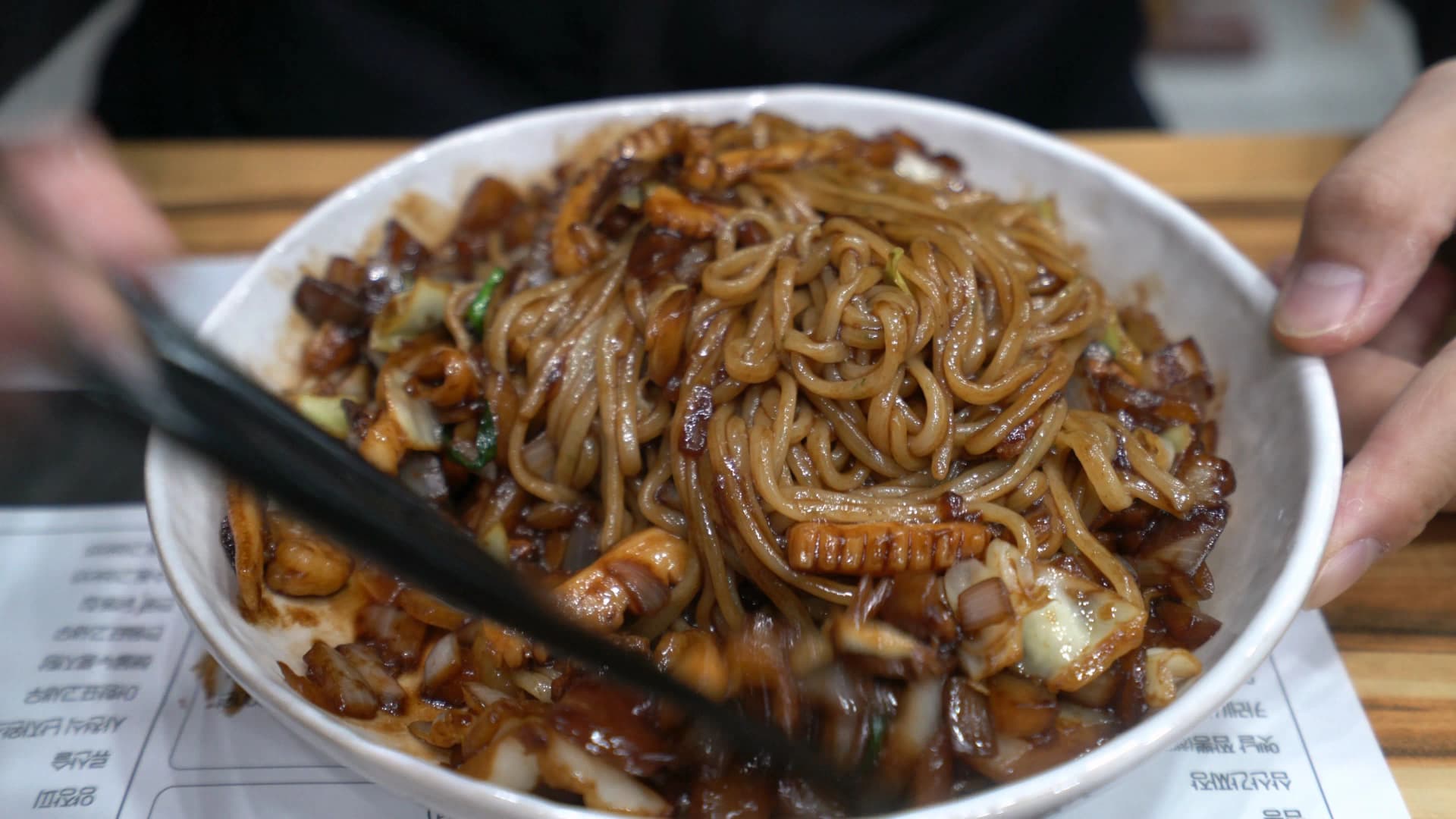
A bit more mixing and you get to this stage. The noodles have gone fully brown throughout, and the filling has worked its way between all the strands. The sauce marks around the bowl rim tell you it took a fair bit of effort to get here.
Finished Ganjjajang — This Is What a Proper Mix Looks Like
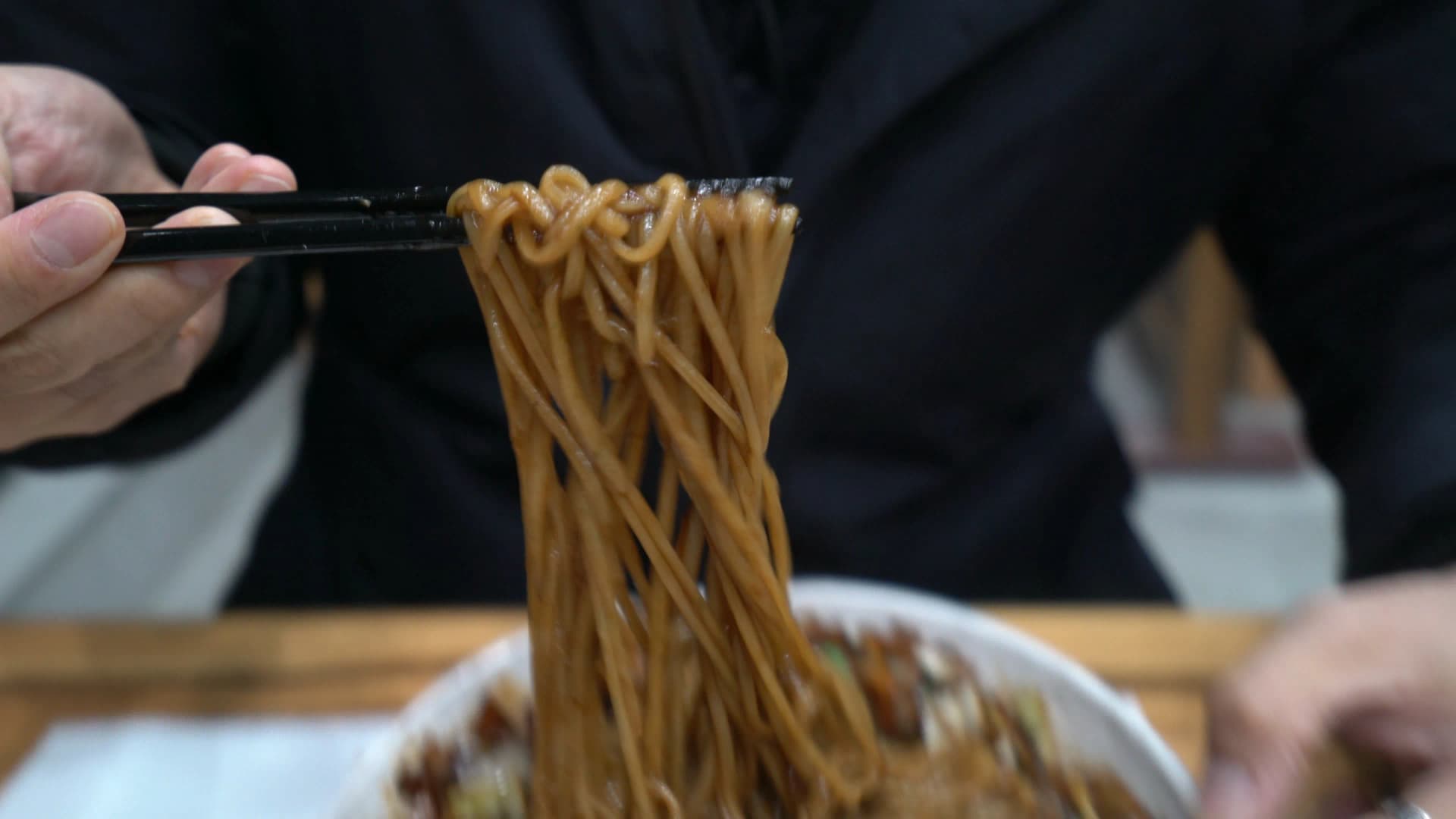
Lifted the noodles high with chopsticks for the money shot. Every single strand is evenly coated in that dark, glossy sauce. That's what a proper mix looks like. The noodles stretch without snapping — that's the signature springy chew of Korean-Chinese wheat noodles — and with that thick chunjang sauce clinging to every strand, you can practically taste it just looking at this photo.
I showed this shot to my wife and told her it was my best photo of the day. She looked at it and said, "Yeah, the food looks pretty good… but your hand came out clearer than the noodles."
Regular Jjajangmyeon vs Ganjjajang vs Samseon Jjajang — What to Pick When You Can't Decide
Comparing the three, ganjjajang is genuinely the tastiest of the lot if we're being straight about it. That fresh wok flavour and the crisp onion texture? You simply cannot get that from pre-made sauce. But here's the honest bit — because the sauce has almost no liquid, mixing it is a real workout. If you don't mix thoroughly, you'll eat half the noodles with no sauce on them at all, which can be a bit frustrating for a first-timer.
If this is your first go, start with regular jjajangmyeon. The sauce is sweet, smooth, and already sitting on top of the noodles — just mix and eat. If you dig it, next time step up to ganjjajang or samseon jjajang. Love seafood? Go samseon. Want to really appreciate the depth and intensity of the sauce itself? Go ganjjajang. Even I haven't tried every type of black bean noodle on the menu yet, and I live here — so take your time and work through them one by one. No rush.
All 11 Types of Black Bean Noodles — Your Complete Menu Guide
Above I covered regular jjajangmyeon, samseon jjajang, and ganjjajang with photos and detailed descriptions. But Korean-Chinese restaurant menus have heaps more black bean noodle options beyond those three. I haven't eaten them all yet, but so you're not standing at the counter looking lost, here's a rundown of what each one is. I'll add photos as I try them.
Jjajangmyeon
짜장면
The original black bean noodles. The chunjang sauce is pre-made in bulk, and when you order, it gets ladled over freshly boiled noodles. The sauce is smooth and sweet with no spice at all, so even a complete newbie can tuck in without any dramas. It's also the cheapest option on the jjajangmyeon menu.
Ganjjajang
간짜장
The biggest difference from regular jjajangmyeon is how it's cooked. Instead of pre-made sauce, the chef stir-fries everything from scratch the moment your order goes in. No water, no starch — just oil and high heat. The sauce is way thicker with a proper smoky wok flavour. Noodles and sauce arrive separately, and you pour and mix yourself. Costs about ₩1,000–2,000 (a couple of AUD) more than regular, but it's absolutely worth it.
Samseon Jjajang
삼선짜장
Samseon (三鮮) originally means "three precious ingredients" from land, sea, and sky, but in practice it's mainly seafood — prawns, squid, and sometimes sea cucumber. Think of it as regular jjajangmyeon with a seafood upgrade. It costs more because of the seafood, but the sauce picks up an extra layer of oceany umami that makes it noticeably richer.
Yuni Jjajang
유니짜장
Yuni (肉泥) means "meat paste." The pork and onion are minced super finely so the sauce comes out silky smooth with a deep, concentrated meaty flavour. You barely feel any chunks because everything's been ground down. Great if you're into creamy, smooth textures over chunky ones — but some people find it a bit one-note because of the uniform consistency. Opinions are genuinely split on this one.
Sacheon Jjajang
사천짜장
Named after China's Sichuan province, this one brings the heat. Instead of chunjang, they use doubanjiang (chilli bean paste) as the base, so it's got a proper kick. Often includes seafood, and the colour ranges from dark red-brown to full-on red depending on the restaurant. Spice levels vary from place to place, but basically imagine regular jjajangmyeon's sweetness with a solid chilli punch layered on top.
Jaengban Jjajang
쟁반짜장
Jaengban means "large platter." The noodles, sauce, seafood, and other ingredients all get stir-fried together and served on a big flat plate. It's a minimum two serves, so this is a sharing dish rather than a solo meal. The bonus? Everything arrives already mixed, so you skip the whole mixing process and just dig straight in.
Yetnal Jjajang (Old-School Style)
옛날짜장
Yetnal means "the old days." This is a throwback recreation of how jjajangmyeon was made decades ago in Korea. It's got potato and zucchini chunks in the sauce and a fried egg on top. The sauce is thinner and more watered-down compared to other types, giving it a gentler, more humble feel. For Koreans, this is pure nostalgia — the flavour of the neighbourhood Chinese restaurant they used to go to as kids. Imagine an Aussie's feelings about an old-school fish and chip shop, and you're in the right ballpark.
Yuseul Jjajang
유슬짜장
Yuseul (肉絲) means "shredded meat." The meat and vegetables are all cut into long, thin strips — almost noodle-shaped themselves — then stir-fried. When you eat them with the actual noodles, the texture is genuinely unique. It's usually served on a large platter. If yuni jjajang is the finely minced version, yuseul jjajang is the exact opposite — everything cut long and thin.
Haemul Jjajang
해물짜장
Haemul simply means "seafood." Similar vibe to samseon jjajang, but the type and quantity of seafood varies by restaurant. Usually includes squid, prawns, and clams. It's often a touch cheaper than samseon jjajang, so if you love seafood but don't want to splash out for the full premium option, this is a solid middle-ground pick.
Bokkeum Jjajang (Stir-Fried)
볶음짜장
Bokkeum means "stir-fried." Regular jjajangmyeon has the sauce ladled over boiled noodles, but bokkeum jjajang takes the noodles and sauce and stir-fries them together in a wok over high heat. The smoky wok flavour gets infused directly into the noodles themselves, and the sauce is fully absorbed rather than sitting on top. No mixing needed — just eat. It's got this toasty, nutty quality that's completely different from the others.
Naeng Jjajang (Cold)
냉짜장
Naeng means "cold." This is a summer-only special that not every restaurant offers. The noodles are boiled, then rinsed in cold water until they're properly chilled, and the jjajang sauce goes on top. Usually comes with julienned cucumber, and it's brilliant on a scorching hot day when a steaming bowl of noodles feels like too much. If you spot it on the menu, count yourself lucky — it's not a year-round thing.
Jjajangmyeon Frequently Asked Questions
Regular jjajangmyeon or ganjjajang — which should I order if it's my first time?
Go with regular jjajangmyeon first. The sauce is smooth, sweet, and easy to like — there's nothing confronting about it. If that goes down well, try ganjjajang next time. The sauce is thicker and there's a mixing process involved, so it's better to try it once you already know what jjajangmyeon tastes like as a baseline.
How much does jjajangmyeon cost?
Regular jjajangmyeon is usually ₩6,000–8,000 (roughly $7–9 AUD). Ganjjajang adds another ₩1,000–2,000 on top, and samseon jjajang with its seafood sits around ₩9,000–12,000 ($10–14 AUD). For a full meal in Korea, that's genuinely cheap — cheaper than a pub lunch back home.
Is jjajangmyeon spicy?
Regular jjajangmyeon, ganjjajang, and samseon jjajang all have zero heat whatsoever. The base flavour is sweet with a savoury-salty finish. If you want spicy, you specifically order sacheon jjajang — it's listed separately on the menu, so there's zero chance of accidentally ending up with a spicy one.
Can you get jjajangmyeon delivered?
Absolutely. In Korea, jjajangmyeon is basically the OG delivery food — it was being delivered by motorbike decades before apps existed. On delivery apps, search for "중국집" (Chinese restaurant) or "짜장면" (jjajangmyeon) and nearby options pop right up. Delivery prices might be ₩1,000–2,000 higher than dine-in.
Is jjajangmyeon suitable for vegans?
Not typically. The standard sauce contains pork, and ganjjajang or samseon jjajang definitely include meat or seafood. Fully vegan jjajangmyeon restaurants are still pretty rare in Korea. That said, if you're cooking at home, the sauce adapts well to vegan versions — mushrooms and extra veg make a cracking substitute.
Can kids eat it?
One hundred per cent. There's no spice at all and the flavour is sweet — kids in Korea are absolutely mad for it. It's genuinely one of the most popular dishes Korean children request when eating out. If the serving size is too big, order the regular size instead of the large (gopbbaegi).
What's the difference between jjajangmyeon and jjamppong?
Jjajangmyeon is black bean sauce noodles — sweet, mixed, no broth. Jjamppong is a red, spicy seafood soup with noodles — completely different dish. They're basically opposites, but in Korean-Chinese restaurants, these two are always right next to each other on the menu like inseparable mates. Don't want spice? Jjajangmyeon. Craving a hot, spicy broth? Jjamppong.
If you order jjajangmyeon in China, is it the same thing?
Not even close. Chinese zhajiangmian (炸醬麵) uses a salty fermented soybean paste with barely any sweetness. It's brown and savoury rather than jet-black and glossy like the Korean version. Same name, completely different dish — kind of like ordering a "flat white" in Italy versus Melbourne. Same words, very different experience.
This post was originally published on https://hi-jsb.blog.