Hot Pot Dumplings — Korean Winter Comfort Food
Table of Contents
11 items
Korean winter comfort food I crave every cold season
This was last winter, and there’s one Korean dish I automatically start craving as soon as the weather turns properly cold: mandu-jeongol, or Korean dumpling hot pot. It’s the sort of meal where a big pot of broth bubbles away at the table, with dumplings, mushrooms, vegetables and meat all simmering together. In Korea, a shared dish cooked and eaten straight from the pot like this is called jeongol. At first glance it can look like someone has simply piled a bit of everything into a pan, but one spoonful explains why Koreans love it so much. The real magic is in how the broth gets deeper as the meat juices from the dumpling filling melt into it.
I grew up eating mandu-jeongol at home whenever winter rolled around, but having it at a restaurant hits differently. On this day I went with a friend to a dumpling hot pot place in Daejeon, a major city in central South Korea. That restaurant has since closed, so rather than treating this as a venue review, I’m going to focus on the dish itself. Mandu-jeongol is a proper Korean winter food you can find pretty easily around the country, usually at restaurants specialising in hot pot or manduguk, Korean dumpling soup. You usually won’t find it at a casual snack bar or a basic set-meal place; look for a restaurant with “jeongol” listed separately on the menu.
What Korean dumpling hot pot looks like
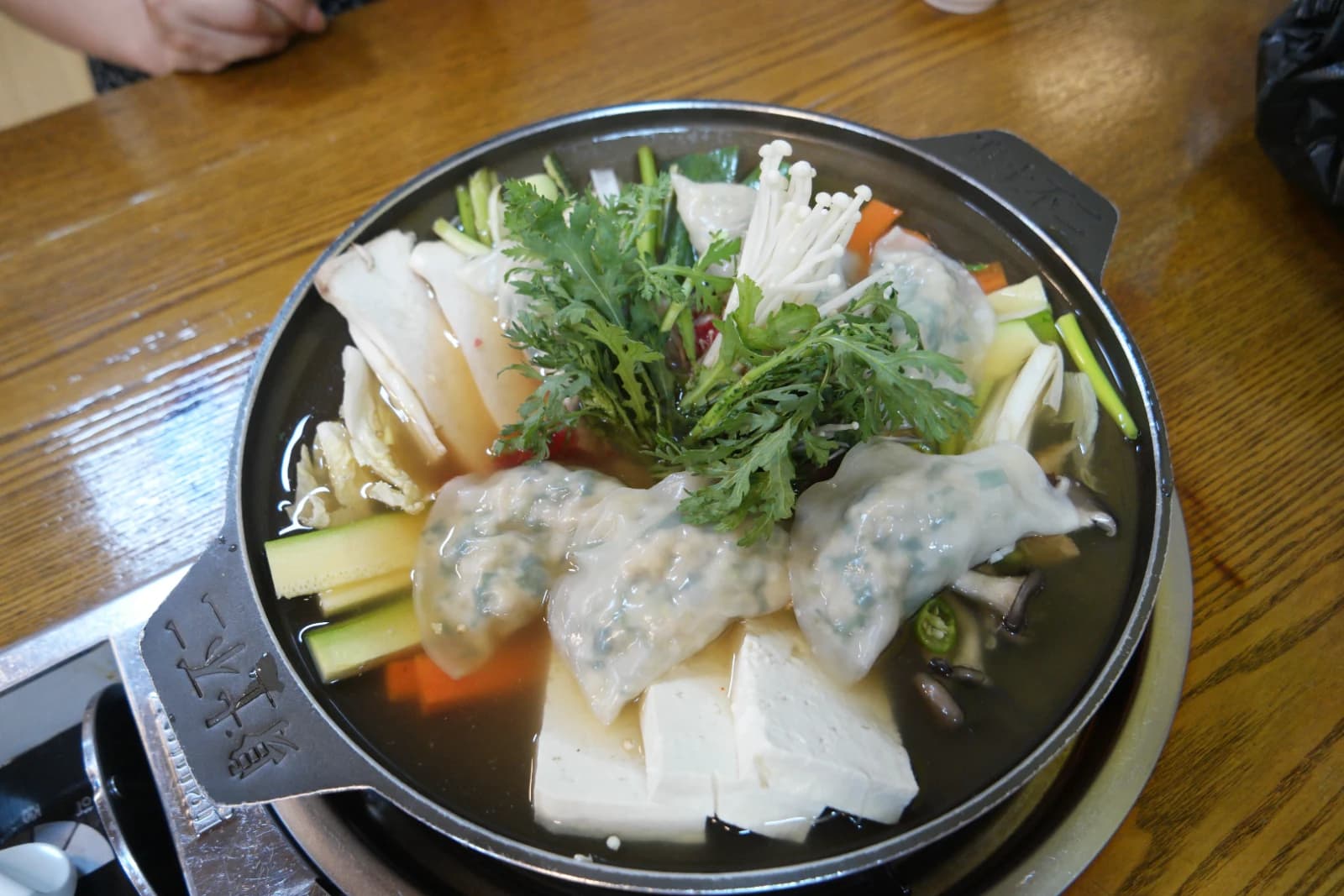
This is what mandu-jeongol looks like before it starts cooking. It comes out in a wide, shallow hot pot with a soy-sauce-based broth underneath, then all the ingredients are arranged in a ring on top. Every restaurant does the broth and toppings a little differently. In the middle there were three or four handmade dumplings, with a green tint showing through the wrappers. Around them, the pot was packed with chunky white tofu, enoki mushrooms, carrot, spring onion and cheongyang chilli, to the point where you’d wonder if the pot would look empty once everything was lifted out. The leafy green piled over the top is ssukgat, also known as crown daisy, a fragrant Korean leafy vegetable. At this stage the burner hadn’t even been turned on yet. Once the gas flame at the table gets going, the broth starts boiling hard and everything cooks together.
The dumpling skins were this thin
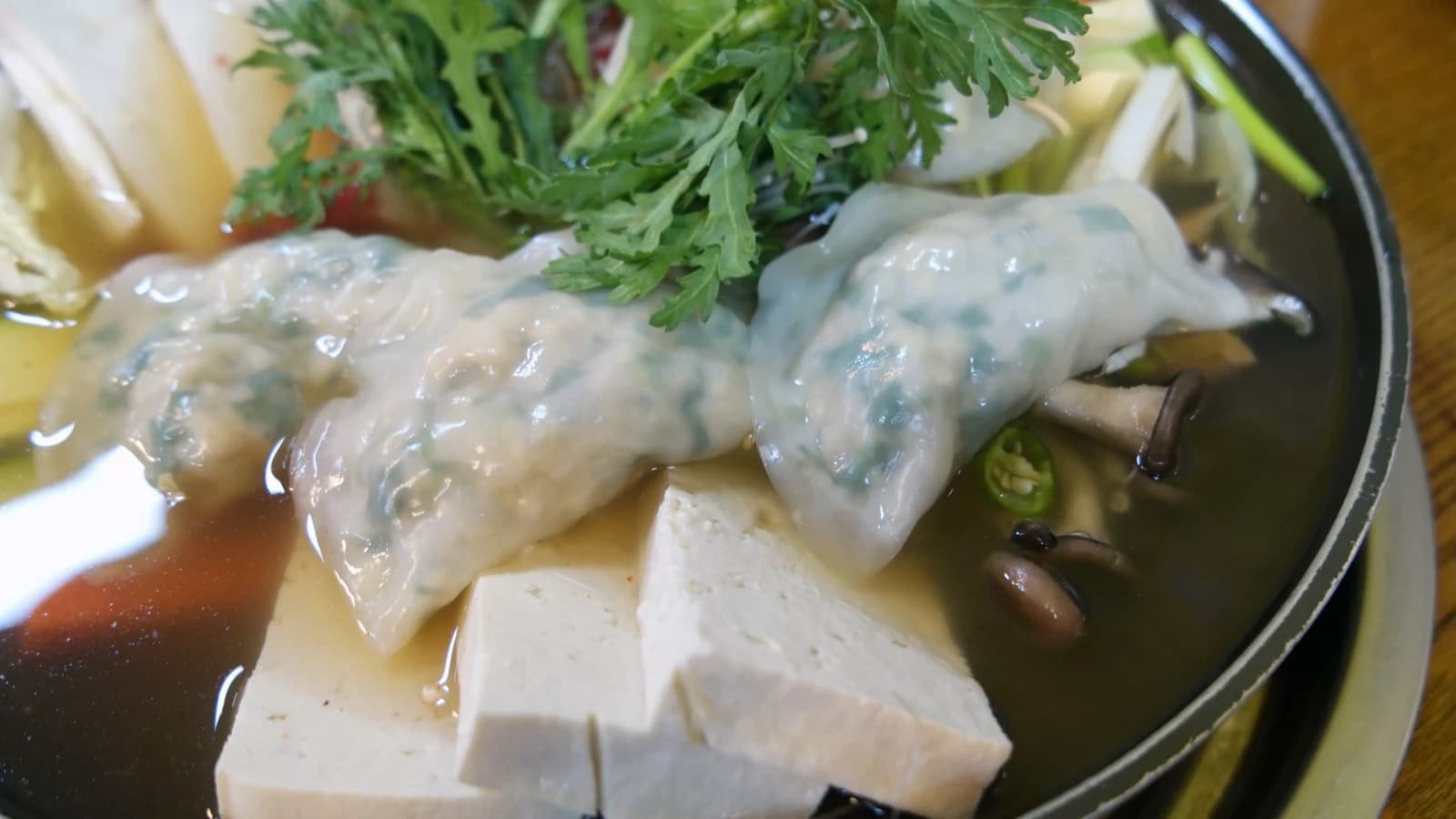
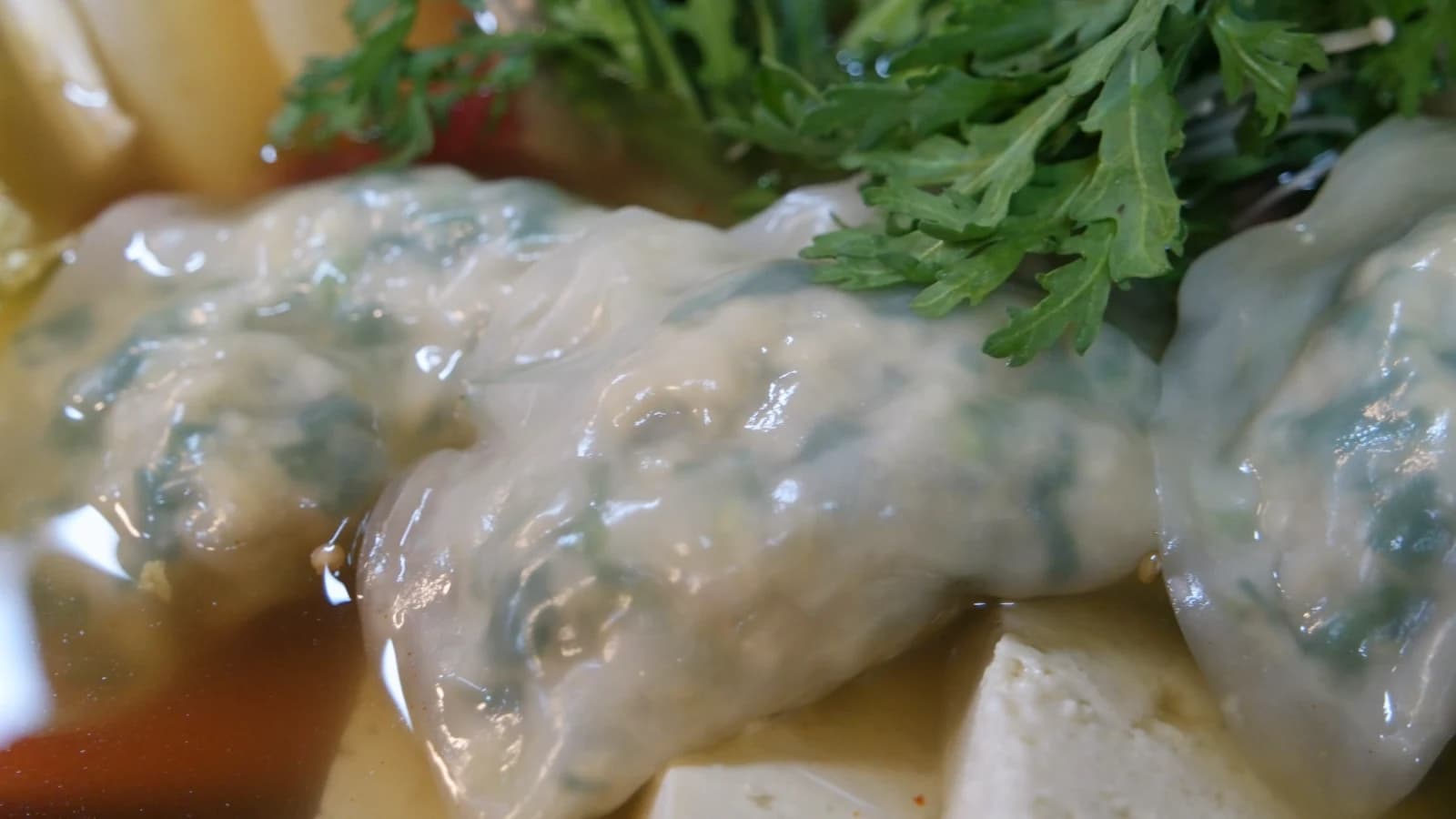
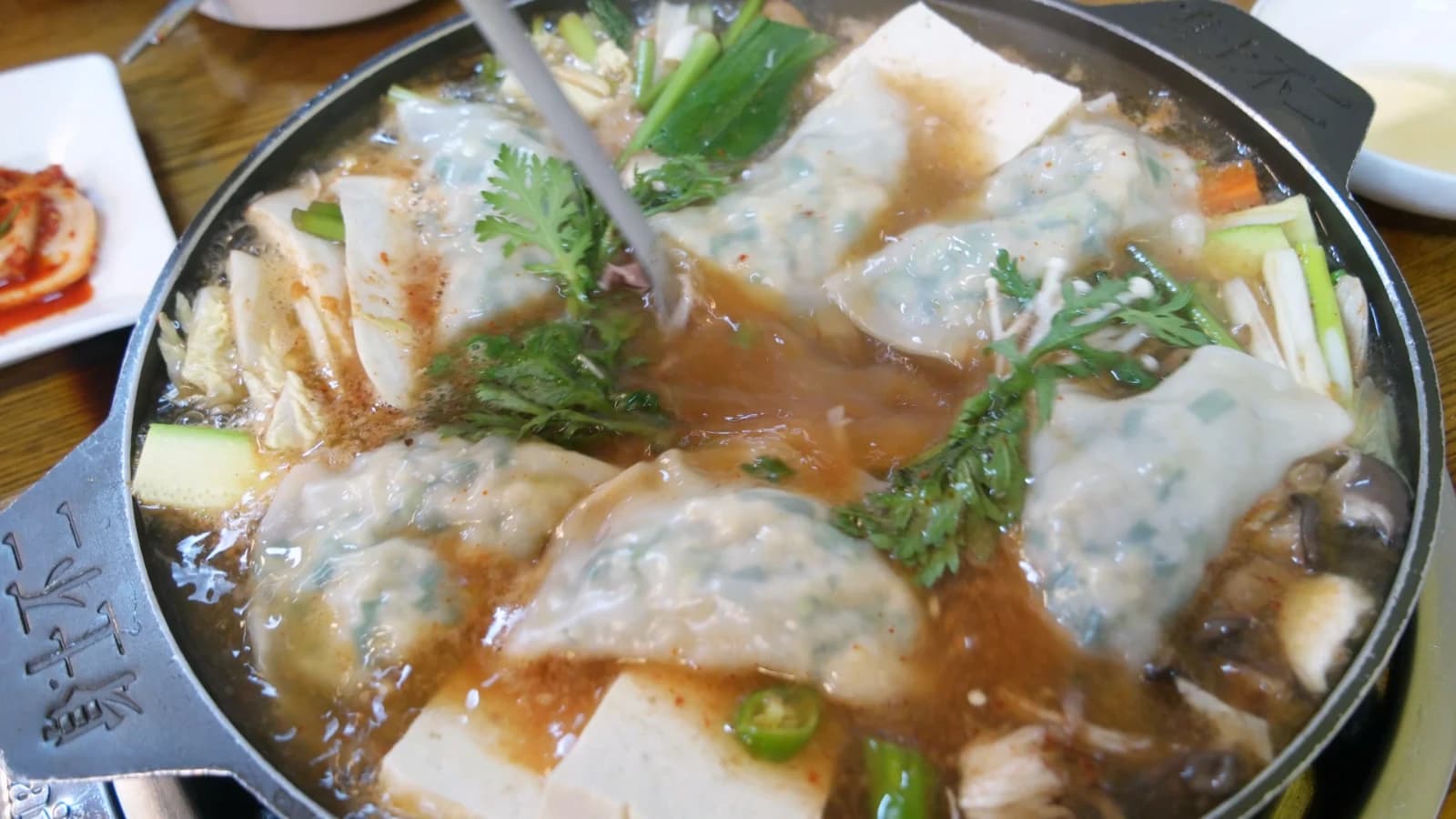
I pulled the camera right in on the dumplings. The wrappers were so thin they were almost like paper, so you could see the colour of the filling straight through them. From that bright green, I’m guessing there was a decent amount of chives inside. The second photo is even closer, and you can tell it’s basically one delicate layer of skin. Because the dumplings were half-submerged in the broth, the surface had that glossy, just-cooked sheen.
Once it started boiling, beef appeared in the pot
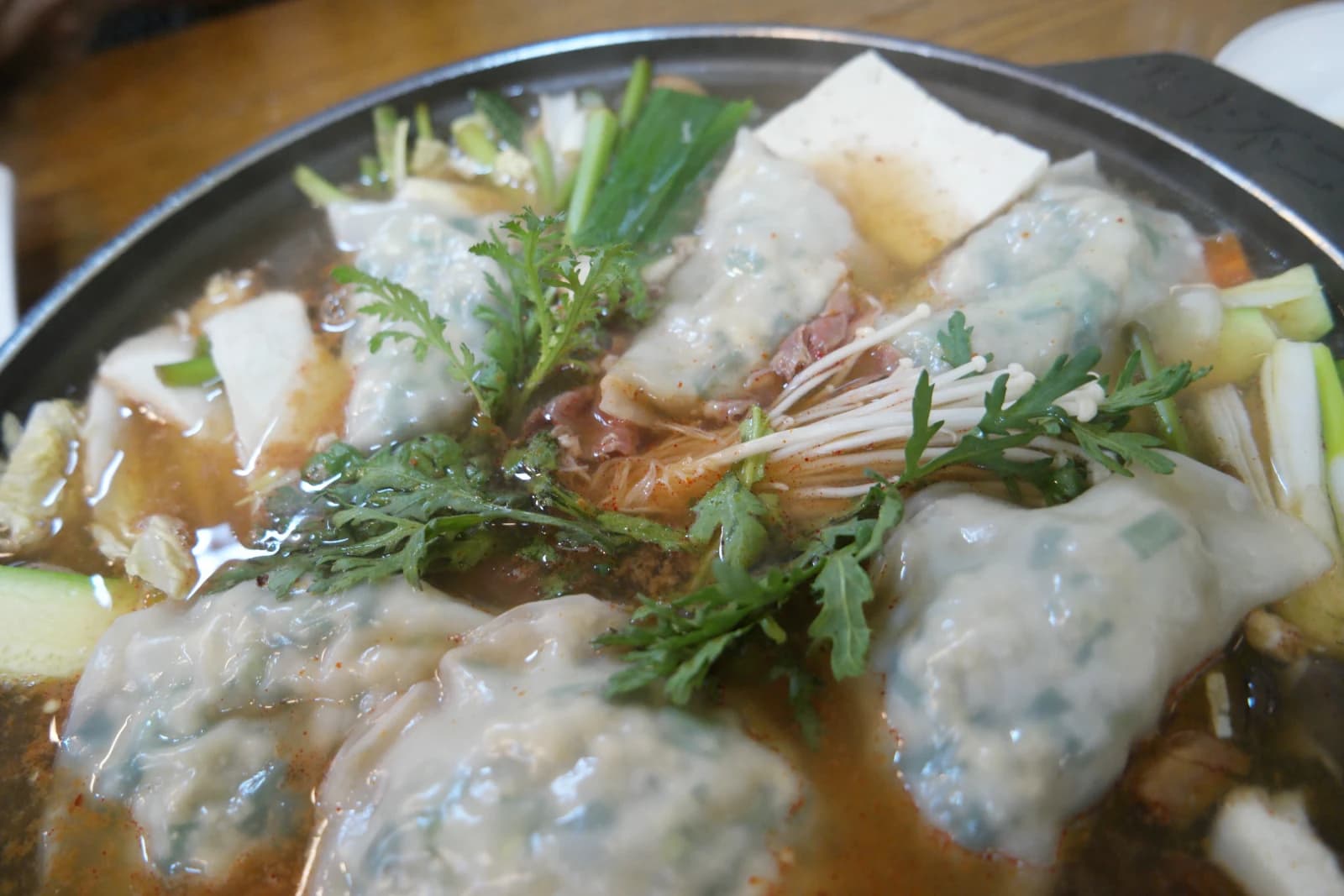
As soon as it came to the boil, the whole pot changed. The broth started bubbling up, the ingredients shifted around, and the dumpling skins soaked up the soup and puffed out a bit. What stood out here was the beef tucked between the mandu. The moment my friend opened the lid, he went, “Oh, they put meat in this too?” As the beef cooked and lost its redness, the juices seeped into the broth and made the colour noticeably darker; you can see it in the photo. At many mandu-jeongol restaurants, the meat is added separately after the other ingredients have cooked, but this place had layered the beef with the vegetables right from the start. That meant the meat kept flavouring the broth the whole time it simmered. The enoki mushrooms had softened and slumped down, and the fresh-looking ssukgat from earlier had completely sunk into the soup. Even the corners of the tofu had turned slightly brown, which tells you how rich the broth had become.
How the soup changes as it simmers
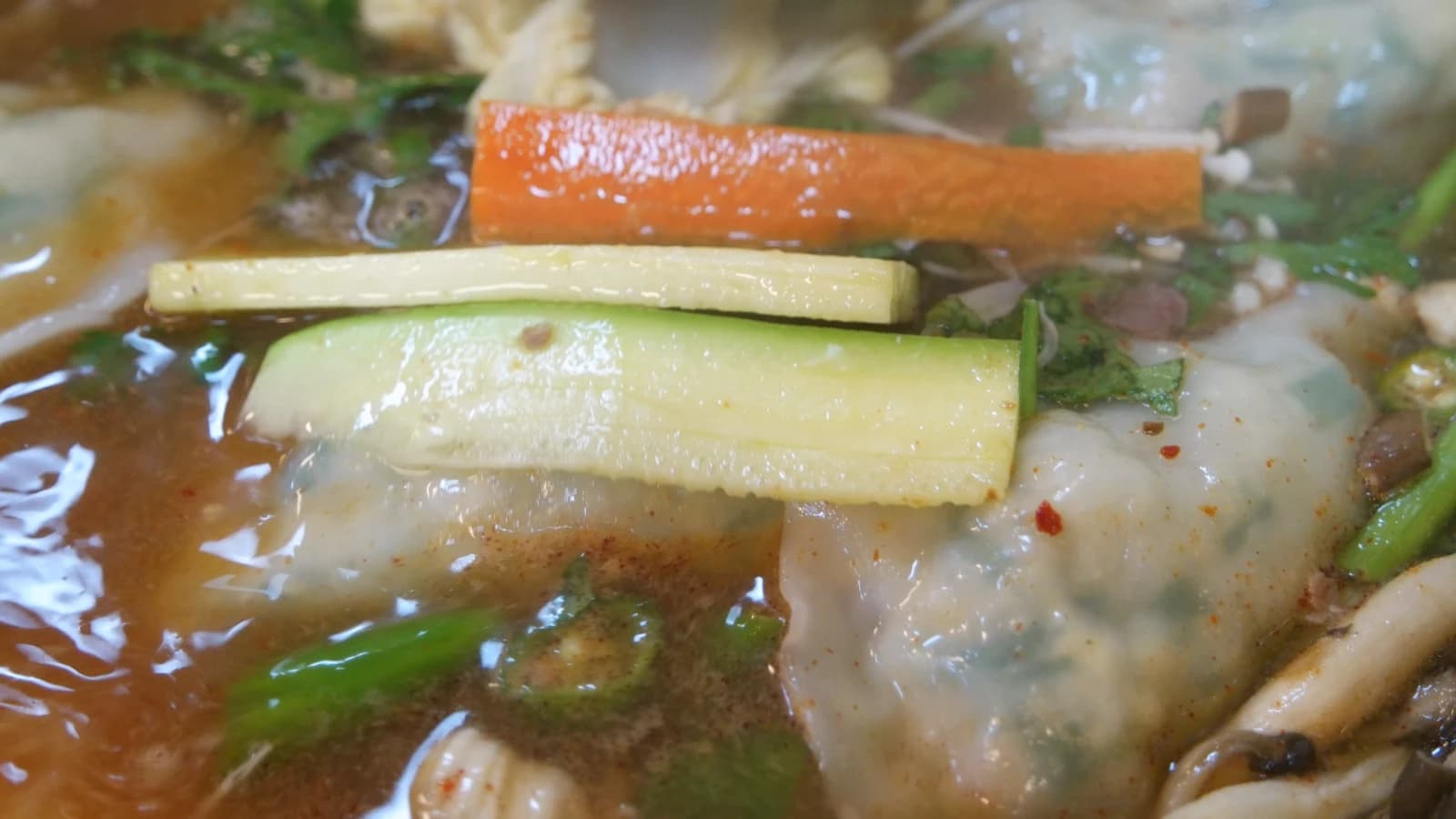
This was after it had been bubbling away for a while. You can see the ladle sitting in the pot, which means this is about when you start eating. The broth colour was completely different from when it first arrived. The beef juices and everything leaking out from the dumpling filling had dissolved into the soup, making it thicker and richer. You can just spot the kimchi plate on the left, and on the far right there’s also a small ttukbaegi, or earthenware pot, of steamed egg that we ordered separately. In the close-up, the zucchini and carrot look properly softened, with deeper colour from soaking in the broth. That’s what I love about mandu-jeongol. The first spoonful and the halfway-through spoonful don’t taste the same. It’s the same pot, but the soup keeps changing as you eat.
The dumpling burst — but that was not all bad
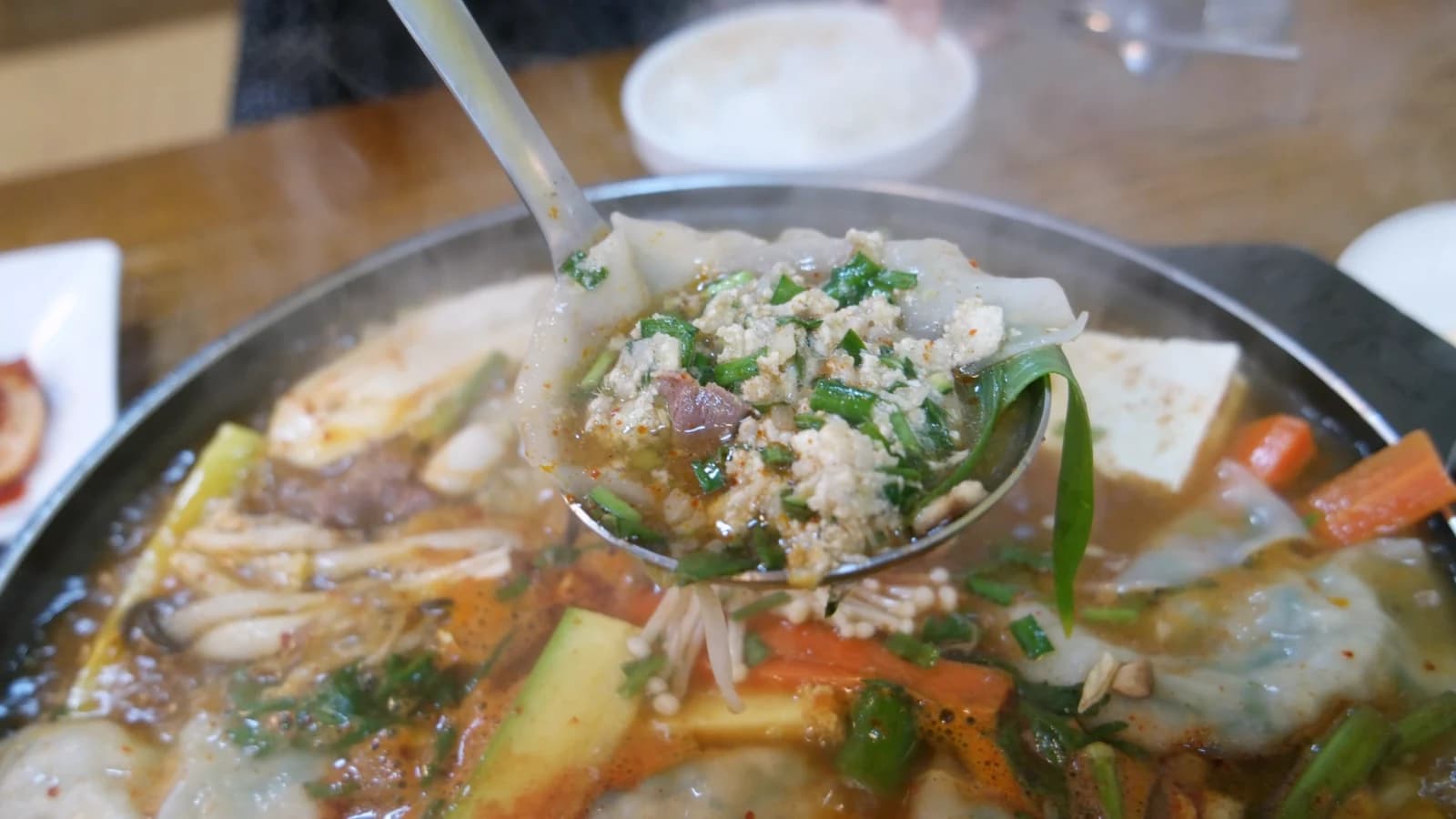
One of the dumplings burst. That’s what happens if you let it go a bit too long. I scooped it up with the ladle, but the wrapper had split and the filling spilled out into the broth. My friend had already said we should fish them out, and honestly, he was right. I was too busy taking photos and left it too late. Bit of a shame. Still, a burst dumpling isn’t only bad news, because once the filling spreads through the broth, the soup gets even more flavour. Inside the pot, the zucchini, carrot, enoki mushrooms, shiitake mushrooms and rice cakes were all properly cooked and tangled together, with steam rising off the lot. You can see the empty bowls in the background; that’s where you serve the chunky bits before eating.
The real look of long-simmered mandu-jeongol
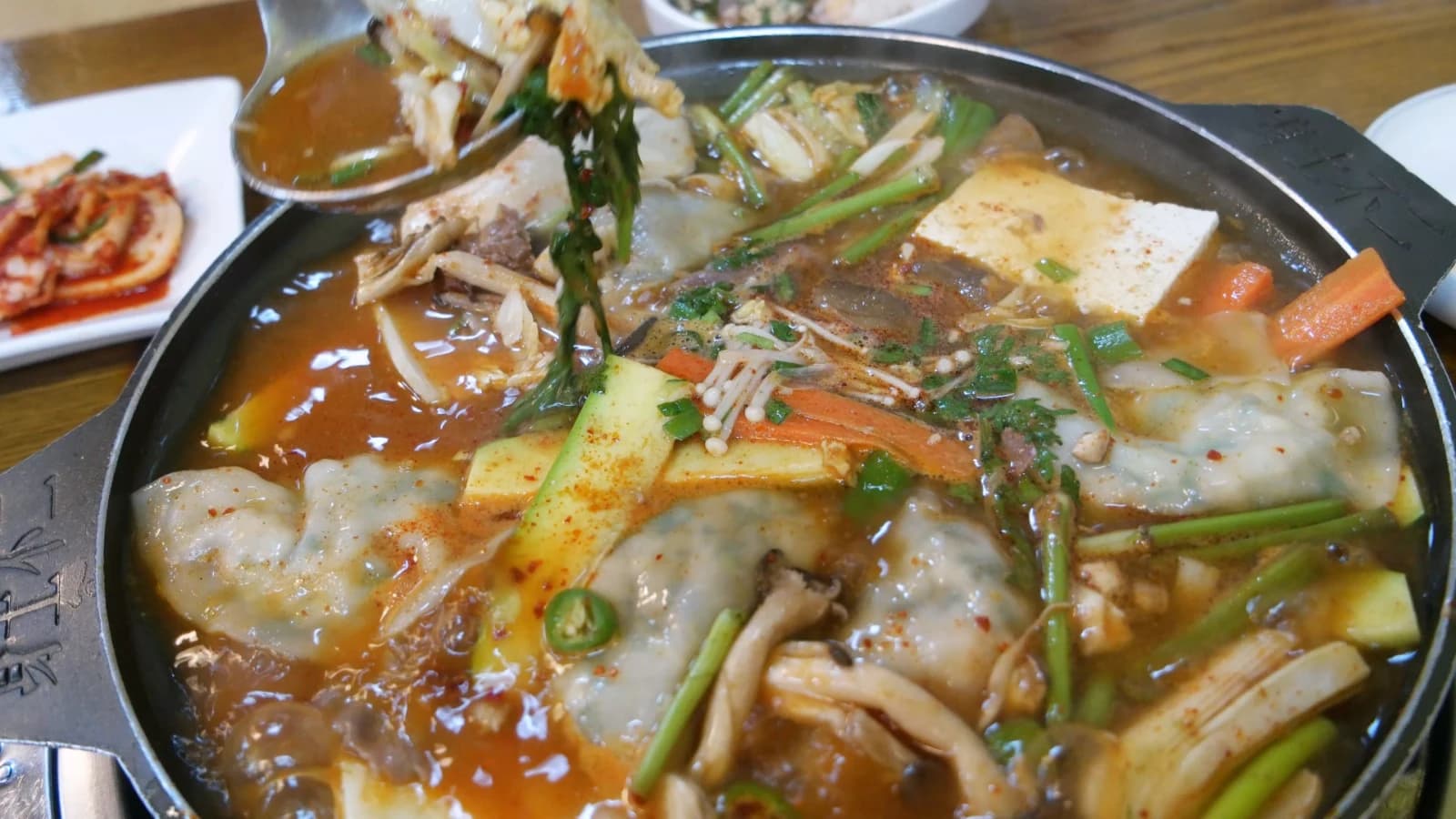
After it simmered even longer, the inside of the pot became absolute chaos. The neat, pretty arrangement from the start was long gone. The broth had changed from a clear soy colour to a thick brown soup, a few dumplings still held their shape, and the rest had split open so the filling had completely loosened into the pot. There were specks of chilli powder floating on top, giving it a gentle spicy kick, while spring onion and ssukgat stems were tangled everywhere. It looked a bit messy, sure, but the flavour was on another level compared with that first spoonful.
How to eat mandu-jeongol from the hot pot
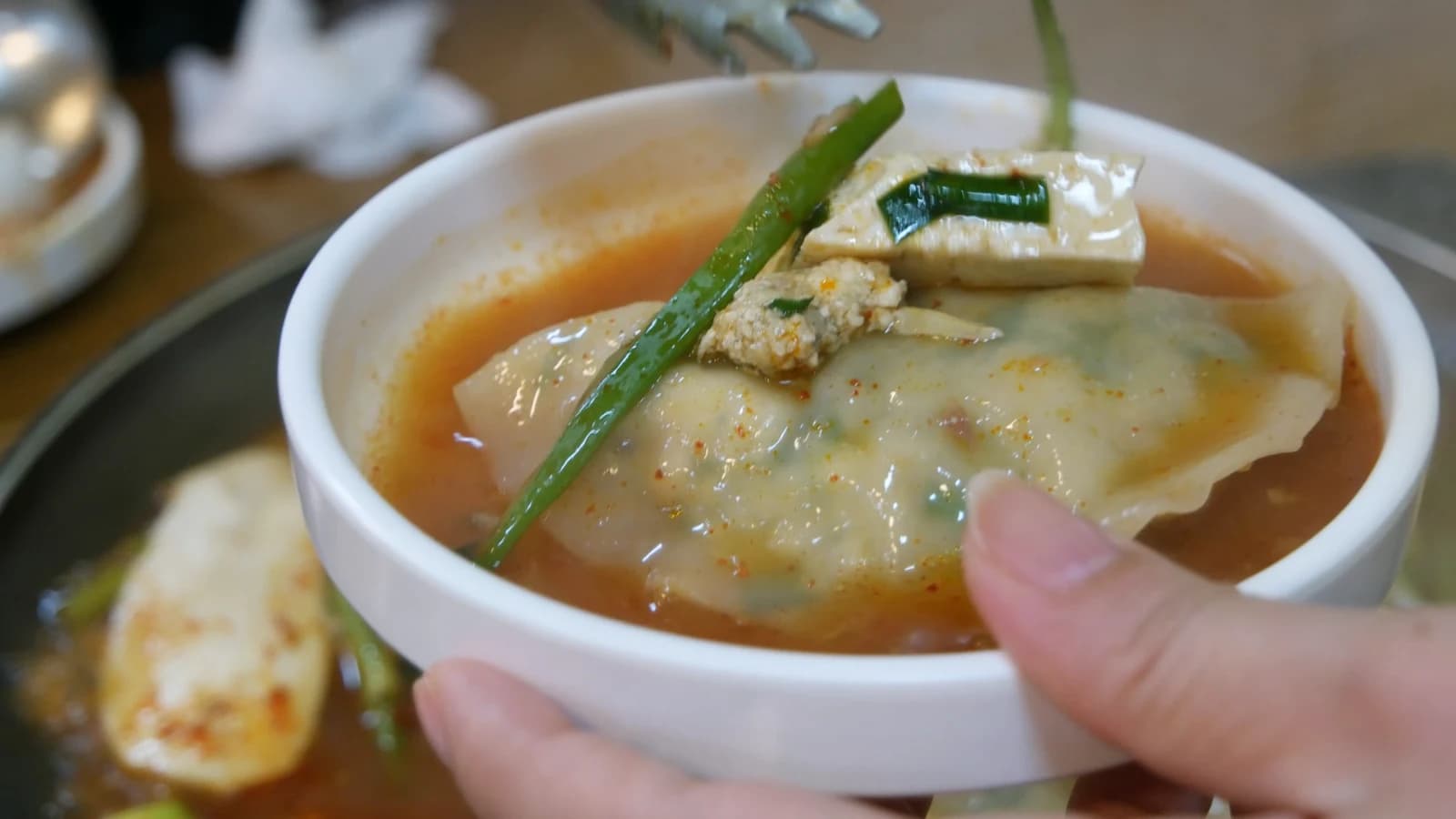
If you eat it straight from the pot, you’ll burn the roof of your mouth. The way to eat mandu-jeongol is simple: use the ladle to move some broth and ingredients into a small bowl like this. In mine, there was one dumpling, a piece of tofu and a strand of spring onion sitting in the soup. The broth was a deep brown with chilli powder floating through it, so it looked warming before I even tasted it. You serve one bowl, blow on it, eat it, then go back for more. That repeated rhythm is basically the whole joy of a Korean hot pot dinner.
With beef, timing is everything
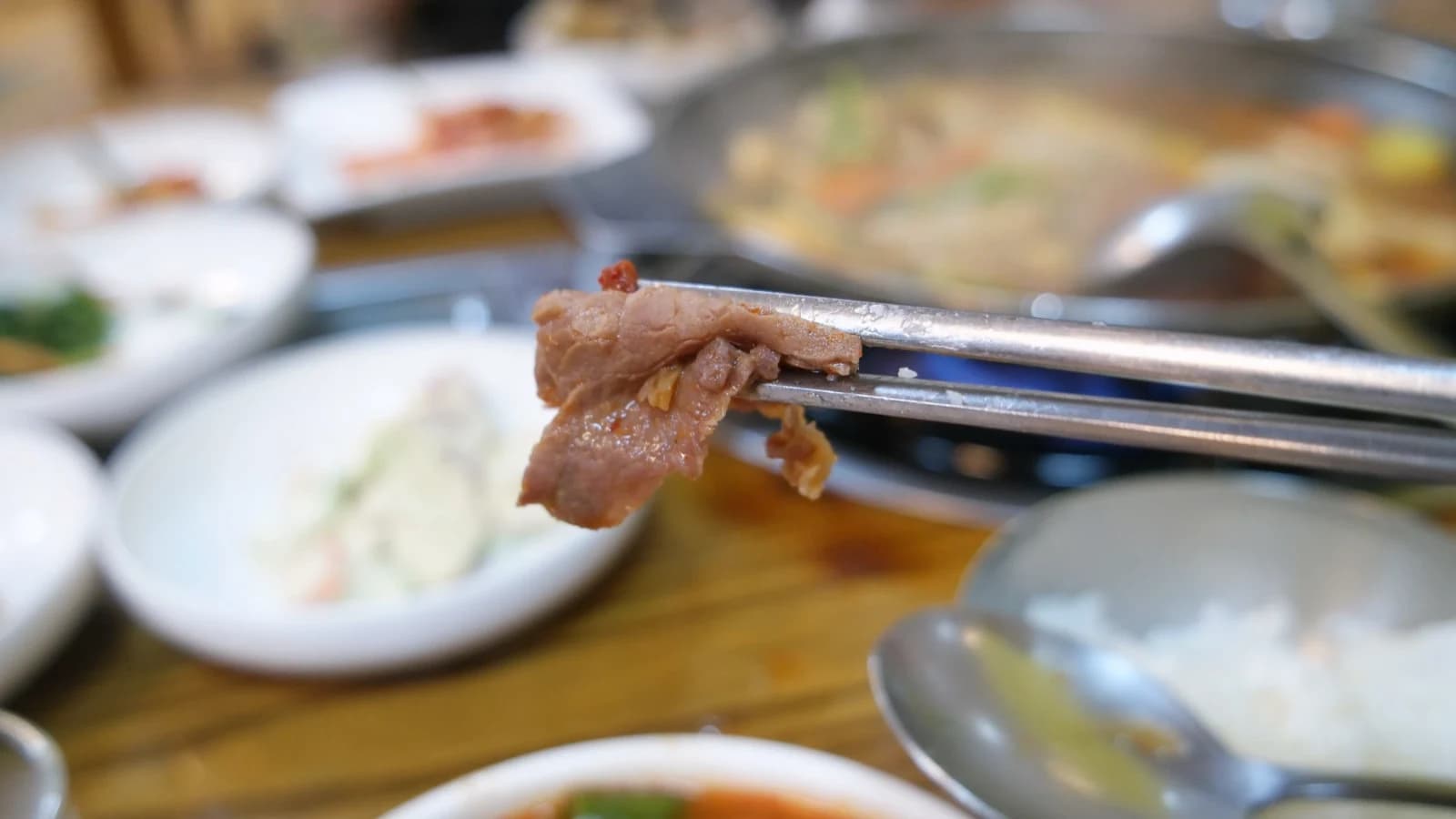
The beef is all about timing. If you leave it boiling too long, it gets tough. This piece I picked up with chopsticks was just the right brown colour, and that’s when you want to eat it if you want it tender. The meat has two jobs in the pot: flavouring the broth and being eaten as a topping. I’d treat those separately. Pull out the pieces you want to eat while they’re still good, and let the rest keep doing their work in the soup.
Mandu-jeongol price — ₩24,000 for two
On this day, for two people, one mandu-jeongol plus bowls of rice came to about ₩24,000, roughly A$27
Mandu-jeongol is usually served as a two-person portion. For a soup dish it is not the cheapest meal around, but when you see the amount packed into the pot, the price makes sense.
After eating — my honest verdict
Mandu-jeongol is one of those dishes that changes the whole time you eat it. At first the broth is fairly clear, but as it boils, the dumpling filling and beef juices melt into it and make the soup richer and richer. Watching that happen is half the fun. My one gripe is that the dumplings burst more easily than I expected. Miss the timing by a little and the filling spills everywhere, but then again, that also makes the broth taste better, so it’s hard to complain too much. The beef can also turn chewy if you don’t take it out early, but once you’re chatting and eating, it’s easy to forget and leave it in there.
Usually, mandu-jeongol finishes with kalguksu noodles, which are knife-cut wheat noodles added to that rich broth at the end. We didn’t order them this time because we were already absolutely full. As we were leaving, my friend said, “Next time, we have to do the kalguksu too,” and honestly, that was the only thing I could think about afterwards.