Thai Gas Station Food That'll Blow Your Mind — 3 Dishes for A$8
Table of Contents
14 items
Lunch at a Thai Petrol Station — Seriously?
If you're after authentic Thai street food while travelling, there's one spot most tourists walk straight past — the petrol station. Thai servos aren't like the ones back home in Australia. While our servos have a pie warmer and maybe a dodgy sausage roll, Thailand's PTT stations are full-blown complexes with cafes, restaurants, convenience stores, and even massage shops.
I lived in Thailand for three years. My wife's Thai and we were based in Rayong, a coastal province about two and a half hours southeast of Bangkok. That day, we pulled into a PTT station on the way home to fill up, and she suggested we grab lunch right there. Today I want to walk you through the three Thai dishes we ate at that PTT servo restaurant — khao kha moo (braised pork leg on rice), tom yum mama noodles, and kuay tiew nam tok (blood broth pork noodle soup). All three bowls together came to about A$7.50. Yeah, you read that right.
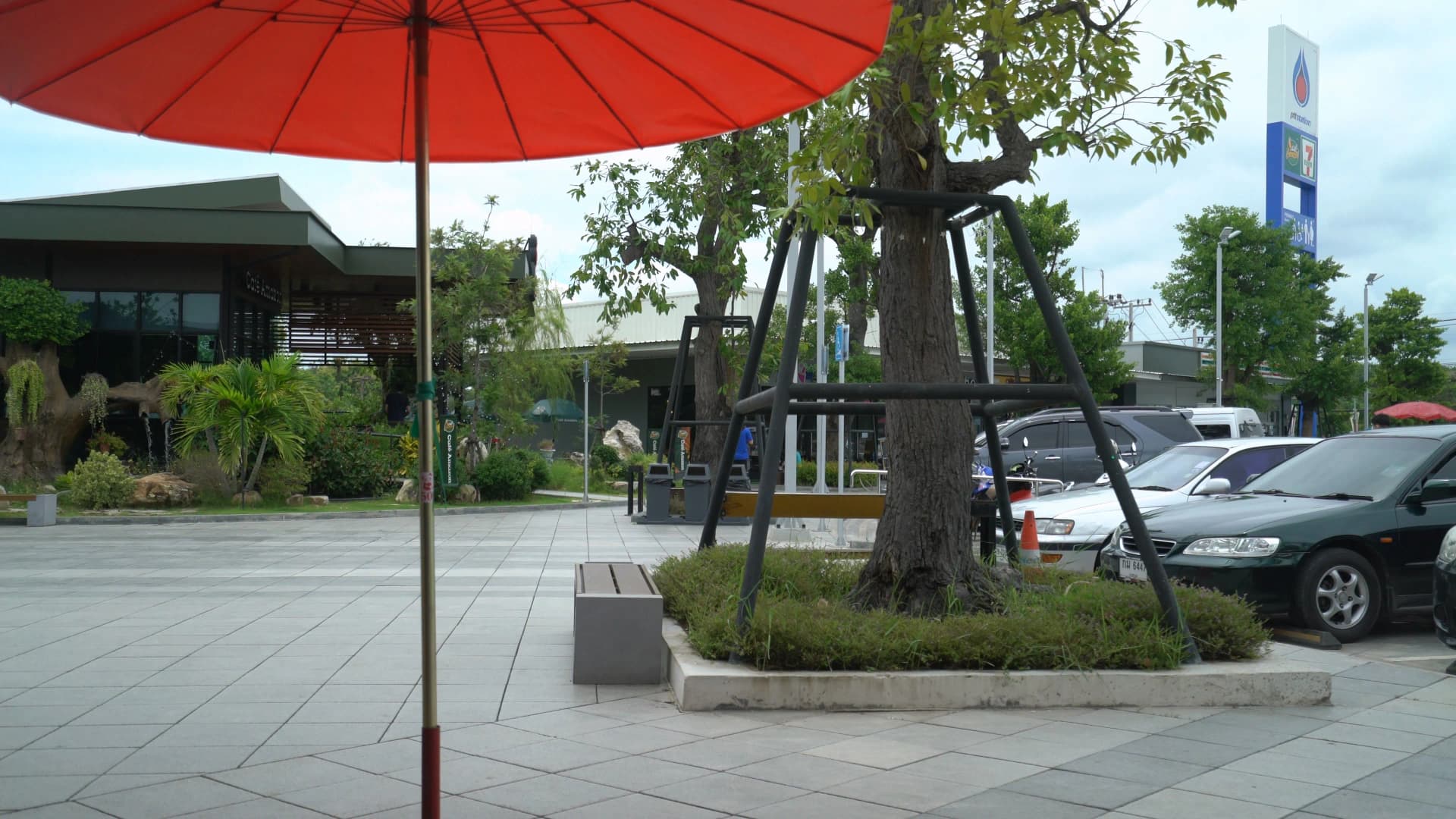
This is what the Rayong PTT station looks like. Red parasols over benches out the front, with a 7-Eleven, a cafe, and a proper sit-down restaurant behind them. Feels more like a little shopping village than a servo. When I first came to Thailand as a tourist, I thought this was bizarre. After living there for three years, it makes complete sense.
Aussie Highway Rest Stops vs Thai Roadside Stations
The road infrastructure in Australia and Thailand developed pretty differently.
🇦🇺 Australia
We've got well-established highway rest stops and truck stops, especially along major routes. You'll find a Maccas or Hungry Jack's at the bigger ones, maybe a Red Rooster. But your average suburban servo? It's fuel, a meat pie from the warmer, and you're on your way.
🇹🇭 Thailand
While Thailand does have motorways, most travel still happens on provincial highways. So roadside petrol stations — especially PTT, the country's biggest chain — have evolved into full service complexes. Convenience store, cafe, restaurant, massage parlour, the lot. There are heaps more of these stations than you'd expect.
In Australia, highway rest stops are the traveller's pit stop. In Thailand, it's the roadside petrol station that fills that role.
Australia built its rest stop culture around highways, while Thailand built theirs around provincial road servos. Different approach, same basic need — somewhere to stretch your legs, have a feed, and grab a coffee before getting back on the road.
What the Servo Restaurant Actually Looks Like
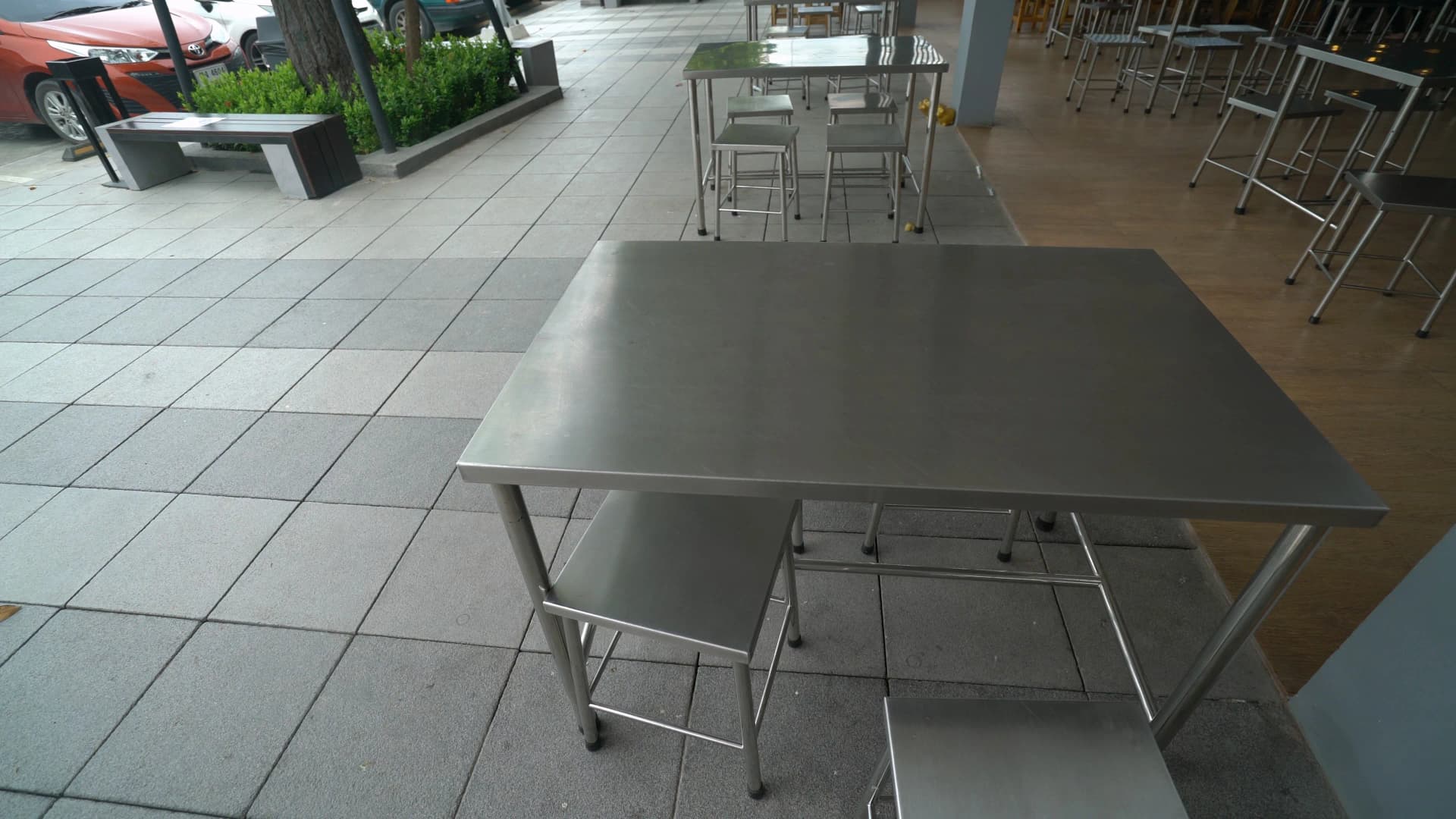
Out the front of the restaurant there's a row of stainless steel tables and chairs. This is a super common setup at local Thai eateries — think of it like the outdoor tables at a fish and chip shop back home. It's semi-outdoor, so you get a breeze, which sounds nice in theory. But honestly, in the middle of a Thai afternoon, you're dripping with sweat just sitting there. No aircon, obviously. If there's a fan pointed your way, count yourself lucky. My wife actually prefers these outdoor spots though. A lot of Thai locals would rather eat outside than in an air-conditioned room — it's just the culture.
Pick Your Noodles, They'll Cook Them Up
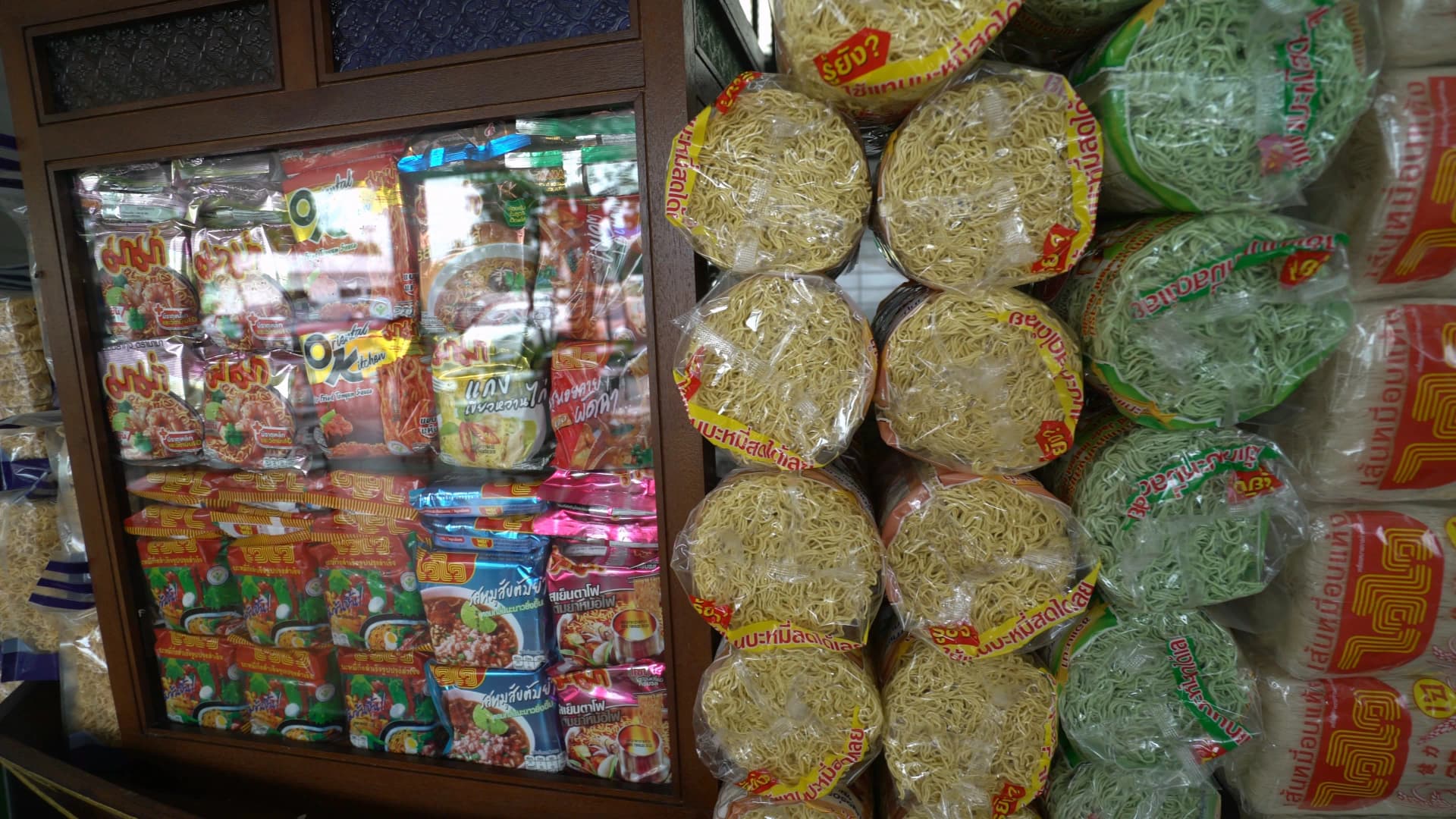
Along one wall of the restaurant, there's a whole shelf stacked with instant noodles and fresh noodle options. You pick whichever packet you want, hand it over, and the kitchen cooks it up with proper broth and toppings. Think of it like ordering a bowl of noodles at a food court, except you're choosing your own noodle brand off a shelf first. The cooking method's different from what you might expect though. Back home, if you make instant noodles, you chuck everything in one pot — water, seasoning, egg, done. Here in Thailand, they blanch the noodles separately in hot water, place them in a bowl, pour the broth over, then pile on meat, vegetables, coriander, and other toppings. The noodles keep more texture this way, and the broth stays clear and light rather than going thick and starchy.
Wait, This Is Thai Pork Leg? It Looks Just Like Chinese Braised Pork
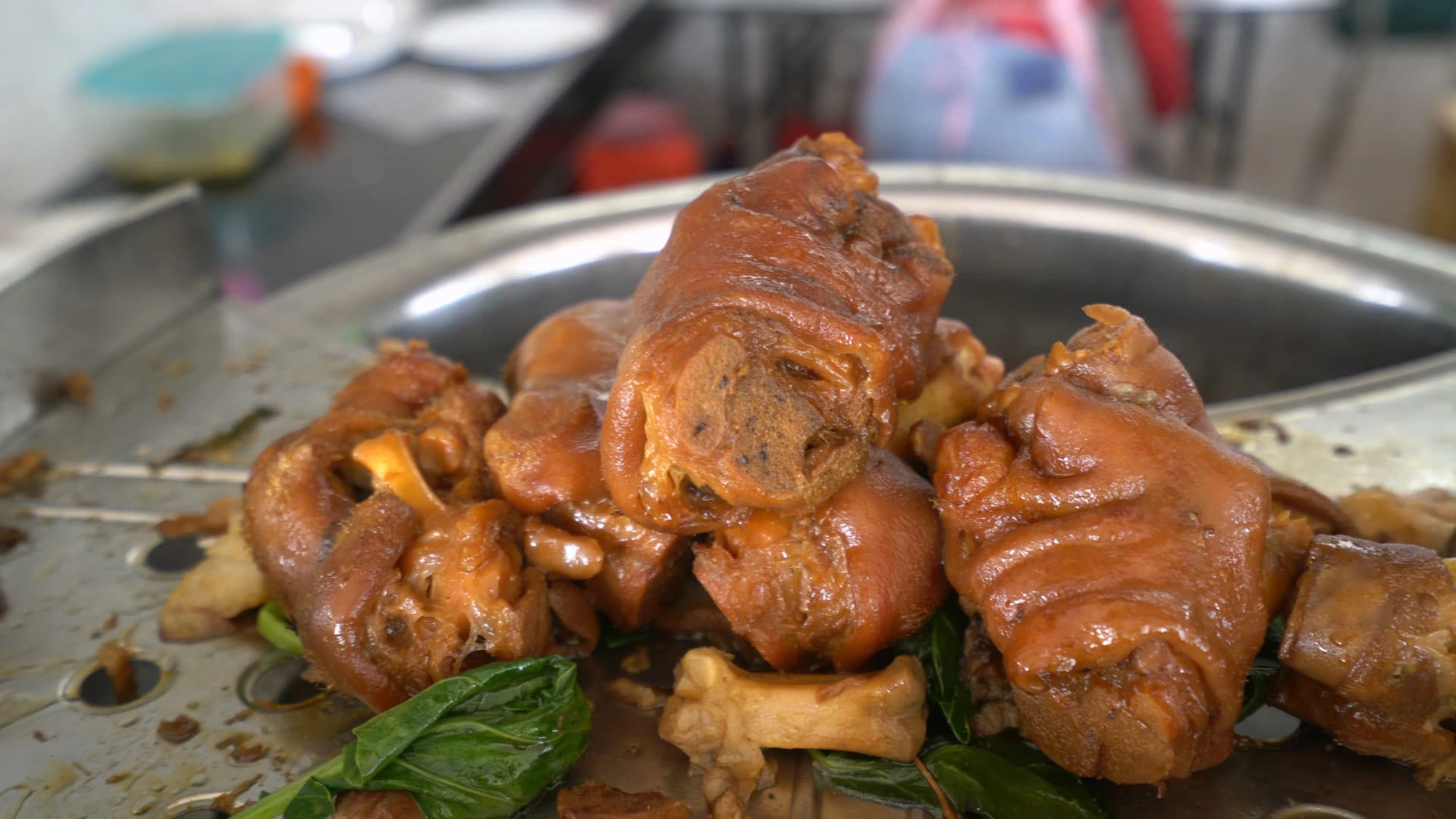
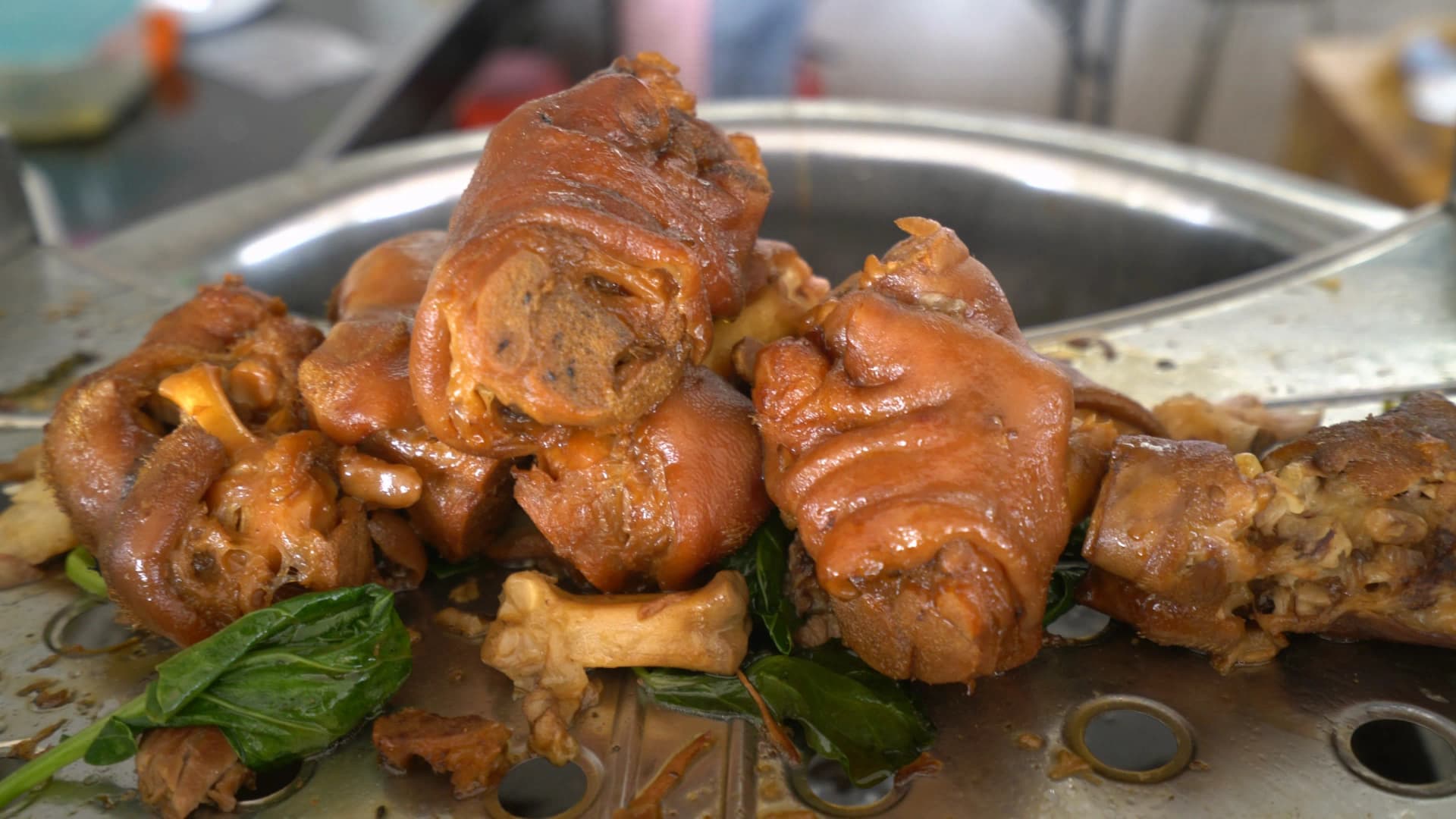
This is Thai braised pork leg. When I first saw it, I genuinely did a double take. It looks exactly like Chinese-style soy-braised pork you'd get at a good yum cha place. That glossy dark brown skin, the meat falling-apart tender from hours of slow braising, the green leafy veg underneath — you could plonk this in the window of any Chinese BBQ shop in Sydney or Melbourne and nobody would blink. The deep soy colour tells you straight away it's been simmering for ages, and the skin's gone completely gelatinous and translucent, just like a proper long-braised cut should.
When people think Thai food, they jump straight to tom yum or pad thai — punchy, herb-heavy, spicy stuff. But khao kha moo isn't that vibe at all. It's closer to a Chinese-style soy braise, which makes sense because the dish was brought to Thailand by Chinese immigrants. It shares the same roots as Chinese braised pork leg, so the resemblance isn't a coincidence.
One Bowl of Khao Kha Moo — The Complete Thai Braised Pork Rice
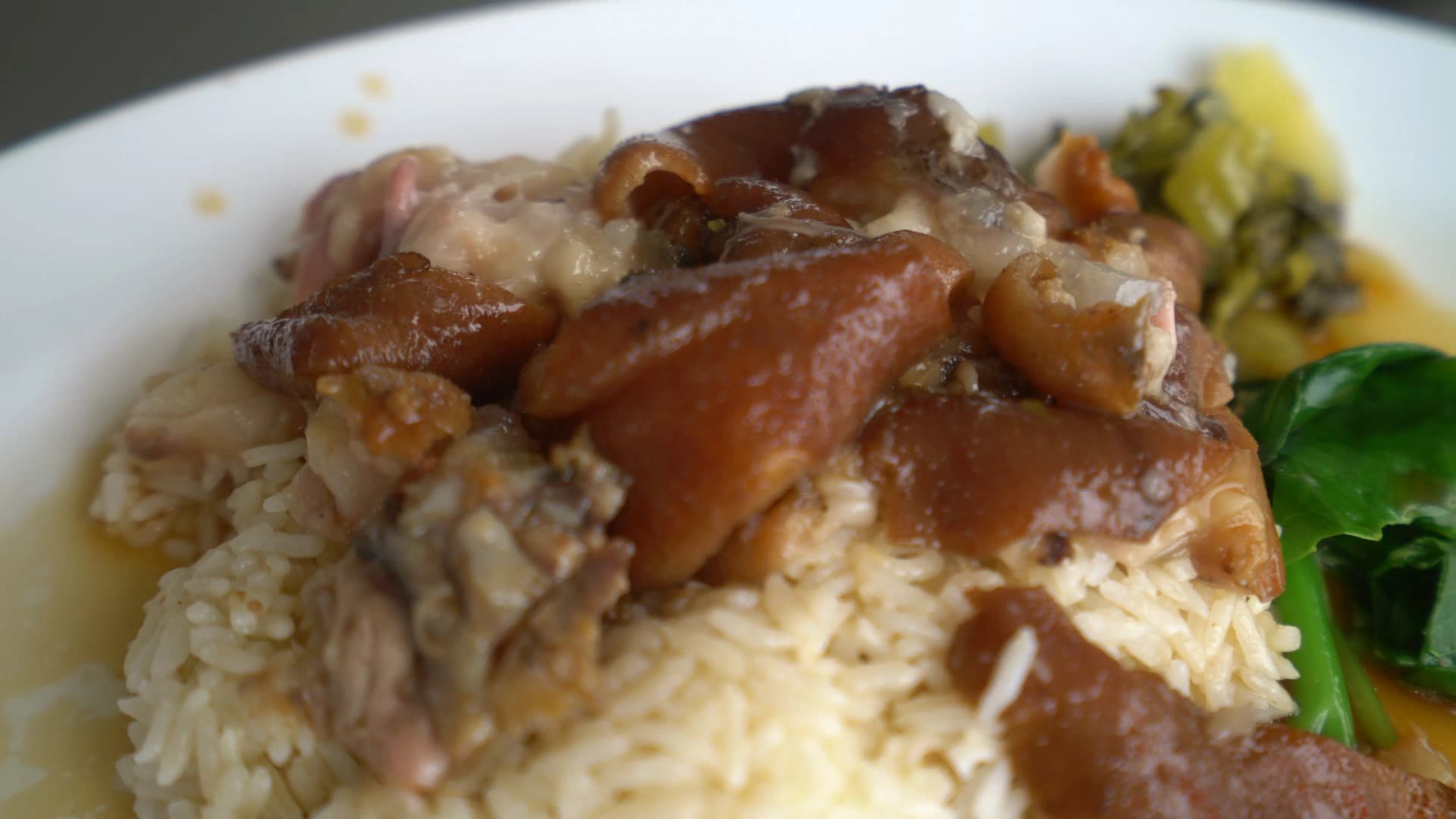
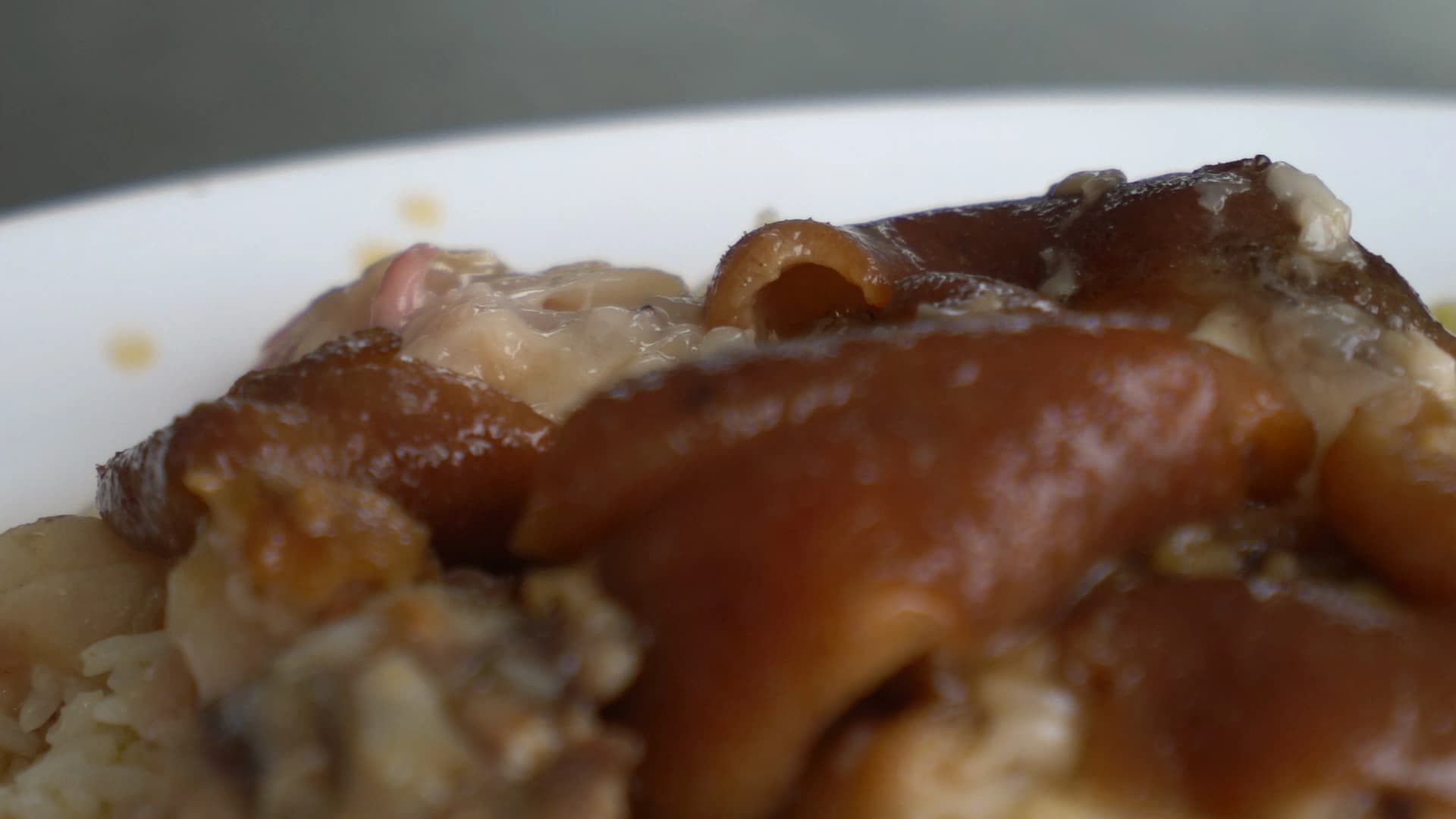
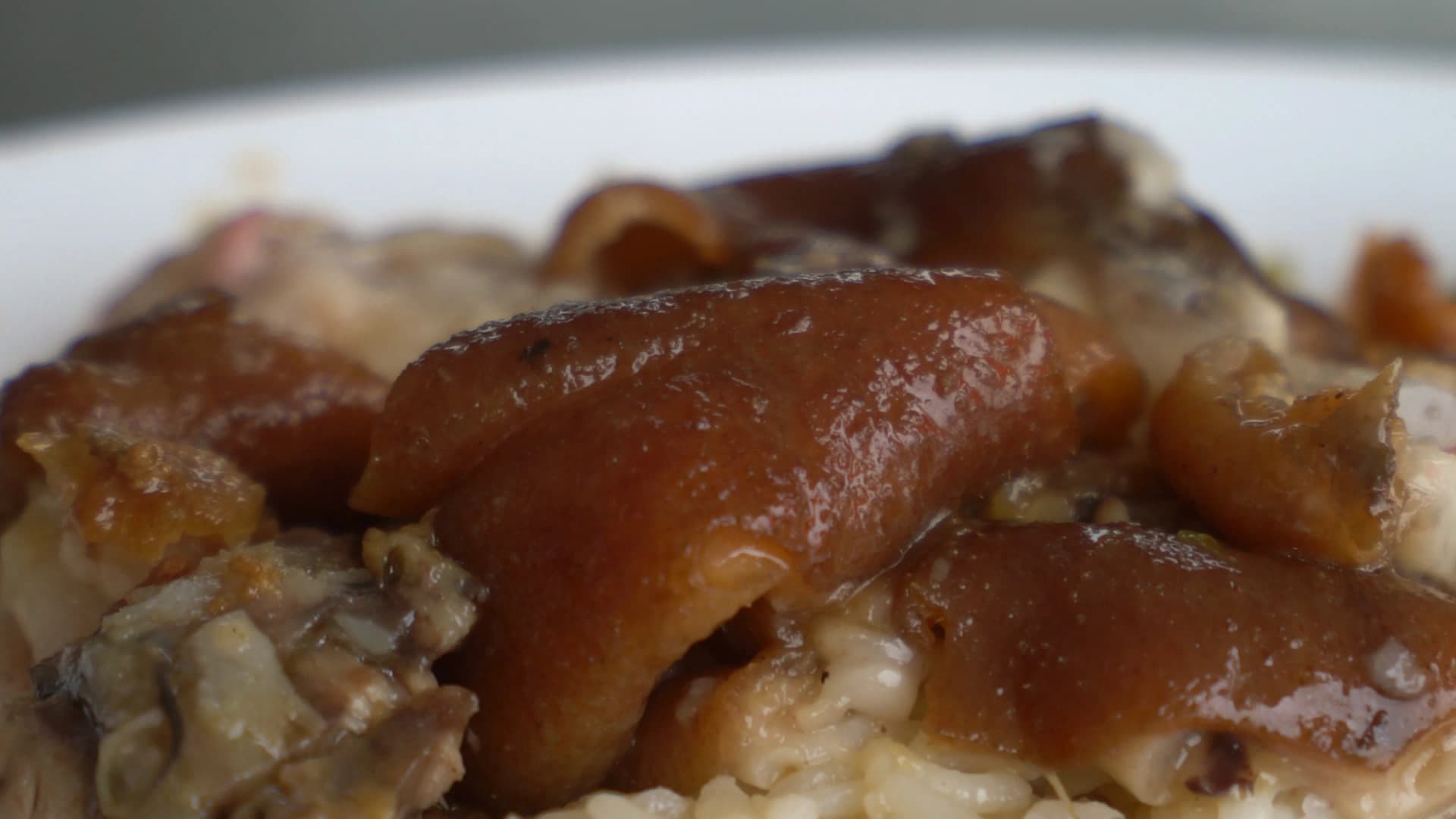
This is the finished khao kha moo — Thai braised pork leg on rice. My wife ordered it and we went halves. A generous pile of slow-braised pork sits on top of steamed rice, with the braising liquid ladled over until it pools around the bottom. On the side, you've got blanched bok choy and pickled mustard greens.
If you've ever had a Chinese pork rice bowl from a place like a Chinatown BBQ joint, you'll get the concept straight away — except here the whole thing comes pre-assembled as a one-bowl meal. The braising liquid soaks into the rice and seasons every grain, and honestly, once you start spooning it up you can't stop. It's that moreish combination of savoury-sweet soy glaze meeting fluffy jasmine rice.
One bowl cost 60 baht — roughly A$2.70. To put that in perspective, a servo pie back home costs more than that. And this is a proper full meal. The first time I ever tried khao kha moo was at the Terminal 21 food court in Bangkok's Asok area, and even then I was stunned by the price. This Rayong servo was even cheaper. We used to grab it at the night market near our place in Rayong too, and it was always around this price range. Wherever you eat it in Thailand, it's ridiculously good value.
The Texture Is Completely Different From What You'd Expect
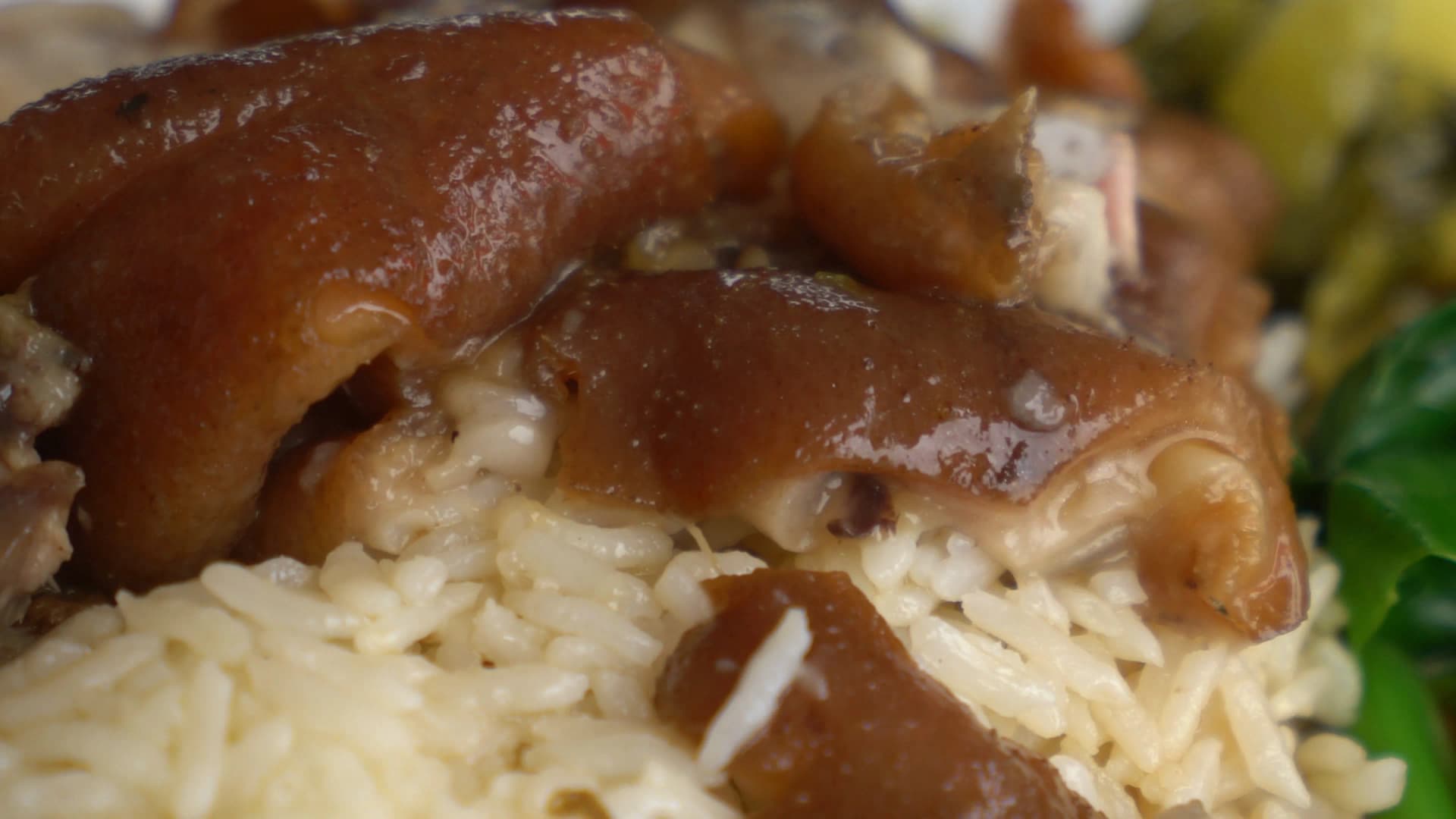
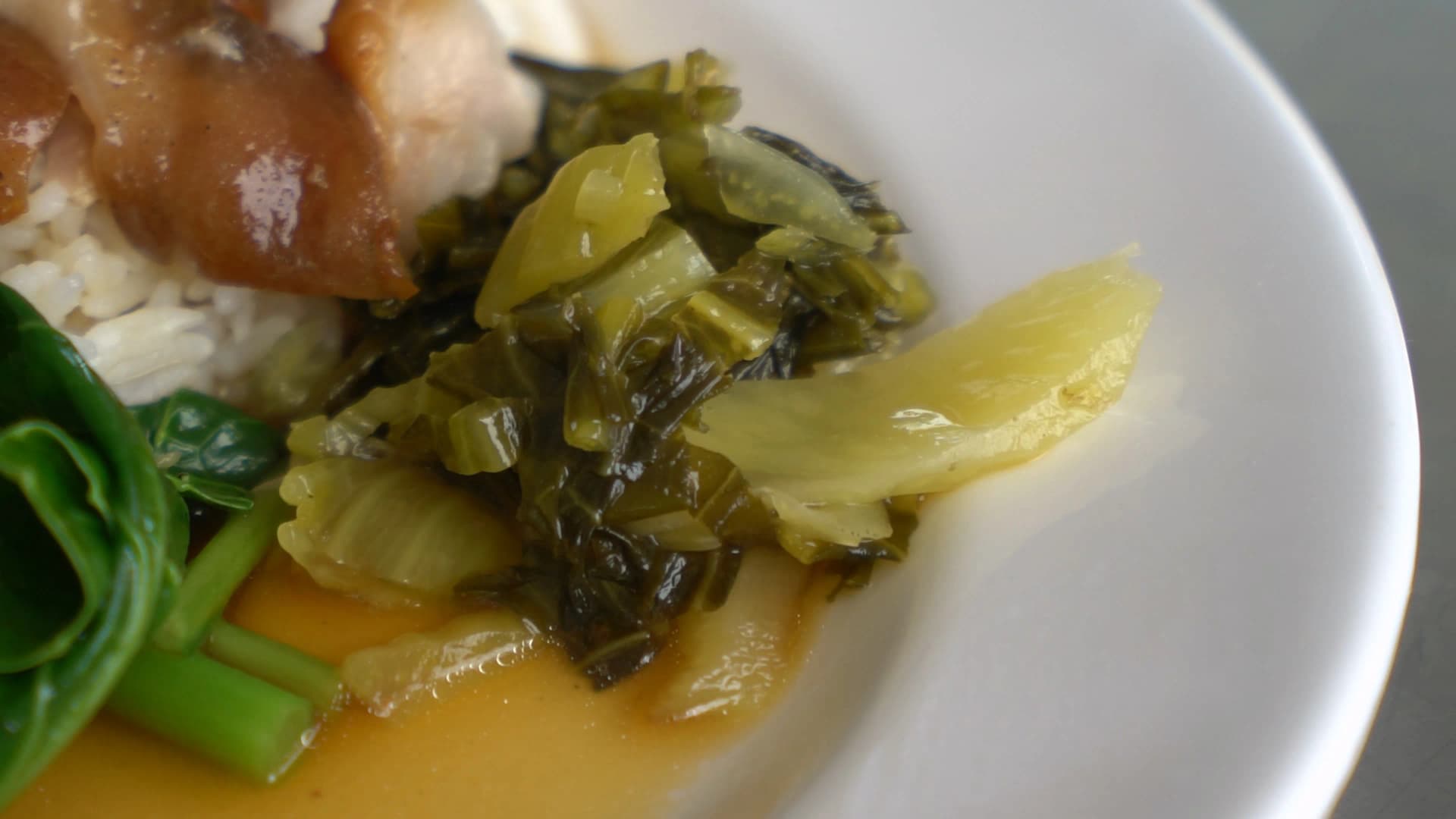
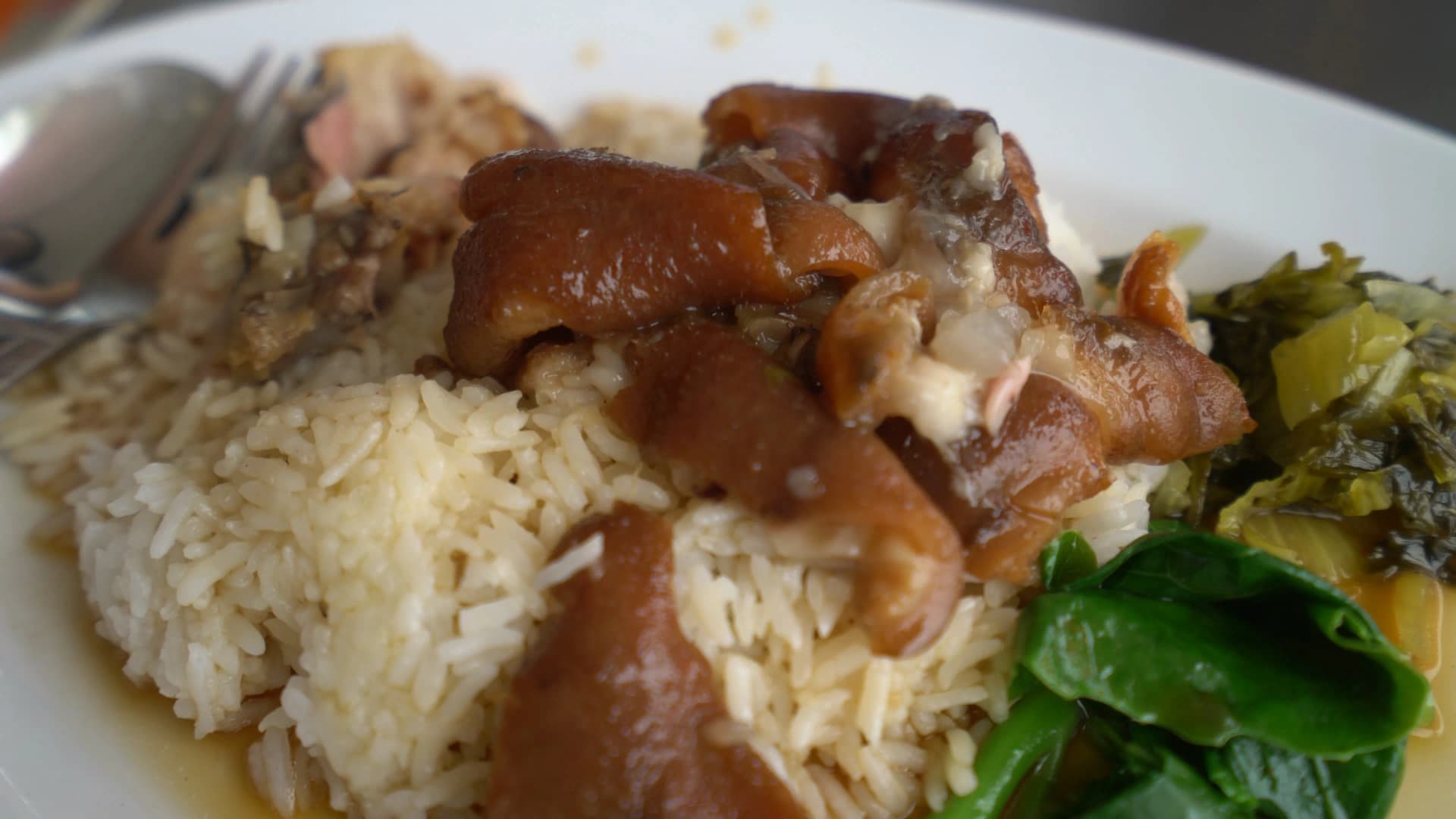
Up close, the khao kha moo looks like this — braised pork on a bed of jasmine rice, pickled mustard greens on one side, blanched bok choy on the other, and that rich braising liquid pooling across the plate.
When you actually eat it, the texture is quite different from a typical roast pork or even a Chinese BBQ pork you'd get at home.
🐷 Chinese-Style Braised Pork
Tends to have a chewier, bouncier texture. The skin has a bit of bite to it, and the meat keeps its grain so you tear into it. Seasoning is usually milder, so you'll dip it in soy sauce, chilli oil, or other condiments to round out the flavour.
🇹🇭 Thai Khao Kha Moo
Unbelievably soft — almost melt-in-your-mouth. The skin dissolves on your tongue, and the meat shreds apart with just a spoon. The soy-and-sugar braising base makes it noticeably sweeter than what you'd expect, and it's seasoned enough that you don't need any extra sauce — just mix it through the rice and you're sorted.
They look surprisingly similar, but the texture and flavour profile go in quite different directions. Both are absolutely delicious though.
The pickled mustard greens play a bigger role than you'd think. The pork is rich, sweet, and fatty, so it could easily get cloying after a few bites. But those tangy pickled greens cut right through and reset your palate. It's the same principle as having coleslaw with pulled pork, or pickled ginger with sushi. My wife told me that without those pickled greens, the khao kha moo just isn't complete — they're non-negotiable.
Tom Yum Mama — Thailand's Iconic Instant Noodle, Levelled Up
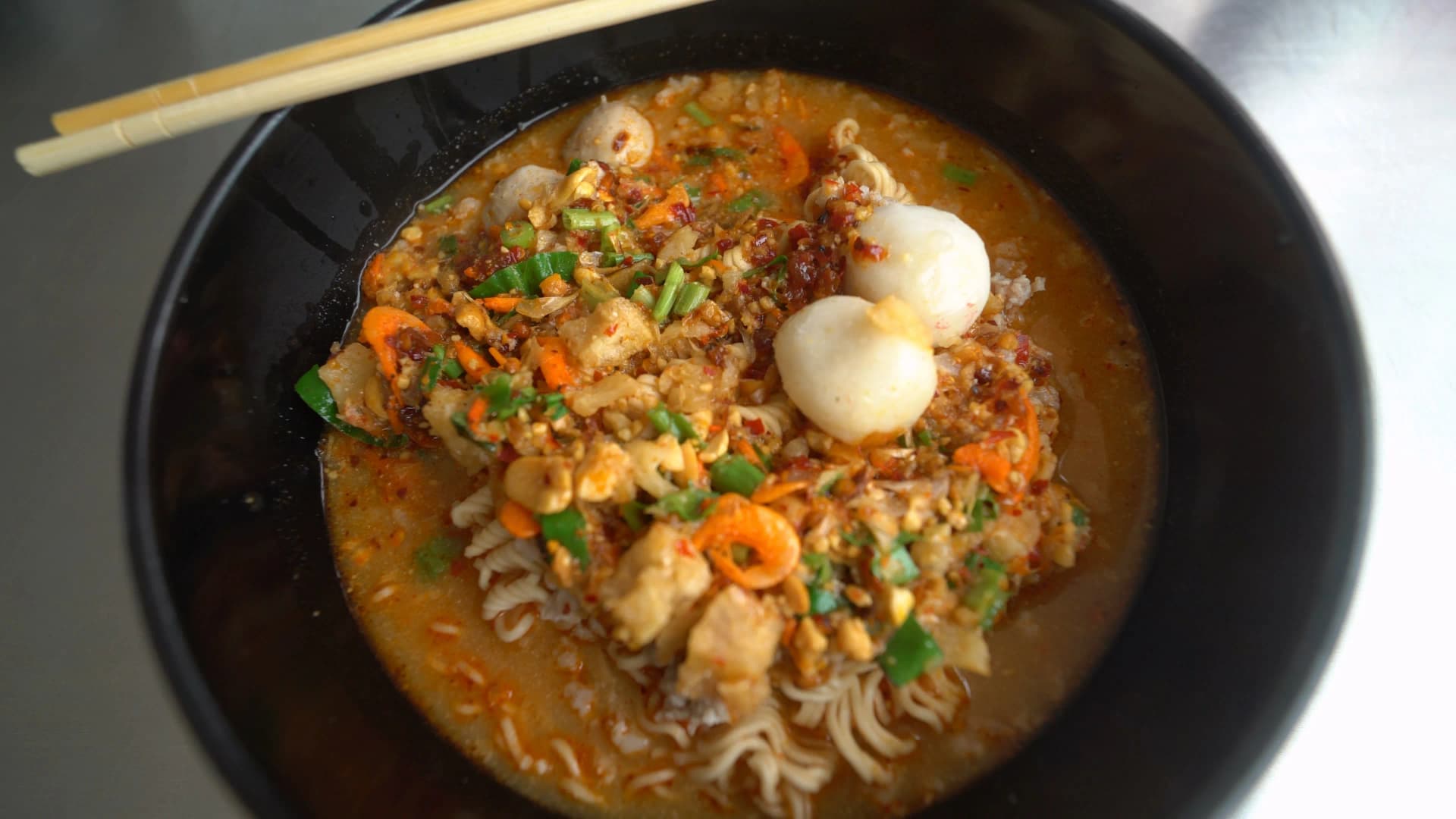
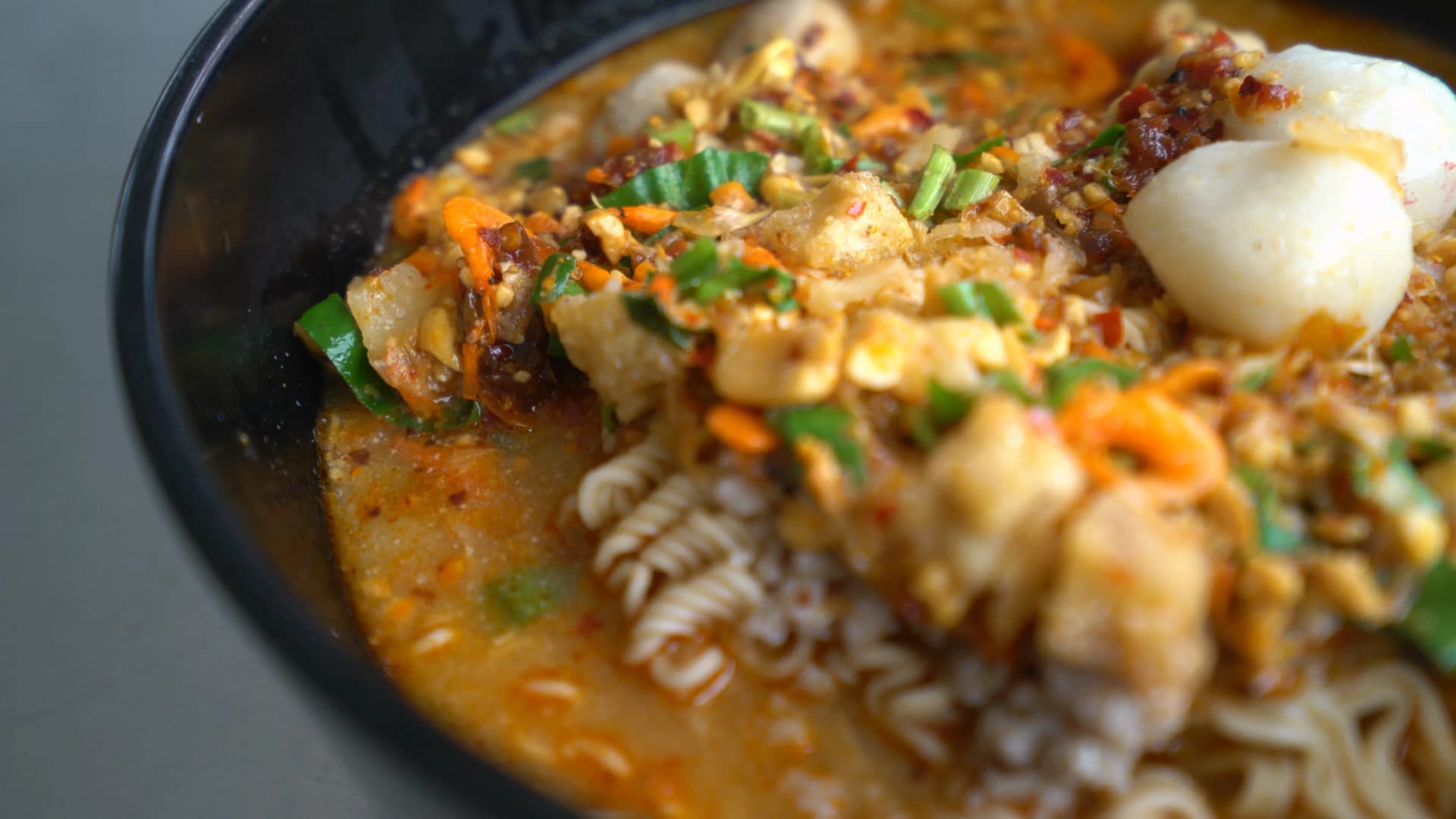
This one was mine — tom yum mama, Thailand's take on spicy noodle soup. Remember that noodle shelf I mentioned earlier? This is what came out after I picked a packet and handed it over. Mama is Thailand's number-one instant noodle brand — reckon it's as iconic there as Maggi is here in Australia. The kitchen cooked the Mama noodles in a proper tom yum broth, then loaded it up with fish balls, sliced pork, crushed peanuts, chilli oil, spring onions, and dried shrimp. You can get Mama noodles cooked up at any 7-Eleven in Thailand too, but what you get at a sit-down restaurant like this has way more toppings and depth.
I'll Be Honest — I Couldn't Finish My First Bowl
Let me be straight with you. This is the dish that trips up most Western palates the first time. It's not that it's too spicy or too salty. It's that the flavour combination simply doesn't exist in our food culture, so your brain doesn't know what to make of it. Lemongrass, galangal, and kaffir lime leaves create this sour-herbal-spicy hit that's unlike anything you've had before. We're used to chilli heat on its own — think a hot sauce on your burrito or chilli flakes on pizza. Tom yum's heat comes layered with intense sourness and aromatic herbs all at once. First time you try it, you genuinely can't tell if you like it or not.
I didn't take to it straight away either. My first two trips to Thailand, I couldn't even manage a spoonful of tom yum. It wasn't until my third visit that I started taking tentative sips, and once it clicked — properly clicked — I was hooked. Living in Rayong, I'd have it at least once or twice a week. Even now back home, I order Mama tom yum noodles online and cook them up, but honestly they don't come close to the real deal. Fresh herbs in the local version versus dried seasoning powder in the imported packet — there's just no comparison. This bowl cost 50 baht, about A$2.25.
Kuay Tiew Nam Tok — Thai Blood Broth Noodle Soup
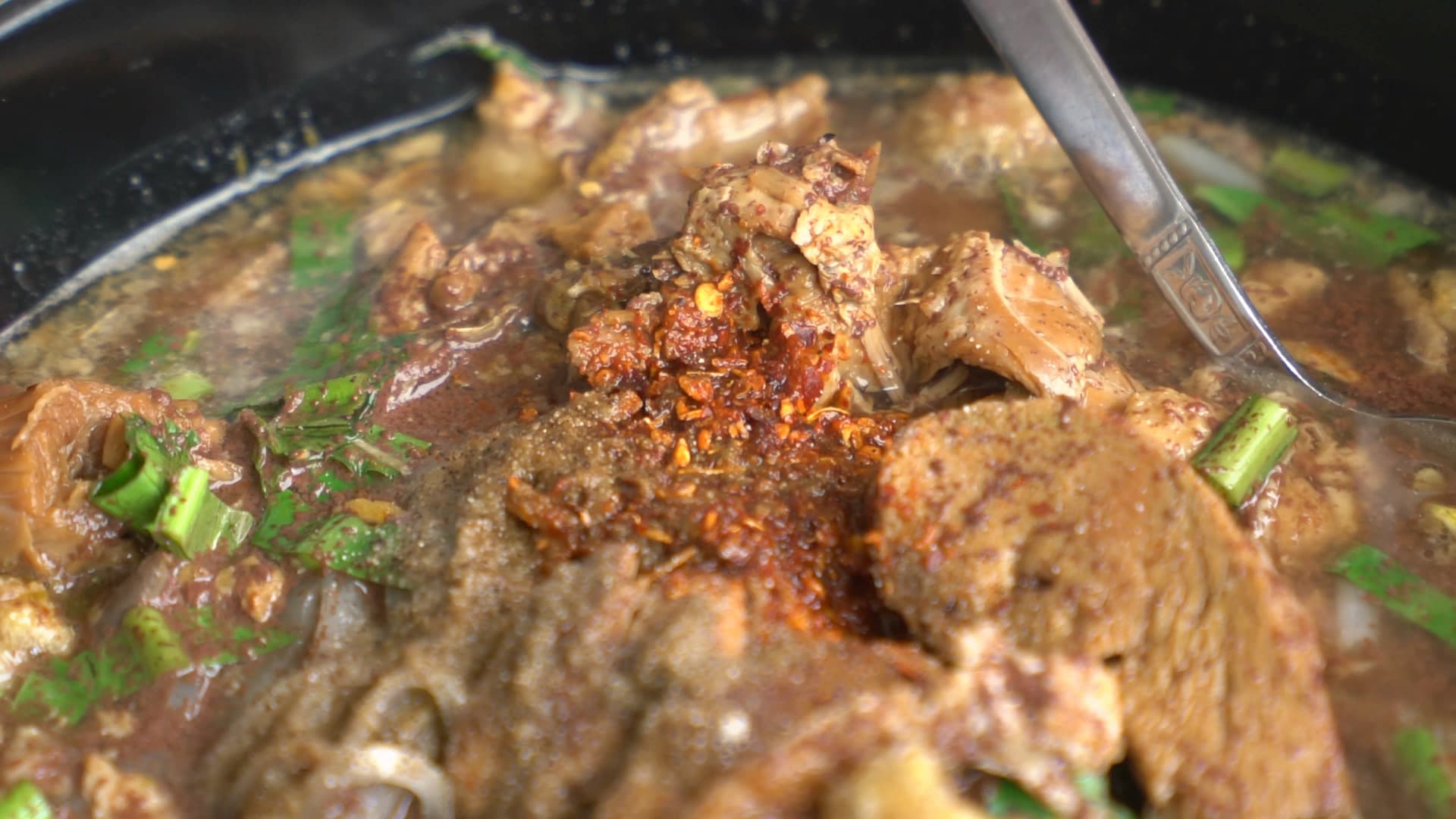
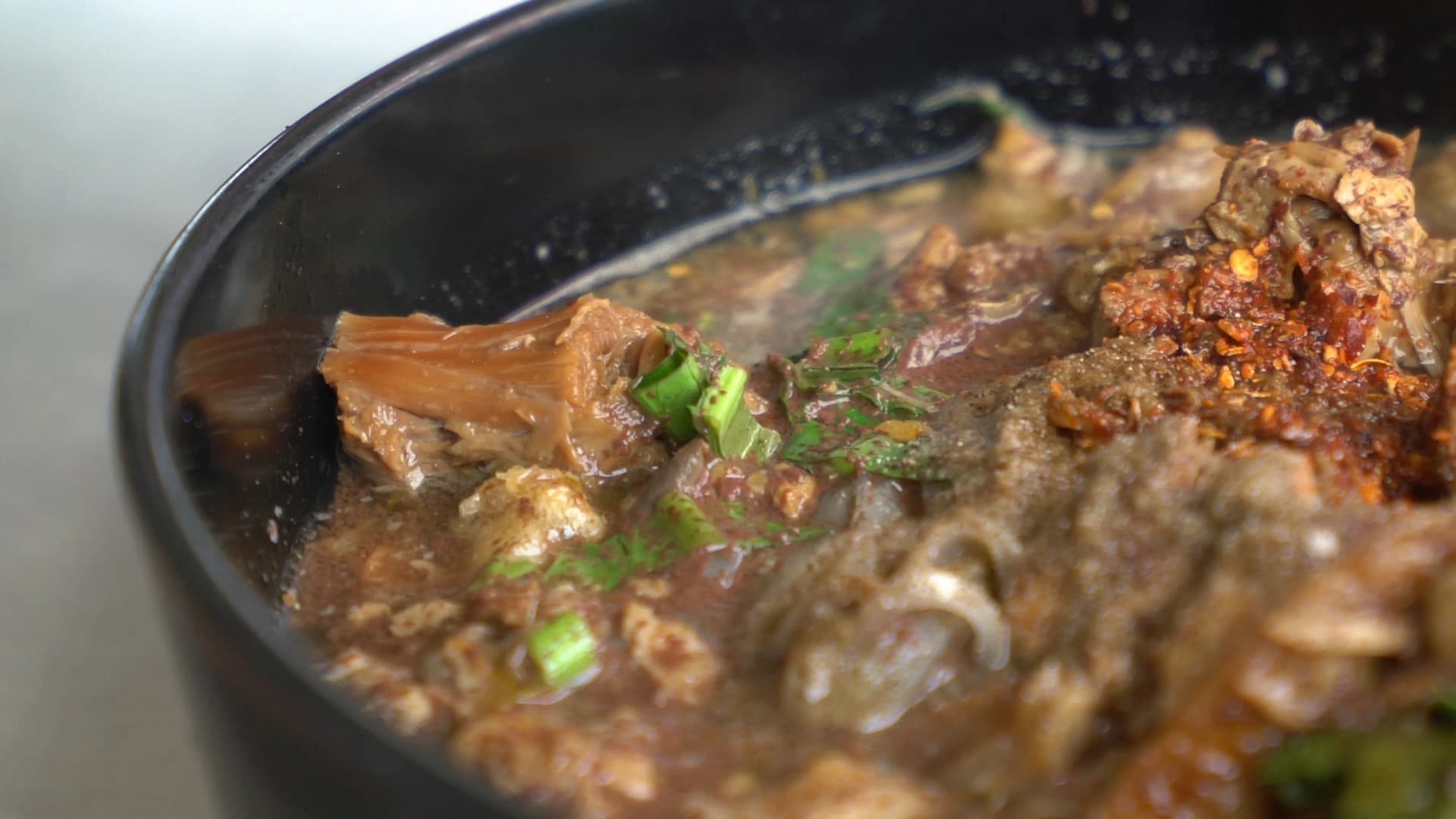
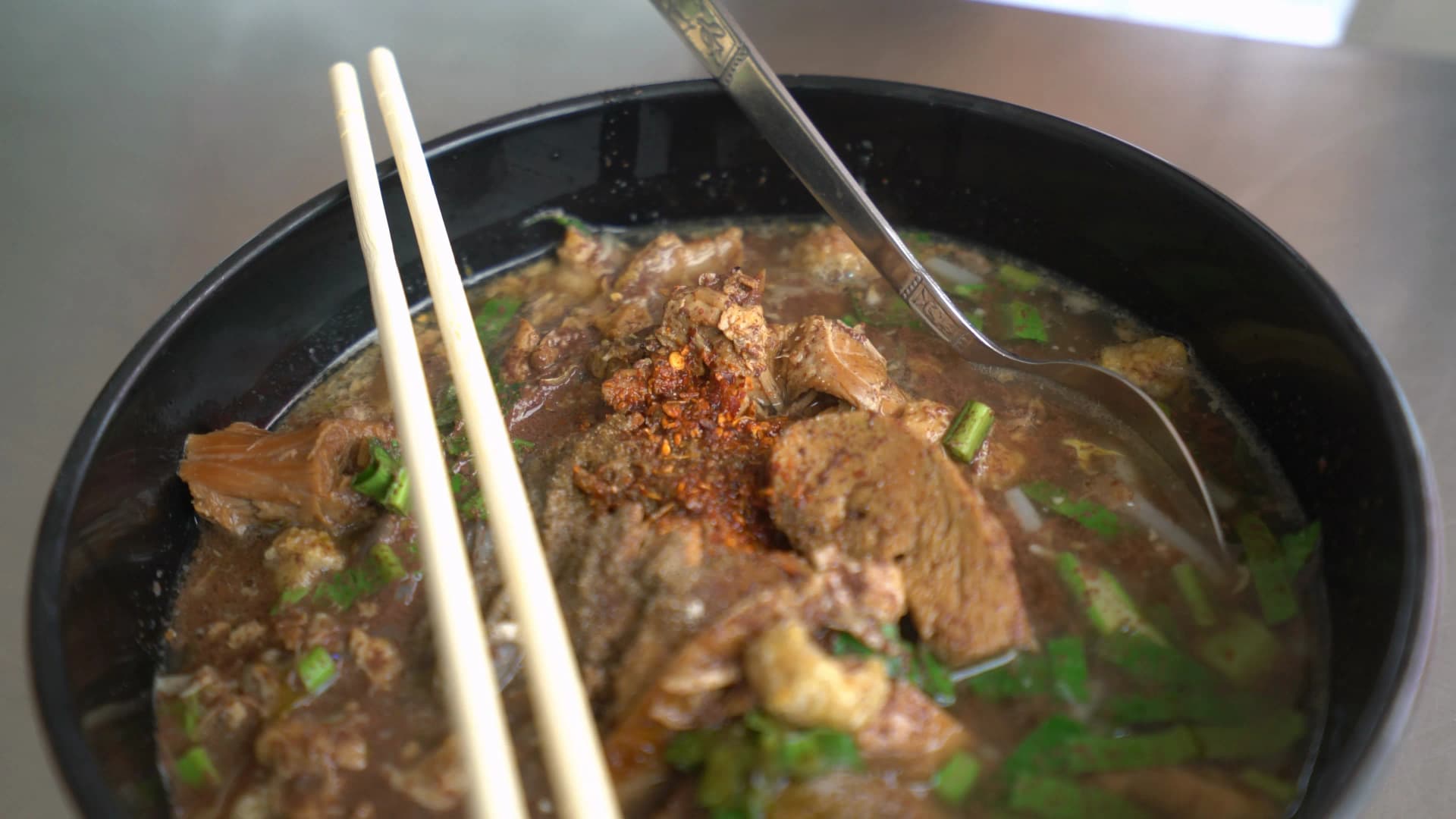
This one was my wife's order — kuay tiew nam tok, a Thai pork noodle soup with blood broth. That dark, intense-looking broth is the giveaway. Pork blood is added to the base, giving it that thick, deep brown colour and a rich, almost velvety consistency. "Nam tok" means "waterfall" in Thai, and once you see the colour of the broth, the name starts to make sense.
My wife grew up eating this. For Thai locals, kuay tiew nam tok is everyday comfort food — like how we'd grab a bowl of pho or a meat pie for lunch. It's not a special occasion dish. It's just a quick, satisfying midday meal you slurp down without thinking twice.
Nothing Like the Blood Sausage You Might Be Thinking Of
If you take a spoonful of the broth expecting something heavy and iron-rich like black pudding, you'll be surprised. Thai nam tok broth goes in a completely different direction. It's built on a base of soy sauce, vinegar, chilli flakes, and sugar, so you get this sweet-sour-spicy profile that's surprisingly light on the palate despite looking so dark. Crushed chilli and chopped spring onion float on top, and when you fish out a piece of slow-cooked pork, it shreds apart along the grain — beautifully tender.
If you're putting together a must-try Thai food list, put this one near the top. For Western palates, the success rate is way higher than tom yum. Tom yum has that herbal wall you need to climb over first, but kuay tiew nam tok is soy-based, so it feels familiar from the start. Slurping noodles through that deep, savoury broth gives you the same kind of satisfaction as tucking into a bowl of rich beef pho or a hearty ramen. This bowl was also 50 baht — about A$2.25.
Basil and Bean Sprouts Bring the Balance
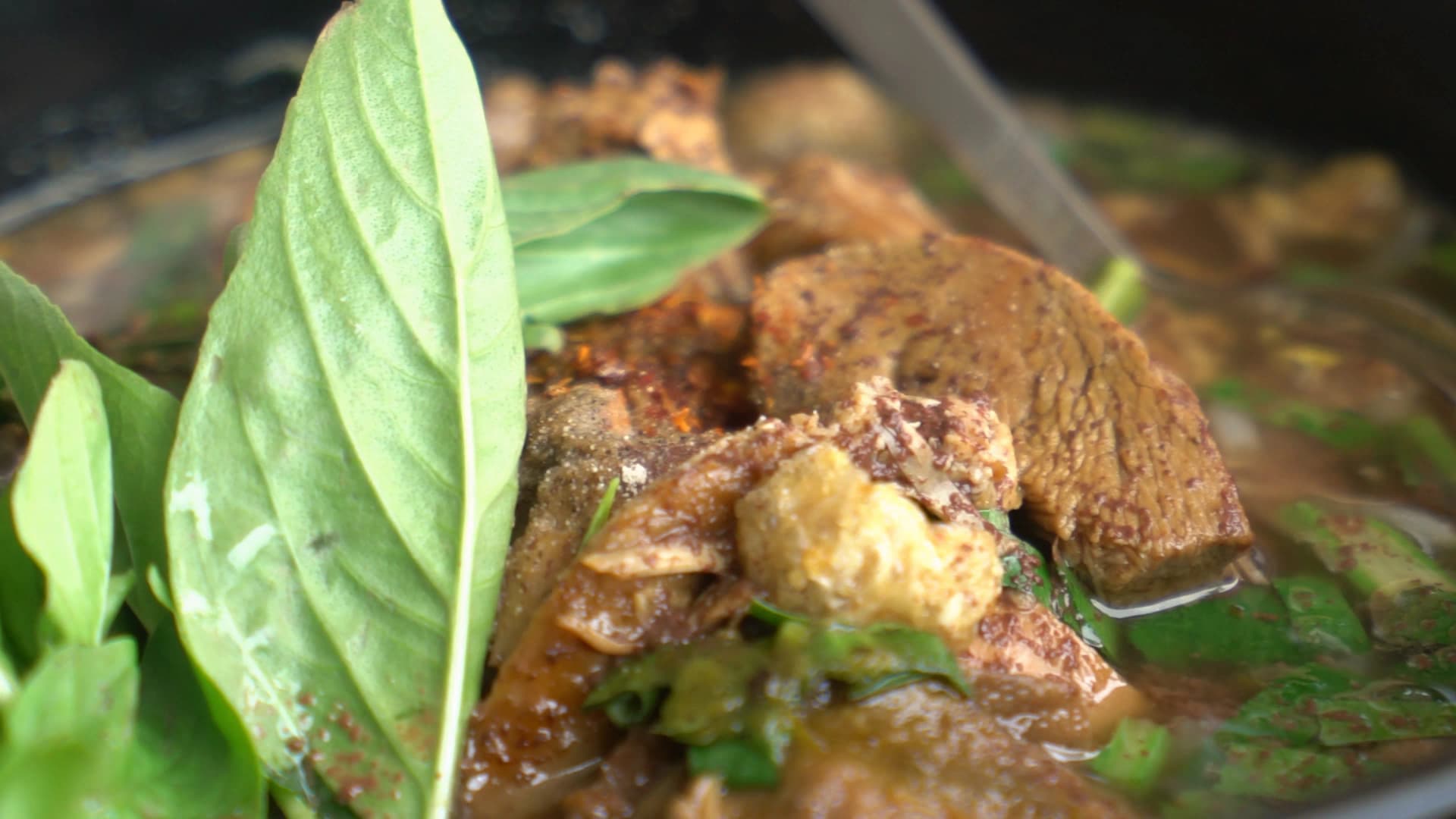
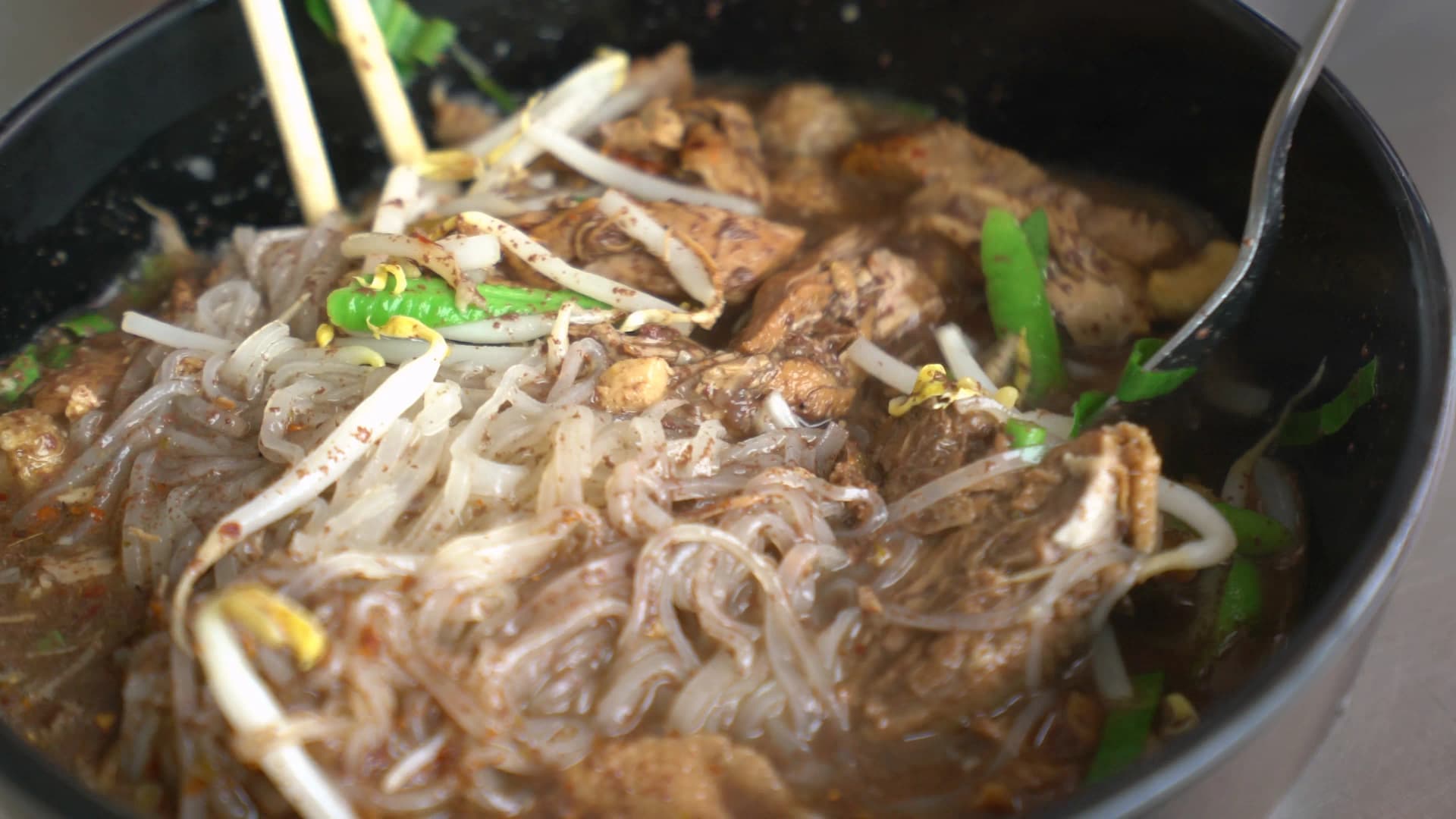
Up close, you can see fresh Thai basil leaves sitting right on top of the broth. Dunk them in for a second, then eat them with a piece of pork, and you get this gentle herbal aroma lifting through each bite. The noodles are rice noodles — translucent and slippery — and there are bean sprouts mixed through that give you little bursts of crunch between the softer textures. Without the basil and bean sprouts, the rich broth and noodles alone would feel heavy. These fresh elements balance the whole bowl out perfectly.
A Piece of Pork, Lifted Out on Chopsticks
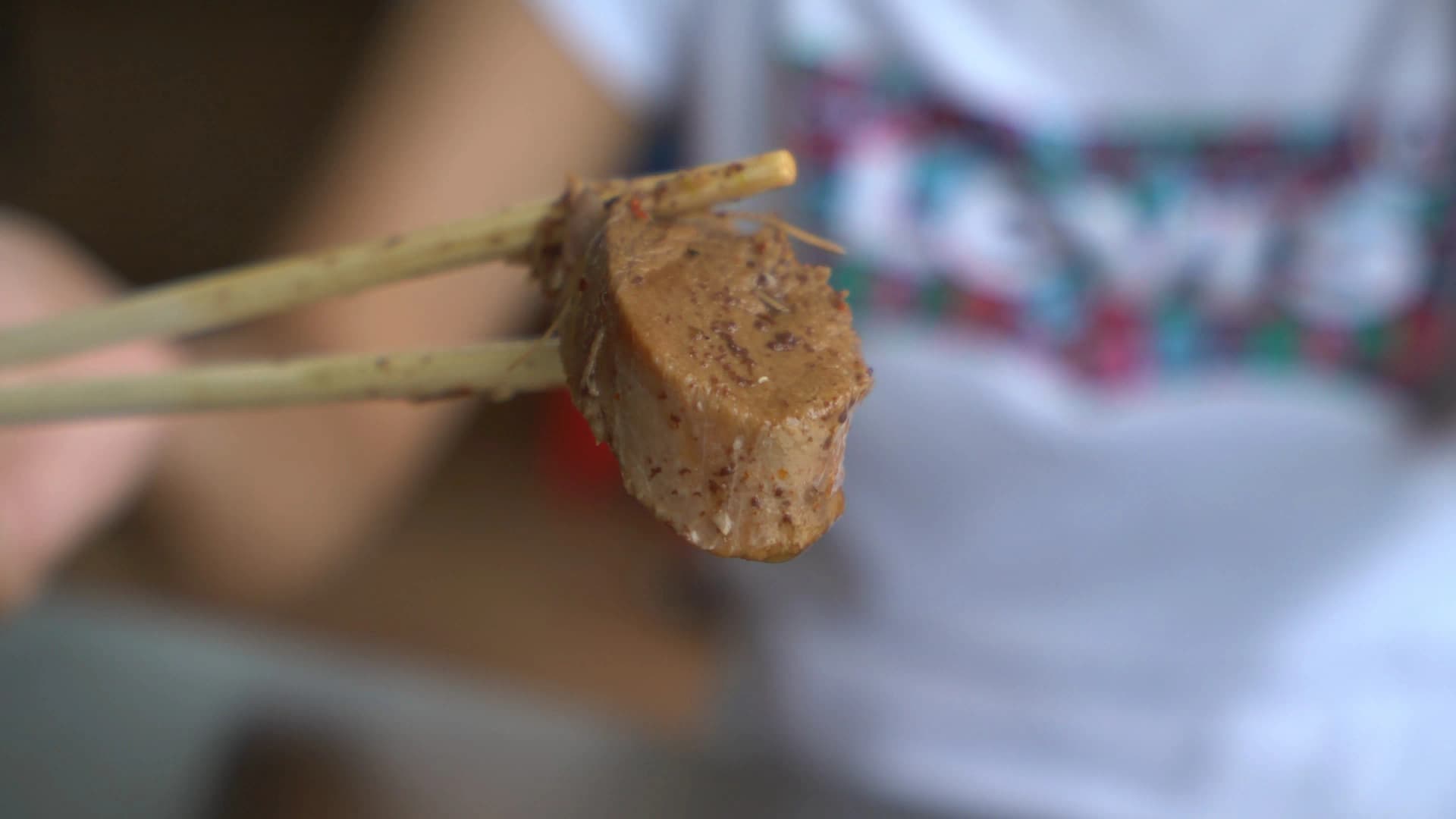
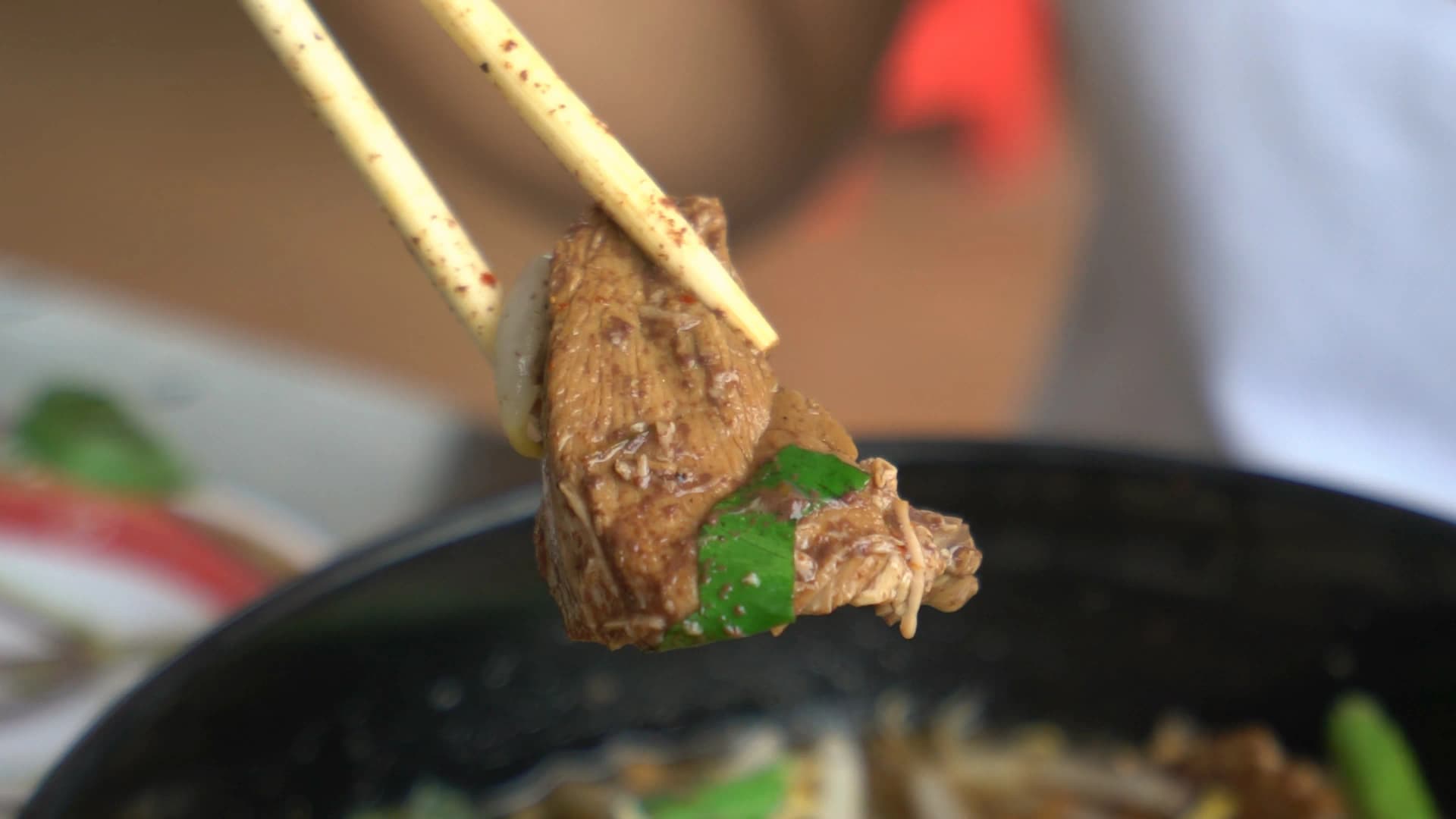
Here's a single piece of pork lifted out on chopsticks. You can see how completely the grain has broken down — it's practically pulled pork at this point. The deep colour tells you it's been simmering for hours, and even though the chopsticks are holding it together, the second it hits your tongue it falls apart without any effort. The fact that this quality of food came out of a servo restaurant genuinely blew me away. I asked my wife, "Is this place always this good?" and she just laughed and said Thailand's street food is the best food in the country. After three years of living there, I reckon she's dead right.
Three Bowls for A$7.50 — Don't Drive Past the Thai Servo
When I tell mates back in Australia that I had lunch at a petrol station in Thailand, they always crack up. But here's the maths: khao kha moo at 60 baht, kuay tiew nam tok at 50 baht, tom yum mama at 50 baht — three massive bowls, absolutely stuffed afterwards, 160 baht total. That's roughly A$7.50. Back home, that barely covers a flat white and a banana bread at the local cafe.
Was it perfect? Nah. The heat was rough — eating steaming hot noodle soup at a semi-outdoor table in the Thai midday sun means you're drenched in sweat by the end. And the toilets were the shared servo ones, so they weren't exactly sparkling. But after three years in Thailand, there's one thing I know for certain: the best Thai food isn't in fancy restaurants with tablecloths and air conditioning. It's at places exactly like this — servo eateries, night market stalls, and street-side carts where the locals actually eat. That's where the real flavour is, and that's what sticks with you.
If you're planning a trip to Thailand, remember this. Don't just drive past the petrol station. When you're heading from Bangkok towards Pattaya or Rayong along the highway, pull into a PTT station and look for the attached restaurant — there'll almost always be one serving khao kha moo or kuay tiew. Think of Thai PTT stations the way you'd think of a good Aussie highway rest stop, just with better food and wilder prices. Don't stress about whether you'll like khao kha moo — it shares the same roots as Chinese braised pork, so if you've ever enjoyed a pork rice bowl at your local Asian joint, you'll smash this. And if tom yum knocks you sideways the first time, don't give up on it. Took me three goes before my tastebuds finally got on board.
This post was originally published on https://hi-jsb.blog.