
Dumpling Hot Pot — A Broth That Gets Better Every Minute
Table of Contents
11 items
The Korean Comfort Food I Crave Every Winter
It was last winter, and there's this one Korean dish that pops into my head the second the temperature drops. Mandu jeongol — dumpling hot pot. You take a big, wide pot, bring the broth to a rolling boil, and toss in dumplings, mushrooms, vegetables, and meat all at once, letting everything bubble away together. In Korea, this style of cooking — where you simmer everything in a shared pot right at the table — is called jeongol. At first glance it just looks like a bunch of stuff thrown into a pot, but one taste and you immediately get why Koreans are obsessed with it. The magic is in how the meat juices from inside the dumplings slowly dissolve into the broth, making it deeper and richer with every passing minute.
I grew up eating mandu jeongol at home every winter, but having it at a restaurant is a whole different experience. This particular time, I went with a friend to a dumpling hot pot spot in Daejeon — a mid-sized city in central South Korea — but that place has since closed down. Since mandu jeongol is something you can find pretty much anywhere in Korea, though, I'll skip the restaurant talk and just focus on the dish itself. You'll typically find it at Korean restaurants that specialize in hot pot dishes or dumpling soup. It's not something you'd see at casual lunch spots or cafeteria-style joints — you need to look for a place that has "jeongol" on the menu.
What Dumpling Hot Pot Actually Looks Like
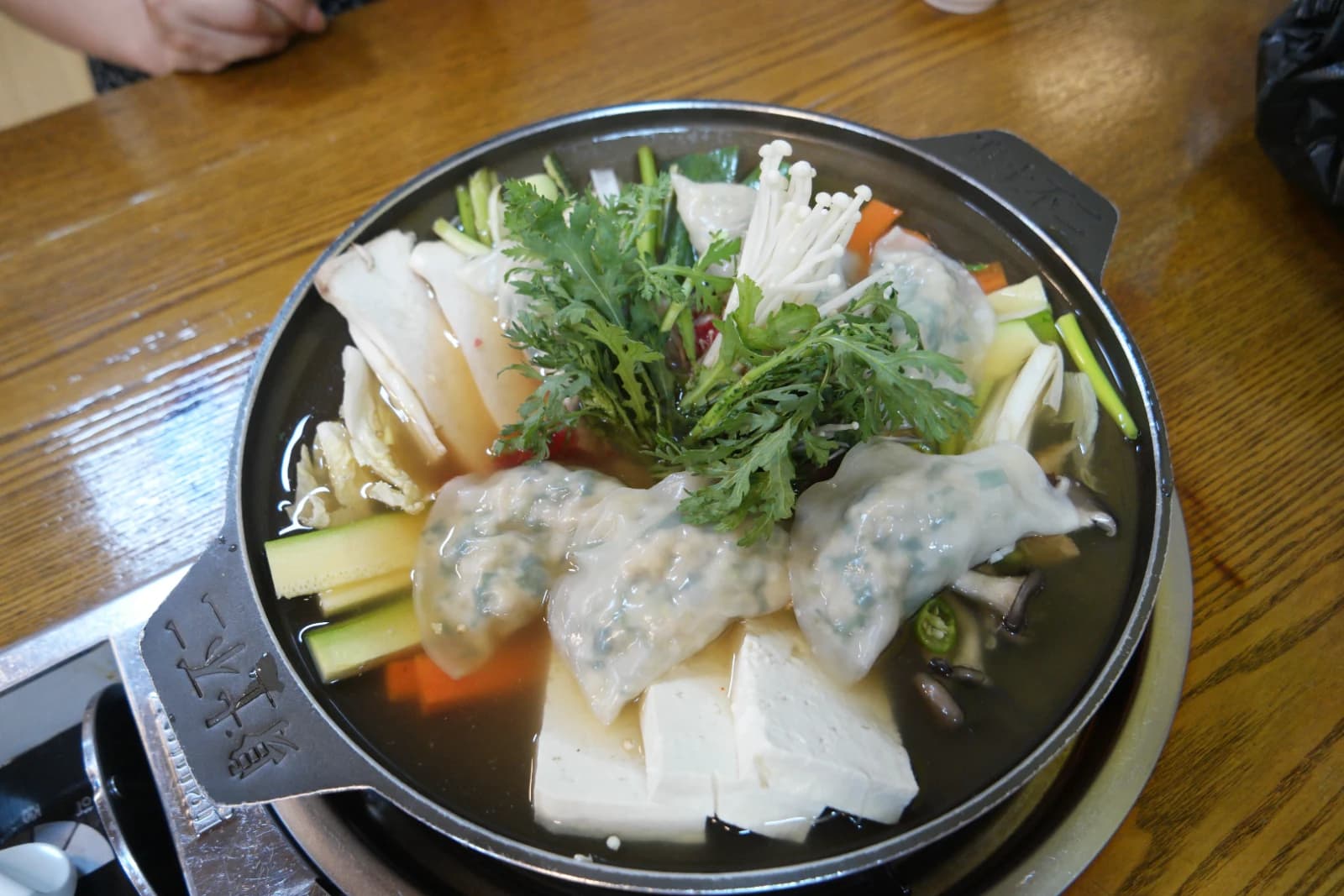
This is what mandu jeongol looks like before you fire it up. A wide, shallow hot pot is filled with soy-based broth, and all the ingredients are arranged in a ring around the edges. Every restaurant does it a little differently in terms of ingredients and broth seasoning. In the center, three or four handmade dumplings sit snugly together, their thin wrappers showing hints of green from the filling inside. Around them you've got thick-cut white tofu, enoki mushrooms, carrots, green onions, and cheongyang chili peppers packed in with zero gaps — pull everything out and the pot would be completely empty. The big pile of greens blanketing the top is ssukgat, or crown daisy — a leafy herb with a really assertive, almost floral aroma. At this point, the burner hasn't been turned on yet. Once you light the table-side gas burner, the broth starts boiling and everything cooks together all at once.
Look How Thin Those Dumpling Wrappers Are
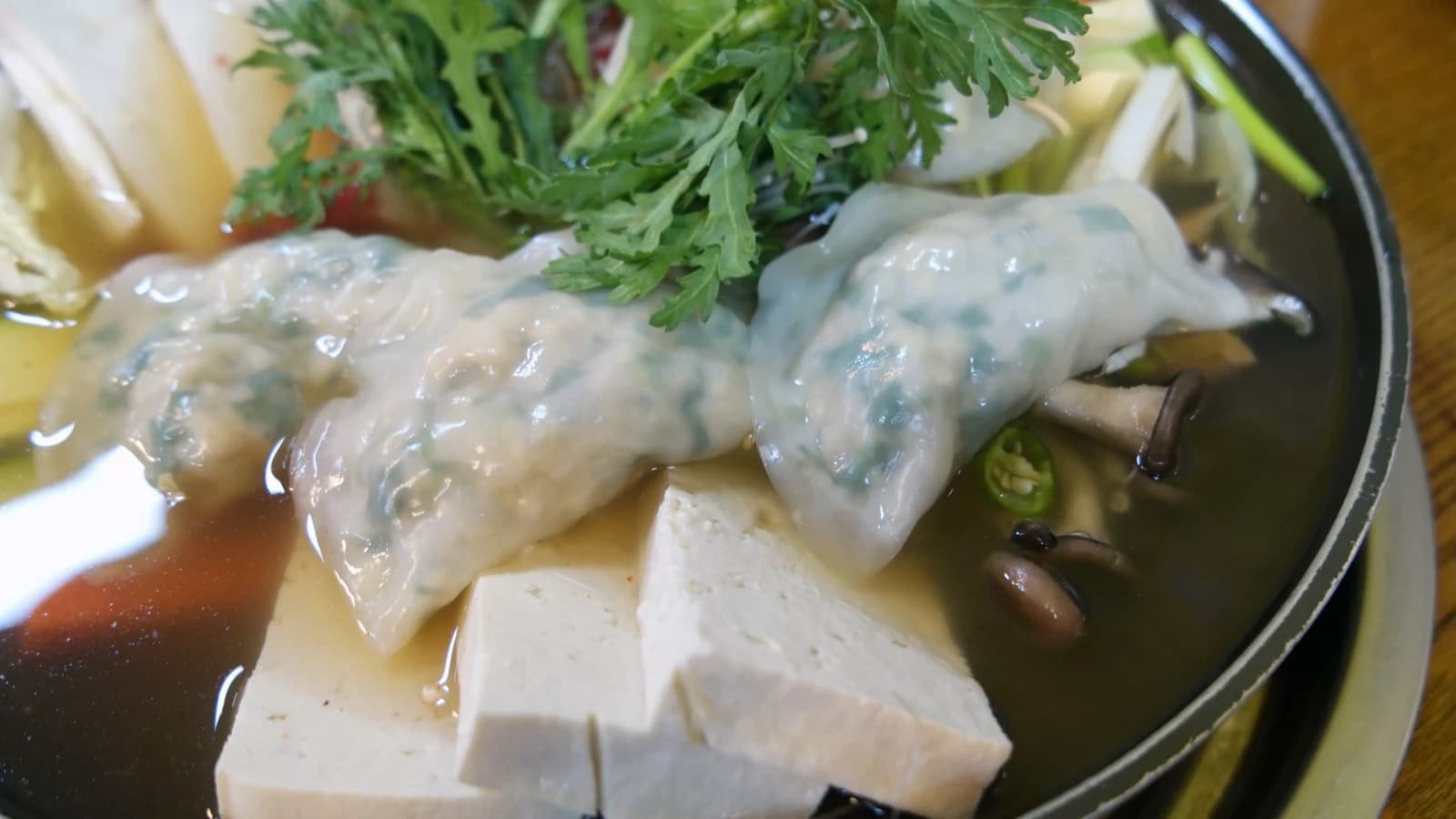
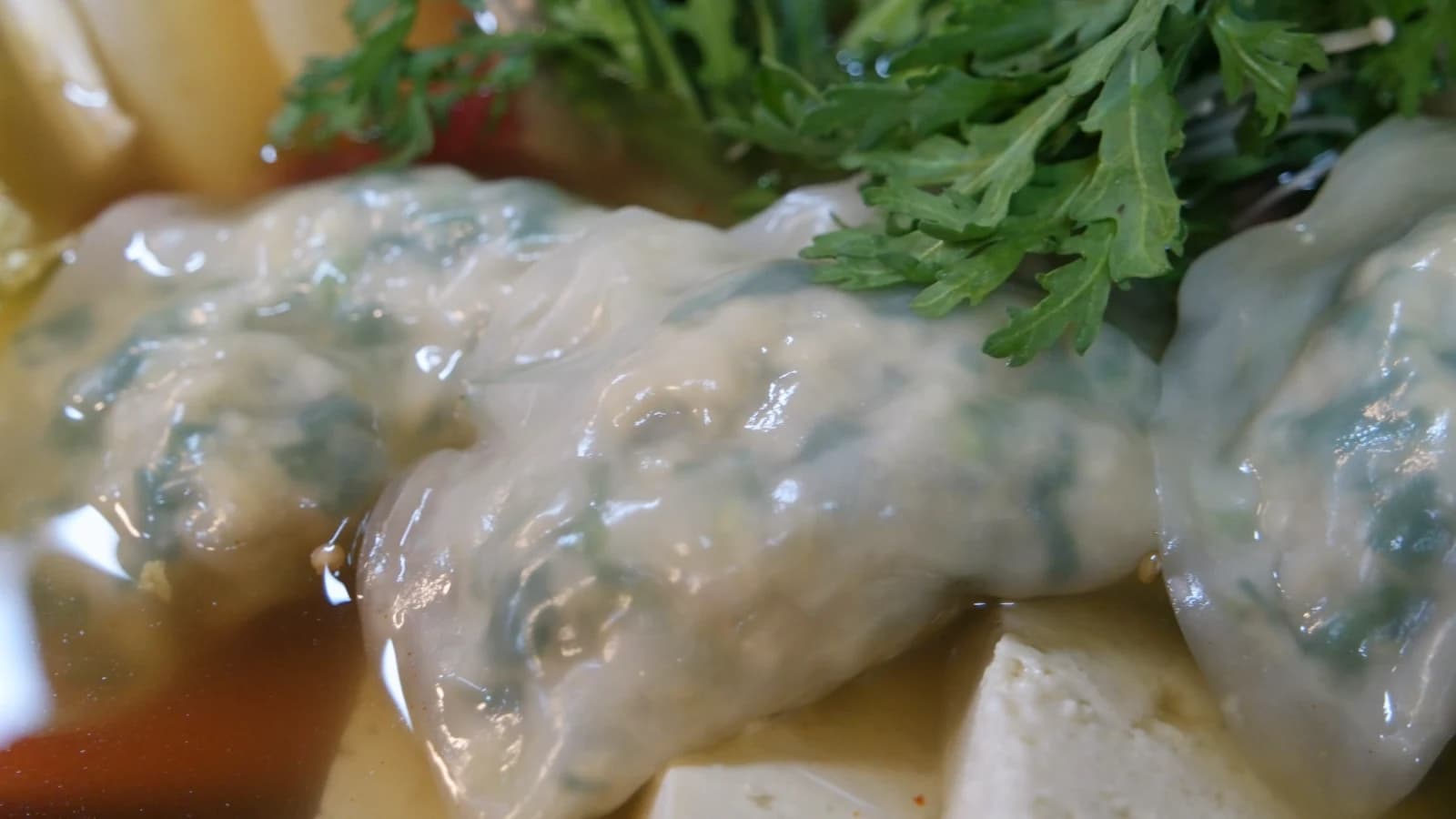
I leaned in close to get a good shot of the dumplings. The wrappers are paper-thin — so thin you can see the colors of the filling right through them. That vivid green told me there was a solid amount of chives packed inside. The second photo is an even tighter shot of a single dumpling, and you can see there's literally just one layer of dough holding everything together. It was half-submerged in the broth, so the surface had this gorgeous, glossy sheen to it.
Fire On — Turns Out There Was Beef Hiding in There
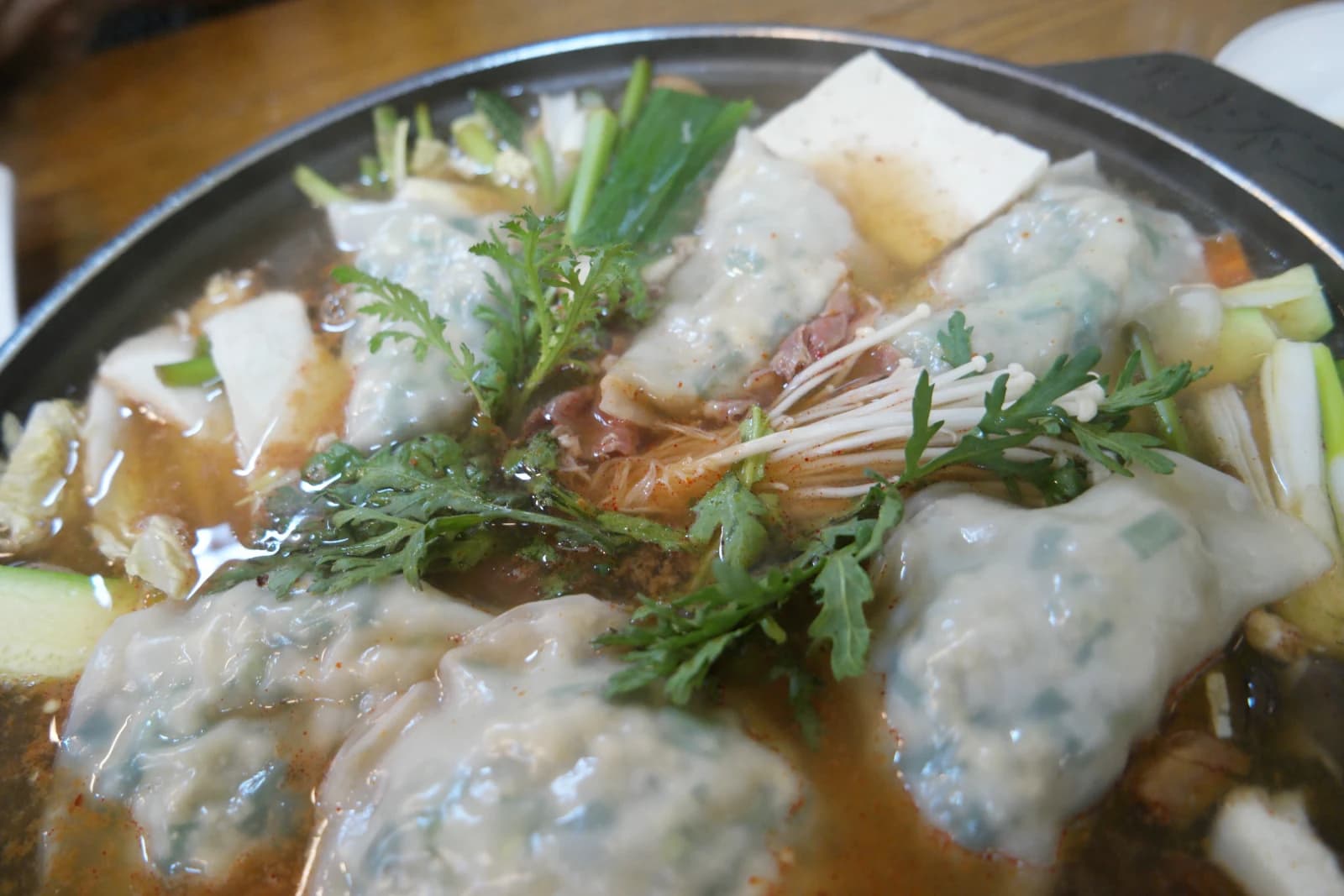
Once it started boiling, this was a completely different pot from a few minutes ago. The broth was bubbling up and tossing the ingredients around, and the dumpling wrappers had soaked up liquid and puffed up noticeably. But the real surprise? Tucked between the dumplings, there were slices of beef. My friend popped the lid off and immediately went, "Wait, they put beef in here too?" As the meat cooked and released its juices, the broth color darkened dramatically — you can see it clearly in the photo. Most dumpling hot pot places add the meat separately after the initial boil, but this restaurant had layered the beef in with the vegetables from the start. That meant the beef drippings were seeping into the broth the entire time it cooked. The enoki mushrooms had wilted down into limp tangles, and the crown daisy greens that looked so fresh and perky before had completely collapsed into the broth. The edges of the tofu had turned a light brown — a sign of just how rich and concentrated the broth was getting.
A Broth That Transforms as It Simmers
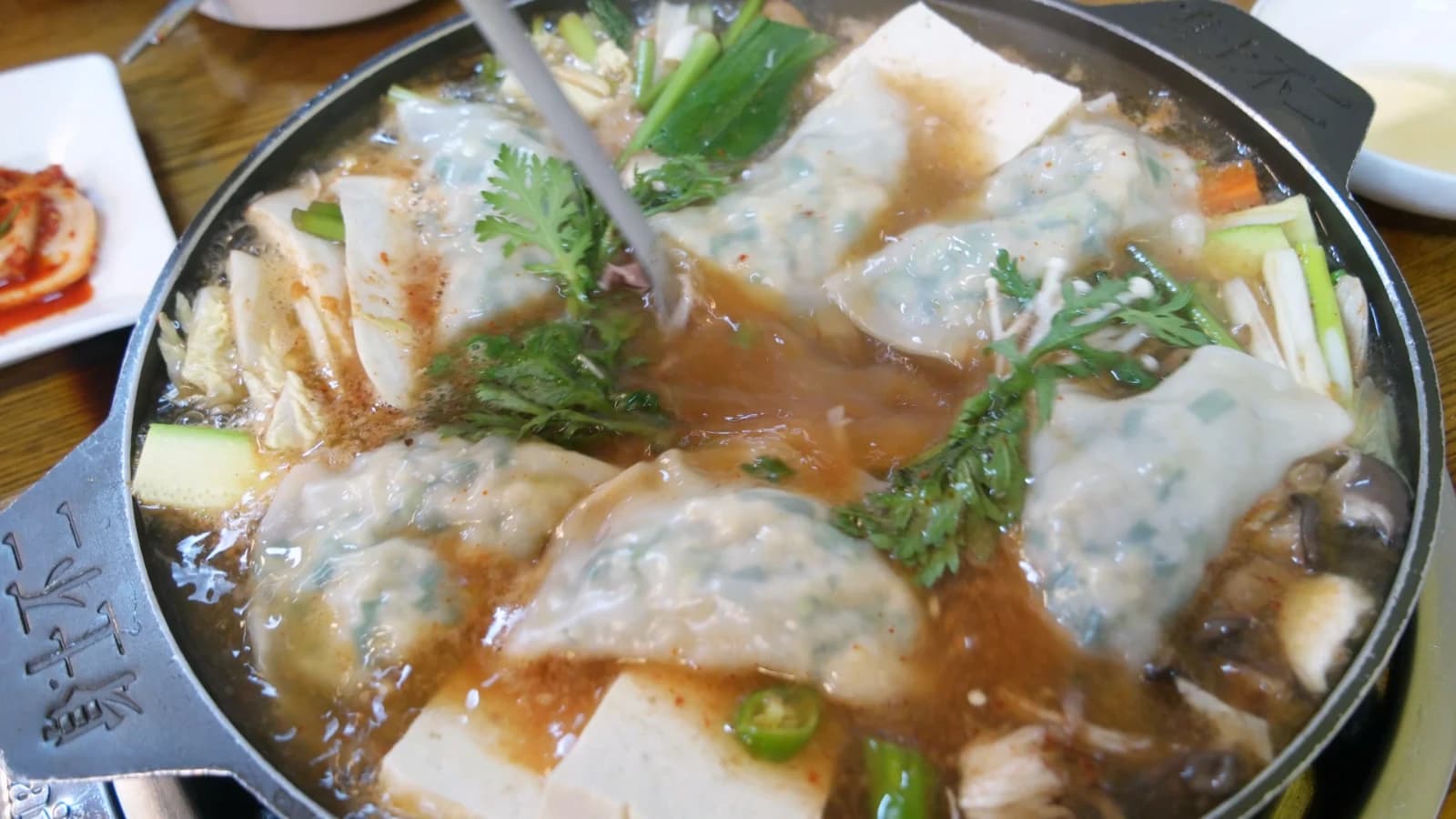
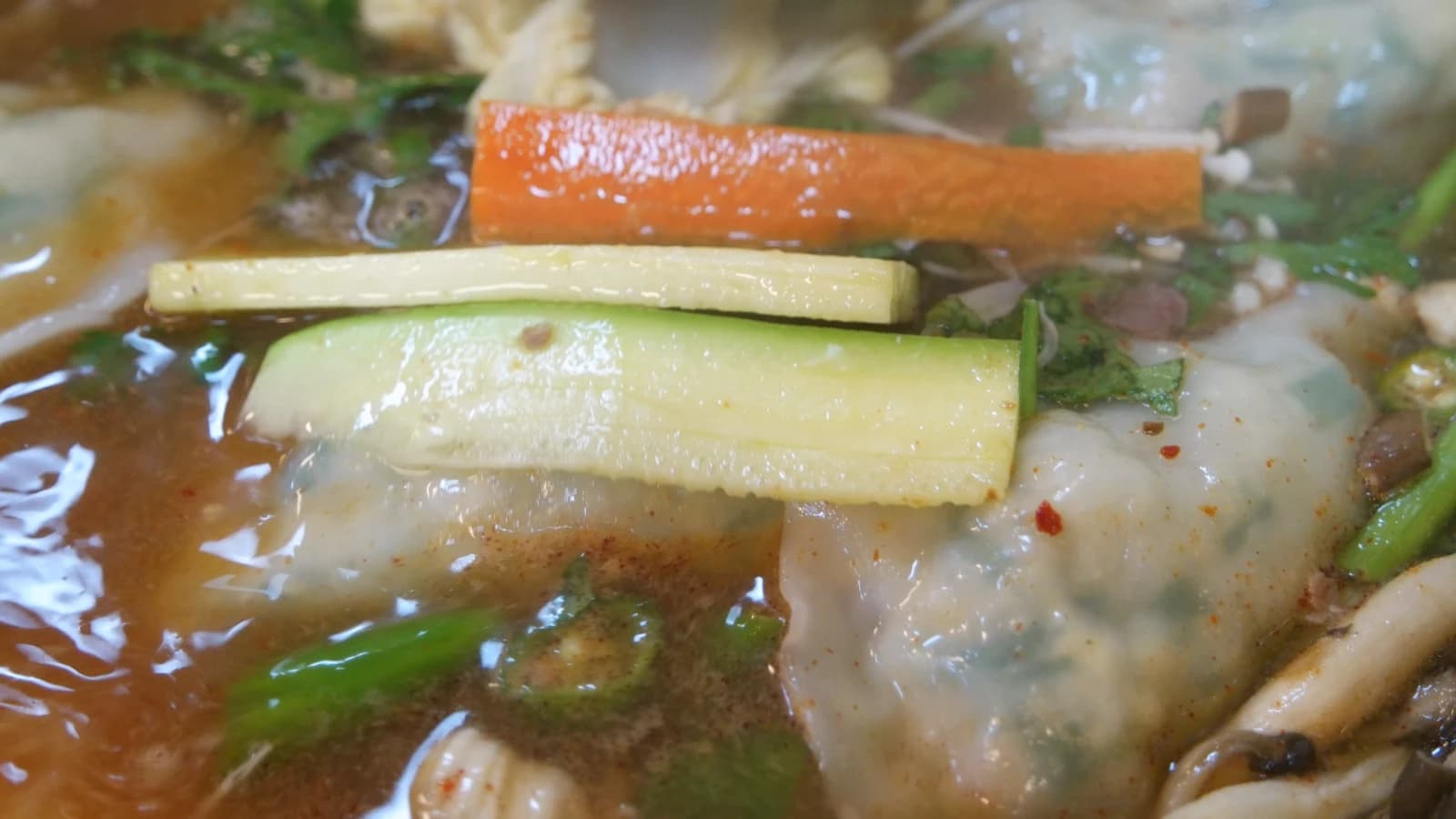
This is after it had been simmering for a good while. You can see the ladle sitting in the pot — at this point, it's time to start eating. The broth color was completely different from when it first arrived. All the beef juices and everything that leached out of the dumpling fillings had melted into the liquid, making it thick and deeply savory. Off to the left you can catch a plate of kimchi, and on the far right there's a stone pot of steamed egg casserole we'd ordered on the side. In the close-up shot, you can see the zucchini and carrots are totally tender, their colors a shade darker from soaking in all that flavor. This is exactly what makes mandu jeongol so special — your first spoonful and your fifth spoonful taste completely different. Same pot, but the broth keeps evolving as time passes. It's like getting a new soup every few minutes.
The Dumpling Burst Open — But Honestly, That's Not All Bad
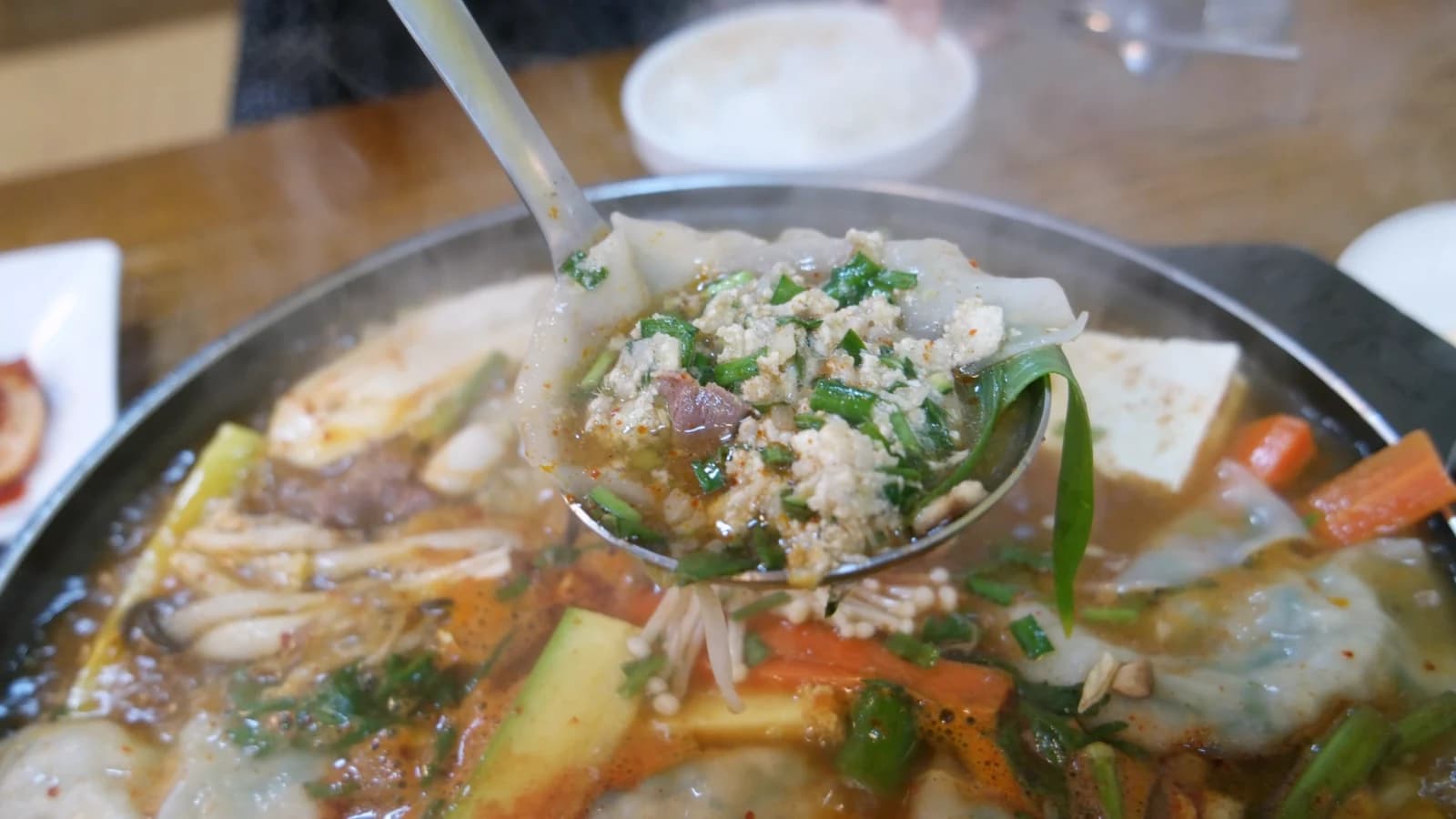
The dumpling burst. This is what happens when you let it boil too long. I scooped it up with the ladle and the wrapper tore open, dumping all the filling out into the broth. My friend told me to fish them out earlier, and I should've listened — but I was too busy taking photos. A little regrettable, honestly. But here's the thing: a burst dumpling isn't entirely a bad thing, because all that filling dissolving into the broth makes it even richer. If you look inside the pot, the zucchini, carrots, enoki mushrooms, shiitake mushrooms, and rice cakes are all thoroughly cooked and tangled together, steam rising in thick clouds. You can see empty bowls in the background — that's where you scoop out the solids and broth to actually eat.
What Dumpling Hot Pot Really Looks Like After a Long Simmer
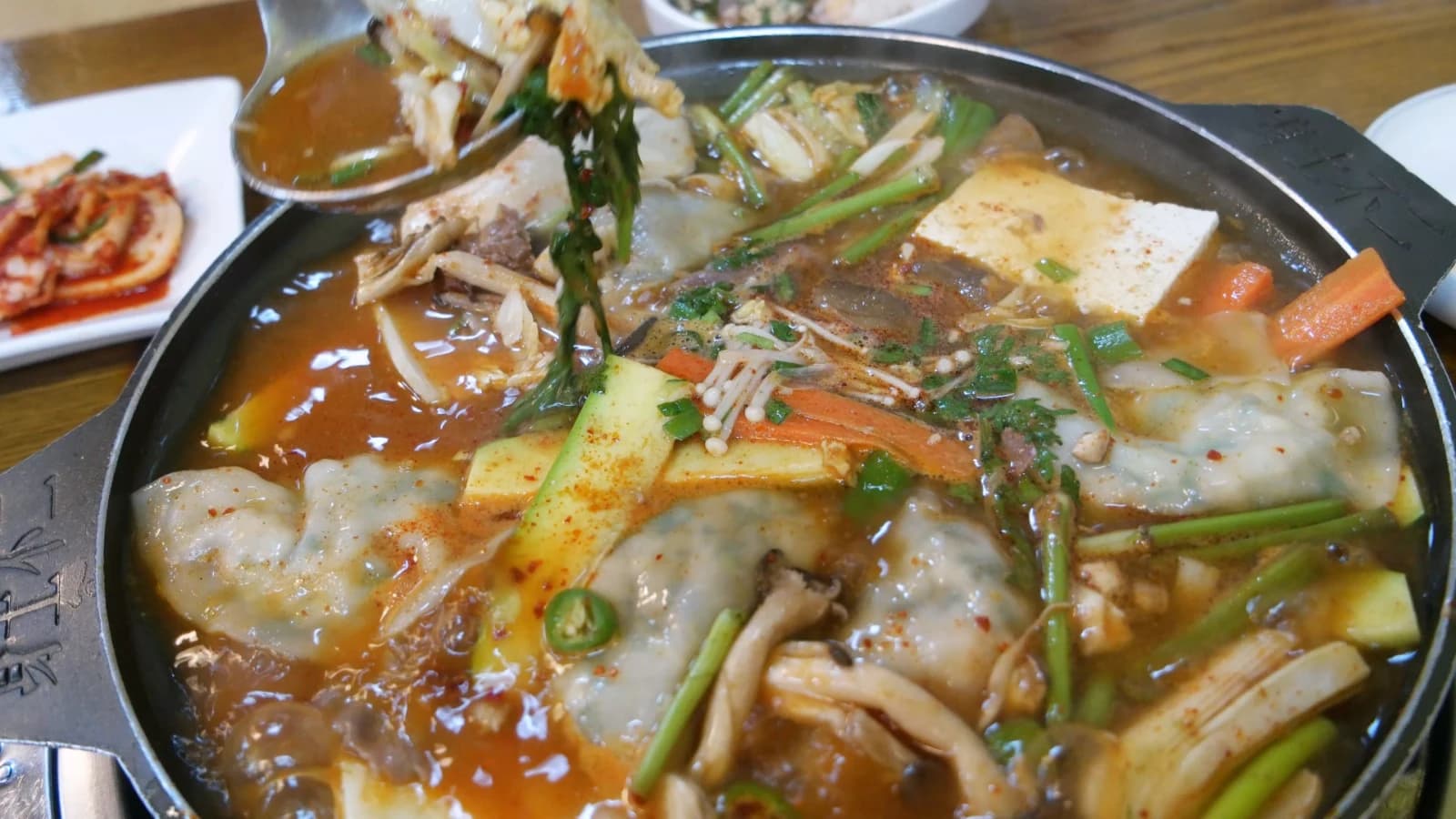
After simmering even longer, the inside of the pot was a beautiful mess. That pretty, neatly arranged presentation from the beginning? Gone without a trace. The broth had gone from a clear soy color to a thick, opaque brown. A couple of dumplings still had their shape, but the rest had burst and their filling had completely dissolved. Red pepper flakes floated on the surface, adding a gentle kick of heat, and green onion pieces and crown daisy stems were tangled up everywhere. It looked kind of chaotic, sure — but the flavor was on a completely different level from the first spoonful.
How to Eat Dumpling Hot Pot — Scoop and Serve
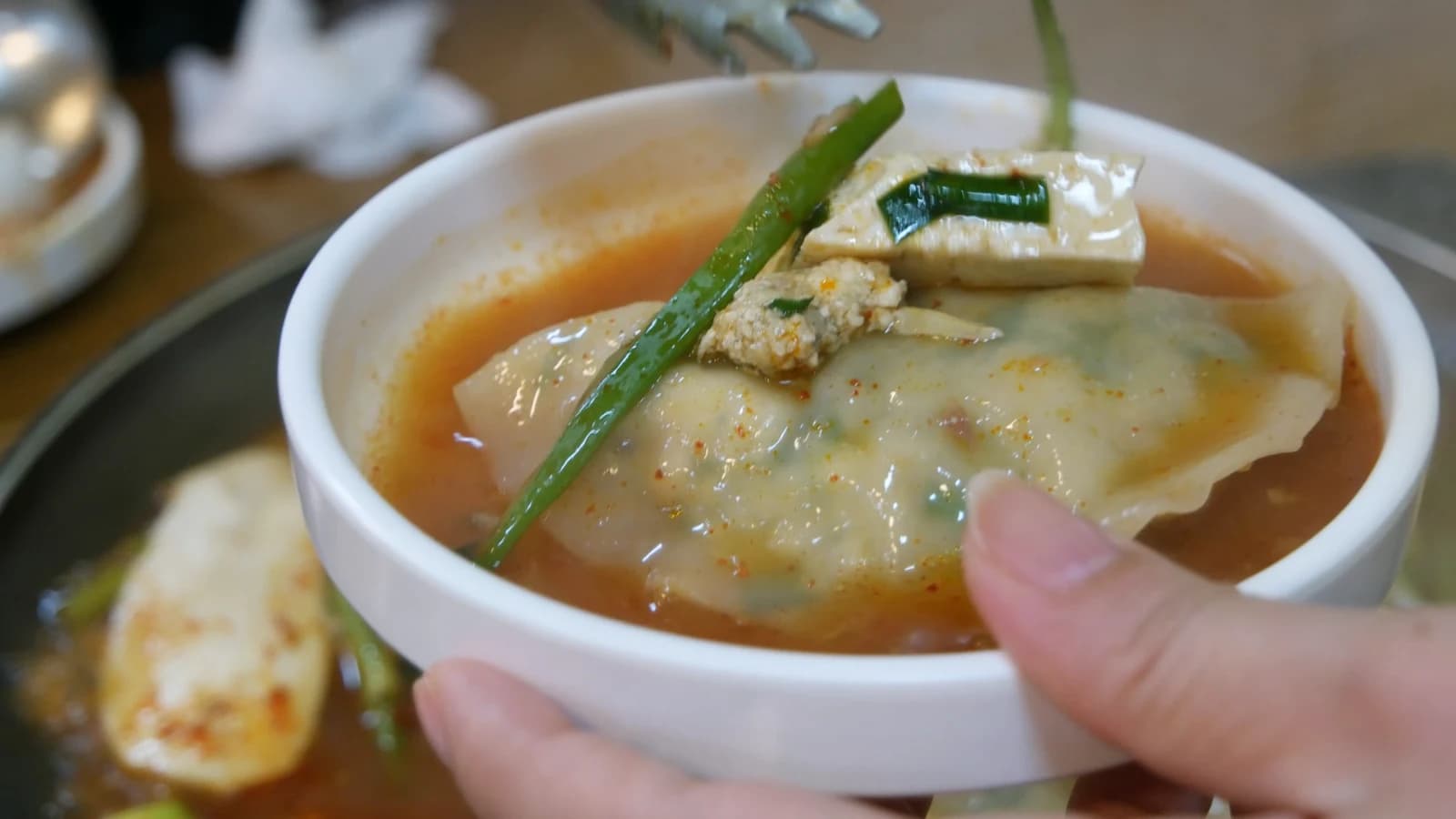
If you eat straight from the pot, you'll scorch the roof of your mouth. The way to eat mandu jeongol is simple: ladle out some solids and broth into a small bowl like this. Inside mine there's one dumpling, a chunk of tofu, and some green onion stems sitting in dark, concentrated broth with red pepper flakes floating on top — it looks spicy just from the color alone. You scoop out a bowlful, blow on it, eat it, empty the bowl, scoop again, and repeat. That's the whole hot pot rhythm.
With the Beef, Timing Is Everything
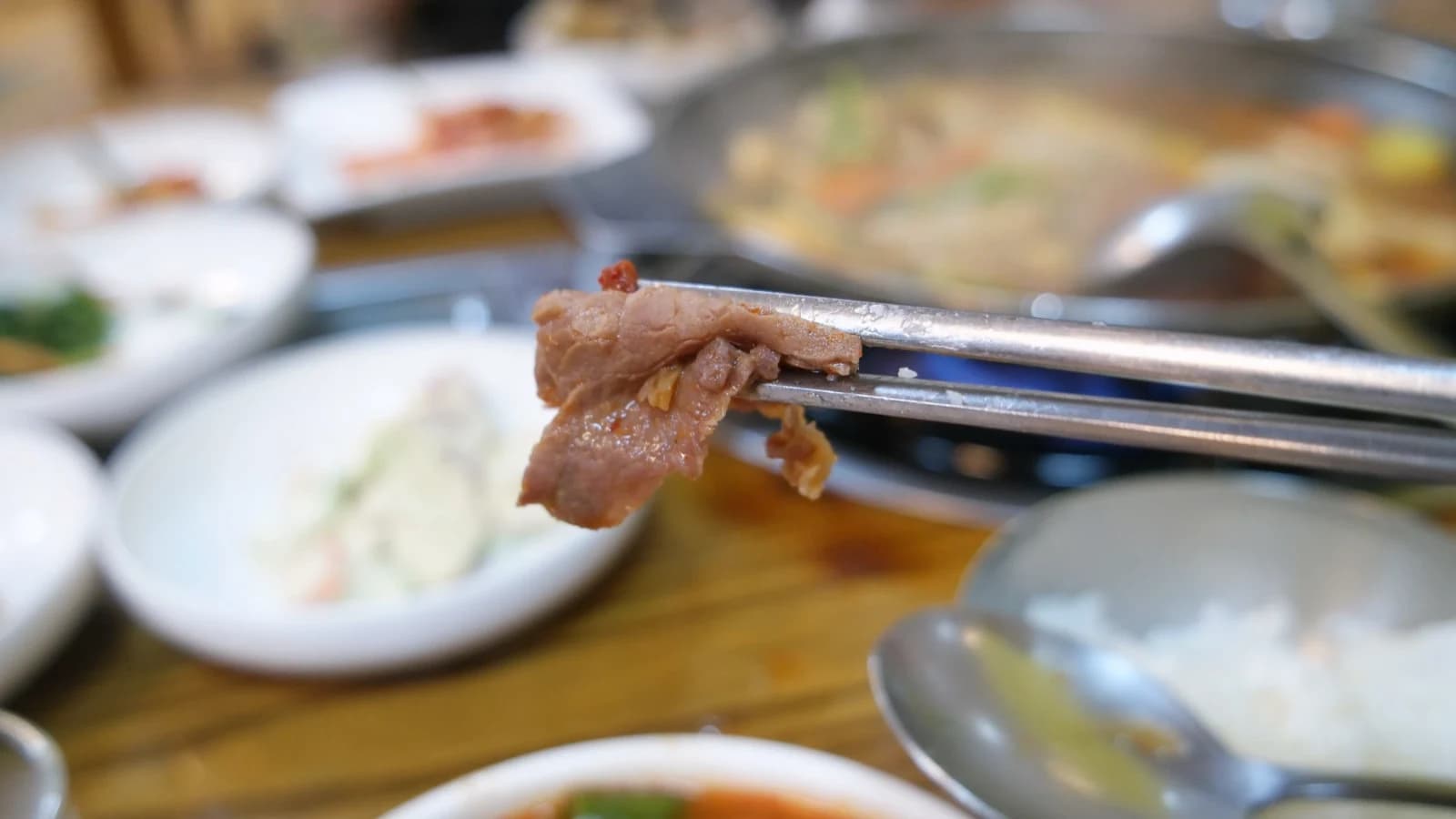
Getting the beef out at the right moment is crucial. Leave it too long and it turns tough and chewy. This piece I picked up with chopsticks was at that perfect light brown stage — that's when you want to grab it if you want it tender. The beef keeps cooking as long as it's in the pot, so you kind of have to split it into two mental categories: pieces that are there to flavor the broth, and pieces you actually want to eat. Fish out the eating pieces early, and leave the rest to do their job for the broth.
How Much Does Dumpling Hot Pot Cost?
The two of us paid about 24,000 won (~$17 USD) for one mandu jeongol + rice
Mandu jeongol is typically served as a 2-person portion. It's not the cheapest soup dish out there, but when you see how much is packed into that pot, the price makes sense.
After the Meal — My Honest Take
Mandu jeongol is a dish where the flavor keeps changing from start to finish. The broth starts out light and clear, then gets progressively richer as the dumpling filling and beef juices melt into it — and watching that transformation happen while you eat is half the fun. My one gripe, though, is that the dumplings burst way more easily than you'd expect. Miss your window by even a couple minutes and the filling completely falls apart. Then again, that's exactly what makes the broth taste even better, so it's hard to complain. Same deal with the beef — if you don't pull it out quickly it gets tough, but when you're busy eating and chatting you just forget and leave it in there.
Usually, you finish mandu jeongol by adding knife-cut noodles — thick, hand-cut wheat noodles — to that incredibly concentrated broth and boiling them as a final course. We didn't order them this time, though. We were already stuffed. My friend said on the way out, "Next time we have to do the noodles," and honestly, that was the only thing on my mind too.