
Korean Freshwater Eel: The Ultimate Grilling Guide
Table of Contents
17 items
The One Korean Food You Absolutely Have to Try
If you're visiting Korea, there's one dish that deserves a permanent spot on your must-eat list — and that's Korean freshwater eel. Known locally as min-mul jang-eo (민물장어), this isn't your average fish dish. It's richer, fattier, and more intensely flavored than anything you'd expect from seafood, and the entire experience of eating it — from the live charcoal grill to the wrapping rituals — makes it feel like a full cultural event. This complete guide to Korean freshwater eel will walk you through exactly what it is, how it's cooked, how to eat it the proper Korean way, what all those side dishes are, and where to find the best spots across the country.
What Is Korean Freshwater Eel?
The Raw Eel — It Already Looks Different Before It Even Hits the Grill
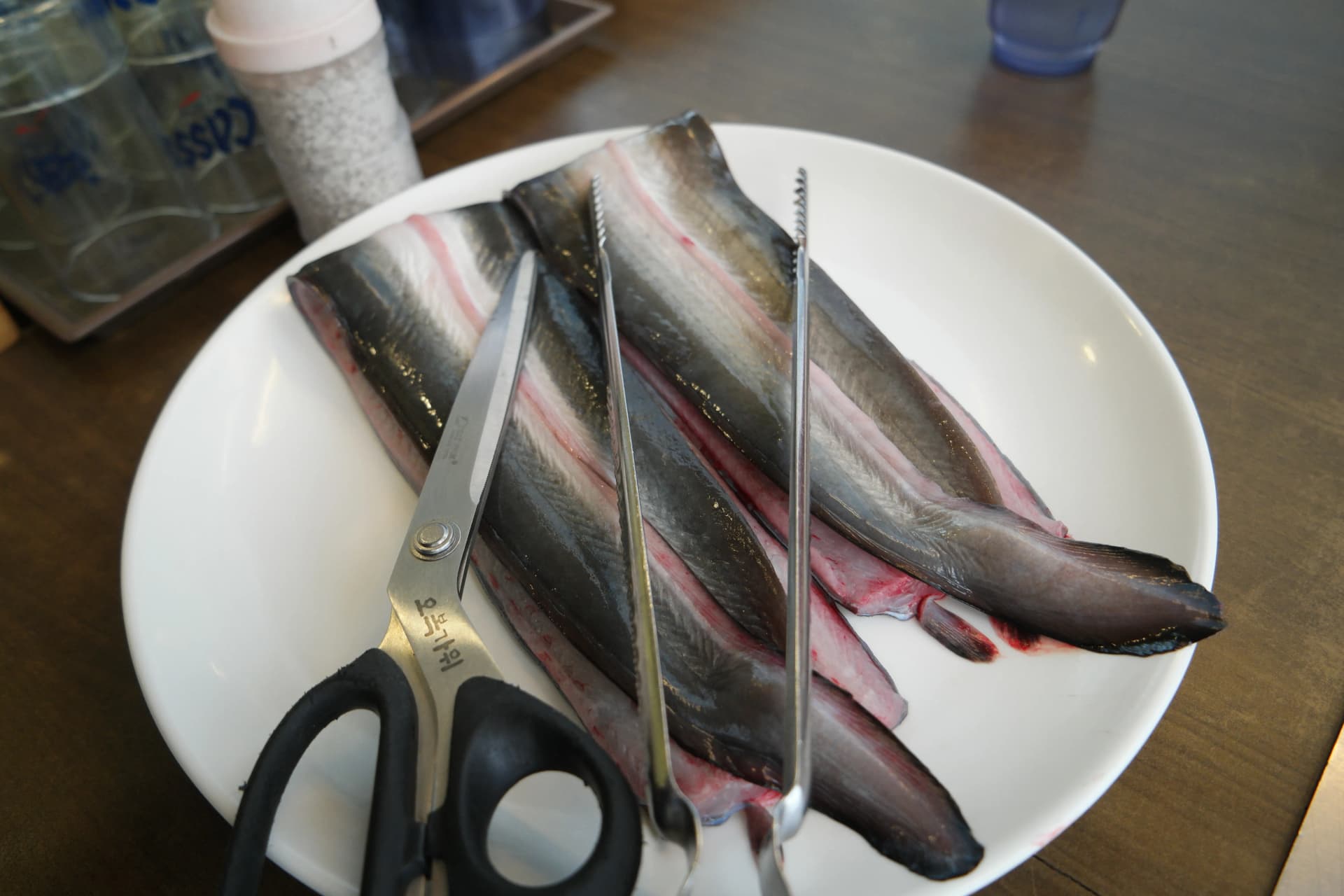
Three cleaned and prepped pieces of freshwater eel are laid out on a white plate. The top side is a deep grey-black, while the belly side shows a pale, fleshy tone with a hint of pink — this is what freshly prepped raw freshwater eel actually looks like. You'll also notice a pair of kitchen scissors and tongs sitting right on the plate. In Korea, you cut your grilled eel with scissors at the table while eating. It might seem a little odd if you've never seen it before, but in Korea it's completely standard and totally natural.
Two Types of Freshwater Eel Restaurants in Korea
Salt-Grilled vs. Seasoned-Grilled — Which Should You Order?
On the Charcoal Grill — The Show Has Begun
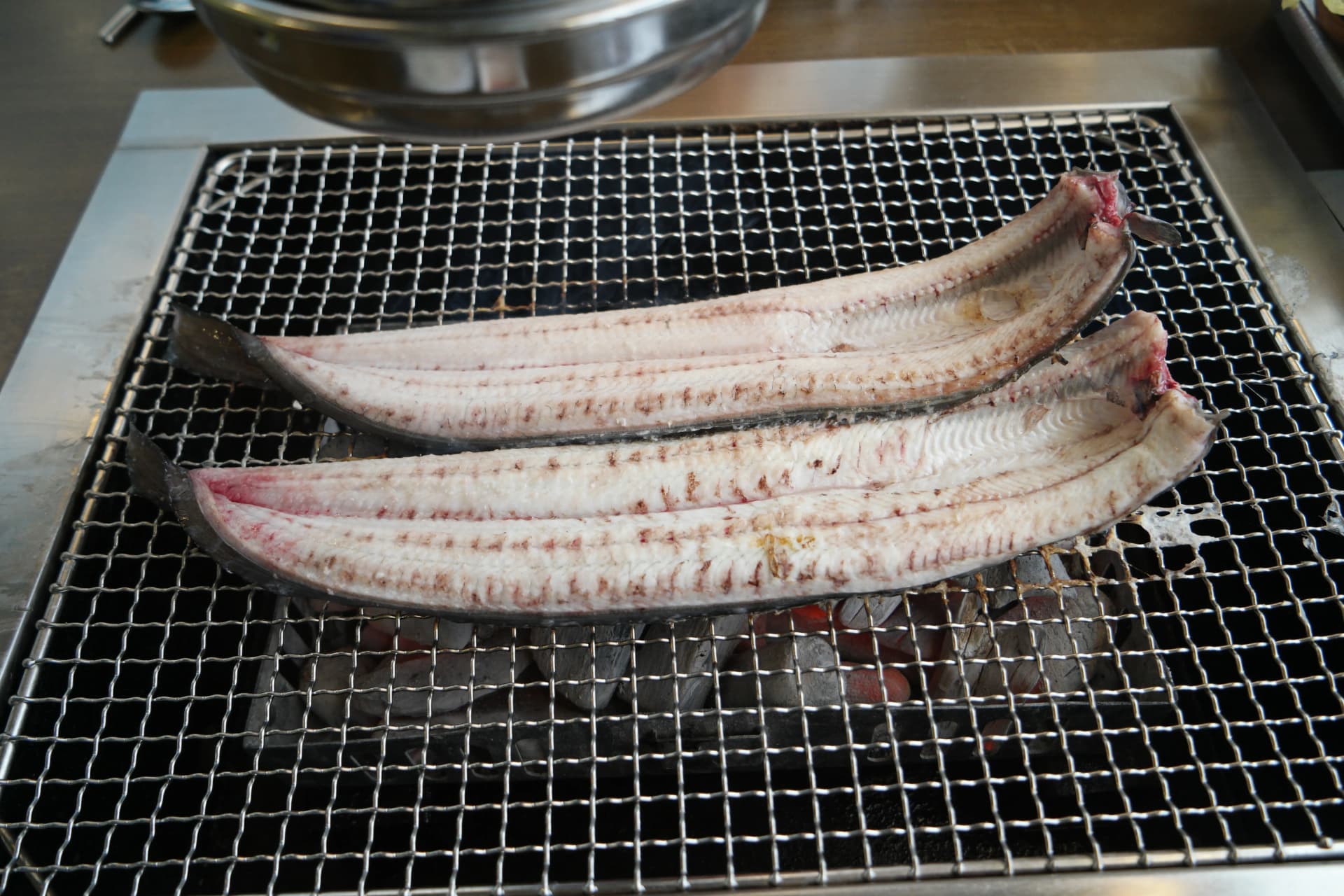
The prepped freshwater eel is now sitting on the wire grill rack over hot charcoal. The heat has just started hitting it, so the flesh is still white and looks moist and tender. Wait just a moment and something pretty wild is about to happen.
Even though the eel has been fully cleaned and prepped, once the heat starts building up, the flesh begins to contract and the whole piece starts to wriggle like it's alive. Koreans casually describe this as "the eel dancing," and if you're seeing it for the first time, it can honestly be a bit of a shock. Don't freak out — it's completely normal, just the muscle tissue reacting to the heat.
This is also the moment when the charcoal smoke starts mingling with the fat dripping off the eel, creating that incredible sizzling sound and the aroma that starts waking up your appetite in a big way.
Look at That Raw Flesh — All That Plumpness Is About to Turn into Pure Savoriness
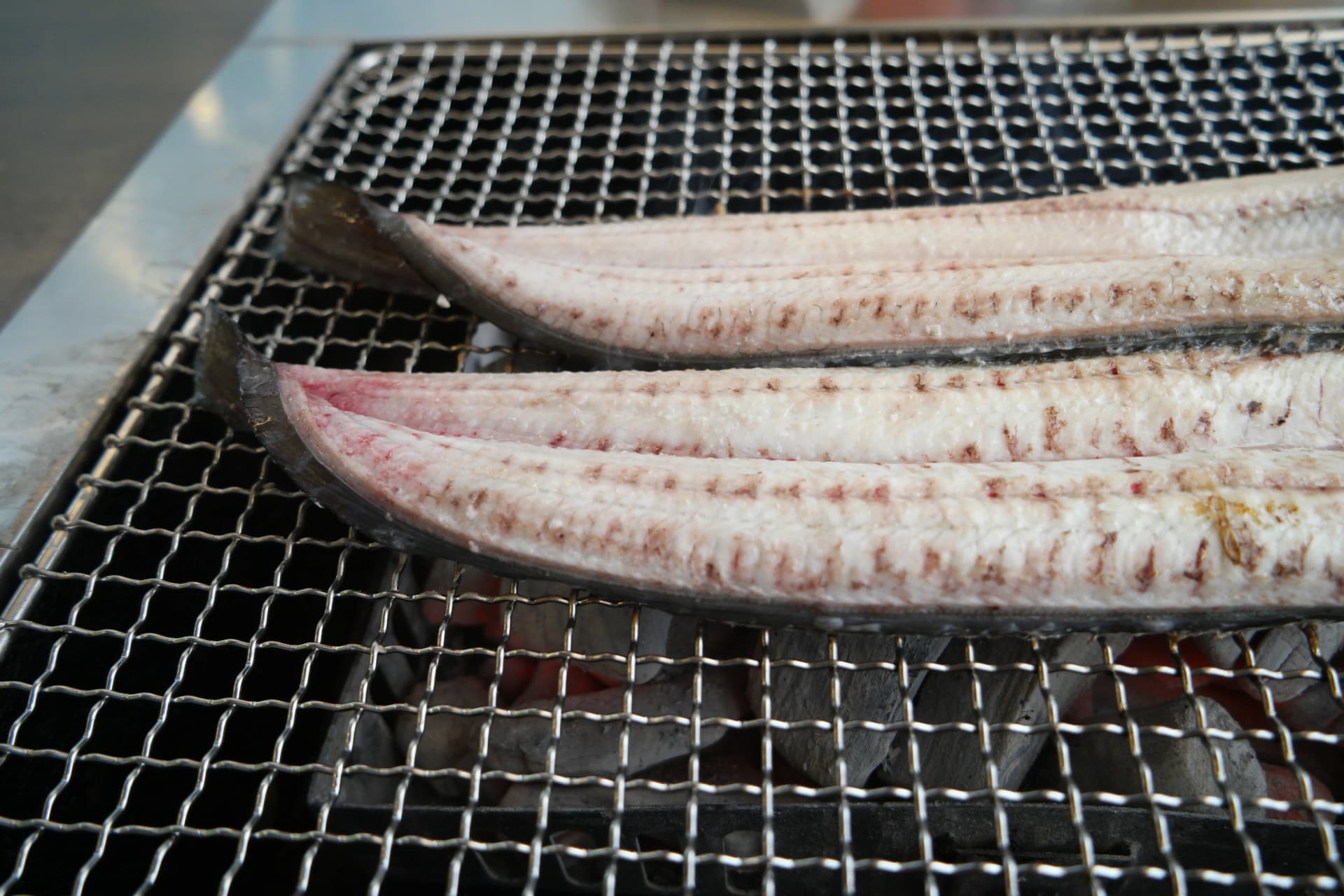
Up close, the flesh looks incredibly plump and full. The heat hasn't fully kicked in yet, and staring at this juicy, springy meat while imagining what it's about to become over the charcoal is genuinely exciting.
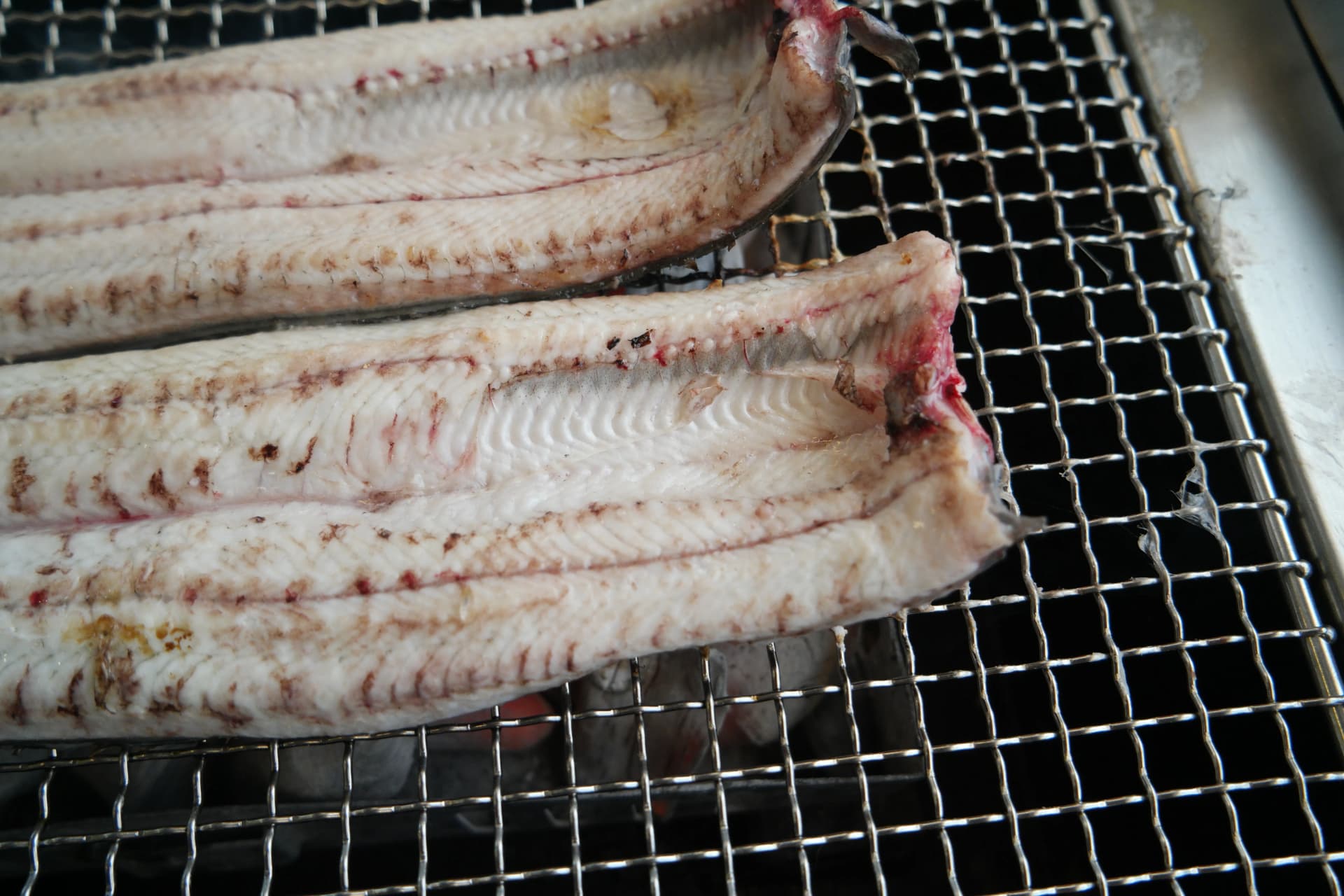
Before cooking, the flesh of freshwater eel is this thick and springy. Those clearly visible grain lines running through the muscle are a sign of freshness. Once this slowly cooks over the charcoal, the result will be a perfect crispy outside with a moist, tender inside.
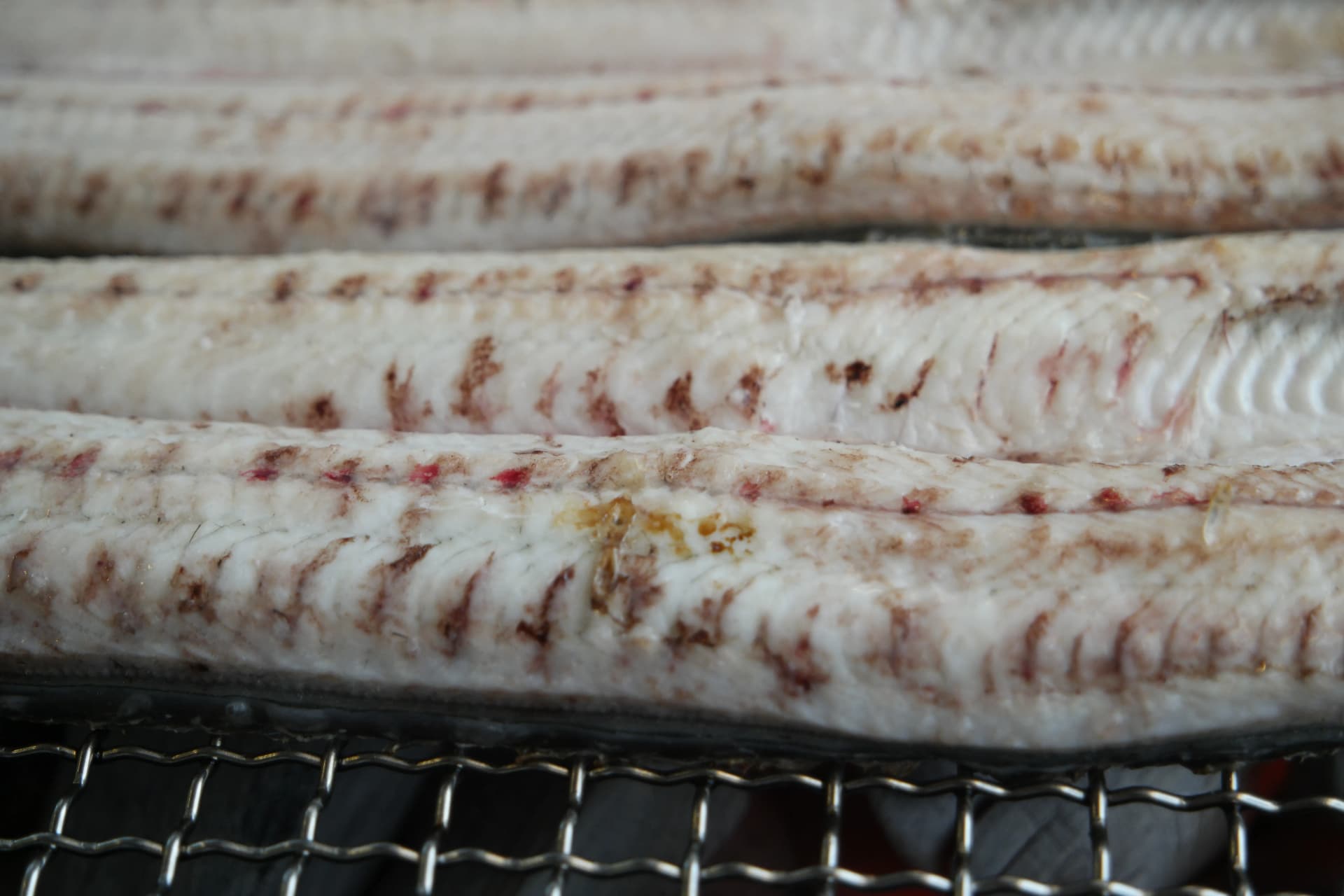
At extreme close range, the muscle grain becomes even more defined. You can see fine red capillaries running along each grain of the flesh — and that's exactly what fresh, high-quality freshwater eel looks like. All of this plump, dense meat is going to transform completely as it slowly cooks over the charcoal fire.
The Staff Grills It for You — Service That Matches the Price
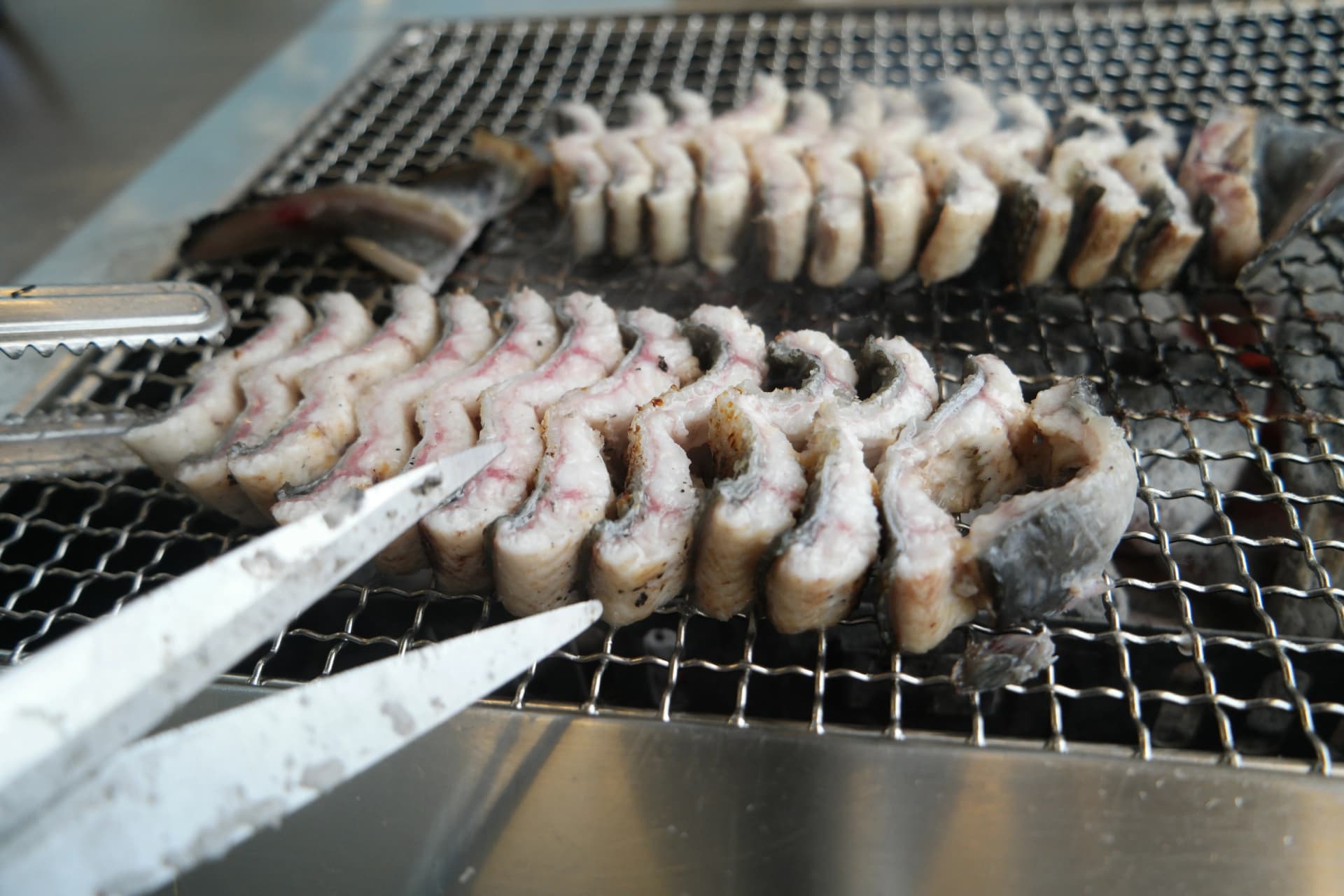
Since freshwater eel is on the pricier side of Korean cuisine, most restaurants have a dedicated staff member who grills it for you right at your table. You don't have to worry about managing the grill yourself — someone is right there making sure it cooks evenly and doesn't burn. Once the eel is mostly done, you can take over and eat at your own pace, but in the beginning, the staff handles everything. For the price you're paying, the level of service genuinely matches it, which is a nice touch.
The 15 Minutes That Feel the Longest
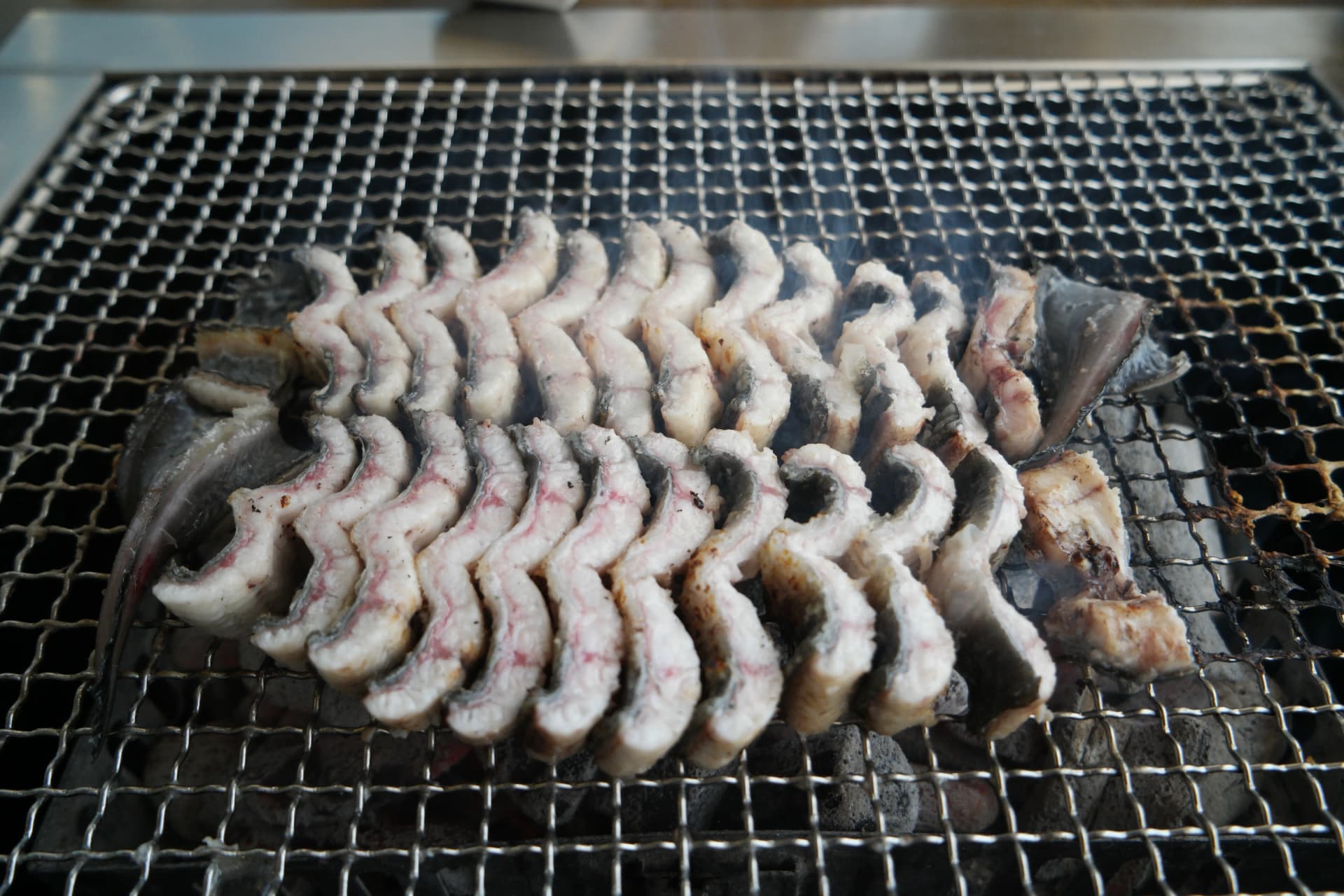
The eel has curled into wavy, undulating shapes across the grill rack. It already looks incredibly tempting — but you're not quite there yet. The flesh is still on the pale white side, which means the inside hasn't fully cooked through.
Getting Korean freshwater eel properly grilled takes about 15 minutes. You're going to want to eat it immediately — trust me, the urge is overwhelming — but eating it undercooked means losing out on both the flavor and the texture. These 15 minutes are genuinely the longest 15 minutes you'll experience in a Korean restaurant.
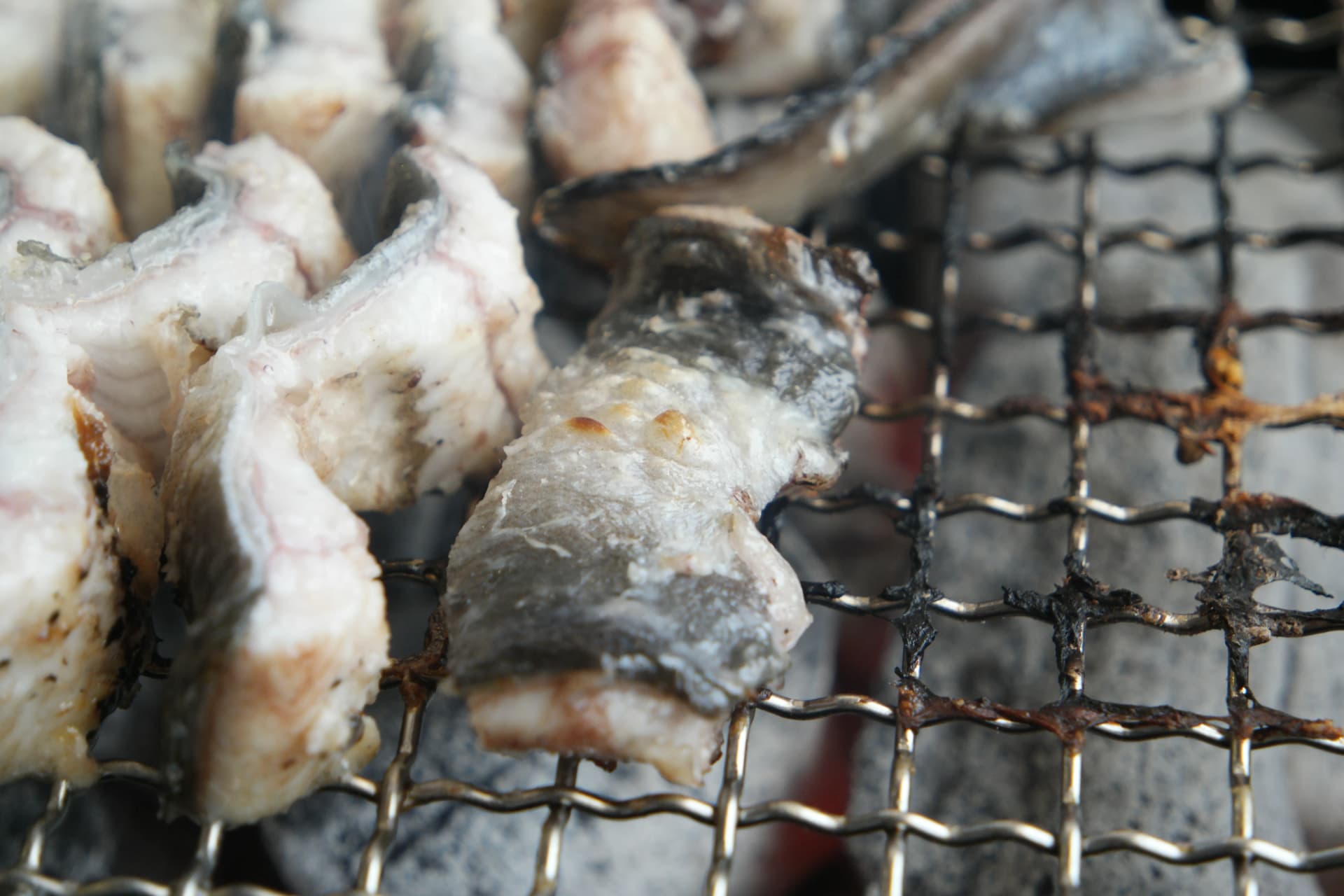
Up close, you can feel just how intense the charcoal heat is. The edges of the flesh are slowly beginning to cook through, and small droplets of moisture are forming on the surface while the skin side gradually darkens. It's not fully done yet, but this is the moment when that distinctive rich, fatty eel aroma starts rising up from the grill. Just watching it cook like this is enough to make your mouth water. Seriously.
Finally — Golden Brown Means It's Ready
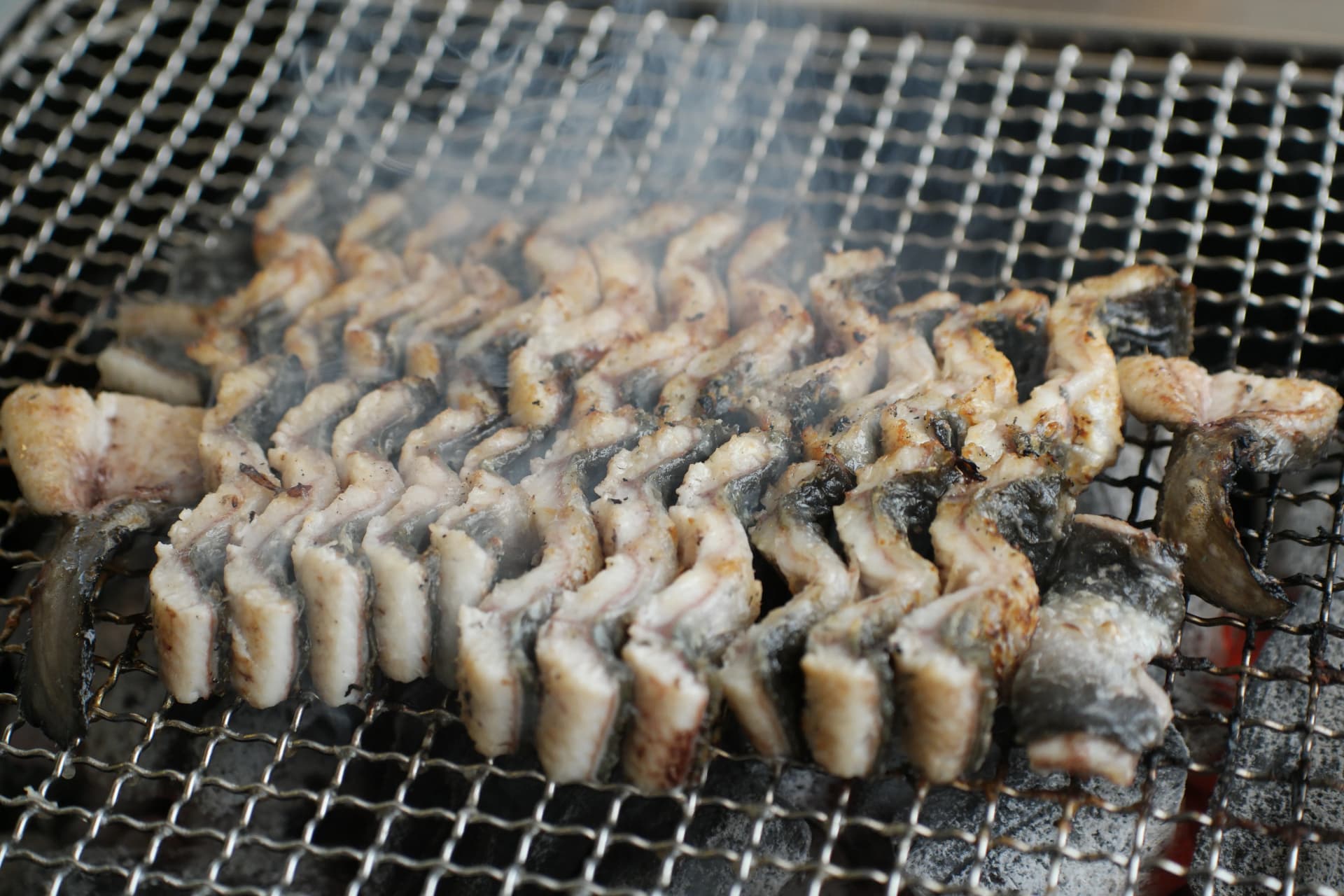
This is the moment you've been waiting for. That pale white flesh has completely transformed into a beautiful golden brown. The surface has slight char marks, fat is seeping out and creating a glossy sheen, and wisps of charcoal smoke are still rising from the grill. This color is your signal — it's ready to eat.
When you're at the restaurant, just hold on until you see this exact color. Trust the 15-minute wait. What's waiting for you on the other side of it is a completely different flavor experience, and not a single second of that wait will feel wasted.
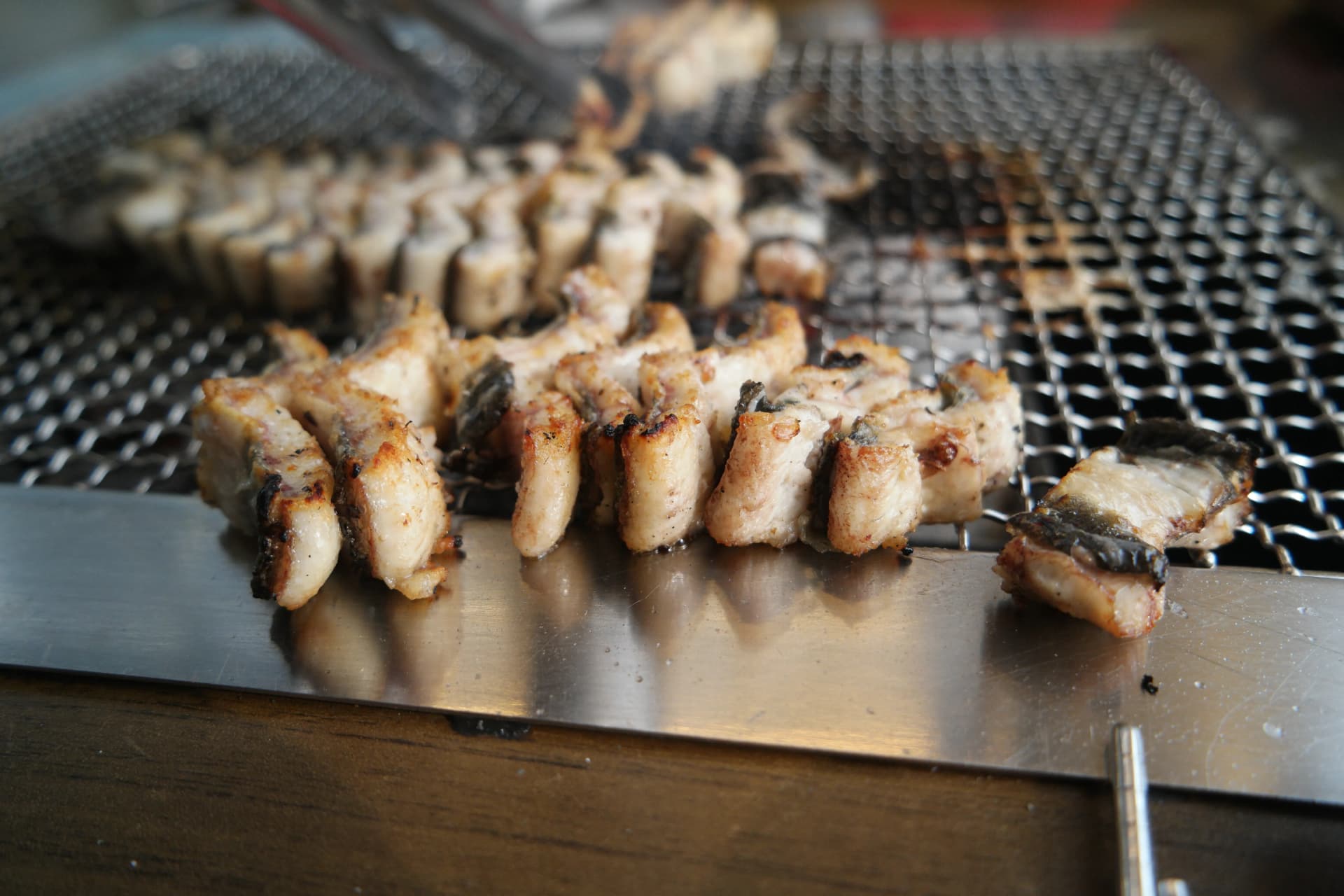
Once the eel is fully cooked, the staff gently slides it to the side iron plate area away from the direct charcoal heat. If it stays over the fire too long, it'll start to burn. By moving it to the side like this, the heat is maintained and the eel stays warm while the outside doesn't over-char. It's a small but thoughtful detail — and it's exactly this kind of attentiveness that sets a good freshwater eel restaurant apart.
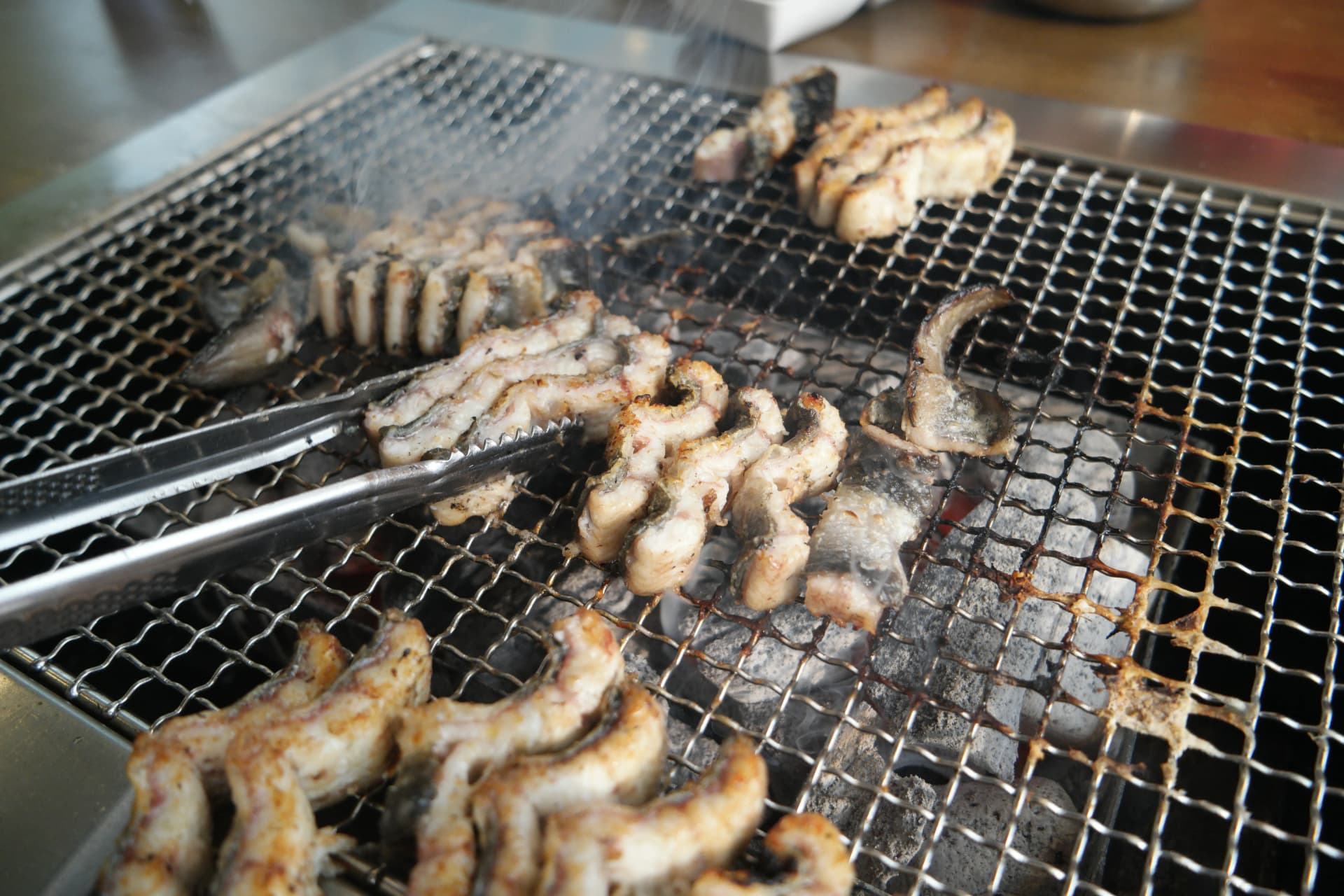
The staff member is carefully flipping each individual piece of eel with tongs to make sure everything cooks evenly. By this point, the aroma of eel fat mixing with the charcoal smoke has fully taken over the table.
Okay, real talk — writing this post is actual torture. I had an amazing meal, came home happy, and now I'm sitting here looking at these photos and getting hungry all over again. I genuinely want to go back right now. My hands are basically shaking. I almost regretted taking such good photos because every single one of them is making me crave this all over again.
Crispy Outside, Juicy Inside — The Cross-Section Proves It
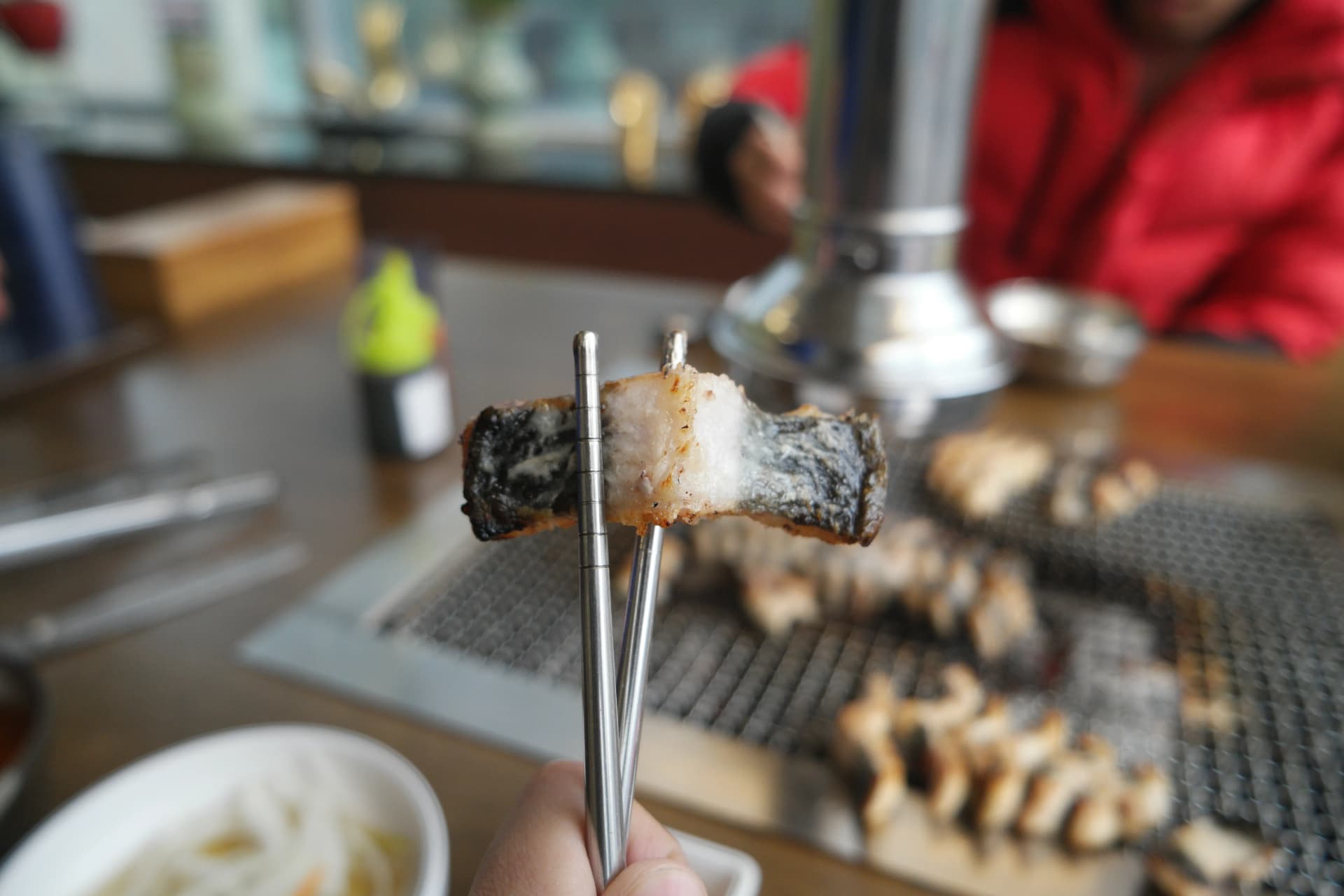
Here's a piece of eel lifted with tongs, showing the cross-section clearly. The outside is cooked to a golden brown, and the inside reveals moist, white flesh that's still perfectly juicy. One look at this cut and you can tell immediately that it's been grilled just right.
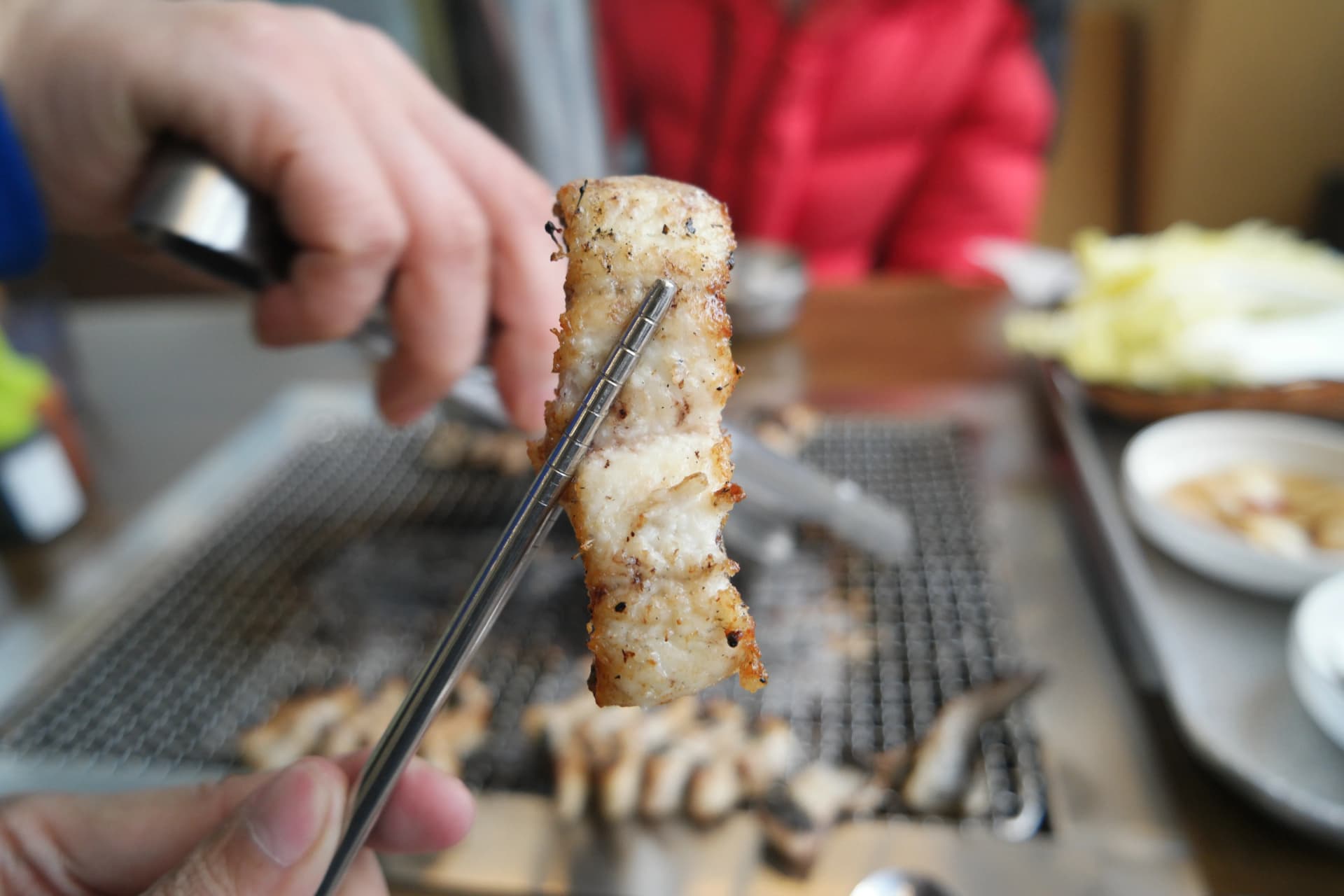
This time lifted with chopsticks. The skin side is deeply charred and dark, while the flesh side is white and moist. Crispy on the outside, juicy on the inside — there's honestly no better way to describe it than that.
How to Actually Eat It — The Korean Way
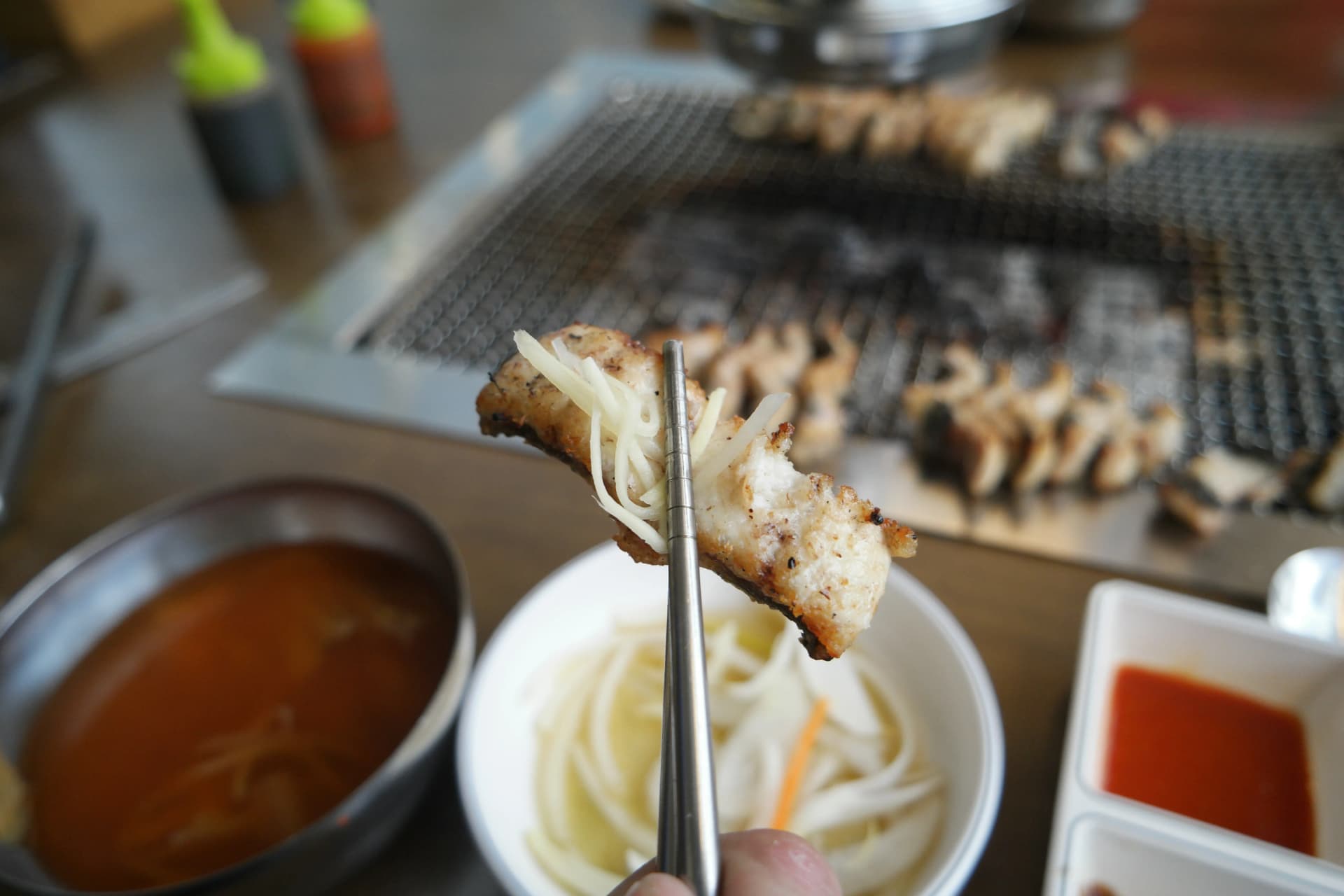
A piece of grilled eel is being placed on top of some julienned ginger using chopsticks. The ginger plays an important role here — it cuts through the rich, fatty flavor of the eel and balances it out. You can see the dipping sauces in the background too. Everything is set and the real eating is about to begin.
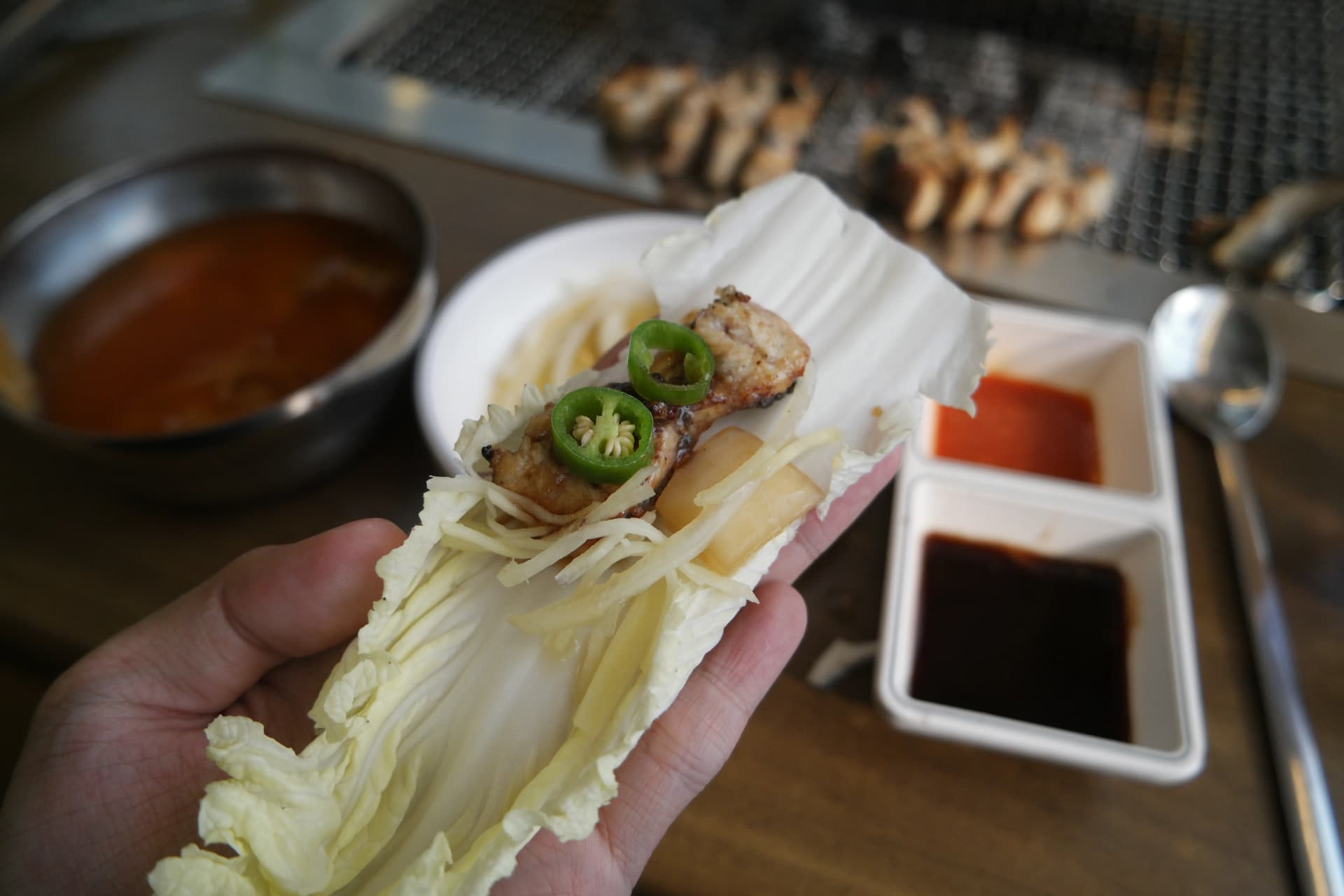
Here's a napa cabbage leaf being loaded up with eel, julienned ginger, and a slice of cheongyang chili pepper to make a ssam wrap. In Korea, this wrapping culture — called ssam — is used across all kinds of grilled meat and fish dishes. You pile everything onto a leaf and eat it in one bite. The spicy kick from the chili and the rich fat from the eel balance each other out perfectly.
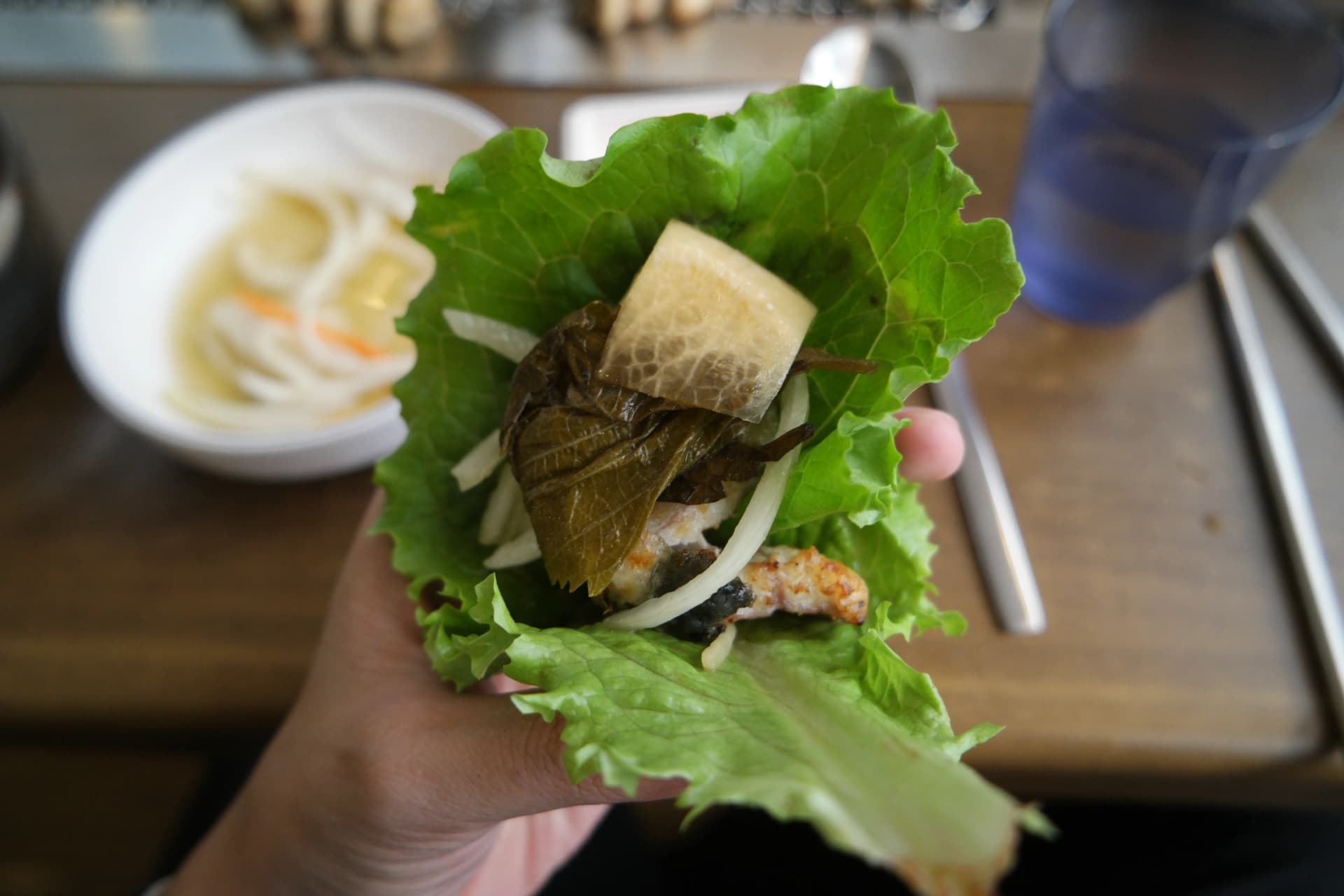
This one takes it to the next level — a full ssam with perilla leaf layered over lettuce, topped with eel and onion. The strong herbal aroma of perilla leaf (kkaennip) does an excellent job of cutting through the fattiness of the eel, and this exact combination is considered the definitive, classic Korean way to eat freshwater eel.
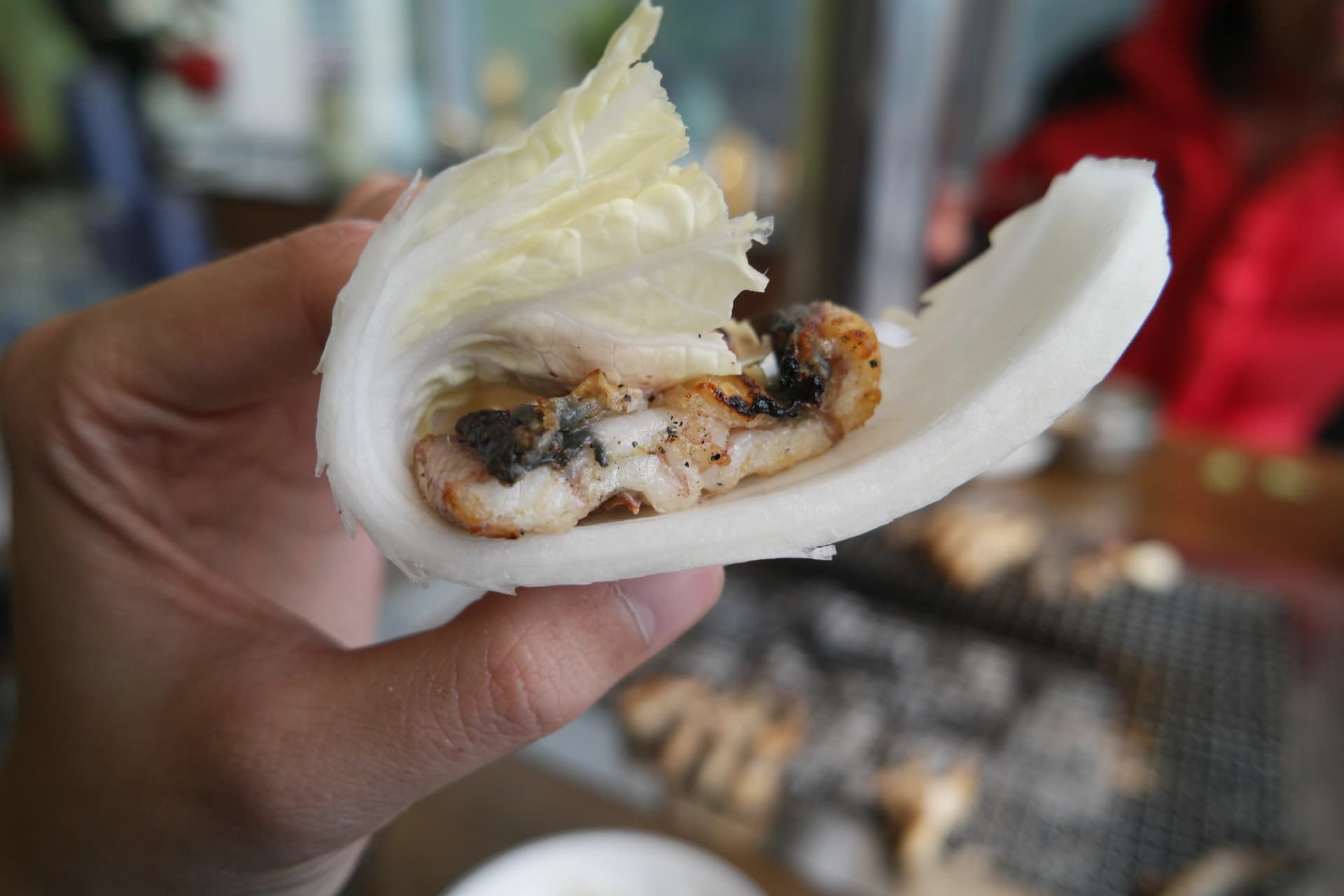
This variation uses a thin slice of radish as the wrap instead of a leaf, filled with napa cabbage and eel. The crisp, cool crunch of the radish cuts through the oily richness of the eel in the cleanest, most refreshing way possible — and honestly, this one bite immediately shot to the top of my must-repeat list. First stop on my next trip to Korea, no question.
Banchan (Side Dishes) — Everything That Comes with Your Eel
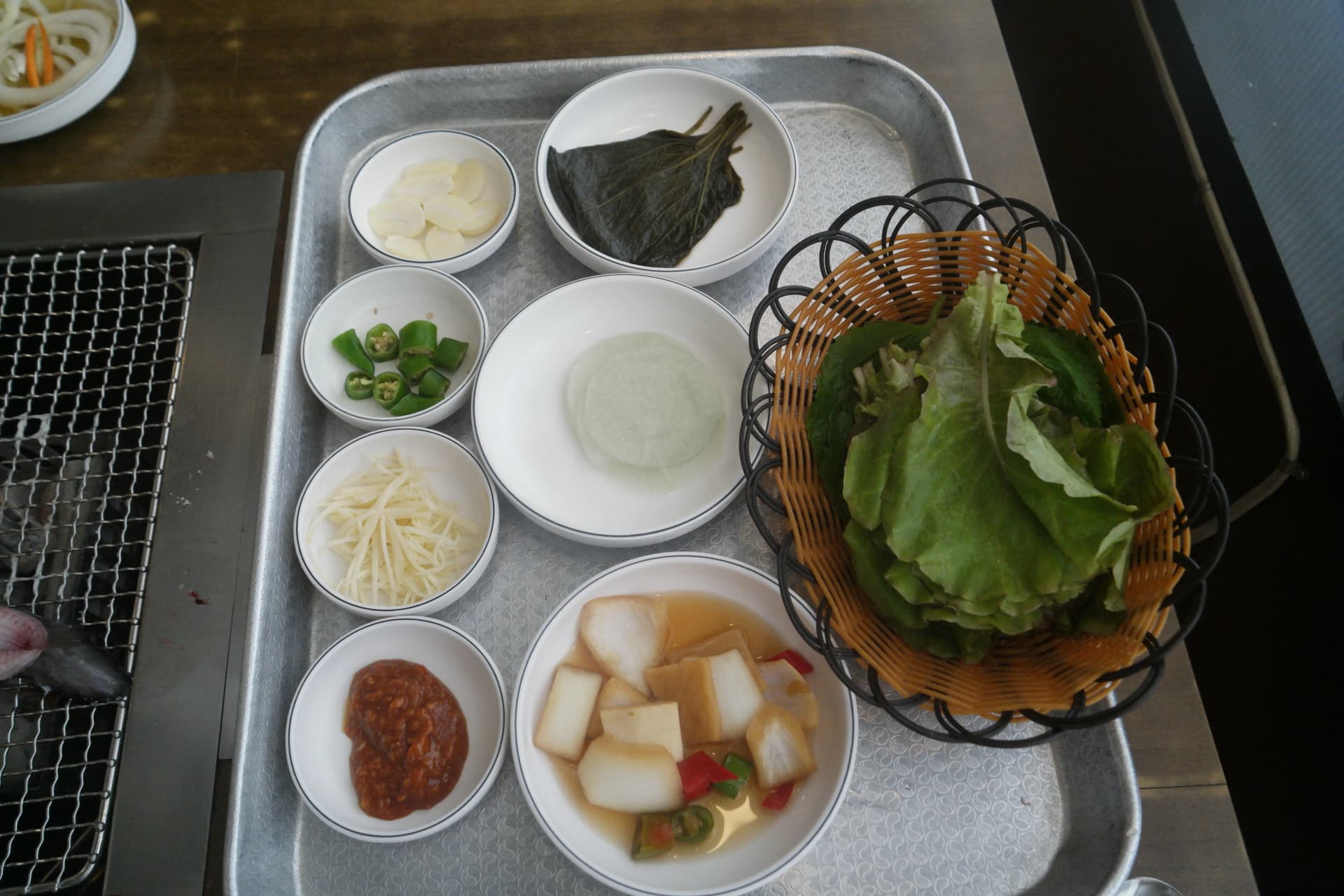
While the eel is grilling, a tray of side dishes is set out on your table. You'll see lettuce, perilla leaves, garlic, cheongyang chili peppers, julienned ginger, pickled perilla leaves, kkakdugi (radish kimchi), and ssamjang all neatly arranged. This is Korean banchan culture in full effect.
That said, repeatedly requesting refills you won't finish is considered bad form in Korean dining etiquette.
Ask for more only when you're actually going to eat it.
Useful Korean Phrases to Use at the Restaurant
First Time with Freshwater Eel? Here Are the FAQs
Where to Find Korean Freshwater Eel — City-by-City Search Guide
Freshwater eel restaurants aren't just limited to Seoul or Busan — you can find them all across Korea. Below is a breakdown by city with suggested search terms you can plug directly into Google Maps to find a great spot near you.
Wrapping Up — Why Korean Freshwater Eel Is Worth Every Penny
Korean freshwater eel isn't just a meal — it's an experience from start to finish. The slow, dramatic process of watching it cook over charcoal, the attentive table-side service from the staff, and the deeply satisfying ritual of wrapping it all up in fresh greens with garlic and sauce — every single part of it adds up to something that goes well beyond just eating. If you're doing a Korea trip and you haven't tried charcoal-grilled freshwater eel yet, make it a priority. The moment that first bite hits, whatever reservations you had about the price will completely disappear.
This post was originally published on https://hi-jsb.blog.