8 Side Dishes for Under A$5 — A Real Korean Lunch You Won't See on TikTok
Table of Contents
12 items
This Is What Koreans Actually Eat for Lunch
Up until last year, I was working in Daejeon — a major city about an hour and a half south of Seoul — and every lunchtime, three or four of us from the office would head downstairs to the staff canteen. There was one woman running the whole show by herself. We called her imo, which is what Koreans call any older woman who feeds you — sort of like calling someone "auntie" even though she's not related to you at all. Every morning she'd go to the market alone, buy everything, prep it, cook it, and have the whole spread ready by noon. The lineup changed every day. Some days it was fish, other days the stew would rotate, and the side dishes shifted around. But the structure never changed: rice, one stew, and six to eight side dishes. In Korea, this kind of home-style set meal is called baekban, and it's basically identical to what most Korean families eat at home every single day.
When people overseas think of Korean food, it's usually Korean BBQ, bibimbap, or tteokbokki — the flashy stuff. But what Korean office workers actually eat at lunch is this. Quiet, no-frills baekban. You sit down, spoon some stew over your rice, pick at the banchan side dishes with your chopsticks, and you're done in fifteen minutes. The whole thing cost ₩5,000 per meal — roughly A$5. That's less than a flat white at most Sydney cafés. Eight-plus side dishes, a stew, rice, and fish, for less than a coffee. Still does my head in when I think about it.
Today I want to walk you through each dish that landed on the table that day.
Pan-Fried Croaker — The Everyday Fish of Korean Home Cooking
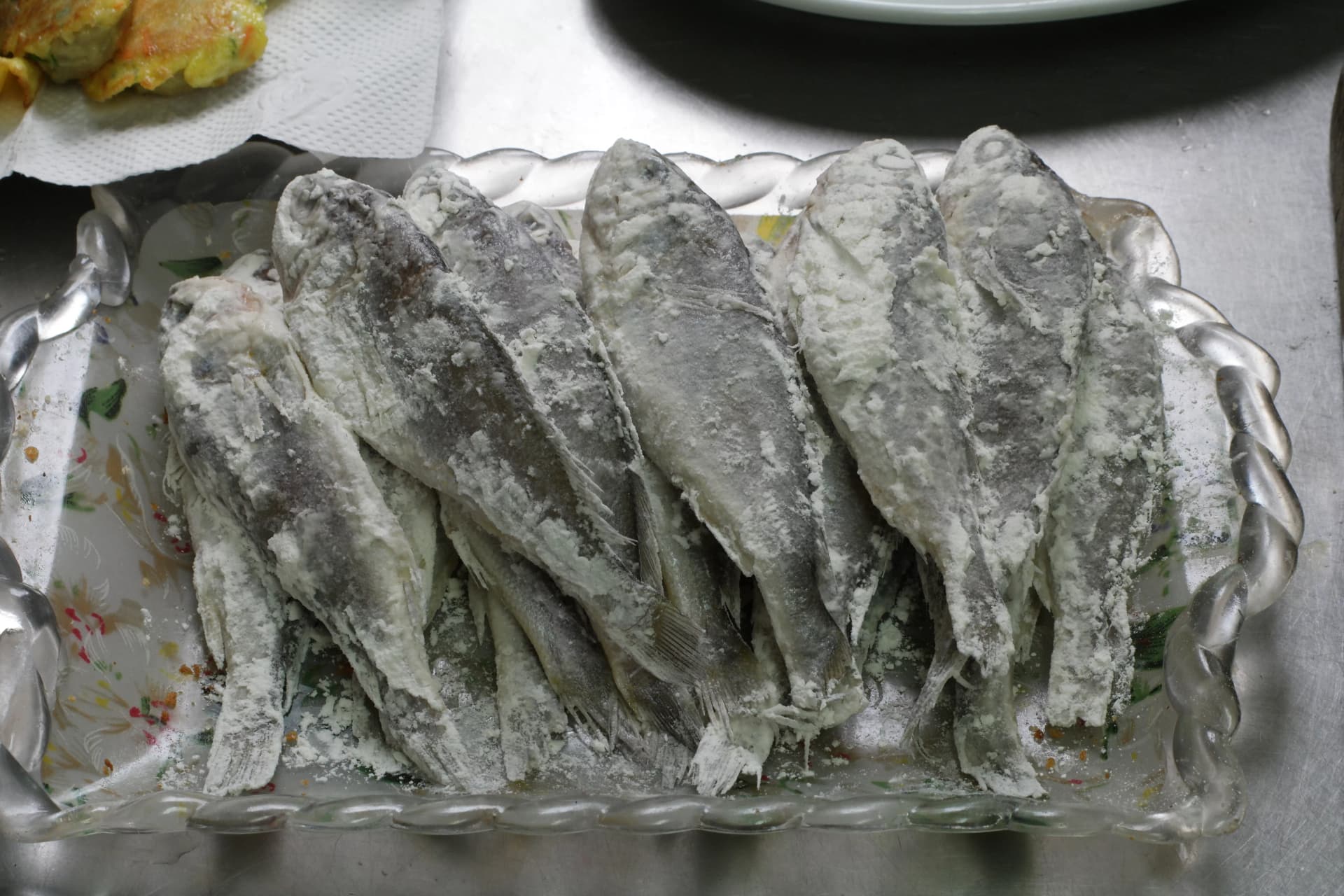
Pan-fried yellow croaker is one of the most common fish dishes in Korean home cooking. It's dusted in a thin layer of flour and shallow-fried in oil until the skin goes golden and crispy. These ones hadn't hit the pan yet — just sitting there in their white flour coats, waiting their turn. Imo had coated each one by hand, flipping them over gently to get an even layer. Yellow croaker holds a special place in Korean culture. It appears on the ceremonial table during Chuseok (Korean harvest festival, similar to Thanksgiving) and Lunar New Year, and it's a common gift set item. But this isn't the fancy version — pan-frying it like this with just flour is about as everyday as it gets. Think of it like crumbed snapper at home. Nothing gourmet, just solid comfort food.
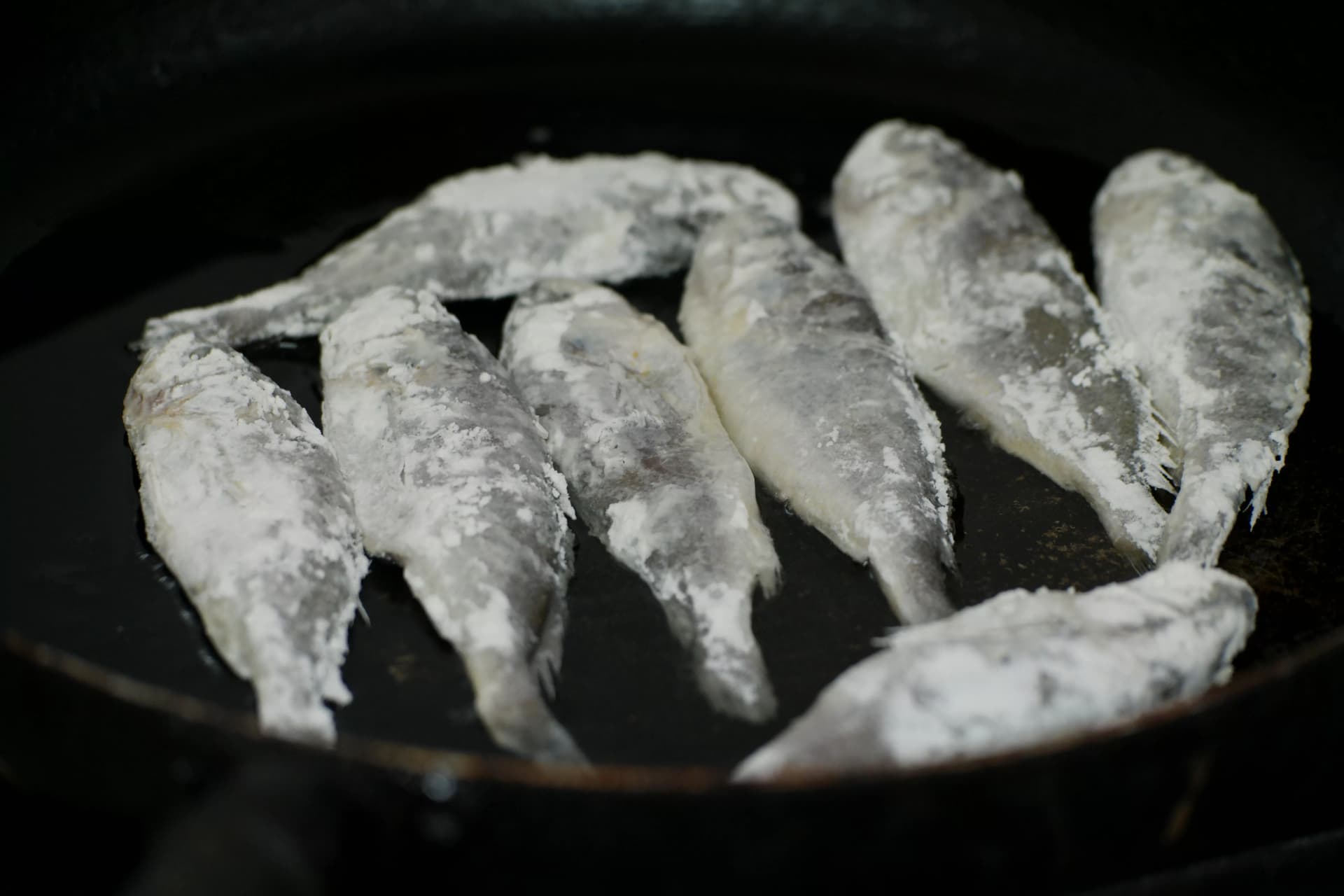
Once they hit the oiled pan, the sizzle carried across the whole canteen. You could smell the toasty, buttery aroma from the other side of the room. One of my colleagues would always be the first to announce it — "fish today" — and suddenly everyone perked up a bit. That one line was enough to get us looking forward to lunch.
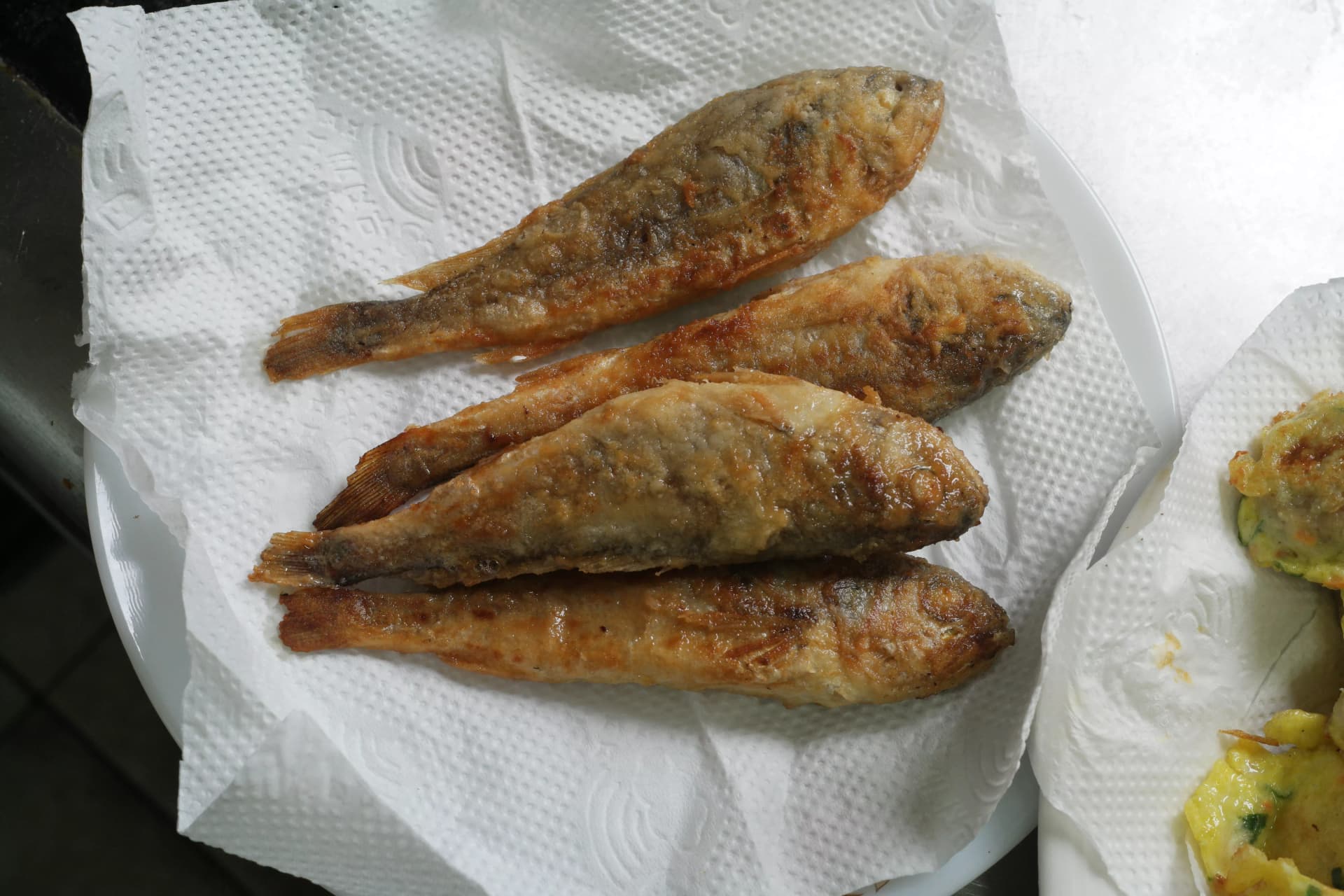
Once one side turned golden, she'd lift them onto kitchen paper to drain. Look at the colour change from that white flour coat to this deep golden crust. Imo always used to say, "The first batch goes in my mouth, you lot get the second." Honestly though, I snuck a piece from the first batch a few times. The difference between freshly fried and even slightly cooled-down fish is massive — that initial crunch disappears fast.
A Fish Every Korean Grew Up With
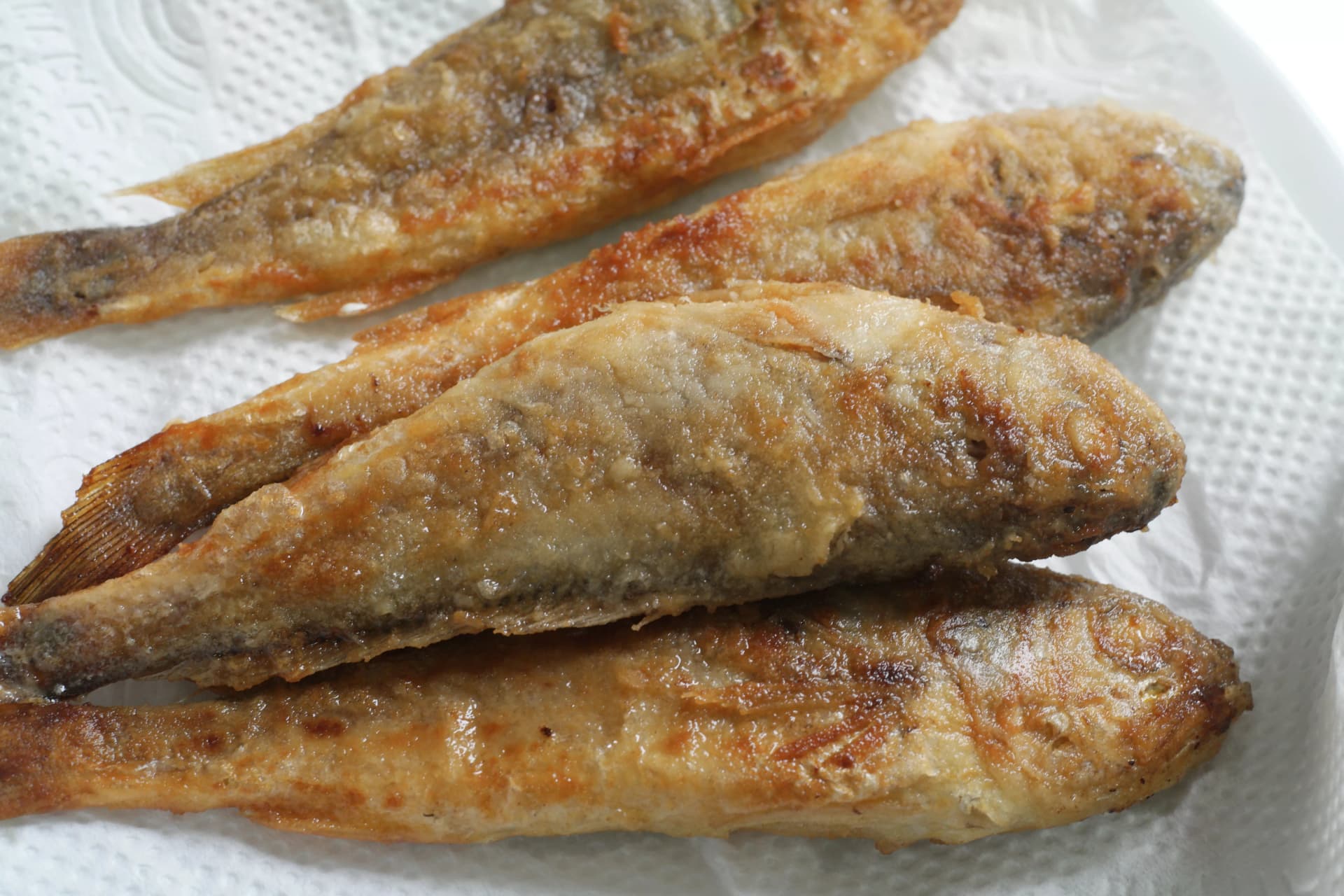
Up close you can see the thin, crunchy skin still clinging to the moist white flesh underneath. If you ask any Korean, "Did your mum fry fish at home when you were a kid?" — nine out of ten will say croaker or hairtail. That's how deeply embedded this fish is in Korean home cooking. The thing is, it's gotten pricier over the years. What used to be a cheap, everyday side dish is now something you actually notice on the receipt at the supermarket. So whenever croaker turned up at the canteen, someone would crack a joke: "Imo must be in a good mood today." It was that kind of treat — not expensive enough to be special, but just enough above the baseline to make you smile.
Korean Rolled Omelette — The Side Dish That's Harder Than It Looks
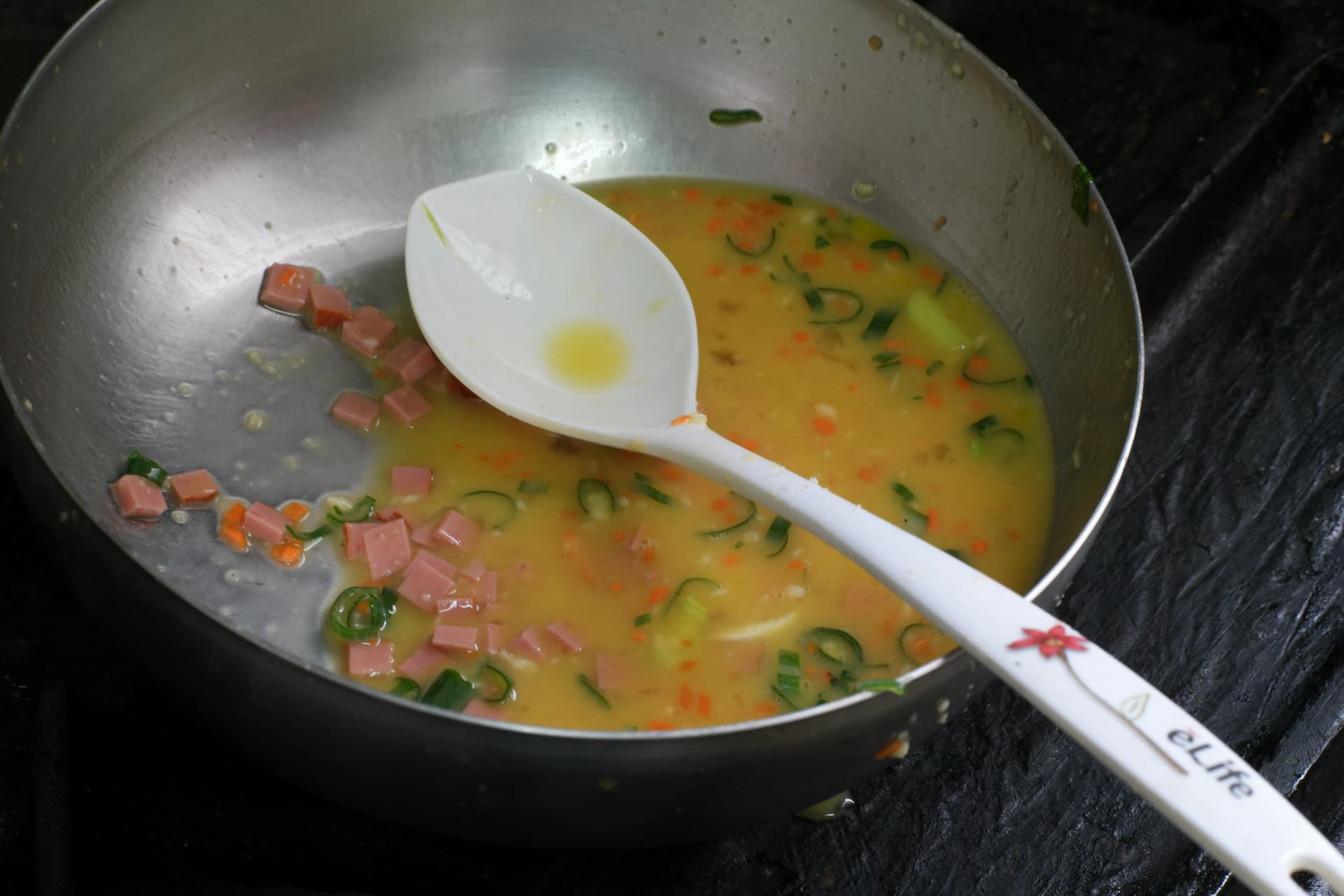
Korean rolled omelette, called gyeran-mari, is one of the most universal banchan side dishes in the country. I spotted Imo whisking something in a bowl with bits of colour through it — diced ham, spring onion, shredded carrot — but at that point I genuinely wasn't sure what she was making. It could've been anything.
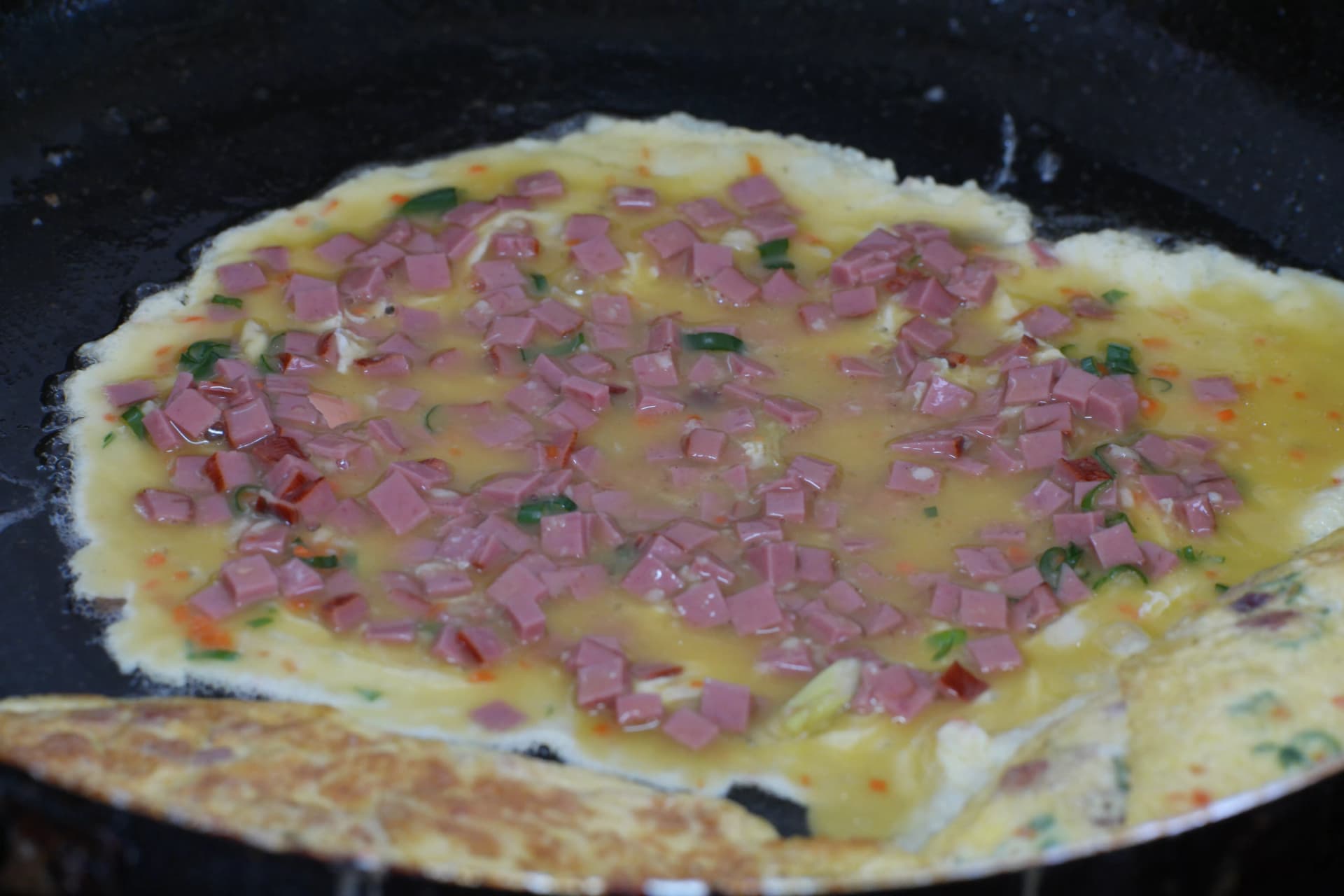
Then she poured the mix thinly across the pan, and it clicked. Gyeran-mari. Korean rolled omelette is nothing like a Western omelette. Instead of folding a thick, fluffy egg around a filling, you spread it paper-thin and roll it up tightly as it cooks — more like a savoury crêpe rolled into a log. What goes inside depends entirely on the household. Imo's version was generous with the ham, which I reckon was the right call.
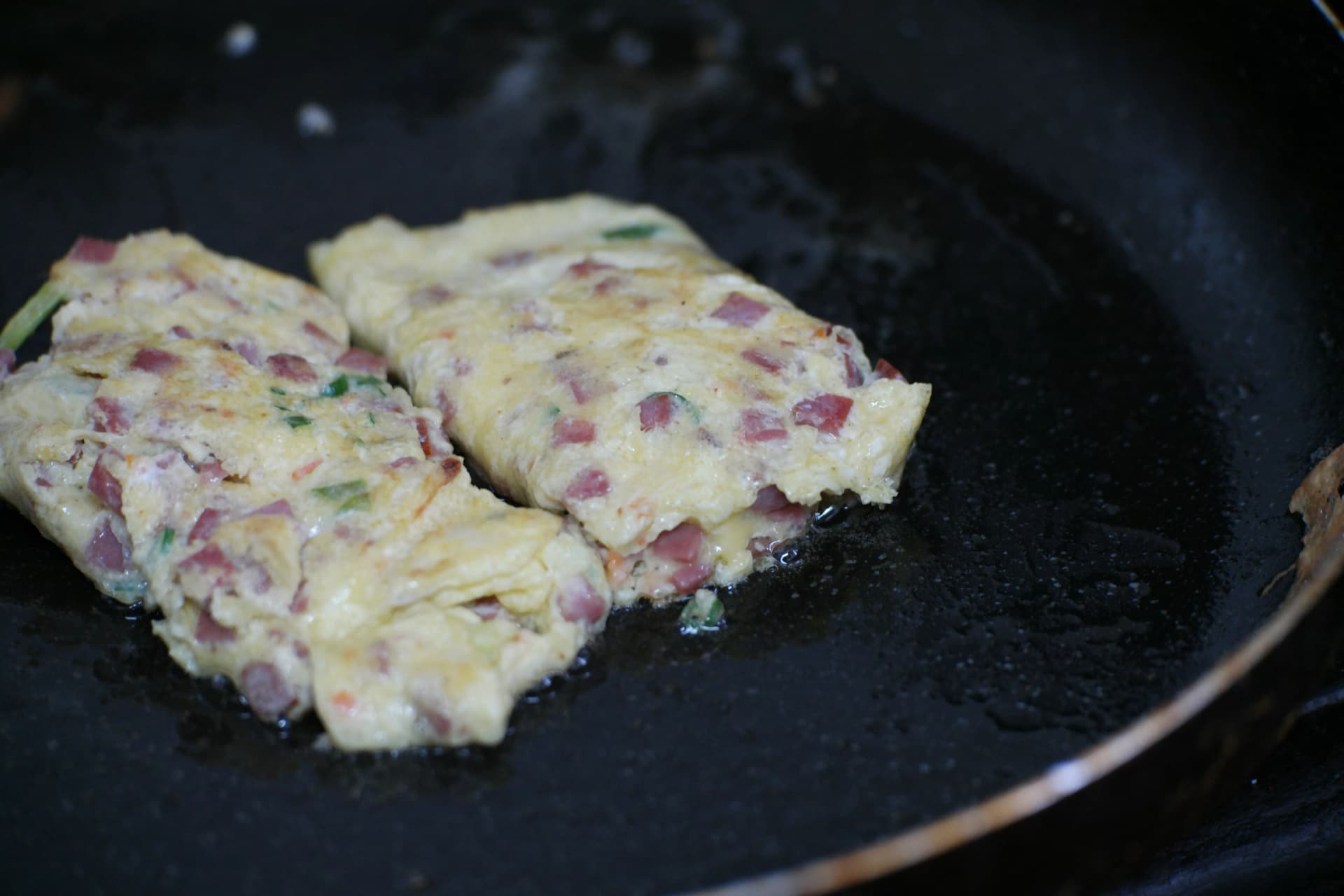
Here's where it gets tricky. You have to fold and flip at exactly the right moment. Too early and the inside spills out like a broken dam. Too late and the outside burns. Imo did it in one flick of the wrist. I've tried making this at home more times than I'd like to admit, and it tears apart every single time. Looks dead simple, but the timing is genuinely difficult to nail.
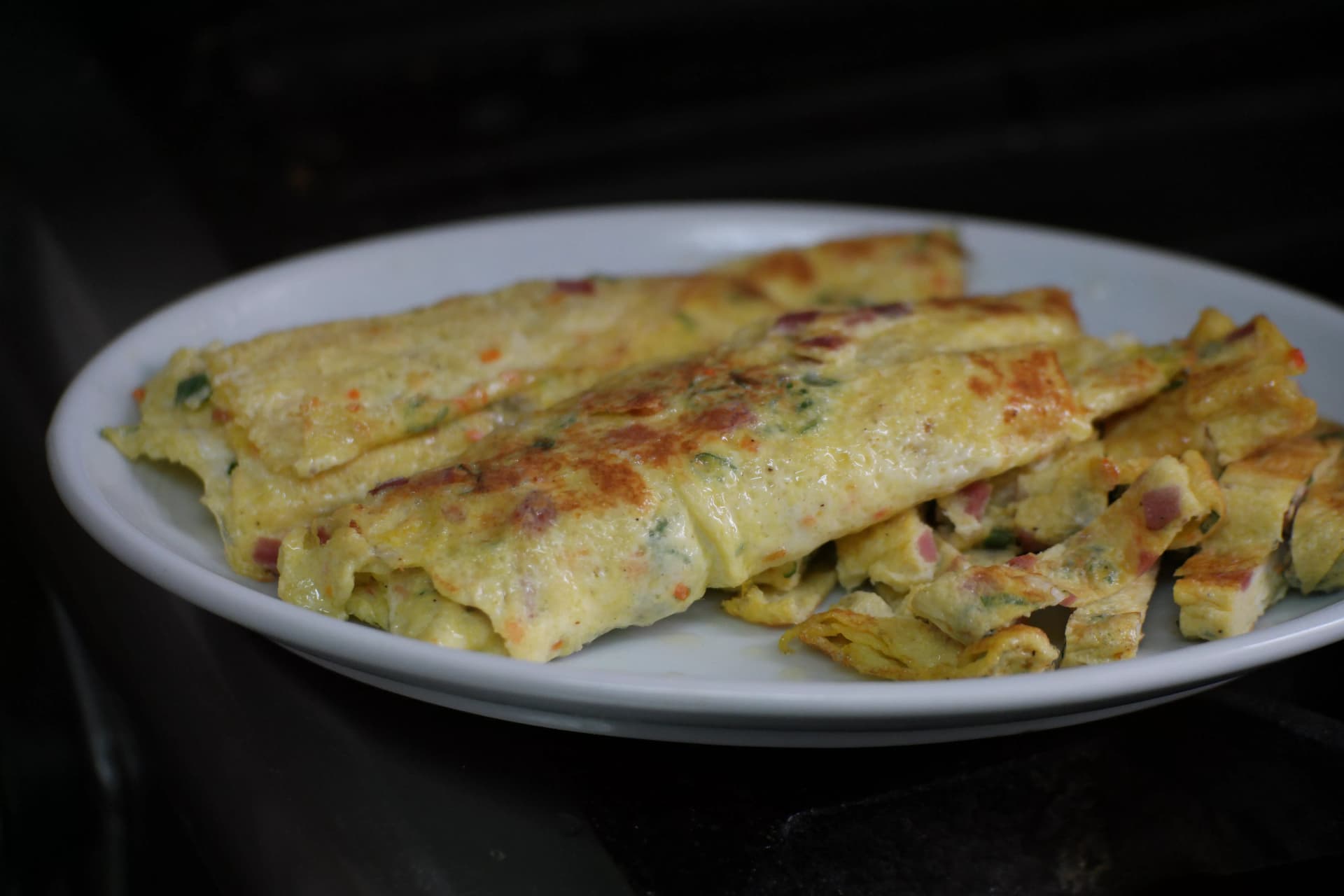
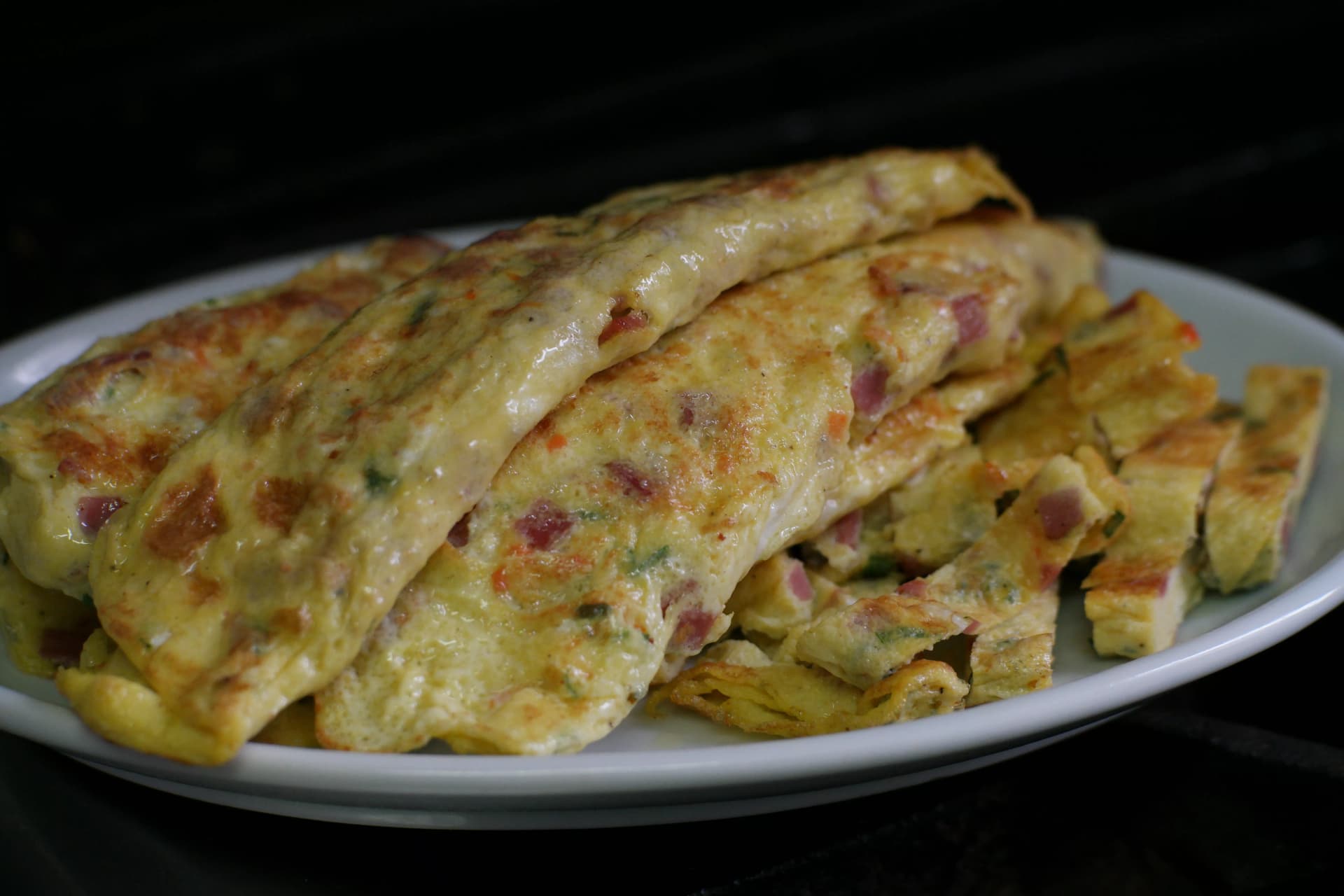
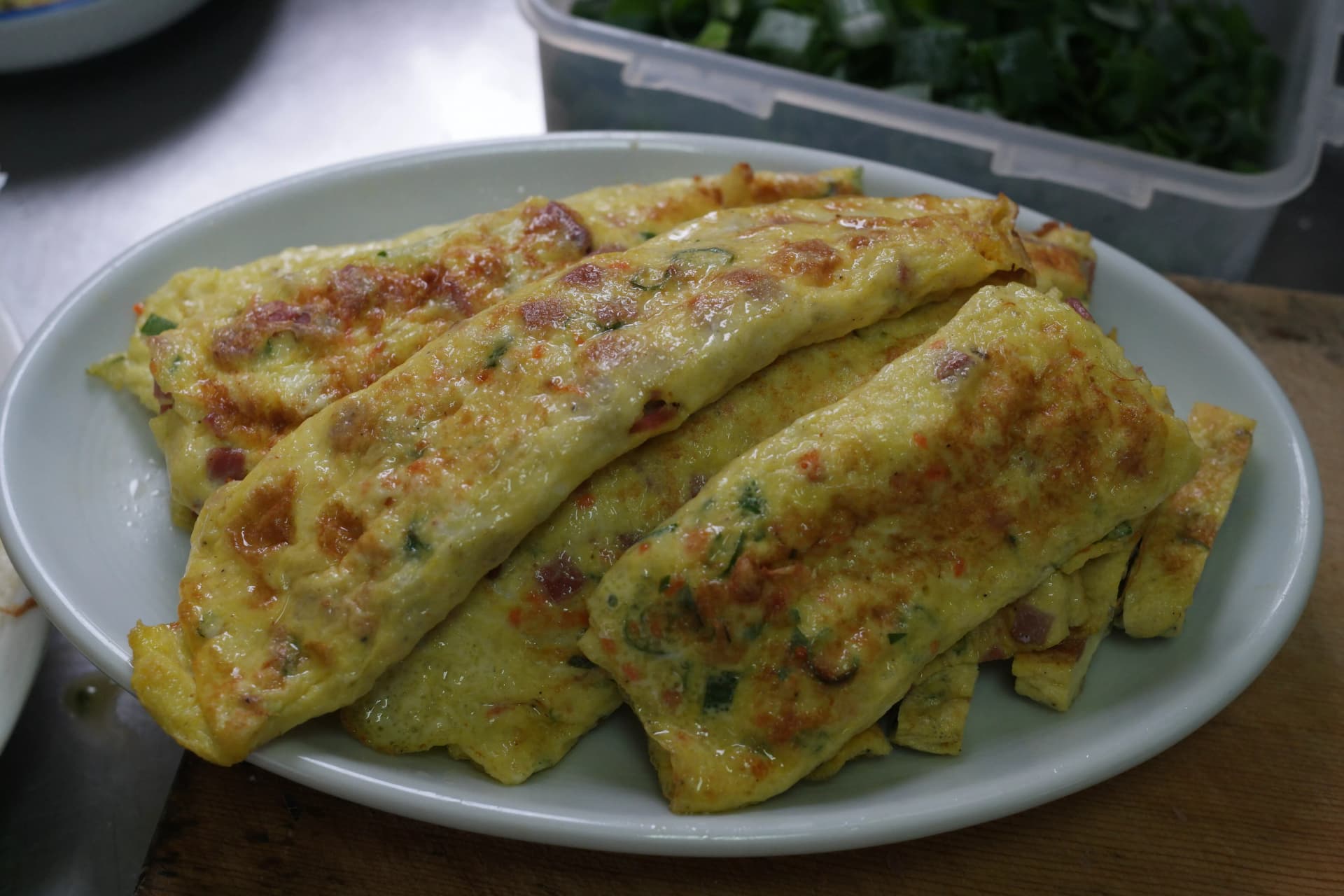
The finished product. You can see the ham and spring onion bits embedded through each slice, with that even golden colour on the outside. In the background, a green tub holds pre-chopped vegetables for the next dish — if you stood near Imo while she cooked, you'd notice she was always working on two things at once. Frying one dish while prepping the next. In Korean home-style meals, rolled omelette sits right behind kimchi in frequency. Whether it's a canteen, a baekban restaurant, or someone's actual kitchen at home, if this is missing the table feels incomplete. It's like forgetting the sauce on a meat pie — technically fine, but something's off.
Donggeurangtteng — The Side Dish That Takes the Most Effort
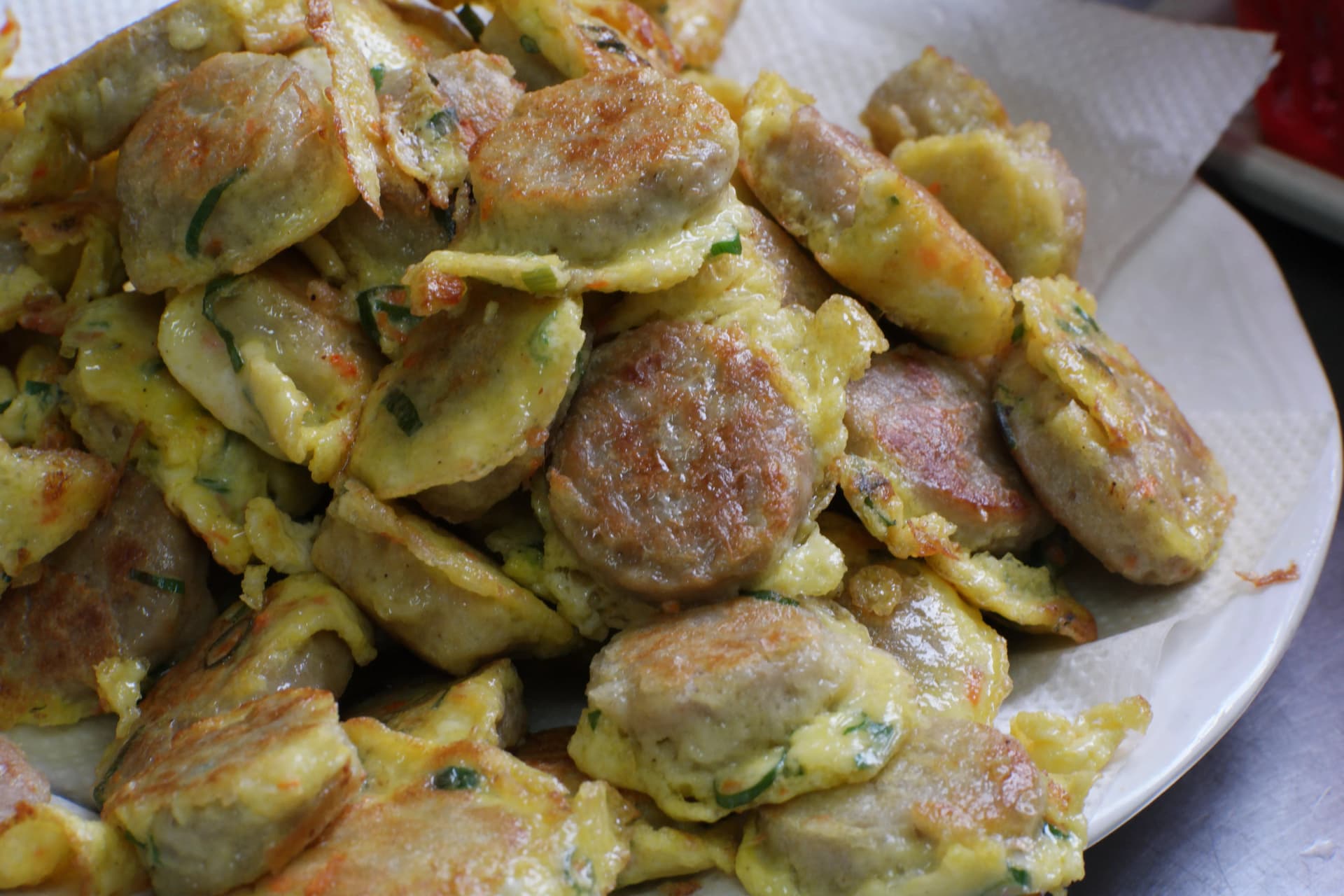
Donggeurangtteng are Korean-style patties made from a mix of tofu, minced meat, and finely chopped vegetables, shaped by hand into rounds, dipped in egg batter, and pan-fried. If you need a reference point, think of them as a Korean rissole — similar idea, but lighter because of the tofu, and coated in egg instead of breadcrumbs. Of all the banchan side dishes on the table, these take the most hands-on work. You have to shape each one individually, roll it through egg wash, then fry them batch by batch. Looking at the pile on the plate, I reckon she must have started on these well before dawn.
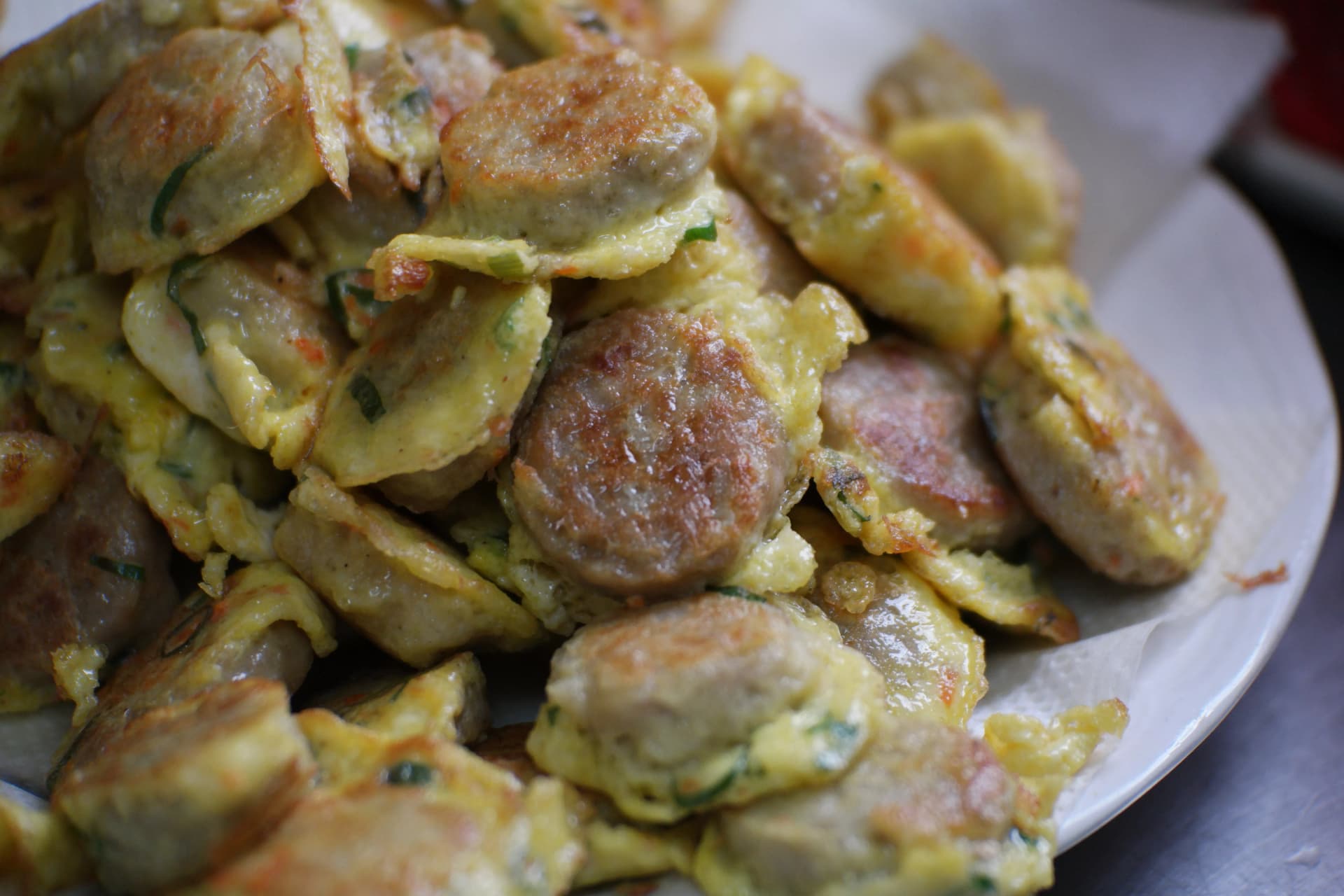
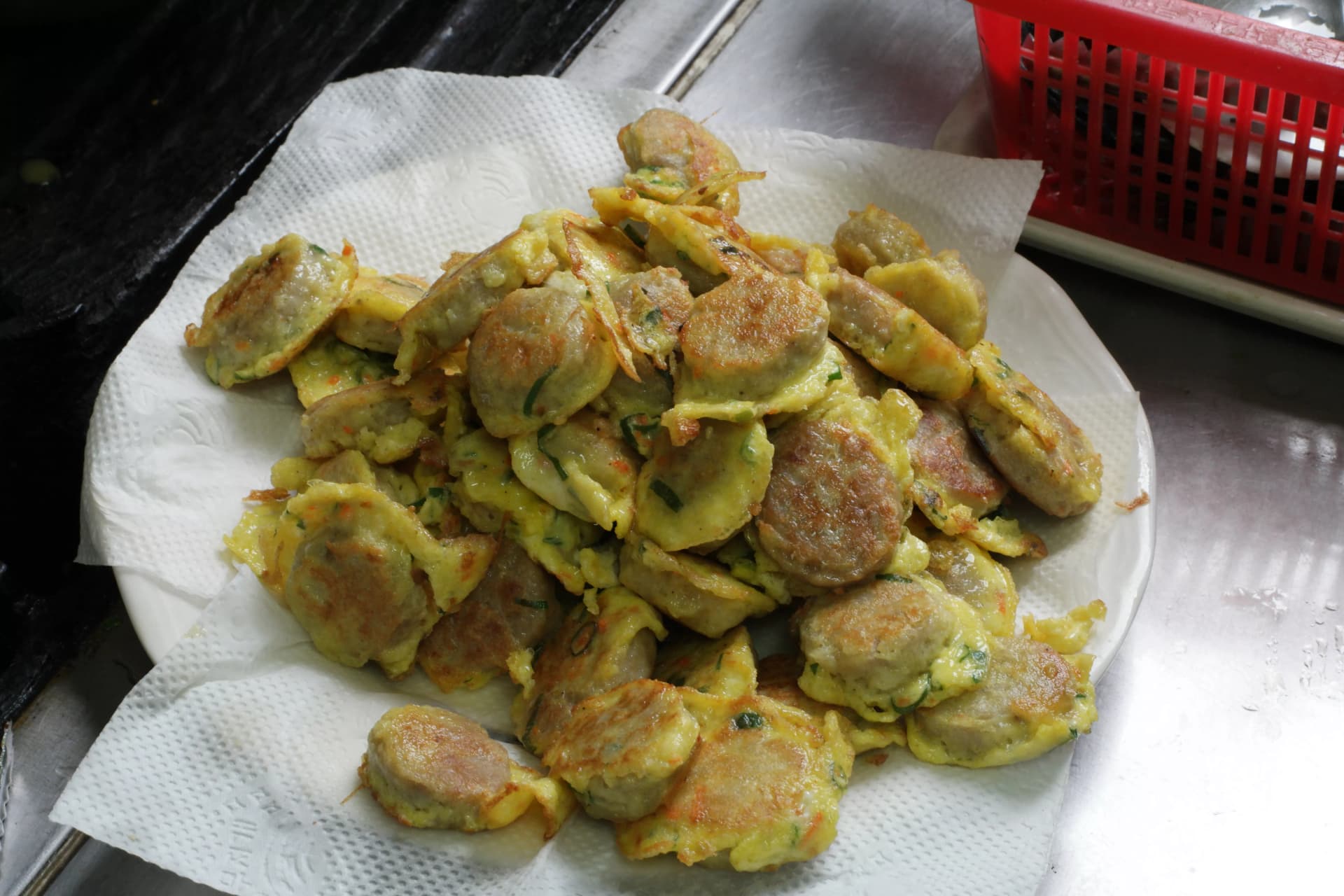
The cross-section tells you everything. That greyish interior is the tofu-meat blend, and the bumpy, uneven egg coating is proof these were shaped by hand. Factory-made frozen versions from the supermarket are suspiciously uniform — perfectly round, identical thickness. Homemade ones like these are all different sizes with egg batter clinging on in random patches. That's how you know they're the real deal. Fresh off the pan, the outside is crispy and the tofu keeps the inside soft and moist. They're still decent cold, which is why they show up in packed lunches constantly. In Korea, there's a tradition of the whole family gathering to make jeon — pan-fried dishes — during holidays. Donggeurangtteng is always part of that lineup. When it appeared on a regular Tuesday at the canteen, one of my colleagues would inevitably say, "Is it a holiday today?" It was that kind of dish — a bit too fancy for a weekday, which made it feel like a bonus.
The Namul Side Dishes That Balance the Whole Meal
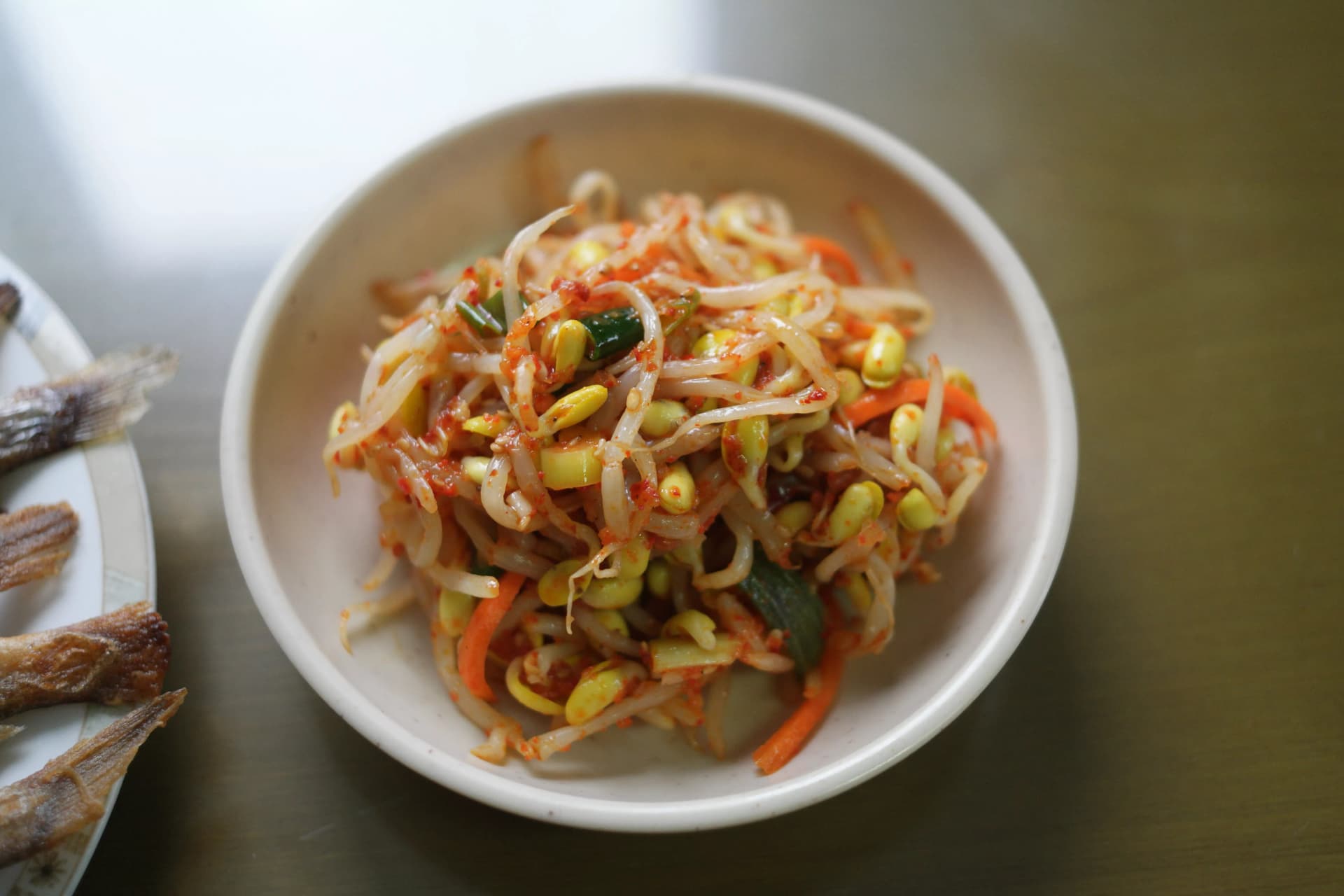
Seasoned bean sprout salad — kongnamul-muchim — is probably the single most frequently served banchan in all of Korean home cooking. Blanched soybean sprouts tossed with red pepper flakes, sesame oil, spring onion, and a bit of carrot. Dead simple, but the crunch of the sprouts against a spoonful of rice just works. The exact same dish tastes completely different depending on who makes it. Imo went light on the chilli, so hers leaned more tangy than spicy — which I actually preferred, especially on hot days.
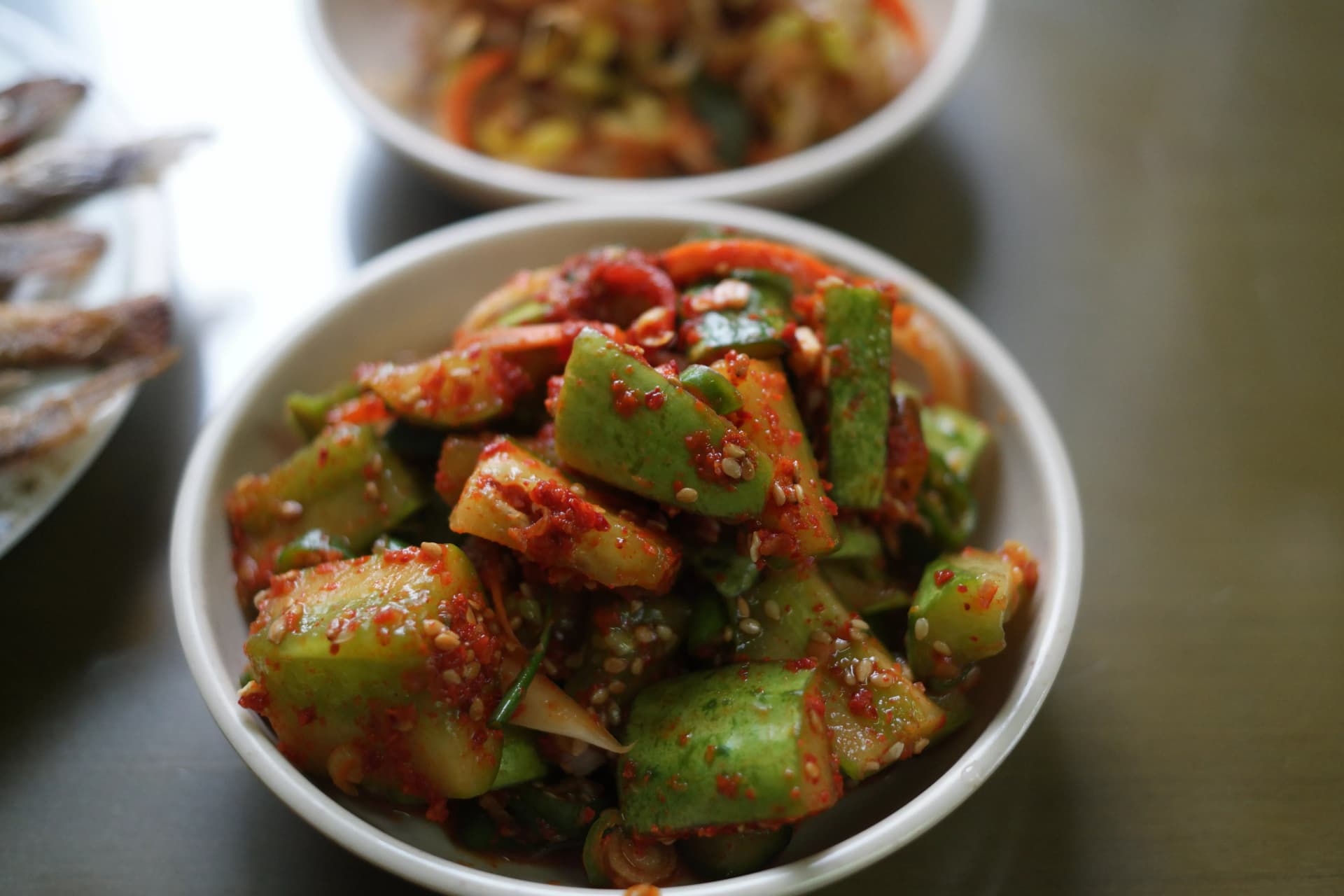
This cucumber side dish was almost more like a quick cucumber kimchi than a salad. Big chunky pieces of cucumber tossed with red pepper flakes, garlic, and sesame seeds. It showed up heaps more often in summer. On those sticky, humid Daejeon days — imagine the peak of a Darwin January, but somehow worse because you're inland — when you couldn't face anything heavy, a scoop of this over rice was genuinely all you needed.
A Mystery Green and Silky Braised Eggplant
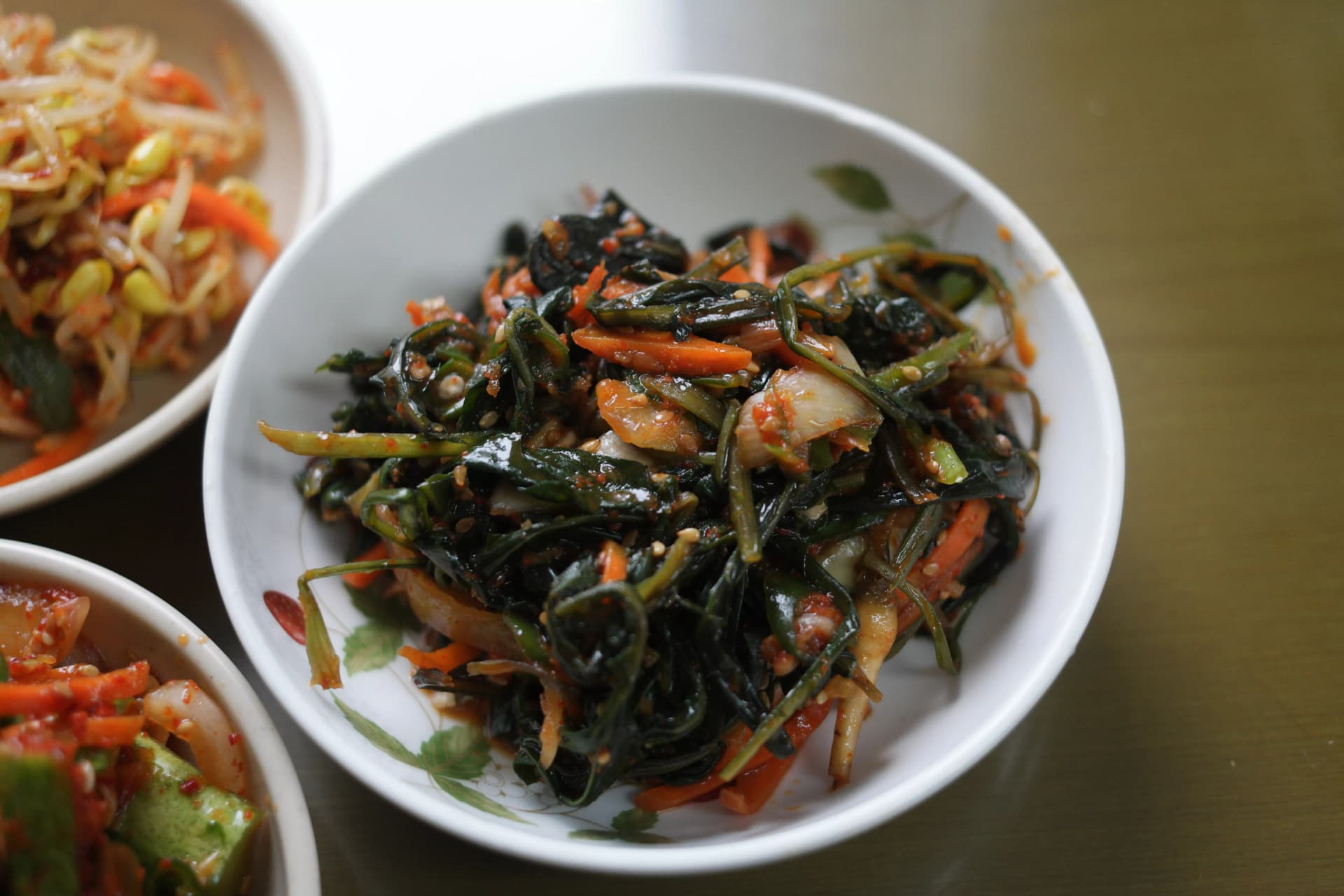
I'll be honest — I have no idea exactly what this one is. It might be sweet potato stems, maybe seaweed stems. It's dark green with bits of carrot mixed through and sesame seeds scattered on top, dressed in what's clearly a soy-based sauce. In Korean home-style meals, there's almost always one namul like this where you can't quite name it. But that's exactly the dish doing the heavy lifting for balance. Between the fried fish, the egg roll, and the rich stew, one bite of this quietly resets your palate. It's the unsung hero of the table.
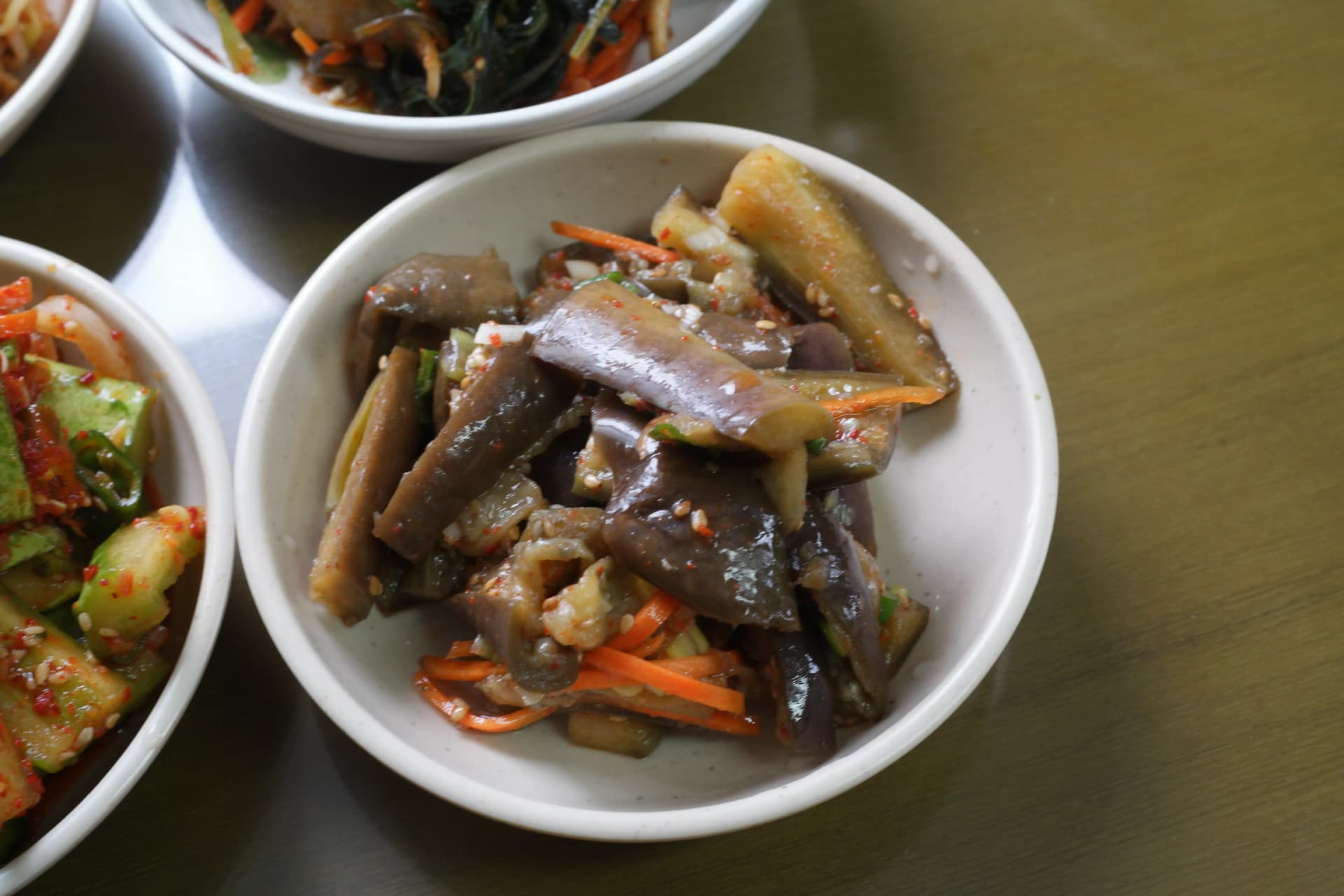
Eggplant dressed in soy sauce and sesame oil — gaji-muchim. In Korea, eggplant is genuinely divisive. A lot of people hate the soft, almost slimy texture. But when it's done well, it's less mushy and more melt-in-your-mouth, like a silky, savoury custard. The soy and sesame soak right through the flesh, so every bite is salty and nutty. I didn't touch eggplant until I was well into my twenties. Something just switched one day. One of my colleagues never came around on it though — refused it every single time — so I'd quietly help myself to his share too. No complaints from me.
The Main Event — Kimchi Jjigae
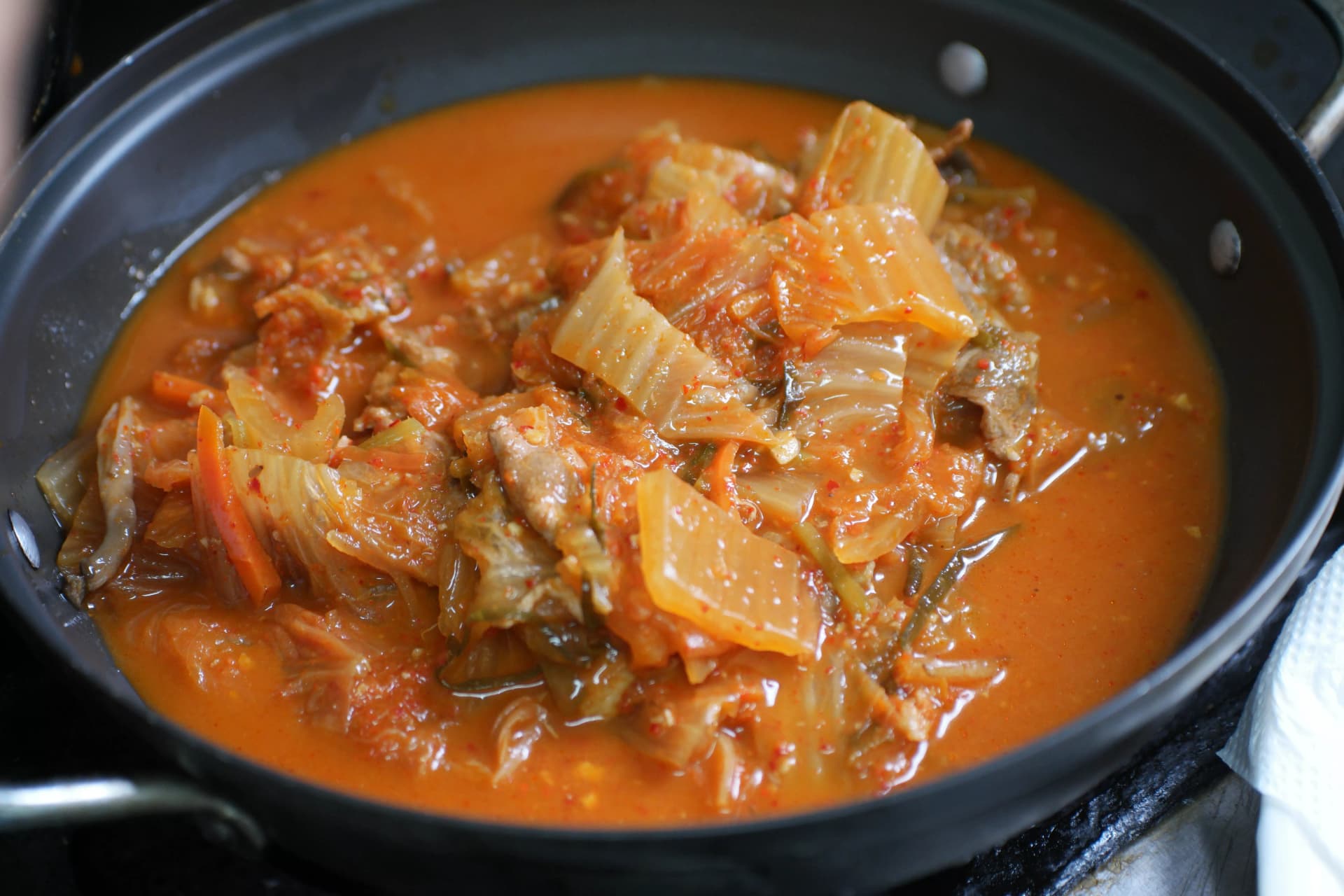
Kimchi jjigae — fermented kimchi stew — is the centrepiece of Korean home cooking. Every baekban table revolves around whatever stew is in the middle, and more often than not, it's this one. What you're looking at here is well-aged kimchi — called mugeunji, the stuff that's been fermenting for months until it goes properly sour — simmering down with pork in a deep red broth. Fresh kimchi won't give you the same depth. You need that old, funky, sour kimchi, broken down and melting into the liquid, for the flavour to really hit. At this stage the pork has been in there long enough that the kimchi is starting to fall apart, and that's exactly when the broth reaches its peak.
Building the Stew Layer by Layer — Korean Style
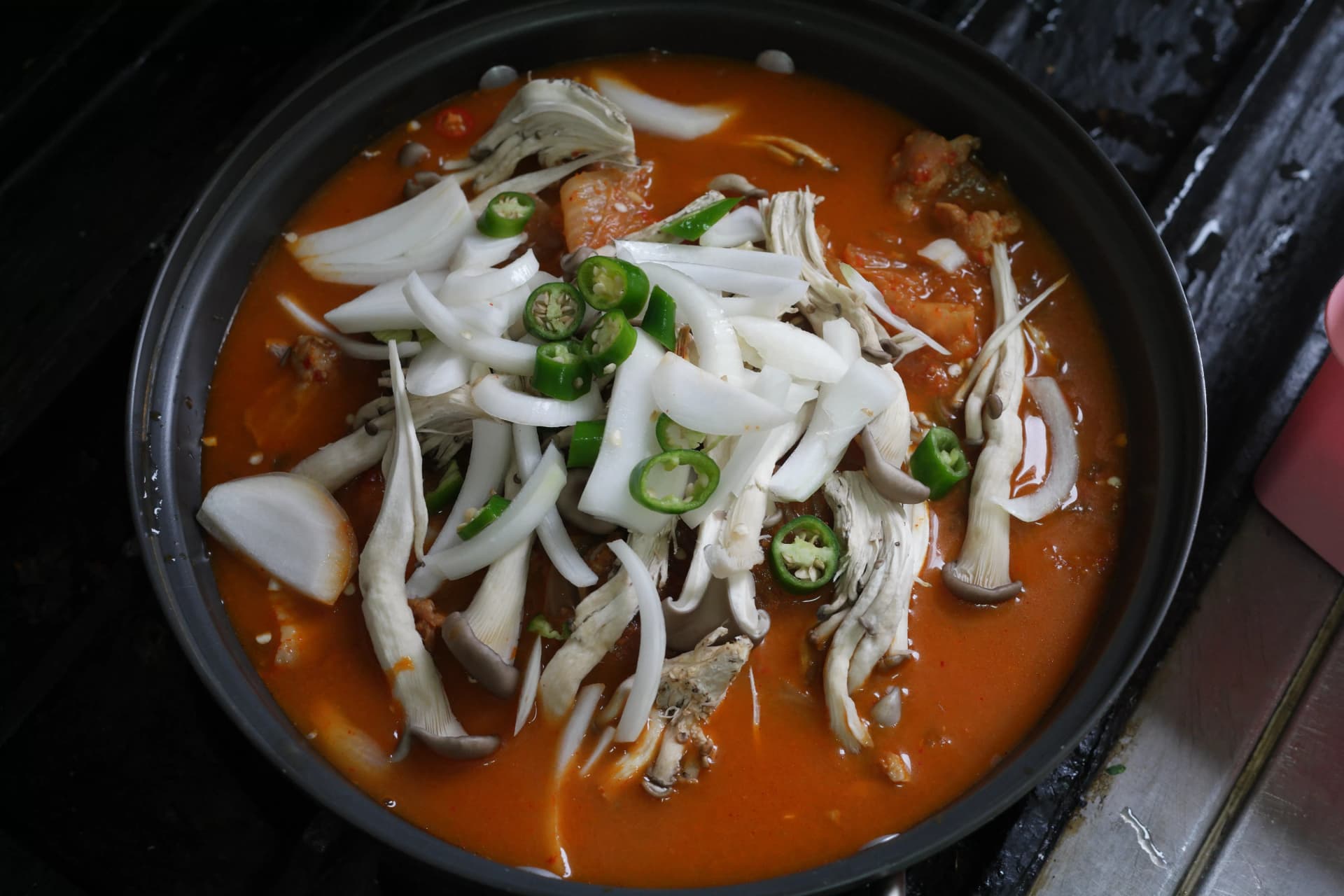
Next in: oyster mushrooms and thin-sliced cheongyang chilli — that's a Korean hot pepper with a sharp, clean heat, similar to a bird's eye chilli. Not every household adds mushrooms to their kimchi stew, but Imo always threw in a generous handful. Once those mushrooms absorb the broth and soften up, every bite releases a burst of that deep kimchi flavour. Mildly addictive, honestly.
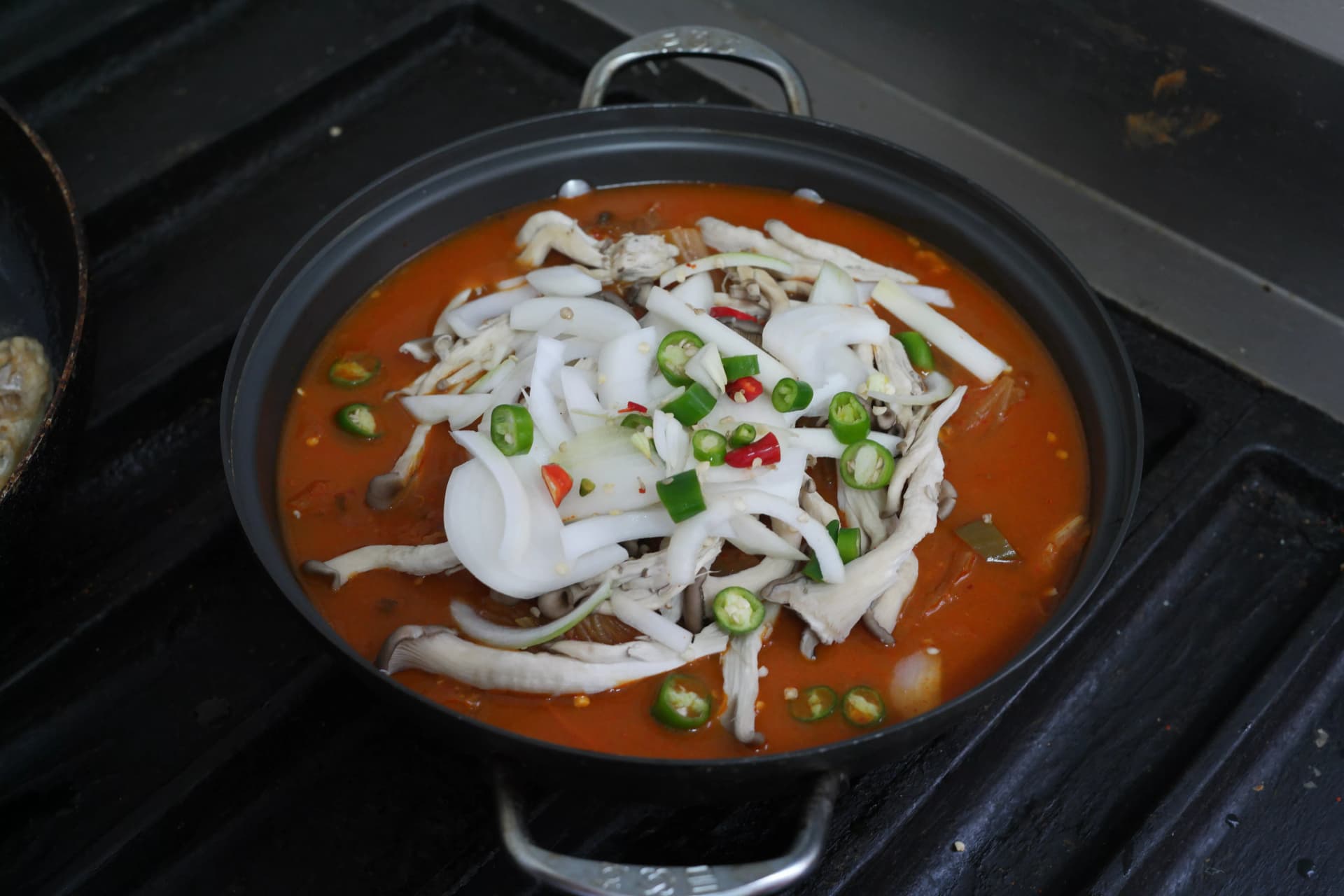
Onion went in next. Korean-style stews aren't a dump-it-all-in-at-once situation. Ingredients that need longer cooking go first; things that go soft quickly, like onion, come later. If onion simmers too long it just dissolves into nothing, so the timing matters.
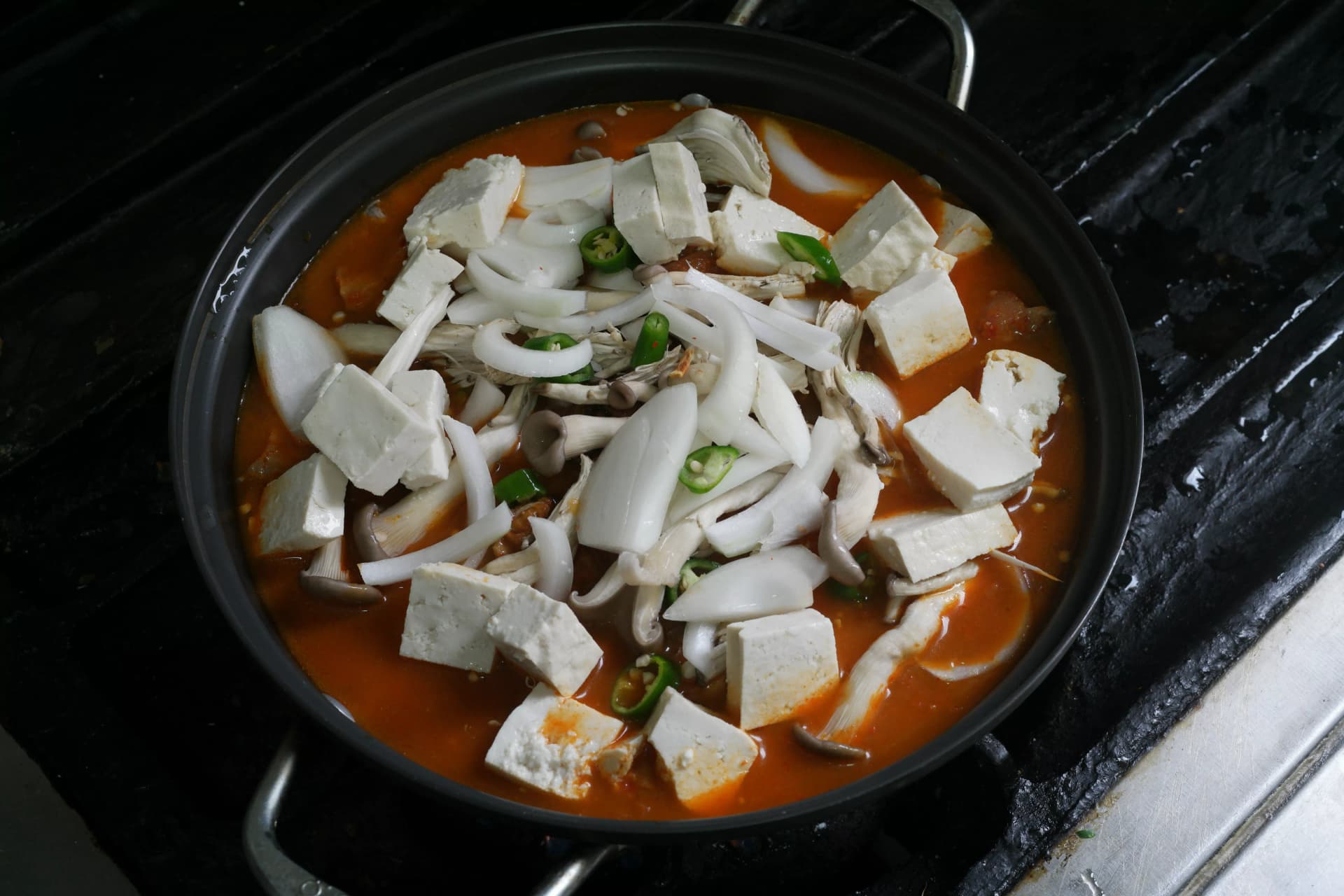
Last to go in: big chunks of tofu. If you leave tofu out of kimchi jjigae, Koreans will genuinely feel like something is missing. As the stew boils, the tofu firms up on the outside while staying silky inside, soaking up that spicy, tangy broth. When the heat is relentless and your mouth is on fire, fishing out a piece of tofu gives you this one-beat pause before you dive back in. It's the cool-down lap of the meal.
Finished Kimchi Jjigae — Straight to the Table in the Pot
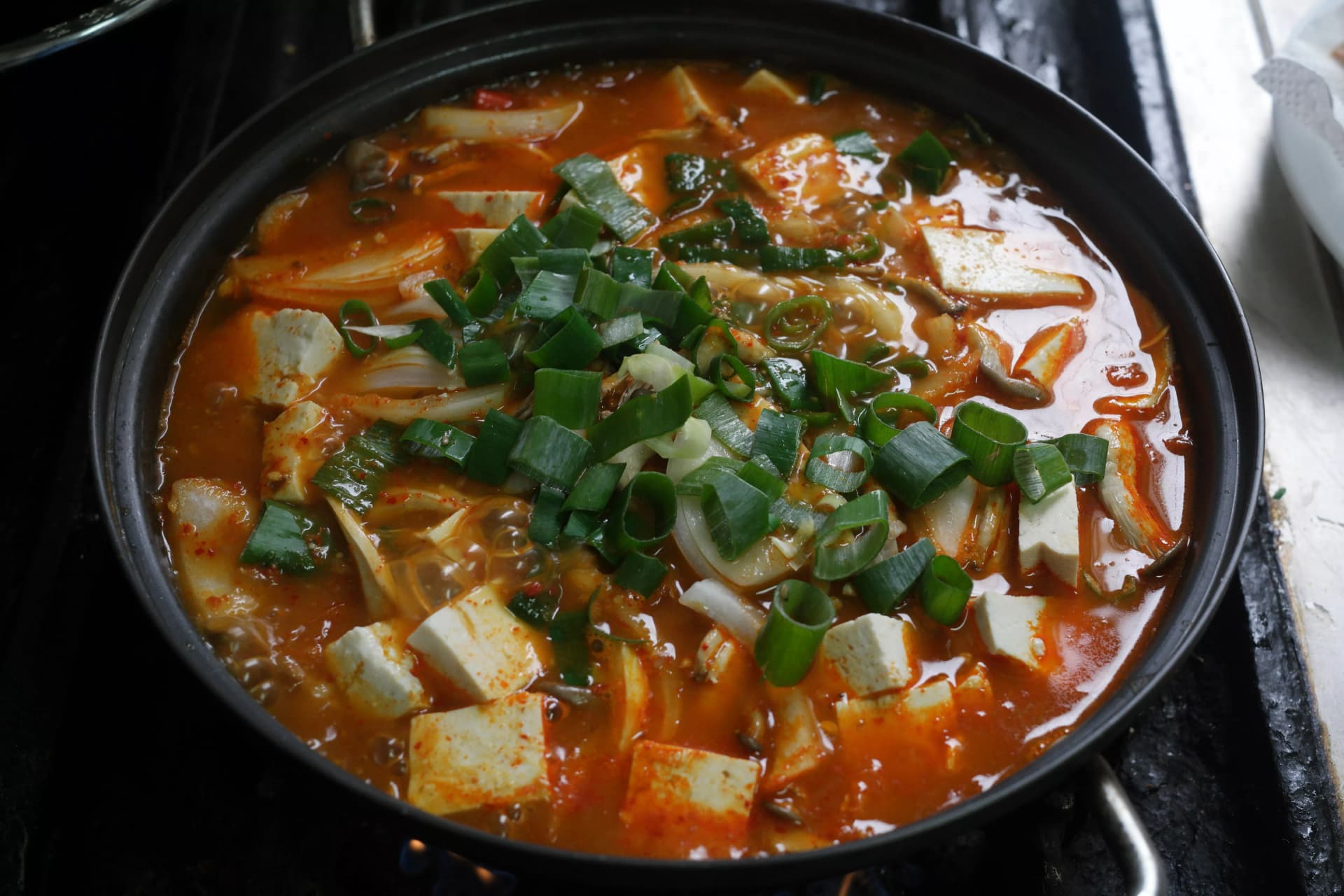
Chopped spring onion scattered on top and it's done. The whole pot goes to the centre of the table exactly like this — still bubbling. In Korea, stew doesn't get portioned out into individual bowls. Everyone sits around one shared pot and scoops directly from it with their own spoon. You put rice in your bowl, ladle stew and bits of meat and tofu over the top, and eat. One thing that did bother me about this canteen, though — the air conditioning was weak. In a Daejeon summer, eating a boiling hot stew in a room that barely qualifies as air-conditioned meant sweat pouring down your forehead. One of the lads said, "Reckon I need a shower before the arvo meeting," and we all cracked up because it was completely true. And I'll be upfront about this too: the kimchi jjigae showed up a bit too often. Three, sometimes four times a week. At one point I gently suggested to Imo, "Maybe doenjang-jjigae tomorrow?" — that's the fermented soybean paste stew, more mellow and earthy. She smiled, nodded, and the next day served kimchi jjigae again. Fair enough.
The Full Korean Home-Style Spread — Everything on the Table
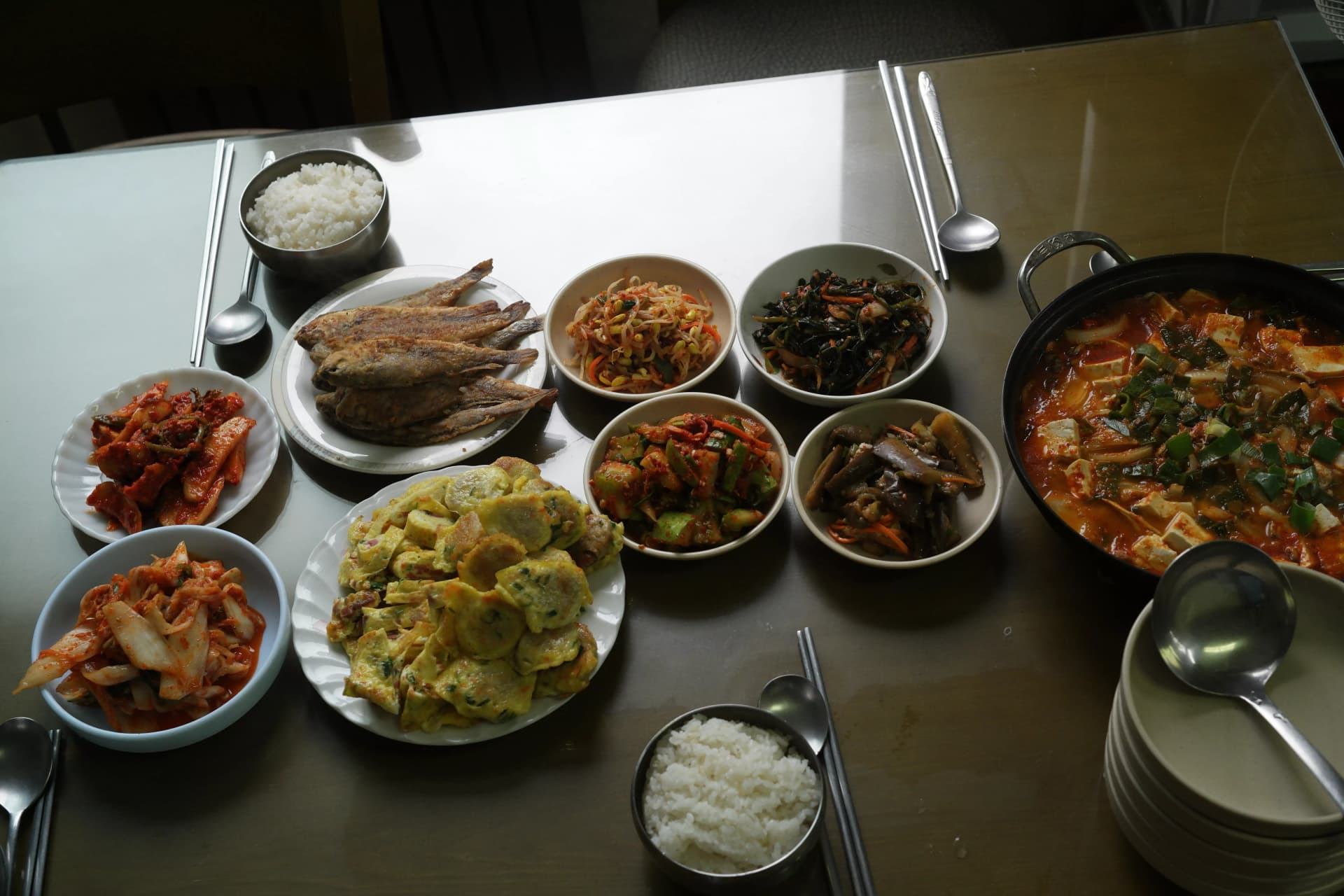
This is the full spread from that day. Stainless steel table, nothing fancy. Rice, kimchi jjigae, pan-fried croaker, rolled omelette, donggeurangtteng patties, bean sprout salad, cucumber salad, seasoned greens, braised eggplant, and kimchi. It looks nothing like the elaborate Korean course meals you see at high-end Korean restaurants — hanjeongsik — where dishes arrive one by one on beautiful ceramic plates. Here, the bowls don't even match and there's zero plating to speak of. But this is what Korean people genuinely eat every day. You'll notice a spoon and a pair of metal chopsticks sitting side by side — that's standard Korean table setting. Spoon for rice and stew, chopsticks for picking up side dishes. Using both at the same time feels odd at first, but give it a few days and it becomes second nature. Count the side dishes and you'll get past eight, all prepared by one woman every single morning. This entire meal? Under A$5. That's less than what you'd pay for a flat white in most Australian cities these days — for a table this full.
Simple, Honest Food You Never Get Tired Of
Korean home-style cooking isn't about any single hero dish. It's the structure itself — rice in the middle, a stew on one side, fish and a few namul dishes arranged around it. Eat each side dish on its own and it's unremarkable. Put it on a spoonful of rice and suddenly the flavour clicks into place. I know it probably doesn't look like much from photos alone. There's no sizzle reel, no cheese pull, no dramatic reveal. But if you ever find yourself in Korea, skip the tourist strips for one lunch and walk into a local baekban restaurant. Korean BBQ and fried chicken are great, but what Koreans actually eat every day is this. Spooning hot stew over rice, picking up one side dish after another, finishing the bowl and sitting back — that's Korean lunch. I left that job a while ago now, but every so often I think about those midday meals. Whether I miss the food or the people sitting across from me at that steel table, I reckon it's probably both.
This post was originally published on https://hi-jsb.blog.