
5-Tier Steamed Seafood Tower — Honest Review, Price, How to Eat
Table of Contents
13 items
The Steamed Seafood Tower You'll See at Every Korean Coastal Town
If you ever travel along Korea's coastline, there's one sight you're guaranteed to see: tables outside restaurants stacked with aluminum steamer pots — three, four, even five tiers high — with steam curling up between the layers. That's jogaejjim, a steamed seafood tower. Fresh shellfish and seafood are sorted by type, layered into a multi-tiered steamer, and cooked all at once. You'll find restaurants like this in virtually every coastal city in Korea — Tongyeong, Busan, Taean, Sokcho, Jeju, you name it.
When people think of Korean seafood, raw fish (hoe) at a sashimi restaurant usually comes to mind first. But almost everyone I know who's tried jogaejjim says they liked it even more. Sashimi is raw fish served on a plate. Jogaejjim is a completely different experience. You get lobster, abalone, scallops, conch, crab, and shrimp all steamed together in one sitting. As a seafood feast, the sheer variety and spectacle of it just hits different. That's exactly why I wanted to put together a proper writeup of the whole experience.
Here's the structure: each tier of the steamer holds a different type of seafood. As everything cooks, the juices drip down to the very bottom layer, creating an incredibly rich broth. At the end, you drop knife-cut noodles (kalguksu) into that broth as the grand finale. You choose your tier count based on group size — usually anywhere from 3 to 5 tiers — and pricing varies by region, but a 5-tier tower for 3–4 people runs roughly $90 USD.
Jogaejjim at a Glance
Our Winter Seafood Tower in Tongyeong
This happened during a winter trip when my family and I visited Tongyeong, a harbor city on Korea's southern coast about 4 hours from Seoul. My wife, my mom, my younger brother, and I — four of us — were walking near the waterfront when we spotted a jogaejjim restaurant and decided to just go in. It was off-season and early evening, so we got seated right away with no wait. It was freezing outside, so honestly, just sitting somewhere warm already felt like a win. The menu had 3-tier, 4-tier, and 5-tier options, and since we were on vacation, we went all in and ordered the 5-tier. About $90. Not cheap, I'll be honest, but split four ways that's around $22 per person — which I managed to justify as pretty reasonable for a full seafood spread at a tourist destination.
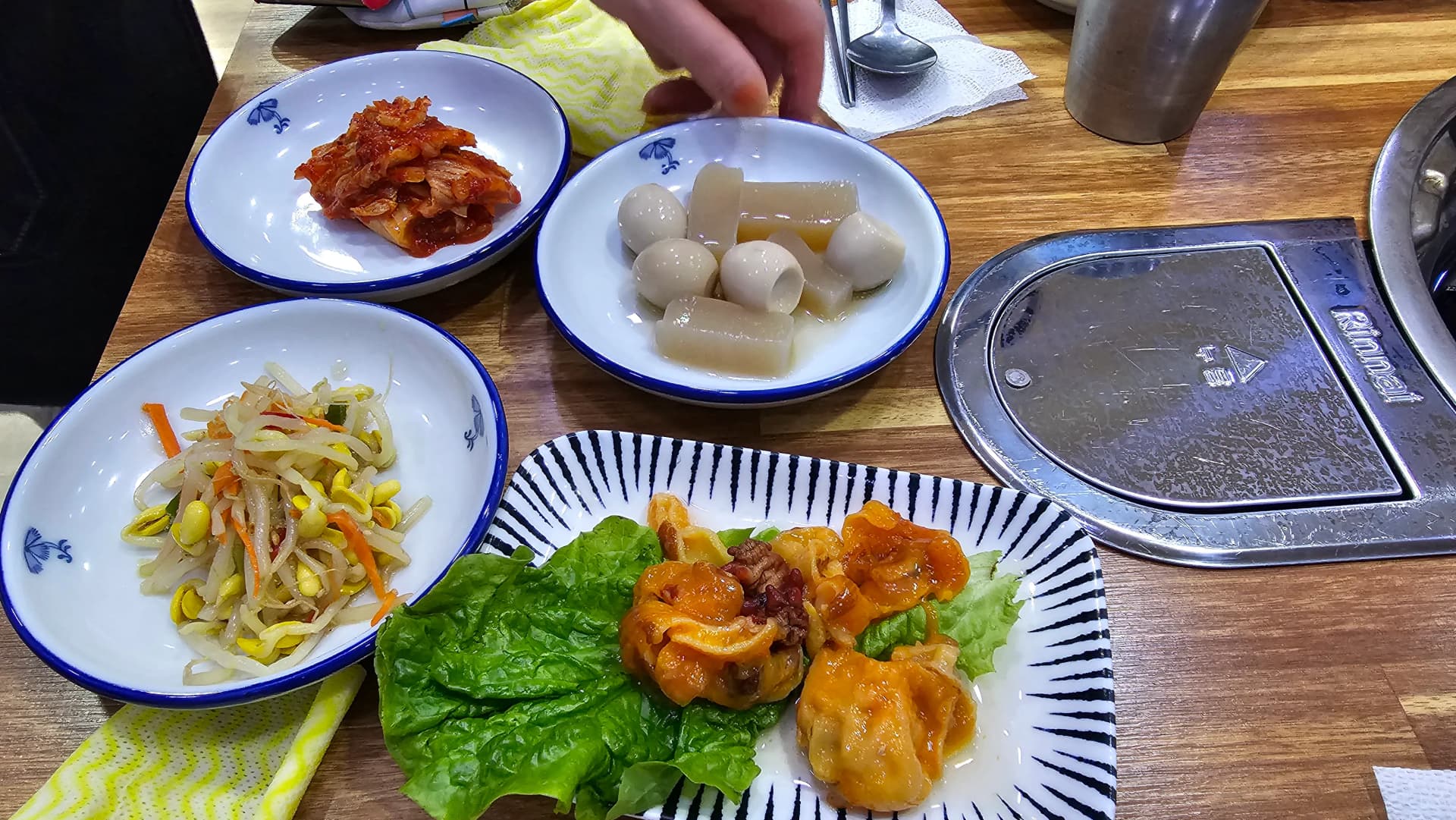
Side Dishes That Come Before the Seafood Tower
Before the main tower arrives, they set out side dishes first. We got kimchi, seasoned bean sprouts, rice cakes, and dumplings. In Korean restaurants, all these side dishes — called banchan — are completely free. They come automatically with your main order, and if you run out, you can just ask for more at no extra charge. Visitors from abroad are usually pretty surprised by this system the first time, but in Korea it's totally standard.
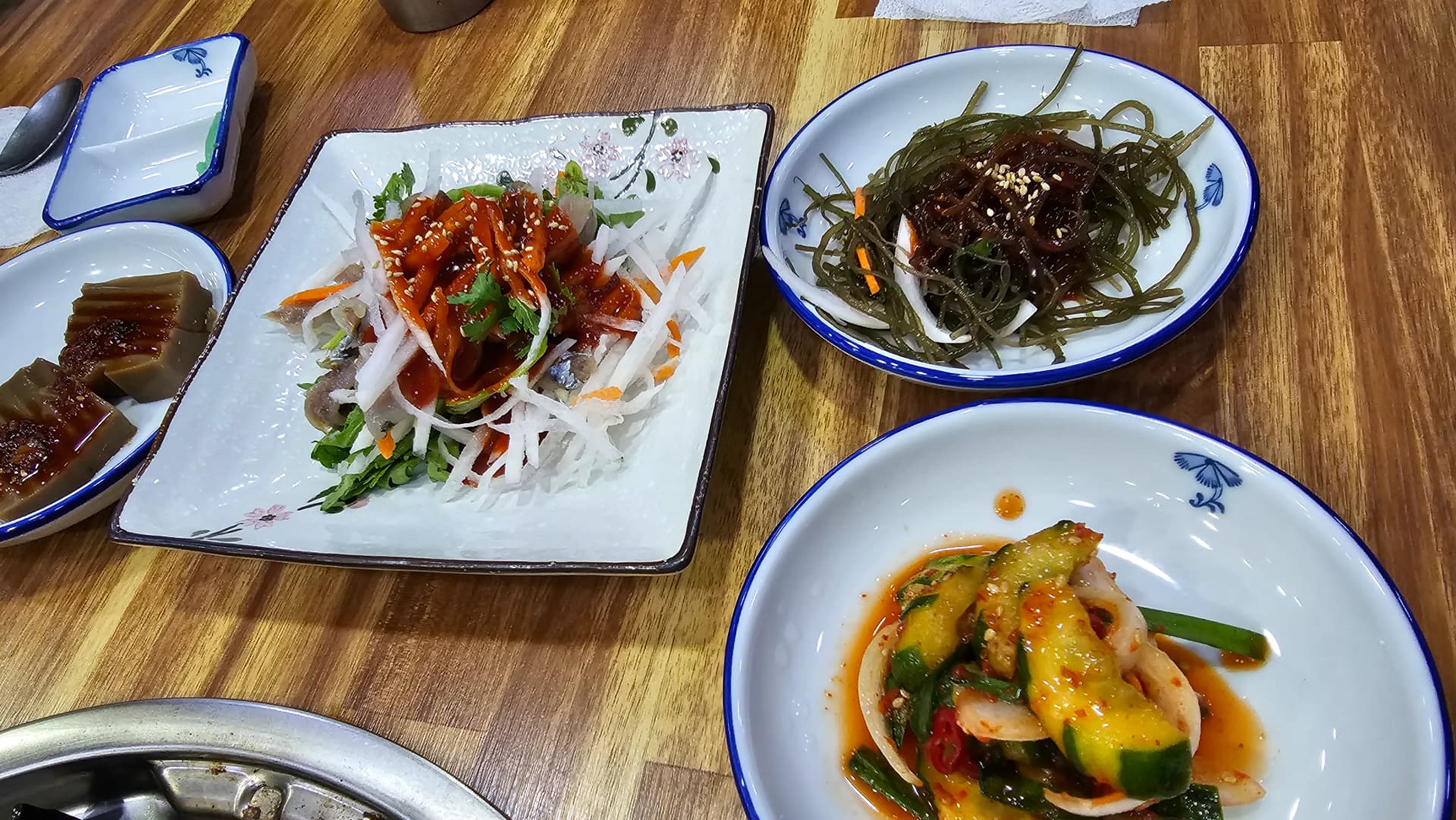
More banchan kept coming. Spicy raw fish salad, seaweed salad, stuffed cucumber kimchi, and acorn jelly. Since it was a seaside restaurant, it was nice that raw fish salad showed up as a side dish — that's something you wouldn't normally see at inland restaurants.
The Moment a 5-Tier Steamer Tower Lands on Your Table
And then it arrived. The 5-tier steamed seafood tower. Five aluminum steamer pots stacked on top of each other and placed right on the table — so tall I couldn't even see my mom sitting across from me. The table next to us turned their heads to stare, too. What's inside each one? Do we open from the top or the bottom? Two dipping sauces were already laid out: chojang (a tangy-spicy red vinegar sauce) and a soy-based sauce.
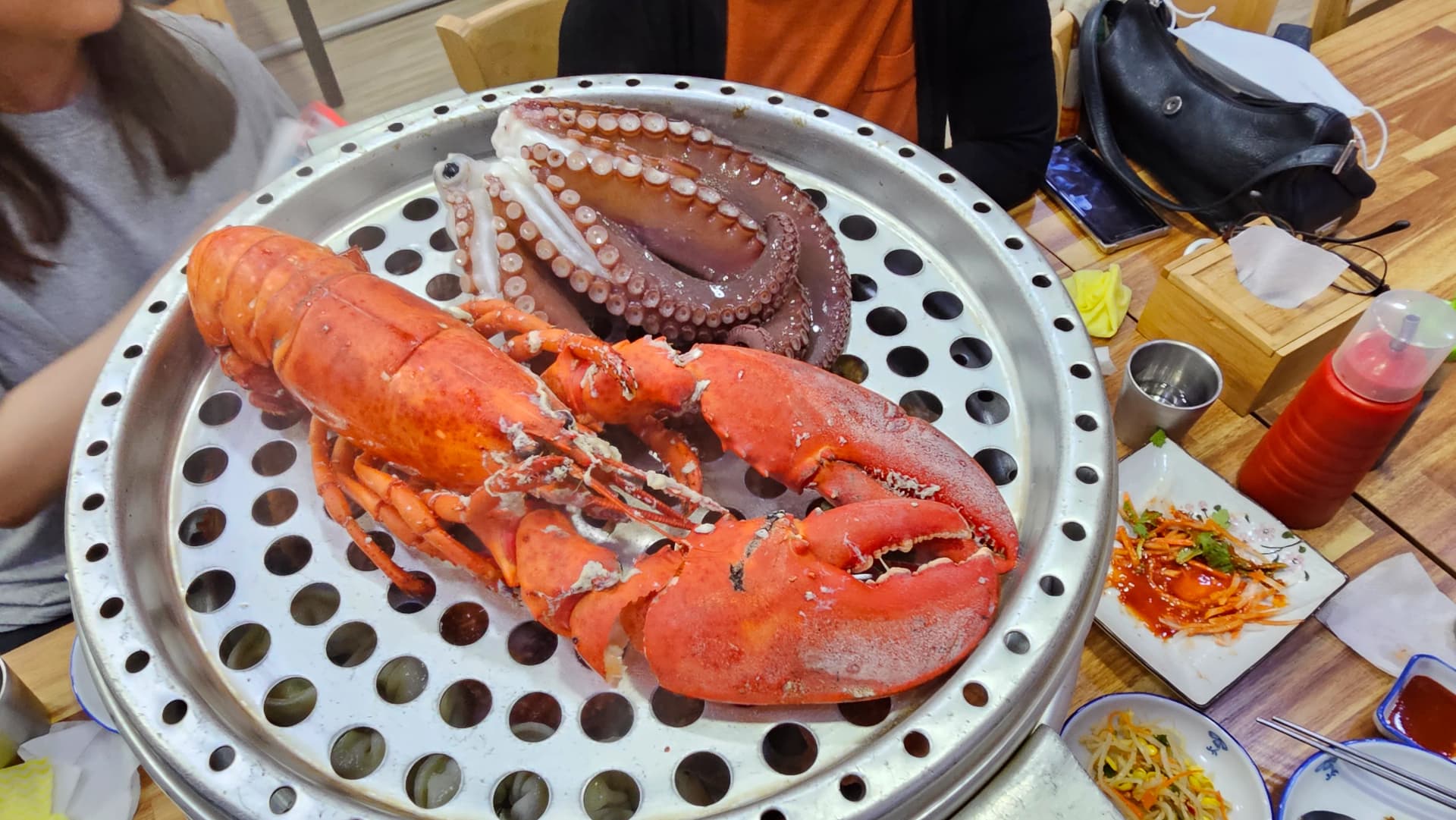
Top Tier — Lobster and Octopus
The second we lifted the top lid, all four of us made a noise at the same time. A whole lobster was sitting right there, and next to it an octopus with its tentacles curled around itself. My mom said, "If this is just the first layer, what on earth is in the rest of them?" I was dying to open the next one immediately. My brother already had his phone out filming, and my wife was staring at the lobster claw wondering how she was supposed to crack it. If the first tier looks like this, I thought, maybe $90 isn't so bad after all.
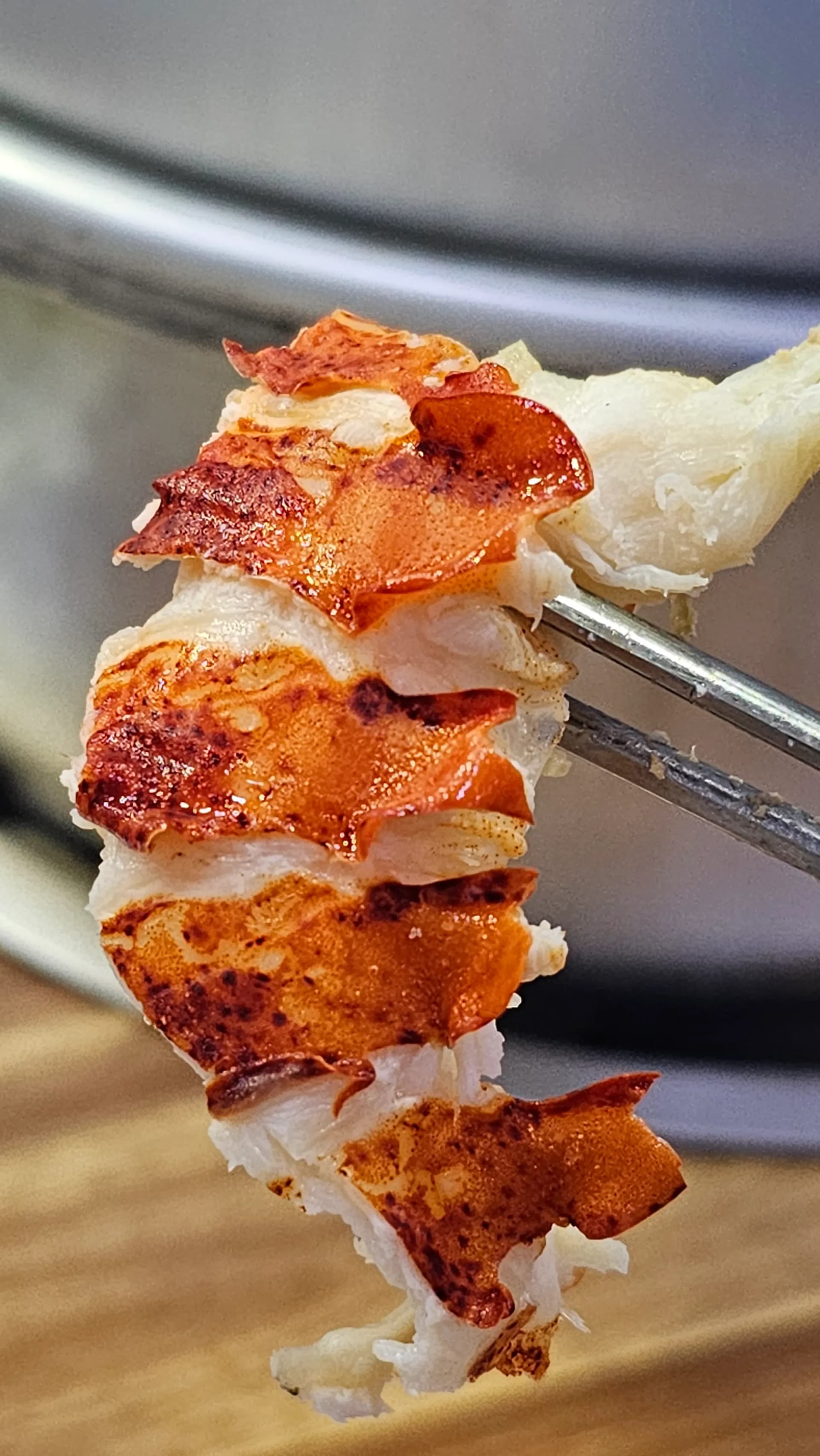
I pulled the tail meat off the lobster and it was surprisingly thick. Because it was steamed rather than grilled or boiled, it came out moist and tender instead of rubbery. If you're picturing butter-poached lobster, this is actually quite different. Since it's steamed with no seasoning, the natural sweetness of the meat comes through much more clearly. Dip it in the chojang and you get that signature Korean sweet-sour-spicy kick that really brings it alive.
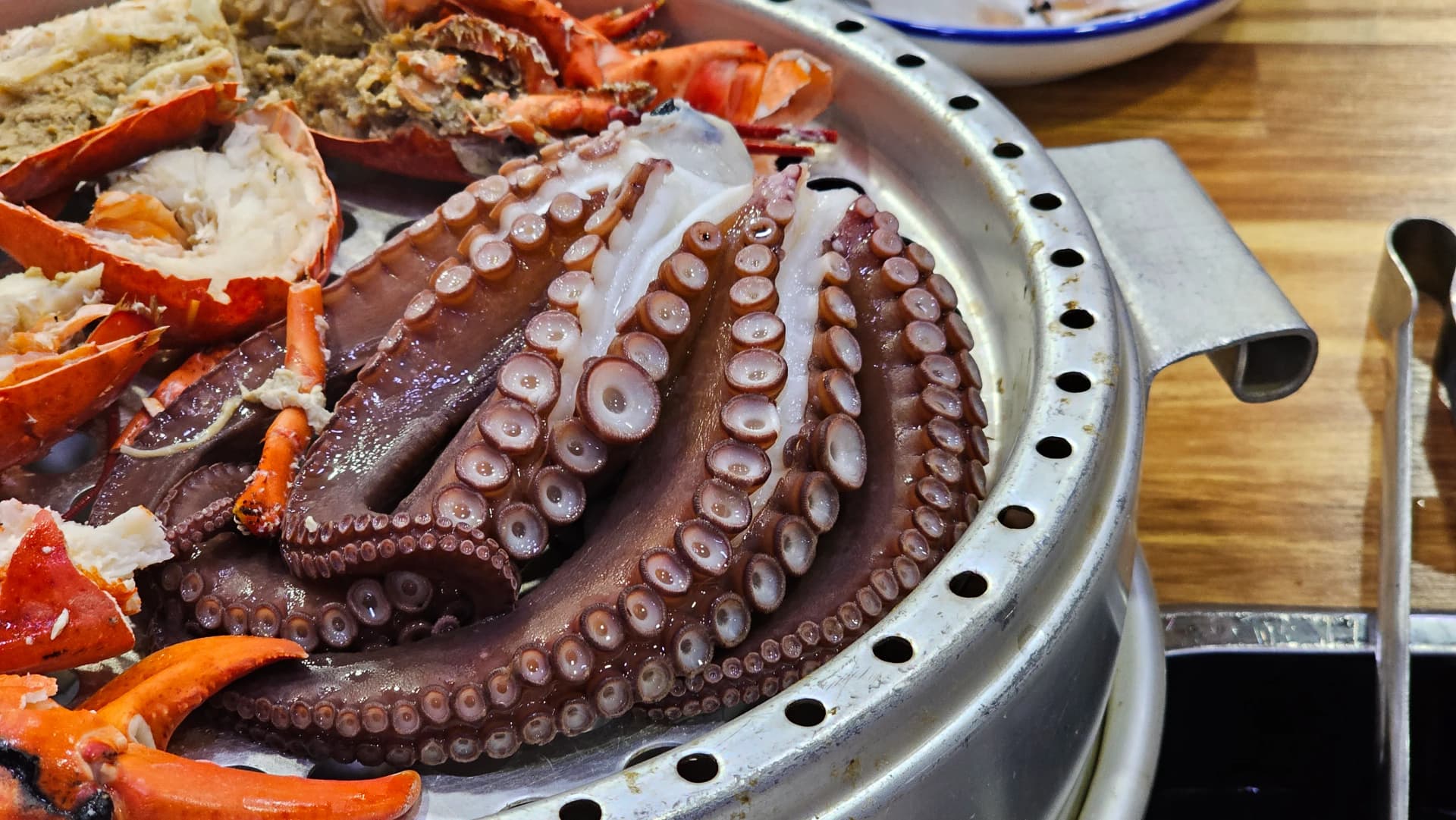
The octopus came out with its tentacles steamed whole. The suckers were still perfectly defined, which might be a little startling at first glance, but you just cut it into bite-sized pieces with scissors. The more you chew, the more this savory, nutty flavor builds up, and it wasn't tough at all — just the right amount of chewiness.
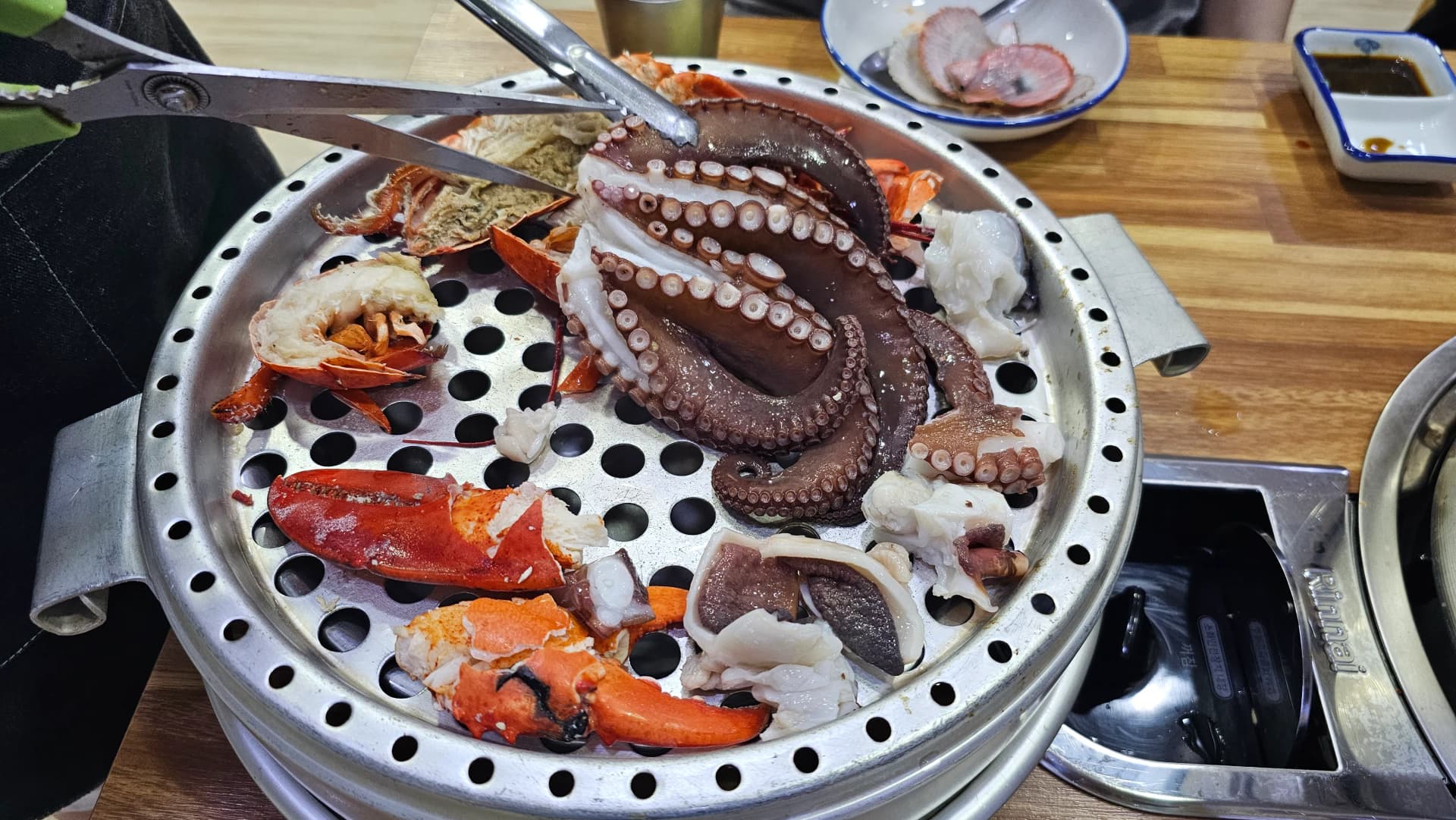
One of the staff came over, cut up the octopus with scissors, separated the lobster claws from the body, and plated everything for us. At Korean jogaejjim restaurants, it's really common for staff to do all the prep work for you like this. Even if it's your first time, you don't have to worry about figuring out how to eat any of it.
How to Eat Jogaejjim — If It's Your First Time
A Tier Packed with Scallops
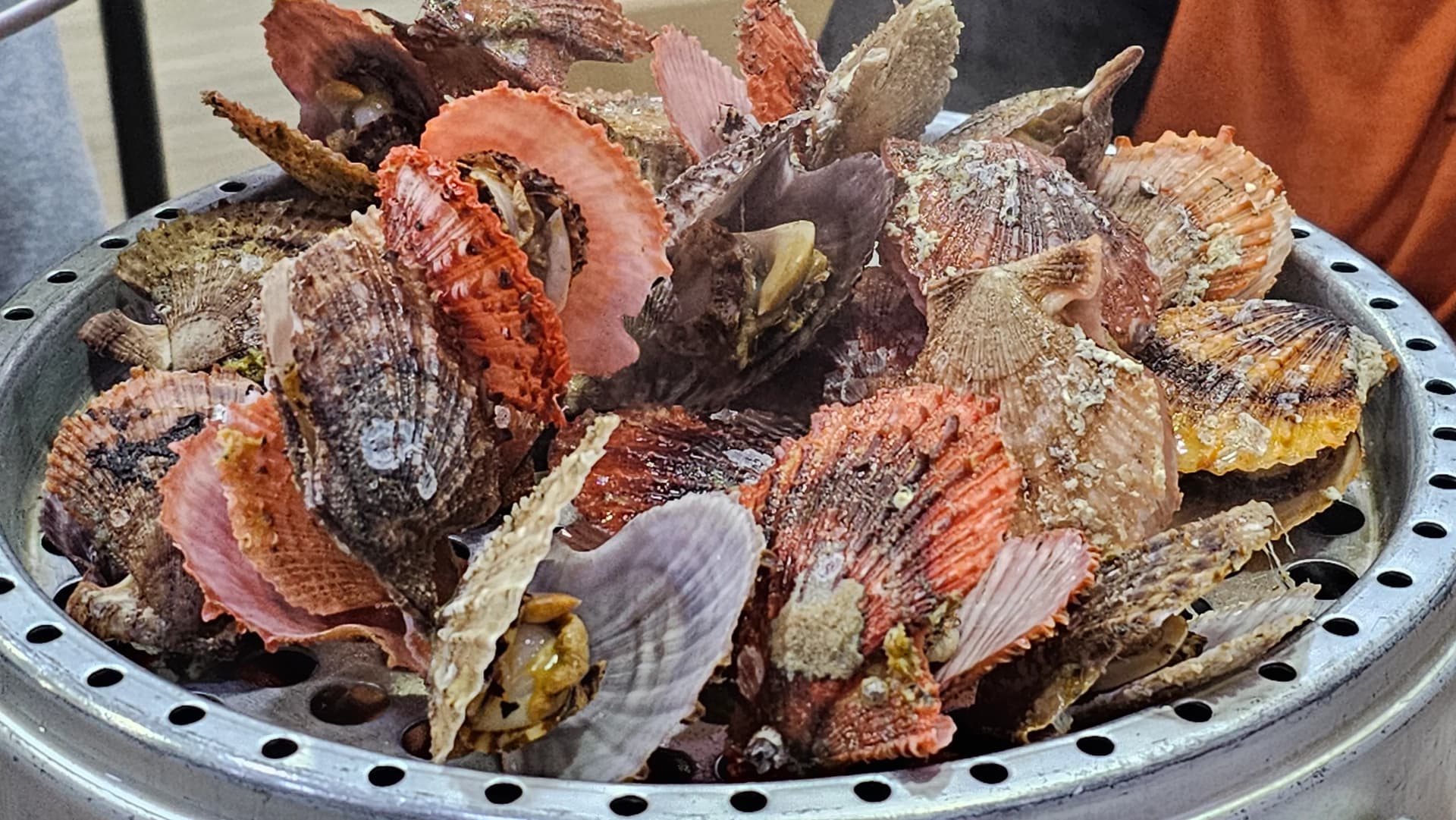
The next tier was loaded with scallops. The shells were bumpy and uneven, all different sizes, and since Tongyeong is actually famous for its scallop and oyster farms, I had high expectations. The moment we popped the lid, a rush of ocean-scented steam poured out. On a cold winter day, that steam felt even more dramatic. This is really the magic of jogaejjim — that anticipation of not knowing what's going to appear each time you open a new tier.
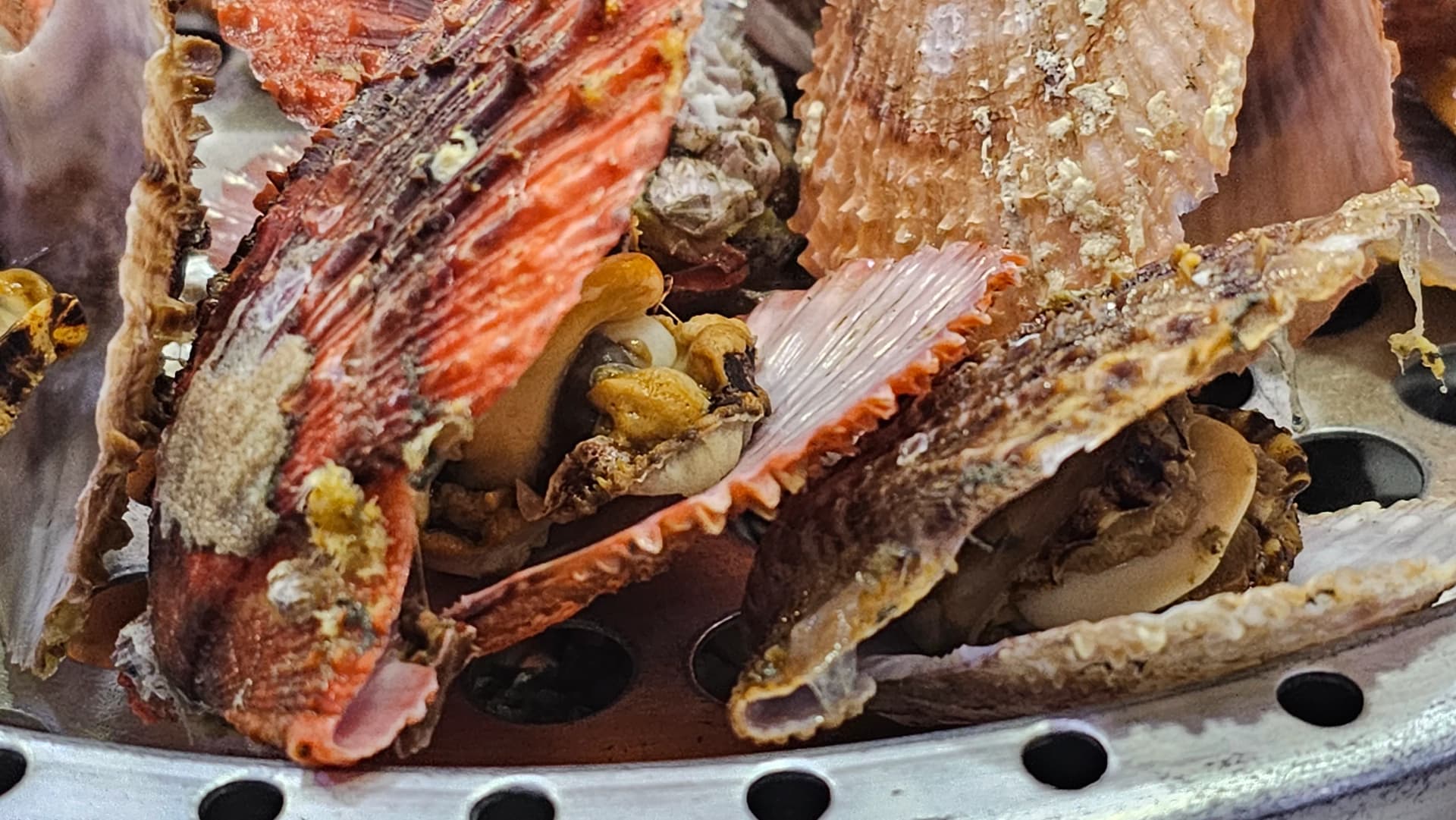
When scallops steam, the shells pop open and reveal the meat inside. The orange part is the roe, and the round white part is the adductor muscle — that's the real star. Pop it off, put it in your mouth, and it's tender with a satisfying bite and a sweetness that comes on surprisingly strong. Think of it like the difference between a canned scallop and one you just pulled off a fishing boat — this was firmly in the latter category.
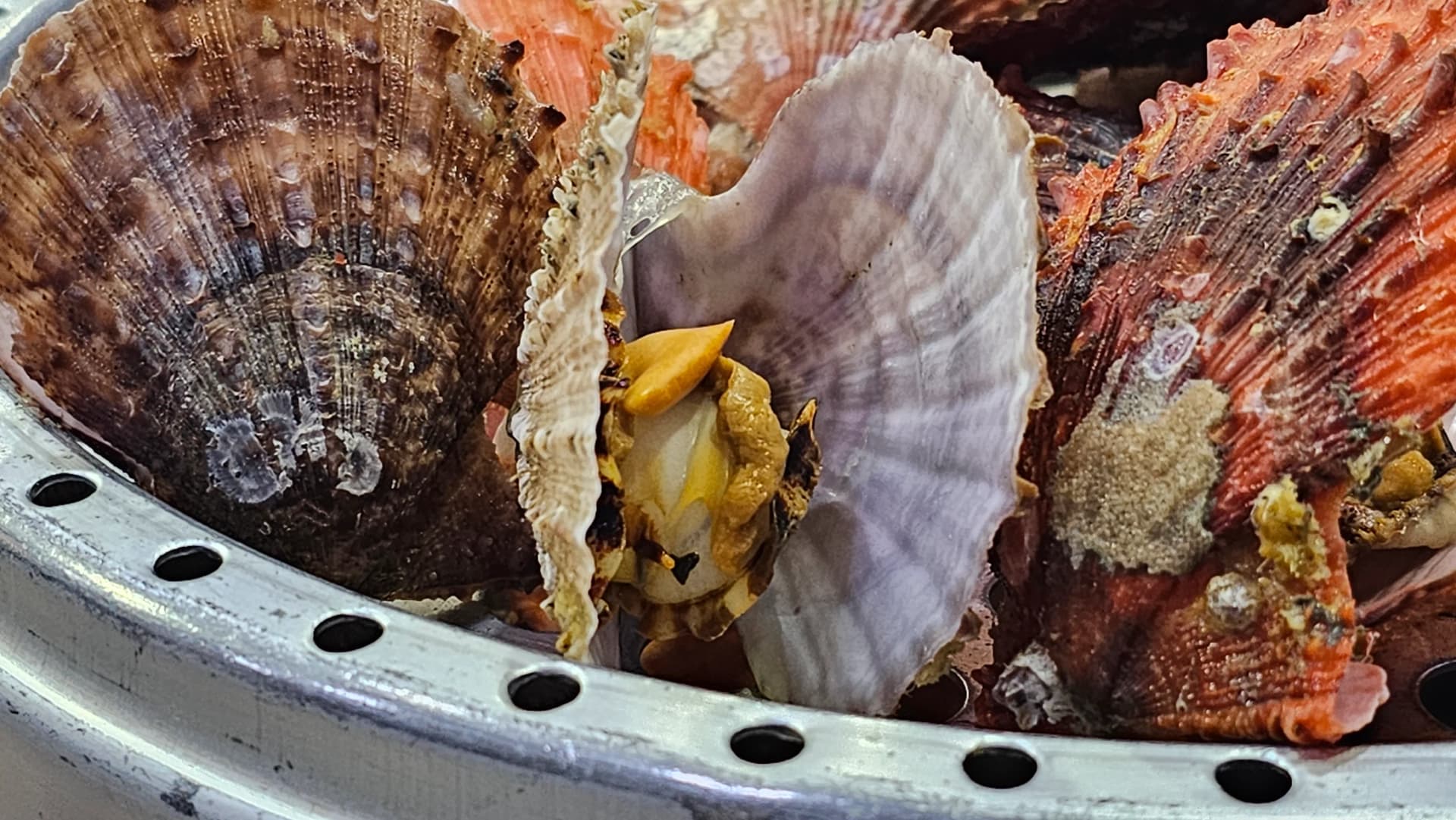
Up close, you can see the muscle and roe clinging to the shell, still steaming. You just pluck them off with chopsticks — easy. Skip the dark intestine part and focus on the white muscle and orange roe. My brother camped out on this tier, just plowing through scallop after scallop. I asked him why and he said this tier was the best. Honestly? I agreed.
Conch, Abalone, Crab, Shrimp — The Seafood Variety Tier
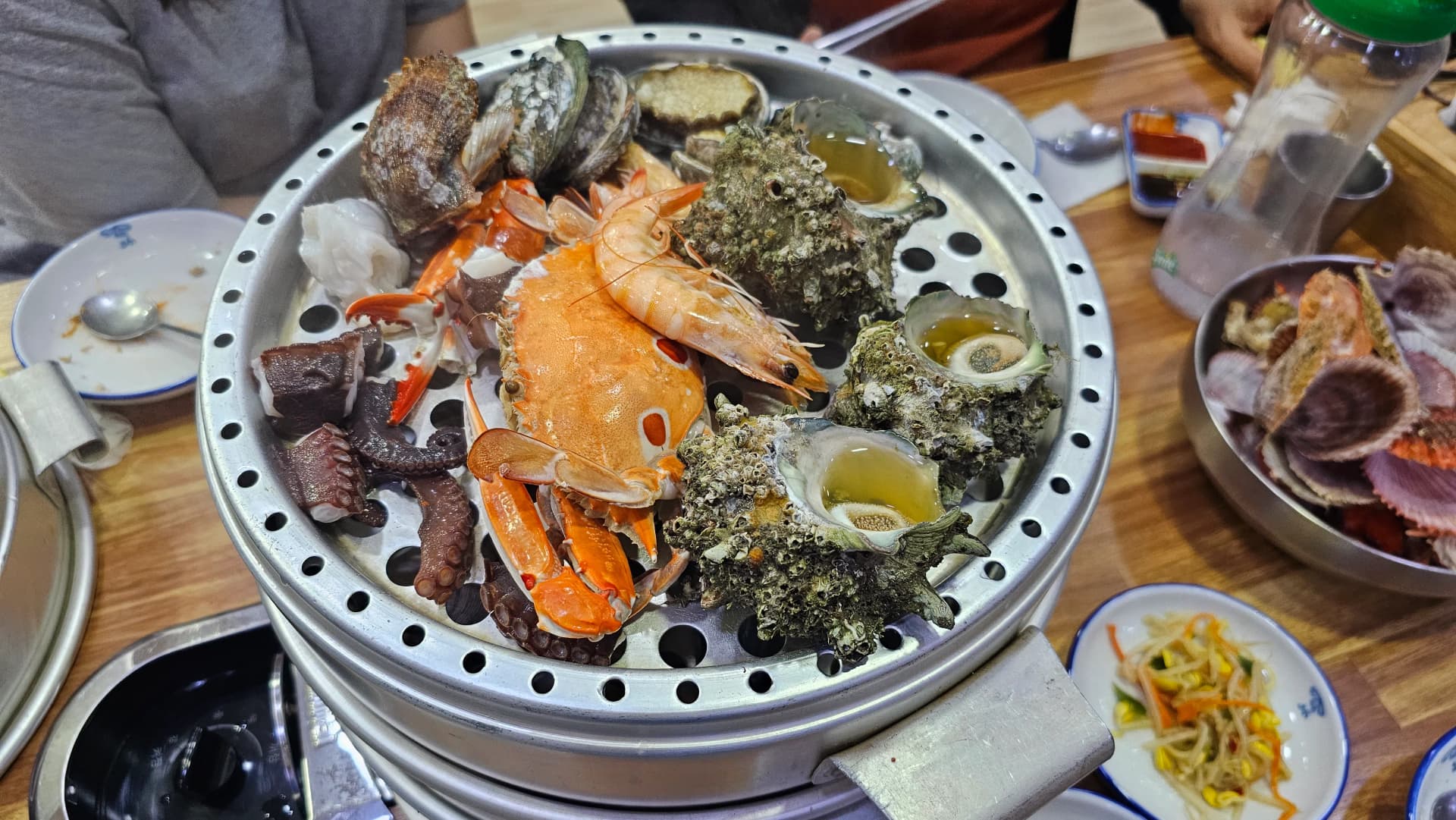
The next tier was a full-on seafood sampler. Conch, abalone, blue crab, and shrimp all crammed into a single layer. We hadn't finished the octopus from earlier, so we moved the leftovers down to this tier's plate, and suddenly the table was filling up fast with empty shells and crowded plates. My wife was picking out only the shrimp, and my mom went silent for a solid stretch just quietly cracking crab legs.
Abalone — Don't Skip the Juice
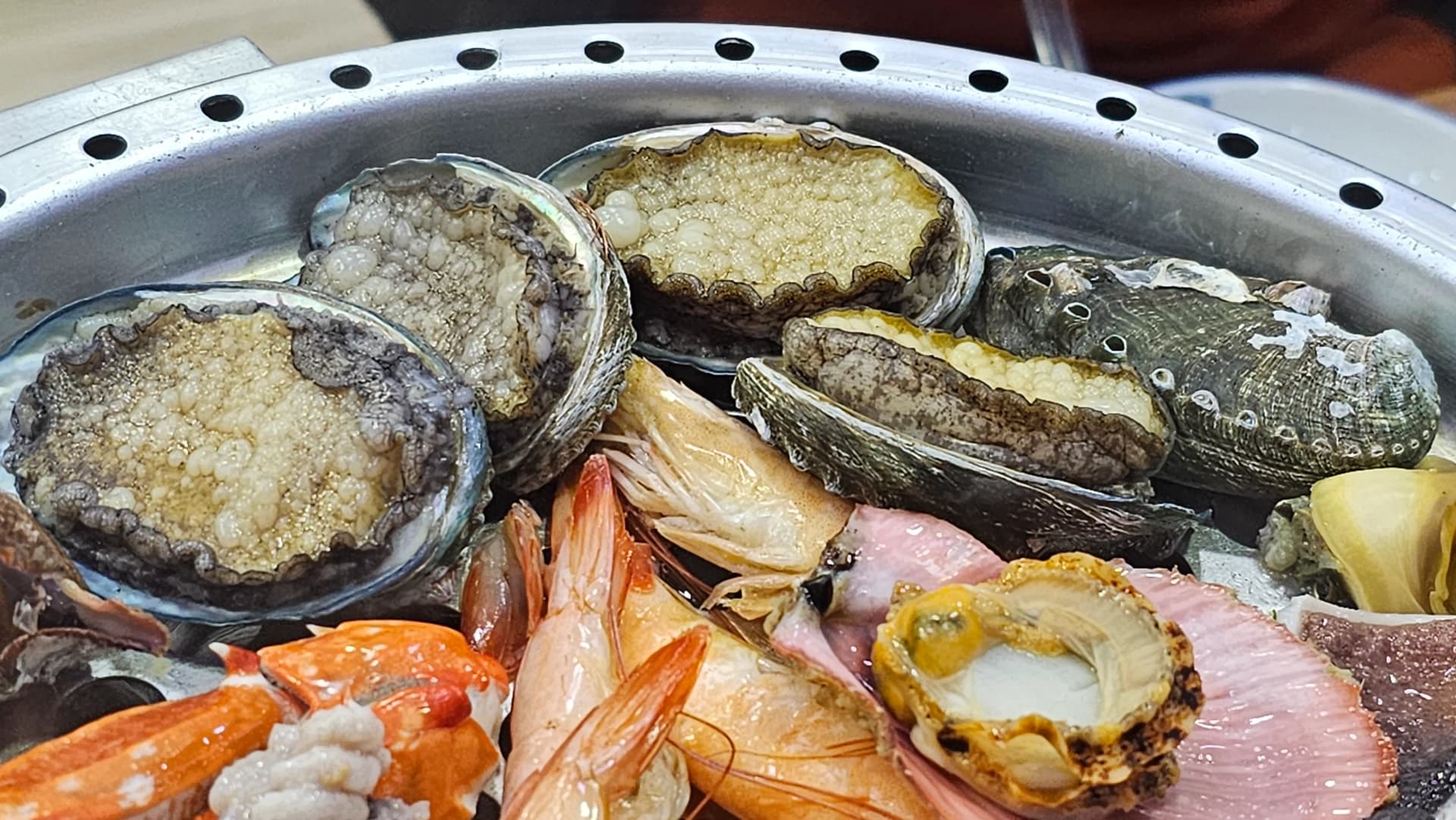
The abalone came out steamed in the shell with its own juices bubbling away inside. That liquid is the key. It's a briny, deeply savory broth that seeps out from the abalone's innards — scoop it up with a spoon and it's like drinking pure ocean stock. The abalone meat itself had score marks cut into it, so it pulled right off with chopsticks. With conch, shrimp, abalone, and crab all in the same tier, the delightful chaos of not knowing what to grab next was actually part of the fun.
The Joy of Pulling Conch from Its Shell
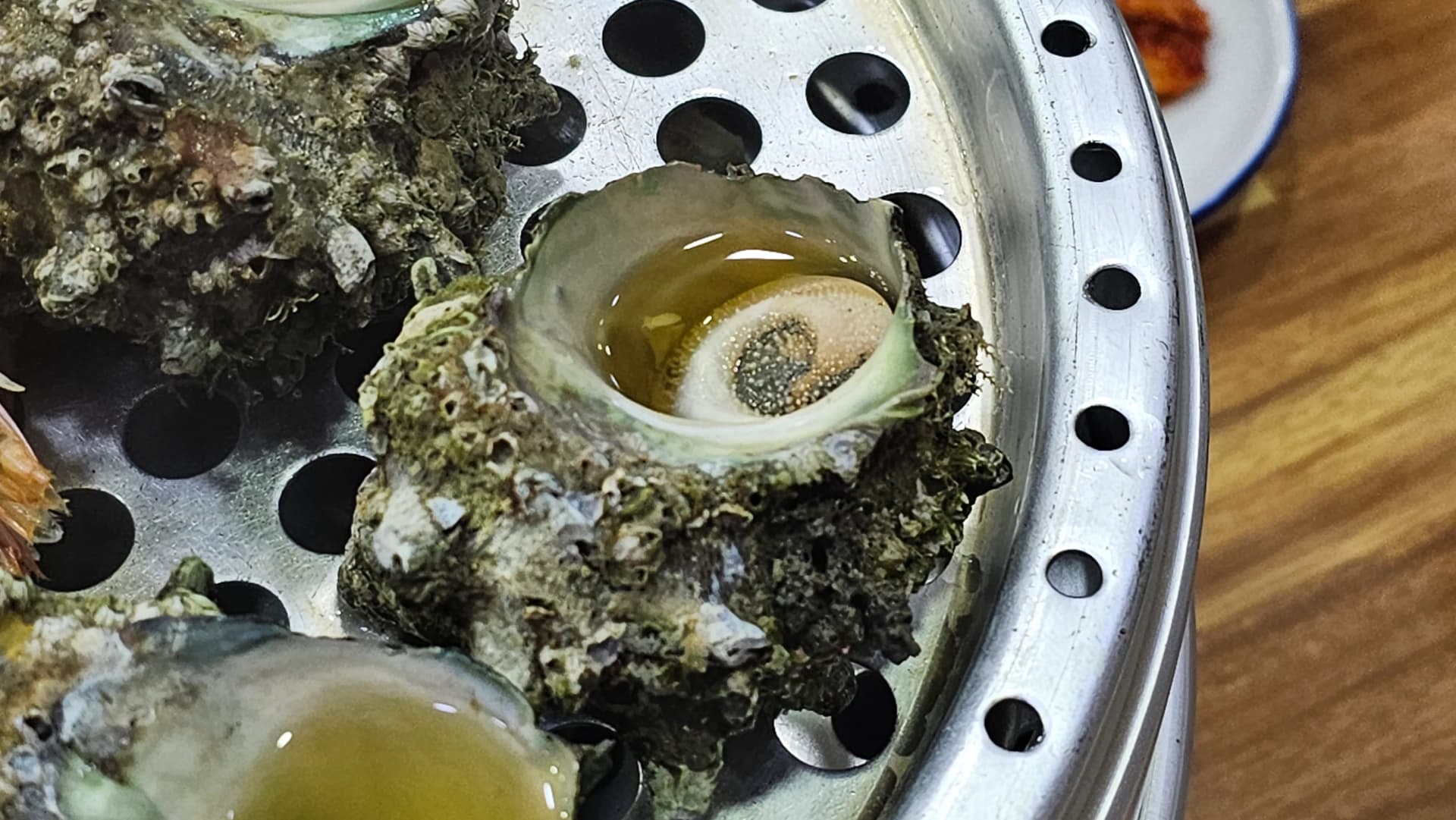
Conch meat sits curled up deep inside the spiral shell, and you eat it by twisting it out with a toothpick. If you're a first-timer, the meat will probably break halfway through. I failed twice before nailing it on the third try — pulled the whole thing out in one clean spiral, and the satisfaction was honestly unreasonable. My mom got it on her first attempt and tried to explain the technique, but I still couldn't replicate it.
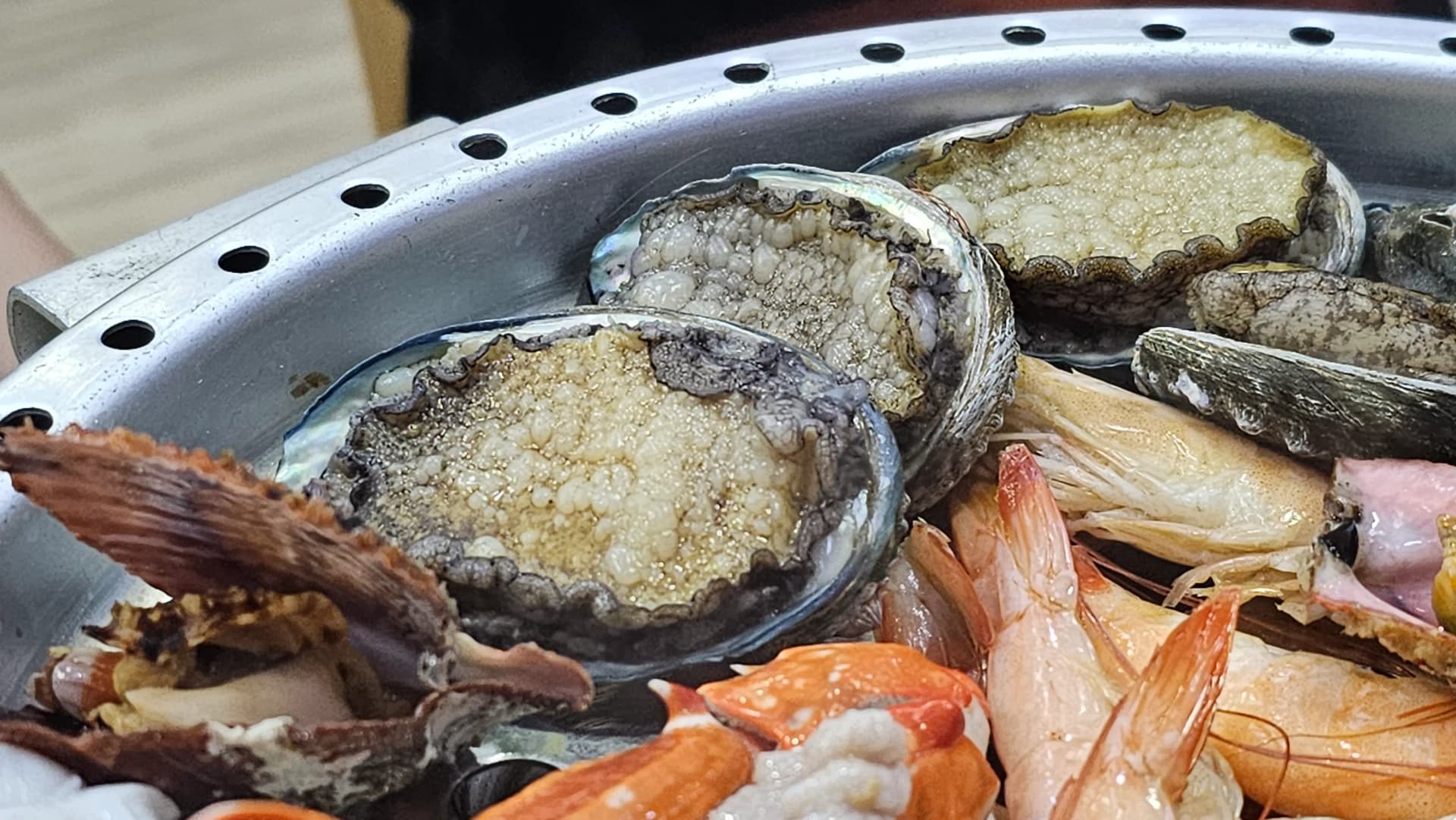
Blowing on a piping-hot abalone you just pulled from the steamer on a freezing winter day — that right there is the payoff for making the trip all the way to the coast. My mom lingered on this tier the longest.
5-Tier Jogaejjim — What's in Each Layer
Pen Shells and Hard Clams — Pure Shellfish Flavor
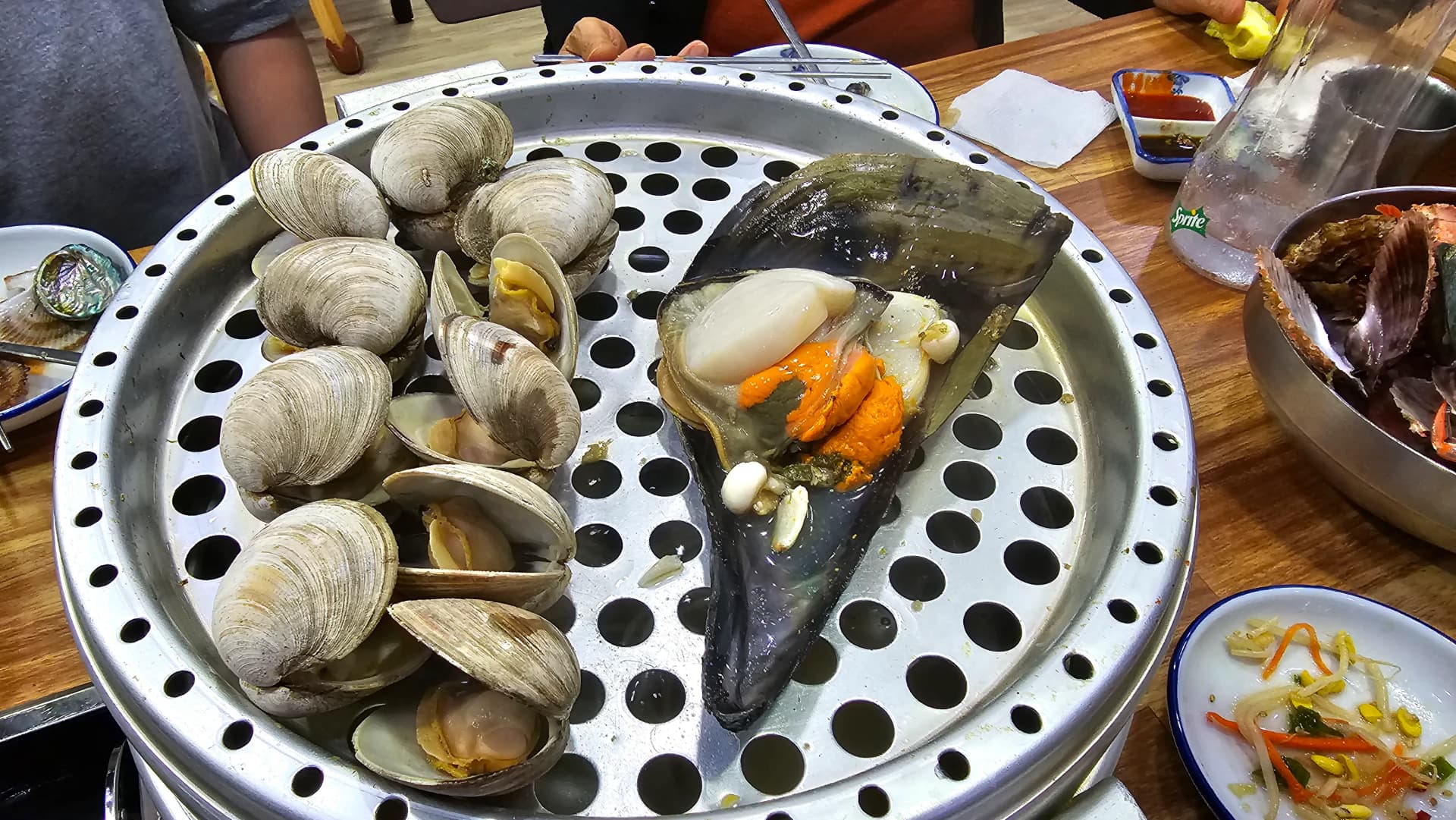
The next tier held pen shells (kijogae) and hard clams (baekhap). Pen shells are pretty big — they were sitting in the steamer with their shells splayed open, and you could clearly see the orange roe and white adductor muscle inside. Pen shell adductor is one of those premium cuts that even sashimi restaurants charge a lot for, and eating it steamed is a totally different experience.
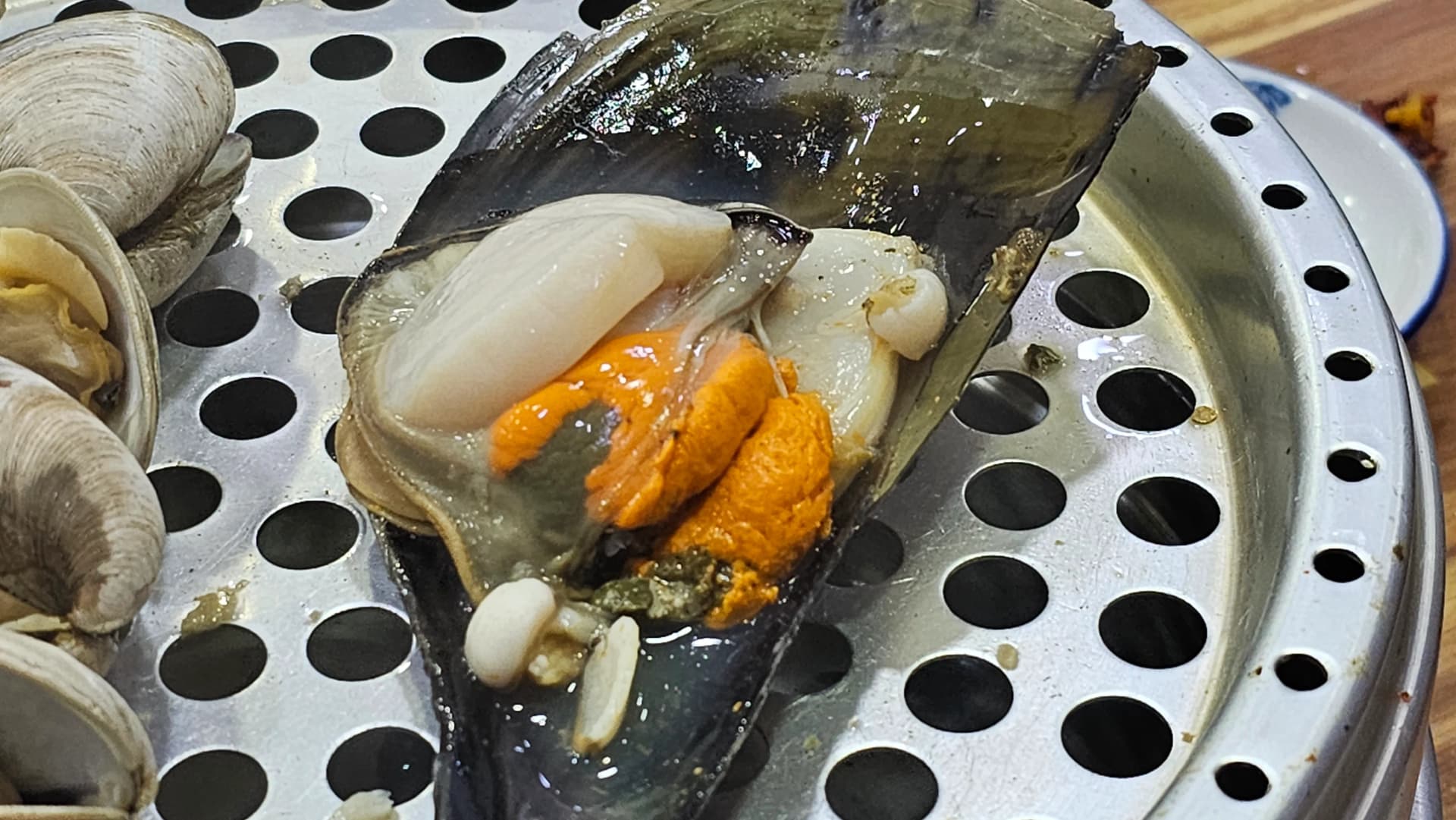
Up close, the meat is right there, fully exposed. Orange part is the roe, white part is the muscle. The adductor has this springy, almost bouncy chewiness — like sashimi-grade quality but warmed through. I'll be honest, by this tier my stomach was getting pretty full, so I was kind of just shoveling food in rather than savoring it. But even then, the pen shell adductor was unmistakably good.
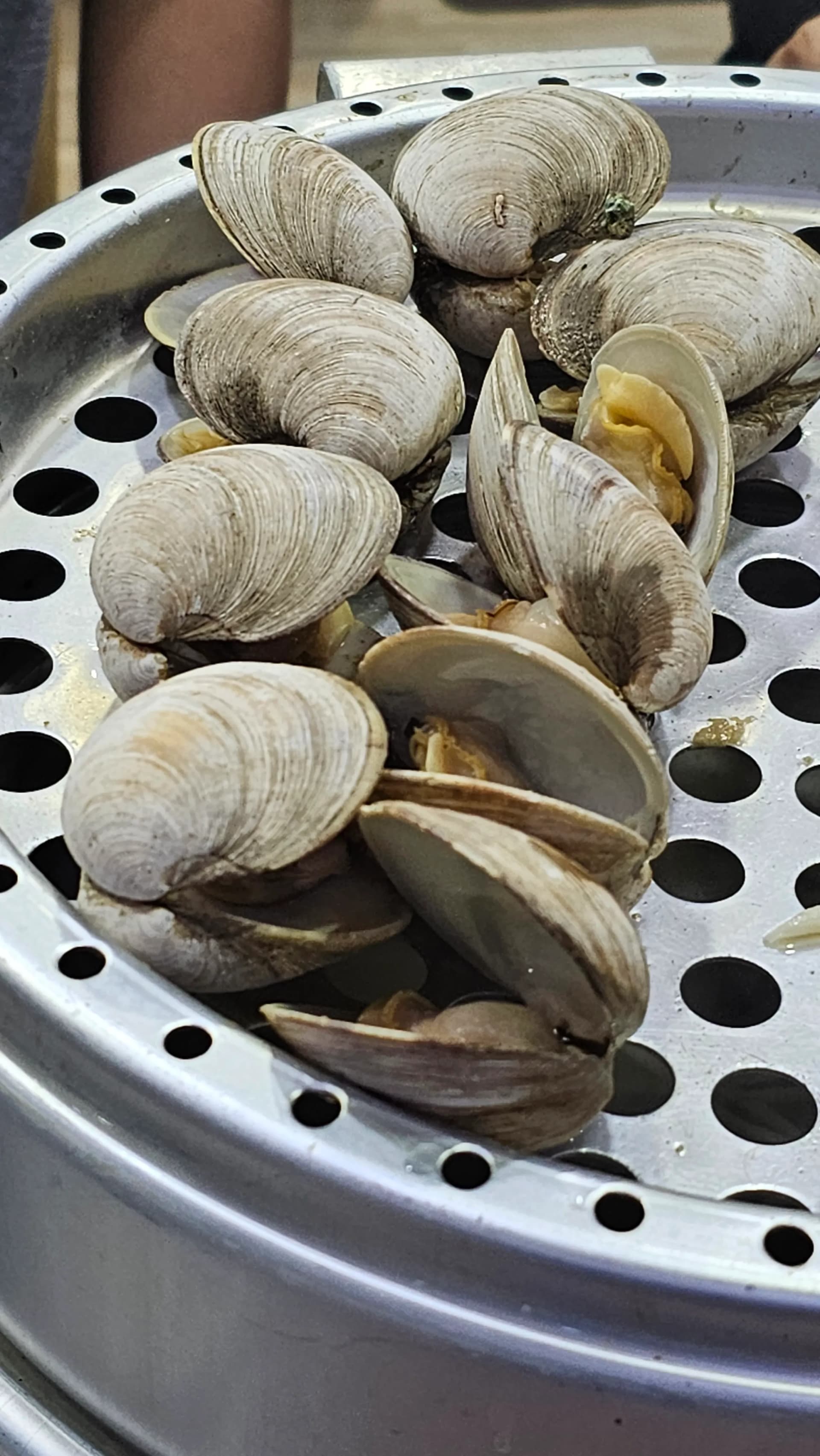
The hard clams were heaped in a generous pile. They look similar to littleneck clams but are noticeably bigger, and since they were already steamed open, you just peel them apart by hand and eat. There was more than enough for four people — we actually had leftovers. I'll be real though: by this tier, the novelty of cracking shells was wearing off. It was fun at the beginning, but after doing it nonstop for layer after layer, your hands do get tired.
The Noodle Finale — This Is the Real Highlight
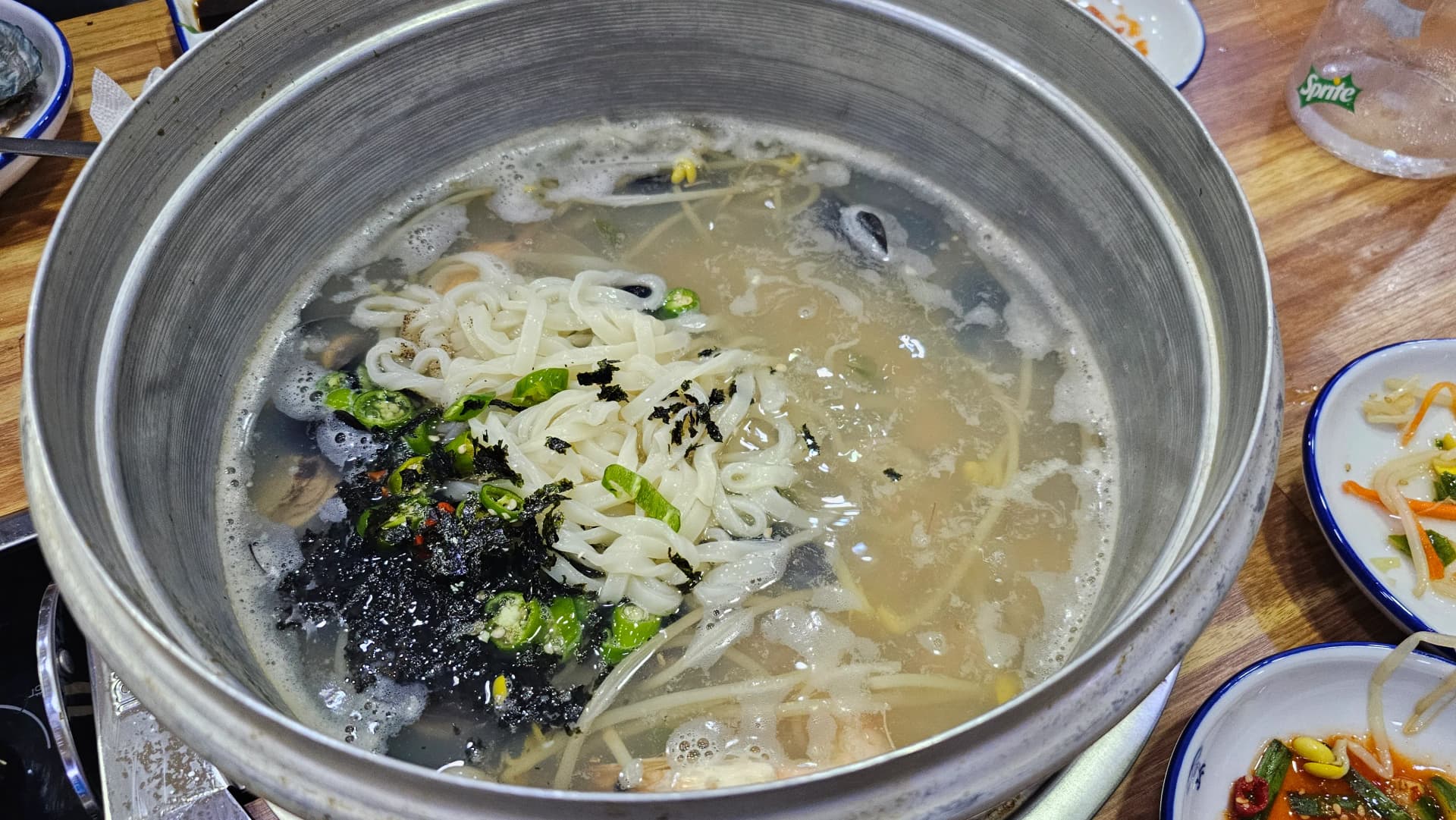
The very bottom tier is all broth. While the seafood was steaming above, all those shellfish juices dripped down and collected at the base, creating a concentrated stock. You drop a portion of knife-cut noodles (kalguksu) into it, let it boil, and that's your finishing course. It was topped with shredded seaweed, spicy green chili peppers, and bean sprouts — light and refreshing but with a peppery kick. If you have any leftover shellfish from the upper tiers, toss them into this broth and the flavor gets even deeper. We were absolutely stuffed after five tiers, but somehow this broth still went down. My mom said the broth was the best part of the whole thing, and after eating through all five tiers, I finally understood what she meant.
Honest Cost Breakdown
What I'd Honestly Change Next Time
Five tiers is a LOT of food. Up through tier 3, you're riding high — "Oh wow, there's this too! And that!" — excited by every new layer. But from tier 4 onward, you're so full that you're less enjoying the food and more just trying to get through it. Cracking shells and prying out meat nonstop genuinely tires your hands out after a while. And $90 is a real chunk of money, that's just the truth. If you're going with 2–3 people, 3 tiers is honestly plenty. The portions are generous and the price is way more manageable. Save the 5-tier for groups of 4 or more, and only when you're in that "let's go all out today" kind of mood.
Why You Should Still Try It at Least Once
All that said, if you're visiting Korea's coast, jogaejjim is something I'd genuinely tell you to try at least once. The anticipation of lifting each lid and not knowing what's going to be inside, the noise of scissors cutting through shellfish, cracking shells and laughing with the people you came with — that atmosphere IS the real flavor of jogaejjim. Sitting in front of a steamer on a cold winter day, blowing on scalding-hot seafood while steam fogs up your glasses — that's something no photo can convey. You just have to be there.
And it's not just Tongyeong. Busan, Taean, Sokcho, Jeju — any coastal city in Korea will have steamed seafood tower restaurants that are easy to find. If you're walking near the waterfront and spot a restaurant with towering steamer pots visible through the window, just walk in.
Korean Coastal Cities Where You Can Find Jogaejjim
This post was originally published on https://hi-jsb.blog.