5-Tier Steamed Seafood Tower — Honest Review, Price, How to Eat
Table of Contents
13 items
The Steamed Seafood Tower You'll Find at Every Korean Coastal Town
Jogaejjim is a towering, multi-tiered steamed seafood feast you'll spot at virtually every seaside town in Korea. Aluminium steamers are stacked three, four or five layers high, each tier packed with different shellfish and seafood, then blasted with steam until everything's cooked through. If you've ever fancied a plateau de fruits de mer but wished it were piping hot and stacked vertically like some sort of edible Shard, this is essentially that.
If you've ever wandered along a Korean coastal strip, you've seen the scene: tables outside restaurants with these enormous steamer towers piled up, clouds of steam billowing out between the layers. That's jogaejjim. The concept is dead simple — ocean-fresh seafood sorted by type into separate tiers, then steamed together so the juices drip down through each layer. You'll find these restaurants in virtually every coastal city: Tongyeong, Busan, Taean, Sokcho, Jeju — the whole lot.
Most people visiting Korea think of sashimi or raw fish when someone mentions seafood, but everyone I've spoken to who's actually tried jogaejjim reckons it's the better experience. Raw fish is lovely, but jogaejjim gives you lobster, abalone, scallops, conch, blue crab and prawns all in one sitting. It's like marching into a fishmonger, pointing at one of everything, and having someone steam the lot for you in a giant tower. That's why I wanted to do a proper write-up of the whole experience.
The structure is fairly straightforward: each tier holds a different type of seafood, and the very bottom layer collects all the broth that drips down from the shellfish above — you finish the meal by dropping noodles into that concentrated seafood stock. You pick your tier count based on how many people are eating, typically from 3 to 5 tiers, and pricing varies by region and size, but for 3–4 people on a 5-tier you're looking at roughly £60.
Jogaejjim at a Glance
A Winter Visit to Tongyeong — Our 5-Tier Steamed Seafood Experience
This happened during winter when I was visiting Tongyeong with the family — a harbour city on Korea's southern coast, roughly 4.5 hours south of Seoul by car. My wife, my mum, my brother and I had been walking along the waterfront and spotted a jogaejjim restaurant, so we just popped in. It was off-season and still early evening, so we got a table straight away with no wait. It was bitterly cold outside, so honestly just sitting somewhere warm already felt like a win. The menu had 3-tier, 4-tier and 5-tier options, and since we were on holiday we thought, why not go the whole hog — 5 tiers. About £60 all in. Not exactly pocket change, but split four ways that's roughly £15 a head, which for a seafood feast at a seaside tourist town is actually not bad at all. That's what I told myself, anyway.
Side Dishes That Come Out Before the Seafood Tower
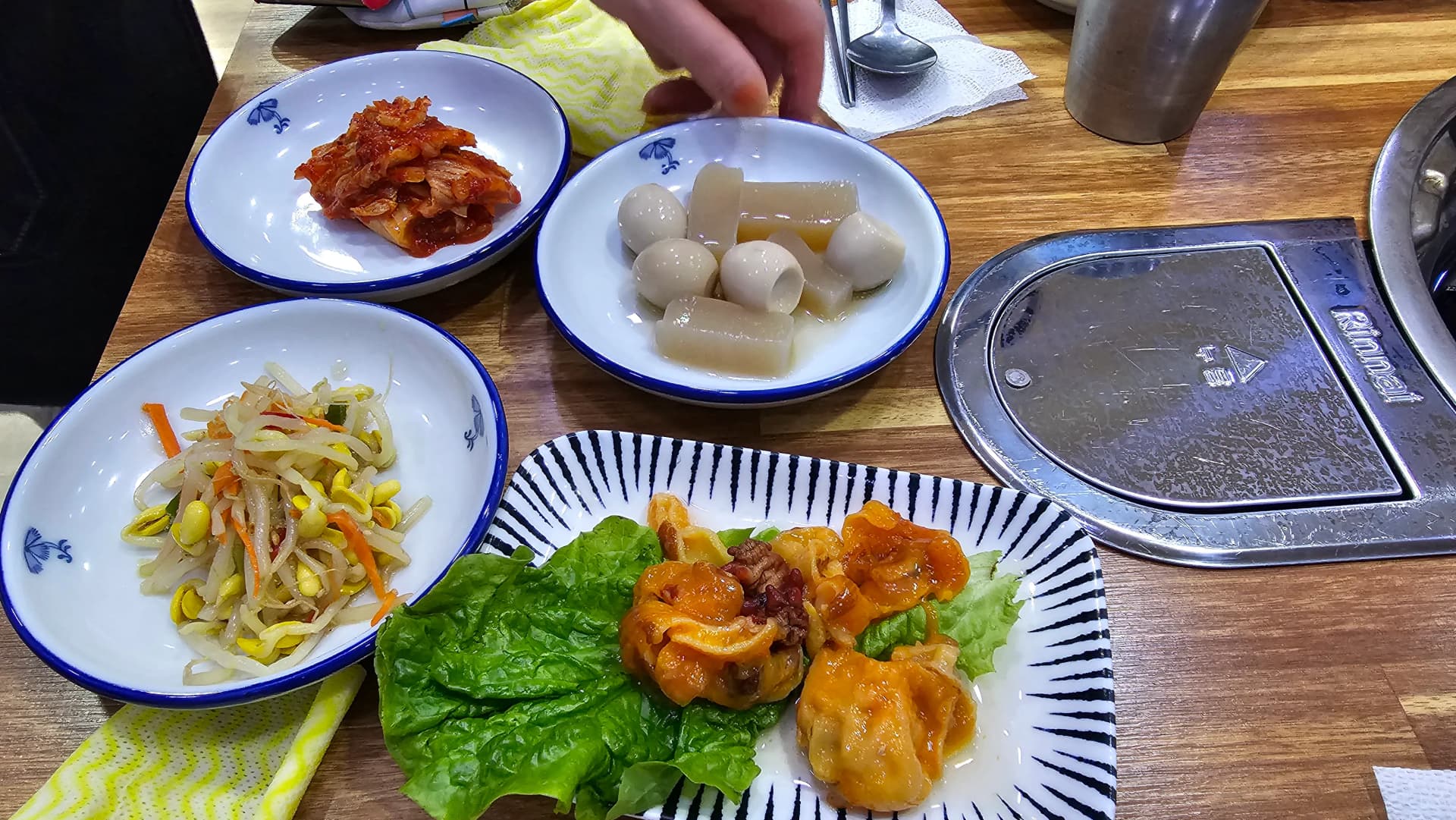
Before the main event arrives, the staff lay out a spread of banchan — Korean side dishes. We got kimchi, seasoned beansprouts, rice cakes and dumplings, and here's the thing that always catches visitors off guard: all of it's free. In Korea, when you order a main dish, the side dishes come included at no extra charge, and you can ask for refills if you run out. If you're used to paying £4.50 for a sad little ramekin of edamame back home, this system feels almost too good to be true. But in Korea, it's completely standard.
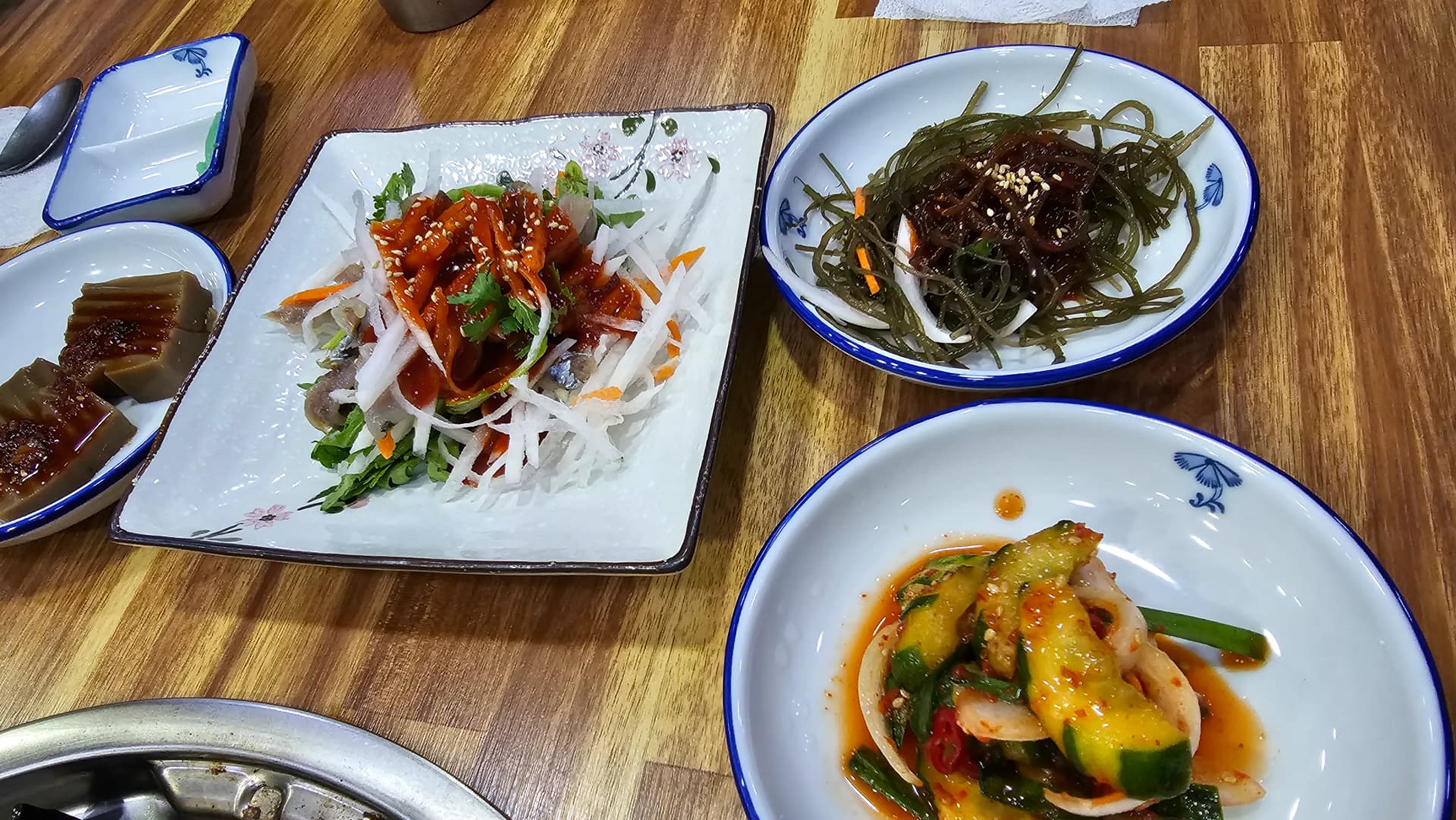
More banchan kept arriving after that. Spicy raw fish salad, seaweed salad, stuffed cucumber kimchi and acorn jelly. Being a seaside restaurant, having raw fish salad as a freebie side dish was a lovely touch — that's the sort of thing you'd never get at an inland place.
The Moment the 5-Tier Steamed Seafood Tower Hits the Table
And then it appeared. The 5-tier jogaejjim. Five aluminium steamers stacked on top of one another, plonked right in the middle of our table. It was so tall I genuinely couldn't see my mum sitting across from me. The table next to us craned their necks to have a look as well. What's in there? Do we open it from the top or the bottom? Two dipping sauces were already laid out — a tangy red chilli vinegar sauce called chojang and a soy-based one.
Top Tier — Lobster and Octopus
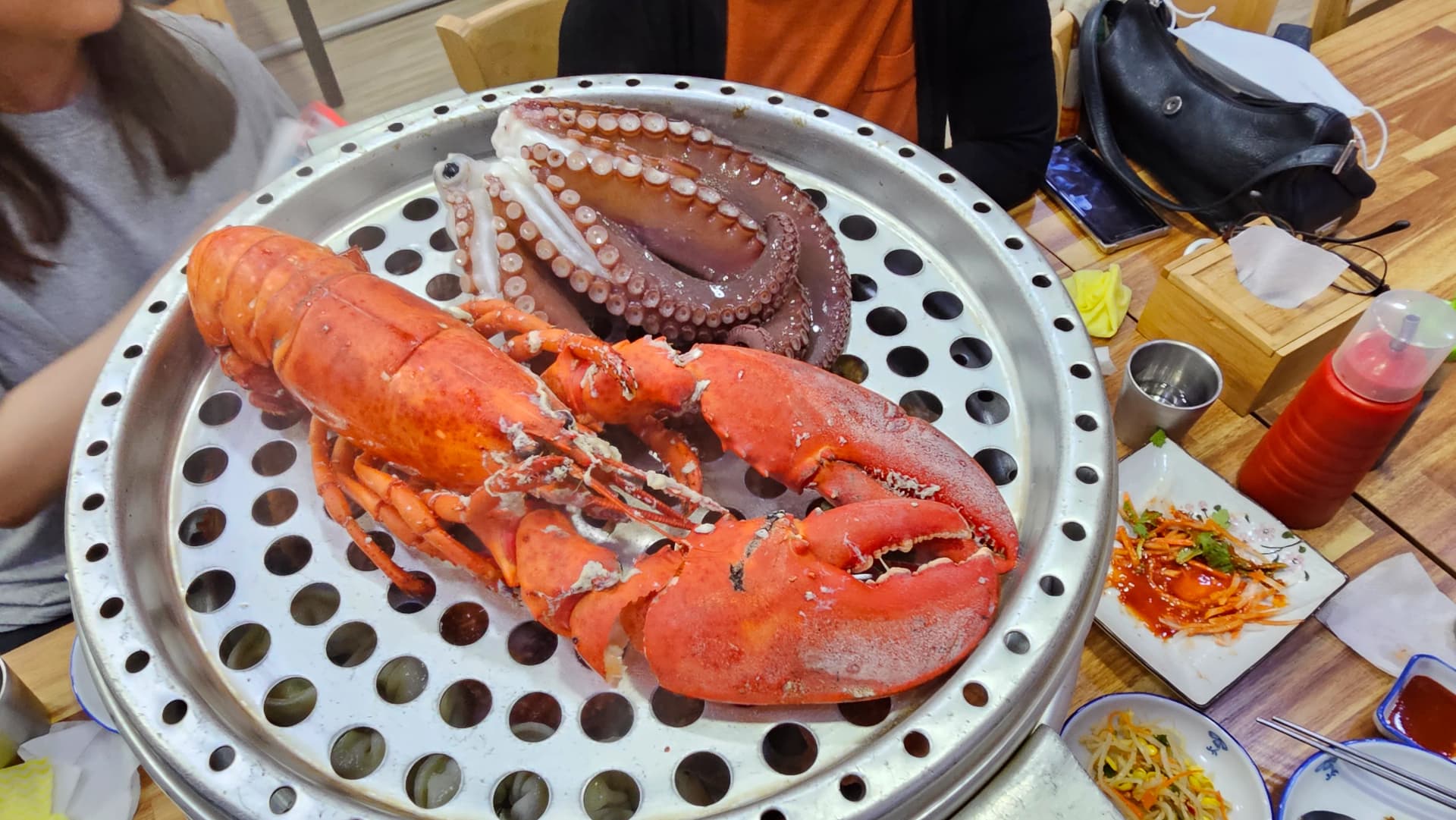
The moment we lifted the top lid, all four of us let out the same noise. A whole lobster was sitting in there, and right next to it, an octopus with its tentacles curled up around itself. Mum went, "If this is just the first tier, what on earth's in the rest of them?" I was desperate to crack open the next one. My brother already had his phone out filming, and my wife was staring at the lobster claws wondering how you're supposed to get into them. Just from this first tier alone, I started thinking £60 might actually be rather good value.
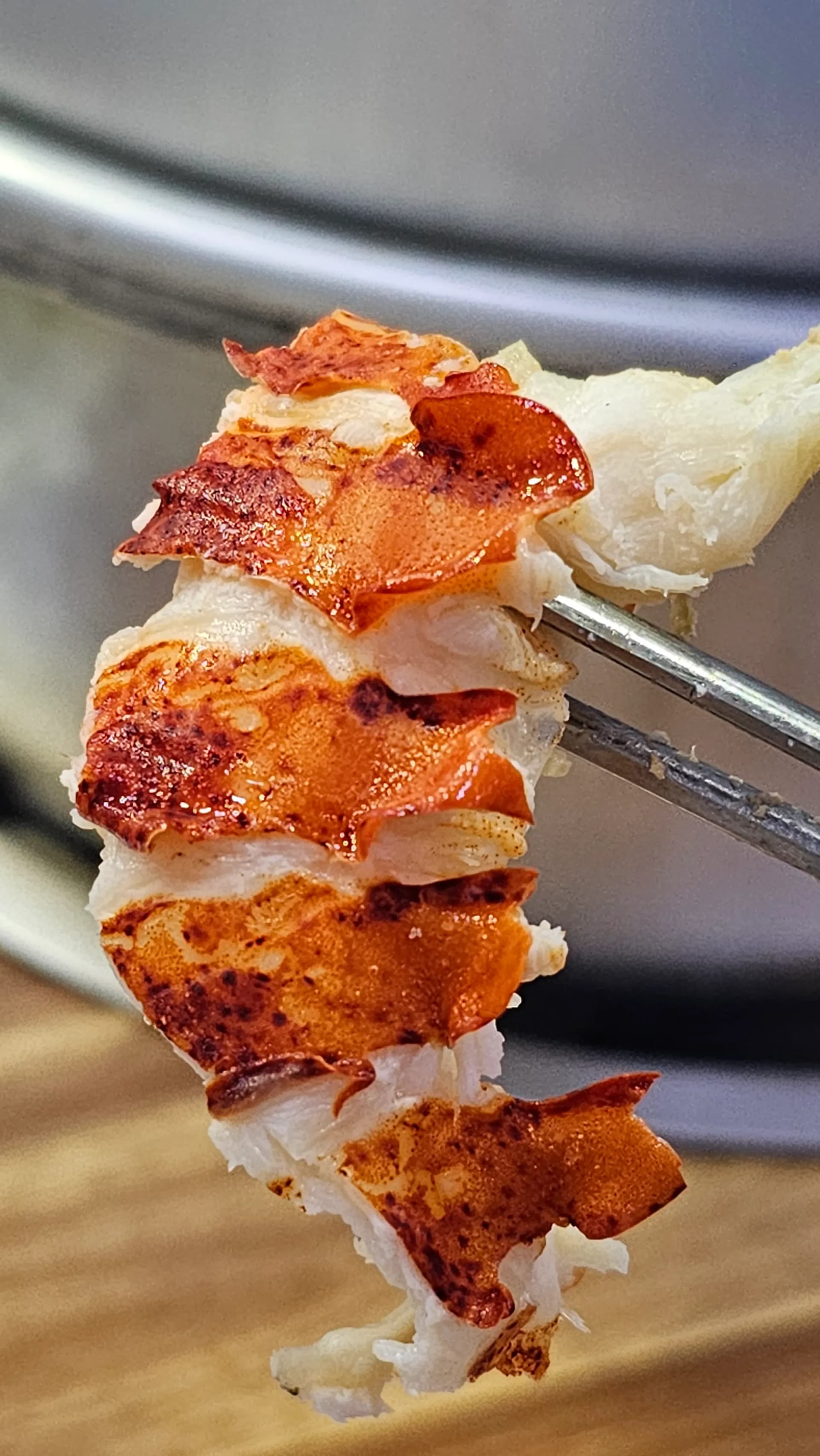
I pulled the lobster tail meat out and it was considerably thicker than I'd expected. Because it was steamed rather than grilled or boiled, the flesh was beautifully moist — not dry or rubbery in the slightest. If you've ever had steamed lobster at a decent seafood restaurant — that silky, tender texture where the natural sweetness really comes through — it was exactly that. No butter, no seasoning, just pure steamed lobster. Dip it in the chojang and you get this tangy, slightly spicy kick that's distinctly Korean. Completely different vibe from a thermidor or a buttery grilled lobster, but genuinely lovely in its own right.
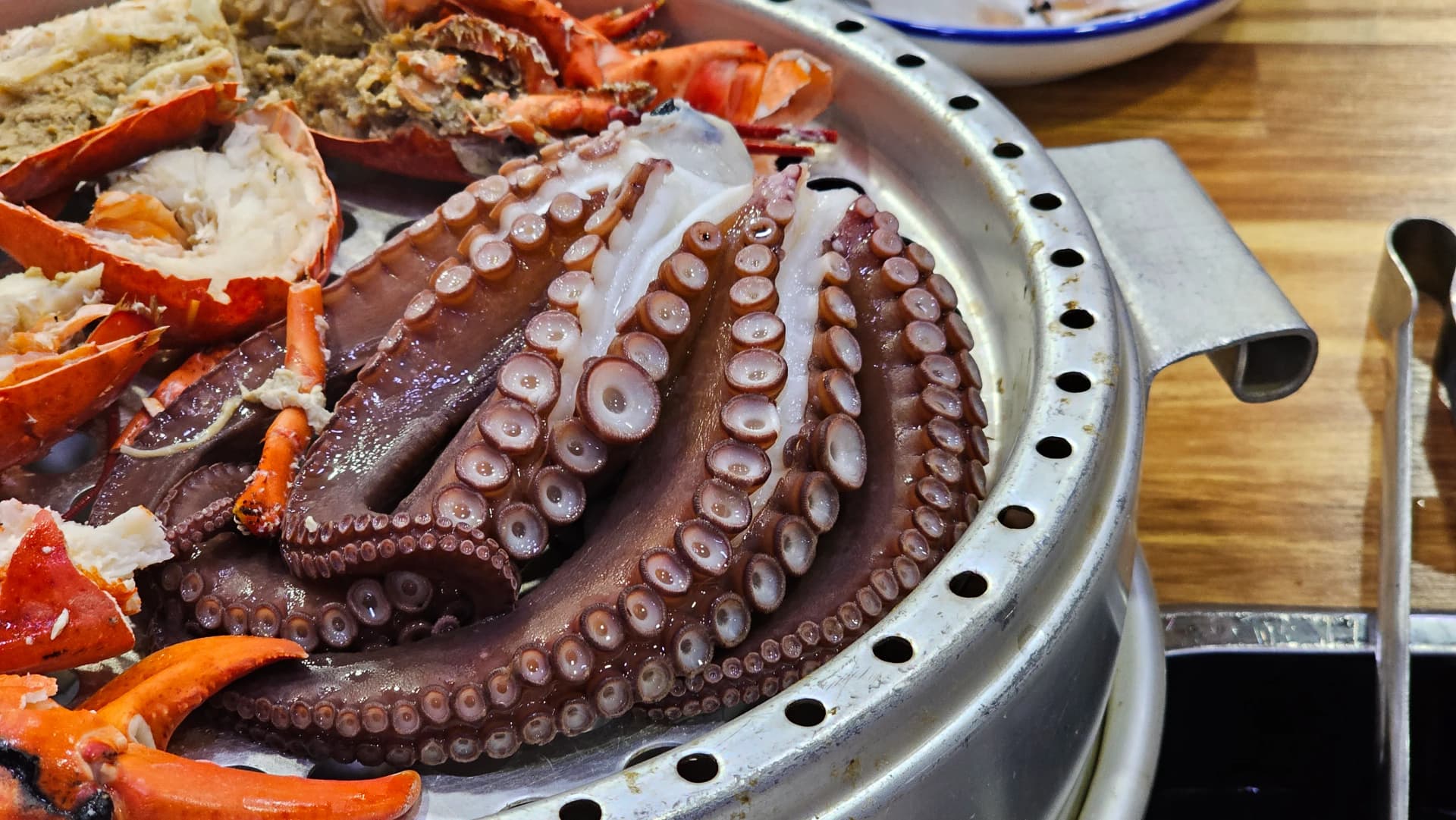
The octopus came out with its tentacles steamed whole, suckers still perfectly intact. If you've never seen a whole steamed octopus up close, it can be a touch startling — but you just grab the scissors and snip it into bite-sized pieces. The more you chew, the more this rich, savoury flavour builds up. Not tough or chewy either — just the right amount of pleasant bite.
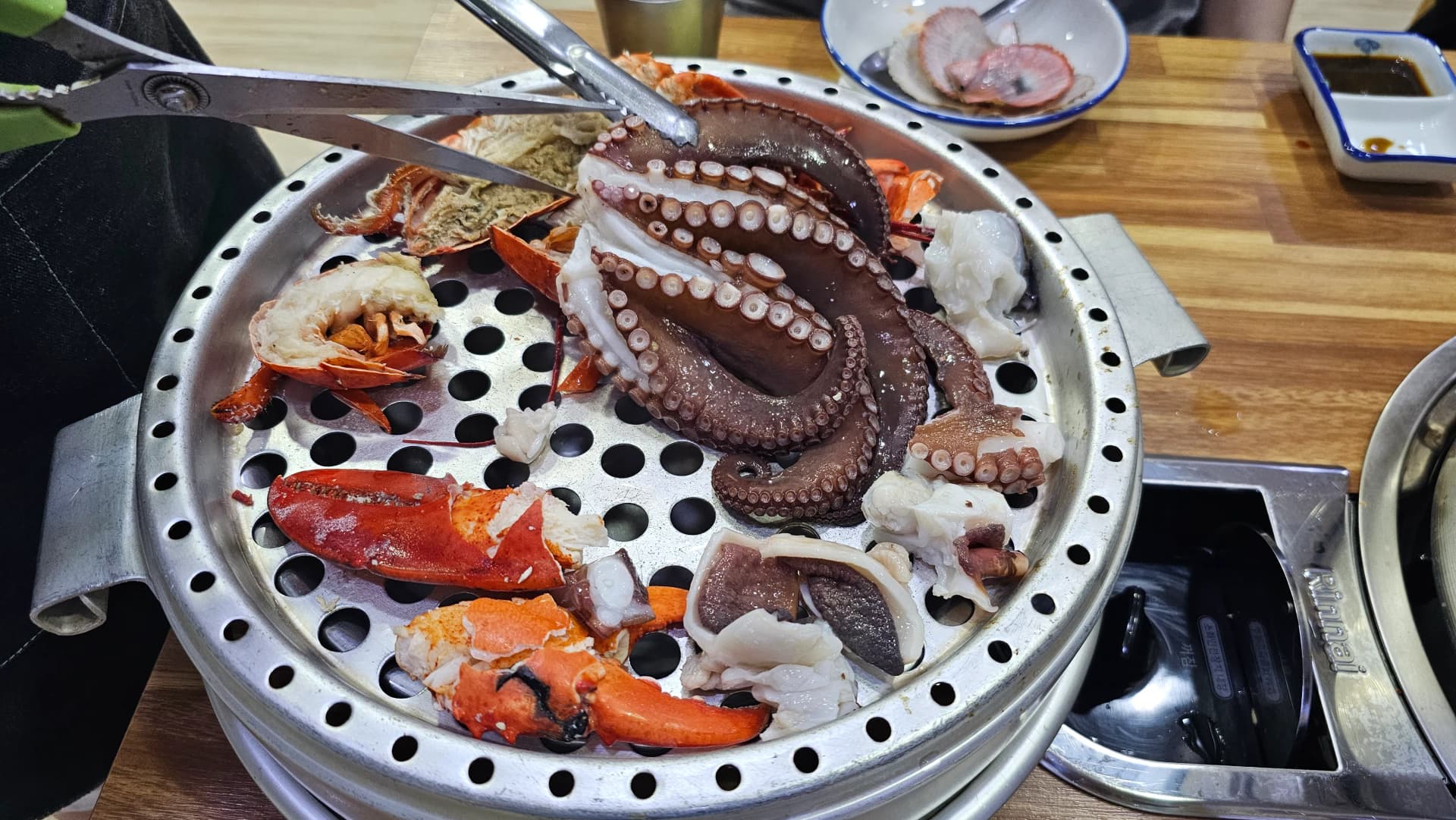
One of the staff came over and cut up the octopus with scissors, then separated the lobster claws from the body and plated it all up for us. Loads of jogaejjim restaurants do this — the staff will prep everything tableside so you don't have to wrestle with it yourself. Even if you've never eaten this sort of seafood before, you won't be left guessing what to do.
How to Eat Jogaejjim — First Timer's Guide
A Tier Packed with Scallops
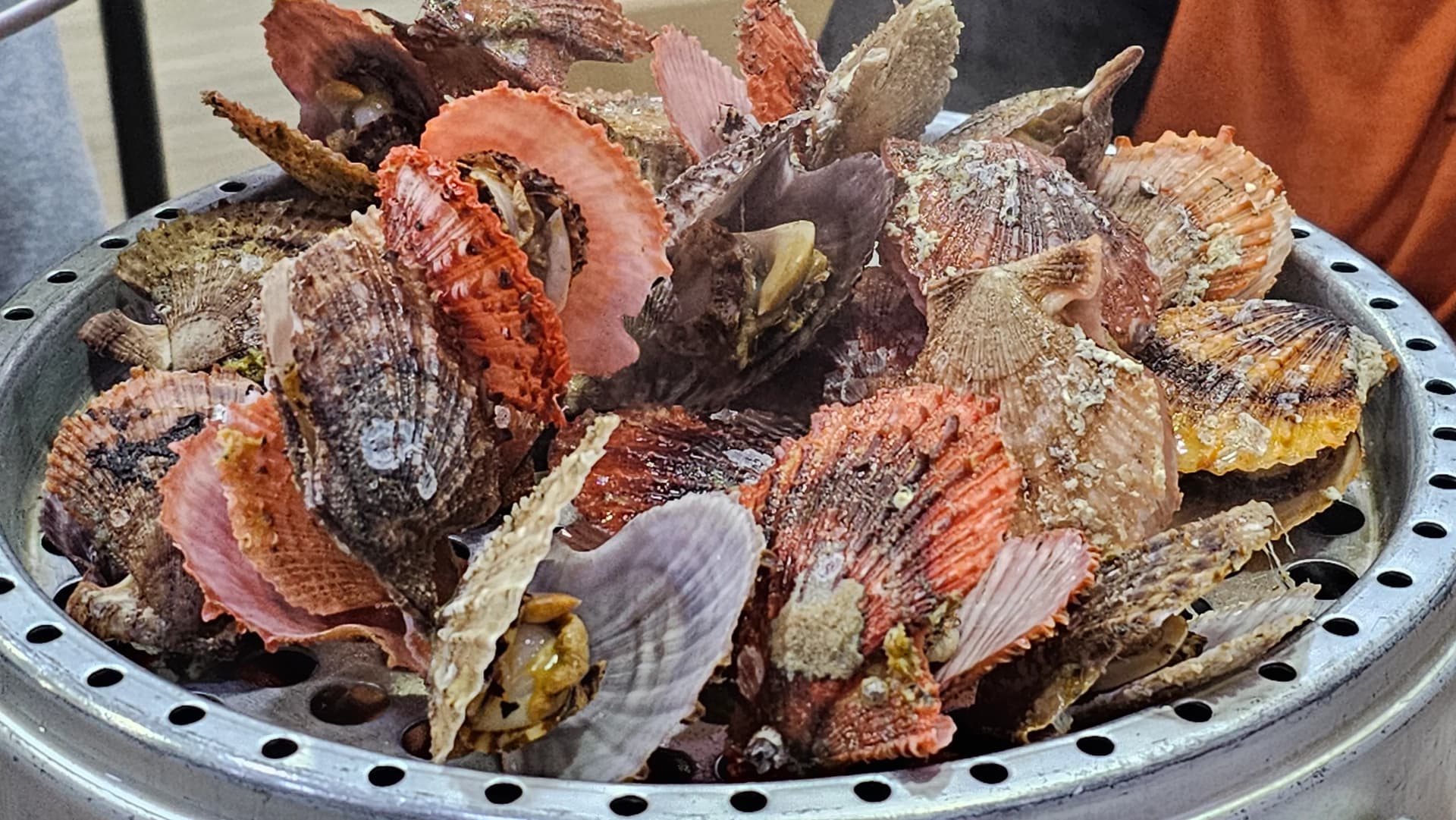
Next tier down and it was absolutely loaded with scallops. Bumpy, uneven shells, all different sizes — and since Tongyeong is actually famous for its scallop and oyster farms, I had high hopes. The moment that lid came off, a wave of briny sea air hit us and steam came pouring out. On a freezing cold day, that rush of steam felt even more dramatic. This is the magic of jogaejjim — every time you open a new tier, there's that lovely thrill of not knowing what's coming next.
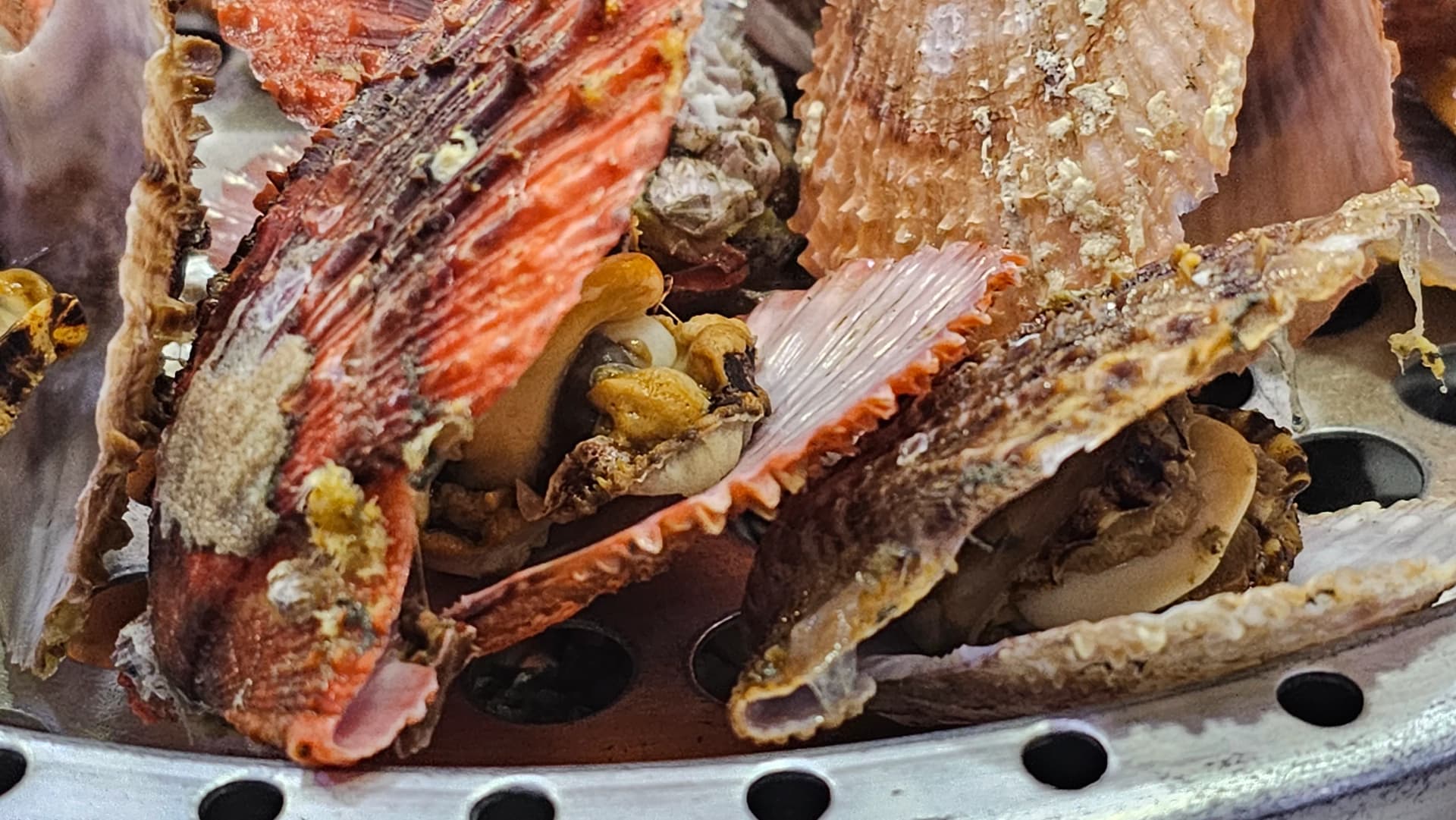
When scallops are steamed, the shells pop open and the meat's right there waiting for you. The golden bit is the coral (roe) and the round white part is the adductor muscle — that's the star of the show. Pop it off with your chopsticks, put it in your mouth and it's soft yet with a proper satisfying bite, and the sweetness is surprisingly intense. If you've ever had a beautifully seared king scallop at a decent restaurant — perhaps at J. Sheekey or your favourite local seafood spot — imagine that same sweetness but without the caramelised crust, just pure, clean, steamed scallop flavour.
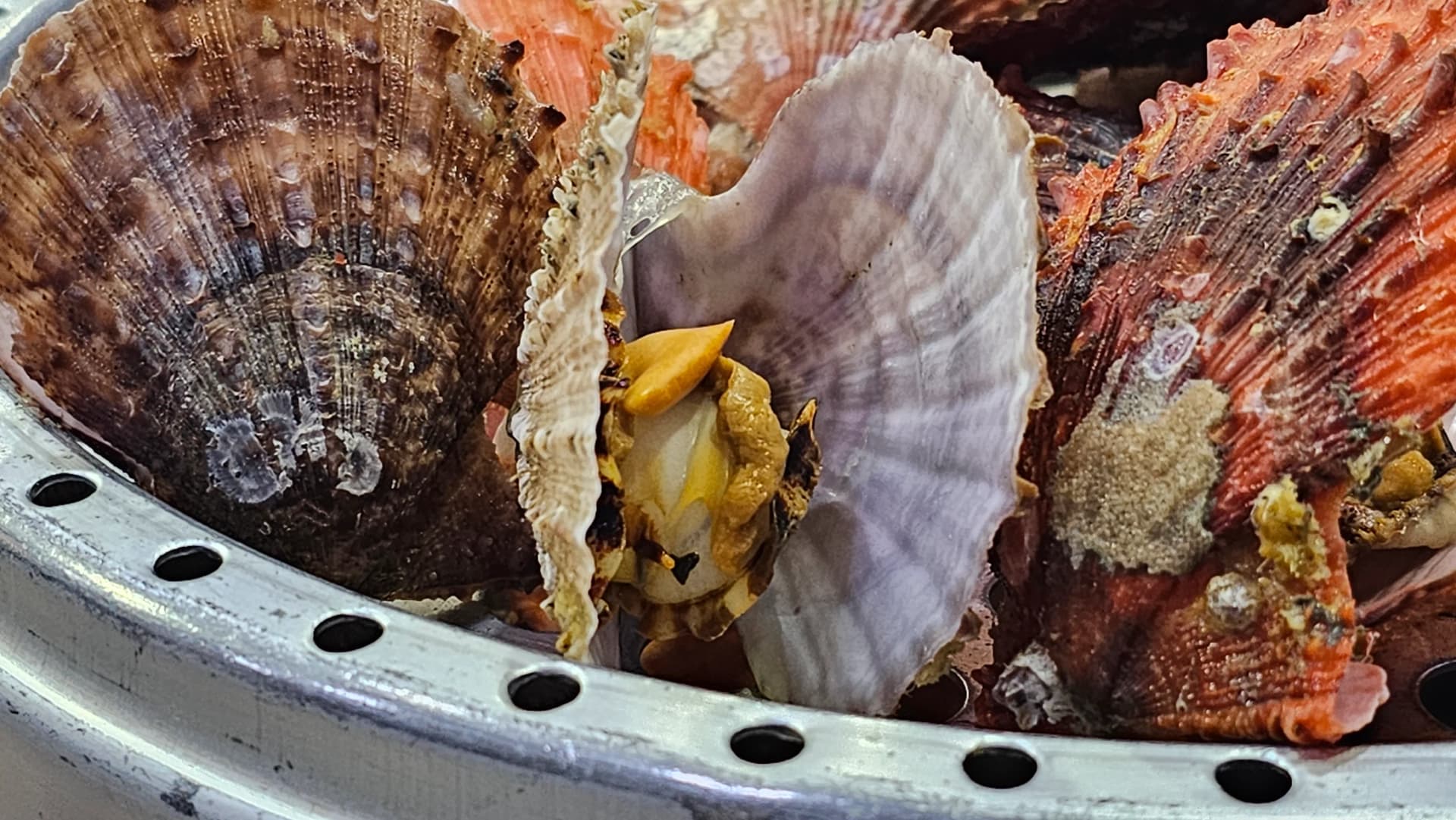
Up close you can see the muscle and coral sitting right there on the shell, steamed and ready. Just prise it off with your chopsticks — leave the dark intestine bit and eat the white muscle and golden coral. My brother absolutely parked himself at this tier and wouldn't stop eating scallops. I asked what his deal was and he just said this was the best layer. Honestly, I couldn't disagree.
Conch, Abalone, Blue Crab, Prawns — The Full Shellfish Platter Tier
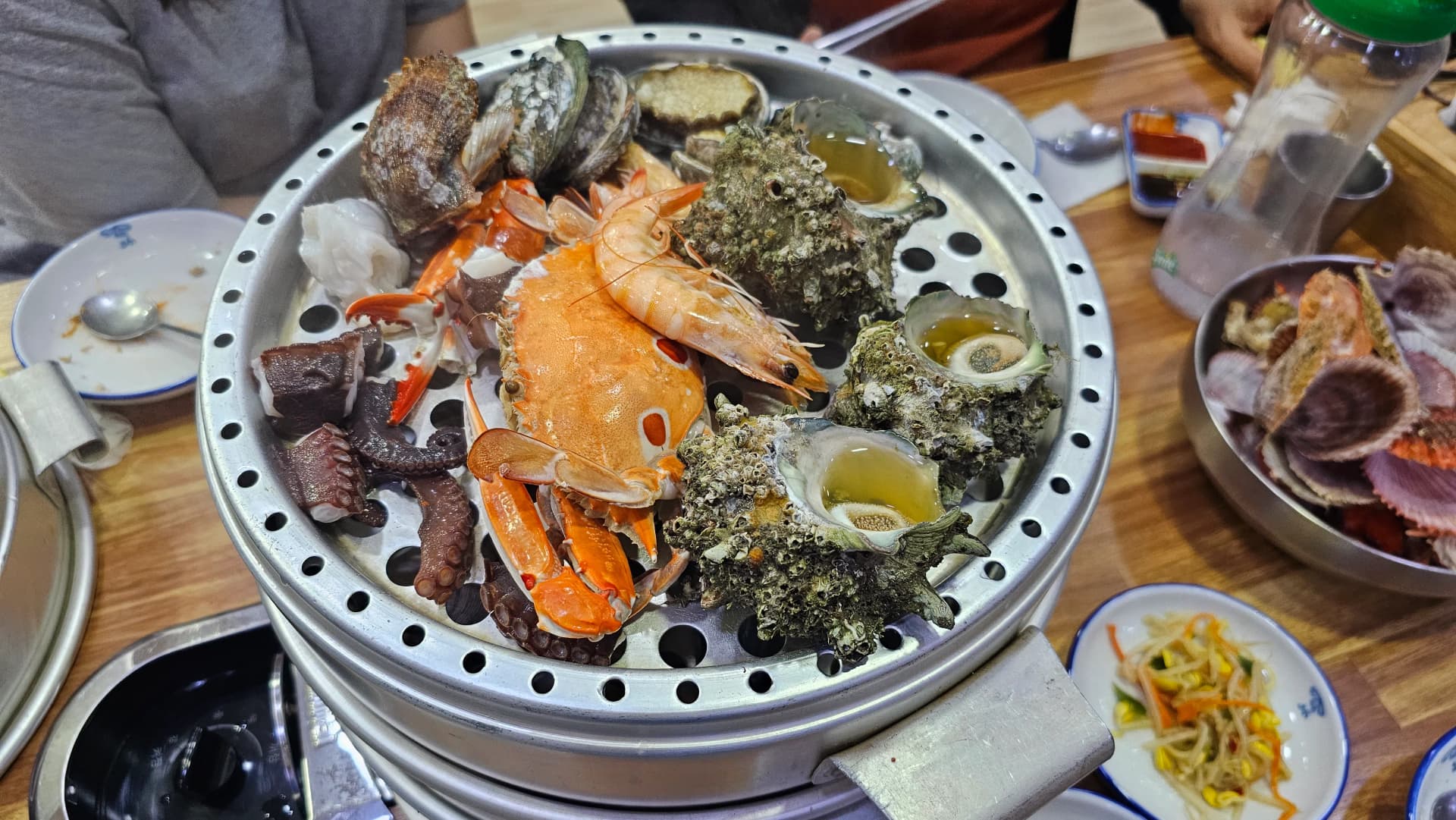
The next tier was essentially a shellfish platter all on its own. Conch, abalone, blue crab and prawns all crammed into one layer. Combined with the leftover octopus from the top tier that we'd moved down, our table was rapidly disappearing under a growing pile of empty shells and plates. My wife just picked out the prawns, and Mum went completely silent for a solid ten minutes whilst she cracked into the crab legs.
Abalone — Don't Waste the Juices
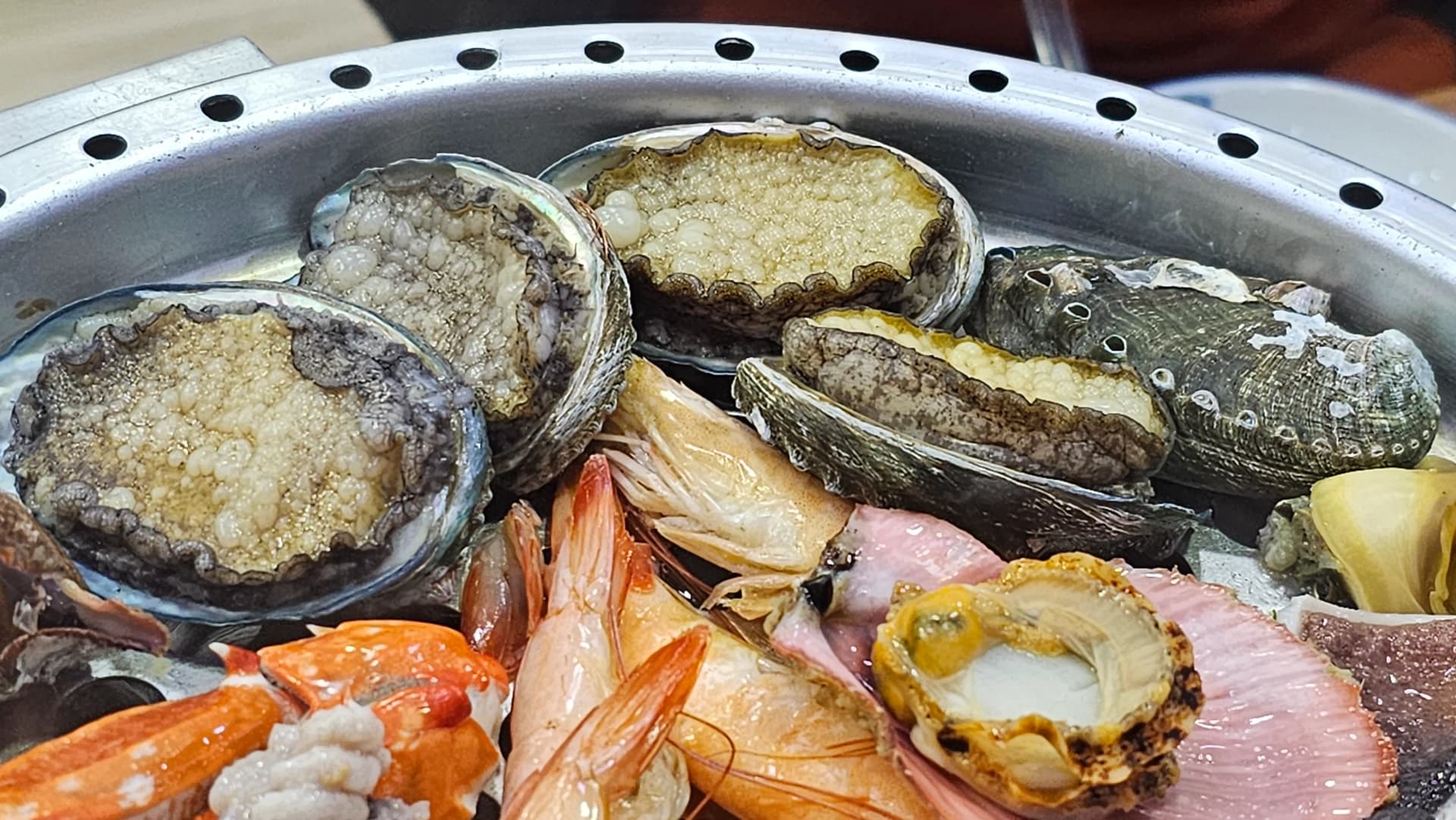
The abalone came out still in their shells with these little pools of liquid bubbling away inside. Those juices are the key — it's basically a concentrated broth from the abalone innards, salty and packed with umami. Scoop it up with a spoon and it's like drinking pure ocean stock. The abalone meat itself had little score marks so it came away from the shell easily with chopsticks. With conch, prawns, abalone and crab all jumbled together in one tier, the rather delightful chaos of not knowing what to eat first was half the fun.
The Fun of Twisting Out the Conch
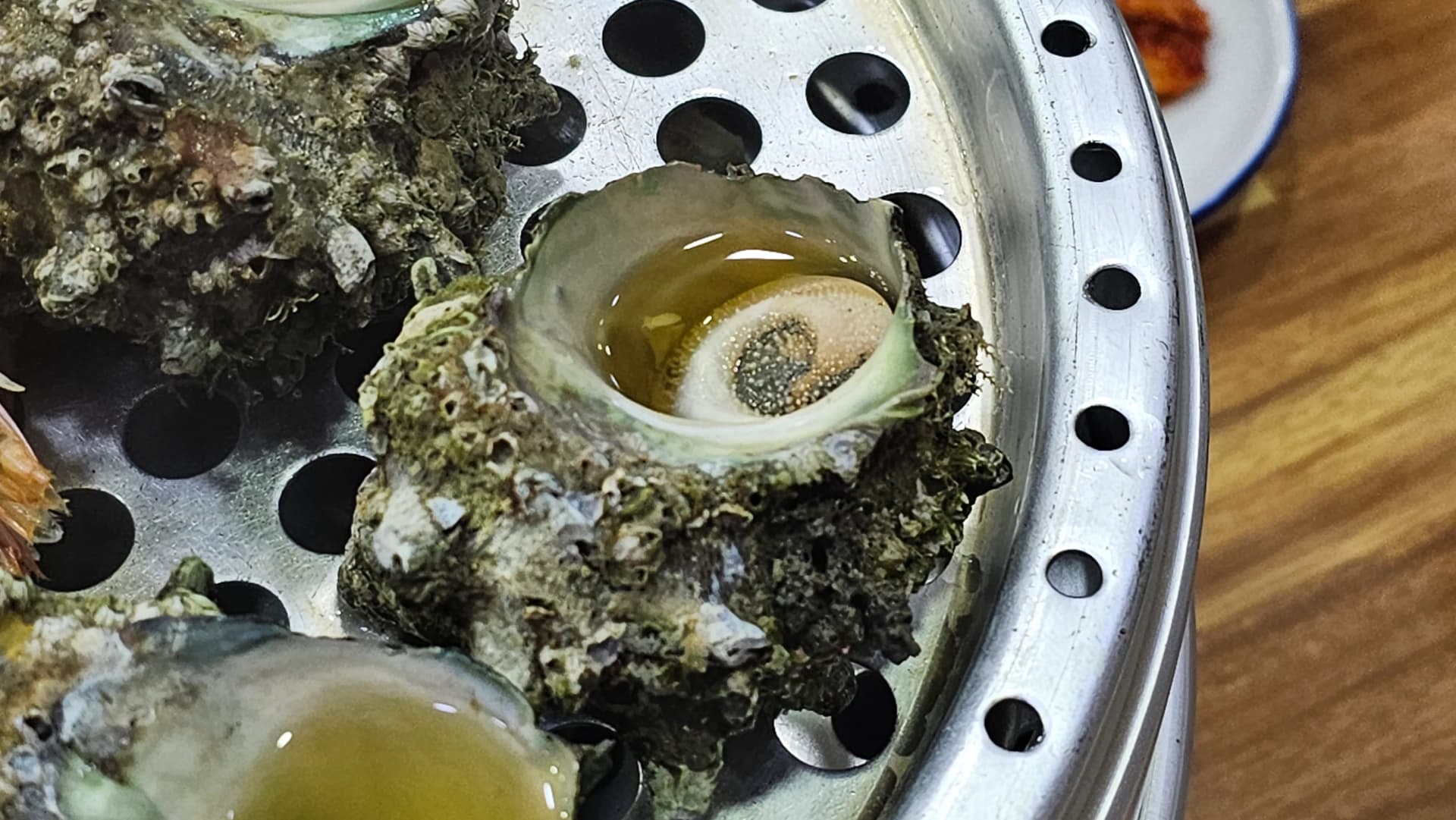
Conch meat sits curled up inside the shell and you've got to twist it out with a toothpick — rather like getting winkles out at a British seaside stall, only these are considerably bigger. First go, you'll almost certainly snap the meat halfway. I failed twice before managing it on the third attempt — getting it out in one clean spiral is oddly satisfying. Mum got hers out perfectly first try and attempted to show me her technique, but honestly I still couldn't get the hang of it.
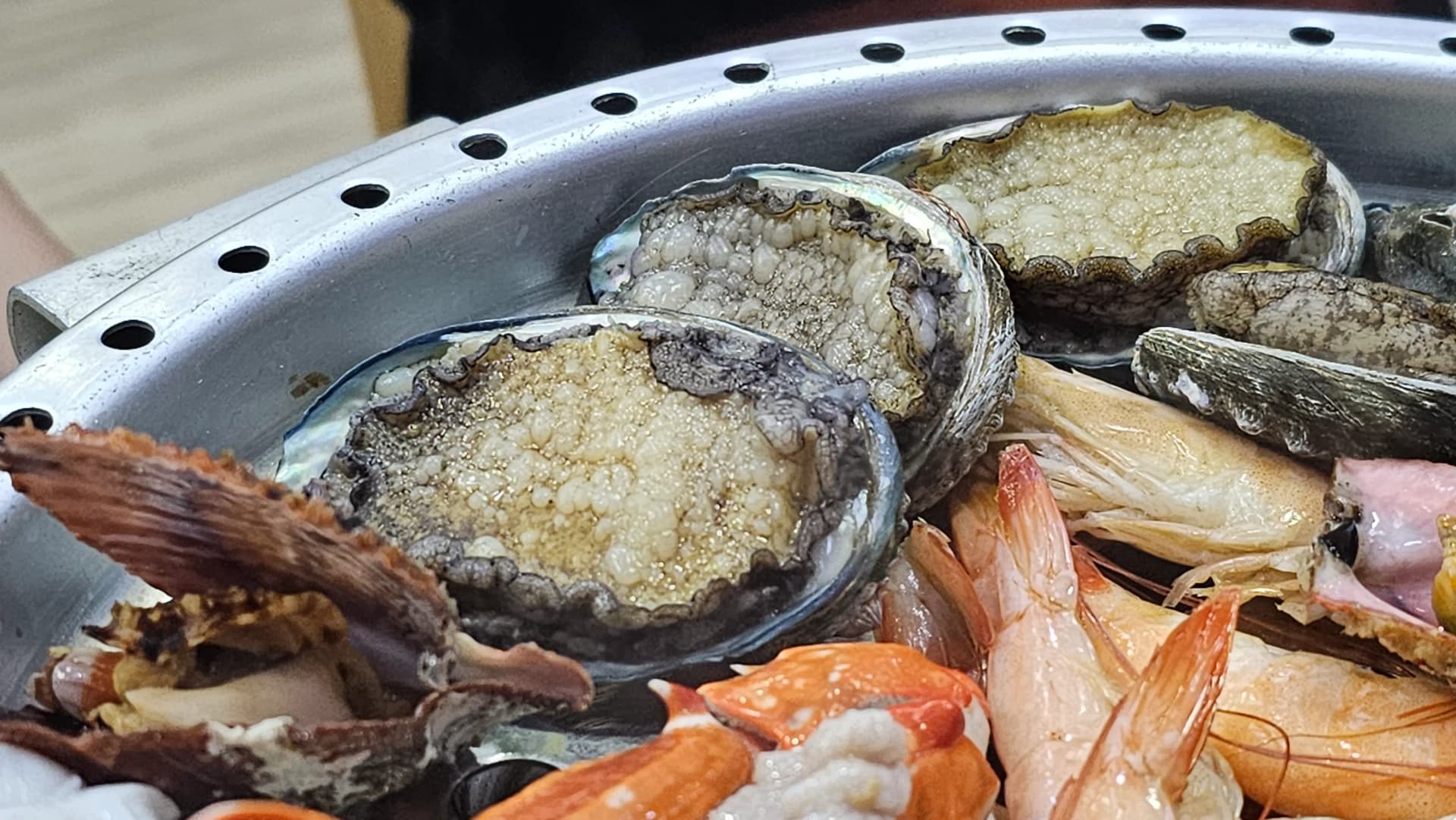
Blowing on a piping-hot abalone that's just come out of the steamer on a bitterly cold winter's day — that's the sort of moment that makes the trip to the coast worthwhile. Mum spent the longest on this tier out of any of them.
5-Tier Jogaejjim — What's in Each Tier
Pen Shells and Hard Clams — Pure Shellfish Flavour
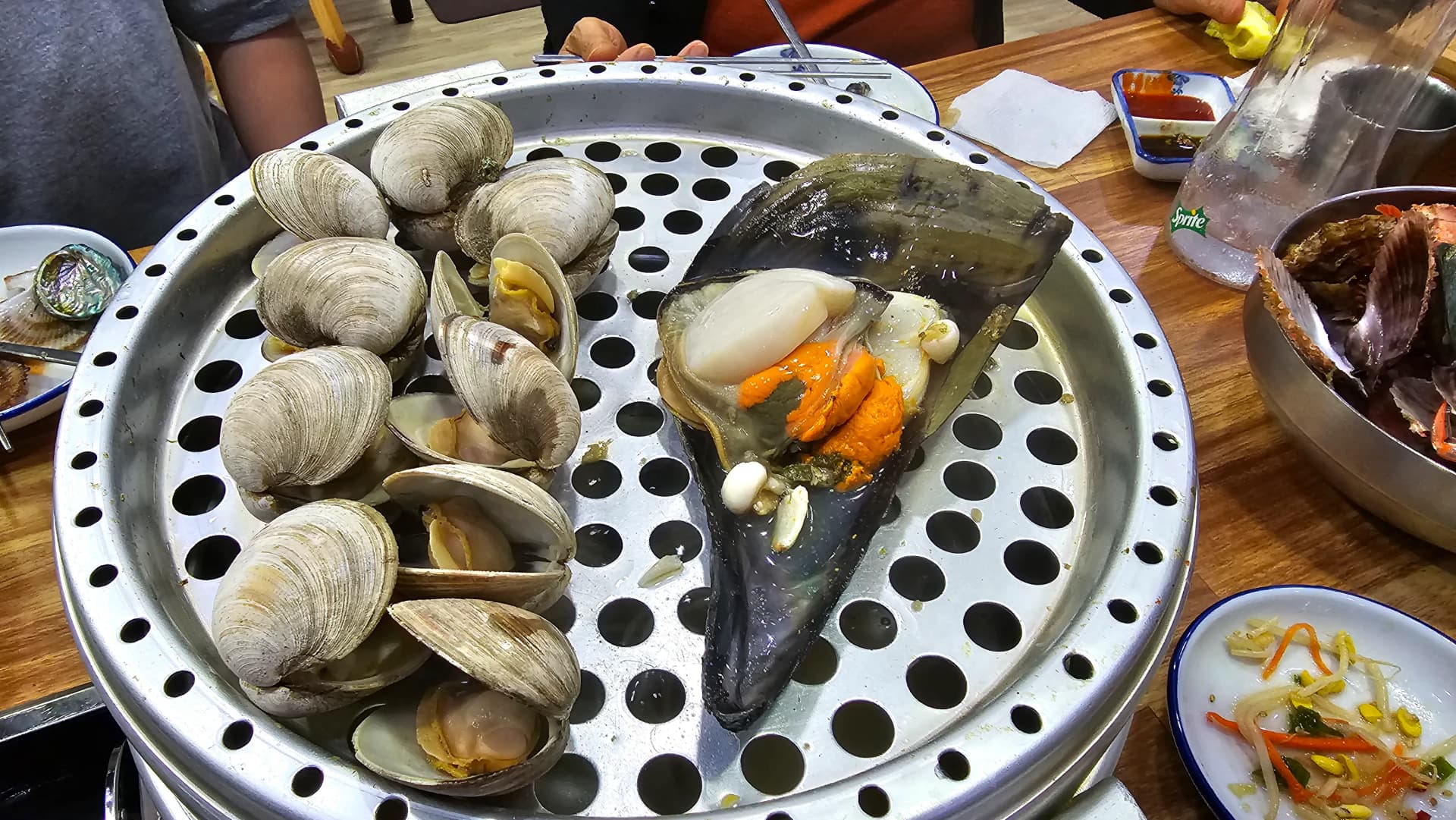
Next tier down was pen shells and hard clams. Pen shells are a type of large wedge-shaped mollusc — they were sitting in the steamer with their shells gaping open, bright orange roe and white adductor muscle clearly visible inside. The pen shell muscle is actually a premium cut that commands serious money even at sashimi restaurants, and eating it steamed like this gives you a completely different experience.
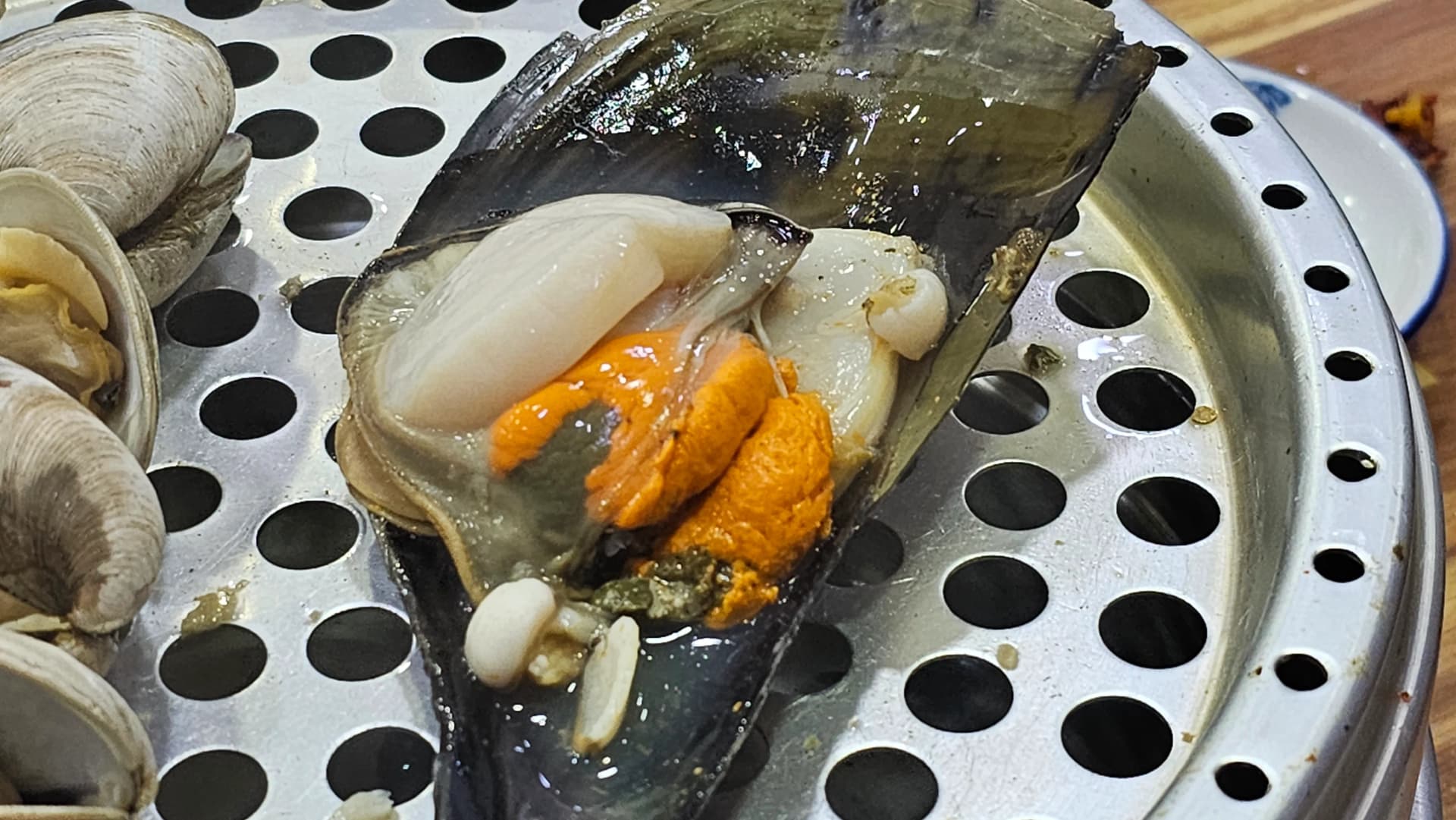
Close up, the meat's just sitting there exposed. The orange bit is the roe, the white bit is the adductor muscle. The muscle has this wonderful chewy, almost bouncy texture — you could easily eat it raw as sashimi, that's how firm and clean it is. I'll be honest, by this tier I was getting properly full, so I was eating more on autopilot than actually savouring things, but even so, the pen shell muscle stood out as genuinely delicious.
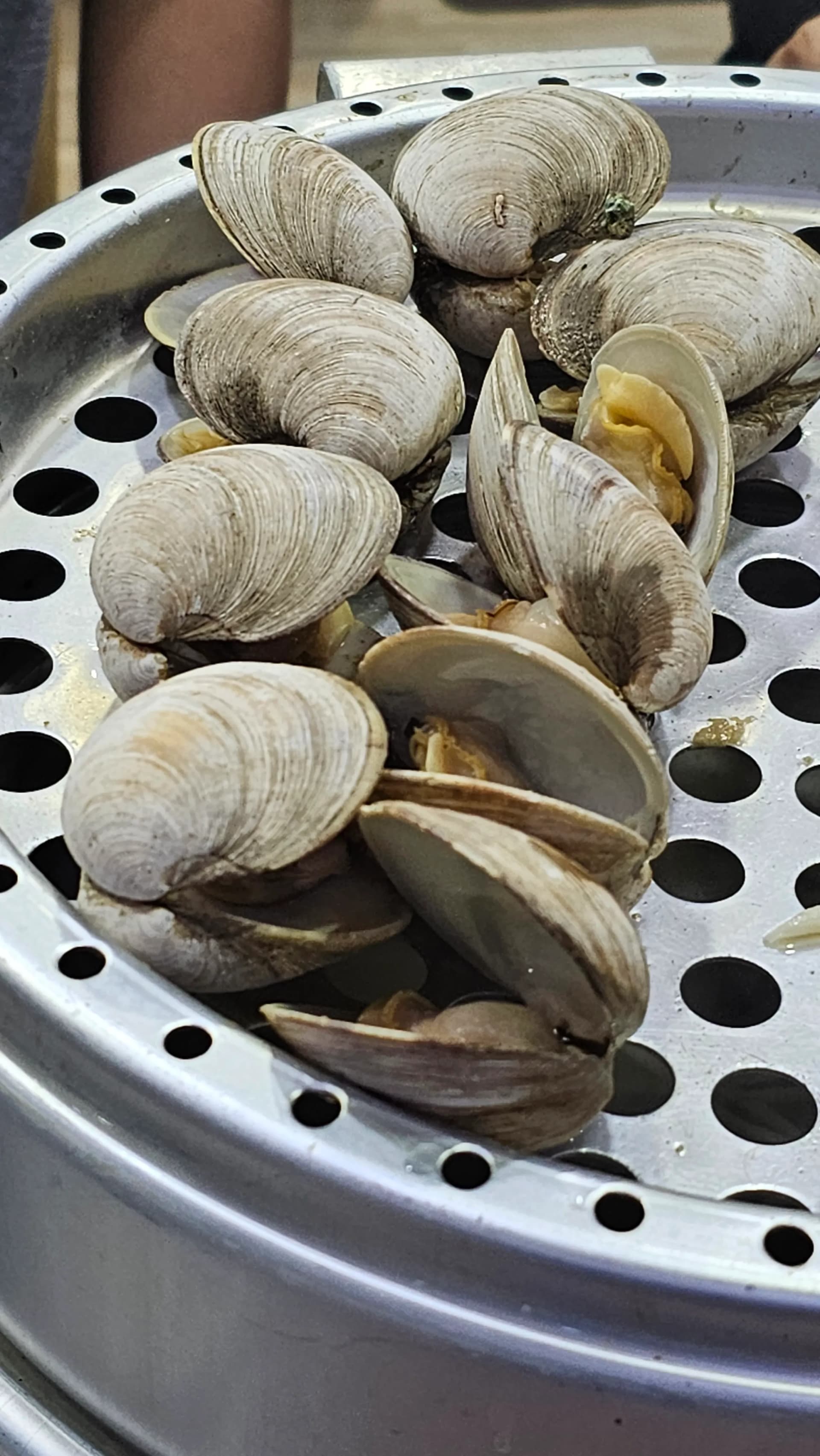
The hard clams were heaped up generously. They look a bit like vongole clams but noticeably bigger, and since they were already steamed open, you just pull the shells apart and eat. There were enough for four of us with leftovers. I'll be truthful though — by this point, shelling scallops and prising open clams was starting to feel like a bit of a chore. It was brilliant fun at the start, but after doing it non-stop for twenty-odd minutes, your hands do start to ache.
The Grand Finale — Noodles in Seafood Broth
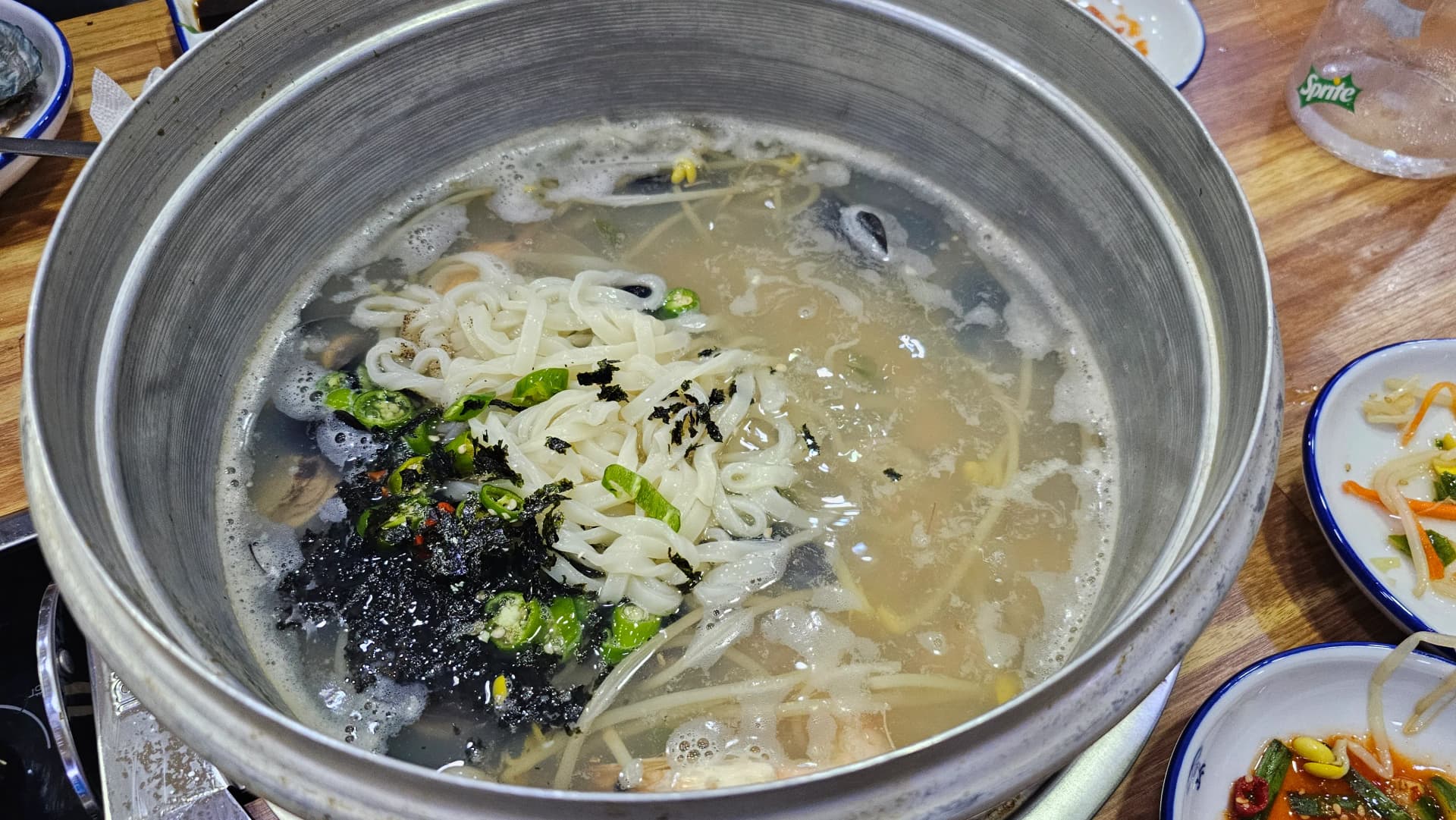
The very bottom tier is all broth. Whilst everything above was steaming away, the juices from every single tier of shellfish were dripping down and collecting at the bottom — creating this ridiculously concentrated seafood stock. They drop knife-cut noodles (kalguksu) into it and let them cook right there at the table, with seaweed flakes, fresh chilli and beansprouts on top. It was both refreshing and punchy at the same time. You can also toss in any leftover shellfish from the tiers above to make the broth even richer. I was absolutely stuffed after five tiers, but somehow the noodle broth still went down. Mum said the broth was the best part of the entire meal, and after eating through all five tiers, I finally understood what she meant.
Honest Price Breakdown
What I'd Honestly Change Next Time
Five tiers is an awful lot of food. For the first three tiers, you're buzzing — "oh brilliant, look at this, oh that's amazing" — but from tier four onwards, you're so full that you're more or less just shovelling food in rather than actually enjoying it. Shelling scallops and cracking open clams non-stop gets tiring on the hands too. And £60, whilst not outrageous by British restaurant standards — a fruits de mer at somewhere like Wright Brothers in London would easily run you twice that — it's still not nothing. If there's only 2 or 3 of you, a 3-tier is absolutely plenty. The portions are generous and the price is far easier to stomach. Save the 5-tier for groups of 4 or more, and only when you're in a "let's push the boat out" sort of mood.
Why You Should Still Try It at Least Once
Even with all that said, if you're heading to the Korean coast, jogaejjim is something I'd genuinely recommend you experience at least once. The anticipation of lifting each lid and not knowing what's inside, the chaos of scissors and shells and toothpicks and everyone laughing and chatting over each other — that atmosphere IS the meal. On a freezing winter's day, sitting in front of a tower of steamers with hot steam pouring out whilst you blow on a piece of abalone before eating it — there's no photo or video that properly captures what that feels like. You've got to be there.
And it's not just Tongyeong — you'll find jogaejjim restaurants all along Korea's coast. Busan, Taean, Sokcho, Jeju, you name it. If you're walking along the seafront and you spot a restaurant with steamer towers on the tables, just walk in. You won't regret it.
Korean Coastal Cities Where You Can Find Jogaejjim
This post was originally published on https://hi-jsb.blog.