Charcoal Grilled Chicken — Smoky Korean Dakgalbi
Table of Contents
13 items
Charcoal Grilled Dakgalbi — Not Stir-Fried, but Grilled on a Wire Mesh
Charcoal grilled dakgalbi is a style of Korean BBQ chicken cooked piece by piece on a perforated wire mesh directly over glowing charcoal, rather than being stir-fried on a hotplate. The smoke rises through the grate and wraps around the meat, giving it a deep, woody flavour you simply cannot replicate in a frying pan. I'd posted about the stir-fried hotplate version before, but this time I went for something completely different. Back in early March, a mate of mine suggested we try a charcoal dakgalbi place in Daejeon, a big city roughly an hour and a half south of Seoul. He kept insisting "it's nothing like the hotplate stuff," so I tagged along. Same dish name, but the cooking method, the way you eat it, even the taste — totally different.
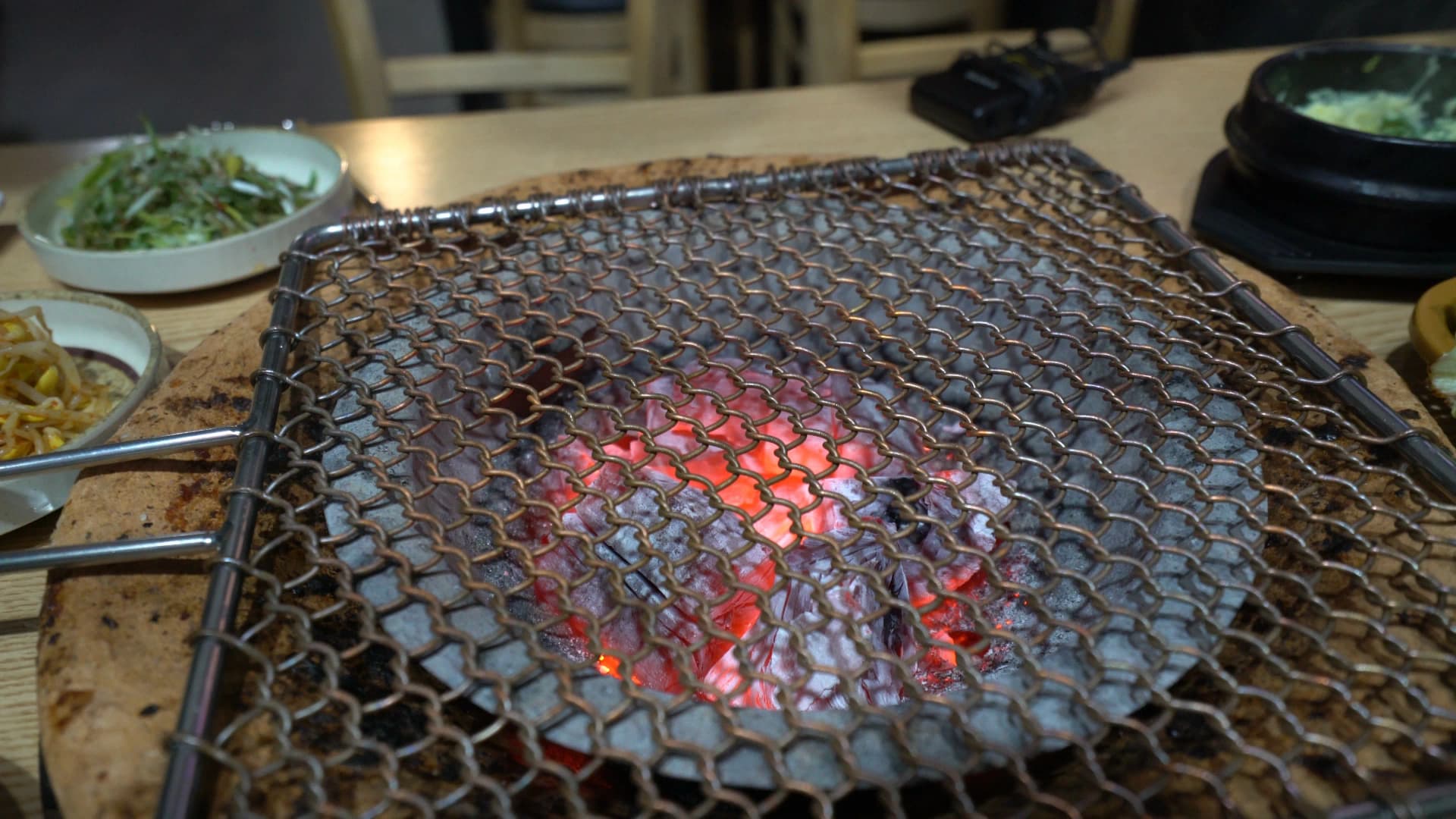
This is what greets you the second you sit down. Right in the centre of the table, a bed of charcoal is glowing bright red, and sitting on top is a wire mesh full of small holes. Not a hotplate — a mesh. The heat from the coals rushes straight up through those holes, so the moment you lay any chicken down, the flames and smoke hit the meat directly. If you've ever cooked over a proper charcoal barbecue at home — you know, those summer evenings when you're fanning the coals and hoping for the best — imagine that, but cranked up to eleven with a purpose-built grate. One look at this setup and I knew this was going to be a completely different experience from the stir-fried version.
Charcoal Grilled Dakgalbi — The Chicken Arrives Par-Cooked
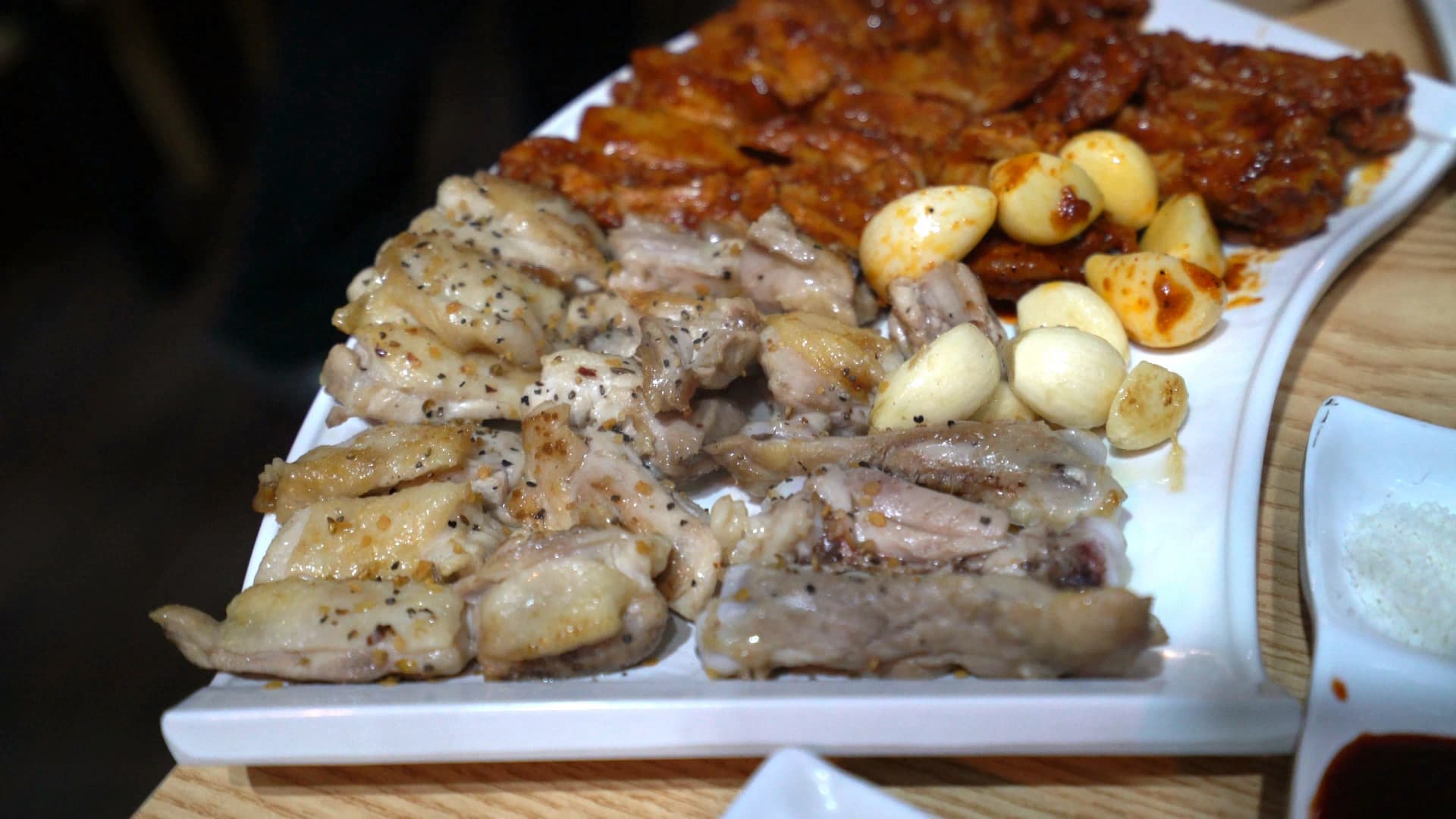
The chicken comes out on a single plate, split into two types. On one side, you've got the gochujang-marinated pieces — proper bright red, slathered in Korea's famous fermented chilli paste. On the other, plain chicken seasoned with nothing more than black pepper and salt. Whole garlic cloves sit in the middle between them. We ordered three servings between the two of us, and each serving is 330g for about £5. That was genuinely generous — more than enough. Here's the clever bit: the chicken arrives already par-cooked, so all you need to do is pop it on the mesh and give the outside a final sear. Even if it's your first go at charcoal grilled dakgalbi, there's absolutely no stress about timing or undercooking.
Stir-Fried Dakgalbi (Hotplate Style)
Everything goes onto a flat hotplate — cabbage, rice cakes, sweet potato, and chicken — then gets tossed together in gochujang sauce. All the ingredients meld into one big, saucy mix where every piece soaks up the seasoning.
The cooking usually happens tableside, either by a member of staff or yourself. The classic finish is adding rice at the end to make fried rice with the leftover sauce — a bit like scraping up all the caramelised bits from the bottom of a roasting tin.
The whole point is chicken + veg + sauce fusing into one unified flavour.
Charcoal Grilled Dakgalbi (Wire Mesh Style)
You place pieces of chicken one at a time on a perforated mesh over live charcoal and grill them yourself. Smoke curls up through the grate and coats the meat with a proper smoky BBQ flavour.
The chicken arrives par-cooked, so you only need to sear the outside on the mesh. You get two flavours at once — spicy gochujang-marinated and simple salt-and-pepper seasoned.
It's all about the charcoal smokiness and the direct-flame texture. This method lets the chicken's own flavour shine through far more.
Salt and Pepper Grilled Chicken Close-Up
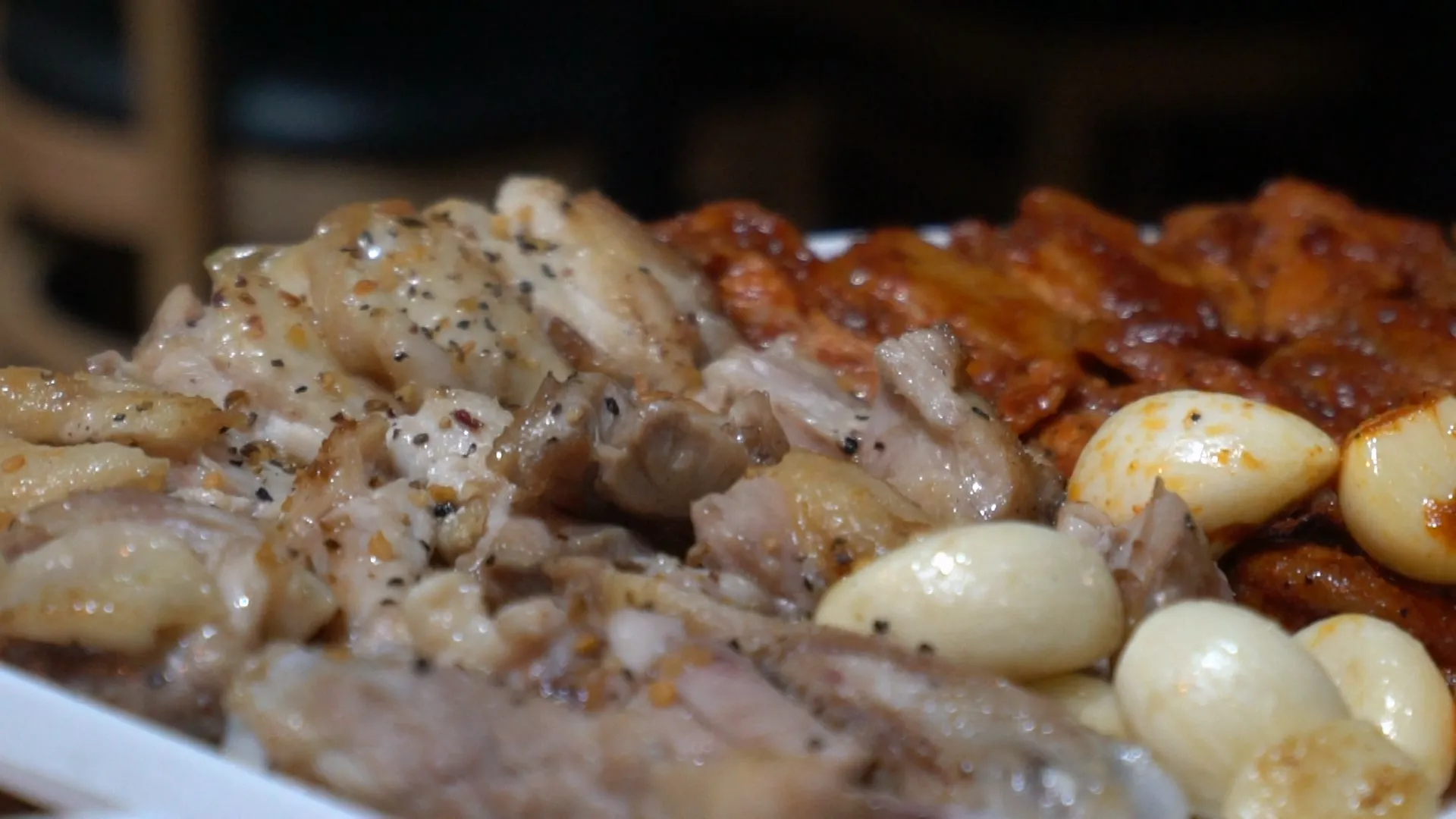
Get a bit closer and you can see the detail. The salt-seasoned pieces have a gorgeous sheen — a thin layer of rendered fat glistening across the surface. Right beside them sit the whole garlic cloves, which later go onto the mesh and turn impossibly soft and sweet inside, the sort you have to blow on before eating because they're piping hot. Over at the back you can spot the red gochujang pieces. Having both flavours on one plate was brilliant — my mate and I had a proper little tussle over the tongs, him going "salt first" and me going "no, spicy first." Very serious business, obviously.
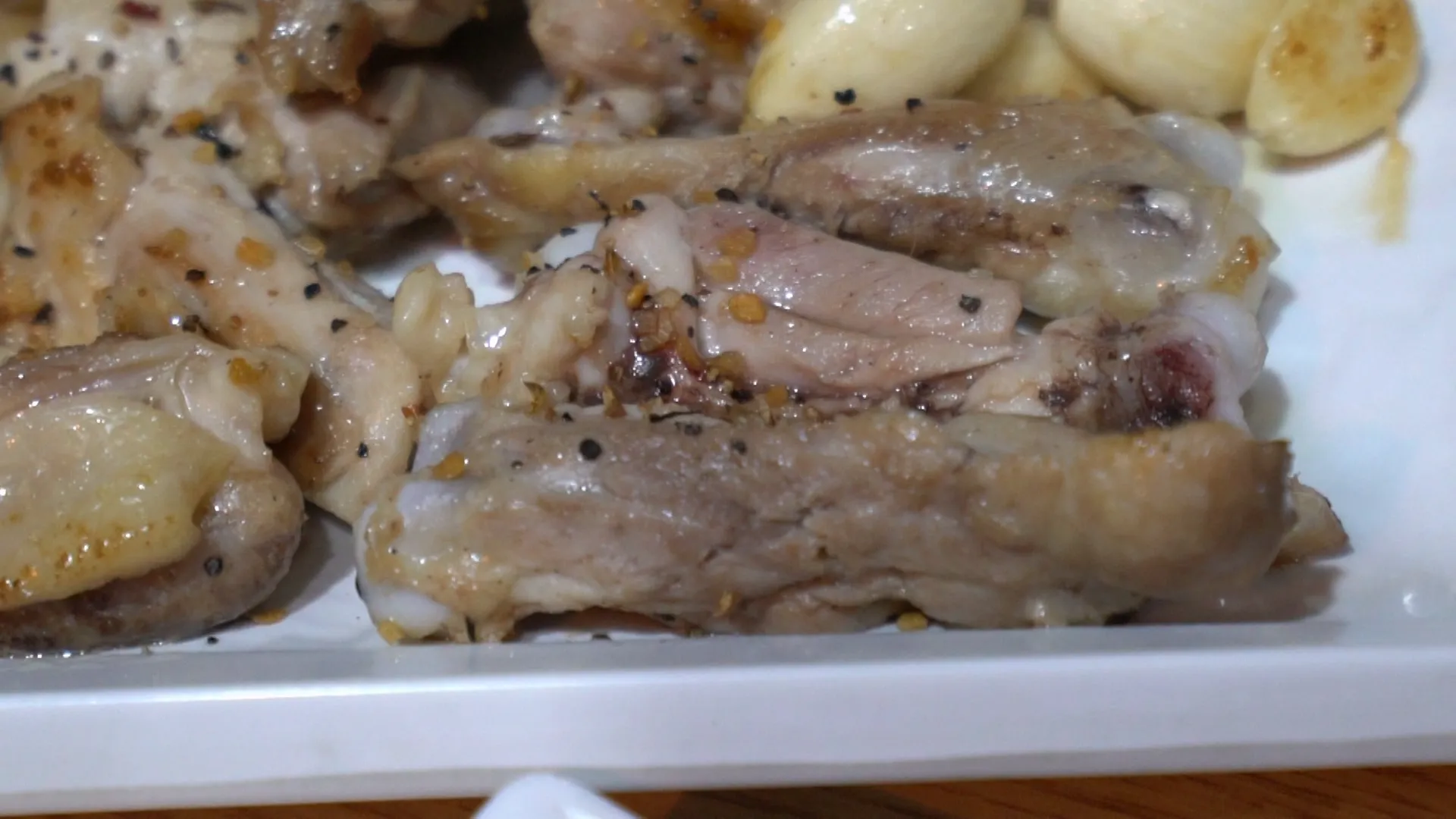
Look even more closely and you can see the cross-section. Because it's par-cooked, the inside still has the faintest blush of pink, while the surface is packed with cracked black pepper and fine bits of minced garlic pressed into the meat. You don't eat it like this — it goes onto the charcoal mesh for that final sear. Once that's done, the outside turns beautifully crisp while the inside stays wonderfully juicy.
Laying the Chicken on the Charcoal Grill — The Fun of Cooking It Yourself
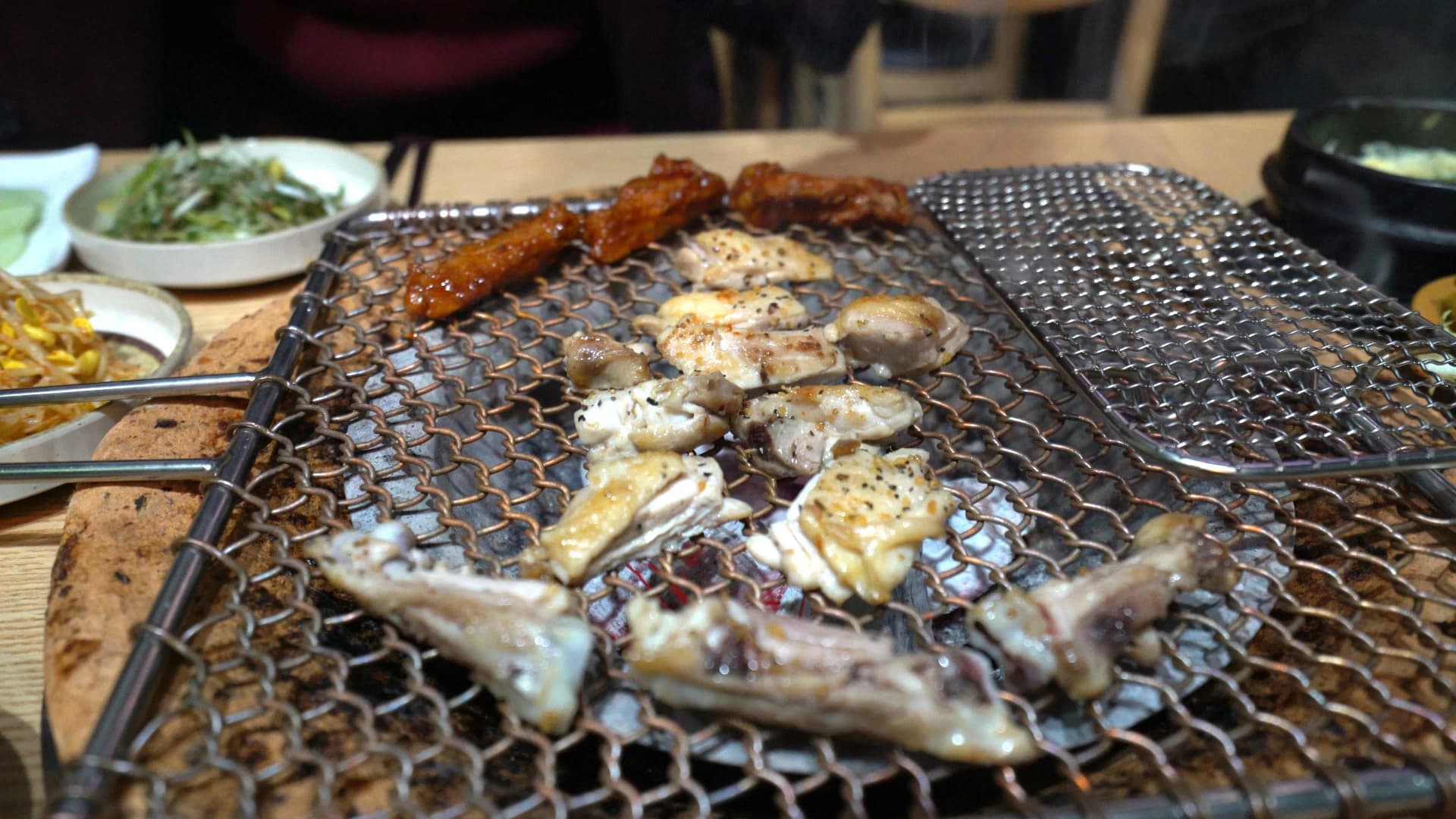
Charcoal grilled chicken is very much a hands-on affair — you don't pile everything on at once. You place a few pieces at a time and grill them bit by bit. The salt-seasoned chicken went on first, and up in the top left corner a single piece of the red spicy dakgalbi joined it. Through the gaps in the mesh you could see the charcoal glowing underneath, slowly cooking the underside of the meat. Off to the side, beansprouts, salad, and a little pot of doenjang-jjigae (Korean soybean paste stew) were all lined up — a setup that felt completely different from the stir-fried version. My mate said "this is basically like grilling samgyeopsal," and honestly, he wasn't wrong. It's got that same satisfying, cook-it-yourself buzz — not unlike standing over a barbecue on a bank holiday, except the results are considerably better.
Watching the Salt and Pepper Chicken Cook
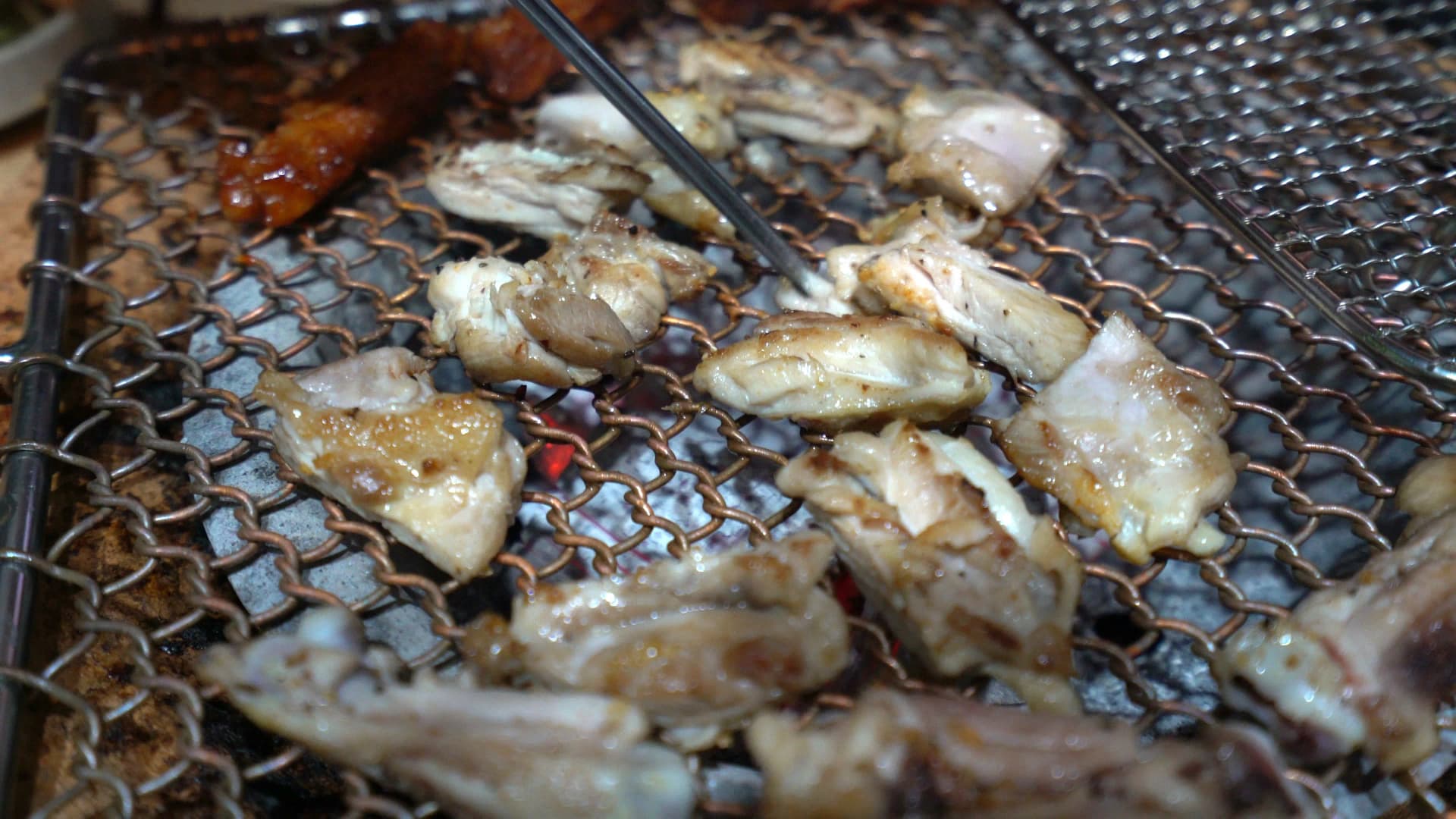
Now things were really getting going. The par-cooked chicken was catching the heat from the coals and the outside was turning properly golden. Fat was dripping down through the mesh, and the instant it hit the charcoal below — whoosh — a plume of smoke shot back up and wrapped around the meat. That's the whole secret of charcoal grilled dakgalbi right there: the smoke kiss. Flipping each piece one by one with the tongs was genuinely enjoyable. Up in the top left, the spicy gochujang piece had already started to caramelise, its surface going glossy and dark. Here's something I didn't expect — the par-cooking means you only spend about two to three minutes per side on the grill, so the whole thing moves much faster than a typical barbecue.
Spicy Gochujang Chicken on the Charcoal Grill, Bubbling Away
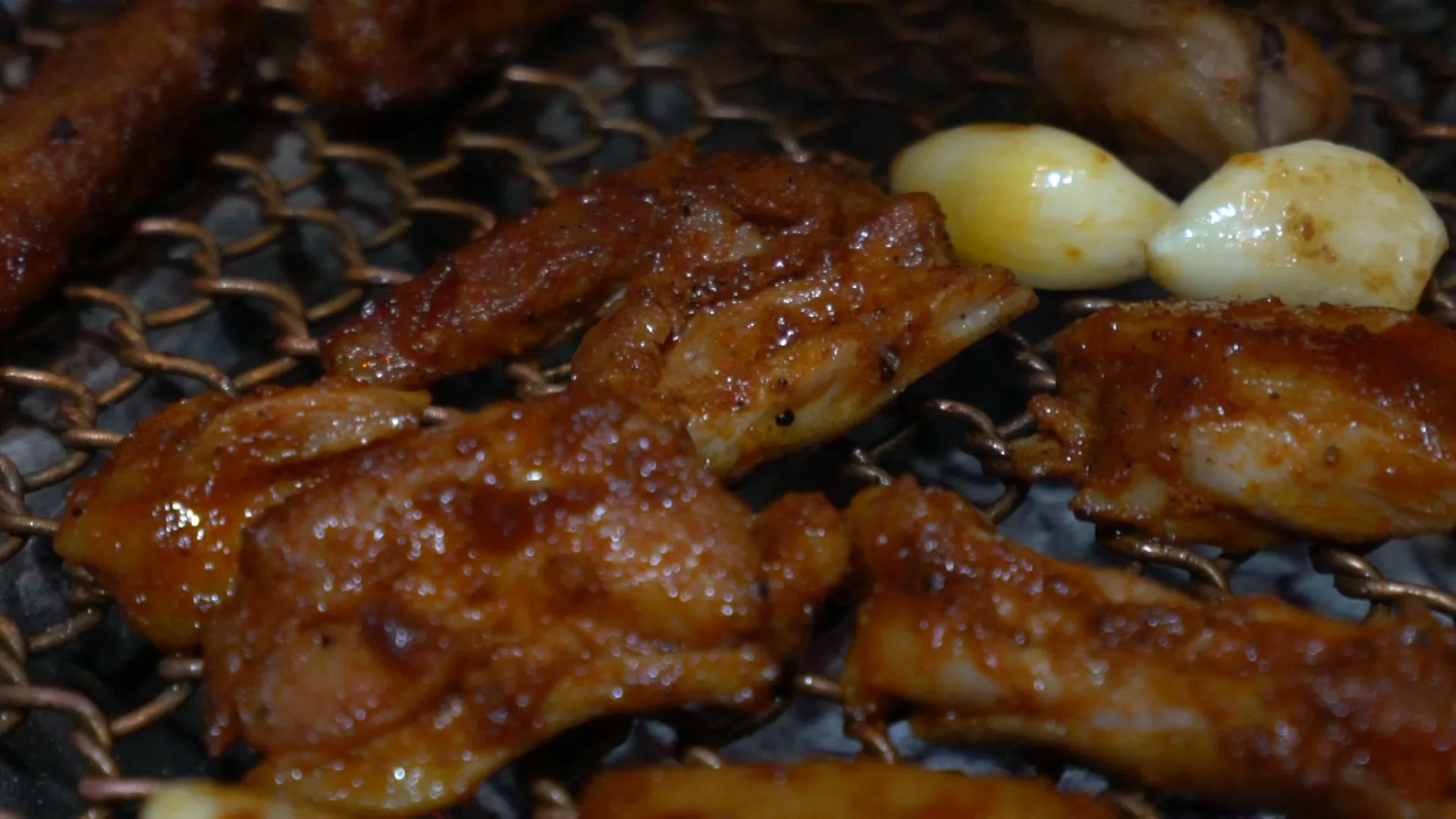
Now it was the gochujang chicken's turn in the spotlight. Up close, you could see the marinade was literally bubbling on the surface from the charcoal heat. Tiny blisters of sauce were forming and popping as the sugars in the gochujang caramelised, making the coating cling tightly to the meat. The whole garlic cloves were grilling alongside, picking up a light orange tinge from the marinade as they softened and turned golden.
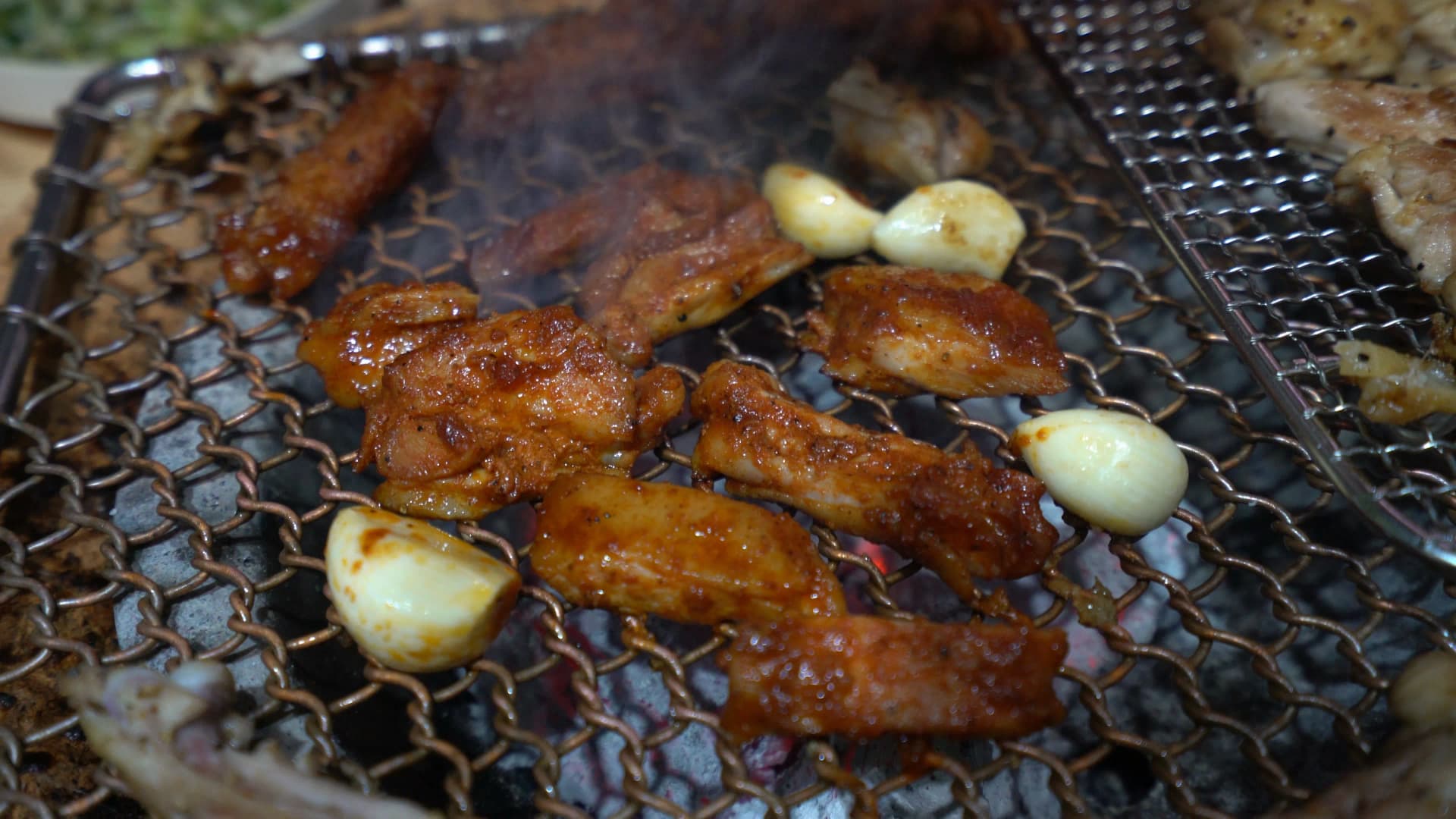
Pull back a bit and this is the full picture. Smoke was drifting up in lazy wisps, curling around all the spicy chicken pieces. On the right side, the salt-seasoned chicken was grilling away on its own, and on the left, the bright red gochujang pieces held court. Two flavours on one grill, cooked at the same time — that's the beauty of this setup. When the spicy one had your mouth properly tingling, you'd switch over to the mellow salt side, and when the plain stuff started feeling a bit understated, you'd drift back to the fiery red pieces. Brilliant pacing.
The Spicy Marinade Burns Quickly — Timing Is Everything
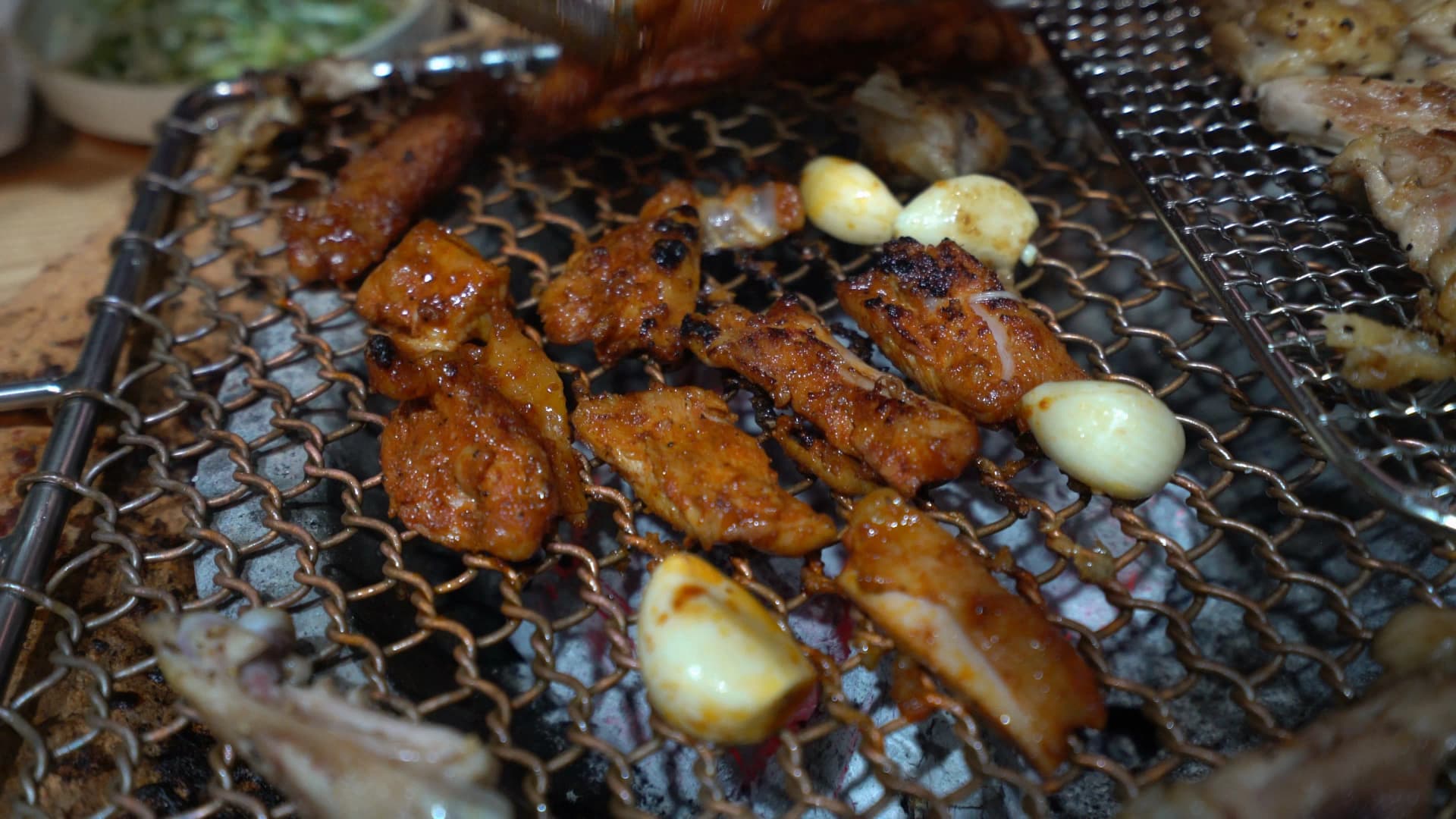
The spicy marinated chicken really does need your full attention. There's sugar in the gochujang marinade, and on a charcoal grill it catches and chars fast. You can see in the photo that a couple of pieces had already gone a bit dark around the edges. The thing is, a touch of char is actually delicious — those caramelised, slightly blackened edges are crispy and sweet-savoury in a way that's almost addictive. But if you genuinely let it burn, it turns bitter, so you need to be flipping regularly with the tongs. My mate was on spicy duty and he was going "right, this needs turning every two minutes," looking properly flustered. Meanwhile the salt and pepper chicken just sat there calmly, needing far less babysitting. If it's your first time, I'd honestly start with the salt side — the gochujang pieces are best tackled once you've got the hang of the grill's heat.
Salt Grilled vs Spicy Marinated — Which Tastes Better?
Salt-Seasoned (Salt & Pepper Grilled Dakgalbi)
Salt & Pepper Grilled Dakgalbi
Just black pepper and salt — nothing else. This is chicken that wins on its own merits, no sauce to hide behind. On the charcoal mesh, the fat renders and drips away through the grate, so the skin goes properly crisp while the inside stays juicy. It's remarkably un-greasy, which means you just keep reaching for the next piece.
Because the charcoal smoke does the heavy lifting flavour-wise, the salt seasoning doesn't need to be aggressive. The skin is the real star — grilled until it crackles, with a burst of savoury fat when you bite through. Think of it like the crispiest bit of a Sunday roast chicken, but with a smoky depth from the live coals.
Dip it in the salt, the cheese powder, or the sauce set that comes alongside and you get three completely different experiences from the same piece of chicken. Wrap it in radish or perilla leaf and it cuts the richness beautifully while adding freshness.
Best for: anyone who can't handle spice, anyone watching their diet, or anyone who just loves the honest flavour of well-cooked chicken.
Spicy Marinated (Gochujang Grilled Dakgalbi)
Gochujang Spicy Grilled Dakgalbi
This chicken has been properly marinated in gochujang — Korea's fermented chilli paste — so it's already bright red and flavour-soaked before it even touches the grill. On the charcoal, the sugars in the marinade start bubbling and caramelising, sending up a sweet-spicy aroma that's honestly irresistible.
The catch? It burns faster than the salt version because of the sugar content. Look away for a moment and it'll char black on you. You need to keep flipping with the tongs. A little bit of char on the edges is actually brilliant — crispy, sweet, slightly bitter in a good way — but properly burnt and it's just acrid. Timing is key.
Heat-wise, it's not blisteringly hot. The spice level is more of a warm, sweet-savoury kick that most people can handle. The combination of charcoal smoke and gochujang creates a depth of flavour that's worlds apart from the stir-fried hotplate version.
Best for: anyone who loves a bit of heat, or anyone wanting the full-throttle Korean gochujang experience.
Dipping Sauces — Salt, Cheese Powder, Sweet Sauce, and Cream
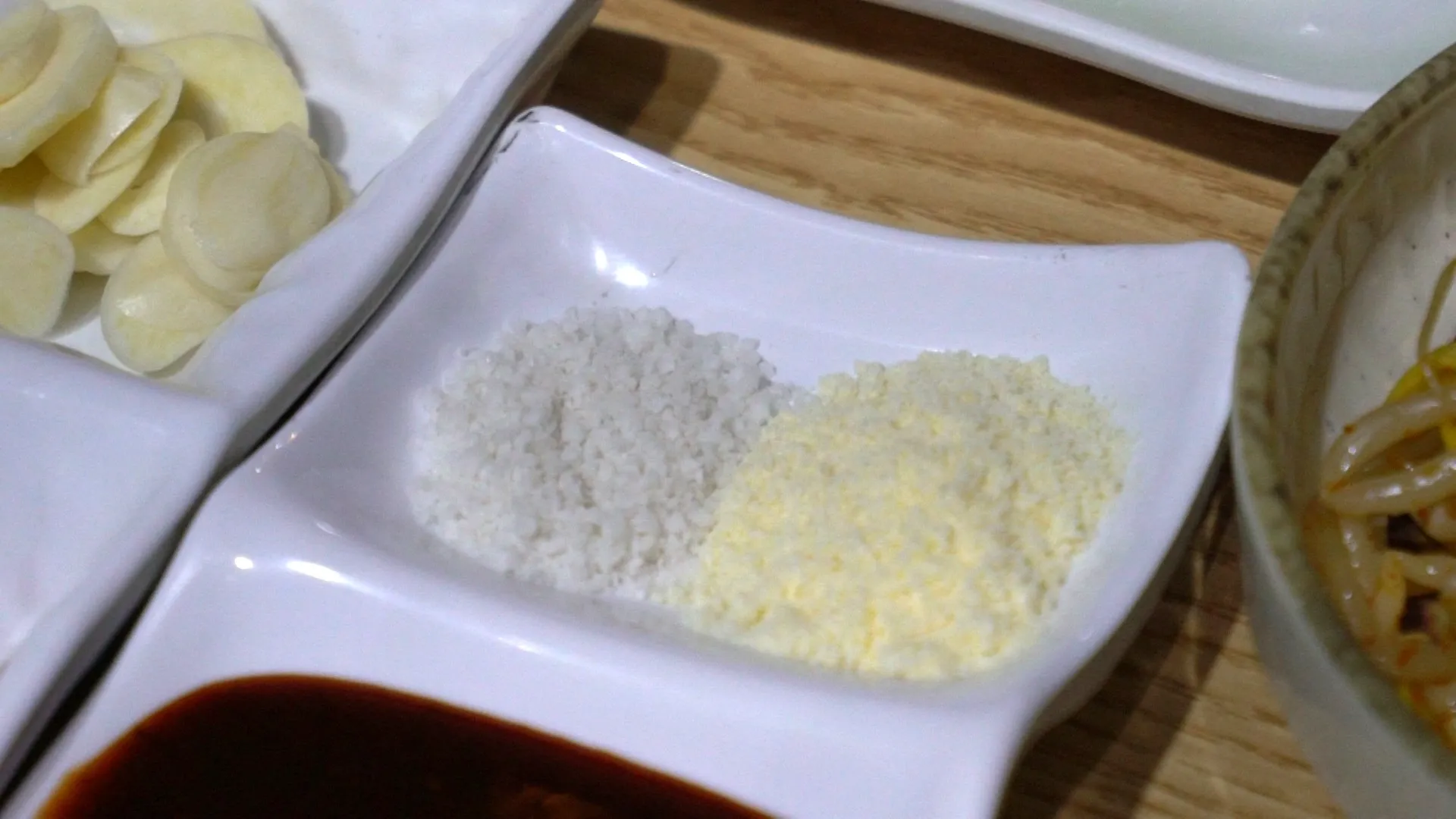
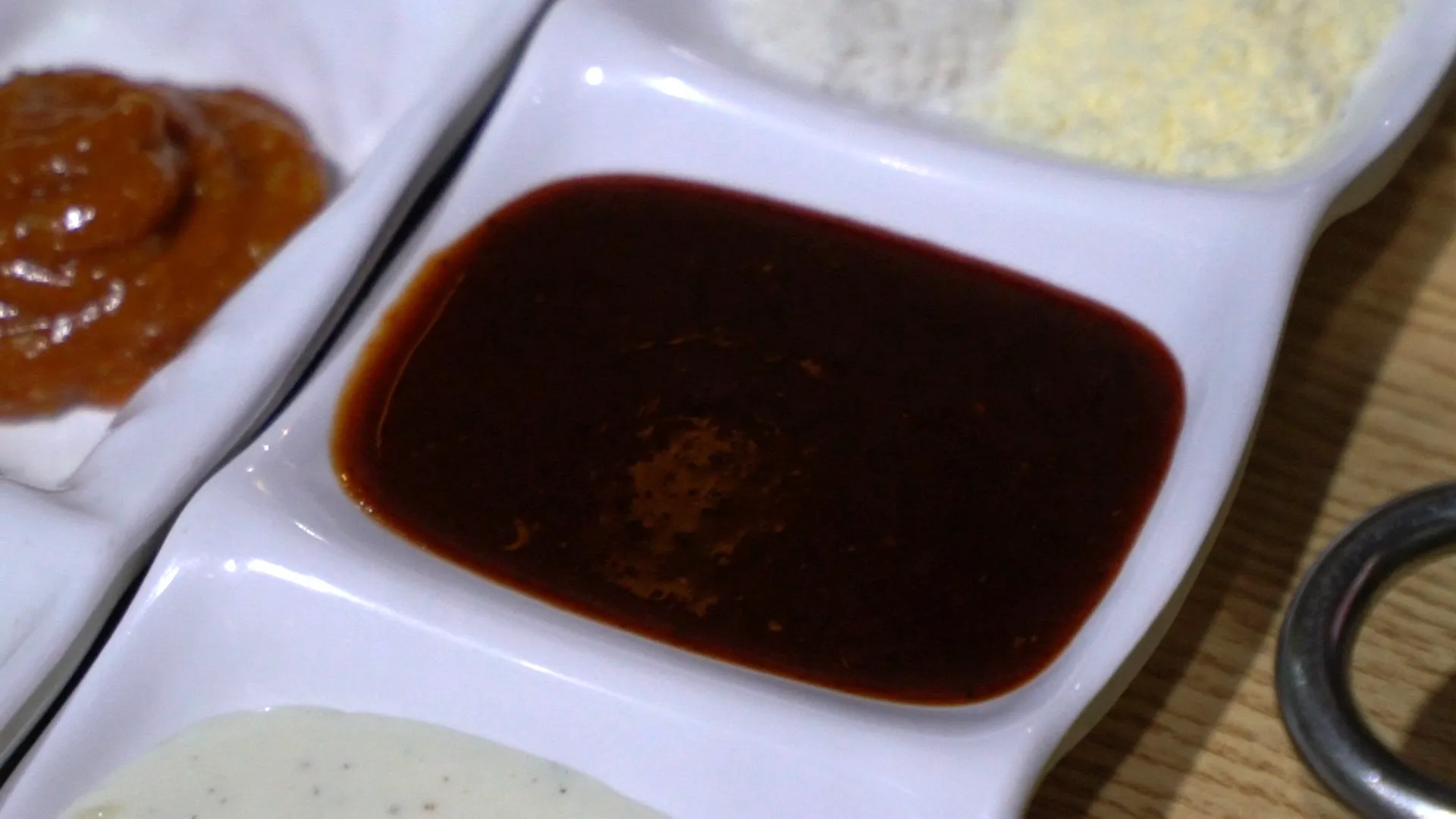
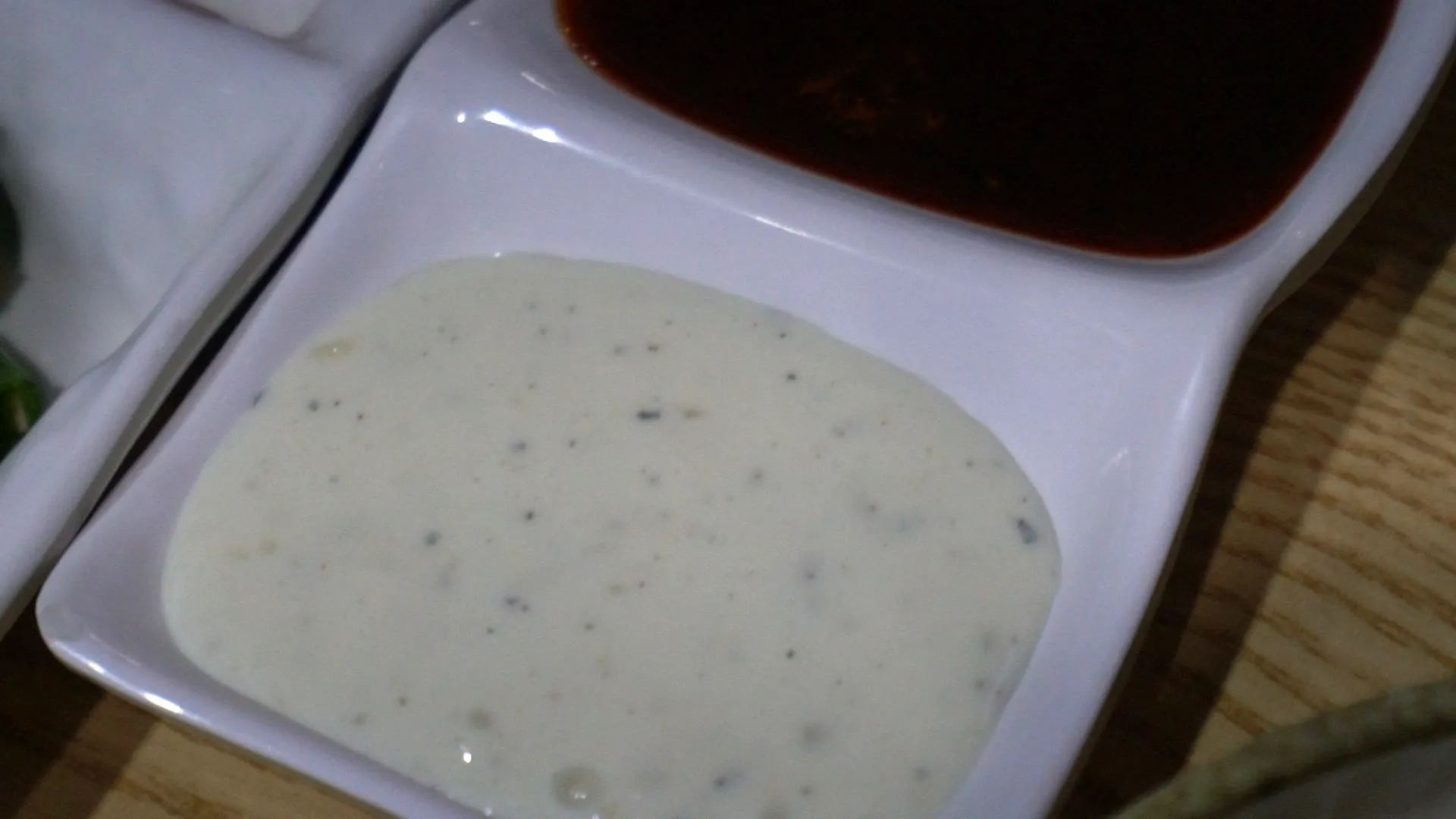
The charcoal grilled dakgalbi comes with a proper set of dipping sauces. First up, salt and cheese powder sit side by side on a little plate, with thinly sliced garlic fanned out next to them. Dip the salt-seasoned chicken in the plain salt and it brings out the clean, savoury flavour; dip it in the cheese powder and suddenly you've got this rich, almost moreish cheesiness — not unlike shaking cheese and onion crisp seasoning onto chips, if you can picture that. The dark brown sauce is a sweet-spicy glaze that tastes remarkably like Korean fried chicken sauce — tangy, sticky, and a touch hot. When the plain salt chicken feels a bit understated, a dip in this instantly transforms it. The white cream sauce is a mayo-based, ranch-style number with visible black pepper flecks running through it. When the spicy gochujang chicken has your lips properly tingling, a dab of this calms everything right down. Personally, the salt-seasoned chicken dipped in cheese powder was my favourite combo of the night. My mate was firmly in the sweet sauce camp.
Chillies, Ssamjang, and Raw Garlic — Korean-Style Side Condiments
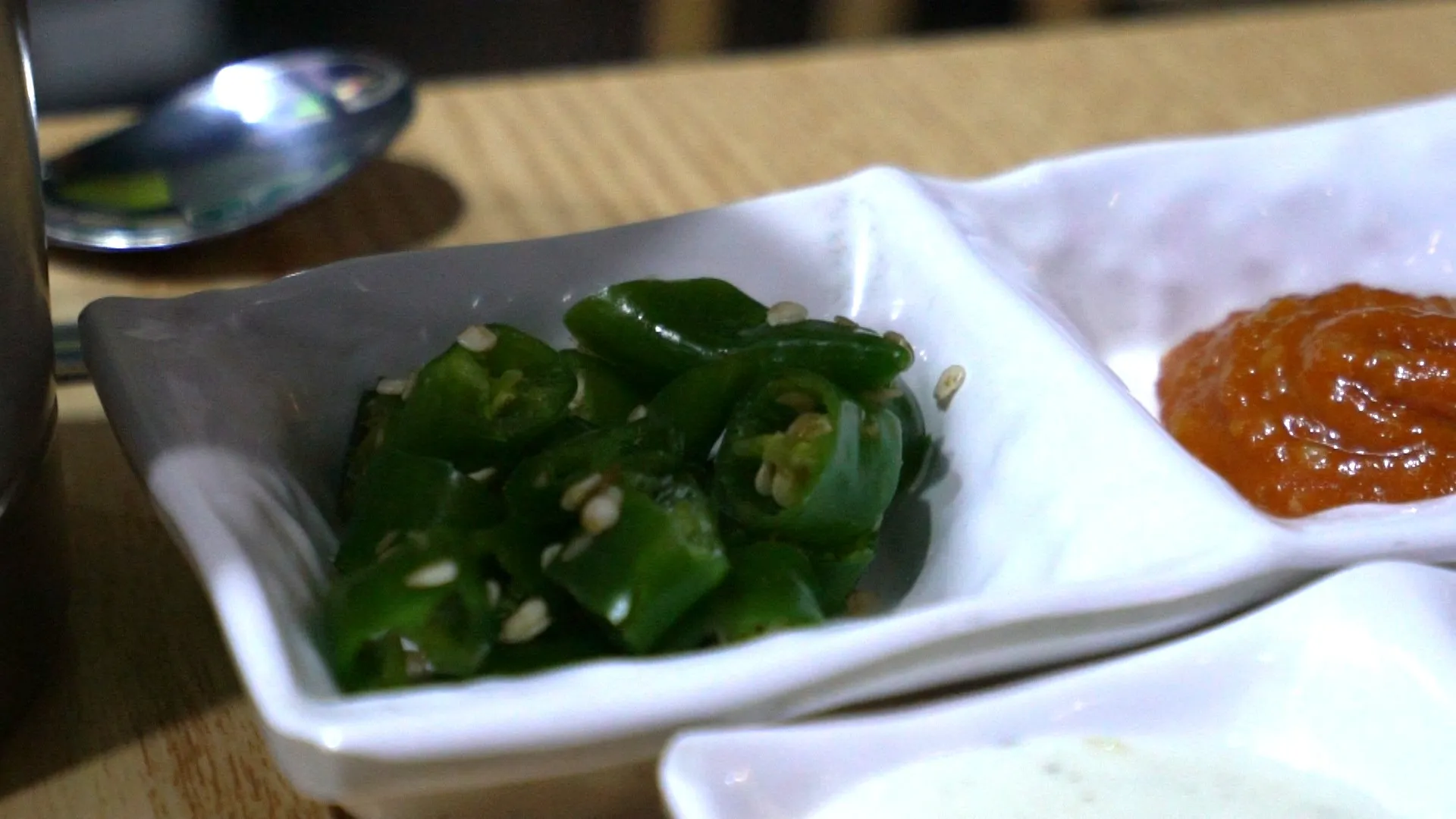
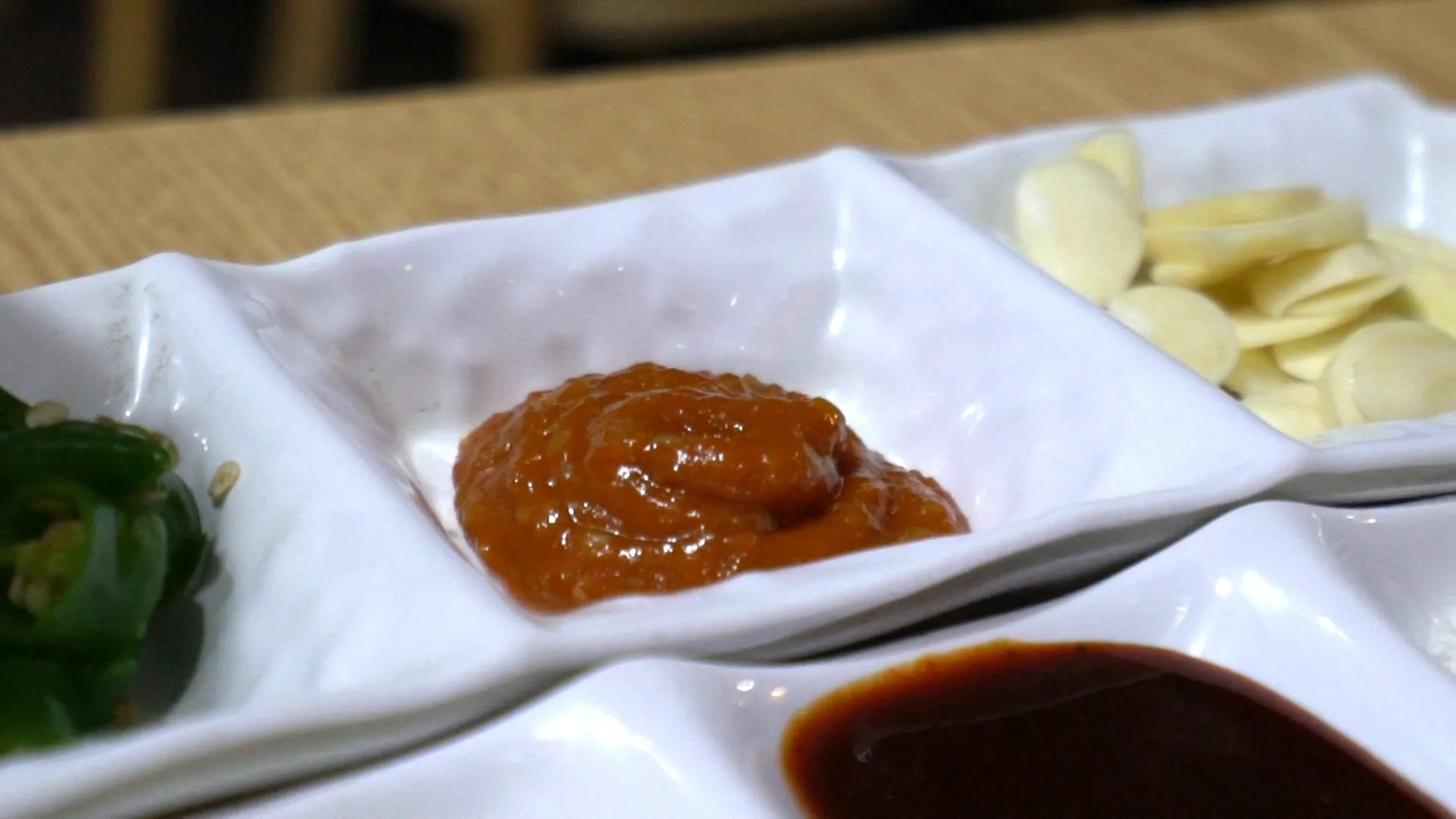
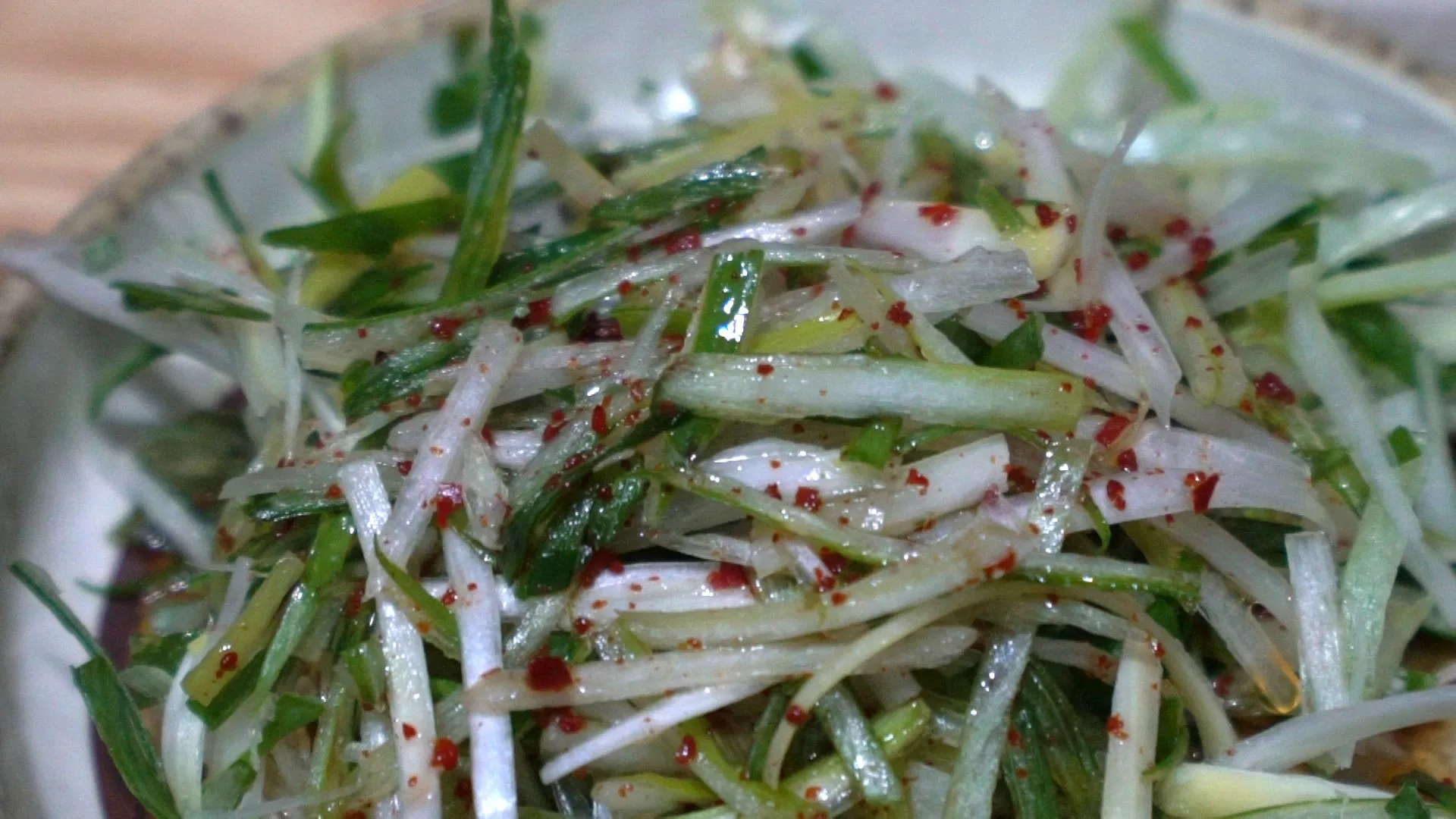
On the opposite side of the table, there was another set of condiments. Finely chopped cheongyang chillies — Korea's answer to the Scotch bonnet's smaller, sneakier cousin — came with seeds and all, so even one little slice packed serious heat. Koreans typically pop a piece on top of each bite of grilled meat, but if you're not used to proper chilli heat, it's absolutely fine to give these a miss at first. The orange-ish paste is ssamjang — a blend of doenjang (fermented soybean paste, a bit like a punchier miso) and gochujang. It's savoury, slightly sweet, and gently spicy. The Korean way of eating this is to take a piece of chicken, wrap it in a lettuce or perilla leaf, dollop some ssamjang on top, and eat the whole bundle in one go. It's that combination of smoky charcoal chicken, crunchy fresh leaf, and punchy ssamjang that makes the whole thing sing. There was also a plate of thinly sliced raw garlic. You can throw it on the grill to soften it up — it goes sweet and buttery — or eat it raw with the chicken for a sharp, peppery kick that cuts through the richness of the meat.
Honest Verdict — The Salt and Pepper Chicken Was Better
Hand on heart, the salt-seasoned version was my favourite. The spicy gochujang one was tasty, no question, but the real advantage of cooking over live charcoal comes through more clearly with the salt and pepper chicken. I genuinely didn't expect unseasoned chicken grilled over coals to taste this good. When I bit into a piece of the crispy-skinned salt chicken dipped in cheese powder, my mate and I looked at each other at the exact same moment and both went "that's the one." No notes.
The Downsides
If there's one grumble, it's the ventilation. It's charcoal, so there's a fair amount of smoke. Your clothes will absolutely reek afterwards. The day after our visit, I picked up the puffer jacket I'd worn and it still smelt like a bonfire. Wear something you don't mind getting a bit smoky. Also, the spicy marinated version chars quickly, so if it's your first time, definitely start with the salt-seasoned side. You can tackle the gochujang pieces once you've got a feel for how the grill behaves — there's no rush.
Charcoal Grilled Dakgalbi — A Completely Different Experience from the Hotplate
All in, I'd give it a solid 90 out of 100. At around £5 per 330g serving, the value is excellent, and the salt and pepper chicken genuinely exceeded expectations. That experience of grilling smoky BBQ chicken yourself over live coals — the charcoal scent drifting into the meat, the skin crisping up, the fat dripping and flaring — is a world away from the stir-fried hotplate version. My mate declared it a "regular spot" on the walk home, and I'm already planning my next visit. If you've only ever tried stir-fried dakgalbi, give the charcoal grilled version a go. It's the same dish in name, but honestly, it's a completely different meal.
This post was originally published on https://hi-jsb.blog.