Motorway services in Korea: breakfast at Gimje
Table of Contents
13 items
A morning drive from Daejeon to Shinan on the Saemangeum-Pohang Expressway
On 4 May 2026, I was driving from Daejeon down to Shinan. My wife and I were heading off for a little trip, and after about an hour and a half on the road we both started getting hungry. While driving along the Saemangeum-Pohang Expressway, I spotted the sign for Gimje Service Area and pulled straight in. As we walked in, I was explaining to my foreign wife what Korean motorway services are like, and the first thing that stood out was how noticeably new the building looked.
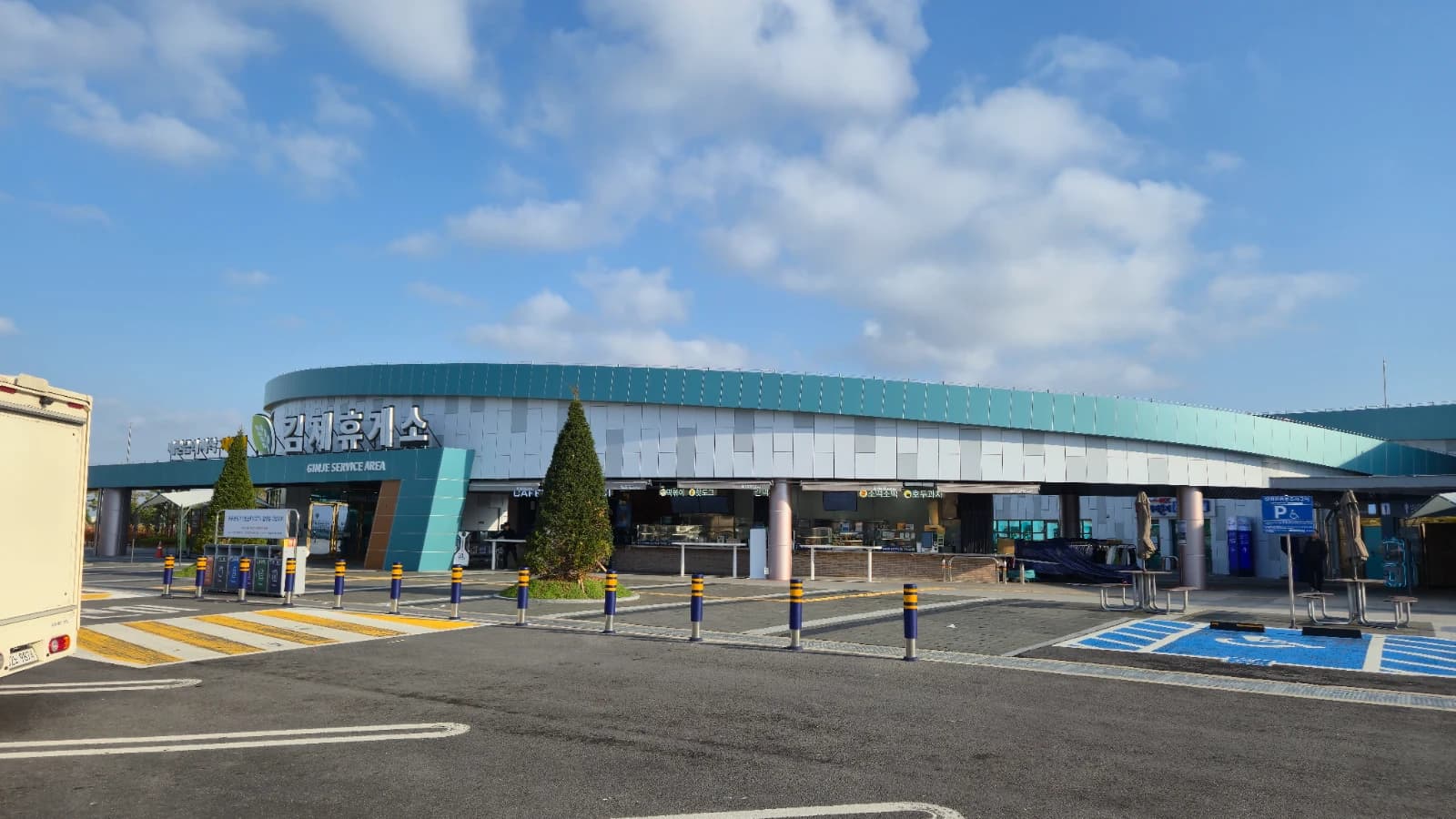
First impressions of Gimje Service Area
Gimje Service Area is a newly built motorway service stop on the Saemangeum-Pohang Expressway. The roof has a rounded, curved shape, and it is said to be designed after a rice grain or rice ear from the Gimje area. A rice grain with its husk still on is often used as a local symbol because Gimje is well known as a rice-growing region. The car park was divided into sections for passenger cars and lorries, and at around 7 in the morning there were plenty of spaces. The tarmac was very dark and the painted parking lines were still bright, so it was pretty obvious the place had not been open for long.
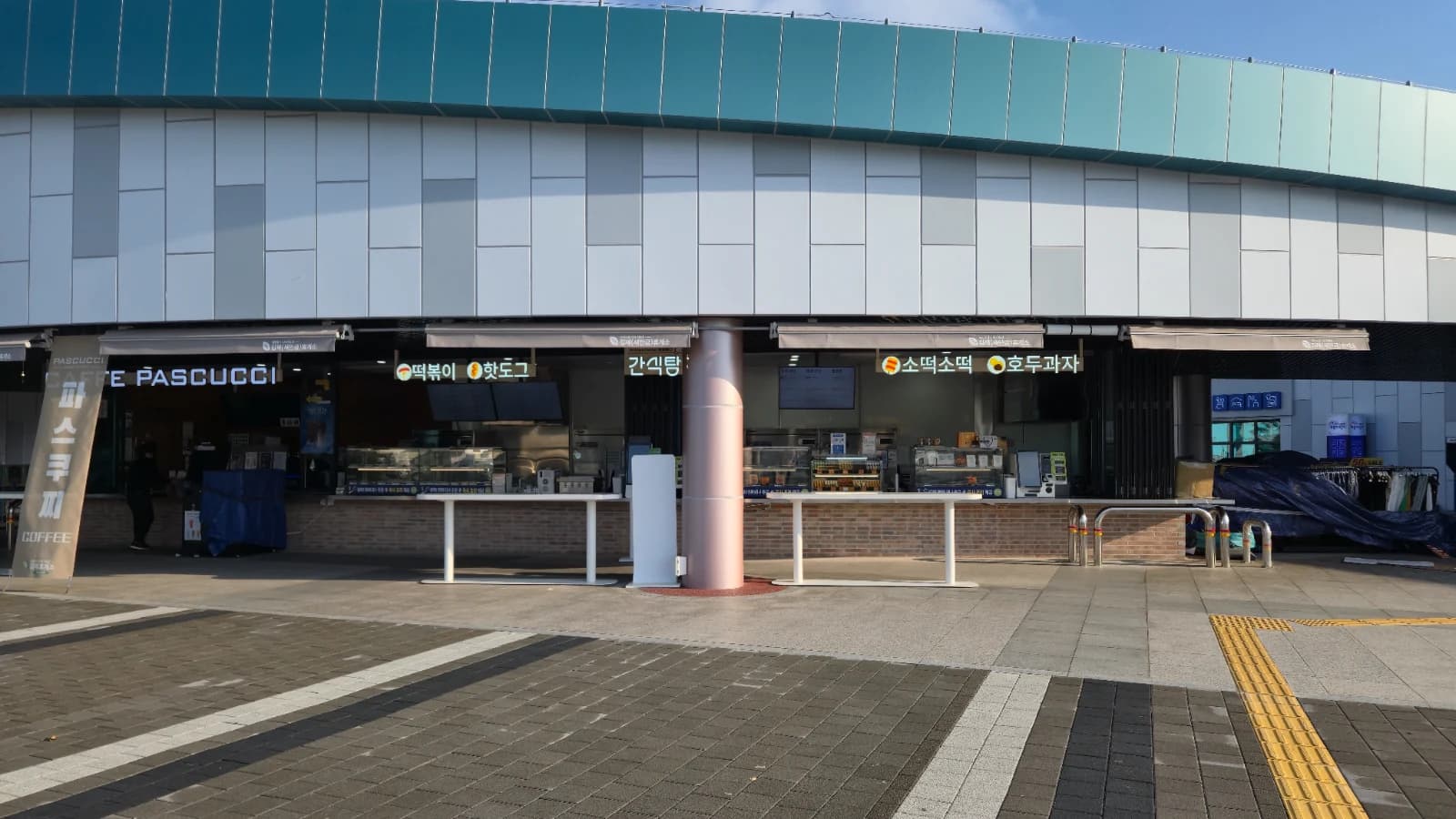
Fresh snack stalls outside the building
There were rows of quick snack stalls on both sides of the entrance. This is a very common layout at Korean motorway services: before you even go inside, you can buy something simple to eat outside. These were the items and prices I saw at Gimje Service Area that day, based on May 2026 prices: hot dogs about £1.65 to £2.50, sotteok-sotteok about £1.95 to £2.50, walnut cakes about £1.65 to £2.75, eomuk skewers about £0.55 to £1.10, baby potatoes about £1.65 to £2.20, flame-grilled squid about £2.75 to £4.40, tteokbokki about £2.20 to £2.75. Eomuk is a cooked fishcake made from minced fish, while sotteok-sotteok is a skewer with sausage and chewy rice cake pieces alternating on the stick.
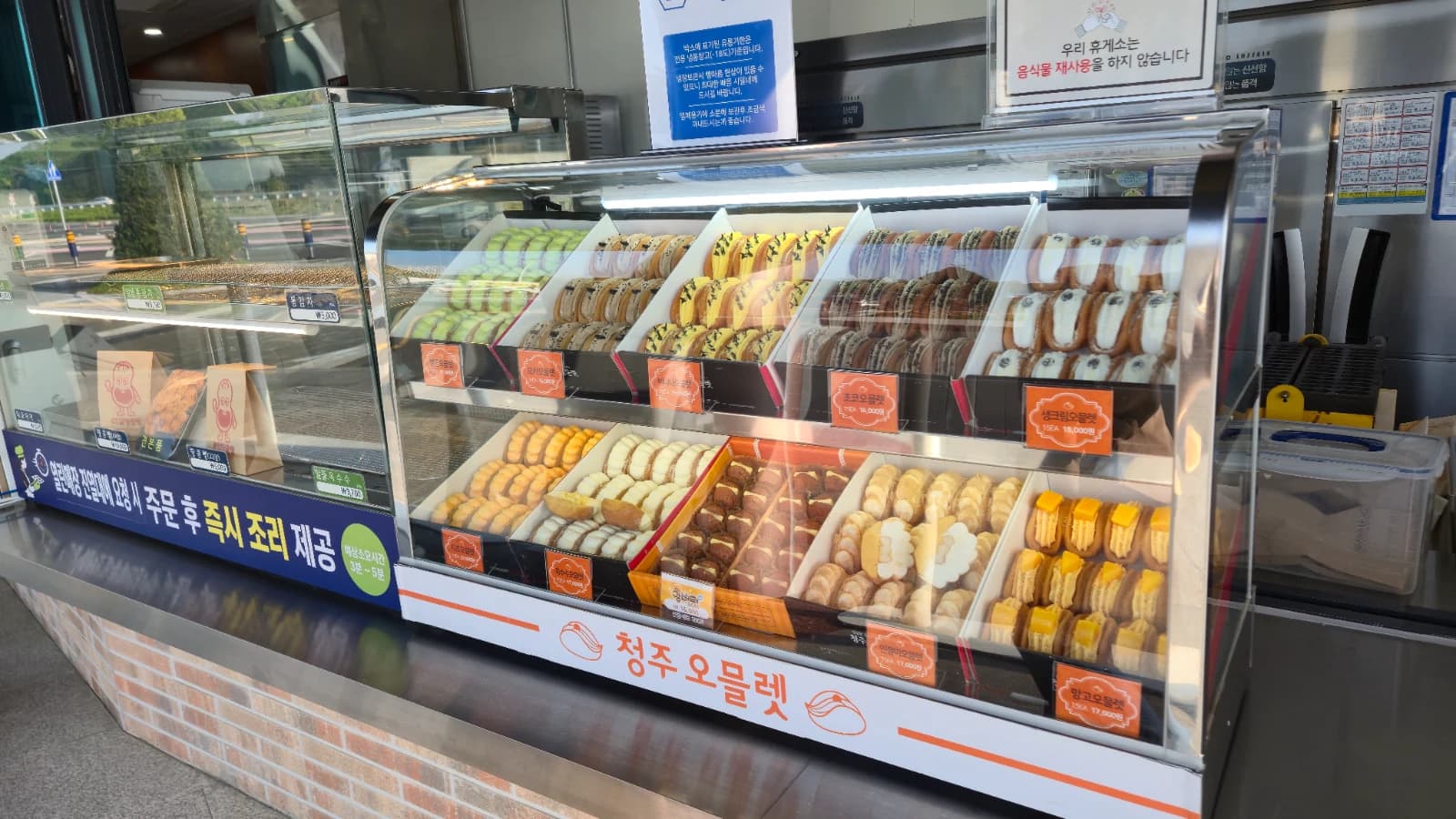
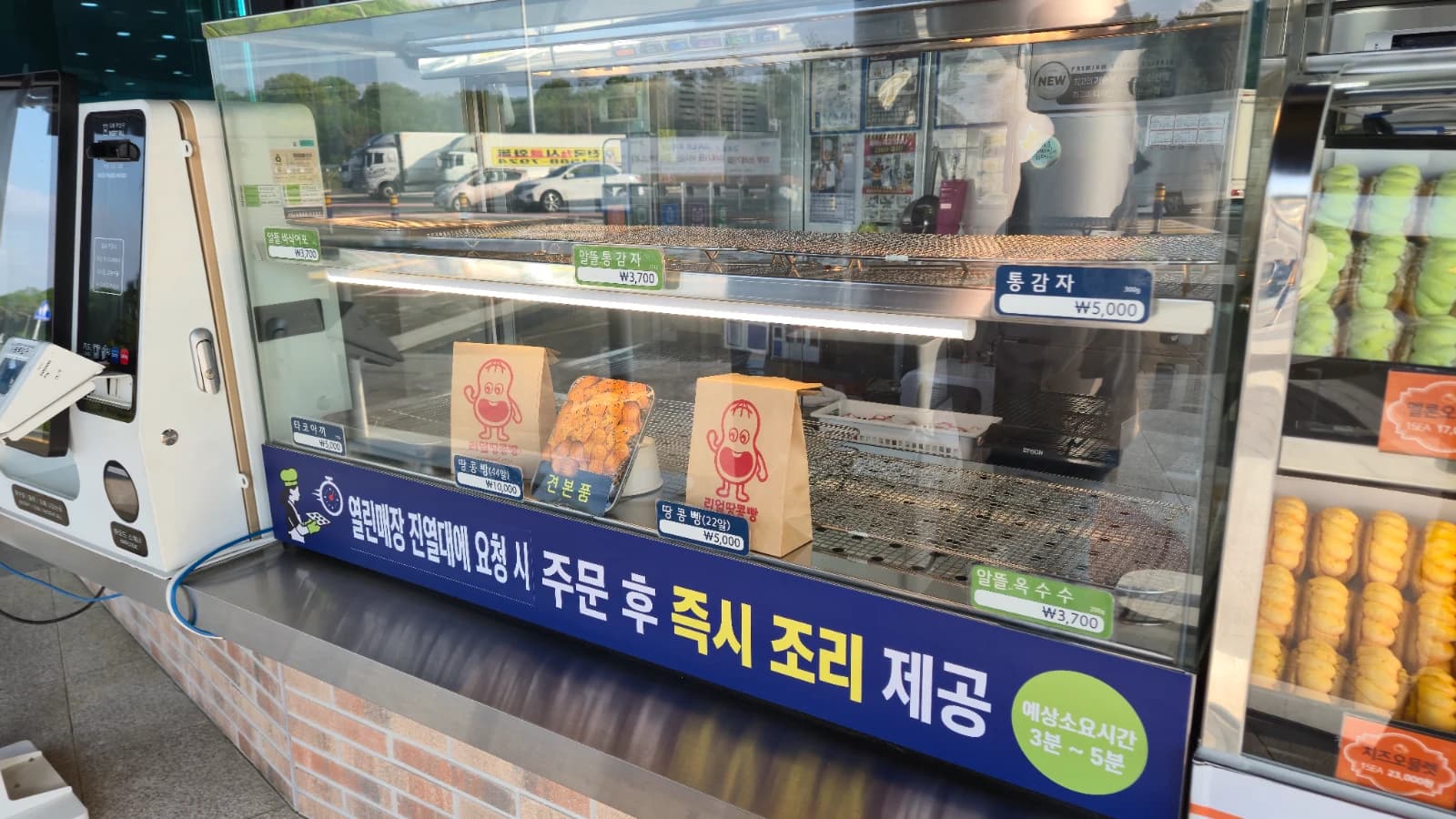
There was also a bakery called Cheongju Omelet on one side. If you order there, they cook it fresh and it comes out in about 3 to 5 minutes. A whole potato was about £2.75, and the corn ball item was around £2.05. We were planning to have a proper breakfast in the food court, though, so we only had a quick look outside and carried on in.
Inside the building: cafe, convenience store and kiosks
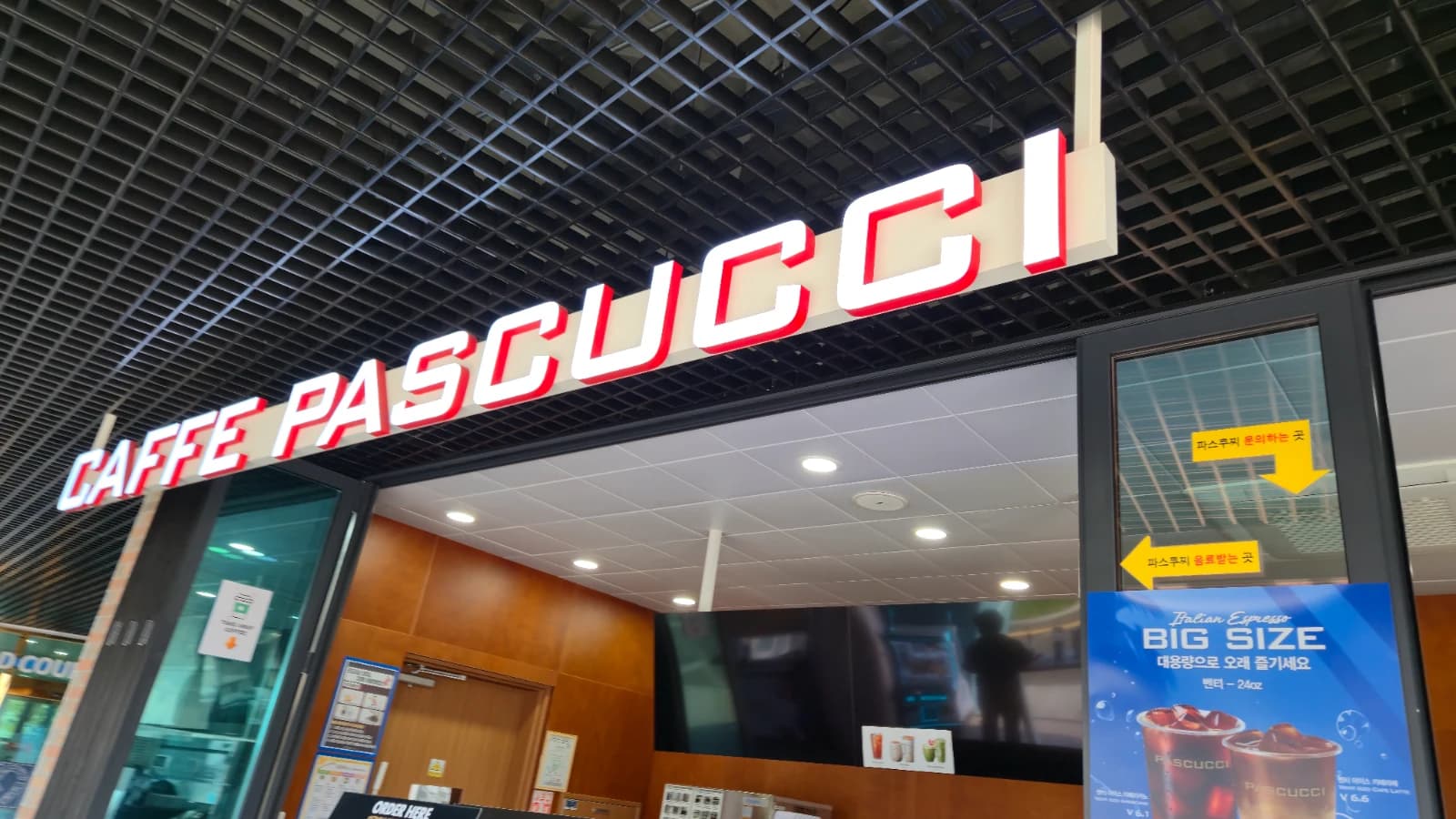
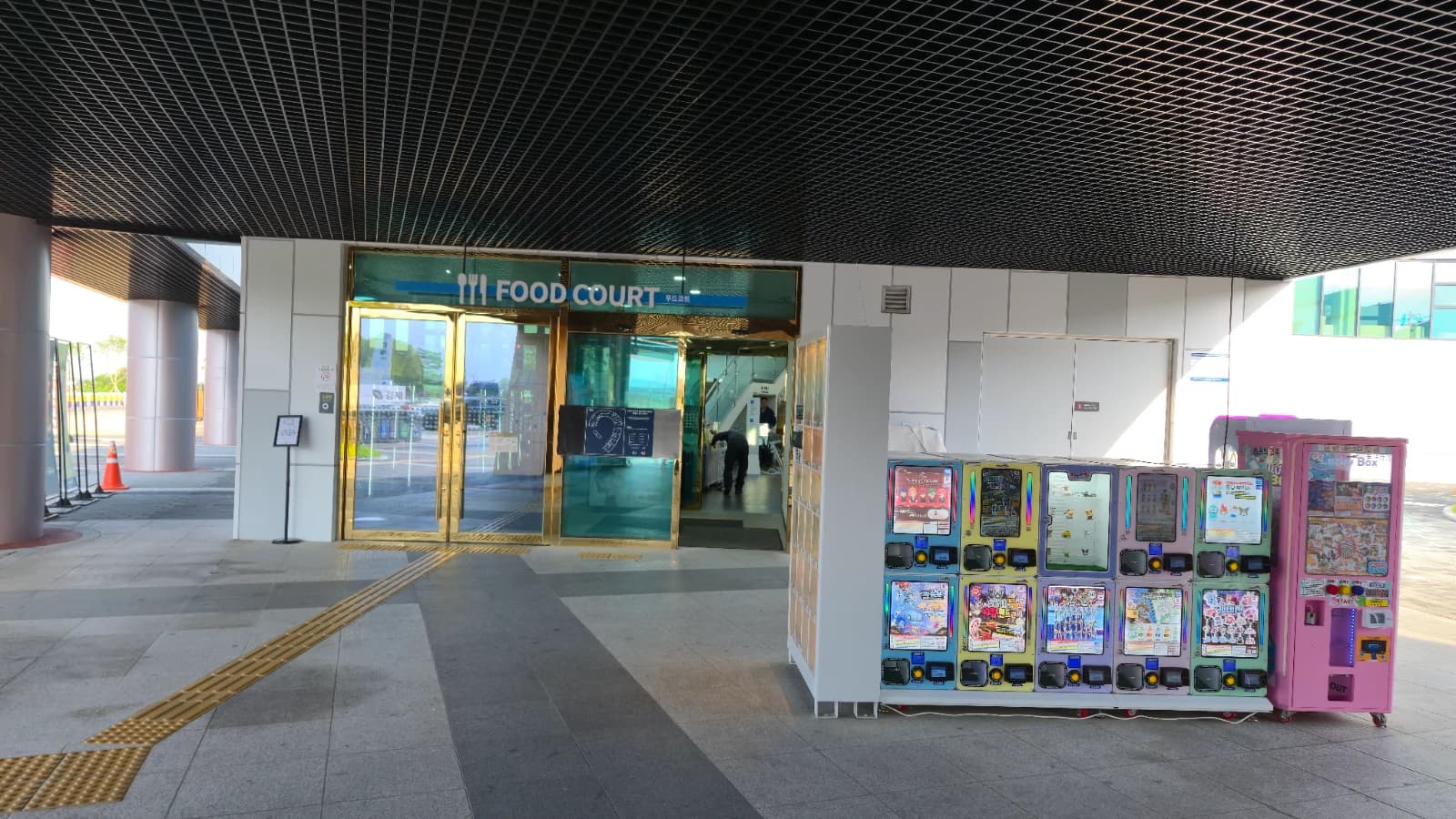
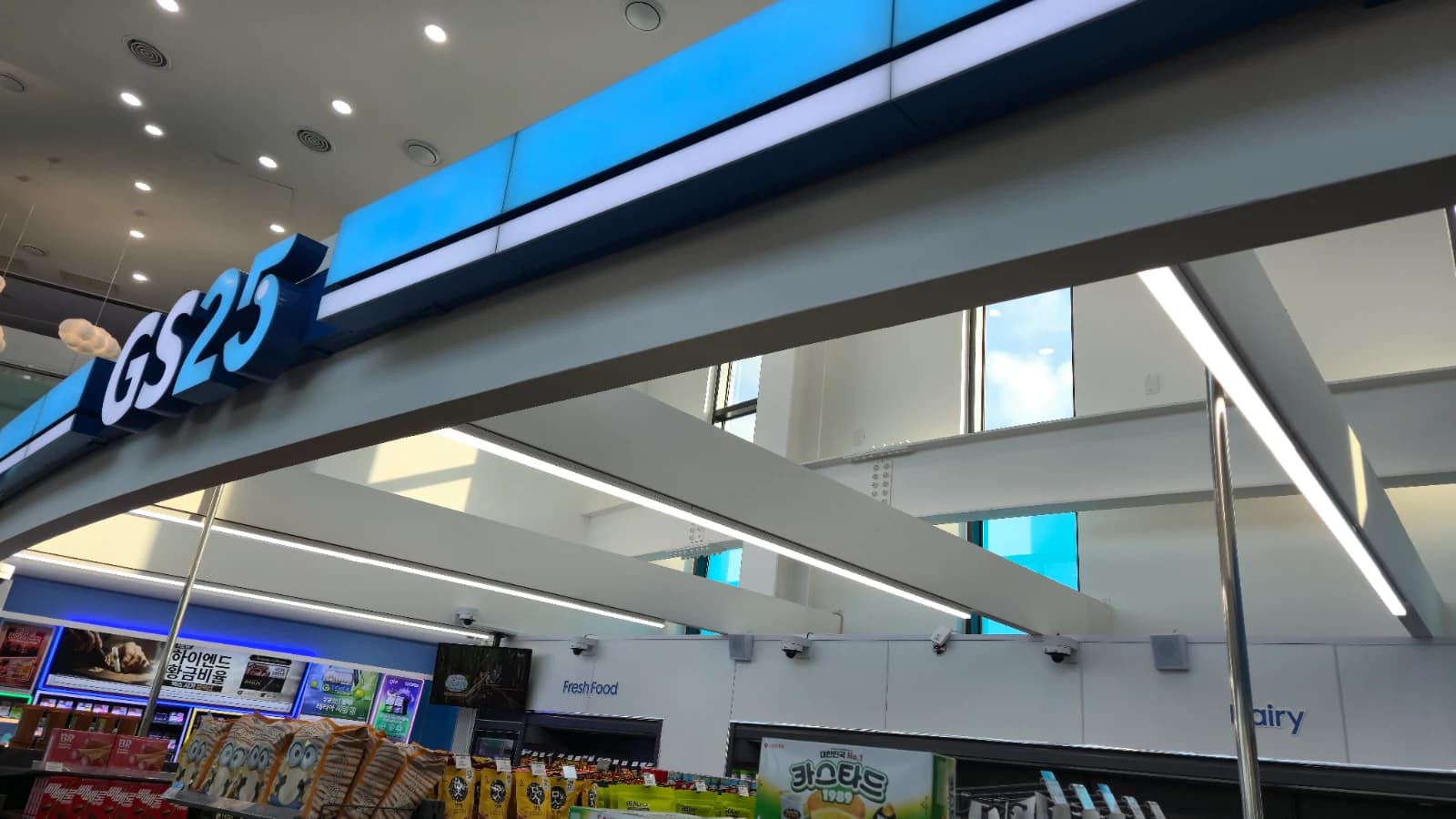
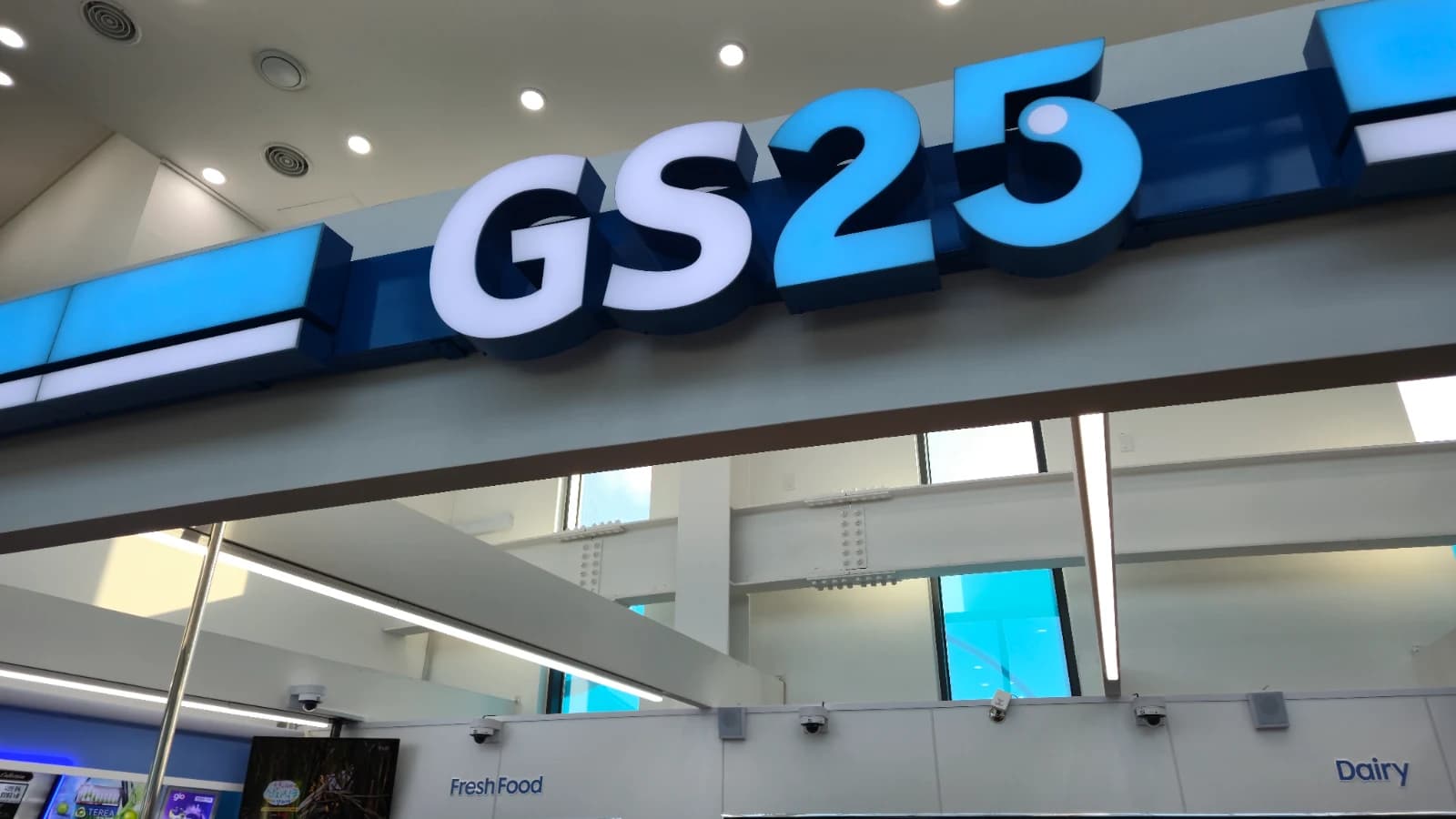
Once inside the building, Pascucci cafe was on the left. It uses a 24-ounce cup for its venti size, but we just walked past at that hour. Opposite it was a GS25 convenience store, handy if you want a quick drink or snack. If you keep walking along the corridor towards the back, you reach the food court and the ordering kiosks.
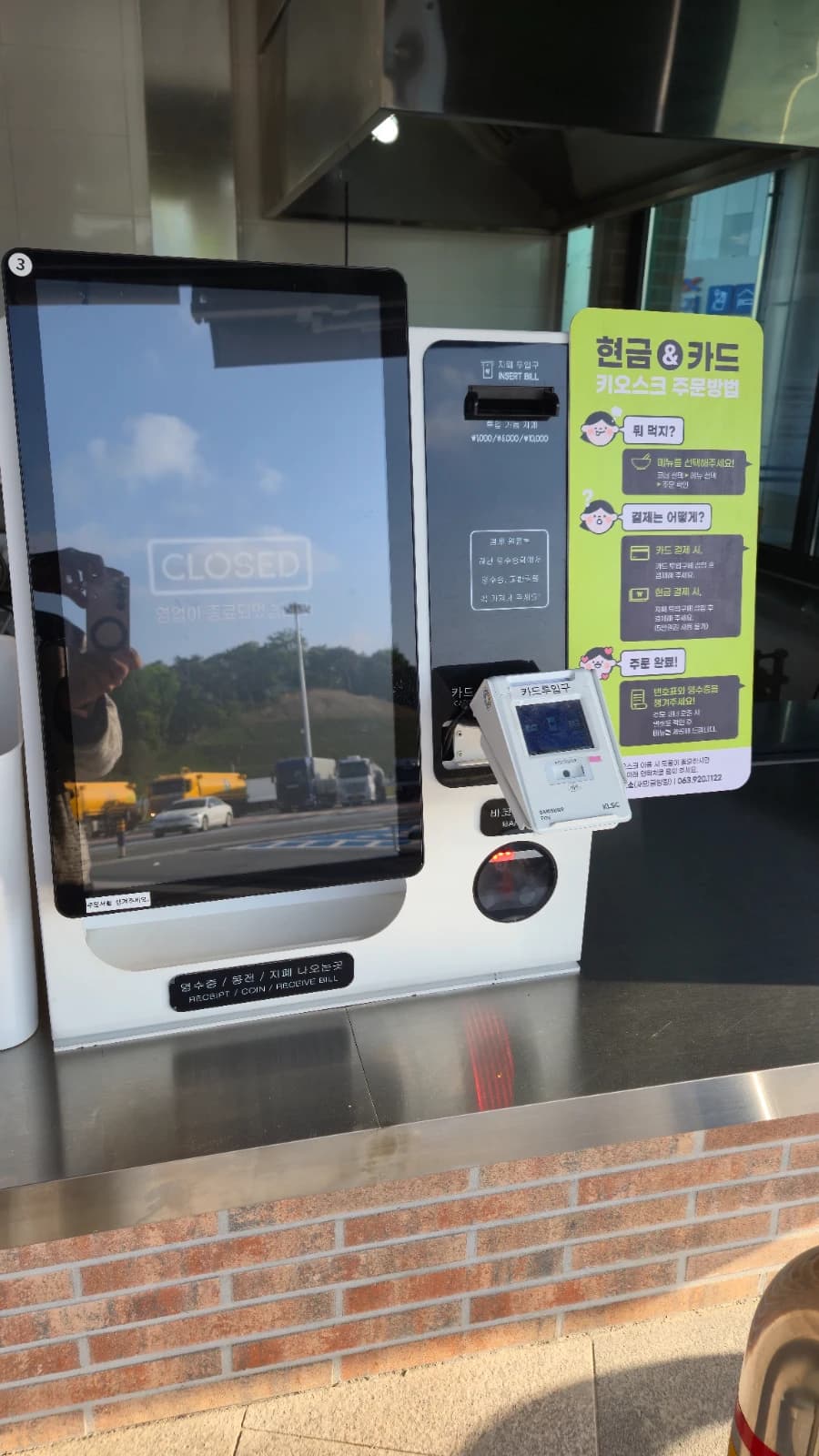
Most Korean motorway services now use this unmanned ordering system. You tap the screen, choose your meal and pay by card, then a ticket with your collection number is printed. Cash is not accepted; it is card only. If a counter has finished trading or has not opened yet, the kiosk screen shows that it is closed, so it is worth checking the screen before ordering.
Ramen vending machine and self-service gukbap machine
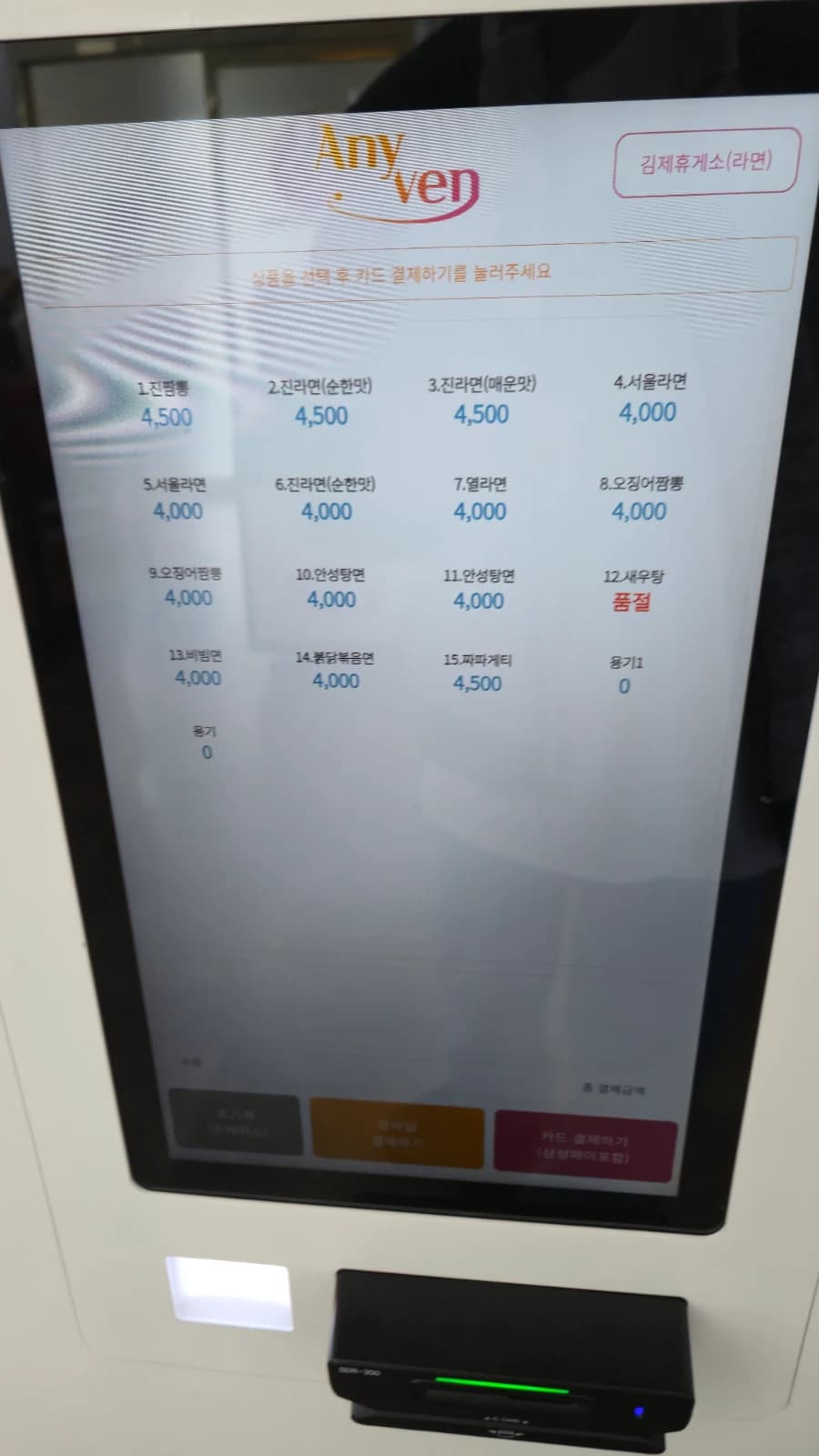
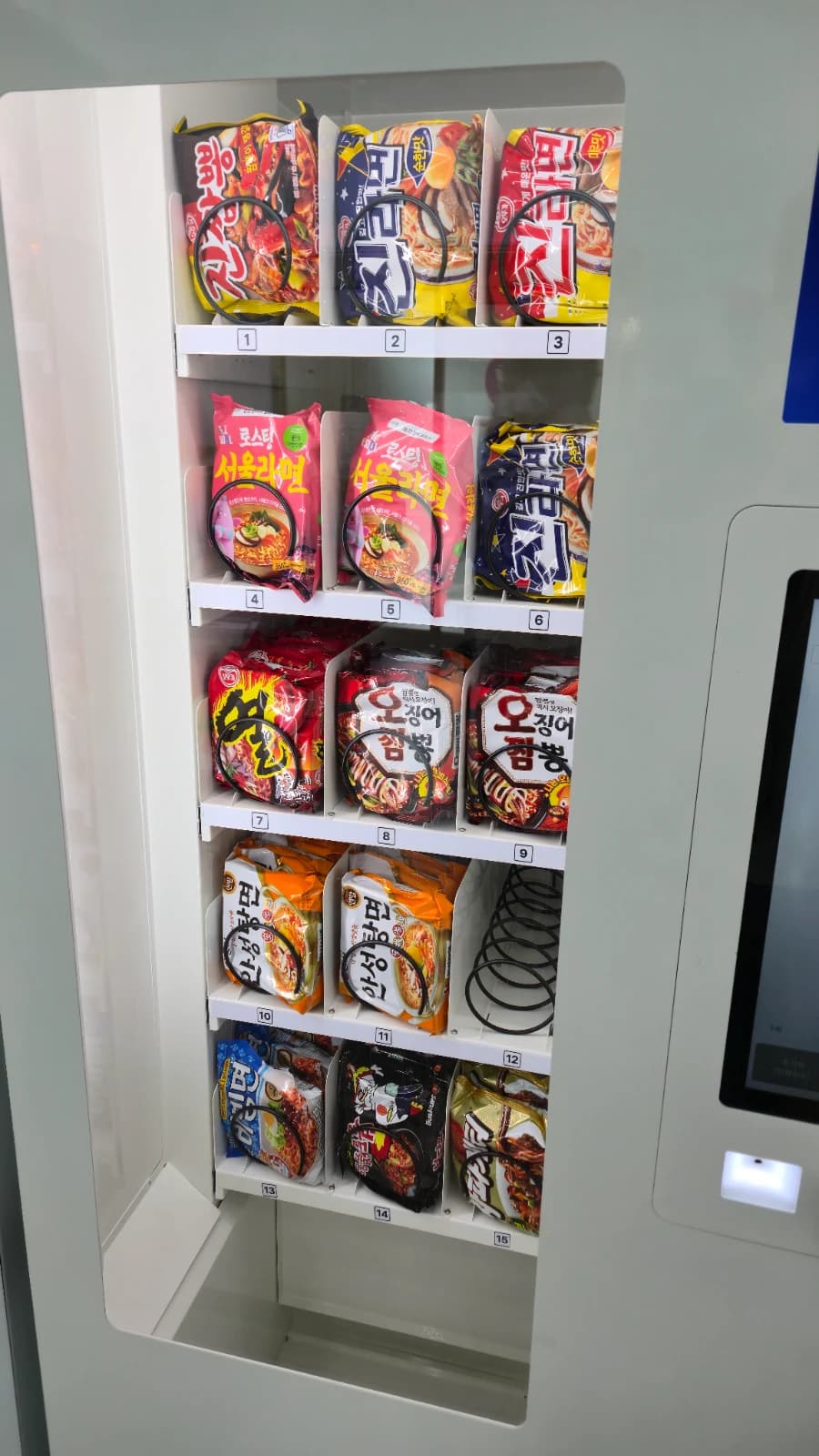
Next to the food court there was an unmanned ramen vending machine. The machine dispenses hot water as well, so you can make your own ramen without any staff involved. Looking at the menu and prices, with the container included and based on May 2026, the options were Jin Jjamppong about £2.50, Jin Ramen mild or spicy about £2.50, Seoul Ramen about £2.20, Yeol Ramen about £2.20, Ojingeo Jjamppong about £2.50, Ansungtangmyun about £2.20, Bibim-myeon about £2.20, Ssalnam Bokkeum-myeon about £2.50, Chapagetti about £2.50. Saewootang, the shrimp-flavoured one, was sold out. If you buy the same ramen at a convenience store, it is usually around £0.85 to £1.10, so you are clearly paying for the container and hot water too. It feels about two to three times the usual price.
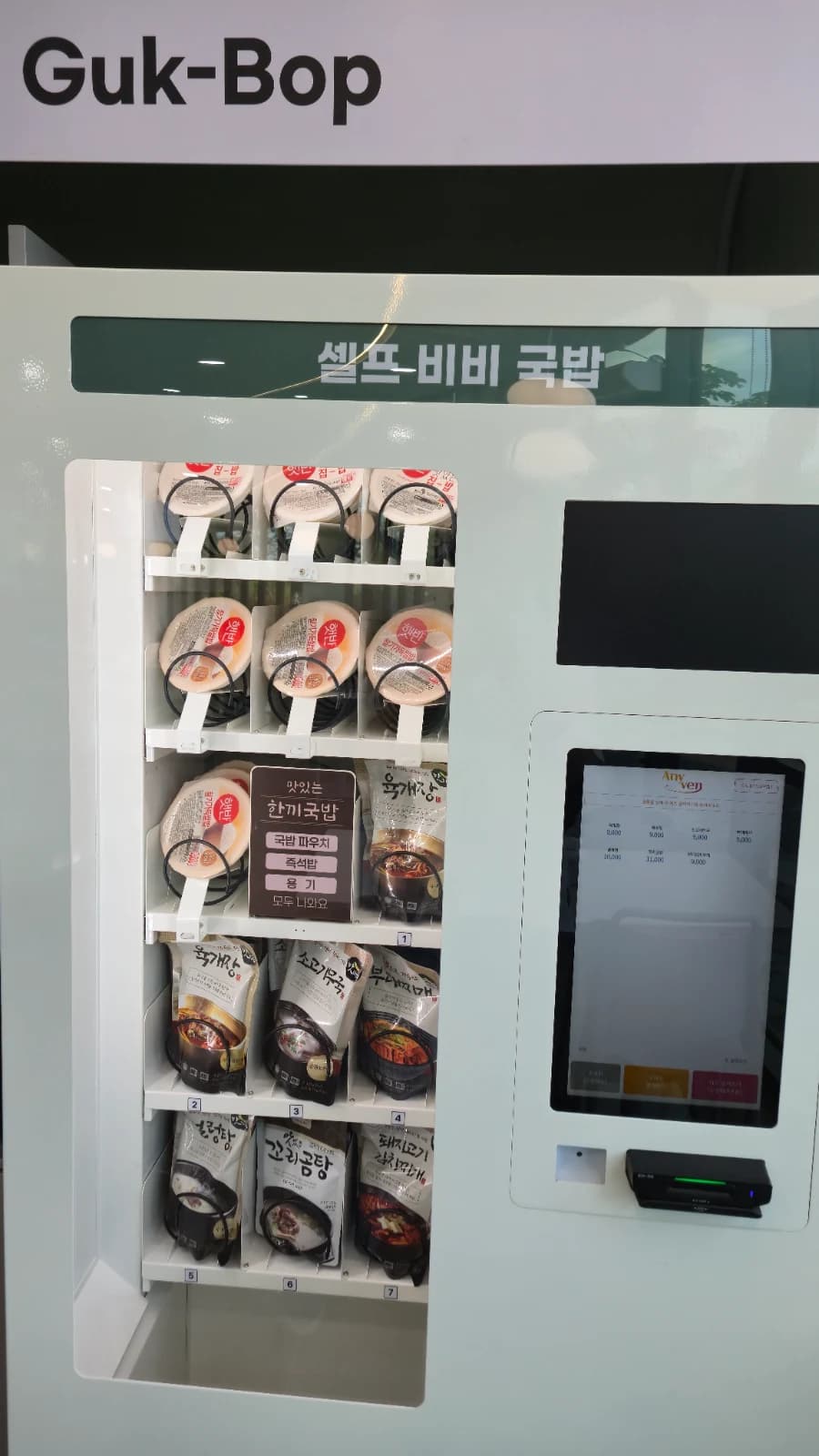
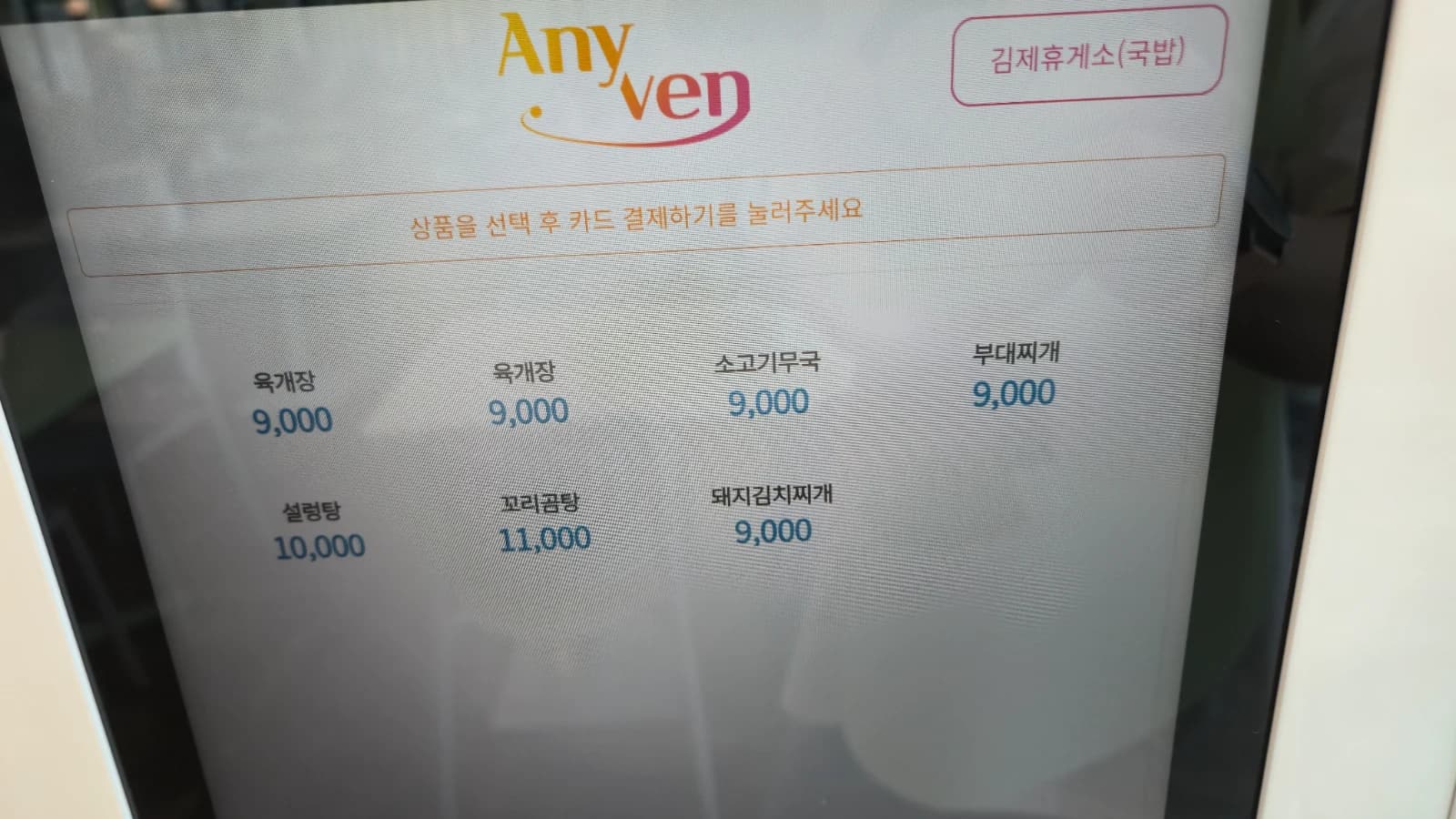
Right beside the ramen machine was a self-service gukbap vending machine. Gukbap is a Korean dish where rice is eaten in a hot soup or broth. This machine was selling dishes such as yukgaejang about £4.95, seolleongtang about £5.50 and oxtail gomtang about £6.05. To be honest, for something not cooked by a member of staff in front of you, the price felt a bit steep. Some items were similar in price to the proper food court meals, or even more expensive, so this part was definitely a little disappointing.
Ordering breakfast at the food court
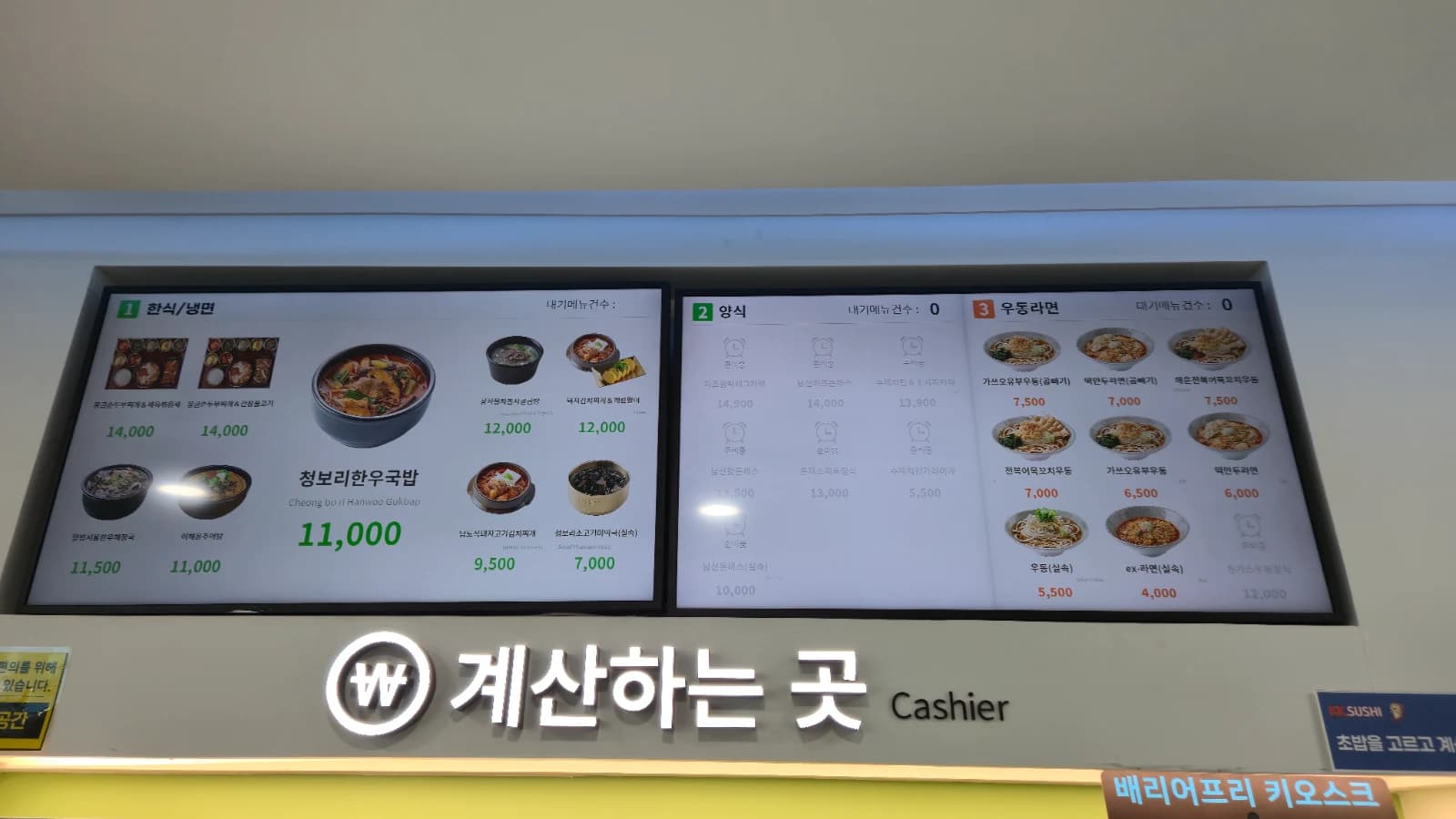
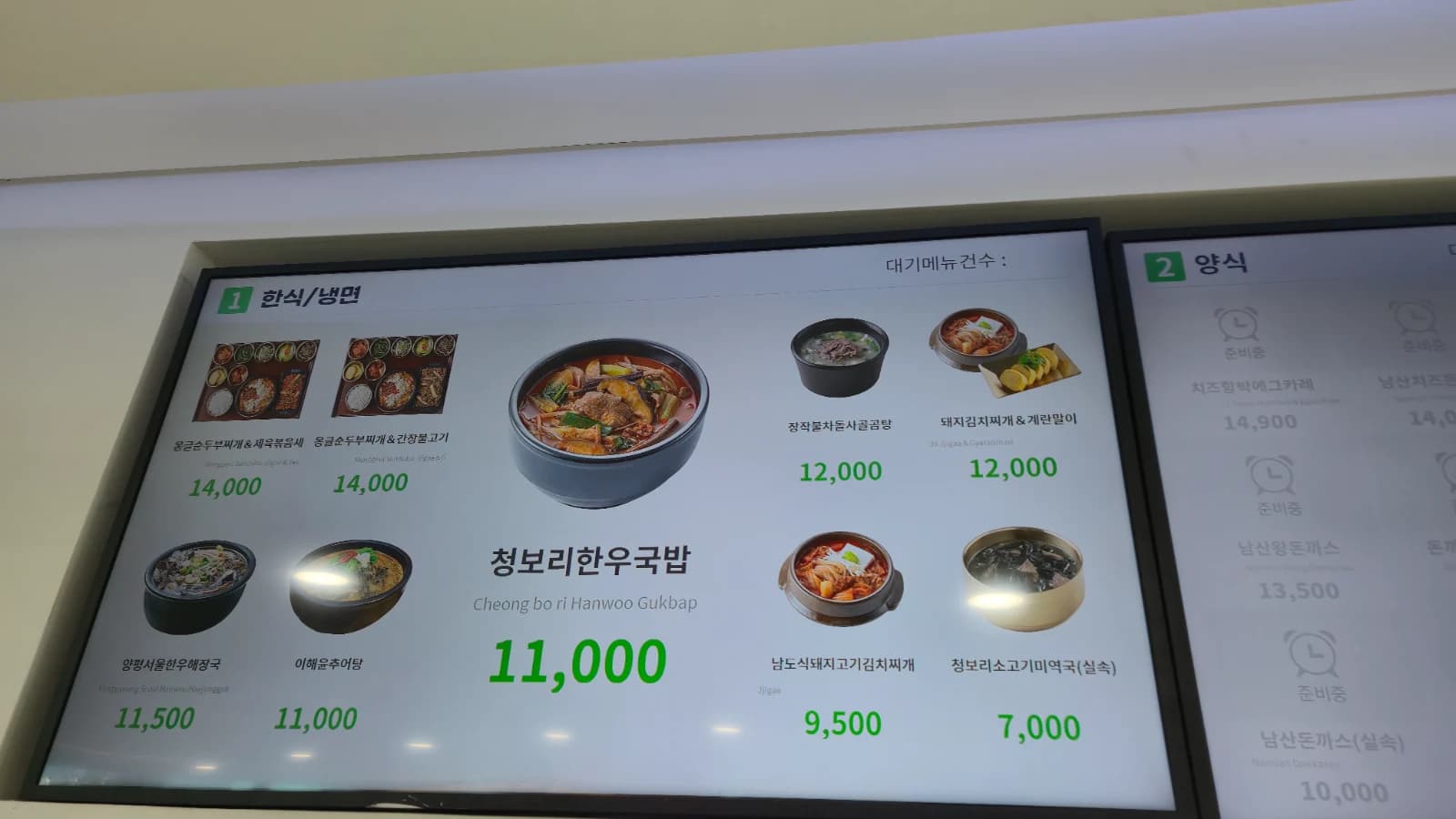
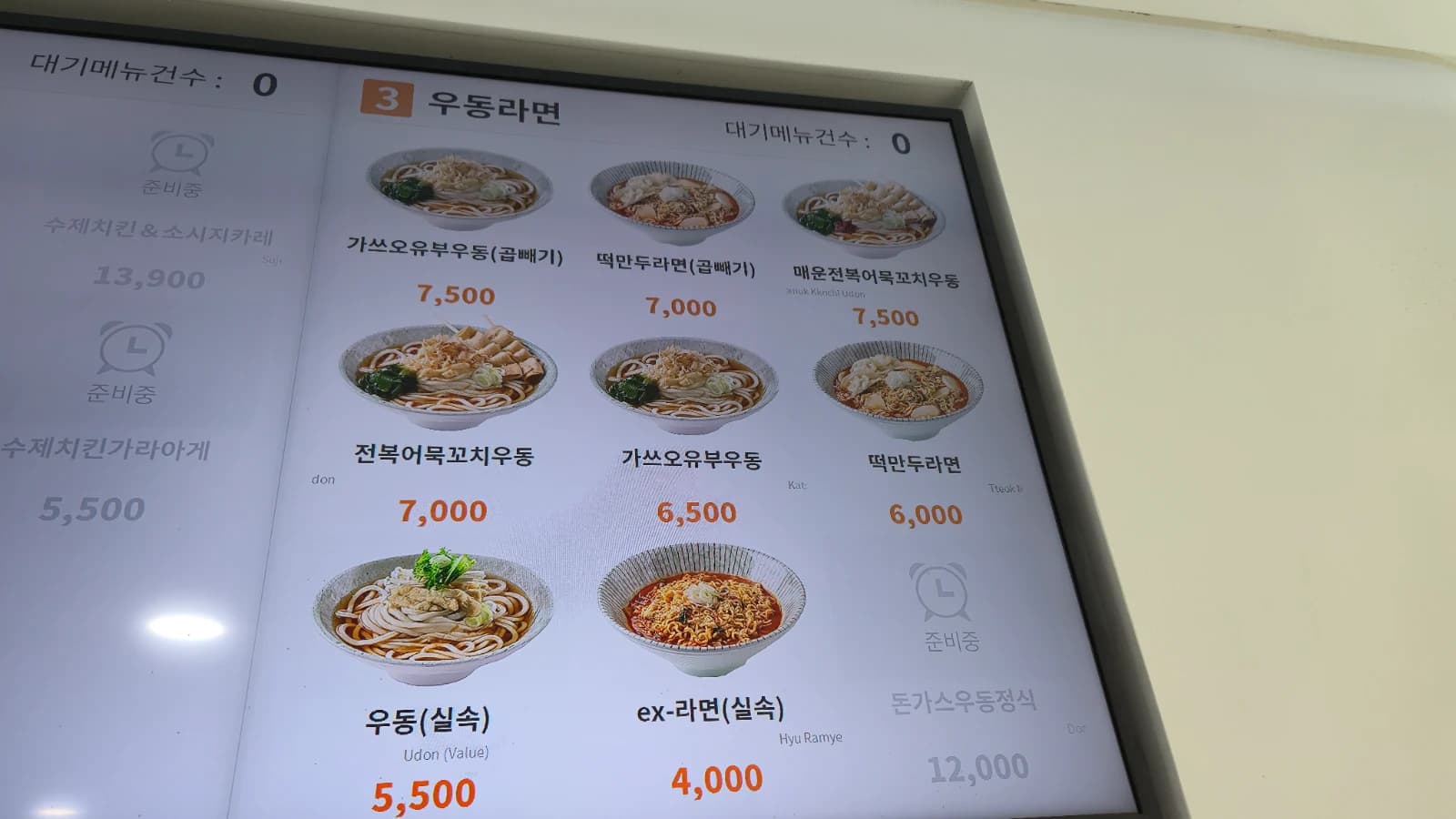
The food court was divided into Korean food, udon and ramen, and Western-style food sections. On the Korean side, I saw dishes such as green barley Hanwoo beef gukbap for about £6.05, Okgol sundubu-jjigae for about £7.70 and Namdo-style pork kimchi-jjigae for about £5.20. In the udon and ramen area, there were options like katsuo yubu udon for about £4.10, budget udon for about £3.00 and a pork cutlet udon set for about £6.60. Overall, prices sat between about £3.00 and £7.70. Korean motorway service food is usually a bit pricier than a normal restaurant in town, so this was more or less within expectations.
That said, because it was around 7 in the morning, not every menu item was available. Quite a few counters were still preparing to open, so the choice was much narrower than the menu boards suggested. Udon is the basic dish you can usually order 24 hours a day at almost any Korean motorway service area, so that was available even then. We were lucky that chueotang was open too. The kimchi-jjigae section also seemed to be operating, but apart from that there were plenty of restrictions. My wife and I stood in front of the menu for a while, and in the end she chose chueotang while I went for udon.
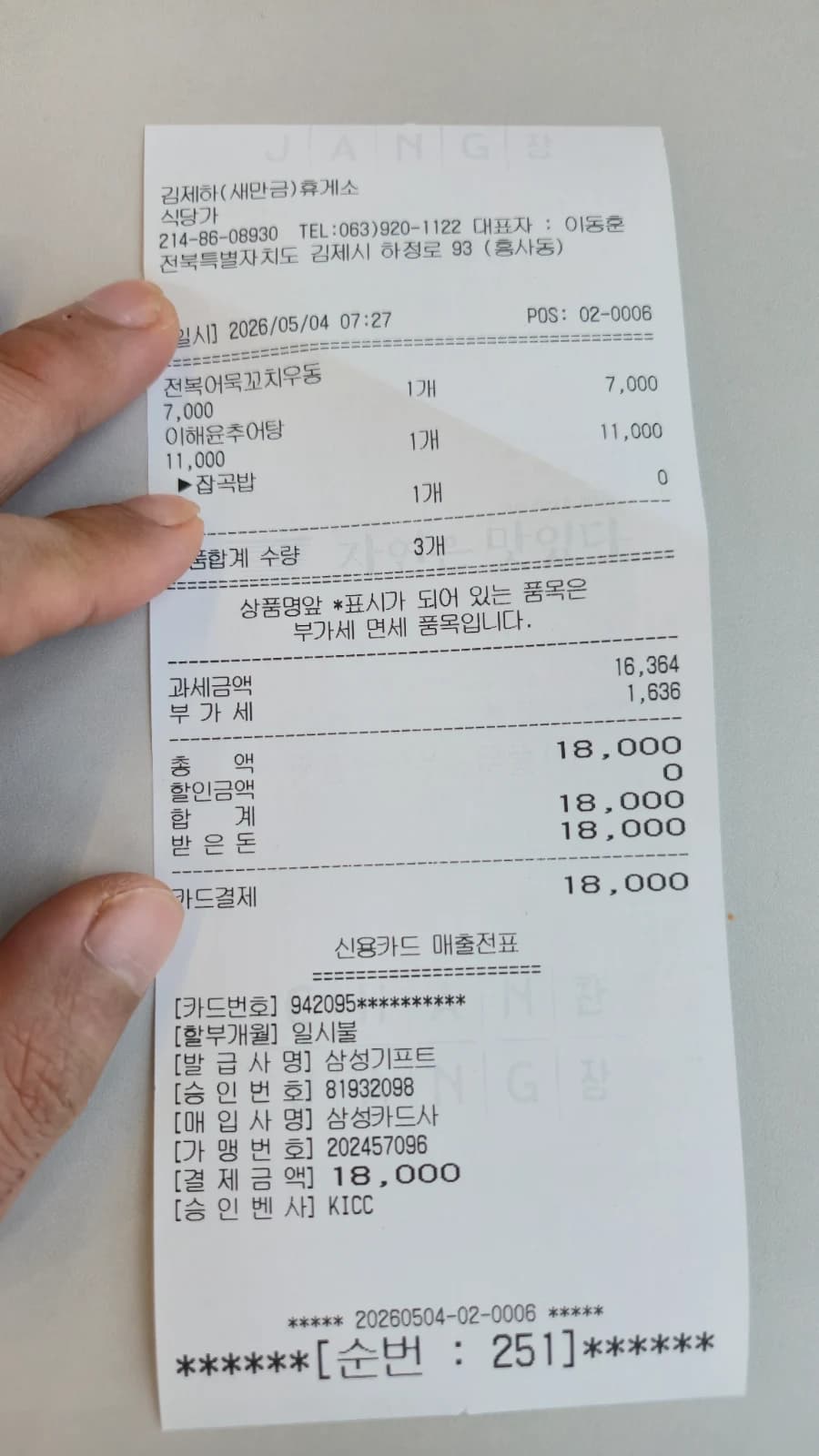
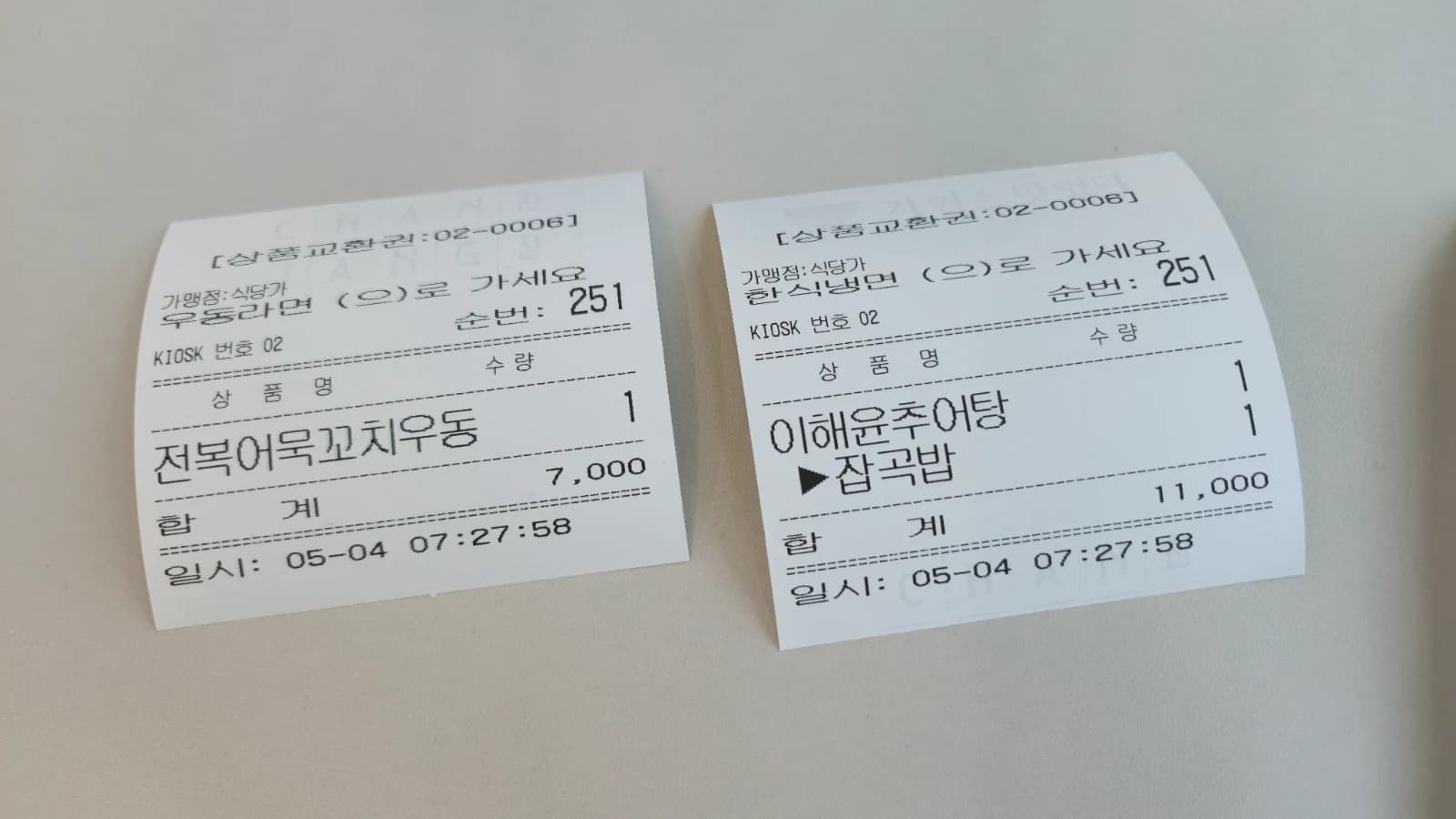
At the kiosk, we paid for abalone eomuk skewer udon, about £3.85, and Lee Hae-yoon chueotang, about £6.05, with multigrain rice included, for a total of about £9.90. It was 7:27 in the morning. Once payment is complete, a receipt with your collection number prints out, and you take it to the relevant counter and wait until your number is called. But while I went to the toilet, my wife swapped the dishes around. When I came back, the chueotang was in my seat and the udon was in hers. So, not much choice really. I ended up eating the chueotang.
Abalone eomuk skewer udon and Lee Hae-yoon chueotang
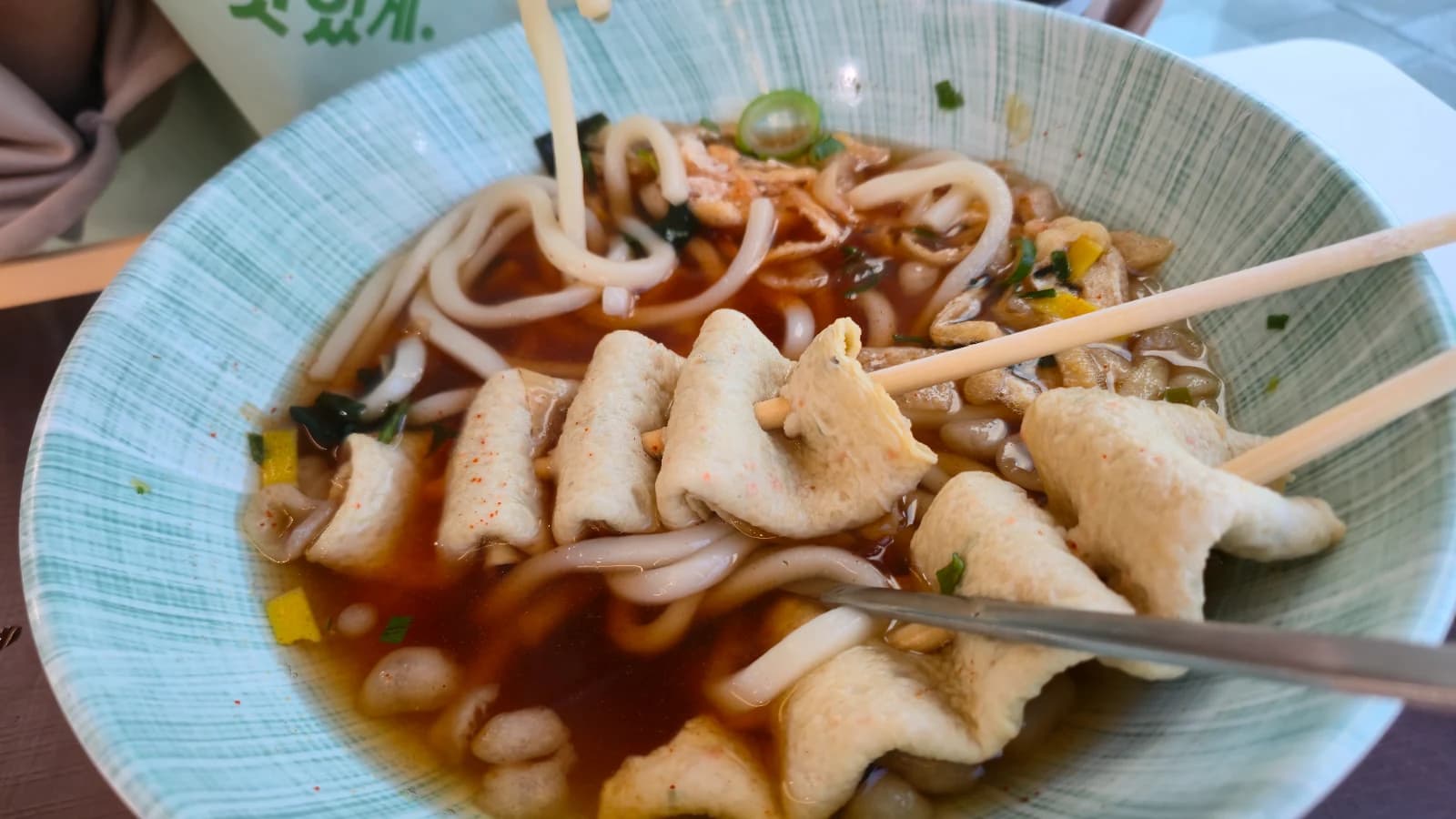
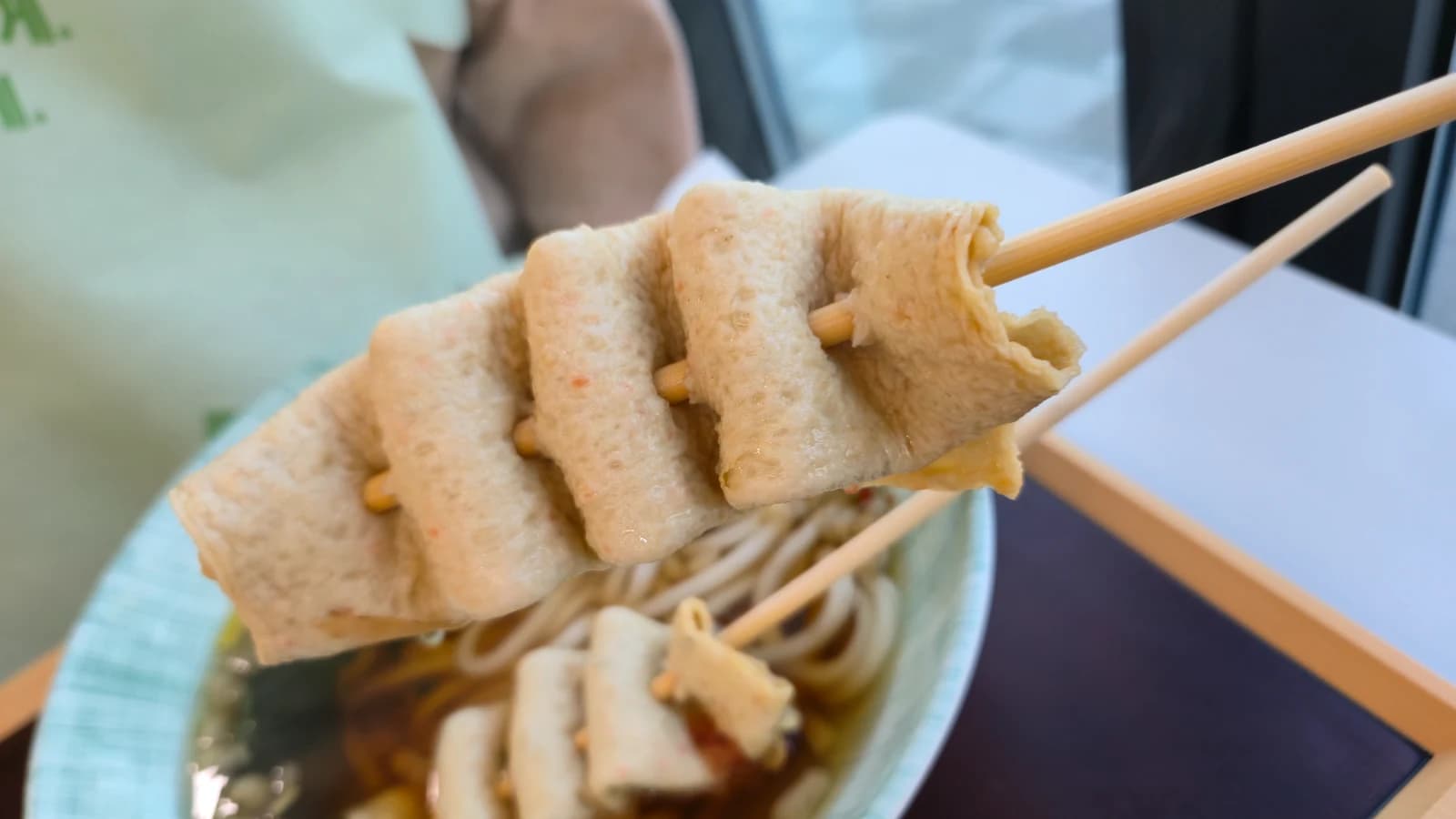
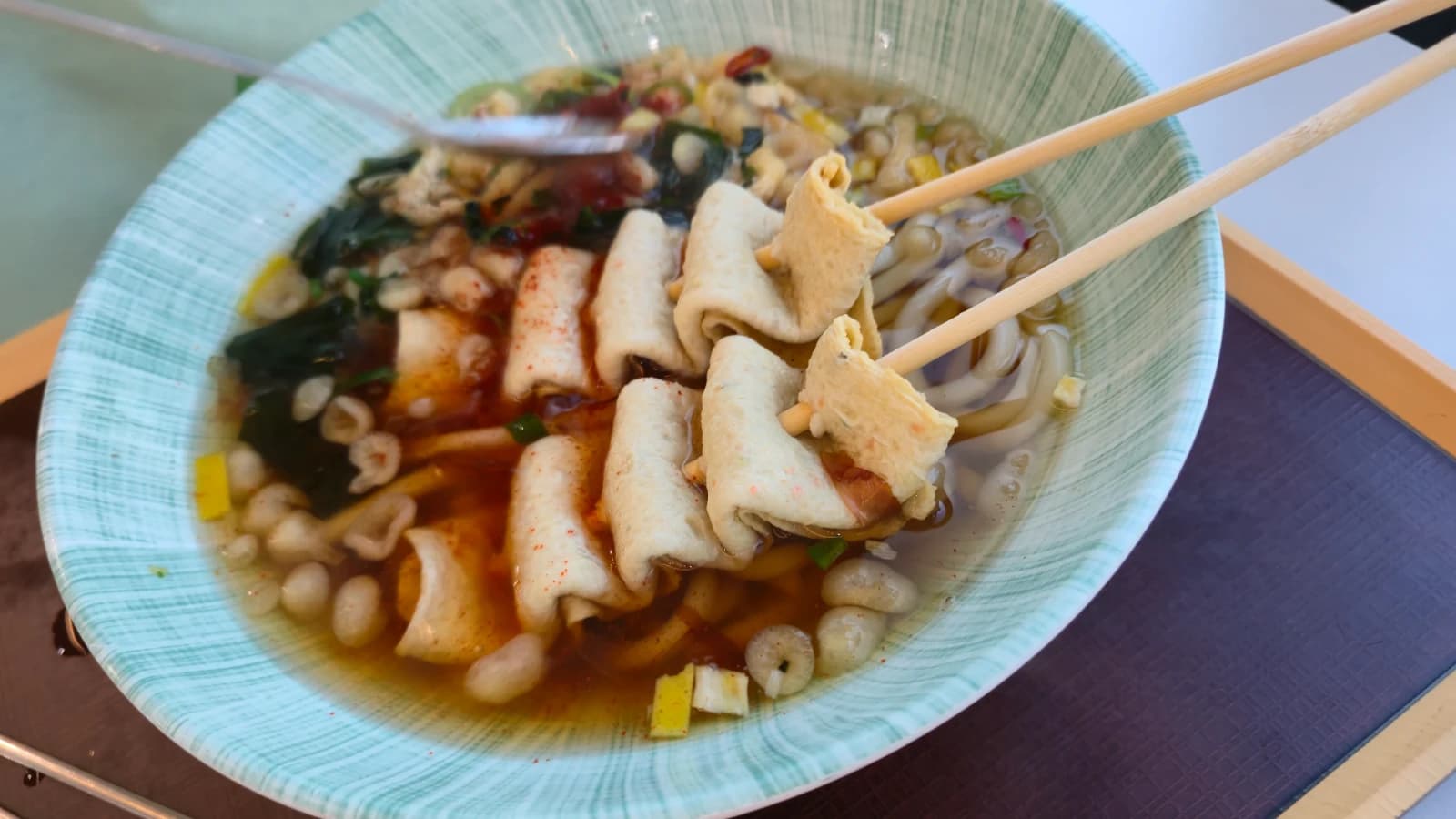
The abalone eomuk skewer udon came with a clear broth, udon noodles, an eomuk skewer and a few pieces of abalone on top. The portion was reasonable, and for about £3.85 I did not have any major complaints. Still, given that “abalone” was in the name, the actual amount of abalone was very small. That part was a shame.
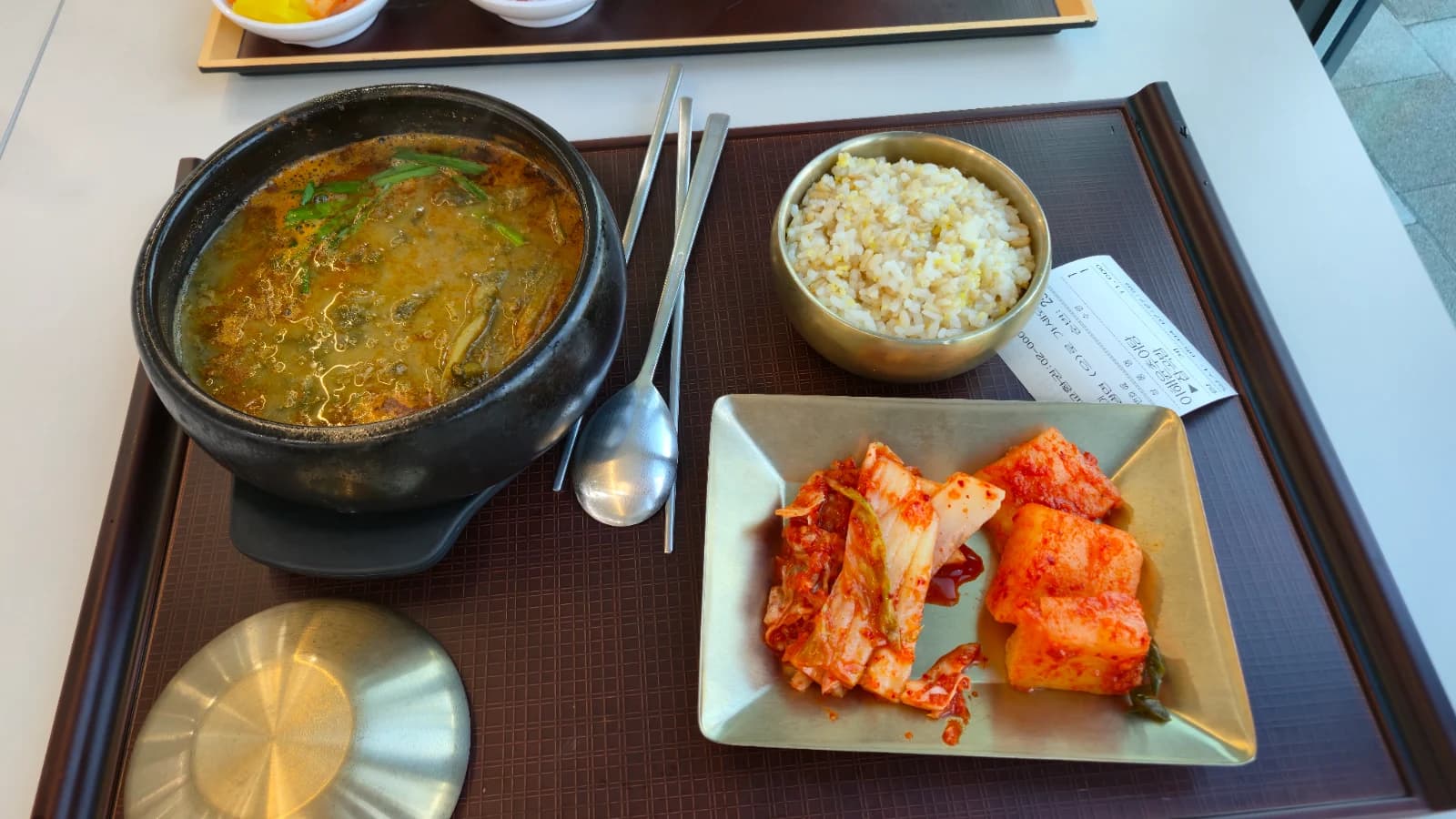
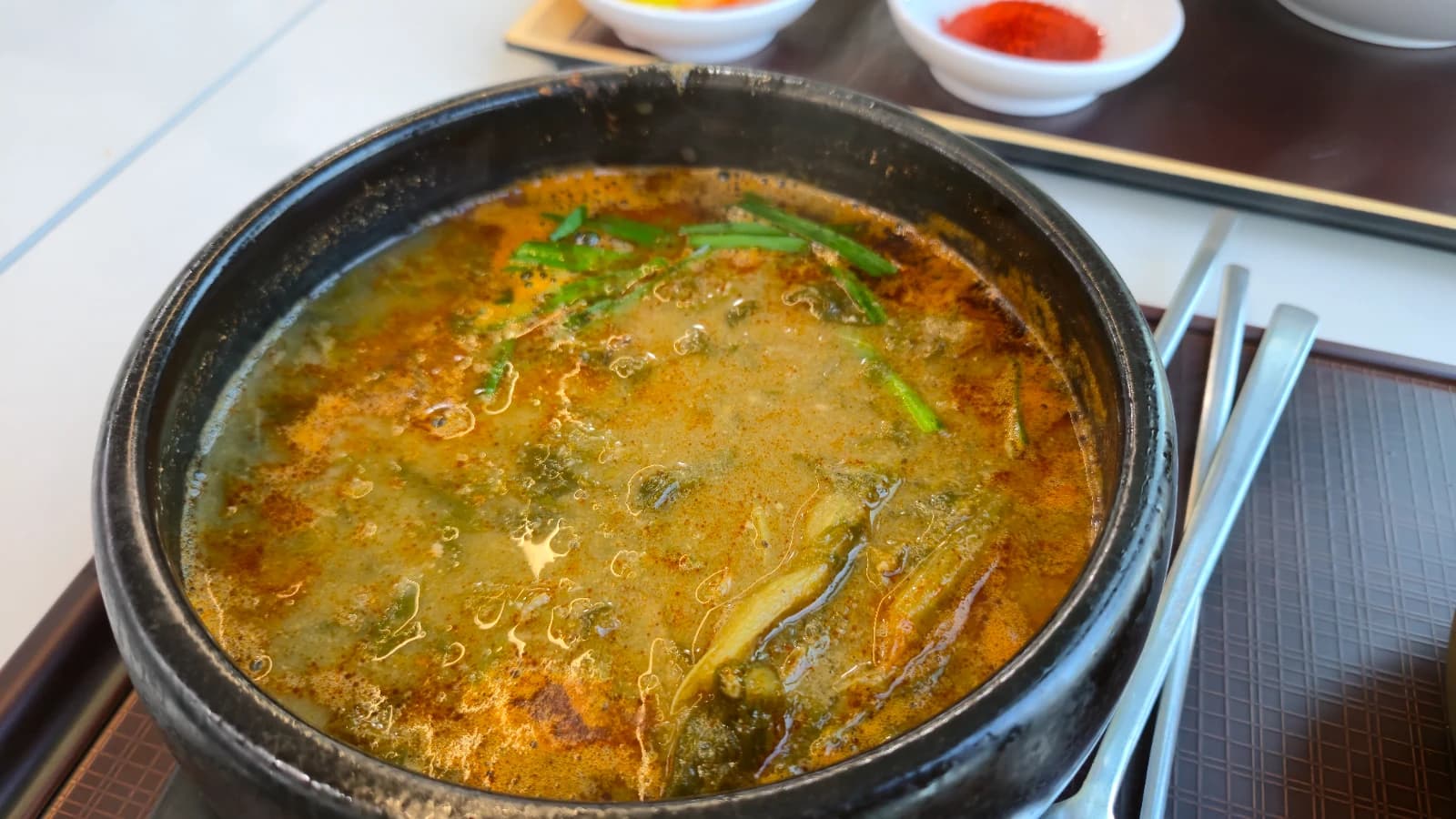
Chueotang is a traditional Korean soup made by grinding loach, a small freshwater fish, into the broth. It is usually thick, earthy and savoury. The Lee Hae-yoon chueotang I had that day, though, was fairly mild overall. The flavour was not especially strong, and considering it cost about £6.05, the dish did not feel particularly special.
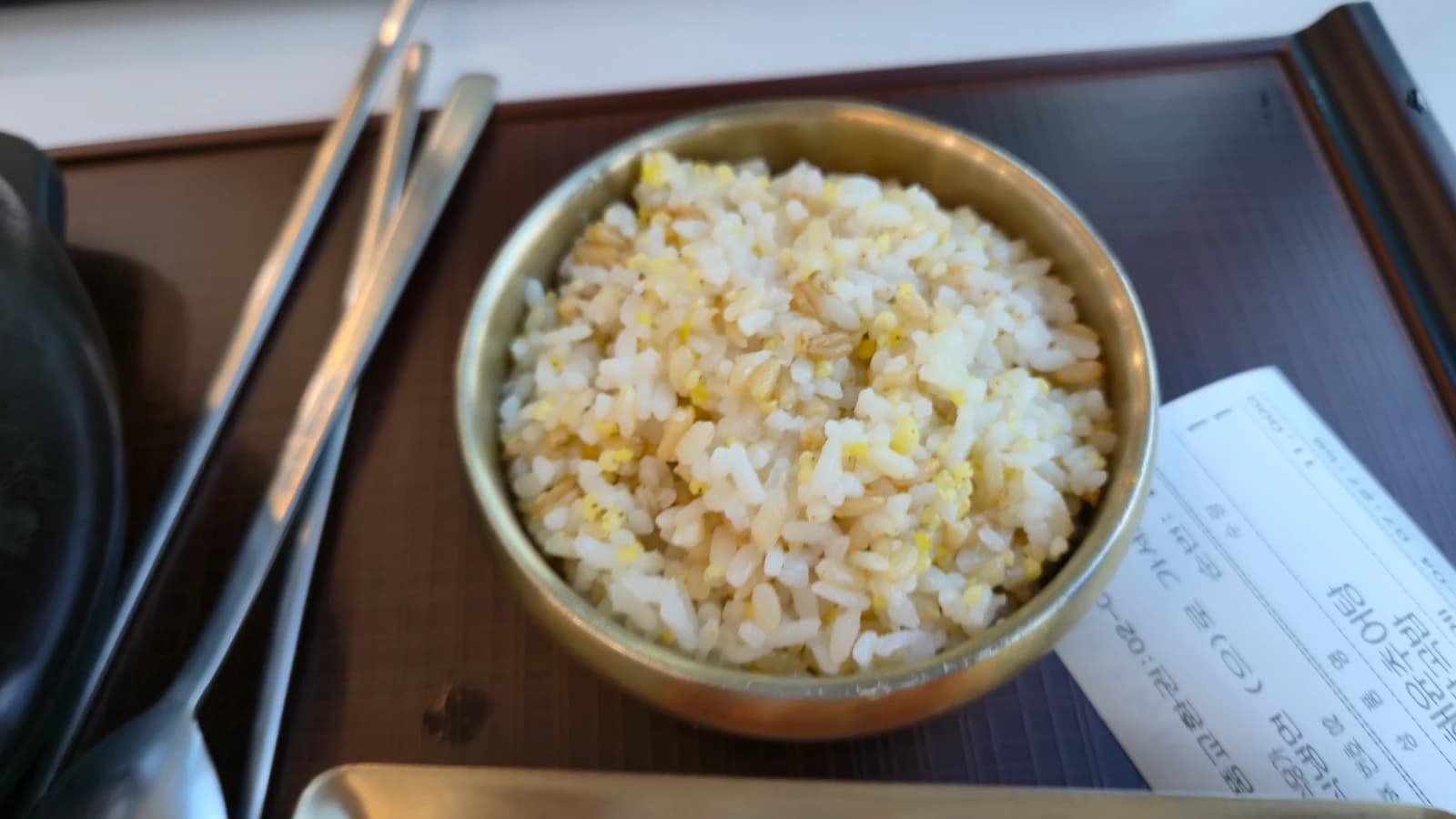
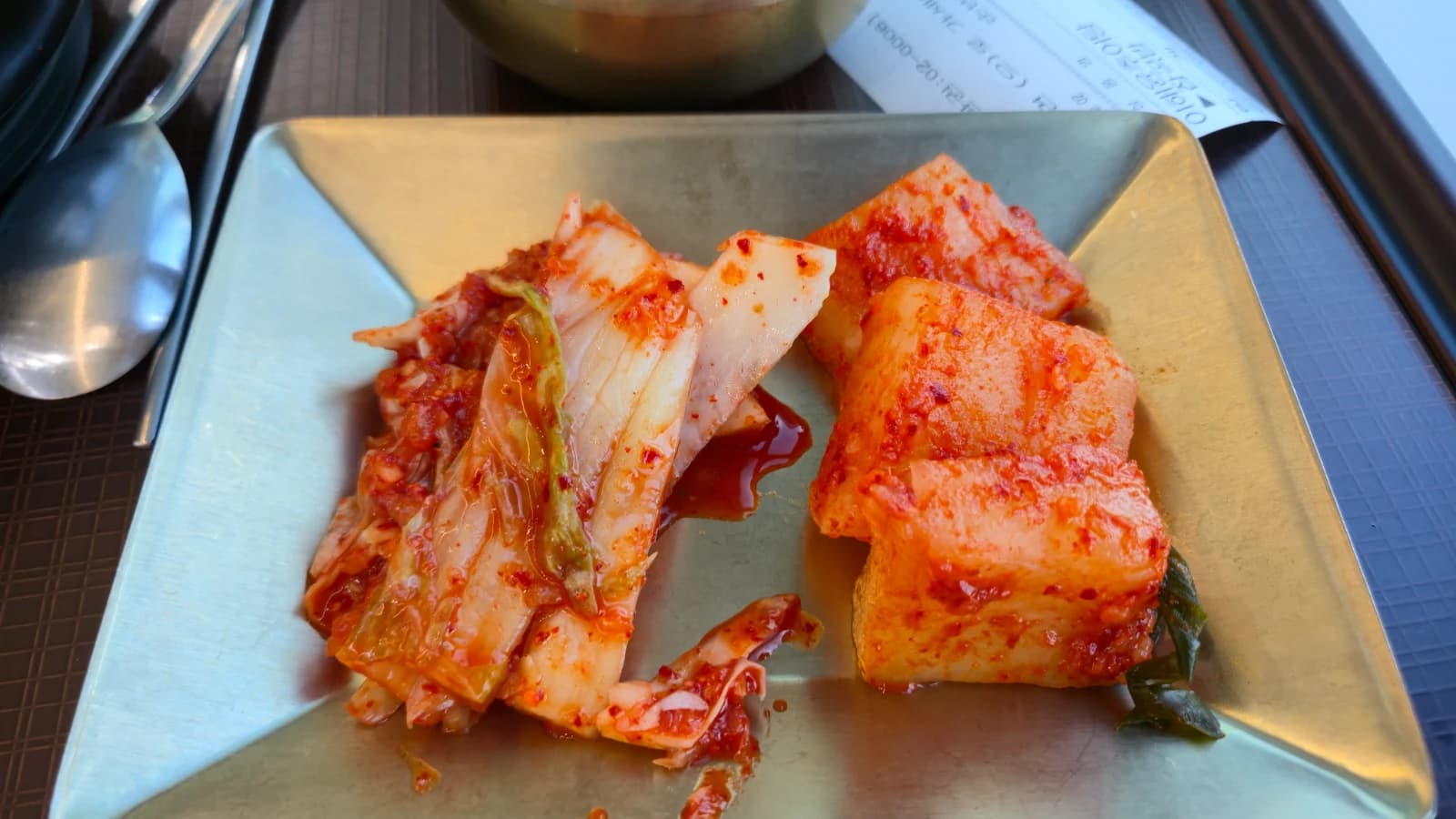
The multigrain rice served on the side was made by mixing white rice with barley, beans and sorghum, which is considered a healthier option in Korea. The side dishes were cabbage kimchi and kkakdugi. Kkakdugi is a type of kimchi made from cubed radish mixed with chilli powder seasoning, and it works well with hot soups because it cuts through the richness. Both were basic side dishes, so there was no extra charge.
After eating: self-return trays and water dispenser
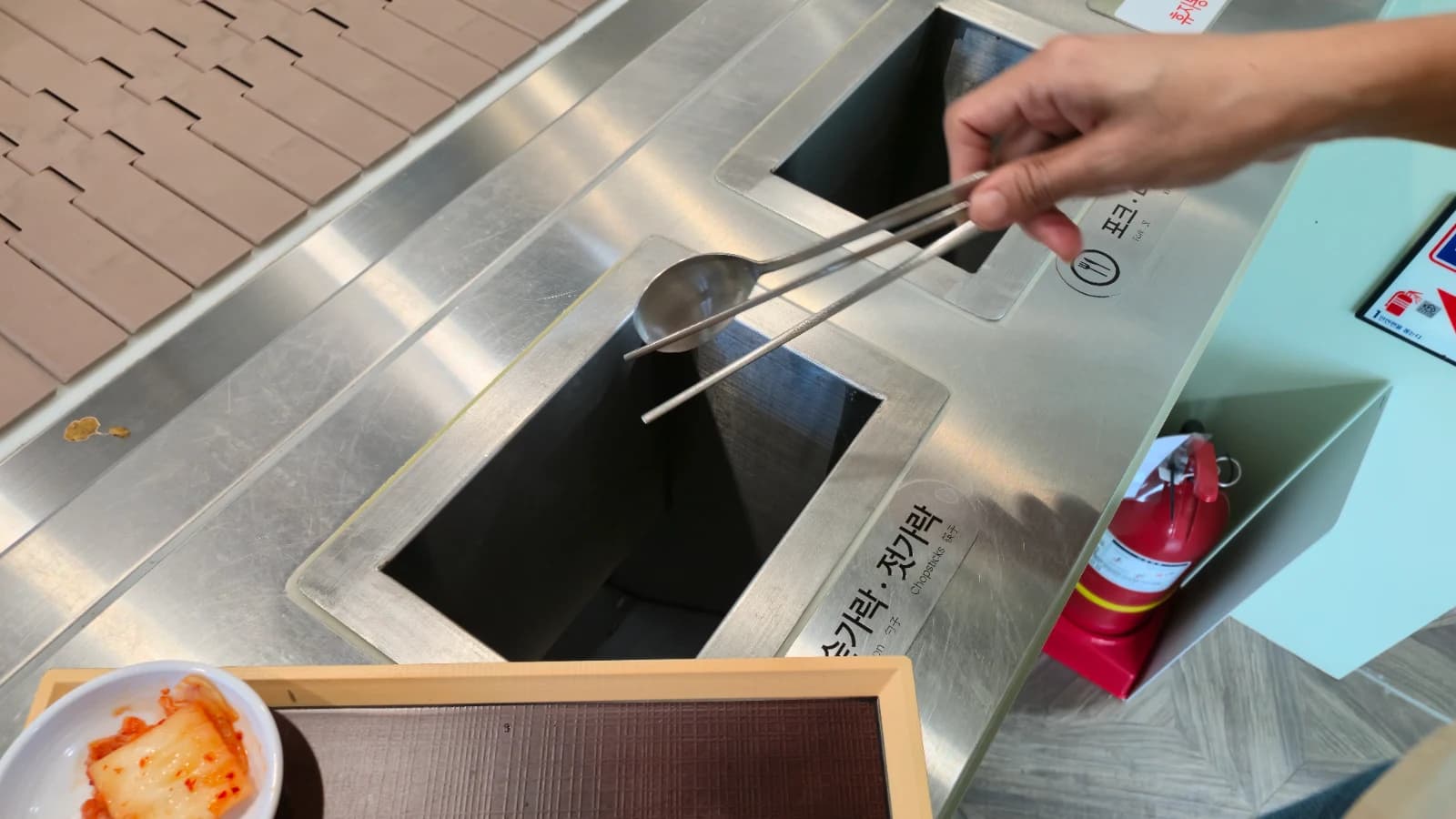
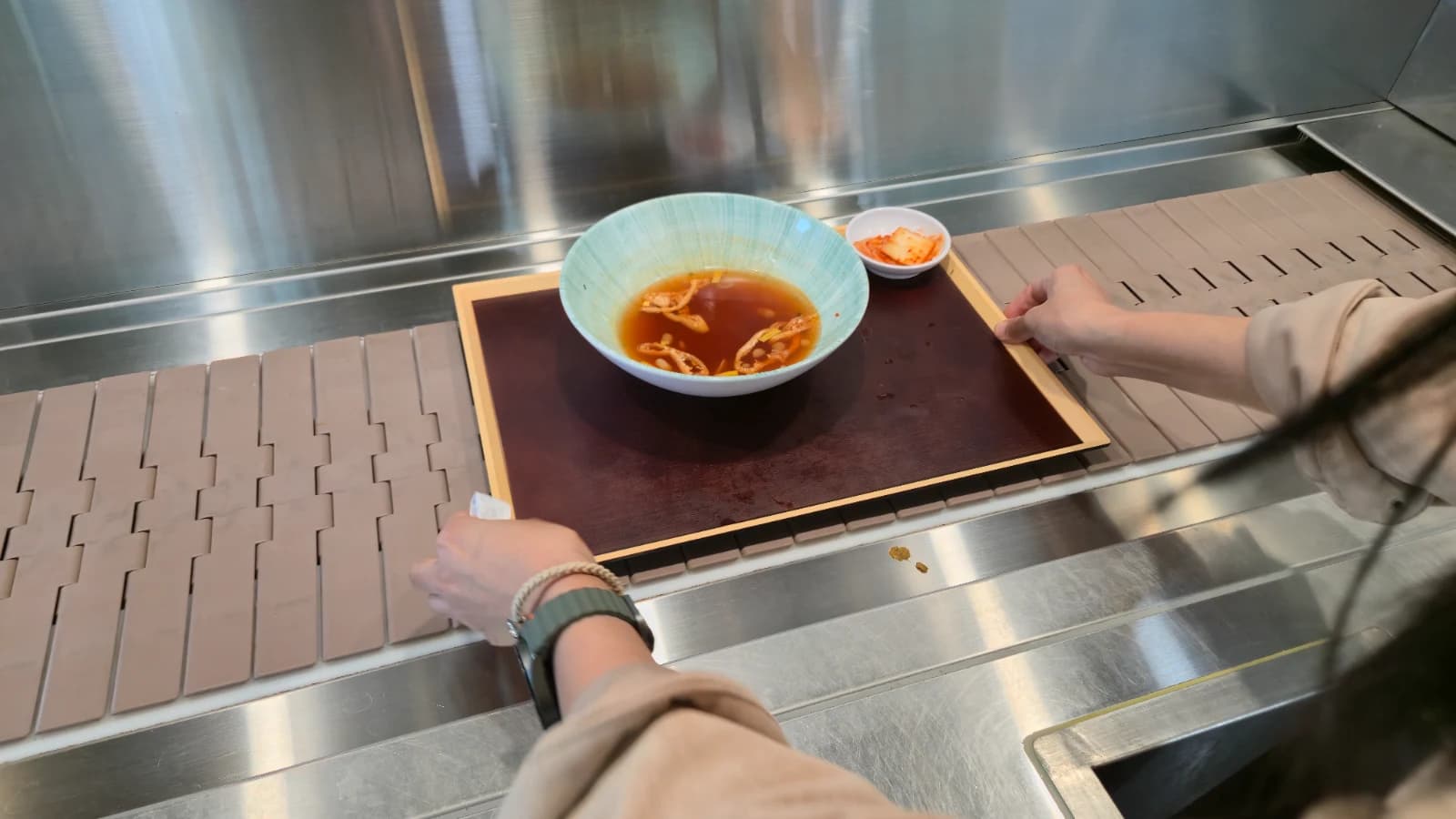
At food courts in Korean motorway services, you have to return your own dishes once you have finished eating. Spoons and chopsticks go separately in the cutlery return area, while bowls and trays are taken to the food return counter. In self-service spaces in Korea, clearing up after yourself is just the normal thing to do.
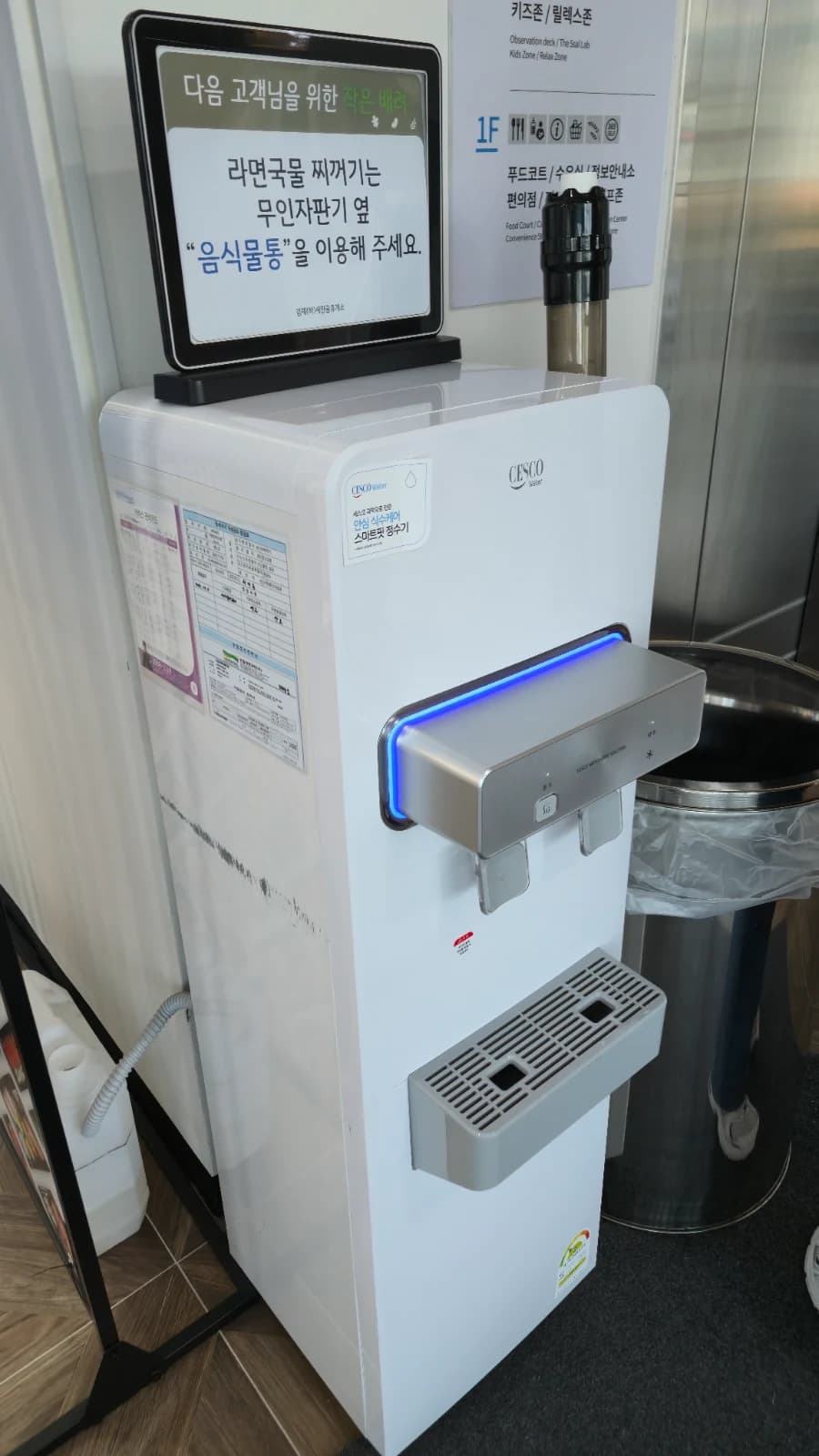
There was a free water dispenser nearby, so you could drink water freely. They also had a separate container for pouring away leftover ramen broth. My wife said it was “clean and nice”. Maybe because the building was newly built, the return area and water dispenser area were both well kept and tidy.
A vanilla latte at Sagwadang cafe
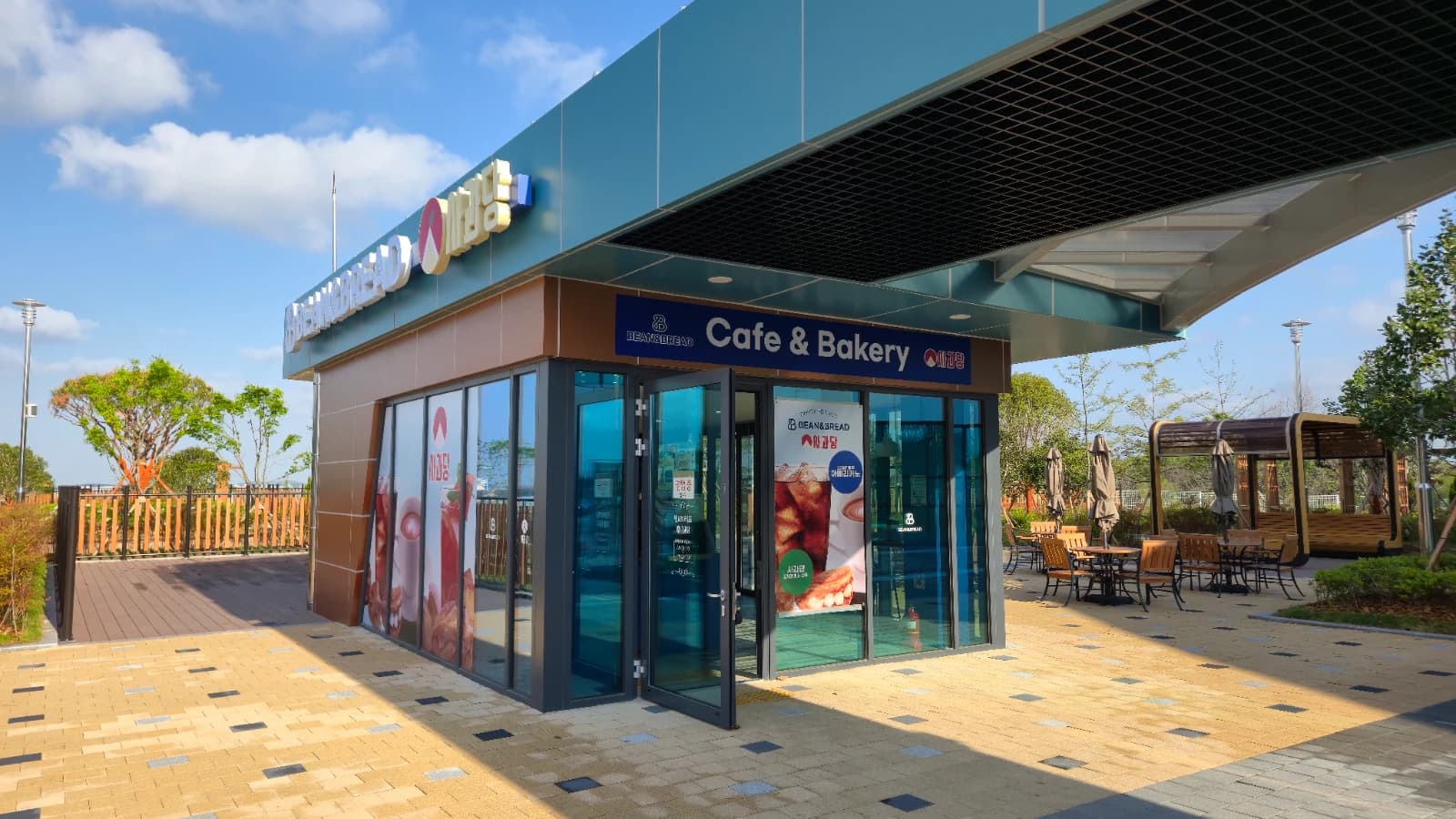
After we finished eating, we went outside to get a coffee and found a small cafe called Sagwadang. It sits near the exit side of Gimje Service Area, and the handwritten-style sign caught my eye. As the name suggests, Sagwadang sells desserts made mainly with apples. Apple pie was displayed as the main item, and although I had only planned to get coffee, the menu did make me hesitate a bit.
Looking at the bread inside the cafe
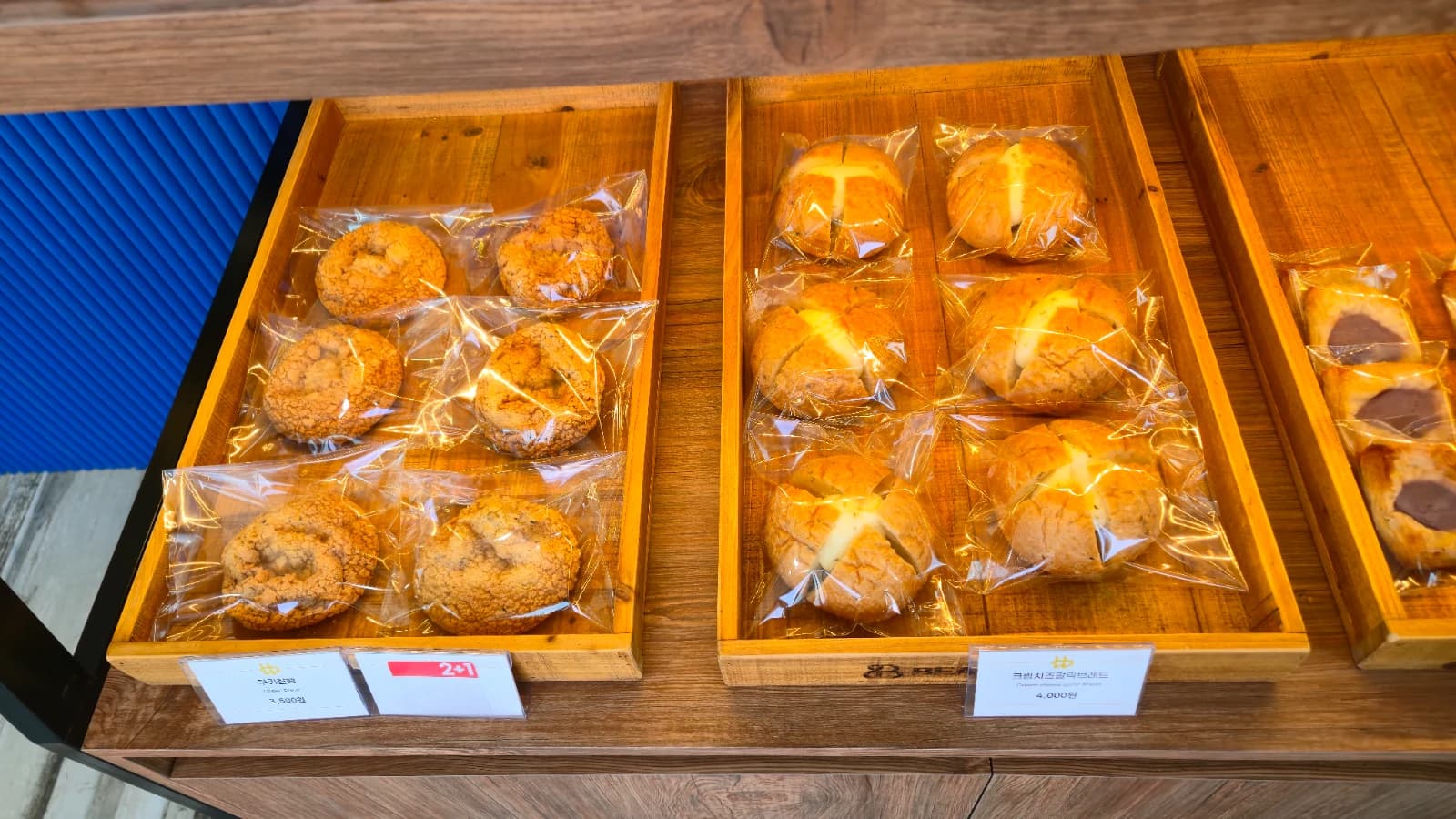
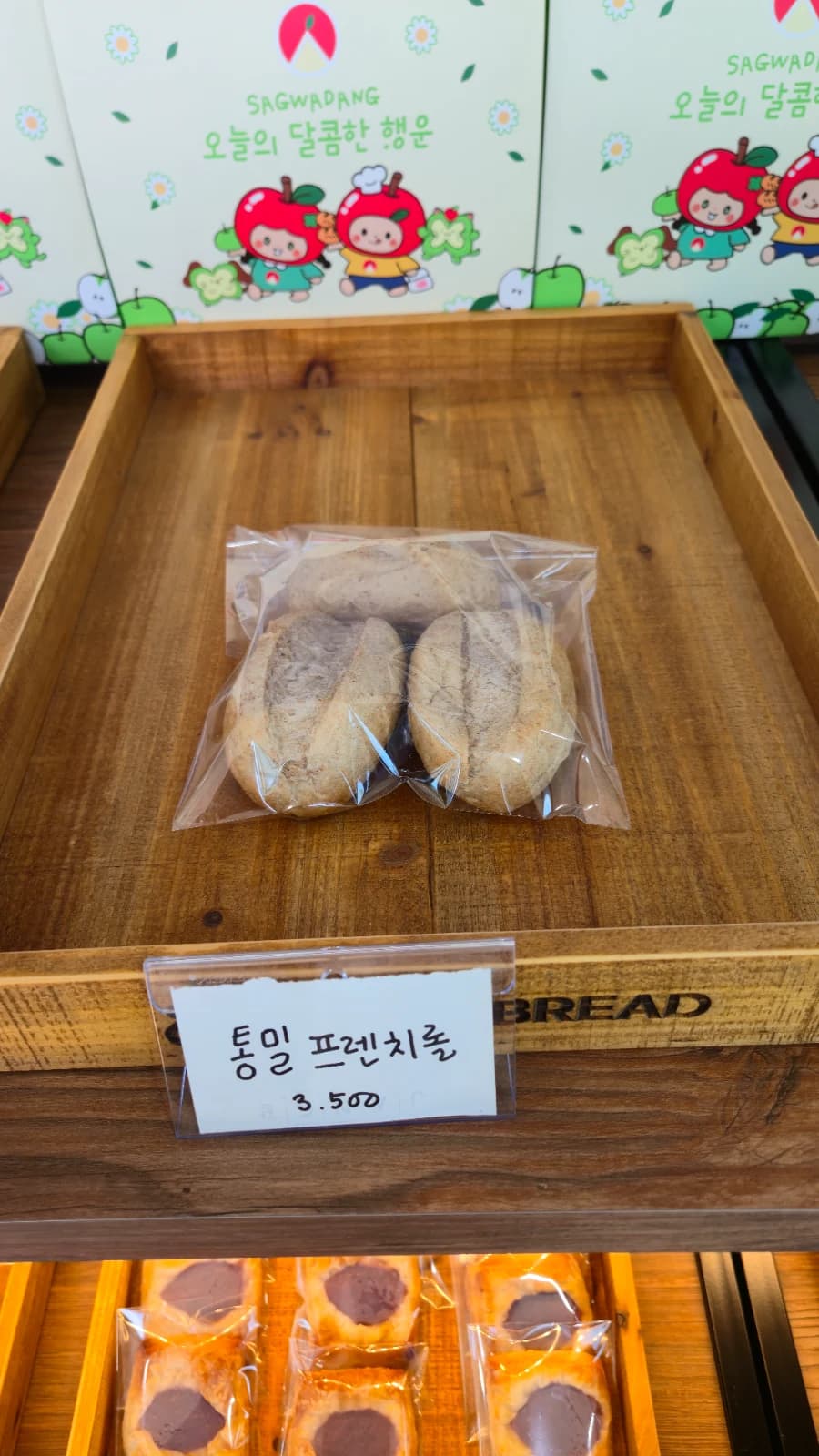
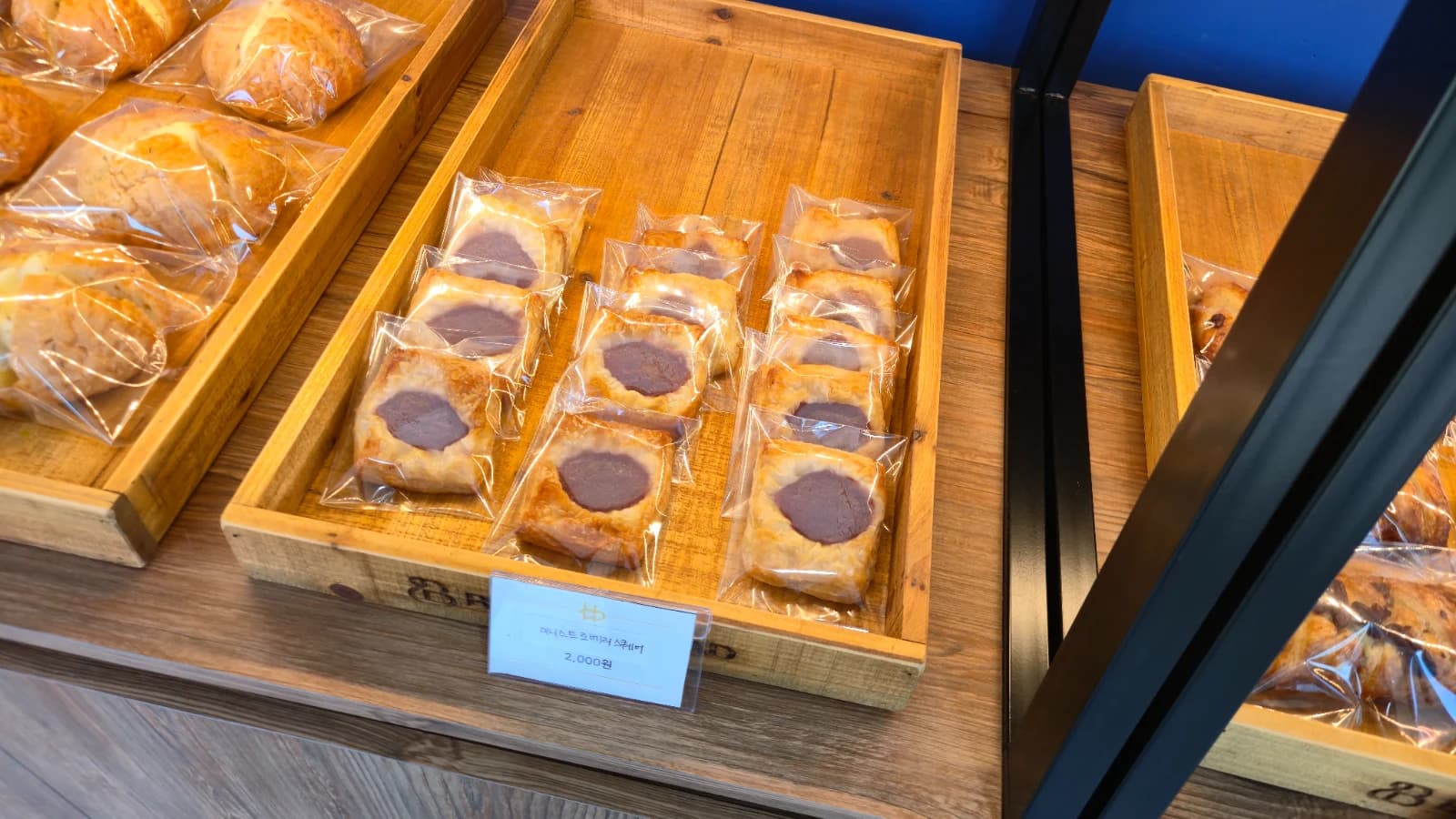
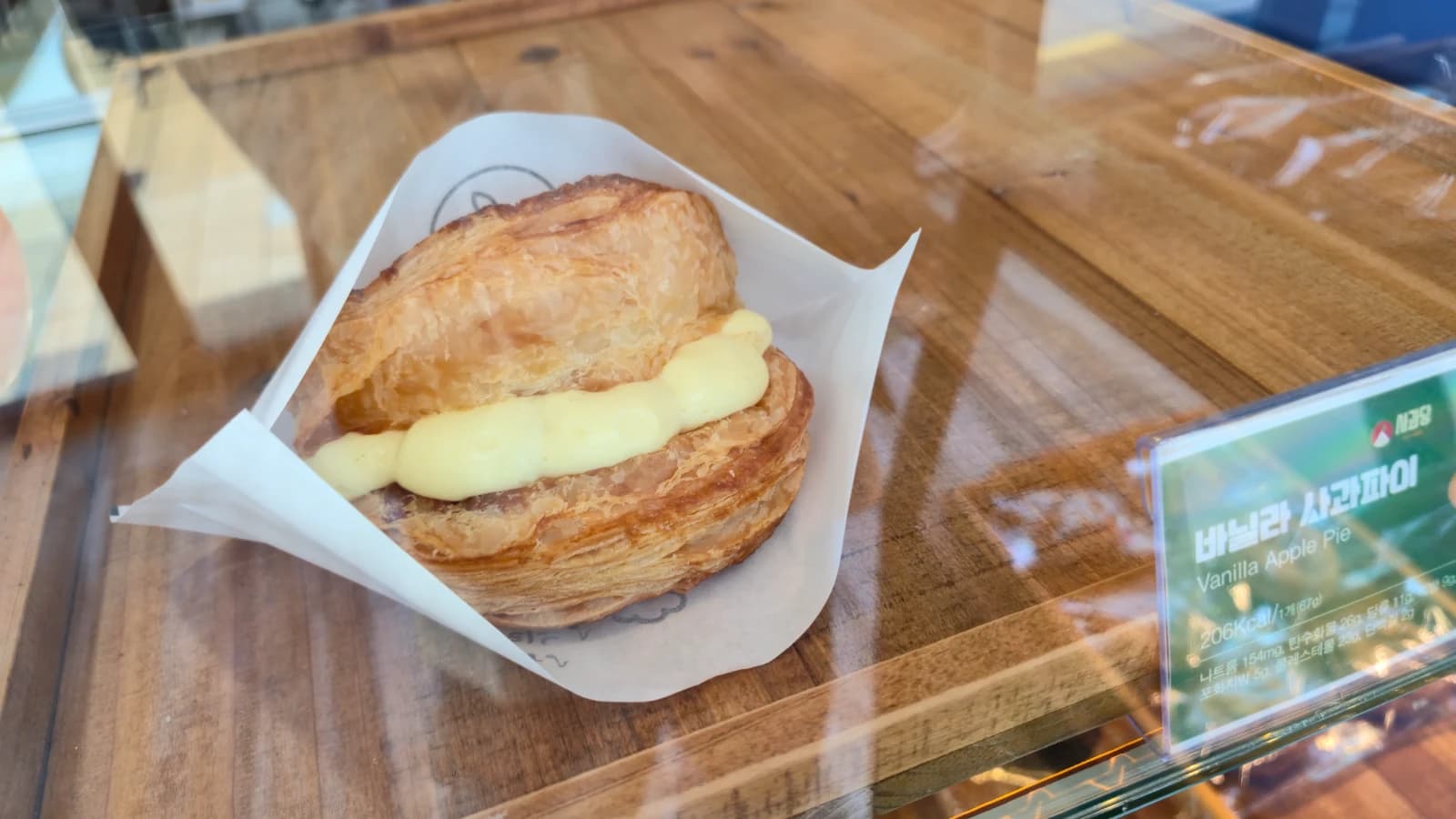
Inside the cafe, individually wrapped breads were laid out on wooden trays. One side was full of soboro-style bread, and next to it I noticed a round chocolate bread with a cross cut into the top. Soboro is a Korean bakery bread topped with a crumbly mixture of butter, sugar and flour, then baked until crisp. The wholewheat French roll was about £1.95, but only two were left. The mini stone rye apple pie was about £1.10 and had a purple red bean paste topping. The vanilla apple pie was also about £1.10, with thick vanilla cream tucked between croissant-style pastry, and the nutrition label showed 206 calories. I did consider buying a pastry for a moment, but we had already eaten a filling breakfast in the food court, so I just ordered a drink.
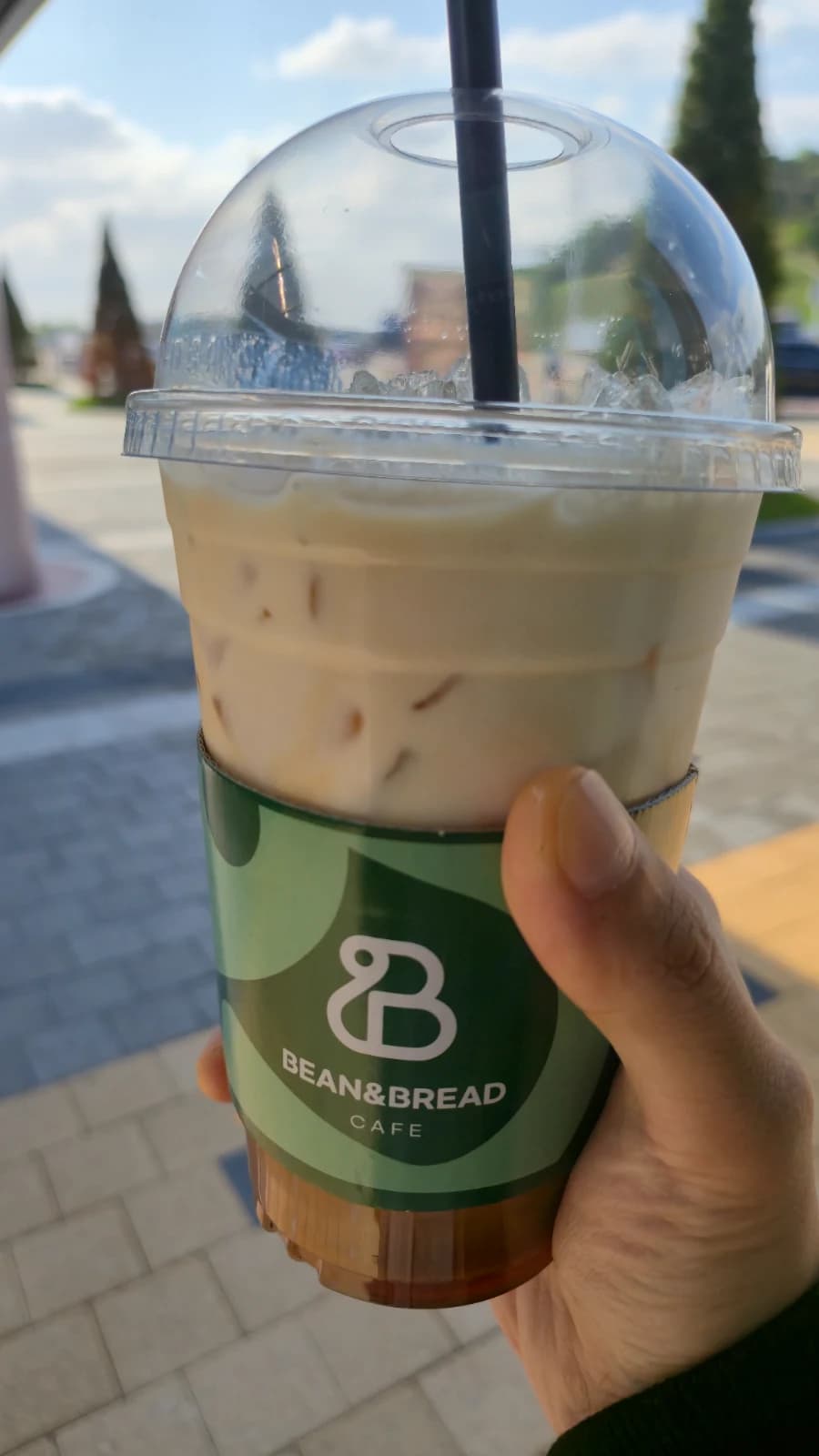
I ordered an iced vanilla latte. I do not remember the exact price. The cup had a green sleeve and the “Bean and Bread Cafe” logo printed on it, so Sagwadang seemed to be operating under that brand. The milk layer was on top and the dark espresso layer was at the bottom, so I took a photo before mixing it. Taste-wise, it was a perfectly ordinary vanilla latte.
Outdoor park and terrace at the service area
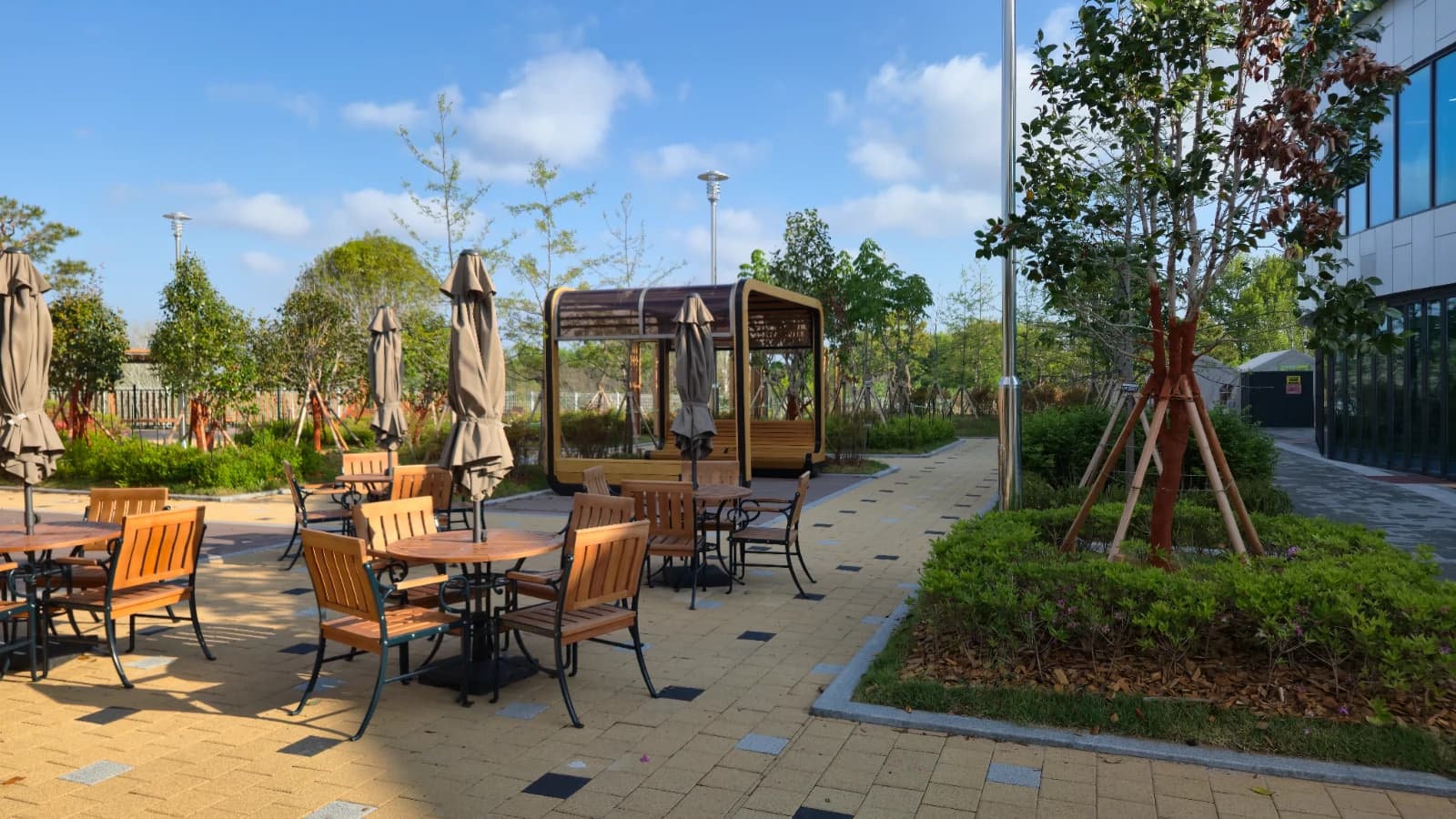
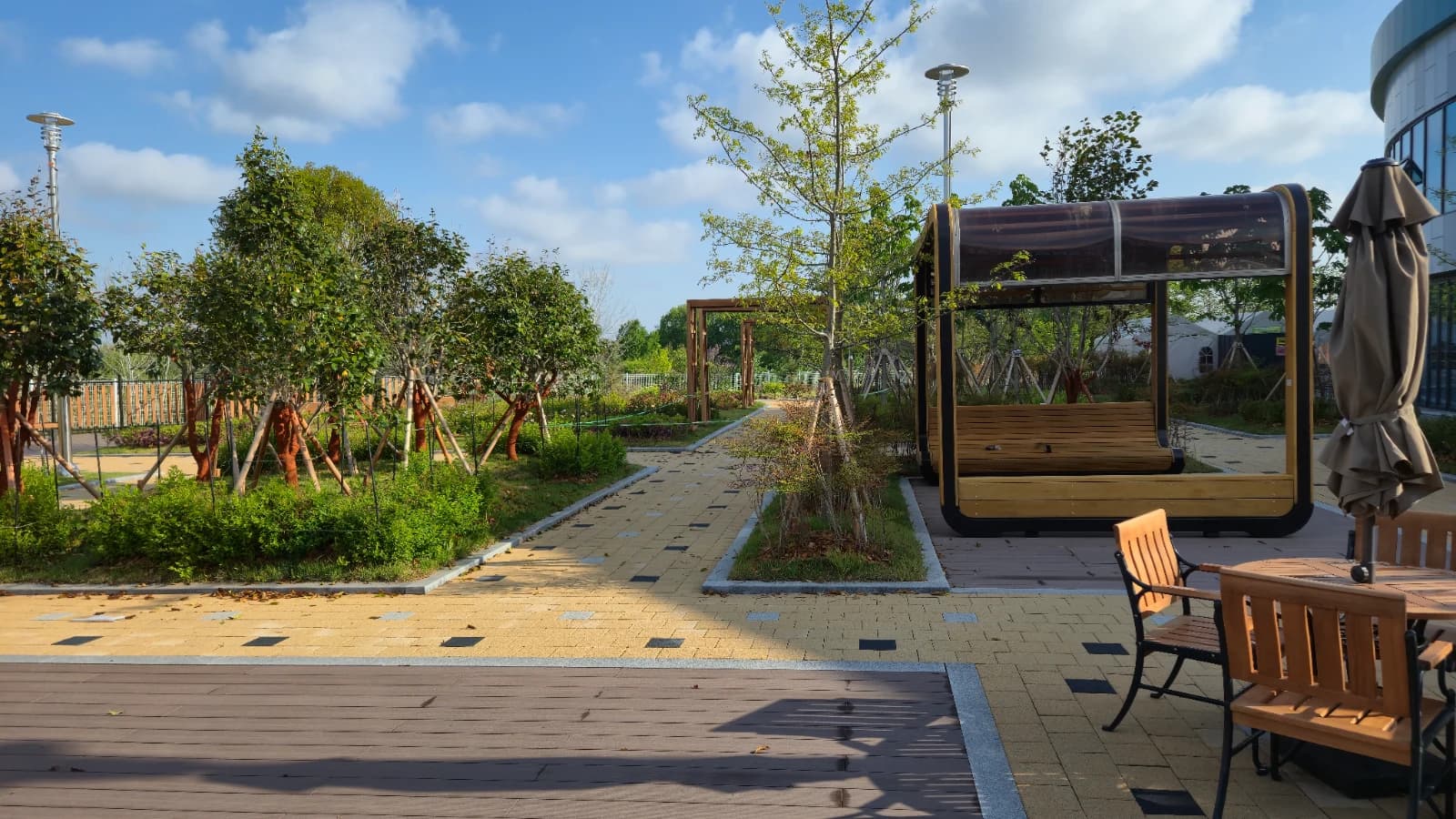
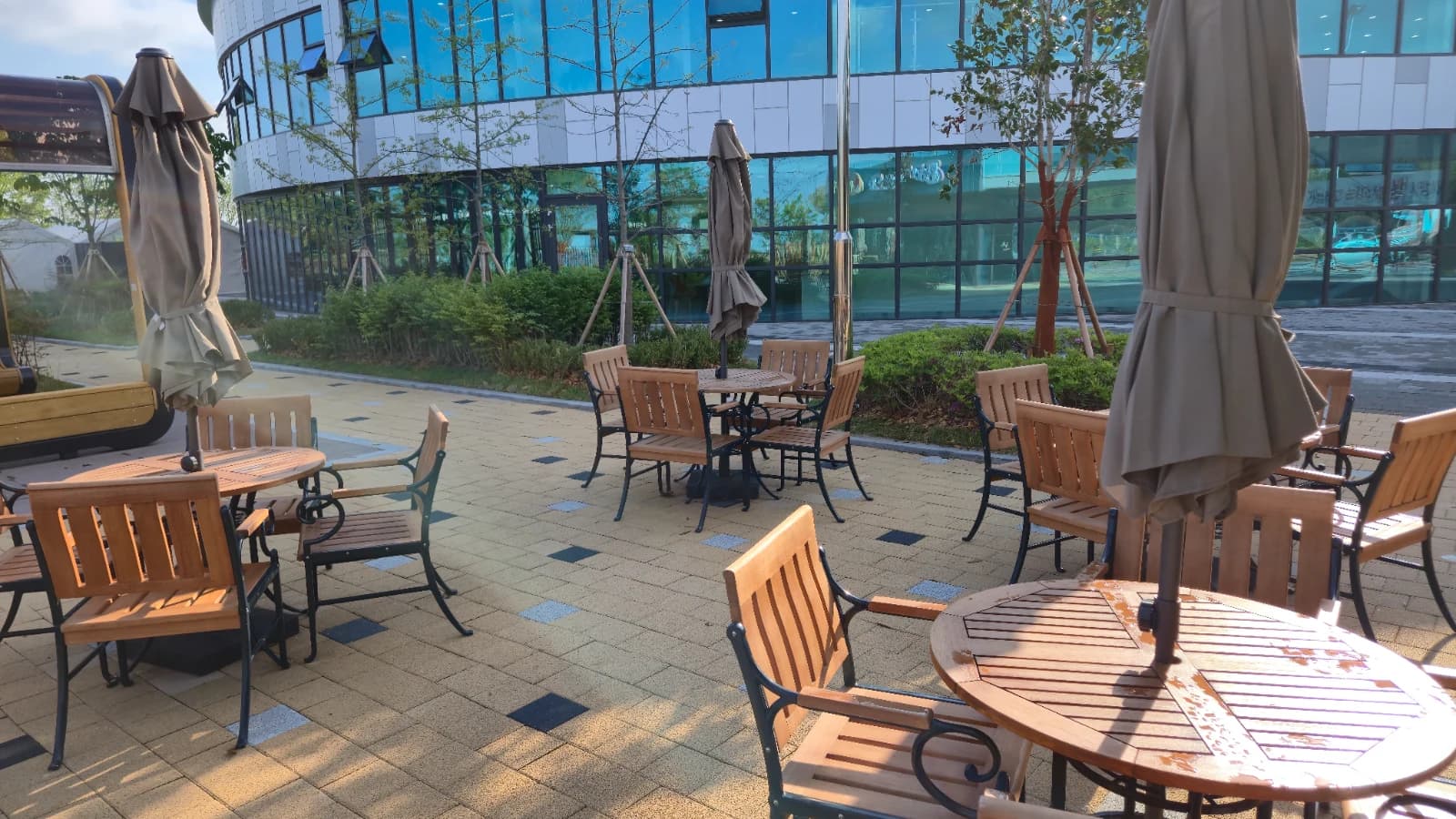
There were outdoor tables in front of the cafe, and behind them was a small park with a walking path. It had wooden benches, parasols and even a semi-circular shelter with a glass roof. Rather than feeling like a basic motorway service area, it had a bit of the atmosphere of a cafe garden. The trees were still young and tied to support stakes, which made it clear straight away that the place had only opened recently.
These days, newly built Korean motorway services often put quite a lot of effort into landscaping. They are no longer just places to park, use the toilet and get back on the road; they are gradually becoming spaces where you might actually want to stop and rest for a while. Of course, not every service area is like this. On older routes there are still worn-out facilities, and some places are being remodelled. But on newer expressway sections, this sort of standard is becoming fairly common.
I sat there for a short while with my vanilla latte in hand. With the cool early May breeze and the soft sunlight, it felt a little bit of a shame to leave. My wife started gently pushing me to get going, so I stood up.
Walking around the car park
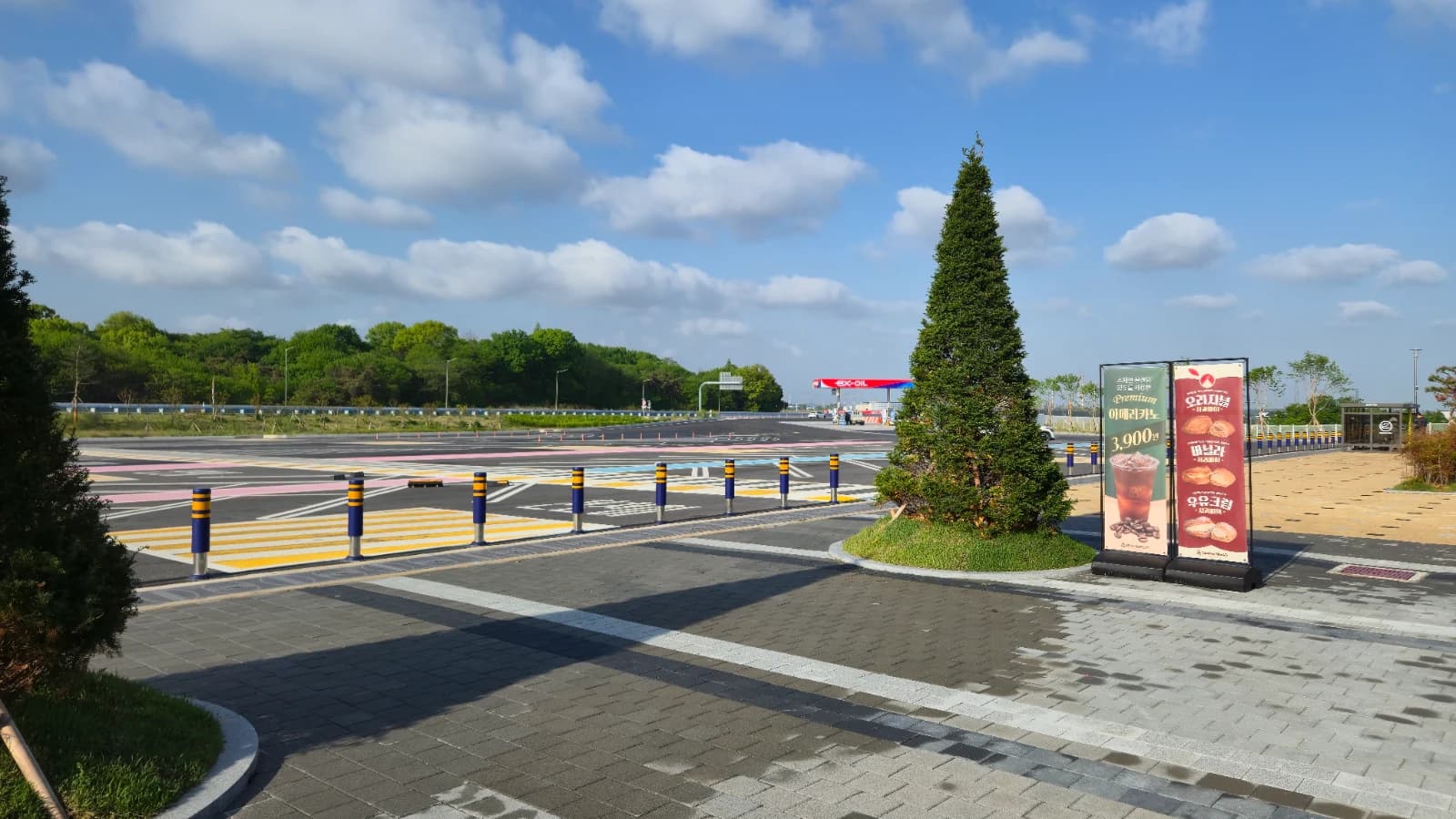
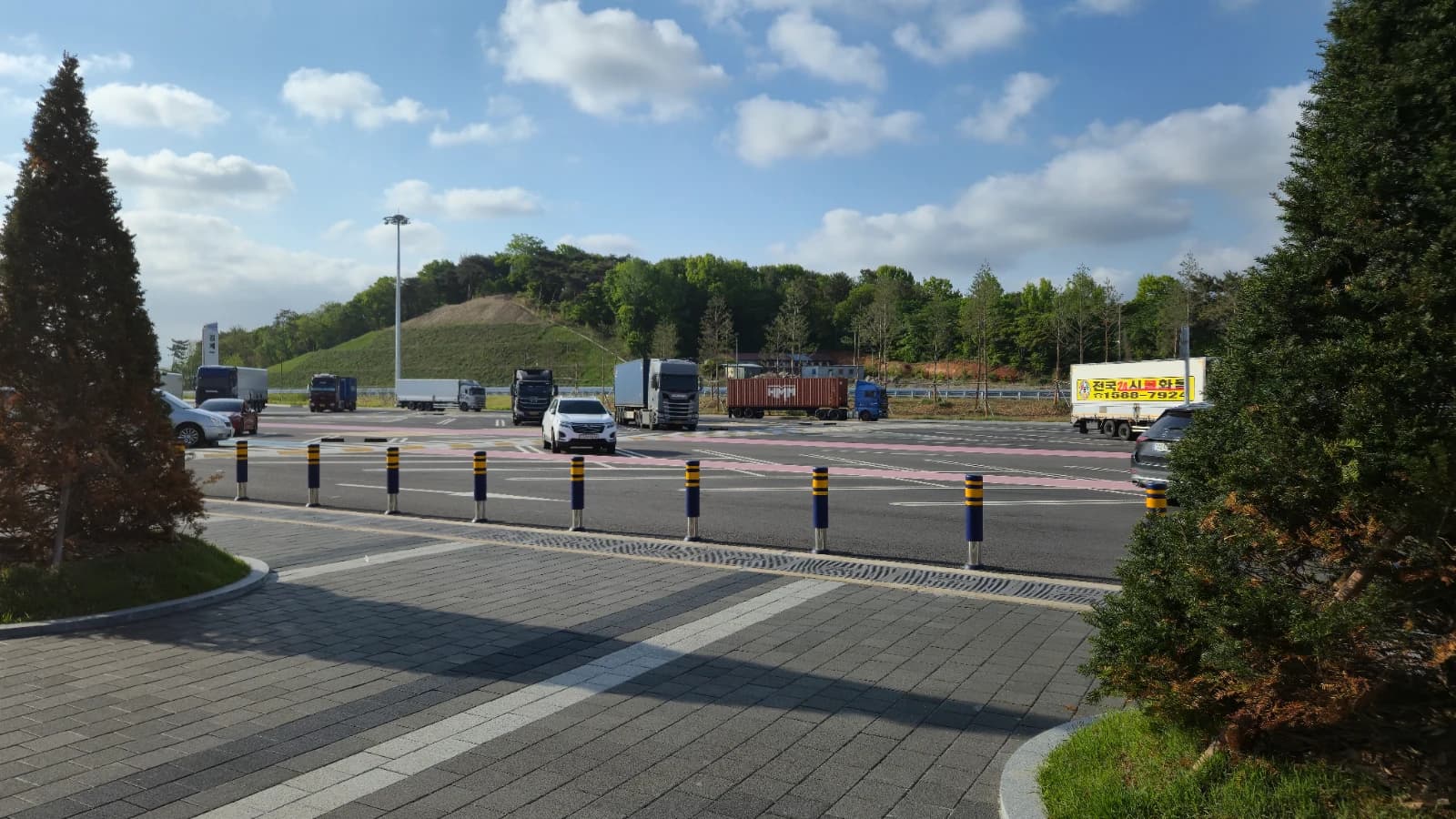
The car park is quite large compared with the size of the building. On one side there was a Sagwadang coffee advertising banner, and behind it I could see the roof of the petrol station. The lorry area had large vehicles lined up, but the passenger car section still had plenty of empty spaces. Modern Korean motorway service areas tend to secure generous parking space, so even during public holidays or peak travel periods, the stress of finding a spot is a bit lower. Another plus is that the building sits in the middle of the car park, so wherever you park, the walk to the entrance is short.
Leaving Gimje Service Area
After sorting breakfast and having coffee, we had spent around 40 minutes at Gimje Service Area. Because the Saemangeum-Pohang Expressway has not been open for very long, the facilities themselves were clean and comfortable. Still, there were a few drawbacks. Food court prices were generally on the high side, and the self-service ramen and gukbap machines especially bothered me a bit. Even though no member of staff was cooking the food for you, some prices were similar to, or higher than, the food court meals. The limited breakfast-time menu also made it difficult to choose whatever you fancied.
Even so, the fresh feel of a new building, the outdoor park, the terrace seating and the range of breads at Sagwadang are things you do not often get at older service areas. It showed quite well how Korean motorway services are changing from simple halfway stop-off points into places designed for a proper rest. We still had a long way to go to Shinan, so we could not sit there for too long. I threw the empty latte cup in the bin and got back onto the motorway.