
Korean Highway Rest Stop Breakfast — A Real Food Court Visit
Table of Contents
13 items
A Morning on the Saemangeum-Pohang Expressway — Daejeon to Shinan
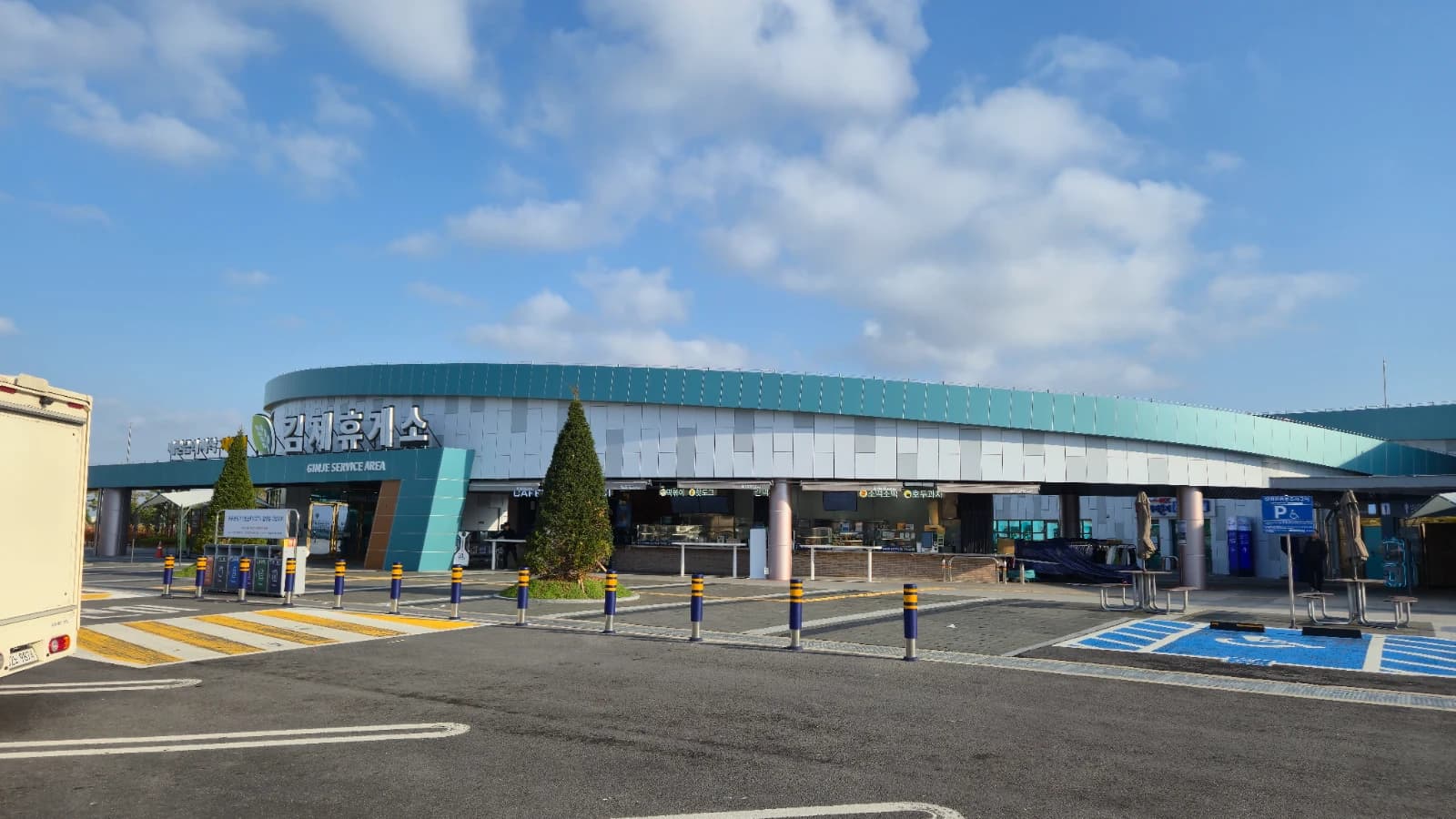
On May 4, 2026, my wife and I were driving from Daejeon down to Shinan — a coastal area on Korea's southwest tip — for a little getaway. About an hour and a half into the drive, we both started getting seriously hungry. We'd been cruising along the Saemangeum-Pohang Expressway when I spotted the sign for Gimje Rest Stop and pulled right off. I'd been telling my wife — who's not Korean — about what highway rest stops are like here, so this was the perfect chance to show her. The building was clearly brand new.
First Impressions of Gimje Rest Stop
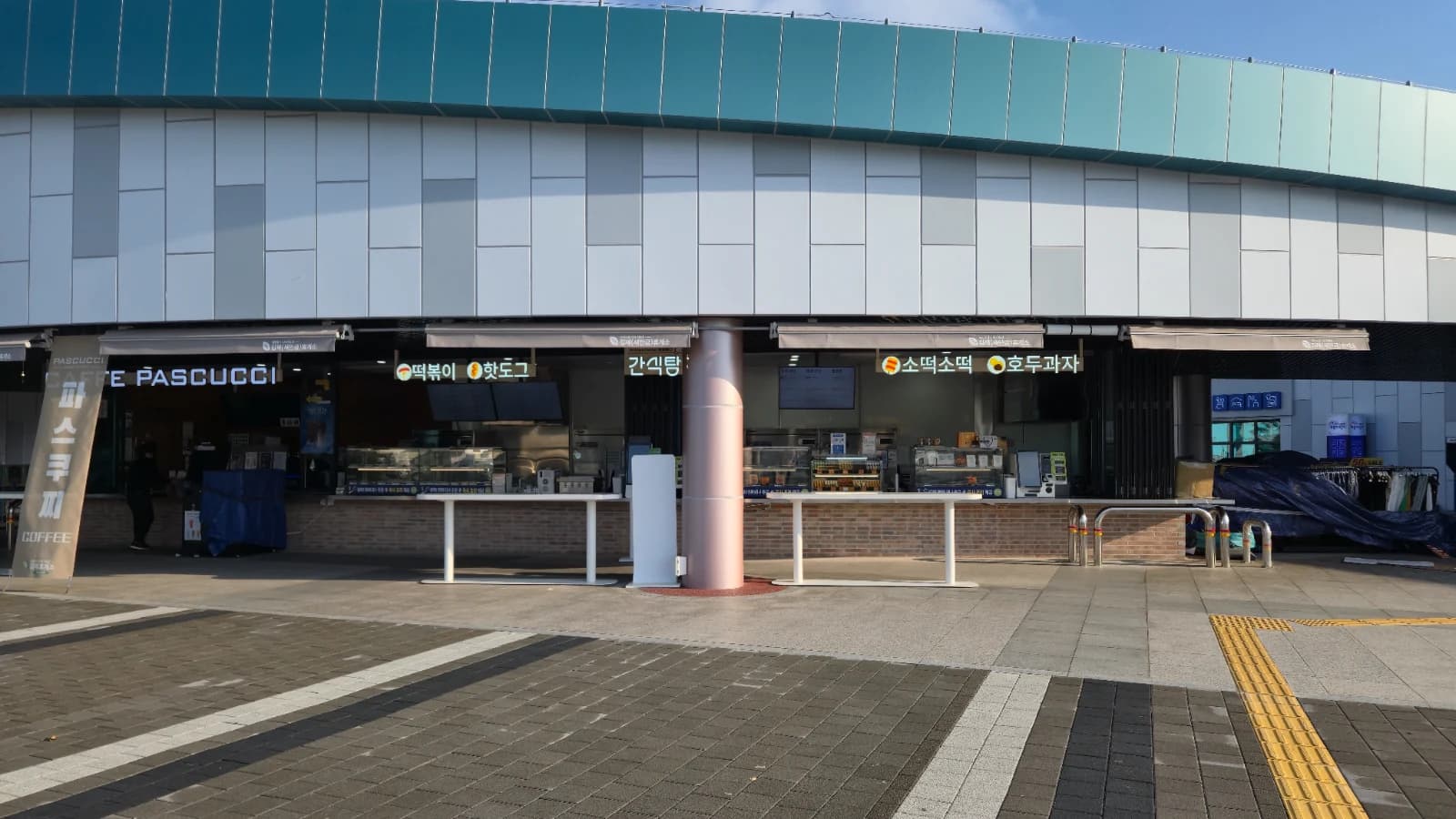
Gimje Rest Stop sits along the Saemangeum-Pohang Expressway and it's a newly built facility. The roof has this distinctive curved design — apparently it's modeled after a rice grain husk (called byeolssi in Korean), which makes sense since the Gimje region is one of Korea's most famous rice-producing areas. The parking lot was divided into sections for passenger cars and freight trucks, and since it was around 7 AM, there were plenty of open spots. The asphalt was jet black and the parking lines were still vivid — clearly this place hadn't been paved long ago.
Outdoor Snack Stalls Outside the Building
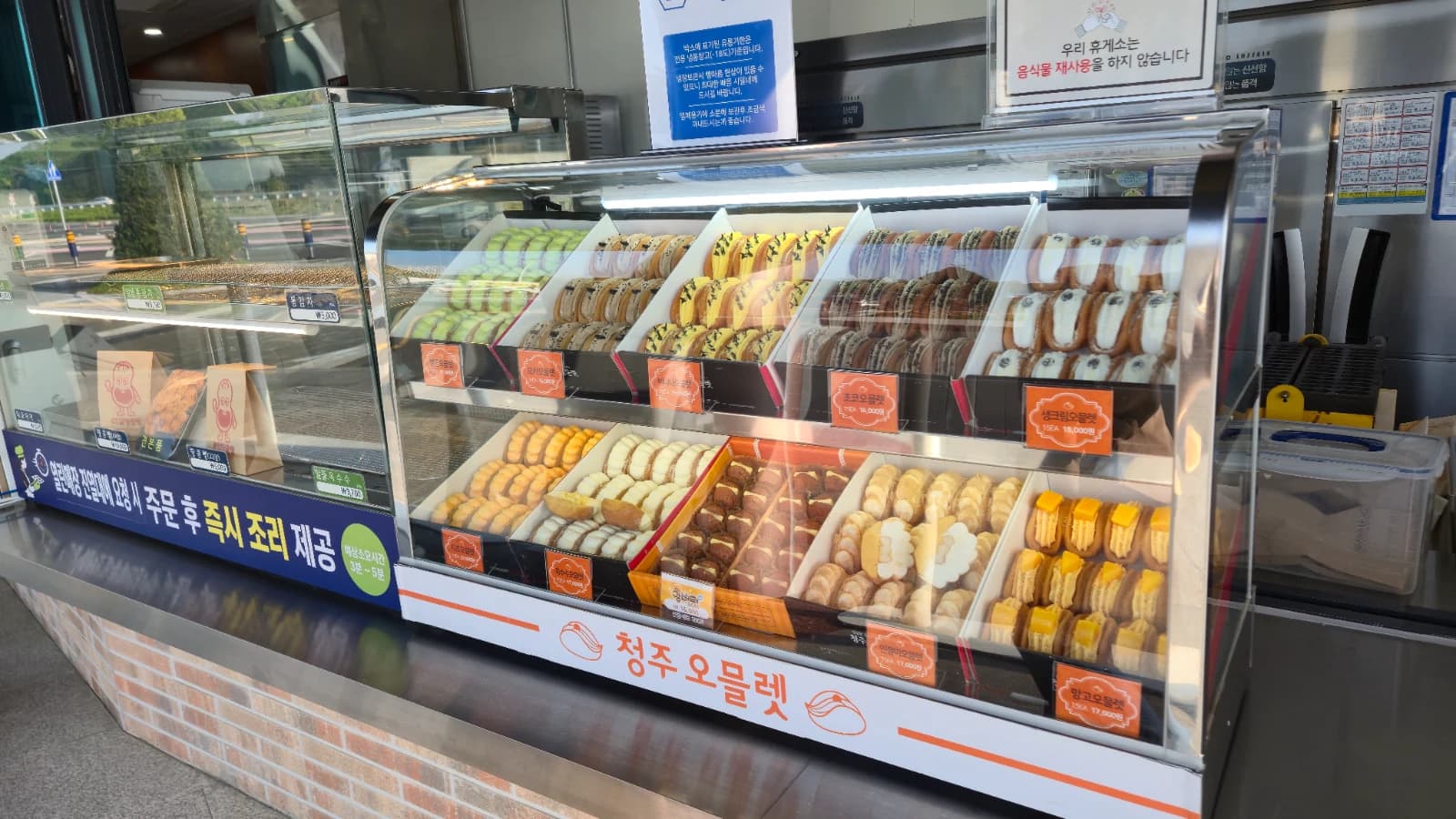
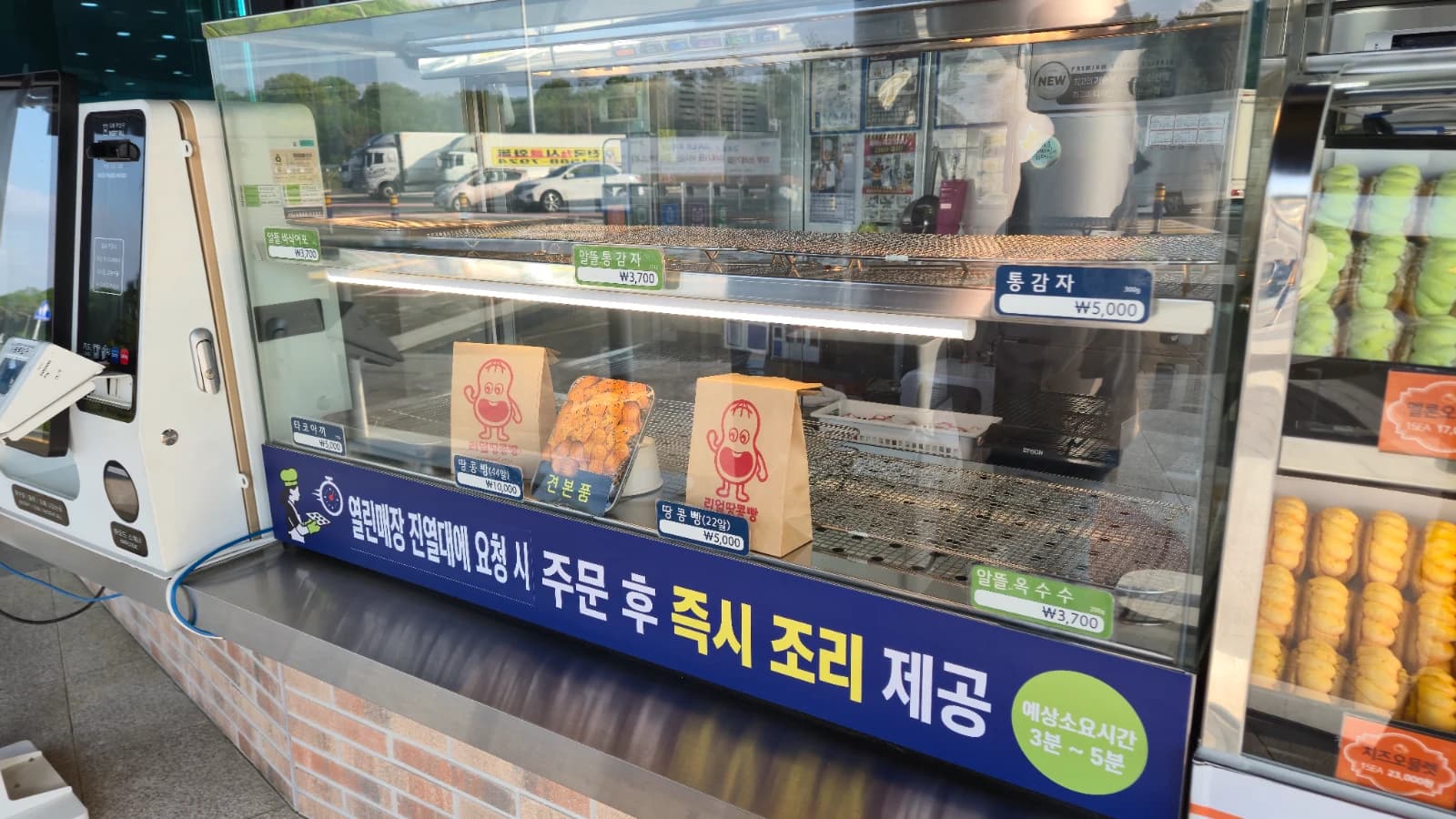
On both sides of the building entrance, there were stalls selling freshly made snacks — pretty standard for Korean highway rest stops. The idea is that you can grab a quick bite outside before even stepping into the main building. Here's what was available at Gimje Rest Stop with prices I noted (as of May 2026): corn dogs $2–$3.50, sotteok-sotteok (alternating sausage-and-rice-cake skewers) $2.50–$3.50, walnut pastries $2–$3.50, fish cake skewers $0.75–$1.50, baby potatoes $2–$3, flame-grilled squid $3.50–$6, and tteokbokki (spicy rice cakes) $3–$3.50. Eomuk — the fish cake — is basically ground fish paste shaped and cooked into firm pieces, and sotteok-sotteok is a popular street snack where sausage and chewy rice cake chunks alternate on a stick.
Off to one side there was also a bakery called Cheongju Omelette — order something and it comes out freshly made in about 3–5 minutes. A whole baked potato was around $3.50, and a buttered corn cup was about $2.70. But since we were planning to eat a proper breakfast in the food court, we just window-shopped the outdoor stalls and headed inside.
Inside the Building — Cafe, Convenience Store, Kiosks
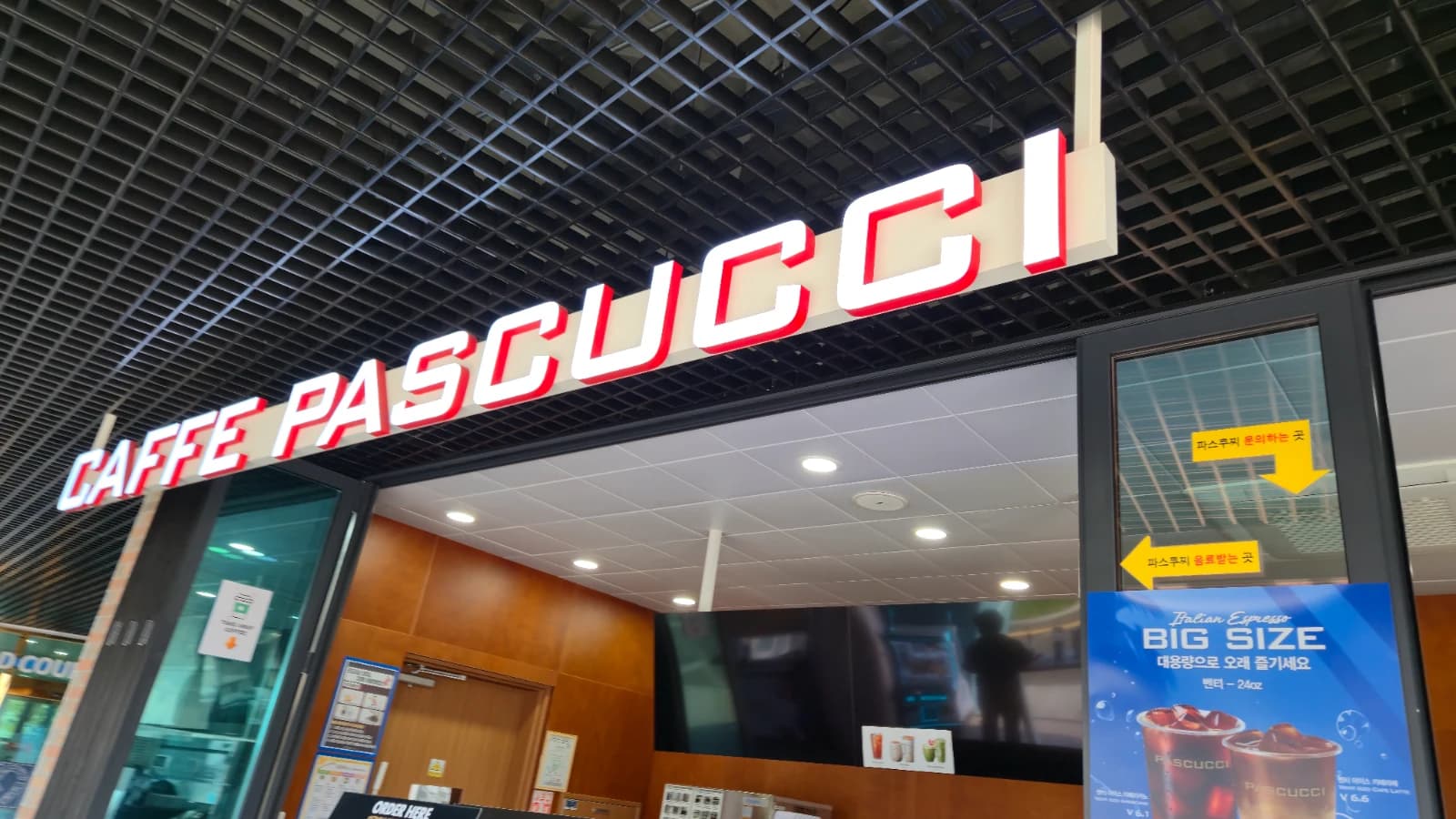
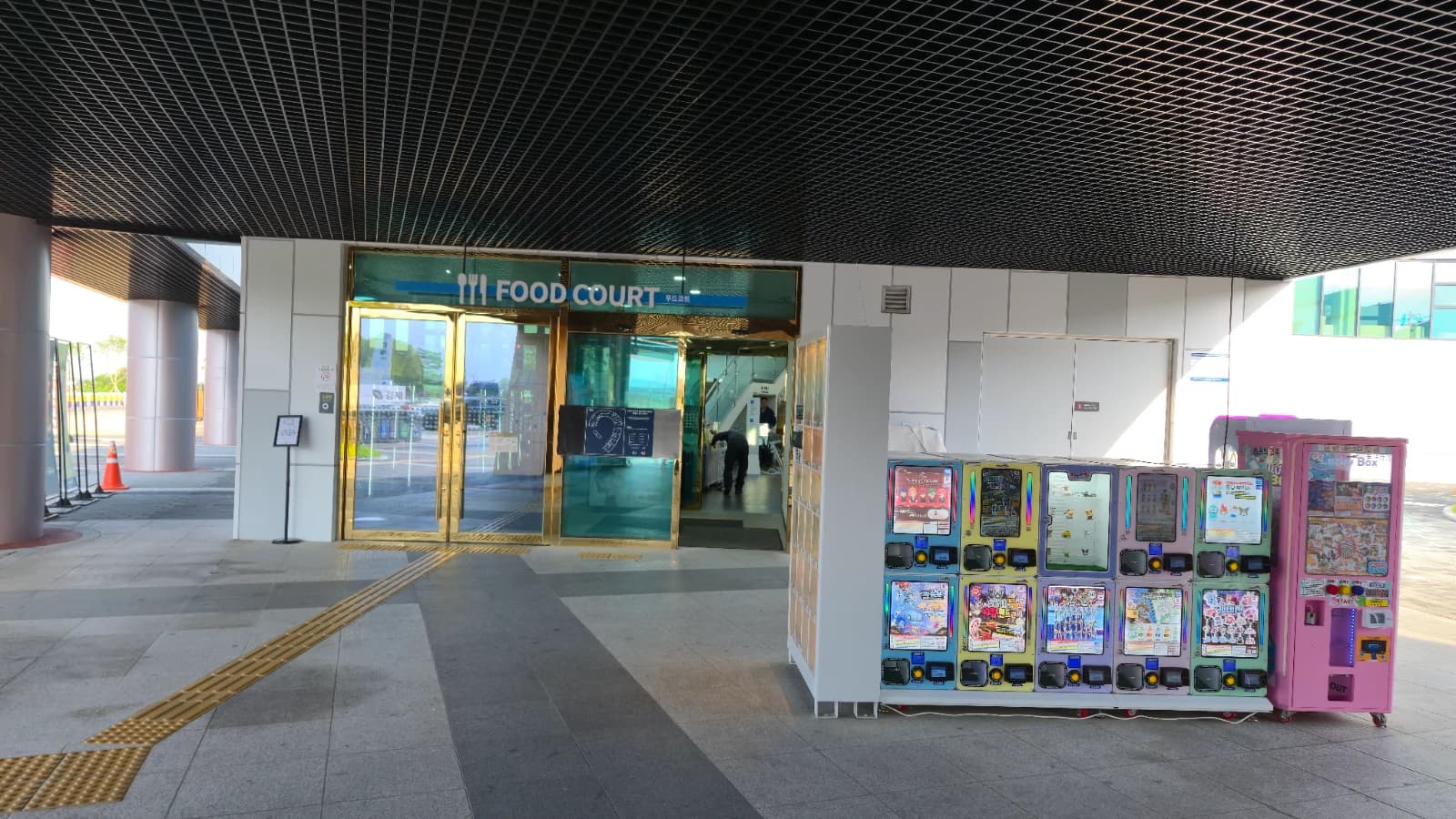
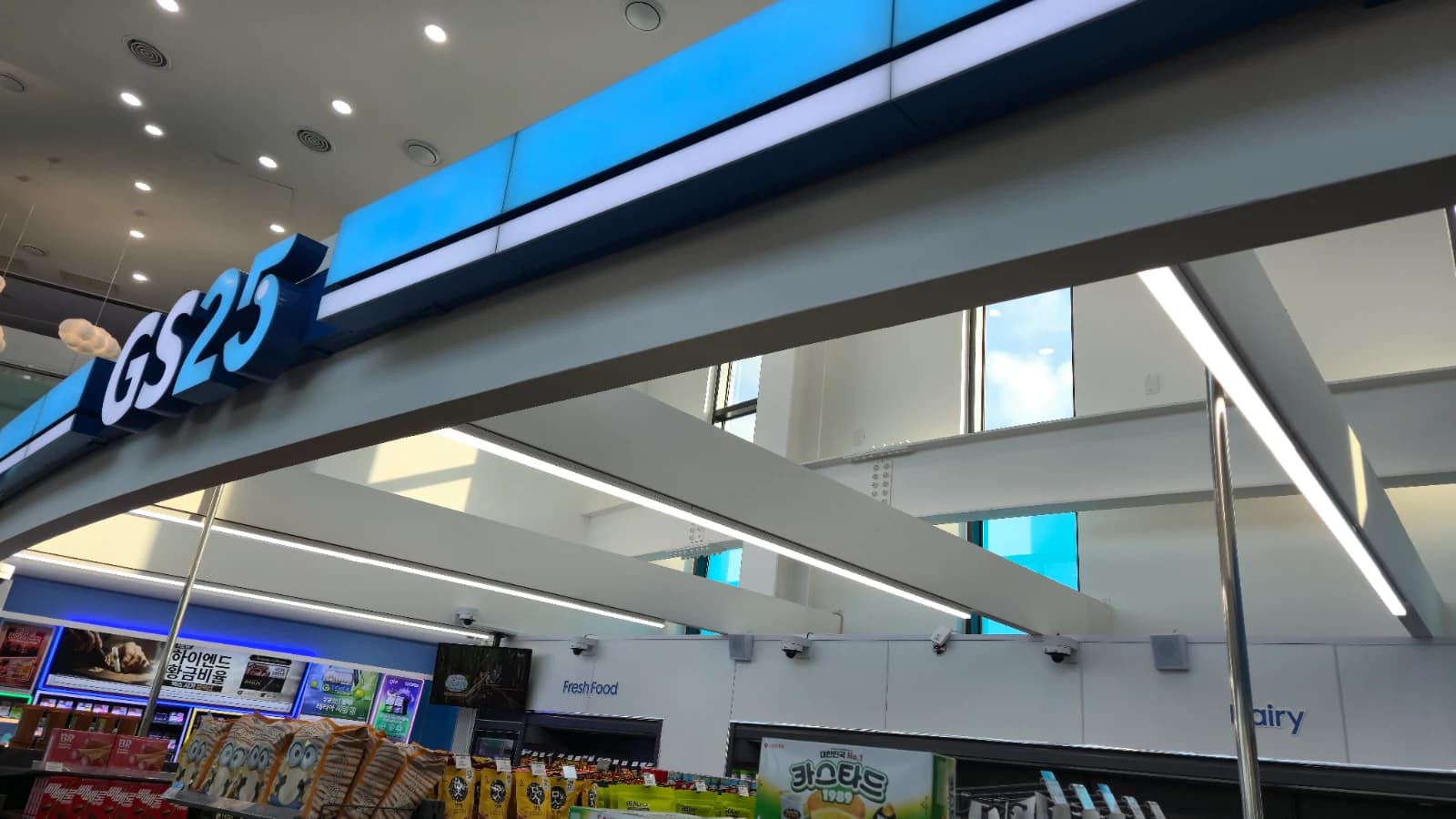
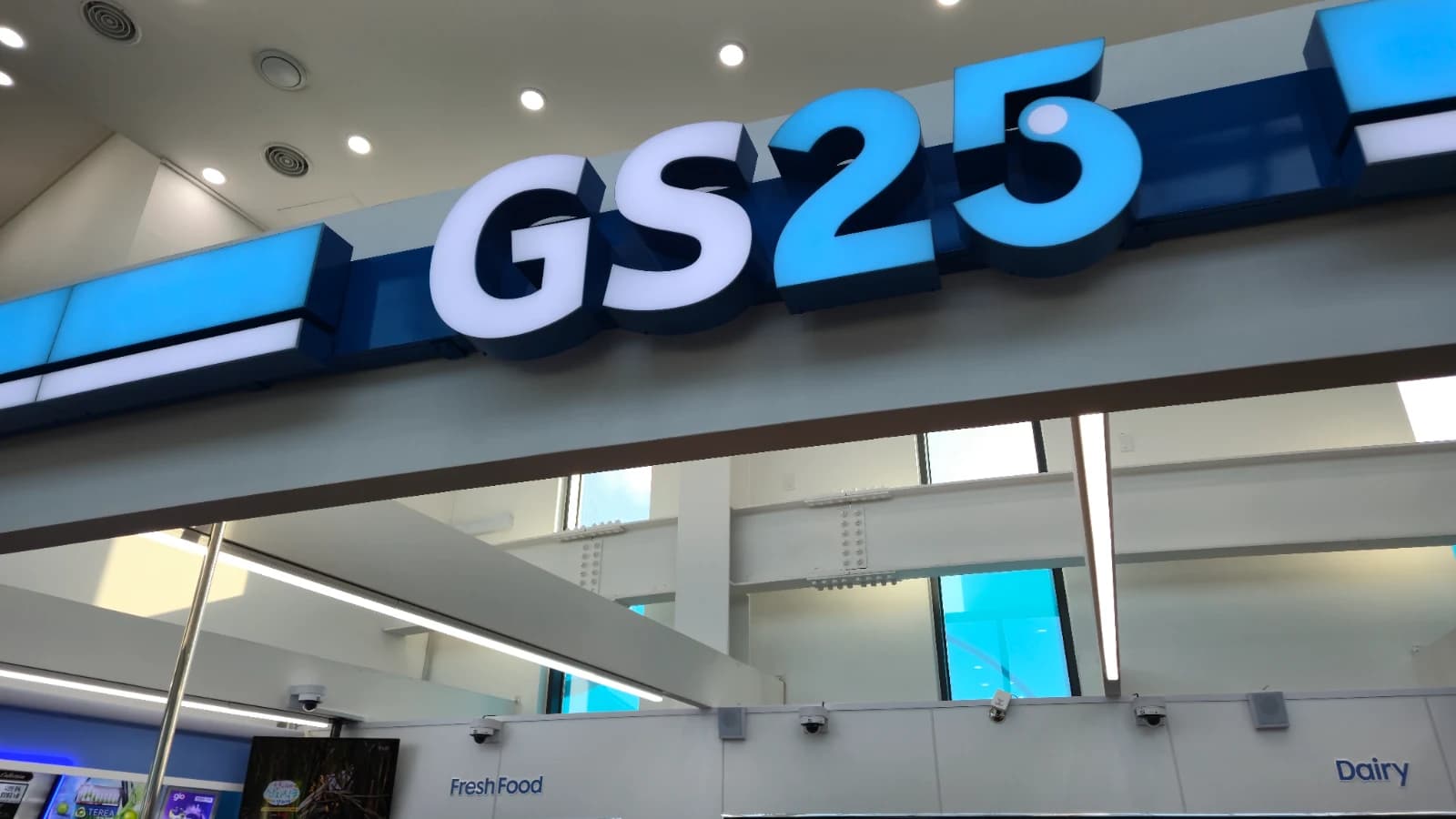
Step inside and you'll find a Pascucci cafe on the left — it's a chain that uses 24-ounce venti-sized cups — but we skipped it at that hour. Across from it was a GS25 convenience store where you could pick up drinks and quick snacks. Walk further down the hallway and you'll hit the food court with its rows of self-order kiosks.
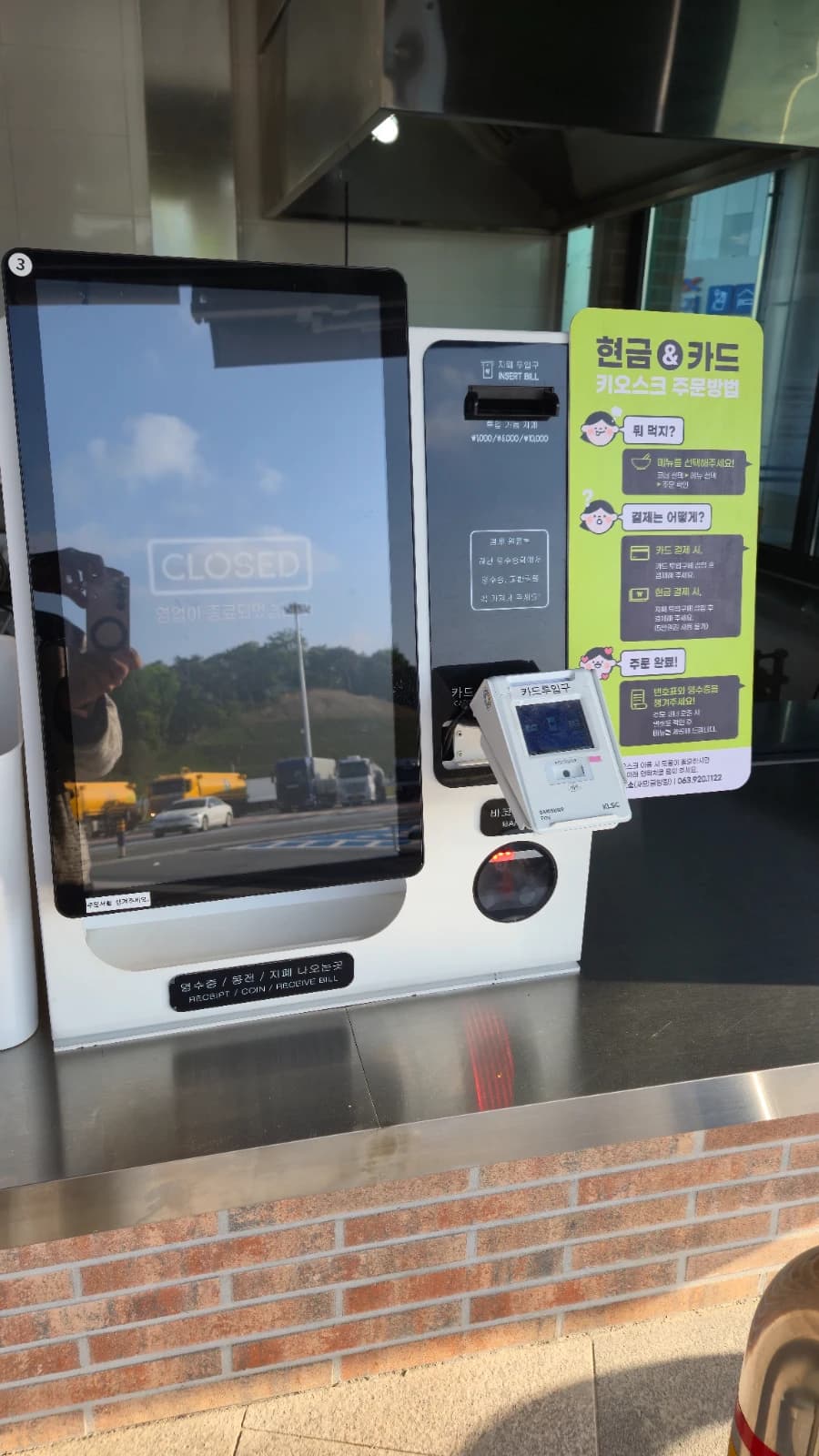
Most Korean highway rest stops have fully adopted these unmanned ordering systems by now. You tap the touchscreen to pick your dishes, pay by card, and a receipt prints out with your order number. One important thing: cash isn't accepted — card only. If a particular food counter is closed, the kiosk screen will show "Closed," so always check the screen before you start ordering.
Ramen Vending Machine and Self-Serve Soup Vending Machine
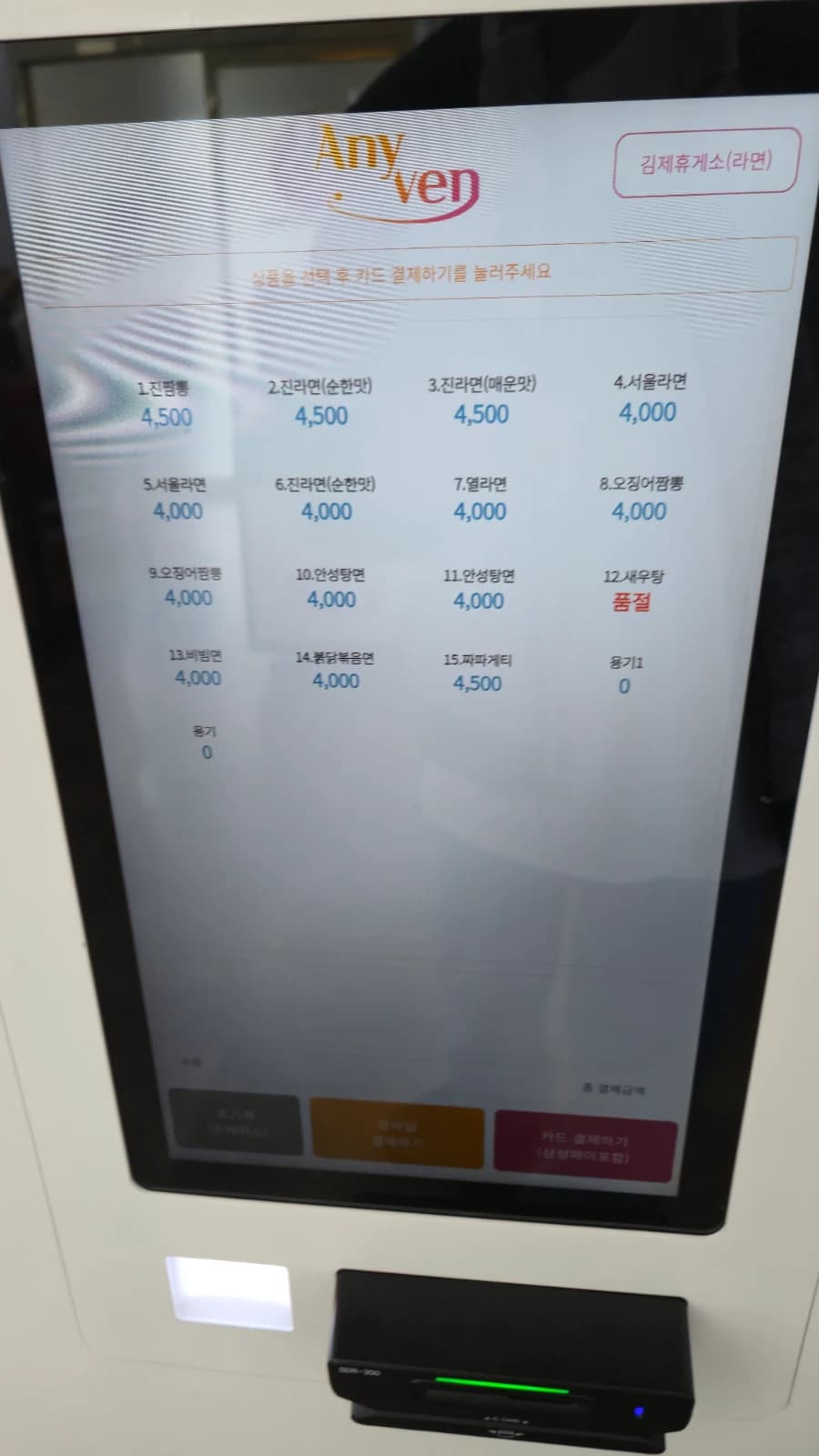
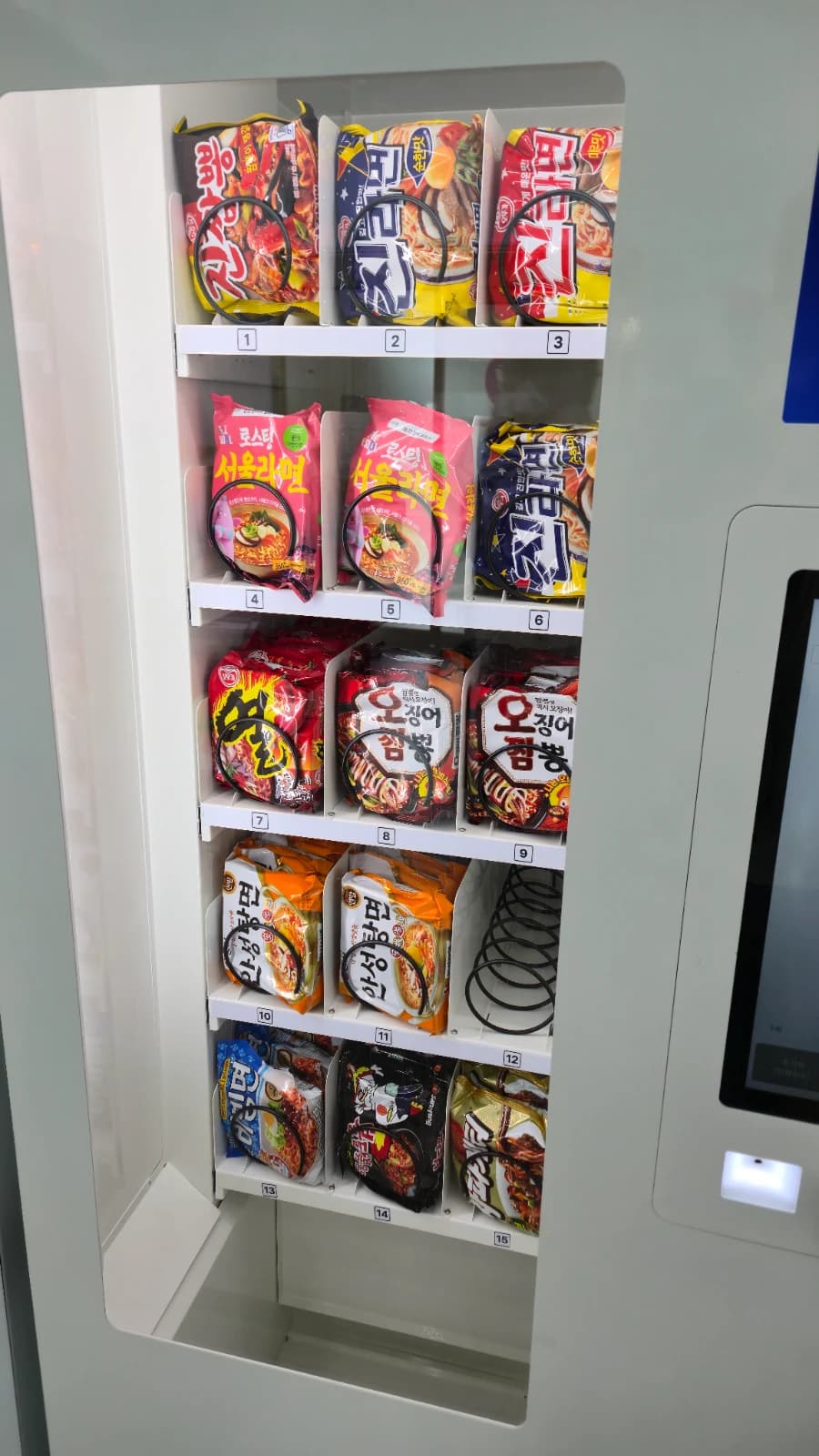
Right next to the food court, there was an unmanned ramen vending machine. Hot water comes straight from the machine, so you can make yourself a bowl of instant noodles without any staff involved. Here's the lineup with prices (May 2026, cup included): Jin Jjamppong $3.30, Jin Ramen (mild and spicy) $3.30, Seoul Ramen $2.90, Yeol Ramen $2.90, Squid Jjamppong $3.30, Anseongtangmyeon $2.90, Bibimmyeon $2.90, Rice Stir-Fried Noodles $3.30, and Jjapaghetti $3.30 — the shrimp soup option was sold out. For context, the exact same ramen at a convenience store runs about $1–$1.50, so you're basically paying 2–3 times the price for the cup and hot water service.
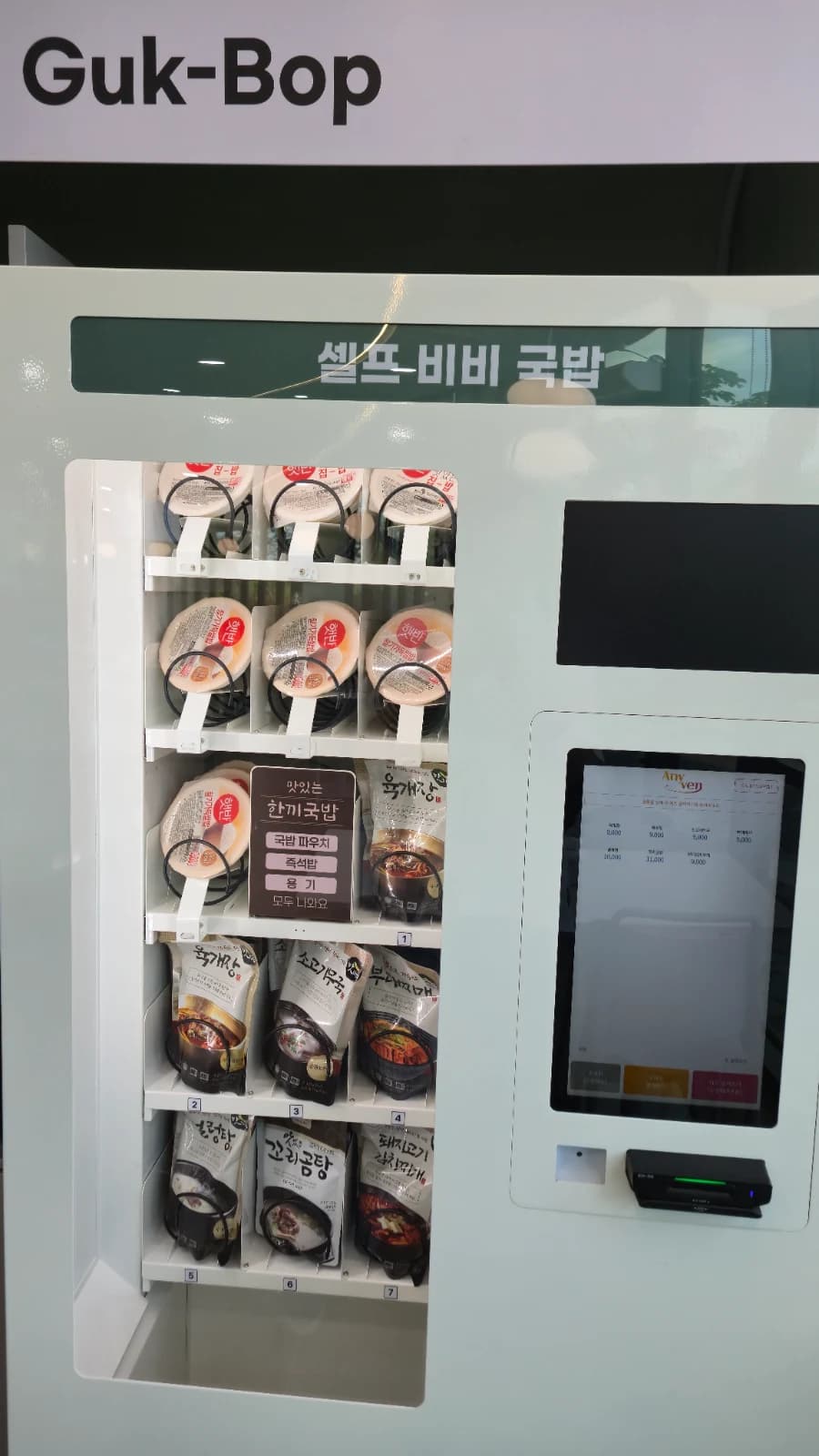
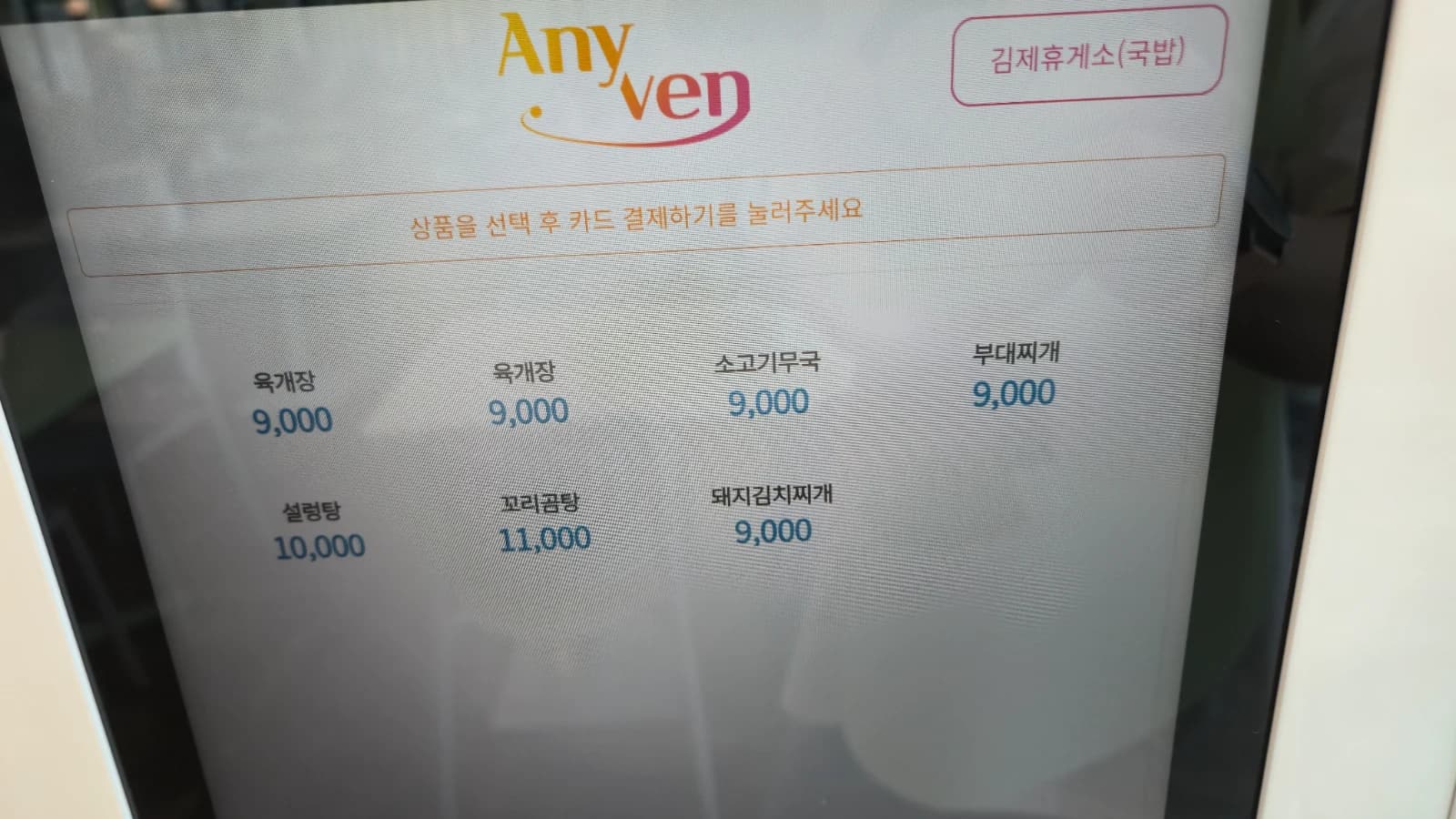
Right beside the ramen machine was a self-serve gukbap vending machine. Gukbap is a Korean-style hot soup served with rice mixed in, and this machine was selling yukgaejang (spicy beef soup) for about $6.50, seolleongtang (ox bone broth) for about $7.30, and oxtail soup for about $8. Honestly, considering there's no actual cook involved, I thought the prices were a bit steep. Some of these were comparable to — or even pricier than — the human-prepared dishes in the food court, which was a definite letdown.
Ordering Breakfast at the Food Court
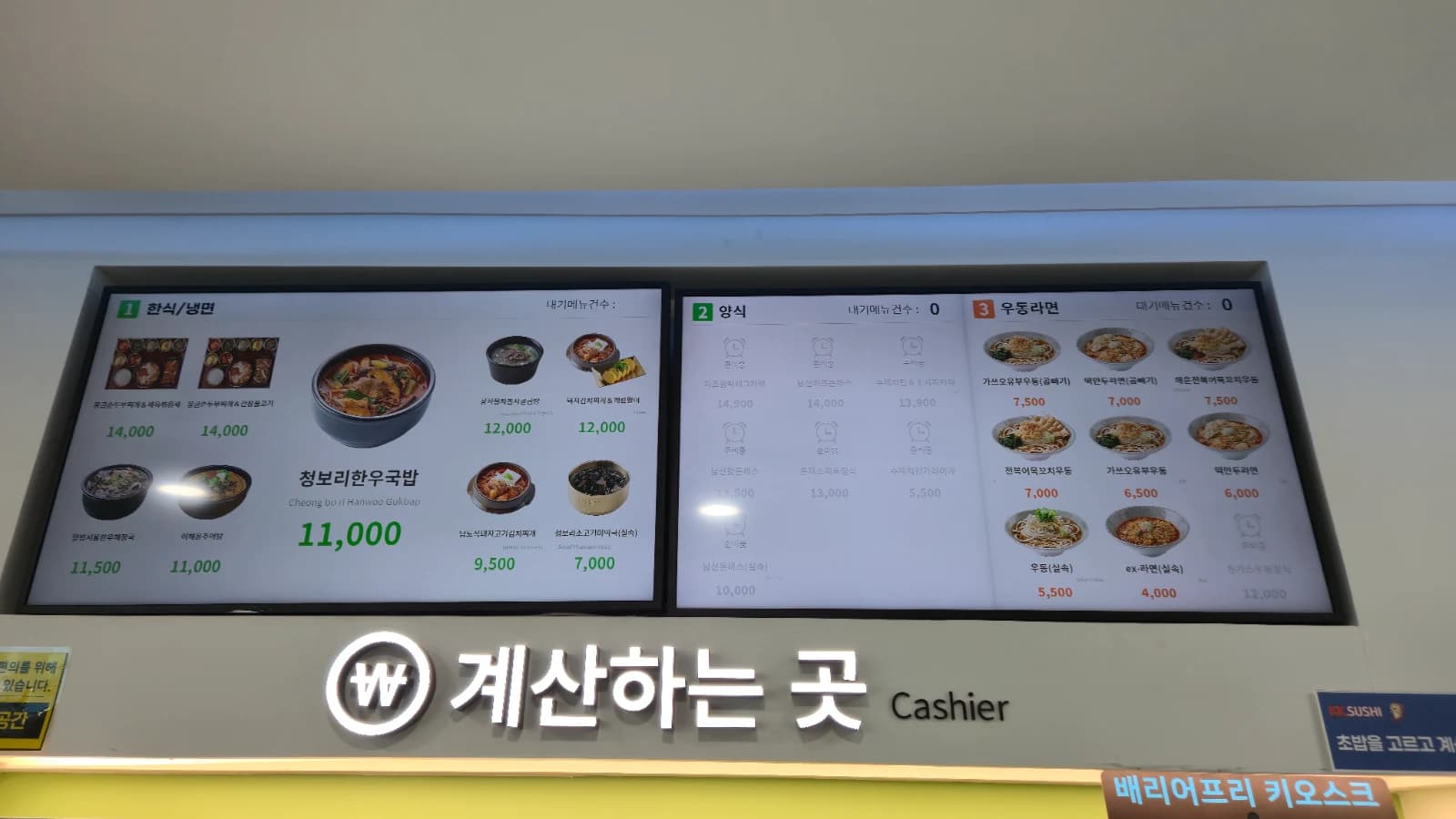
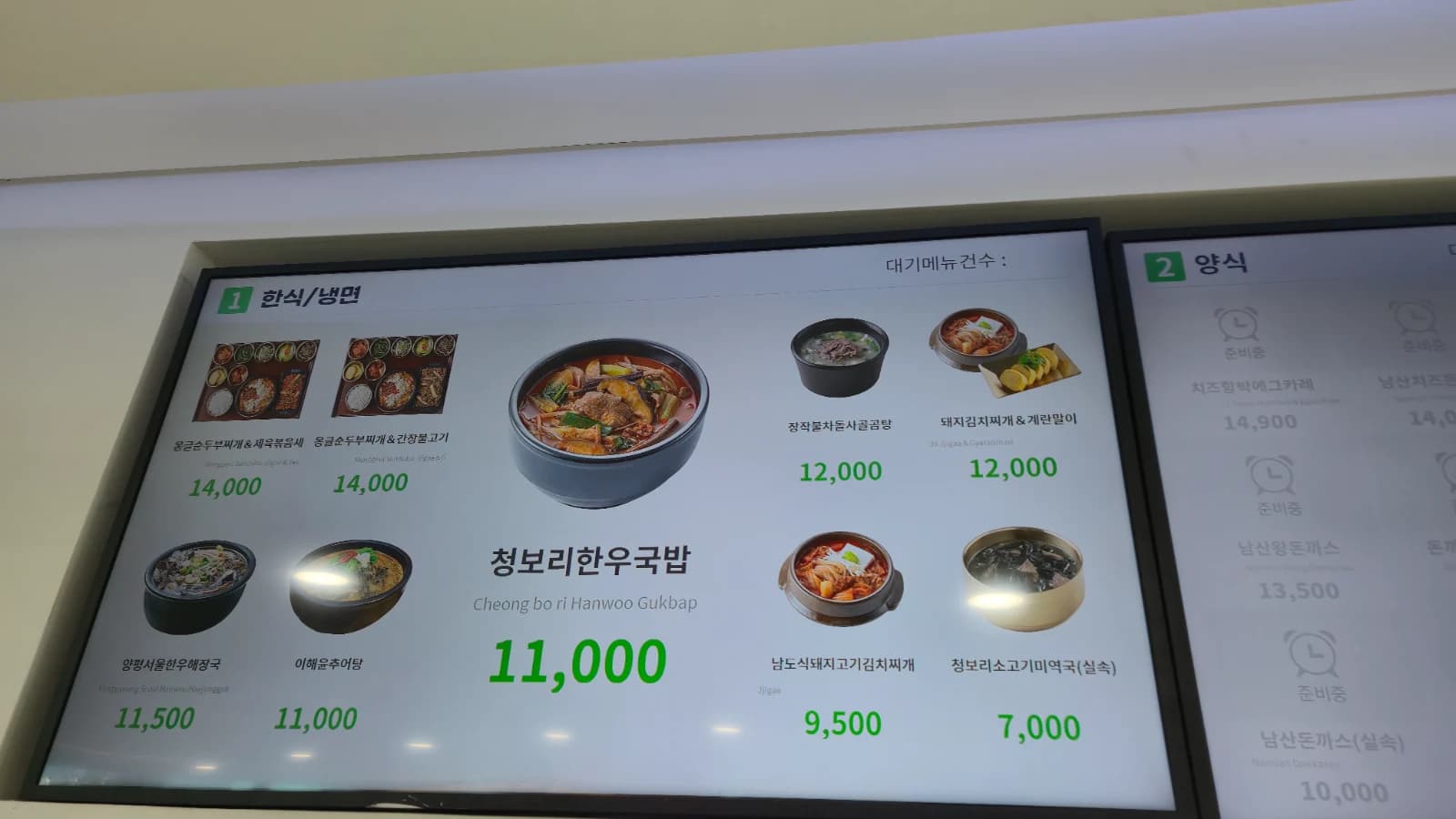
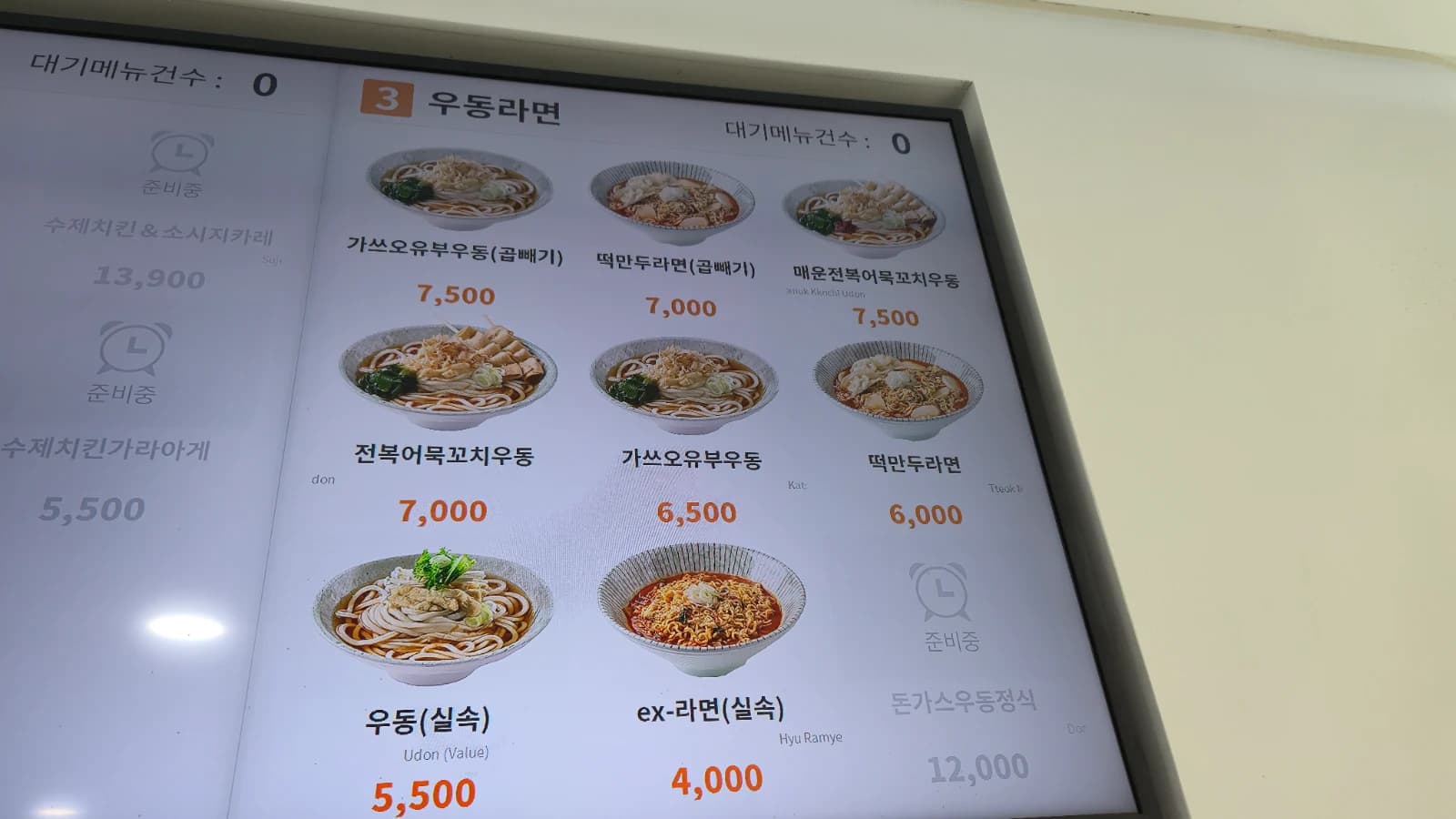
The food court was divided into Korean cuisine, udon/ramen, and Western-style sections. On the Korean side, I saw Cheongbori Hanwoo Beef Gukbap for about $8, Okgol Sundubu Jjigae (soft tofu stew) for around $10, and Namdo-style Pork Kimchi Jjigae for about $7. The udon/ramen section had items like Katsuo Fried Tofu Udon at $5.50, Budget Udon at $4, and Donkatsu Udon Set at roughly $8.70. Overall, prices ranged from about $4 to $10, which — while definitely pricier than eating in town — is pretty much what you'd expect at a Korean highway rest stop.
The catch was that at 7 AM, not everything was available. Quite a few counters hadn't started prepping yet, so our options shrank considerably. Udon is the one menu you can count on 24/7 at virtually any Korean highway rest stop, so that was a go. Chueotang — a traditional loach soup — happened to be available too, which was lucky. Kimchi jjigae was technically an option as well, but beyond that, choices were slim. My wife and I stood in front of the menu boards for a good while before she settled on the chueotang and I picked the udon.
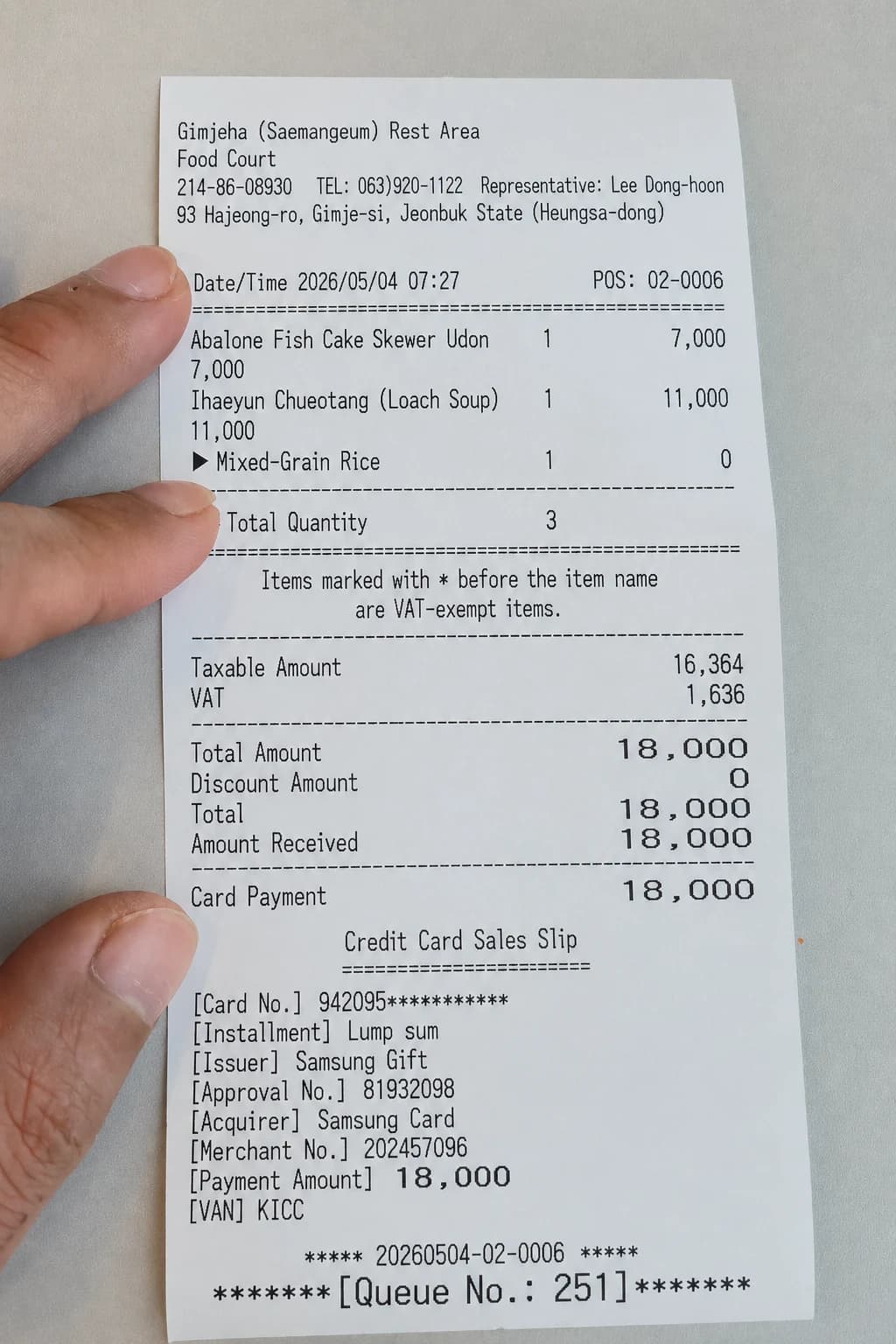
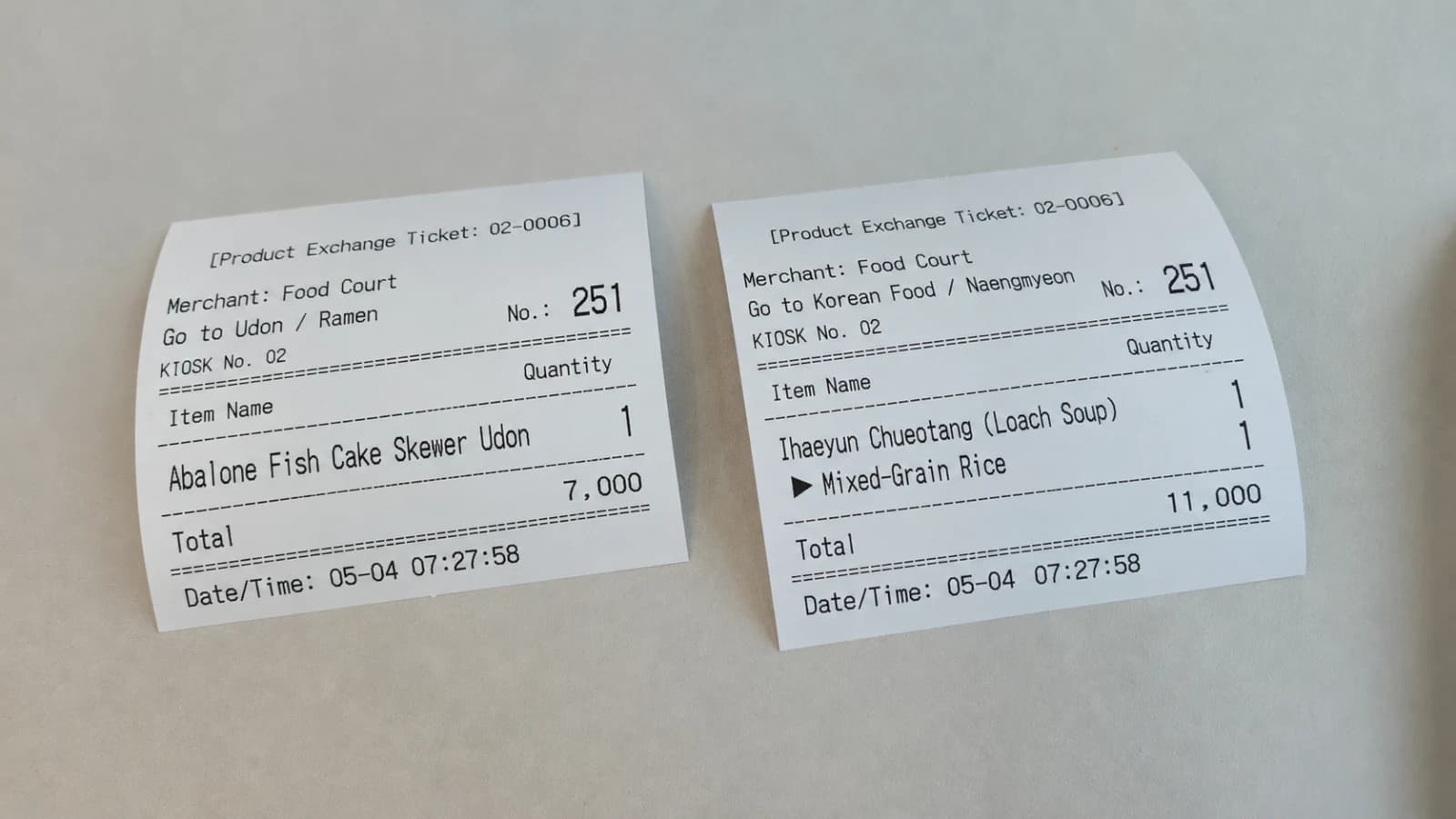
The receipt images above have been translated for English-speaking readers. I ordered the Abalone Fish Cake Skewer Udon for about $5 and the Yihaeyun Chueotang for about $8, plus multigrain rice, coming to a total of roughly $13. It was 7:27 AM. Once payment goes through, the kiosk prints a receipt with your pickup number — you take it to the relevant counter and wait until your number gets called. Now here's the thing: while I was in the restroom, my wife went ahead and swapped our dishes. I came back to find the chueotang at my seat and the udon at hers. So I ended up eating the chueotang whether I wanted to or not.
Abalone Fish Cake Skewer Udon and Yihaeyun Chueotang
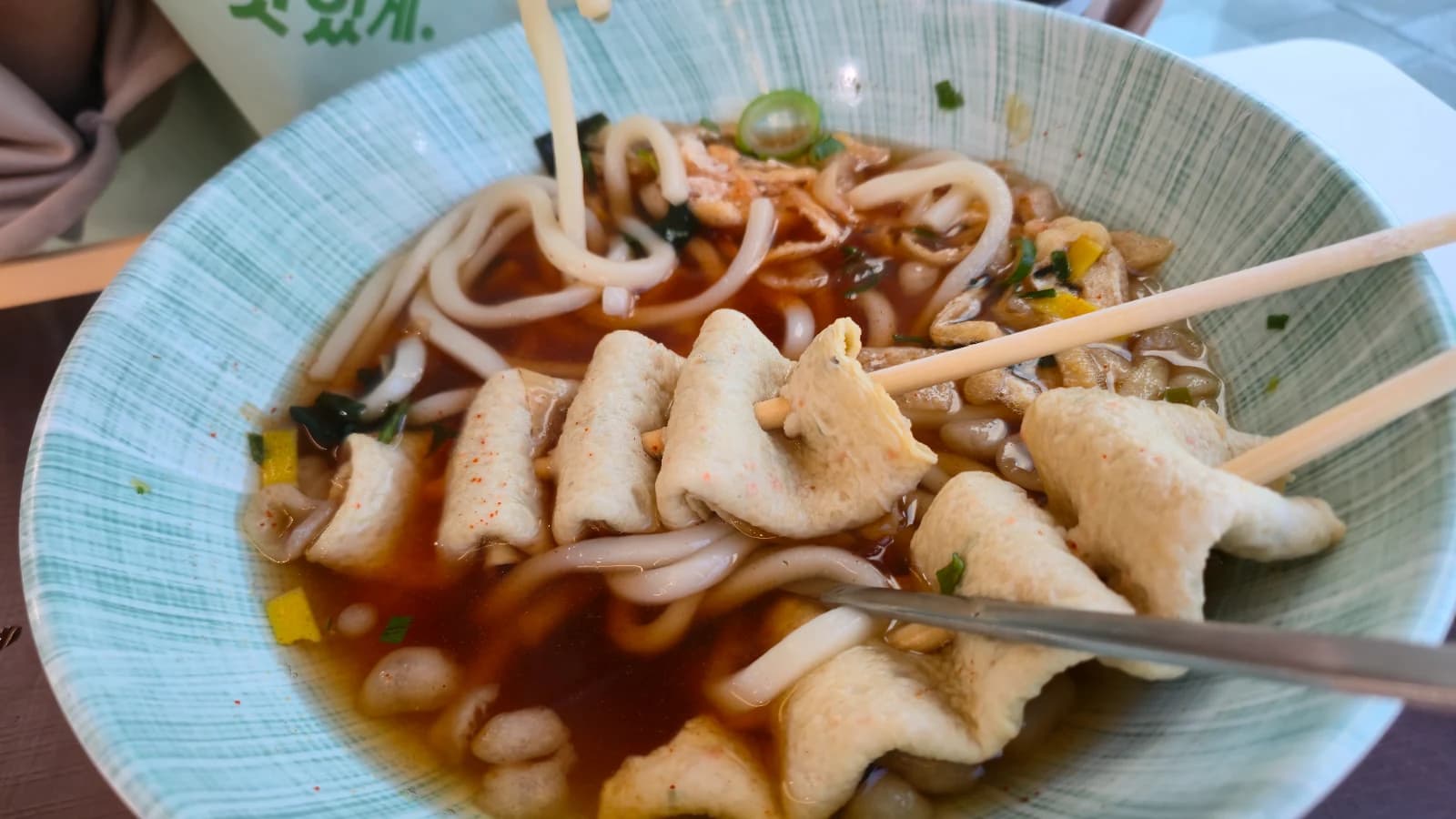
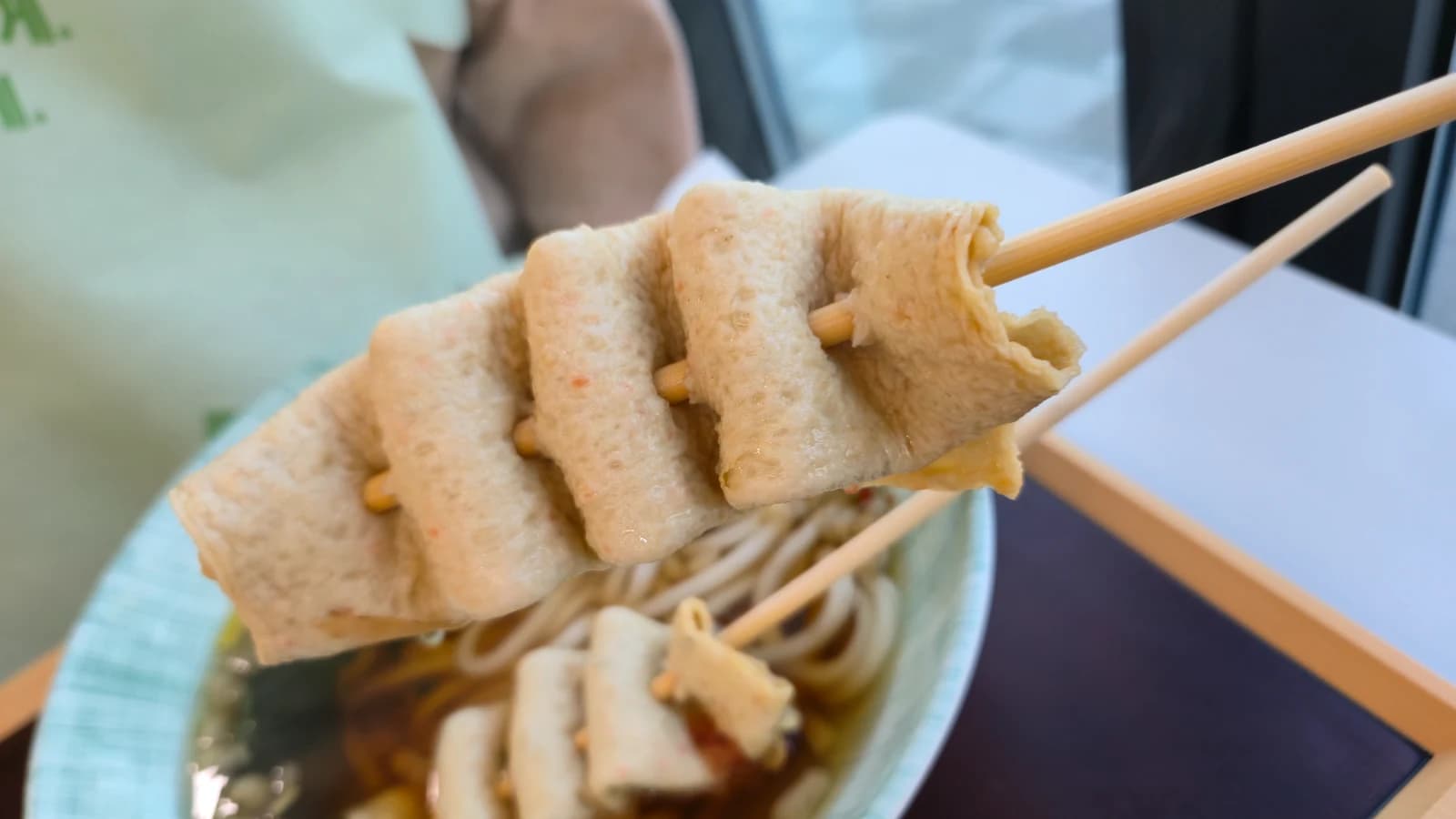
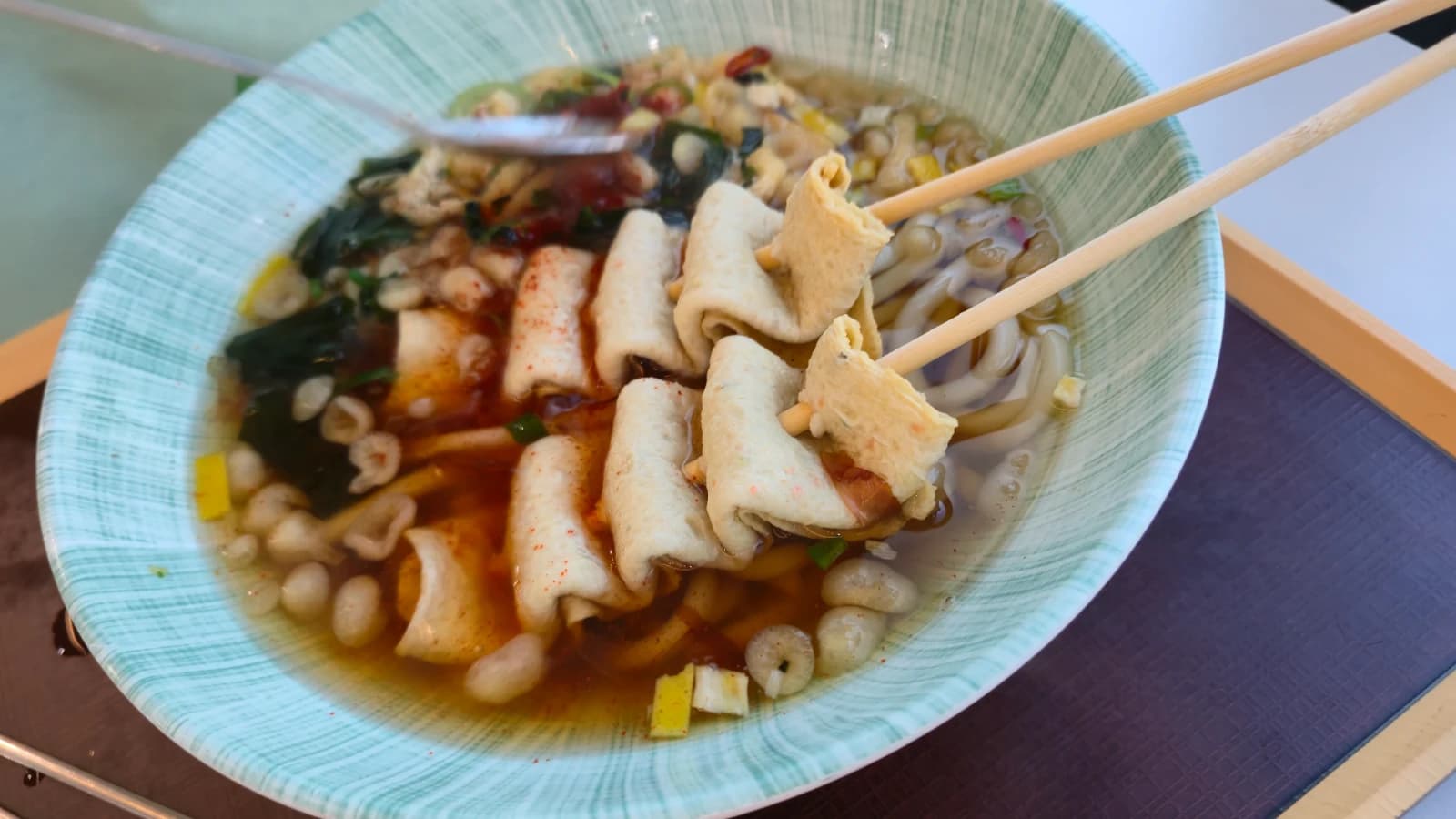
The Abalone Fish Cake Skewer Udon came in a clear broth with thick udon noodles, fish cake skewers, and a few pieces of abalone on top. The portion was decent, and at about $5 I didn't have major complaints — but for something with "abalone" in its name, the actual amount of abalone was pretty disappointing.
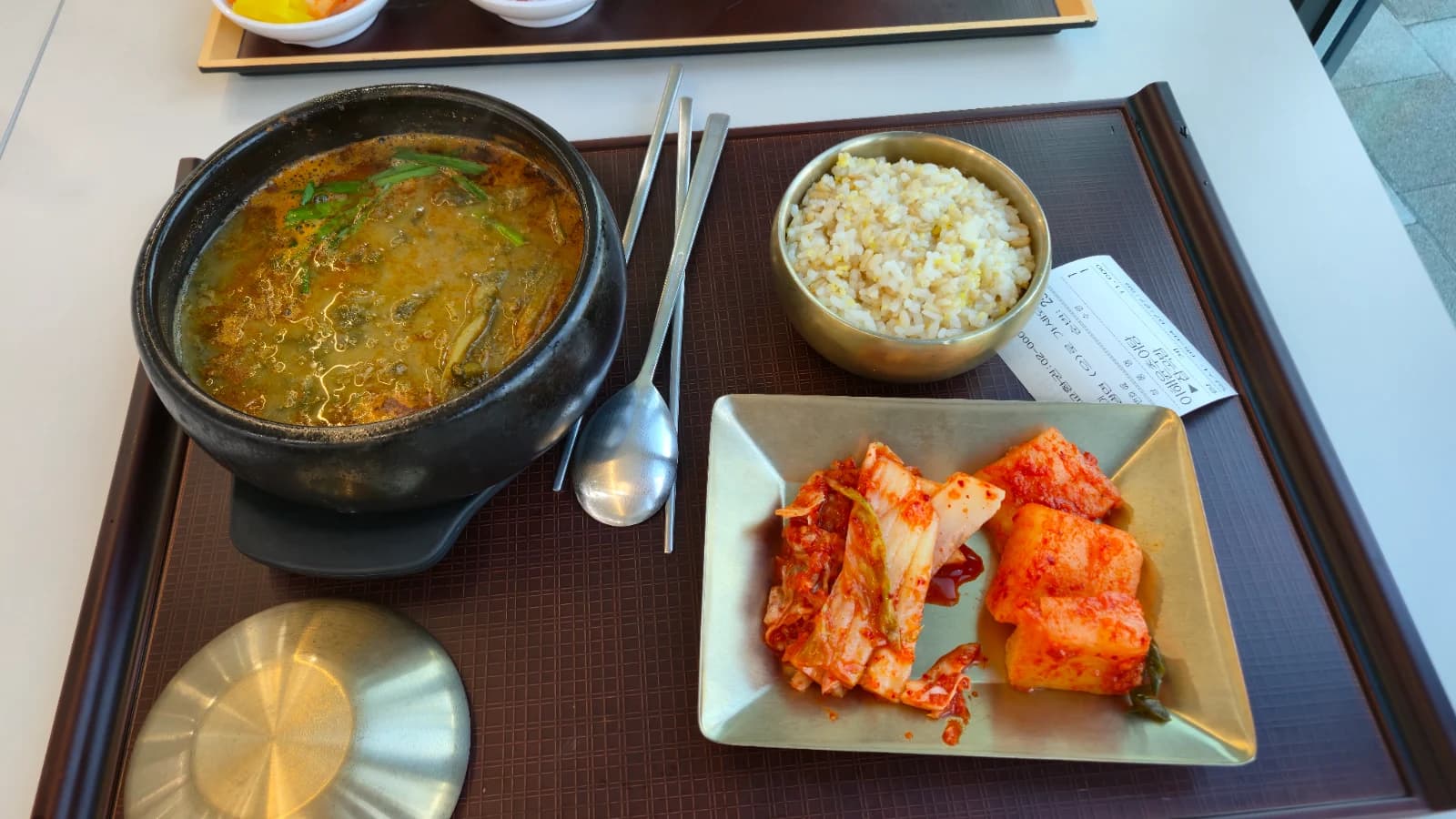
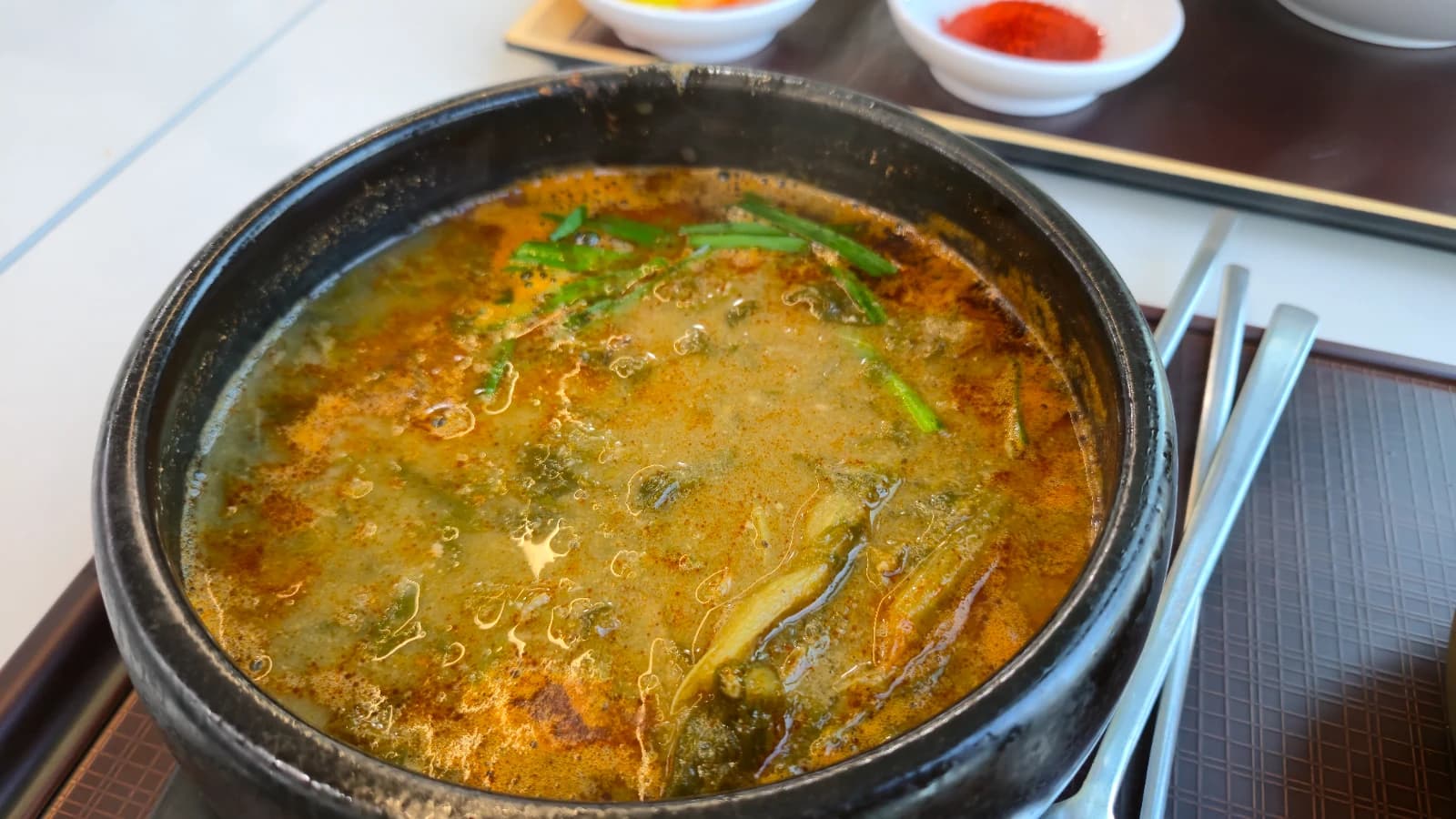
Chueotang is a traditional Korean soup made by grinding loach (a small freshwater fish) into the broth. It has a thick, earthy flavor that's pretty unique. That said, the Yihaeyun Chueotang I ended up eating was on the bland side overall. The flavor lacked punch, and for about $8, the whole dish didn't feel particularly special.
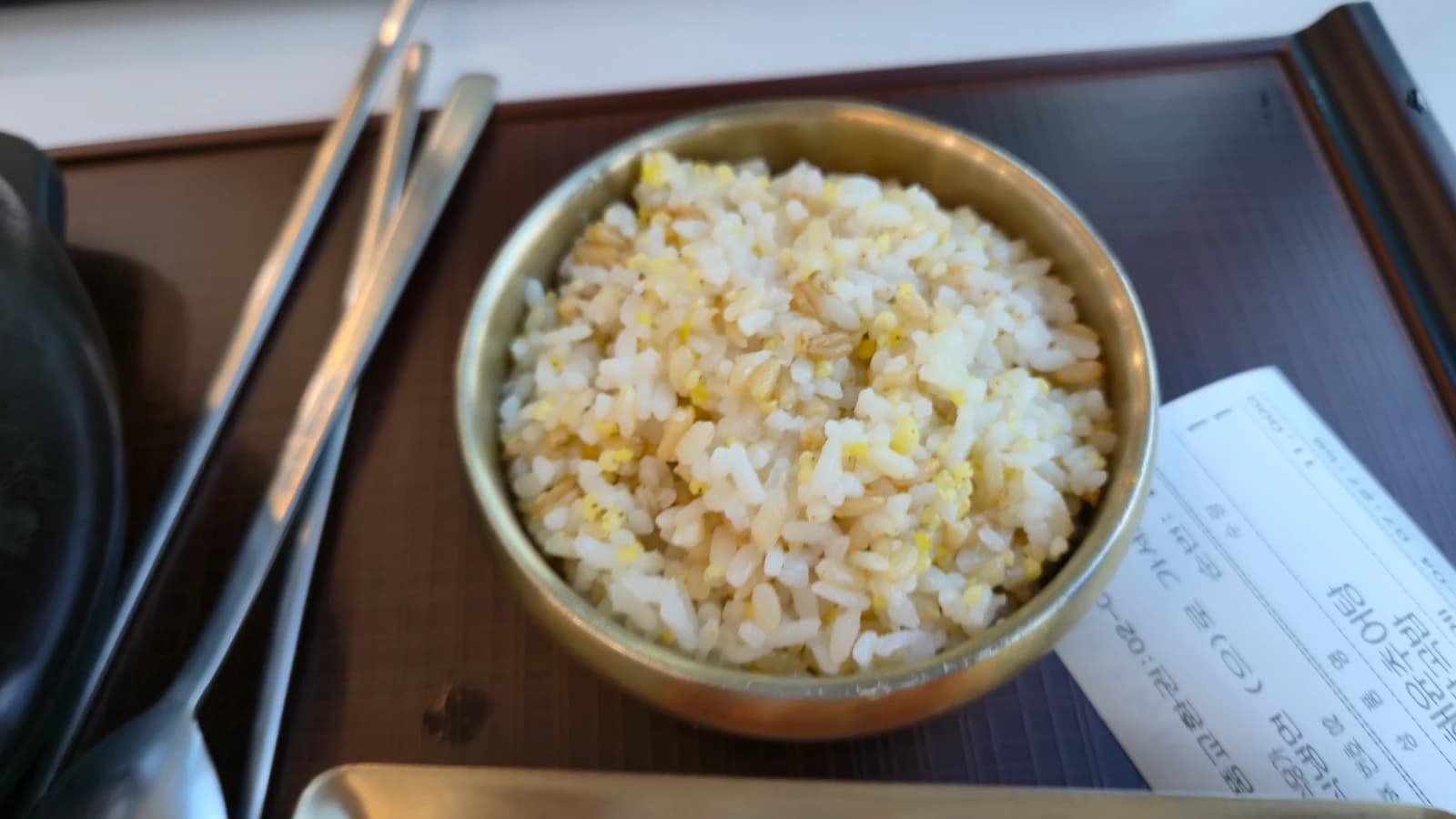
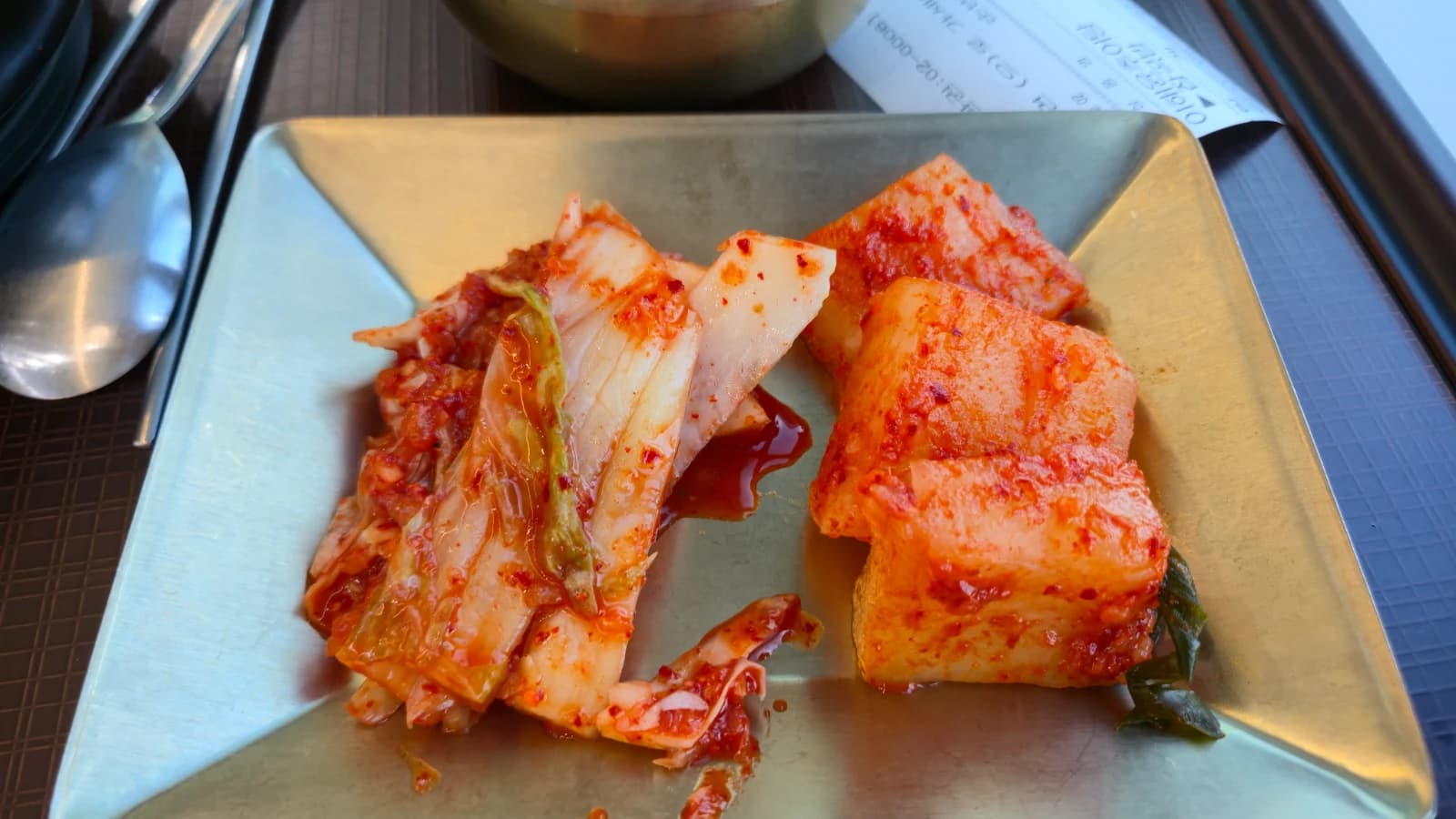
The multigrain rice on the side was a mix of white rice with barley, beans, and millet — considered a healthy staple in Korea. The side dishes were napa cabbage kimchi and kkakdugi, which is daikon radish cut into cubes and seasoned with chili flakes. Kkakdugi pairs especially well with soups because its crunch and tang cut through the richness. Both sides were standard complimentary banchan — no extra charge.
After the Meal — Self-Bussing and Water Station
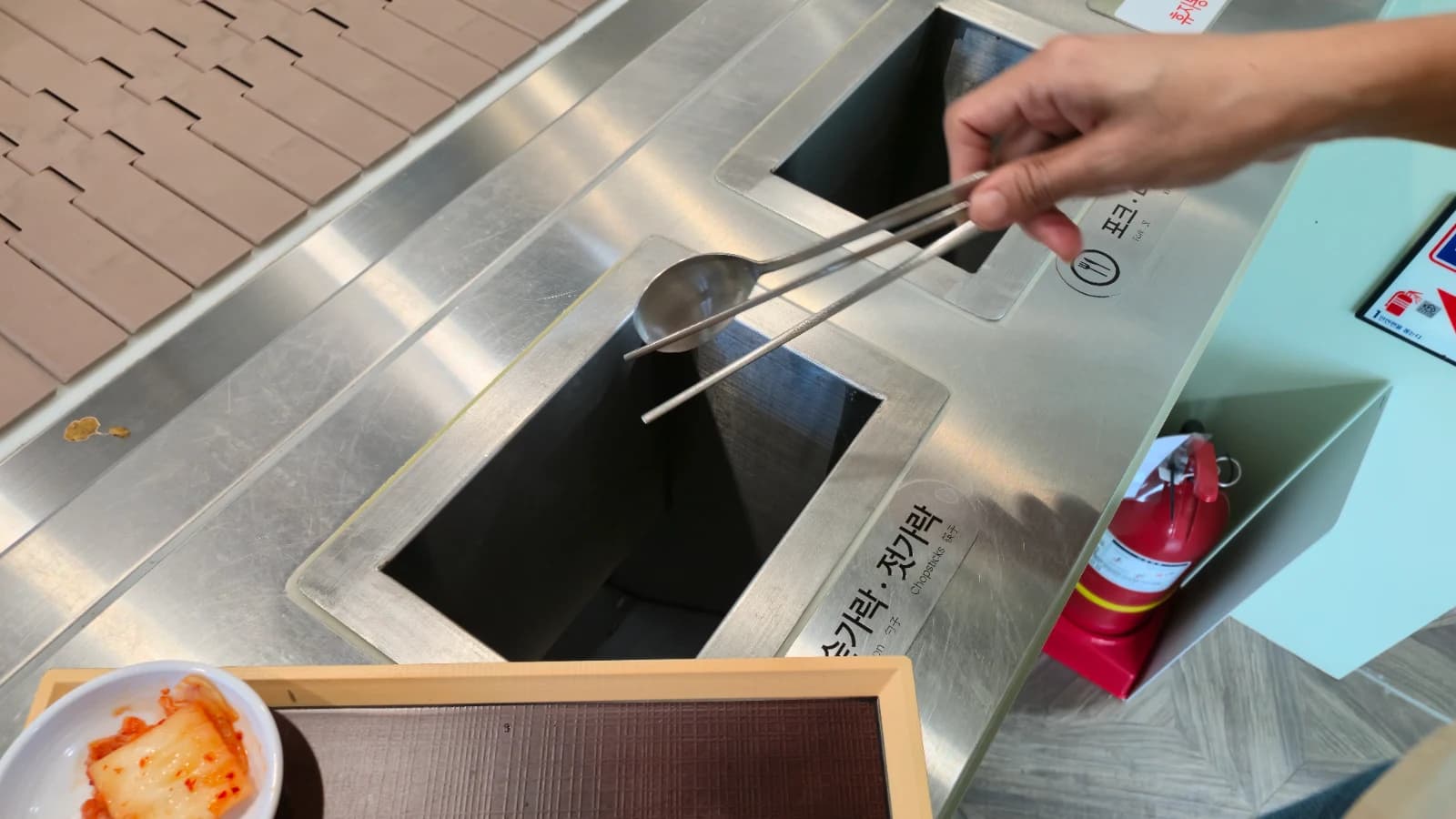
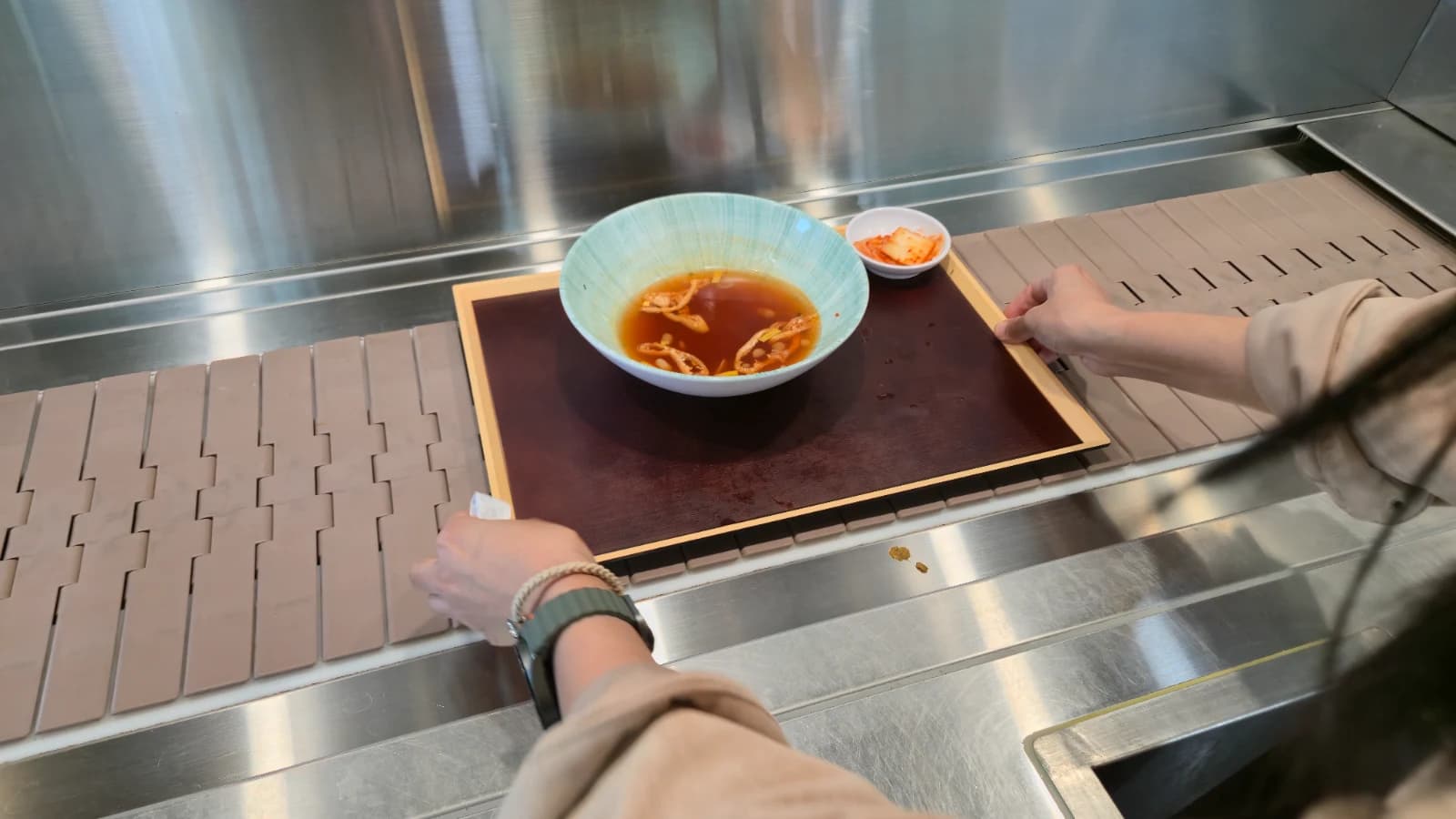
At Korean highway rest stop food courts, you're expected to bus your own dishes when you're done. Spoons and chopsticks go into a separate utensil return bin, while trays and bowls get dropped off at the dish return area. Cleaning up after yourself at self-service spots is just standard etiquette in Korea — think of it like returning your tray at a fast food place back home.
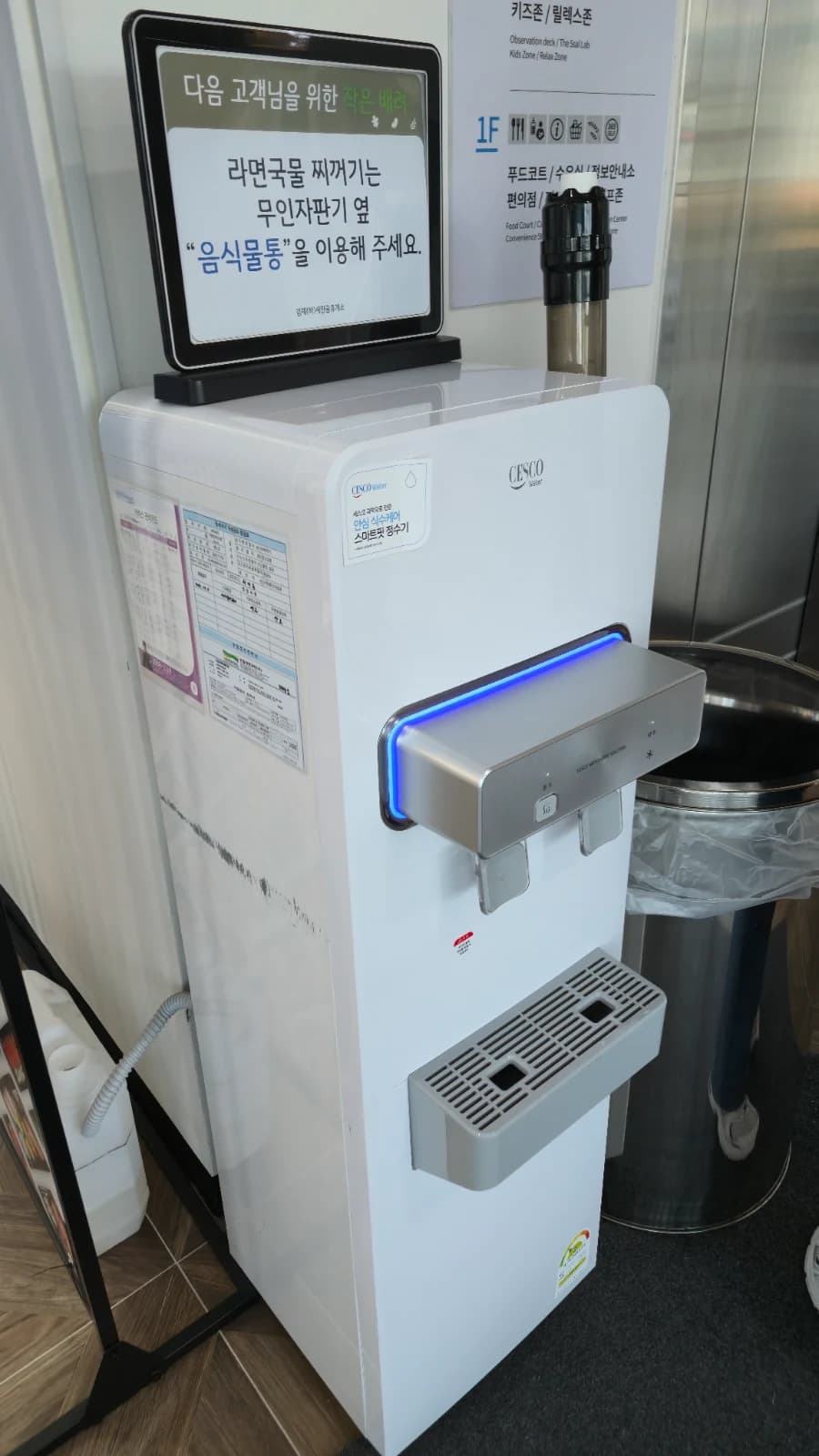
Nearby there was a free water dispenser for anyone to use, along with a dedicated bin specifically for dumping leftover ramen broth. My wife said, "This is so clean and well organized." Being a brand-new building probably helped — the return stations and water dispenser area were all spotless.
Vanilla Latte at Sagwadang Cafe
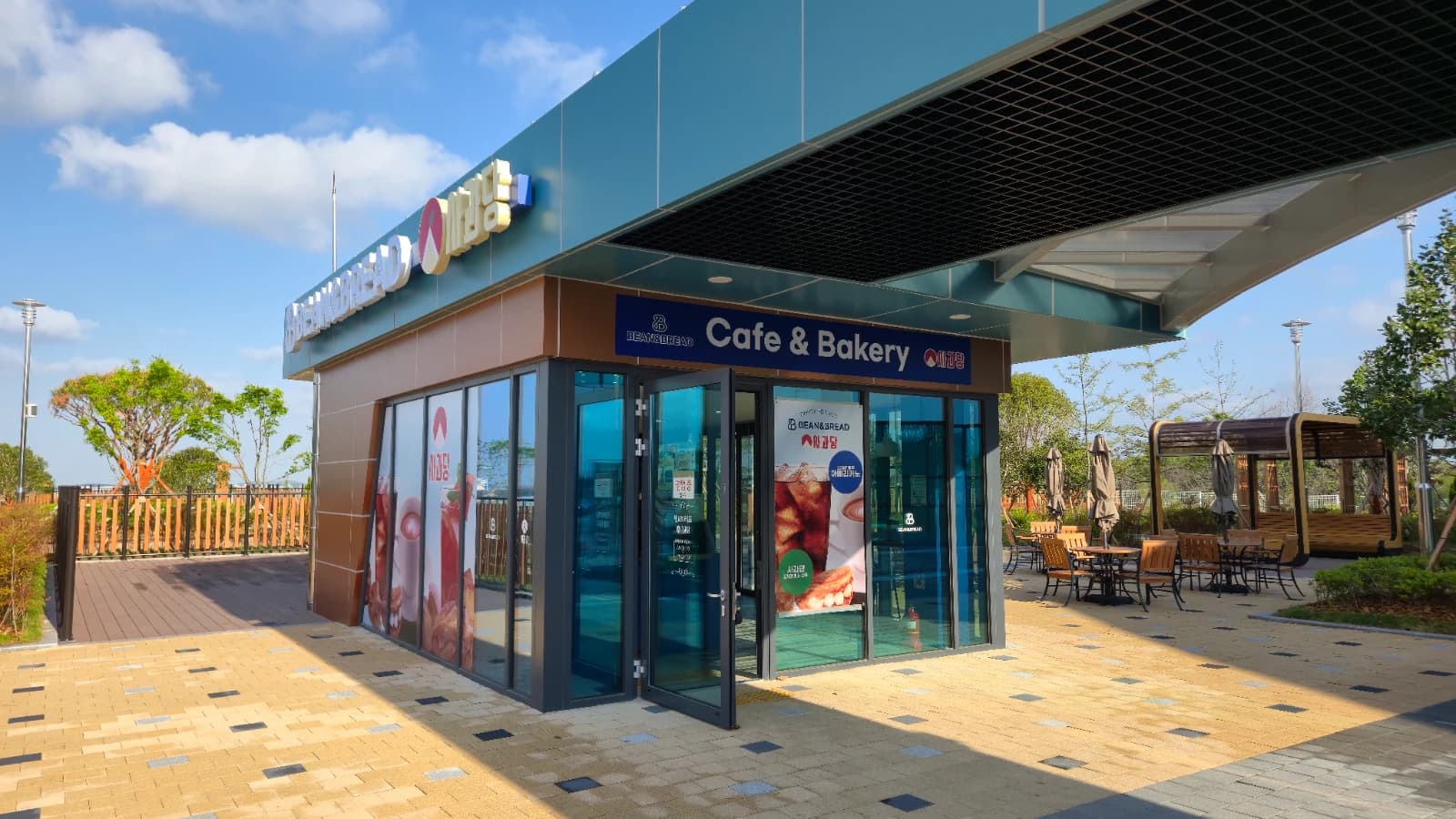
After finishing up, we headed outside for coffee and found a cafe called Sagwadang (which translates to "Apple House") near the rest stop exit. It was a small spot with a hand-lettered sign that caught my eye. True to its name, Sagwadang specializes in apple-based desserts alongside the usual cafe drinks. Apple pie was listed as their signature item, and even though I'd only planned on getting coffee, the menu started tempting me.
Checking Out the Bakery Selection
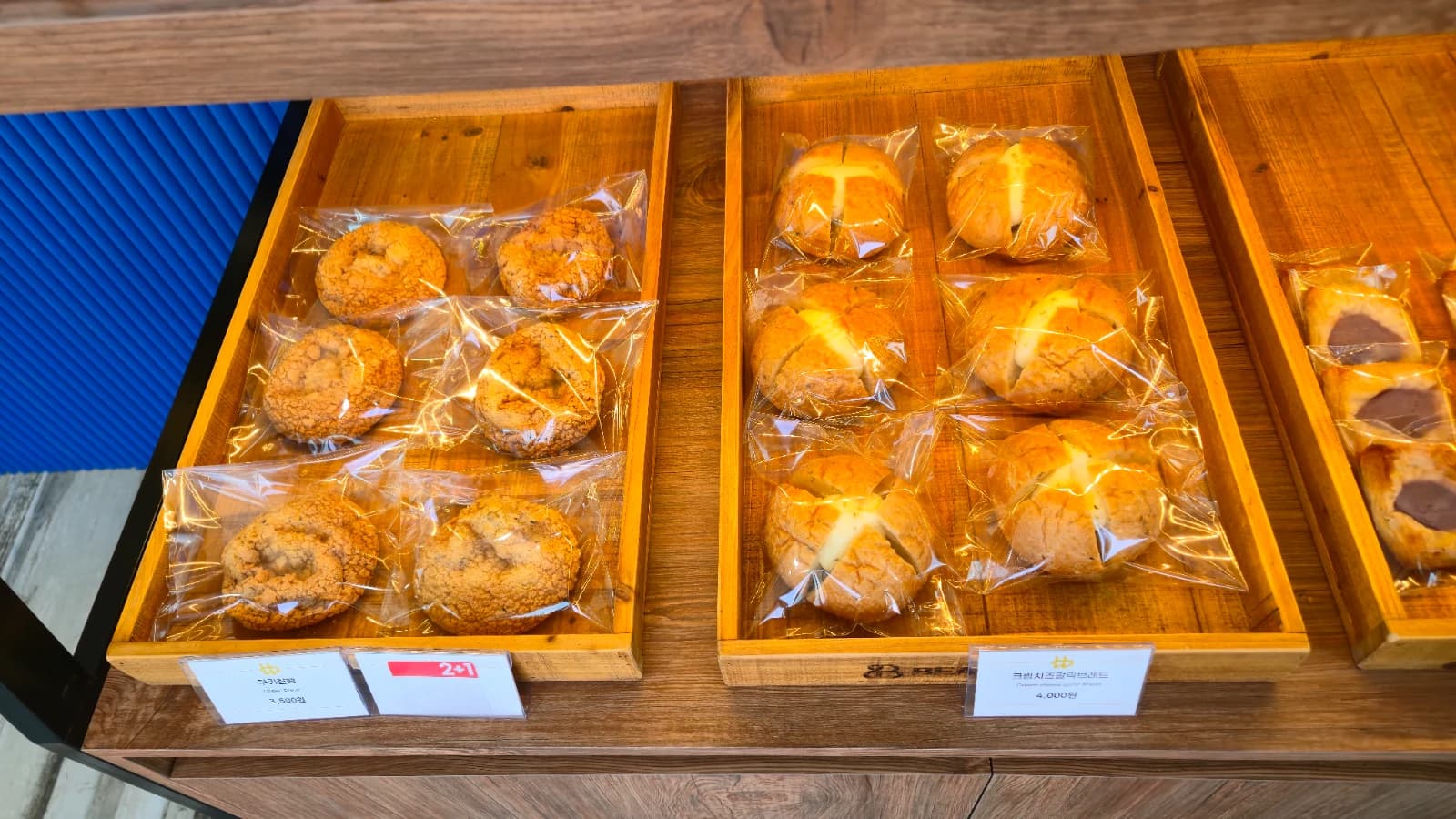
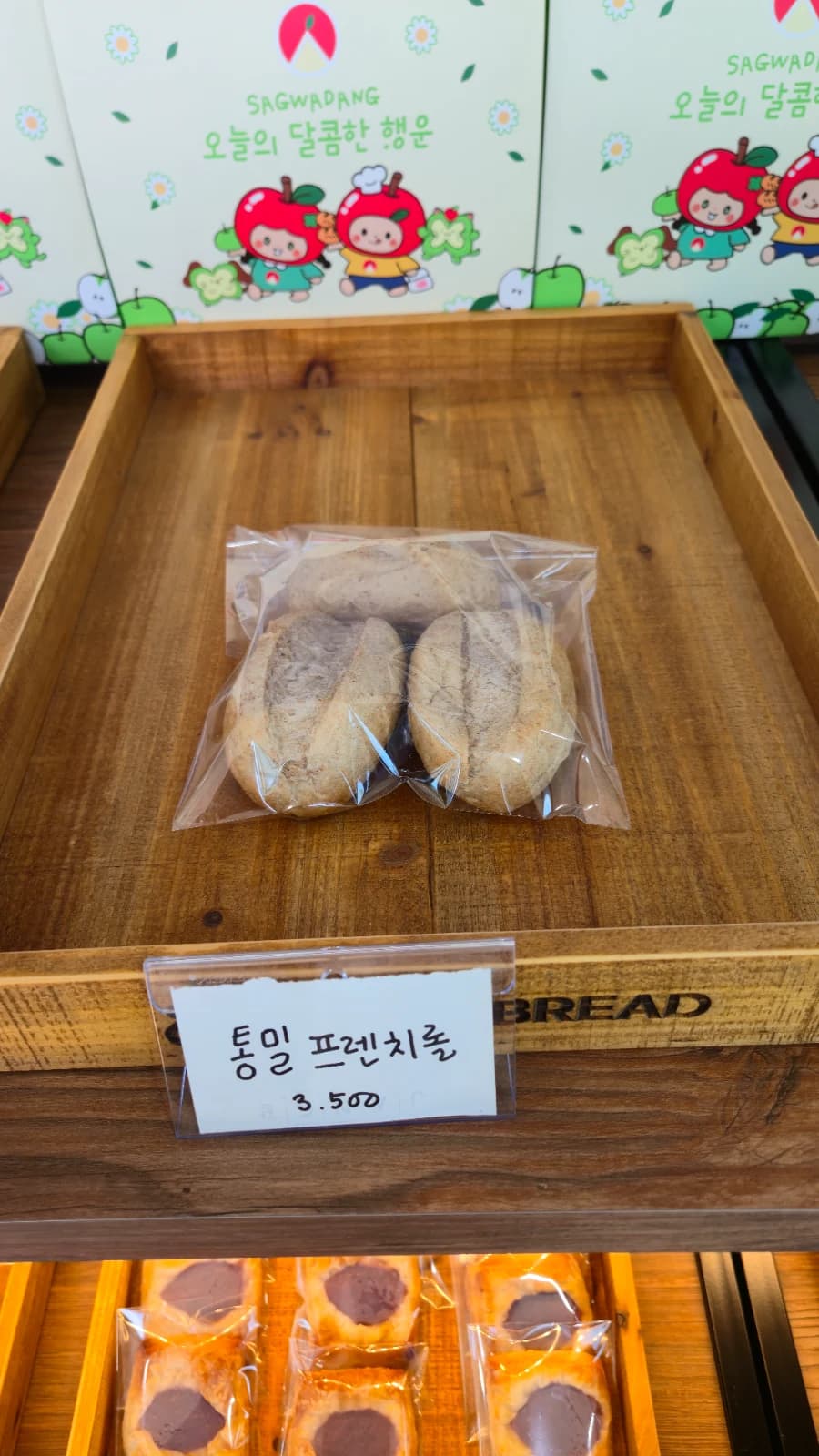
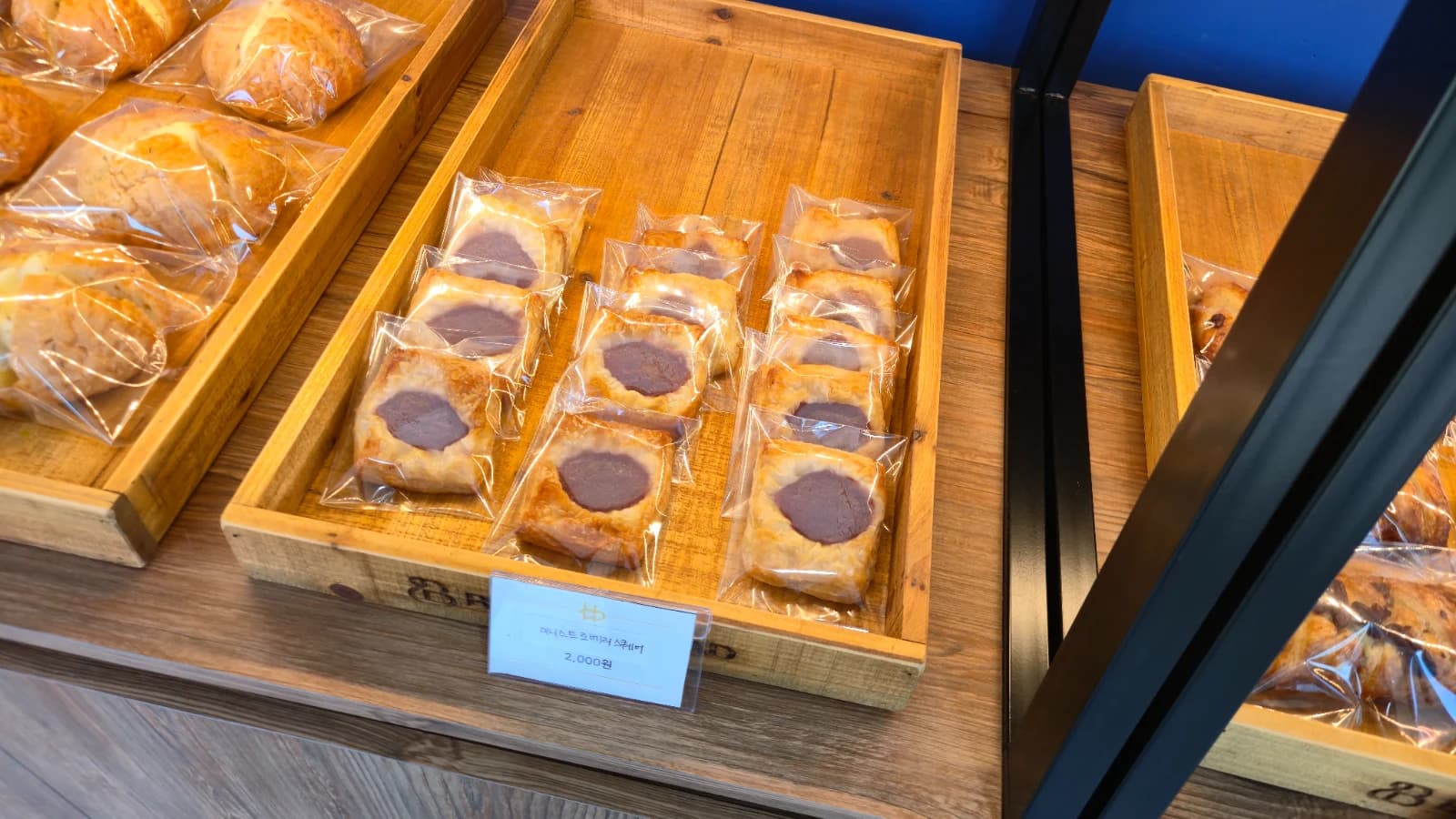
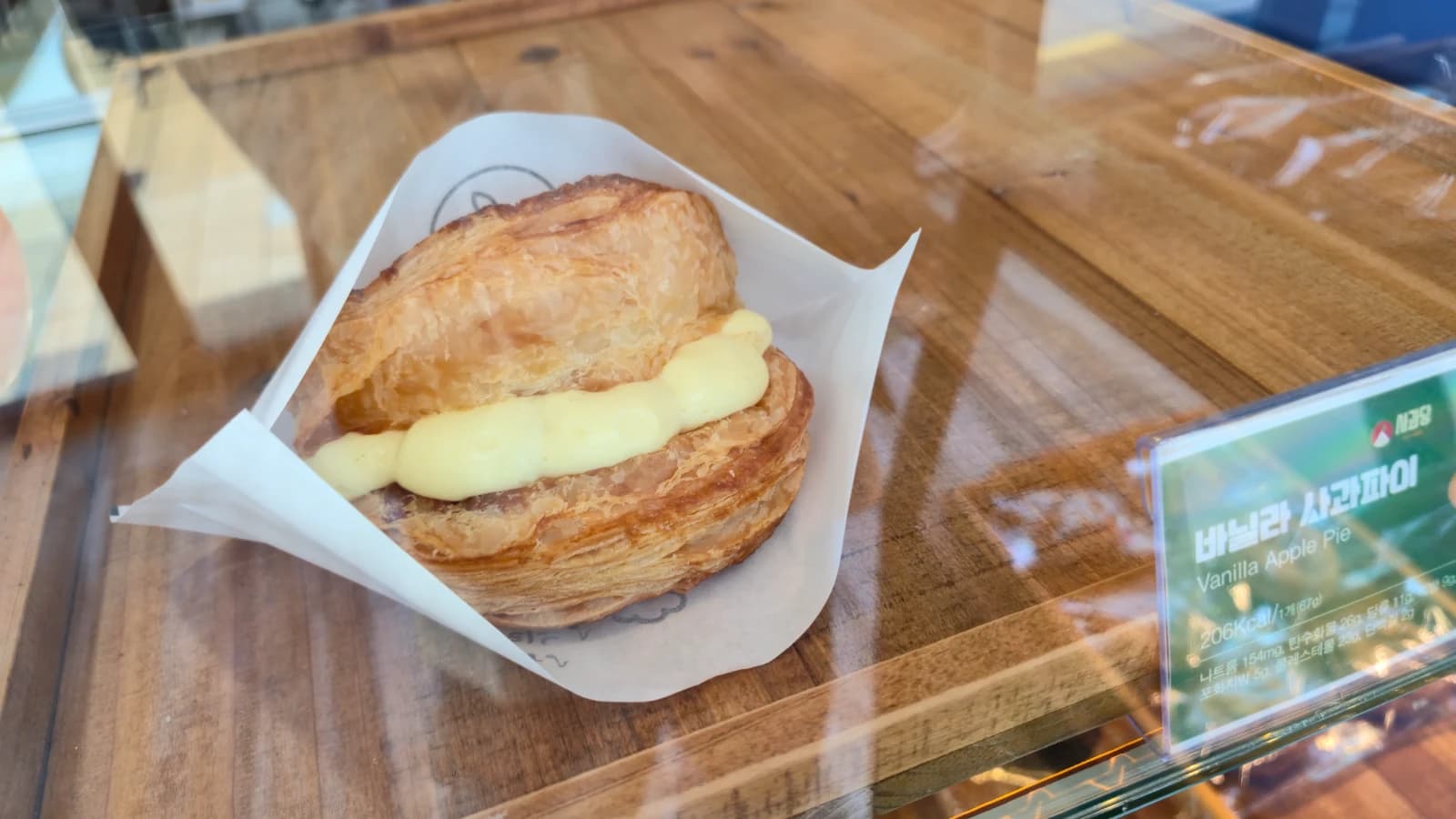
Inside the cafe, individually wrapped breads were displayed on wooden trays. One section was packed with soboro buns — a Korean-style bread topped with a crumbly crust made from butter, sugar, and flour baked until crispy. Next to those were round chocolate buns scored with a cross on top. Whole wheat French rolls were about $2.50 with only two left in stock, and the mini rye apple pies were around $1.50 each, topped with purple red bean paste. The vanilla apple pie was also about $1.50 — layers of croissant dough with a generous filling of vanilla cream, clocking in at 206 calories according to the nutrition label. I briefly considered grabbing one, but after that full food court breakfast, I stuck with just a drink.
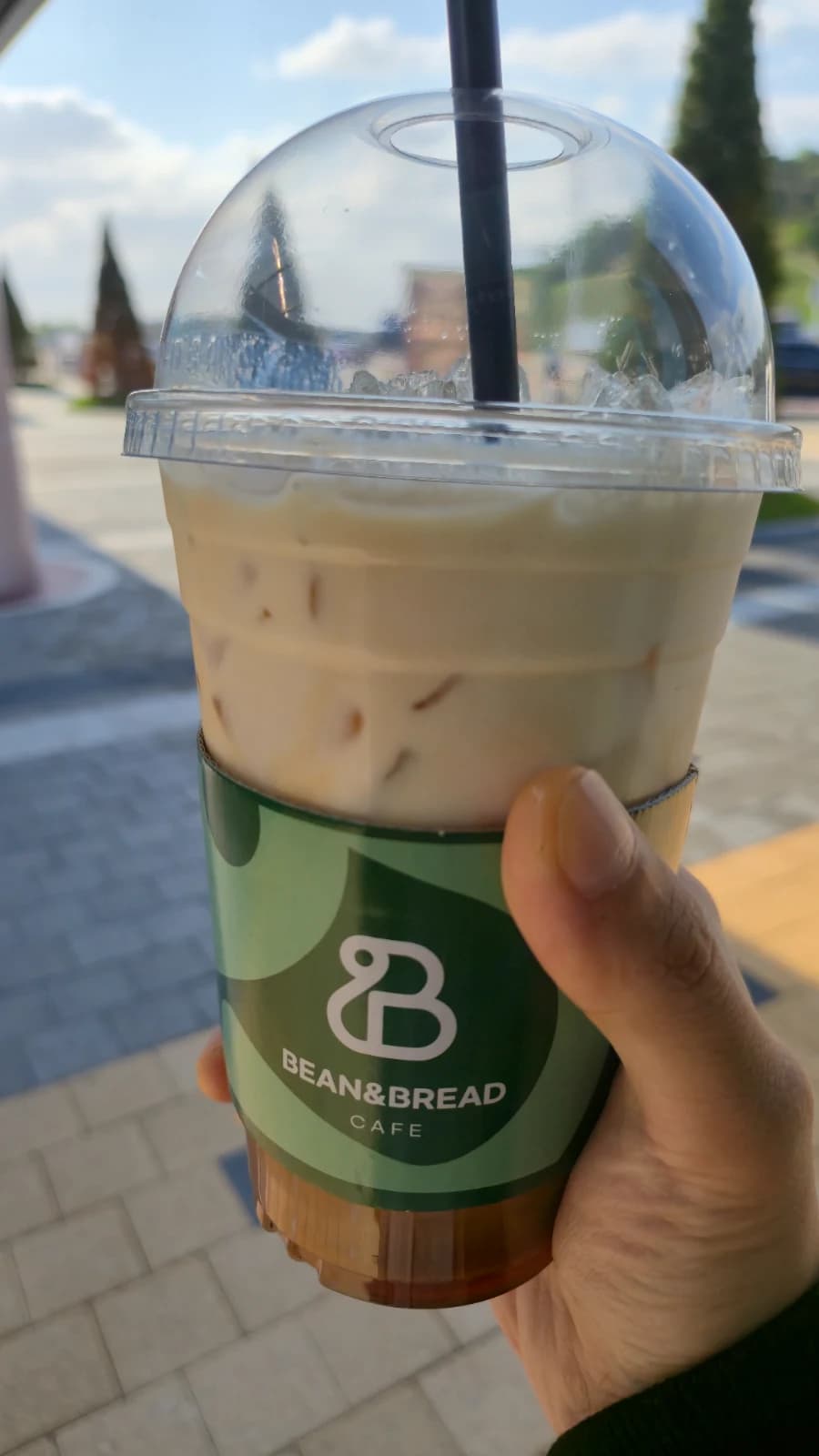
I ordered an iced vanilla latte. I don't remember the exact price. The cup had a green cardboard sleeve printed with "Bean and Bread Cafe" — seems like Sagwadang operates under that brand. The drink had a clear separation with a milk layer on top and a darker espresso layer on the bottom, so I snapped a photo before stirring it up. Taste-wise, it was a perfectly solid vanilla latte — nothing more, nothing less.
The Rest Stop's Outdoor Park and Terrace
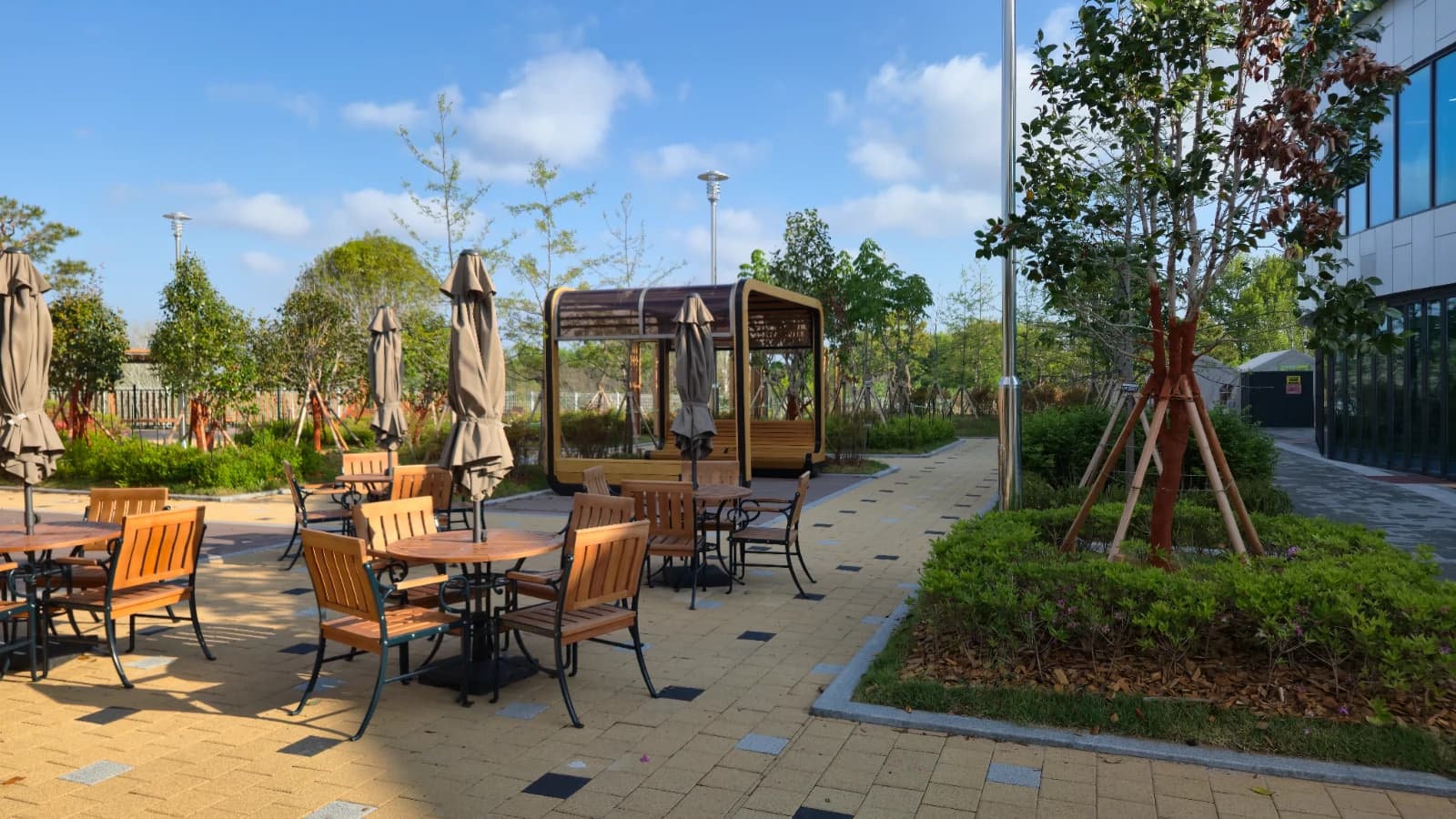
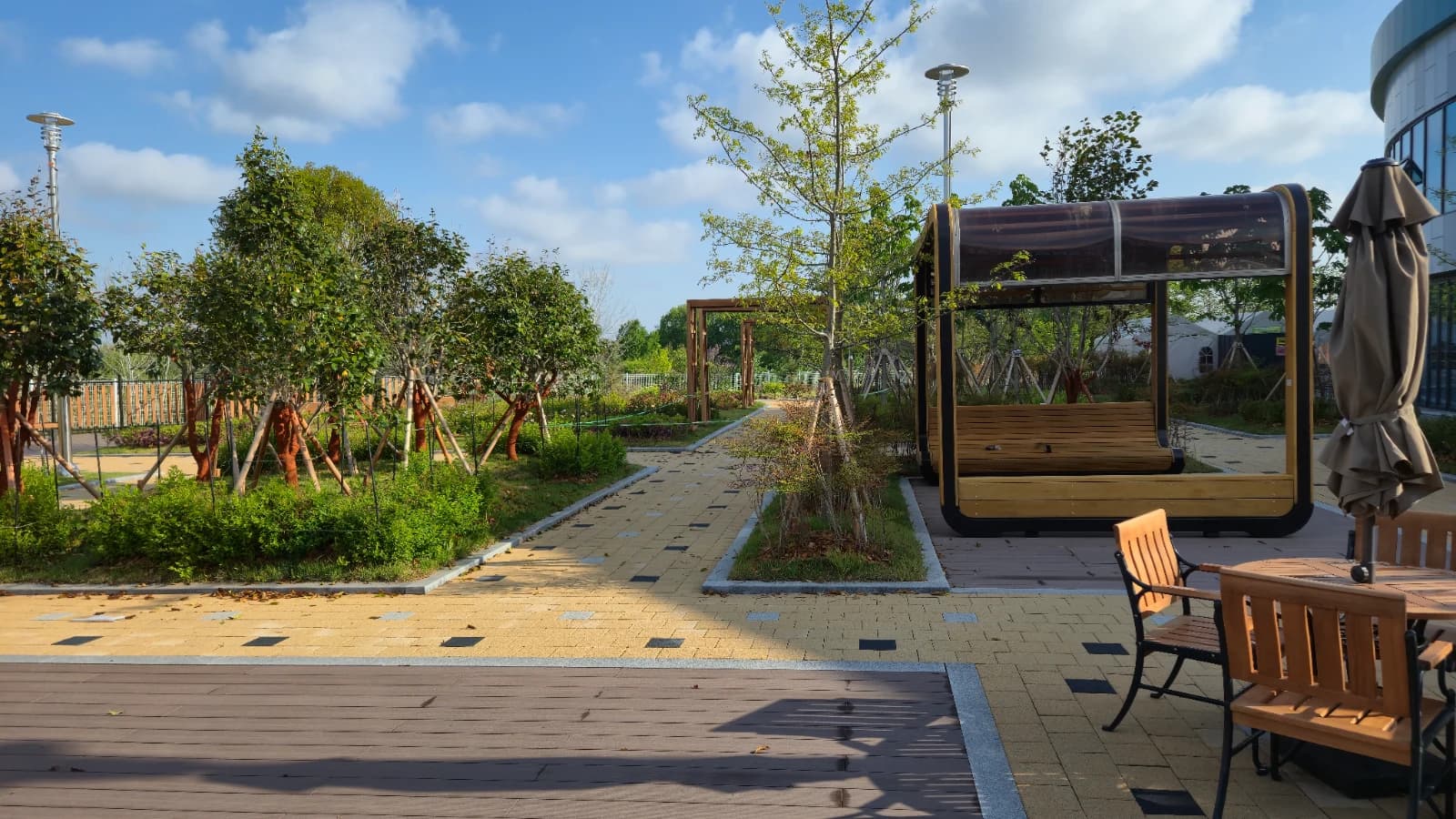
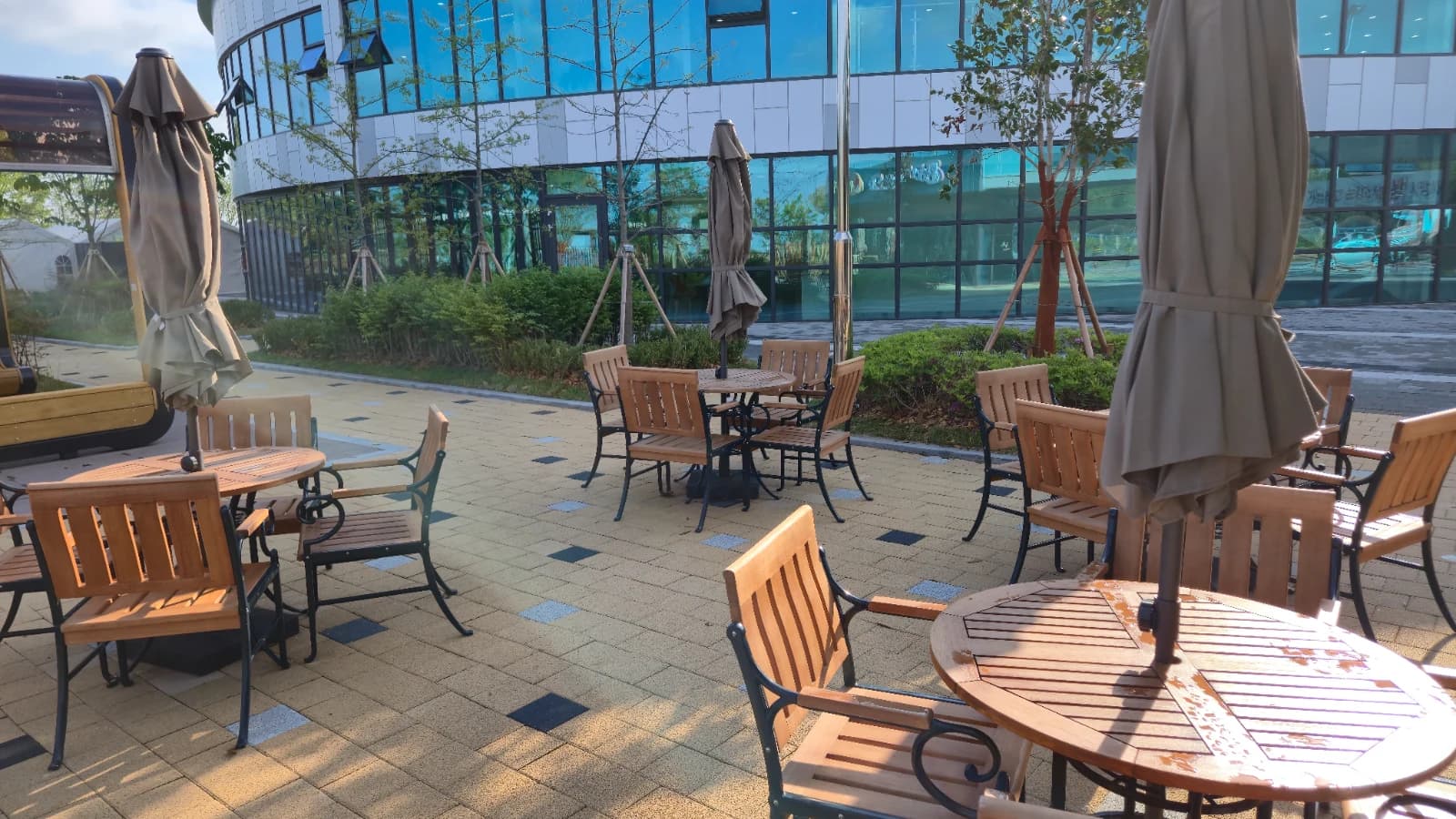
Right in front of the cafe there were outdoor tables, and beyond them a walking path and a small park. With wooden benches, parasols, and a semi-circular shelter with a glass roof, it felt more like a cafe garden somewhere than a highway rest stop. The trees were still young saplings tied to support stakes — another clear sign this place had only recently opened.
These days, newly built Korean highway rest stops are putting real effort into their landscaping. They're shifting away from being just a place to park and use the restroom toward being somewhere you'd actually want to sit and relax for a bit. Of course, not every rest stop is like this — older routes still have plenty of dated facilities, and some are mid-renovation. But most rest stops on recently opened expressways are hitting about this level of quality.
I sat there with my vanilla latte for a little while, and with the cool early-May breeze and just the right amount of sunshine, I honestly didn't want to leave. But my wife nudged me that it was time to get moving, so up I went.
A Look Around the Parking Lot
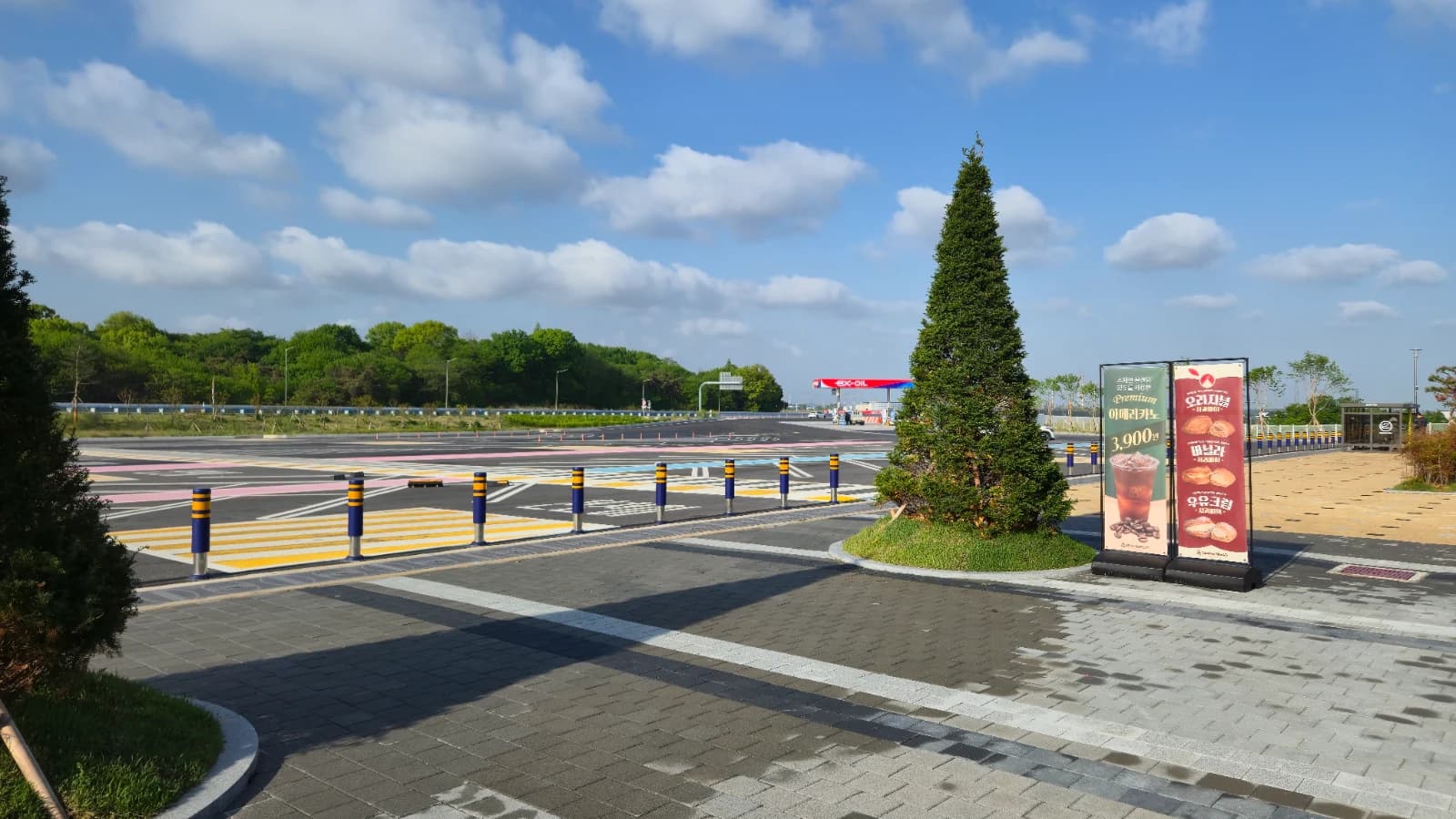
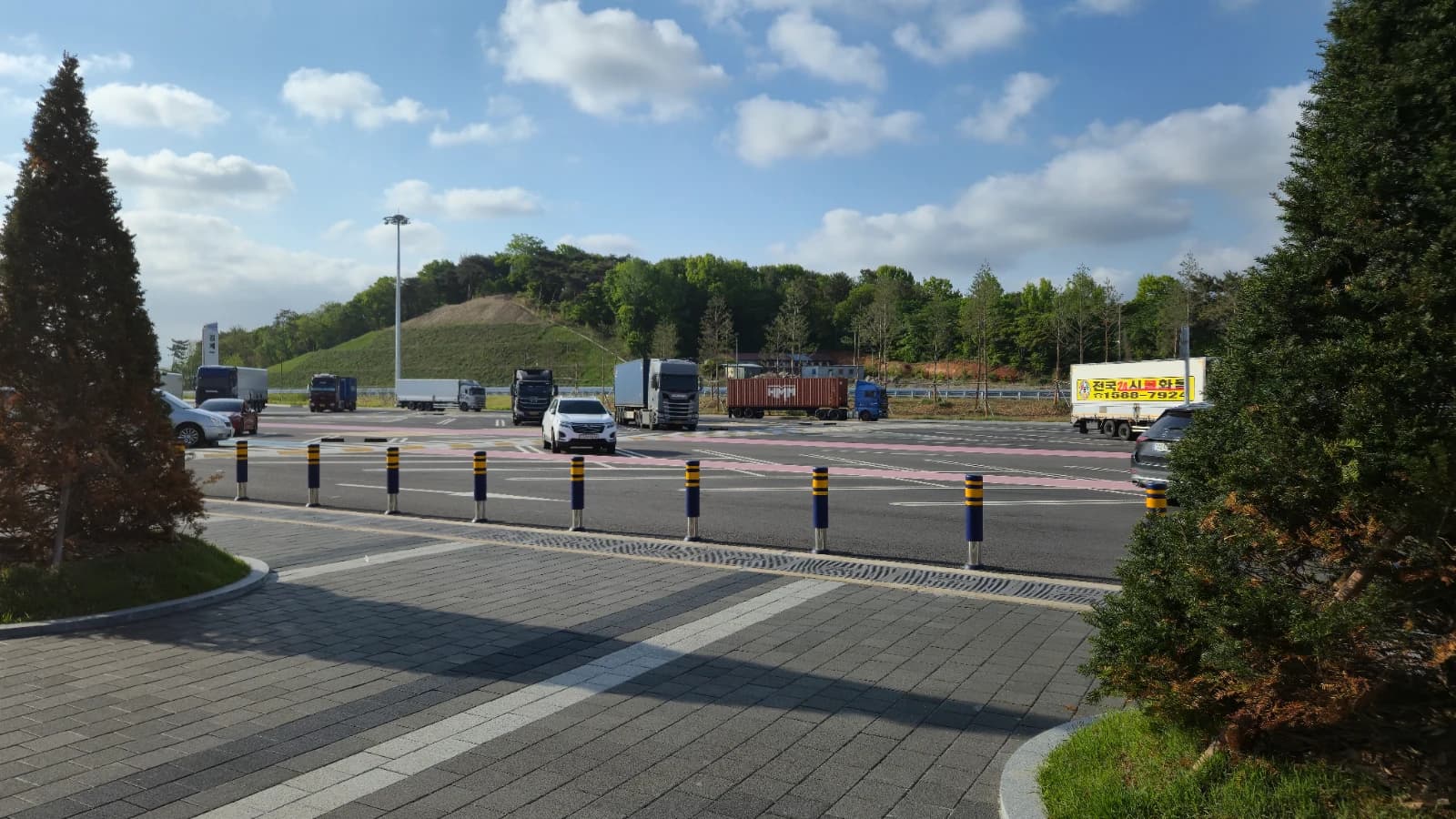
The parking lot was pretty generous in size relative to the building. On one side there was a Sagwadang coffee advertising banner, with the gas station roof visible behind it. The freight truck section had big rigs lined up, but the passenger car area still had plenty of open spaces. Newer Korean highway rest stops tend to build out their parking capacity generously, which means less parking stress even during holidays and long weekends. Another nice touch: the building sits in the middle of the lot, so no matter where you park, it's a short walk.
Leaving Gimje Rest Stop
Between breakfast and coffee, we spent about 40 minutes at Gimje Rest Stop. Since the Saemangeum-Pohang Expressway is relatively new, the facilities were clean and comfortable — but it wasn't without its downsides. Food court prices ran high across the board, and the self-serve ramen and soup vending machines especially bugged me — no human cook involved, yet prices matched or even exceeded the food court's staffed counters. The limited menu options at that early hour were another frustration, making it hard to freely pick what we actually wanted.
Still, the pristine feel of a brand-new building, the outdoor park with terrace seating, and Sagwadang's bakery selection are things you just won't find at older rest stops. This place was a clear example of how Korean highway rest stops are evolving from mere pit stops into genuine rest-and-refresh destinations. We still had a long drive ahead to Shinan, so I couldn't linger too long — I tossed my empty latte cup in the trash and got back on the expressway.