Braised Pork Leg on Rice at a Thai Petrol Station — 3 Local Dishes
Table of Contents
14 items
Lunch at a Thai Petrol Station — Seriously?
If you're travelling through Thailand and want to try proper local street food, let me point you towards somewhere you'd never expect: a petrol station. I know — telling a British person to eat lunch at a petrol station sounds about as appealing as a soggy Ginsters pasty from a forecourt shelf. In the UK, a petrol station means filling up and maybe grabbing a meal deal from the attached Spar. A triangle sandwich and a bag of crisps is about as good as it gets.
I lived in Thailand for three years. My wife is Thai, and we lived together in Rayong, a coastal province about two hours southeast of Bangkok. That day we stopped at a PTT petrol station on the way home to fill up, and she suggested we have lunch there. Thai petrol stations aren't just places to refuel — the big ones like PTT are full-blown complexes with convenience shops, cafés, restaurants, and even massage parlours. So today, I'm going to walk you through the three Thai dishes we ate at that PTT station restaurant: braised pork leg on rice (khao kha moo), tom yum Mama noodles, and boat noodle soup with blood broth (kuay teow nam tok).
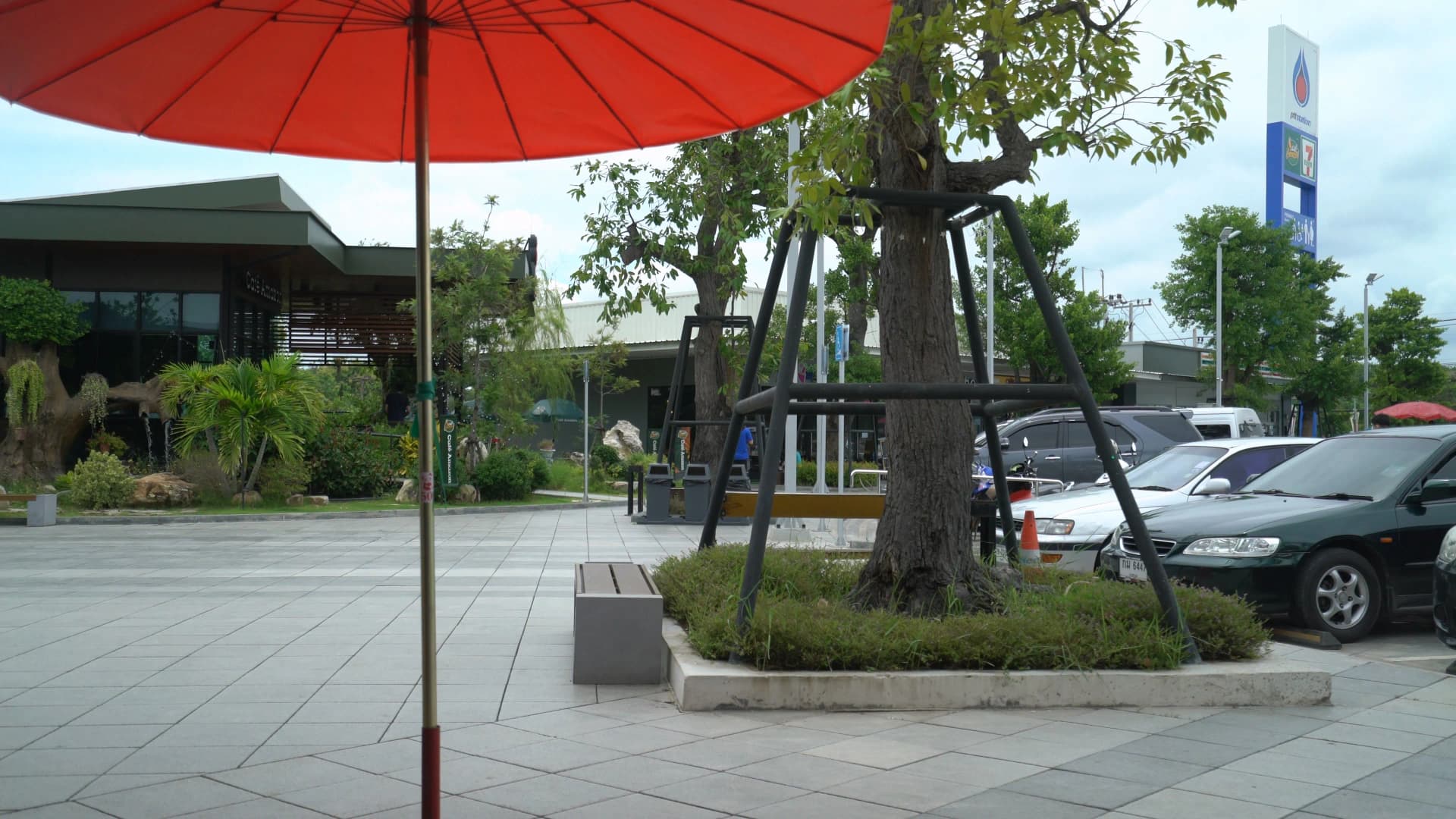
This is what the Rayong PTT station looked like. Red parasols over benches out front, with the 7-Eleven, a café, and the restaurant building behind. It looked more like a little retail park than a petrol station. When I first came to Thailand as a tourist, this blew my mind, but after three years of living here, I started to understand why they're built this way.
UK Motorway Services vs Thai Roadside Petrol Stations
The road infrastructure in the UK and Thailand are fundamentally different.
🇬🇧 United Kingdom
The motorway network is dense across the country. You'll hit a service station roughly every 30 miles, each with a food court, WHSmith, Costa, and clean toilets. But pull into a regular petrol station on an A-road and you're lucky if there's a Subway attached. Most are just fuel and go.
🇹🇭 Thailand
There are motorways, but the majority of travel still happens along provincial highways. That's why roadside petrol stations have evolved into proper service complexes — convenience shops, cafés, restaurants, and massage parlours all under one roof. There are far more of these petrol station complexes than there are motorway services in the UK.
In the UK, motorway services are the traveller's pit stop. In Thailand, it's the roadside petrol station that fills that role.
The UK developed its rest stops around motorways, while Thailand built theirs around provincial highways. Different approach, but the core need is the same — somewhere to stop, eat, grab a coffee, and stretch your legs on a long drive.
What the Petrol Station Restaurant Actually Looks Like
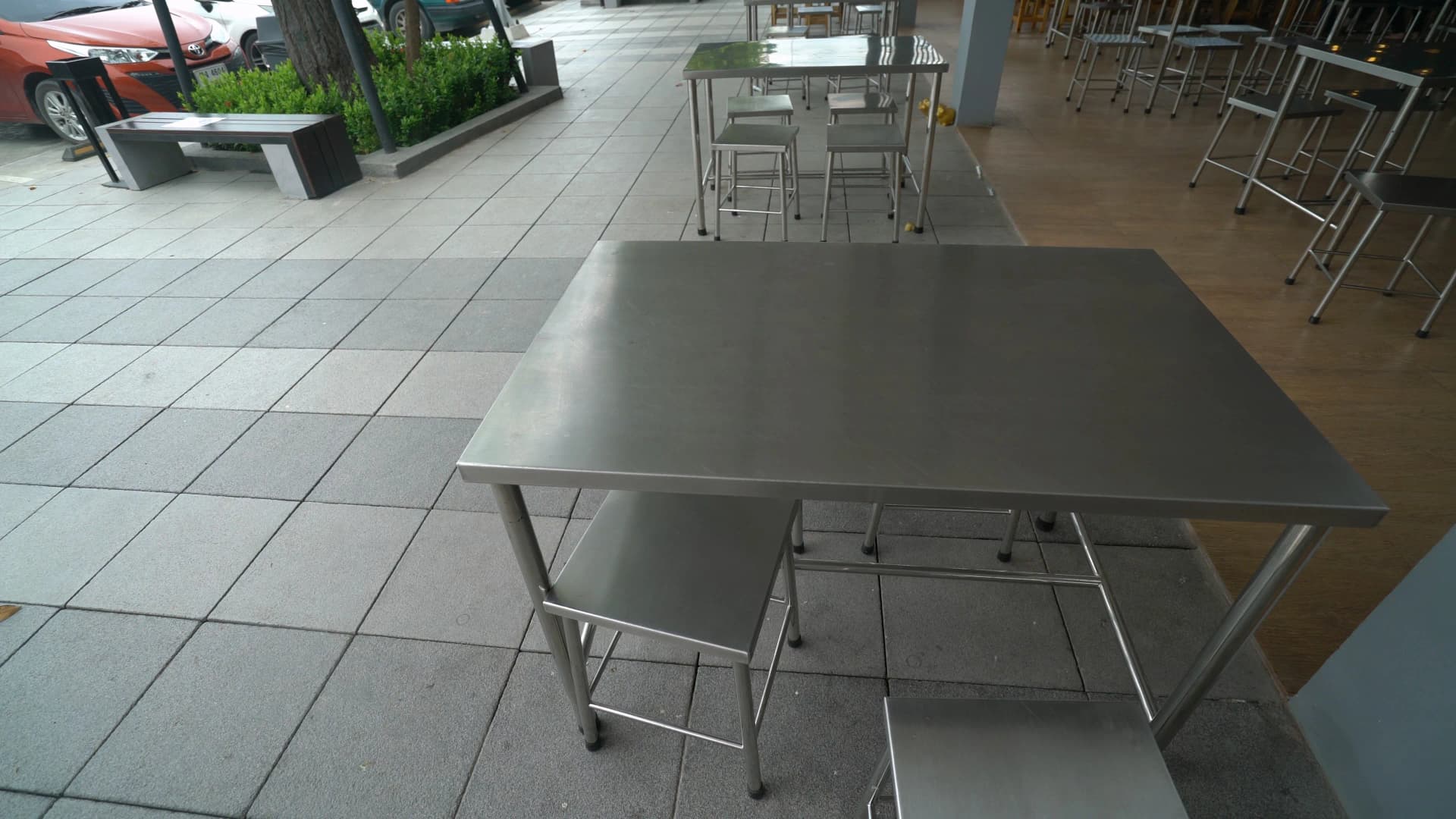
Outside the restaurant there were rows of stainless steel tables and chairs lined up like this. It's an incredibly common setup at Thai local eateries — think of it as the Thai equivalent of those metal tables outside a British greasy spoon. The seating was half-indoor, half-outdoor, which meant you got a nice breeze, but honestly, sitting in the Thai midday heat even without eating made me sweat through my shirt. No air conditioning, obviously. If you were lucky, a single fan would be spinning somewhere nearby. My wife actually preferred sitting outside, though. Loads of Thai people would rather eat al fresco than in a chilly air-conditioned room — the complete opposite of what most Brits would choose.
Pick Your Noodles, They'll Cook Them for You
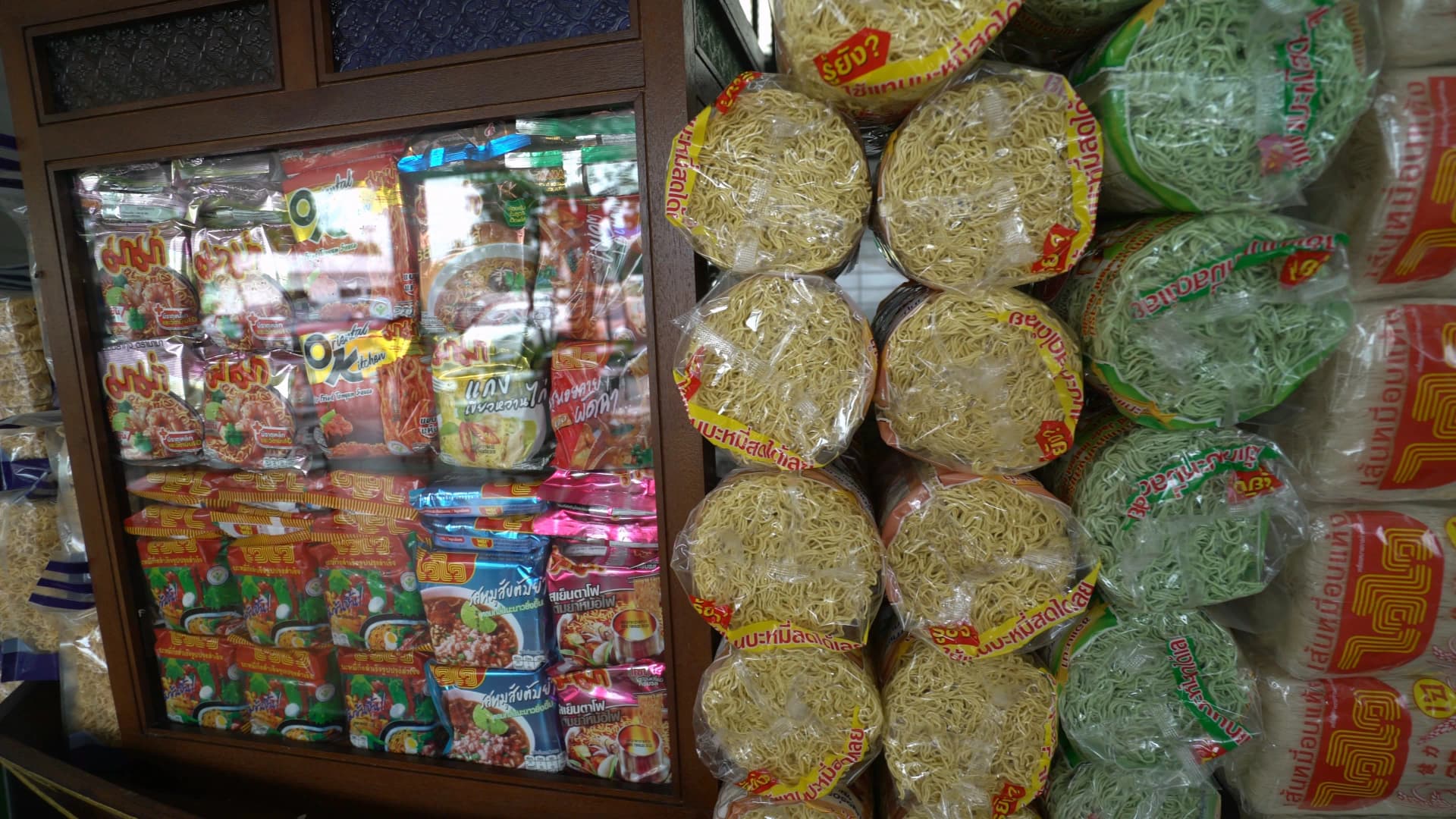
Along one side of the restaurant, there was this whole display of instant noodles and fresh noodle packs. You pick whichever one you fancy, hand it over, and the kitchen cooks it up with various toppings and broth. It's a bit like ordering a jacket potato at a British café — you choose your base and they build it up. But the method is quite different. In the UK, if you ordered instant noodles somewhere, they'd boil the lot in a pan with the flavour sachet and serve you the whole thing. Here in Thailand, they blanch the noodles quickly in hot water, transfer them to a bowl, ladle hot broth over the top, and then pile on fresh toppings — sliced pork, vegetables, coriander, dried shrimp. The noodles keep more bite this way, and the broth stays clear and light rather than getting thick and starchy.
Wait — Thai Braised Pork Leg Looks Identical to Something I Know
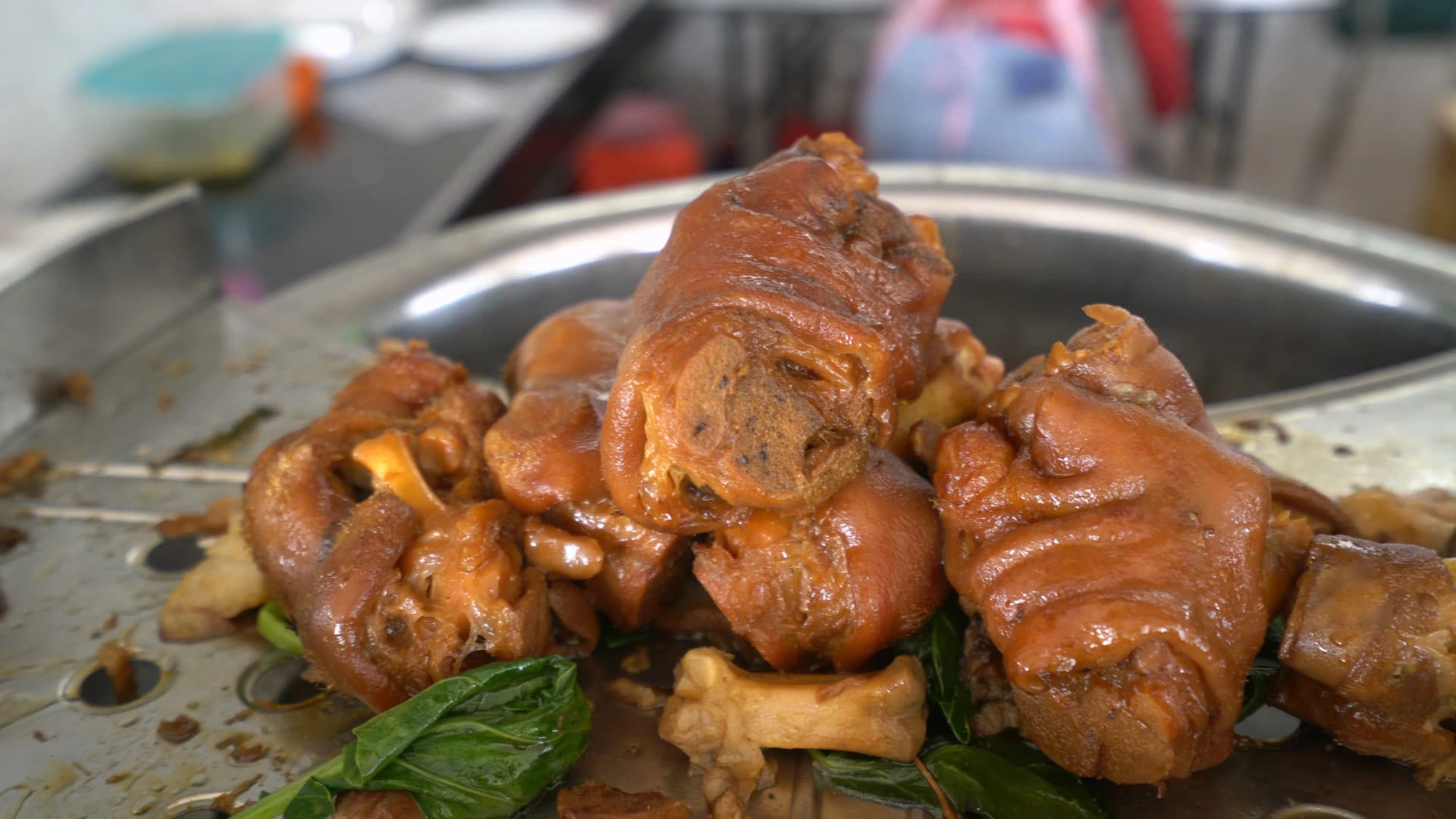
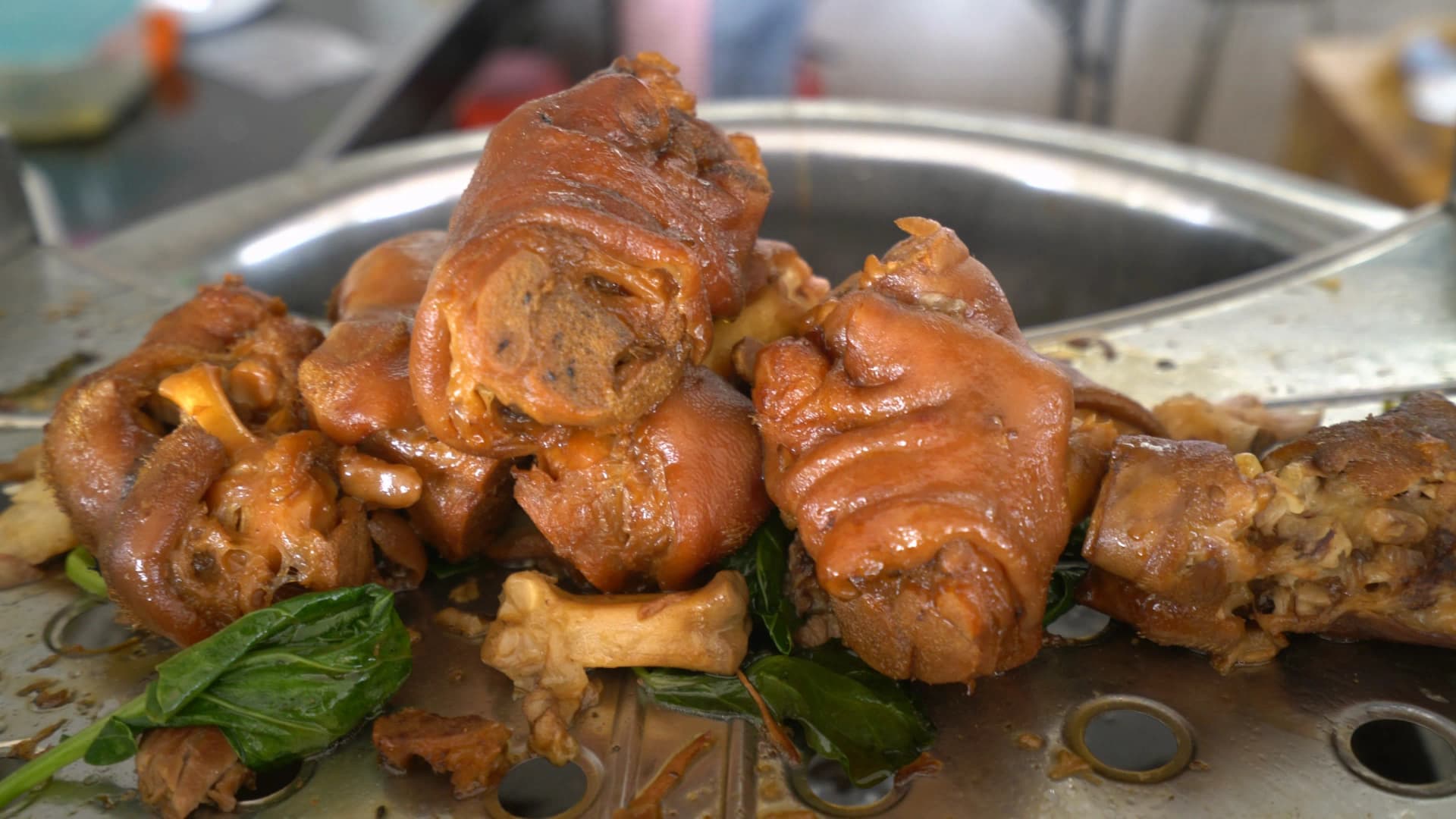
This is Thai-style braised pork leg. I was genuinely taken aback when I first saw it. It looked almost exactly like something you'd find at a Chinese roast meat counter — glossy, dark brown, slow-braised until the skin turned translucent and gelatinous, the meat falling apart underneath. The soy sauce base was obvious just from the colour. If you've ever had Chinese-style red-braised pork belly or even a really good pulled pork, that's the ballpark. The skin had gone completely soft and jelly-like, and the meat beneath was tender enough to pull apart with chopsticks.
When most people think of Thai food, they picture punchy curries and fragrant tom yum. But khao kha moo isn't in that camp at all — it's closer to a Chinese soy-braised dish, which makes sense because it was brought to Thailand by Chinese immigrants. Think of it like a slow-braised pork roast you'd do in a Dutch oven on a Sunday, but seasoned with star anise, soy sauce, and palm sugar instead of English mustard and gravy granules.
A Complete Bowl of Khao Kha Moo — Braised Pork Leg on Rice
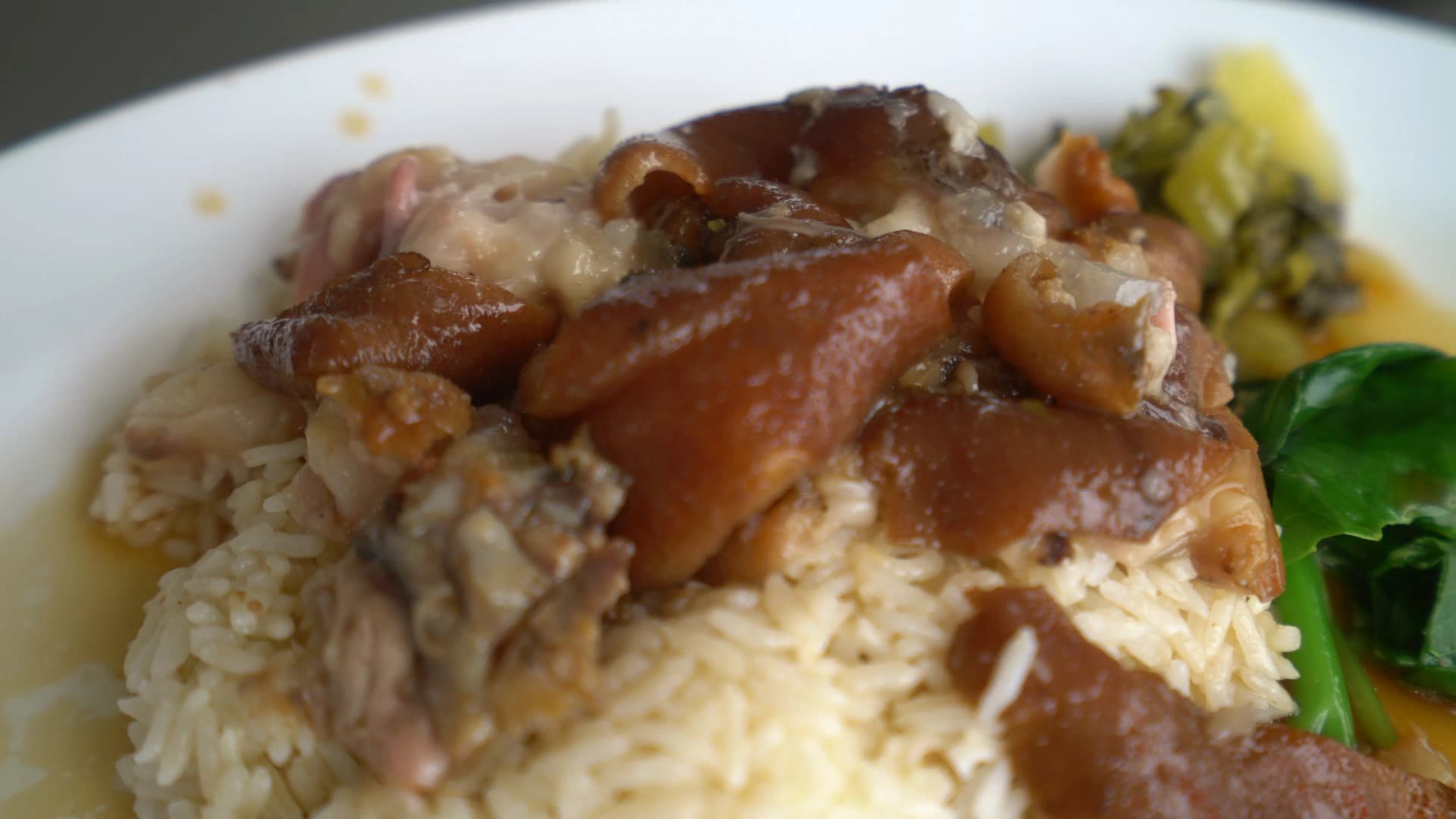
This is the finished khao kha moo — Thai braised pork leg on rice. My wife ordered it and we shared. Generous chunks of slow-braised pork piled on top of jasmine rice, with the braising sauce ladled over so it soaked right into the grains. On the side, blanched Chinese broccoli and a heap of pickled mustard greens.
In the UK, if you ordered a pork dish at a pub, you'd get sliced roast pork with apple sauce and roast potatoes — the meat served alongside the carbs. Here in Thailand, they just pile everything into one bowl. The braising liquid seeps into the rice, flavouring every single grain, and honestly that's what keeps you going back for spoonful after spoonful. It's comfort food in its purest form.
The price? 60 baht per bowl — roughly £1.40. Let that sink in. A Sunday roast at a decent pub would set you back £15–£18. Obviously the portions and context are different, so it's not a straight comparison, but as a complete, filling, satisfying lunch? That price is absolutely mental. The first time I ever tried khao kha moo was at the Terminal 21 food court in Asok, Bangkok, and even then I was shocked at how cheap it was. This Rayong petrol station was even cheaper. We used to pick it up regularly from the night market near our house too — it was always around this price range, no matter where we went.
Braised Pork Leg: British Slow Roast vs Thai Khao Kha Moo — The Texture Is Completely Different
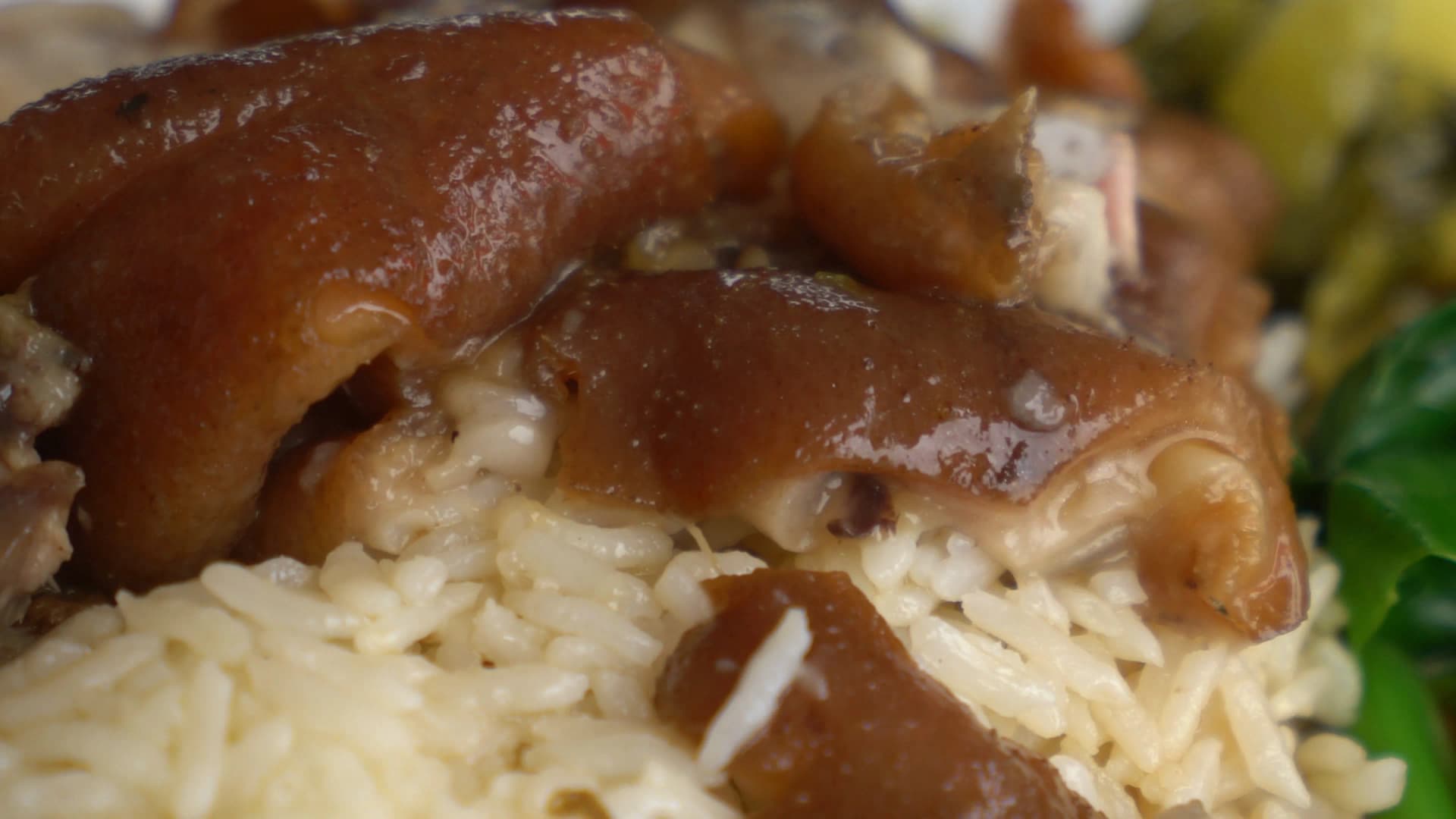
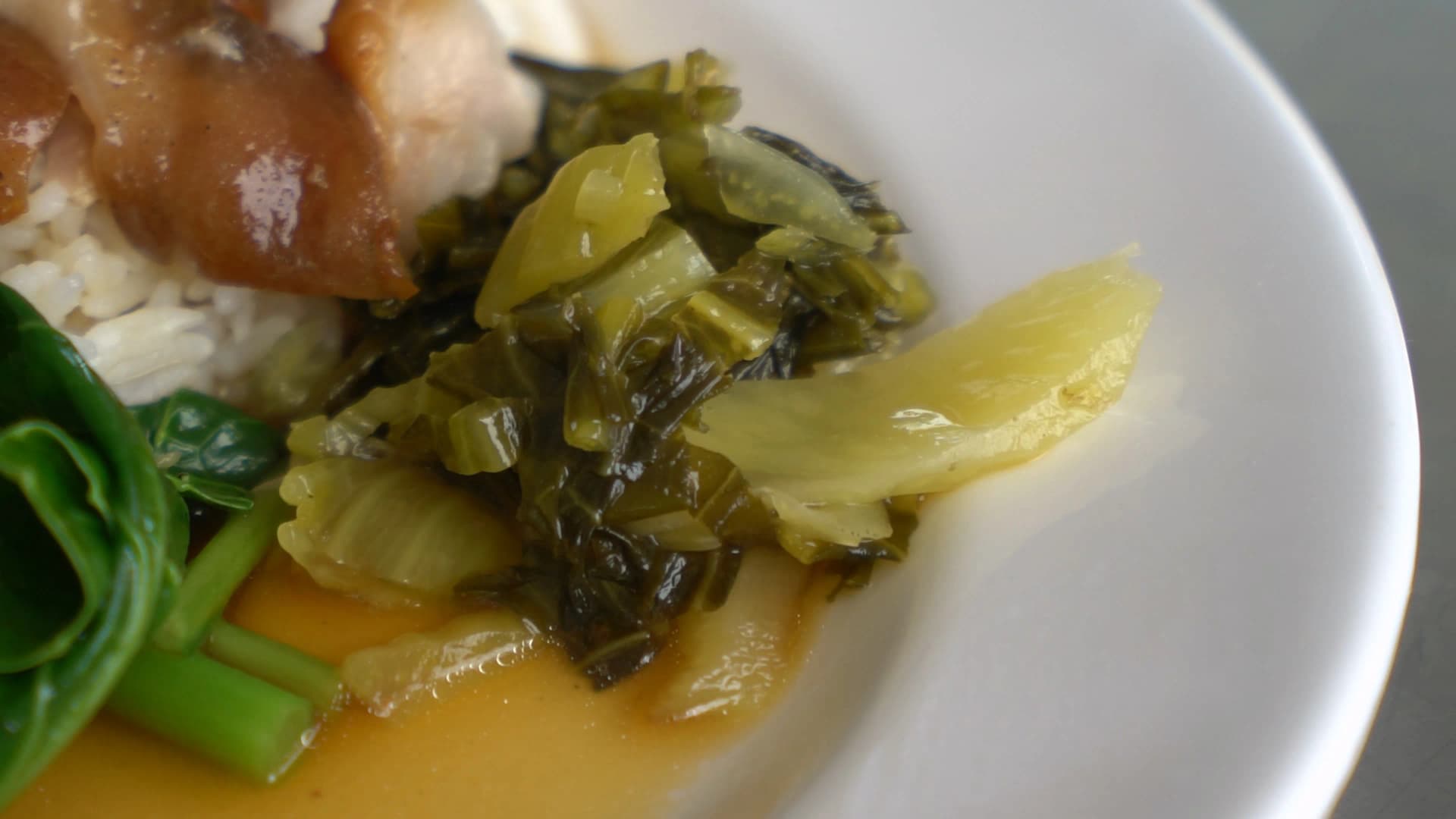
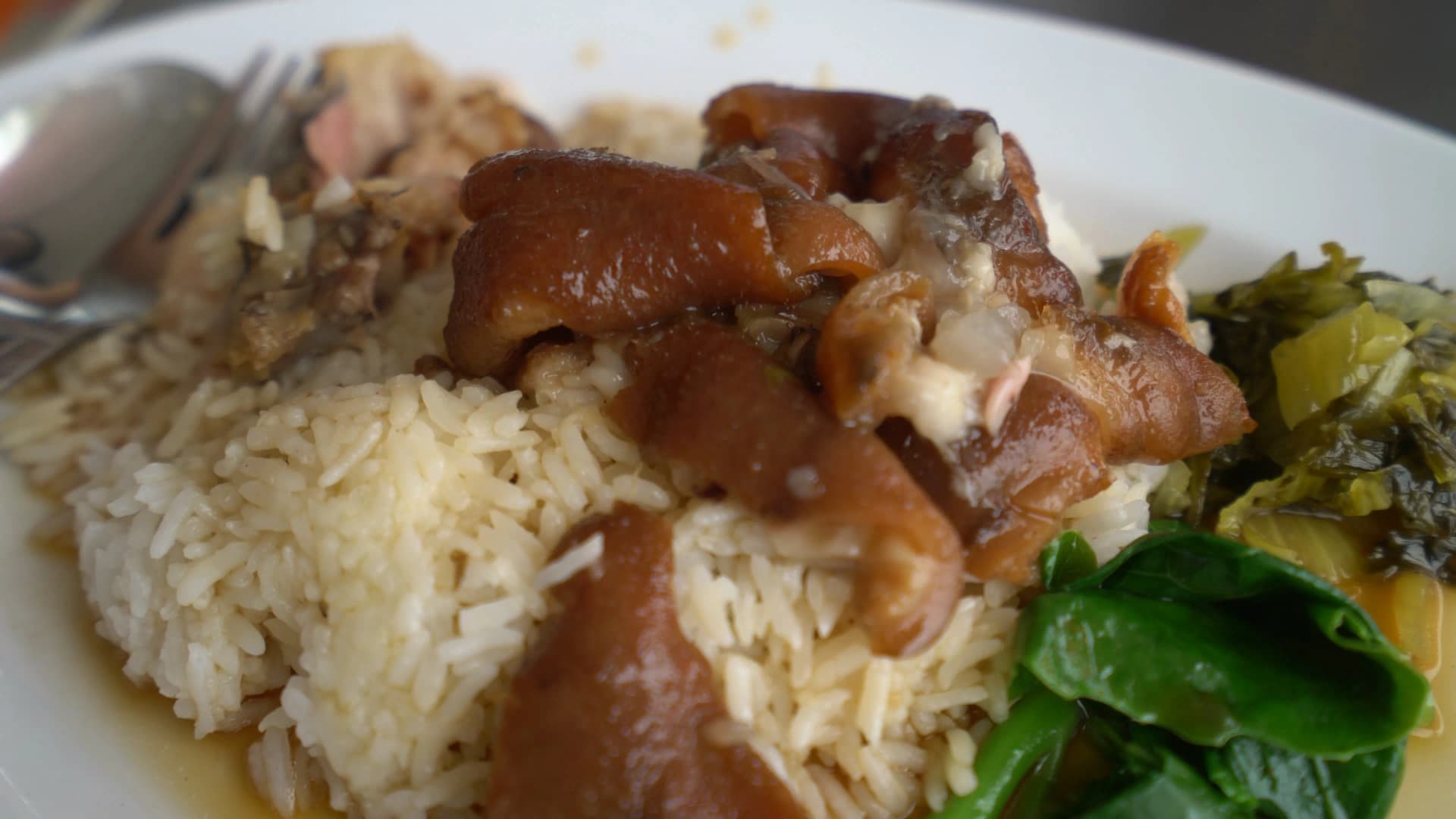
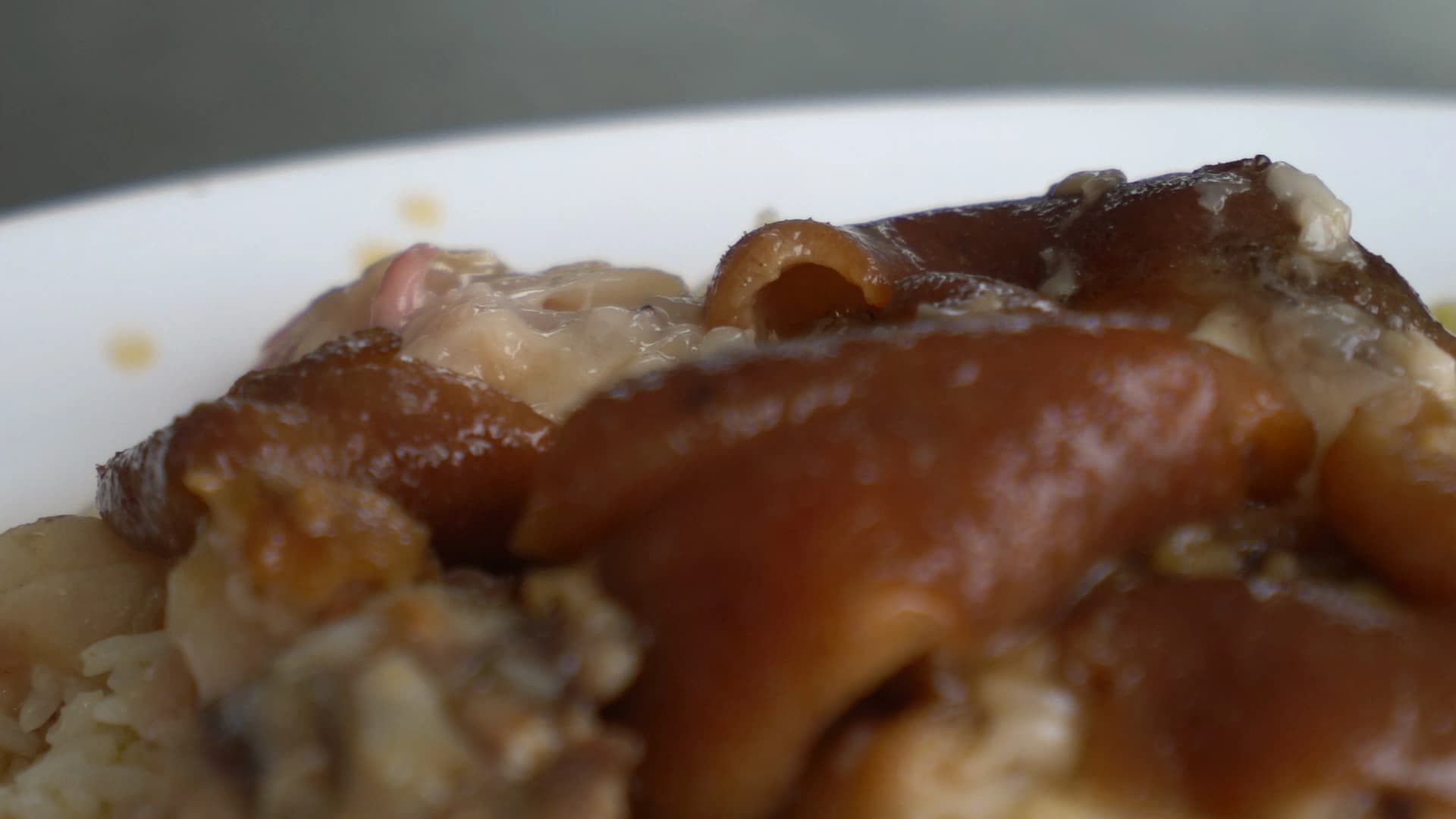
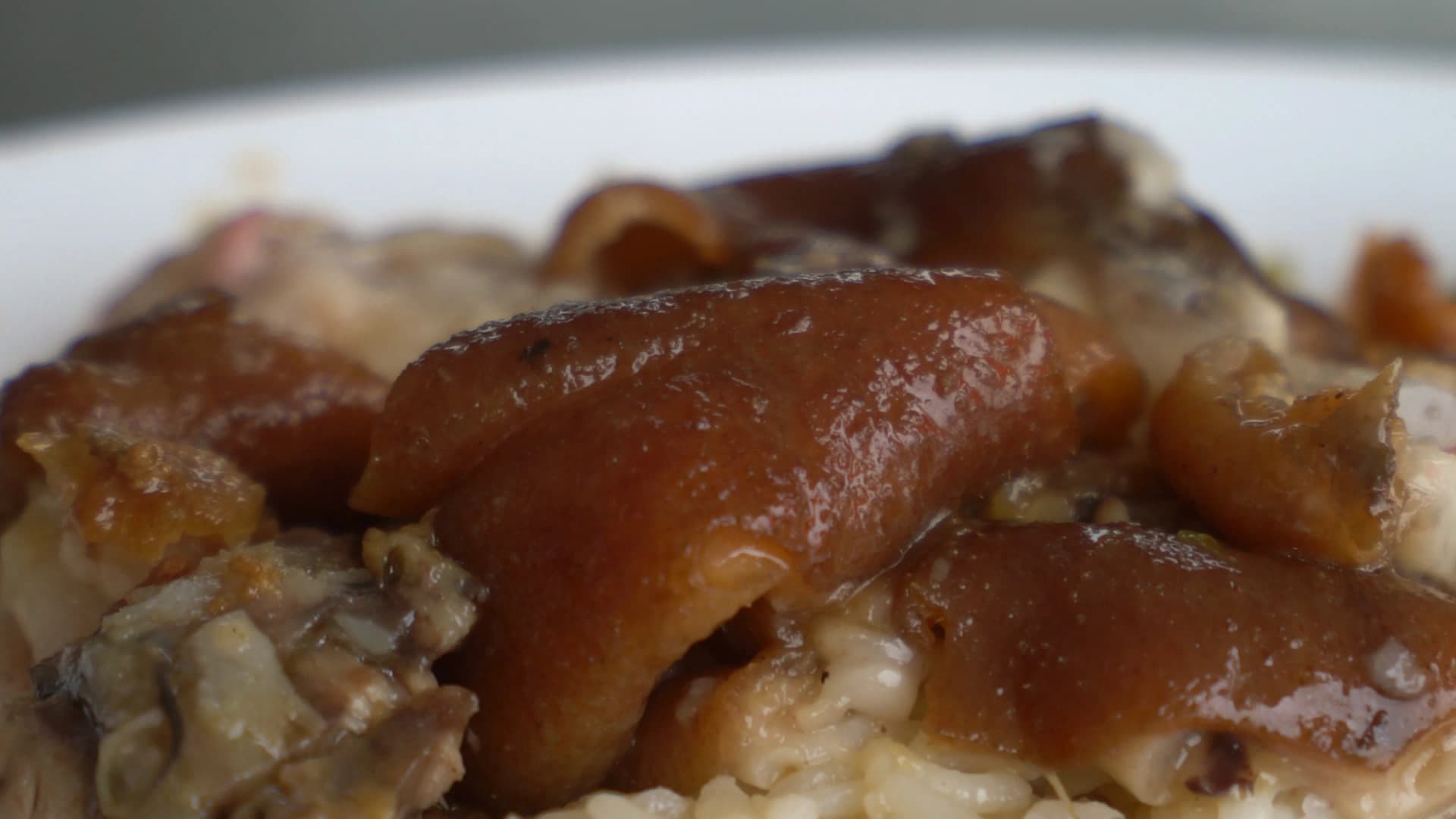
Up close, the khao kha moo looks like this. Braised pork on a bed of jasmine rice, pickled mustard greens on one side, blanched Chinese broccoli on the other. The braising sauce pools at the bottom of the plate in a thin, glossy layer.
The texture, though, is quite different from what you might expect if you're used to British roast pork.
🇬🇧 British Roast Pork
The texture tends to be firm and sliceable. Crackling is crisp and crunchy, the meat has defined grain and you cut through it with a knife. Seasoning is relatively mild — you rely on gravy, apple sauce, or mustard to add flavour. The pork itself is a vehicle for the condiments.
🇹🇭 Thai Khao Kha Moo
The texture is meltingly soft. The skin dissolves on your tongue, and the meat practically falls apart when you press it with a spoon. The soy and sugar base makes it noticeably sweeter than British pork, and it's seasoned thoroughly enough that you can mix it straight into rice without any extra sauce.
They look surprisingly similar, but the texture and flavour profile take completely different directions. If you enjoy slow-cooked pork in any form, you'd likely enjoy both.
The pickled mustard greens deserve a special mention. The pork is sweet and rich — bordering on cloying if you eat too much in one go — and those sour, tangy greens cut right through the richness and reset your palate. Think of them as the Thai equivalent of pickled gherkins alongside a burger, or that sharp piccalilli you get with a ploughman's. My wife told me that without the pickled greens, khao kha moo isn't really complete. It's not just a garnish — it's a core component of the dish.
Tom Yum Mama — Thailand's Iconic Instant Noodle, Levelled Up
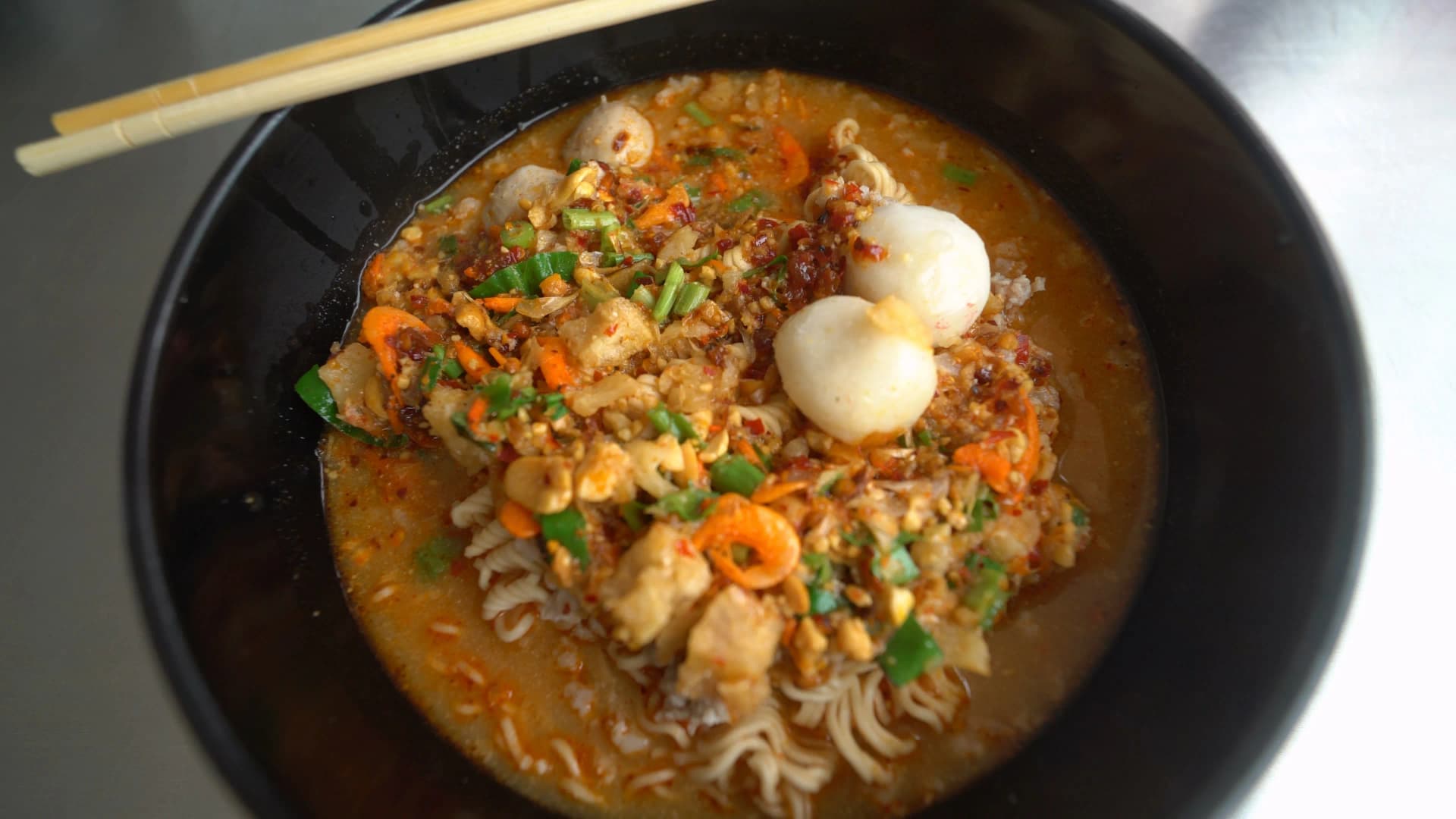
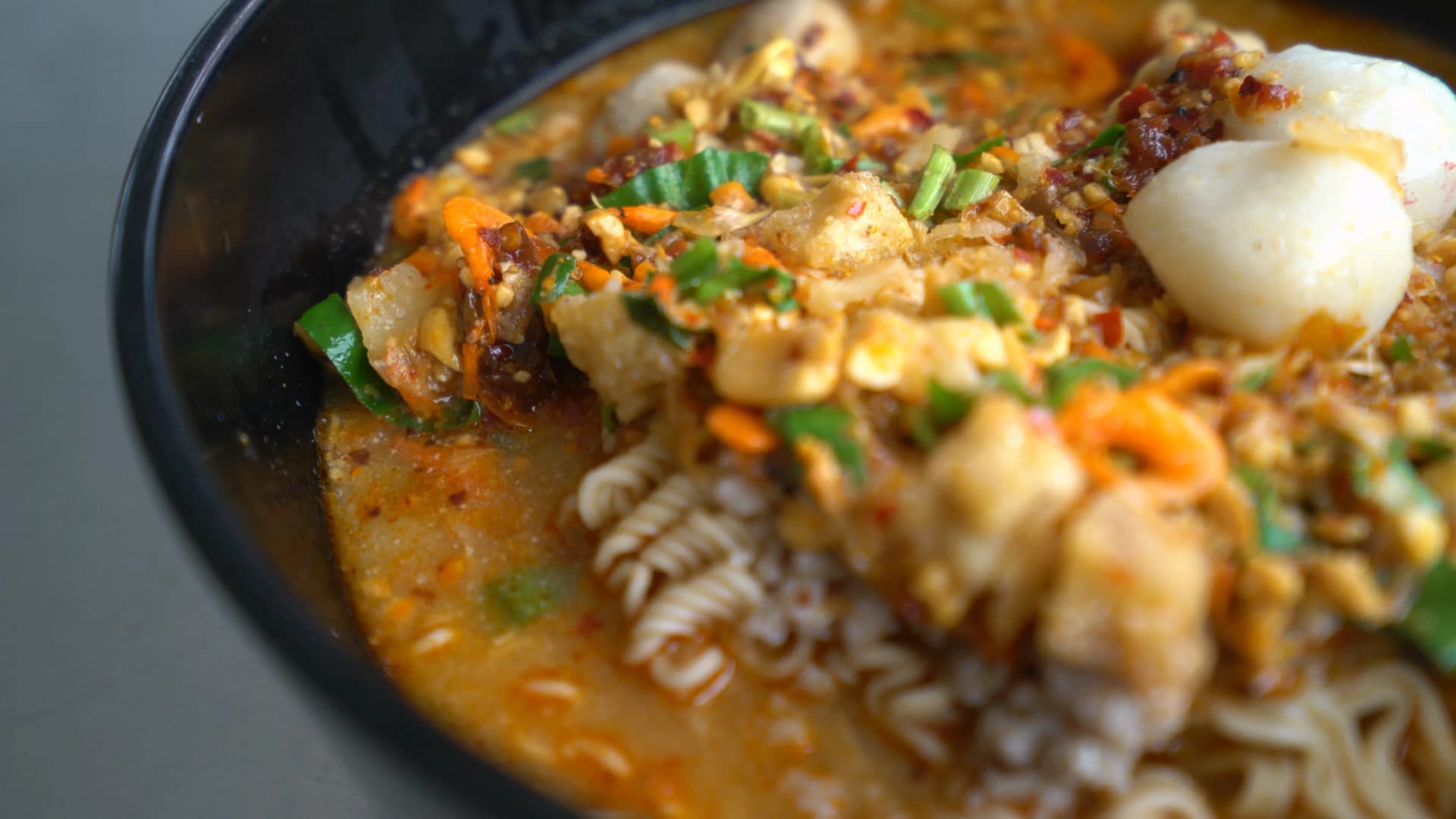
This one was mine — tom yum Mama, Thailand's take on instant noodle soup done properly. Remember that noodle display I mentioned earlier? This was the result of picking a pack and handing it over. Mama is Thailand's national instant noodle brand — it's essentially their equivalent of Pot Noodle, except Thai people actually respect it. The kitchen cooked my Mama noodles in a tom yum broth, then loaded the bowl with fish balls, sliced pork, crushed peanuts, chilli oil, spring onions, and dried shrimp. You can buy Mama noodles at 7-Eleven and ask them to cook it for you there too, but the restaurant version comes with far more generous toppings.
I'll Be Honest — I Couldn't Finish My First Bowl
Let me be straight with you. Most people trying this for the first time won't finish the bowl. It's not because it's too spicy or too salty — it's because this combination of flavours simply doesn't exist in British cooking. Lemongrass, galangal, and kaffir lime leaves create an intense sour-herbal hit that your palate has absolutely no reference point for. British heat comes from English mustard or a vindaloo — familiar territory. Tom yum's heat arrives tangled up with sharp citrus sourness and a herbal fragrance that can feel genuinely confusing the first time. You can't tell if you like it or not.
I couldn't manage it myself at first. My first two trips to Thailand, I didn't touch tom yum. It wasn't until my third visit that I started taking tentative spoonfuls, and then something clicked — I suddenly craved it. While living in Rayong, I was eating it once or twice a week. Even now, back home, I order Mama tom yum noodles online and cook them at home, though honestly the imported version with dried seasoning packets doesn't come close to the fresh herb version you get locally. The price was 50 baht — about £1.15 per bowl.
Kuay Teow Nam Tok — Thai Boat Noodle Soup with a Deep, Dark Broth
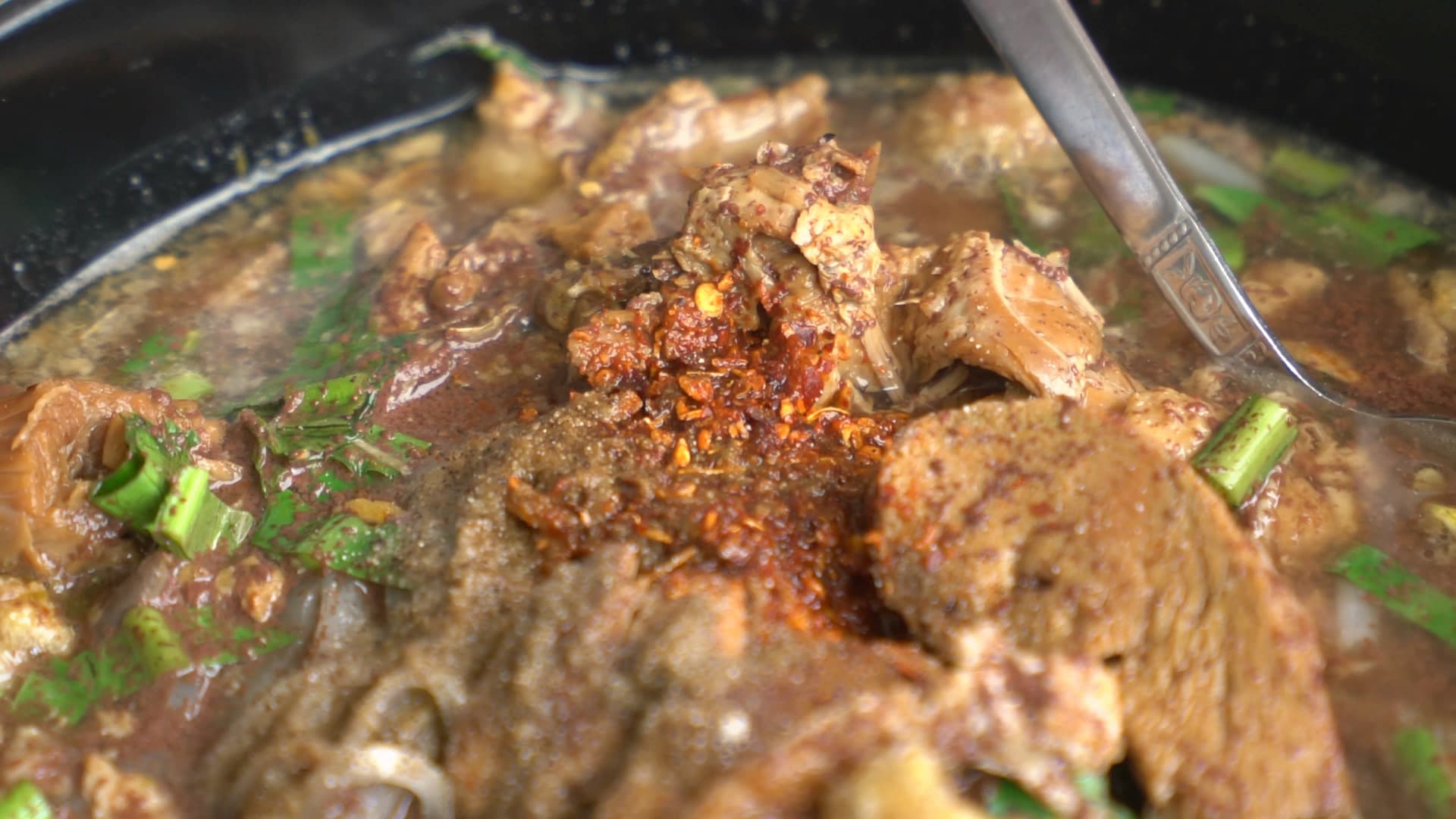
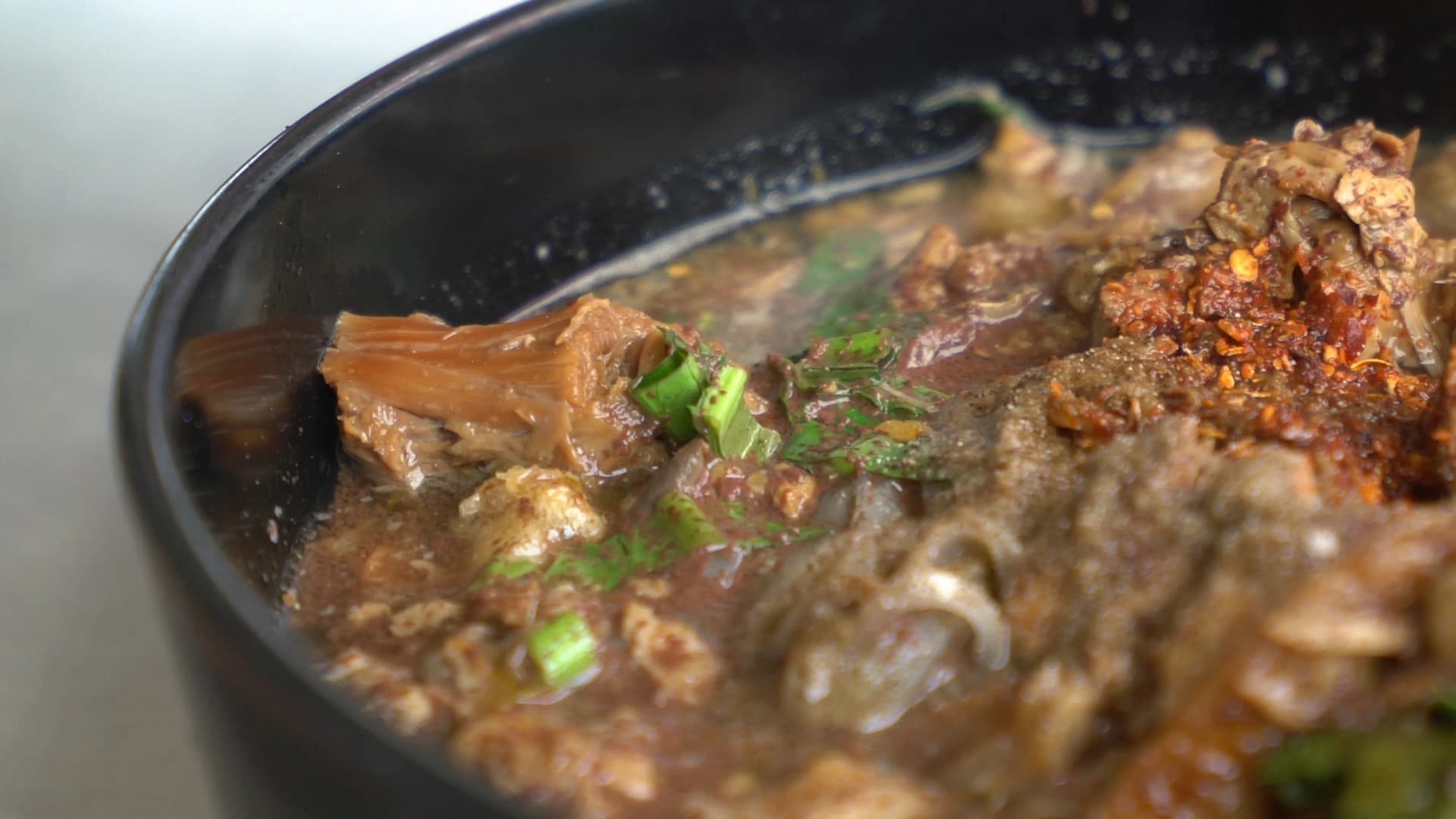
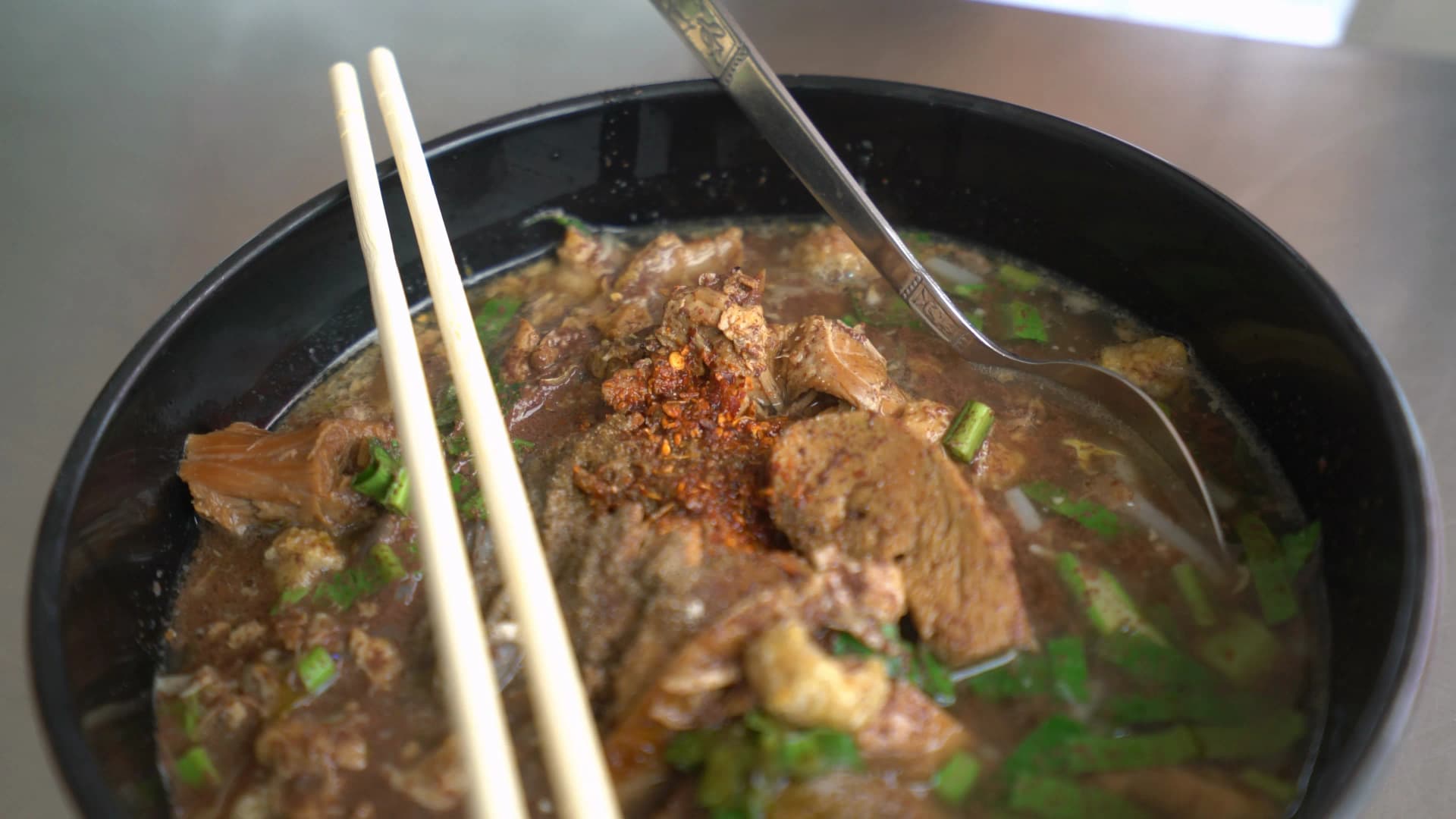
This was my wife's order — kuay teow nam tok, a Thai pork noodle soup with a deep, dark broth enriched with blood. The colour looks intense, I know. The broth gets its thick, dark brown appearance from pork blood stirred through the base, which gives it that rich, almost gravy-like consistency. "Nam tok" means "waterfall" in Thai, and once you see the colour of the broth cascading over the noodles, the name makes perfect sense.
My wife grew up eating this. For Thai people, kuay teow nam tok occupies the same everyday lunch spot that a bowl of soup or a sandwich does in the UK. It's not special-occasion food — it's what you grab at noon on a Tuesday when you're hungry and want something quick and warming.
Nothing Like British Black Pudding Broth — It Goes in a Completely Different Direction
If you're British, the closest reference point for cooking with blood might be black pudding. But that's about where the similarity ends. Black pudding is dense, sliced, and fried until crispy — a solid thing on your breakfast plate. Nam tok broth uses blood as a liquid thickener, creating something more like a deeply savoury consommé. The flavour base isn't meaty and peppery like black pudding — it's a blend of soy, vinegar, chilli flakes, and sugar that creates a sweet-sour-spicy profile. Crushed chilli and chopped spring onions float on top, and when you fish out a piece of pork, it falls apart along the grain in soft, tender shreds.
If you're putting together a list of Thai street food to try, put this one near the top. I'd actually recommend it over tom yum for first-timers. Tom yum has that herbal barrier that can put people off initially, but kuay teow nam tok has a soy-based broth that feels much more familiar to a British palate. Slurping noodles in that rich, deep soup gives you a similar satisfaction to tucking into a proper bowl of French onion soup or a hearty beef stew. The price was the same — 50 baht, roughly £1.15.
Basil and Bean Sprouts — The Balance Makers
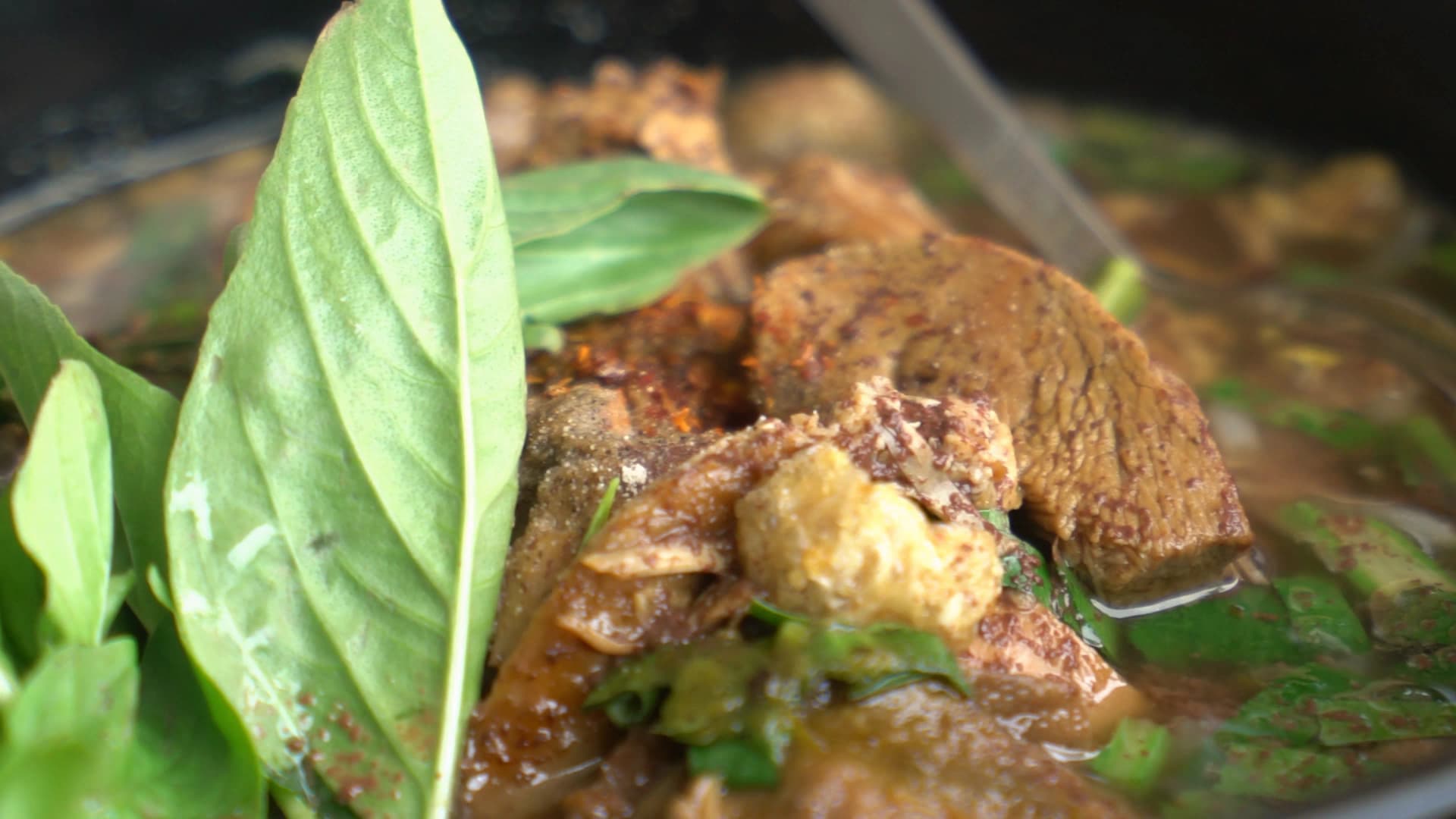
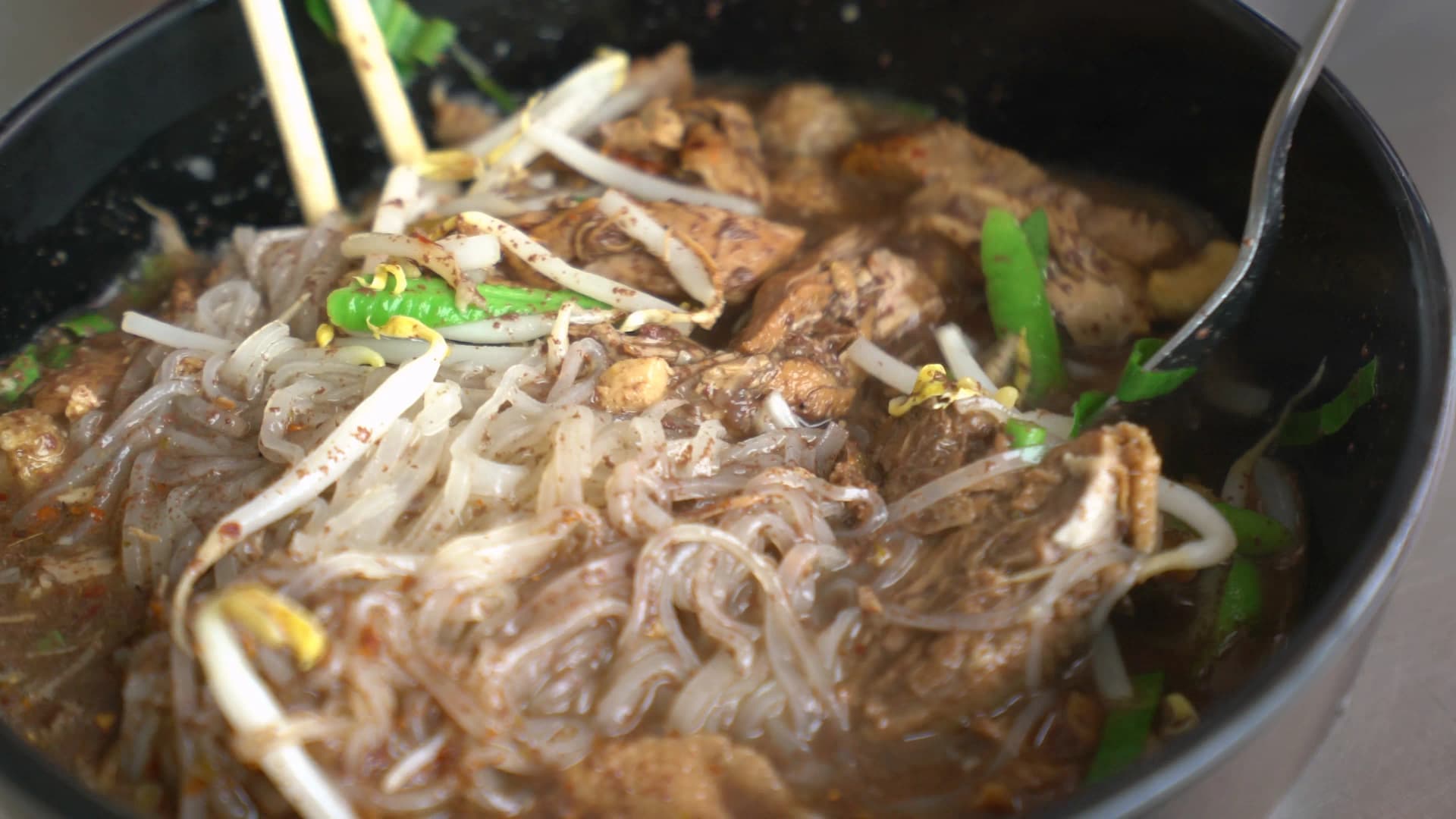
Look more closely and you'll see fresh Thai basil leaves sitting raw on top of the broth. You push them down into the hot soup and eat them with a piece of pork — the herbal fragrance lifts gently through the richness. The noodles are rice noodles, translucent and slippery, and woven through them are crunchy bean sprouts that give you little bursts of freshness between mouthfuls. Without the basil and bean sprouts, the heavy broth and soft noodles would feel one-note. They bring the balance, and that's what makes the whole bowl work.
A Single Piece of Pork, Lifted with Chopsticks
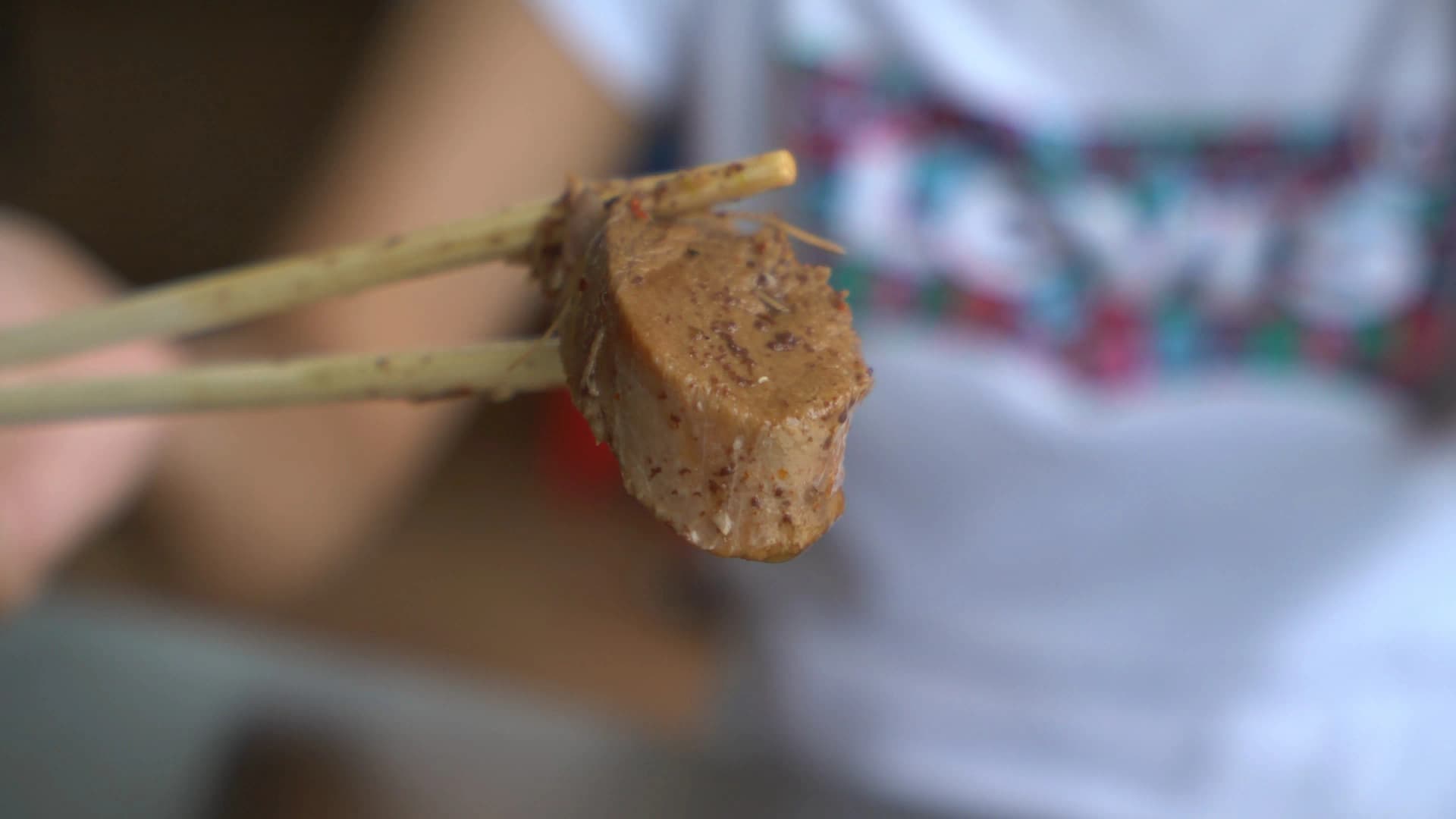
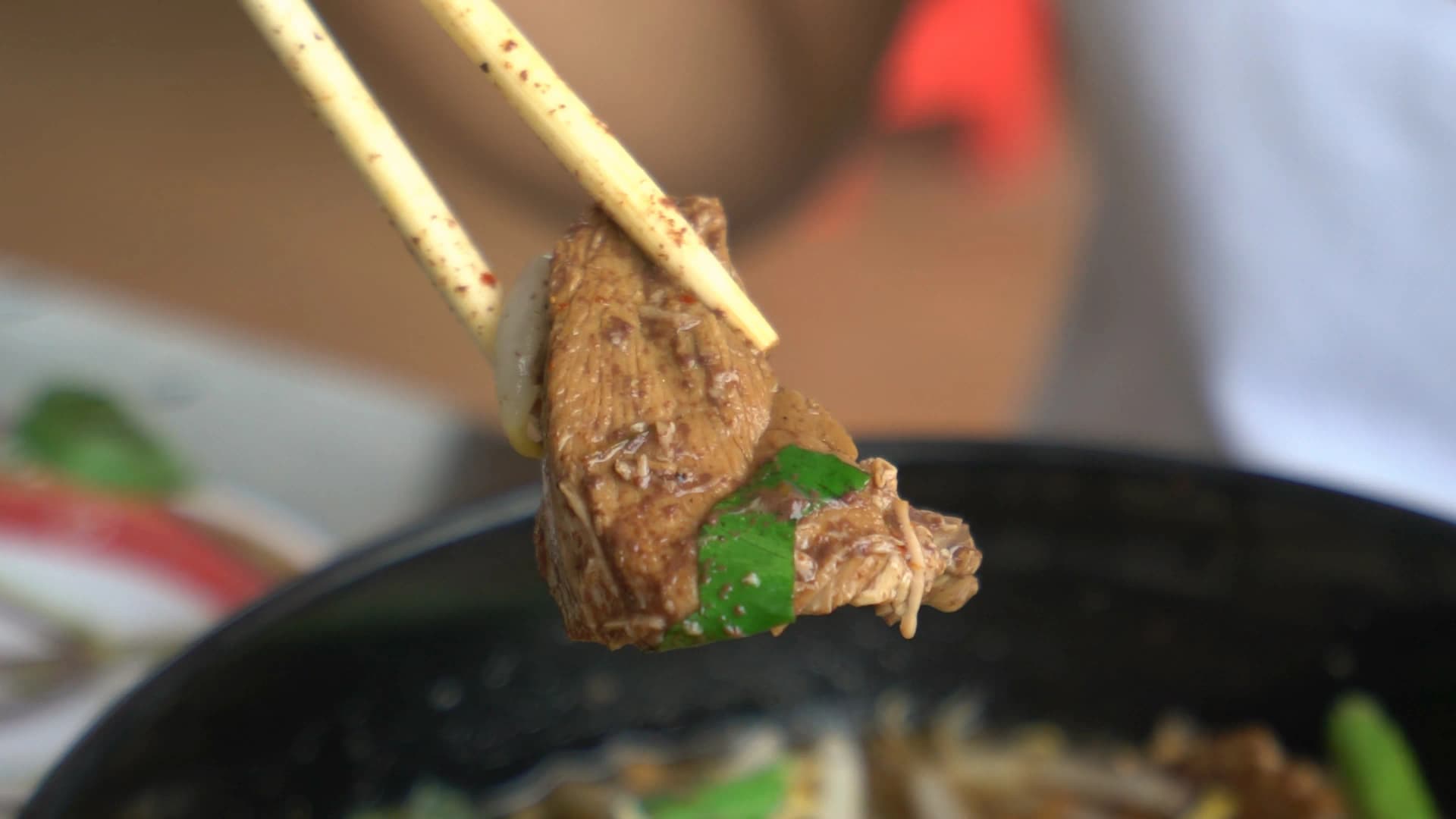
Here's a single piece of pork lifted out with chopsticks. You can see how completely the fibres have broken down — it's been braised for so long that the grain has separated into soft threads. It holds its shape just enough to pick up, but the moment it hits your tongue it falls apart without any effort. I was genuinely surprised that food this good was coming out of a kitchen inside a petrol station. I asked my wife, "Is the food here always this good?" She just laughed and said Thailand is a country where the best food comes from the streets. After three years of living there, I can confirm she's absolutely right.
Three Bowls for £3.70 — Don't Drive Past a Thai Petrol Station
When I told mates back in the UK that I'd had lunch at a petrol station, they all had a good laugh. But hear the numbers: khao kha moo at 60 baht, kuay teow nam tok at 50 baht, tom yum Mama at 50 baht — three bowls, absolutely stuffed, 160 baht total. That's under £3.70. In the UK, that's barely enough for a meal deal at Tesco.
If I'm being fair, there were downsides. The heat was brutal — eating steaming hot noodle soup at a semi-outdoor table in the Thai midday sun meant I was drenched in sweat. The toilets were the shared petrol station ones, and they weren't exactly sparkling. But after three years in Thailand, there's one thing I know for certain: the best food isn't in the fancy air-conditioned restaurants. It's at the roadside petrol station eateries, the night market stalls, and the street food carts where the locals actually eat. That's where the flavour lives, and that's where the memories are made.
If you're planning a trip to Thailand, remember this. Don't just drive past the petrol station. If you're heading from Bangkok towards Pattaya or Rayong along the highway, pull into any PTT station and you'll almost certainly find a restaurant selling khao kha moo or kuay teow nam tok. Think of Thai PTT stations the way you'd think of a good motorway services — they're part of the journey, not just a fuel stop. Don't worry about khao kha moo not suiting your taste — it's braised pork on rice with soy sauce, and if you enjoy any form of slow-cooked pork, you'll love it. And if tom yum feels overwhelming at first, don't give up. It took me three trips to Thailand before my palate finally opened up to it.
This post was originally published on https://hi-jsb.blog.