Late-Night Bakery Café Run in Cheongju
Table of Contents
17 items
Visiting Café California in Cheongju on a Thursday night in April 2026
In April 2026, on a Thursday night, I visited Café California in Cheongju, and honestly, it all started because I had slept in far too badly that day. By the time I opened my eyes, the afternoon had pretty much disappeared, and after slowly getting ready it was already evening. My foreign wife said, “Let’s go somewhere today,” so I thought we might at least find a café, but there weren’t many decent places still open at that hour. Then I remembered Café California in Naesu-eup, Cheongju, North Chungcheong Province. It opens at 10am and stays open until 1am on weekdays, and until 3am on Fridays and Saturdays. The only problem was that it was about 40km, roughly 25 miles, each way from our house, but my wife insisted we make it a little night drive, so off we went. As it is a suburban café outside the city centre, the journey itself felt like a proper driving route. I already knew it was a huge Korean bakery café famous for rice bread, but I was a bit worried about whether any bread would still be left at that time of night.
Café California at night looked more like a resort
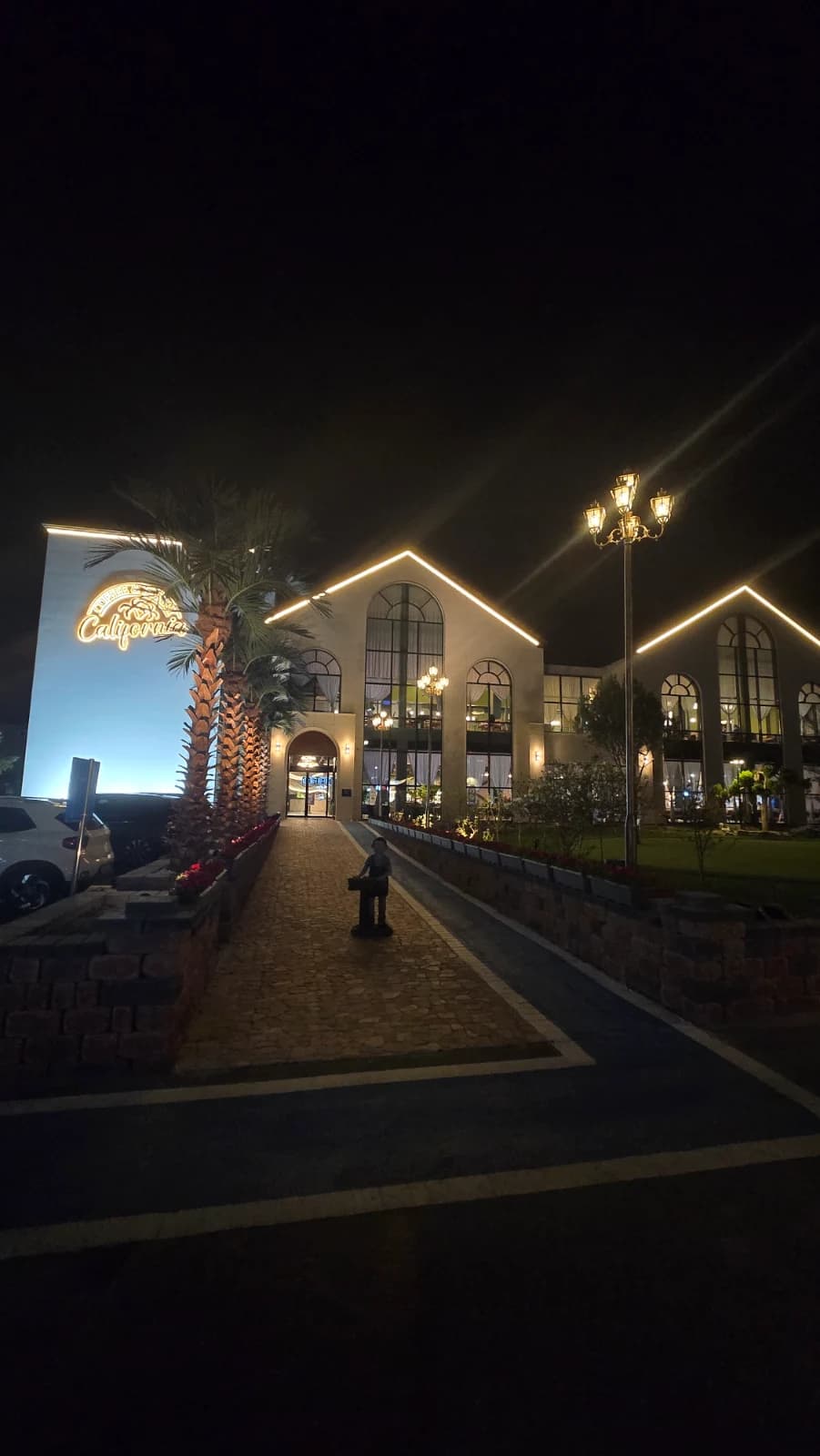
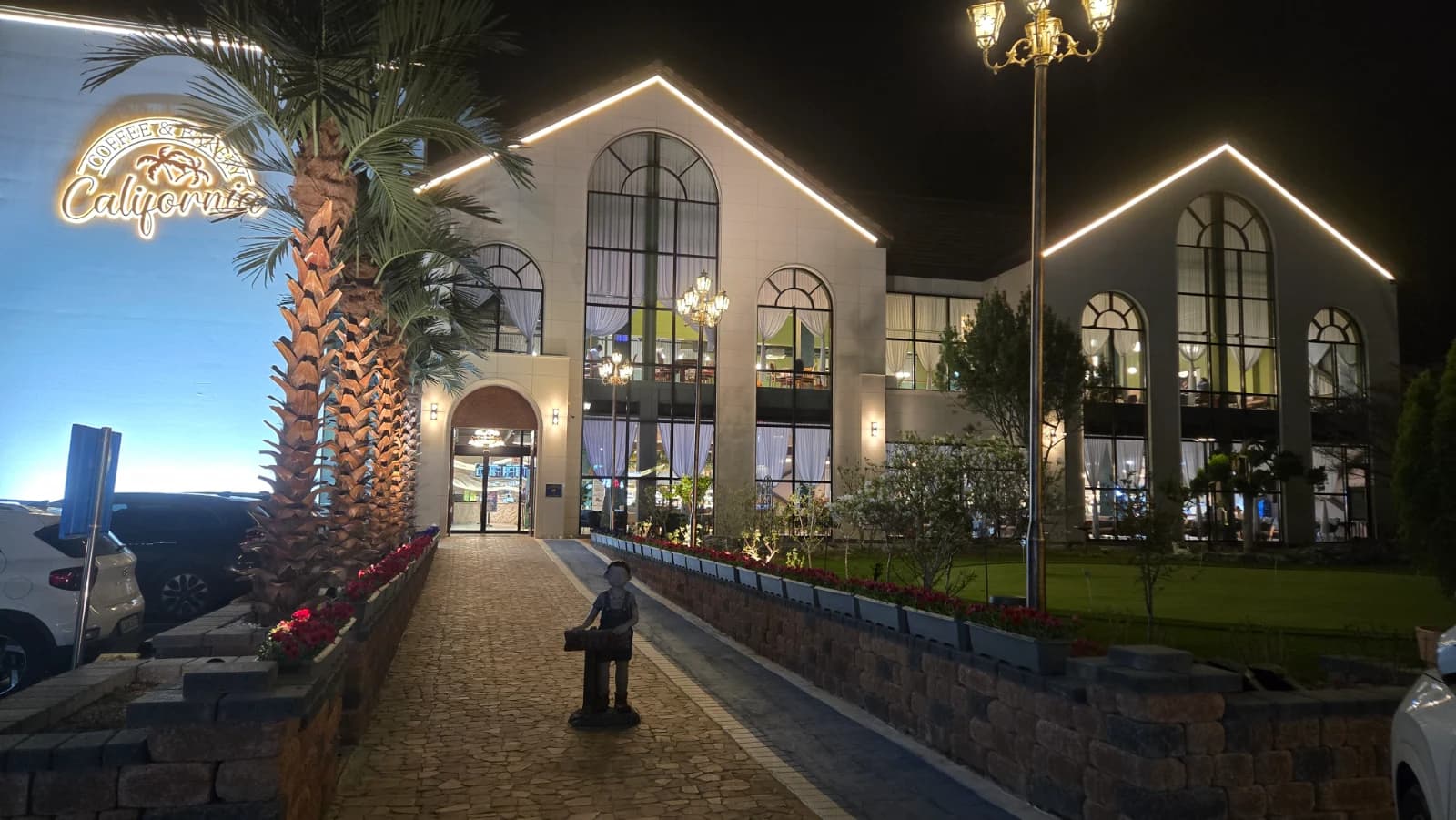
When we arrived at night, the whole building was lit up, and as soon as we stepped out of the car, both my wife and I just stopped. Is this really a café, or have we turned up at a resort? It genuinely gave that impression. Two palm trees stood on either side of the entrance, chandelier light spilled out between the arched windows, and I suddenly understood why it was called California. The exterior really did look as if it belonged somewhere along the Californian coast. It felt less like going for coffee and more like walking up to check in at a holiday resort. There was a neon sign on the left, and red flowers lined both sides of the stone path leading to the entrance. It is in Naesu-eup, about 15 to 20 minutes by car from central Cheongju, and there are three car parks with space for more than 300 cars, though at night they were almost empty. When my wife said, “It was worth driving 40km for this,” I asked if she was already satisfied before even tasting the coffee.
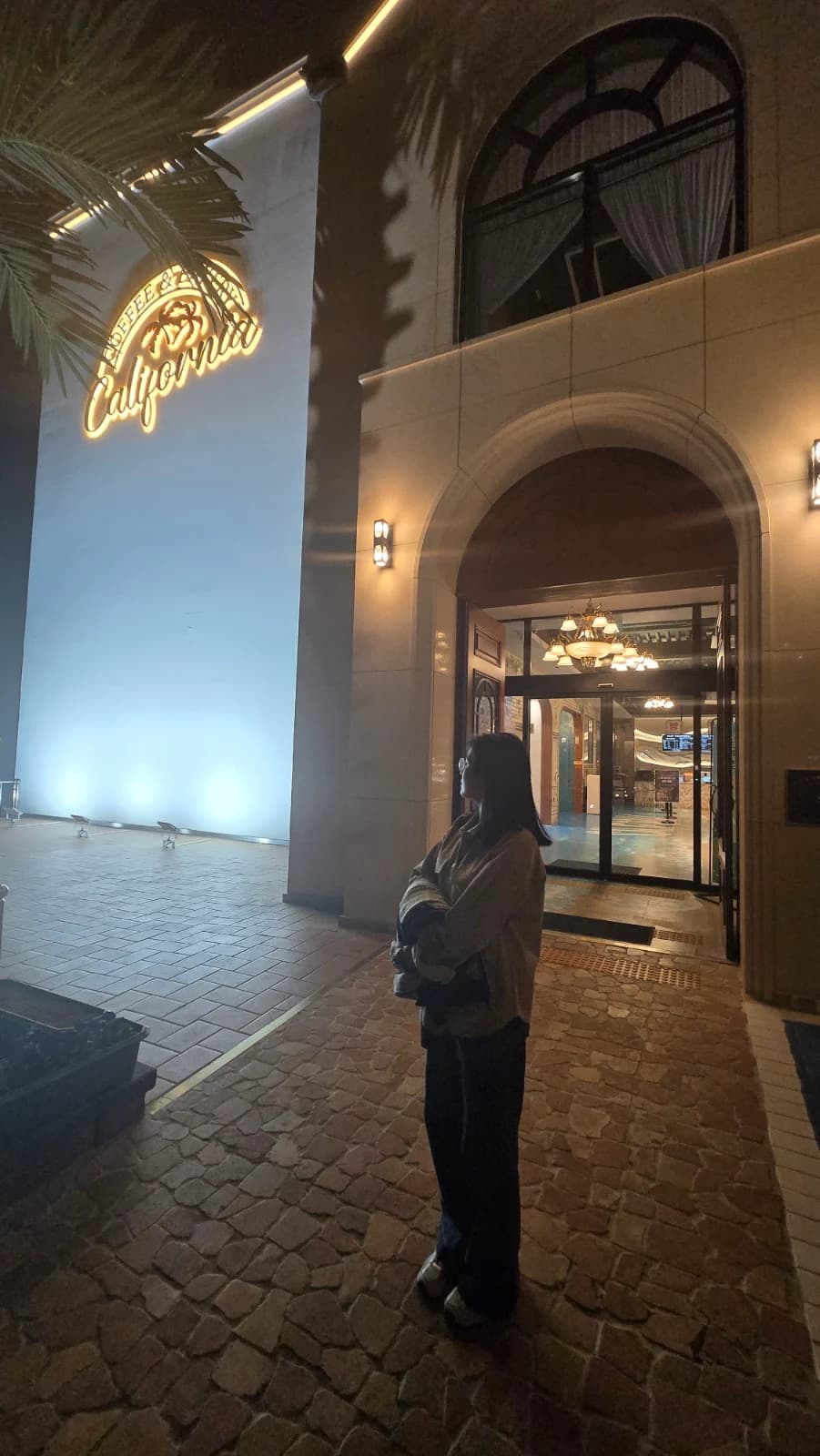
My wife stopped in front of the entrance and looked up for quite a while. The neon light spread across the wall, and through the arched doorway you could see the chandelier inside. Standing there, it weirdly felt like being at immigration even though we had not boarded a plane. The previous week had been a bit chaotic. We had both been tired for days, but for those few seconds in front of the entrance, it felt as if some of that stress had eased. It was an overseas trip without a plane ticket. I asked my wife, “Shall I take a photo of you?” but she was already posing.
Beyond the automatic doors, a huge Korean bakery café of about 18,000 sq ft
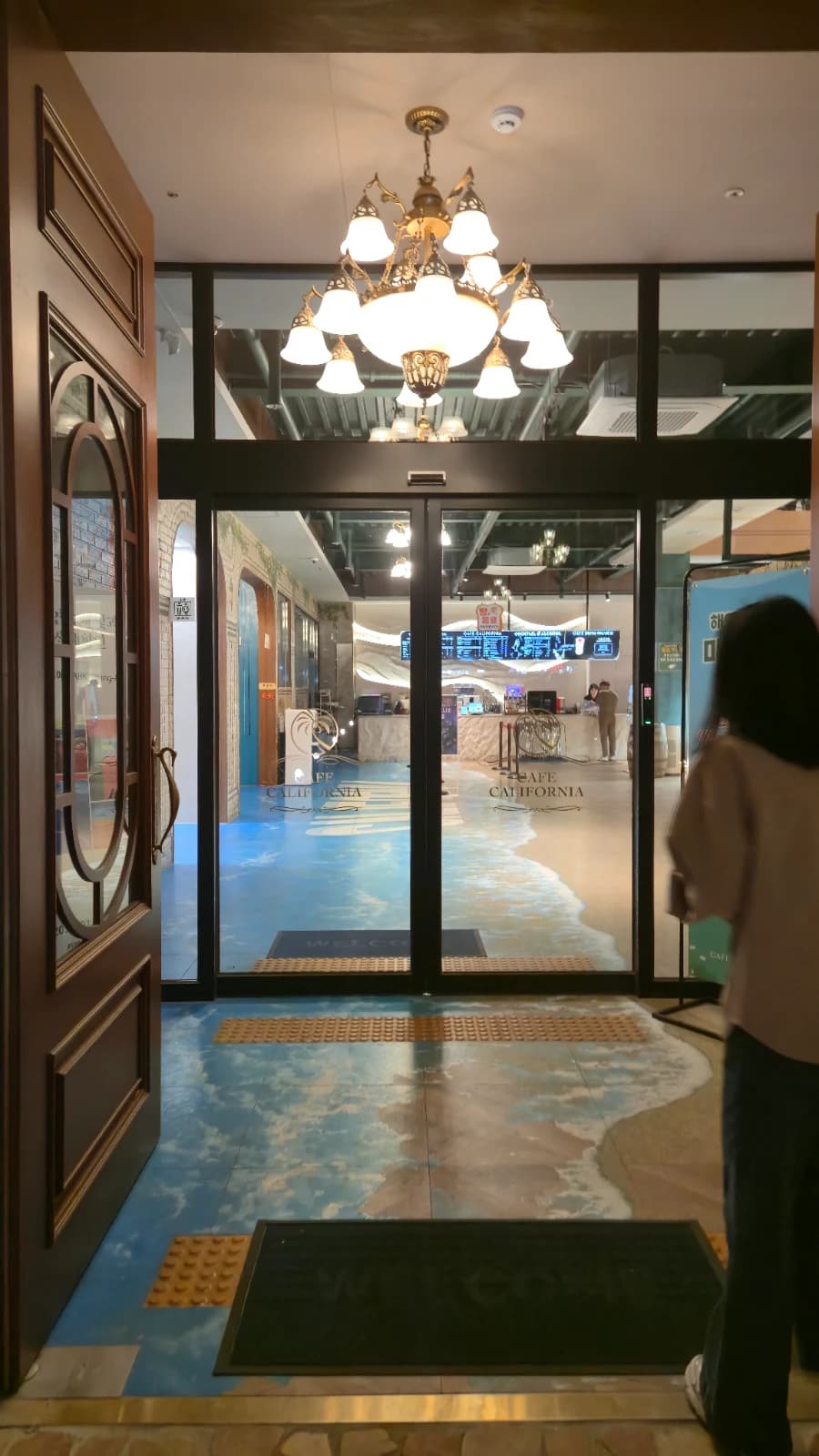
The moment the automatic doors opened, the floor caught my eye first. A blue sea illustration was spread across the floor, with a section that looked like a sandy beach continuing further inside, while a chandelier hung overhead. Through the glass doors, the lights around the counter were visible, and even just peering in from the entrance made it obvious that the place was on a serious scale. My wife strode in first, so I took a photo from behind.
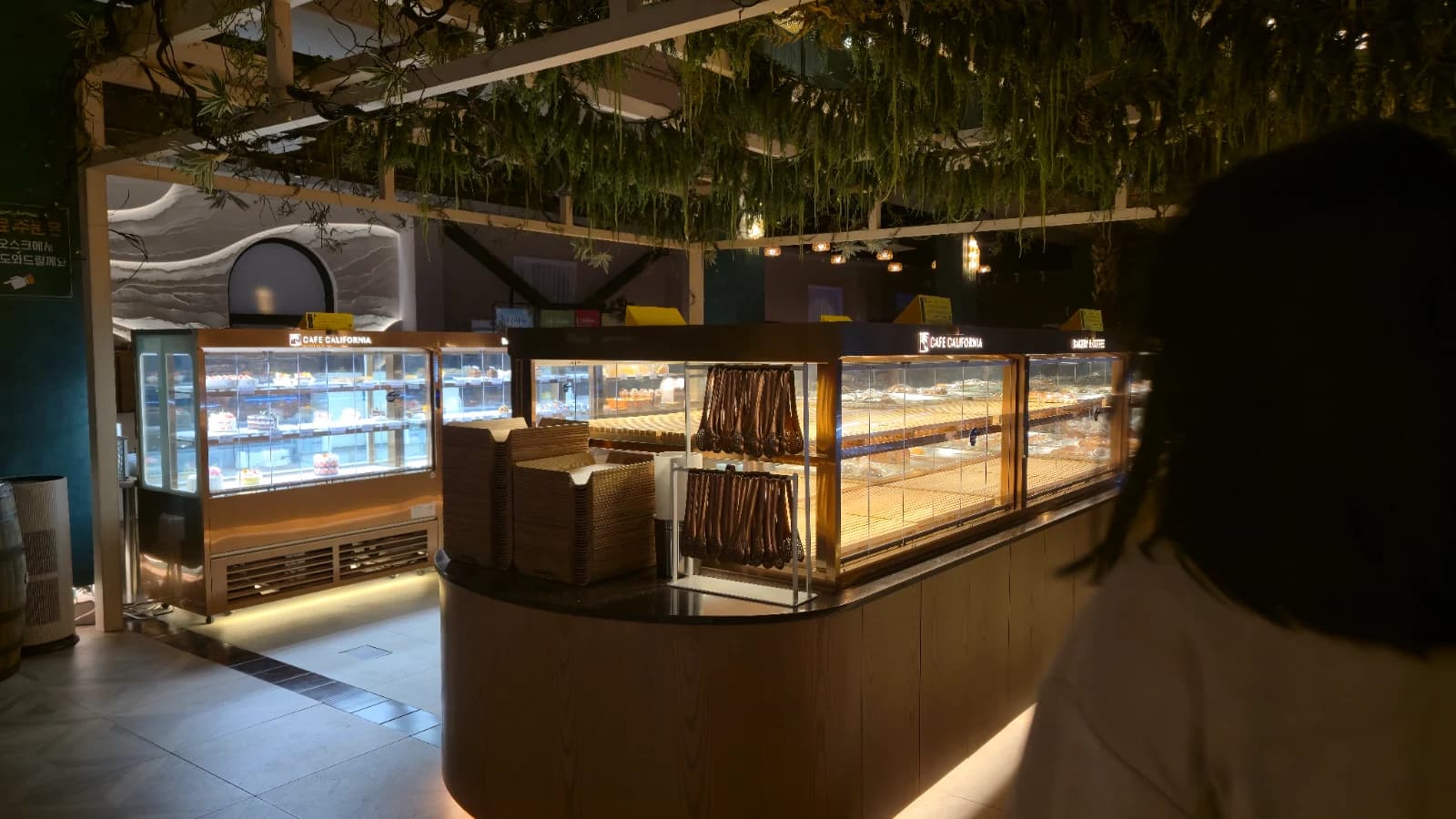
After walking in a little further, I saw the bakery display stretching along the right-hand side. Green trailing plants hung down from the ceiling, and rows of bread sat under the display lighting, though because it was late at night there were empty gaps here and there. I thought, yes, this is what happens when you arrive late. Still, it was not as if everything had sold out, so we decided to do a full lap first. Trays and tongs were stacked in front of the shelves, and when my wife picked up a tray straight away, I knew we were definitely buying bread.
A rice bread display that still caused choice paralysis at 10pm
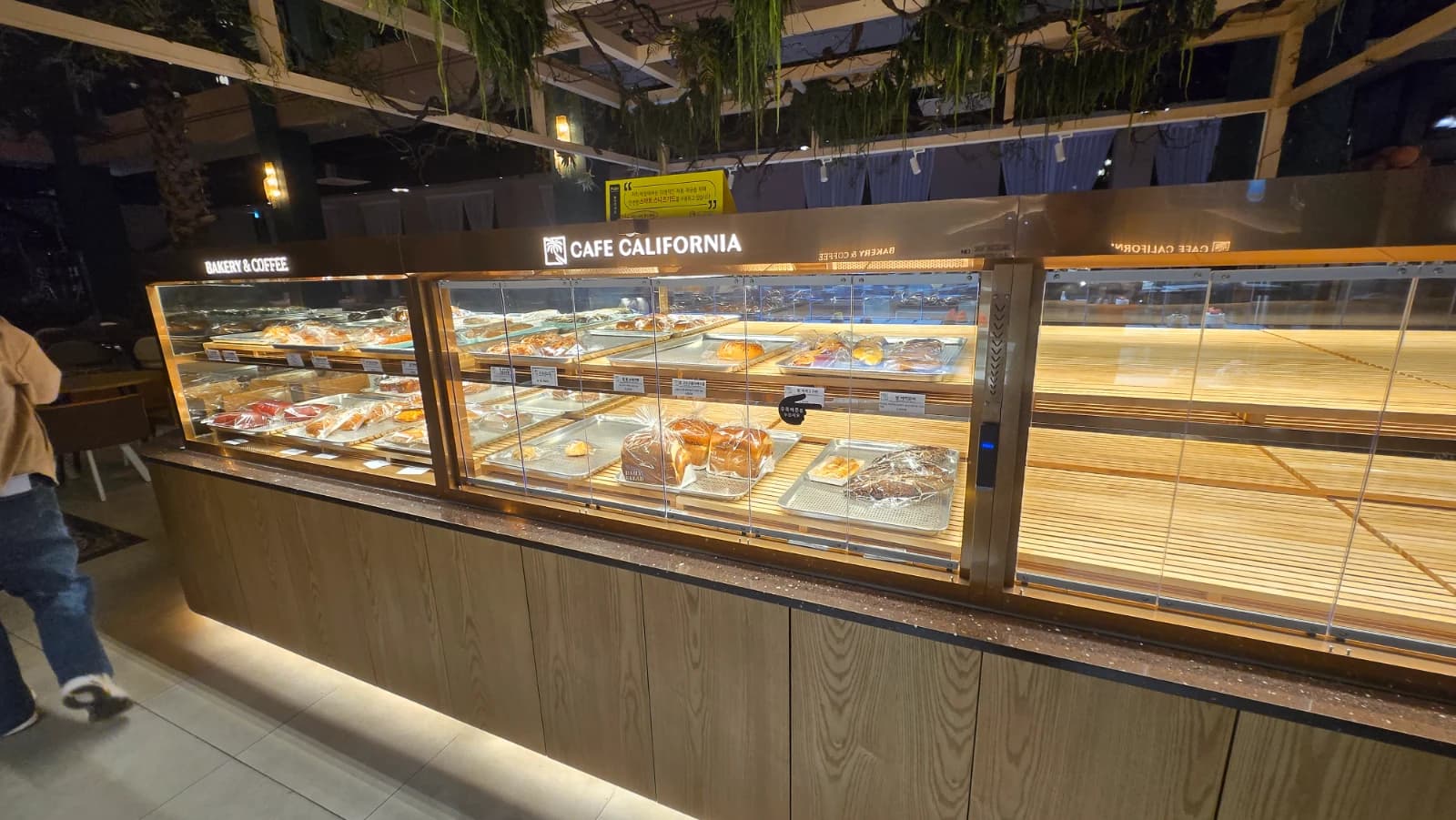
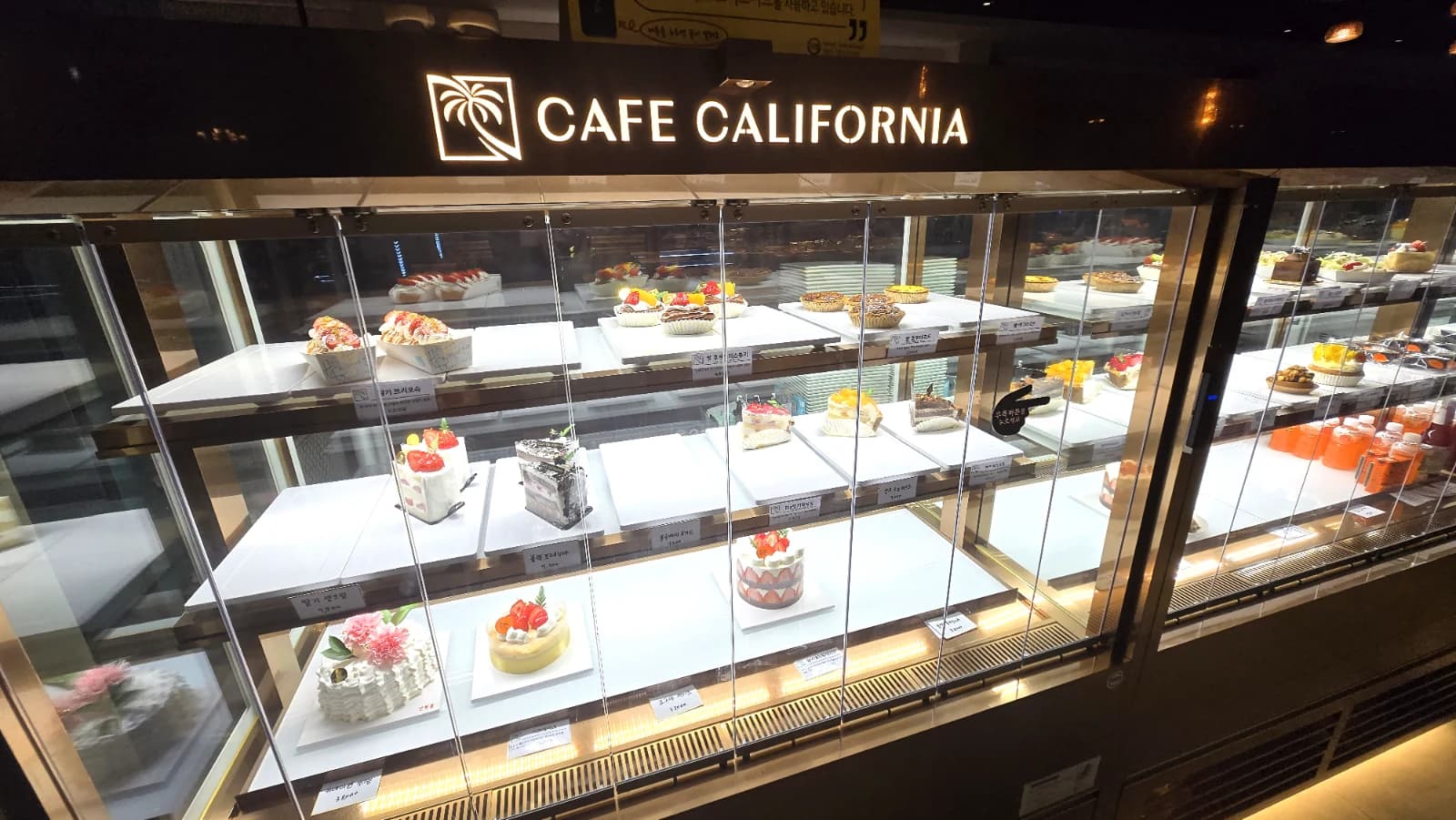
Once I got closer, I was surprised by how much bread was still left for 10pm. Of course, compared with daytime there were a few empty spaces, but each display was still well stocked, almost as if they did not want late-night visitors to be disappointed. Loaf bread and croissants were on one side, while cakes and tarts were kept separately in chilled display cabinets. The cake cabinet had all sorts of options, from strawberry-topped cakes to mango cakes and flower-decorated ones, so I honestly had not expected to get choice paralysis after arriving this late. Apparently, all the bread here is 100% gluten-free bread made with rice flour, so it seems like a very welcome place for anyone who finds wheat flour heavy. Even for a Korean bakery café, I do not often see somewhere on this scale. My wife lingered in front of the cake display for ages, and when I told her to hurry up and choose, she said, “Why is bread in Korean cafés so pretty? Choosing is half the fun.”
Rice-flour cakes that you honestly cannot tell apart by sight
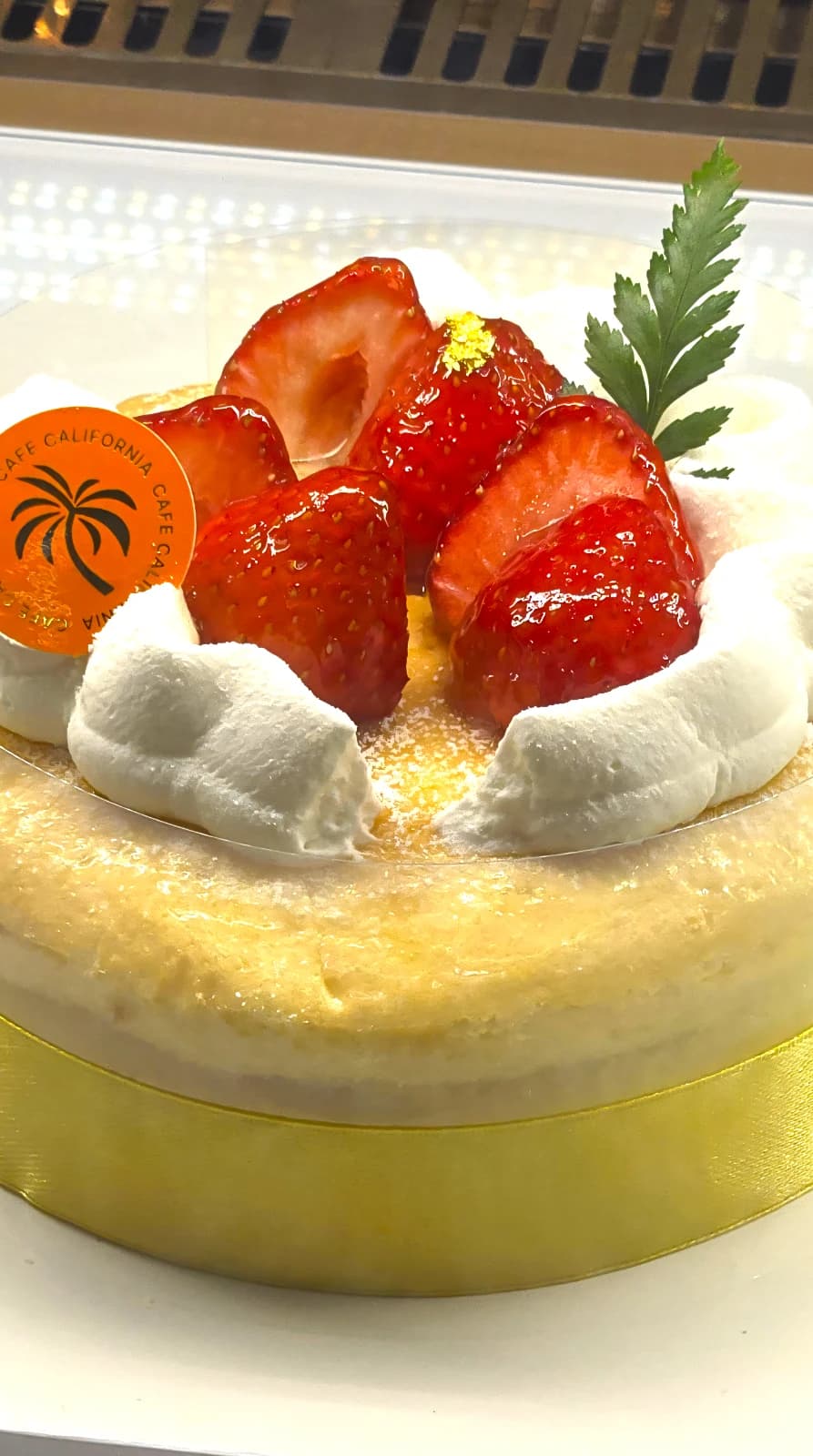
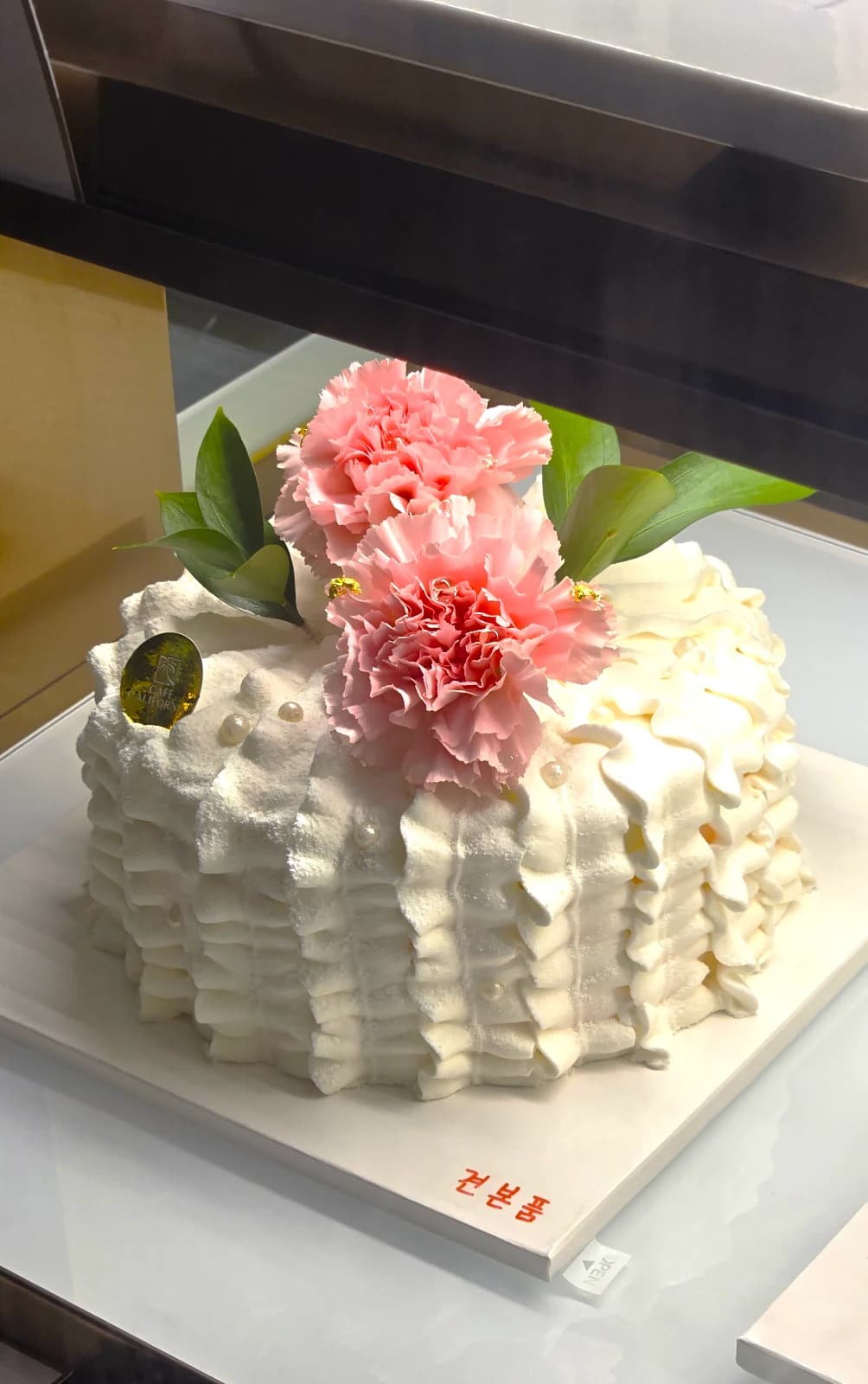
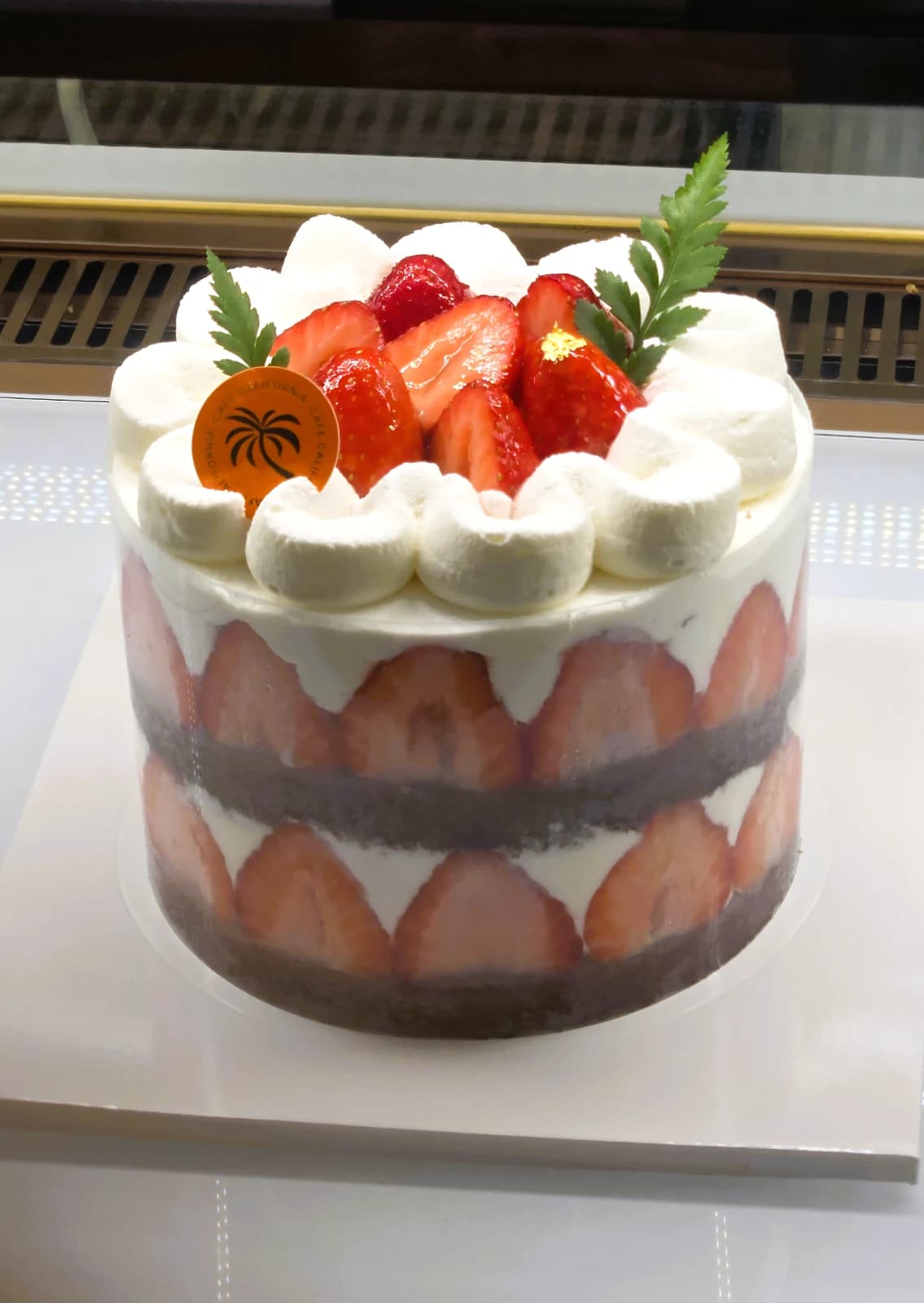
I took close-up photos of a few cakes, though I did edit the photos slightly. The first was a strawberry-topped cheesecake, with glossy strawberries sitting between the cream layers. The second was a whipped cream cake topped with a pink carnation, and this one looked almost too pretty to eat. The third held my wife’s attention for the longest: a strawberry cream cake where sliced strawberries were visible in layers through the clear film. These were apparently all made with rice flour too, but honestly, just by looking, I could not tell what made them different from regular wheat-flour cakes. Whole cakes were priced at around ₩35,000 to ₩38,000, roughly £20 to £22.
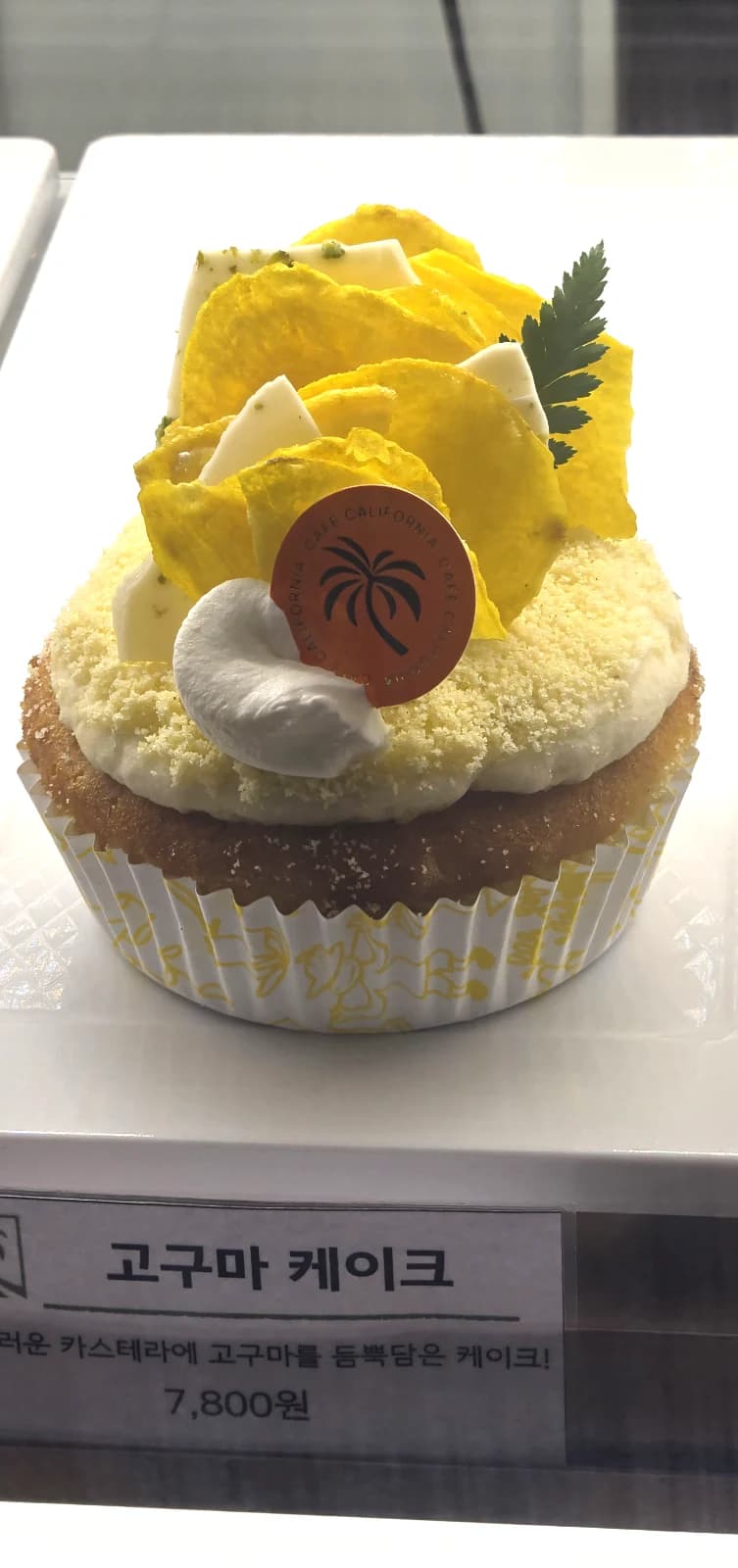
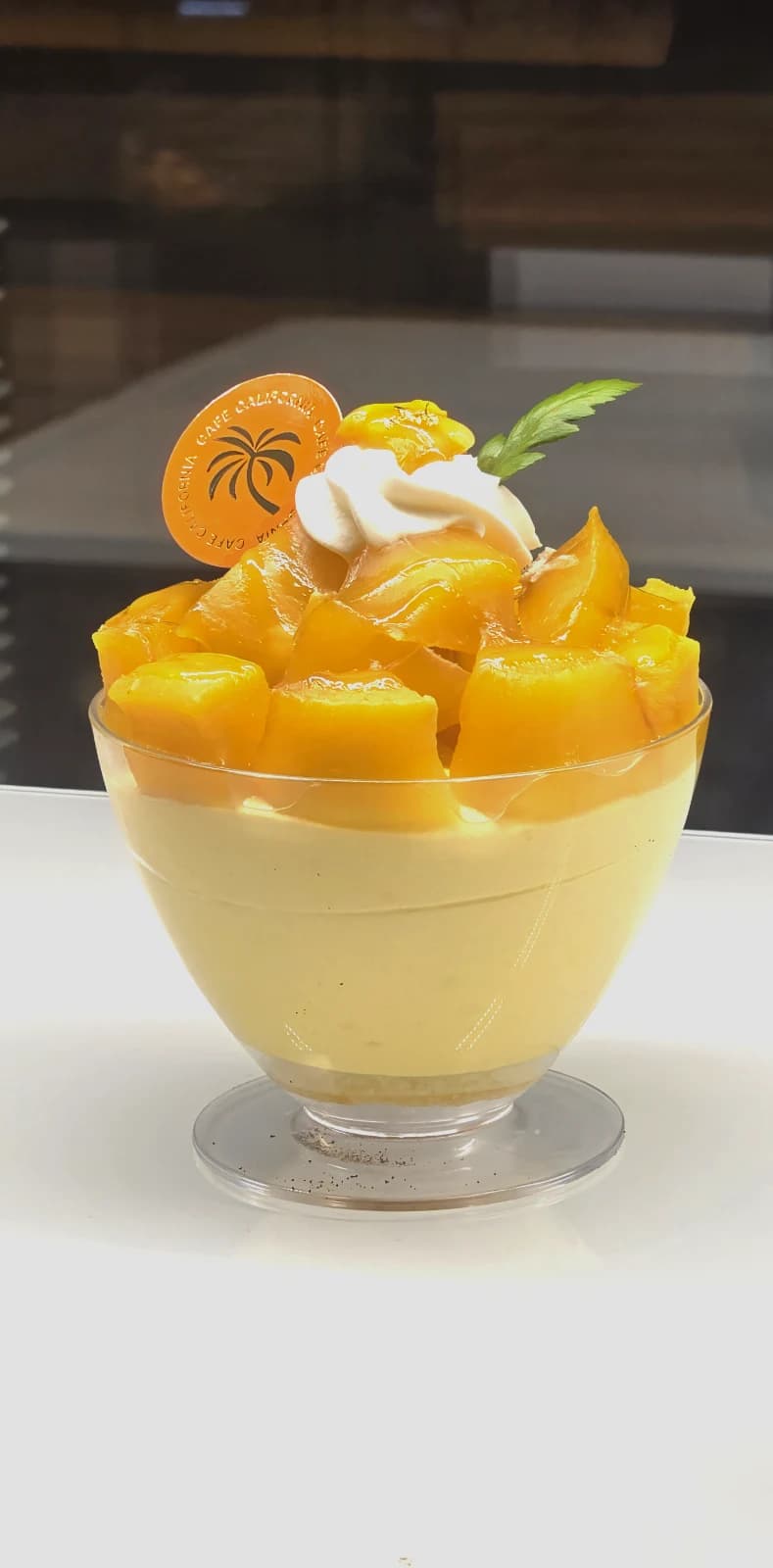
I also browsed the slice cake display, and the sweet potato cake was ₩7,800, roughly £4.45. The sign said it was soft castella topped generously with sweet potato, and there were plenty of yellow sweet potato crisps piled on top. Next to it, the mango cupcake came in a glass packed with mango pieces, giving it more of a fruit bowl look than a standard dessert.
The strawberry cream bun that made me take three photos
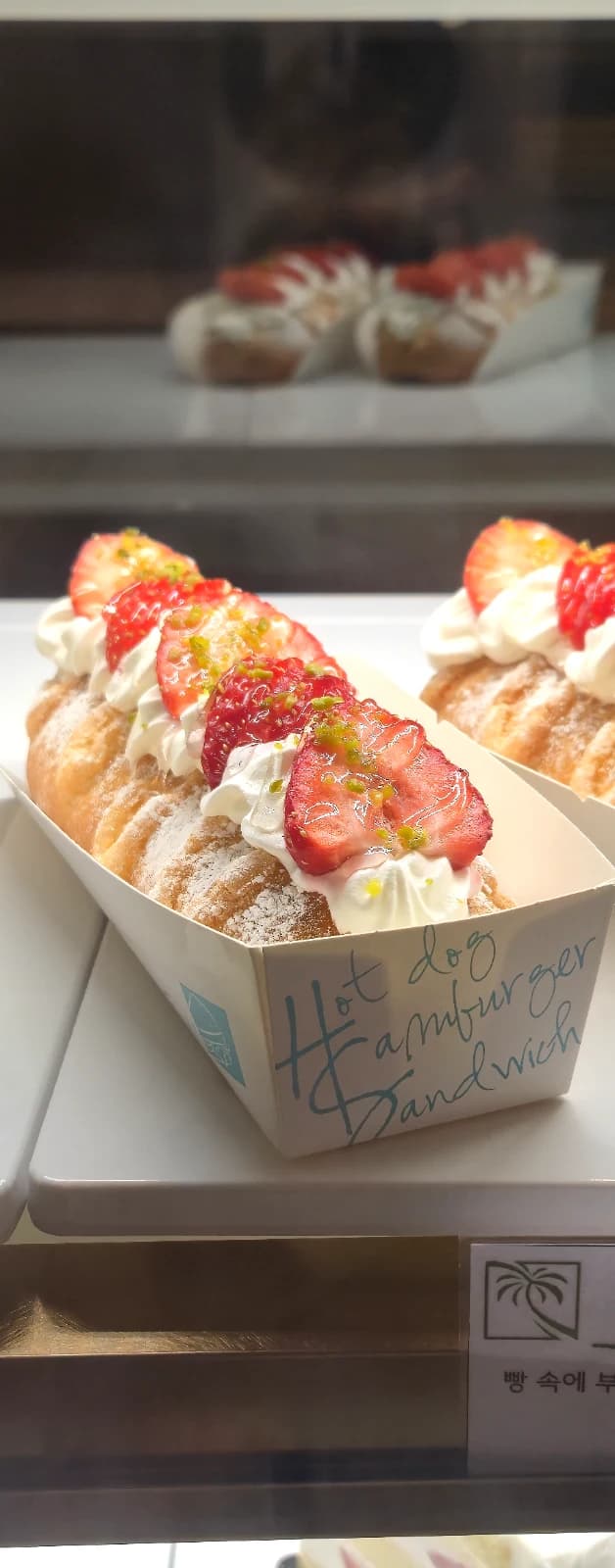
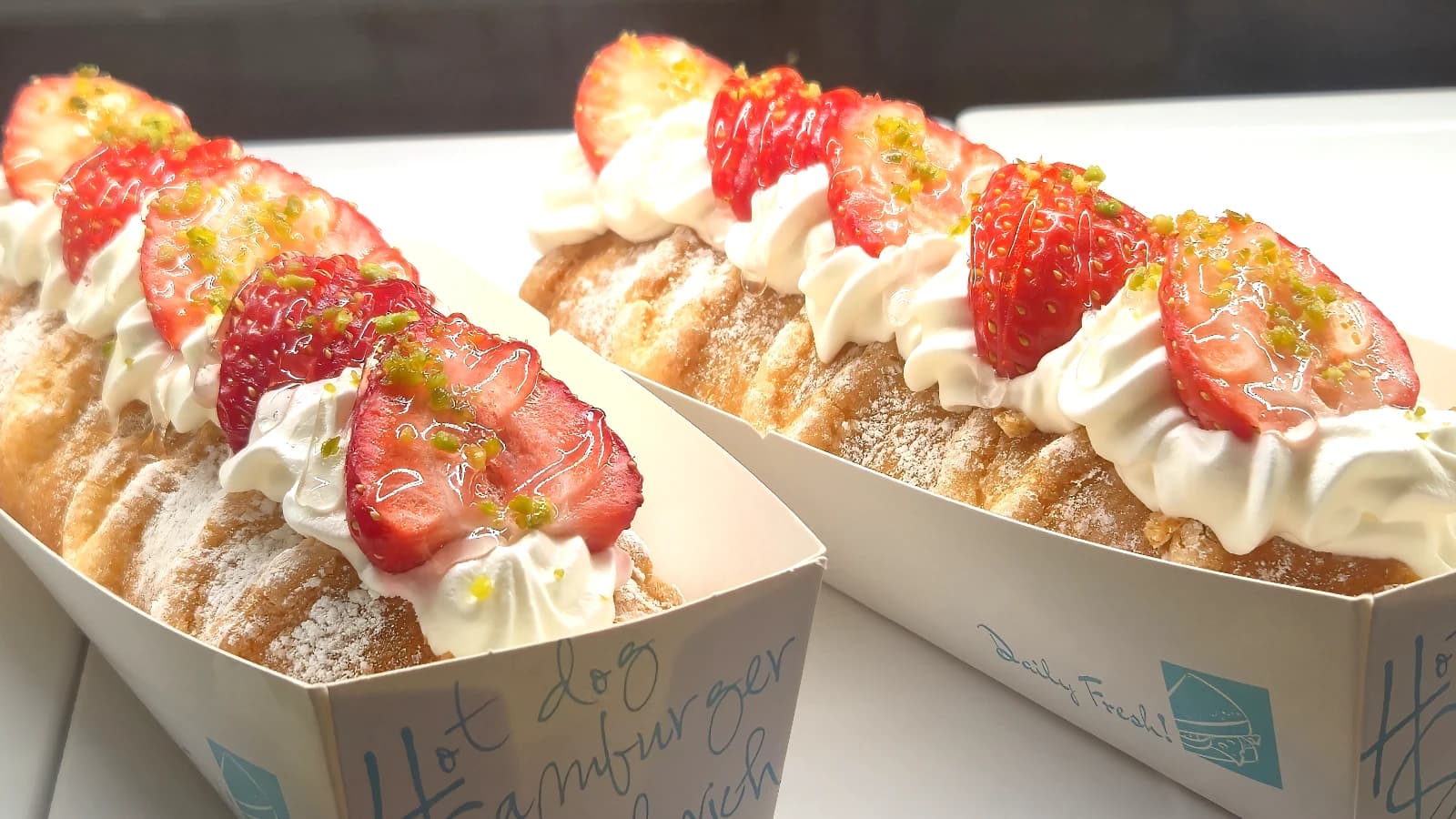
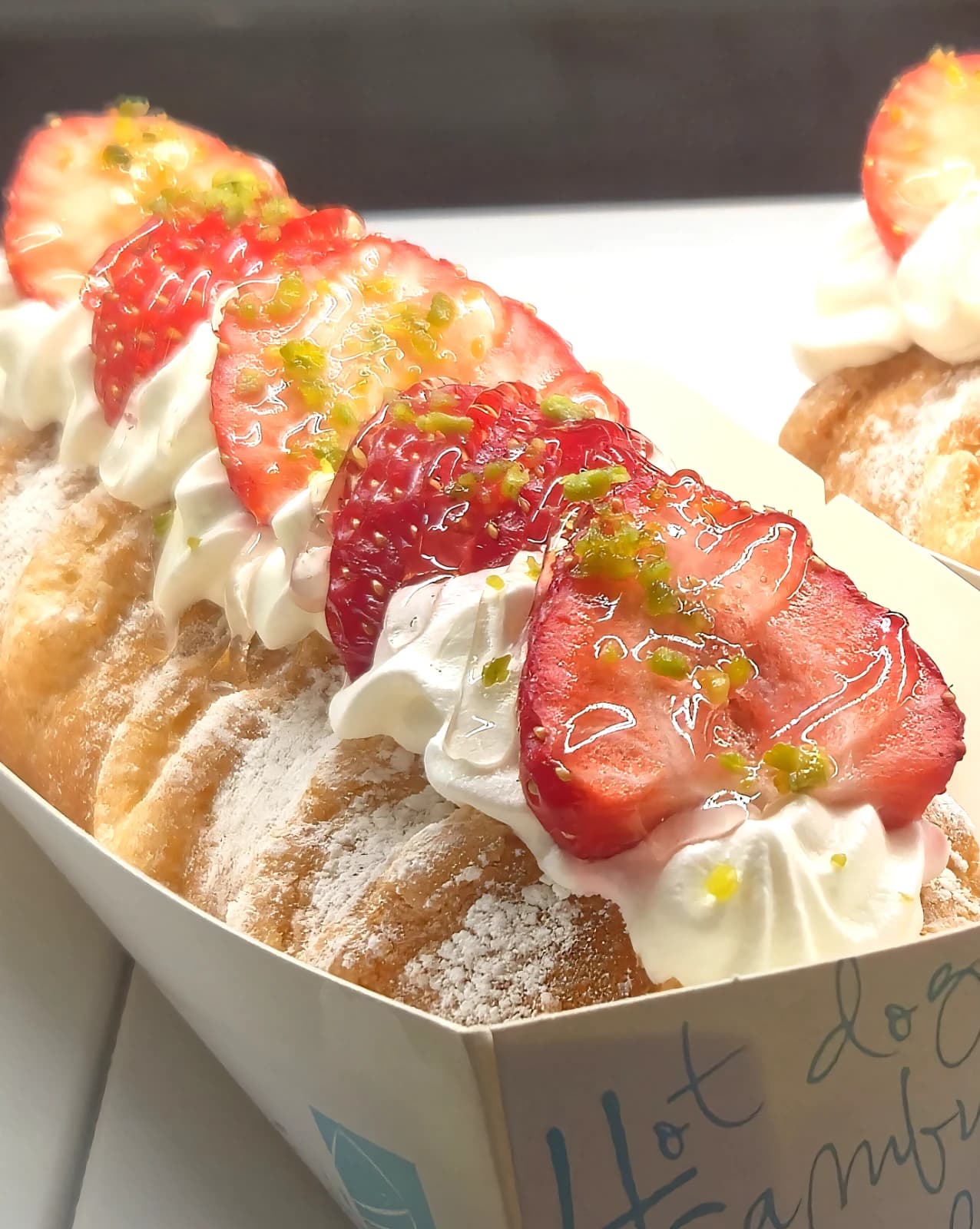
This was a strawberry cream bun, and there is a reason I took three photos of it. On top of the bread in its paper tray, whipped cream had been piped neatly, with sliced strawberries lined up across it. Pistachio crumble was scattered over the strawberries, so it sparkled under the display lights. Up close, you could see a little icing sugar on the outside of the bread, and the cream packed into the split running through it. My wife said, “We have to buy this,” and honestly, I could not just walk past it either.
From rice croissants to rice bagels, the gluten-free bread display
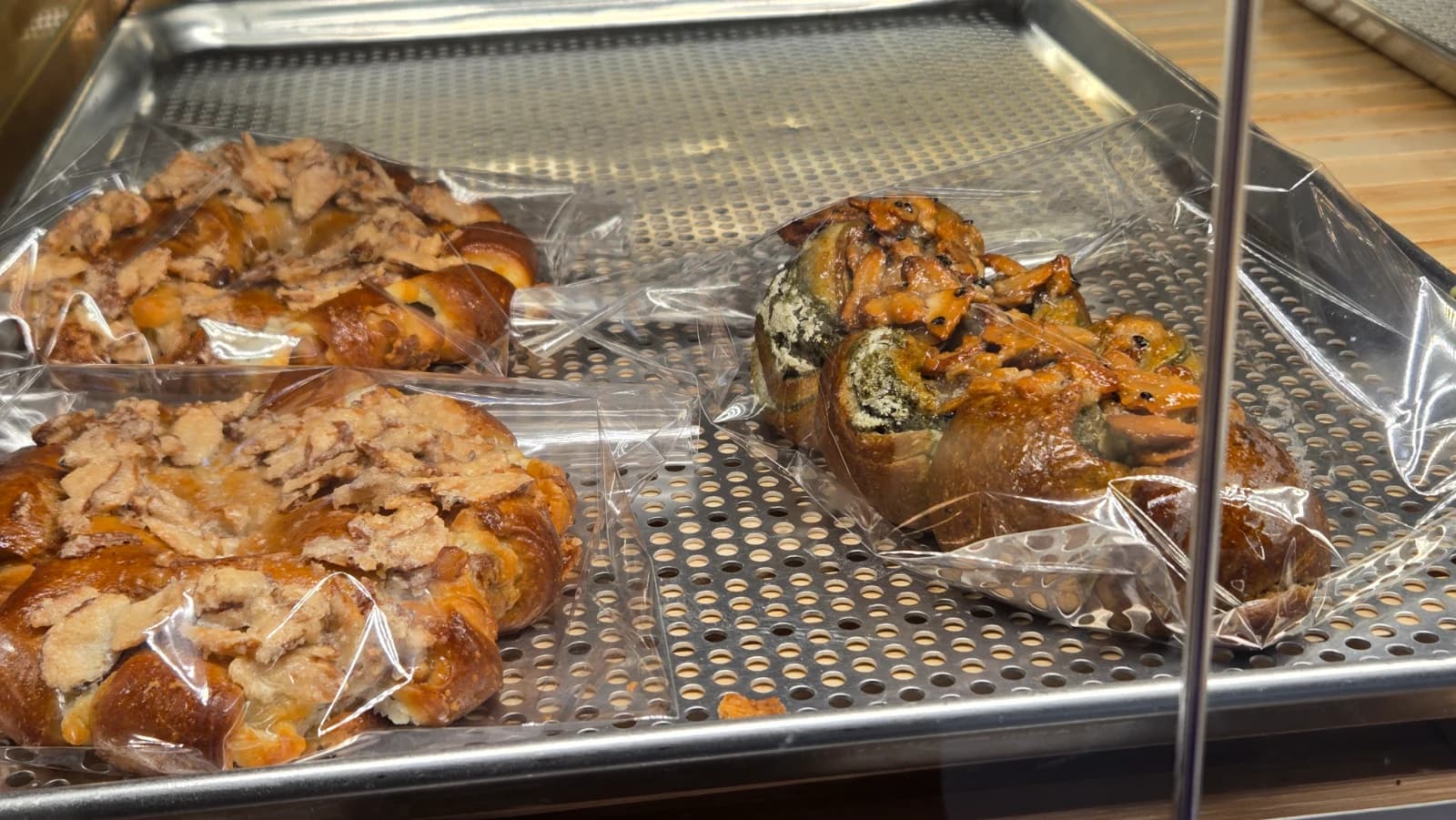
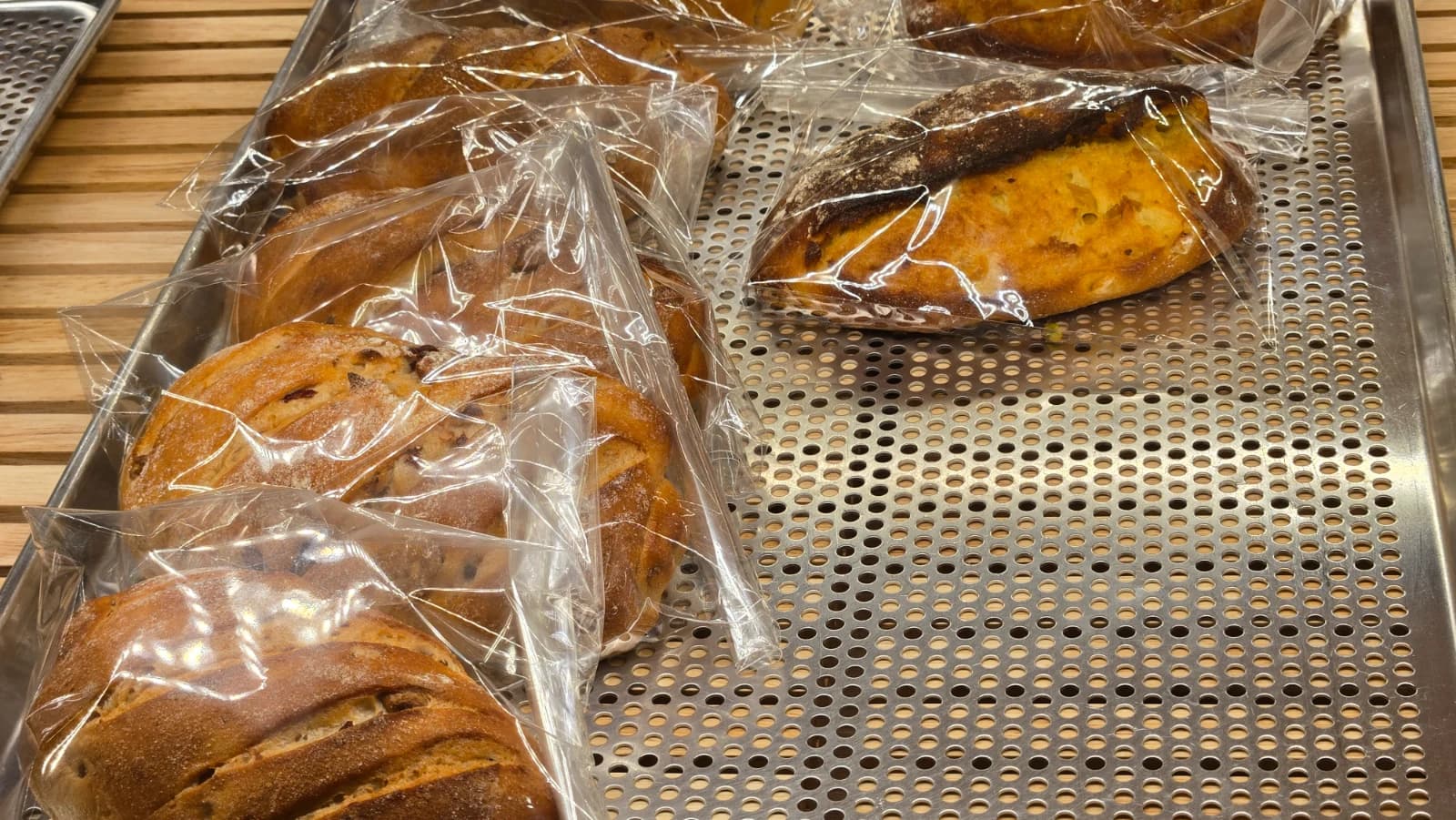
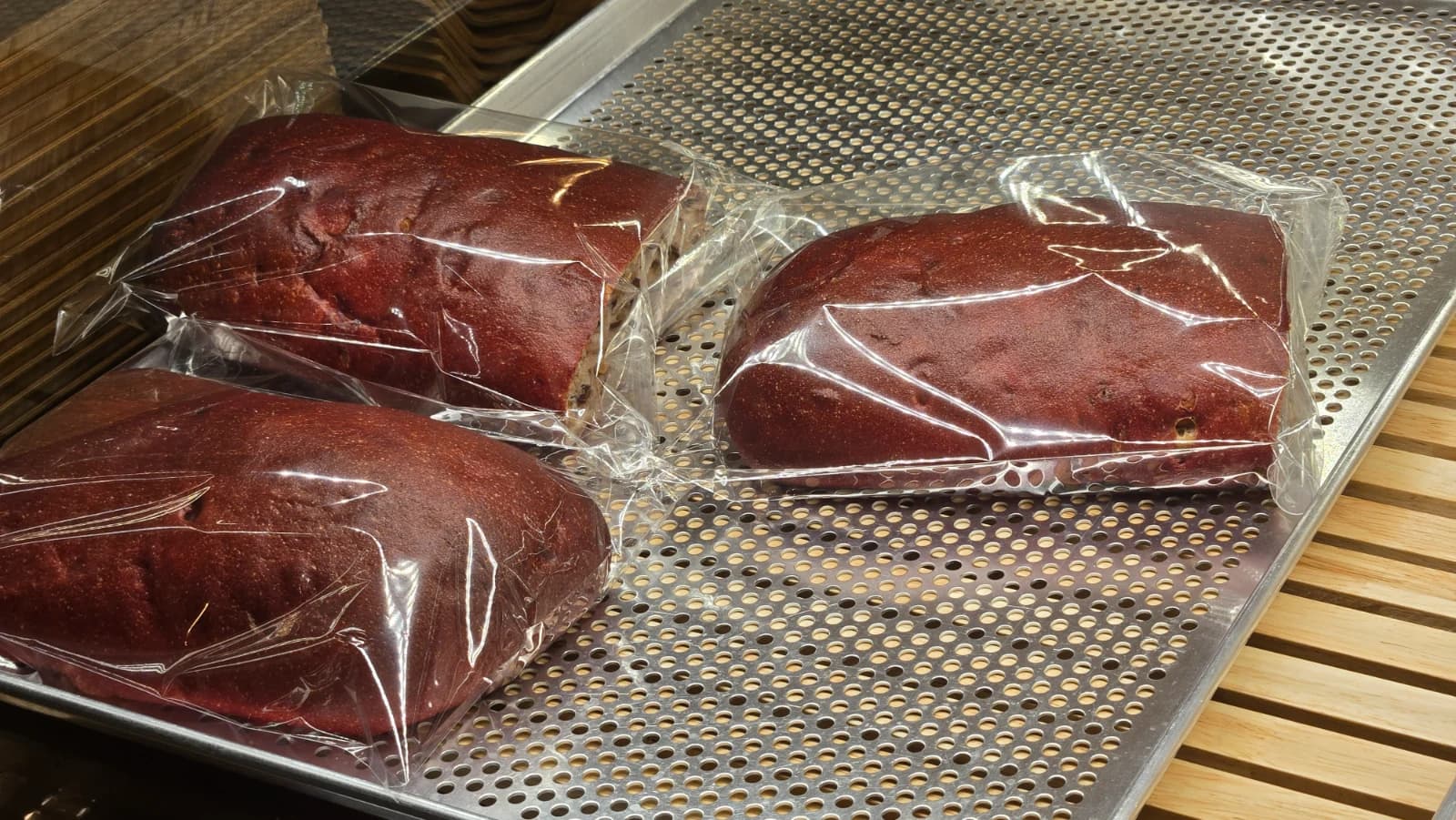
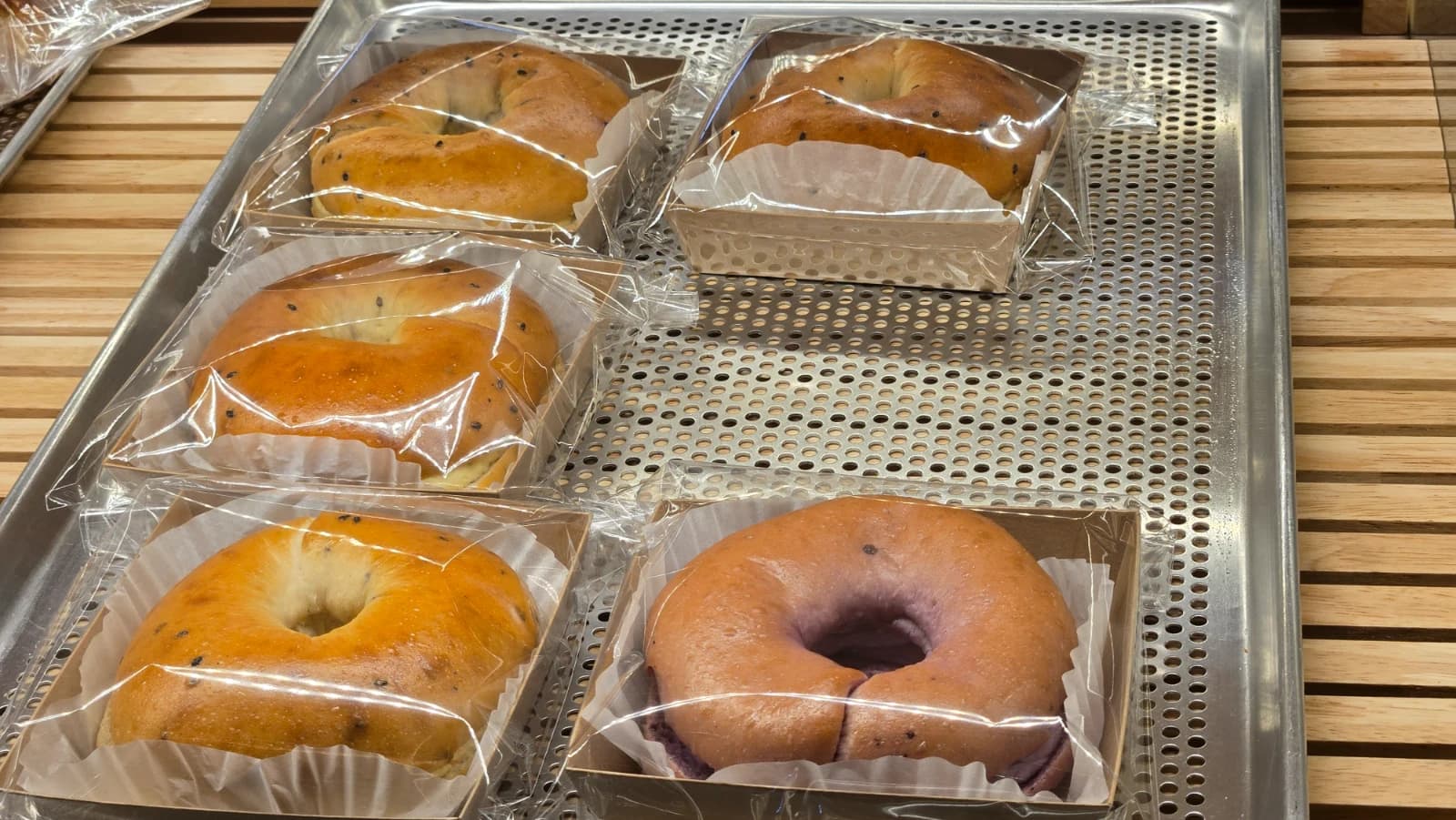
Besides the cakes, I also looked around the main bread shelves. There were what looked like rice croissants and nut-topped breads, all individually wrapped in plastic, with weightier rustic loaves lined up in the section beside them. There was also a deep reddish-brown bread that caught my eye, perhaps made with beetroot or purple sweet potato dough. They had rice bagels as well. I spotted several types, including ones with sesame seeds and others made with purple dough, but I could not confirm their exact names. I liked that everything was individually wrapped, which felt hygienic, but some of the labels were hard to see, so it was a little disappointing to choose without really knowing what each bread was.
Slice cakes from ₩3,800, about £2.15
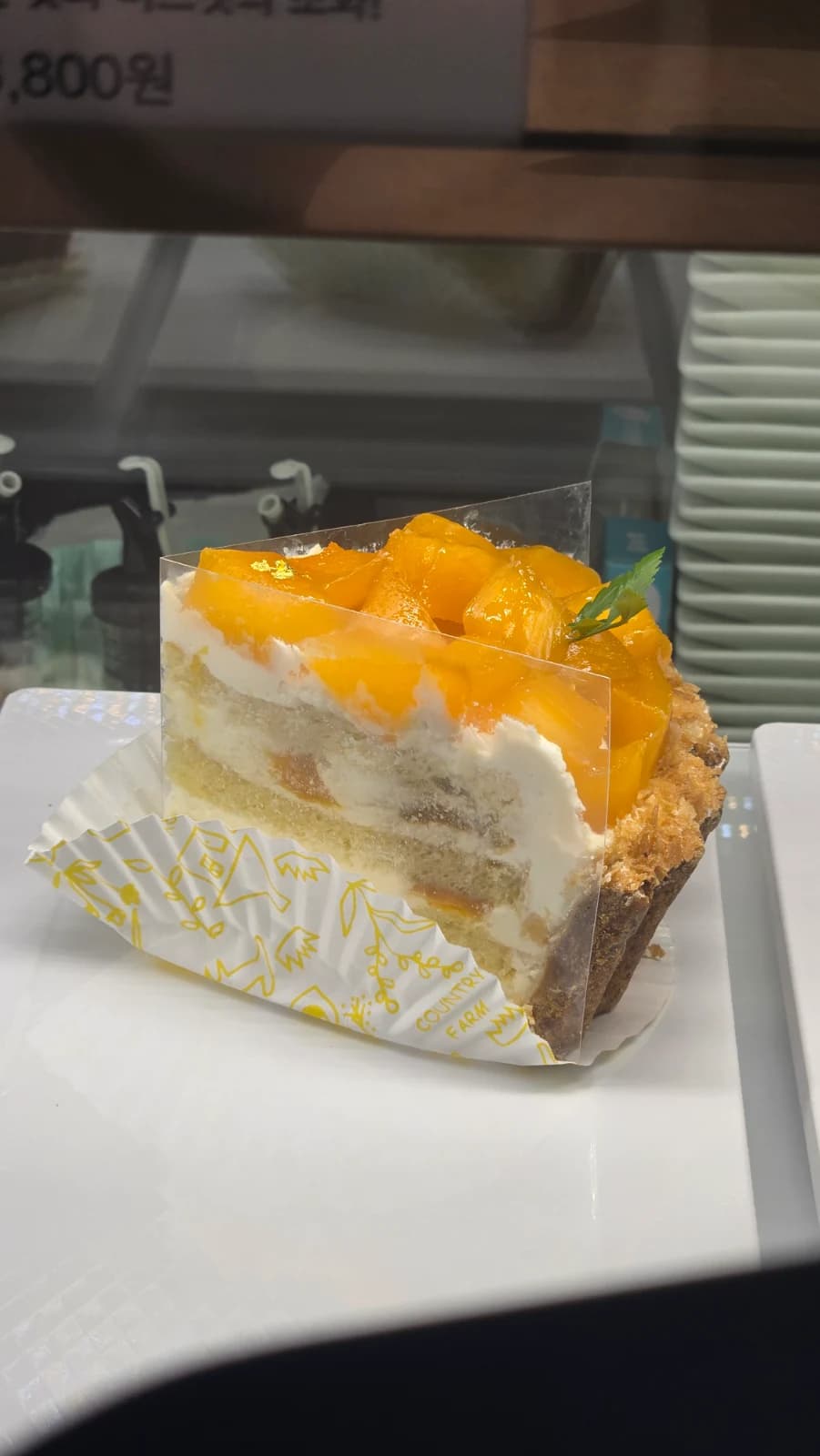
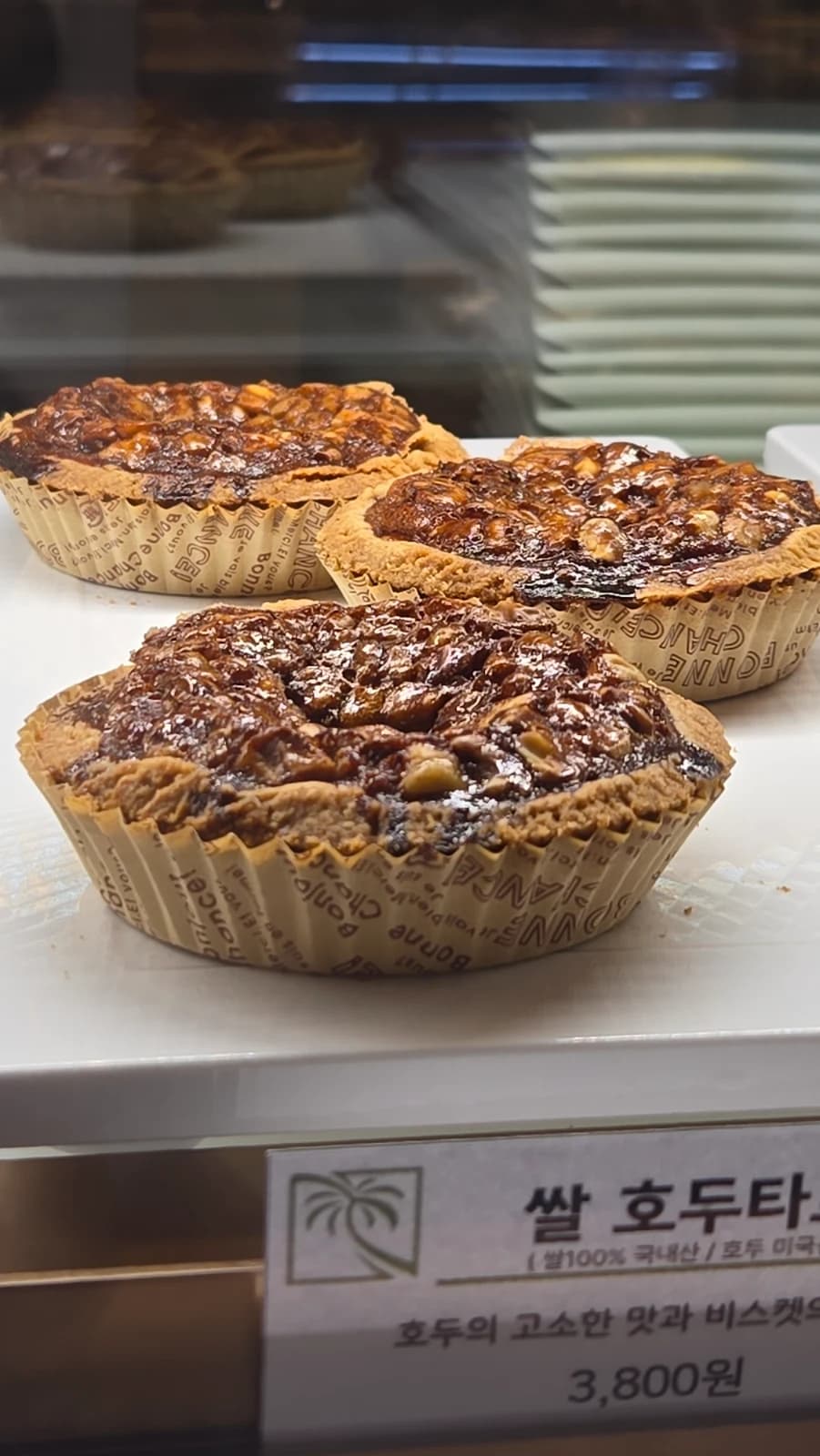
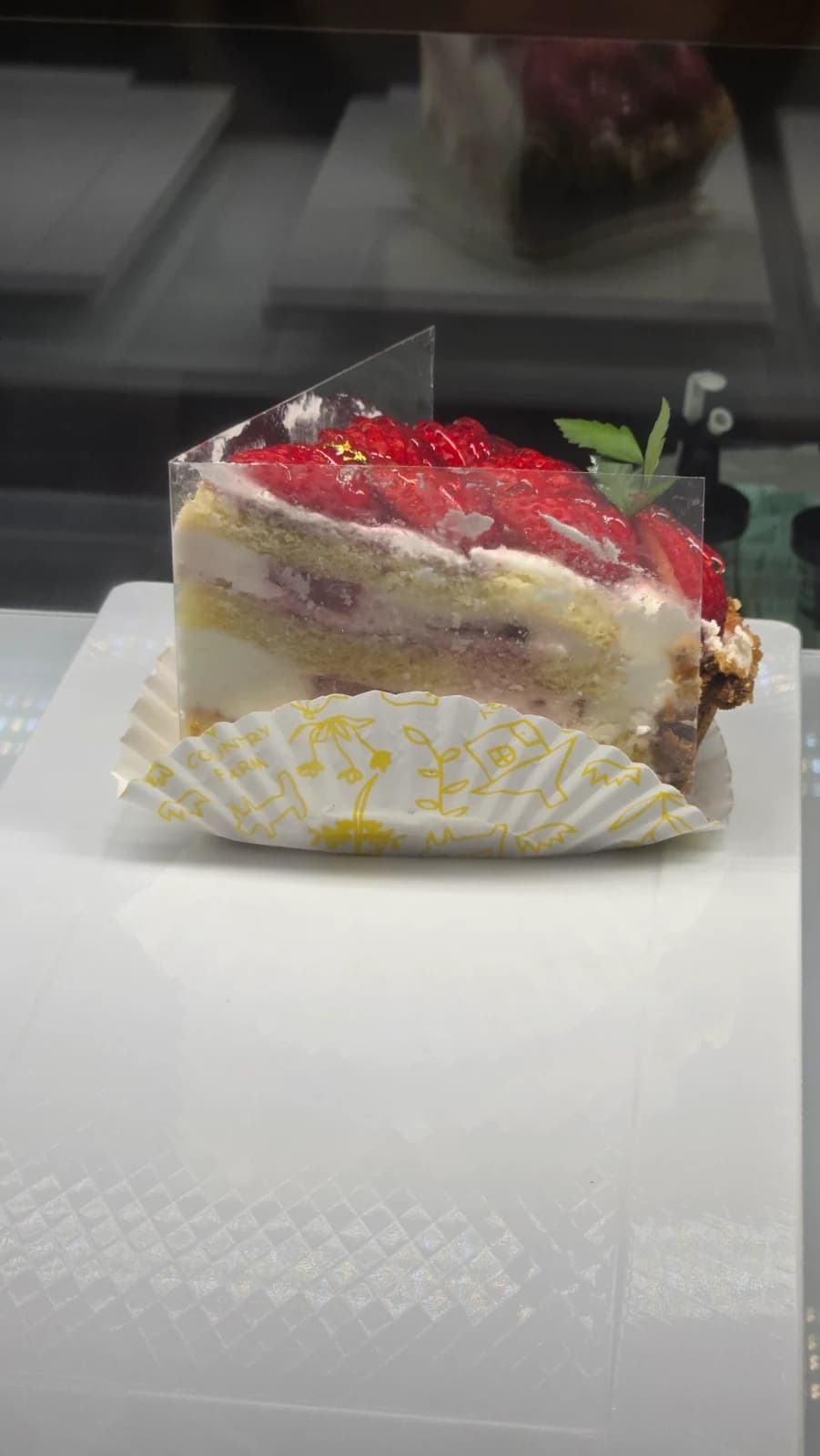
The ₩5,800 mango slice cake, roughly £3.30, caught my eye. Looking at the cut side, mango was layered between the cream and piled generously on top as well. Next to it was a ₩3,800 rice walnut tart, about £2.15, with a note saying the rice was 100% Korean and the walnuts were from the US. The surface was baked to a caramel-brown colour, and even standing in front of the display you could smell something nutty. There was also a strawberry slice cake, with strawberries packed on top and thick cream between the sponge layers, and out of the three it looked the most tempting.
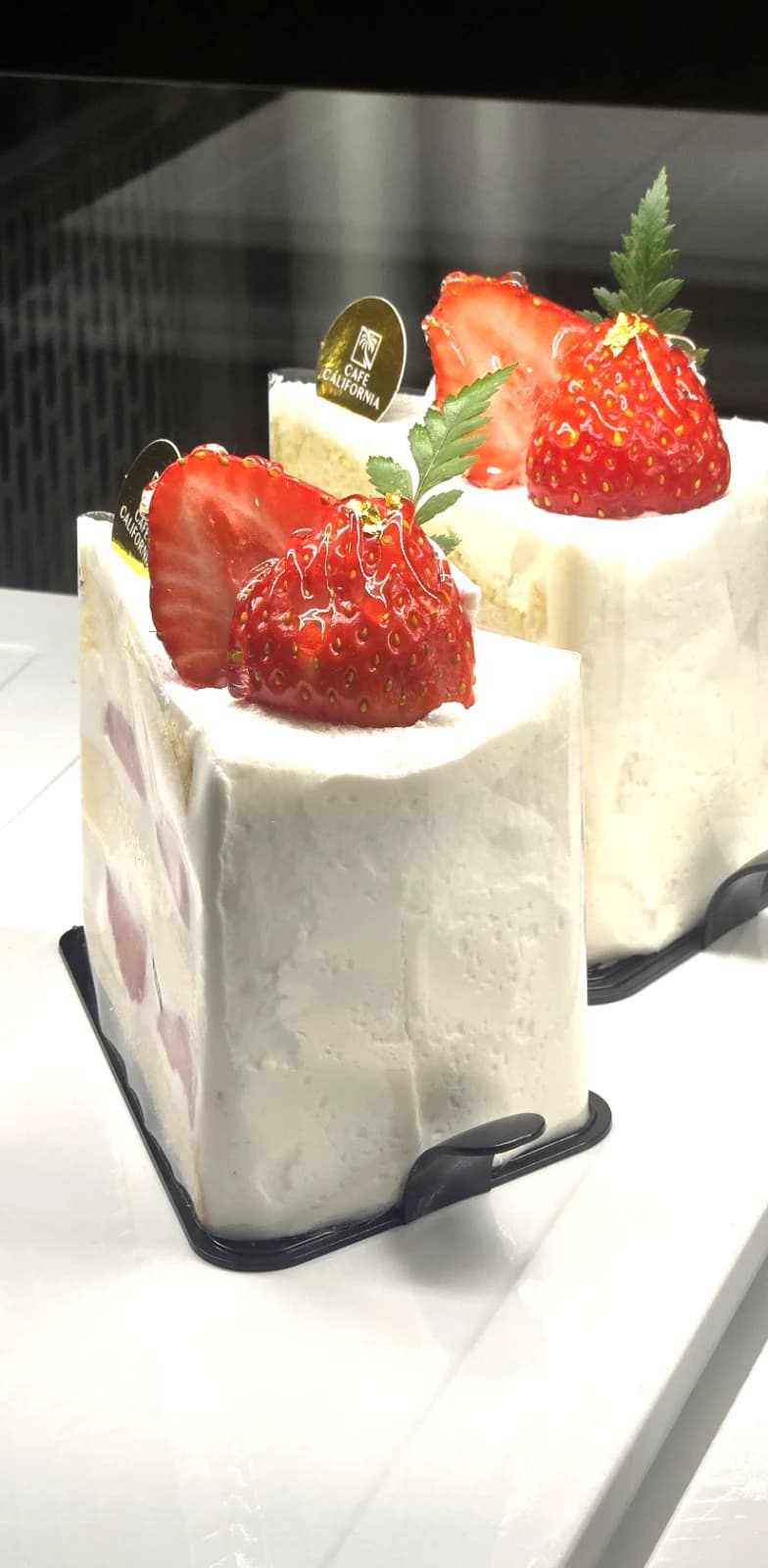
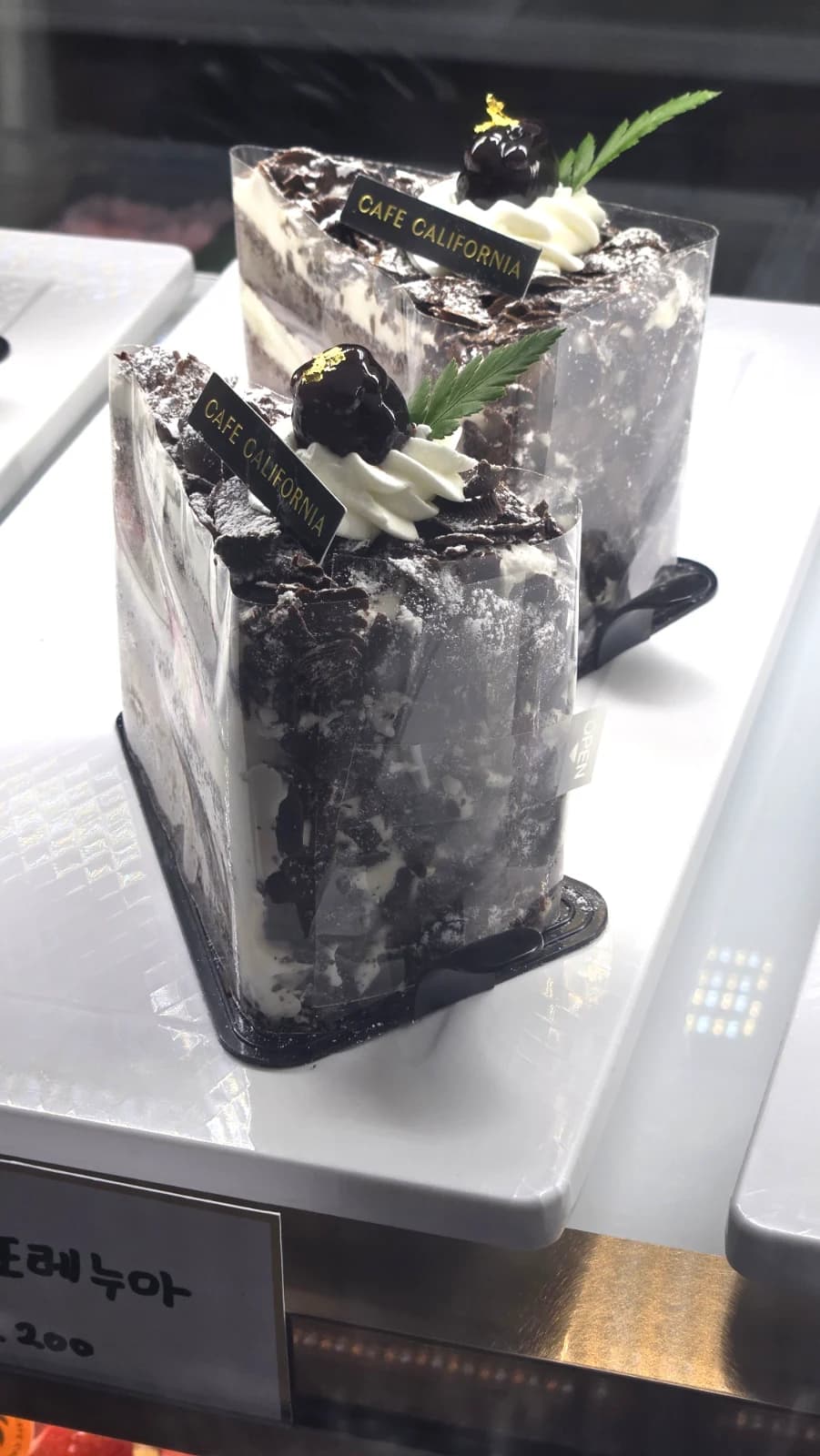
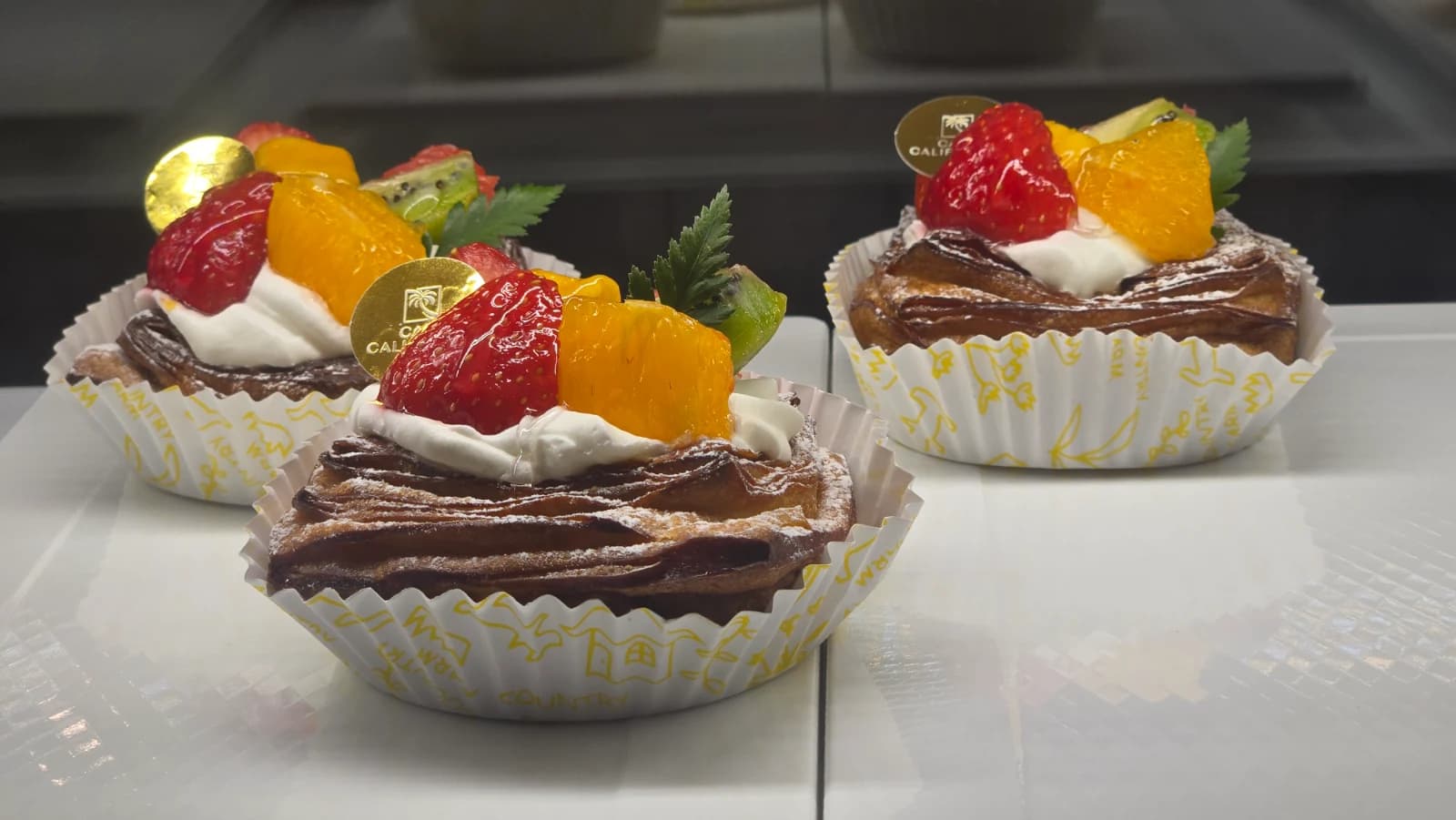
The strawberry cake wrapped in white whipped cream had half a strawberry perched on top, and from the side you could just see the strawberry slices inside the cream. The chocolate cake beside it was labelled Forêt Noire and cost ₩7,200, around £4.10. It had a cherry on top and chocolate shavings covering the outside, so it looked as if it would be quite rich. The last one I noticed was a fruit tart, topped with strawberry, orange and kiwi in bright colours over the cream. One lap around the display had somehow already taken 30 minutes.
I thought it was all bread, but they had light meals too
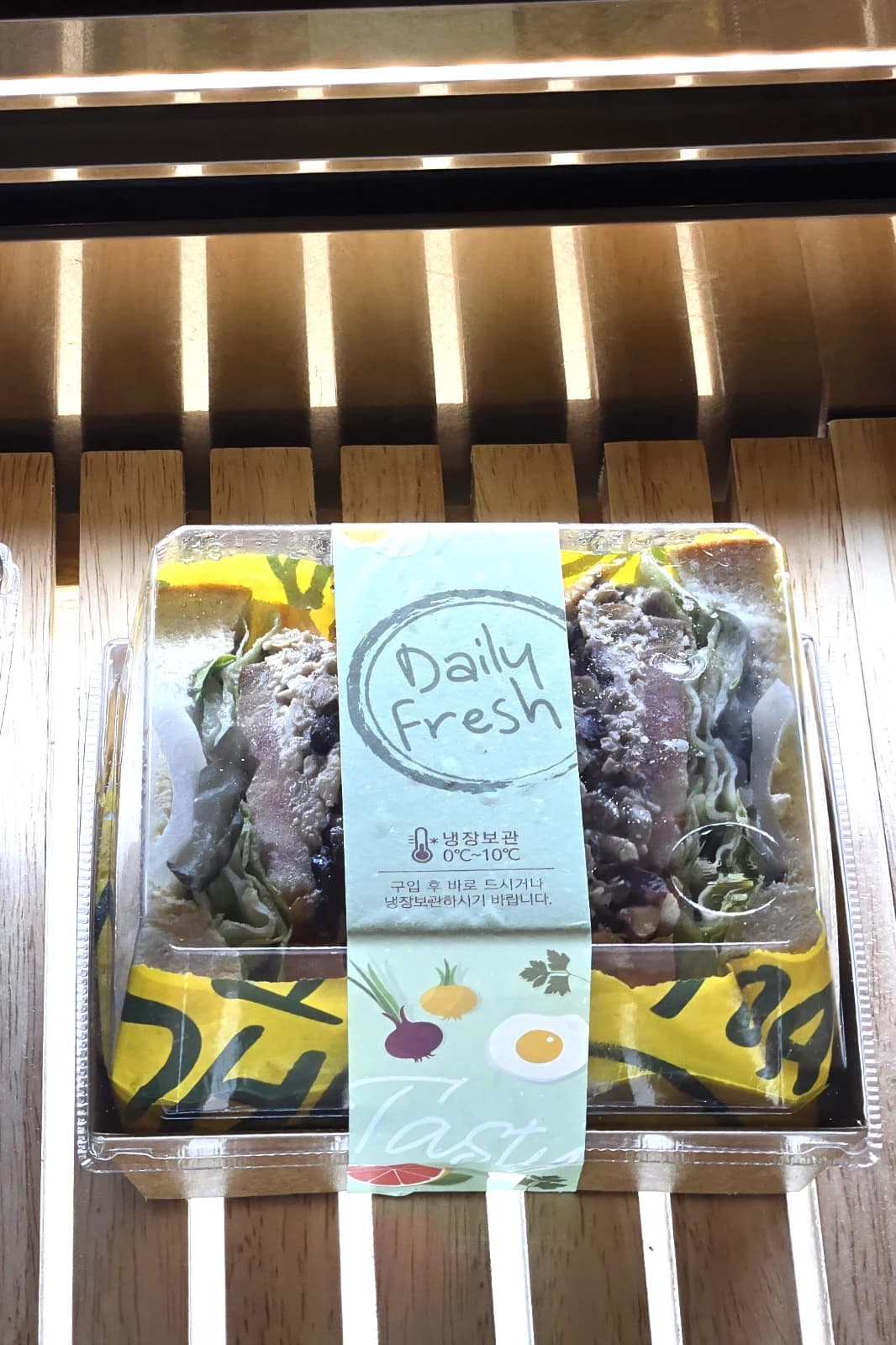
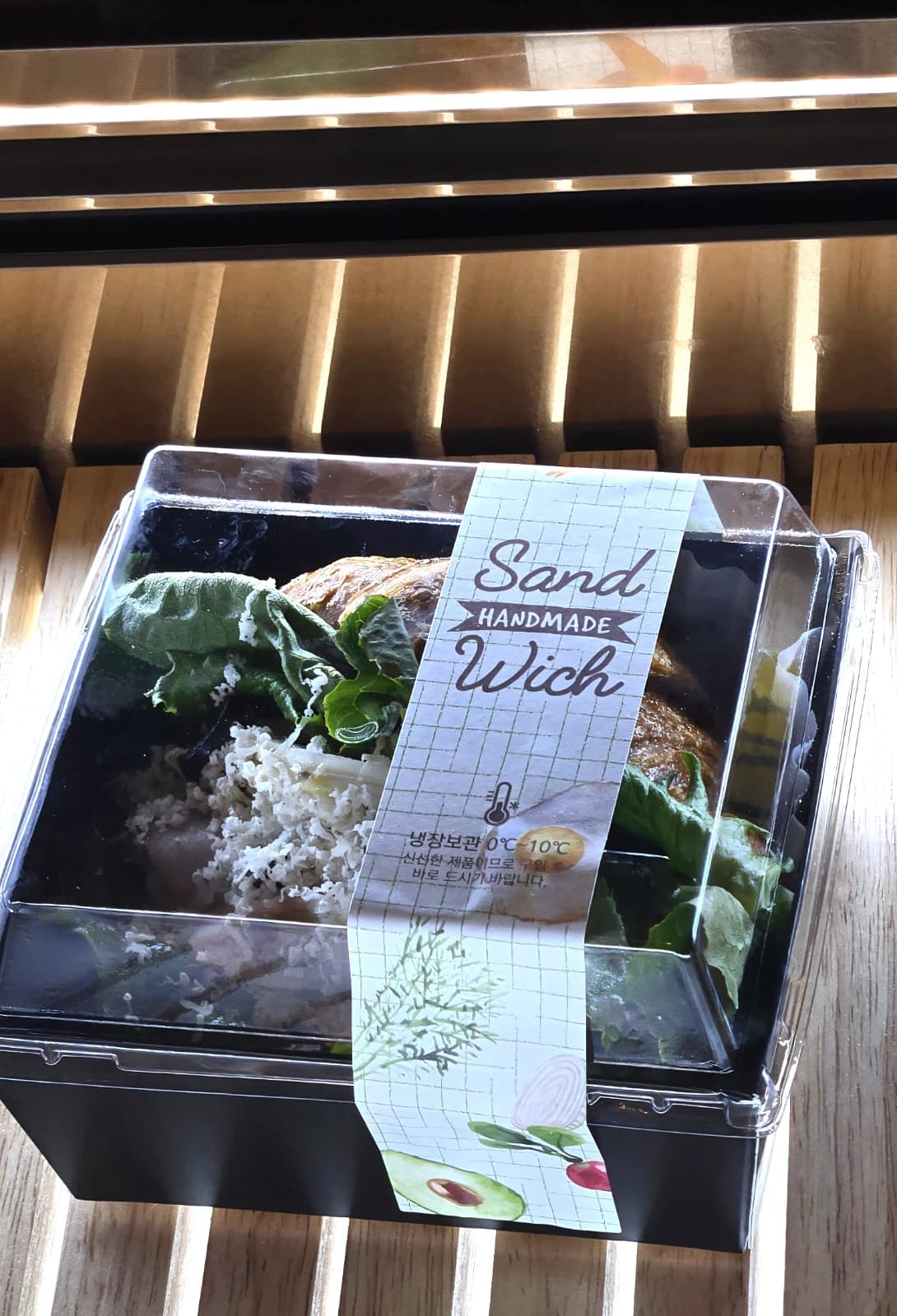
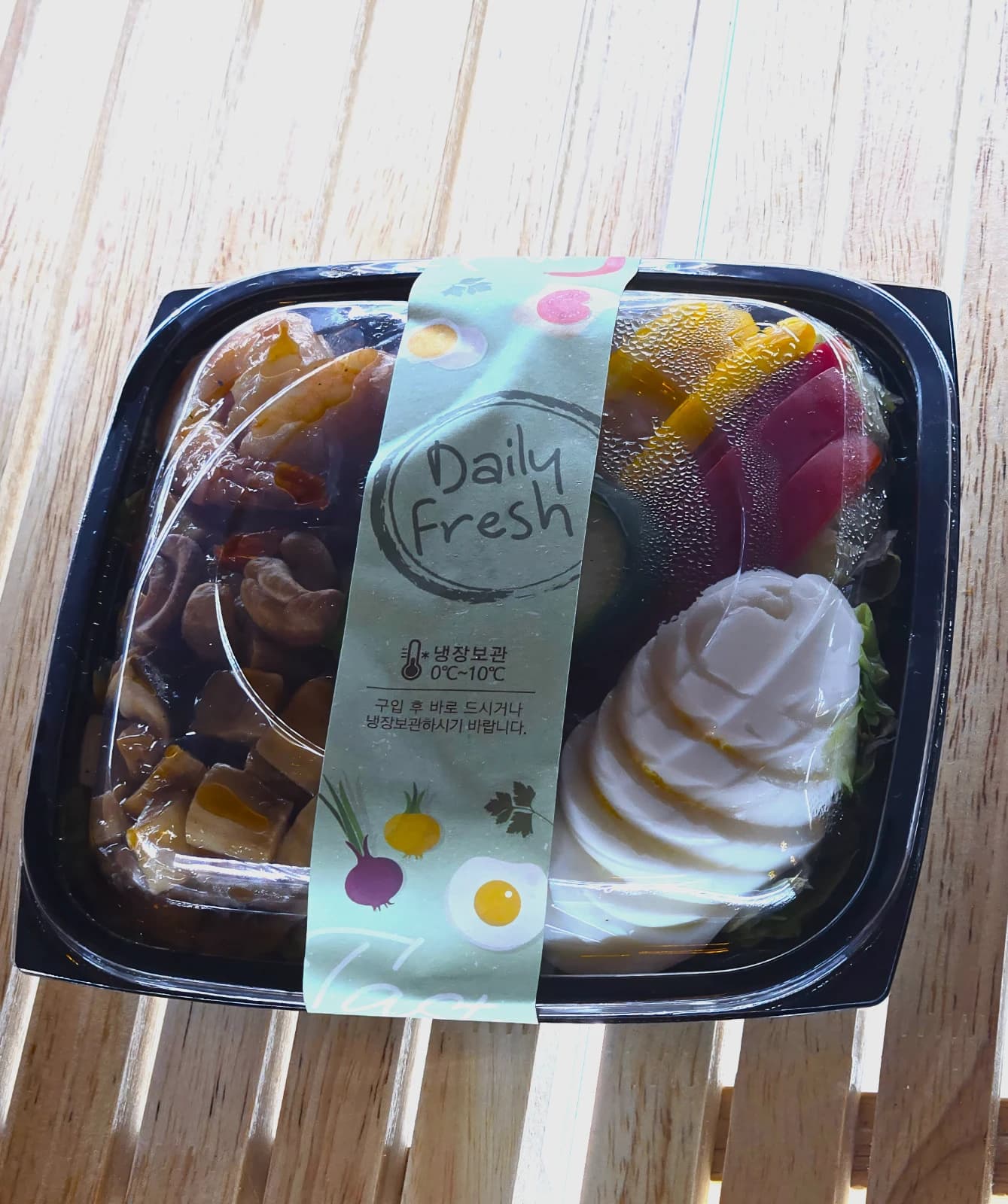
I had assumed it was just bread, but there were also simple meal options. One clear container held a salad lunch box with what looked like bulgogi inside, and beside it were handmade sandwiches kept chilled. The packaging said to store them between 0°C and 10°C and eat them soon after purchase. The third item looked like a salad with prawns and fruit, with cream piped neatly on one side, so it seemed more thought-through than a basic grab-and-go salad. I thought it would be good if you arrived late and wanted something instead of a full meal, but by then we had already lost our hearts to the bread and walked past. My wife pointed at the salad lunch box and said, “Next time, let’s come and eat this instead of lunch,” so she was already planning the next visit.
Ordering at the counter: Americano at ₩6,500, about £3.70
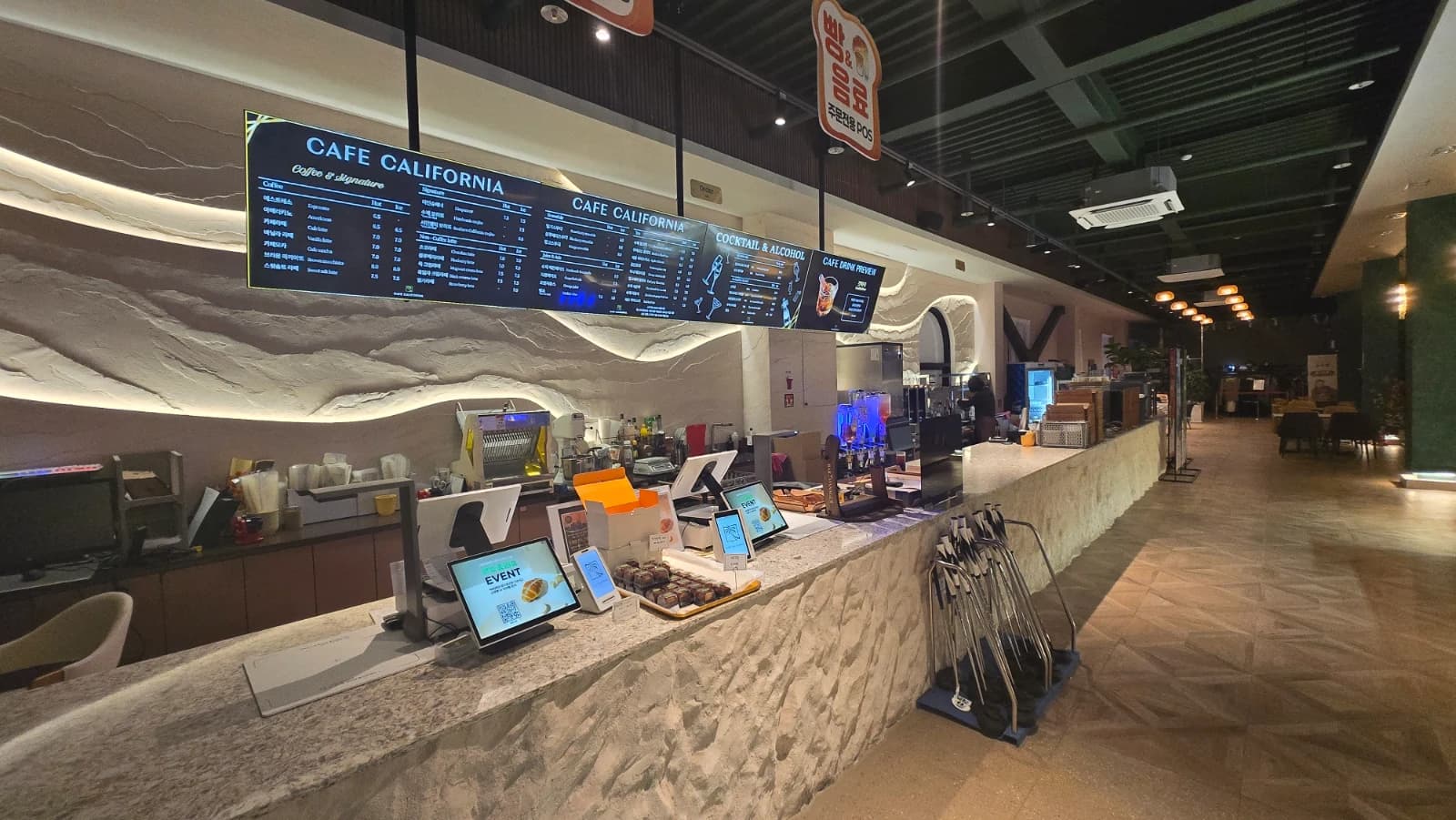
Past the bakery displays, you reach the counter, with digital menu boards hanging above and several self-order kiosks in place. Looking at the menu, coffee, signature drinks, cocktails and alcoholic drinks were divided into separate sections, and I was a bit surprised to see cocktails being sold in a café. Perhaps because it was late, there were only one or two staff behind the counter, which meant we could order straight away with no queue. I had seen reviews saying people waited more than 20 minutes just to order drinks during the day, so this was definitely a benefit of arriving late. Bread is paid for separately at a different till on the far right of the counter. At first, I did not realise this and placed the bread with the drinks, but a staff member smiled and pointed us towards the other side.
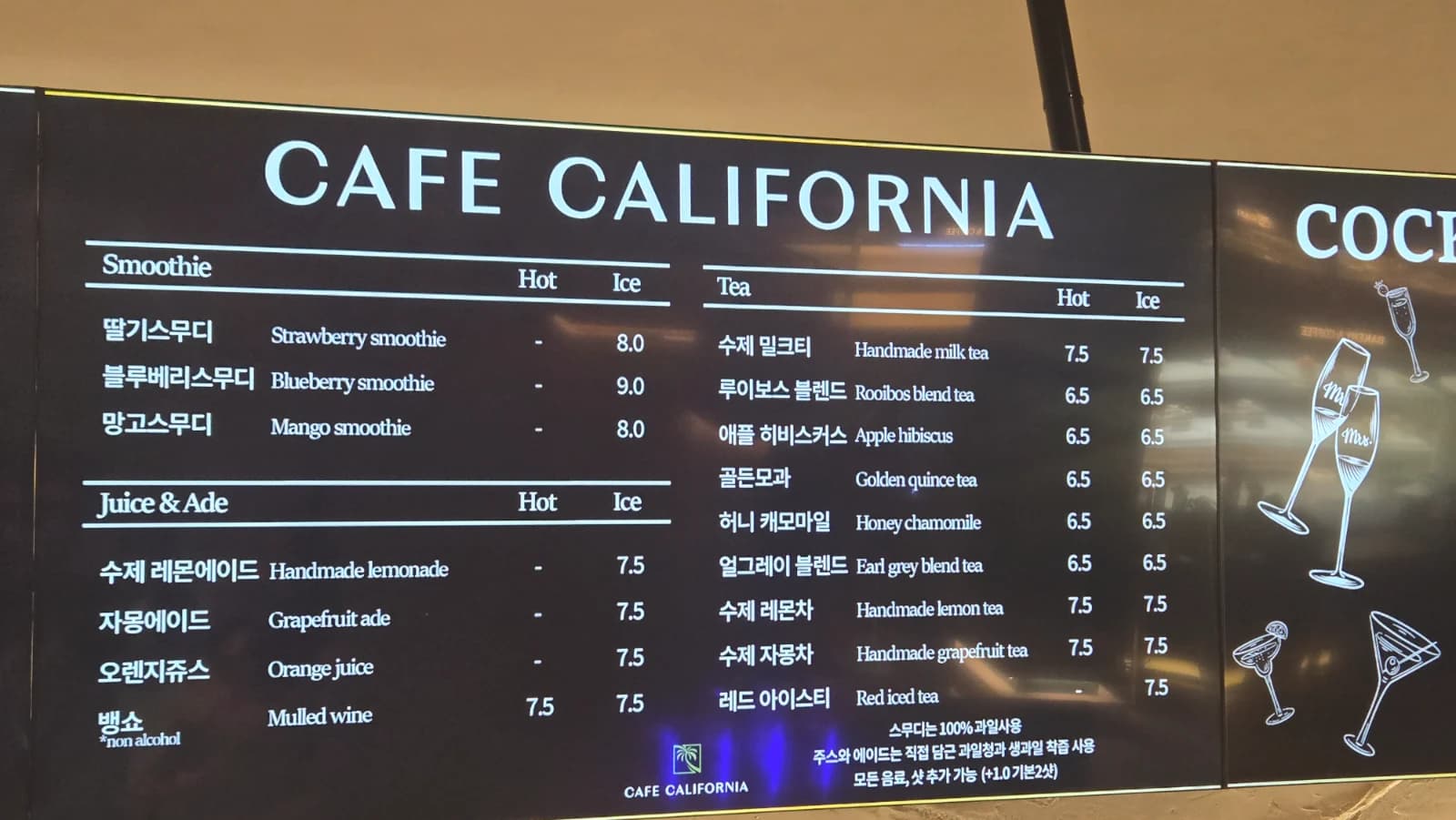
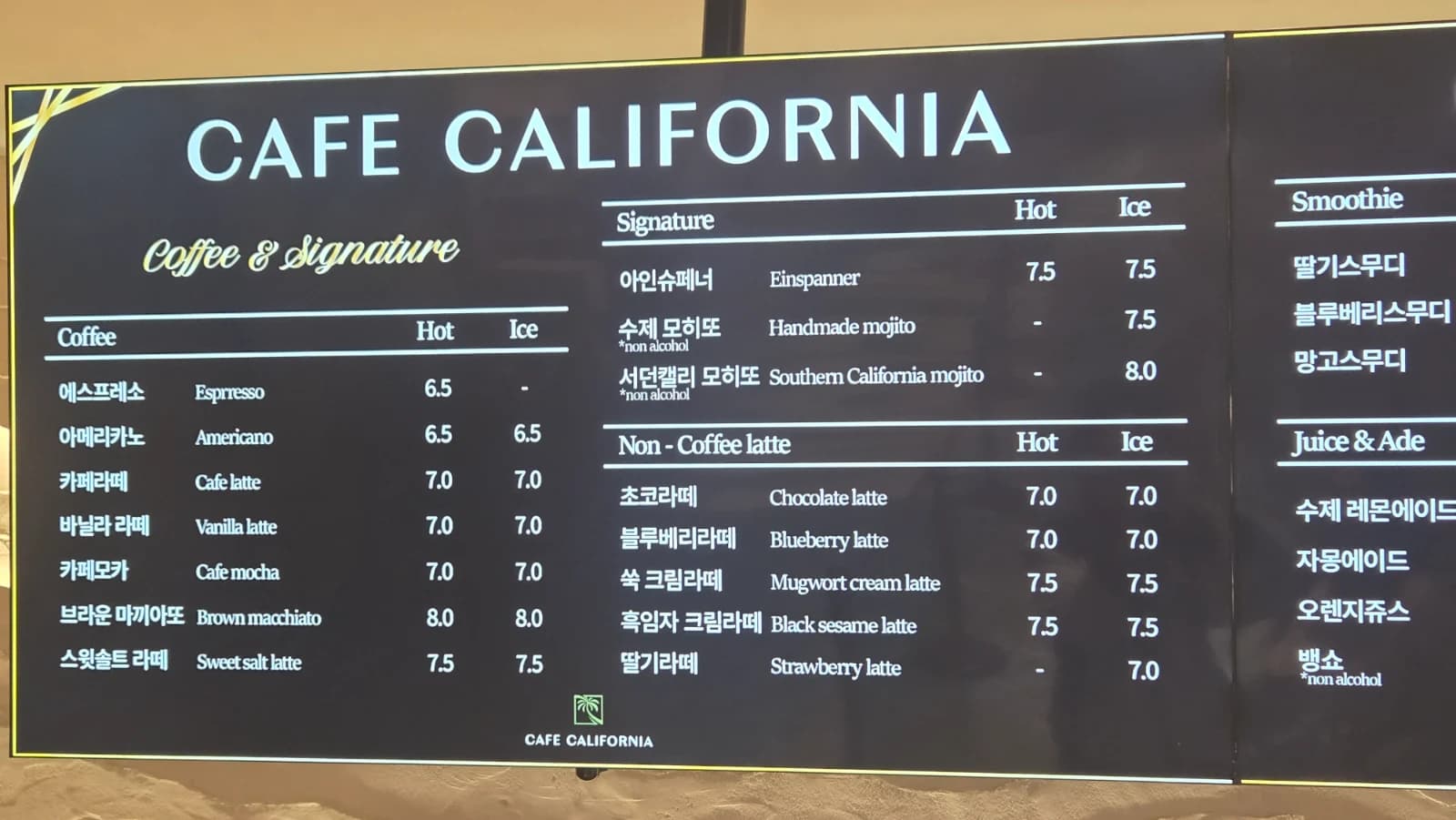
I took a photo of the menu, and an Americano was ₩6,500, around £3.70, while a café latte was ₩7,000, about £4. Compared with an ordinary neighbourhood café, it is on the pricier side. The signature menu had an Einspänner for ₩7,500, around £4.30, and something called a Southern Cali Mojito for ₩8,000, about £4.55, which was marked as non-alcoholic. There were also drinks using traditional Korean ingredients, such as mugwort cream latte and black sesame cream latte, and in small text at the bottom it said the smoothies used 100% fruit. You could add shots to any drink, and two extra shots for ₩1,000, about 60p, did not seem bad at all. When I asked my wife what she wanted to drink, she was already taking a photo of the menu.
First-floor seating, from round tables under palm trees to sofas
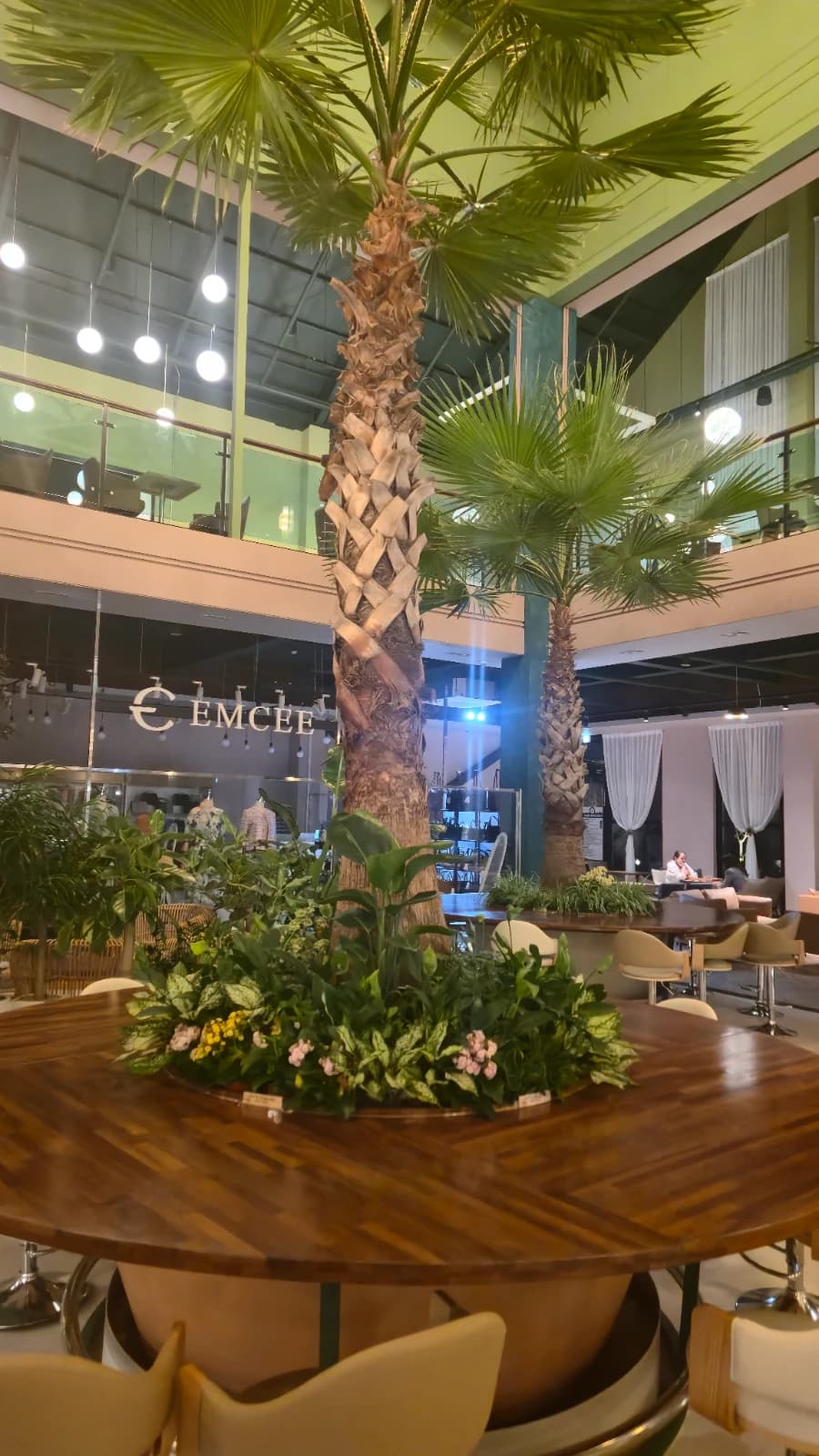
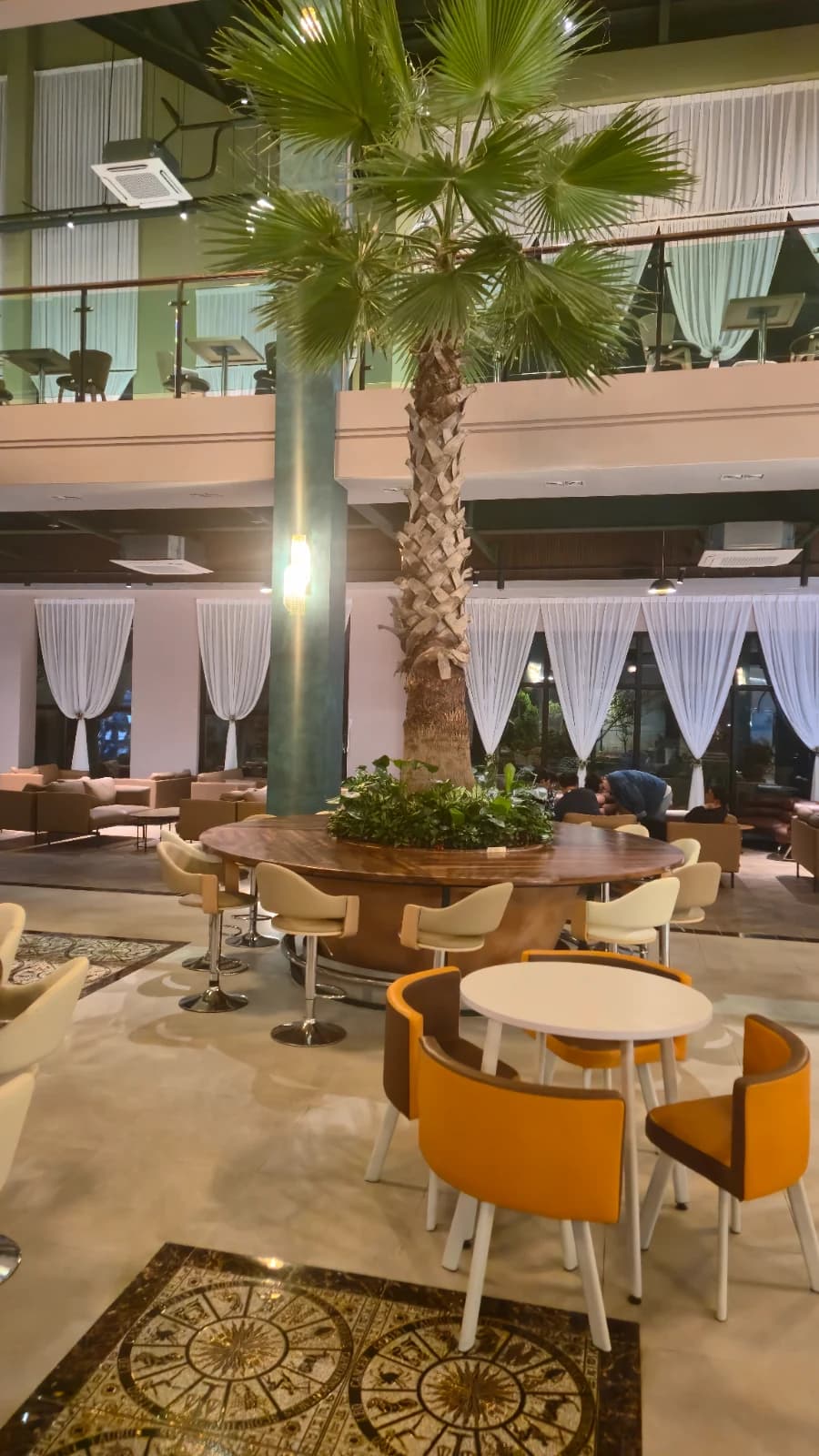
After ordering, we wandered around looking for seats. I knew Café California was a large café, but I had not expected the first floor alone to feel this big. In the middle, a palm tree stretched right up towards the ceiling, with a large round table beneath it. Planters and flowers were arranged on the table, so it looked more like a little indoor garden than a piece of café furniture. If you came as a group, you could sit around that round table, but because there was still space between parties, it would not feel awkward for smaller groups either. Around it were smaller two-person tables, yellow chairs, beige chairs and sofas, all in different styles. Towards the back, there were window seats with white curtains, and because it was quiet at night, we could choose almost anywhere. I doubt it would have felt this relaxed during the day.
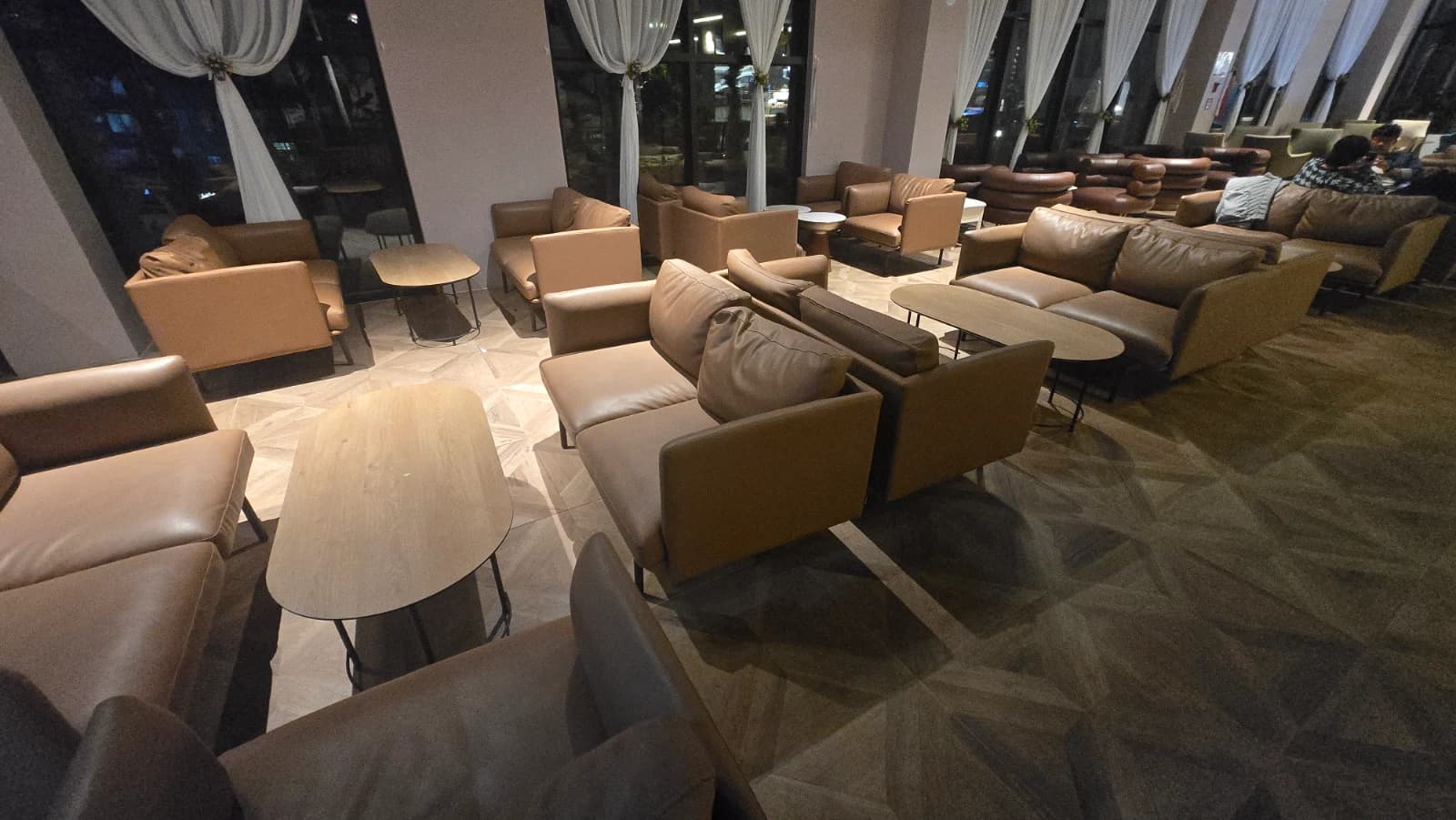
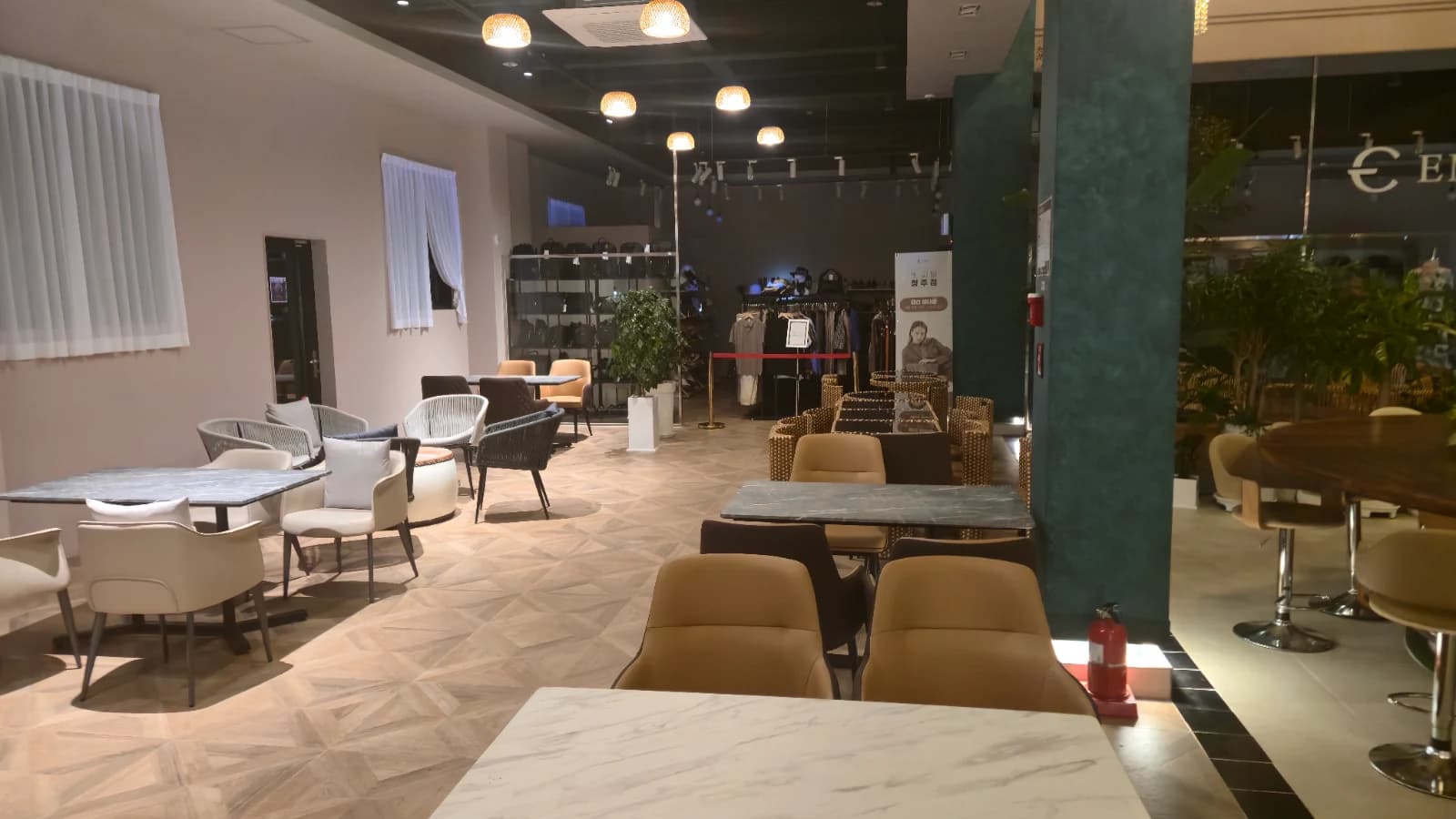
By the windows, there was a long row of leather sofas. The brown and beige tones made it feel like a hotel lounge. The sofas were heavy and soft enough for up to four people, and the tables were spaced widely enough that you did not have to worry about the people beside you. Further inside, there were marble tables with chairs, and at the back I noticed a clothing shop called MC Mall attached to the café, though it was already closed by then. As soon as my wife sat down on the sofa, she said, “Let’s settle here.” To be honest, the moment I sat on that sofa, I also lost any desire to move elsewhere.
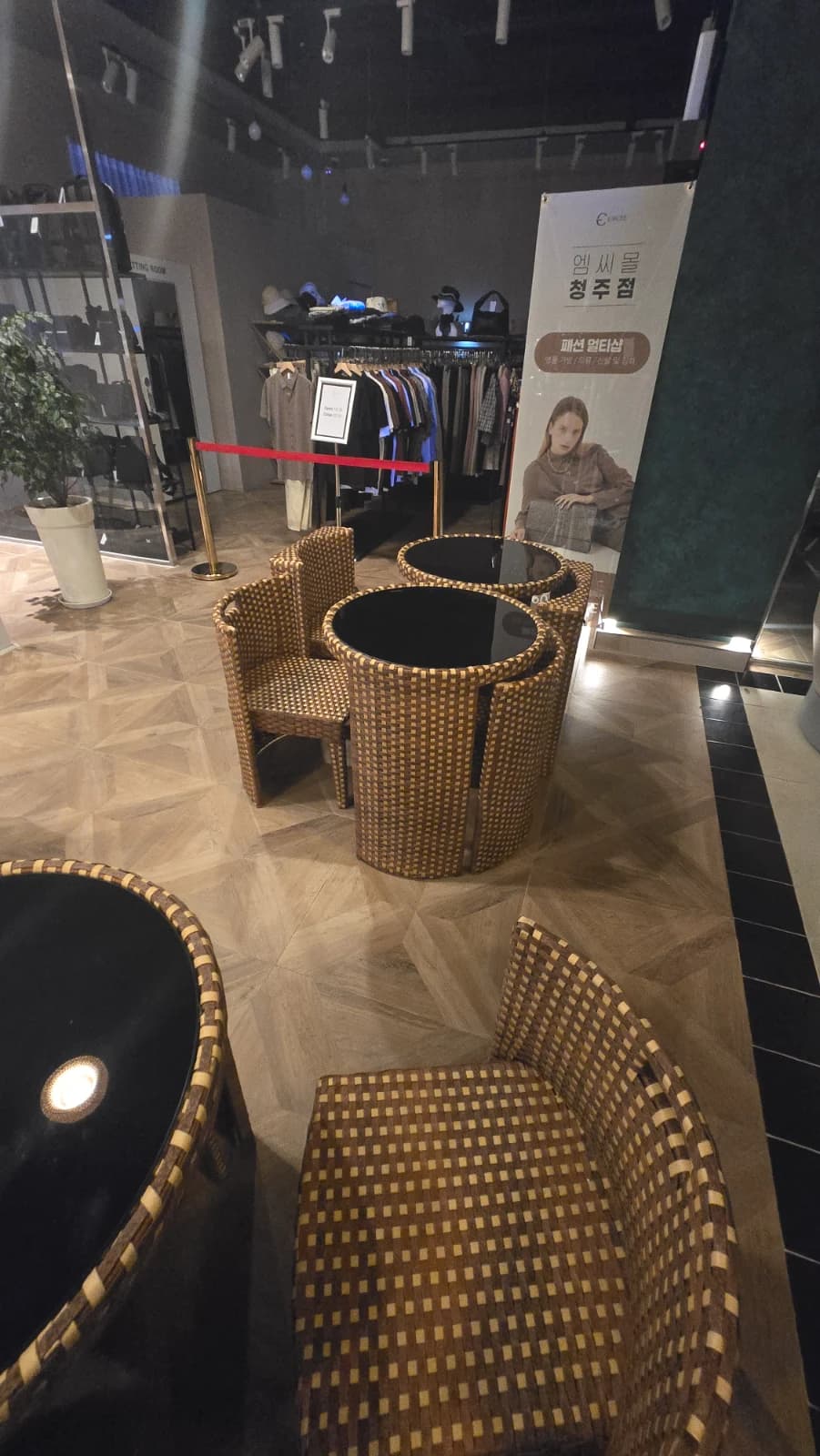
Beside MC Mall, there were also rattan-style two-person seats, and the rounded chairs wrapped around you in quite a distinctive way. As concept seating, they looked pretty, but honestly, once you sit down, the backrest feels a bit firm and the space is narrow, so I imagine they would be uncomfortable for a long stay. They are good for photos, but if you want to relax properly over coffee, the sofa seats are much better.
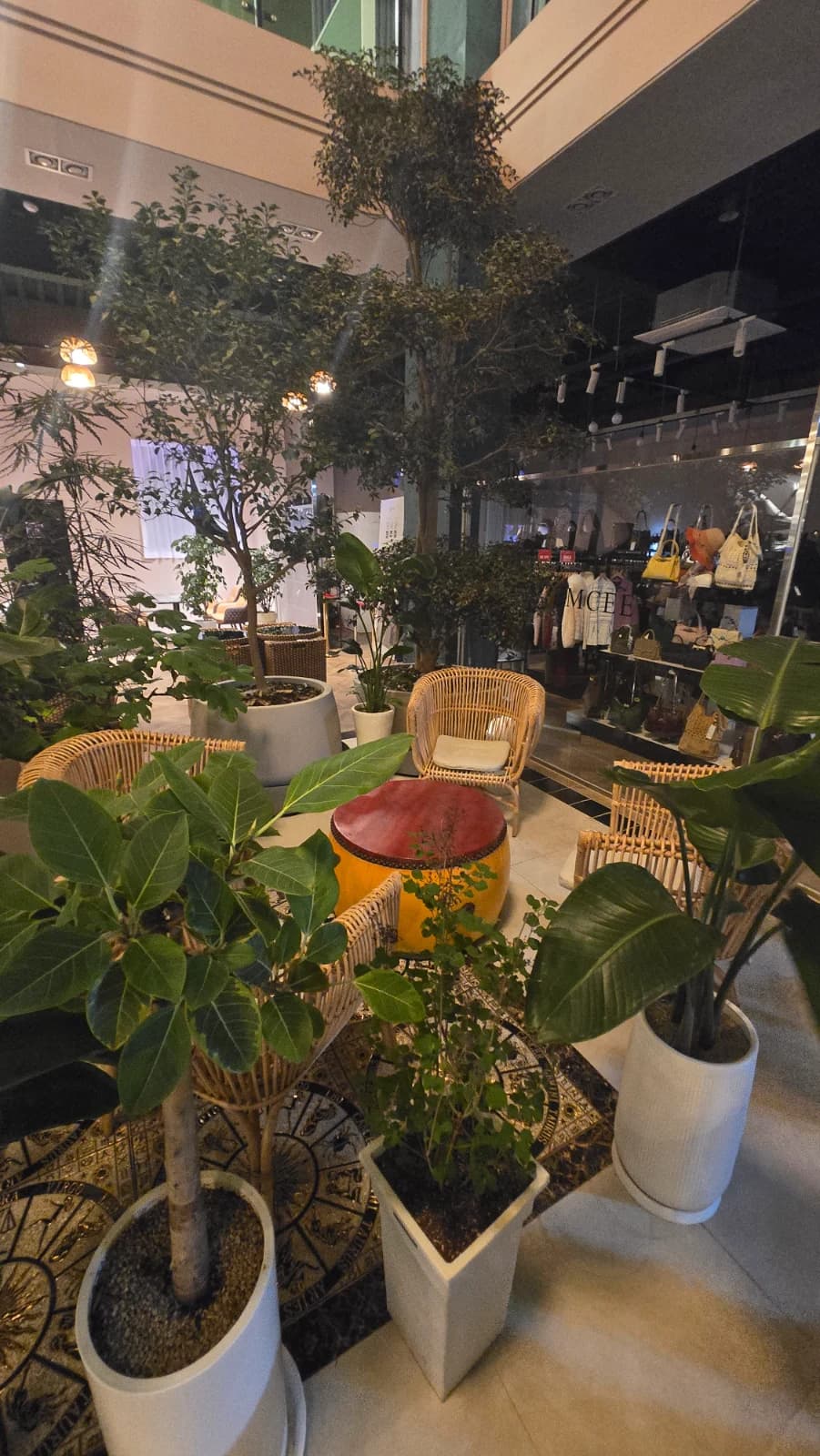
There were seats like this too. Instead of walls or partitions, the space was divided with pots and trees, with rattan chairs tucked among the plants. It was not a private room, but because green leaves surrounded the area, it created a surprisingly secluded mood. I kept looking at the layout because it was unusual. In the background, you could just see bags and accessories displayed in the MC Mall shop window, so the café was set up in a way that let you sip coffee and casually browse a bit of shopping too.
The tray stand inside the lift was a genuinely clever detail
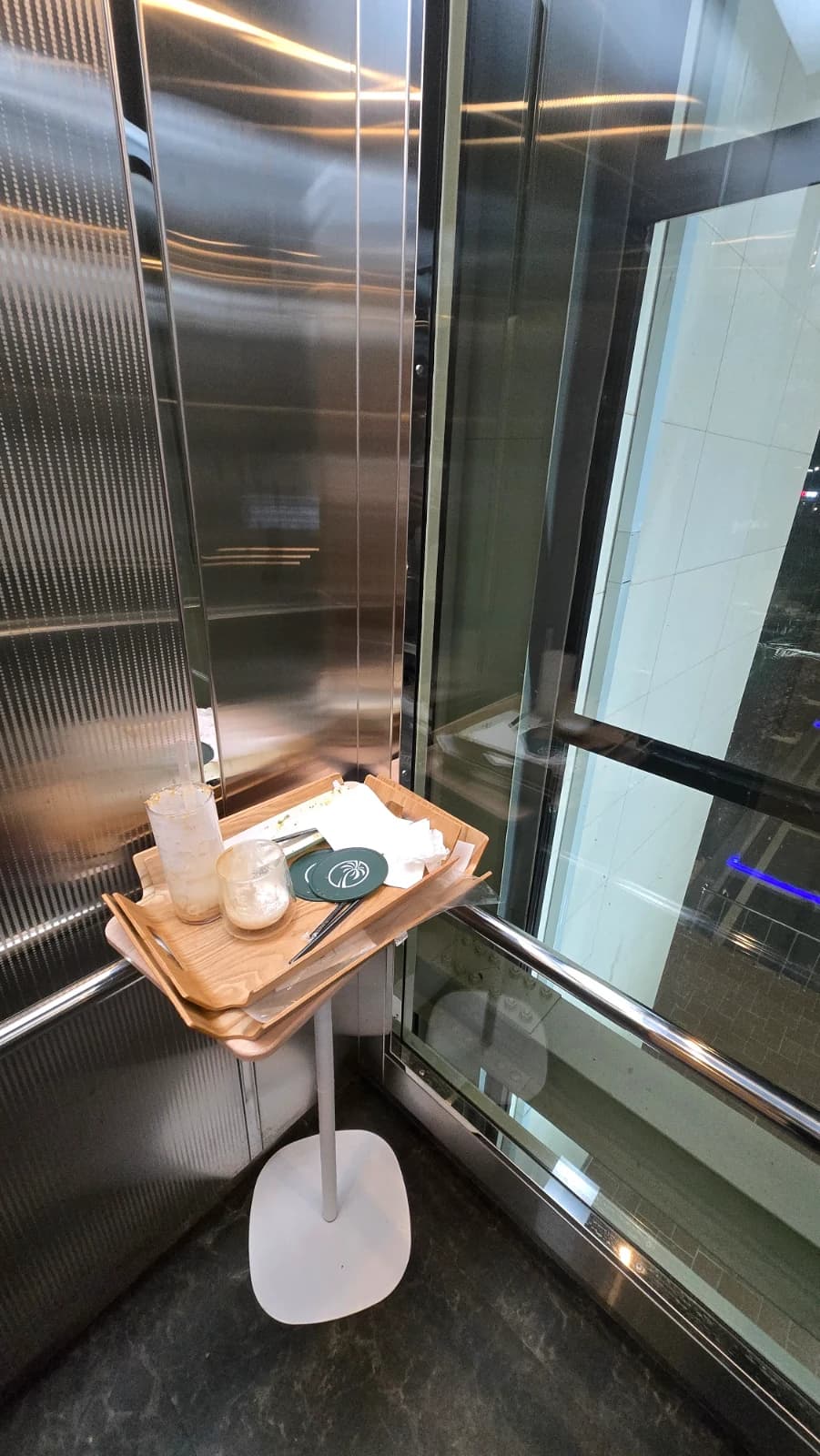
There is a lift up to the second floor, and as soon as we got in, I noticed a small stand inside. It was made so you could place your tray on it, which helps stop drinks and bread wobbling around or spilling while you ride the lift. This is the sort of detail that makes you think it was designed by someone who has actually used a café like this. My wife put the tray on it and said, “Who thought of this? Are they a genius?” I said she was exaggerating, but inwardly, I was impressed too.
The view over Café California from the second floor
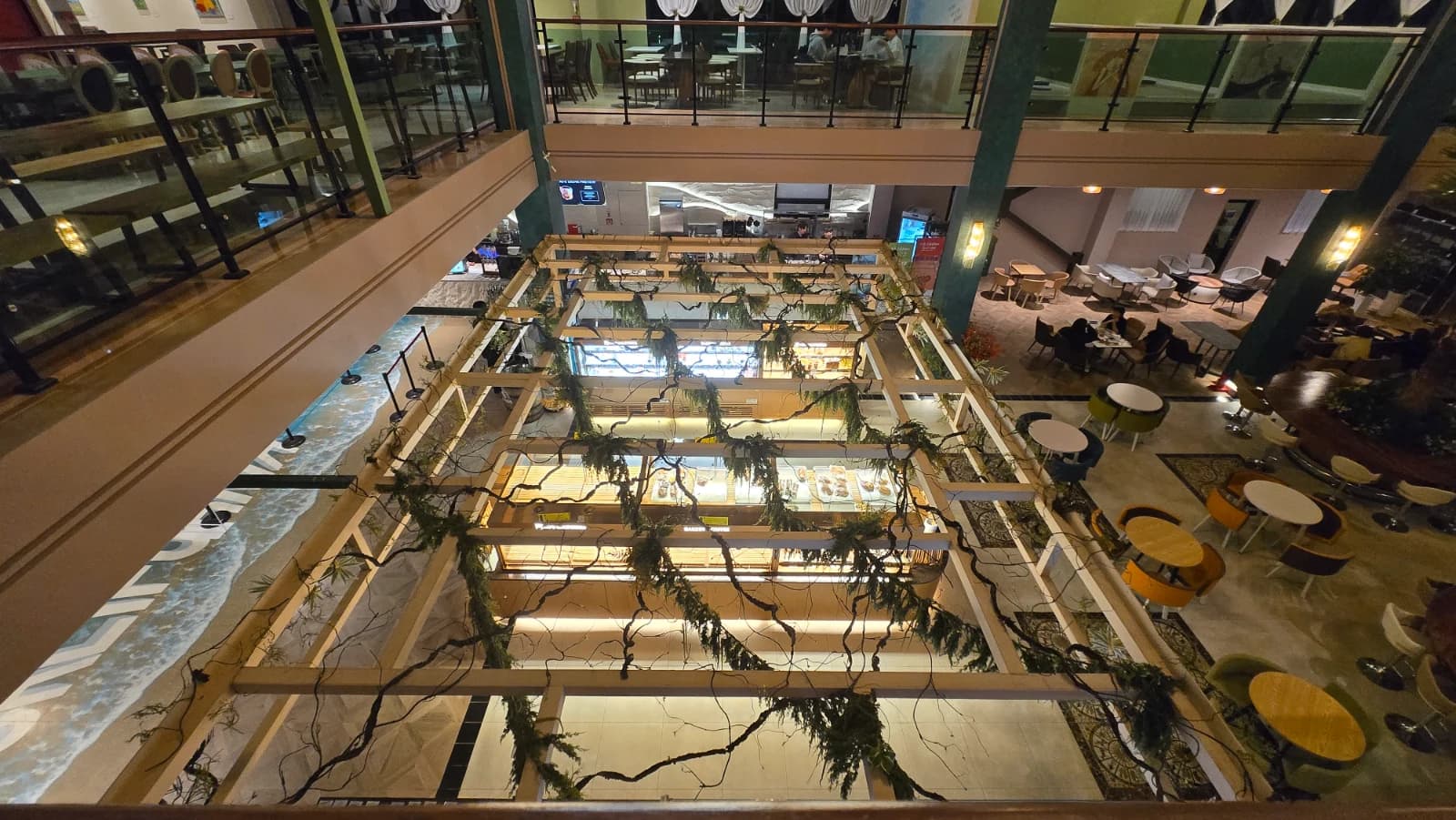
When you reach the second floor, the middle is open, so you can look straight down at the first-floor bakery display. Trailing plants hang over the lattice structure, and below them you can see the bread shelves and seats we had just walked past. From above, I finally felt the true scale of the café. The ceiling was high, so it never felt cramped. My wife leaned on the railing, looked down and said, “It’s prettier from up here,” and she was right. The scale that you do not fully feel on the first floor becomes obvious from the second.
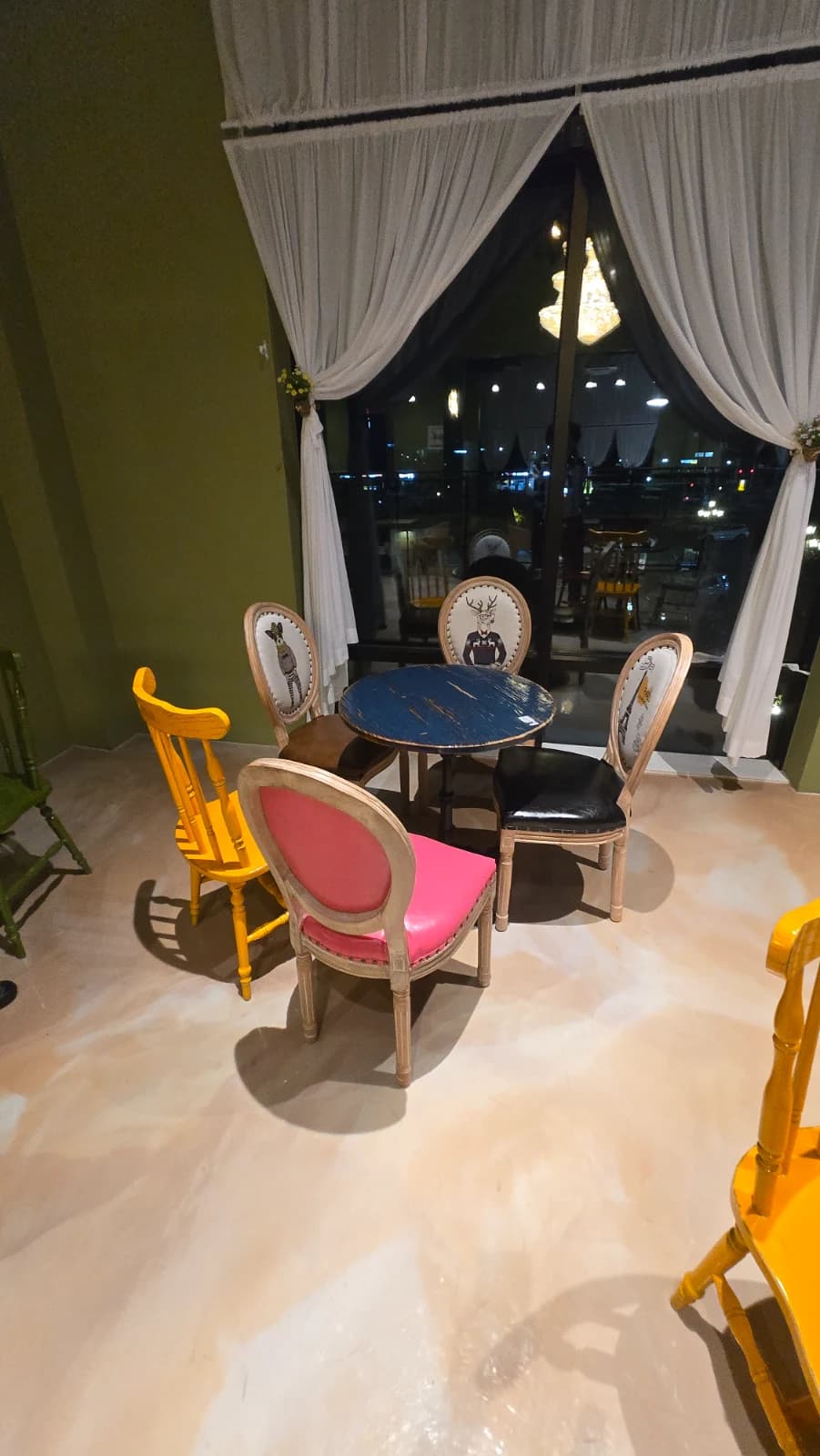
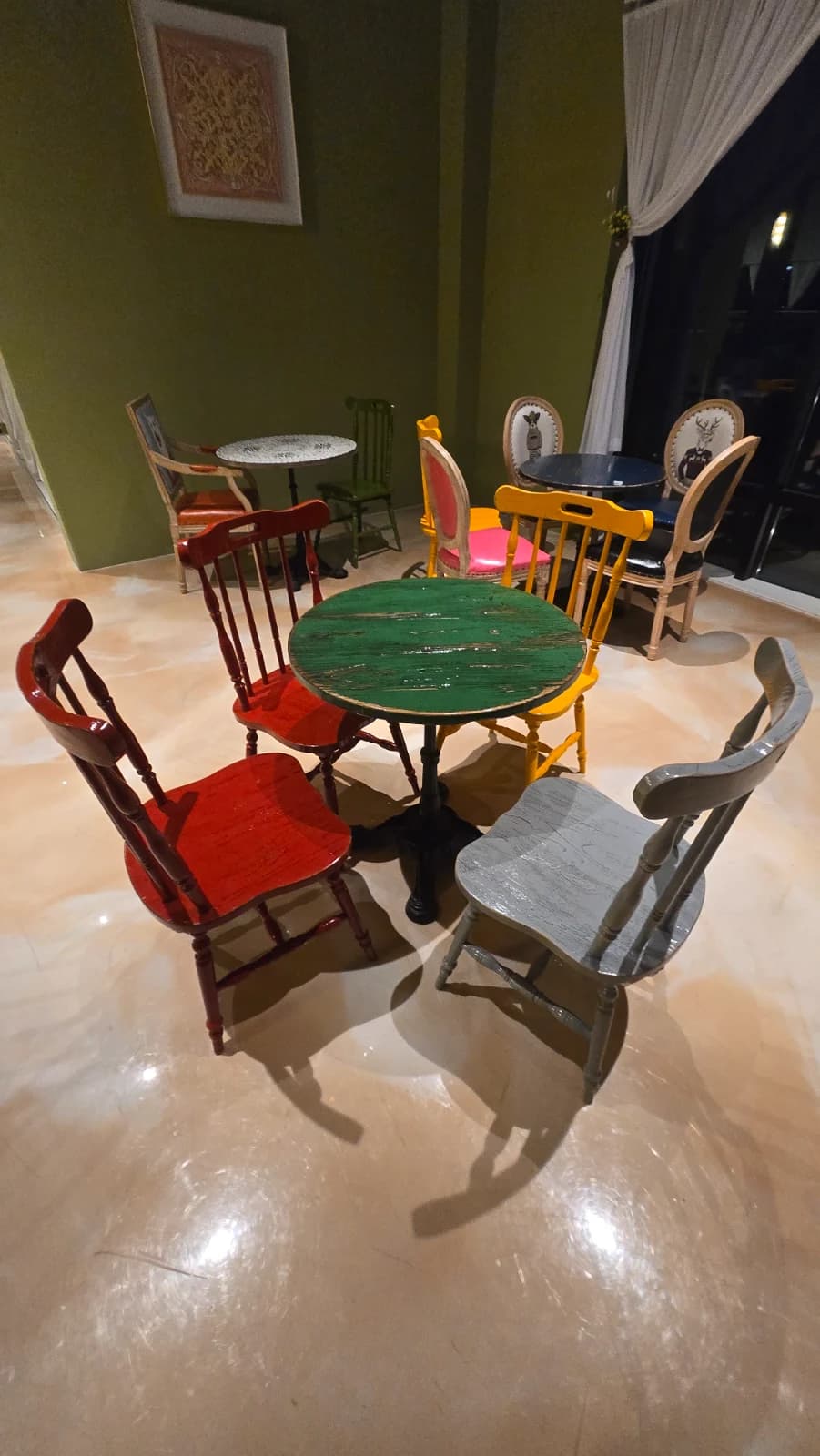
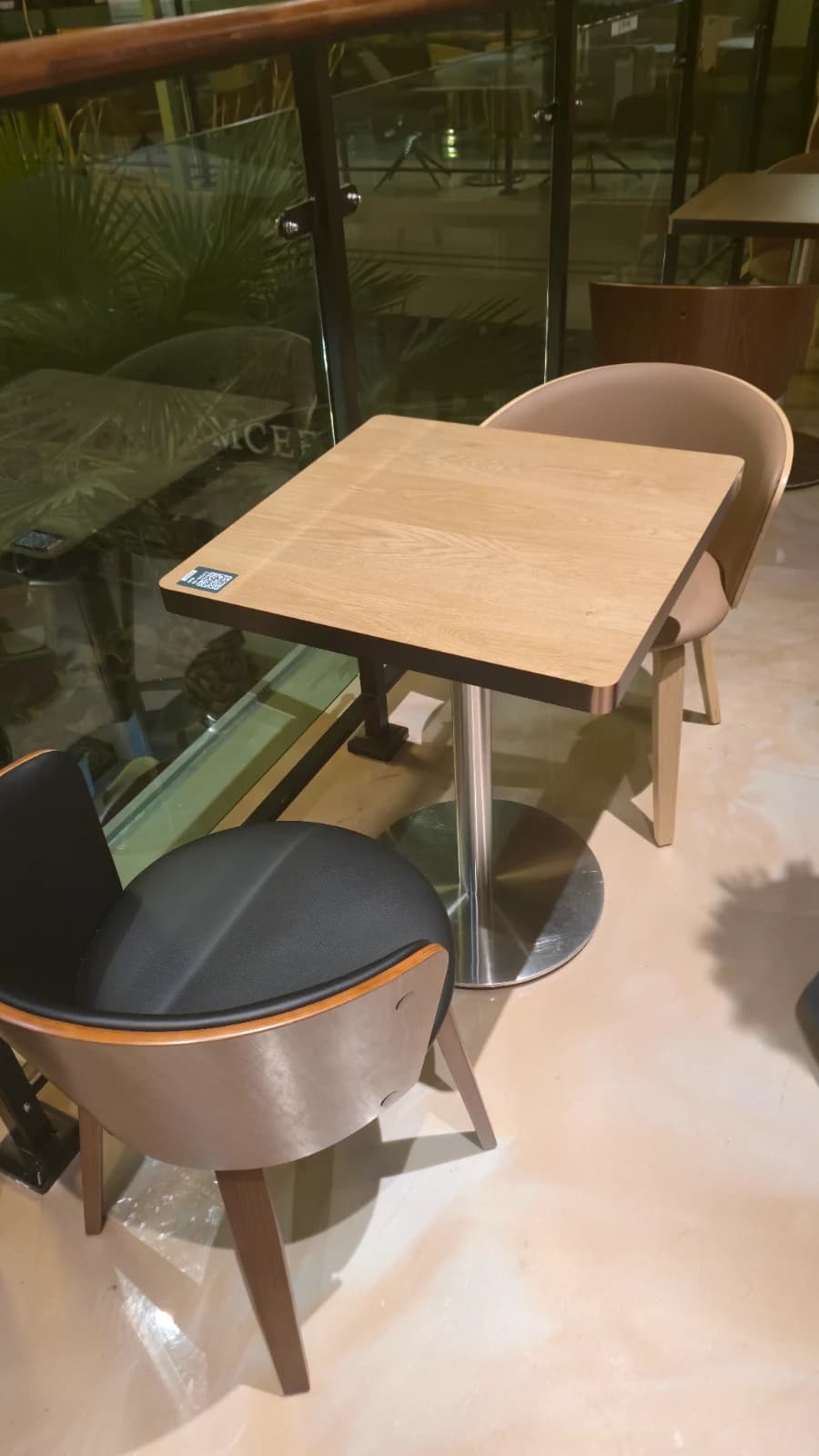
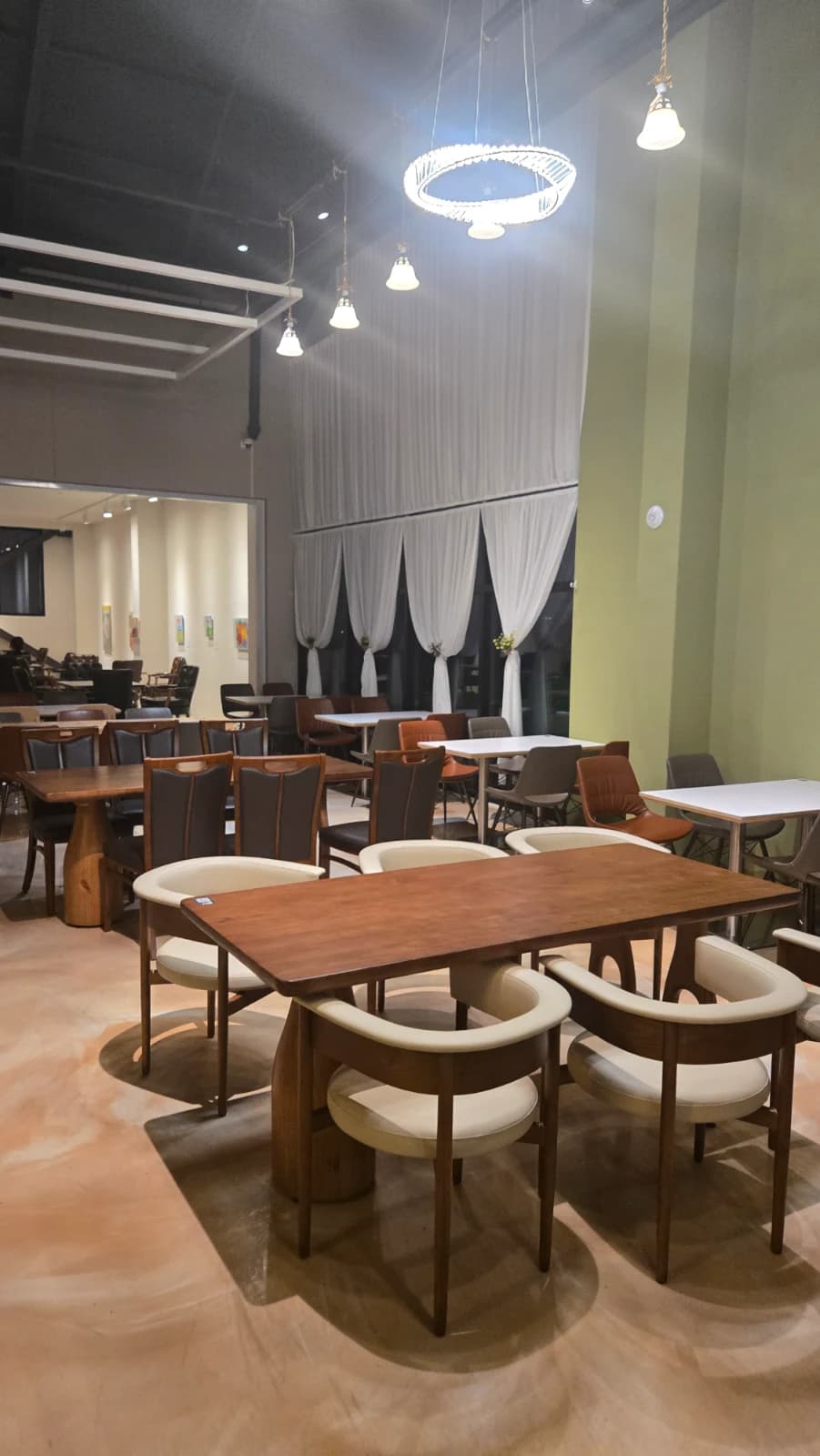
The seating on the second floor had a different atmosphere in every section. By the window, antique chairs with animal illustrations, pink cushions and yellow wooden chairs were mixed around one table, and no two combinations seemed the same. Next to that, a green round table was surrounded by red, grey and yellow chairs, arranged as if someone had deliberately avoided matching anything. Near the railing, there were neat two-person tables where you could see the first-floor palm tree through the glass, making it a good spot for two people to sit quietly. Further inside, there was a long wooden table with white curved chairs and a ring-shaped chandelier on the ceiling, and the mood changed again completely. Through the curtains at the back, I could glimpse an exhibition-like space with paintings on the wall. My wife said, “Are all Korean cafés like this? Just walking around the second floor feels like visiting four or five different cafés,” and honestly, that was not much of an exaggeration.
Maru-style floor seating, bringing Korean floor culture into a café
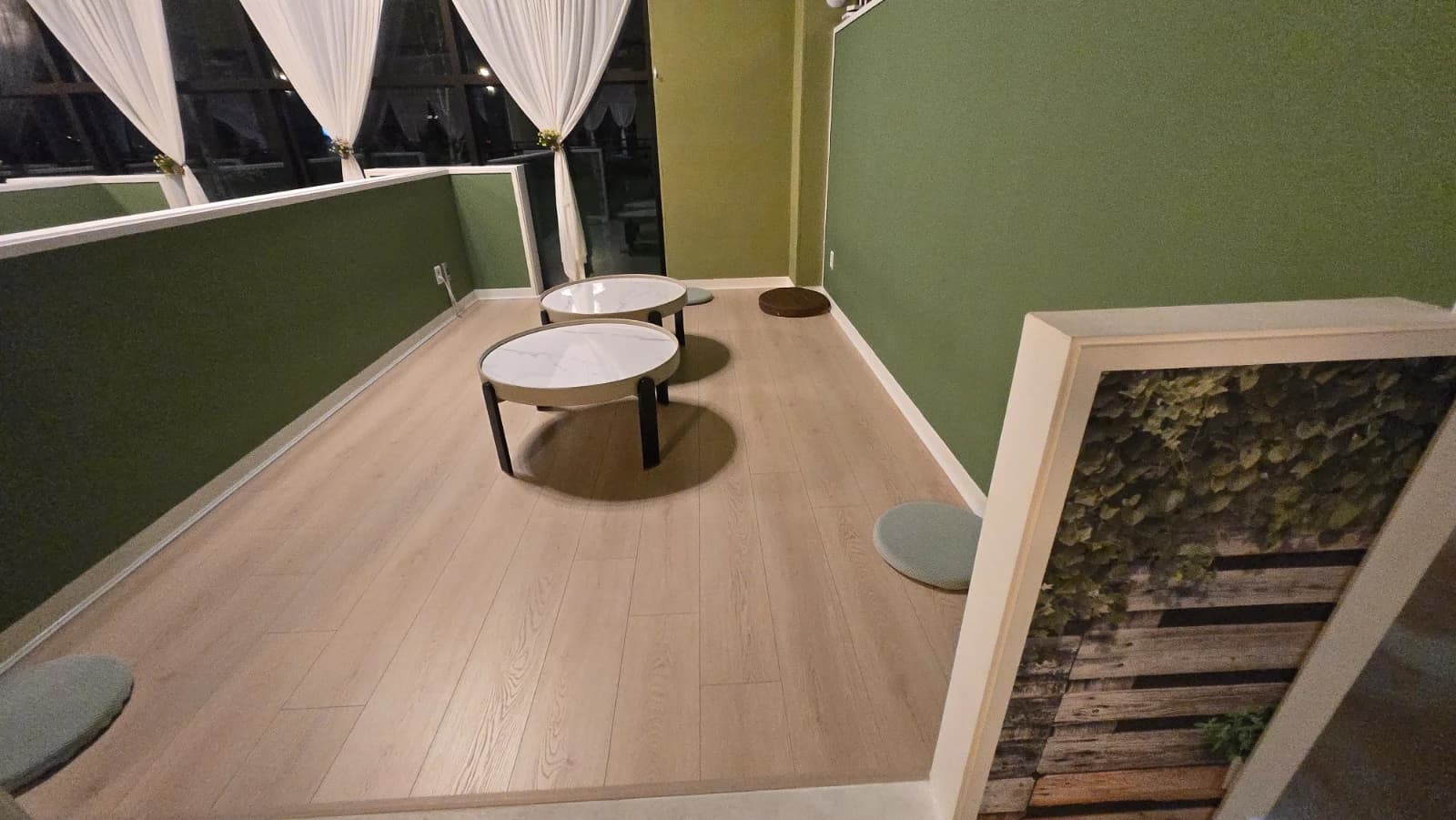
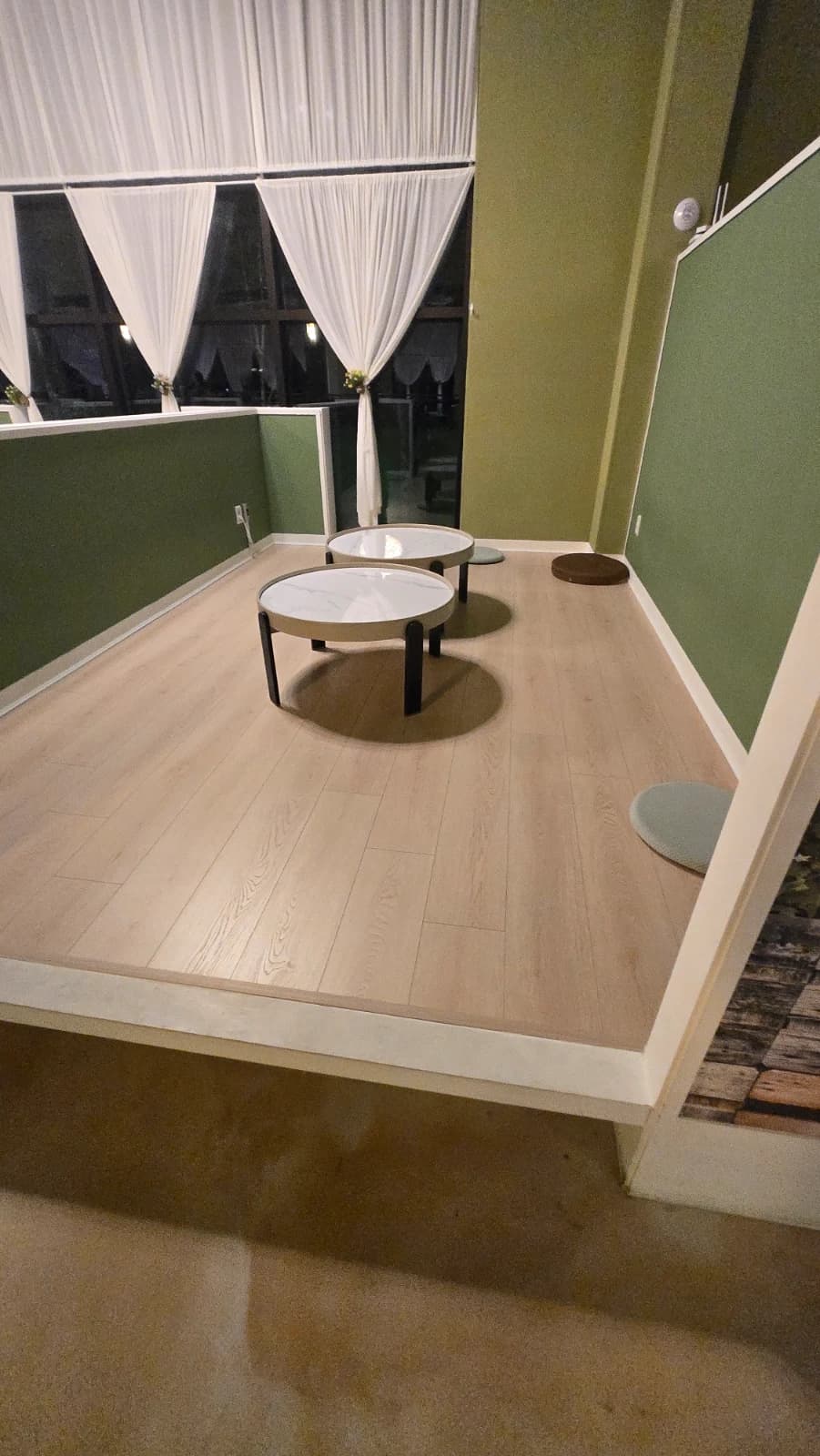
Deeper into the second floor, there was also a maru-style seating area where you take off your shoes before stepping up. The wooden floor brings to mind ondol, Korea’s traditional underfloor heating culture, with low tables and cushions set out so you can sit comfortably and stretch your legs. It seemed perfect for families visiting with children. At this hour there was nobody there, so it felt spacious, but during the day I suspect you would need to arrive early to get a spot. My wife asked, “Shall we eat here?” but we had already claimed the sofa downstairs, so we just looked around and went back down.
Rice spring onion baguette, Einspänner and brown cheese macchiato
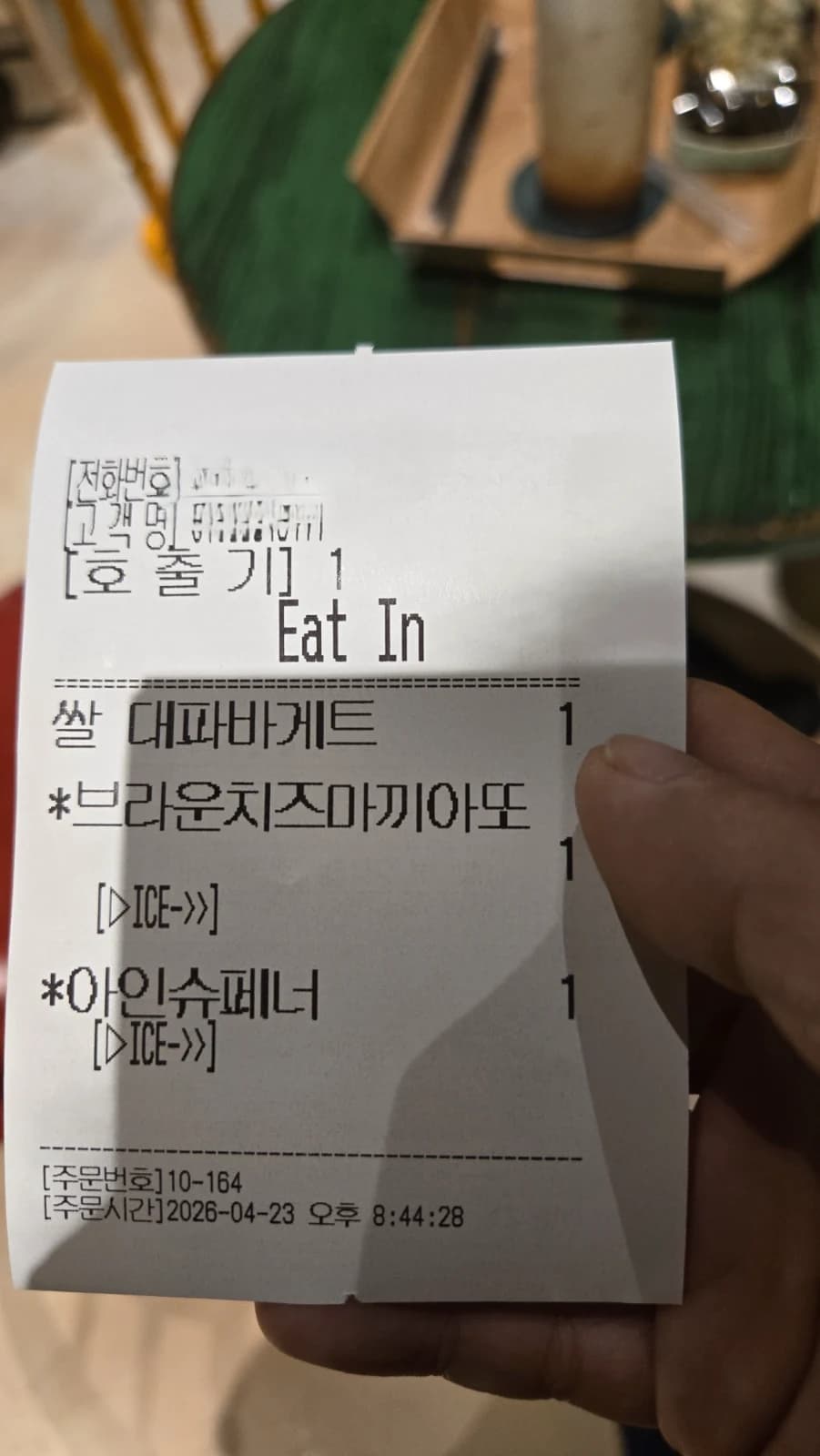
We ordered one rice spring onion baguette, one iced brown cheese macchiato and one iced Einspänner. Looking at the receipt, the order time was 8:44pm. We had clearly spent quite a bit of time after arriving, browsing the bakery and going up to the second floor and back down.
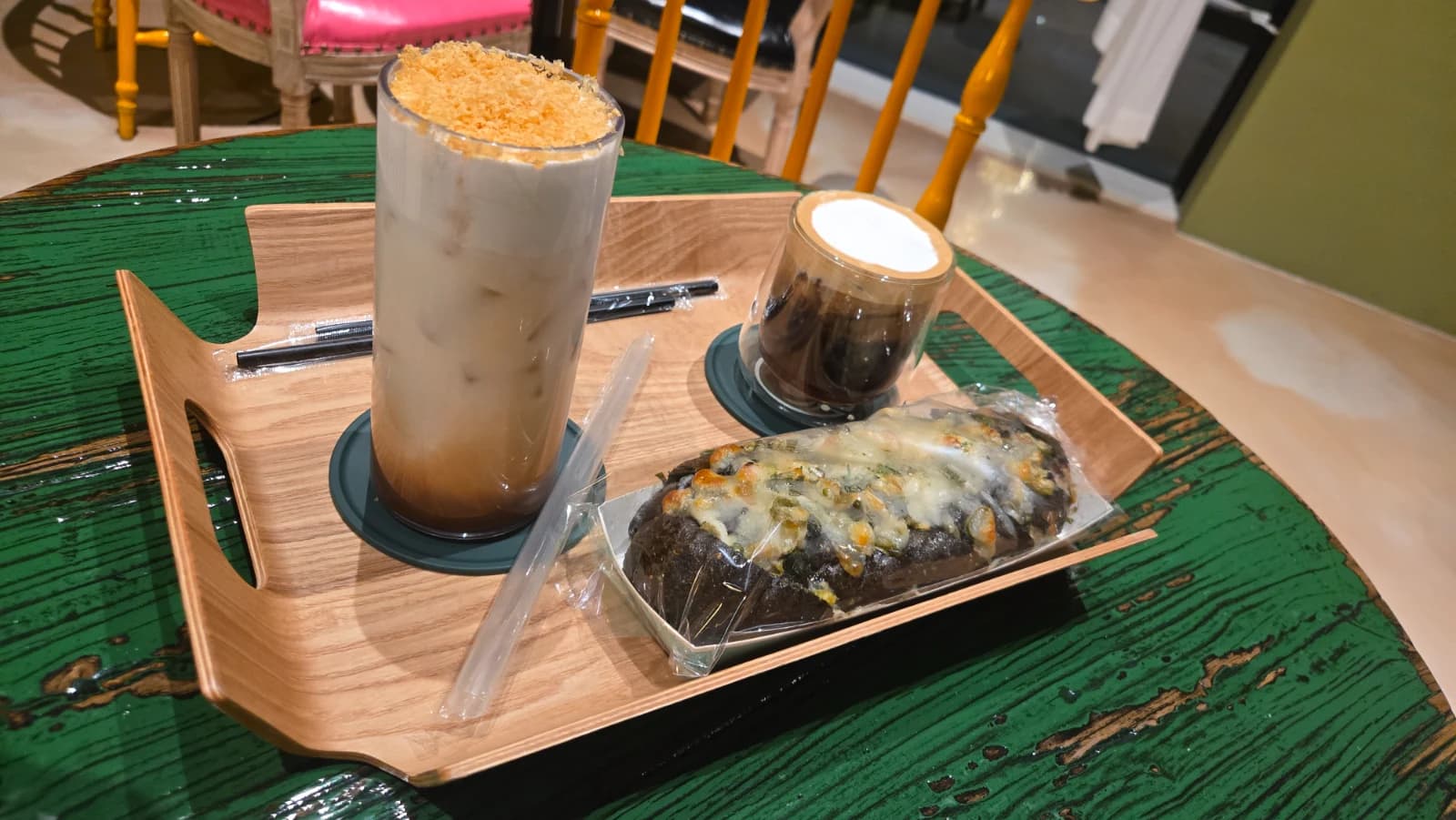
We carried the two drinks and rice spring onion baguette back to our seats on a wooden tray. Placed on the green wooden table, it already looked like a complete scene. The rice spring onion baguette had Korean daepa, or large spring onion, and melted cheese over black dough, and even through the plastic wrapping, the savoury smell came through.
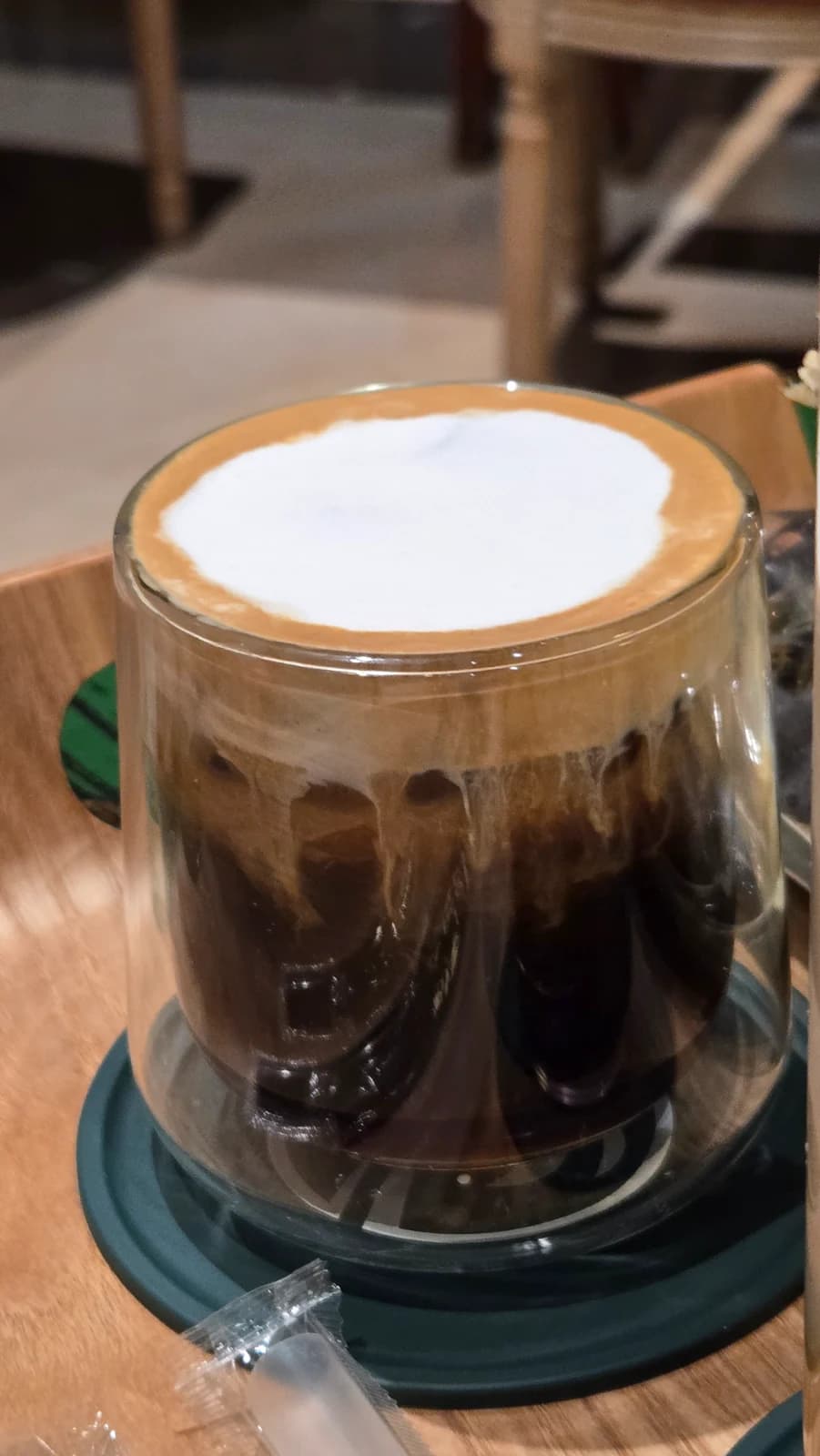
The Einspänner came in a double-walled glass, with dark espresso at the bottom and a thick layer of white cream on top. Visually, it did feel worth the ₩7,500, about £4.30, but the cream was quite sweet, so if you prefer coffee with a stronger bitter edge, this might divide opinion. I personally found it fine.
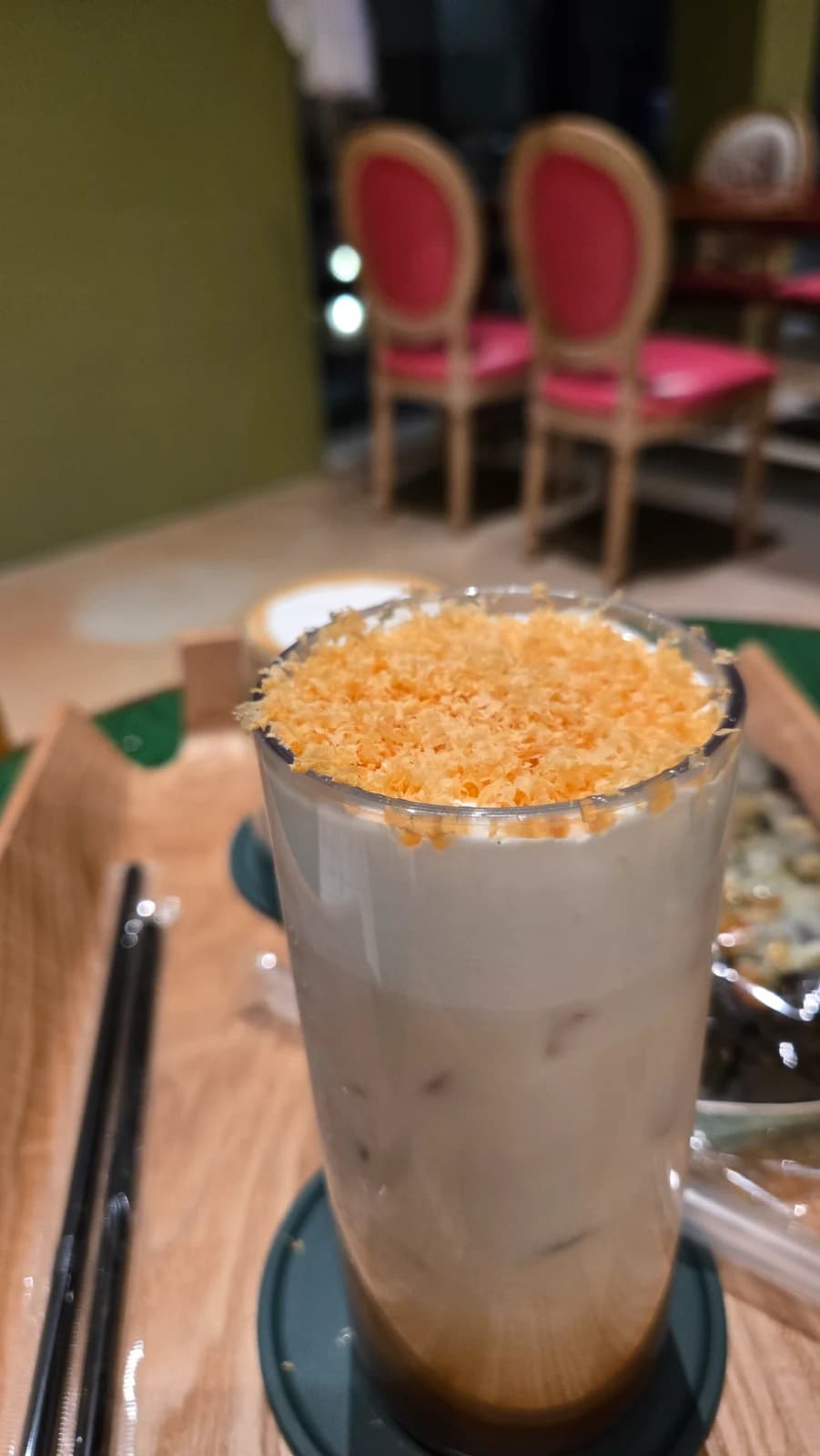
The brown cheese macchiato came in a tall glass, with a generous mound of brown cheese crumbs on top. I tried a sip before mixing it, and the nutty, slightly salty flavour came first, followed by the coffee underneath. My wife took one sip and said, “Let’s make this mine,” so we swapped and I drank the Einspänner instead.
The moment I tore the rice spring onion baguette in half, the smell of spring onion rushed out. The outside was crisp, but the inside had a chewy stretch that was definitely different from a wheat-flour baguette. The cheese had melted between the pieces of spring onion, so the flavour alternated between salty and nutty. I passed my wife a piece, and halfway through chewing she said, “Is this really made with rice?” I was thinking the same thing.
Just over ₩20,000, and two honest drawbacks
For two drinks and one bread between us, the total came to just over ₩20,000, around £11 to £13, and considering the size and atmosphere of the place, it did not feel especially expensive. Still, it was not perfect. There were two things that felt a bit disappointing.
① No return station on the second floor
After eating on the second floor, you have to take your used cups and tray all the way back down to the return station on the first floor. It means taking the lift down, returning everything and potentially going back up again, so it would have been more convenient if there had been a return station upstairs too.
A 40km drive to Café California, and the end of a late-night outing
When we stepped outside, the night air felt cold. We had come here while looking for a late-night café in Cheongju, but in the end, I think it was actually better because we visited at night. As we walked back to the car park, my wife said, “Next time, let’s come during the day and watch the bread coming out from the beginning. Korean bakeries are fun even just to look around.” I asked whether she meant we were doing another 40km each way, and she replied, “Was the drive hard for you today?” If she asks whether it was hard, honestly, it was not. On the way home, we had the radio on and neither of us said much, but it was not an awkward silence. It was the comfortable quiet that comes when both people are quietly satisfied. For a 40km late-night drive to Café California, it turned out to be a pretty good day.