
Spicy Pork Lunch Set for $7 | A Real Korean Meal
Table of Contents
14 items
Following Up on the Grilled Fish — Today It's Another Korean Lunch Set
In my last post, I introduced a grilled fish baekban, and today I'm continuing the baekban series. Baekban is a traditional Korean lunch set — a complete meal with rice, soup, and a spread of side dishes. The place I visited this time isn't a franchise, and it's not one of those spots with hundreds of reviews on the map. It's a tiny neighborhood restaurant tucked inside an alley, with just one sign out front and a single owner running everything alone.
Korea is full of these little baekban restaurants. You won't see them from the main road — you have to wander into the back alleys. There'll be a handwritten menu board propped up outside, they only serve during lunch hours, and once they run out of ingredients, they close up for the day. I actually go out of my way to find places like this, and the reason is simple. This is what Korean people actually eat every day. Not a prettied-up meal arranged for tourists, but the real lunch that locals rush in and wolf down during their break.
Nothing fancy on the menu today. I'm just going to show you what a regular spicy pork baekban lunch set looks like.
$7 Per Person — A Full Spicy Pork Lunch Spread
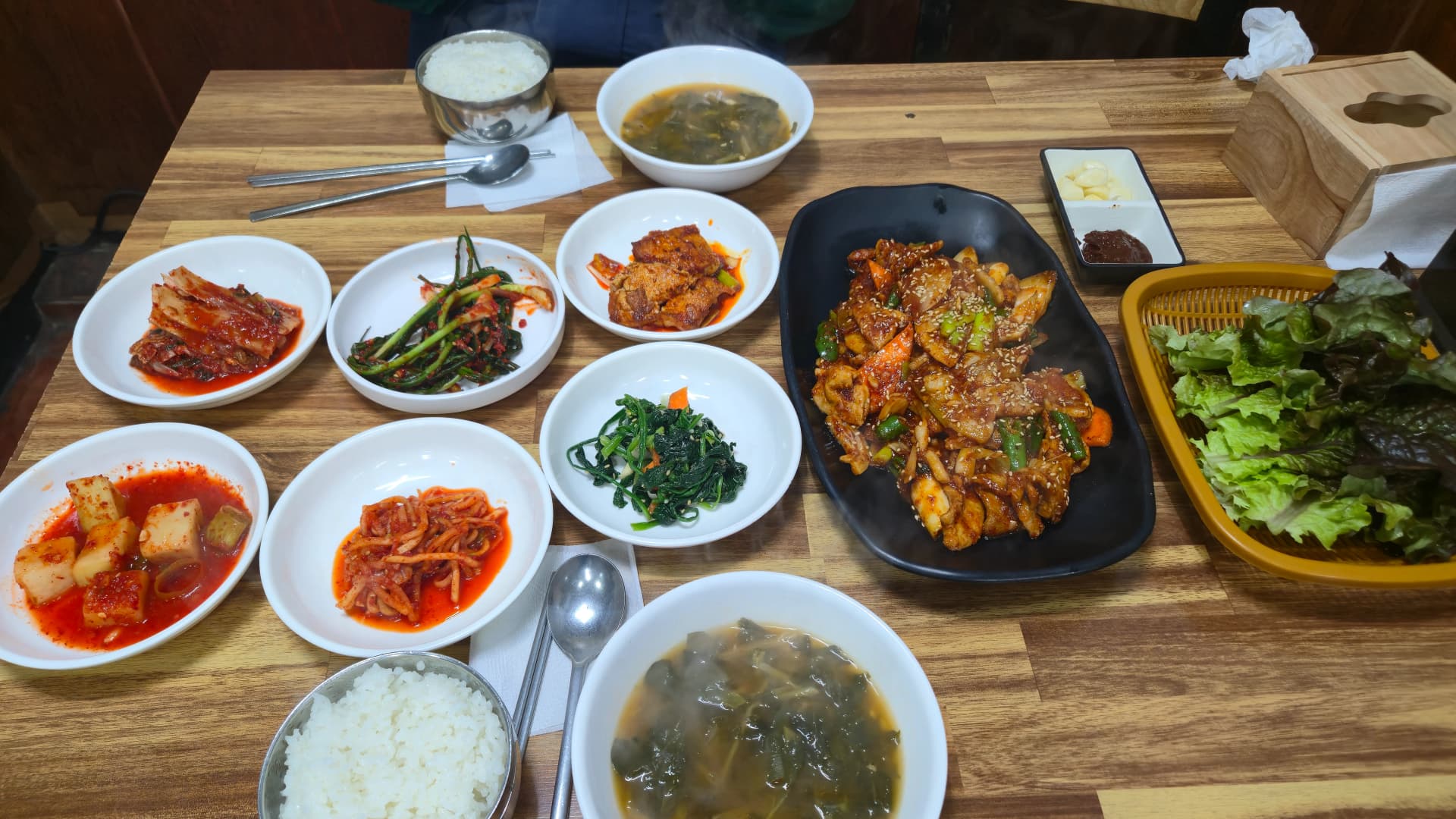
This is what you get for about $7 per person (10,000 won). That dark plate in the center is today's main dish — spicy stir-fried pork, called jeyuk-bokkeum — and everything else comes as standard side dishes. Rice, seaweed soup, kimchi, cubed radish kimchi, seasoned spinach, green onion kimchi, braised tofu, spicy radish salad, and fresh lettuce wraps. The grilled fish baekban I introduced last time was about $6 (8,000 won), so today's is about $1.50 more, but the main dish really makes a difference. Usually, a $5–6 baekban comes without a main dish — just side dishes, soup, and rice. Here, you get a solid, hearty main on top of all that.
Jeyuk-bokkeum is pork stir-fried in gochujang, a spicy fermented red pepper paste that's one of the cornerstones of Korean cooking. It's one of the most popular things to order at a baekban restaurant. The standard way to eat it is to place some rice and meat on a piece of lettuce or perilla leaf — called ssam — and wrap it all up in one bite. I'll get into the main dish in detail later. First, let me walk you through the side dishes one by one.
What Side Dishes Came Out Today
Every baekban place has a slightly different lineup of side dishes. Some load you up with seasoned vegetable dishes, while others lean more toward fermented sides like salted seafood or pickled vegetables. The sides at this restaurant today are things you'd commonly find at pretty much any baekban spot across Korea. I went with my wife, and since she's a foreigner, I was explaining each side dish to her as we ate. I'll share those same explanations here.
Green Onion Kimchi — The Most Memorable Side Dish Today
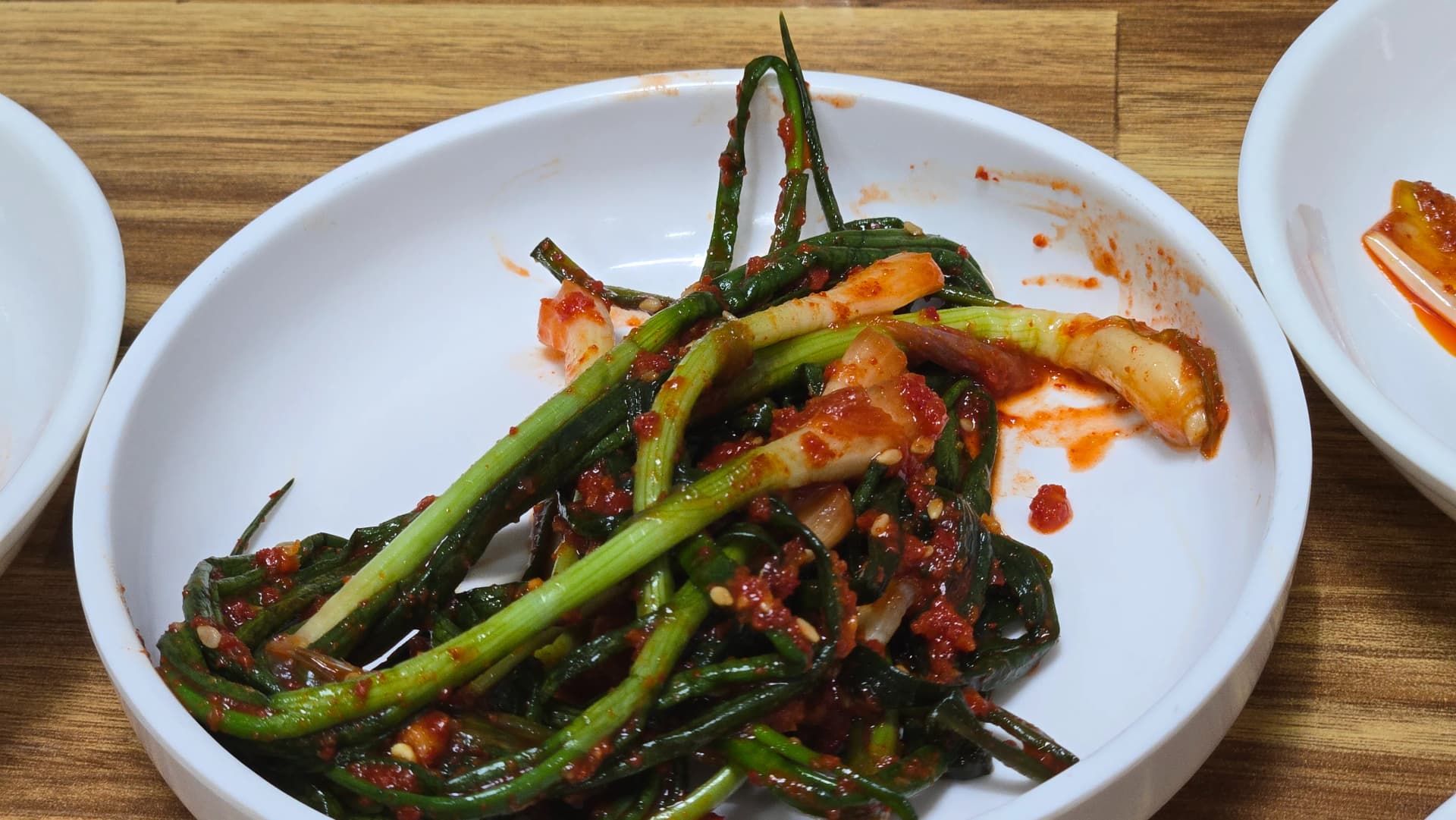
Green onion kimchi is made by tossing whole green onions in a mixture of chili flakes, fermented seafood paste, and garlic. When most people hear "kimchi," they think of the classic napa cabbage version, but there's also this kind made with green onions. When a baekban place serves this alongside regular cabbage kimchi, it's a sign that their side dish game is pretty generous.
The texture isn't crunchy — it's more on the chewy side. The more you chew, the more you get that sharp, pungent kick that green onions are known for, and when you eat it with meat, it cuts right through the greasiness. I kept grabbing a strand of green onion kimchi between bites of spicy pork, and the combo was surprisingly good. Later, when I was wrapping meat in lettuce, I laid some green onion kimchi on top, and honestly, that was the single best bite of the entire meal.
Braised Tofu — The Side Dish My Wife Went Back for Twice
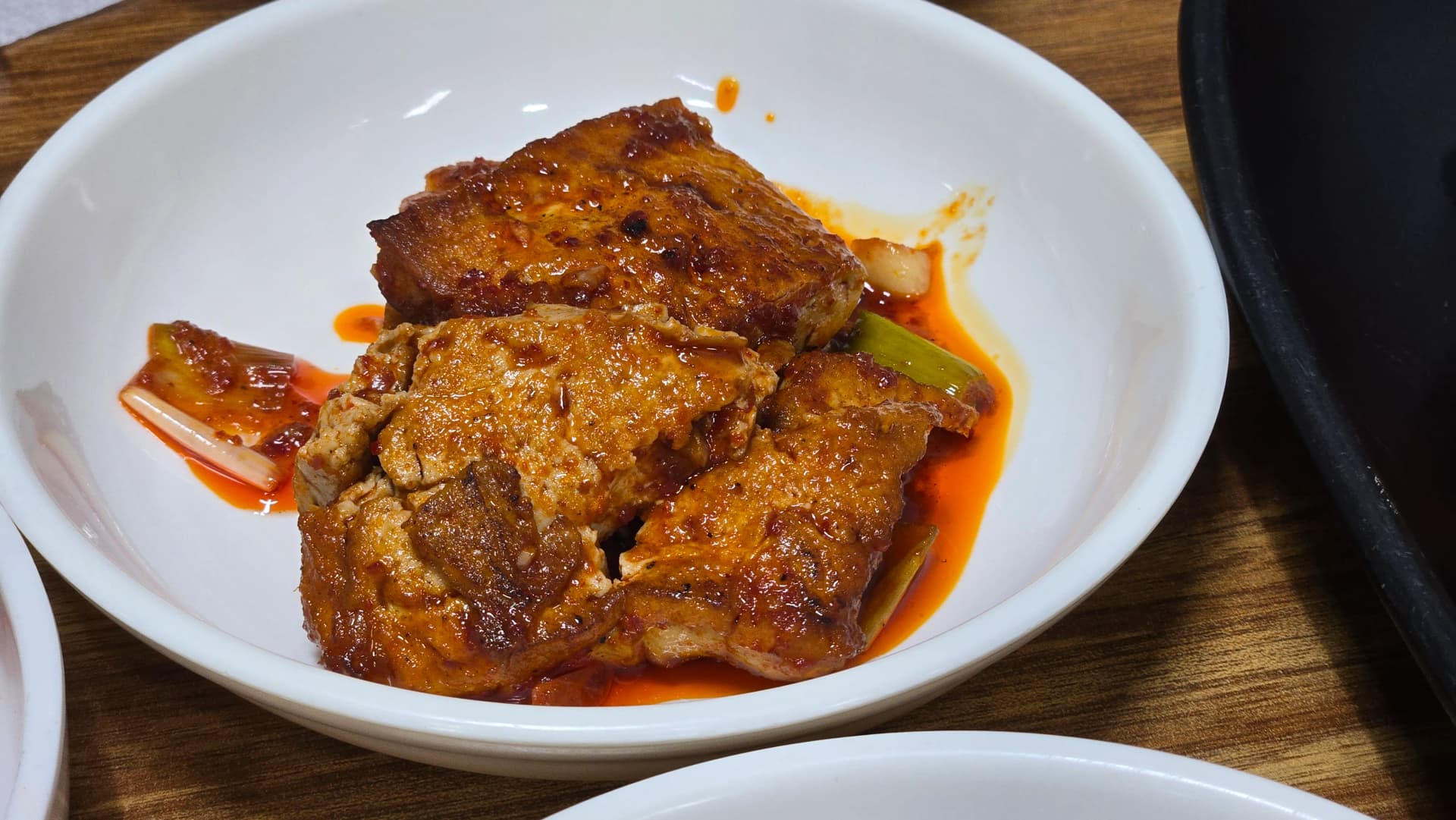
This is tofu sliced into thick pieces and braised in a gochujang and soy sauce mixture. Tofu is made from soybeans, and in Korea, it's such a common ingredient that it shows up on the table almost daily. It goes into stews, gets pan-fried, and — like here — gets braised in a savory sauce as a side dish.
The braised tofu at this place leaned a bit on the salty side, which actually paired really well with rice. Put a piece on top of your rice, drizzle some of that sauce over it, and watch your rice bowl empty out in no time. My wife loved this one so much she went back for seconds — twice. This restaurant has a self-serve setup where all the side dishes are laid out on a counter, so you can grab as much as you want without having to ask anyone. Even my wife, who doesn't speak Korean, felt totally comfortable helping herself.
Seasoned Spinach — A Korean Meal Staple
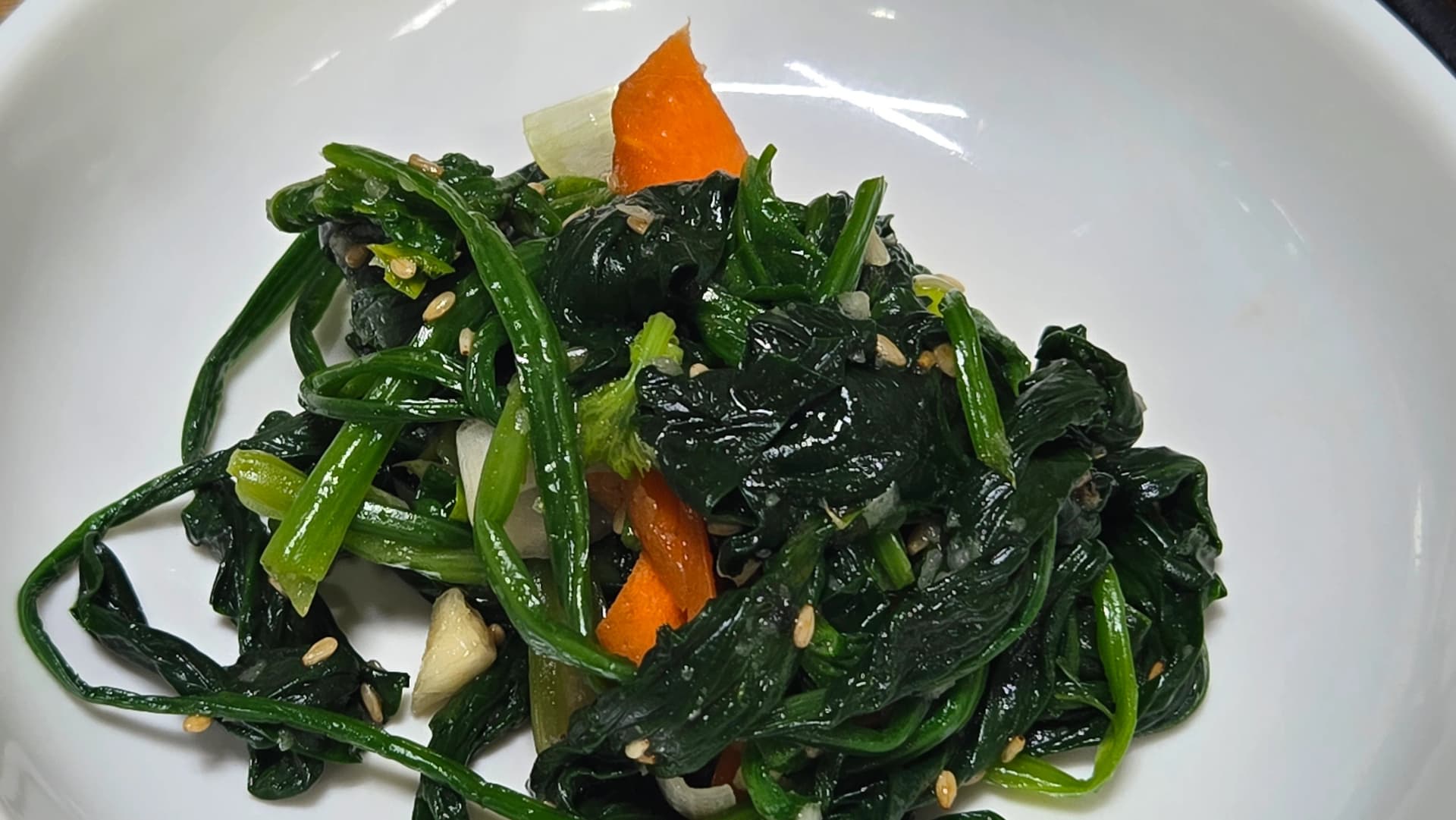
This is blanched spinach tossed with sesame oil, garlic, sesame seeds, and soy sauce. Sesame oil is used constantly in Korean cooking — it has this distinctly nutty, toasty aroma that's hard to mistake. The bits of carrot and onion you can see in the photo are this restaurant's way of adding some extra color and texture variation.
The flavor is mild, not bold at all. It's a soft, sesame-scented vegetable dish, and when you're going back and forth between spicy pork and kimchi, one bite of this spinach just resets your palate. Out of all the baekban restaurants I've been to, I can barely think of one that didn't serve seasoned spinach. It's pretty much the most fundamental side dish in Korean cuisine.
Radish Salad and Cubed Radish Kimchi — Same Vegetable, Totally Different Dishes
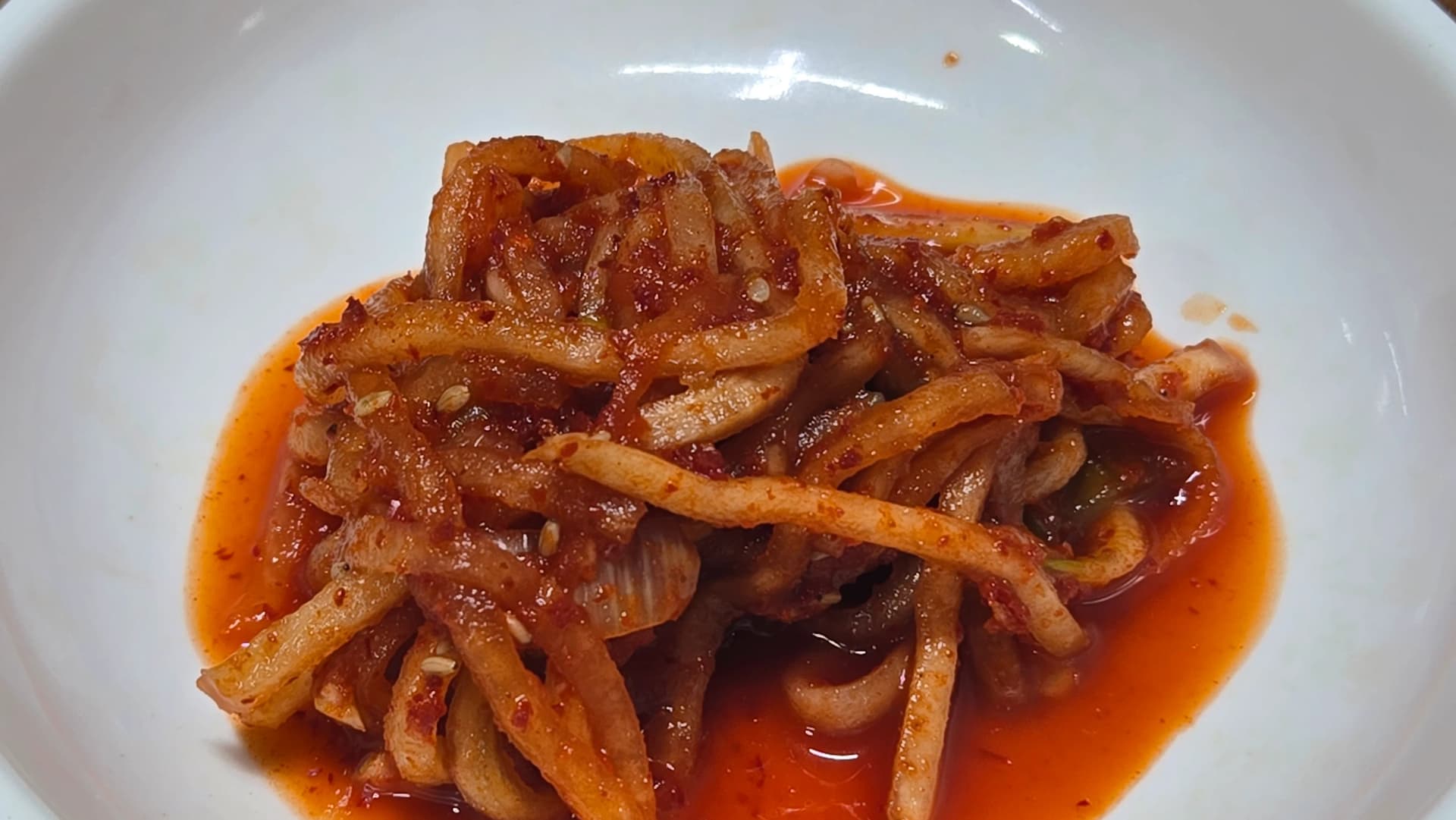
I think it makes sense to talk about these two together. They're both made from the same ingredient — Korean radish — but they're completely different in character.
Radish salad, called musaengchae, is radish cut into thin strips and dressed right away with chili flakes, vinegar, sugar, and fermented seafood paste. It looks red and spicy, but when you actually taste it, the tangy sourness hits you first. It's crunchy, with a sweet-sour-spicy thing going on all at once, and when you're in the middle of eating something greasy, one bite of this just refreshes your whole mouth.
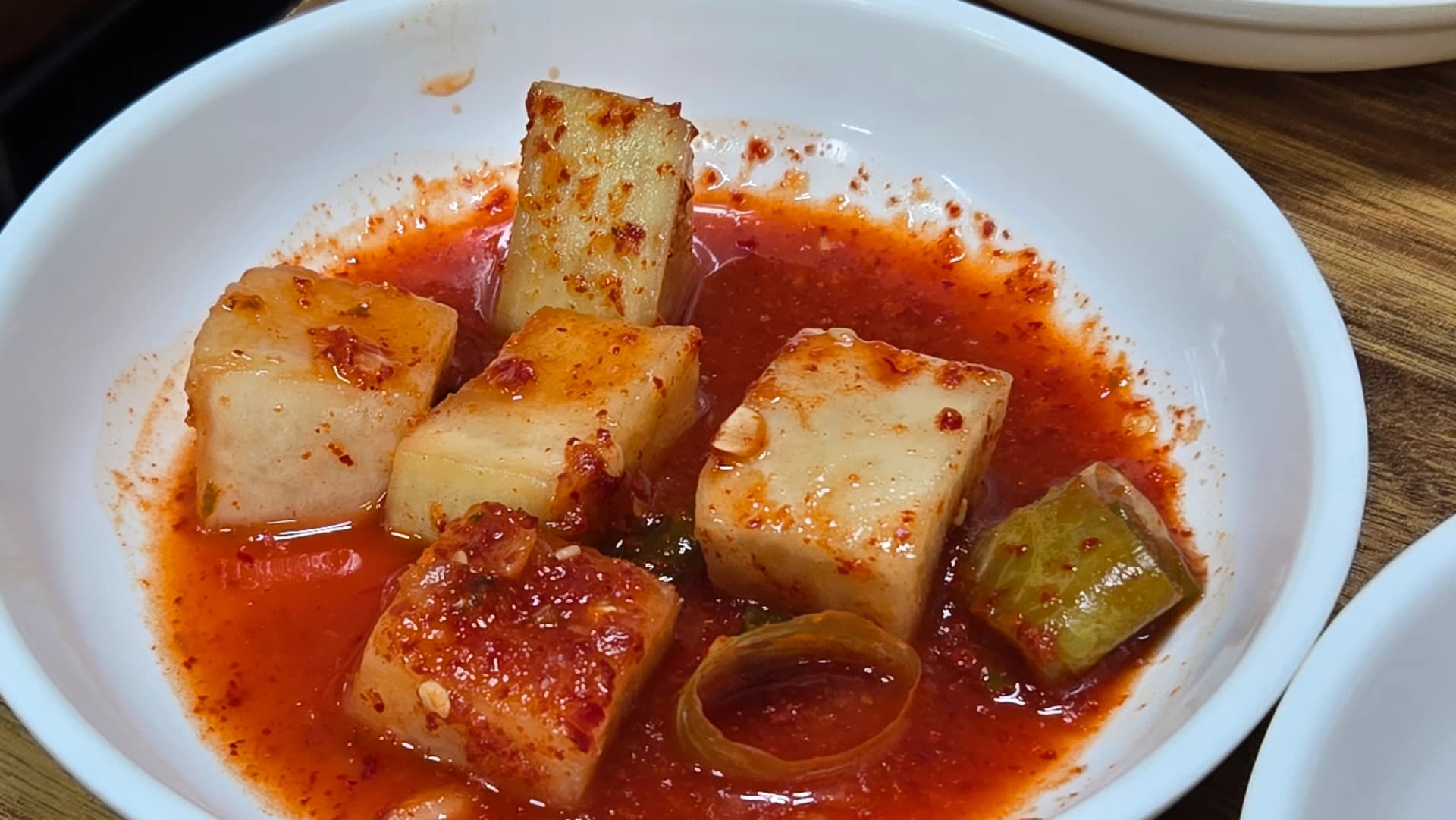
Cubed radish kimchi, called kkakdugi, uses the same radish but cut into cubes and then fermented over time. Fermentation is the process of letting something naturally age and develop flavor, and it gives the radish a tangy, almost fizzy kick along with a deeper, more complex taste. To put it simply, the radish salad is closer to a fresh salad, while the kkakdugi is closer to a fermented pickle. Having both on the table today made it fun to compare them side by side as I ate.
Napa Cabbage Kimchi — Korea's Iconic Fermented Food
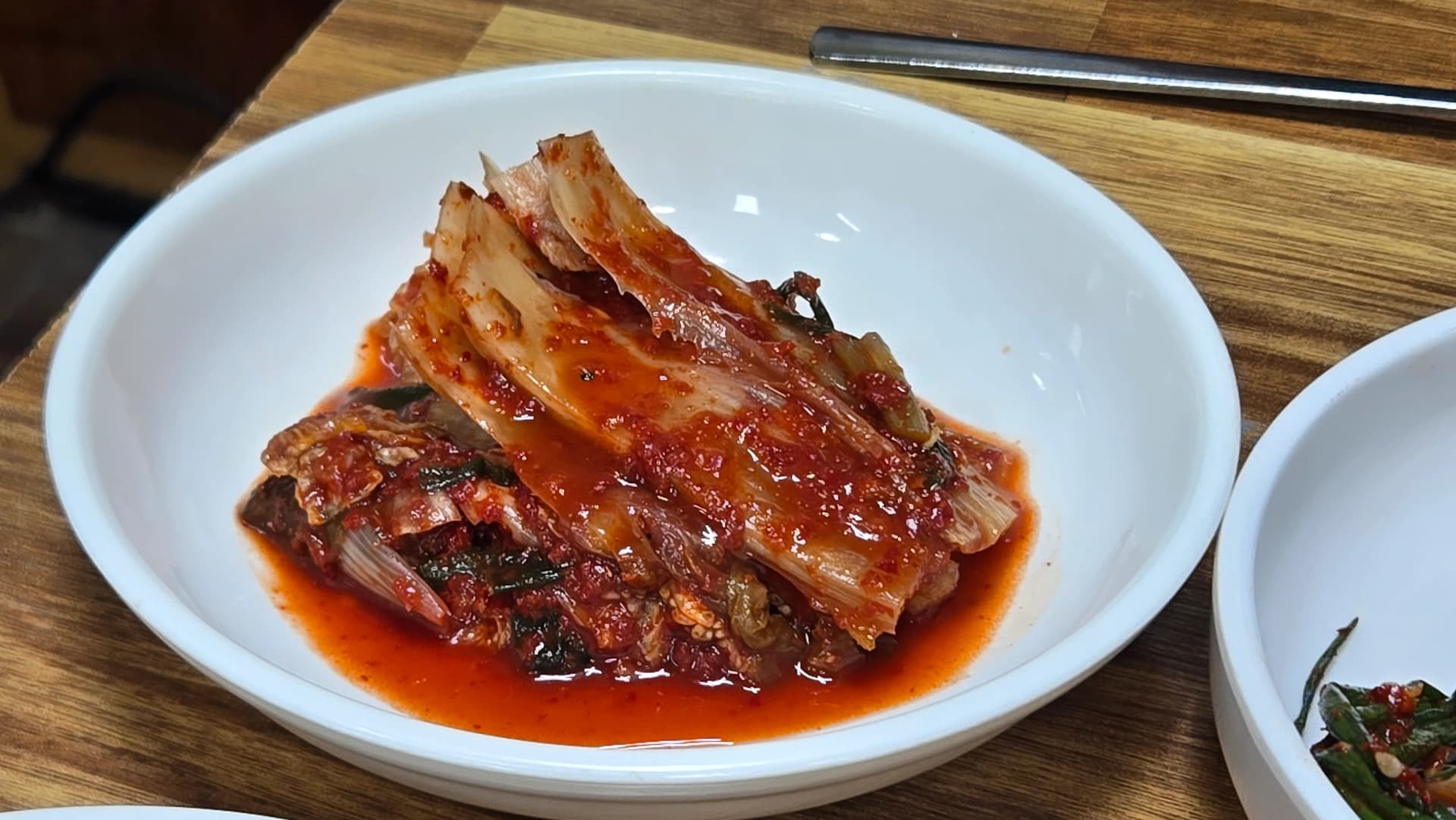
This is napa cabbage that's been salted, then packed with a seasoning paste of chili flakes, garlic, fermented seafood, and green onion between every layer of leaves, and left to ferment. If you ask what the most-eaten food in Korea is, the answer is either rice or kimchi — that's how inseparable it is from the Korean table. Every restaurant in Korea serves kimchi. BBQ joints, snack shops, baekban restaurants, and even places serving Western food will sometimes put kimchi on the table.
Whenever I walk into a baekban spot, I have this habit of tasting the kimchi first. If the kimchi is good, the rest of the side dishes are usually solid too. The kimchi at this place was nicely aged — that sweet spot where the spiciness and umami depth come together. It wasn't too salty either.
Side Dishes Are Self-Serve Here
Alright, that's enough about the side dishes. Let me tell you about something unique about this restaurant.
This place has a self-serve setup for all the side dishes. They're all lined up on one side of the restaurant, and the rice cooker is right there too. If you need more rice, you just scoop it out of the cooker yourself. You can grab as many side dishes as you want, whenever you want. That's how my wife was able to go back for braised tofu twice without any awkwardness. Since you serve yourself, there's no need to ask the owner for anything, which means even foreigners who don't speak Korean can eat here without any trouble at all.
But here's the thing — even though it's self-serve, the owner at this place actually comes over to you anyway. When she noticed our side dishes getting low, she'd come over saying "Eat more, eat more!" and refill them herself. Even when we said we were fine, she'd go "Oh come on, you need to eat plenty!" and bring more anyway. And it wasn't just us — she was doing the same thing to the table next to us. That kind of warmth and generosity is what makes these neighborhood Korean lunch spots so charming.
At Korean baekban restaurants, side dish refills are free as a standard rule. Some places have a self-serve counter like this one, and at others you just ask the owner and they'll bring more. That said, it's good etiquette to only take what you'll actually eat. Piling your plate high and then leaving food behind is wasteful. Just take a reasonable amount, and if you need more, go back for another round.
Today's Main: Spicy Stir-Fried Pork
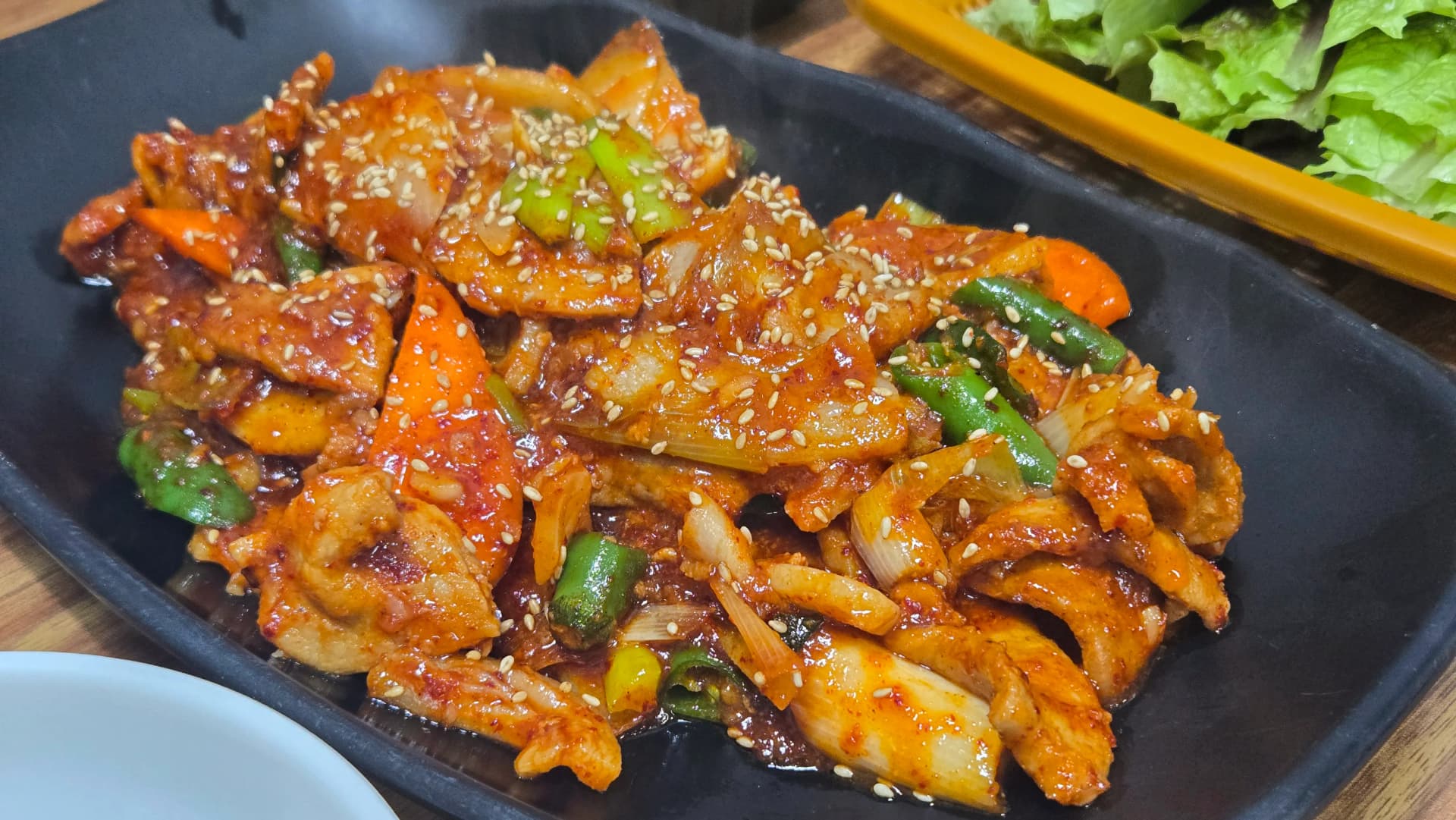
Now for today's main event. Jeyuk-bokkeum — spicy stir-fried pork. It comes out on a black iron plate, and the moment it hits the table, the gochujang sauce aroma just fills the air around you. It's pork stir-fried with onion, green onion, cheongyang chili pepper, and carrot, with sesame seeds sprinkled on top. See that yellow basket next to it piled with leafy greens? That's lettuce and perilla leaves — they come with the dish so you can wrap up the meat.
A Closer Look at the Spicy Pork
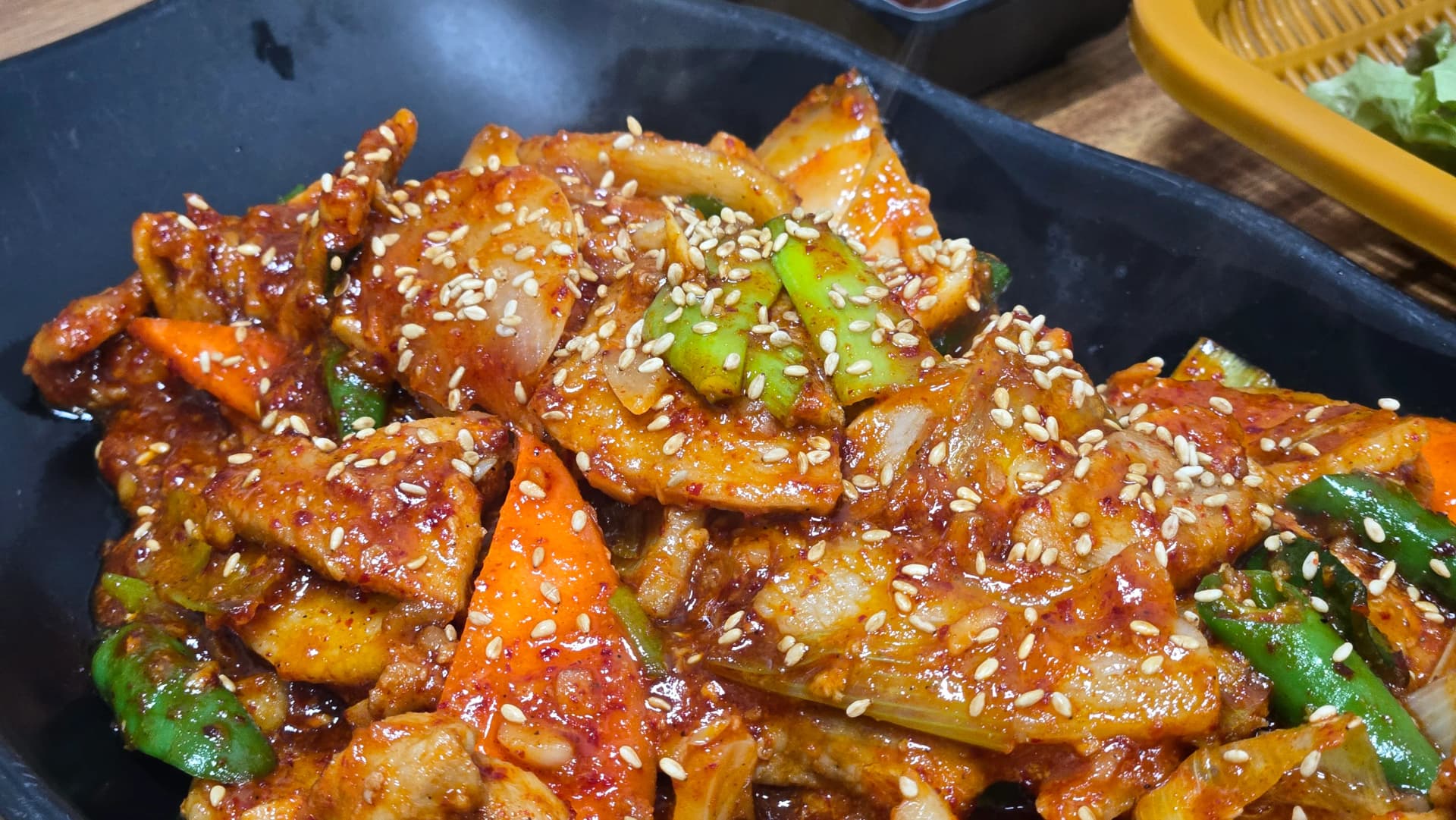
Up close, you can see the sauce has really soaked into every piece of meat. It's a mix of gochujang with soy sauce, garlic, and ginger, and it's not just spicy — there's a sweet, savory depth to it. One thing that surprised me about this place's jeyuk-bokkeum was actually the green onions. As they cook down, they wilt and mingle with the sauce, turning sweet and almost caramelized. There were moments where the green onion was honestly tastier than the meat. You'll notice bits of cheongyang chili pepper scattered throughout — cheongyang peppers are basically Korea's go-to hot pepper. If you bite into one, the heat level spikes suddenly, so if you're not used to spicy food, pick them out before eating.
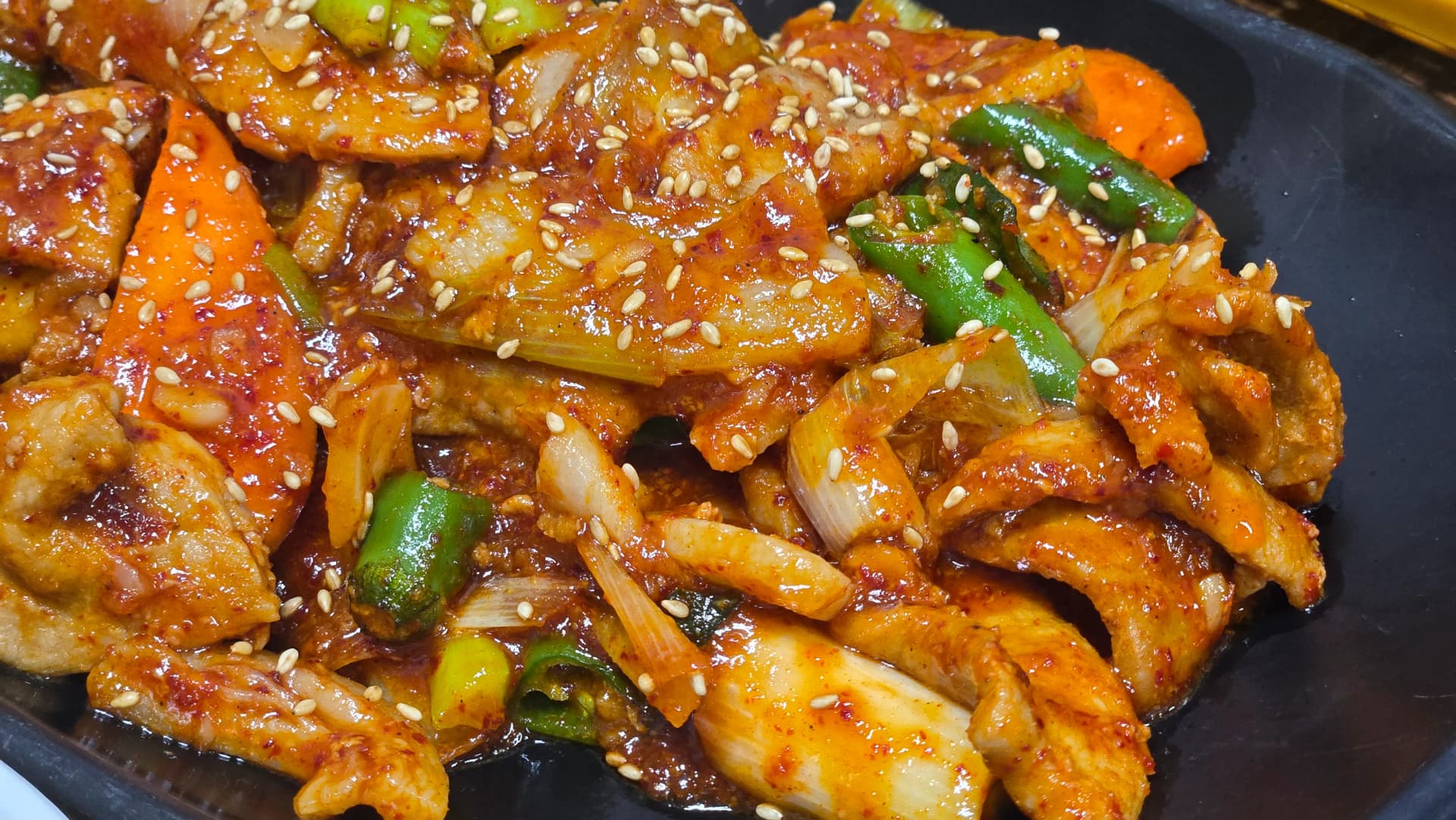
I got even closer for this shot. See how thick those pieces of pork are? They didn't slice it thin — it's cut with real substance, so you get a satisfying chew with every bite. You can see how the sauce has reduced and caramelized onto the surface, giving it that glossy shine. You can eat this piled on top of rice and mixed together, or wrap it in lettuce with rice and eat it as a ssam. Either way, your rice disappears fast — but thankfully, this place lets you scoop more from the rice cooker yourself, so no worries there.
The Lettuce Wraps and Portion Size
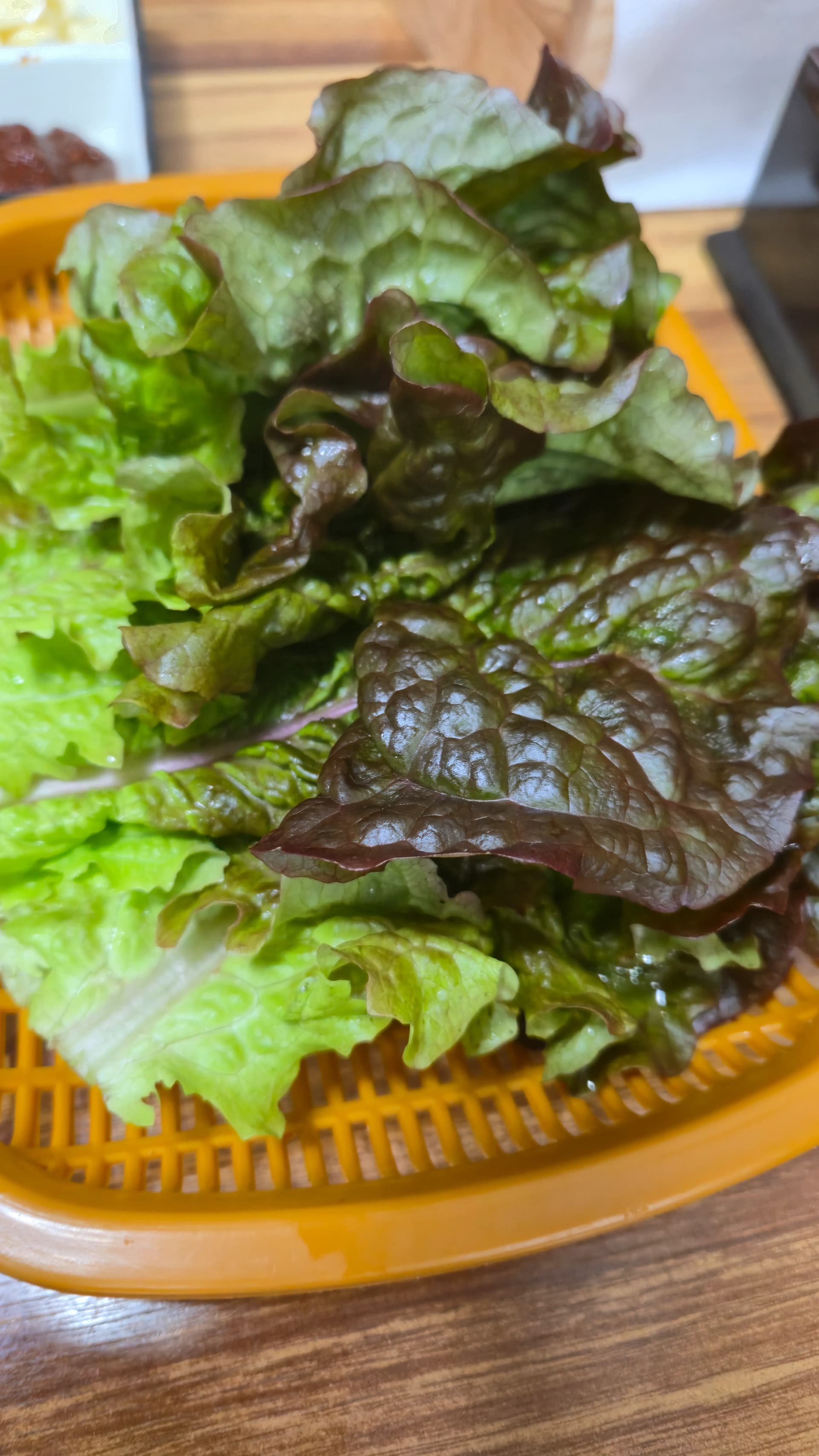
These are the ssam greens that come with the spicy pork. There's a mix of green lettuce and reddish-purple lettuce in the basket. In Korea, whenever a meat dish comes out, lettuce wraps almost always come with it. You lay the meat and rice on a lettuce leaf and pop the whole thing in your mouth — that's the Korean way to eat it.
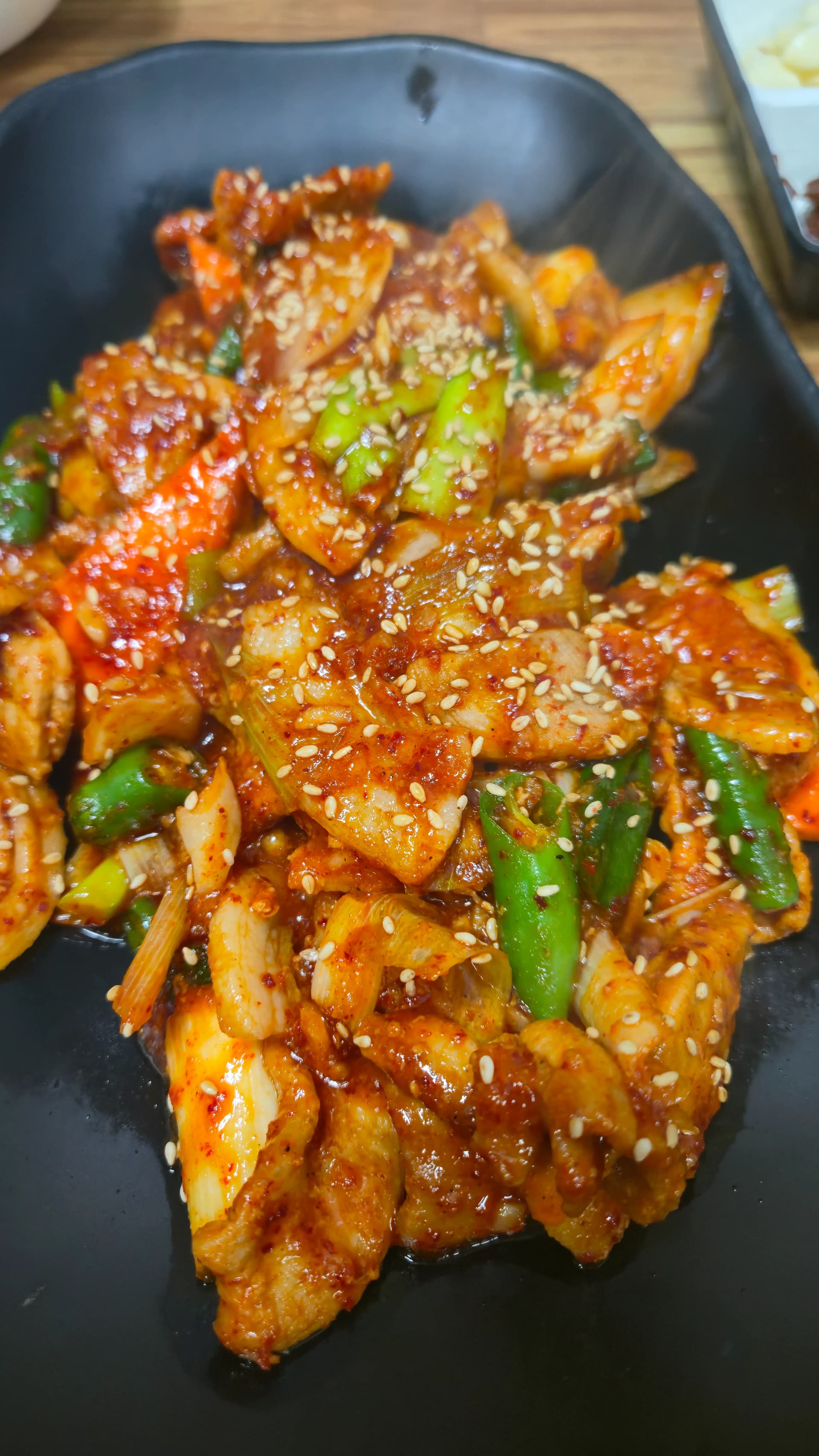
I took a vertical shot here, and you can see the spicy pork is piled high on that iron plate. The portion is really generous. My wife and I shared this between the two of us and we were both completely full. At about $7 per person with this much food plus free side dish refills, the value was honestly impressive.
How to Wrap Spicy Pork in Lettuce
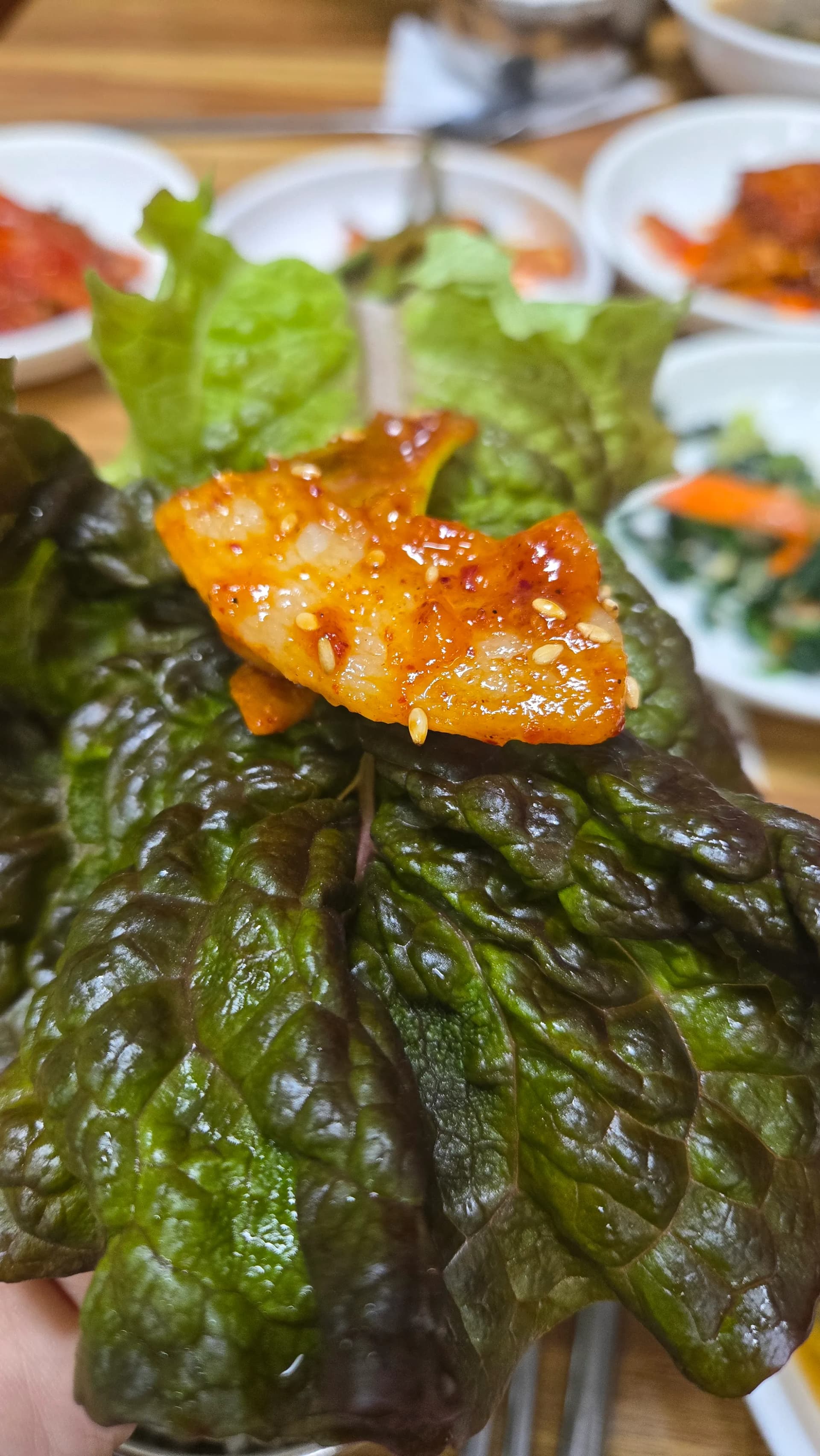
This right here was the best combo of the day. Spread out a piece of lettuce, place a piece of spicy pork on top, then add some of that green onion kimchi I mentioned earlier. The spicy meat gets that sharp, pungent onion kick layered on, and the lettuce wraps it all together adding a fresh, crispy crunch. Pop it all in your mouth and you get spicy, savory, and crunchy all at once. A lot of people also add rice inside the wrap, but there's no fixed rule — just eat it however feels right to you.
Final Thoughts on This Korean Lunch Spot
The side dish variety was generous and the portions were more than enough. The spicy pork in particular had nice thick-cut meat and solid seasoning, and among the sides, the green onion kimchi really stood out. I also remember how much my wife loved the braised tofu. Even though the owner runs the whole place by herself, she kept coming over telling customers to eat more — and that kind of warm generosity was really lovely. In terms of value for money, today's meal scored higher than the grilled fish baekban from last time. Having a proper main dish just elevates the whole meal to another level.
Since you can scoop rice from the cooker yourself and grab side dishes freely from the counter, you can eat here comfortably even if you don't speak Korean. My wife, who's a foreigner, served herself without any issues at all.
Baekban is the everyday, ordinary meal that Korean people eat every single day. It's nothing special or fancy, which is exactly why you won't find it in most tourist guides. But that's actually the whole point. It's not food that's been packaged for tourists — it's the real lunch that Koreans sit down to every day, and you get to experience it exactly as it is. The price is easy on the wallet, and ordering is simple. Walk in, look at the menu, pick one thing, and the side dishes all come out automatically. Refills are free. There's nothing to worry about even if it's your first time.
If you're traveling in Korea, try ducking into a neighborhood alley baekban spot for at least one meal. It won't be glamorous, but after you eat, you'll understand why Korean people come back to this every single day.
I'll be back with another baekban menu in the next post.
This post was originally published on https://hi-jsb.blog.