
Crispy, Juicy, 35-Day Aged Tonkatsu at Tamafuji in Hokkaido
Table of Contents
14 items
Walking Into a Random Tonkatsu Spot in Chitose With No Plan
It was the last day of my Hokkaido trip, and I had zero plans for dinner. I dropped my bags at the hotel near Chitose Station and headed out — it was already around 7 PM. My flight was early the next morning, so going all the way back up to Sapporo felt like a stretch. I figured I'd just grab something nearby and call it a night, so I Googled "restaurants near Chitose Station."
Honestly, I wasn't expecting anything impressive around Chitose Station. New Chitose Airport is famous, sure, but the city of Chitose itself isn't exactly a tourist destination. But one result caught my eye — a Hokkaido tonkatsu restaurant with decent reviews. Tamafuji (とんかつ玉藤), Chitose location. I wasn't even craving tonkatsu specifically, but after days of ramen and seafood, a fried pork cutlet actually sounded refreshing. So I walked over with basically no expectations.
It was about a 15-minute walk from the station. And the route? Absolutely nothing along the way. Just residential streets stretching on and on, and since it was evening, it was dark too. Halfway there I started wondering, "Am I even going the right way?" Not a single convenience store, barely any people — just the occasional car passing by. I kept checking Google Maps, watching the remaining distance tick down. If I'd had a rental car, it would've been nothing, but on foot it felt way longer than it should've.
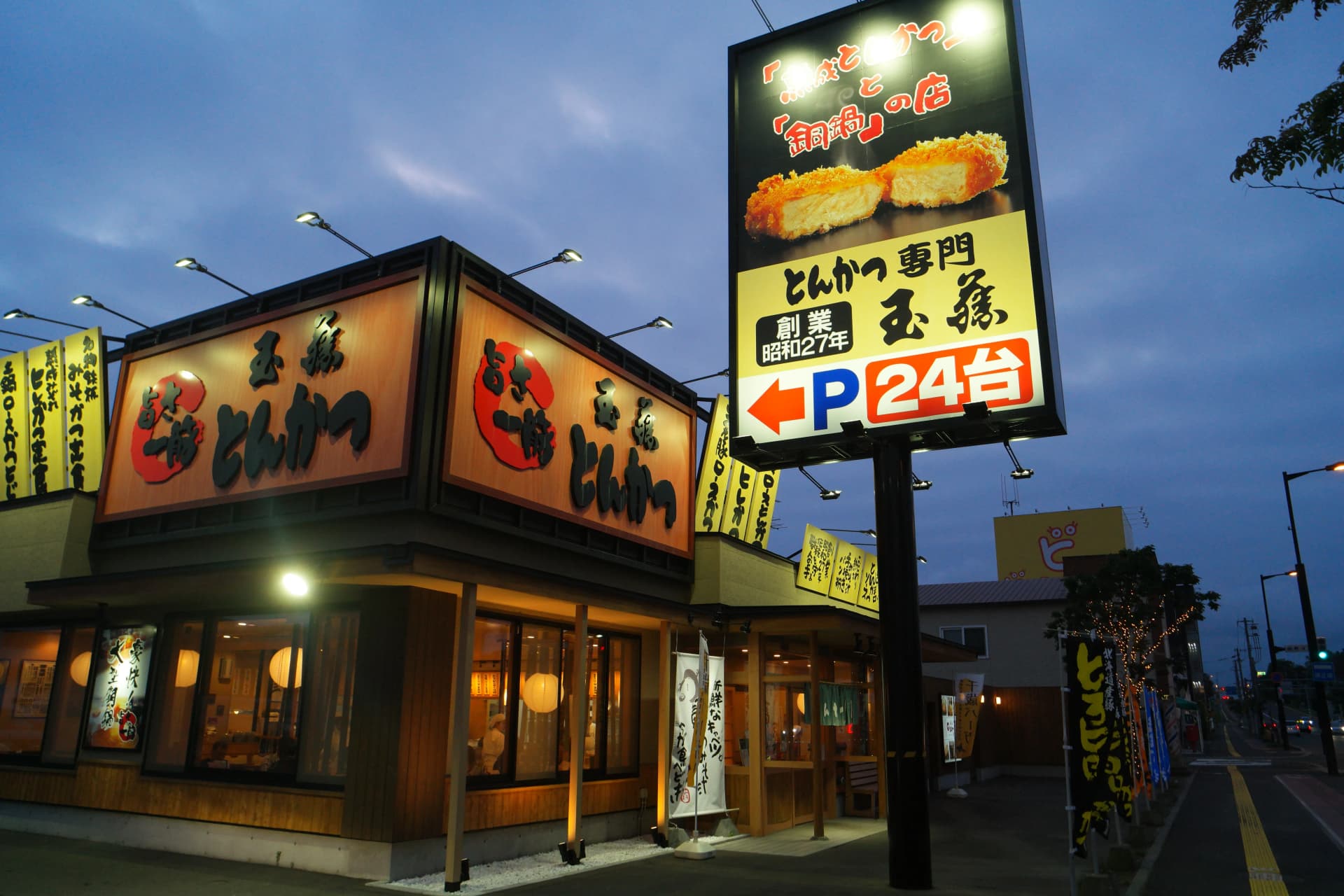
Seeing the sign was a relief. I walked in and even though it was past 7 PM, there were only three or four other groups of customers. Yep, this is a real local neighborhood, I thought. I was the only person who looked anything like a tourist — everyone else seemed like they lived nearby. A staff member said something in Japanese that I only half understood, and I just sat down. I'm pretty sure they asked how many people, so I held up one finger and that settled it.
Tamafuji: A 70-Year-Old Hokkaido Tonkatsu Chain
The menu was all in Japanese, which threw me off a bit, but thankfully there were photos so I just went with my gut. Later, I noticed a history plaque on the wall explaining that Tamafuji started in 1952 as a Hokkaido tonkatsu specialty restaurant. That's over 70 years. They have about 10 locations in Sapporo alone, plus one in Asahikawa, one in Chitose, and they even have an overseas location in Hawaii. I walked in thinking it was some little neighborhood pork cutlet shop, but the scale was way bigger than I expected.
That said, the Chitose location is kind of out of the way, so it's hard to recommend going out of your way to get here during a trip. The area around Chitose Station is purely residential, and even people looking for restaurants near New Chitose Airport don't usually venture this far. If getting to Chitose isn't convenient for your itinerary, the Sapporo locations are way more accessible.
Looking for a Sapporo location?
Search "とんかつ玉藤 札幌" (in Japanese) and all the Sapporo locations will pop right up. If you're looking for great tonkatsu in Sapporo, the city center branches are much easier to get to.
Self-Serve Side Dishes: A Treat Before the Tonkatsu
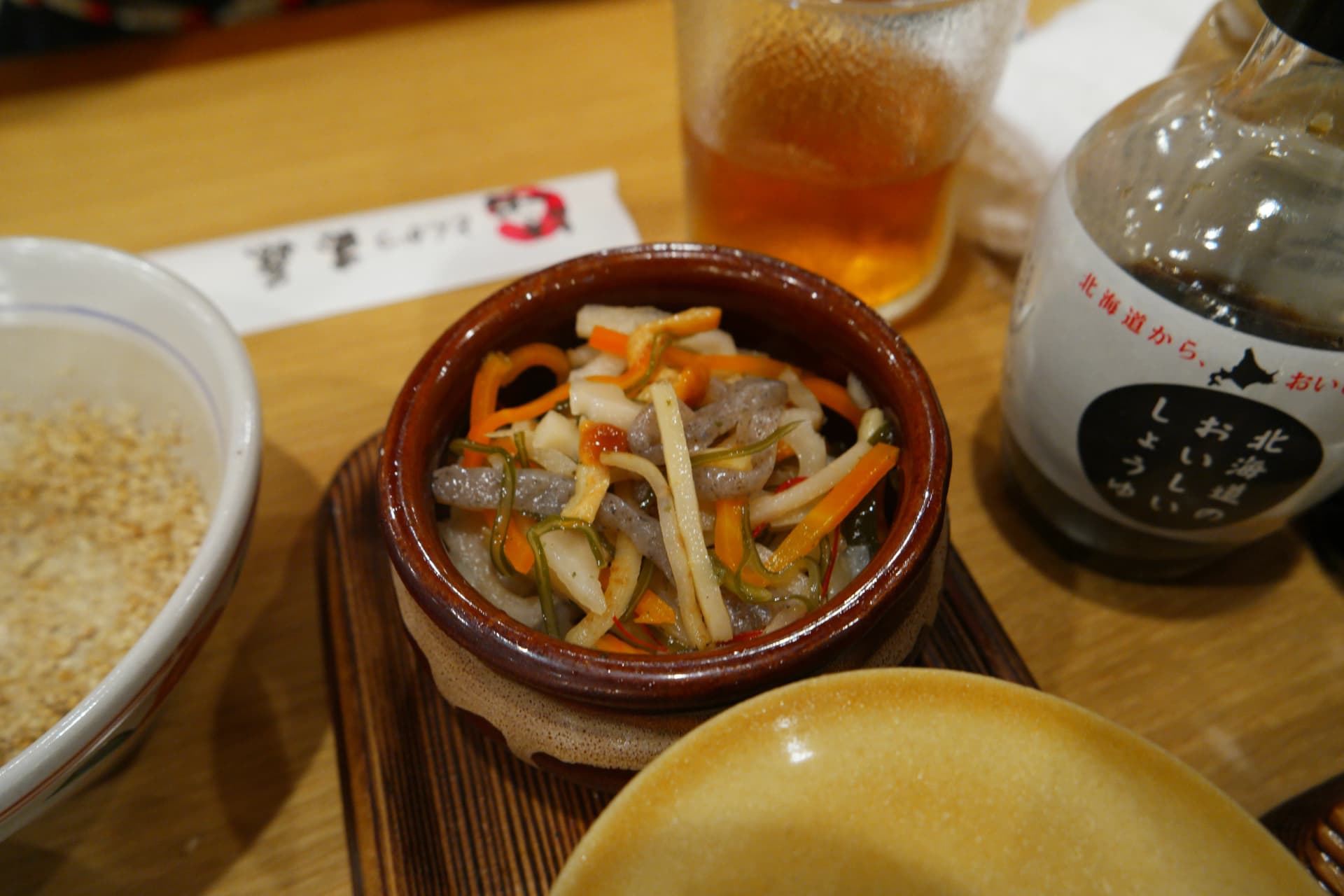
Once I sat down, I noticed a sign saying the side dishes were self-serve. There were three big containers off to the side: tsukemono (Japanese pickled vegetables), gobozuke (simmered burdock root), and nameko (pickled mushrooms). You just grab a small plate and take as much as you want. No need to ask for refills — if you run out, just go back for more. Pretty convenient, though obviously you should only take what you'll actually eat.
The simmered burdock root was the standout
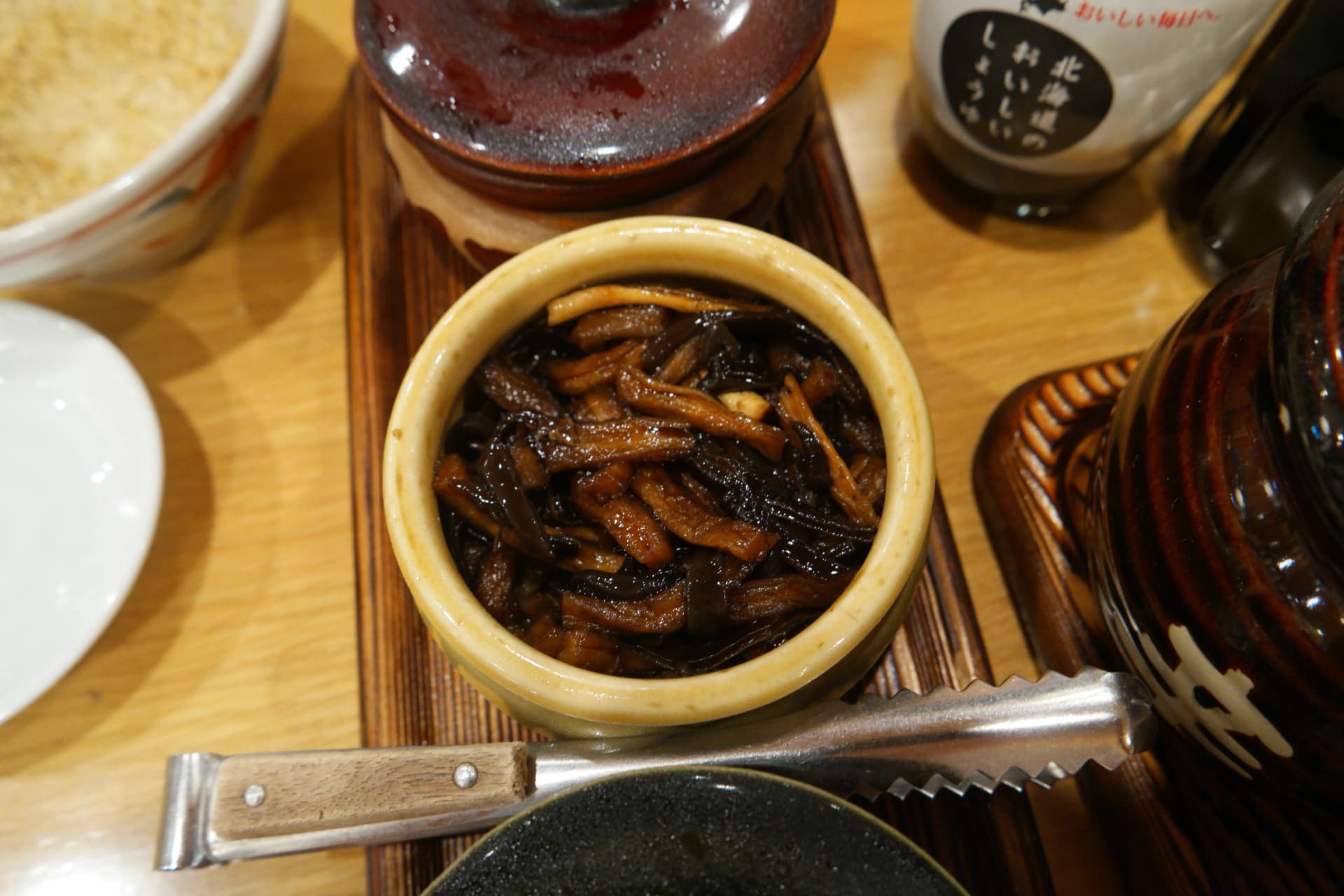
Gobozuke — burdock root simmered in soy sauce. It's dark and glossy, salty-sweet, with this crunchy, snappy texture that was seriously satisfying. Honestly, it could pass as a bar snack. The fact that this was an unlimited self-serve side dish kind of surprised me. It works great for cutting through the richness of tonkatsu, but it was tasty enough to enjoy on its own too.
The nameko mushrooms might be an acquired taste
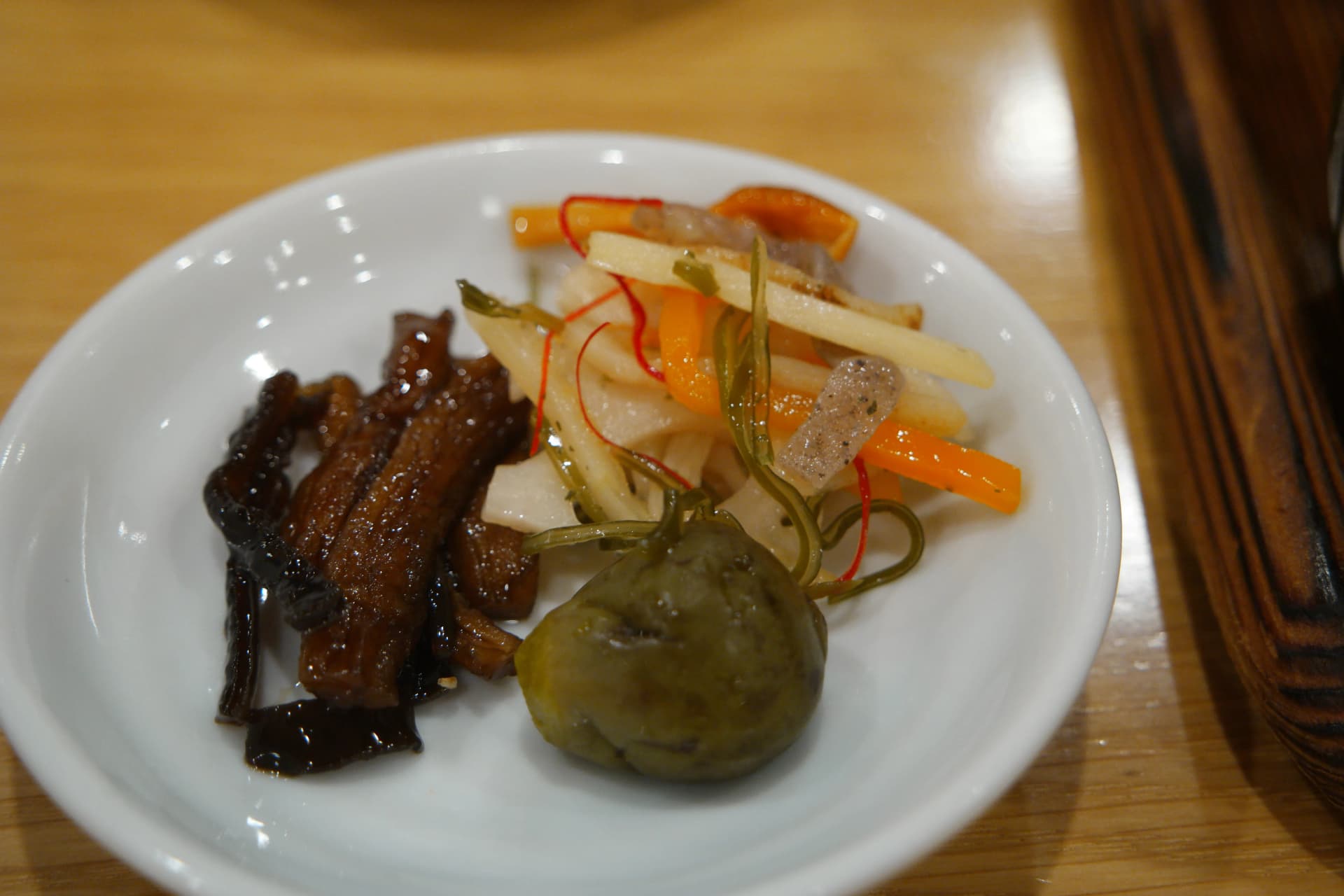
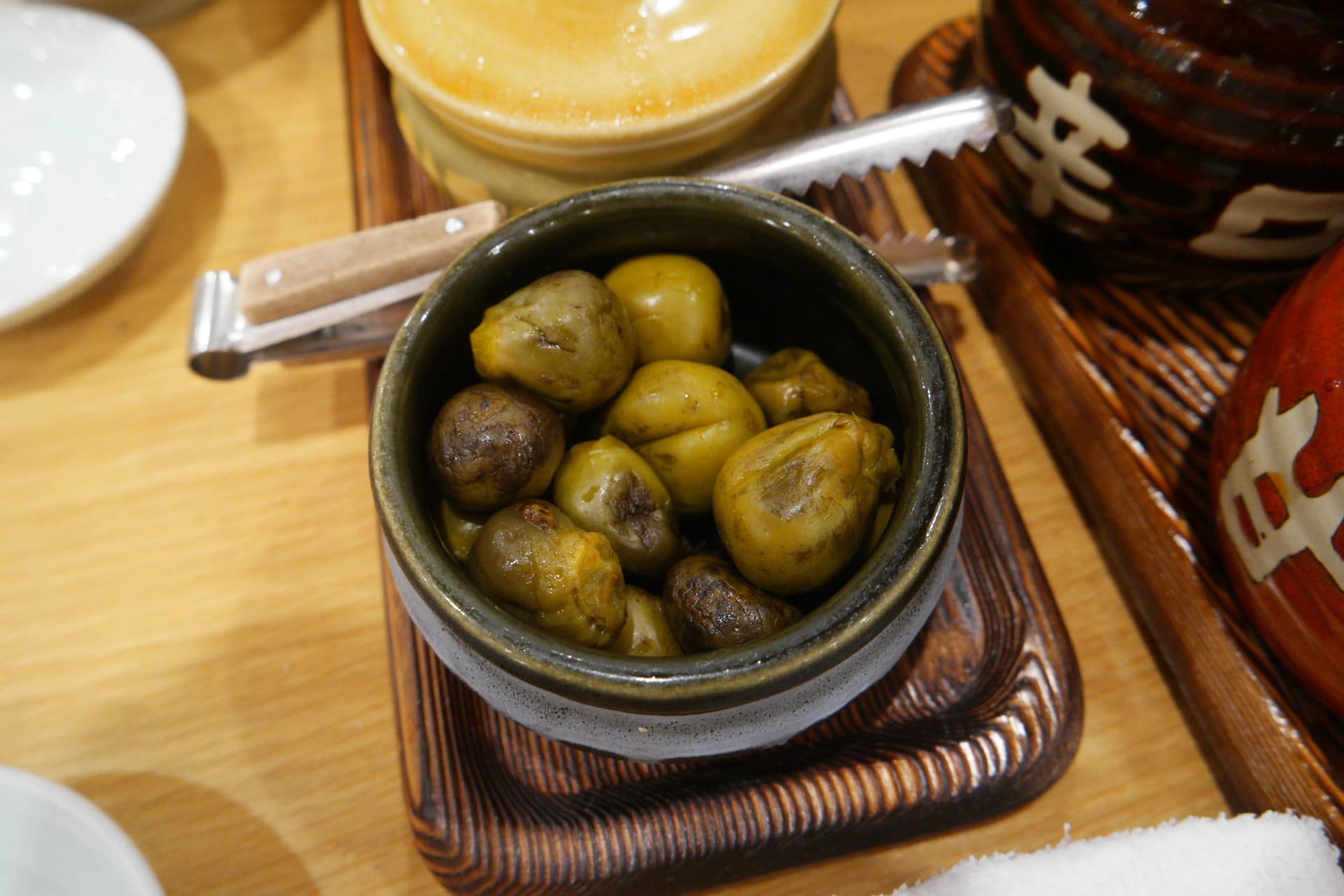
Small, round little mushrooms simmered in soy sauce, with a distinctive slimy coating on the outside. Apparently that's just what nameko mushrooms are like, but if you've never had them before, it can be a bit startling. I was fine with it, but I could think of people I know who'd push the plate away. They're salty and tender, and they went really well with rice.
I loaded all three onto one plate. Nibbling on them while waiting for the main course made the time fly by. If the free self-serve sides are this good, I figured the main dish had to be worth looking forward to.
Freshly Ground Sesame: Making Your Own Special Sauce
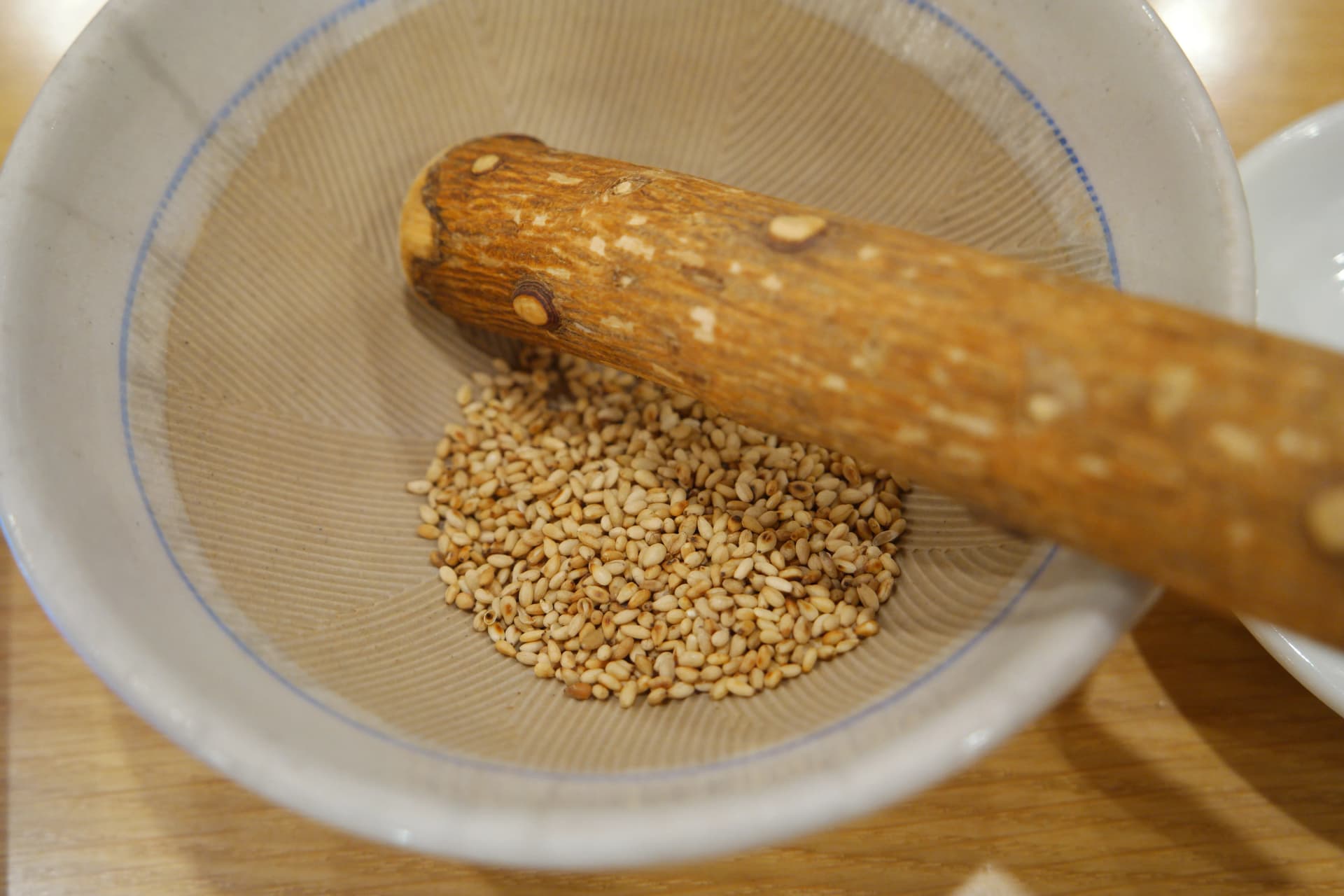
There was also a small mortar sitting on each table. At first, I had no idea what it was for. Decoration, maybe? But inside were whole sesame seeds. Turns out you're supposed to grind them yourself and mix them into the tonkatsu sauce. This is honestly the key to the whole Tamafuji experience.
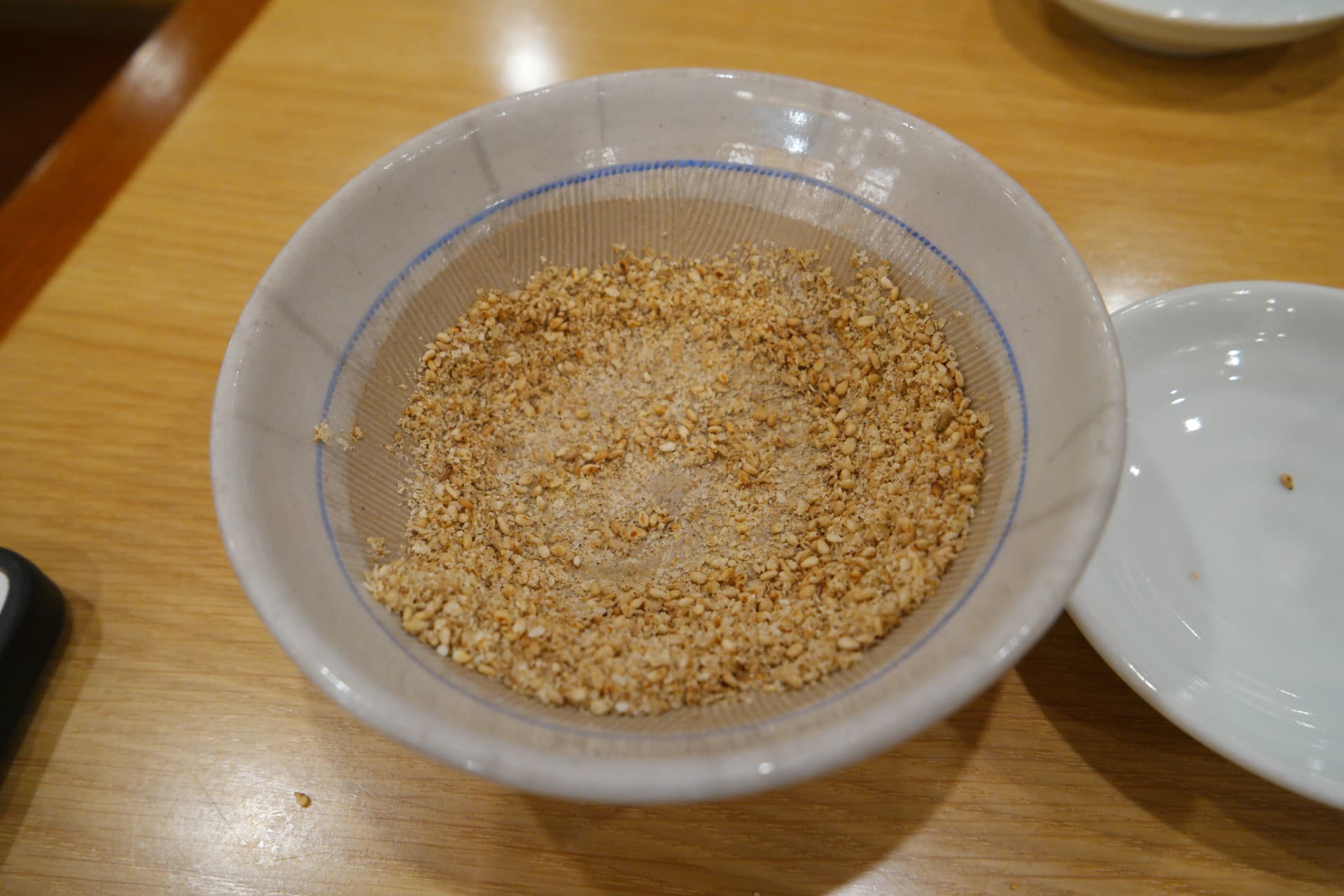
You just swirl the wooden pestle around in circles. I messed up the pressure at first and sesame seeds went bouncing everywhere. Had to sweep them off the table with my hand — a little embarrassing. But once they started crushing, this incredibly nutty aroma hit me. That was the moment I thought, "Oh wait, this is actually something special." Once the seeds are ground, you pour in the sauce and mix it up. It's completely different from just dipping into regular bottled sauce. The freshly ground sesame dissolves into the sauce and the whole flavor profile transforms.
Don't skip grinding the sesame
Seriously, if you skip this step because it seems like a hassle, you're missing out big time. The nutty richness of freshly ground sesame melting into the sauce completely changes the tonkatsu. Skipping this at Tamafuji is like only eating half the meal.
The Aged Tonkatsu: First Impression Was… Underwhelming
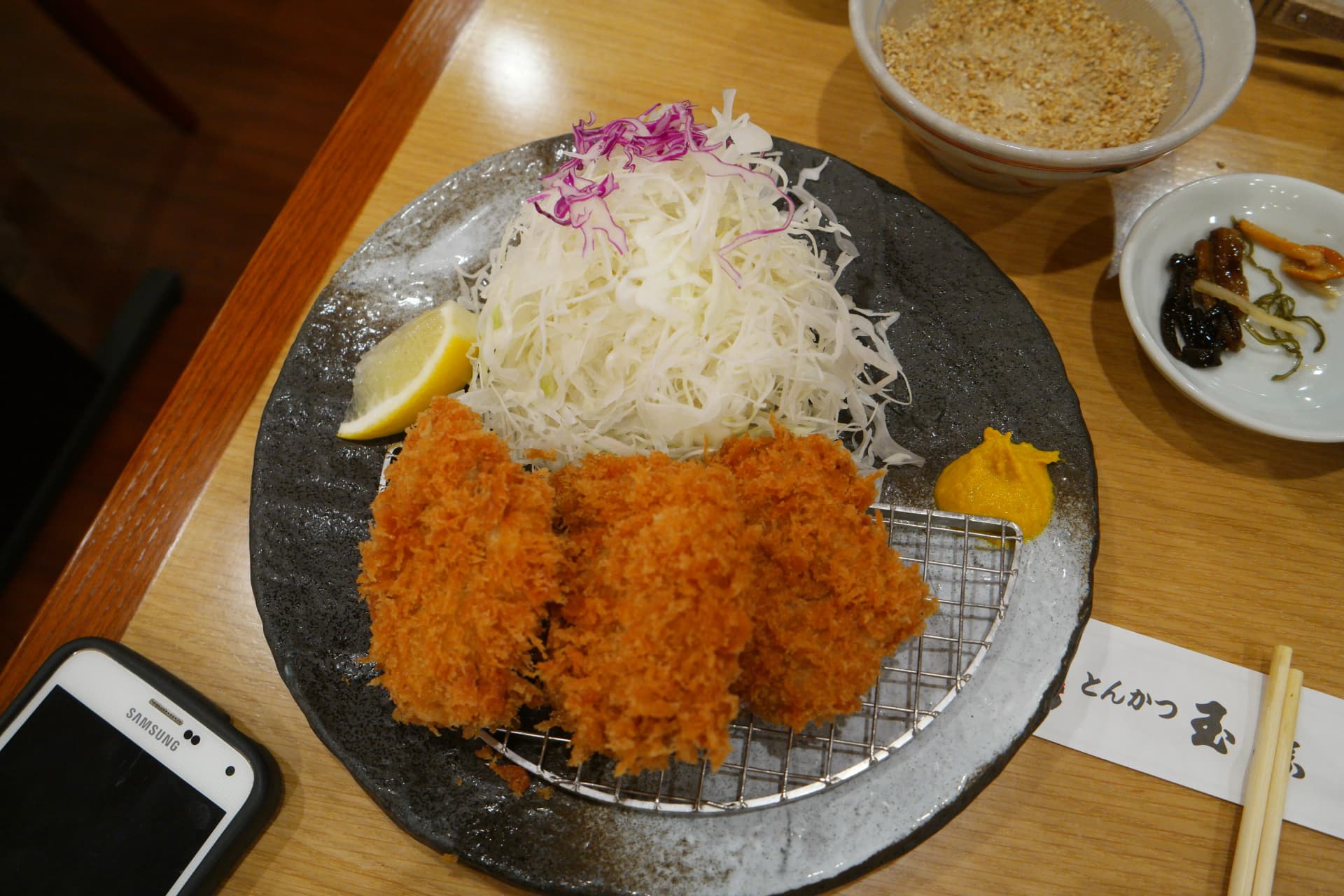
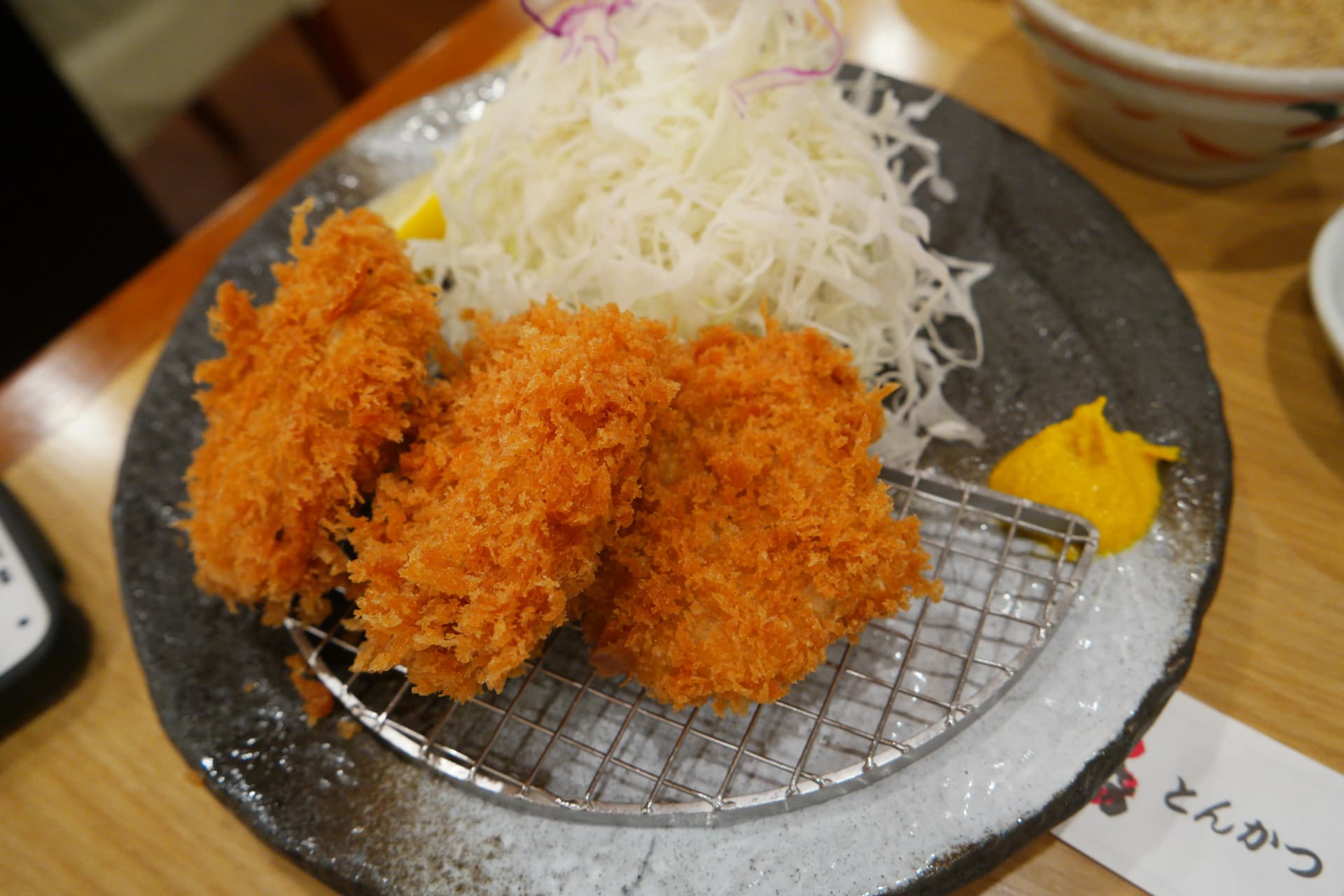
I ordered the aged tenderloin tonkatsu set with 3 pieces. It was ¥1,720 (about $11). Honestly, when it first arrived, my reaction was, "Huh? Looks pretty normal." Breaded cutlet, shredded cabbage, mustard. Looking at it from the outside, I couldn't see what made it any different from the tonkatsu I'd eaten back in Korea.
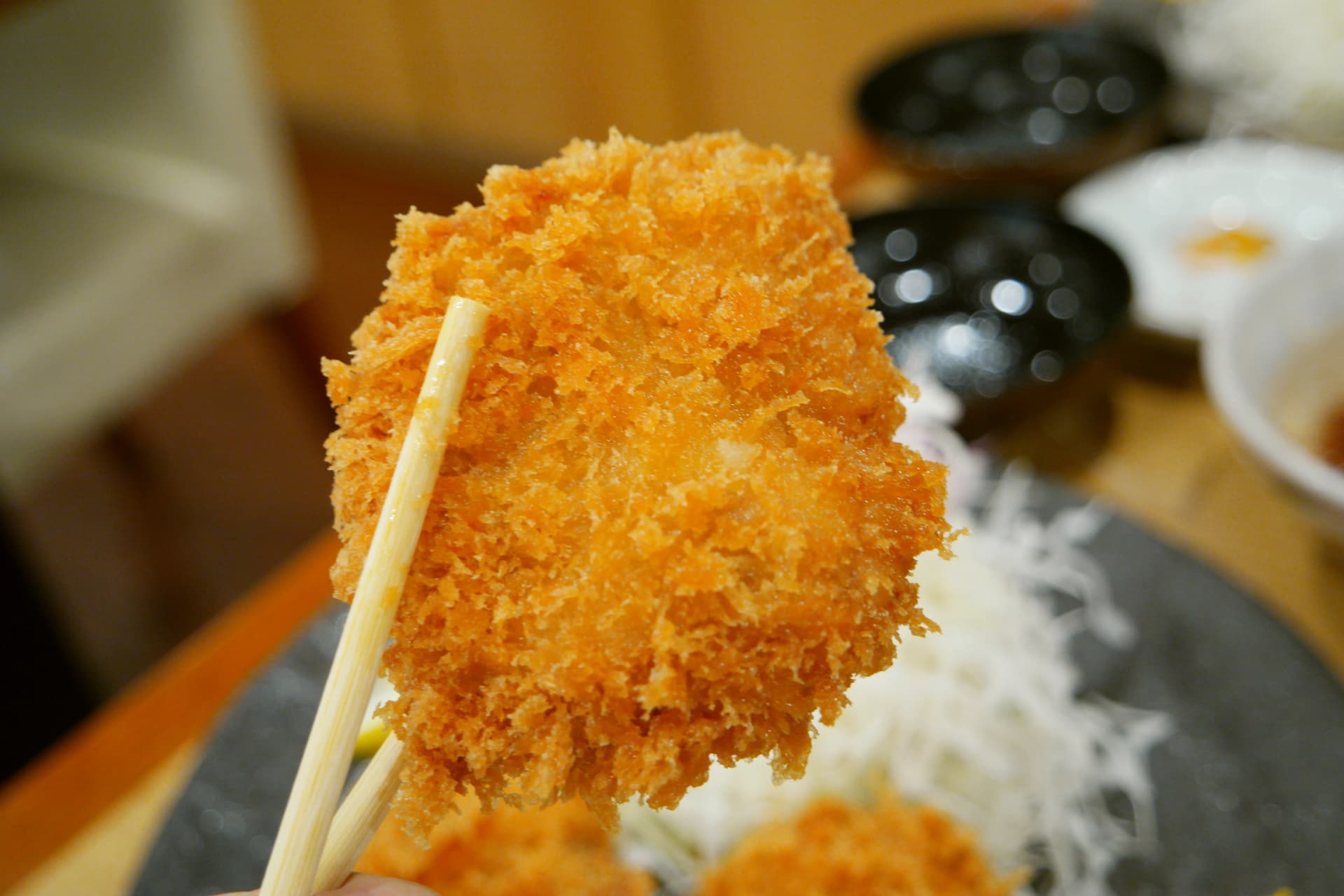
The thick breadcrumbs were evenly coated, and the color was that perfect golden hue. But honestly, I'd seen that exact look at plenty of tonkatsu places back home. Up to this point, nothing felt particularly special.
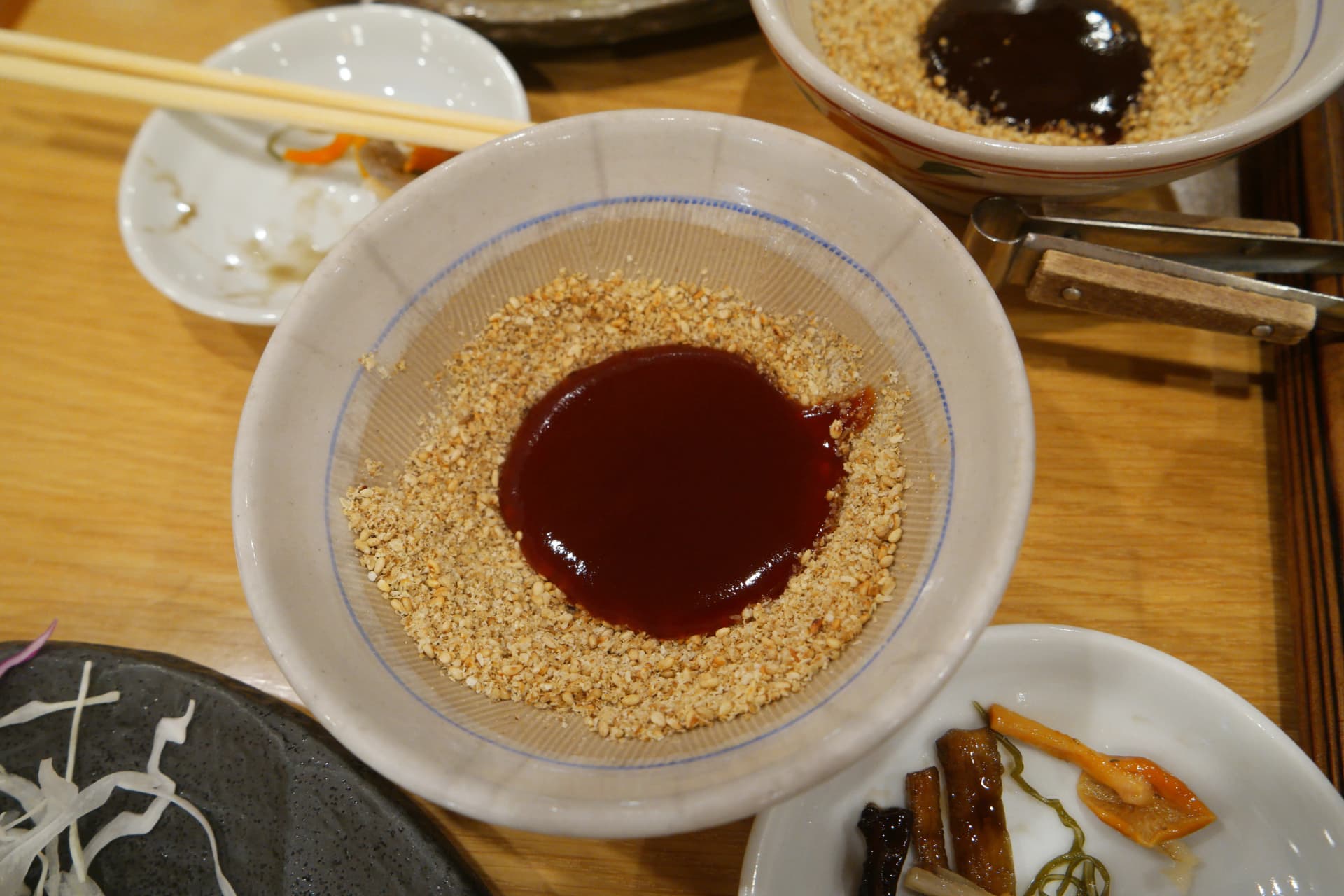
Once the sesame was fully ground and the sauce mixed in, you get this slightly thick sesame sauce. And you dunk the tonkatsu right in.
The First Bite Made Me Stop Mid-Chew
But when I picked up a piece with my chopsticks, something was already different. There was no greasiness. The tonkatsu I was used to back home would leave a slight oily sheen on the chopsticks, but this one wasn't glossy at all — it had this dry, almost fluffy feel. I later read on the restaurant's info sheet that they fry in copper pots with high heat conductivity. And the breadcrumbs aren't store-bought either — they use handmade fresh breadcrumbs that have been aged for four days.
I took one bite and just… paused. The outside was definitely crispy. But there was something happening beyond the crunch. Something spreading inside. "Juicy" might be the right word, but it was different from what I normally associate with that. The meat wasn't soft and mushy — instead, there was something infused between the fibers of the pork that released gradually with every chew. I honestly can't describe it well. All I know for sure is that I'd never felt that texture in any tonkatsu I'd eaten before.
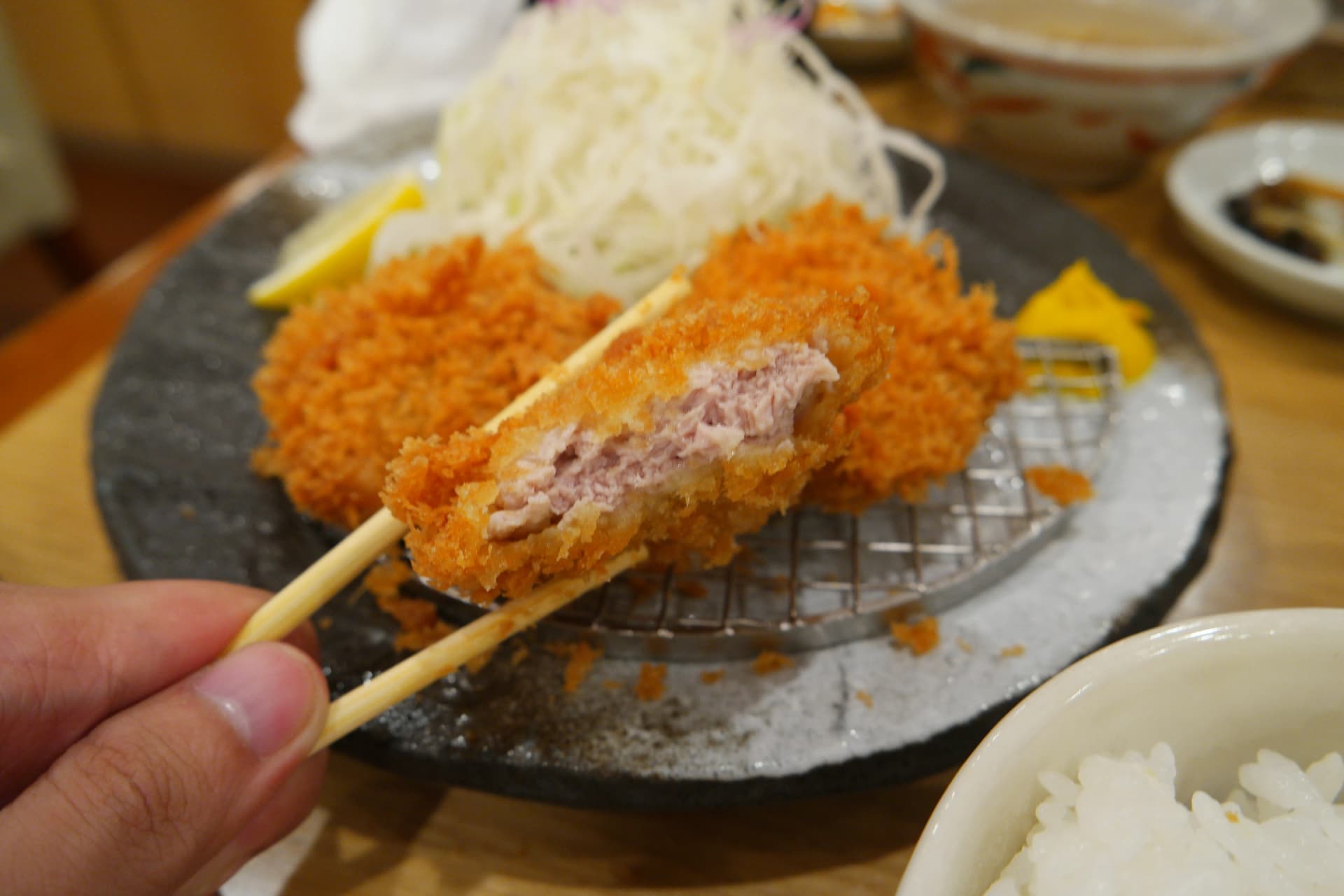
The inside was slightly pink, but it wasn't undercooked. I looked up Tamafuji's official website later and found out they use pork that's been aged for 35 days. I honestly don't know the exact science behind how aging creates this kind of difference — I'm no food scientist. But this Hokkaido aged tonkatsu was on a completely different level from what I was used to. There are great tonkatsu places back home too, and I've always enjoyed them. It's not really a comparison thing — it's more like they're in entirely different categories. Not better or worse, just fundamentally different.
Thick breading, but it doesn't overpower the pork
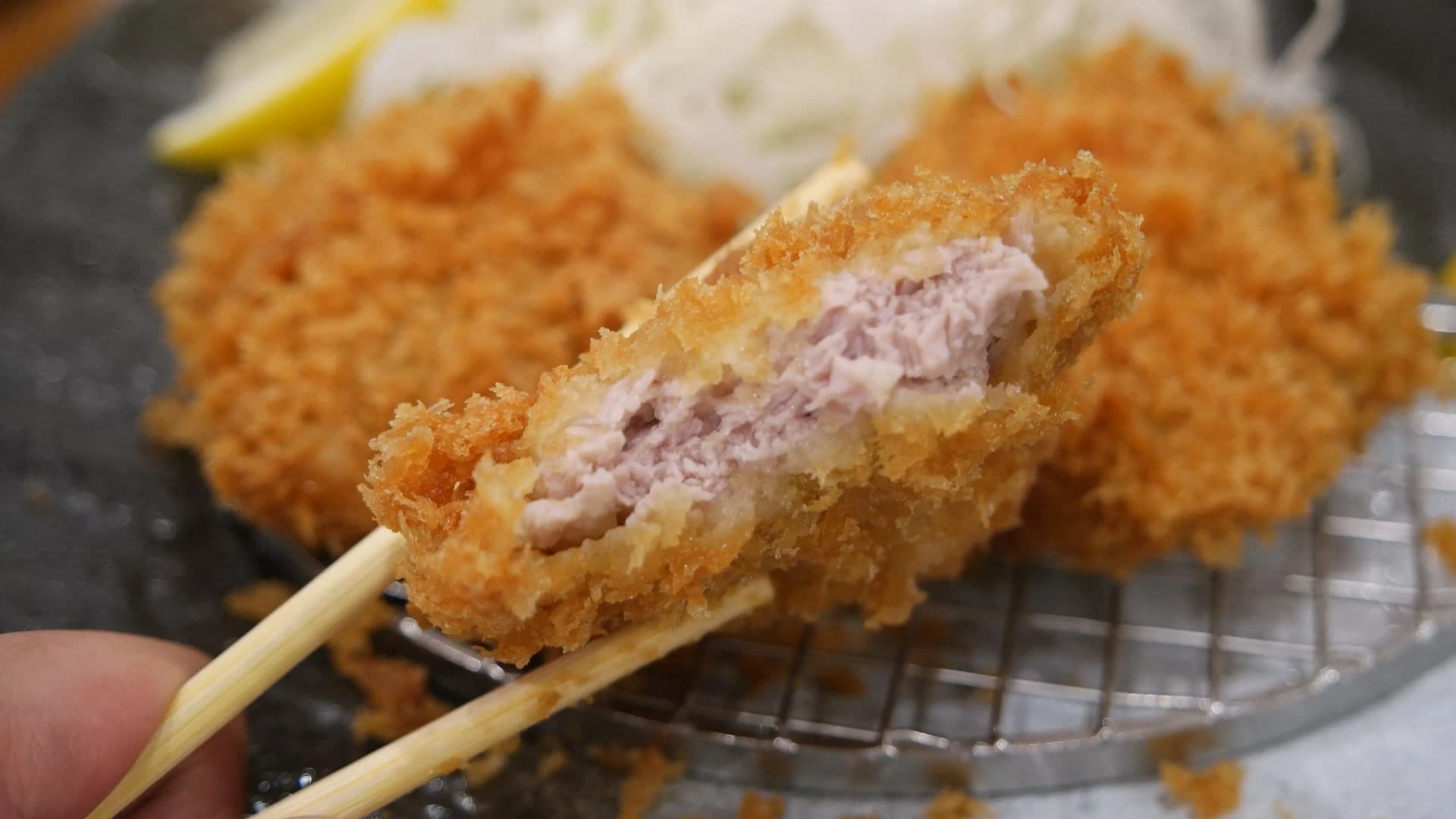
If you look at the cross-section, the breading is pretty thick. Normally when it's this thick, you can't tell if you're eating pork or bread. But strangely, at Tamafuji, the crunch hits first and then the pork flavor follows right behind, clearly and distinctly. The two don't compete — they arrive in sequence. I'm not entirely sure how that works, but I think it's the combination of the copper pot frying and the 4-day aged handmade breadcrumbs doing something special. The meat fibers stayed intact and weren't mushy at all, yet it was still tender. I guess that's what aging does, though I can't say that with total confidence.
The pink center: proof of 35-day aging
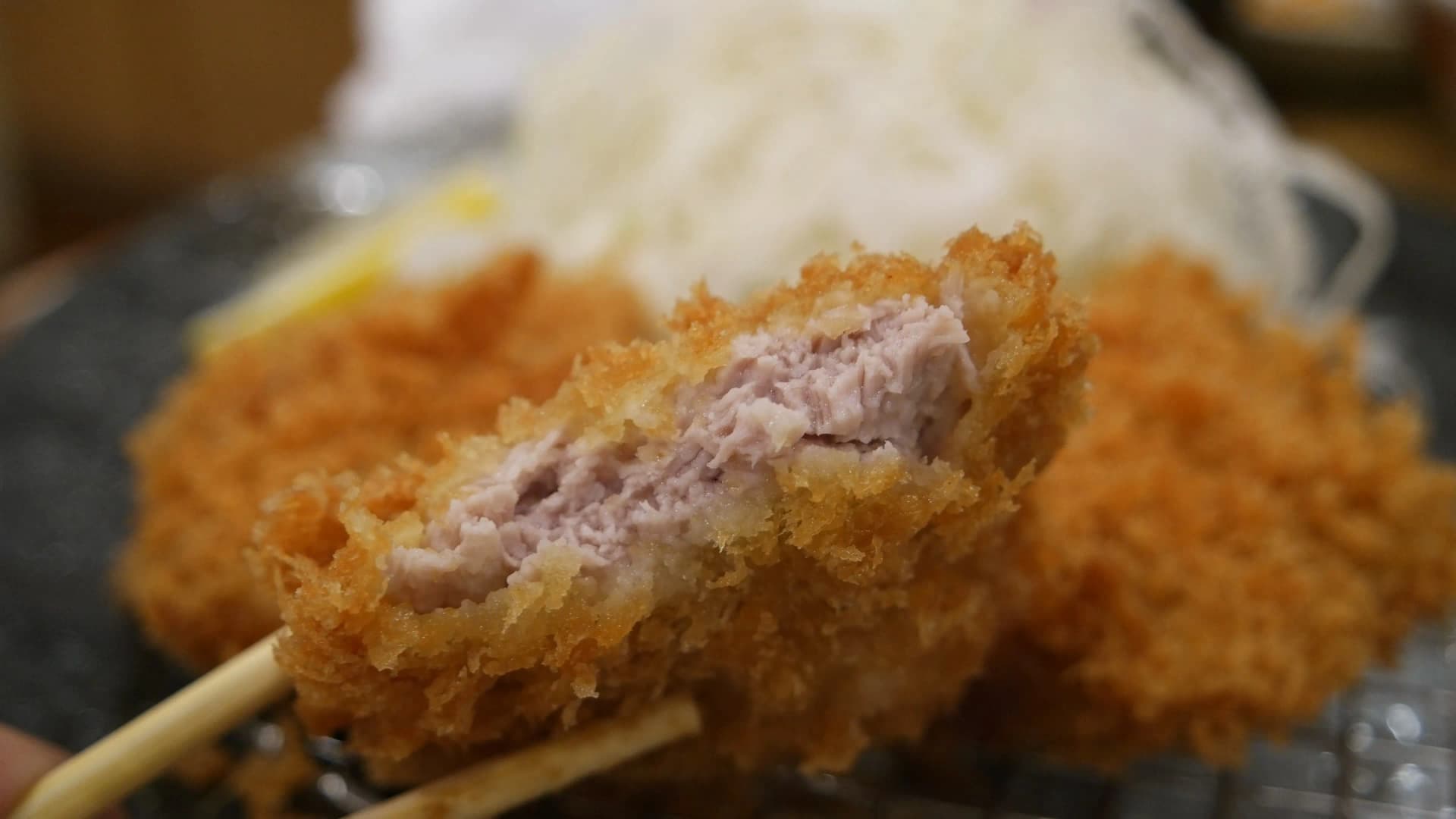
Get even closer and you can see the pink hue inside the meat. According to the in-store info sheet, the copper pot's heat conductivity allows heat to penetrate evenly throughout the pork. When you actually eat it, the outside is fully cooked while the inside retains its moisture. Getting that color means the timing has to be precise, and I figure that's the kind of thing you only nail after 70-plus years of frying tonkatsu.
Dunk it deep into the sesame sauce and that nutty aroma blends with the pork cutlet flavor, adding another whole layer of richness. Thinking back to earlier when I was making a mess grinding sesame seeds all over the table, it's kind of funny — but if I hadn't ground them, I would've missed out on this.
Rice, Miso Soup, and Cabbage — The Set Meal Breakdown
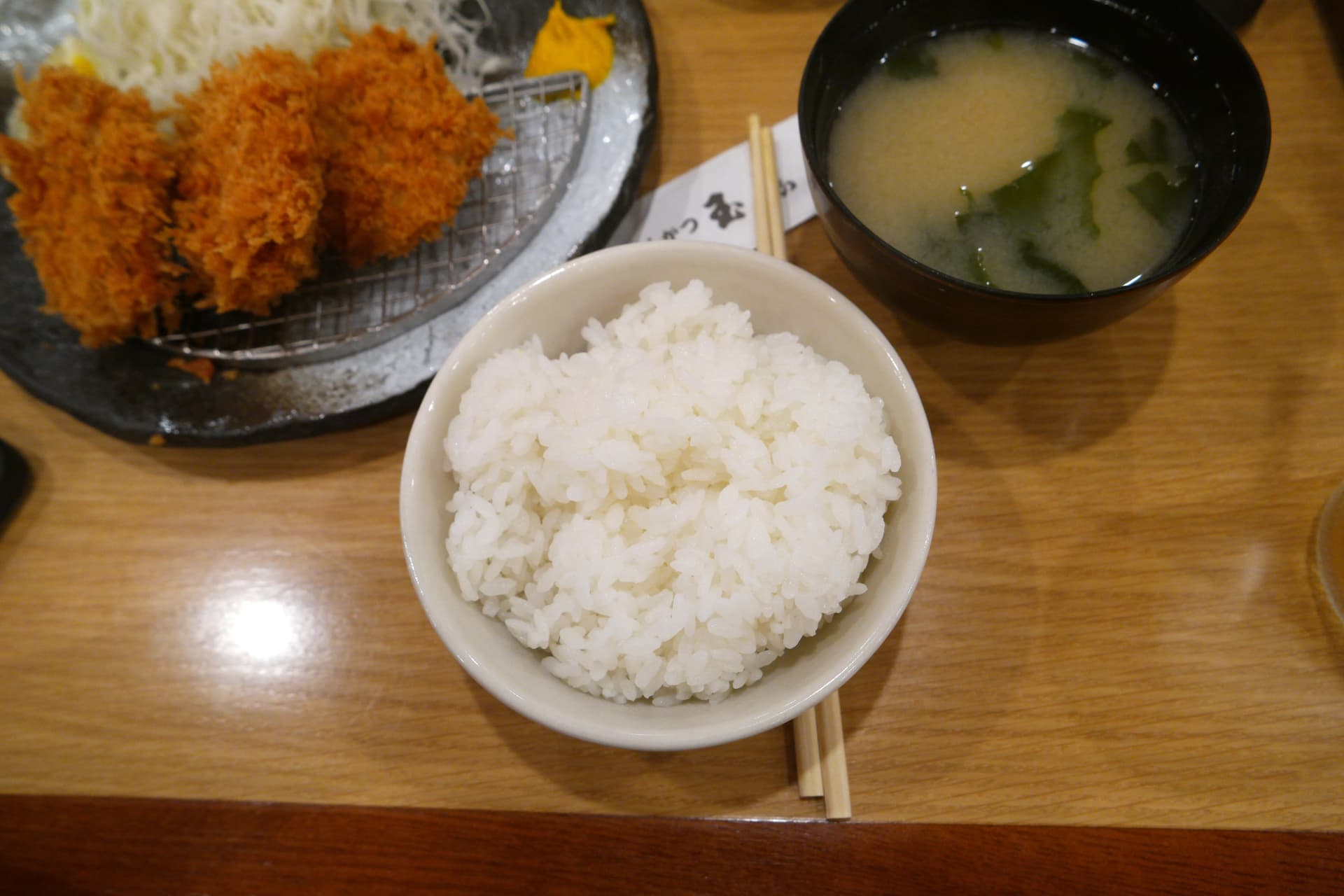
Rice is included with every set, and you can choose between white rice, multigrain rice, or takikomi gohan (seasoned mixed rice). I went with white rice, and it was glossy and perfectly sticky. Being Hokkaido rice, it was great even on its own. One piece of tonkatsu, one spoonful of rice — that rhythm repeated naturally, and the mild richness of the cutlet paired with the rice went down without any heaviness. They said refills were free, so I asked for another bowl. The portion was a bit small so I definitely filled up on rice, but since the rice was this good, I wasn't complaining.
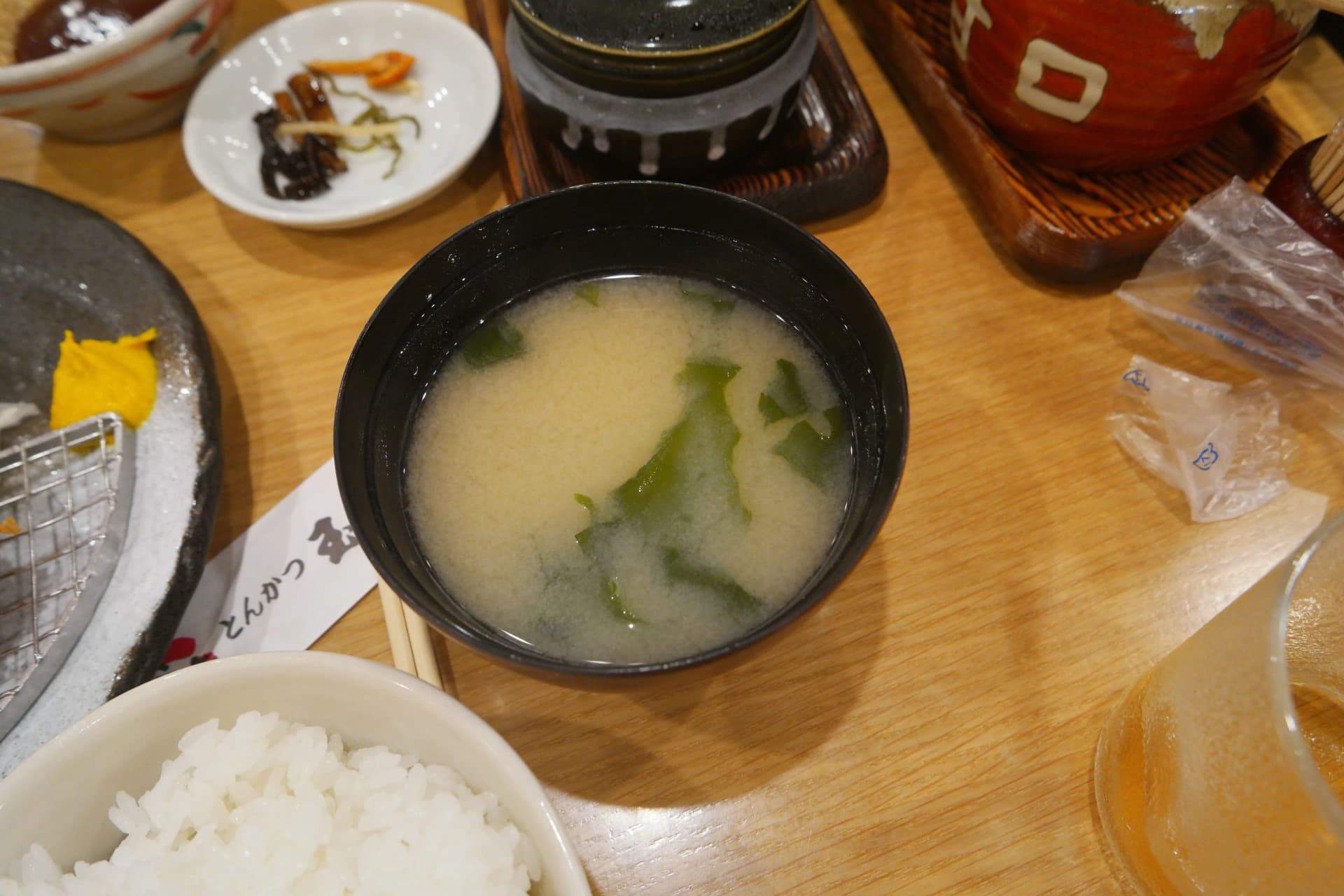
For miso soup, you choose between clam akadashi (red miso) and white miso shirodashi. I honestly can't remember which one I picked — probably the clam. It was a simple, understated flavor, but when you're in the middle of eating rich fried tonkatsu, one sip just cleanses your palate completely. Nothing aggressive — it quietly resets your taste buds. Tonkatsu, rice, miso soup. When those three are together on one tray, that's a perfect meal right there.
The cabbage salad is refillable too
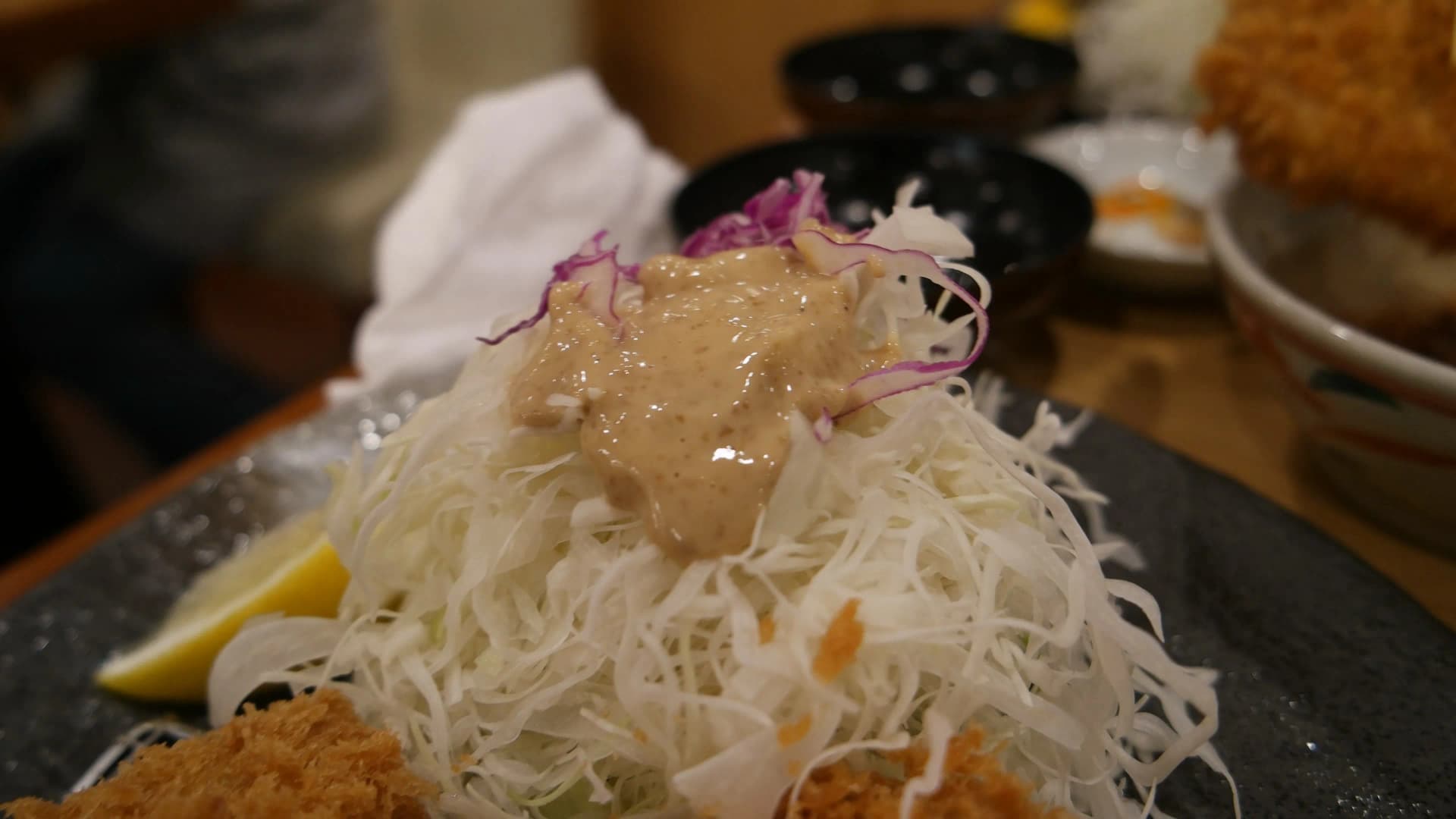
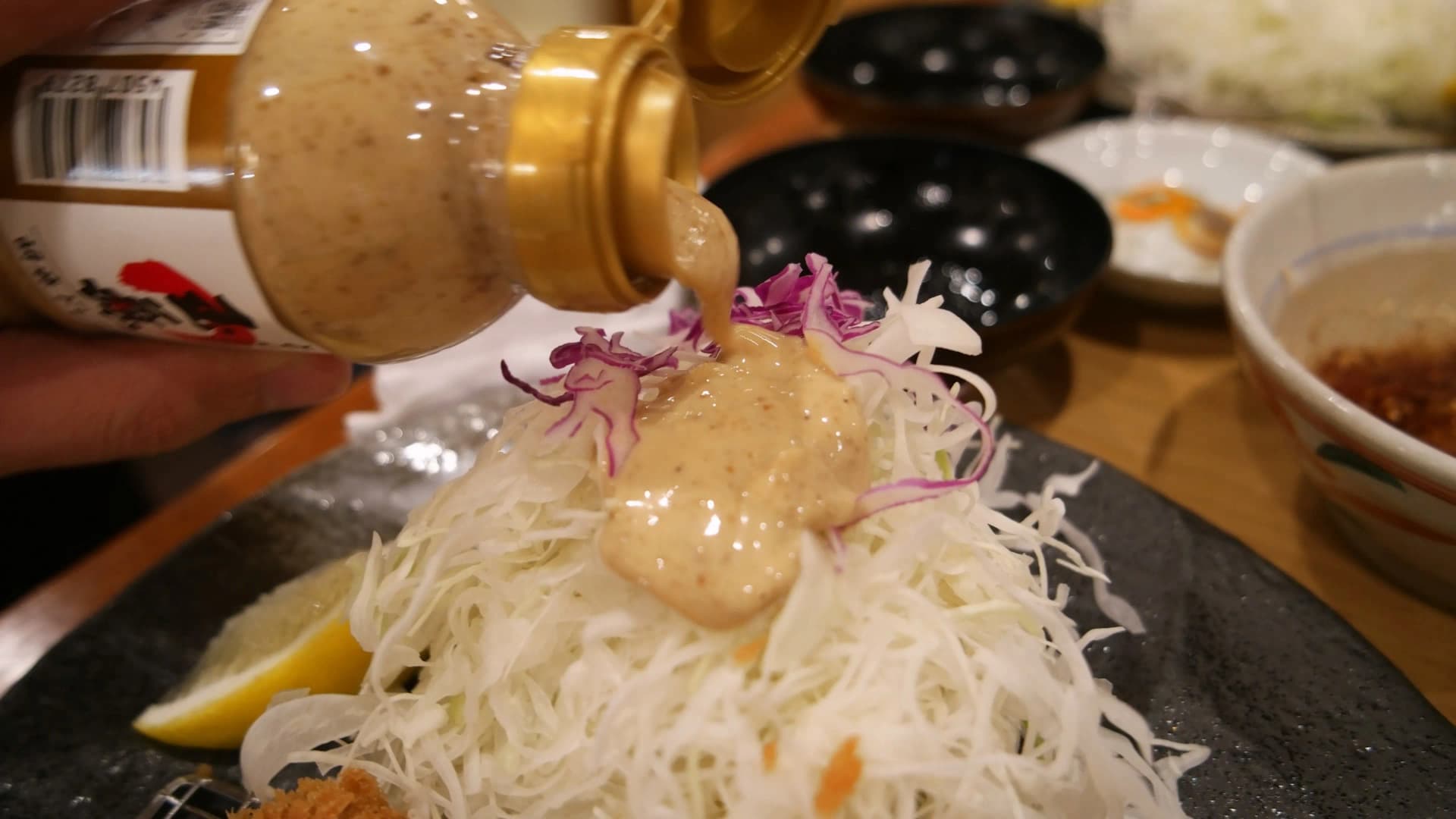
The cabbage comes with a sesame dressing that's already on the table — just drizzle as much as you want. The dressing was nutty and slightly sweet, pairing perfectly with the shredded cabbage. Eating nothing but tonkatsu gets heavy, and the cabbage keeps things balanced in between bites. Both the cabbage and the dressing are unlimited, so no need to hold back. One piece of tonkatsu, a bite of cabbage, a spoonful of rice. That loop repeated naturally until suddenly my plate was empty.
Tamafuji Menu Prices and Some Honest Downsides
Let's be real — it's not cheap. The aged tenderloin tonkatsu set with 3 pieces that I ordered was ¥1,720 (about $11), and the portions are small. When I say 3 pieces, I mean literally three pieces — I definitely used rice to fill up. Compared to what you'd get for the same price at a tonkatsu place back home, where portions are bigger and you'd get multiple side dishes, this feels a bit stingy.
Tamafuji Main Menu Prices (tax included)
Aged Tenderloin Tonkatsu Set, 3 pieces — ¥1,720 (~$11)
Aged Tenderloin Tonkatsu Set, 4 pieces — ¥1,970 (~$12.50)
Aged Loin Tonkatsu Set, 180g — ¥2,060 (~$13)
Aged Loin Tonkatsu Set, 240g — ¥2,250 (~$14)
Toro Uma Rosu Katsu Set, 180g — ¥2,460 (~$15.50)
Gokai Rosu Katsu Set, 400g — ¥3,120 (~$20)
Fried Oyster Set, 5 pieces — ¥1,930 (~$12)
Oyster & Shrimp Set — ¥2,150 (~$13.50)
※ Prices approximate based on 2025–2026 exchange rates (~¥158 = $1 USD)
To be fair, this isn't just a Tamafuji thing — eating out in Japan is generally like this. The quality is undeniable, but the portions and prices can feel underwhelming compared to what you'd get at home. I noticed the table next to me had ordered the 240g loin set and it looked noticeably bigger. Next time, I'm definitely ordering that.
Every set comes with a choice of white rice, multigrain rice, or takikomi gohan, plus a choice of clam akadashi or white miso shirodashi for your miso soup. Rice and cabbage are both refillable, so if you're still hungry, just load up on rice. They apparently have a separate weekday lunch menu that's cheaper, but since I went for dinner, I couldn't try it. You can check the full menu on their official website (tamafuji.do-kyu.com).
How to Get to Tamafuji Chitose
Directions & Info
Address: 北海道千歳市錦町3-5-4 (Nishiki-cho 3-5-4, Chitose, Hokkaido)
Hours: 11:00 AM – 9:00 PM (last order 8:45 PM)
Closed: Open year-round (except Dec 30 – Jan 1)
Parking: 24 spaces available
If you have a car, it's just 10 minutes from New Chitose Airport. There's a 24-car parking lot, so if you're doing a rental car trip, it's easy. By public transit, take the east exit from Chitose Station and walk about 15 minutes — but like I said, the route is pretty barren. At night, it's genuinely dark and deserted, which could be a little unsettling if it's your first time. I got there around 7 PM and had plenty of time to eat, but if you're heading over past 8 PM, you'll want to hustle.
So purely in terms of accessibility, I'd recommend the Sapporo locations. Most people looking for a great Hokkaido tonkatsu restaurant like Tamafuji would find a Sapporo branch way more convenient. Search "とんかつ玉藤 千歳店" on Google Maps and the Chitose location comes right up.
Tamafuji Chitose on Google Maps
A few days after I got home, I ordered tonkatsu from my usual neighborhood place for dinner. It's a place I've always liked, and it was good. But I kept catching myself making comparisons, which was honestly annoying. I should've just enjoyed it, but my brain kept going, "That's not quite the same texture though…" automatically. Part of me regretted ever trying Tamafuji in the first place. I'm sure I'll get over it eventually. But if someone tells me they're heading to Hokkaido, I'll probably bring up this place. The Sapporo locations are easy enough to get to, so working in one meal of aged tonkatsu during your trip wouldn't be a bad idea at all.
This post was originally published on https://hi-jsb.blog.