
Fresh Korean Sashimi by the Sea | How to Eat Hoe Like a Local
Table of Contents
13 items
December, From Daejeon to the Geoje Island Coast
It was December when we went to Geoje Island, a large island off Korea's southeastern coast, about 4 hours south of Seoul. Living in Daejeon — a city in the middle of the country with no coastline — you start to miss the ocean after a while. My wife and I both happened to have nothing going on that weekend. "Wanna go see the ocean?" That one sentence, and we were out the door. No plans, no reservations, we just drove down. The December sea wind was absolutely brutal though. The moment I stepped out of the car, I almost regretted the whole trip. But as we drove along the coastal road, raw fish restaurants kept catching my eye one after another. Sure it was freezing, but we came all this way — we had to eat some fresh sashimi, right? So we walked right into one.
I've actually written about eating at an inland raw fish restaurant before. That time, it was a full-course style meal. It started with appetizer side dishes, then moved through sashimi, grilled fish, steamed seafood, and finished with spicy fish stew — everything served in order. The price was on the higher side, but you got to try a bunch of different things in one sitting, so it felt like decent value. But a coastal raw fish restaurant? Totally different experience.
Coastal vs. Inland Raw Fish Restaurants — Even the Ordering Is Different
There's no course meal here. They just ask "What would you like?" and you pick whatever you want. The table setup isn't fancy at all — they throw a vinyl sheet on the table and that's your dining surface. But honestly, this actually takes the pressure off your wallet. You just pick the main thing you're craving and go all in. The biggest difference from inland places is that everything here comes straight from the ocean that very day.
| Inland Raw Fish Restaurant | Coastal Raw Fish Restaurant | |
|---|---|---|
| Ordering Style | Full course (appetizers through spicy stew, served in order) | À la carte (pick only what you want) |
| Table Setting | Lots of side dishes, elaborate presentation | Simple and humble, vinyl-covered tables |
| Ingredients | Fish delivered through distribution channels | Caught from the sea that same day |
| Price Range | Higher per person since it includes full course | Flexible depending on what you order |
| Atmosphere | Tidy interior, somewhat formal | Rough around the edges but oceanfront, laid-back vibe |
Before the Sashimi — The First Side Dishes
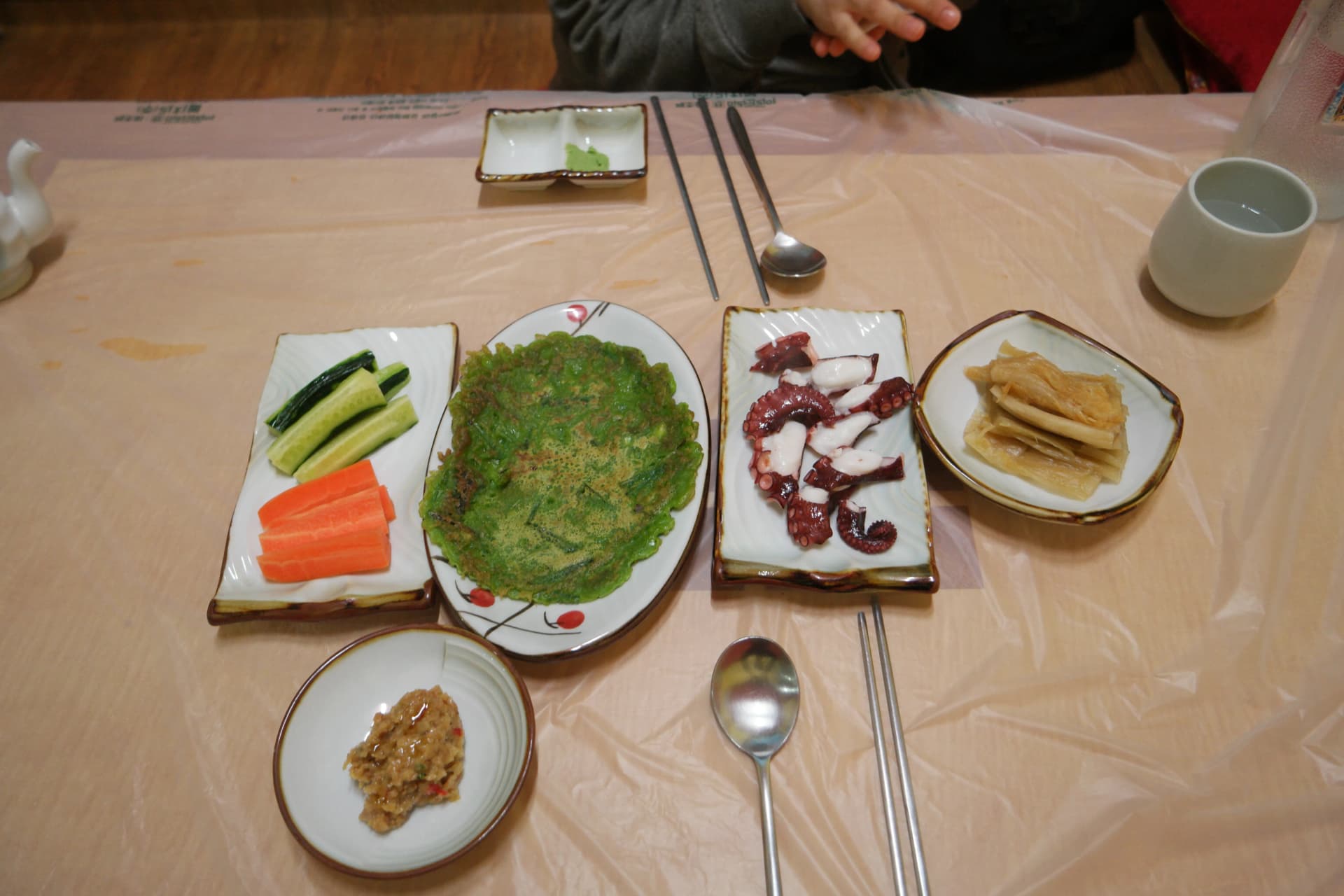
This is how the first round of dishes came out. From the left: cucumber and carrot sticks, a green savory pancake, boiled octopus, and baek-kimchi (white kimchi). I'm honestly not sure if the green pancake was made with seaweed or chives. I didn't ask. It's definitely a common style at coastal seafood places, but I missed my window to ask what it was.
The white kimchi on the right — let me explain for those who aren't familiar. It's made with napa cabbage, exactly like regular kimchi, but without the red chili flakes. So instead of being red and spicy, it's white and mild. It still has that tangy, crunchy kimchi flavor, but without the heat. If you've been intimidated by regular kimchi, baek-kimchi is a great place to start.
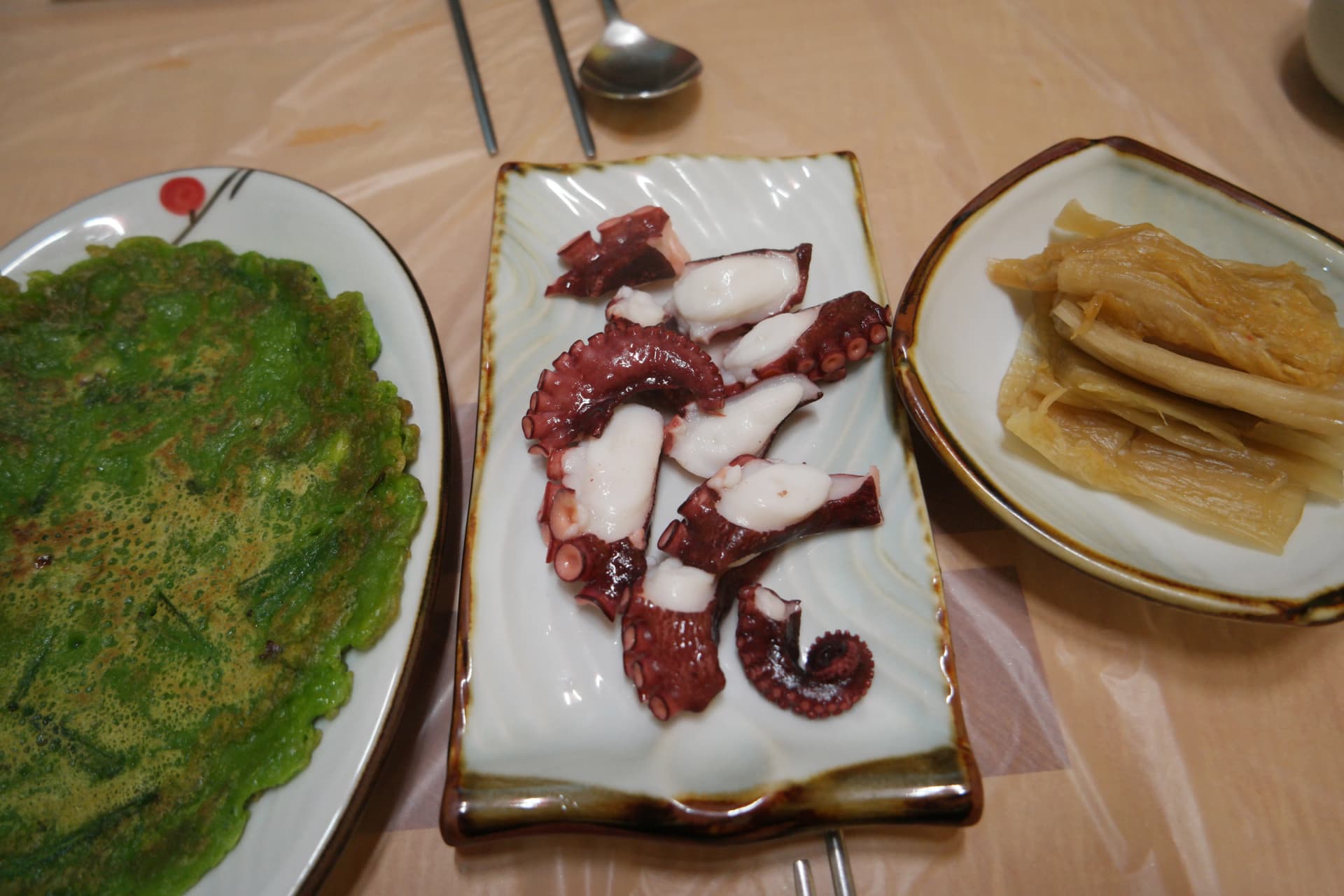
This right here is the boiled octopus. It's one of the most common side dishes at Korean seaside raw fish restaurants. The outside has a reddish hue while the inside is cooked white. It's chewy and mild, perfect for getting your appetite going before the sashimi arrives. If it looks a little unfamiliar, don't let the appearance scare you off — dip a piece in chogochujang (a sweet-and-sour chili sauce) and give it a try. The chewy texture is surprisingly addictive. The octopus itself has almost no seasoning on its own, so it's not overwhelming at all.
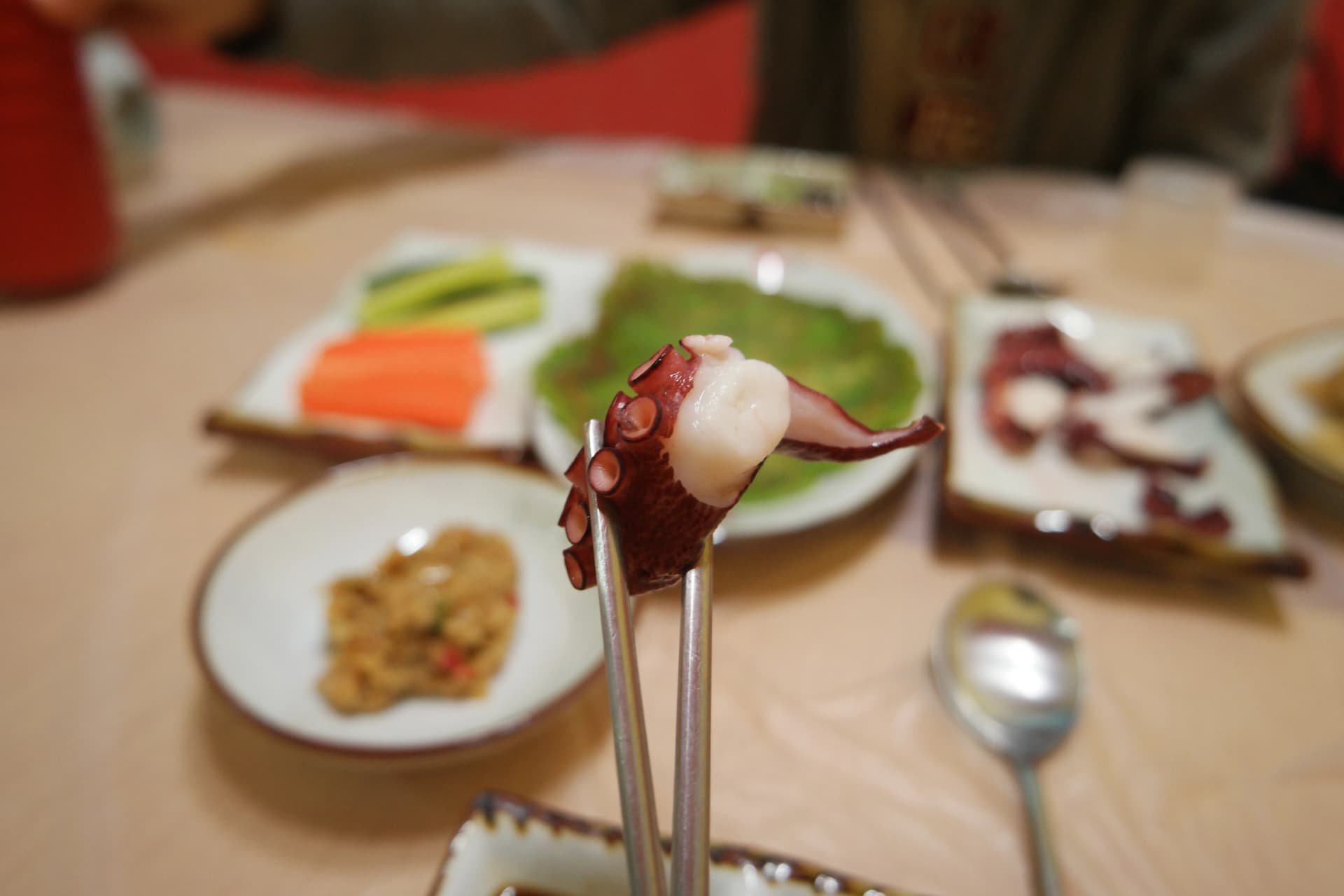
I picked up a piece of octopus with my chopsticks. Up close, you can see the suction cups clear as day, which might be a bit shocking if you've never seen this before. But that's actually proof of freshness. It's so chewy and bouncy that once you have one piece, you can't stop reaching for more. Consider it chopstick practice with a delicious reward.
The Korean Seafood Platter at a Coastal Raw Fish Restaurant
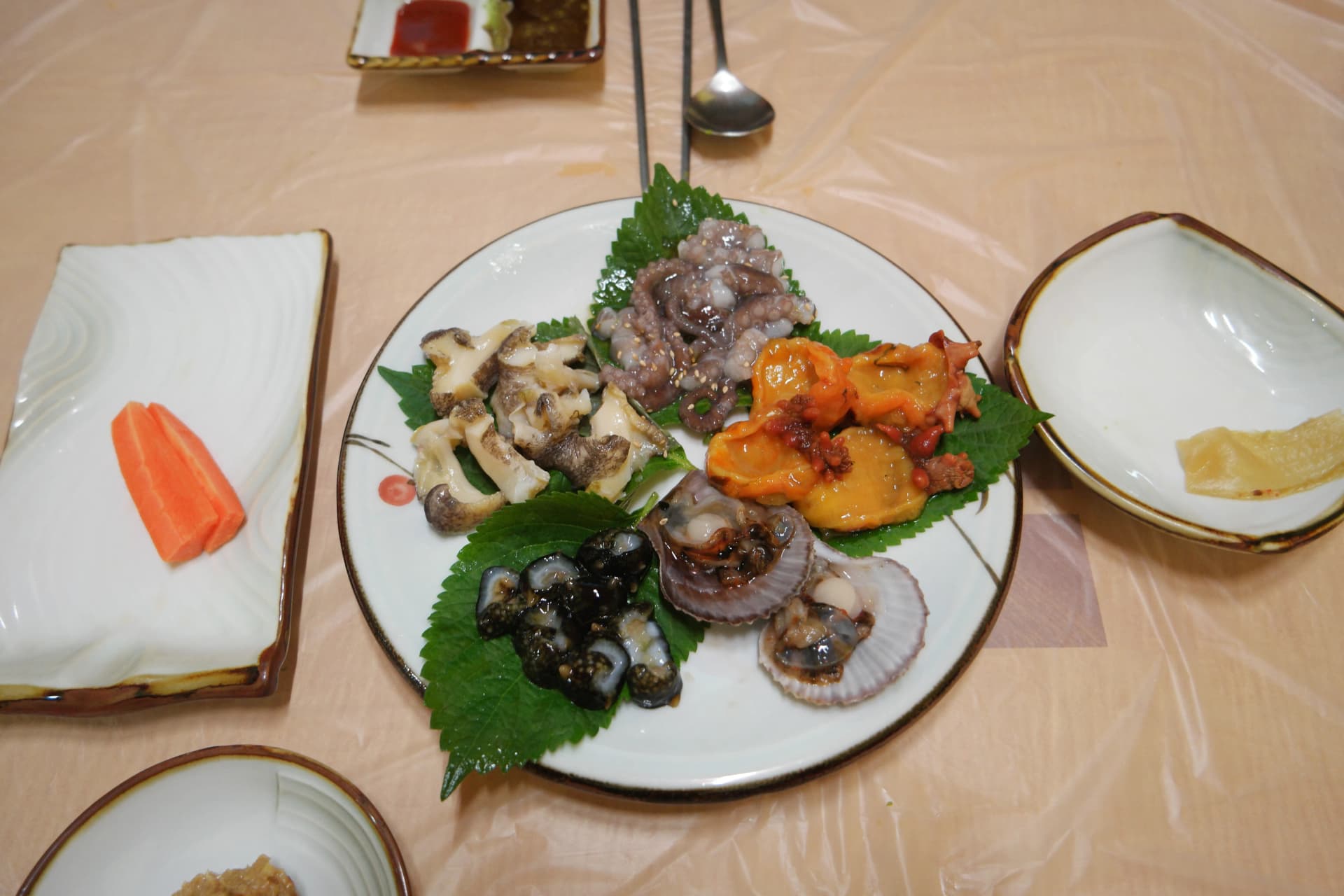
While we were still munching on the side dishes, this came out next. One plate loaded with different types of seafood, all arranged on a bed of perilla leaves. Every item was a different color and shape, and my first reaction was honestly "What even is all this?" My wife didn't know what was what either. At coastal raw fish restaurants, they often throw together whatever came in from the sea that day onto one plate like this. Things that aren't even on the menu sometimes show up, which is actually part of the fun.
Sannakji — Eating Live Octopus Raw, a Uniquely Korean Dish
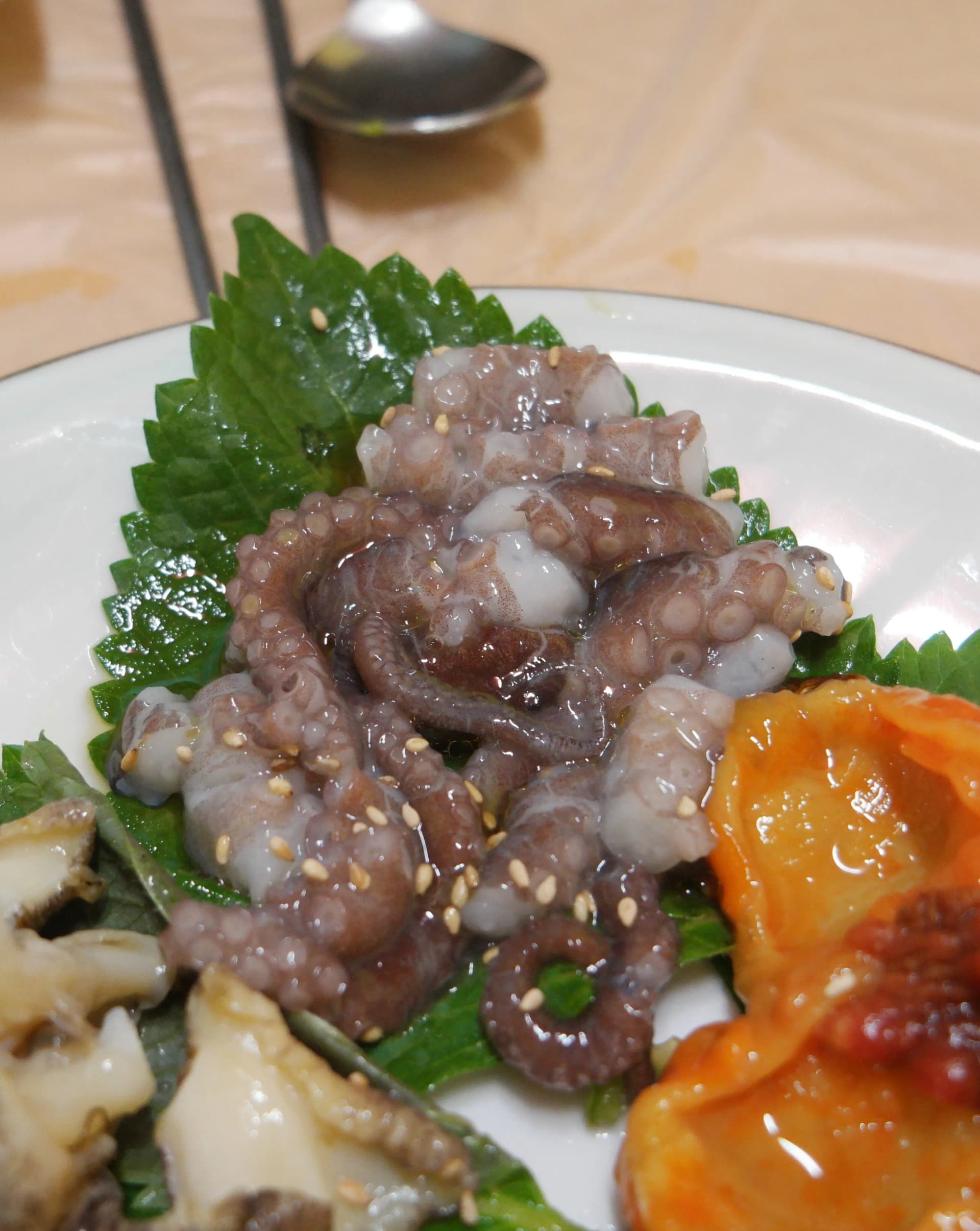
Okay, pause. This is sannakji — live octopus.
It's a small octopus sitting right on the perilla leaves, completely raw. It was alive just moments ago. There are sesame seeds sprinkled on top, and the suction cups are still wriggling. If you look up first-time reactions from foreigners on YouTube, "disgusting," "no way," and "I can't do this" are basically universal. In expat communities, you'll also find plenty of people saying "just watching is enough for me" and "this is beyond my limits."
But here's the funny thing — once people have lived in Korea for six months or a year, the story completely changes. "I couldn't even look at it at first, but now I can't live without it" — that's not just one or two people saying this. Among foreign residents in Korea, sannakji is basically known as a three-stage food: horror, acceptance, addiction.
The way you eat it is simple. Dip it in a sauce of sesame oil mixed with salt, and pop it in your mouth. But that moment is something else. The chewy, springy texture hits you while the nutty sesame oil flavor spreads through your mouth, and suddenly it's "Wait... this is actually good?" Korea is pretty much the only country in the world where people eat octopus raw like this, but at a coastal Korean raw fish restaurant, it's just a standard menu item.
Meongge (Sea Squirt) — Like Eating the Ocean in One Bite
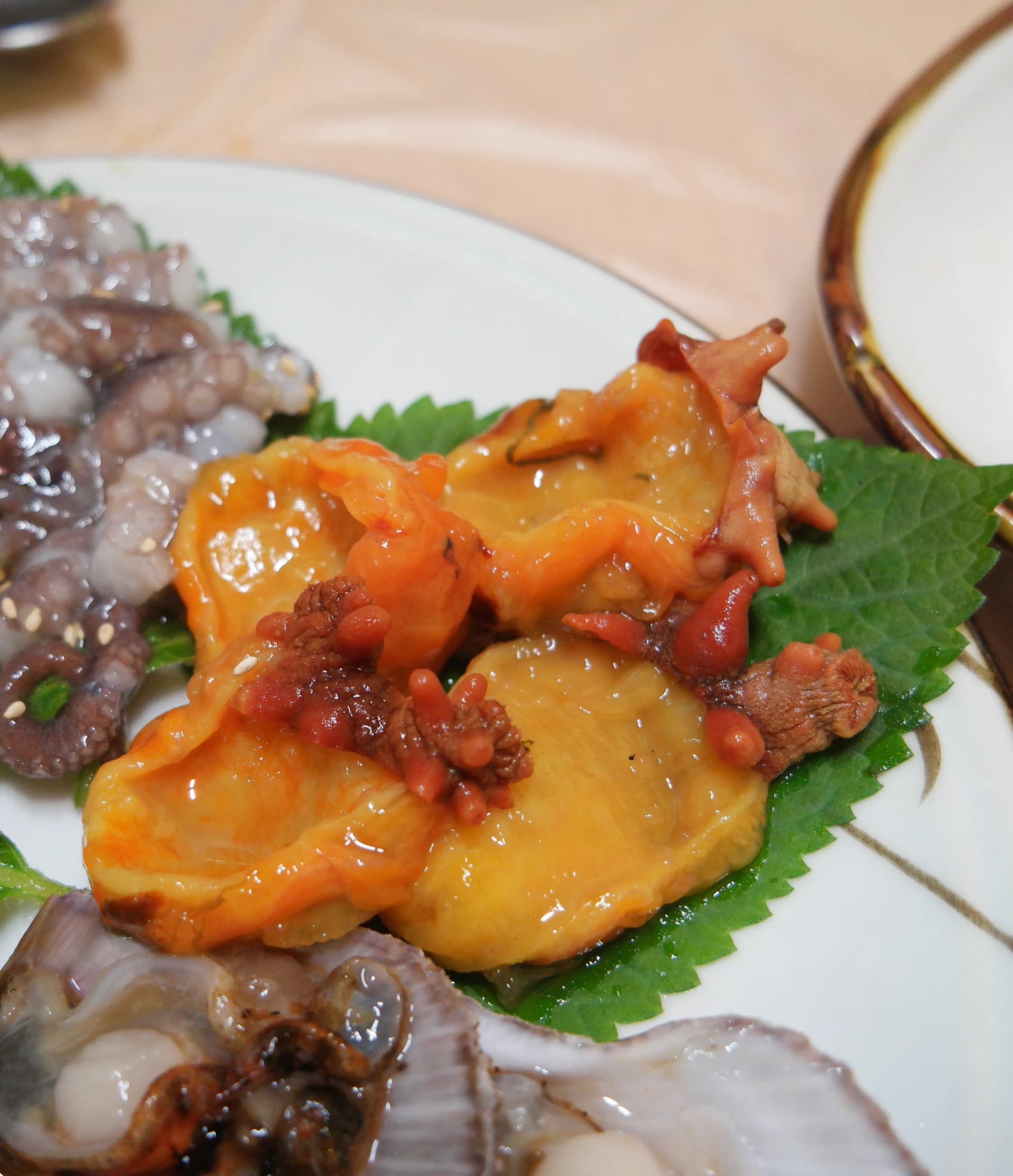
Next up is meongge — sea squirt. The English name isn't exactly glamorous either, let's be honest.
Sea squirt is a pretty unfamiliar seafood worldwide. Some parts of the Mediterranean and Chile eat it too, but eating it completely raw as sashimi? Korea is pretty much the only place that does that. It looks bizarre too. The outside is a bumpy orange shell, but crack it open and you find this vivid orange flesh inside. It's hard to tell if it's a sea creature or a plant.
As for the taste, I'll be real with you. I'm still not sure how I feel about it. The ocean flavor is intense. It's not exactly fishy — it's more like drinking straight seawater, this wave of marine flavor that just hits you. Almost 100% of first-timers react with "What is this?" and I was the same way. Honestly, even this time, I hesitated before that first piece. My wife eats meongge just fine, but I guess I'm still not fully there yet.
That said, among foreigners who've lived in Korea a long time, the ones who get hooked on sea squirt say they literally can't go without it. It's salty-sweet, with an intense aroma, but the aftertaste is surprisingly clean. It's like the entire flavor of the ocean packed into a single piece. The difficulty level is high, but it's absolutely worth the challenge.
Raw Clam Sashimi — A Menu Only Possible by the Sea
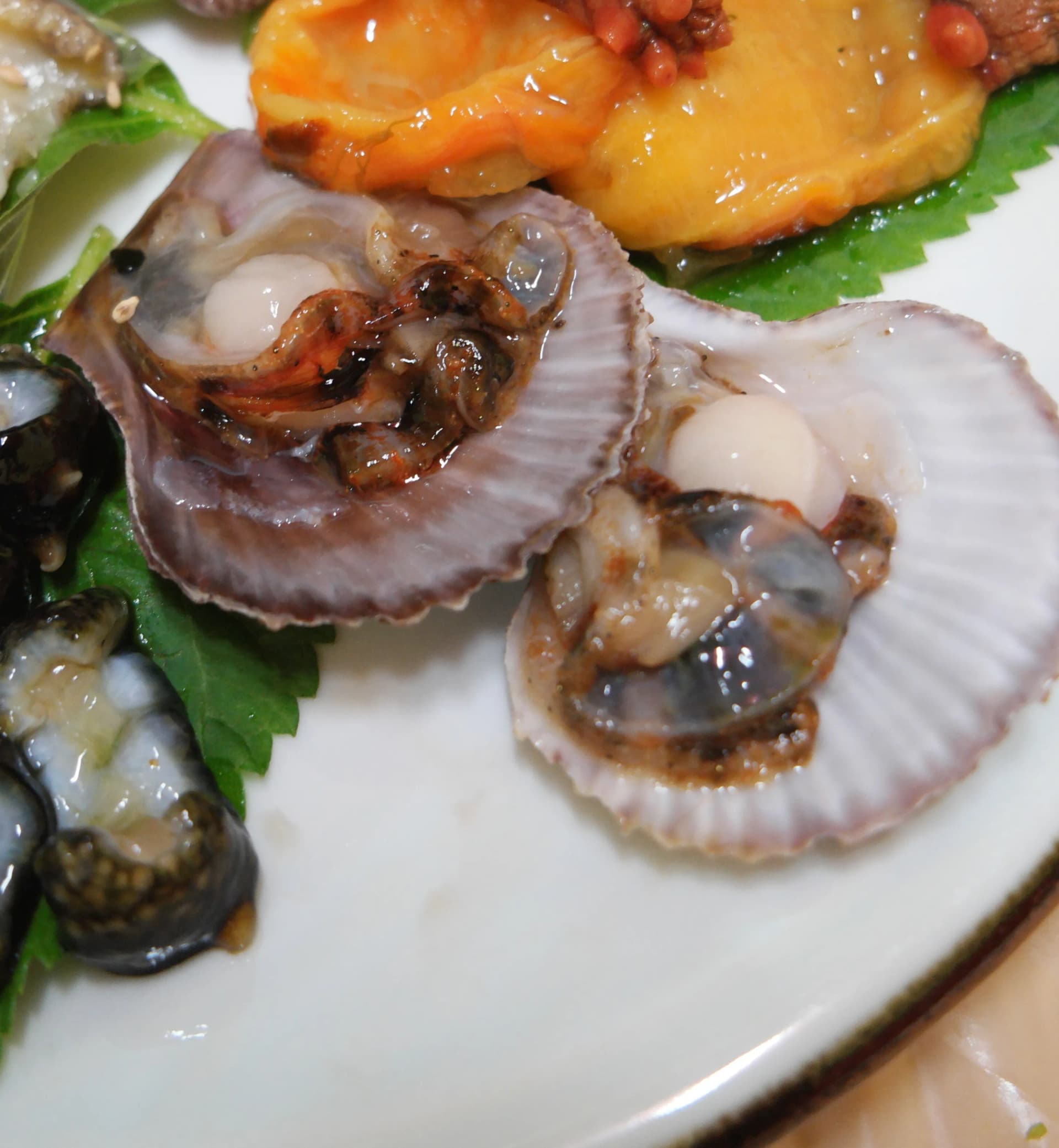
This is raw clam sashimi.
Inland, when you think of clams, you usually grill them or boil them, right? That's what I always assumed too. But here, they came out completely raw as sashimi. My first thought was "Clams... raw?"
But one bite and it immediately made sense. Crack open the shell and there's this plump, glistening flesh inside. The moment you bite down, the ocean flavor spreads through your mouth — sweet and clean. When you grill clams, the moisture evaporates and the texture changes. Raw, all that moisture and natural sweetness is preserved perfectly. It's a completely different food from grilled clams.
The reason this is possible comes down to one thing: freshness. They can do this because the ocean is literally right there. In Daejeon, they'd never serve clams like this. They can't. The fact that you can only eat this when you're actually at the coast made it feel even more special.
Sea Cucumber — Surprisingly Easy to Eat
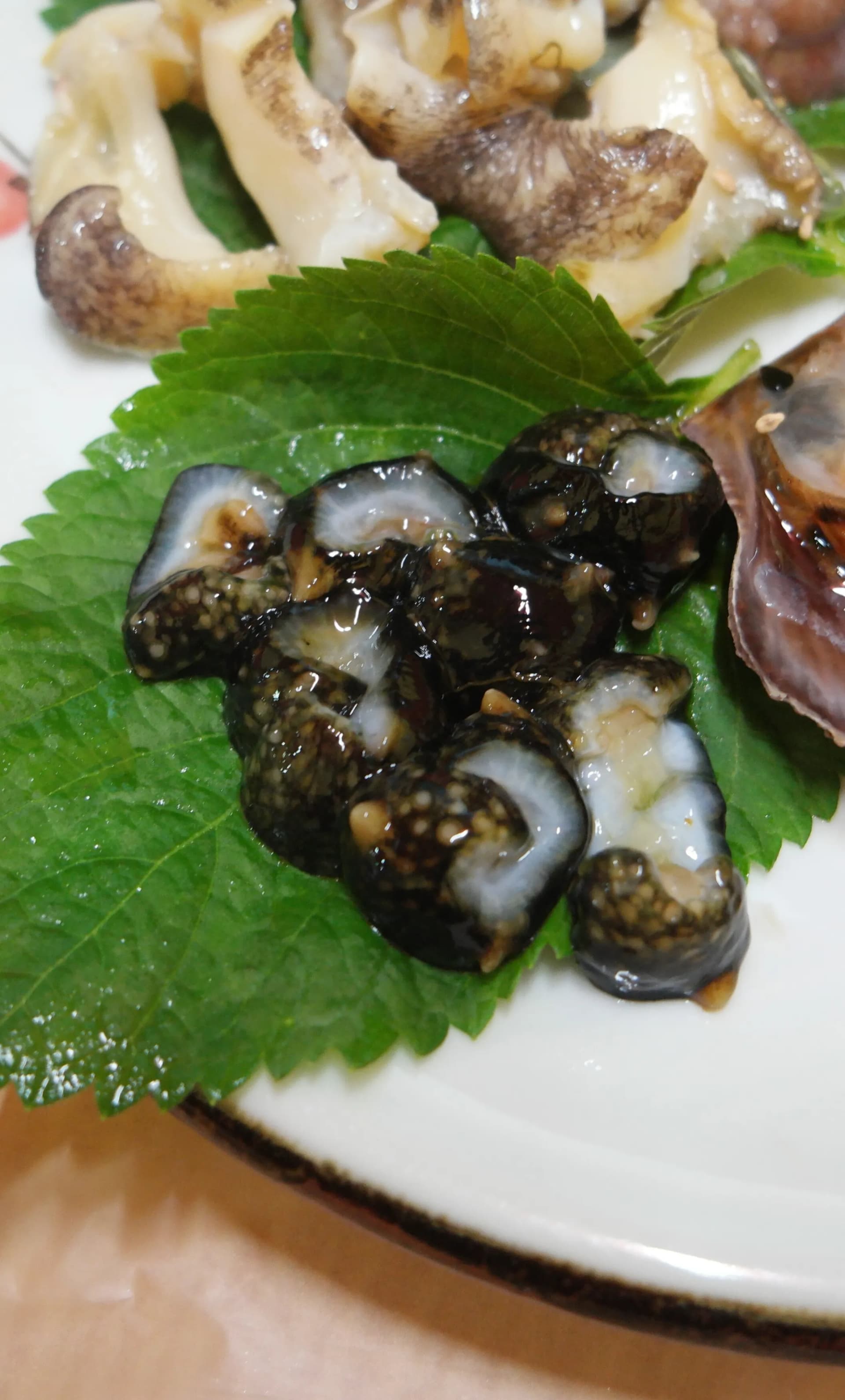
This is haesam — sea cucumber. The English name is kind of funny because it has "cucumber" in it. Apparently it's because the shape is long and cucumber-like. But as you can see in the photo, it's dark black with a bumpy surface, so your first reaction might be "People eat this?"
Sea cucumbers exist in oceans all over the world, but eating them sliced raw as sashimi is really only a Korea and Japan thing. In China, they mostly dry or cook them — they don't eat them raw like this.
When you bite into it, it's crunchy. Like literally biting into a cucumber. The flavor itself isn't strong — it's mild and clean, which makes it way easier to eat than sea squirt. Honestly, for someone like me who hesitated in front of the meongge, the sea cucumber was a relief. Dip it in chogochujang and the tangy sauce pairs perfectly with that crunchy texture. If you're trying Korean raw seafood for the first time, I'd recommend starting with sea cucumber before sea squirt.
| Seafood | Flavor Profile | Texture | Difficulty |
|---|---|---|---|
| Sannakji (Live Octopus) | Nutty and mild with sesame-salt dipping sauce | Chewy, springy, suction cups stick to your mouth | ★★★★☆ |
| Meongge (Sea Squirt) | Salty-sweet with extremely intense ocean flavor | Soft and slightly mushy | ★★★★★ |
| Raw Clam Sashimi | Sweet and clean with subtle ocean notes | Plump and bouncy | ★★☆☆☆ |
| Haesam (Sea Cucumber) | Mild and clean, pairs well with chili sauce | Crunchy, like biting into cucumber | ★★★☆☆ |
Between Bites of Sashimi, Grilled Fish Is a Must
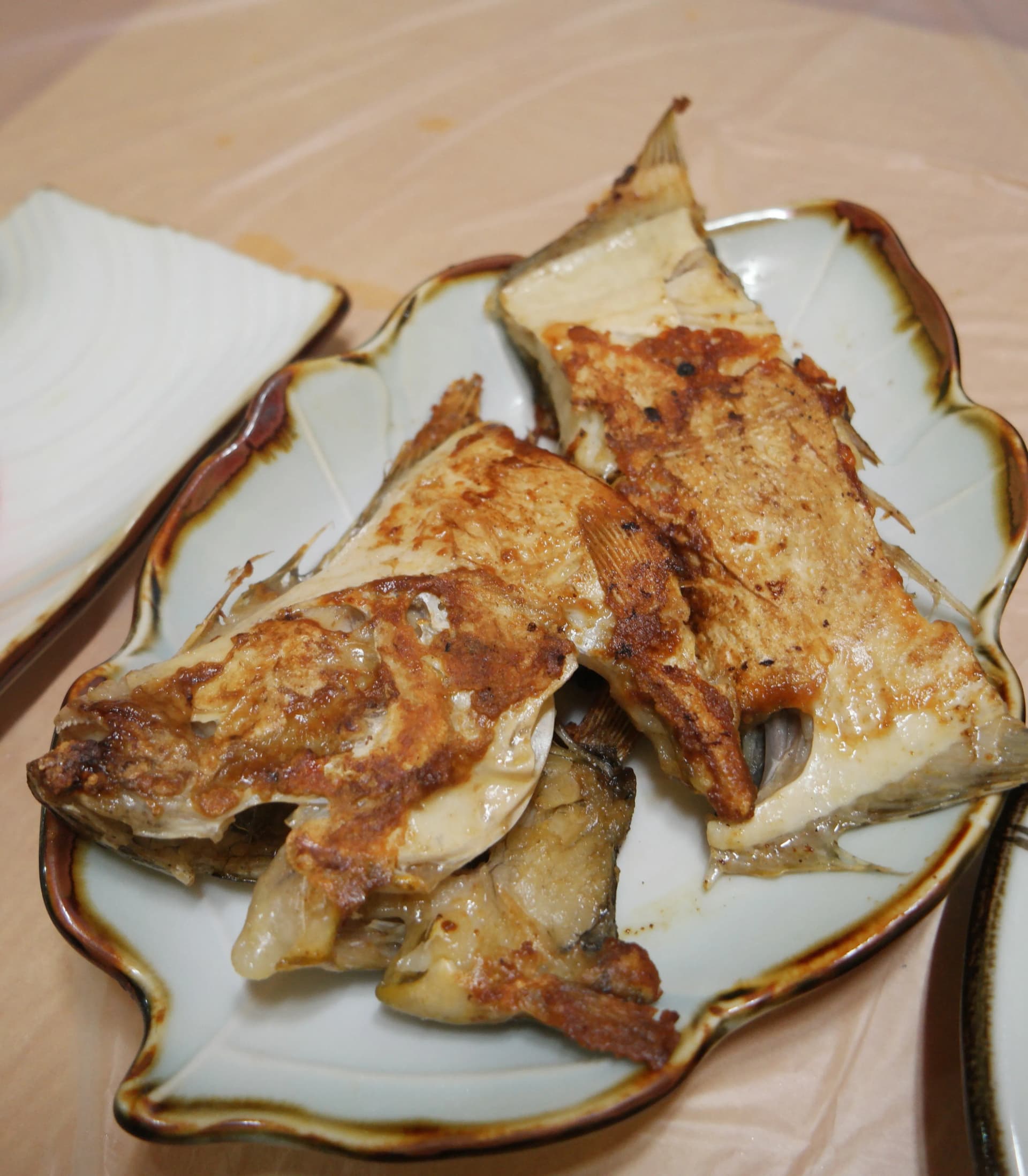
When you've been eating nothing but cold raw fish for a while, you need something warm thrown in there. Especially in December. We'd come in from the freezing wind outside and were only eating cold things, so my stomach started feeling a little empty. That's when the grilled fish arrived at exactly the right moment.
At coastal raw fish restaurants, grilled fish often comes alongside the sashimi. This place was no exception. The skin was crisped up golden and a savory aroma was rising off it — when you take a bite of this between pieces of sashimi, it completely resets your palate.
The trick is picking the flesh from between the bones. Koreans do this naturally, but if you're new to it, it can be a little tricky. The outside is crispy and the inside is moist — simple, but it's the most comforting flavor of the whole meal. Alternating between the cold, vivid taste of raw fish and the warm, savory taste of grilled fish is one of the great pleasures of a Korean raw fish restaurant.
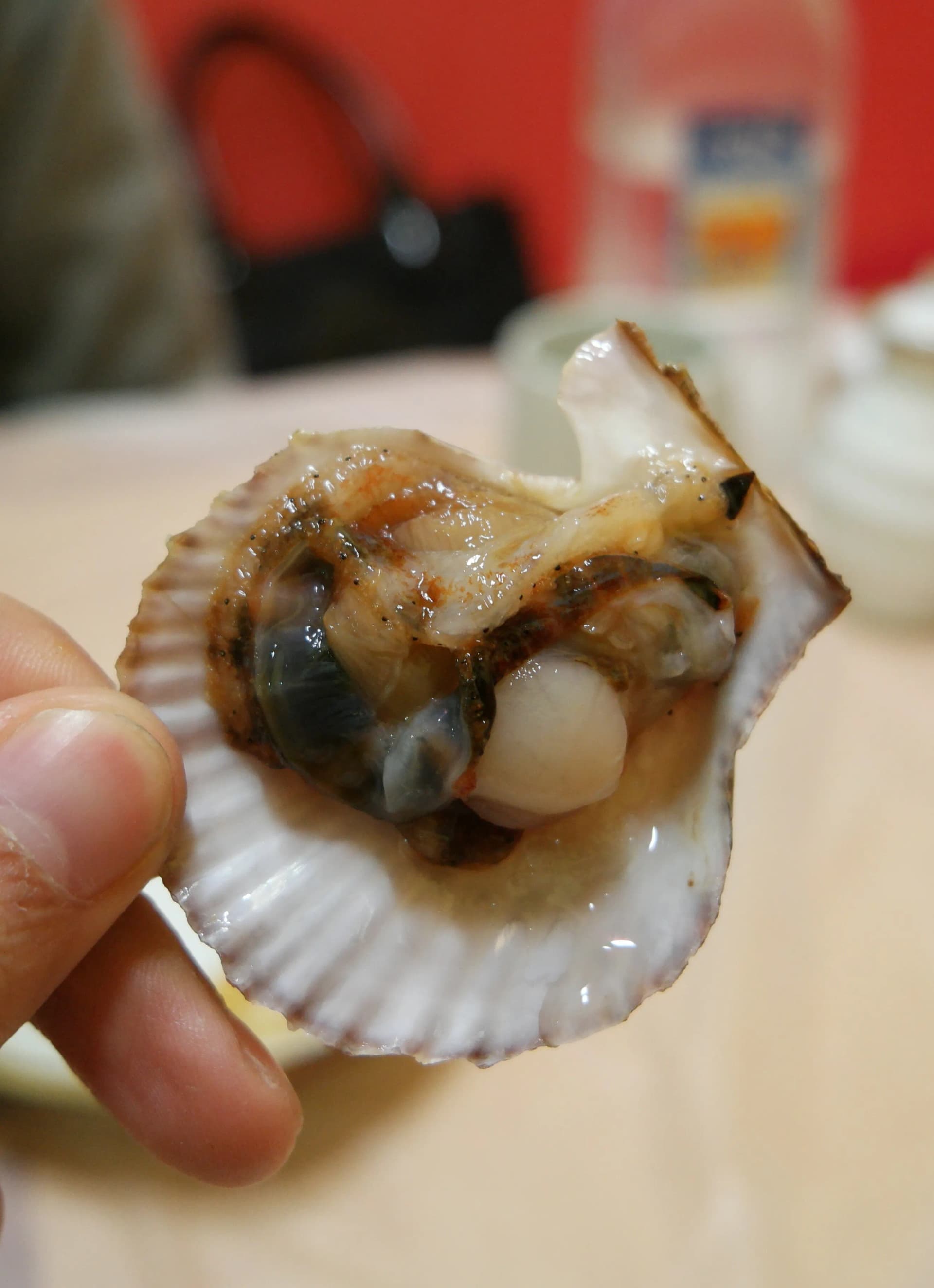
Here's the clam from earlier, picked up by hand right in its shell. Eating them shell-and-all with your fingers is the coastal style. The flesh was plump and the ocean flavor came through completely.
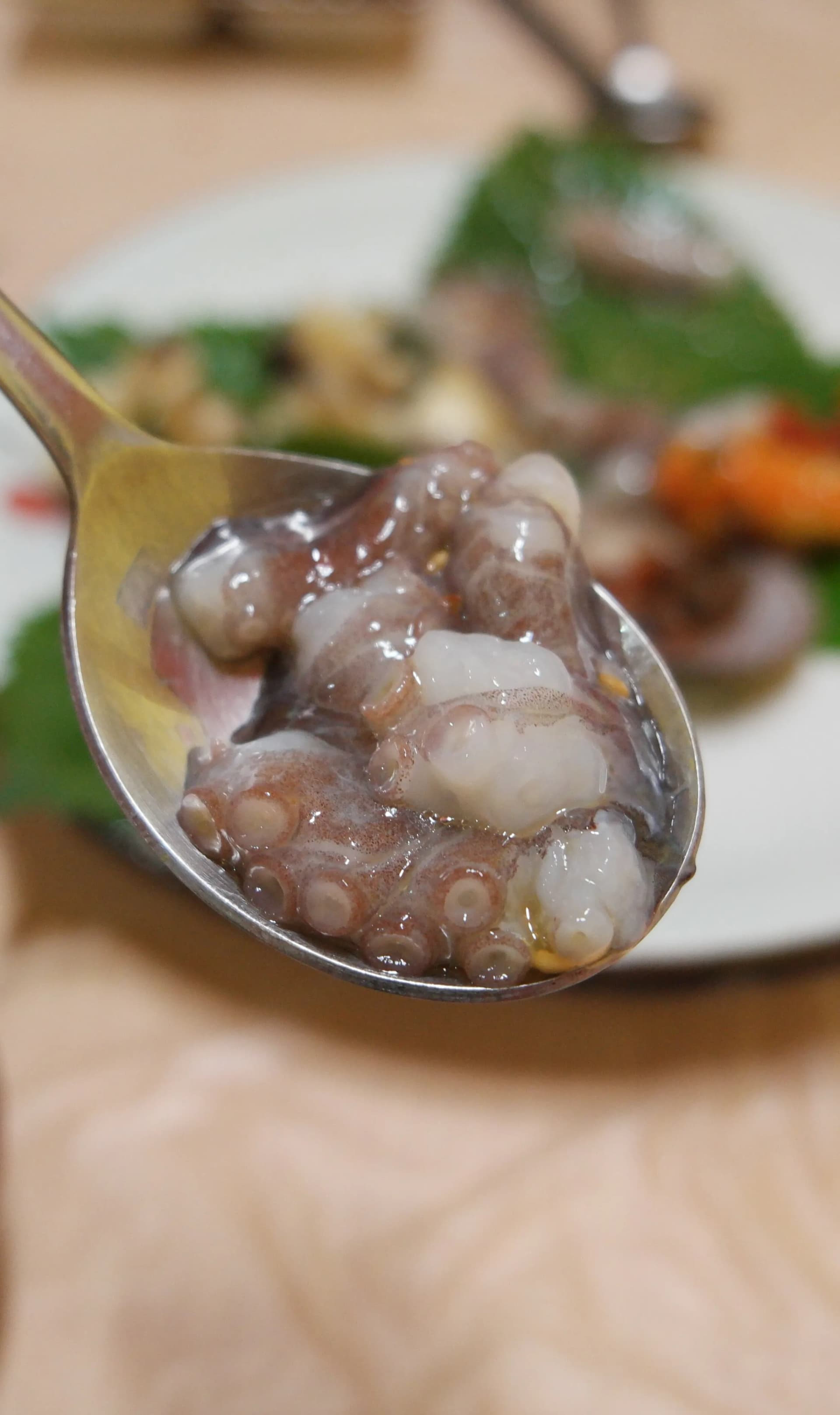
A spoonful of sannakji. The suction cups are clearly visible and it's still wriggling. Dip it in the sesame-salt sauce and put the whole spoonful in your mouth. One bite and you'll immediately understand why people eat this.
Today's Main Event — A Full Platter of Assorted Korean Sashimi
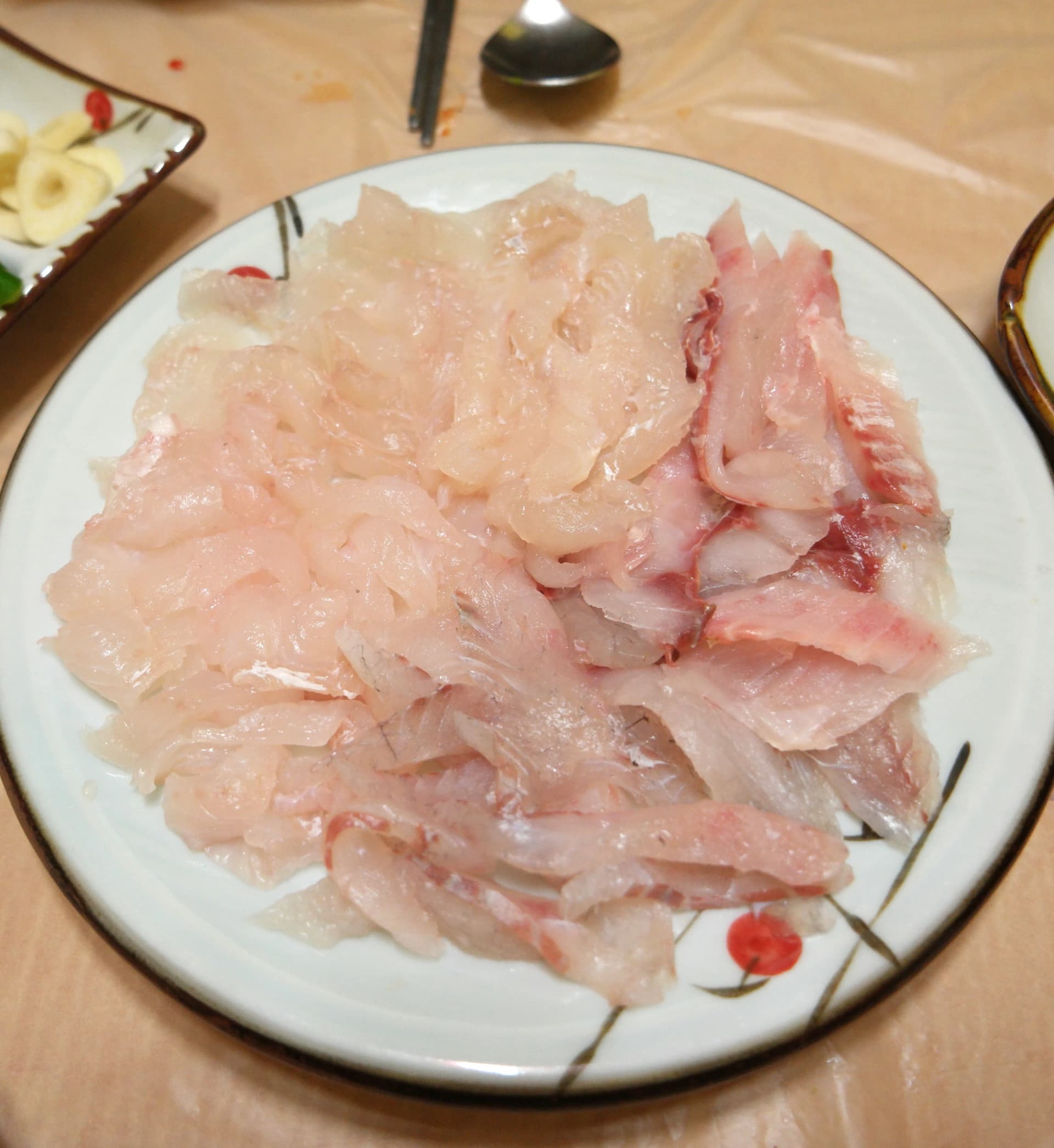
Finally. The main event arrived.
A plate piled high with assorted sashimi. Thinly sliced white fish layered up in stacks, and on the right side, some thicker-cut pieces too. Two different types with different colors on one plate — probably different cuts from the same fish. I honestly have no idea what kind of fish it was. We just said "assorted sashimi platter, please" and this is what showed up. The thin slices had a great chewy texture, and the thicker pieces got sweeter the more you chewed.
The moment this hit the table, I forgot all about the sea squirt, sea cucumber, live octopus, and clams from before. This. This was the main event.
There's no single "right way" to eat sashimi at a Korean raw fish restaurant. You can dip it in chogochujang (the sweet-sour chili sauce), or wrap it in a lettuce leaf with garlic, or use ssamjang (a thick savory paste). This is actually the biggest difference from Japanese sashimi. In Japan, soy sauce with wasabi is basically the standard. In Korea, it's a free-for-all. You mix and match to your own taste, and that's half the fun.
Since the fish came straight from the ocean, there was zero fishy smell — just clean, pure flavor that got sweeter the more you chewed. It was definitely different from the sashimi I eat in Daejeon. I finally understood why people go out of their way to visit coastal raw fish restaurants. This taste is the reason.
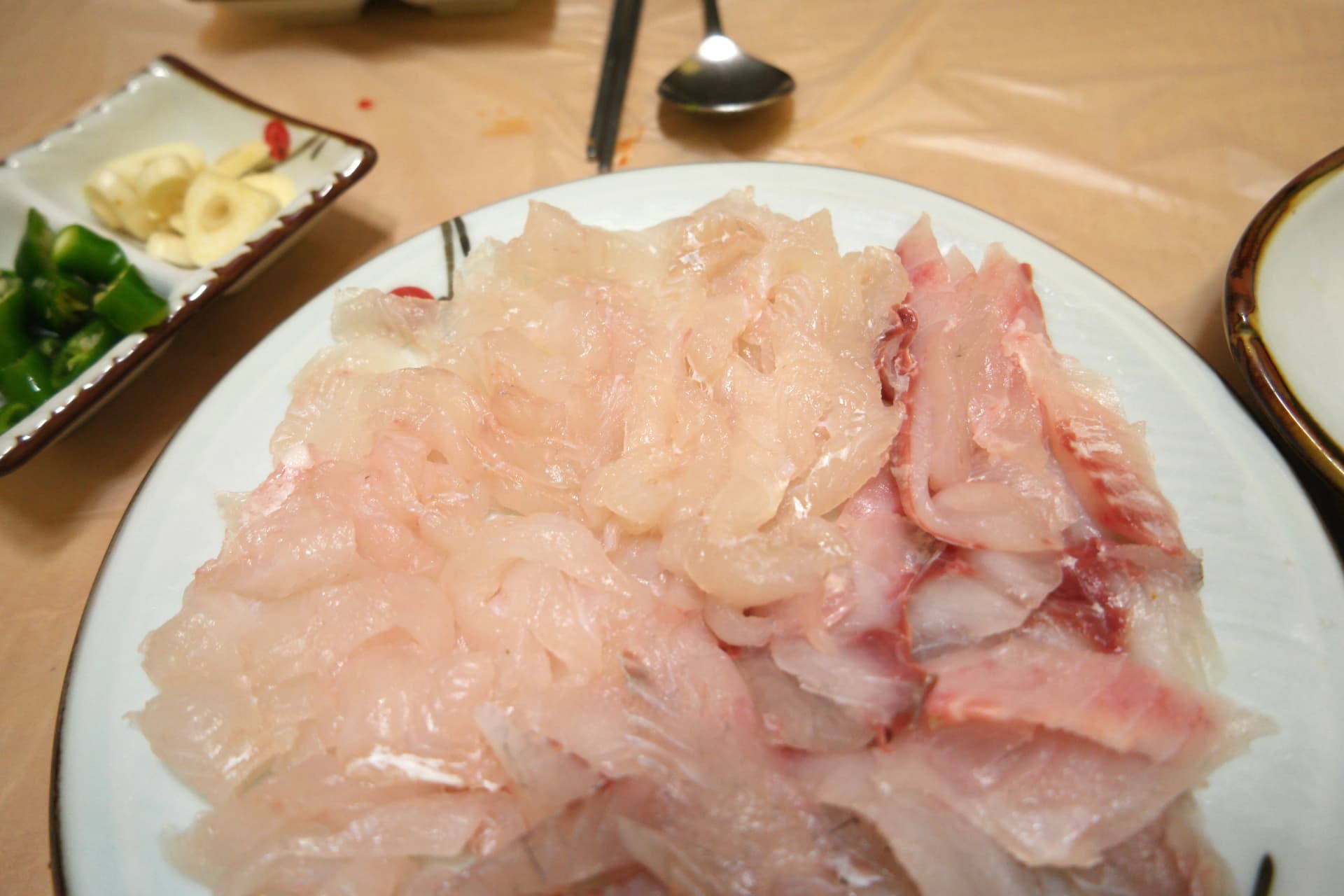
This isn't some meticulously plated fine-dining presentation. It's just roughly sliced and heaped onto a plate. But somehow, that's its own kind of charm. The generous, no-frills pile of fish actually looks more appetizing. The taste doesn't change based on how you plate it, right? As long as it's fresh, that's all that matters.
How Koreans Eat Sashimi — The Lettuce Wrap Culture
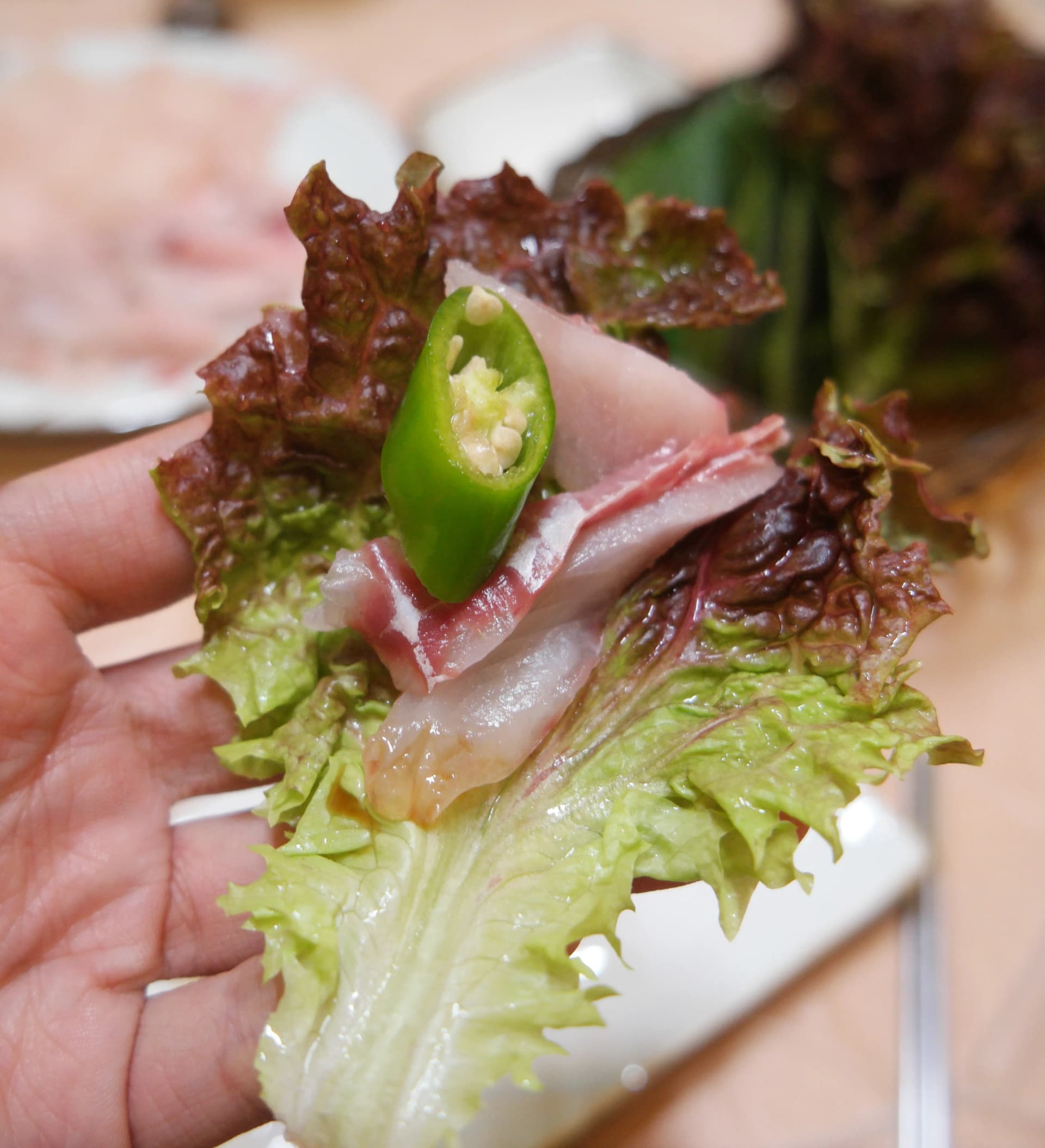
This is how you eat sashimi the Korean way. You place a piece of raw fish on a lettuce leaf, add a slice of raw garlic and a cheongyang chili pepper (a small Korean hot pepper), then wrap it all up and pop the whole thing in your mouth.
In Japan, dipping sashimi in soy sauce is pretty much the whole deal. But in Korea, there's this whole culture of eating it as ssam — wrapped in leafy greens. The crunch of the lettuce, the chewiness of the fish, the sharp kick of the garlic, and the heat of the pepper all hit your mouth at once, and they work ridiculously well together. Eating each ingredient separately versus eating them all together? Completely different experience.
It might feel weird at first. But once you eat sashimi this way, going back to eating it plain starts to feel like you're missing something.
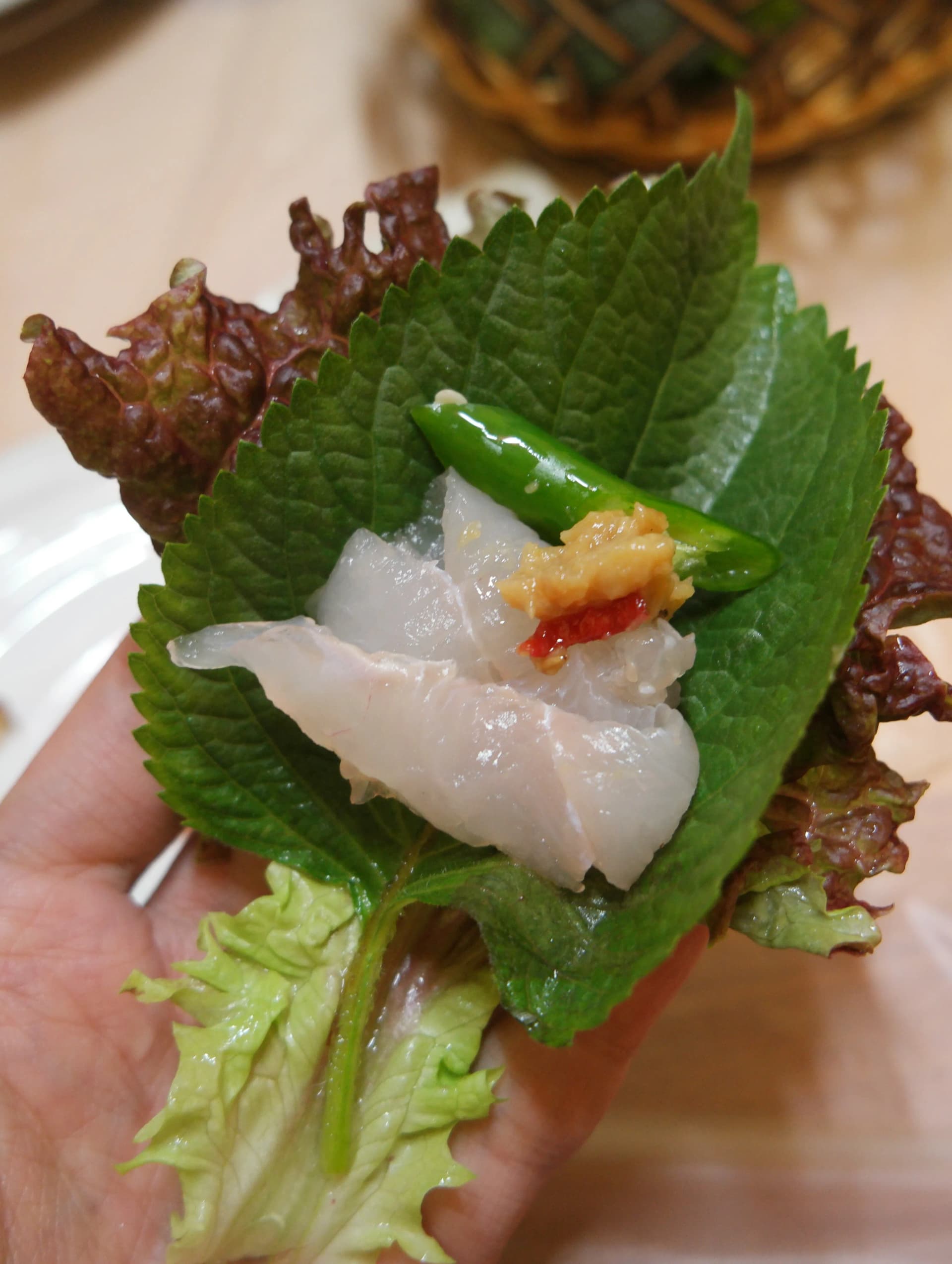
This version has an extra perilla leaf layered on top of the lettuce.
Perilla leaf — called kkaennip in Korean — is a pretty intense ingredient for first-timers. It looks like an herb, but the aroma is way stronger than mint or basil. The first time you smell it, you might think "People actually eat this?" There are genuinely quite a few people who rank perilla leaf as one of the hardest Korean foods to get used to.
But pair it with sashimi and everything changes. Lettuce on the bottom, perilla leaf on top, a piece of raw fish, a little garlic and chogochujang, then wrap it all up — the strong herbal aroma of the perilla actually tames any fishiness in the sashimi. They fill in each other's gaps perfectly. If you think the perilla smells too strong, that's totally normal. But try it with the fish and you might change your mind.
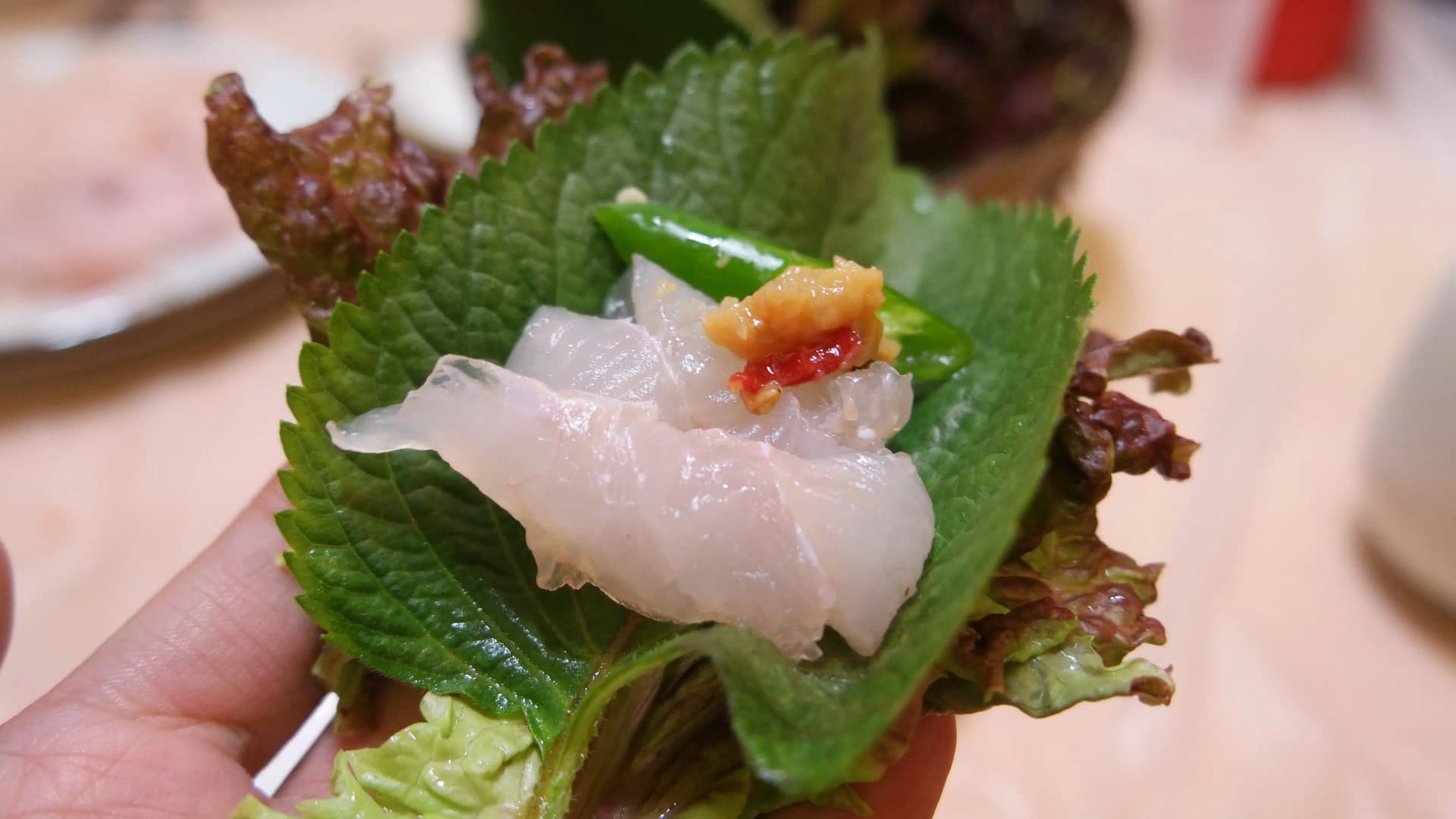
Here's a closer shot. You can see lettuce on the bottom, perilla leaf, two pieces of sashimi, garlic, and chogochujang on top. The fish is glistening translucent — you just pop this whole thing in your mouth in one bite.
After the Sashimi — Spicy Fish Stew and a Rice Spread to Finish
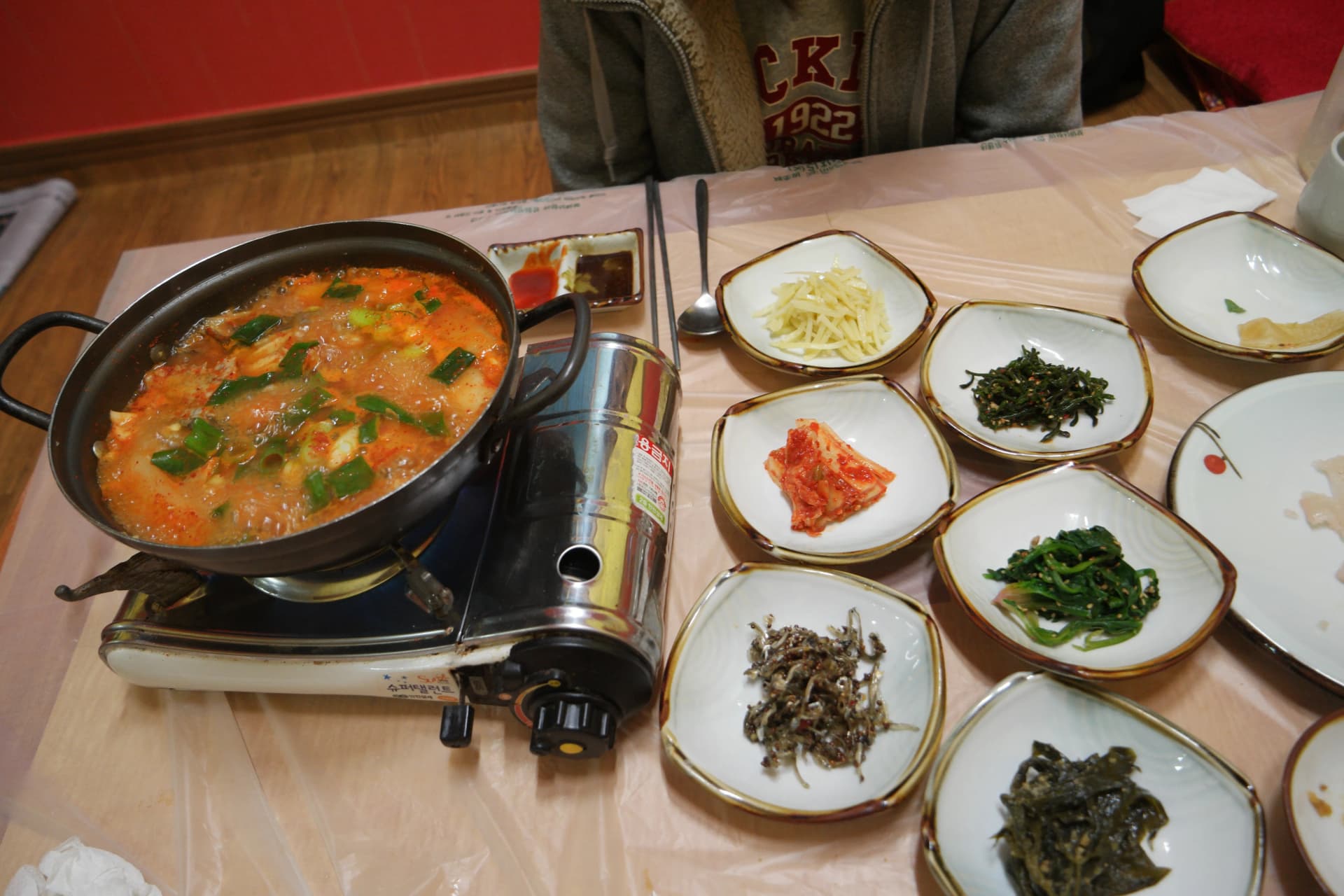
After you finish the sashimi, a whole new spread gets laid out on the table.
The star is a fish stew bubbling away in a pot, but here's the thing — they don't use separate fish for this. They take the leftover bones and scraps from the sashimi you just ate and boil them into the stew. Nothing goes to waste. That's why the broth is so rich and deeply flavored.
A bunch of side dishes came out too. Bean sprout salad, kimchi, spinach dressed with sesame, seasoned seaweed salad, and stir-fried anchovies. Honestly, since this is an à la carte place, I wasn't really expecting much for the final course. But the rice spread they put together was surprisingly well thought out.
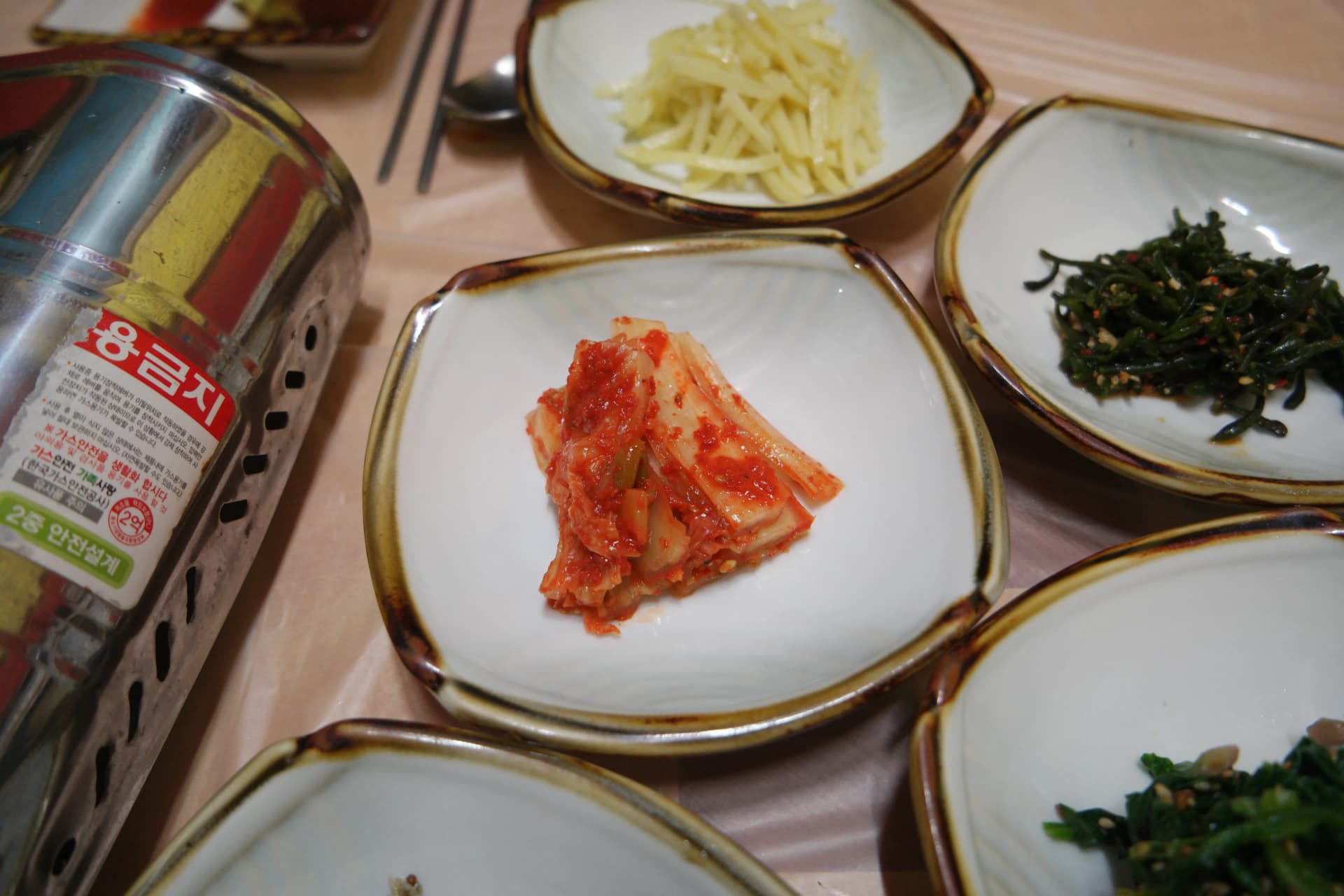
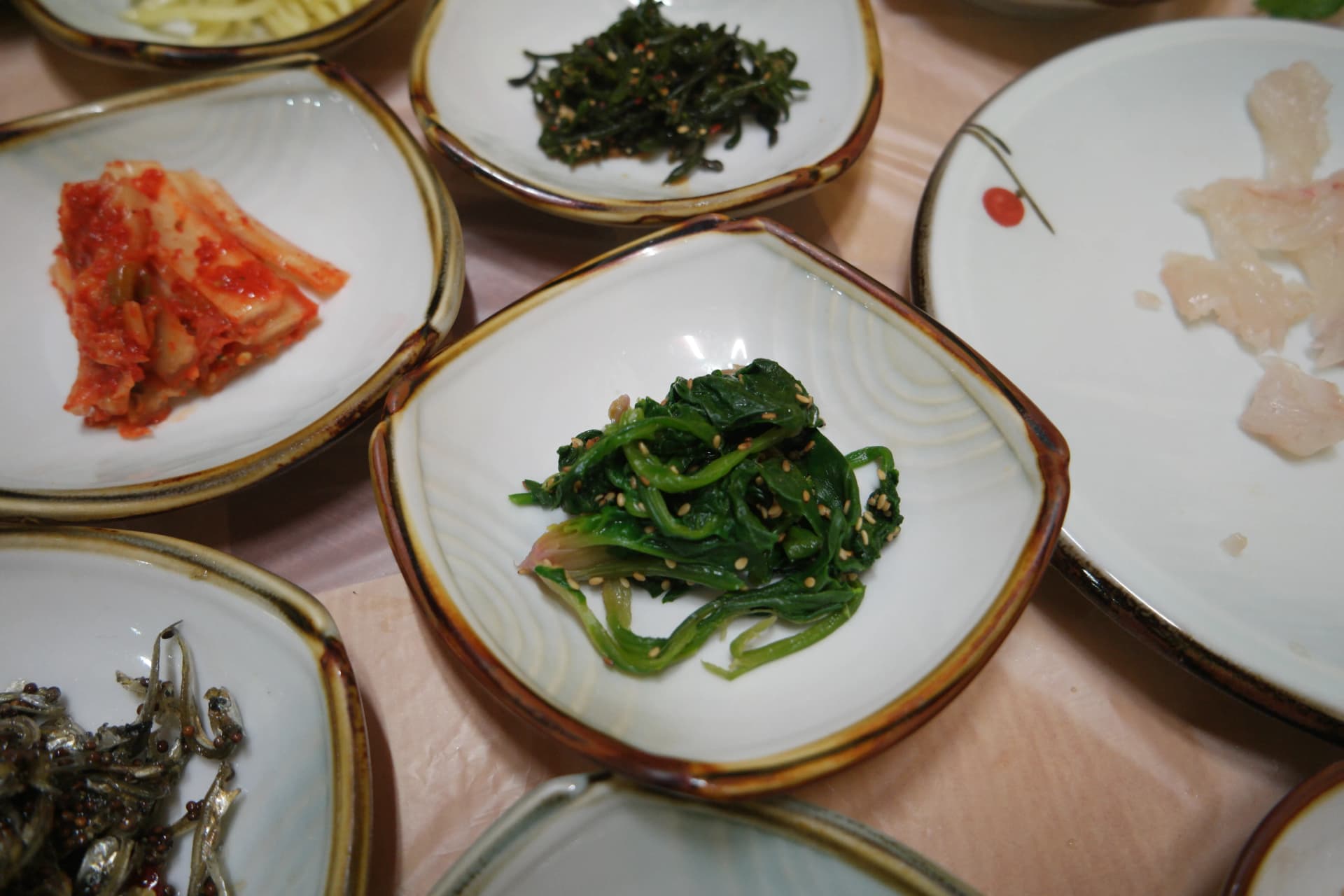
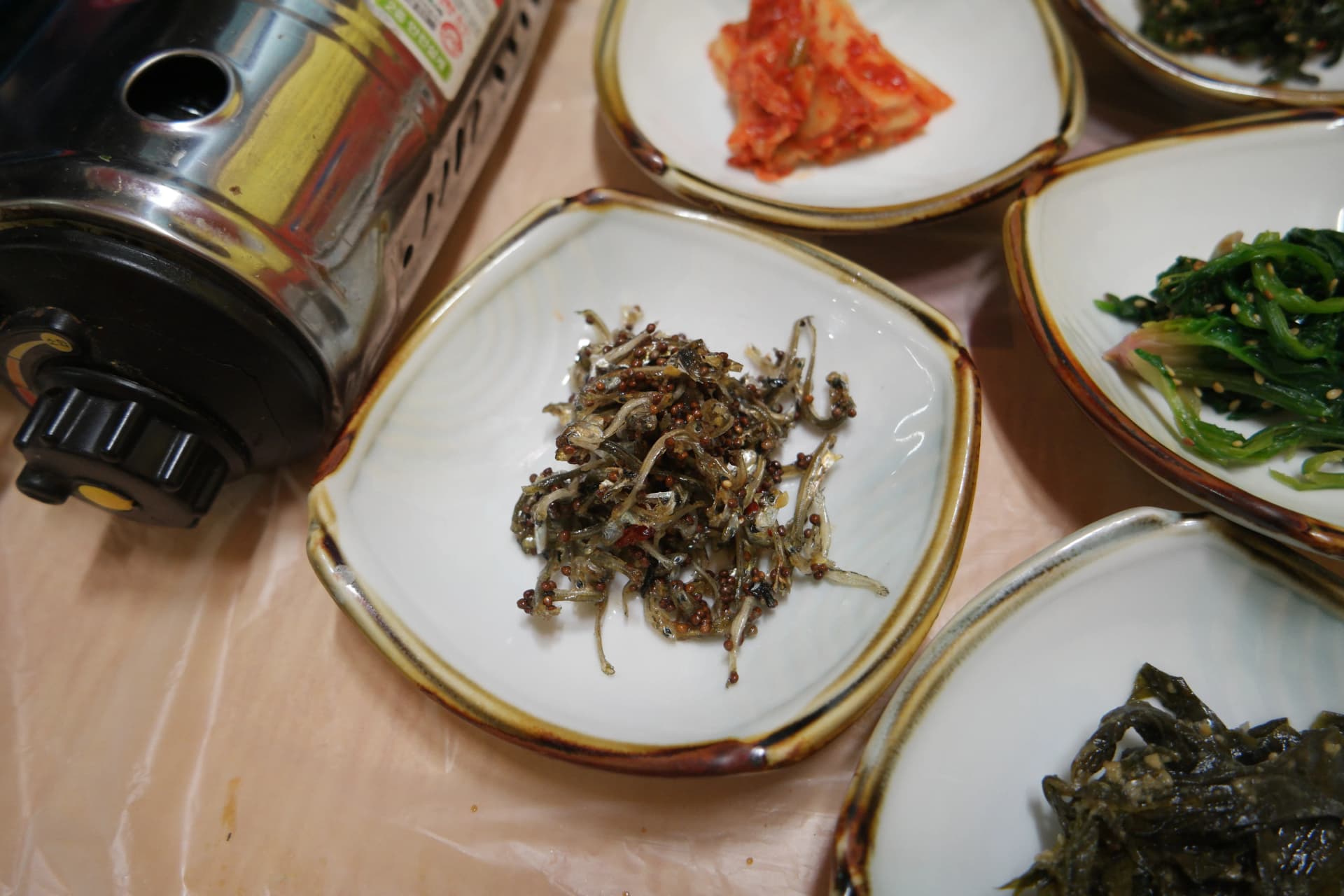
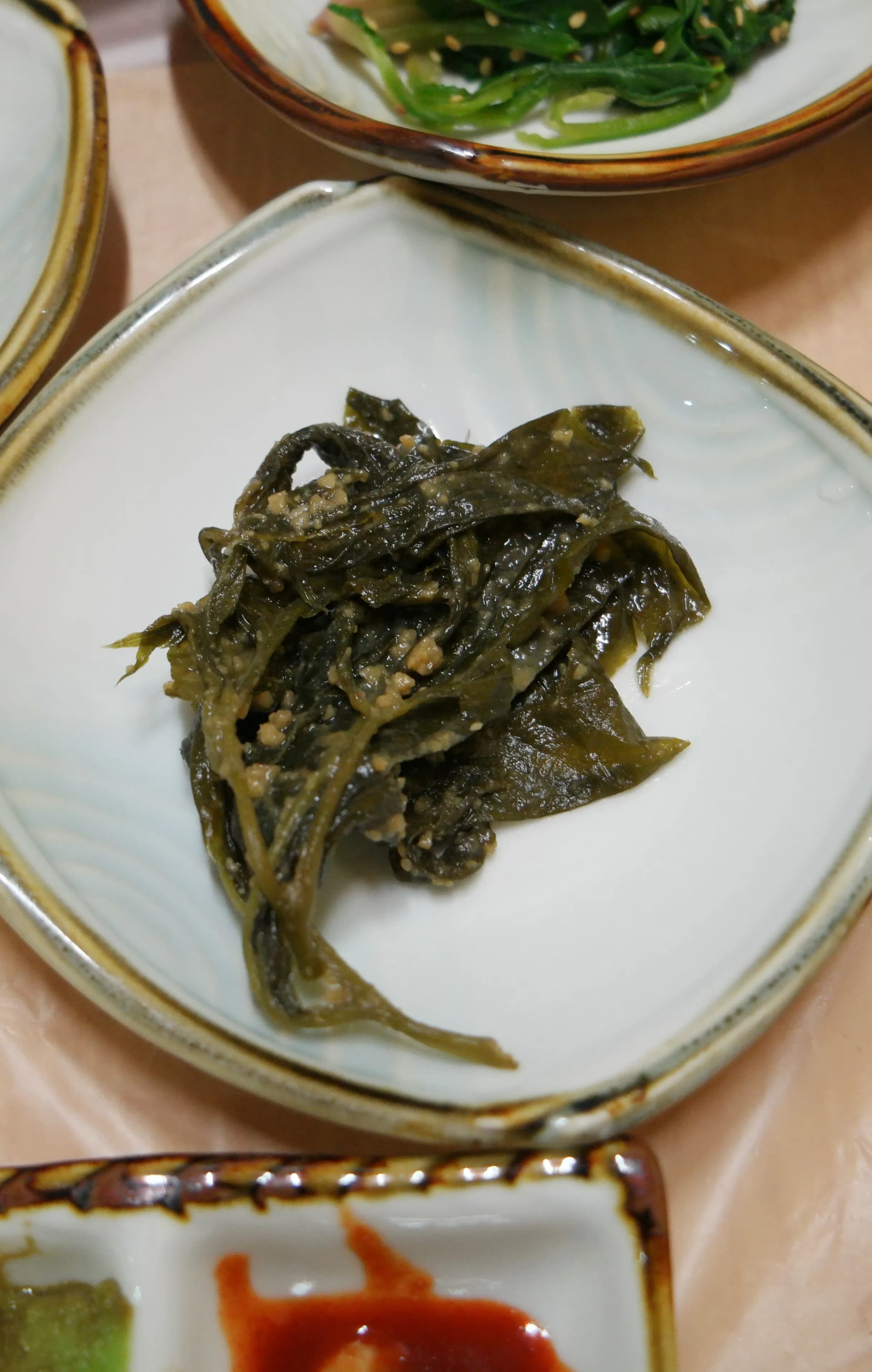
Here are the side dishes. Kimchi, sesame-topped greens, tiny anchovies stir-fried in a sweet soy glaze, and seaweed salad. I couldn't quite tell if the green one was spinach or some kind of spring herb.
In Korean dining, it's standard to have several side dishes laid out like this alongside your rice. In most other countries, you usually just get one main dish. In Korea, a bowl of rice with multiple side dishes is the culture. If this is your first time experiencing it, it's a pretty refreshing surprise. You pick at one side dish, then another, and before you know it, your whole bowl of rice is gone.
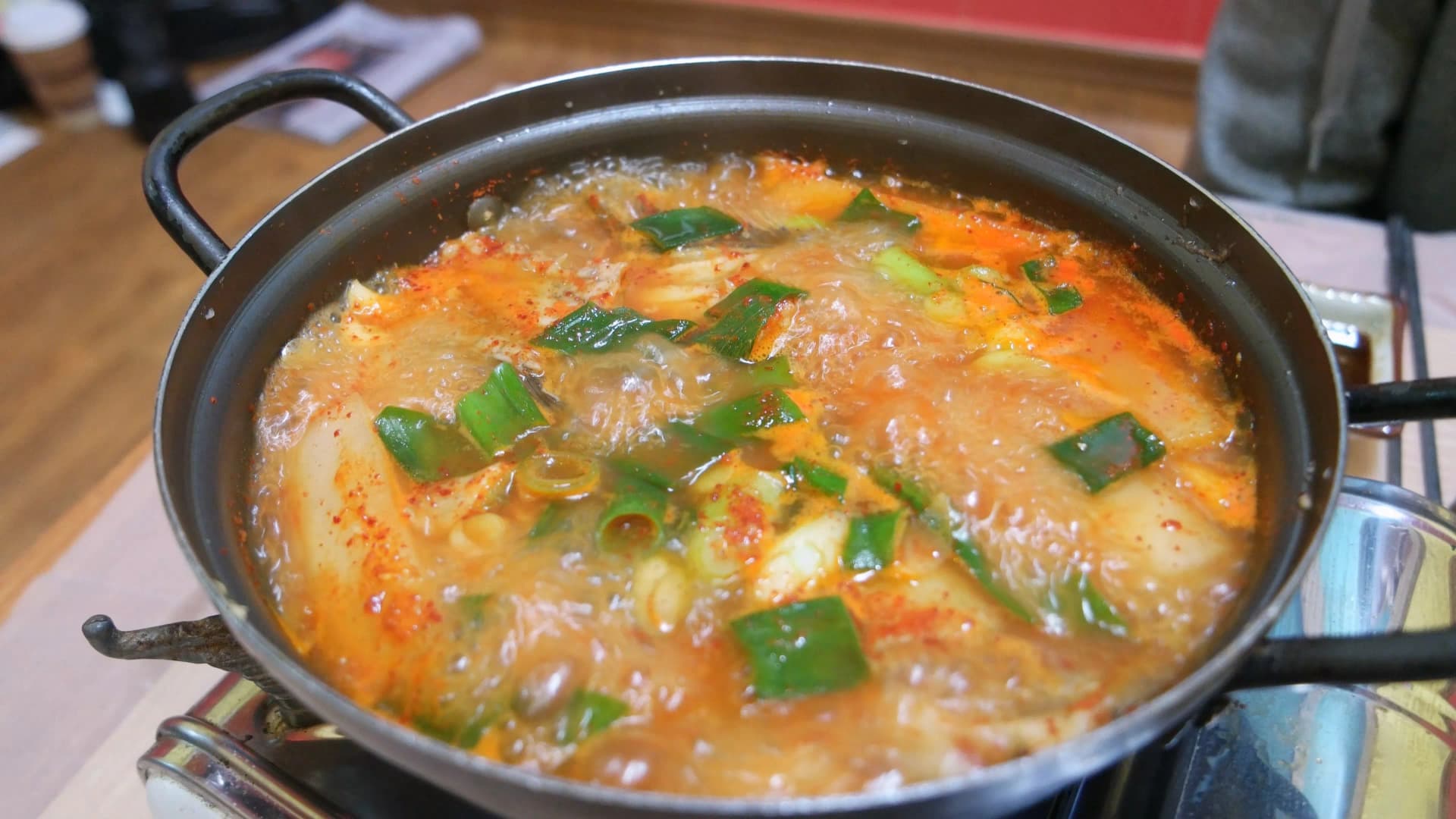
Here it is, starting to bubble — maeuntang, the spicy fish stew. A red broth loaded with green onions, with a spicy, peppery aroma rising off it. In the December cold, one spoonful of this and I could feel my whole body thaw out. After all that cold sashimi, this piping hot broth was exactly what my mouth needed. My wife ended up going back for three bowls of just the broth alone.
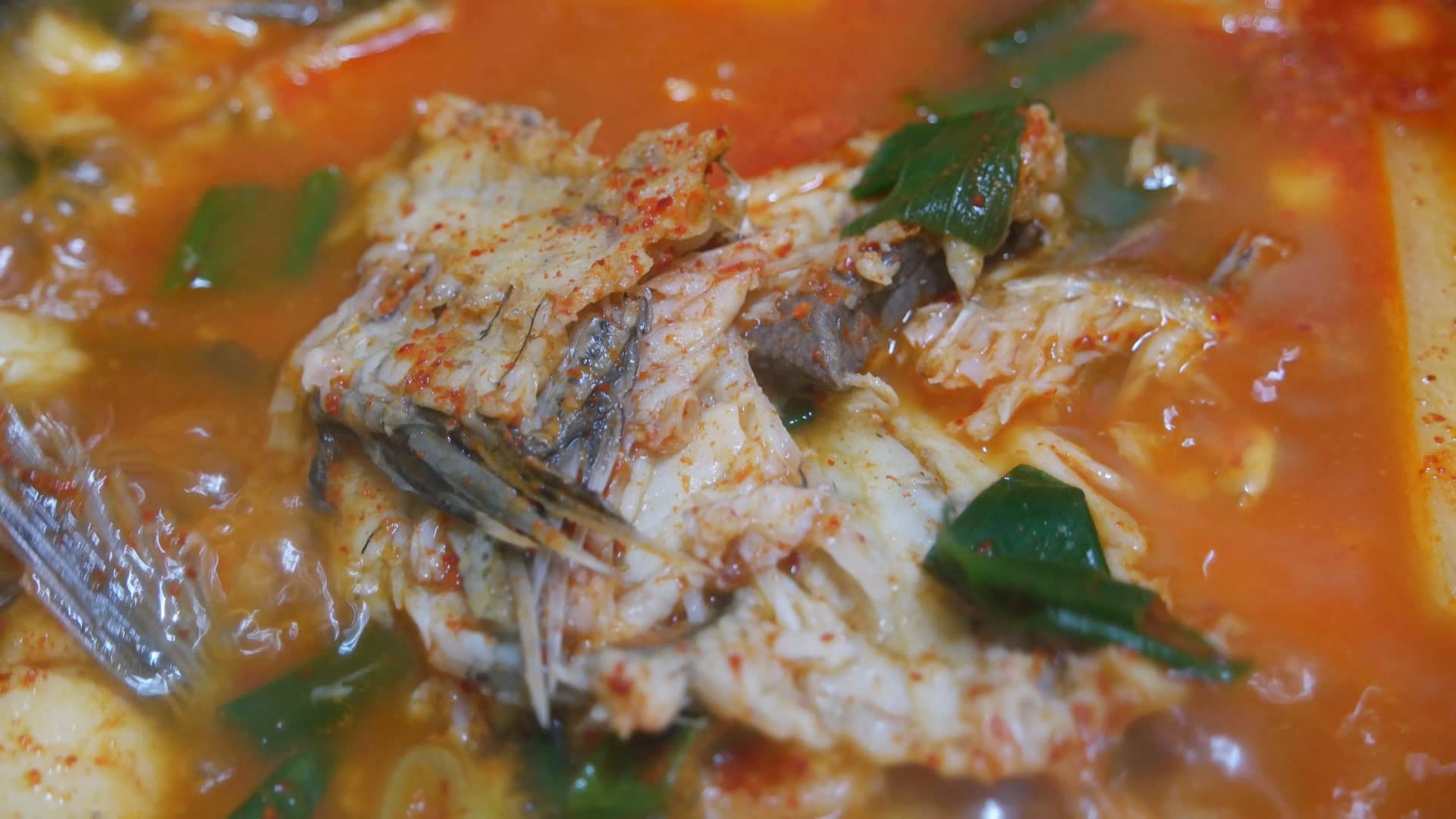
I scooped up a ladleful. You can see there's still a good amount of flesh clinging to the bones. Since it's made from the leftover parts of the sashimi fish, it's not a whole fish in there — but the bones and scraps have been simmered until they're falling apart in the broth. Using one whole fish to make both the sashimi and the stew, wasting nothing — that's the Korean raw fish restaurant way.
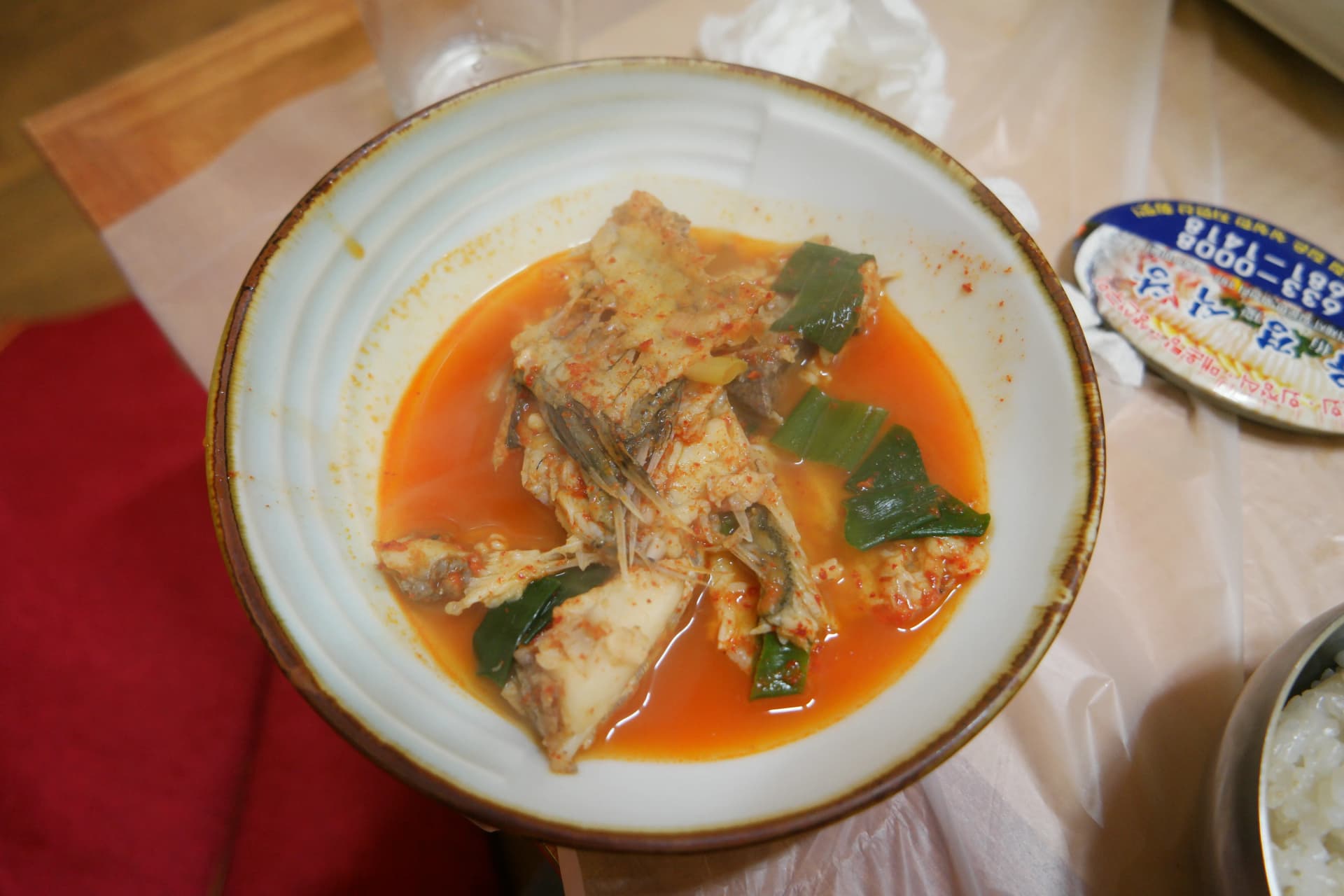
In a bowl, it looks like this. Red broth, generous chunks of fish. Eat it with rice and it's seriously so good. The spicy, warming broth settles your stomach perfectly after all that raw fish.
Geoje Island's Coastal Raw Fish Restaurant — Glad We Made the Trip
The spread of fresh sashimi we had at this coastal restaurant on Geoje Island was way more varied than I expected. Sannakji, sea squirt, sea cucumber, raw clams — there were a lot of unfamiliar things, but as I worked my way through them one by one, the plates were suddenly all empty. Sea squirt is honestly still tough for me. Sea cucumber was surprisingly okay. And sannakji? Once I had one bite, I couldn't stop. My wife said the raw clams were her favorite. Everyone's different, I guess.
It doesn't have to be fancy. It doesn't have to be elegant. As long as it's fresh, that's enough. Eating something that was pulled from the sea that very morning, right there at the waterfront — that's already a special experience in itself. It was clearly different from the sashimi I eat back in Daejeon. I nearly froze to death in the December wind, but after polishing off the sashimi and slurping down the last of the spicy fish stew, I was glad we made the drive down. If you ever get the chance to visit a Korean coastal town, make sure you stop at a raw fish restaurant.
This post was originally published on https://hi-jsb.blog.