Fiery Octopus & Beef Tripe Stir-Fry + Fried Rice
Table of Contents
14 items
An autumn 2015 photo that leapt out of my folder
I was sorting through old photos on my computer when one stopped me dead. So-gopchang nakji bokkeum — octopus and beef intestines in a furiously red gochujang sauce. It must have been autumn 2015, judging by the file date, though I couldn't tell you the exact day. The moment I saw that tangle of red sauce with octopus arms and plump bits of intestine, the taste came flooding back like it had been sitting there waiting. Tteokbokki and fried chicken are on just about every visitor's list when they come to Korea, but spicy dishes like this one rarely make the tourist circuit. Even for someone like me who grew up eating Korean food, it isn't a weekly affair — more the kind of thing you eat once and then find yourself thinking about for weeks. So I dug through the photos properly.
The side dishes arrive first — a proper Korean table
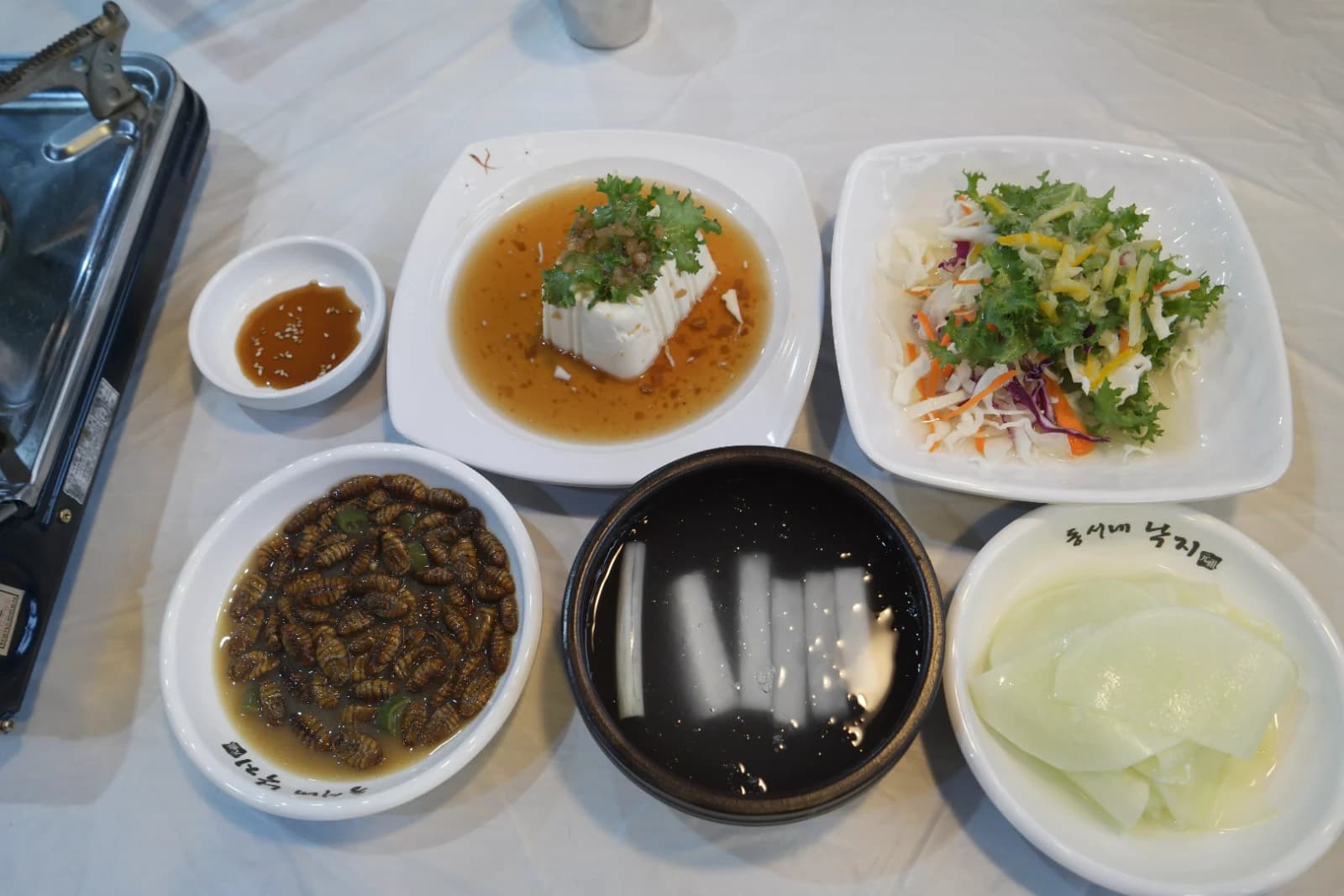
Before the main course shows up, five or six little plates land on the table, and each one is worth a proper look. The underplates had "Dongseone Nakji" printed on them — that was the name of the Daejeon place we went to, though this particular branch has since closed. Even so, I wanted to write about the dish itself.
Silken tofu, salad, and vinegared radish
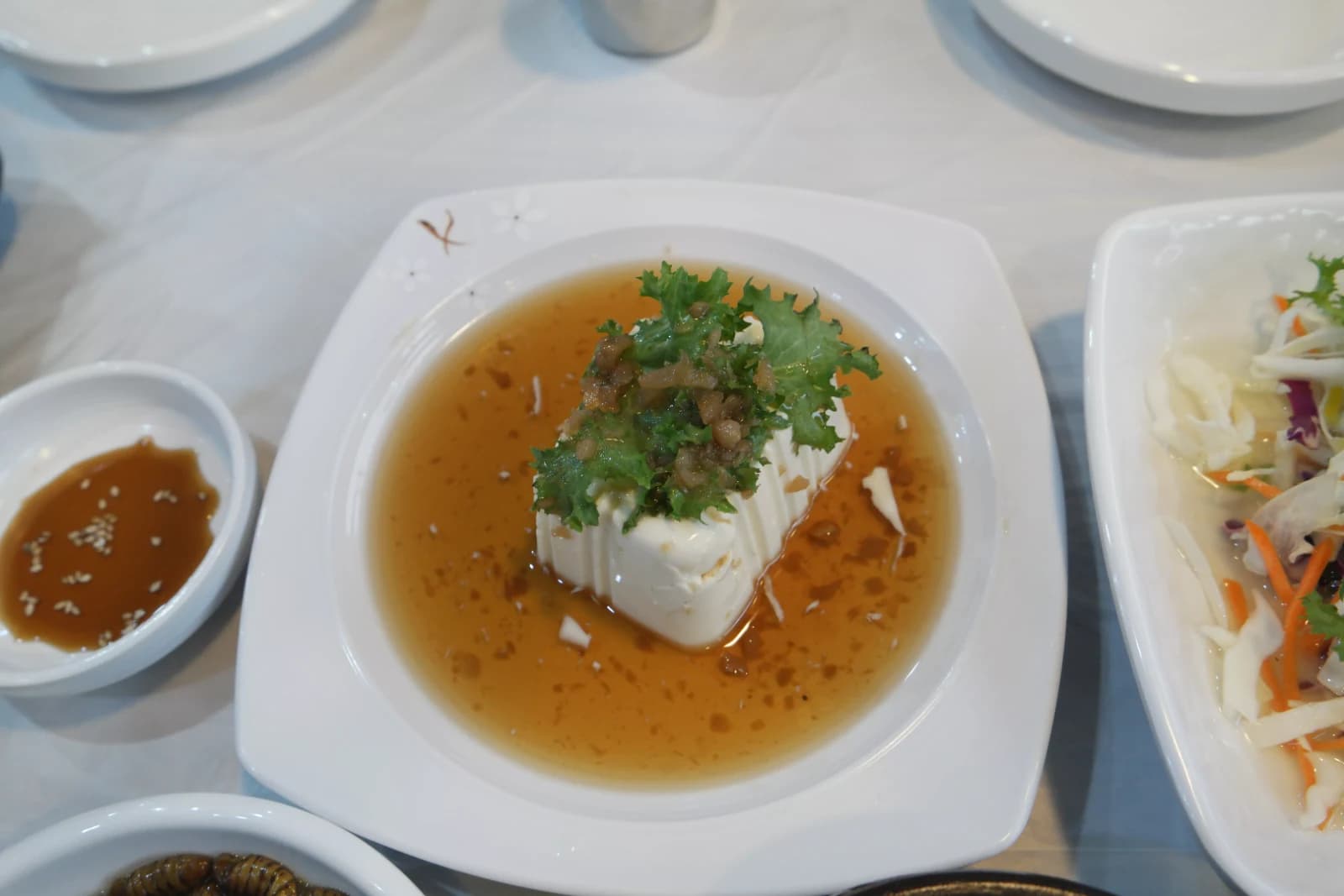
First, the silken tofu — a much softer cousin of the block tofu most people know. Topped with shredded spring onion and a light seasoning, with a shallow pool of soy-based sauce around it. Scoop it with a spoon and it practically dissolves, almost like a savoury pudding. Later, when the spicy stuff arrives, this turns out to be the thing that puts the fire out.
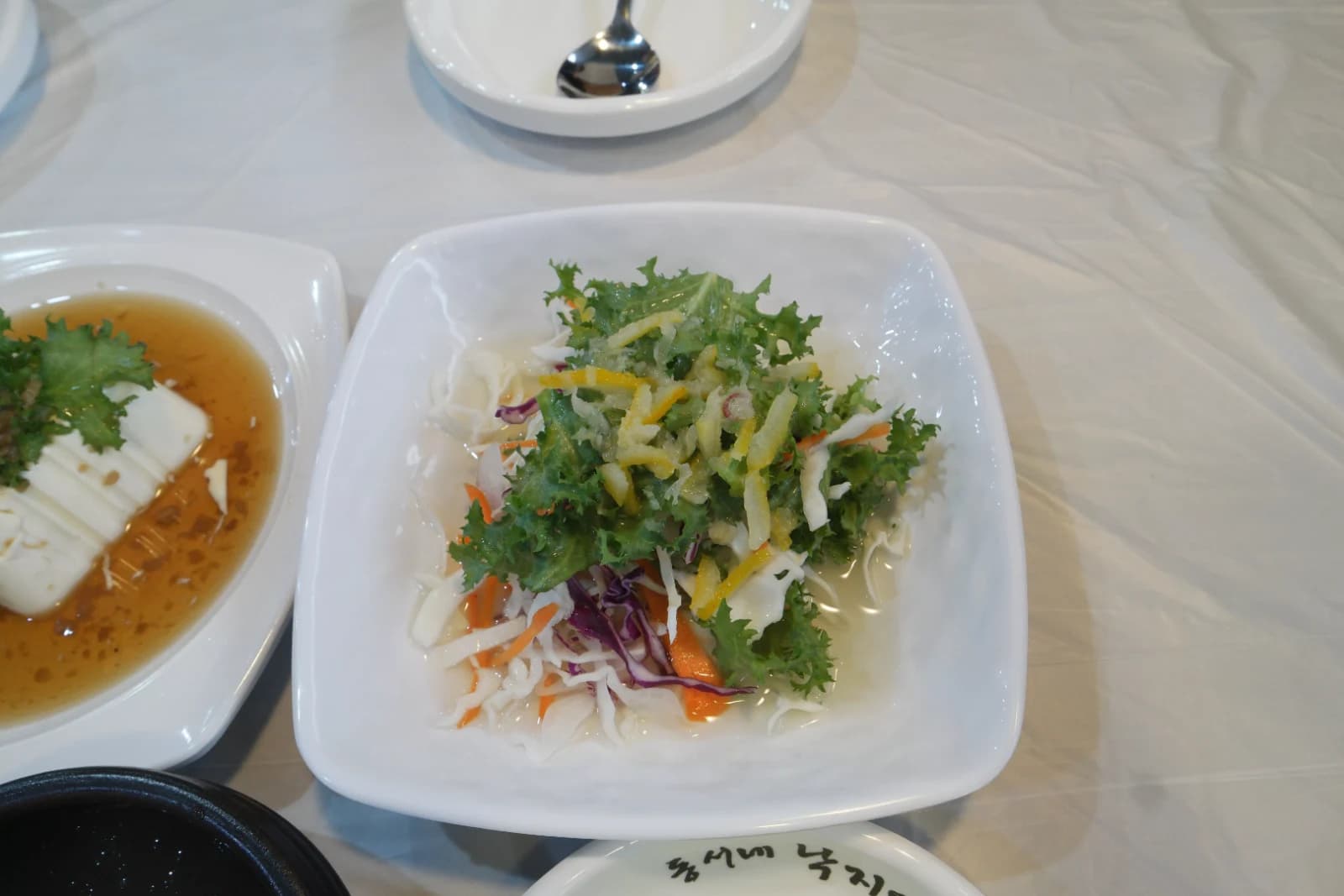
There was a salad too: red cabbage, carrot, a few peppers and some lettuce leaves piled on top. No dressing came with it, and without one it was a bit flat. Honestly, the table wouldn't have missed it.
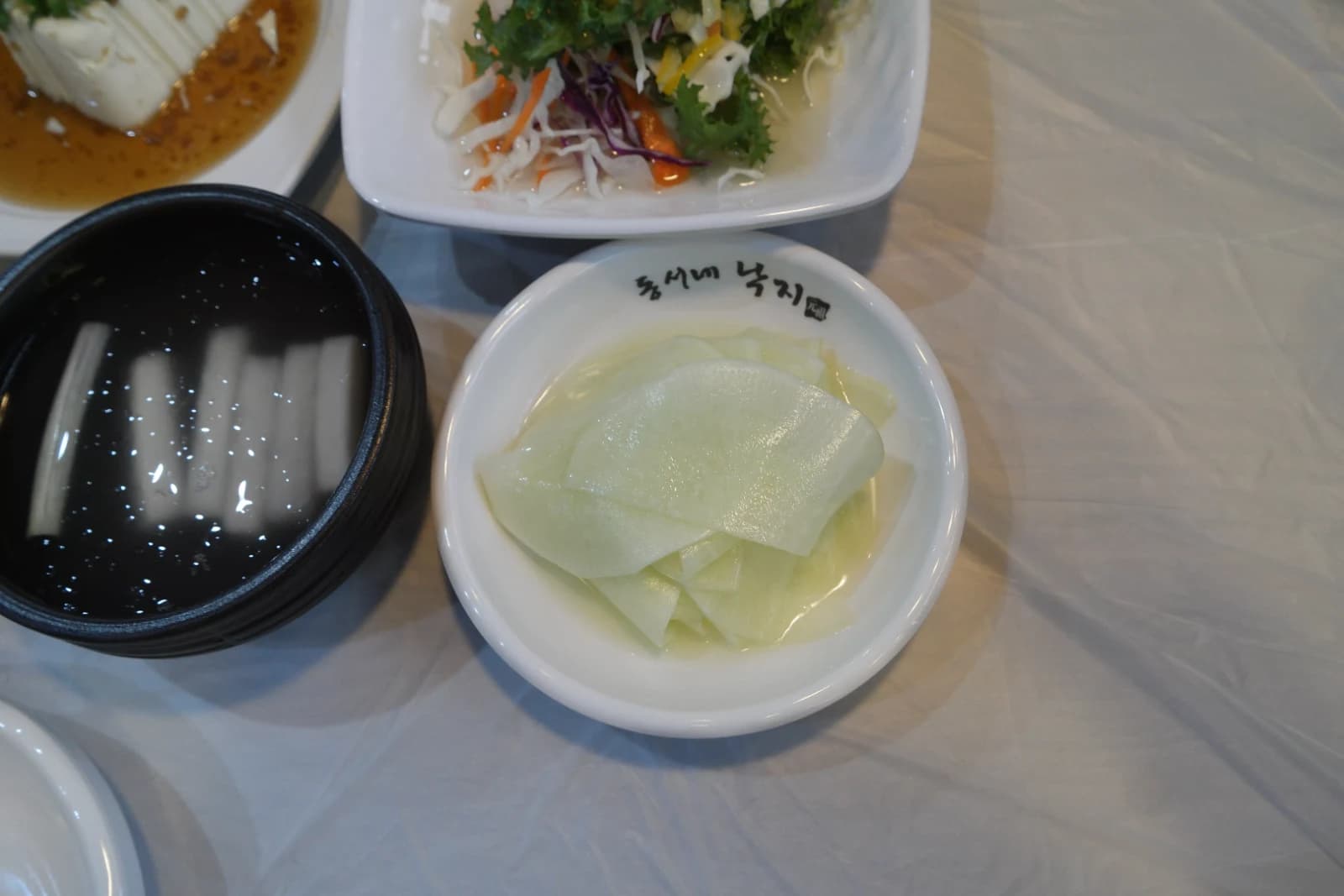
This one is radish, shaved so thin you could almost see through it, then tossed in vinegar. It's called cho-muchim. First bite is all sharpness from the vinegar, then that cool, clean radish flavour kicks in behind it. When you're working your way through something fiery, having a bowl of this at your elbow really does make a difference.
Dongchimi — the spicy stir-fry's best mate
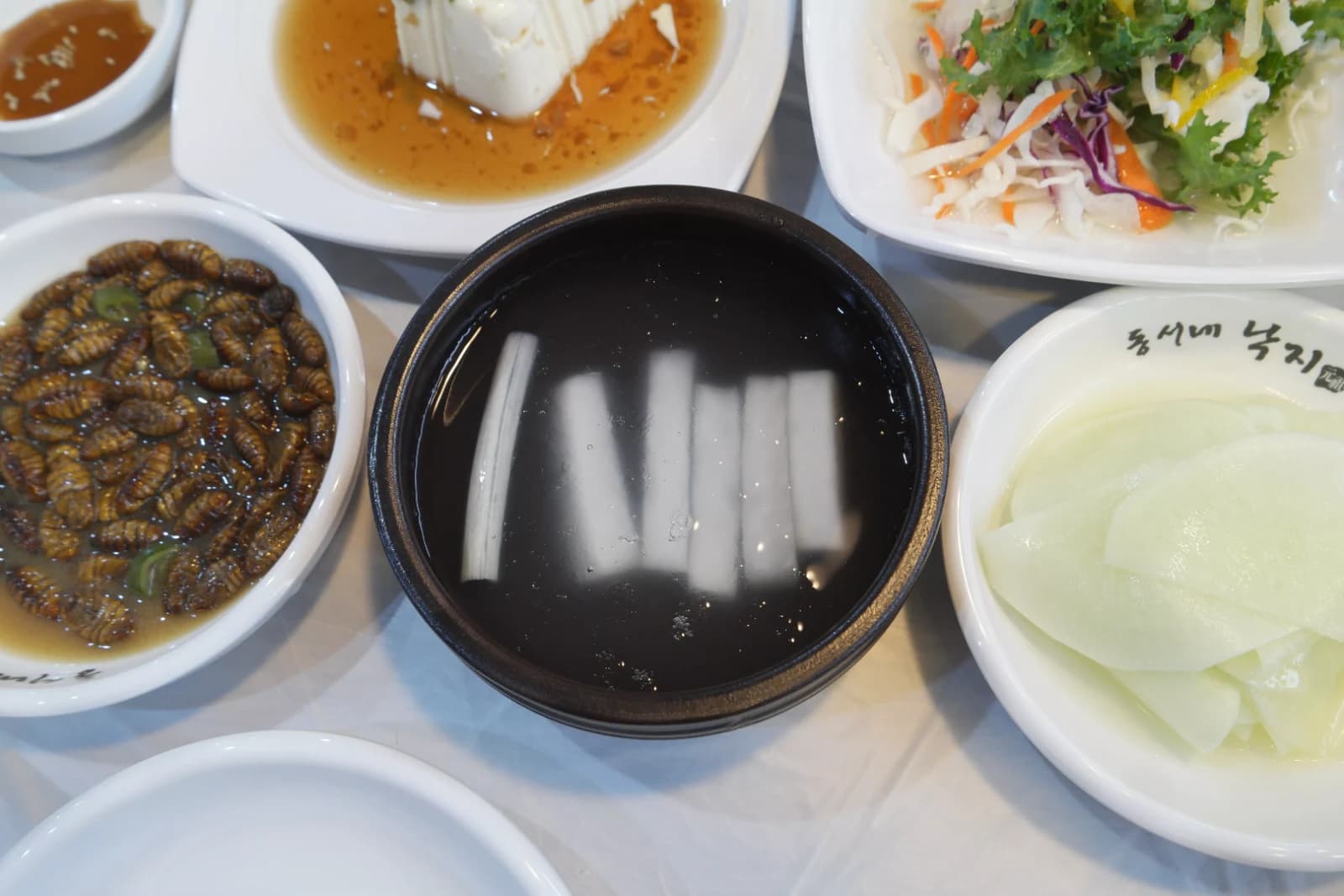
The dark bowl in the middle is dongchimi — radish fermented in salted water. The brine runs clear and cold, and the radish has been cut into long batons. With a fiery stir-fry like this one, a cold, light kimchi broth is basically part of the uniform. A sip between mouthfuls of chilli and your palate resets itself completely.
Beondegi — the side dish that divides opinion
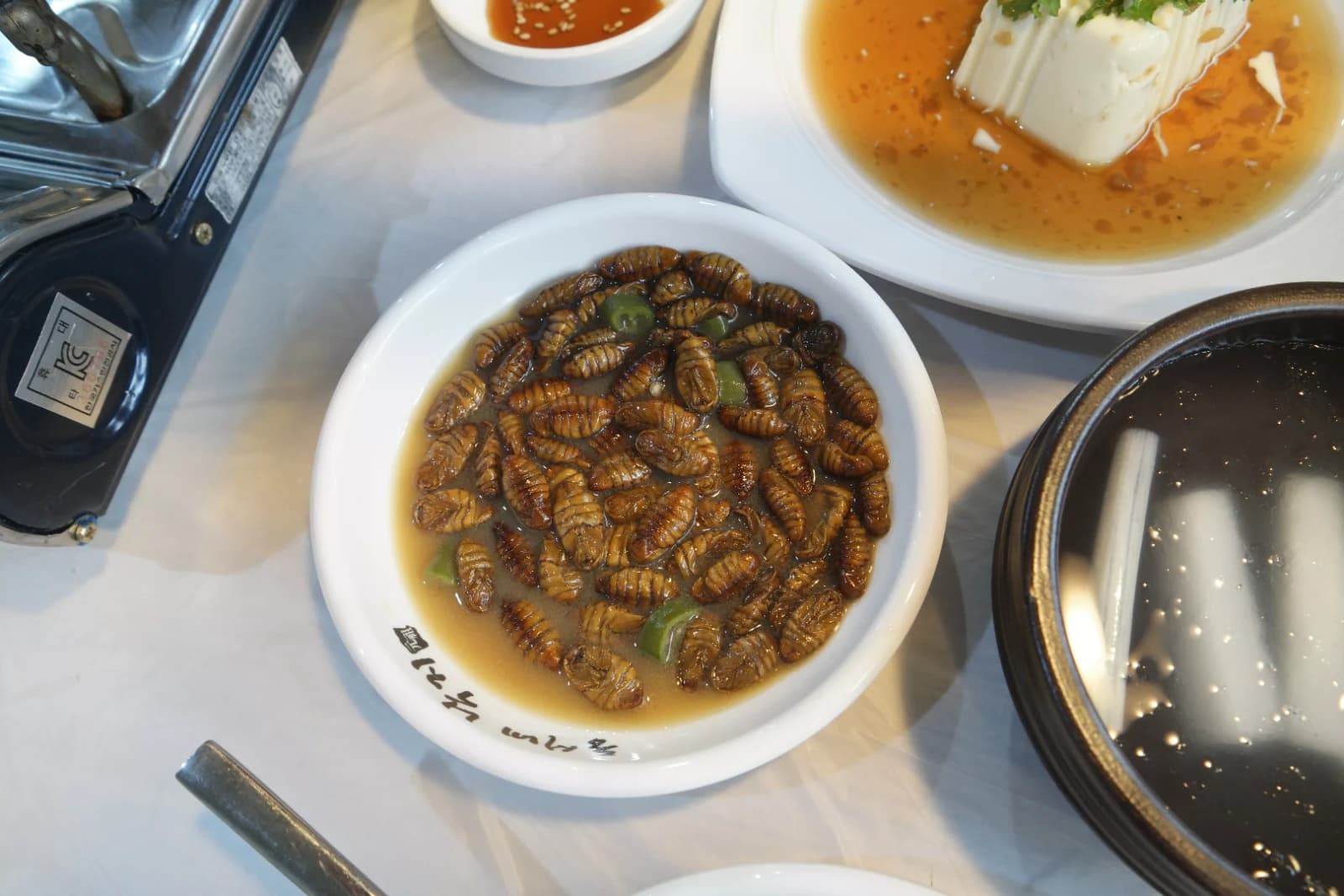
Beondegi. This one splits the room right down the middle. It's silkworm pupae, boiled and seasoned, and plenty of people won't even look at it, never mind eat it. In Korea it's a very old thing — you still see it sold from street carts. The flavour is nutty with a slightly earthy, mineral note at the back, which I grew up with so it doesn't bother me at all. My mum, sitting across from me, didn't so much as touch her chopsticks to it.
Mul-mandu (water dumplings)
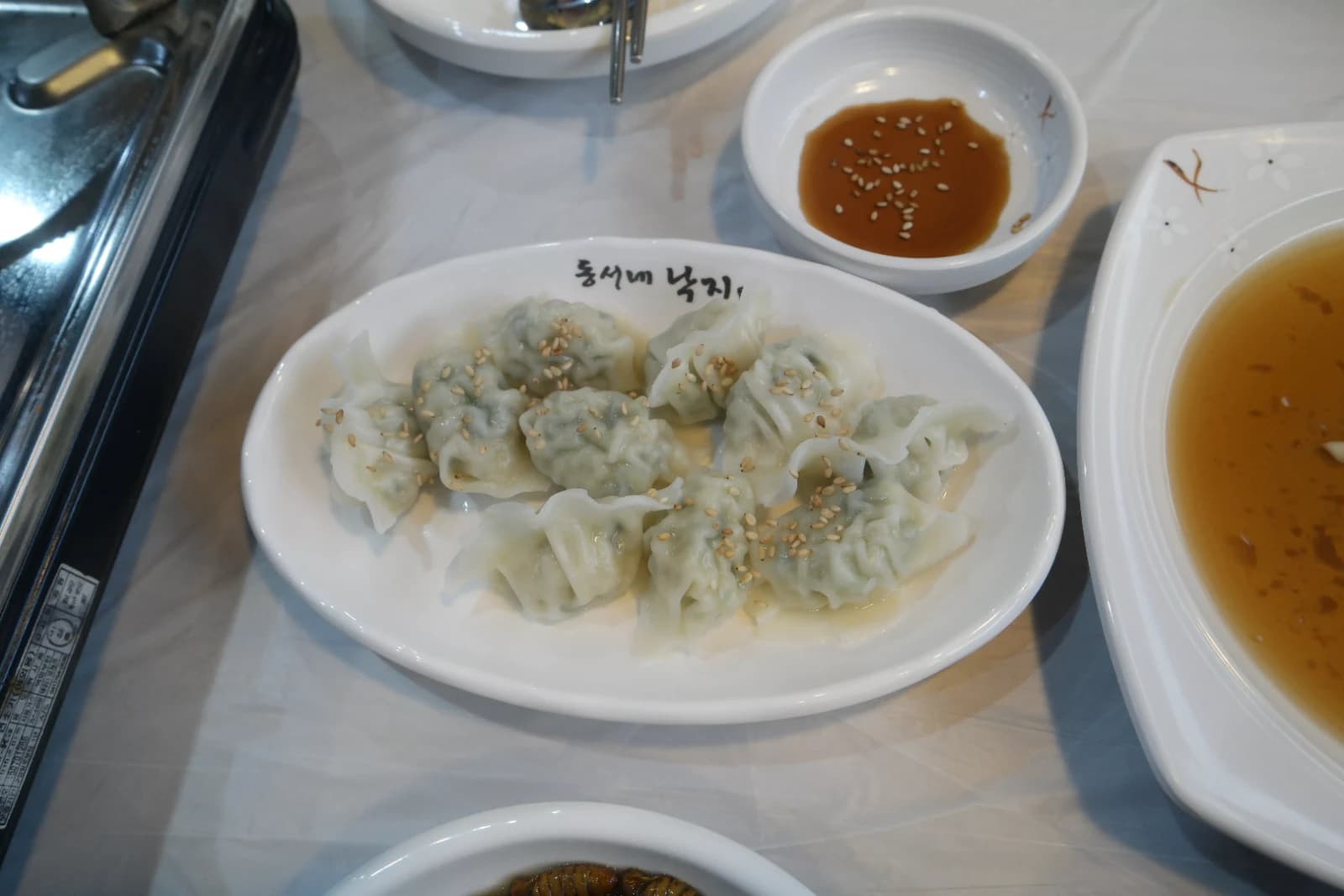
Even dumplings turned up as a side. The wrappers were so thin you could see the filling through them, with a scattering of sesame seeds on top and a little dish of soy sauce on the side. I was happily picking at everything while we waited, and Mum said, "At this rate you'll fill up on the sides alone" — which, to be fair, I very nearly did.
The main event — so-gopchang nakji bokkeum
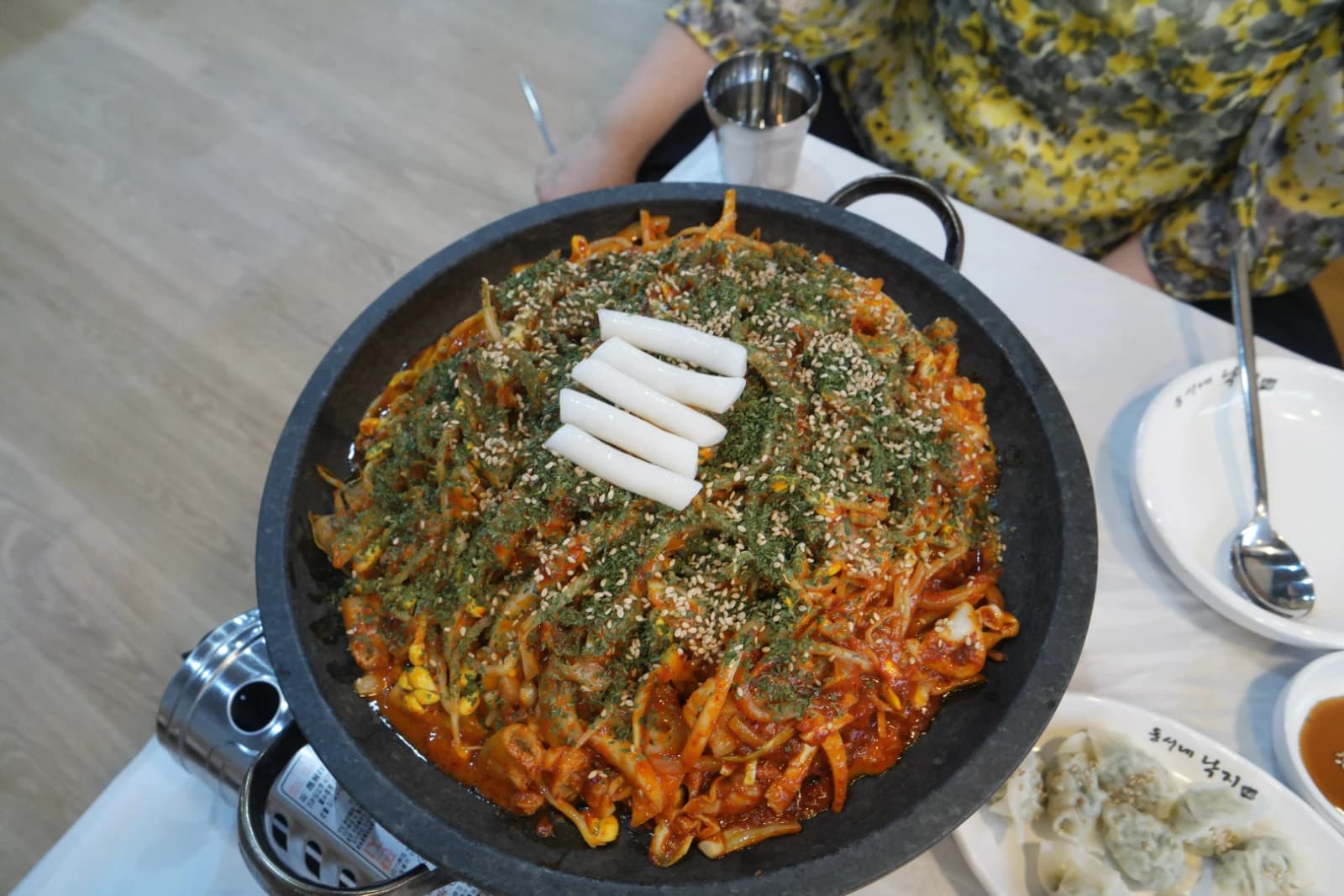
Finally, the main act. So-gopchang nakji bokkeum, often shortened to nakji-gopchang — nakji is a small, long-armed octopus, and gopchang means beef small intestines, both stir-fried together in a blazing gochujang sauce. It arrived piled high on a sizzling stone plate, glossy red, snowed under with roasted laver flakes and sesame seeds. Those white sticks sitting on top are garaetteok — cylindrical rice cakes that slowly soften in the heat of the plate. The smell hits you before you've even picked up your chopsticks, and because the stone keeps everything bubbling, anything touching the base will catch and burn if you dawdle. I took my photos quickly and dived in.
So-gopchang nakji bokkeum — rough prices
Prices vary by restaurant, but a two-person portion usually falls between £18 and £30 these days. Portions are generous, so two people often can't finish it, and adding the fried rice at the end is typically another £1–2.
A closer look at the stone plate
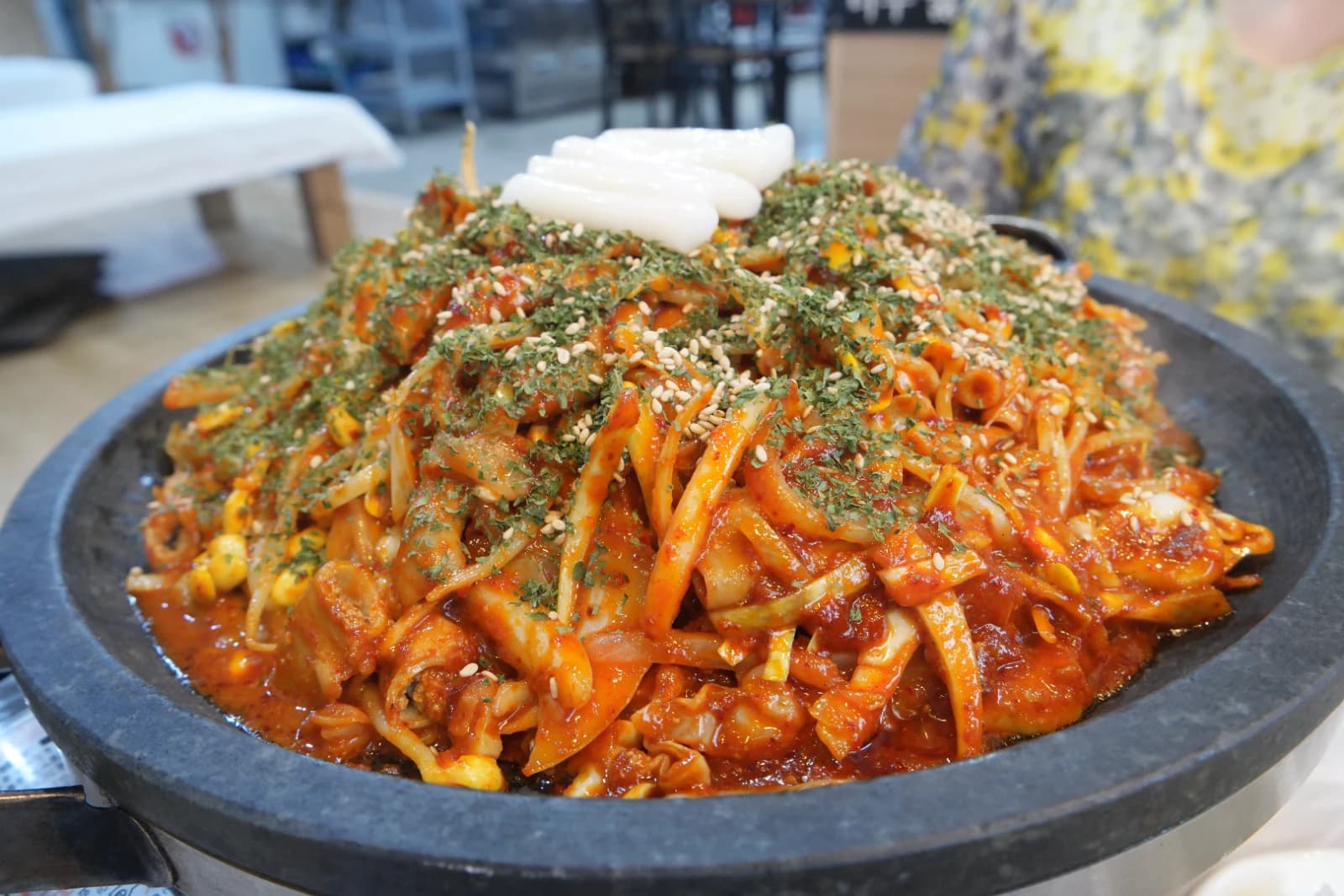
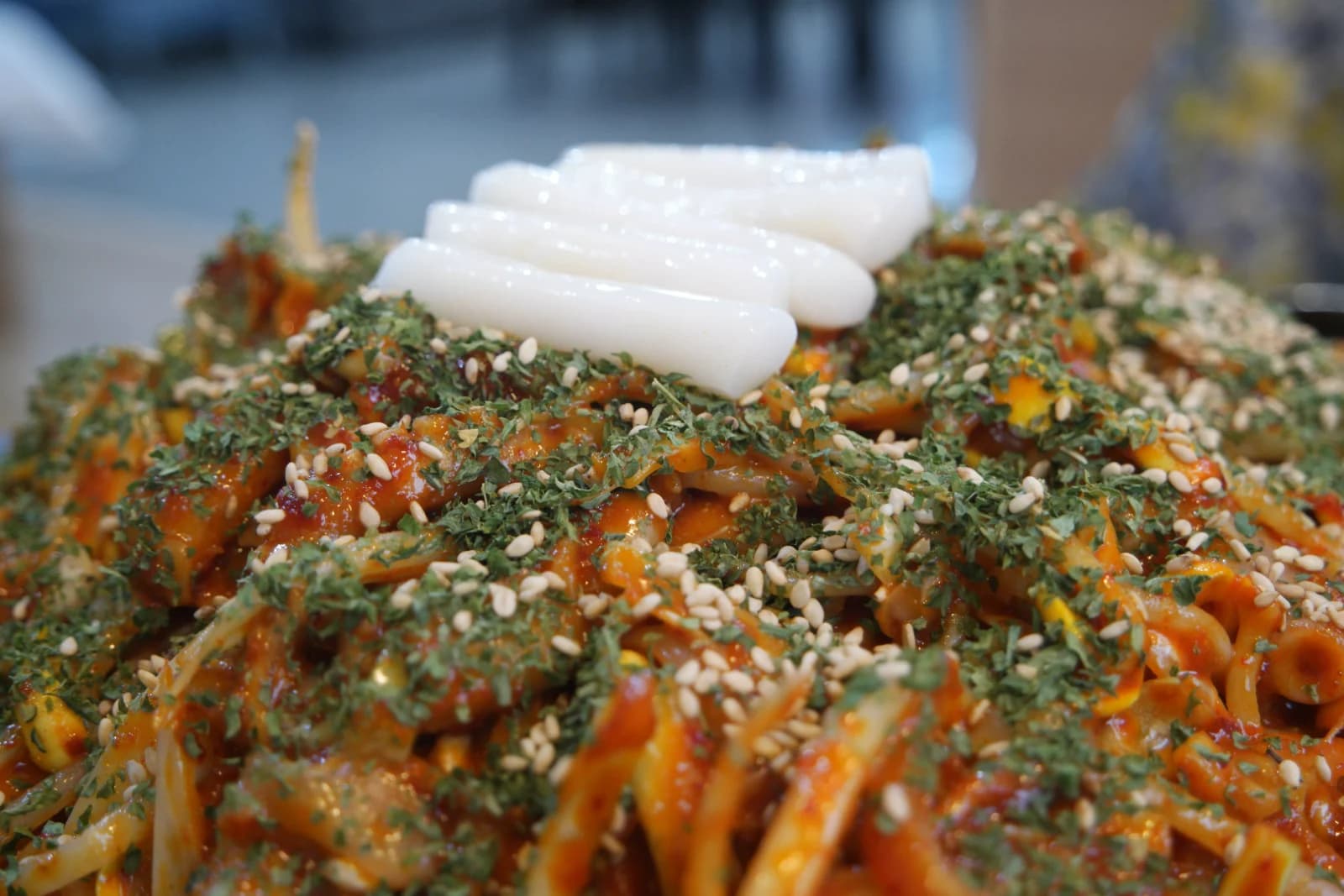
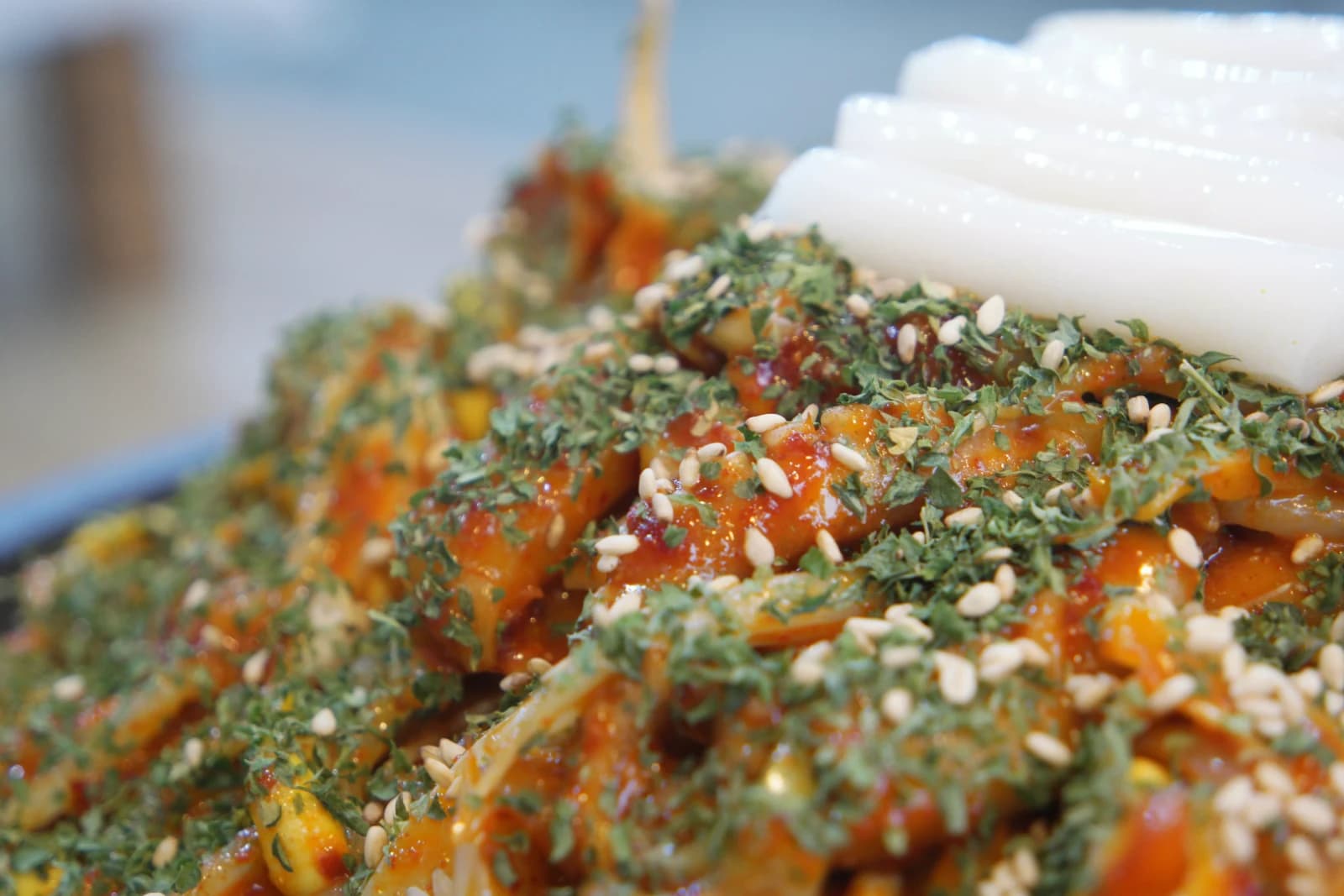
From the side you get a proper sense of the volume — the stir-fry is mounded up on the stone like a little hill. Lean in and you'll spot those white batons of garaetteok, long rice cakes made from ground rice. Push them down into the bubbling sauce and they soak it up like a sponge, turning chewy and properly coated. The laver and sesame blanket the top so from a distance it looks like one red mass, but up close the green and white flecks make it surprisingly pretty. Peek between the layers and you can see octopus arms curling through the sauce, with the yellow bits being bean sprout heads. Photos miss half of it — sitting in front of it, the gochujang aroma is constantly prodding your nose.
A proper look at the nakji-gopchang — octopus, intestines, and bean sprouts
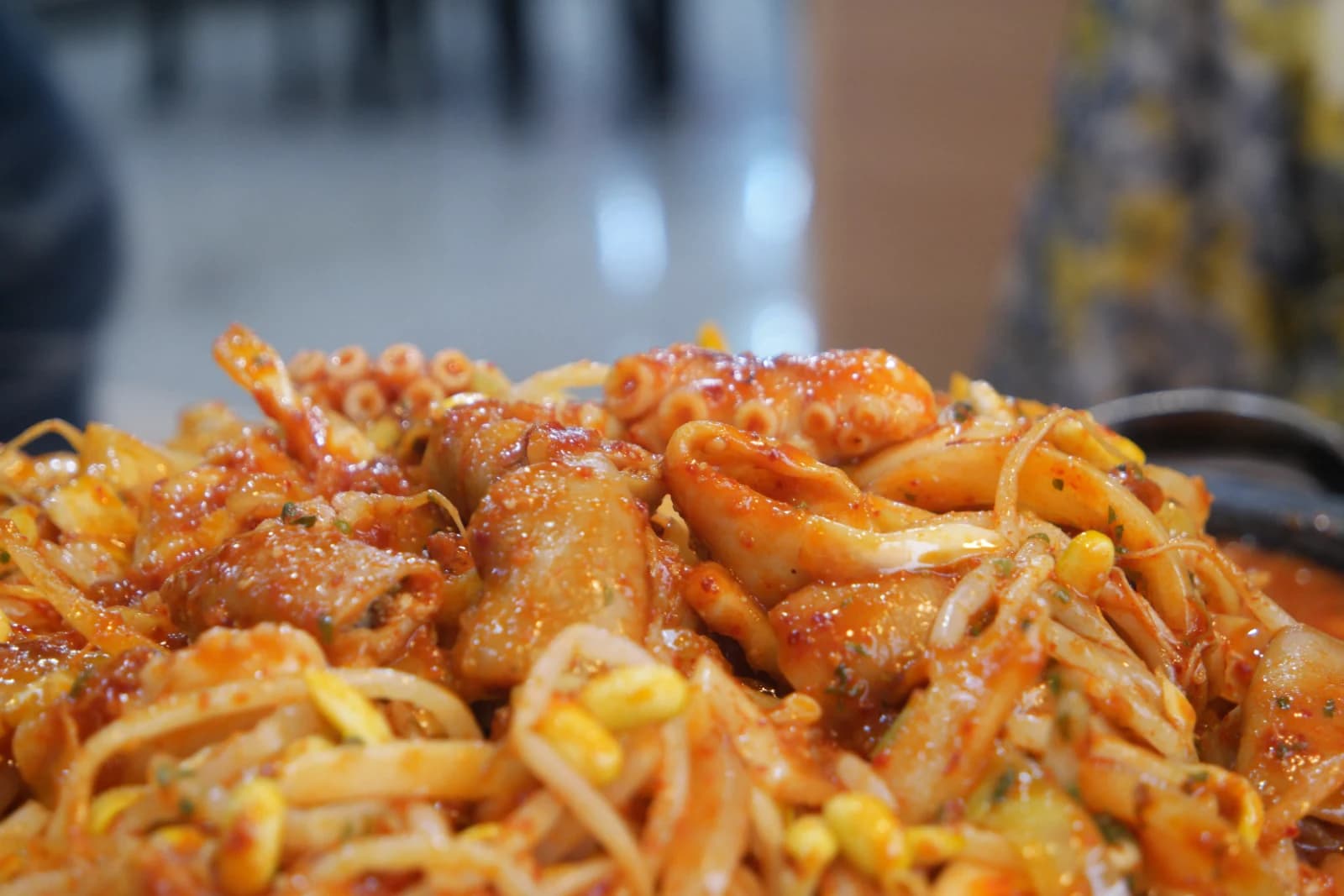
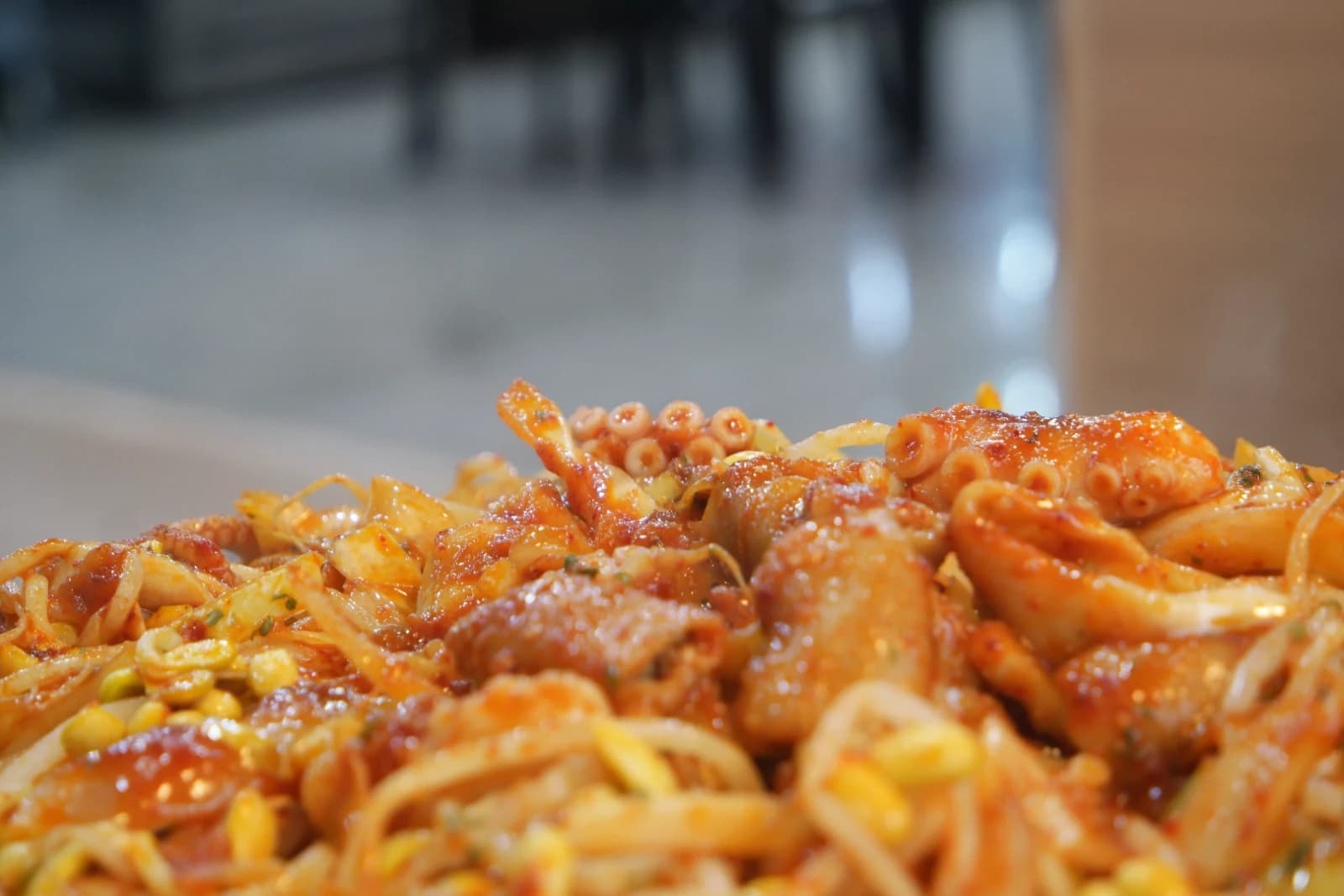
I pushed the seaweed topping aside and had a look at what was underneath. The suction cups along the octopus arms were clearly visible, with thick pieces of beef intestine next to them, shiny and slick with sauce. Gopchang refers specifically to the small intestines of the cow — chewy on the outside, but with a layer of fat inside that releases a rich, nutty juice the moment you bite in. Paired with a fiery sauce it doesn't feel greasy at all; if anything, the spice pulls the savouriness right up. At the bottom of the plate there's a thick bed of bean sprouts soaking up the sauce, and without them the richness would catch up with you after a few mouthfuls. Those crunchy sprouts are what keep you going back in. A single chopstick-load tends to come up with an octopus arm, a chunk of intestine, and a few strands of bean sprout all draped in sauce — that is what eating nakji-gopchang actually tastes like. Drop it onto a spoonful of rice and the rice vanishes. We ordered two extra bowls of rice and still came close to running out.
Once the sauce starts properly coating everything
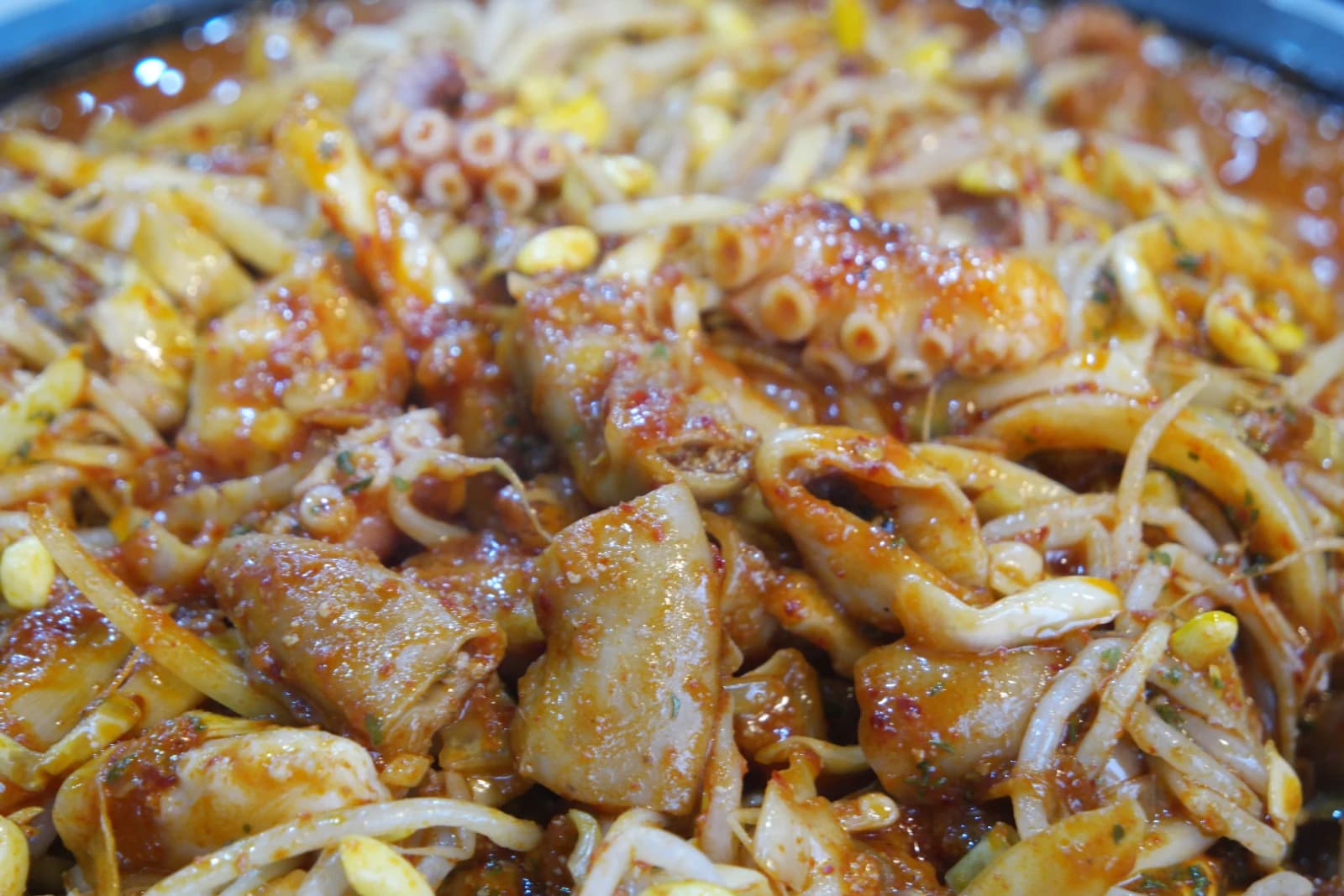
After a bit more stirring, the sauce really starts to work its way through.
With the layer of laver mixed in, every ingredient comes into view. The brown chunks in the middle are intestines — look carefully and you'll catch the ones sliced open, showing the soft centre. The outsides have taken on that reduced, sticky quality from simmering in the sauce, while the bean sprouts have wilted down and are now carrying the sauce with them rather than just sitting in it. What had started as a proper heap feels like it's halved in size. Around the edge of the stone plate, the sauce is bubbling away fiercely, and anything that catches on the rim — sprouts, bits of intestine — crisps up a little where it meets the heat. There's a real pleasure in scraping up the slightly charred edges, and Mum kept digging in the middle without realising, so I shoved a few crispy bits onto her spoon. After that, she only went for the edges.
That spicy sauce pooling at the bottom — it isn't over yet
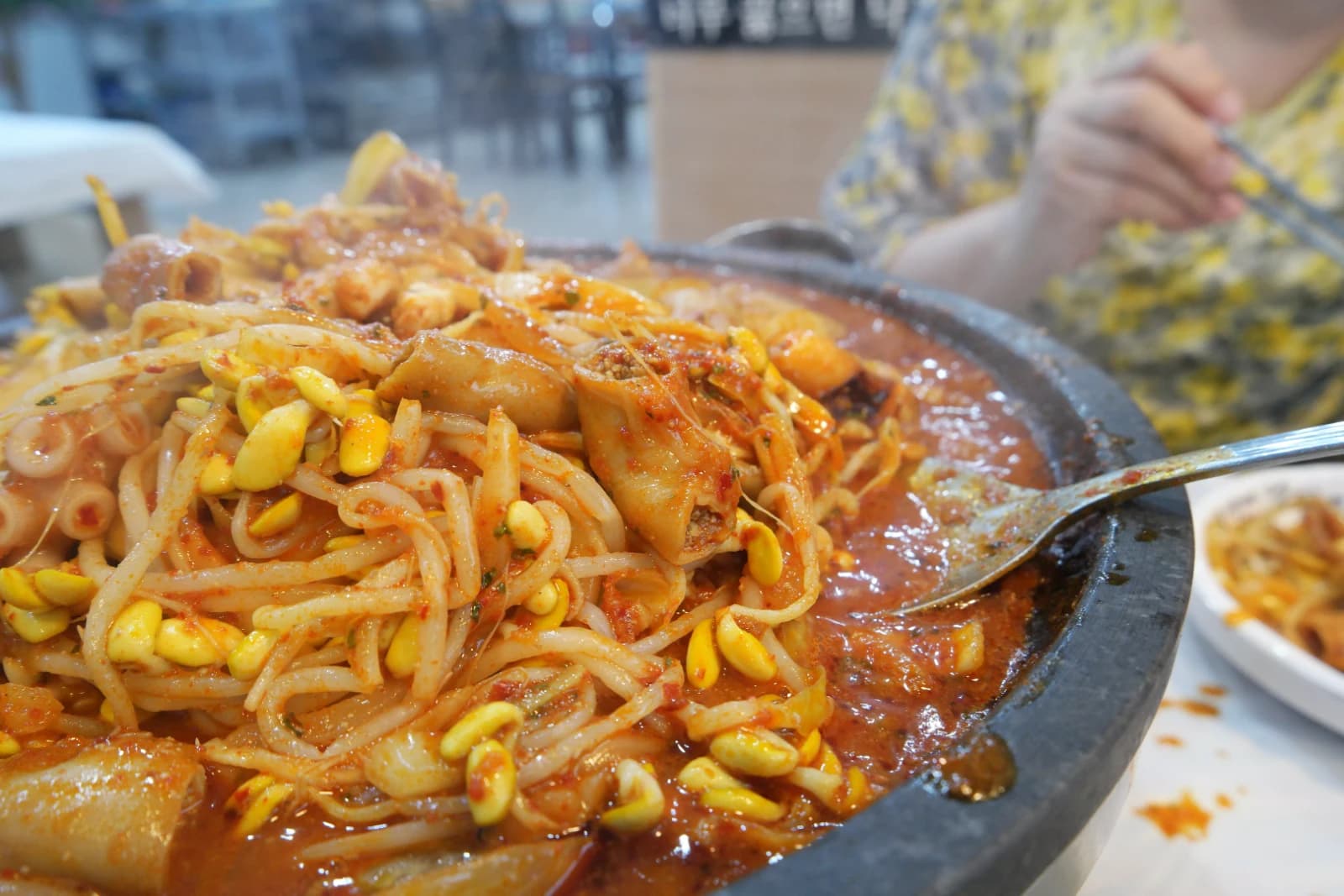
After a while I noticed sauce starting to collect at the bottom of the stone plate. It began as more of a dry stir-fry, but as the ingredients let go of their moisture and the seasoning loosened, a proper shallow broth formed underneath. And this is where it goes from good to ridiculous. The savoury notes from the octopus and intestines thicken up the sauce into something dark, rich and properly spicy — one spoonful over plain rice and the bowl practically eats itself. The bean sprouts drink it all in, so even a forkful of just sprouts is brilliant. The rice cakes, by this point, have gone completely soft and saturated, so when you bite one it gives you chewiness and fire in the same mouthful. On the right of the photo you can see a bit that we'd spooned into a side plate — scooping the stir-fry out and mixing it with rice on the side is one of the proper ways to eat this. Going straight from the stone plate is a recipe for scalding the roof of your mouth, but I'm impatient by nature, so I carry on regardless and burn my tongue every single time. This night was no exception.
When the bits are gone — what you do with the sauce
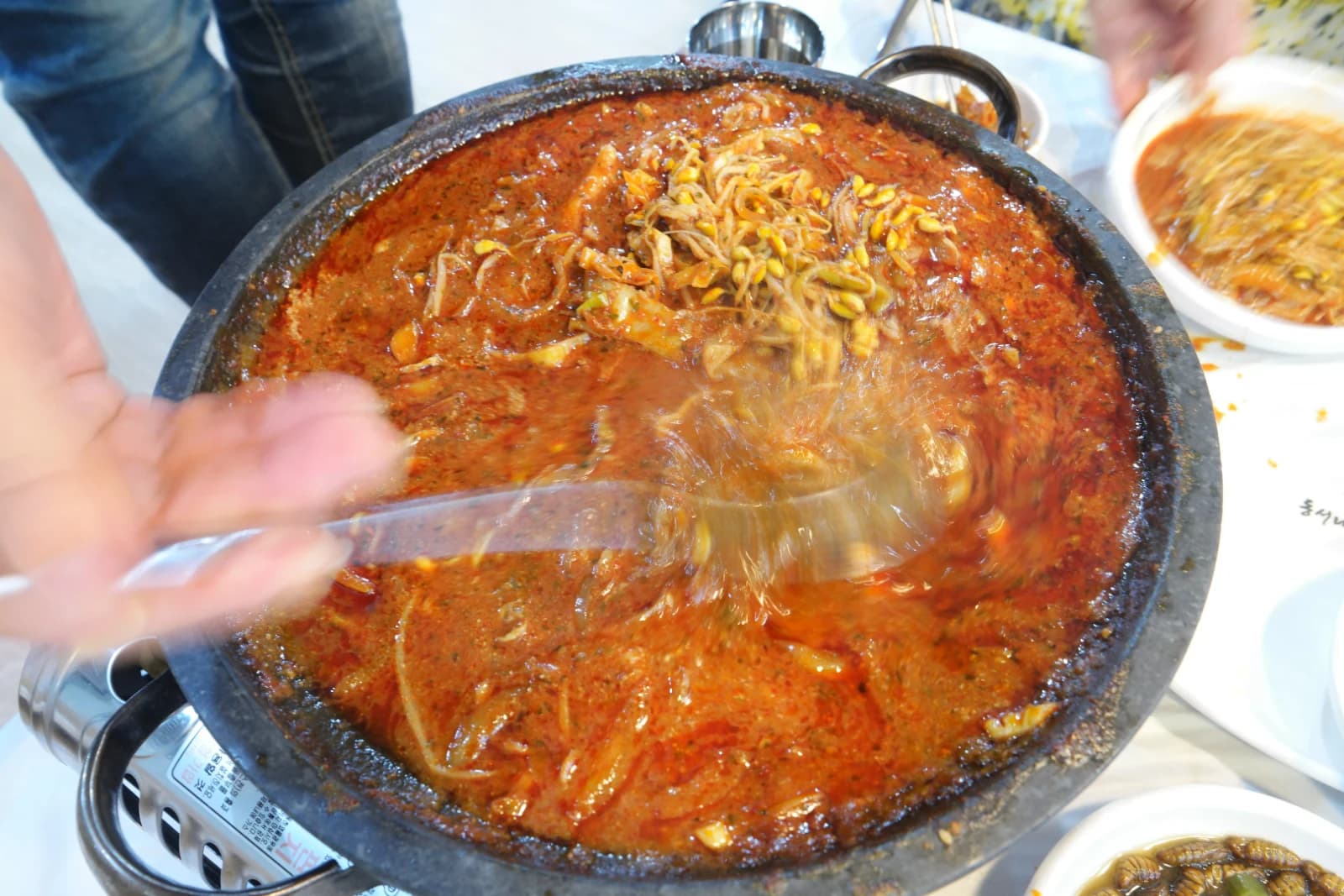
Once you've worked through most of the octopus, intestines and sprouts, all that's left is a red pool of sauce. But nobody's throwing that away. A member of staff came over, tipped a bowl of rice straight into the plate, and started working it through the sauce with a large spoon, coating every grain. This is where so-gopchang nakji bokkeum steps up again. With all the savoury juices from the octopus and intestines already dissolved into the sauce, the whole thing rolls straight into bokkeum-bap — Korean fried rice — without missing a beat.
The fried rice — do you want it soft or crispy at the bottom?
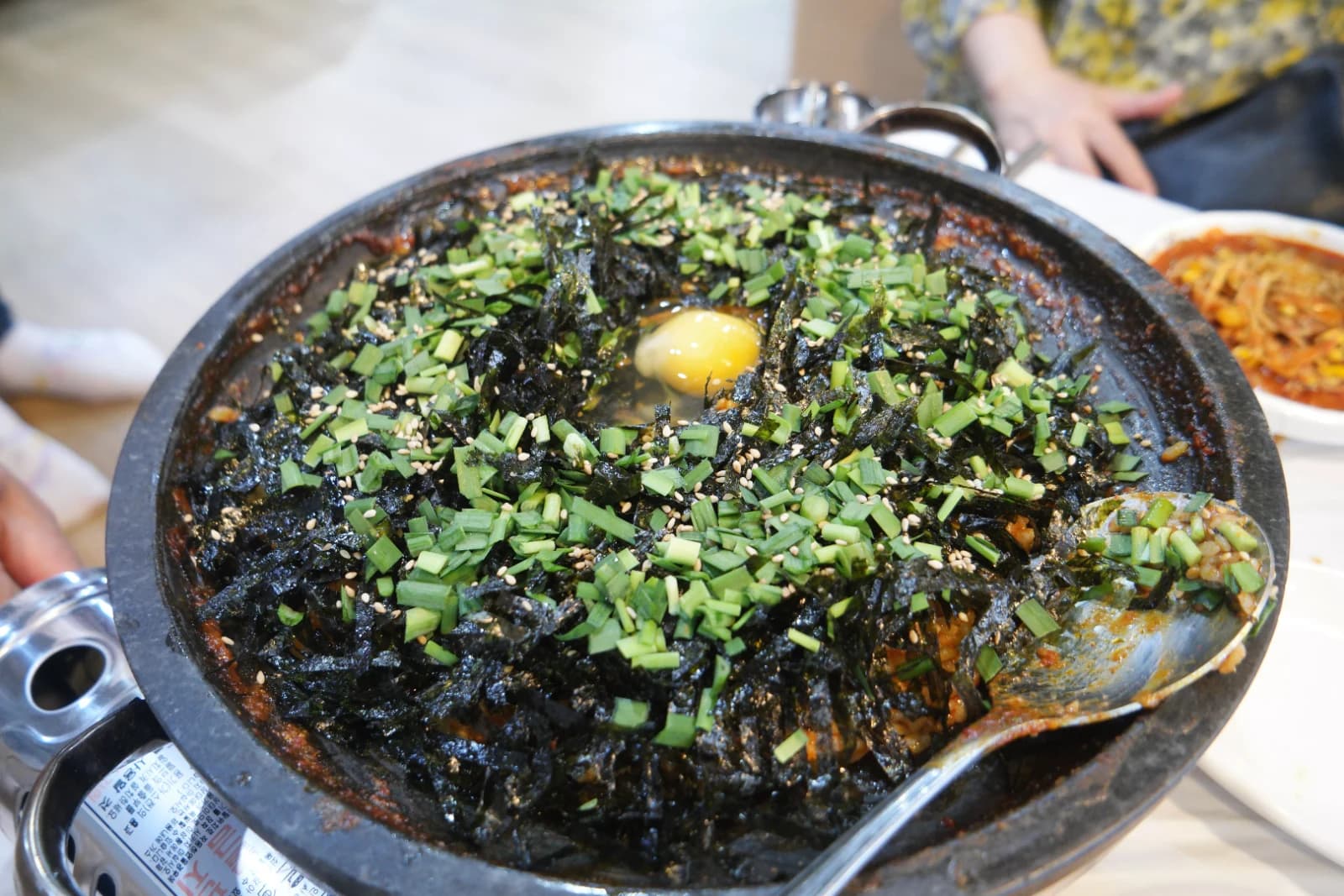
Koreans call this bokkeum-bap, and it's made by frying plain rice through whatever seasoning is left on the stone plate. The top is blanketed in laver and sprinkled with buchu — a thin, flat green herb something like chives, only more pungent. That bright yellow ball in the middle is a raw egg yolk, which you burst and fold through to add a soft, rich note on top of all the heat. And this isn't rice fried in plain sauce — it's rice fried in the sauce left behind by the octopus and gopchang, which by this point is carrying all the seafood umami and intestinal richness in one go. No extra seasoning needed; every grain has already been flavoured. Staff start it off for you, but from halfway through you're on your own. Here's where things get personal — do you want it softly folded through, or pressed down and left to crisp up on the hot stone? I'm firmly in the crispy-bottomed camp — the rice that sticks and turns golden, like nurungji (scorched rice), is easily my favourite part. The moment the fried rice landed, Mum said, "I should have rationed my rice earlier." We'd already polished off two extra bowls with the stir-fry, both of us half-defeated and still spooning away. I hadn't realised until that evening that so-gopchang nakji bokkeum isn't really a single dish — it's a two-act meal that ends with fried rice.
Where to actually find so-gopchang nakji bokkeum
By the time we'd scraped the fried rice clean, neither of us could speak. Far too full. Mum ordered a sikhye (sweet rice drink) and asked how on earth I'd found the place, but honestly I'd just searched online near my flat. Nakji bokkeum specialists are all over Korea — Seoul, Busan, Daejeon, any mid-sized city has a few — and searching "나ak-ji-bok-eum" or "nakji-gopchang" usually turns up neighbourhood options in seconds. Dongseone Nakji itself still trades in Daejeon's Dunsan-dong area, as well as Iksan and Gwangju. It isn't a street-cart dish either; it's a proper sit-down restaurant affair.
It isn't as famous abroad as tteokbokki or samgyeopsal, but it's the kind of thing people come back to once they've tried it. On the way home Mum said, "Next time we'll bring your dad along," and I still think that's about the clearest review anyone could give this dish.