Blood Sausage Soup Done Right — Seasoning Sundae Gukbap Step by Step
Table of Contents
13 items
Walking into a pork broth soup shop after a night shift
Sundae gukbap is a pork bone broth soup loaded with Korean blood sausage, boiled pork and offal — one of those comfort food staples that Koreans eat for breakfast, as a hangover cure, or simply when the weather turns cold. My wife and I stumbled into a small neighbourhood shop in Daejeon, a mid-sized city roughly an hour and a half south of Seoul by train, on our way home after I'd finished a night shift. It was early April, the morning air was properly cold, and my stomach was completely empty. The smell of simmering pork bones drifted out of an alley and that was it — decision made. I pointed at the sign and said "Let's go in there," but my wife took one look and went "You know I can't eat sundae." "They do plain pork soup too." That one sentence was enough, and in we went. We hadn't planned this at all. We just spotted it while walking and ducked in.
One sundae gukbap, one dwaeji gukbap — that's plain pork soup, same broth but no blood sausage. Each was ₩9,000, roughly £5 a bowl, so £10 for the two of us. For a proper filling breakfast with unlimited side dishes, that's hard to beat. It was early enough that we were the only customers in the place.
My wife isn't Korean, but after living here together she's grown to love soup-and-rice dishes. Sundae, though — that's still a hard pass. The filling inside Korean blood sausage includes glass noodles and pork blood, and the look of it puts her off. She always orders dwaeji gukbap instead. Plenty of Korean people can't stomach sundae either, mind you, so it's not a foreigner thing. It's just personal preference.
Sundae Gukbap
After a night shift, as a hangover cure, or a solo meal on a cold morning — the moments Koreans reach for a bowl of gukbap
🫀 Not for everyone
It contains pork offal and blood sausage, which can be off-putting at first. Even some Koreans can't handle it — so you're not alone if it's not your cup of tea.
🍚 Great for solo dining
One bowl is a full meal. There's absolutely nothing awkward about going on your own. Korean gukbap shops are full of people eating alone — that's the whole point.
💰 Price range
₩9,000–₩12,000. The one we had was ₩9,000. That's roughly £5–£7 a bowl at current rates.
Can't face the blood sausage?
Order dwaeji gukbap (plain pork soup) at the same restaurant. Same broth, same price, but with sliced boiled pork instead of sundae. That's what my wife always gets.
We only ordered two bowls, but the whole table was covered
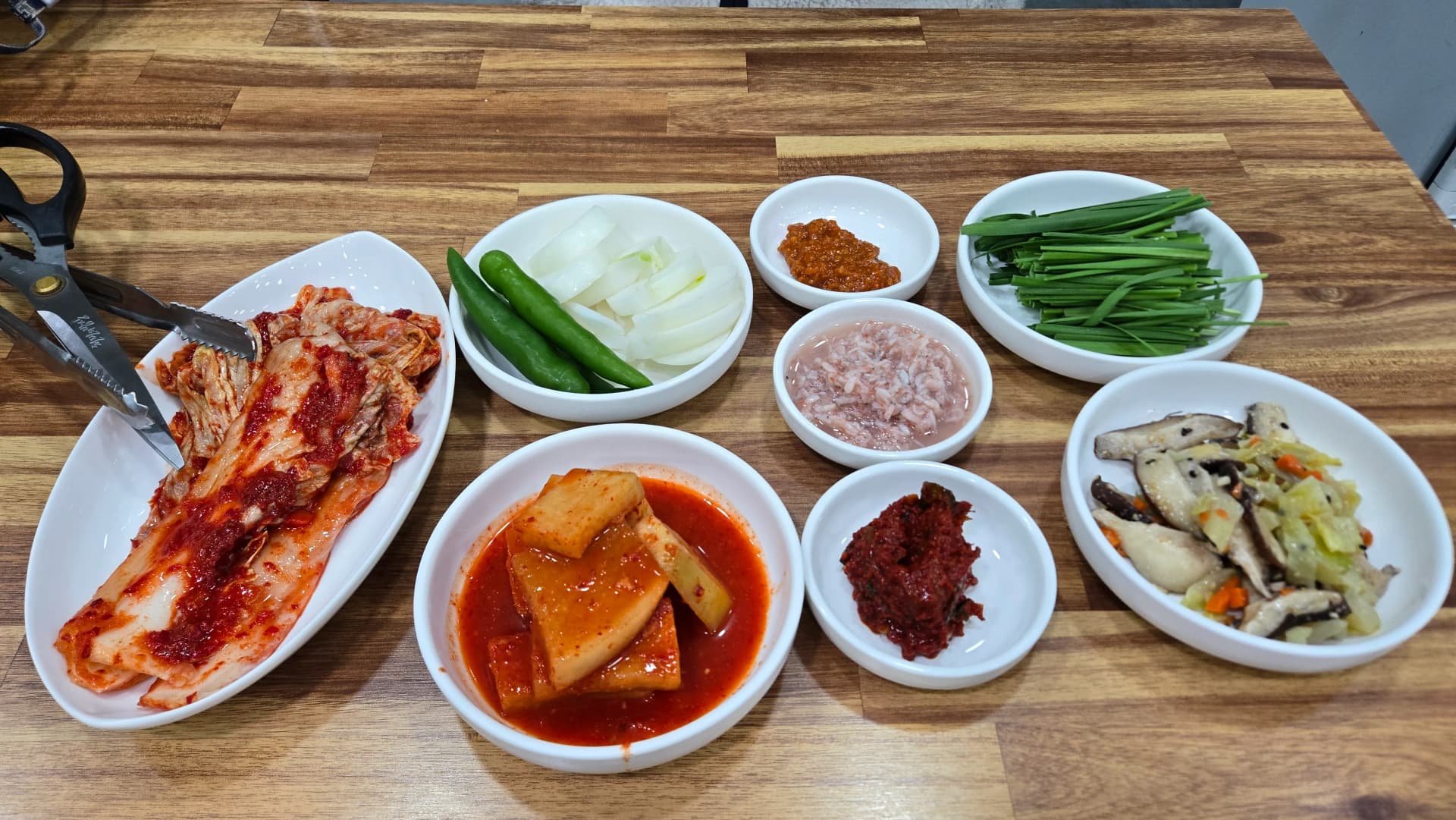
One sundae gukbap, one pork gukbap — that's all we ordered, and yet there wasn't a spare inch of table. When my wife first came to a Korean restaurant, she saw the spread and went "Did we order all of this?" No, love — this is just how Korea works. You order one main dish and the side dishes appear automatically. No extra charge, and if you run out, you just say "More please" and they bring it straight over. It's one of those things about Korean dining culture that catches people off guard. Unlimited refills on everything except the main bowl.
Kimchi — grab the scissors
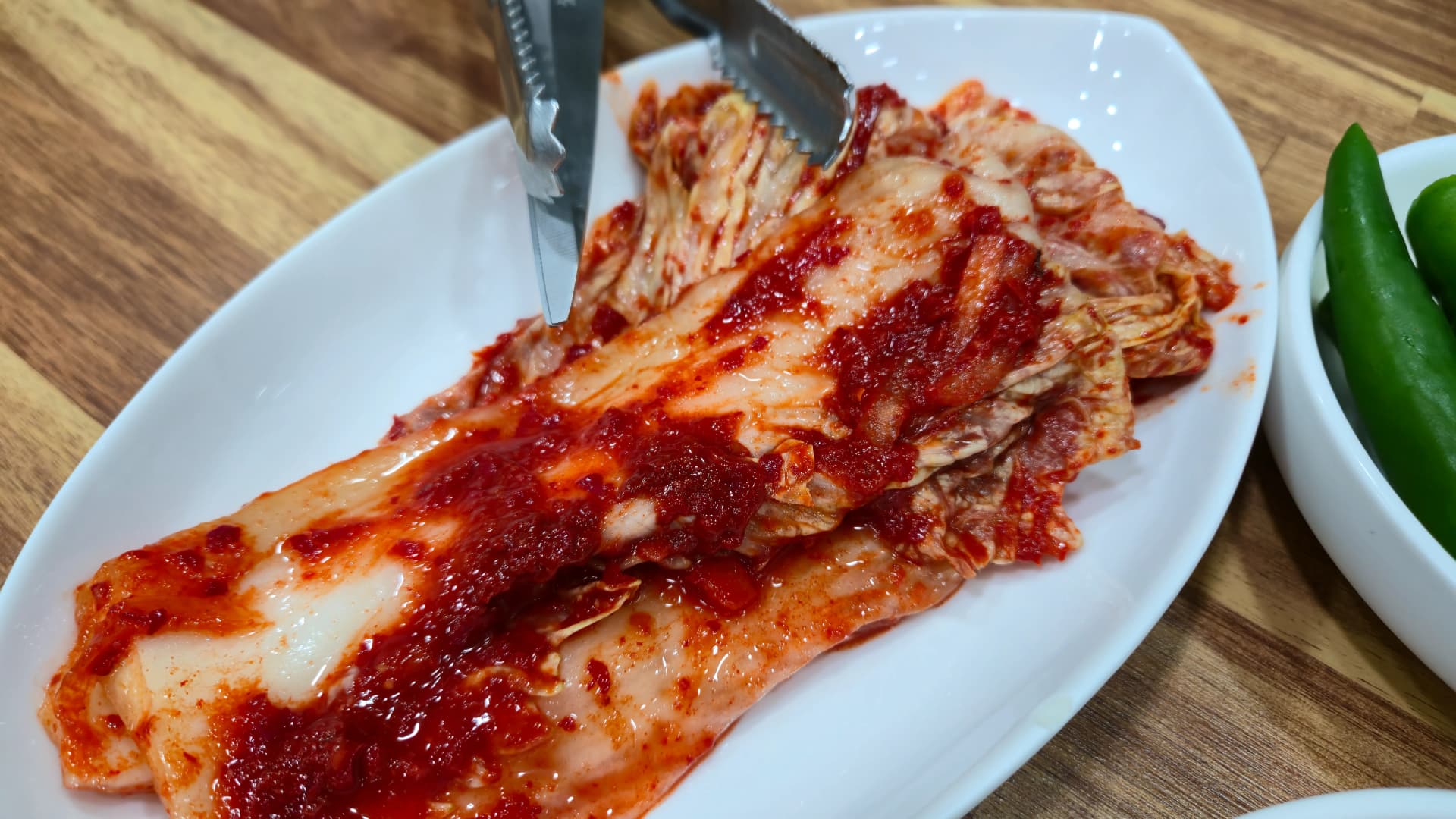
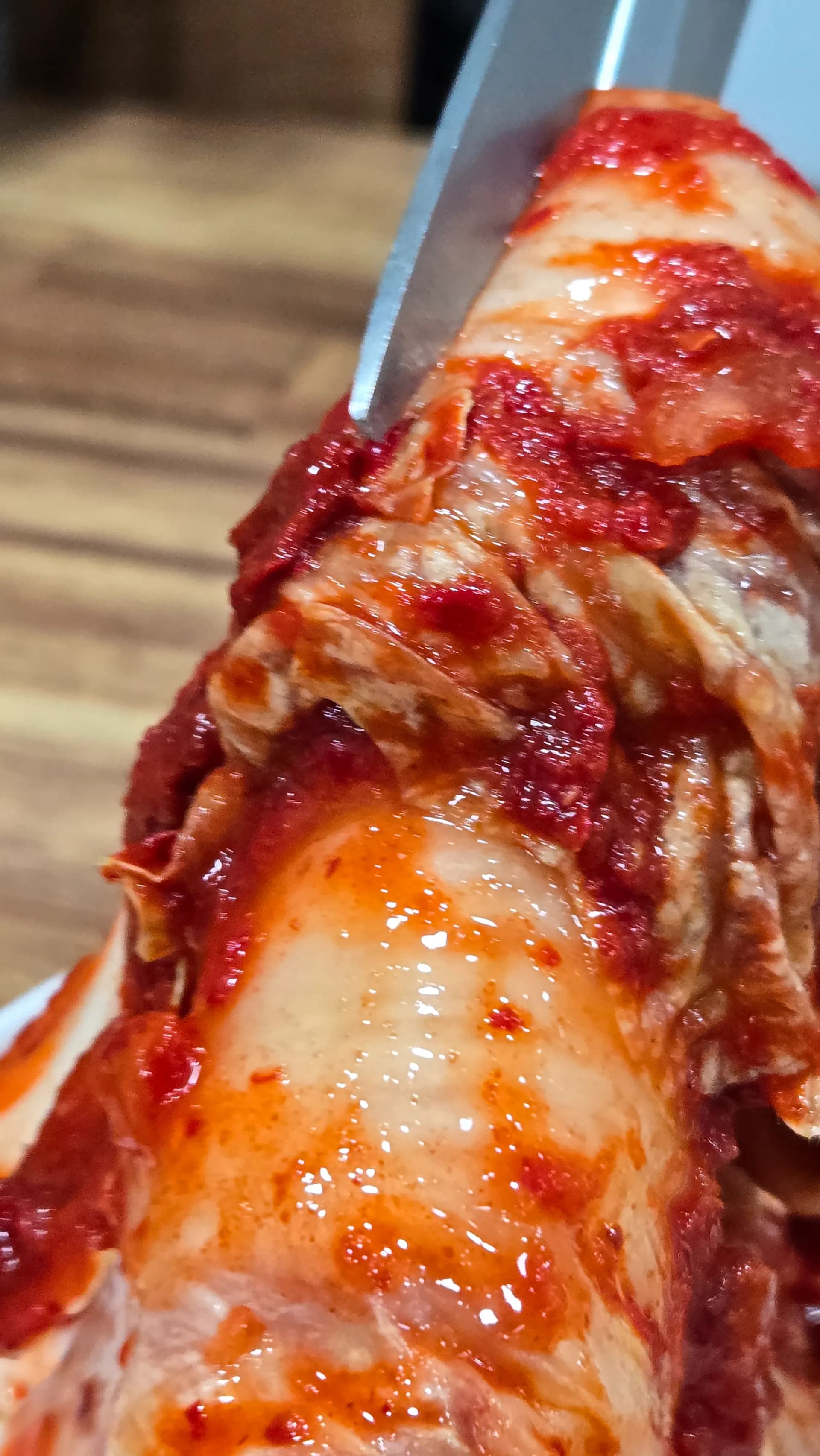
The kimchi arrived in whole leaves. Don't try to shove that in your mouth in one go — you'll regret it. Korean restaurants always have scissors on the table, and you just snip the kimchi into manageable pieces. If you're from the UK, using scissors on food probably feels a bit odd. In Korea it's completely normal. My wife stood there holding the scissors with a blank look the first time. Now she grabs them before I do.
Kkakdugi, green chillies, and side dishes
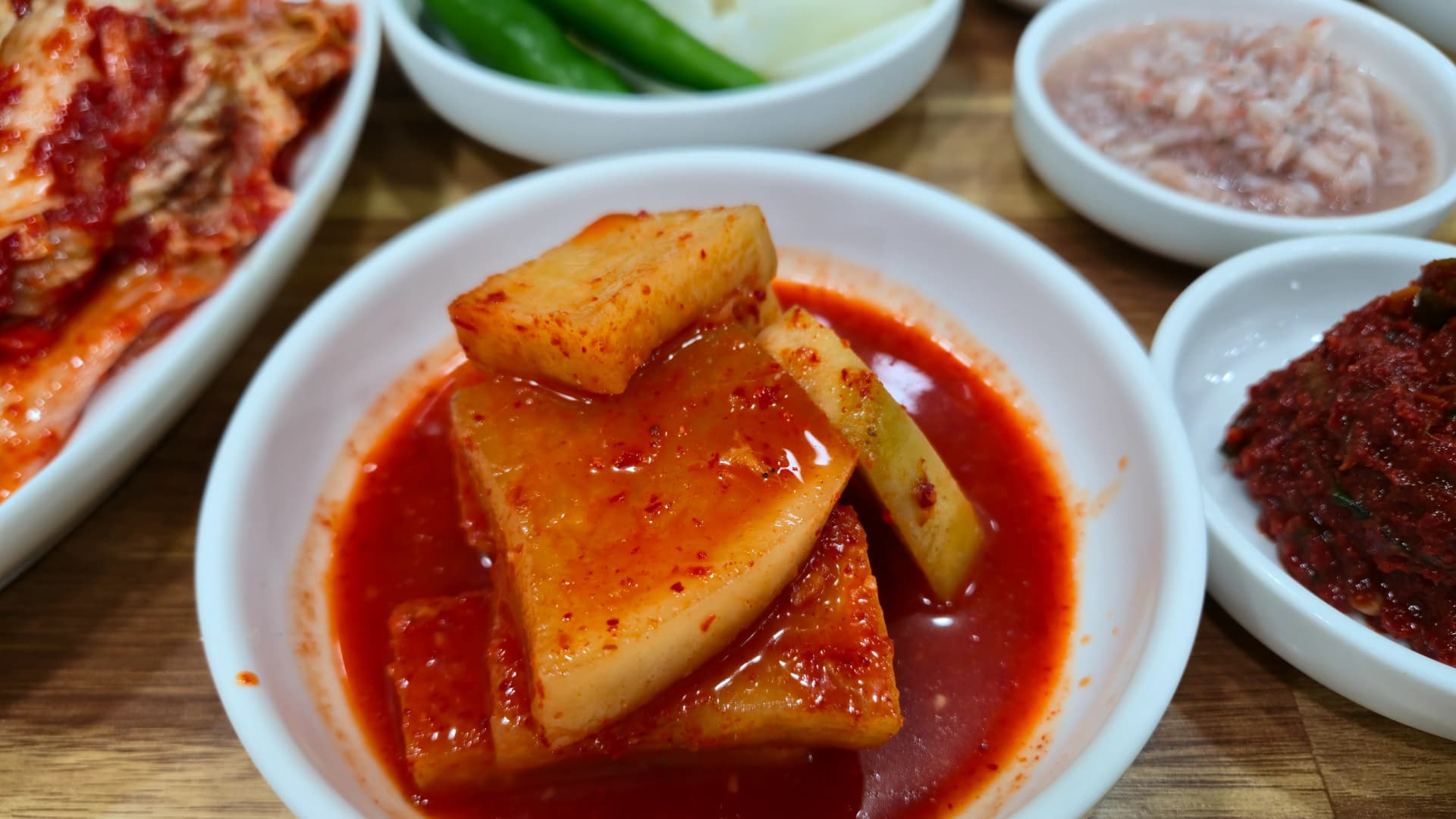
Kkakdugi — cubed radish kimchi with a seriously satisfying crunch. My routine goes like this: a few spoonfuls of broth, then one cube of kkakdugi, then back to the broth, then another cube. Alternating like that stops the whole thing getting monotonous and keeps every mouthful interesting. Think of it a bit like how you'd reach for a gherkin between bites of a heavy pie — it resets your palate.
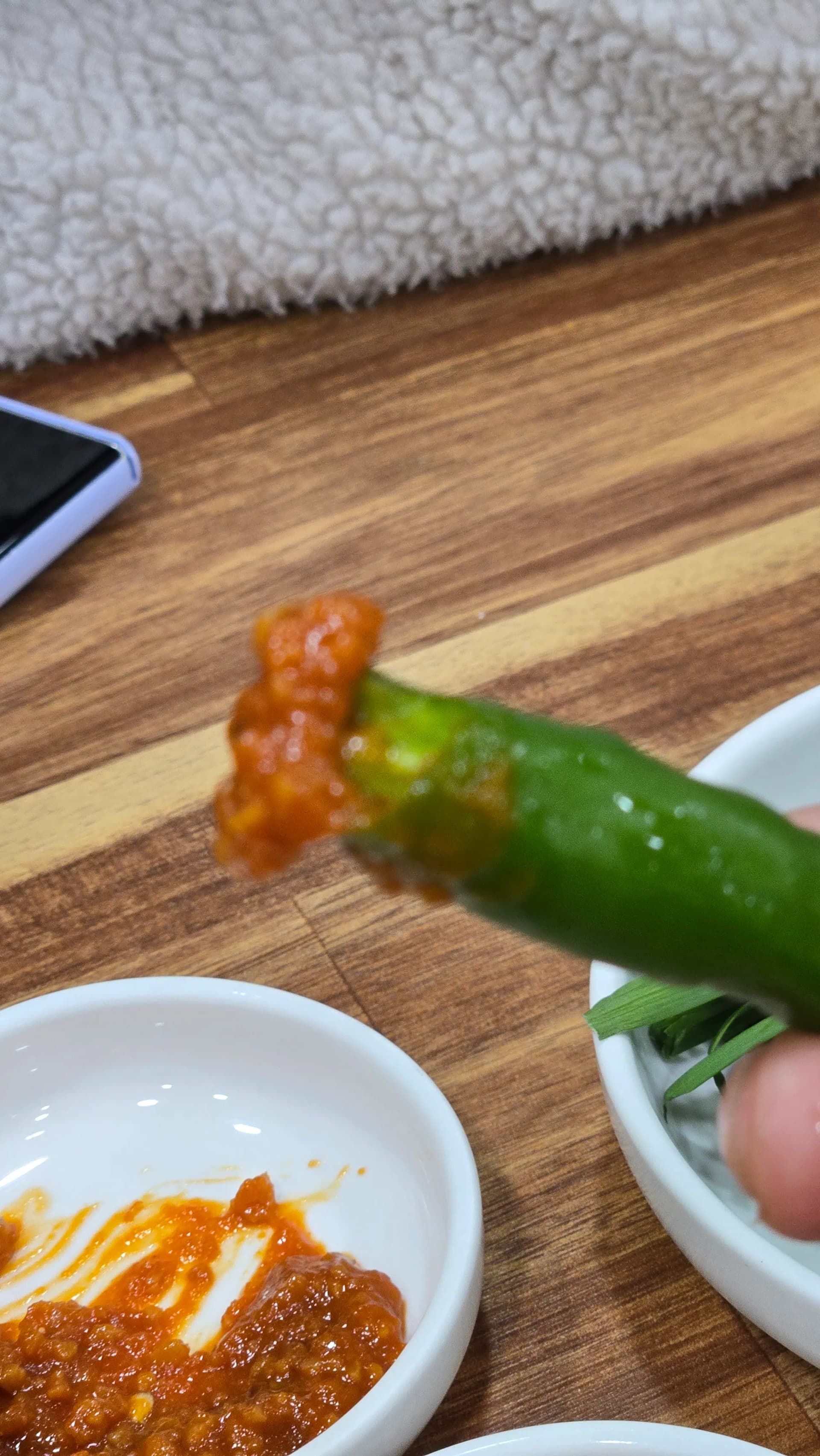
Cheongyang chillies. You dip them in ssamjang — a thick, savoury paste — and bite straight into them. These are one of the hotter varieties of Korean chilli. My wife once bit into a whole one without thinking and ended up downing three glasses of water. If it's your first time, nibble just the very tip to gauge the heat before committing.
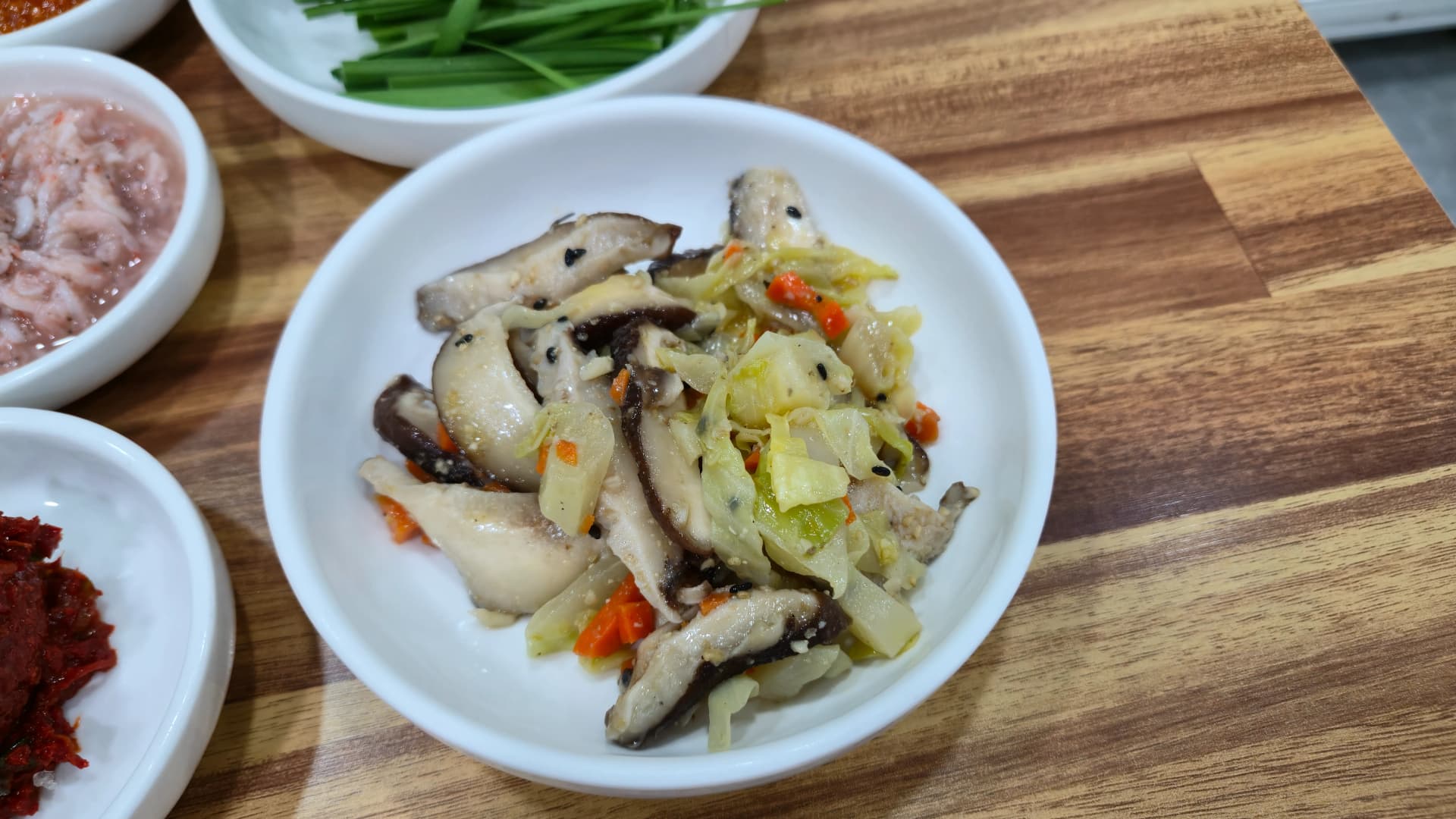
Side dishes vary from restaurant to restaurant. This place served sautéed mushrooms, but elsewhere you might get spinach or beansprouts. Kimchi and kkakdugi are universal — you'll get those everywhere in Korea — but the rest depends on whatever the kitchen feels like that day.
The pork bone broth and what's hiding underneath
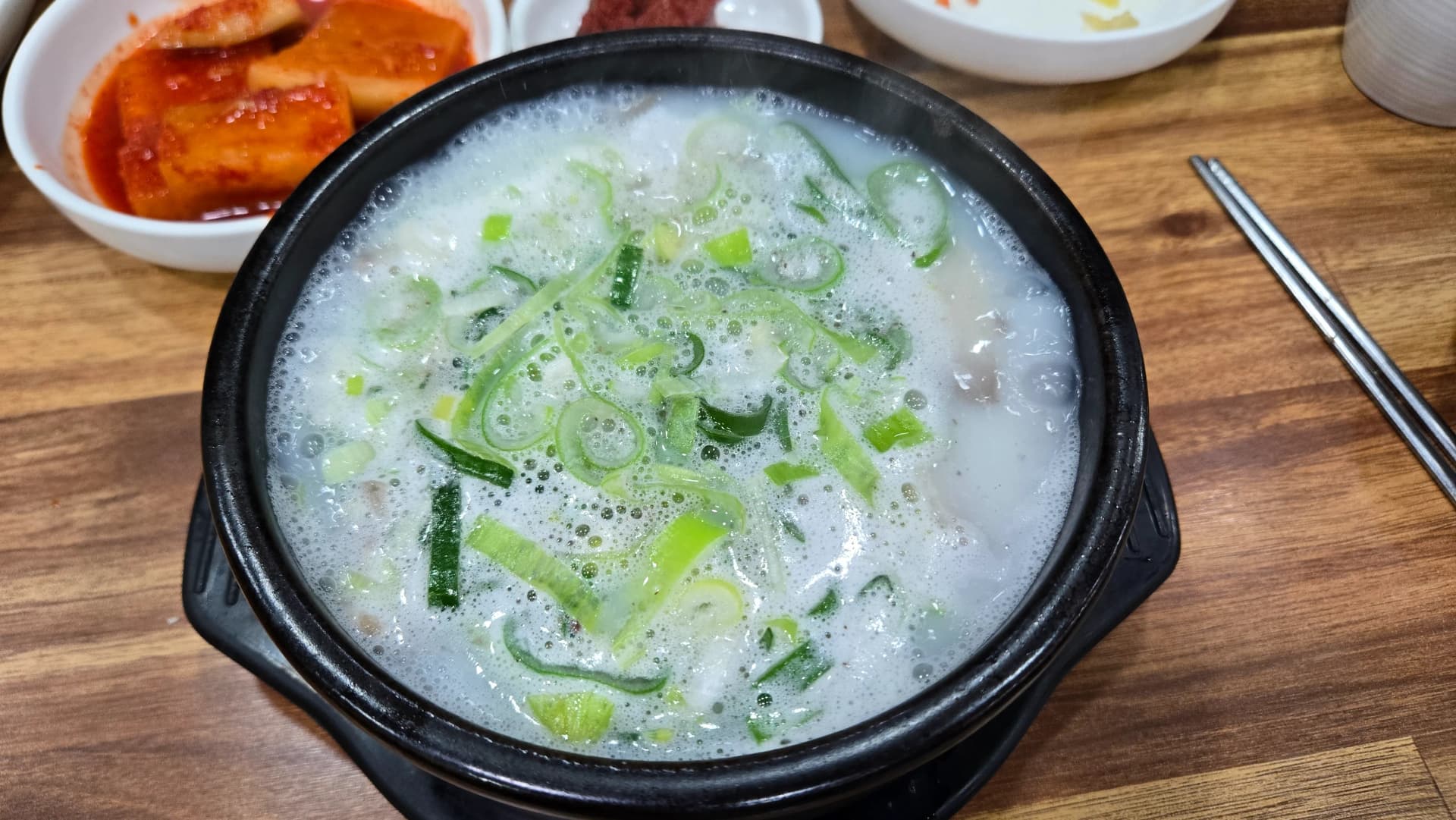
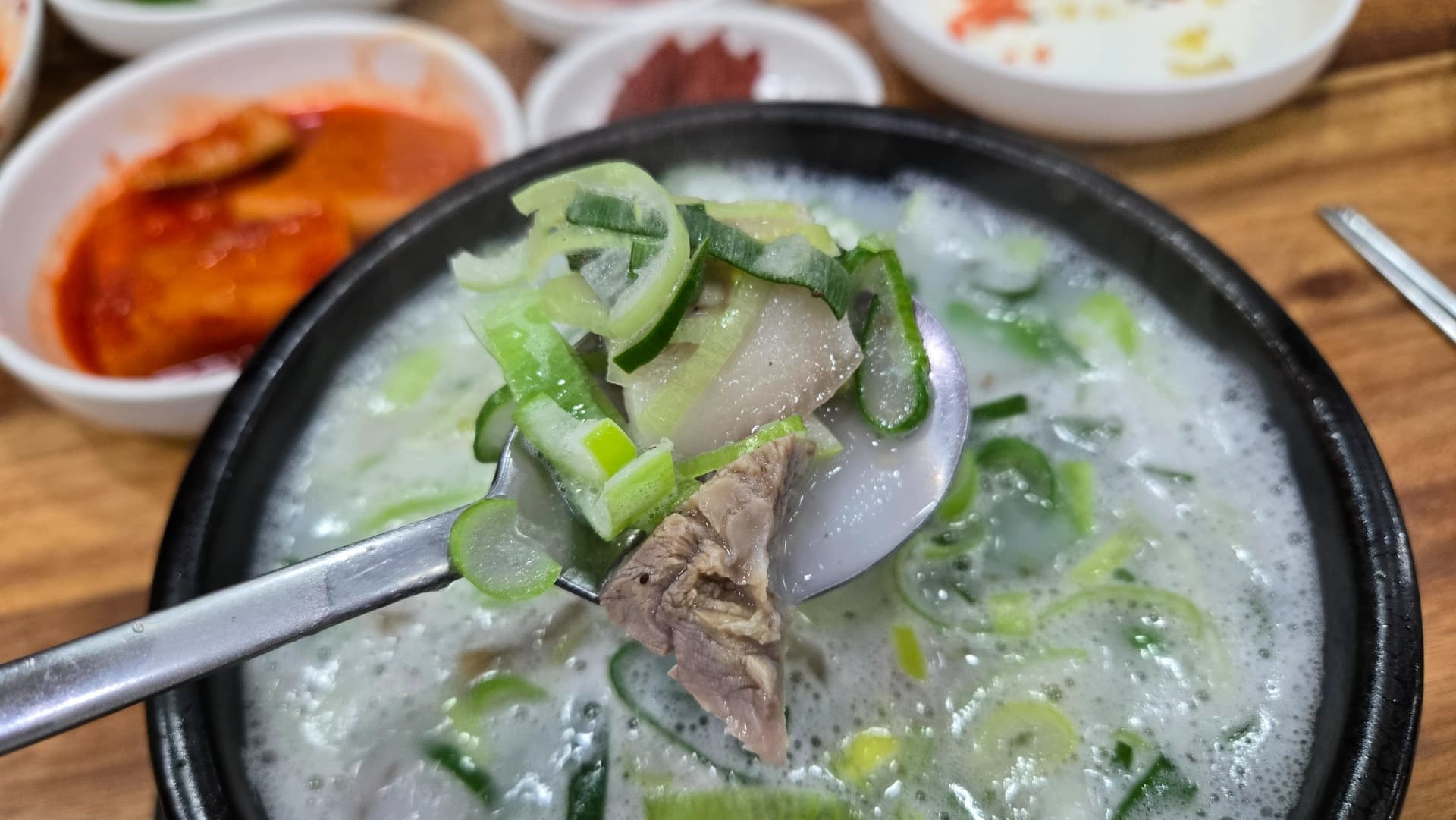
The broth is a thick, milky white. That colour comes from simmering pork bones for upwards of eight hours — similar in principle to a tonkotsu ramen base, but thinner and less oily. At first glance it looks bland, almost like it hasn't been seasoned at all. Here's what surprised me when I first had it: that blandness is deliberate. Give it one stir with your spoon and suddenly sundae, sliced boiled pork, and offal come rising up from the bottom. My wife peered into my bowl and shook her head. "I could never eat that," she said. Fair enough — hers had none of that in it.
Boiled pork — the star of dwaeji gukbap
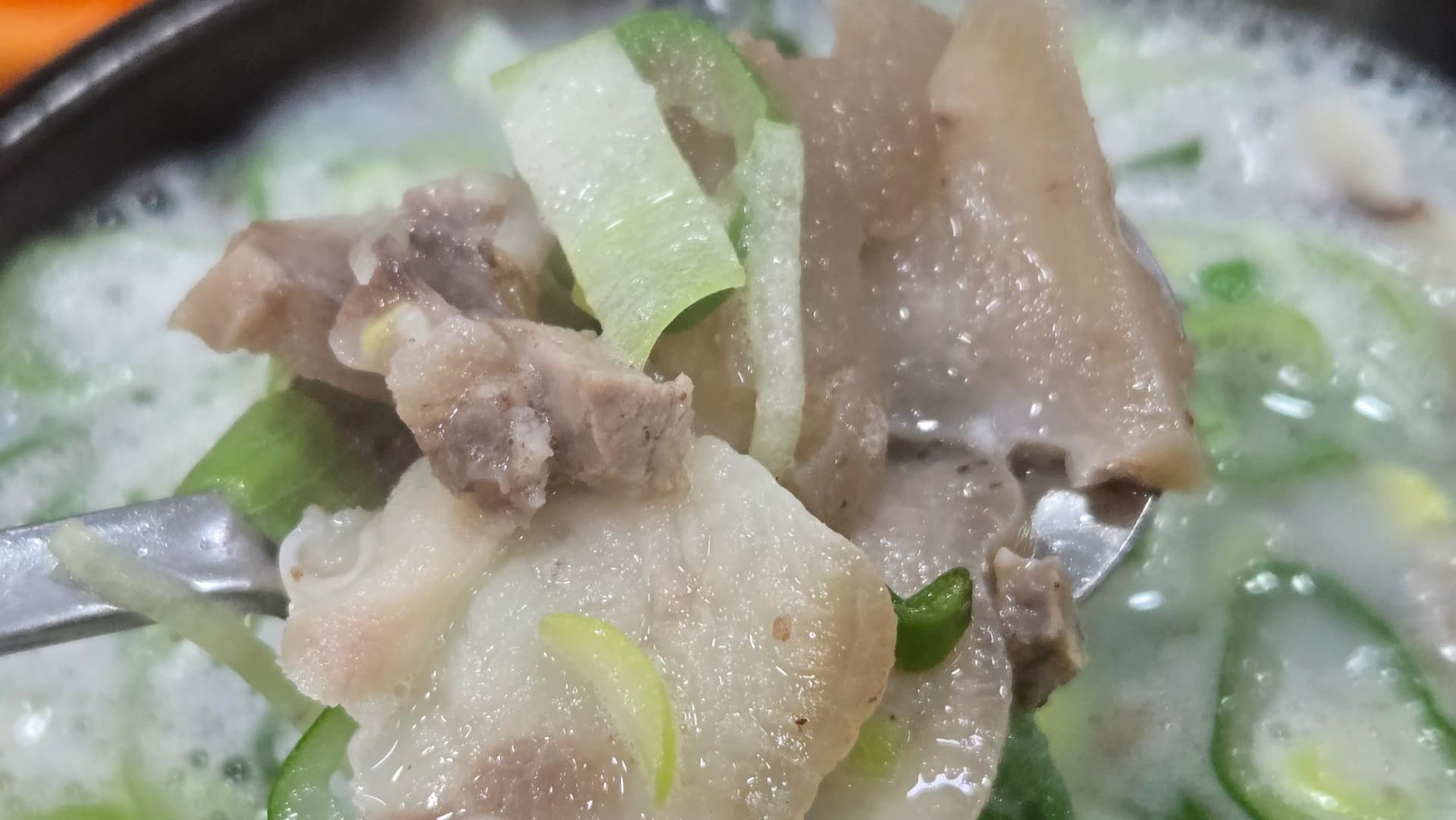
This is the boiled pork. The piece that came up had the skin still on, giving it a pleasantly chewy bite without being rubbery. Having been simmered in the broth for ages, there was zero gamey smell. My wife happily ate the pork pieces in her bowl. If you order dwaeji gukbap, you'll get mostly this kind of pork — so if offal isn't your thing, that's the way to go.
Sundae — strange at first sight, but worth it
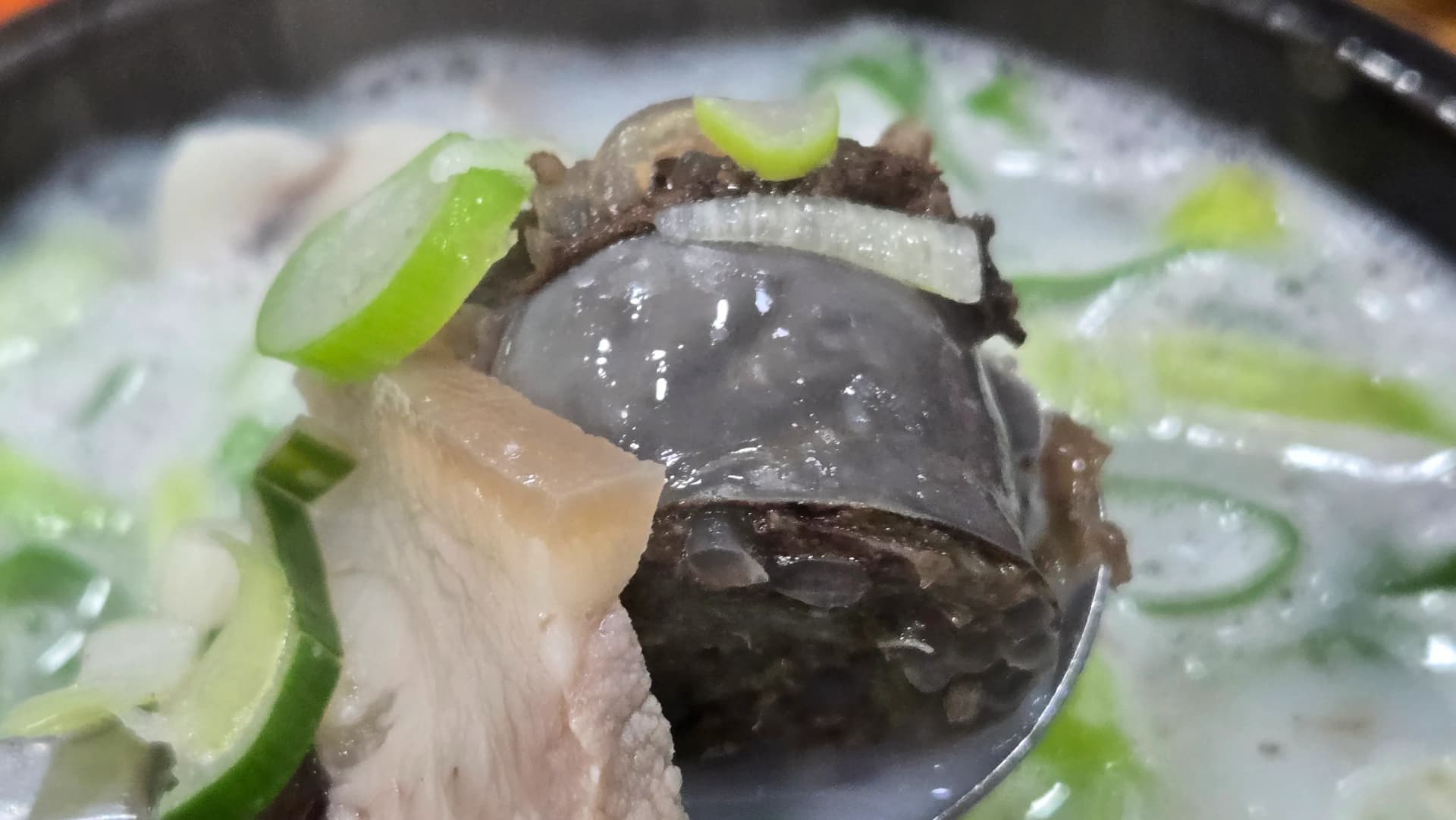
This is sundae — Korean blood sausage. It's pork intestine casing stuffed with glass noodles and pork blood, which gives it that dark colour. I said to my wife "Just try one piece?" She picked one up with her chopsticks, stared at it for a good while, then set it back down. "Maybe next time..." she said, but her eyes told me that next time was never coming. The flavour is actually quite mild and subtle. Some people even find it a bit bland on its own, which is exactly why you dip it in the seasoning paste or eat it soaked in the broth.
How to season sundae gukbap — you build the flavour yourself
This is the part that catches most first-timers out. Sundae gukbap arrives at your table with almost no seasoning. If you eat it straight as it comes, it'll taste flat and you'll wonder what the fuss was about. The whole point of this comfort food soup is that you build the flavour yourself using the condiments on the table. What looks like a boring bowl of white broth transforms into something completely different once you've finished seasoning it.
Adding kkakdugi juice
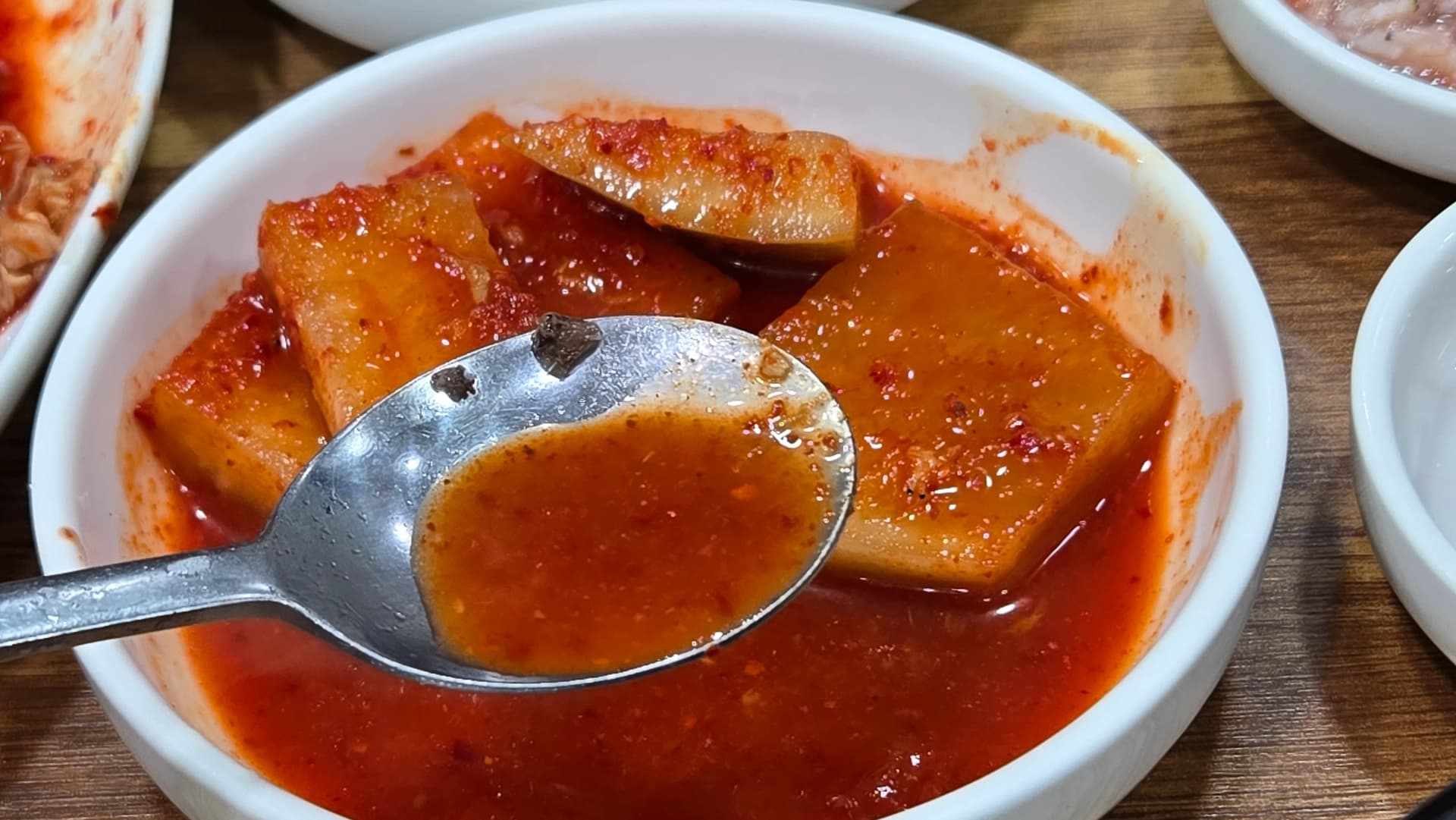
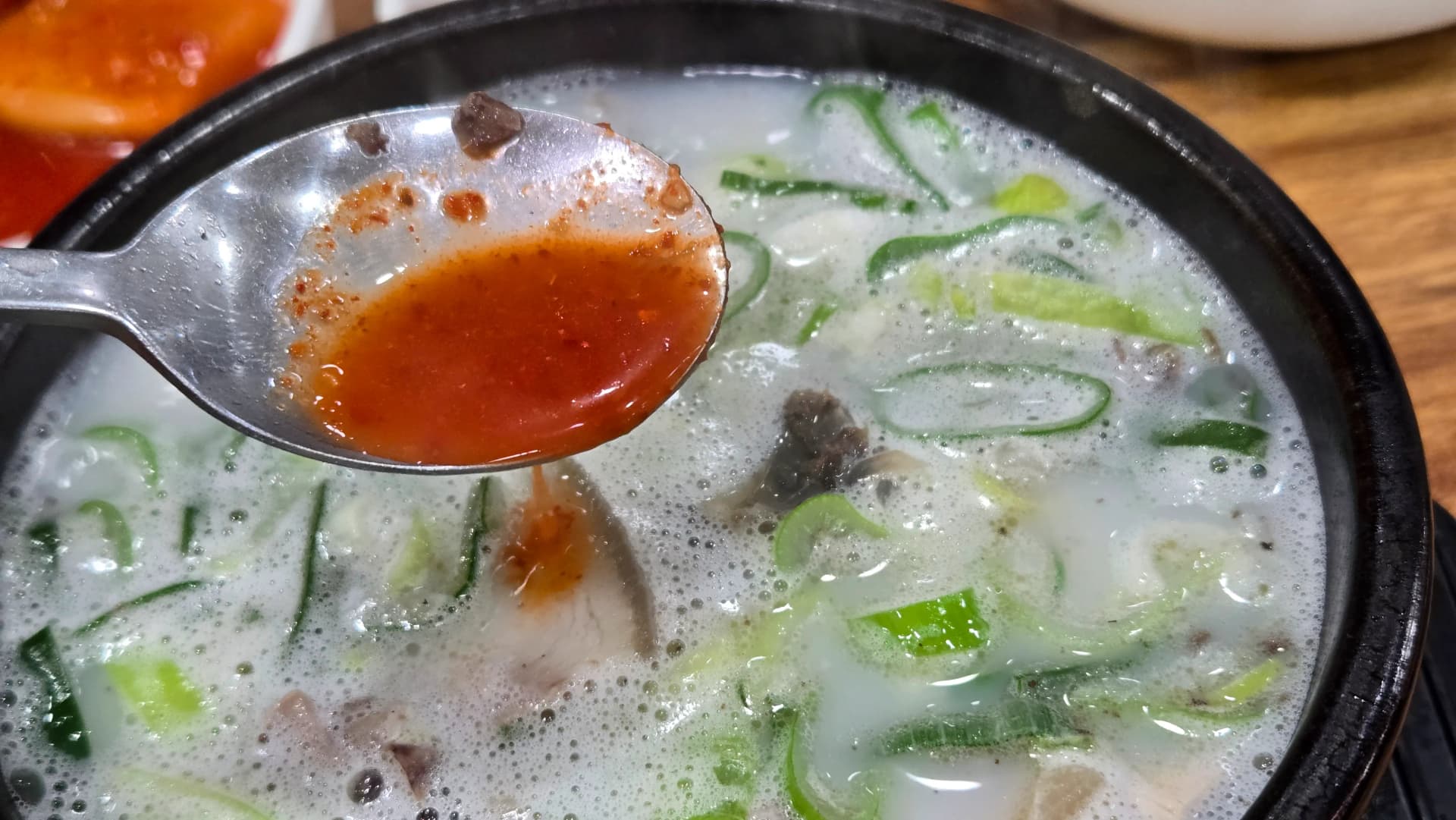
Some people spoon the liquid from the kkakdugi bowl into their soup. I don't always do this myself, but the kkakdugi juice is tangy and slightly spicy, and when it mixes into that white broth, the flavour shifts noticeably. Worth a try at least once to see if it suits you.
Seasoning paste and fermented shrimp — building the flavour
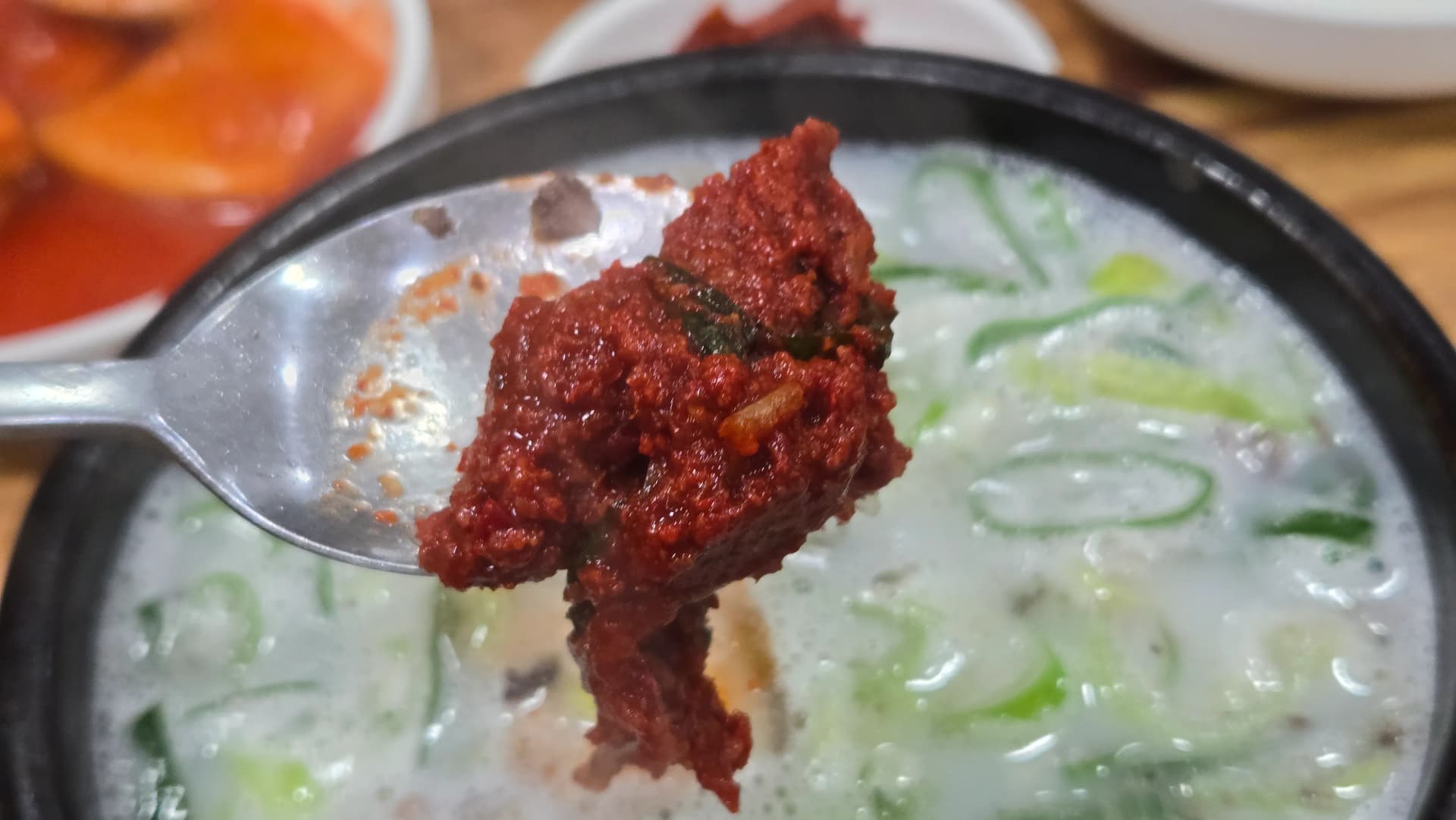
I dropped in a spoonful of the seasoning paste. It's a red mixture based on chilli flakes and garlic, and the moment it hits the broth, that milky white soup turns into something fiery and warming. More than half of Korean diners add this. If you handle spice well, go for a full spoonful. If not, start with half.
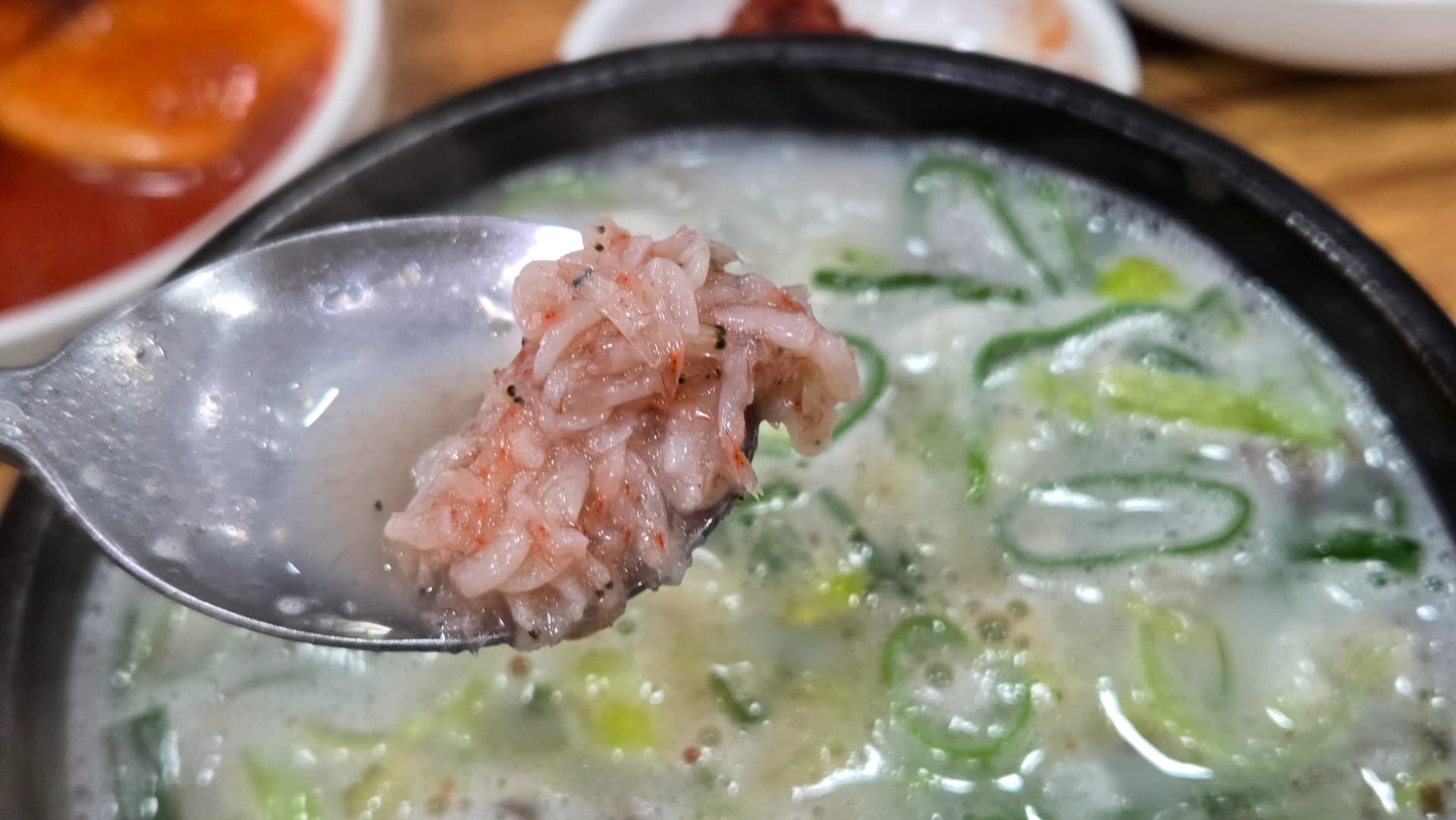
Saeujeot — fermented salted shrimp. This does a completely different job to the chilli paste. It's not about heat; it adds umami depth to the broth. When I first showed my wife the jar, she lifted the lid, caught the smell, and immediately covered her nose. "What on earth is that?" It's fermented shrimp, so yes, it's got a pungent aroma. But I stirred a little into her soup and had her taste it, and she went "That's... actually different from before." Plain salt just makes things salty. Saeujeot adds salt plus something else — a savoury roundness that plain salt can't deliver.
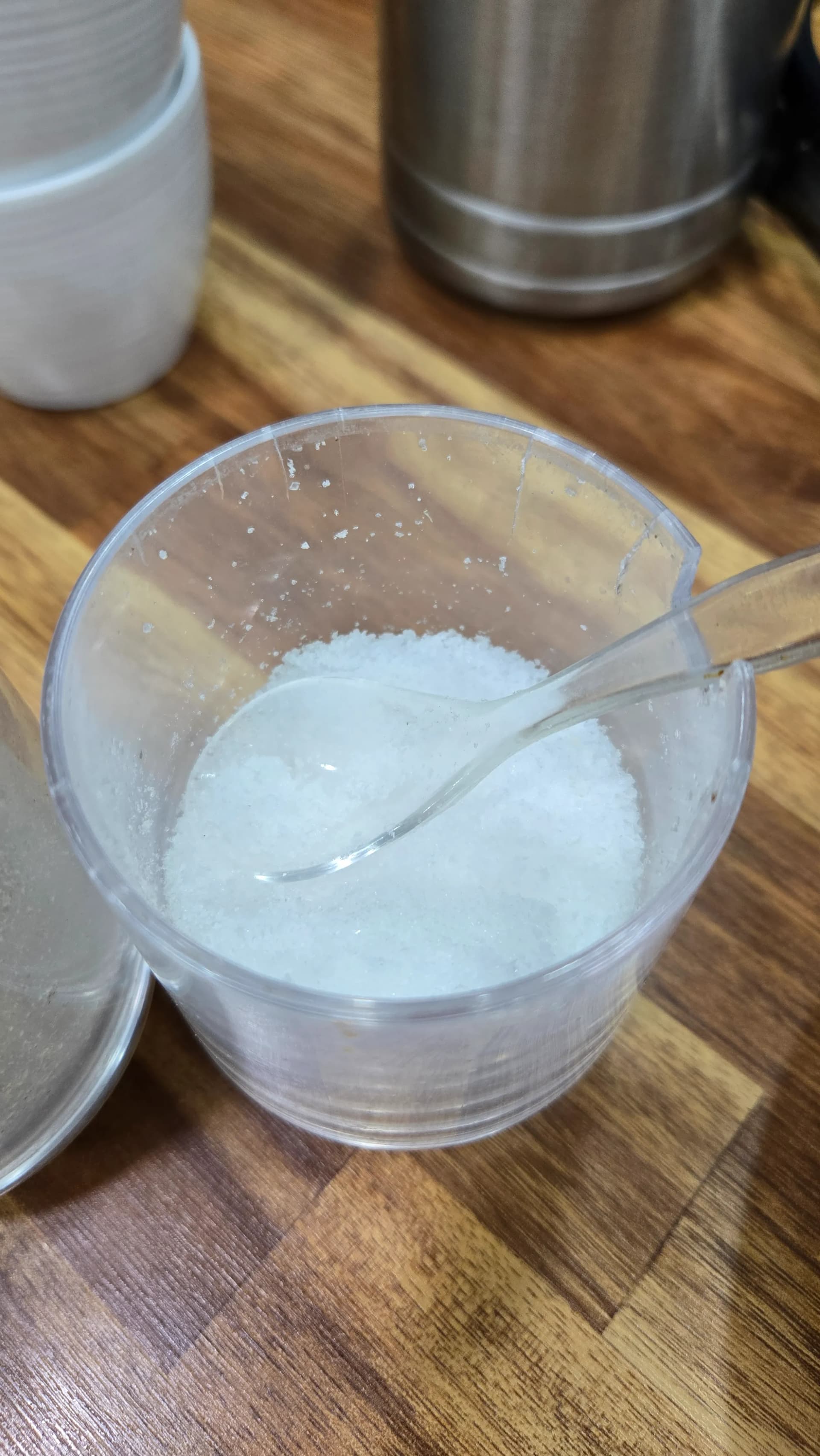
If it's still not quite salty enough, add a bit of plain salt. But be careful — dump in too much at once and you can't undo it. Add a little, stir, taste. Still not enough? Add a touch more. And you absolutely must stir it in properly. Otherwise one side of the bowl is over-seasoned and the other's still bland.
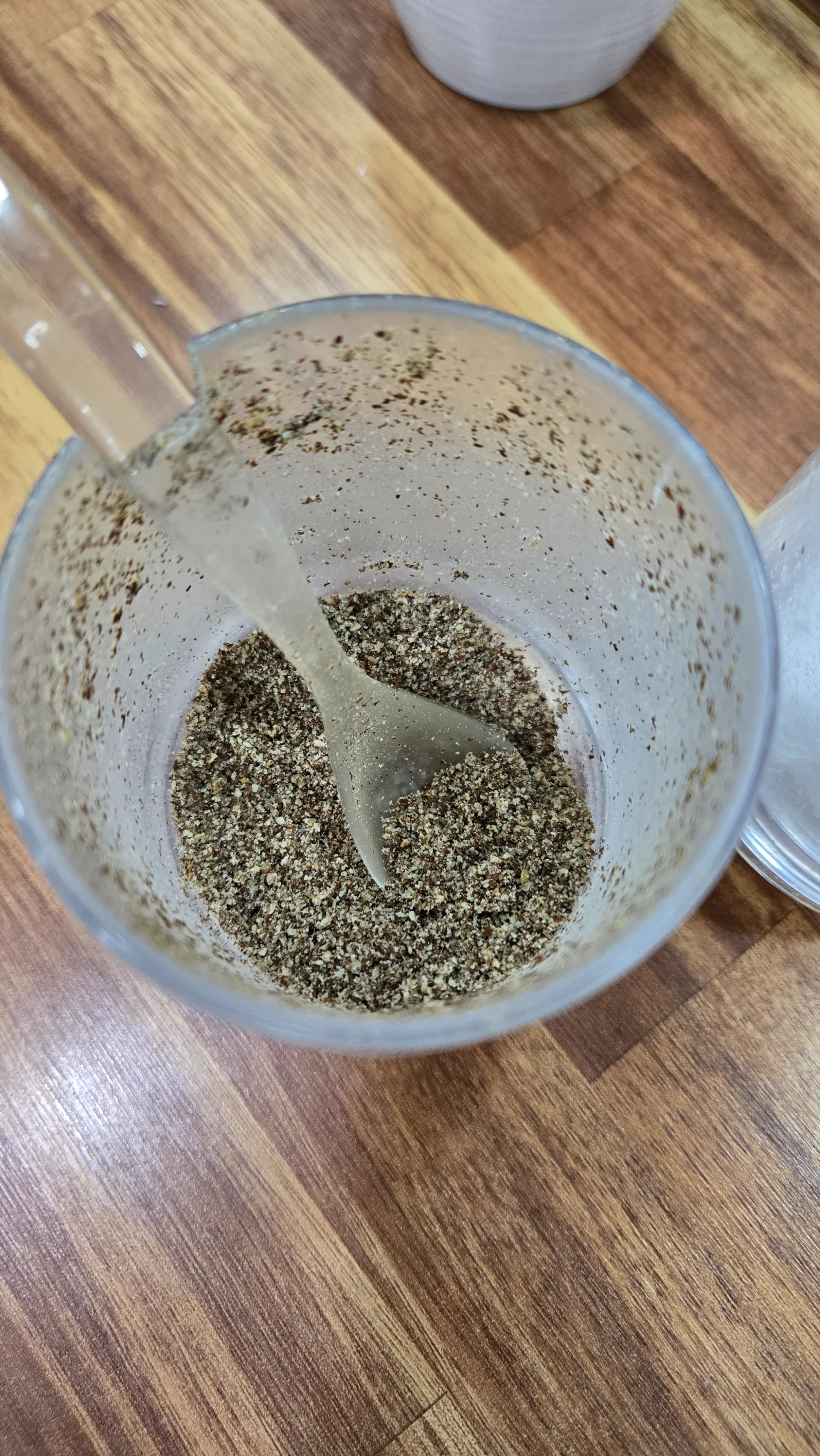
If you spot perilla seed powder on the table, give it a go. It adds a nutty, toasty flavour and takes the edge off the richness of the pork bone broth. I told my wife to try it in her dwaeji gukbap, and after she did, she said "Right, that's much better with this in." It's not essential, but if it's there, it's well worth a try.
Piling on the chives — the finishing touch
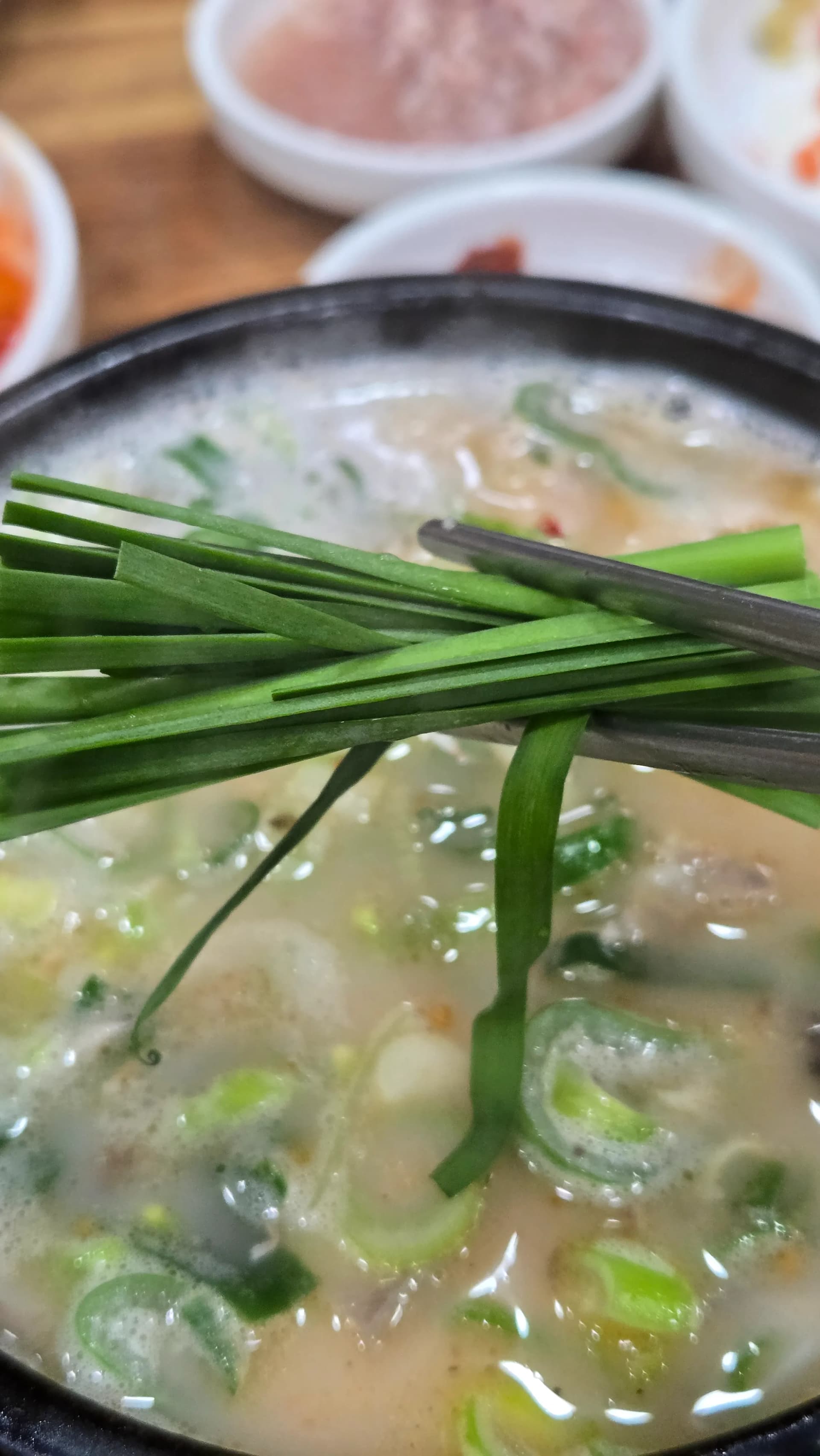
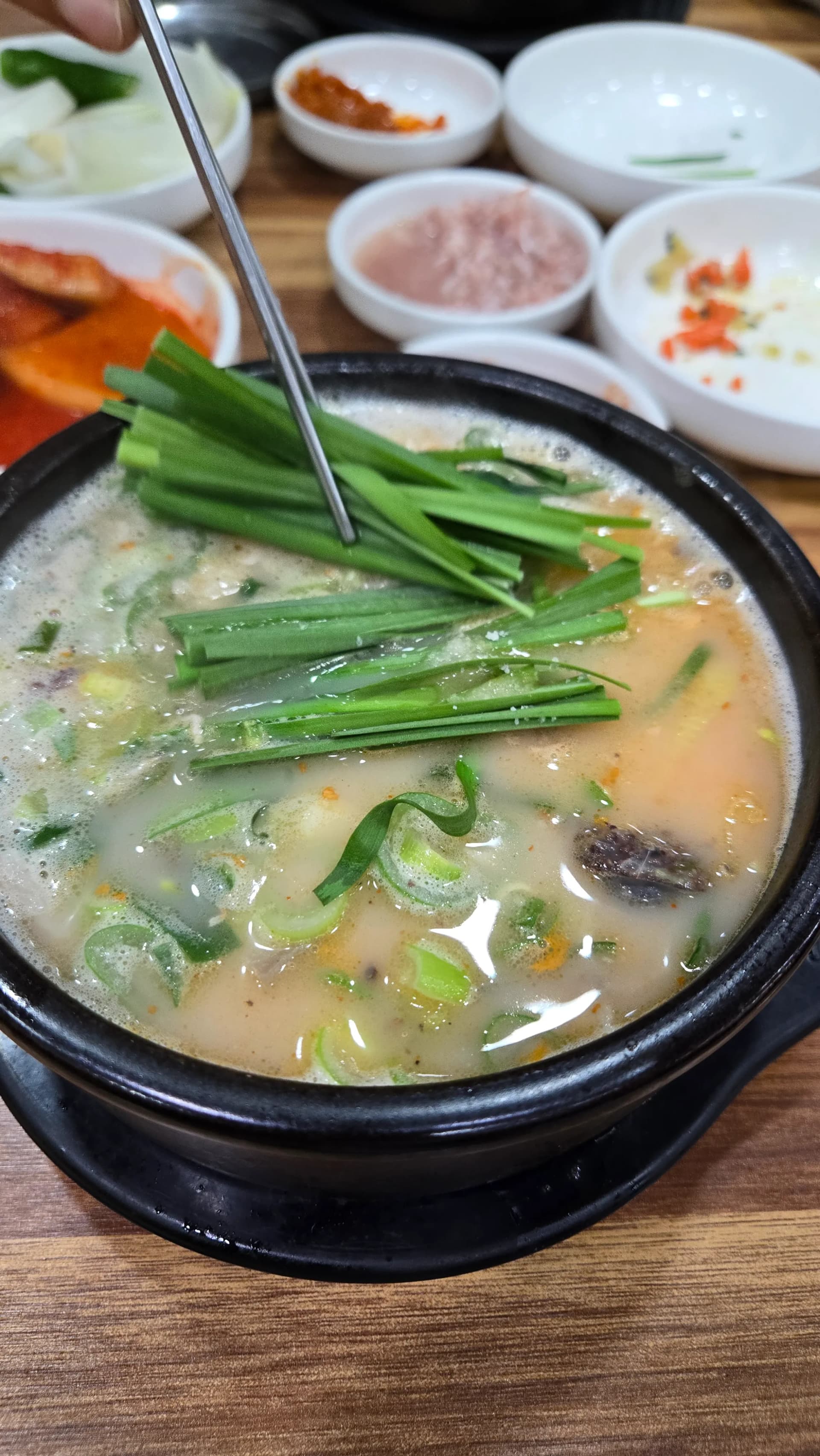
Chives go on top. After the saeujeot and the seasoning paste, the broth had already changed colour completely from that original white. Adding chives mellows the pork flavour and gives the whole thing a fresh, clean edge. Don't be shy — the more you add, the better it gets.
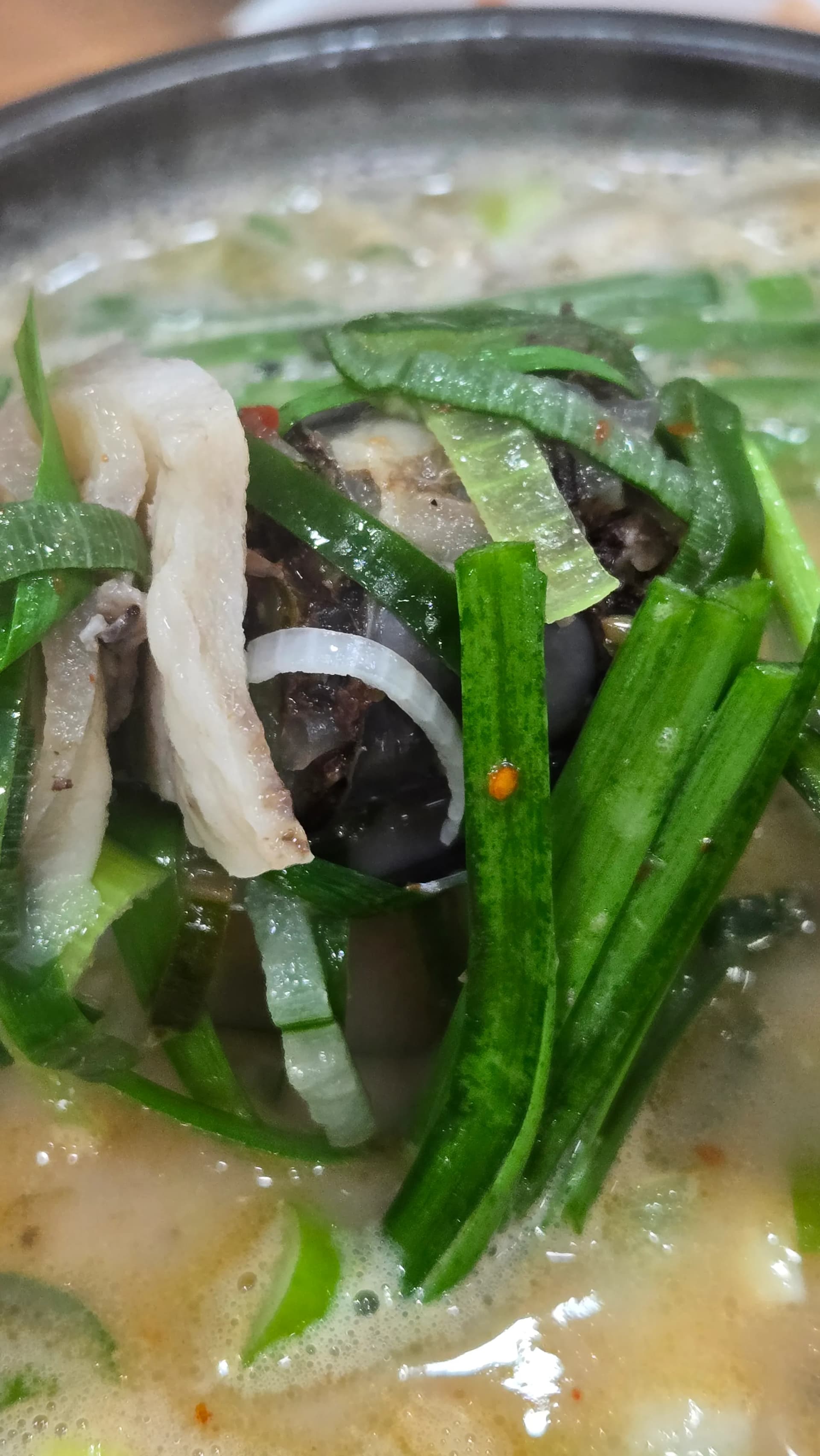
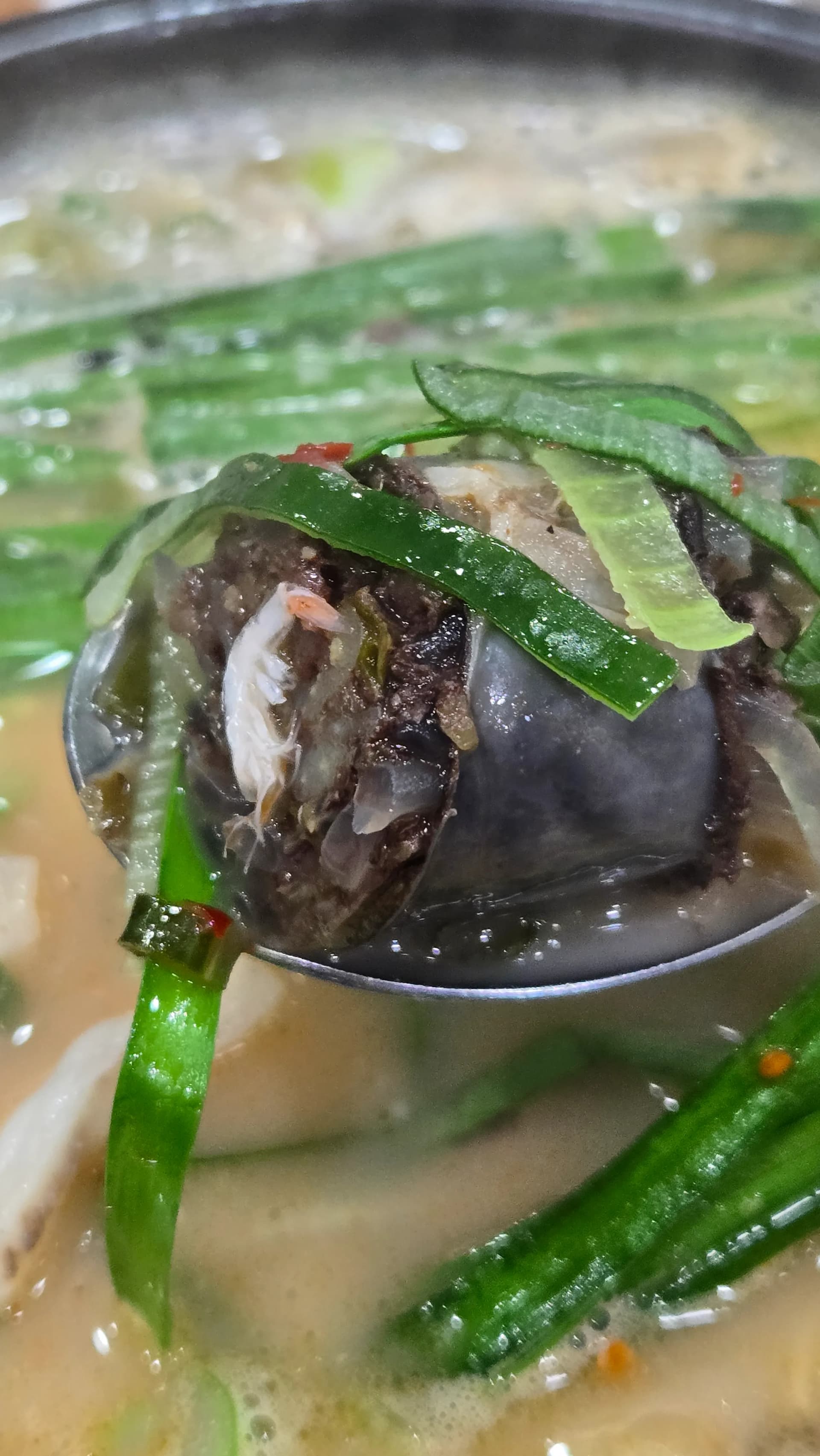
The broth is piping hot, so the chives wilt almost immediately. Eat them straight away — you want that moment when they've just softened. Scoop up the barely wilted chives together with a piece of sundae and some pork in one spoonful, and — after working through the night on an empty stomach, having that land in my belly — honestly, it sorted me right out.
The different cuts you'll find in your bowl
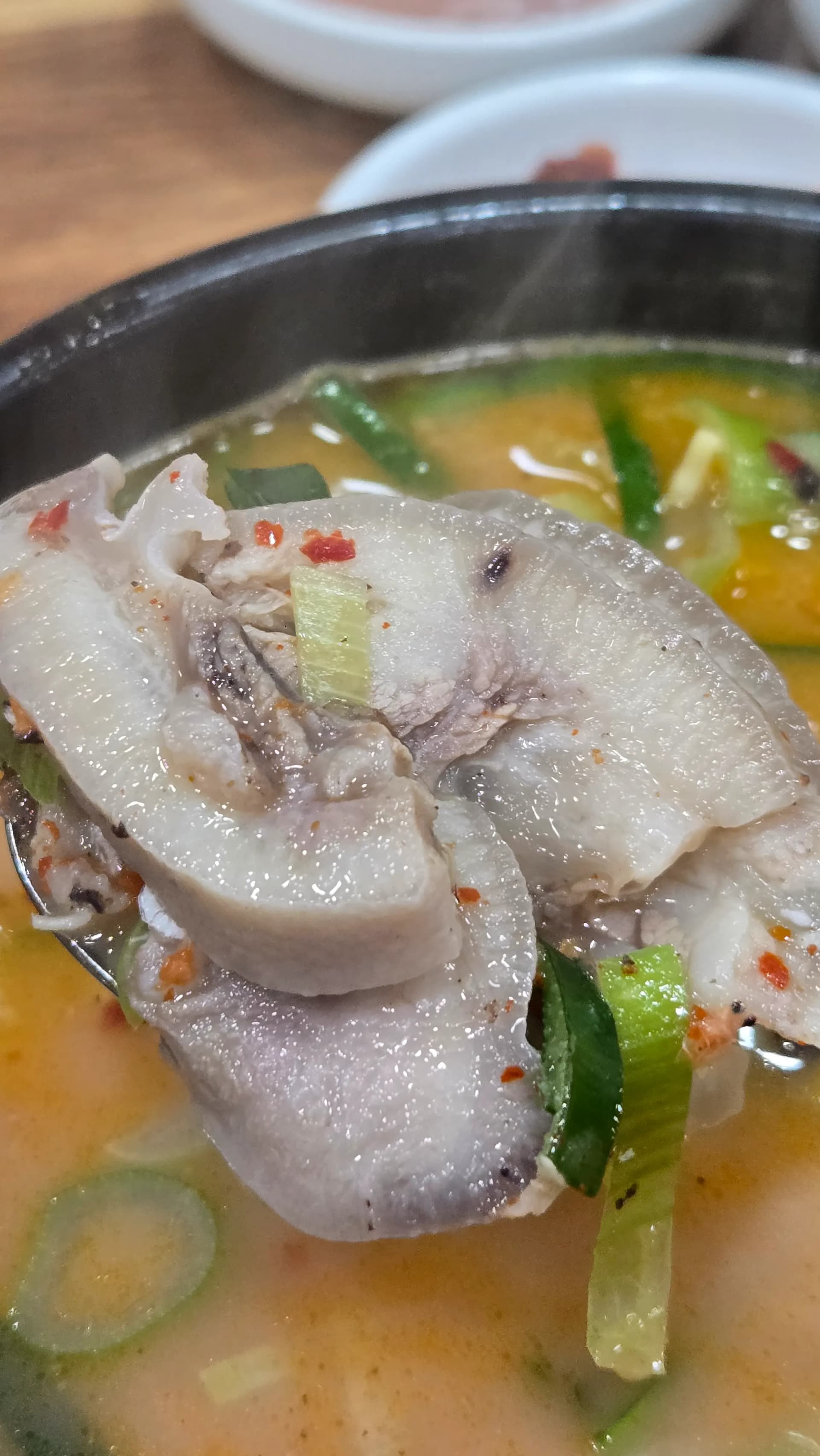
Sundae gukbap doesn't just contain one type of meat. You'll find a mix of boiled pork slices, skin, head meat and other bits, and the exact combination changes from restaurant to restaurant. Each piece has a different texture — some chewy, some soft, some with a bit of bite — so as you eat your way through the bowl, it keeps surprising you.
First time with sundae gukbap? Just remember this
You season it yourself. Eating it plain means missing the point entirely.
1. Start with half a spoon of fermented shrimp
Reach for the saeujeot before the salt. It adds saltiness and umami at once, giving the broth a proper flavour foundation. Salt is for fine-tuning afterwards if you still need it.
2. Chilli paste is optional
Add the red chilli-based seasoning paste and the white broth turns red and spicy. You don't have to, but if you do, it becomes a completely different experience.
3. Be generous with the chives
They cut through the pork richness and add a fresh, clean note to the broth. Seriously — don't hold back.
4. Perilla seed powder for richness
Adds a lovely nutty depth and dials down any greasiness. Not every restaurant has it, but if yours does, give it a go.
5. Kkakdugi between spoonfuls
A few spoonfuls of broth, then one cube of kkakdugi. That crunchy radish resets your palate every time.
Rice in the soup or on the side — your call
There's no fixed rule
Most restaurants
The rice comes in a separate bowl. Whether you tip it into the soup or eat it alongside is entirely up to you.
Watch out at some places
A few restaurants serve the rice already in the soup. If you'd rather keep them separate, you need to say so when you order.
Useful things to know before ordering
Especially if you don't speak Korean
English menus are rare
Unless you're in a tourist area, the menu will almost certainly be in Korean only. But the menus aren't complicated — just point your phone's translation app at it. All you really need to say is "sundae gukbap hana-yo" and the order's done.
Sundae only / offal only / mixed
When ordering, you can choose what goes in your bowl. If you just say "sundae gukbap hana-yo" without specifying, most places will give you the mixed version.
Open from early morning
Most gukbap shops open between 6 and 7 am, and some run 24 hours. Korea has a strong culture of eating soup and rice for breakfast or as a hangover cure, so you'll find doors open at first light. I had mine this morning heading home after my shift.
Price
Usually ₩9,000–₩12,000. The one we had was ₩9,000. Near tourist spots in Seoul it can creep above ₩13,000. That works out to roughly £5–£7 per bowl at current rates.
Not one for vegetarians
The broth is made from pork bones and everything in it is pork. The closest thing to a vegetarian-friendly gukbap in Korea is kongnamul gukbap (beansprout soup), but even that often uses a pork stock base.
Honest verdict
My wife polished off her dwaeji gukbap, broth and all — drank every last drop. "Was it good?" I asked. She nodded, then added, "But watching you eat that... I really cannot do the sundae." Fair enough. I'd loaded my sundae gukbap with a mountain of chives and drained the bowl to the bottom. Same restaurant, same base broth, different orders — and we both walked out stuffed.
If you're trying sundae gukbap for the first time, I'll be honest: the first spoonful is the hardest part. The look of it is unfamiliar, and there's a definite aroma. But once you get past that first mouthful, something shifts. I have days when I'm not in the mood, but on a morning like this one — cold, exhausted, empty stomach — the moment a spoonful of that hot pork bone broth lands, you just can't stop.
If sundae isn't for you, order dwaeji gukbap. If even that feels like too much, look for a seolleongtang restaurant instead — that's a beef bone soup with no pork smell whatsoever, and my wife loves it. Kongnamul gukbap — beansprout soup — has barely any meat in it at all, so it's the gentlest option. Korea has loads of different comfort food soups, so if one doesn't suit you, there's no reason to write off the whole lot.
This post was originally published on https://hi-jsb.blog.