
Honest Hotel Breakfast Buffet Review with 70 Photos | Shilla Stay Ulsan
Table of Contents
17 items
Shilla Stay Ulsan Breakfast Buffet — A Full Photo Walkthrough
I visited the Shilla Stay Ulsan breakfast buffet on the morning of March 7th, arriving right at 7 AM. My younger brother, my wife, and I had booked a room in Ulsan (a large industrial city on Korea's southeastern coast, about 1 hour north of Busan) as a base for a trip to nearby Gyeongju. We got the two-person breakfast-included package for about $100, which was a solid deal considering that the breakfast buffet alone costs about $23 per person if purchased separately.
For those unfamiliar, Shilla Stay is a separate hotel brand run by the same company behind The Shilla, one of Korea's most iconic luxury hotel chains. But they're in completely different leagues. The Shilla is a five-star luxury property; Shilla Stay is a business hotel tier, so the prices are much more affordable. A lot of people see the "Shilla" name and assume it's going to be expensive, but that's really not the case.
This post is a dish-by-dish, photo-by-photo breakdown of everything at the Shilla Stay Ulsan breakfast buffet. I didn't want to write one of those reviews where someone snaps a few photos and just says "it was nice!" and calls it a day. If you're deciding whether to book, you need to see exactly what's on the buffet — so I photographed everything. Over 60 photos. This blog is translated into more than 70 languages including English, Japanese, and Chinese, so I especially wanted international visitors to be able to see exactly what a Korean hotel breakfast buffet looks like, dish by dish.
Entrance and Seating at the Shilla Stay Ulsan Breakfast Buffet
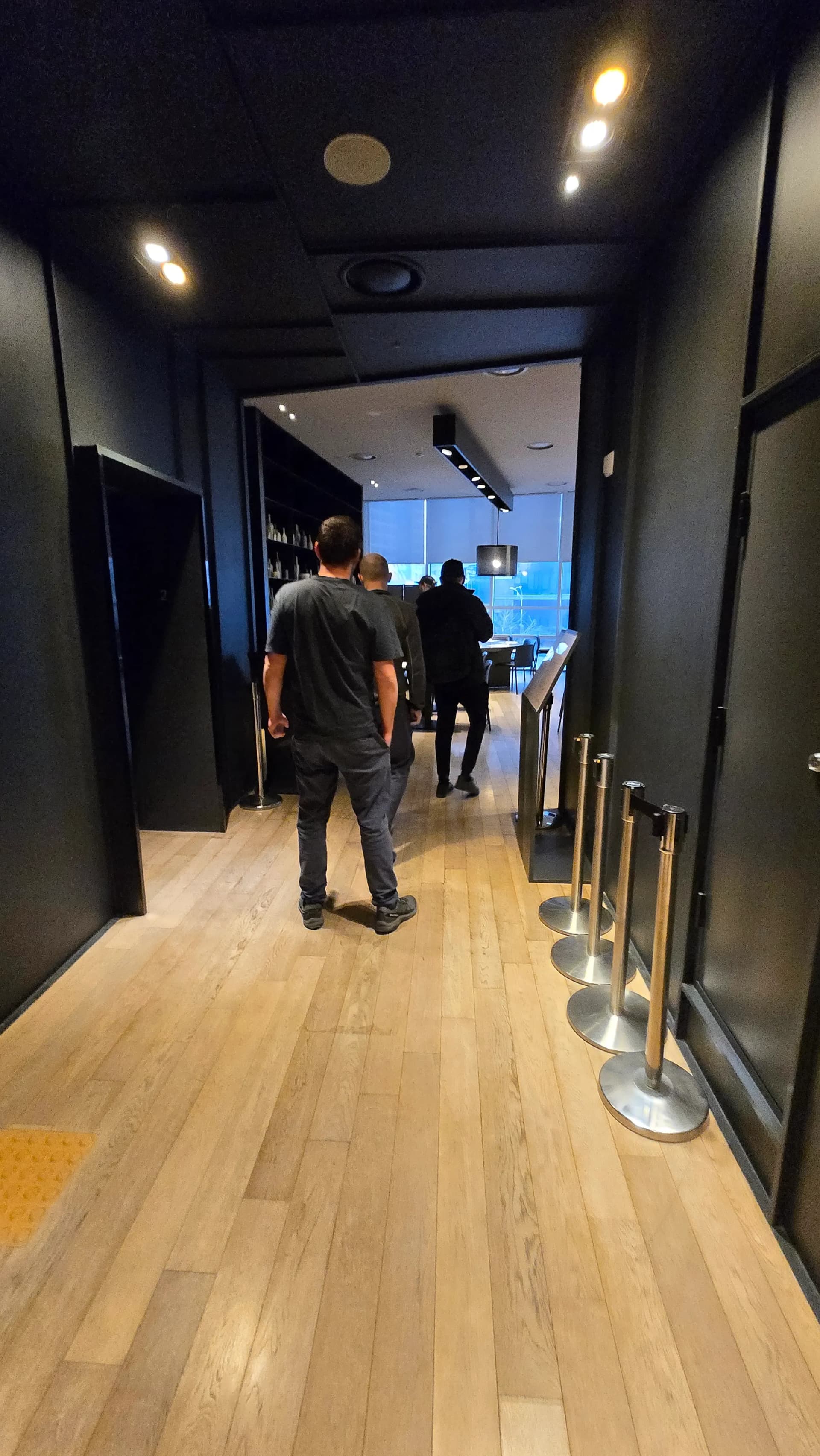
You step off the elevator on the second floor and the buffet entrance is right there. No searching needed — it's immediately in front of you. One thing I noticed walking in: there were quite a few international guests staying here. Ulsan is close to Busan, so that probably explains it. I live in Daejeon (a city in central South Korea, about 2 hours south of Seoul), and I almost never see foreign guests at hotels there. The vibe felt noticeably different here.
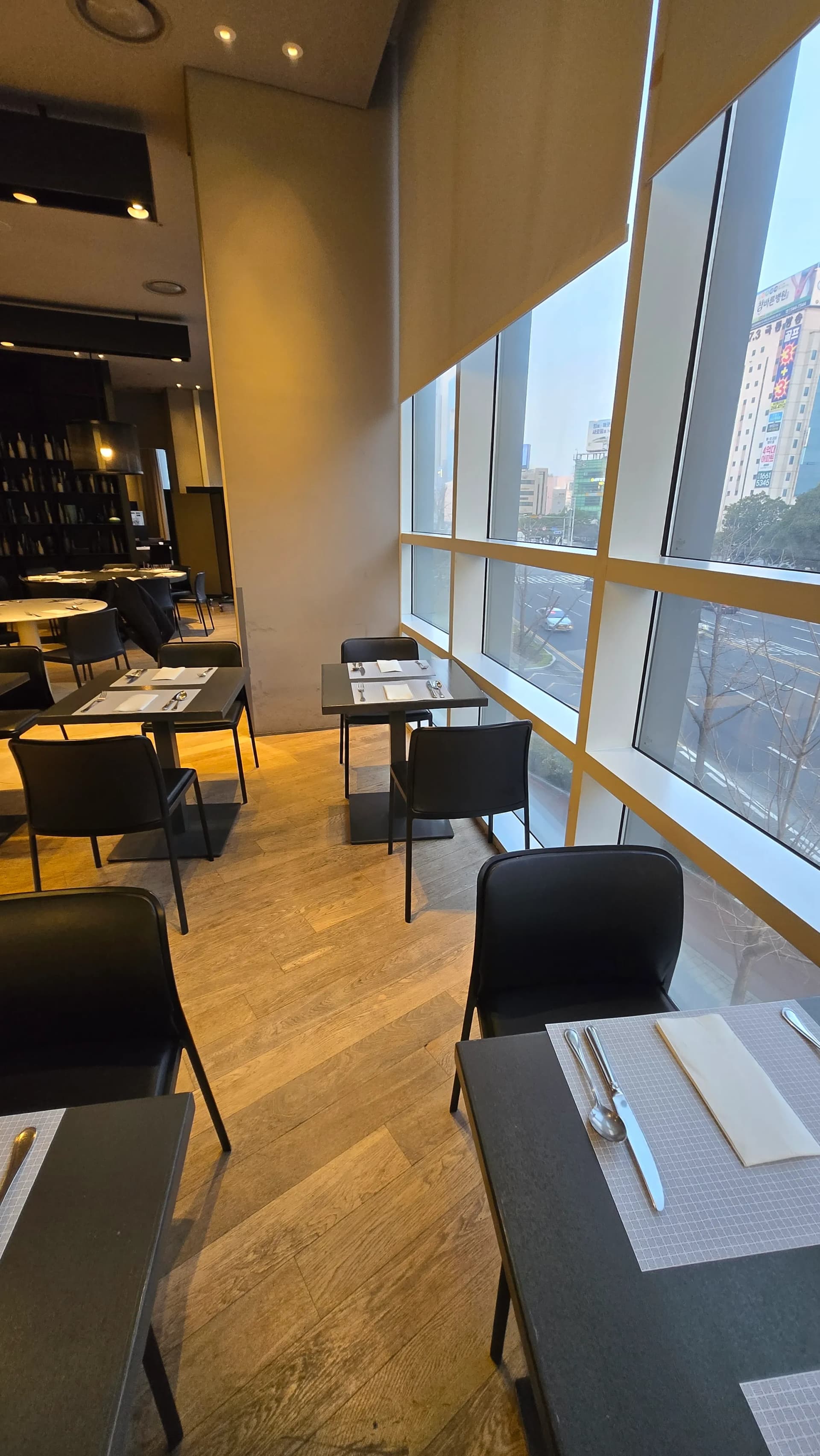
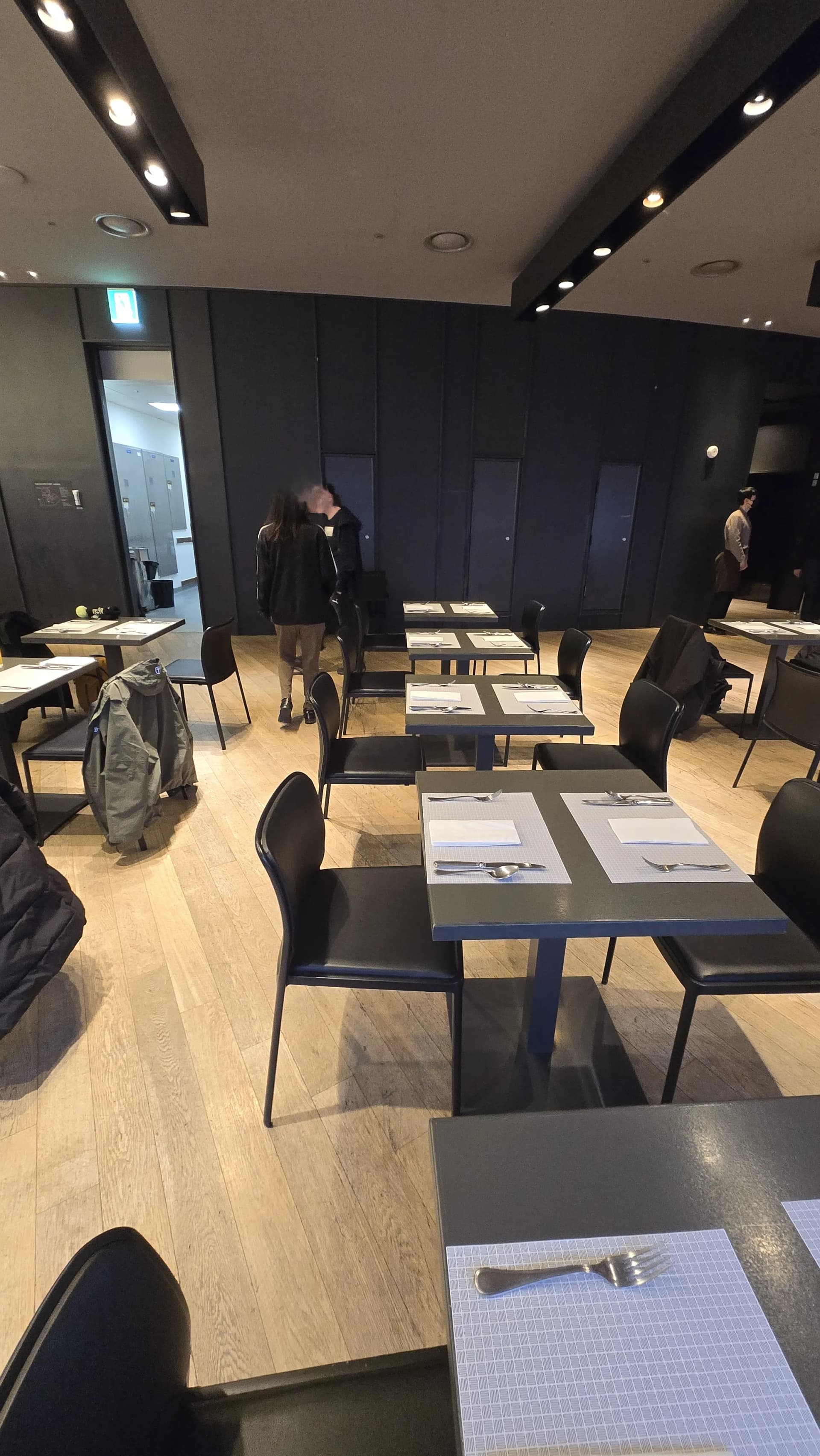
The seating was mostly two-person tables. The window side had big glass panels overlooking Ulsan's city streets below, and the natural light in the morning was really nice. The interior section had a darker tone with moody lighting — a completely different atmosphere — but I preferred the window seats. The tables were spaced generously enough that you didn't feel like you were on top of the next person, and each seat already had cutlery and napkins pre-set.
Korean Side Dishes (Banchan) at the Hotel Breakfast Buffet
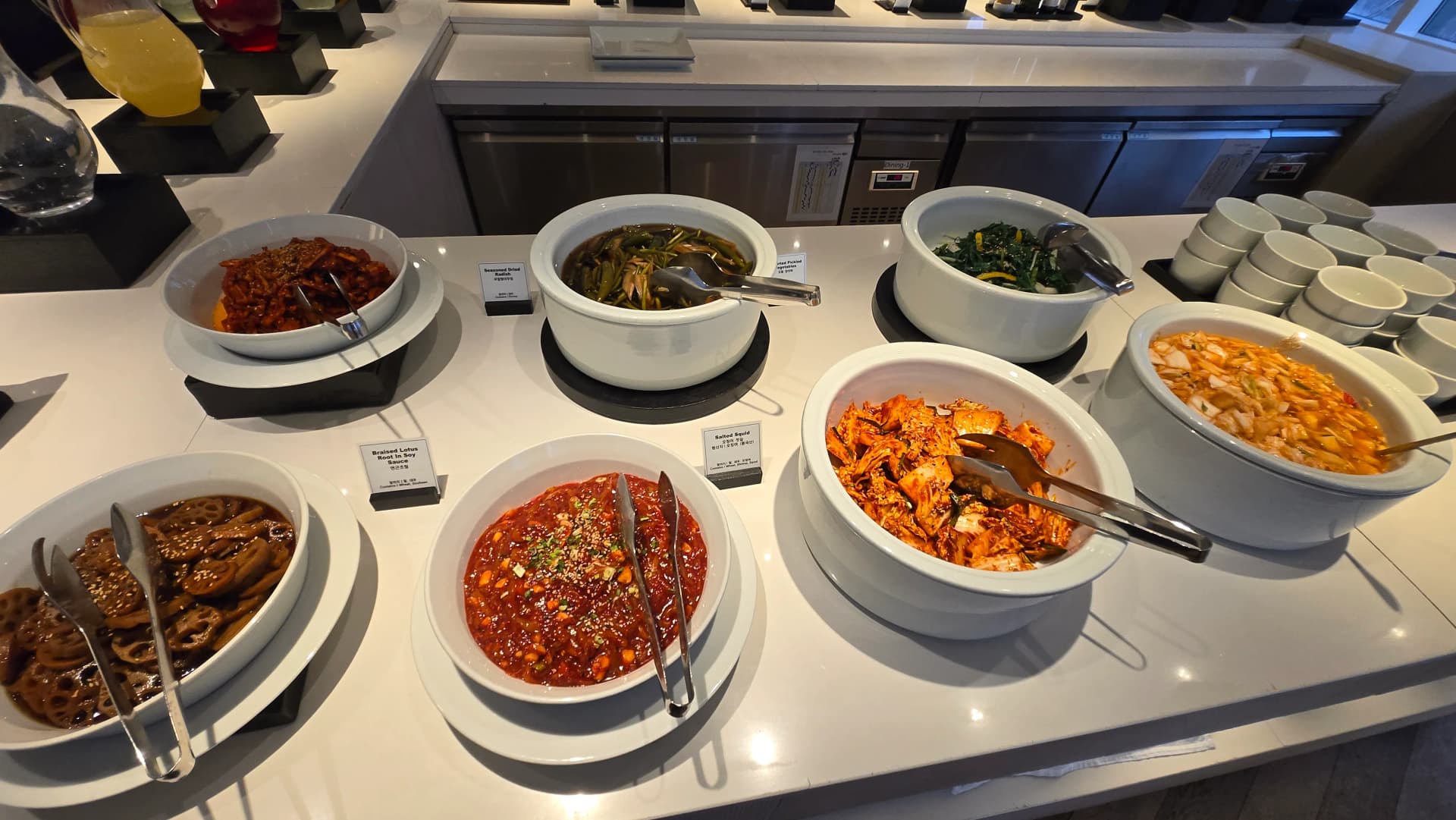
Here's the banchan (Korean side dish) section. Braised lotus root, kimchi, fresh kimchi, seasoned spinach, pickled vegetables — all lined up along one side. I think how diverse a hotel's banchan selection is really shows how much effort they put into the breakfast spread. For a business hotel, Shilla Stay Ulsan had clearly put in some thought here. I took photos of every single dish, so let me walk you through them one by one.
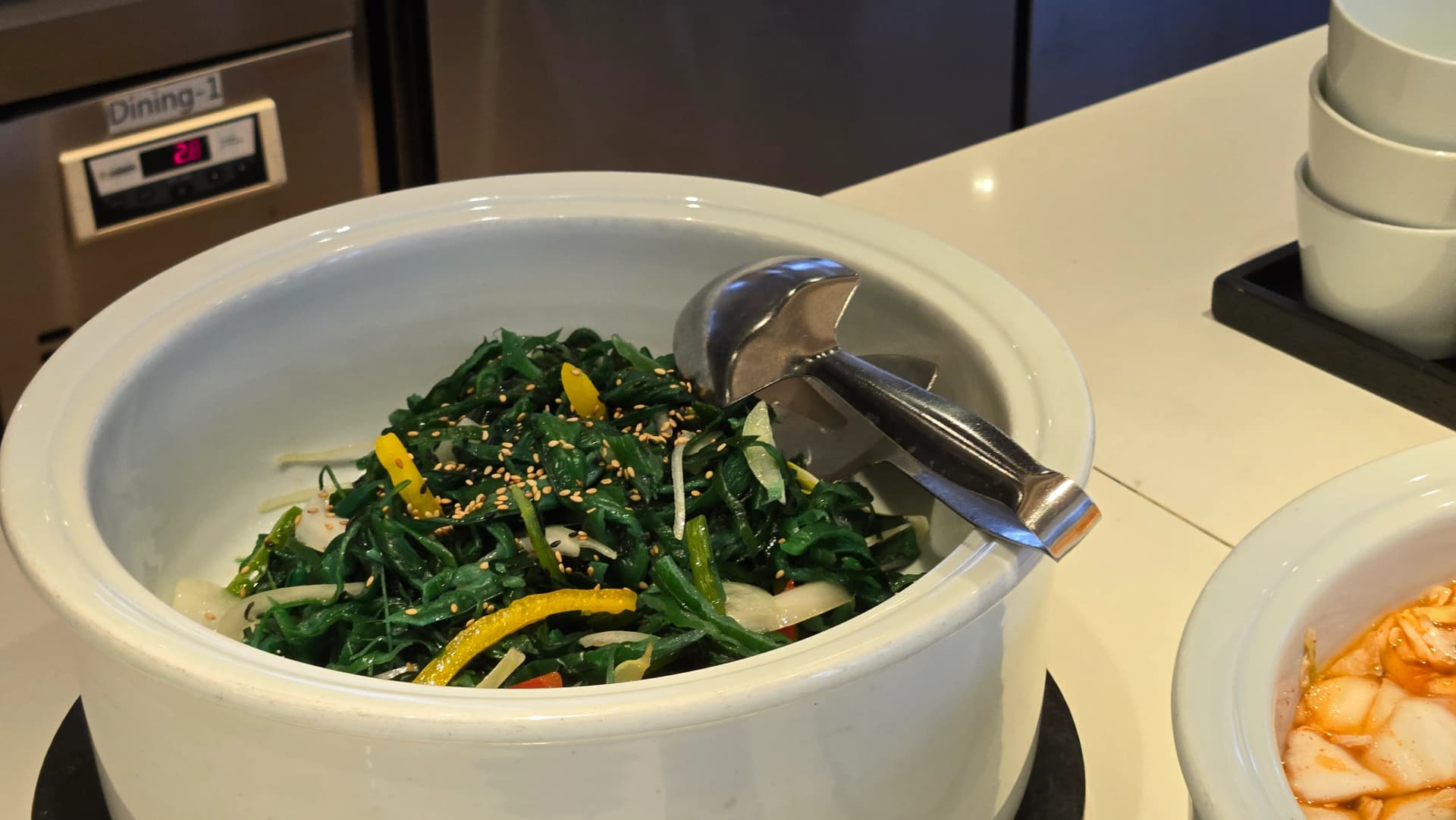
This is sigeumchi namul (seasoned spinach). It's one of the most common side dishes in Korean home cooking — blanched spinach tossed with sesame oil, salt, and sesame seeds. It's not spicy at all, just nutty and savory, so even if you're completely new to Korean food, this one's totally approachable. There were bits of bell pepper mixed in for color, and it's the perfect side to eat with a bowl of rice in the morning.
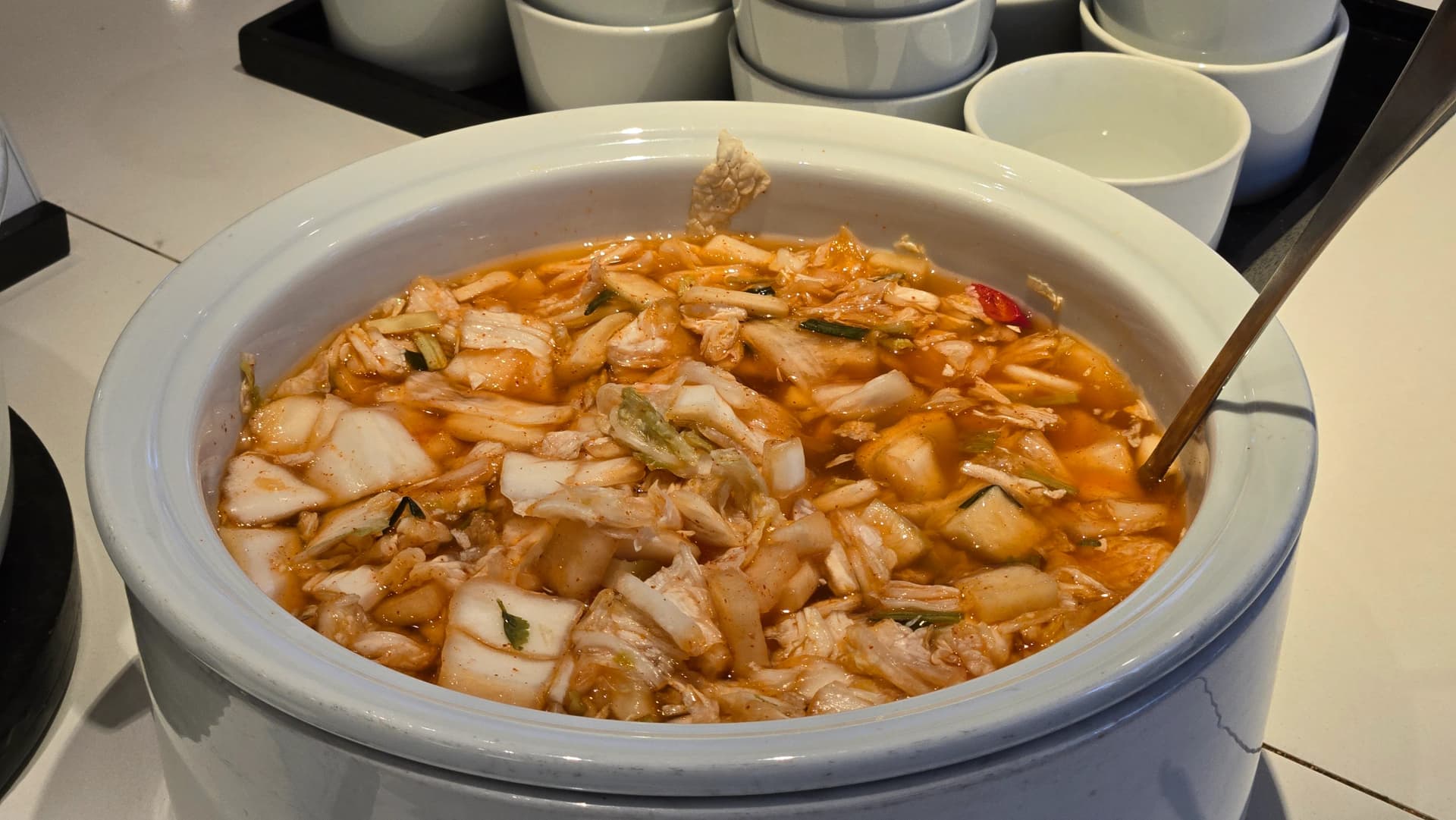
This is gukmul kimchi (water-based kimchi). It's napa cabbage cut into small pieces and soaked in a light brine — much milder and more refreshing than regular kimchi. The spice level is basically zero. In Korea, people eat this mixed into rice or as a palate cleanser between heavier dishes. When your stomach feels heavy in the morning, a spoonful of this broth is incredibly refreshing.
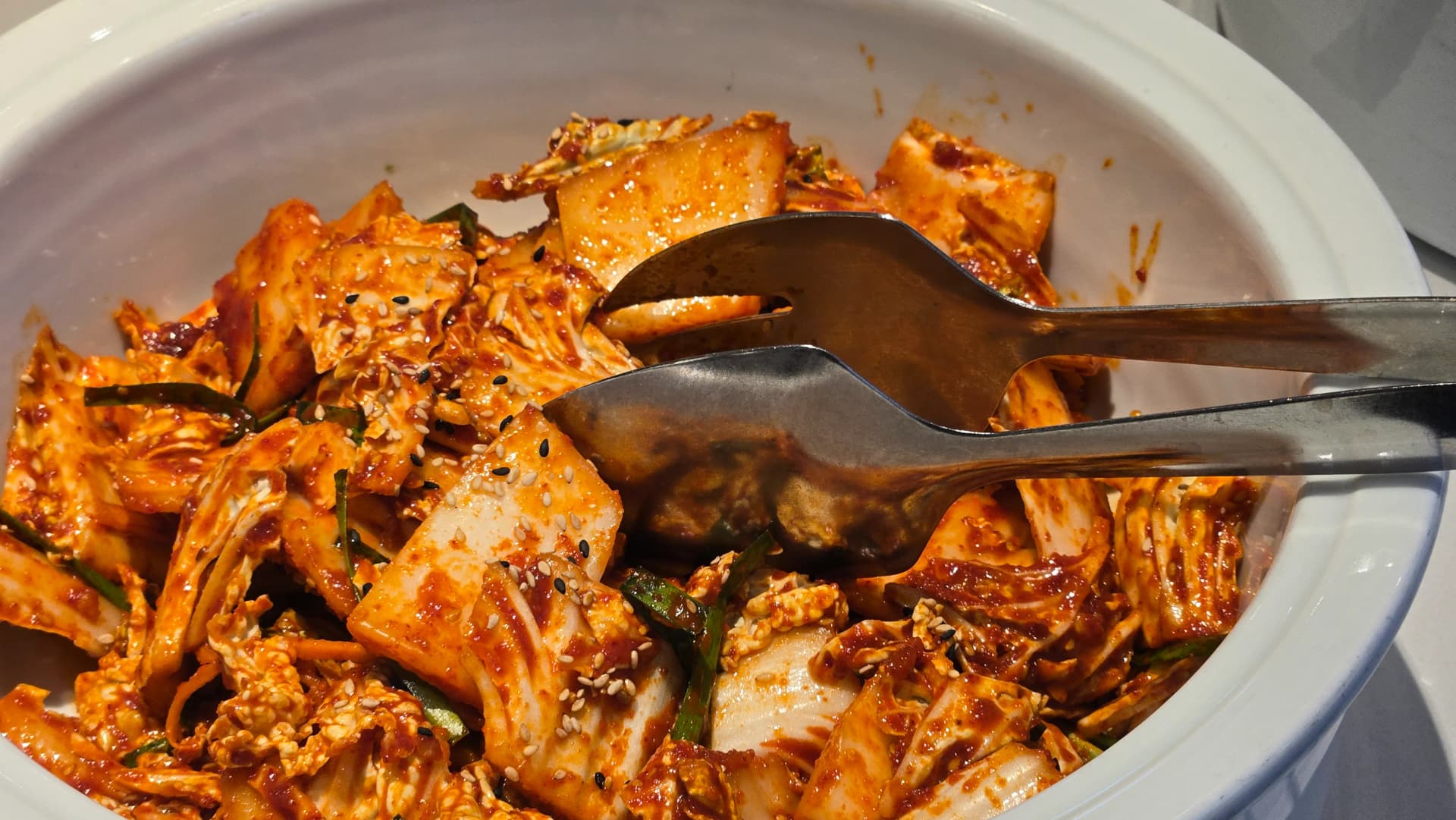
This is geotjeori (fresh kimchi). When most people think of kimchi, they picture the deeply fermented kind, but geotjeori is freshly made — barely fermented at all. The cabbage is still crisp and crunchy, and the seasoning tastes bright and fresh, completely different from aged kimchi in texture. It does have red pepper flakes so there's a bit of kick, but none of that sour, tangy flavor that fermented kimchi has.
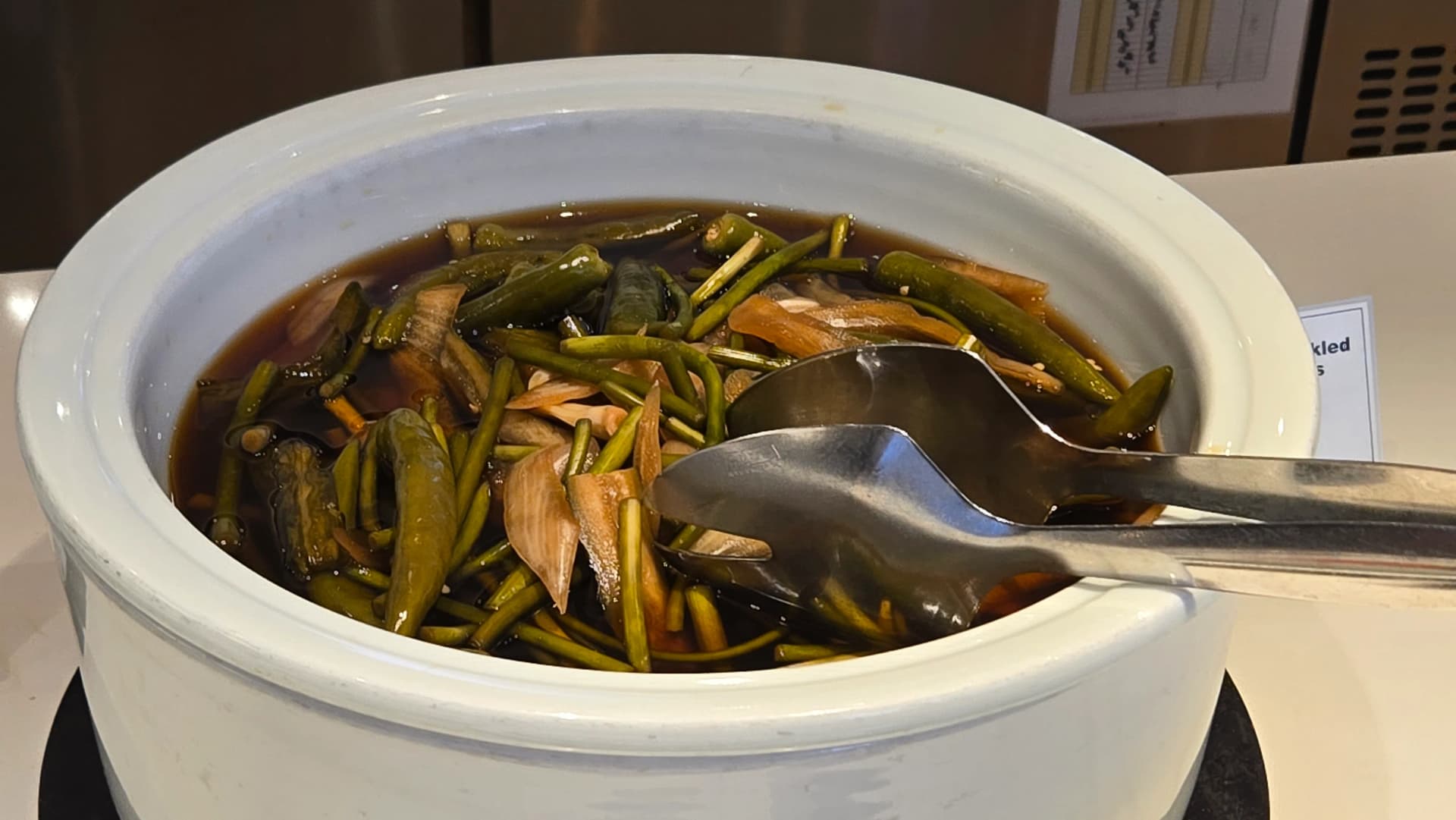
This is jangajji (soy sauce pickled vegetables). Peppers, garlic scapes, and onions soaked deeply in soy sauce — salty with a hint of sweetness. Even though there are peppers in it, the pickling process draws out most of the heat, so they're nowhere near as spicy as fresh peppers. Put a few on top of your rice and eat them together — the seasoning is just right.
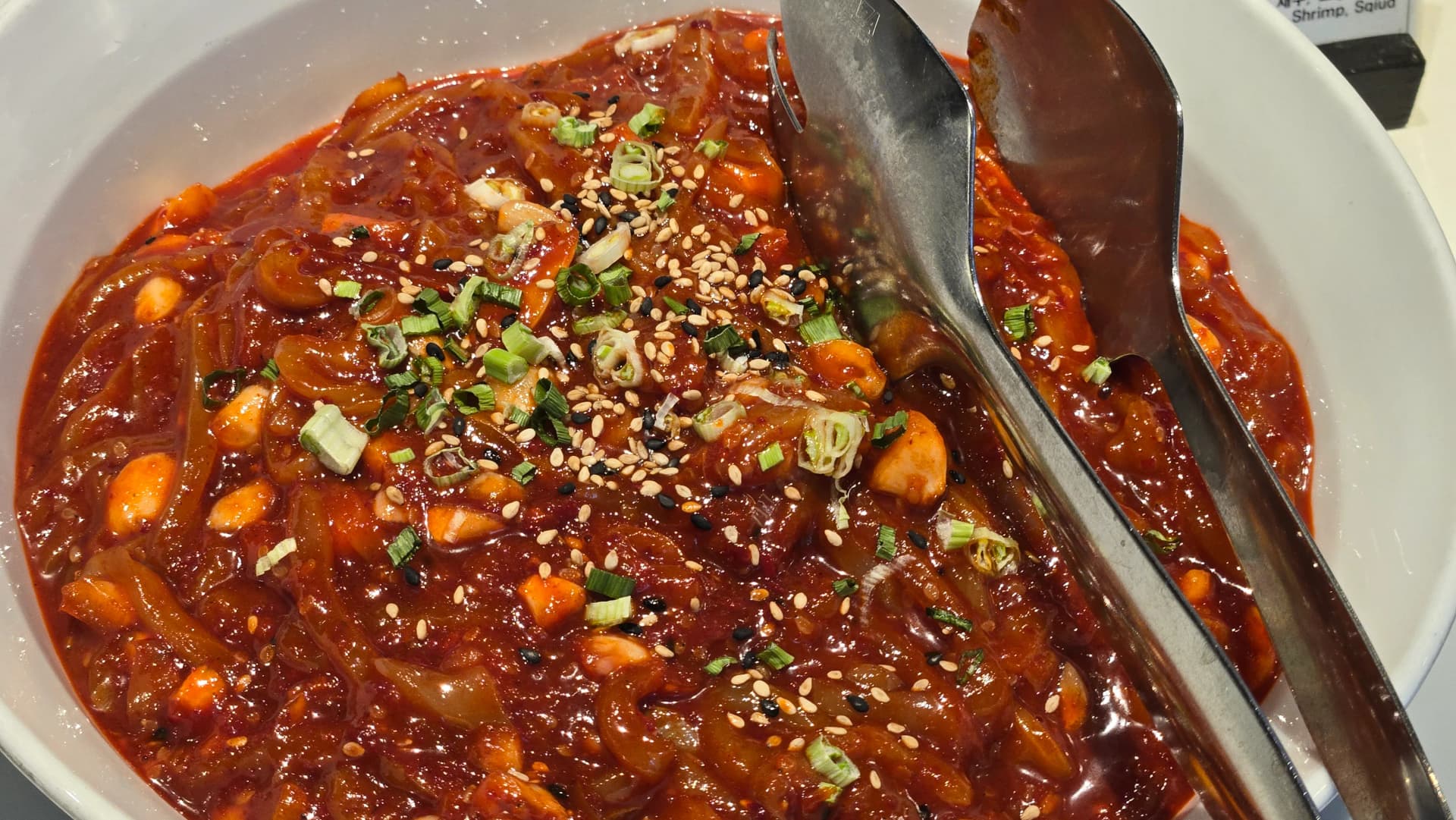
This is ojingeo jeotgal (salted and fermented squid). I'll be honest — this one's polarizing. It's quite spicy, salty, and has a strong umami kick from fermentation. Even Koreans only put a tiny bit on their rice; nobody eats a lot of this at once. If you're trying it for the first time, just take a very small amount to taste.
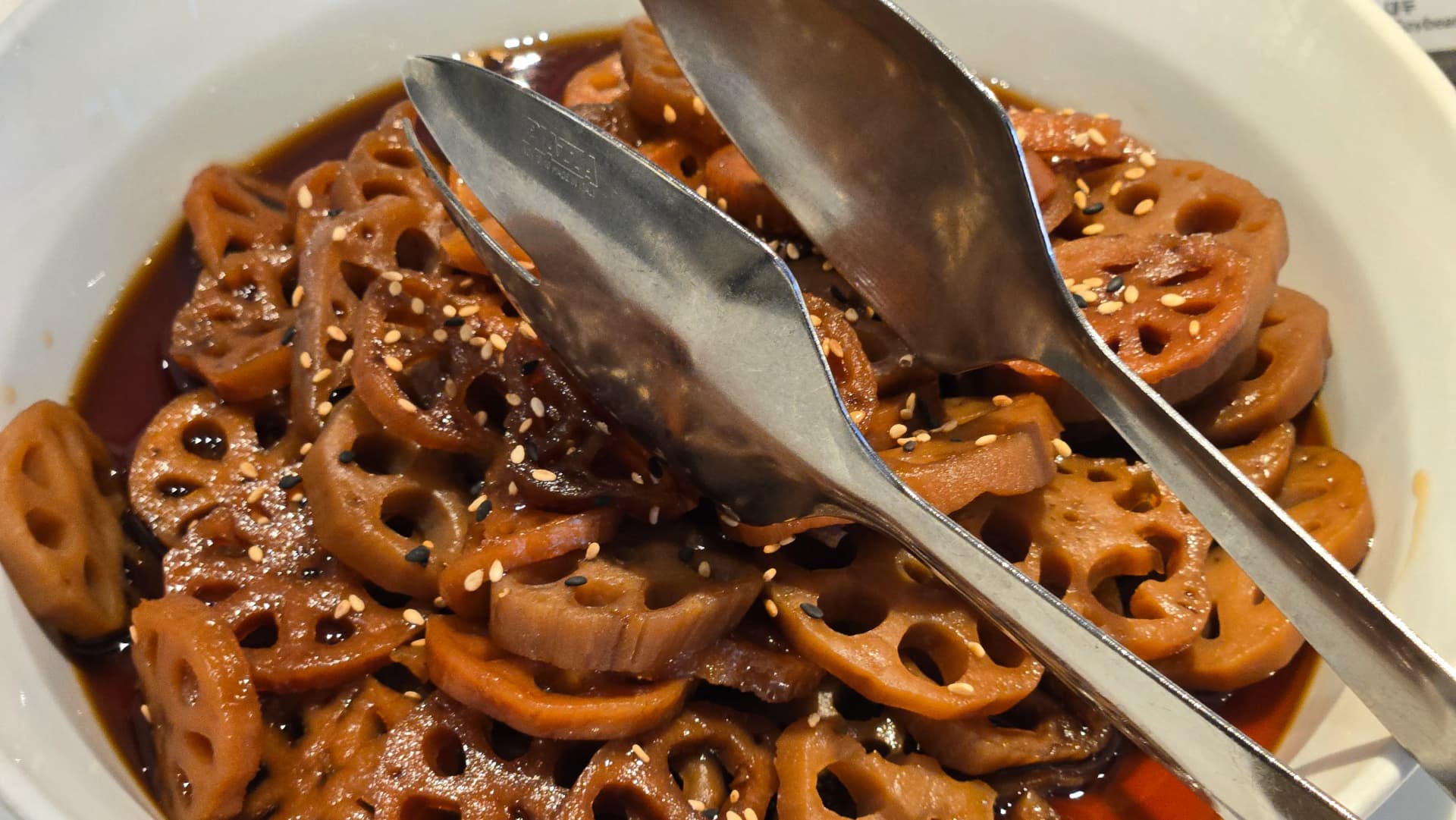
This is yeongeun jorim (braised lotus root). It's simmered in soy sauce, sugar, and rice syrup — sweet and savory. It's simultaneously crunchy and slightly chewy. The distinctive holes running through each slice always fascinate international visitors. It's not spicy and has a pleasant sweetness, so most people enjoy it without hesitation. My wife's favorite side dish — she piled a mountain of it onto her plate.
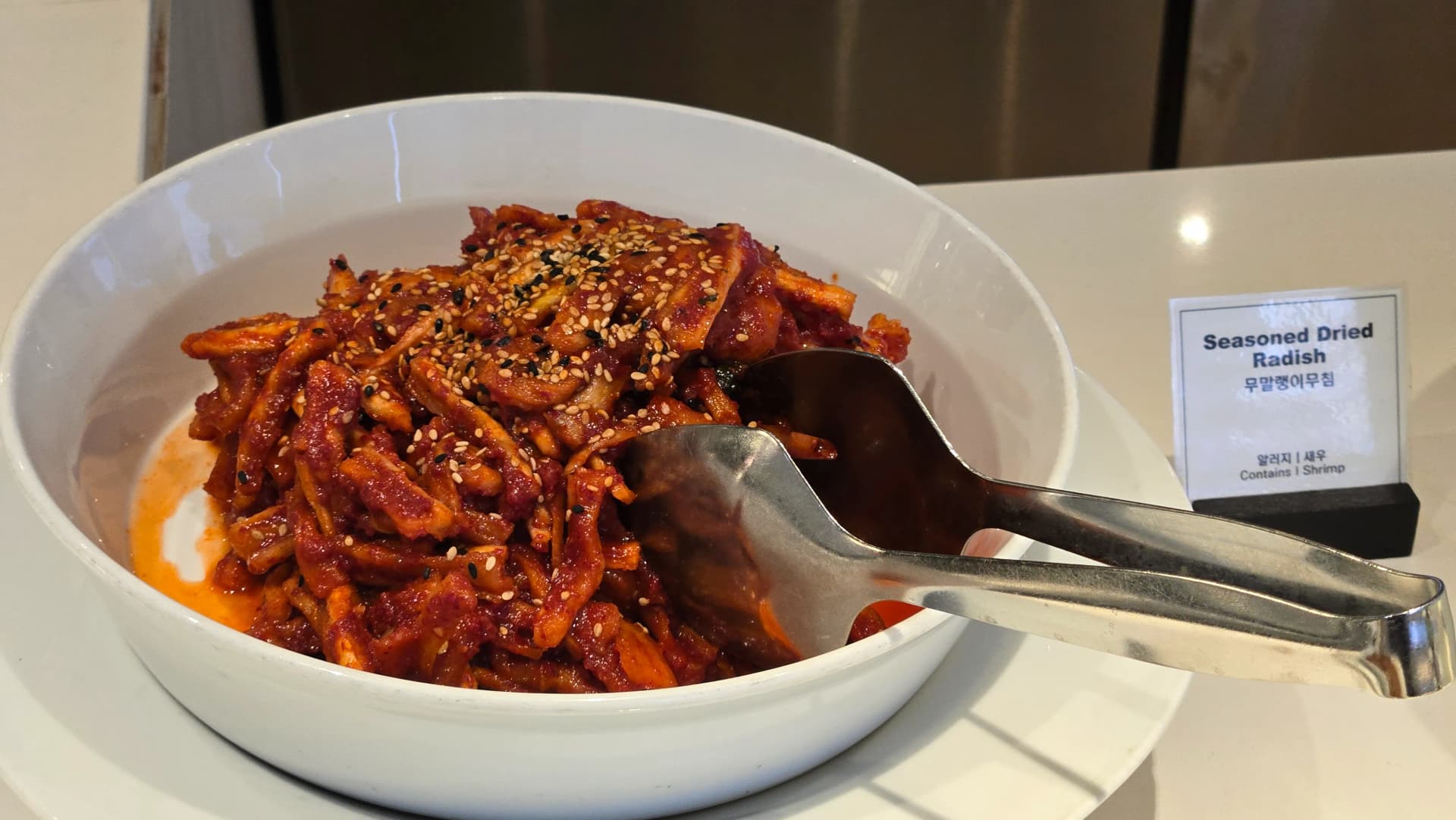
This is mumalleangi muchim (seasoned dried radish). Radish sliced thin and dried, then tossed with red pepper flakes, sesame oil, and plum extract. The texture is distinctly chewy, and the more you chew, the more the radish's natural sweetness comes through.
I'd only made it through the banchan section and my plate was already getting heavy. I hadn't even looked at the bread and Western food stations yet.
Bread and Pastries
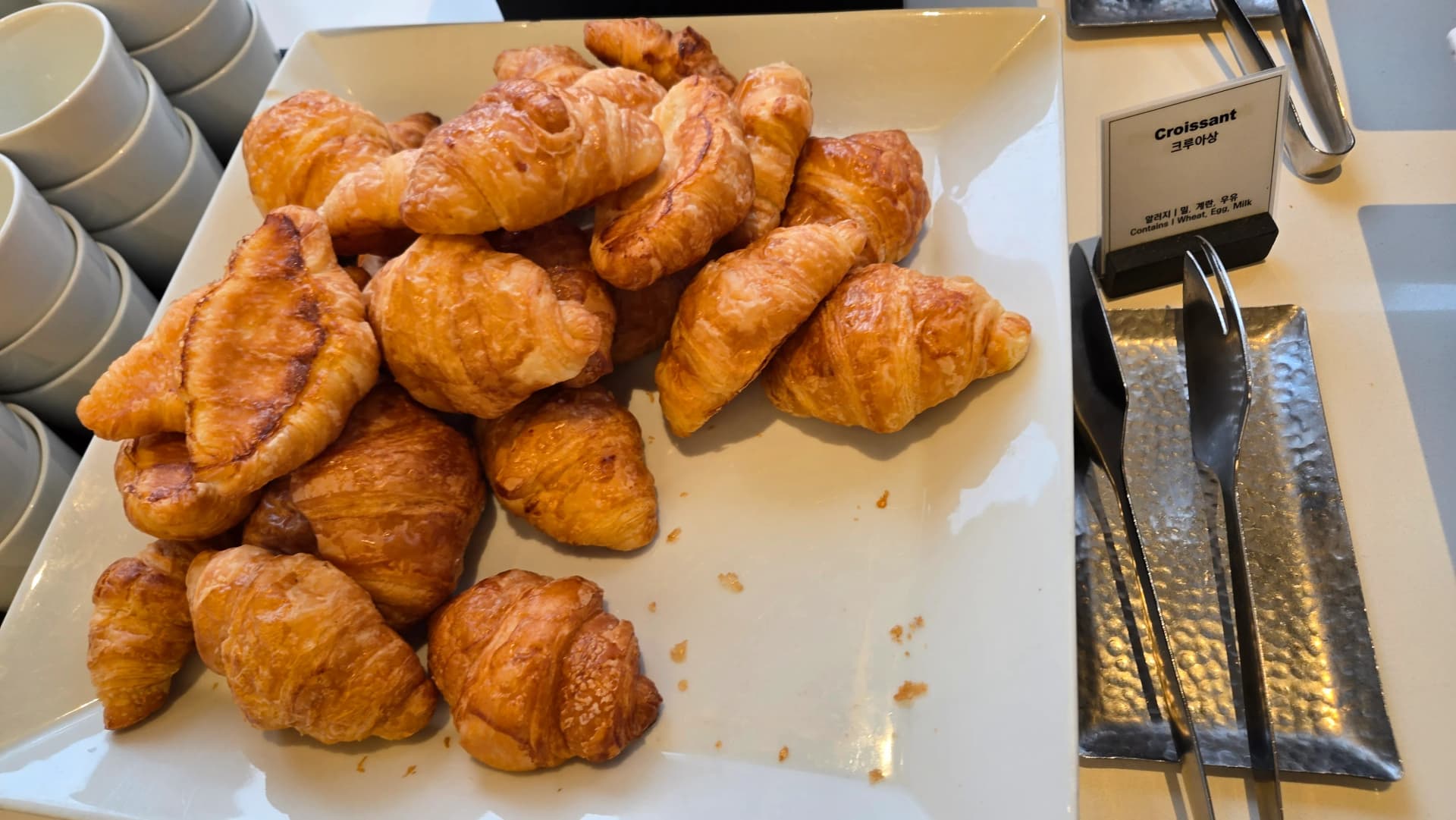
Moving on to the bread section. Starting with croissants. They were mini-sized, perfect for popping in one bite. Crispy on the outside, soft on the inside — not bad at all. That said, they didn't have that freshly-baked-from-the-oven feel. Pretty standard hotel breakfast buffet level.
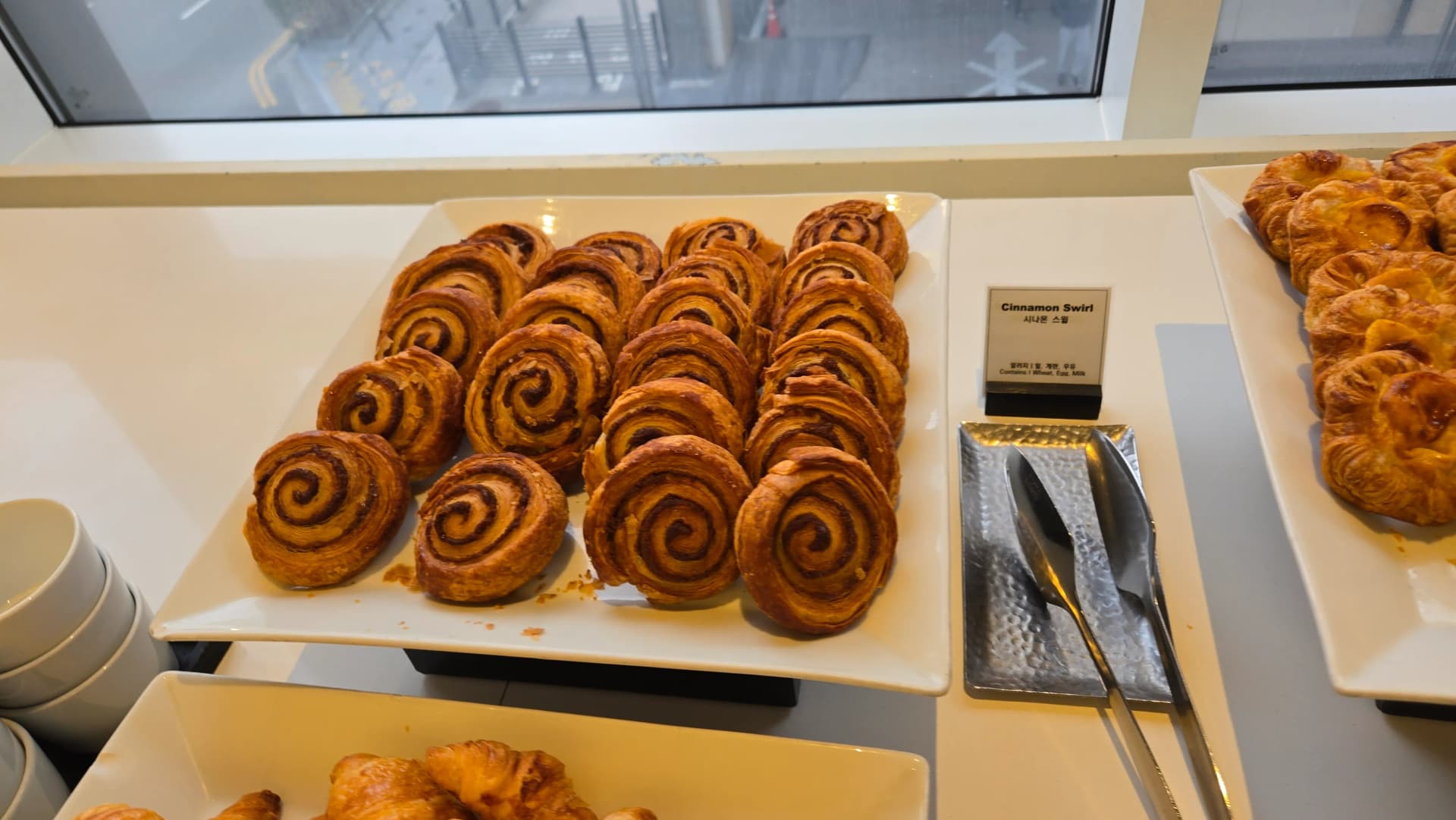
Cinnamon swirls. Sweet with a pretty strong cinnamon aroma. Paired well with coffee.
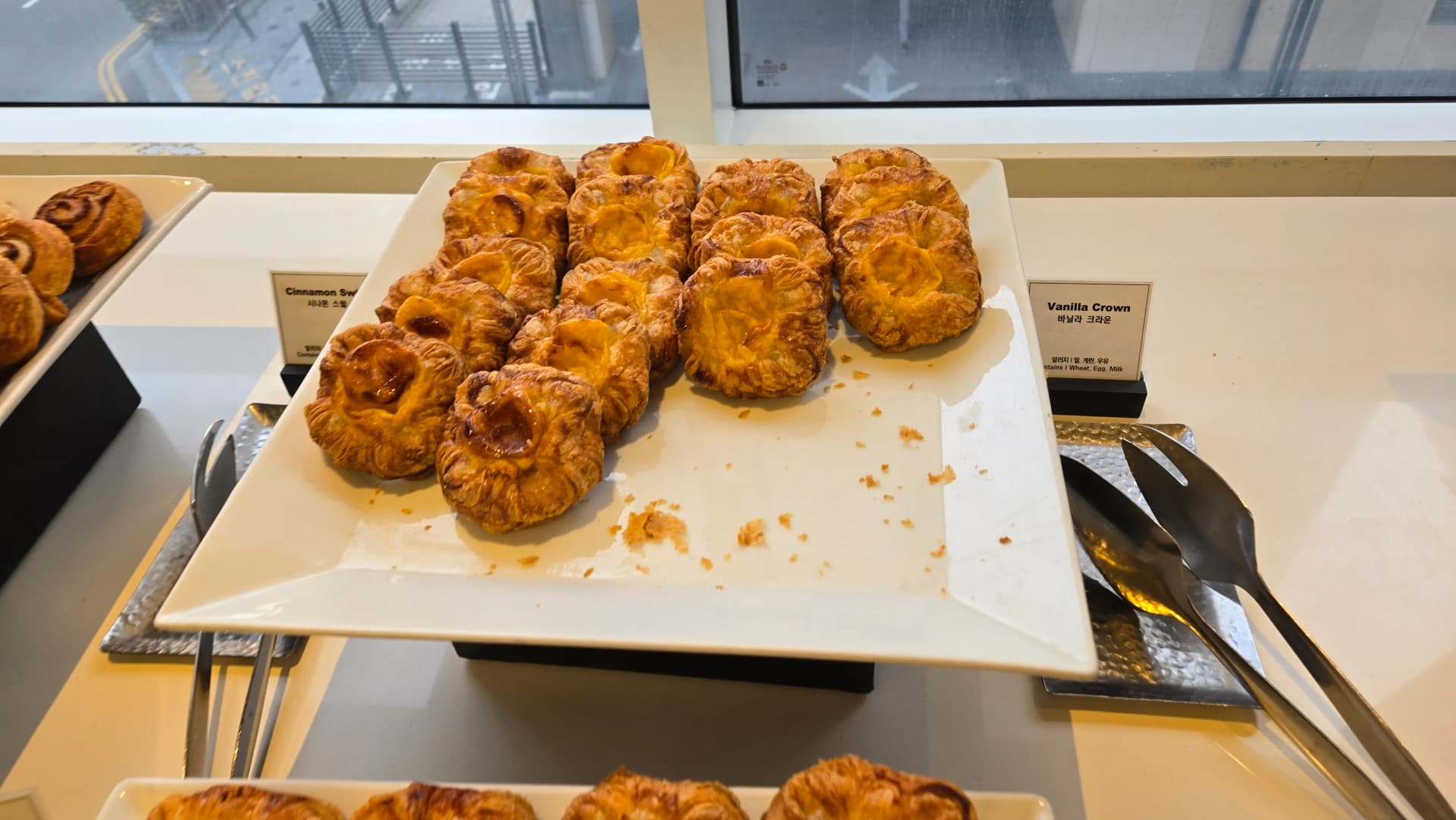
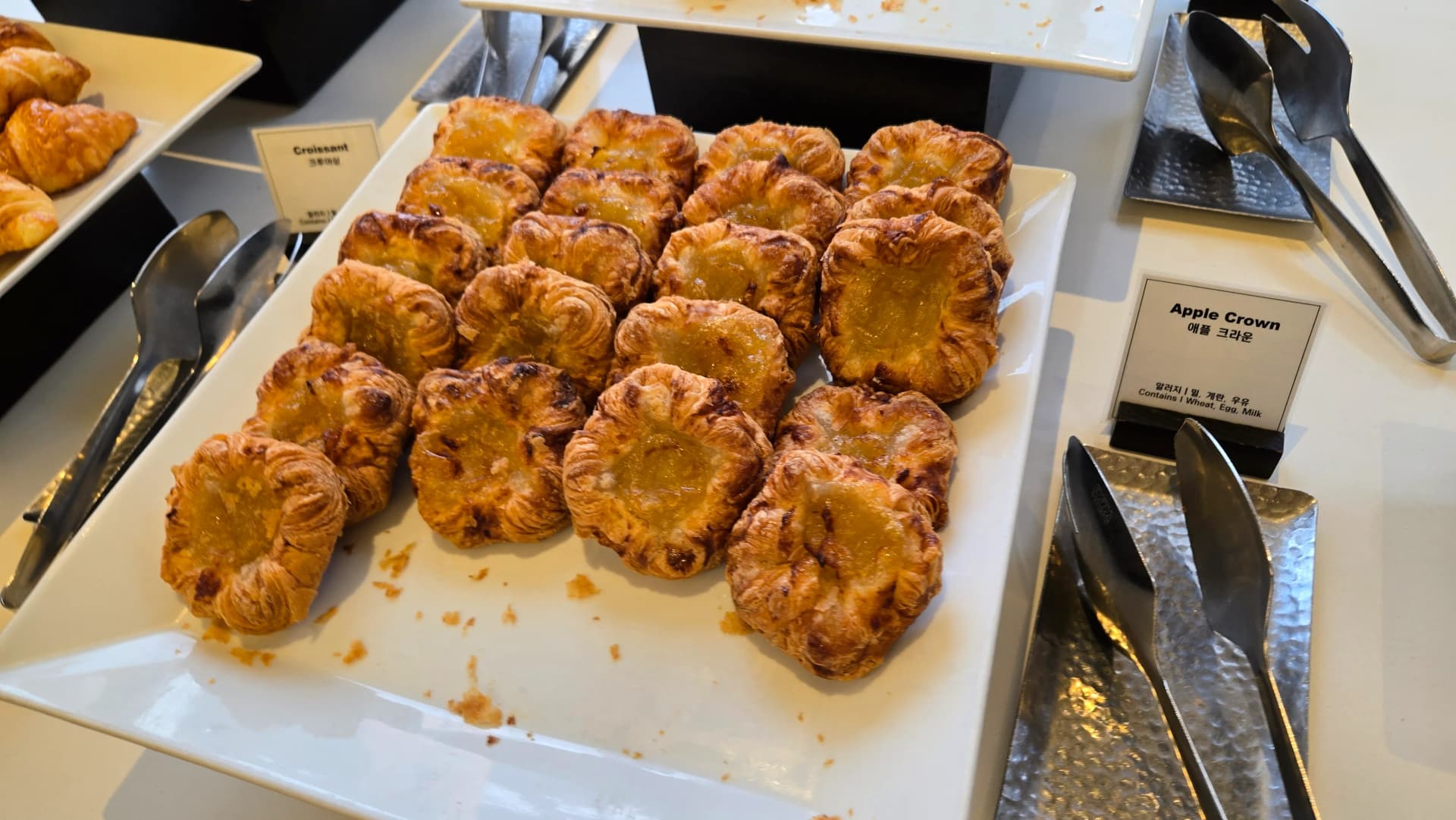
Vanilla crown and apple crown pastries. Both were pastry dough topped with either cream or apple filling. The apple crown was the better one. The vanilla was a bit too rich for me.
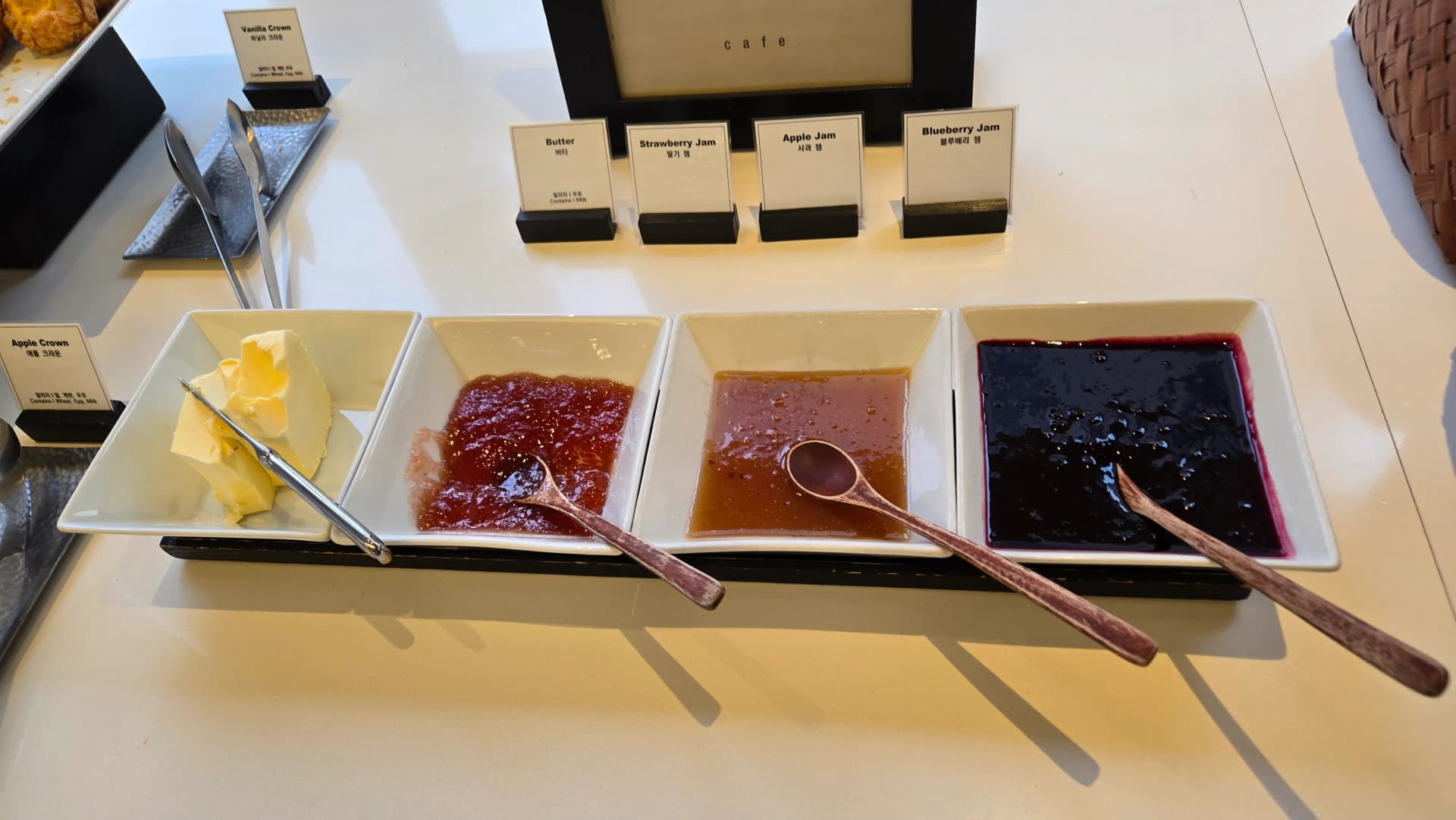
There were four types of spread: butter, strawberry jam, apple jam, and blueberry jam.
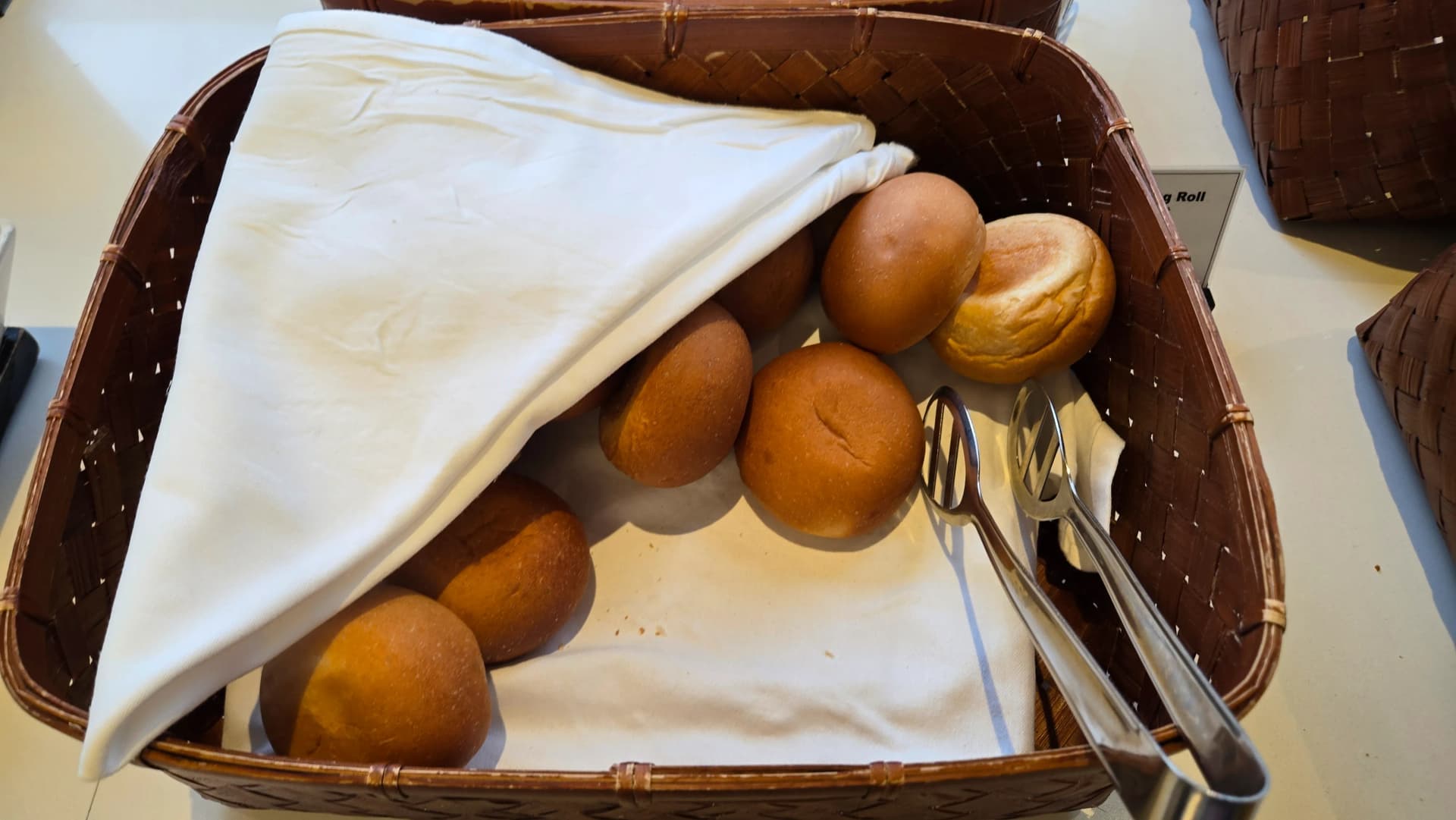
Morning rolls. In Korea, these little round soft buns are called "morning bread" — they're fluffy with just a touch of sweetness. Totally fine to eat plain without any jam.
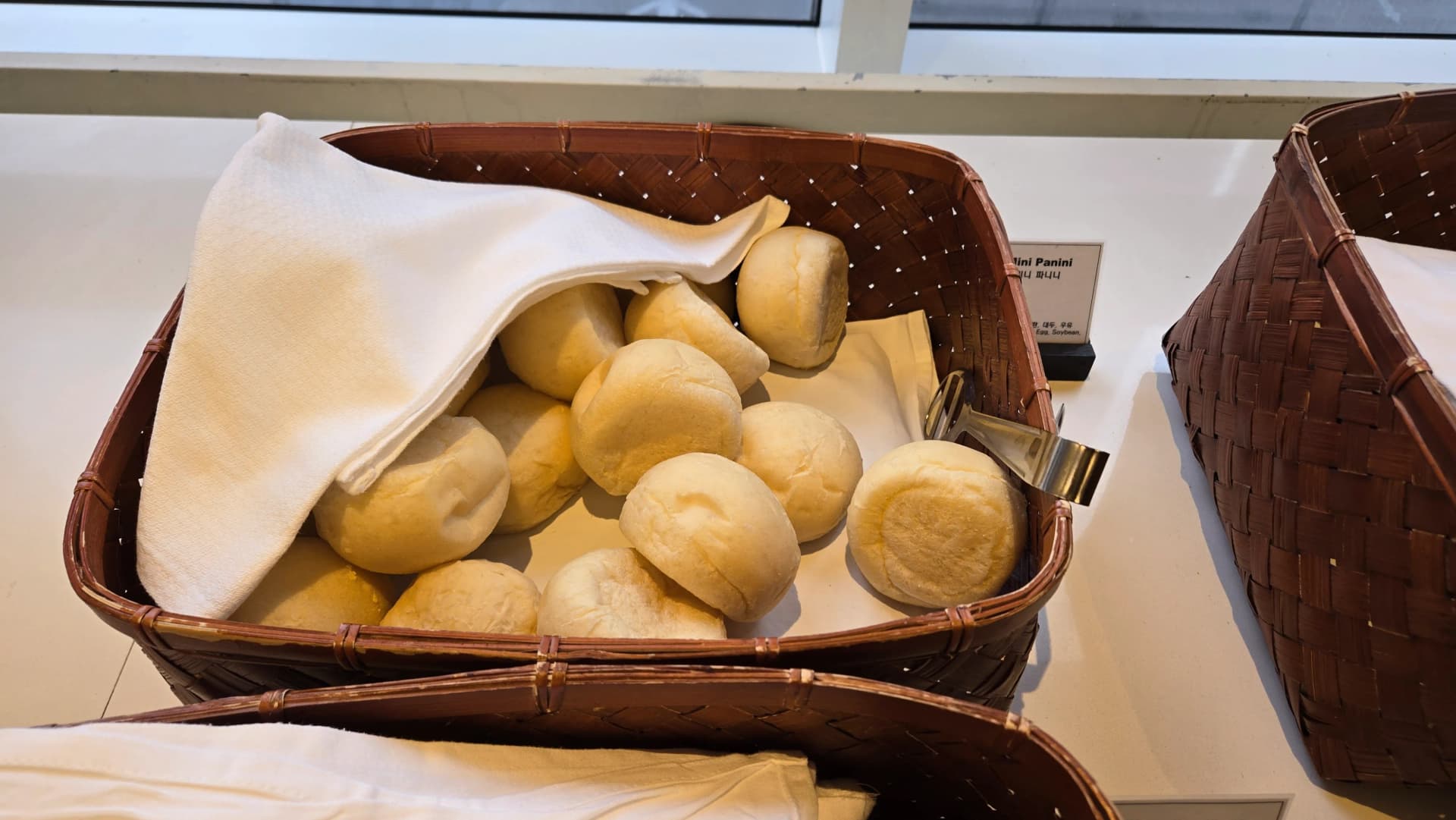
Mini paninis. They were kept under a white cloth to stay warm, and had a chewier texture that was distinctly different from the morning rolls.
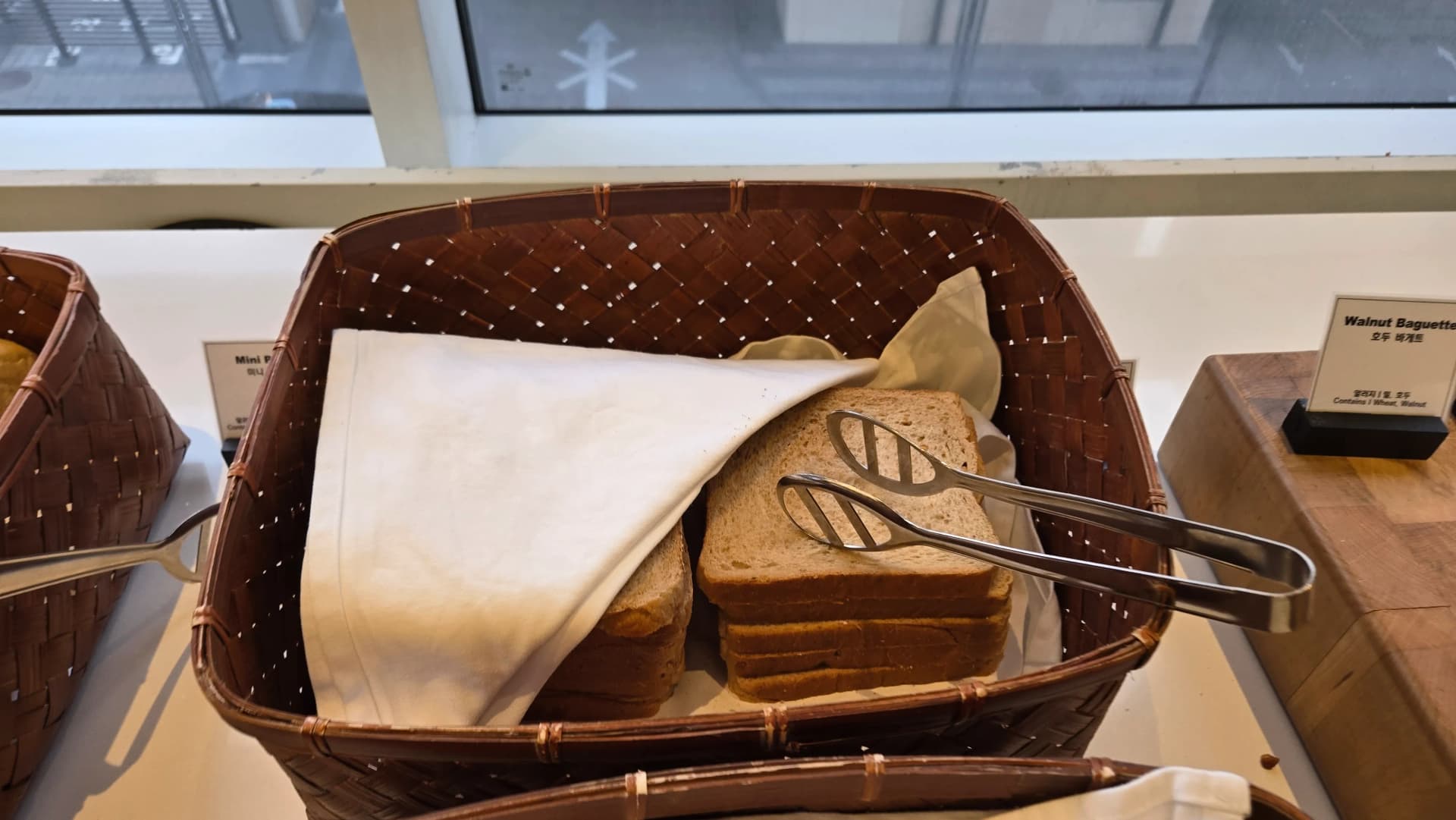
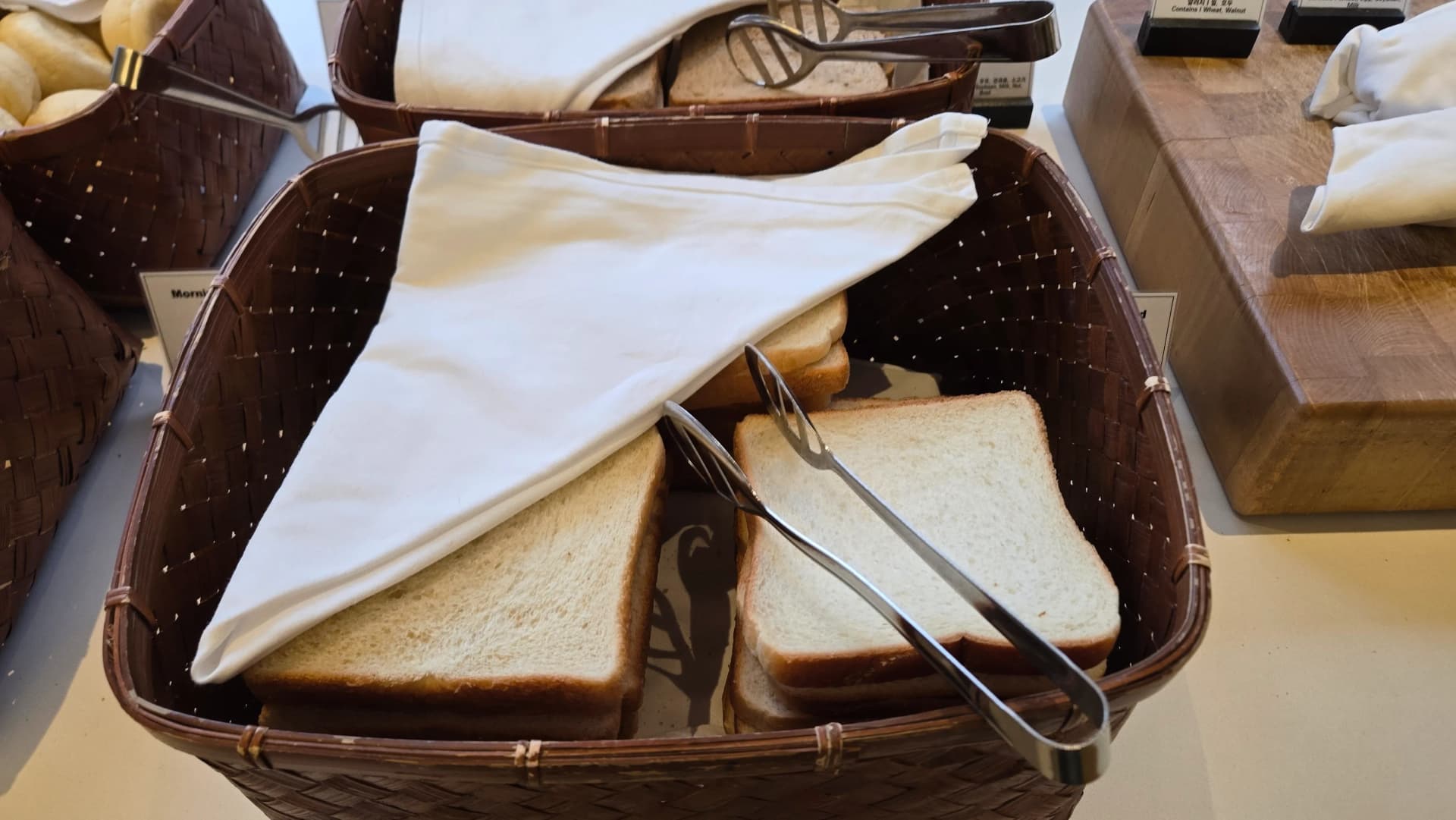
They also had sliced rye bread and white bread, with a toaster right next to them so you could toast your own.
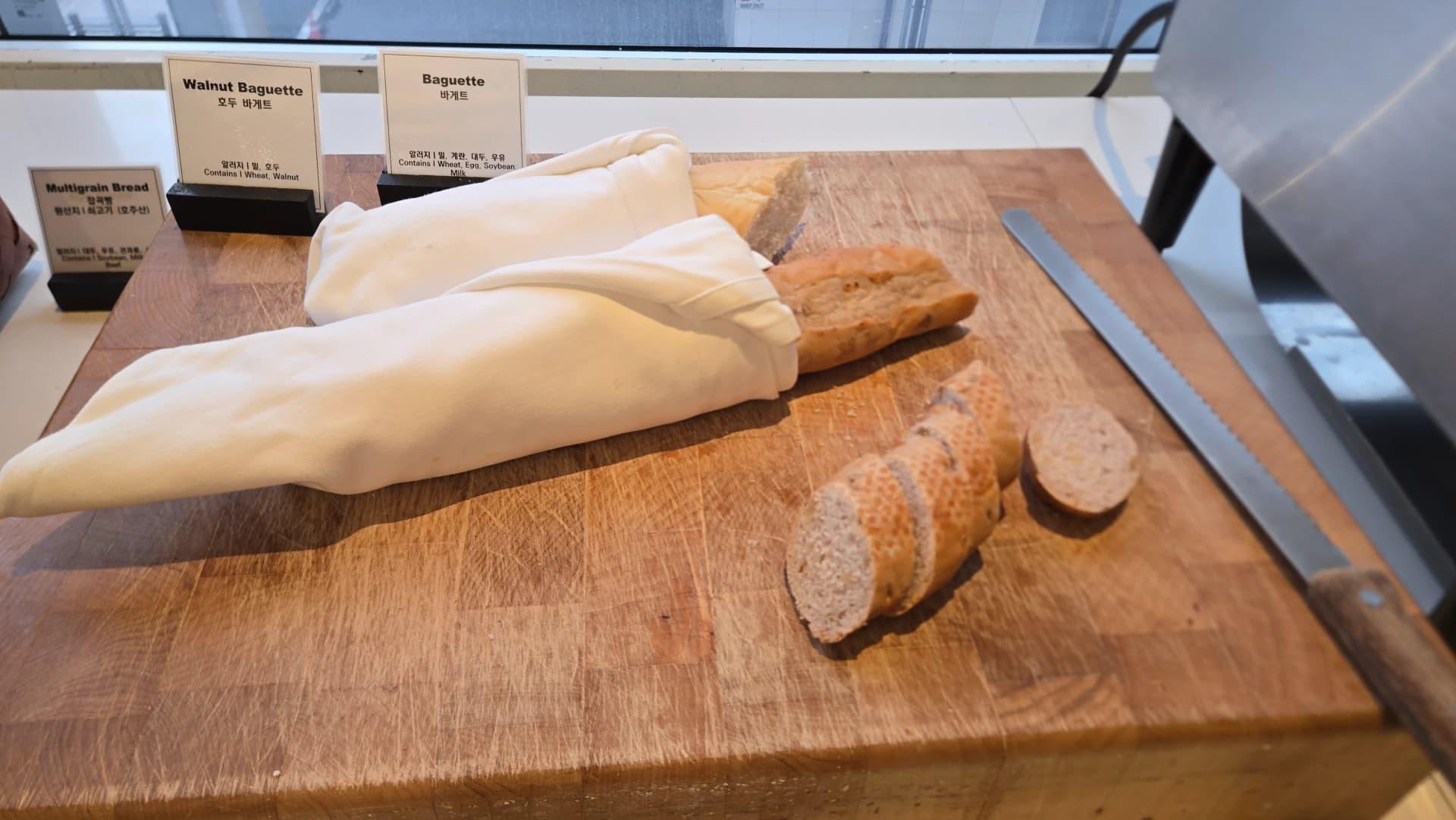
Walnut baguette and plain baguette. They were placed whole on a cutting board with a knife next to them, so you'd slice off however much you wanted. With close to ten different bread options, even if Korean food isn't your thing, you could easily fill up on bread alone for breakfast.
Waffles and Toppings
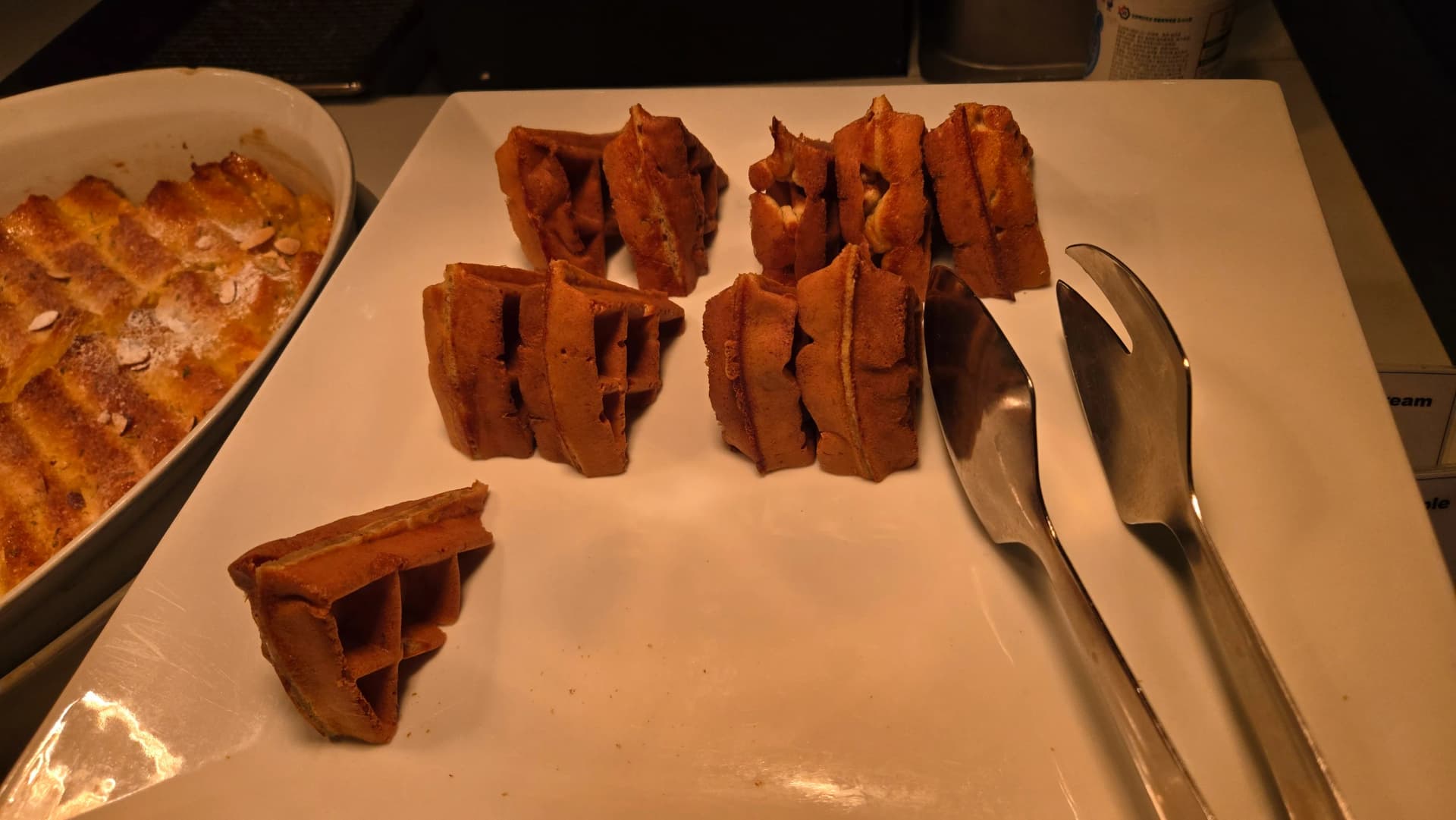
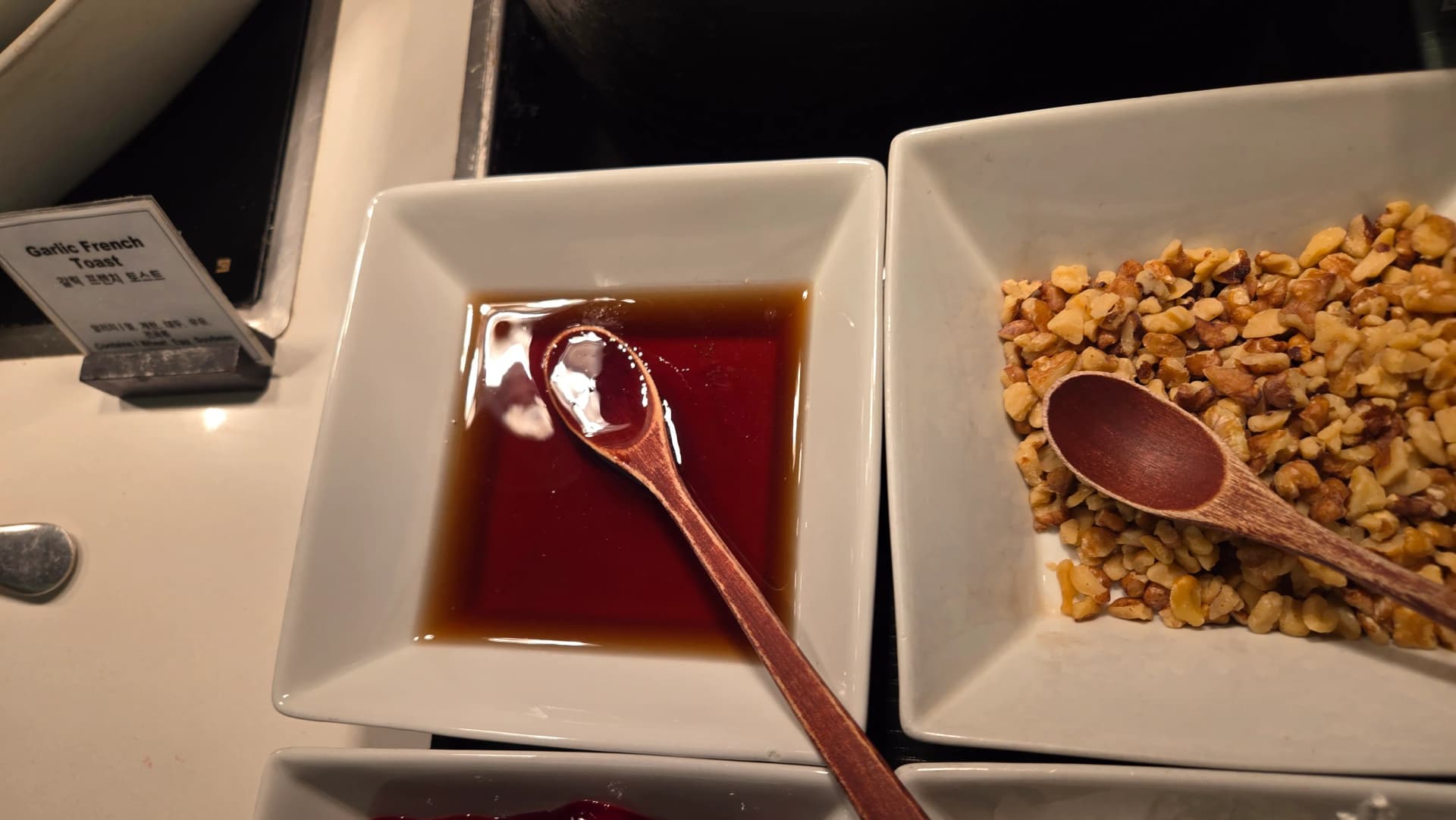
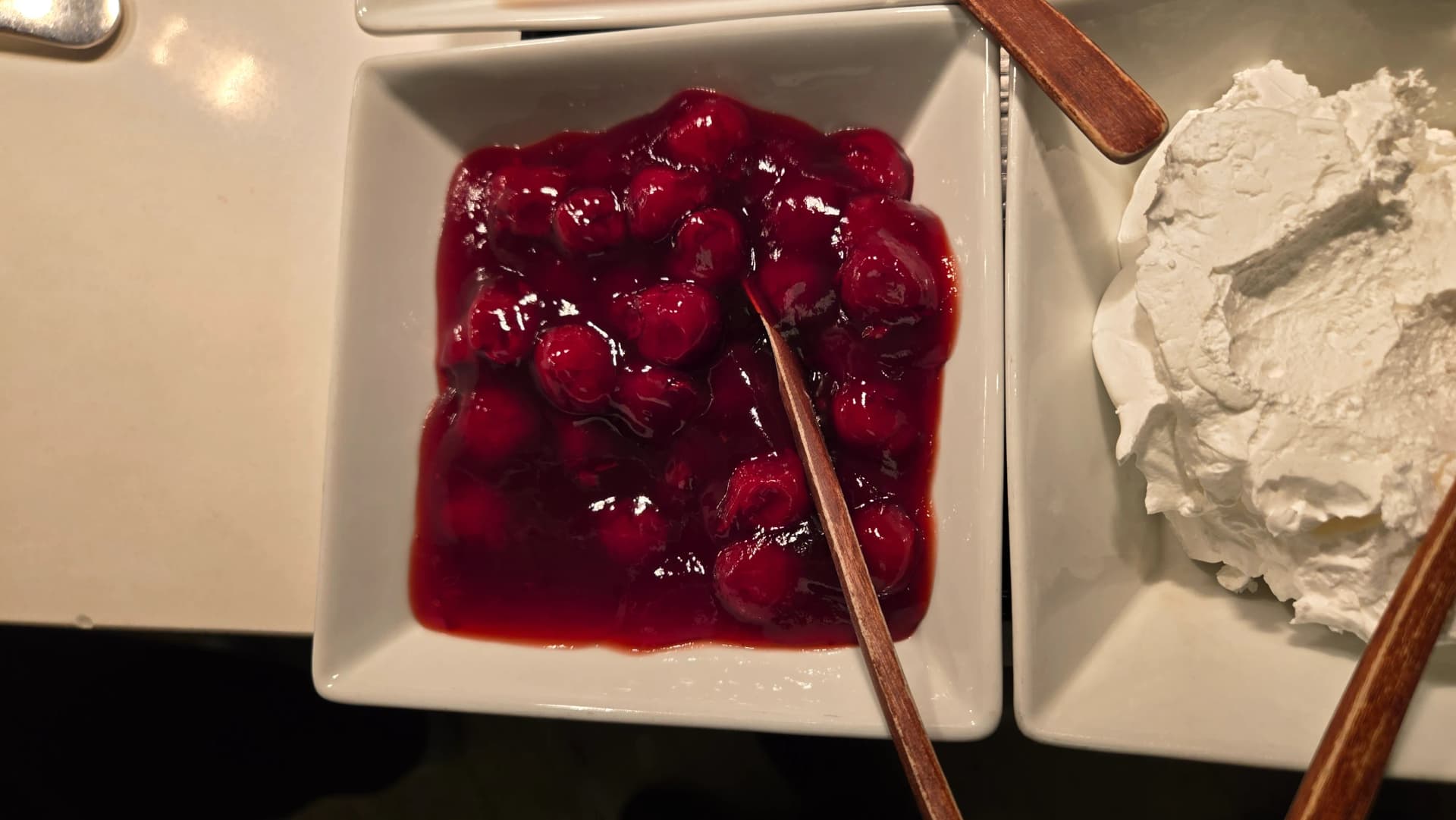
They had waffles too. Mini-sized, folded in half and stood upright. Slightly crispy on the outside, moist on the inside. The toppings were cherry compote, whipped cream, maple syrup, and chopped walnuts — four options. My wife went with cherries and whipped cream, while I did syrup with walnuts. Honestly, the syrup and walnut combo was better. The waffles themselves weren't super sweet, so you really needed to be generous with the syrup to bring out the flavor.
Rice Noodle Station — Best Part of This Hotel Breakfast Buffet
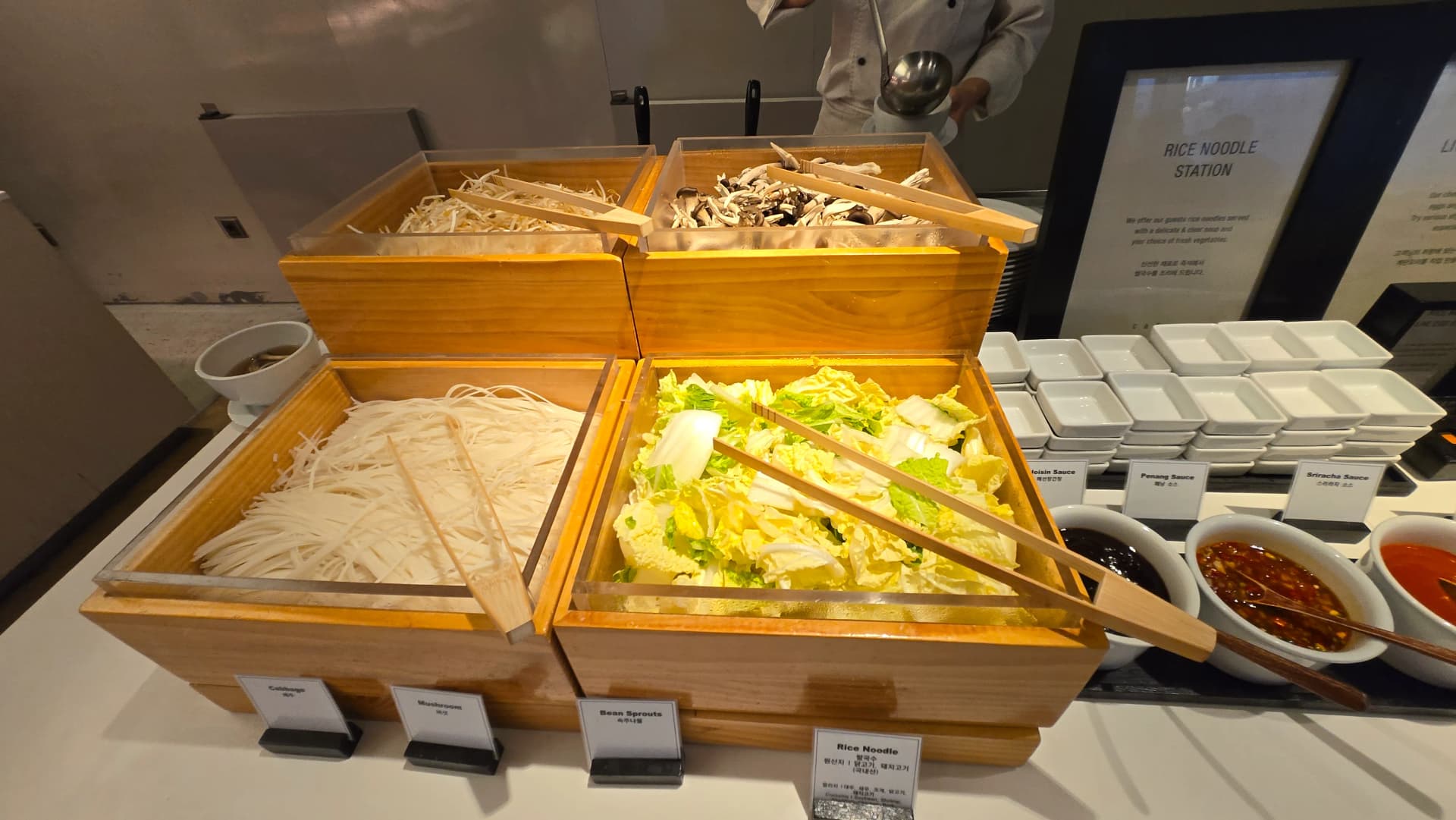
This was my favorite section of the entire Shilla Stay Ulsan breakfast buffet. Wooden boxes held rice noodles, napa cabbage, bean sprouts, and oyster mushrooms, each in its own compartment. You pick whatever ingredients you want, put them in a bowl, and hand it to the staff — they cook it right there on the spot and serve it to you with hot broth.
I've had a similar noodle station at the Hilton Millennium in Bangkok, and honestly, this one held its own. For a business hotel breakfast, I was genuinely impressed.
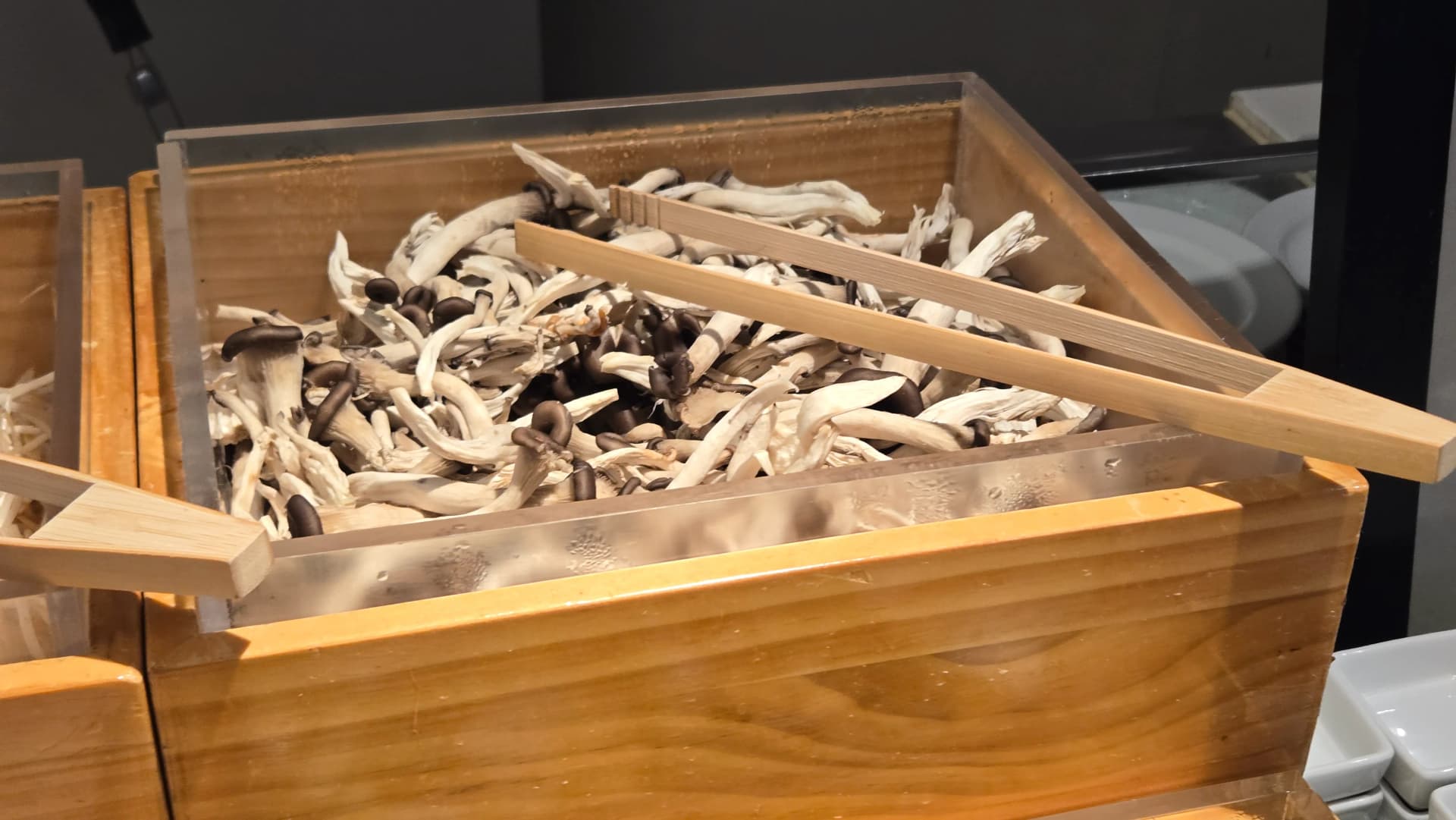
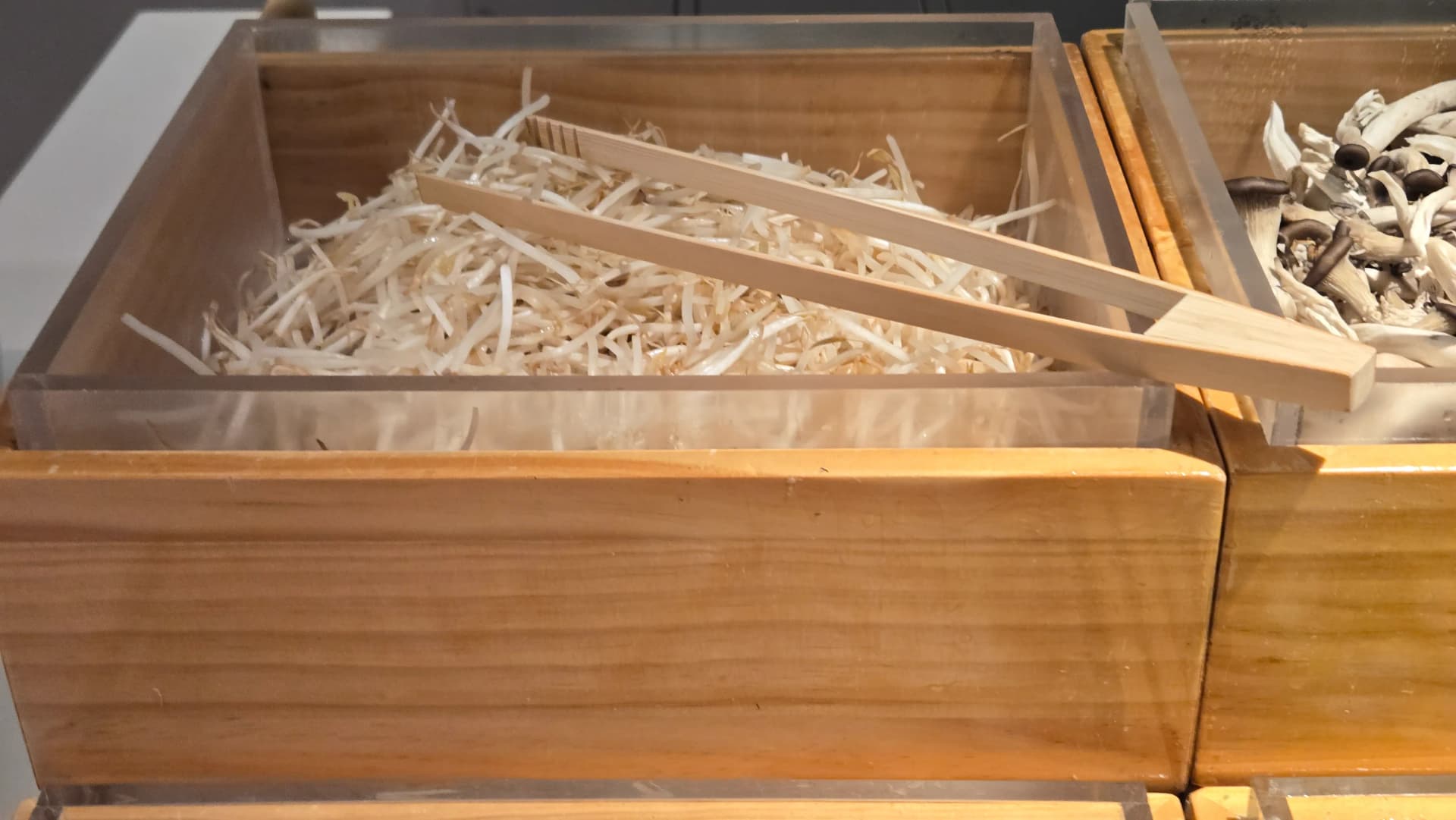
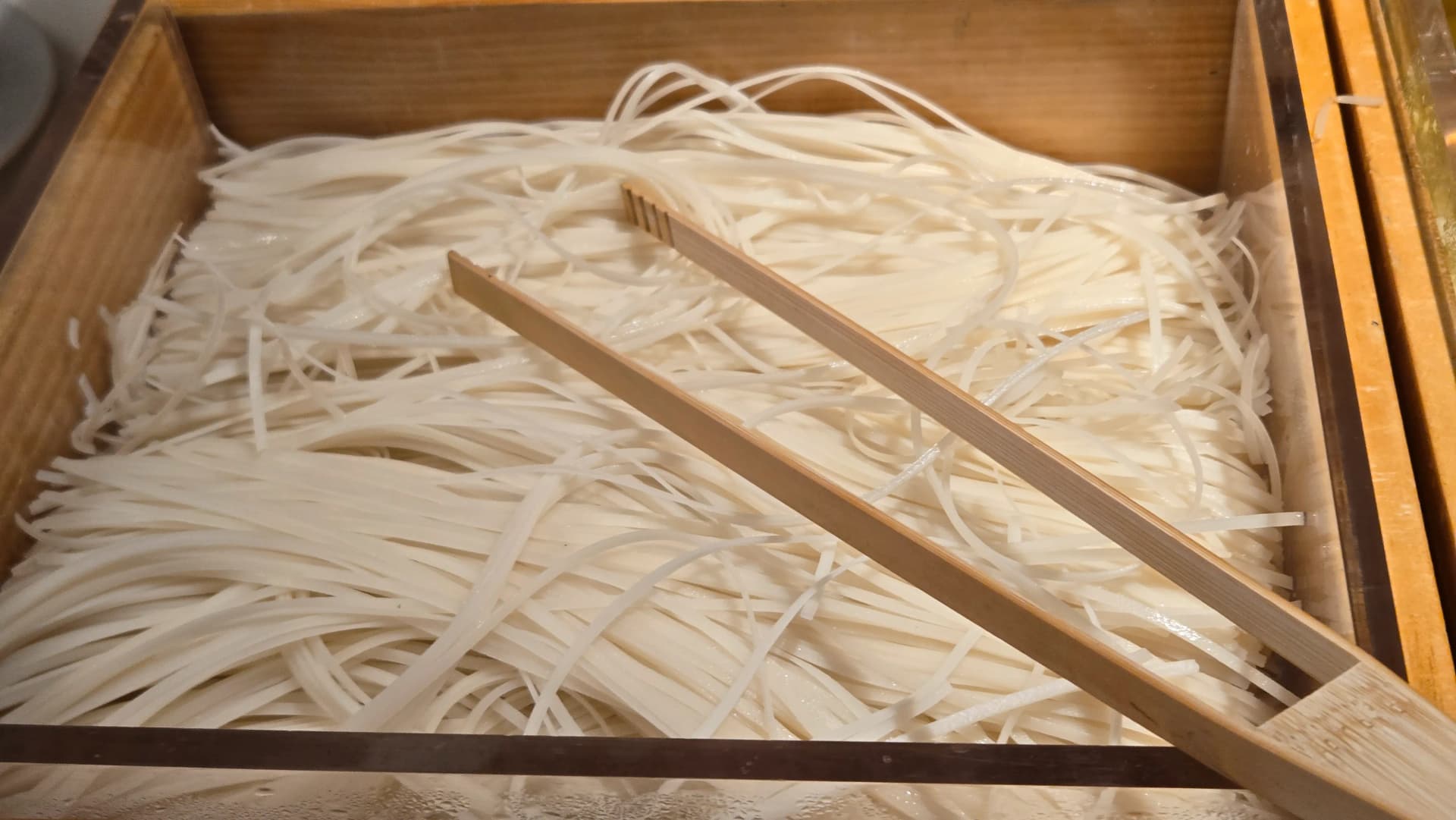
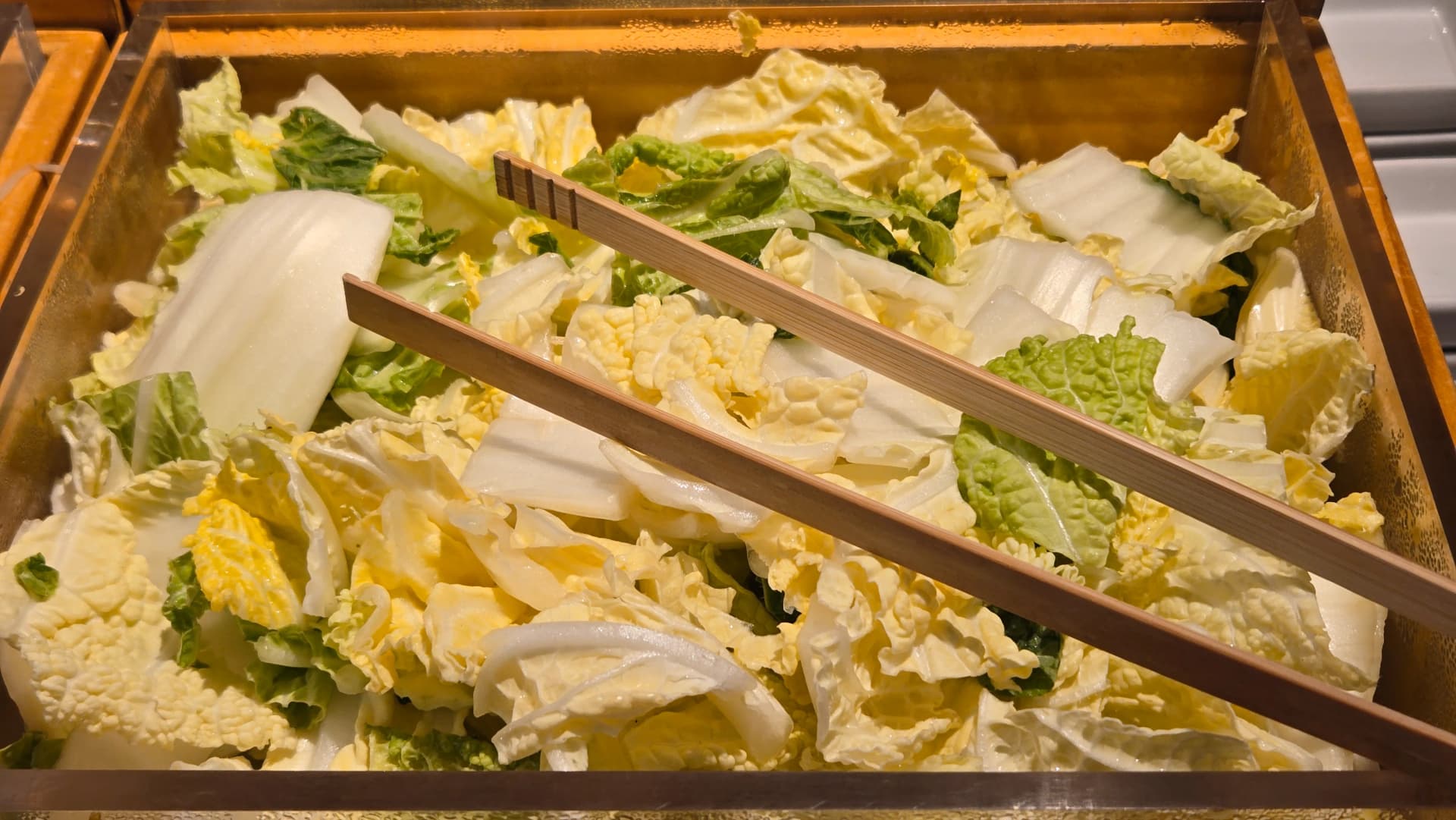
The oyster mushrooms came pre-torn and ready to grab, and the bean sprouts added a nice crunch. The rice noodles were the flat type — similar to what you'd get in Vietnamese pho. The napa cabbage adds sweetness to the broth once it's cooked in, so definitely throw that in. I loaded up all four ingredients; my brother skipped the mushrooms.
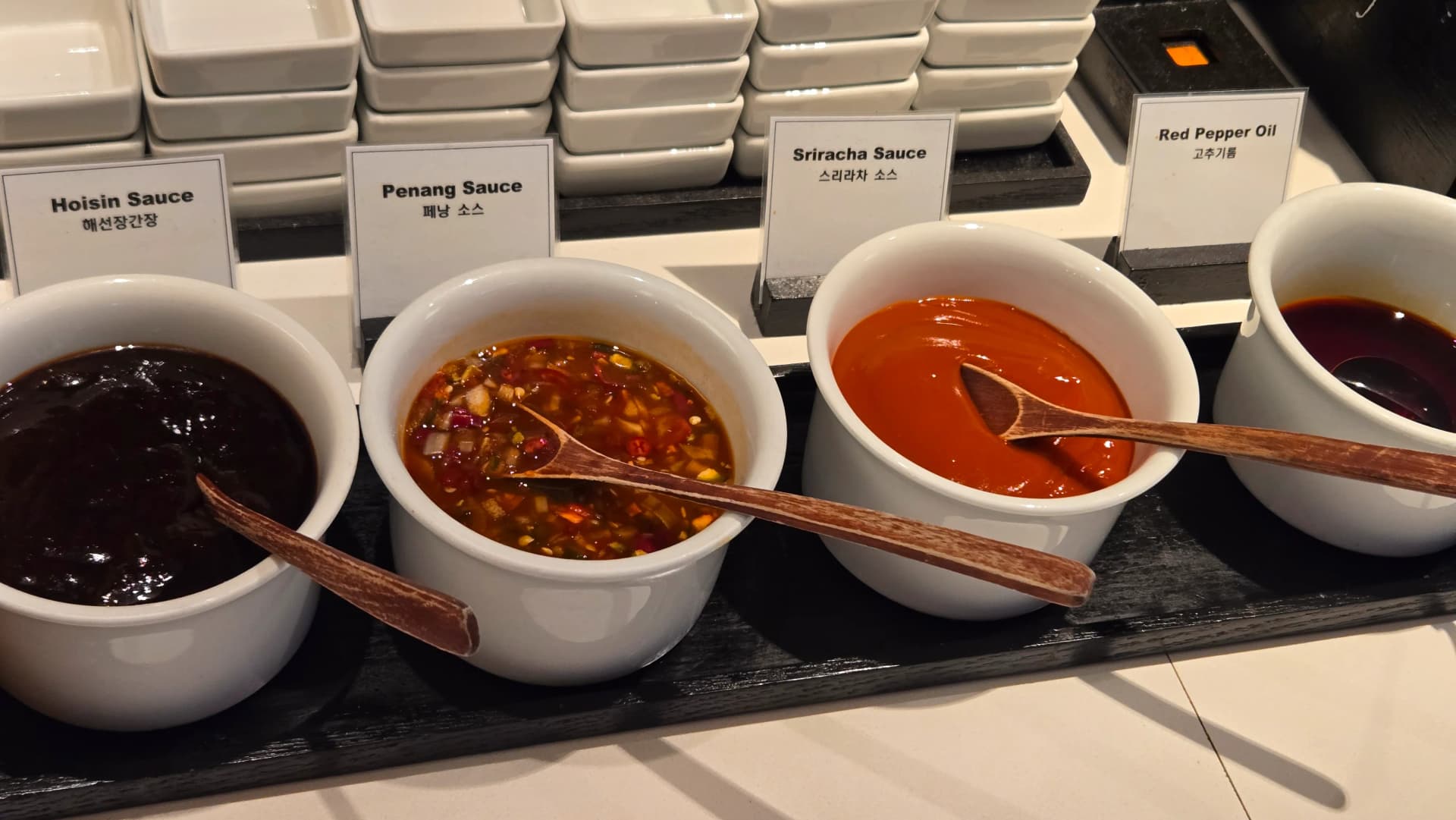
There were four sauces available: hoisin sauce, peanut sauce, sriracha, and chili oil. I added some sriracha and a drizzle of chili oil — having something spicy and warming first thing in the morning really hit the spot. If you can't handle spice, just hoisin alone gives you plenty of savory depth.
Dumplings, Naan, and Curry
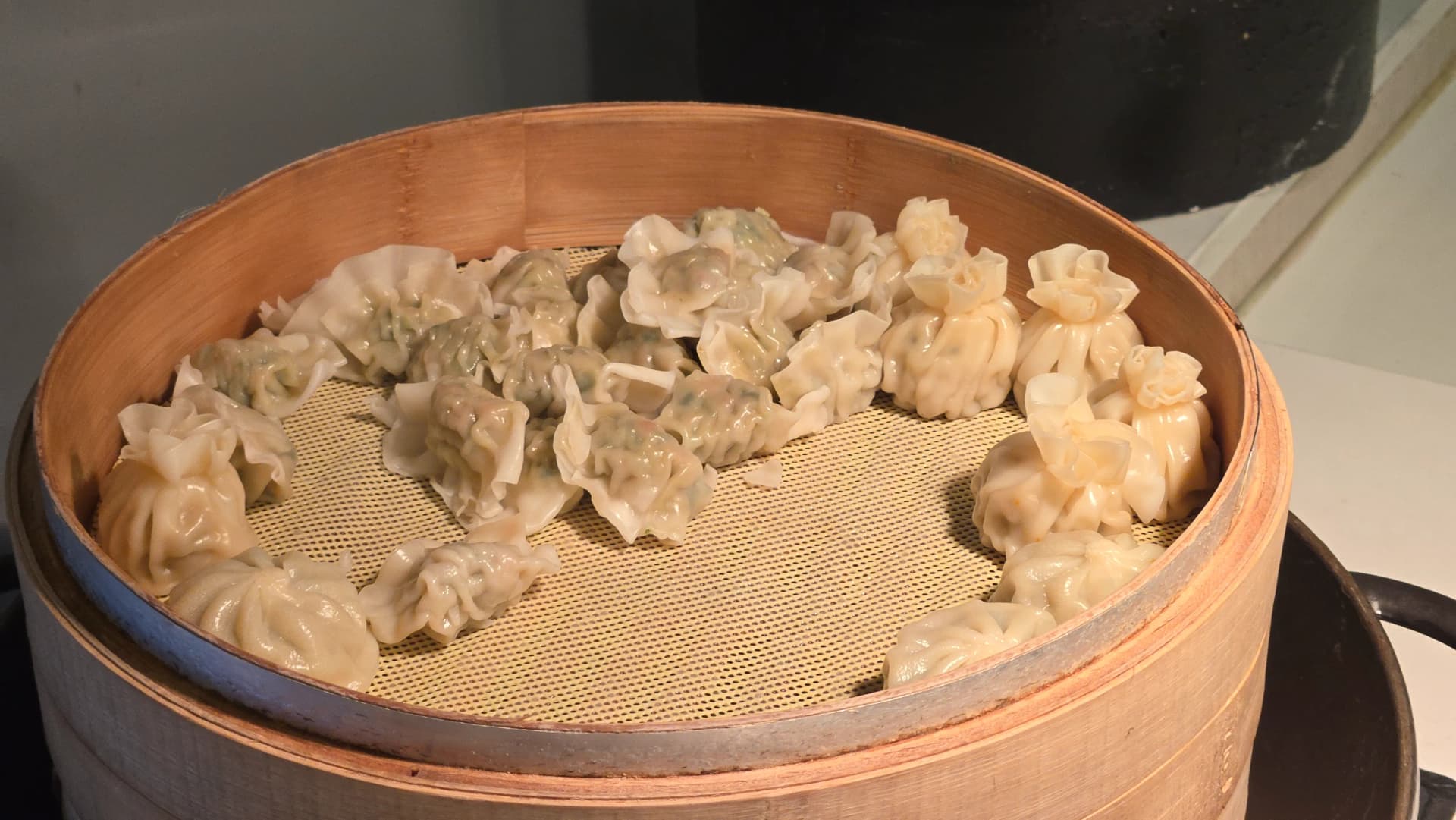
Steamed mandu (Korean dumplings) served in bamboo steamers. The wrappers were moist and slightly translucent — you could see the vegetable and meat filling inside. They were bite-sized, easy to pick up, and perfect dipped in soy sauce.
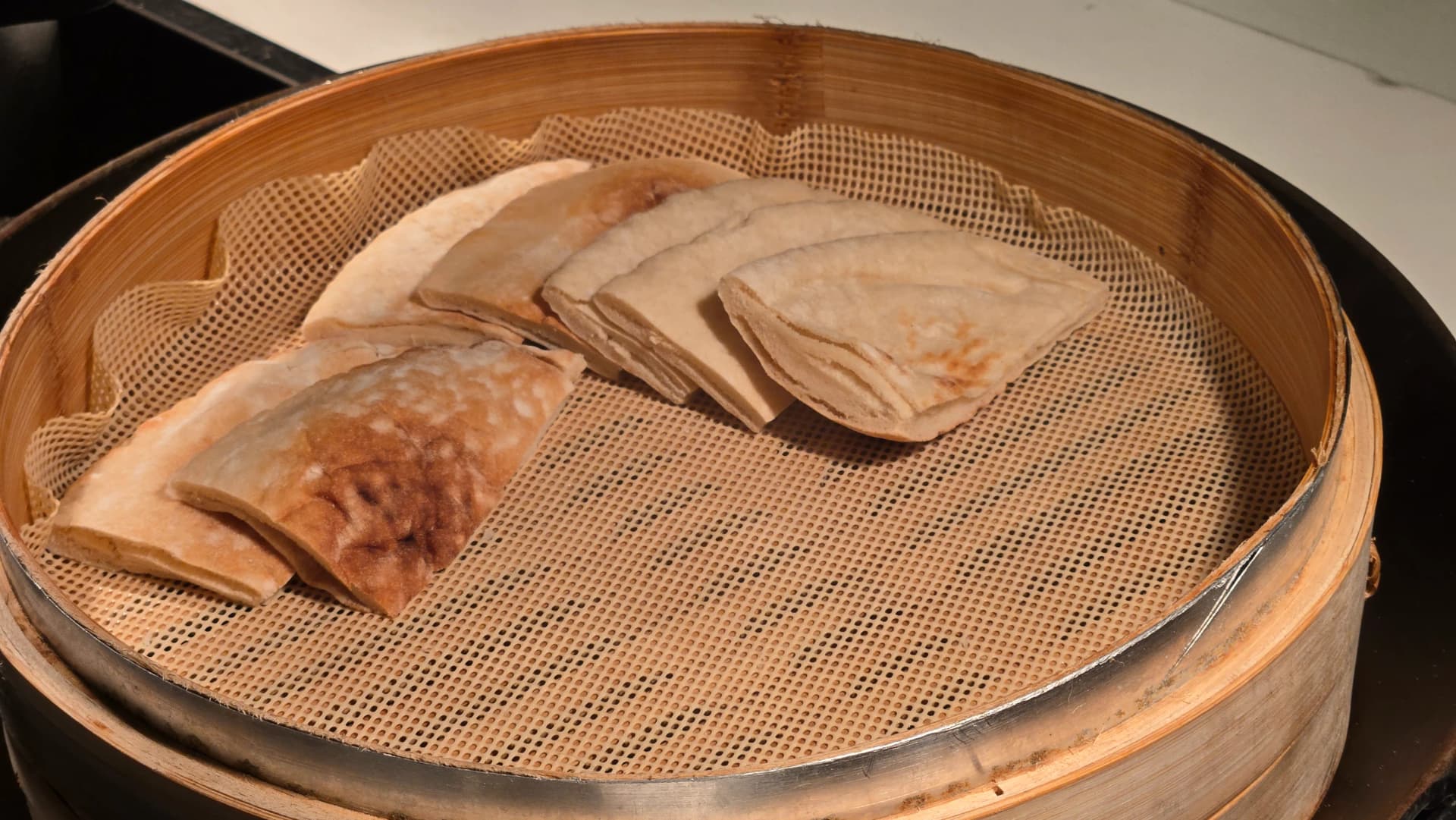
Naan. This ended up being one of my absolute favorite items from the whole breakfast. But when I got there, only a few pieces were left. I arrived at 7 AM and it was already running low — so if you're late, you might miss it entirely.
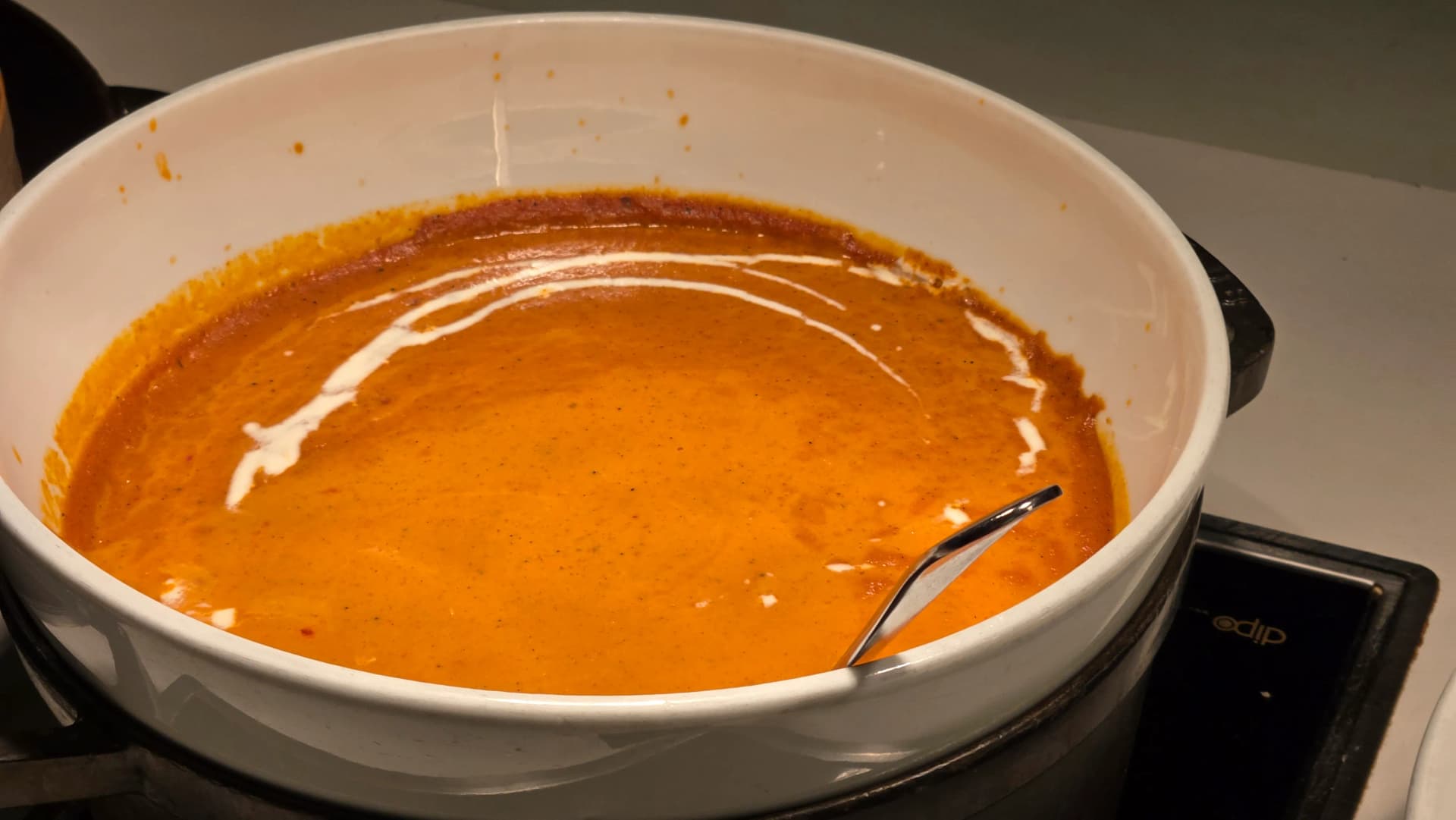
Right next to the naan was a pot of curry meant to be eaten together. It was an orange-colored cream curry with a drizzle of cream on top, nice and thick. Not spicy at all — smooth and mild — and it paired incredibly well with the naan. This naan-and-curry combo was hands down my TOP pick from the entire breakfast. I've had breakfast curry at the Hyatt in Kota Kinabalu, and this one was richer and honestly tastier.
Western Hot Dishes
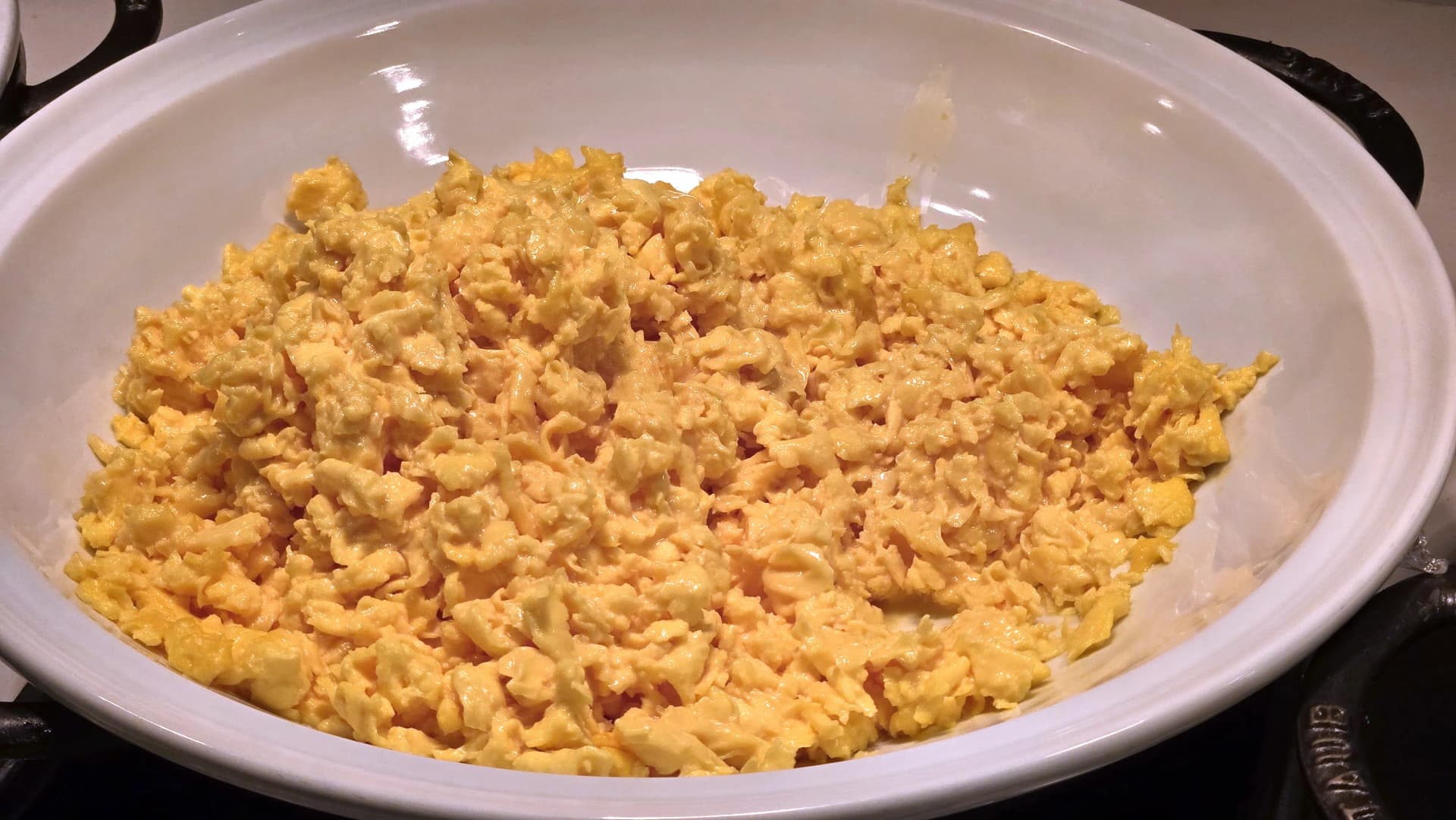
Scrambled eggs. There was plenty of it, but it was kind of dry and rubbery. If you're expecting soft, creamy scrambled eggs, you'll be a bit disappointed.
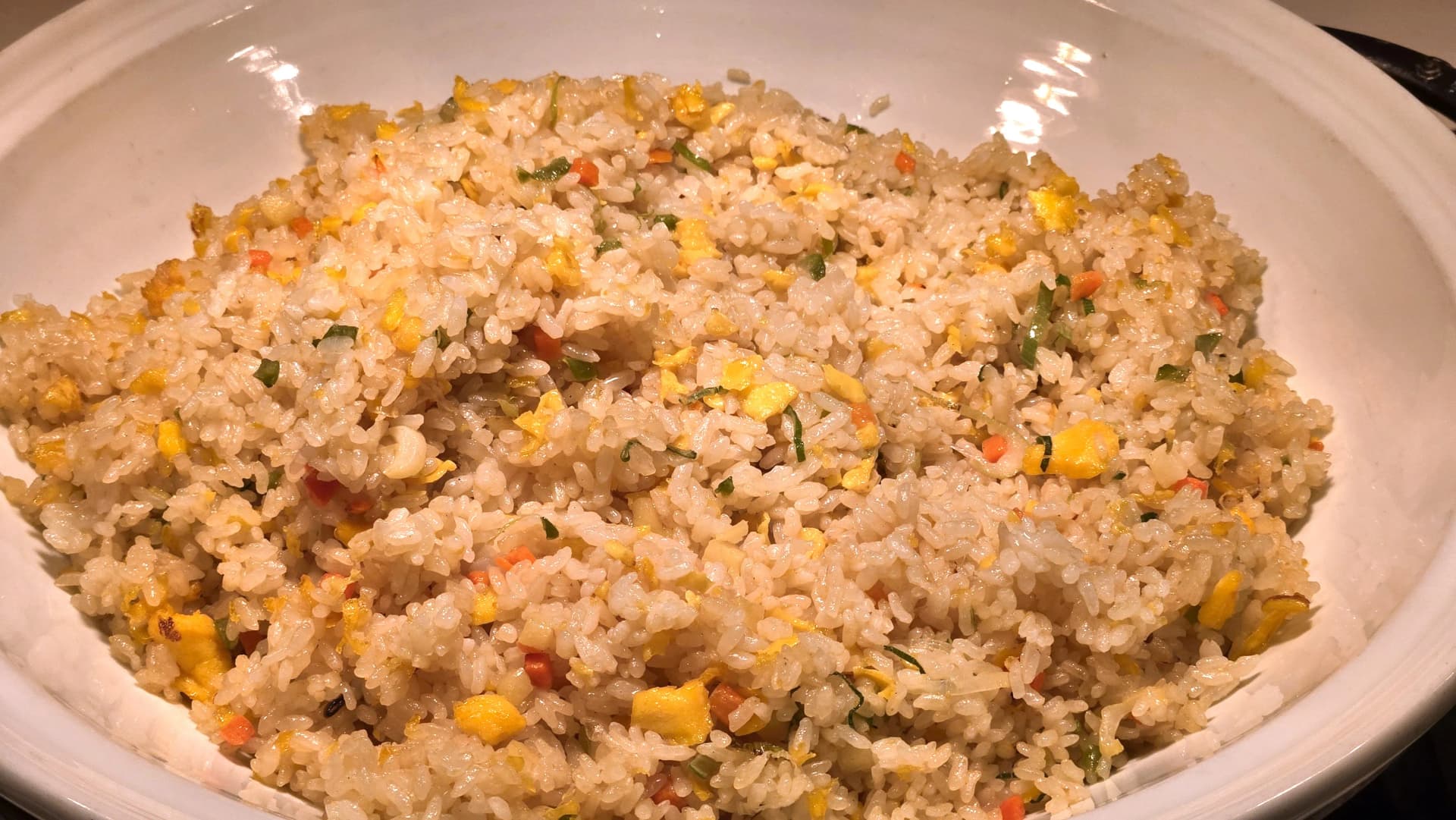
Fried rice (bokkeumbap). This is a staple at pretty much every Korean hotel breakfast buffet. It was decent — nothing spectacular. Tasted better when I ate it with some kimchi on the side.
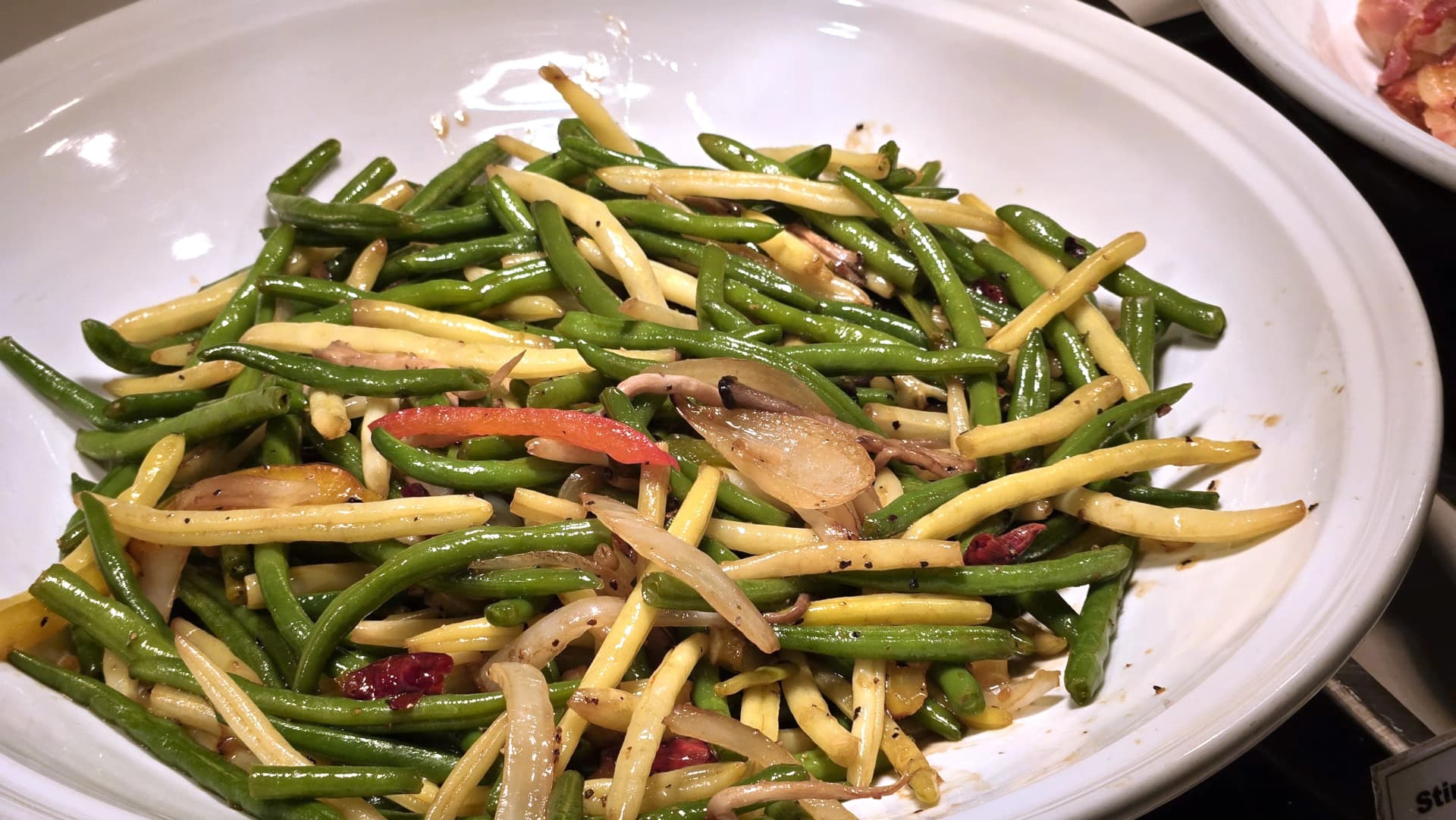
Sautéed green beans, mushrooms, and bell peppers. Light and clean-tasting. Served as a nice palate cleanser between all the heavier meat dishes.
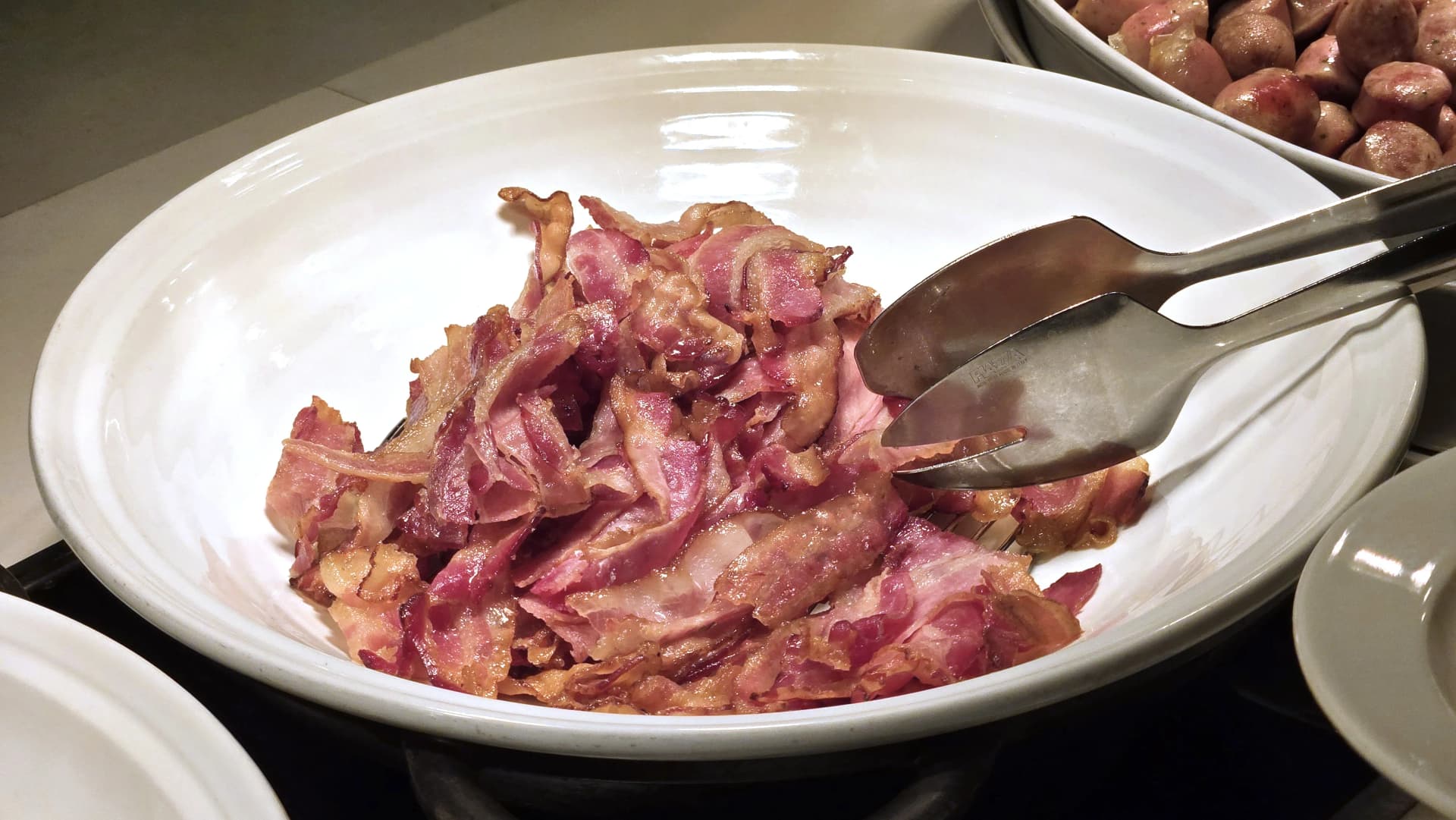
Bacon. It wasn't the crispy type — more on the soft, chewy side — but the saltiness was just right and it went great with bread. This was another one of my favorites from the spread.
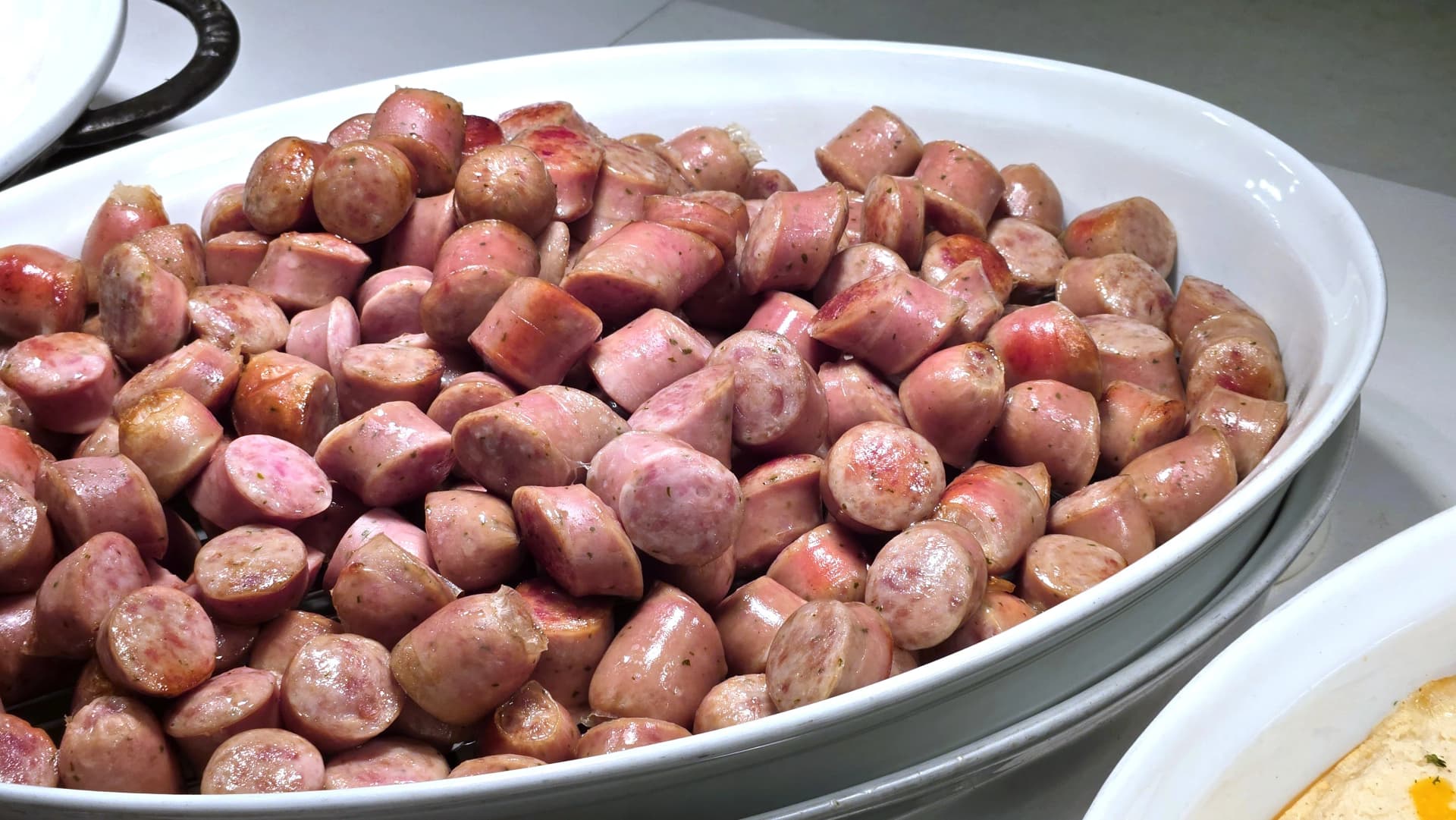
The sausages were cut into bite-sized pieces with grill marks on the outside, and they were the herb-seasoned type — noticeably more flavorful than generic sausages. My brother refilled his plate with these three times. "Dude, these sausages are seriously good. I'm just gonna eat these the whole time." After the naan and curry, these sausages and the bacon were my top picks from the buffet.
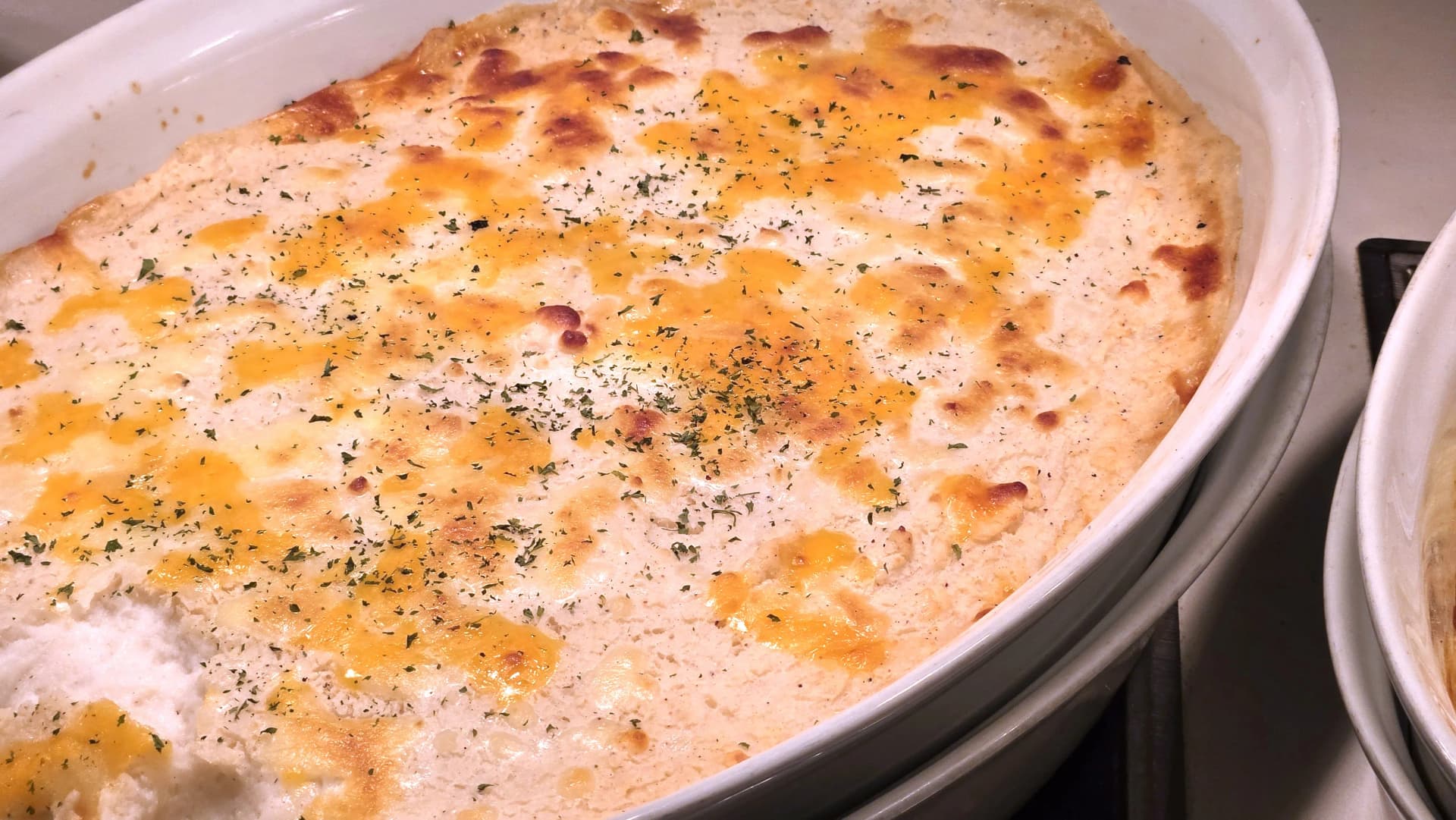
Potato gratin. The cheese was melted and golden-brown on top. Honestly though, it was a bit heavy for breakfast. If you're a cheese lover, you'll probably enjoy it.
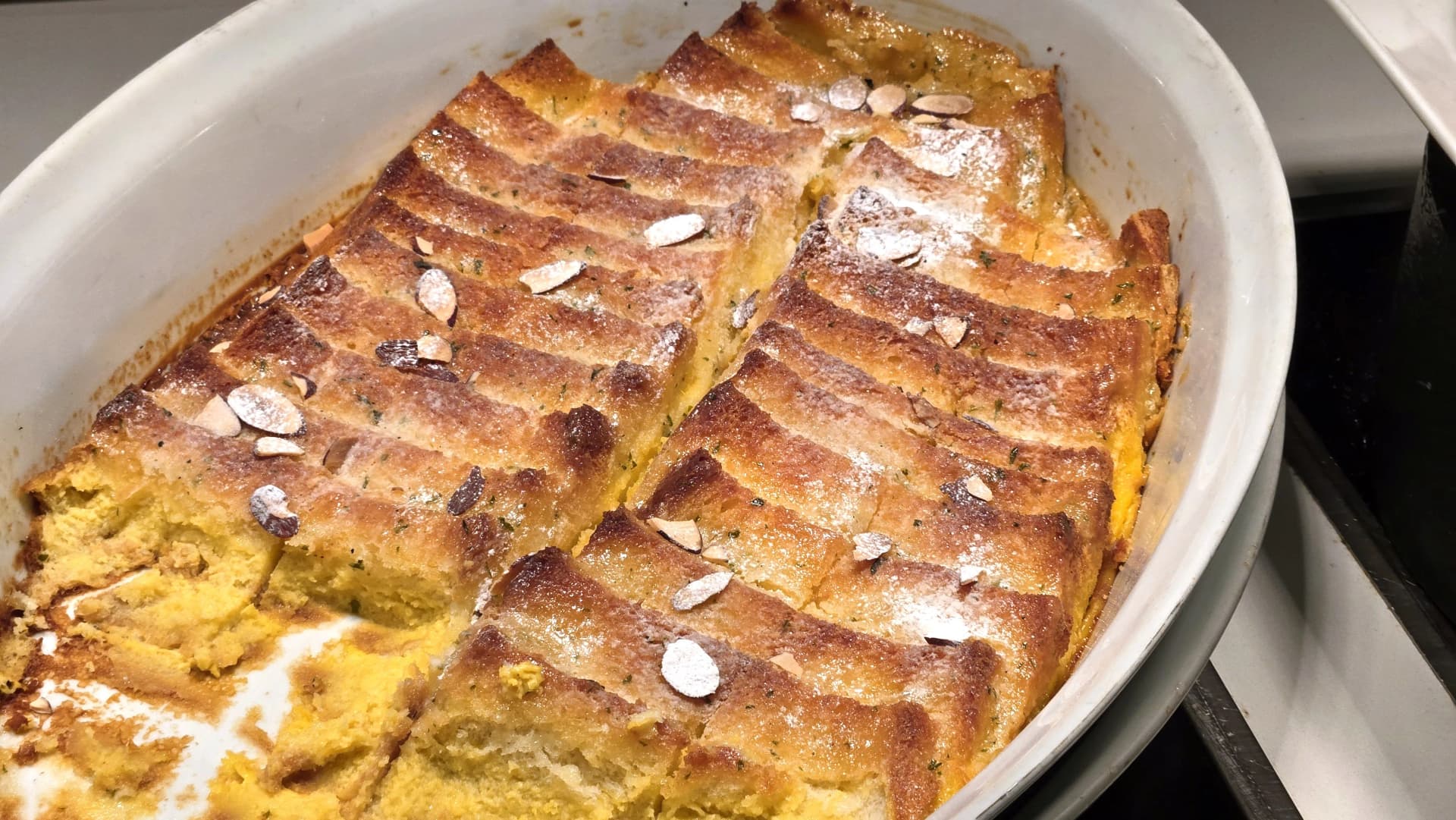
This was bread baked with custard cream on top and scattered with sliced almonds. I think it was garlic French toast, but I can't remember the exact menu name. It was sweet enough to feel more like a dessert.
Salad and Deli Selection
By this point I'd loaded up two plates before even making it all the way around the buffet line. My brother was already sitting down eating while I still hadn't made it to the salad section.
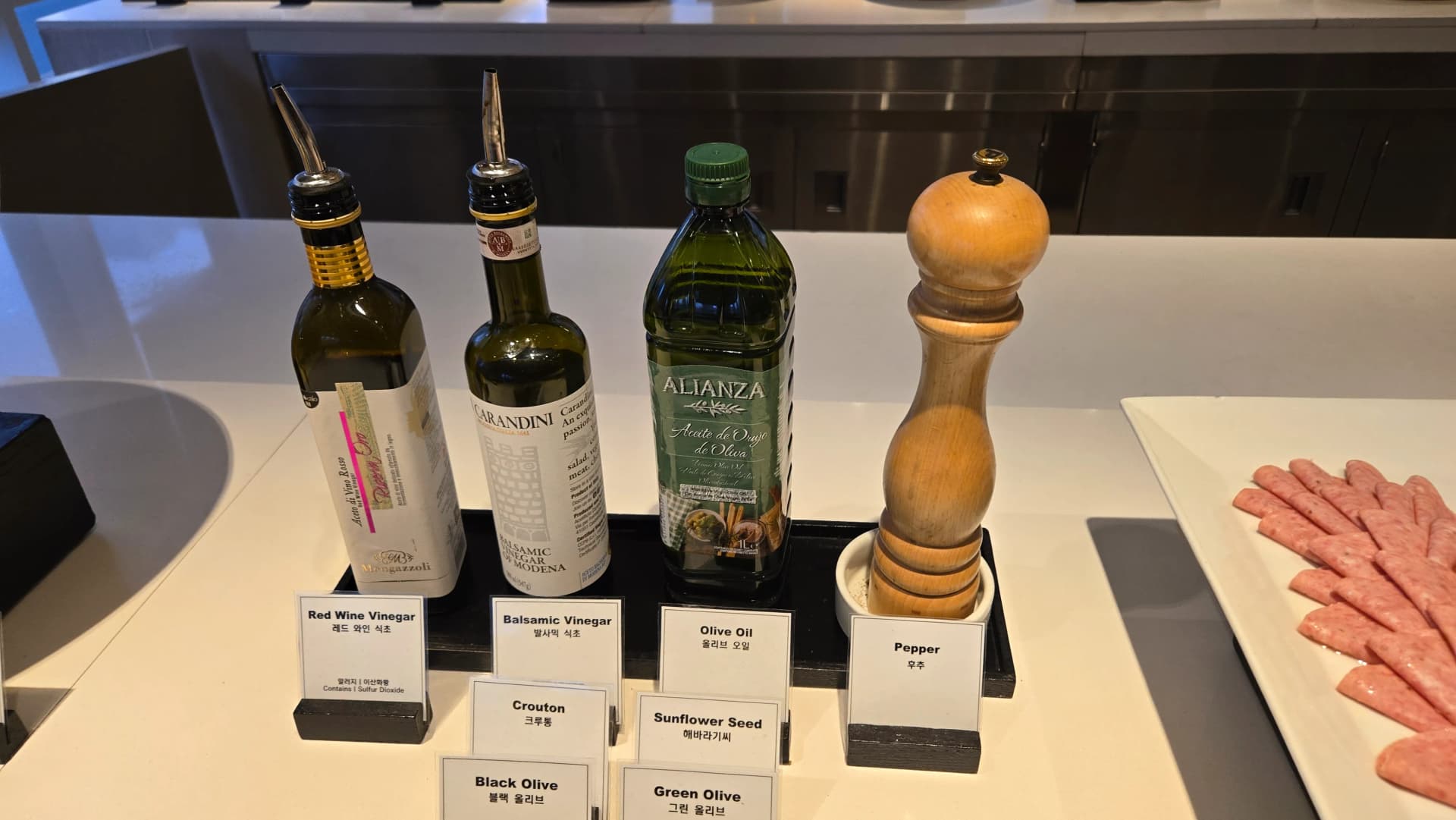
The salad topping and dressing station. Red wine vinegar, balsamic vinegar, olive oil, and a pepper grinder were all lined up side by side, with croutons, black olives, sunflower seeds, and green olives also available. You could adjust the vinegar-to-oil ratio yourself to make your own dressing, which was a nice touch for customizing to your taste.
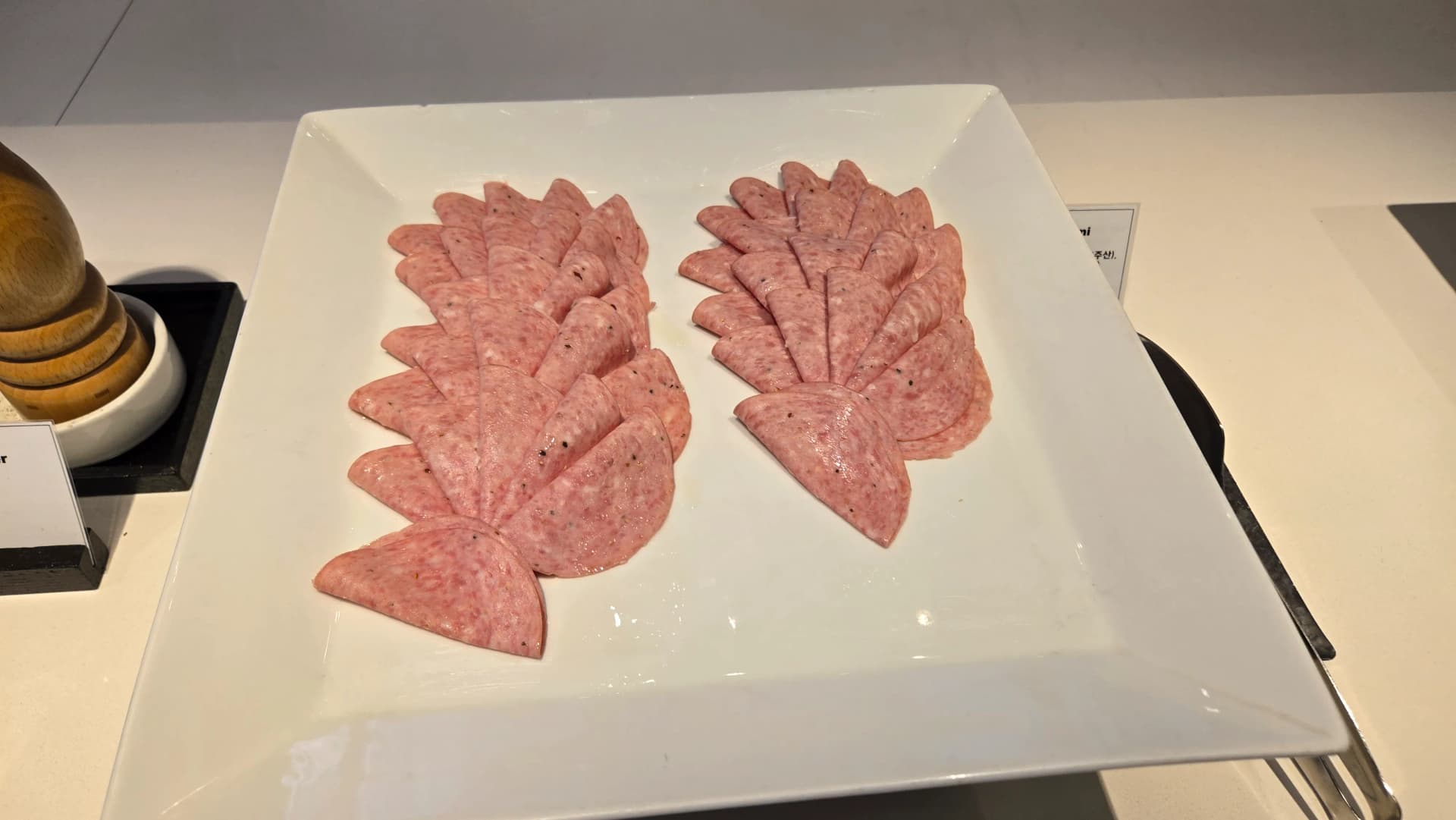
Salami. The kind with whole peppercorns embedded in it — you get little pops of pepper flavor as you chew. Perfect for layering on top of bread.
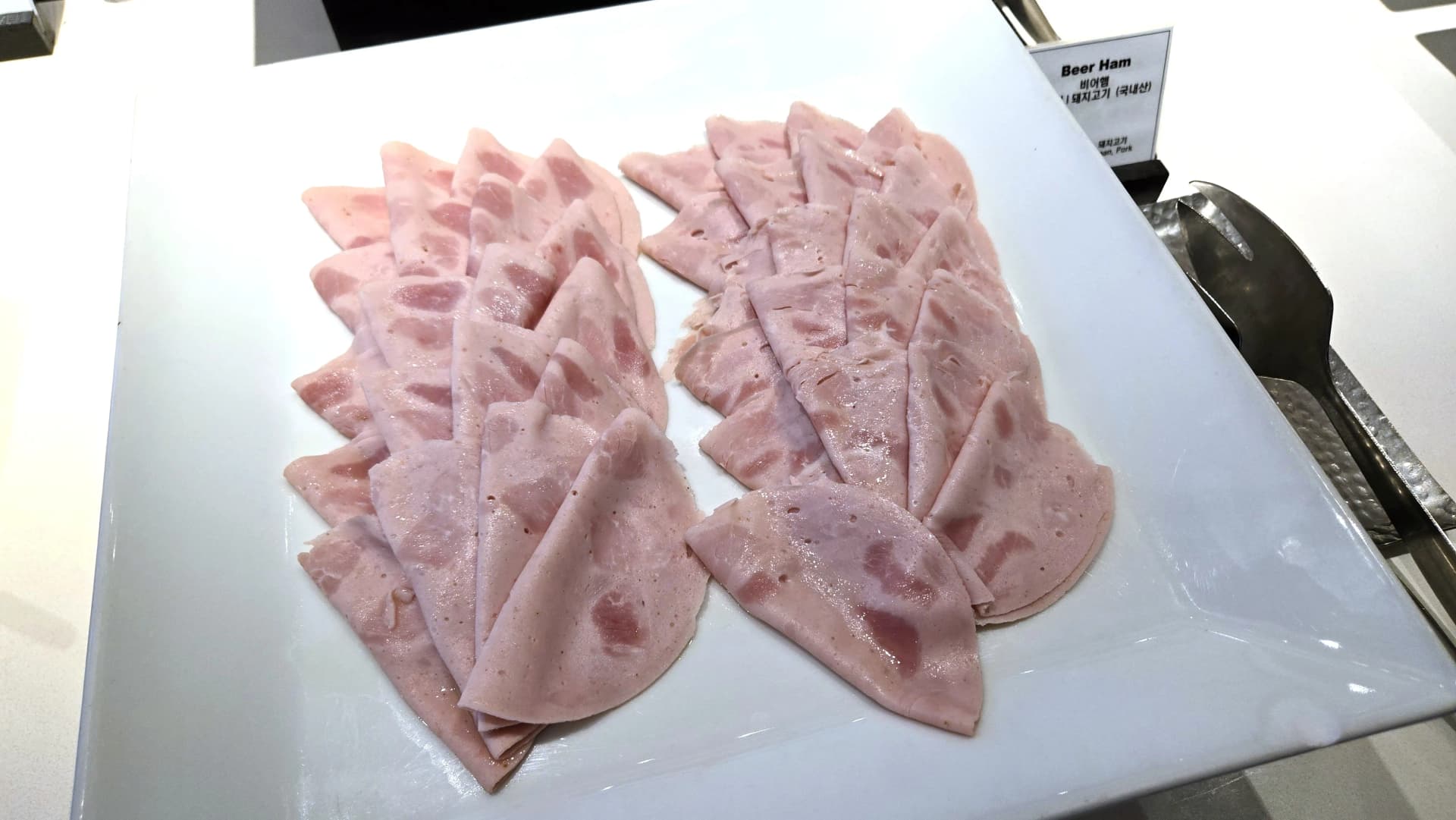
Beer ham. Thinner than the salami with a lighter pink color, and you could see the meat grain — clearly different from regular pressed ham. It was on the mild, clean-tasting side, so it'd suit anyone who finds salty deli meats overwhelming.
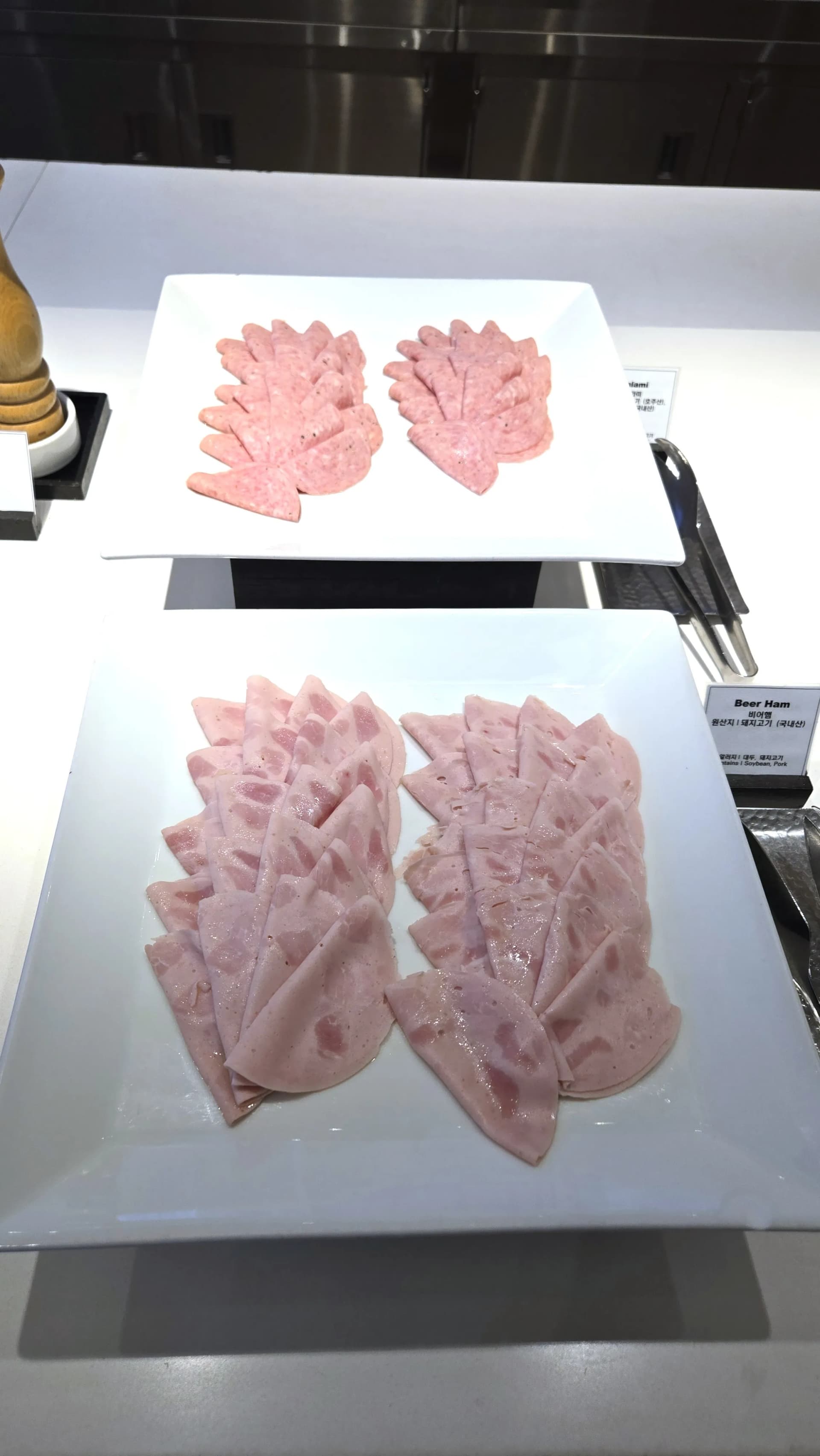
Here's the full layout of both types. They were arranged in a flower-like pattern — surprisingly elegant for a buffet. That said, I wished they'd had one more option like prosciutto or smoked ham to widen the selection. That was a minor disappointment.
Vegetable Salads
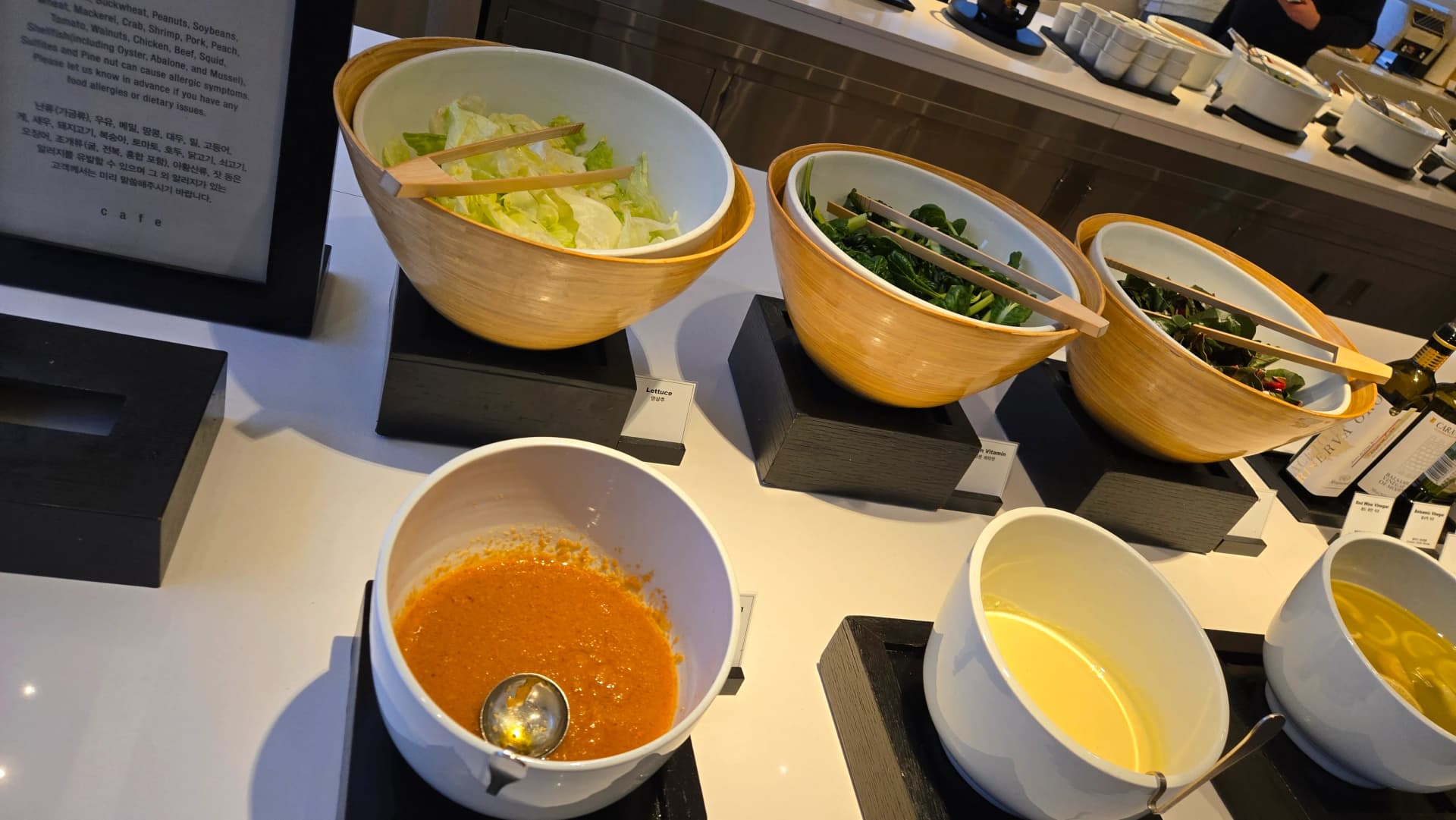
Full view of the salad section. Three large bowls with wooden rims held different vegetables, and there were two dressings — an orange-colored carrot-based one and a honey lemon dressing. There were also allergy information cards written in both Korean and English, making it easy for international guests to check. A thoughtful detail.
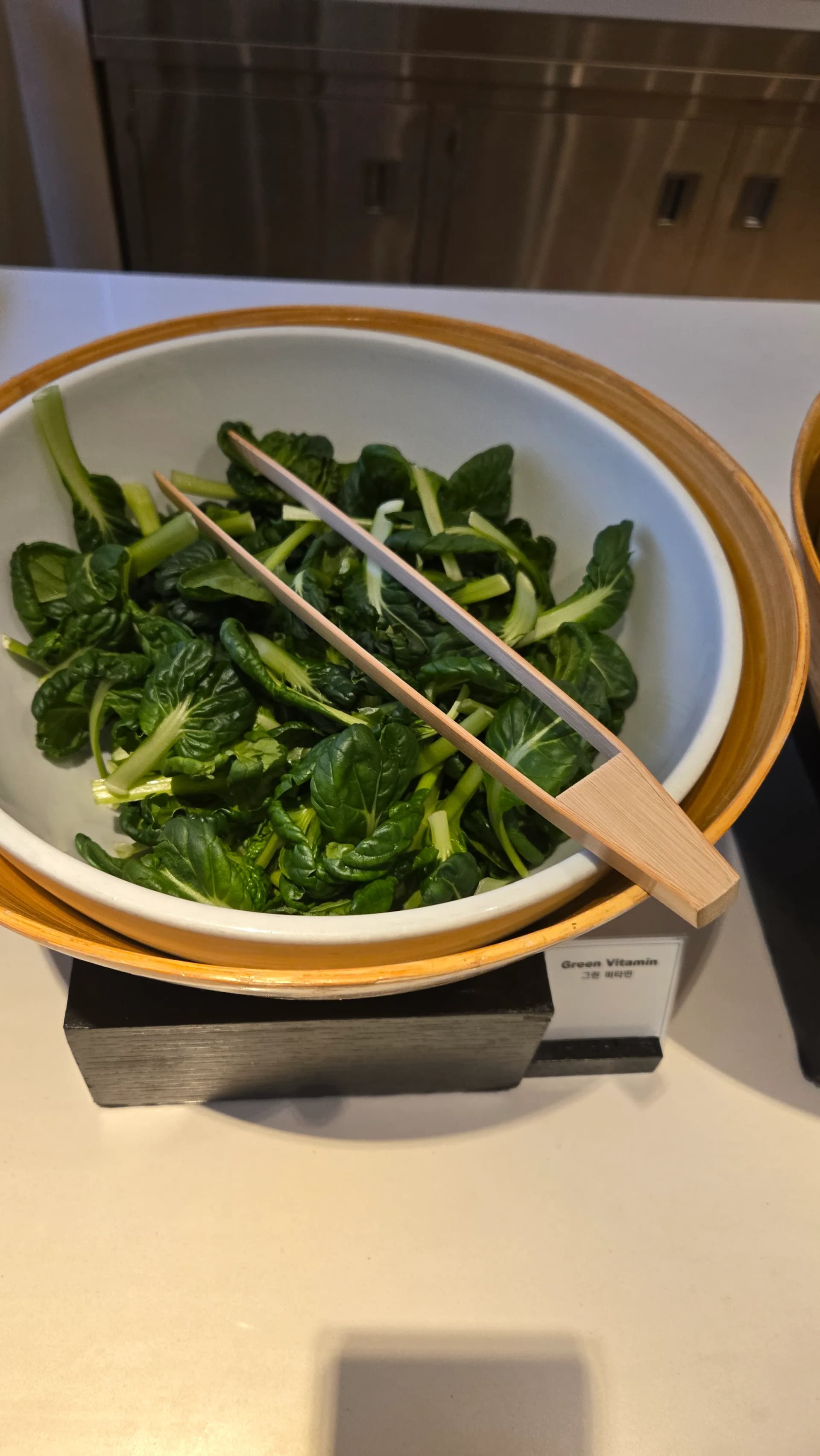
Bok choy. Whole stems included, so it was nice and crunchy. Not bitter at all, with plenty of moisture — easy to grab a tongs-full as a light addition to your plate.
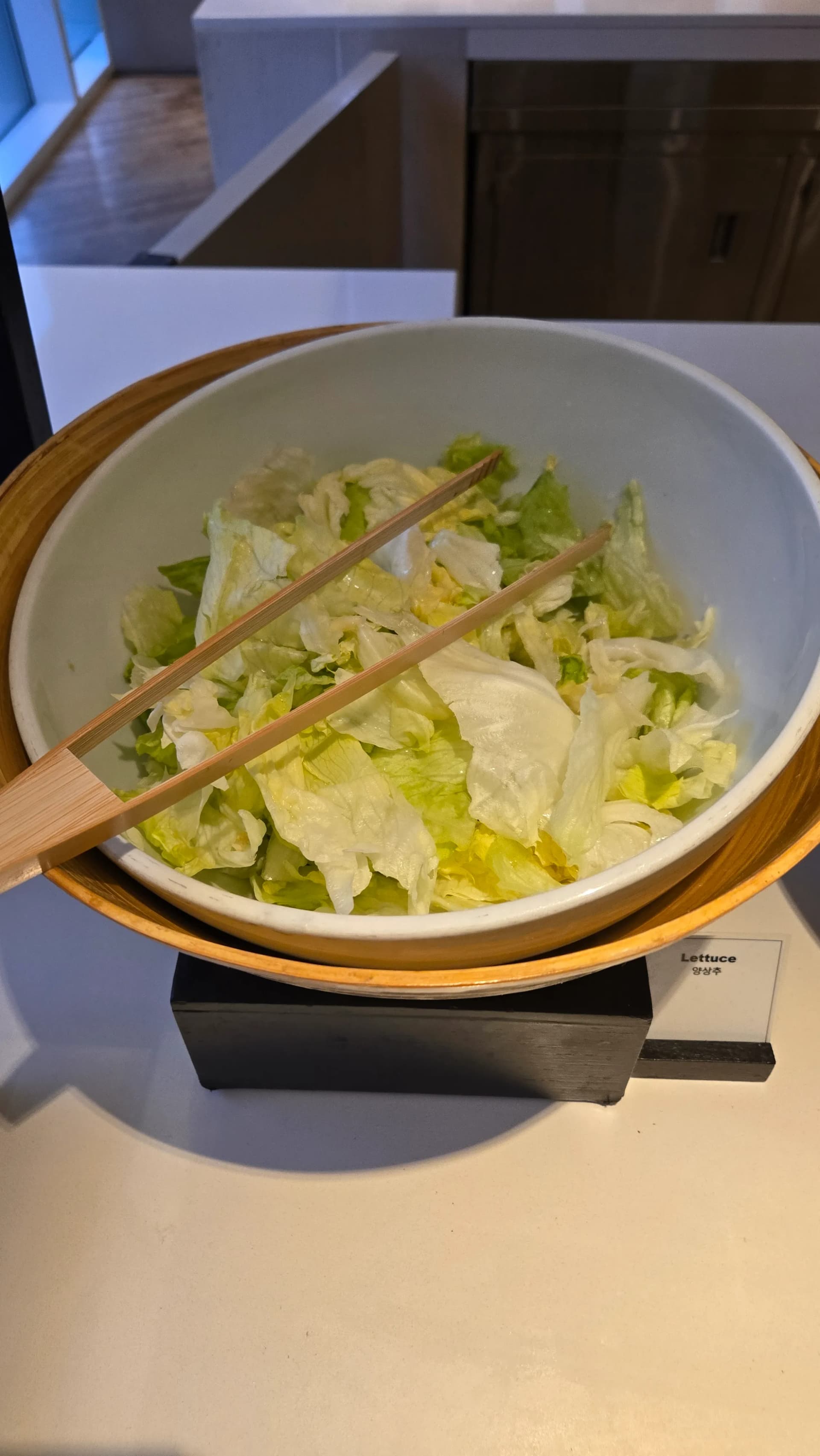
Lettuce. It was fresh, but there was only iceberg lettuce — a single variety. I wished they'd had romaine or red leaf lettuce alongside it.
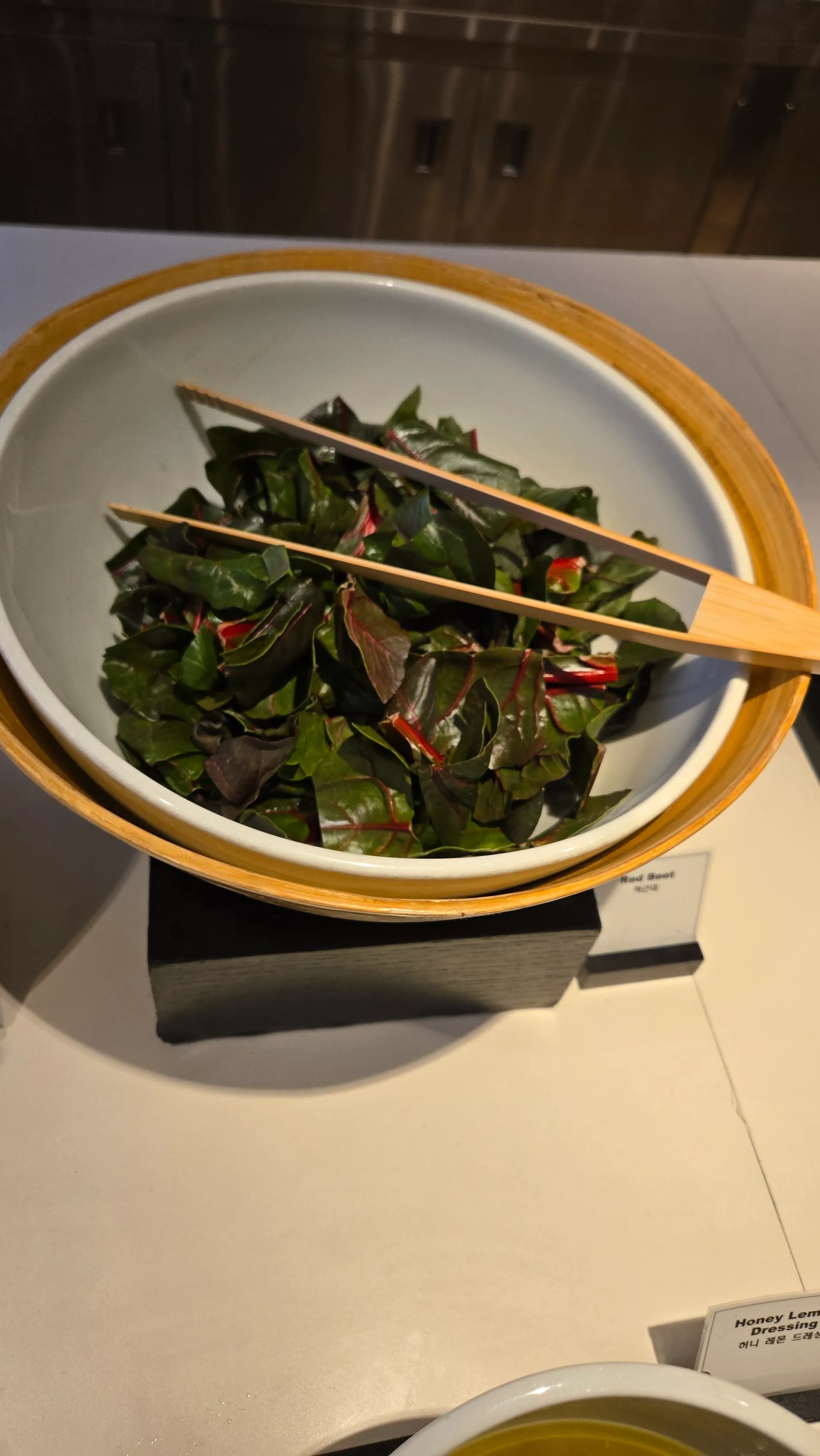
Red beet leaves. The deep purple stems were striking. Beet leaves aren't that common at Korean buffets, so they caught my eye. Dressed with olive oil and balsamic, the slight bitterness was nicely balanced out.
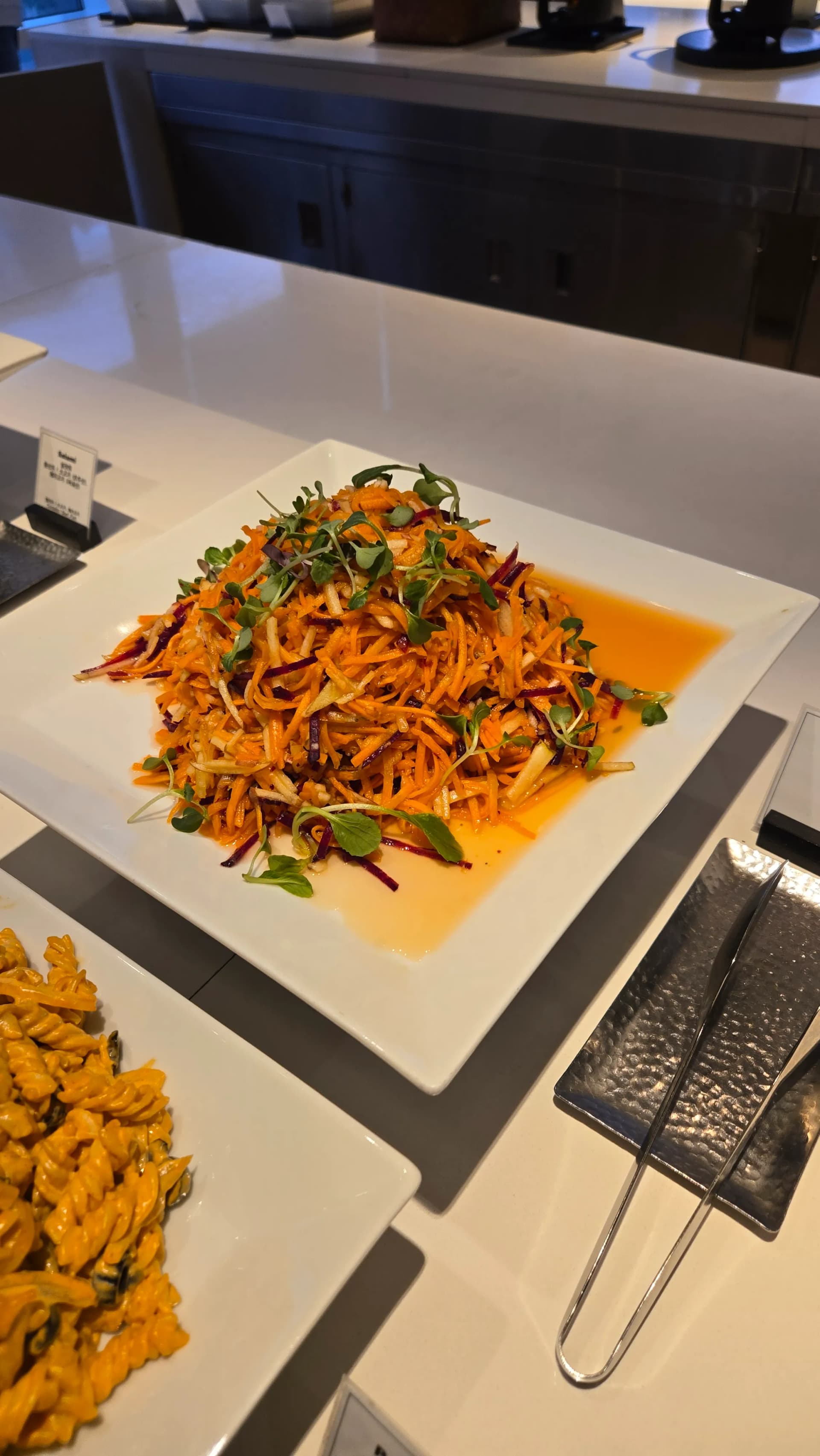
Shredded carrot salad. It had a strong sweet-and-sour flavor that was great for waking up your appetite. When I put it on the same plate as the salami, the salty and tangy flavors complemented each other really well.
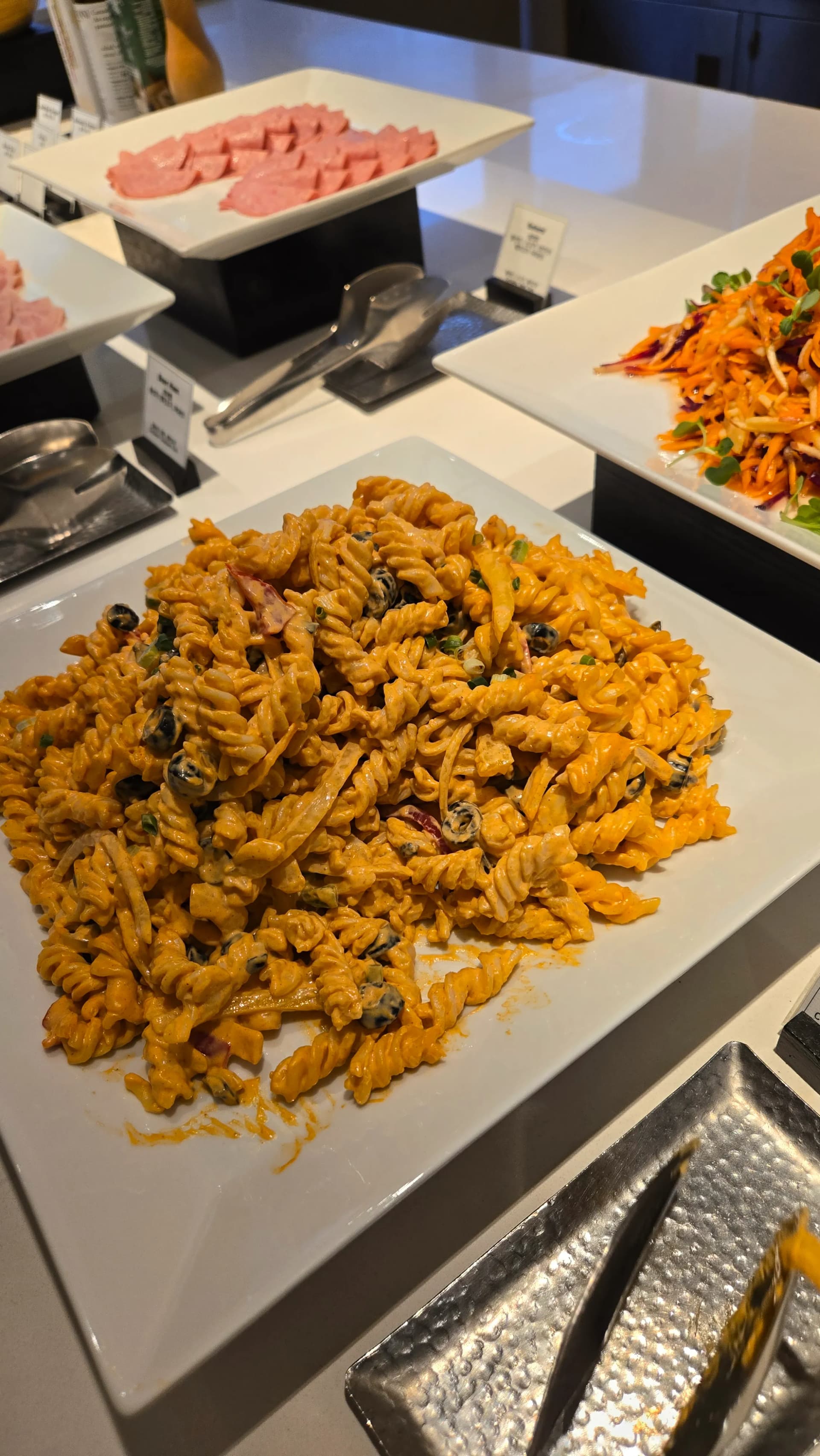
Fusilli pasta salad. Honestly, the sauce was pretty thick and heavy. One or two spoonfuls was more than enough.
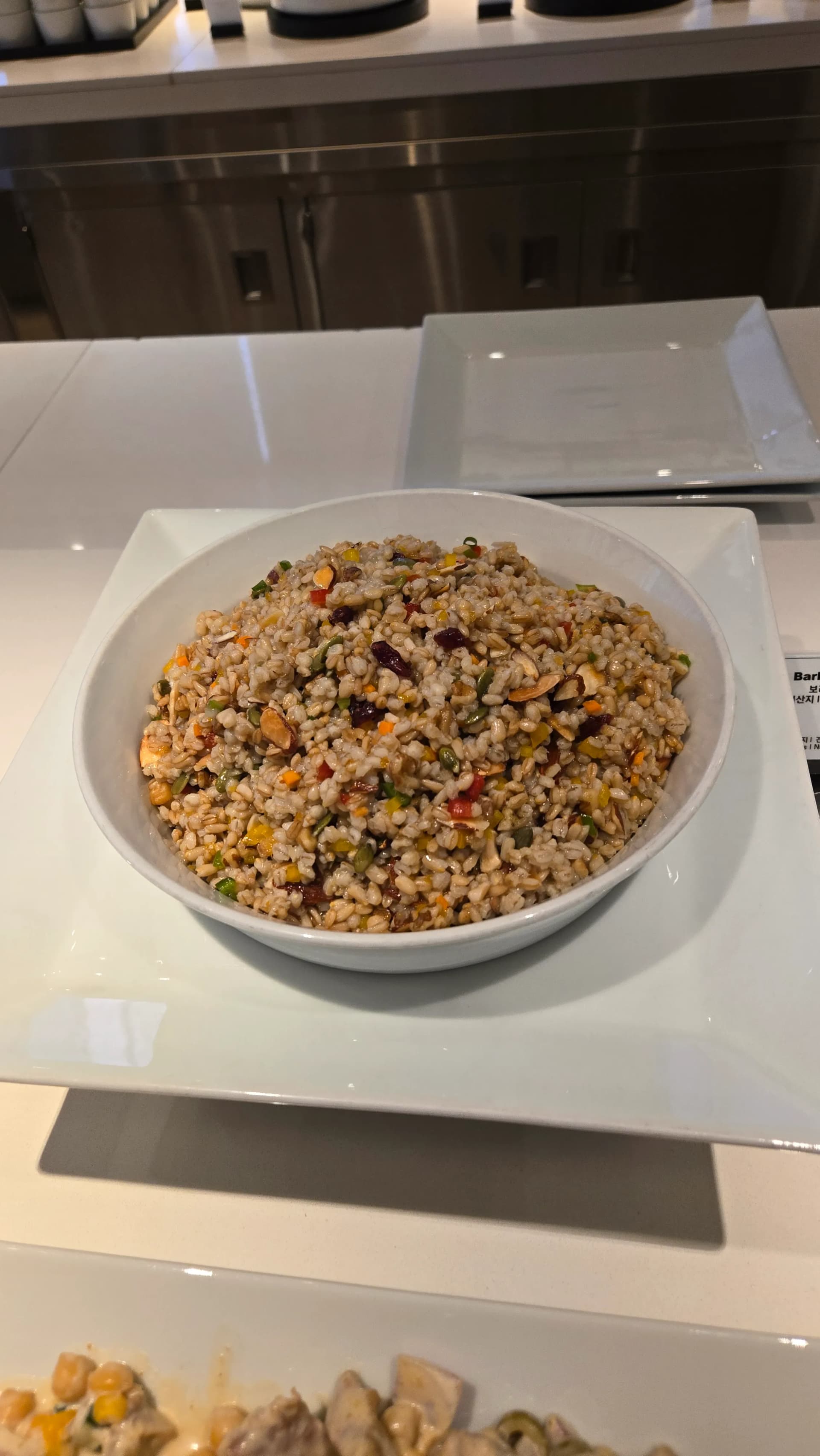
Barley salad. Cooked barley mixed with cranberries, sliced almonds, and bell peppers. The chewy barley texture paired with the cranberry sweetness was the highlight. There was only one bowl's worth, so it looked like it would run out quickly if it was popular.
Beverages
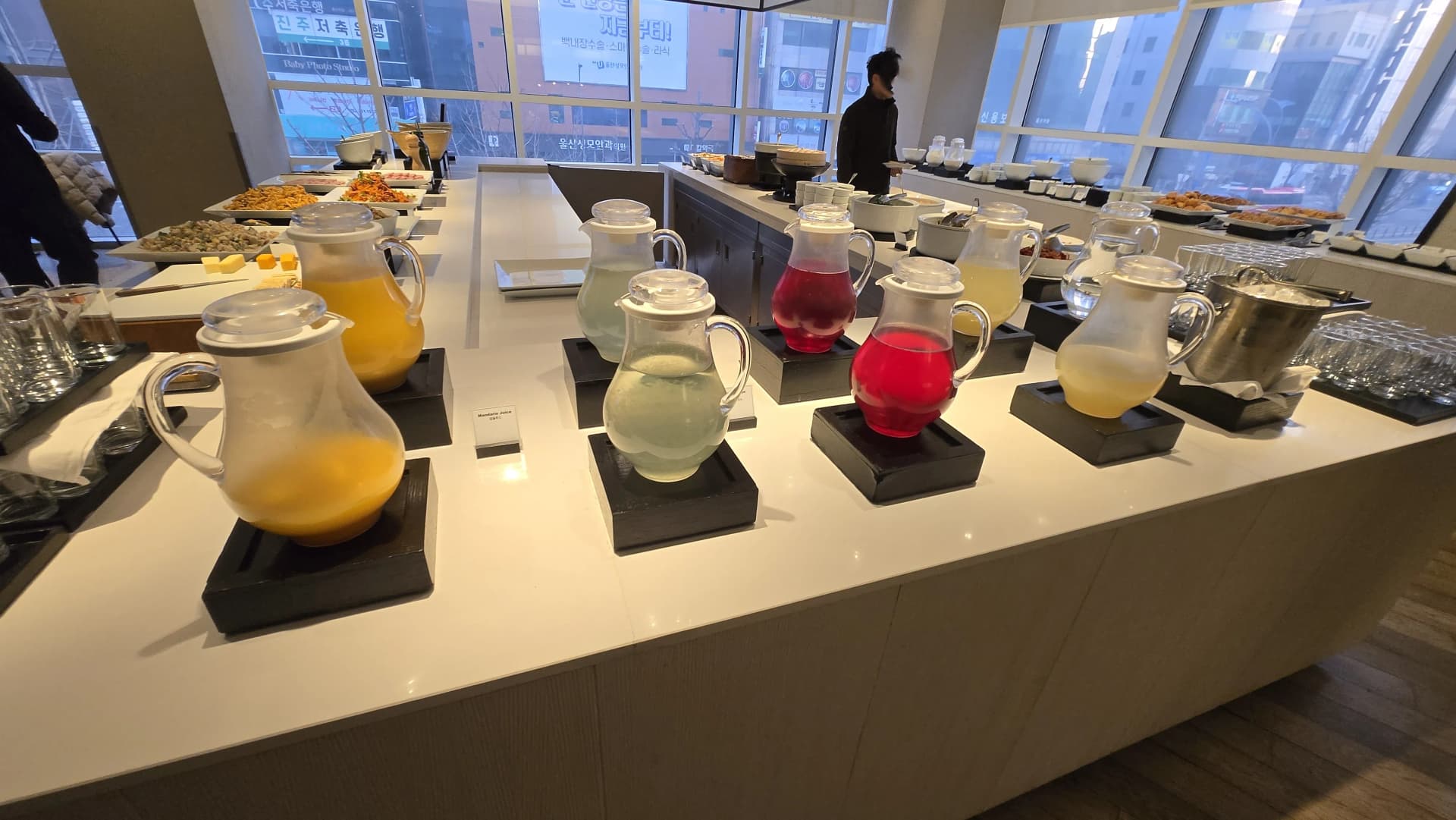
The drink station. Glass pitchers were lined up on wooden stands — yellow, clear, red, green — the range of colors was really pretty. The morning sunlight shining through the pitchers made the colors look even more vivid.
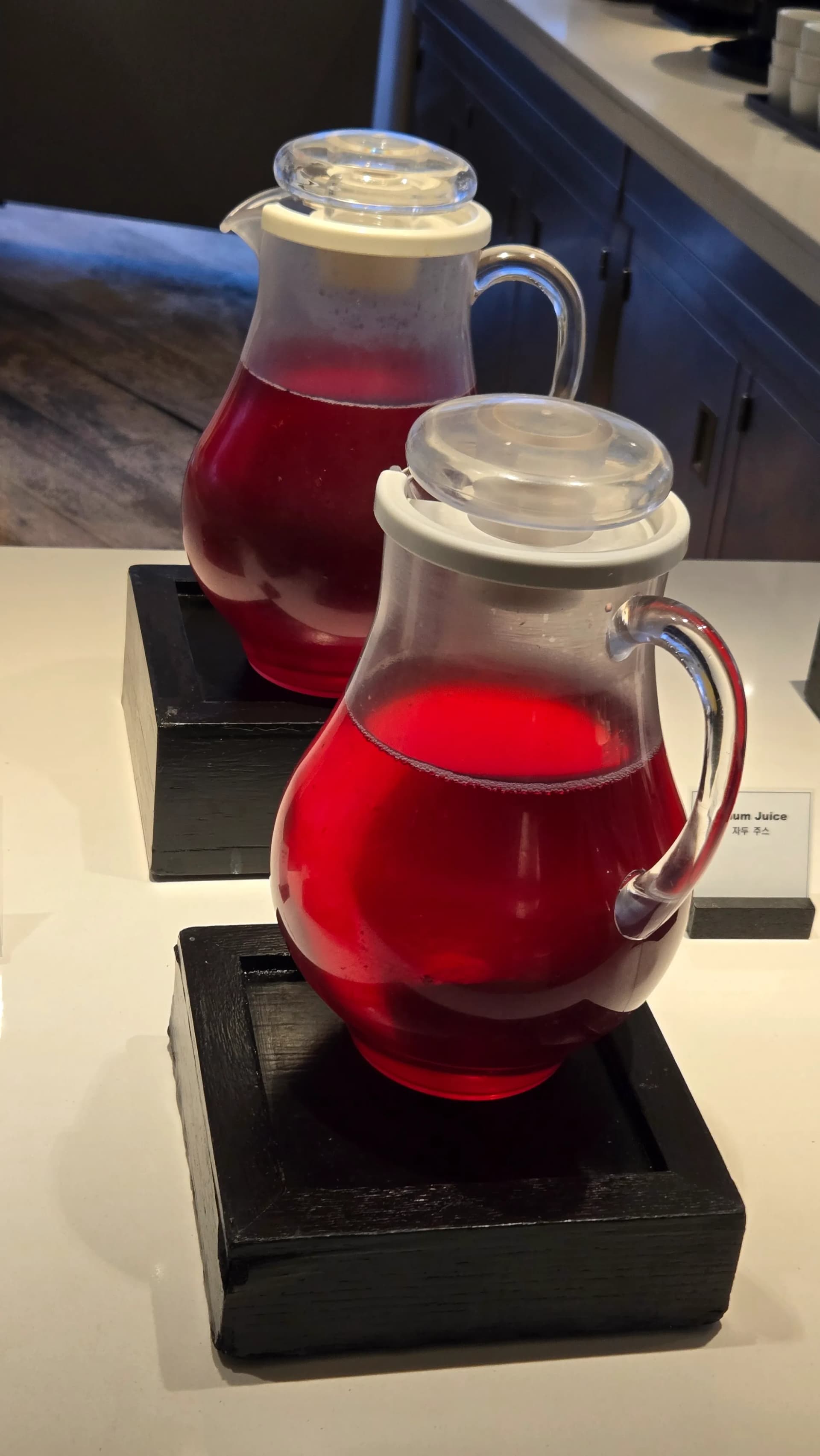
Plum juice. More tart than sweet — the sourness hits you first. It was perfect for cutting through the grease after heavier dishes. My wife agreed: "This juice is the best one."
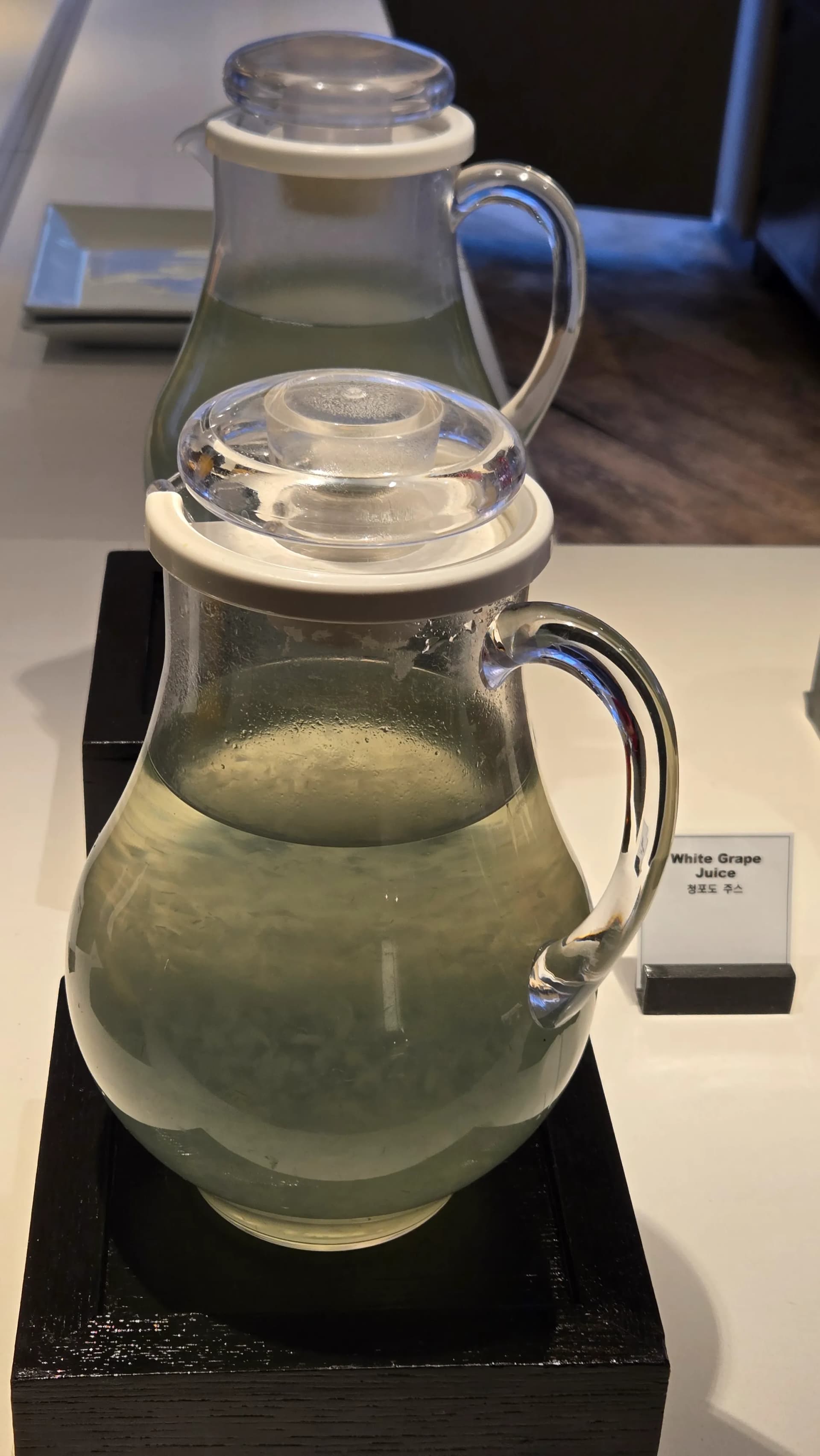
White grape juice. Much milder and sweeter than the plum juice. If you're expecting a bold fruit flavor, this one might feel a bit flat.
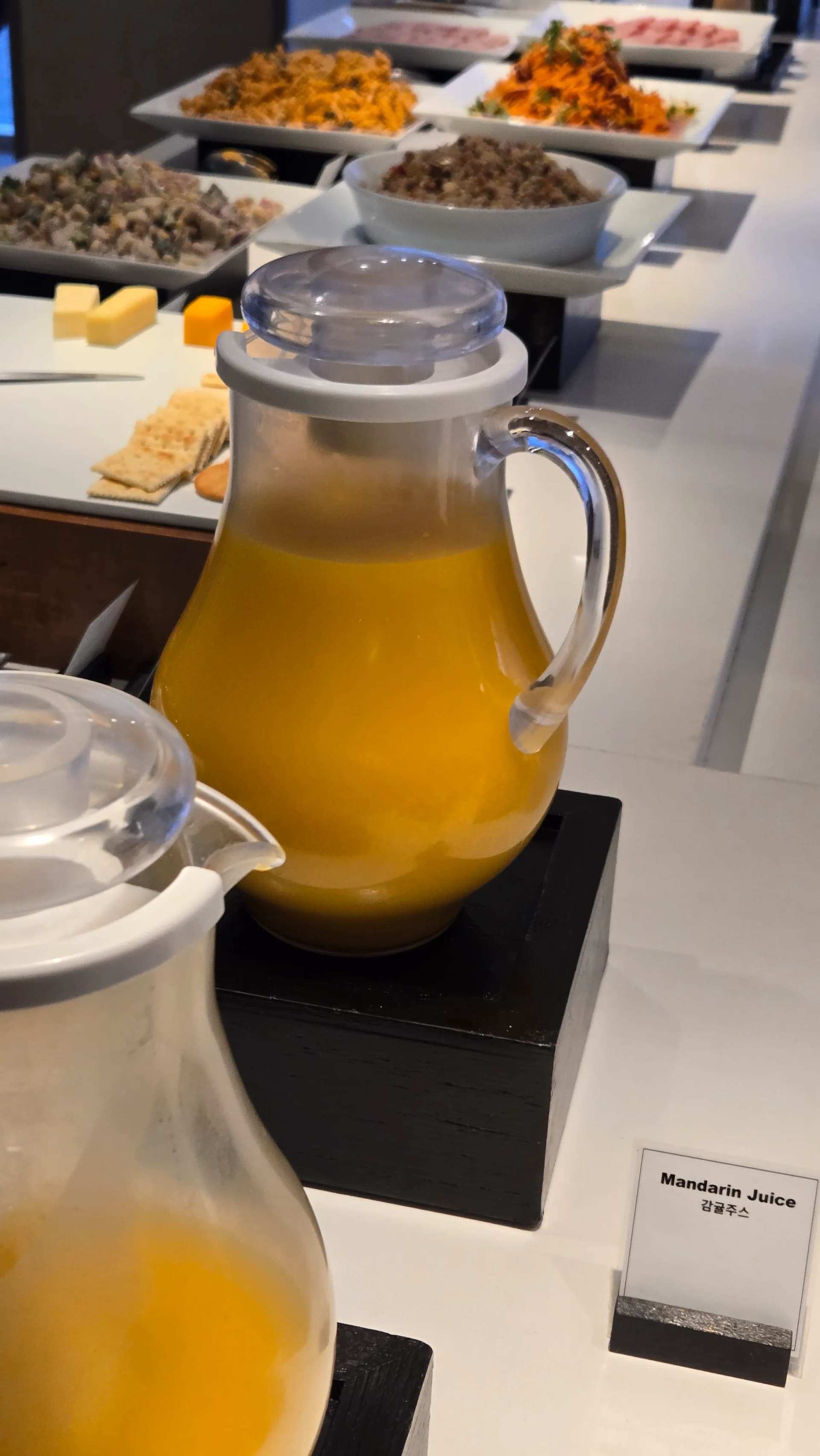
Gamgyul juice. Gamgyul is a type of tangerine grown specifically on Jeju Island, Korea's famous southern resort island. Compared to regular orange juice, it's less acidic with a more pronounced sweetness. This was the most easy-going juice option to pair with bread.
Fruit, Cereal, and Yogurt
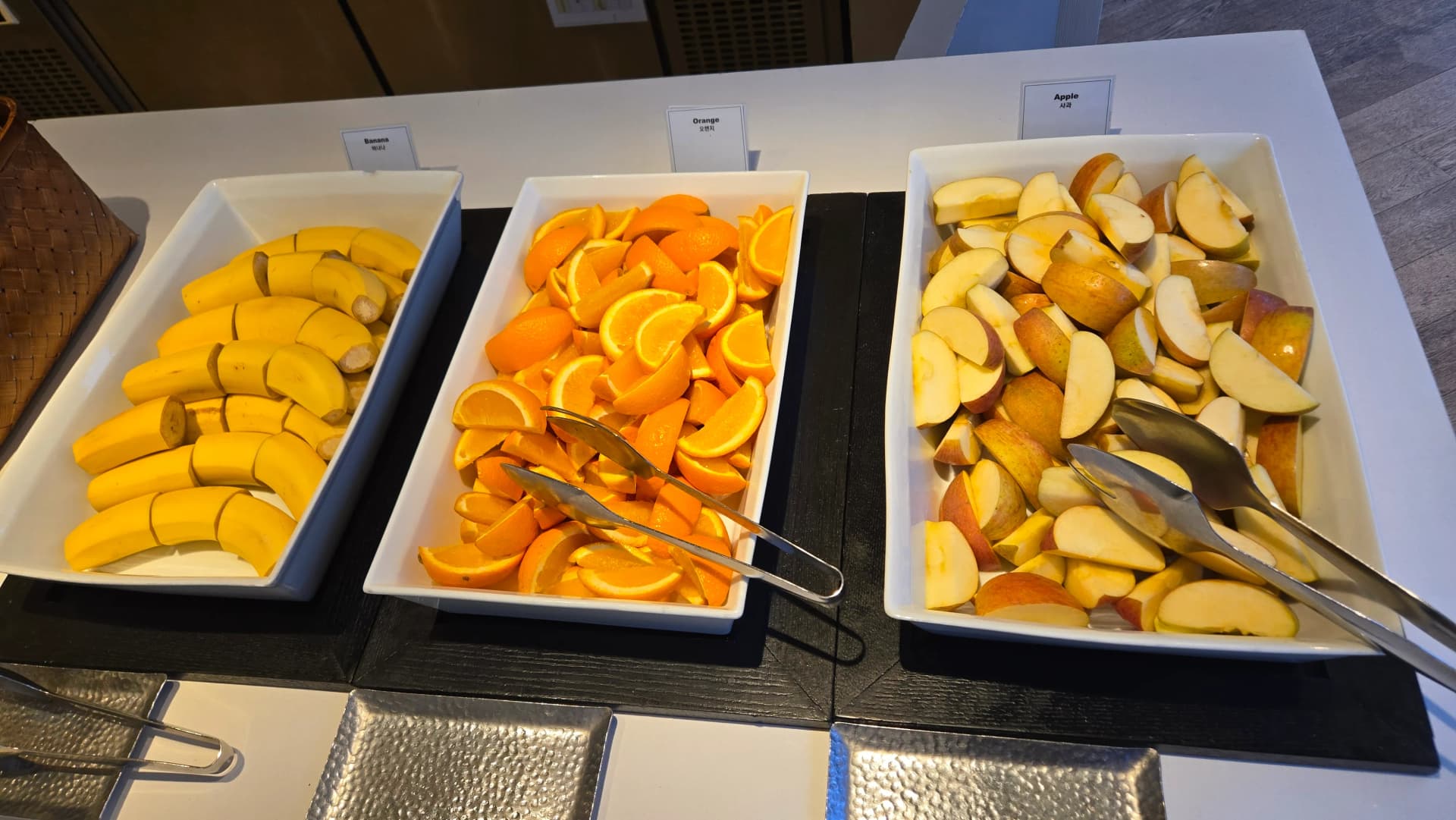
The fruit selection had three options: bananas, oranges, and apples. The oranges were cut into half-moon slices, and the apples were also pre-sliced for easy eating. Nice for snacking between courses throughout the meal.
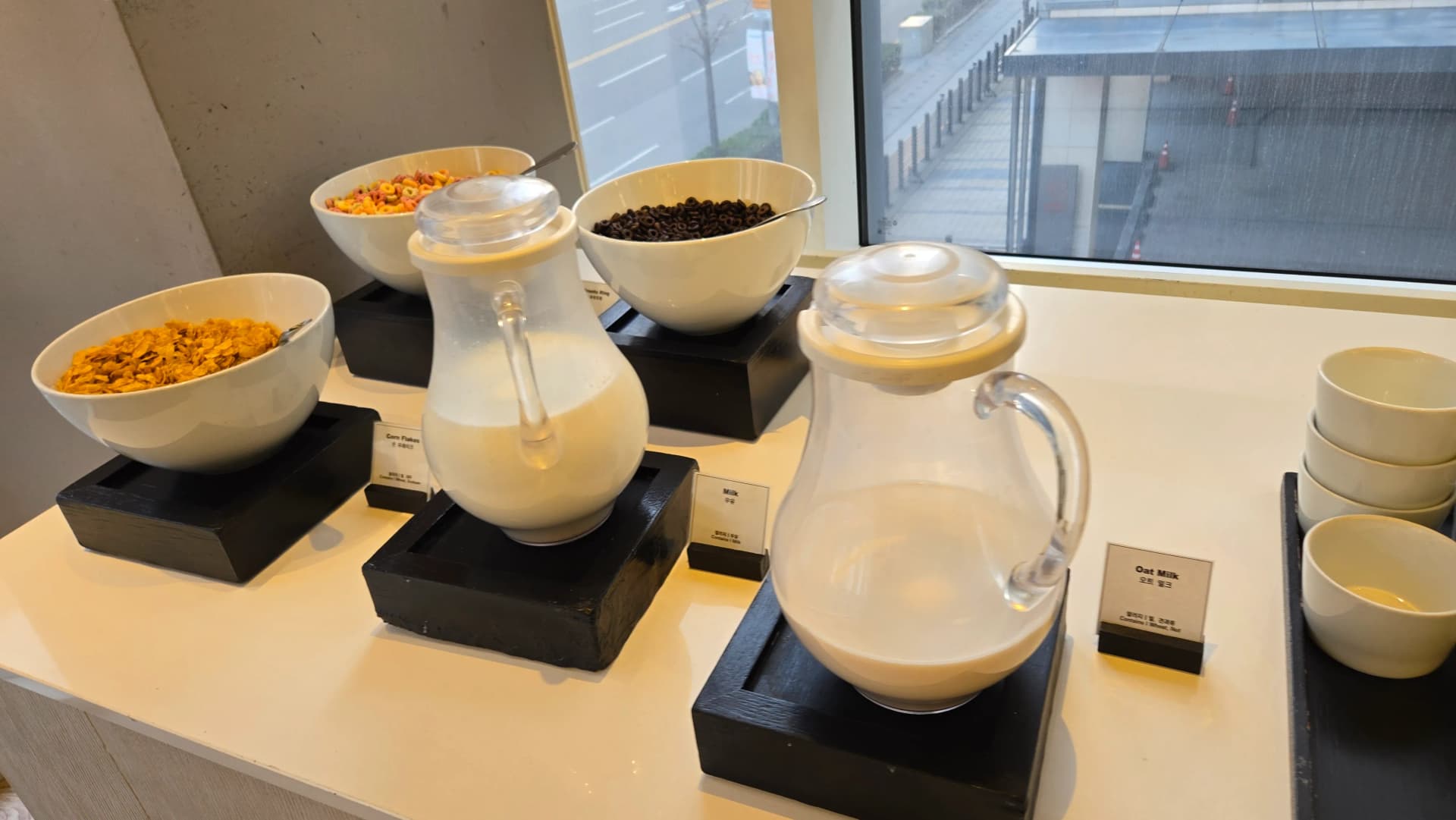
Cereal came in three varieties: corn flakes, fruit loops, and chocolate balls, each in its own bowl. For milk, there was regular dairy milk and oat milk. The fact that they had oat milk was clearly aimed at guests with lactose intolerance or those following a vegan diet. I was genuinely impressed by this detail. Even at the Miramar Hotel in Taipei or the Novotel in Bangkok, having oat milk available was rare.
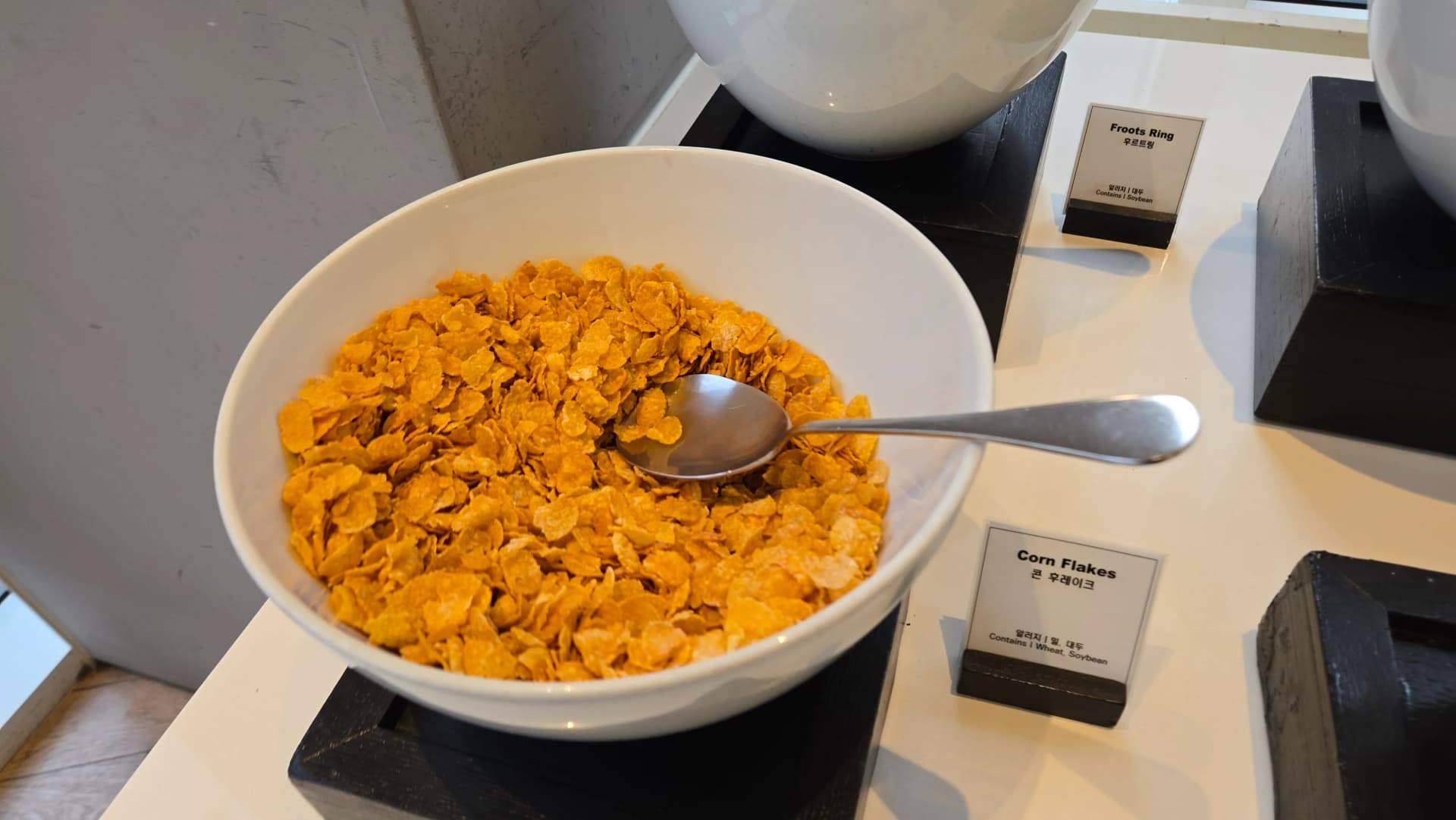
Close-up of the corn flakes. Allergy information for wheat and soy was clearly labeled.
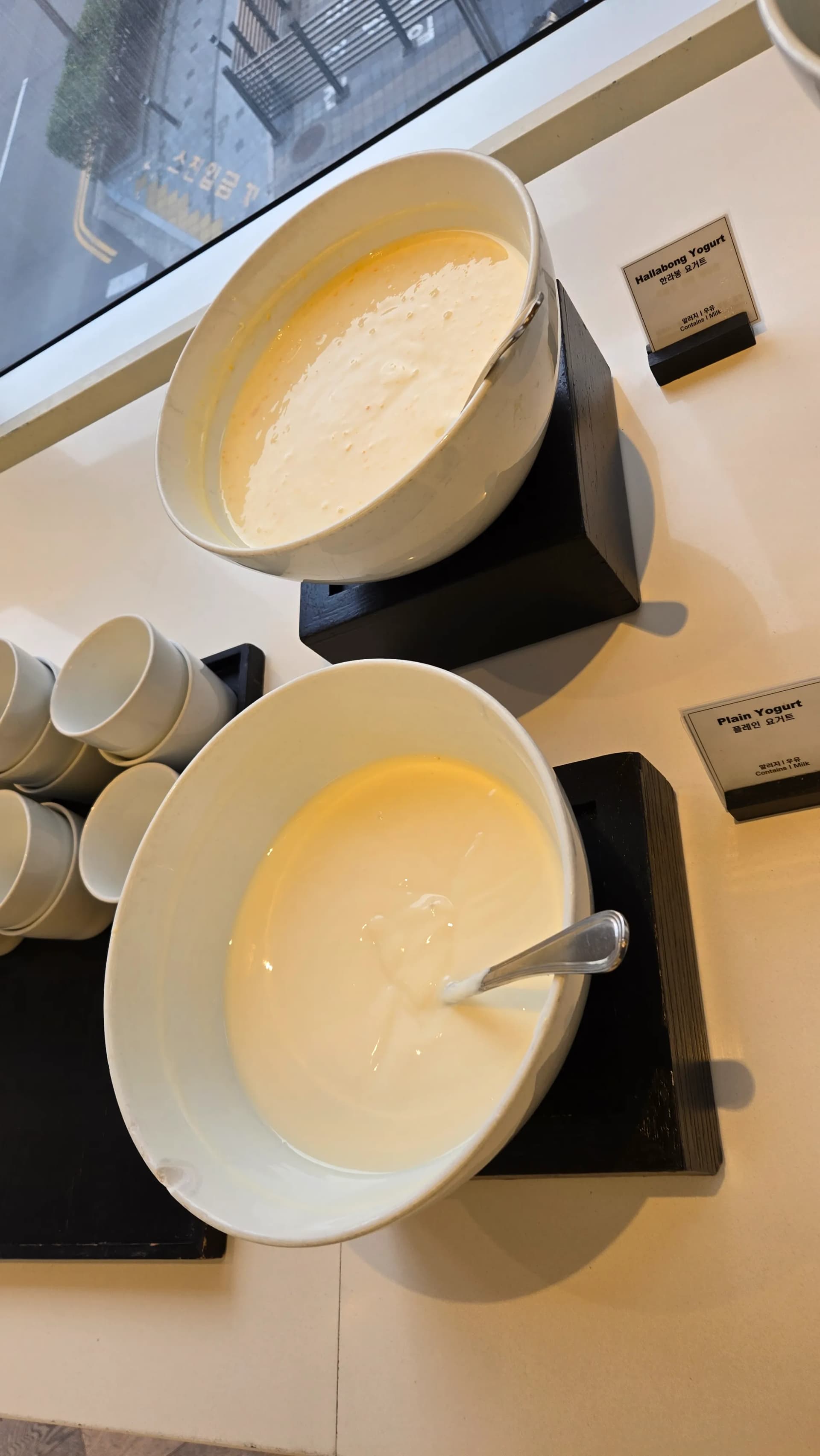
There were two yogurt options: plain and hallabong yogurt. Hallabong is a premium citrus variety from Jeju Island — it was a pleasant surprise to see it at a hotel breakfast. The plain wasn't Greek-style; it was on the thinner side, but that actually worked better for pouring over cereal. The hallabong yogurt had a subtle tangerine aroma with a nice level of sweetness — perfectly good eaten on its own by the spoonful.
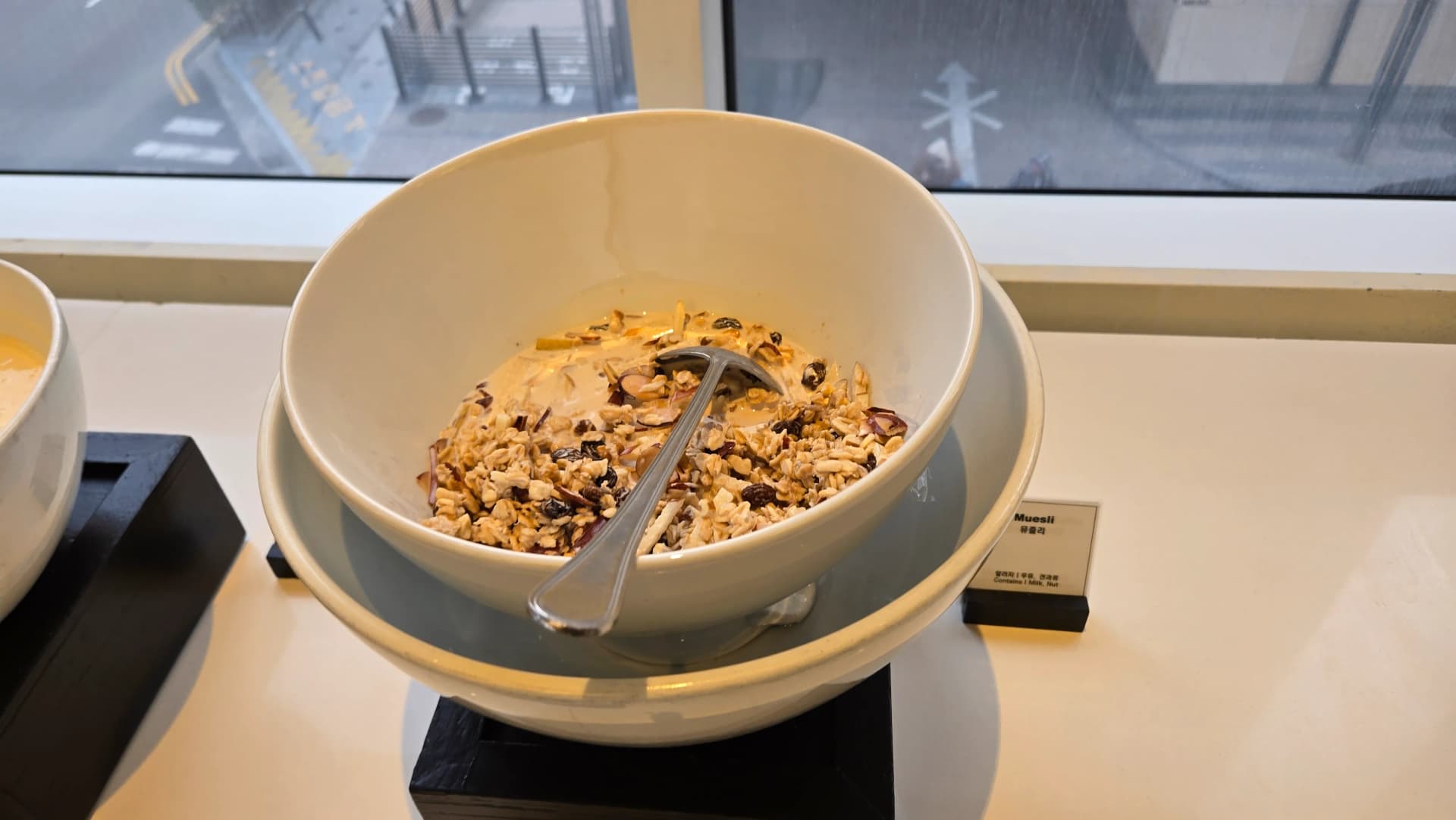
Muesli. An oat base mixed with raisins, pumpkin seeds, sliced almonds, and bits of dried fruit. The amount had already dwindled — looked like it had been popular.
Coffee and Tea
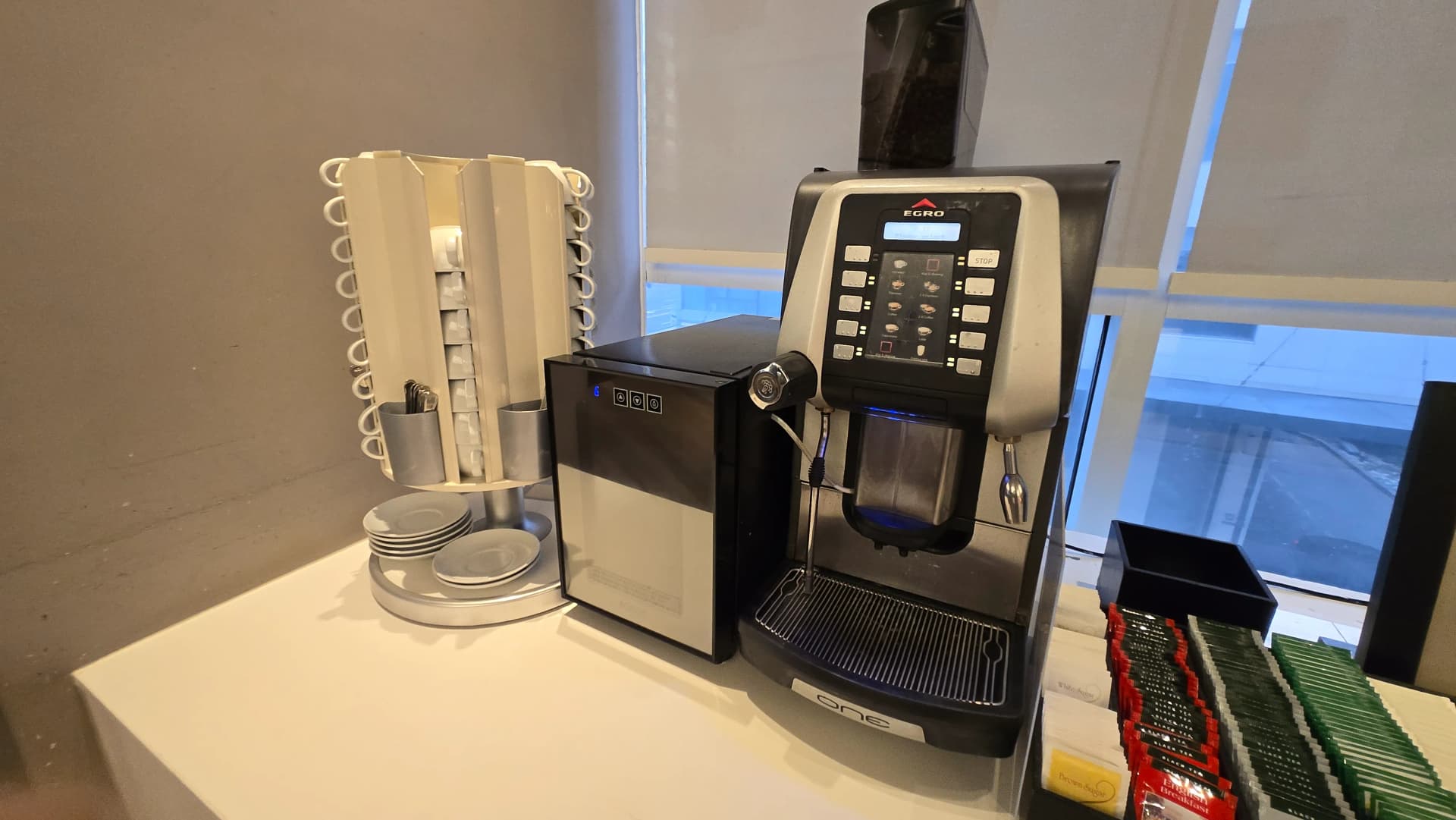
There was one EGRO brand automatic coffee machine. A sign said it uses Italian COVA beans. Taste-wise — definitely better than convenience store coffee, but not quite specialty café level. Exactly what you'd expect from a hotel buffet machine. Since there was only one machine, you might have to wait a bit during peak hours.
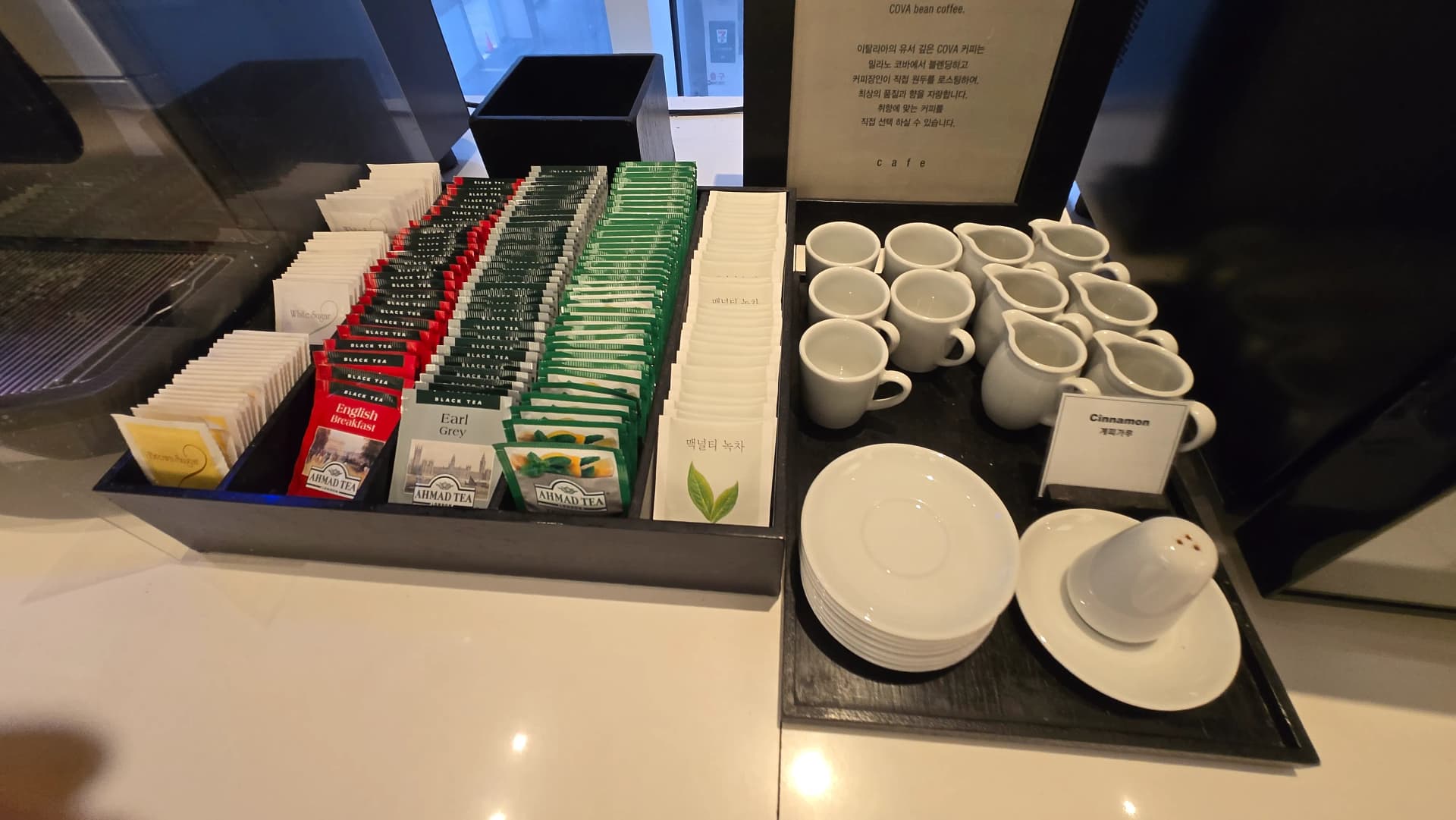
For tea, they had Ahmad Tea brand English Breakfast, Earl Grey, and buckwheat tea (a nutty, caffeine-free Korean herbal tea). Cinnamon powder was also set out separately. My brother, who doesn't drink coffee, had Earl Grey with a dash of cinnamon. "Dude, this smells amazing," he said.
Made-to-Order Omelette Station
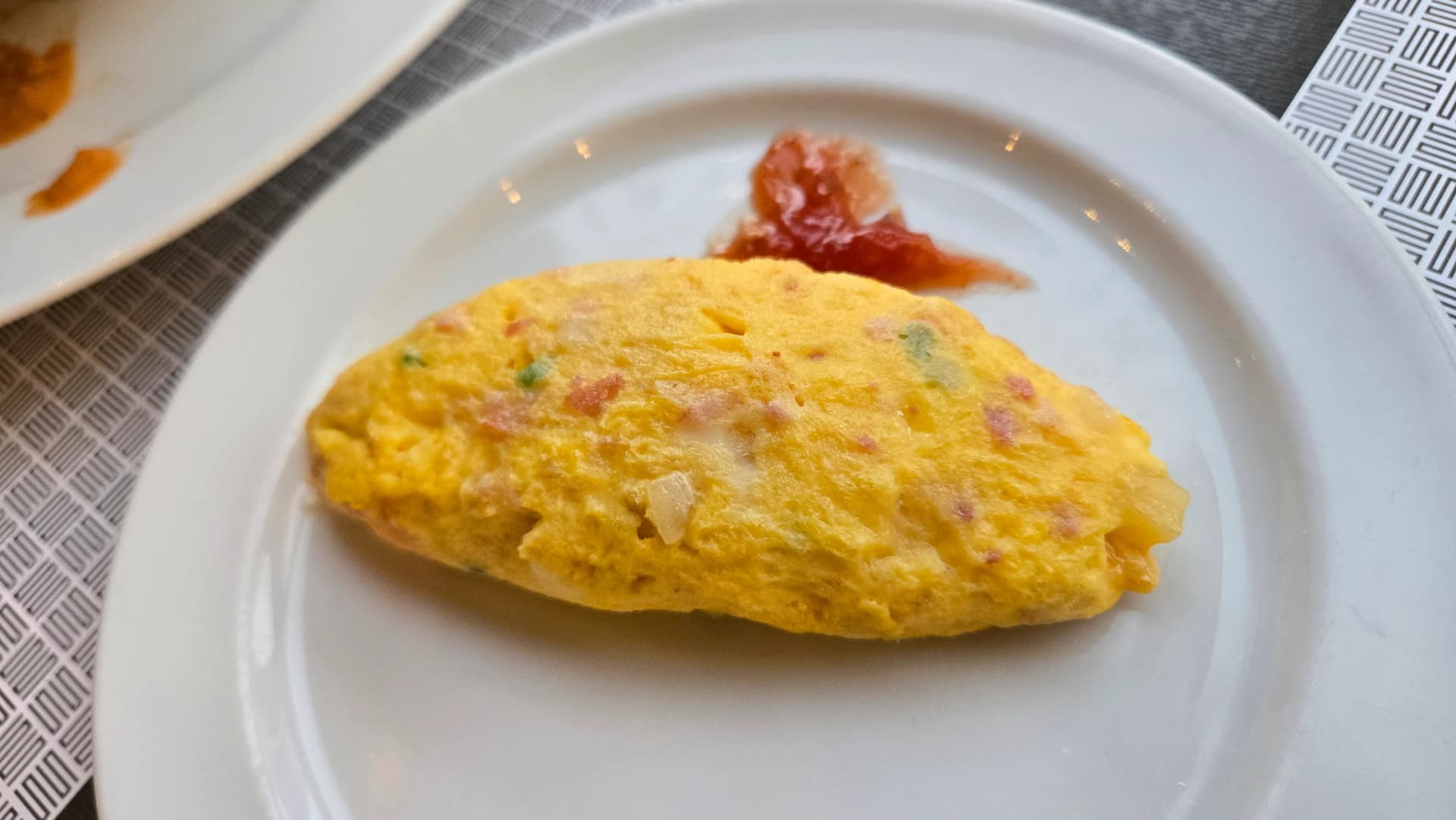
The omelette was a made-to-order item at a dedicated cooking station. You tell the staff what ingredients you want, and they cook it right in front of you. I asked for ham, cheese, and bell peppers. The outside was golden-brown and the inside was beautifully soft and slightly runny. The only downside was that during morning peak time, there were three or four people ahead of me in line, so there was a bit of a wait.
My Plates
After making it all the way around the buffet line, here's what I actually loaded onto my own plates. The whole fun of a buffet is how you put together your own combinations, right?
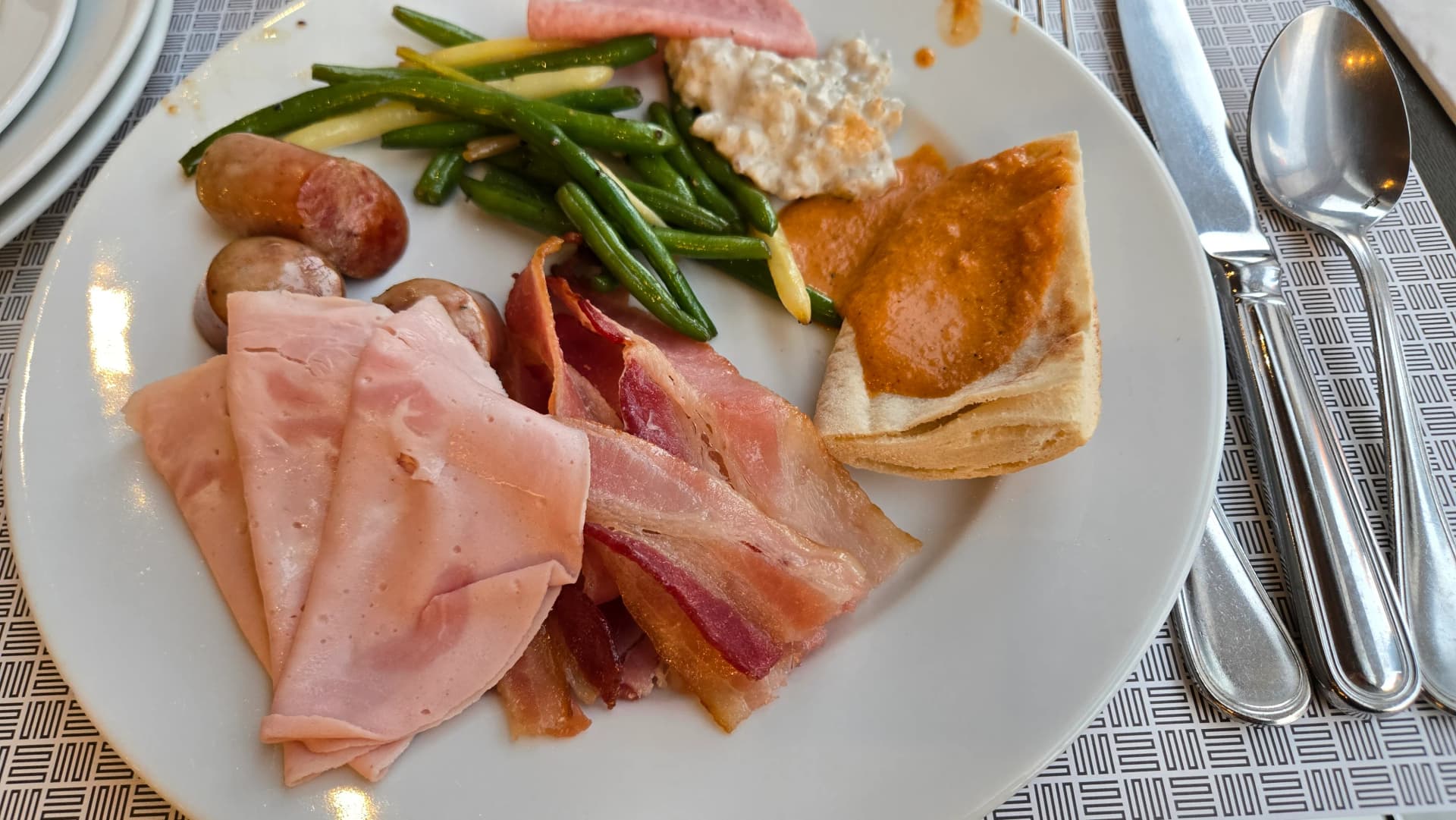
First plate. Beer ham and bacon as the base, two sausages, green beans, a spoonful of potato gratin, and a piece of panini. The contrast between the mild beer ham and the salty bacon was great — alternating between the two kept things interesting. The potato gratin's cheese had already solidified on the plate though, so it wasn't as good as eating it straight from the buffet line.
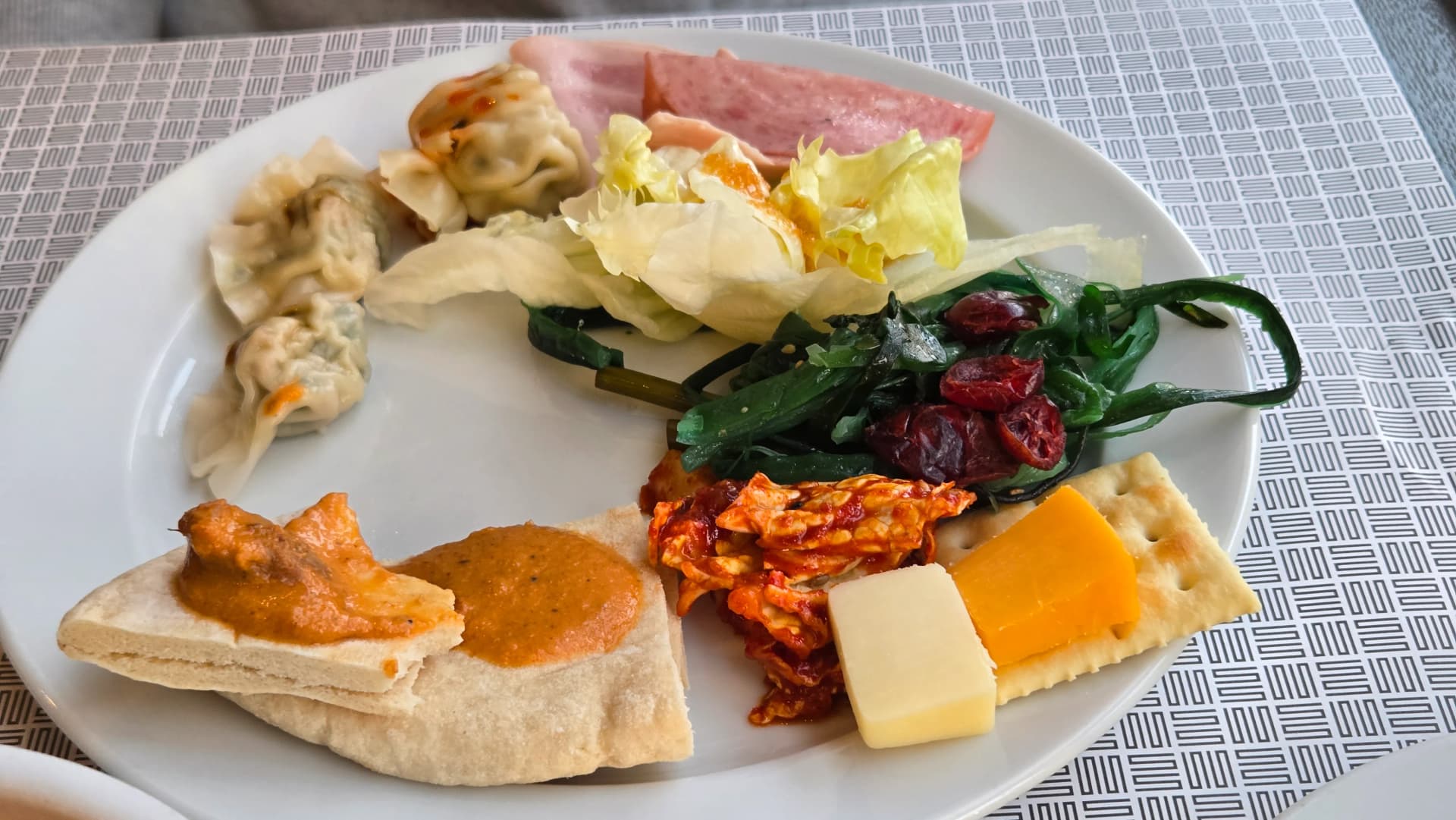
Second plate was a Korean-Western mashup. Dumplings, salami, seasoned spinach, fresh kimchi, cheese with crackers, naan with curry — all crammed onto one plate. It looked a bit chaotic, I know, but hey, that's the joy of a buffet. The surprise winner from this plate? Fresh kimchi eaten together with cheese. Unexpectedly good combo.
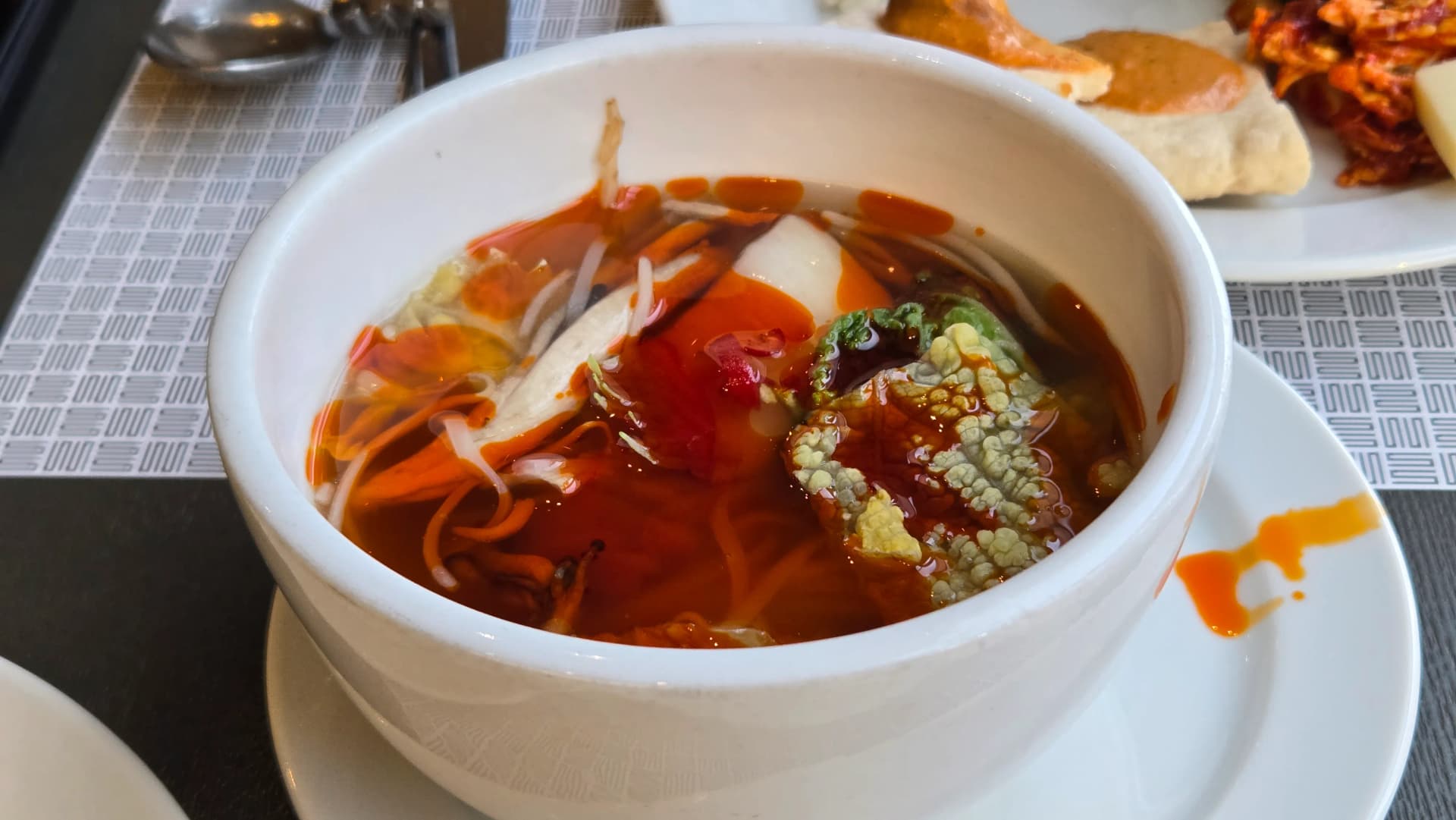
The finished rice noodle soup. Flat noodles with napa cabbage, bean sprouts, and oyster mushrooms, drizzled with sriracha and chili oil. The broth was clear but had real depth of flavor. Absolute best thing for soothing your stomach in the morning.
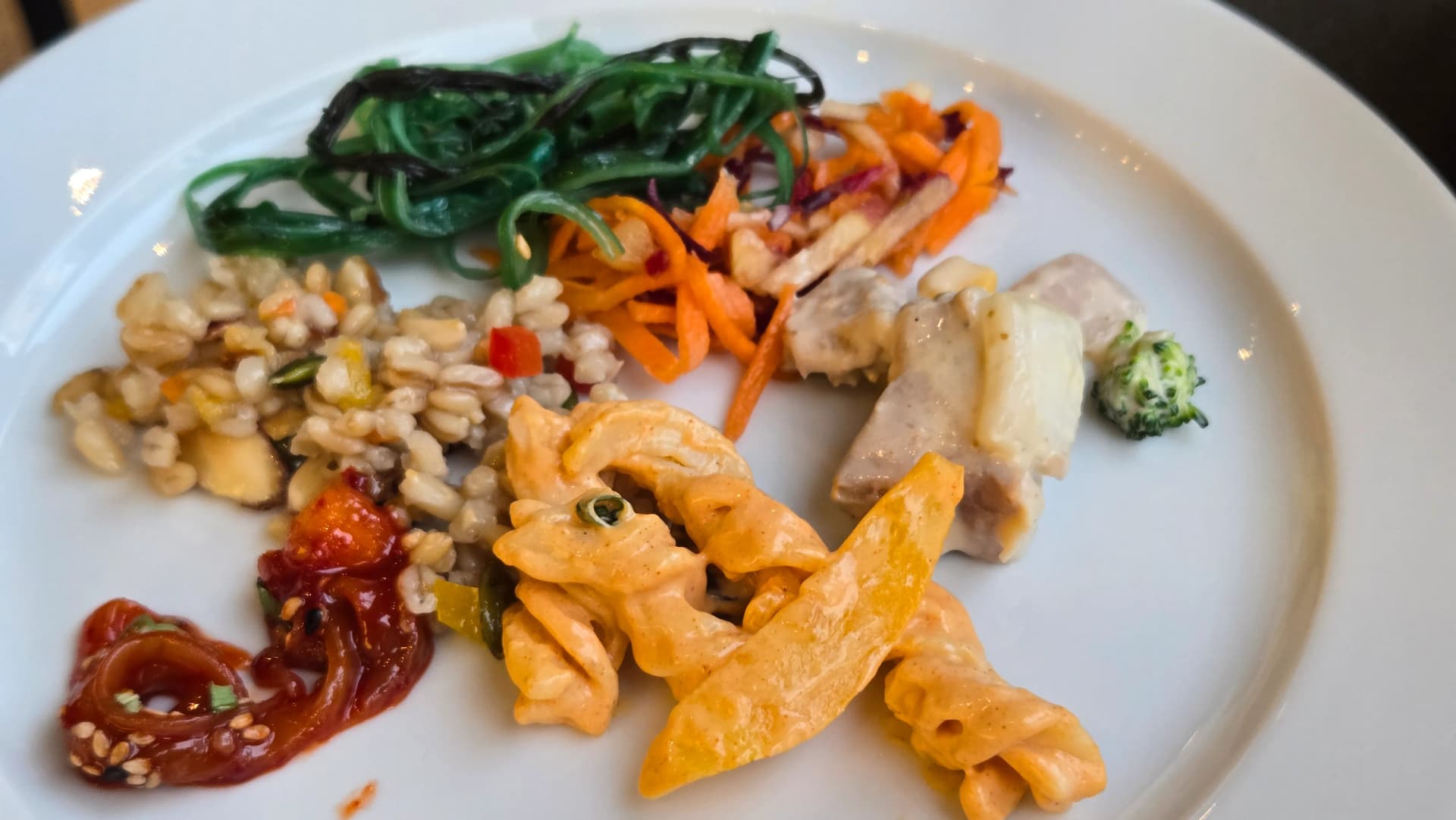
Third plate. Little portions of seasoned spinach, shredded carrot salad, barley salad, fusilli pasta salad, potato gratin, and fermented squid. The barley salad held its texture even on the plate, which was nice. And the fermented squid — yeah, taking just a tiny amount was absolutely the right call.
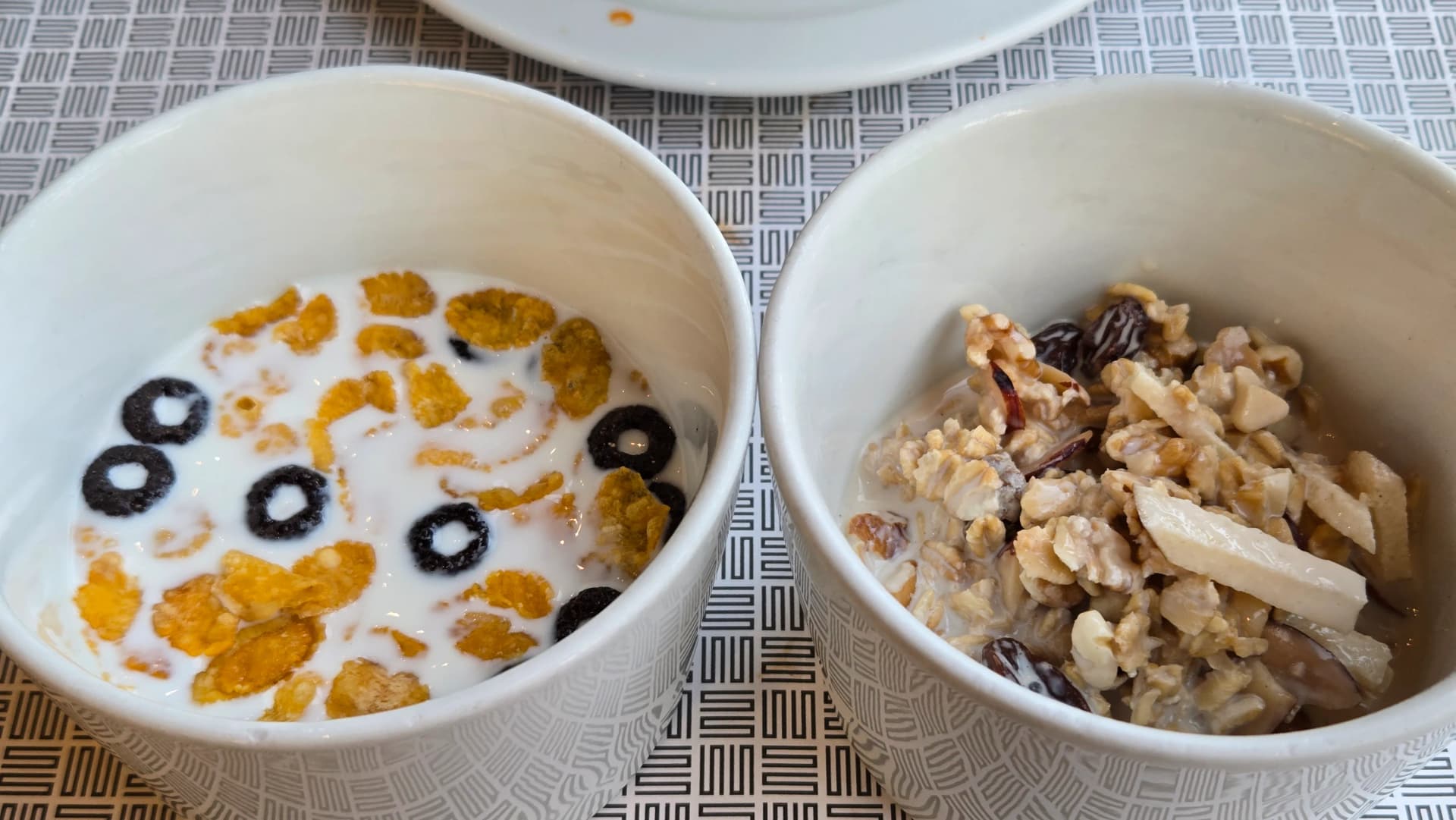
Finally, two bowls of cereal to close things out. Corn flakes mixed with chocolate balls and milk, and muesli soaked in milk. The corn flakes you need to eat quickly while they're still crunchy; the muesli is better after it's had a minute to soak and get nice and nutty. Honestly, by this point I was pretty stuffed and was kind of forcing these down.
Shilla Stay Ulsan Breakfast Buffet — Final Verdict
In terms of value for money, I was satisfied. For a two-person breakfast-included package at around $100, this level of variety and quality genuinely felt like a great deal. Even paying the $23 per person walk-in price wouldn't have felt like a waste.
My top picks were the naan and curry combo, the herb sausages, the bacon, and the rice noodle station. The noodle station especially — having staff cook it fresh to order right in front of you — exceeded my expectations for a business hotel breakfast. I've tried similar noodle stations at the Hilton Millennium in Bangkok and the Hyatt in Kota Kinabalu, and this one honestly held its own against both.
There were some downsides though. The scrambled eggs were dry and overcooked. The salad greens were limited to just iceberg lettuce, which felt lacking in variety. The naan was so popular that the supply was small and you had to time it right to get some. And with only one coffee machine, you'd have to wait in line during peak hours — that was a bit inconvenient.
I hope this is helpful for anyone curious about what a Korean hotel breakfast buffet looks like, or anyone considering booking at Shilla Stay Ulsan. Next time, I'm planning to try a Shilla Stay in a different city. I'm curious to see how the breakfast spread differs from location to location under the same brand.
Shilla Stay Ulsan — Basic Information
- Hotel Name: Shilla Stay Ulsan — a business hotel brand by the same company behind The Shilla luxury hotels
- Address: 200 Samsan-ro, Nam-gu, Ulsan (Daldong) — Ulsan is a major city on Korea's southeastern coast, about 1 hour north of Busan
- Front Desk Phone: +82-52-901-9000
- Breakfast Buffet (Café) Phone: +82-52-901-9107
- Breakfast Hours: Weekdays 06:30–09:30 / Weekends & Holidays 07:00–10:00
- Breakfast Price: Approximately $17–$23 per adult (may vary by season)
- Check-in: 3:00 PM / Check-out: 12:00 PM
- Parking: $3.50 per night for hotel guests (underground garage)
- Breakfast Buffet Location: Hotel 2nd floor
This post was originally published on https://hi-jsb.blog.