
Sizzling Korean Grilled Shellfish by the Sea
Table of Contents
15 items
There was no real plan. We were just bored with everyday life, so my mom, my brother, my wife, and I — four of us — hopped in the car and drove all the way to Gunsan, a coastal city about 3 hours southwest of Seoul. We were originally heading to a cafe on the Gogunsan Archipelago, a cluster of islands connected by bridges off the coast, but there was a seafood restaurant right next door, so we walked in on a whim. Turns out, that restaurant ended up being way more memorable than any cafe could've been.
This post isn't really about recommending this specific restaurant. It's about showing you what eating seafood at a Korean beach is like. Whether it's Busan, Incheon, Gangneung, or Jeju — anywhere near the ocean in Korea — you'll find grilled shellfish restaurants like this everywhere. Korea has this culture where they put live seafood straight onto a tabletop grill and you cook it yourself. That's essentially Korean-style seafood BBQ.
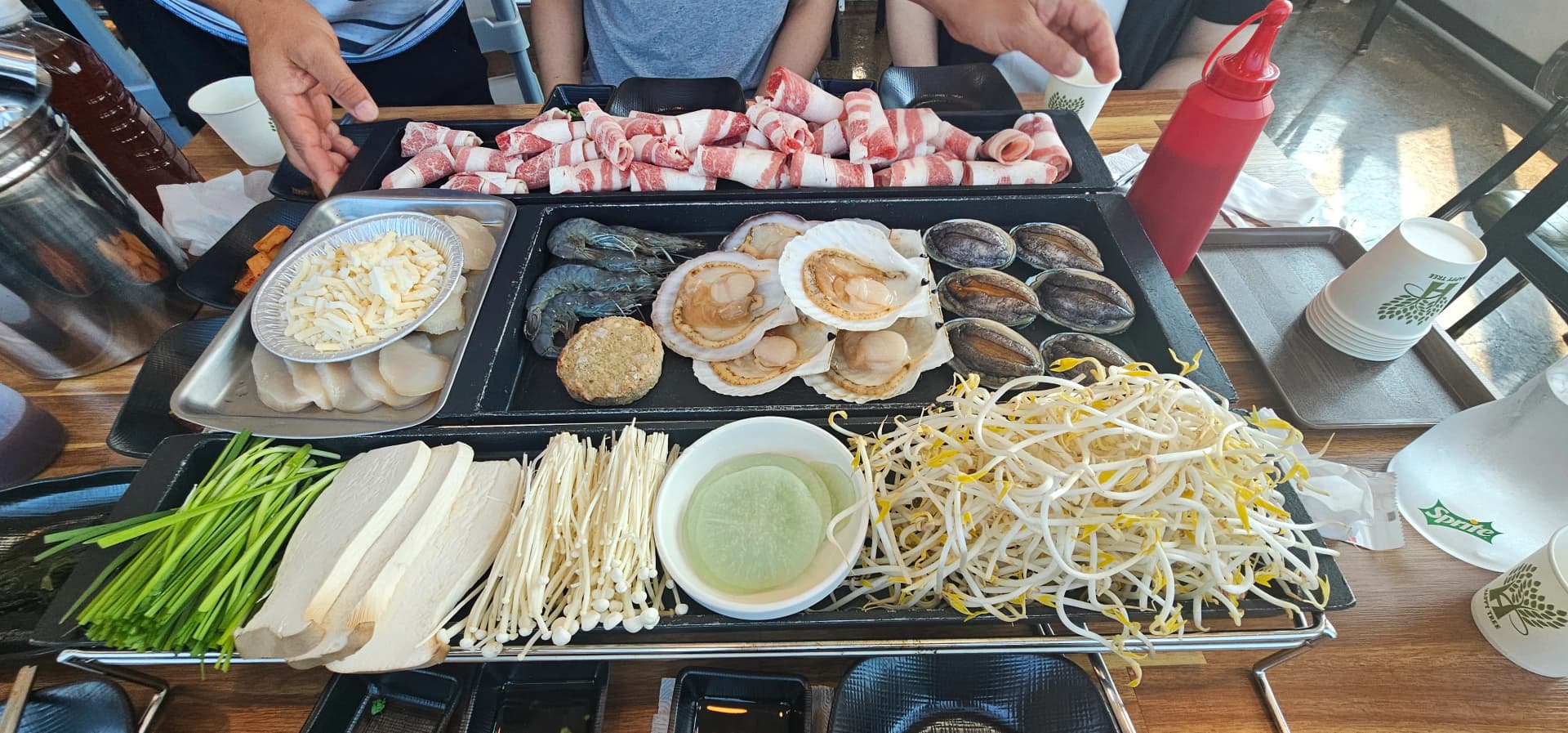
The Grilled Shellfish Set — Everything on One Plate
We ordered the grilled shellfish set and this is what came out. Abalone, scallops, mussels, shrimp, and even beef brisket — plus bean sprouts, enoki mushrooms, chives, tofu, and cheese all piled around the sides. At Korean beach seafood restaurants, it's super common for them to include beef alongside the seafood as part of the set. The four of us ate for about ₩100,000 total, which works out to roughly ₩25,000 per person — around $18–20 each. For a tourist spot, the portions were seriously generous. If anything, we were wondering if we could even finish it all.
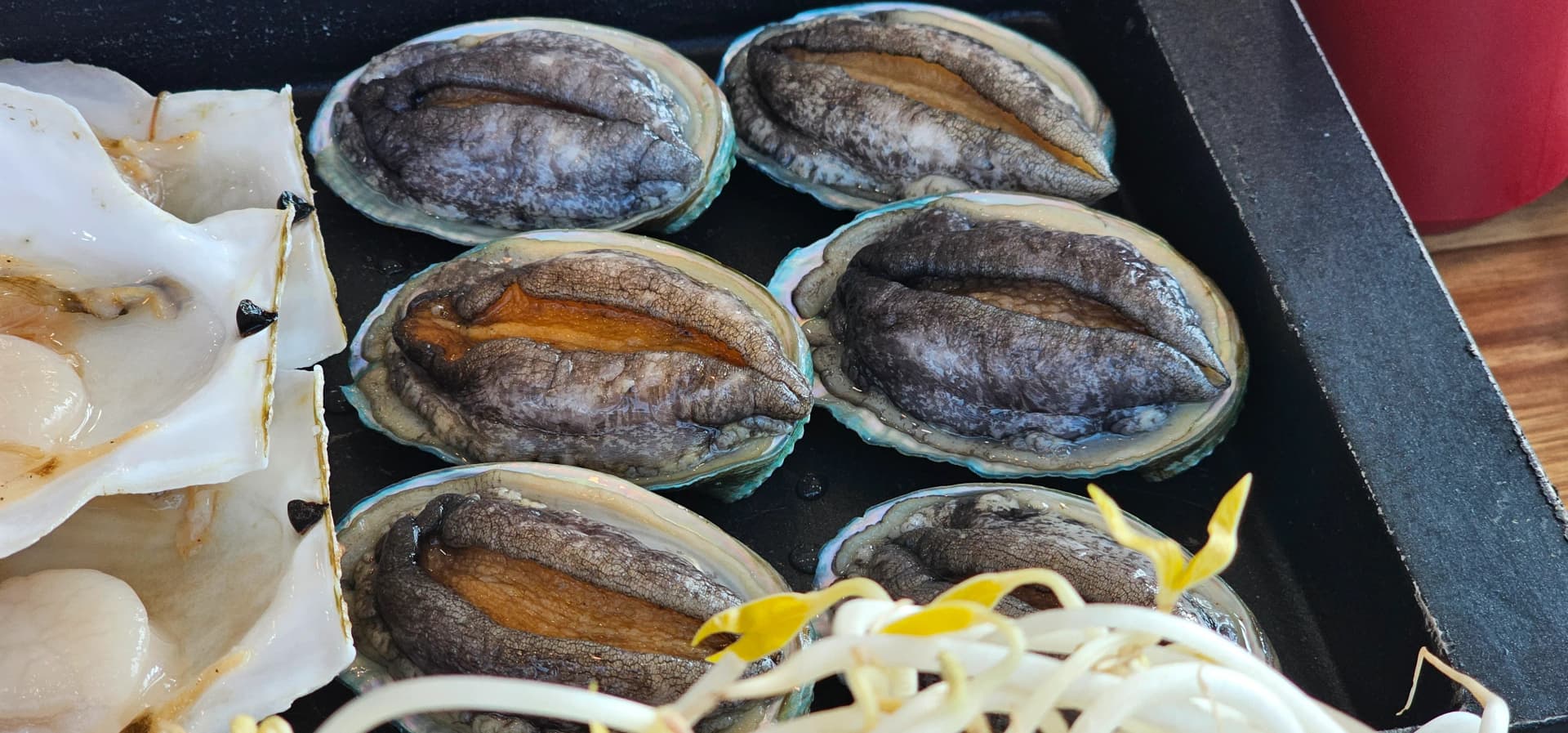
Grilled Abalone — Cooked Whole in the Shell, Korean Style
Grilling abalone whole in its shell — that's the Korean way. Abalone is known as a luxury ingredient in other countries too, but the experience of grilling a live one right at your table is something that's pretty hard to come by outside of a Korean beach town. When you grill it in the shell, the juices inside start bubbling away while the meat slowly cooks. Once it's done, you pick it out and eat it — it's chewy yet tender, and the ocean flavor just explodes in your mouth.
I've had abalone in Busan and Jeju plenty of times, and honestly, the abalone itself doesn't taste that different from one region to another. It's more about the situation — the fact that you're eating something freshly grilled right in front of the ocean. That's what makes it taste different, I think.
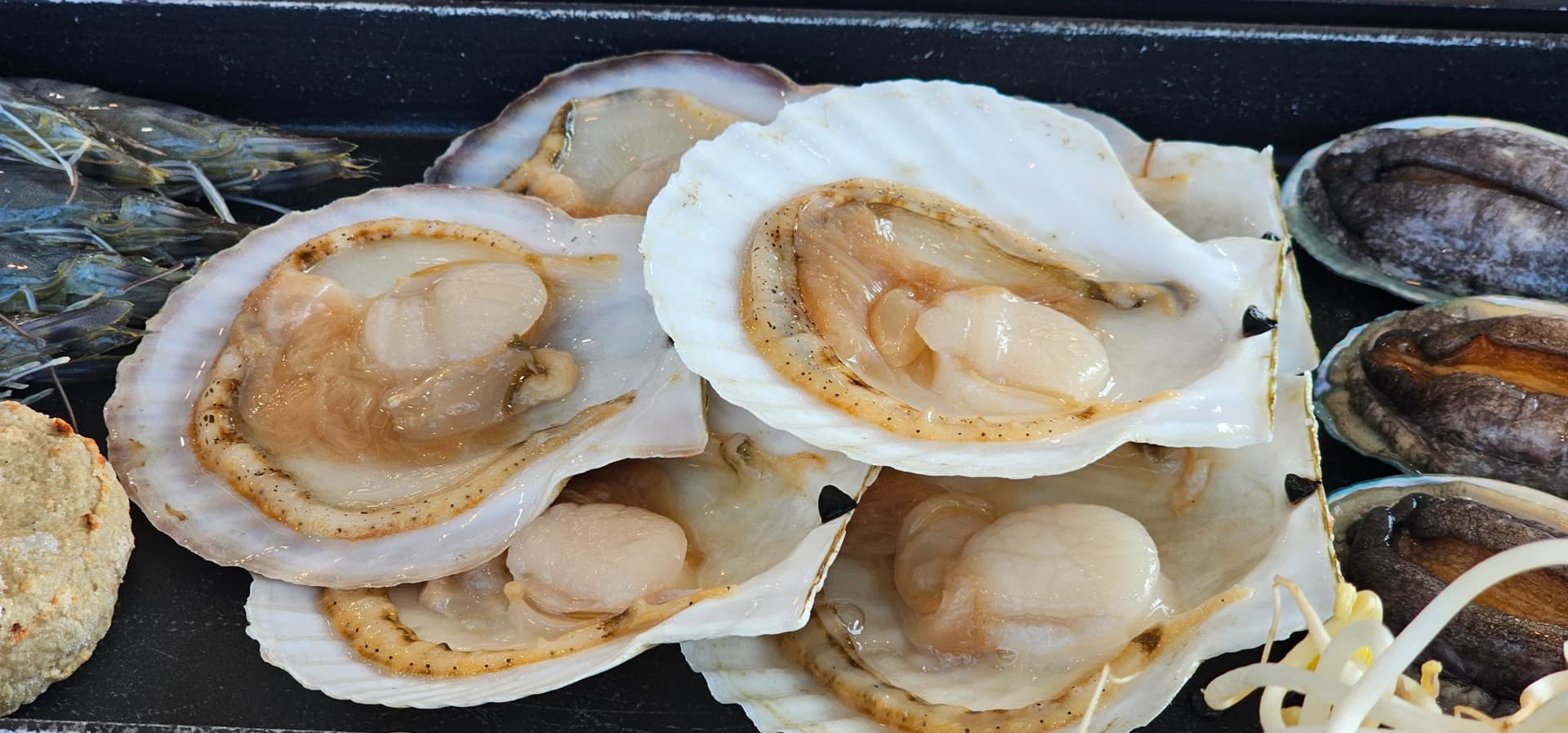
Scallop Adductor — A Softer Texture Than Abalone
Scallops are another must-have at any Korean grilled shellfish spot. When you put them on the grill, the shells pop open and the juices inside start bubbling like crazy. The round adductor muscle in the center — that's the star of the show. Once it's cooked, it has this slightly sweet, nutty flavor. If abalone is all about that chewy bite, scallop adductor is closer to soft and melt-in-your-mouth.
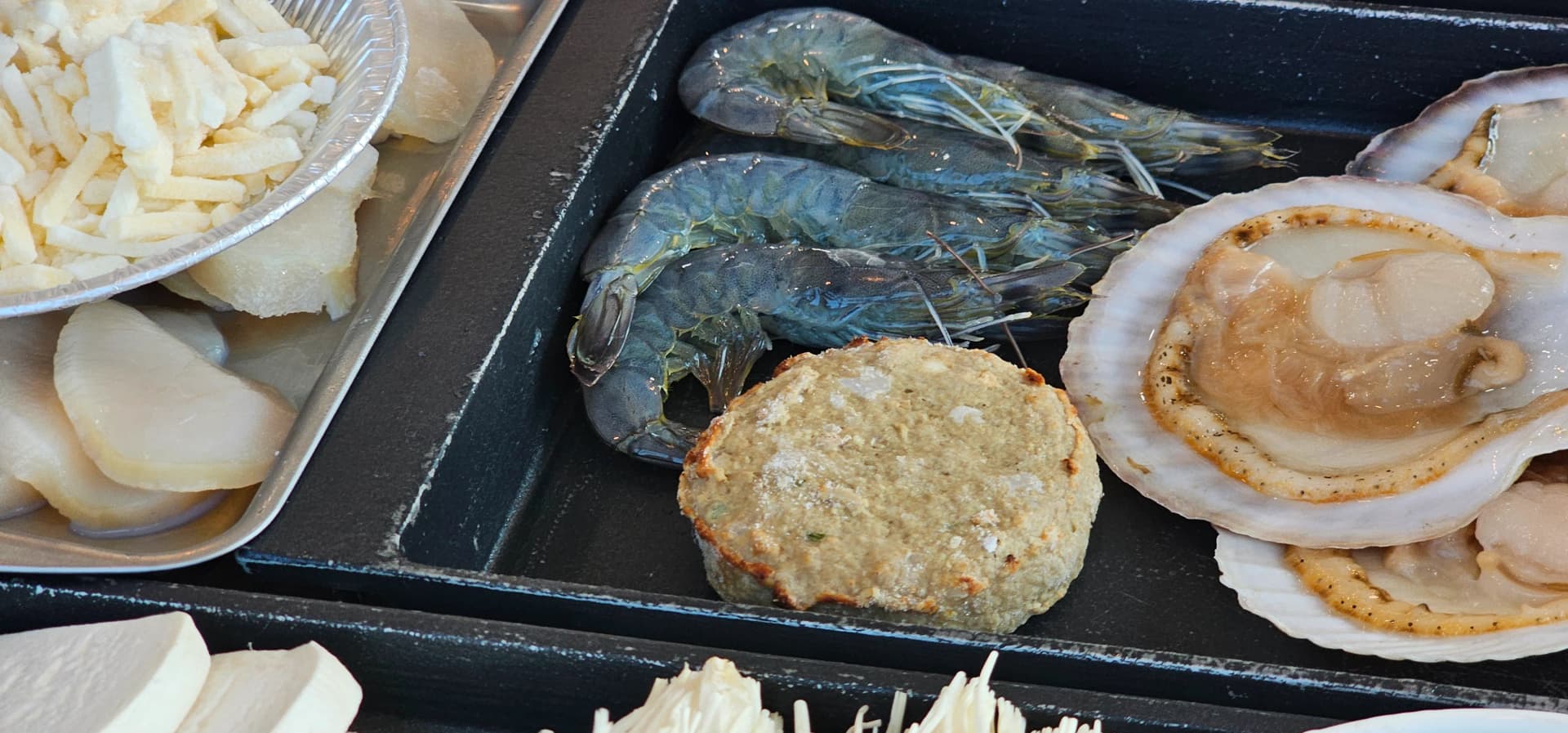
Up close, you can see big shrimp laid out alongside thick-cut pen shell adductor muscle served separately. The round things next to them are seafood fritters, and honestly, the most memorable thing that day wasn't the abalone or the scallops — it was these fritters. The outside gets crispy on the grill while the seafood filling inside bursts with juice when you bite in. They had zero presence on the menu, but after tasting them, they were hands-down the best thing we had.
🐙 First Time at a Korean Grilled Shellfish Place? Here's What to Know
At Korean beach grilled shellfish restaurants, you cook everything yourself on a tabletop grill. It might feel a bit overwhelming at first, but the staff will usually come over to adjust the heat and tell you what order to put things on, so don't worry. Think of it like a seafood BBQ — Korean style.
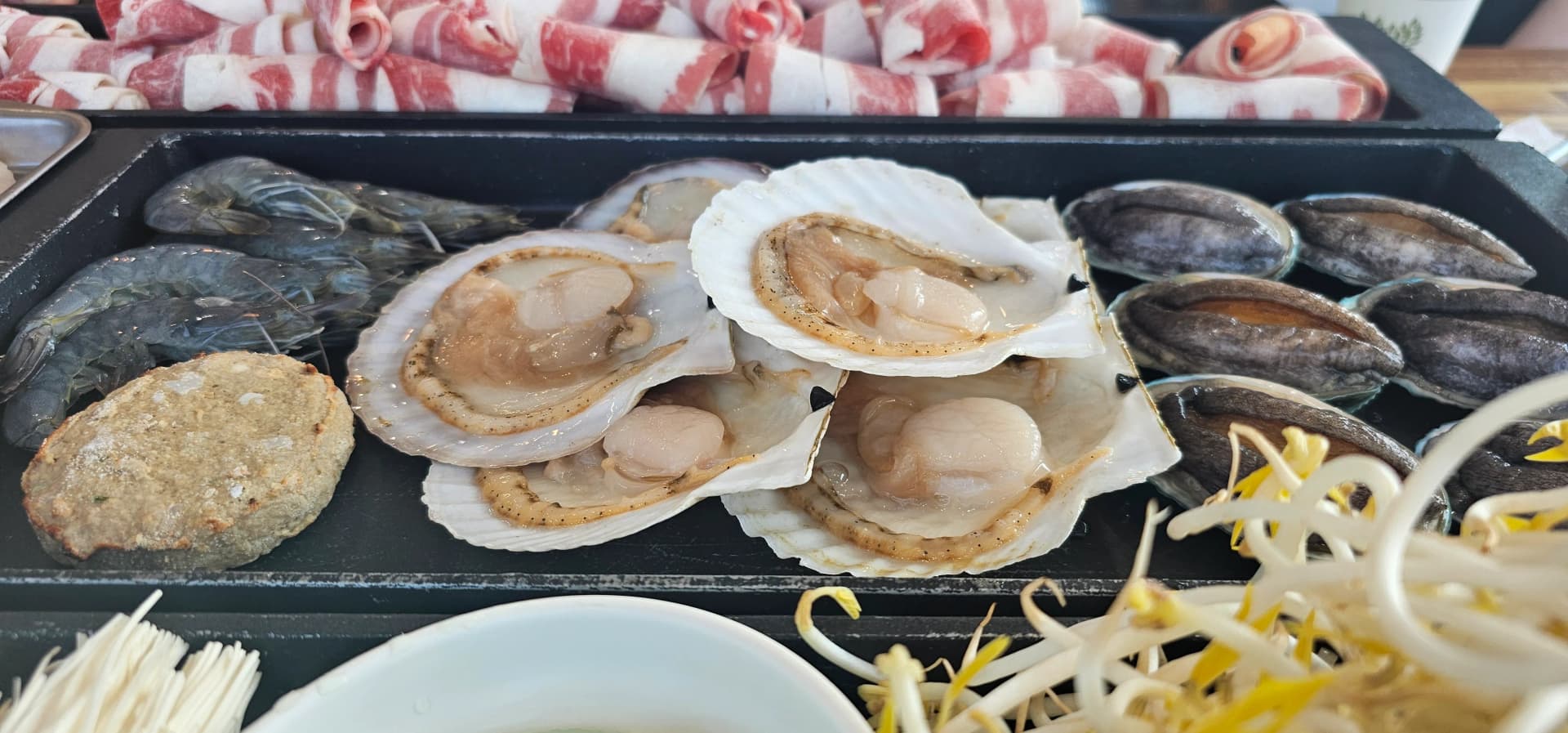
Seafood, Meat, and Veggies — All on One Grill
Zooming out, this is what the whole setup looks like. Scallops, shrimp, mussels, and beef brisket all sitting on one grill plate, surrounded by bean sprouts and enoki mushrooms. Most Korean beach grilled shellfish places follow this exact format.
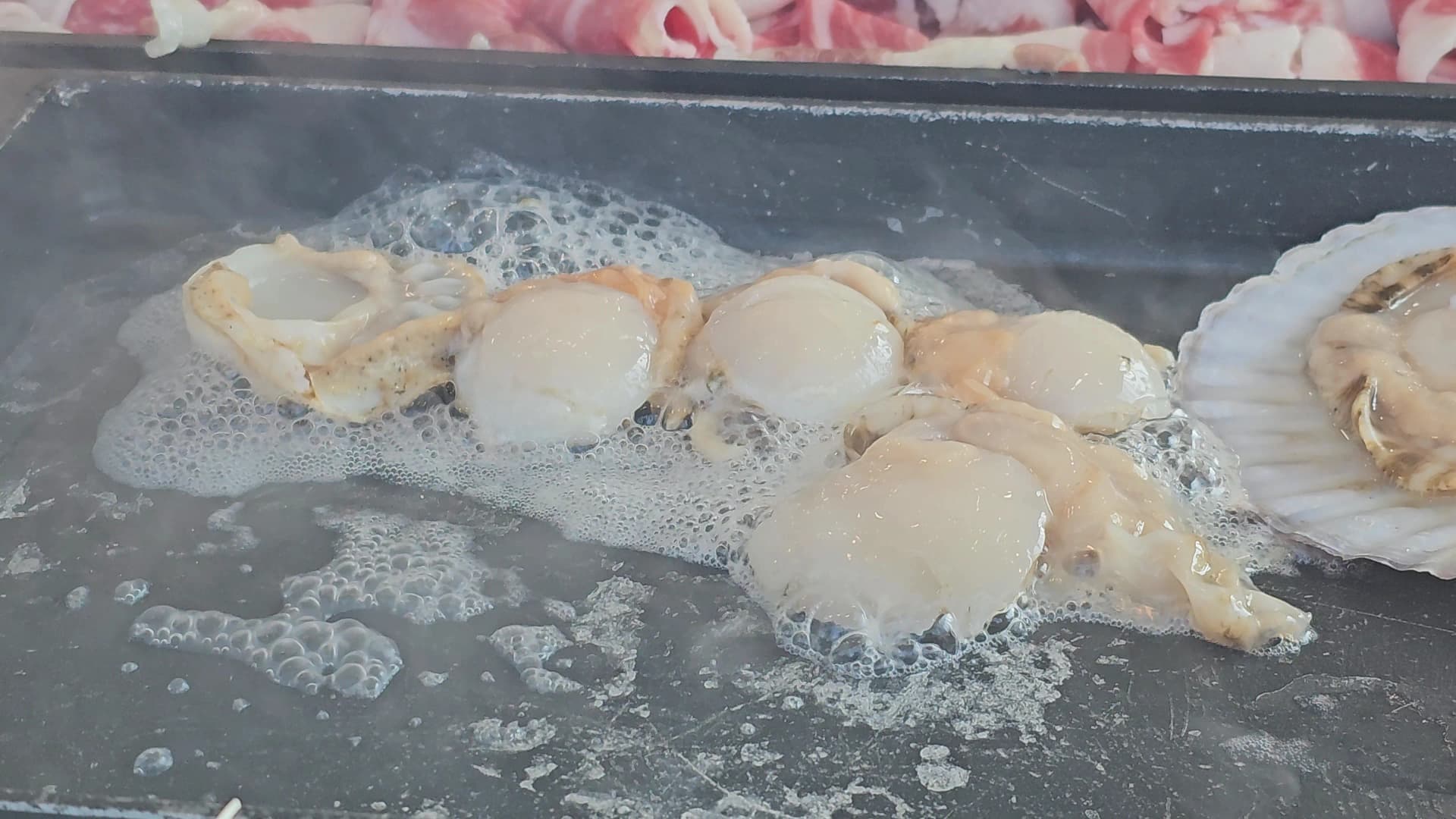
We ate the scallops two ways. One was cooked in the shell, and the other was the adductor pulled out and seared directly on the grill. The in-shell version was moist and tender because the juices stay trapped inside. The seared version got a light golden crust on the outside with a chewy, almost bouncy texture. It was fun how the same scallop tasted like two completely different dishes depending on how you cooked it. Even people who normally don't love the smell of the sea seemed to enjoy the directly seared ones just fine.
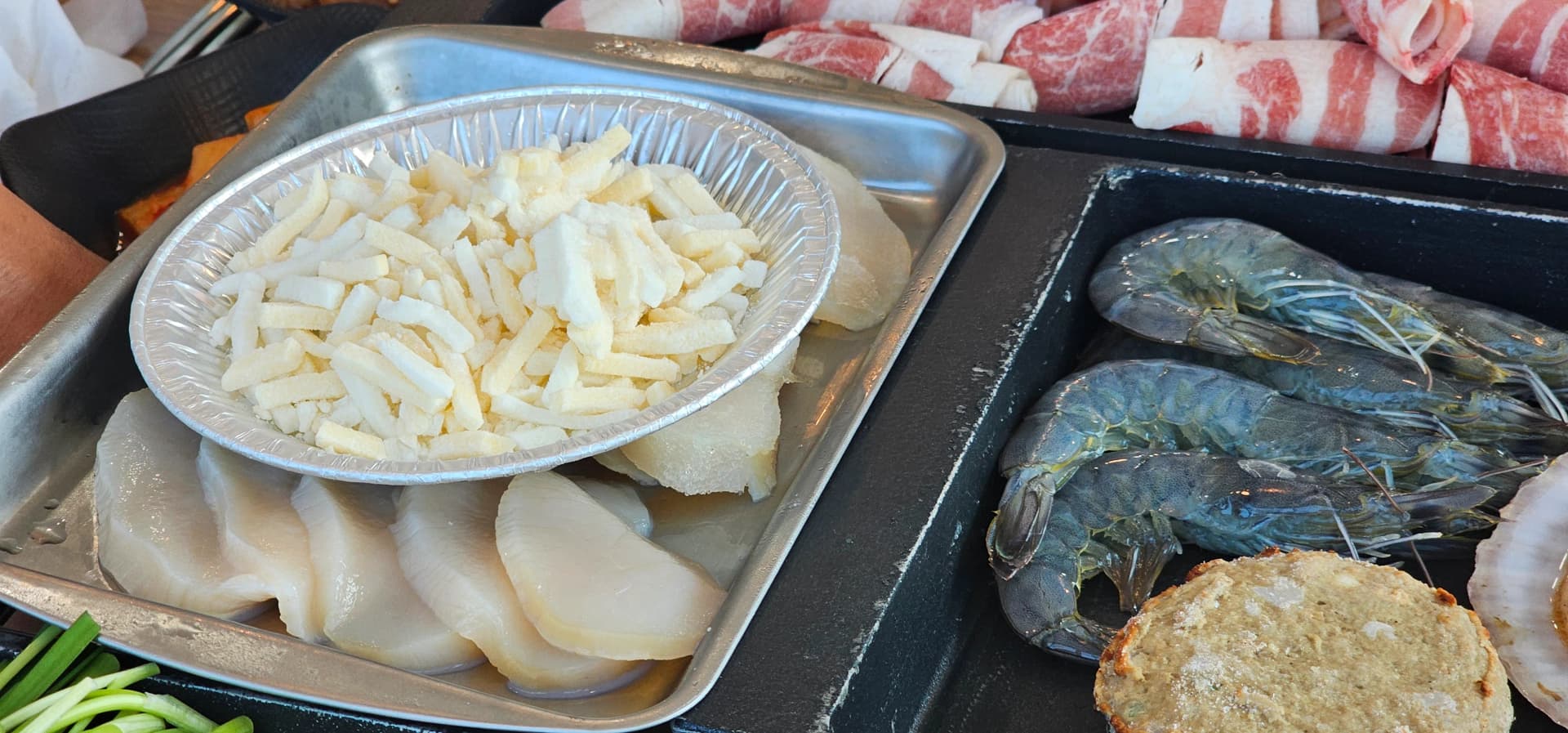
Cheese on Top of Pen Shell Adductor — Seriously?
This came out on a separate tray — thick-cut pen shell adductor muscle with a huge pile of mozzarella cheese on top. The round things beside it are seafood fritters, and these go on the grill too. In Korea, topping grilled shellfish with cheese is actually pretty mainstream. When you grill the adductor with cheese melting over it, the melty cheese blends with the salty-savory seafood flavor. If you've never heard of this combo before, yeah, it probably sounds weird. But once you try it, you get it immediately.
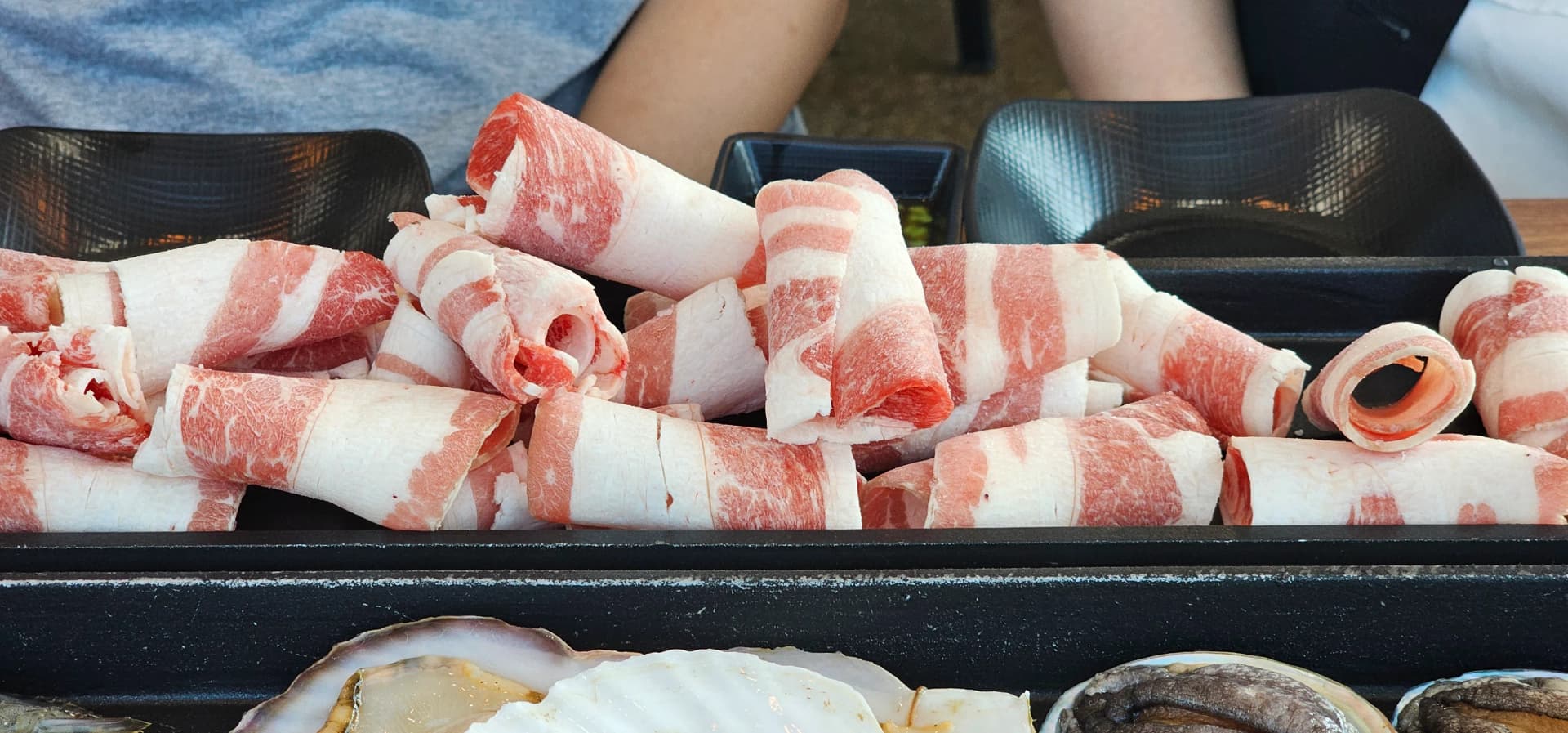
Beef Brisket and Samhap — A Staple at Korean Shellfish Spots
Beef brisket — called chadolbagi in Korean — also came included in the set. It's thinly sliced beef from the lower chest area, and you can see the distinctive layers of white fat alternating between the red meat. When it hits the grill, the fat melts first and this rich, savory oil spreads across the surface — it cooks in just seconds. In Korea, it's basically standard for grilled shellfish sets to come with beef brisket. The whole idea is to wrap seafood, meat, and vegetables together in one bite — that's called samhap (literally "three-harmony combo"). The brisket here was Korean hanwoo beef, so the umami from the fat was noticeably richer than regular beef.
💰 Price Reference
About ₩100,000 for 4 people (roughly ₩25,000 per person, or $18–20 USD). In non-tourist cities inland, you could get a similar price with a mini course that includes sashimi. Tourist spot markup is real, but honestly, with this amount of food and this quality, it didn't feel like a rip-off at all.
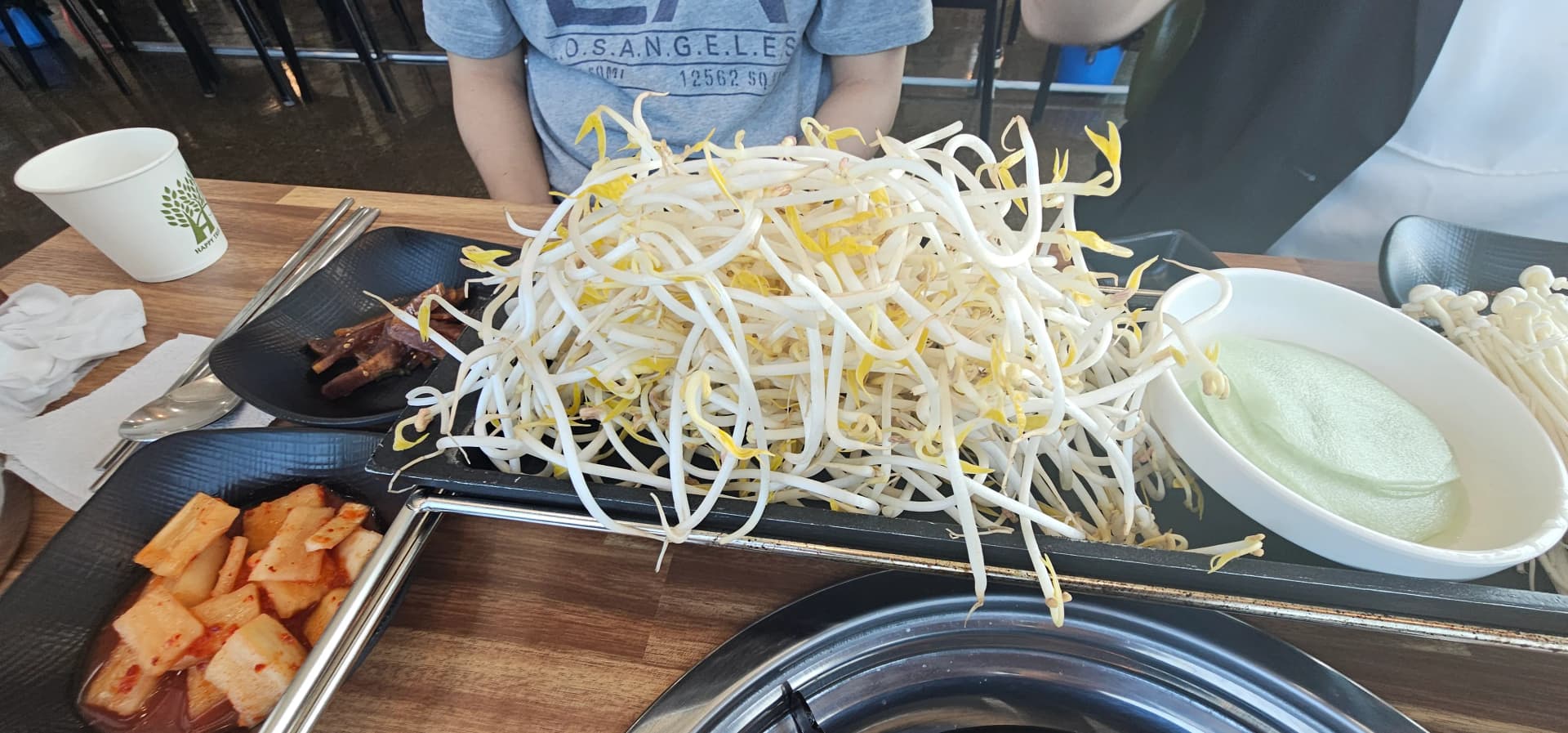
Vegetables and Sides — All This Comes Standard
It's not just seafood and meat — vegetables come out piled high on the side too. Bean sprouts are stacked up like a mountain, and next to them you can see kimchi and other side dishes laid out.
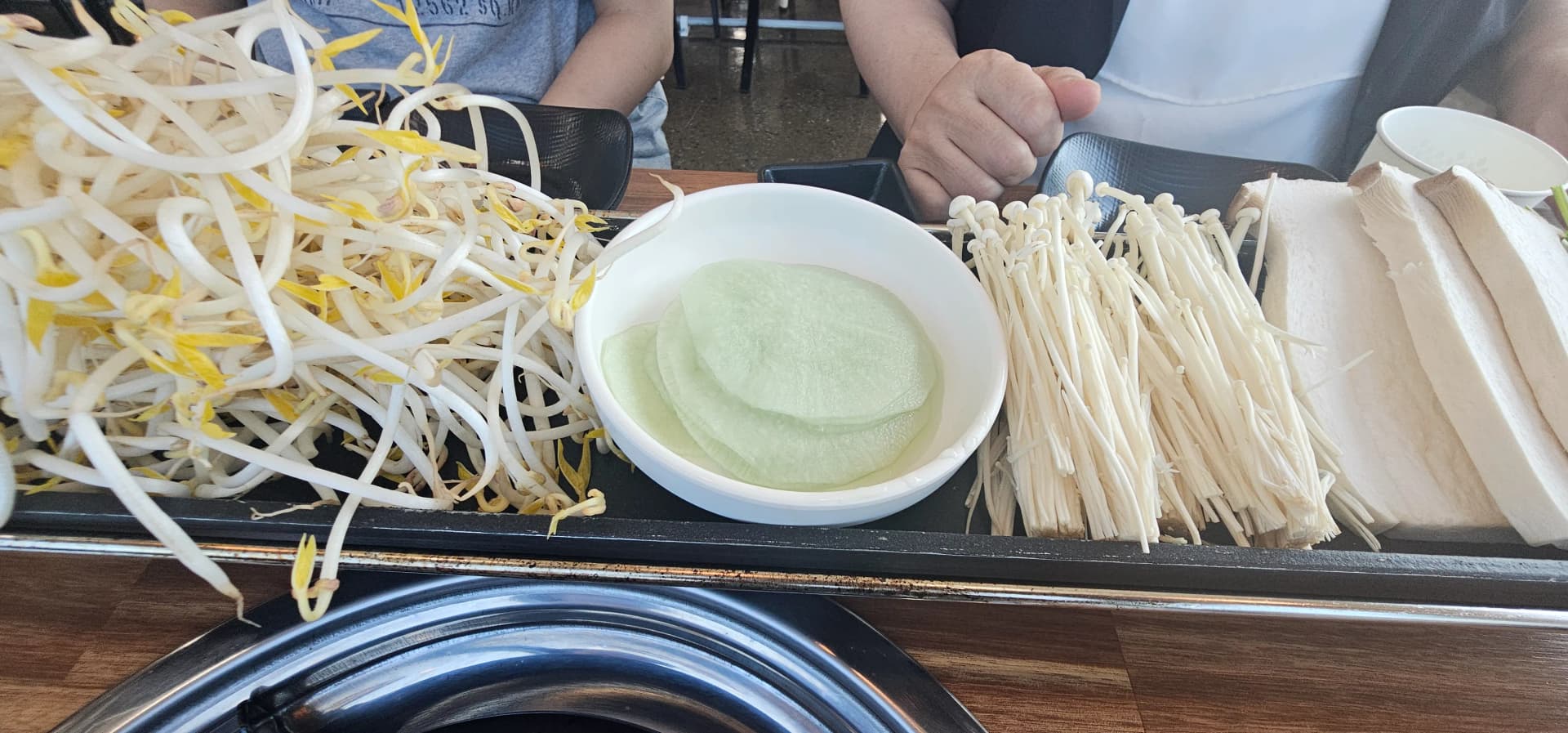
Looking closer, there's rice paper soaking in water next to the bean sprouts, plus enoki mushrooms and tofu lined up neatly. Wrapping grilled brisket, scallop adductor, and bean sprouts in rice paper and rolling it up was actually really good — it's kind of similar to Vietnamese spring rolls, so I think even people unfamiliar with Korean food would have no trouble enjoying this.
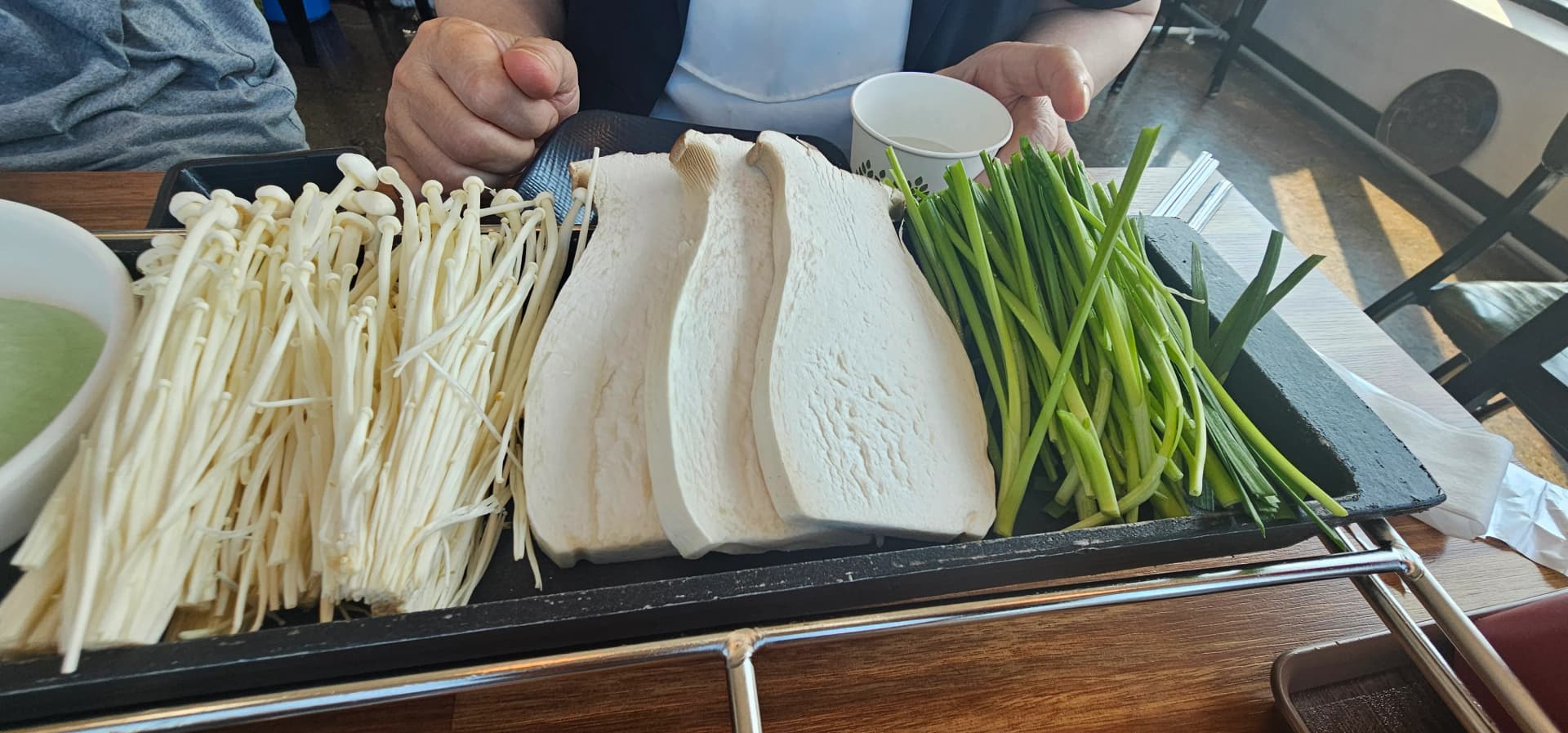
Enoki mushrooms, tofu, and chives filled up another whole plate. And none of this was ordered separately — it's all included with the set. Korean beach grilled shellfish restaurants tend to be pretty generous with the sides.
Side Dishes at Korean Restaurants Are All Free
Quick sidebar here — let me talk about side dishes. At Korean restaurants, when you order a main dish, side dishes automatically come out with it, and they're completely free. It's not a tip or an upsell — that's just how Korean food culture works. Visitors from other countries are usually pretty amazed by this.
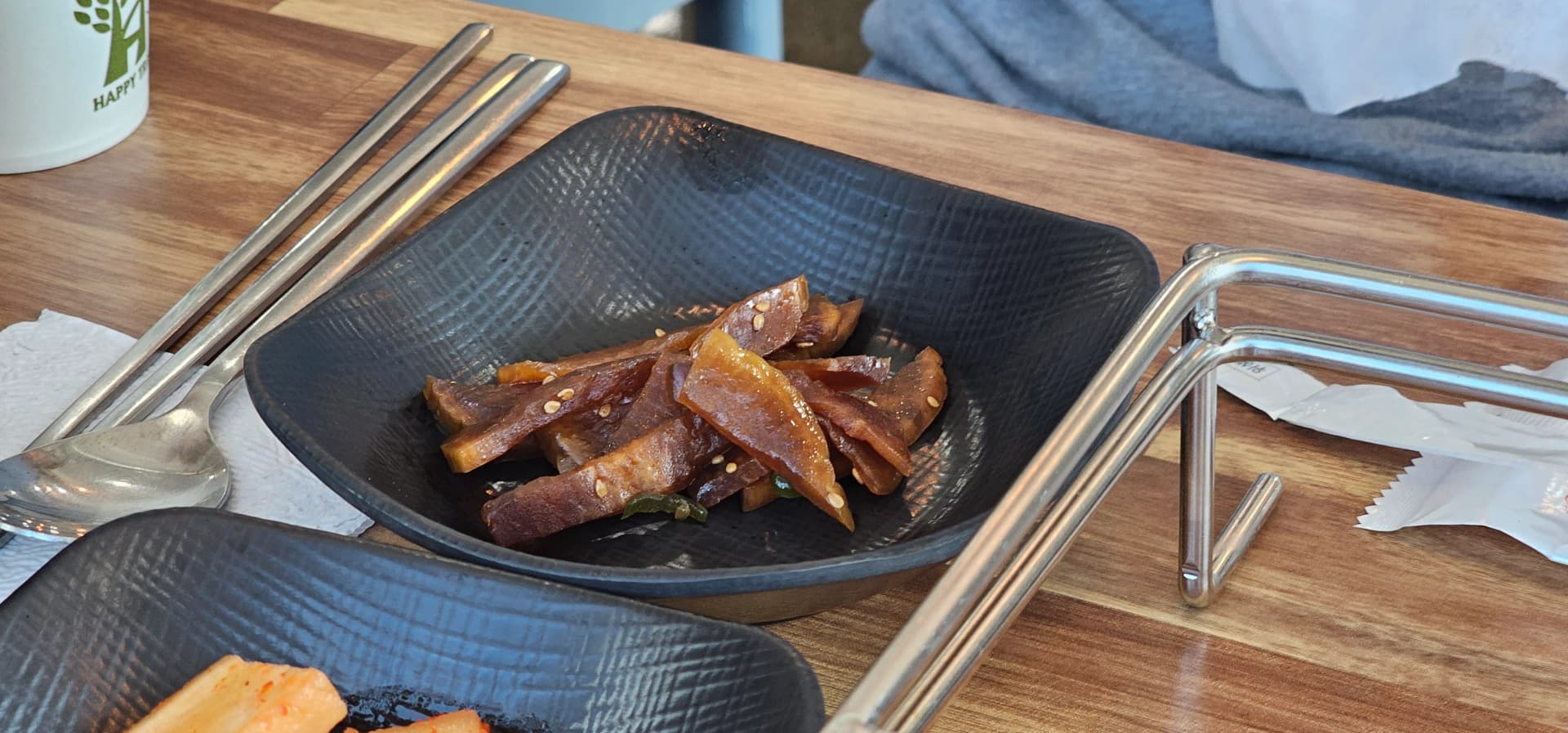
This is jangajji — vegetables like radish and garlic pickled in soy sauce. It's sweet and salty at the same time, and it works great as a palate cleanser between bites of meat.
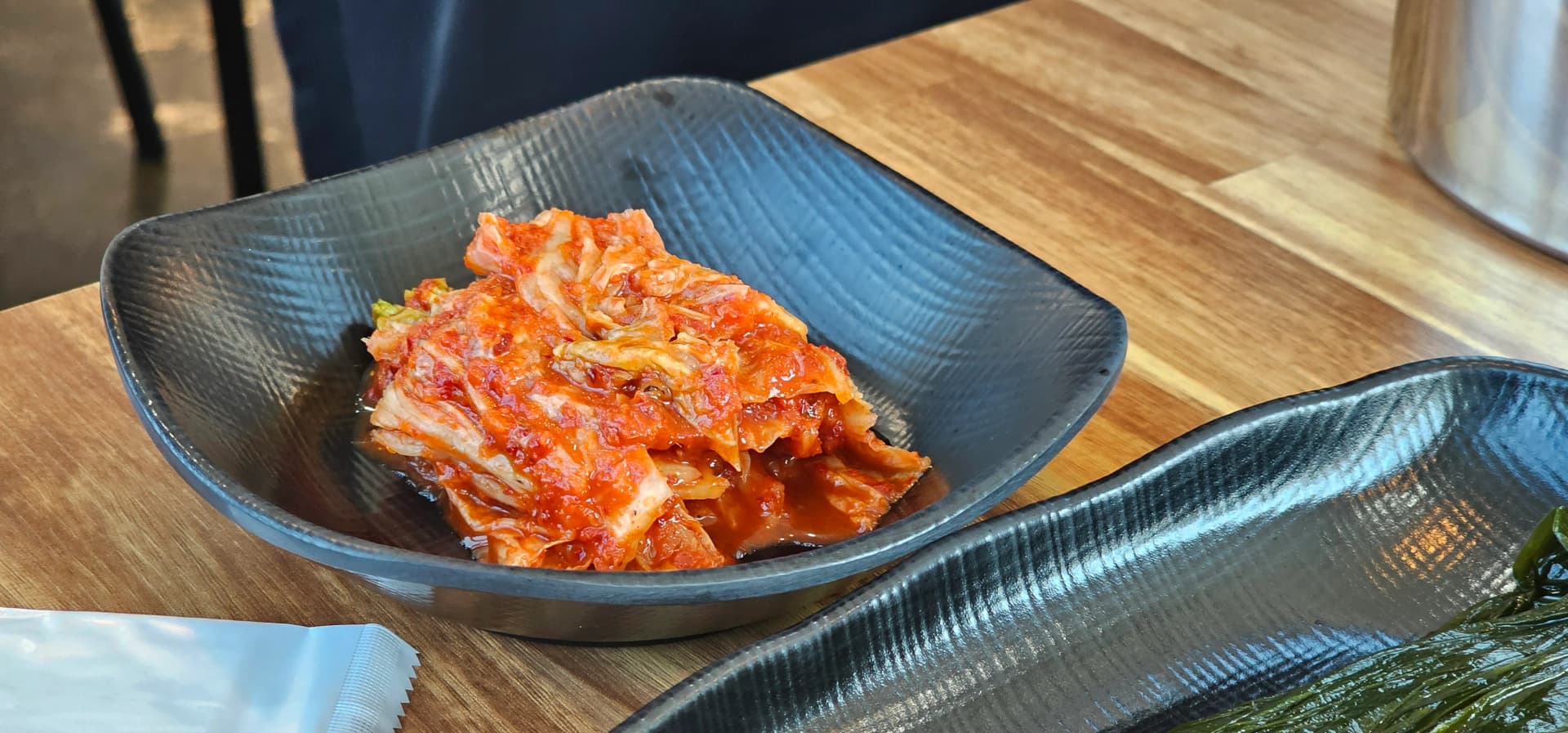
Kimchi. I mean, does this even need an explanation? It's the most basic of basics at literally every Korean restaurant you'll ever walk into.
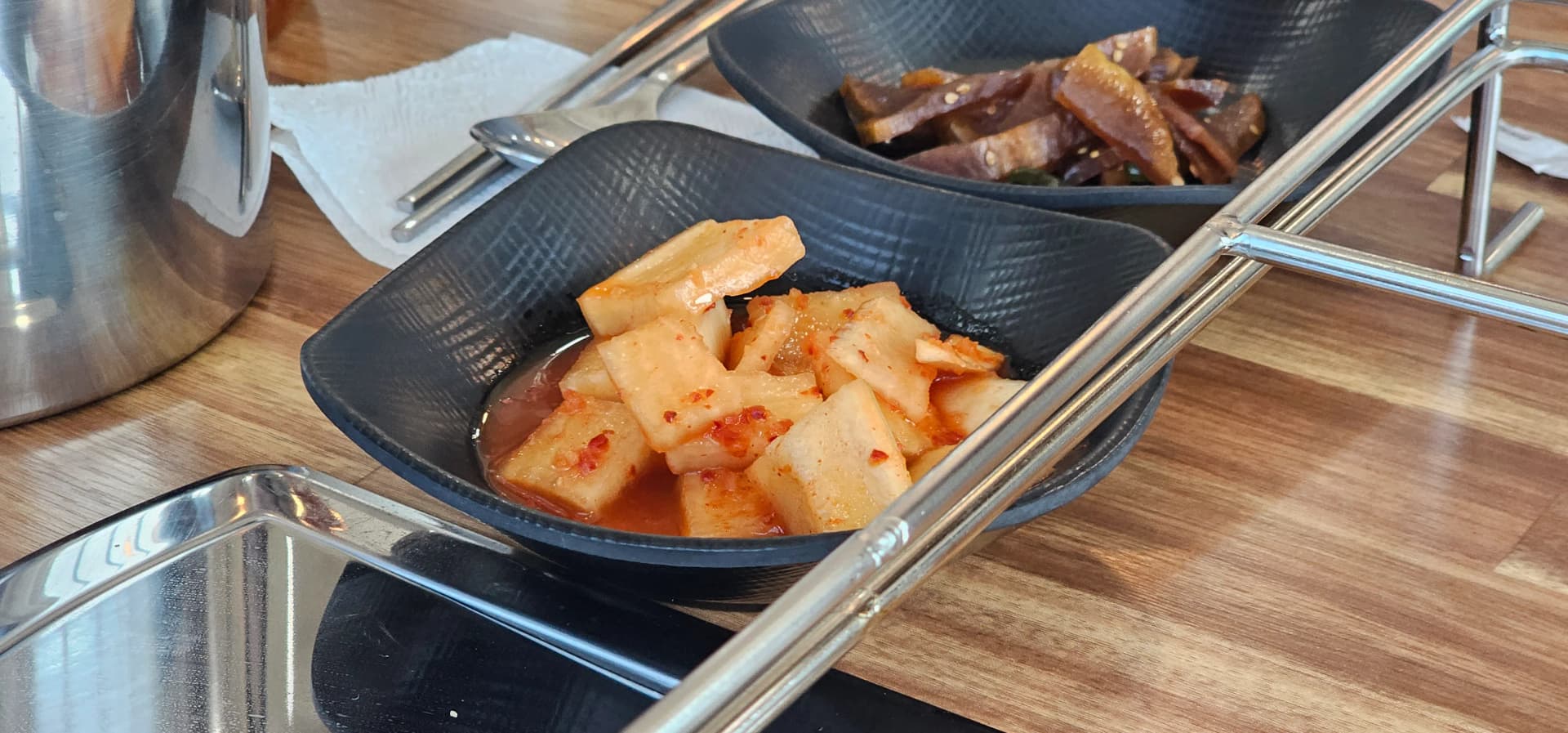
Kkakdugi — radish cut into cubes and tossed in chili flakes. It's crunchier than regular kimchi, so eating it alongside greasy meat or rich seafood gives you this refreshing, cleansing bite.
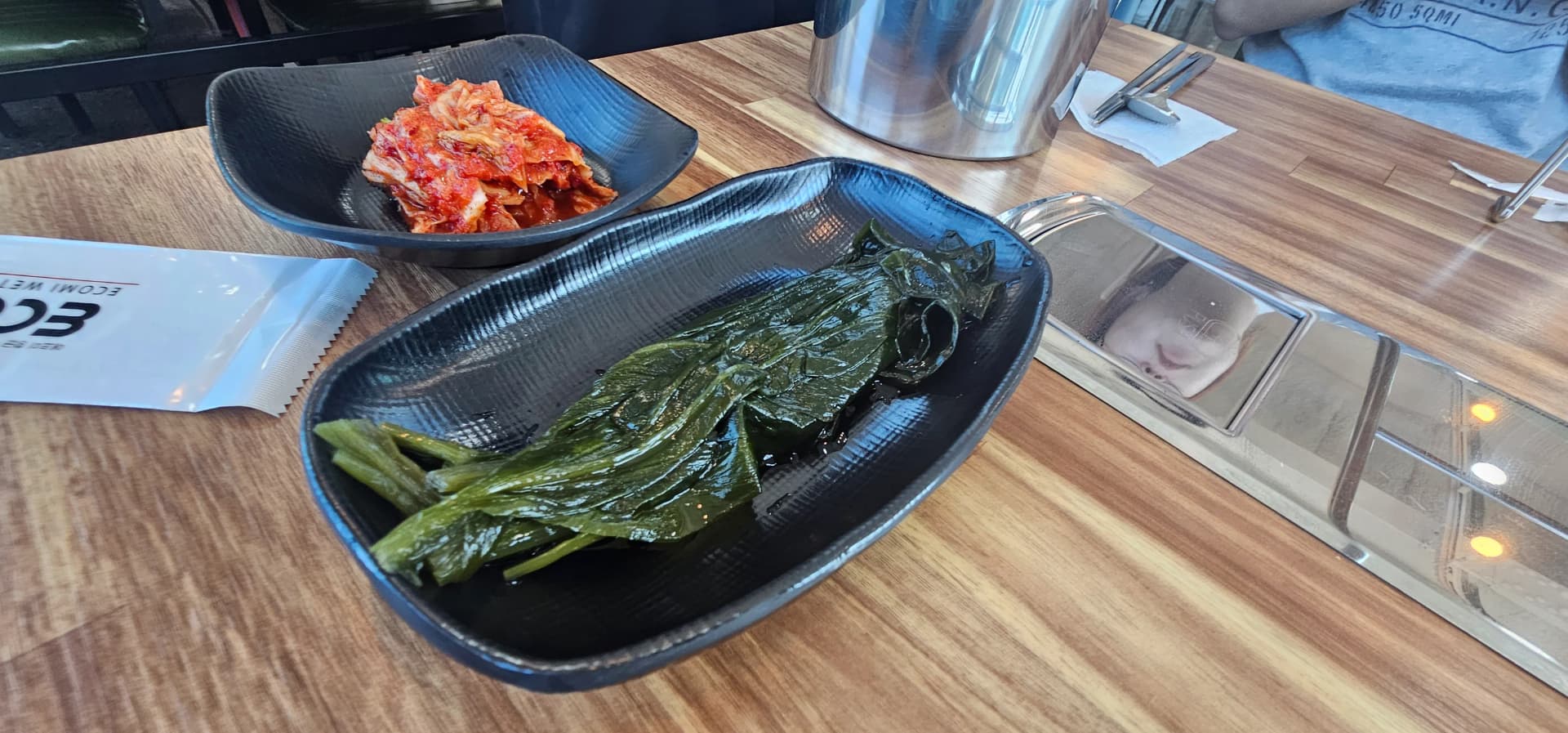
This is myeongyi namul — wild garlic leaves marinated in soy sauce. You put grilled meat or scallop adductor on top of the leaf and wrap it up. It adds this fragrant, herby flavor that cuts right through any greasiness. It basically functions as a wrap vegetable.
🥬 What Is Banchan?
In Korea, no matter what restaurant you go to, ordering a main dish means you get banchan (side dishes) for free. Kimchi, pickled vegetables, kkakdugi, marinated garlic leaves — these are all part of Korean food culture. When you finish them, refills are free too. This is one of the things that surprises first-time visitors to Korean restaurants the most.
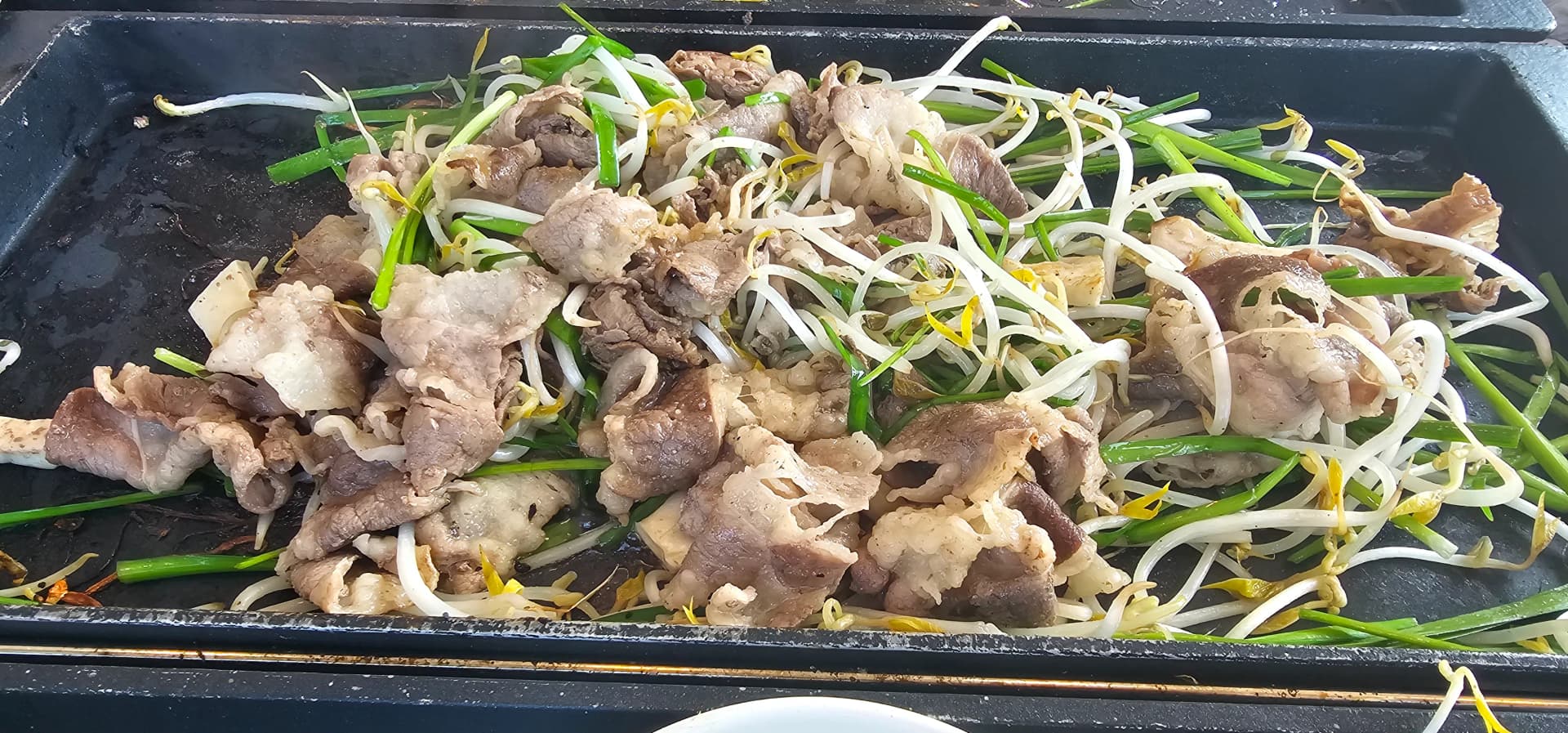
Time to Start Grilling
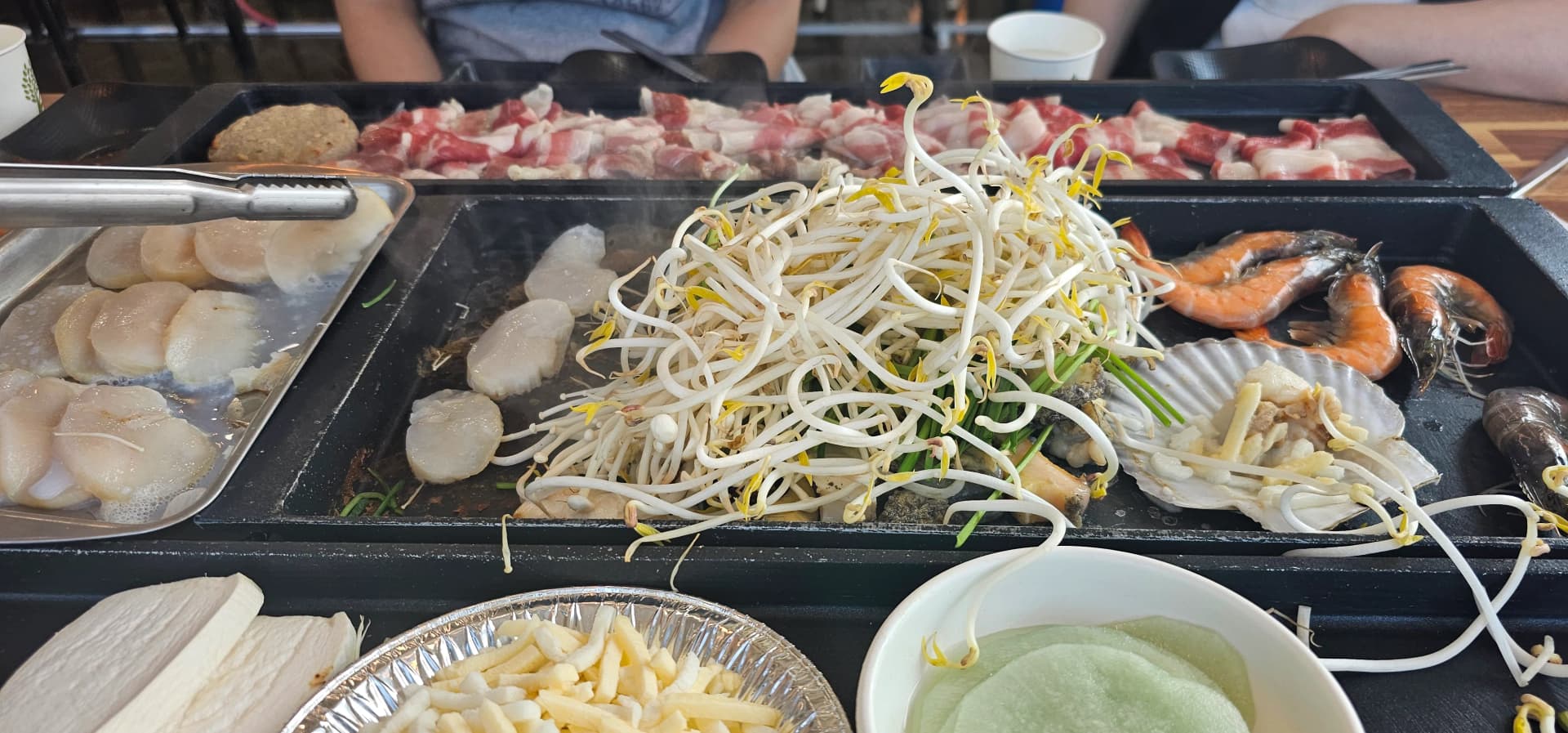
The beef brisket goes on top of the bean sprouts and chives like this, almost like you're stir-frying everything together. You lay down the vegetables first, then place the meat on top — the moisture from the veggies rises up so the meat doesn't burn and stays nice and juicy. Once it's all cooked, the meat and vegetables get all mixed together so you can grab everything in one bite with your chopsticks. Way better than eating them separately.
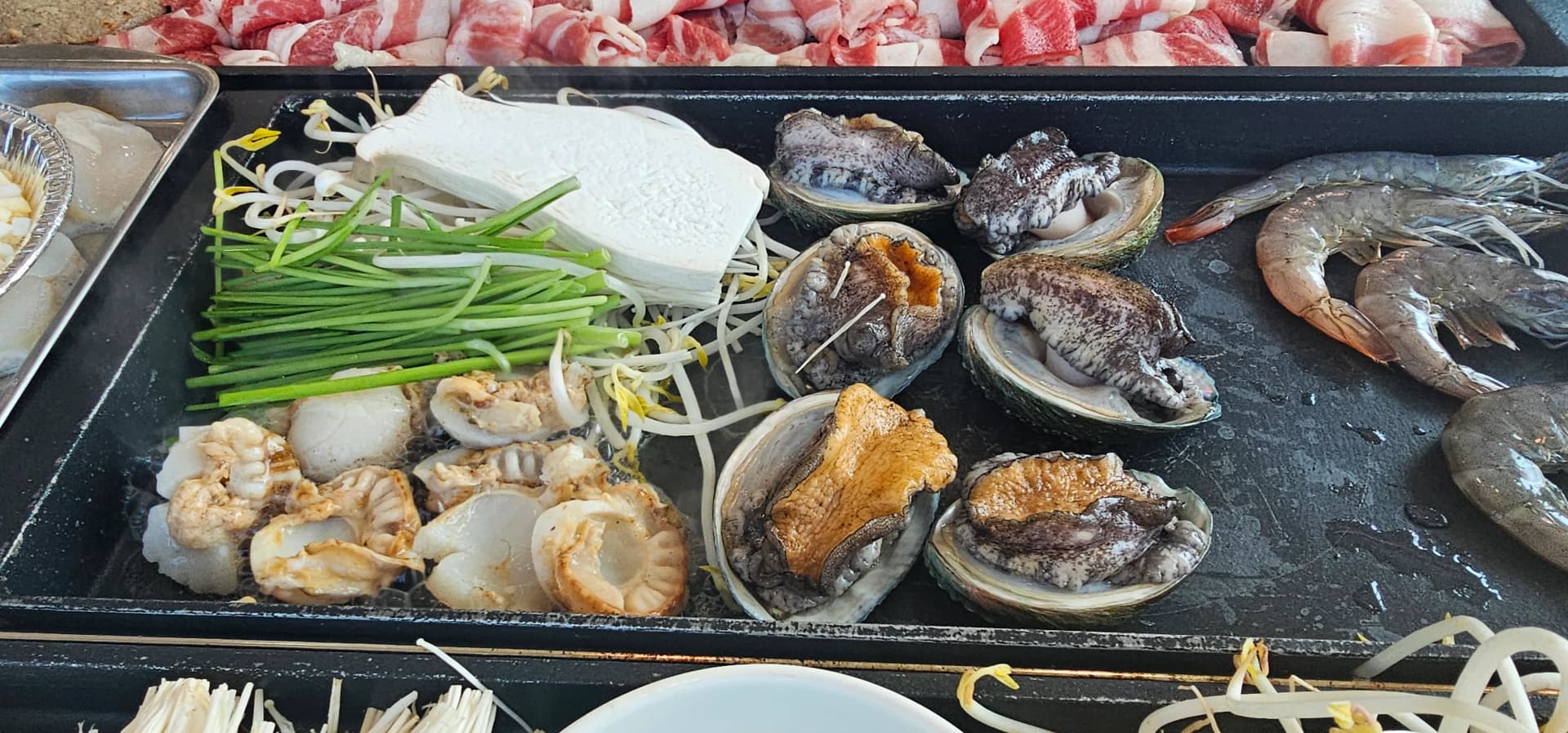
Once everything starts going on the grill, this is the scene that unfolds. The abalone is squirming around on its shell from the heat, next to it the scallop adductor is turning golden brown, and the shrimp are slowly changing from blue-gray to bright red. The staff came over at the beginning to set the heat level and told us the order to put things on. Abalone and scallops go first, then once they're partially cooked you lay down the brisket, and last you pile on the bean sprouts and chives. Shrimp can go in any empty spots in between.
The DIY Grilling Process Itself Is the Real Charm of Korean Seafood
Once you really get going, the grill turns into total chaos. Oil from the brisket is sizzling away, the bean sprouts are hissing as they release moisture, the shrimp are already bright red and done. The smoke, the sounds, the smells — I honestly think this whole process is the biggest charm of eating at a Korean seaside seafood spot. It's not about just receiving a finished plate of food. You grill it yourself, you watch it cook, you time it just right and grab it at the perfect moment — that entire process IS the meal.
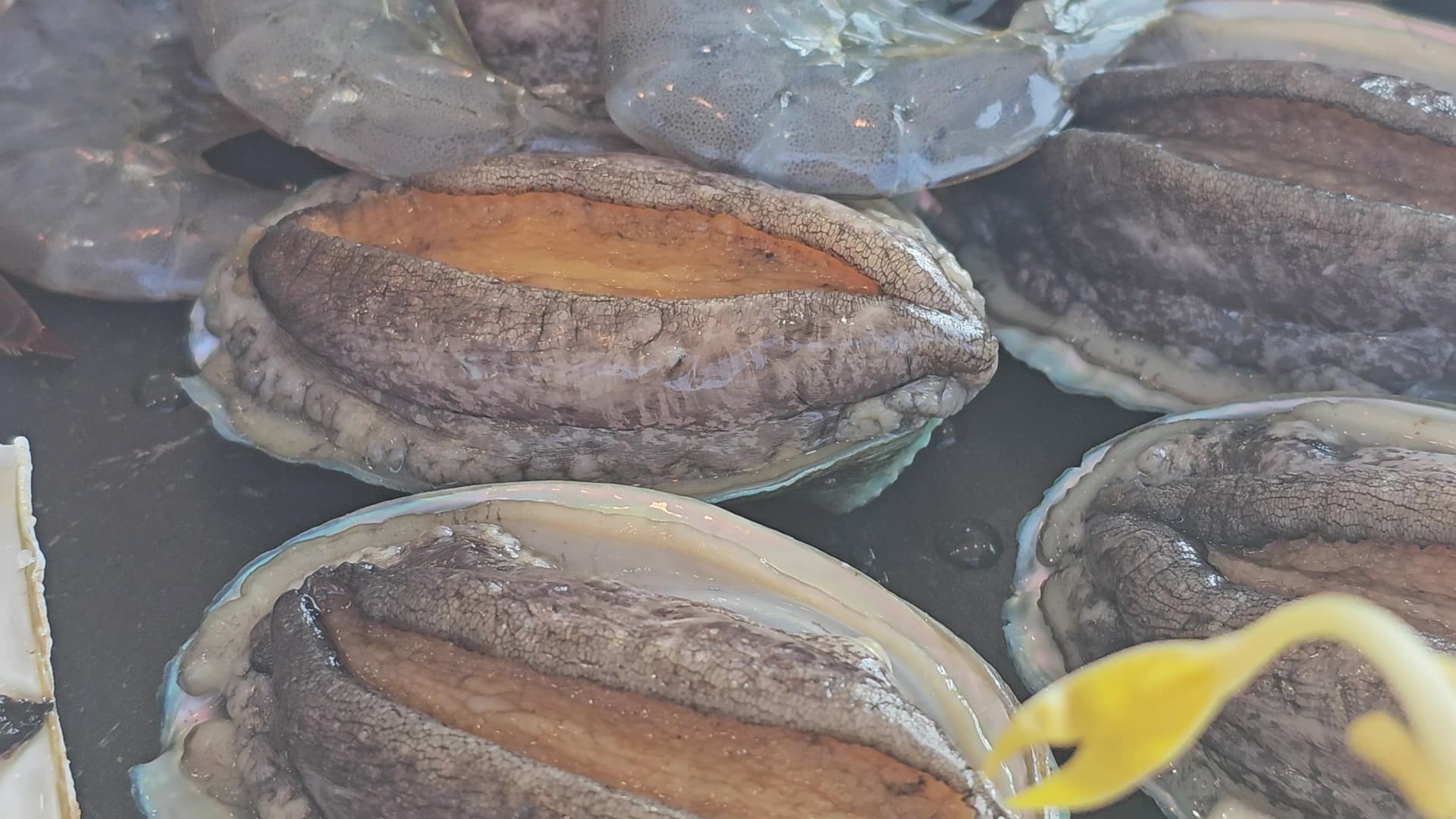
When the abalone hits the heat, it starts twisting and curling inside its shell. Since you're cooking it alive, first-timers might be a little startled by this. As it cooks, juices start bubbling out along the edges of the shell — eat those juices along with the meat and you get the pure taste of the ocean, right there in your mouth.
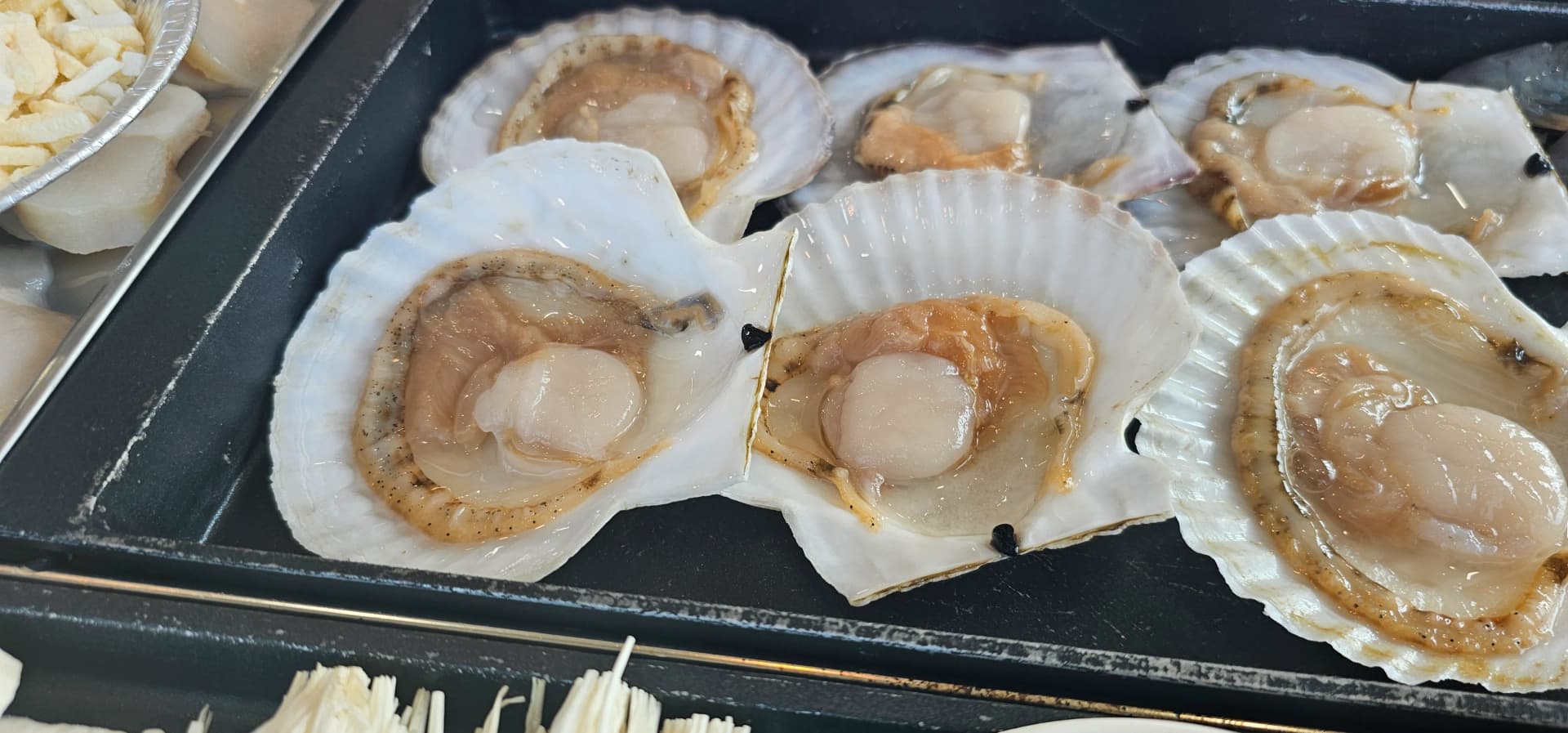
When you cook scallops in their shells like this, the juices collect inside like a little pool. It's a completely different flavor from the adductor we seared directly on the grill earlier — the in-shell version keeps all its juices so it's much more moist and tender. Between the sizzling sounds, the smoky aroma rising up, eating while seeing it with your eyes, hearing it with your ears, and smelling it with your nose — the taste honestly felt twice as intense.
🔥 What It Was Actually Like Grilling It Ourselves
Following the order the staff told us, it wasn't hard at all. Abalone and scallops first, then brisket, then veggies last. We cut the abalone into bite-sized pieces with scissors and put it on wild garlic leaves, and dipped the scallop adductor in melted cheese — that combo was hands down the best thing we had all day.
Toward the end when we'd eaten almost everything, they fried rice on the grill using the leftover oil and vegetables. The seafood juices and brisket fat soaked into every grain of rice — the savory flavor was absolutely unreal.
Honest Thoughts After Eating at Multiple Spots
I'll be honest about one thing — I've had Korean beach seafood at quite a few places, and I can't say this one was overwhelmingly the best. Jagalchi Market in Busan has a way bigger variety, and I remember the abalone being larger in Jeju. Even in non-coastal cities, you can find places with a similar price point that'll give you a mini course with sashimi included. That said, considering it's a tourist area, the quality was solid, and the portions exceeded expectations. More than anything, the real value of this restaurant wasn't the food itself — it was the fact that you're eating it right in front of the ocean.
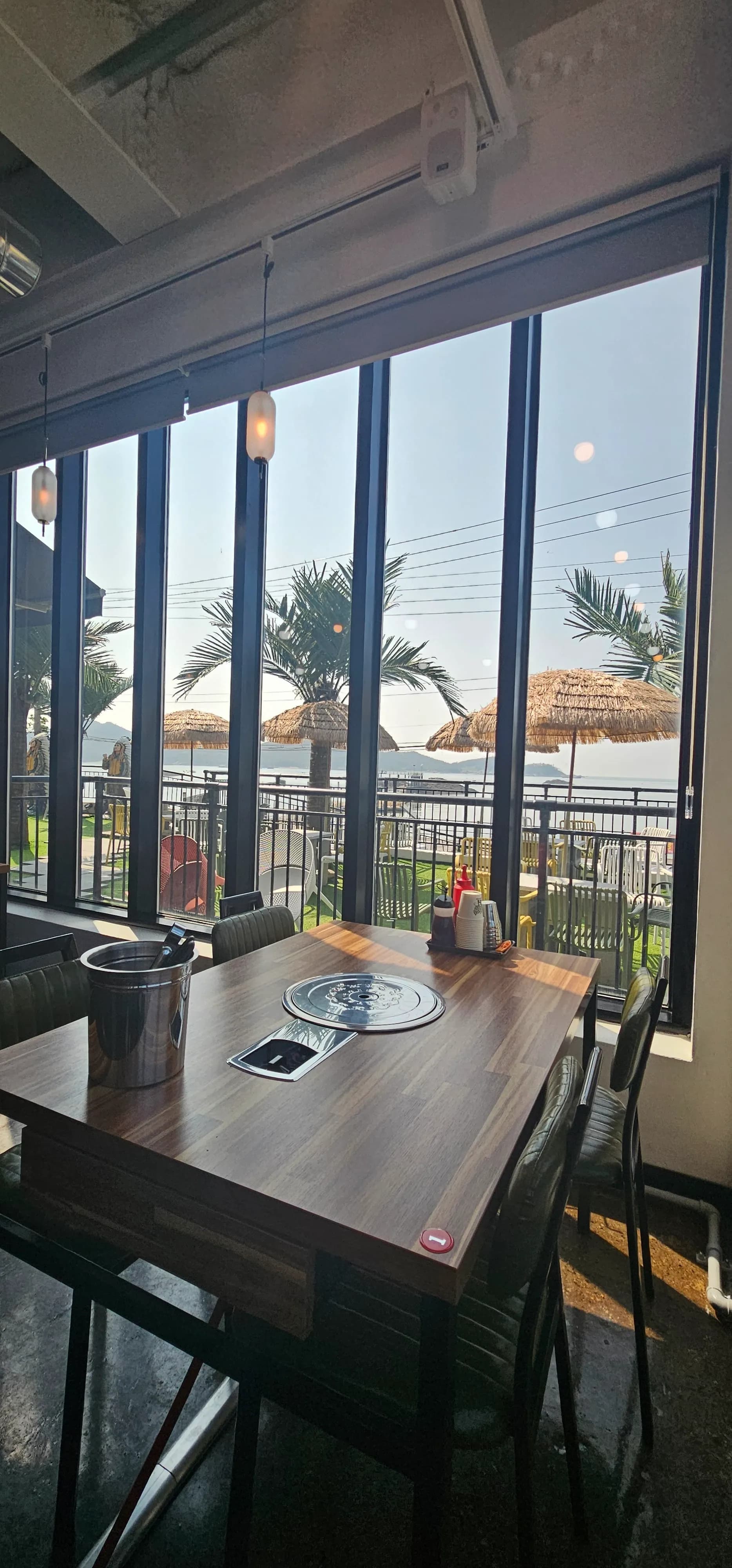
It Wasn't Just About the Food — The Ocean View From the Window
But what made this restaurant special wasn't just the food. If you grab a window seat, the ocean is right there through the floor-to-ceiling glass. It was autumn but surprisingly hot, so we picked an indoor window seat over the outdoor terrace. There's also a terrace with palm trees and parasols, though — on a nice day, eating outside would've been great too.
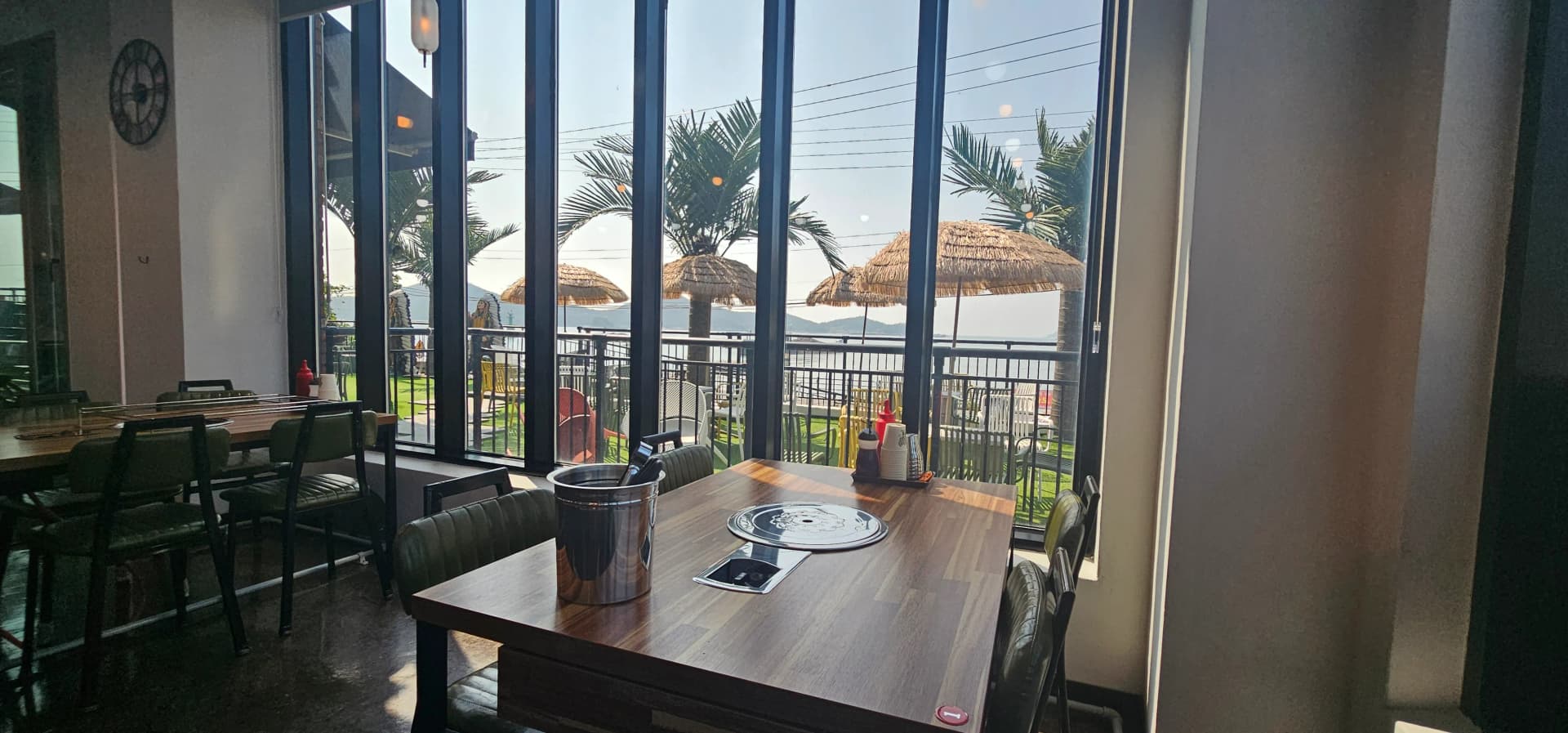
Each table has its own grill plate already set up, and the spacing between tables is pretty generous, so you can eat comfortably without worrying about the people next to you. Considering there's smoke from all the grilling, you kind of need at least this much space anyway.
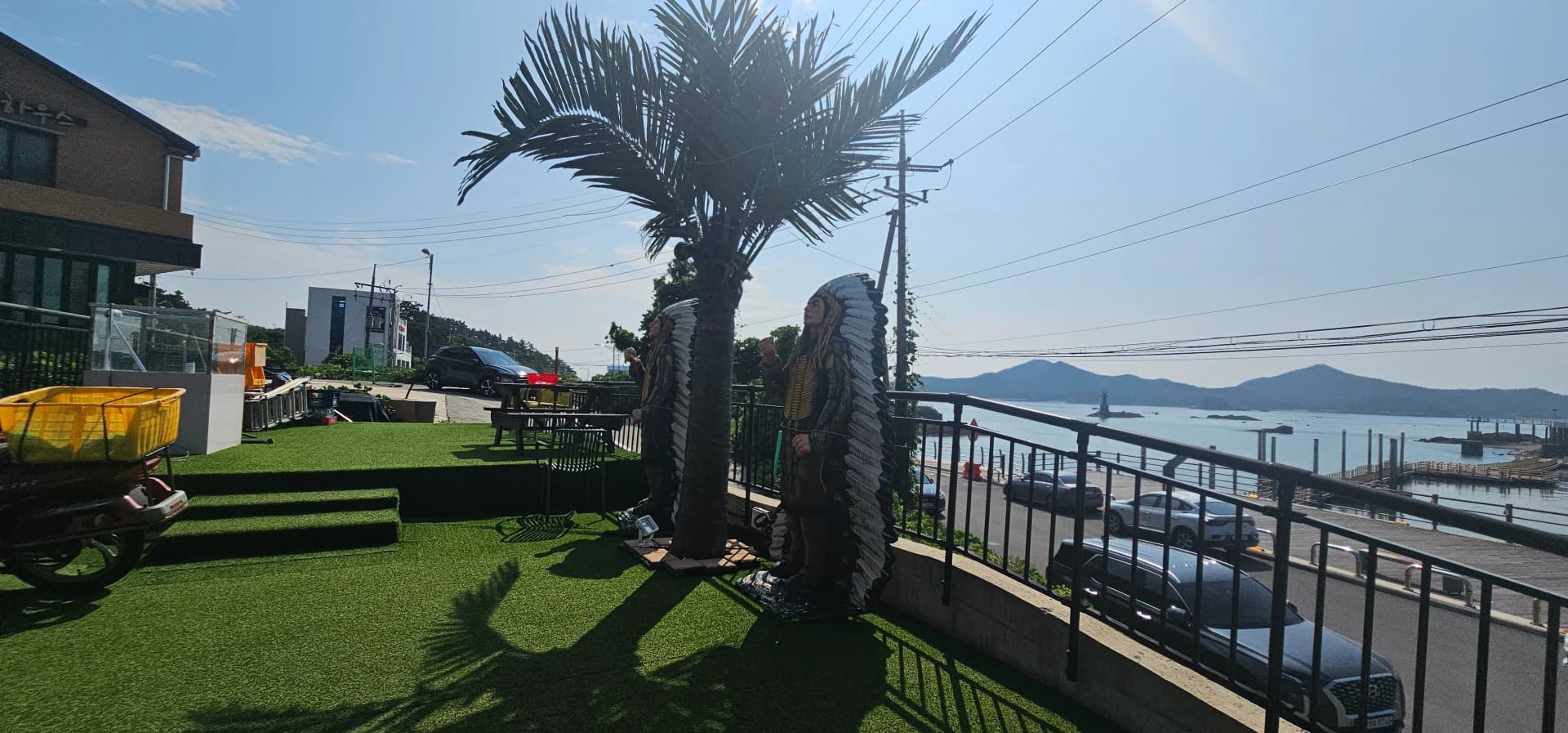
Eating at a Korean Coastal Restaurant With an Ocean View
Step outside and this is the view. There's a harbor right in front and islands scattered beyond it. A lot of Korean seaside seafood restaurants have views like this where you can eat while looking out at the sea. I think it's universal in any country — the same food just hits different when you eat it in front of the ocean.
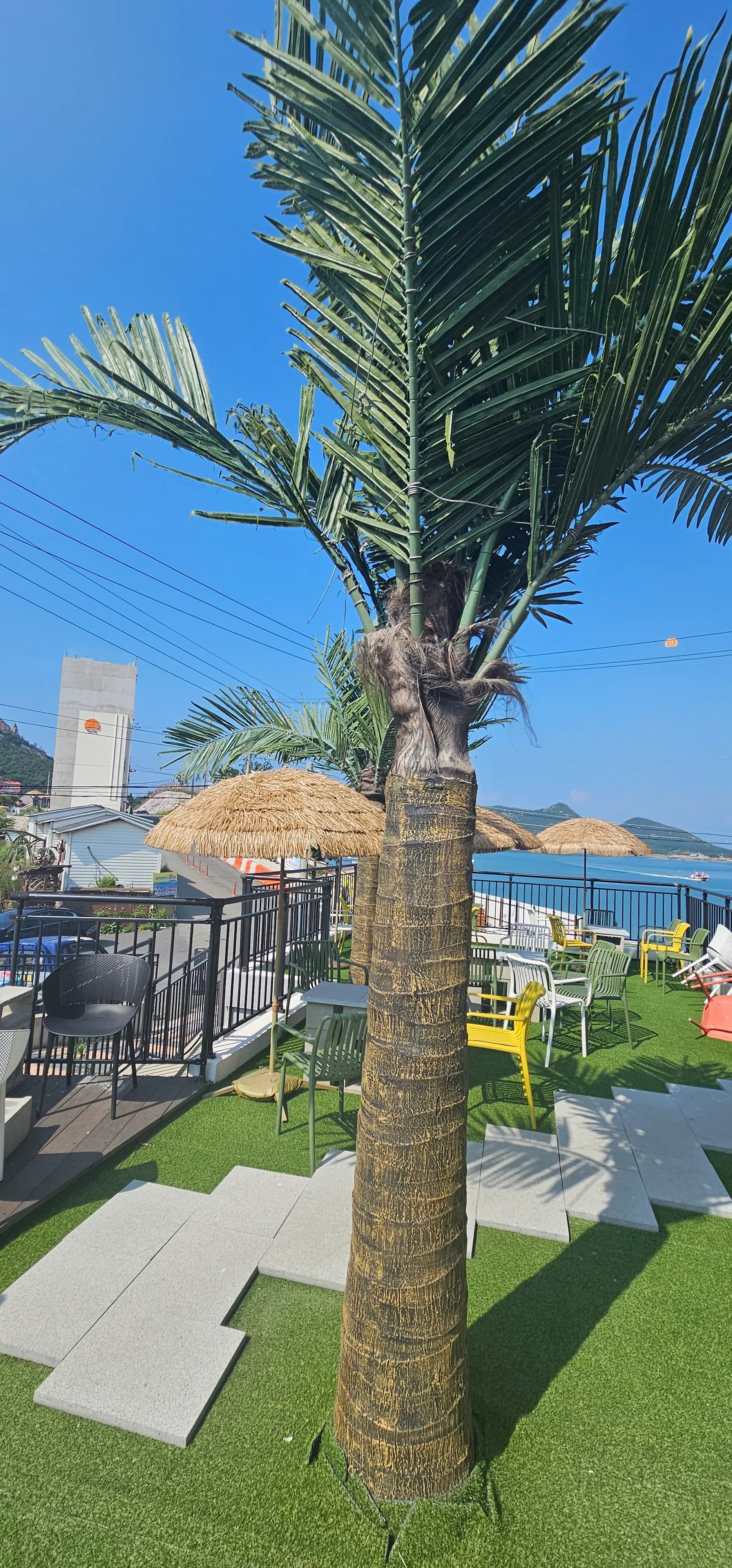
Palm trees stand in front of the restaurant, and there's a terrace with artificial turf, parasols, and chairs. It's a seafood restaurant, but from the outside it looks more like a resort. Korean seaside restaurants have been putting a lot of effort into their exteriors lately. They used to mostly have that old-school, run-down fish shack vibe, but things have definitely changed.
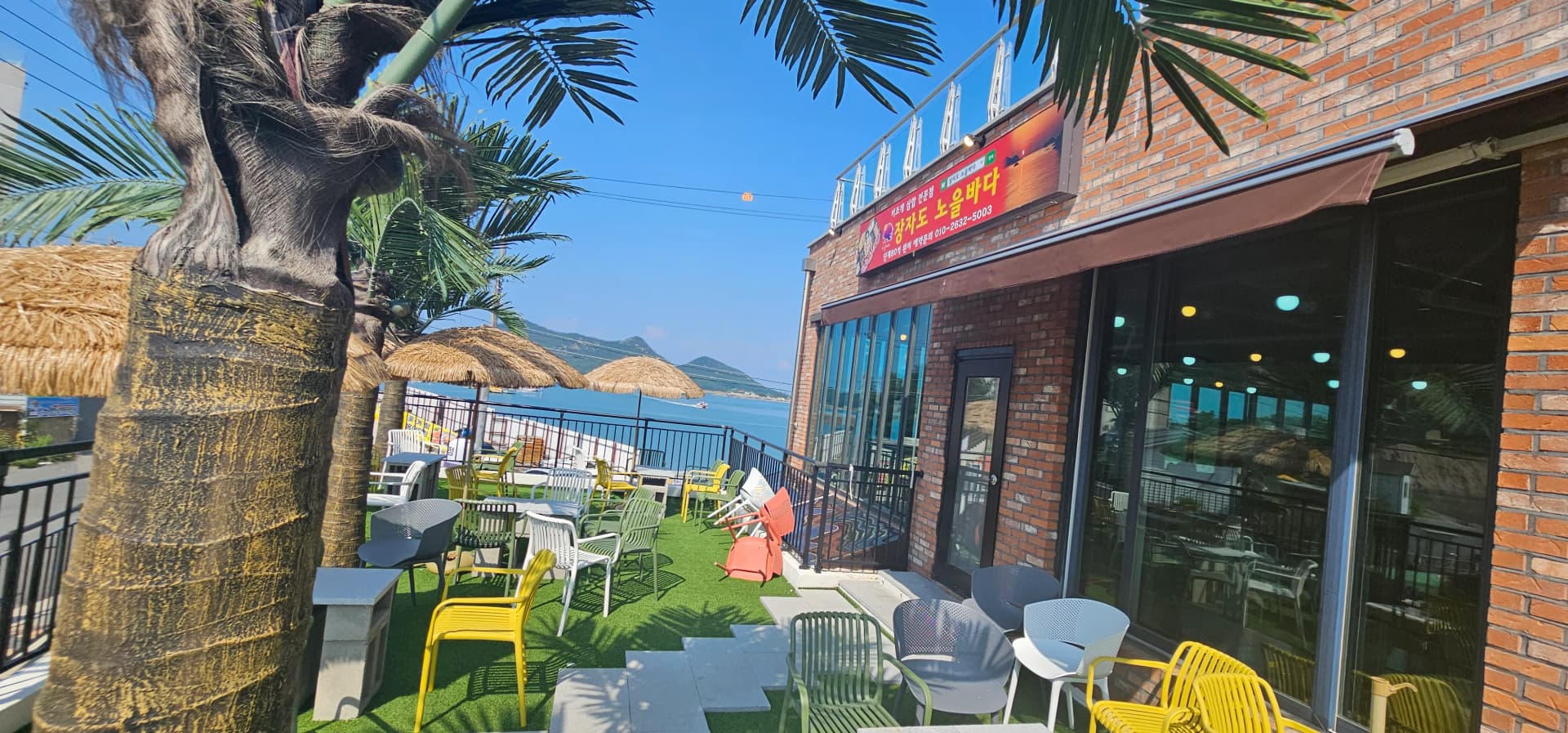
Here's the building exterior. When you come out to the terrace side, the ocean is right there, and there are colorful chairs set up. Quite a few people were just sitting here watching the sea before or after their meal.
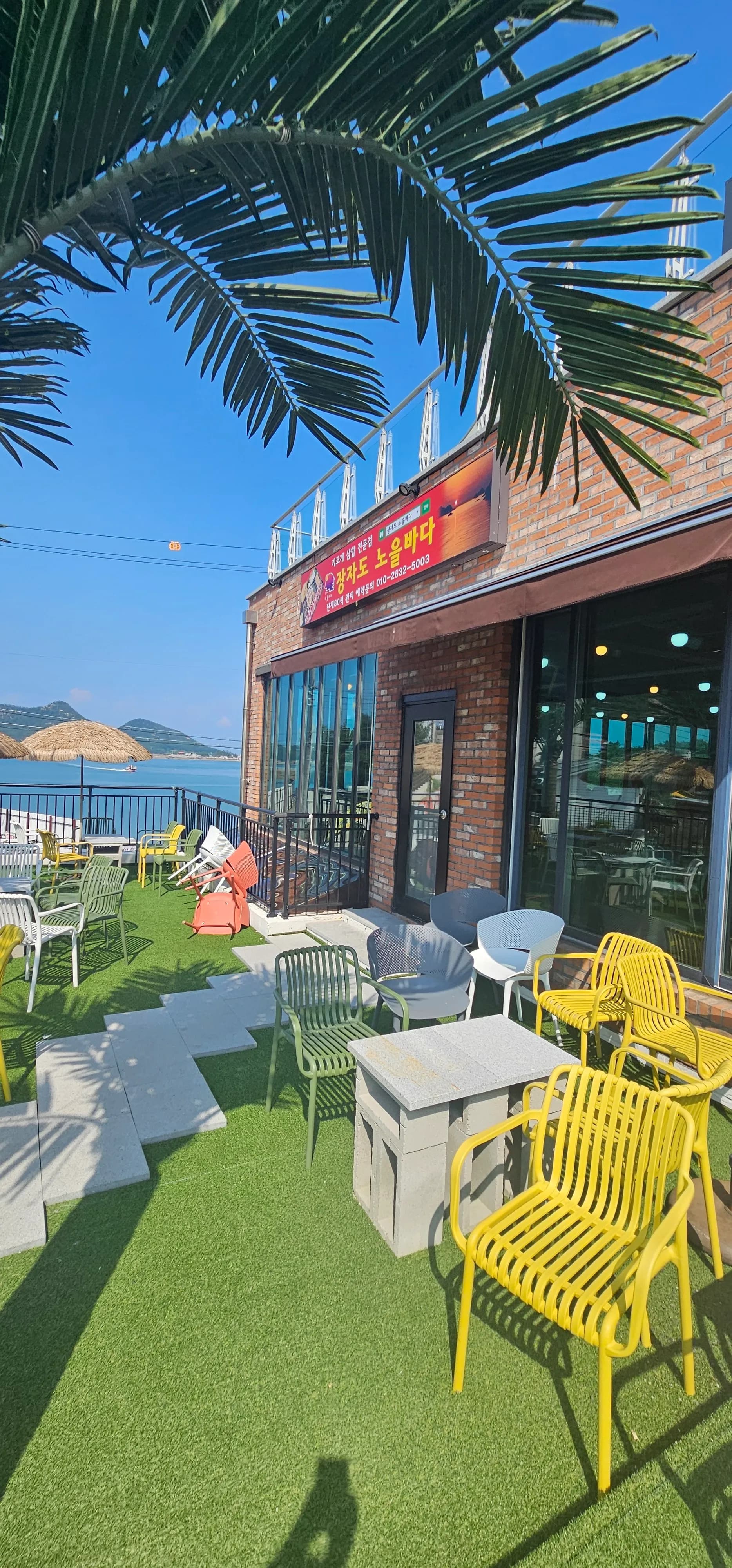
This is how close the sea is, seen through the palm trees. On a nice day, you'd definitely want to eat outside rather than indoors. I shot this on my phone so the quality isn't the greatest, but hopefully the vibe comes through.
You Don't Have to Travel Far for Korean Beach Seafood
Eating seafood at a Korean beach isn't just about filling your stomach. It's watching a live abalone squirm right in front of you, seeing the scallop adductor turn golden brown, hearing the brisket fat sizzle as it drips down over the bean sprouts — all of that is part of the meal. Before you even pick up your chopsticks, all five senses are already fully engaged. That, I think, is the real charm of a Korean seaside grilled shellfish restaurant.
Let me say it one more time — this isn't a post recommending one specific restaurant. You can easily find grilled shellfish places like this anywhere along the Korean coast. Haeundae in Busan, Yeongjongdo in Incheon, Gangneung, Pohang, Tongyeong, Yeosu, Jeju — wherever there's ocean, they're pretty much everywhere. If you're ever traveling in Korea and happen to pass by the coast, definitely pop into at least one place with a grilled shellfish sign out front.
✈️ Tips for International Travelers
The island we visited — Jangjado — is about a 3-hour drive from Seoul, and from there you have to cross the Saemangeum Seawall to get onto the island itself. By public transit, you'd need to take bus #99 from downtown Gunsan (runs every 60 minutes), and without a rental car, half your day goes just to getting there.
On the other hand, Haeundae in Busan or Yeongjongdo near Incheon are reachable from Seoul by public transit in just 1–2 hours, with seafood restaurants right near the stations, making access way easier. You absolutely don't need to travel far to get the full Korean beach seafood experience.
Restaurant Information From This Visit
Name: Jangjado Noeulbada (장자도 노을바다, "Sunset Sea")
Address: 62, Jangjado 1-gil, Okdo-myeon, Gunsan-si, Jeollabuk-do, South Korea
Phone: +82-507-1430-5003
Hours: 11:00 AM – 9:00 PM (Last order 8:20 PM)
Closed: Every Wednesday
Instagram: @jangjado_sunset_beach
Google Maps: View Map
Menu
Pen Shell Samhap Set: 2 ppl ₩55,000 (~$40) / 3 ppl ₩75,000 (~$55) / 4 ppl ₩85,000 (~$62)
Assorted Sashimi: 2 ppl ₩135,000 (~$98)
Fresh Rockfish Spicy Stew: 2 ppl ₩50,000 (~$36)
Dried Conger Eel Stew: 2 ppl ₩50,000 (~$36)
Clam Knife-Cut Noodles: ₩10,000 (~$7)
Seafood Ramyeon: ₩10,000 (~$7)
Fried Rice: ₩3,000 (~$2)
* Other items available including raw fish rice bowl, raw fish soup, abalone porridge, etc.
Prices and hours are subject to change — please confirm directly before visiting.
This post was originally published on https://hi-jsb.blog.