
Sashimi Course Meal for $35 — Full Spread at a Korean Spot
Table of Contents
16 items
A Winter Evening at a Neighborhood Japanese Restaurant in Korea
Last winter, I texted my wife on the way home from work and suggested we go get some raw fish. There was this little Japanese-style restaurant near our place in Daejeon — a mid-sized city about two hours south of Seoul — that we'd been to a bunch of times. Whenever we weren't in the mood to cook, we'd swing by, order a course, and just take our time with dinner. In Korea, Japanese-style sashimi restaurants range from about $20 per person at the budget end to well over $70 for a high-end omakase experience. This place ran a course for about $35 per person. A little while ago I drove past the spot and saw a different sign out front — the restaurant's gone now. So this post isn't really a recommendation for a specific place. It's more about showing you what a typical neighborhood sashimi course meal looks like in Korea — what $35 per person actually gets you on the table.
A typical Korean sashimi course follows this order
Appetizer — a small plate like braised mackerel or salad to open your palate
Soup — a warm bowl of dried pollack soup or miso
Spicy raw fish salad — sashimi tossed with vegetables in a tangy chili-vinegar sauce
Porridge — a creamy rice porridge (often abalone) to reset your palate
Sushi and sashimi — the main event with tuna, flounder, shrimp, and more
Sides — grilled mackerel, steamed egg custard, corn cheese, and other warm dishes
Finisher — a rice dish like roe rice or fried rice to close things out
The exact order and dishes vary from restaurant to restaurant, but most places follow this general flow.
First up: a single piece of braised mackerel
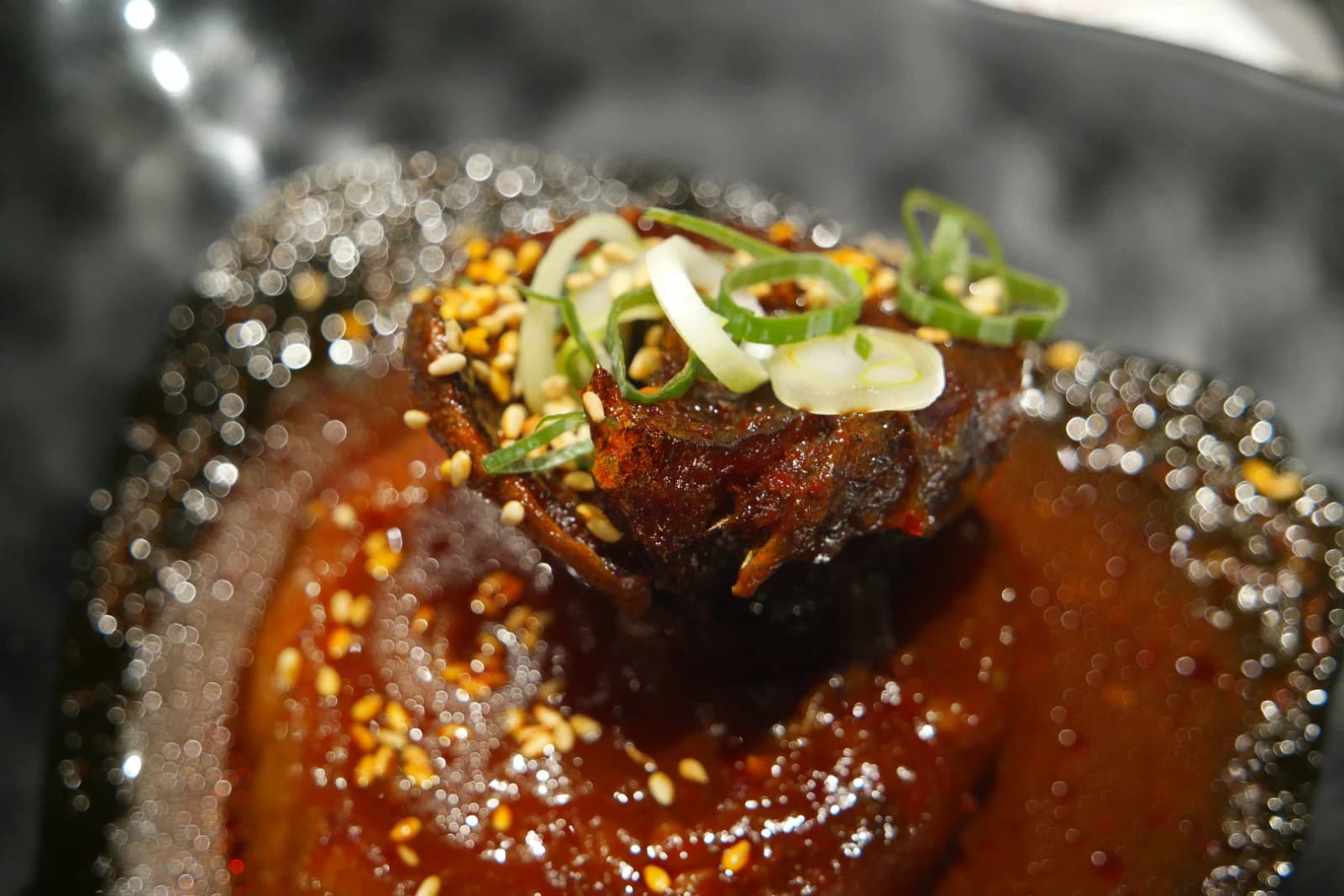
The course started arriving the moment we sat down, and the first dish was braised mackerel. Mackerel is one of the most common fish in Korea — people usually simmer it in soy sauce and eat it as a side dish at home. This came out as just one piece in a tiny bowl, topped with sesame seeds and scallions. There was a thin layer of braising sauce pooled at the bottom, and when I popped it in my mouth, it hit me with that salty-sweet combo all at once. The flesh was so tender it practically fell apart the second my chopsticks touched it. Pretty refined way to kick off a course.
A warm bowl of dried pollack soup
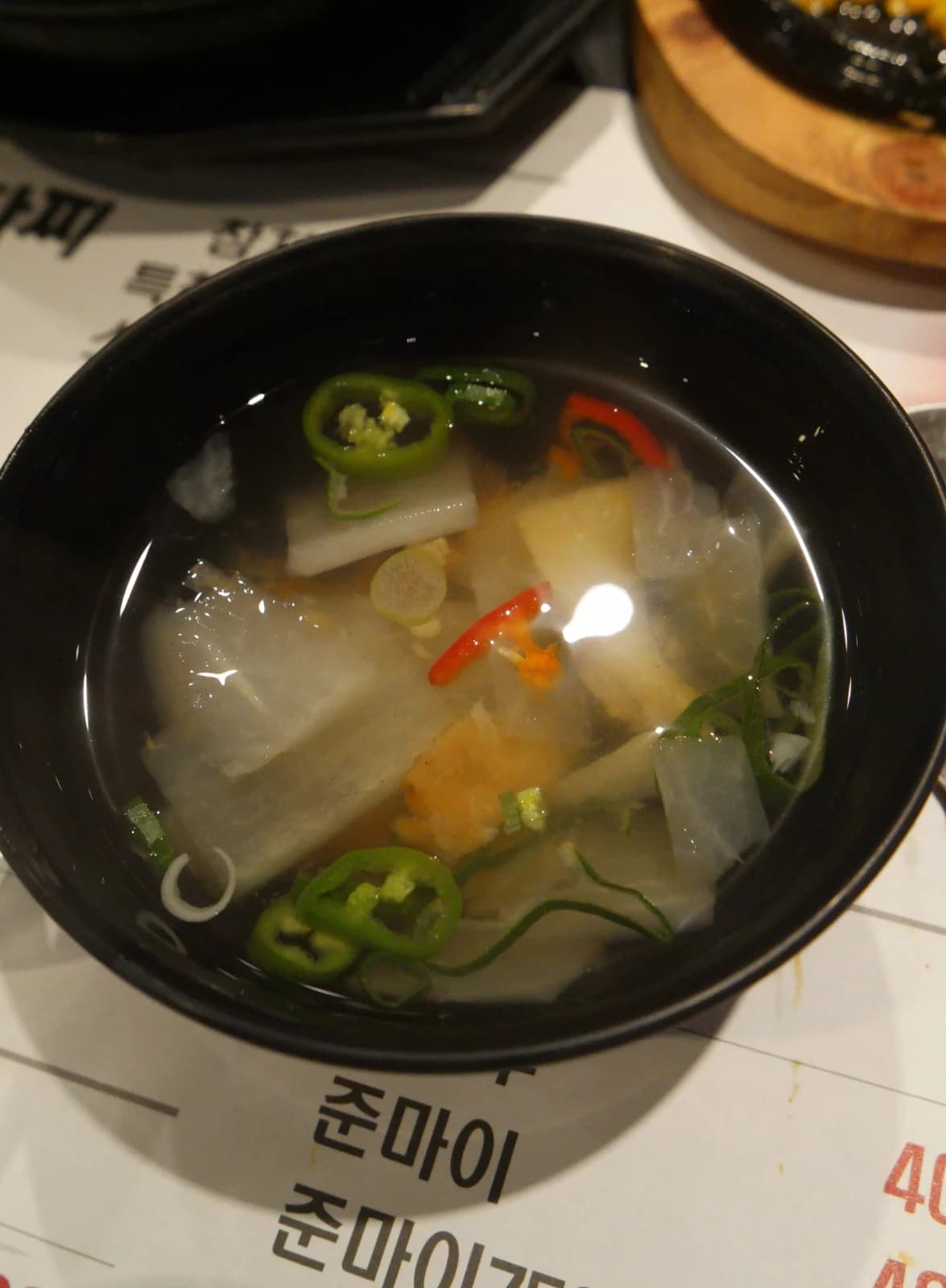
Next came hwangtae-guk, a soup made from dried pollack. Hwangtae is made by hanging pollock outside during winter and letting it freeze and thaw repeatedly — the process gives it a light, clean flavor when you simmer it in broth. The portion was small, served in a mini bowl with radish slices and bits of Korean chili pepper floating in a clear broth. One sip and it felt like my whole stomach relaxed. My wife tried a spoonful, said "Wait, this is actually really good," and drained her bowl before I was halfway through mine.
Spicy Raw Fish Salad and Abalone Porridge — The First Half
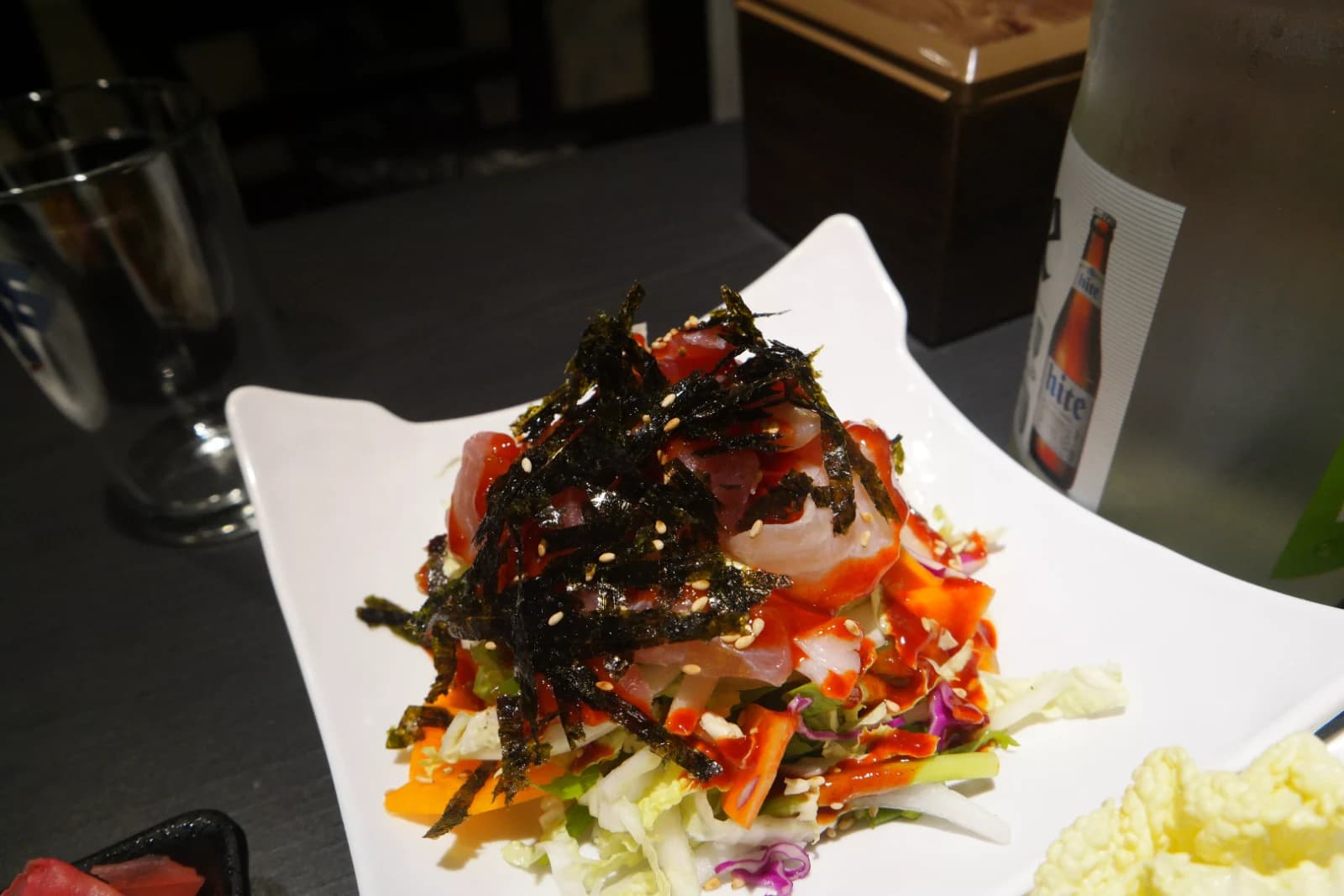
The raw fish salad came out looking like a mountain on the plate. It's a dish where thinly sliced sashimi is tossed with vegetables — shredded cabbage and carrots on the bottom, fish layered on top. The whole thing was drizzled in chojang, a tangy, slightly spicy vinegar-chili sauce that's bright red, and then buried under a heap of torn seaweed on top. When you mix it all together from the bottom and take a bite, you get the chewy pull of the raw fish and the crunch of the vegetables at the same time, with that sweet-sour-spicy kick that just wakes your mouth right up. The seaweed adds a subtle toasty note that keeps it from feeling heavy. I couldn't stop eating.
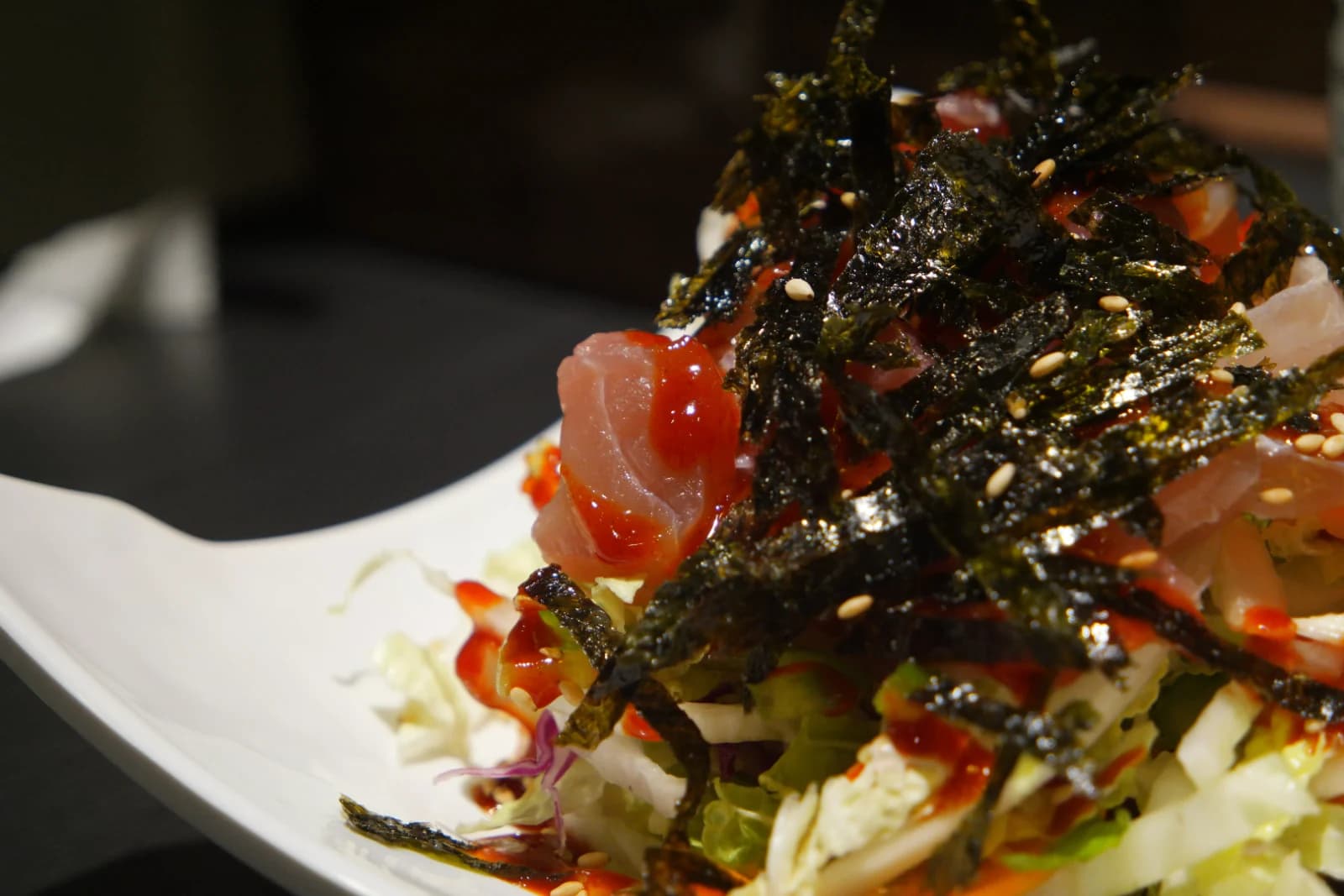
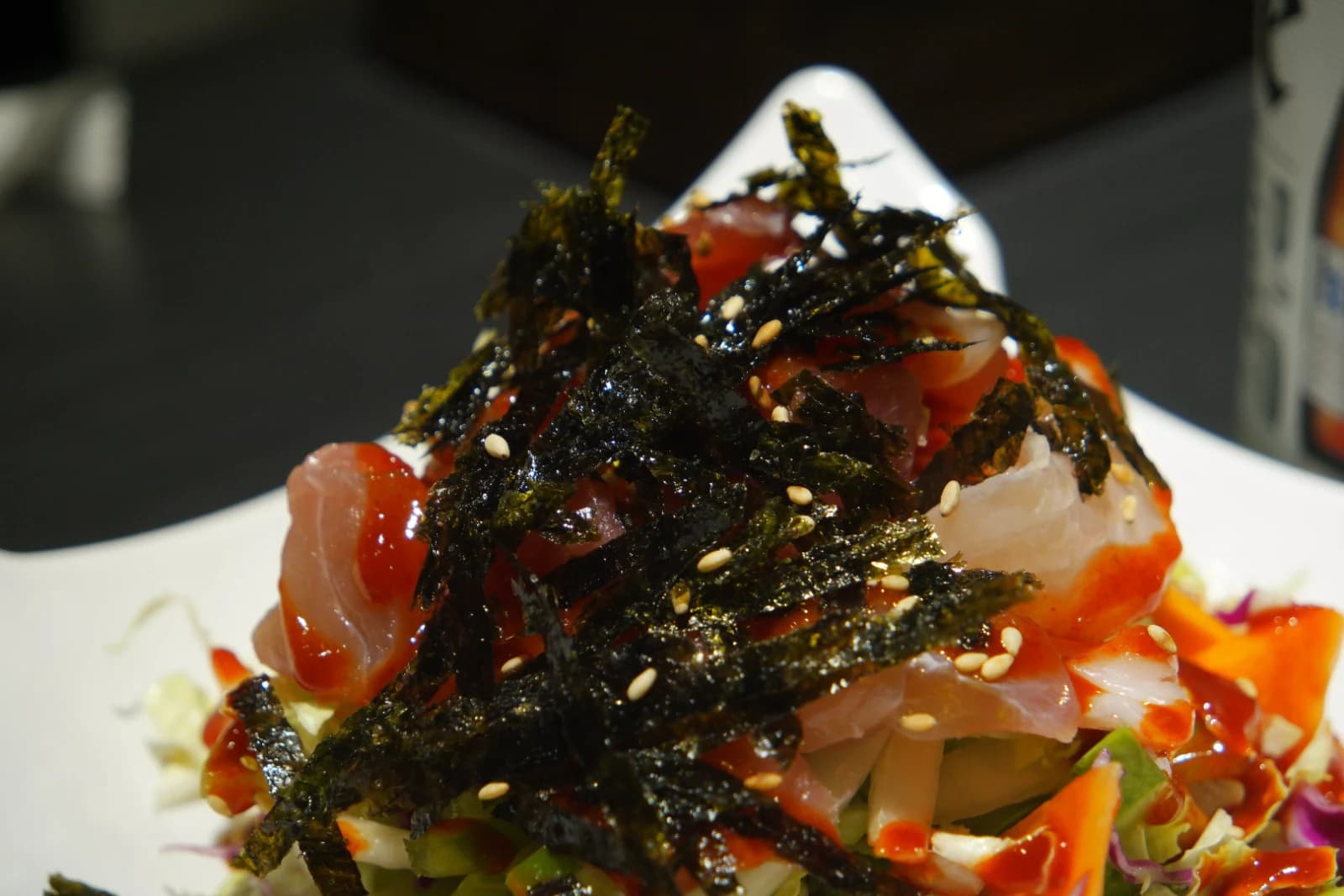
Up close, you could see the chojang dripping down over the fish and seeping between the strands of seaweed. Sesame seeds were scattered throughout, giving little pops of nuttiness as you chewed. Underneath the seaweed, the translucent fish slices had turned pinkish from soaking up the sauce. It was the kind of dish that's worth staring at for a second before you destroy it with your chopsticks.
Abalone porridge — my wife's favorite dish of the entire course
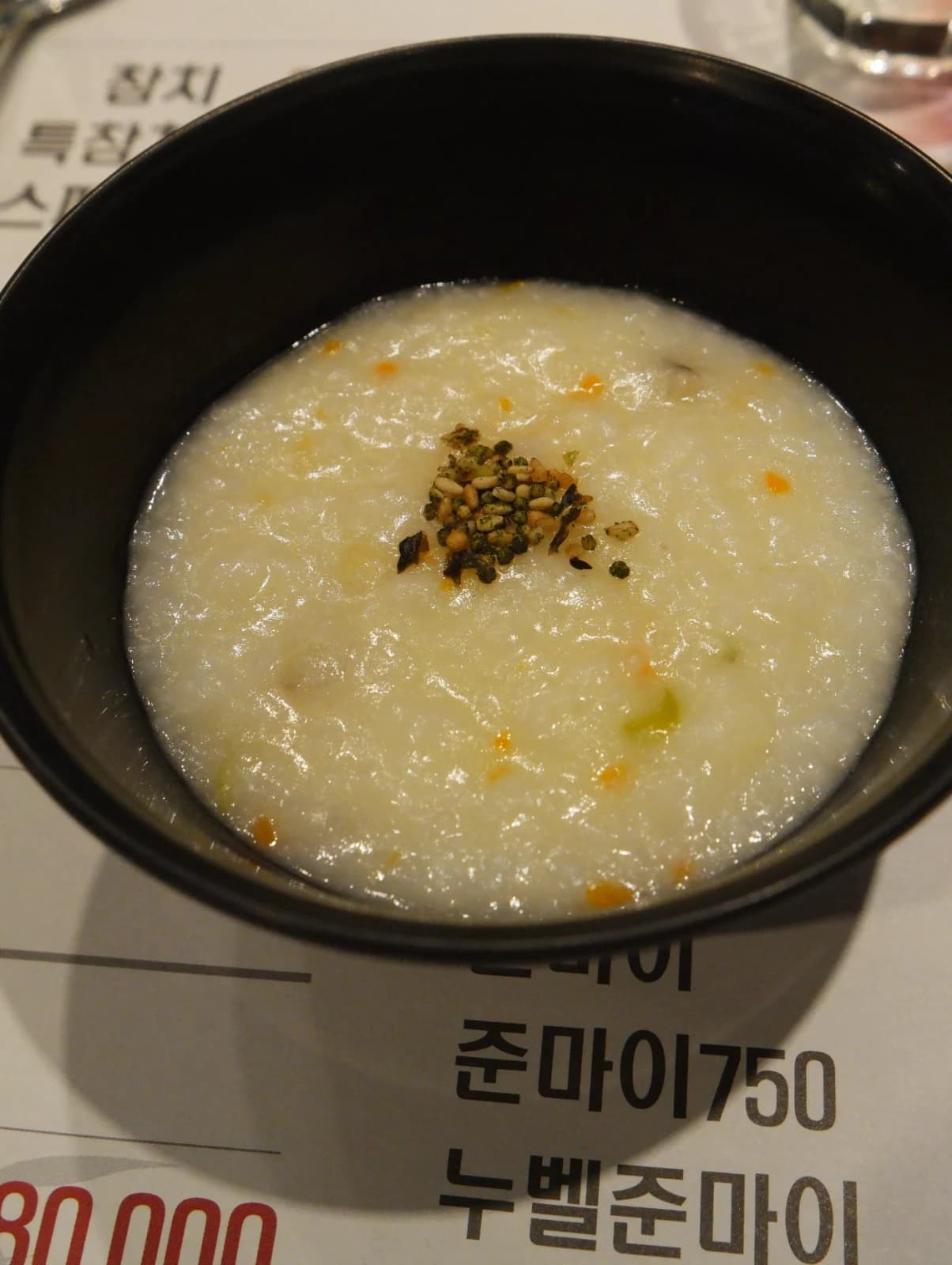
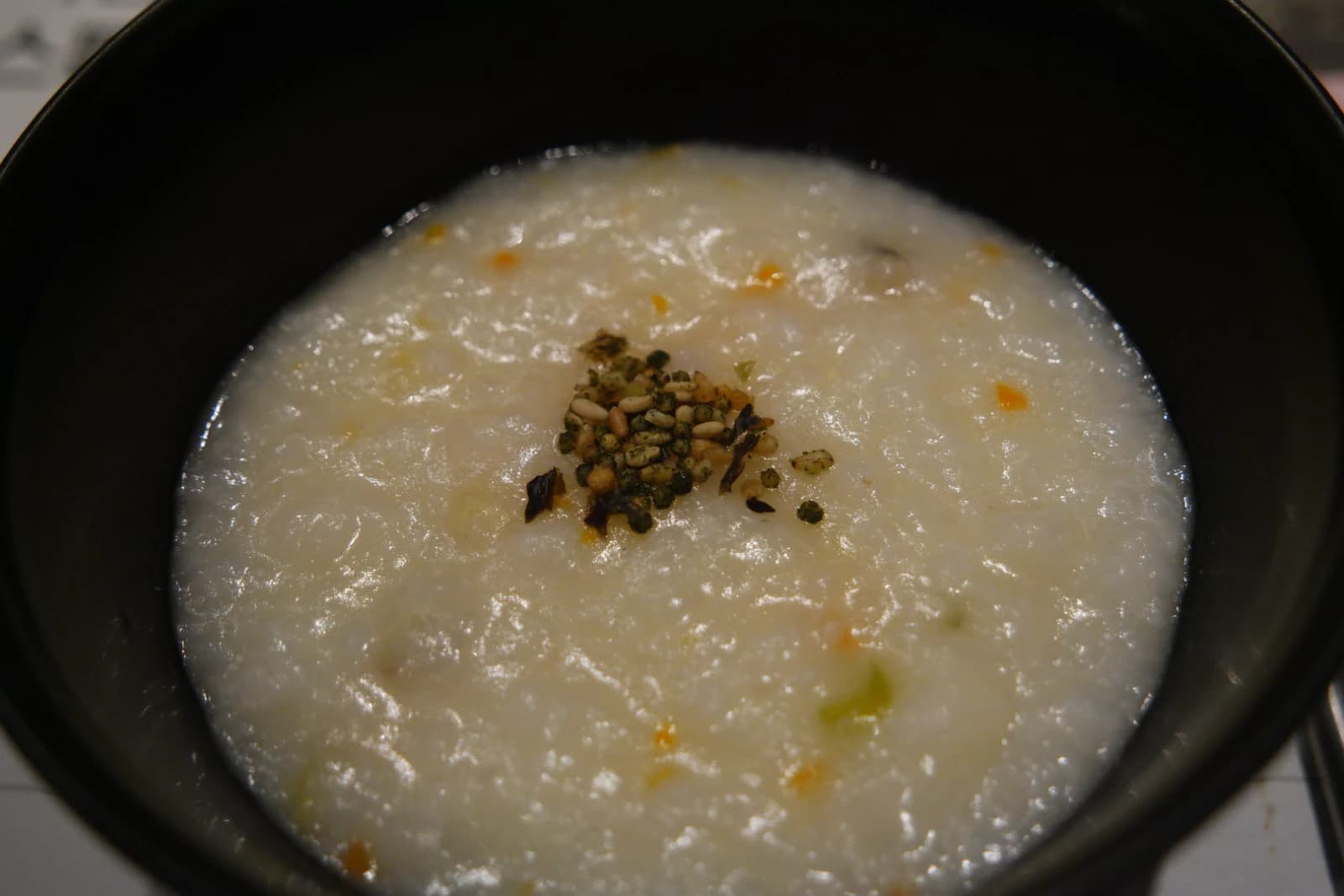
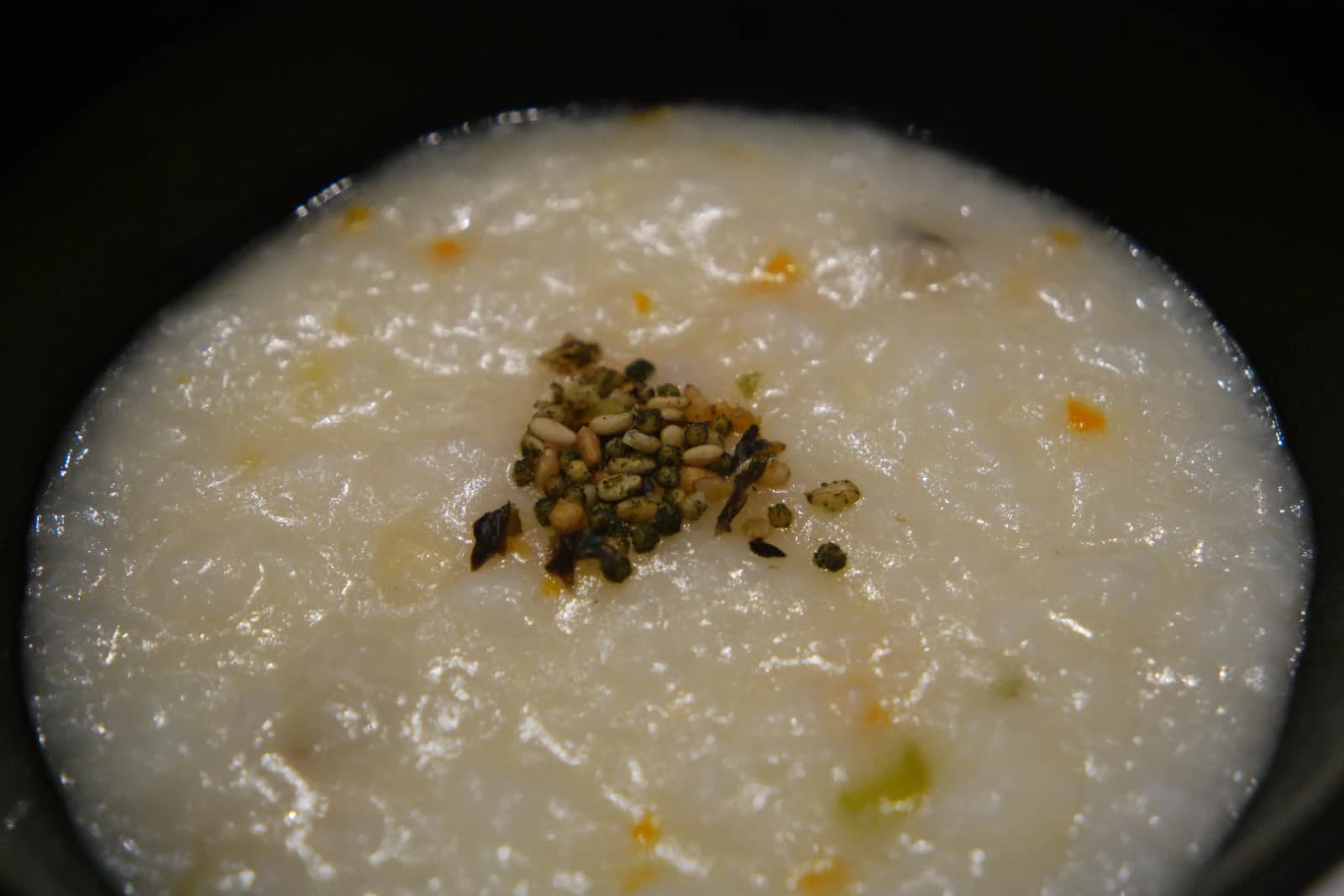
Then the abalone porridge arrived. Abalone is considered a premium shellfish in Korea, and when you cook it down with rice, you end up with a thick, creamy white porridge. This one had pine nuts and sesame seeds sprinkled on top, and you could see little orange specks throughout — that's from the abalone innards mixed in during cooking. One spoonful slid down smooth and warm with this gentle ocean flavor, rich without being heavy at all. Coming right after the punchy chojang-dressed salad, it basically hit the reset button on my palate. My wife brought this one up for days afterward — out of the entire course, the abalone porridge was her favorite.
Two types of places to eat raw fish in Korea
Hoetjip (raw fish house)
These are restaurants centered on live-caught fish — they pull fish straight from tanks and slice it to order. The vibe is casual and no-frills, and you typically dip the fish in chojang or ssamjang (a thick fermented bean paste) and wrap it in lettuce with garlic.
At the end of the meal, they'll often boil the leftover fish bones into a spicy soup called maeuntang. You'll also find distinctly Korean seafood like live octopus and sea squirt at these places.
Ilsikjip (Japanese-style restaurant)
These use aged fish and serve Japanese-influenced multi-course meals. Expect sushi, sashimi, tempura, grilled fish, porridge, and rice dishes served in sequence, with extras like steamed egg custard and corn cheese mixed in along the way.
They tend to have Japanese-inspired decor and more refined plating.
The restaurant in this post falls into the ilsikjip category — a Japanese-style spot where we ordered the ~$35 per person course.
The Main Event — Sushi and Seafood Take Over the Table
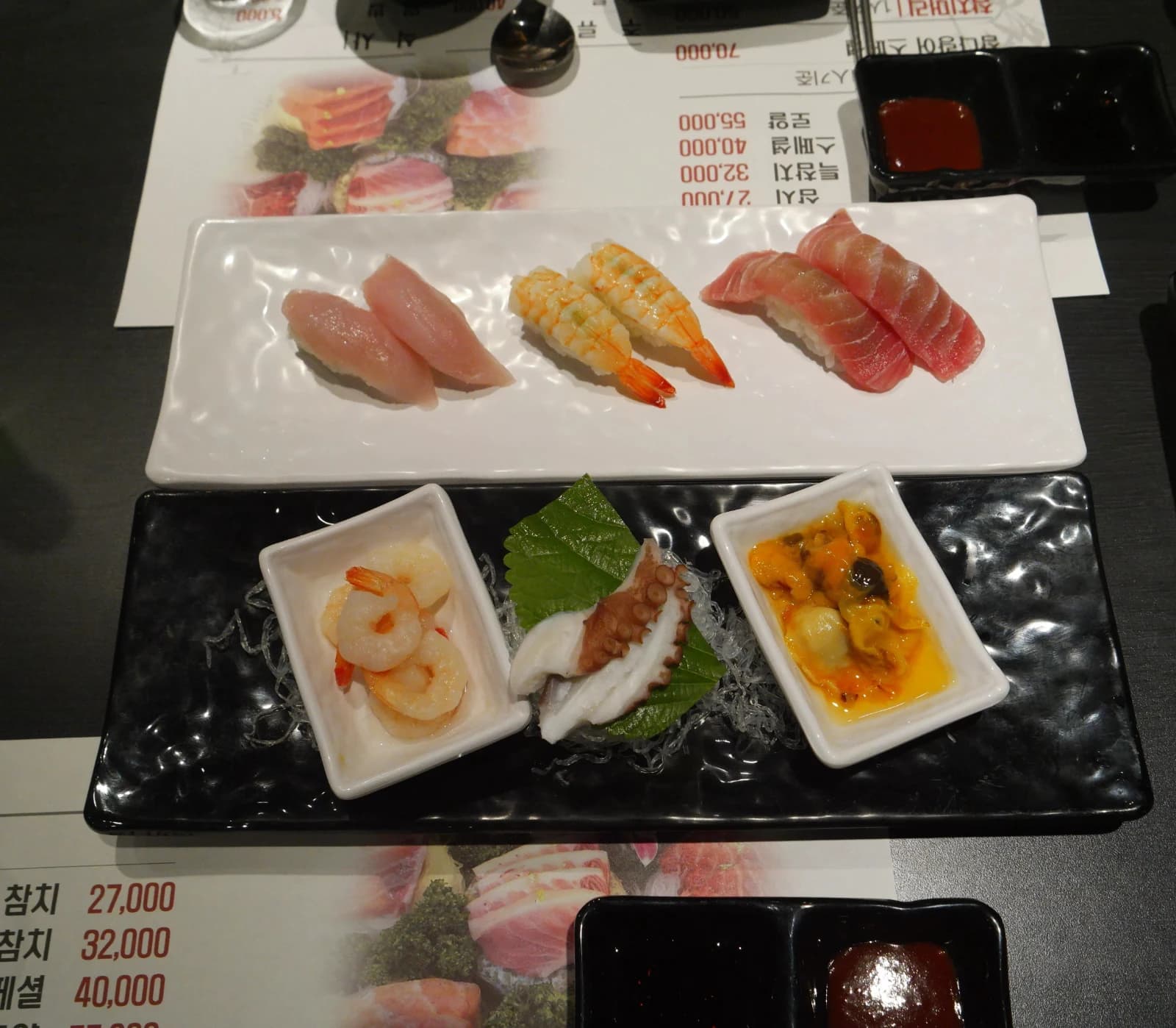
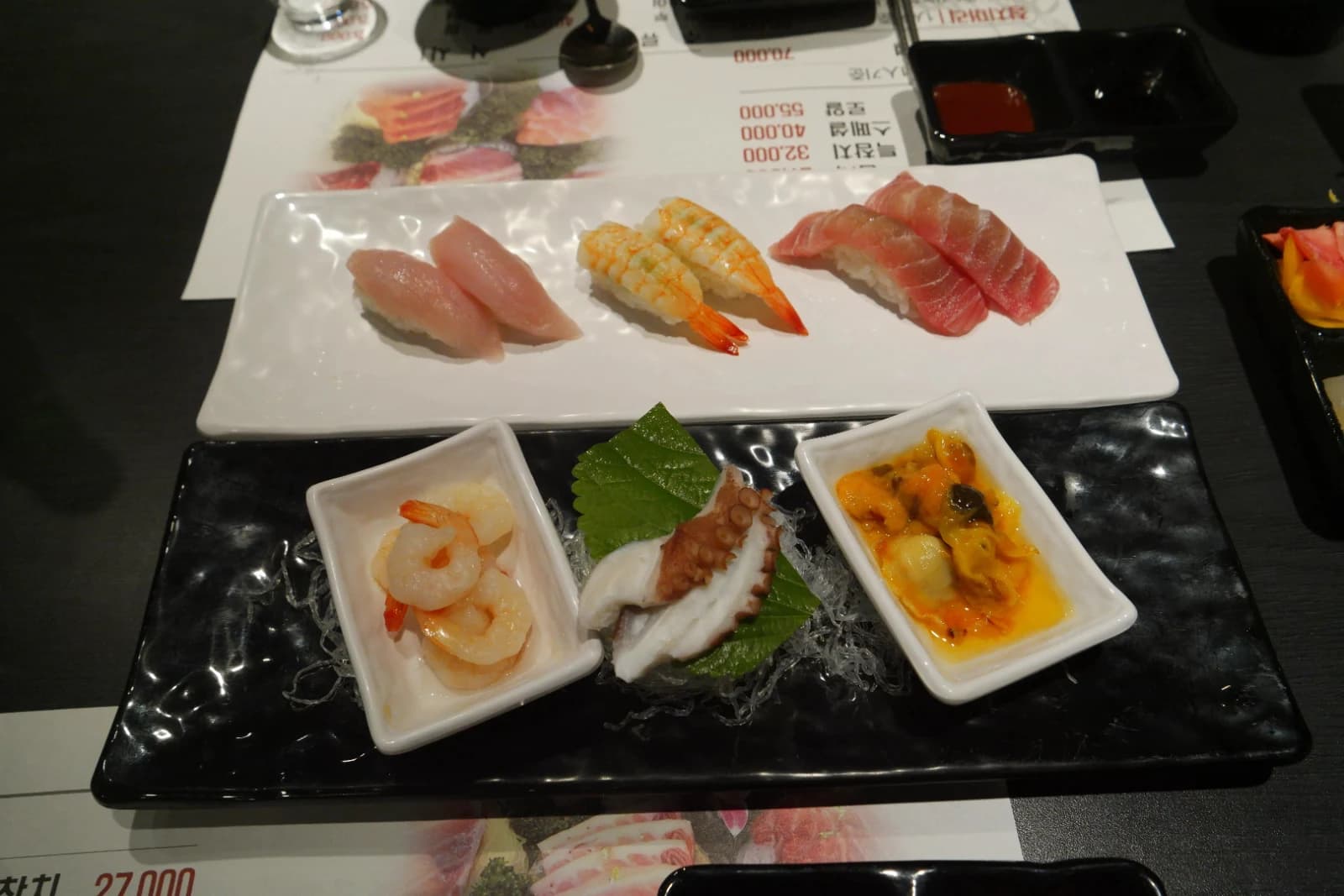
Once we passed the midpoint of the course, the real main dishes started landing. A white plate loaded with sushi, a dark plate with portions of shrimp, octopus, and sea squirt — it all came out at once. Honestly, for a $35-per-person neighborhood restaurant in Daejeon, the sheer amount of food covering the table caught me off guard. My wife watched more and more plates arrive and laughed — "There's still more coming?" If Japanese omakase is all about perfecting each individual piece, Korean-style sashimi courses are about filling the whole table. Different approach, and I wouldn't say one is better than the other.
Three kinds of sushi: tuna, flounder, shrimp
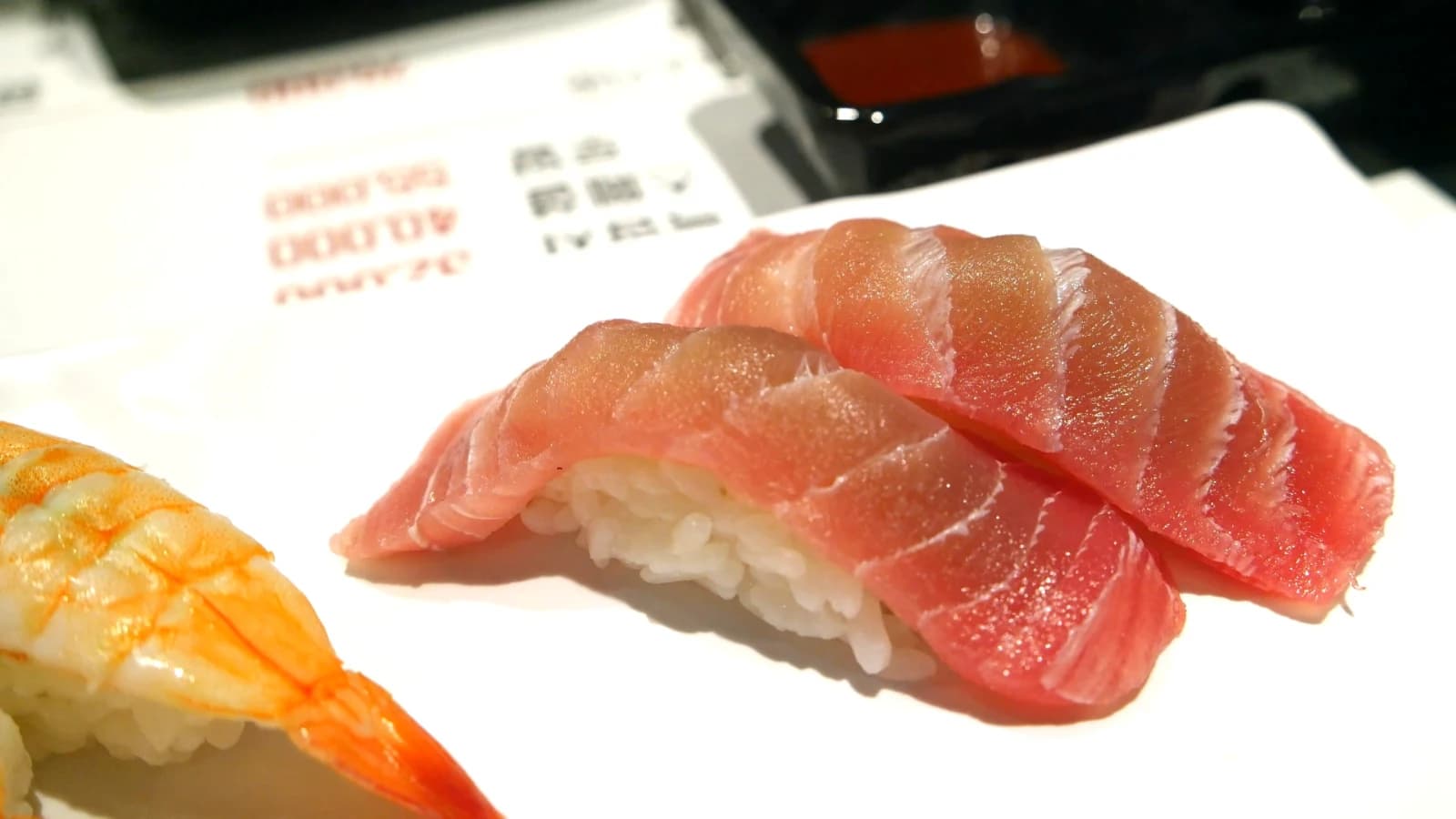
First, the tuna sushi. A thick slice of deep red tuna sitting on a mound of rice — and the second it hit my tongue, it just melted.
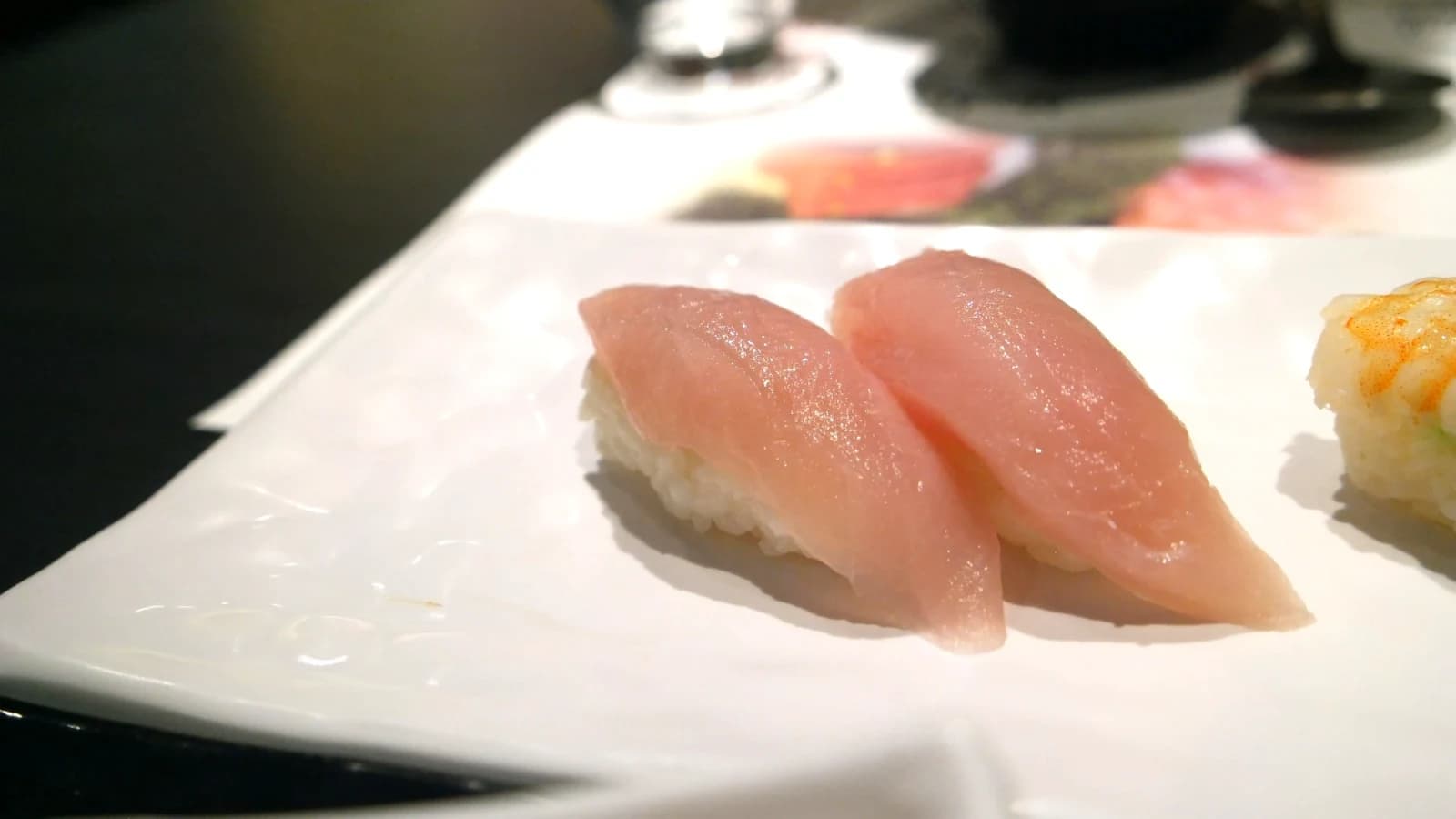
The flounder sushi was a completely different experience. The pale pink flesh had a firm, springy bite — the total opposite of the tuna. Instead of melting, this one was all about the satisfying chew, and a subtle sweetness that built the more you worked it.
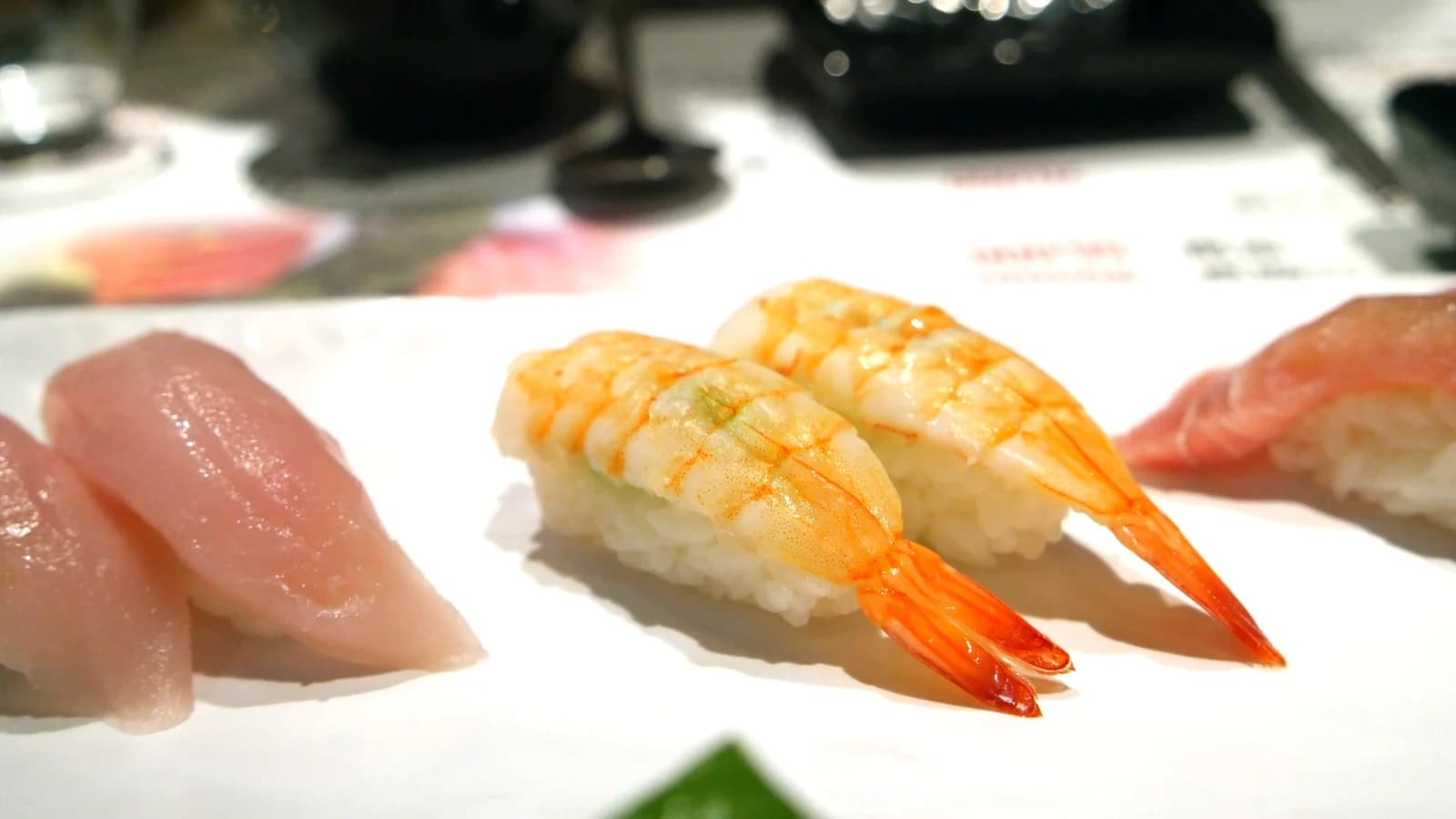
The shrimp sushi had a whole poached shrimp pressed onto the rice, tail and all. Bouncy texture with a hint of natural sweetness — and it was the first one my wife reached for. I think for anyone not used to raw fish, shrimp is usually the easiest entry point.
Seafood side dishes: shrimp, sea squirt, octopus
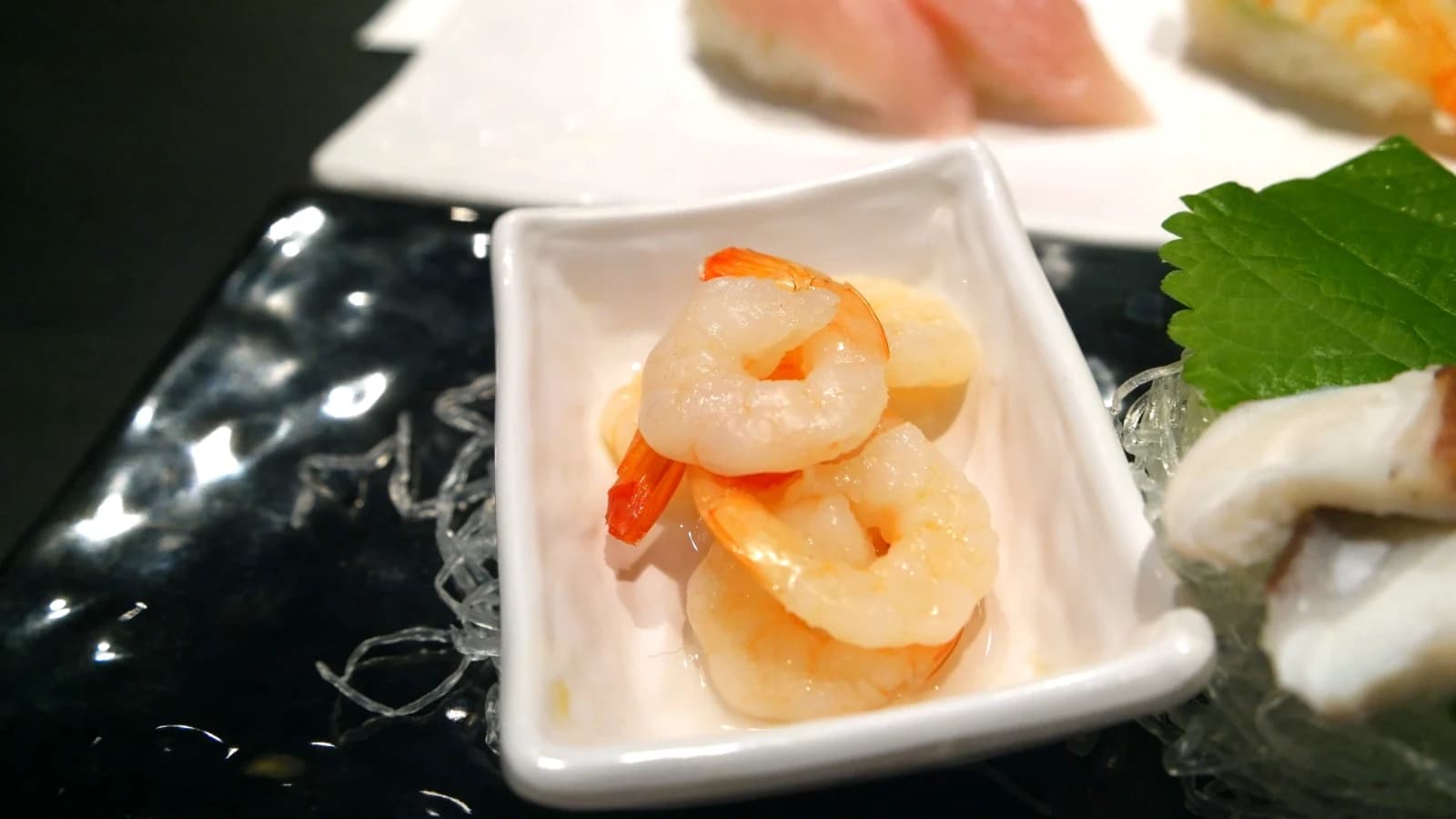
A few plump, translucent little shrimp came out in a separate dish with no seasoning at all — just the pure sweetness of the shrimp itself. Eating them plain without any sauce actually turned out to be the way to go.
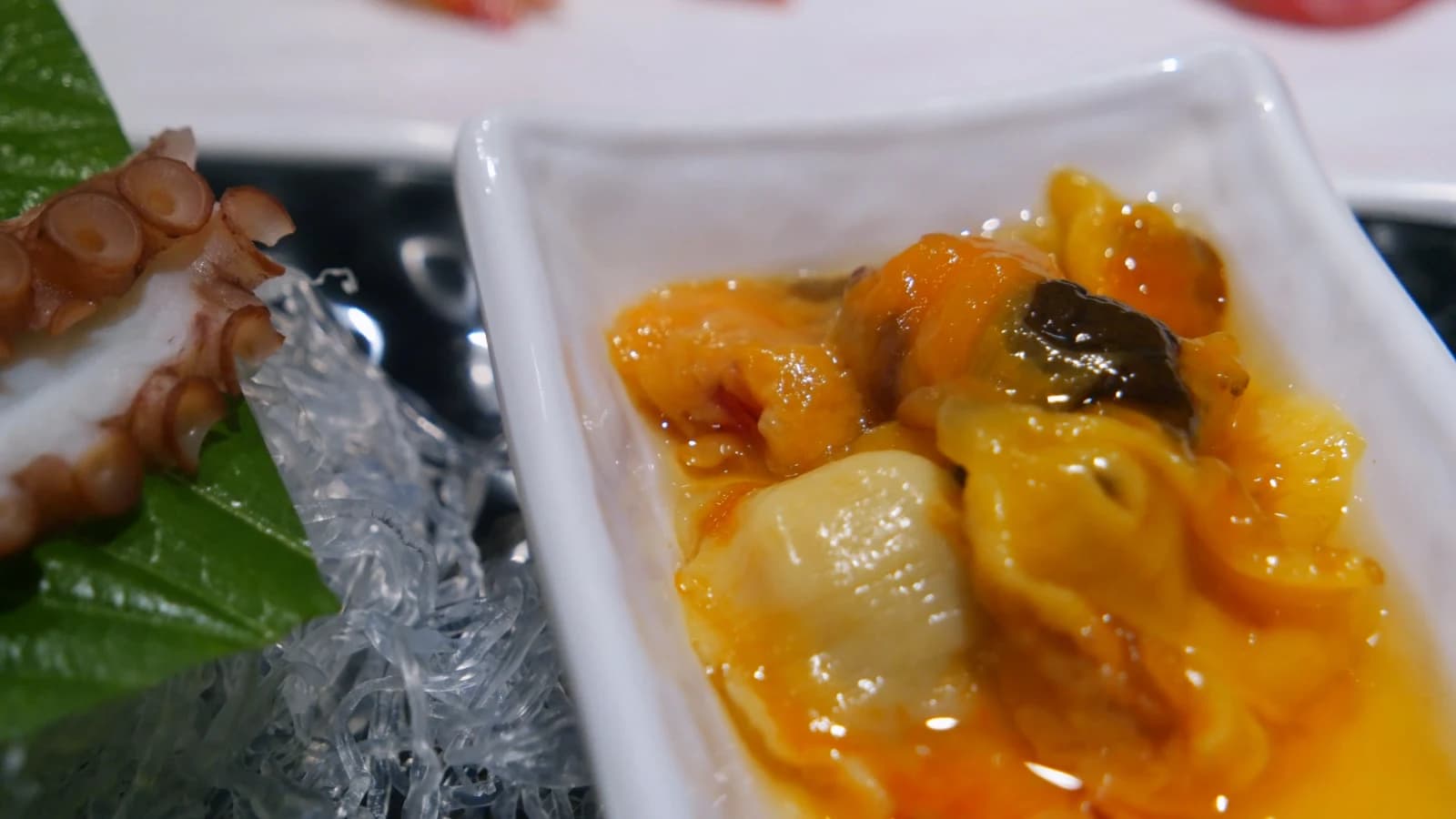
Then came the sea squirt. This is a Korean seafood that's bright orange with a soft, almost mushy texture. It has a strong ocean smell and a bitter aftertaste, which makes it extremely polarizing — people either love it or can't handle it. My wife isn't Korean and had never really dealt with anything like this before. She tried one piece, scrunched up her face, and slid the rest of the dish over to my side of the table. The "absolutely not" expression on her face was so clear I couldn't help laughing. If you've never had it, just know what you're getting into before you try it.
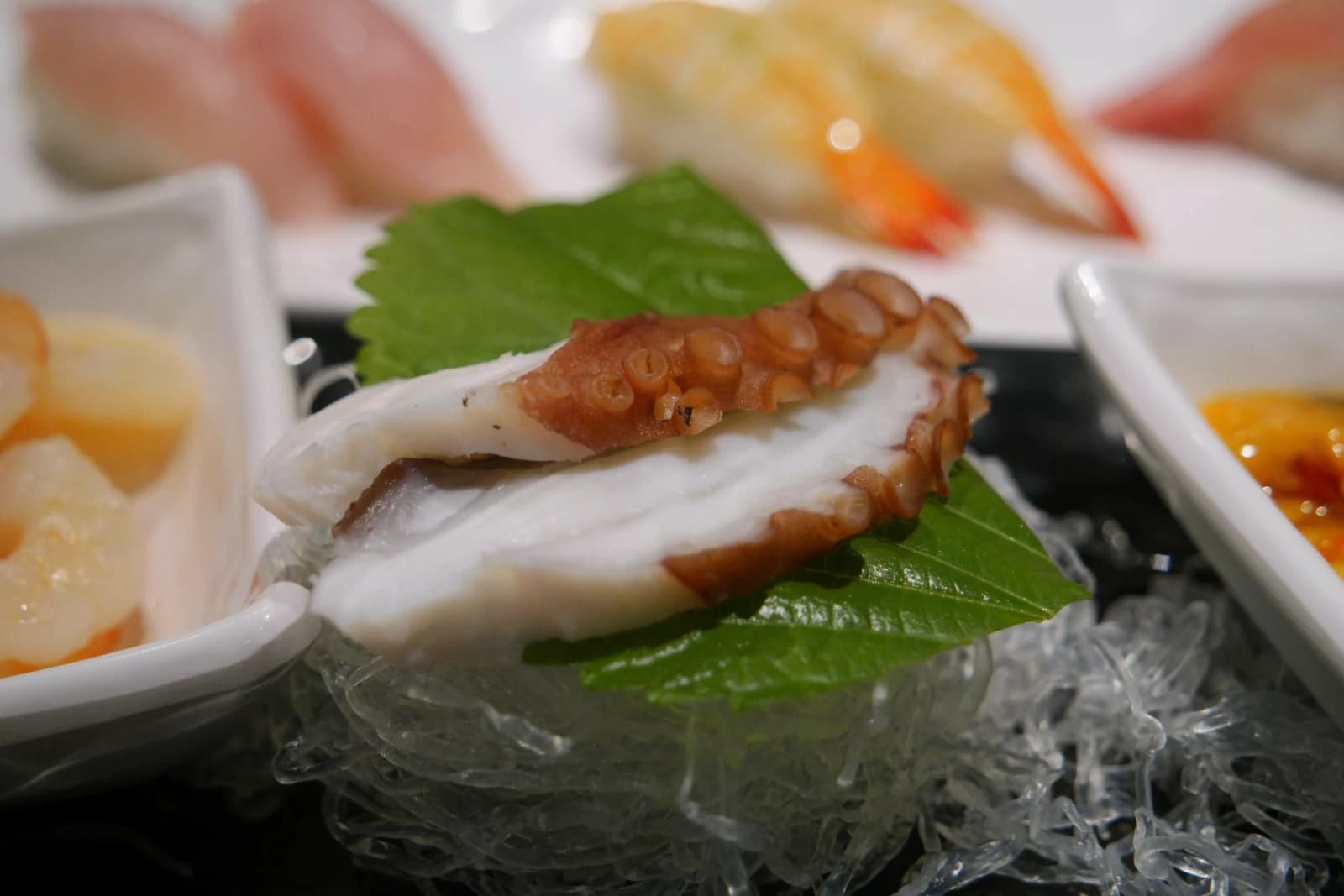
A thick-cut octopus tentacle came out on a perilla leaf — perilla is an aromatic leaf herb that Koreans eat as a wrap with raw fish or meat, kind of like a more fragrant version of basil. When you eat the octopus on top of the leaf, you get that herby, almost minty aroma mixing with the chewy, dense bite of the tentacle. The suction cups look a little intimidating if you're not used to it, but the flavor is clean and nutty once you start chewing.
The Sashimi Spread — Tuna Cuts and Flounder, the Real Star
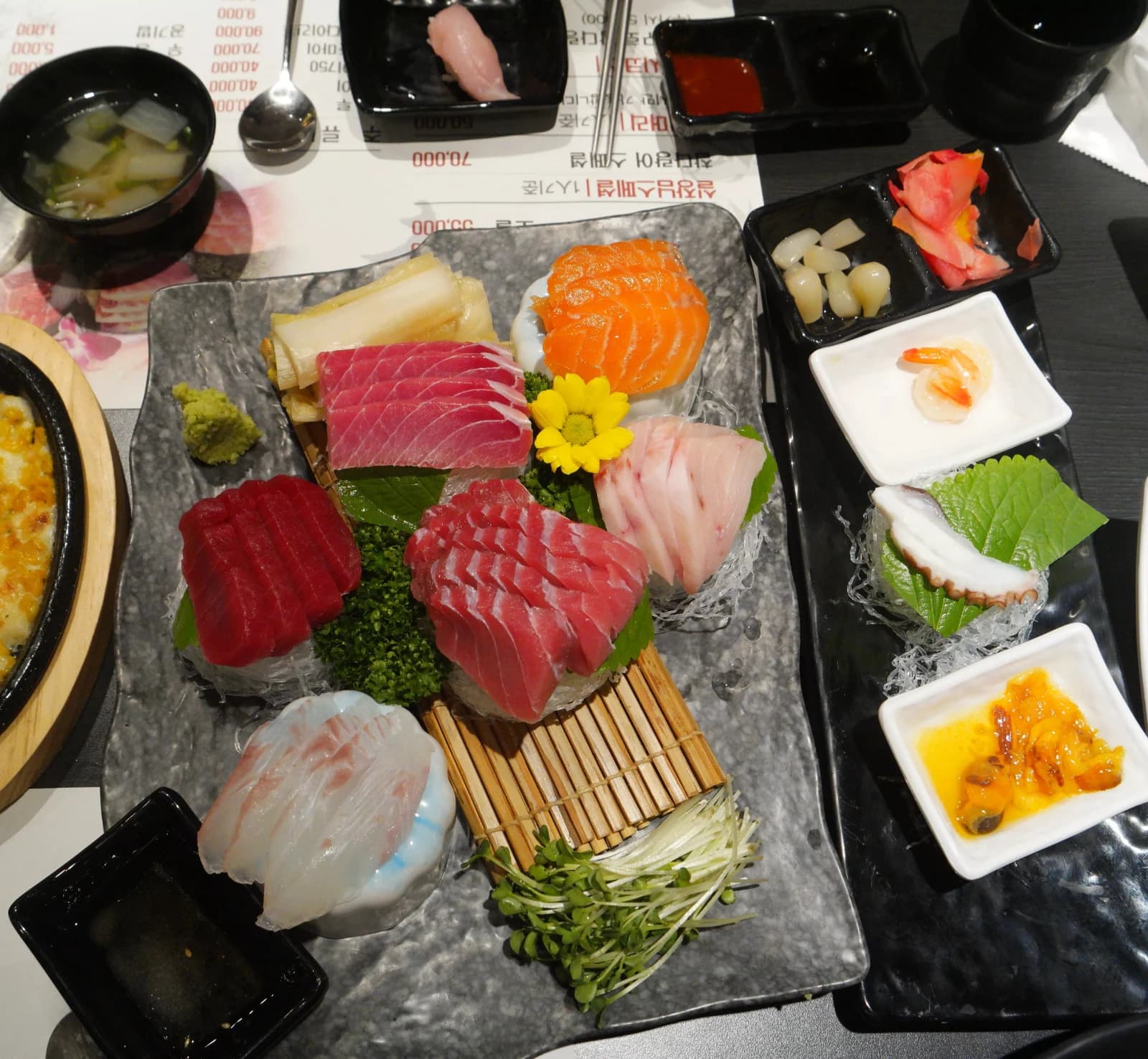
Then the main sashimi platter made its entrance. A big plate covered in thick slices of different tuna cuts — lean, medium-fatty belly, and fatty belly — with flounder sashimi arranged separately on a bamboo mat alongside. A generous mound of wasabi sat to one side, and a yellow chrysanthemum was tucked in the center as decoration. To the left, the pollack soup and steamed egg were still on the table, and to the right, the sushi plates and seafood dishes hadn't been cleared yet. The table was an absolute battlefield. This was the exact moment my wife pulled out her phone and started taking photos. Getting all this for about $35 a person — that's the kind of value Korean sashimi restaurants are known for.
Medium-fatty tuna belly and premium fatty belly
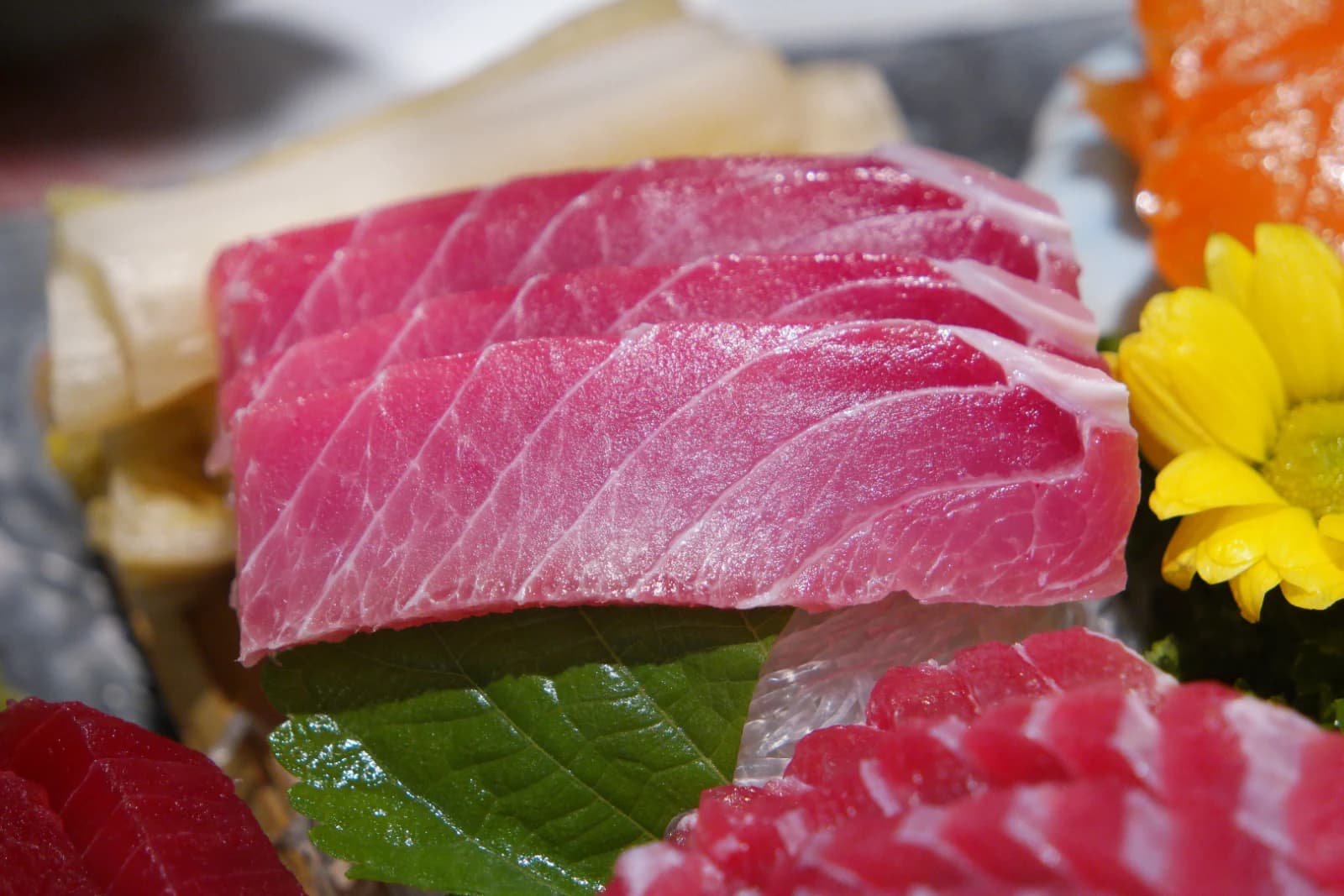
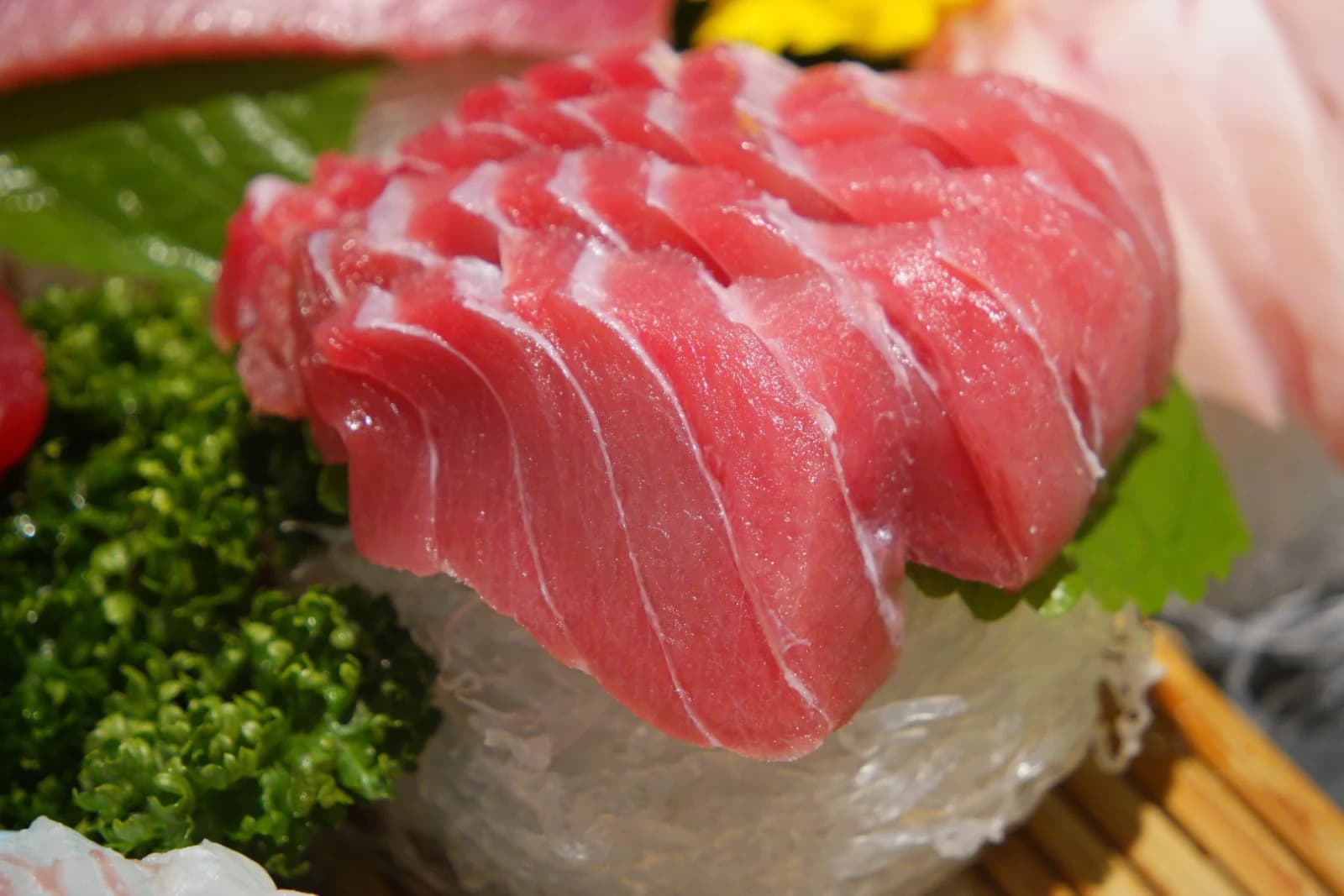
When I picked up a slice of the medium-fatty tuna belly, you could see the fine white marbling running through the flesh. In your mouth, that fat melts at body temperature and coats your tongue in this rich, buttery flavor — and I immediately understood why this cut is the most popular. I handed a piece to my wife, and her eyes went wide as she nodded. Didn't need to say a word.
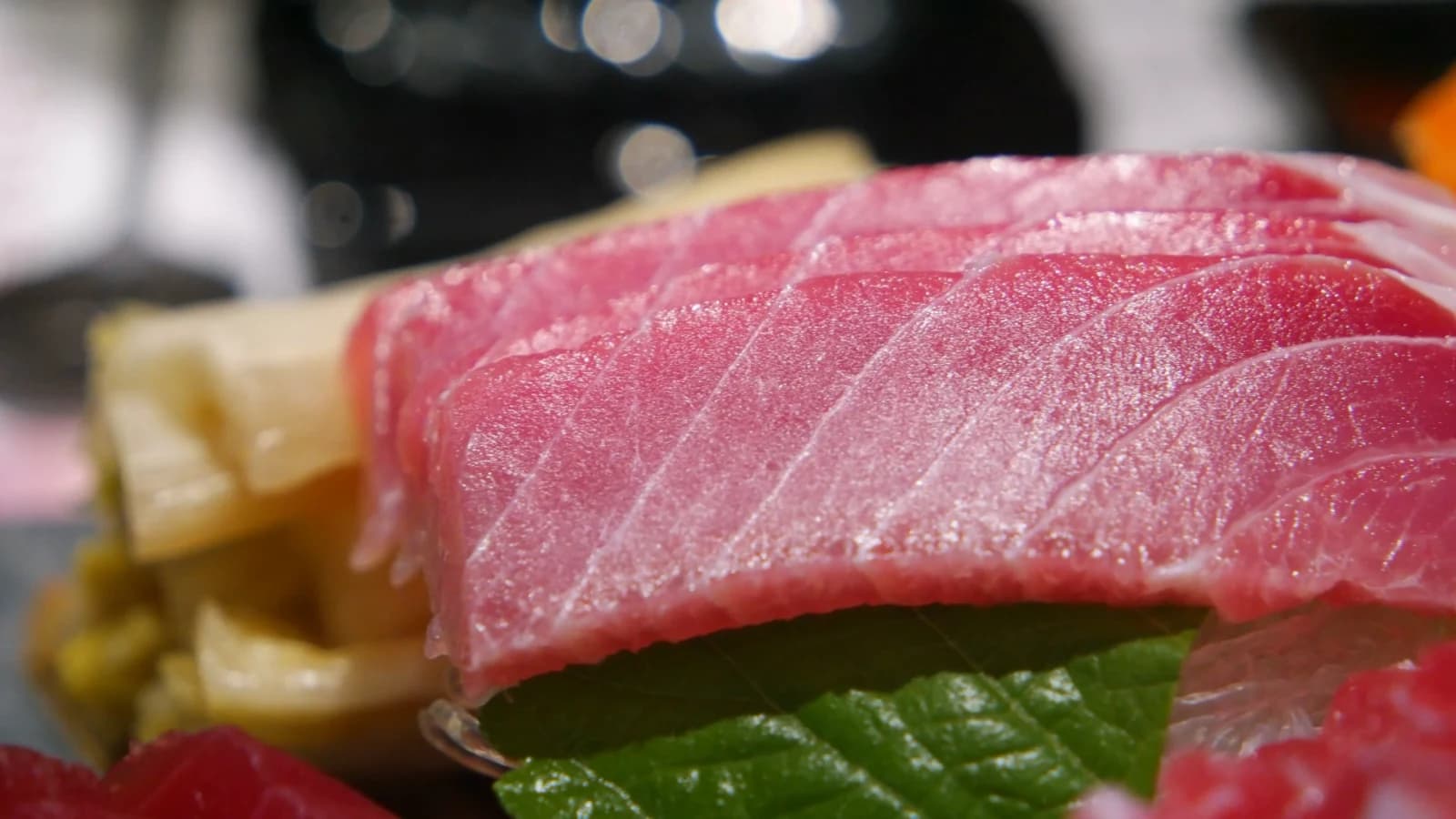
From a different angle, you could really see the fat marbling fanning out in pinkish streaks along the grain. Next to it sat some pickled ginger — thinly sliced ginger preserved in vinegar. When you're eating your way through multiple kinds of fish, popping a piece of pickled ginger between bites cleans your palate so the next piece of fish tastes fresh and distinct again.
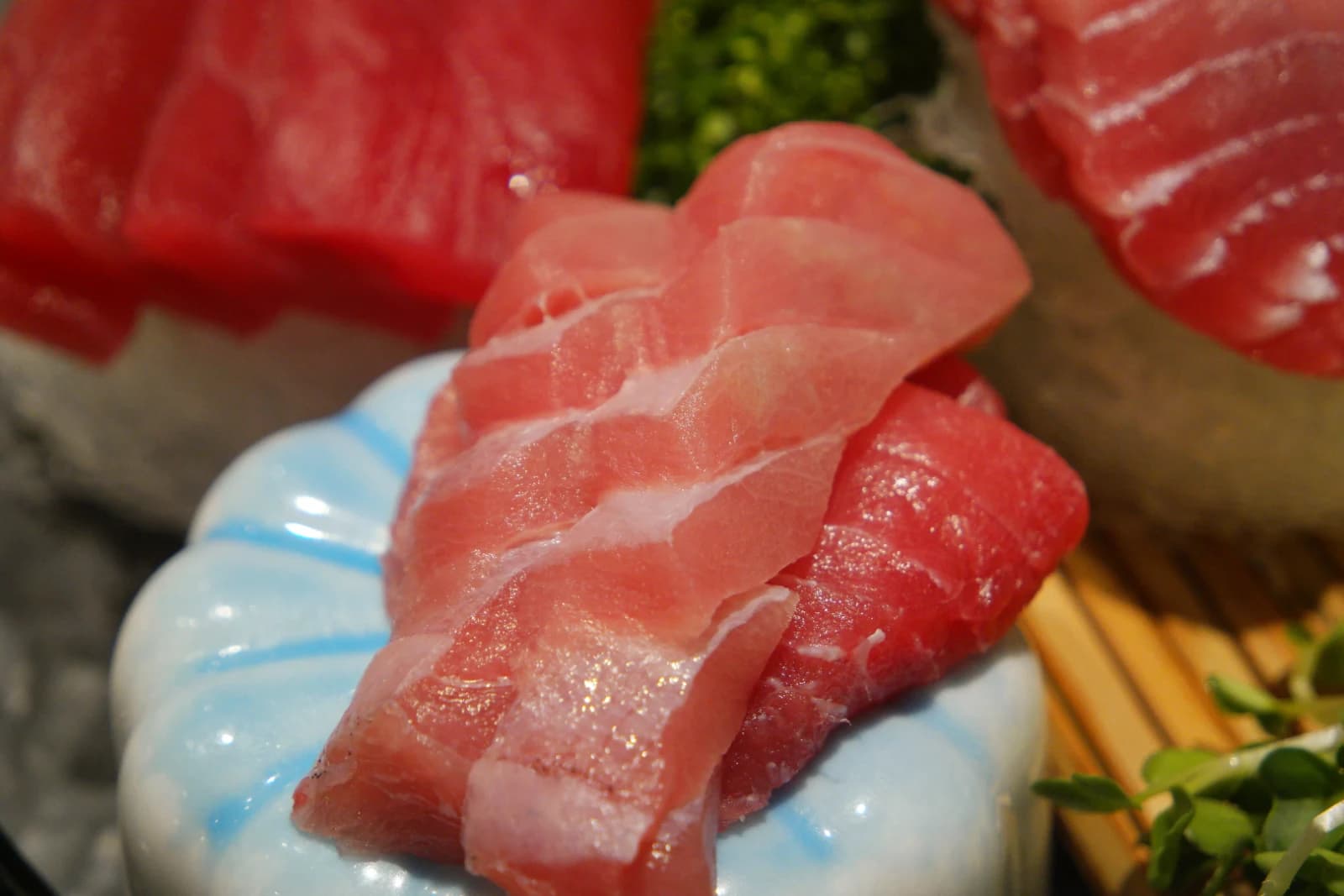
This is the otoro — the fattiest cut of the tuna belly. The flesh is almost pink with dense white striations packed tight throughout. It didn't even require chewing — it just dissolved on my tongue. In Japan, this cut is among the most expensive things you can order, so I was genuinely surprised to see it included in a $35 course. Of course, if you compared it side by side with what a top-tier sushi bar in Tokyo serves, there'd be differences in aging and thickness. But the fact that you can taste this at this price point is exactly what makes Korean sashimi restaurants such a good deal.
Lean tuna, flounder, and salmon
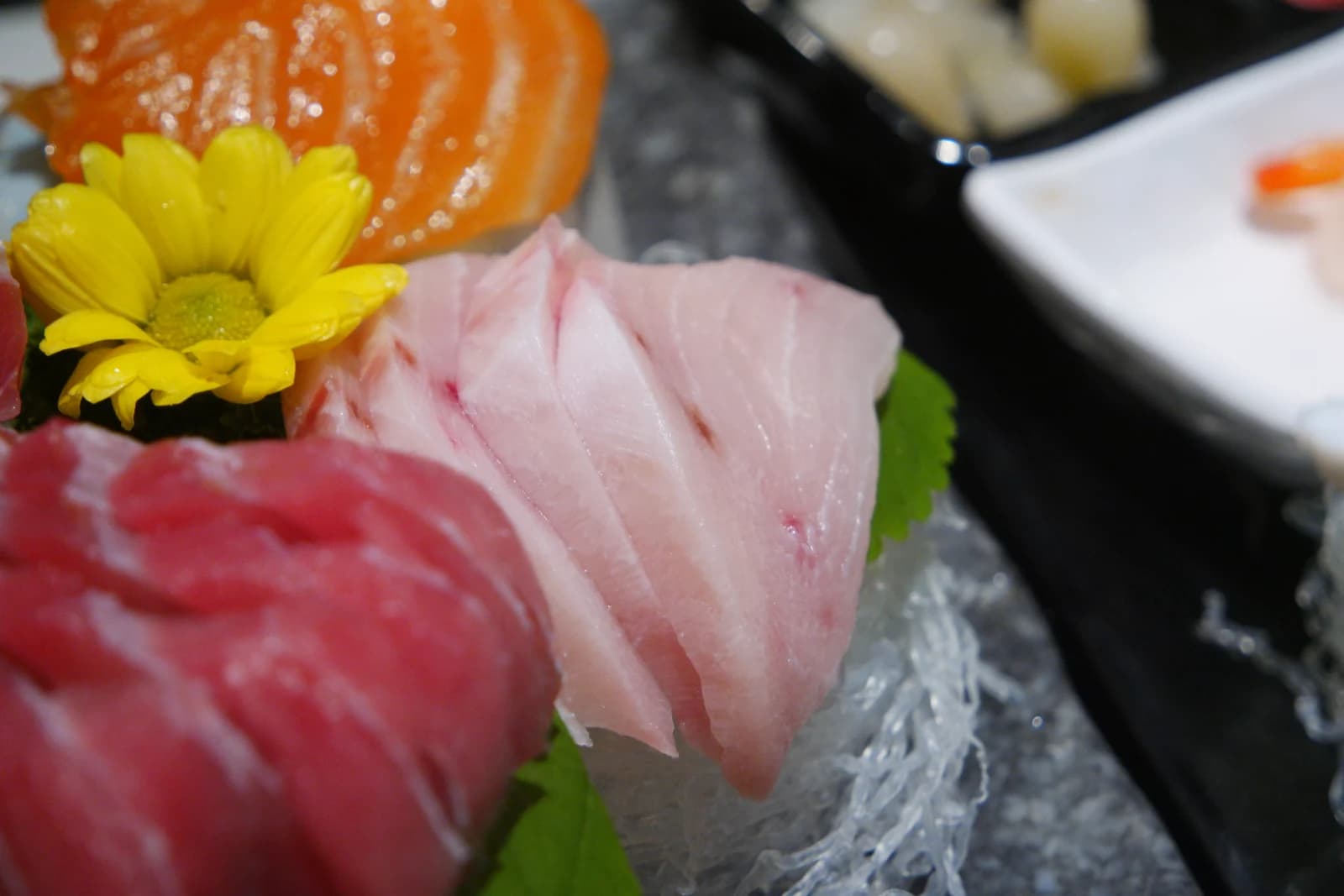
The lean tuna is the leanest cut — deep crimson, firmer and drier compared to the belly. Dab a little wasabi on it, dip it in soy sauce, and you get the cleanest, purest tuna flavor. After all that richness from the fatty cuts, eating this felt like hitting a reset button in my mouth.
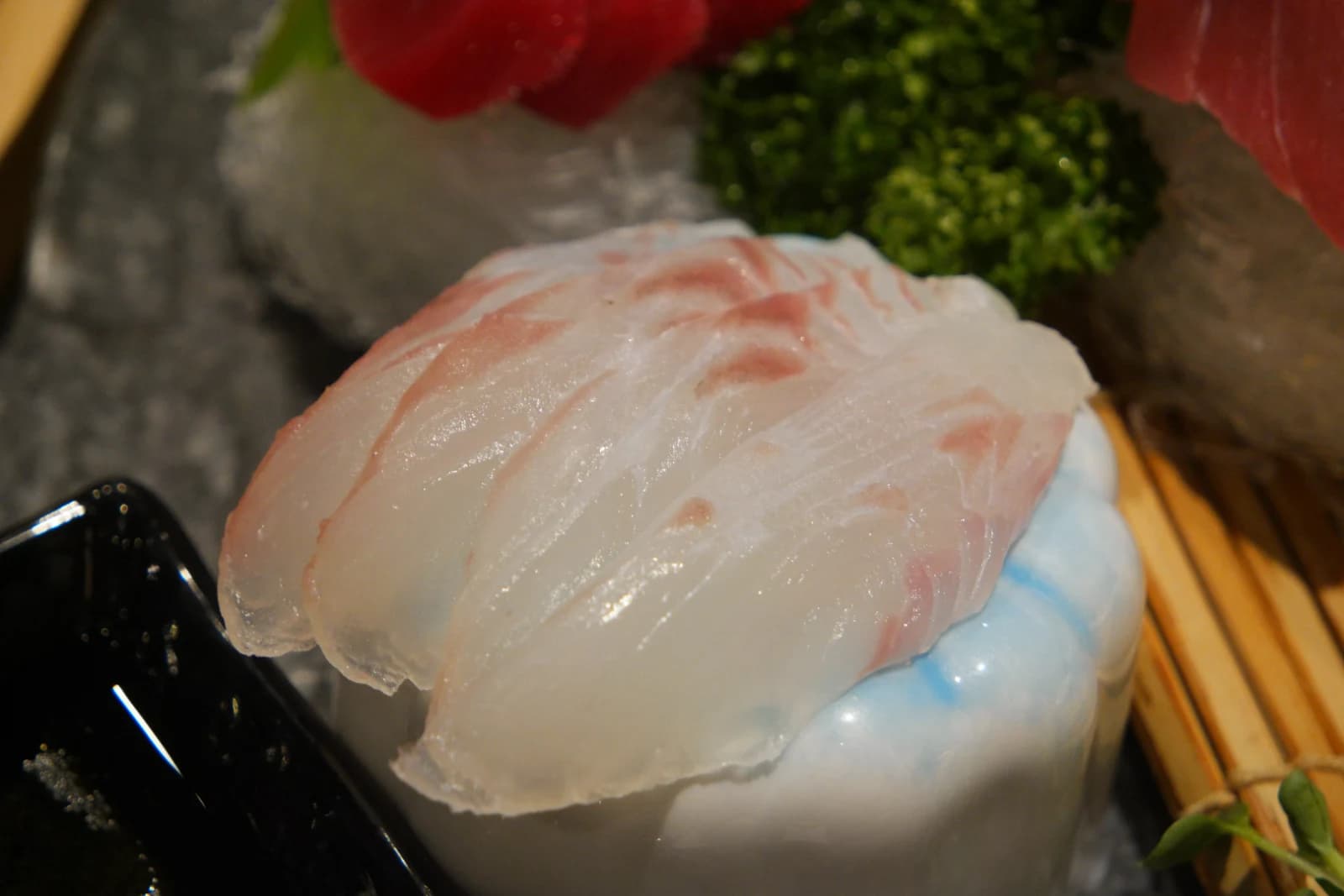
The flounder sashimi on the bamboo mat was translucent white and glistening. It had a satisfying chewy bounce and a quiet sweetness that slowly revealed itself — a totally different character from the bold, heavy tuna.
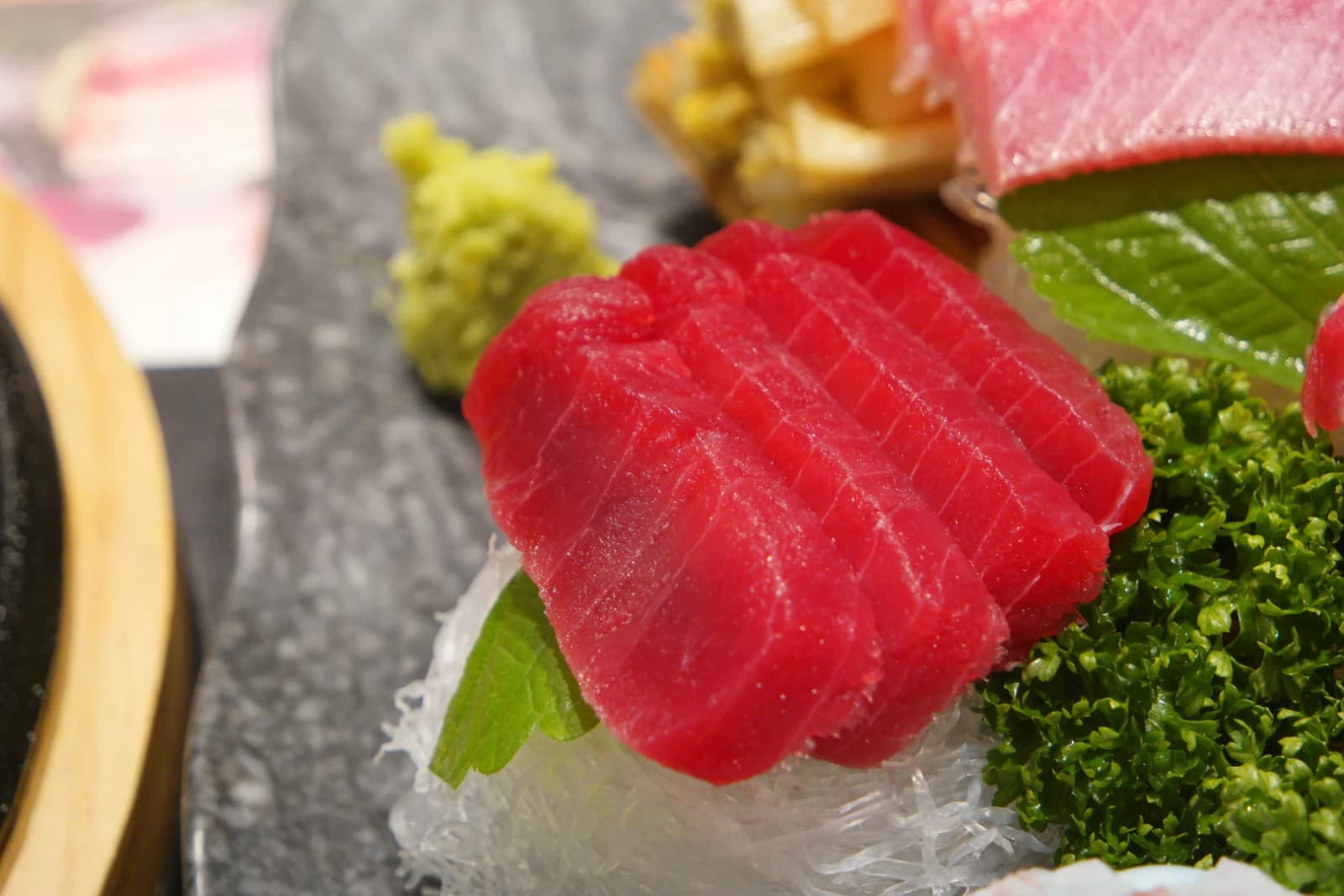
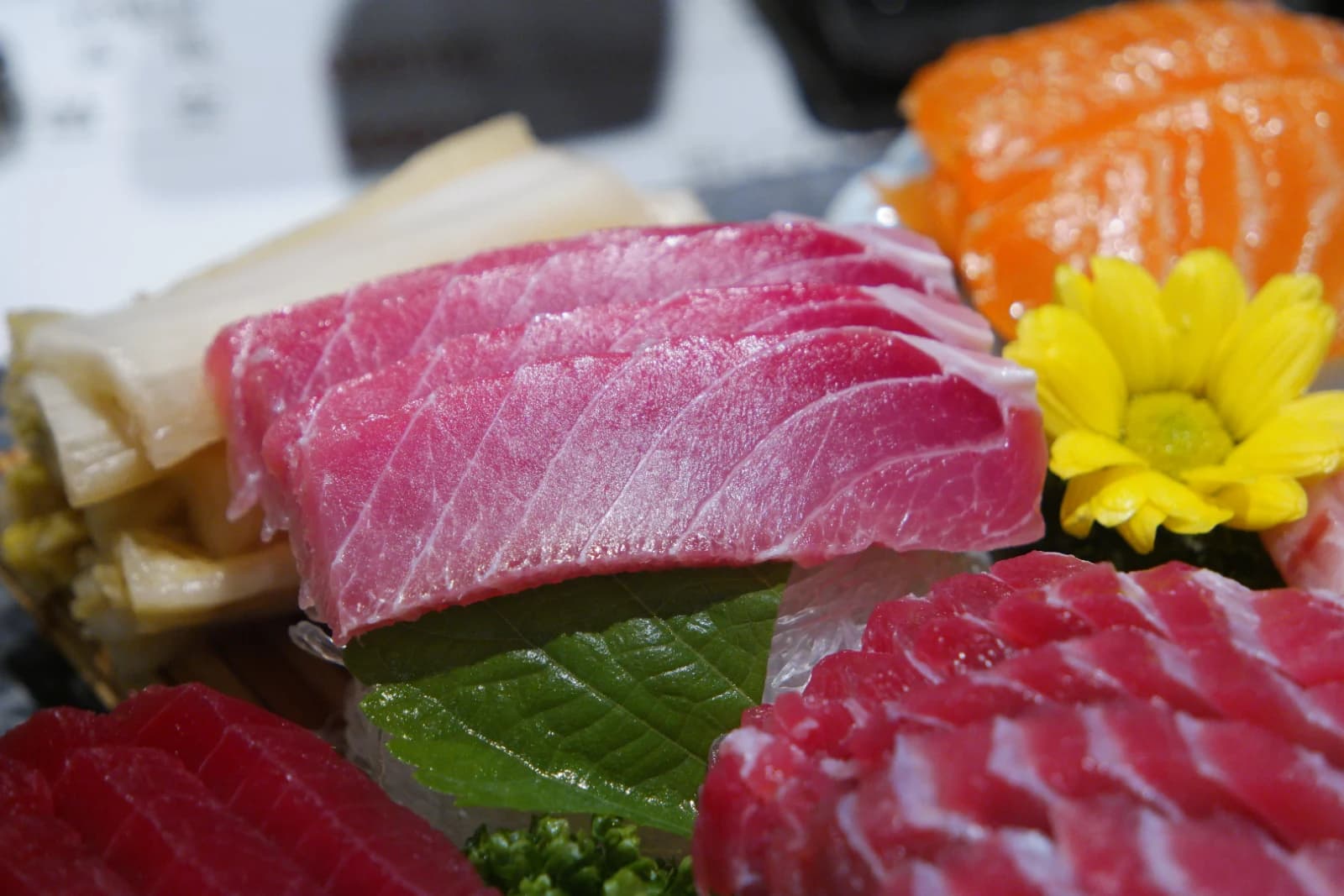
The vivid red of the lean tuna sitting next to that bright green wasabi was almost too pretty to eat. Right beside it, the medium-fatty belly and the salmon were lined up next to each other — pink against orange. The color contrast alone was gorgeous. My wife took the most photos during this stretch of the meal.
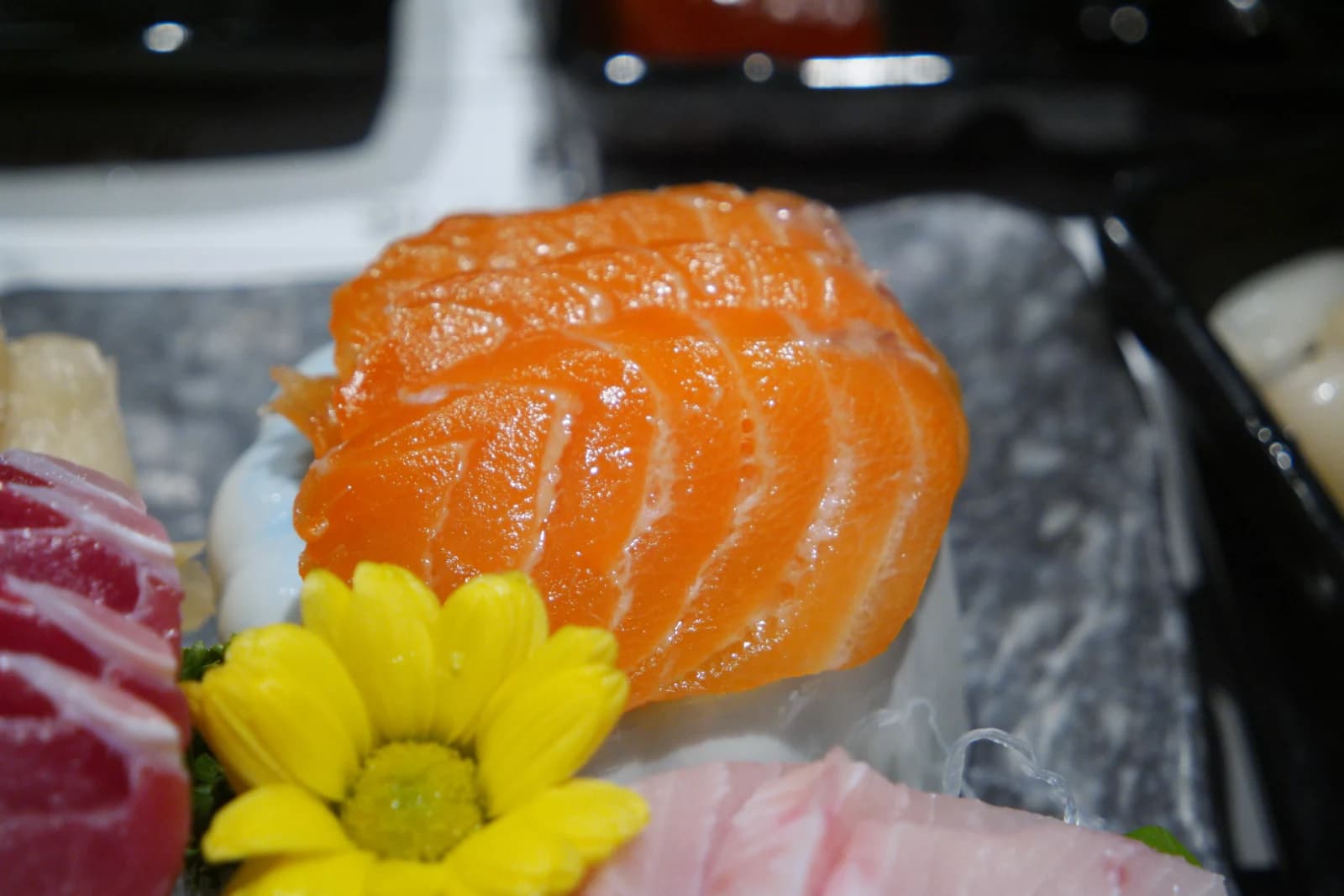
The salmon sashimi was a vivid orange with a slight oily sheen on the surface. It tasted buttery, rich, and smooth — and since my wife likes salmon more than tuna, she straight-up pulled a few slices onto her own plate. "These are mine," she said, sliding the plate toward her side of the table. I didn't argue.
Wrapping sashimi in leaves — a uniquely Korean way to eat raw fish
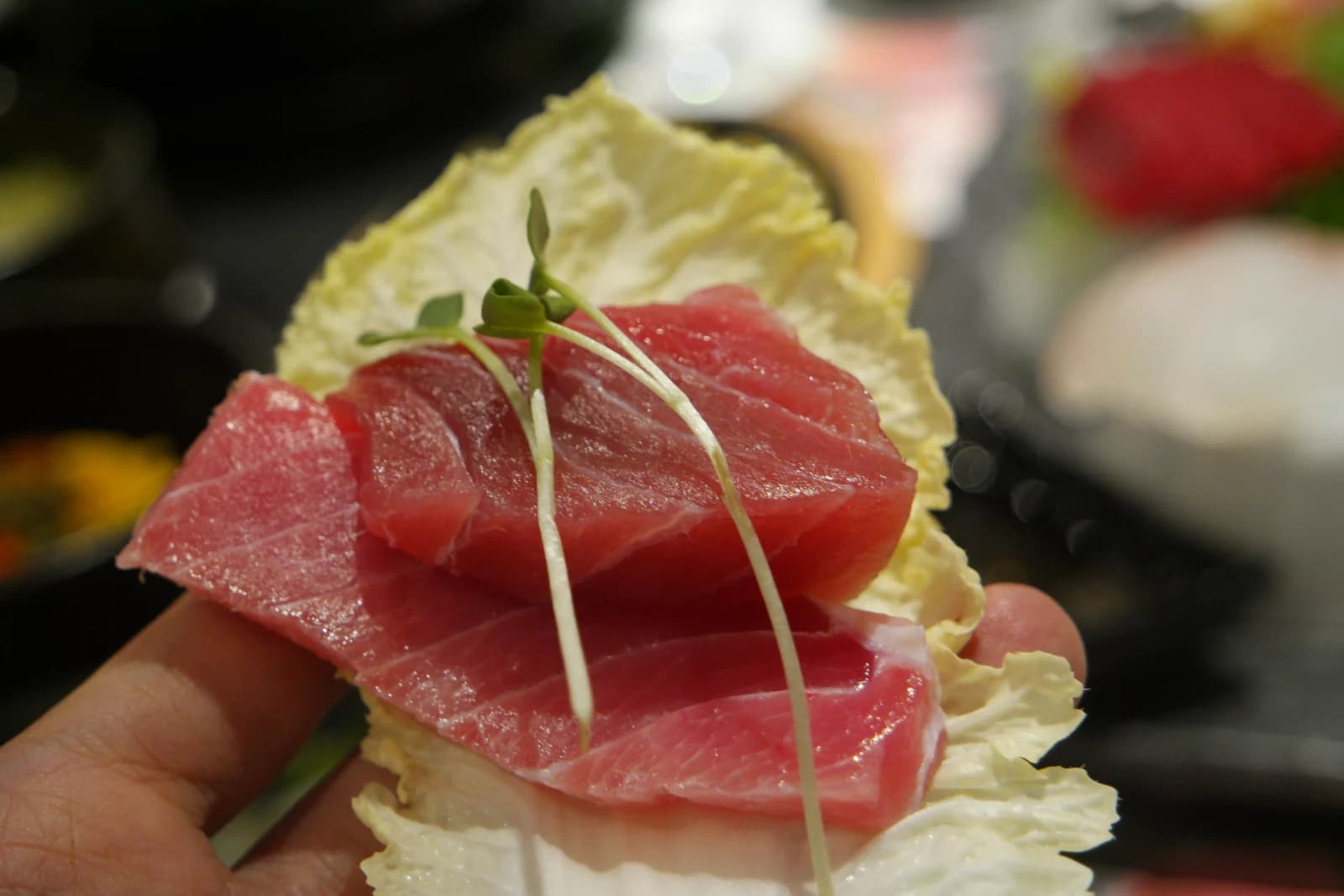
I tried wrapping a piece of tuna in a napa cabbage leaf. In Korea, there's a whole culture of wrapping food in leafy greens — you'll see it at Korean BBQ restaurants where people wrap grilled pork belly in lettuce. Some people do the same thing with sashimi at Japanese-style restaurants. The crunch of the cabbage combined with the silky tuna creates a completely different experience from eating the fish on its own.
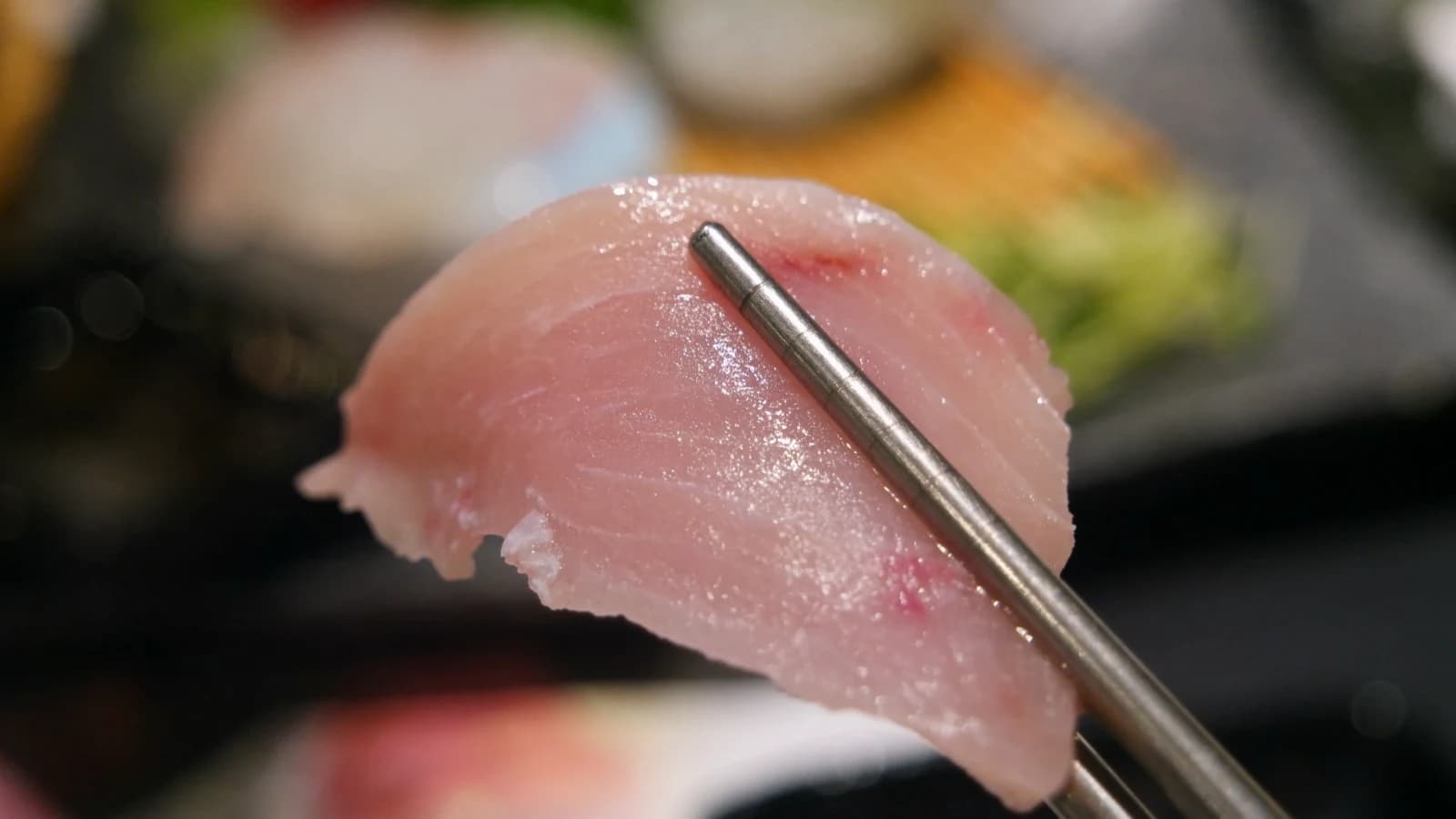
Lifting a flounder slice with chopsticks, you could see right through it — the grain of the flesh visible through the translucent cut. That first bite is all firm chew, and then a gentle sweetness slowly builds the longer you work it. There's something about that quiet sweetness in white-fleshed fish that keeps you reaching for one more piece.
How to eat sashimi in Korea
Two dipping sauces
Korean sashimi restaurants typically serve two sauces. One is soy sauce with wasabi mixed in, and the other is chojang — a sweet-sour-spicy red sauce made from gochujang (Korean chili paste) blended with vinegar and sugar. Conventional wisdom says white fish goes with chojang and red-fleshed fish like tuna goes with soy-wasabi, but there's no hard rule. Just go with whatever tastes good to you.
Ssam-style wraps
You can place a slice of sashimi on a lettuce, perilla, or cabbage leaf, add a sliver of garlic or chili pepper, and eat the whole thing in one bite. It's the same wrapping culture you see at Korean BBQ. The crunch of the greens paired with the soft fish creates a combination you won't find in Japanese sashimi dining.
Pickled ginger
Thinly sliced ginger pickled in vinegar — it's that pale pink stuff on the plate. Pop a piece between different types of fish to cleanse your palate so each new slice tastes fresh and distinct.
Mid-Course Sides That Pop Up Out of Nowhere — That's Korean Style
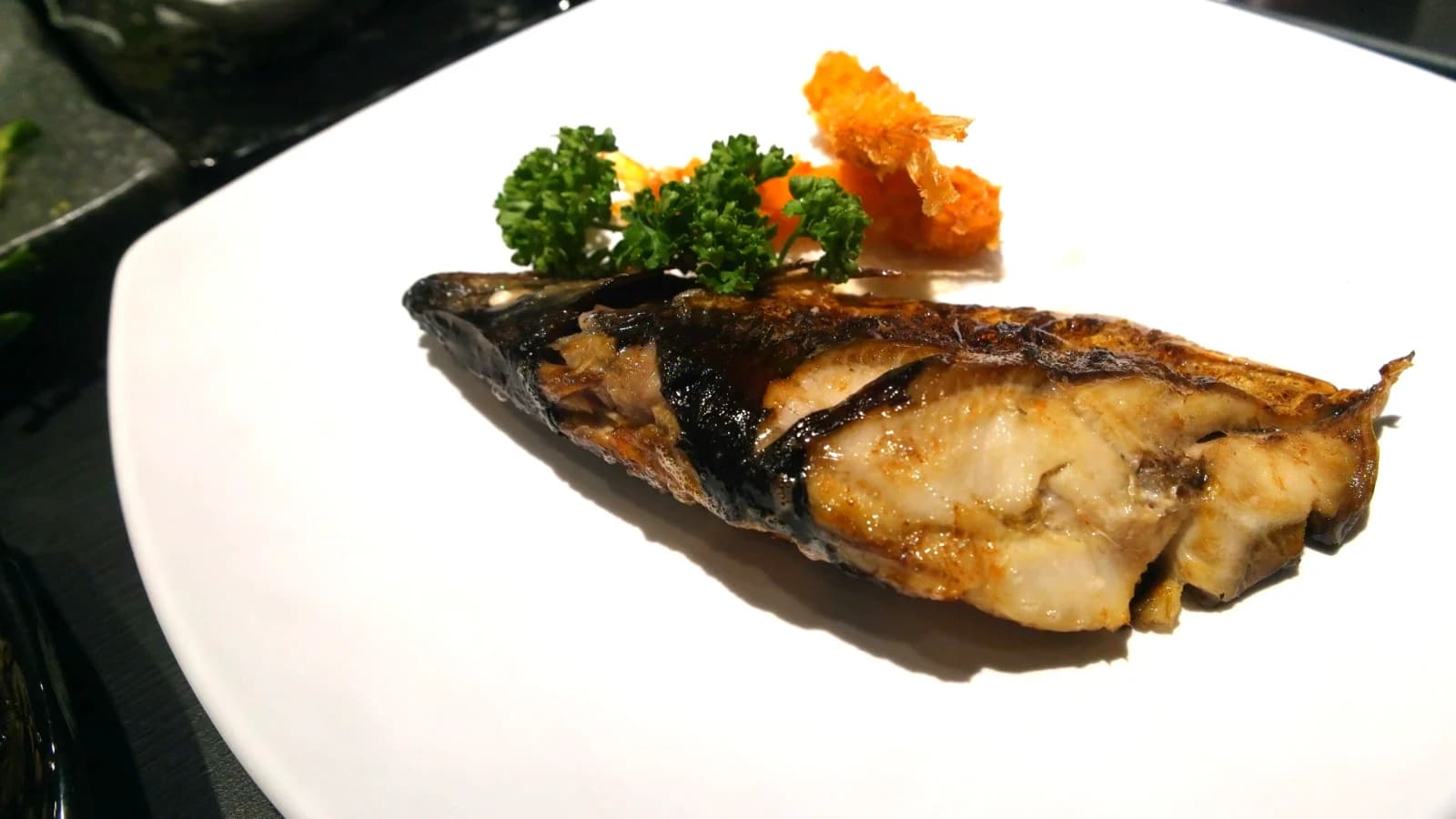
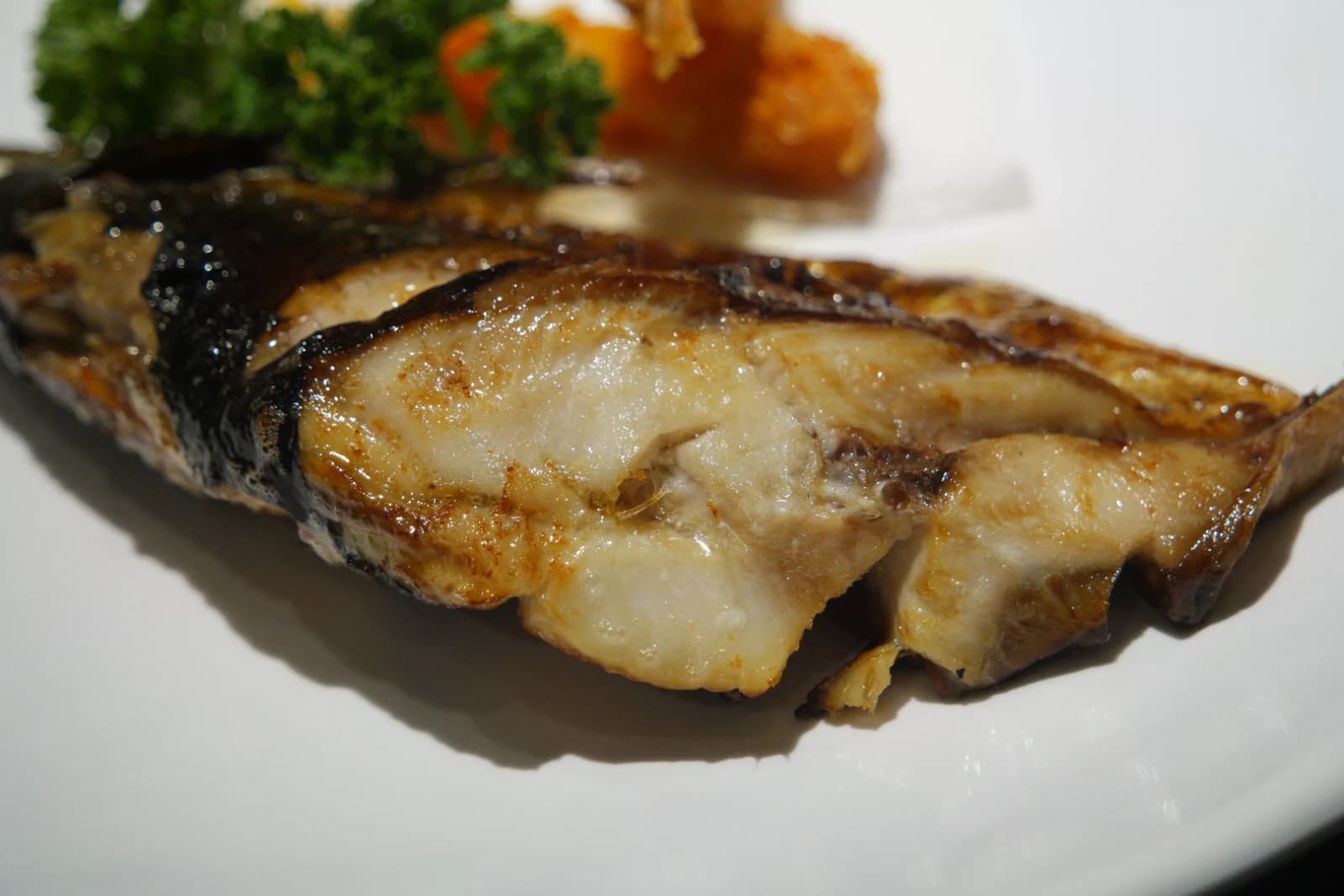
We were right in the middle of eating sashimi when a plate of grilled mackerel suddenly showed up. This is what Korean sashimi restaurants do. Warm side dishes just appear between courses without warning. The skin was grilled golden and crackly, with white flesh peeking through the splits, and when I peeled a piece off with my chopsticks, a little oil ran out — salty and toasty. After eating cold sashimi for a while, biting into something hot off the grill snapped my appetite right back to life. In a Japanese course, you don't usually get this many interruptions between dishes, but in Korea, these surprise sides are what give the meal its rhythm.
Steamed egg custard and corn cheese
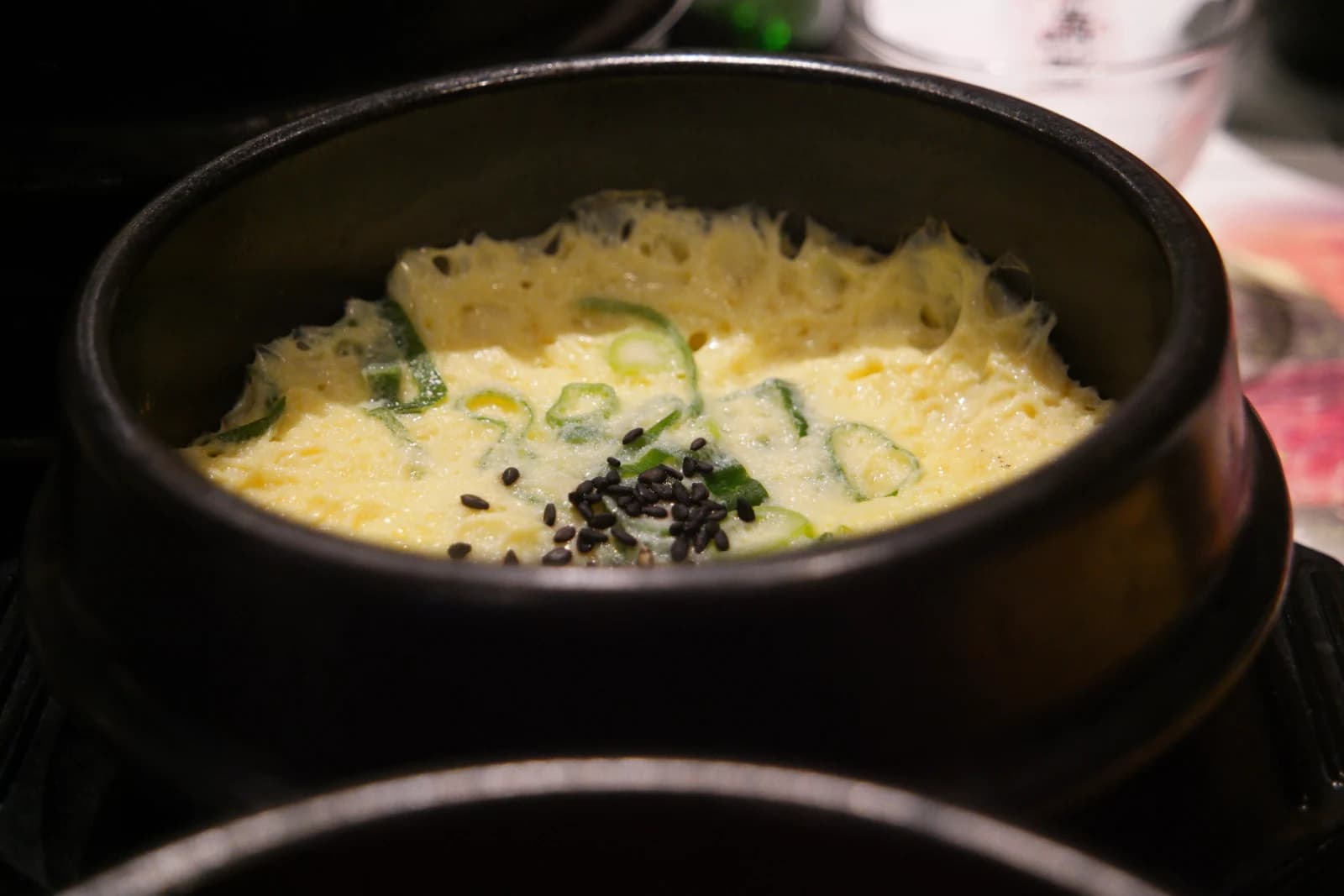
Then came the steamed egg custard — beaten eggs steamed in a stone pot until they puff up into something light and custardy. In Korea, people eat this with a spoon, almost like a soup. It arrived still foamy, topped with black sesame seeds and scallions. Soft, warm, and gentle — a spoonful of this between sashimi slices was like giving my mouth a little break.
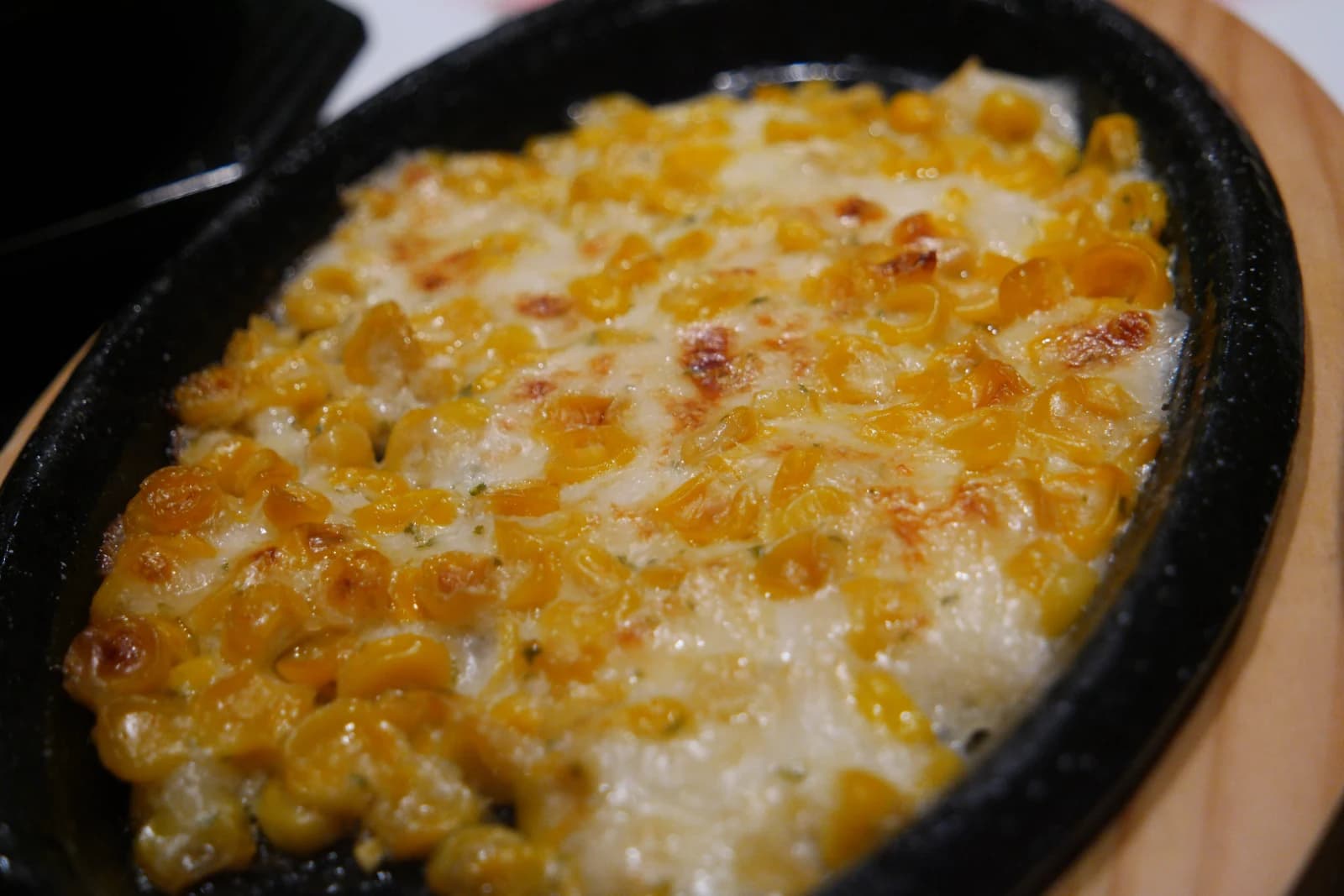
And then corn cheese showed up too. Sweet corn kernels topped with cheese and baked until bubbly — it came out still sizzling on a hot iron plate. Sweet corn plus salty melted cheese is about as far from sashimi as you can get, but at Korean sashimi restaurants, something like this is a standard part of the course. My wife asked, "Can we order another one of these?" I thought about flagging down a server to ask if it was included or would cost extra, but it felt kind of awkward. So we just scraped the plate clean instead.
Korean sashimi restaurants vs. Japanese sushi bars
At a Japanese omakase or sushi bar, the chef typically presents each piece one at a time, focusing on aging technique and the quality of each individual cut of fish. When it comes to the perfection of each single piece, Japan is world-class — no argument there.
Korean sashimi restaurants, on the other hand, lean into volume and variety. A single course might include appetizers, porridge, grilled fish, steamed egg, cheese, a rice finisher, and sashimi and sushi on top of all that — and seeing it all spread across the table at once is something you really only experience in Korea.
That doesn't mean Korean sashimi is inferior to Japan's. It's just a different approach. And when you weigh the total experience against the price tag, Korea often comes out ahead in overall satisfaction.
What to expect at different price points
~$20 per person — A basic assorted sashimi platter with 2–3 simple sides. Typical of small raw fish houses or lunch-only course options at neighborhood spots.
~$35 per person — What you see in this post: appetizer through porridge, sashimi, sushi, sides, and a rice finisher. The sweet spot if you want the full experience without splurging.
$70+ per person — High-end omakase territory. Premium ingredients like fatty tuna belly, sea urchin, and snow crab get added, and each dish gets individual plating with more attention to presentation.
The Roe Rice Finisher, and a Restaurant That's Gone
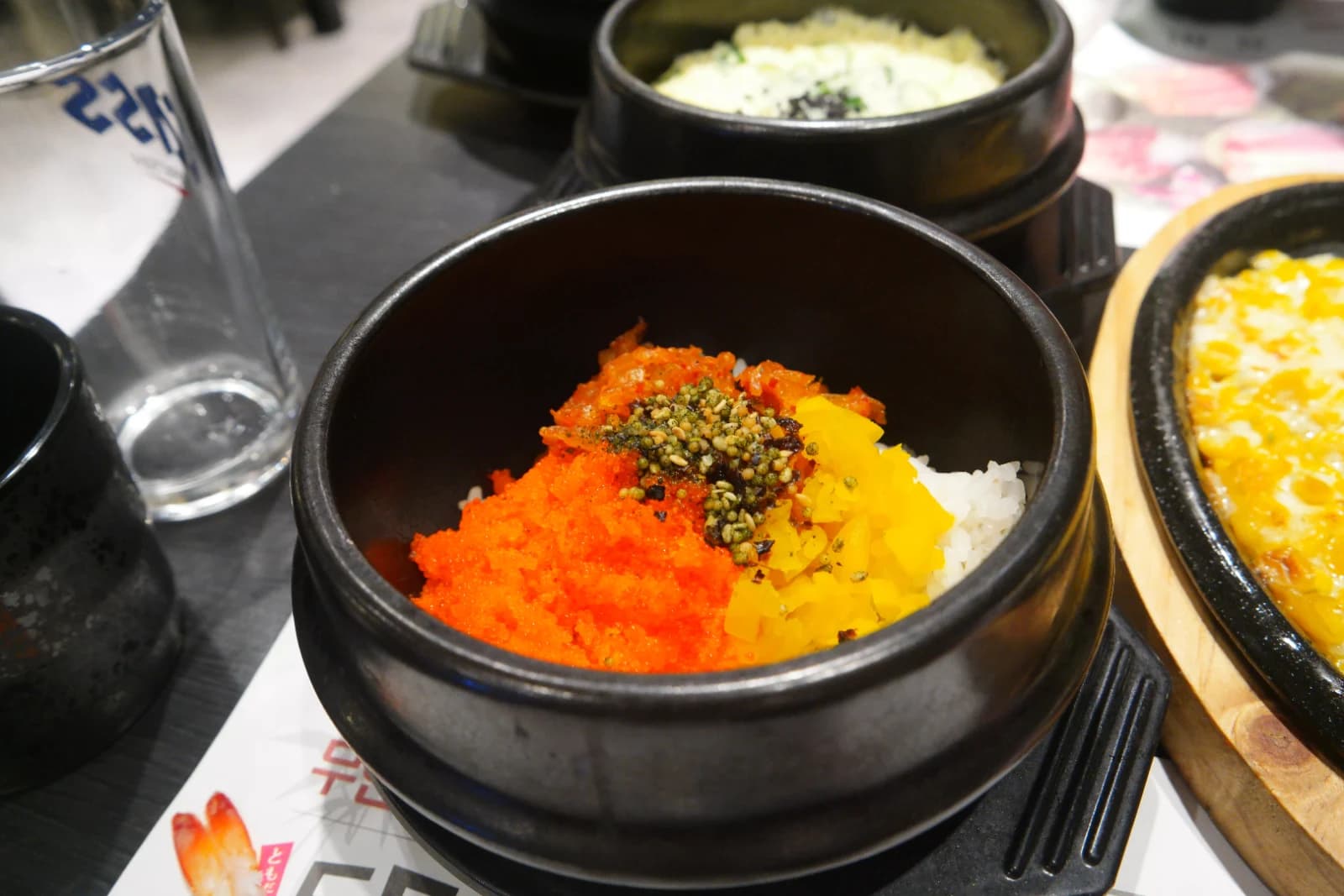
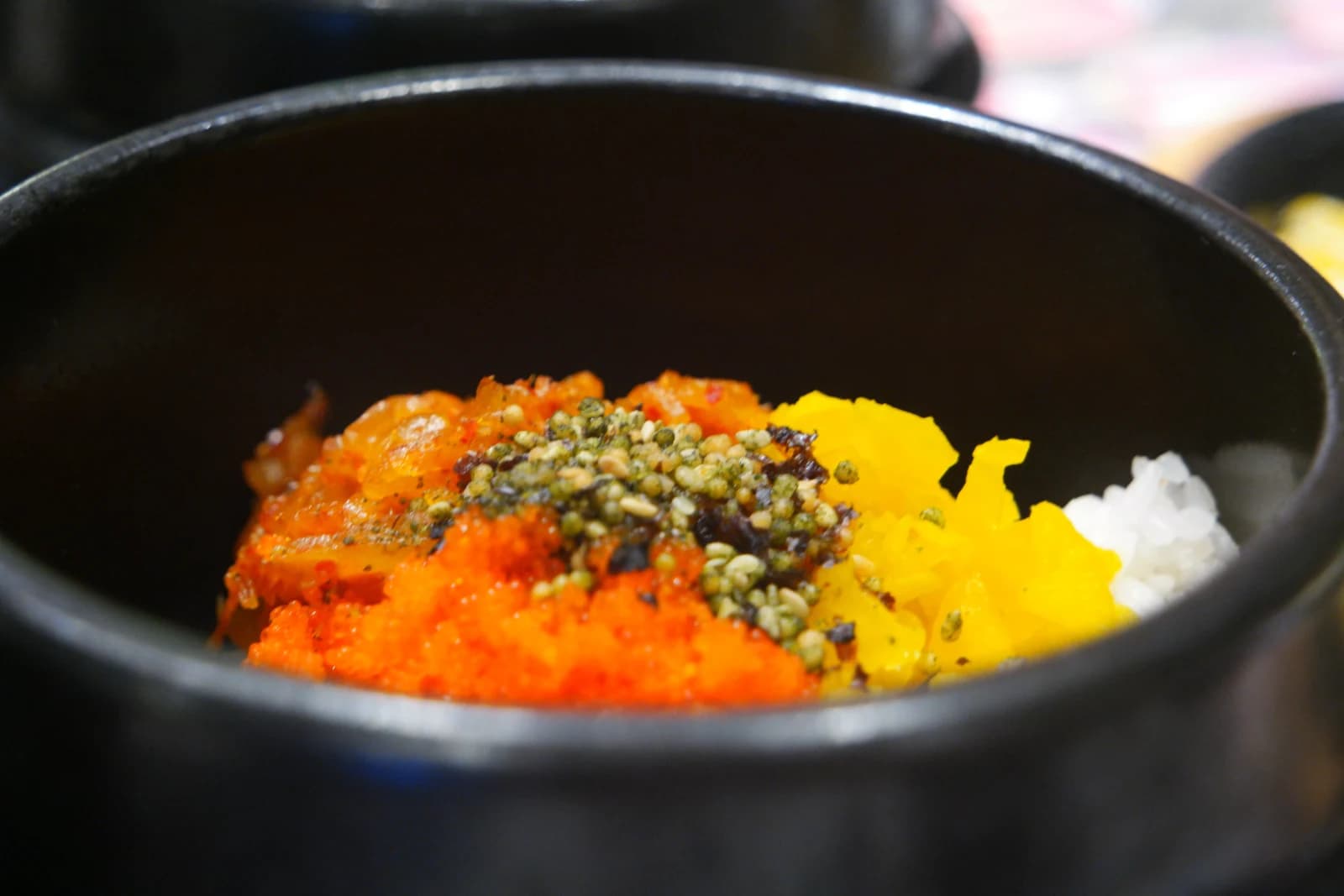
The finisher was roe rice. Bright orange flying fish roe piled generously on top of rice in a hot stone pot, with yellow danmuji (pickled radish) and sesame seeds on the side. You mix it all together with a spoon, and the tiny roe eggs pop between your teeth, releasing a salty burst of umami that spreads through the rice. My wife said "When are we gonna finish all this?" — but even as the words were coming out of her mouth, she was already scooping up a spoonful. We both cleaned our bowls.
Useful Korean phrases for ordering at a sashimi restaurant
"Koseu-ro halgeyo" (코스로 할게요)
Means "We'll go with the course." Use this to order a set course meal.
"I-inbun-iyo" (이인분이요)
Means "Two servings, please." Swap the number: il-inbun (one), sam-inbun (three).
"Wasabi deo juseyo" (와사비 더 주세요)
Means "More wasabi, please."
"Gyesan-iyo" (계산이요)
Means "Check, please." Use this when you're ready to pay.
Most Korean sashimi restaurants don't have English menus, so pointing at photos on the menu or using these phrases will make ordering a lot smoother.
The bill, and a couple honest complaints
The check came to 100,000 won total — about $35 per person (roughly $70 for two). From the appetizer through the porridge, spicy fish salad, sashimi, sushi, grilled fish, steamed egg, corn cheese, and roe rice — for that price, I'd say it was a genuinely good deal. That said, I had two complaints. First, I wish the sashimi slices had been cut a little thicker. There were a lot of different fish on the plate, but each individual slice felt a touch thin. Second, having something as polarizing as sea squirt included in the course without any warning could be rough if you're dining with someone who's not used to adventurous seafood. A heads-up from the staff would've been nice.
On the drive home, my wife said the abalone porridge and the corn cheese were her favorites of the night. The sides left more of an impression than the sashimi itself — funny how that works. We'd gone out specifically for raw fish, but what stuck with us were the warm dishes that showed up in between. She told me "Let's go back" as we drove through Daejeon that evening. A few months later, when I passed by, a different sign was hanging where the restaurant used to be.