
Grilled Fish Baekban — The Real Korean Lunch Tourists Never Find
Table of Contents
16 items
Korean Food Beyond Samgyeopsal — What People Actually Eat Every Day
When you think of Korean food, what comes to mind? Probably samgyeopsal, fried chicken, bibimbap, kimbap — stuff like that, right? And yeah, those are all iconic Korean dishes. But here's the thing — those are the dishes that get repeated over and over on "what to eat in Korea" lists made for tourists. Korean people don't actually eat those every single day. If you ask a Korean person what they had for lunch, a huge number of them will tell you they went to a little restaurant near their office or in their neighborhood and had a baekban meal.
What I want to talk about today is one specific type of baekban: grilled fish baekban (grilled fish set meal). It's a Korean food that almost never shows up on tourist itineraries, but it's something Korean people genuinely enjoy as part of their everyday routine. I'm going to show you exactly what a grilled fish baekban looks like, based on a meal I actually had at Cheonhajangsa Grilled Fish, a restaurant on Geoje Island — a coastal city about 4 hours southeast of Seoul.
First, You Need to Know What Baekban Actually Is
Baekban is basically a Korean home-style set meal. White rice, one soup or stew, and a whole spread of side dishes all served together on the table. Side dishes like kimchi, seasoned vegetables, tofu, rolled egg omelette, jeotgal (salted fermented seafood) — they come out in little plates all lined up across the table. It's almost identical to what Korean people eat at home for a regular meal.
The side dish lineup varies from restaurant to restaurant, but you usually get around 5 to 8 different ones. The name of the baekban changes depending on what the main dish is — if it's stir-fried pork, it's jeyuk baekban; if it's braised mackerel, it's godeungeo-jorim baekban. Grilled fish baekban is, as the name says, baekban where the main dish is grilled fish. Fish like mackerel, hairtail, yellow croaker, and Spanish mackerel get salted and grilled until crispy, and usually 2 to 3 whole fish come out on one plate. Add rice, soup, and all the side dishes, and that's your grilled fish baekban spread.
What Comes With a Grilled Fish Baekban Meal
Rice — White steamed rice, sometimes multigrain rice
Soup or Stew — Either doenjang-jjigae (soybean paste stew), kimchi-jjigae, or a clear broth
Main — 2–3 grilled fish (mackerel, hairtail, yellow croaker, Spanish mackerel, etc.)
Side Dishes — 5–8 kinds including kimchi, seasoned greens, tofu, rolled egg, fermented seafood, etc.
The price usually falls between $6 and $9. Getting all of this for that price is exactly what makes Korean baekban so appealing.
The Side Dishes Hit the Table Before Anything Else
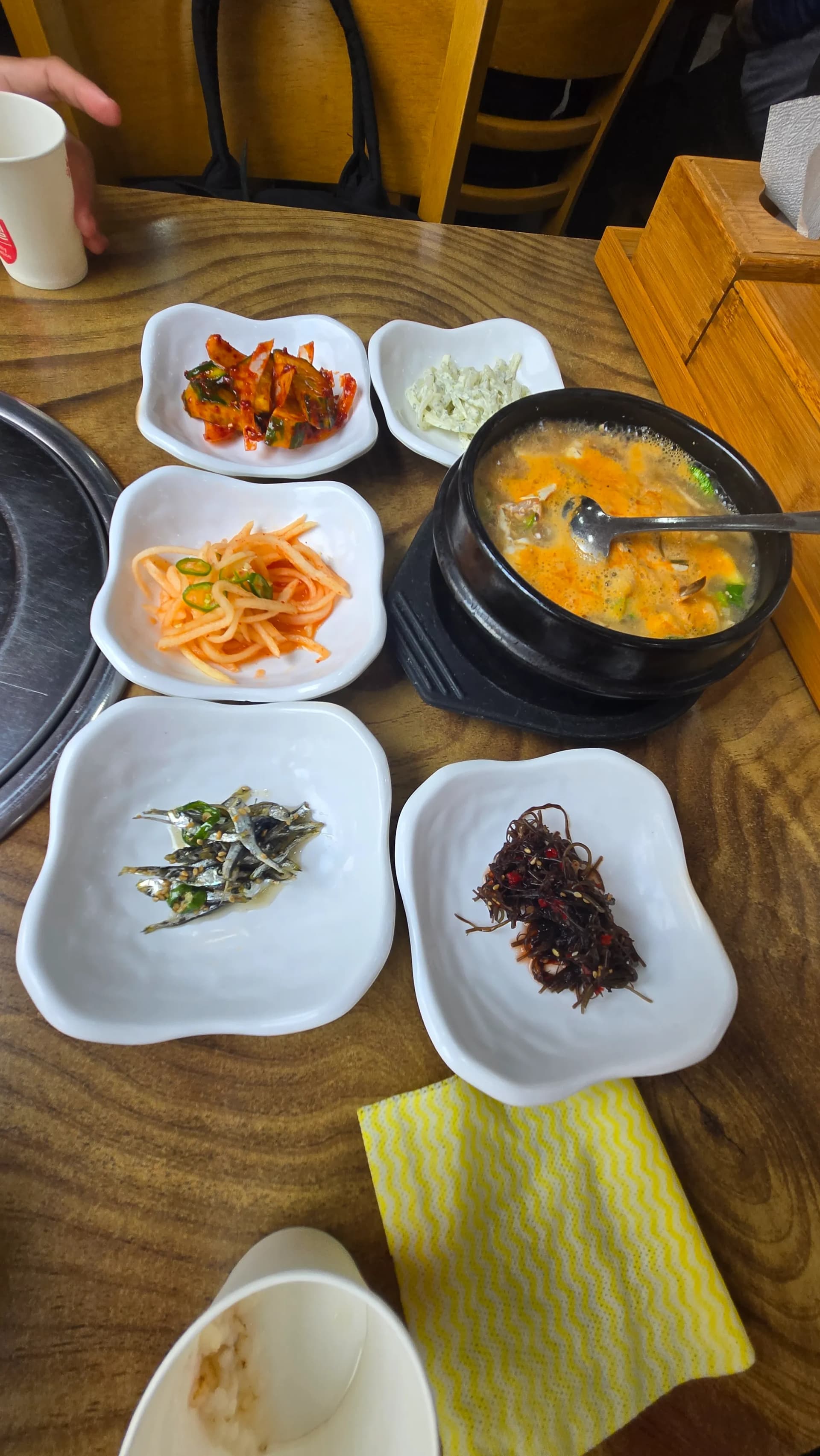
The moment you sit down, before the main dish even arrives, the side dishes get set up like this. Little plates, one by one, spread across the table — that's the basic baekban setup. A stew and several side dishes come out first, and the grilled fish takes a bit longer since they grill it fresh to order. A lot of first-timers at Korean restaurants see this spread and go "Wait, this is ALL for me?" — and yes, it's all for one person. In Korea, this isn't anything special. This is just a completely normal Korean food table setting.
Stir-Fried Anchovies — The Ultimate Korean Side Dish Staple
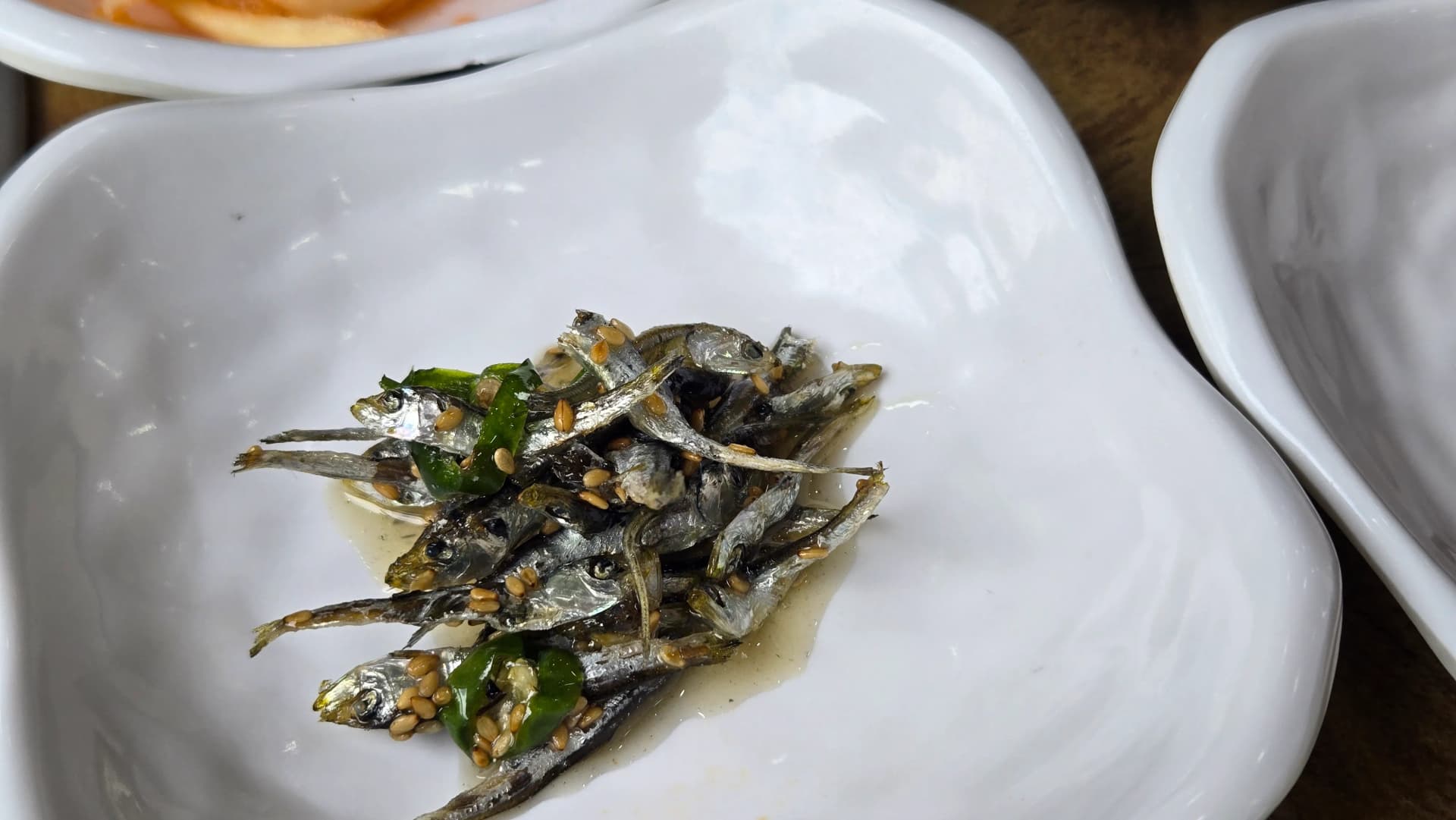
This is myeolchi-bokkeum (stir-fried anchovies). Small anchovies tossed in a soy sauce glaze with sesame seeds and shishito peppers. After kimchi, this might be the single most common side dish in all of Korean cuisine. They're crunchy and salty-sweet, and once you start putting them on top of your rice and eating them together, you honestly cannot stop. The little fish are whole — heads, tails, everything — so it might look a bit unfamiliar at first, but you eat the whole thing. They're surprisingly nutty and savory.
Seasoned Hijiki Seaweed — A Side Dish Straight From the Sea
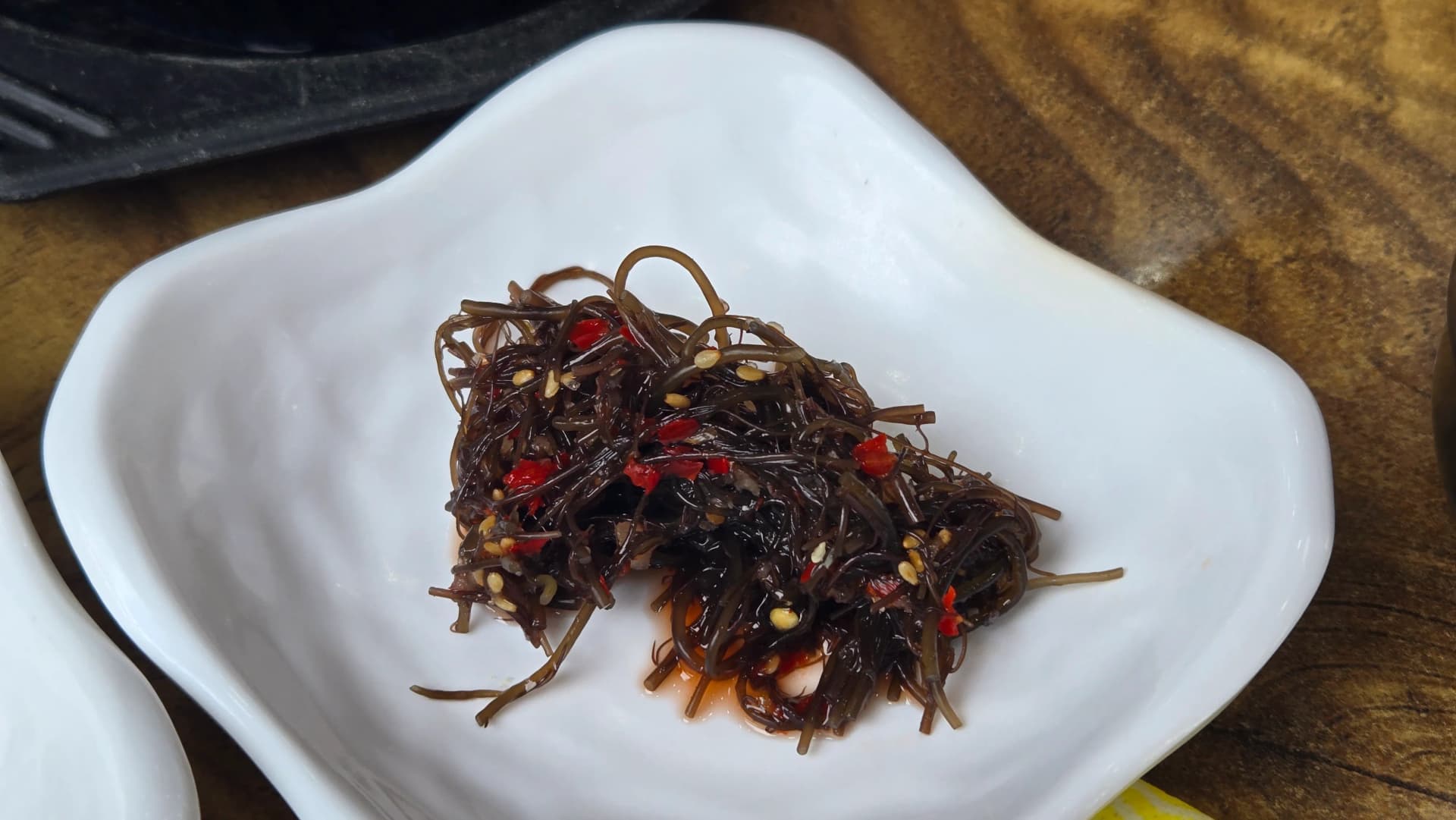
This is tot-muchim (seasoned hijiki seaweed). It came dressed in a chili flake seasoning with sesame seeds sprinkled on top. The flavor is tangy with a slightly salty edge. Hijiki is a type of seaweed that grows in the ocean — it looks like thin little twigs and is almost black in color. Think of it as a cousin of miyeok (wakame) or gim (roasted seaweed sheets).
The texture is pretty unique — when you chew it, there's this satisfying little snap. It's not chewy and it's not mushy, just somewhere in between. The flavor itself isn't strong, so it absorbs the seasoning really well, and when you pile it on top of rice and eat it together, you keep reaching for more almost without realizing it. Personally, I'm always happy when tot-muchim shows up on the table.
Radish Salad, Cucumber Kimchi, and Konjac — Each Side Dish Has Its Role
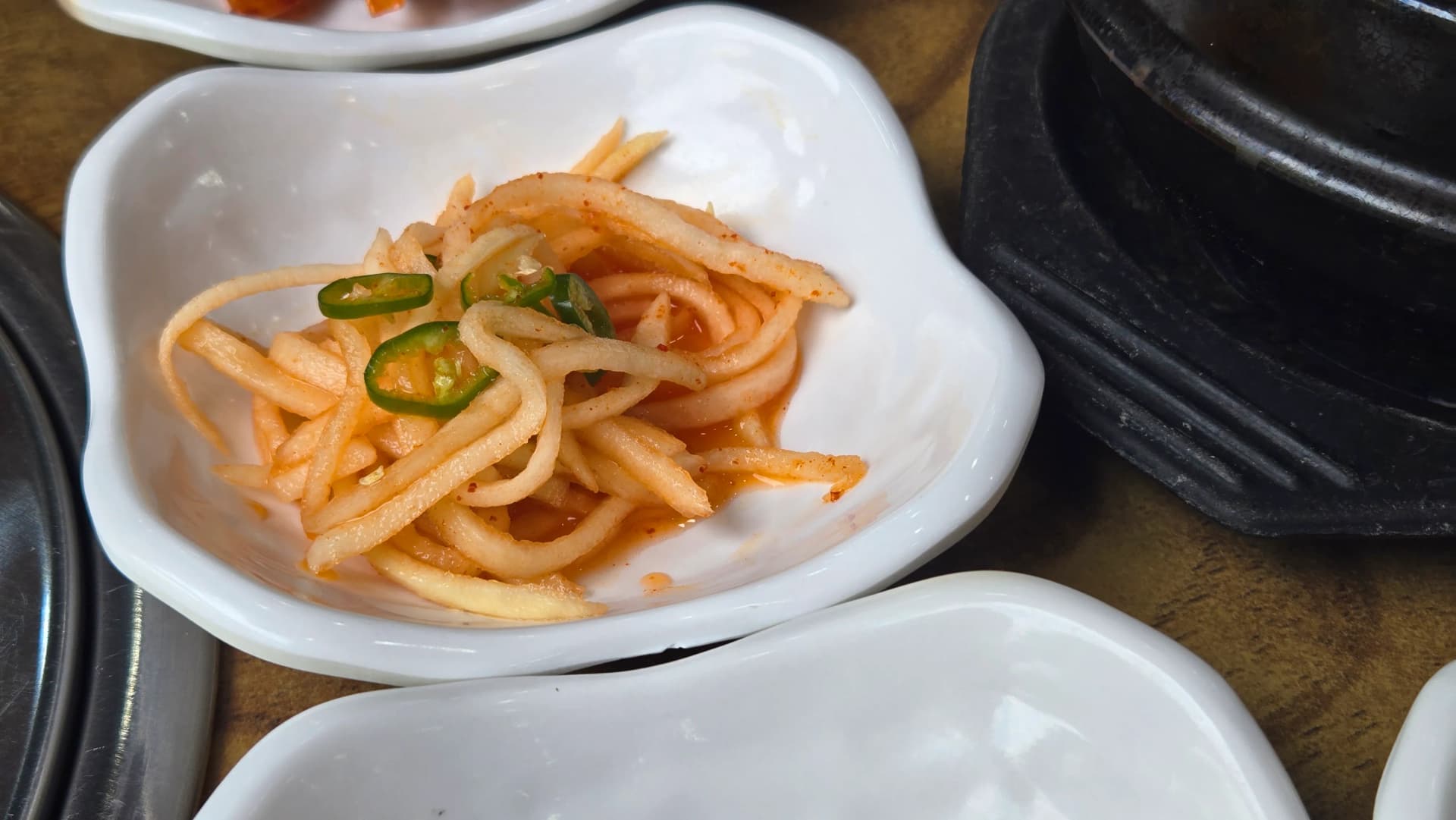
This is mu-saengchae (spicy shredded radish salad). Radish sliced into thin strips and tossed in a tangy chili seasoning — it's crunchy and refreshing. Grilled fish can be pretty oily, right? Having a bite of this in between cleans your palate right up. There's a reason this shows up at almost every baekban restaurant. It balances out the richness of the main dish.
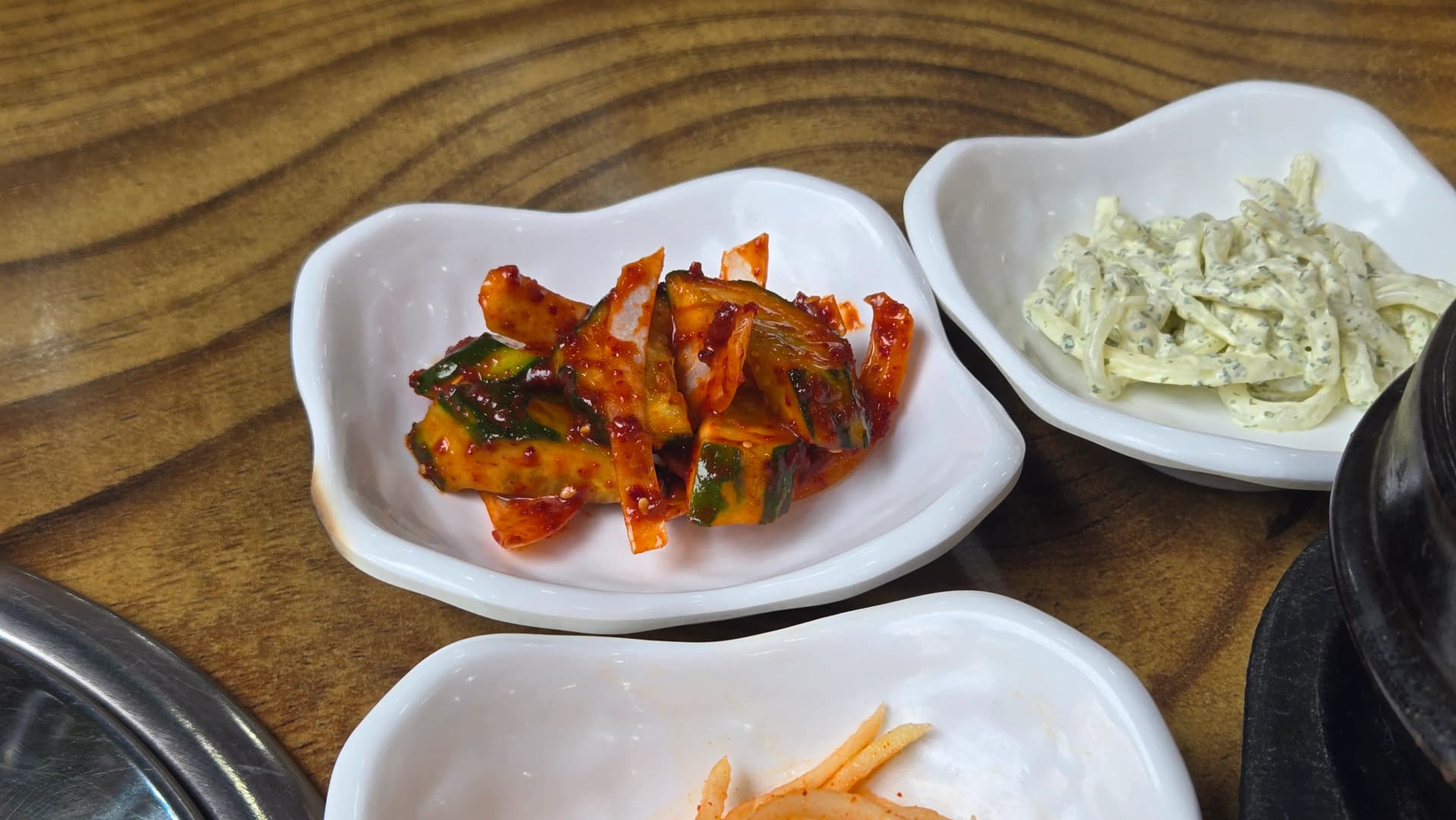
Cucumber kimchi (oi-kimchi) came out too. When people think of kimchi, they usually just picture napa cabbage kimchi, but Korea actually has dozens of different types of kimchi depending on the base ingredient. This one is cucumber split open with spicy seasoning stuffed inside. The texture is lighter and more refreshing than regular cabbage kimchi. It's especially popular in summer, but plenty of restaurants serve it year-round.
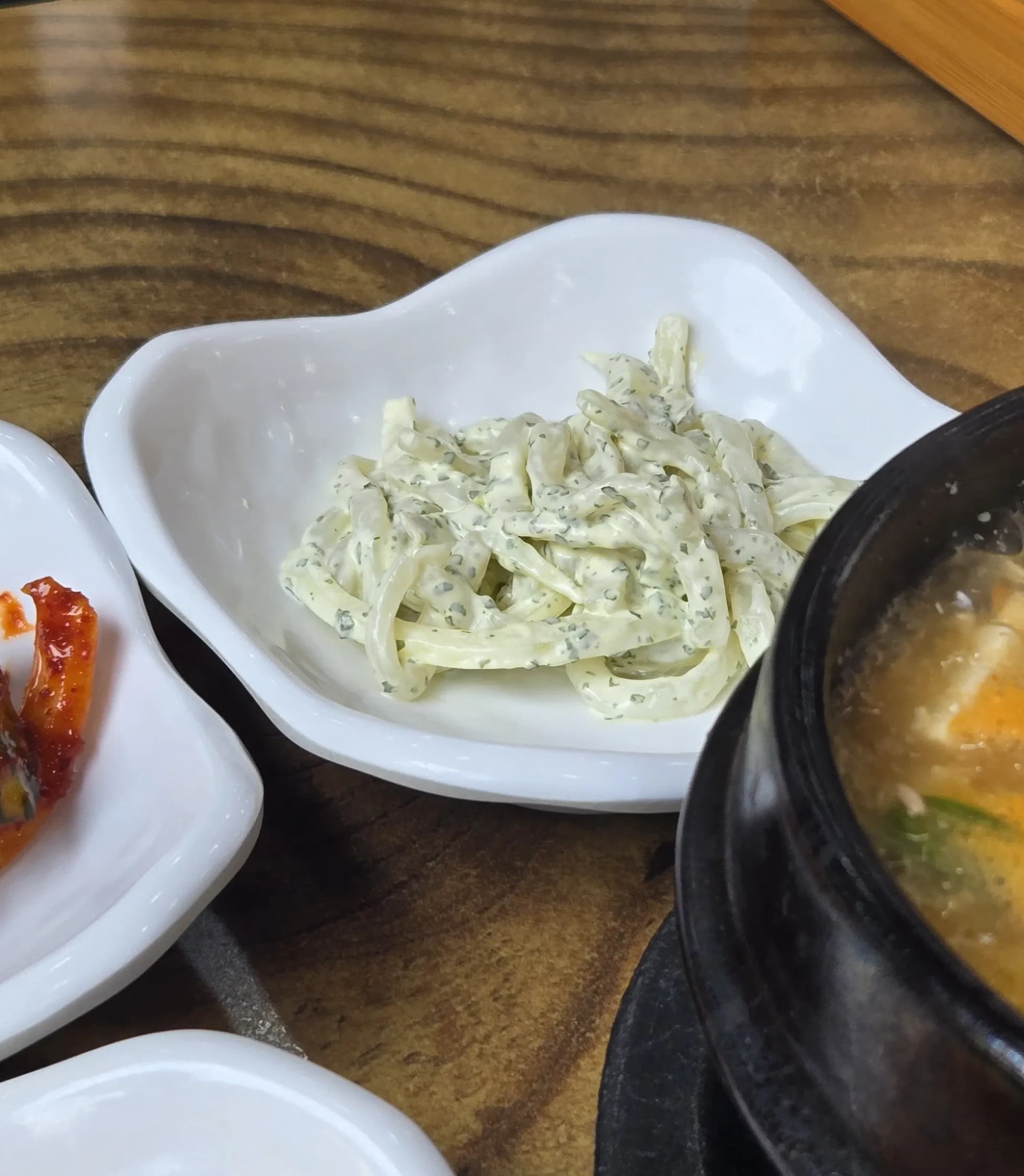
There was also konjac topped with mayonnaise. Konjac has almost no flavor on its own, but the texture is wonderfully bouncy and chewy. With the mayo on top, it becomes creamy and rich. Most of the other side dishes are based on spicy or salty Korean seasonings, so this one was a nice change of pace — completely different vibe, which helped reset my taste buds.
Kimchi, Seasoned Greens, and Seaweed — Korean Food Basics All on One Plate
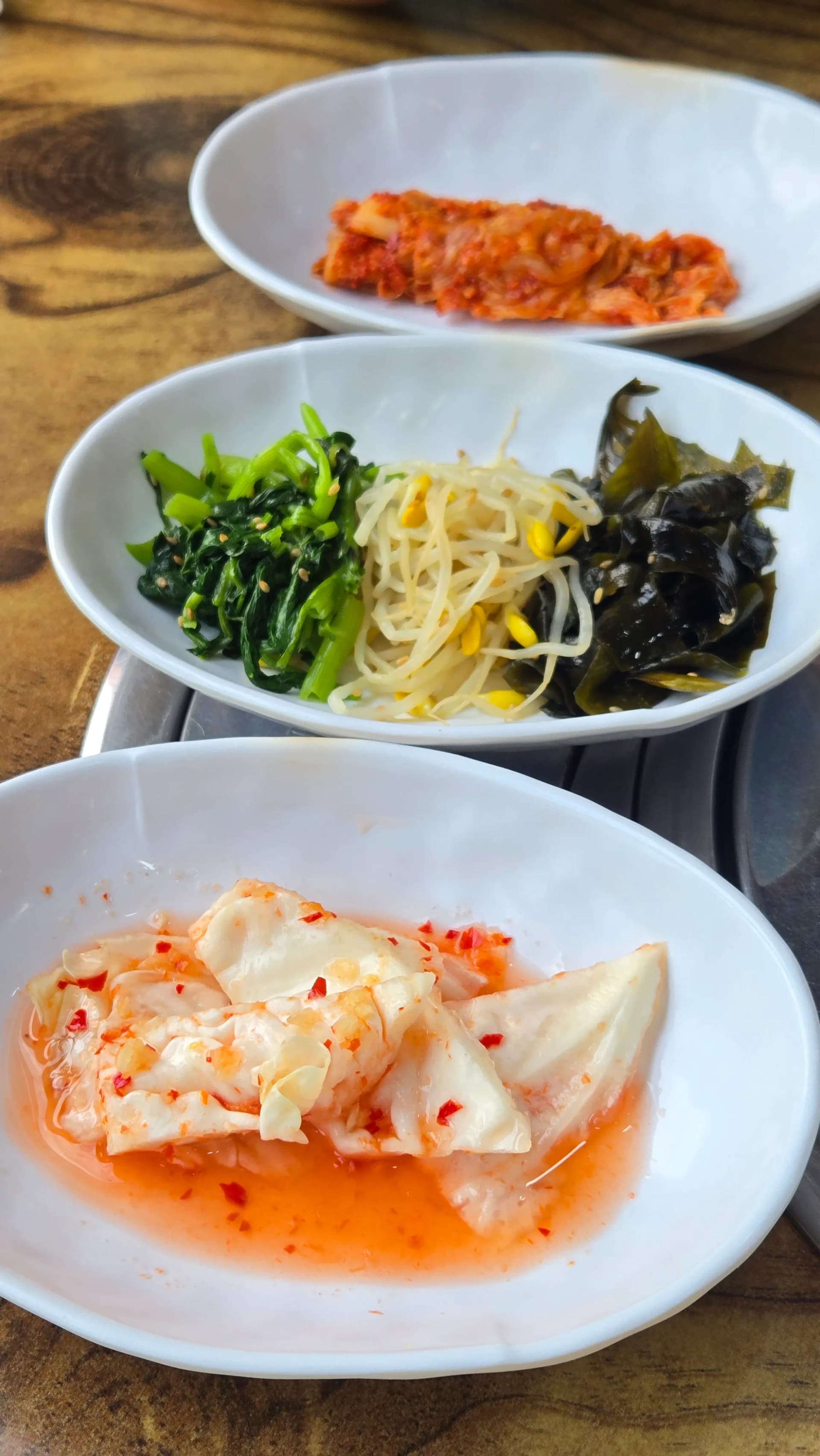
From here, several side dishes came together on one plate. Right at the top: kimchi. Napa cabbage fermented with chili flakes, salted seafood, garlic, and other seasonings — it's Korea's signature fermented food, and a Korean meal without kimchi basically doesn't exist. Korean people say they literally can't eat rice without kimchi, and honestly, that's not an exaggeration. They mean it.
Next to it were sigumchi-namul (seasoned spinach), kongnamul (soybean sprouts), miyeok (seaweed), and at the bottom, cabbage dressed in a tangy sauce. The seasoned spinach is blanched and tossed in sesame oil — soft and nutty. The soybean sprouts have that signature crisp crunch. In Korea, soybean sprouts go in soups, on top of bibimbap, and as a side dish — they're one of the most versatile ingredients in Korean cooking. The dressed cabbage had a slightly Western feel compared to all the traditional Korean seasonings around it, so ironically, it might be the most familiar-tasting thing on the table for foreigners.
How Do You Actually Eat All These Side Dishes?
A lot of people wonder about this. Korean baekban doesn't come out in courses like a Western meal — everything lands on the table at once. And the way you eat it is simple. Take a spoonful of rice, pick up a bite of whatever side dish you want, eat them together, sip some soup. Repeat. Eat whatever you want in whatever order you feel like. There are no rules.
The utensils are chopsticks and a spoon. You use chopsticks to pick up side dishes, and the spoon for rice and soup. No forks or knives. And if chopsticks are tricky for you, using just the spoon for everything is totally fine — nobody will think it's weird at all, so don't stress about it.
Side Dish Refills Are Free
If you run out of any side dish, just say "banchan deo juseyo" (more side dishes, please) and they'll bring out fresh ones. No extra charge. First-time visitors to Korea are usually pretty shocked when they find this out. I remember taking a foreign friend once, and when the server brought refills, they just laughed and said "Seriously?!"
Finally, the Main Event — Three Grilled Fish
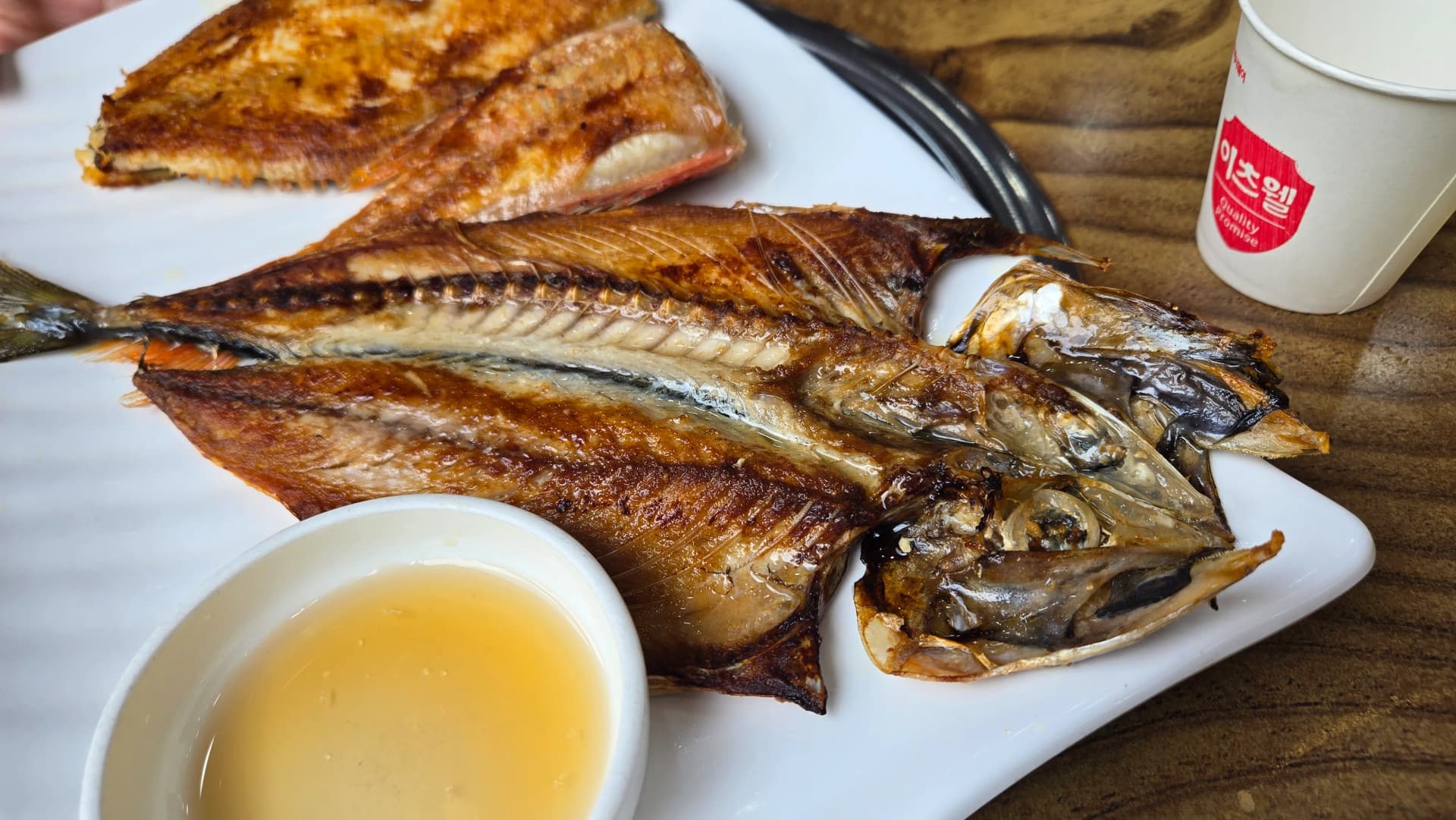
And here comes the main event. Three fish lined up on a plate, each one a different type. The small dish on the side is chojang (chili vinegar paste) — it's there for dipping the fish. With all the side dishes already spread out on the table, the moment this plate arrives is when the real meal begins. The fish gets grilled after you order, so it takes a little while. You just munch on the side dishes while you wait, and right around the time it's ready, this rich, savory aroma of sizzling fish oil starts drifting over.
Goldeye Rockfish — Mild and Easy to Eat
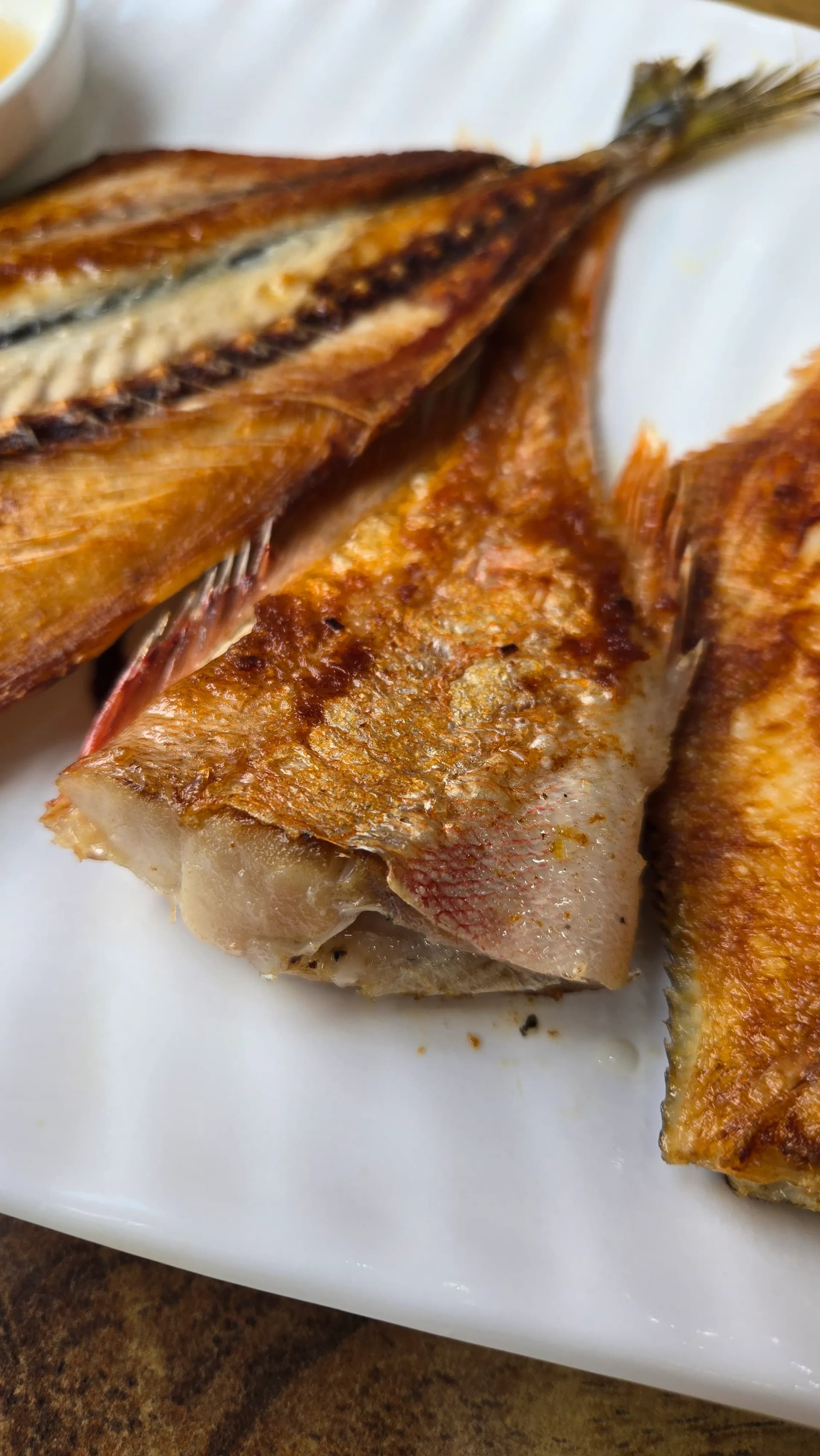
The one in the middle is yeolgi (goldeye rockfish). Its official Korean name is bulbolak, but people usually just call it yeolgi. It's got a distinctive red skin, and size-wise it's a bit bigger than your palm. When grilled, the skin gets nice and crispy while the flesh stays moist inside. The meat is tender and mild with very little oil, so it's not heavy at all. Press gently with your chopsticks and the flesh just slides right off the bone.
Out of the three fish, this one was the easiest to eat. There's almost no fishy smell either, so even if you're not super comfortable with fish yet, this one shouldn't be intimidating. It's a fish that shows up at Korean baekban restaurants pretty frequently.
Flatfish — The One With Real Chew
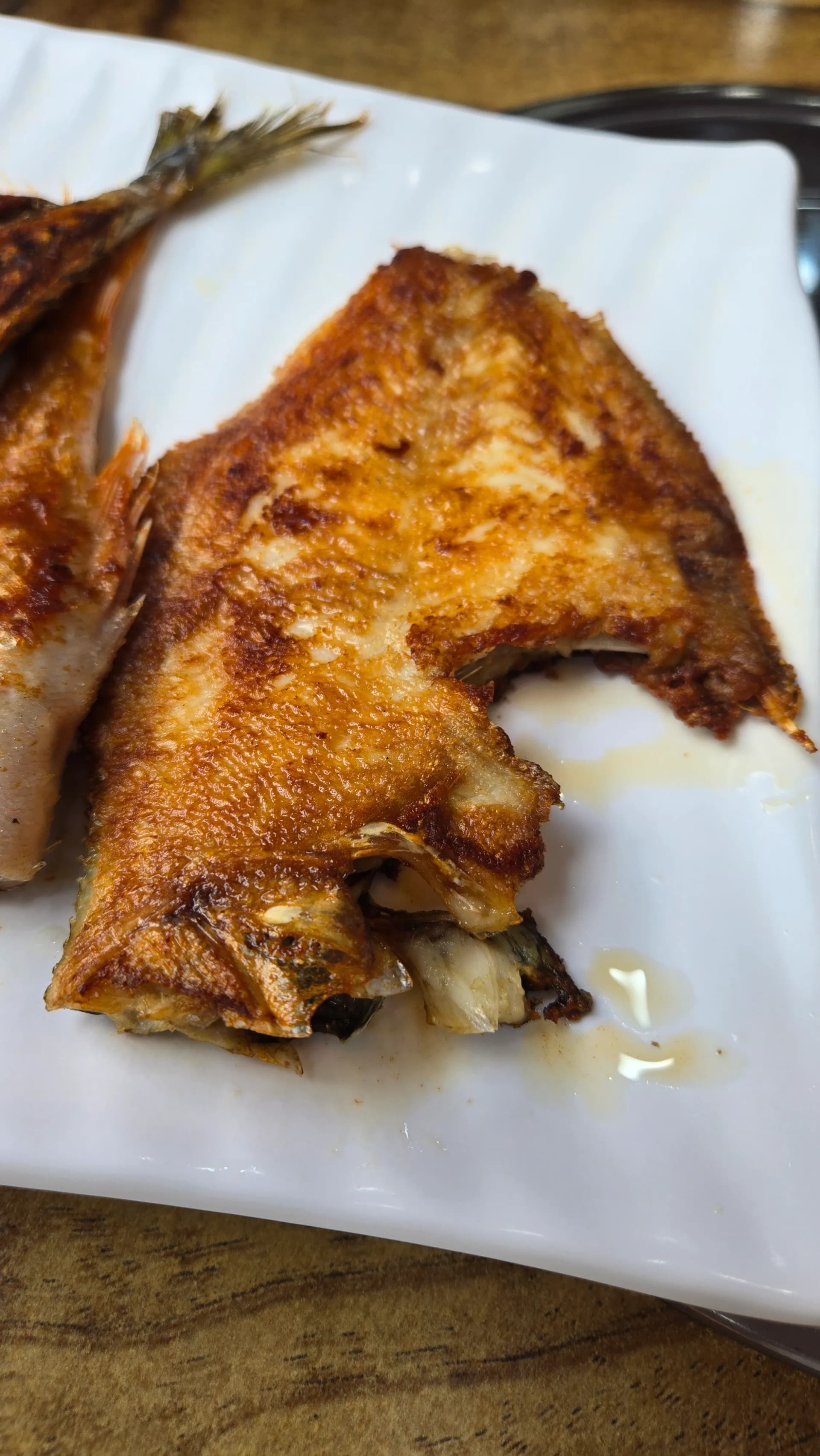
This is gajami (flatfish). Just like the English name suggests, it's a flat bottom-dwelling fish. It's got that quirky look where both eyes are on the same side of its head — but in this photo, it's been butterflied and grilled open. The outside is golden and crispy, and the flesh has a firmer texture than the rockfish. There's real chew to it, so if you're someone who values texture, this one might be the most satisfying of the three.
It does have more bones, so you need to be a little careful while eating. But honestly, the process of carefully pulling the meat off a well-grilled flatfish with your chopsticks is kind of fun in its own way.
Mackerel — The King of Korean Grilled Fish
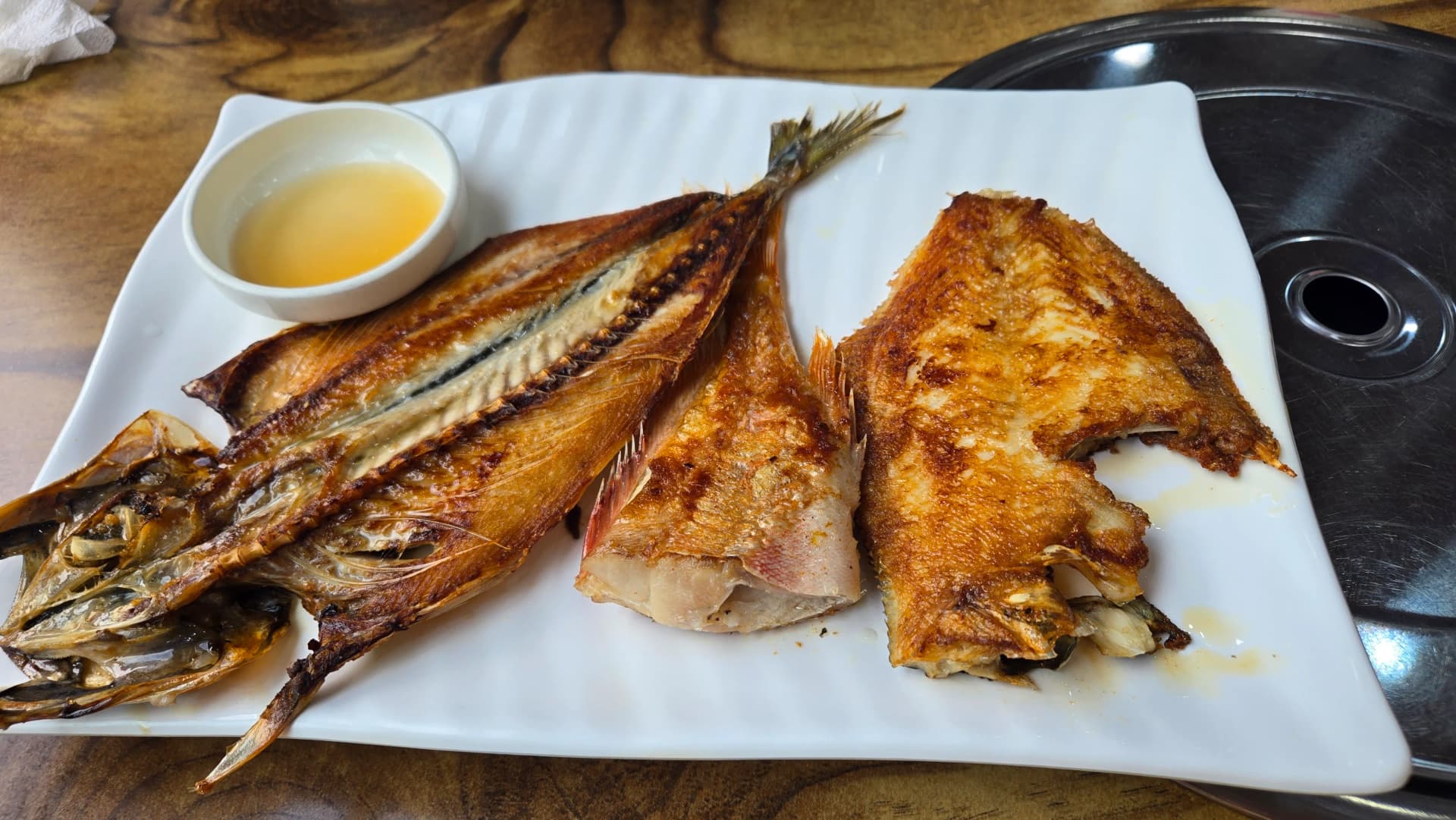
The one on the far left is godeungeo (mackerel). When Koreans think of grilled fish, this is the first one that comes to mind. The skin is rich with oil, so when it hits the grill, the outside gets beautifully crispy while this incredible savory aroma just fills the air. The flesh is moist and fatty — the most intensely flavored of all three fish. People say a spoonful of rice with a piece of mackerel on top is so good you don't even need any other side dishes, and honestly, they're not wrong.
Having three different types of fish on one plate like this means you get to compare the flavors and textures as you eat. I started with the mild rockfish, moved on to the chewy flatfish, and finished with the rich mackerel — but there's no set order, so just go with whatever you're craving.
The Full Grilled Fish Baekban Spread — This Is All for One Person
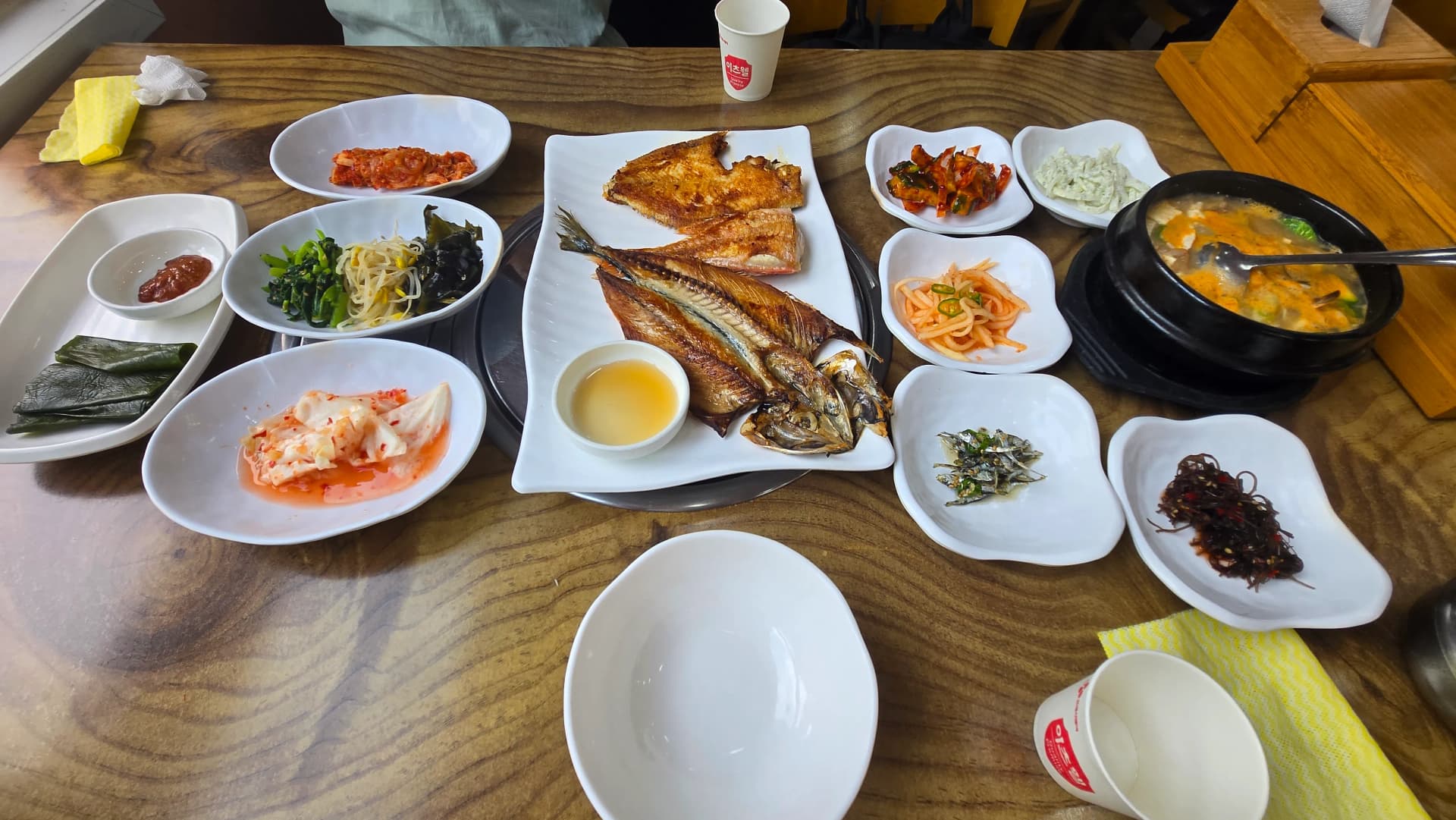
This is the full grilled fish baekban spread. Three grilled fish in the center, side dishes fanning out on both sides, plus a piping hot stew. All for one person. The price was 12,000 won — about $9.
Side dishes get refilled for free when you finish them, and if you want more fish, you can order extra. Extra fish does cost additional, but if there's one type you really liked, you can just order one more of that specific fish.
And this side dish setup isn't unique to this particular restaurant. When you go to any baekban place in Korea, this is the baseline. The specific side dishes vary from place to place, but this format — a bunch of little plates loaded with different side dishes — that IS baekban. Think of it as the fundamental form of everyday Korean food.
Baekban Prices Vary by Main Dish
If you swap out the grilled fish for a main like stir-fried pork or tofu stew, the price drops to around 7,000–8,000 won (about $5–6). The side dish lineup stays pretty much the same — the price difference is really just about the main dish. Grilled fish baekban costs a bit more because they grill it fresh to order, which takes more time and effort.
An Empty Table Is the Most Beautiful Sight
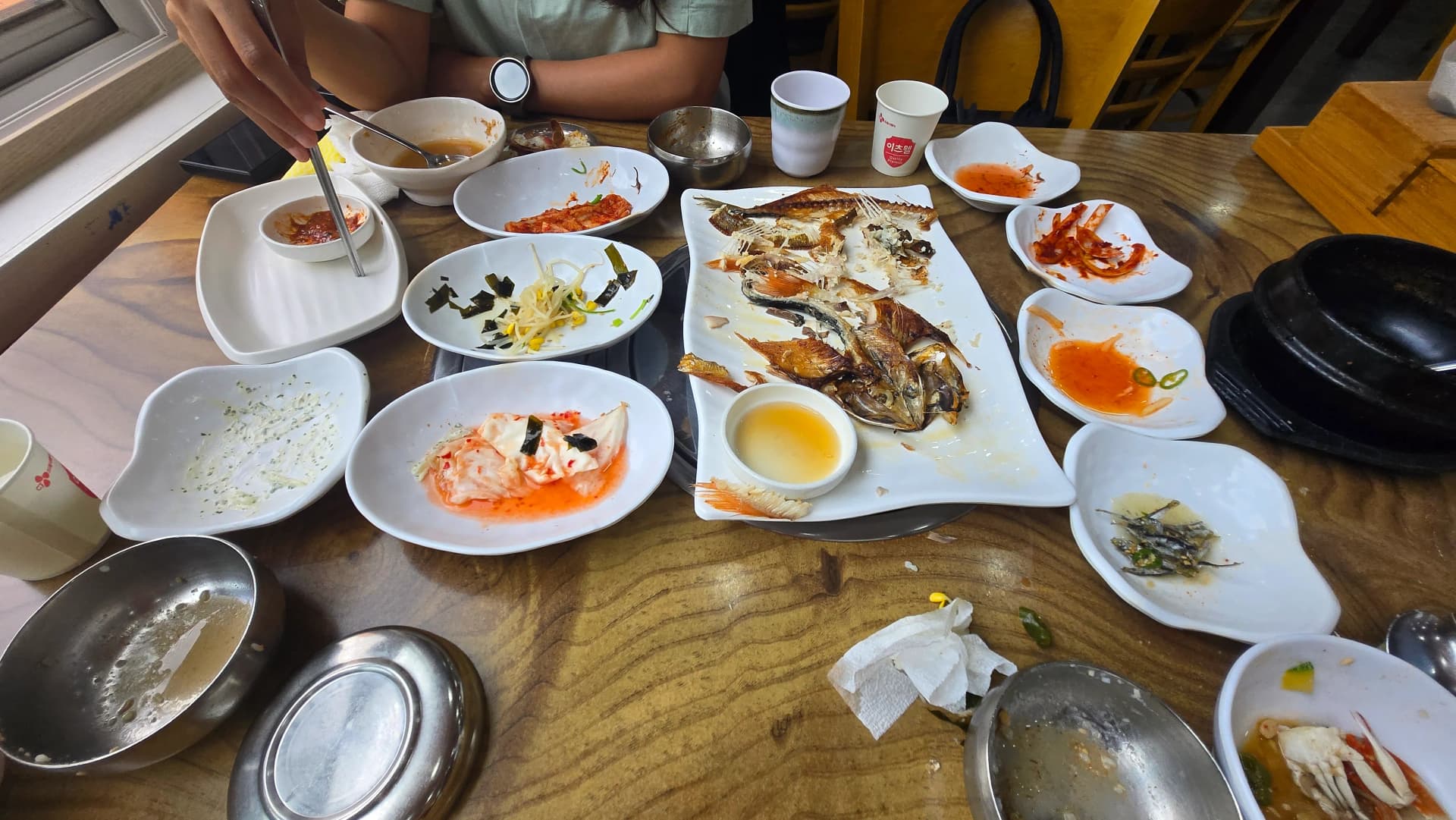
Nothing left but fish bones. The side dish plates are nearly empty. You can see the bottom of the stew pot. In Korea, a table cleaned out like this means one thing — the food was good. Getting this full on a $9 meal is a perfect example of the incredible value that Korean food offers.
Try a Baekban Restaurant on Your Next Trip to Korea
Samgyeopsal and fried chicken are obviously great when you're traveling in Korea, but try ducking into a neighborhood baekban restaurant for at least one meal. It doesn't need to be near a tourist area. In fact, those little places tucked inside alleys with faded old signs are often the best ones. If you see grilled fish baekban on the menu, order that. Sit down, the side dishes will come out on their own, and when the fish arrives fresh off the grill, just eat it with rice. That's it.
It's not glamorous, but it's filling. It's not expensive, but it's deeply satisfying. This is the real Korean food that Korean people eat every day. If you experience a meal like this during your trip, Korea as a country will start to feel a little different — the kind of different you can only understand through food.
Cheonhajangsa Grilled Fish (Main Branch) — Restaurant Info
Cheonhajangsa Grilled Fish — Main Branch
Address — 63, Suyang 1-gil, Geoje-si, Gyeongsangnam-do, 1F (Geoje Island, about 4 hours southeast of Seoul)
Phone — +82-55-632-5358
Hours — Tue–Sun 11:00 AM – 8:00 PM (Break time 3:00 PM–5:00 PM / No break on Sat & Sun)
Closed — Every Monday
Parking — Free parking lot available
Note — All menu items require a minimum order of 2 servings
Main Menu
Grilled Fish + Doenjang-jjigae (Soybean Paste Stew) — $9
Grilled Fish + Kimchi-jjigae (Kimchi Stew) — $9
Grilled Hairtail — Price varies
Braised Mackerel with Aged Kimchi — Price varies
If you're traveling around Geoje Island, definitely stop by. It's a place where you can properly experience what grilled fish baekban is all about. But really, every neighborhood in Korea has baekban restaurants like this, so even if you're not anywhere near Geoje, just walk into any baekban spot that catches your eye. You won't regret it.
This post was originally published on https://hi-jsb.blog.