
Ottogi Real Cheese Ramen Cup Review: Creamy or Greasy?
Table of Contents
12 items
Stumbling Upon Ottogi Real Cheese Ramen at the Convenience Store
Today I stopped by the convenience store and this bright yellow package caught my eye. It was Ottogi Real Cheese Ramen. Honestly, as I picked it up, I thought to myself, "Isn't this pretty predictable?" You know what cheese ramen means, right? It's probably going to be greasy.
When I looked up online reviews, I found quite a few comments saying "the savory taste is nice but it's on the greasy side" and "if you eat it too often, you'll get tired of it quickly." It's a ramen that competes purely on cheese flavor without any spiciness, so opinions are really divided.
But that actually made me more curious. Maybe this is ramen designed for kids who can't handle spicy food? It might be a perfect match for children's palates. Would it work for adult taste buds too? I'm going to try it myself and give you my honest thoughts!
Ottogi Real Cheese Ramen Package First Impressions
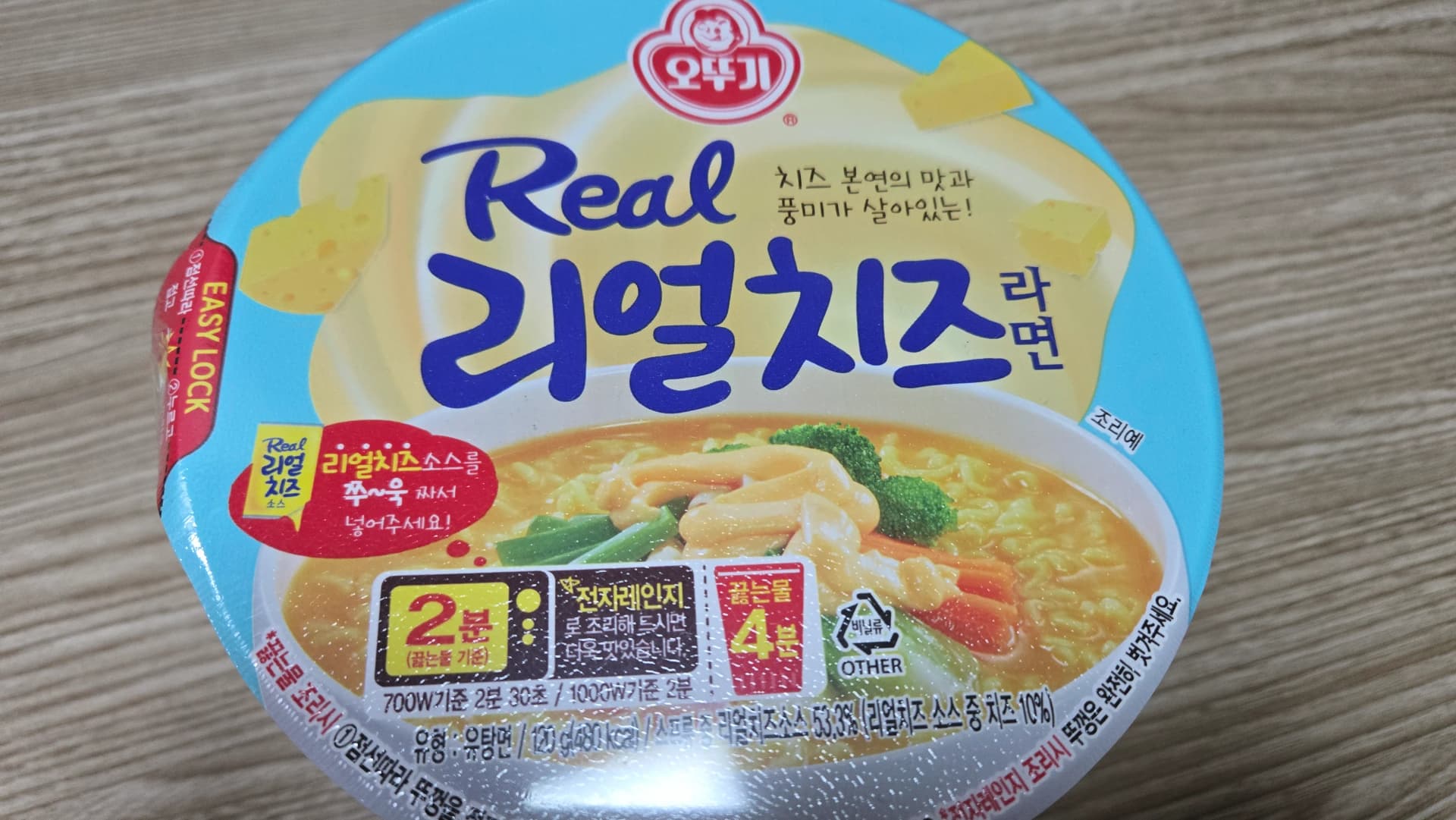
The moment I saw the package, I got a strong feeling. It's a combination of sky blue and yellow, with the only red being the Ottogi logo. It's the complete opposite of Shin Ramyun The Red's intense red lid. Just from these colors alone, you know not to expect any spiciness. If you're a cheese fanatic, this package alone would catch your attention, and honestly, just looking at it gives off vibes of ramen made for children.
Ottogi Real Cheese Ramen Sodium Content — Surprisingly Reasonable
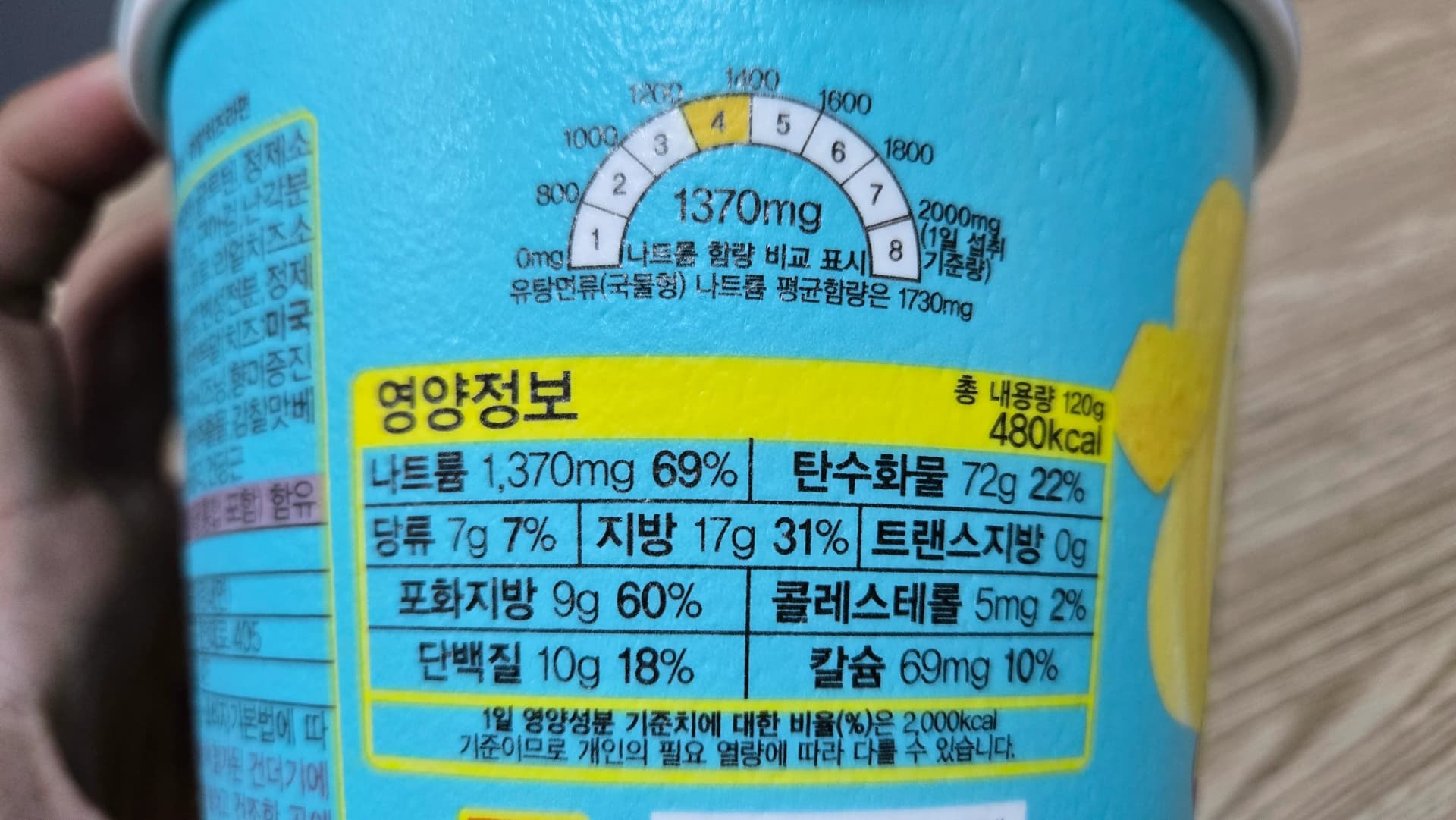
There's a sodium gauge displayed on the side of the container, and it's positioned at level 4 out of 8. Considering that the average sodium content for deep-fried soup-type noodles is 1,730mg, the 1,370mg (69%) is actually quite low. Shin Ramyun The Red Big Bowl was 1,680mg (84%), so there's a difference of 310mg. I thought cheese ramen would be saltier since it lacks spiciness, but looking at sodium alone, it's actually on the reasonable side.
Complete Nutritional Information Analysis for Ottogi Real Cheese Ramen
| Sodium 1,370mg 69% | Carbohydrates 72g 22% |
| Sugars 7g 7% | Fat 17g 31% Trans Fat 0g |
| Saturated Fat 9g 60% | Cholesterol 5mg 2% |
| Protein 10g 18% | Calcium 69mg 10% |
※ Percent daily values are based on a 2,000 calorie diet and may vary depending on individual caloric needs.
Looking at the complete nutritional information, it's 480kcal with 72g of carbohydrates and 10g of protein, which isn't much different from regular cup noodles. However, as expected from cheese ramen, the saturated fat is quite high at 9g (60%). It's unavoidable since it contains cheese sauce, but thankfully trans fat is 0g and cholesterol is only 5mg (2%). The calcium at 69mg (10%) is less than half of the bag version (154mg), which seems to be because the cup version contains less cheese sauce. If you're health-conscious, I recommend not drinking all the broth.
Ottogi Real Cheese Ramen Cooking Instructions — Done in 2 Minutes with Microwave
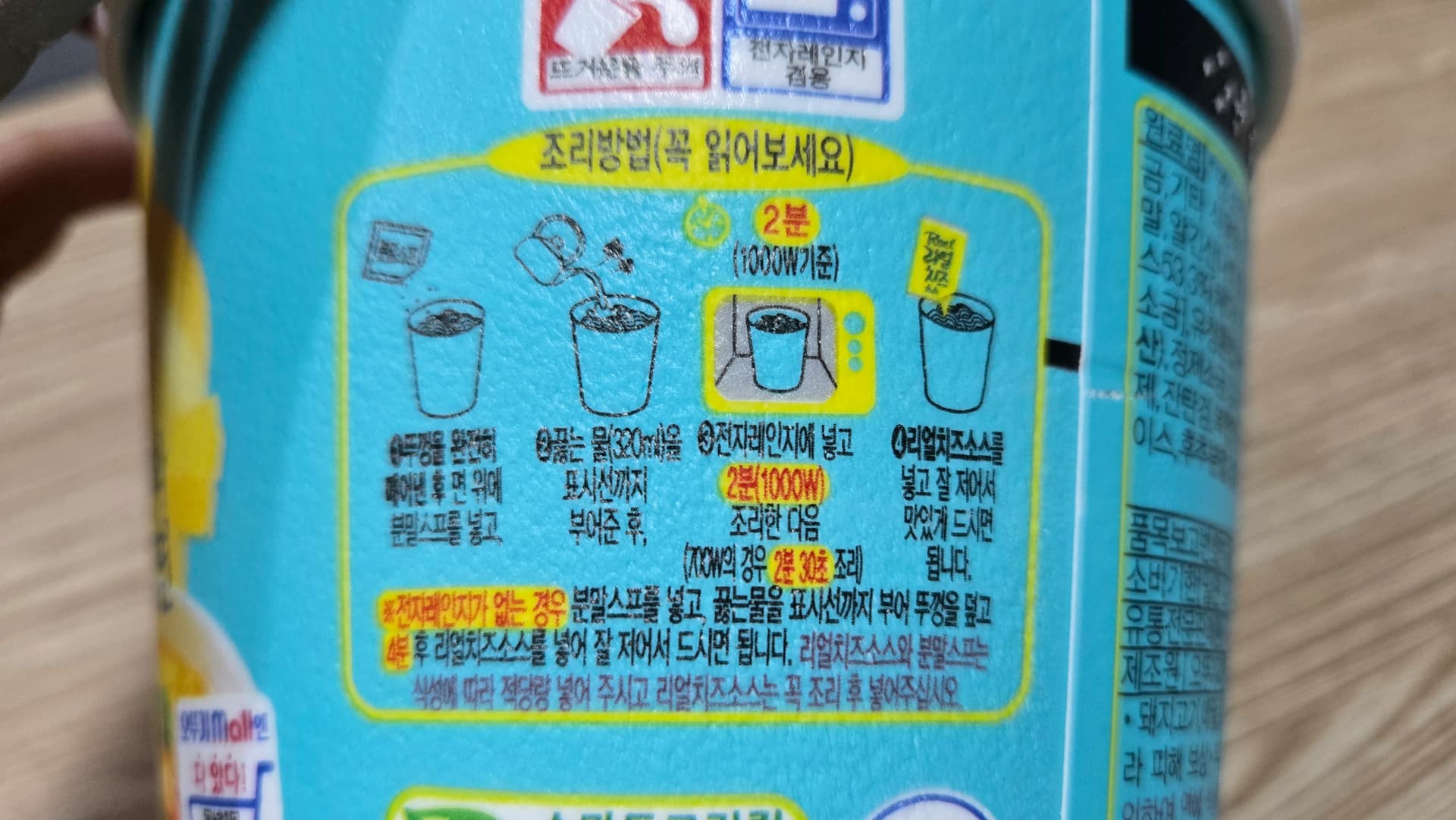
The cooking method is simple. Remove the lid completely, add the powder soup, then pour boiling water up to the fill line (320ml). Microwave for 2 minutes (1000W) or 2 minutes 30 seconds (700W), then add the Real Cheese Sauce at the end and stir well. If you don't have a microwave, you can pour boiling water, cover with the lid, and wait 4 minutes.
Ingredients and Allergy Information — No Pork Included
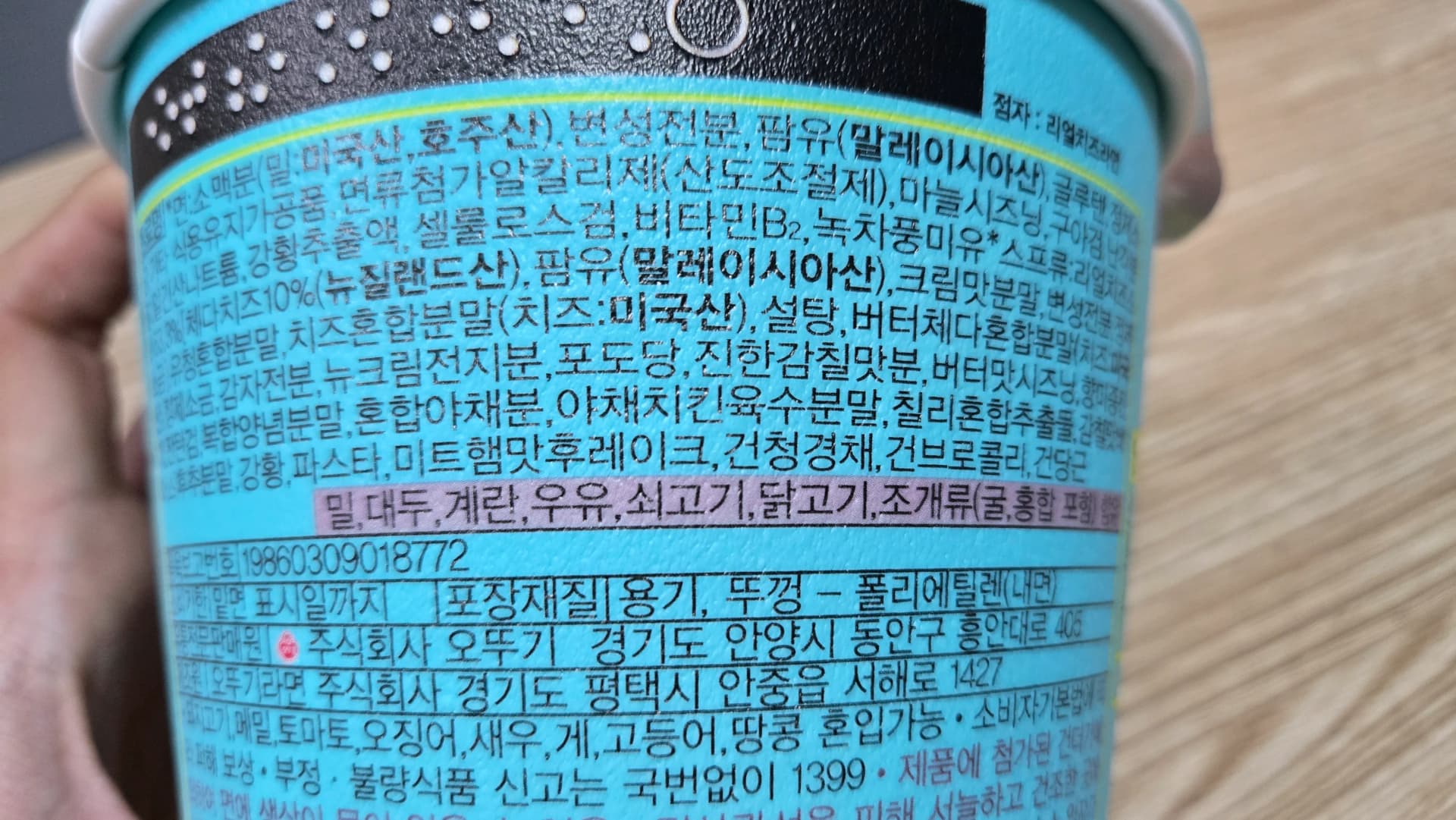
I checked the ingredients carefully. Wheat, soy, eggs, milk, beef, chicken, and shellfish are listed as allergen-inducing ingredients, and it also notes that tomato, squid, shrimp, crab, mackerel, and peanuts may be present due to cross-contamination.
But there's one thing worth noting here. Shin Ramyun The Red contains both pork and beef, which makes it unsuitable for Muslims, but Real Cheese Ramen does not contain pork. It only contains beef and chicken. Of course, since the beef and chicken aren't halal-slaughtered, it doesn't meet strict halal standards, but the absence of pork itself means Hindu practitioners only need to avoid the beef, and for those who prohibit pork, it offers more options than Shin Ramyun The Red.
Our blog operates in multiple languages, so we have readers from various countries and cultural backgrounds visiting us. That's why we try to provide accurate information about religious dietary restrictions whenever possible. The fact that the Ottogi Real Cheese Ramen cup version sold in Korea contains no pork ingredients is based on directly checking the ingredient label, so please use this as a reference.
Ottogi Real Cheese Ramen Contents — 1 Powder Soup Packet, 1 Cheese Sauce Packet
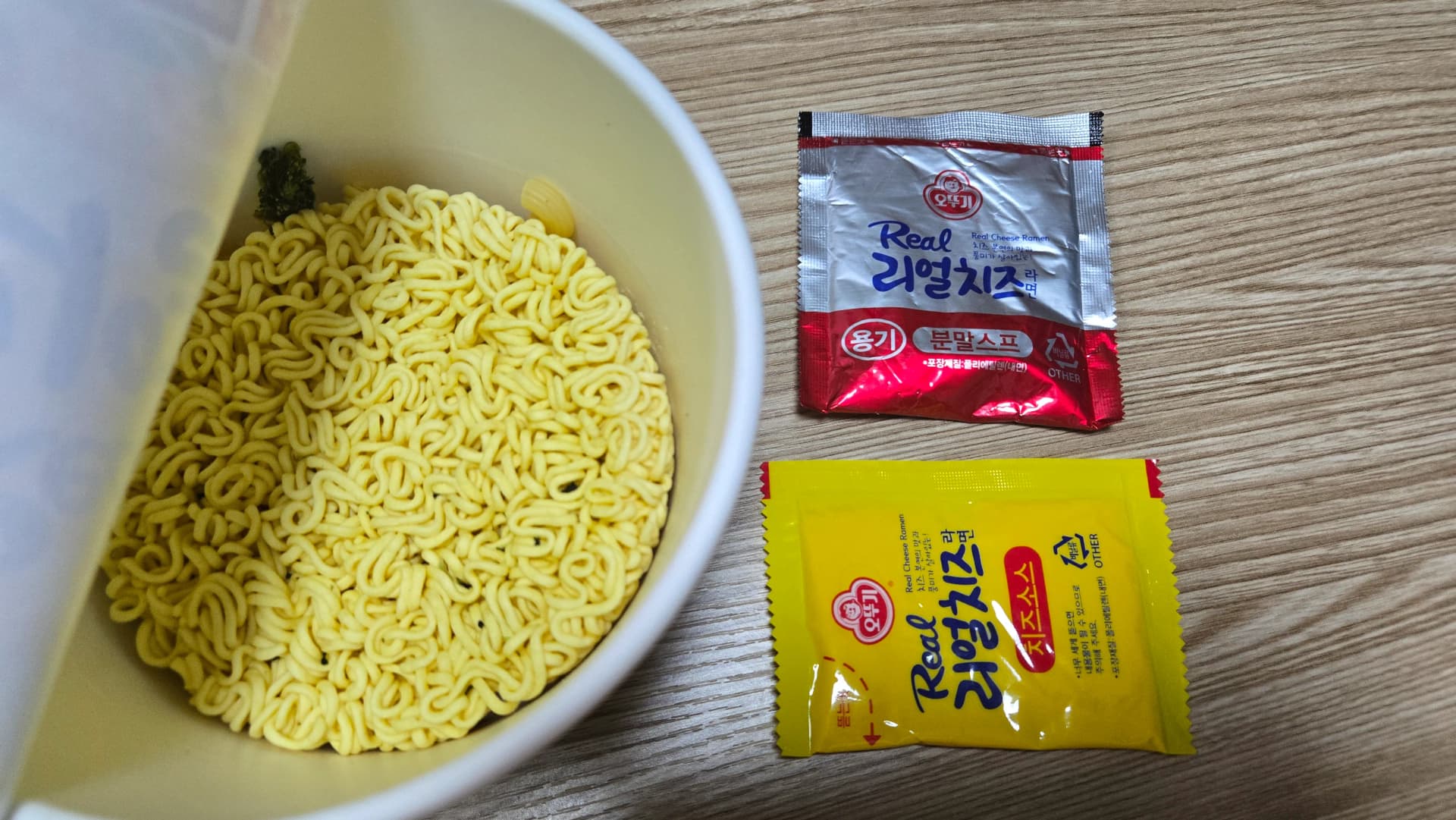
When you open the lid, you'll see yellow noodles with a few dried ingredients on top, one powder soup packet (red bag), and one Real Cheese Sauce packet (yellow bag). The configuration is simple. It's a two-step structure where you create the broth flavor with powder soup and finish with cheese sauce.
Ottogi Real Cheese Ramen Cooking Process — From Powder Soup to Cheese Sauce
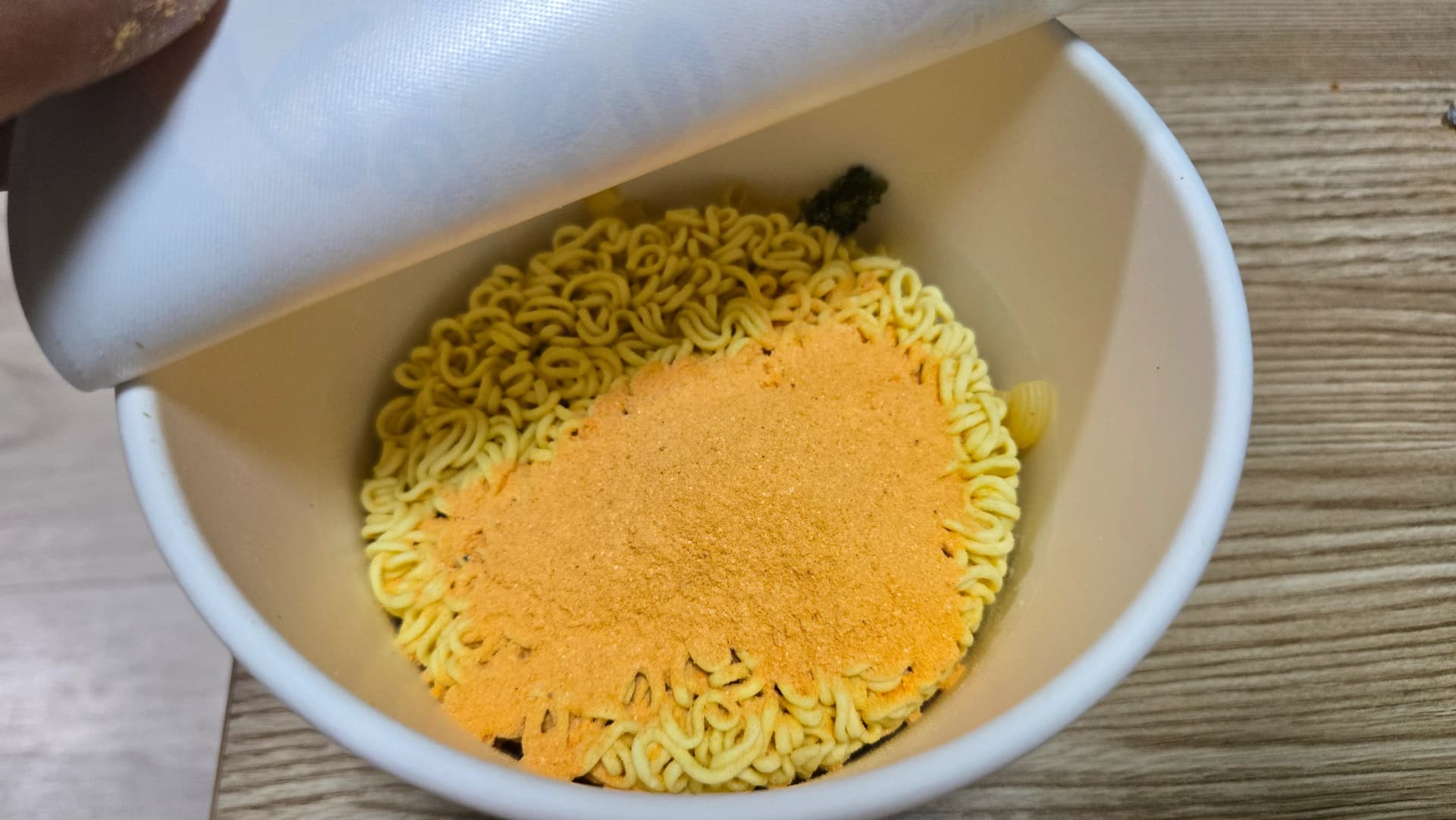
I sprinkled the powder soup over the noodles. Orange powder is piled high on top of the noodles, but at this stage, it smells more like regular ramen soup than cheese.
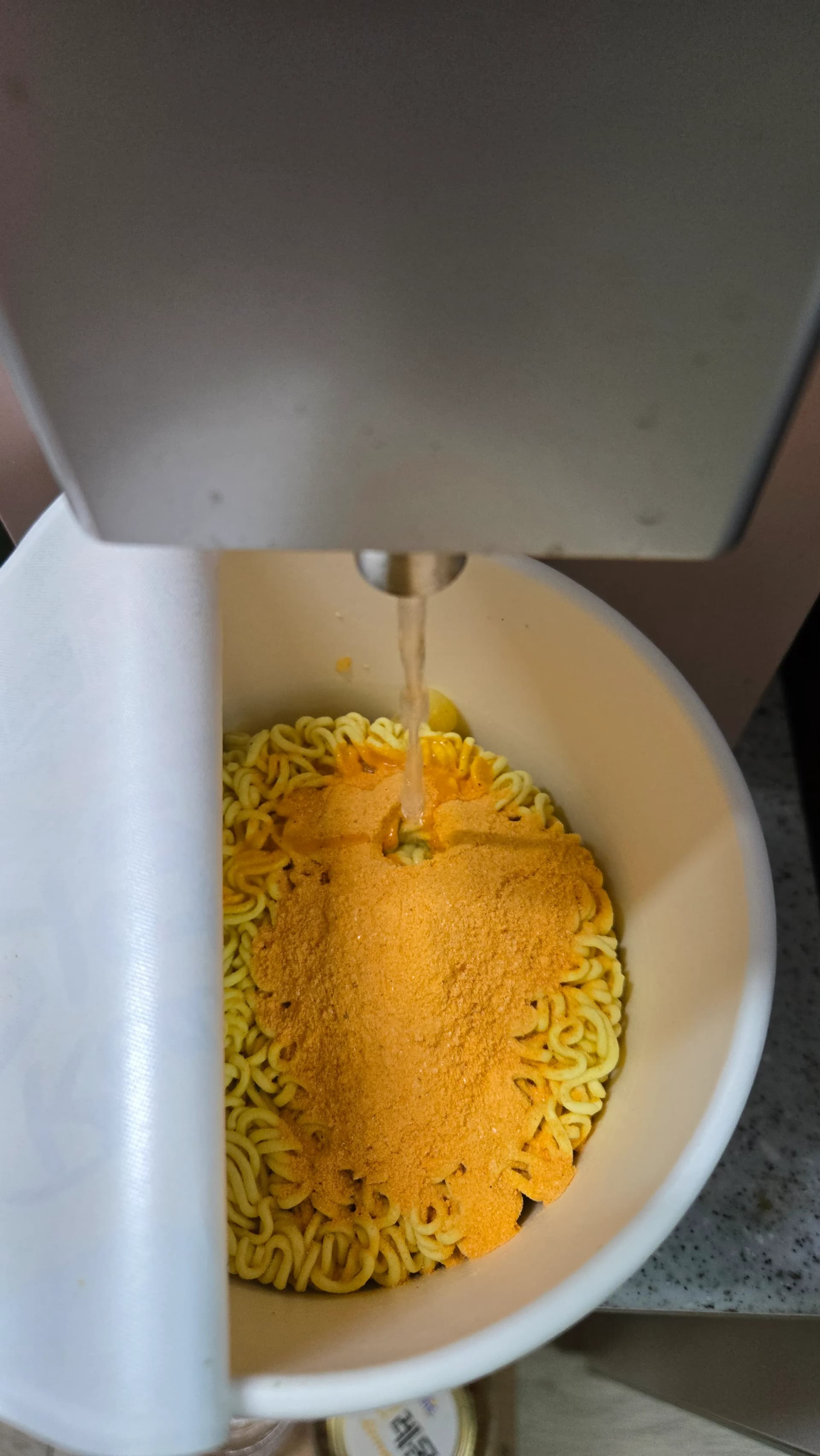
I poured boiling water up to the fill line and put it in the microwave. It's 2 minutes for 1000W, and once you start it, it goes by quickly.
After 2 Minutes in Microwave — Noodles Softened
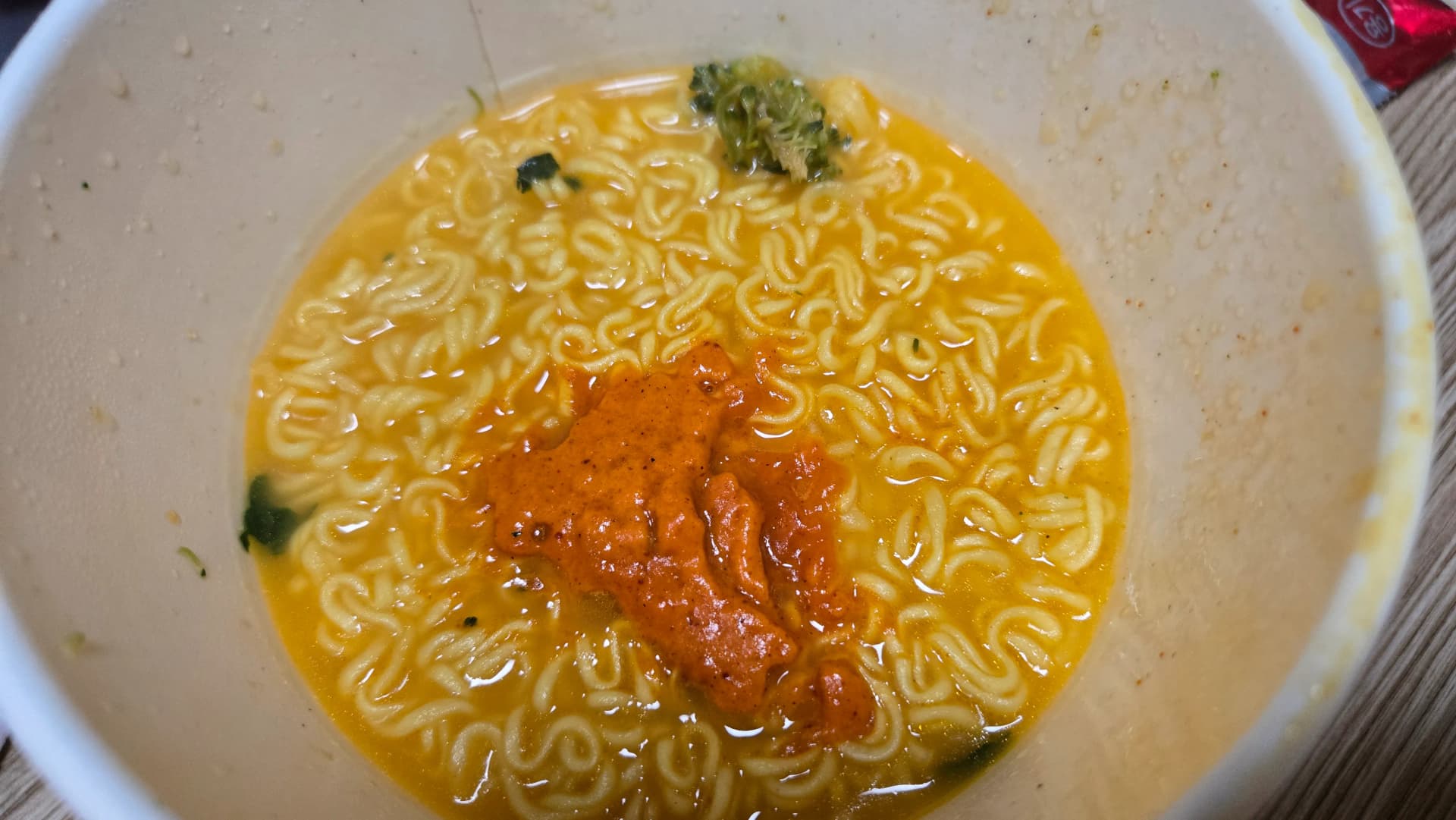
This is what it looks like after 2 minutes in the microwave. The broth has turned a golden color and the noodles are somewhat softened. Up to this point, it's just ordinary ramen.
Adding Real Cheese Sauce — Enter the Liquid Cheese
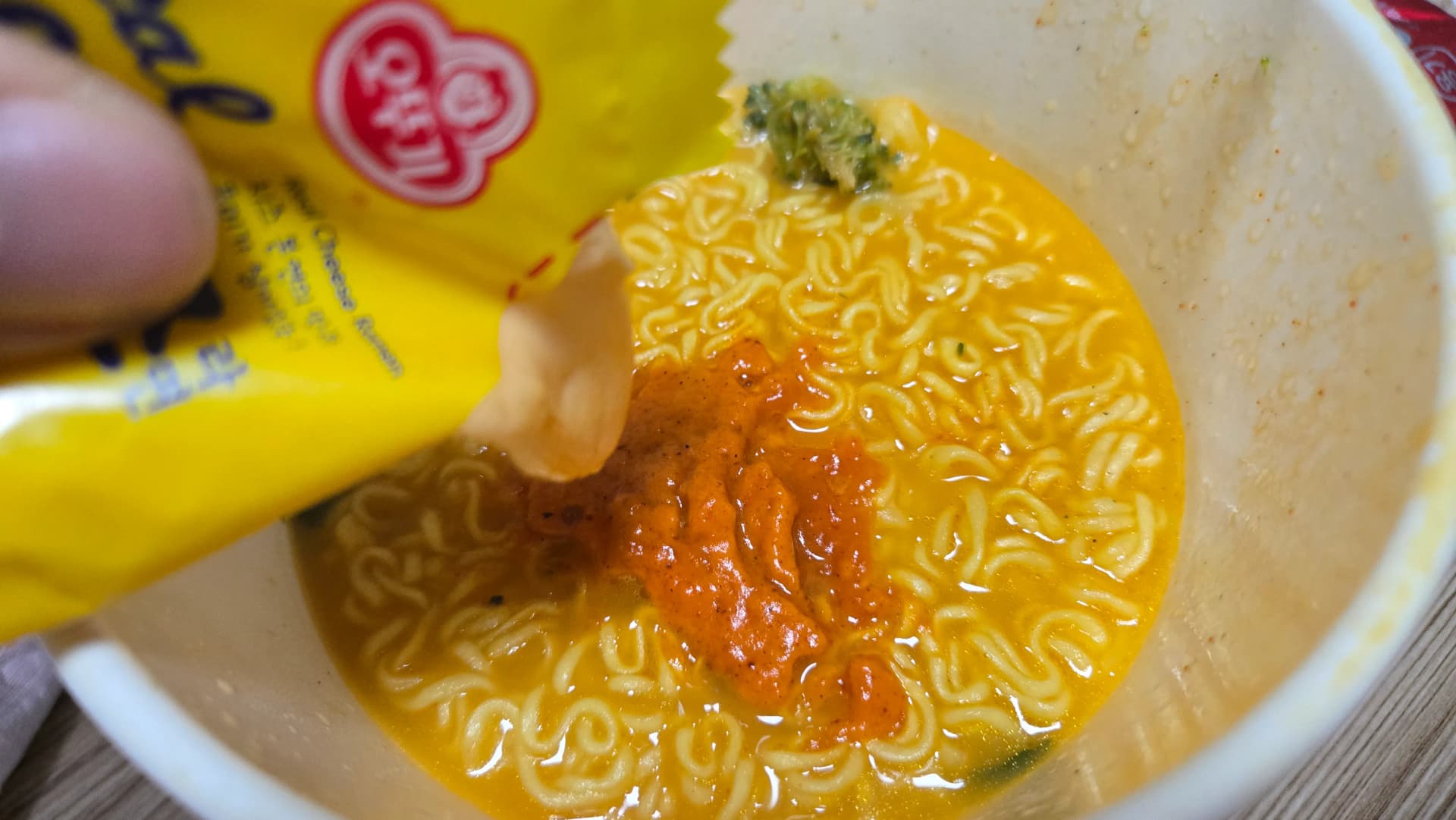
This is where the core element of this ramen appears. When you tear open the yellow packet, liquid cheese sauce squeezes out. It's not powder but actual liquid, so the cheese smell hits you the moment you start squeezing.
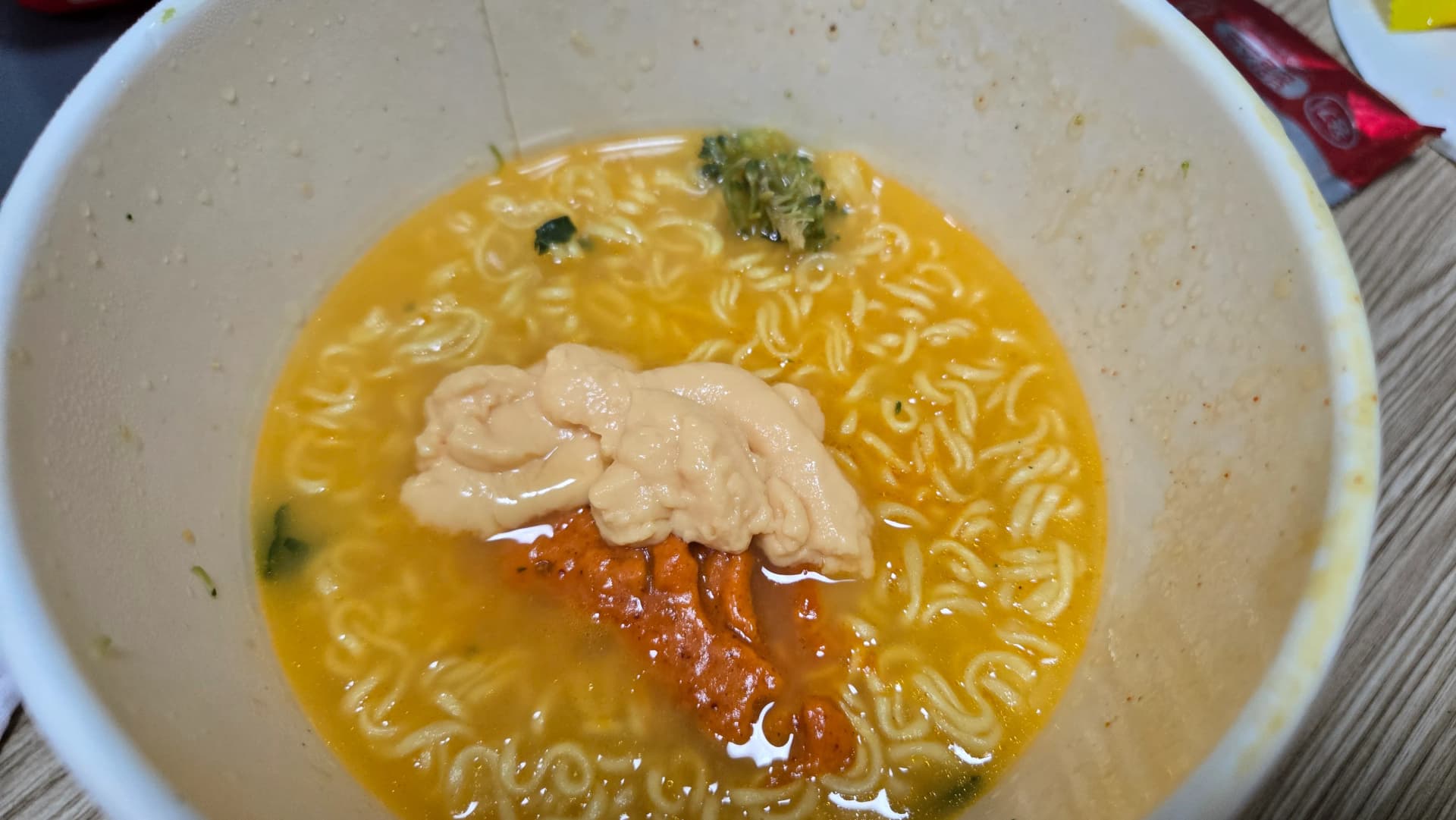
This is right after pouring the cheese sauce. A cream-colored mass sits on top of the broth, and since it hasn't been mixed yet, it's still separated. Just looking at it, you can tell it's going to be rich.
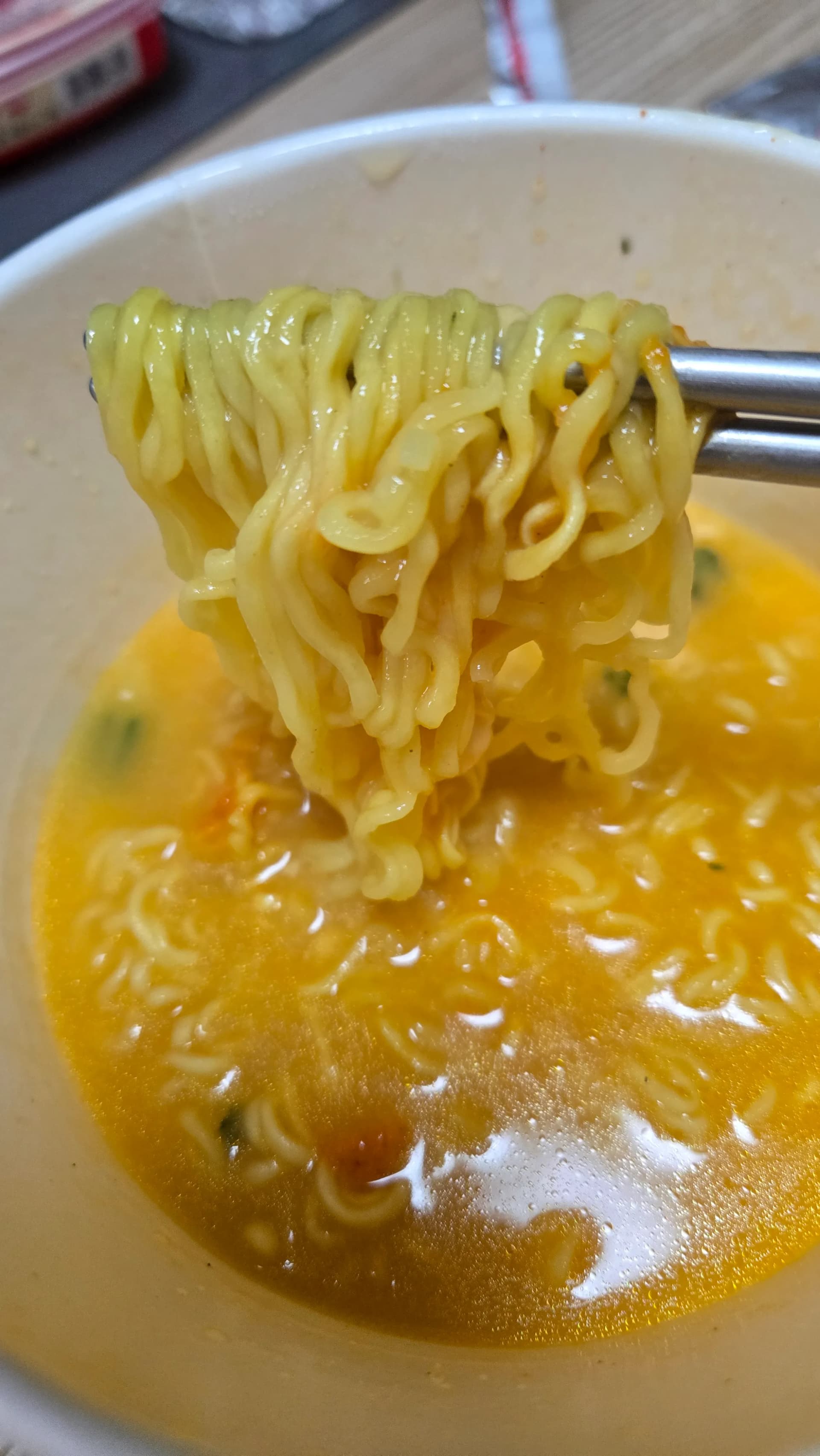
I stirred it well and lifted the noodles. The broth has completely transformed into a creamy yellow color, and the cheese sauce is evenly coating the noodles. The noodles themselves are quite chewy, so they lift up nicely with chopsticks.
Honest Taste Review of Ottogi Real Cheese Ramen — Noodles Are Greasy, Broth Is Salty
Alright, let me give you my honest impression after actually eating it.
First of all, the cheese aroma isn't super strong or weak. It's a moderate cheese smell. The noodles are thinner compared to other cup noodles.
But the problem arises during the eating process. If you just eat the noodles by themselves, they're quite greasy. The cheese sauce coats the noodle surface, but it doesn't seem to penetrate into the noodles. It's like making spaghetti where you don't toss the pasta in the sauce but just pour it on top—the noodles and sauce feel like they're separate. On the other hand, if you drink the broth along with it, the salty flavor makes it okay. The broth helps cut through the richness of the cheese.
When I looked at online reviews, there were many opinions saying "it's savory but greasy" and "you'll get tired of it if you eat it often," and after trying it myself, those comments were spot on. The concept itself is good. The direction of competing purely with cheese without any spiciness is clear. However, it's definitely ramen for the cheese ramen enthusiast crowd.
Honestly, it didn't match my taste. Maybe because I've gotten used to spicy and hot ramen, finishing a whole bowl with just cheese flavor alone was a bit challenging. Today's ramen was personally disappointing, but if you're someone who loves cheese, I think it's worth experiencing at least once. I'll probably stop at this one time!
For International Readers, This Might Actually Be a Perfect Match
One last thing to add: please keep in mind that this review is written based on Korean taste preferences. For international readers visiting our blog, this might actually be a ramen that suits you very well. When people think of Korean ramen, they mostly think of spicy flavors. But there are definitely people who can't handle spicy food, and if you come from a food culture where cheese-flavored ramen is familiar, you might find this ramen quite welcoming. Especially if you enjoy macaroni and cheese, you might perceive this as a "Korean version of mac and cheese ramen." So don't skip it just because my review said it was disappointing—if you think it matches your taste preferences, give it a try!
This post was originally published on https://hi-jsb.blog.