
Jaw-Dropping Korean Wedding Buffet: 61 Food Photos
Table of Contents
15 items
A Feast for Foodies — Wedding Buffet Food Photo Gallery, Part 1
I go to wedding venues and buffets pretty often, and because of that, my phone is absolutely overflowing with food photos. I'd been letting them collect dust in my camera roll, but honestly, it felt like a waste to keep them all to myself. So starting today, I'm opening up a food photo gallery right here on the blog.
Let me explain the concept of this series first — this isn't a promotion for any specific venue, and I won't be revealing names. It's less about where I ate and more about what was served, presented through photos and brief descriptions. Think of it as a curated exhibition for hungry souls.
Since our blog supports multiple languages, we have a lot of readers from overseas, so let me give a quick explanation. One of the biggest modern trends in Korean weddings is the incredible food that guests enjoy after the ceremony. In the old days, it was just a simple meal, but nowadays things have evolved dramatically. Some venues serve full-course dinners, while others go the buffet route — and buffets are absolutely the dominant trend right now. It's fair to say the Korean wedding buffet has become a full-blown food culture of its own.
Alright, enough with the introduction. From here on, I'll let the photos and descriptions do the talking. Scroll down and eat with your eyes first!
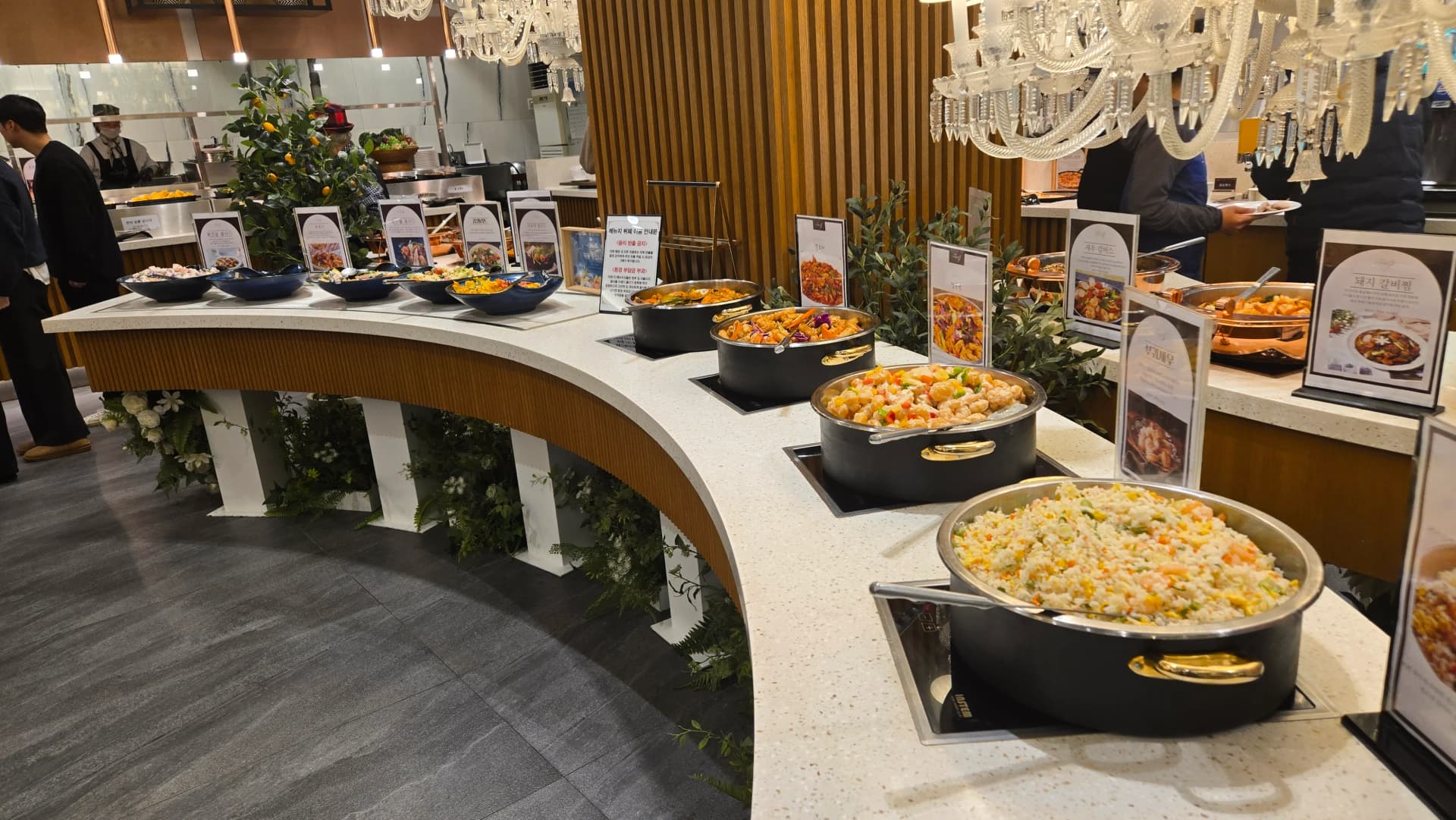
This is your first impression of a Korean wedding buffet. Curved tables stretch out endlessly with everything from fried rice to all kinds of dishes, each one with a little label sign stuck in front. The whole thing is set up under chandeliers with an upscale vibe — can you believe this is a wedding meal? Back in the day, Korean weddings meant a bowl of noodle soup and that was it. "You came to the wedding, so here's your noodles" — that was totally normal. But things have completely changed. The buffet quality these days is absolutely insane, to the point where you could call it a full-on food flex. Honestly, in Korea, weddings are arguably more about the food than the ceremony itself. Guests in Korea ask "What did they serve?" before they ask "How was the ceremony?" That's just how it is here.
Alright, enough explaining — let's get to the food!
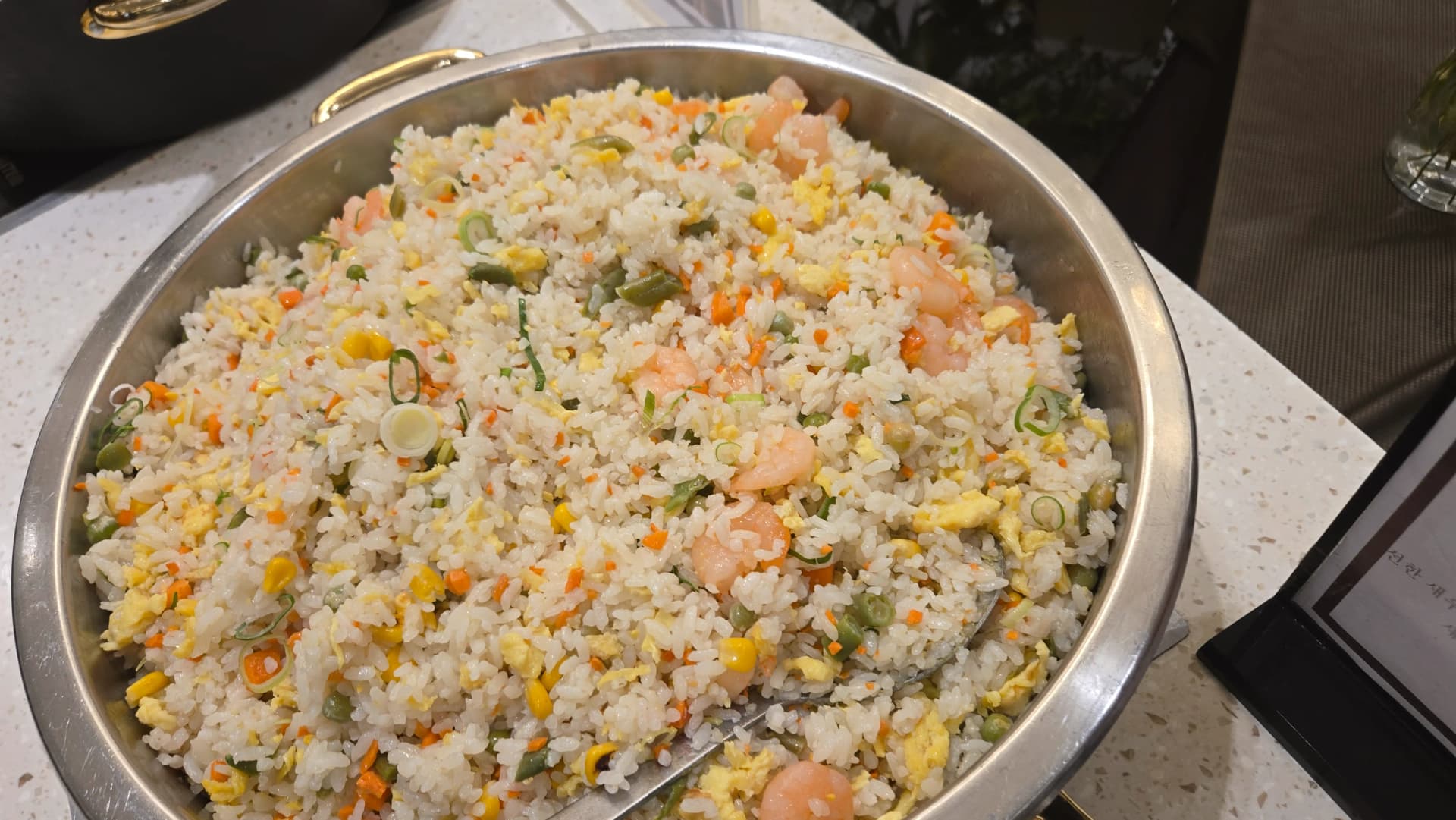
Shrimp fried rice. Plump shrimp mixed with egg, corn, carrots, and green onion — and the portion is absolutely massive. At a buffet, loading up at least one plate of rice is basically mandatory.
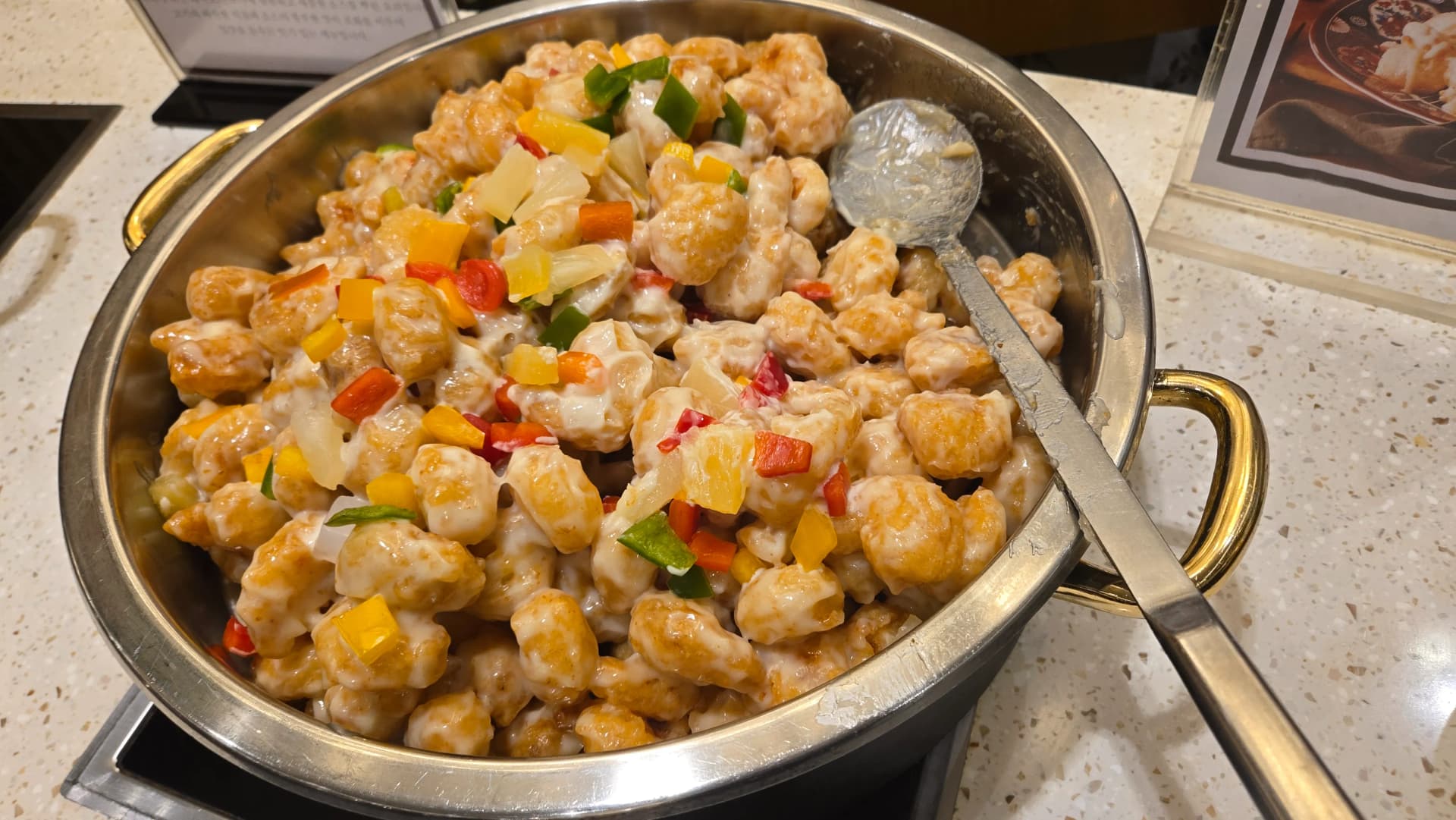
This is tangsuyuk (Korean-style sweet and sour pork) with a mayo-cream twist. Crispy fried pieces topped with bell peppers and pineapple, generously coated in a creamy sauce that looks like it'd taste perfectly sweet and tangy.
Stir-fried seafood. Shrimp, mussels, squid, and all sorts of vegetables tossed in a spicy sauce — it looks like an absolute rice killer just from the photo. It was sitting on an induction warmer so you could eat it nice and hot.
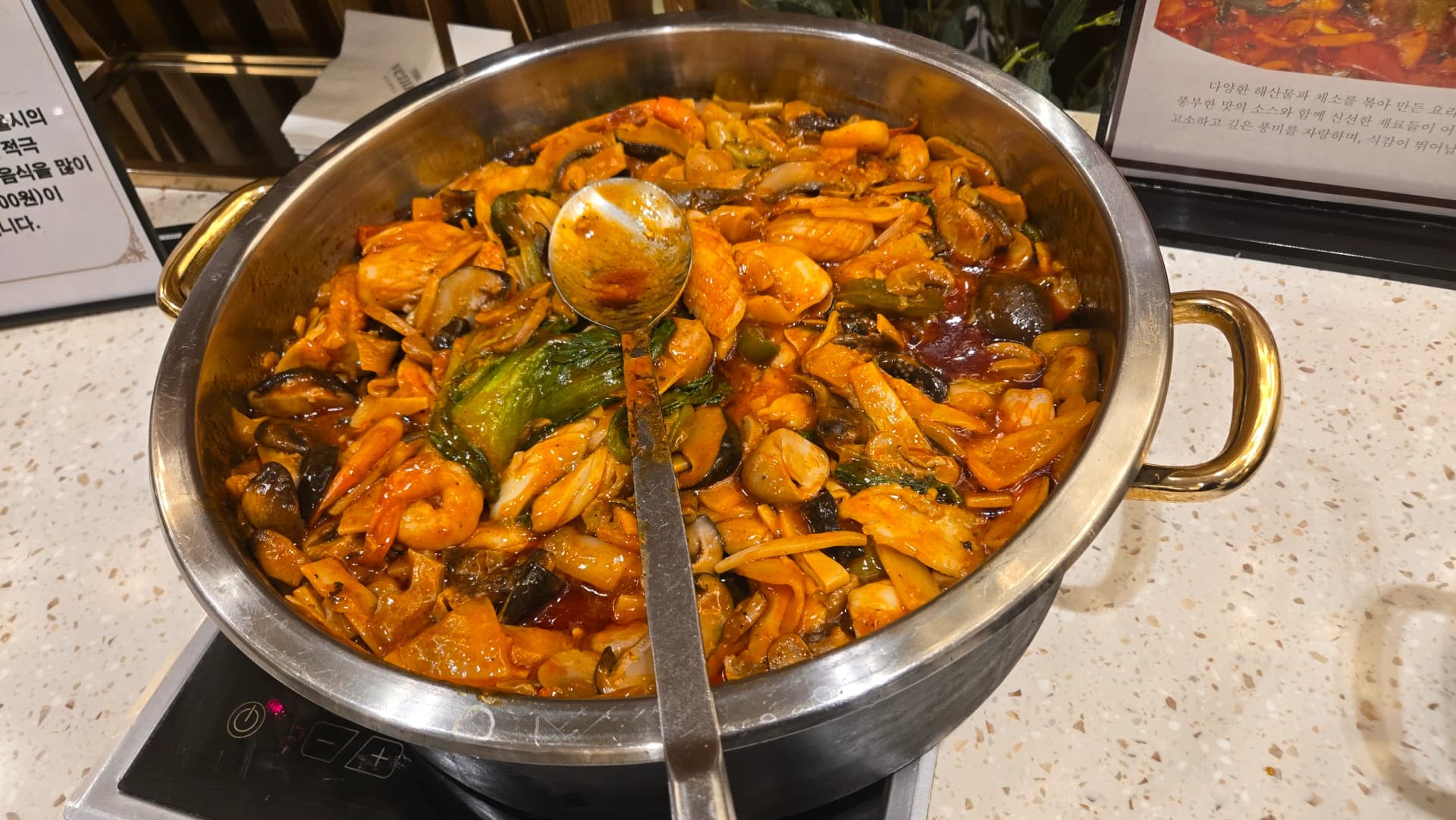
Sweet pumpkin salad. Mashed kabocha squash with a touch of cranberry sauce on top — sweet and creamy, it's the perfect palate cleanser between all the heavier buffet dishes.
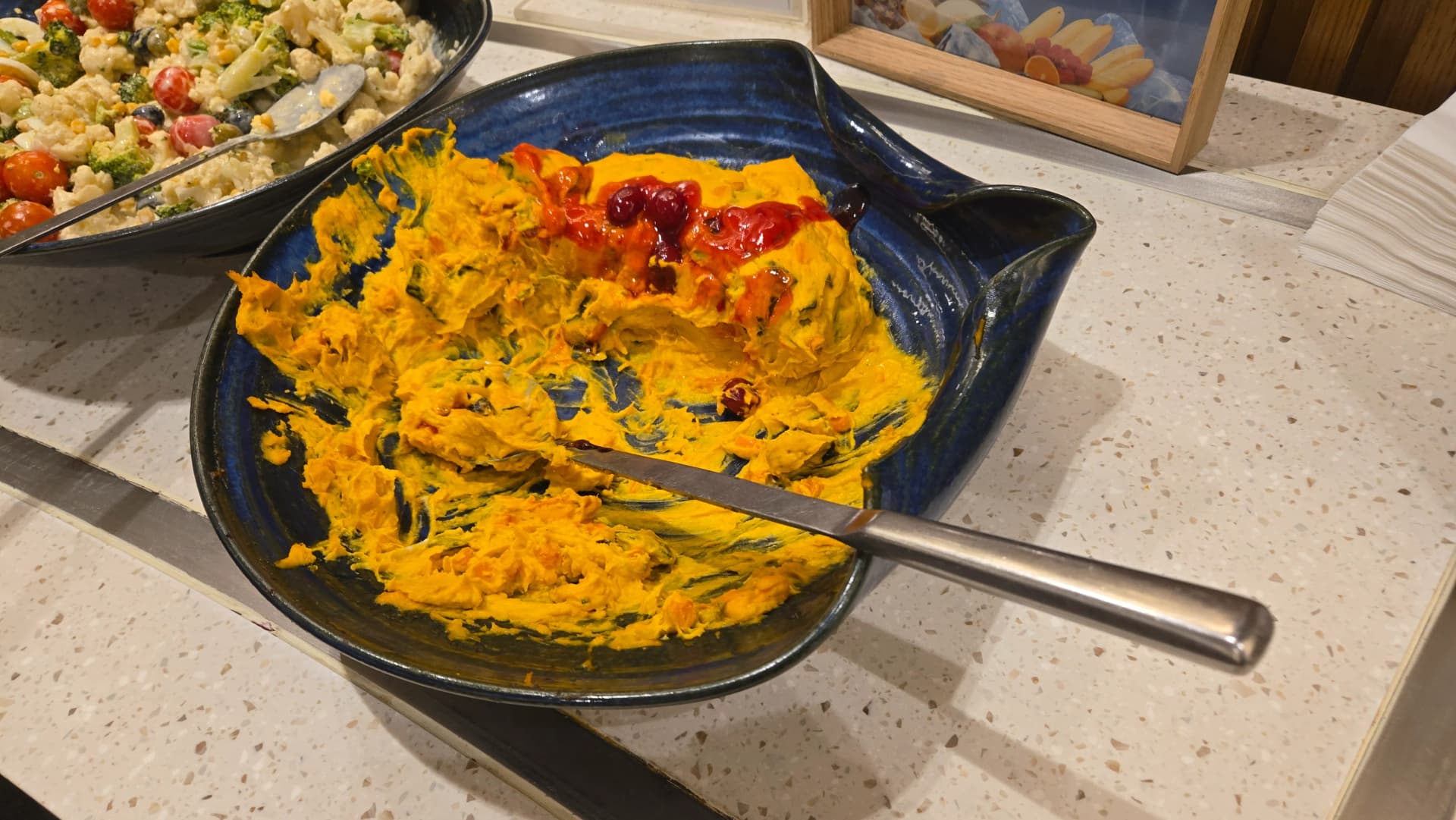
Mussel and seafood salad. Big mussels, shrimp, squid, and colorful bell peppers all tossed together — the colors alone are enough to make you hungry. The contrast with the blue bowl made it extra pretty too.
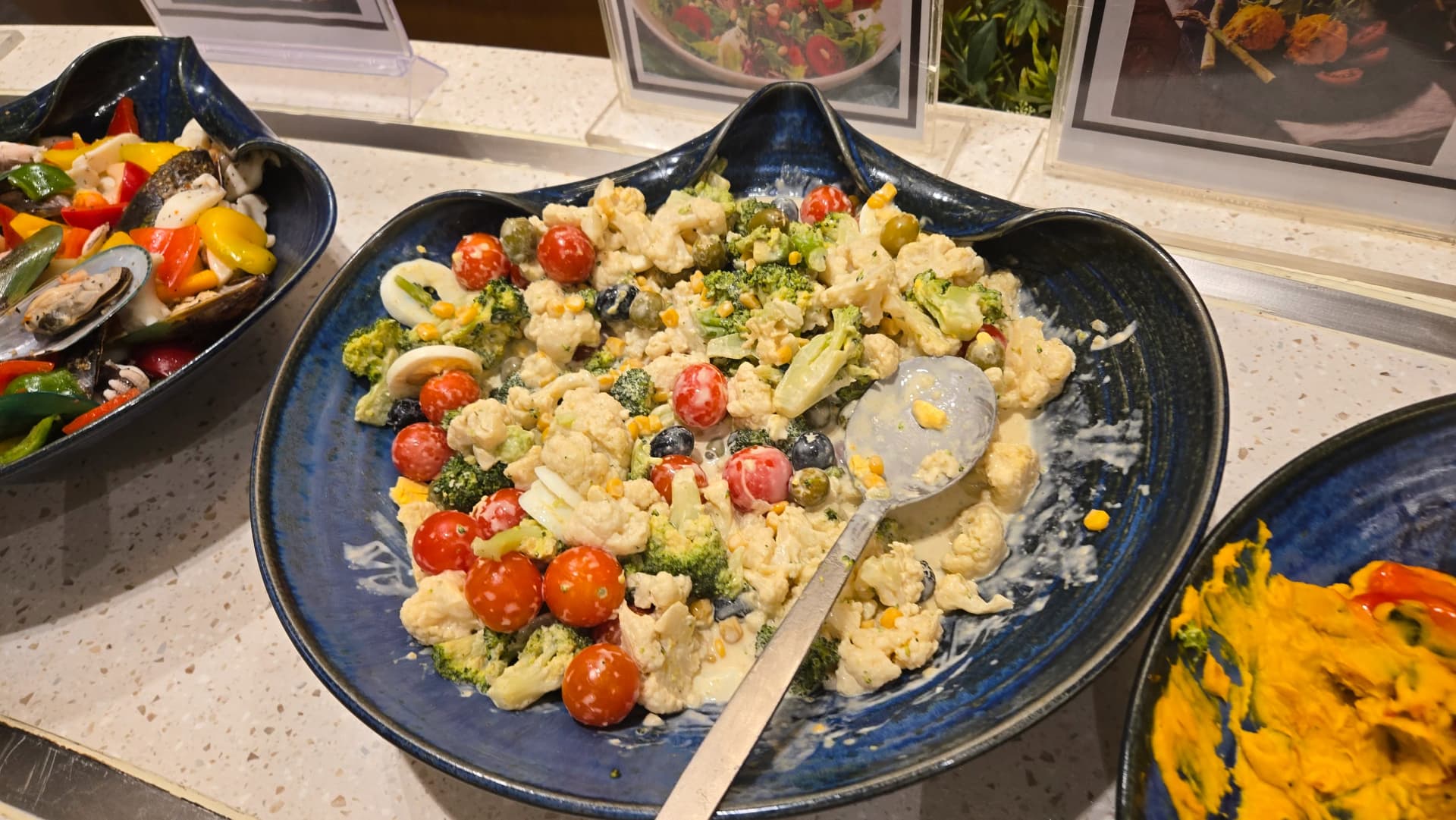
Broccoli and cauliflower salad. Cherry tomatoes and blueberries mixed in with a creamy dressing — looked like the perfect healthy plate to balance out all the indulgent stuff.
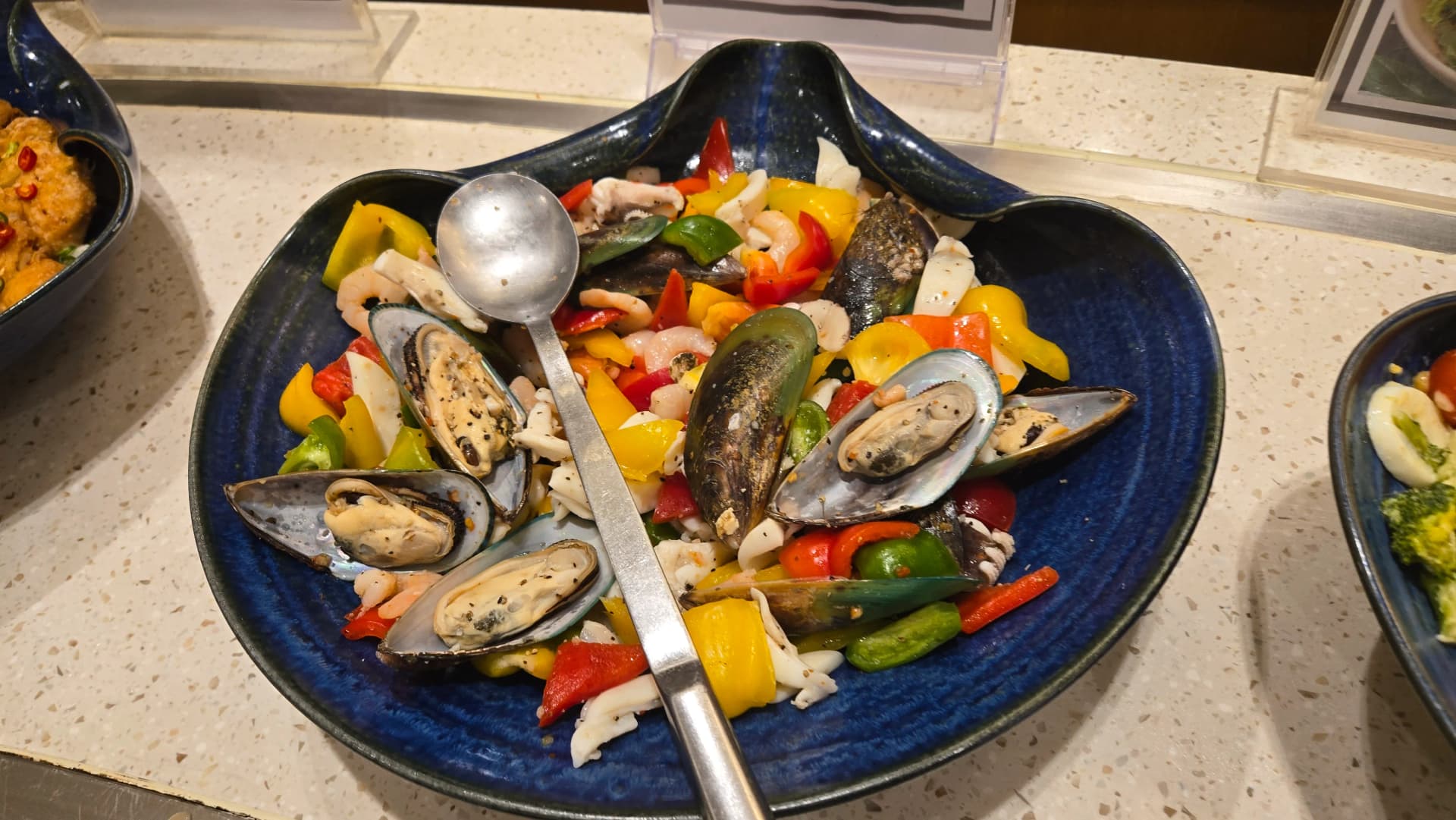
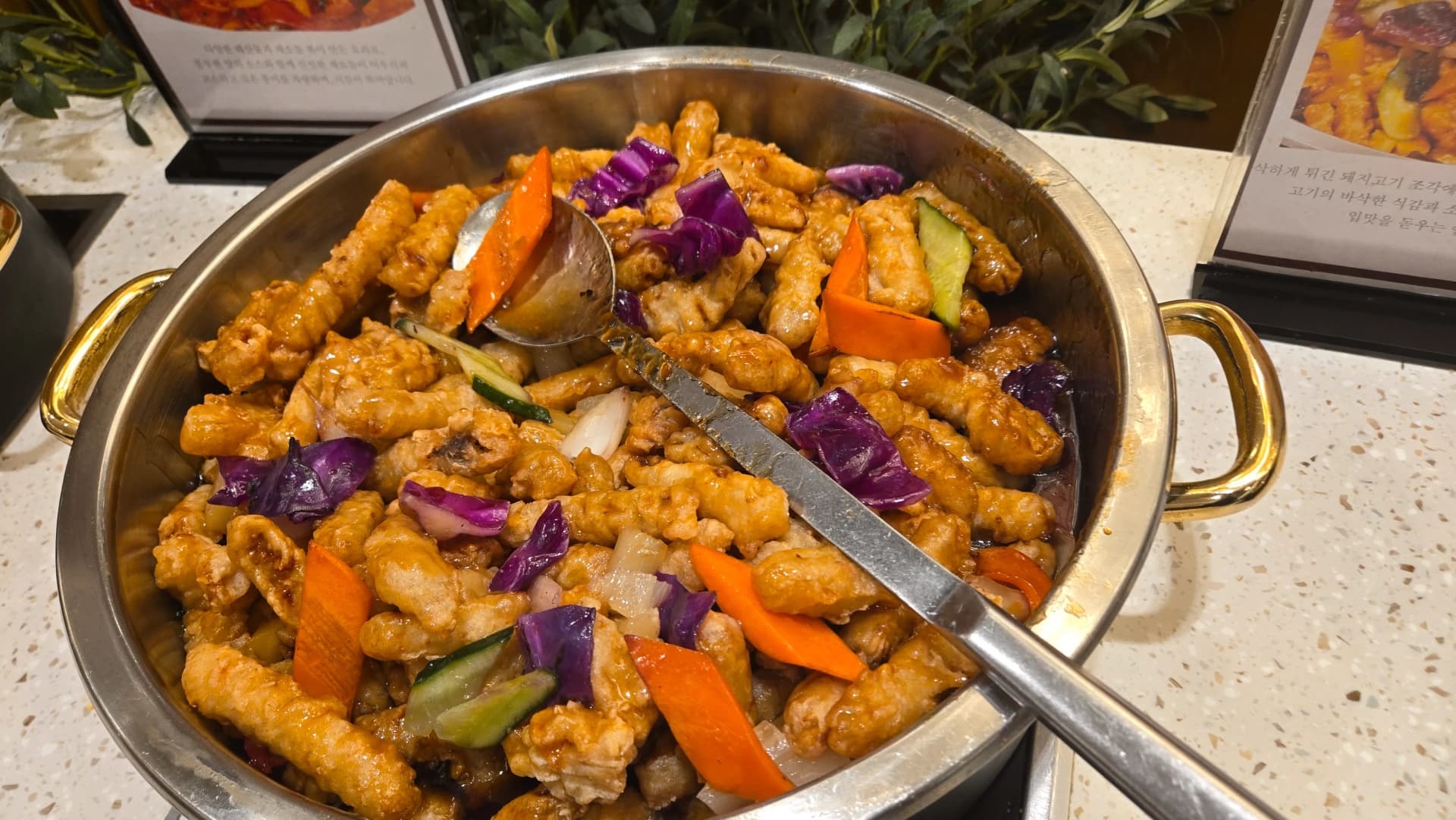
Pork tangsuyuk (sweet and sour pork). Crispy fried pork tossed with red cabbage, carrots, and cucumber in a sweet glaze. This is the kind of dish you pile high on your plate — no shame allowed.
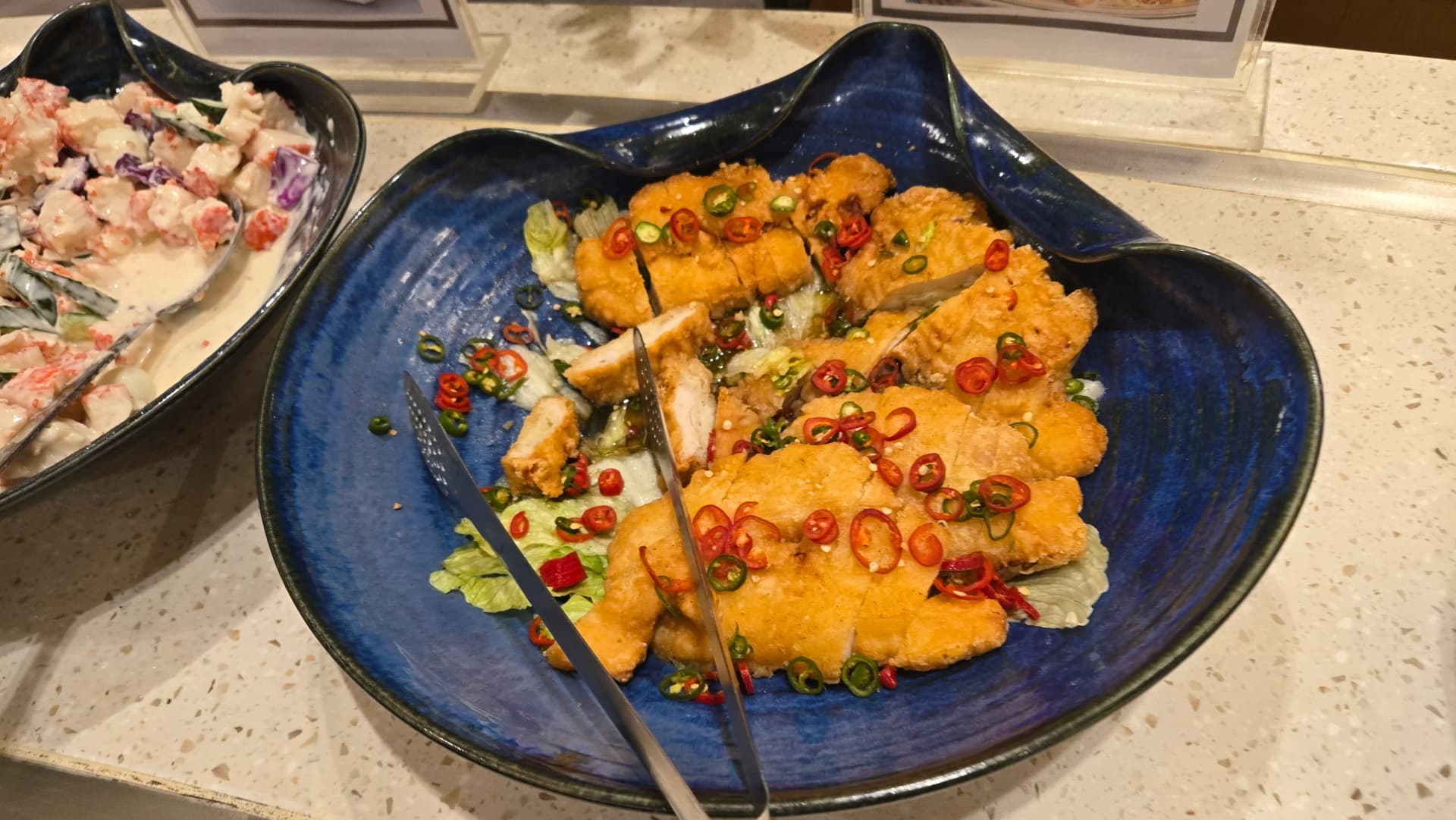
Crispy fried chicken topped with sliced green and red chili peppers. There's shredded cabbage underneath, and the spicy-crunchy combo means one serving of this could easily carry you through a whole bowl of rice.
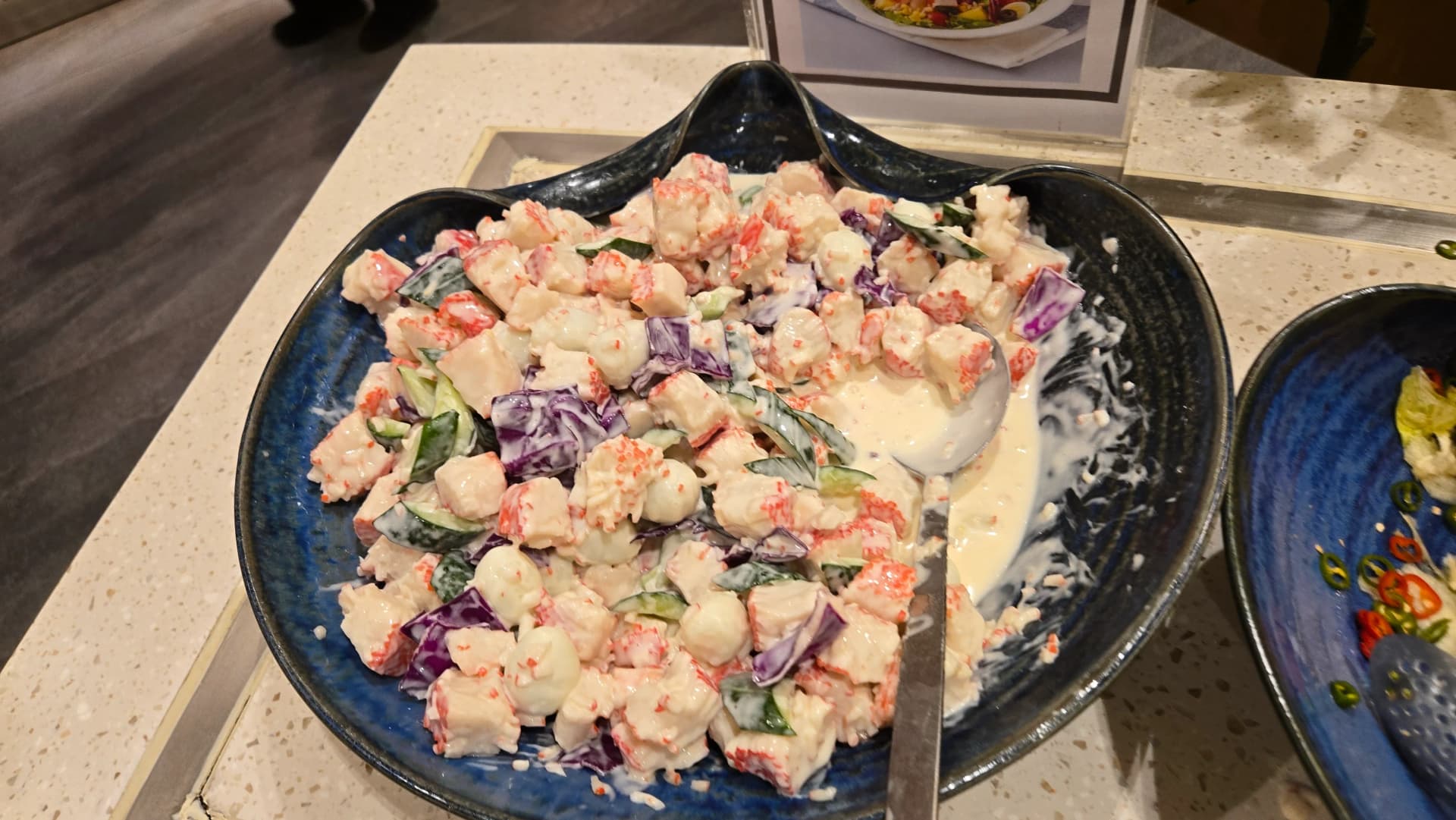
Imitation crab salad. Crab sticks mixed with red cabbage and cucumber, generously coated in a creamy mayo dressing. It's soft and savory — the kind of crowd-pleaser that literally everyone loves.
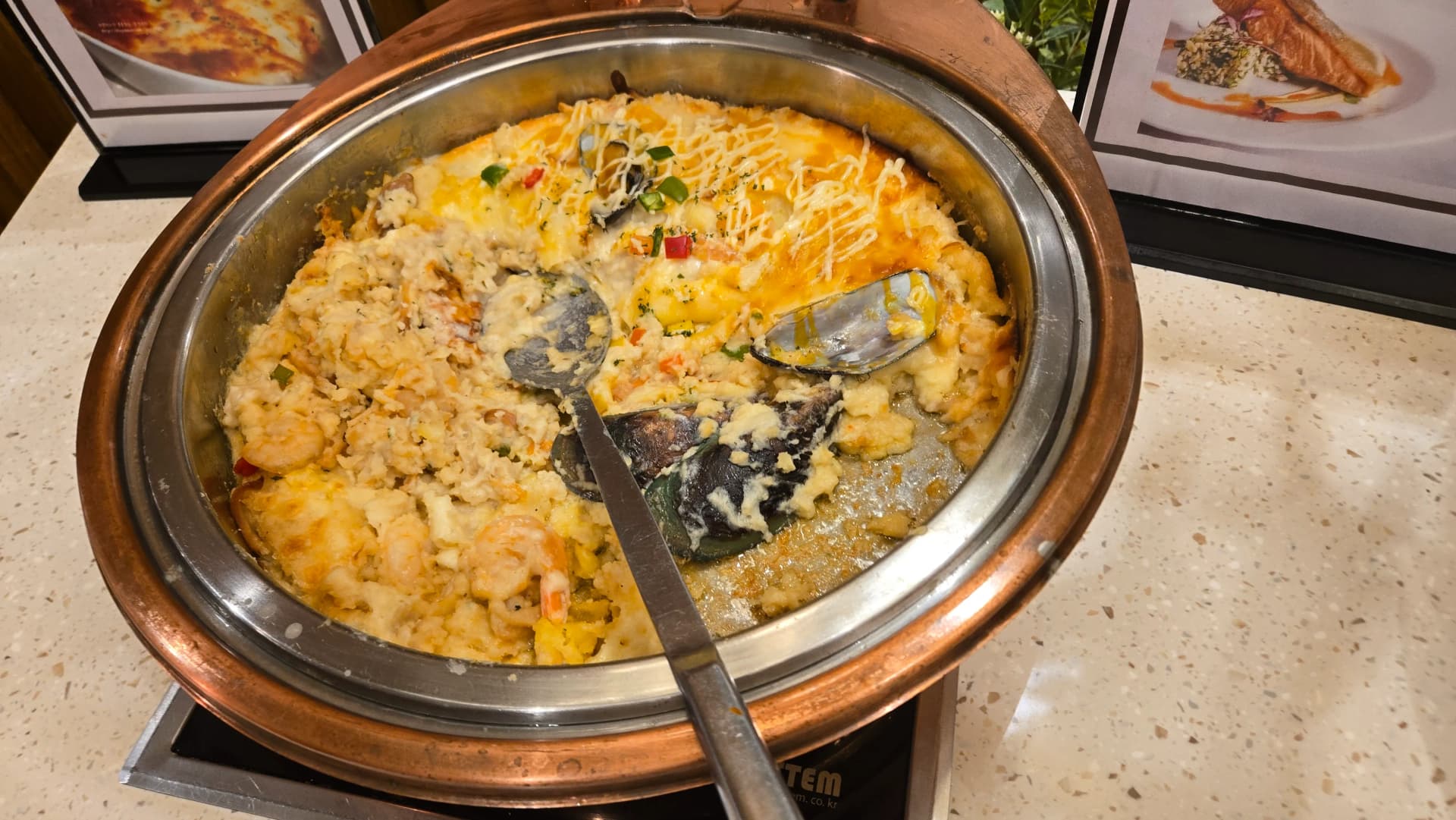
Seafood gratin. Loaded with shrimp and mussels in a rich cream sauce, with cheese stretching beautifully on top. It was sitting on a warmer, and scooping up a hot spoonful of this was pure happiness.
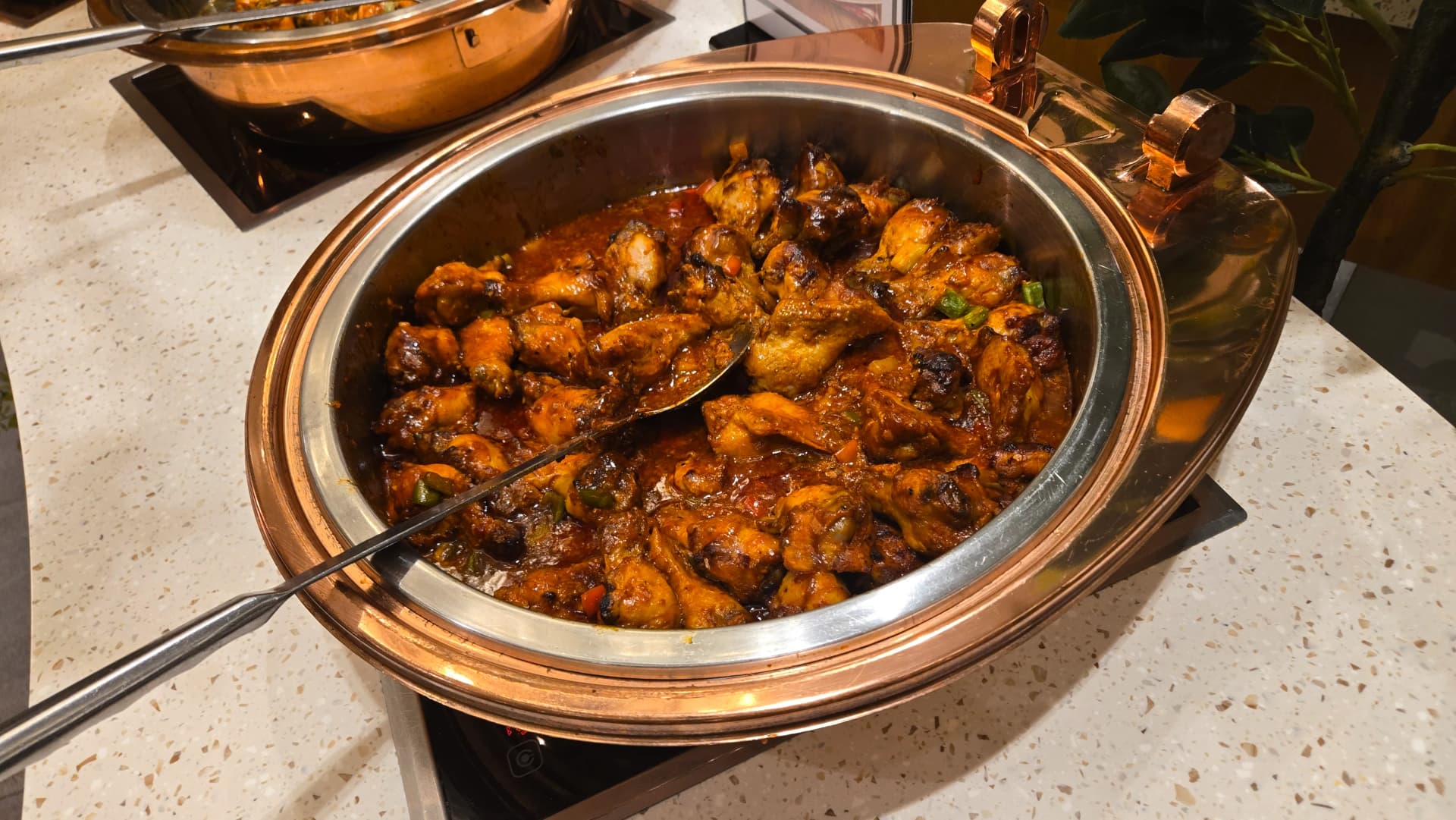
Spicy braised chicken, jjimdak-style. The chicken was glistening with a rich, dark glaze, kept warm on a chafing dish. The sauce looked seriously intense, and I could tell it would be an absolute killer paired with rice.
The Western Food Section of a Korean Wedding Buffet
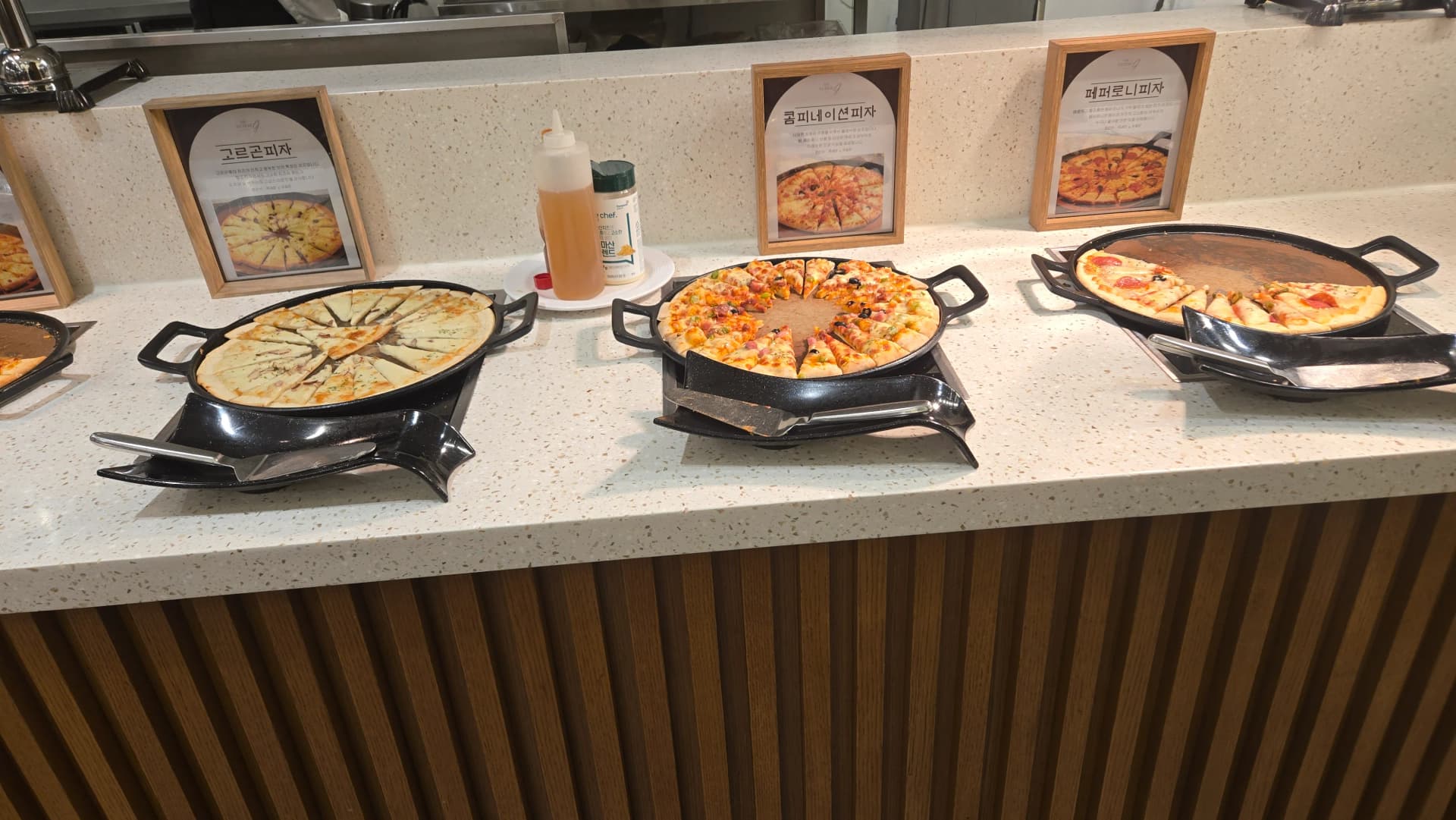
The pizza corner. Gorgonzola pizza, combination pizza, and pepperoni pizza all lined up side by side, each with its own name tag. Korean wedding buffets don't just put out one cheese pizza — they lay out multiple varieties.
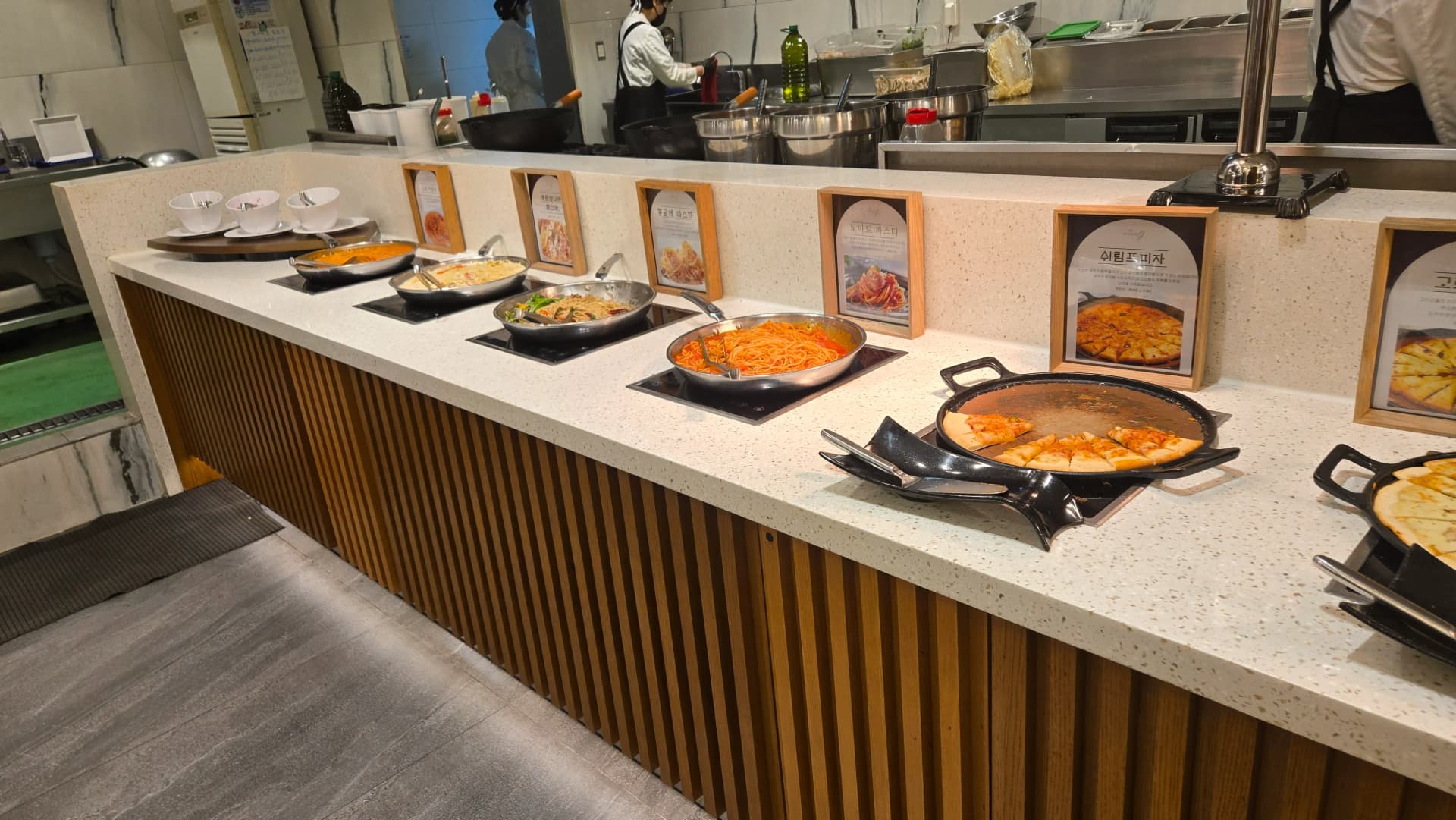
The full Western section spread. Korean wedding buffets are divided into sections — Korean, Chinese, Western, and dessert — and this line had everything from pizza to pasta to stir-fried dishes stretching out in a row. There was an open kitchen behind the setup, so chefs were constantly restocking dishes in real time.
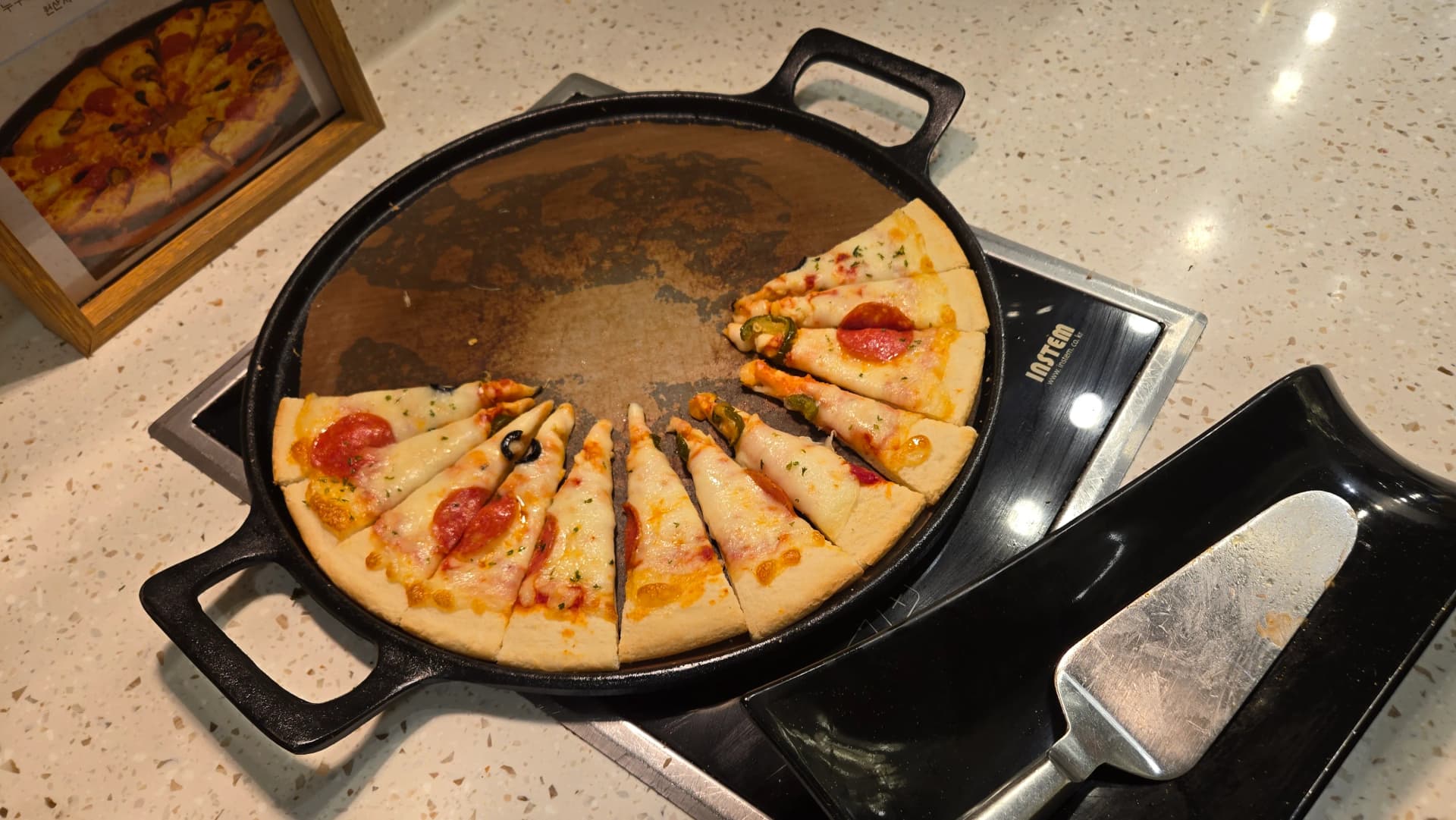
Pepperoni pizza. See how more than half is already gone? Popular items disappear the second they come out — it's literally a timing game.
The Pasta Lineup
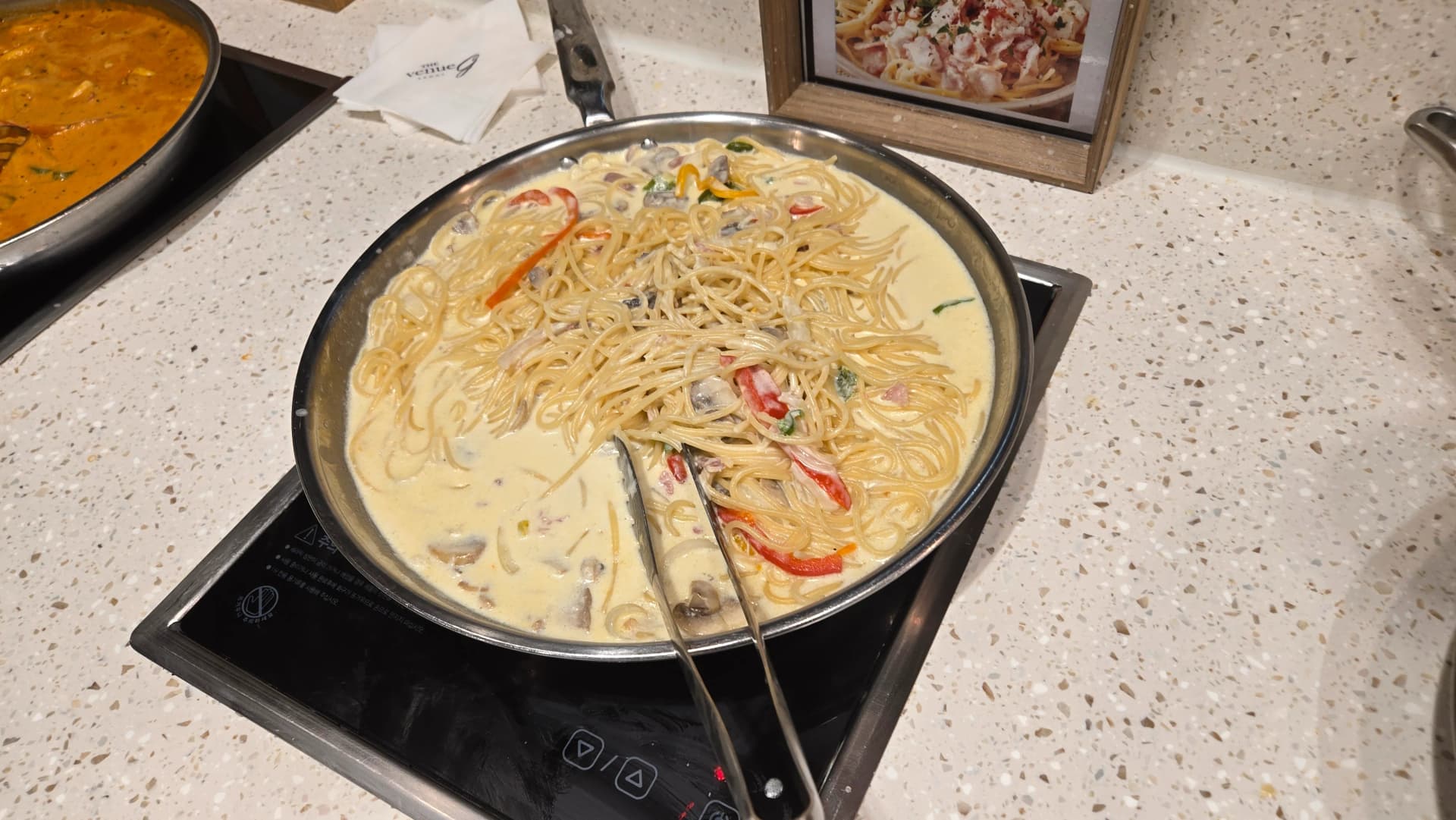
Cream pasta. Mushrooms and bell peppers swimming in a rich cream sauce with the noodles fully submerged, kept warm on an induction burner. If you're a creamy pasta person, grab this one first.
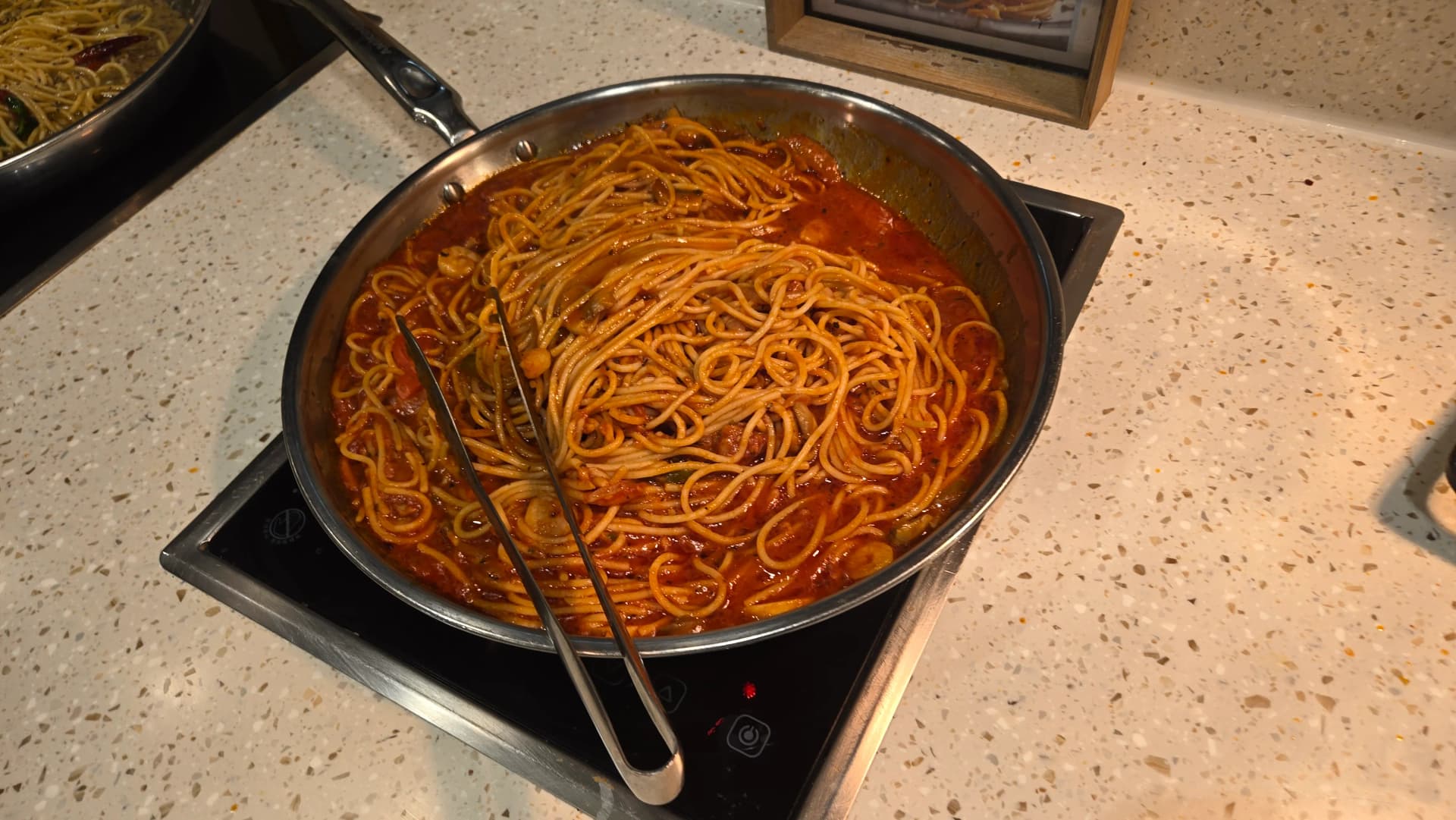
Tomato pasta. Noodles generously tossed in a deep, rich tomato sauce — you can tell it'd be delicious just from the color. Since it's sitting right next to the cream pasta, the unwritten rule is to grab a little of both.
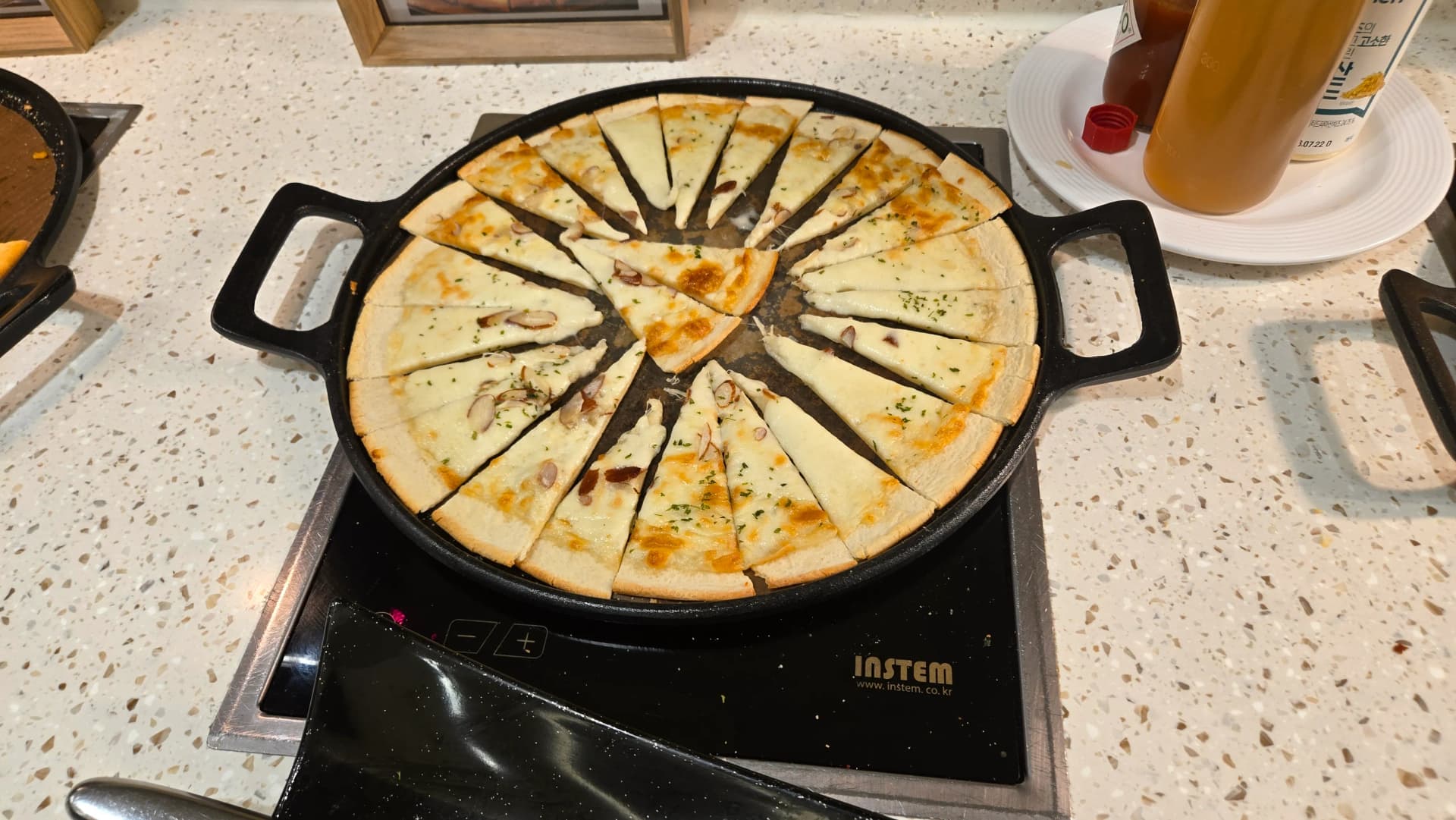
Gorgonzola pizza close-up. Thin crust absolutely loaded with cheese — drizzle some honey on it and the sweet-salty combo is out of this world. There was a honey bottle sitting right next to it for good reason.
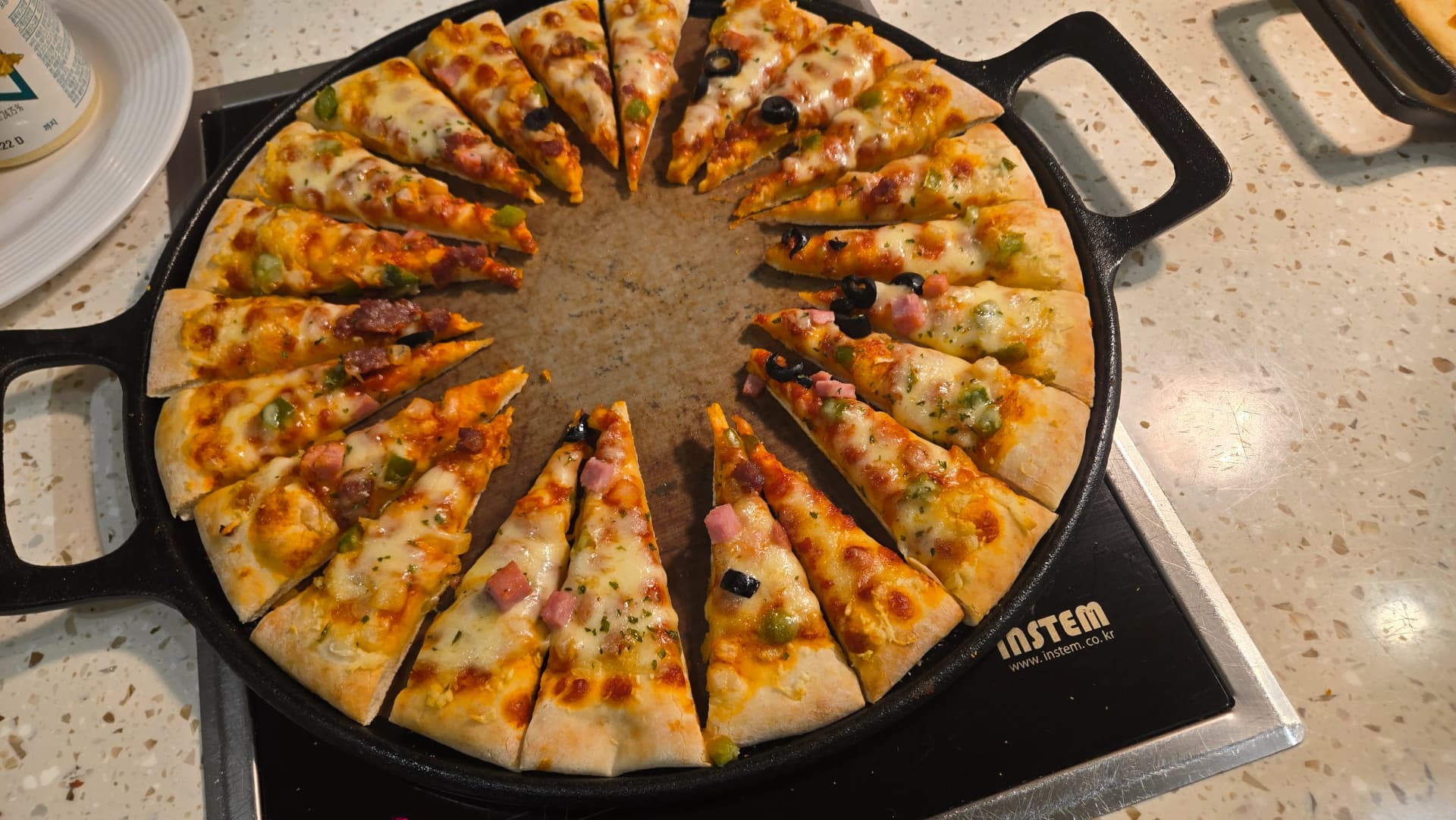
Combination pizza. Ham, olives, green peppers, and cheese evenly distributed on thin slices — perfect for grabbing one piece at a time. This was apparently the first pizza to vanish from the buffet line.
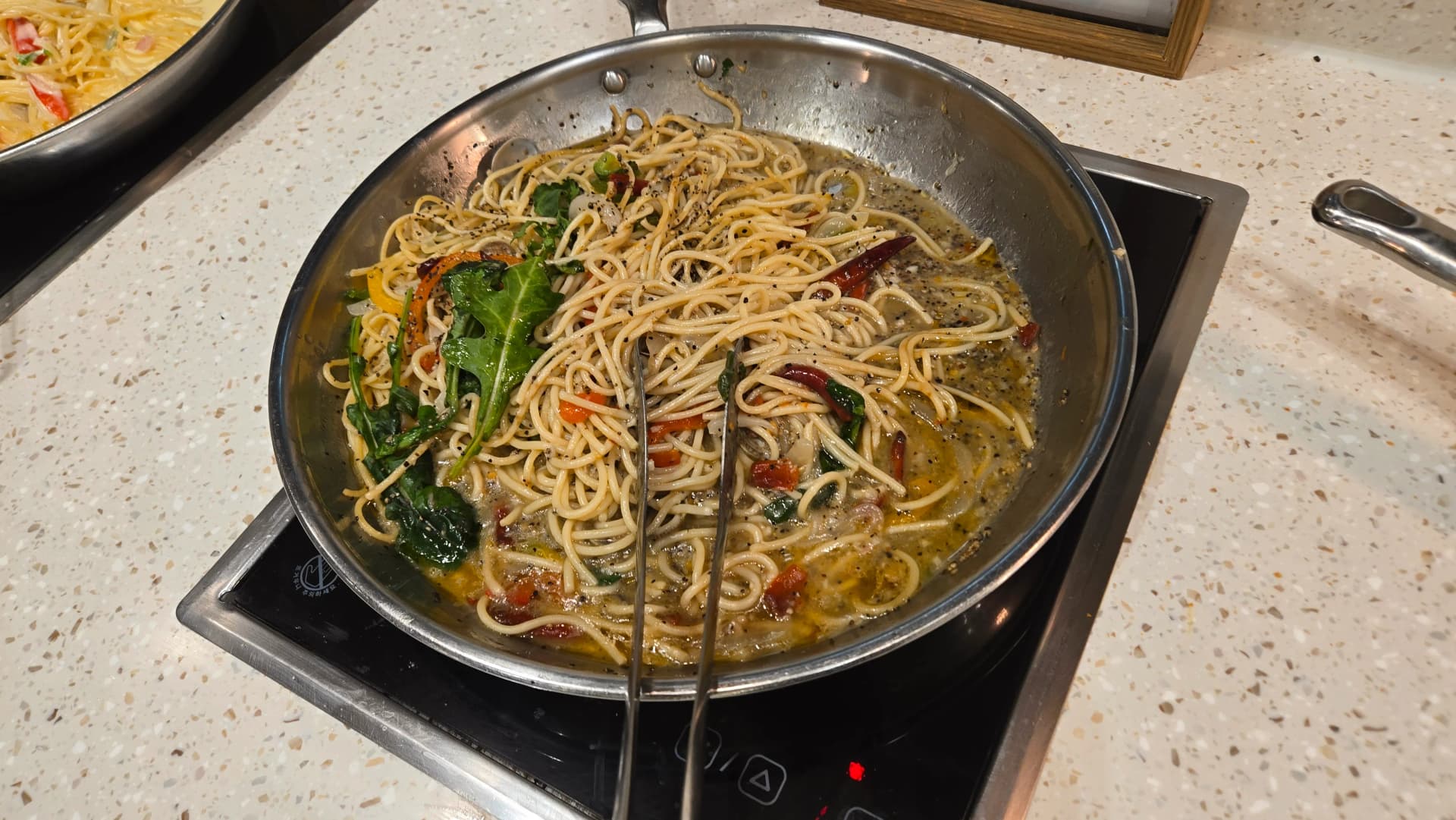
Aglio e olio pasta. Arugula and dried chili in an olive oil base — light, fragrant, and refreshing. If the cream and tomato pastas feel too heavy, this is your move.
Salad & Vegetable Section
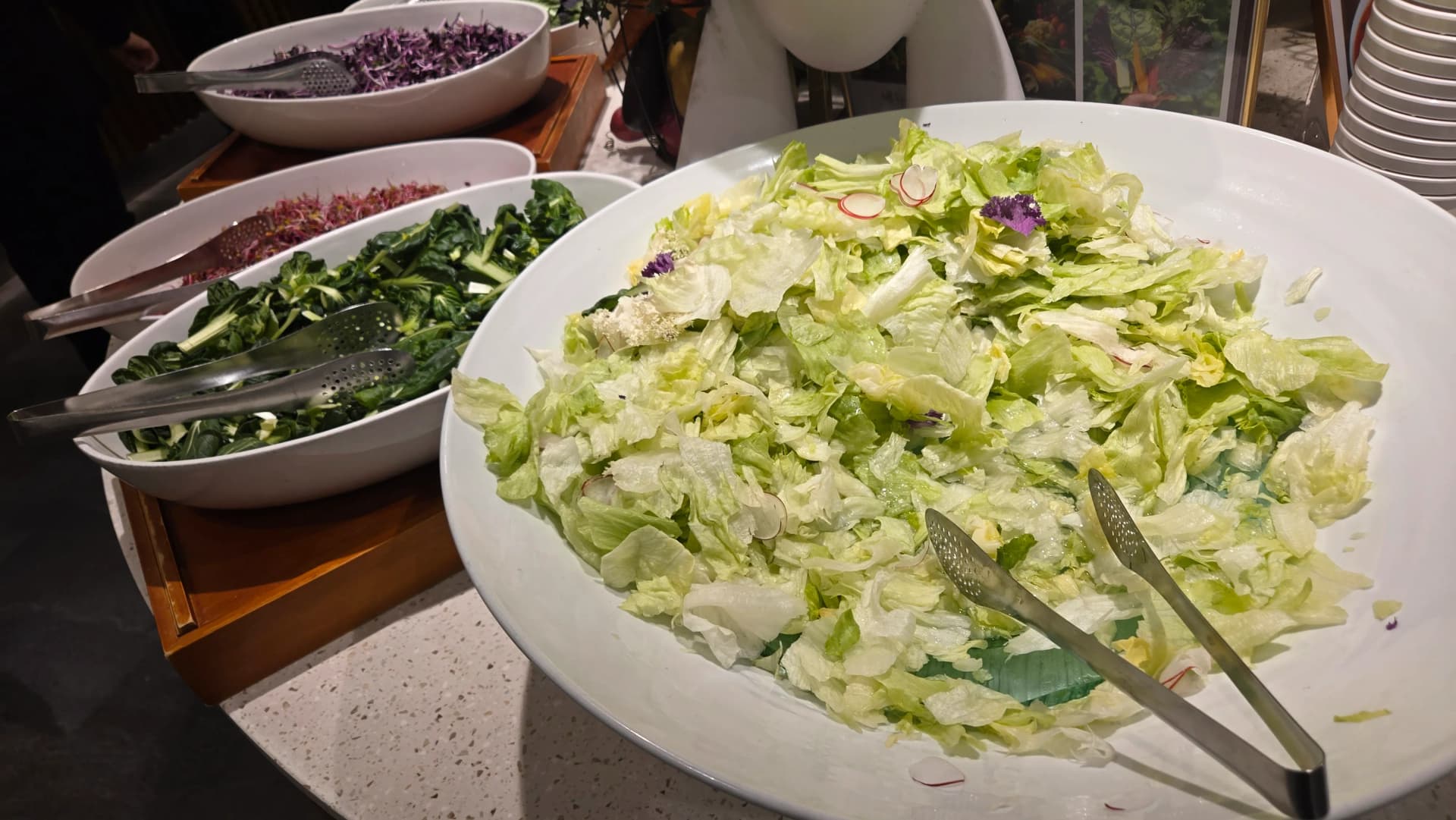
The salad bar. Fresh lettuce piled high in a big bowl, with spinach and red cabbage lined up behind it by type. Radishes and edible flowers were added as garnish — you could tell they put real thought into the presentation.
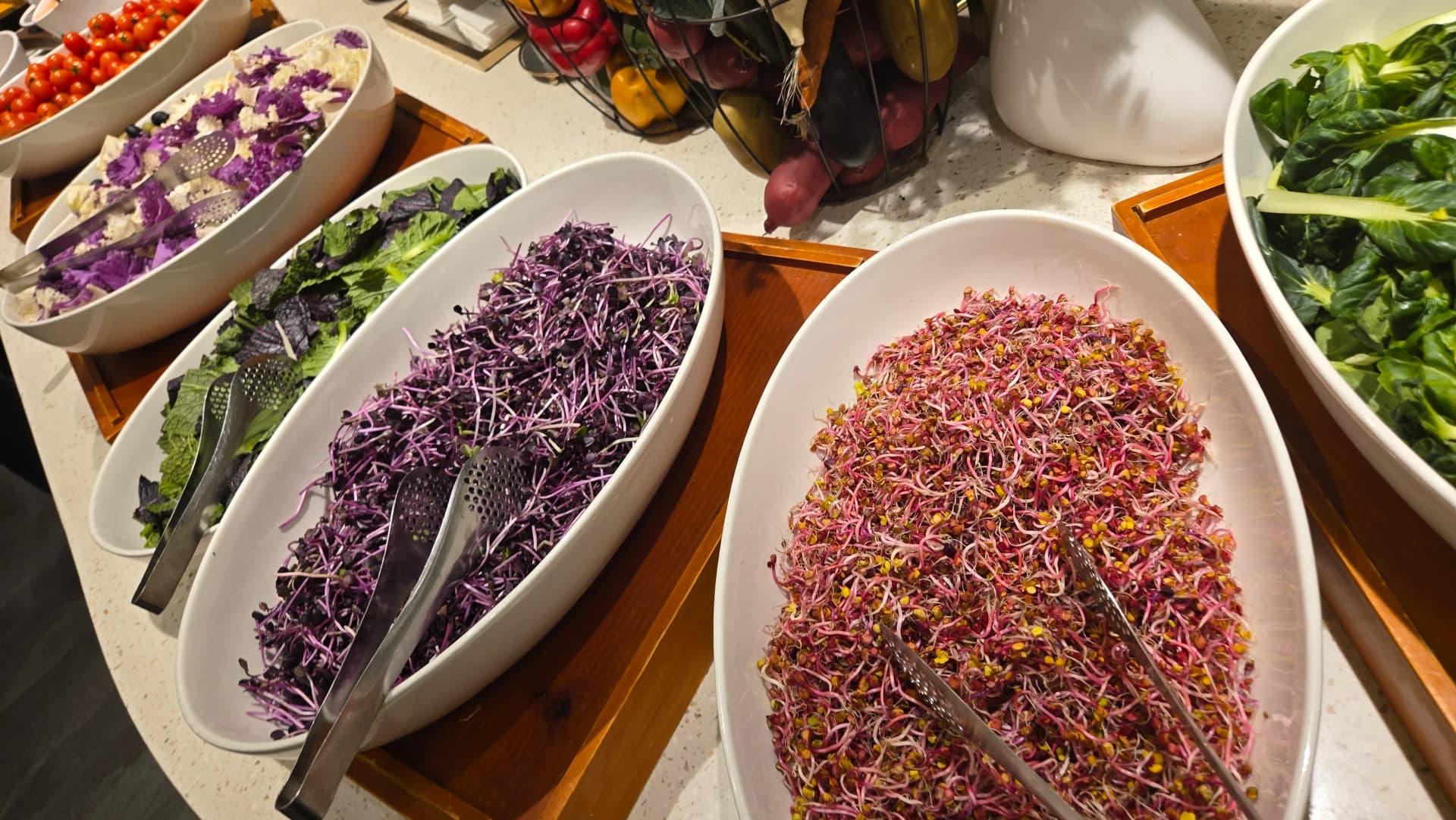
Red cabbage sprouts, radish microgreens, kale, and other specialty greens arranged in separate bowls. Behind them you could spot cherry tomatoes, bananas, and bell peppers too. Sneaking in a plate of greens between all the rich dishes really helps settle your stomach.
Traditional Korean Side Dish Corner
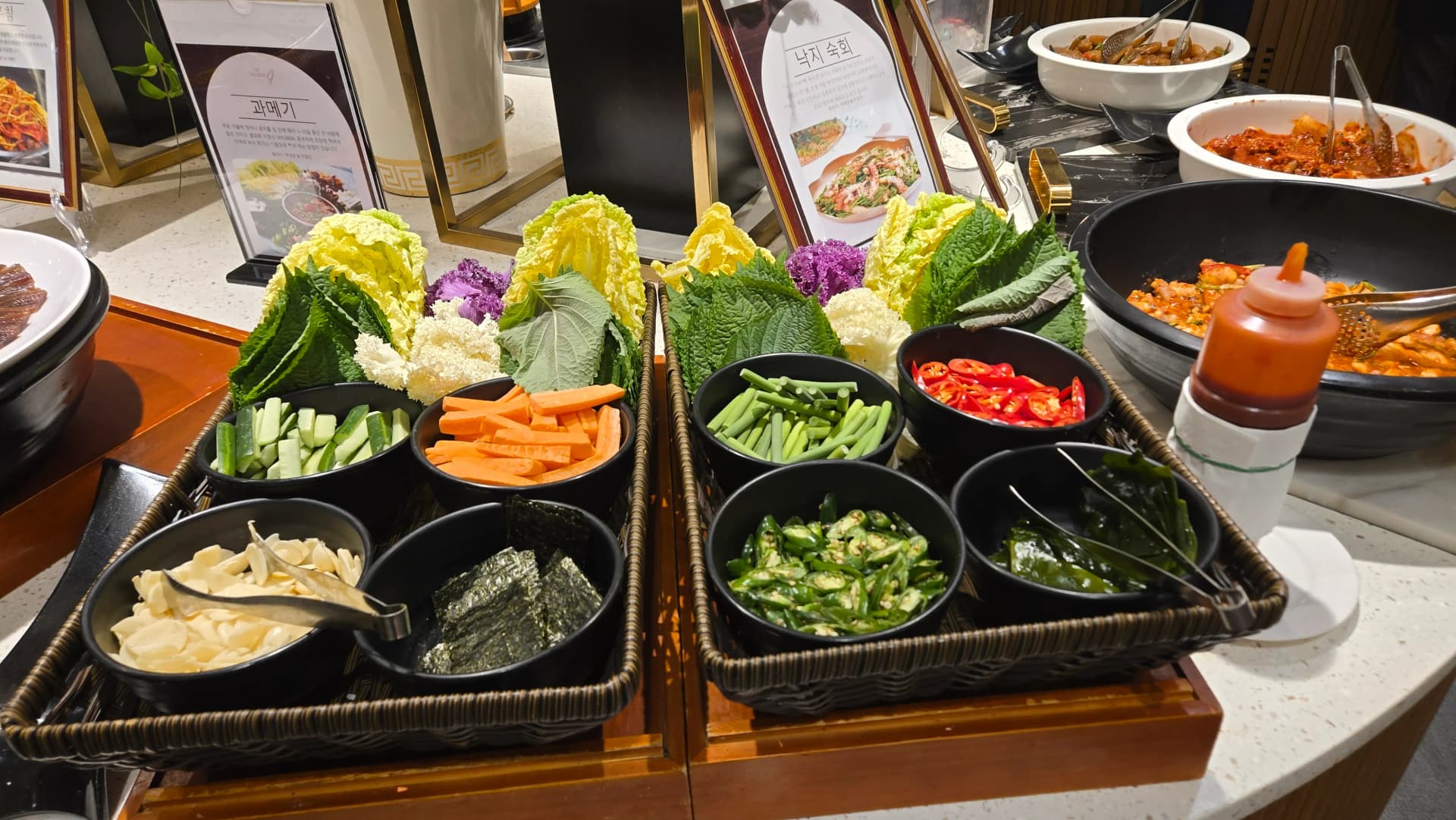
Ssam vegetables and side dish set. Napa cabbage, perilla leaves, and red cabbage wrapping greens are arranged in baskets, with cucumber, carrots, seaweed, peppers, pickled cucumber (oisobagi), and seasoned perilla leaves (kkaennip-jangajji) lined up in front. In Korea, there's a tradition of wrapping meat or side dishes in leafy greens and eating it in one bite — that's called "ssam."
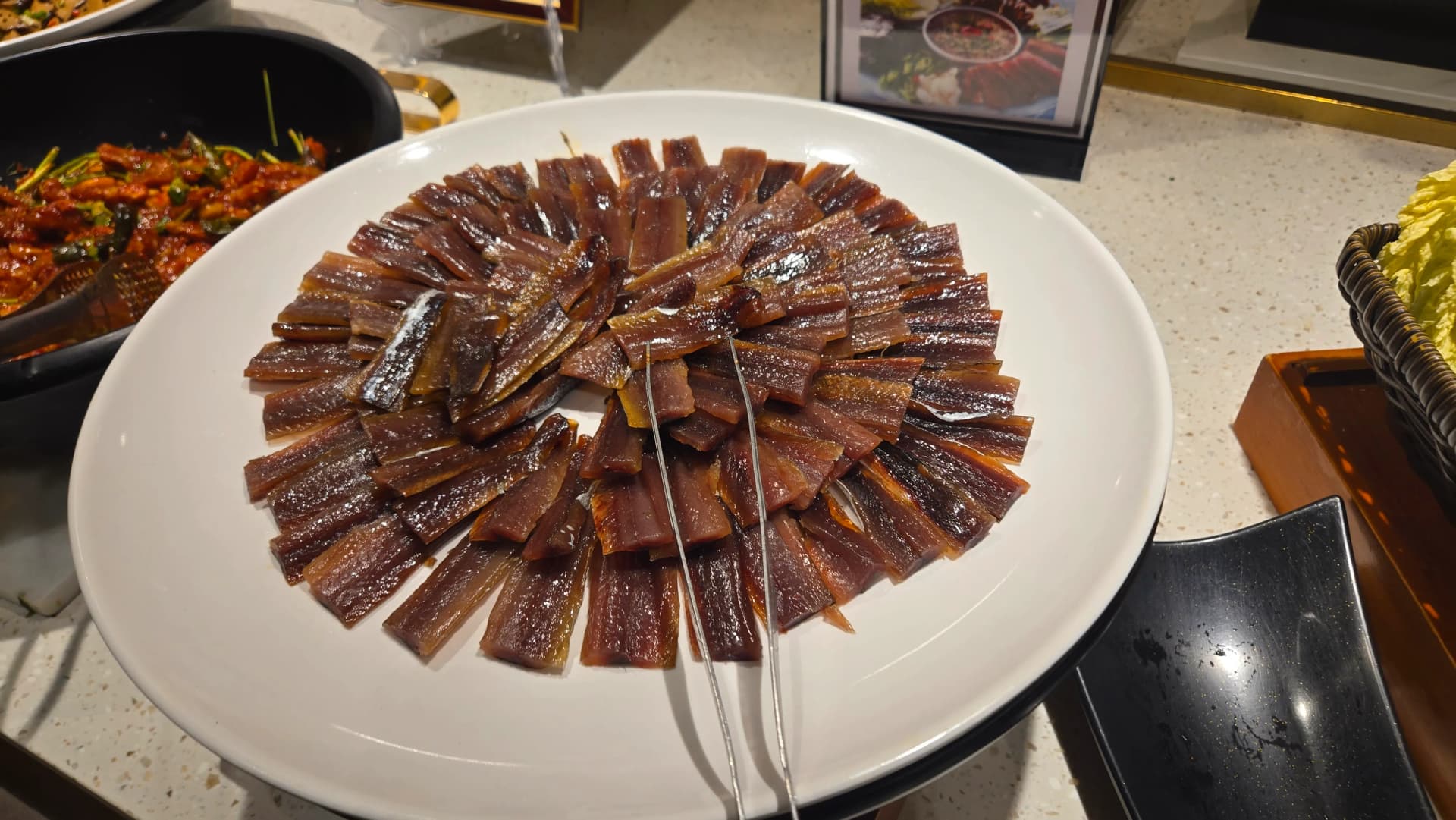
Gwamegi. This is a traditional Korean dried fish made from pike mackerel (or Pacific saury) cured in cold winter ocean winds. It's chewy with a salty kick. In Korea, it's a beloved winter delicacy and a go-to snack with soju. The flower-like plating on the dish is really pretty too.
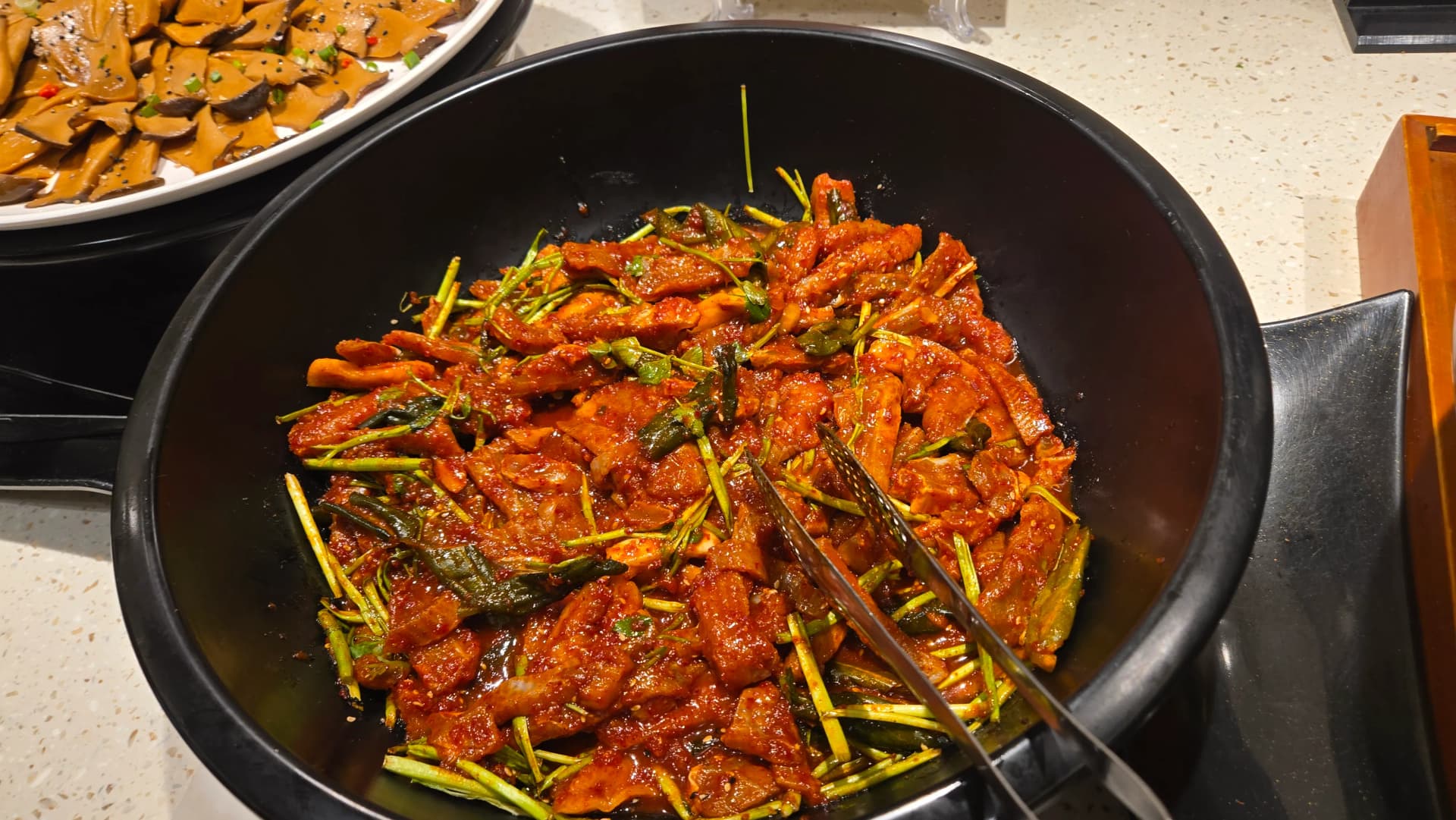
Hongeo-muchim (fermented skate fish salad). Hongeo is hands-down one of the most polarizing foods in Korea — the fermentation gives it a sharp, pungent flavor and aroma that hits your nose hard. It's dressed in a spicy sauce with green onions, and the people who love it will literally eat nothing else.
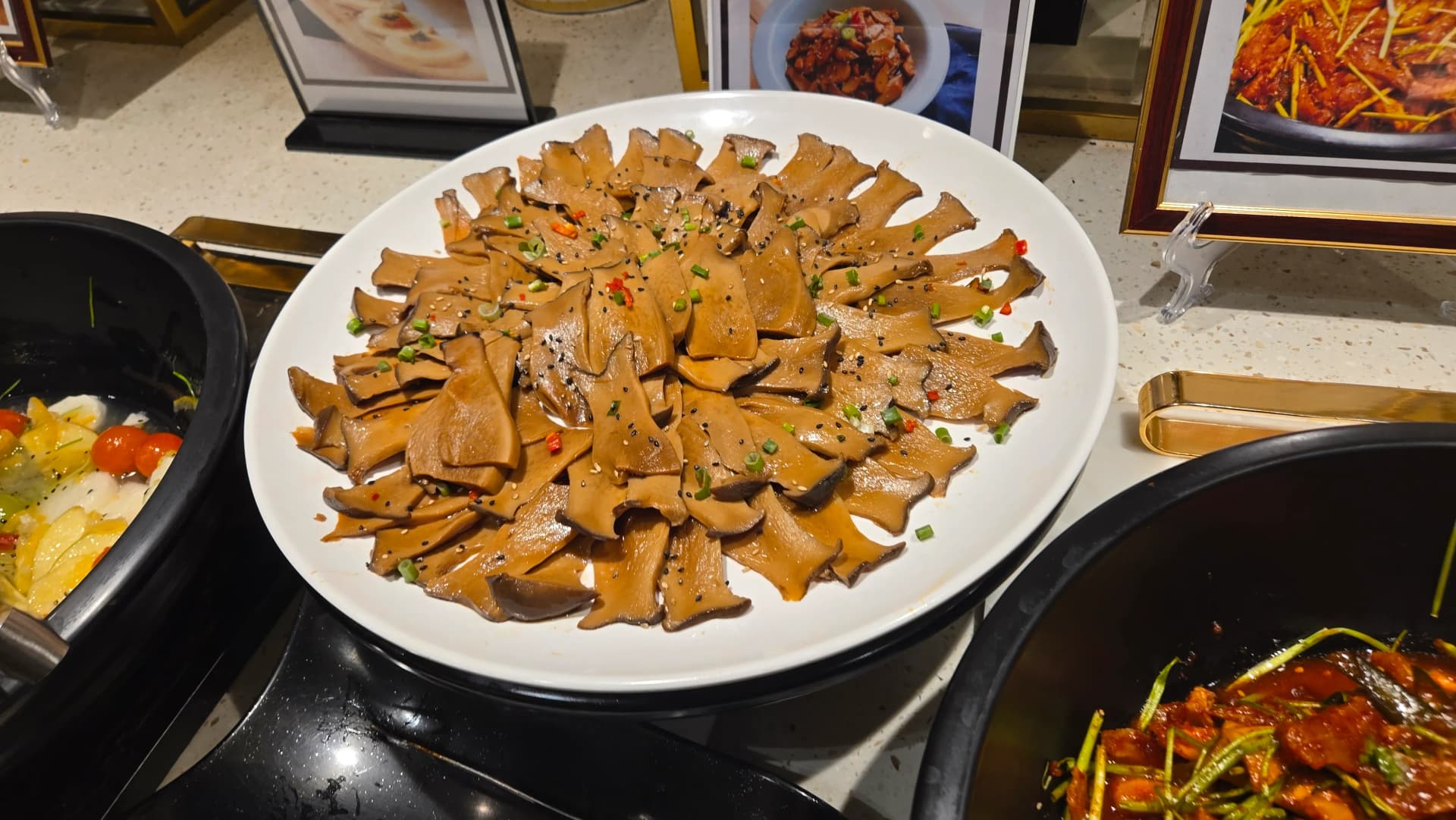
Mushroom pyeonyuk (boiled and thinly sliced mushrooms). Large mushrooms were boiled and sliced thin, with finely chopped chili and green onions as a topping. The texture is chewy and mild — dip it in ssamjang (Korean bean paste dip) or chojang (vinegar-chili sauce) and the savory flavor really comes alive.
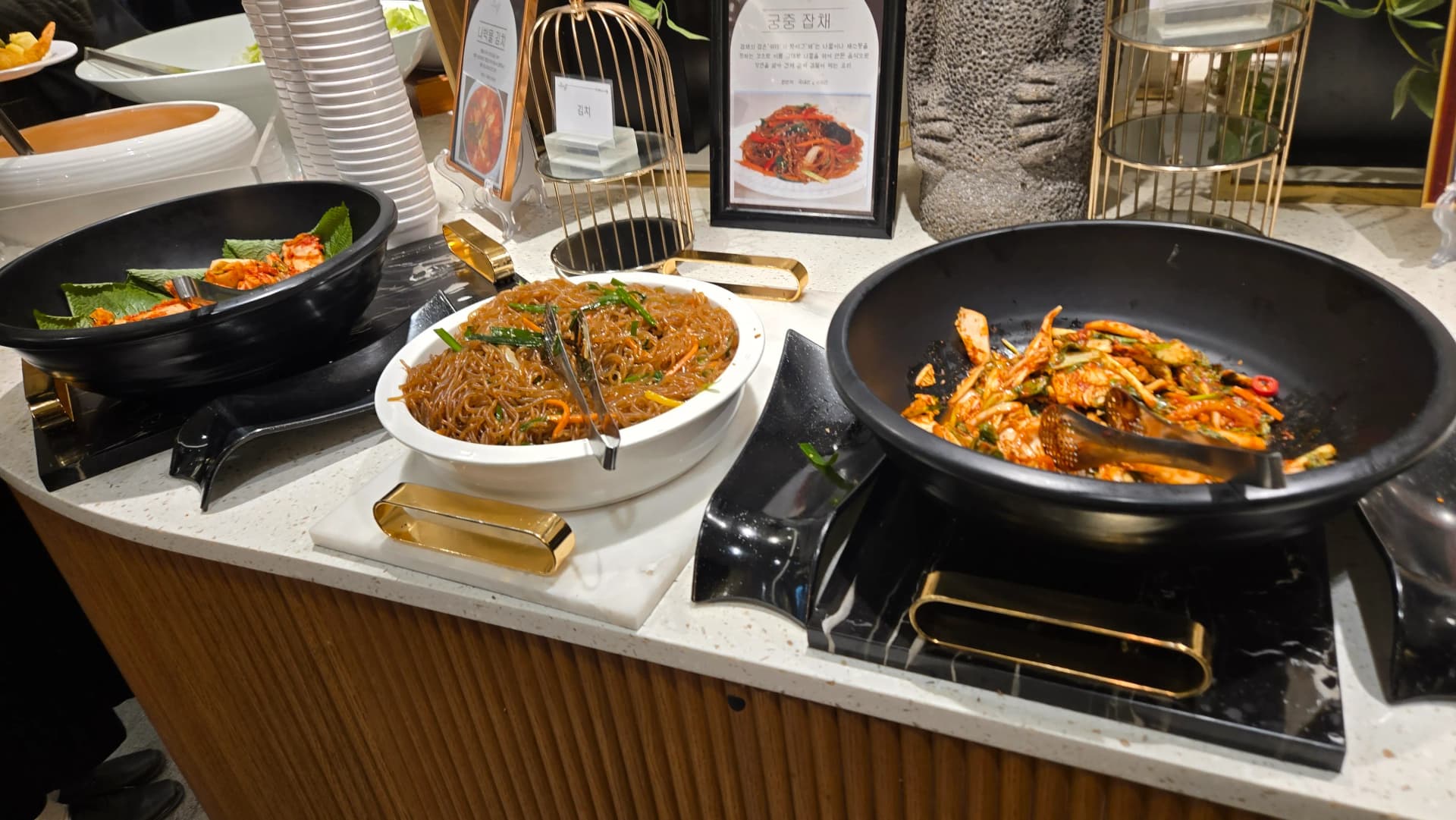
In the center is gungjung-japchae (royal court-style glass noodles), and to the right is a spicy stir-fried dish. Japchae is a Korean glass noodle dish made with sweet potato starch noodles stir-fried in soy sauce — its sweet-savory flavor makes it hugely popular with foreigners too. You can spot some kimchi peeking out on the left as well.
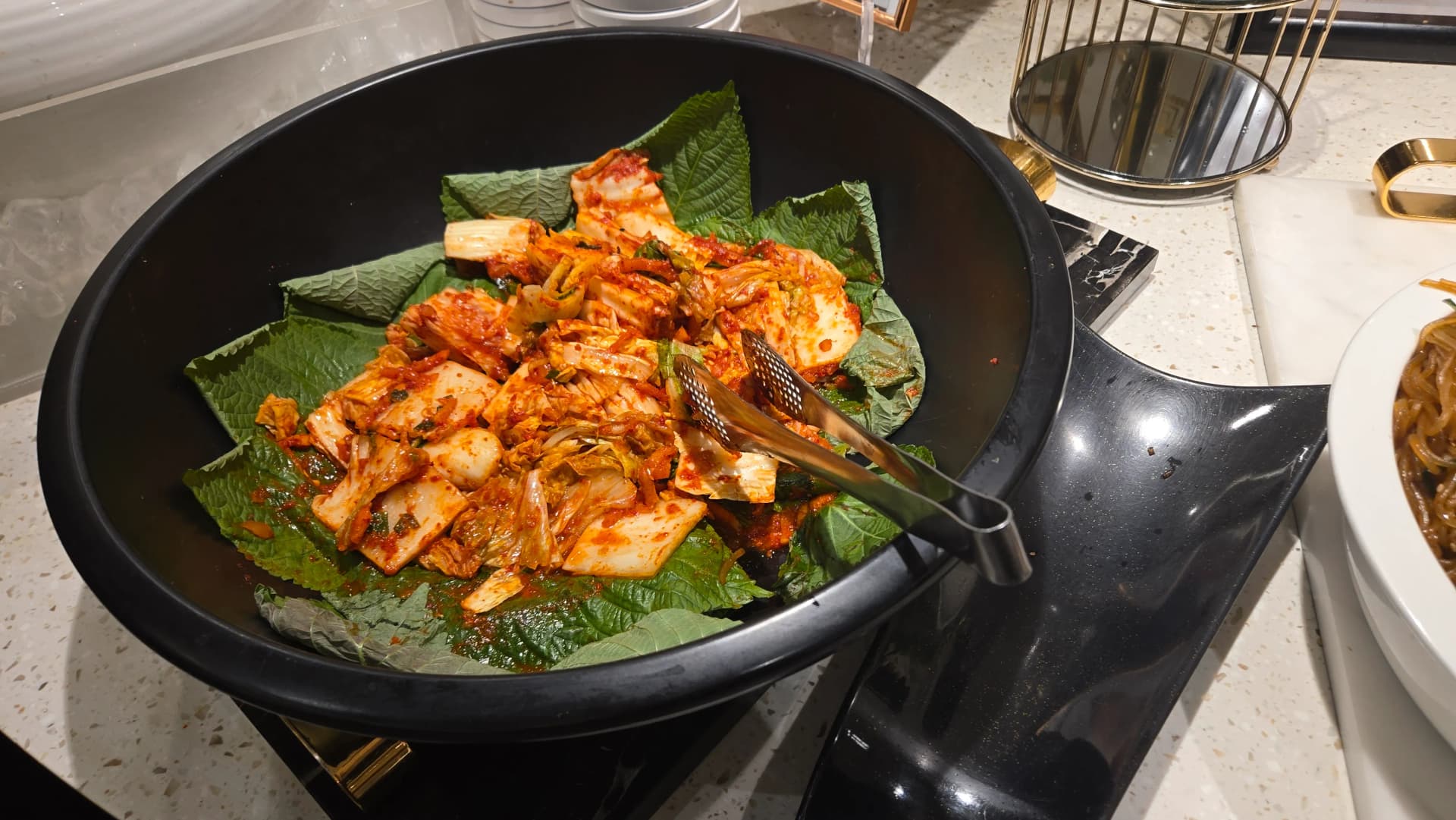
Geotjeori — freshly made kimchi. Crisp napa cabbage just tossed in seasoning, sitting on a bed of perilla leaves. Unlike fermented kimchi, this version is fresh and crunchy. One bite of this between all the rich dishes and your palate is instantly reset.
Seafood Section — The Entire Ocean Showed Up
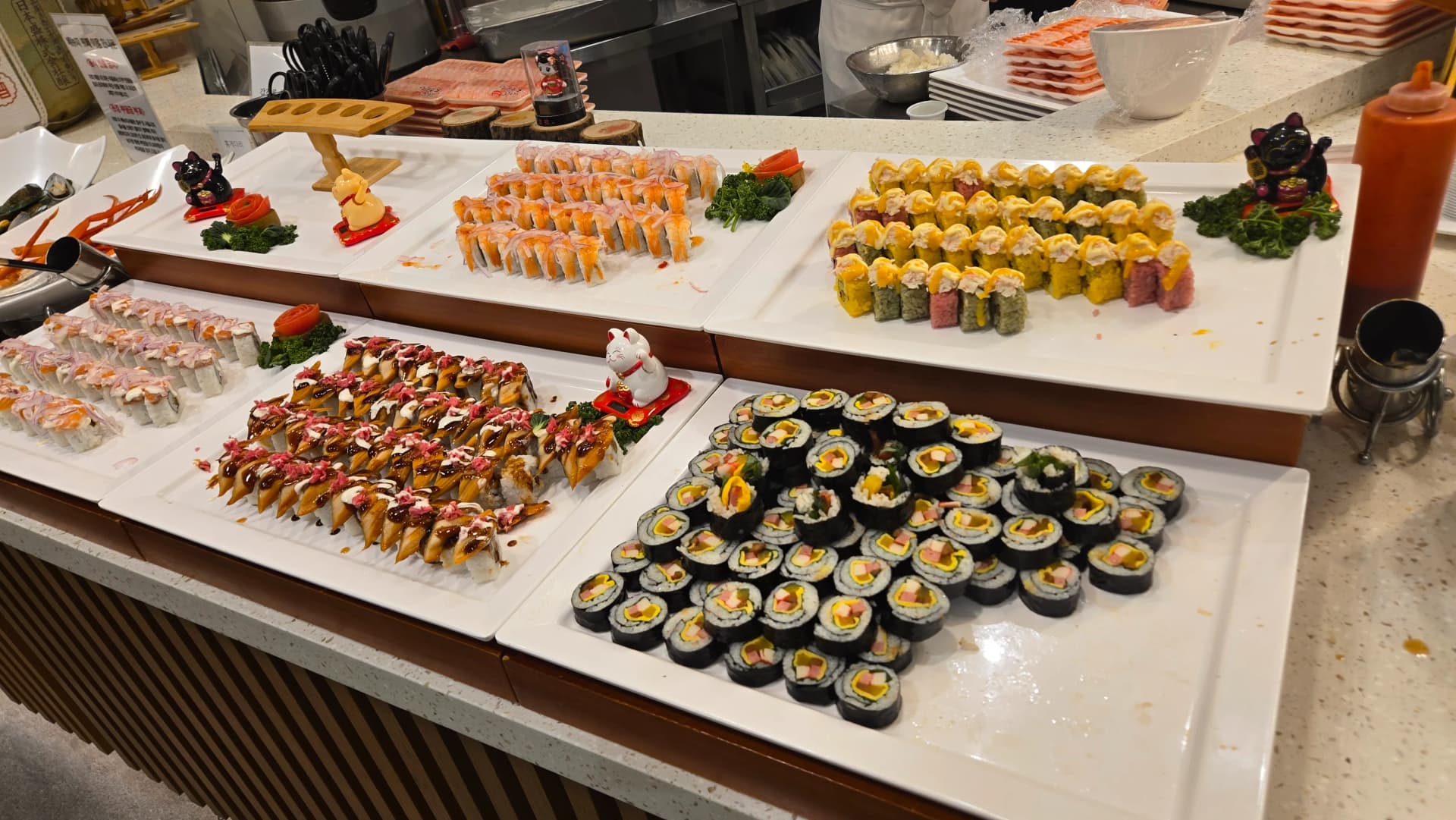
The sushi lineup. Kimbap (Korean seaweed rice rolls), inari sushi, salmon nigiri, eel sushi, and California rolls — all packed tightly across an entire table. There were cute maneki-neko (lucky cat) decorations scattered between the platters, and at this scale, it honestly rivals a dedicated sushi restaurant.
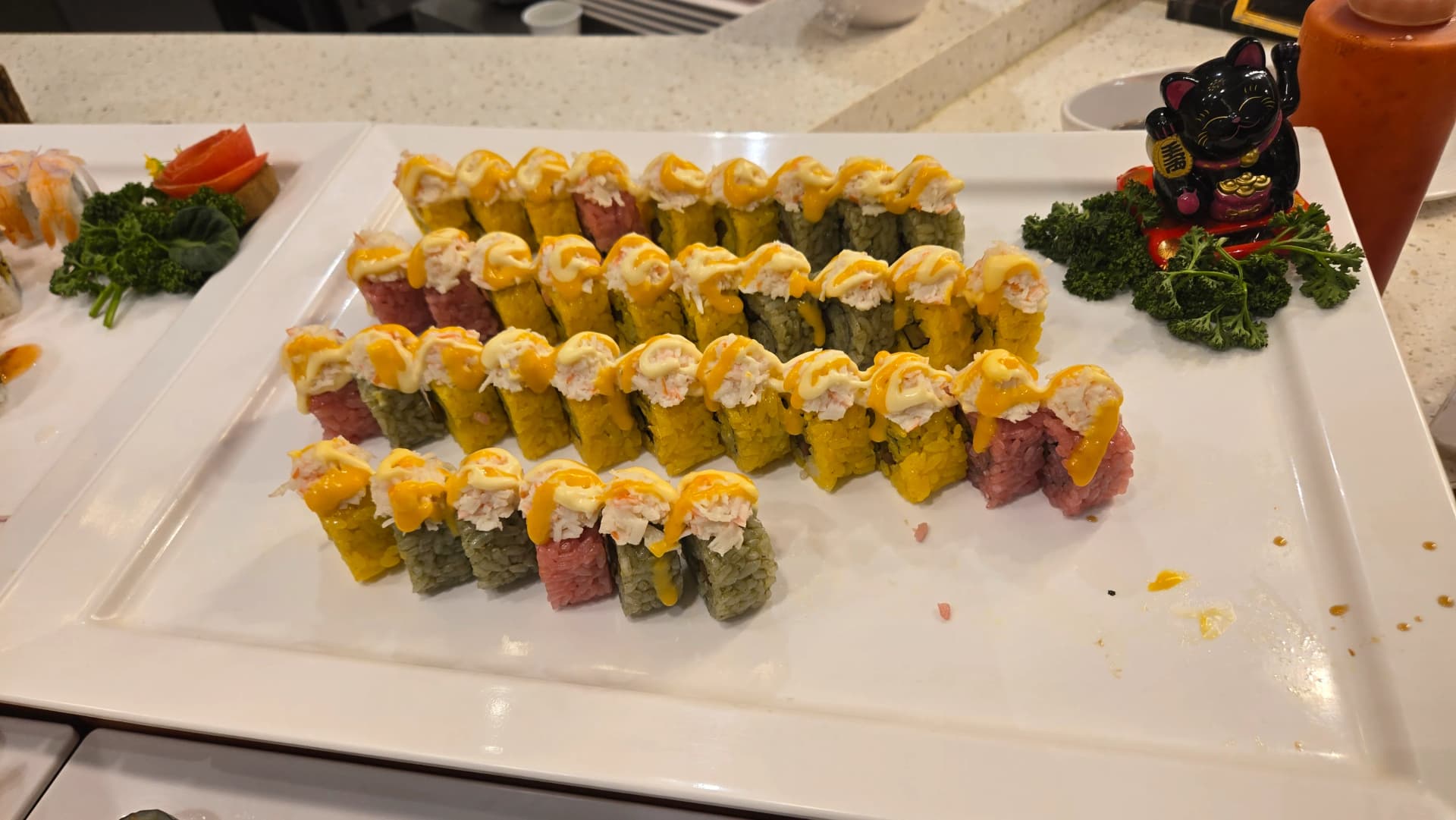
California roll close-up. Yellow pickled radish rice and pink rice, topped generously with crab meat and cheese sauce. The colors alone are gorgeous, and they weren't set out in just one row — we're talking three or four rows deep, so the volume was insane.
The Best of Korean Seafood
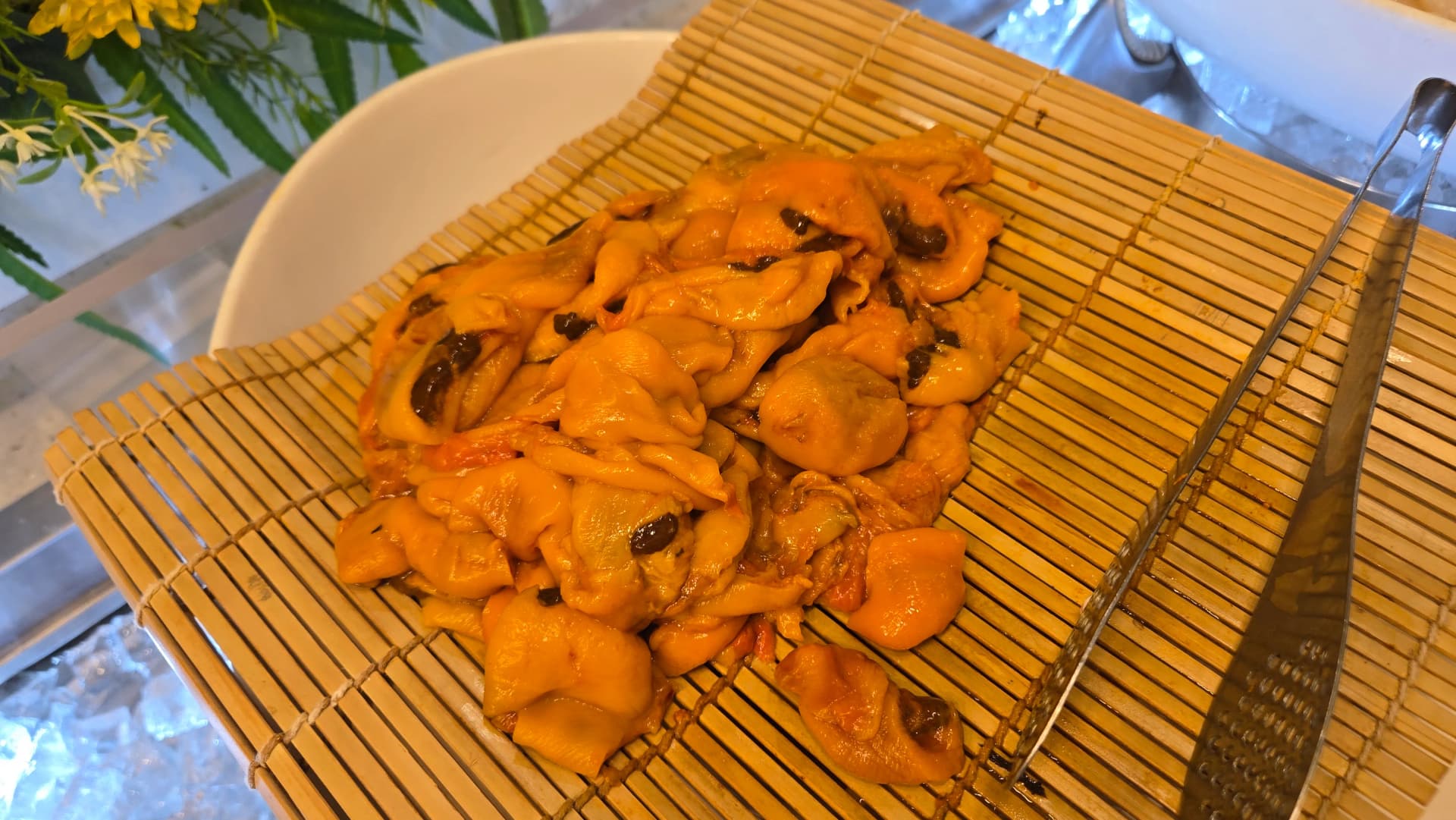
Meongge (sea squirt). Bright orange sea squirt piled high on a bamboo mat — you can practically smell the ocean just looking at the photo. In Korea, it's a love-it-or-hate-it thing because of the intense briny flavor, but fans literally fill their entire plate with nothing else. It's chewy with a wave of ocean flavor that fills your mouth.
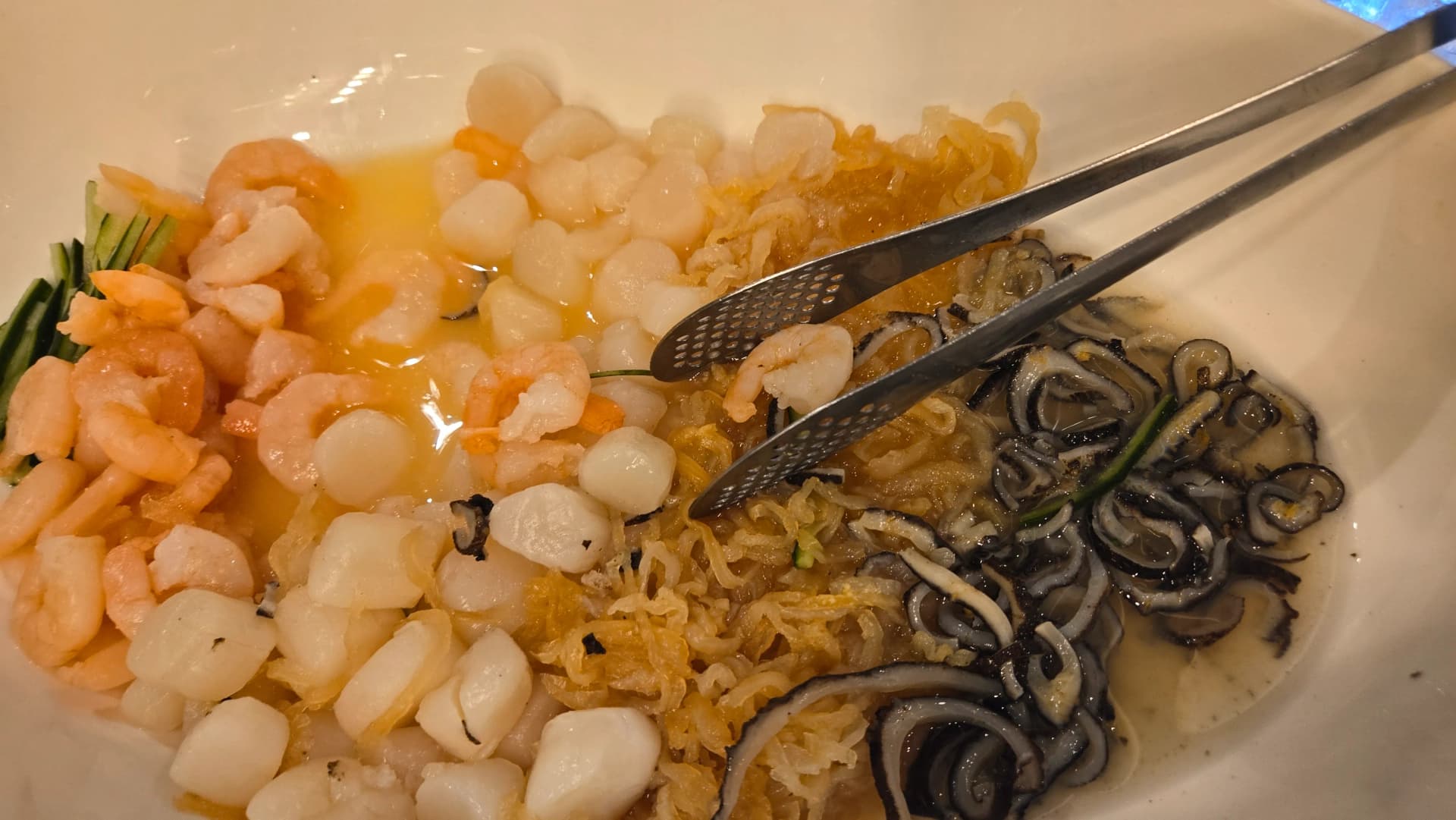
Assorted seafood platter. Shrimp, jellyfish, fish cake balls, and sea cucumber all on one plate, pick-and-choose style with tongs. The jellyfish is crunchy, the sea cucumber is chewy, and the shrimp is bouncy — it's basically a texture party on a single dish.
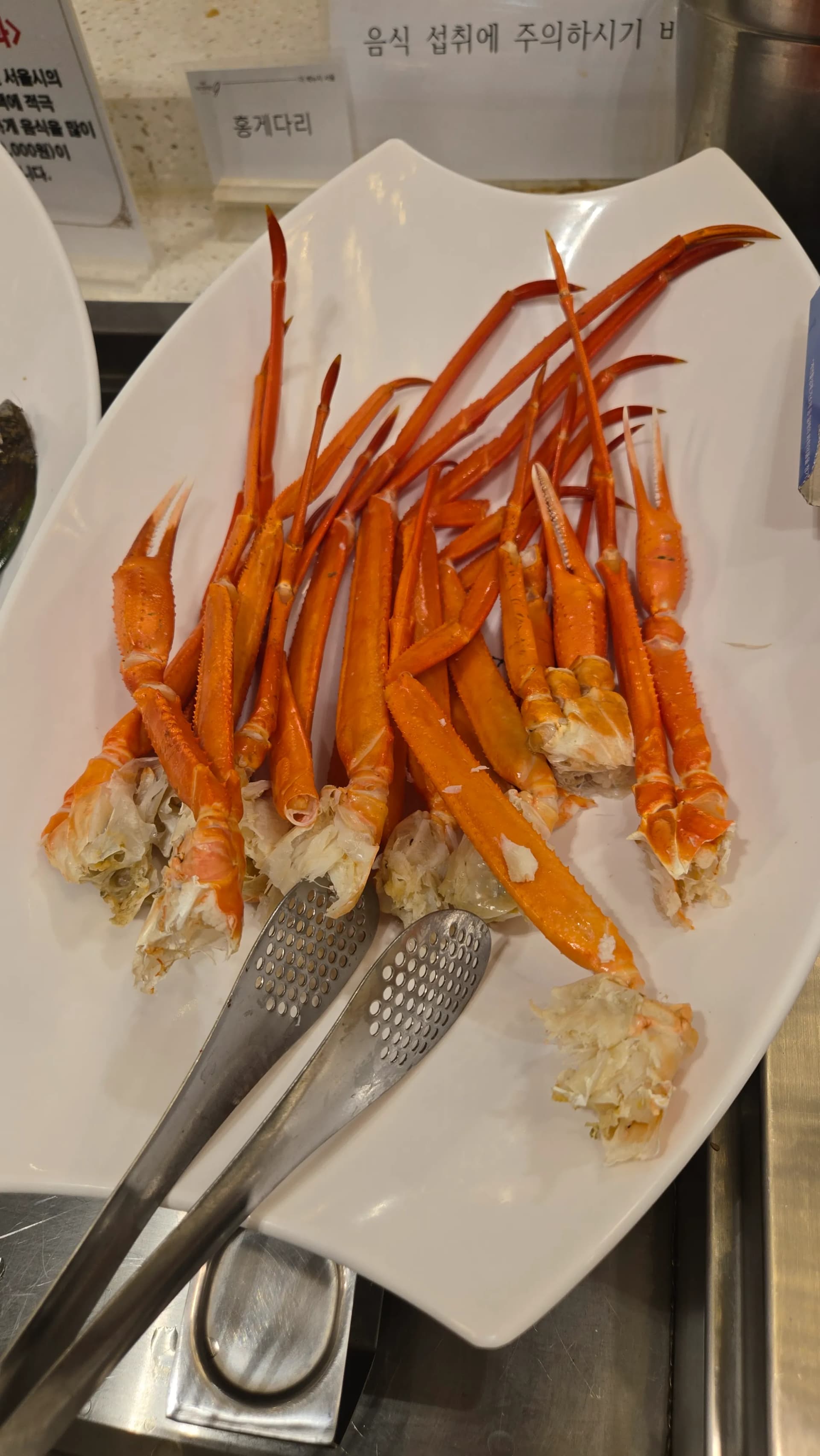
Steamed snow crab legs. You can see the sign reading "snow crab legs" in the back. Bright red crab legs are piled mountain-high on the plate — when these show up at a Korean wedding buffet, guests make a beeline straight for them. There's just something irresistibly fun about pulling the meat right out of the shell.
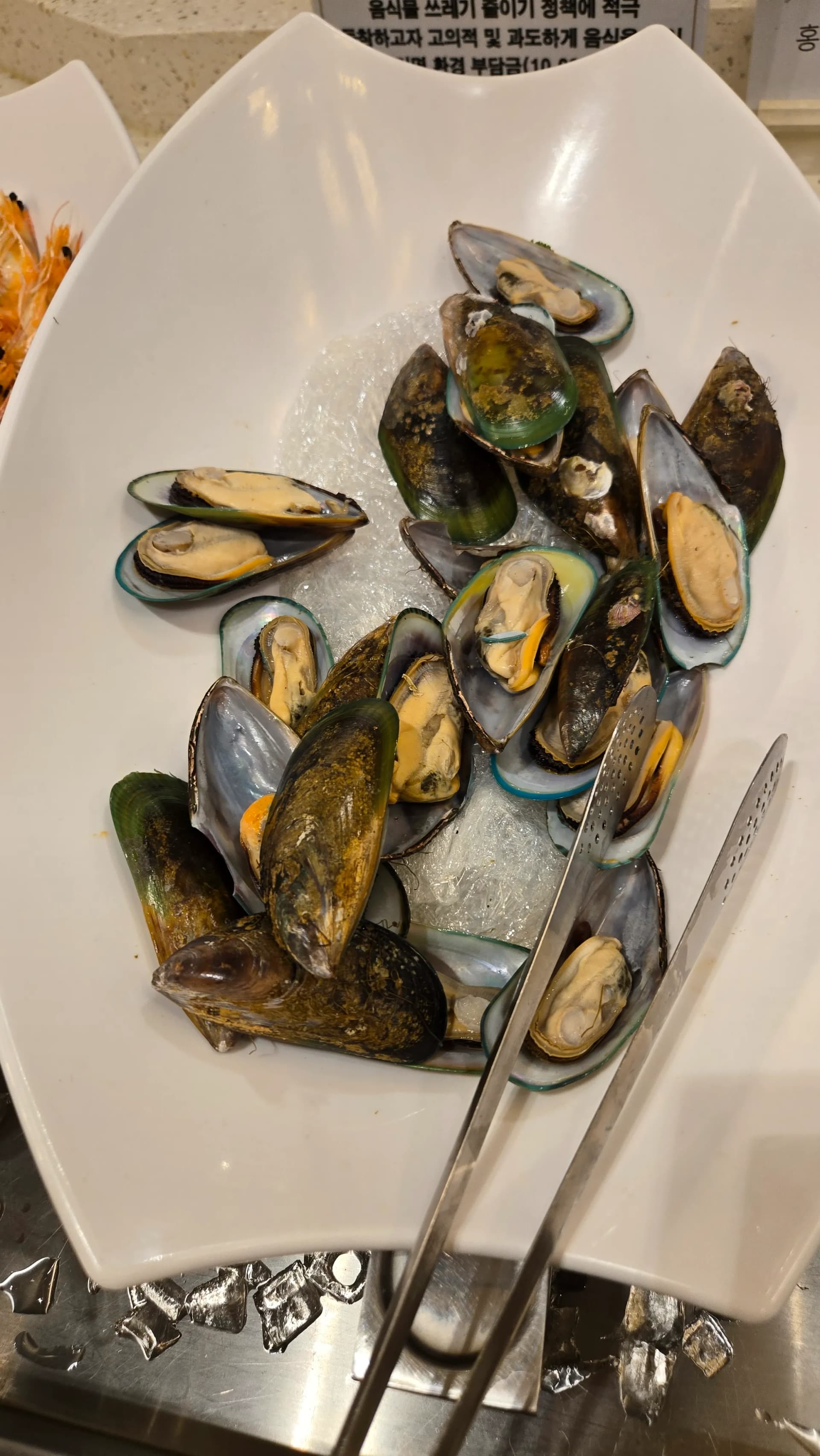
Steamed mussels. Green-shelled mussels sitting half-open on ice, revealing plump meat inside. Dip them in chojang (Korean vinegar-chili sauce) and it's pure ocean flavor in every bite.
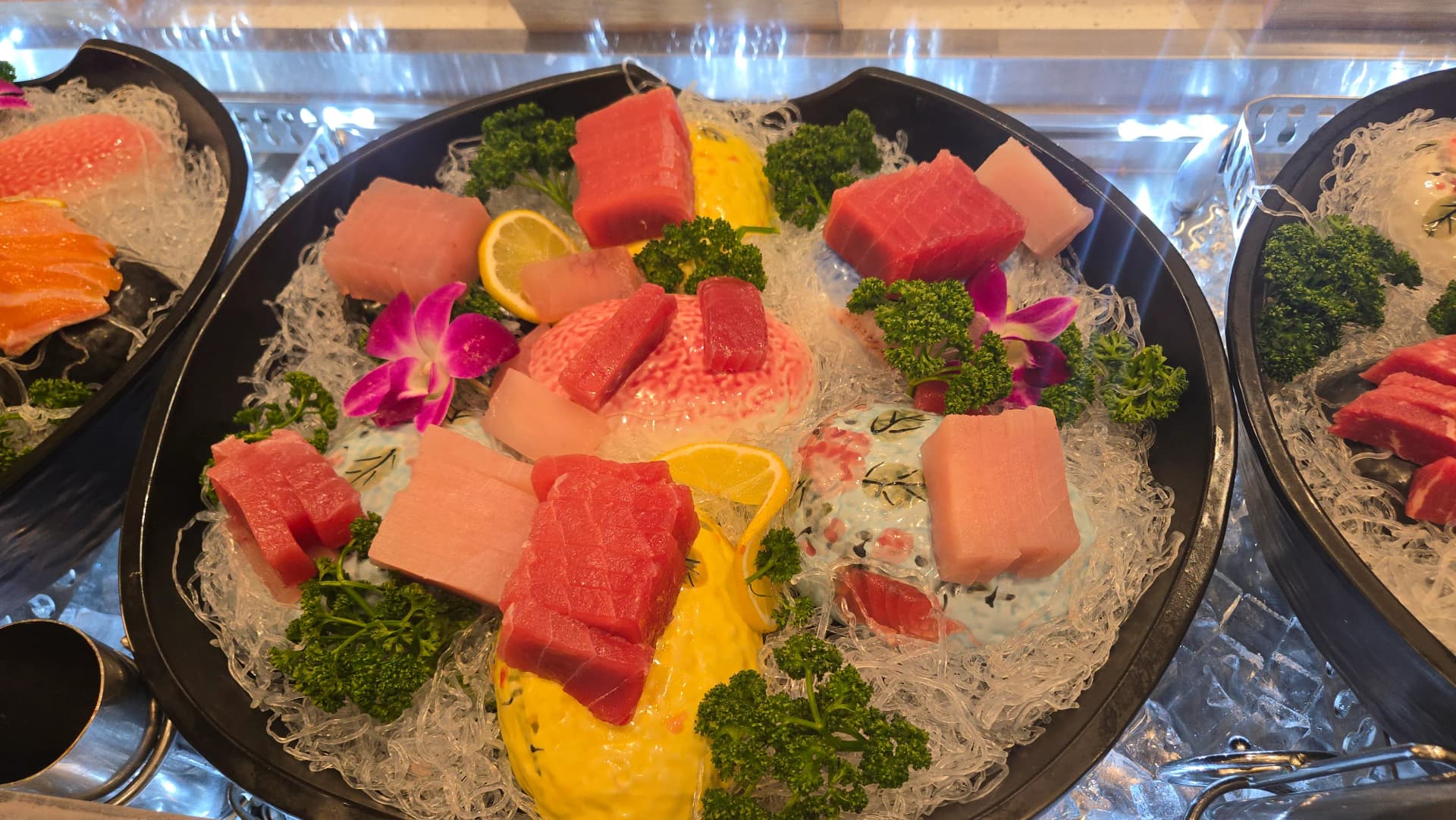
Tuna sashimi. Vivid red tuna arranged over glass noodles, garnished with orchid flowers and broccoli — the plating is honestly at fine-dining Japanese restaurant level. You can see the color varies by cut: the deep red lean parts are clean and mild, while the pinkish belly pieces are rich and fatty, practically melting on your tongue.
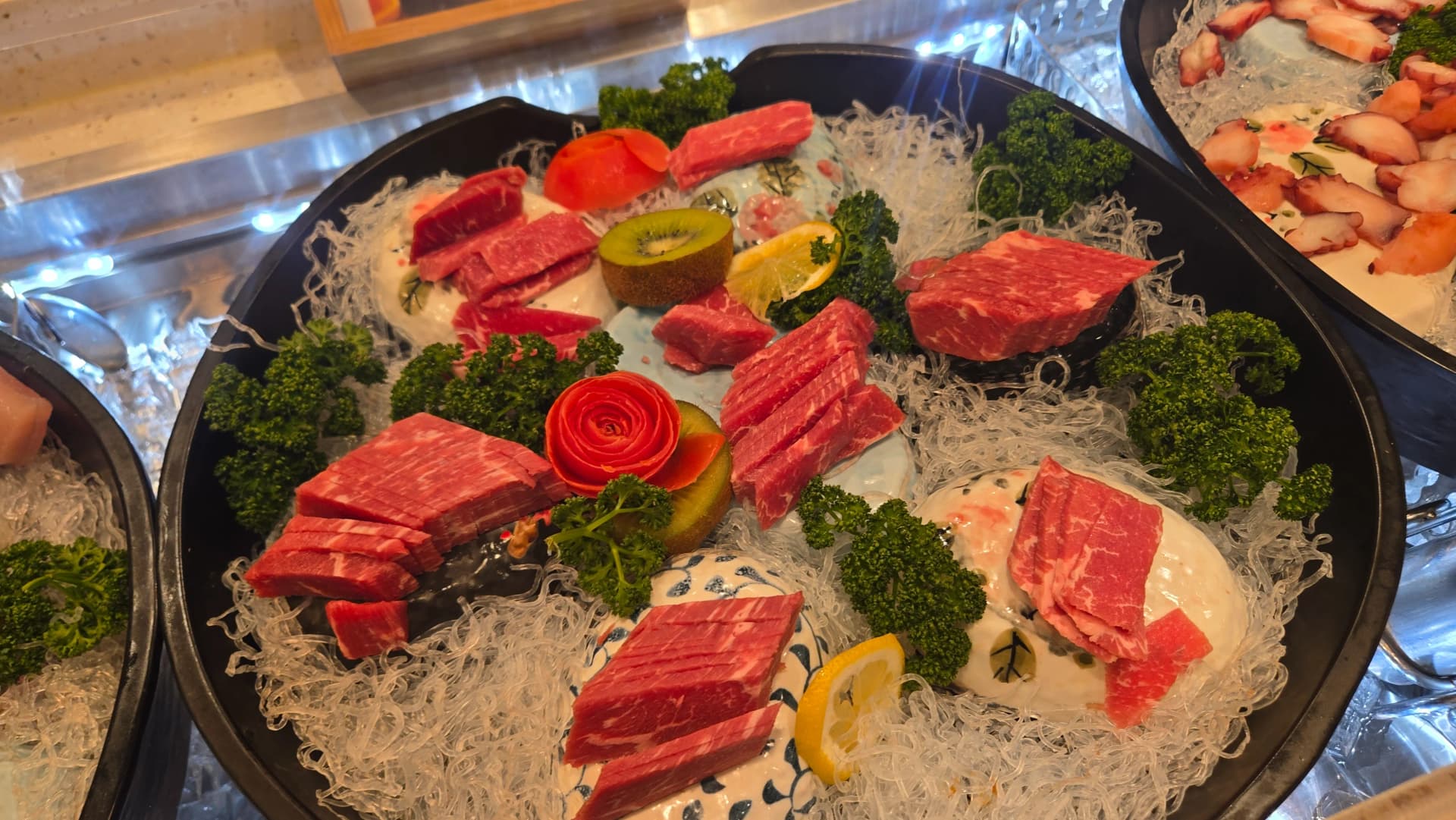
Yuk-sashimi (Korean beef tartare). Thinly sliced raw beef with gorgeous marbling clearly visible. There's even a rose-shaped tomato garnish on top. Dip it in sesame oil with a pinch of salt, and it practically dissolves in your mouth. In Korea, this is a must-have dish at any proper feast table — it's considered something truly special.
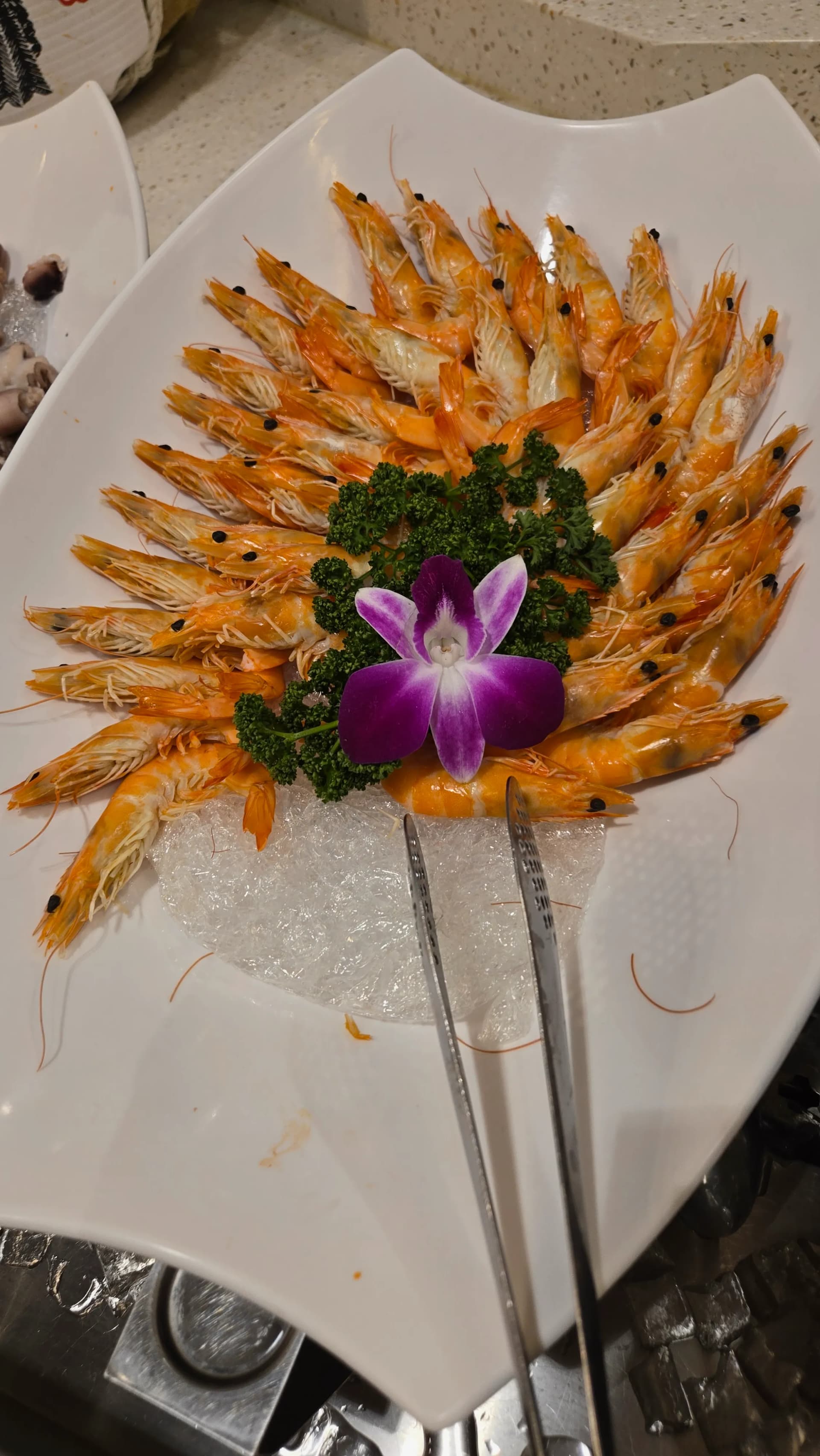
Poached shrimp. Arranged in a circle like flower petals with a single orchid placed in the center — the presentation is absolutely stunning. Dip them in chojang and the bouncy texture is just phenomenal.
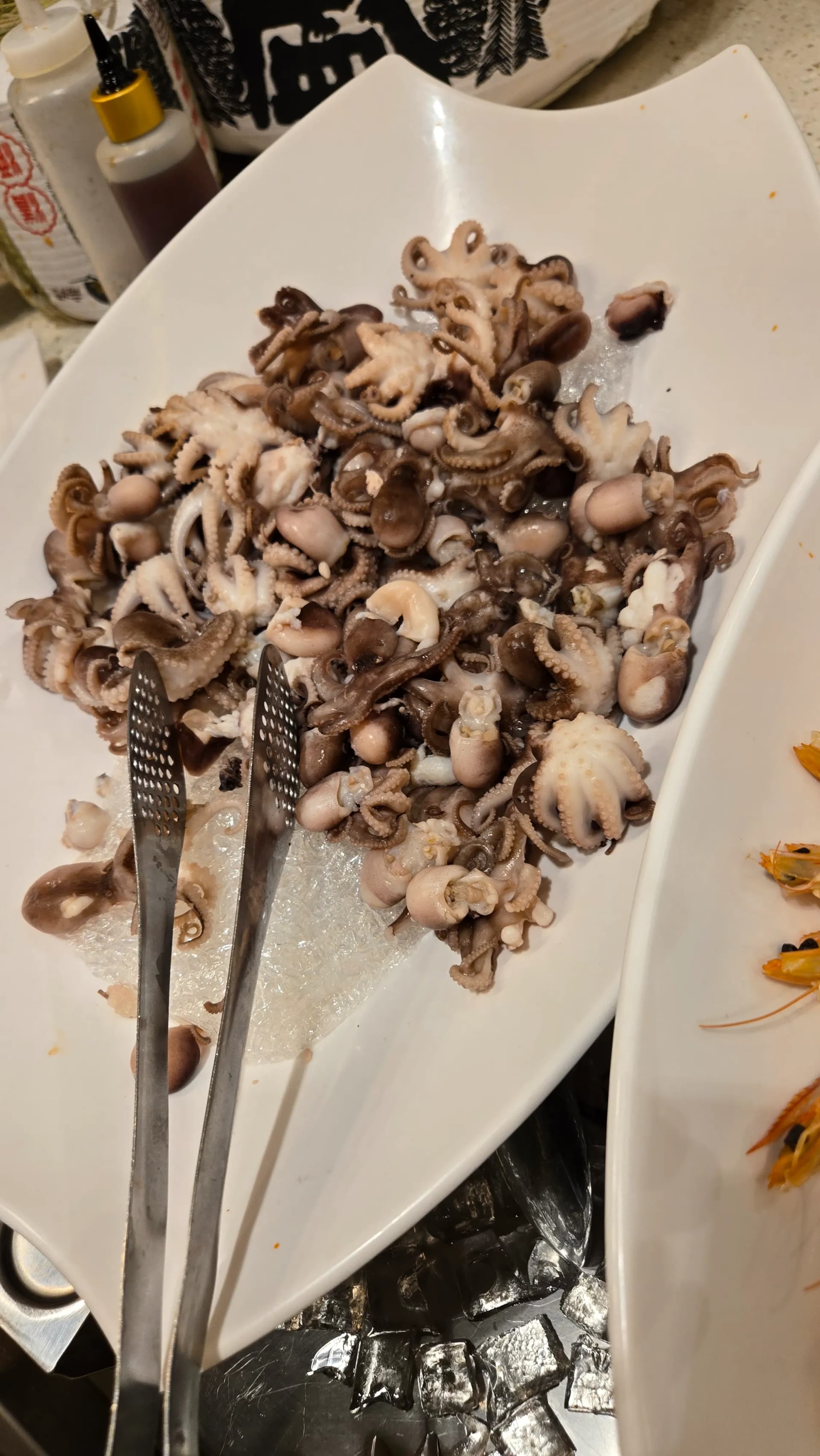
Poached jjukkumi (baby octopus). These tiny octopus-like creatures are piled high on ice. In Korea, they're usually dipped in chojang or eaten with sesame oil and salt. The chewy texture is seriously addictive — once you grab one, you just can't stop.
The Ultimate Rice Thief: Soy-Marinated Shrimp
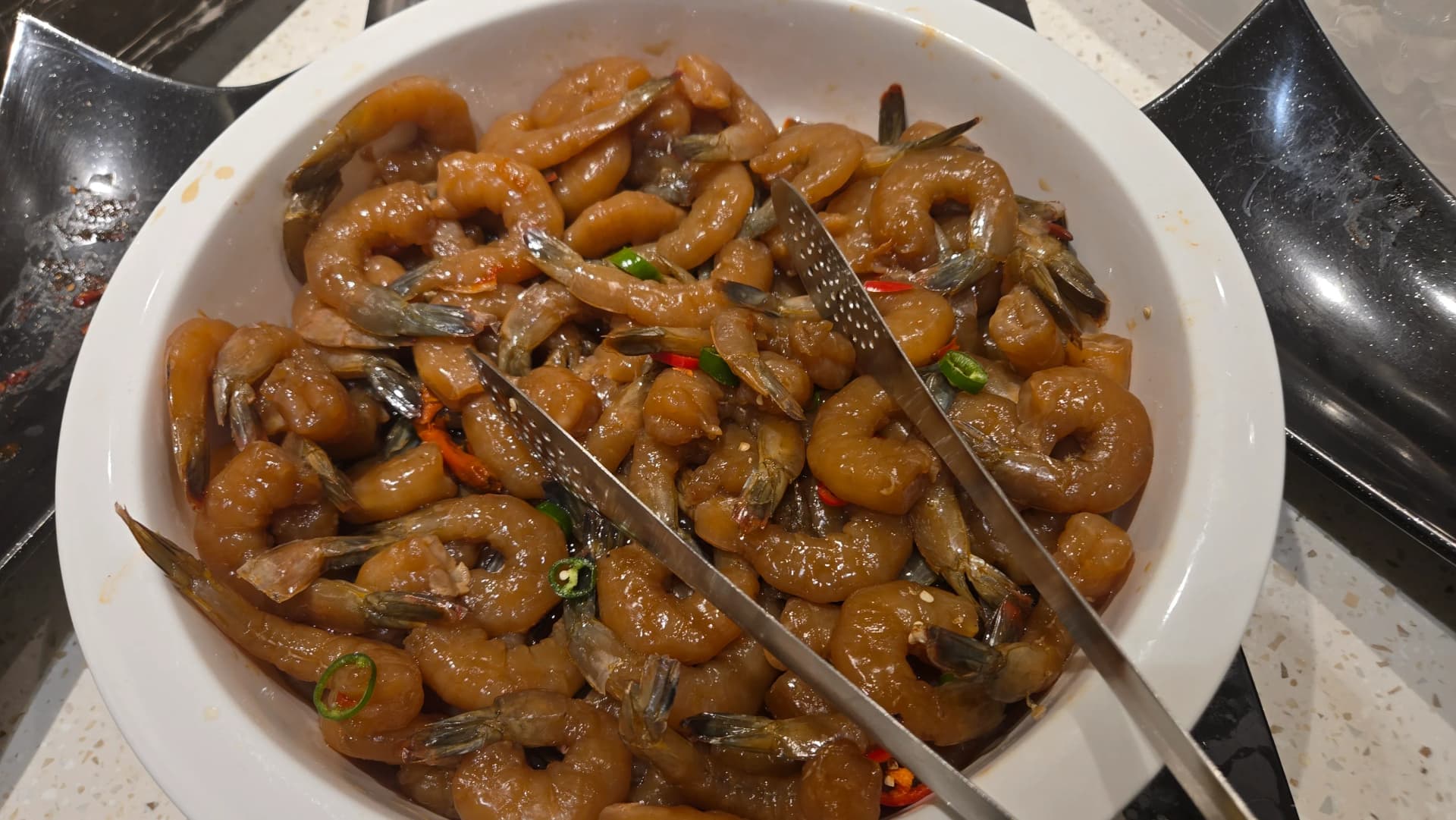
Ganjang-saeu (soy-marinated shrimp). Fresh raw shrimp marinated whole in soy sauce — this is a traditional Korean dish, and calling it a "rice thief" is the perfect description. The soy marinade has green chili, red chili, and green onions mixed in, creating a flavor that's salty with a sneaky kick of heat. The shrimp heads are packed with savory roe that mingles with the soy sauce for an umami bomb you wouldn't believe. Koreans love to pour that leftover soy sauce straight over rice and mix it all up — and that's insanely good too. When ganjang-saeu shows up at a Korean wedding buffet, it's considered a sign that the venue really means business.
Chinese Food Section — The Hidden MVP of Wedding Buffets
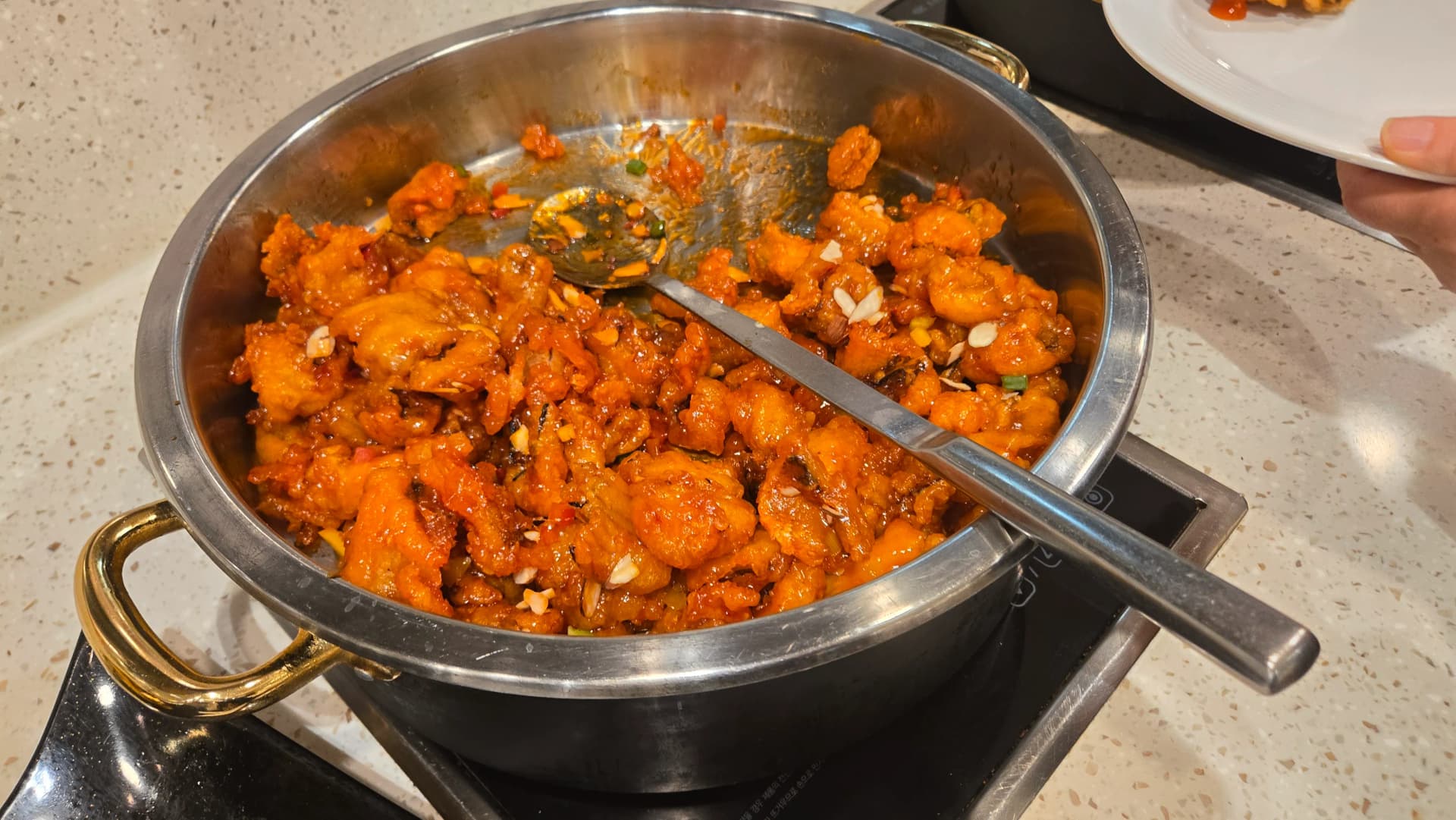
Kkanpunggi. Crispy fried chicken pieces tossed in a sweet-and-spicy glaze — a classic Korean-Chinese dish. Chili peppers and sliced almonds are stir-fried right in. Crunchy on the outside, juicy on the inside, with the sauce soaked deep into every piece. This is the kind of dish that nobody at the wedding buffet leaves behind — it ends up on literally every plate.
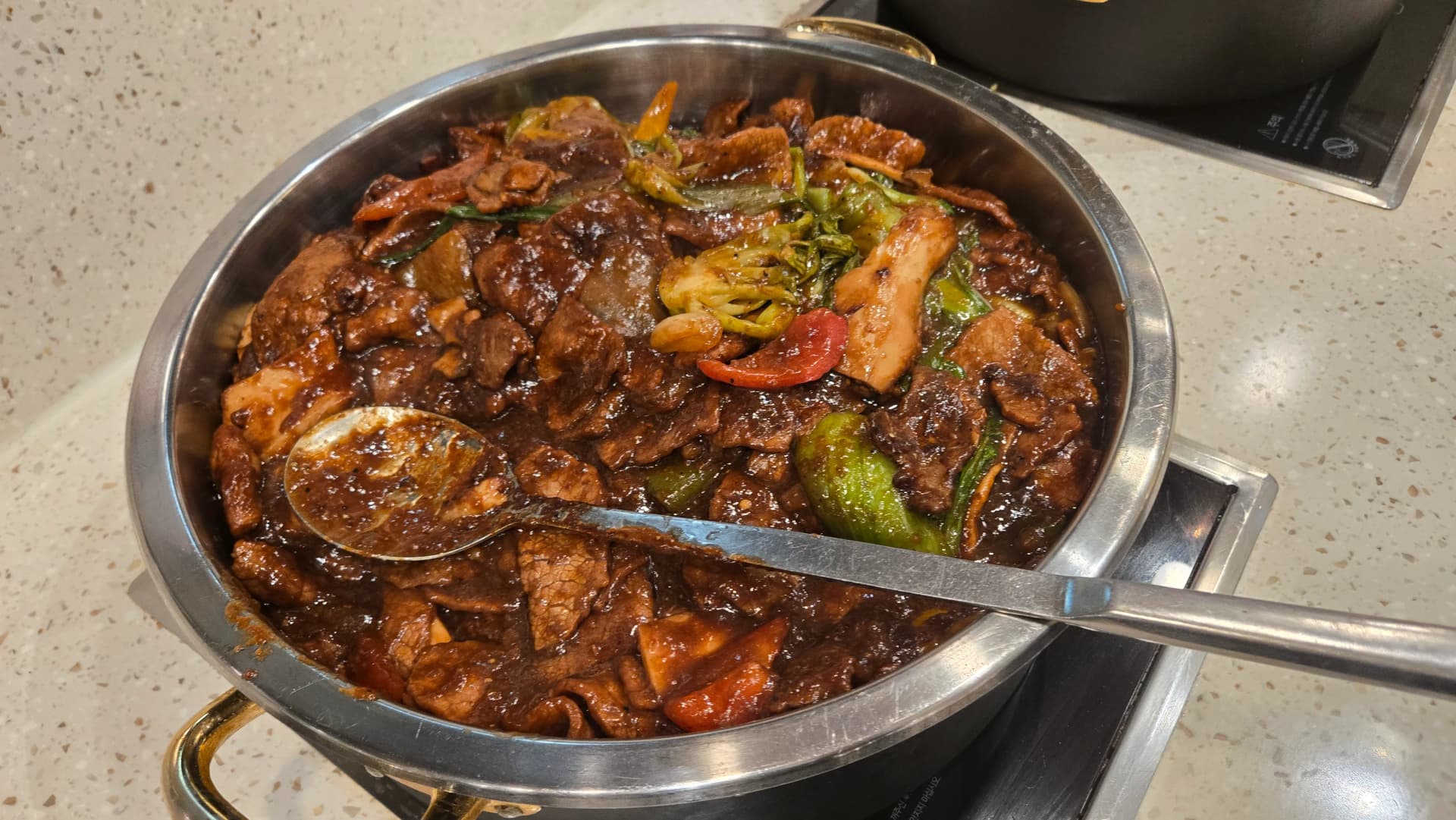
Beef and bok choy stir-fried in oyster sauce. Thinly sliced beef with bok choy, bell peppers, and green onion wok-tossed in a rich oyster sauce — a classic Chinese-style stir-fry kept warm on a chafing dish. The salty oyster sauce penetrates deep into the beef, and spooned over rice, this alone is a complete meal.
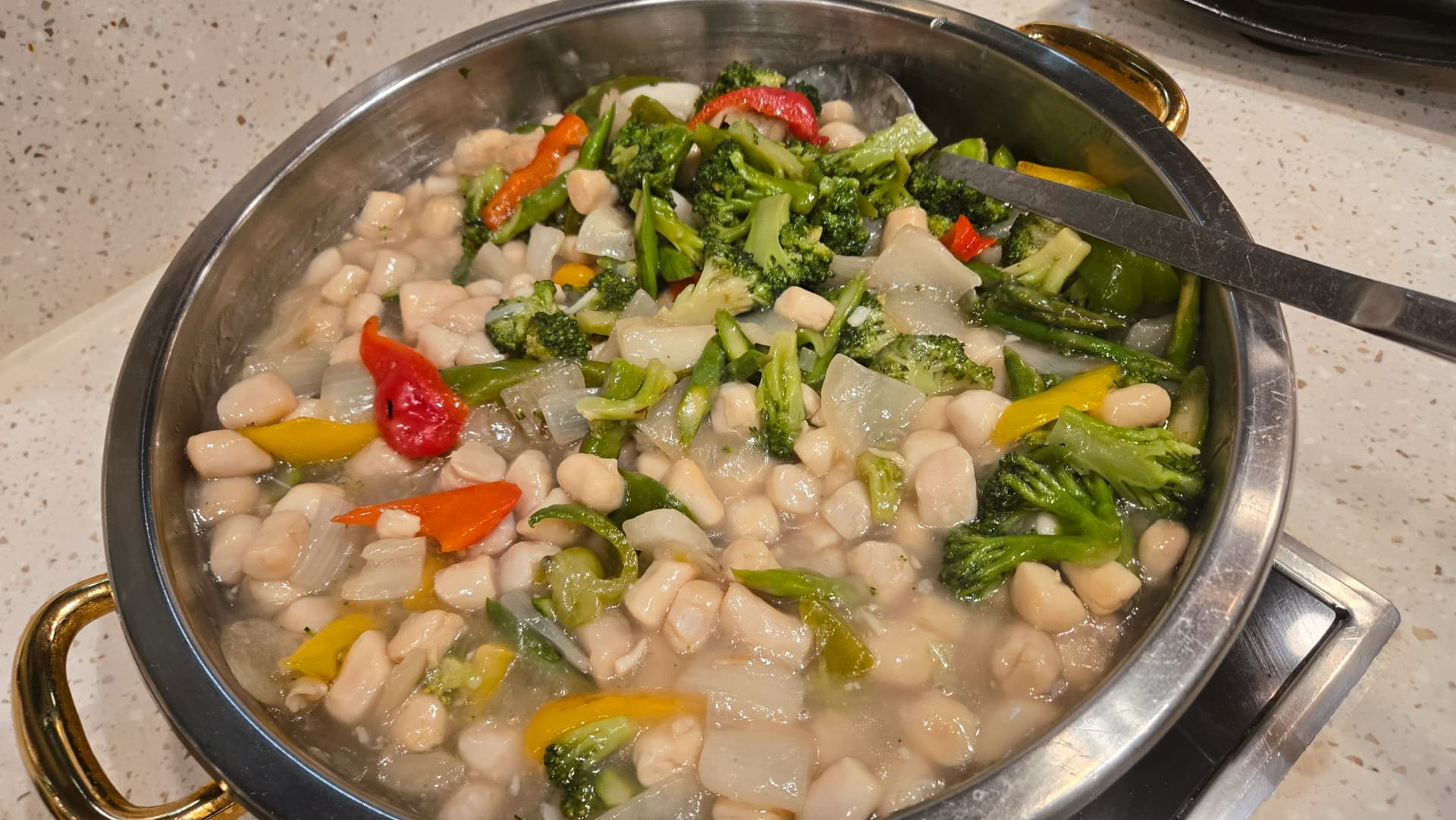
Scallop and broccoli stir-fry. Plump white scallops with broccoli, bell peppers, onion, and asparagus in a light, clean sauce. Among all the rich Chinese dishes, this one plays the role of the refreshing palate cleanser. The scallops are tender and the broccoli is crisp — if you want something that goes easy on the stomach, I'd recommend this one.
Meat Section — It's Not a Buffet Without Meat
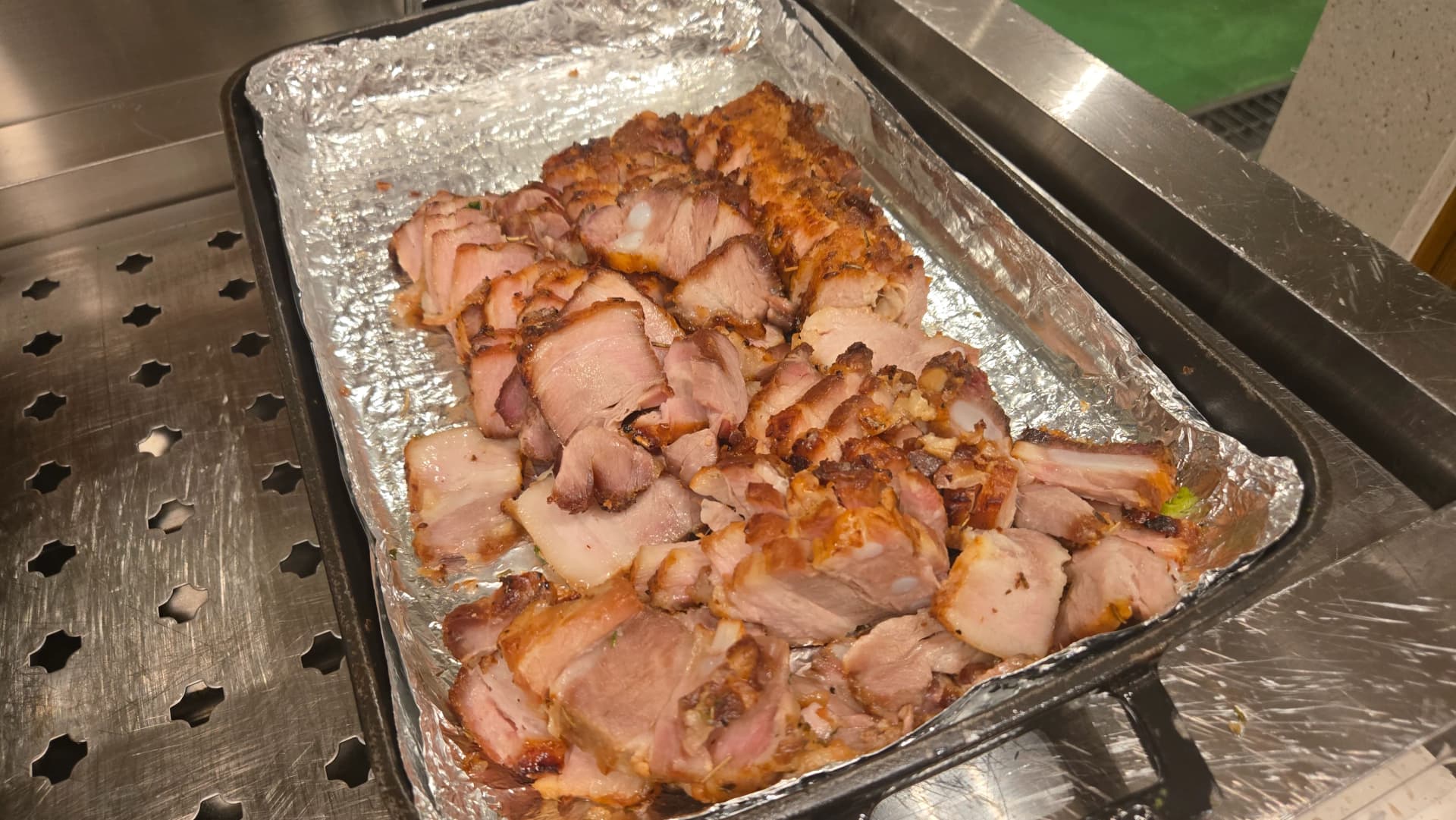
Pork barbecue. Thick-cut slices of pork piled high on foil — charred and crispy on the outside, juicy and tender on the inside. One bite and you get that smoky charcoal flavor spreading across your palate.
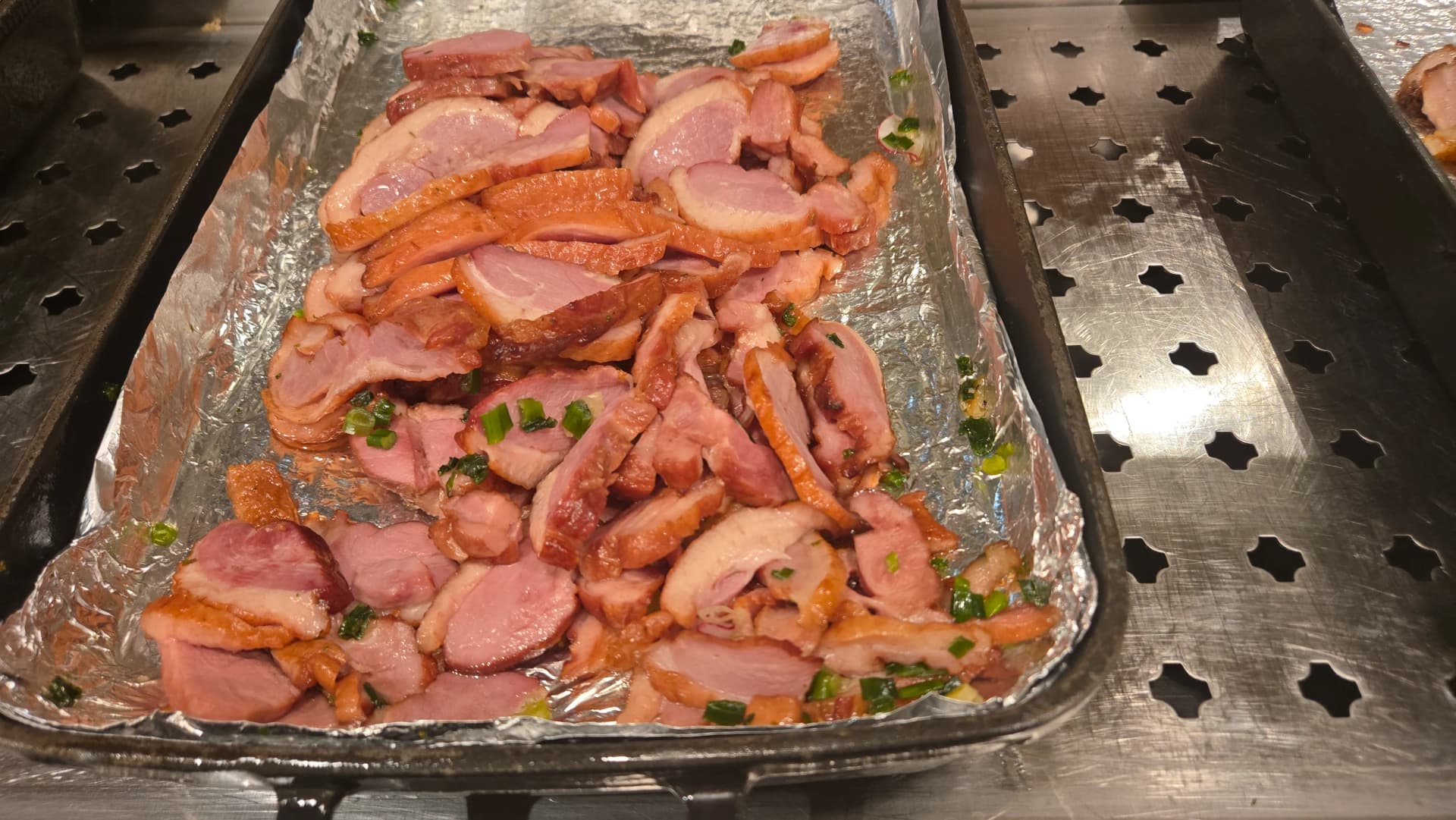
Smoked duck. Thinly sliced duck with chopped scallions sprinkled on top, the pink cross-section looking absolutely gorgeous. The subtle smokehouse aroma and chewy texture make this one of those quietly popular sleeper hits at the buffet.
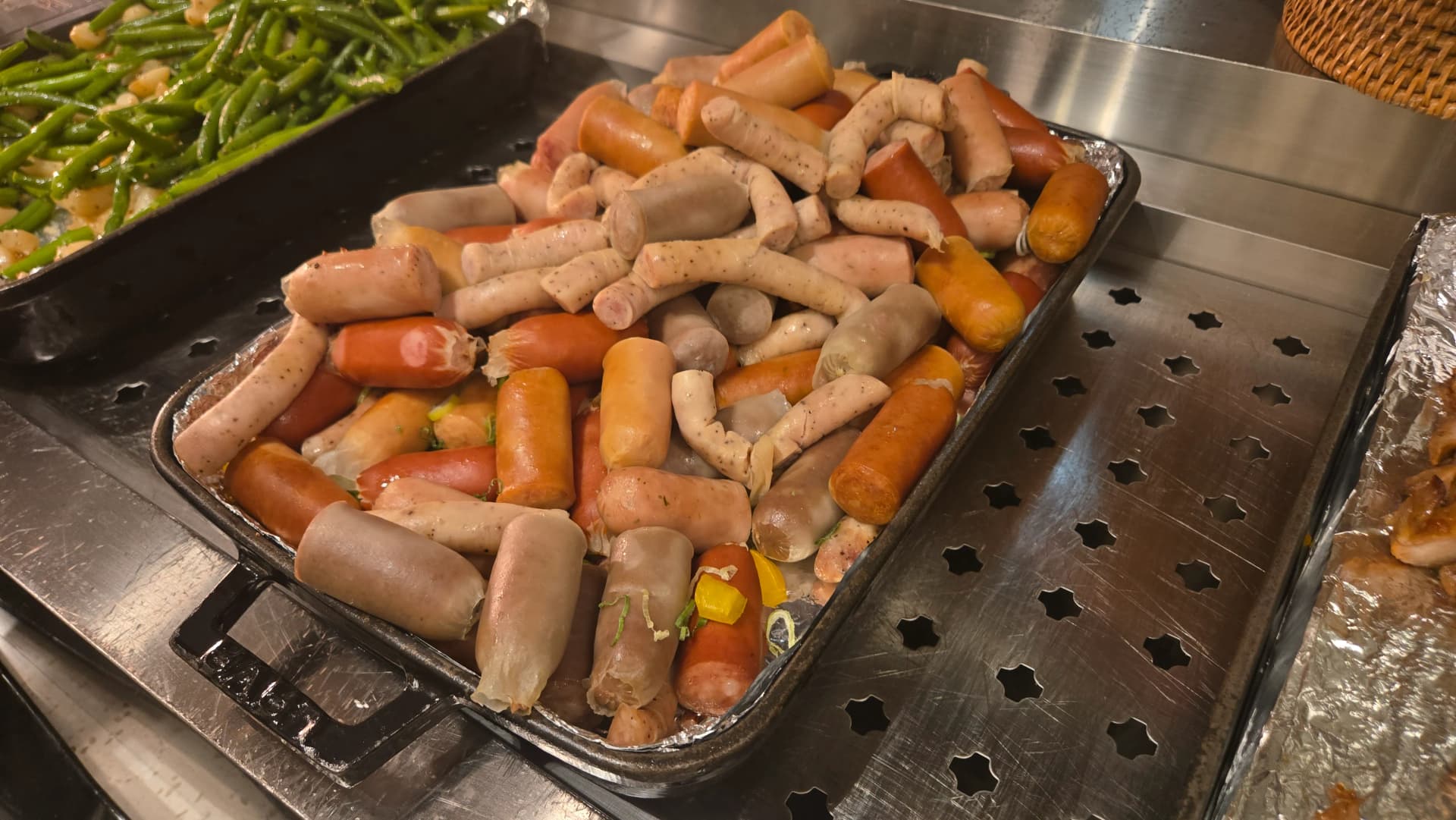
Assorted sausage platter. Frankfurters, Vienna sausages, and herb sausages all stacked by type — different sizes, different colors. Kids obviously love these, but even adults get hit with a sudden beer craving just looking at them.
The Highlight of the Meat Section
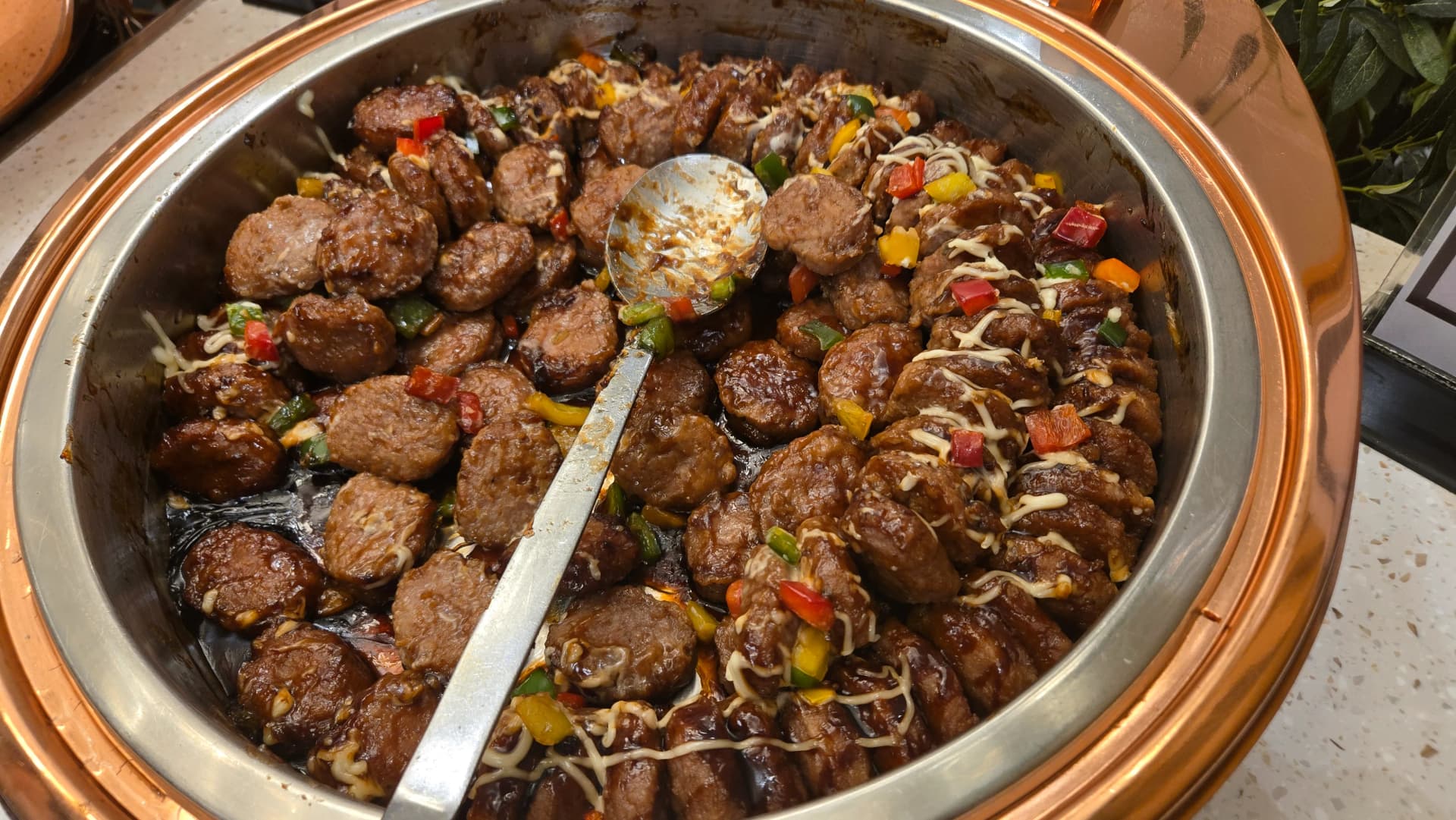
Meatballs in demi-glace. Round meatballs smothered in a deep brown sauce with bell peppers and melted cheese on top. They're bite-sized so they're super easy to pop into your mouth, and the sweet-savory sauce really brings out the meat flavor.
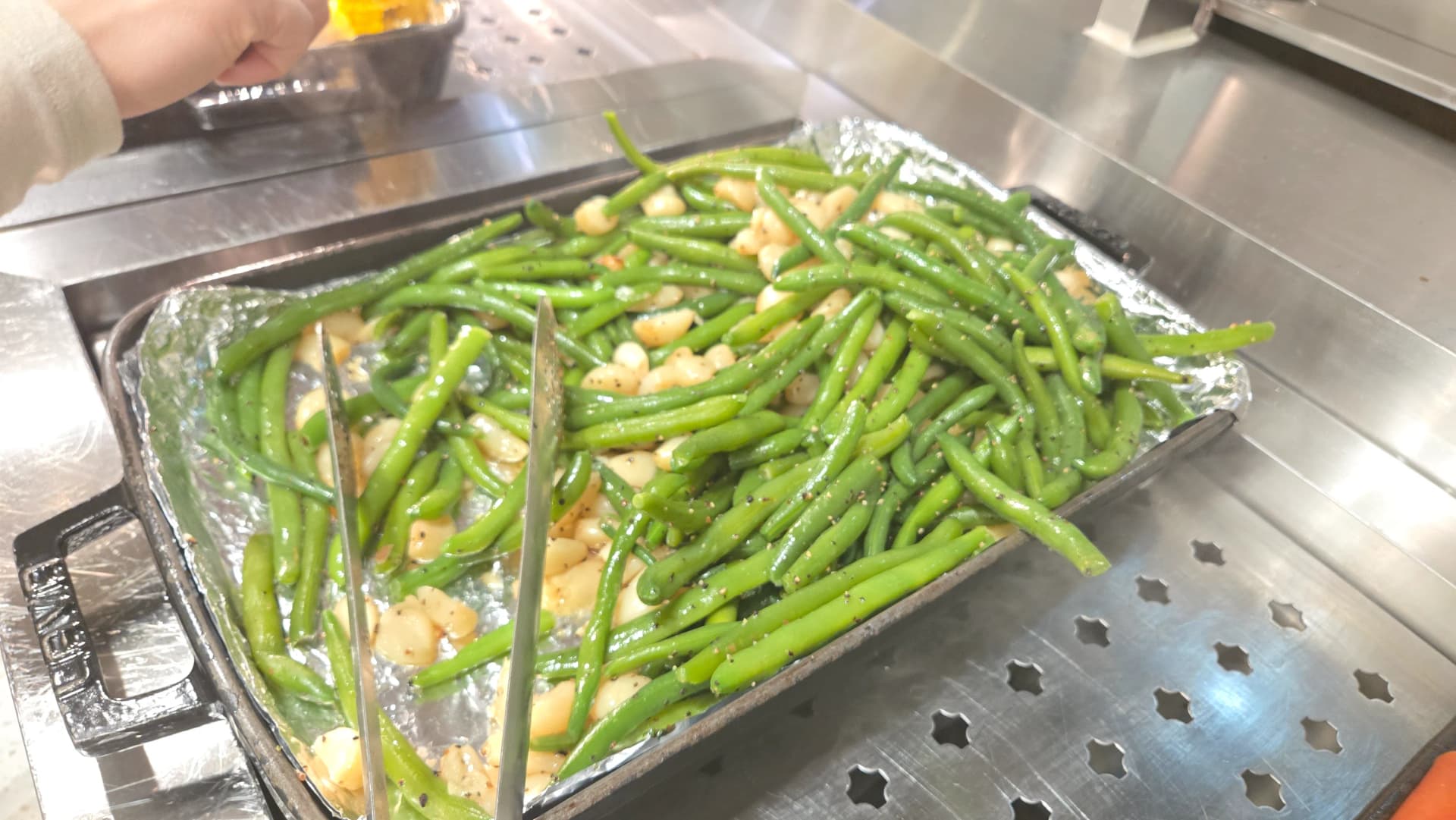
Green beans and garlic sautéed in olive oil. A simple veggie side, but slipping a plate of these between all the meat really cuts through the richness and resets everything. The crisp snap is the whole point.
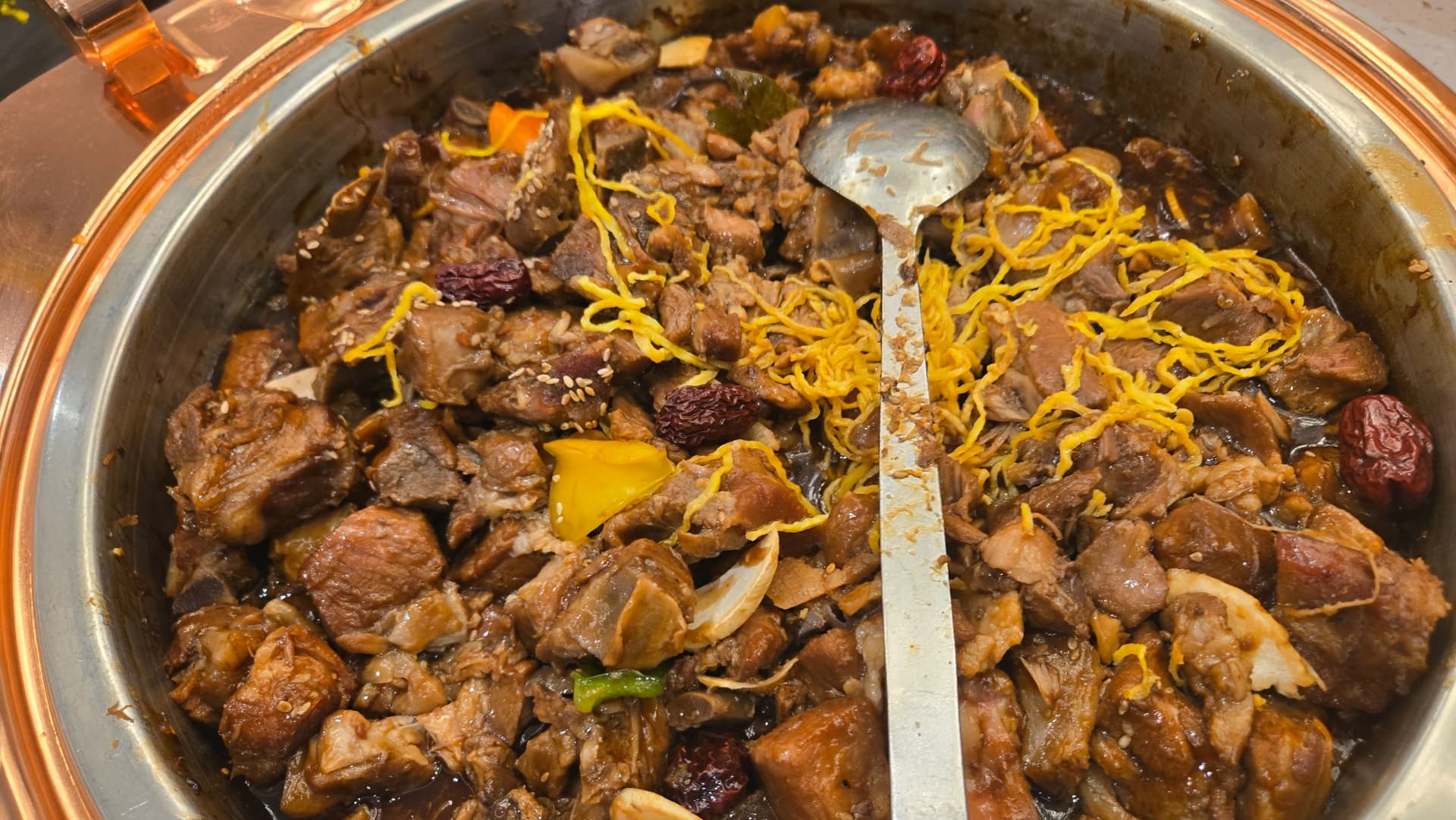
Galbi-jjim (soy-braised short ribs). Meat slow-braised in soy sauce until meltingly tender, topped with egg garnish, jujube dates, and a sprinkle of sesame seeds. This is THE quintessential Korean feast dish. The meat slides right off the bone, and the slightly sweet soy glaze has soaked deep into every fiber — one serving and you'll demolish an entire bowl of rice.
Sweet Finale — Dessert & Bakery Section
In Korea, bread and dessert are enjoyed as a post-meal treat. While bread is a staple in Western cultures, in Korea rice is the main carb and bread falls into the snack or dessert category. That's why Korean buffets have a completely separate dessert section from the main food line — you stuff yourself at the main stations first, then wander over for something sweet to finish things off.
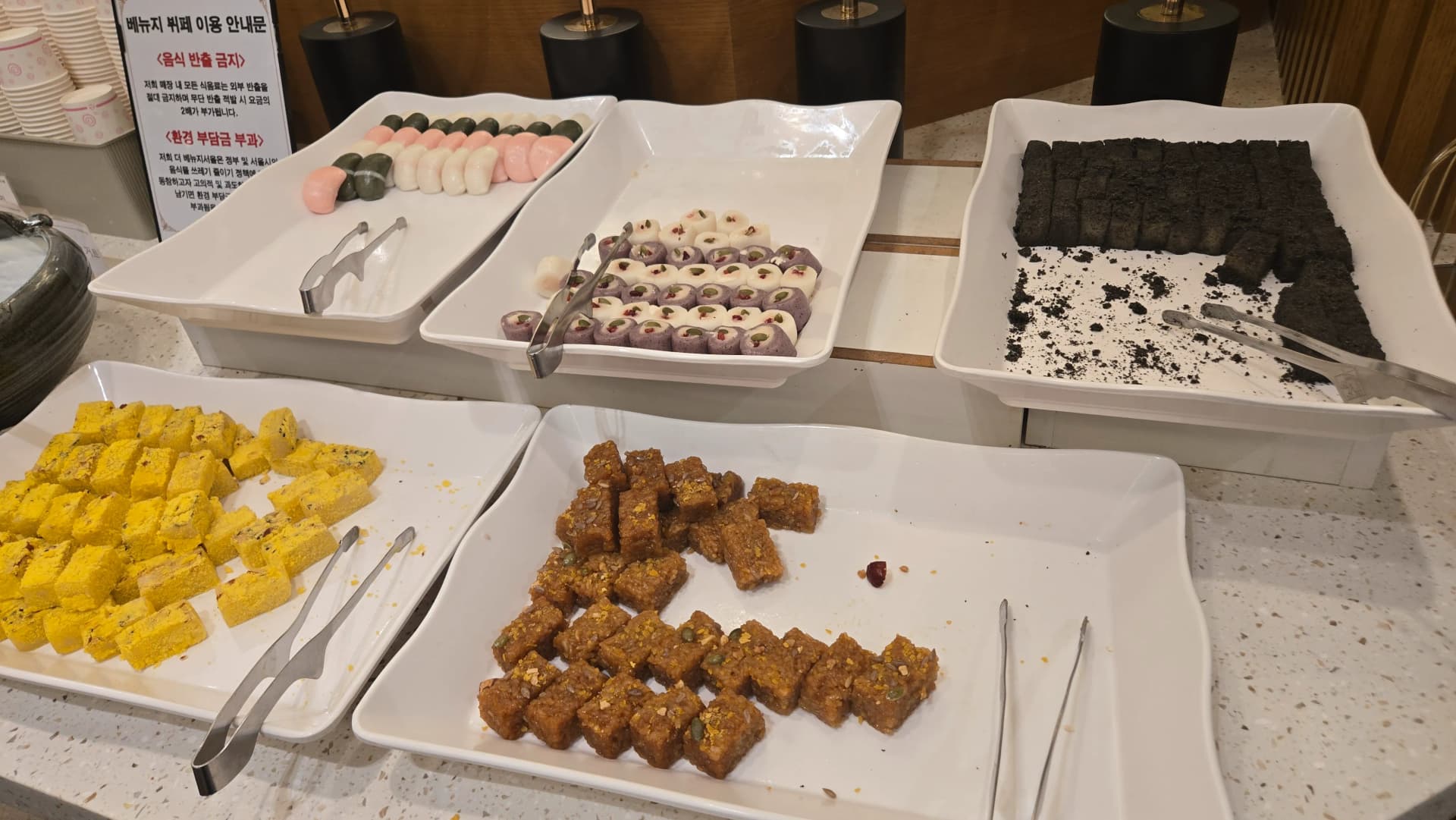
Assorted traditional Korean rice cakes (tteok). Songpyeon (stuffed crescent rice cakes), gyeongdan (sweet rice balls), black sesame rice cake, pumpkin steamed rice cake, and yakgwa (honey pastry) — all gathered on one display. They've got that signature chewy glutinous rice texture coated in sweet powder, and at a Korean feast, rice cakes are absolutely non-negotiable.
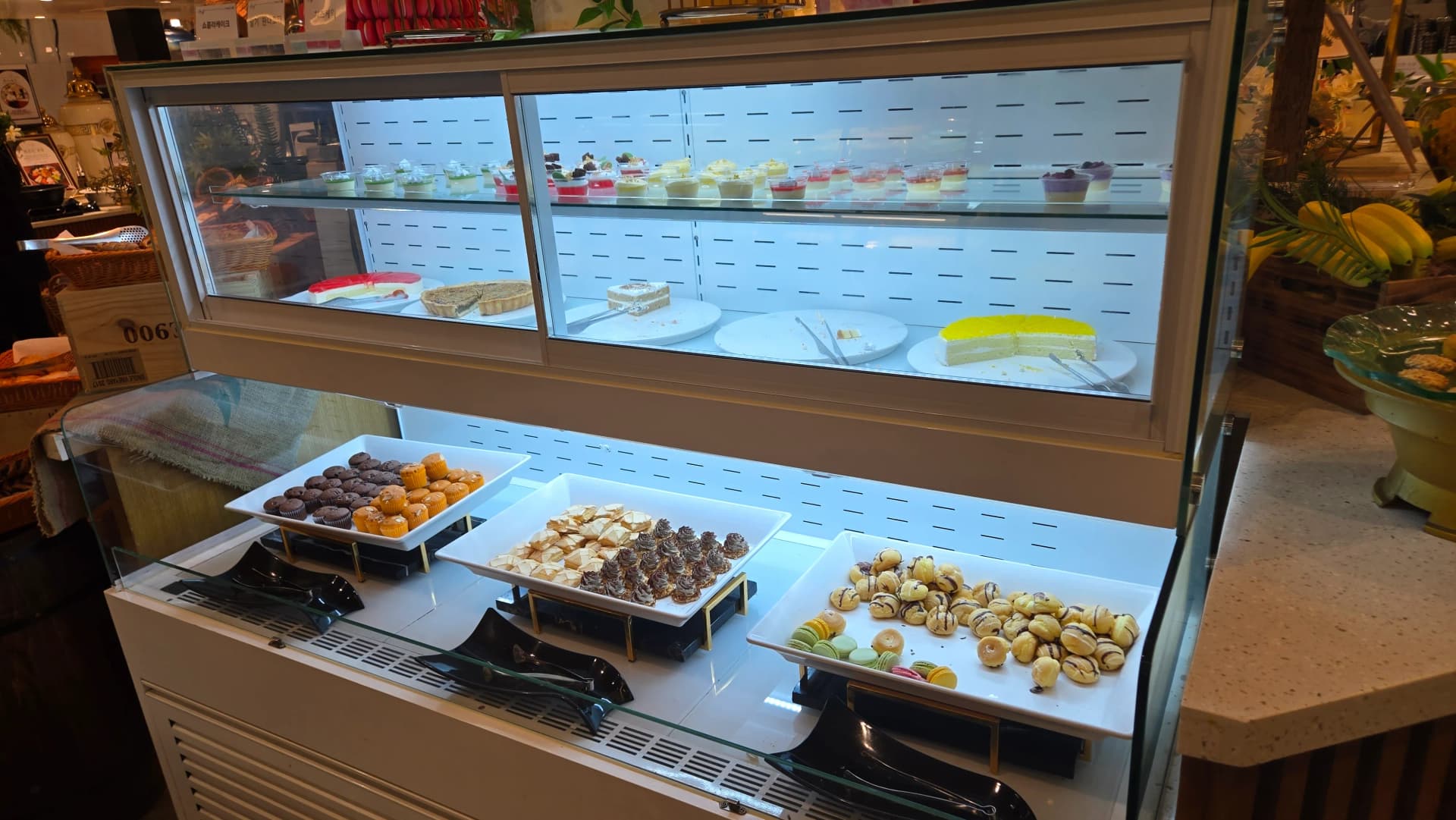
The Western dessert showcase. Cupcakes and mousse lined up on the top shelf, chocolate truffles, macarons, and cream puffs on the bottom. There's even pre-sliced cake in the middle ready for grab-and-go.
Bread & Pastry Corner
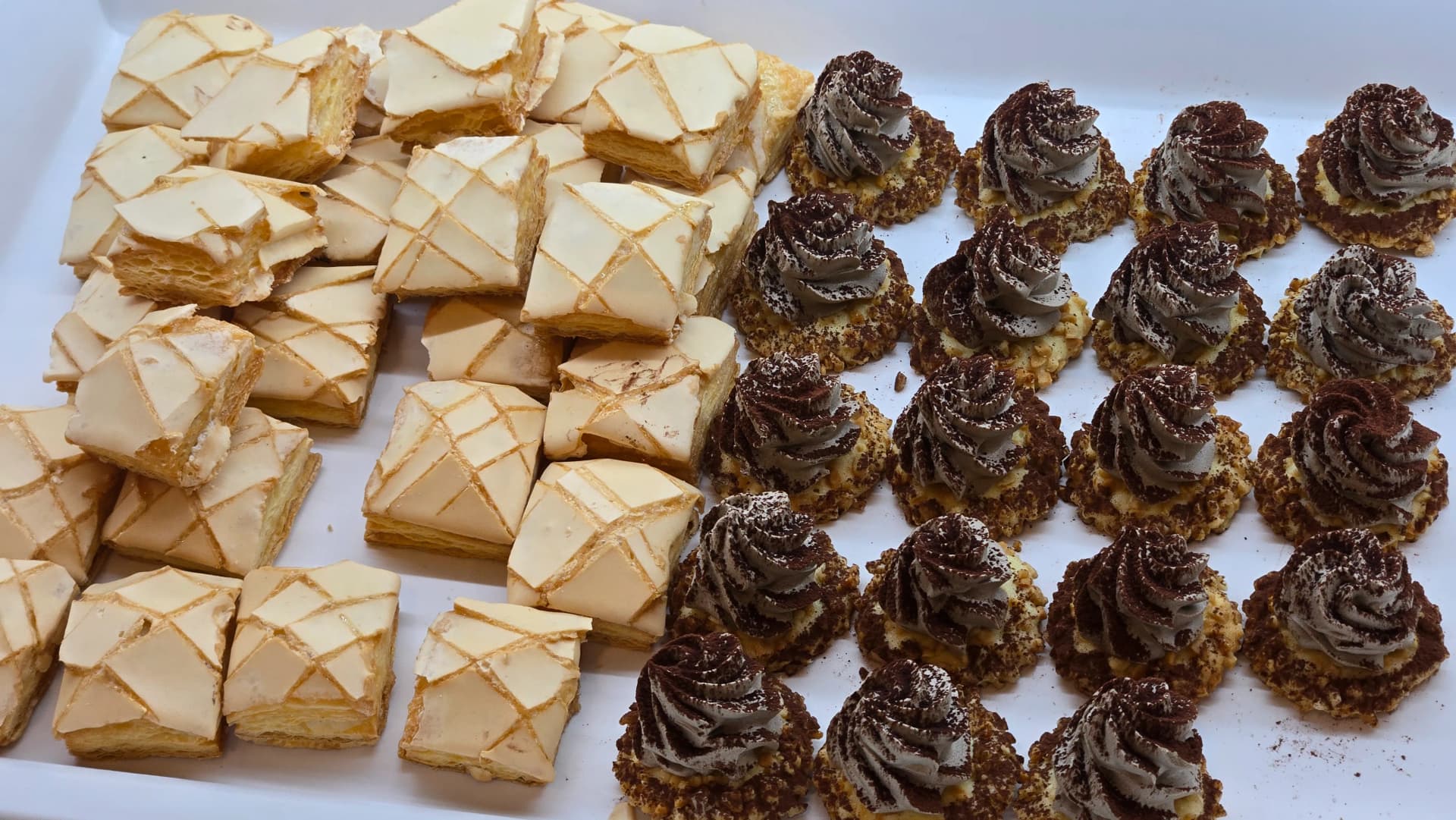
Napoleon pastry (mille-feuille) and chocolate tarts. The one on the left is a flaky Napoleon with layers of custard cream in between — one bite and the layers shatter apart beautifully. The ones on the right are mini tarts with chocolate mousse piped on top of a nut crunch base.
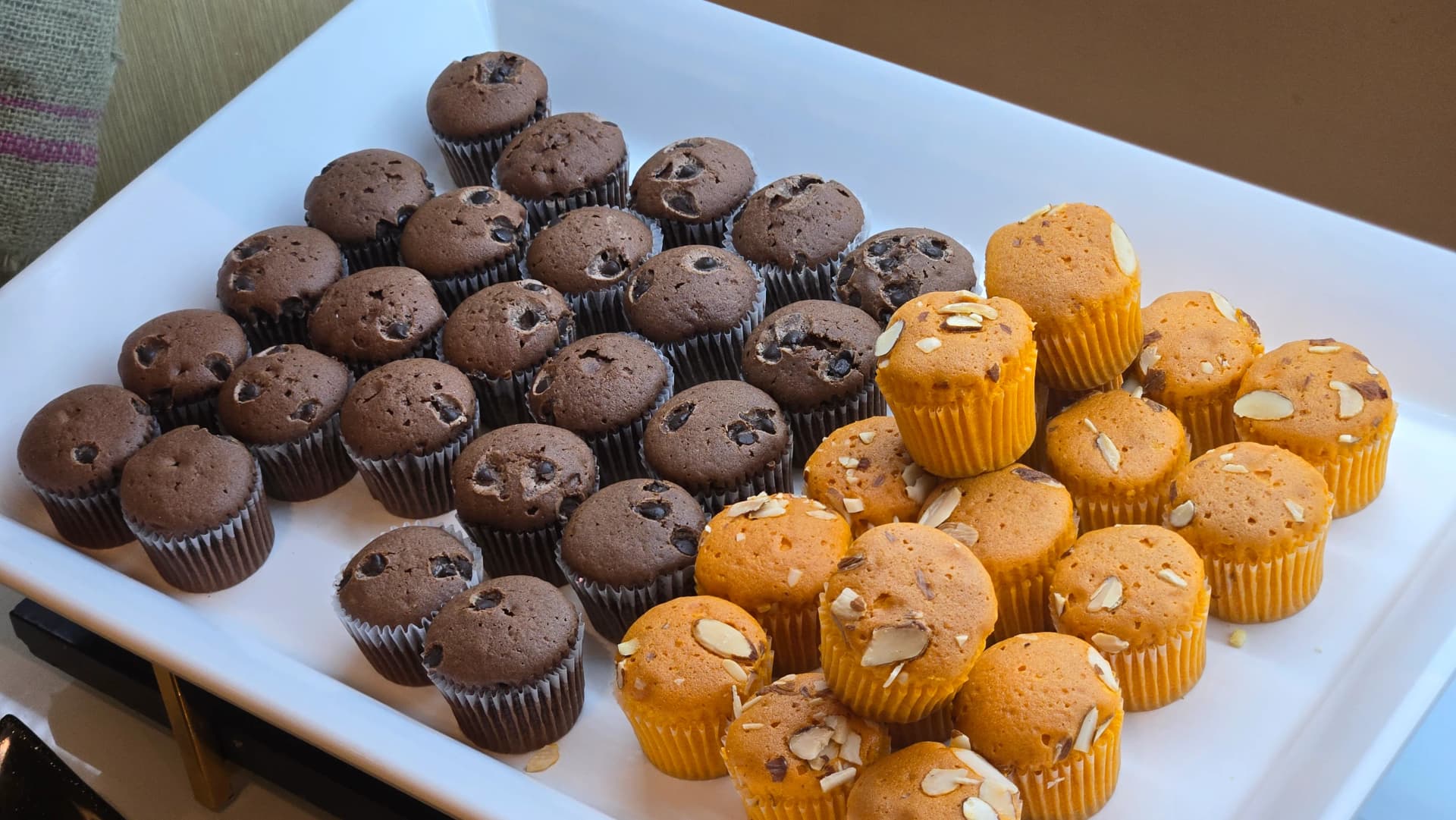
Mini muffins. Chocolate chip muffins and almond carrot muffins stacked in a half-and-half arrangement. They're bite-sized so you can casually grab one without any guilt.
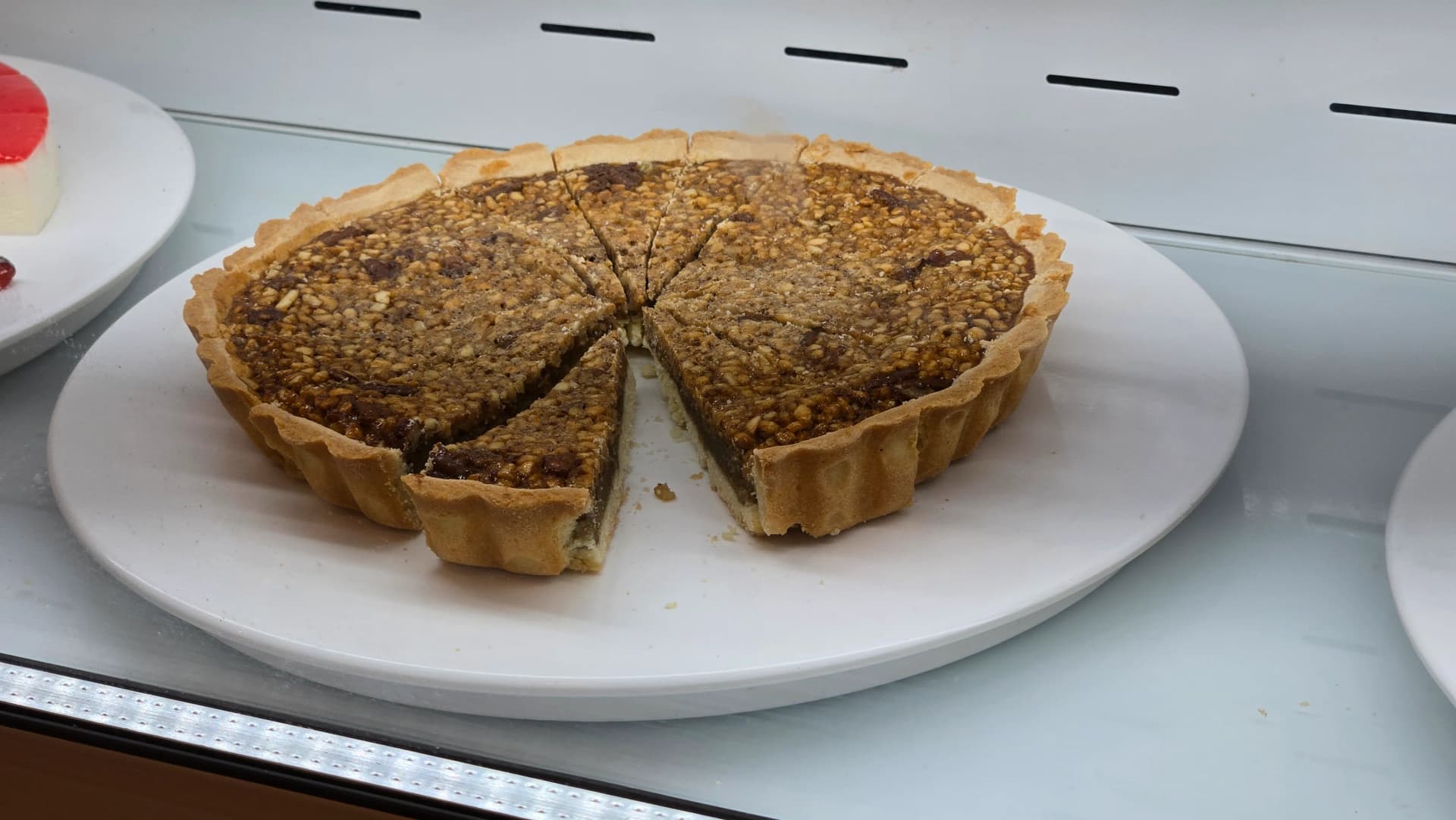
Nut tart. A crispy tart shell packed with walnuts, almonds, and caramel — you can see a piece has already been snatched. The nutty-sweet flavor is a perfect match with coffee.
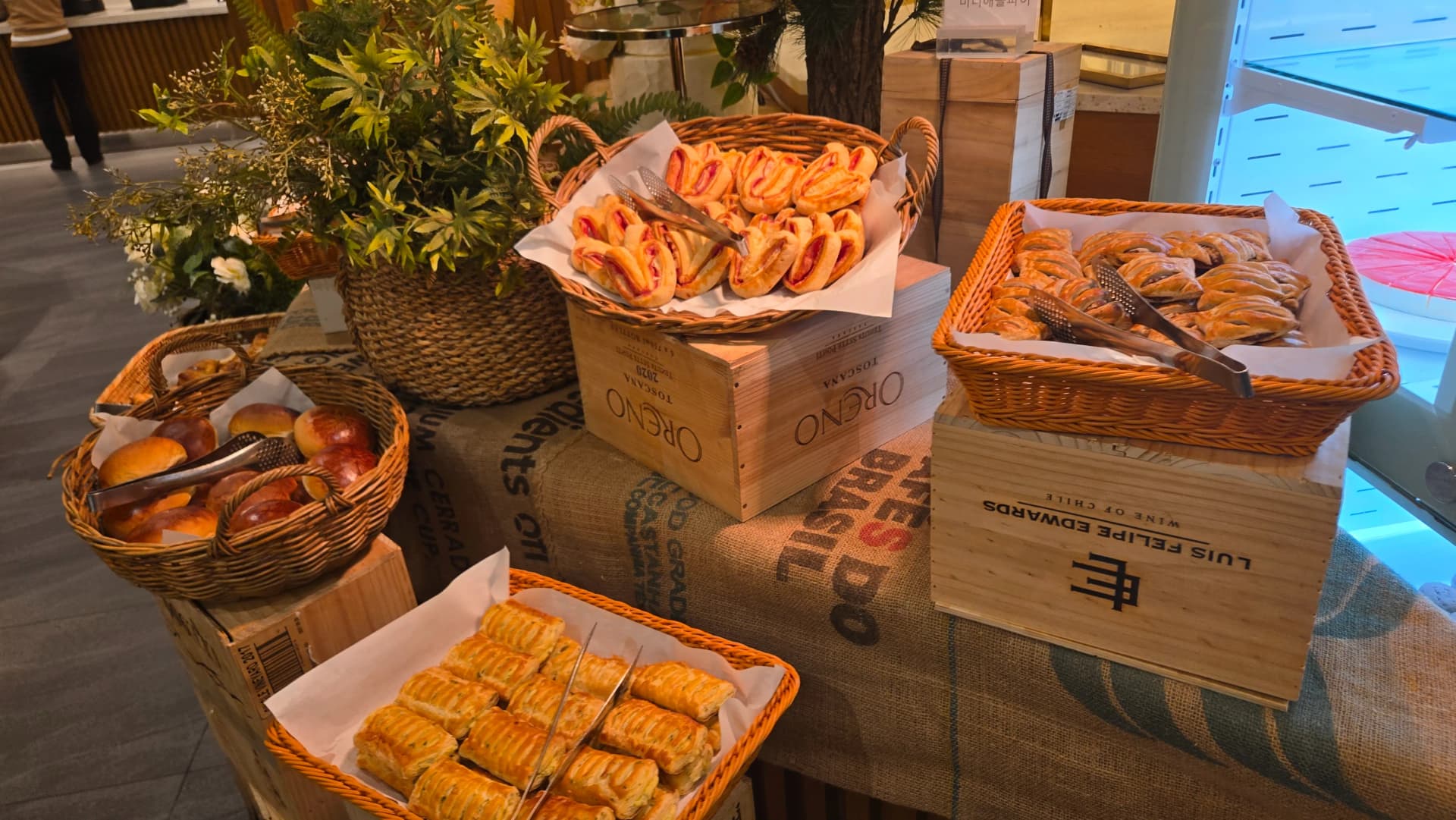
The bakery corner. Sausage pies, strawberry cream pastries, and cinnamon rolls arranged by type in rattan baskets, displayed on wine crates and coffee bean sacks — the whole setup had a real bakery café vibe going on.
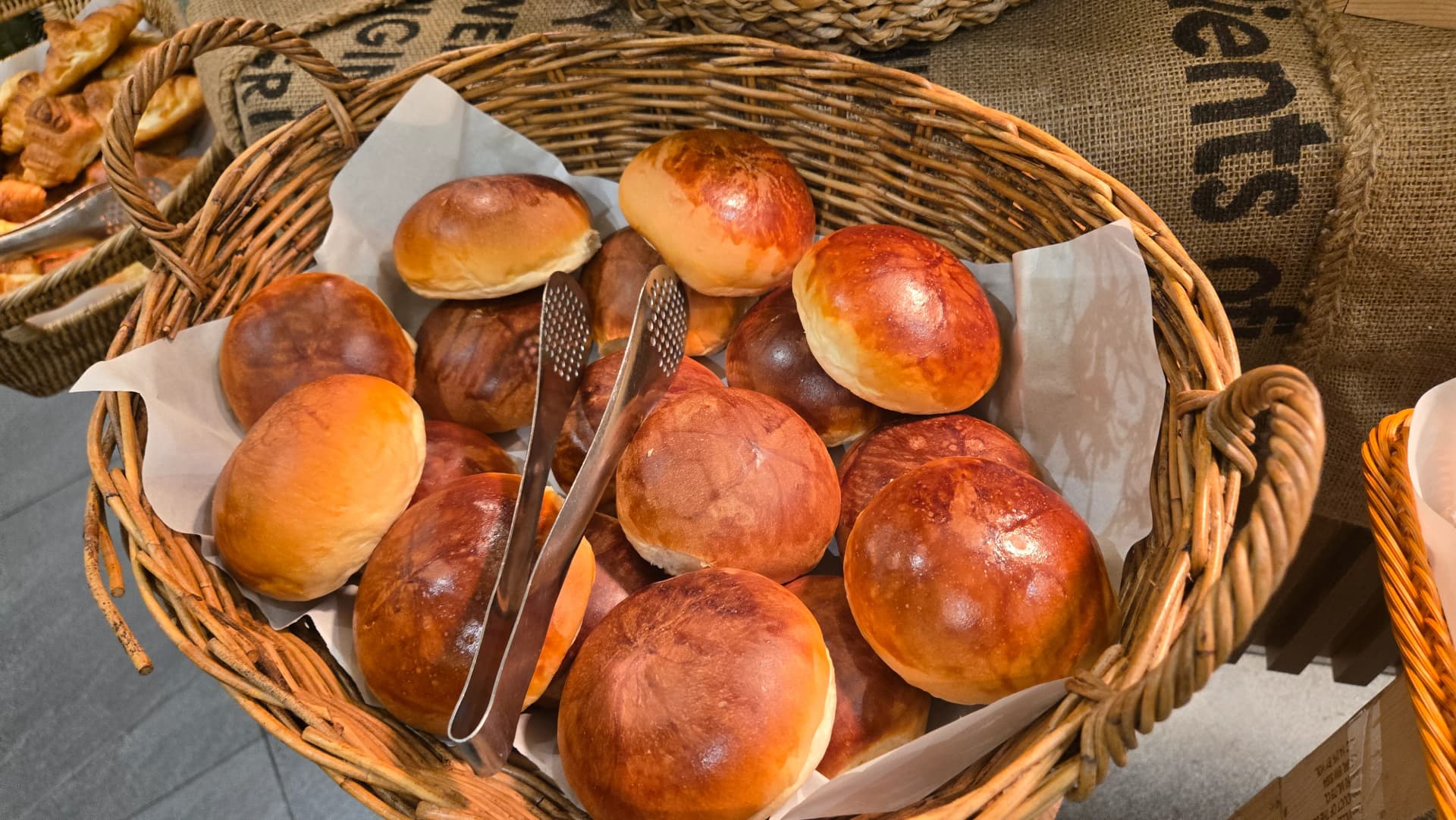
Morning bread rolls. A basket full of glossy, golden-brown round buns — slightly crispy on the outside and pillowy soft on the inside. In Korea, these are called "morning bread" (morningppang), and people eat them with butter or dip them in jam.
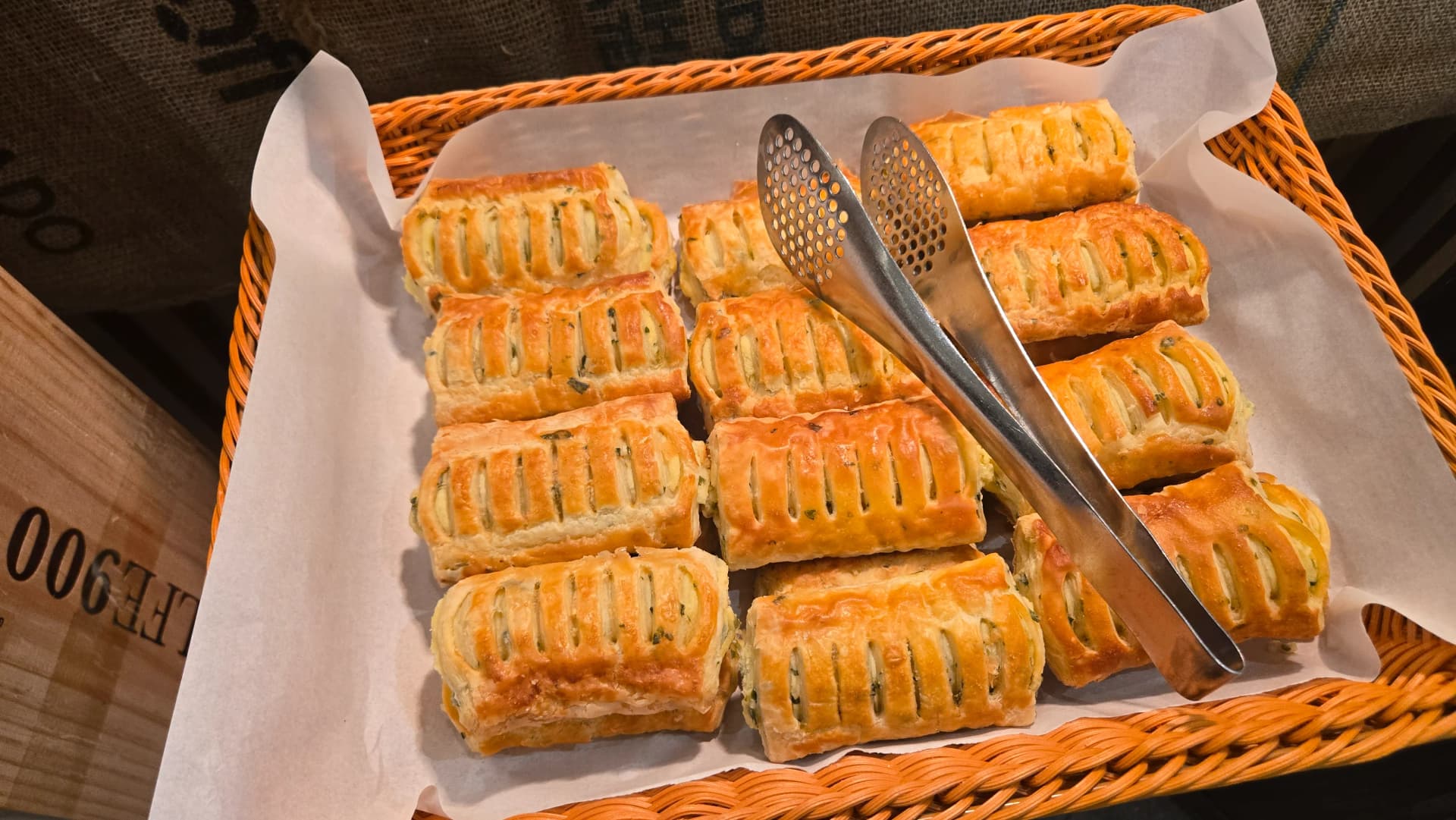
Puff pastry pie close-up. A flaky puff pastry shell filled with vegetables, baked to golden-brown perfection — just looking at it, you can practically smell the buttery, savory aroma.
My Actual Plates — This Is the Real Deal
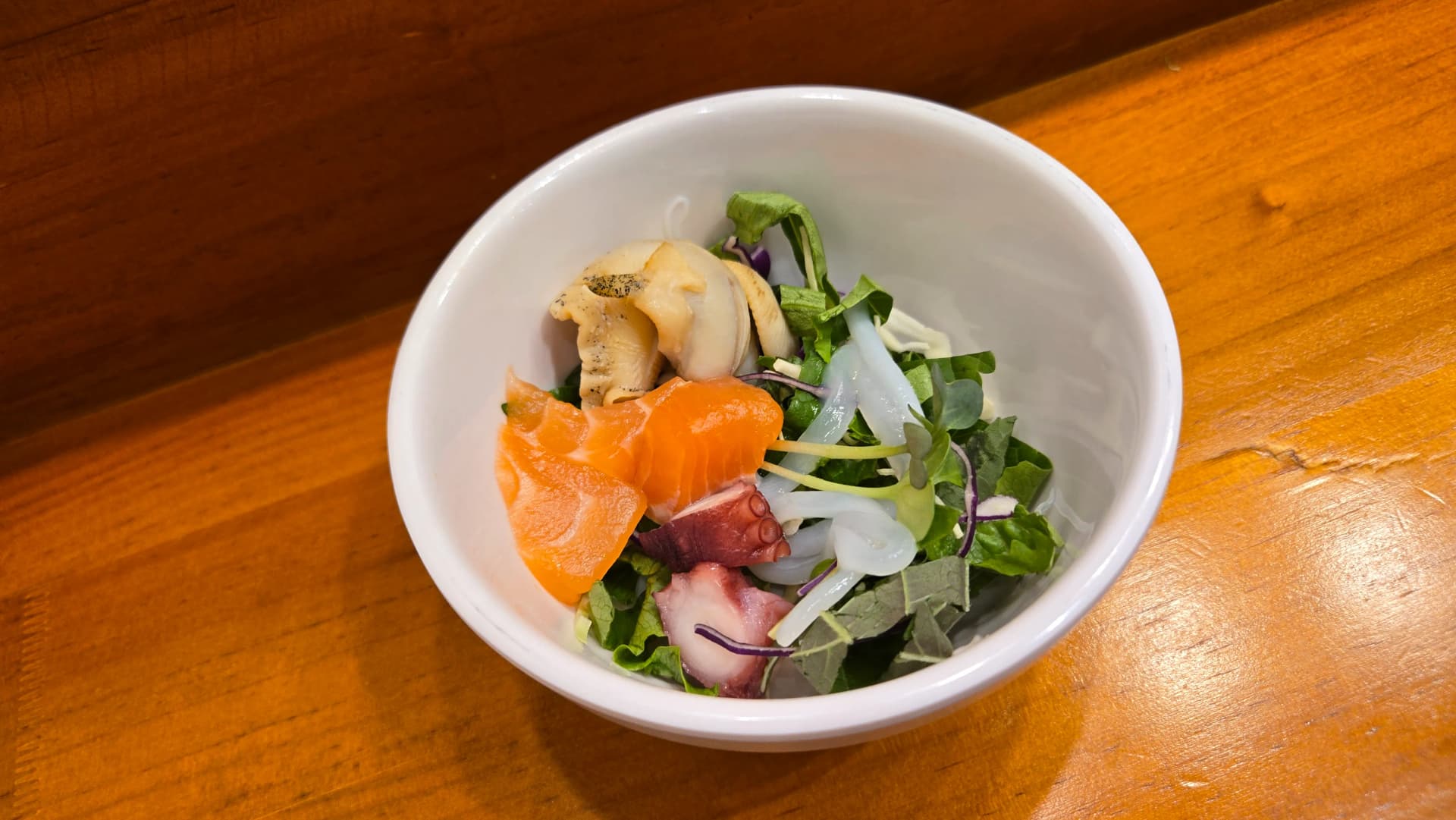
A seafood salad plate. Salmon sashimi, octopus slices, and grilled scallops piled on a bed of microgreens and red cabbage — the colors came out beautifully. Starting your first plate at a buffet light like this is basically the unspoken rule.
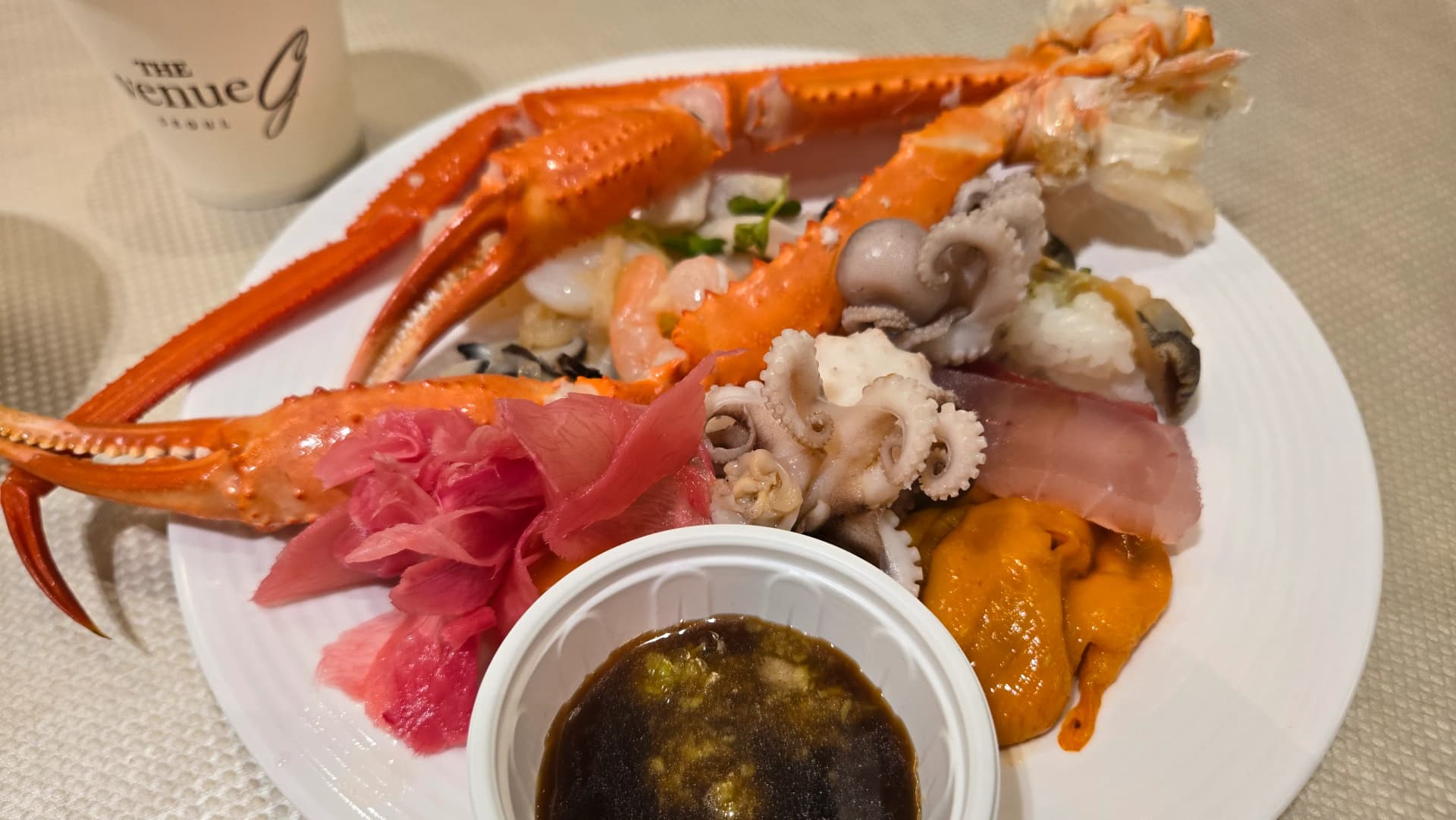
The all-star seafood plate. Snow crab legs stretching across the plate, surrounded by baby octopus, shrimp, tuna sashimi, sea squirt, and octopus crammed into every inch of space. I even grabbed some chojang dipping sauce to go with it. This single plate has basically everything from the seafood section packed onto it. The greed is real and fully on display.
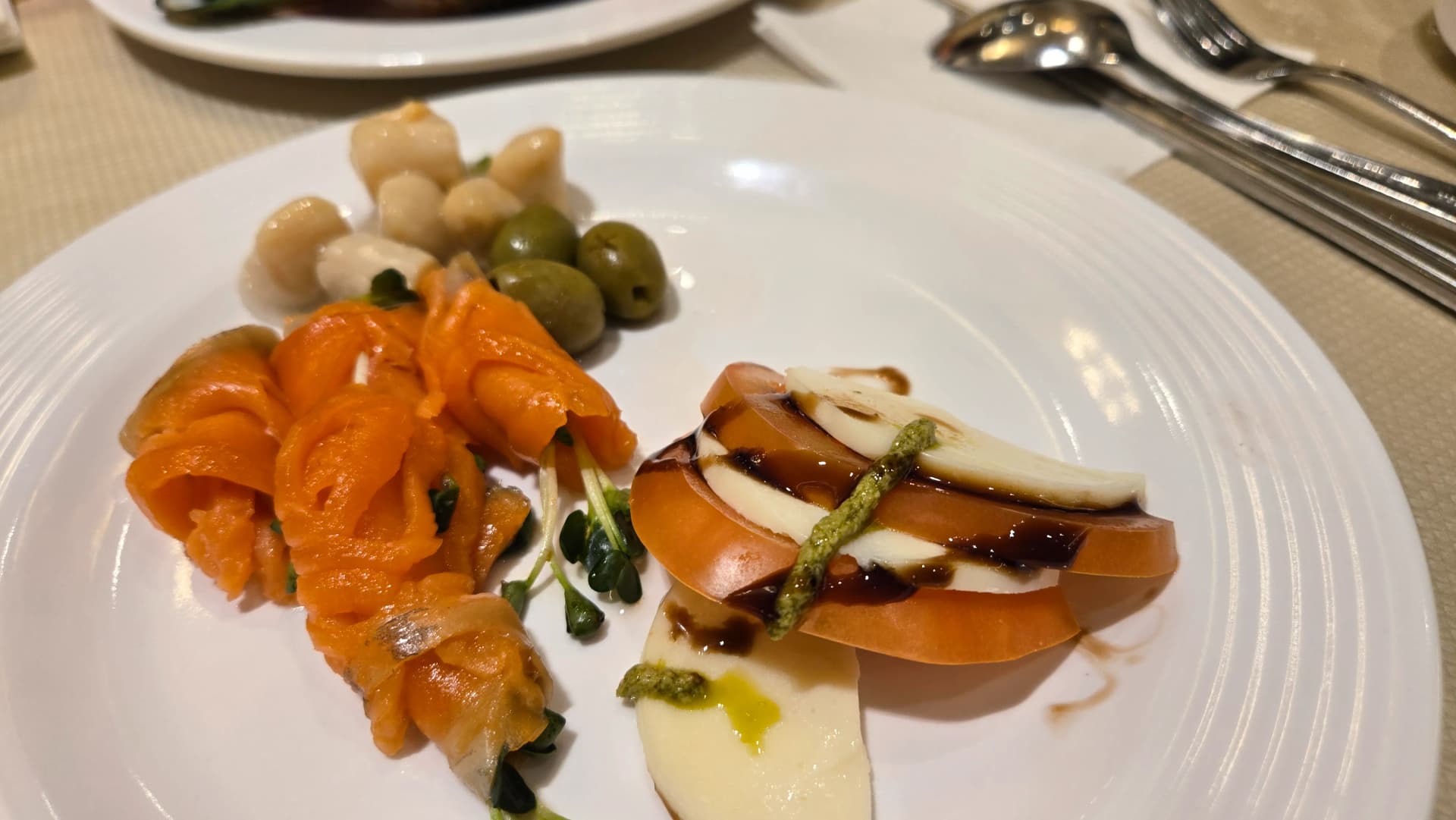
An appetizer plate. Smoked salmon rolled into a rose shape, with caprese salad on the side. Tomato and mozzarella layered with basil pesto and balsamic drizzle, plus olives and mini mozzarella balls. If you can compose a plate like this at a buffet, you're already operating at expert level.
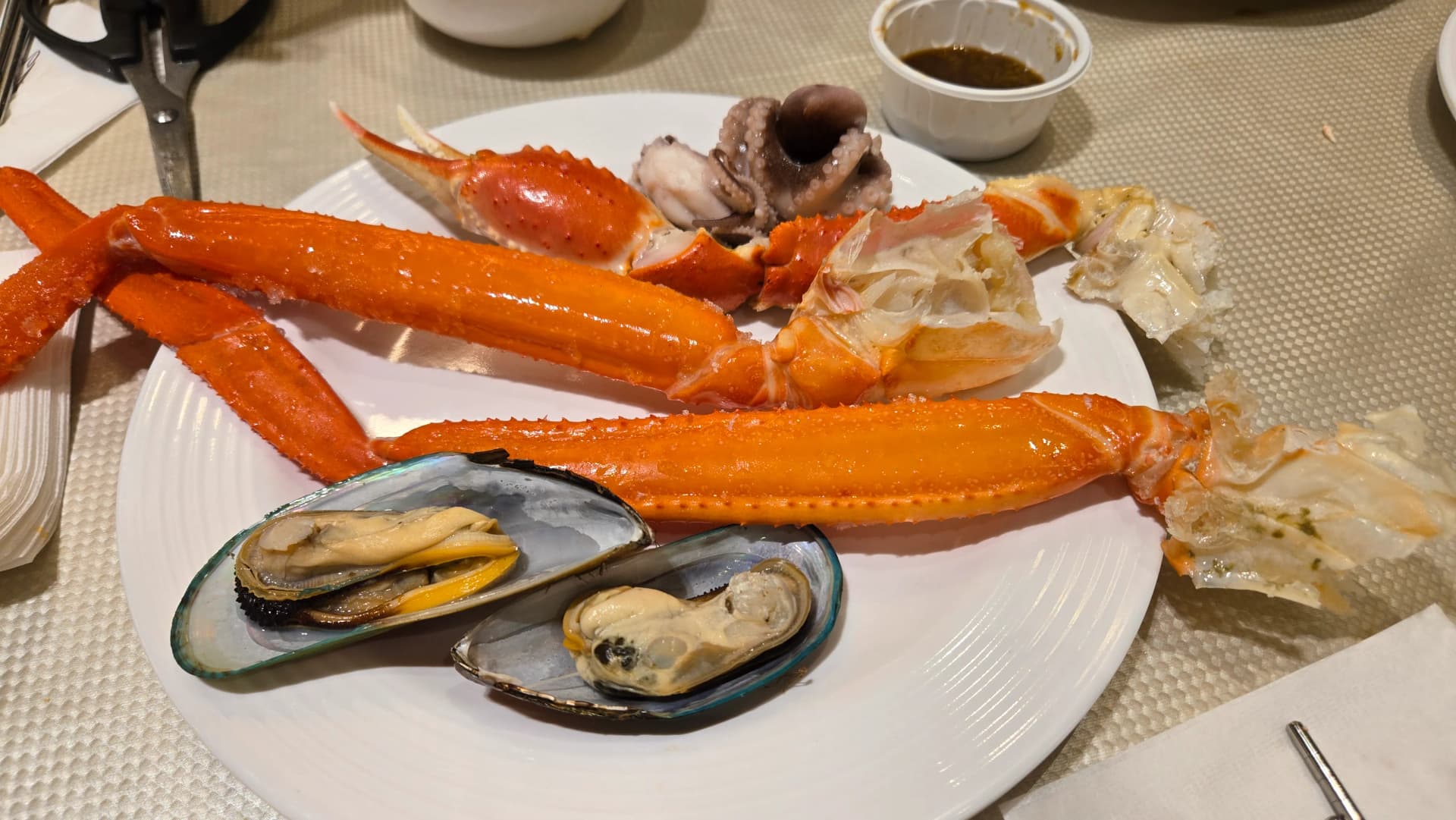
Seafood plate, round two. This time I went and grabbed entire snow crab legs — they stretch dramatically across the plate. A couple of mussels and a baby octopus on the side too, with chojang sauce ready to go. After tasting them on the first plate, I ended up going back specifically for a crab leg refill. That's the real magic of a buffet right there.
Final Verdict — This Wedding Buffet Was Legit
And that's all the photos. Can you believe this entire lineup came from a single Korean wedding buffet? Starting from fried rice, moving through sweet and sour pork, stir-fried seafood, salads, gwamegi, fermented skate, and traditional Korean side dishes, then rolling into the sushi and sashimi, snow crab legs, and soy-marinated shrimp seafood parade, followed by the kkanpunggi and oyster sauce stir-fry Chinese section, the pizza and pasta Western course, the galbi-jjim and smoked duck meat section, and finally the traditional rice cakes and tarts for dessert. Honestly, just organizing these photos made me hungry all over again. This is the first installment of the food photo gallery, and I plan to keep sharing one for every buffet I visit. I won't tell you where it is, but I'll absolutely show you exactly what was served. Come back for the next one when you're hungry. After all, this is a space for hungry souls.
This post was originally published on https://hi-jsb.blog.