
Korean Sashimi Full Course — Abalone, Sea Cucumber & More
Table of Contents
16 items
Korean Sashimi Course — Same Order, Totally Different Experience
I've written about Korean raw fish restaurant culture before — covering the course structure, how to eat sashimi Korean-style, and everything a first-timer might want to know. But here's the thing: not all Korean sashimi restaurants (called "hoejip") are built the same. This place also ran a full course menu, but the complimentary side dishes that come with the sashimi vary from restaurant to restaurant — sometimes a little, sometimes a lot. You order the same assorted sashimi platter and one place brings out sea cucumber, another brings abalone, and yet another throws in something you never saw coming. That's one of the most fun parts of Korean sashimi culture. Every visit is a new discovery. Today I'm going to walk you through how this new course-style sashimi restaurant differed from the last one, and share tips on how to enjoy each dish to the fullest.
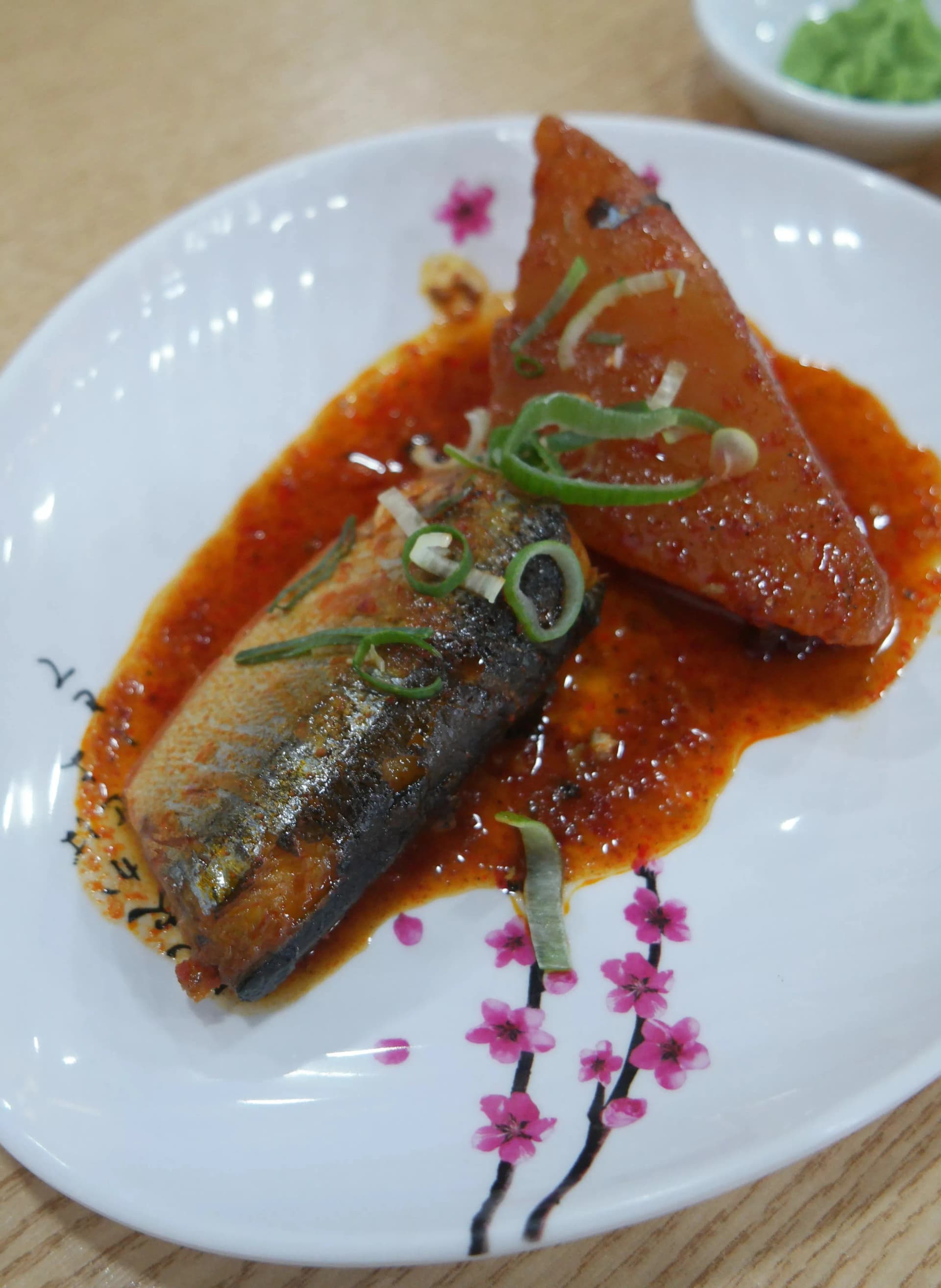
Braised Fish — The First Surprise of the Sashimi Course
The first thing to arrive was braised fish. A thick piece of fish smothered in spicy red sauce, plated alongside braised radish. The visual was classic Korean home-cooking style — gochugaru-based red seasoning topped with shredded scallions, the kind of dish that instantly makes you crave a bowl of rice. Having braised fish show up as a side before the raw fish was something the last sashimi restaurant didn't do at all. This is exactly why every Korean sashimi course feels like a different experience.
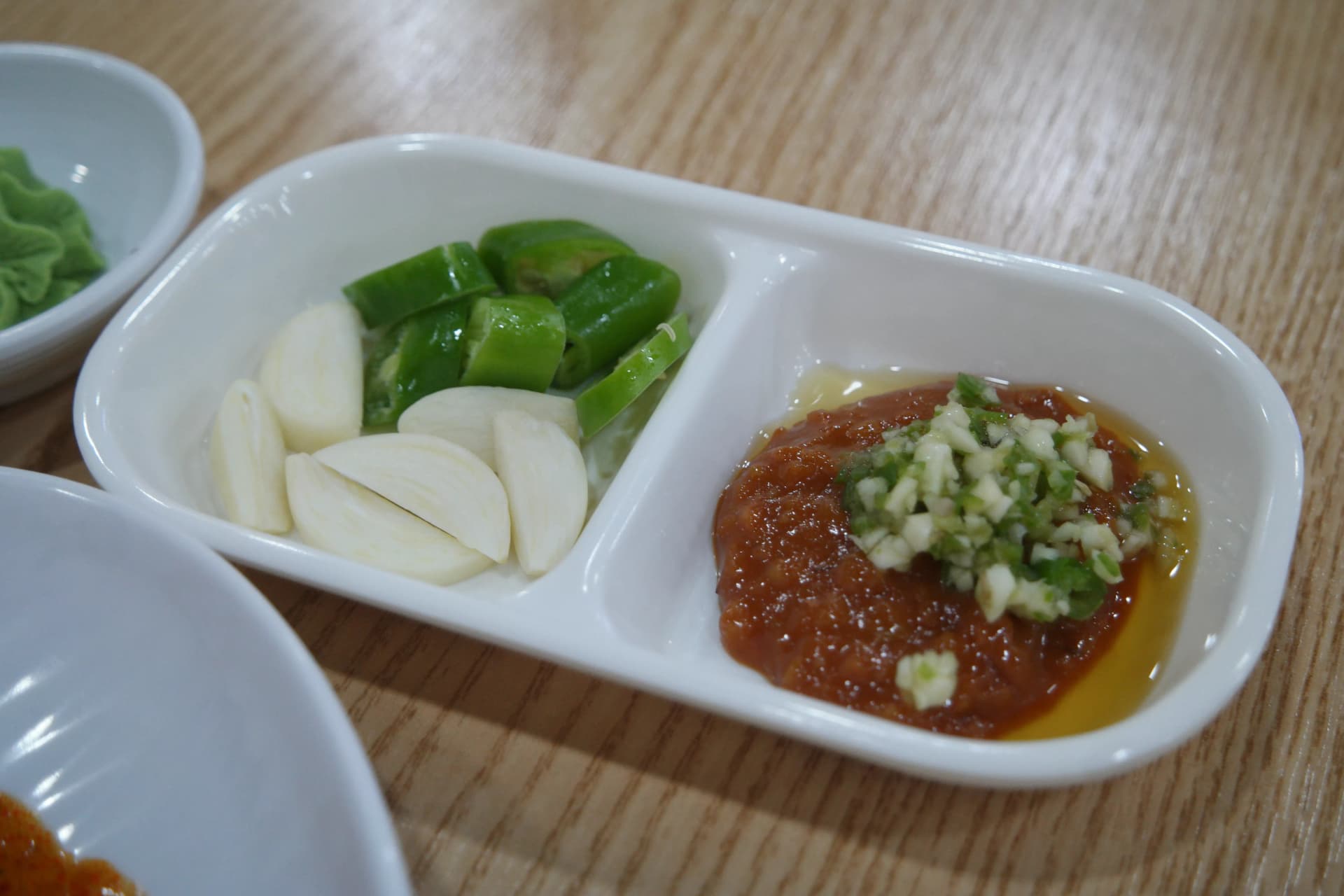
Before the sashimi arrives, the wrap setup comes out first. On the left: raw garlic cloves and spicy green chili peppers. On the right: ssamjang (a thick, savory dipping paste) topped with finely chopped scallions. You place a piece of sashimi on a lettuce leaf or perilla leaf, add these condiments, and wrap it all up in one bite — that's the Korean way to eat raw fish.
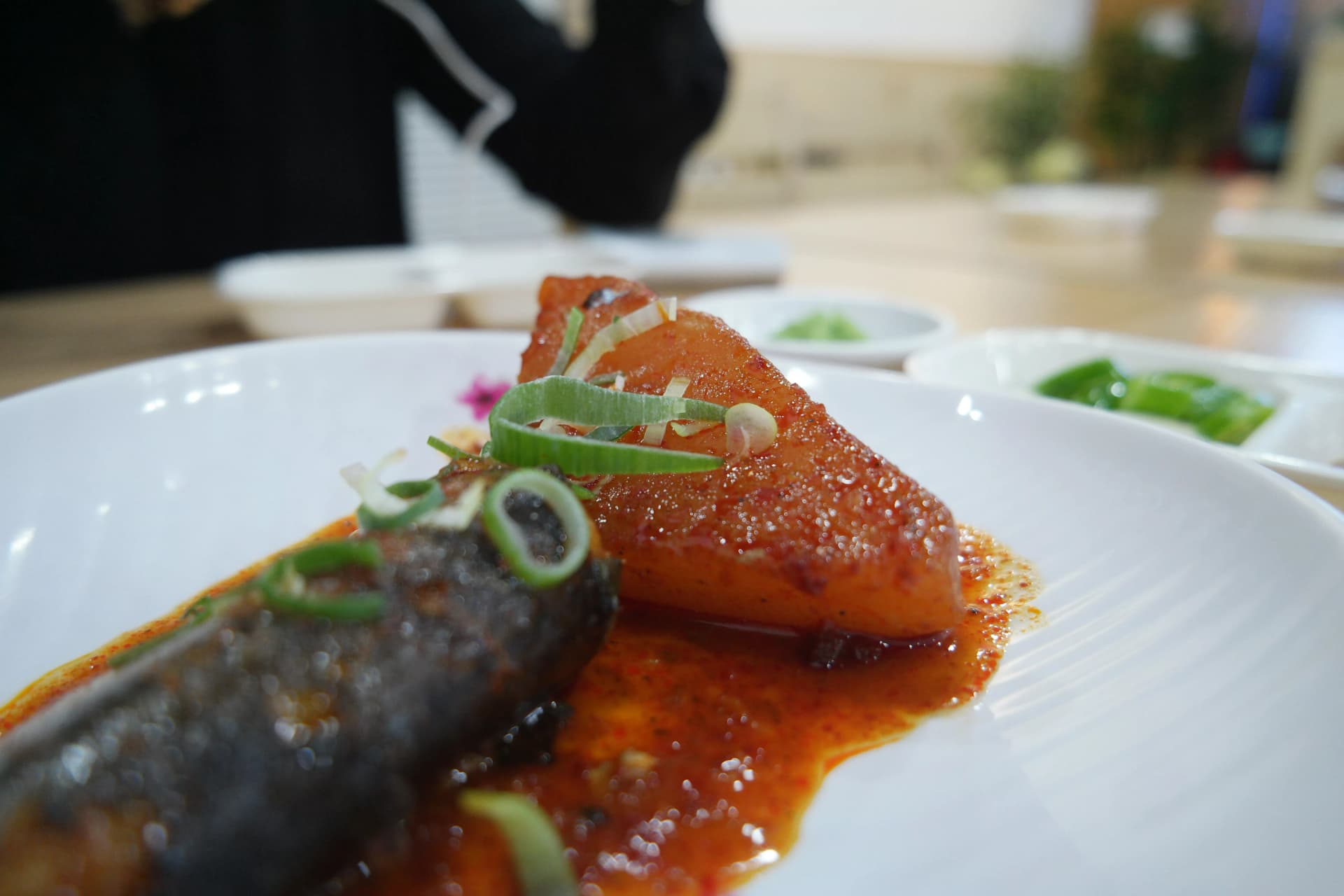
Braised Radish — The Real Star Hiding Under the Fish
Up close, the braised radish looks even more tempting. Radish that's fully absorbed the fish seasoning is the unsung hero of Korean braised dishes. The outside has this glossy, sauce-coated sheen, and the inside has been simmered low and slow until it's so tender you barely need to touch it with your chopsticks before it falls apart. One bite and you realize the spicy, salty seasoning has soaked all the way through. Honestly, plenty of people say the radish is even better than the fish itself. That one piece of radish, completely drenched in rich, oily fish broth — it's an absolute rice thief, as Koreans would say.
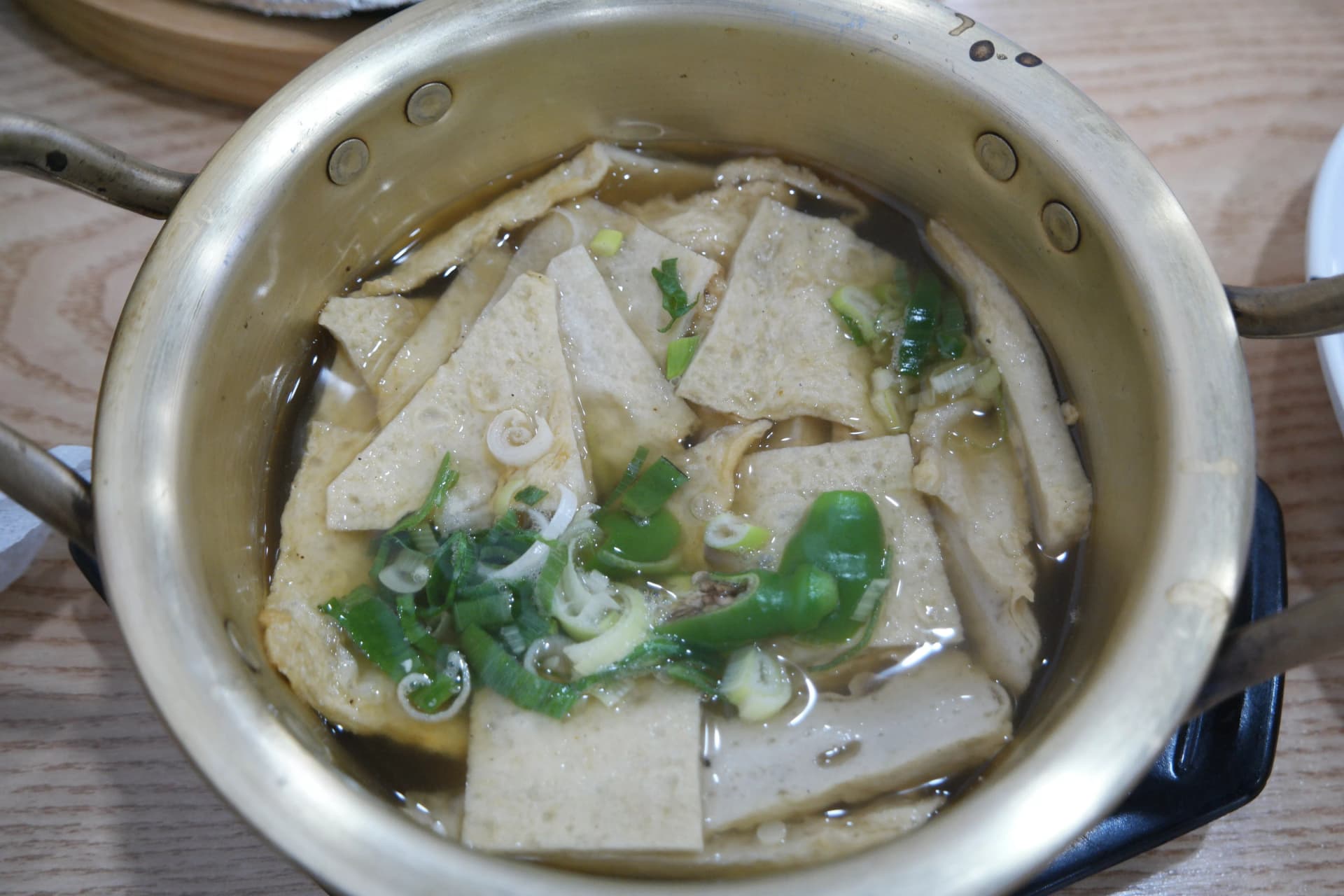
Fish Cake Soup & Steamed Egg — Gentle Sides to Settle Your Stomach
This is eomuk-tang — fish cake soup. Golden-fried fish cakes cut into big chunks, simmered with scallions and spicy green chili peppers in a light, clean broth. It's not aggressive or heavy at all, which makes it perfect for the early part of the course when you want something to settle your stomach gently.
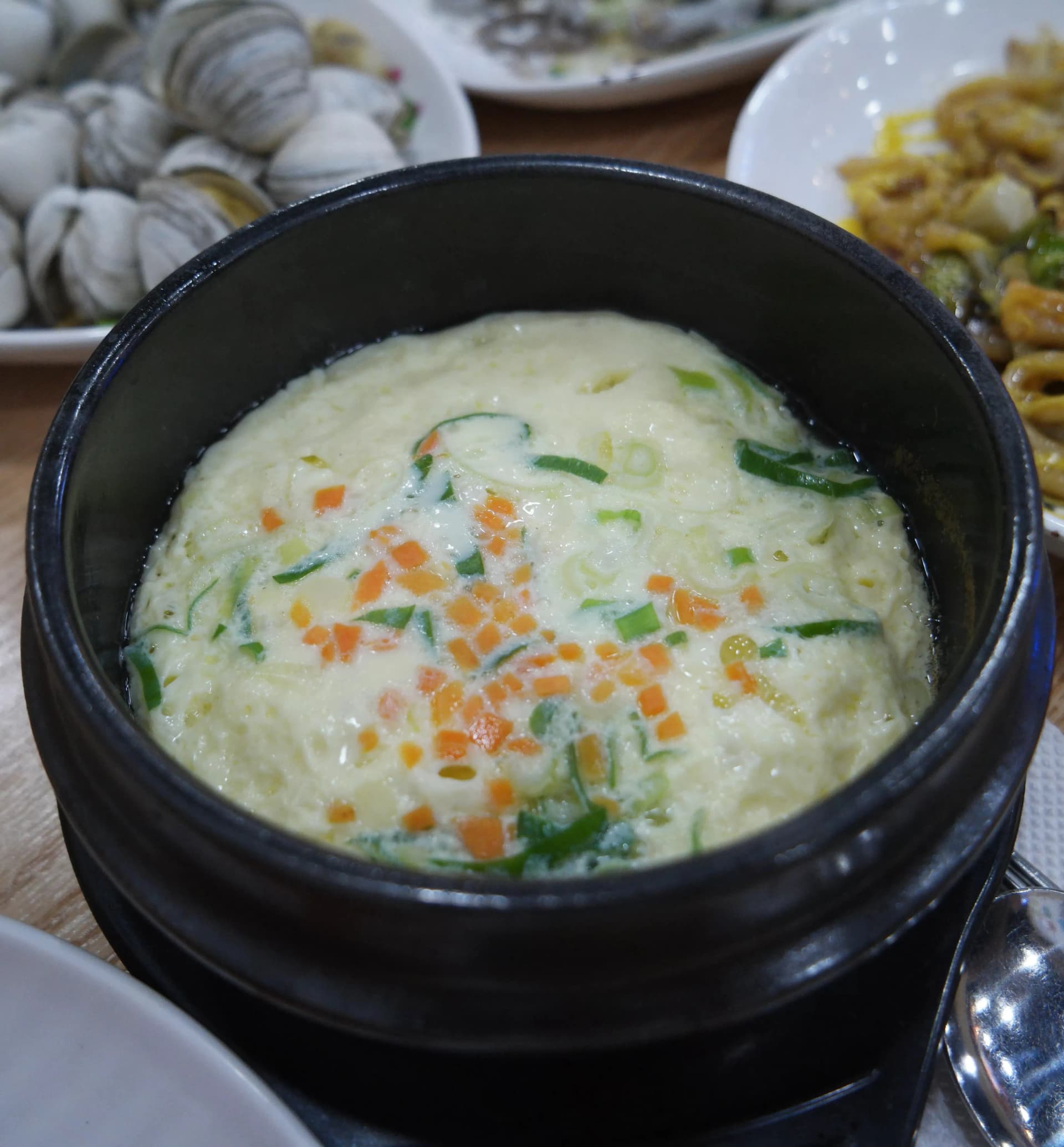
This is gyeran-jjim — Korean steamed egg. It arrives still bubbling away inside a stone pot, puffed up and pillowy, with bits of carrot and scallion adding pops of color. The taste is soft and savory — the outside has a slight spring to it while the inside is moist and silky, almost like soft tofu. It's mild and gentle enough to neutralize your palate between spicy dishes. But the real treat with Korean steamed egg? It's the bottom of the stone pot. The part closest to the heat gets slightly scorched, adding this incredible nutty, toasted flavor. Scraping that crispy layer off the bottom is low-key addictive. Eat it before the pot cools down — trust me on that.
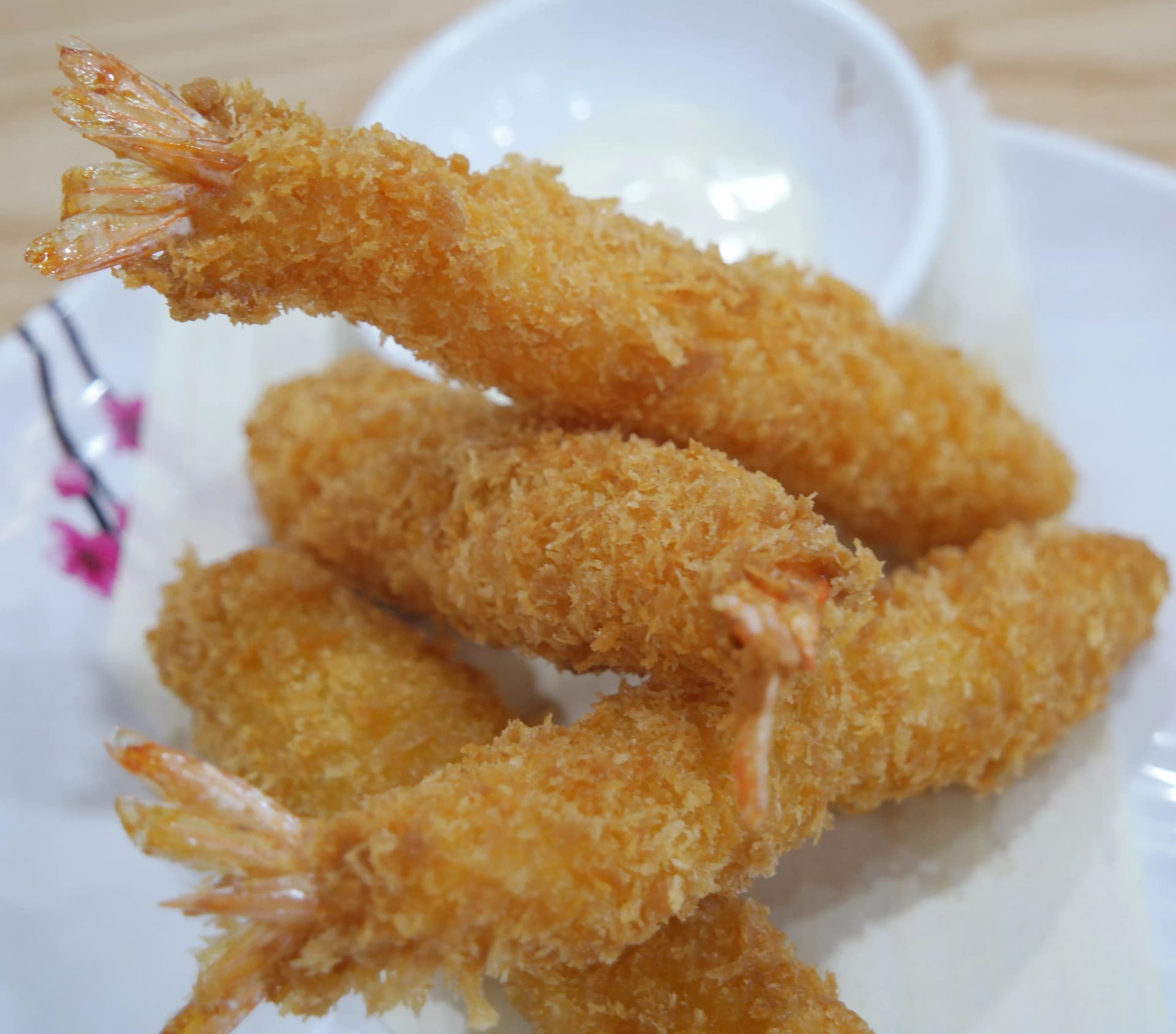
Fried Shrimp — A Crispy Bite to Wake Up Your Appetite
Fried shrimp — saeu-twigim. Plump shrimp coated in panko breadcrumbs and deep-fried until perfectly crispy. Bite into one and the outside crunches while the inside is bouncy, juicy shrimp through and through. It's meant to be an appetite-opener before the raw fish arrives, but honestly, this could stand on its own as a dish worth ordering.
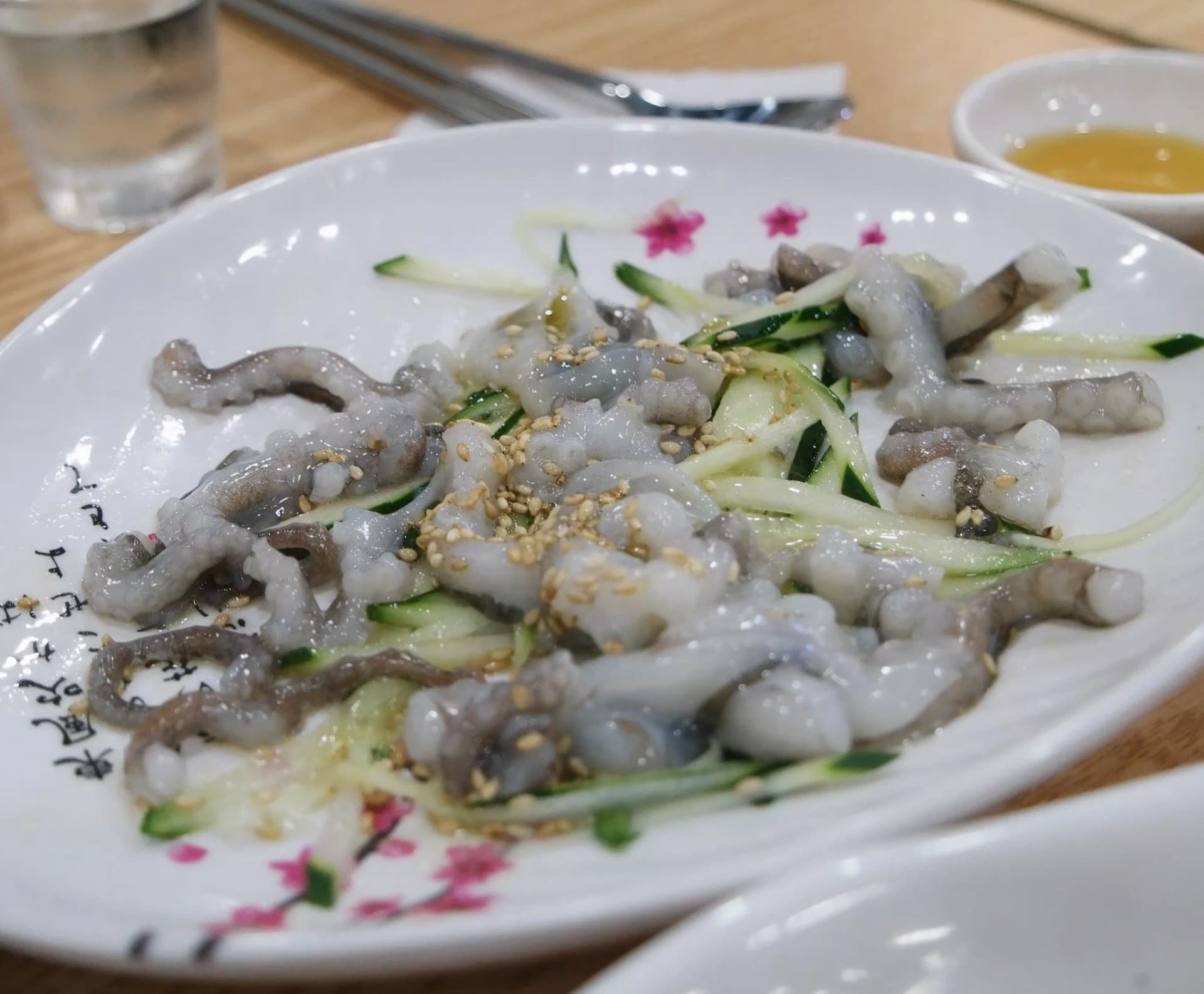
Live Octopus Sashimi — The Dish That Shocks Foreigners Most
This is nakji-hoe — live octopus sashimi. A live octopus, freshly prepared right there on the spot, drizzled with sesame oil and sprinkled with sesame seeds. For anyone seeing this for the first time, the visual alone can be pretty intense. The tentacles are still wriggling on the plate. A lot of foreigners say they can't bring themselves to pick it up with their chopsticks even when it's sitting right in front of them. But here's the funny part — among foreigners who've lived in Korea for two or three years or more, this actually becomes one of those dishes they can't live without. The longer people stay in Korea, the more they tend to eat it and actively seek it out. The texture is chewy and bouncy, and the nutty sesame oil ties it all together. Once you get a taste for it, it's seriously hard to go back.
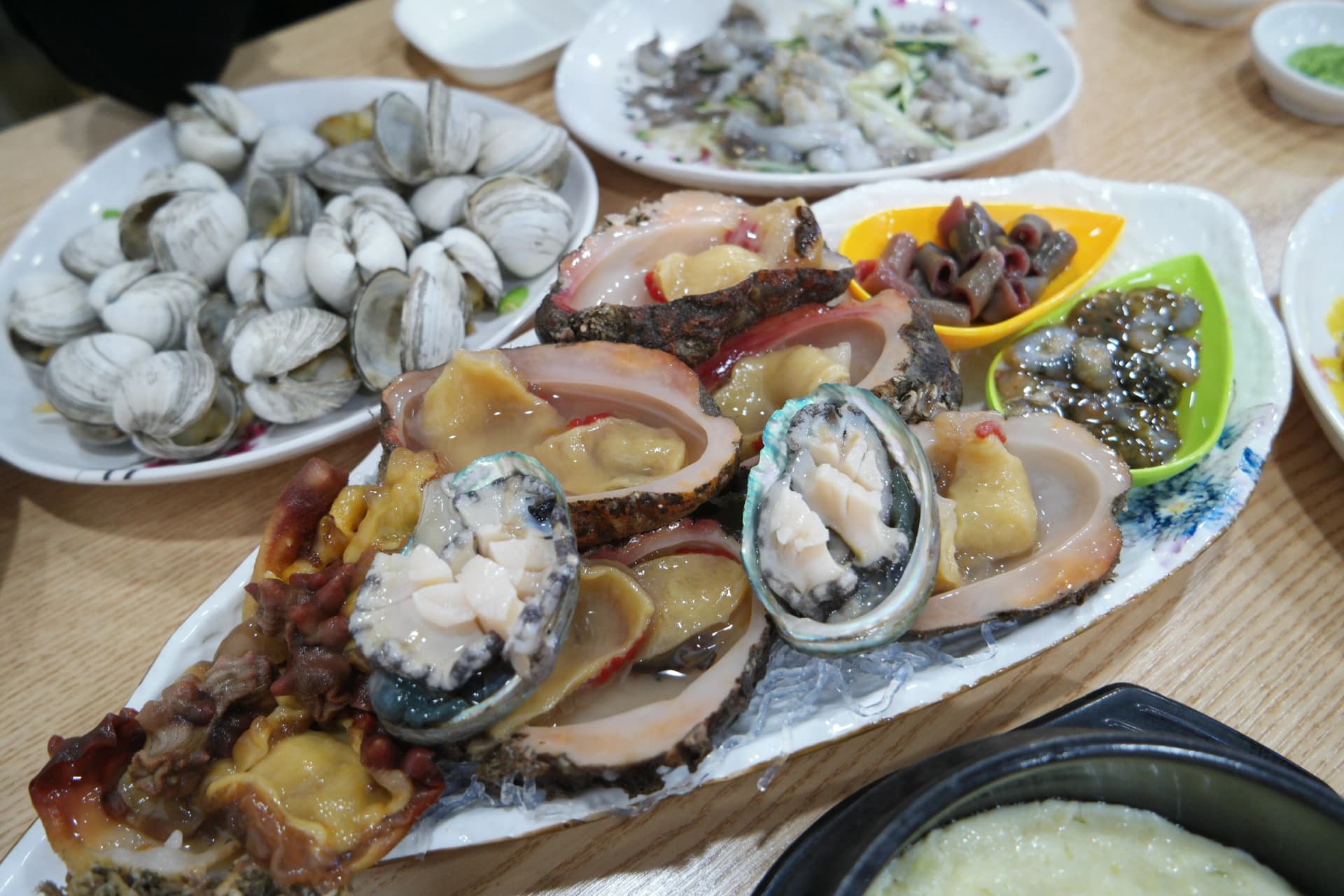
Abalone, Sea Squirt, Sea Cucumber & Spoon Worm — Exotic Seafood You'll Only Find Here
And then the highlight of the day arrived. Abalone, sea squirt, sea cucumber, and spoon worm — all on one plate, piled high with exotic seafood you can really only experience at a Korean sashimi restaurant. For anyone unfamiliar, the appearance alone can be pretty startling. But that's exactly what makes these dishes so special.
It looks wild from the start. Crack open the bumpy, rock-like shell and you'll find bright orange, bouncy flesh inside — the kind of thing that makes people's eyes go wide on sight. The taste? It's like swallowing the entire ocean in one bite. An intense, concentrated wave of sea flavor floods your mouth, followed by a unique sweetness with a slightly bitter finish. It's easily the most polarizing item on the table, but those who fall for it say there's no going back. Outside of Korea and Japan, almost nobody eats this stuff.
In Korea, abalone is synonymous with luxury seafood. Thinly sliced abalone sashimi has this gorgeous translucent, pearly sheen, and the moment you bite into it you feel a uniquely bouncy yet tender texture. The flavor is clean and savory, with a gentle ocean sweetness that builds the more you chew. Because it's not aggressive at all, this is the exotic seafood item that most first-timers find easiest to enjoy. The dark green abalone innards on the side are a delicacy too — slightly bitter at first, but with a rich, nutty finish.
A cucumber of the sea — the English name is pretty literal. In Korea, it's eaten raw, sliced up like sashimi, which is actually a pretty rare practice globally. The bumpy, rubbery surface can be off-putting at first glance, but one bite reveals an unexpectedly satisfying dual texture — crunchy and chewy at the same time. The taste itself is clean and mild, with a deep, refreshing ocean flavor that builds as you chew. Dip it in chojang (sweet chili vinegar sauce) and eat it on a perilla leaf — it doubles the experience.
This one competes for the title of most visually shocking exotic seafood on any table. Its unique appearance catches first-timers completely off guard, but the flavor is surprisingly mild. Thinly sliced, the translucent flesh has a chewy, bouncy texture, and the taste is sweet with a delicate, fresh ocean aroma. Dip it in sesame oil and even first-time adventurers find it easier to enjoy than they expected. Even in Korea, this isn't something people eat every day — so if spoon worm shows up in a sashimi course, it's a sign that the restaurant is being seriously generous.
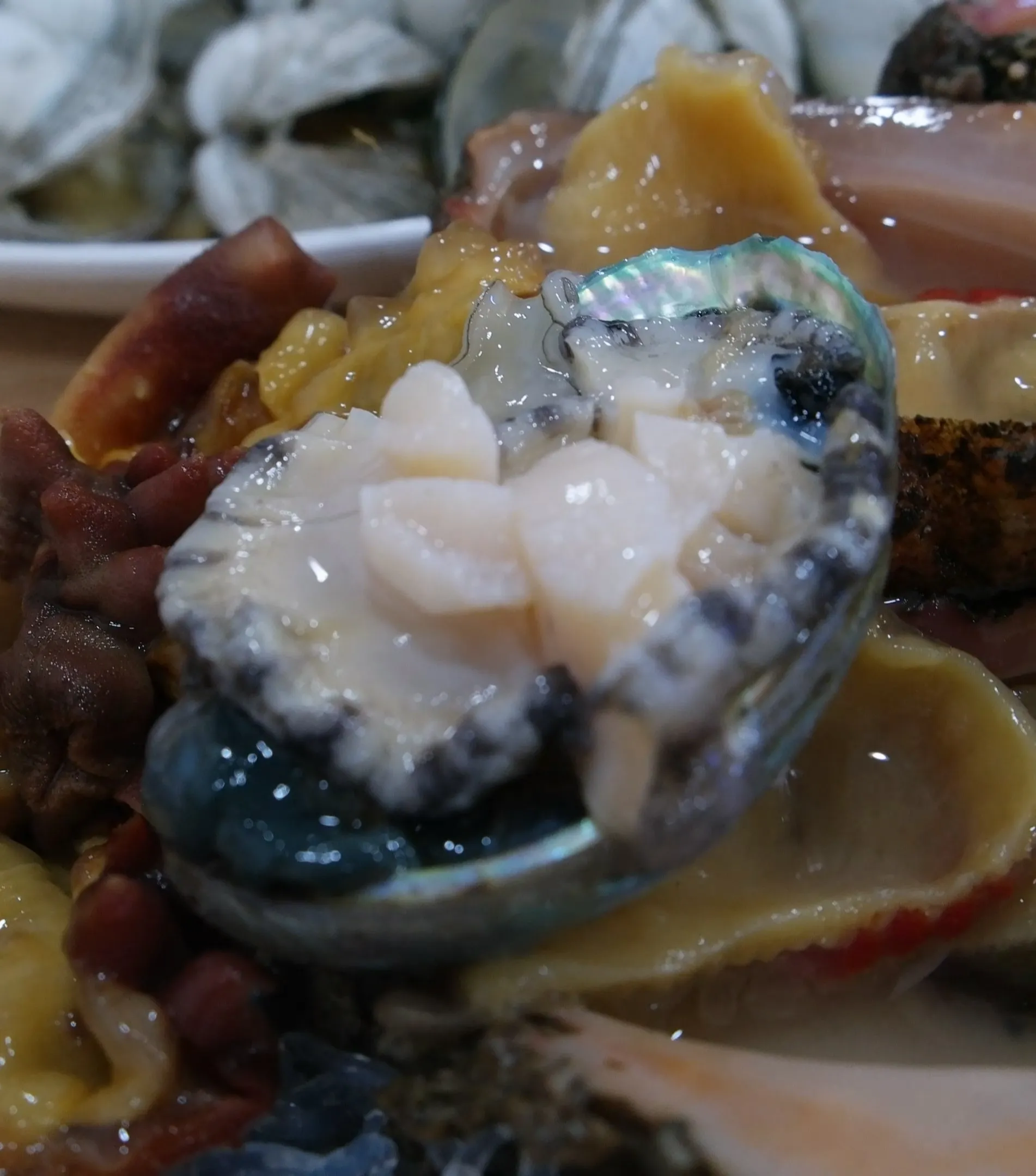
Abalone — Premium Seafood Raised on Korea's Southern Coast
Up close, the appeal of abalone becomes even more striking. The whole abalone meat sits right inside its shell, glistening with a pearly sheen — serving it still in the shell like this is classic Korean sashimi restaurant style. Touch the flesh and you can tell it's still alive. That's how fresh we're talking.
What makes Korean abalone special comes down to how it's raised. The southern coast, centered around Wando (a coastal town at the very southern tip of the Korean peninsula), has the ideal water temperature, ocean currents, and seaweed-rich feeding environment for abalone to thrive. Korean abalone is raised on a diet of miyeok (sea mustard) and dasima (kelp), which is the secret behind its firm texture and deep flavor. It's not just about size — the chewiness is genuinely alive, and the clean, savory umami flavor lingers long after you swallow. Eating abalone completely raw like sashimi isn't common around the world, but in Korea it's just an everyday thing. Being able to enjoy that kind of freshness is one of the true privileges of visiting a Korean sashimi restaurant.
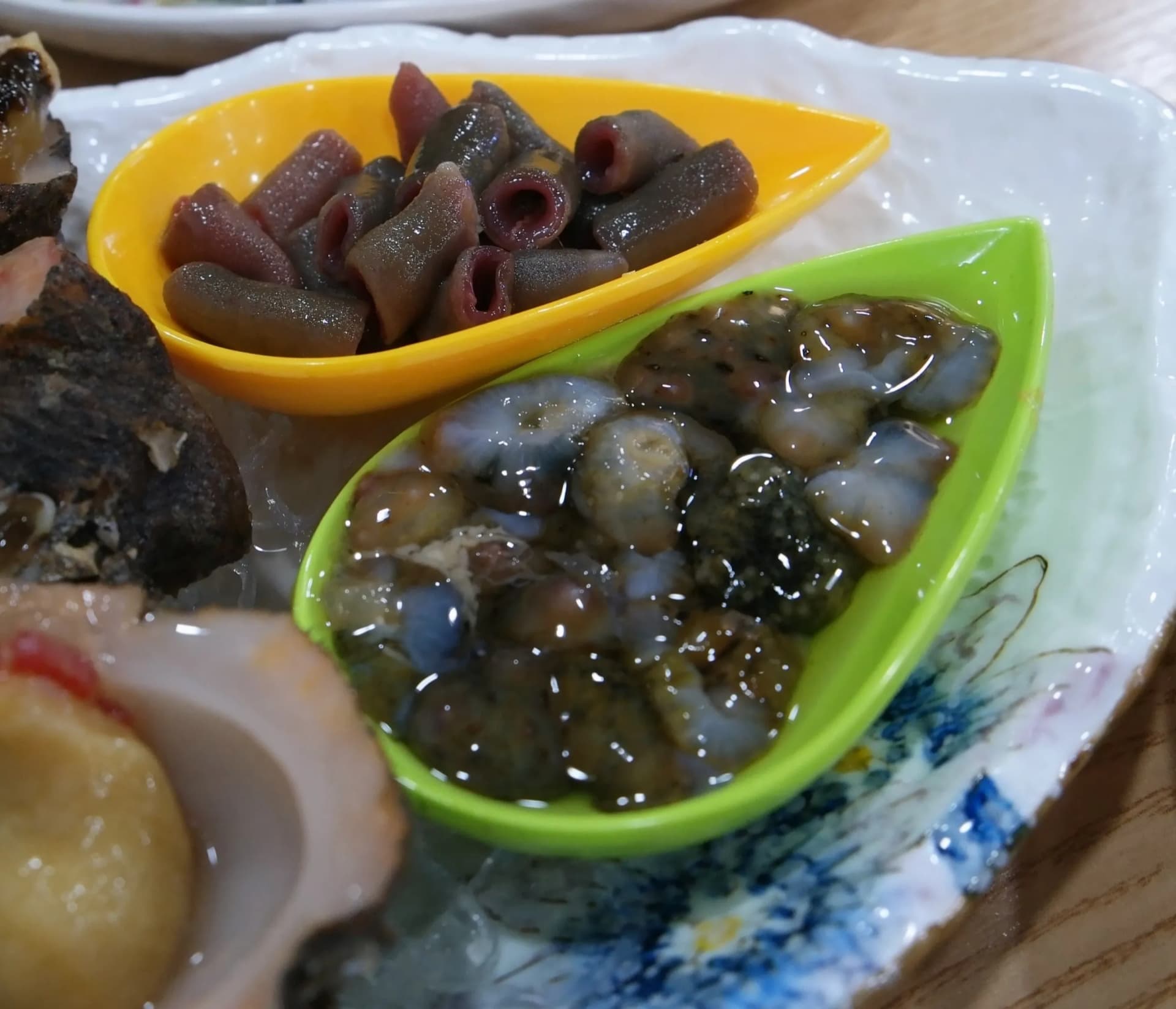
Spoon Worm & Sea Cucumber — Beyond the Shock Factor
The yellow bowl holds gaebul (spoon worm), the green bowl holds sea cucumber. I'll be honest — the visuals can be pretty alien to anyone seeing these for the first time. But once you start talking about the taste, it's a completely different conversation.
Spoon worm explodes with a clean, sweet ocean flavor the moment you bite into it. That unexpected sweetness is what surprises people the most. Health-wise, it's a high-protein, low-fat food rich in amino acids, and in Korea it's been traditionally known for boosting energy and vitality.
Sea cucumber has a distinctive greenish, translucent look, and nutritionally it's one of the top-tier items in the seafood world. It's packed with collagen, minerals, and antioxidants while being extremely low in calories — in China, it's been revered as one of the ultimate nourishing delicacies for centuries. The taste is clean and chewy, and dipping it in chojang lets that crisp ocean freshness come through completely. Don't let the visuals scare you. Just try one piece — you won't regret it.
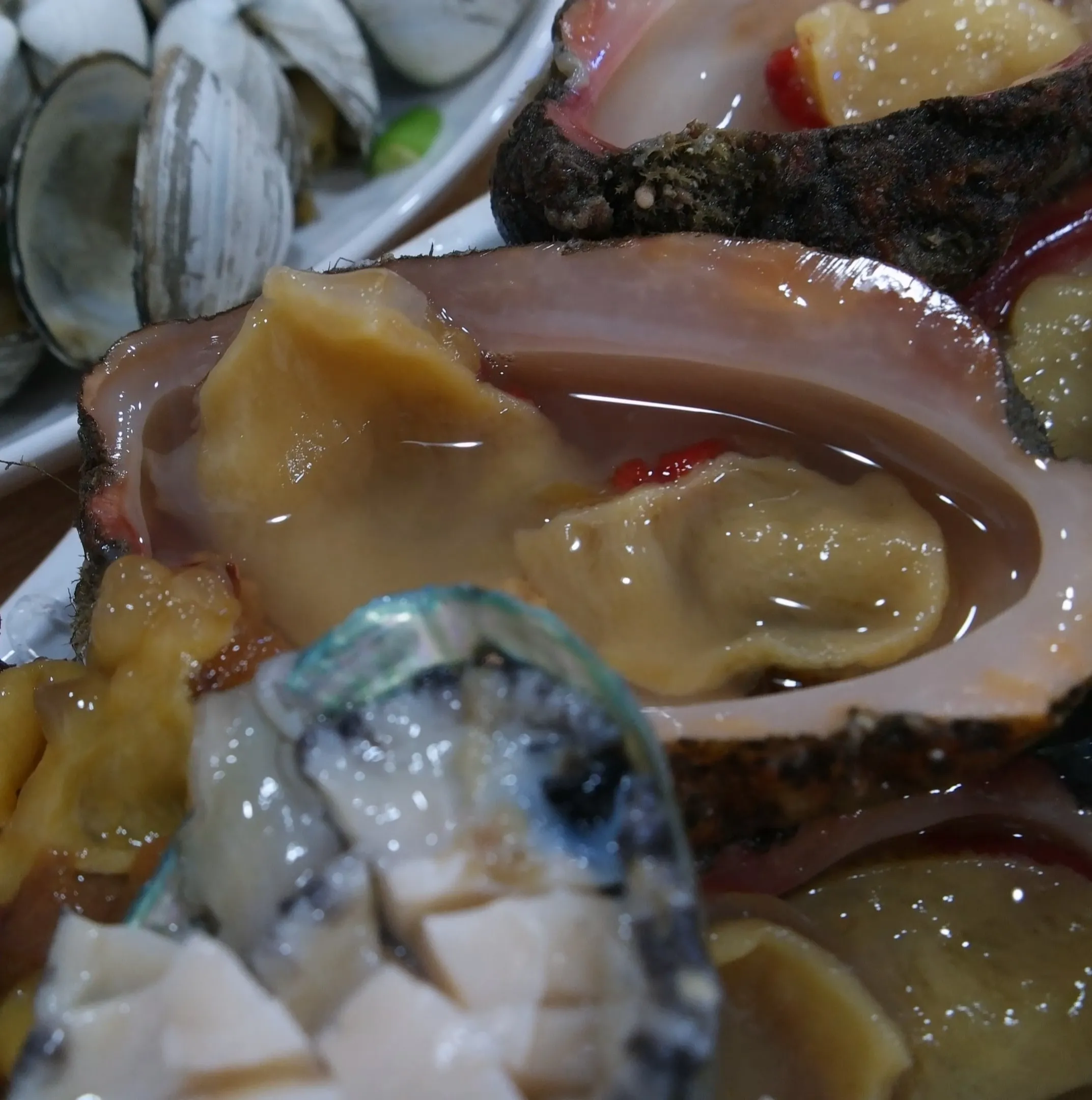
Sea Squirt — A Flavor Unlike Anything Else
Here's the sea squirt, served whole in its rough, craggy shell. Crack it open and you see this gorgeous flesh that's a mix of golden and orange hues — glossy, plump, and visibly fresh even before you taste it.
Describing the flavor to someone who's never tried it is genuinely difficult. It's sweet yet slightly bitter, salty yet deeply oceanic — all at the same time. It's a completely standalone flavor that doesn't compare to any other food I can think of. The texture is soft but with just enough bounce to make chewing satisfying.
Health-wise, it's impressive too. Sea squirt is rich in glycogen and taurine — taurine being well-known for supporting fatigue recovery and liver health. Low in calories, high in protein, it's a nutritionally dense food. Outside of Korea and Japan, almost nobody eats this as food. The fact that you can experience it this fresh at a Korean sashimi restaurant is a genuinely rare and special thing.
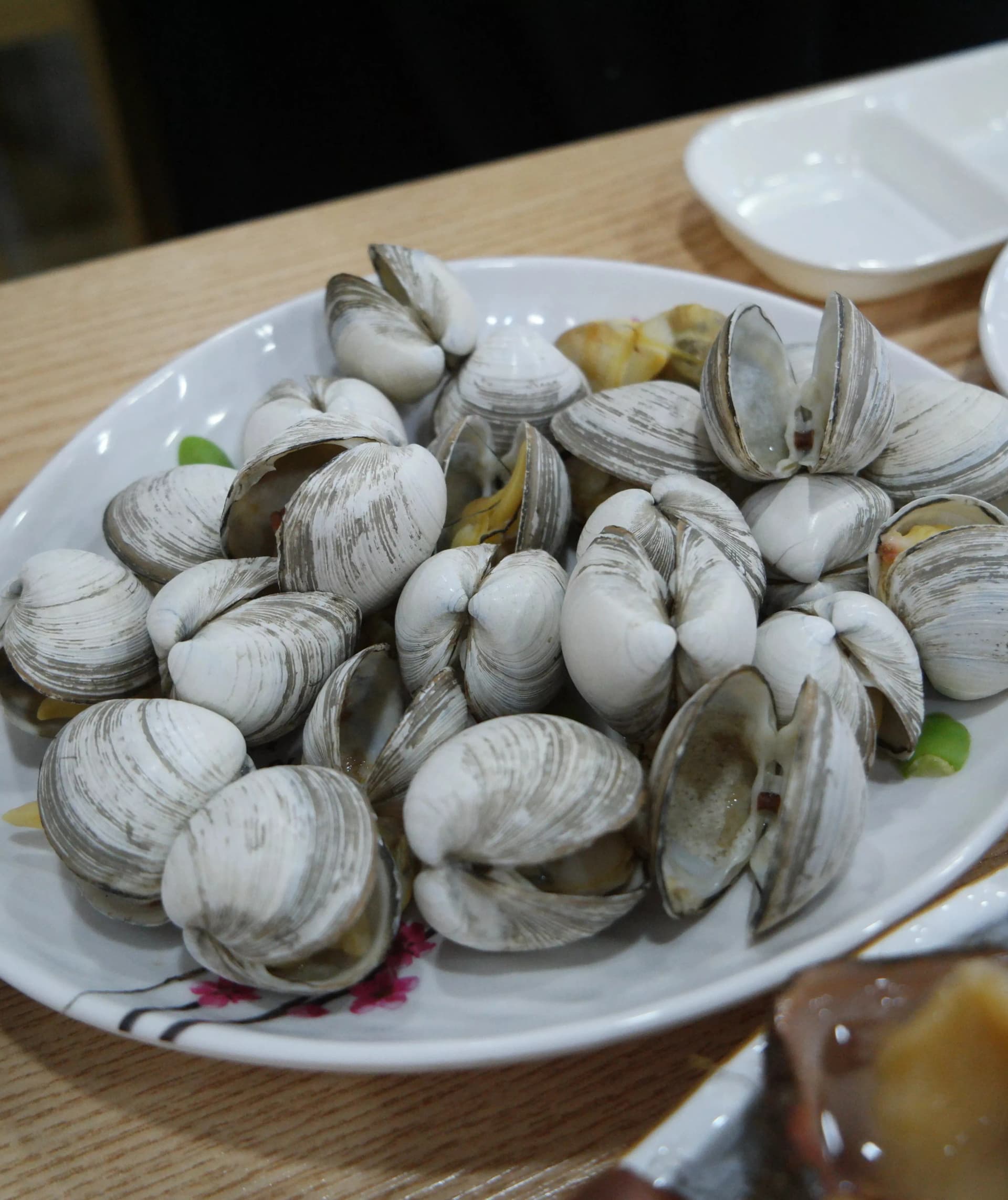
Steamed Clams, Boiled Squid & Crab — The Dishes That Just Keep Coming
This is the real joy of a Korean sashimi course. The food just keeps coming. Right when you think you're done, another dish arrives. And another. And another — it never ends. This time it's jogae-jjim — steamed clams.
These are whole clams, simply steamed, and the broth has that clean, refreshing depth that only clams can deliver. Pop open a shell and inside you'll find plump, bouncy clam meat — mild, slightly briny, pure ocean flavor fully intact. There's no heavy seasoning here, just the clam speaking entirely for itself, which makes it incredibly refreshing. After all the bold, intense exotic seafood that came before, this cleanses your palate beautifully. And don't leave the broth behind — drink every last drop. That's the real way to enjoy steamed clams.
It's still not over. A Korean sashimi course is seriously no joke.
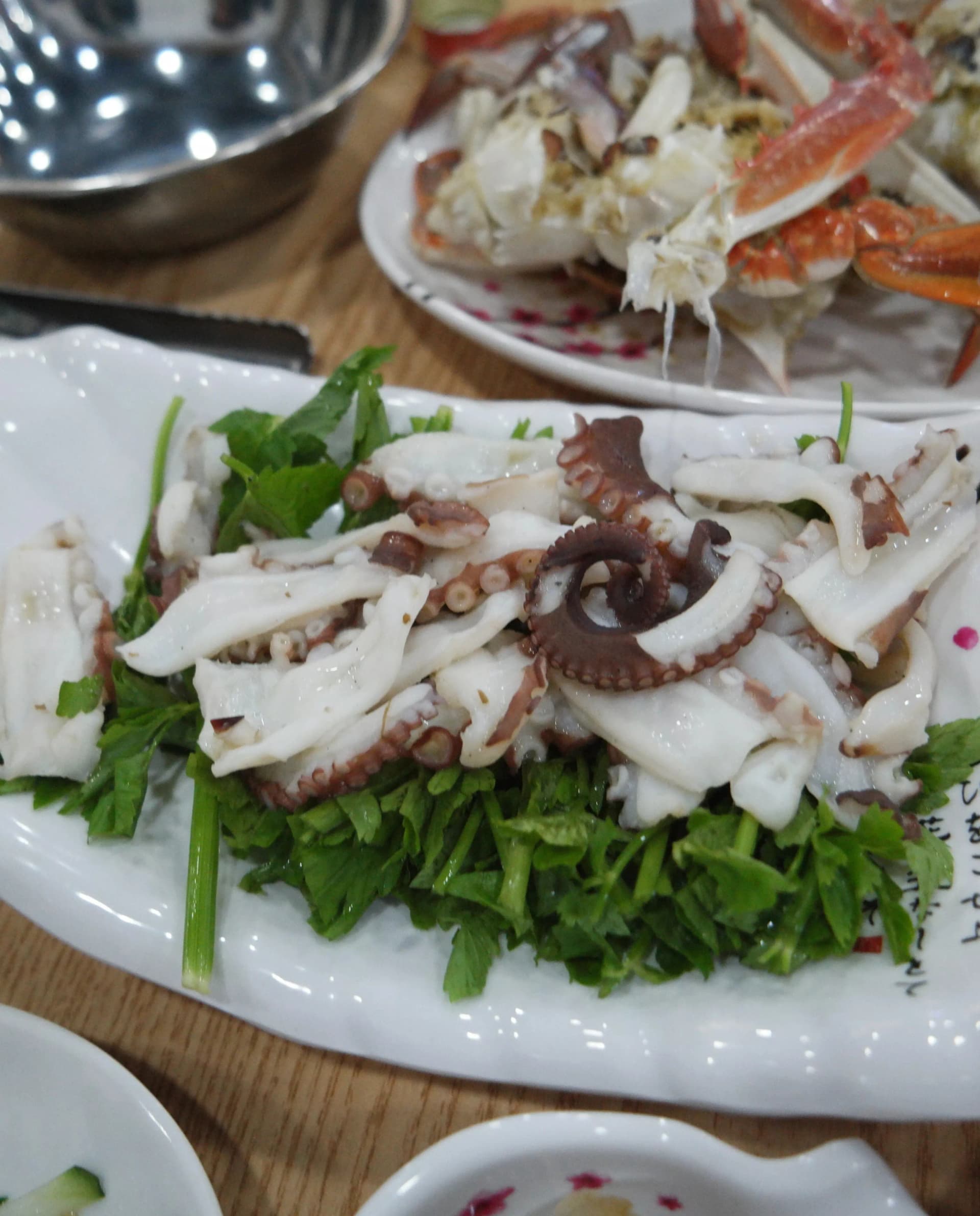
Next up: boiled squid. Whole fresh squid, simply boiled and neatly laid over a bed of minari (Korean water parsley), with steamed crab visible in the background. Boiled squid skips the frying and the heavy sauces — it's all about letting the squid's natural flavor shine through. The texture is chewy yet tender, and the taste is clean and mild. Dip it in chojang and eat it with the water parsley in one bite — the squid's nuttiness pairs with the parsley's fresh, herbal brightness in a way that's surprisingly harmonious. Nothing aggressive about it, which makes it perfect for resetting your palate midway through the course.
Steamed Blue Crab — Too Good to Care About Messy Hands
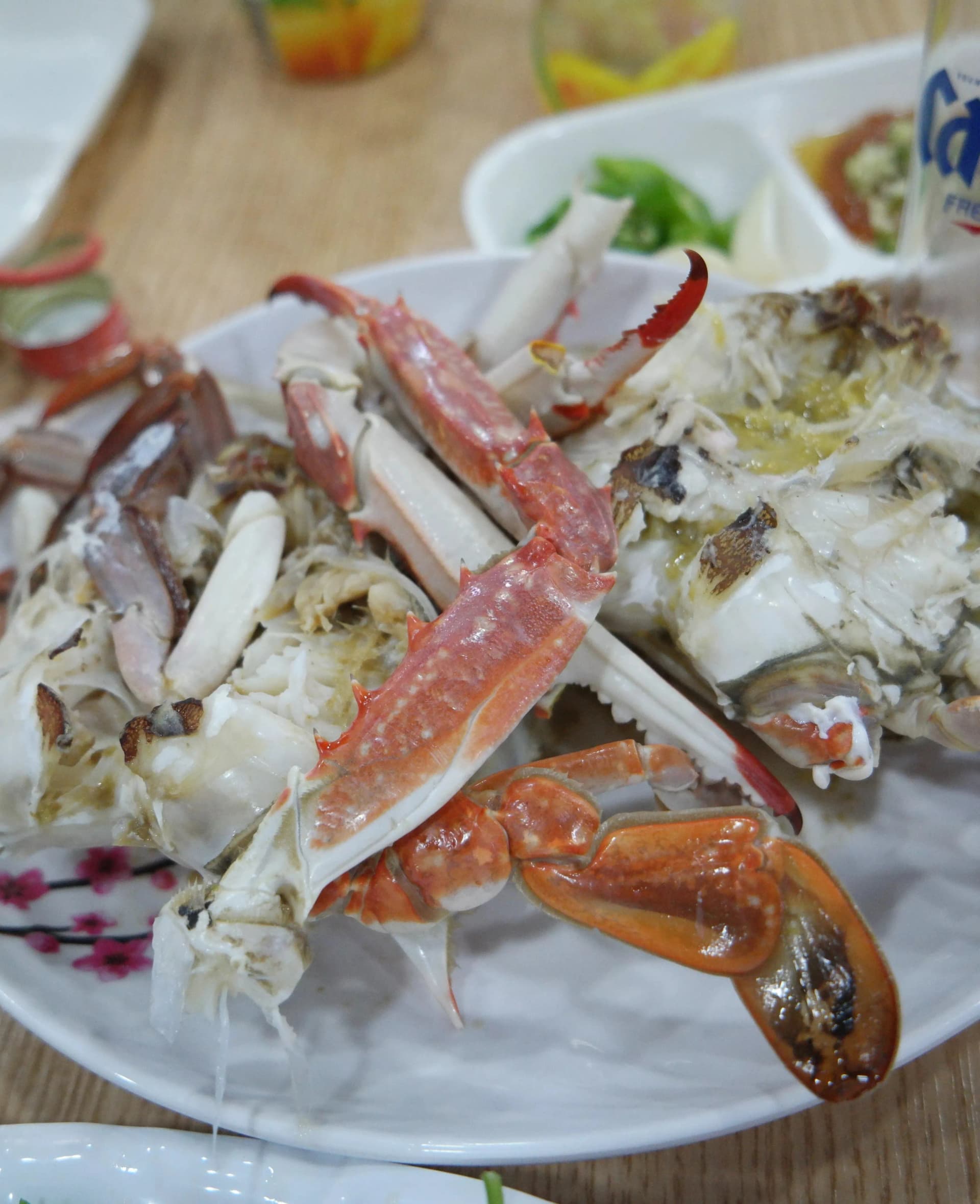
Steamed blue crab. Whole crabs, steamed shell and all, piled onto a plate — that deep red color alone is enough to make your mouth water.
Blue crab is a staple of Korean seafood culture. There's something genuinely fun about picking the meat out yourself. That moment when you crack open a claw and pull out a chunk of pure white crab meat — that's the real highlight. Once you get a taste of that sweet, delicate crab flavor, getting your hands messy stops being something you care about at all.
Finally, the Main Event — Assorted Sashimi Platter
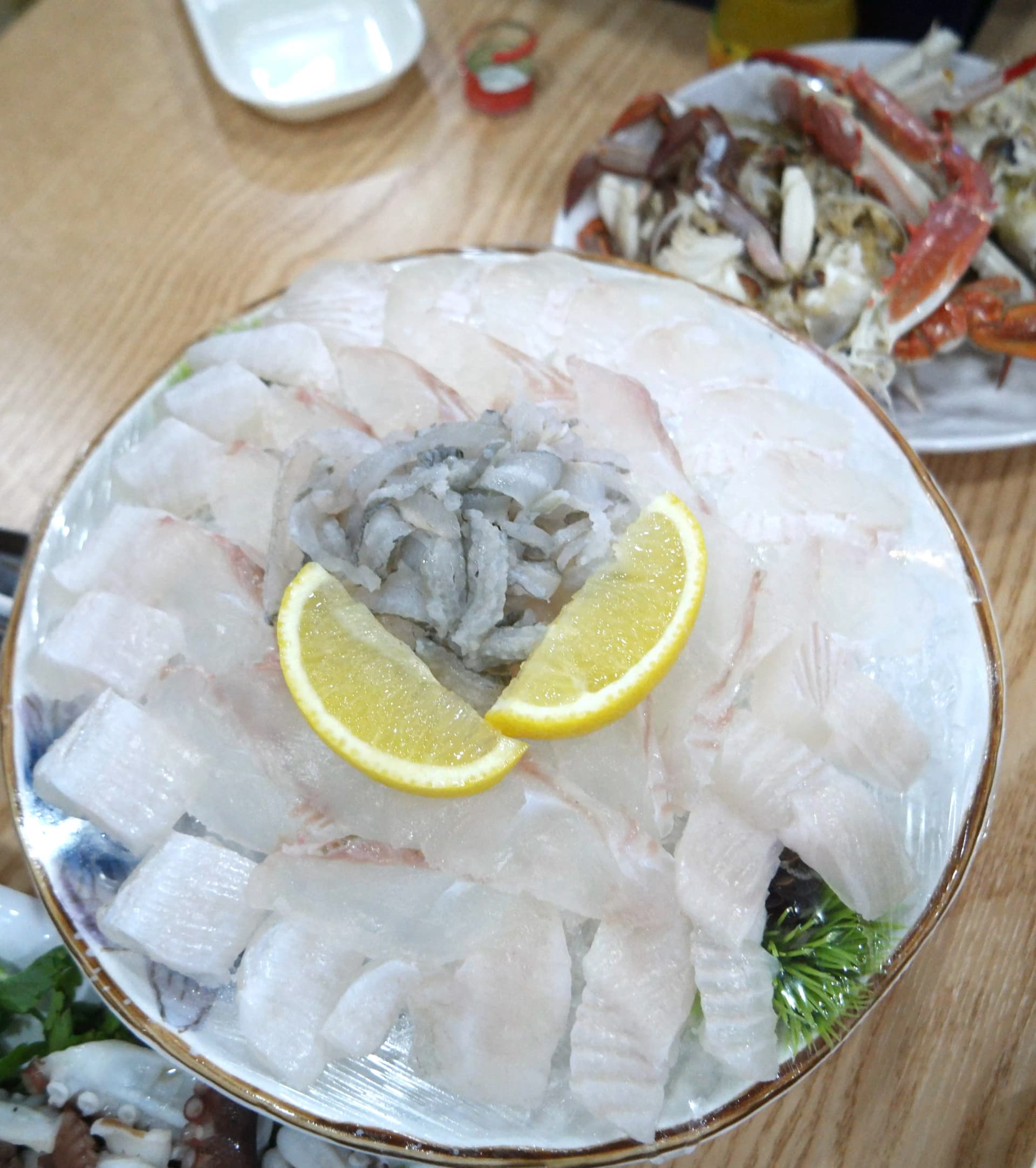
Finally, the real main event has arrived. Hoe — Korean raw fish.
Wide, thick-cut slices of white fish sashimi fill the entire plate, with finely sliced skin pieces piled in the center. Two lemon wedges sit on the side for a clean, elegant presentation. Keeping everything on ice to preserve freshness until the very last bite — that's Korean sashimi restaurant style. Think about it: we've already had steamed clams, boiled squid, and whole steamed crab, and THIS is the main course. A Korean sashimi full course is genuinely on another level, right?
White fish sashimi is lean and mild in flavor. Dip it in chojang and the tangy-sweet sauce brings out the fish's freshness. Go with wasabi soy sauce instead and a gentle heat adds a whole different dimension. Because the slices are cut so thick, there's real substance to every bite — the more you chew, the more that clean, savory flavor builds.
Sekoshi — The Crunchy Joy of Bone-In Sashimi
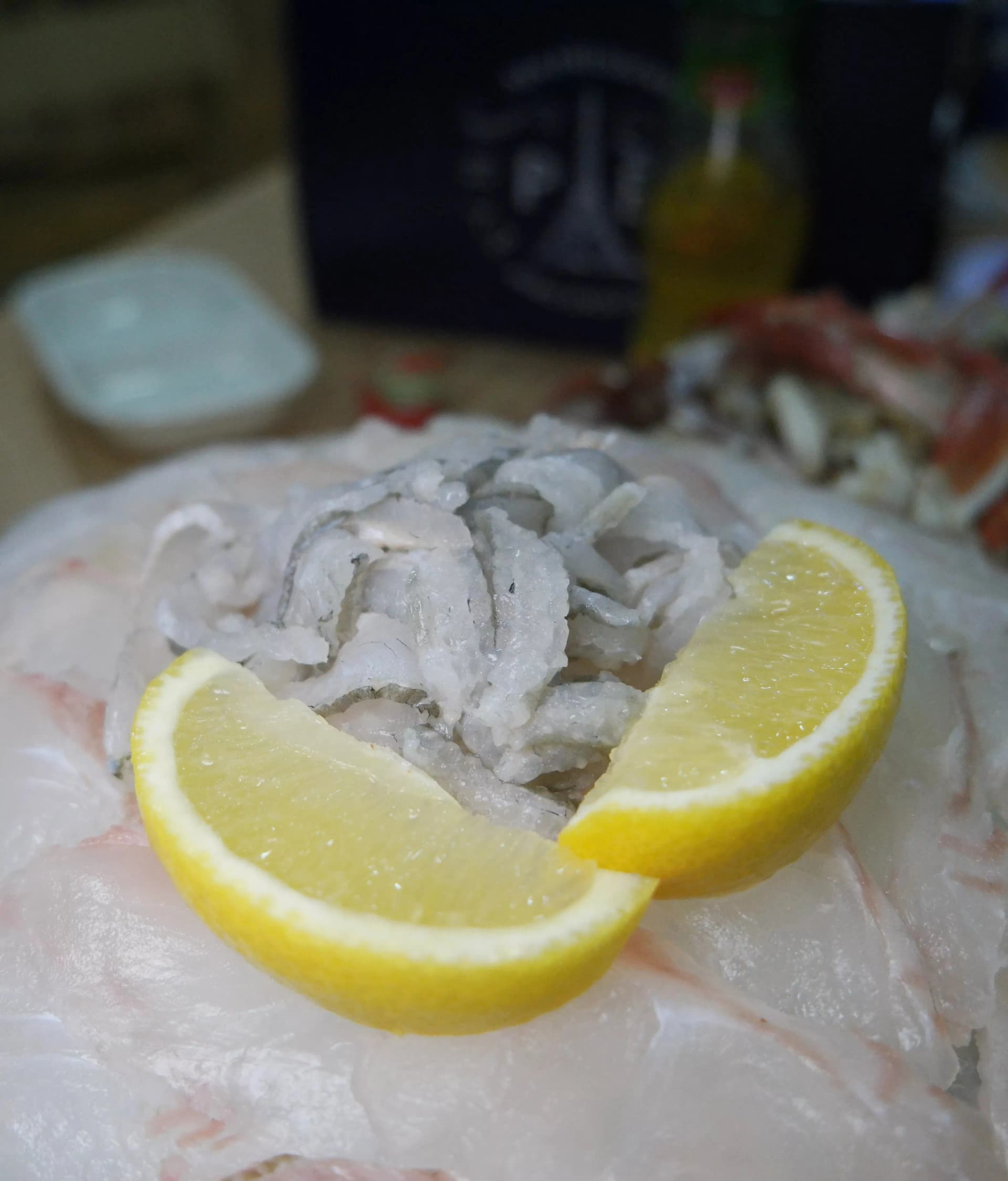
Looking more closely, you can really tell them apart. Spread underneath the thick sashimi slices is a generous pile of sekoshi — sashimi cut with the skin and fine bones still intact. Unlike regular sashimi, when you chew sekoshi the tiny bones crunch with this satisfying texture. That crunch is what makes sekoshi uniquely appealing.
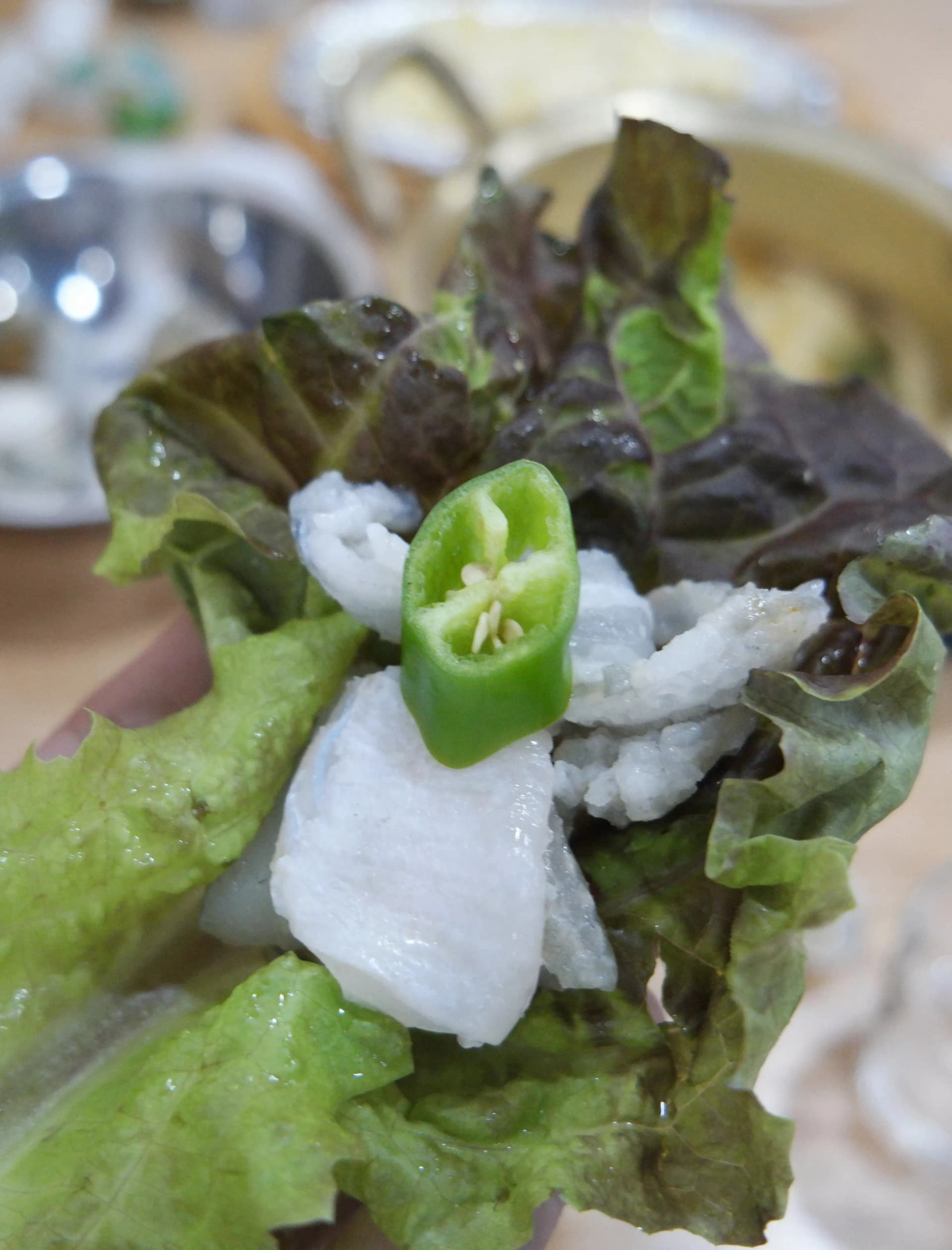
Hoe-Ssam — The Ultimate Korean Way to Eat Raw Fish
This is how you eat sashimi Korean-style, and it's incredible. A piece of sashimi on a lettuce leaf, a slice of spicy green chili on top, then you pop the whole thing in your mouth in one go — that's hoe-ssam. The mildness of the fish, the crunch of the lettuce, the sharp kick of the chili all hit at once. It's a combination you truly can't understand until you've tried it yourself. Add a little chojang or ssamjang on top and it's absolute perfection.
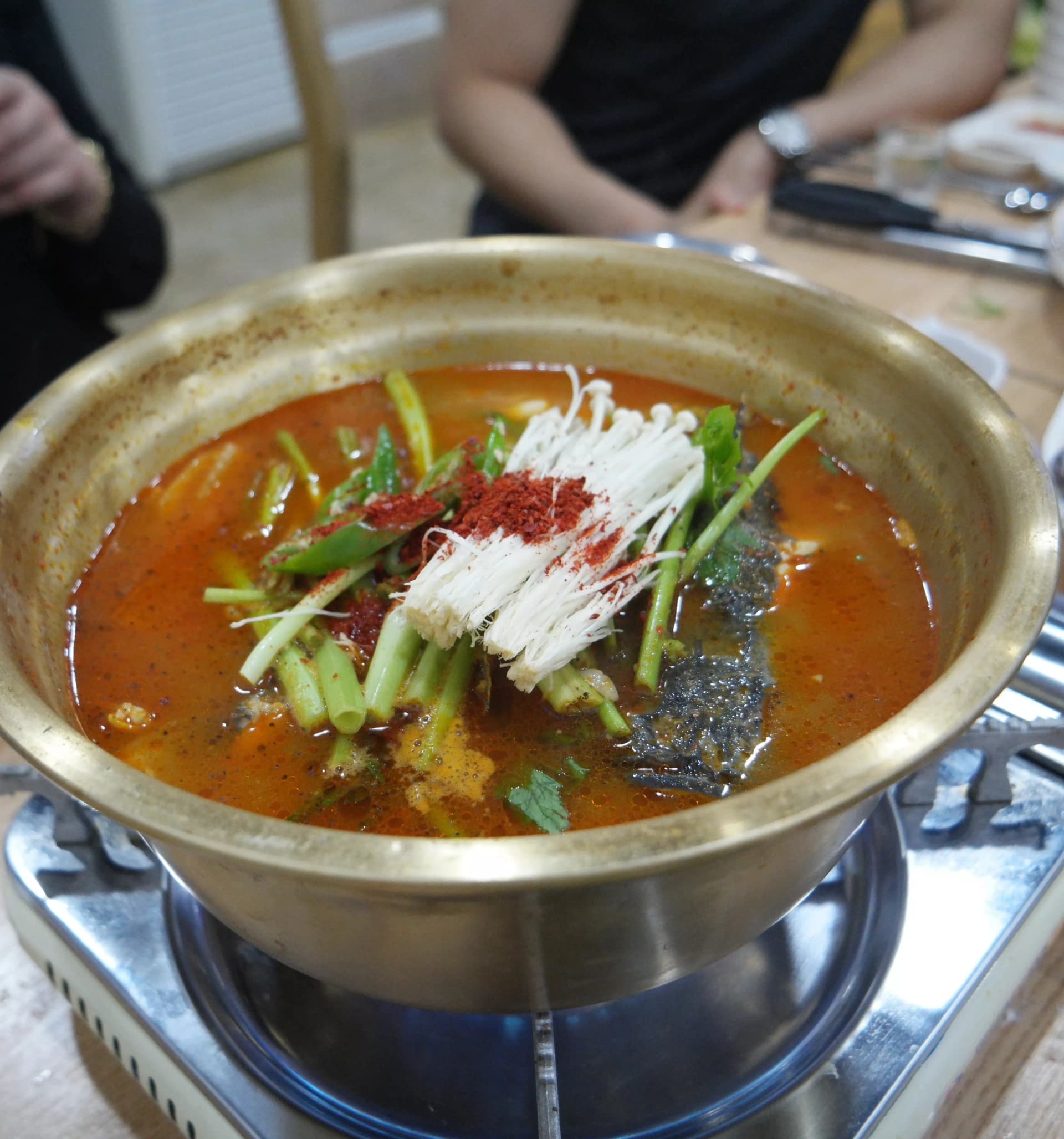
Spicy Fish Stew — The Perfect Finale to a Korean Sashimi Course
Closing out the course is saengsseon maeuntang — spicy fish stew. A rich, deep red broth loaded with scallions, enoki mushrooms, and red pepper flakes — the visual alone is commanding.
Nothing goes to waste at a Korean sashimi restaurant. The fish bones and trimmings left over from preparing the sashimi aren't thrown away — they're boiled down with vegetables into this fiery, hearty stew. It's a dish that embodies the wisdom of Korean food culture: use every last bit of the ingredient. The broth is bold and spicy, and the deep umami extracted from the fish bones comes through in every single sip. It also works beautifully to warm up your stomach after all that cold raw fish. Pour a bowl of rice into the stew, mix it up, and eat it — that's the true, perfect ending to a Korean sashimi course.
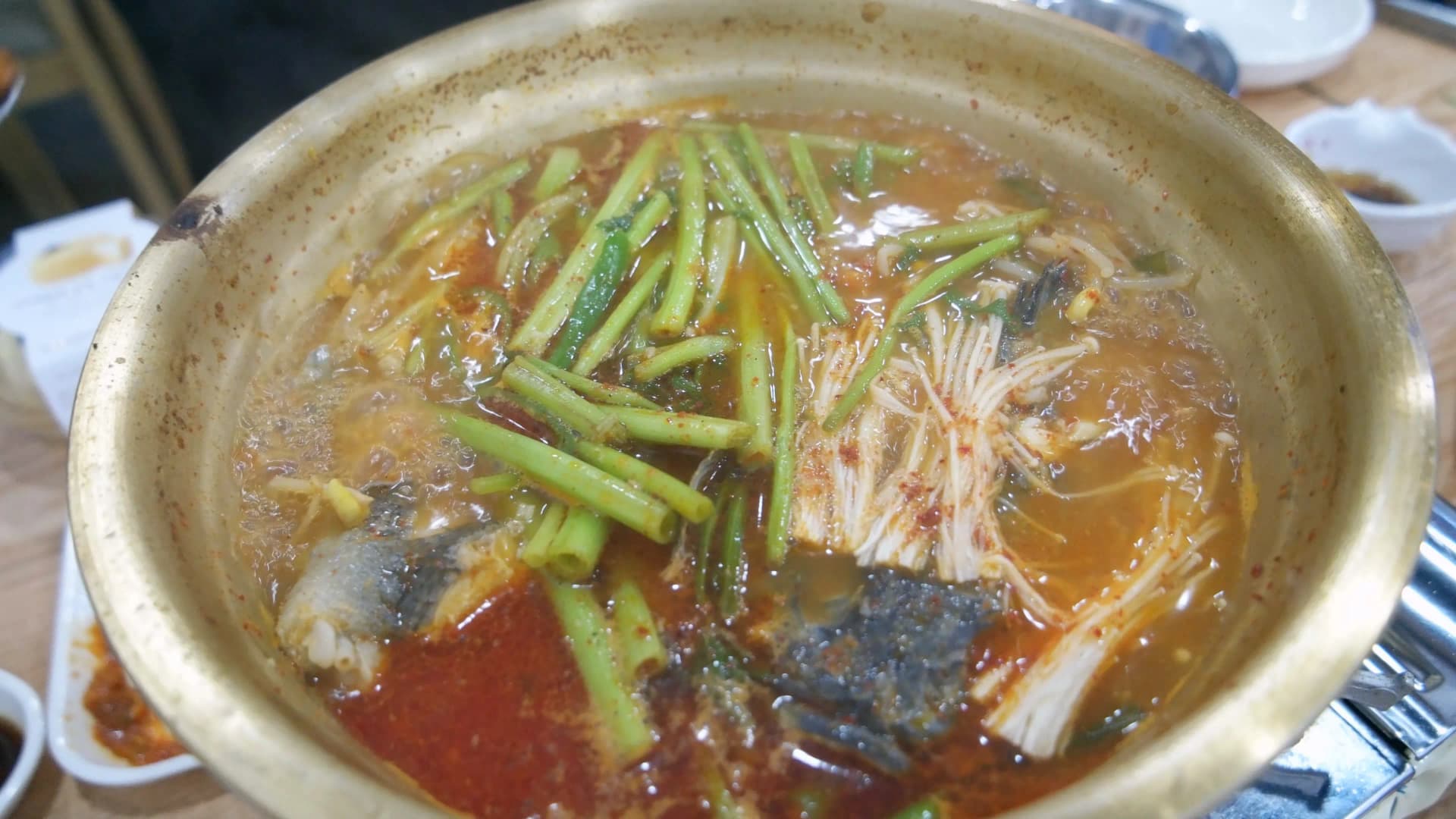
It's reached a rolling boil. You can see the broth thickening as the fish dissolves into it. This is when it's truly at its best.
So in one single course, we went from braised fish to live octopus sashimi, abalone, sea cucumber, spoon worm, boiled squid, steamed blue crab, and then the main sashimi platter — an absolutely relentless parade of dishes. But the real point is that this changes every time. Even among course-style sashimi restaurants, the lineup is different at every place, so every visit brings something new. A Korean sashimi restaurant isn't just a place to eat a plate of raw fish. It's an entire culture, an entire experience in itself. If you haven't been to one yet, seriously — do yourself a favor and go.
Nope. Korean sashimi restaurants generally come in two styles. One is the full course format like the one featured in this post, and the other is the fish market style. In a fish market setup, you pick out the live fish you want from a tank and they prepare it on the spot. Instead of a set course, you order individual dishes separately. You get to choose exactly what type of fish and how much you want, so there's a lot more freedom — and the price varies based on your selection. Both styles have their own appeal, so just go with whatever suits your mood.
Not even close. The dishes you see in this post don't come out at every course-style sashimi restaurant. Some places serve braised fish while others have completely different side dishes, and some swap out abalone or sea cucumber for other exotic seafood entirely. So don't be disappointed if the exact same dishes don't appear at the restaurant you visit. You might actually get something even better that wasn't in this post. That's the whole beauty of the Korean sashimi course — a fresh surprise is waiting for you every single time.
It varies wildly from place to place. Some restaurants start around $22 per person, while premium courses can run over $70. The important thing to know is that the quantity and quality of food you get for the price is often way more generous than you'd expect. Especially with a course like this one that includes abalone, sea cucumber, and spoon worm — the value for the overall dining experience is seriously impressive.
The easiest way is to dip it in chojang — a sweet and tangy chili vinegar sauce. It tones down any fishiness and makes raw fish approachable even for total beginners. Once you're a bit more comfortable, try wasabi soy sauce. The subtle heat brings out the natural flavor of the fish in a different way. For the full Korean experience, wrap the sashimi in lettuce or perilla leaves with garlic, chili, and ssamjang — that's called hoe-ssam. If it's your very first time, just start with chojang and go from there.
Of course not — nobody's going to force you. But I'd really encourage you to try at least once. Hesitating because of the way it looks is a totally natural reaction. But most people who actually take a bite are surprised by how mild and fresh it turns out to be. The sweetness of spoon worm, the satisfying crunch of sea cucumber — these are flavors and textures you genuinely can't find in any other food. If you're in Korea, these are the kinds of dishes that you can only experience right here.
In Korea, the classic pairing with raw fish is hands down soju. Its clean, strong kick cuts through any fishiness and leaves your palate feeling refreshed. If you want something lighter, beer works great too. And if you don't drink alcohol, warm sungnyung (roasted rice tea) or even just water pairs perfectly fine. There's absolutely no pressure to drink alcohol at a Korean sashimi restaurant, so just enjoy the meal however you like.
This post was originally published on https://hi-jsb.blog.