Korean Spicy Octopus & Tripe Stir-fry (With Fried Rice)
Table of Contents
14 items
Dug Out of the Photo Album: Autumn 2015
I was sorting through old photos on my computer when one stopped me in my tracks. So gopchang nakji bokkeum — that fiery stir-fry of octopus and beef tripe. It was sometime around autumn 2015. Can't remember the exact date, but the file stamp points that way. The shot shows octopus and beef tripe all tangled up in a blood-red sauce, and the second I clocked it, the taste came rushing back like I'd just had a mouthful. If you travel to Korea, you'll most likely try tteokbokki or Korean fried chicken at some point. But some of Korea's spicy dishes — like this one — don't really make it onto the tourist trail. Even for me, someone who grew up eating Korean food in Korea, this isn't a weekly thing. It's more the sort of meal you eat once and then keep thinking about for weeks after. So I thought I'd dig up the photos.
The Banchan Spread at a Nakji Gopchang Restaurant
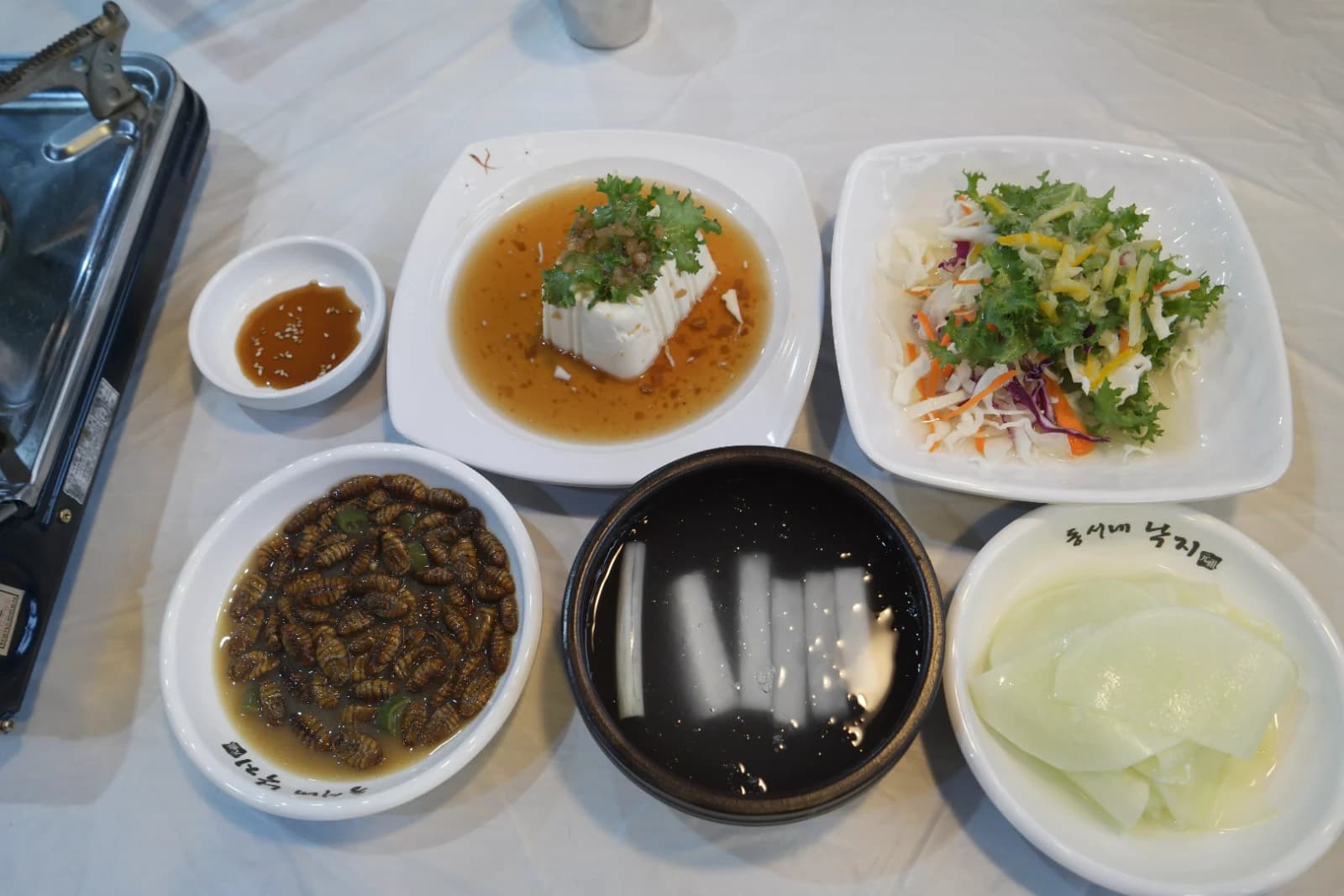
Before the main arrived, the table was already blanketed in side dishes. Five or six little plates end up in front of you, and each one's worth a proper look. The plates had "Dongseonei Nakji" printed on the bottom — that was the Daejeon spot we went to. This particular branch has since shut up shop, but I reckon the food itself still deserves a write-up.
Yeondubu, Salad, and Vinegared Radish
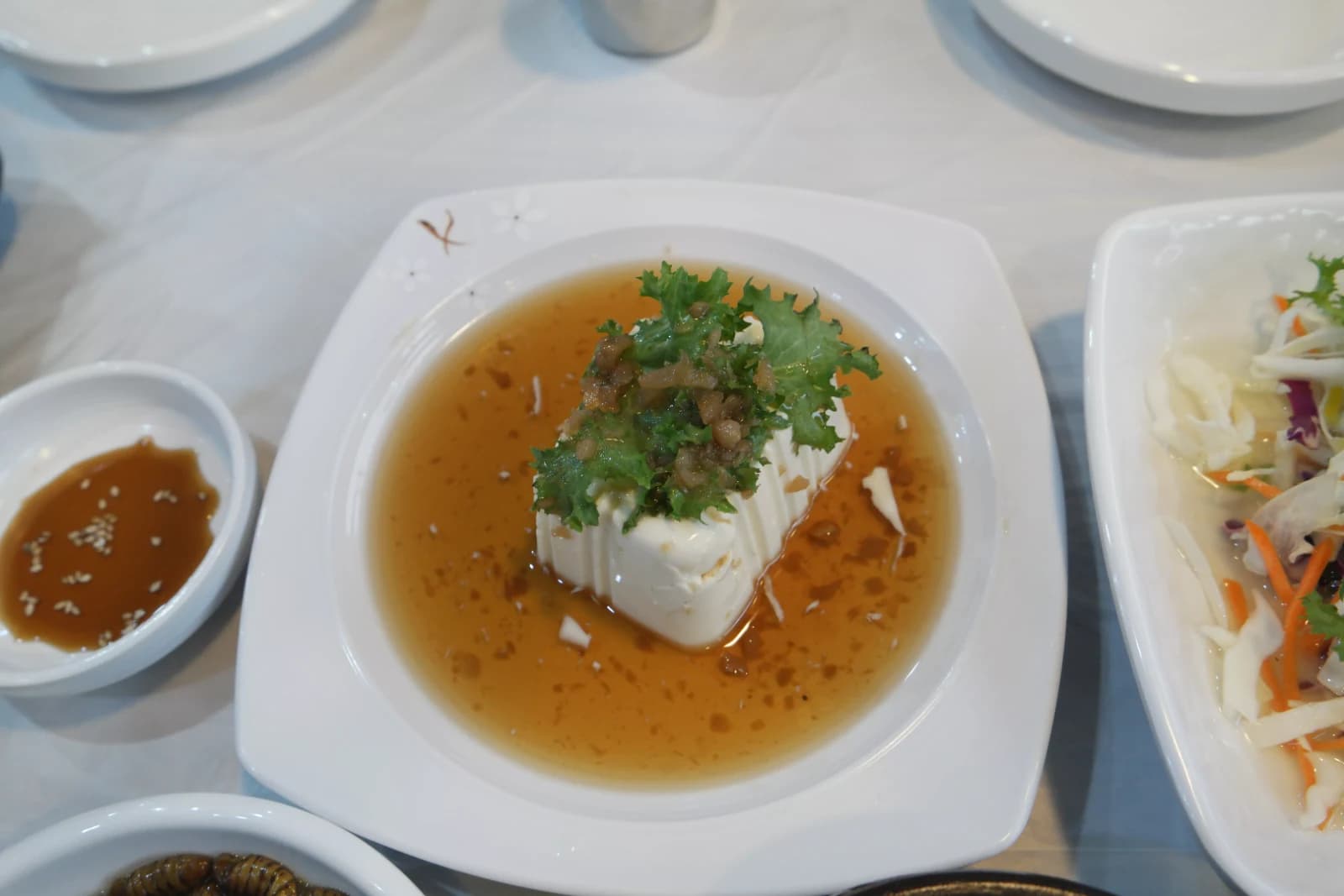
First up, yeondubu — a super soft tofu, miles silkier than the regular stuff. It came with shredded spring onion and a touch of seasoning on top, sitting in a shallow pool of soy-based sauce. Scoop it with a spoon and it practically wobbles like pudding. Later on, when the spicy stir-fry really started firing up, this was the thing that cooled my mouth down.
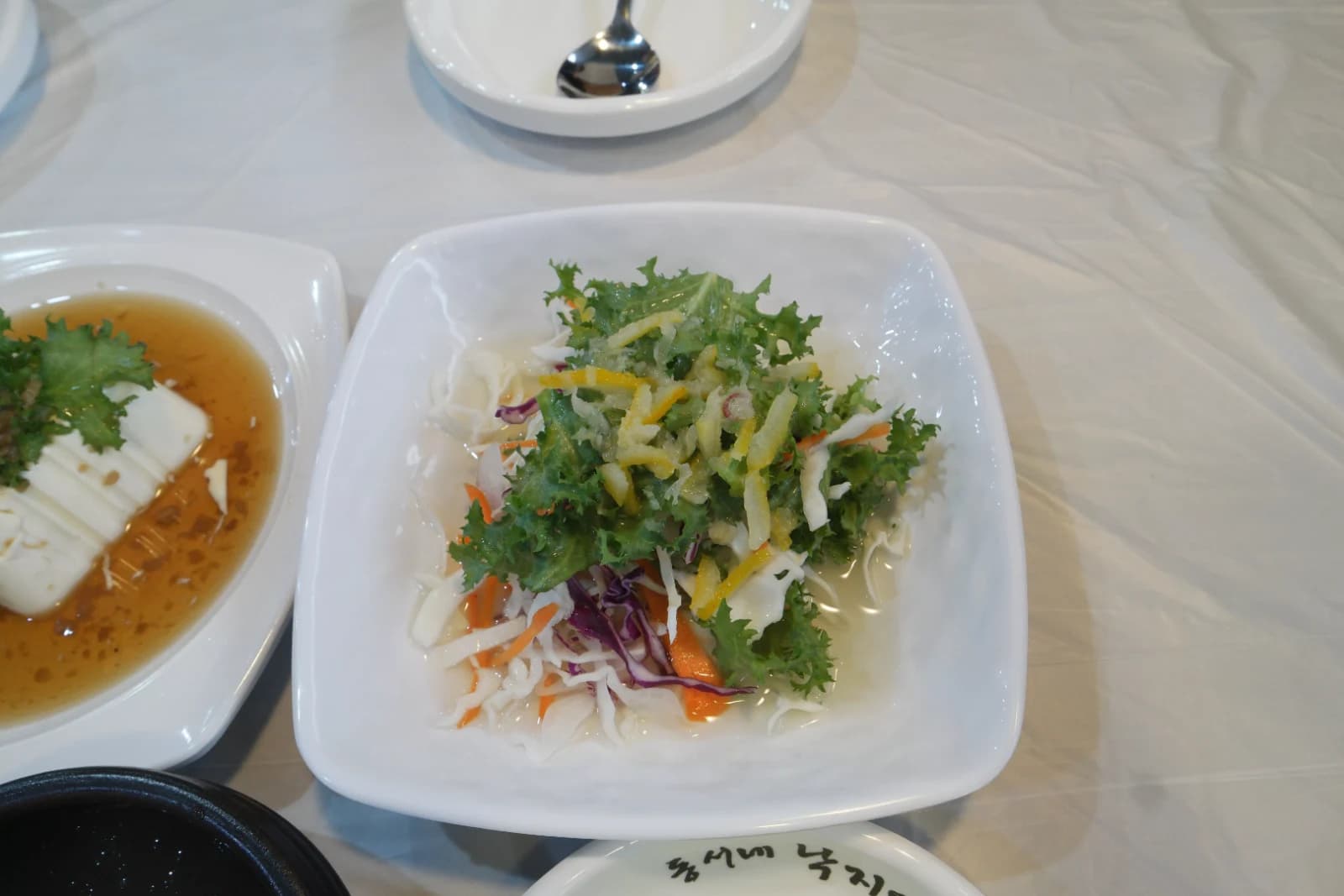
A salad turned up too. Red cabbage, carrot, capsicum and some leafy greens — but no dressing came with it, so eating it plain was a bit flat. Honestly, we could've lived without this one.
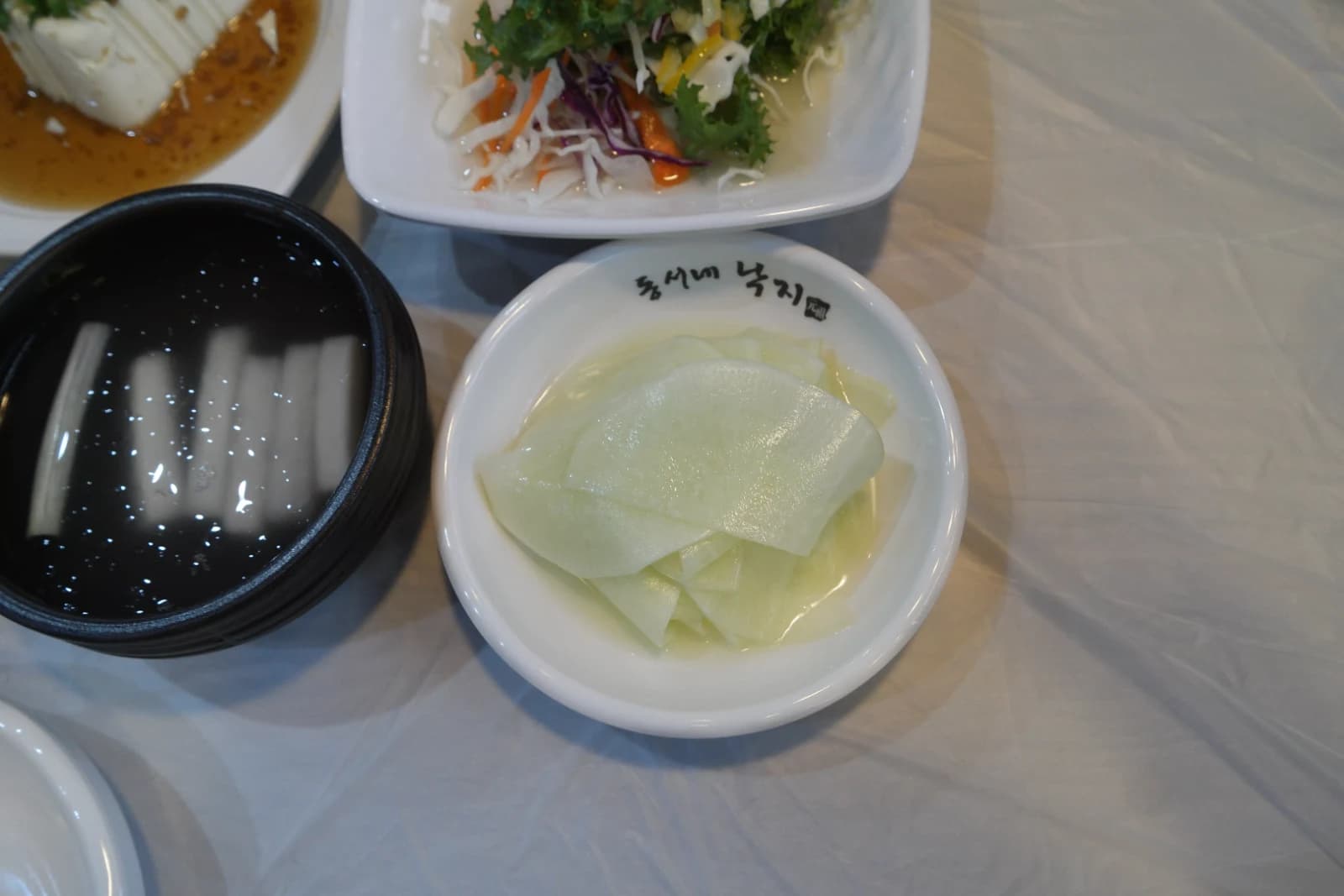
This one is thinly sliced radish dressed in vinegar — chomuchim. The slices are cut so fine you can almost see through them. First bite, the vinegar tang hits, then the cool crunch of radish follows. When you're eating something fiery, having a zingy side like this next to you makes a massive difference.
Dongchimi — The Perfect Partner for Spicy Stir-Fry
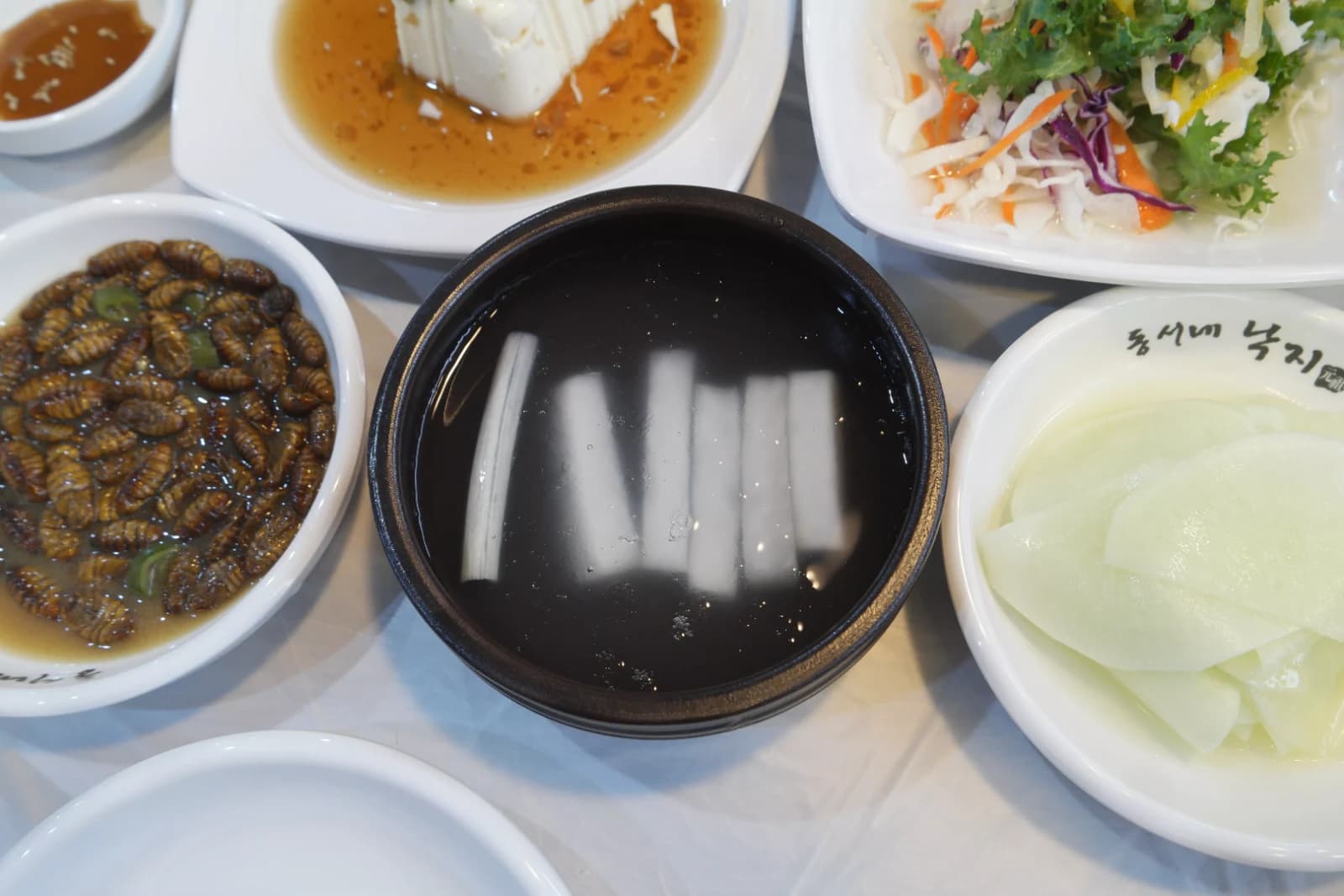
The dark bowl in the middle is dongchimi — a cold water kimchi where radish is fermented in brine. The broth is clear and icy cold, with radish cut into long sticks inside. With a spicy number like so gopchang nakji bokkeum, this sort of chilled, brothy side pretty much always comes along for the ride. One sip between bites of the stir-fry and your mouth feels reset from scratch.
Beondegi — The Divisive Side
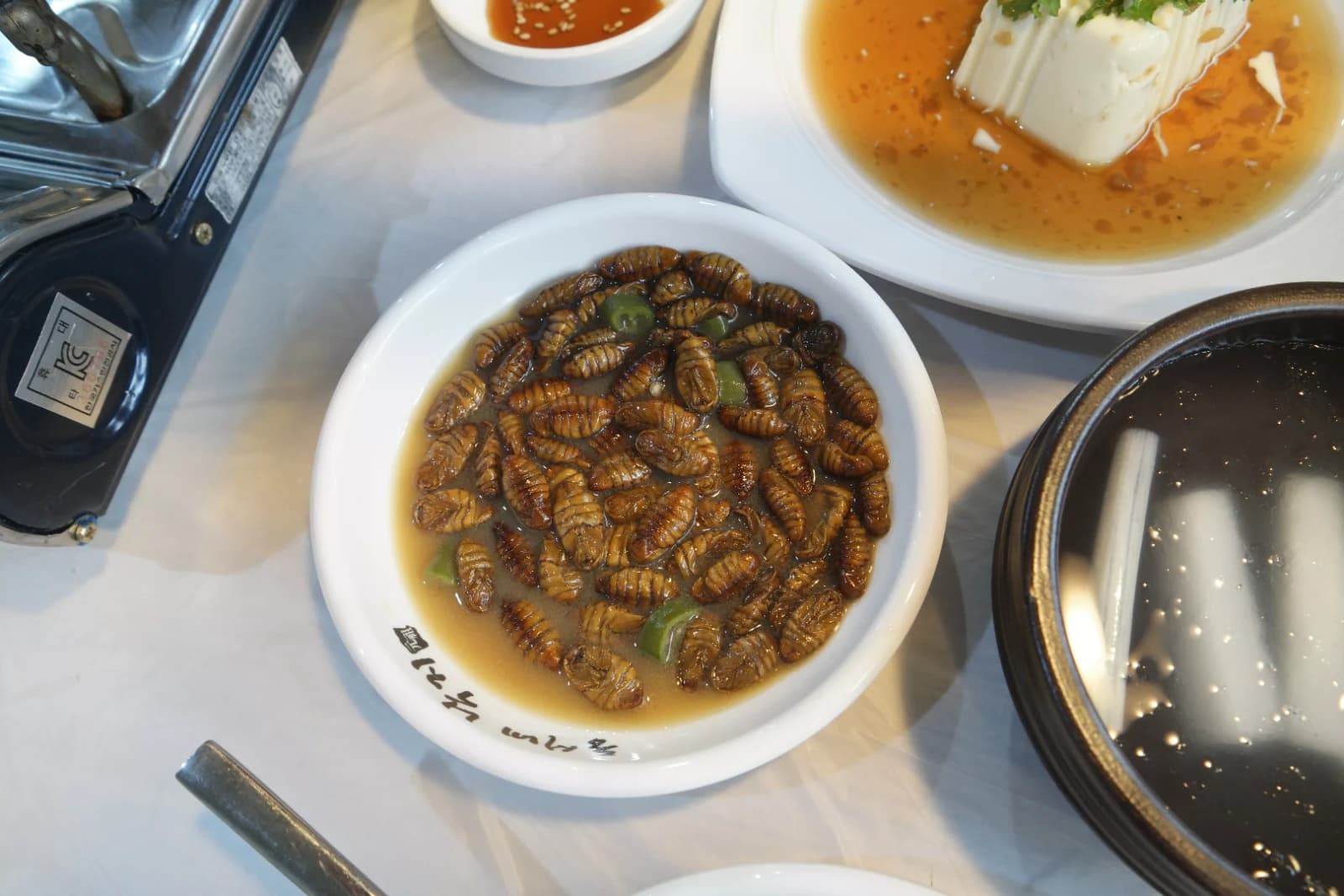
Beondegi. This one splits the room big time. It's silkworm pupae boiled and seasoned, and plenty of people can't even look at it, let alone eat it. But in Korea, it's proper old-school tucker — you'll still see it sold at street stalls. The flavour is nutty with a slightly earthy thing going on. I grew up eating it so it doesn't faze me, but Mum wouldn't go near the chopsticks for it.
Mul Mandu (Boiled Dumplings)
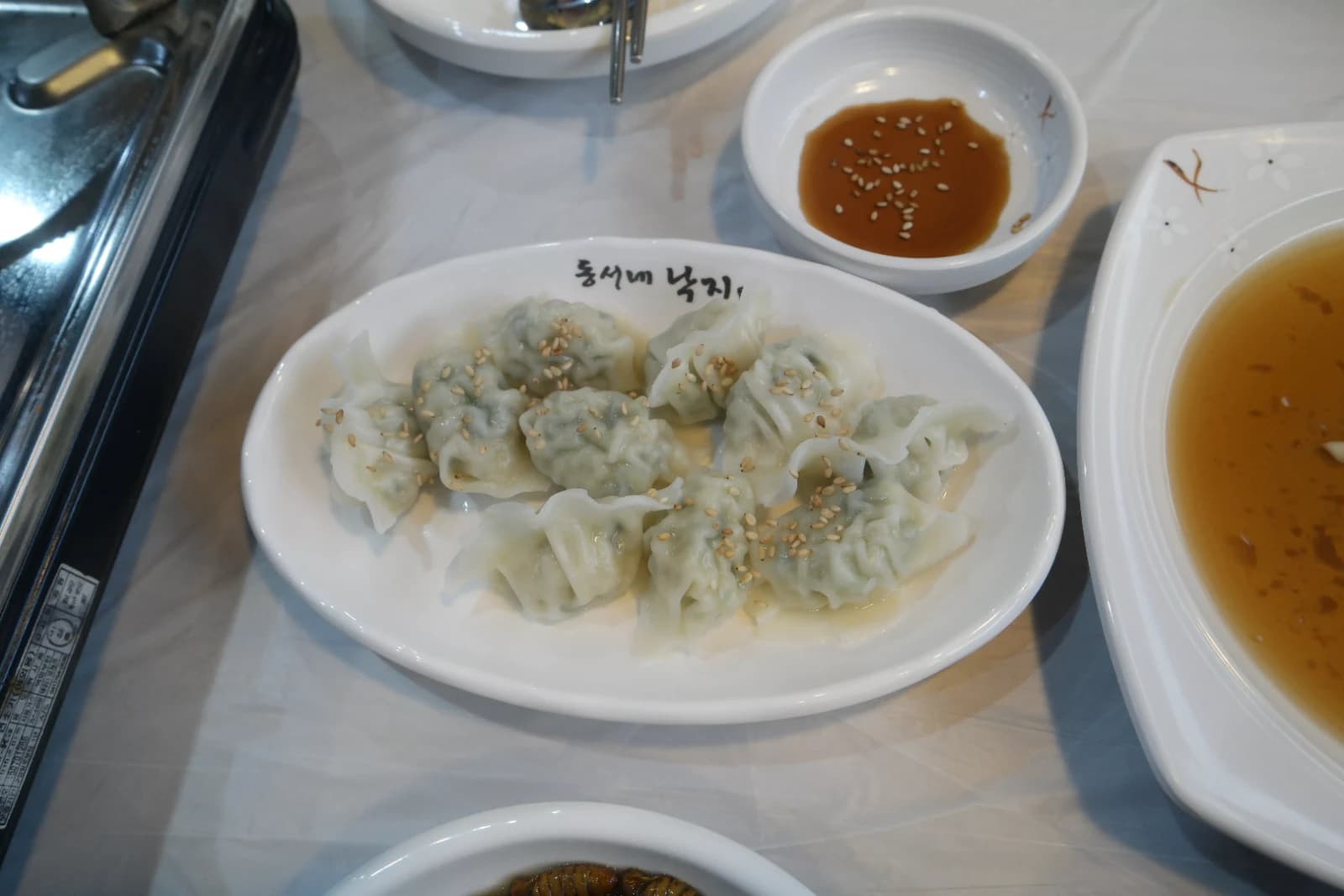
Boiled dumplings even showed up as a side dish. The wrappers were so thin you could see the filling through them, with a scatter of sesame seeds on top and a little saucer of soy dipping sauce next to them. I was snacking away before the main even arrived when Mum piped up with, "You'll fill up on sides at this rate" — and she wasn't far off.
The Main Event: So Gopchang Nakji Bokkeum
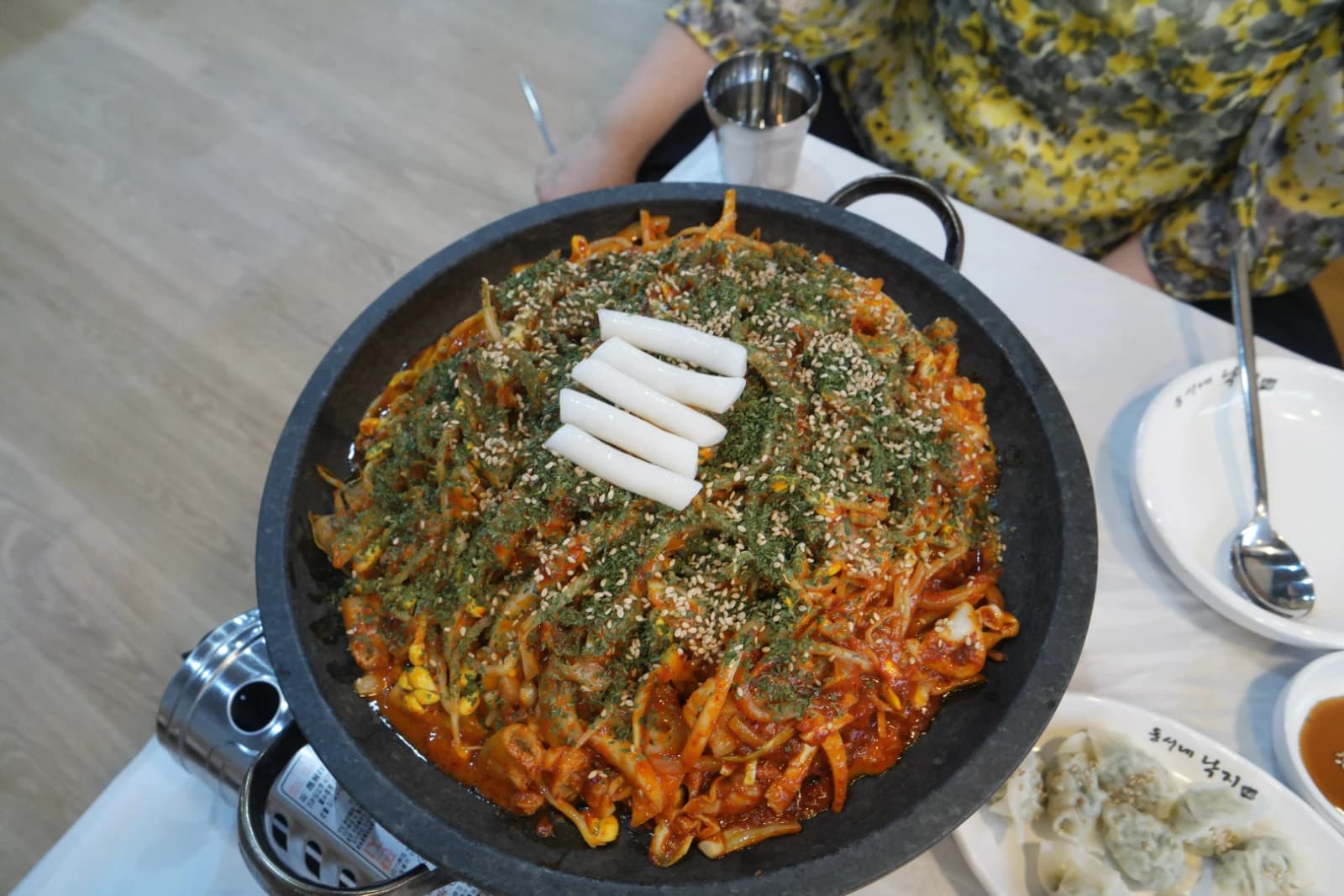
Finally, the main. So gopchang nakji bokkeum — sometimes shortened to nakji gopchang — is a dish where nakji (a small species of octopus) and so gopchang (beef small intestine) get stir-fried together in a spicy gochujang sauce. It arrives piled high on a hot stone plate, the whole thing glowing red, with a heap of seaweed flakes and sesame seeds scattered over the top. Those white batons sitting in the middle are garaetteok — Korean rice cakes — and they soften up slowly from the heat of the plate. The moment it lands, the smell just takes over the whole table. Because it's on a stone plate, it keeps sizzling away non-stop, and if you leave it sitting there, the bottom catches and burns. You don't have time to muck around with food photography either — I snapped a couple of quick shots and got stuck into it.
A Quick Note on Price
Prices vary by restaurant, but these days you're looking at around A$30 to A$50 for a two-person serve. Portions are generous — two people usually struggle to finish it — and adding the fried rice course at the end runs another A$2 to A$3.
A Closer Look at the Stir-Fry
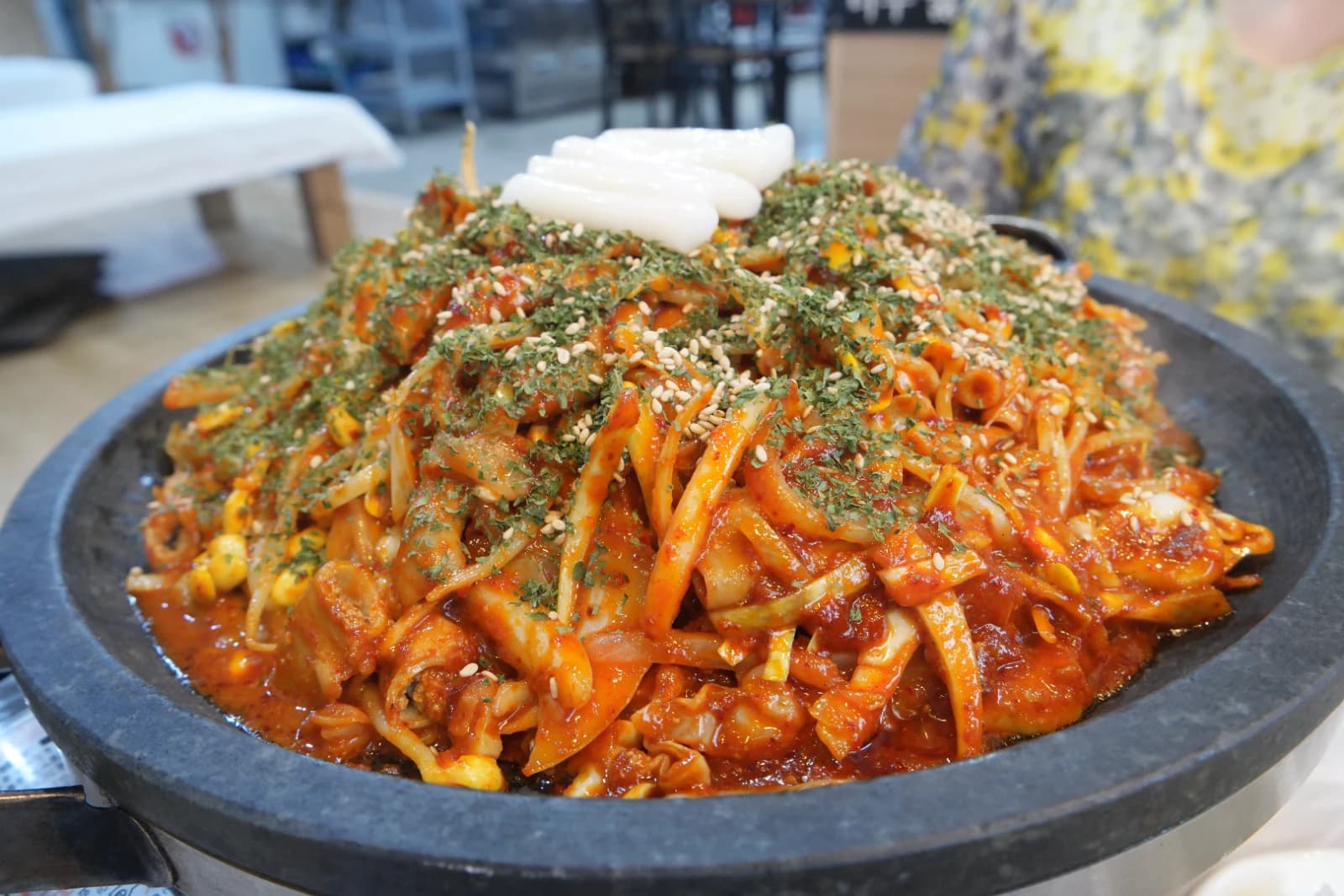
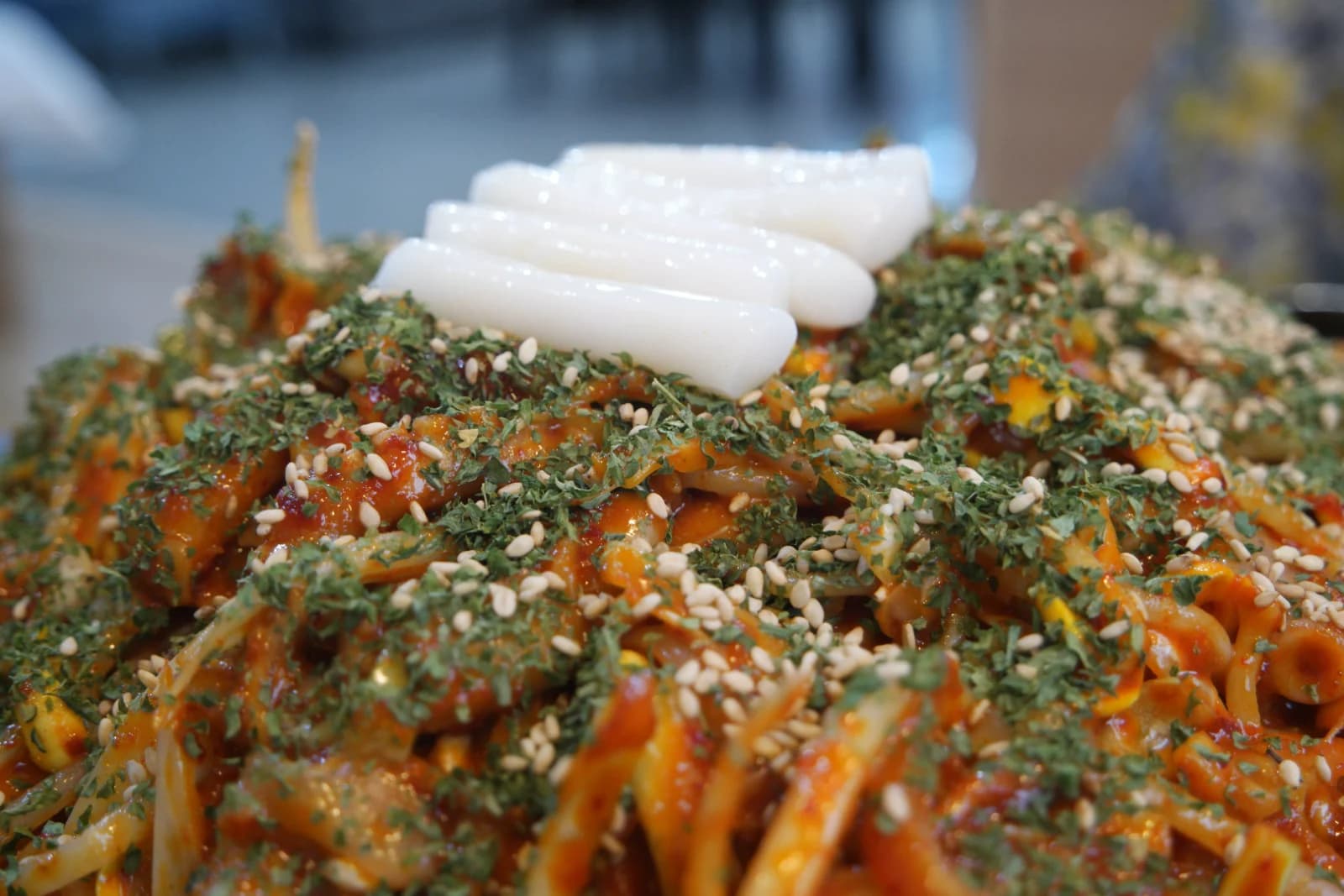
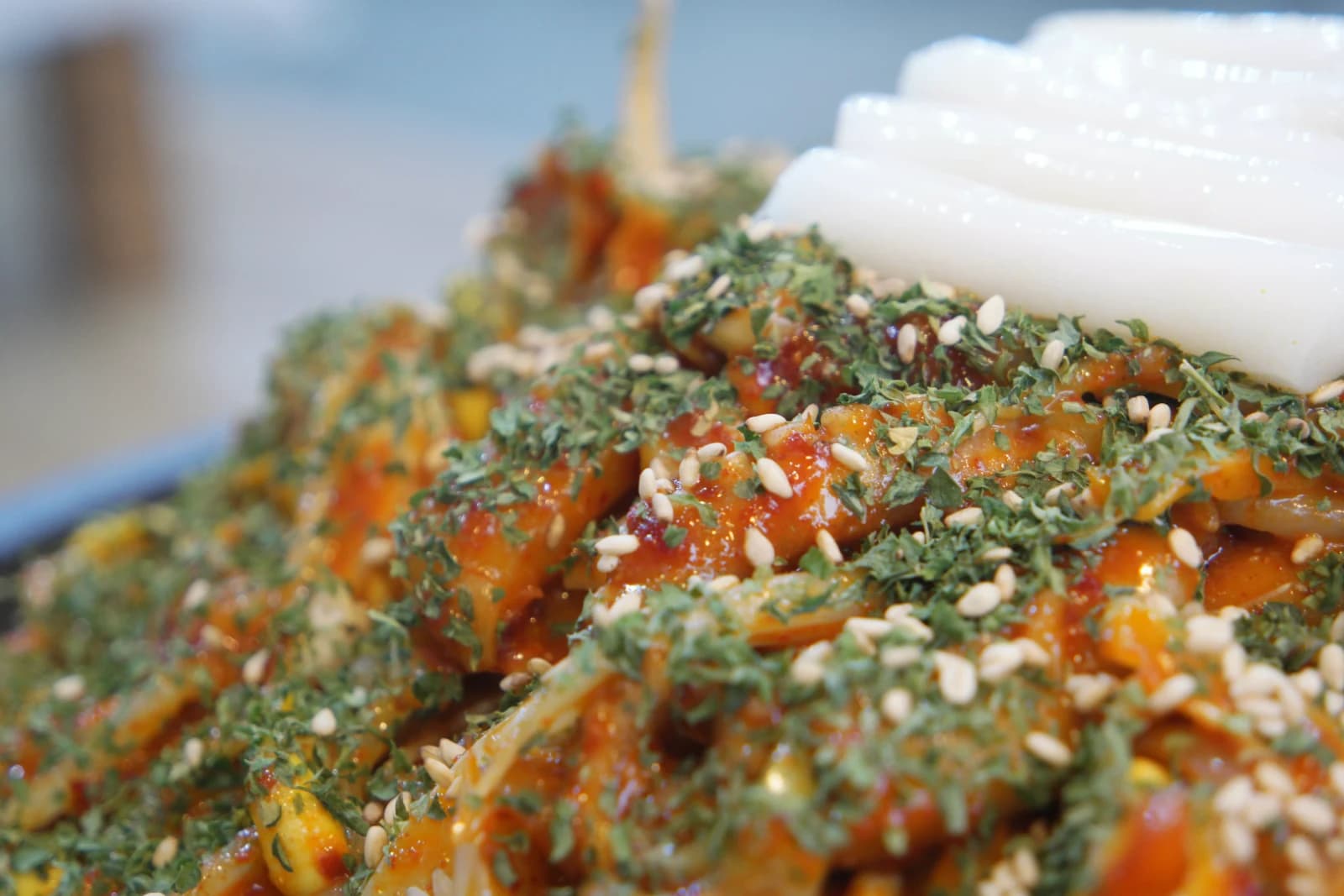
From the side, you can see just how much food you're staring down. The stir-fry mounds up above the rim of the stone plate, and if you look closely, those white sticks up top are garaetteok — long, chewy rice cakes. Push them down into the bubbling sauce and they soak it right up, going beautifully gummy and properly chewy. Seaweed and sesame cover the surface, so from a distance it all just reads as one red mass, but up close the green and white make it surprisingly pretty. Tucked between the sauce, you can spot curled octopus tentacles and bean sprout heads poking through. Photos don't really do it justice — when you're sitting in front of it, the spicy gochujang aroma keeps hitting you in waves.
Nakji Gopchang Up Close — Octopus, Beef Tripe, Bean Sprouts
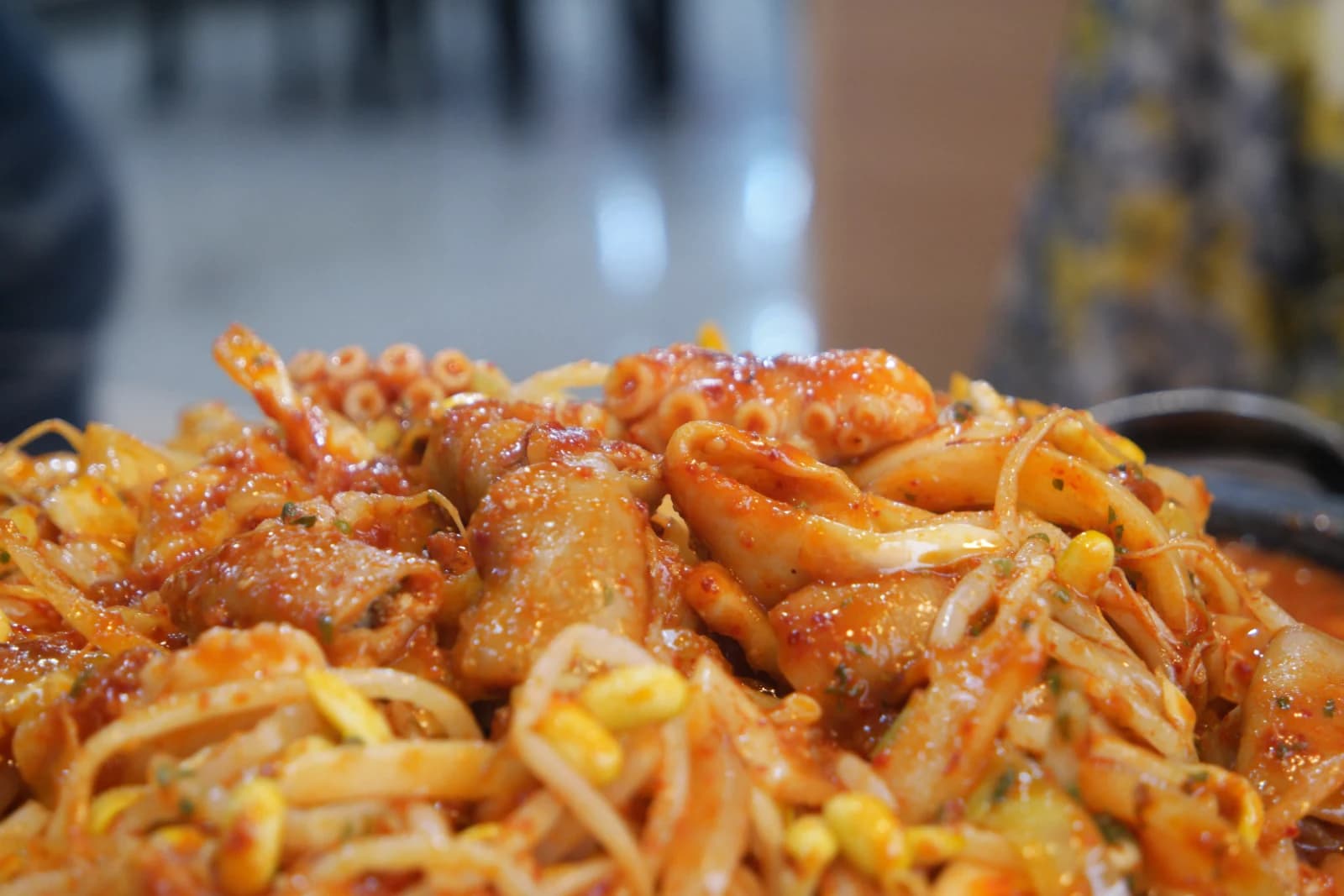
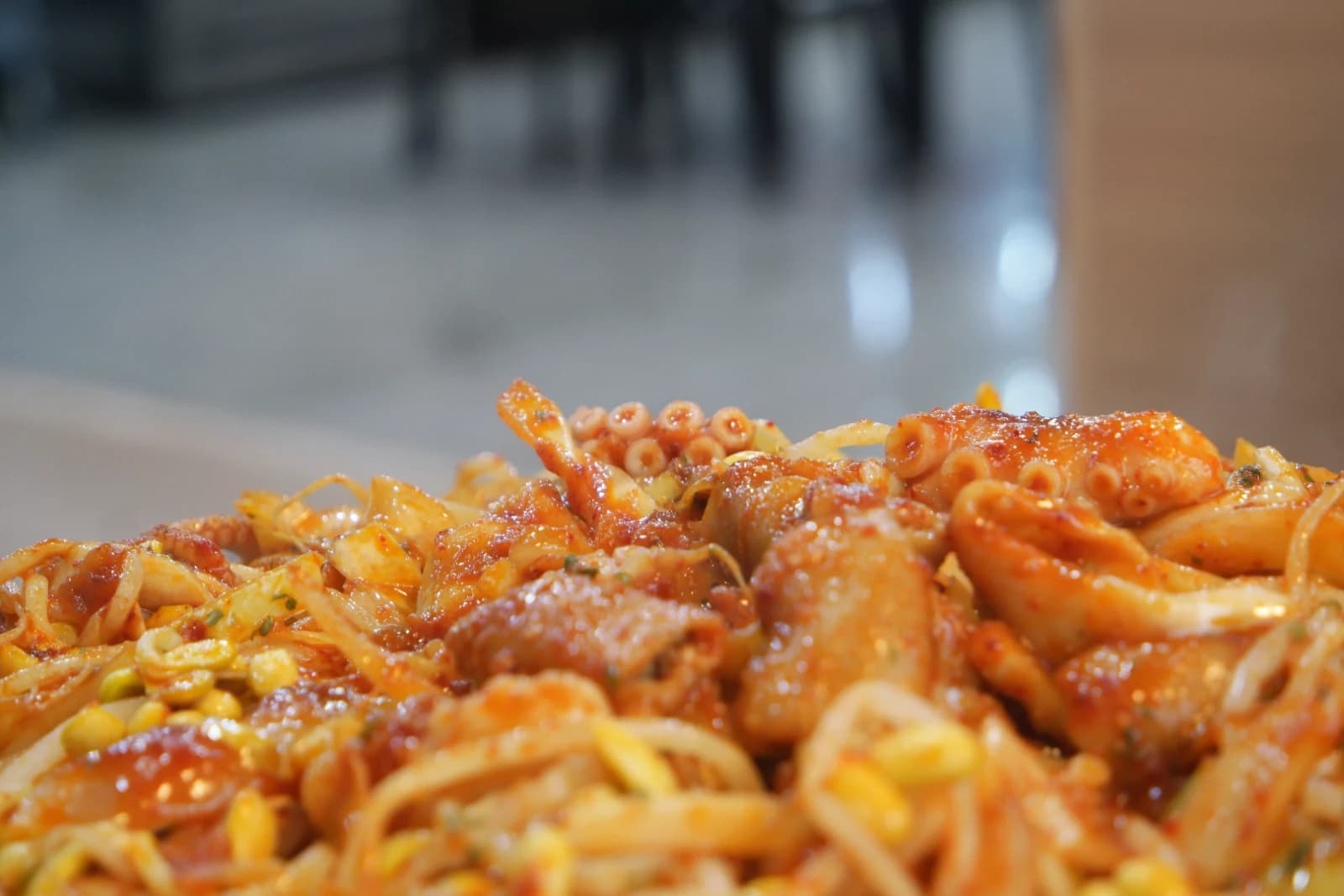
I pushed the seaweed aside to check what was underneath. Octopus tentacles with their little round suckers stood out straight away, and between them, chunky pieces of so gopchang (beef small intestine) glistened with sauce. So gopchang is exactly what it sounds like — beef small intestine — and it's chewy on the outside with rich fat inside, so when you bite down, the juicy, nutty goodness just bursts out. Paired with the spicy sauce, it doesn't feel heavy at all — actually, the umami gets turned up a notch. At the bottom of the plate, there's a thick layer of bean sprouts. Without them, the dish would feel too oily after a few bites. The crunch of the sprouts is what keeps you going back for more. Every grab of the chopsticks pulls up a tentacle, a bit of tripe, a few bean sprouts, all swimming in sauce — and that's really the whole point of eating nakji gopchang. Plop it onto a bowl of rice and the rice disappears in seconds. We ordered two bowls of steamed rice that night and nearly ran short.
The Real Fun Starts When the Sauce Soaks In
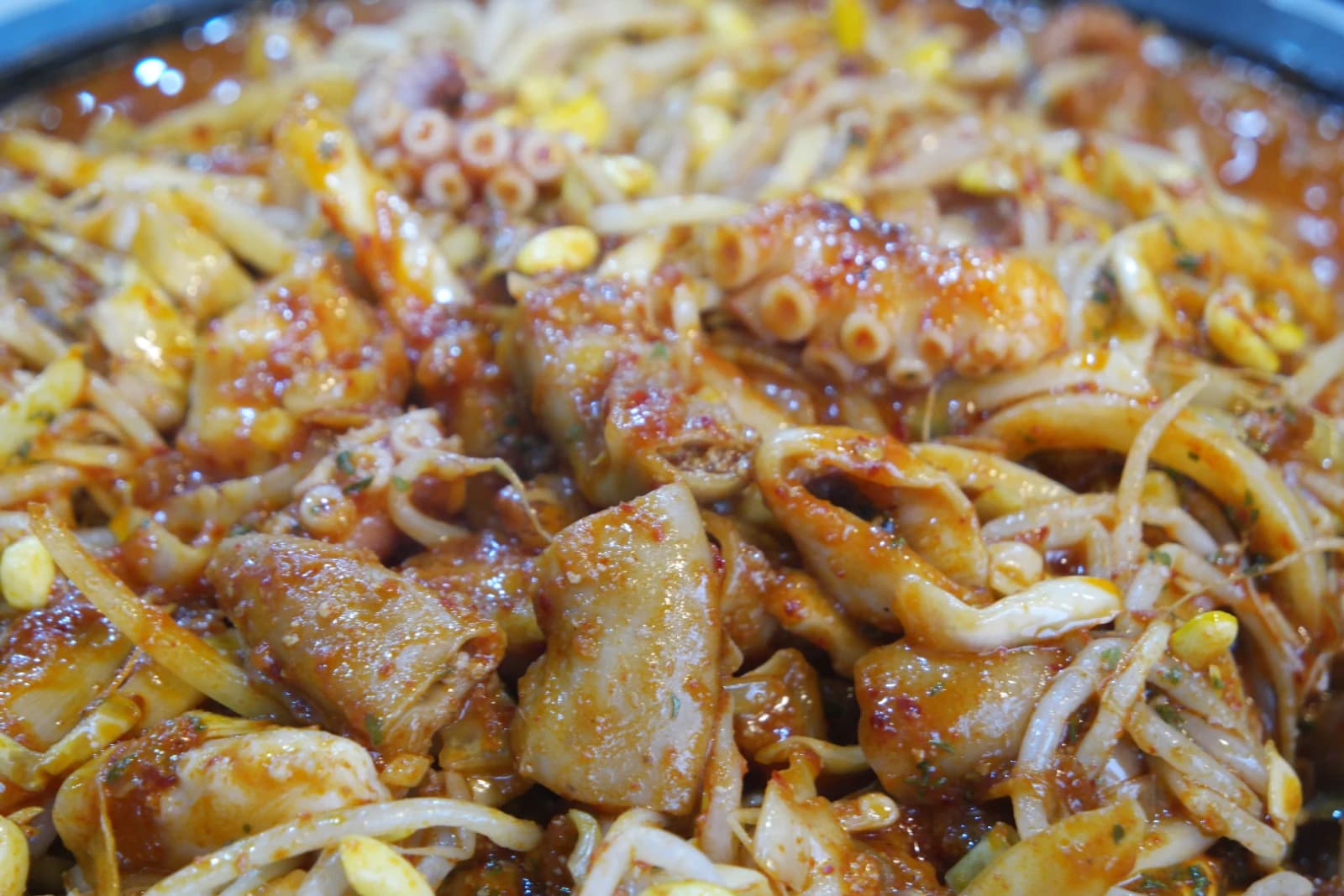
After a bit of mixing, the sauce started coating everything evenly.
Once the seaweed on top had been worked through, every ingredient came into proper focus. That brown lump in the middle is the so gopchang — look closely and you can see some pieces cut open to show the inside. The outer surface had caramelised in the sauce and turned a bit chewier, while the bean sprouts had wilted down and were soaking in the spicy juice. When it first arrived the pile was mountain-high, but once you stir it, the volume seems to shrink dramatically. Around the edge of the stone plate, you can see the sauce bubbling away furiously, and anything that touches that rim — a bean sprout, a piece of tripe — crisps up just a little. Scraping those slightly charred bits off the edge is a whole flavour on its own. Mum didn't know this trick and was only digging from the middle, so I passed her a piece from the edge. After that, she went straight for those edges every single time.
That Spicy Sauce — And Why It's Not Over Yet
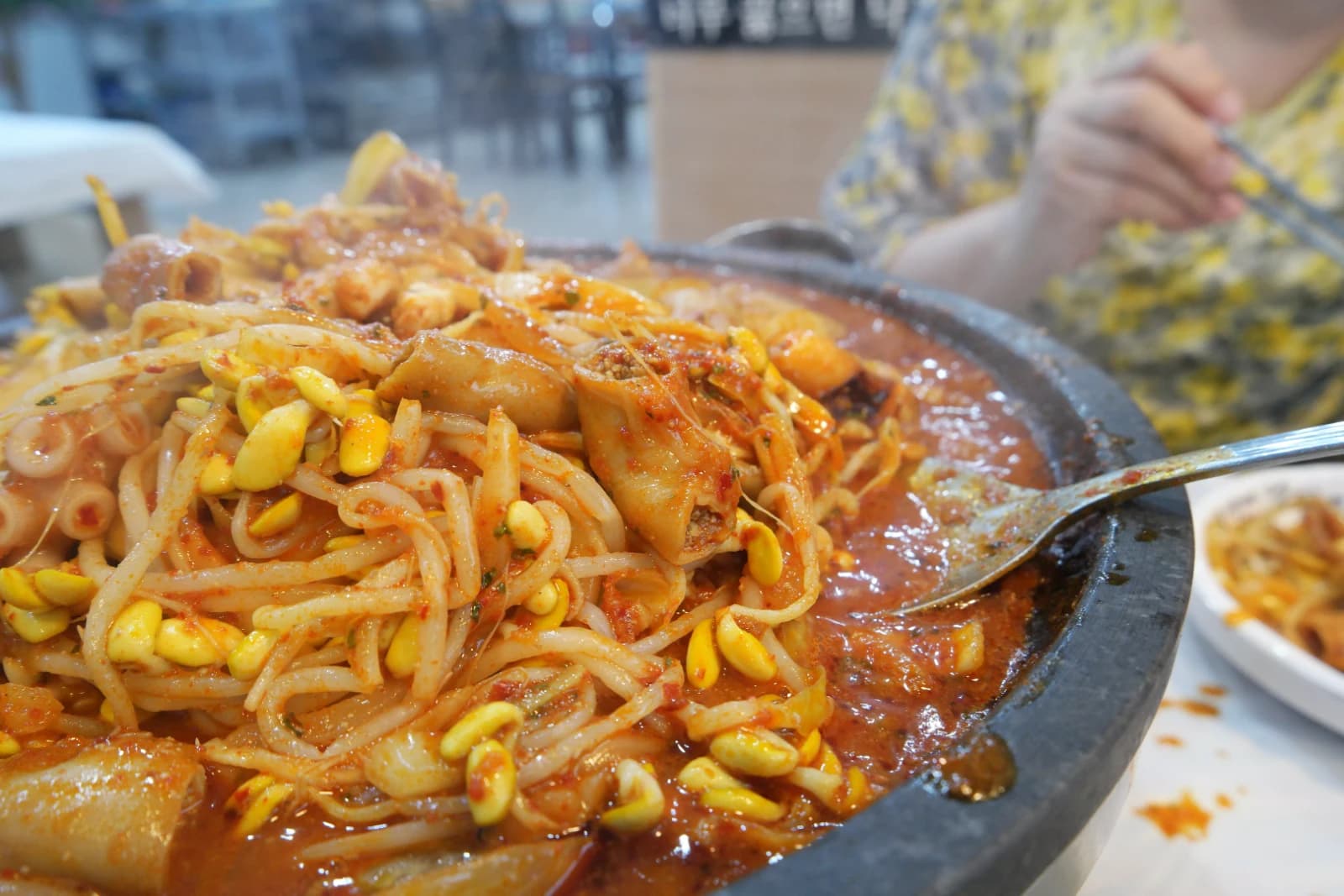
After a while, the bottom of the stone plate started pooling with sauce. At first it had been mostly a stir-fry, but as things cooked down, water from the ingredients leached out and the sauce loosened up into something more brothy. And that liquid is something else. All the umami from the octopus and tripe has dissolved into the gochujang sauce, thickening it and giving it serious depth. A spoonful poured over rice and you're done — it's pure rice-thief material. The bean sprouts soak up a ridiculous amount of this sauce, so just eating them on their own is a treat, and by this point the garaetteok has gone completely soft and drunk with sauce, so every bite is chewy and fiery at the same time. Over on the right, you can see we've ladled some onto a side plate — scooping the stir-fry out and mixing it with rice on your own dish is another way people tackle this. Going straight off the stone plate means burning the roof of your mouth, dead set. I'm impatient, so I kept grabbing straight from the sizzling plate and scorching myself every single time. That night was no exception — I burnt my tongue at least once.
Once the Solids Are Gone — Putting the Sauce to Work
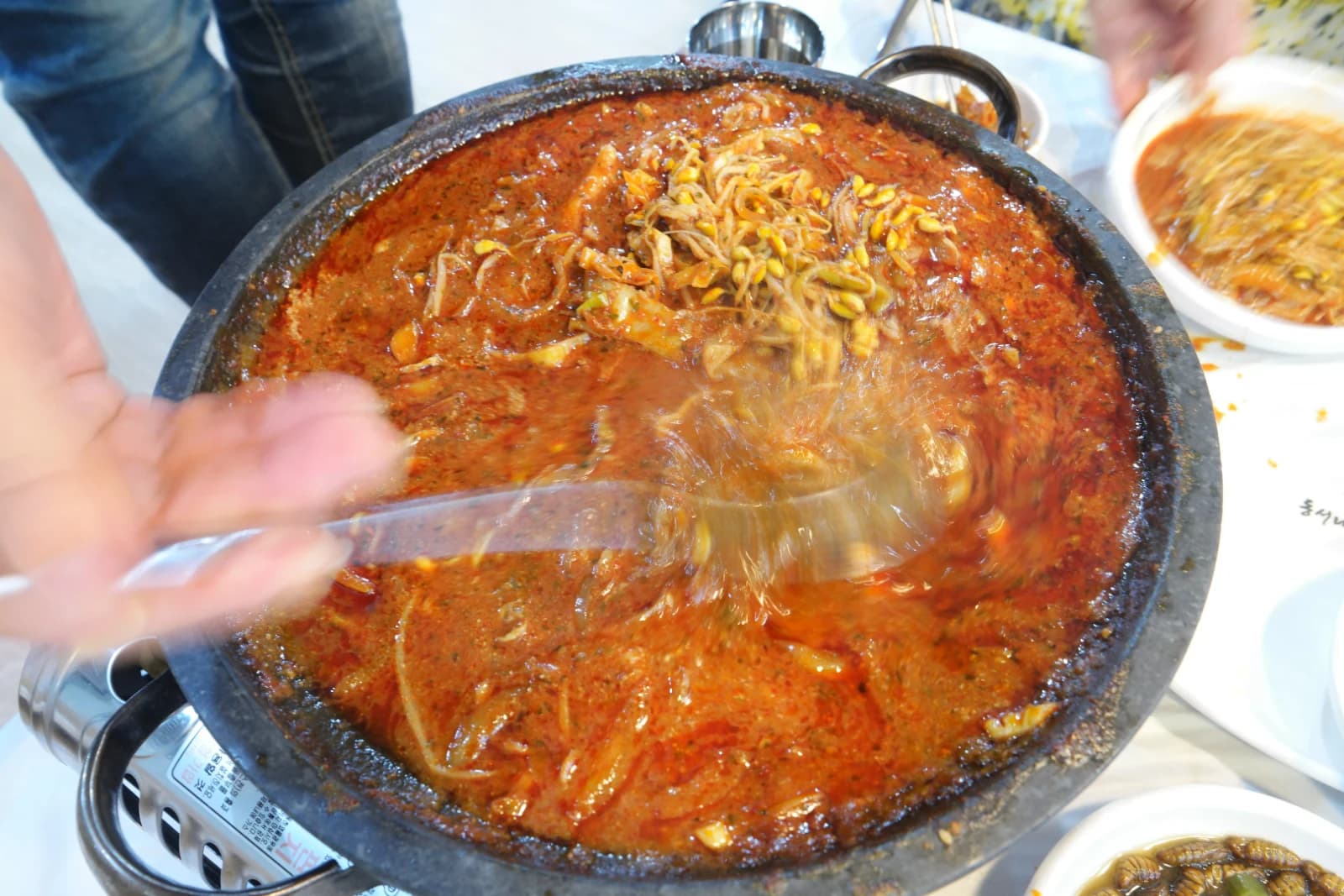
By the time we'd fished out most of the ingredients, the stone plate was mostly red sauce. But you don't just bin that. A staff member came over with a bowl of rice and started frying it up in the leftover sauce right on the plate, pushing it around with a ladle so every grain got coated. This is where so gopchang nakji bokkeum reveals its real trick — the sauce, now loaded with octopus and tripe umami, becomes the base for a proper Korean fried rice.
Fried Rice — Soft and Saucy, or Crispy on the Bottom?
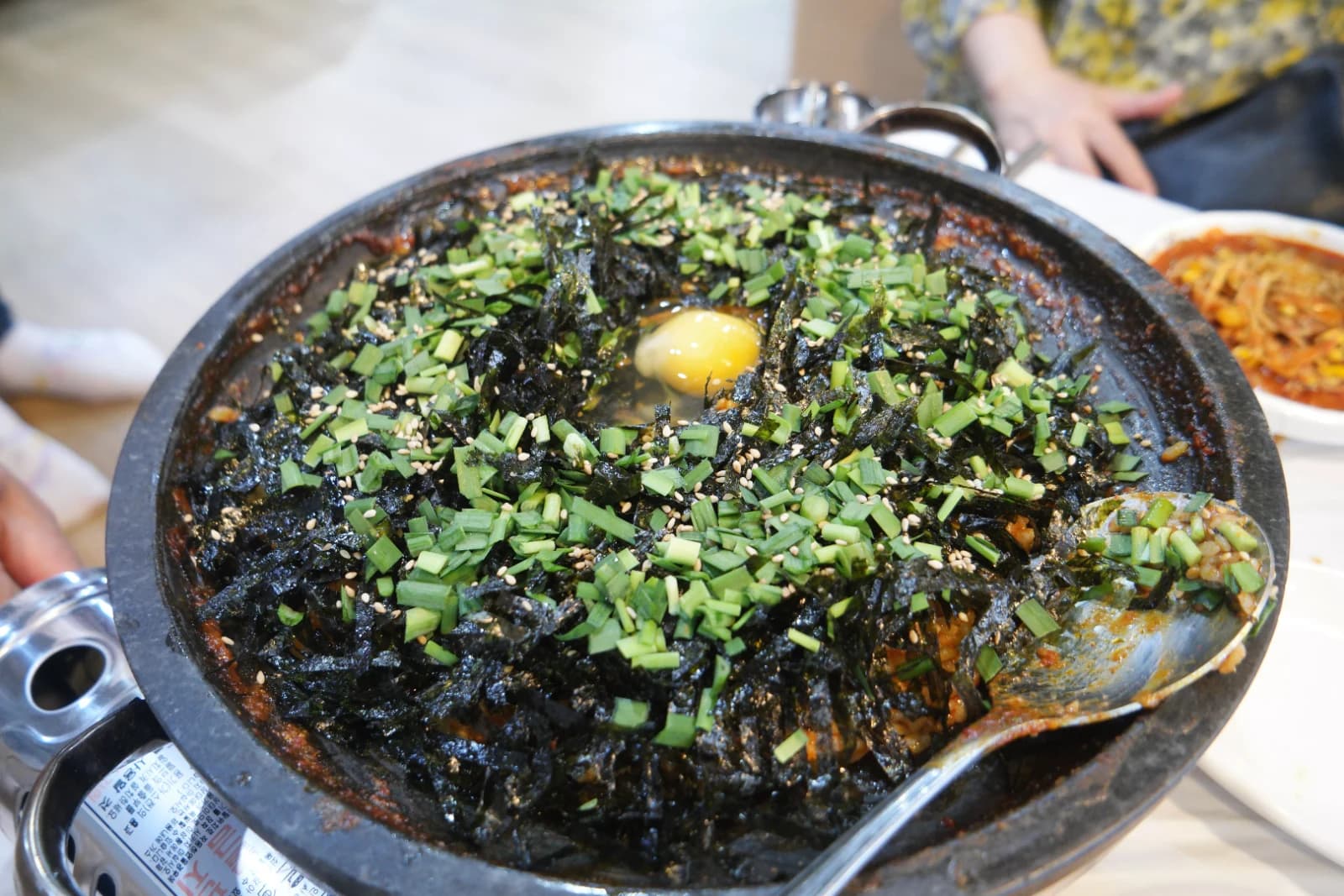
In Korea this is called bokkeumbap — fried rice cooked right on the stone plate in the leftover sauce. It comes crowned with a thick blanket of dark seaweed flakes and a scatter of chopped buchu, a thin, flat-leaf herb known as Korean chives. Sitting in the middle is a raw egg yolk, and when you break it and stir it through, you get another layer of richness sitting on top of the spicy base. This rice isn't just fried in oil — it's fried in the sauce left behind from the octopus and beef tripe. All that seafood umami and beefy fat has already dissolved into the liquid, so every grain of rice is seasoned without anyone needing to add a thing. The staff start you off with the initial mixing, but after that it's up to you. And here's where people split into two camps: do you stir it gently so it stays soft, or leave it alone so the bottom crisps up? I'm firmly in the crispy-bottom camp — when the rice catches and goes nurungji-style, that's the good stuff. Mum took one look at the bokkeumbap and said, "I should've rationed my rice earlier." We'd already put away two bowls of steamed rice and were both about to burst, but the spoons just wouldn't stop moving. That was the night I worked out that so gopchang nakji bokkeum isn't really one dish — it's a whole course, with the fried rice as the encore.
So Gopchang Nakji Bokkeum — Where to Find It
By the time we'd scraped every last grain off the plate, neither of us could speak. Proper stuffed. Mum ordered a sikhye (a sweet fermented rice drink) and asked how I'd even heard about the place. Truth is, I just searched for somewhere close to home. Nakji bokkeum specialty restaurants are pretty much everywhere in Korea's bigger cities — Seoul, Busan, Daejeon — and a quick search for "nakji bokkeum" or "nakji gopchang" will pull up options near wherever you're staying. Dongseonei Nakji still operates in Dunsan-dong in Daejeon, as well as branches in Iksan and Gwangju. It's not pojangmacha (street-stall) food — this is a proper sit-down restaurant meal.
It's not as universally known as tteokbokki or samgyeopsal, but once you've had it, you keep coming back. On the drive home, Mum turned to me and said, "Next time let's bring Dad along too." Honestly, I reckon that's the best review this dish could ever get.