Spicy Chicken Feet Done Korean-Style — Dakbal Guide
Table of Contents
12 items
Spicy chicken feet — or dakbal as it's called in Korea — is widely considered the ultimate spicy bar snack in the country. Whether you're in Seoul, Busan, Daejeon (a major city about an hour and a half south of Seoul), or Daegu, every Korean city has some laneway hiding a street stall or pub slinging bright red chicken feet. It's an absolute staple of Korea's late-night snacking culture, and when it comes to Korean street food in the "insanely spicy" category, dakbal is the undisputed heavyweight champ.
I'm Korean, living in Korea, and honestly I don't eat chicken feet all that often. But in winter 2025 my wife and I made the trek out to Hanshin Pocha after ages away. It's a fair drive from our place and not exactly a quick trip, but every now and then this craving for that burn hits you, and you just can't help yourself — you end up going.
Chicken feet aren't just a Korean thing
Chicken feet are eaten across the globe, from Chinese dim sum to Jamaican soup to Filipino street barbecue. Most countries use them for texture or to add richness to a broth, but what makes Korean dakbal completely different is the searingly spicy gochujang and chilli powder sauce that turns them into a fiery, addictive experience.
If you've ever had chicken feet at yum cha in Sydney or Melbourne, you'll know the soft, gelatinous, black bean sauce version — steamed, mild, and delicate. Korean dakbal is basically the polar opposite. In China they call them "feng zhua" and you can buy packaged chicken feet snacks at convenience stores — that's how mainstream they are. Thailand has fried and braised chicken feet at street stalls. In the Philippines they're nicknamed "adidas" and are hugely popular as barbecue skewers, Mexico puts them in soups, and in Jamaica chicken foot soup is a proper everyday meal.
But here's the thing that sets Korean dakbal apart from all of these. In most countries, chicken feet are about the chewy texture or flavouring a stock. In Korea, chicken feet basically ARE the spice. When you see them smothered in that gochujang and gochugaru-based sauce, your first thought is "how does anyone eat this?" — and then you try one and you literally cannot stop. Koreans go out of their way to find this stuff. Tears streaming, nose running, the lot. Think of it like tackling a hot wing challenge at your local pub, except the heat doesn't let up and the chewy texture keeps you coming back for more.
Common types of chicken feet you'll find in Korea
When you rock up to a chicken feet joint in Korea, the menu is surprisingly varied. The exact same ingredient tastes completely different depending on how it's cooked, and there are at least five main styles to know about.
The chicken feet come in a red, spicy sauce and you cook them yourself on a tabletop gas burner. The longer you reduce it, the thicker and stickier the sauce gets as it clings to the feet. The whole point is that you control the cooking to your own taste.
🔥 Cook-it-yourself · Saucy brothThese are grilled directly over charcoal and arrive ready to eat straight away. The smoky char flavour mixed with the spicy sauce creates a completely different vibe from the braised version. Slightly crispy on the outside, chewy on the inside.
🔥 Ready to eat · Smoky char flavourChicken feet with the bones already removed. Dead popular with anyone who can't be bothered picking meat off tiny bones, and usually served charcoal-grilled. The texture is softer than the bone-in version, and it's the go-to recommendation for dakbal first-timers.
🦴 Bones removed · Great for beginnersChicken gizzards and chicken feet stir-fried together in spicy sauce. The chewy texture of the feet plus the firm, crunchy bite of the gizzards doubles the fun with every mouthful. This combo is especially popular as a spicy bar snack to go with drinks.
🫕 Feet + Gizzard comboSpicy chicken feet absolutely loaded with melted mozzarella on top. Even if you can't handle heat, dipping the feet in cheese tones the spice down heaps. Perfect for anyone who wants to give dakbal a crack but is a bit scared of the chilli.
🧀 Cheese buffer · Tames the heatBraised dakbal, the spicy chicken feet you cook at your table
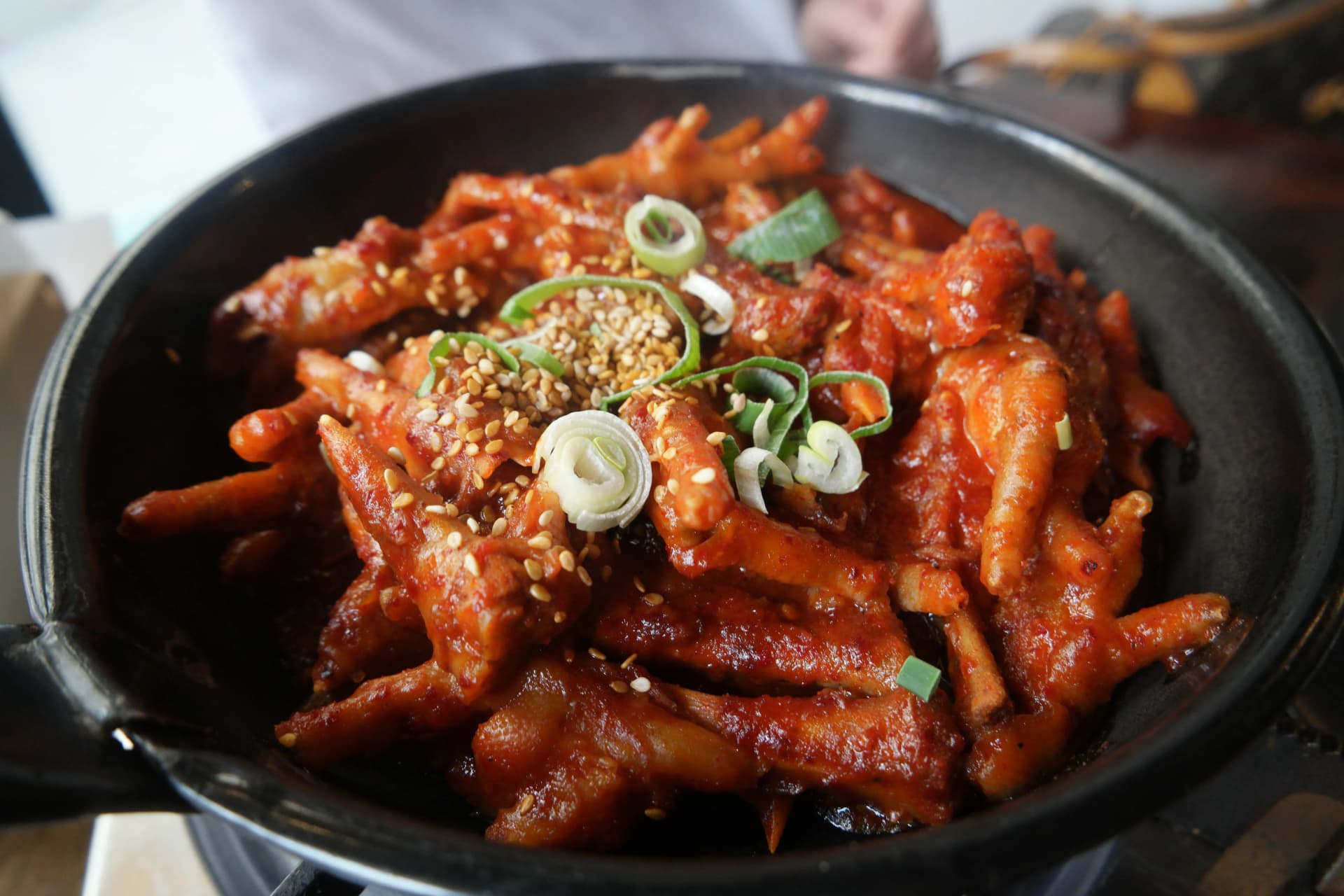
This is the spicy braised dakbal we ordered at Hanshin Pocha. A mountain of chicken feet absolutely drenched in red sauce sitting on a black iron hotplate, topped with sesame seeds and spring onion — just looking at it, you can tell it's going to be hot.
It arrives looking like it's done, but that's not the end of it. You fire up the tabletop gas burner and reduce it further. At first the sauce is a bit watery, but as it bubbles away the liquid cooks down and the sauce starts properly clinging to every chicken foot. That's how braised dakbal works — you control the heat yourself, and the longer you reduce it, the thicker and more intense the sauce becomes. The sweet spot is when the liquid has reduced right down to a thick, glossy, sticky coating.
Prices and spice levels
At Hanshin Pocha, the bone-in chicken feet with bean sprouts run about A$25, and the boneless version is around A$26. You can pick your spice level: level 1 is "standard," level 2 is "spicy," and level 3 is "very spicy." Honestly though, even level 1 is properly hot. If you're not confident with spicy food, start at level 1 — no shame in it.
Pouring in the bean sprout broth
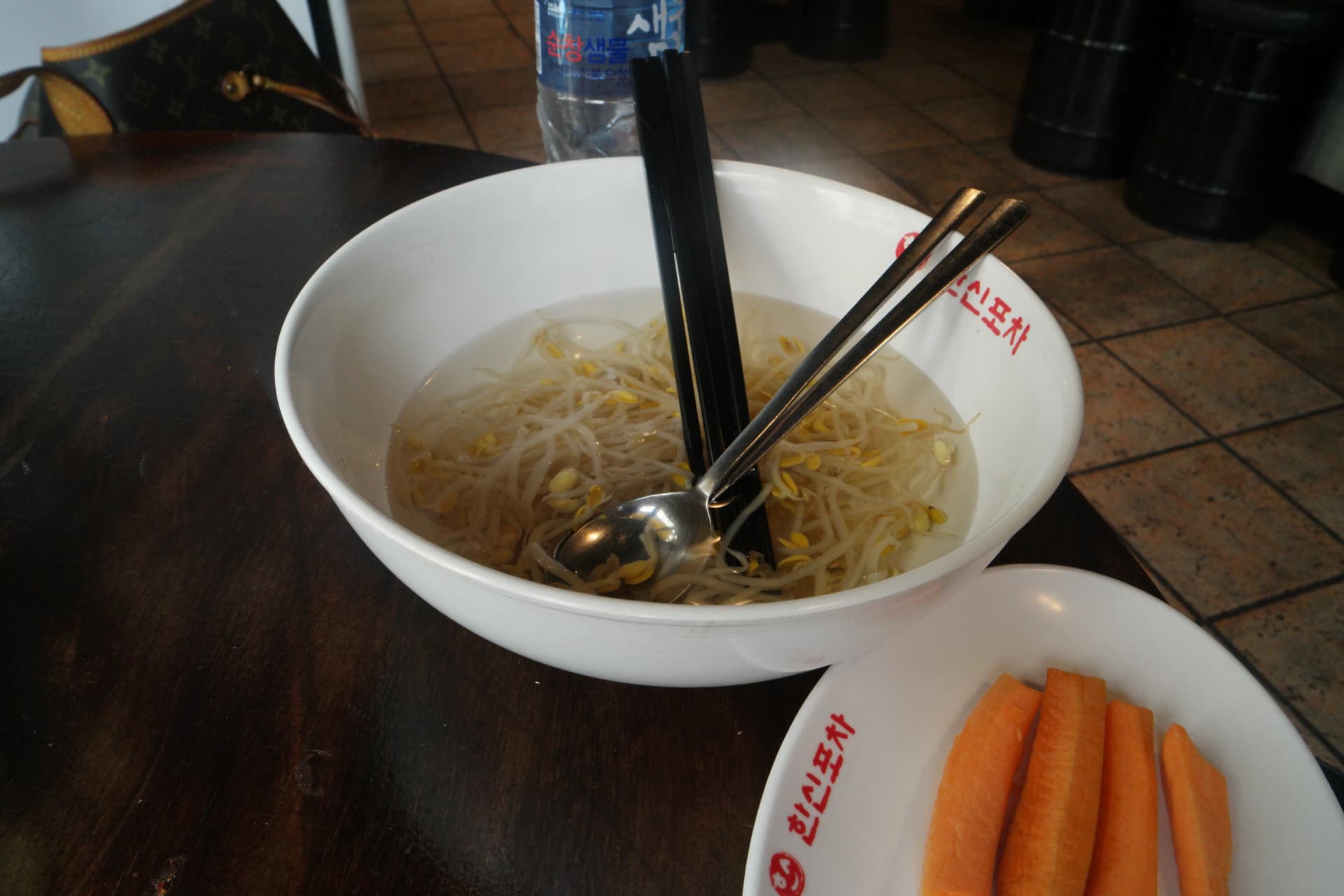
When your chicken feet arrive, this bowl of bean sprout broth comes out separately alongside them. The first time you see the feet with no liquid, you think "hang on, isn't this supposed to be the braised version?" — but you pour this broth right onto the hotplate and cook it all together. The moment you add the broth, the sauce starts dissolving and the whole thing turns fiery red. That's when the real show begins.
Spicy chicken feet close-up
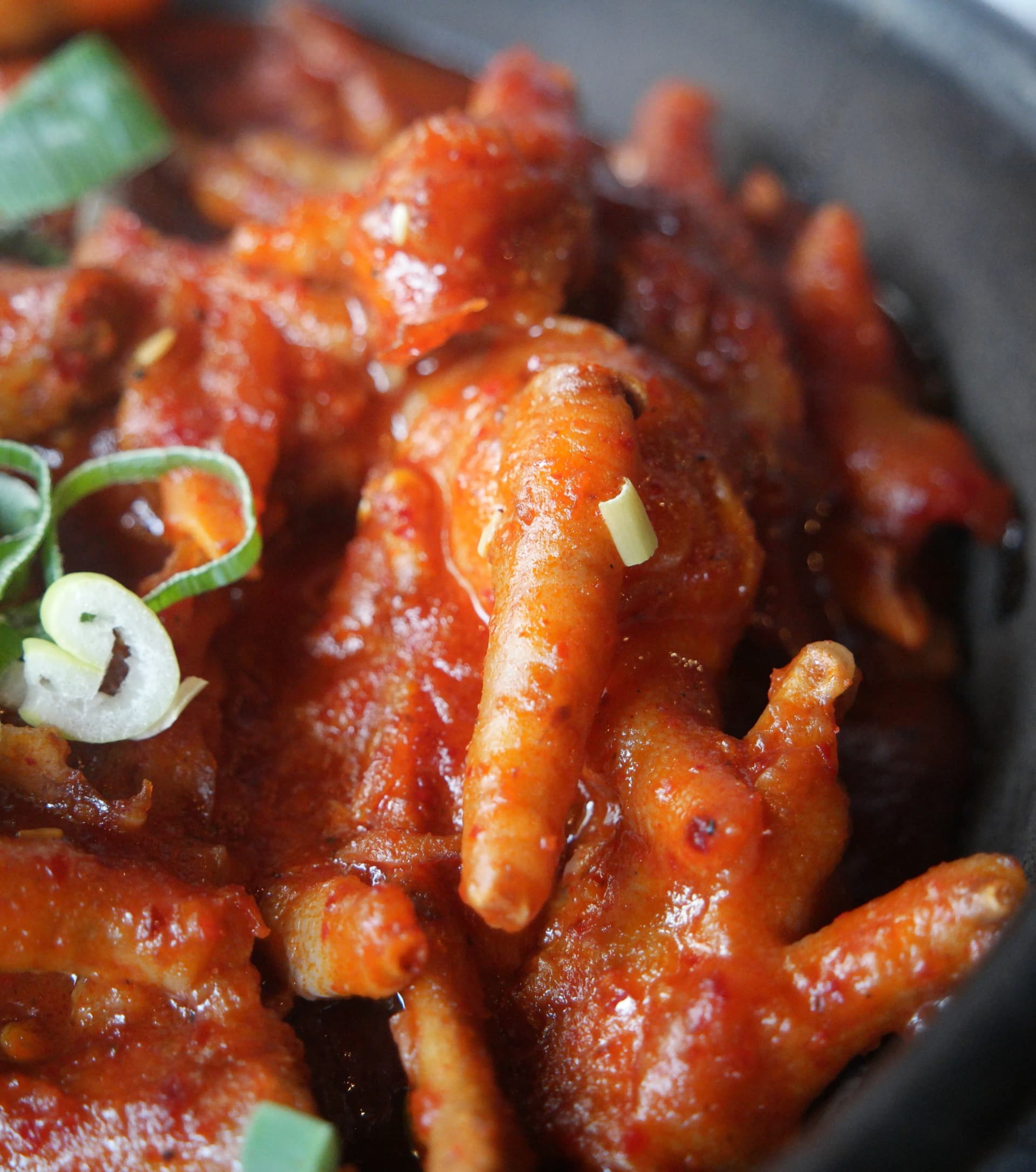
Up close, this is what they look like. If you've never seen chicken feet before, I'll be honest — the look can be a bit confronting. The toes are right there, fully visible. But for Koreans, the first reaction when they see this is "oh yeah, that looks delicious."
The cook-it-yourself process
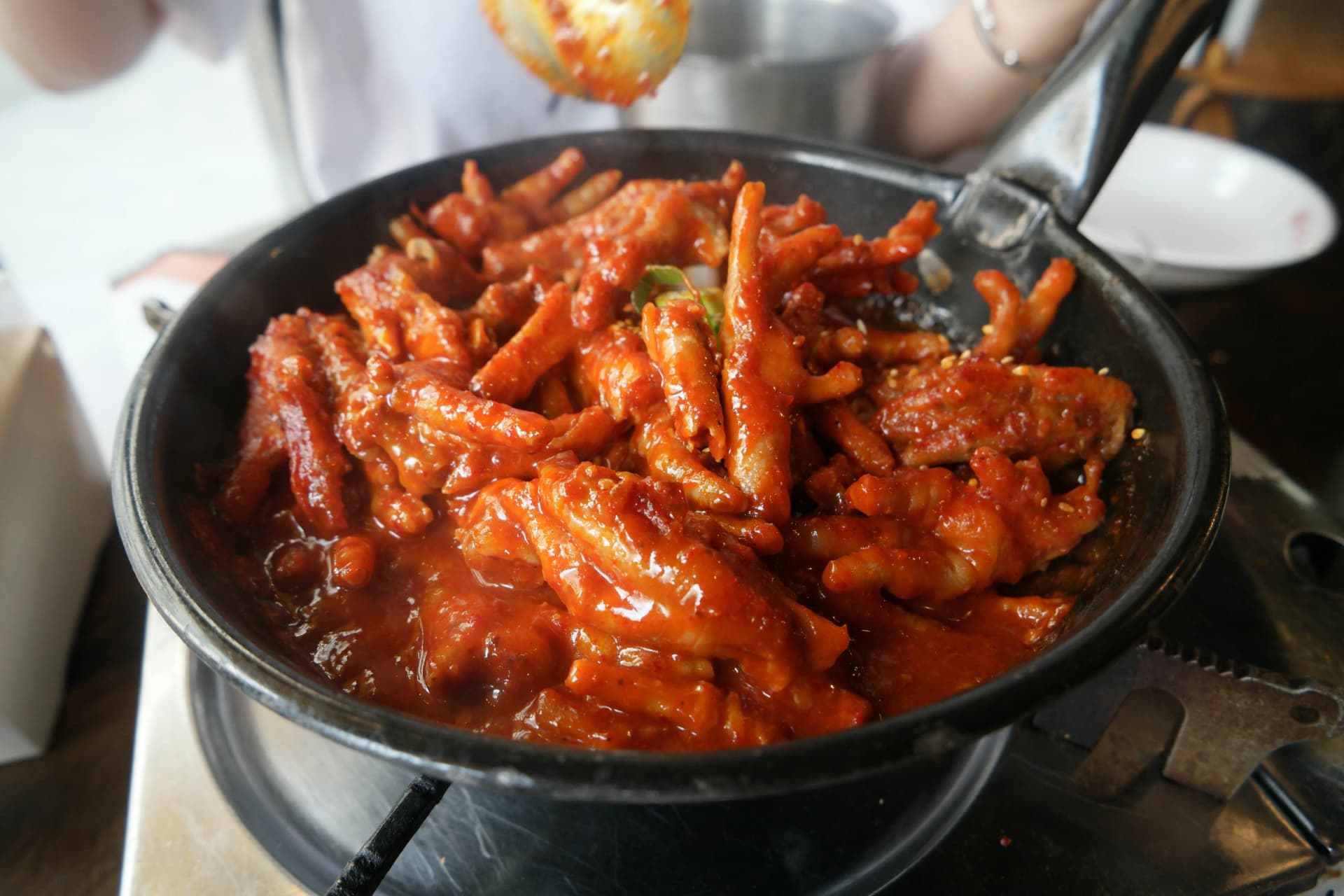
Here's what it looks like once the gas is on and you're properly cooking. When there's plenty of broth, you can just let it simmer. But when the liquid is low like this, you need to keep flipping and stirring with the ladle or it'll stick to the bottom and burn. If you need more bean sprout broth, you can grab as much as you want — it's free refills, no extra charge.
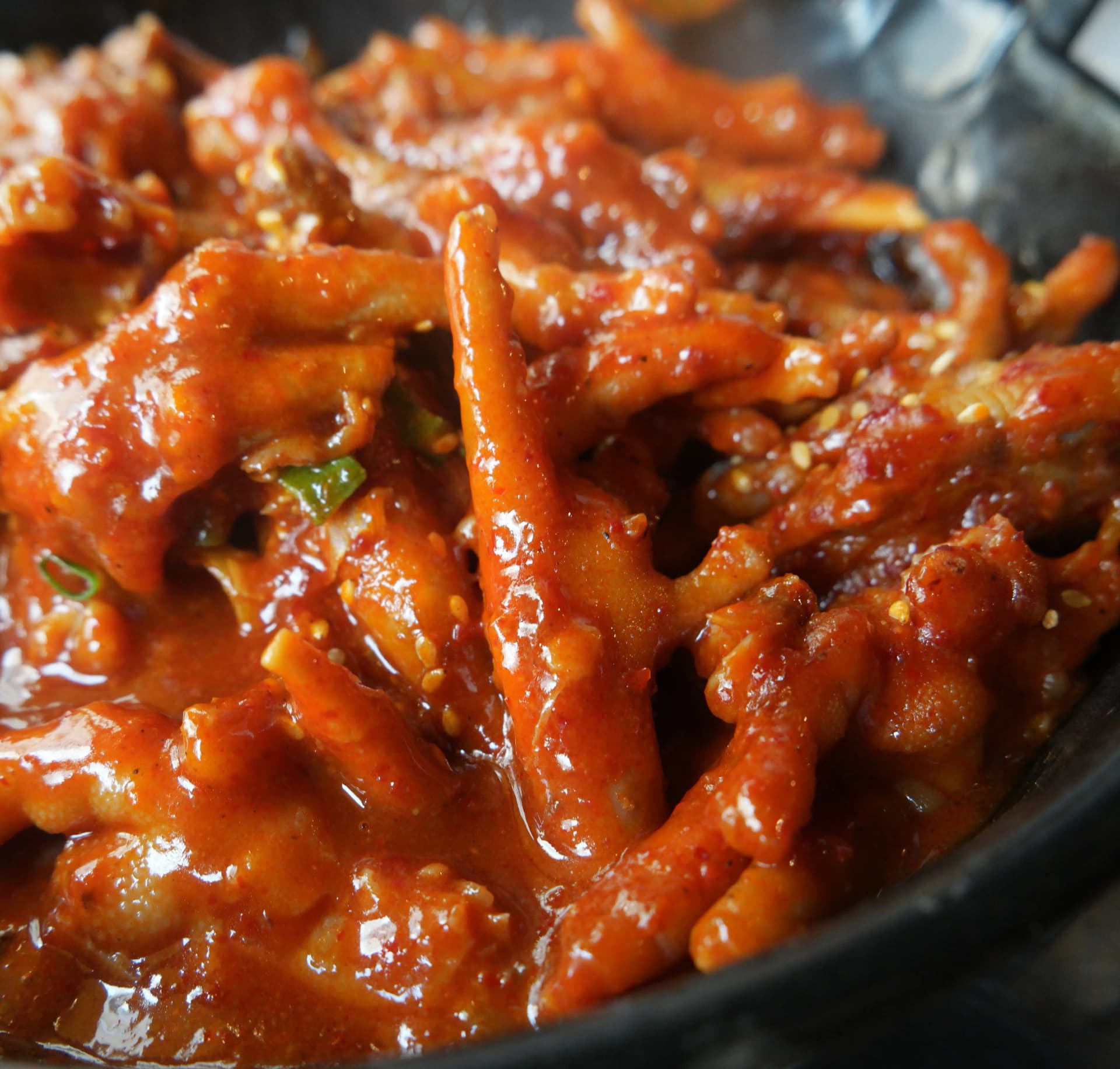
Once it's fully reduced, this is what you end up with. Looks completely different from before, right? The sauce has turned into this thick, sticky glaze coating every single foot. When you pick one up with chopsticks, the sauce stretches and strings — that's when you know it's go time.
Adding bean sprouts to tame the heat
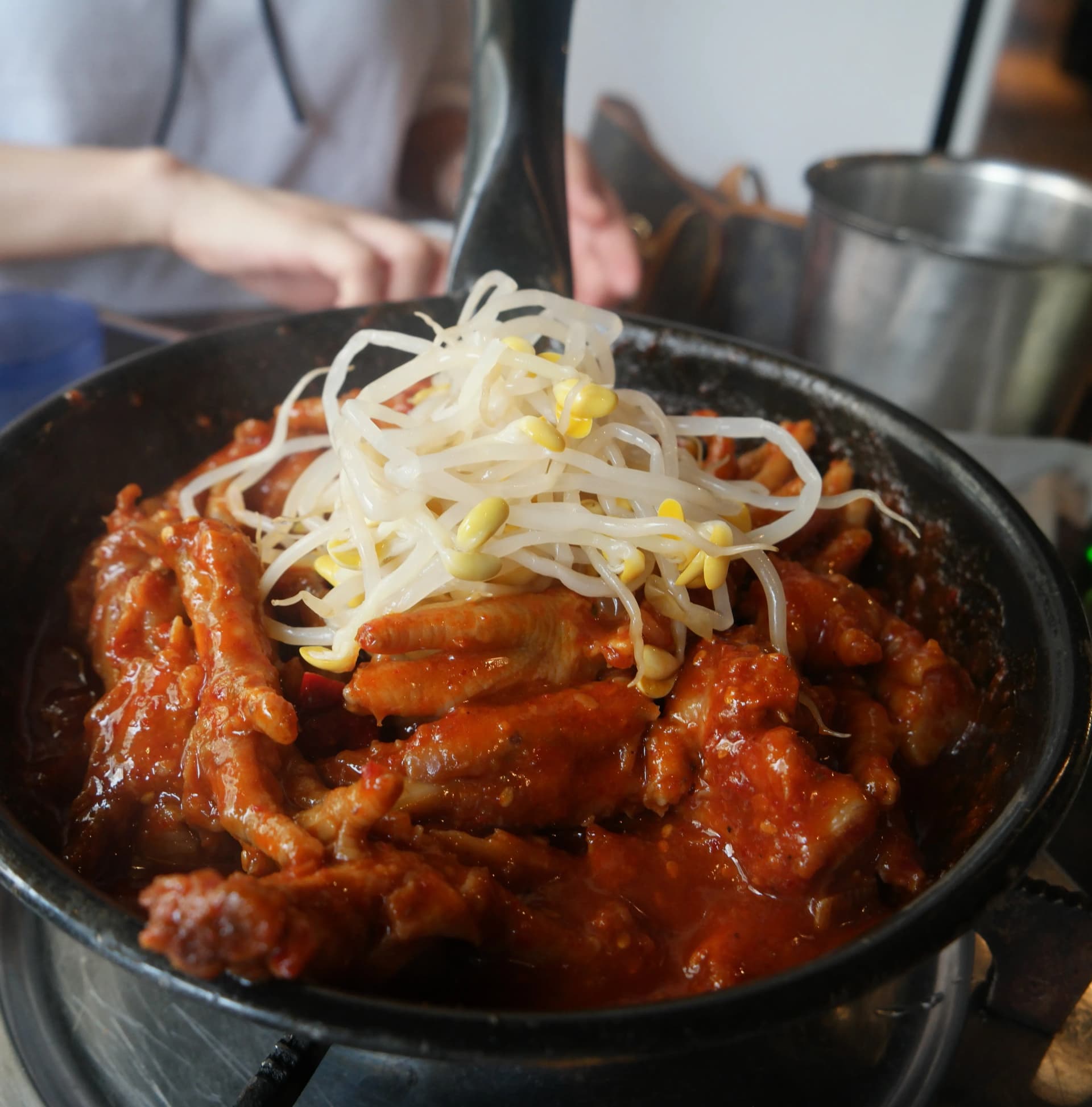
If the heat gets too much, you can pile bean sprouts on top and cook them through. The sprouts add a nice crunch and help take the edge off the spiciness a fair bit.
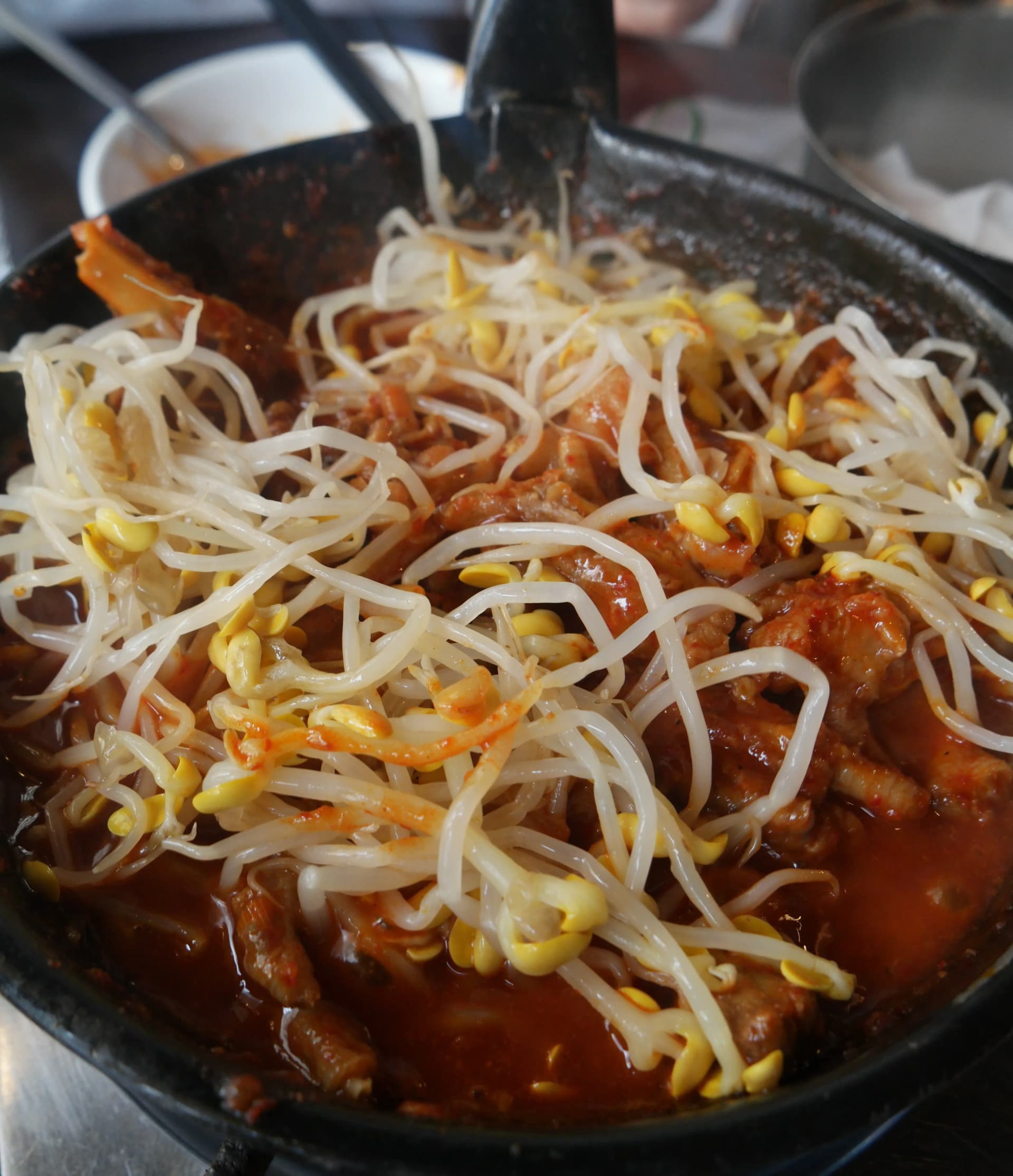
Once the sprouts start soaking up the spicy sauce, this combo is absolutely unreal. Sauce-drenched crunchy sprouts and chewy chicken feet all in one mouthful — you instantly understand why braised dakbal and bean sprouts are an inseparable duo.
How to eat chicken feet — ripping them apart with your hands, Korean-style
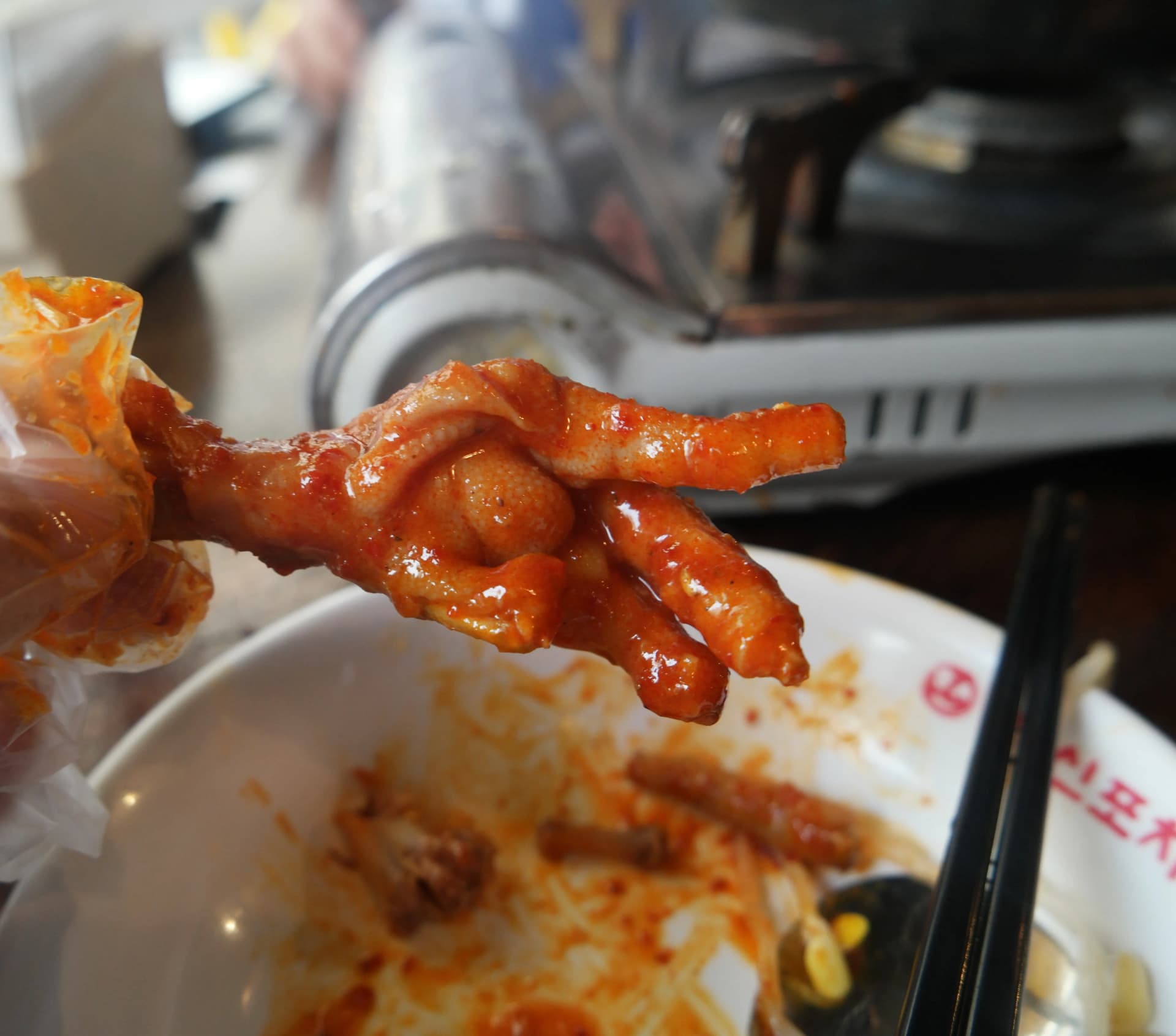
The Korean way is to chuck on plastic gloves, grab a foot, and strip the meat off the bones with your teeth. There's definitely a certain satisfaction in tearing the flesh from between those tiny bones, but let's be real — this is one of the most awkward foods to eat. The bones are small and weirdly shaped, and even Koreans struggle a bit the first few times. If you've ever wrestled with the last bits of meat on chicken wings at a pub, imagine that but ten times fiddlier.
So if you're travelling in Korea and keen to give dakbal a go but the bone situation puts you off, get the boneless version. The flavour and texture are practically the same, but without the bones it's way easier to smash.
Dakbal's best mate — rice balls
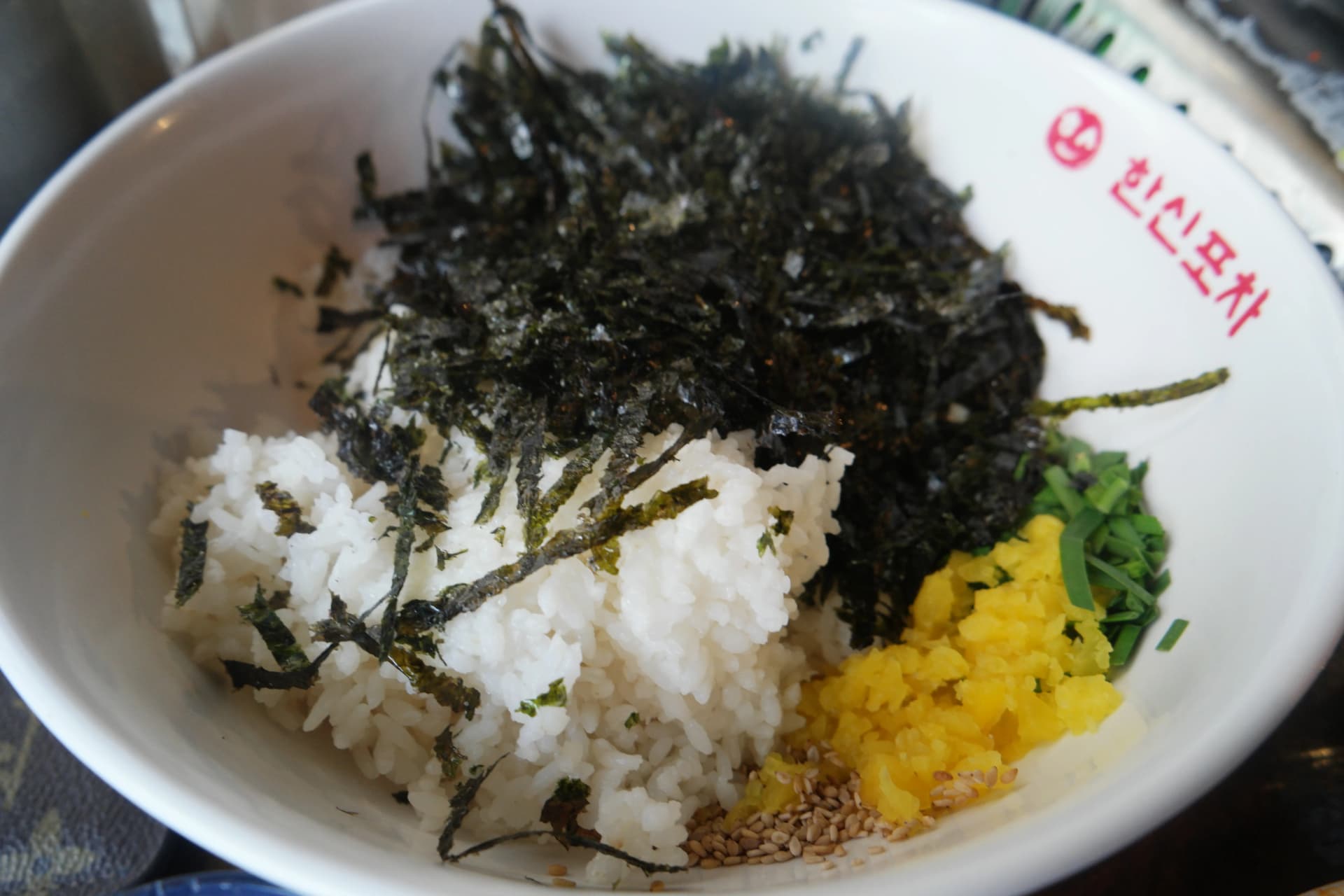
Whenever you go out for braised dakbal, there's one side dish you always end up ordering: jumeokbap, or DIY rice balls. At Hanshin Pocha the self-serve rice balls are about A$4. The ingredients are dead simple — rice topped with seaweed flakes (nori), pickled radish (danmuji), sesame seeds, and spring onion. That's literally it.
But the addictiveness is off the charts. You pop on plastic gloves, mash everything together with your hands, and roll them into bite-sized balls. The rice is a bit hot so you might cop a minor burn at first. But once you get one in your mouth, you can't stop. You're eating the spicy chicken feet, your mouth's on fire, you grab one of these rice balls, the heat vanishes instantly — and then your hand goes straight back to the chicken feet again.
Making the rice balls
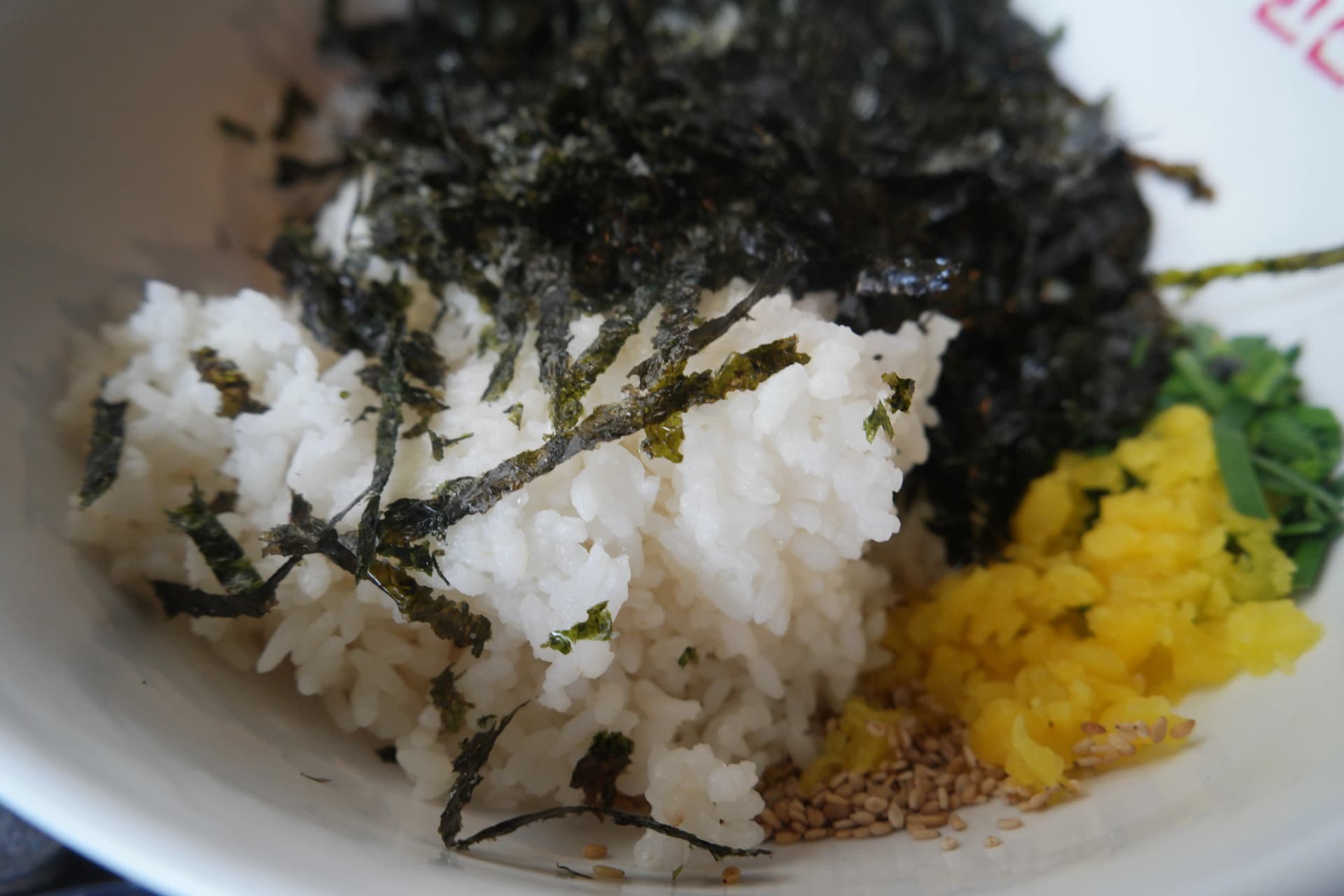
Up close they look like this. Rice, seaweed flakes, pickled radish, sesame, spring onion. Seriously, that's all there is to it.
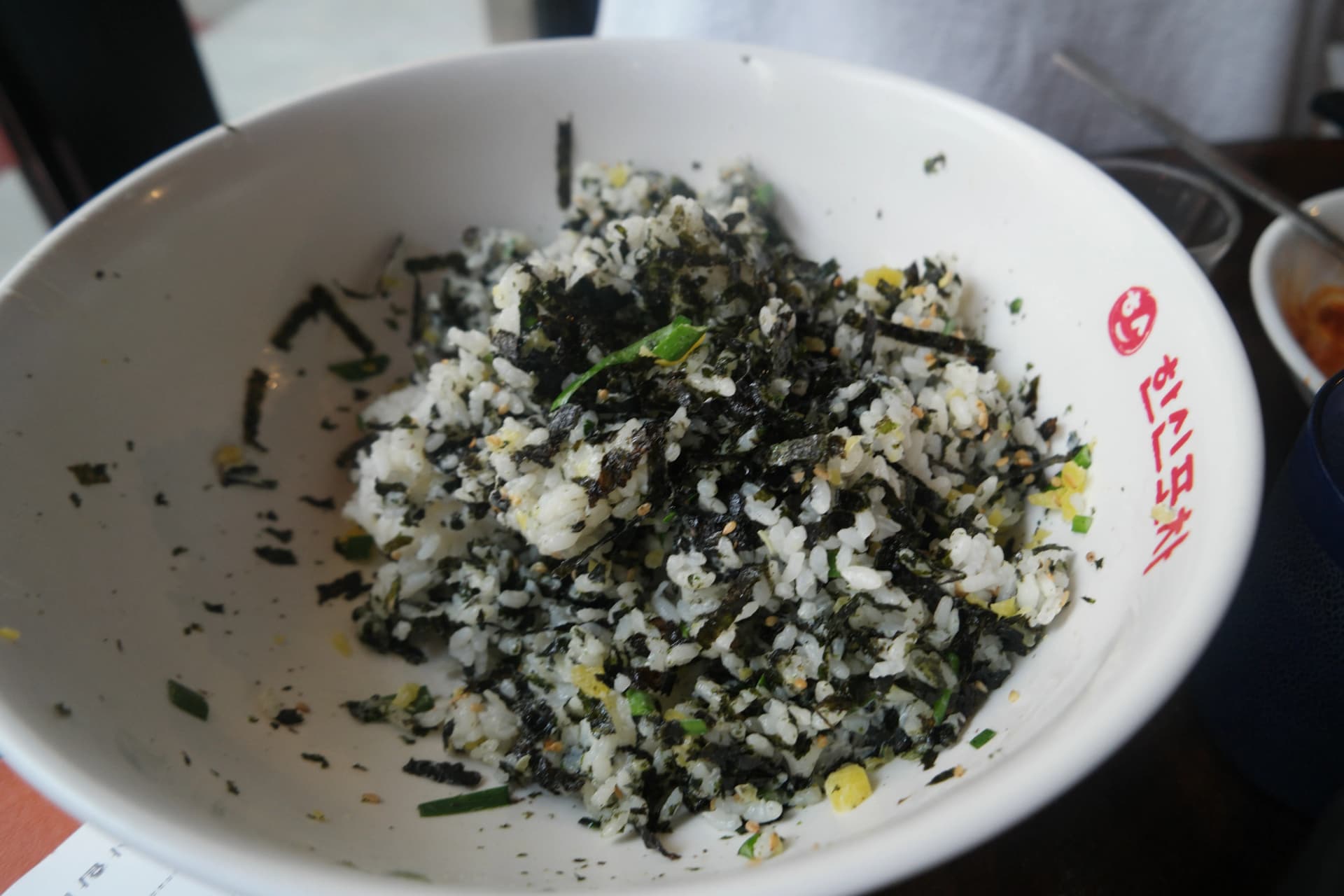
Gloves on, mix it all up vigorously with your hands, and it ends up looking like this. The seaweed flakes get into every grain of rice and the colour completely changes.
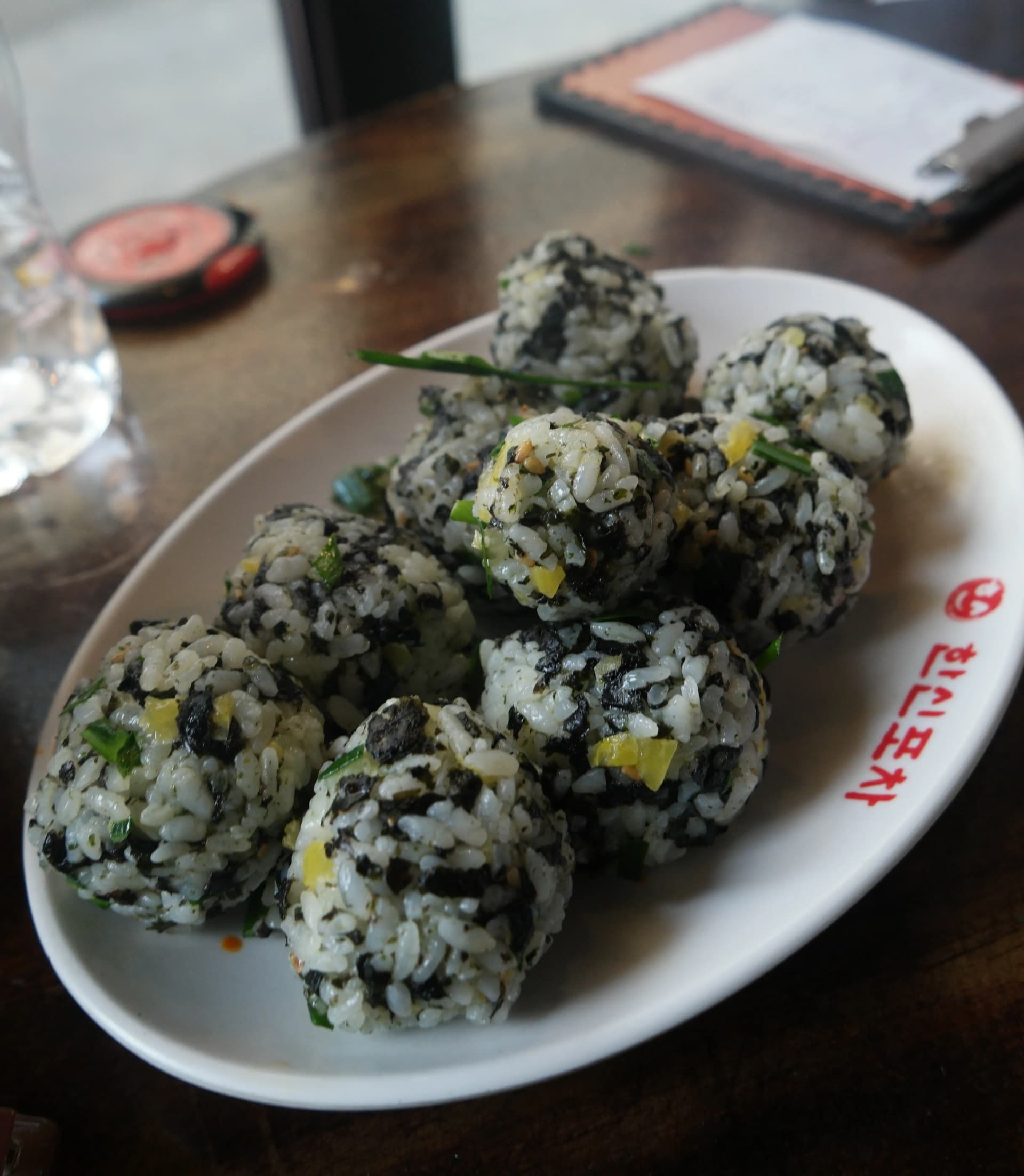
Then you roll them into little round balls, one-bite size, and you're done. The whole process is honestly a bit of fun. Eating one between bites of spicy chicken feet — going from that chilli burn to the savoury toasty seaweed flavour, then back to the burn again — it's a cycle you genuinely cannot break.
My honest take
Chicken feet are a properly divisive food even among Koreans themselves. The look is confronting, and pulling meat off those fiddly little bones is a hassle if you're not used to it. But once you get hooked, it's ridiculously hard to stop. Your lips are tingling and numb from the spice but your hand keeps reaching for more, you cool down with a rice ball, and then you're straight back into the dakbal — if you experience this first-hand, you'll get exactly why Koreans can't give this dish up.
Fun fact: chicken feet are packed with collagen — roughly 70% of their protein content is collagen — and plenty of Koreans eat them partly because they reckon it's great for your skin. It's basically the OG collagen supplement, well before those powders and gummies hit the shelves at Chemist Warehouse.
If I'm being honest about the downsides, Hanshin Pocha is fundamentally a pub, so the place is pretty noisy. It's not exactly a quiet dinner vibe. And for us it's a fair distance from home, so we can't just rock up whenever we feel like it — that's personally my biggest gripe. But it is a pub at the end of the day, so the noise just comes with the territory.
If the bones put you off, the boneless spicy chicken feet are a ripper starting point. And since you can choose your spice level, kick off at level 1 and work your way up from there.
This post was originally published on https://hi-jsb.blog.