
Spicy Chicken Feet — The Fiery Korean Bar Snack You Can't Stop Eating
Table of Contents
12 items
Korean spicy chicken feet — there's a food that's often called the ultimate bar snack in Korea, and this is it. Whether you're in Seoul, Busan, Daejeon, or Daegu, literally every city in Korea has some alley with a street cart or bar selling bright red chicken feet. It's an absolute staple of Korea's late-night food culture, and among all the spicy Korean street food out there, dakbal is arguably the undisputed champion.
I'm a Korean living in Korea, and honestly, I don't eat chicken feet all that often. But in the winter of 2025, my wife and I made the trip to Hanshinpocha (a popular Korean bar chain) after a long time away. It's pretty far from our place so getting there isn't easy, but every now and then, the craving for that fiery burn hits and you just can't resist.
Chicken Feet Aren't Just a Korean Thing
Chicken feet are actually eaten all over the world, not just in Korea. In China, they're called "fengzhao" and served as a dim sum dish — you can even buy packaged chicken feet snacks at convenience stores, that's how mainstream they are. In Thailand, fried or braised chicken feet are a common sight at street stalls. In the Philippines, they go by the nickname "adidas" and are wildly popular as grilled street food skewers. In Mexico, they're tossed into soups, and in Jamaica, chicken feet soup is a totally everyday dish.
But here's what makes Korean chicken feet completely different from all of those. In most countries, chicken feet are enjoyed for their texture or used to add depth to a broth. In Korea, chicken feet ARE the spice. Coated in a fiery sauce built on gochujang (fermented red pepper paste) and gochugaru (red pepper flakes), they look intimidating enough to make you say "how do people even eat this?" — and yet, once you pick one up, you literally cannot stop. Koreans seek this out on purpose. Tears streaming, nose running, and all.
Types of Spicy Chicken Feet You'll Find in Korea
When you walk into a place that serves chicken feet in Korea, the menu is more varied than you'd expect. The same ingredient tastes completely different depending on how it's cooked.
These come swimming in a red spicy broth and you cook them down yourself on a tabletop gas burner. The longer you simmer, the thicker the sauce gets as it clings to the chicken feet. The key here is that you control the heat and timing, so you can customize how thick and intense you want the glaze.
🔥 Cook-it-yourself · Saucy brothThese are grilled directly over charcoal and come fully cooked, ready to eat immediately. The smoky char flavor mixing with the spicy sauce creates a completely different experience from the braised version. The outside gets slightly crispy while the inside stays chewy.
🔥 Fully cooked · Smoky flavorThese have the bones removed beforehand. They're hugely popular with people who find picking meat off tiny bones annoying, and they're usually charcoal-grilled. The texture is softer than bone-in chicken feet, and this is the type most often recommended as a beginner-friendly option.
🦴 Boneless · Beginner-friendlyThis dish stir-fries chicken gizzards together with chicken feet in the same spicy sauce. The chewy texture of the feet combined with the crunchy, springy bite of the gizzards doubles the fun of every chew. It's an especially popular combo as a drinking snack.
🫕 Chicken feet + gizzard comboThis one has a generous heap of mozzarella cheese melted right on top of the spicy chicken feet. Even people who can't handle much heat find that dipping the feet in cheese tones down the spice significantly. Perfect for anyone who wants to try dakbal but is scared of the burn.
🧀 Cheese-dipped · Spice tamedBraised Chicken Feet — Cook-It-Yourself Spicy Bar Food
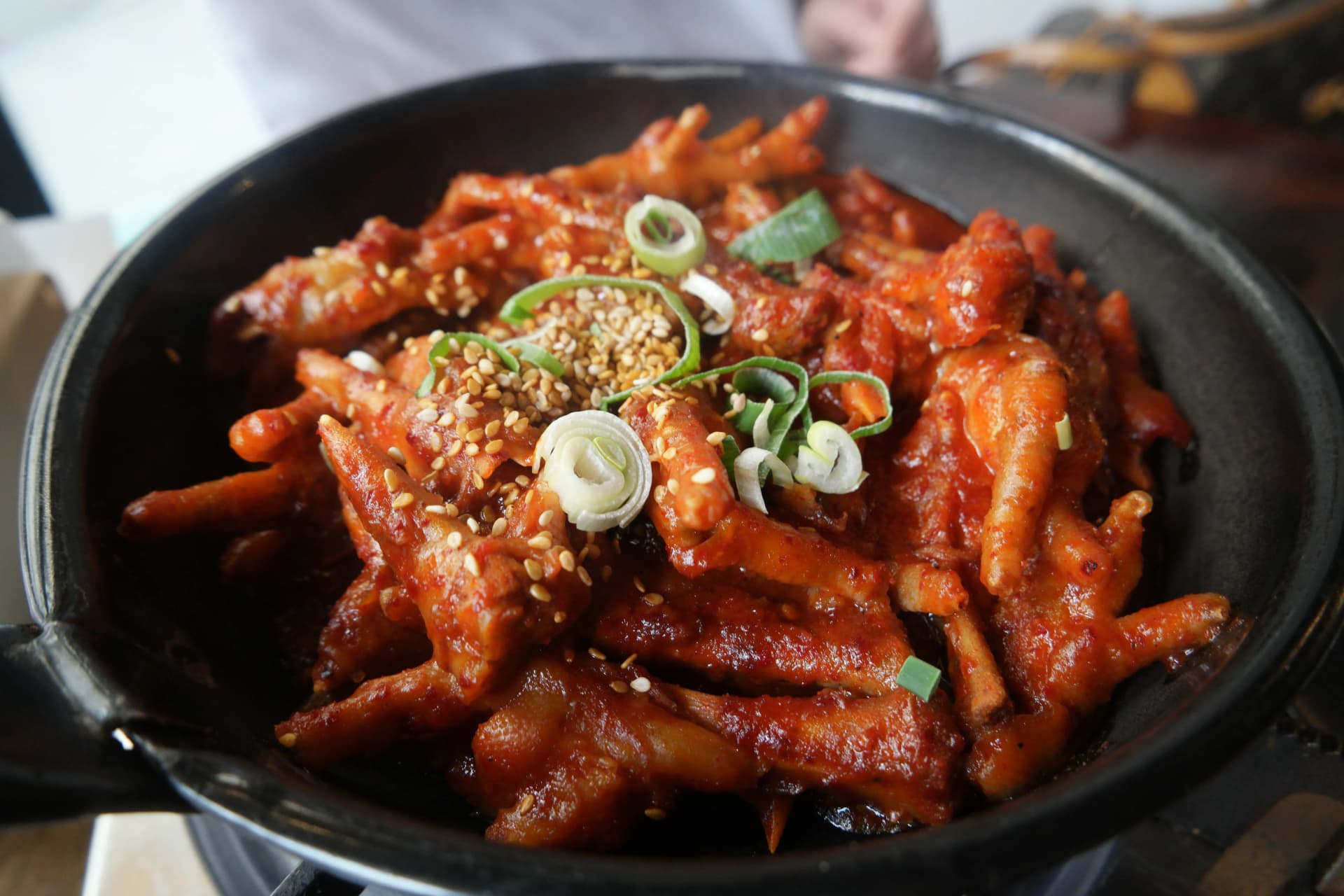
This is the braised spicy chicken feet we ordered at Hanshinpocha. A mound of chicken feet absolutely smothered in red sauce sits on a black iron plate, topped with sesame seeds and scallions — it looks fiery just sitting there, right?
It does come out looking pretty much done, but that's not the end of it. You fire up the tabletop gas burner and simmer it down further. At first, the sauce is a bit watery, but as it bubbles away, the liquid reduces and the sauce starts clinging to each chicken foot. This is the whole point of braised chicken feet — you, the customer, control the flame and cook it yourself, so the sauce consistency changes depending on how long you let it simmer. The sweet spot is when the broth has reduced to a thick, sticky glaze.
Price and Spice Levels
At Hanshinpocha, the Hanshin Dakbal (bone-in chicken feet with bean sprouts) costs about 22,000 won (around $16), and boneless chicken feet run about 23,000 won (around $17). For spice level, you choose between Level 1 (mild), Level 2 (spicy), and Level 3 (extremely spicy) — and honestly, even Level 1 is pretty darn hot. If you're not confident with spicy food, I'd recommend starting at Level 1.
Adding Bean Sprout Broth to Cook It Down
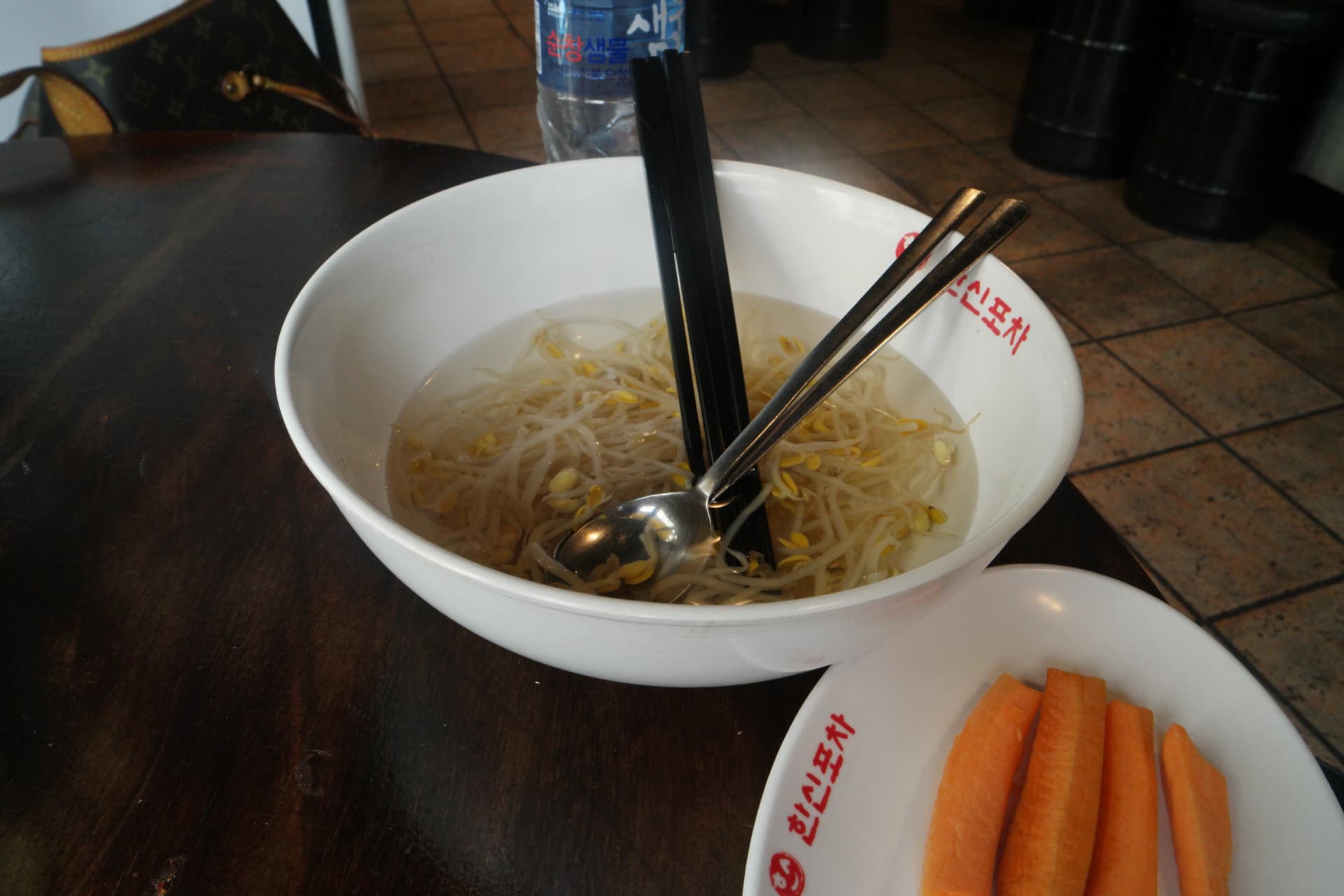
When the chicken feet arrive, this bowl of bean sprout broth comes separately on the side. At first, looking at the chicken feet alone, you might think "wait, where's the broth? I thought this was supposed to be braised?" — that's because you pour this bean sprout broth right onto the iron plate and cook it all together. The moment the broth hits the sauce, it starts dissolving into this angry red liquid. That's when the real cooking begins.
Spicy Chicken Feet Close-Up
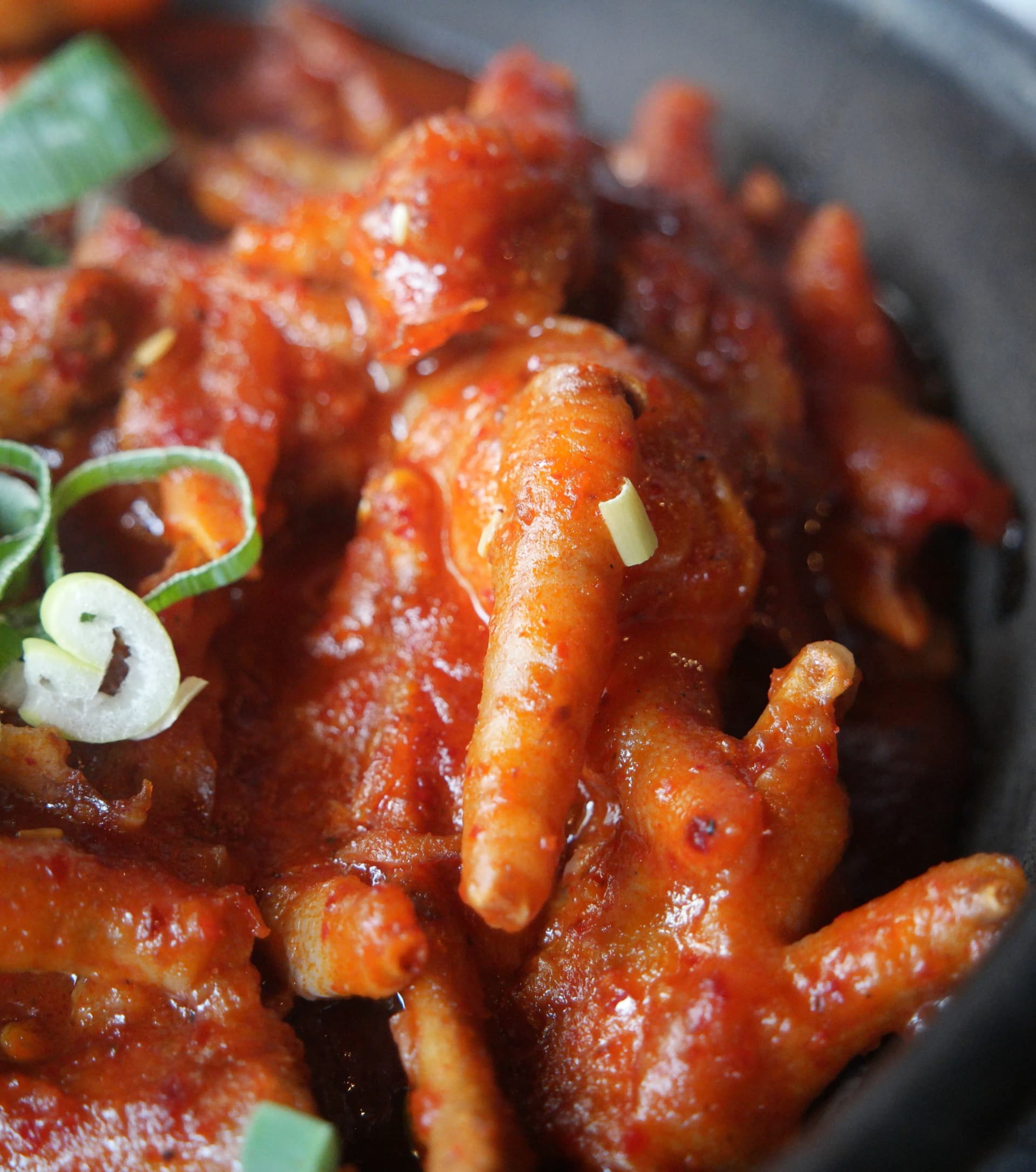
Up close, they look like this. I'll be honest — if you've never seen chicken feet before, the visual can be a bit startling. The toes are fully visible and unmistakable. But for Koreans, the first reaction to this sight is "oh man, that looks delicious."
Cooking It Yourself at the Table
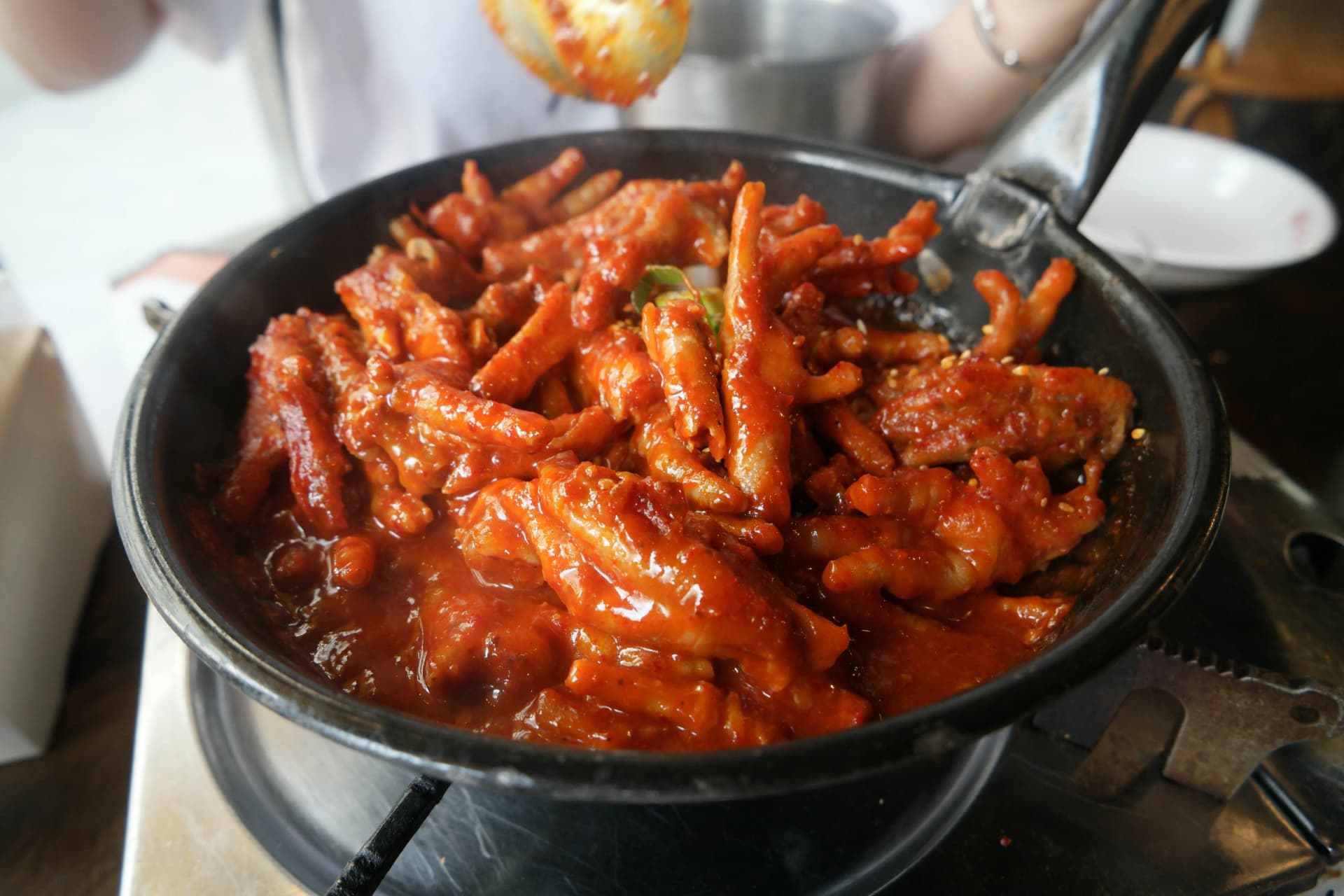
Here's the scene with the gas burner fired up and the cooking in full swing. When there's plenty of broth, you can just let it bubble away, but when the liquid gets low like this, you need to keep flipping the chicken feet with a ladle so they don't stick to the bottom and burn. If you need more bean sprout broth, you can ask for as many refills as you want — no extra charge.
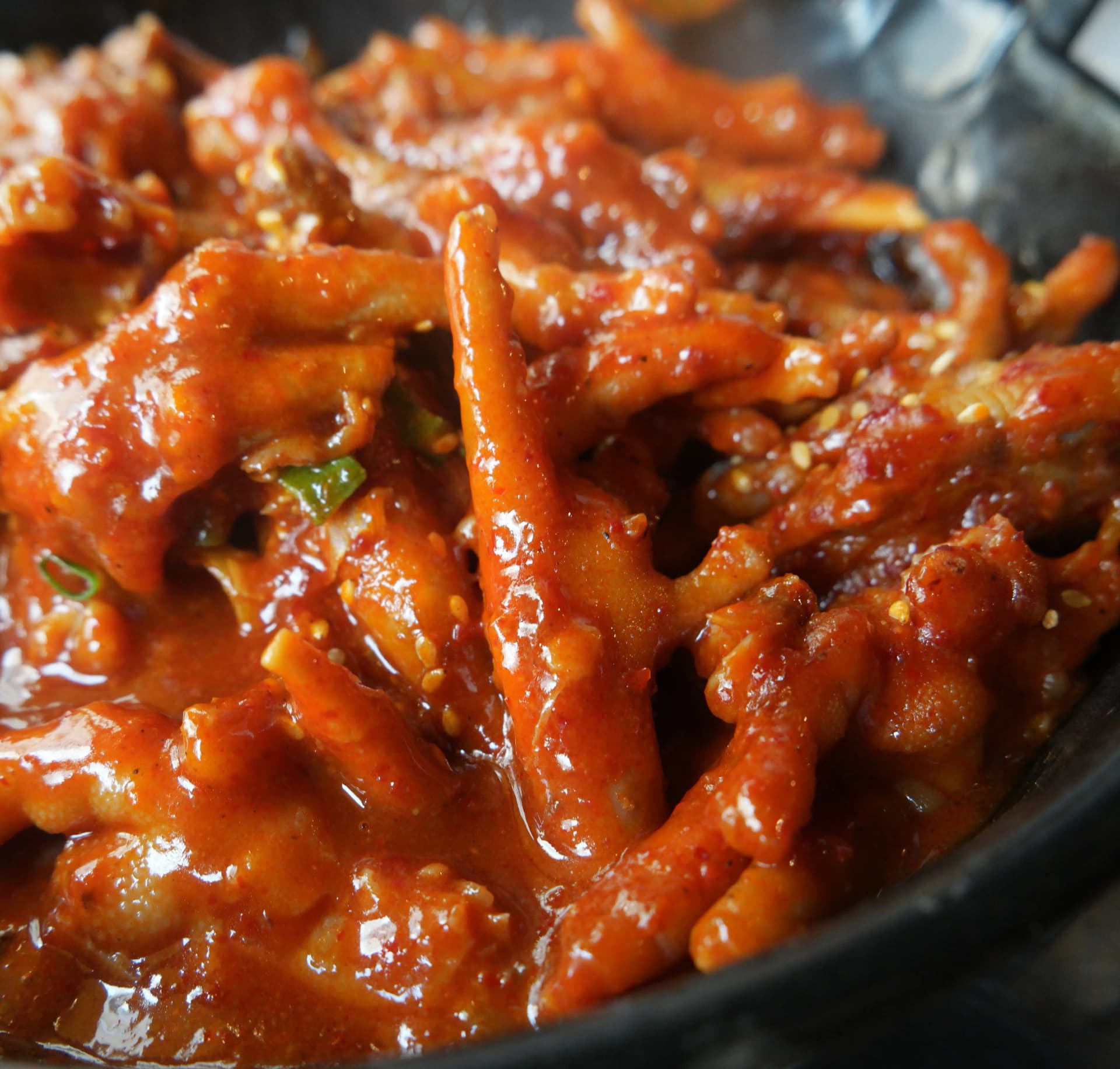
Once it's all simmered down, this is what you get. Totally different from before, right? The sauce has reduced into a thick, sticky glaze that coats every single chicken foot. Pick one up with your chopsticks and the sauce stretches out in gooey strings — that's how you know it's time to eat.
Adding Bean Sprouts to Tame the Heat
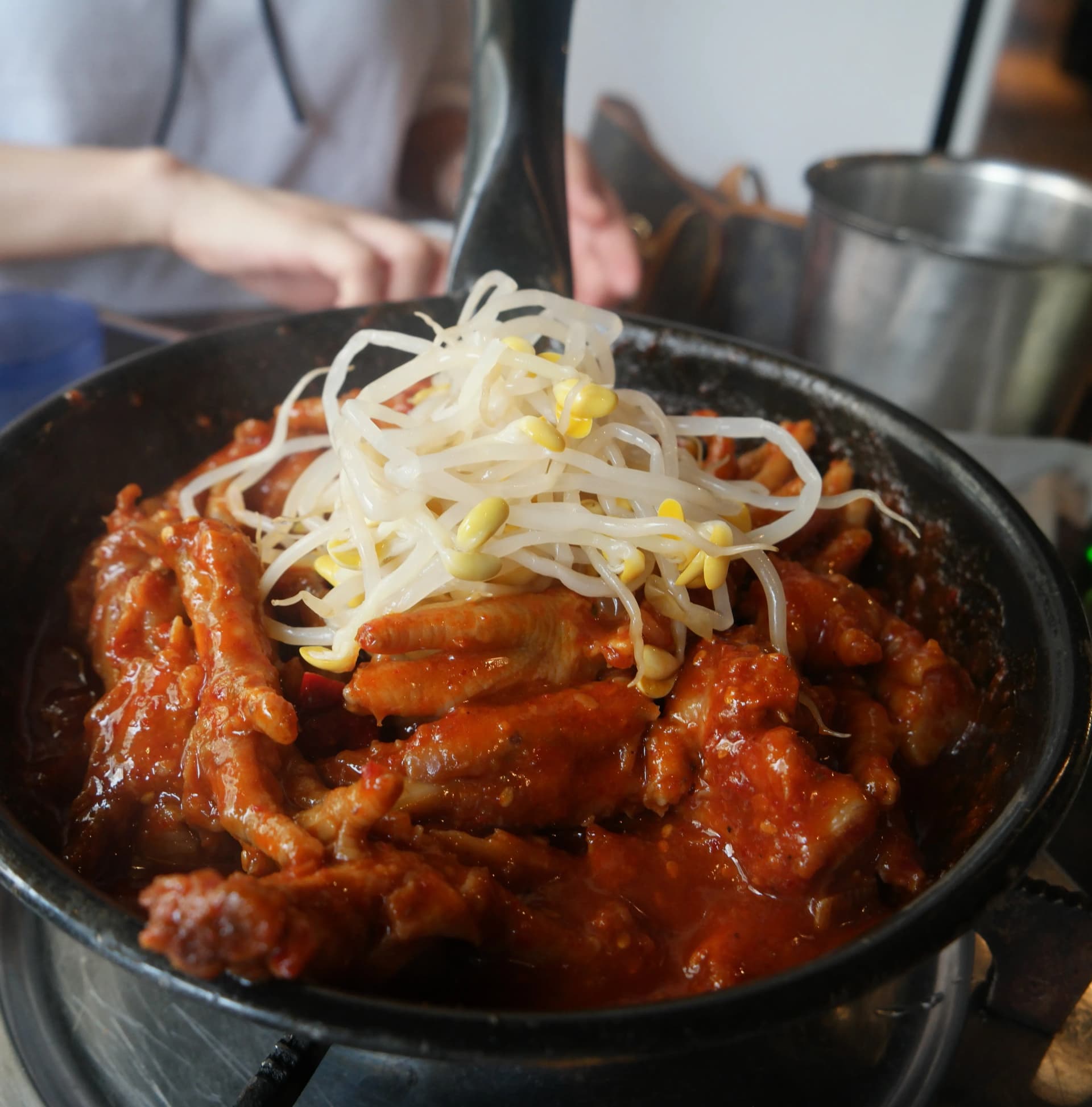
If it's too spicy, you can toss a heap of bean sprouts right on top and cook them together. The bean sprouts add a nice crunch and help dial back the heat a bit.
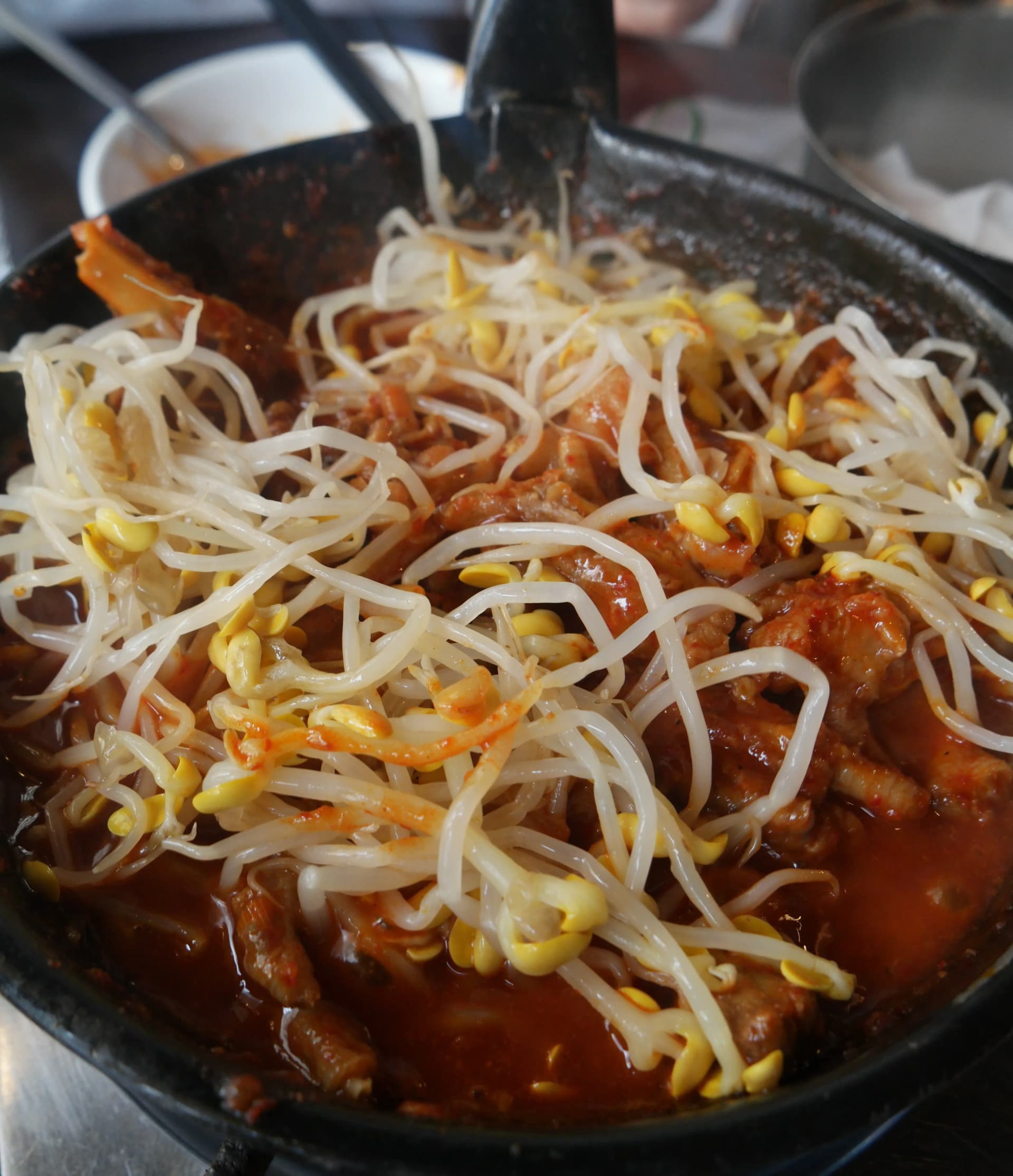
Once the bean sprouts start soaking up the sauce, this combo is absolutely incredible. Bean sprouts that have absorbed all that spicy sauce, paired with chewy chicken feet in one bite — you immediately understand why bean sprouts are a non-negotiable part of braised chicken feet.
How to Eat Chicken Feet — The Korean Way, With Your Hands
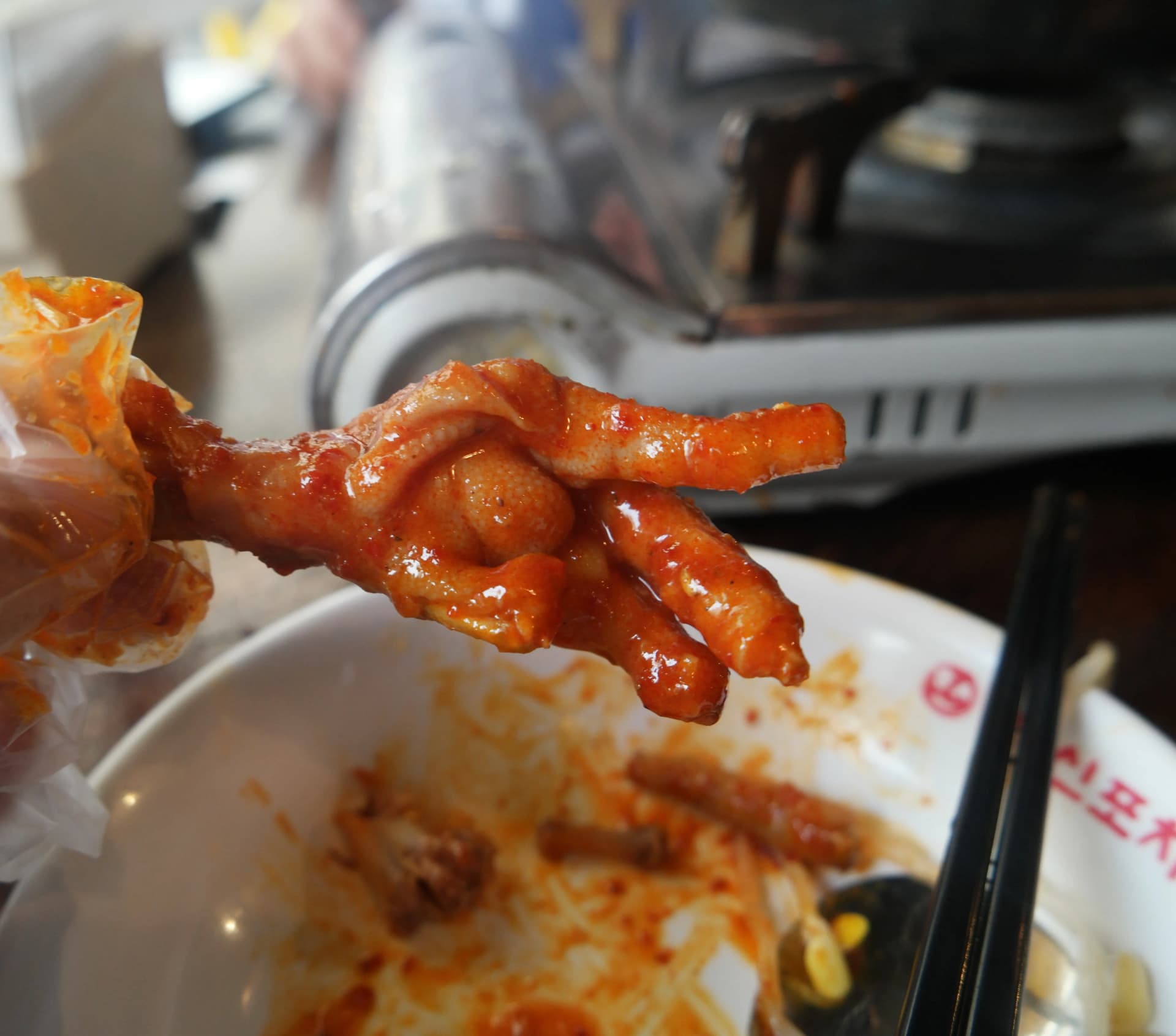
The Korean way to eat chicken feet is to put on a plastic glove and pick them up with your bare hands, pulling the skin and tendons off the bones with your teeth. There's definitely a fun satisfaction in stripping every bit of flesh from between those tiny bones, but I'll be straight with you — chicken feet are one of the most inconvenient foods to eat. The bones are small and arranged in a complex pattern, and even Koreans struggle with them at first.
So if you're visiting Korea and want to try chicken feet but the whole bone-picking thing sounds like too much hassle, go for boneless chicken feet. The flavor and texture are nearly identical, but without the bones, it's so much easier to enjoy.
Dakbal's Best Friend — Jumeokbap Rice Balls
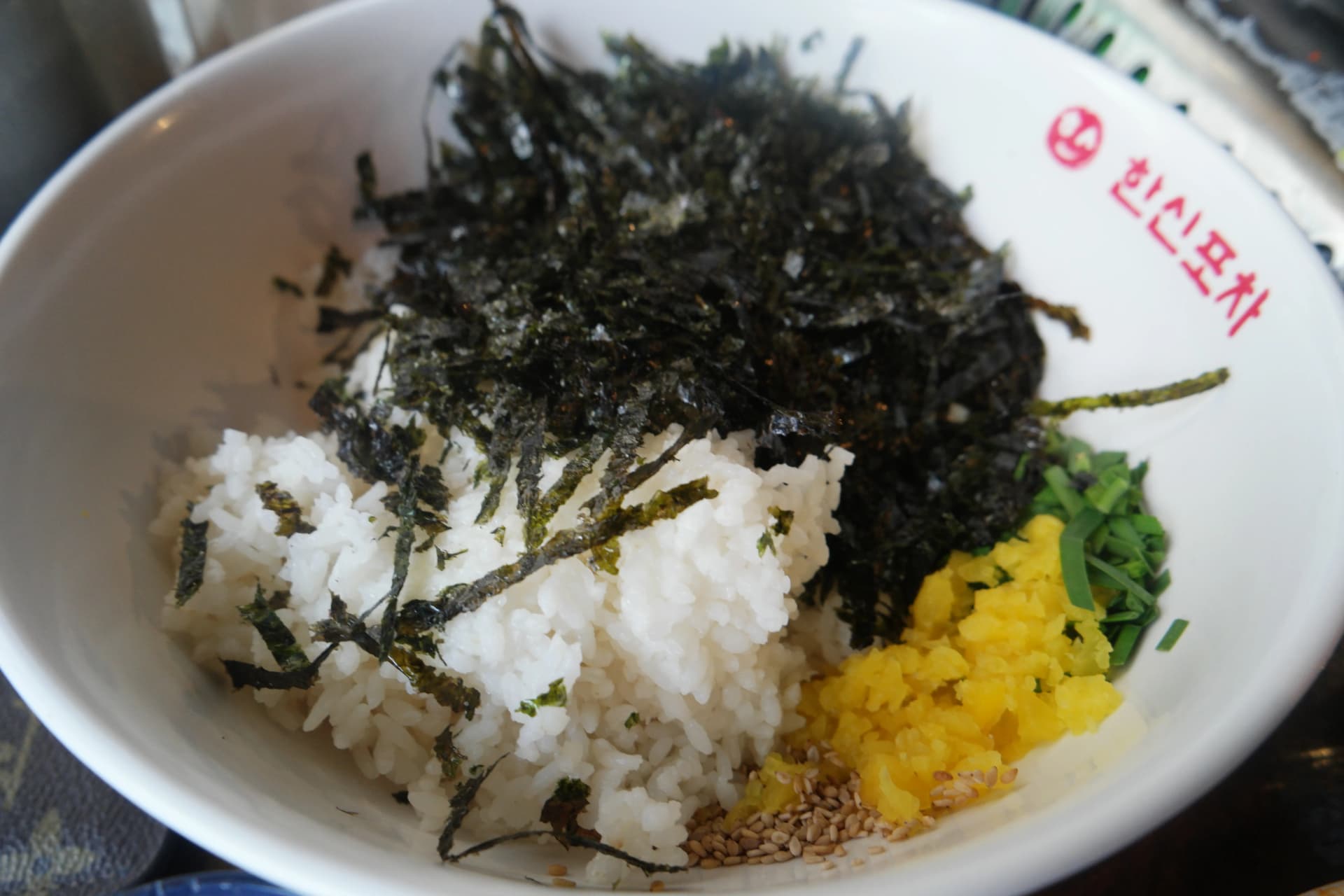
Whenever you order braised chicken feet, there's one side dish you absolutely have to get with it — jumeokbap, or Korean rice balls. At Hanshinpocha, the DIY rice ball set costs about 3,500 won (around $2.50). The ingredients are dead simple: rice, seaweed flakes, diced pickled radish, sesame seeds, and scallions. That's it.
But the flavor is insanely addictive. You put on a plastic glove, mix everything together by hand, and squish it into bite-sized balls. Fair warning — the rice is pretty hot, so you might singe your fingers a bit at first. Still, once you pop one in your mouth, there's no stopping. Eating spicy chicken feet and then popping one of these rice balls in your mouth just wipes the burn clean — and then your hand's reaching right back for more chicken feet. It's an endless cycle.
Making the Rice Balls
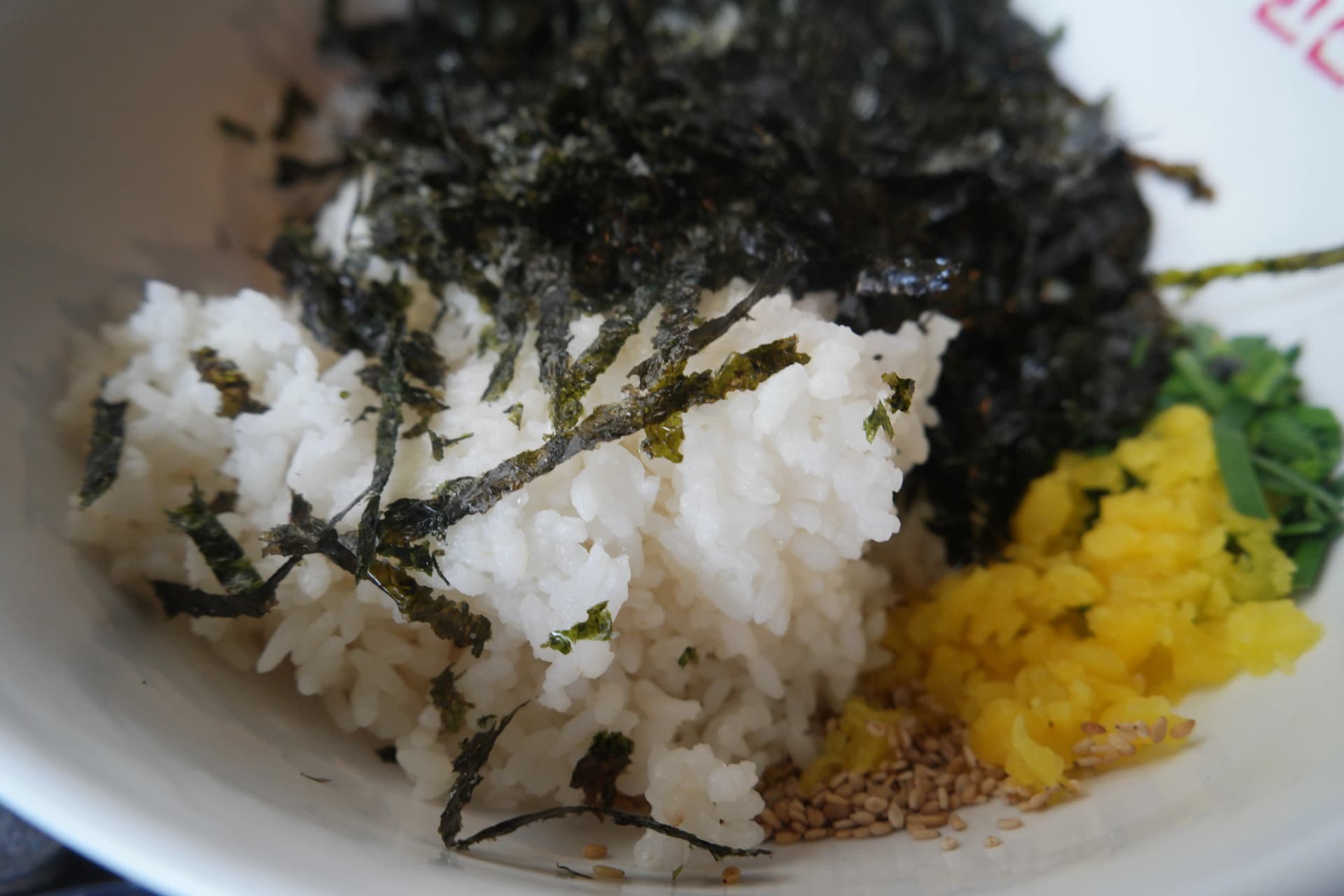
Here's a closer look. Rice, seaweed flakes, pickled radish, sesame seeds, scallions. Seriously, that's all there is to it.
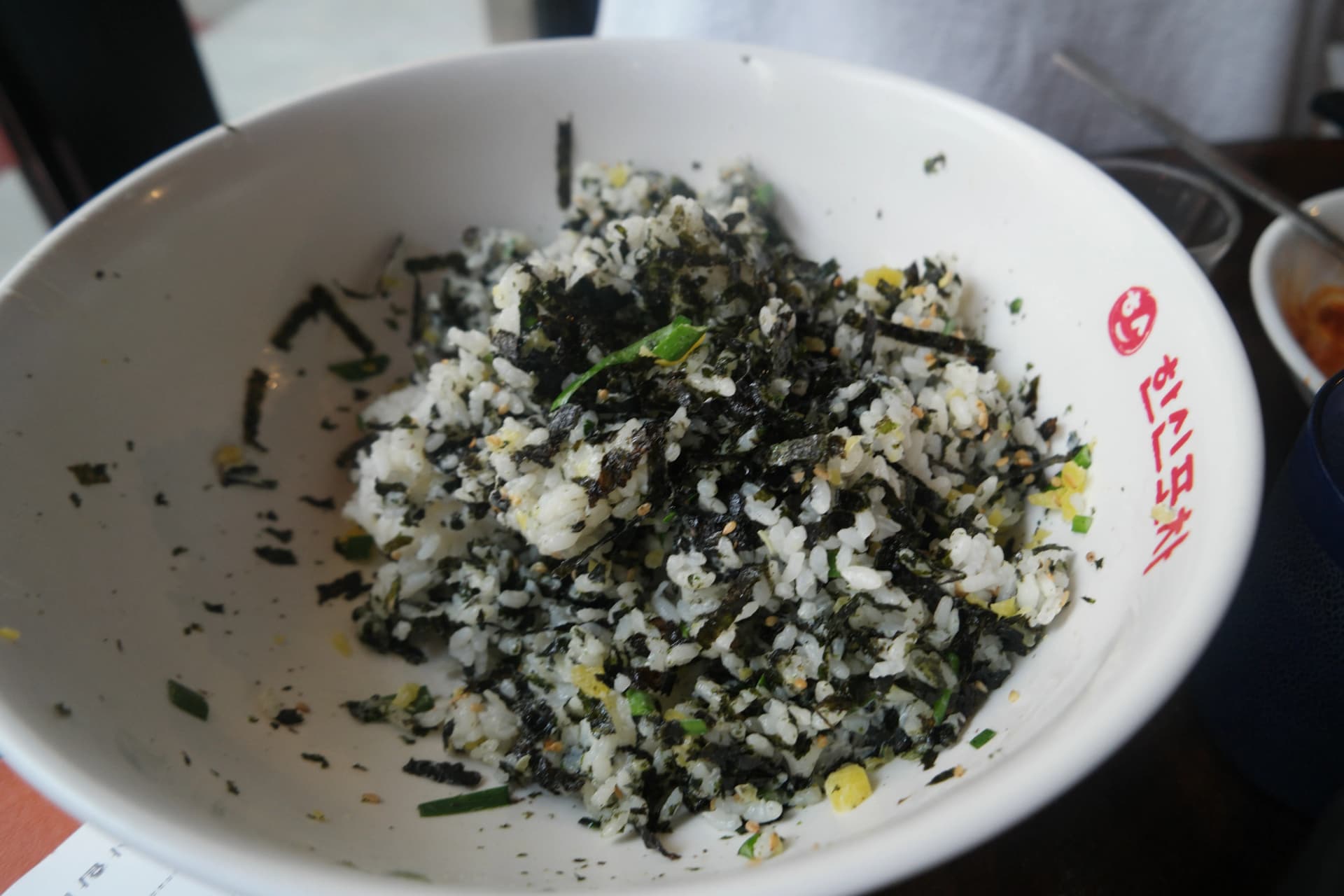
Put on a plastic glove and mix it all up aggressively, and it turns into this. The seaweed flakes work their way into every grain of rice and the color changes completely.
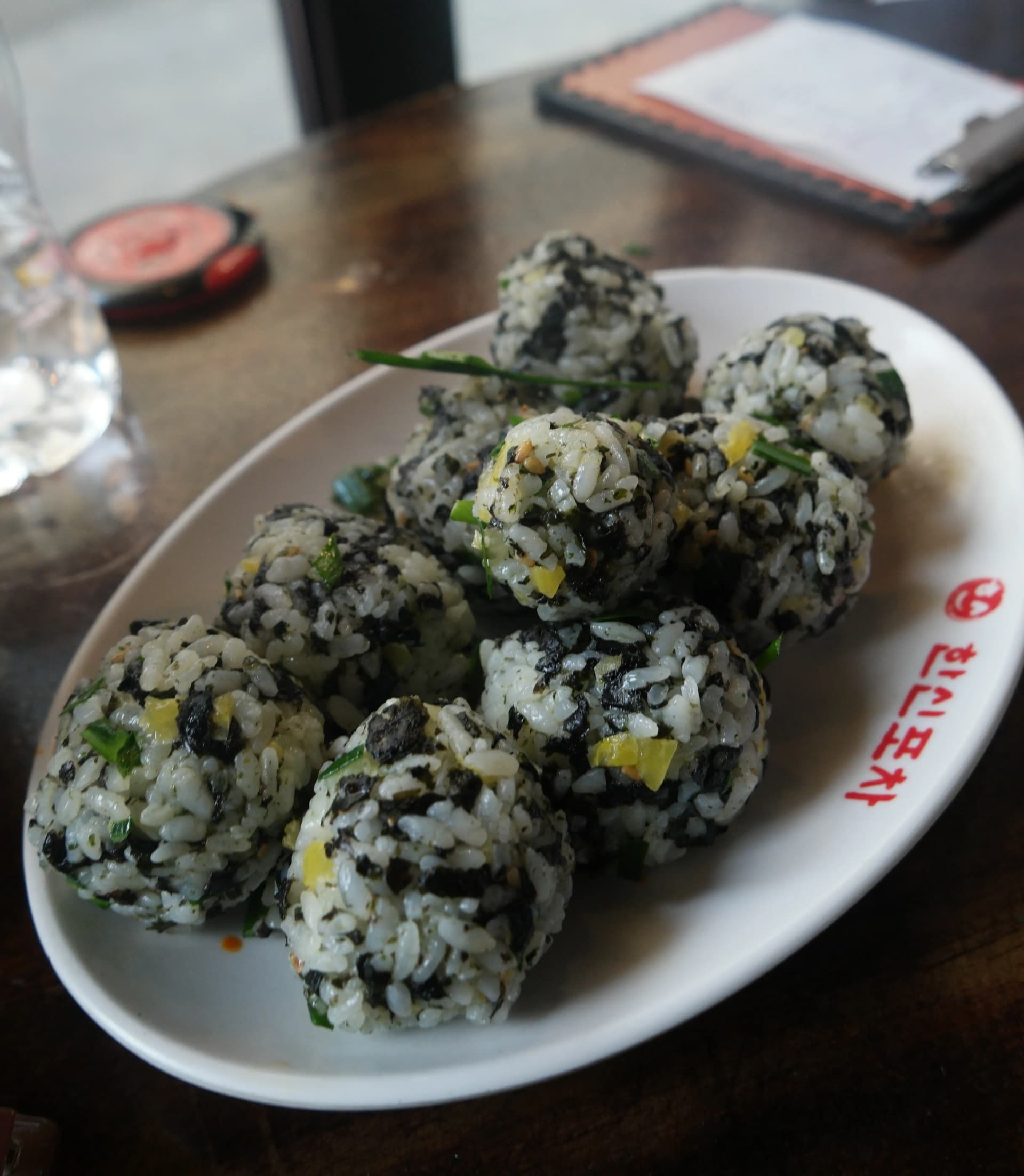
Then you squish them into little round bite-sized balls and you're done. The whole process is genuinely fun. Popping these between bites of spicy chicken feet — going from fiery heat to savory nuttiness and back to fiery heat again — it's a loop you just can't break out of.
My Honest Take
Chicken feet are one of those foods that even Koreans are split on. The look of them can be off-putting, and the bone-picking process is honestly a pain if you're not used to it. But once you're hooked, you're hooked for good. Your lips go numb from the spicy sauce and yet your hand keeps reaching for the next one. You cool your mouth down with a rice ball, and before you know it, you're grabbing another chicken foot — once you experience that cycle firsthand, you'll understand exactly why Koreans can't let go of this dish.
By the way, chicken feet are also known for being packed with collagen — roughly 70% of their protein content — so in Korea, plenty of people eat them specifically because they believe it's great for their skin.
If I'm being totally honest about the downsides, Hanshinpocha is fundamentally a bar, so it's loud inside. It's not the kind of place you'd go for a quiet, relaxing meal. Also, it's far from my house, which means I can't just pop over whenever I get a craving — and that's personally my biggest gripe. But then again, it's a bar, so the noise kind of comes with the territory.
If the bones are intimidating, start with boneless chicken feet — the flavor is nearly the same. And since you can choose your spice level, just go with Level 1 and work your way up from there.
This post was originally published on https://hi-jsb.blog.