Spicy Rice Cakes, Blood Sausage Fried Snacks — Korea's A$10 Feast
Table of Contents
18 items
The A$10 street food combo that every Korean lives on
It was the walk home from work. Winter, so the sun had already dropped, and when I stepped out of the subway station the wind cut right through me. I couldn't be bothered cooking a proper dinner, but my stomach wasn't going to let me skip it either. I was wandering down a side street when I spotted a bunsik shop sign. Through the glass door I could see a pot of bright red spicy rice cakes bubbling away — and my feet made the decision before my brain did.
When people think of Korean street food, they usually picture BBQ or fried chicken, but the snack that Koreans actually eat all the time is something completely different. It's called bunsik — think of it like Korea's answer to the local fish and chip shop, except instead of battered flake and chips, you're getting spicy rice cakes, blood sausage, deep-fried snacks and fishcake broth. When you order all four together, Koreans call it tteoksuntwio — a mash-up of the first syllables of tteokbokki (spicy rice cakes), sundae (blood sausage), twigim (fried snacks) and odeng (fishcake). There are bunsik joints literally everywhere across Korea — Seoul, Busan, tiny country towns — whether it's a franchise or a dingy little shop tucked into a back alley, if it sells tteokbokki, it counts. Price-wise, even if you order all four items, you're looking at about A$10 to fill yourself up completely. Walk in solo, order the tteoksuntwio set, and that's your dinner sorted.
That's exactly what happened that night. I sat down and ordered the set straight away. It was just me, but the serve was pretty generous. I wondered if I'd actually get through it all. Spoiler: I polished off every last drop, broth included.
The tteoksuntwio set — this is bunsik done properly
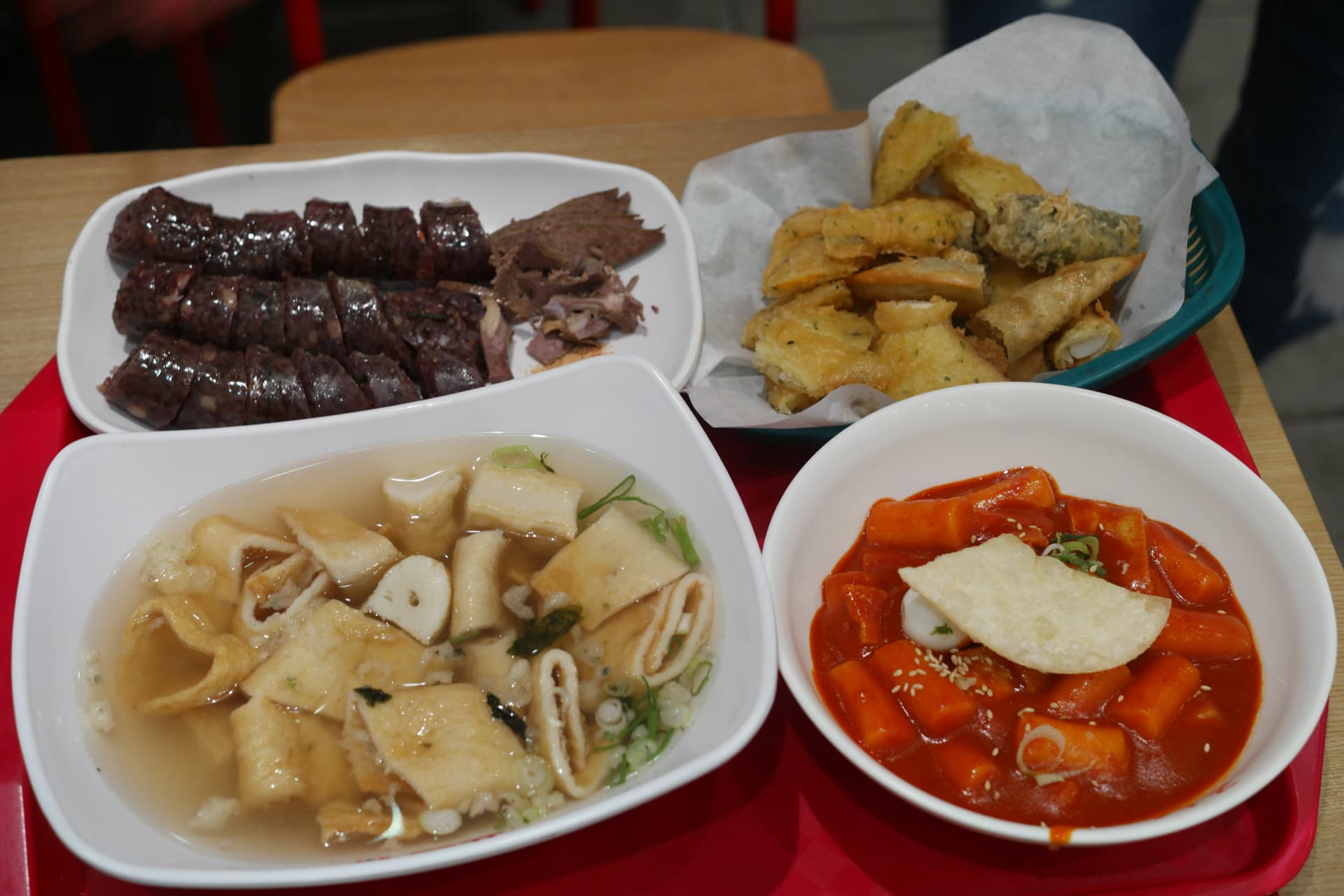
All four items arrived together on a red tray. This is the tteoksuntwio set — the classic Korean snack bar combo. The shop was Jaws Tteokbokki, a bunsik chain with heaps of locations across Korea. That said, this post isn't a review of the shop — it's about bunsik culture itself, so I'll leave the shop chat there.
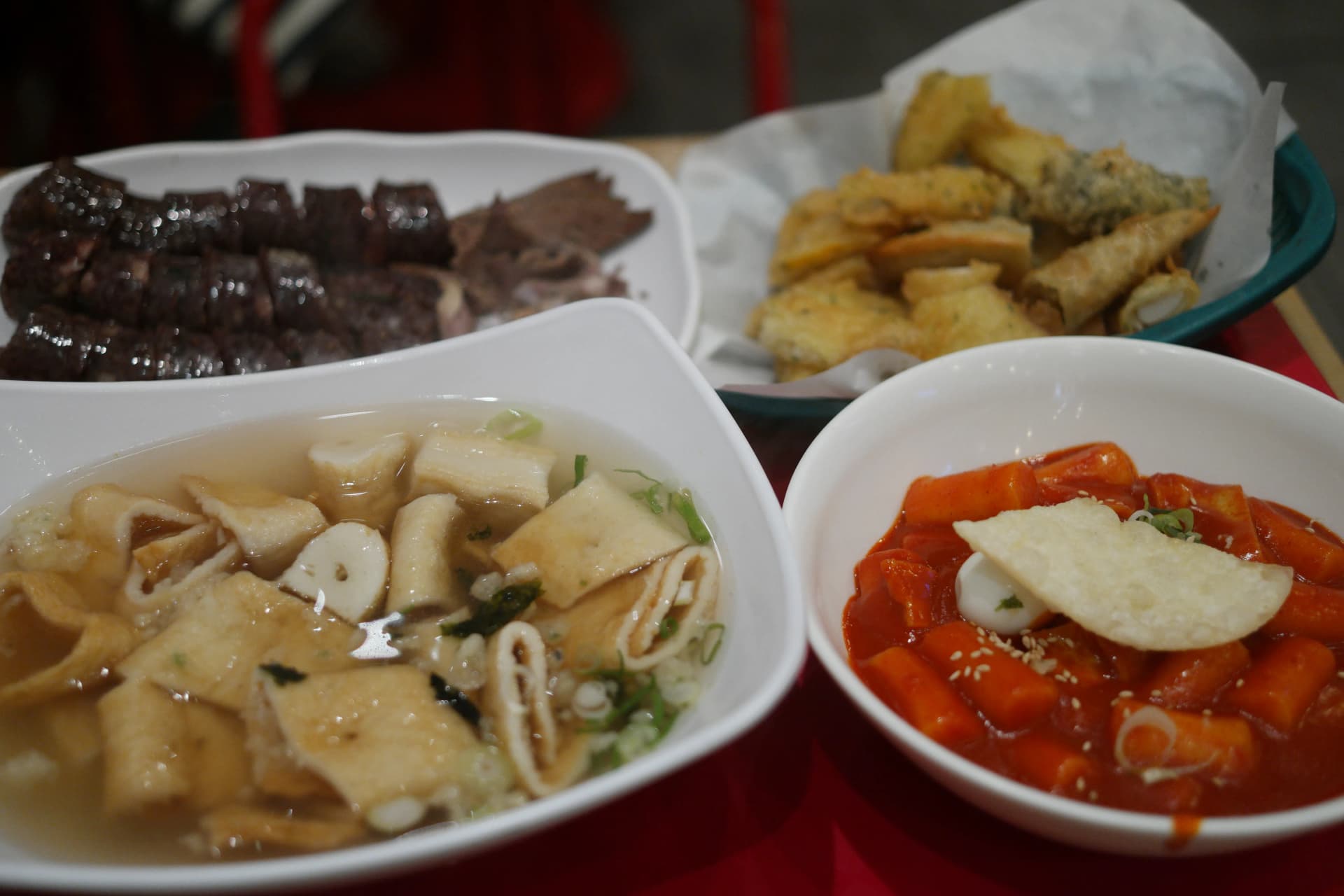
No matter which bunsik place you walk into, the setup is basically the same. Red spicy rice cakes, clear fishcake broth, a plate of blood sausage, a basket of fried snacks. I've eaten this in Daejeon (a major city about 1.5 hours south of Seoul) and I've eaten it in Seoul itself — the only difference was the tiniest variation in flavour.
Tteokbokki — chewy rice cakes drowning in red sauce
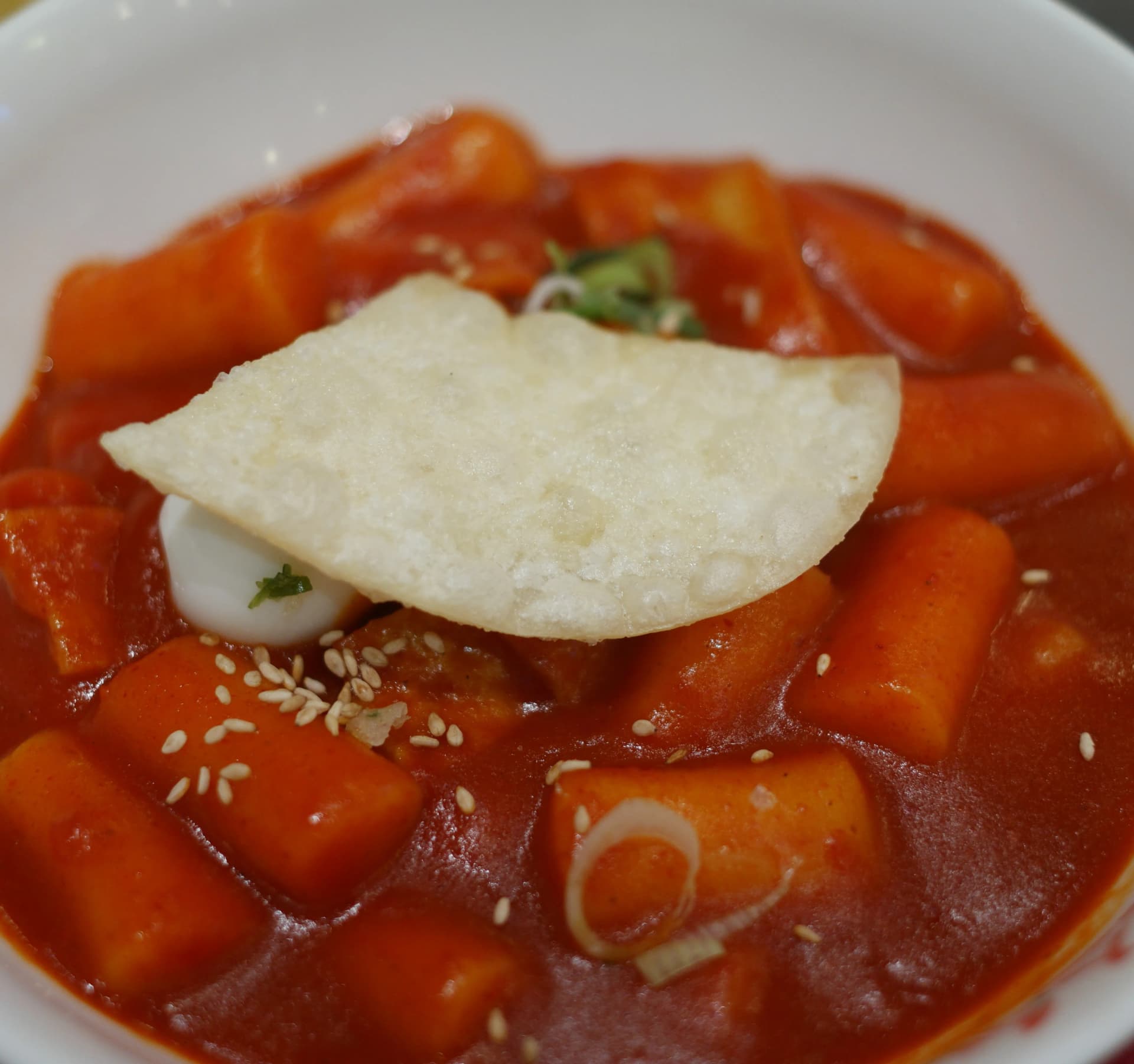
Tteokbokki is Korea's most iconic street snack — chewy cylindrical rice cakes swimming in a sweet-and-spicy red chilli sauce. I grabbed one first. The fat little rice cakes were soaking in that bright red sauce, with a single cracker perched on top. The cracker seemed random at first, but when I dipped it into the sauce, the crunch mixed with the spicy-sweet coating was weirdly addictive. Fair warning though — leave it sitting in the sauce too long and it goes soggy. I didn't know that, picked it up late, and ended up eating a limp, mushy cracker. Lesson learnt.
Rice cakes vs wheat cakes — what's the difference?
These ones were rice cakes. In Korea, tteokbokki uses two types of cakes: rice-based (ssal-tteok) and wheat-based (mil-tteok).
Rice Cakes vs Wheat Cakes — What's the Difference?
Made from rice. They're springy and chewy with a subtle nuttiness that comes through the more you chew. They don't absorb much sauce, so the outside is spicy but the inside stays clean and mild. The catch? They go rock-hard pretty quickly once they cool down, so you've got to eat them fresh.
Made from wheat flour. Softer and more elastic than rice cakes, and the sauce soaks right through them — so every bite is packed with flavour. They don't harden up as badly when they cool down either. For most Koreans, the wheat version is what they ate as kids from the little shop outside school, so there's a massive nostalgia factor. Heaps of people say eating wheat cakes takes them straight back to childhood.
These days, rice cakes are the more popular choice. But personally, I'm a wheat cake person. When I was a kid, I'd scrape together a thousand won — less than a dollar — after school and duck into the local bunsik shop, and it was always wheat cake tteokbokki that came out. Whether rice or wheat is better is one of those never-ending debates in Korea. There's no right answer. It's just personal preference.
The secret behind tteokbokki sauce
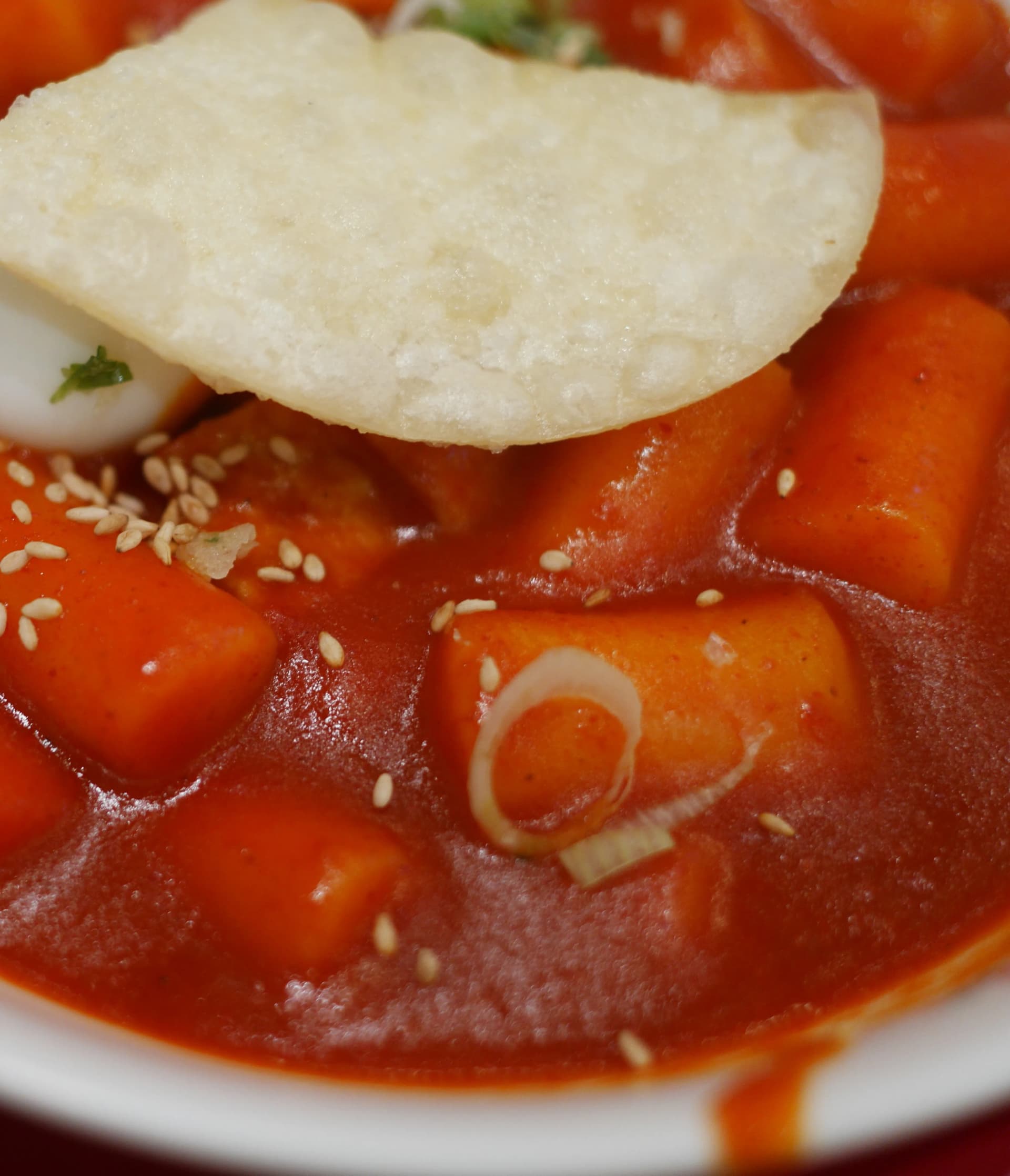
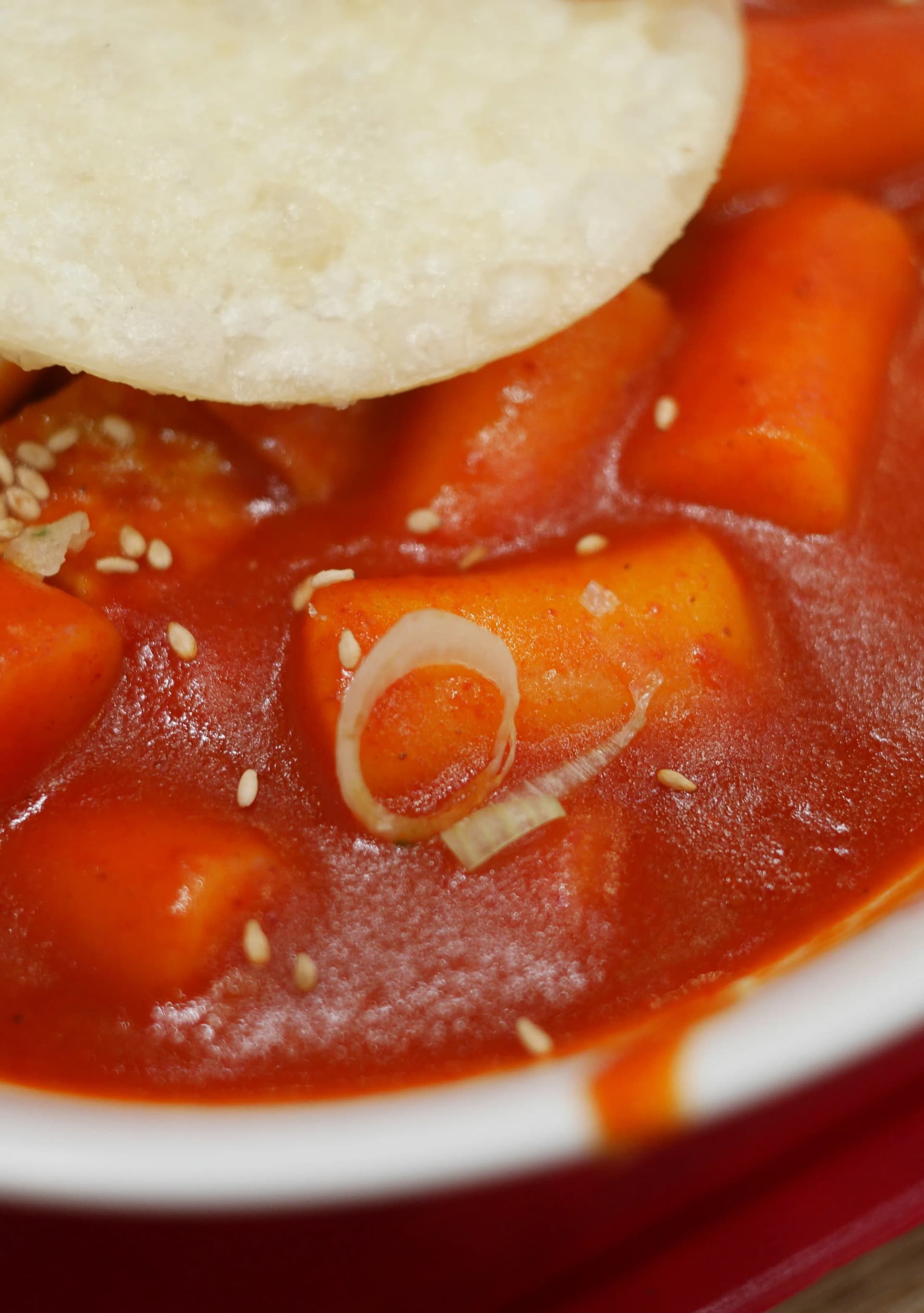
The whole thing lives or dies by this thick, glossy red sauce. It's made from gochujang (Korean chilli paste) mixed with sugar, corn syrup and soy sauce, giving you that sweet-and-spicy hit at the same time. If you're worried about the heat, regular tteokbokki honestly isn't that intense. The sweetness arrives first, and the spice kind of creeps up gently behind it. If you really can't handle any heat at all, there's also jjajang tteokbokki — it's black instead of red, made with a savoury black bean sauce that coats the cakes in a sweet, non-spicy flavour.
But then, for the spice lovers, there's a whole other level.
The Spicy Tteokbokki Challenge
Plenty of Korean bunsik shops sell tteokbokki in graded spice levels — from level 1 up to level 5, and some places go all the way to level 10. Taking on the higher levels has become a proper challenge culture in Korea. Search "spicy tteokbokki challenge" on YouTube and you'll find hundreds of videos of people with bright red faces, sweating and crying their way through a bowl.
The upper levels are genuinely brutal. If regular tteokbokki is sweet with a gentle kick, challenge-level tteokbokki is your-mouth-is-on-fire territory. Some shops stick your photo on the wall or give you the meal free if you finish the whole thing.
If you want to have a crack while you're in Korea, start at level 2. Even level 1 can be seriously spicy by most people's standards.
I tried level 3 once. Couldn't even finish half of it and ended up just sculling fishcake broth to put out the fire. Haven't attempted a challenge since.
Fried snacks — dip them in the tteokbokki sauce and they become a whole different thing
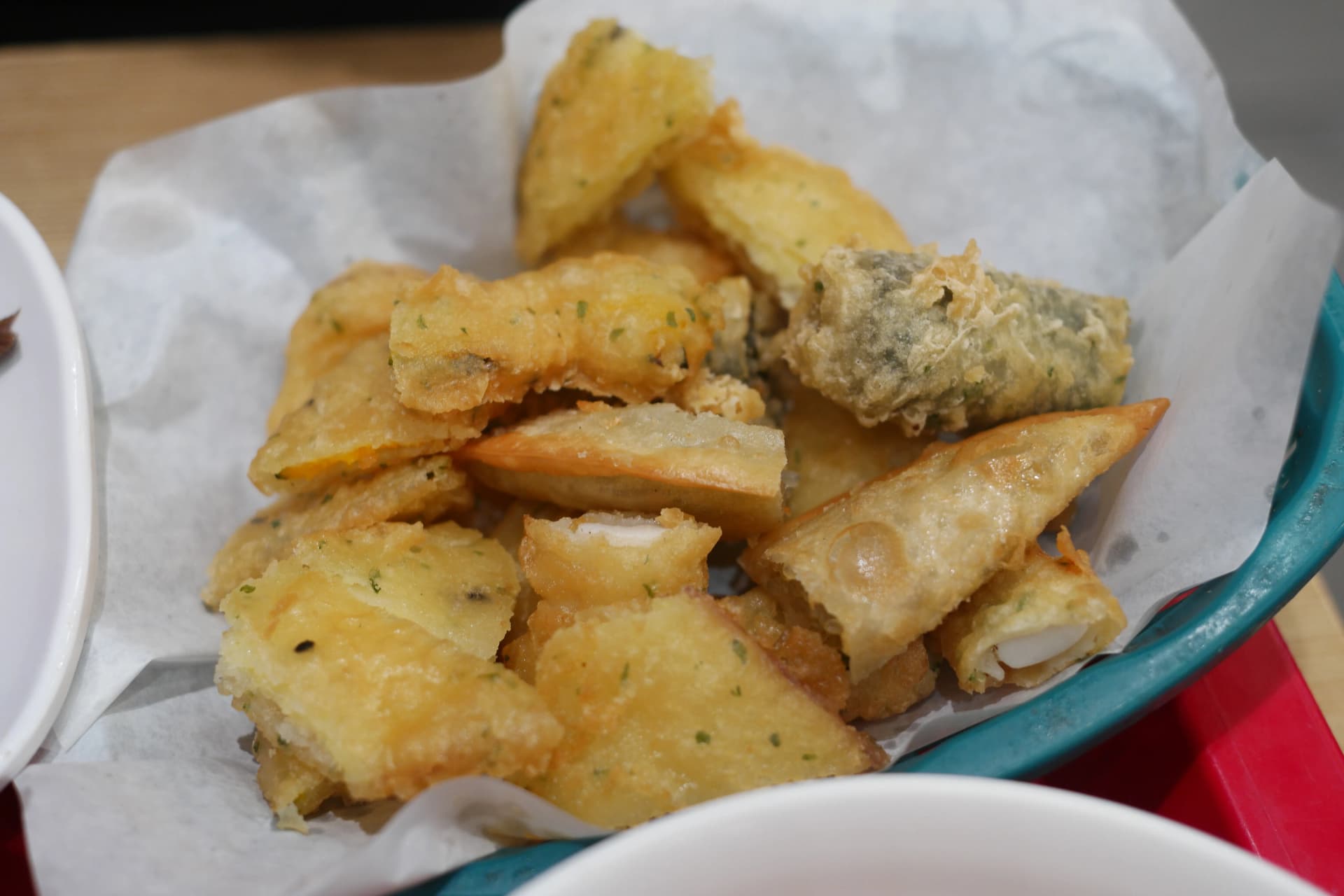
Korean bunsik-style fried snacks are deep-fried battered items served alongside tteokbokki, and they're nothing like Japanese tempura. Tempura batter is thin, light and delicate — Korean twigim batter is thick and crunchy. You bite through a proper crispy shell first, and then you hit the filling underneath. After working through some tteokbokki, I moved on to the fried snacks. This time I got a half-and-half of fried dumplings and squid fritters.
You can absolutely eat these on their own, but the Korean way is to dunk them straight into the tteokbokki sauce. I'll be honest — at first I thought it was a waste. Why ruin the crunch? But then I watched the person at the next table submerge theirs completely, so I gave it a go. Haven't looked back since. The crispiness disappears, sure, but the sweet-spicy sauce soaks in and transforms it into something completely different. It's like the difference between eating hot chips dry versus drowning them in gravy — once you try it, you can't go back.
The many types of Korean bunsik fried snacks
The Many Types of Korean Bunsik Fried Snacks
Veggie Fritter (Yachae-twigim) — Onion, carrot and chives mixed together and fried flat. The most common and cheapest option.
Seaweed Glass Noodle Roll (Gimmari-twigim) — Glass noodles wrapped in seaweed and deep-fried. Easily the most popular fried snack at any bunsik shop.
Sweet Potato Fritter (Goguma-twigim) — Thick-cut sweet potato, battered and fried. Naturally sweet, and a favourite with kids.
Squid Fritter (Ojingeo-twigim) — Whole squid in a thick batter coating. Great chewy texture.
Fried Dumpling (Mandu-twigim) — A dumpling that's been double-cooked by deep-frying. Crispy shell, juicy inside.
Prawn Fritter (Saeu-twigim) — Only found at the better bunsik shops. Pricier than the others.
At outdoor street food stalls, you'll see all these fried snacks lined up on a wire rack above the oil, sorted by type. You just point at whatever you want and they bag it up. Each piece runs about 50 cents to A$1.
Seaweed glass noodle rolls — the MVP of bunsik fried snacks
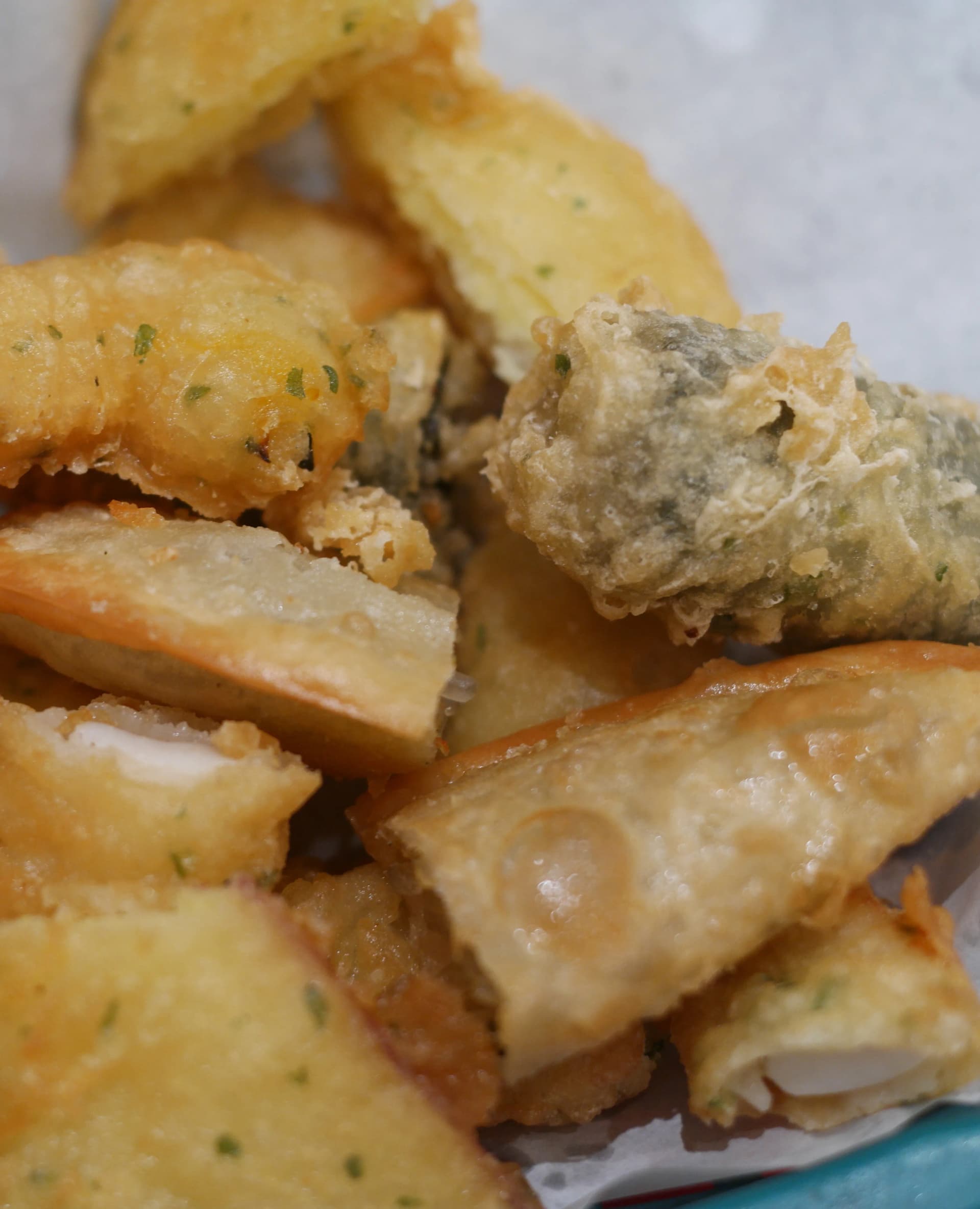
Up close, you can really see how thick the batter is. The one with the green tinge showing through — that's the seaweed glass noodle roll, gimmari, and it's my absolute favourite of all the bunsik fried snacks. Glass noodles are rolled up tightly inside a sheet of roasted seaweed, then the whole thing gets battered and deep-fried. The outside shatters when you bite into it, and the glass noodles inside stretch out all chewy and springy. Dunk it in the tteokbokki sauce and the crispiness gives way to something soft, saucy and spicy. If tteokbokki is the main character, gimmari is the supporting act that the whole show falls apart without.
Fishcake broth — the clear soup that saves you from the spice
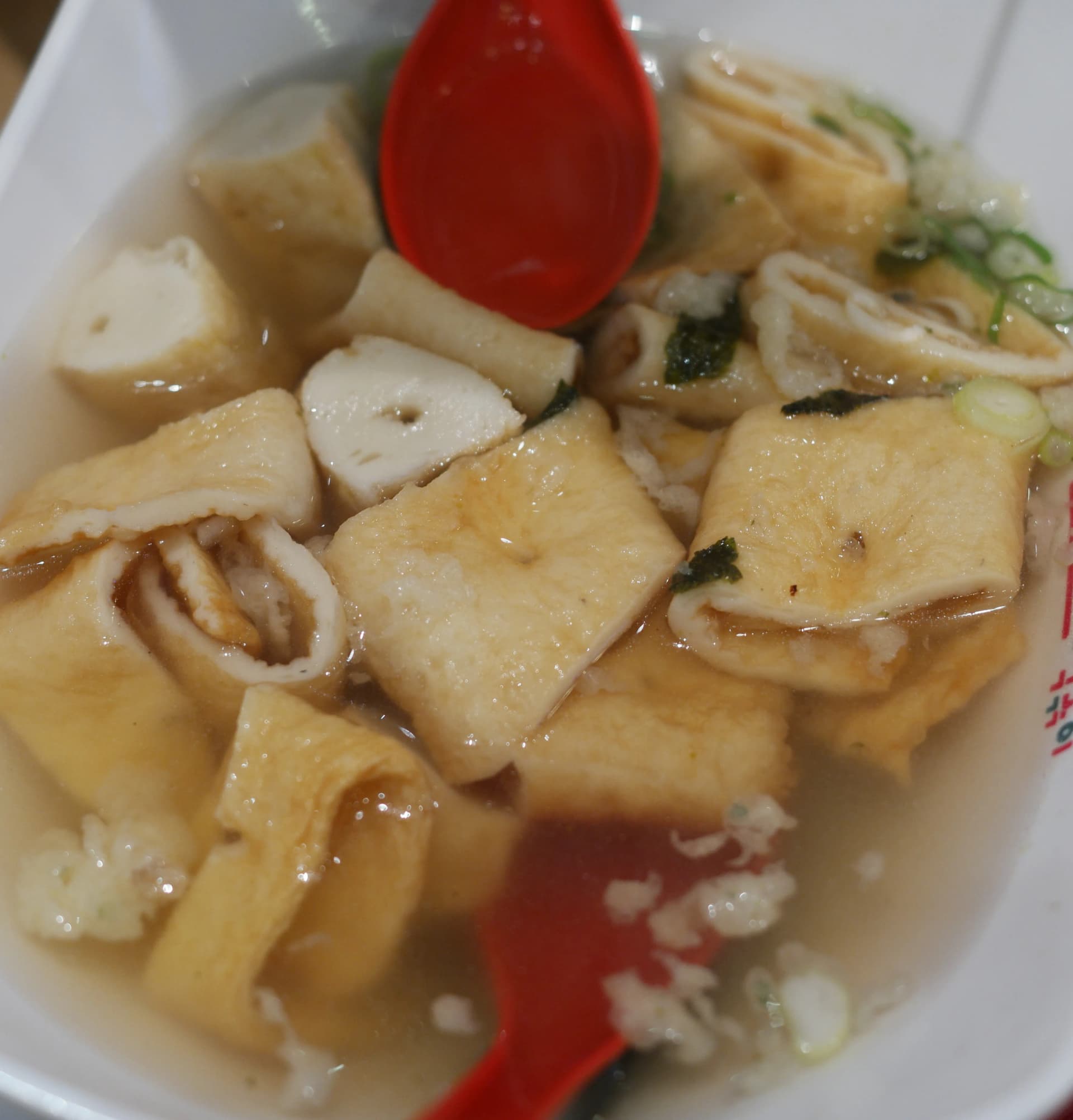
Fishcake broth is the thing your hand reaches for the moment the tteokbokki spice starts building. In Korea, fishcake is also called odeng, and it comes served in a clear, piping hot broth. A whole bunch of fishcakes sit skewered in this soup, and honestly, the broth itself is the real star.
It's made by simmering dried anchovies and kelp until the umami concentrates into something incredibly savoury and deep. In winter, one mouthful of this stuff and you feel the warmth spread right through your chest. I've actually tried to recreate it at home a few times — bought the anchovies, the kelp, the exact same fishcakes — and it never tasted the same. I reckon it's because bunsik shop pots simmer away from morning to night, and there's a depth of flavour that comes from 12 straight hours of cooking that you just can't replicate in 30 minutes on your home stove.
Each fishcake shape has its own way of eating
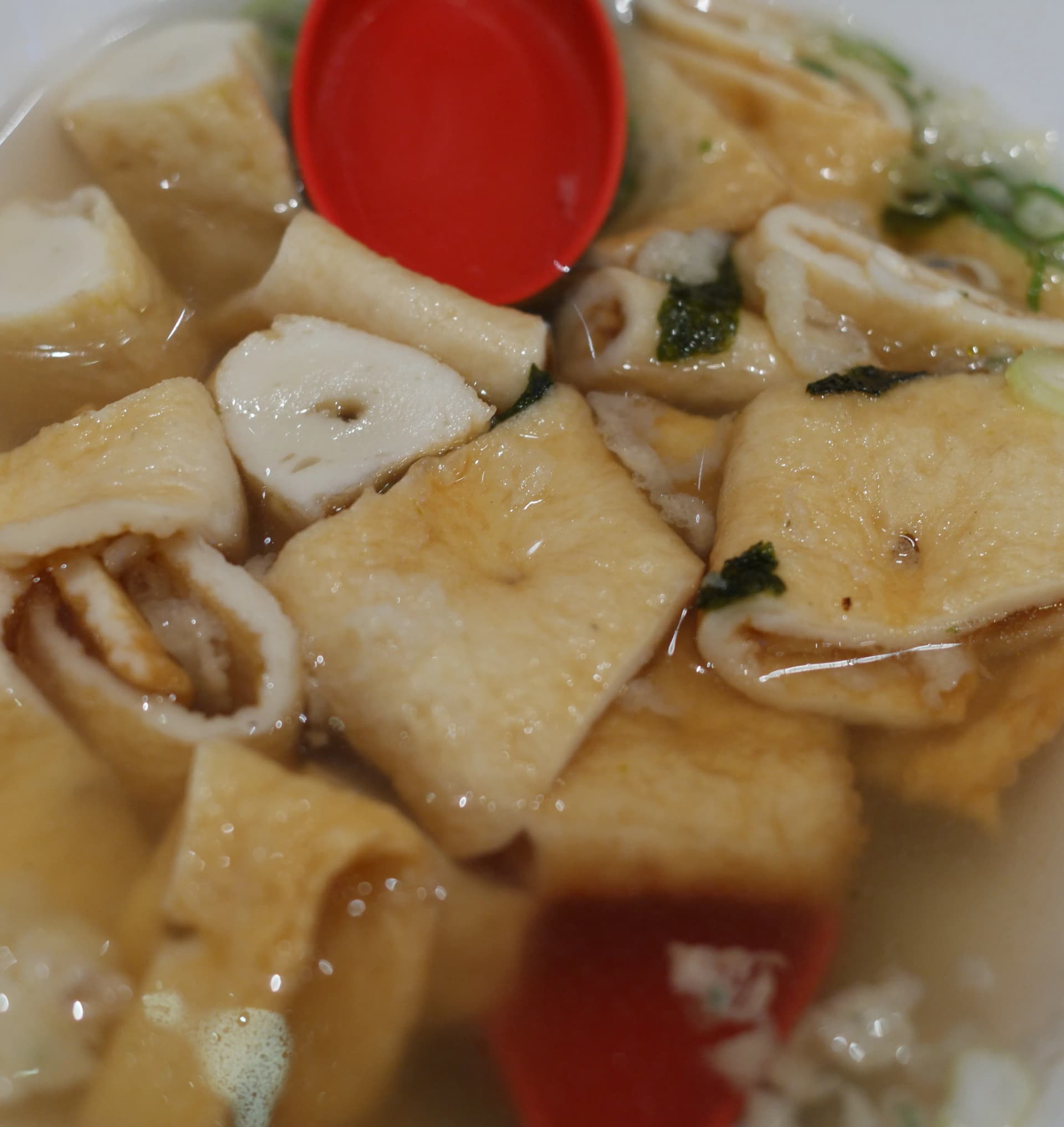
Not all fishcakes are the same shape. There are flat ones, rolled-up ones, and round ones. The flat ones soak up heaps of broth, and the rolled ones trap hot liquid inside — so when you bite into one, scalding broth bursts out. Quick tip if you're trying these for the first time: don't take a massive bite of the rolled fishcake. There's boiling hot broth trapped inside and you will burn the roof of your mouth. I speak from experience.
Sundae — Korea's blood sausage with glass noodles
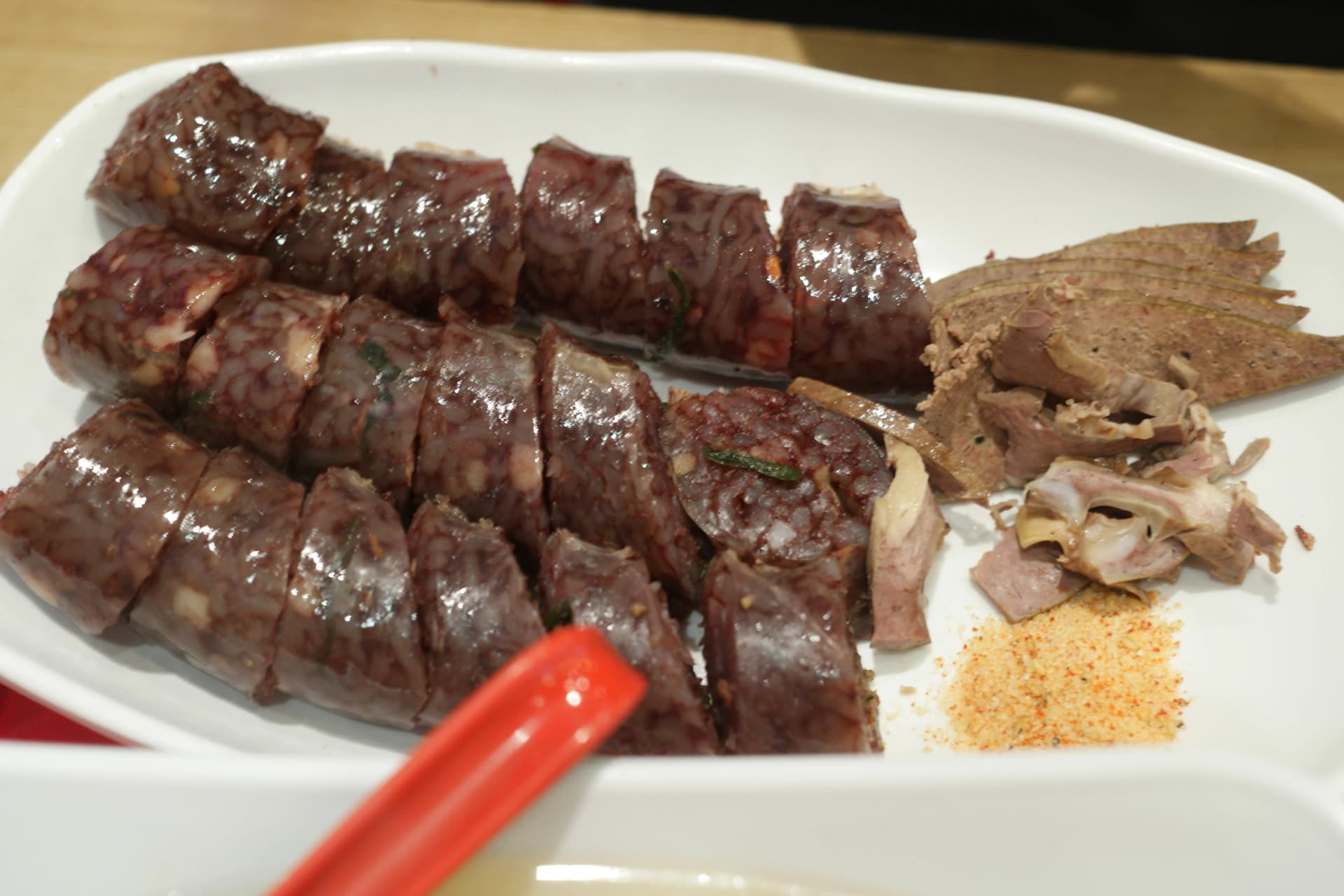
Sundae is Korea's version of blood sausage — pig intestine stuffed with glass noodles, vegetables and pork blood, then steamed. It arrived sliced into rounds, with liver and offal on the side and a little dish of salt mixed with chilli powder at the bottom. That seasoned salt is the standard dipping condiment for sundae.
If you're thinking "sausage made with blood? Nah, I'm right," — fair enough, but you've probably already eaten something similar without realising. Australians who've had a full English brekkie will know black pudding — same concept. Spain has morcilla, France has boudin noir. The difference with Korean sundae is that it's packed with glass noodles, so the texture is much chewier and lighter than its European cousins. Less fatty, more bouncy, and genuinely milder in flavour than you'd expect.
Korean Sundae vs European Blood Sausage
Pig intestine stuffed with glass noodles, vegetables and pork blood, then steamed. The glass noodles give it a distinctive chewy bite, and you dip it in seasoned salt or tteokbokki sauce. The flavour is mild and clean.
Pig blood mixed with fat, grains and spices, stuffed into casing. Different names everywhere — black pudding in Britain and Australia, morcilla in Spain, boudin noir in France. Compared to Korean sundae, the European versions tend to be fattier and more heavily spiced.
I personally prefer dipping sundae in the tteokbokki sauce rather than the salt. The salt lets the natural flavour of the sundae come through, while the tteokbokki sauce wraps it in a spicy-sweet coat that changes the whole experience. Try both and figure out which camp you fall into.
Bunsik shop sundae vs handmade sundae
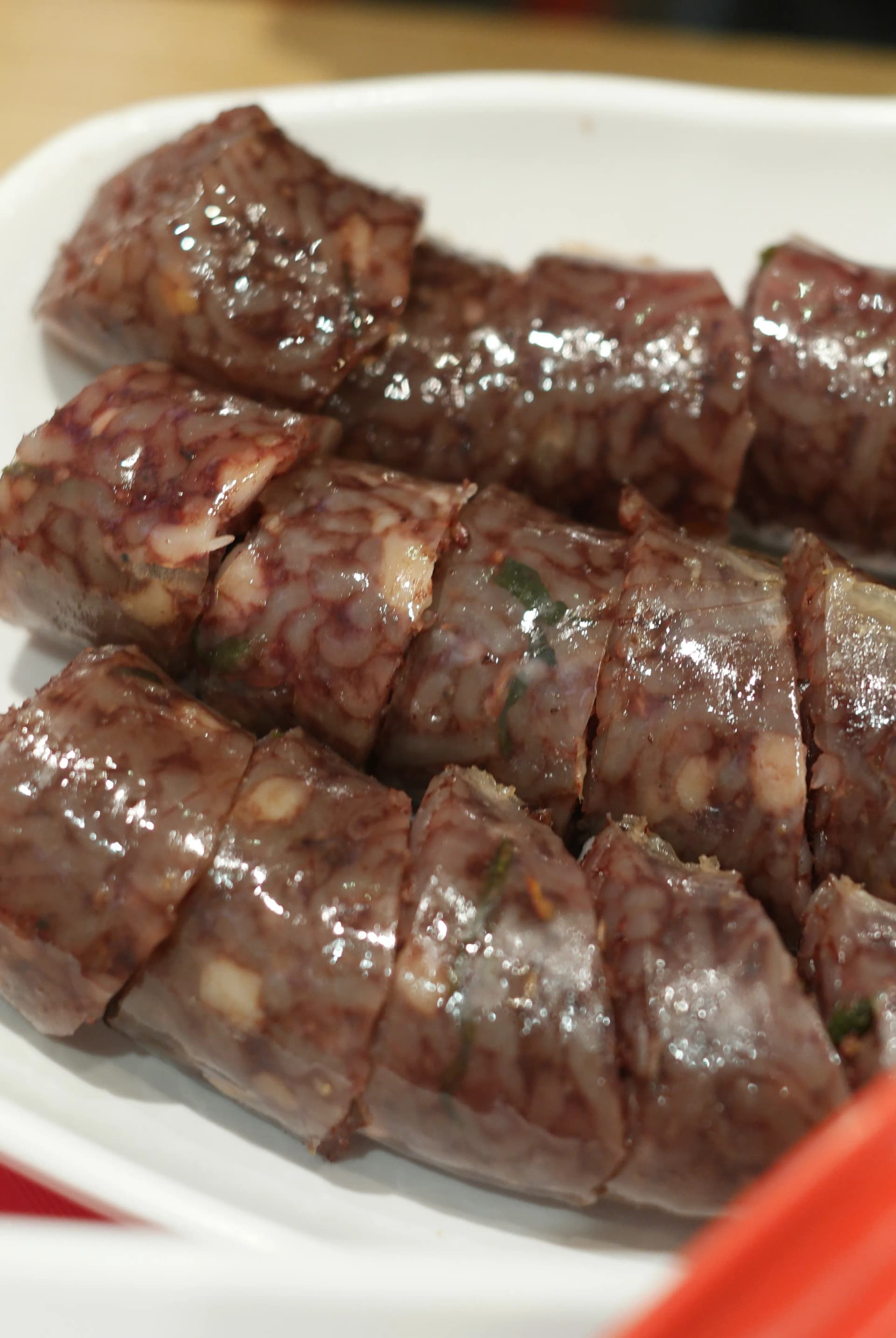
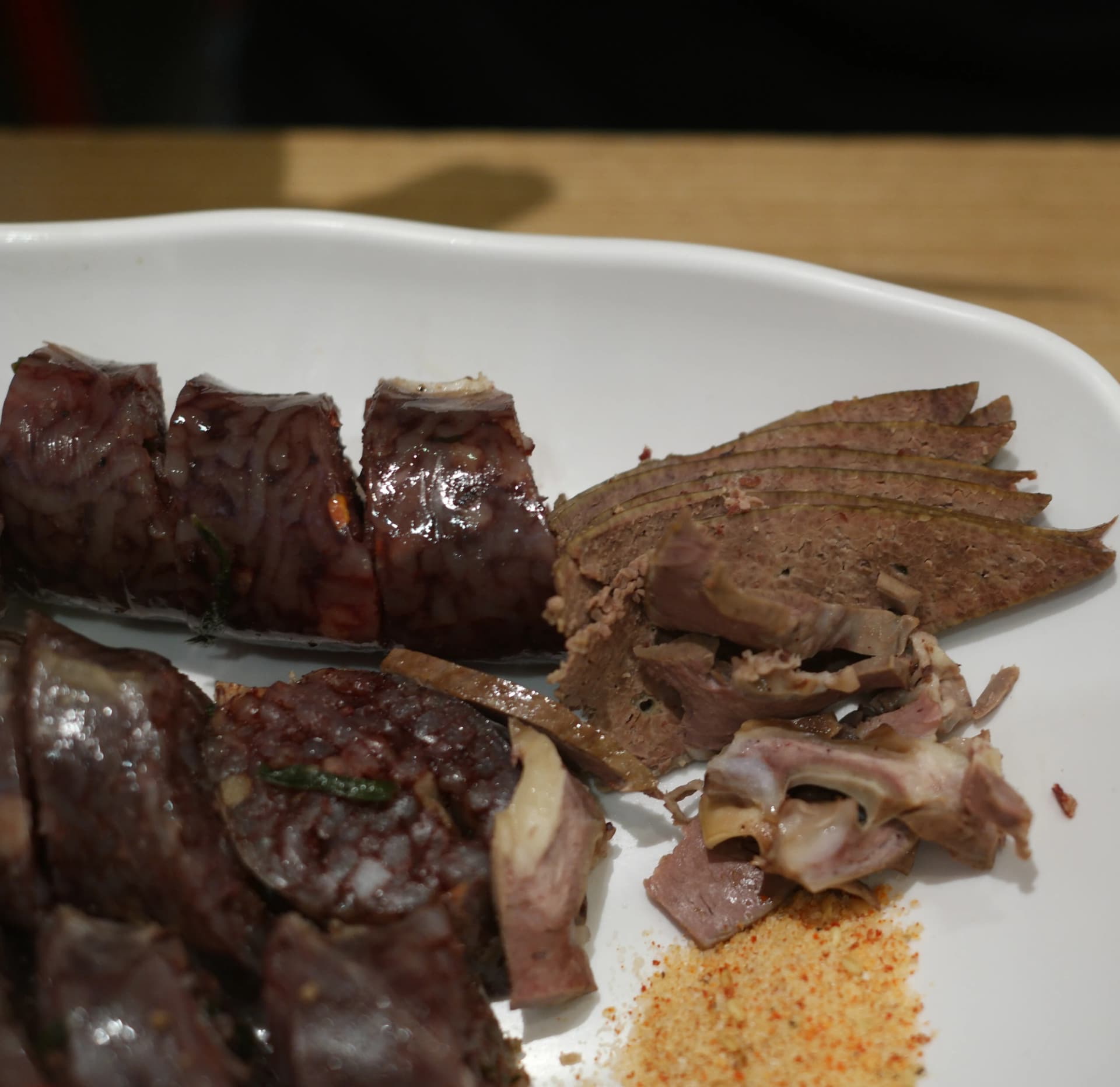
Just to be upfront — this isn't handmade sundae. The sundae you get at bunsik shops is factory-produced. Proper handmade sundae is sold at traditional markets, and it's rougher — the filling is chunkier, the thickness is uneven, and the flavour is noticeably different. But honestly? For eating alongside tteokbokki, the standard bunsik version does the job just fine.
The liver and offal that come on the side are a love-it-or-hate-it situation. People who are into it reckon it's not a proper serve without them. People who aren't won't even look at them. If you'd rather skip it, just say "no offal please" (busok ppae-juseyo) when you order — they'll swap it out for extra sundae instead. I'm a fan of the liver myself, but the other bits of offal aren't really my thing.
One piece at a time
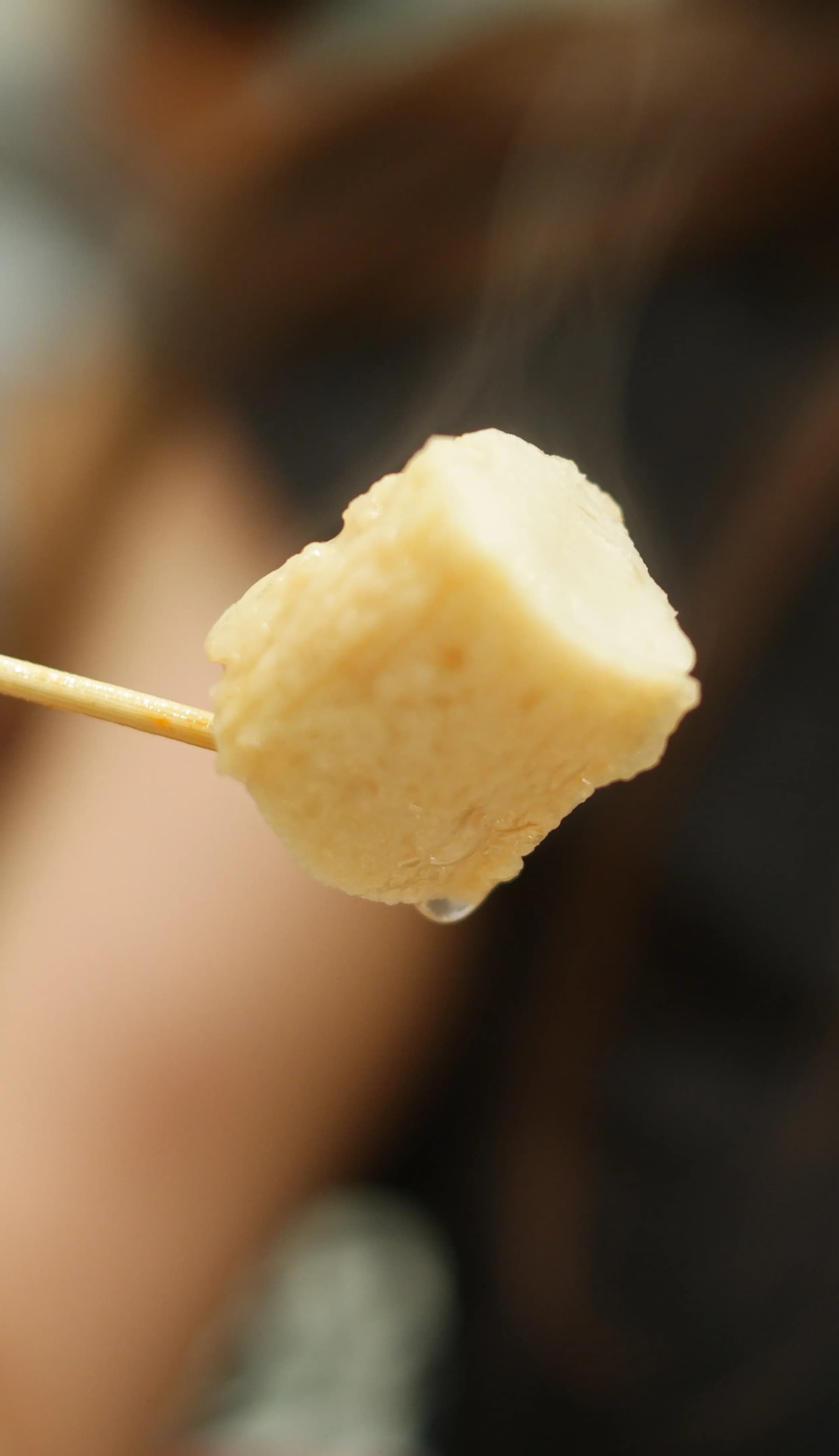
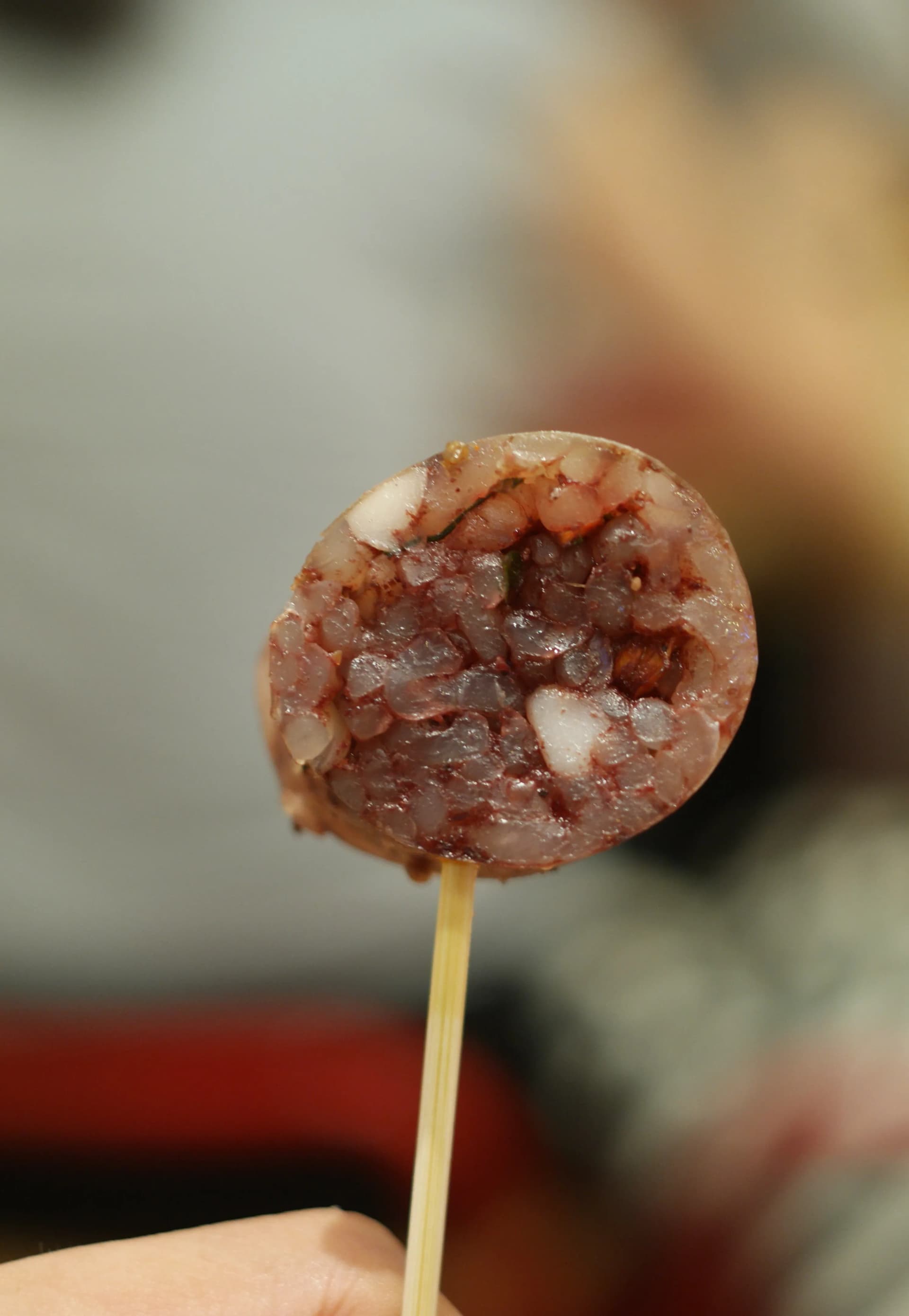
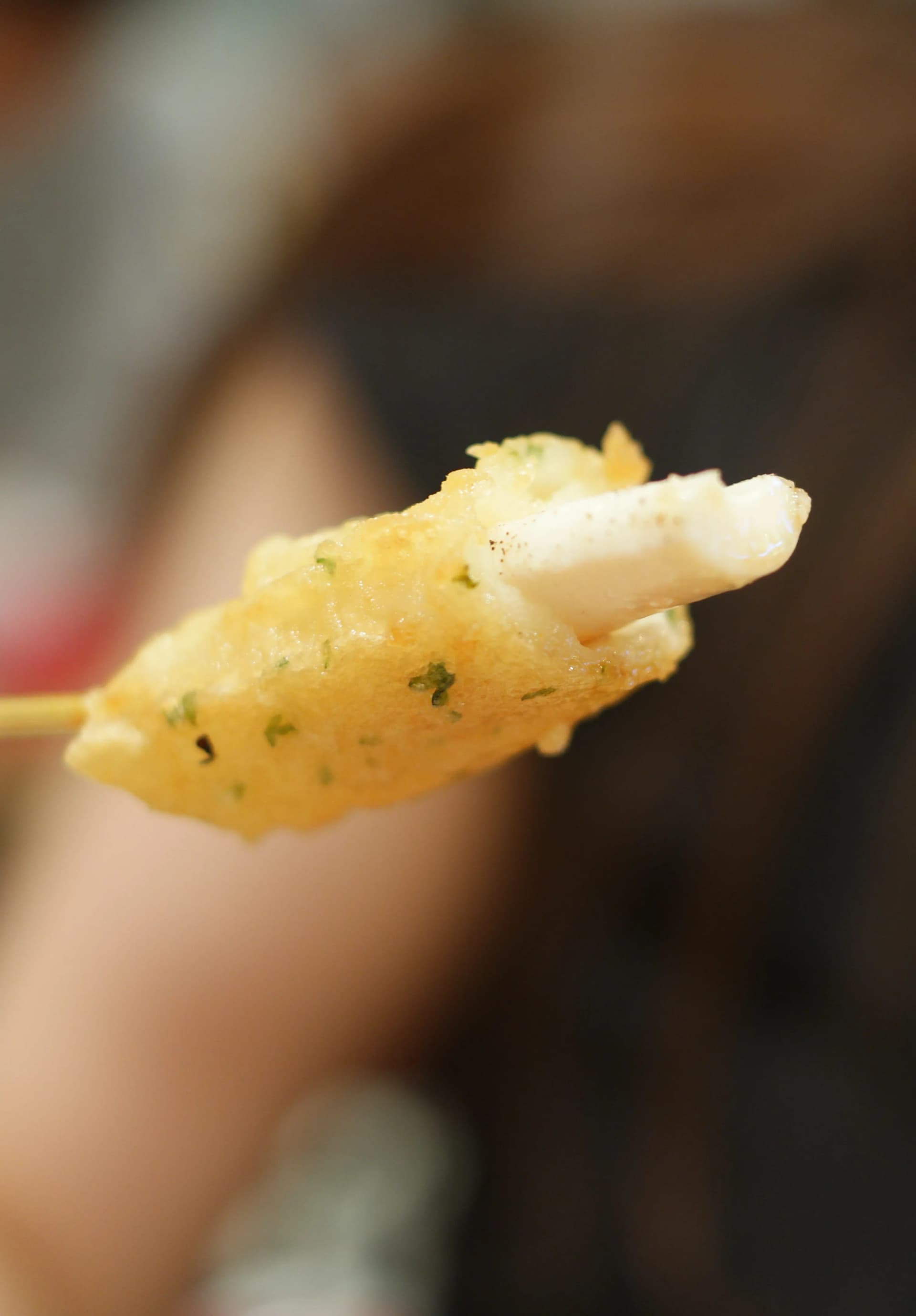
Fishcake goes on a toothpick and into your mouth in one go. The sundae cross-section shows glass noodles packed in tight. The squid fritter has white tentacles poking out through the batter. Picking things up one by one and eating them with your hands — that's half the fun of bunsik. It's not a chopsticks-and-fine-dining kind of situation. You jab things with toothpicks, you dip them in sauce, you eat them standing up or hunched over a plastic tray. That's the vibe.
Bunsik is just everyday life
Nobody makes a reservation to eat bunsik. Nobody gets dressed up for it. There's always a bunsik shop somewhere in your neighbourhood, and when you're hungry, you just walk in.
But this humble street food runs deeper than you'd think for most Koreans. Pooling coins with your mates after school to split a plate of tteokbokki. Warming your hands on a cup of fishcake broth at an outdoor stall in the middle of winter. Ordering a plate of sundae by yourself after a late night at the office. Bunsik isn't just food — it's tied to all these little moments in life.
That's exactly how it went for me that night. I wandered into a bunsik shop on my way home from work without much thought, demolished an entire tteoksuntwio set solo, and walked out with a full belly and a good mood. That's the thing about bunsik. You go in for no particular reason, eat way more than you planned, and leave feeling genuinely happy about it.
If you ever visit Korea, make sure you pop into a bunsik shop at least once. And whatever you do, drink the fishcake broth. That's the real deal.
This post was originally published on https://hi-jsb.blog.