Harehare Bakery Daejeon: A Full Loop Through Korea's Bread City
Table of Contents
14 items
Why Daejeon Became Korea's Bread City
Mention Daejeon to anyone in Korea these days and bread comes up within about thirty seconds. Whenever I tell people I'm heading down there, someone always chimes in: "Loads of bakeries there, aren't there." They're not wrong. The city genuinely has a stack of brilliant independent bakeries. Korean bakeries tend to mash European baking up with local ingredients, or chuck together combinations you'd never see coming, and Daejeon has a particularly strong bakery culture. That reputation has basically cemented itself now. Which is probably why I always feel obliged to stop at one bakery or another whenever I'm passing through. So when a summer trip took me through Daejeon, I pointed the car at Harehare Bakery's Gasuwon branch.
Harehare Gasuwon Branch
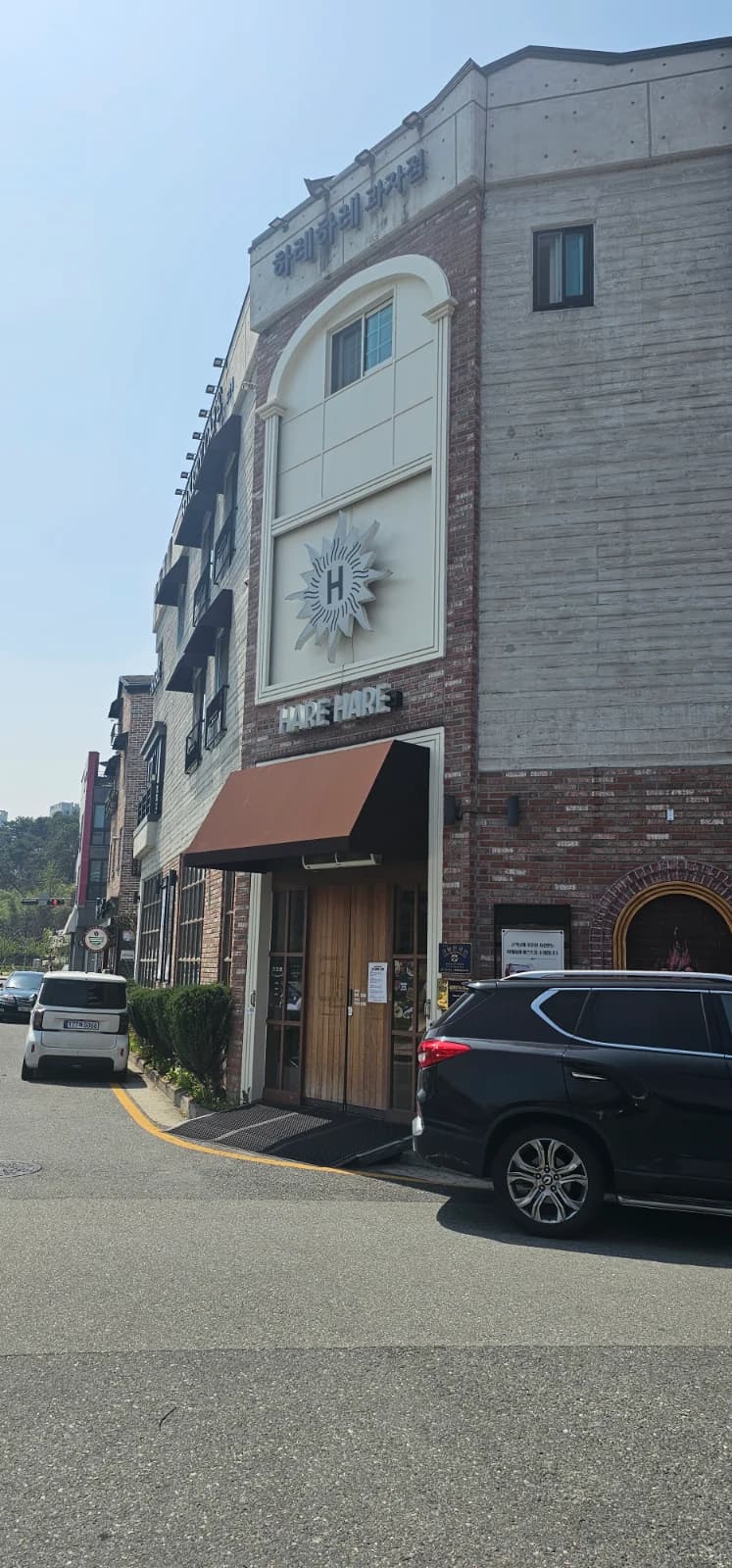
The building's bigger than I expected. It sits right on a street corner, and that sun-shaped logo catches your eye from the end of the road. The exterior mixes brick and concrete — sturdier-looking than your average bakery. Honestly, it reads more like a concept shop than somewhere you'd buy a loaf. I parked at the public car park round the corner and walked over.
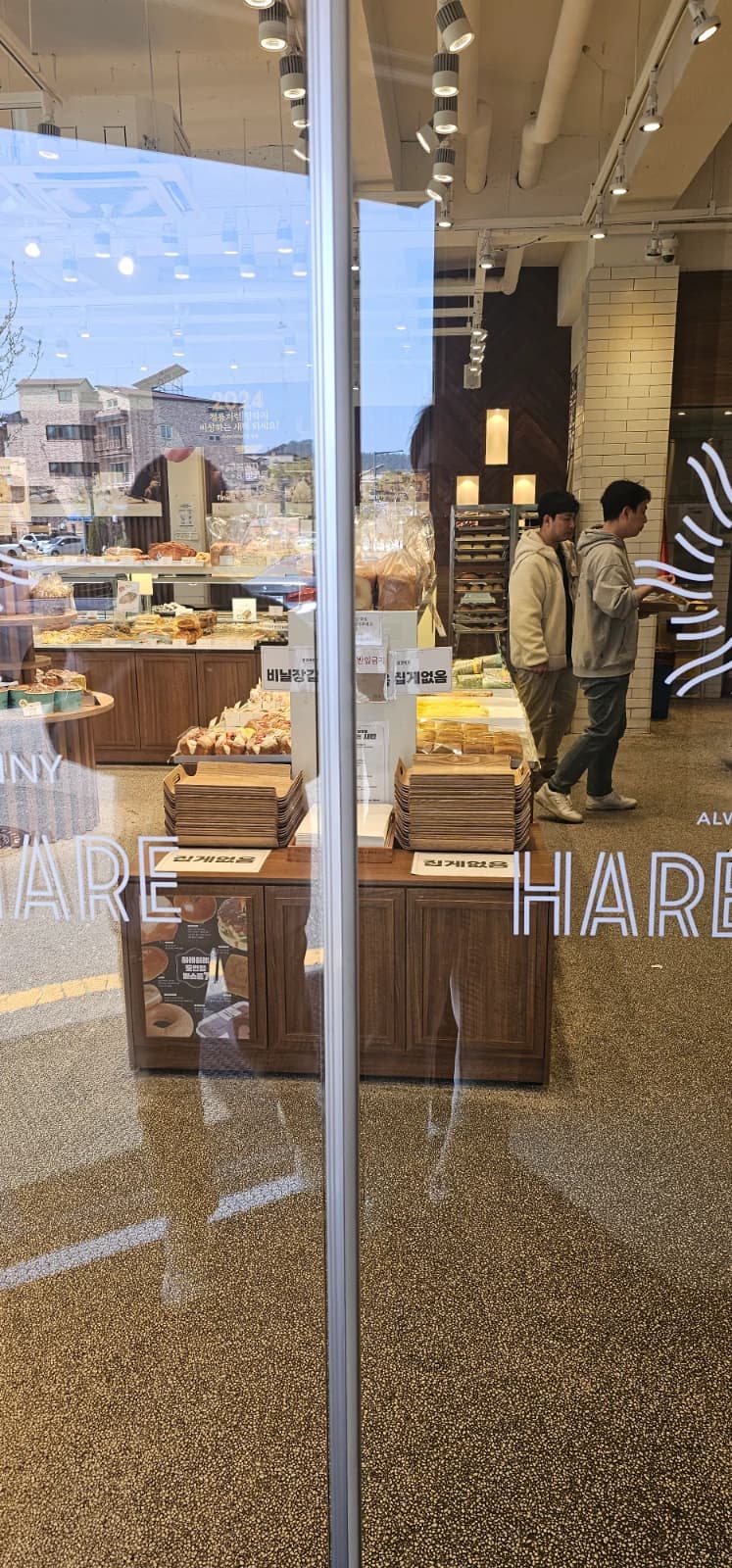
Through the glass doors, you get the measure of it straight away: smaller than it looks from outside. The name and the building suggest something cavernous, but once you're inside it's actually pretty tight. A handful of display stands crammed with bread, and with about a dozen customers browsing the place feels full. That said, the stacks of trays and the tidy system — everyone grabbing their pieces with plastic gloves rather than tongs — kept things moving smoothly.
The First Display
Melon Cream Bread and the Spring Onion Doughnut
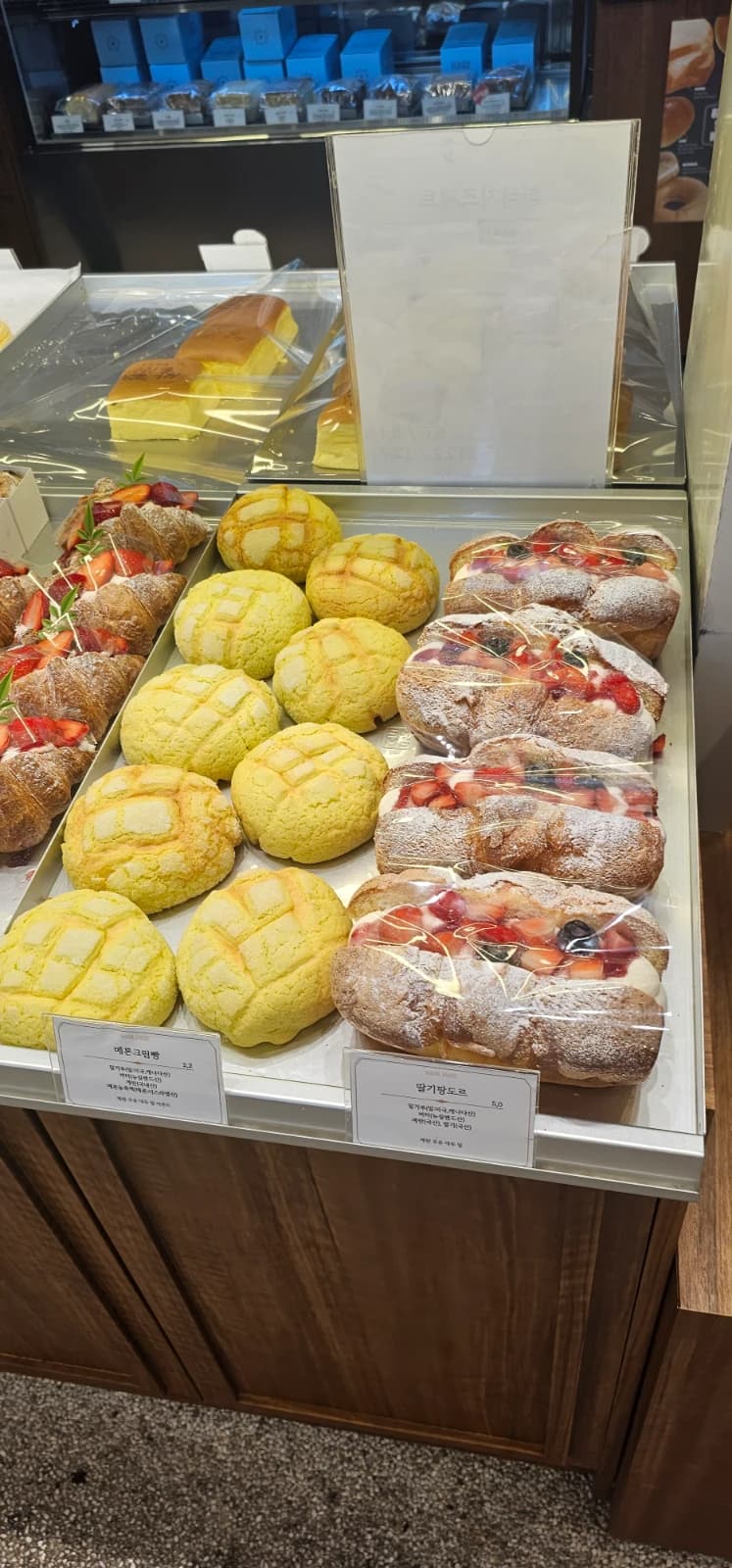
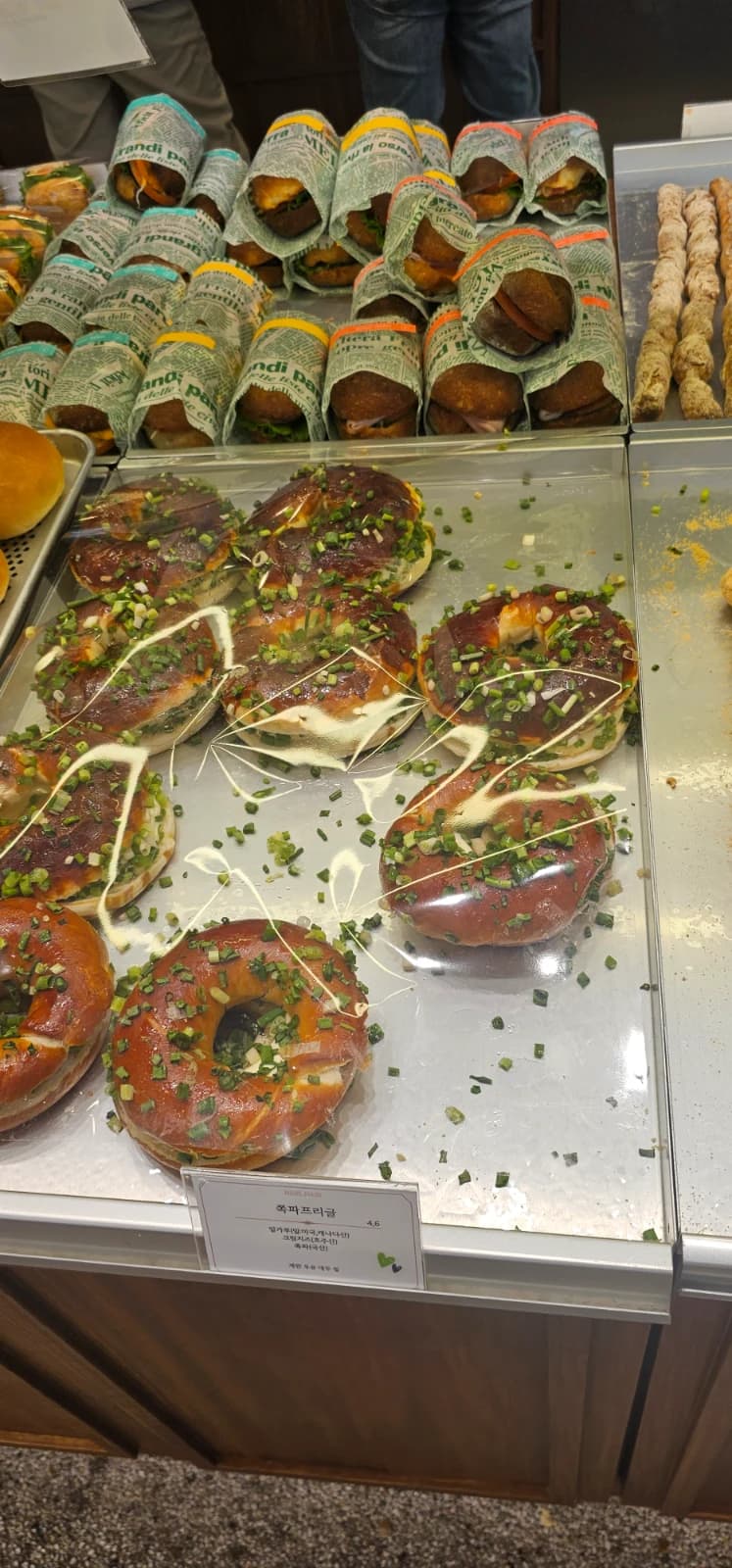
I stopped dead at the first display. I hadn't actually planned what I was going to buy. Melon cream bread took up more than half of one whole stand, and next to it sat something called Ttalgi Bbangdoro — strawberries and cream piled on top of a loaf. The price tag said 5,000, and the melon cream bread was 3,200. No unit printed, which briefly confused me, but everything's in thousand-won units here. In GBP, that's roughly £2.80 and £1.80 respectively.
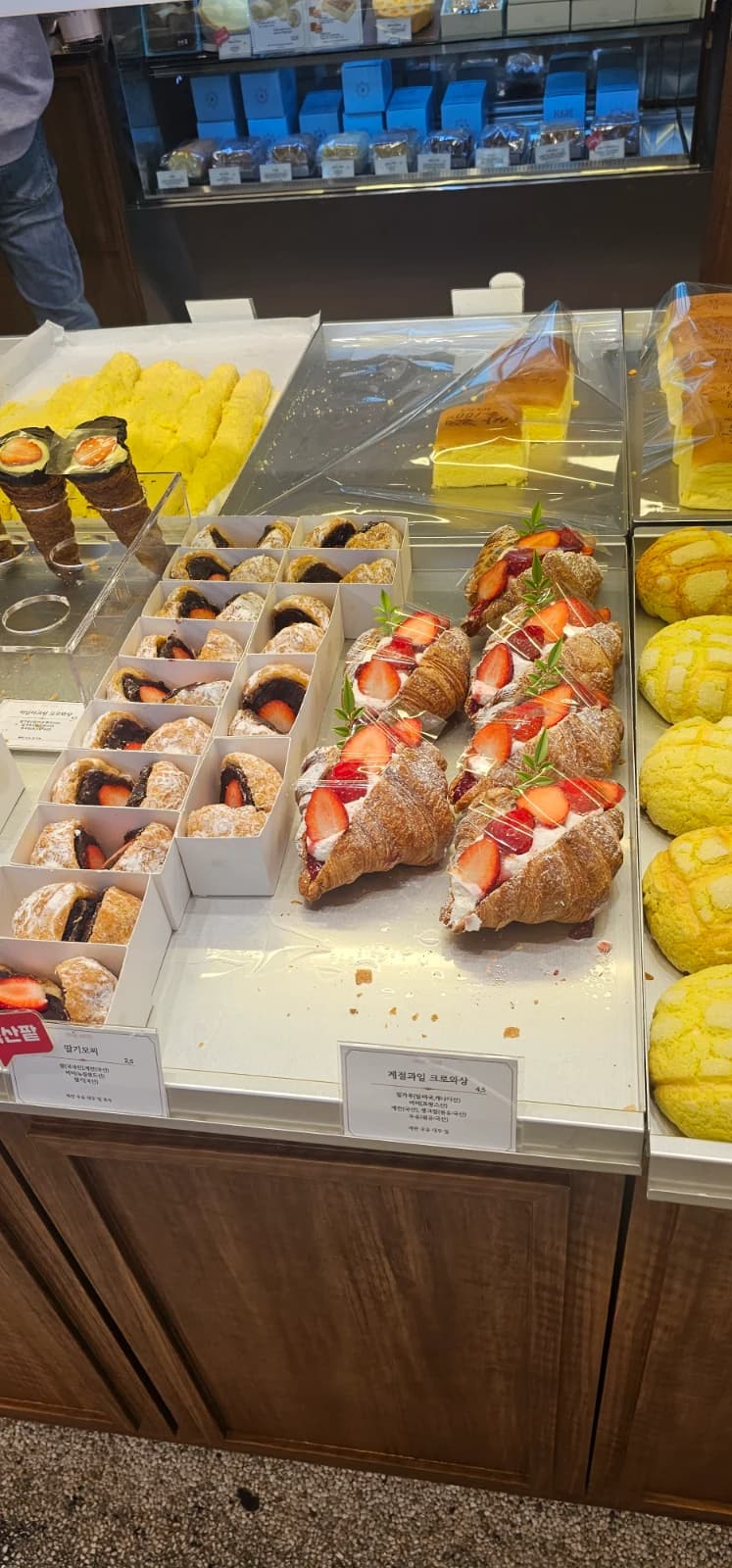
Moving to the next stand I found seasonal-fruit croissants. Strawberries heaped on top with a dusting of icing sugar — pretty extravagant for a croissant, actually. Strawberry mochi too. Clearly someone had built a whole strawberry-led menu for the season.
But Jukpa Pregel (the spring onion doughnut) threw me a bit. A doughnut topped with spring onion and a mayo drizzle, in a bakery. Standing there all salty and savoury in a sea of sweet things, weirdly at home next to the newspaper-wrapped sandwiches on the adjacent shelf.
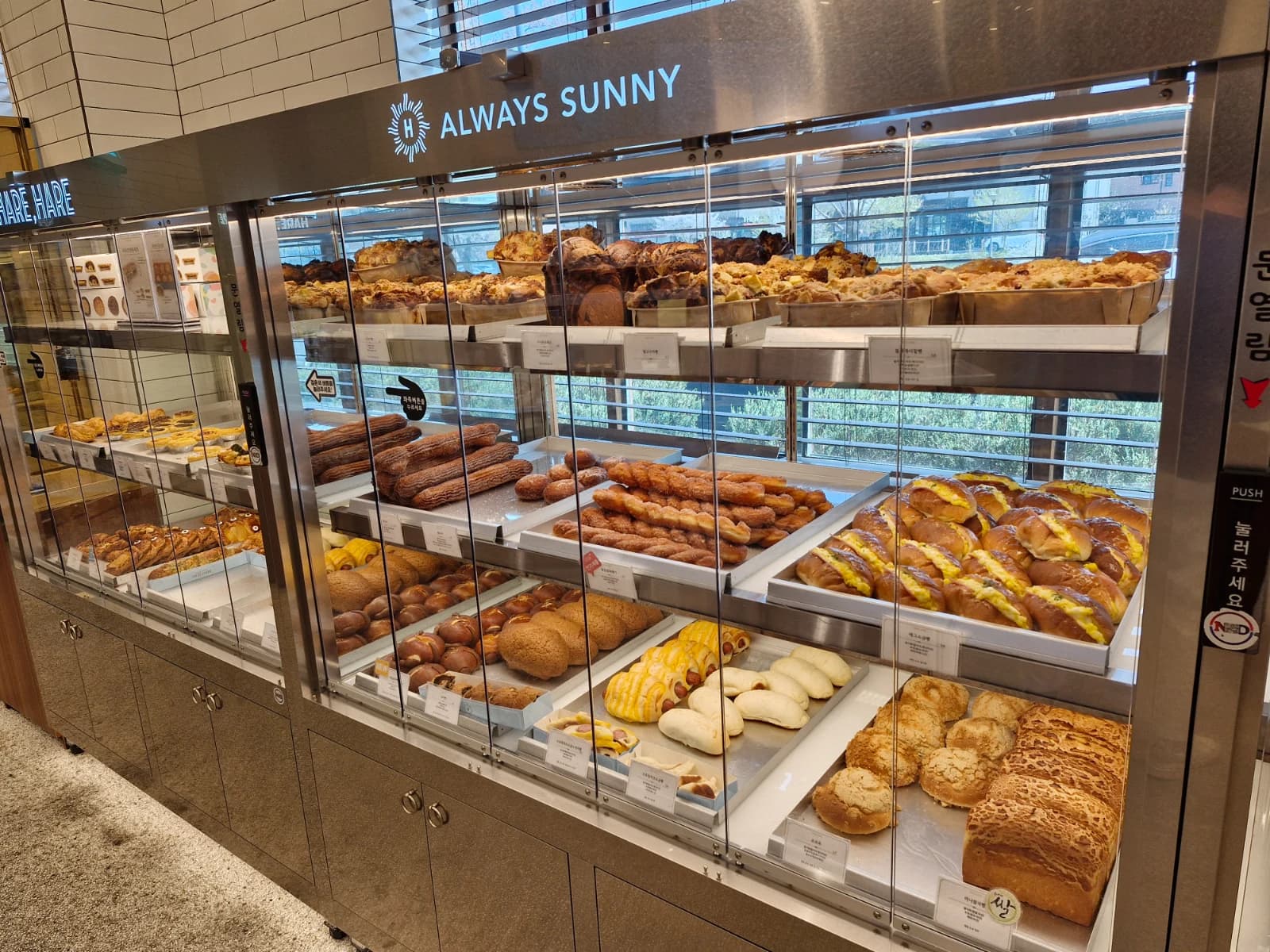
The display split into two zones. One side leaned sweet — long éclair-style pastries, soboro buns, sausage rolls, all stacked in layers. Up on the top shelf sat some rough-hewn larger loaves, high enough that you'd need a proper reach to get at them.
The Yakisoba Bread Zone
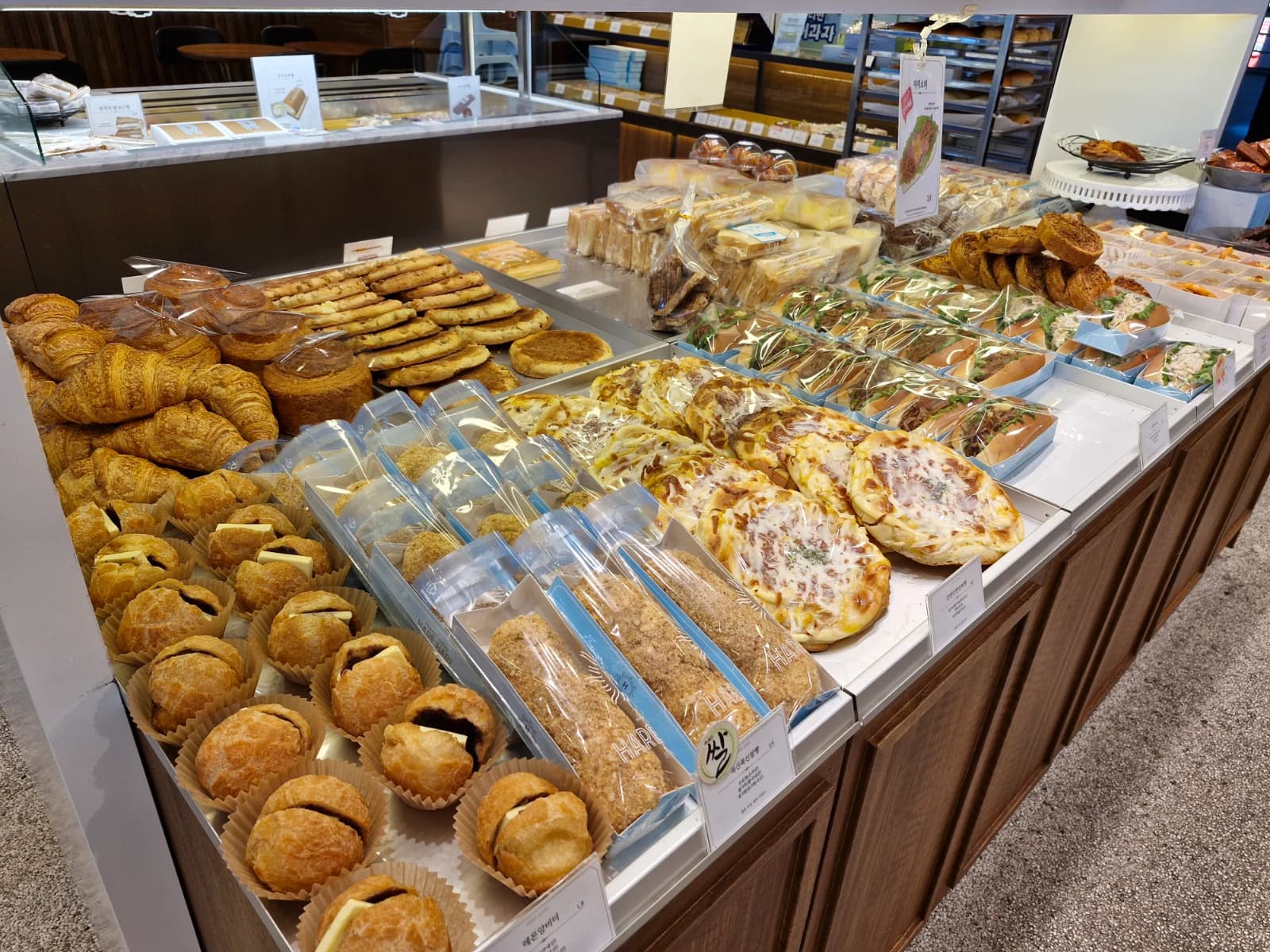
Round the other side on the open-top counter, things shifted again. Croissants, something shaped like an apple turnover, pizza bread, packaged white bread, and a pile of sandwiches — all mixed in together on one table. Almost no categorisation, just bread-being-bread. I spotted packaging marked with the rice symbol too, meaning rice-flour loaves. I'd walked in planning to buy one thing, and this zone made that plan feel optimistic.
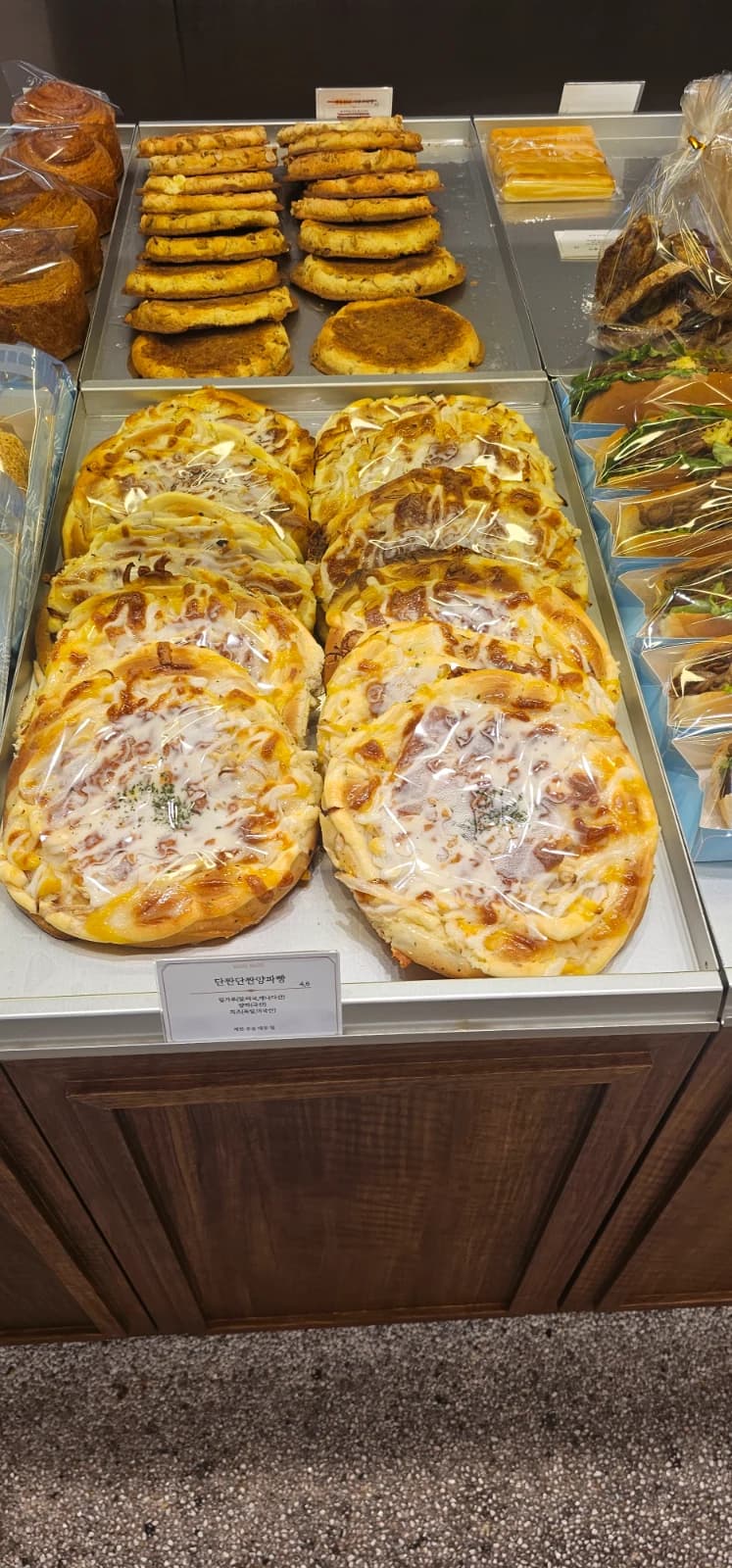
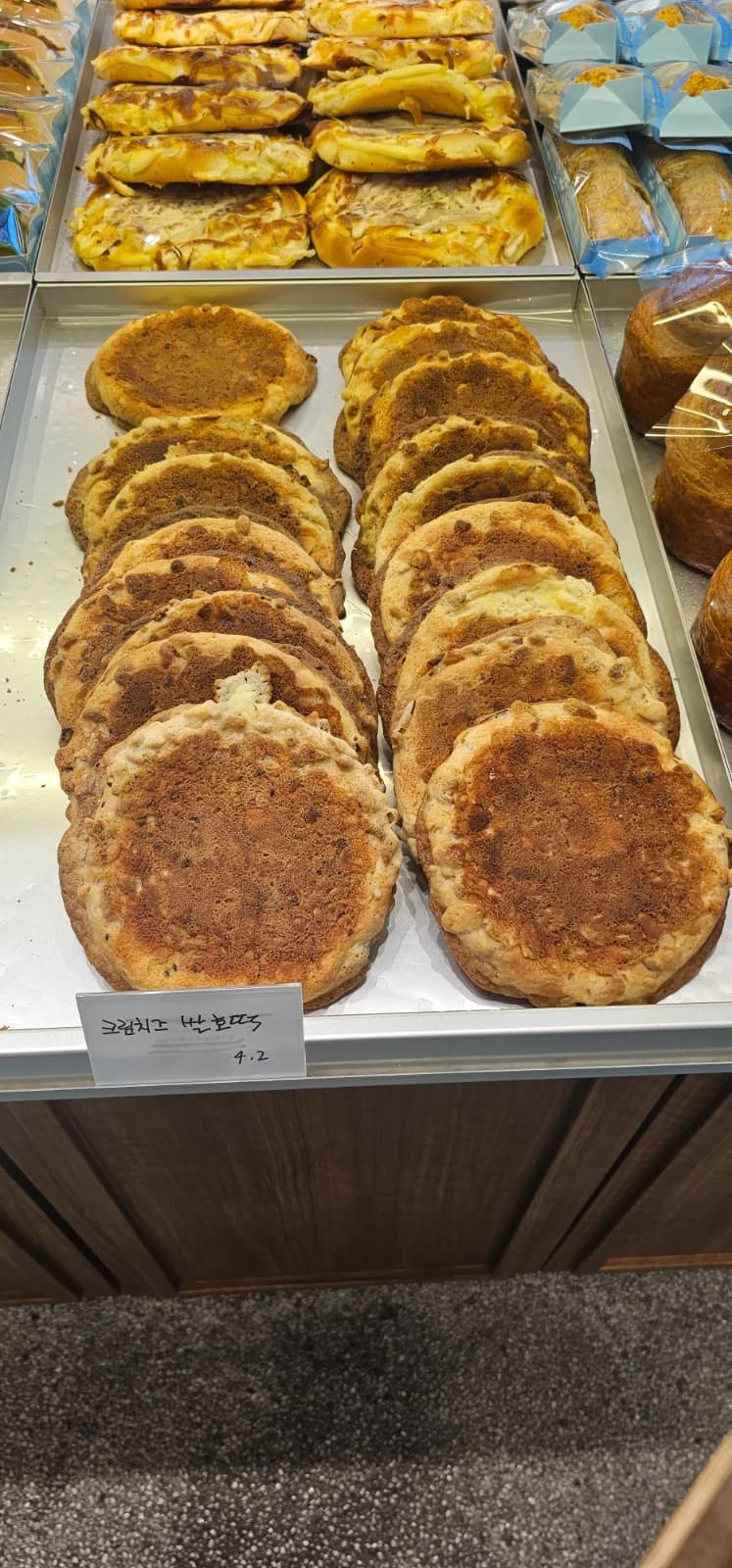
This is where the line between bakery and snack bar started to blur. Koreans have a phrase for the sweet-salty-sweet-salty flavour ping-pong — "dan-jjan dan-jjan" — and the bread literally named after it had cheese fused onto the crust, throwing off an aroma that made my stomach complain. The 4,200-won (about £2.35) crumbcheese banhotteok puzzled me by name alone, let alone the look of it. Twenty-odd round flattish things that couldn't decide whether they were hotteok pancakes or scones, stacked in neat rows.
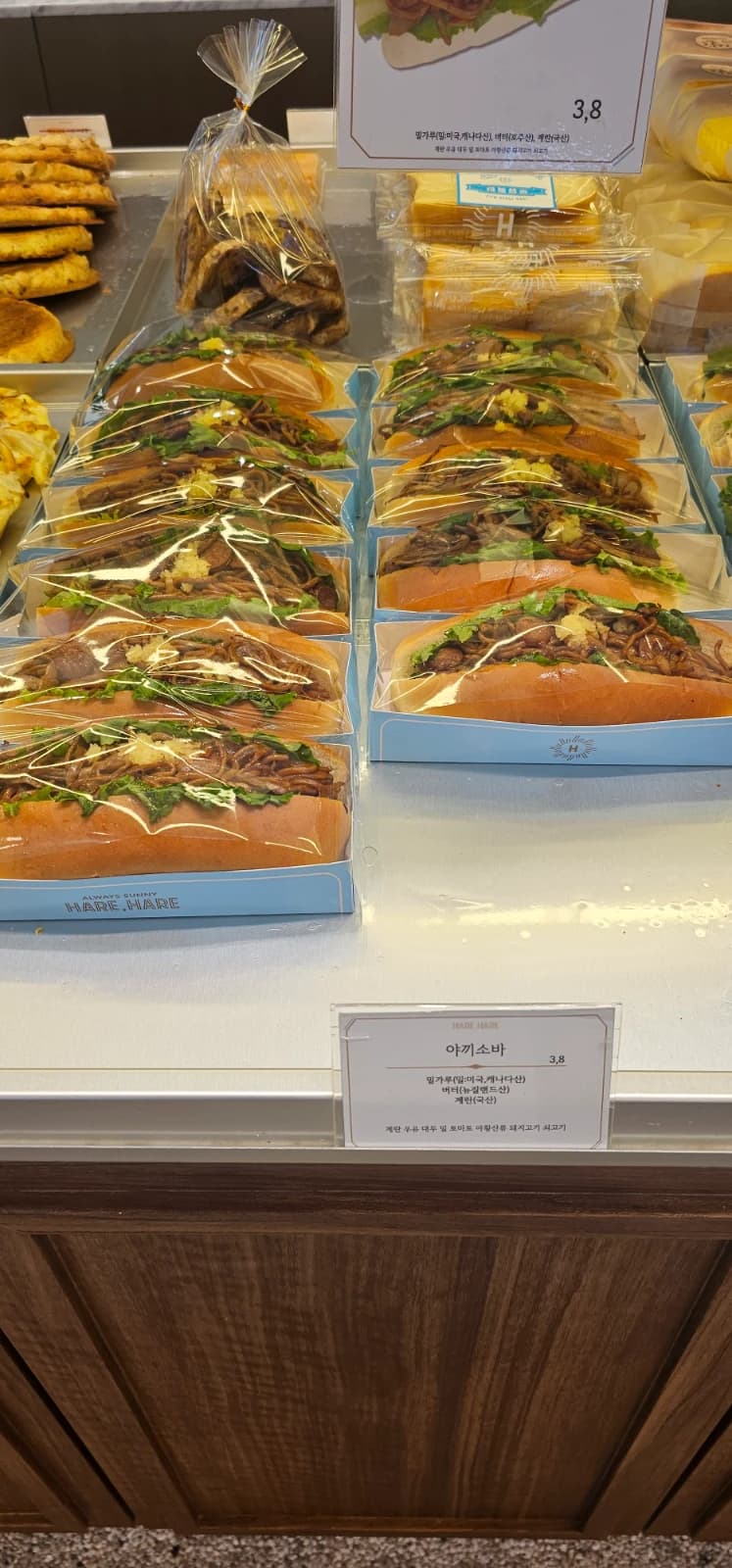
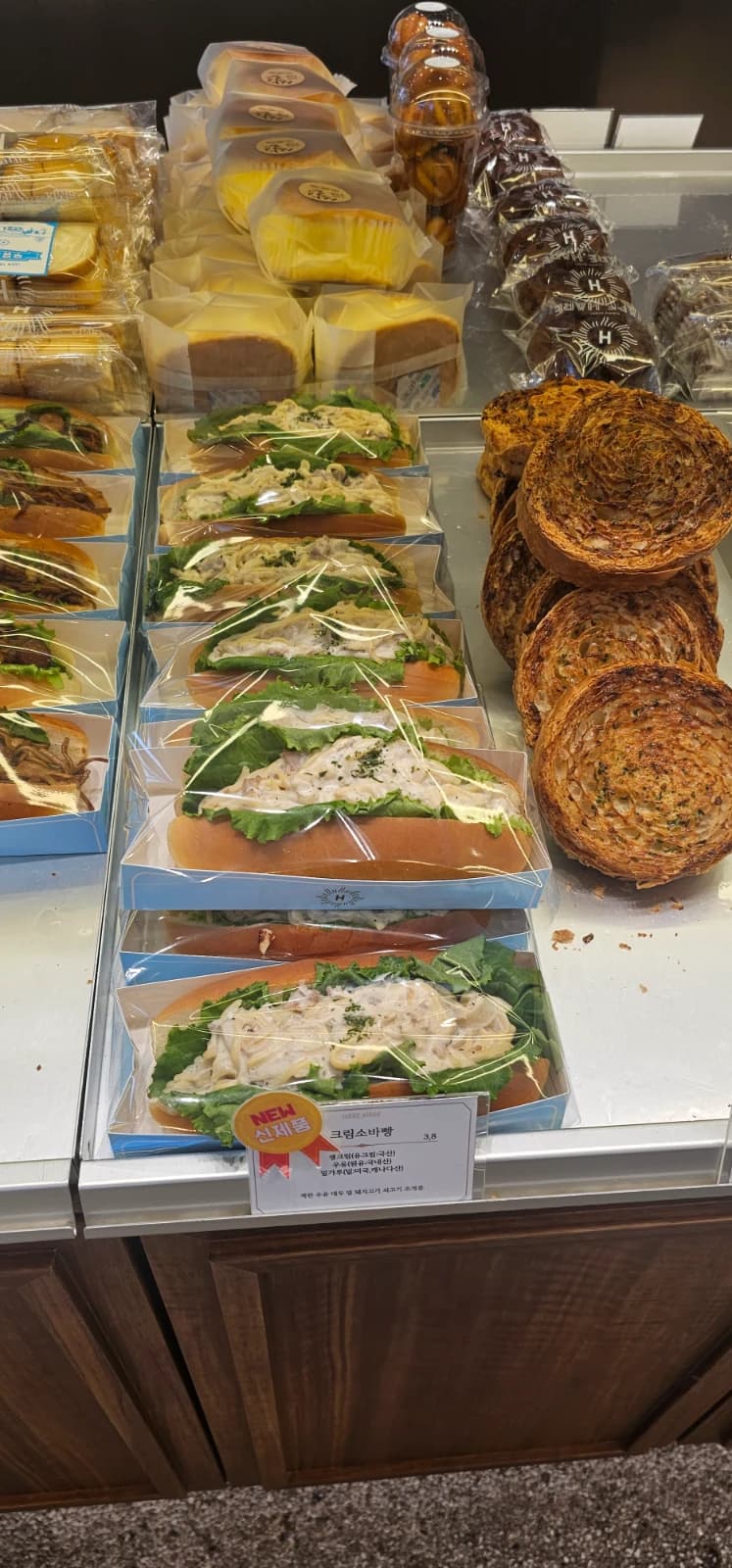
But yakisoba bread was the one that made me pause. Fried noodles stuffed inside a bread roll — a fairly common combo in Japan. 3,800 won (£2.15), and next to it sat cream yakisoba bread with a "new product" sticker, fried noodles tossed in cream sauce instead. I stood staring at that one for a while.
Castella and the Throwback Mammoth Bread
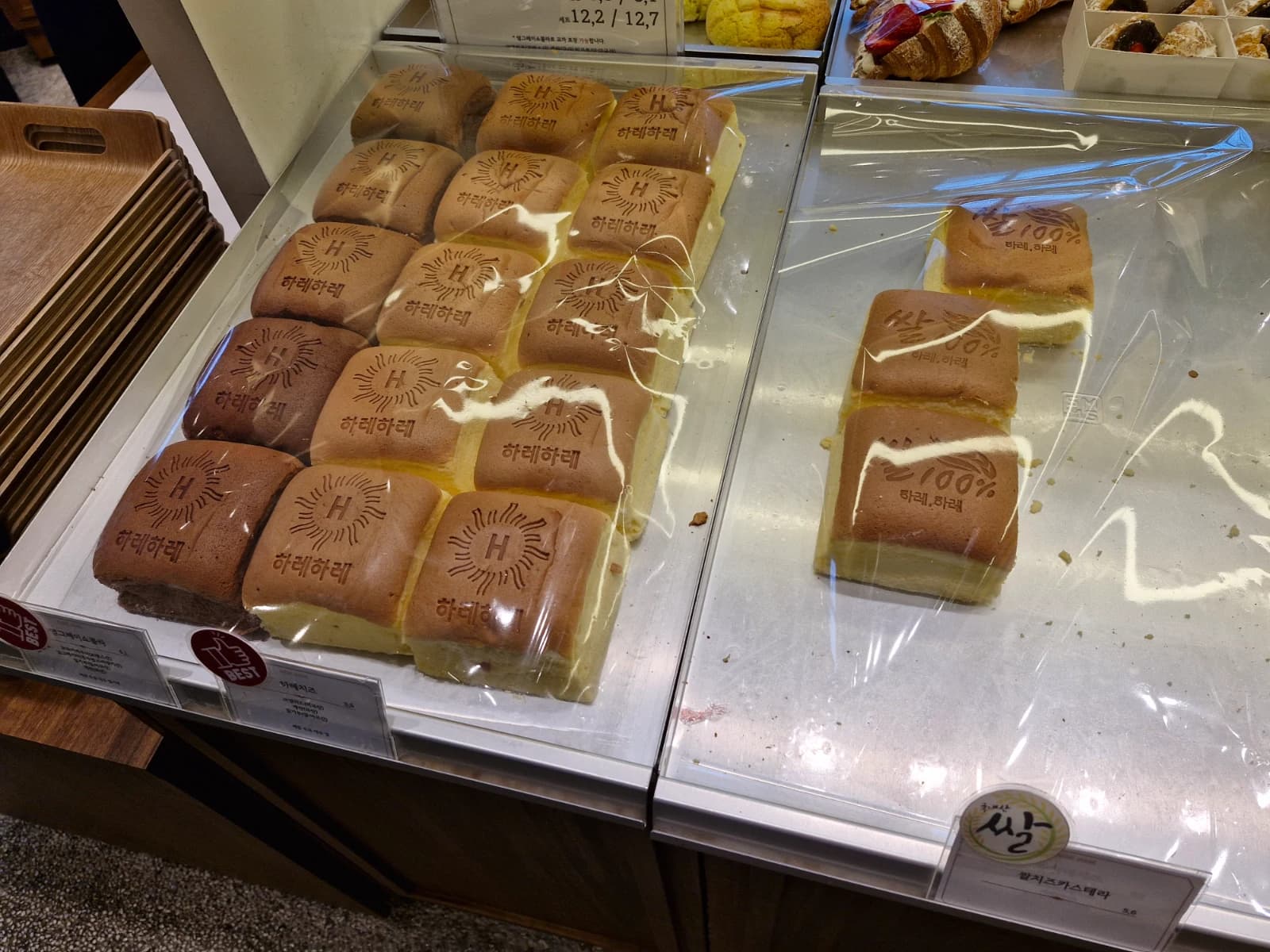
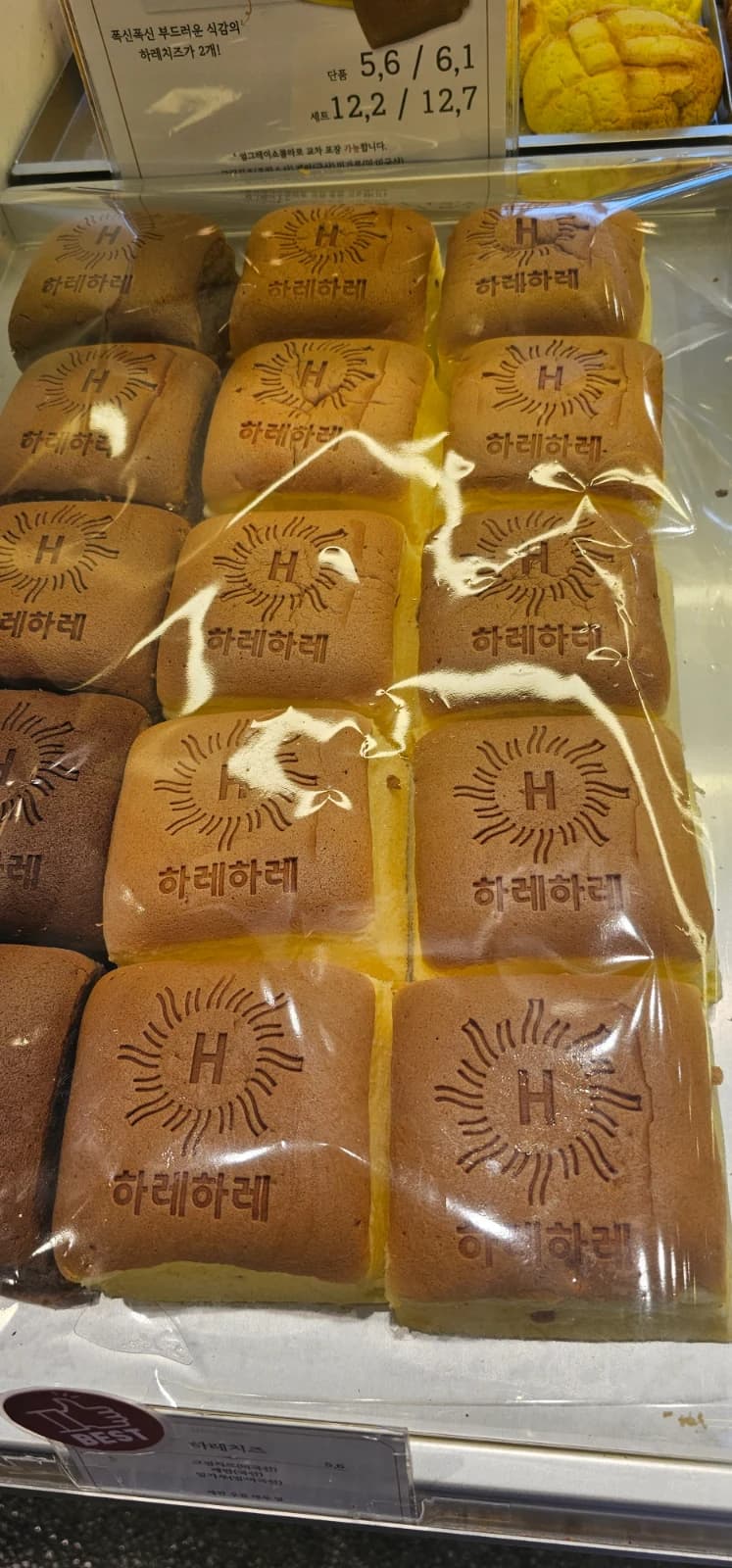
Right by the till, this caught my eye: individual castella cakes with the Harehare logo branded onto each one, butter and chocolate versions side by side. Single pieces ran from 5,600 to 6,100 won (£3.15–£3.45), with gift sets at 12,200 or 12,700 won (£6.90–£7.20). Plenty of people were picking these up as presents. That logo branding does a clever thing — suddenly it's not just bread, it's something pre-packaged for gifting.
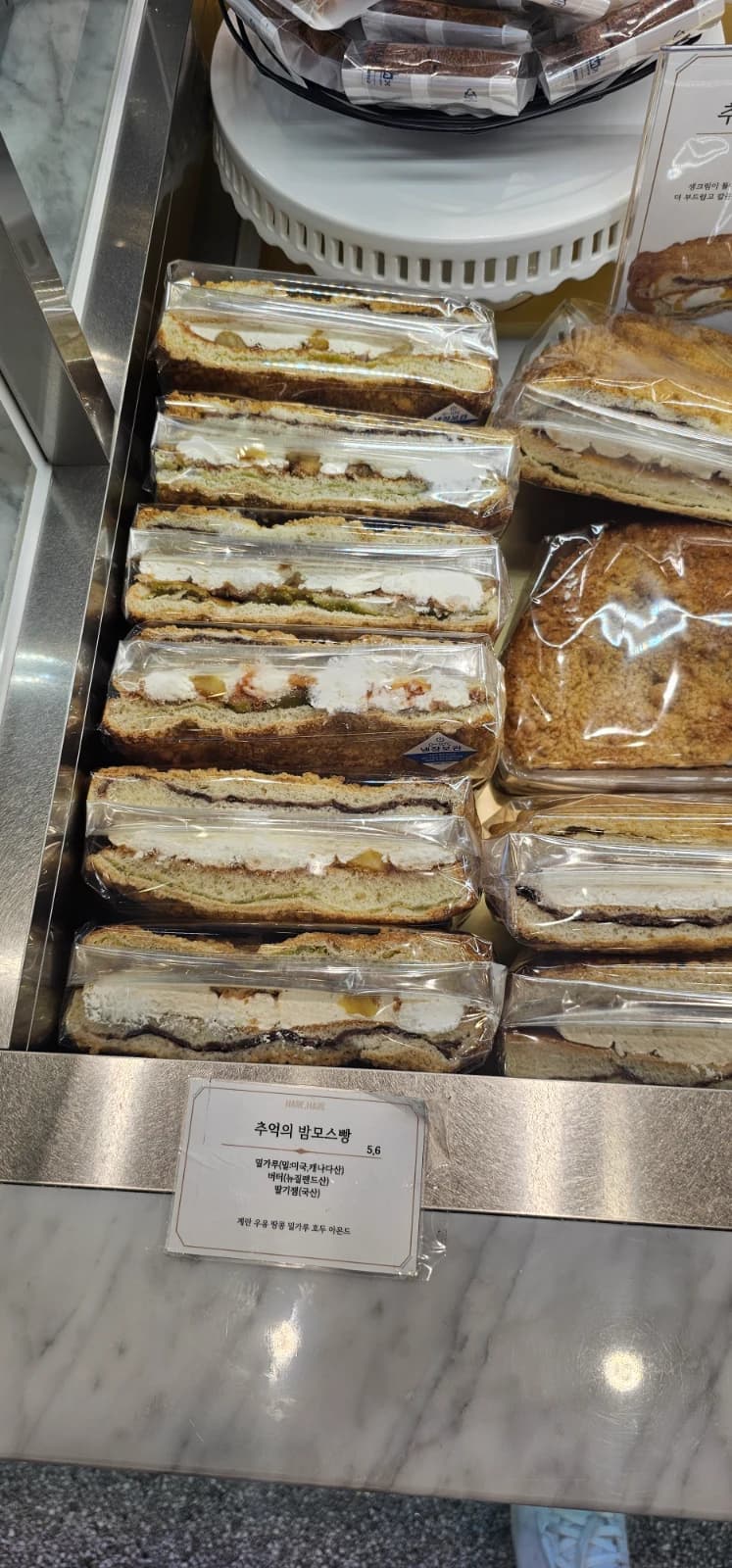
This is the nostalgic mammoth bread that always comes up in Harehare conversations. 5,600 won (£3.15), and when you see it side-on there are layers of cream and what looked like either red bean paste or strawberry jam sandwiched through it. Remember those chunky mammoth loaves the old neighbourhood bakeries used to sell — thick, heavy slices of white bread crammed with fresh cream? This is that, upgraded. A chilled-storage sticker meant it'd travel home safely.
The Healthy Bread Section
Chestnut Loaf, Campagne, Bagel
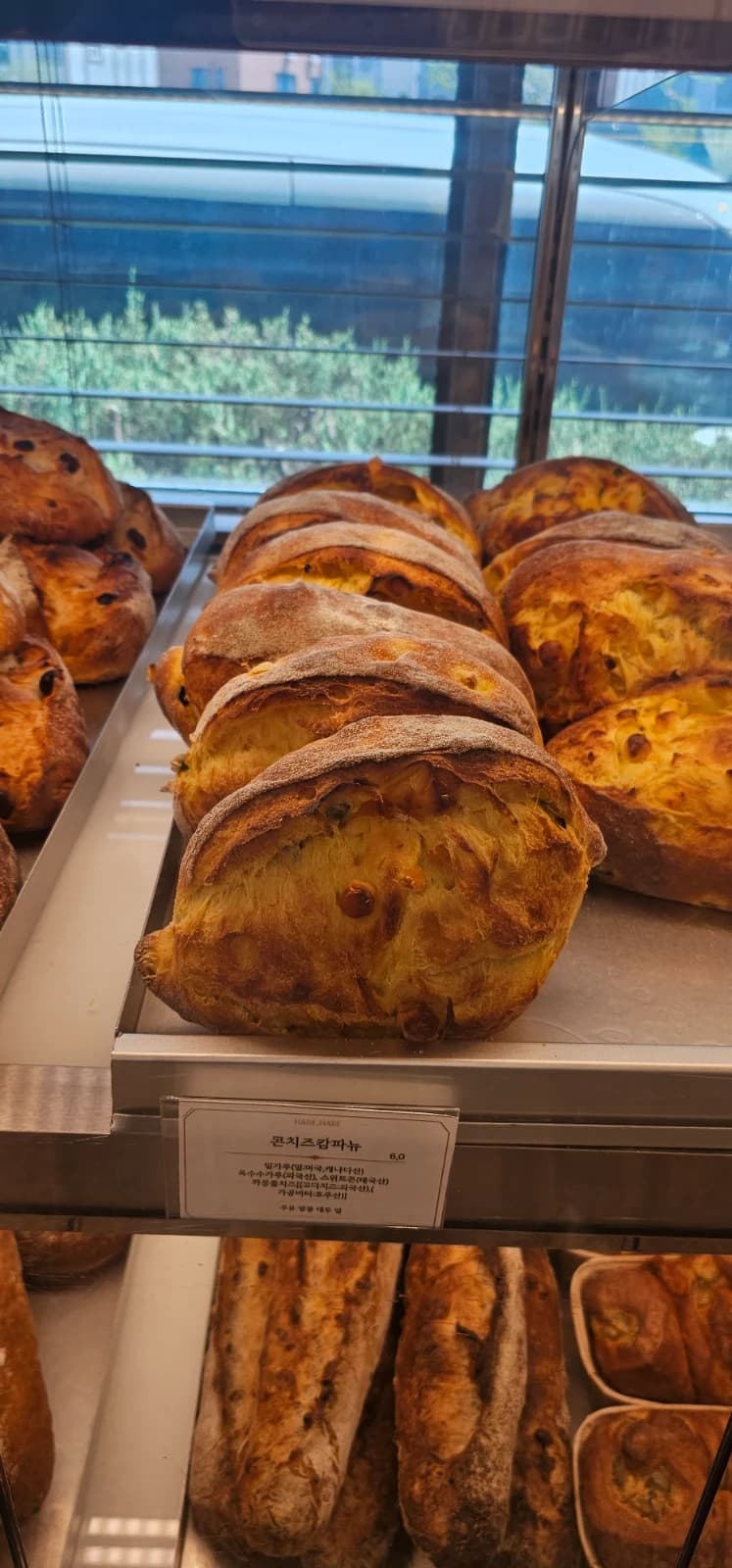
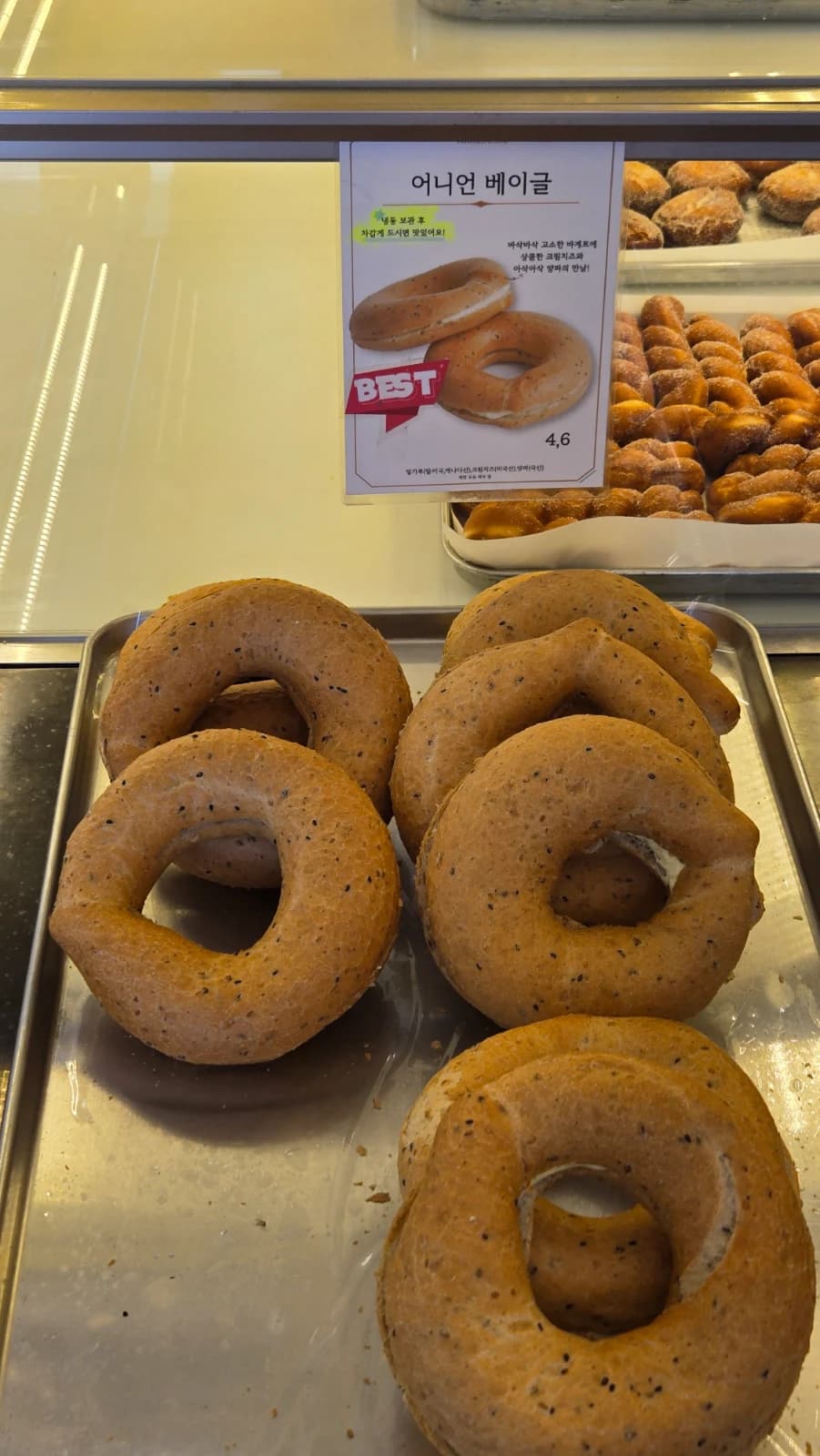
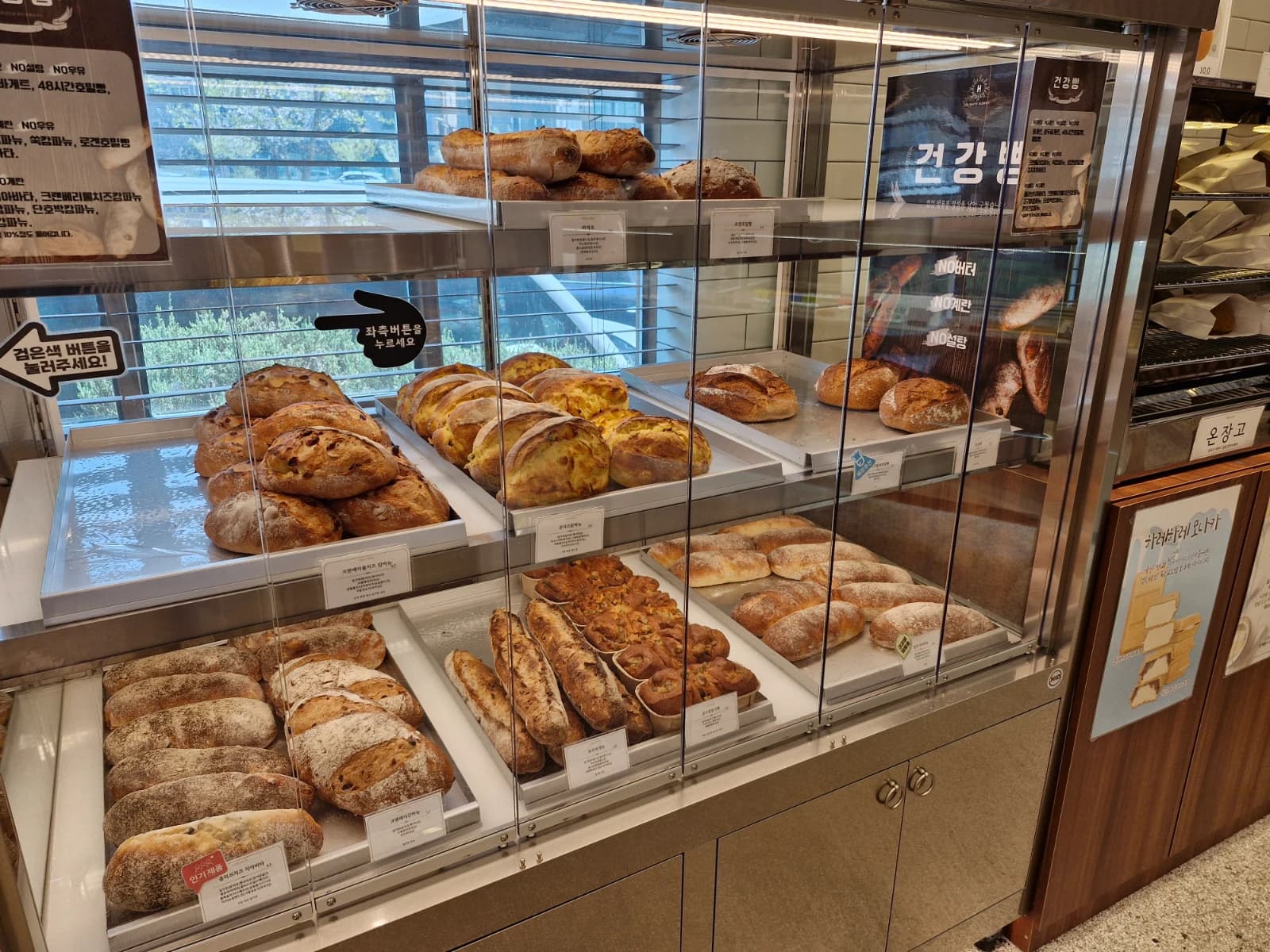
The glass case on the other side had a completely different vibe. This was the healthy bread section, with a sign spelling out: no butter, no eggs, no sugar. Below that sat heavier breads — rye loaves, baguettes, some studded with cranberries, one baked to look like crispy scorched rice. The best-seller sticker was stuck to what I think was the cranberry cheese campagne, though only a couple were left by the time I got there.
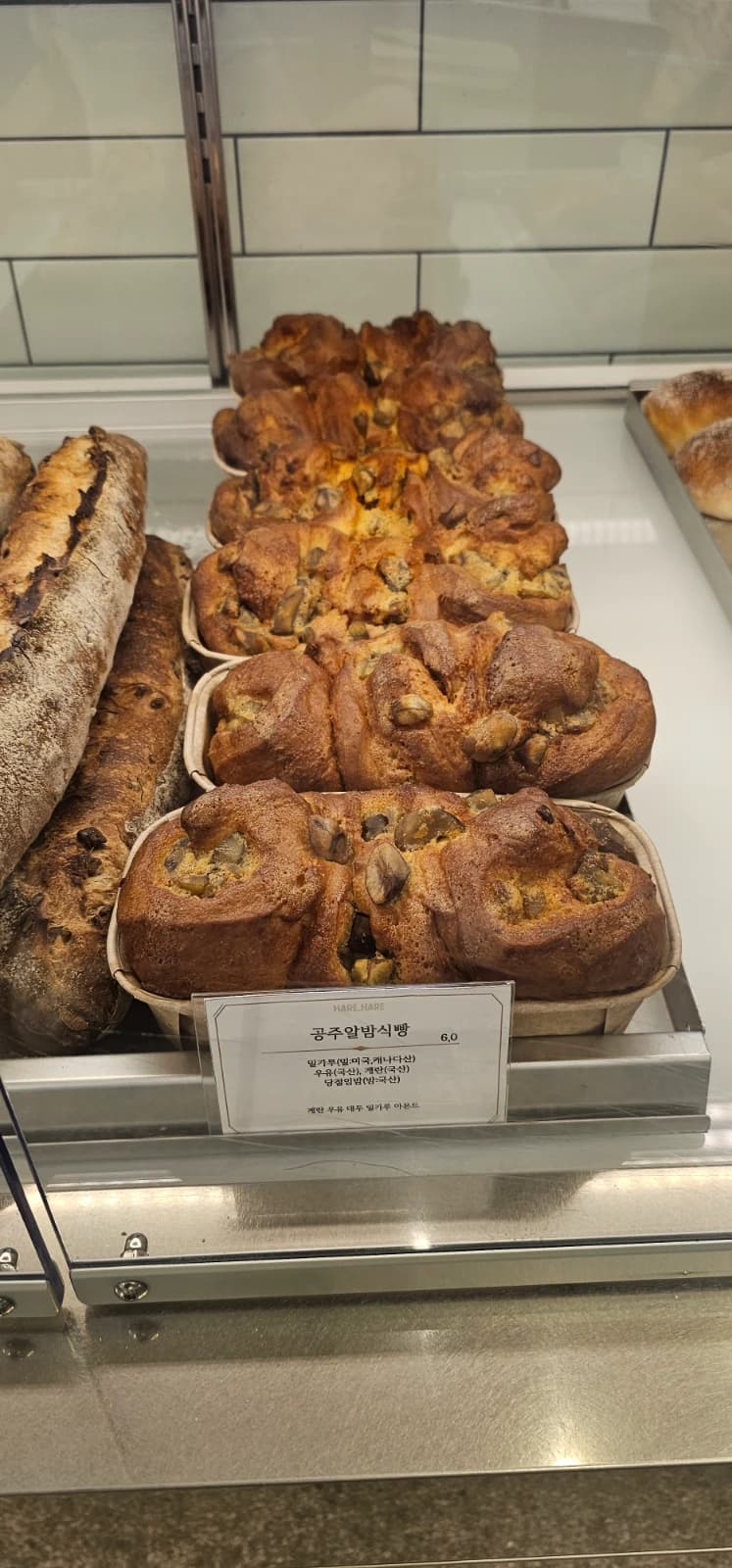
Gongju chestnut loaf sat in paper moulds like a row of soldiers, chestnut pieces poking out of the dough with cinnamon wafting off it. 6,000 won (£3.40). Next to it was corn cheese campagne — the thick-crusted rustic style you'd expect from that French village loaf, but stuffed here with sweetcorn and cheese. The cut cross-section showed dense yellow crumb packed inside. Also 6,000 won.
The onion bagel had the best-seller sticker plus a note recommending you freeze them and eat cold. 4,600 won (£2.60). Black sesame seeds worked through the dough visible on the crust, and it felt substantial in the hand. A proper-sized bagel, not one of those apologetic bakery ones.
The Zones That Stop You
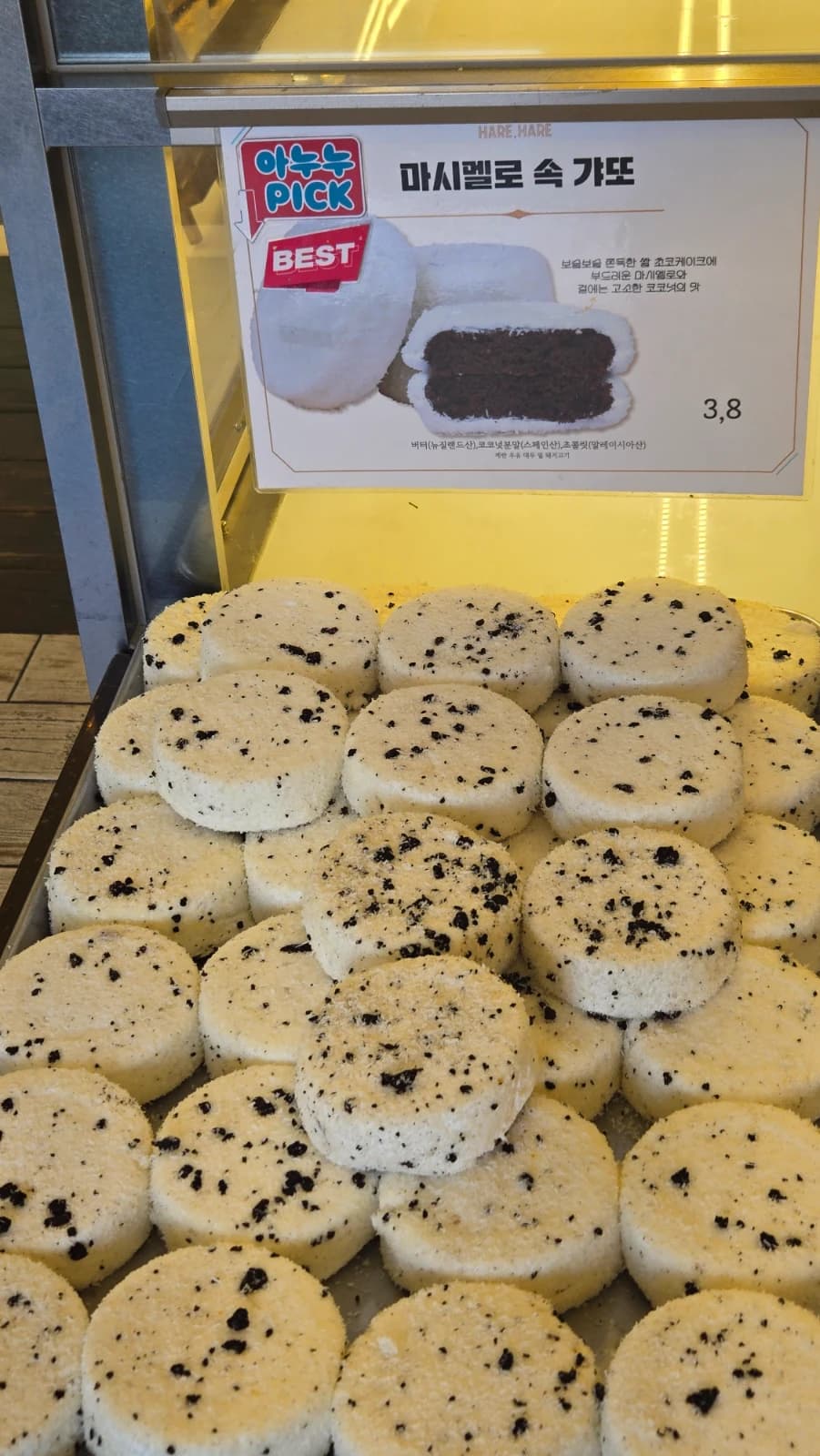
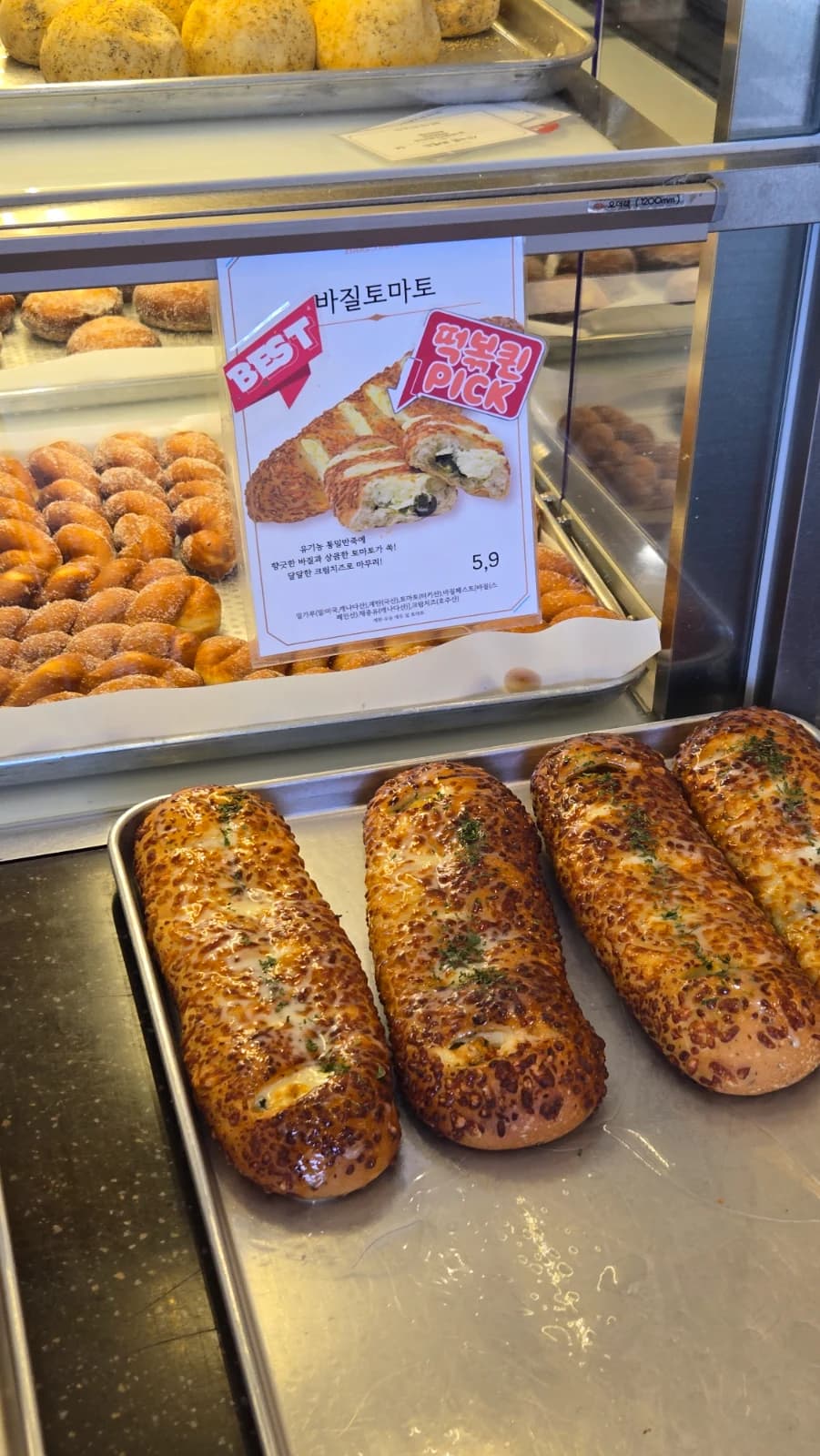
I meant to keep moving. Didn't manage it.
Marshmallow-centred gateau stopped me first. Rounded flat discs covered in coconut shavings, rice chocolate cake and marshmallow hidden inside according to the sign. 3,800 won (£2.15). Best-seller sticker attached, which I took to mean: plenty of people before me had also stopped here.
Next tray over, a long loaf looked like it had just come out of the oven, thickly crusted with sesame seeds and labelled basil tomato. 5,900 won (£3.35). The description mentioned organic dough with basil and tomato, finished with cream cheese, and the baked smell drifted out hard enough to reach the queue. I genuinely wavered on this one.
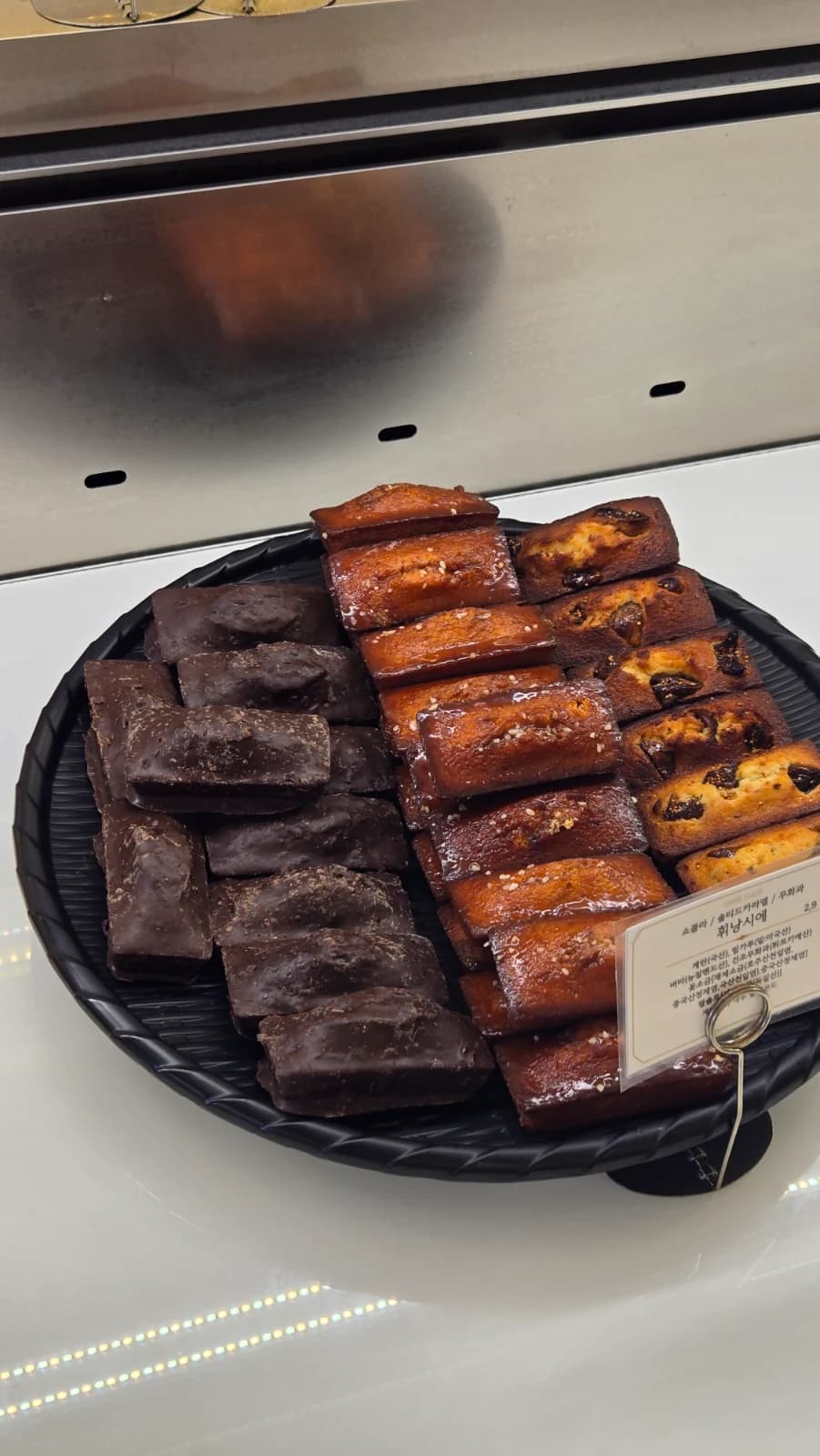
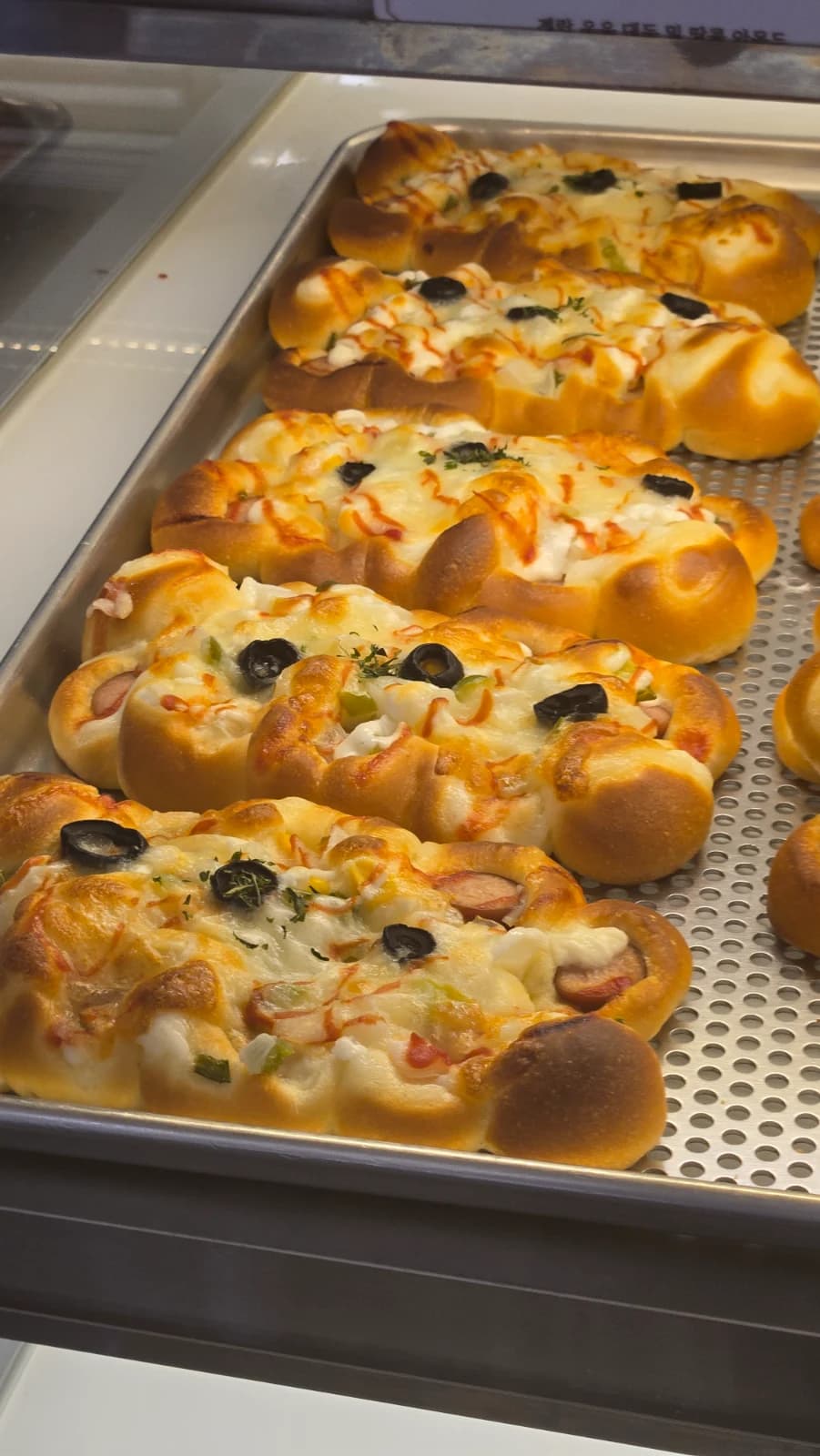
The financiers were hard to walk past too — one platter holding chocolate, salted caramel, and fig versions together. 2,900 won (£1.65) each. These are small flat rectangular French cakes made with a lot of butter, and right next to them a tray of olive pizza bread was still cooling from the oven.
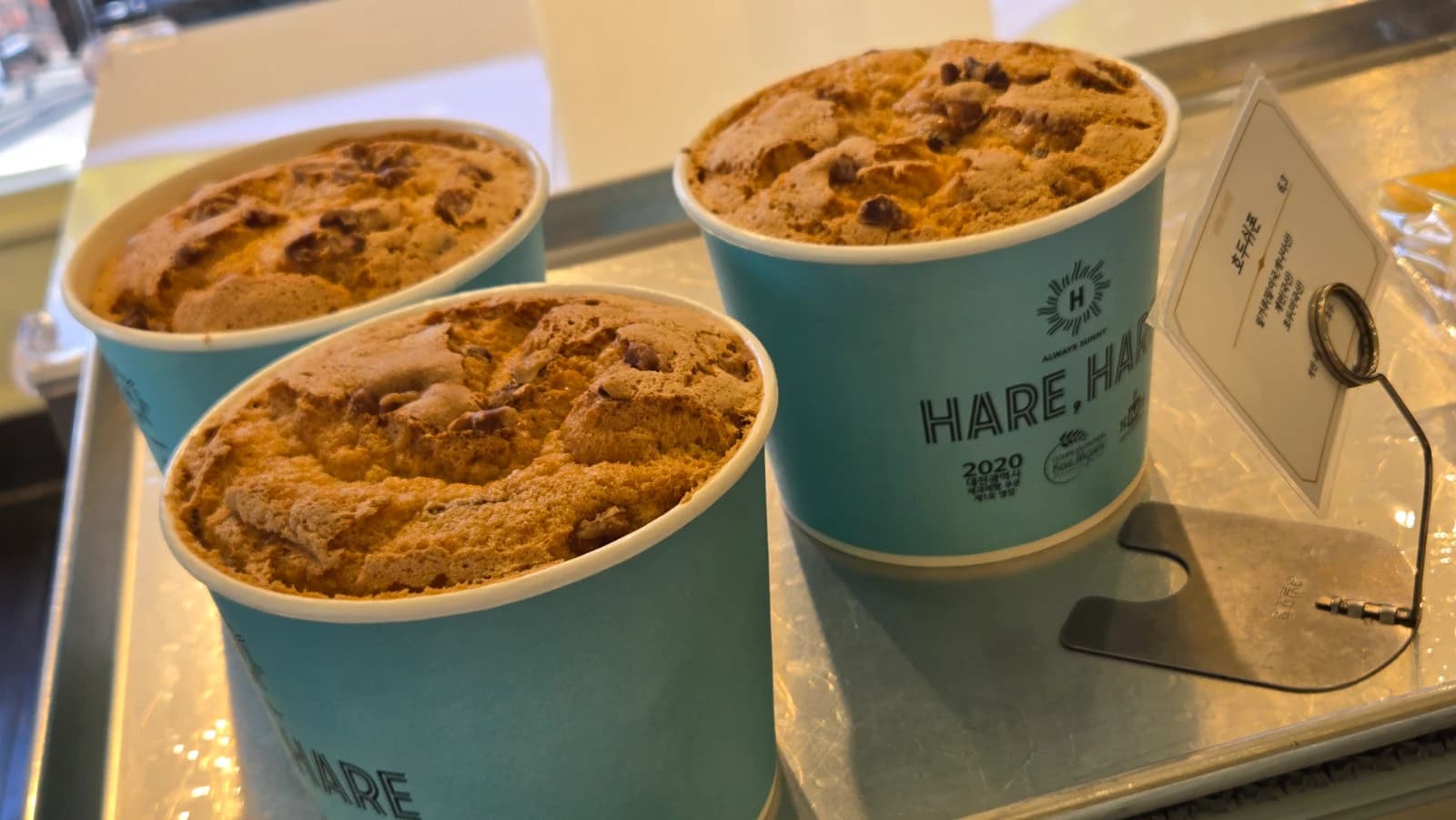
Near the till, a blue cup caught my eye. Walnut scones baked inside Harehare-branded cups — the cups themselves bearing text about a 2020 Daejeon Bakery Excellence award. The whole thing looked momentarily like an ice cream you'd buy at a kiosk, which threw me for a second.
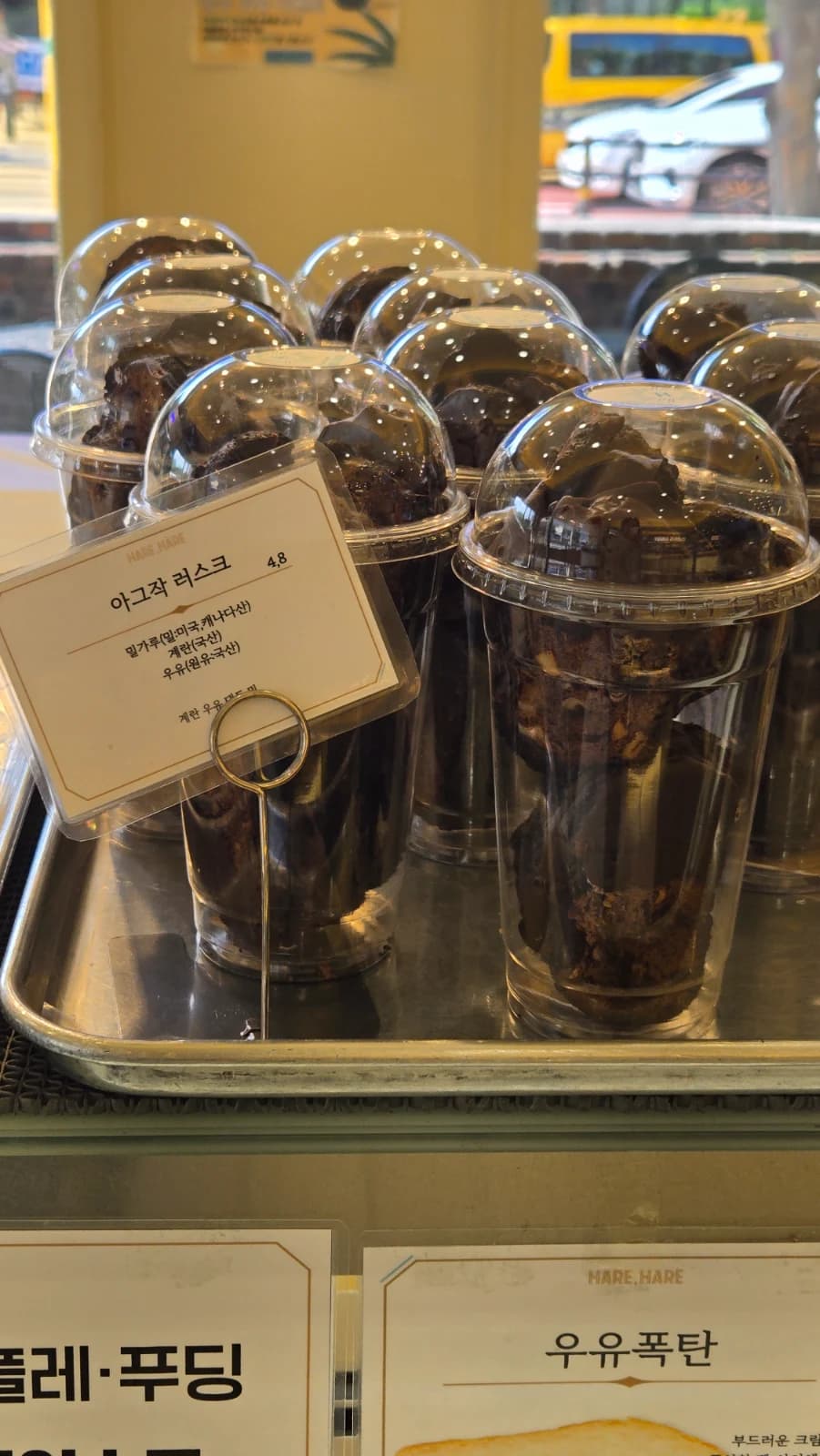
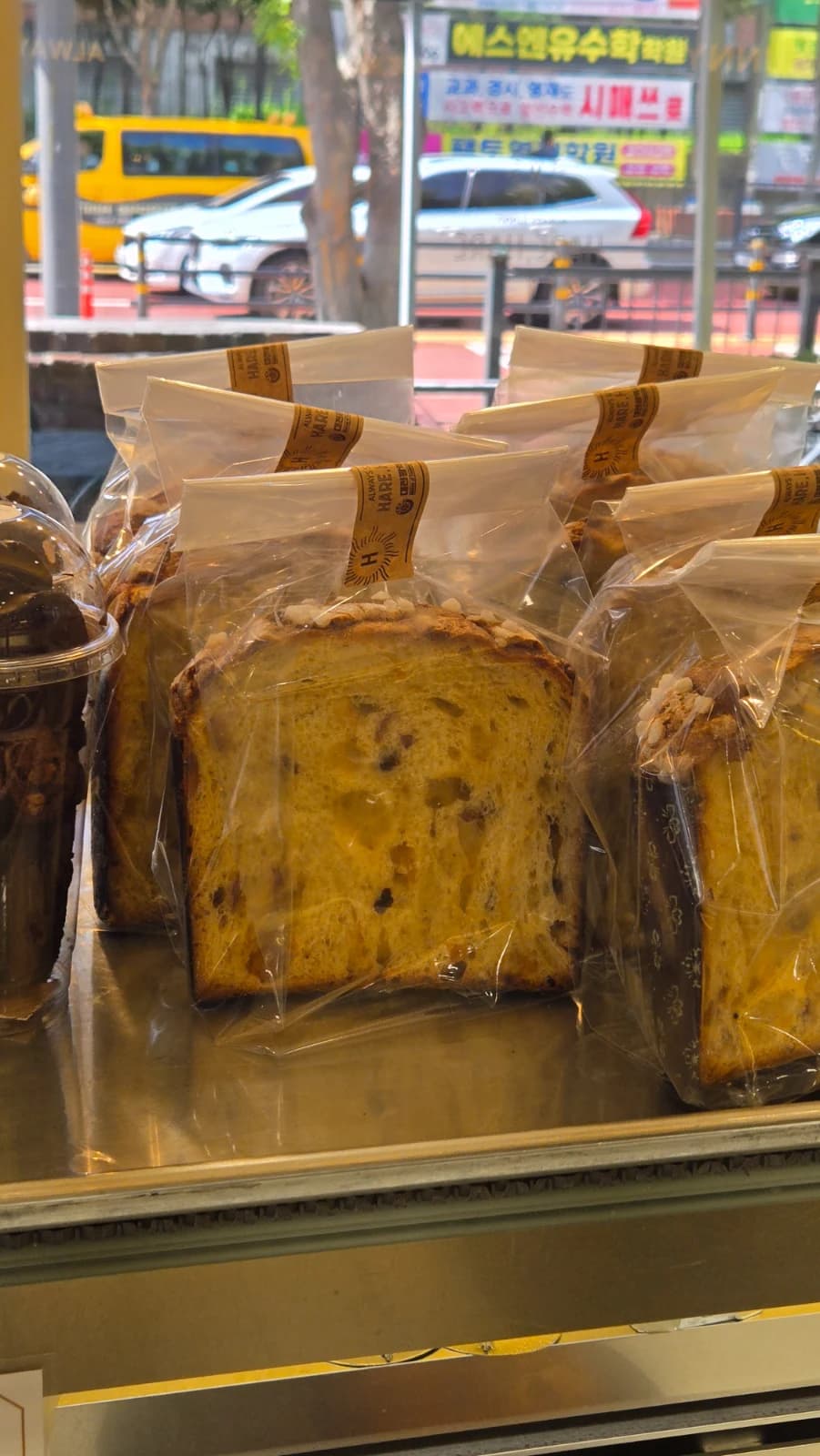
Agujak rusk came in clear domed cups, everything inside a deep roasted shade. 4,800 won (£2.70). Rusks are bread baked twice to get them crunchy, and selling them cup-by-cup isn't something you see often. Beside those, clear bags stamped with the Harehare sticker held thick-cut slices of bread standing upright. The cross-section showed raisins studded through — a panettone in all but name. Sat right by the window, the light caught the slices from behind, which somehow made them look even better.
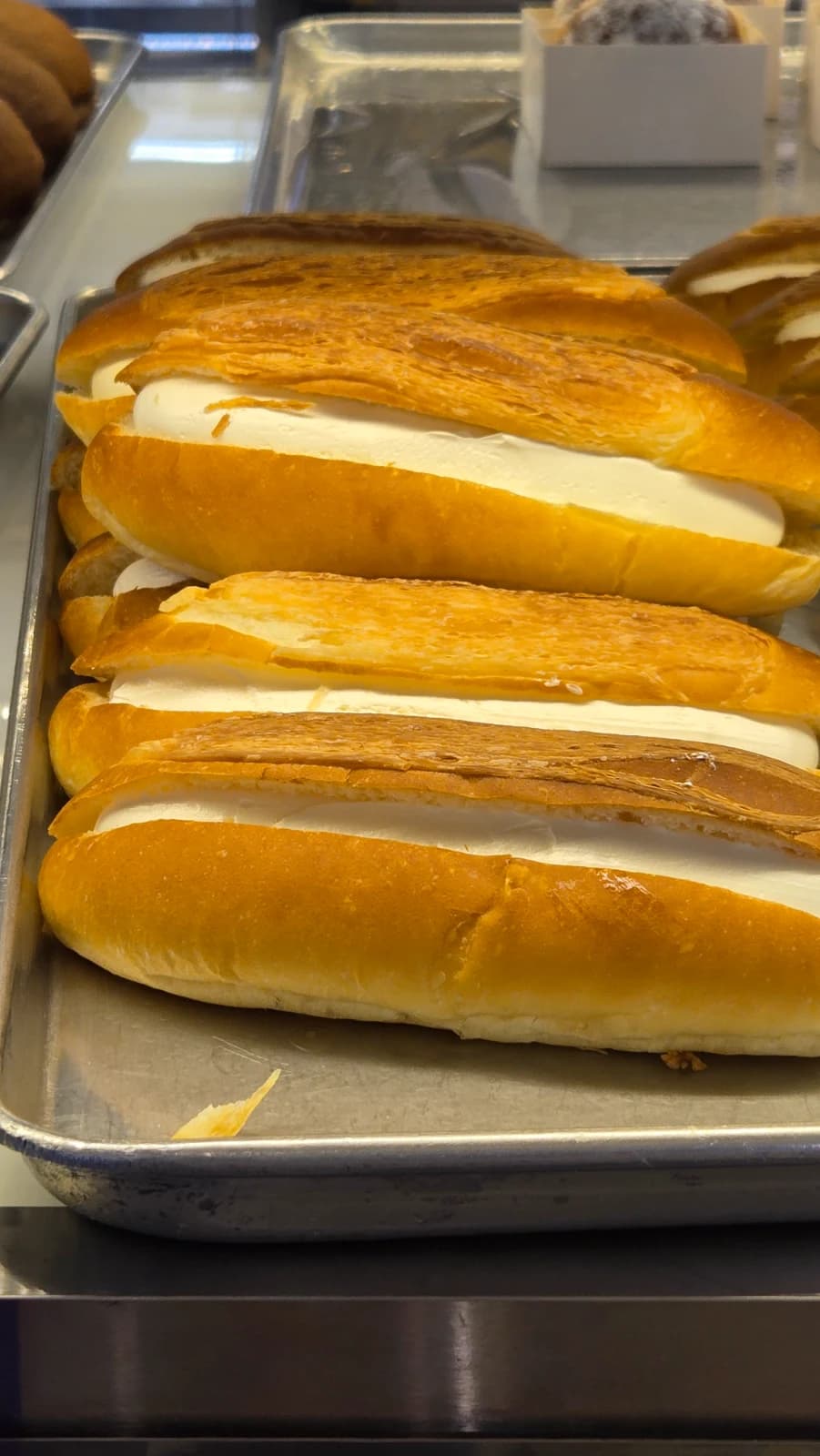
A tray of long loaves, slit down the middle and stuffed full of fresh whipped cream, sat in a row. The cream looked ready to overflow. The side showed the croissant-like layered texture of the dough. I didn't catch the name, but watching the people around me grab them told me most of what I needed to know.
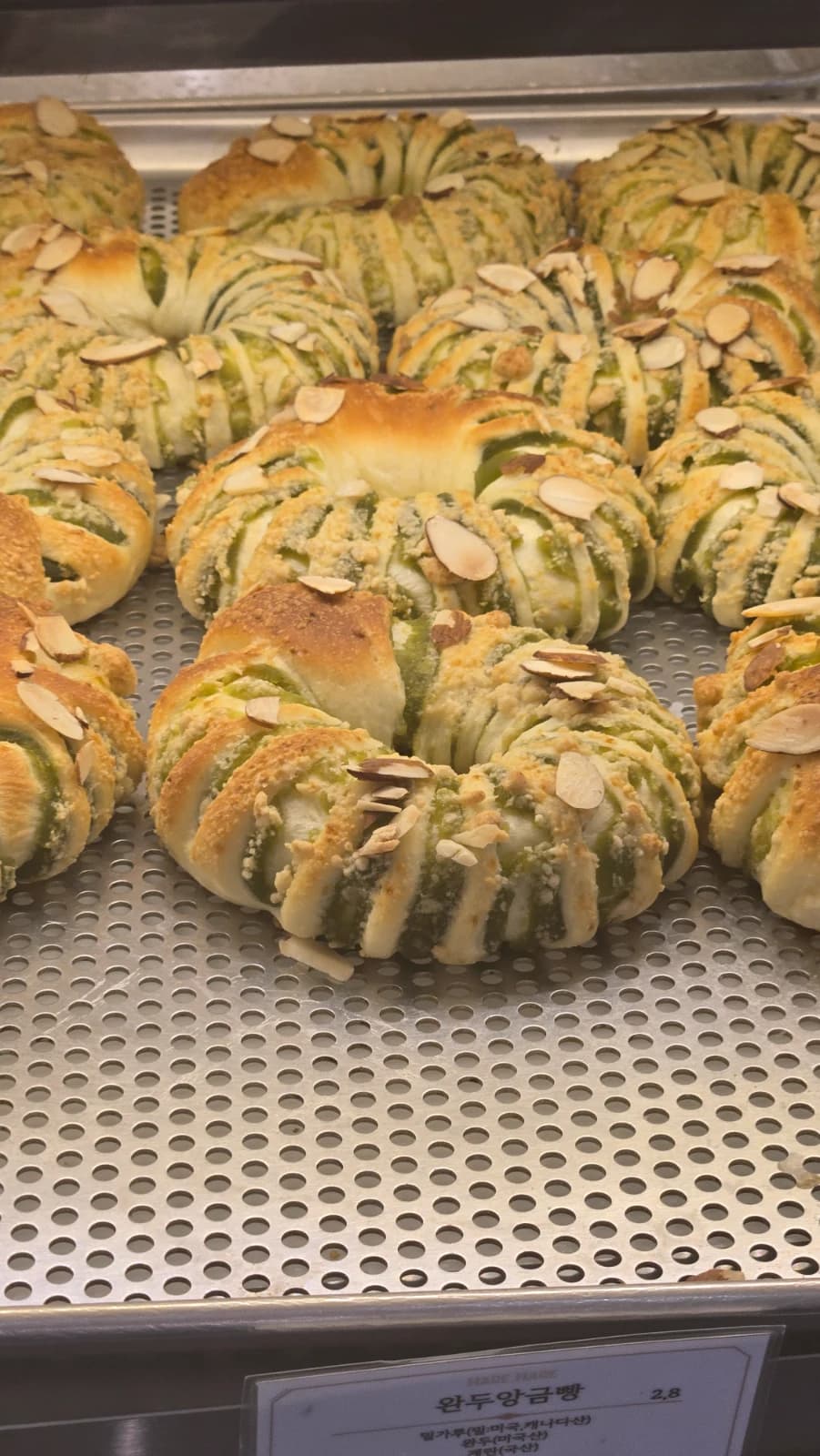
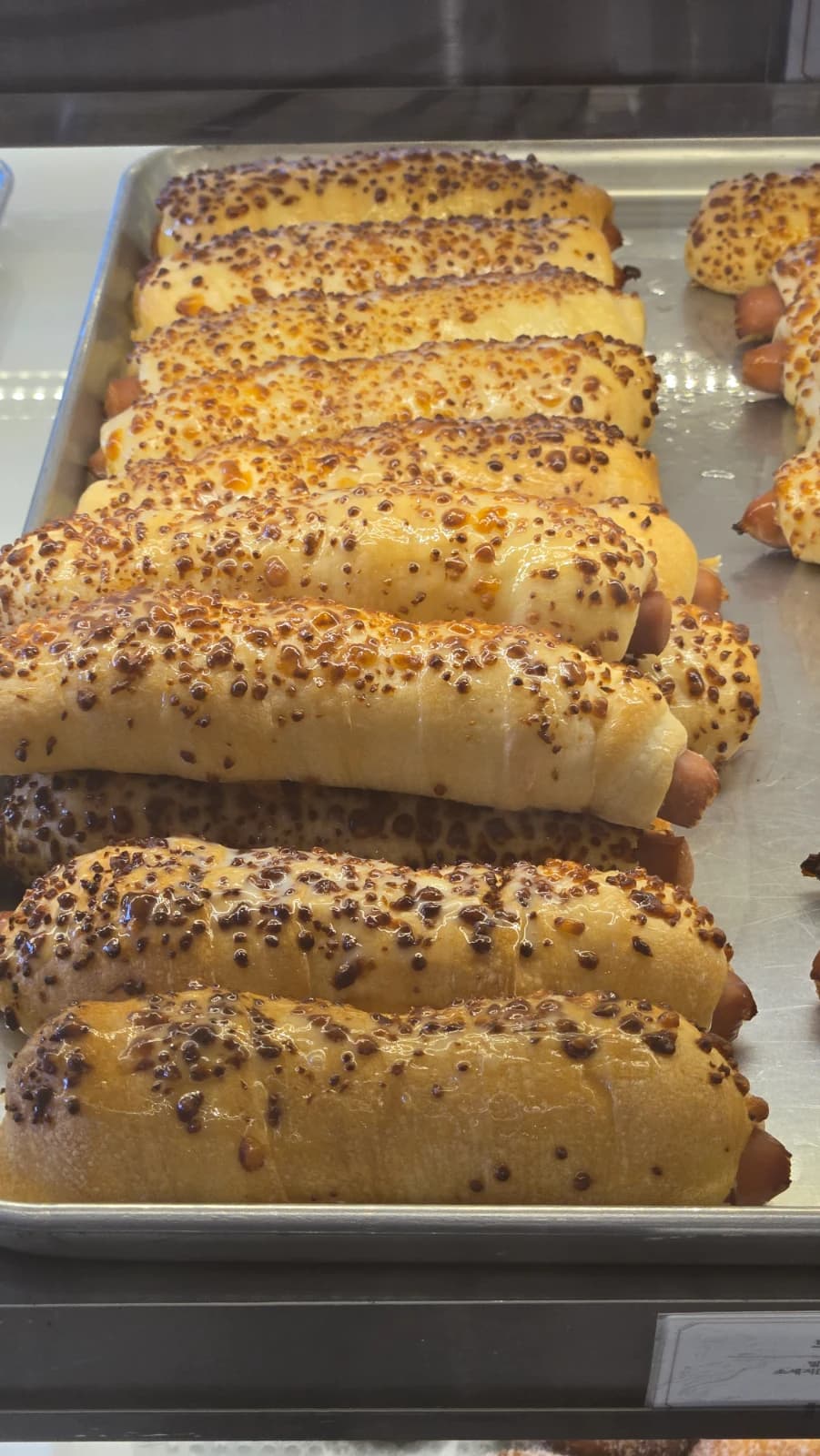
Green pea paste bread was 3,500 won (£2). The dough was scored into several strips so the green pea paste peeked through in bright lines between each cut, finished with flaked almonds on top — properly vivid. Think of those classic Korean red bean buns (danpatbbang), then swap the red beans for peas. The sausage bread was huge too. The sausage tip poked out of the end of the loaf, and the top was crusted with what looked like either quinoa or coarsely crushed grain.
The White Bread Section
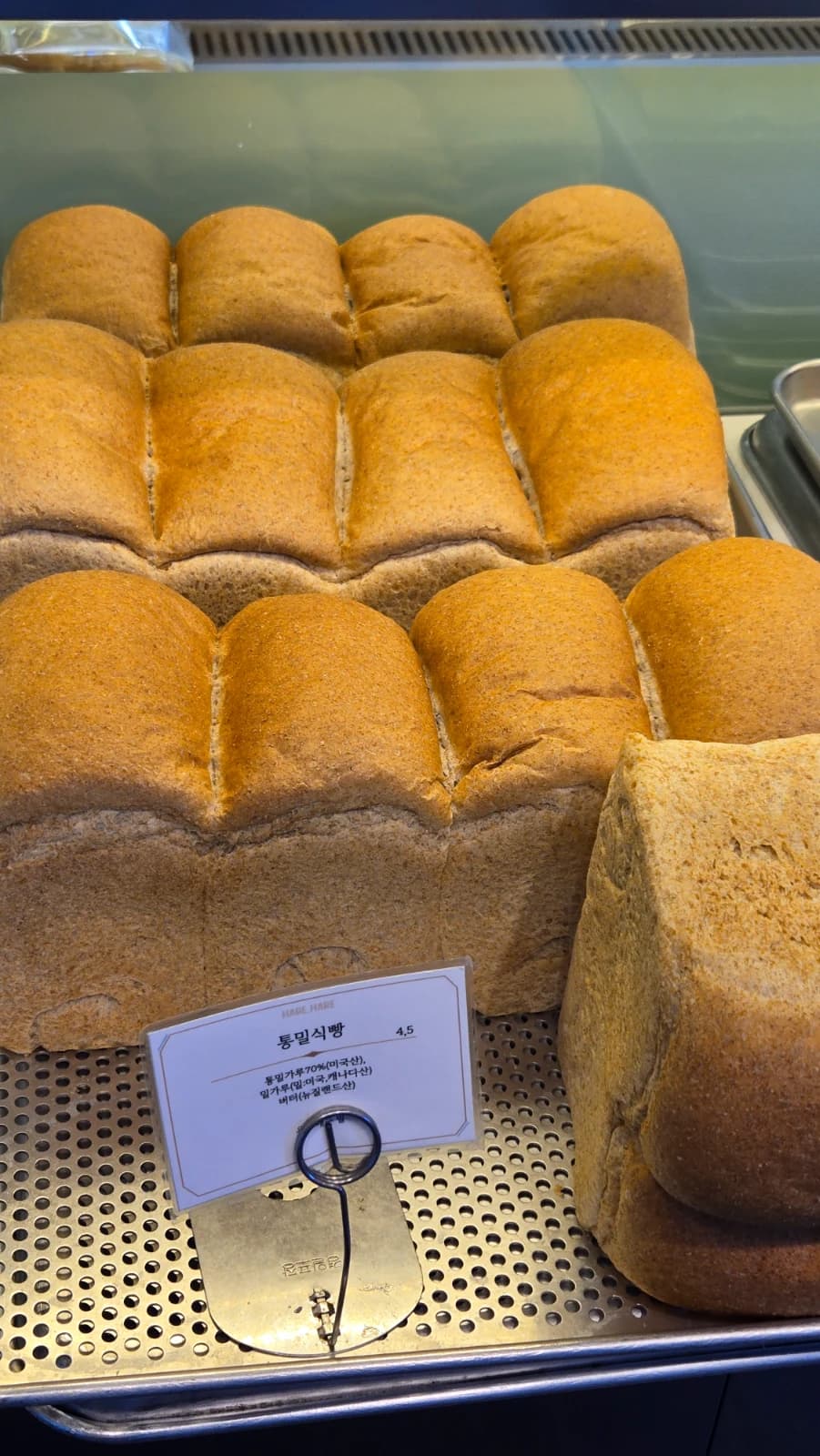
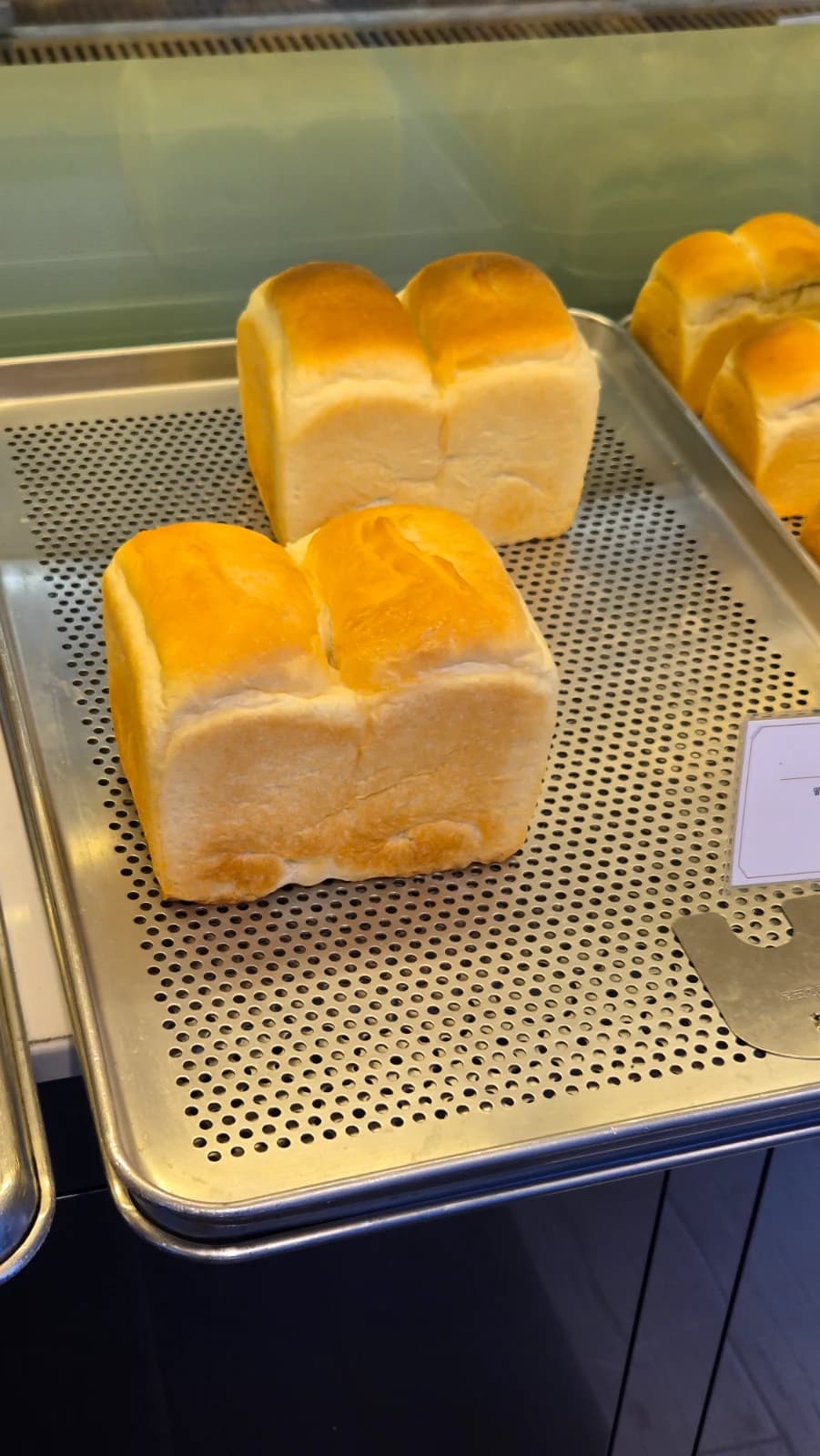
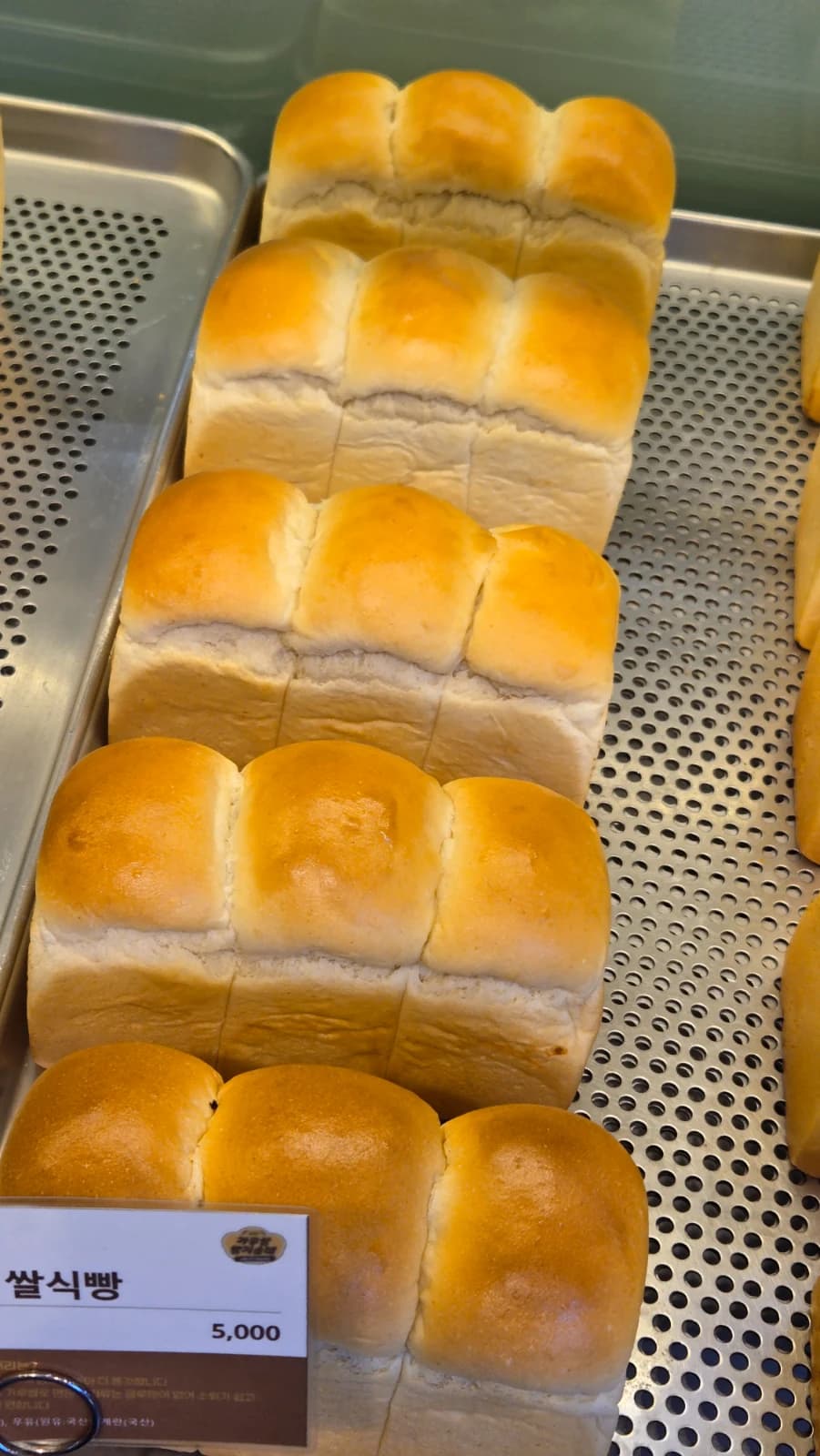
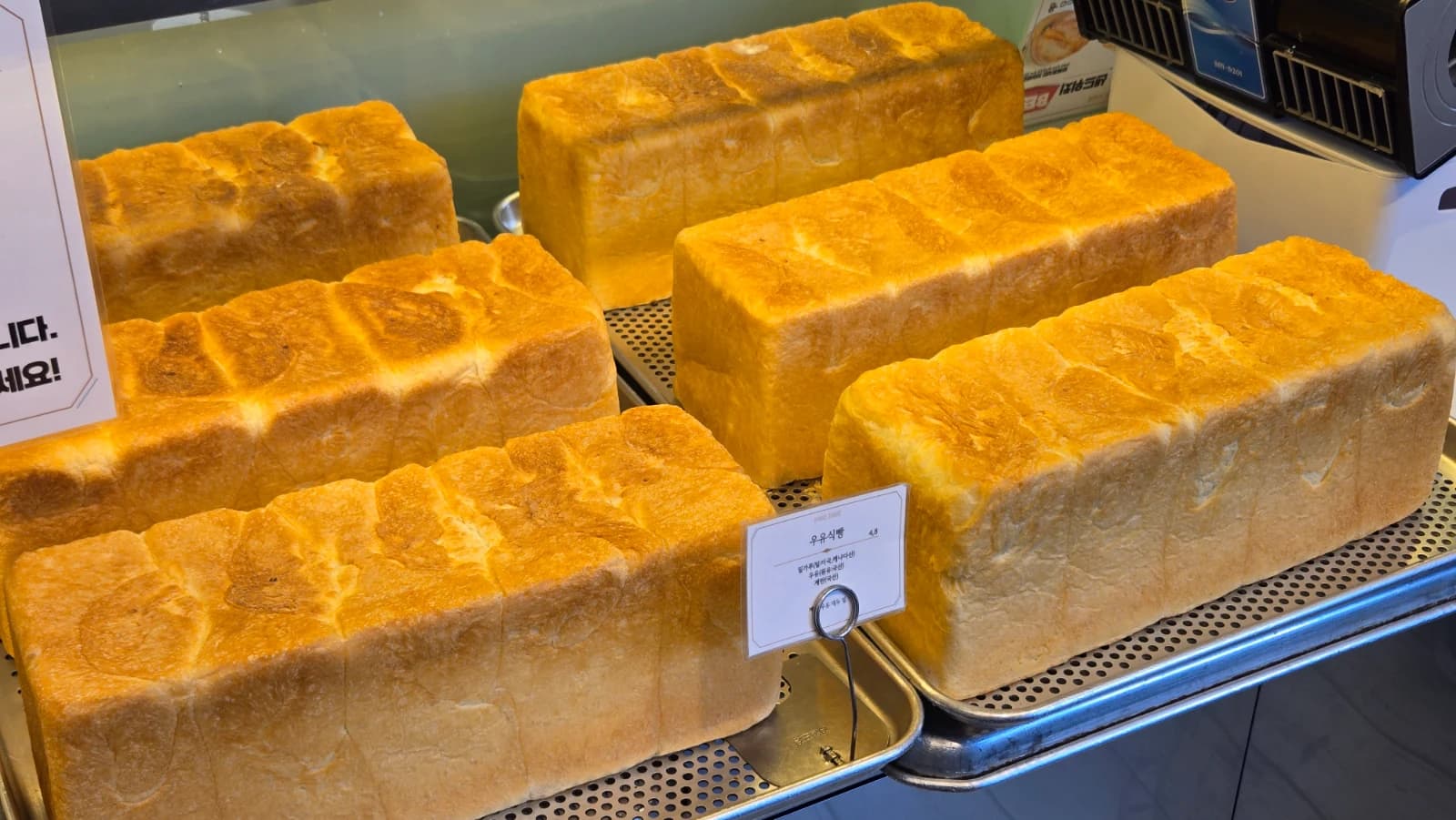
There was a whole section just for sliced loaves. Wholemeal bread at 4,500 won (£2.55), made with 70% wholemeal flour according to the label, and you could tell just by the colour — noticeably darker than standard white bread, denser too. Rice bread at 5,000 won (£2.85), baked as a six-section pull-apart loaf so you can tear off one chunk at a time. Milk bread at 4,800 won (£2.70), biggest of the lot, with a lumpy risen top that looked properly homemade — this was the most basic, everyday option in the range.
Even if you'd walked in just for a plain loaf, you'd still have been standing here a while.
The Cake Display
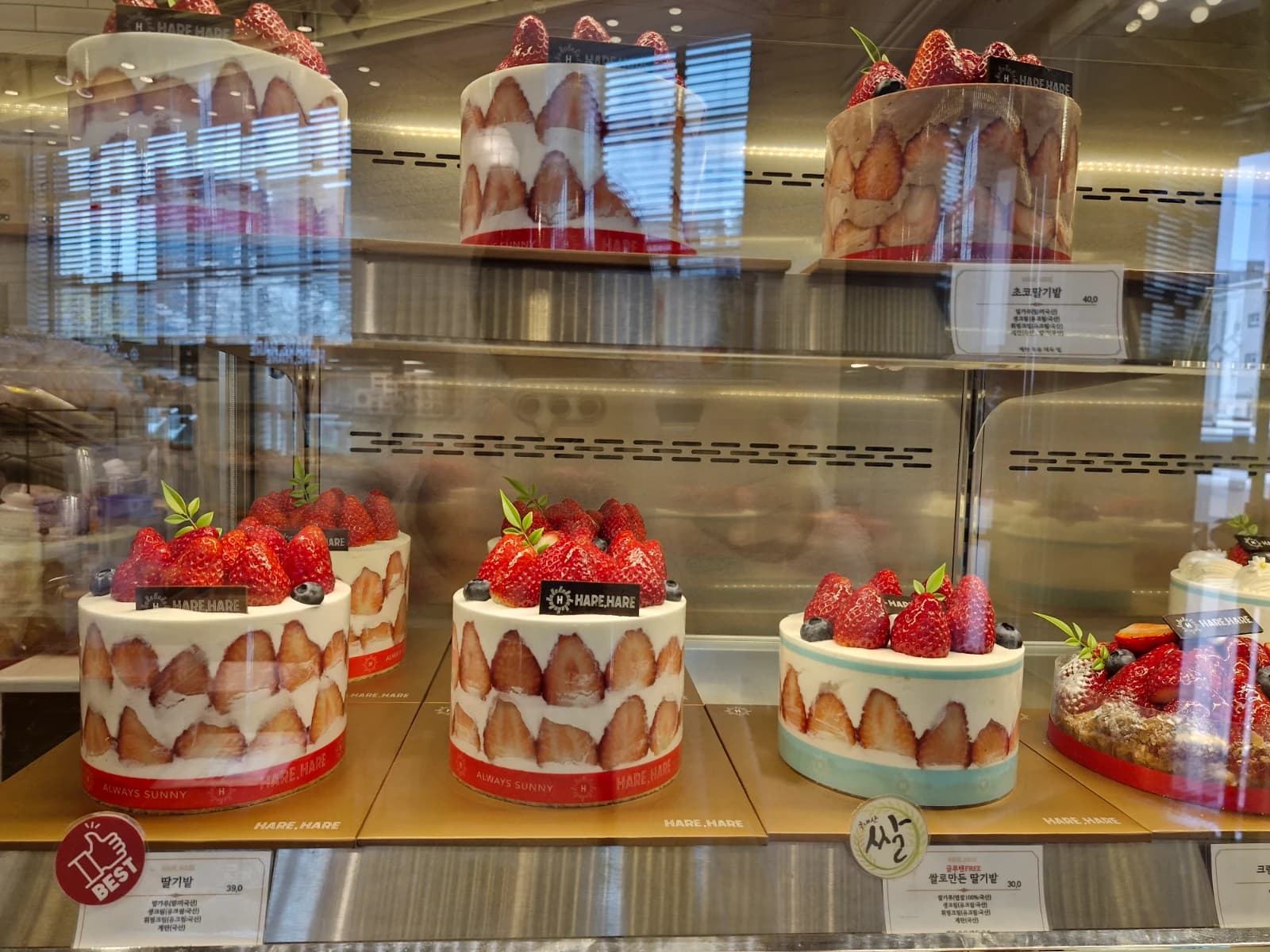
Strawberry season meant the cake case was pretty much strawberry central. Strawberry Field cake at 39,000 won (£22), chocolate strawberry field at 40,000 won (£22.50), and a rice flour strawberry field at 30,000 won (£17) marked gluten-free. The sides of the cakes showed layer after layer of strawberry cross-sections, so even through the glass you could see exactly what you were getting.
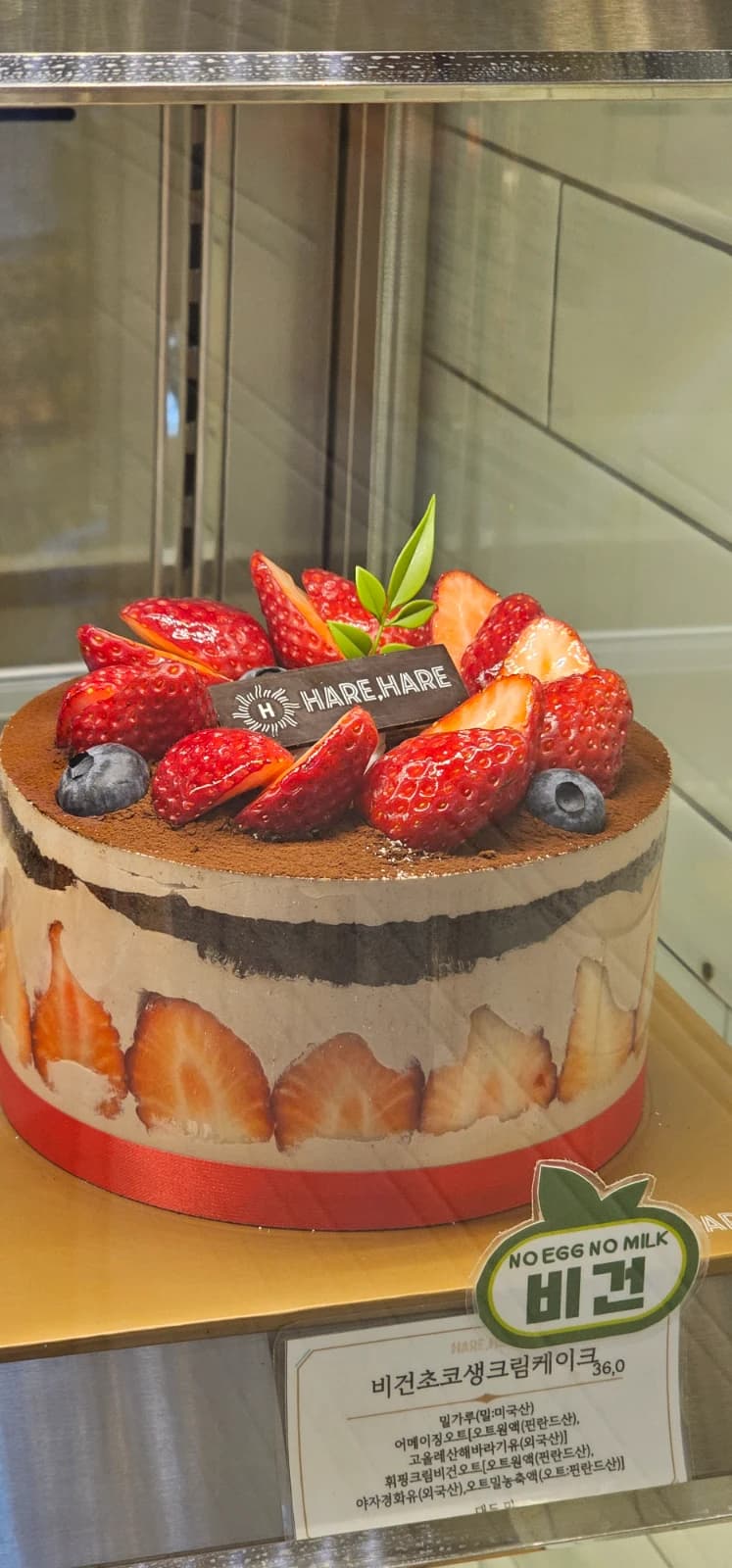
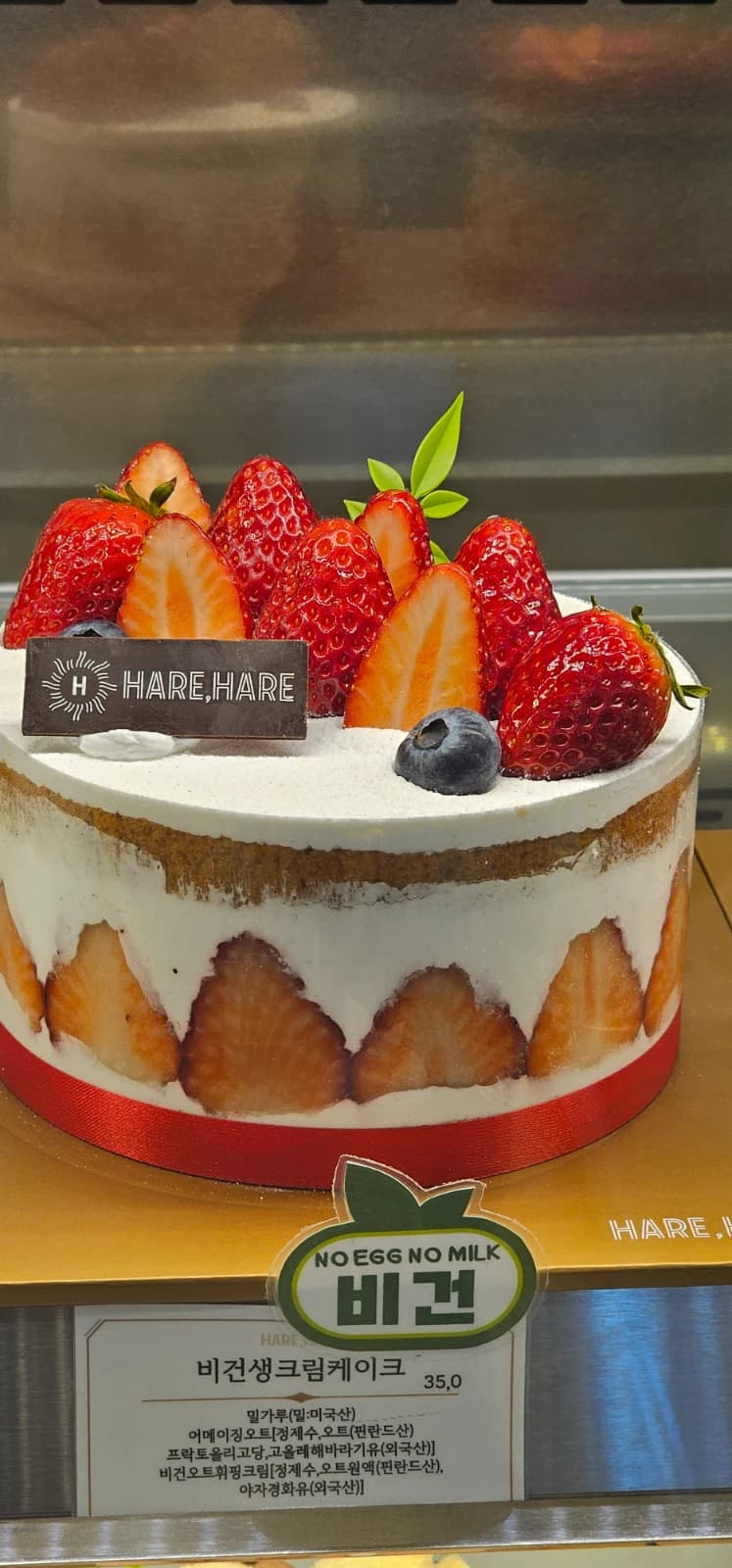
Beside those, two vegan cakes — a vegan whipped cream at 35,000 won (£19.80) and a vegan chocolate whipped cream at 36,000 won (£20.40). Signs made clear: no eggs, no dairy. Visually they were almost indistinguishable from the standard ones. The ingredient labels mentioned oat-based creams. I hadn't come for cake, but this was one of those zones where you end up stuck in front of the glass anyway.
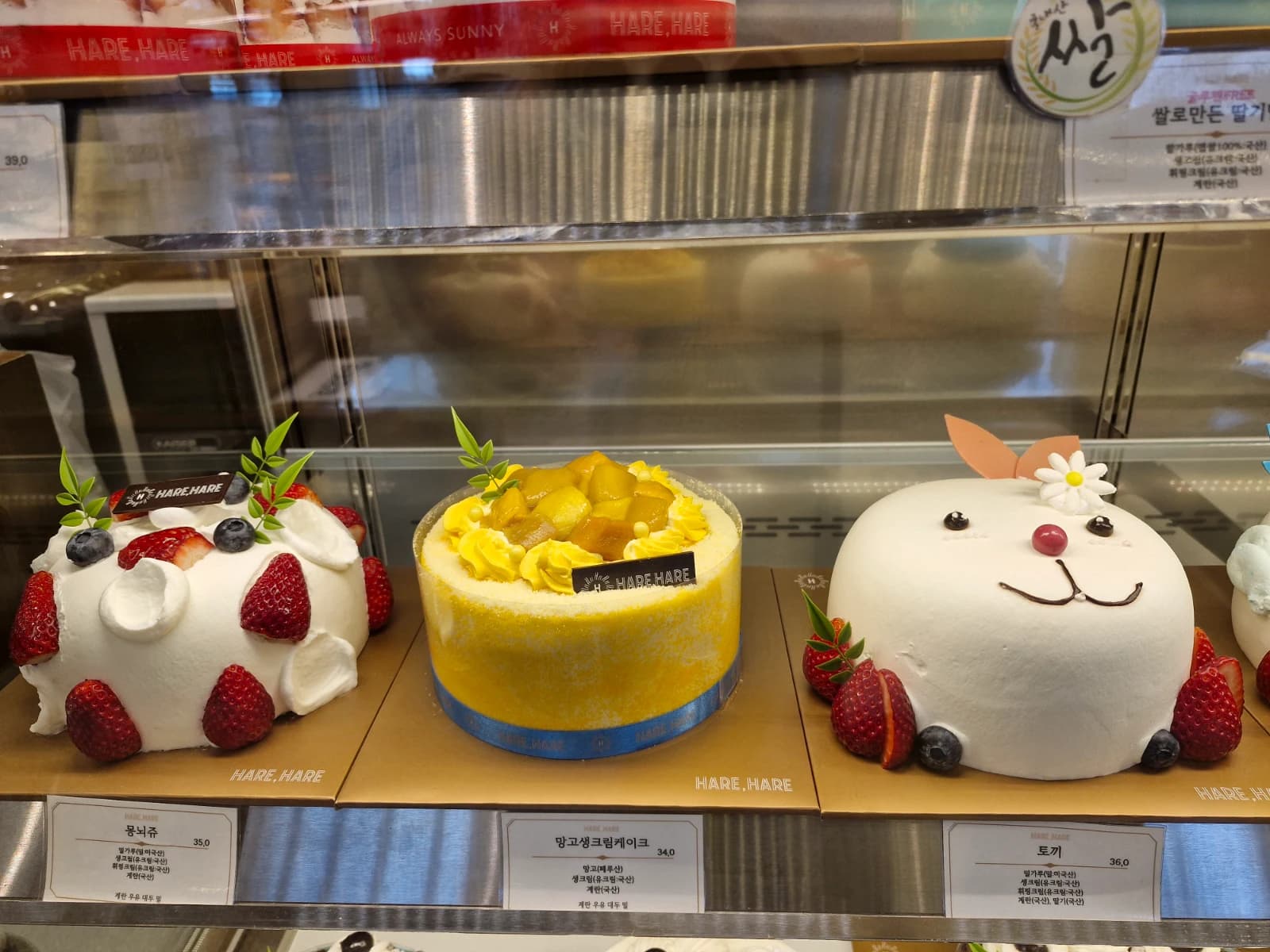
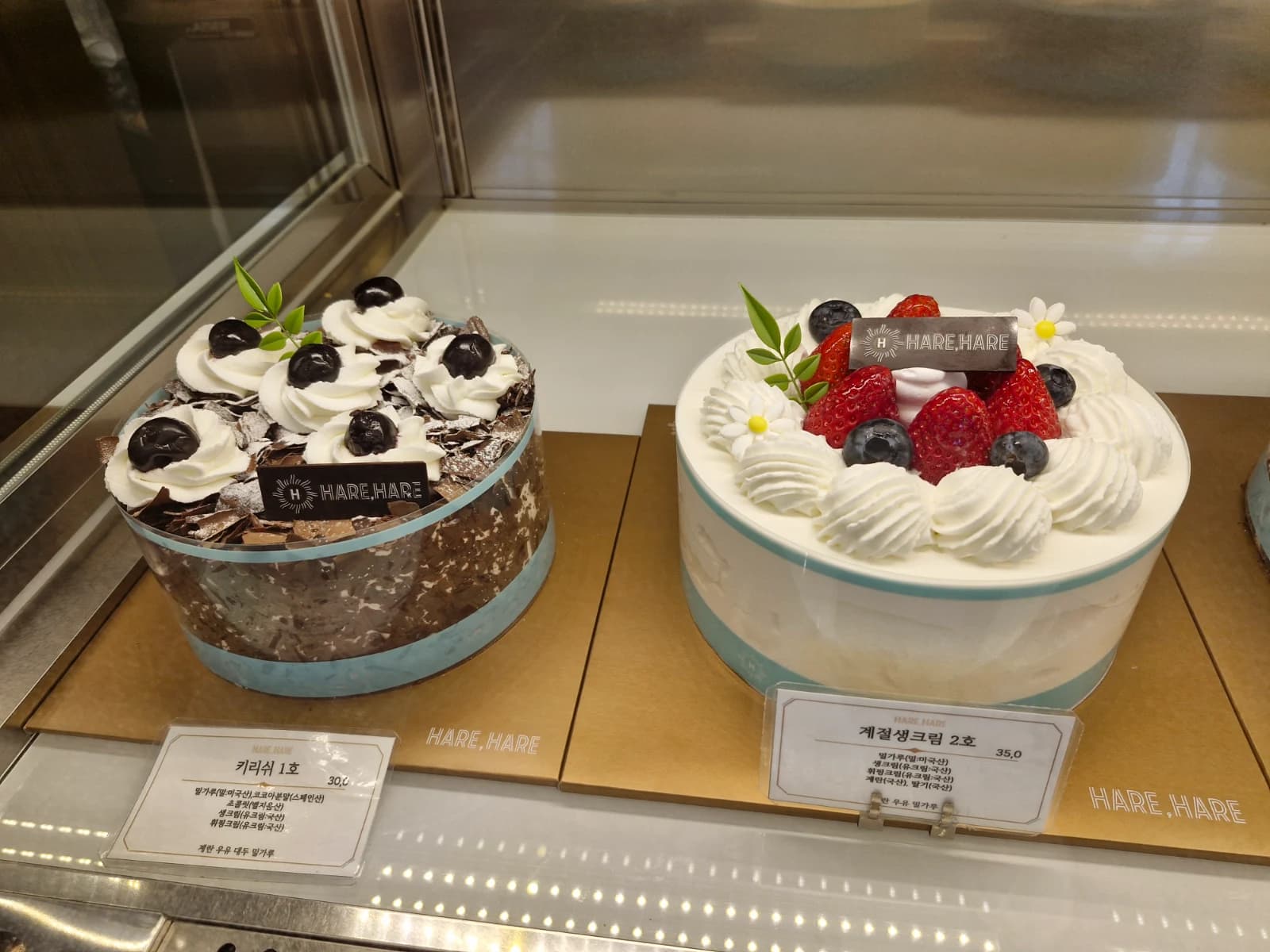
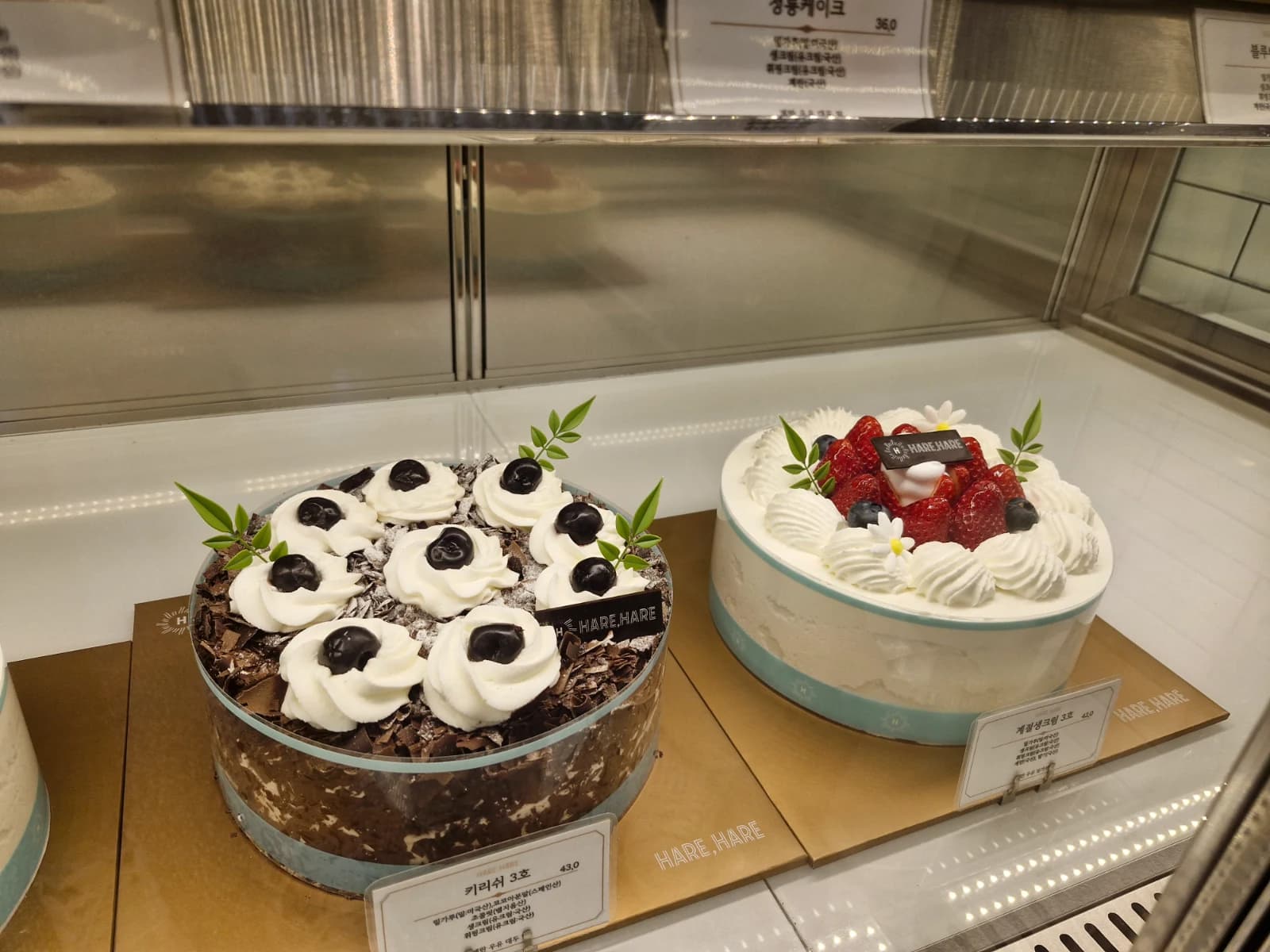
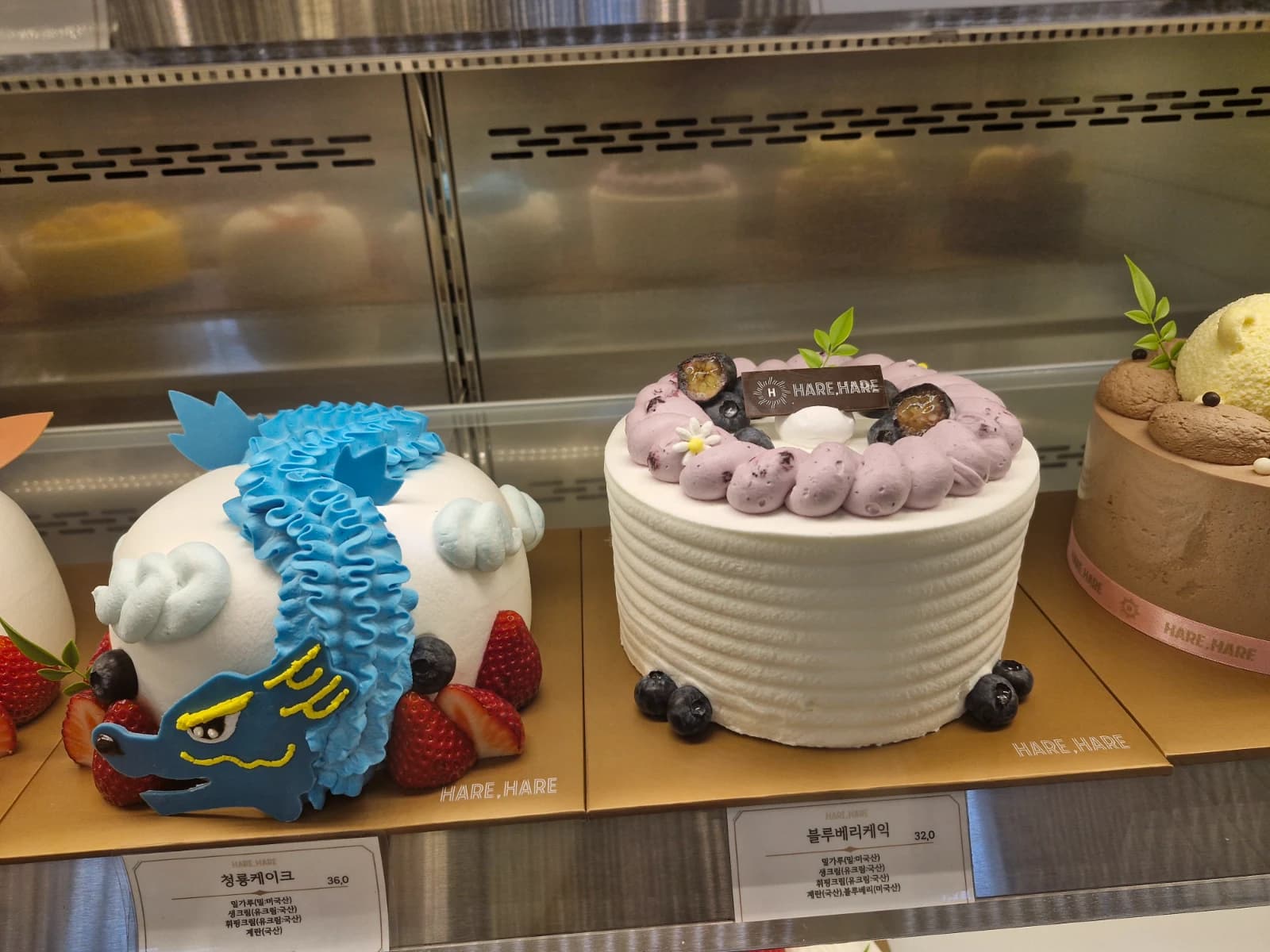
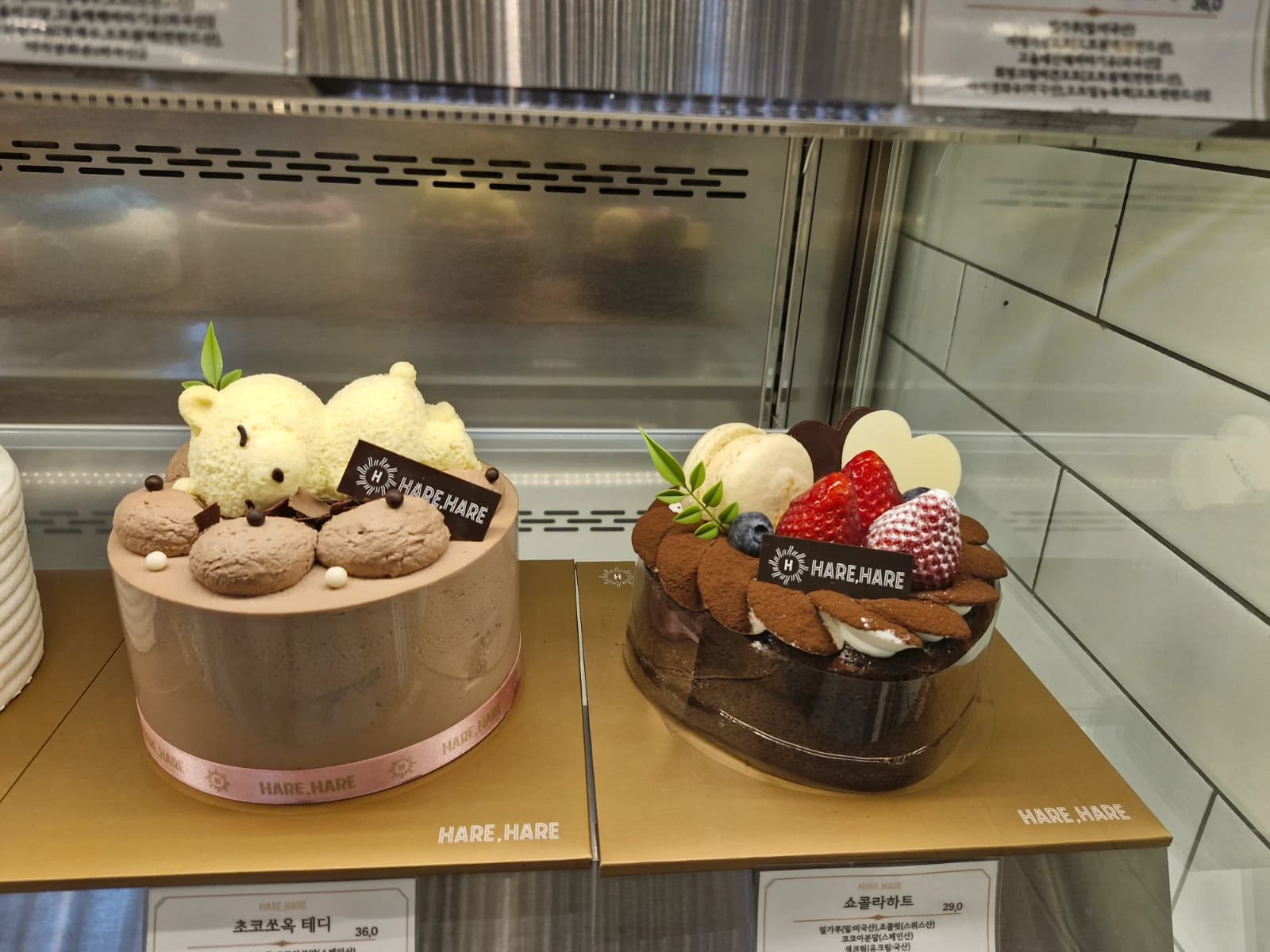
More cake variety than I'd expected too. Animal-shaped ones dotted about — Mungnyoju at 35,000 won (£19.80), round and white with strawberries and blueberries stuck on the top. The rabbit next to it at 36,000 won (£20.40) came complete with proper ears, and mango whipped cream at 34,000 won (£19.25) stood out bright yellow among the rest.
The blue dragon cake at 36,000 won (£20.40) had a blue dragon figure riding on top — whether they made it because it was the year of the dragon in the zodiac or just for the design, I couldn't tell you, but my eyes lingered there longer than anywhere else in the case. Sokolra Heart was 29,000 won (£16.40), the cheapest of the cakes, presented in what looked like a glass bowl.
The Sandwich Corner
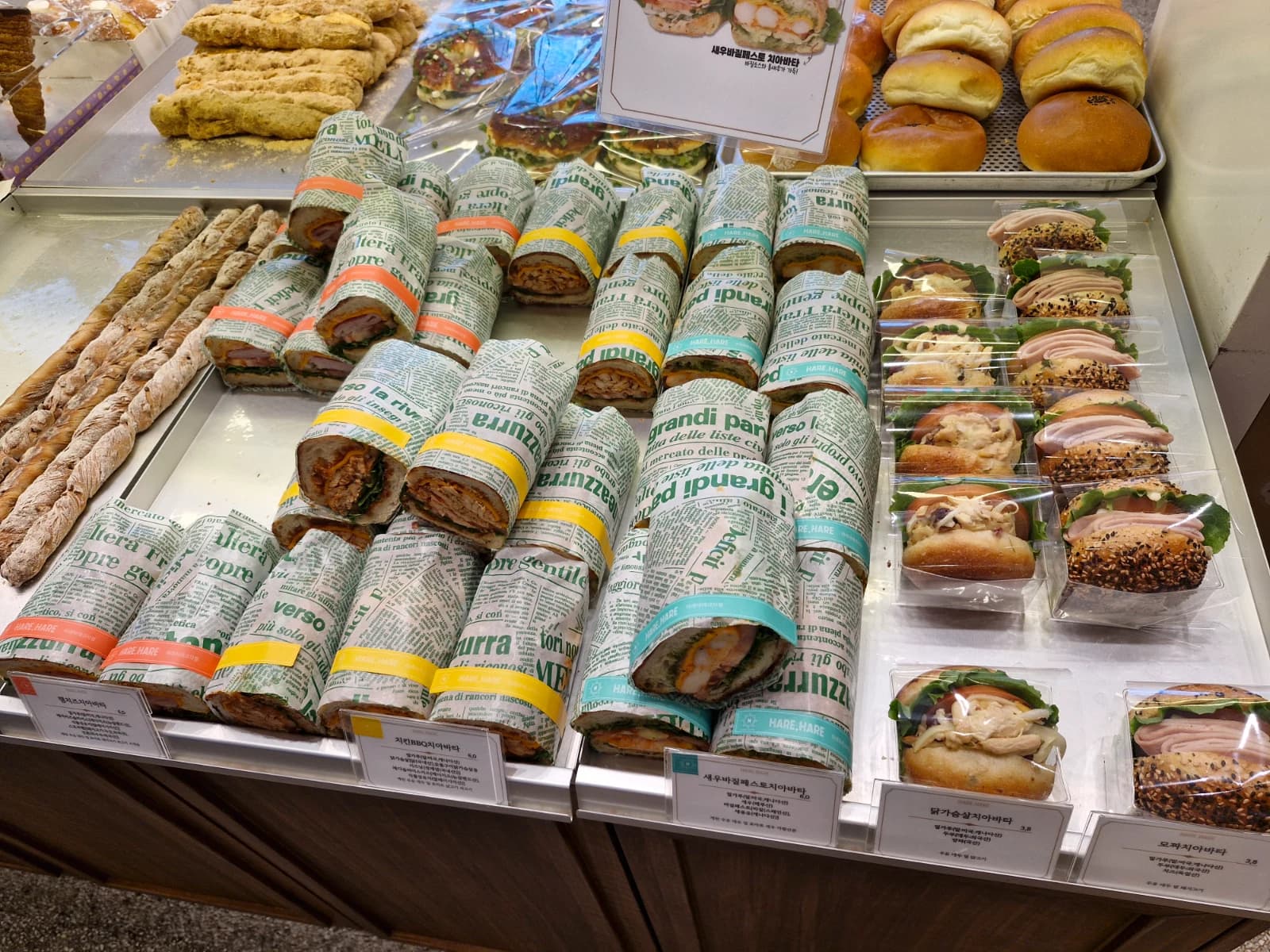
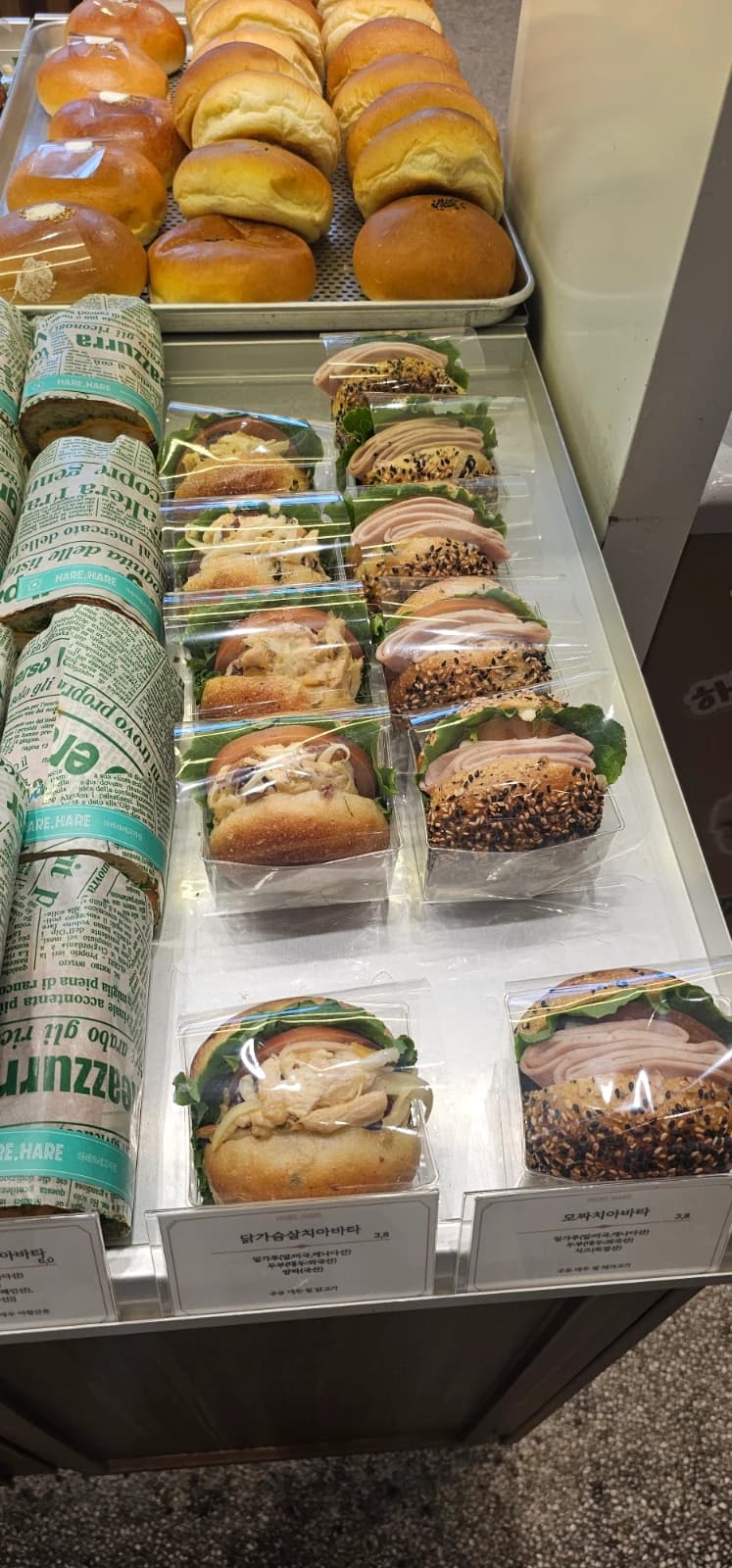
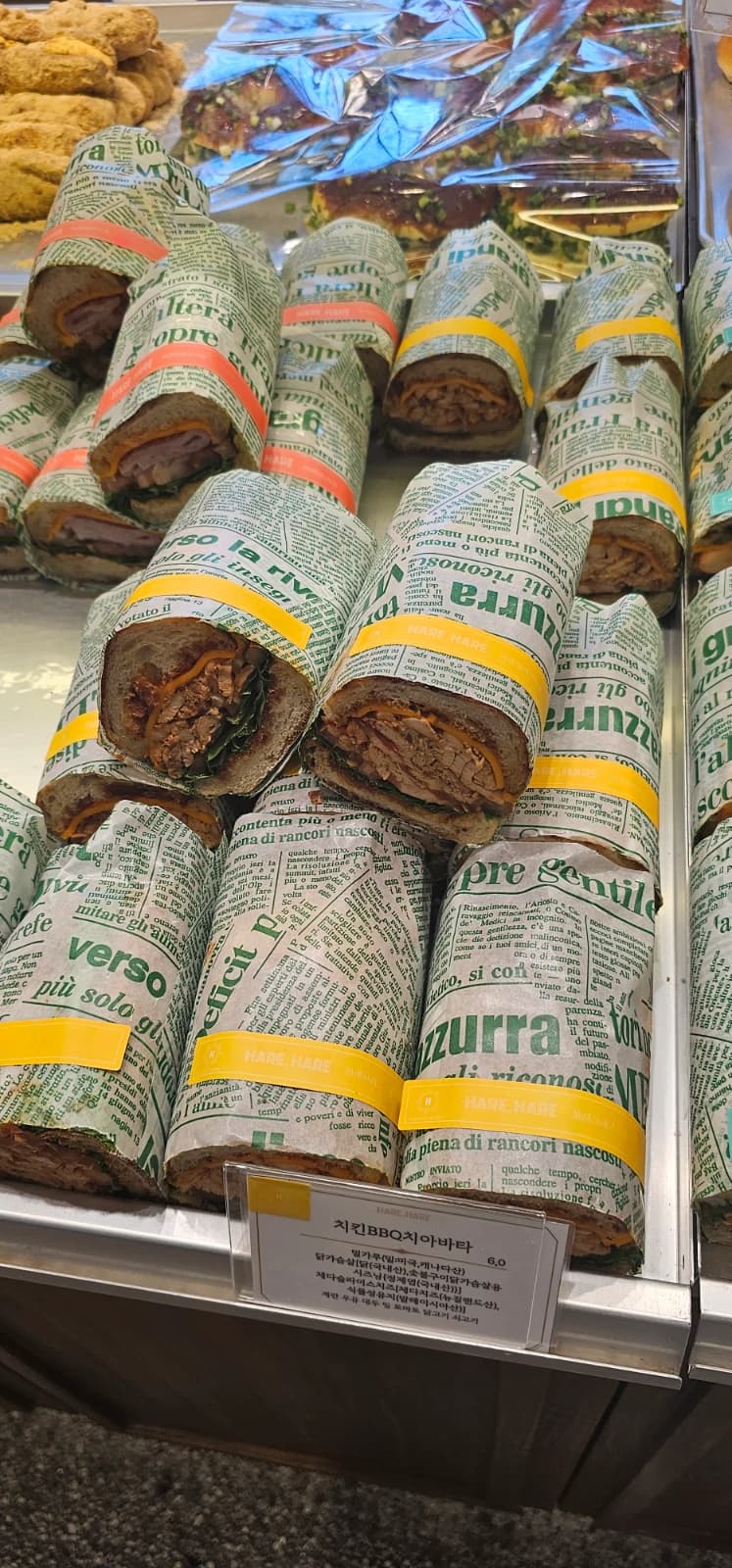
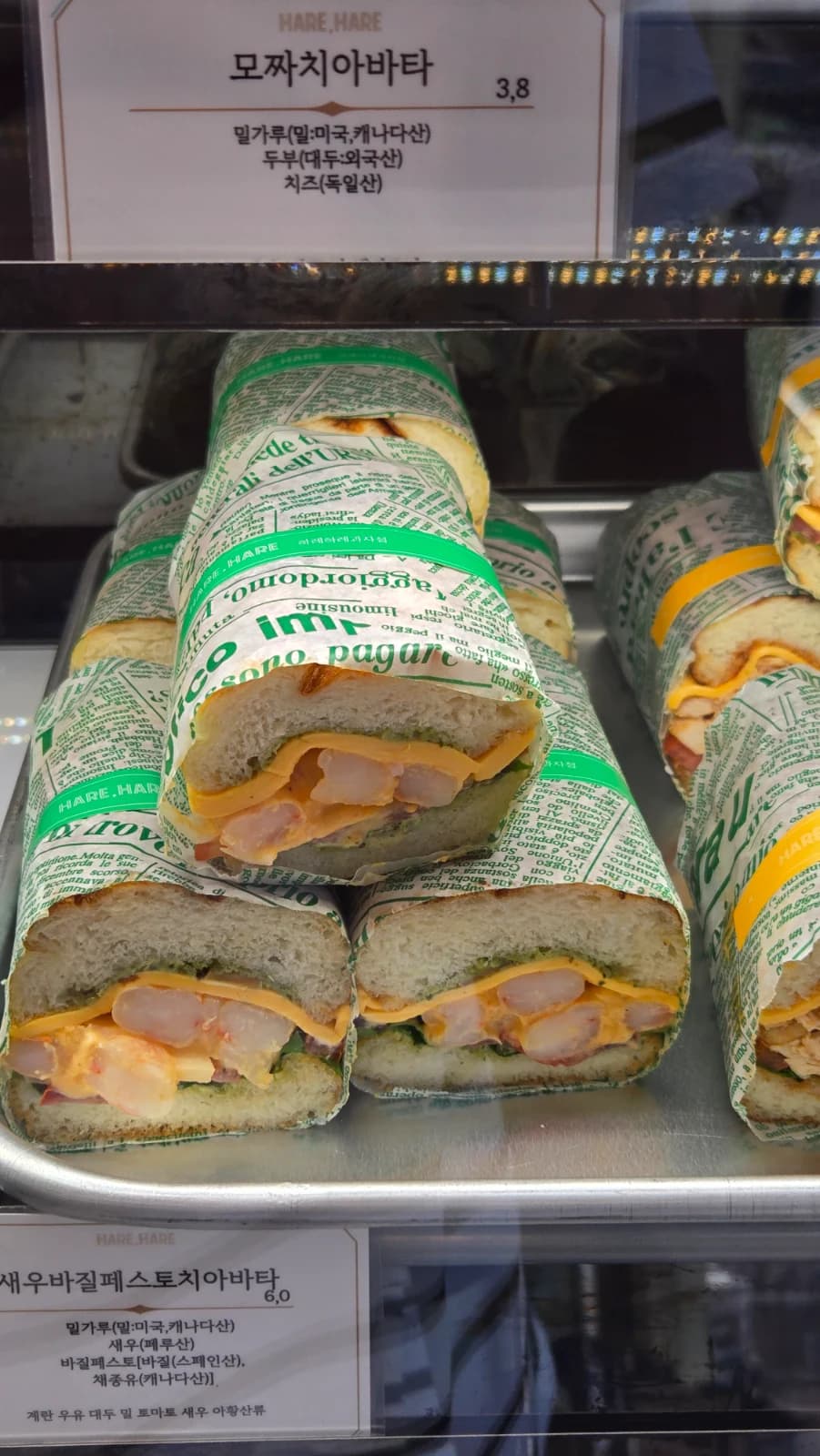
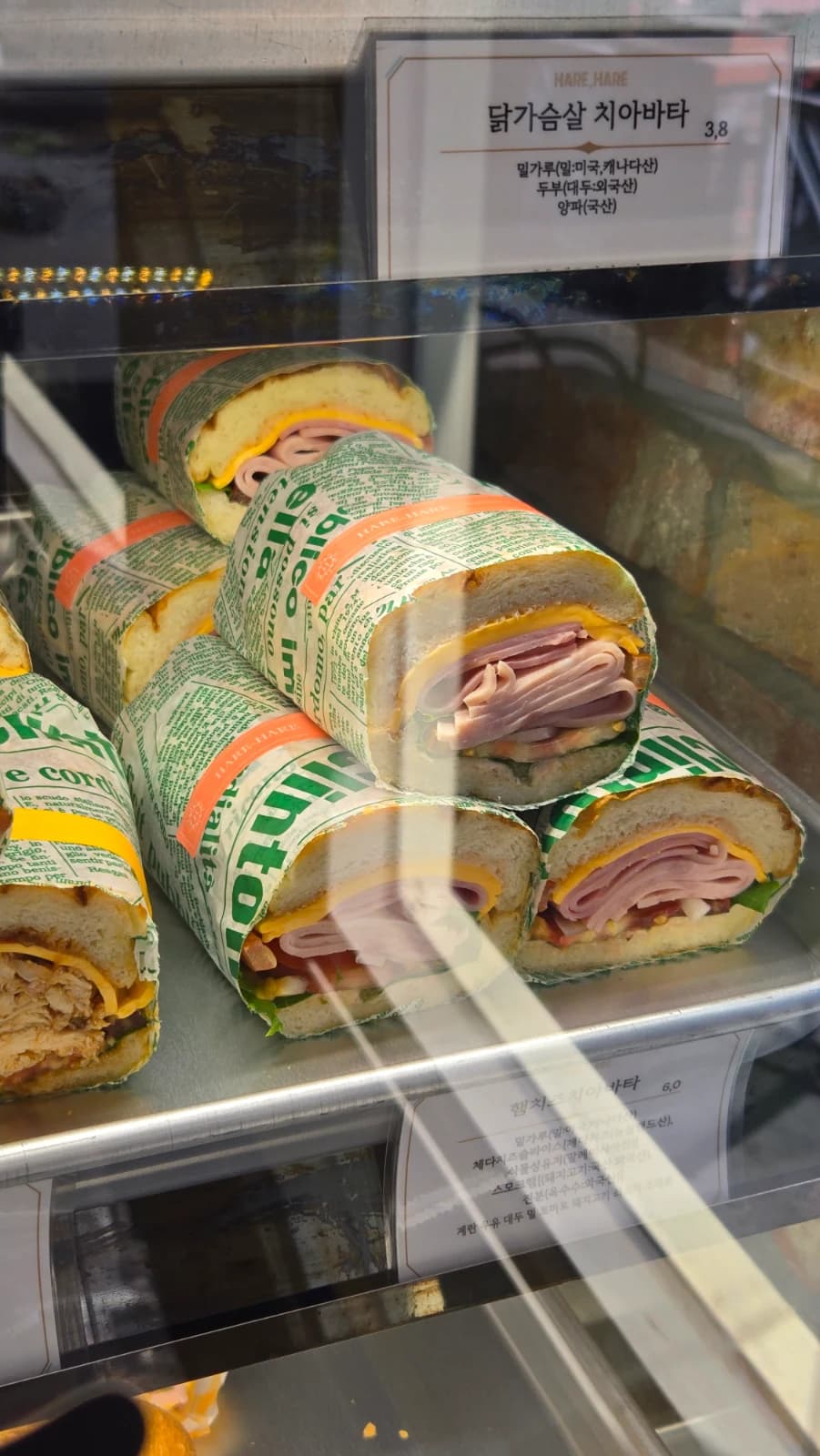
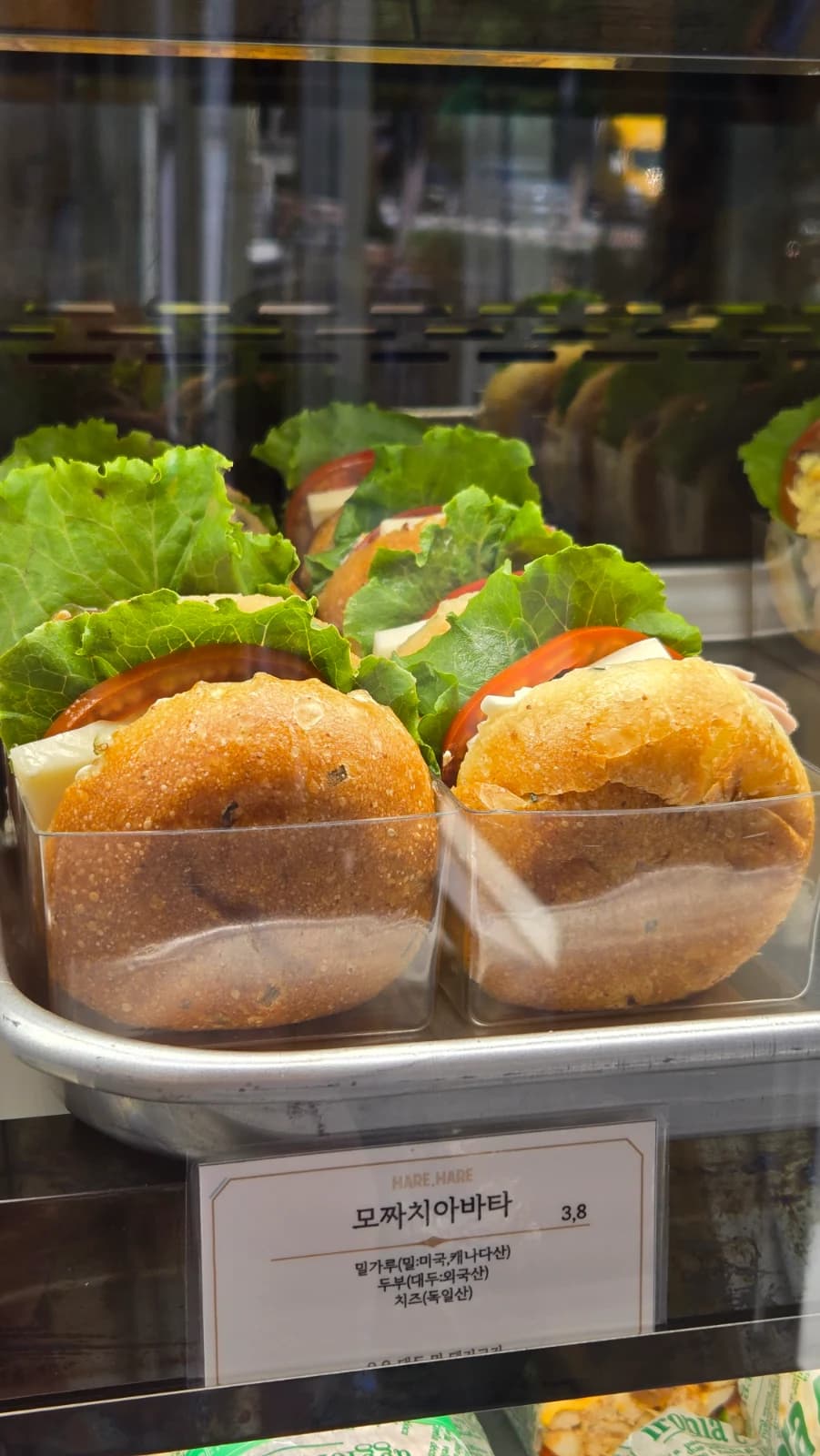
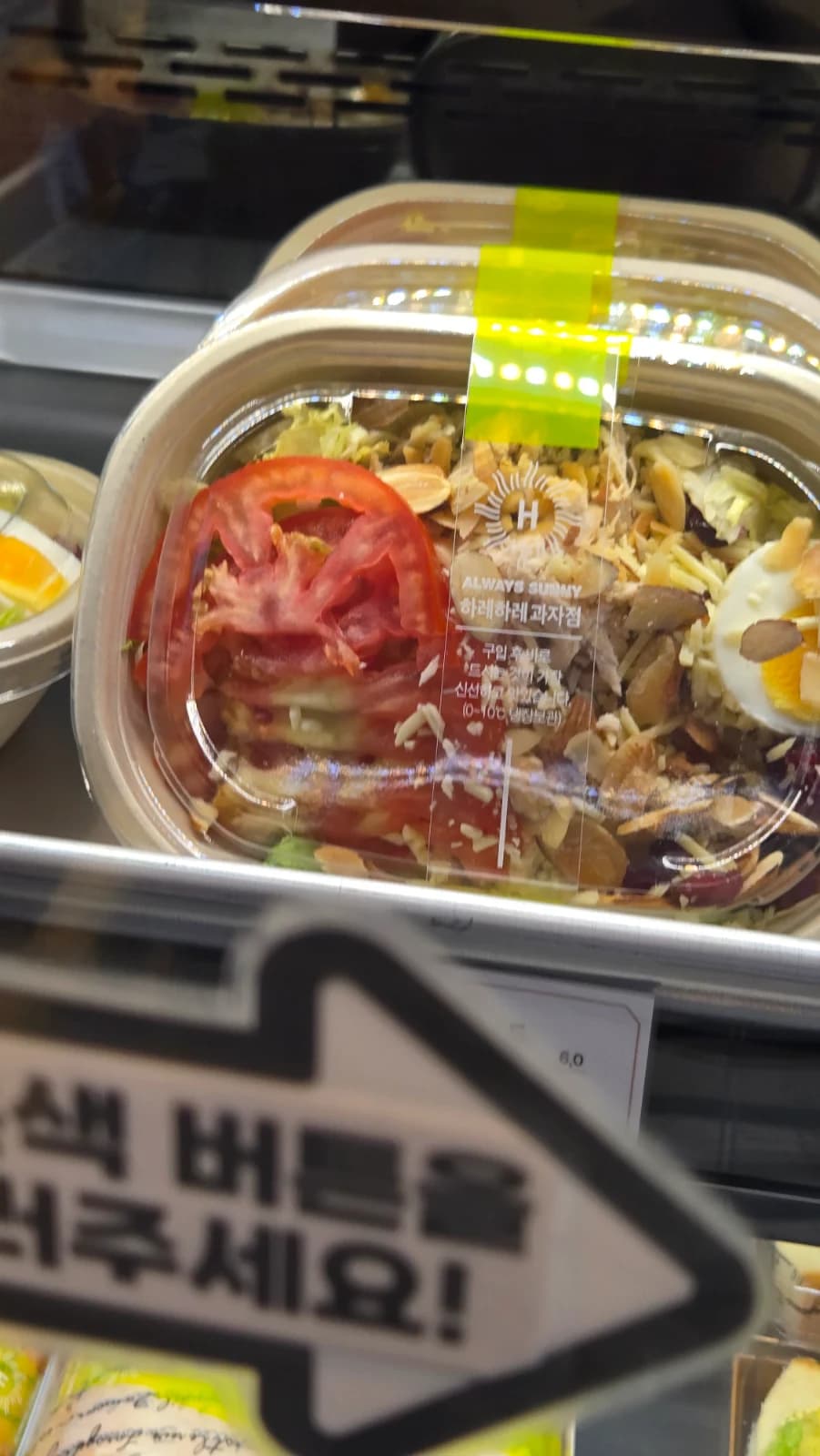
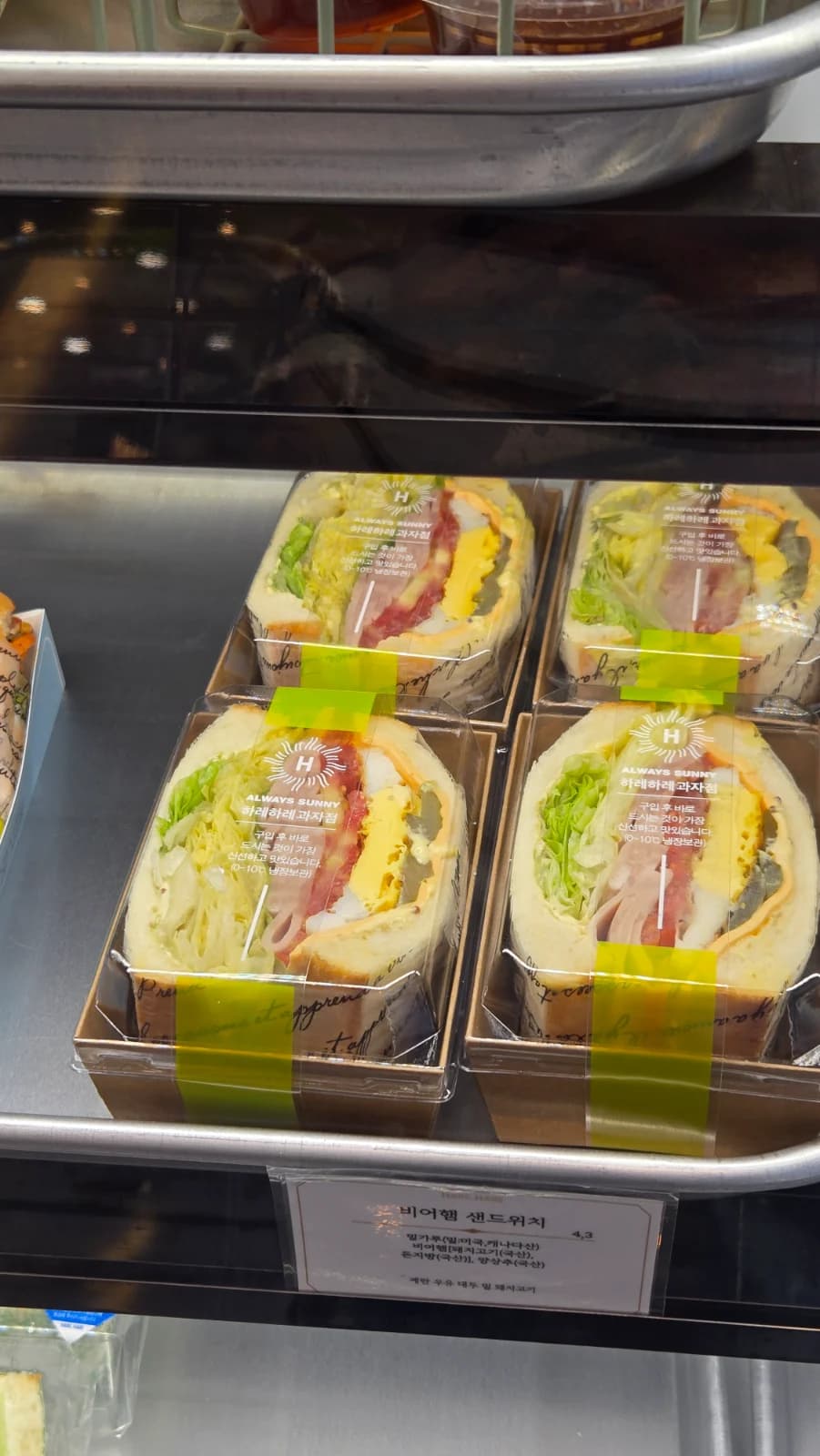
Past the cakes, the sandwich corner opened up, and it was a proper big section. Ciabatta sandwiches wrapped in that newsprint-style paper with coloured bands piled up on trays, while on the right, burger-style sandwiches sat queued up in clear clamshell cases. For a bakery to have this many sandwich options honestly surprised me.
Ciabatta sandwiches split into chicken BBQ, prawn basil pesto, chicken breast, and mozzarella. The ones with the wrapping folded back to show the cross-section had completely different fillings on view — the chicken BBQ carried the dark char of properly grilled meat, while the prawn basil pesto showed prawns and cheese layered through.
Mozzarella ciabatta came two ways: the newspaper-wrapped version, and a round burger bun in a clear case. The latter had so much lettuce stuffed in that it poked out past the bread, the lid barely fastening shut.
Bierham sandwich sat cross-section-up in a clear case so you could see what you were getting. Bierham (pressed pork ham) with egg, lettuce and toncima, the pink cut face of the ham popping out against the rest. Walked in expecting a bakery, left realising you could easily sort lunch here.
Cookies and Gift Packaging
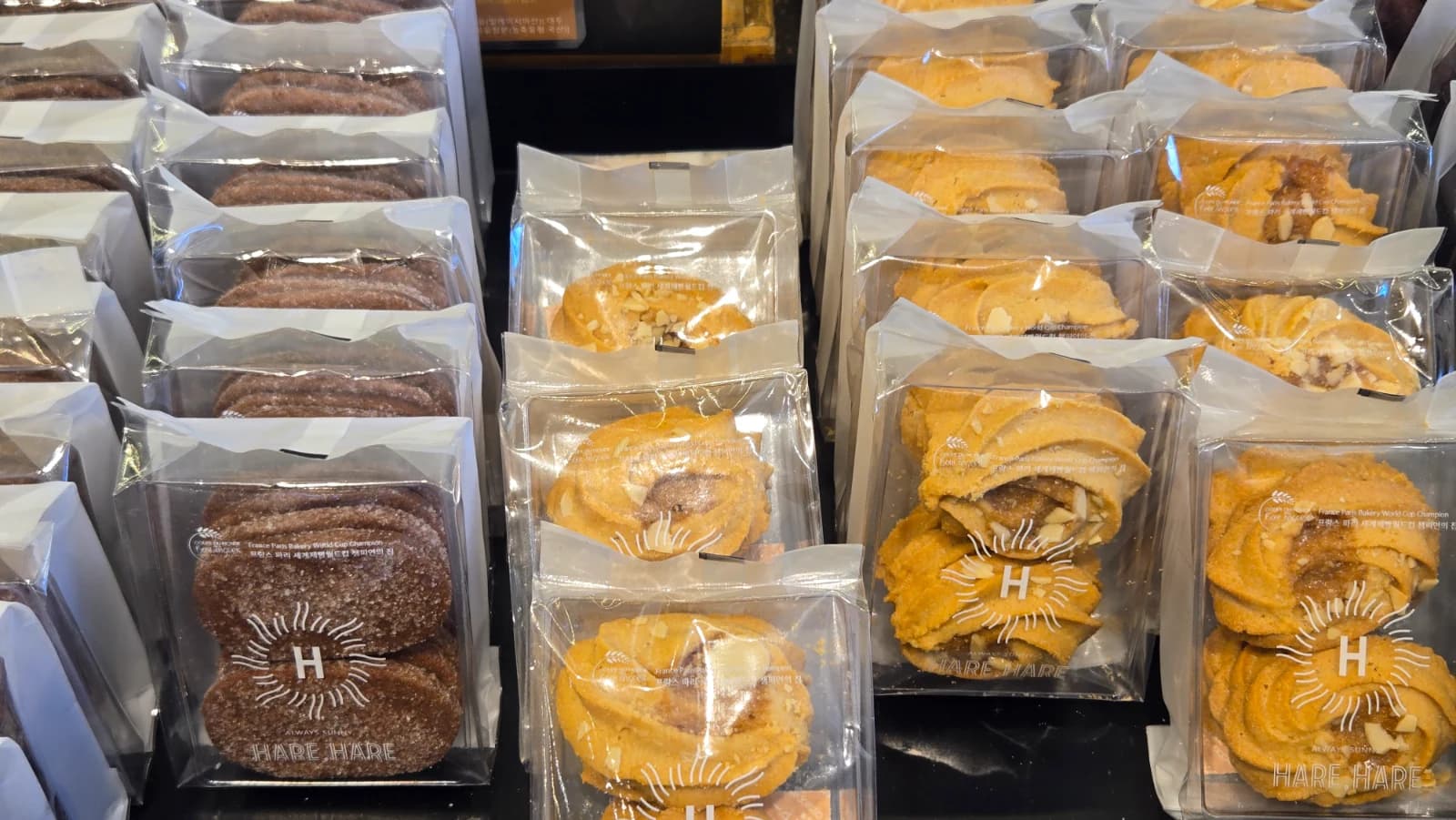
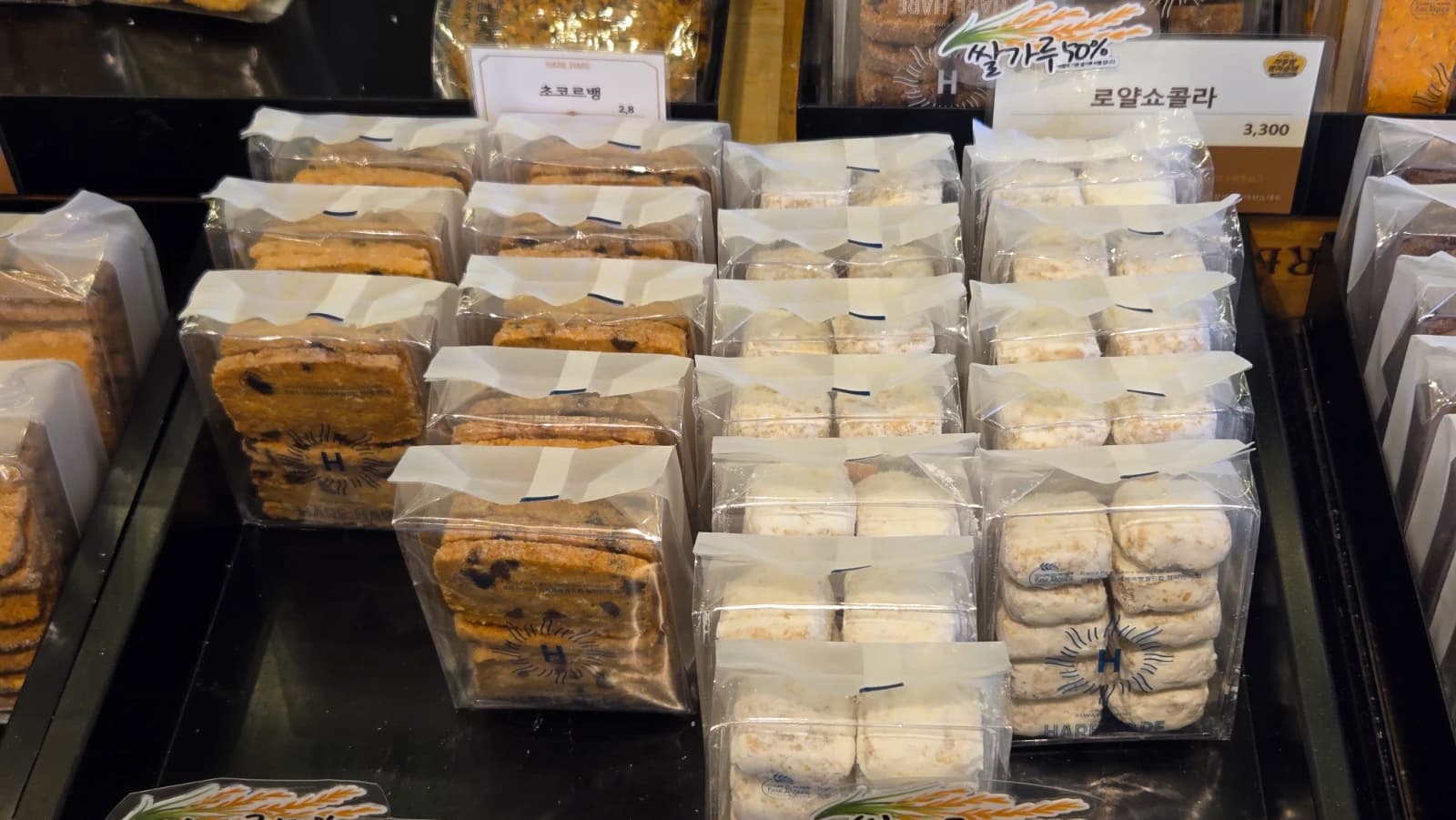
The phrase "home of the Paris World Baking Cup Champion" was printed right on the packaging. Chocolate-coated flat cookies and almond-topped round cookies packed into clear bags with the Harehare logo — the packaging alone made them gift-ready without any extra wrapping.
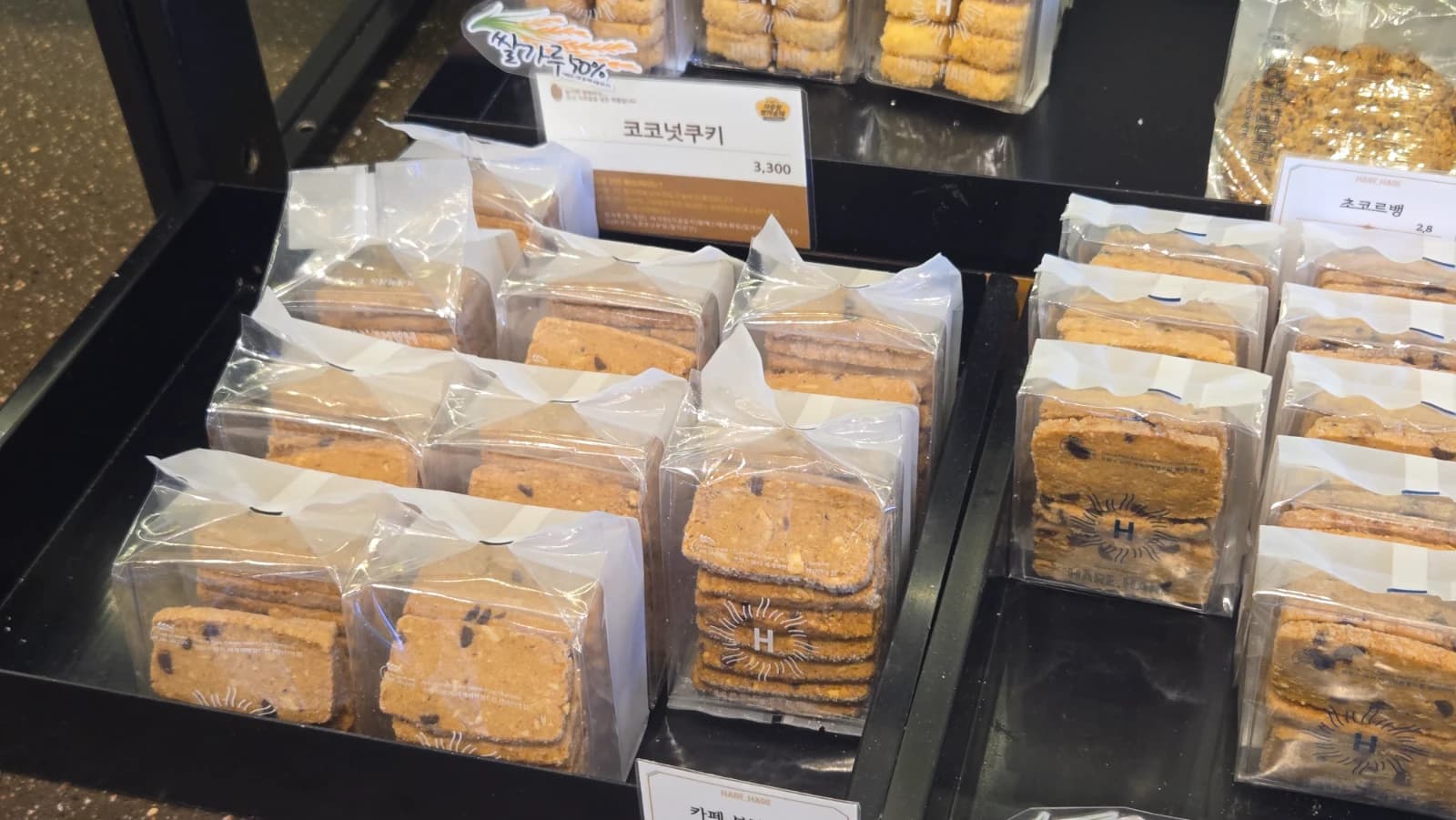
Beside them, individually wrapped Chocorvin, Royal Chocolate, and coconut cookies piled up on black trays. A few carried the "50% rice flour" sticker, and some had the Harehare logo stamped directly into the cookie surface. The embossing was sharp enough that you could tell the brand through the wrapping without opening anything.
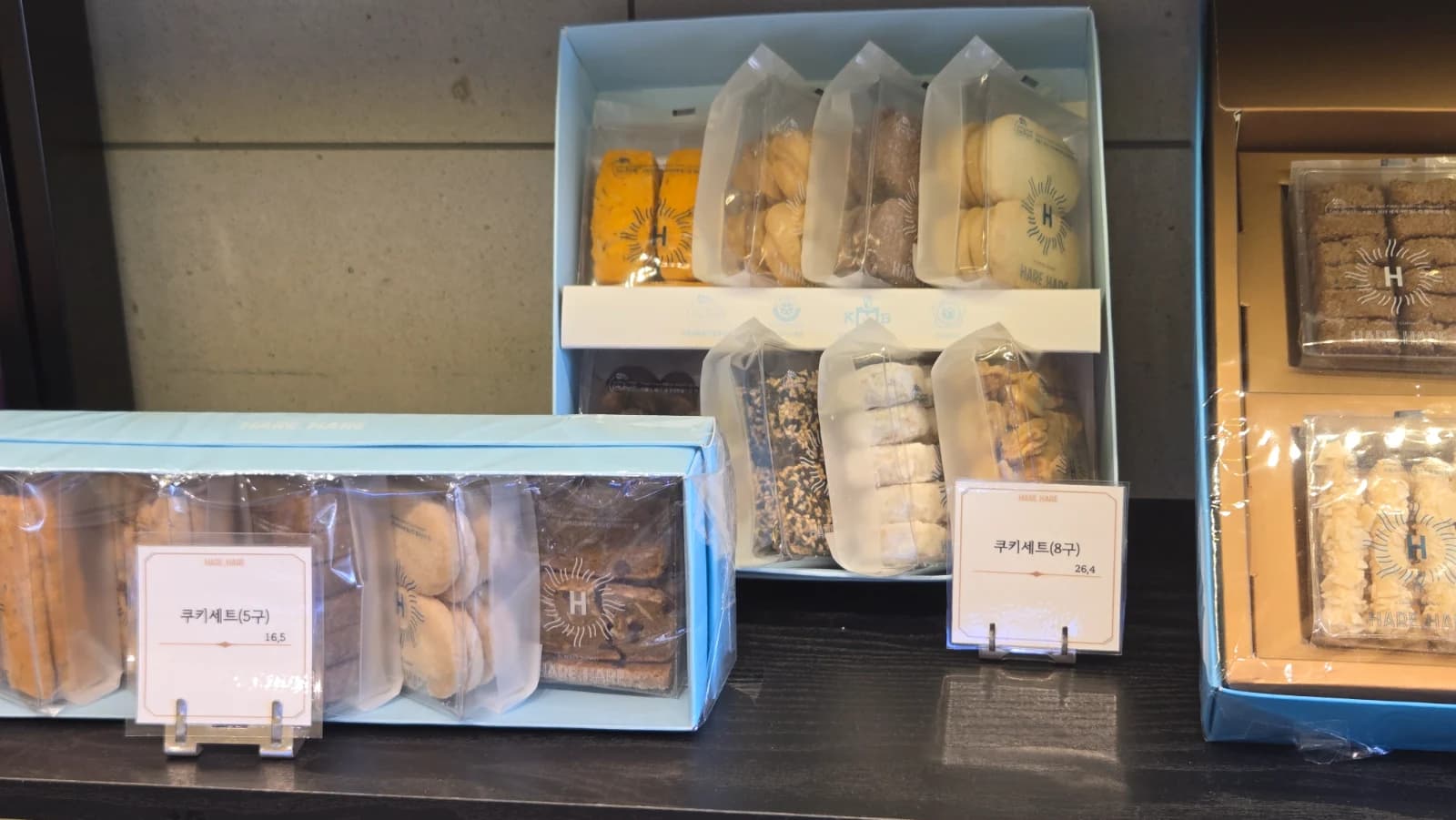
One corner held cookie gift box sets on their own. Two sizes — a 5-piece and an 8-piece — blue boxes holding a selection of individually wrapped cookies lined up neatly inside. This looked like where people grabbing Daejeon souvenirs or gifts were making their decisions.
What I Ended Up Buying
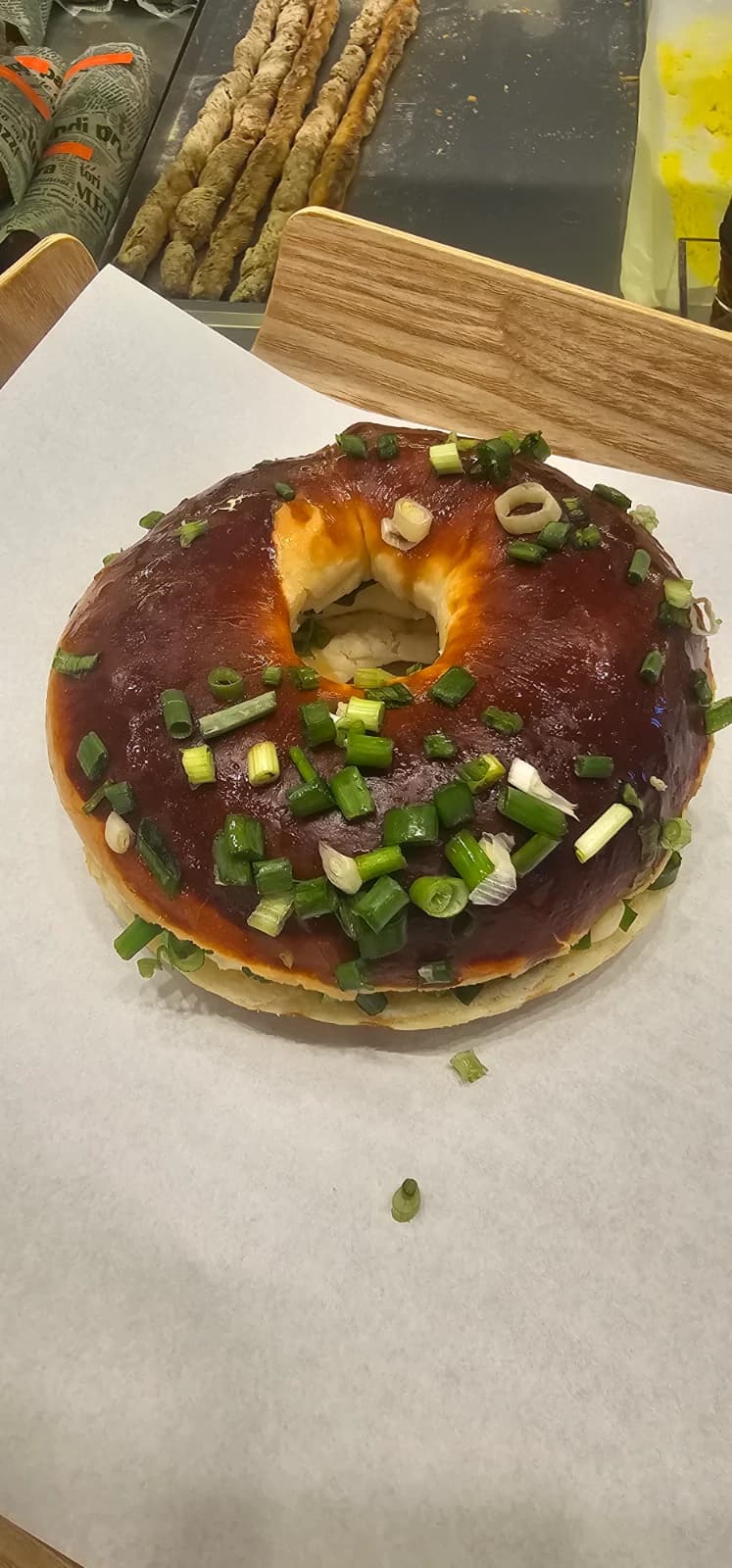
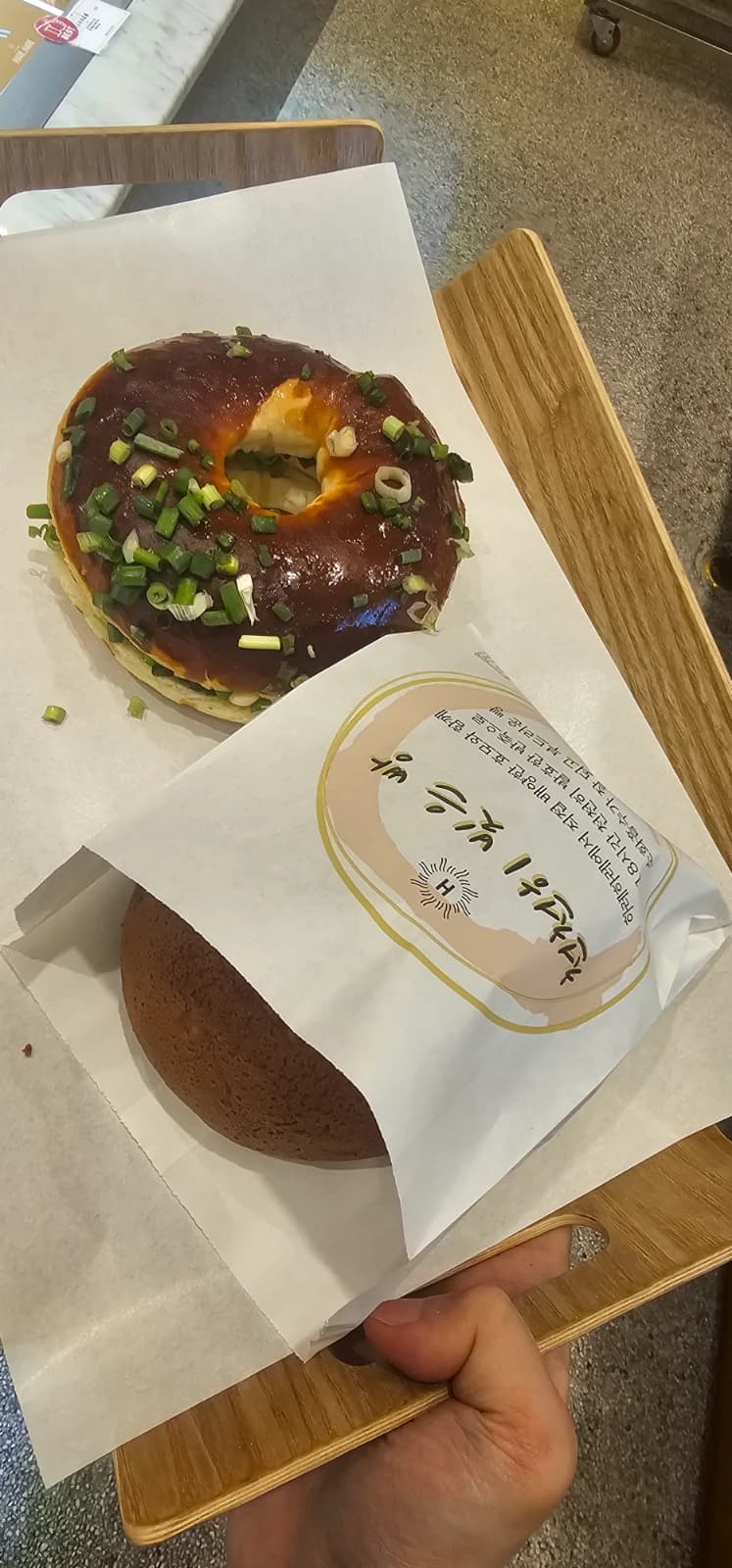
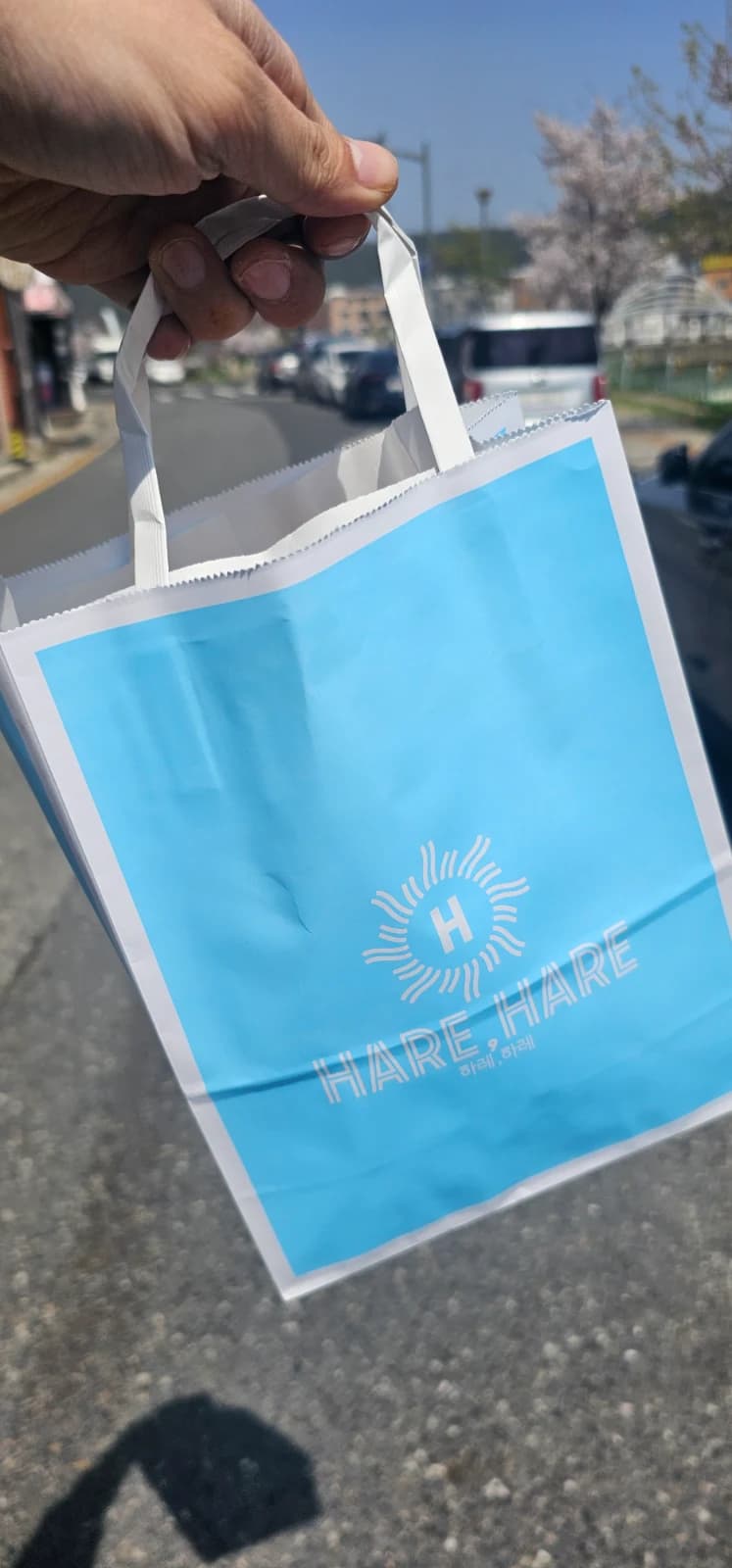
I ended up with the spring onion doughnut and two mocha buns. The salty underdog hiding among all that sugar had stuck in my mind longer than anything else. The mocha bun came in a paper bag printed with "Floating Mocha Bun" — a pretty confident thing to put on your packaging, if you ask me.
Stepping outside, the sun was stronger than I'd realised. Summer, so the temperature gap between the shop and the car park was noticeable, and I'd worked up a bit of a sweat walking back with the blue Harehare bag swinging off my arm.
One minor gripe: there's nowhere proper to sit down and eat inside. A few chairs near the entrance, sure, but right in the flow of customers coming and going, which doesn't really work for actually enjoying your bread. I ended up loitering outside the entrance for a minute before giving up and heading back to the car.
Once I was in the driver's seat, I opened the Jukpa Pregel bag. A properly savoury whiff of spring onion came up, and my wife, who'd been waiting in the passenger seat, went "what on earth is that" before nicking a bite. Every time we visit a Korean bakery, she finds combinations like this baffling — but this time she went quiet and pinched a second bite. Couldn't quite tell if that was a compliment or not, but I'll take it.
The mocha bun I saved for home. There's a reason they call it "floating", it turns out — the texture was genuinely light. Lightly browned on the outside, soft in the middle, with a subtle mocha flavour running through. If you're expecting a big punch of coffee, you might be a touch disappointed.
One full loop took me longer than expected. That's how it goes in a bakery, though, wherever you are.