
Korean Convenience Store Food: Cooking Haidilao Mala Noodles RIGHT Inside the Store??
Table of Contents
12 items
Back Again With Another One
So today I was kinda hungry but not like... actually hungry, you know? Didn't want a full meal. Just needed something to munch on. Ended up stopping by Emart24 near my place and spotted Haidilao Mala Fen on the shelf. If you're into mala, you've probably seen these around. I've been eyeing it forever and finally grabbed one.
Now usually I'd take stuff like this home to review. But today? Nope. Cooked it right there in the convenience store. Yeah, Korean convenience stores let you do that — cook your food and eat inside. Wild, right? Some people don't even know this is a thing. So I figured I'd cover that too while I'm at it.
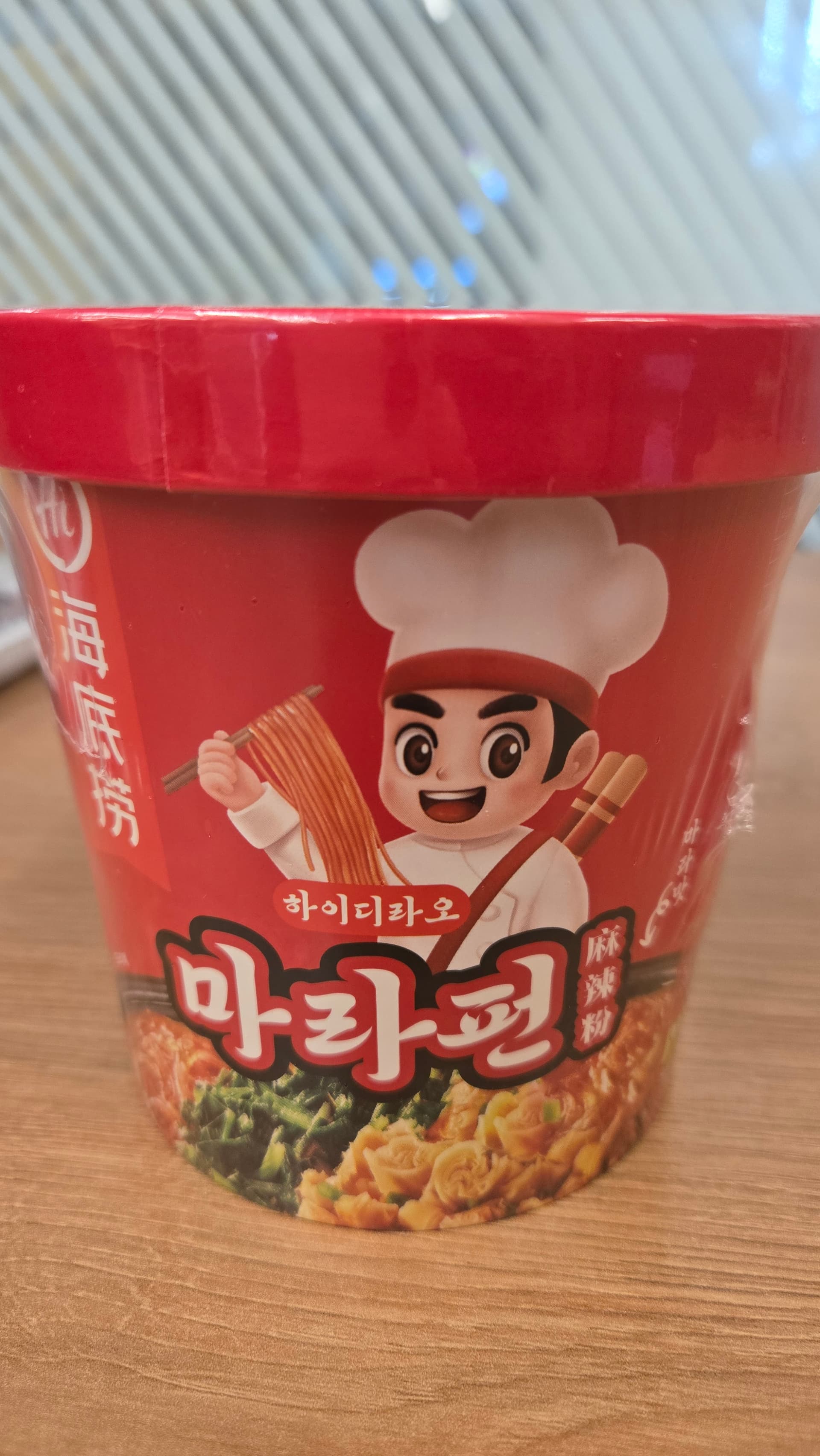
Today's pick: Haidilao Mala Fen, ₩3,200 (about $2.30 USD / £1.80 GBP / $3.50 AUD). Haidilao is this massive hotpot chain from China — pretty famous if you know, you know. This is their instant food line. Mala tang is the soupy version, mala fen is more about glass noodles with a thicker, oilier sauce. Kinda pricey for convenience store cup noodles tbh, but considering a bowl of mala tang at a restaurant runs you like ₩10,000+... not bad for a quick fix.
Product Info
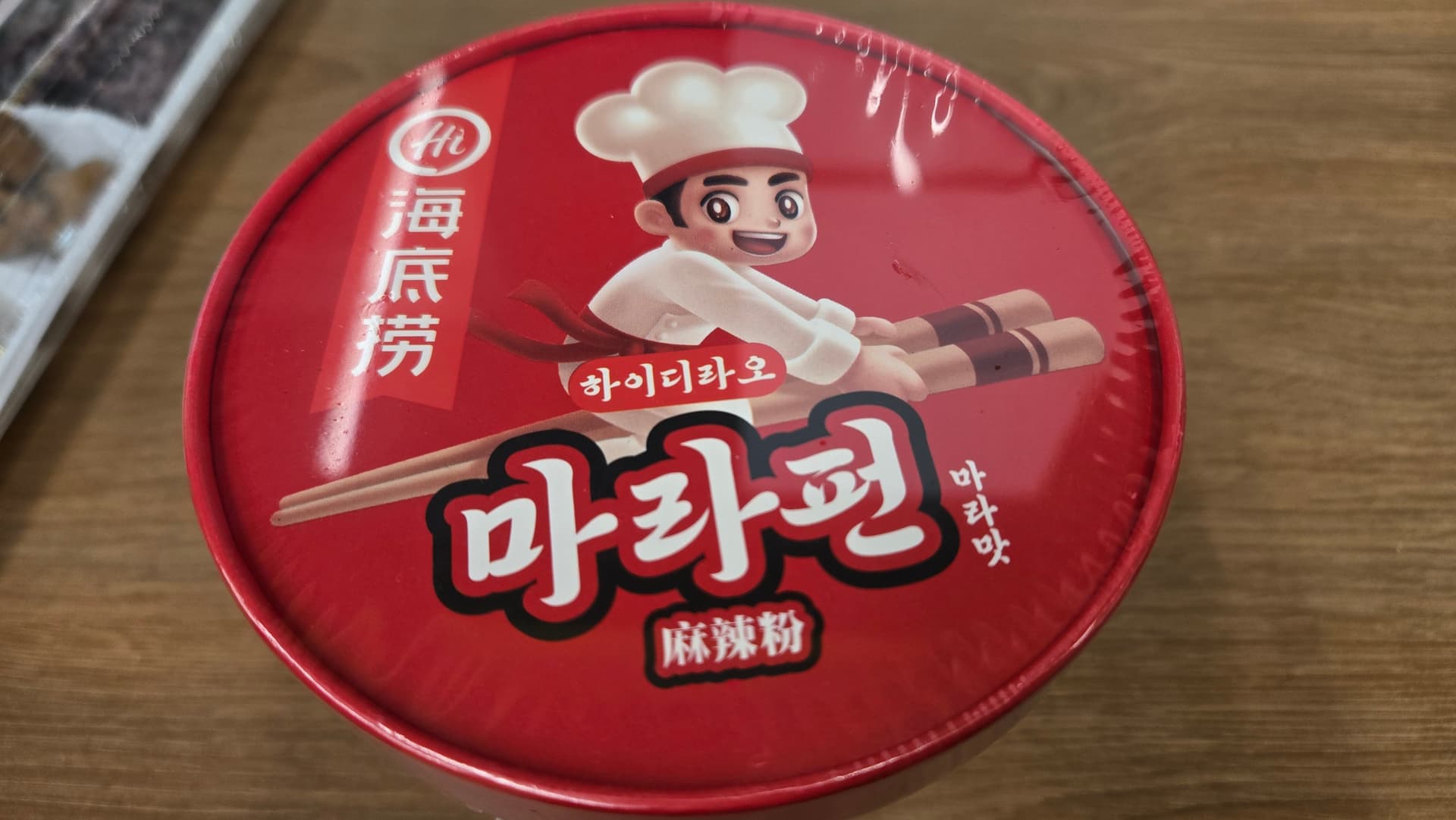
Top of the lid. There's this little chef mascot sitting on a pile of noodles — you'll see him on all of Haidilao's instant stuff. That little label on the top right says "mala flavor" — this is the basic version. If you want your face melted off, there's a spicier variant too. First time trying it so I went safe.
Nutrition Facts and Origin
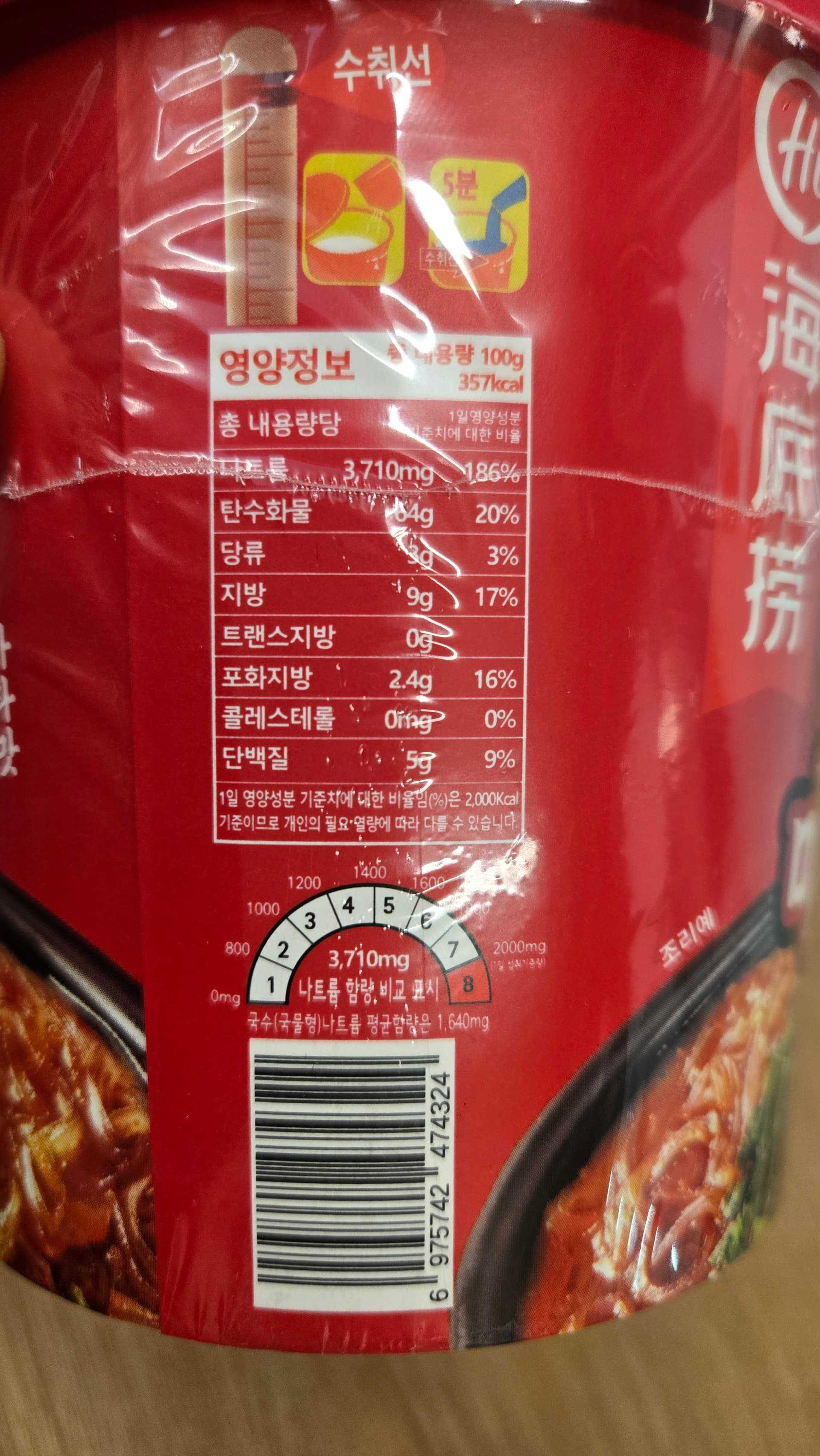
Nutrition info is on the back. 100g total, 357 kcal, and sodium at 3,710mg which is... yeah, pretty high. I'll break that down more later.
Also peep the barcode — starts with 697. That means it's made in China. The first three digits of any barcode indicate the country of origin. Korea is 880, Japan is 49, US is 00-13. So whenever you're curious where something's actually from, just check those first numbers. Haidilao is a Chinese brand and yep, this is actually manufactured there and imported.
Spice Level
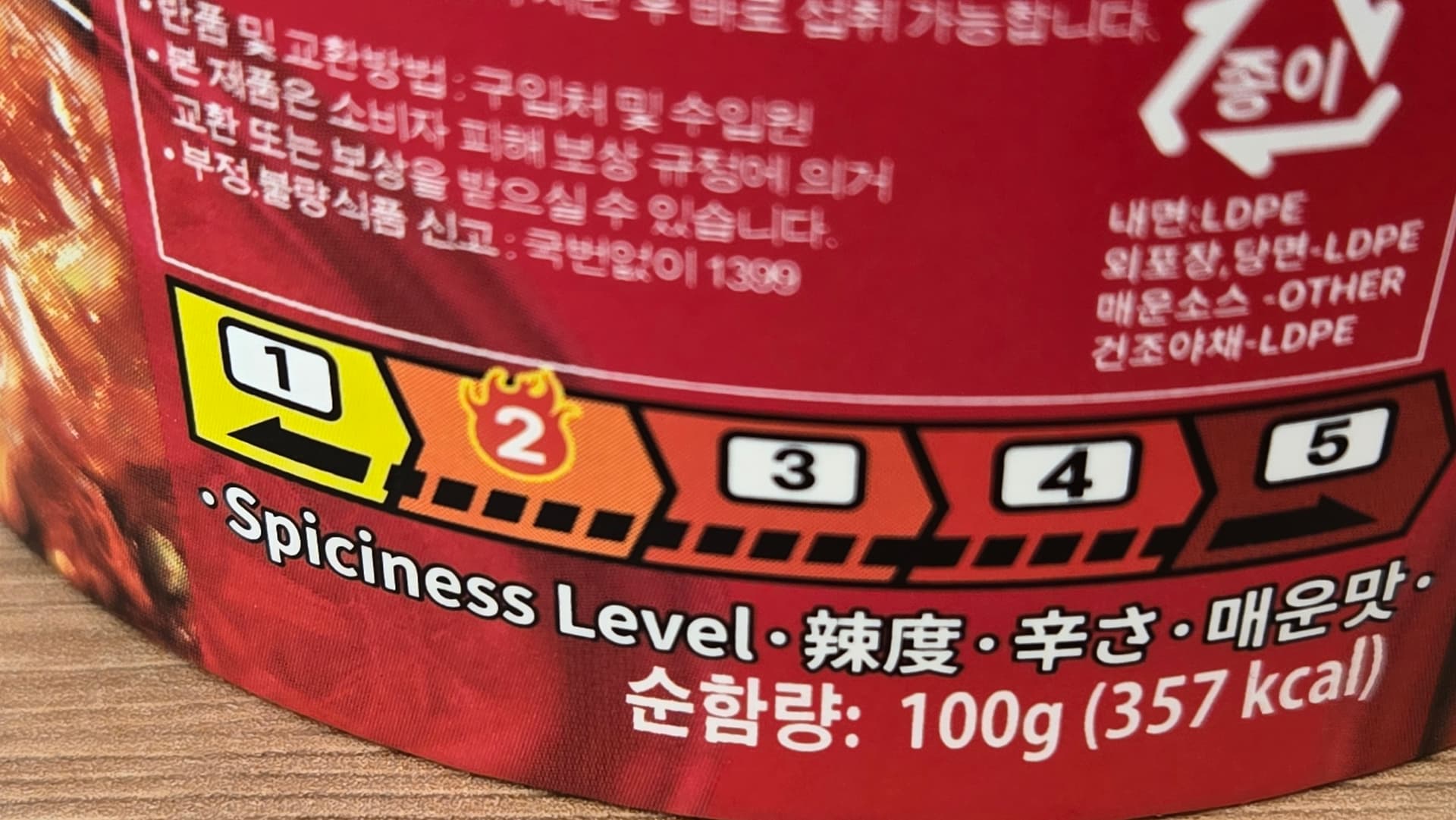
Back of the cup shows "Spiciness Level" from 1 to 5. This one's a 2. Has the little flame icon but out of 5? Can't be that crazy. The spicy version is probably like a 4 or 5 — I'll compare when I try that one.
What's Inside
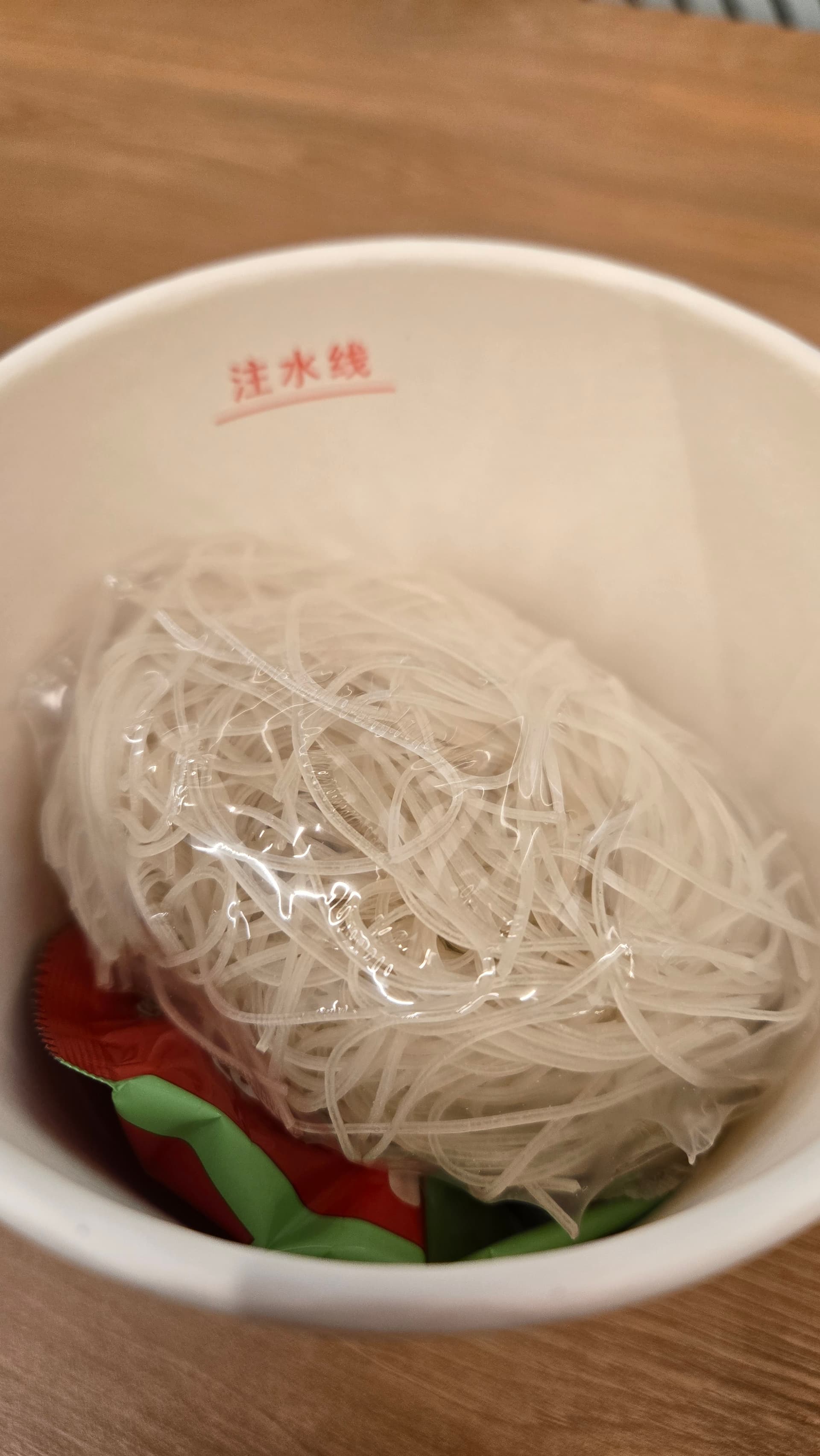
Pop the lid and it's pretty simple. Glass noodles, two sauce packets. Inside the cup there's this line that says "注水线" — that's the water fill line. Chinese product so everything's in Chinese. The noodles are thin and translucent, looked kinda skimpy compared to regular cup ramen. Made me wonder if this would actually fill me up. For ₩3,200 — that's like 2-2.5x the price of Korean cup noodles — this better be good.
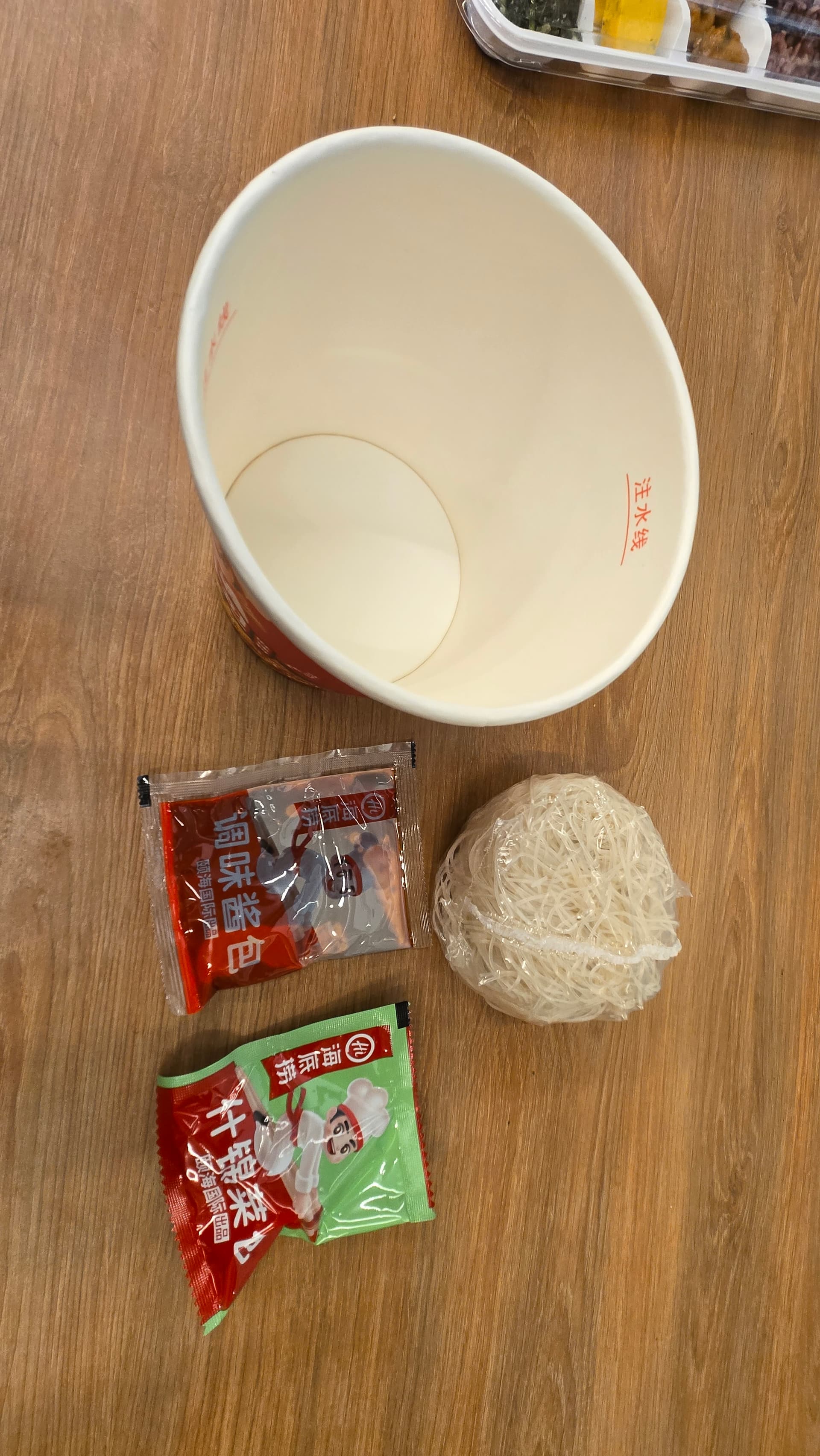
Everything laid out. Cup, noodles, two sauce packets. Red one is the liquid sauce, green one is dried toppings. That's... it. I expected more? Like actually that's the whole thing. Cup's basically empty, noodles fit in my palm. Looking at it all spread out made it feel even sadder. Paying ₩3,200 for THIS?? Anyway. If it tastes good, whatever. Let's cook.
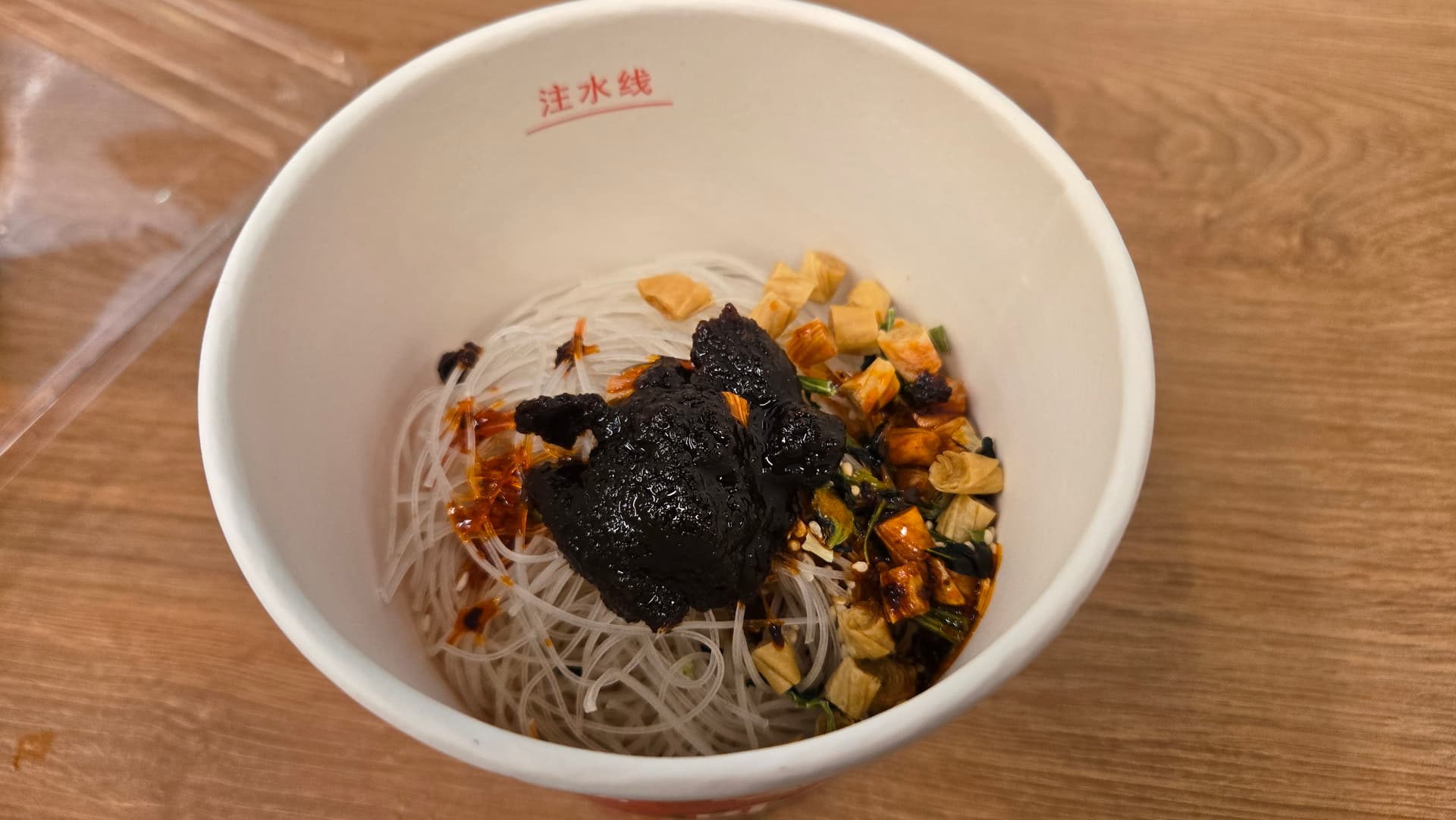
Noodles in, both sauce packets dumped on top. The black stuff is the liquid sauce, the red oily bits with toppings is the dried packet. Oh also — these noodles came separately sealed in plastic. Korean cup ramen usually just has the noodles sitting loose in the cup, but this one had them wrapped up separately. Feels more hygienic I guess? But also more packaging waste.
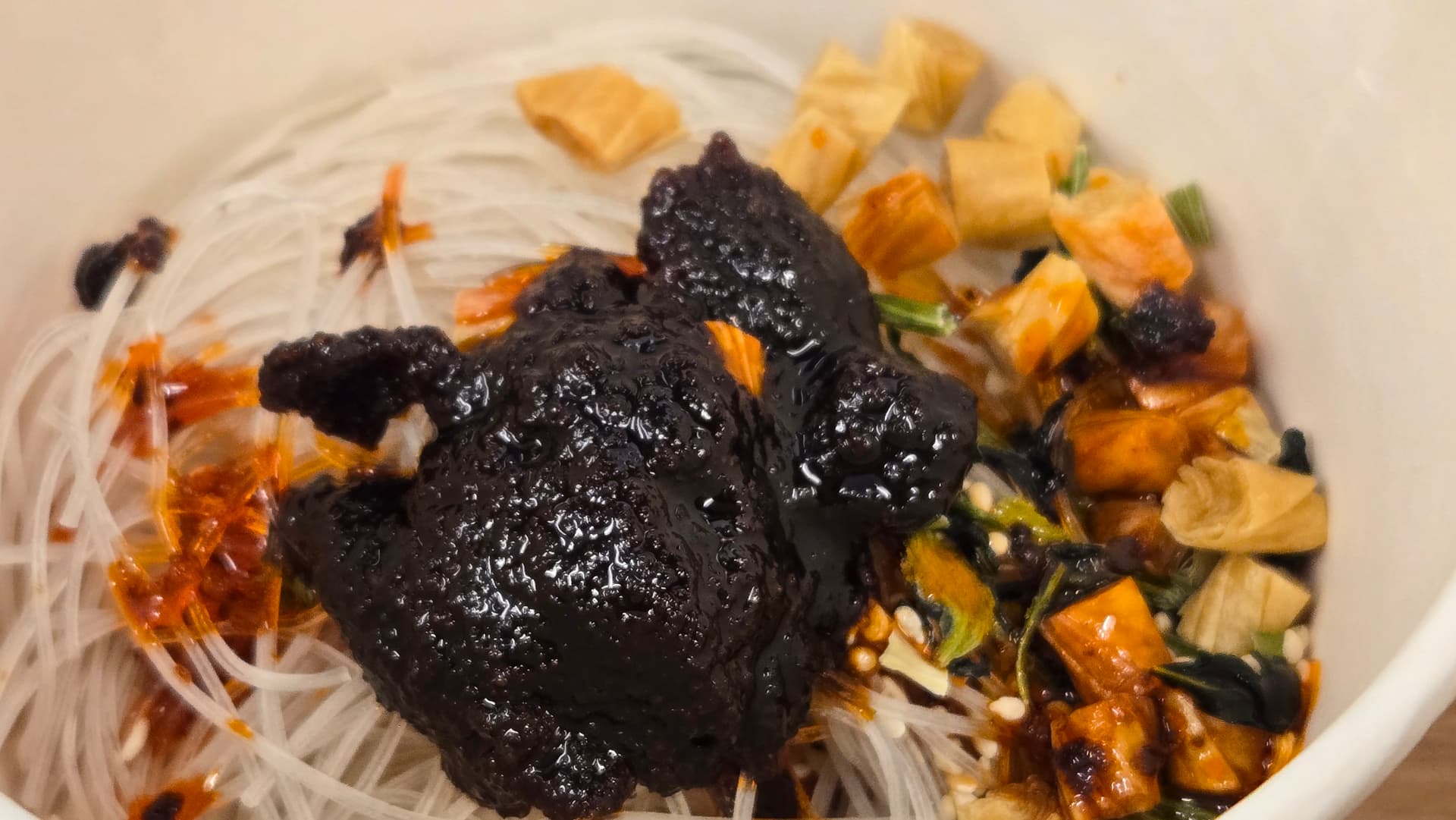
Closer look. Couldn't really see from far away so zoomed in. Liquid sauce is this thick black paste — kinda looks like jjajang or doubanjiang. The dried packet has tofu cubes, green onions, sesame seeds, and chili oil all mixed together. Haven't even added water and the mala smell is already hitting.
Korean Convenience Store Culture — Wait You Can EAT Here??
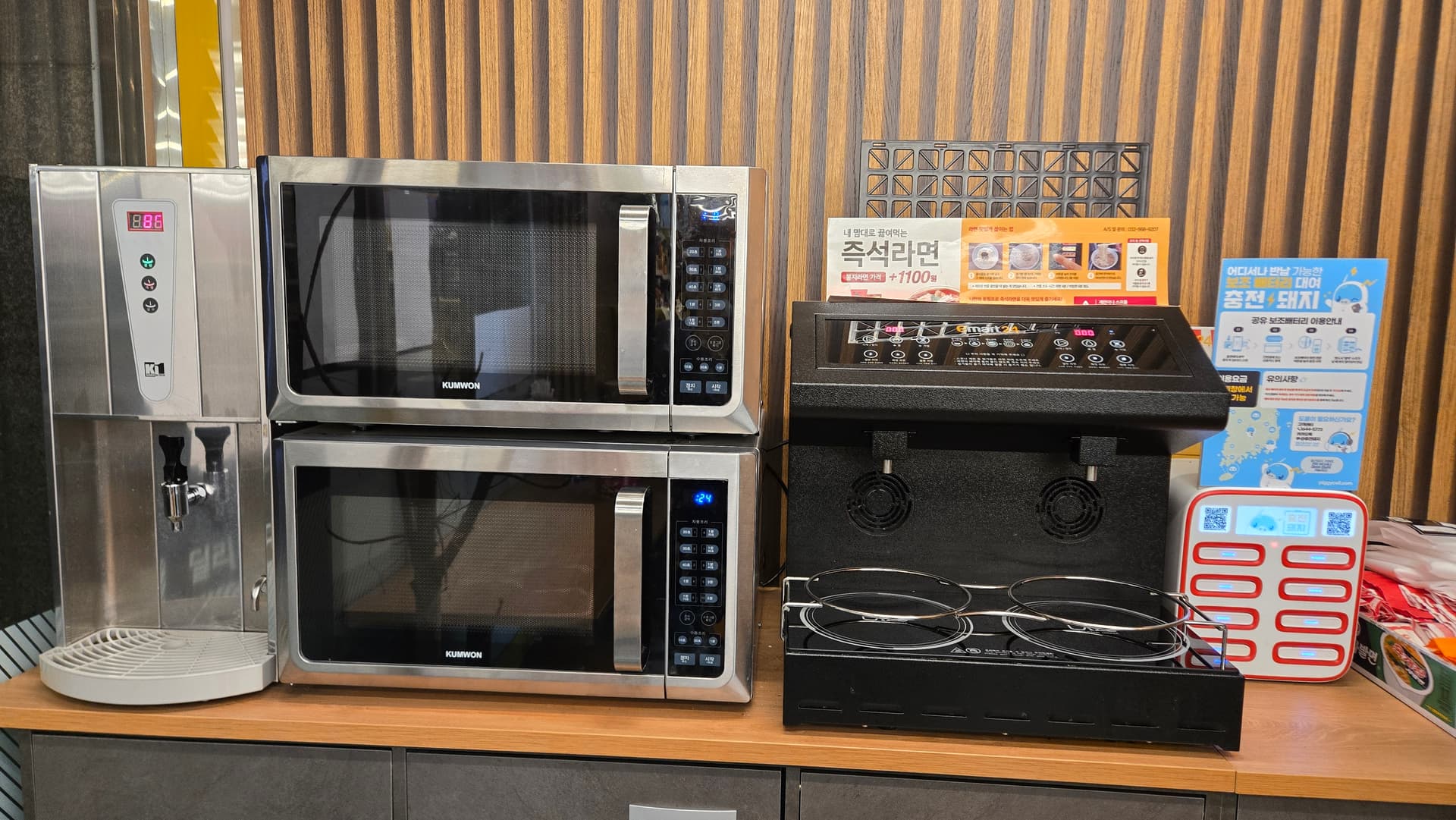
Okay quick pause to explain Korean convenience store culture because this blows some people's minds. In Korea, you can literally buy stuff and cook it right there in the store. See this photo? Hot water dispenser, microwave, ramen cooker — all self-service, all FREE. No extra charge for eating inside either. Just pay for your food and you're good. I know this post might get translated so figured I'd explain for anyone not familiar.
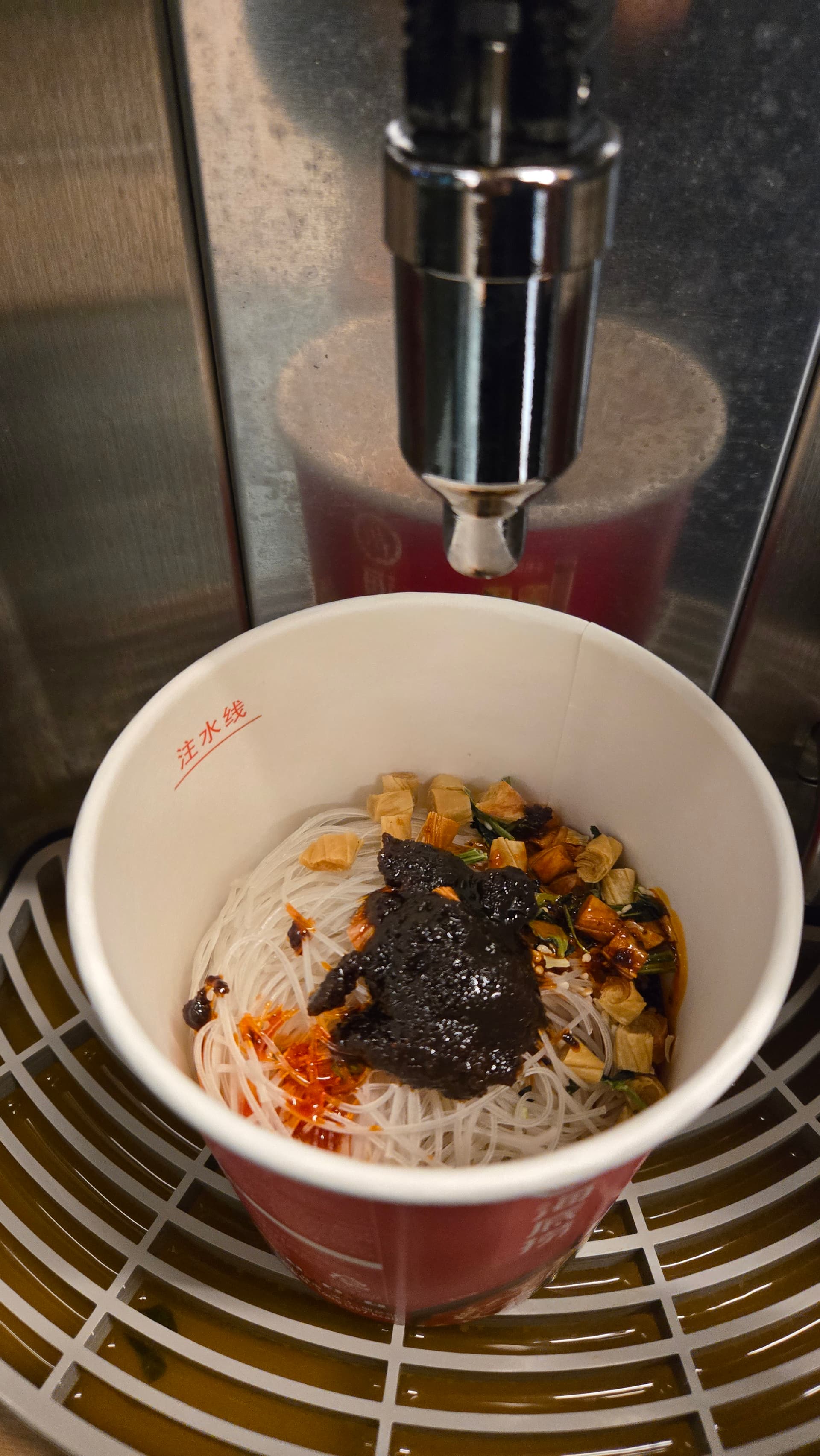
This is how it works. Use the hot water dispenser, hit the button, fill to the line that says 注水线. Like 90% of Korean convenience stores have these setups so you can grab cup noodles and eat them immediately pretty much anywhere. Super convenient when you're hungry and don't wanna wait till you get home.
How It Compares to Other Countries
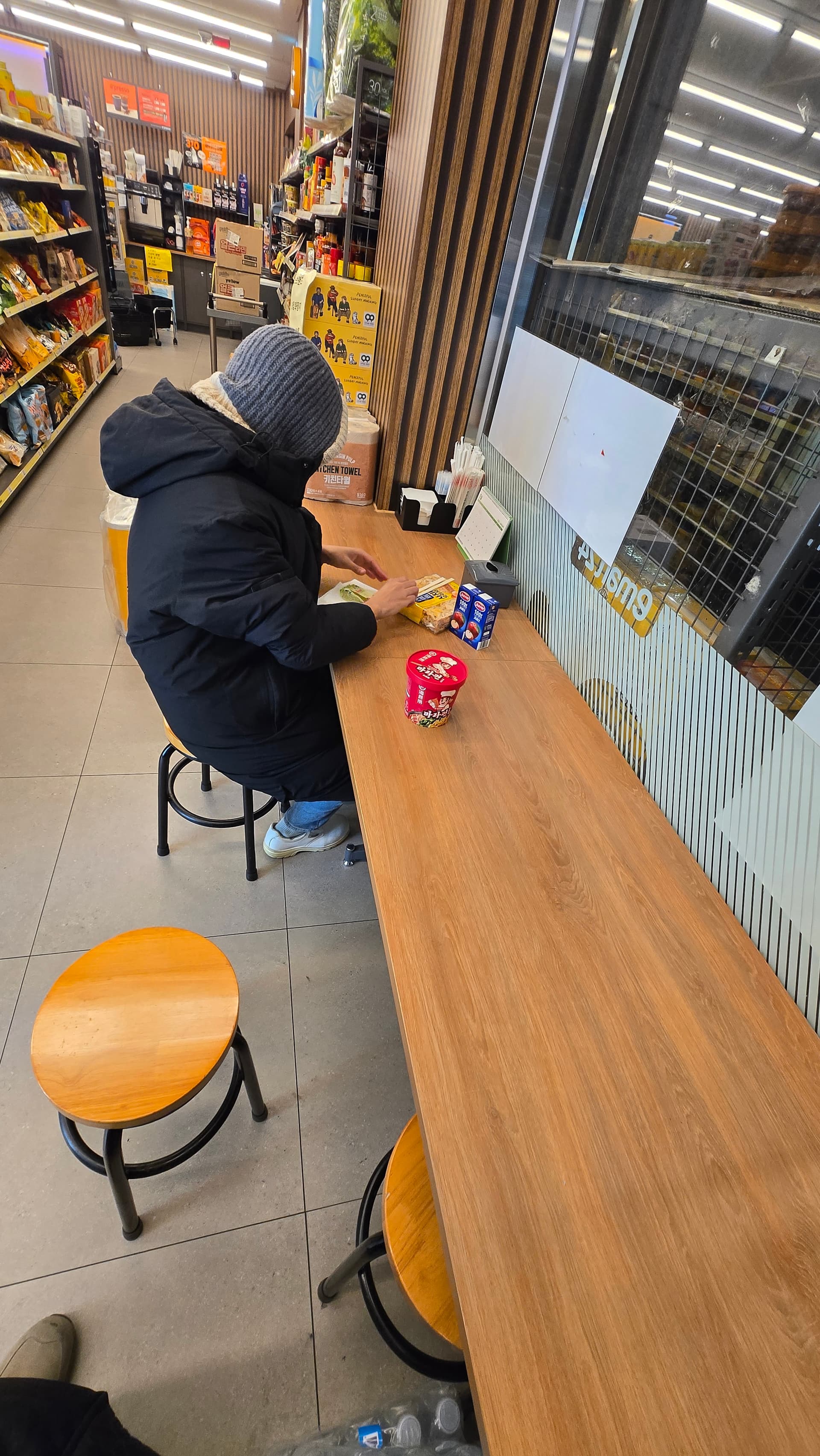
This is what the seating area looks like. Long counter by the window, some stools, sit and eat. Most convenience stores have something like this — smaller ones might not, but they usually have a bench outside instead. Bigger stores can have like 10+ tables.
It's different everywhere though. Japan calls their in-store eating areas "eat-in" but here's the catch — if you eat inside, you pay 10% consumption tax. Take it outside? Only 8%. This started in 2019 when they raised taxes, so now a lot of people in Japan just take their food outside to save that 2%. Every little bit counts apparently.
Thailand is another story. Thai convenience stores don't really have sit-down eating culture. Instead, the staff heats up your food and even pours the water for you. Nice service-wise but when it's busy? Long wait times. Korea's self-service is faster but less personal. Thailand's full-service is comfy but can get backed up. Trade-offs, you know?
Cooking Time
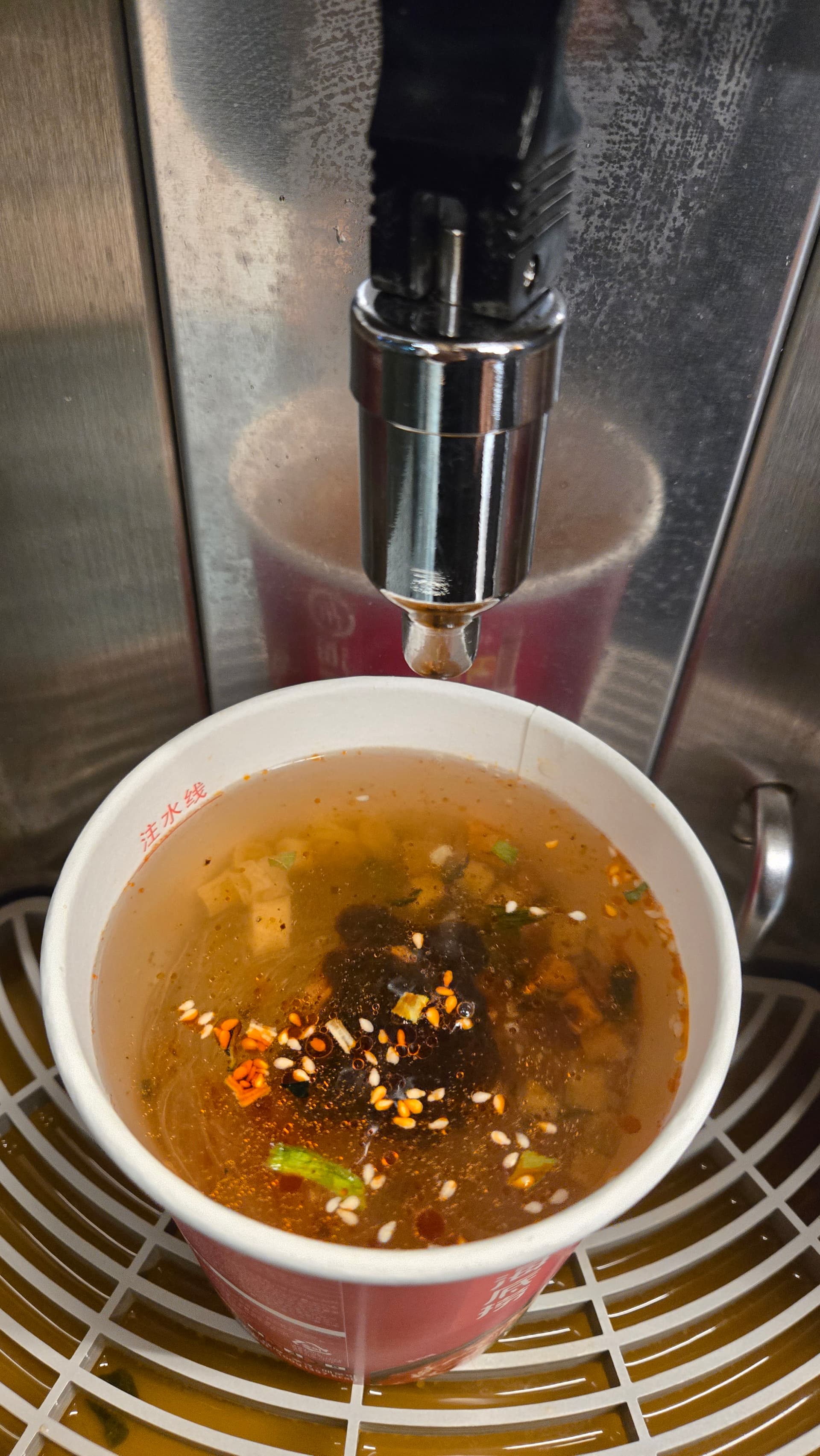
Filled it to the line. Hot water goes in and suddenly there's chili oil floating everywhere — immediately looks like actual Chinese restaurant food. Mala was pretty unknown in Korea a few years back but after the whole mala craze hit, it's been going strong ever since. Kids especially are obsessed with this stuff. How they handle that level of spice is beyond me but they demolish it. Trend started ages ago but it's still going.
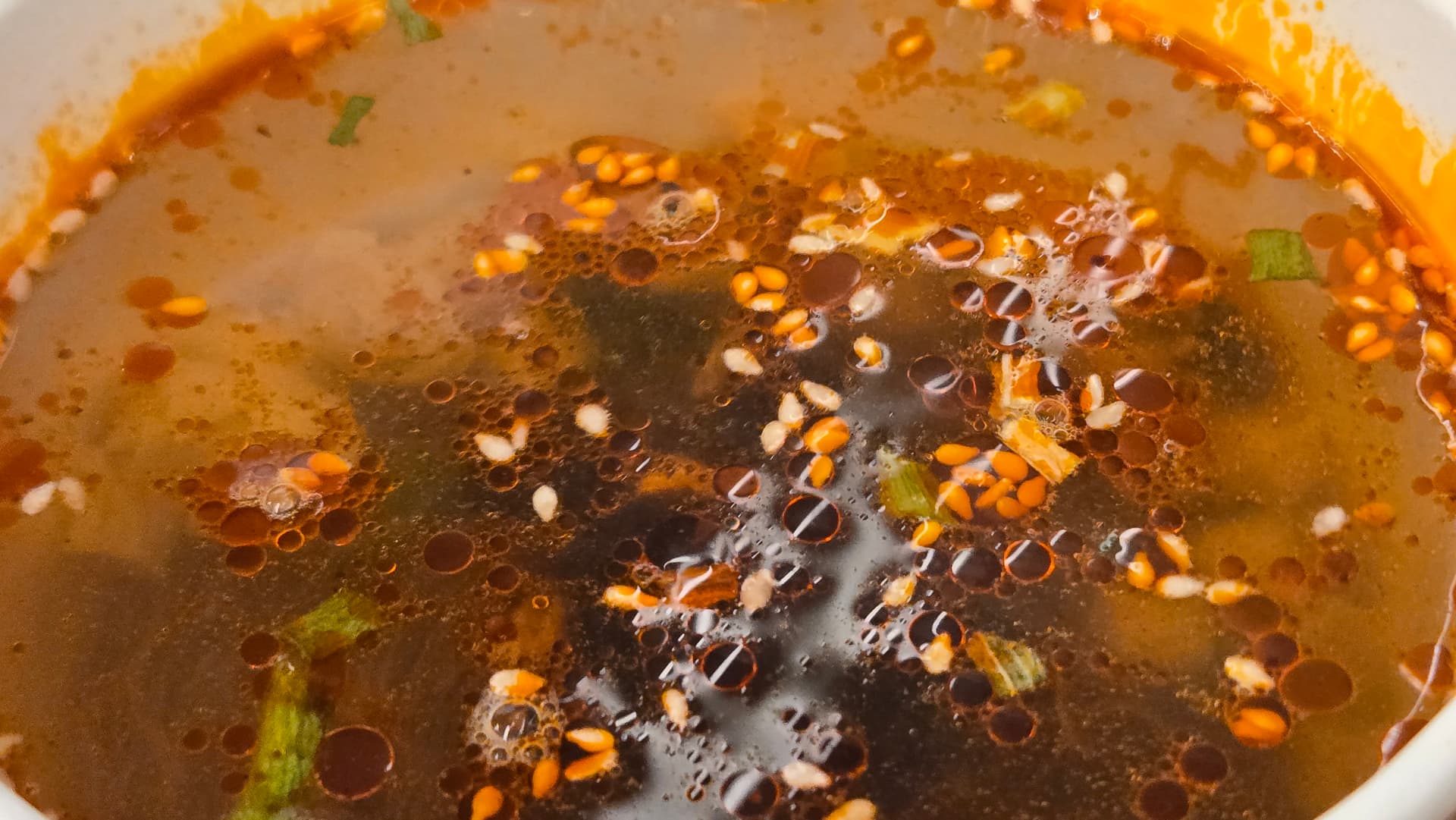
Close-up. Not even cooked yet and the broth already looks INTENSE. Chili oil spreading across the surface creating this red slick, sesame seeds and bits floating around. Steam rising up and that signature mala smell hitting my nose... you know that tingly, numbing sensation mala is famous for? The scent alone is already aggressive. No idea if it's the Sichuan peppercorn or what but it's pungent before it's even spicy. Spent the whole 3 minutes just inhaling this. Hurry uppp.
Done!
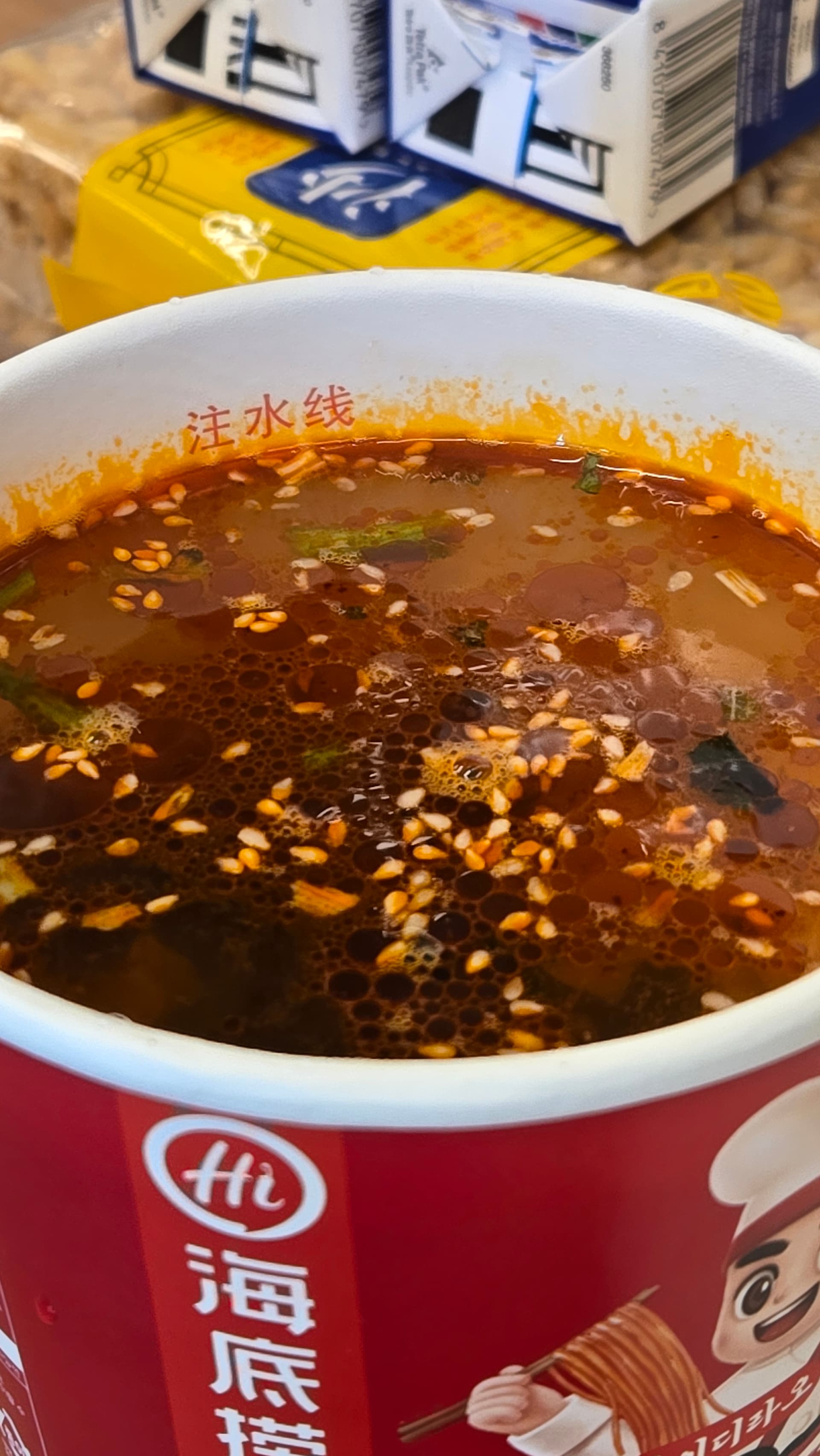
3 minutes. Lid off and whoa — that black liquid sauce has spread through everything and completely transformed the color. Surface covered in chili oil and sesame seeds, that oily mala broth has stained the edges of the cup red. The SMELL though. Sichuan peppercorn hitting different. Can't even tell if it's spicy or numbing anymore, it's just aggressive. Honestly felt kinda bad letting this smell fill up the convenience store... lowkey rude?? But also it made me so hungry so whatever.
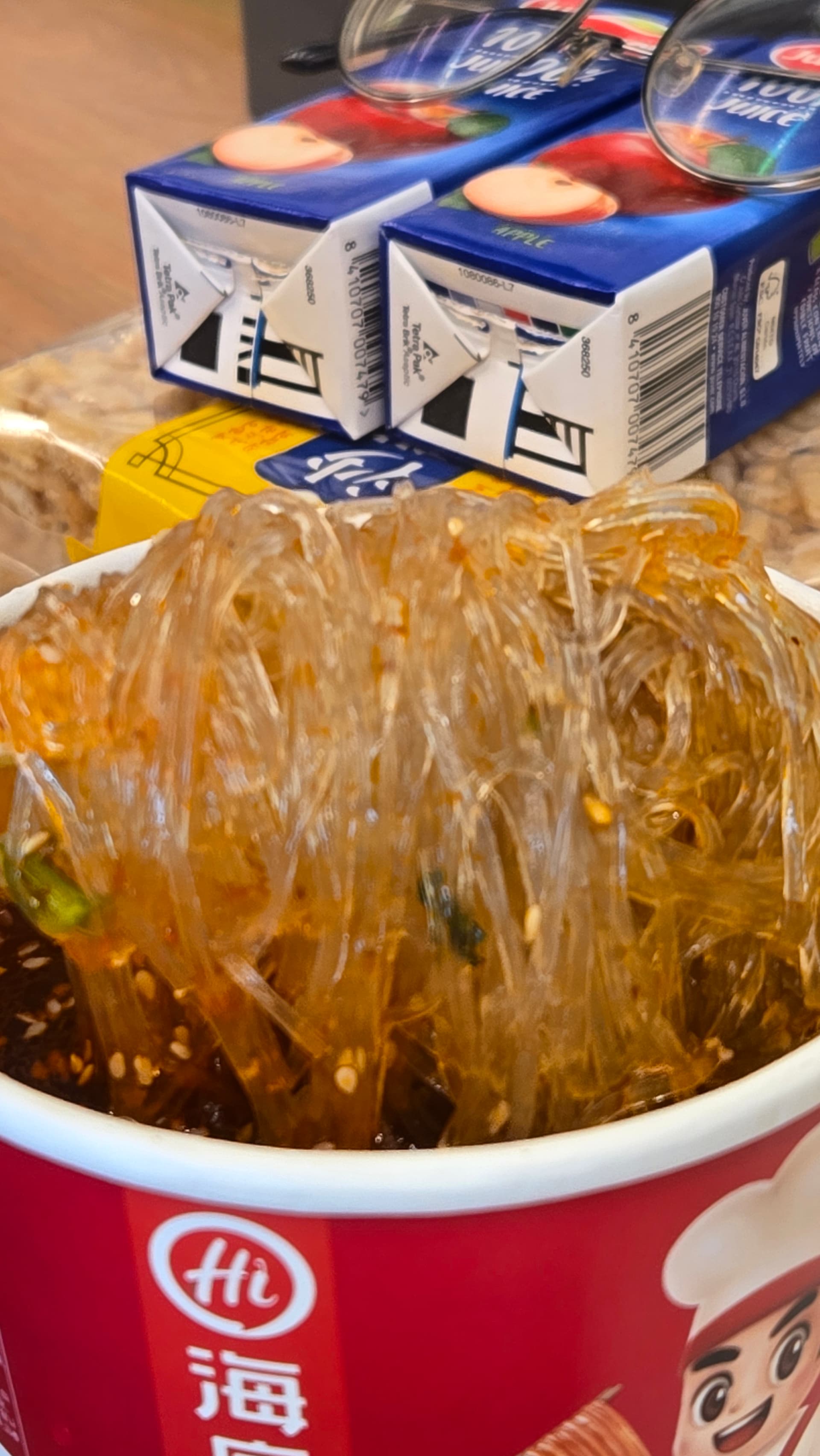
Pulled up the noodles. Camera didn't focus right so the pic's not perfect but you get the idea. The glass noodles that were clear before have soaked up the broth and turned this brownish color. Lift them with chopsticks and they just stretchhh — you can tell they're gonna be bouncy and chewy. Totally different texture from regular ramen noodles. They looked so measly before but once they absorbed all that liquid? Actually decent volume.
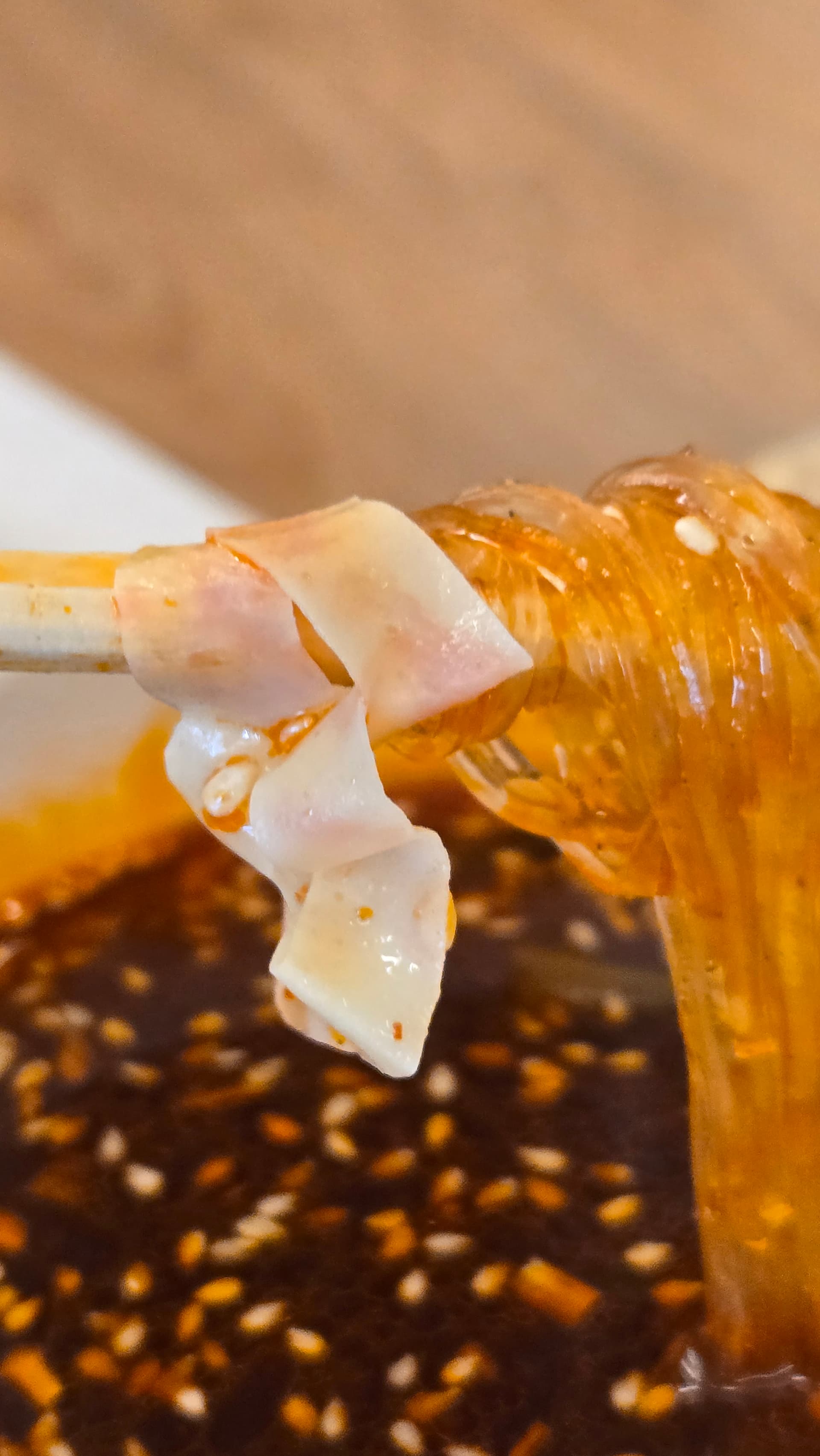
Topping close-up. The tofu cubes are actually pretty chunky. Korean cup noodles are notorious for having sad toppings — like a few pieces of dried green onion and some mystery meat crumbs. This one? Tofu and veggie bits that actually look like something. Compared to other instant noodles not bad at all. BUT considering this costs ₩3,200... I mean. This is the bare minimum, no?
The Verdict on Taste
Honestly? Pretty solid. Korean food is already spicy by default and we've got this whole fermented condiment culture so deep savory flavors aren't new to us. Mala fits the Korean palate pretty well. The spice level itself isn't challenging for most Koreans.
But mala isn't just spicy — it's the AROMA that's unique. Sichuan peppercorn creates this numbing, tingly sensation. First time smelling it and it's almost medicinal? Bitter but also sharp and kind of... buzzy? Different from black pepper, different from chili powder. That's why some people straight up can't do mala. Not because of the heat — the flavor profile just doesn't click for them.
Writing this as a Korean from a Korean perspective but honestly curious how foreigners experience this. Korean spiciness is chili-based — it's that burning, hot sensation on your tongue. Mala is more like... your tongue going numb? Tingling? If you're not used to that sensation it might not even register as "spicy," just... weird.
Cleaning Up
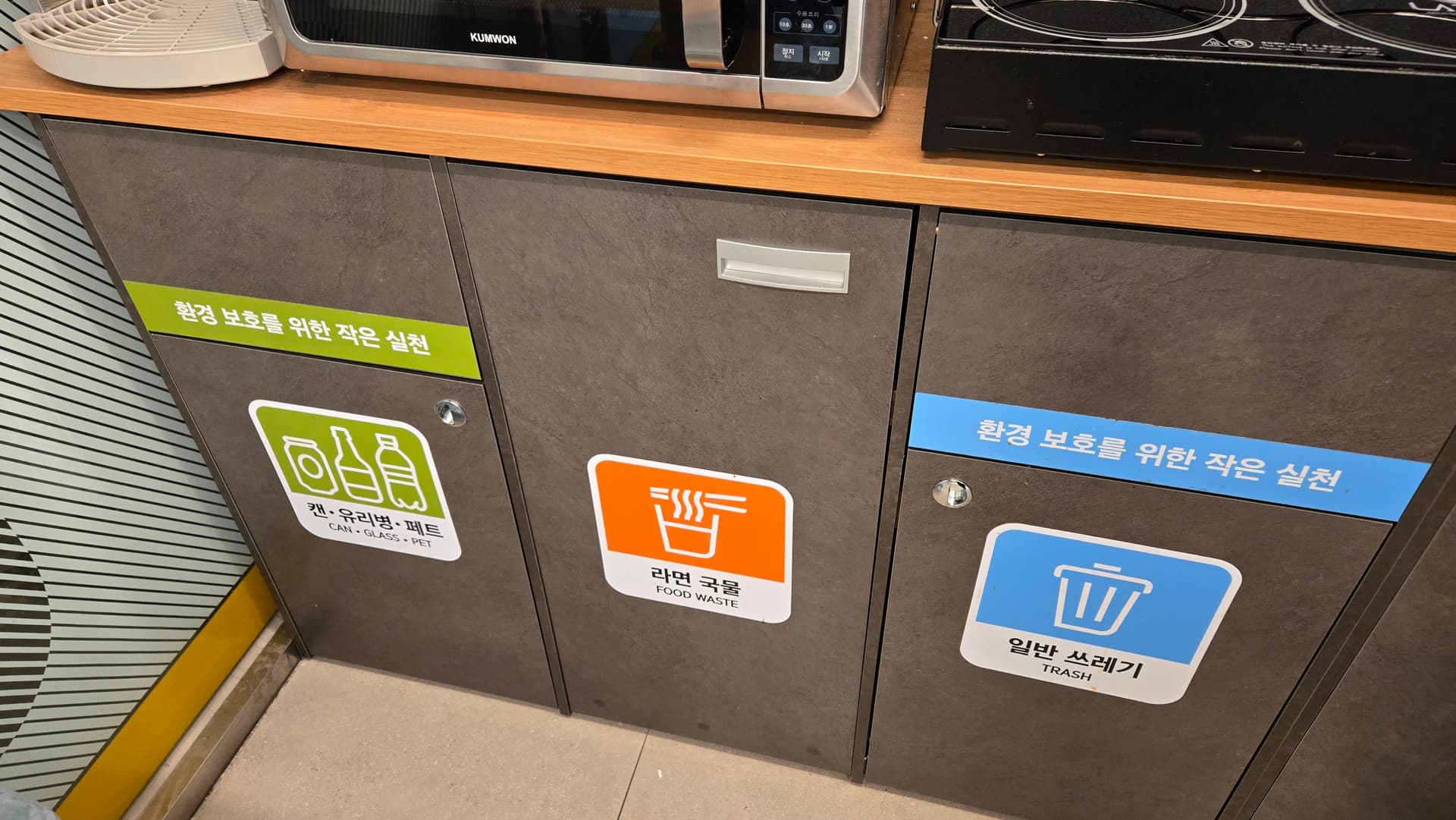
When you're done there's a whole disposal station. Photo shows it left to right: cans/glass/plastic bottles, ramen soup, general trash. What if you can't finish the broth? See that middle container specifically for soup? Just pour it in there. No need to force yourself to drink it. Actually please don't — ramen broth is basically liquid sodium. Just eat the noodles and toppings and dump the soup. Your body will thank you.
Korea really is the ultimate self-service country. Cook it yourself, eat it yourself, clean up yourself. Everything's on you but honestly once you're used to it? Convenient. Do everything at your own pace, no waiting, no awkwardness.
Final Thoughts
So bottom line: Haidilao Mala Fen tastes good but the value is questionable. ₩3,200 could get you two Korean cup ramens. Is it worth it? Ehhh. Taste-wise, solid. Portion-wise, lacking. Better as a snack when you're peckish than an actual meal. Like today — didn't want real food, just wanted something to munch on. Perfect for that.
If you're already into mala, worth trying at least once. If you've never had mala before, this is actually decent as a starter — spice level 2 isn't intimidating. Just know that mala has that distinct numbing aroma and if that doesn't work for you, doesn't matter how good it tastes. Only one way to find out though.
And if you're visiting Korea — definitely experience this convenience store culture. Buying cup noodles and cooking them right there on the spot, eating in the store... sounds basic but it's lowkey fun. No extra cost either.
Next time I'll try the spicy version. See you then.
This content was originally published at https://hi-jsb.blog