Hokkaido Omakase That's Haunted Me for 8 Years
Table of Contents
14 items
Winter 2016 — Walking Into a Tiny Sushi Joint in Obihiro, Hokkaido
If you've ever had sushi in Japan, you probably know what I'm on about. It's not that the ingredients are wildly different from what you'd get at a decent spot back home in Australia — but the moment you pop a piece in your mouth, something just clicks differently. That "hang on, this is next level" feeling. The first place I ever had that experience was a little sushi restaurant called Kurado in Obihiro, a quiet city in the middle of Hokkaido, Japan's northernmost island known for its incredible seafood and wide open farmland.
It was winter 2016, and my mate and I had taken a trip up to Obihiro — no real plan, just wandering around in the cold. We had no clue where to eat, so we just kept walking near Obihiro Station until we ducked into this place called Kurado for dinner. It wasn't some famous tourist-magnet restaurant. Just a quiet little shop tucked away in a back street. I've been to a fair few Hokkaido restaurants over the years and most of them have blurred together by now, but the sushi from that night is still weirdly vivid. It's been ages, so things might've changed since then. But let me tell you about it anyway.
Ten Minutes Lost in Front of a Japanese Menu
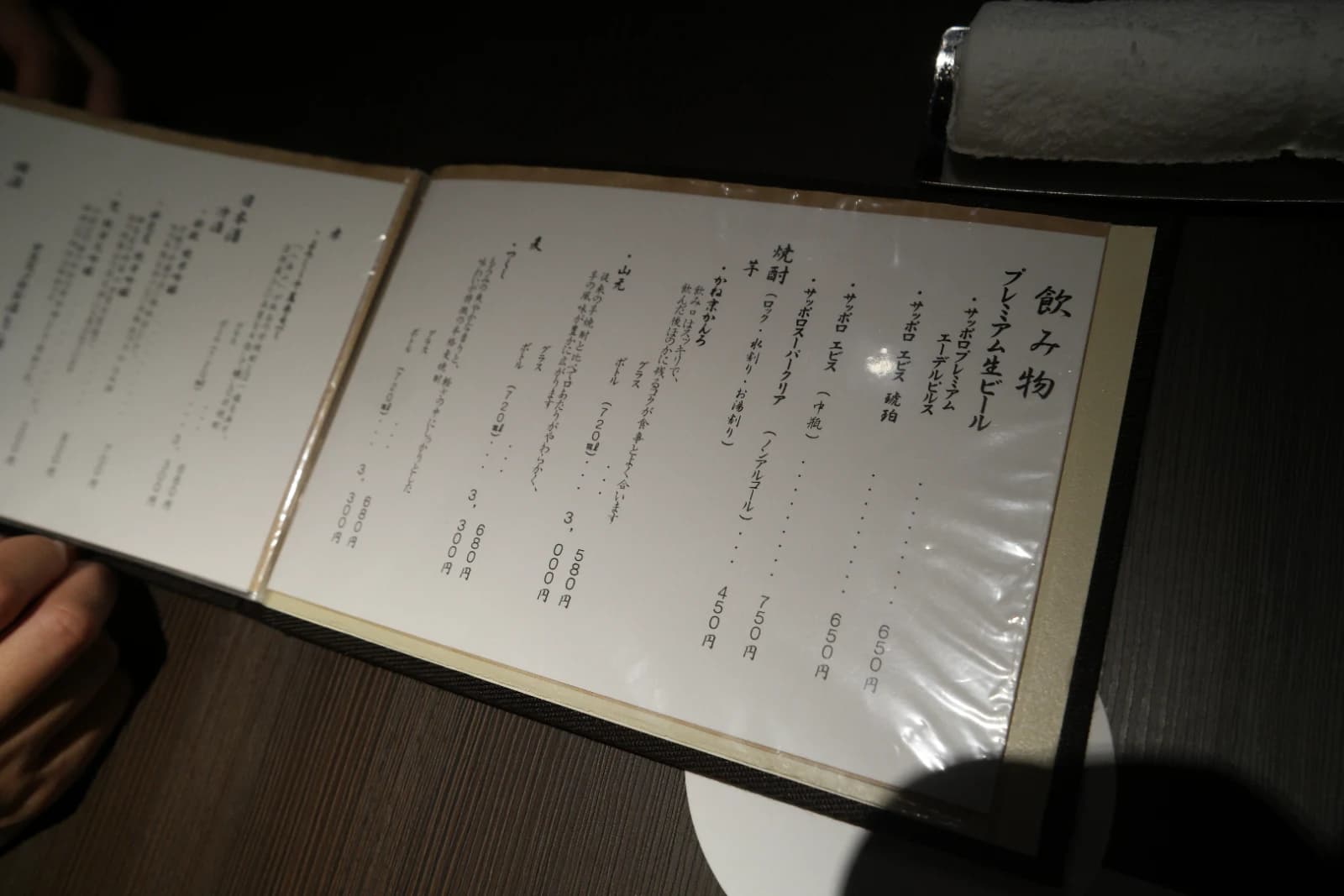
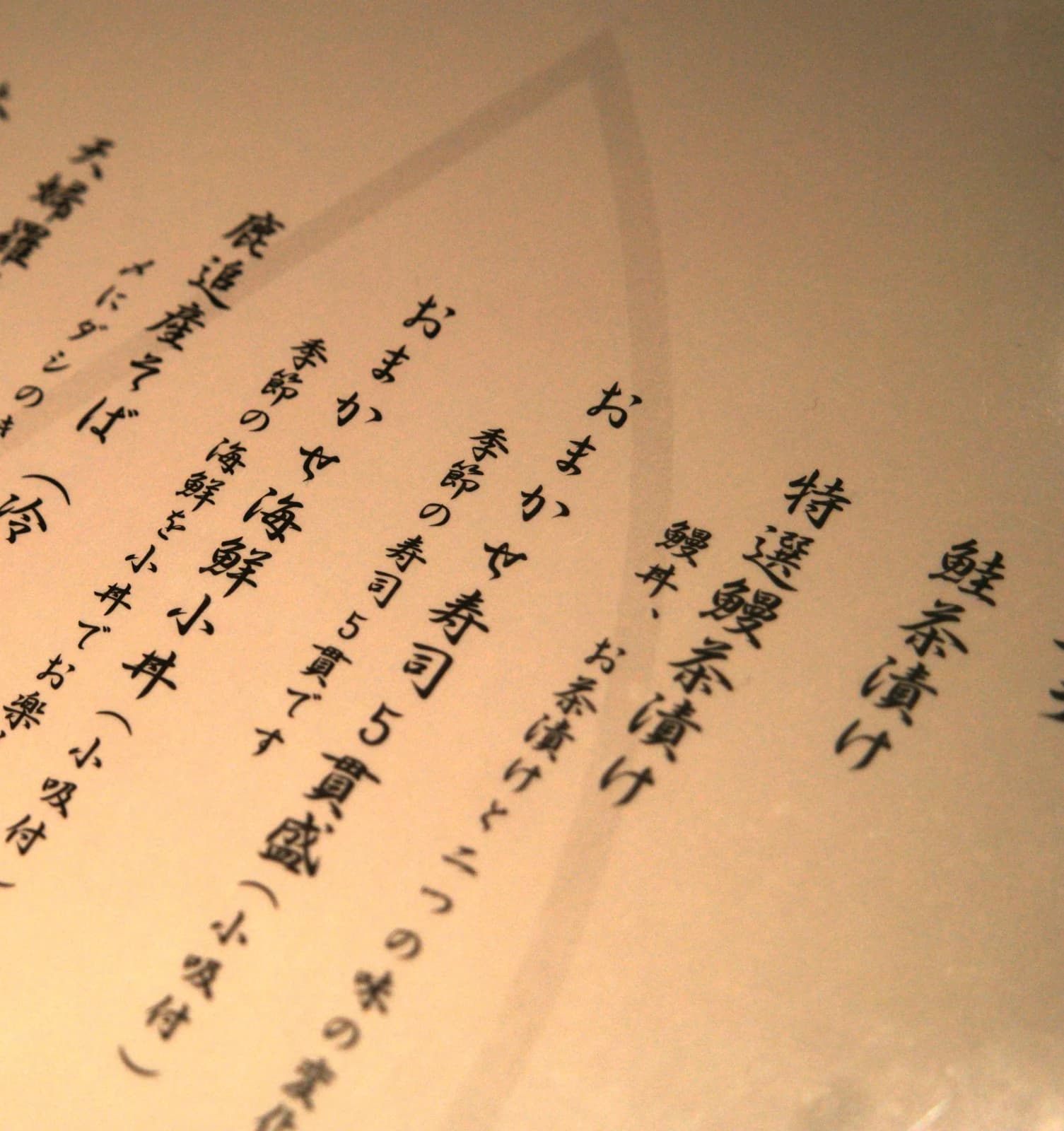
We sat down and got handed a hot towel and the menu, but back in 2016 translation apps were nowhere near as good as they are now. So there we were, the two of us holding our phones up to the menu trying to decode it one character at a time — took us a solid ten minutes just to order. The right-hand page was all drinks: premium draft beer at ¥650 (roughly A$7), shochu starting from ¥450 (about A$5), and then Japanese sake and bar snacks on the other side. The second photo is the food page — there was salmon ochazuke, which is basically rice topped with salmon and doused in hot tea broth, plus premium unagi ochazuke, unagi donburi, that sort of thing. There was also something listed as Japanese omakase — where the chef picks the best ingredients that came in that day and makes a sushi set from them. A seasonal seafood rice bowl option was there too. In the end I went with the first thing on the left side of the menu — seafood soba, cold buckwheat noodles topped with seafood — not because I knew what it was, but because it was the first item I could vaguely read.
Why the Chopsticks Are Placed Sideways
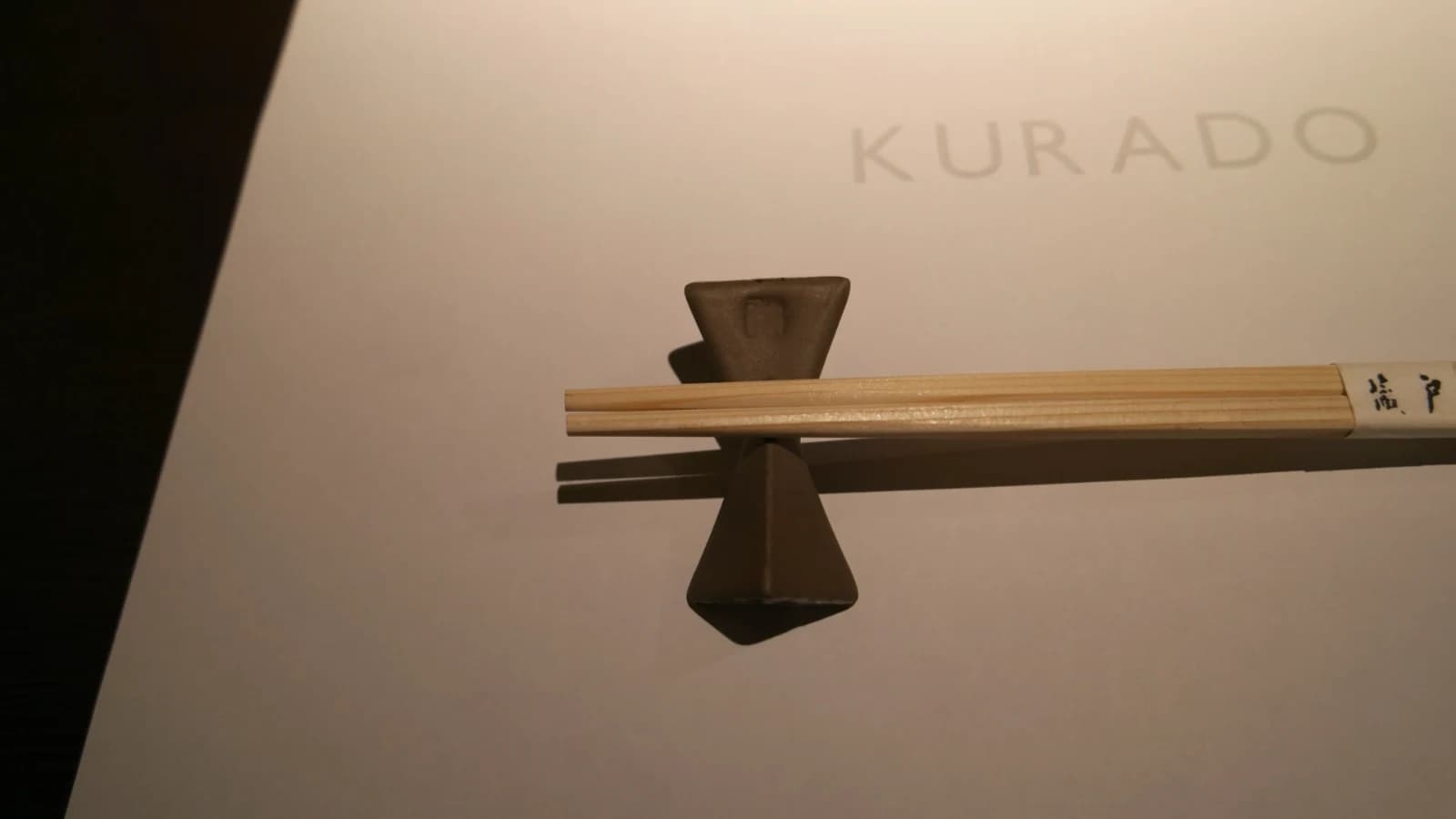
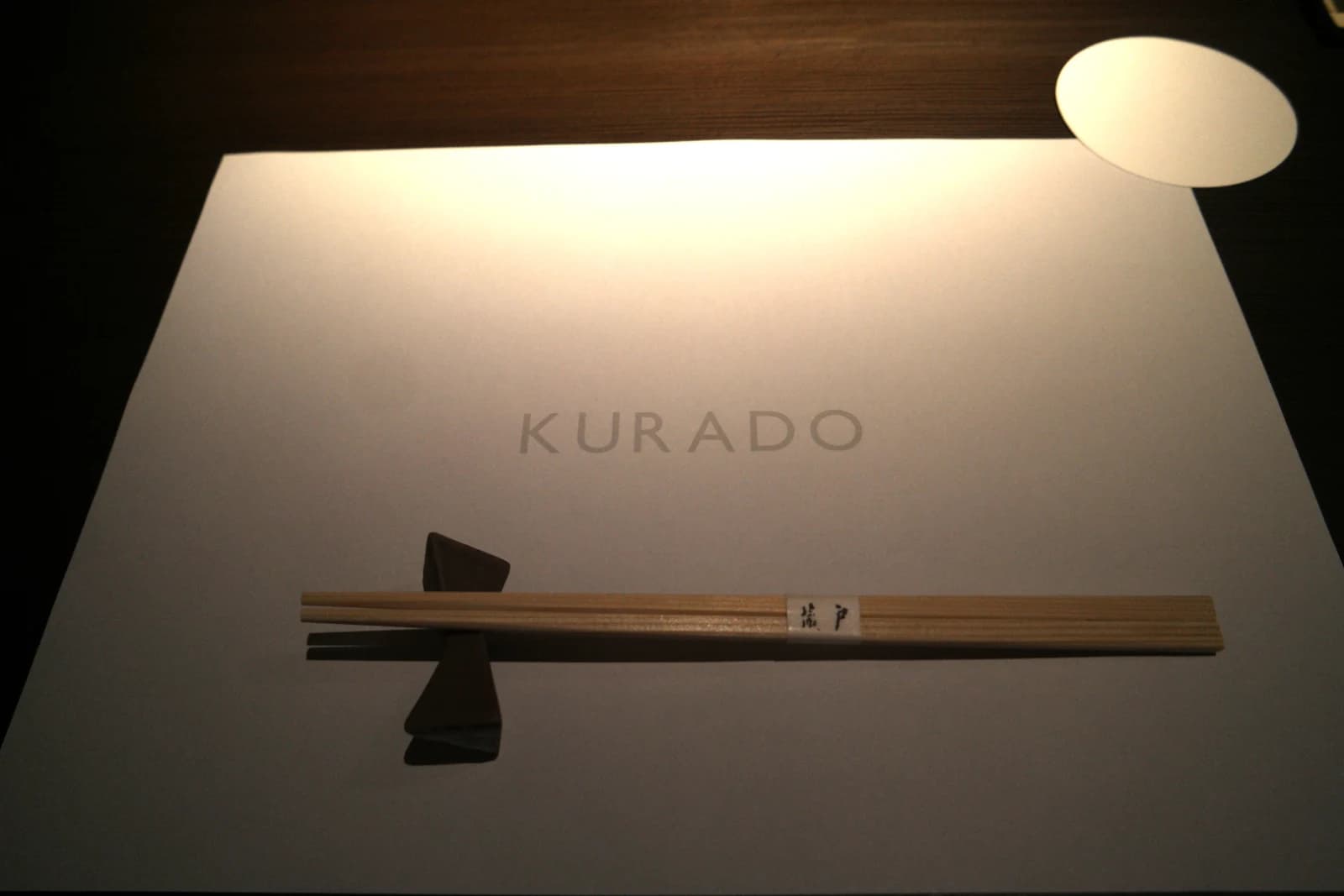
The table setting was really tidy. A white paper placemat with the restaurant's name stamped in silver, and wooden chopsticks sitting neatly on a ceramic rest — even the chopsticks had the shop's name printed on them.
Here's something I found genuinely interesting. In Korea, chopsticks go vertically on the table with the handles facing you. In Japan, they're placed horizontally like you can see in the photo. It's not just a random habit — there's a cultural reason behind it. In Japanese dining culture, pointing the tips of your chopsticks at someone is considered rude, so placing them sideways means the tips aren't aimed at anyone. There's also the idea that the horizontal chopsticks act as a boundary between you and the food — a kind of symbolic "I gratefully receive this meal" gesture built right into the table setting. Pretty thoughtful when you think about it. For Aussies used to a knife and fork, the whole chopstick etiquette thing is a fascinating rabbit hole. My mate didn't know any of this and turned his chopsticks vertical before eating — I still remember the Japanese diners at the next table giving us a subtle side-eye.
First Dish Up: Agedashi Tofu
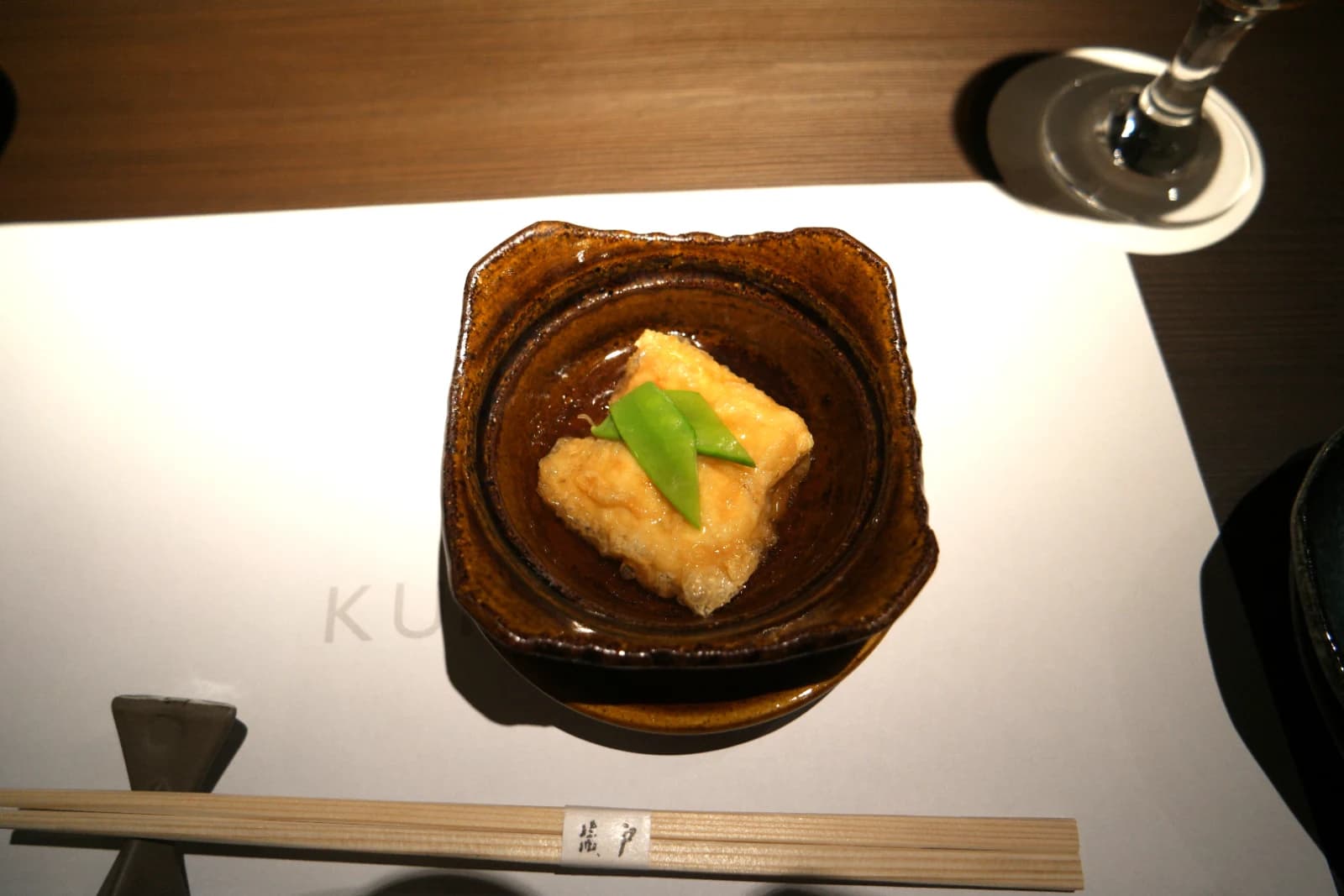
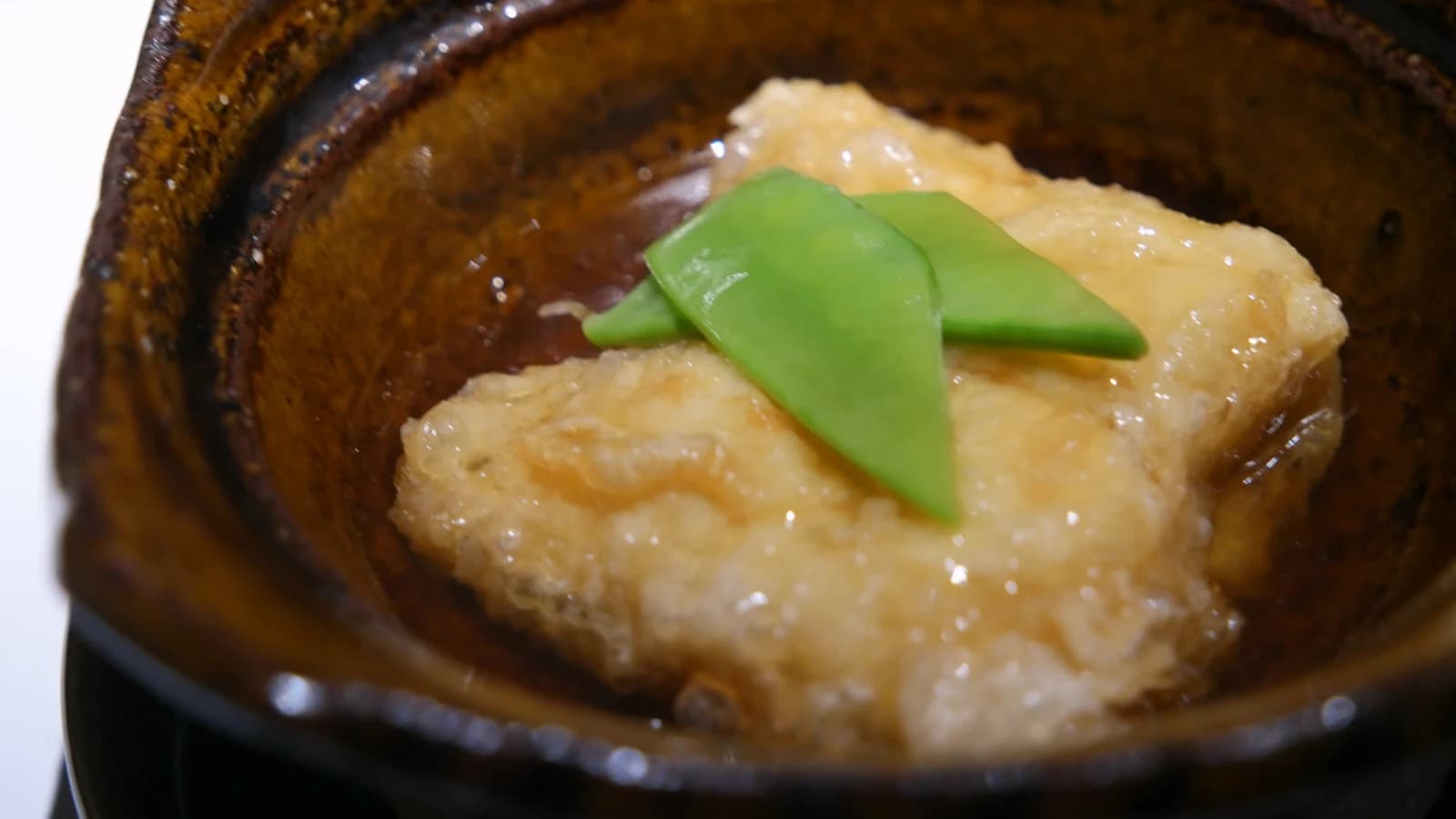
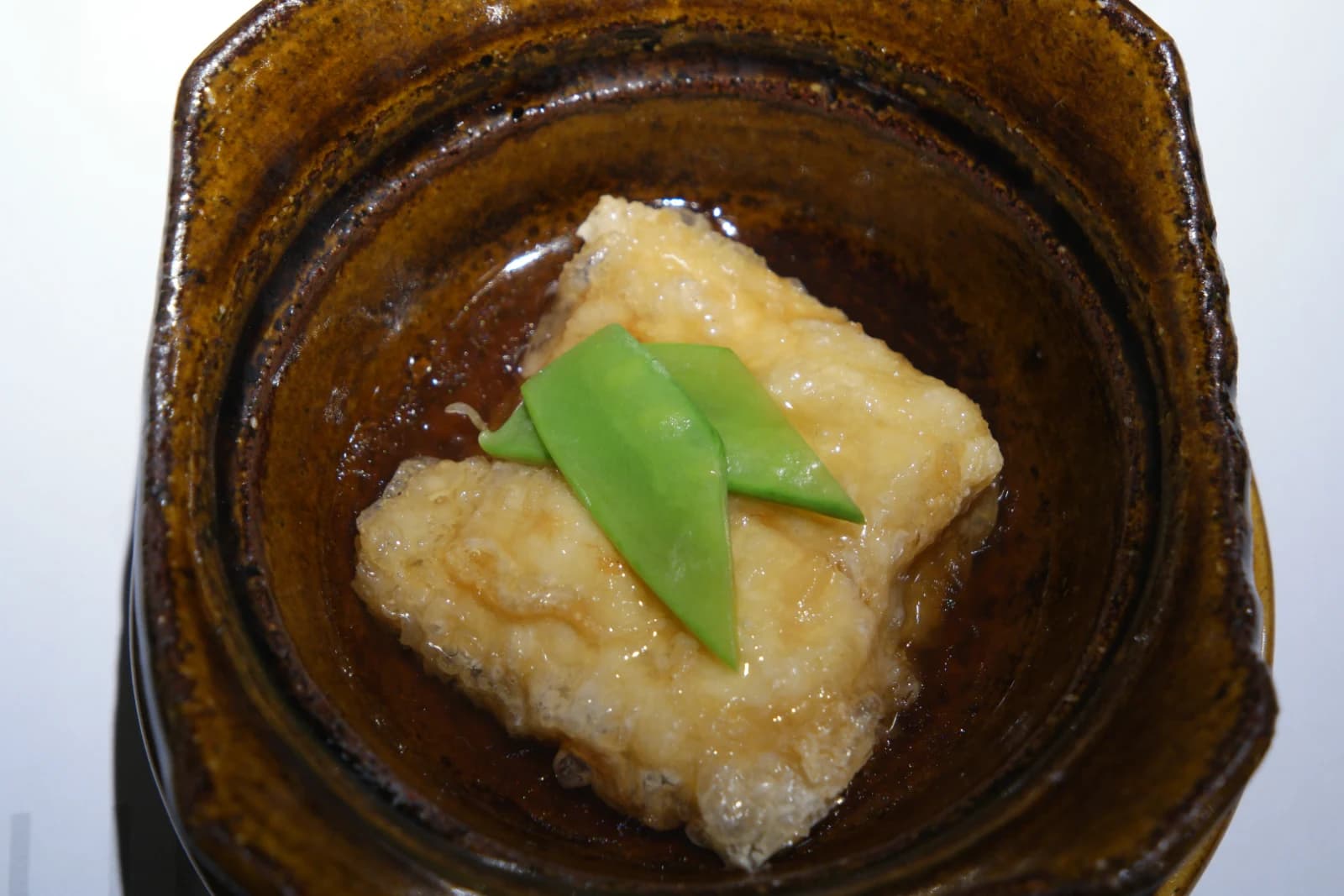
The first thing to arrive was this little dish in a brown ceramic bowl. I had no idea what it was at first. Two pea shoots sat on top, and underneath was a golden-fried lump sitting in a pool of broth. I lifted it with my chopsticks and it turned out to be agedashi tofu — tofu coated in a thin batter, deep-fried until crisp, then served in warm dashi broth. One bite and the outside still had a faint crunch while the inside was impossibly silky. The dashi was soy-based but not salty at all — just this gentle wave of umami that had soaked right into the tofu. Completely different from any tofu dish I'd had before. My mate reckoned it was inari (that thin fried tofu pouch you get with sushi rice), but inari is a whole different thing — this was a solid block of tofu fried whole. The portion was tiny, but that single piece told me straight away this place knew what it was doing.
A Salad Finished Right at Your Table
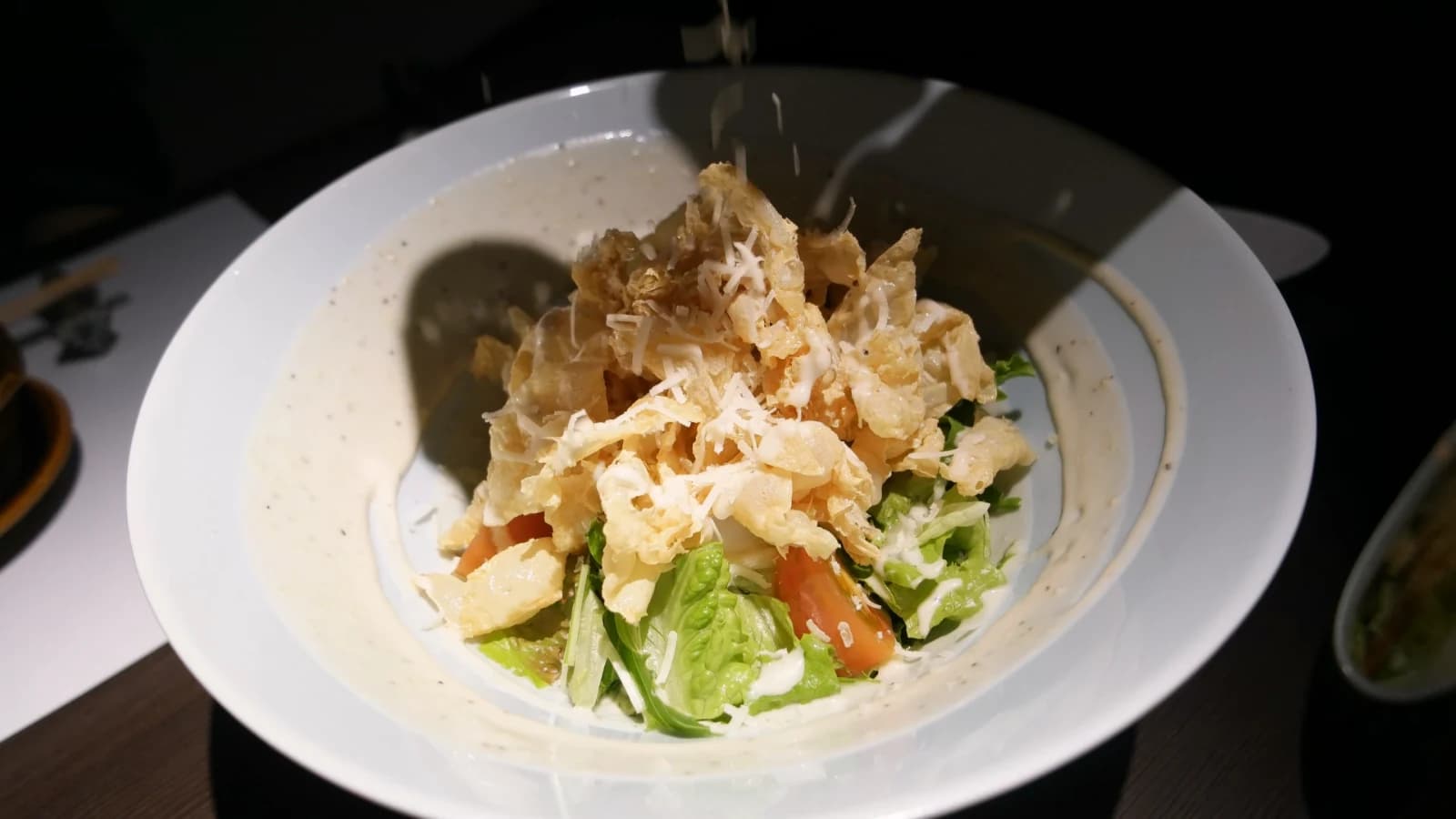
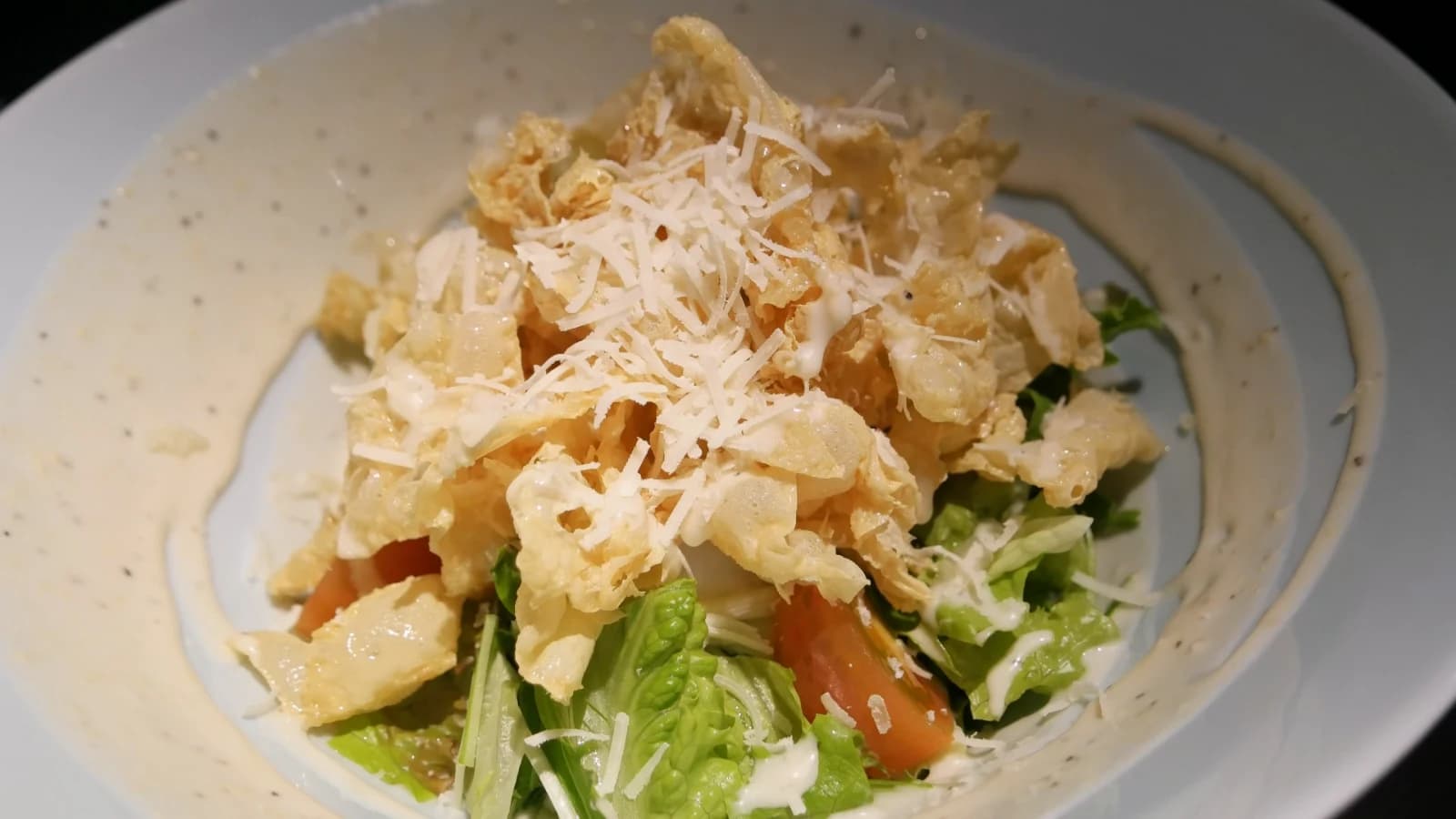
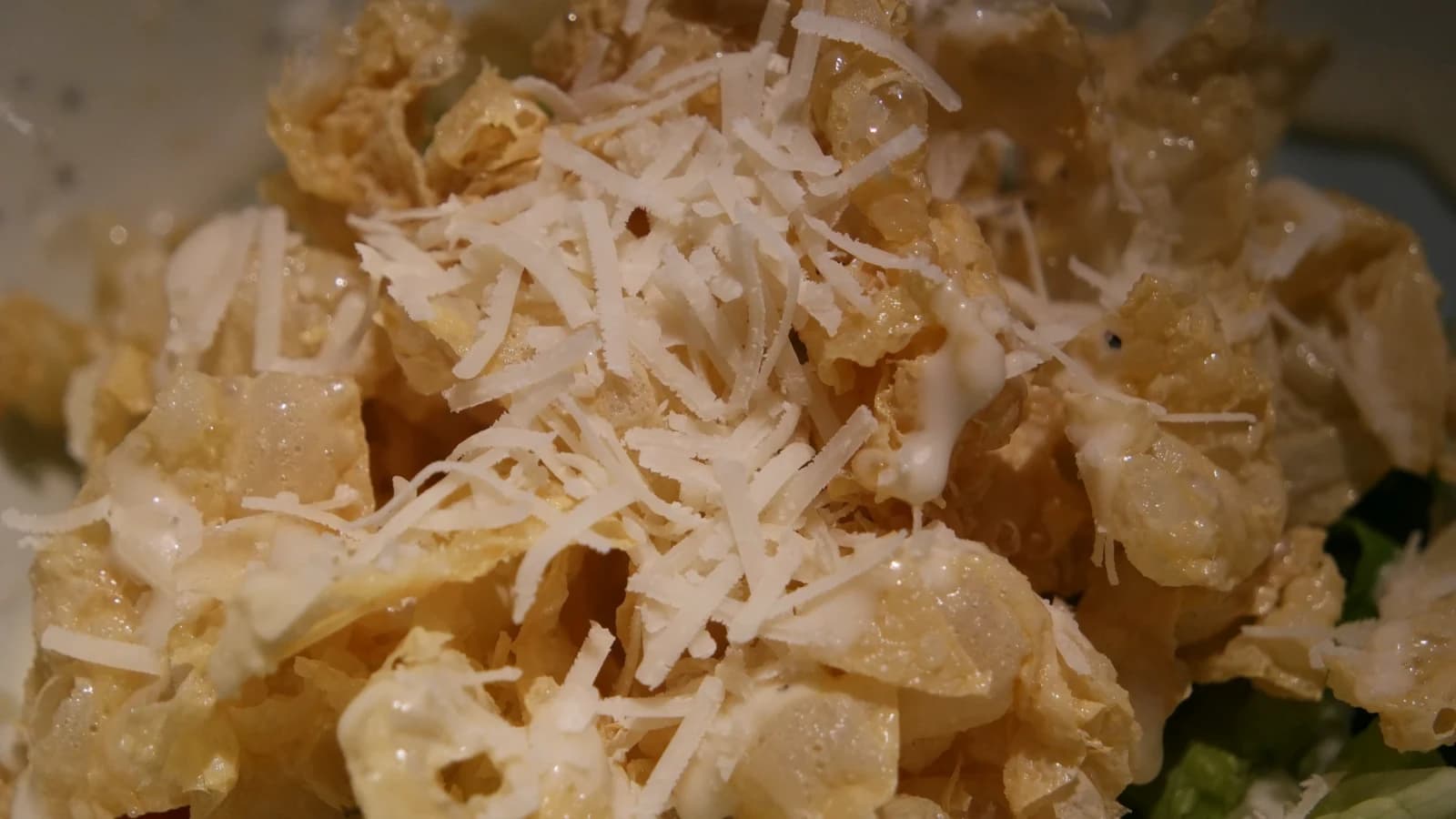
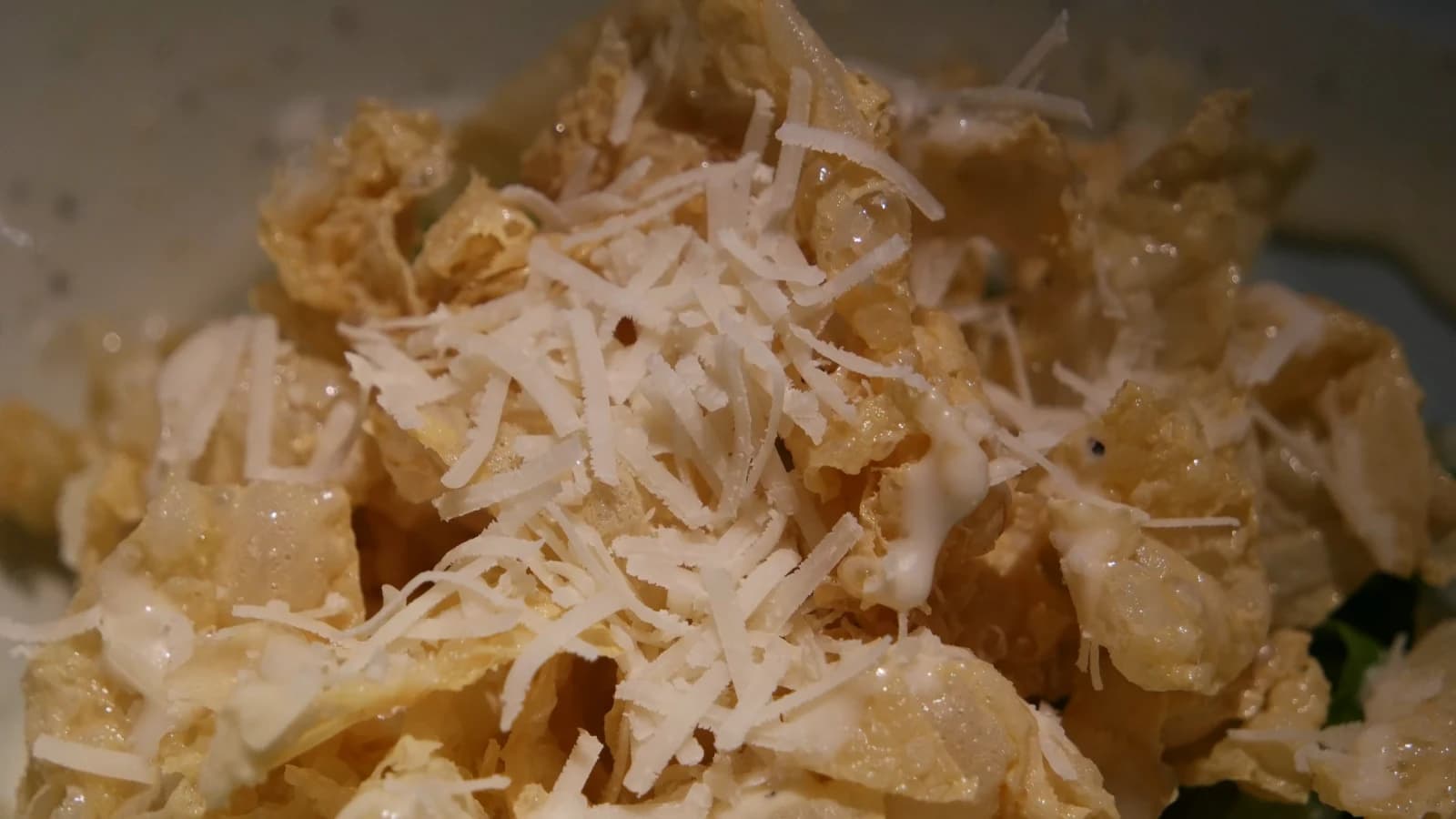
Next up was the salad. A wide white plate with lettuce and tomato laid out — but that wasn't the end of it. The staff member set the plate down, then scattered a handful of crispy fried flakes over the top, followed by finely grated white cheese dusted over everything like snow. Having it finished tableside was a nice touch and genuinely fun to watch. Up close, you could see how thin and light those fried bits were — maybe fried wonton skin, or possibly yuba, which is a dried tofu skin fried until it shatters. I still don't know exactly what they were, but grab a bit of everything in one go and you get this layered crunch over fresh, crisp veg that makes every mouthful proper interesting. My mate wasn't expecting much from a salad — took one half-hearted bite, then went "oh wait, this is actually good" and started pinching bits off my plate too. The only downside was the portion wasn't as big as it looked, so sharing between two was a bit lean.
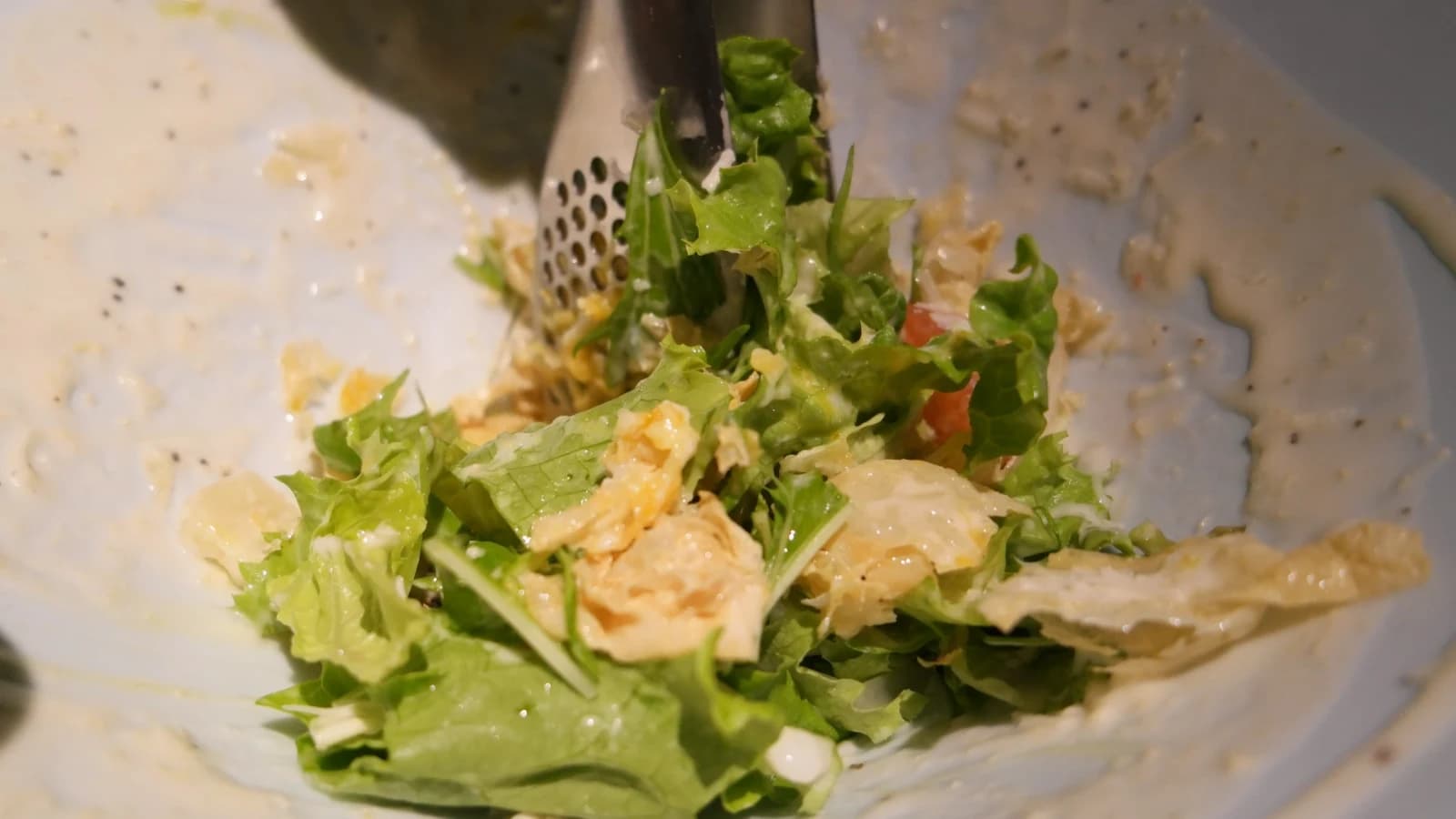
We absolutely demolished it. Nothing left on the plate but dressing streaks — and honestly I considered scraping those up too, the dressing was that good. Japanese food really earns its reputation in moments like this: every single component, right down to the dressing, felt like it was made with genuine care. The veggies were fresh, the sauce wasn't an afterthought. But here's the thing — by Aussie standards where you're used to a decent-sized feed, it was still not a lot of food. Back home, for what we were paying you'd get a proper main with sides. Here it was one pretty plate with a couple of bites, then another pretty plate with a couple more. Your eyes are having a great time but your stomach's sending increasingly urgent messages. My mate leaned over and said "is that seriously all of it?" and I had nothing to say.
Satsuma-age: The Fish Cake That Rewired My Brain
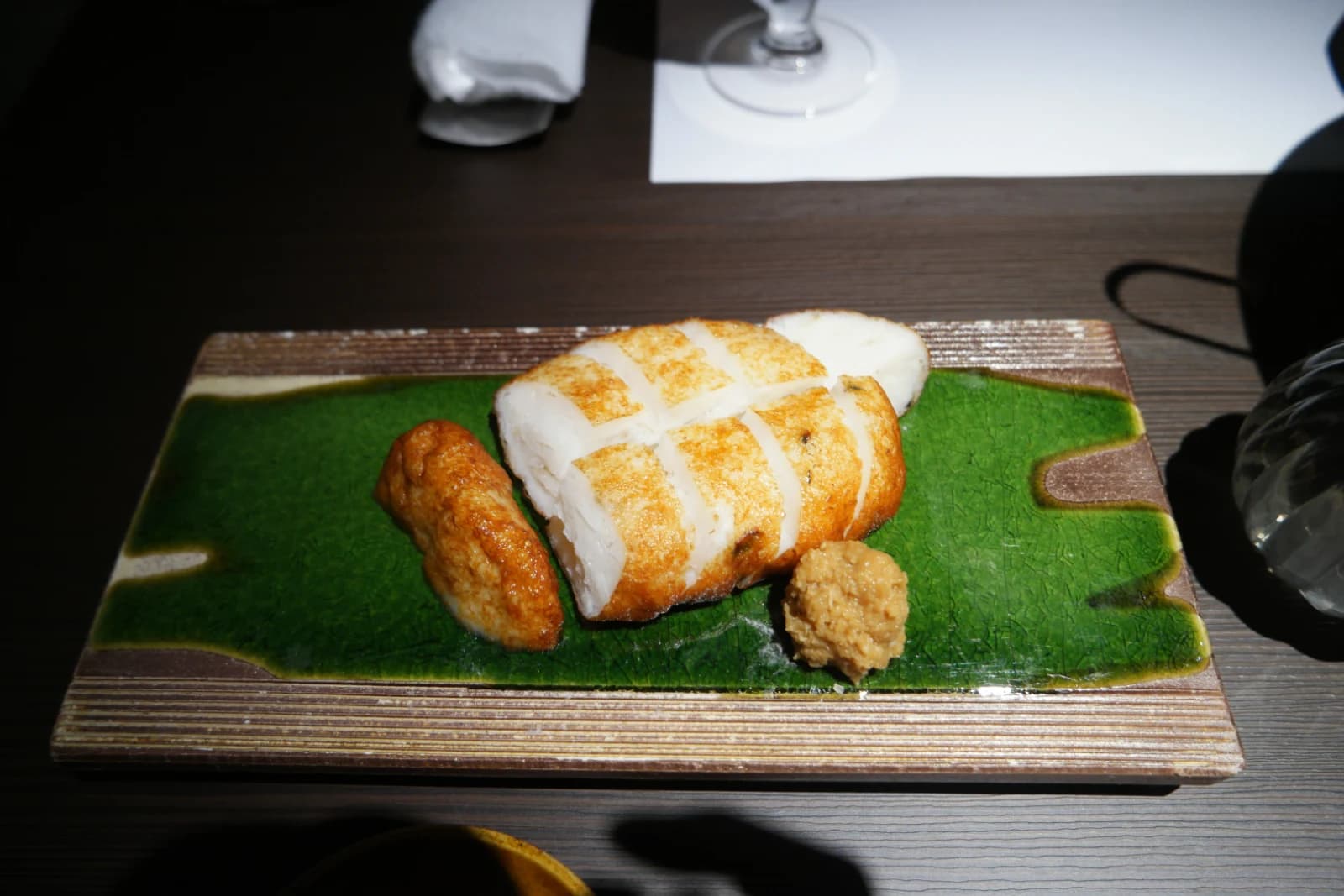
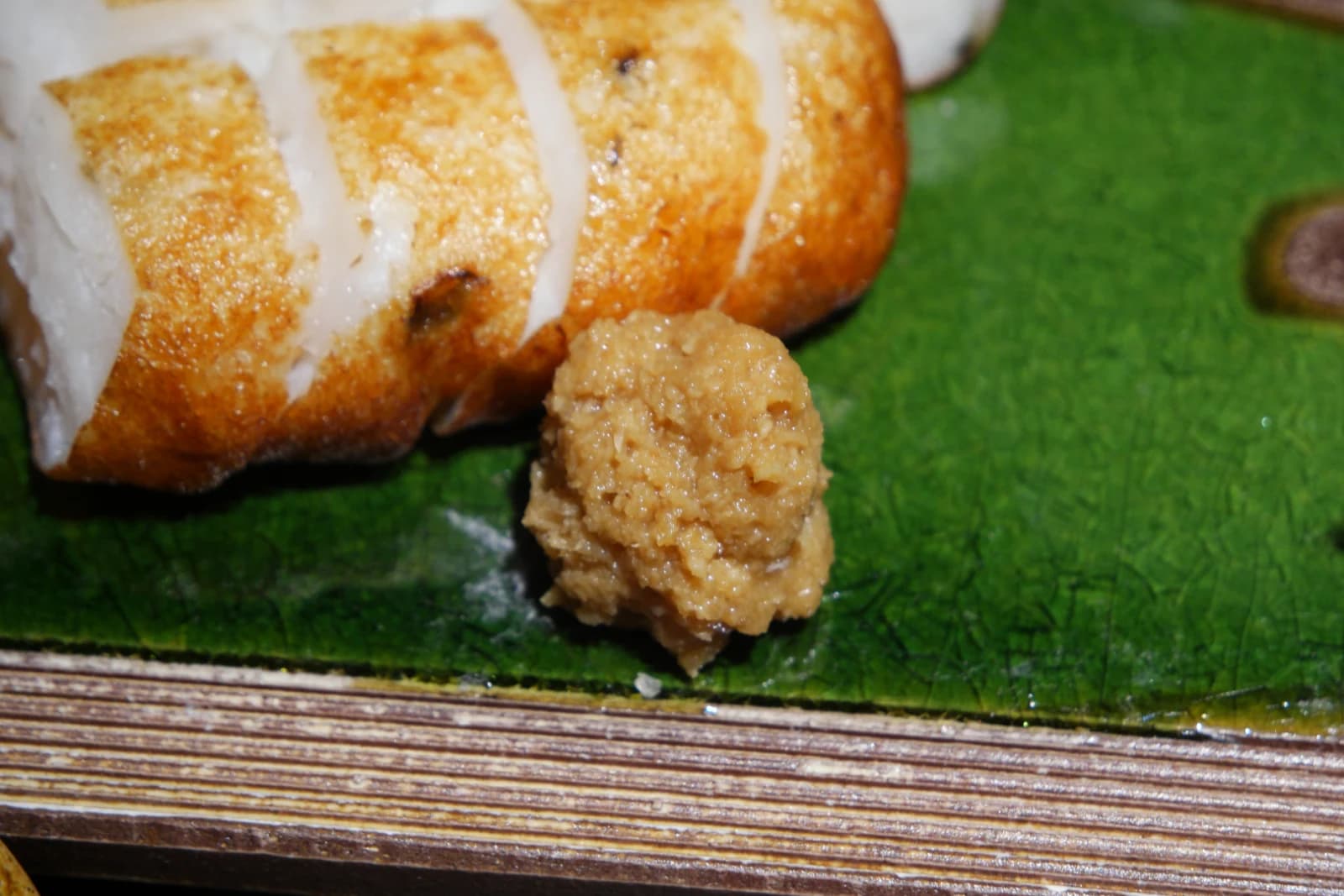
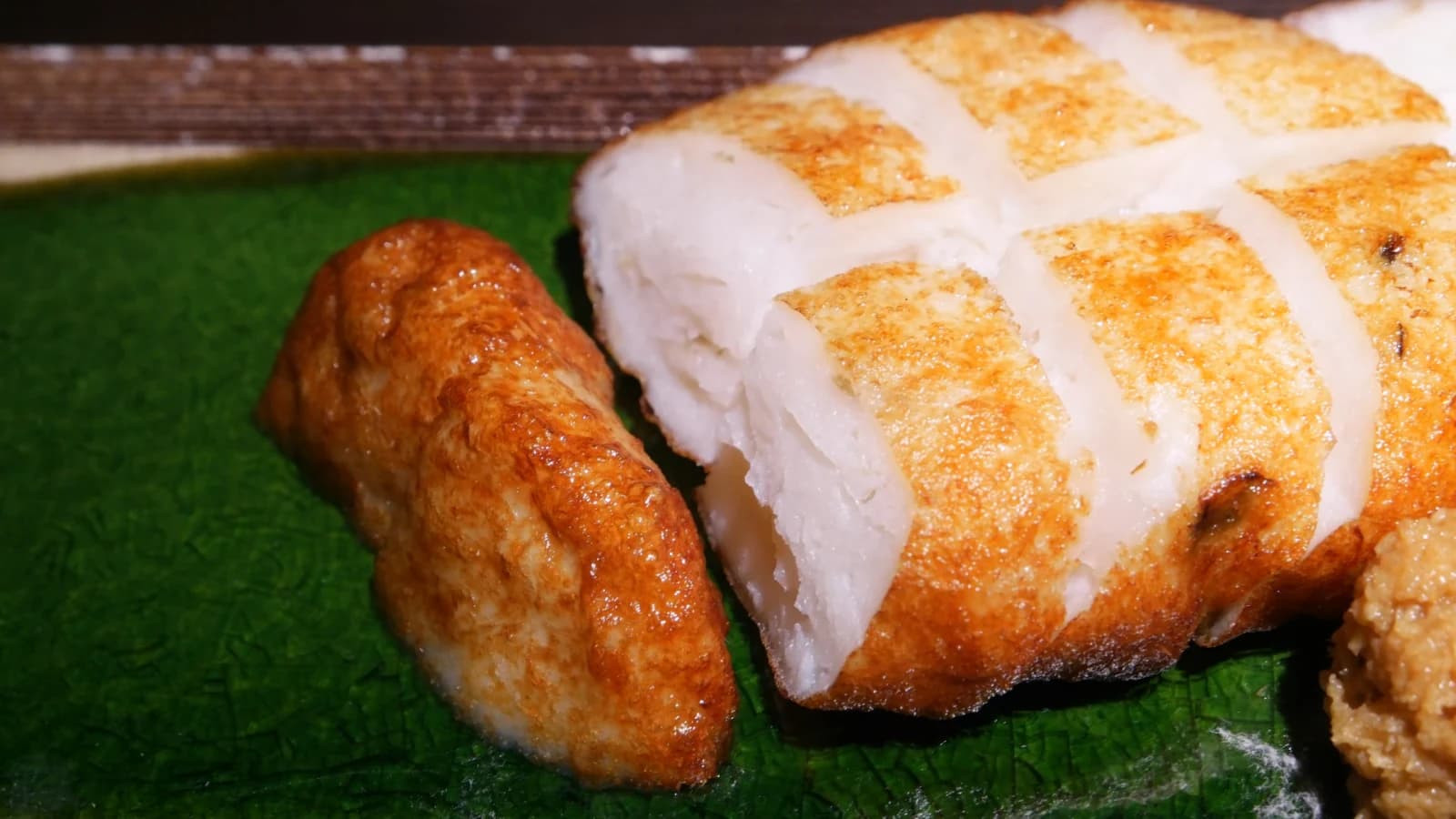
Next to arrive was something on a green leaf-shaped plate. It had a golden, grilled exterior with crosshatch scoring across the surface — at first I thought it was grilled fish. A small dab of wasabi sat beside it, and there was a smaller grilled piece tucked behind it.
I cut off a bite and it turned out to be fish cake. Satsuma-age — a Japanese-style fish cake where the fish is ground to a fine paste, shaped, then grilled until golden. The texture was worlds apart from the bouncy, chewy fish cakes you'd find in a Korean hotpot or even those processed ones we get in packets back in Australia. This was way softer, and you could really taste the actual fish. The outside had a light char to it while the inside was moist and almost crumbly in the best way. Dip it in that wasabi and it hits your sinuses like a freight train while the savoury richness of the fish cake comes through even clearer. I remember asking my mate "this is fish cake?" because it was so far removed from anything I associated with the words "fish cake" that it genuinely caught me off guard.
Omakase Sushi — 5 Pieces, and That's for Two?
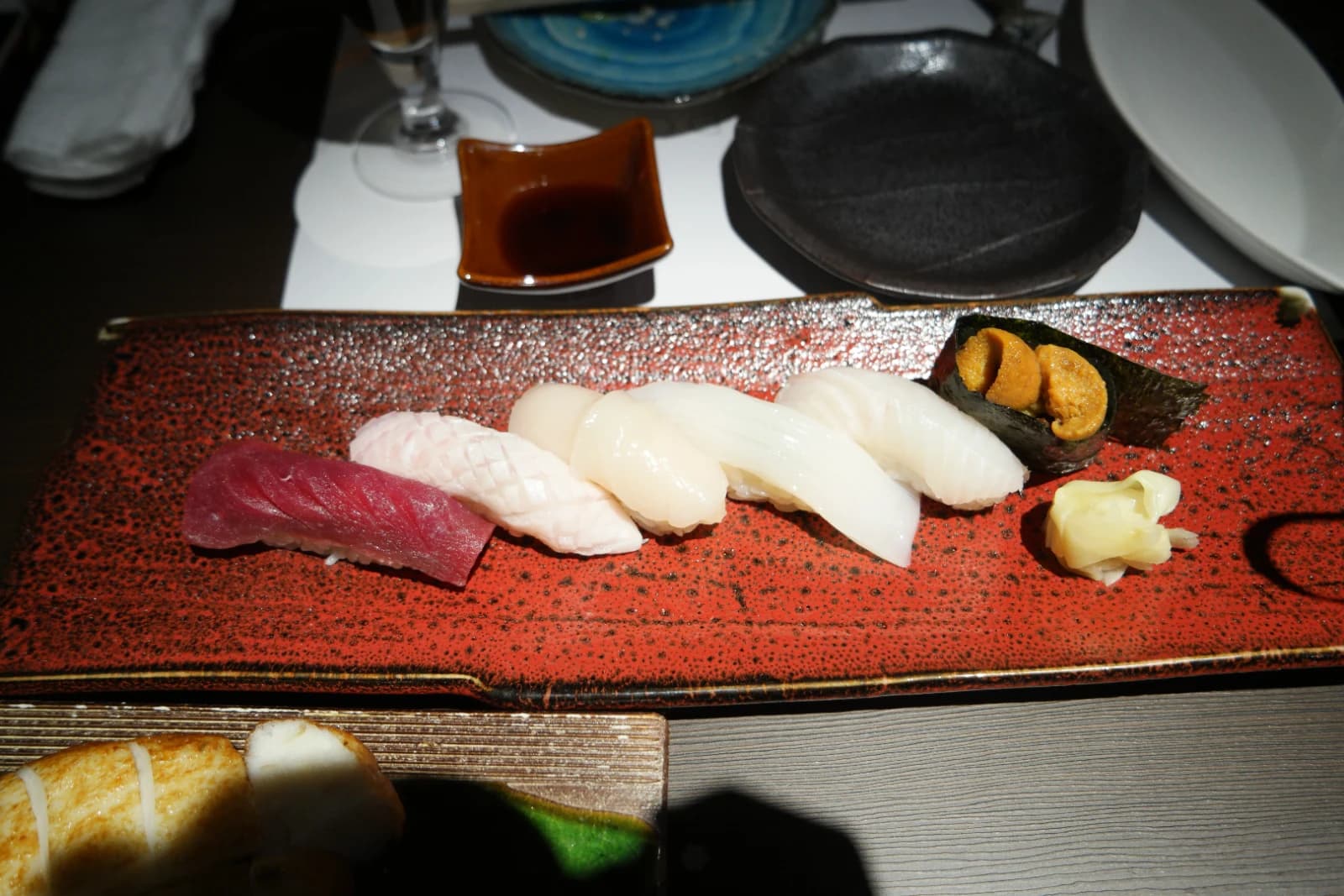
And then, finally, the main event arrived. Japanese omakase sushi — the chef picks the best of what came in that day and makes sushi from it. Five pieces lined up neatly on a long red plate. From the left: tuna, then a scored white-fleshed piece, what looked like translucent scallop, another white fish, and right at the end a gunkan maki wrapped in nori and topped with sea urchin. In the middle sat some gari — thinly sliced pickled ginger that acts as a palate cleanser between pieces — with a small soy sauce dish up top.
But here's the thing — this was for two people. Five pieces total. Two and a half per person. The moment the plate landed, my mate and I locked eyes. The exact same "is that it?" expression on both our faces. If you've ever ordered a sushi platter at a restaurant in Australia, you're used to a big spread. So yeah, it was a bit of a shock. But as it turned out, this wasn't the end of the meal — more dishes were still coming.
Sea Urchin — The Single Piece That Changed Everything
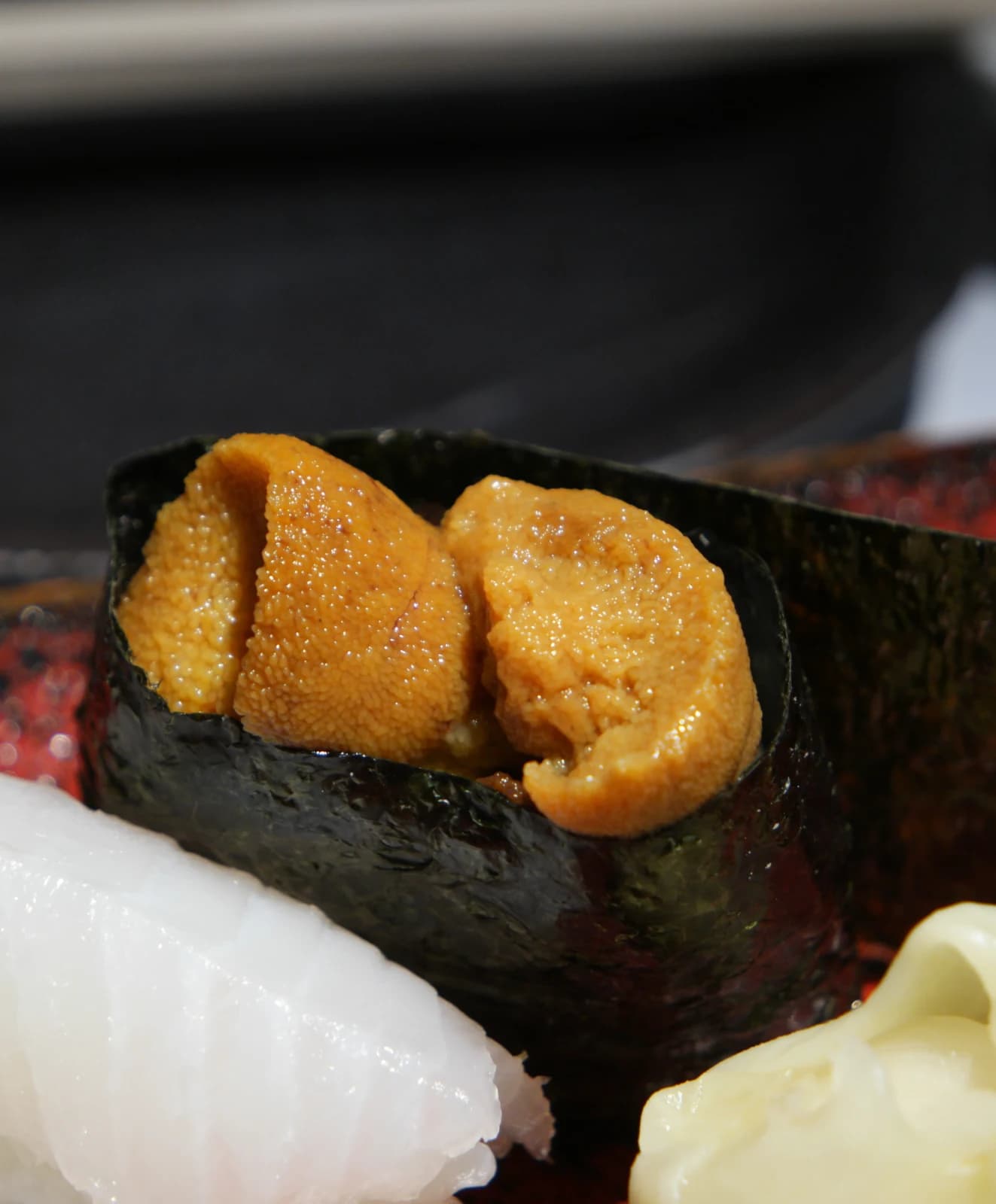
Sea urchin. Uni, as the Japanese call it. A gunkan maki — rice wrapped in nori — with bright orange sea urchin perched on top. There was just one piece. My mate can't handle anything with a strong fishy smell so he wouldn't even look at it, which meant it naturally ended up in front of me. Honestly, I wasn't keen either. I'd always passed on uni whenever it showed up at sashimi meals — that briny, ocean-floor smell just wasn't for me. But it was part of the course and it felt wrong to leave it, so I shut my eyes and threw it in my mouth in one go. There was no fishiness. None. Seriously. It wasn't the smell of the ocean — it was the sweetness of the ocean. Creamy, melting across my tongue, with this delicate sweetness trailing behind. That was the moment I understood what uni was actually supposed to taste like. I told my mate "mate, honestly, there's zero fishy smell — just try one bite" but he shook his head and refused to budge. I still reckon that's a shame. Wish he'd shared that moment with me.
Breaking Down Each Piece of Omakase Sushi
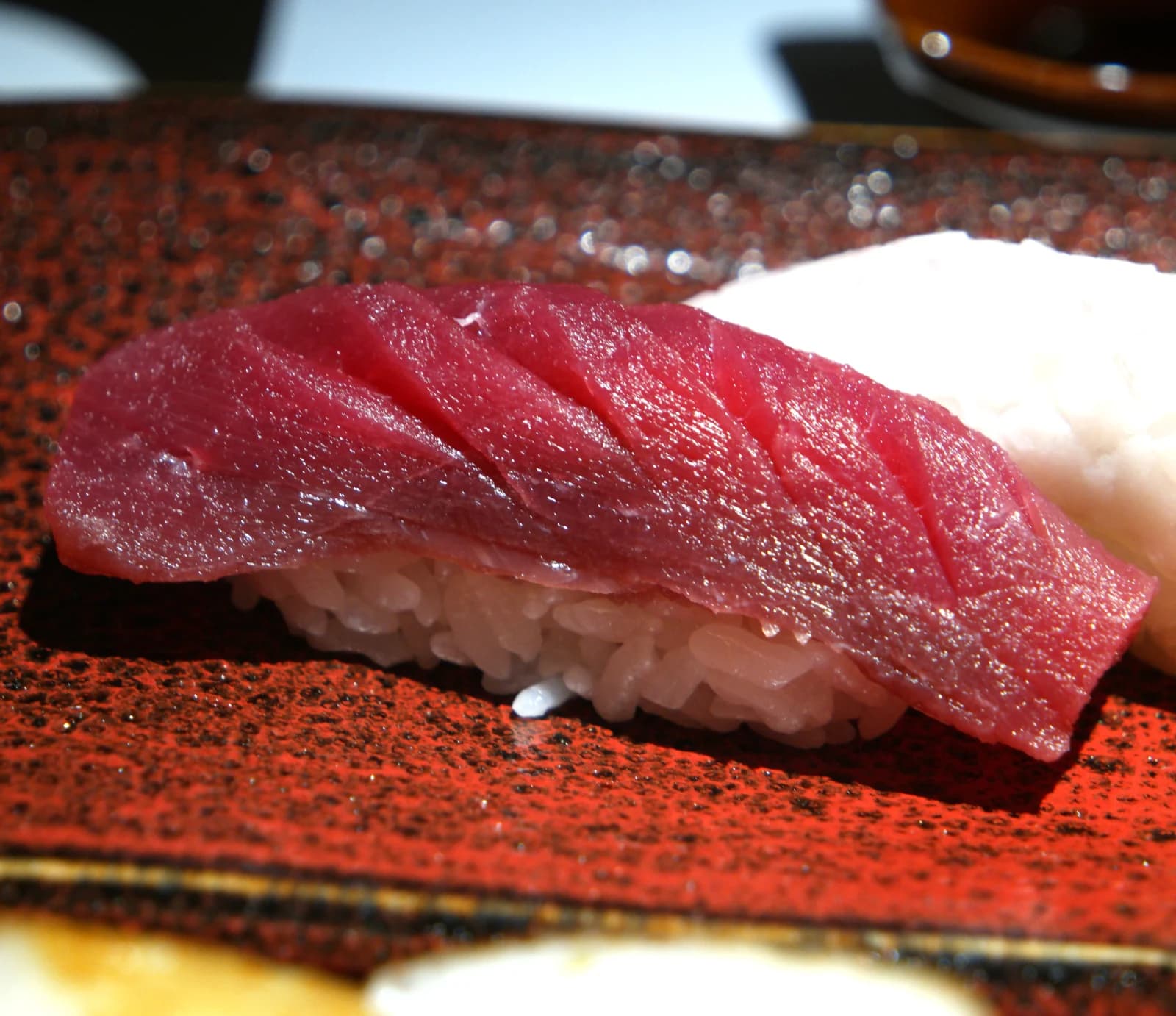
The tuna against that red plate was a stunning colour contrast. Deep ruby-red flesh with a glossy sheen, draped thickly over the rice so you could barely see the grains underneath. In the mouth it didn't feel like chewing — melting is more accurate. It seemed like a cut where fine streaks of fat ran between the muscle fibres, and at that perfect temperature — not cold, not warm — the rich, savoury flavour of the fish just bloomed.
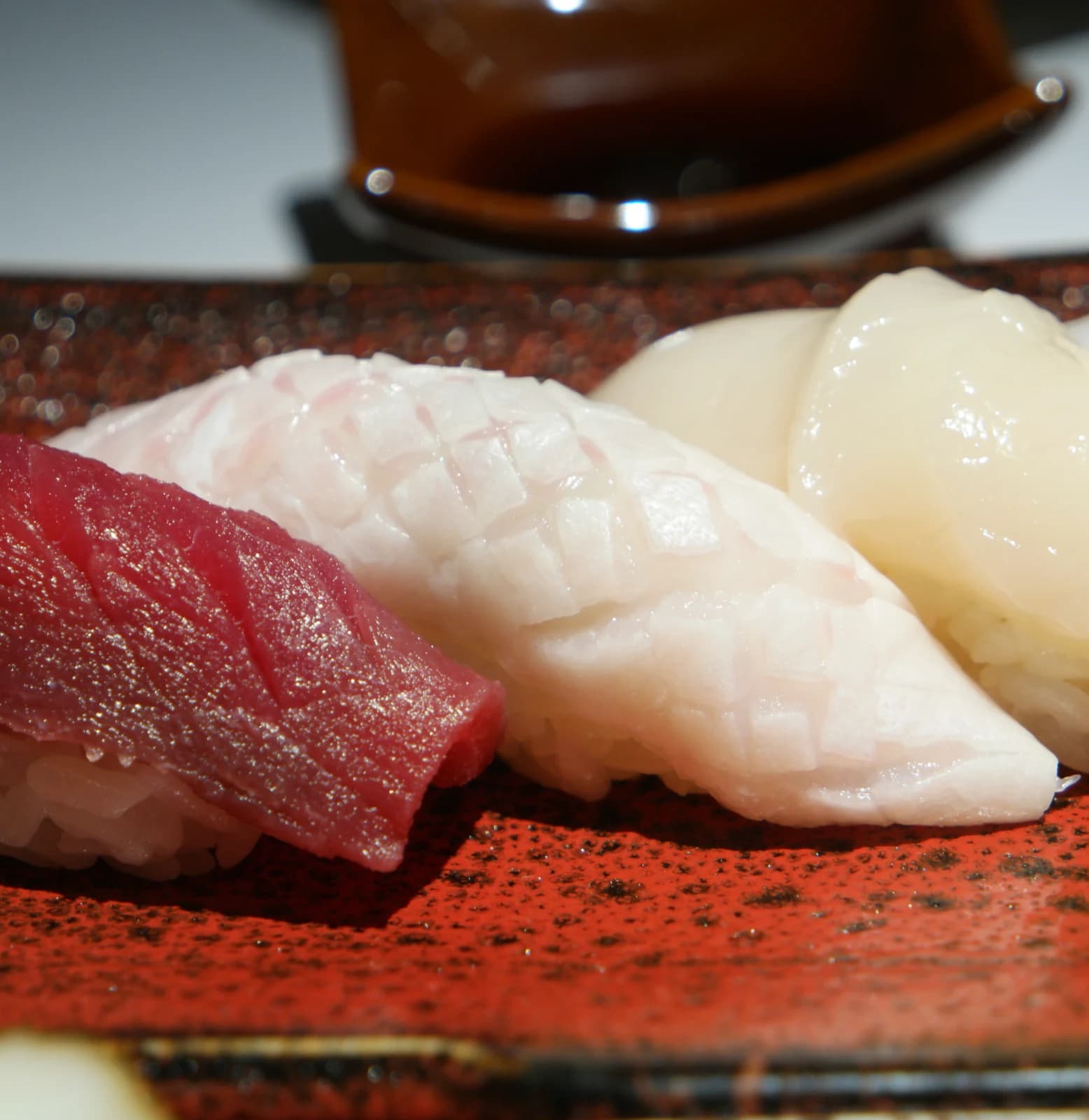
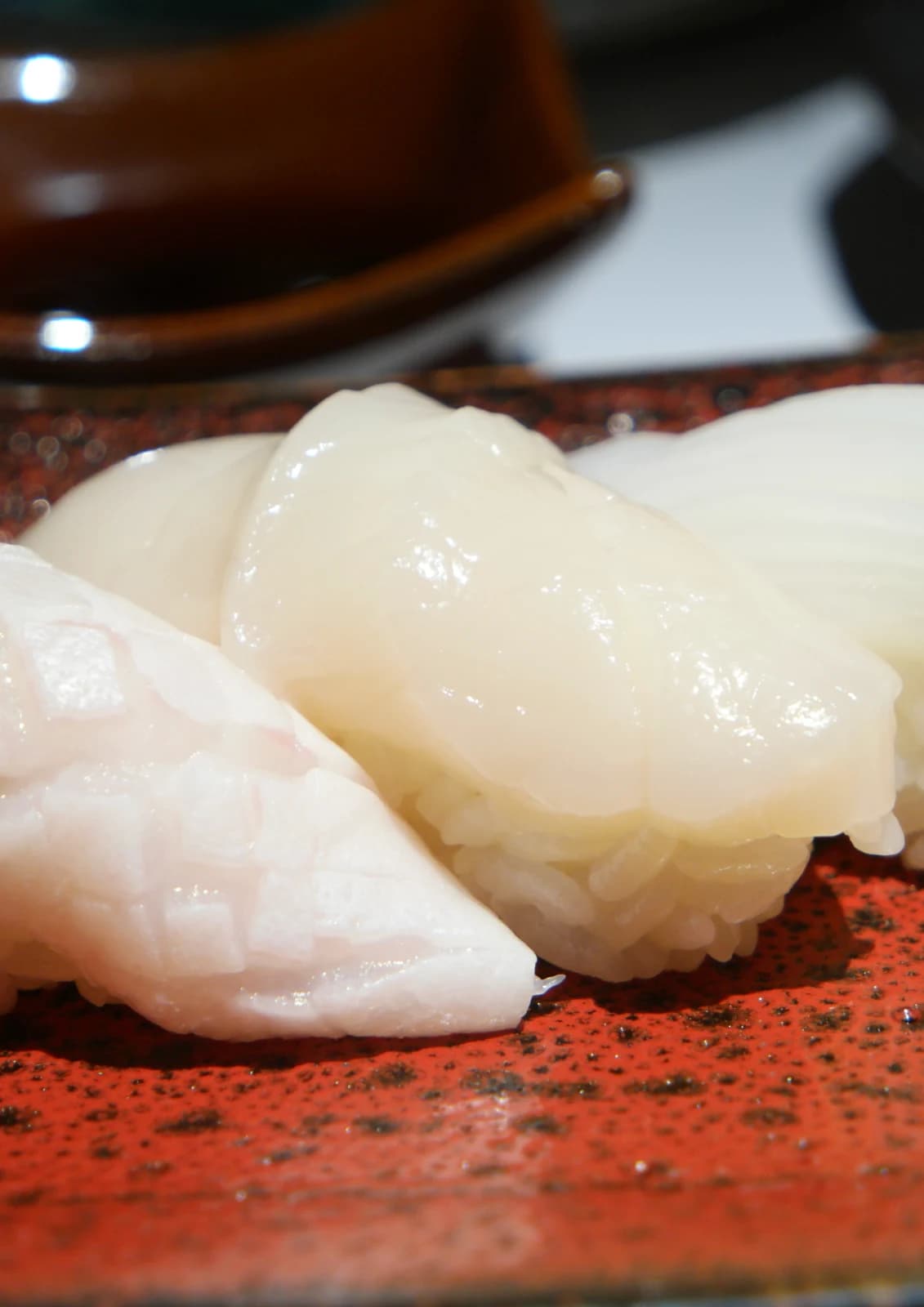
The scored white piece next to it was squid. Fine crosshatch cuts covered the surface, letting soy sauce seep into every little groove, and thanks to that scoring the texture wasn't chewy at all — just soft with a gentle spring. Each bite had a slight bounce but your teeth went through it easily. The translucent white piece beside it was scallop, I reckon — the surface was smooth and glistening with moisture. First thing I noticed when I ate it was sweetness, followed by a subtle ocean flavour that spread slowly. Both looked similar being white, but the flavours went in completely different directions.
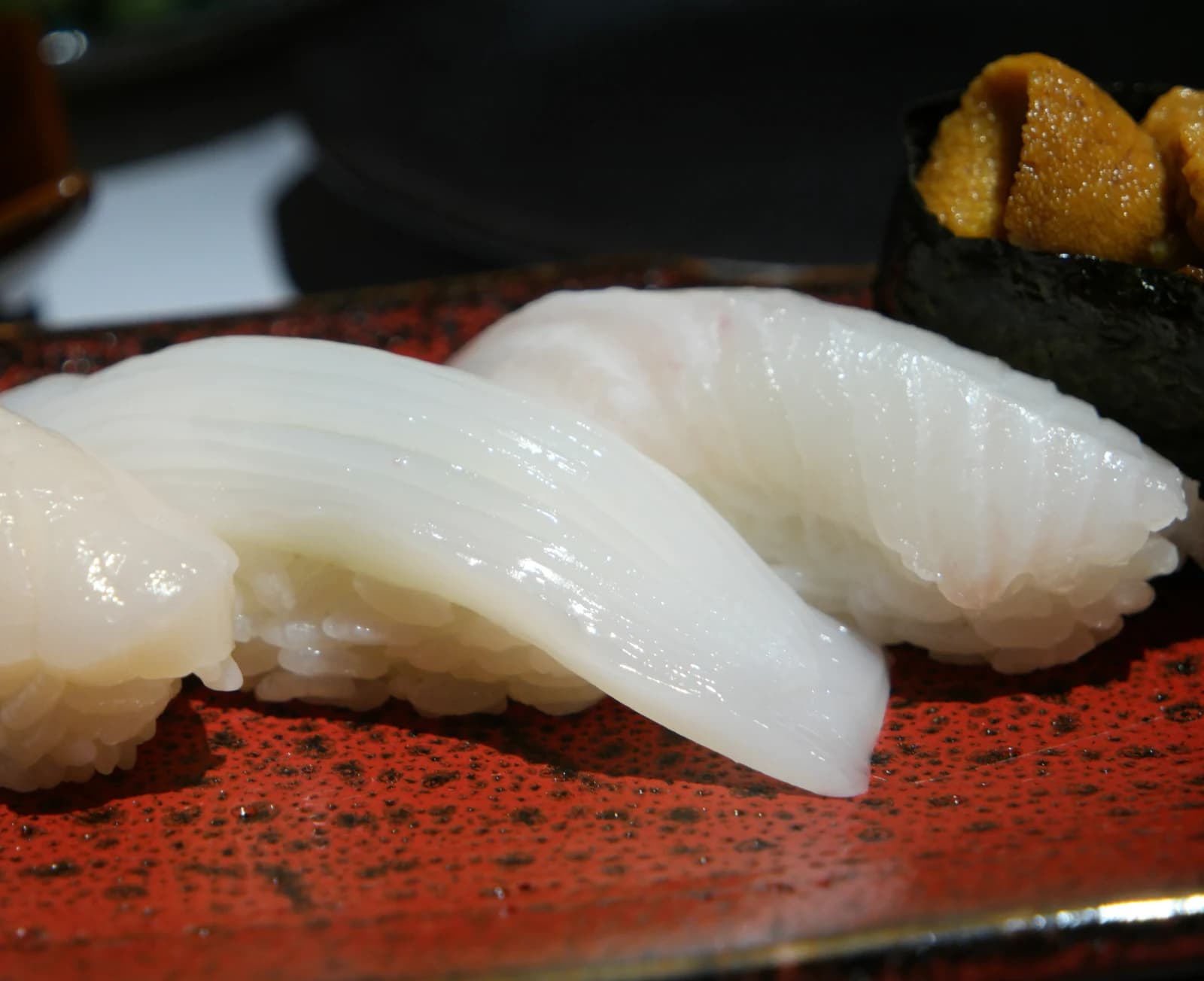
The last piece was squid again but without any scoring — thinly sliced with its natural grain intact, and it had this wonderfully chewy, sticky texture that lingered in the mouth. Even my mate, who'd been going on about the portion sizes, had gone quiet by this point.
The Avocado Roll Nobody Expected to Be Good
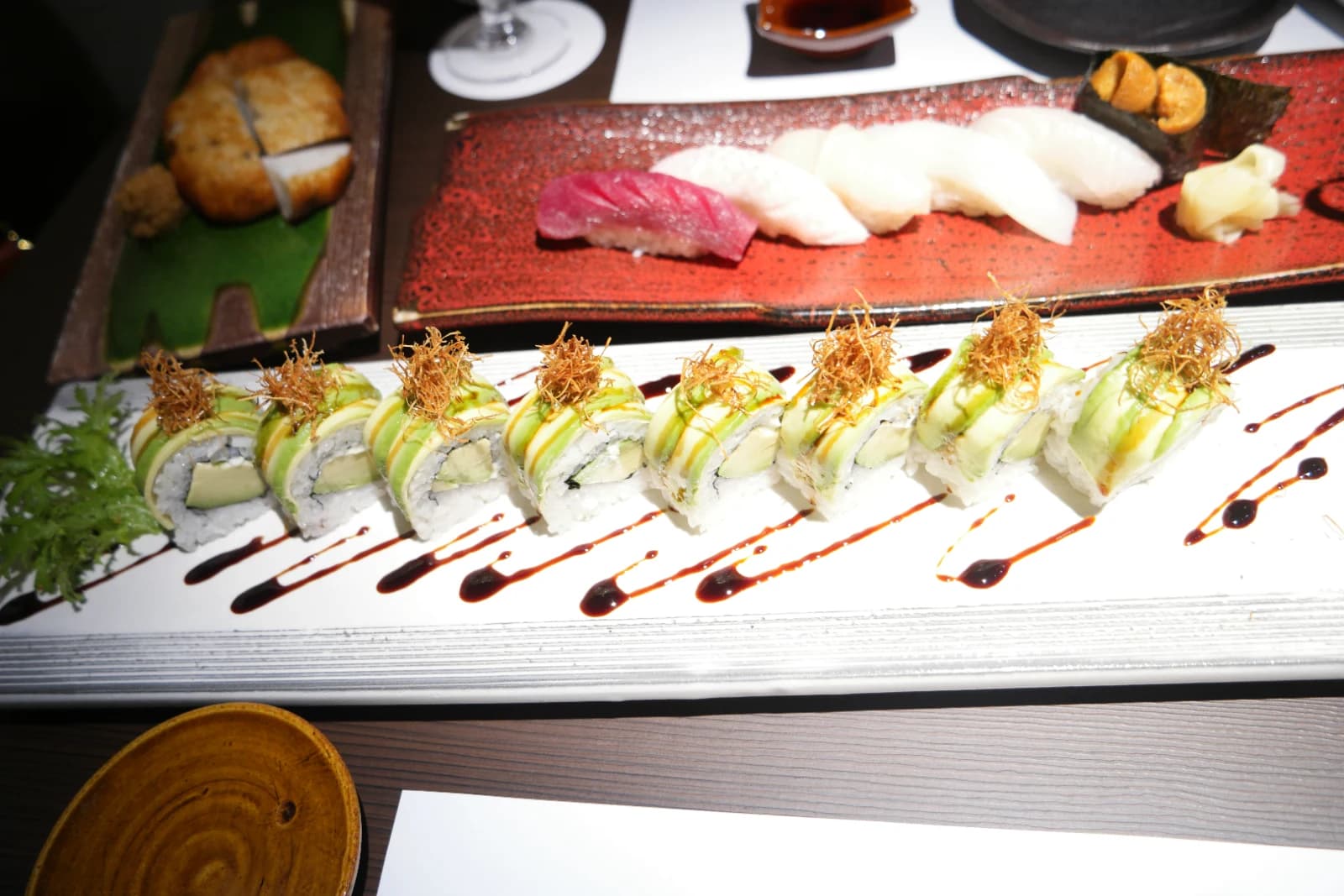
Up next was an avocado roll. Lined up neatly on a long plate, and honestly, I had zero expectations. Avocado's a pretty divisive ingredient — people either love it or they're not fussed. I was firmly in the not-fussed camp at that point. My mate saw the plate and went "that's avocado? Pass" and put his chopsticks down.
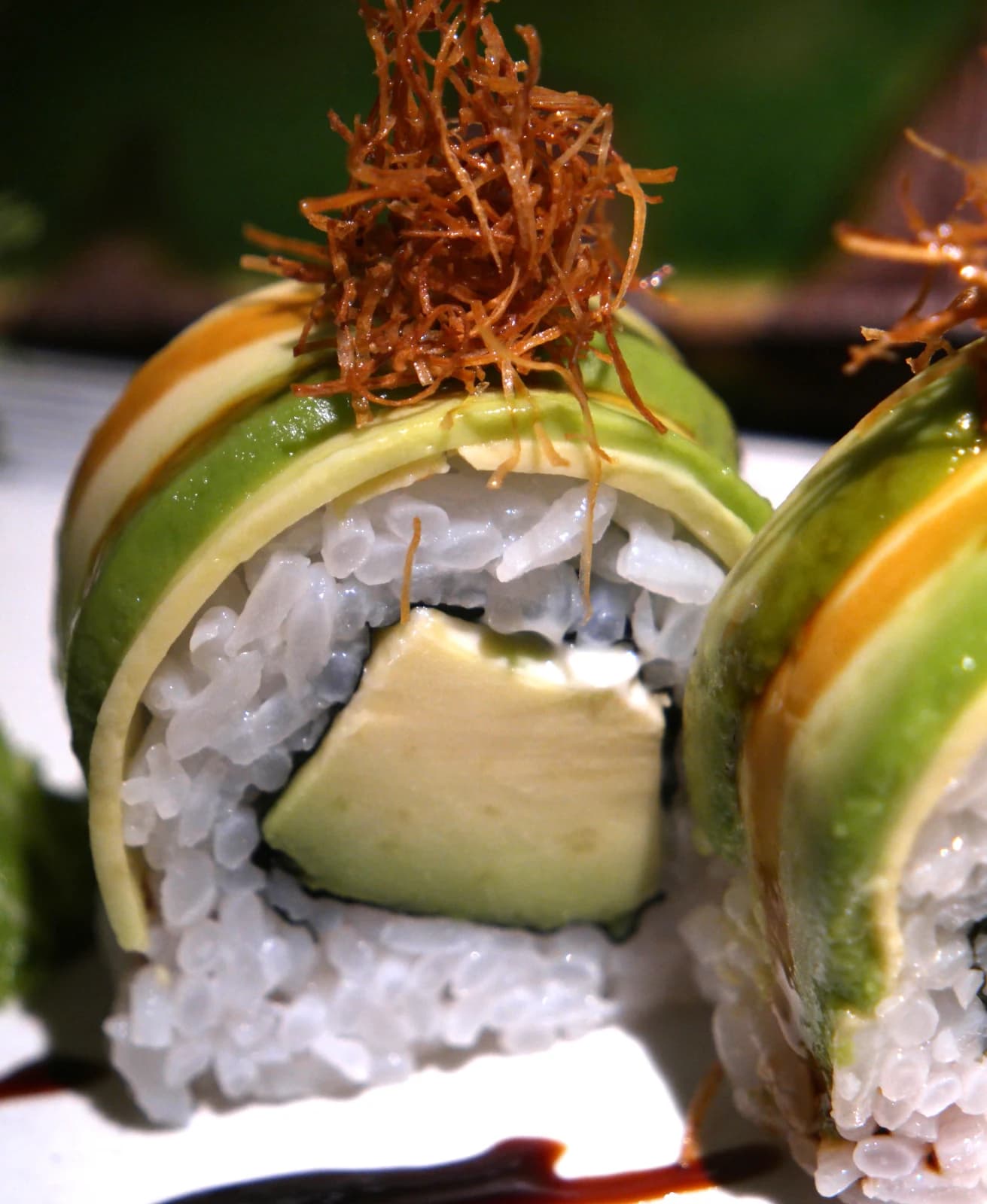
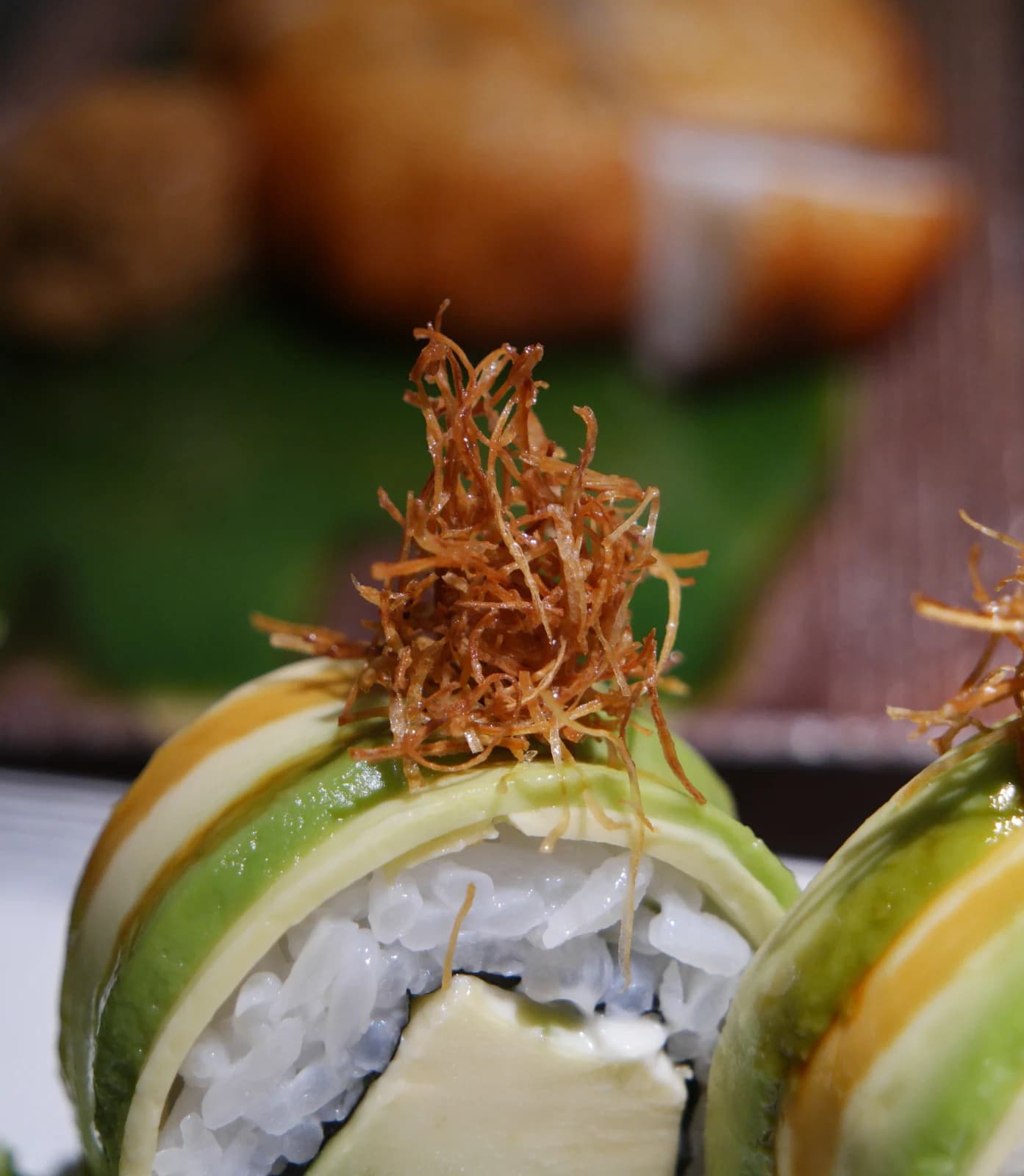
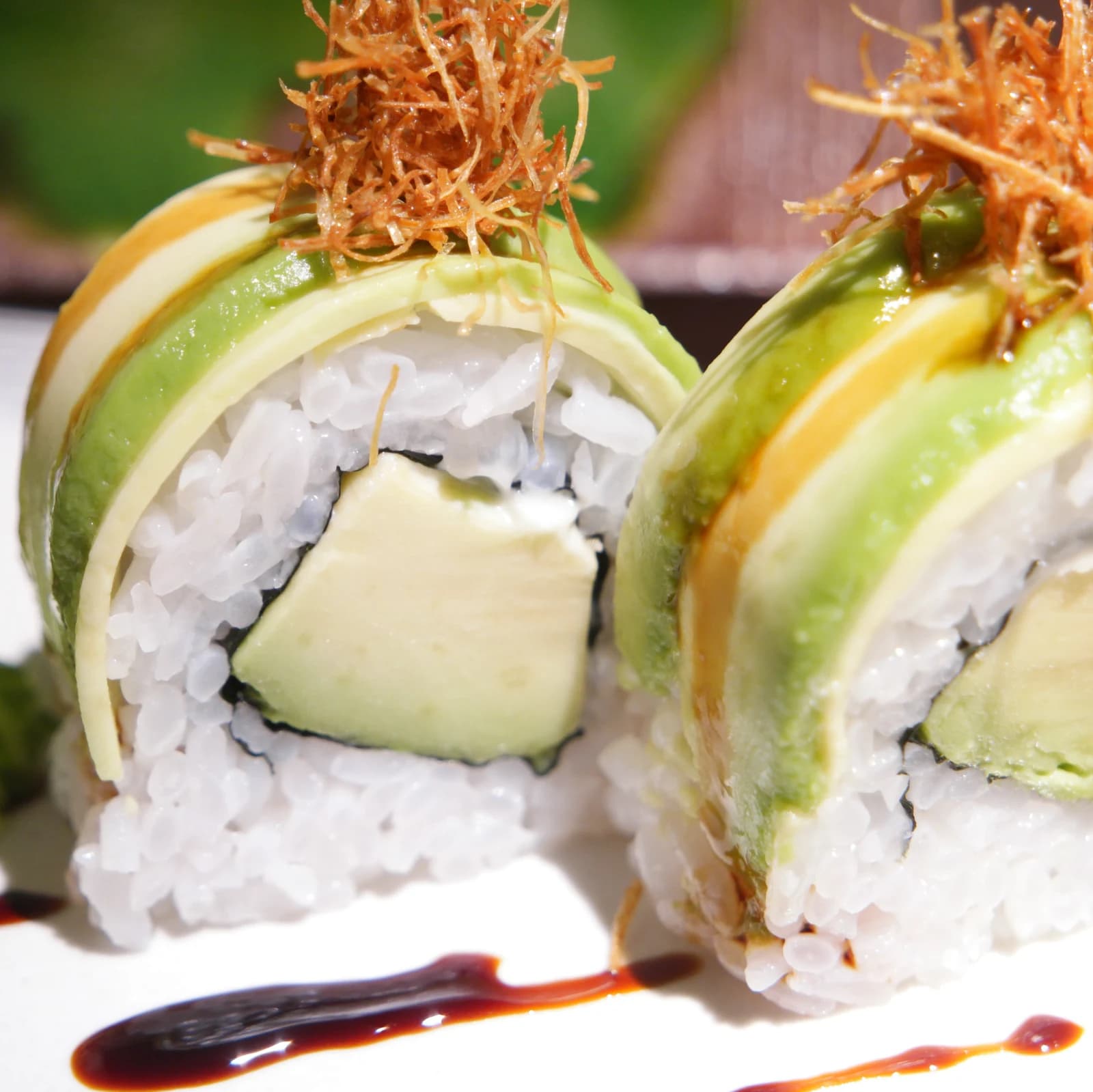
But up close, the quality was unreal. The avocado had been shaved paper-thin and layered one slice at a time, creating this perfectly even green gradient around the outside. The crispy flakes on top were uniform in size, and the sauce was drizzled in precise zigzags. You could see the seafood filling peeking through the rice — packed tight with no gaps at all. Looking at the cross-section, every individual grain of rice was distinct and not clumped together. I'd started with no expectations whatsoever but my eyes gave in before my mouth even got involved.
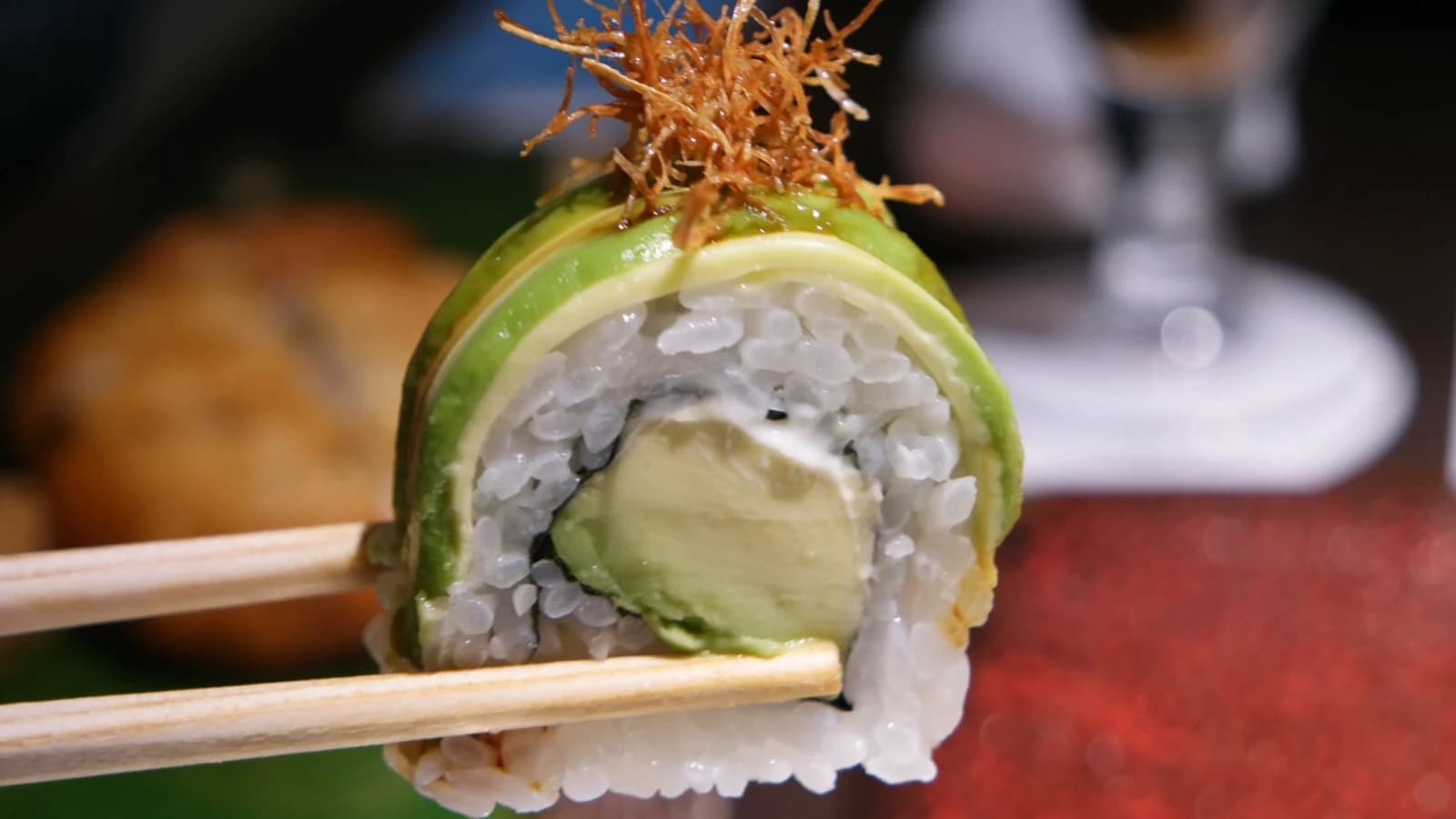
I picked one up with my chopsticks — the avocado wrapped thinly around the outside, rice grains packed neatly in the cross-section, and the whole thing held its shape perfectly. Even the crispy flakes on top stayed put. You could tell whoever made this had seriously precise hands.
Like I said, avocado is one of those love-it-or-leave-it ingredients. So I genuinely bit into this with no enthusiasm — but the second it melted in my mouth, my whole opinion shifted. It wasn't that bland, waxy avocado thing. It was creamy with a rich, almost cheesy savouriness that spread across the palate. As you chewed it with the rice, a subtle vinegar tang came through and cut straight through any richness. It was hard to believe this was the same fruit I'd always been lukewarm about. That single bite was the first time I truly felt how different sushi in Japan could be.
Sushi on Chopsticks
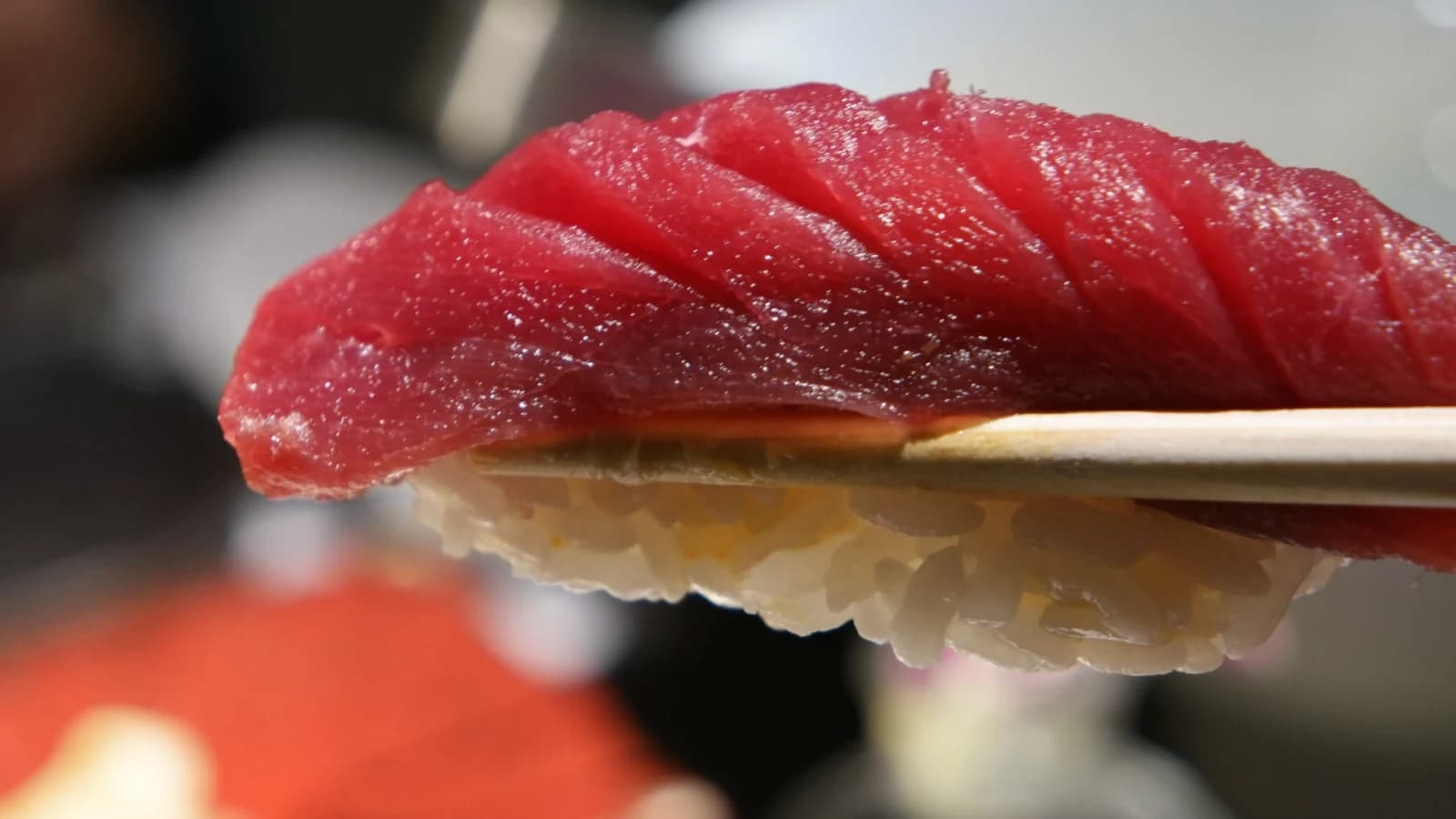
Lifting the tuna with chopsticks, the colour hit me first. Vivid ruby-red with tight, fine grain and a glossy surface that caught the light. The slice was thick enough over the rice that you could barely see any grains underneath.
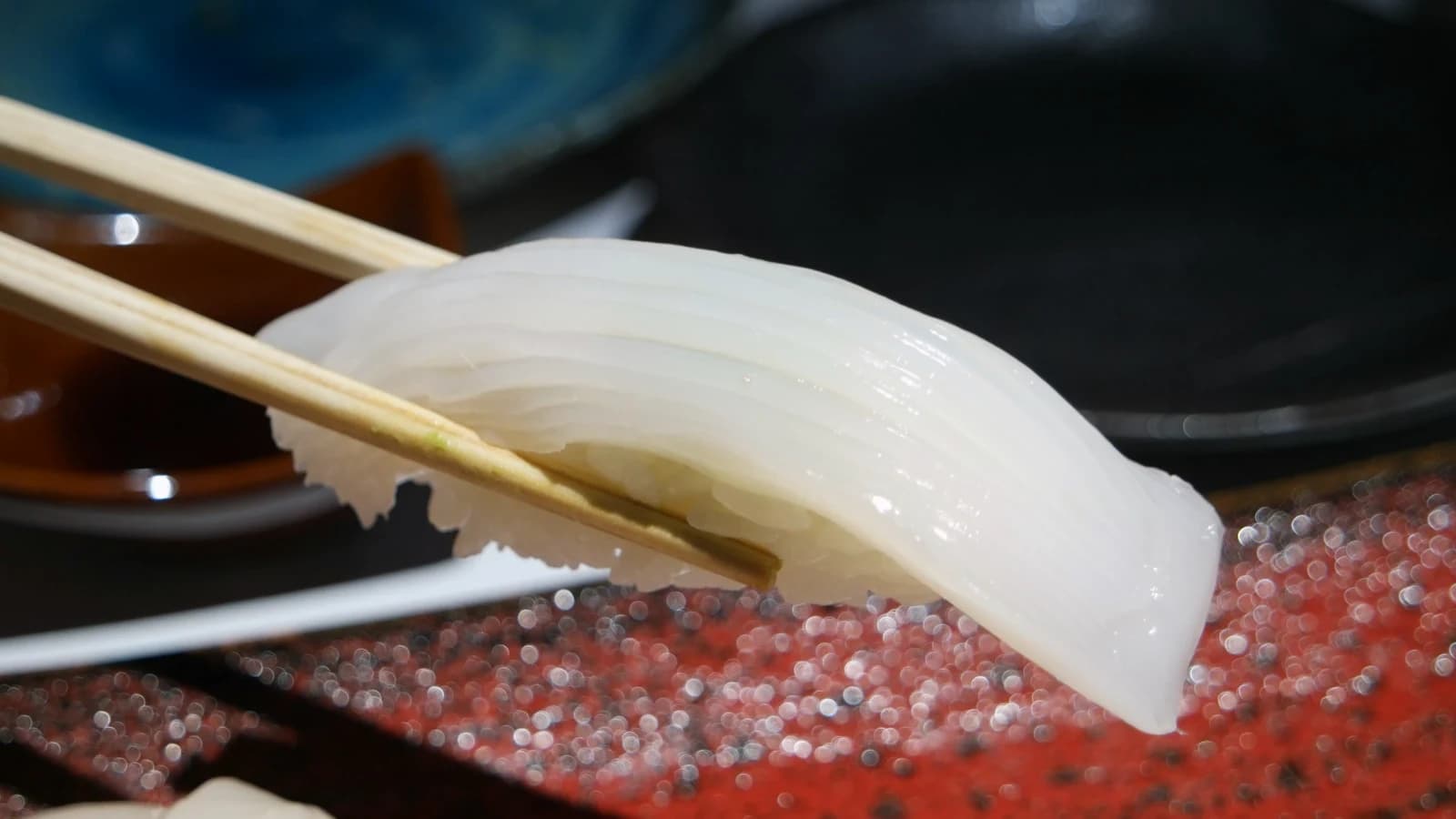
The squid was striking in its translucent white. The fine scoring meant it flexed slightly when held in the chopsticks without breaking apart. That smooth, gleaming surface told you instantly it was fresh.
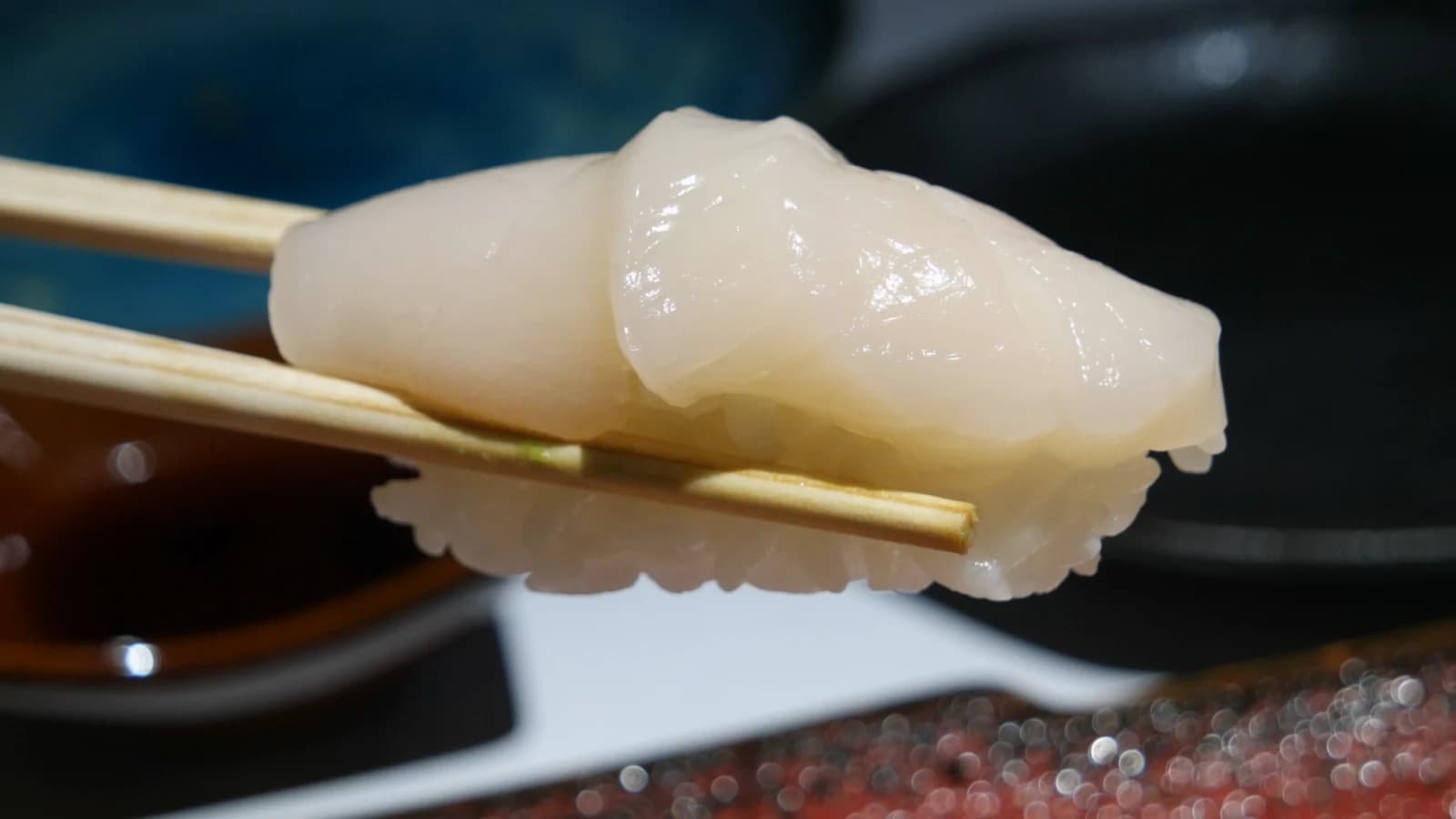
This one was Hokkaido scallop. The flesh was plump and sat on the chopsticks with a noticeable heft to it. Opalescent white with a slight translucence where the light passed through — genuinely a different class from any scallop I've seen at a fish market or restaurant back home.
Clean Plates and an Honest Gripe
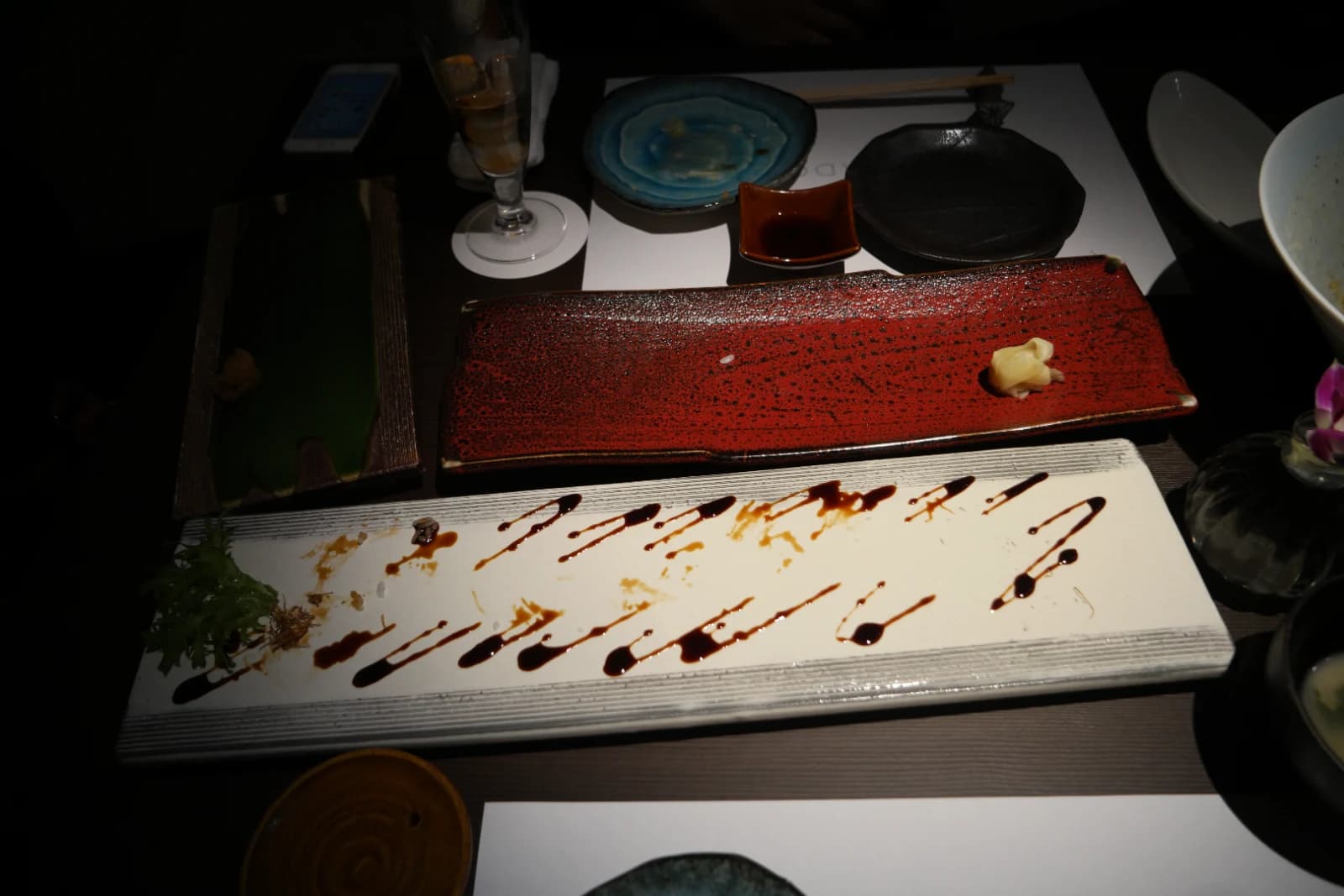
We cleaned everything. The red plate had nothing but a lone piece of gari sitting there, the white plate just had sauce zigzags left behind looking almost like abstract art. The green leaf plate was empty, the soy dish wiped clean. Between the two of us, not a scrap was left.
In terms of flavour, I genuinely had no complaints. From the agedashi tofu to the salad, the grilled fish cake, the omakase sushi, and the avocado roll — not a single dish missed. Every plate that came out showed you the chef wasn't cutting corners anywhere. But there was one thing. The portions. By Aussie standards, it was honestly not enough food. The whole meal was this cycle of being blown away by a dish and then watching the plate empty out way too fast, going "already?" every single time.
Kurado Pricing and Current Status
I can't remember the exact bill from that night, but looking at Kurado's current pricing: the ¥6,000 course (about A$65) includes 6 dishes, the ¥8,000 course (about A$87) has 8 dishes, and the ¥11,000 course (about A$120) gets you 8-plus dishes. The 5-piece omakase sushi is available à la carte for ¥1,520 (roughly A$16). Average dinner budget sits around ¥5,000 (about A$55) per person, so for the two of us with drinks it would've come out just over ¥10,000 — somewhere around A$55–65 per head at the 2016 exchange rate.
It's the kind of small place that doesn't really pop up when you search for Obihiro restaurants, but I looked it up and Kurado is still going in the same spot. It's a 12-minute walk from Obihiro Station, open Monday to Saturday from 5:30 pm to 10:00 pm, closed Sundays. The phone number is +81-155-66-5858.
A Flavour That's Stuck Around for 8 Years
We ended up at the konbini that night and bought a couple of onigiri — those triangular rice balls — to take back to our accommodation. My mate was unwrapping his when he said "I can't stop thinking about that sea urchin" and honestly, same. There are heaps of brilliant sushi spots all over the world — including plenty right here in Australia where the quality absolutely stacks up against Japan. But there's something about eating a piece of sushi hand-pressed by a craftsman in the country where the whole art form was born. Even with the same ingredients, it just hits different somehow. It's not that sushi elsewhere is worse — it's more like the difference that comes from generations of tradition and craft in the place it all started. And I felt that for the first time at this little shop. We turned off the lights and got into bed, and my mate said into the darkness: "let's come back here for lunch tomorrow." We never made it back the next day — but eight years on, I still remember him saying it.