
Hokkaido Omakase at Kurado: The Obihiro Sushi I Still Crave
Table of Contents
15 items
Winter 2016: Stumbling Into a Tiny Sushi Shop in Obihiro
If you've ever eaten sushi in Japan, you probably know what I mean. The ingredients aren't dramatically different from what you'd find at a sushi spot back home, but the moment that first piece lands on your tongue, something clicks differently — in a good way. The first time I felt that gap was at a small sushi restaurant called Kurado in Obihiro, Hokkaido.
It was the winter of 2016, I think. A friend from my neighborhood and I took a trip to Obihiro together. We had no real plan, no must-eat list — we just wandered around until we ducked into Kurado near Obihiro Station for dinner. It wasn't some famous tourist destination, just a quiet little place sitting on a side street. I've been to plenty of Hokkaido restaurants over the years and most of them have blurred together by now, but the taste of the sushi from that night is still strangely vivid in my memory. A few details might have changed since then, but let me try to walk you through it.
Ten Minutes Stuck on a Japanese-Only Menu
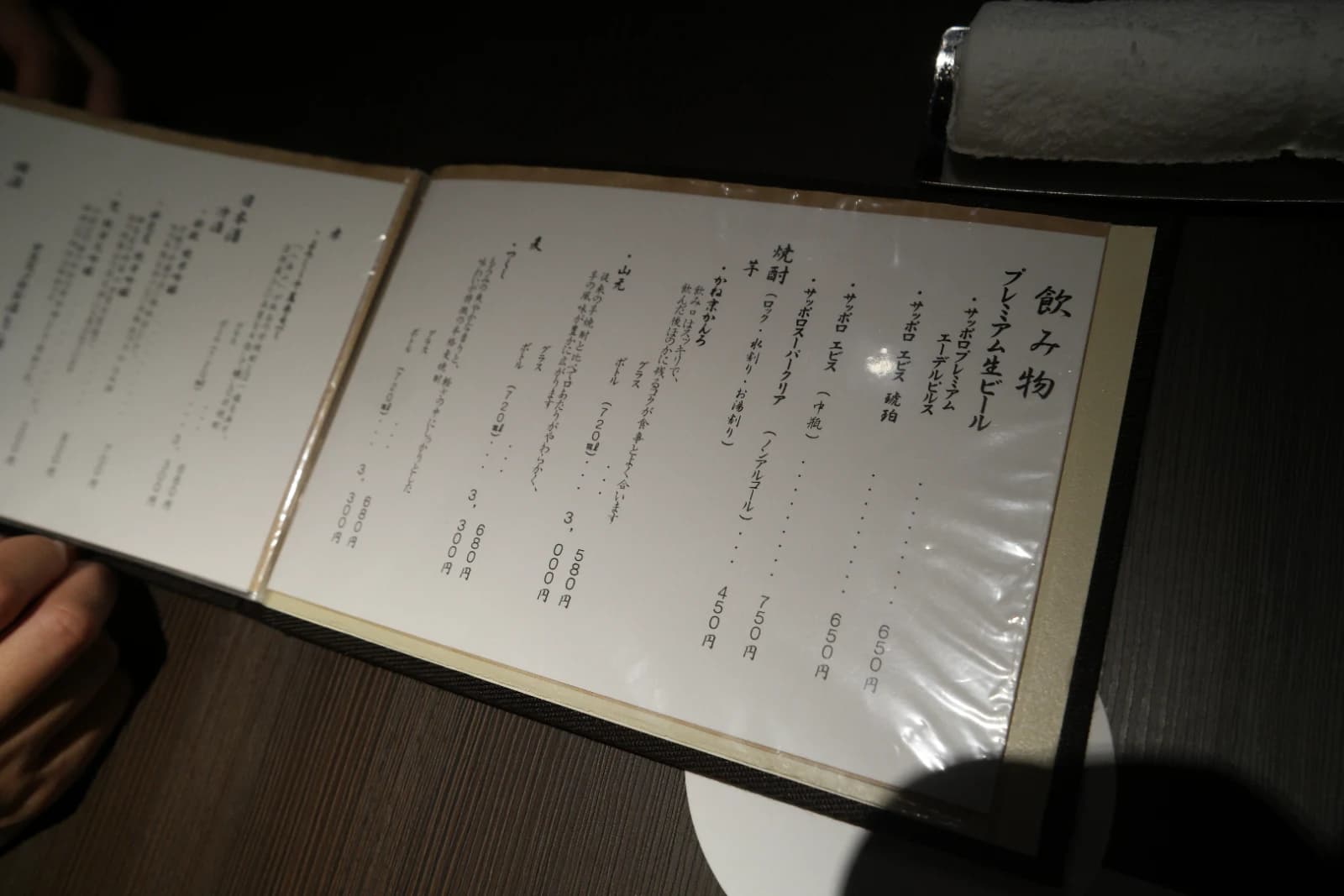
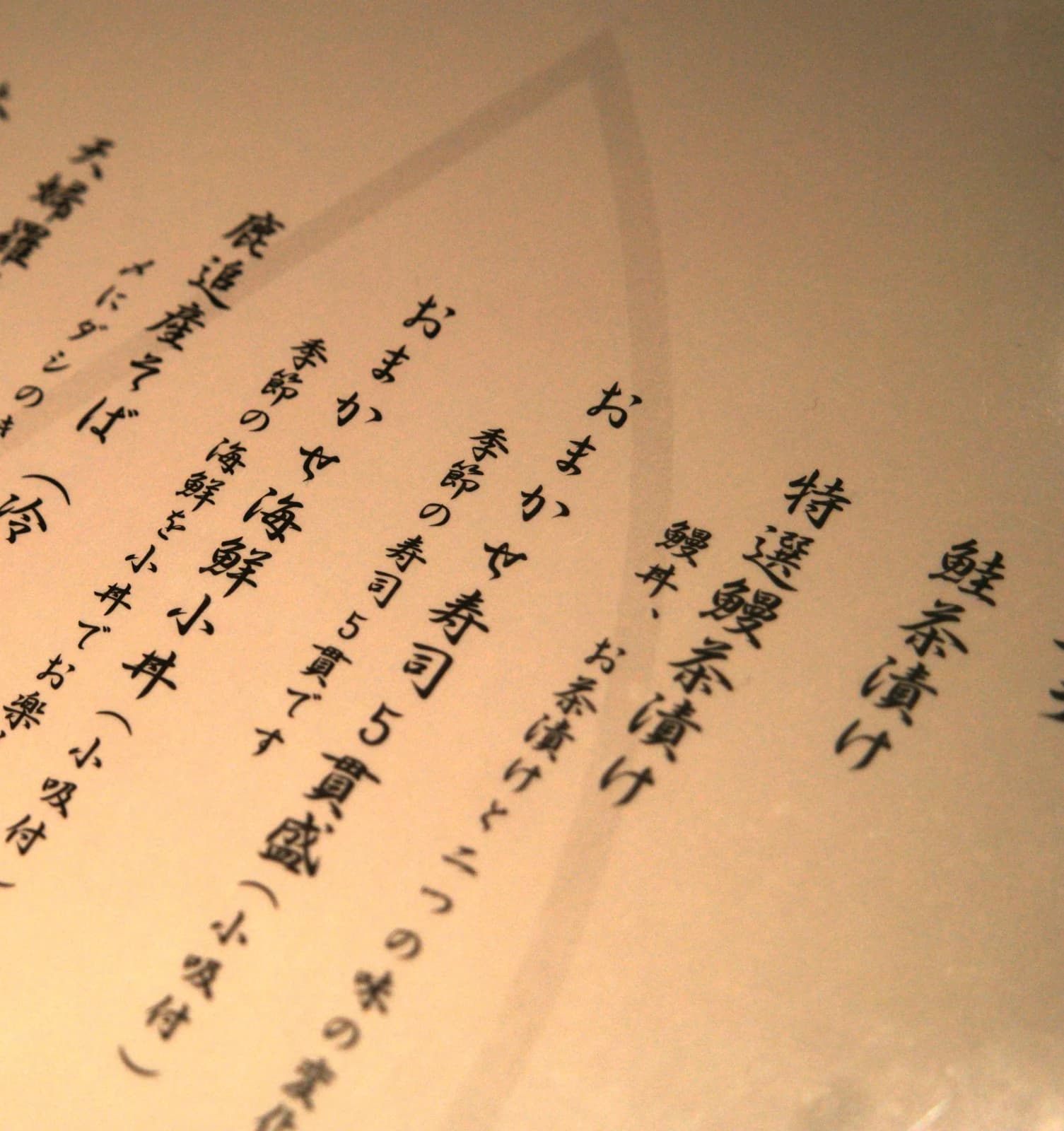
Once we sat down, the server brought hot towels and the menus, and translation apps in 2016 weren't anywhere near as good as they are now. We sat there for ages, phones out, translating one character at a time — must have taken us a full ten minutes just to figure out what to order. The right page was drinks: premium draft beer at 650 yen, shochu starting at 450 yen. Flip left and you got sake and small plates. The second photo shows the food page. There was salmon ochazuke (rice topped with salmon, then drowned in hot tea), special eel ochazuke right next to it, and an eel rice bowl. There was also Japanese omakase — a sushi set where the chef picks the best ingredients of the day and hands them to you piece by piece. A seasonal seafood donburi too, a small bowl of seafood over rice. What I ended up with was the cold seafood soba on the far left of the menu — chilled buckwheat noodles topped with seafood. I had no idea what it was at the time. I just picked it because the first character was the only one I could actually read.
Why the Chopsticks Are Laid Sideways
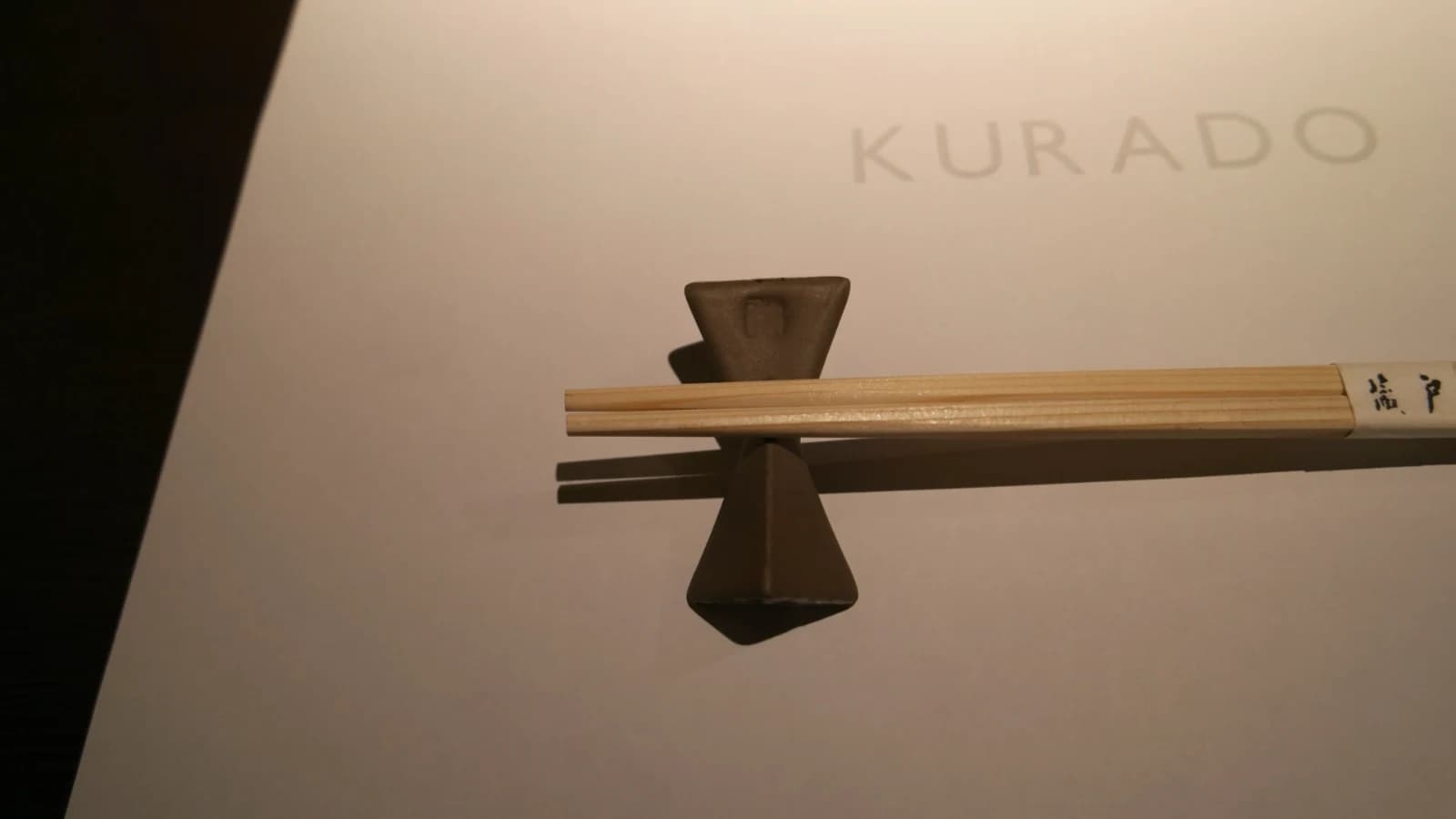
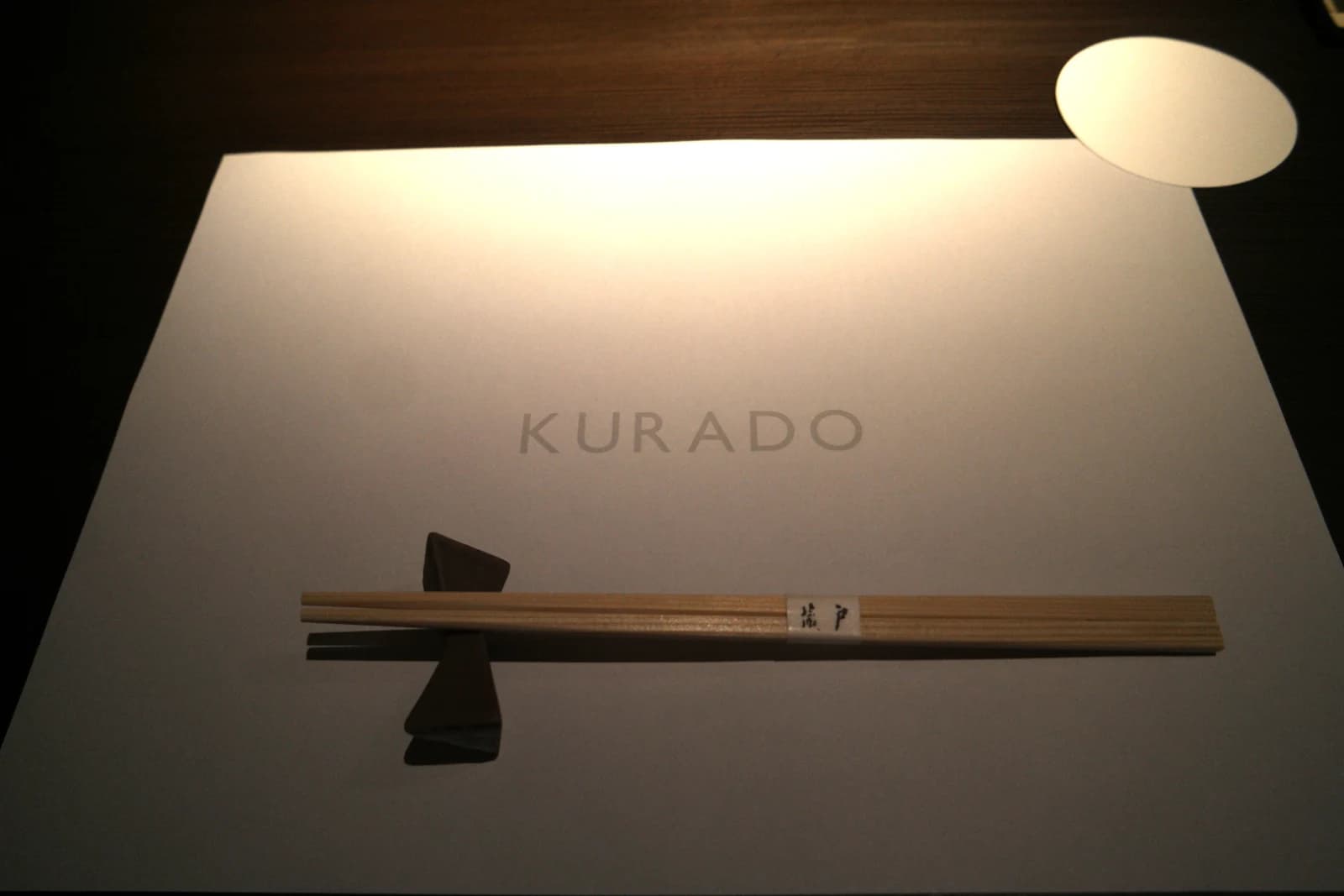
The table setting was clean. White paper mat with the restaurant's name printed in silver, wooden chopsticks resting neatly on a small ceramic stand, the shop's name etched into the chopsticks themselves.
Here's something interesting about it. Back home in Korea, we set chopsticks vertically with the handles pointing toward us. In Japan, they're laid sideways like this. It's not just a habit thing — there's actually a cultural reason. In Japan, pointing chopstick tips at another person is considered rude, so laying them horizontally keeps the tips from aiming at anyone. There's also the idea that sideways chopsticks act as a small boundary line between you and the food. It's basically a quiet way of saying "I'm grateful to receive this meal." In Korea, we always set utensils vertically as part of a proper table setup, so seeing chopsticks placed sideways felt off the first time. My friend didn't know any of this and turned them vertical before eating — I still remember the diners at the next table glancing over.
First Plate: Agedashi Tofu
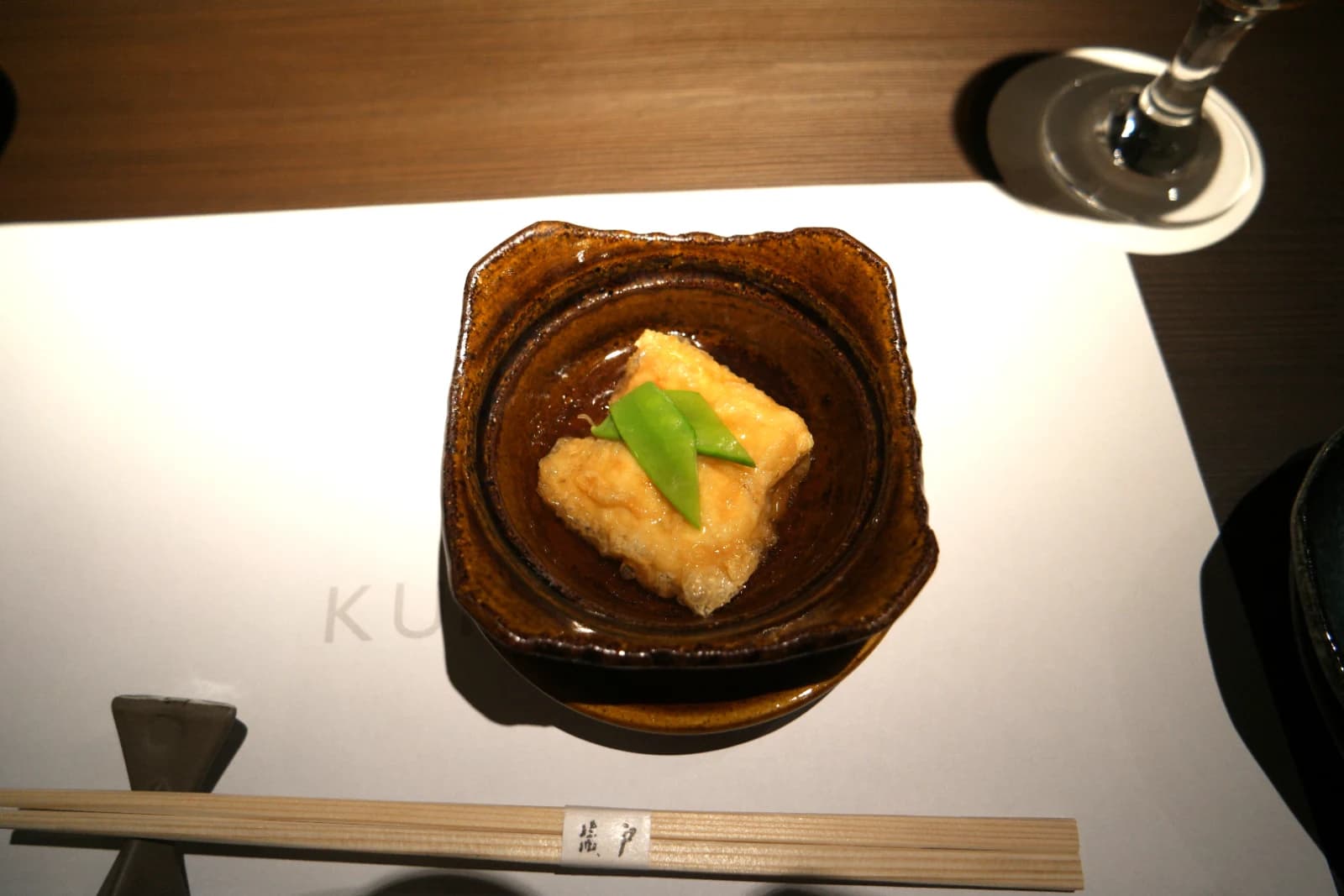
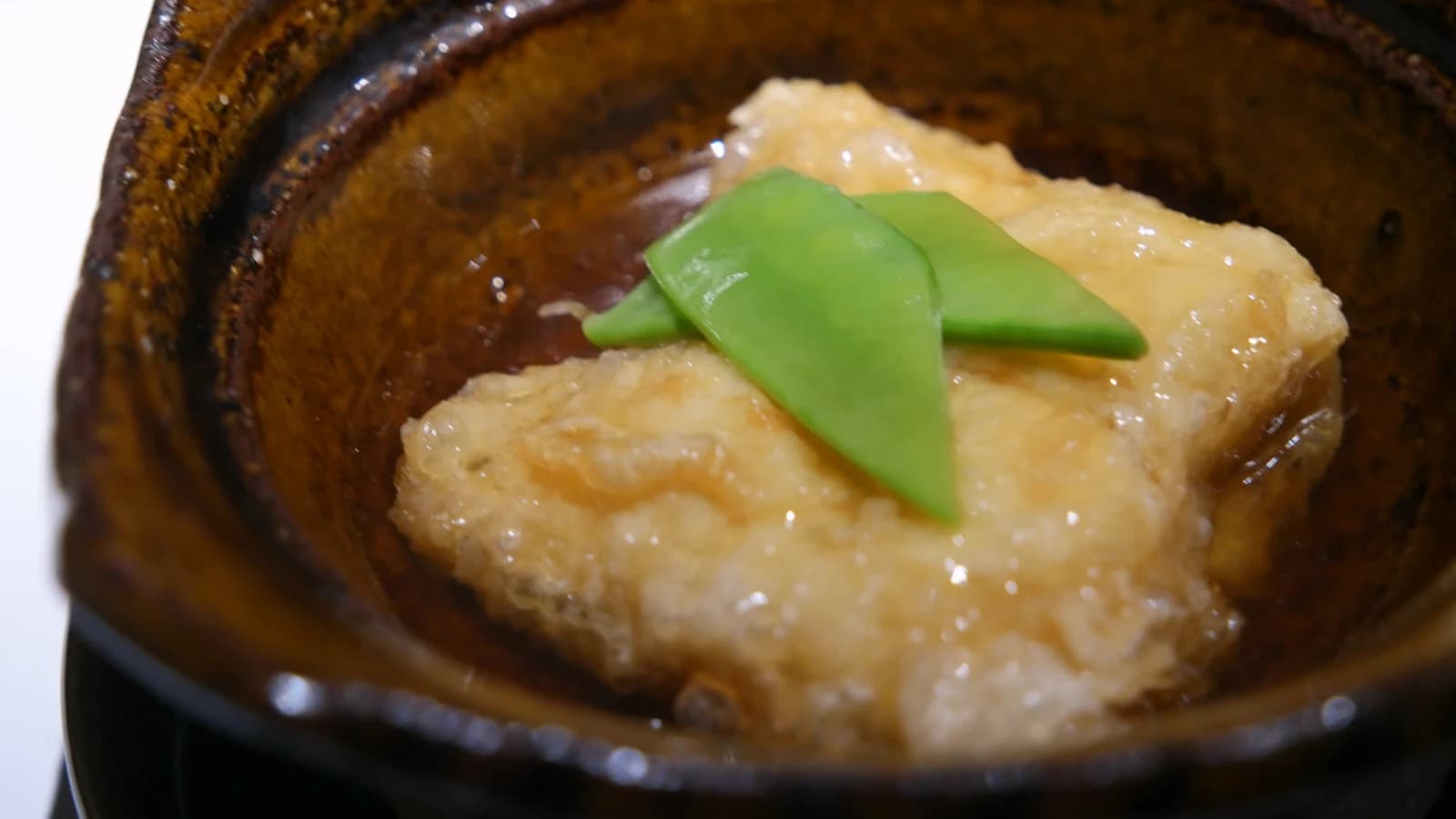
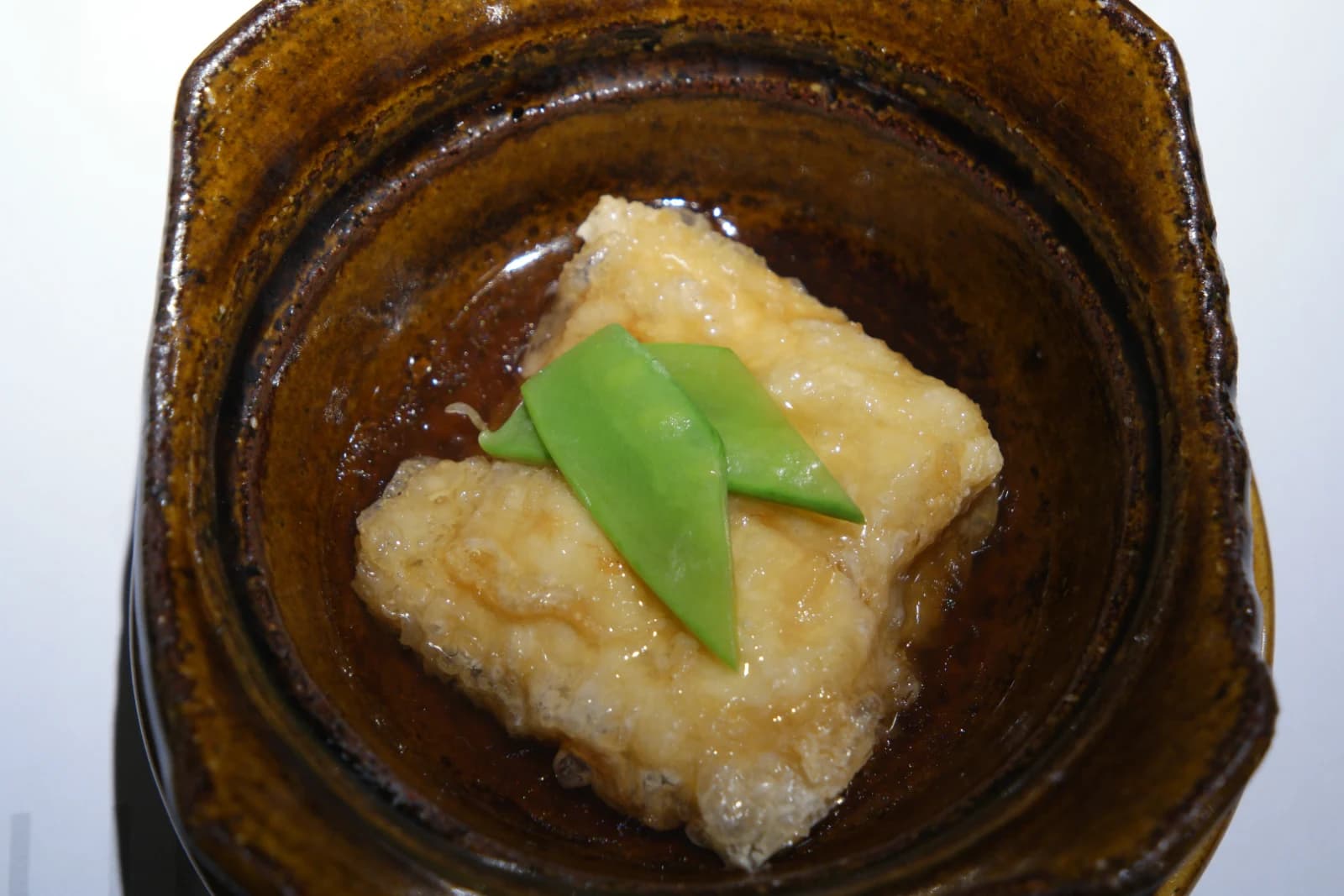
The first thing they brought out was this little dish. Brown ceramic bowl, and at first I had no idea what was inside. Two pea leaves on top, and underneath, what looked like a lightly fried block sitting in dashi broth. I lifted it with my chopsticks and realized it was agedashi tofu — tofu coated in a thin batter, fried until crispy, then soaked in warm dashi. One bite in, the outside still had that slight crisp, but the inside was unbelievably soft. The dashi was soy-sauce based but not salty, just this gentle umami that had soaked deep into the tofu. Completely different from any tofu dish I'd had in Korea. My friend thought it was yuba and went, "yuba is good," but yuba is a thin tofu skin folded into pouches, and this was a whole block of tofu fried in one piece. Tiny portion, but that single bite told me what kind of place this was.
The Salad They Finish at Your Table
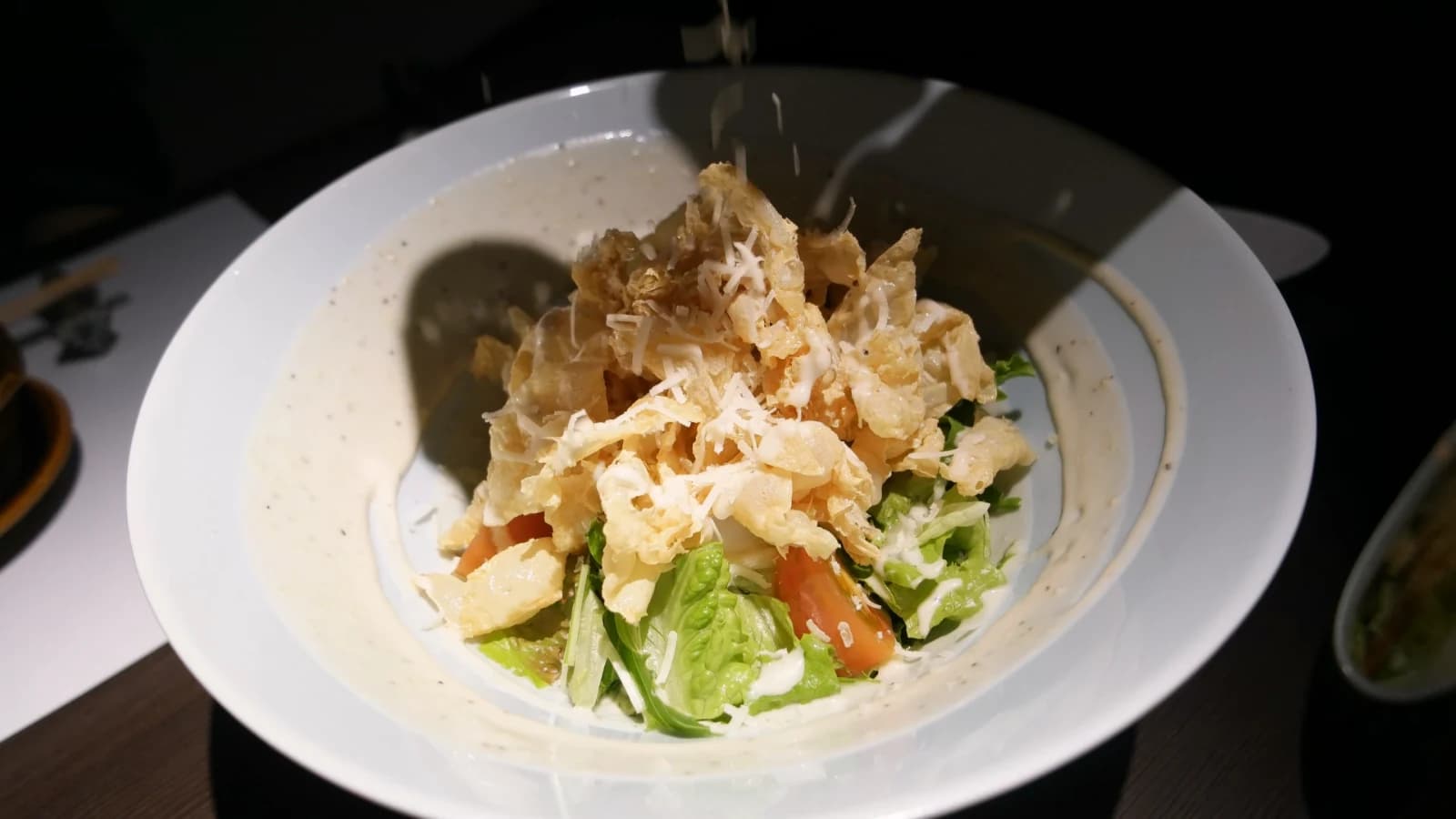
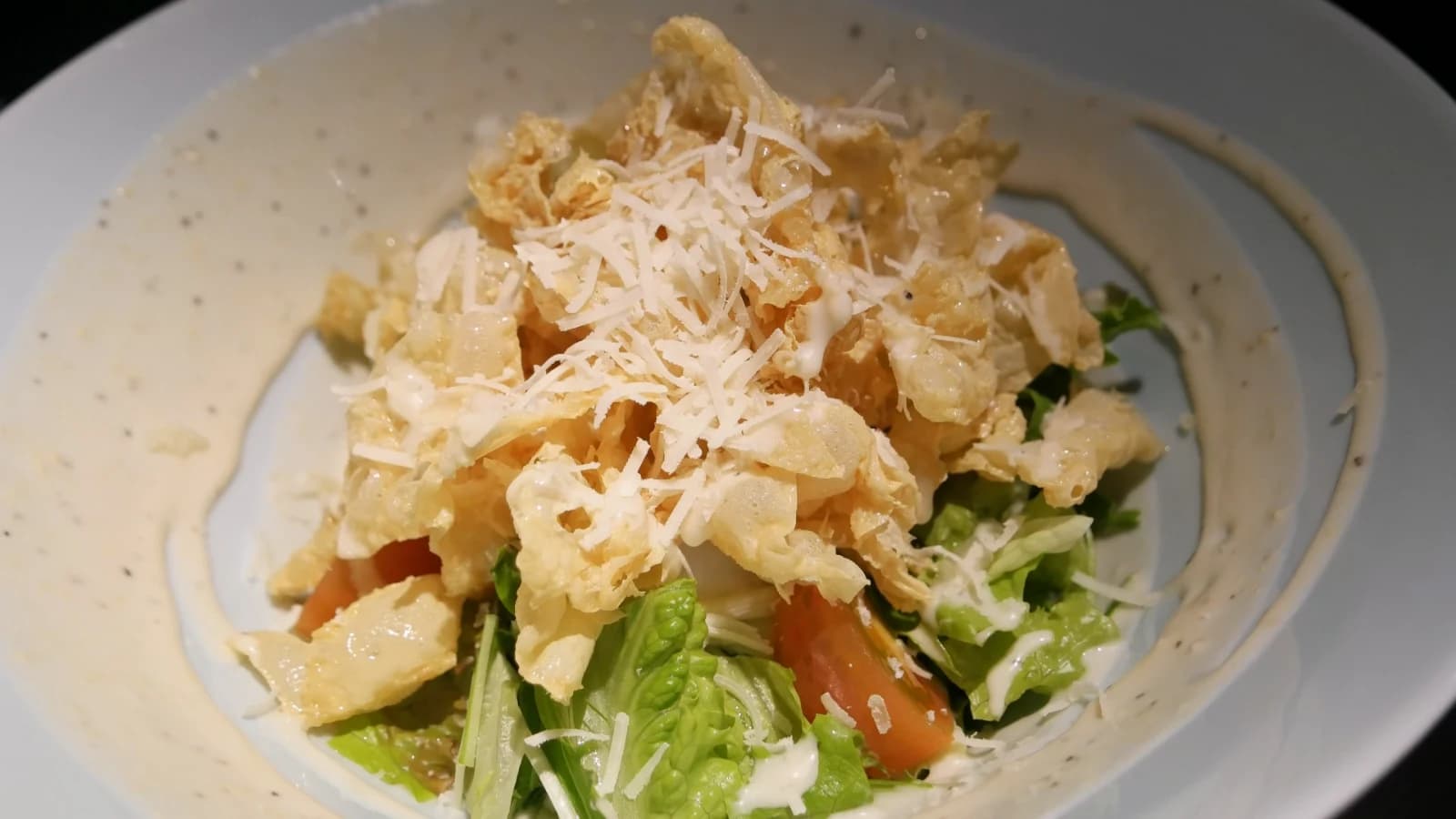
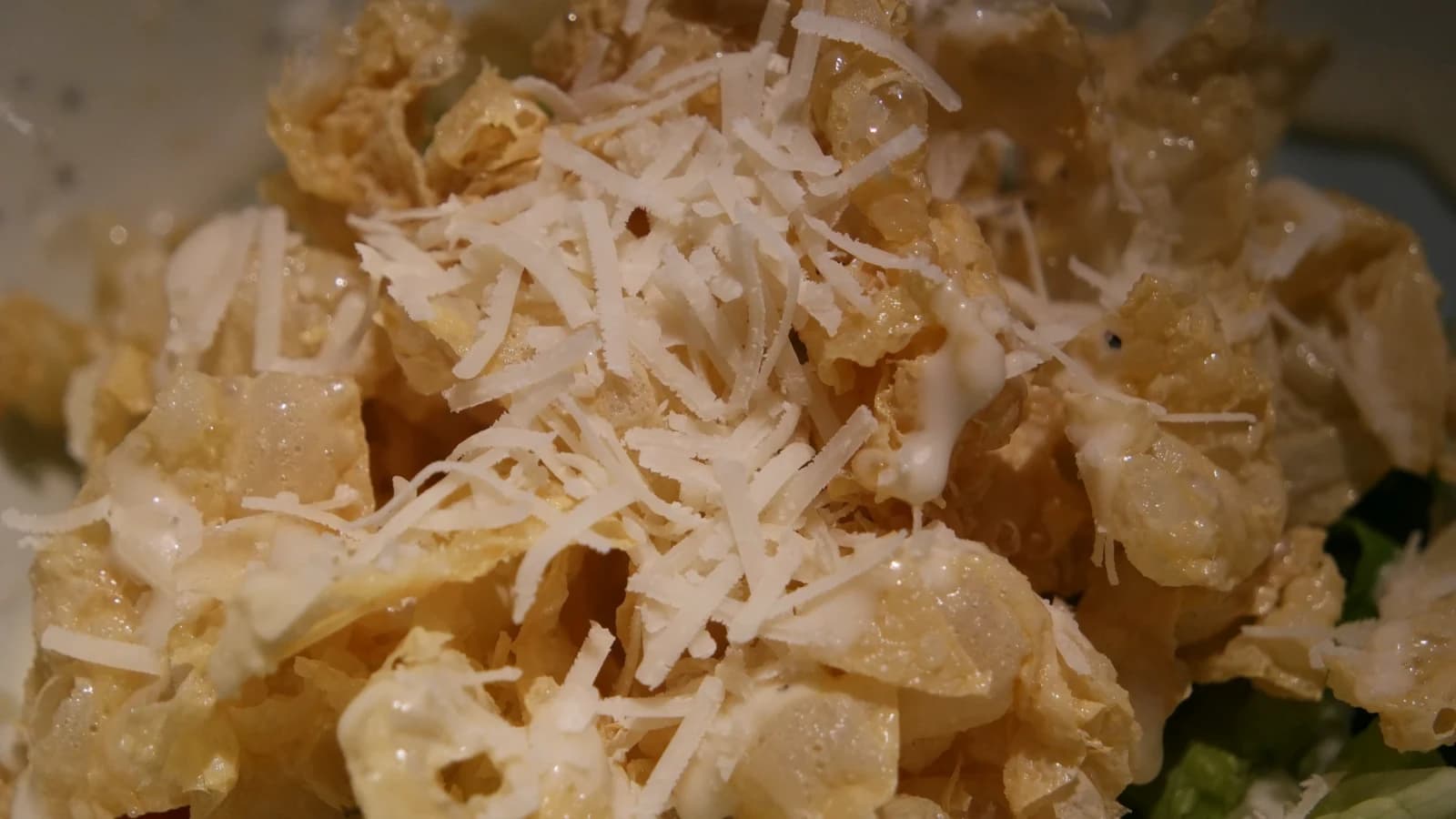
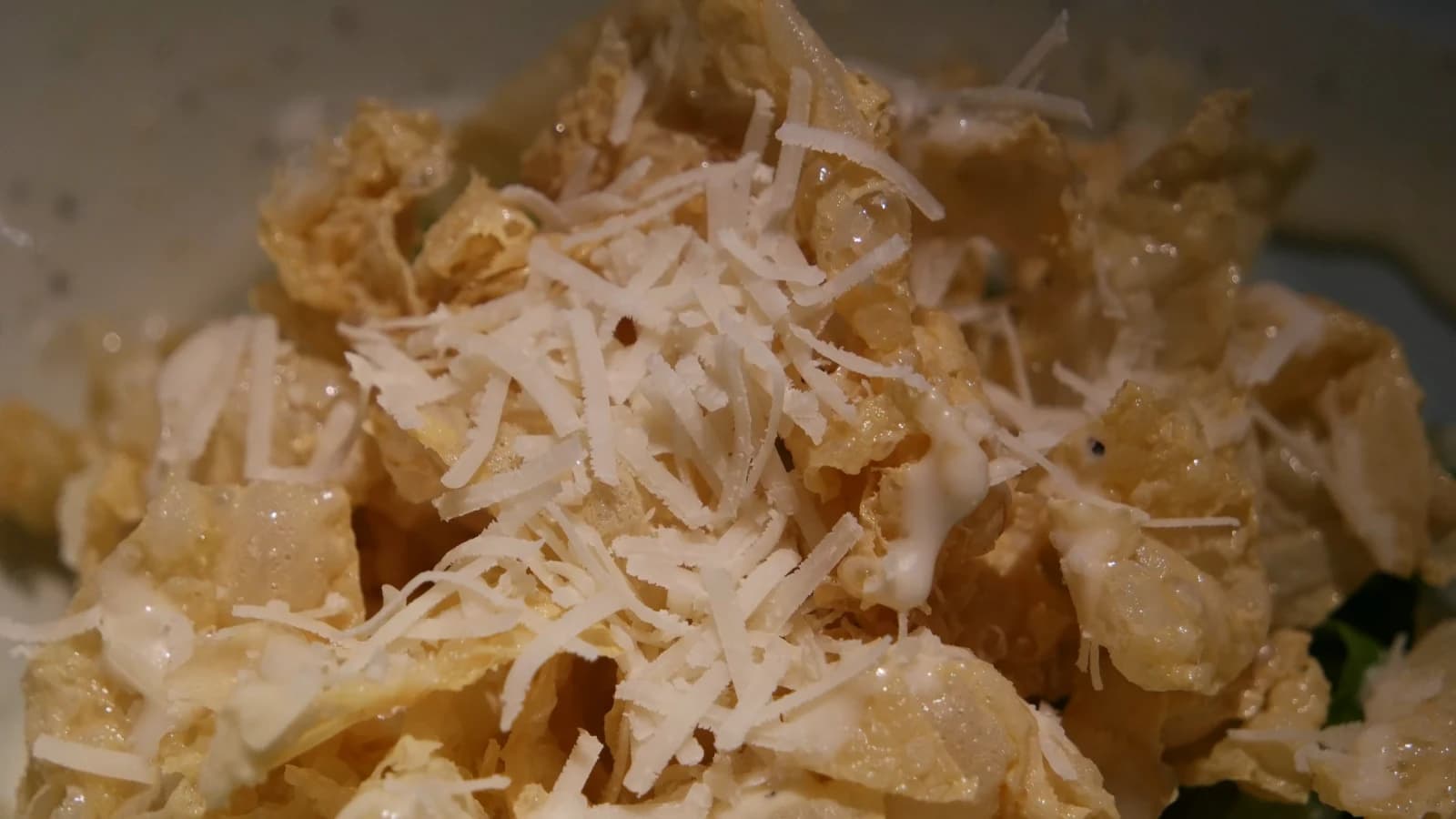
Next came the salad. A wide white plate with lettuce and tomato — but that wasn't the end of it. The server put the plate down, sprinkled a generous handful of crispy fried bits on top, then grated white cheese over the whole thing like falling snow. Watching them finish it tableside was honestly part of the fun. Up close, you could see how thin and weightless those crispy fragments were — looked kind of like fried wonton skin, or maybe yuba (tofu skin) crisped up. I never figured out exactly what it was, but picking up a bite of greens with that crunchy layer on top gave you a really fun double texture. My friend, who hadn't been excited about the salad, took one half-hearted bite and went, "Wait, this is actually good?" before reaching across to grab mine. The portion wasn't huge though. Splitting it between two people felt a little tight.
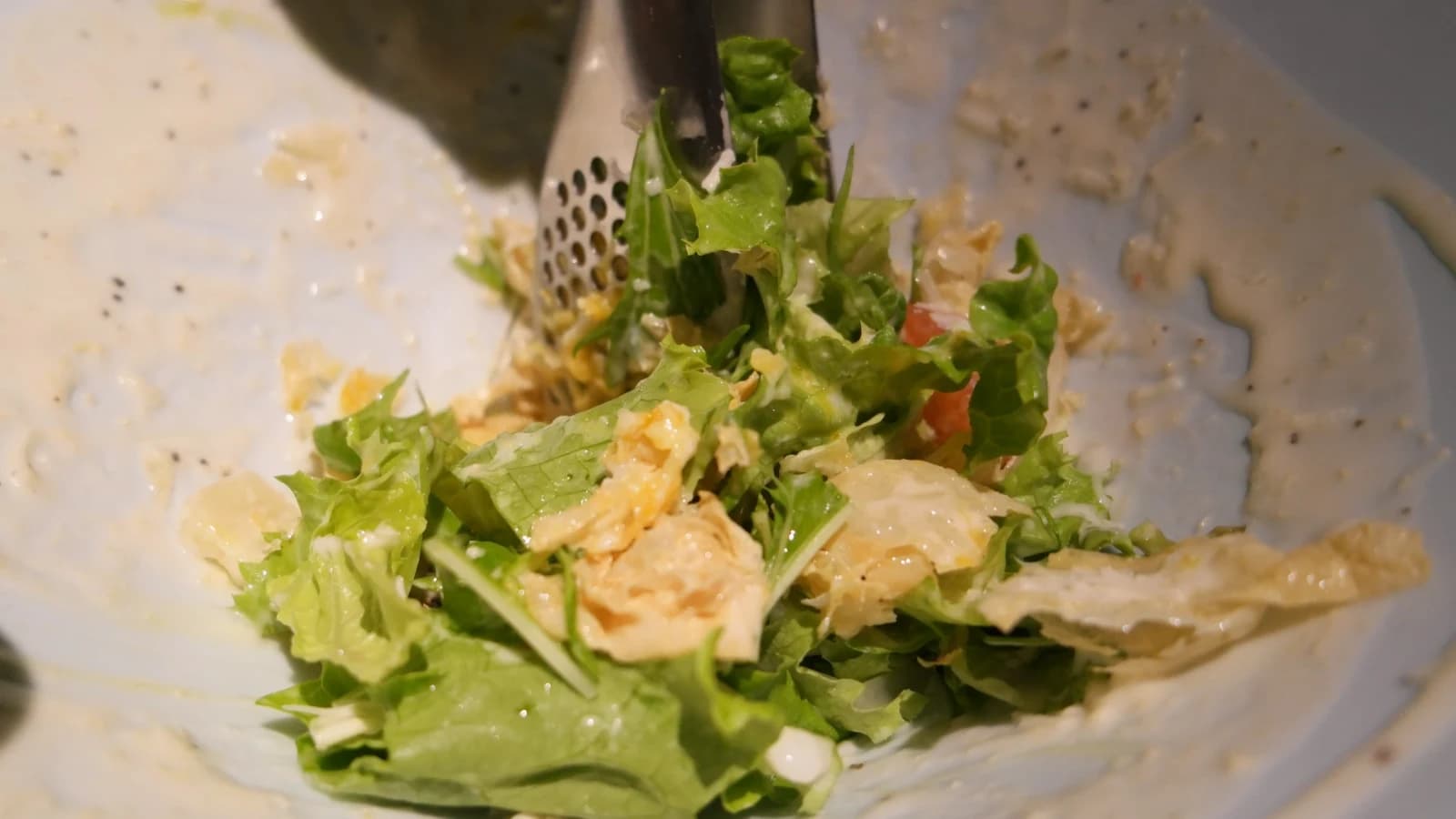
Wiped clean. Just dressing streaks at the bottom of the plate, and honestly, the dressing alone was good enough that I briefly considered scraping it up with a fork. This is where Japanese food really earns its reputation — the quality of every single component is dialed in. The vegetables fresh, the sauce clearly not slapped together. But for a Korean stomach, it was a little rough. Back home, this kind of money would get you five side dishes, rice, and soup on the table. Here it was one beautiful piece on one beautiful plate, then two more pieces on another beautiful plate. Eyes thrilled, stomach still sending signals. My friend leaned over and went, "Is this really all?" and I had nothing to say back.
The Satsuma-age That Reset My Idea of Fish Cakes
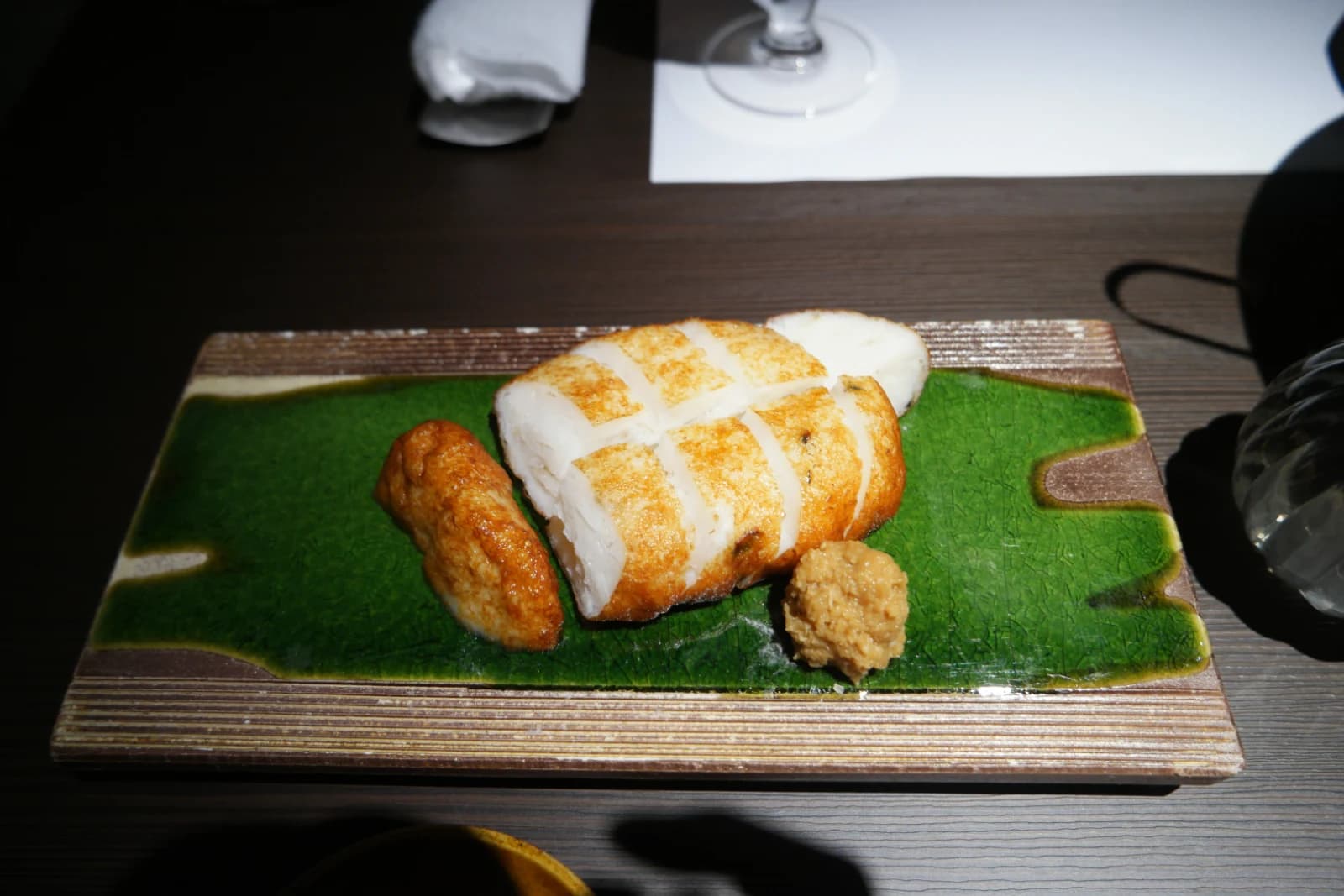
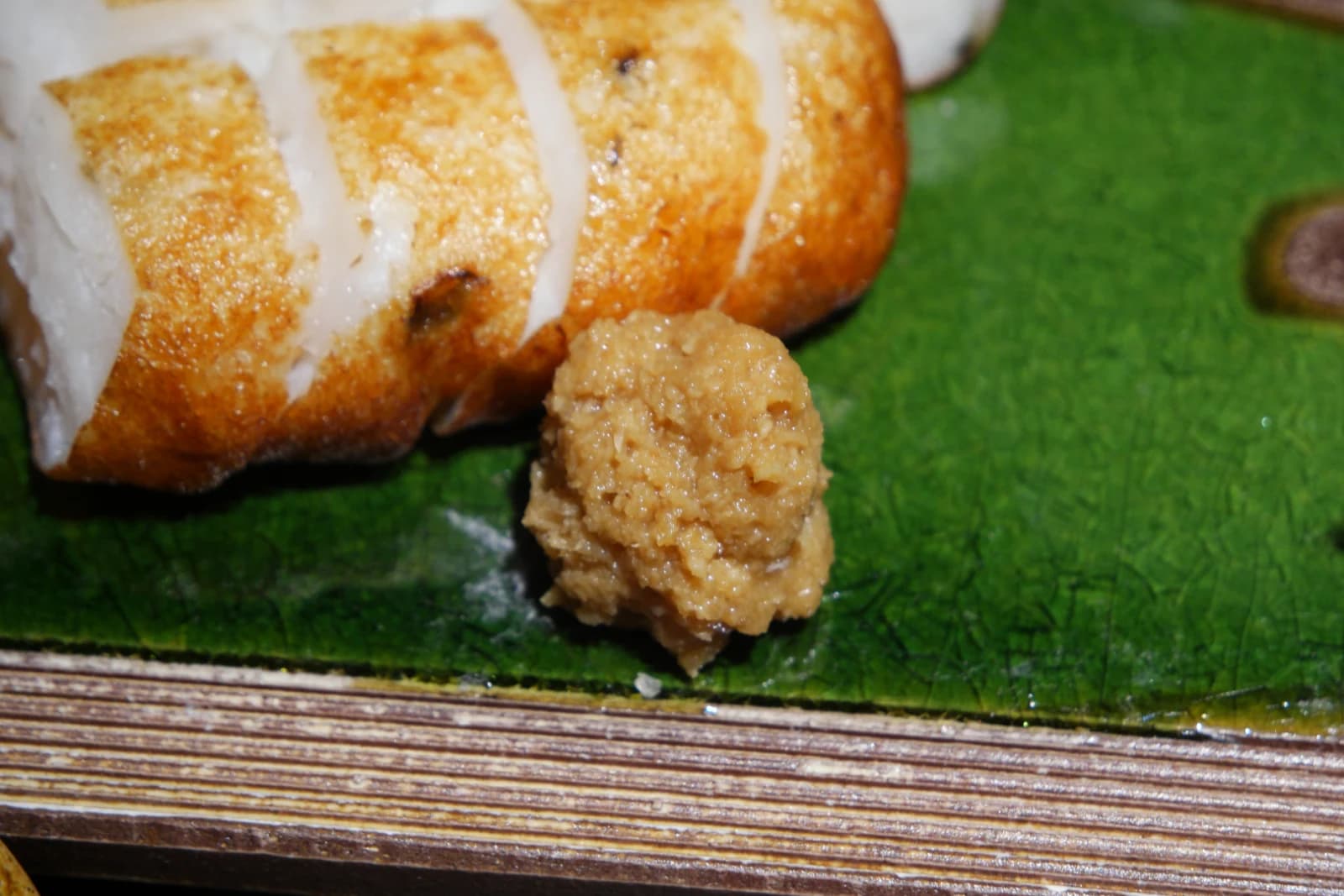
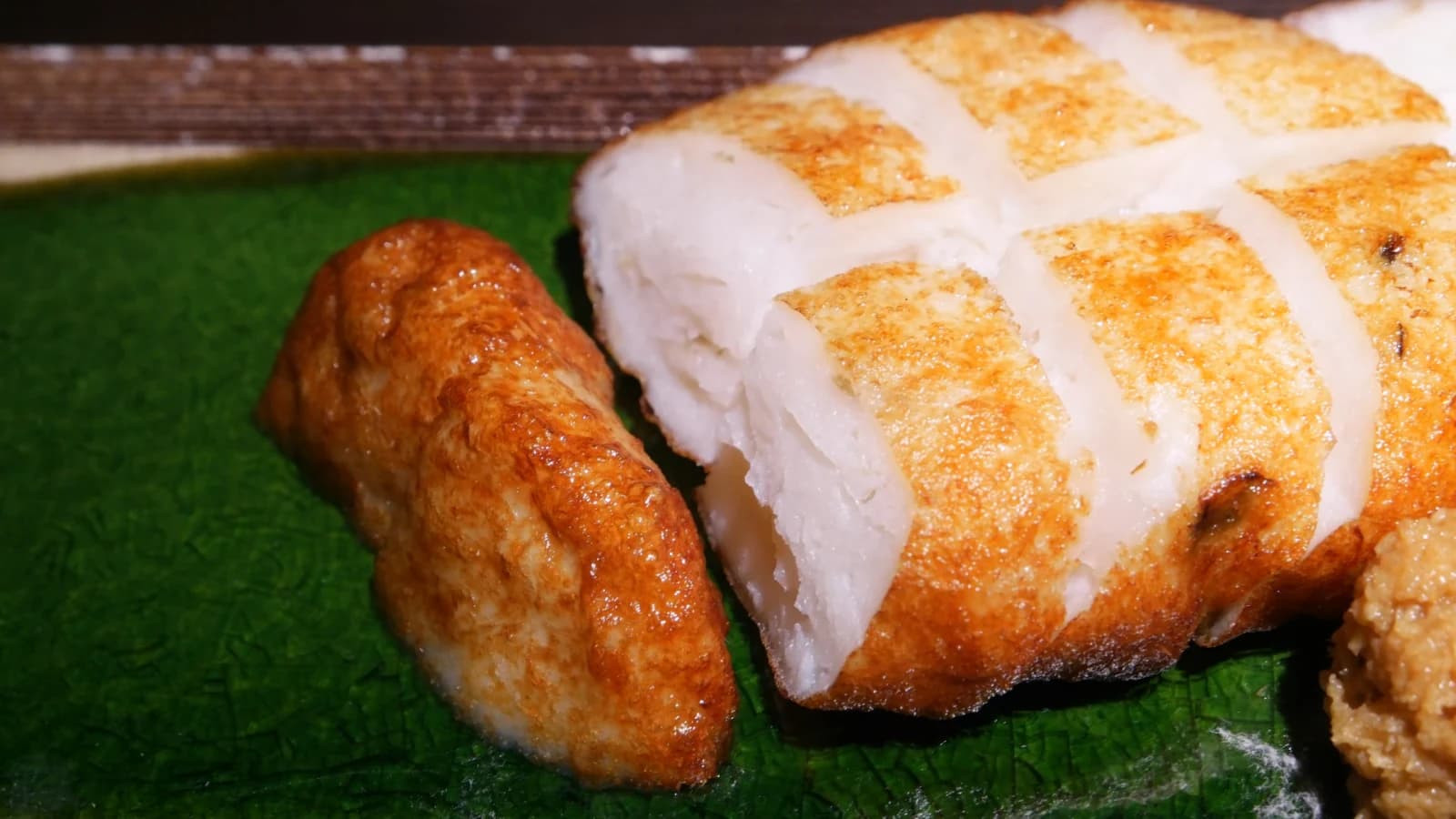
Next came something on a green leaf-shaped plate. Browned and crisp on the outside with a crisscross knife pattern cut into the surface, served with a small dab of wasabi. At first I thought it was grilled fish. There was a smaller piece tucked behind it too.
I cut a piece off and bit in — fish cake. Satsuma-age, the Japanese version, made by finely grinding fish meat into a paste and grilling the outside until golden. The texture was completely different from Korean fish cakes. Korean fish cakes have this springy, chewy bounce. This one was much softer, and the fish flavor itself came through way stronger. Slight char on the outside, moist and almost fluffy on the inside. A tiny dab of wasabi opened up your sinuses and made the savory notes pop. "This is fish cake?" I asked my friend. The image of fish cake I'd grown up with was so far from this that I was genuinely thrown.
Five-Piece Omakase Sushi — This Is for Two People?
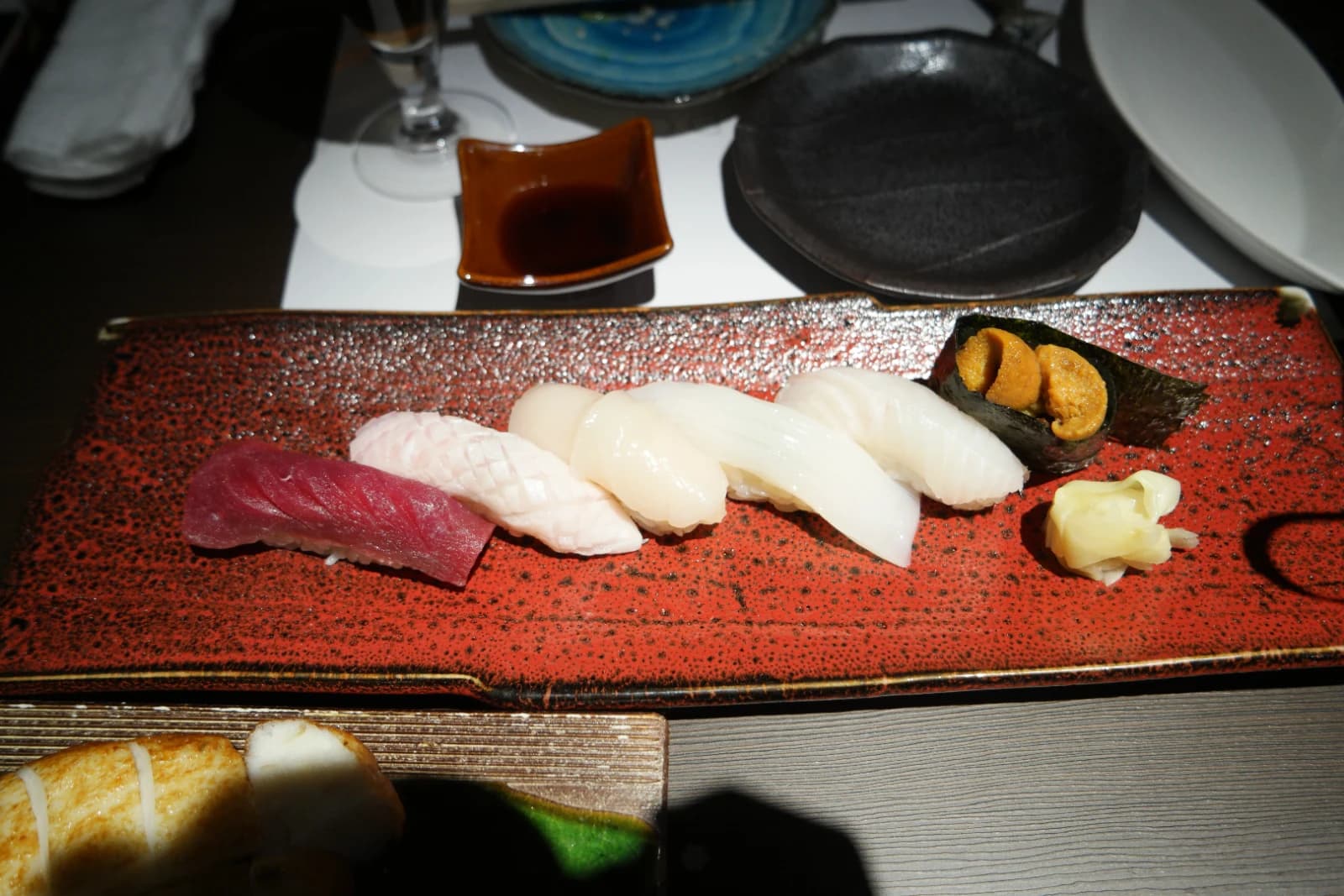
And then the main event. Japanese omakase — the sushi set where the chef picks the best ingredients of the day and serves them one by one. They were lined up in a neat row on a long red plate. Tuna on the left, then a white fish with knife scoring, what looked like scallop with a translucent white sheen, another white fish, and on the far right a gunkanmaki (battleship roll) wrapped in nori topped with sea urchin. In the middle, a small mound of gari — those thin pickled ginger slices that reset your palate between pieces — and at the top, a small soy sauce dish.
But this was for two people. Five pieces total. Two and a half per person. The moment we saw the plate, my friend and I locked eyes. Same expression on both of us: "That's it?" When you eat sushi in Korea, you're used to a plate piled high. So yeah, it was a little jarring. But it turned out this wasn't the end. More was coming.
Sea Urchin: The One Piece That Changed Everything
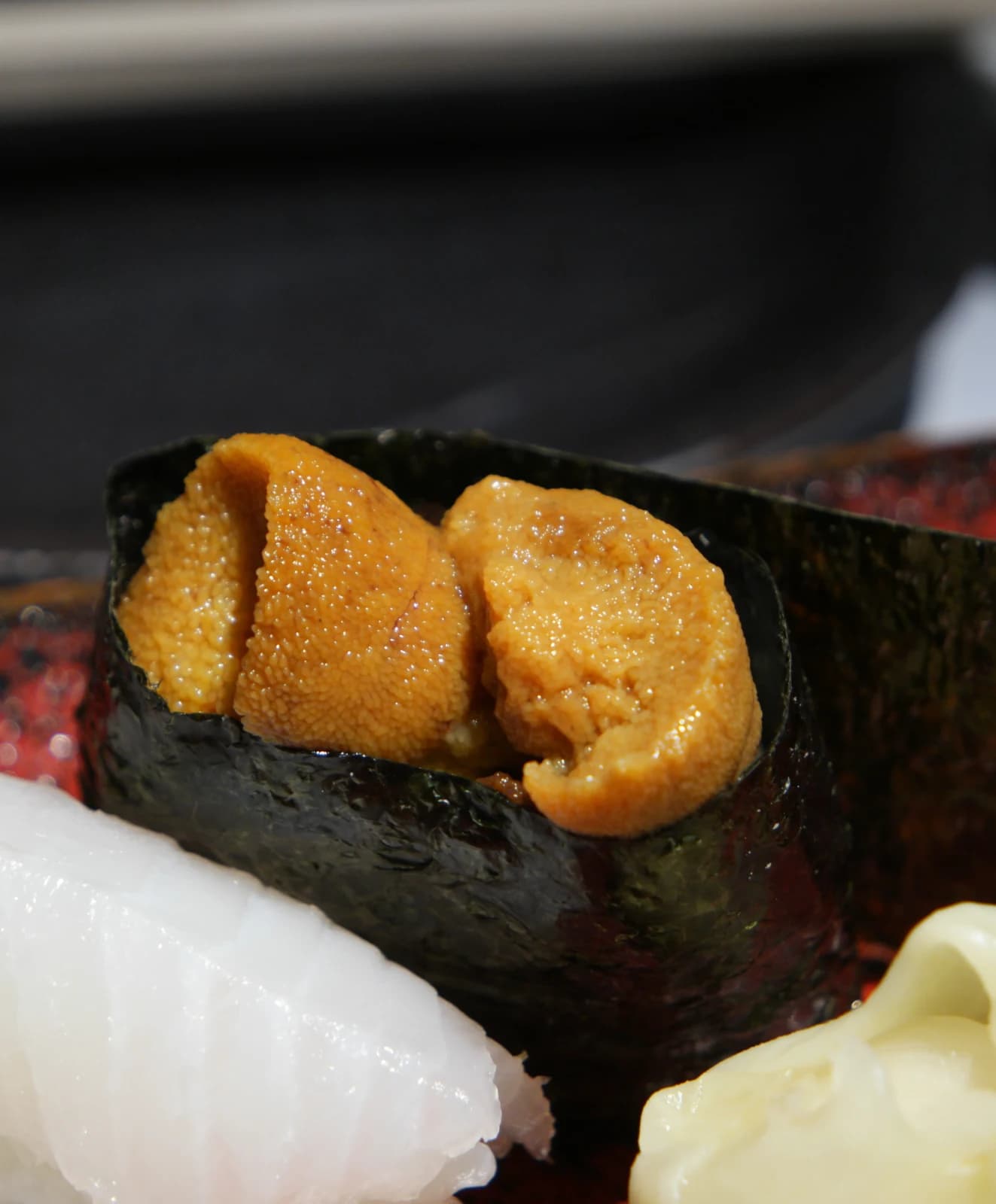
This was the sea urchin. Uni, in Japanese — bright orange, sitting on top of a battleship roll wrapped in nori. Just one piece. My friend can't stand the fishy smell of uni, so she didn't even glance at it, which meant it naturally slid over to my side of the table. Honestly, I had low expectations too. Whenever uni came up at sushi places in Korea, I always passed. But it was part of the course and felt rude to leave behind, so I closed my eyes and put the whole thing in my mouth — and there was no fishiness. None at all. Not the smell of the sea, but the sweetness of the sea, if that makes any sense. Creamy, melting on my tongue, with this faint sweetness that lingered after. That was the moment I thought, "Oh, this is what uni actually tastes like." I told my friend, "Seriously, no fishiness, just one bite," but she shook her head. I still regret it. Wish I could've shared that taste with her right then.
A Closer Look at Each Omakase Piece
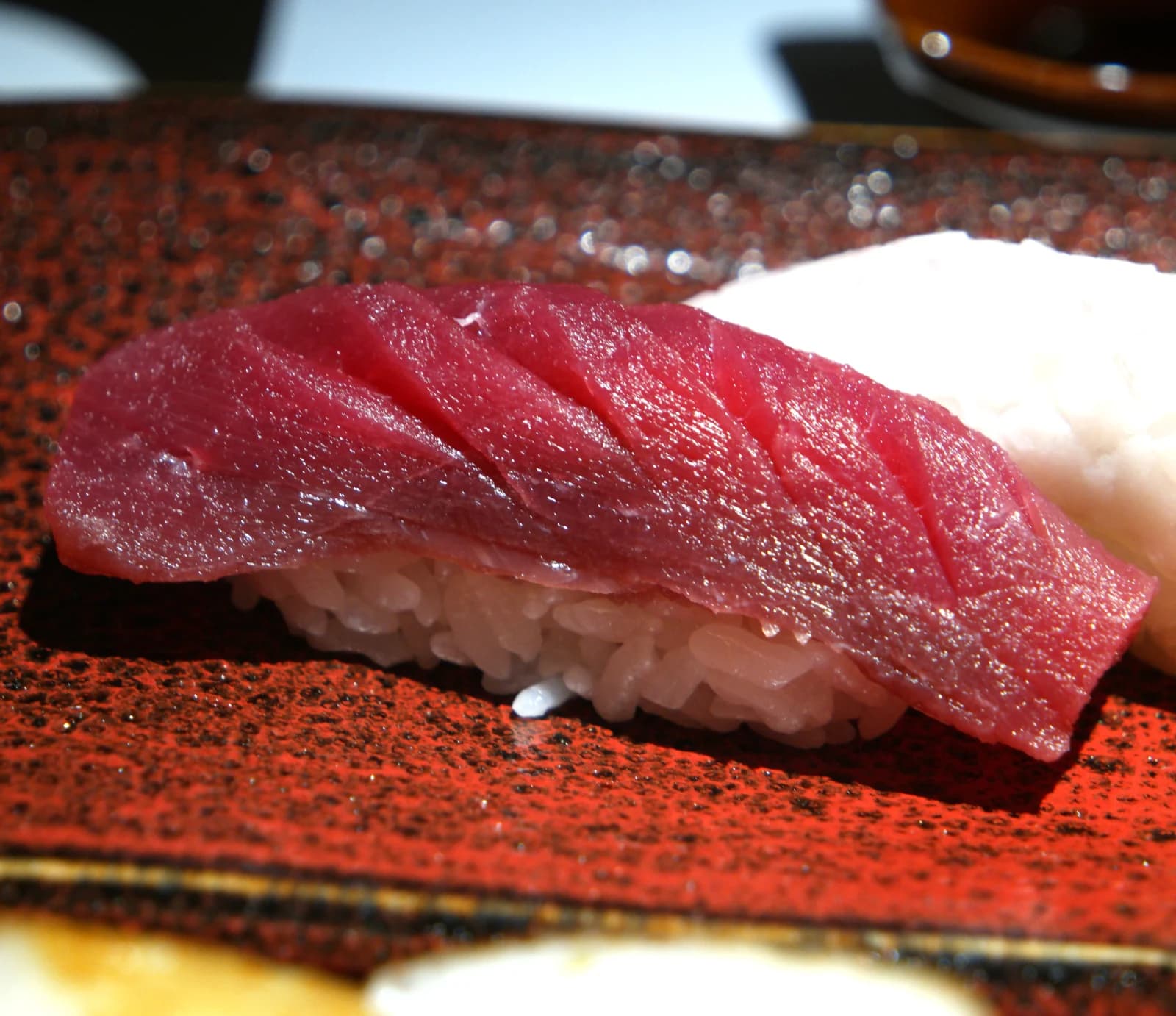
The tuna against the red plate had a striking color contrast. Deep ruby flesh with a glossy sheen, layered thick on top of the rice. "Bite" isn't even the right word — "melt" comes closer. Looked like a cut with just enough marbling running through, served at exactly the right temperature, neither cold nor warm. The rich savory flavor of the fish came through immediately.
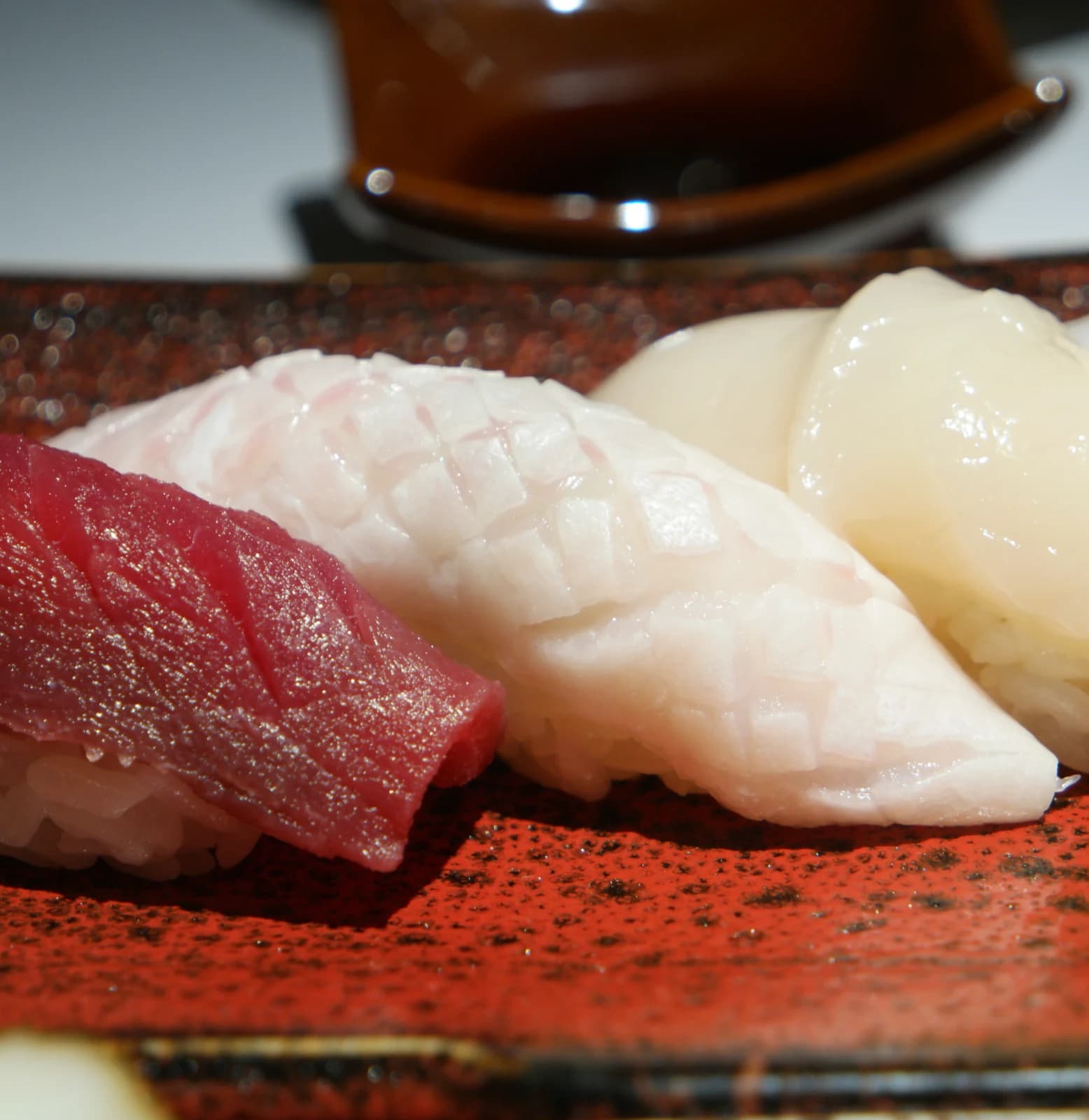
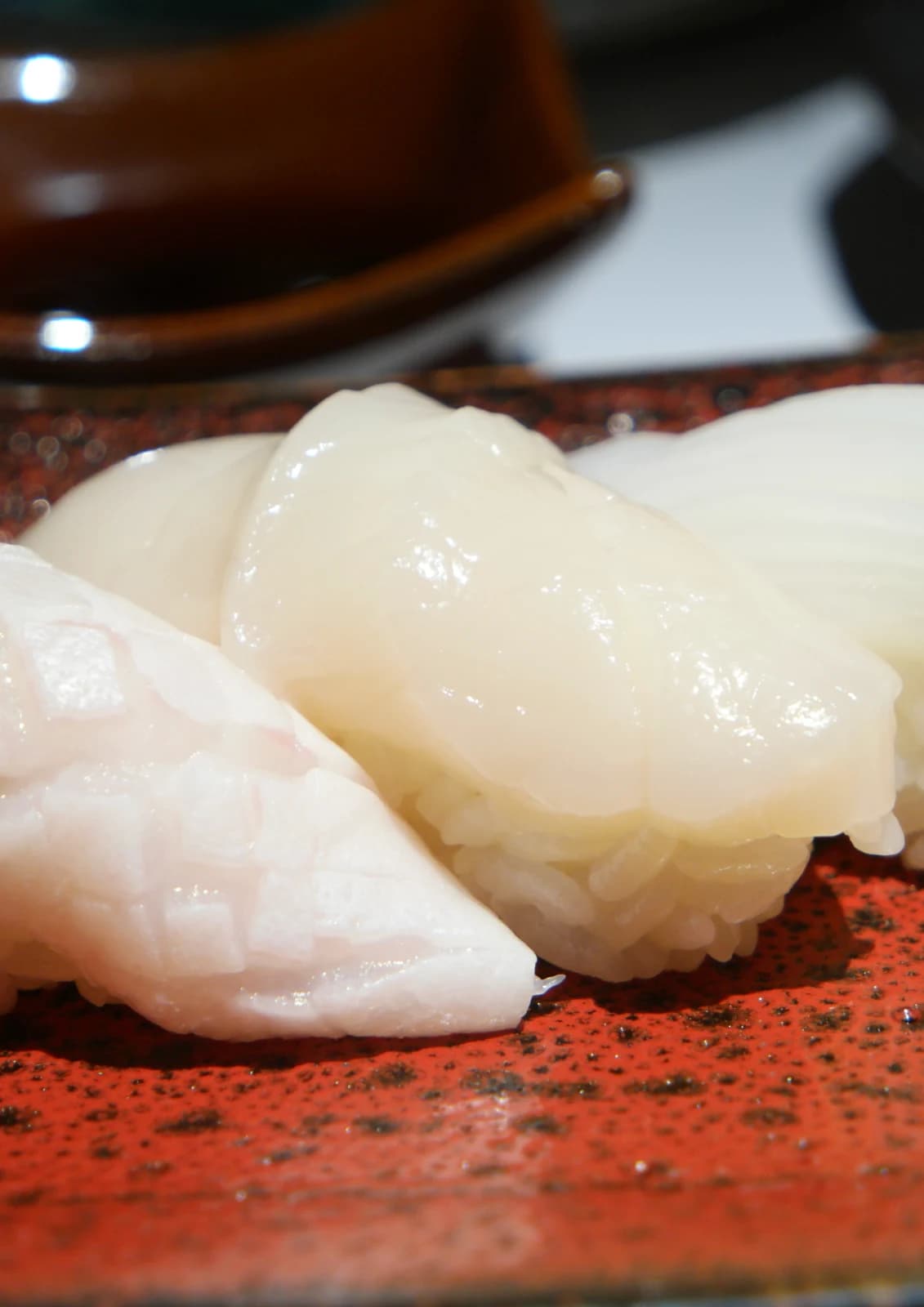
Next to it, the scored white piece was actually squid. The crosshatch cuts let the soy sauce soak in and also kept the texture from getting tough. Slight resilience when you bit into it, but soft enough that your teeth went through cleanly. Right beside it, the translucent white piece was scallop, smooth and glossy on top. One bite and the sweetness hit first, then a gentle wave of ocean flavor underneath. They both looked similar from that white tone, but the flavors went in completely opposite directions.
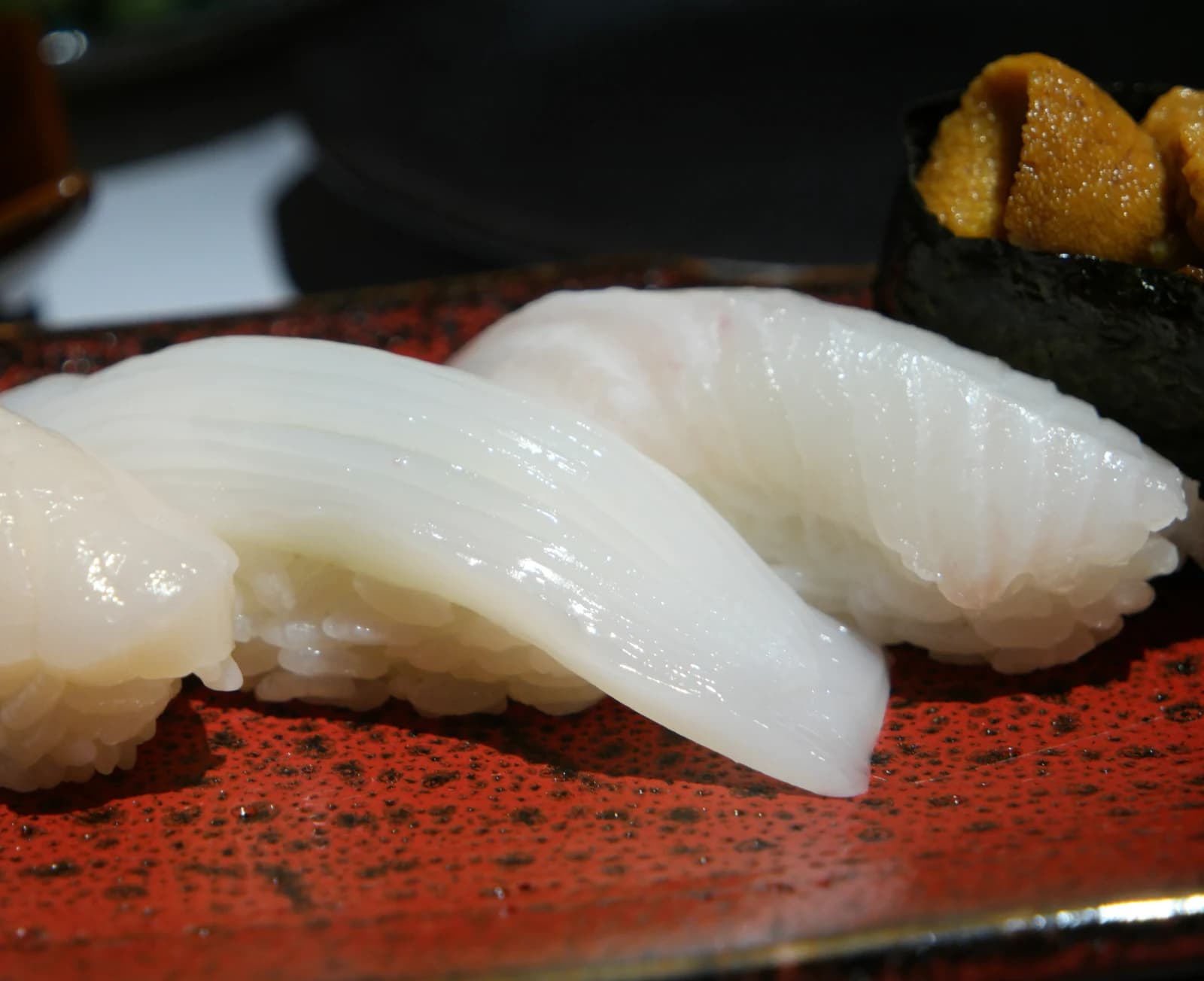
The last piece was thinly sliced squid laid down to follow the grain — no scoring this time. That chewy texture stuck around in my mouth for a while. Even my friend, who'd brought up the convenience store earlier, was quiet by this point.
The Avocado Roll I Underestimated
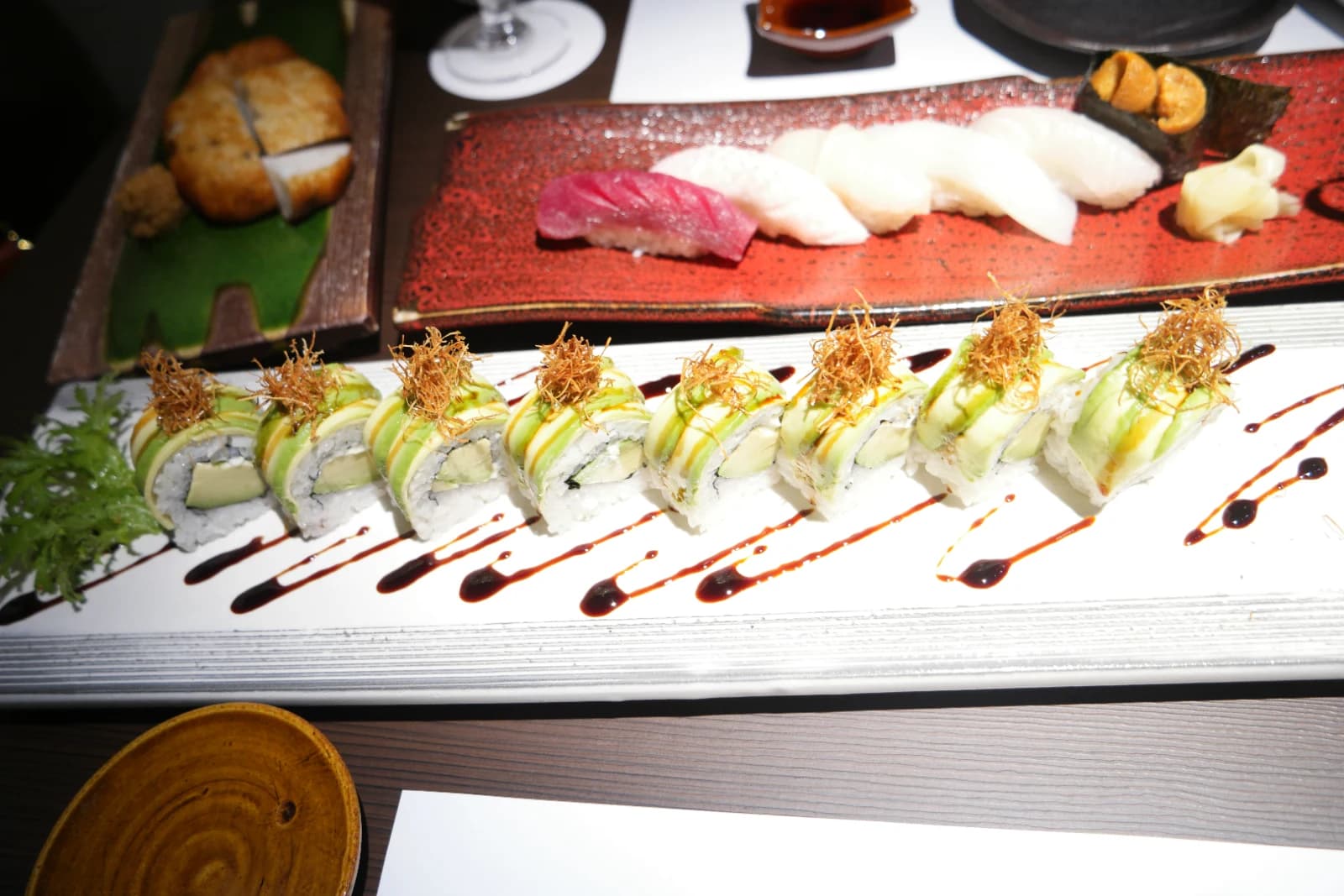
Next out was an avocado roll. Lined up neatly on a long plate, but honestly I had zero expectations going in. Avocado isn't really popular back in Korea. People are super divided on it, and I wasn't a fan myself at the time. My friend looked at the plate and went, "Avocado? Pass," and put her chopsticks down.
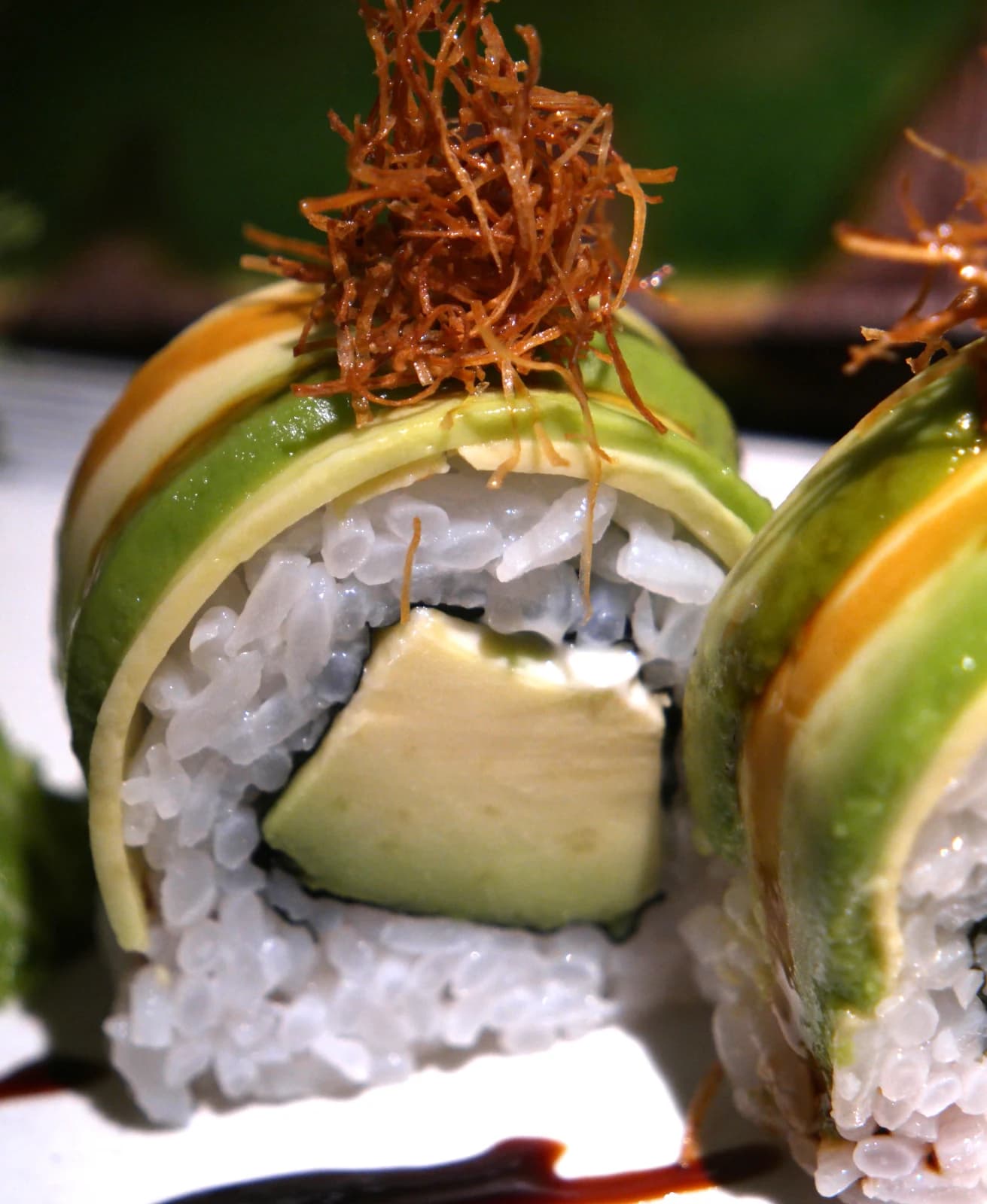
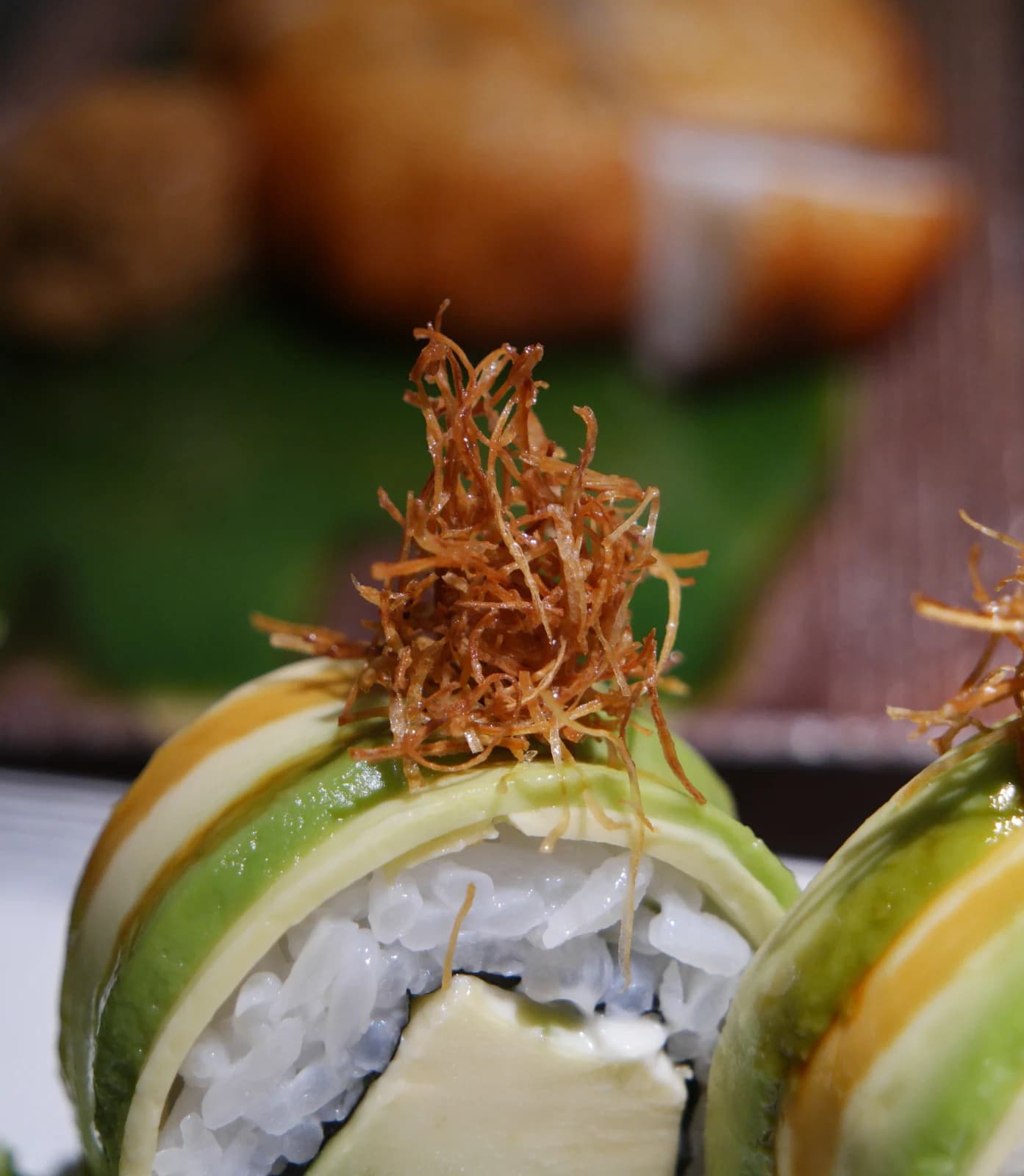
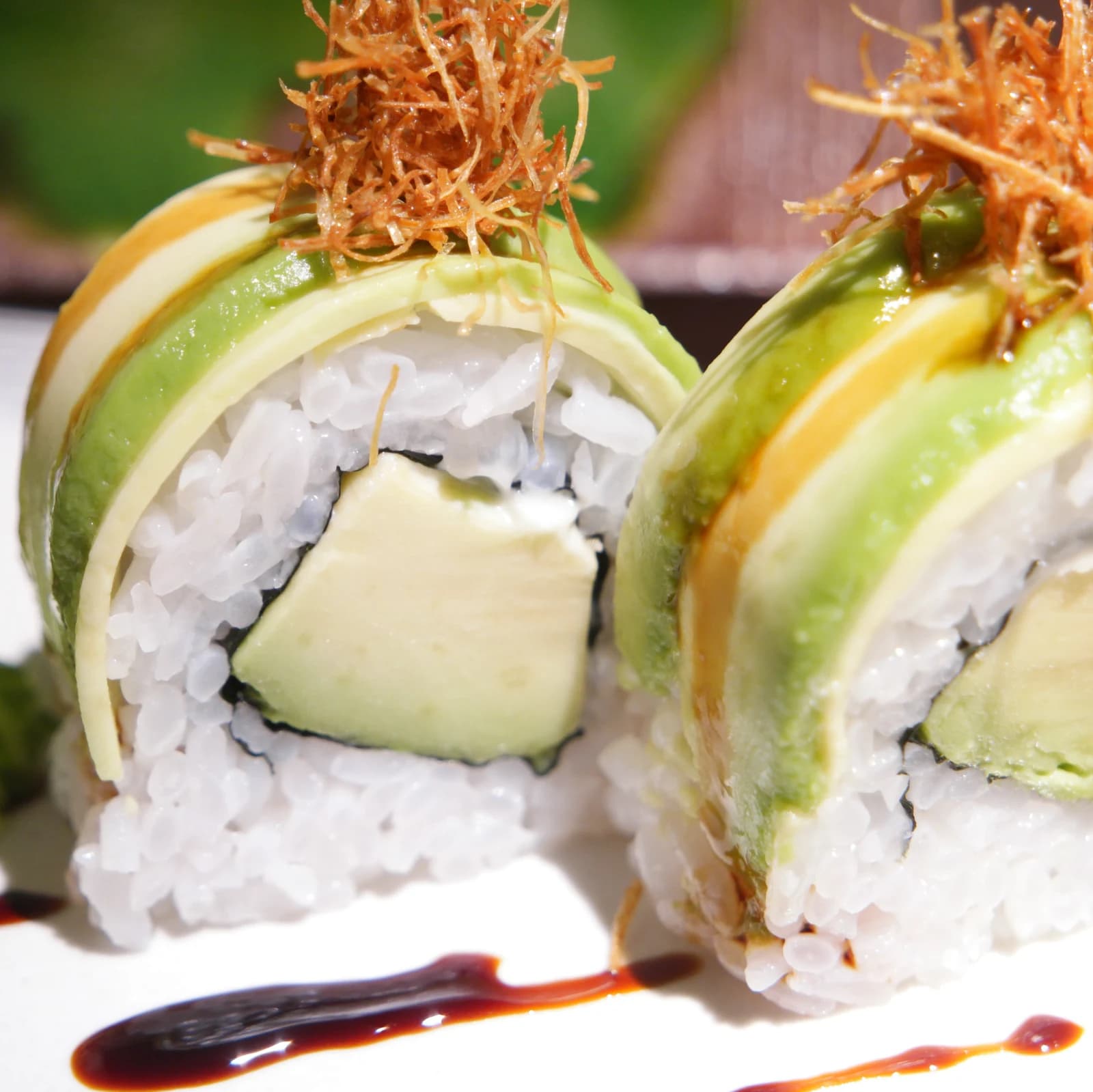
Up close, the quality was no joke. The avocado had been shaved paper-thin and layered slice by slice into this evenly graded green pattern. The crispy bits on top were uniform in size, the sauce zigzagged across in clean lines. Through the gaps in the rice you could see the seafood filling packed in tight, no empty space. The cross-section showed individual rice grains separate, not mashed together — and even though I'd come in skeptical, I had to admit the eyes were already won over.
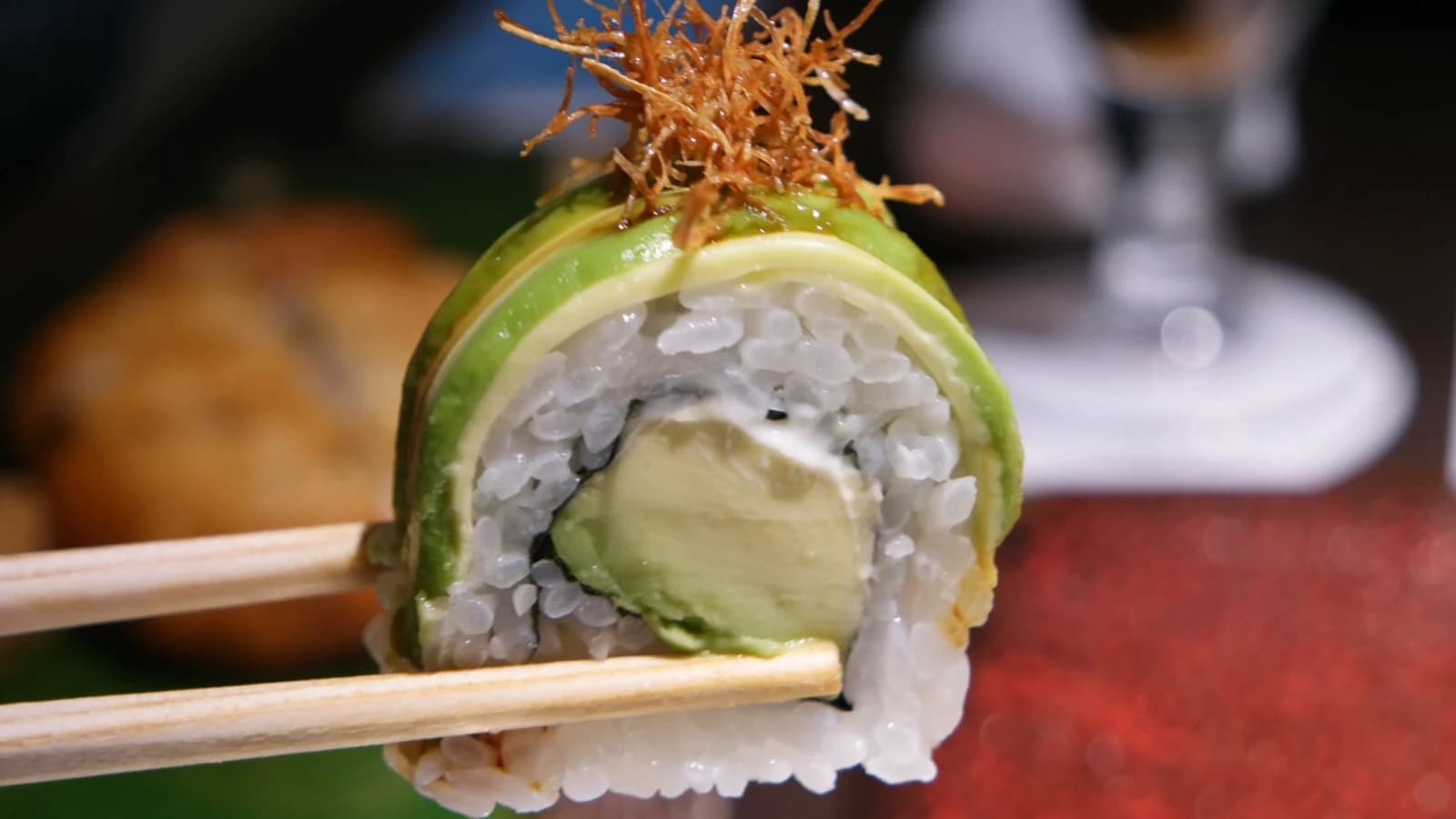
Picked one up with my chopsticks for this shot. The thin avocado layer wraps the outside, the rice grains stay tightly packed in the cross-section, and the whole thing holds its shape without falling apart. The crispy strands on top stayed put too. You could see the precision in whoever made it.
Like I said, avocado is divisive in Korea. So I went in with genuinely low expectations, but the moment it hit my mouth, I rethought everything. None of that bland avocado feel — instead it was creamy, with this rich, almost cheesy note. Chewing it together with the rice, the slight tang of vinegared rice cut through the richness perfectly. It honestly felt impossible that this was the same ingredient I'd had in Korea. Sushi in Japan being this different from what I knew — that's the lesson I learned in one bite.
Sushi on a Pair of Chopsticks
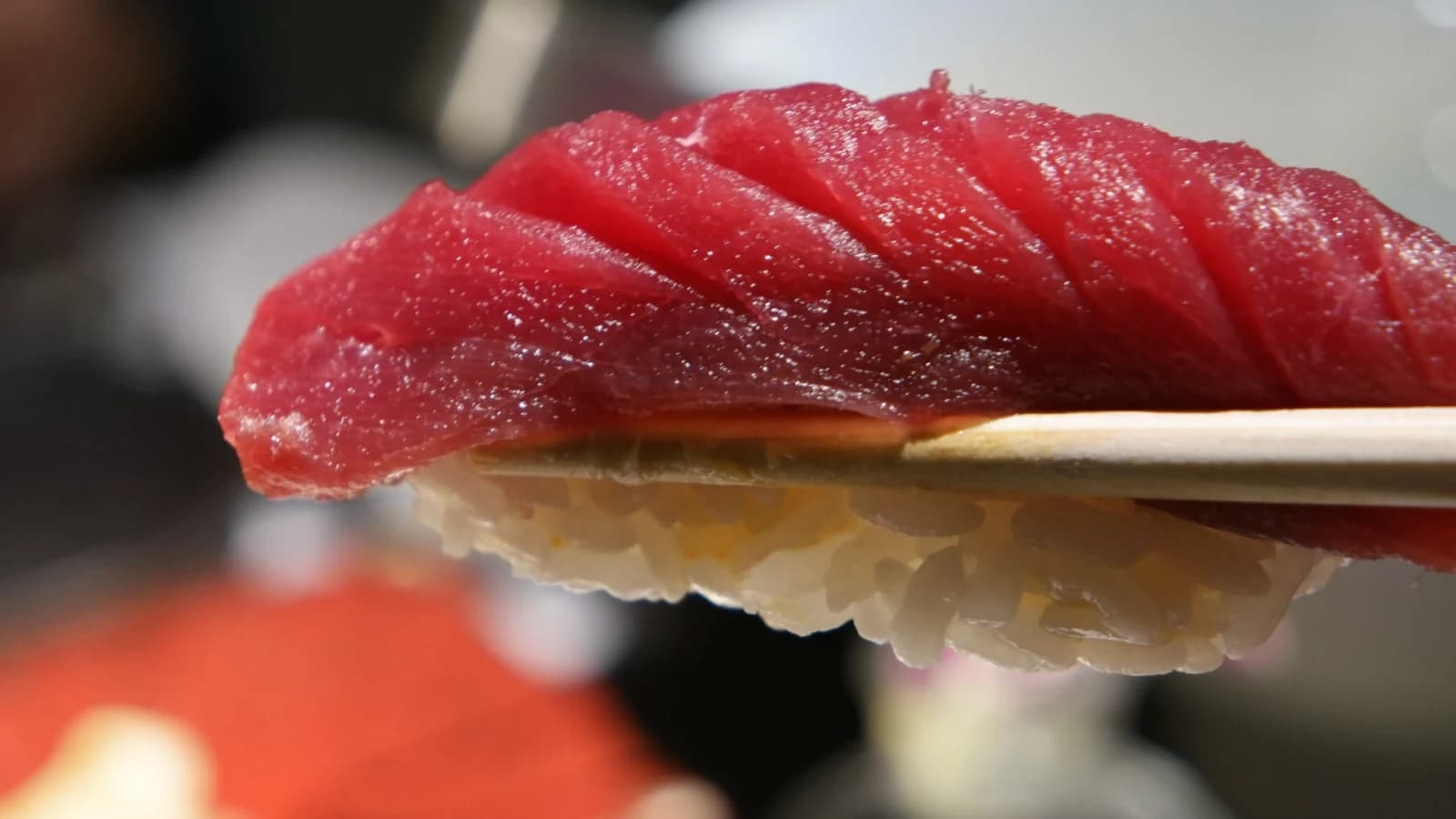
I lifted the tuna with my chopsticks and the color alone was on another level. A vivid ruby red with tight grain, the surface glossy enough to catch the light. Thick enough on top of the rice that you could barely see the rice underneath.
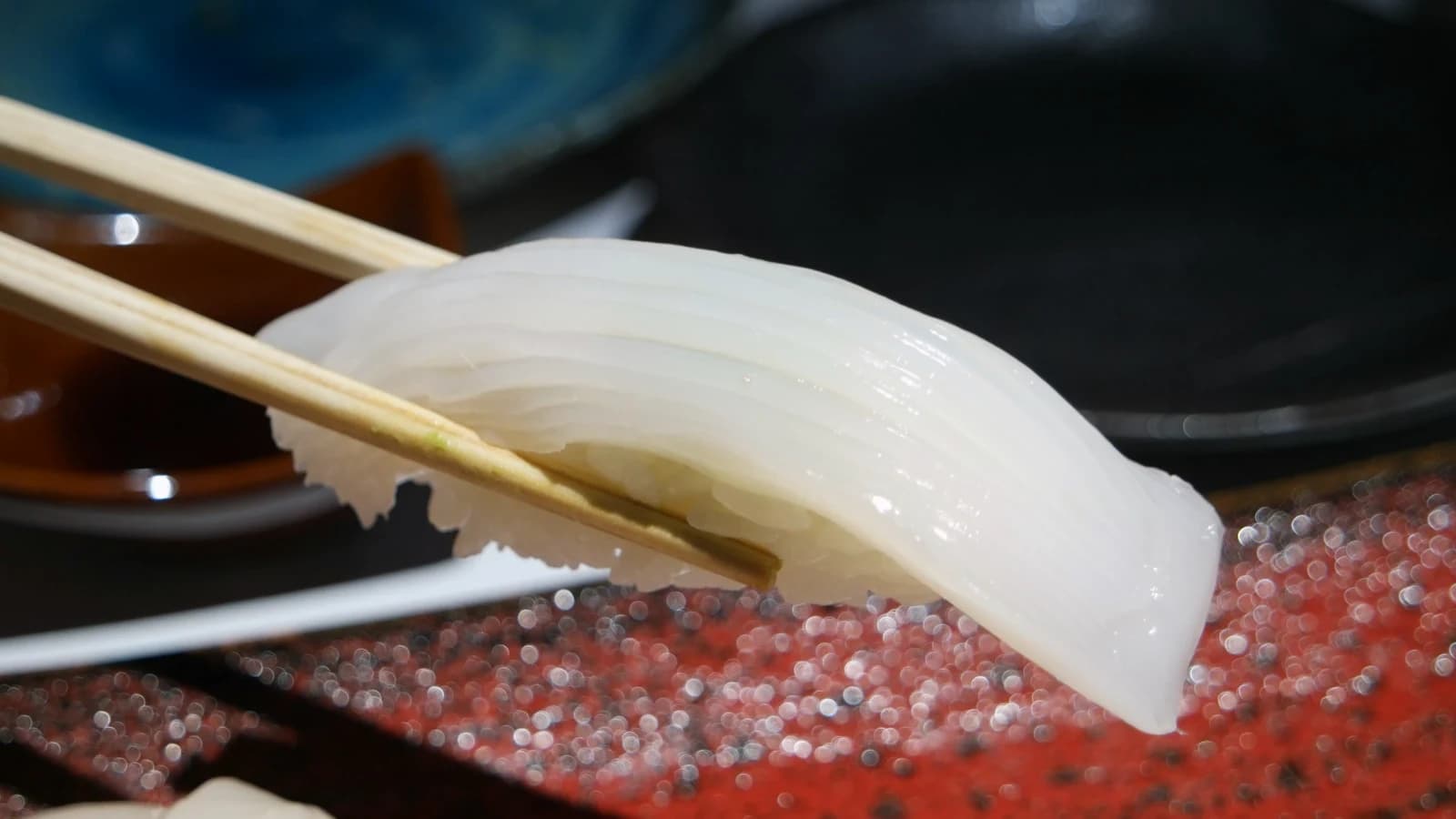
The squid stood out for that translucent white. Tight crosshatch scoring meant it bent slightly when I lifted it, without tearing. The smooth, glossy surface was the kind that tells you it's fresh just by looking.
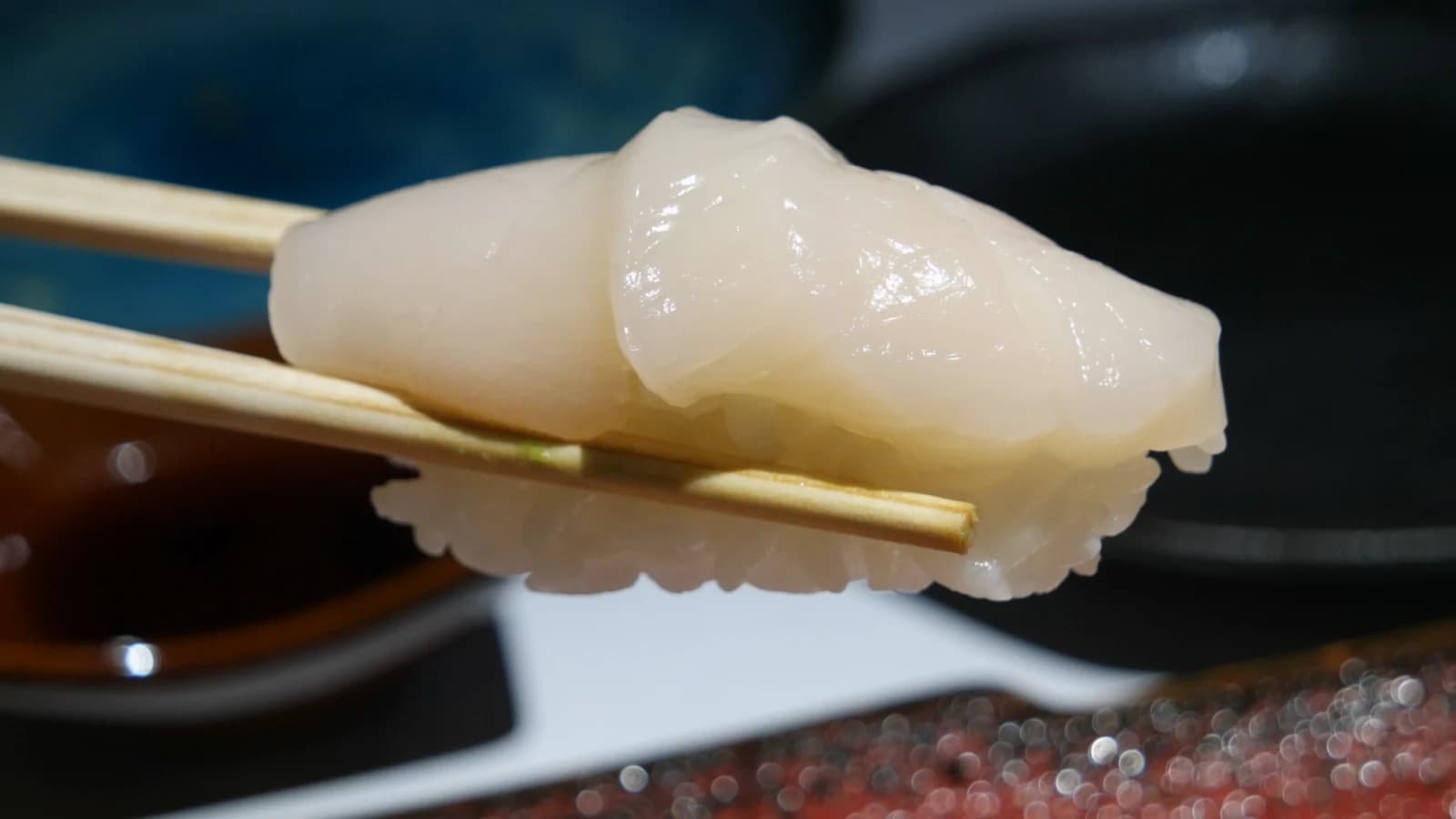
This one was the Hokkaido scallop. Plump enough that you could feel the weight on your chopsticks. Pearly white with a faint translucence catching the light — completely different texture from the scallops you'd see at a regular market or seafood spot.
Empty Plates and One Honest Complaint
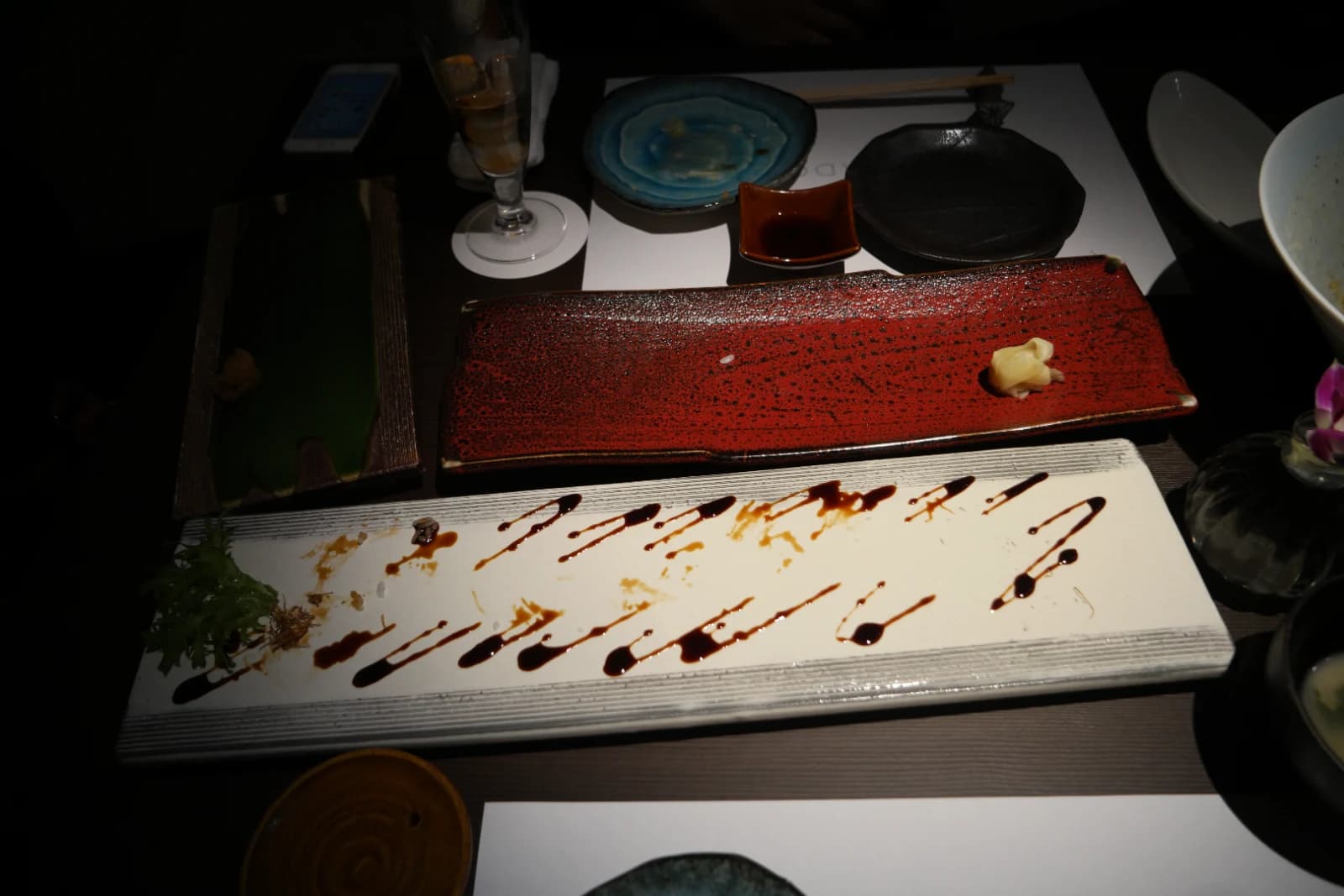
Wiped clean. One lonely piece of gari left on the red plate, and on the white plate just the zigzag sauce trails — almost looked like artwork. The green leaf plate was empty too, and even the soy sauce dish was spotless. The two of us finished every single thing without leaving a piece behind.
Honestly, I have nothing to complain about flavor-wise. From the agedashi tofu to the salad, the grilled fish cake, the omakase sushi, the avocado roll — not a single weak link in the chain. Every plate that came out, you could see the chef wasn't cutting corners. But there was one thing — the portions. By Korean standards, it was honestly not enough. The whole meal I was alternating between "wow" and "wait, already done?" as each plate emptied out.
Kurado: Current Prices and Hours
I don't remember the exact total from back then, but looking at Kurado's current pricing, the 6,000 yen course is six items, the 8,000 yen course is eight items, and the 11,000 yen course is eight or more items, with the five-piece omakase sushi available à la carte at 1,520 yen. Average dinner runs around 5,000 yen per person, so two of us with drinks probably came out to a little over 10,000 yen total. Factoring in the 2016 exchange rate, that was probably around $50–60 per person — comparable to a mid-range sushi dinner in any U.S. city today.
Searching for Obihiro restaurants online, this small place doesn't really come up easily, but I checked and Kurado is still operating at the same location. About a 12-minute walk from Obihiro Station, open Monday through Saturday from 5:30 PM to 10:00 PM, closed Sundays. Phone is 0155-66-5858.
Eight Years Later, the Taste That Stuck
We ended up grabbing two onigiri from a convenience store on the way back to our hotel that night. Tearing into them, my friend said, "I can't get that uni out of my head," and yeah, same. Korea has a ton of great sushi spots — places known for fresh fish and serious quality, no doubt comparable to Japan in many ways. But sushi in the country where it was born, handed to you piece by piece by someone who's spent a lifetime doing this, just hits differently. It's not that Korean sushi falls short. It's the craft built up over generations in the place that invented it. That's what I felt for the first time in this small restaurant. Lights off in our hotel room, my friend said in the dark, "Let's come back here for lunch tomorrow." We didn't actually make it, but eight years later, that line is still in my head.
Frequently Asked Questions
How far is Kurado from Obihiro Station?
About a 12-minute walk from the south exit of Obihiro Station. Just keep going straight along the main road, but watch for the sign because the place is tucked into a side street. By car it's around 3 minutes, and there's parking out front.
Do I need a reservation?
À la carte ordering is fine without a reservation, but if you want a course you'll need to book at least a day ahead. Saturday evenings fill up quickly even for non-course seating, so calling ahead is a smart move. Phone number is 0155-66-5858.
What are the hours and closing days?
Open Monday through Saturday from 5:30 PM to 10:00 PM, with last orders at 9:30 PM. Sundays are the regular closing day, and they sometimes close on irregular days too, so it's worth checking before you go.
What's the price range?
Average dinner runs around 5,000 yen per person (roughly $33). Courses are 6,000 yen for six items, 8,000 yen for eight items, and 11,000 yen for eight or more items. The five-piece omakase sushi is also available à la carte at 1,520 yen. With drinks, expect closer to 7,000–8,000 yen per person.
Is there an English menu?
No, only Japanese menus. But these days smartphone camera translation works really well — just point your phone at the menu and you'll get a usable translation instantly. Back in 2016 we translated character by character because the apps were rough, but you won't need to do that now.
Can I bring kids?
There are 48 seats and a private room available, so families should be fine. That said, the vibe is more dinner-focused izakaya than family restaurant, so it's probably better suited to elementary-age kids and up rather than really young children.
Do they accept credit cards?
Yes, most major credit cards are accepted. You don't need to bring cash to settle the bill.