How to Eat Sundaegukbap — Pork Bone Broth Soup Done Right
Table of Contents
13 items
Walking into a neighbourhood pork soup joint after a night shift
Sundaegukbap is a Korean pork bone broth soup served with rice, blood sausage, and offal — one of the country's most beloved hangover cure meals. It arrives almost completely unseasoned, and you build the flavour yourself at the table using fermented shrimp paste, chilli seasoning, chives, and salt. I walked into a local spot in Daejeon, a major city about 1.5 hours south of Seoul, one April morning after finishing a night shift, and this is exactly how I ate it.
It was early morning and my wife and I were walking home after I'd knocked off from an overnight shift. We were cutting through the back streets of Daejeon when this incredible smell hit us — somebody was already boiling up pork broth. It was April but the morning air still had a proper bite to it, my stomach was completely empty, and honestly, nothing else was going to fix me except a hot bowl of soup. There's this whole culture in Korea of eating a steaming bowl of soup first thing in the morning, the way we might grab a bacon and egg roll. Sundaegukbap. Every Korean knows it. It's the go-to hangover cure, it's dead easy to eat solo, and you'll find a sign for it tucked away in some back alley in literally every neighbourhood across the country. I said to my wife, "Let's duck in there," and she looked at the sign and went, "You know I can't eat sundae." "They've got pork soup too." That one line was enough. In we went. We didn't plan it — just spotted it while walking and rocked up.
One sundaegukbap, one dwaeji-gukbap (plain pork soup). A$9 each, so A$18 for both of us. For a Korean pork soup place, that price gets you a properly filling brekkie. It was so early that we were the only ones in there.
My wife's not Korean but she's been living here with me, and she's come around to loving soup-and-rice meals in general. Sundae, though — that's still a hard no. The blood sausage has coagulated pig's blood inside it and she just can't get past that. So whenever we hit a soup joint, she always orders dwaeji-gukbap, which is the same broth but with sliced boiled pork instead of blood sausage. Heaps of Koreans can't stomach sundae either, so it's not a foreigner thing — it's just a personal thing.
Sundaegukbap
After a night shift, nursing a hangover, eating solo on a cold day — the moments Koreans head to a soup joint
🫀 Heads up — it's divisive
It contains pork offal and blood sausage made with coagulated pig's blood, so it can be confronting the first time. Even some Koreans won't touch it.
🍚 Solo-friendly
One bowl is a complete meal. Eating alone here is totally normal — Korean soup joints are actually built for solo diners. No weird looks, guaranteed.
💰 Price range
A$9–A$12. The one we had today was A$9. Roughly the price of a pub parmi back home, but for a full hot meal with sides.
Not keen on blood sausage?
You can order dwaeji-gukbap at the same restaurant. Same broth, same price — but with sliced boiled pork instead of sundae. My wife orders this every single time.
We only ordered one bowl each but the whole table was covered
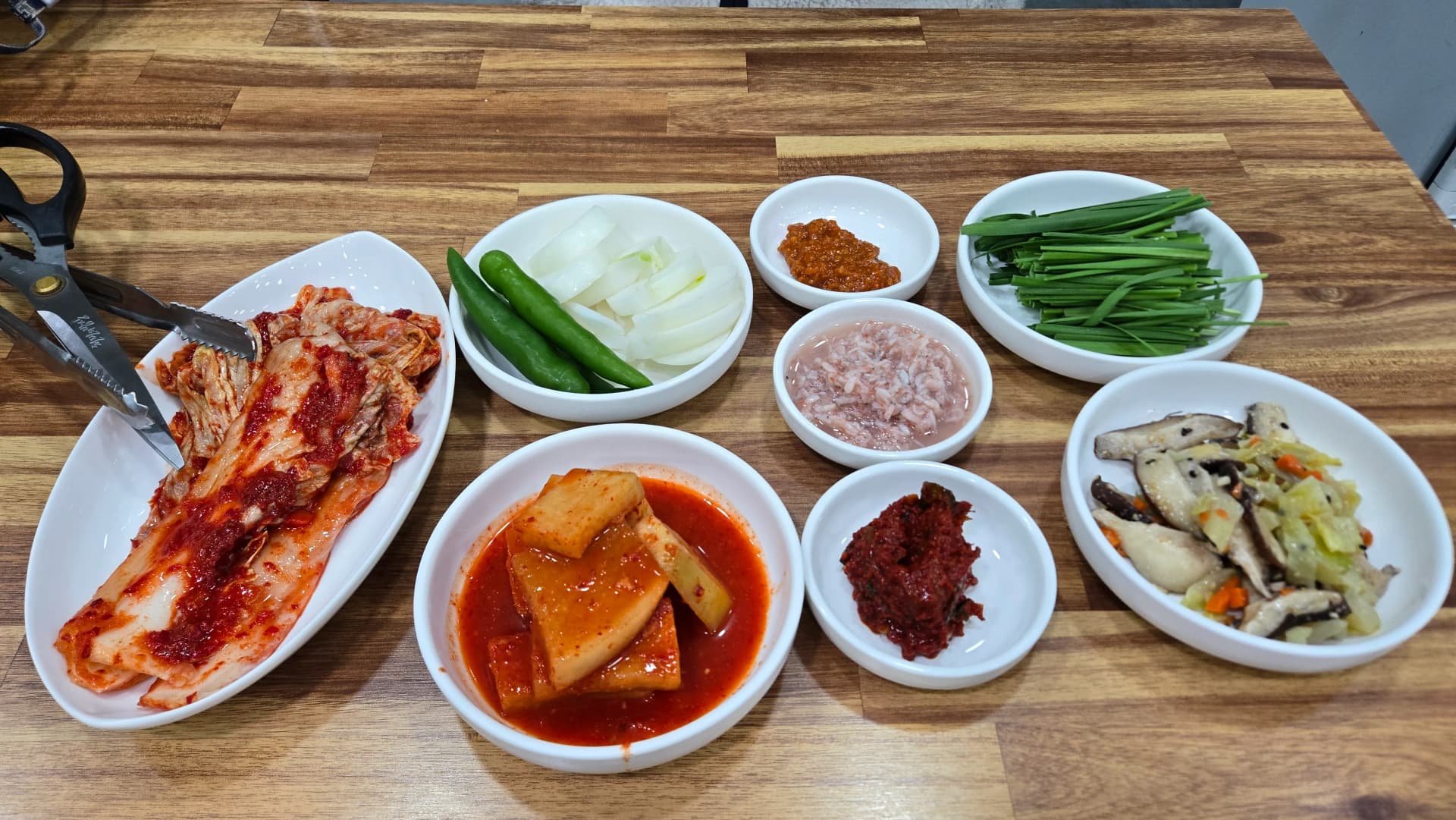
One sundaegukbap, one dwaeji-gukbap — that's all we ordered, and there wasn't a spare centimetre of space on the table. When my wife first ate at a Korean restaurant, she saw all this food arrive and went, "Did we order all of this?" Nah, this is just how Korea rolls. You order one main and the side dishes come out automatically. No extra charge, and if you run out, you literally just say "more please" and they bring it straight over.
You cut the kimchi with scissors
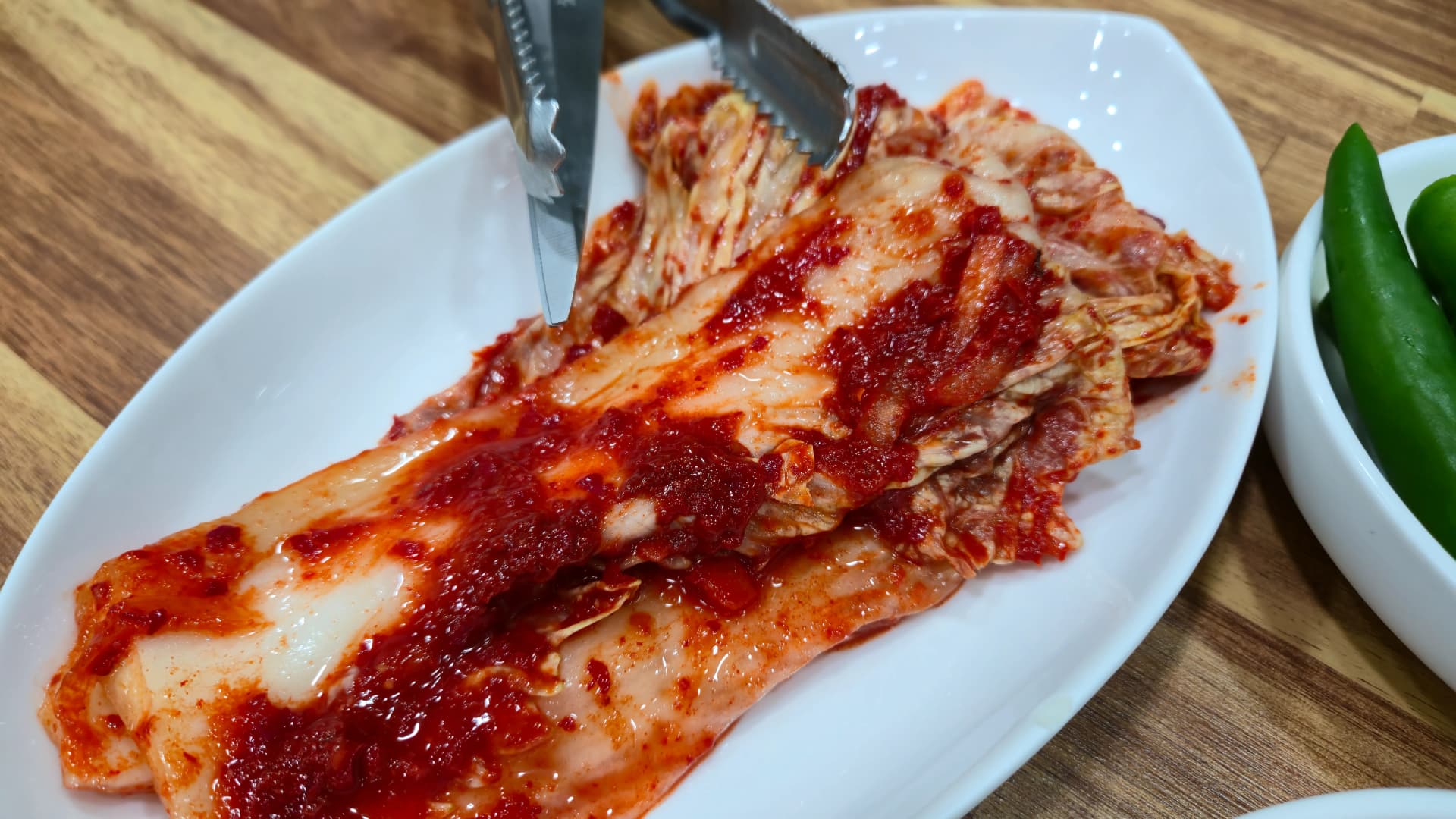
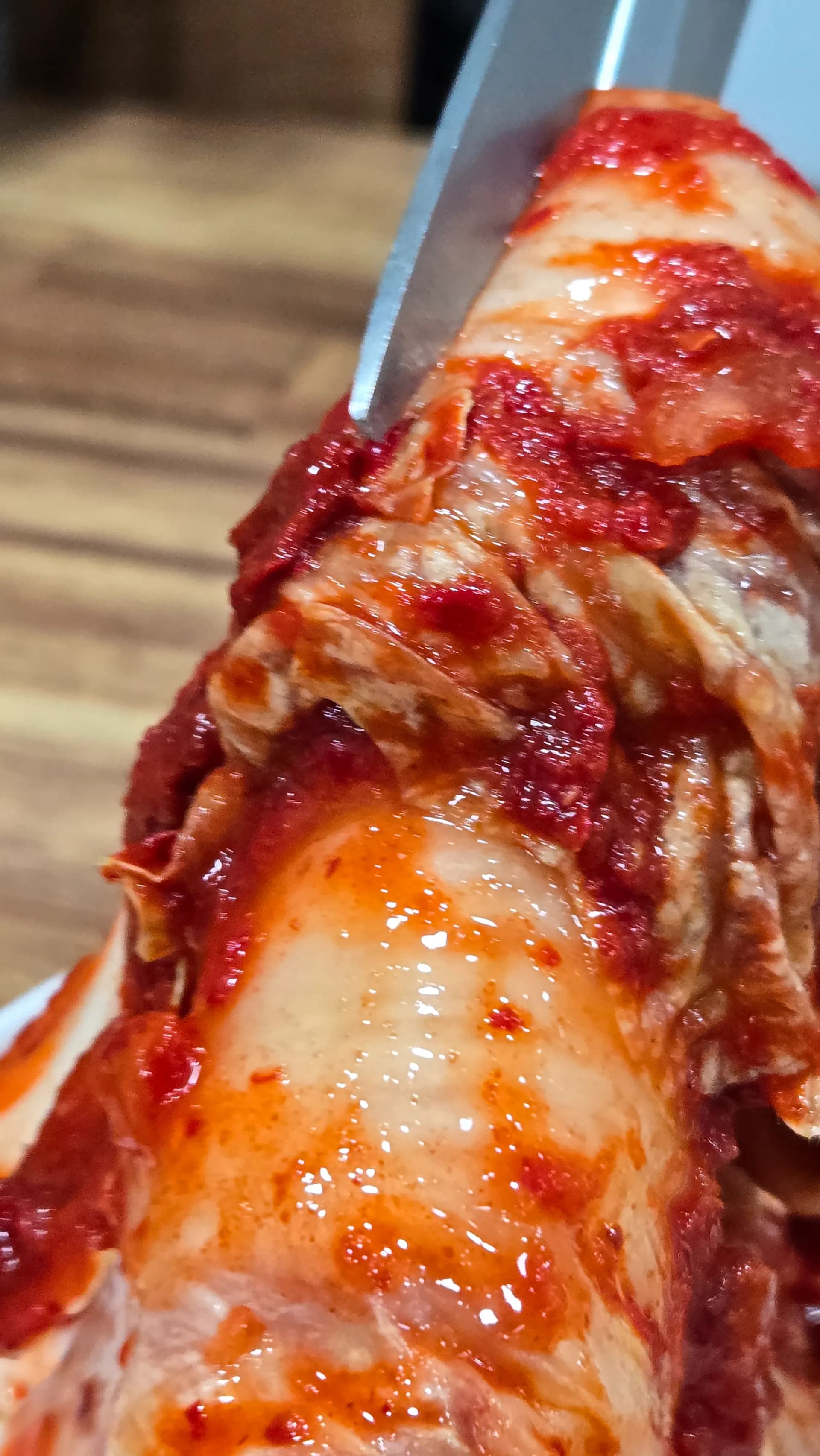
The kimchi came out as whole leaves. Don't try to shove an entire piece in your mouth — that's not going to work. Korean restaurants always have scissors on the table, and you just snip it into bite-sized bits. Yeah, using scissors on food is a proper Korean thing. It might seem odd at first, but it's completely normal here. My wife just stood there holding the scissors looking confused the first time. Now she grabs them before I do.
Kkakdugi, cheongyang chilli, and the side dishes
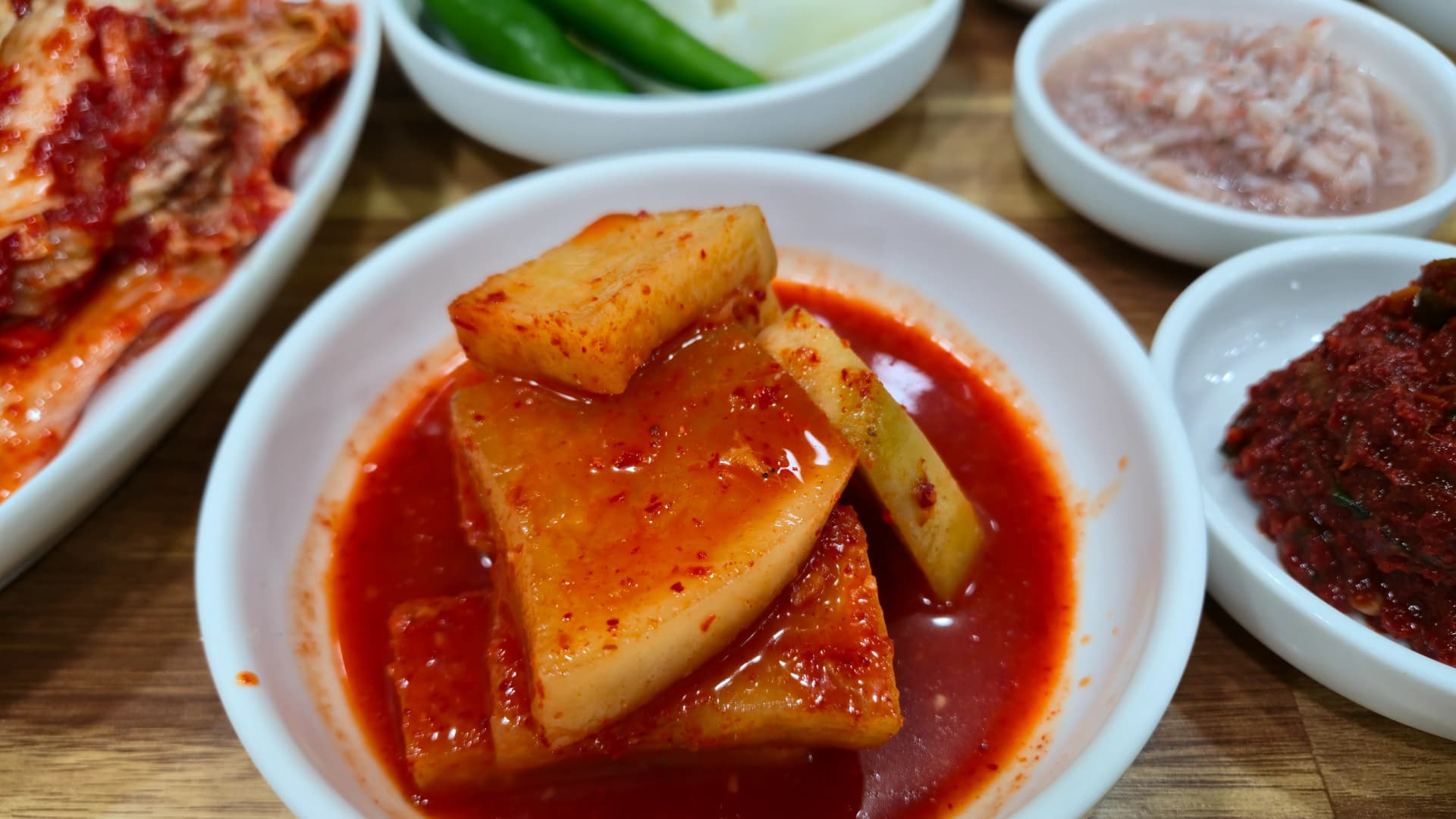
Kkakdugi. It's kimchi made from radish cut into cubes, and it's got a really satisfying crunch. My routine is a few spoonfuls of broth, then grab a piece of kkakdugi, then back to the broth, then kkakdugi again. You keep alternating like that so you don't get palate fatigue all the way through the bowl.
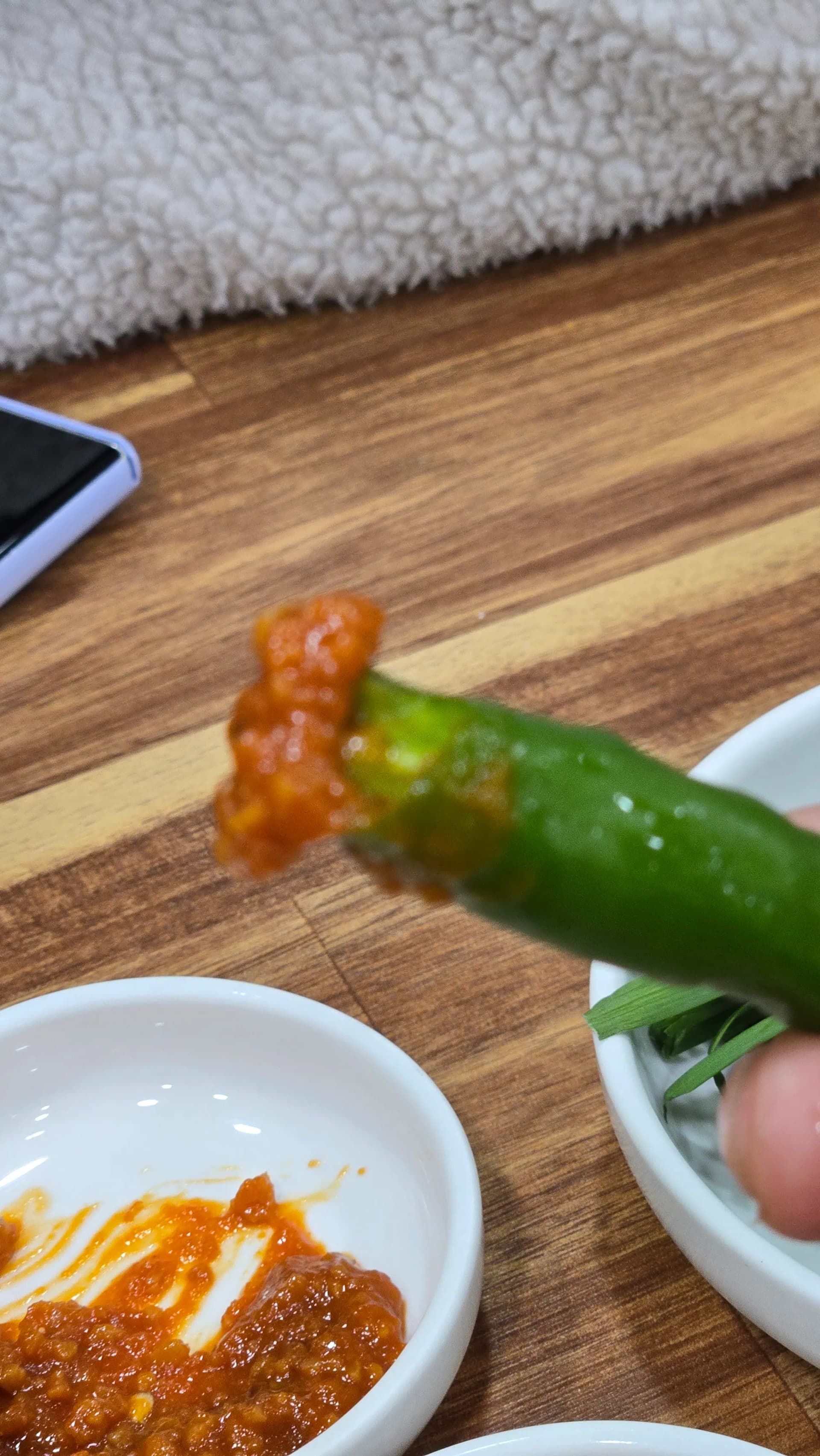
Cheongyang chilli. You dip it in ssamjang (a thick fermented paste) and take a bite. These are properly hot as far as Korean chillies go. My wife once bit into a whole one without thinking and ended up skulling three glasses of water. If it's your first time, just nibble the very tip to suss out the heat level before committing.
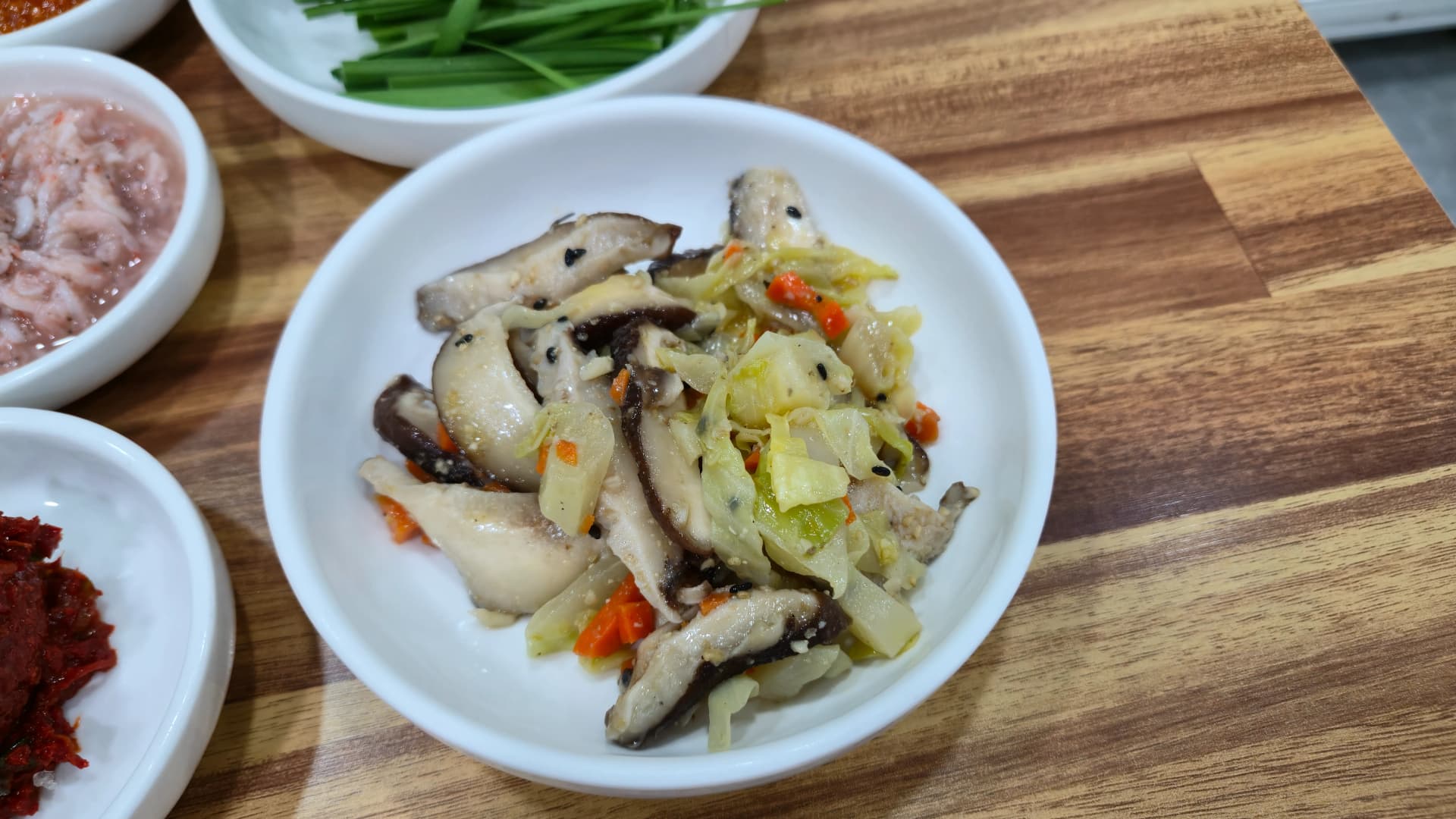
The side dishes change from restaurant to restaurant. This place gave us sauteed mushrooms, but somewhere else might give you spinach or bean sprouts. Kimchi and kkakdugi are guaranteed no matter where you go in the country — everything else is just whatever the kitchen's got that day.
The broth and what's hiding inside sundaegukbap
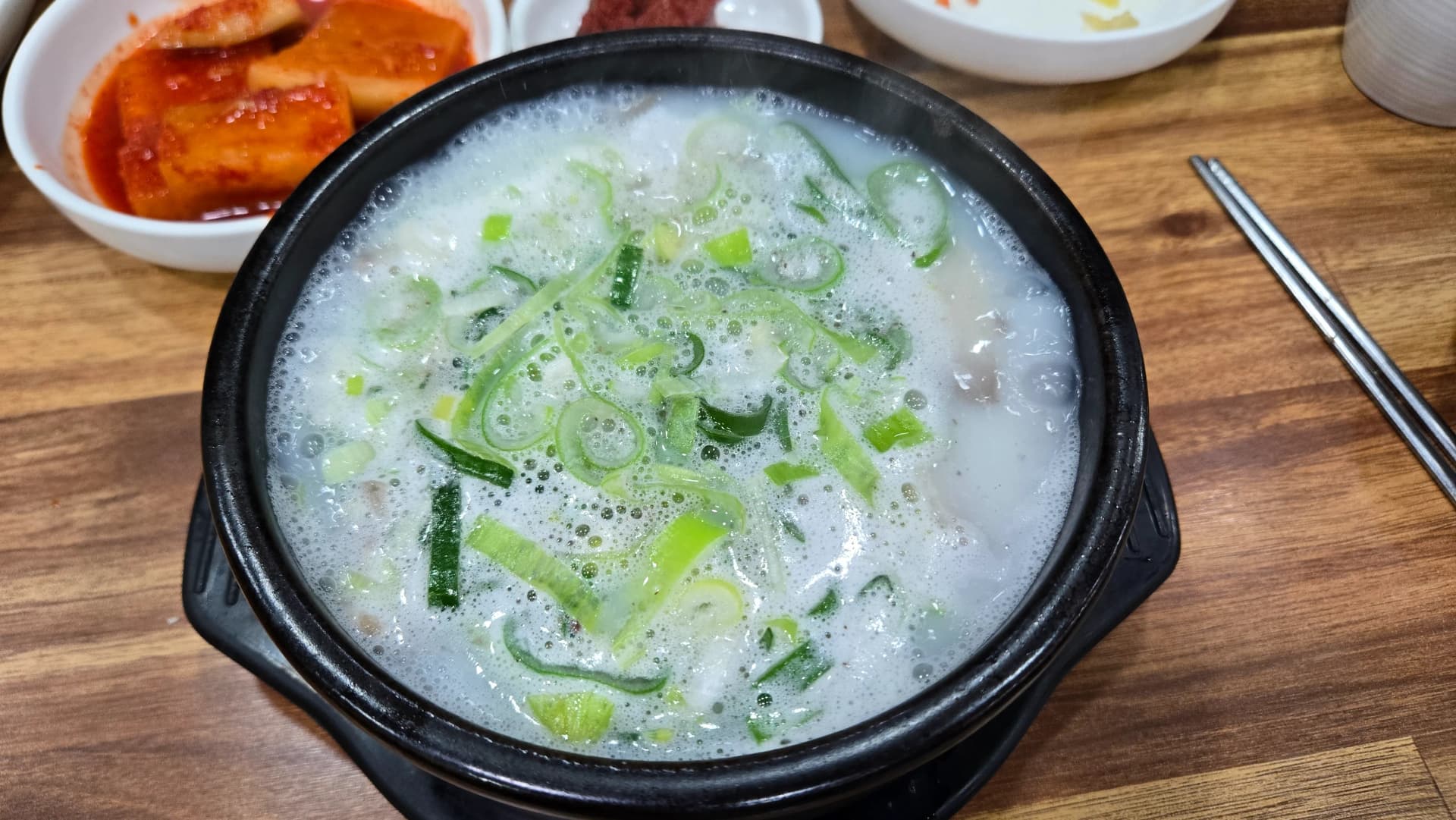
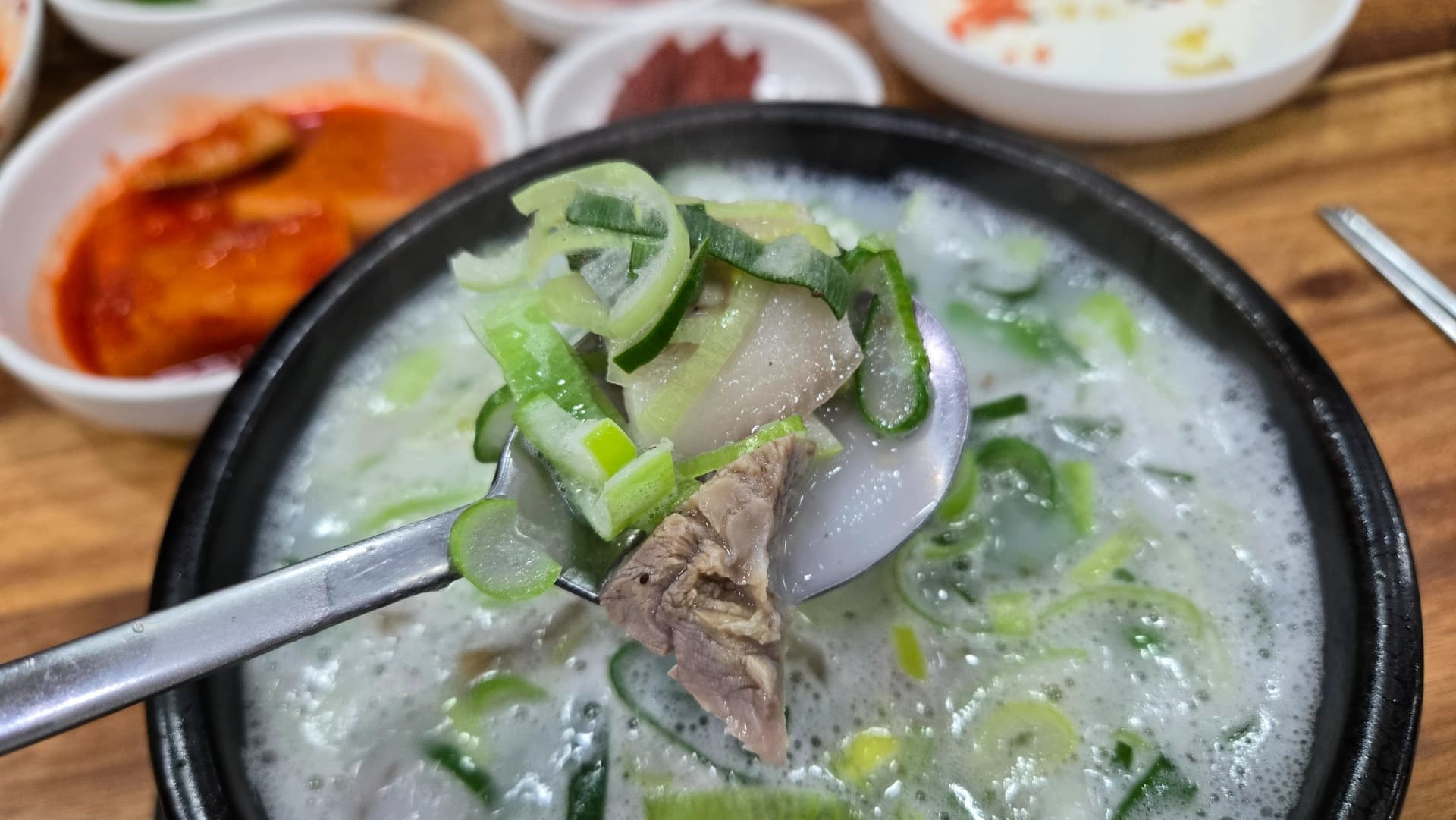
The broth is completely white. It gets that colour from simmering pork bones for hours — some places boil them for over 8 hours to get that thick, milky look. At first glance it looks bland. Give it one stir with your spoon and up comes the sundae, sliced pork, and offal from underneath. My wife peered into my bowl and shook her head — "I could never eat that." Fair enough. Her dwaeji-gukbap doesn't have any of that in it.
Boiled pork slices — the star of dwaeji-gukbap
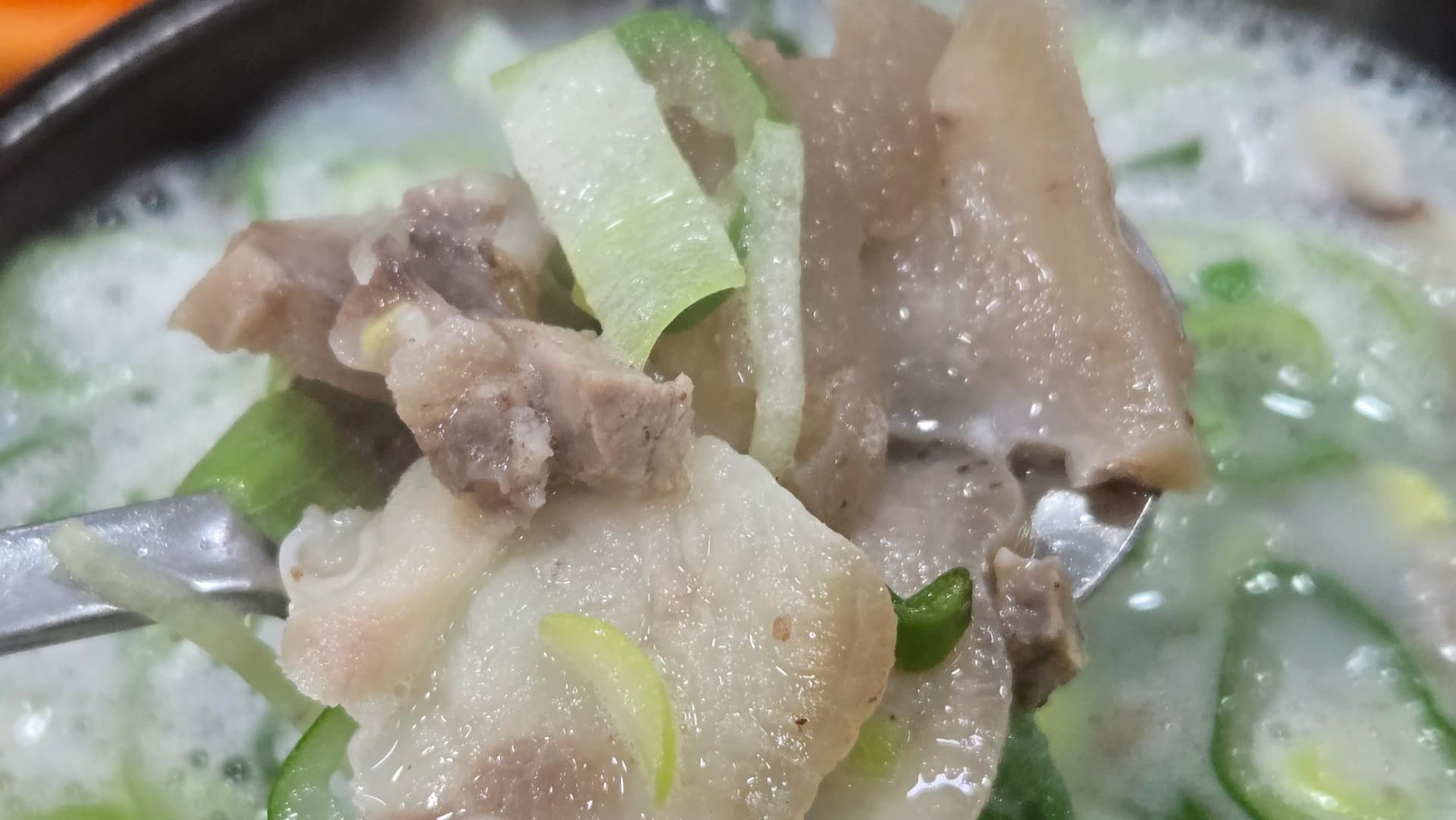
This is the boiled pork. The piece that came up had the skin still attached, and instead of being mushy it had a nice chewy bite to it. Because it's been slow-cooked in the broth, there's no gamey smell at all. My wife was happily eating this bit. If you order dwaeji-gukbap, you mostly get these pork slices, so if offal isn't your thing, that's the one to go for.
Sundae — confronting at first, but hear me out
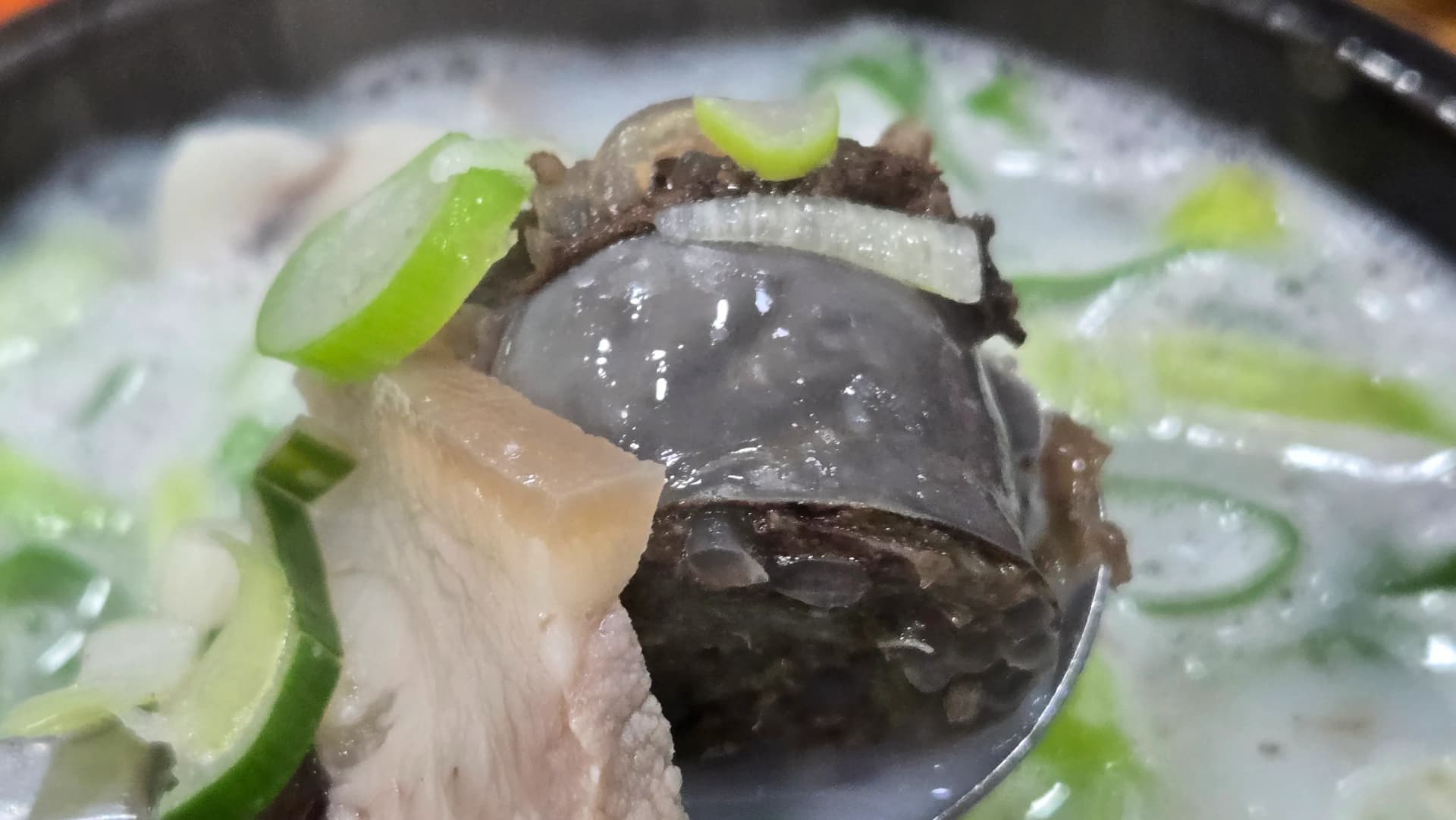
This is sundae. It's pork intestine casing stuffed with glass noodles and coagulated pig's blood, which is why it looks so dark. Think of it like black pudding from a British brekkie, but softer and with noodles inside. I asked my wife, "Just try one piece?" She picked it up with her chopsticks, stared at it for ages, then put it back down. "Maybe next time..." she said, but her face told me next time wasn't happening. The flavour itself is actually quite mild. Some people reckon it's too bland on its own, which is exactly why you dip it in the seasoning paste or let it soak in the broth.
How to eat sundaegukbap — you season it yourself
Sundaegukbap is served with virtually no seasoning in the broth. If you eat it as-is, it'll taste flat and you'll wonder what all the fuss is about. The whole point is that you build the flavour yourself using the condiments on the table — fermented shrimp paste, chilli seasoning, salt, perilla powder, and chives.
Adding kkakdugi liquid
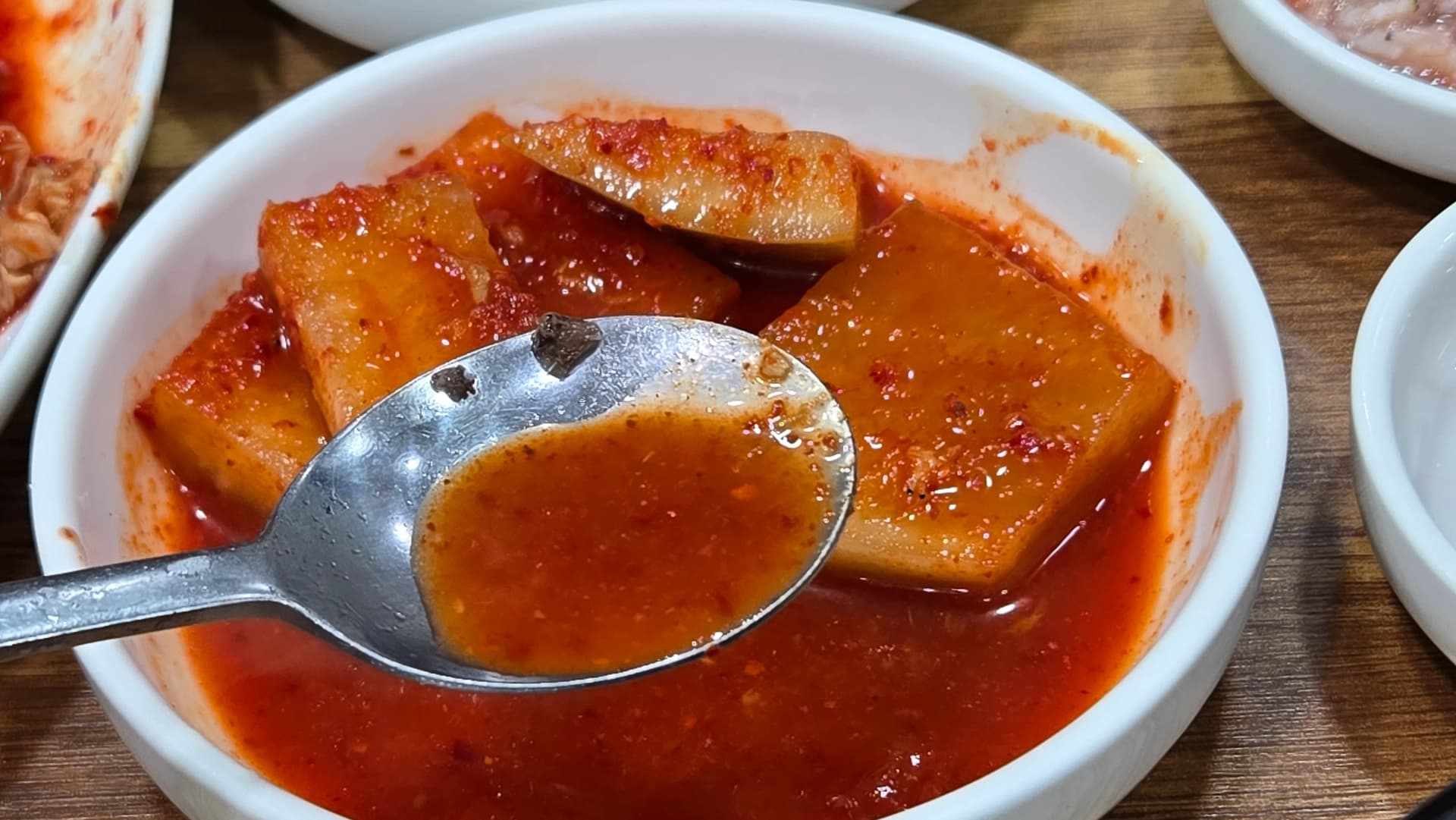
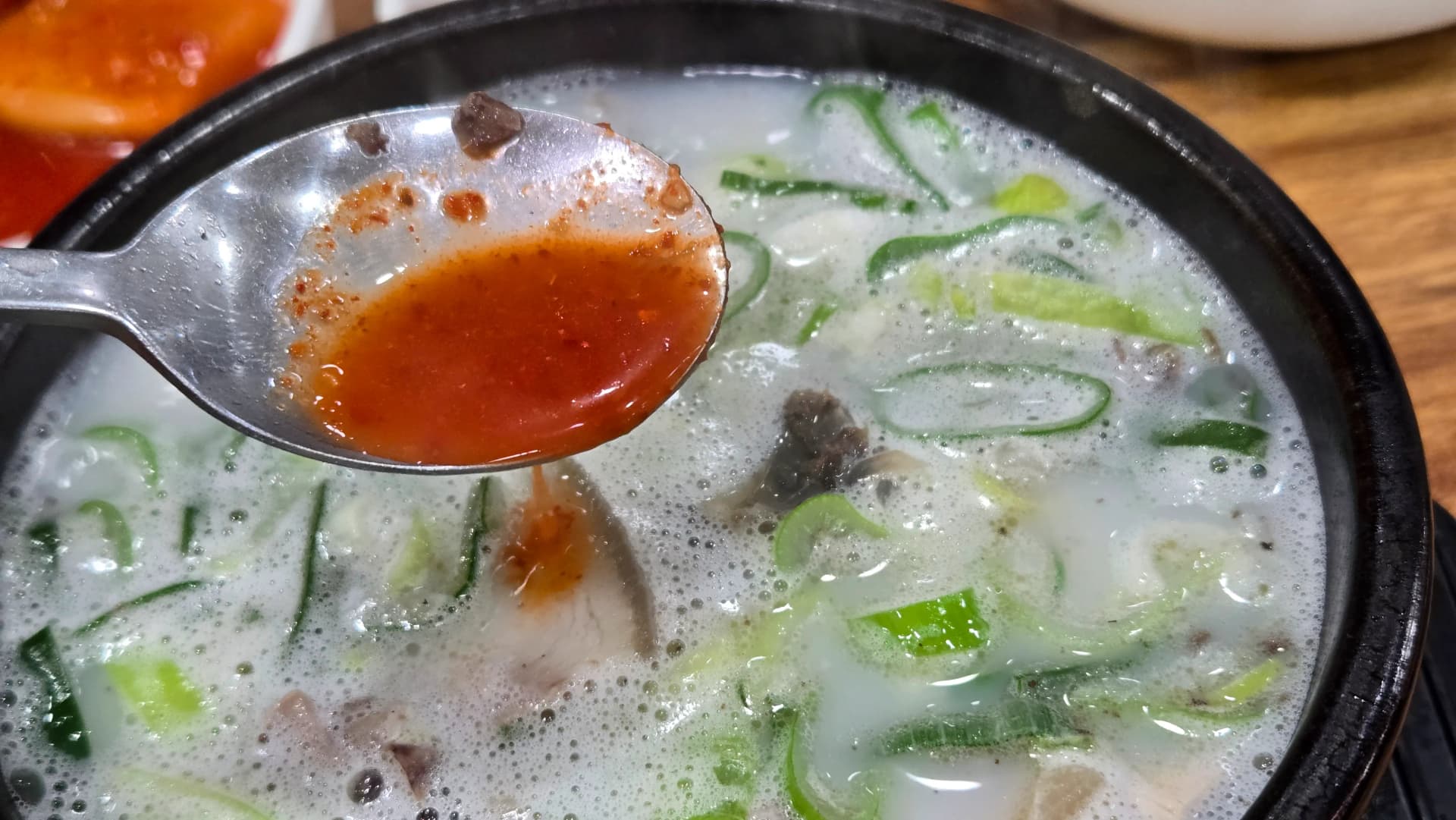
Some people spoon the liquid from the kkakdugi container straight into their sundaegukbap. I don't normally do this myself, but the kkakdugi juice has this tangy, slightly sharp flavour that does change the white broth when it mixes in.
Seasoning with yangnyeomjang and fermented shrimp paste
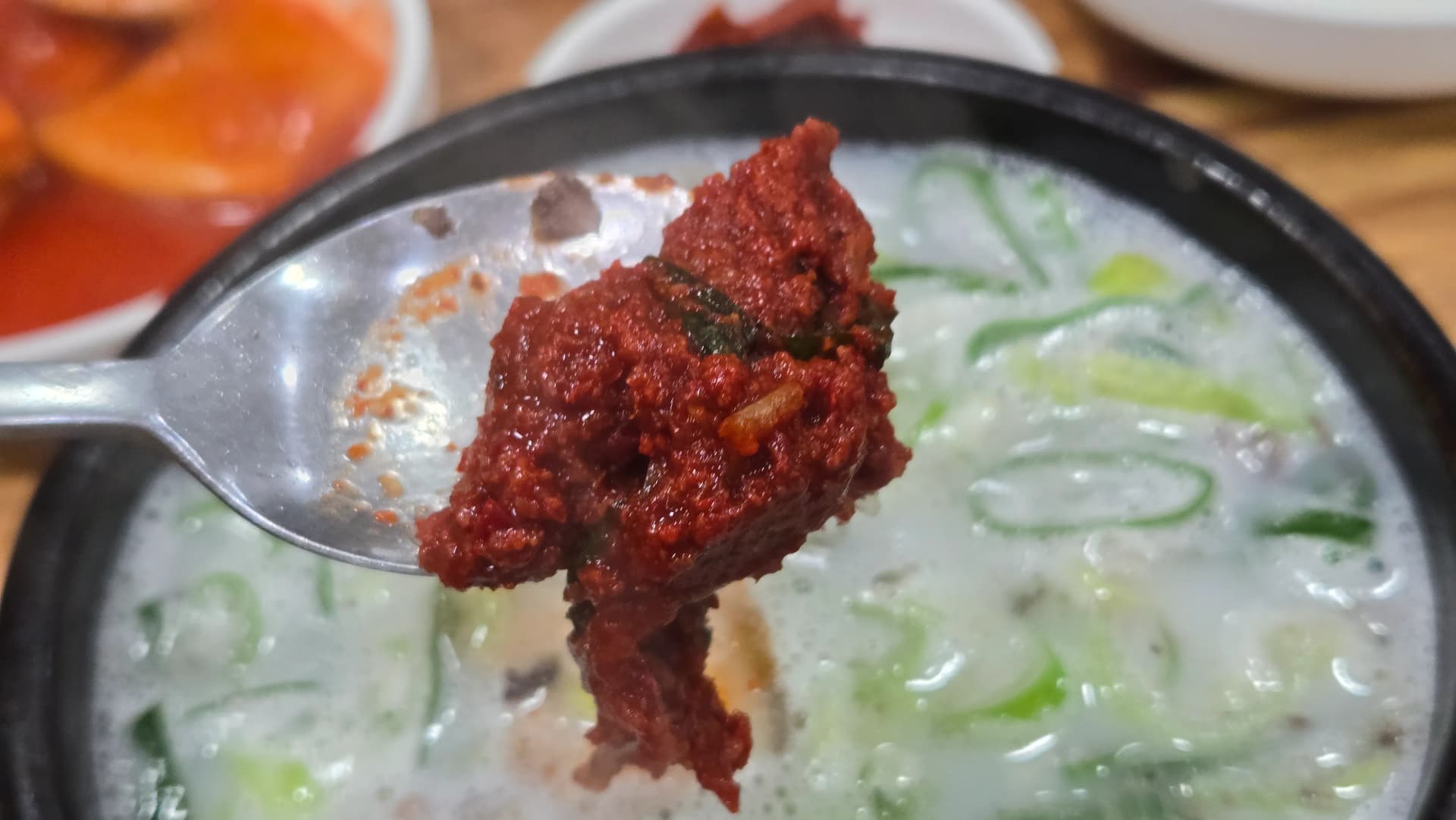
I dropped in a spoonful of yangnyeomjang — a red chilli and garlic-based seasoning paste. The second it hits the white broth, the whole thing transforms into this spicy, warming bowl. More than half of all Koreans add this. If you're good with heat, put in a full spoonful. If you're a bit cautious, start with half.
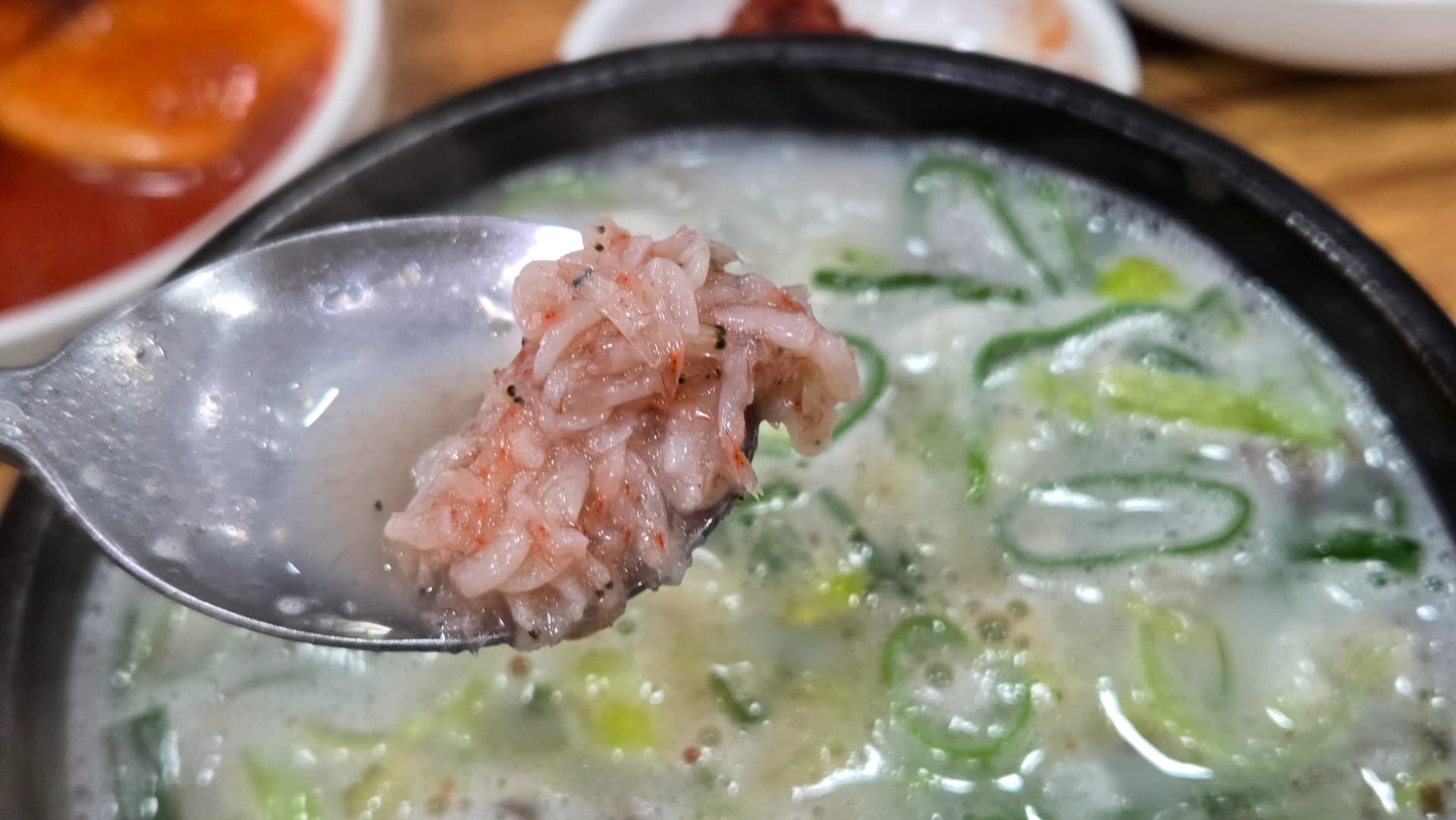
Saeujeot — fermented shrimp paste. This does something completely different to the chilli paste. It's not about heat — it's about adding umami to the broth. When I first showed my wife the saeujeot, she opened the lid and immediately covered her nose. "What IS that?" It's fermented shrimp, so yeah, it's got a pungent smell. But I got her to try the broth after stirring in just a little bit, and she went, "That tastes completely different to before." Salt just makes things salty. Fermented shrimp paste adds saltiness plus this extra layer of depth that you can't get any other way.
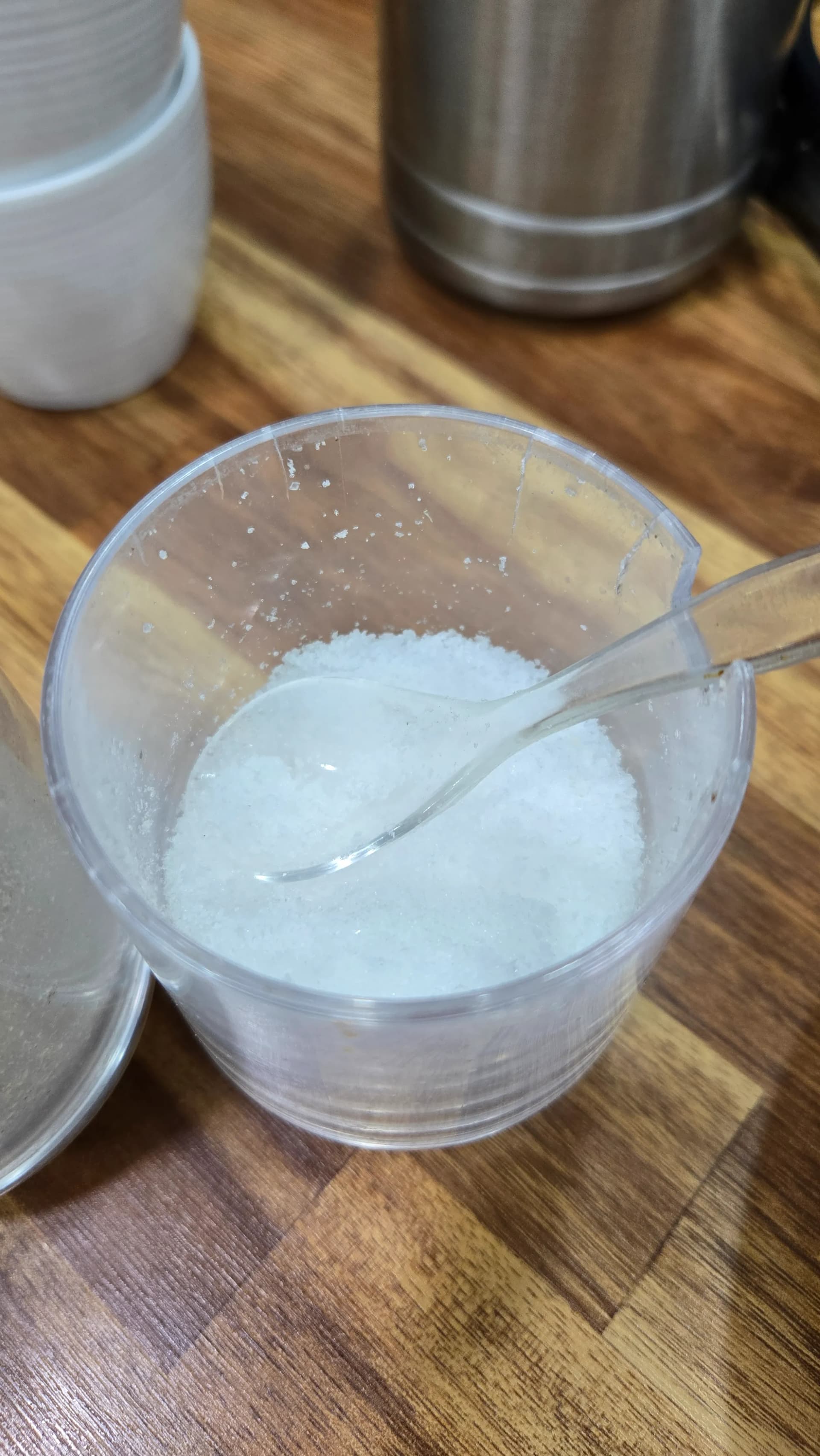
If it's still not salty enough after all that, just add regular salt. But don't dump a heap in at once — you can't undo that. Add a tiny bit, stir it through, taste it, and if it needs more, add another tiny bit. You have to stir. Otherwise one side of the bowl ends up salty and the other side's still bland.
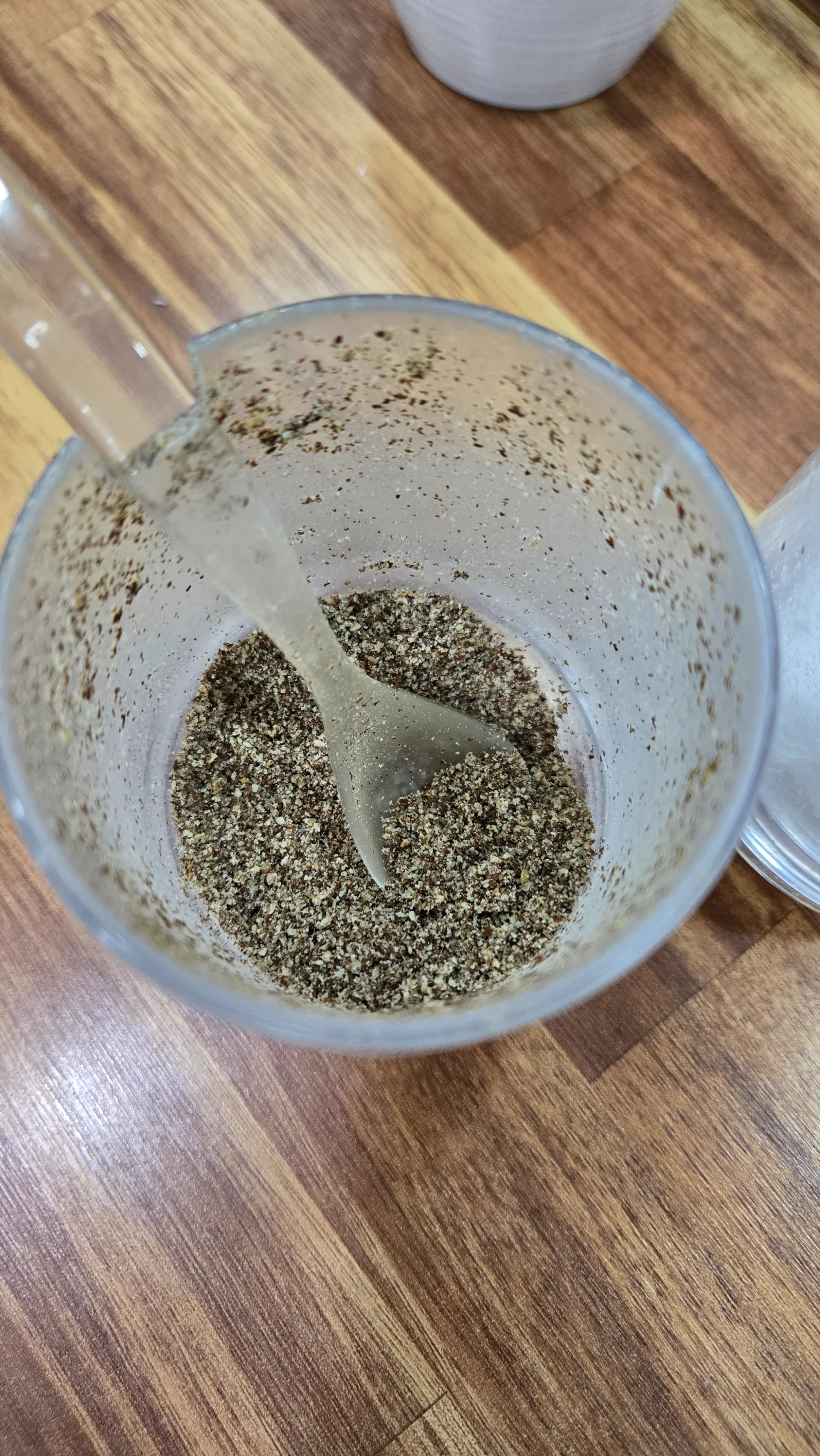
If there's perilla seed powder on the table, chuck some in. It adds this lovely nutty flavour and takes the edge off the porky richness. I told my wife to try it in her dwaeji-gukbap and after she did she said, "Yeah that's heaps better with it in." It's not essential, but if it's there, give it a go.
Topping with chives — this is the final step
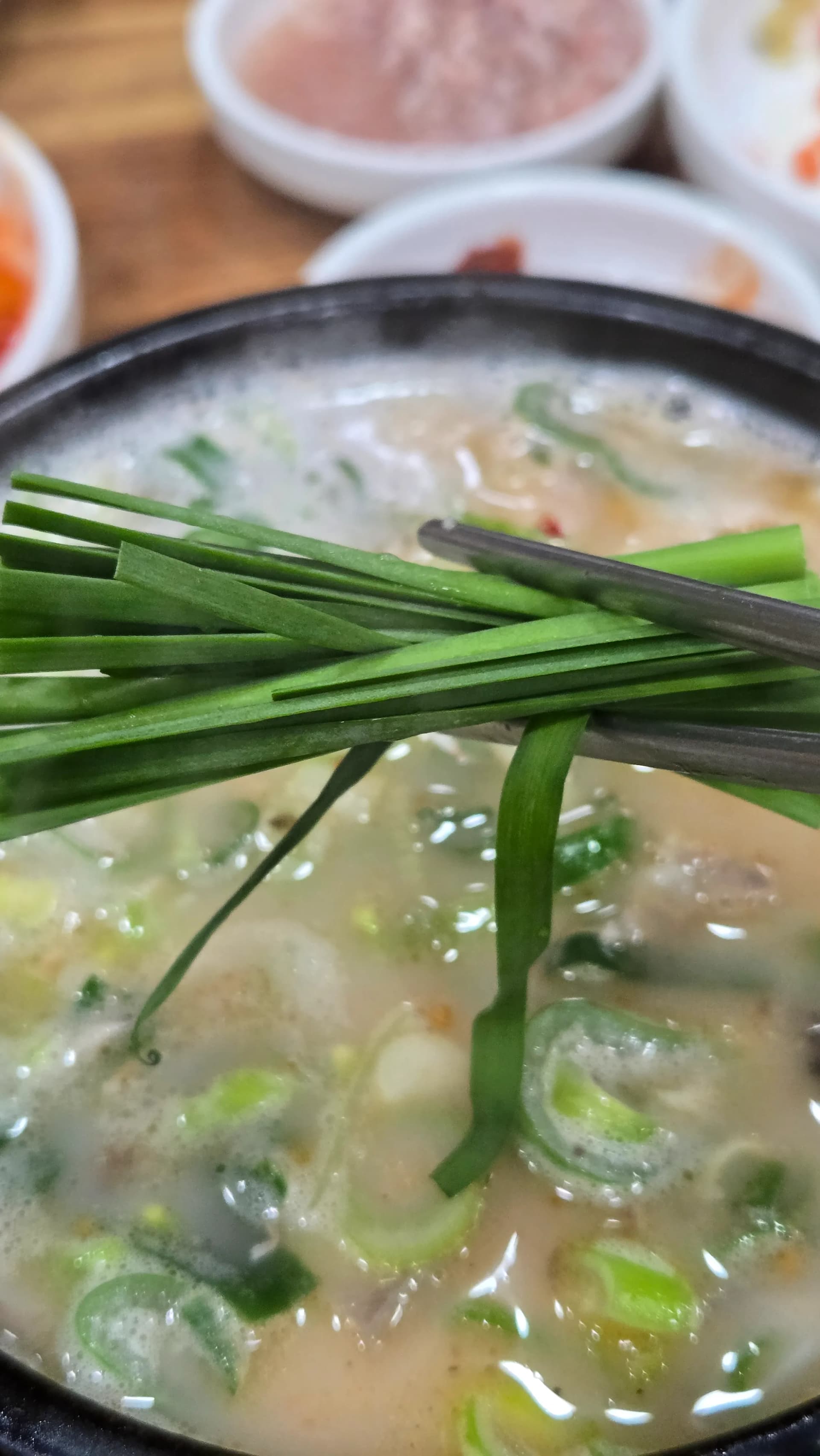
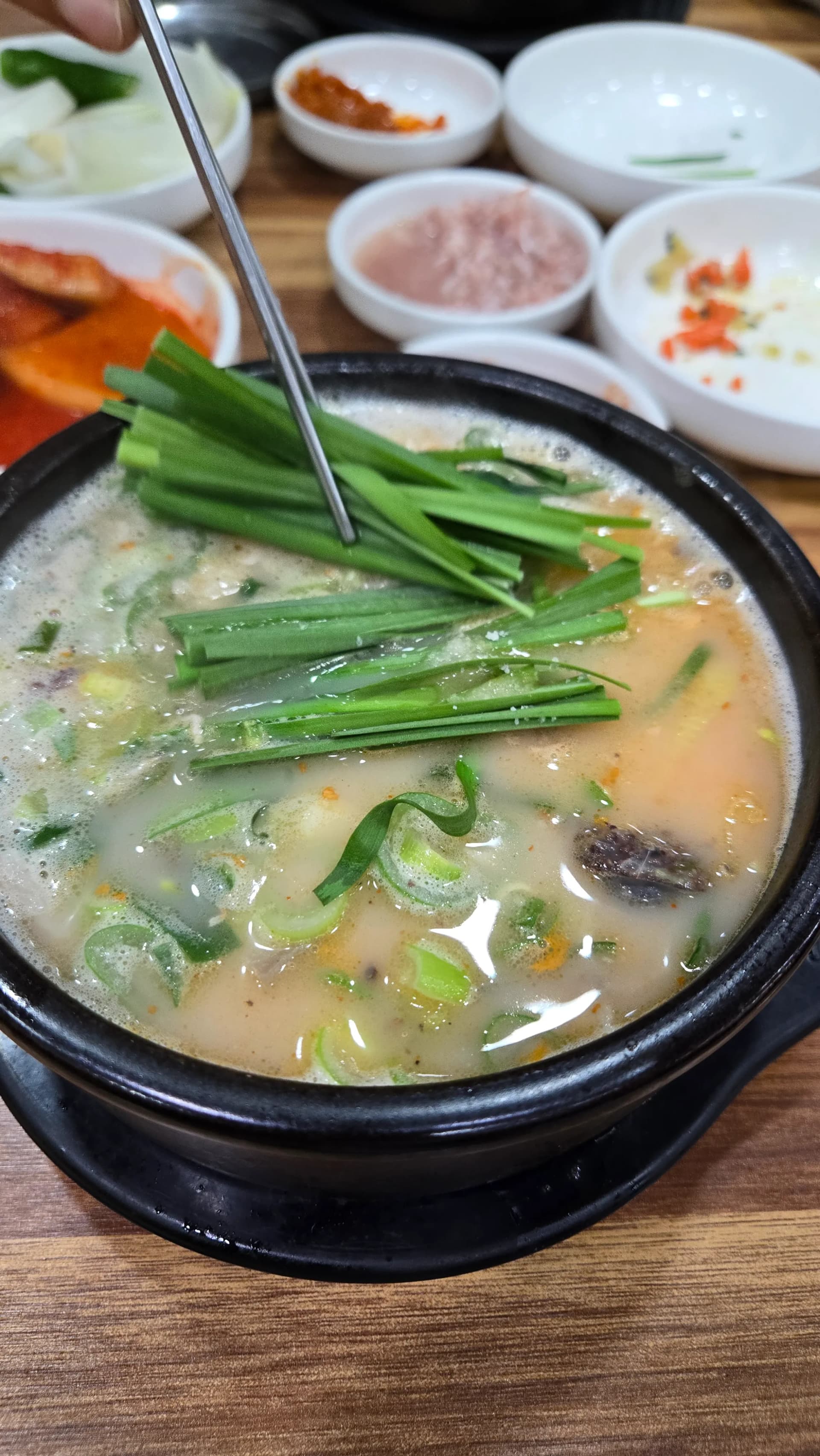
Pile on the chives. After adding the fermented shrimp paste and chilli seasoning, the broth looks completely different from when it arrived. Throw chives on top and they cut through the pork aroma and add this fresh, clean flavour. Don't be stingy. The more chives, the better.
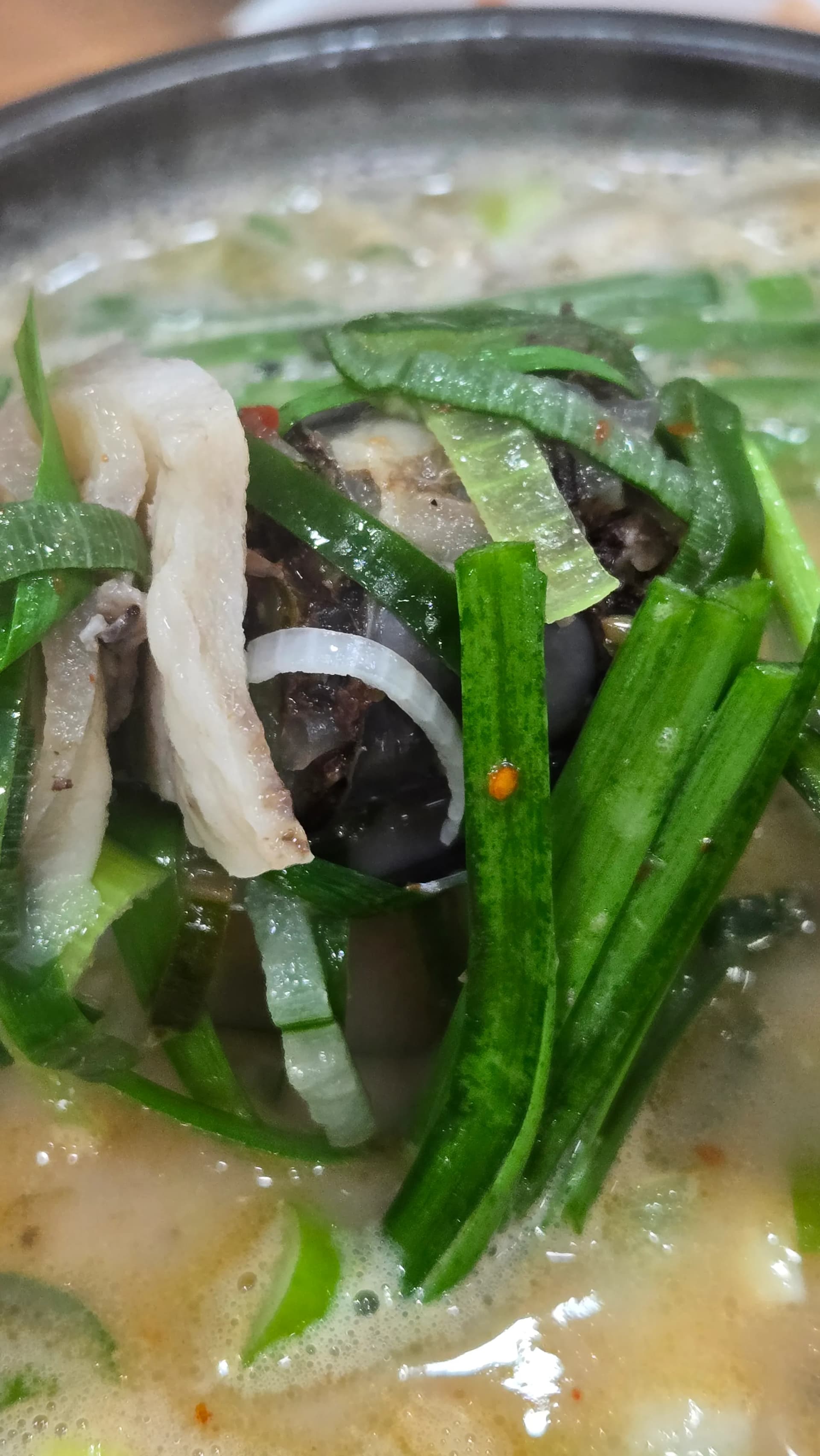
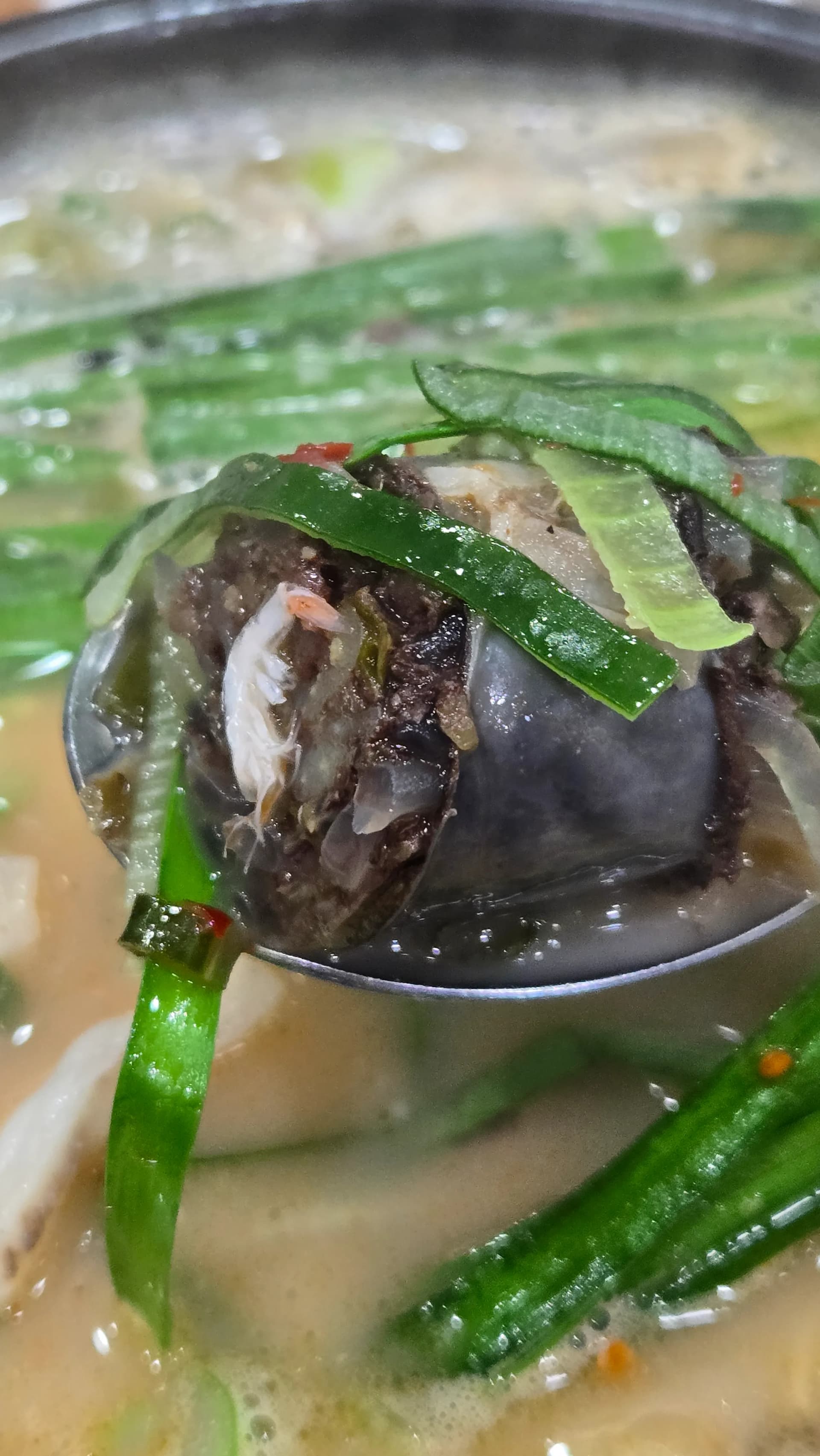
The broth is so hot that the chives wilt almost instantly. You want to eat them straight away while they've just softened. Scoop up a spoonful with some slightly wilted chives, a bit of sundae, and a chunk of pork all together — after working through the night on an empty stomach, that first hot spoonful going down just sorted me right out.
The different cuts of meat inside sundaegukbap
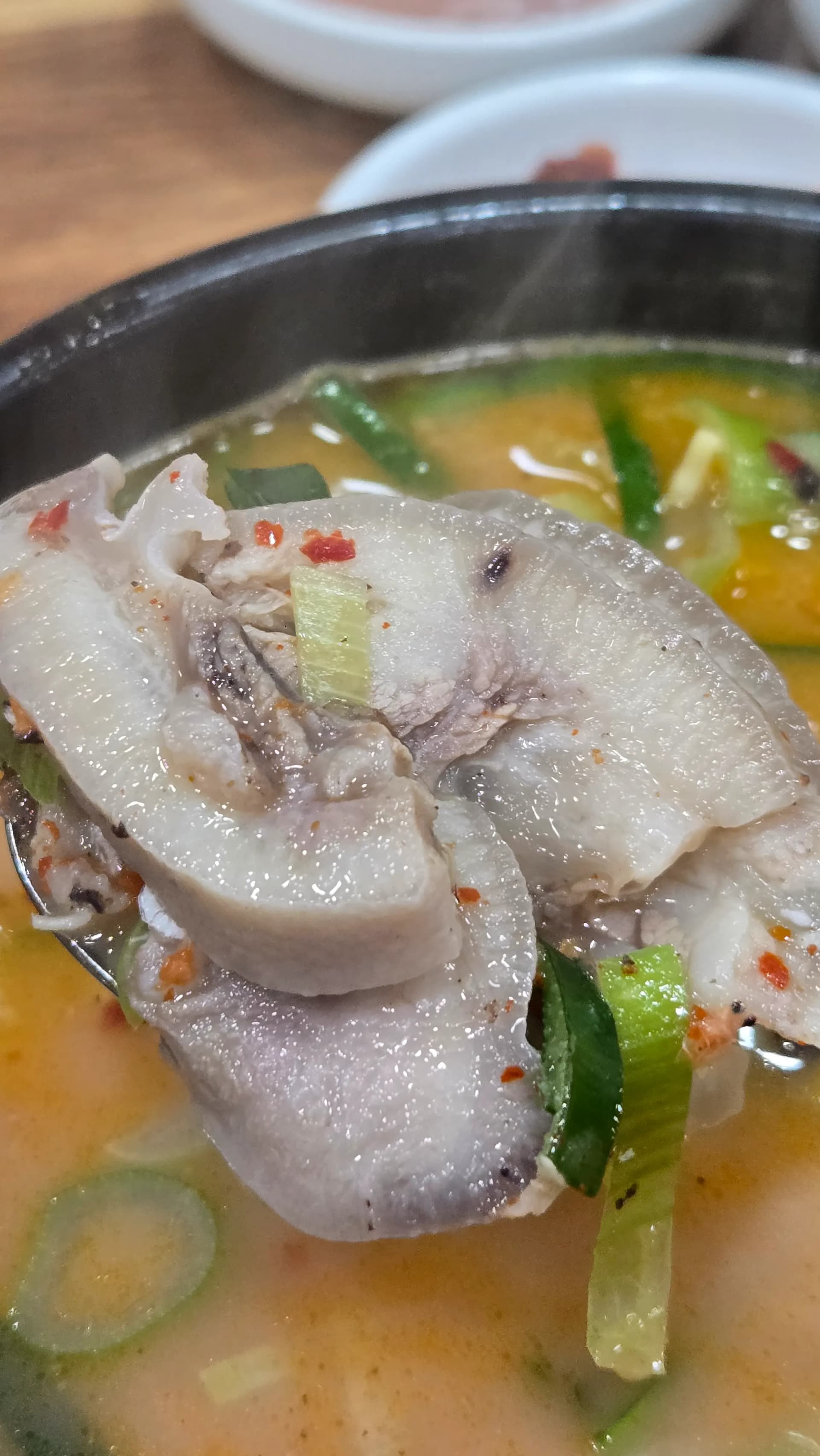
Sundaegukbap doesn't just have one type of meat in it. You'll find boiled pork slices, skin, head meat — all sorts of different cuts mixed together, and every restaurant has its own combo. Each piece has a different texture, so as you eat your way through the bowl, it keeps things interesting.
First time with sundaegukbap? Just remember this
You season it yourself. Eating it straight out of the kitchen means no flavour.
1. Fermented shrimp paste first — half a spoonful
Add saeujeot before salt. It gives you saltiness plus umami in one hit, which locks in the broth's flavour. Salt is your backup if it still needs more after that.
2. Chilli paste is up to you
Add the red chilli-based yangnyeomjang and the white broth turns red and spicy. You can skip it entirely, or add it for a completely different experience.
3. Load up on chives
They cut through the porky richness and add a fresh, clean edge to the broth. Don't hold back.
4. Perilla powder when it's feeling heavy
It adds a nutty flavour and cuts the richness. Not every restaurant has it, but if it's on the table, chuck some in.
5. Kkakdugi between spoonfuls
A few spoonfuls of broth, then a piece of kkakdugi. That crunchy texture resets your palate completely.
Rice in the soup or on the side — either works
There's no right or wrong way
Most restaurants
Rice and soup come separately. Whether you tip the rice into the broth or eat them side by side is entirely your call.
Watch out at some places
A few restaurants serve the rice already in the soup. If you'd rather have it separate, you need to say so when you order.
Good to know before you order
Especially if you don't speak Korean
English menus are rare
Unless you're in a tourist area, the menu's going to be Korean-only. But it's not complicated — just point your phone's translation app at it. Saying "sundaegukbap hana-yo" is literally all you need to order.
Sundae only / offal only / mixed
When ordering, you can choose what goes in your bowl. If you just say "sundaegukbap hana-yo" without specifying, most places will give you a mix of everything.
Open from the crack of dawn
Most open at 6 or 7am, and some run 24 hours. Korea has a serious morning soup culture — people eat it for brekkie or as a hangover cure, so early-morning openings are standard. I ate mine this morning straight after clocking off from a night shift.
Price
Usually A$9–A$12 a bowl. Today's was A$9. Near tourist spots in Seoul it can creep above A$13. Roughly what you'd pay for a decent lunch bowl in Sydney or Melbourne.
Not great for vegetarians
The broth is made from pork bones and every solid bit in the bowl is pork. The closest thing to a vegetarian-friendly option in Korean soup culture is kongnamul-gukbap (bean sprout soup), but even that often uses pork stock.
Honest verdict
My wife cleaned out her dwaeji-gukbap bowl and then drank every last drop of broth. I asked, "Was it good?" She nodded, then added, "But watching you eat that sundae — yeah, I'm never going there." I'd loaded my sundaegukbap with a mountain of chives and polished off every last bit of broth too. Same restaurant, same base broth, but we each ordered something different and both walked out full and happy.
If you've never had sundaegukbap before, I'll be straight with you — the first spoonful is the hardest part. It looks unfamiliar, there's a smell to it, and the visual isn't exactly Instagram-friendly. But once you push past that, it changes. Even I have days where I'm not in the mood for it, but on a morning like this one — working all night, stomach completely empty, a cold wind outside — when that first spoonful of hot pork bone broth soup hits your belly, you genuinely cannot stop eating.
If sundae isn't your thing, order dwaeji-gukbap. If even that feels like too much, look for a seolleongtang restaurant — that's a beef bone broth soup with zero pork smell, and my wife loves it. Kongnamul-gukbap (bean sprout soup) has barely any meat in it at all, so that's the least confronting option. Korea has heaps of different soup-and-rice dishes, so if one doesn't work for you, don't write off the whole category.
This post was originally published on https://hi-jsb.blog.