Eye Fillet Steak Course in Korea with Mum
Table of Contents
17 items
It was a summer quite a while back, when I went out for steak with my mum in Daejeon, a big city in central South Korea. We usually just eat somewhere close to home, so we don’t often go out of our way to find a proper steakhouse. But that day I was craving beef, mum happened to be free, and we headed out together. When you go to a steakhouse in Korea, they usually don’t just put the meat in front of you and call it done. Soup, salad and bread tend to come out one after another like a little set course, and the format feels a bit different from a steakhouse in Australia, the US or Europe. The reason I still remember that meal is because the eye fillet practically melted in my mouth — but I’ll get to that slowly.
Inside the steakhouse
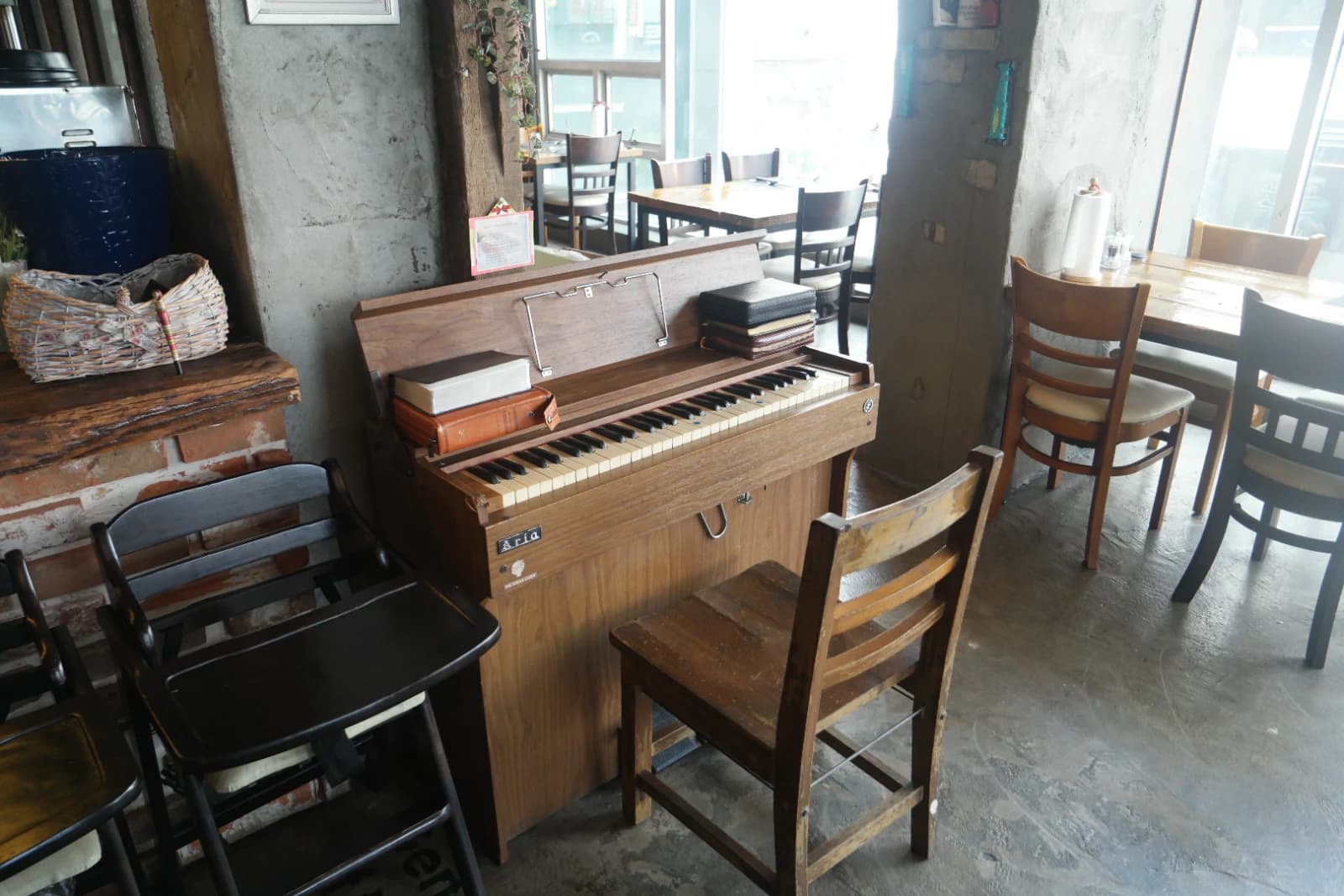
When we walked in, there was an old piano sitting inside the restaurant. Judging by the menus stacked on top of the keys, I don’t think anyone actually played it, but tucked between the concrete wall and wooden chairs it worked surprisingly well as décor. Light from the window was falling across the piano, and honestly I didn’t expect that sort of mood from a neighbourhood steakhouse. I might go to a Korean BBQ place for samgyeopsal after work without thinking too much about it, but making a point of going out for steak isn’t something I do every day. Maybe that’s why just sitting in this place already felt a bit special.
Table setting
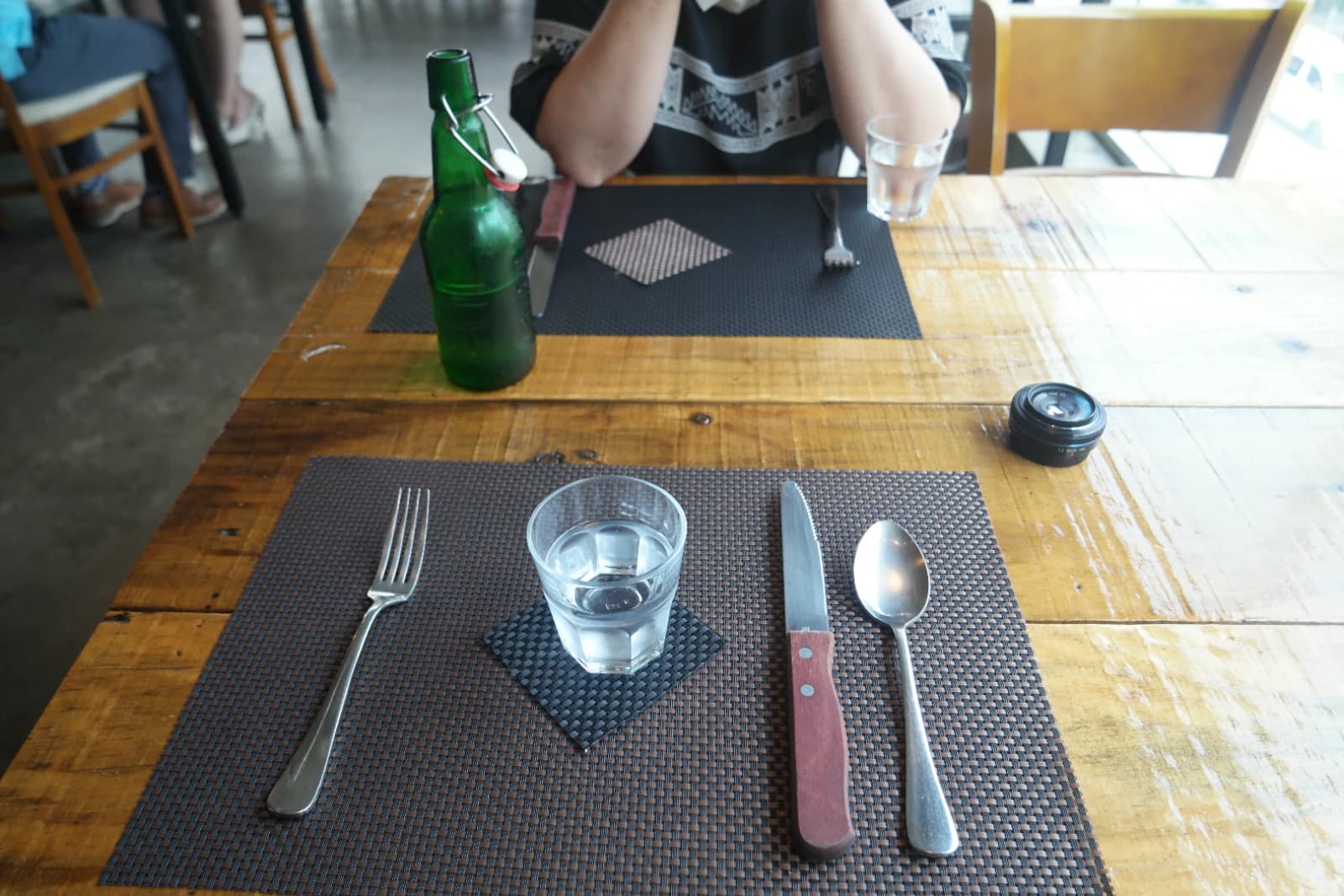
Once we sat down, the table was set like this. A wooden-handled steak knife, fork and spoon were lined up neatly on the mat, and the water came out in a green beer bottle. Mum asked, “Is this alcohol?” so we poured a bit and, nope, it was just water. Every table had the same bottle, so I figured it was part of the restaurant’s style. Little details like that do help build the atmosphere.
The course begins — soup and bread
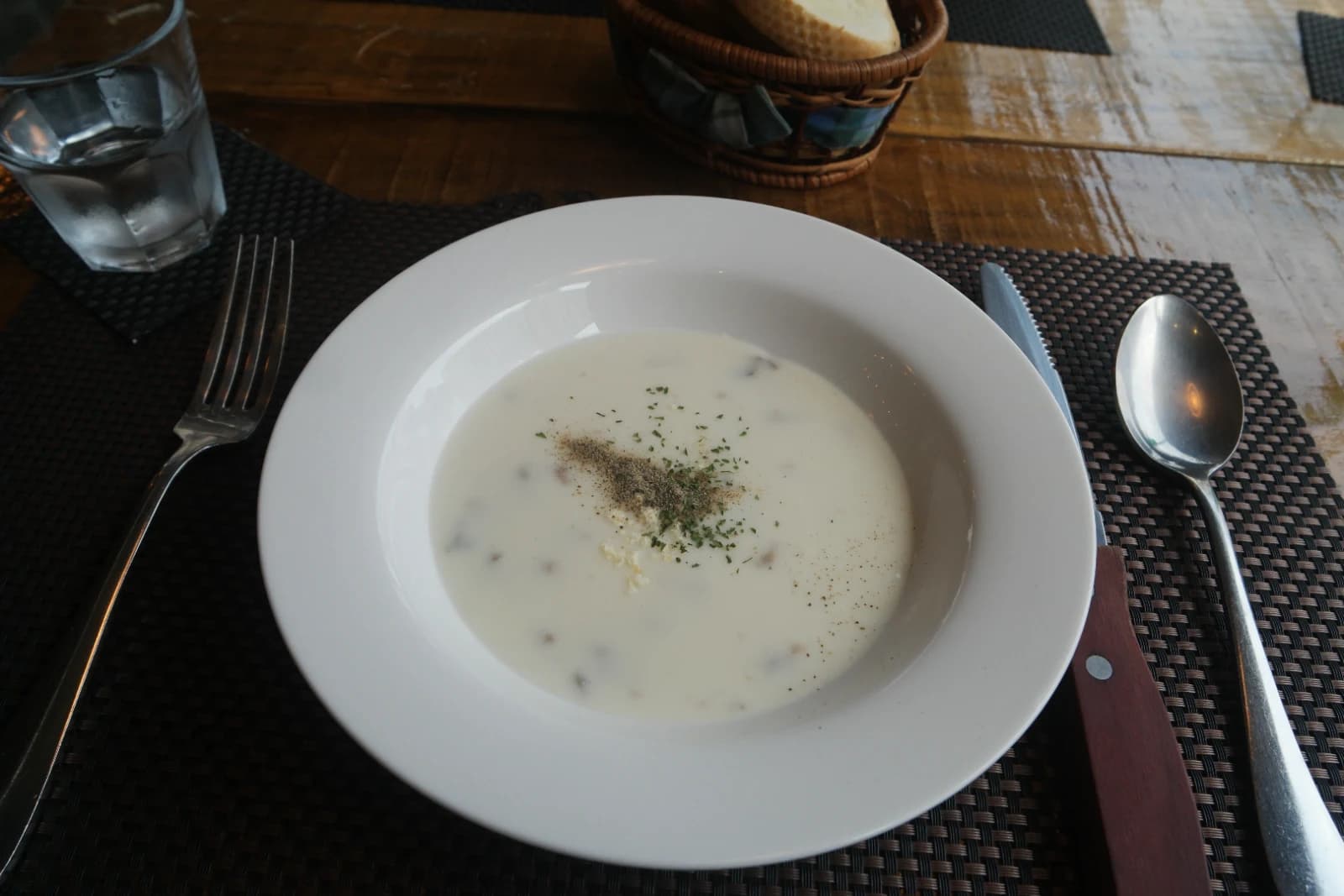
After ordering, the first thing that came out was soup. Most Korean steakhouses follow this sort of order: soup first, then the plates arrive one by one until the main steak comes out. That day it was cream soup, with a little parsley and pepper sprinkled on top and small bits inside. The portion wasn’t huge, but since it was just there to warm things up before the main, it was enough.
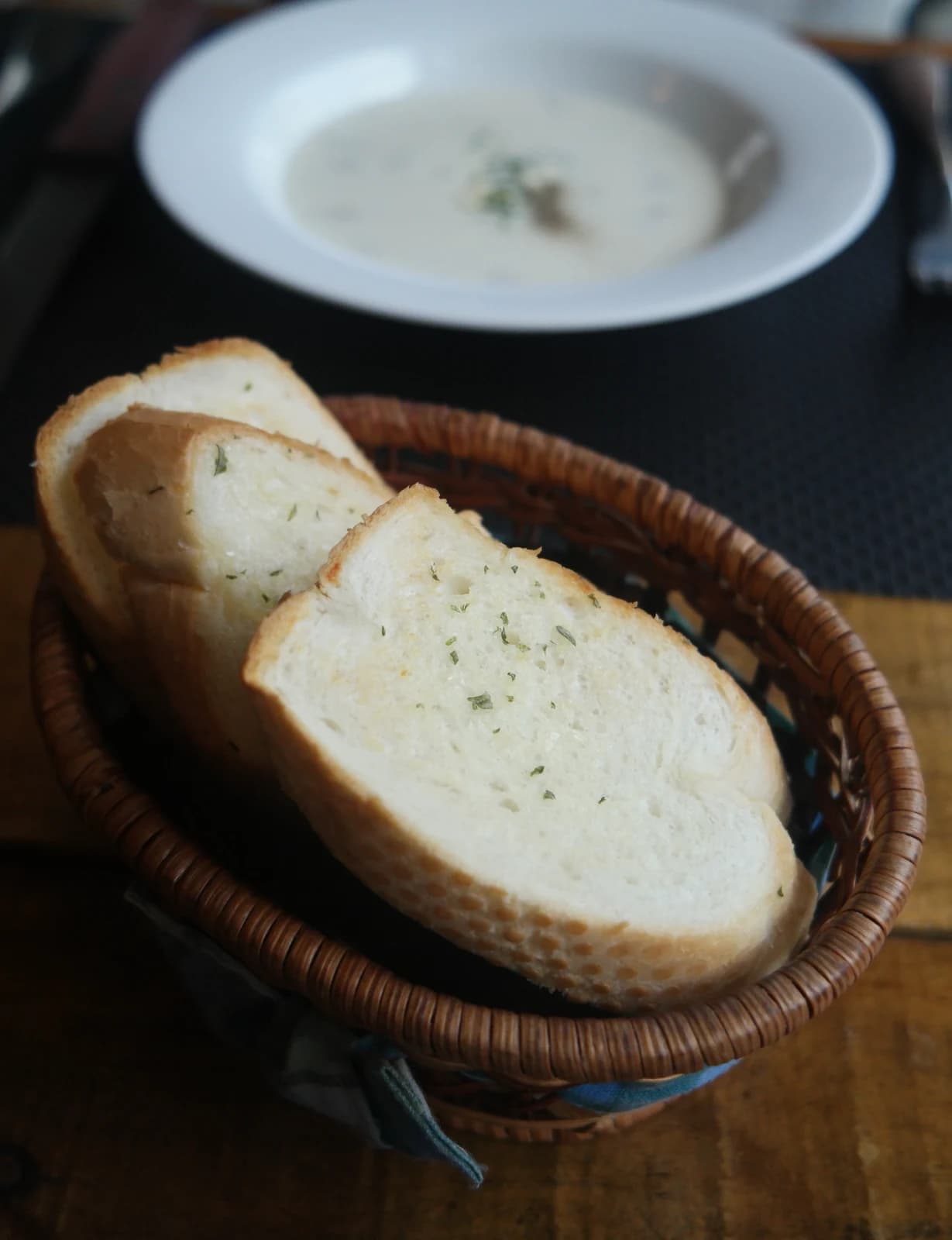
This was the bread that came with the soup. Two pieces of baguette were sitting in a rattan basket, with a little parsley on top and what looked like traces of butter soaked in. It wasn’t the soft, garlicky baguette style that a lot of Korean steak places serve these days, though. This was more of a basic baguette: crisp outside, a bit dry inside.
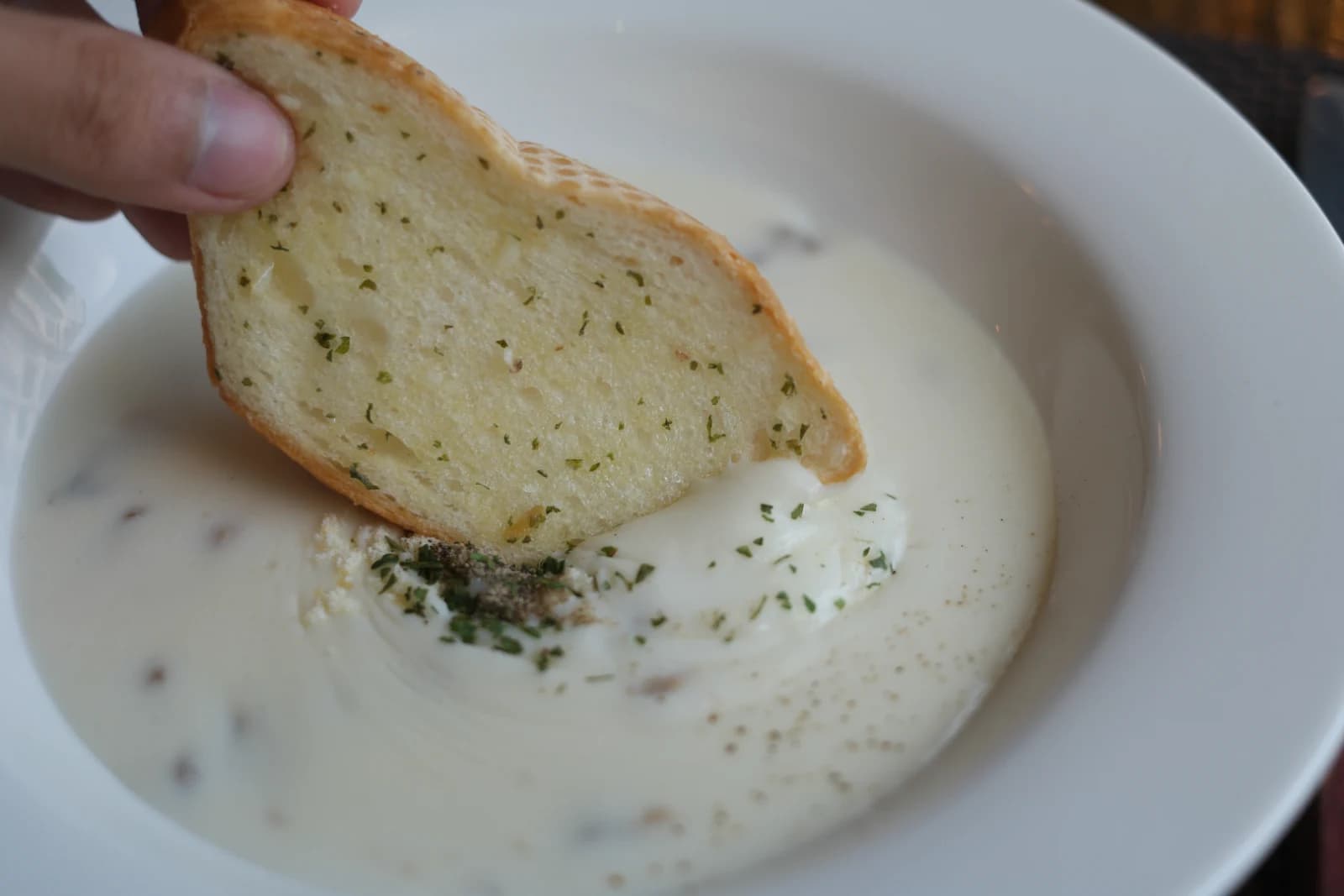
But once you dipped it into the soup, it was a different story. The cream soup soaked into the crisp outside of the baguette and the dryness disappeared straight away. This is exactly why Korean steakhouses often serve soup and bread together. On their own, both can feel a bit plain, but together they make sense.
Salmon salad — the plate mum took over
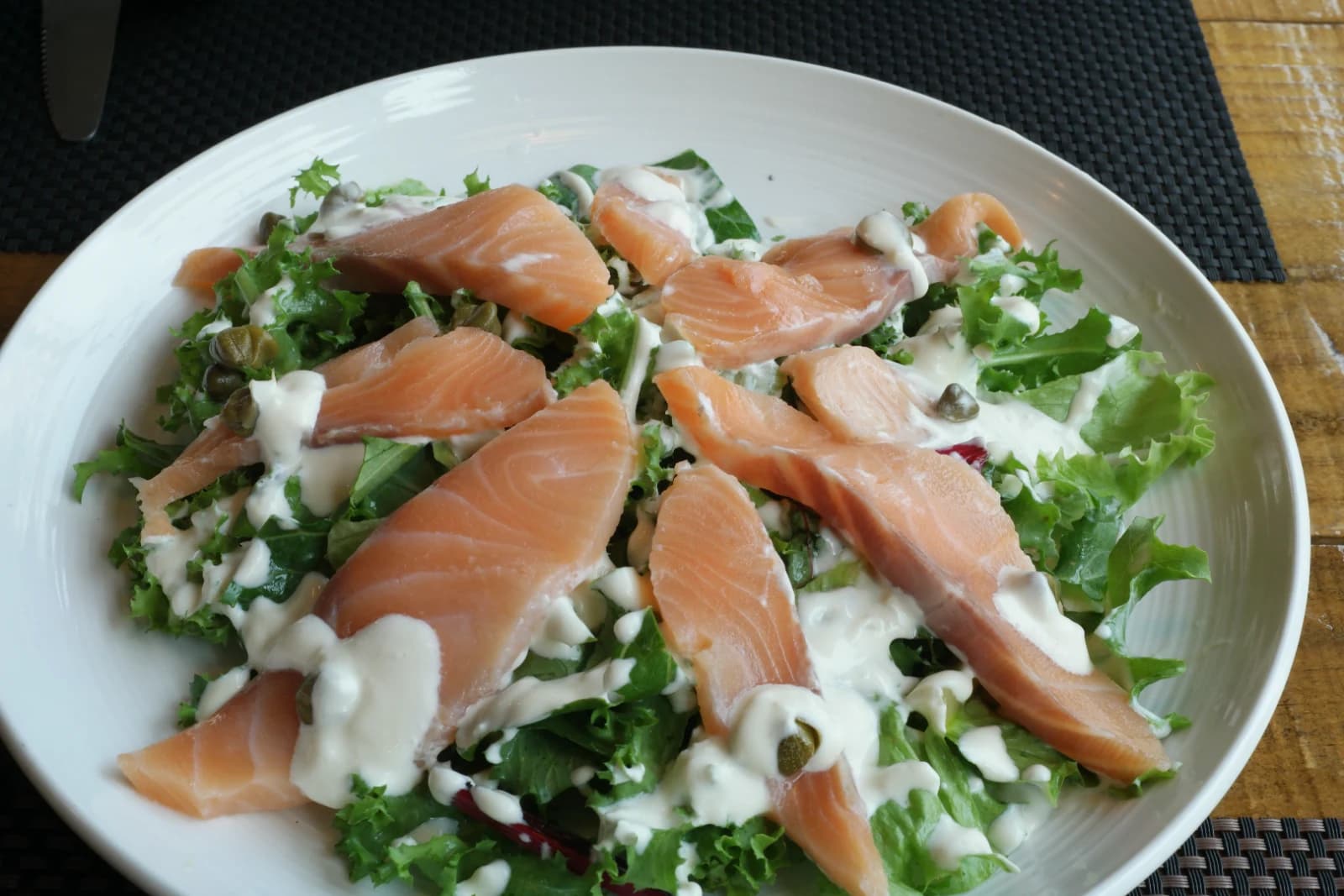
After the soup came the salmon salad. In a Korean steakhouse, it’s pretty common for a salad like this to be part of the course before the main. There were five or six generous slices of smoked salmon laid over green leaves, with capers tucked here and there. The dressing was cream-based, but it worked nicely with the soft salmon and didn’t feel too heavy. Mum has always liked raw fish and seafood, so she looked ready to claim this whole plate for herself. She kept picking up only the salmon with her fork, so I said, “Have some of the greens too,” and she said, “This is what I came for.”
Salmon close-up
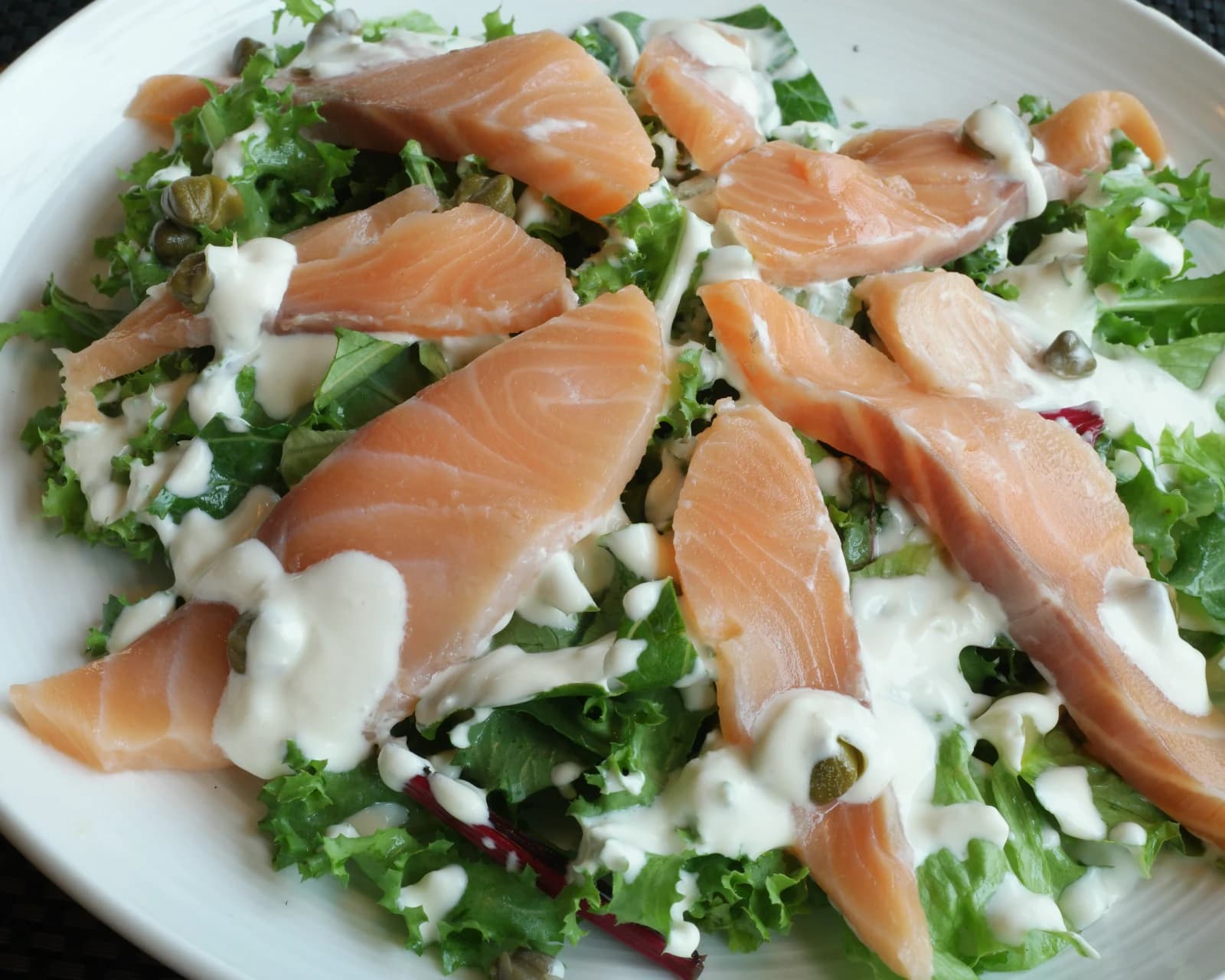
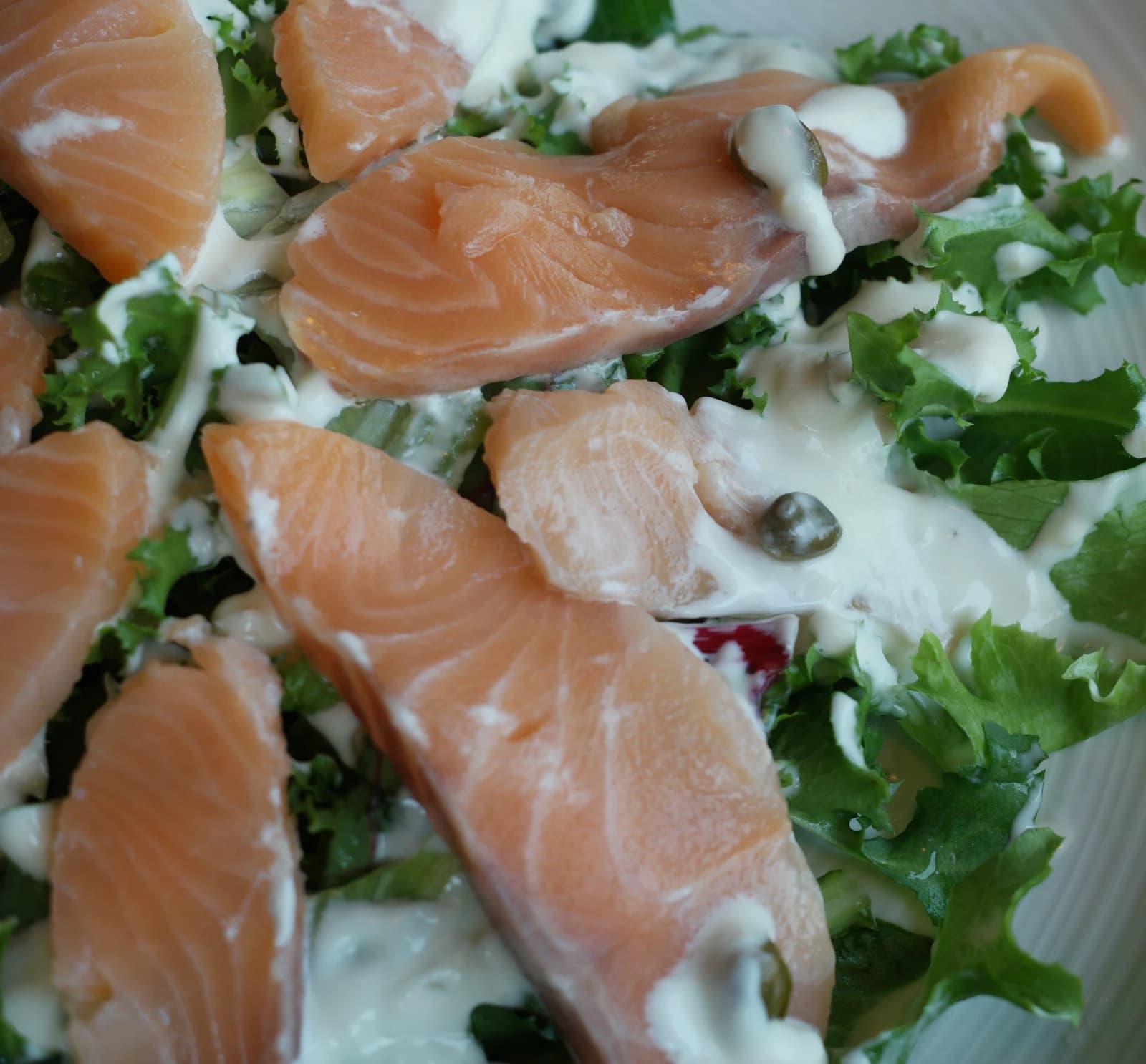
Up close, the salmon looked pretty good. The grain was easy to see and the orange colour was even, and each slice was thick enough to give a proper bite. You could see the capers hiding between the greens, and whenever one popped as you chewed, that sharp sourness came through. If it had only been creamy dressing, the salad could have felt a bit one-note, but the capers balanced it out.
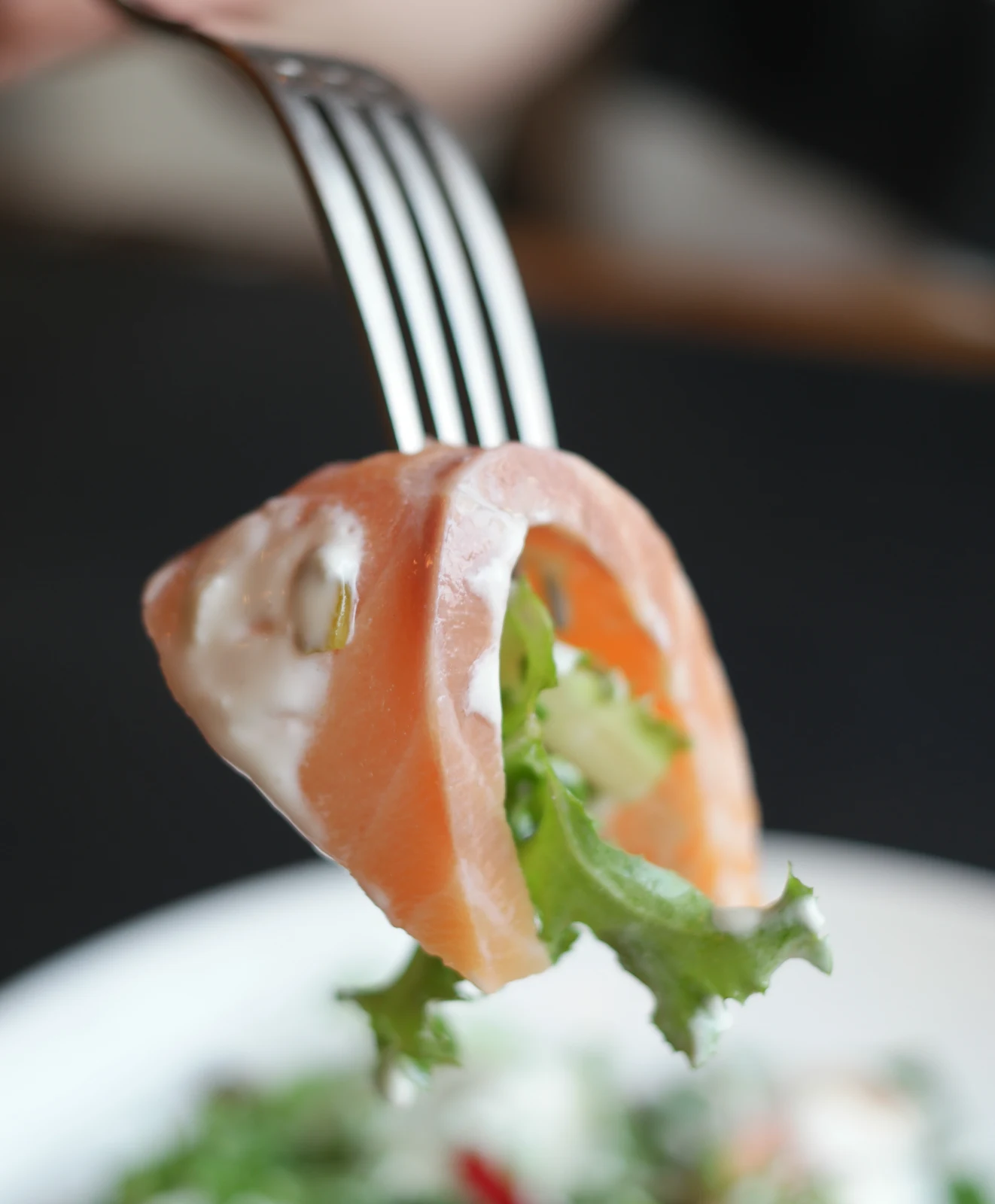
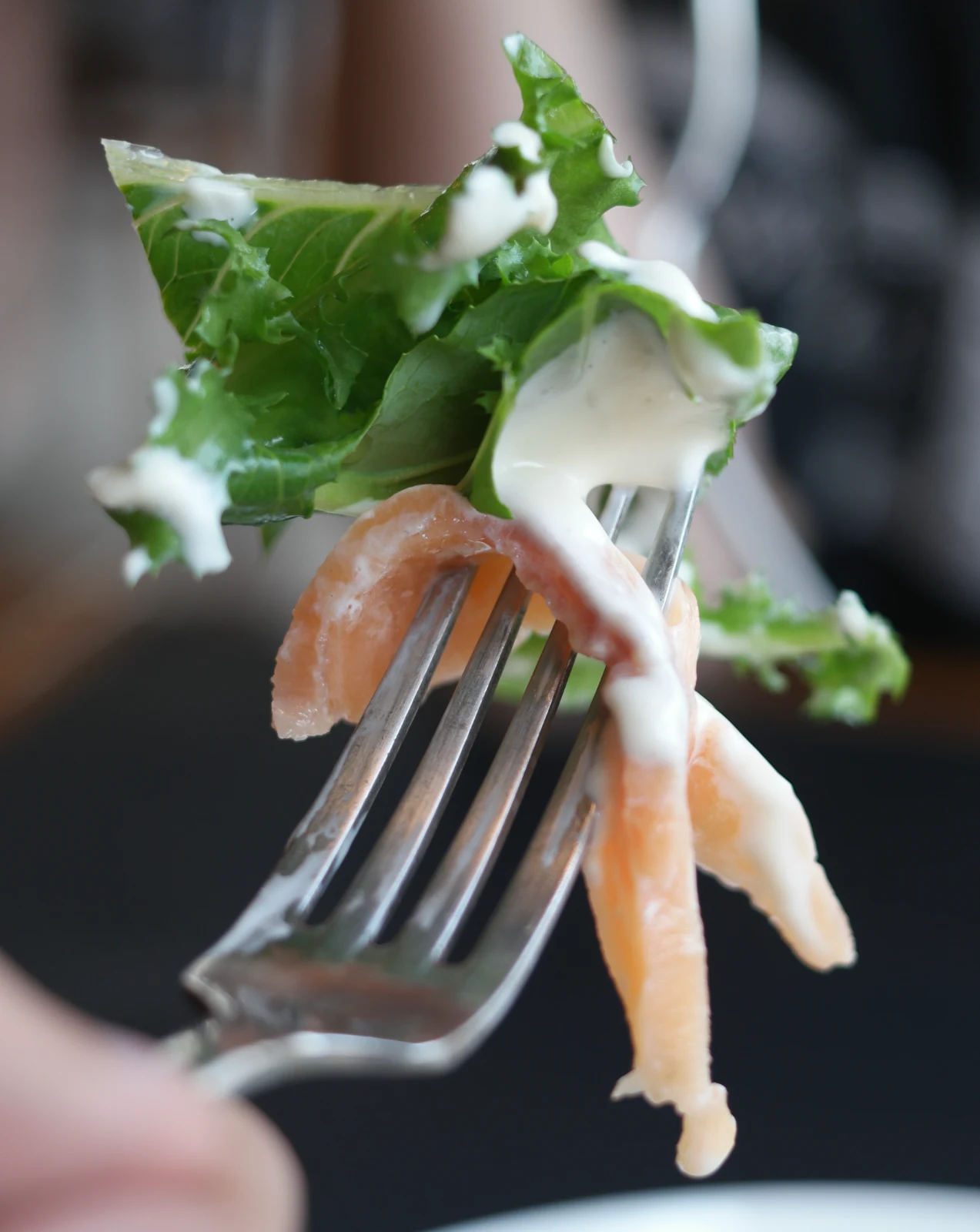
When you lifted a slice of salmon with the fork, some greens came along with it and the dressing dripped down. The best way to eat it was to wrap the greens slightly with the salmon and take them together, because the soft salmon and crisp leaves landed in one bite. Mum, of course, skipped all that and just kept picking out the salmon.
Sirloin steak salad
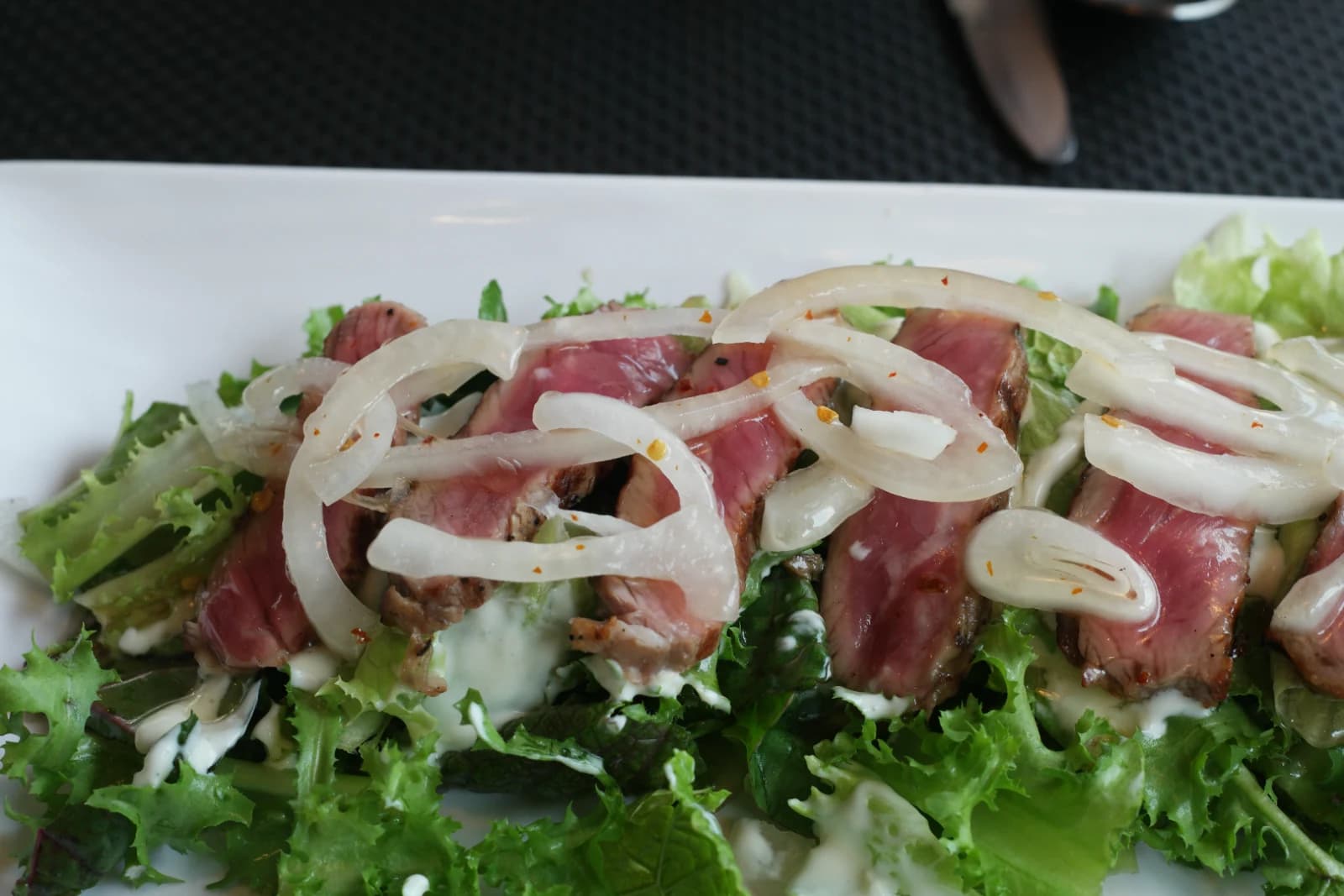
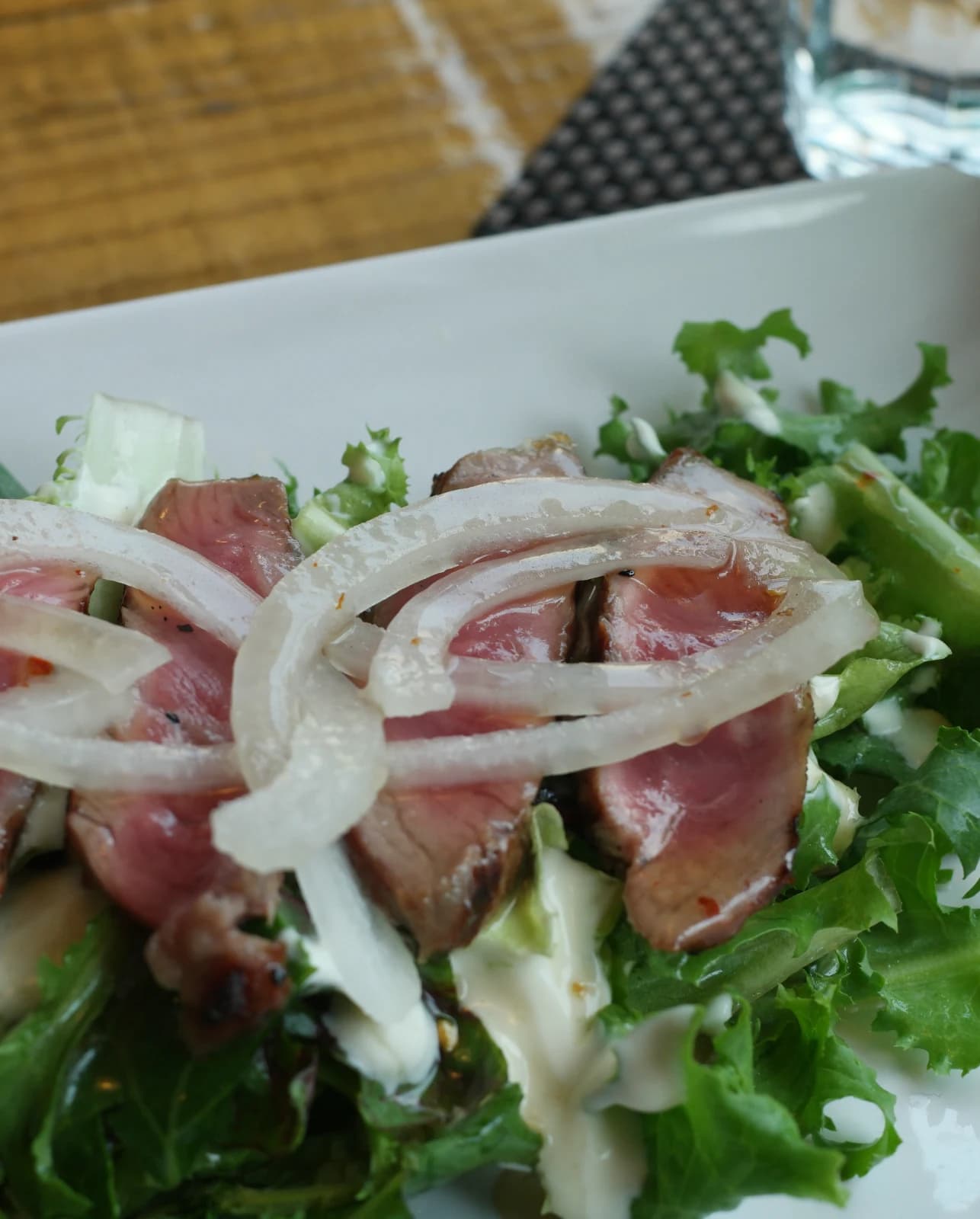
Just as we were nearly done with the salmon salad, the next plate came out. This time it was a steak salad: sirloin seared hard on the outside while the inside stayed pink, sliced thin and laid over greens. There were scattered onion slices on top, and from the orange seasoning bits on the meat it looked like they had used a little spice rub. Having this come straight after the salmon salad meant I was already starting to feel a bit full before the main even arrived. Up close, the beef looked cooked about medium, with a browned, seared outside and a reddish-pink centre. The only slight downside was that there was a lot of onion, so sometimes the onion hit before the beef did.
A closer look at one piece of sirloin
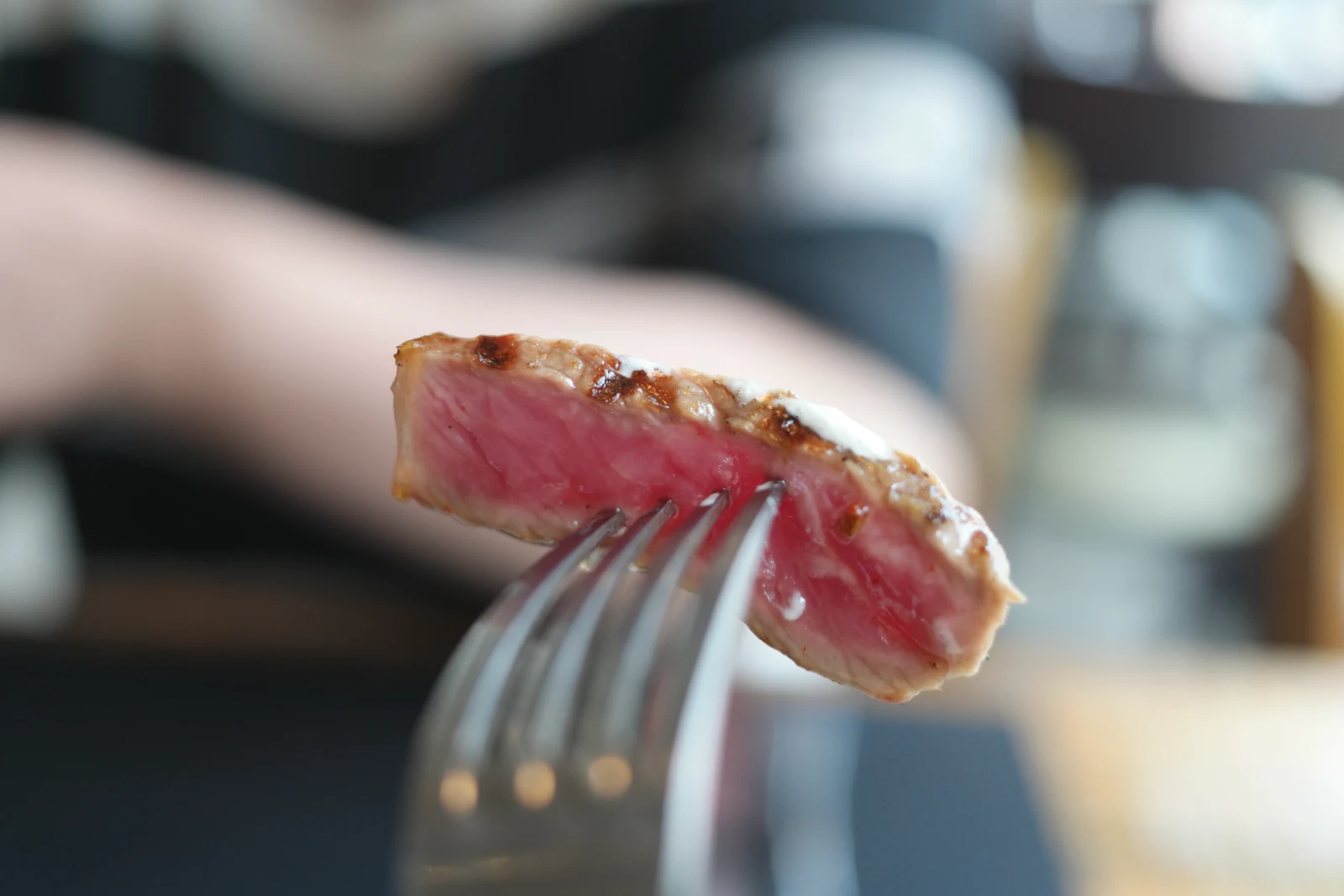
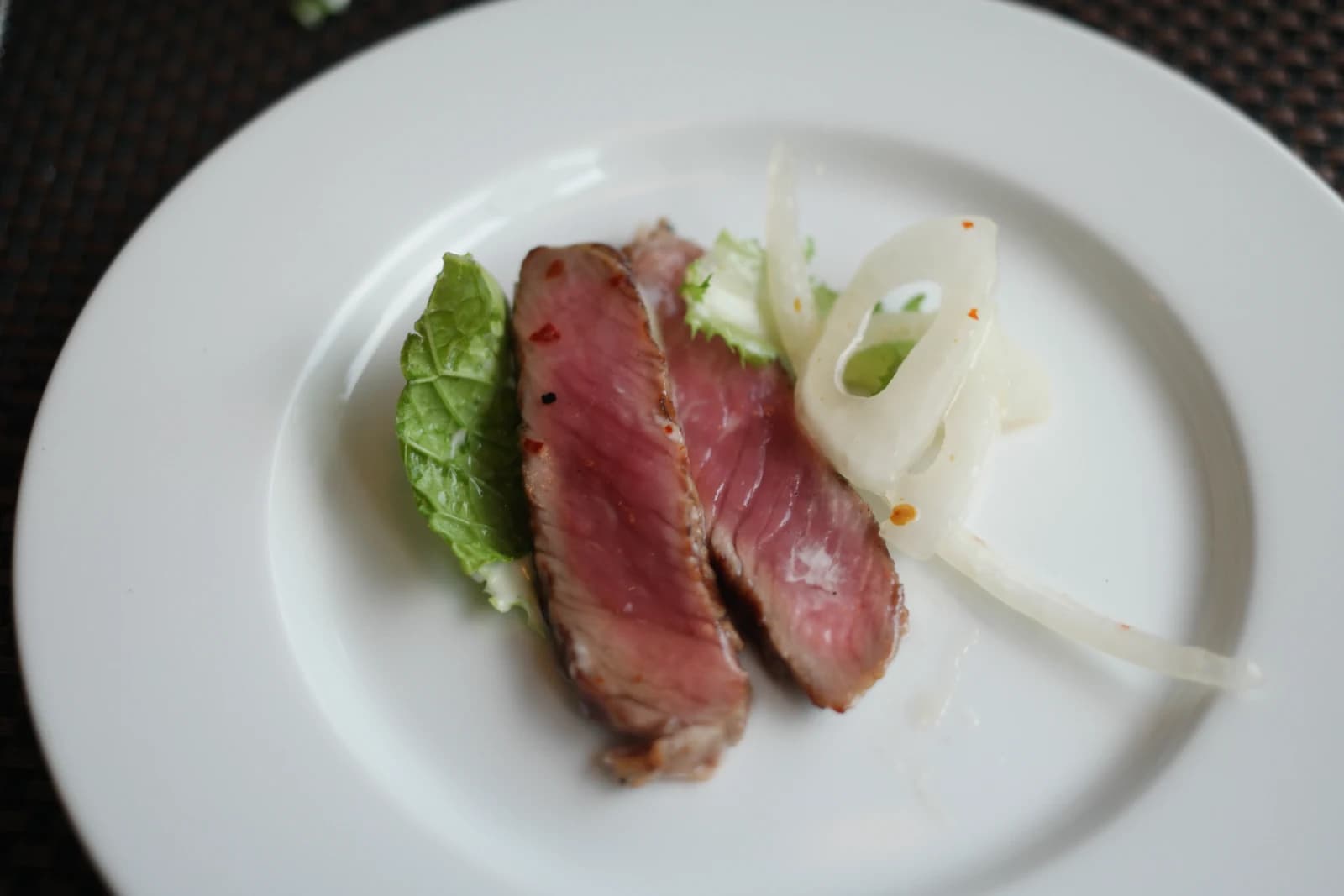
When I picked up one piece with the fork, the cut surface showed clearly. The outside was nicely browned and the inside had a bright pink colour, close to medium rare. Once I moved some onto my own plate, it was basically two pieces of beef, onion and a bit of greens — for a middle course, that amount was about right.
The main — eye fillet steak arrives
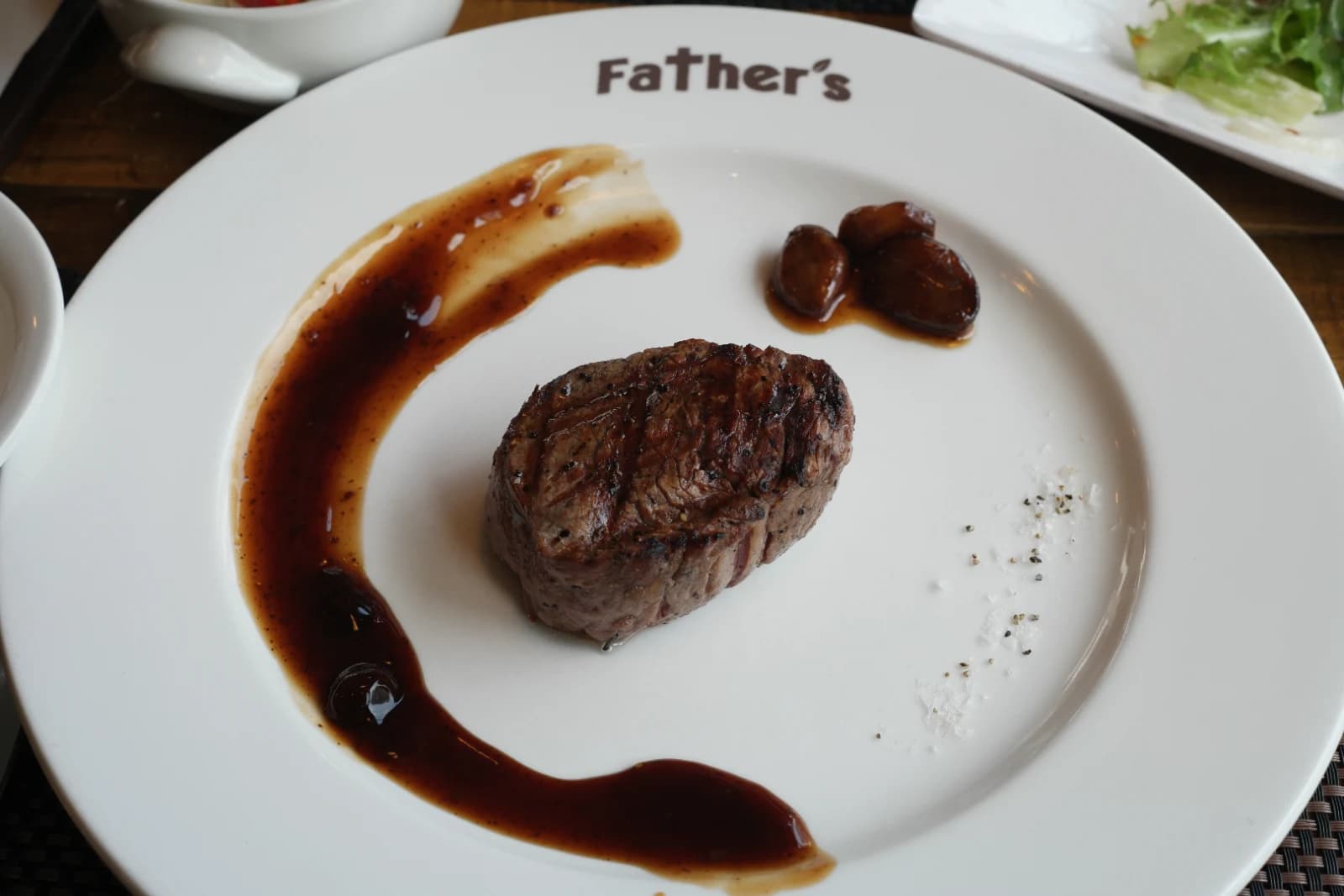
Finally, the main came out. Eye fillet steak. A thick piece of eye fillet sat right in the middle of the plate, with a brown sauce drawn in a half-moon shape beside it. At one end of the sauce there were two or three whole roasted garlic cloves, and on the other side there was coarse salt and pepper. Eye fillet comes from the inner loin of the cow, and it’s known for being low in fat and very tender. Among steak cuts, it’s one of the softest, so it cuts so easily you barely need to use force.
Eye fillet details
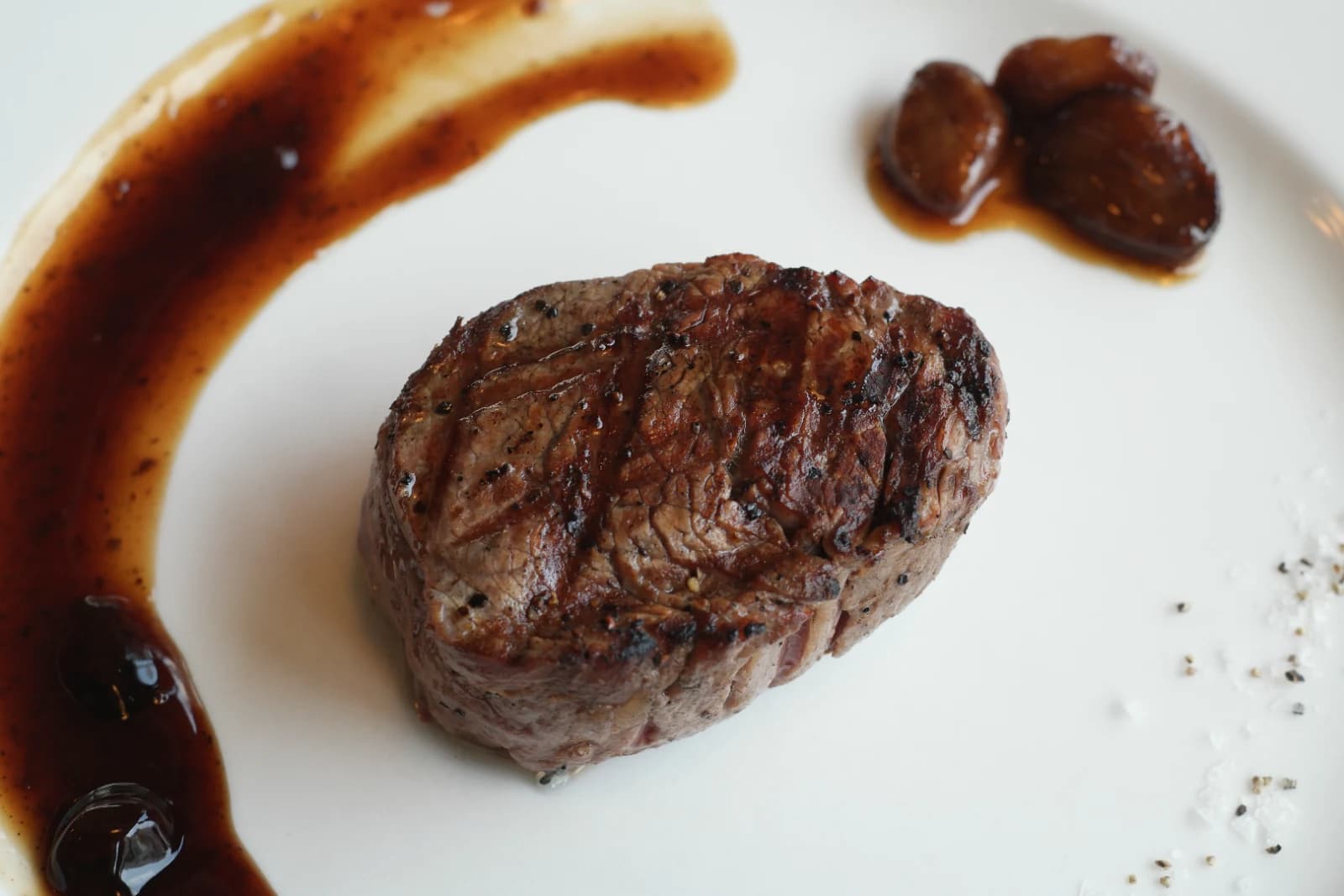
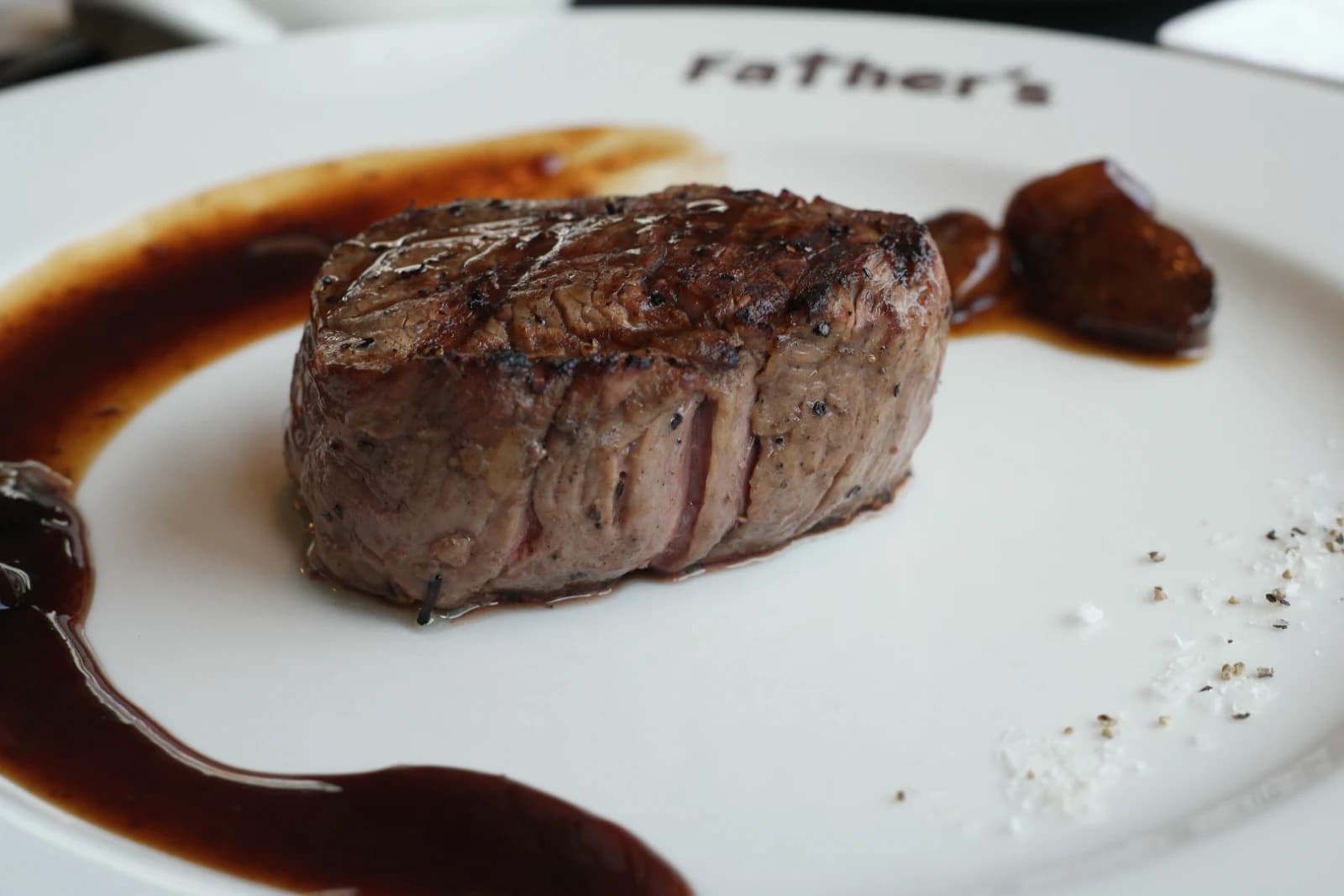
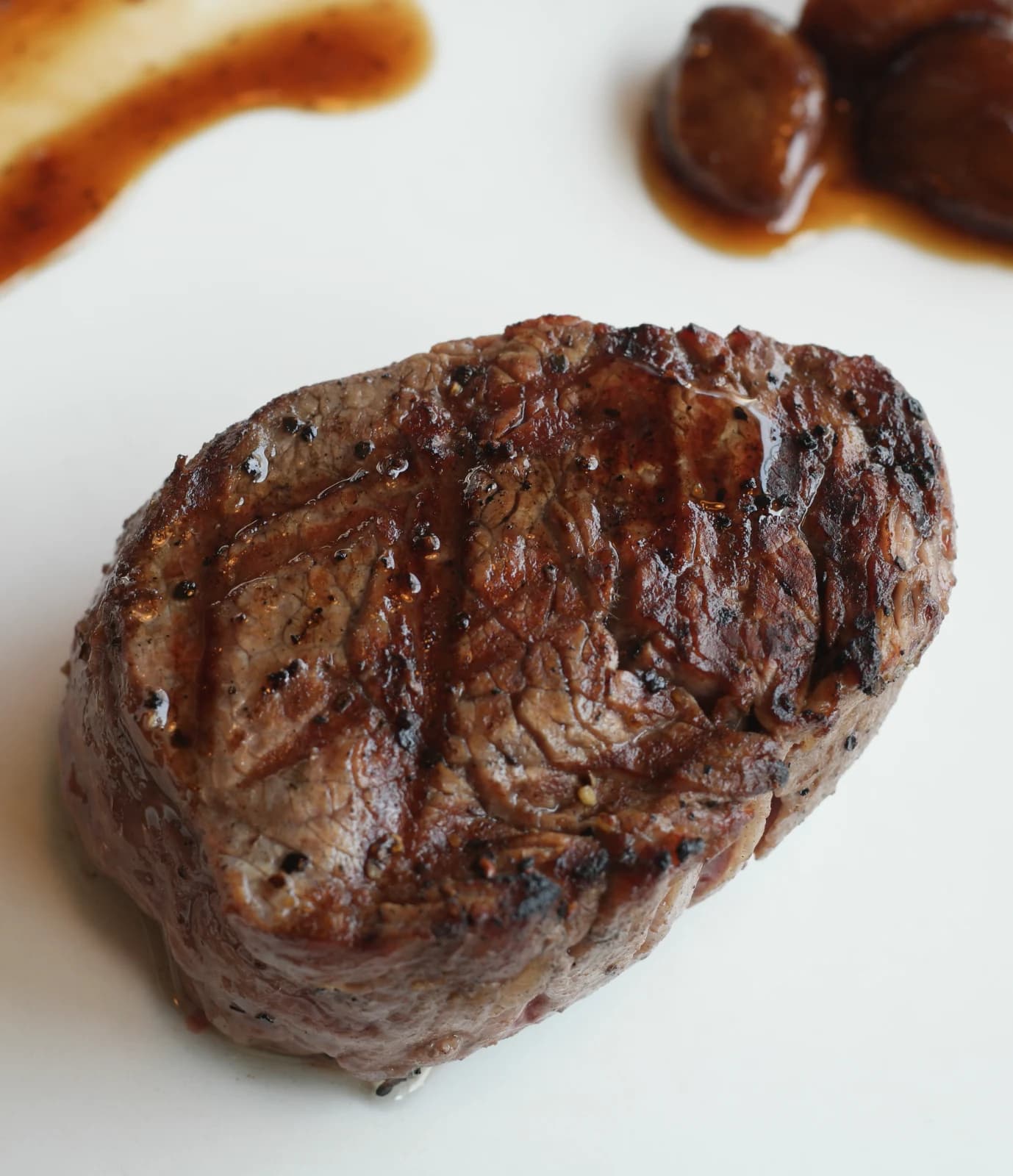
Looking down from above, the grill marks were clear and you could see pepper grains dotted across the surface. From the side, it looked about two finger joints thick, and it still had that round, firm shape that eye fillet tends to have. A little fat had come out along the side, giving it a glossy sheen. When I got right in close, you could see how firmly the outside had been seared, with juices sitting in the tiny cracks on the surface. The sauce was a deep brown demi-glace style, and the whole roasted garlic beside it was half-sitting in the sauce and shining away.
Side dish — grilled vegetables
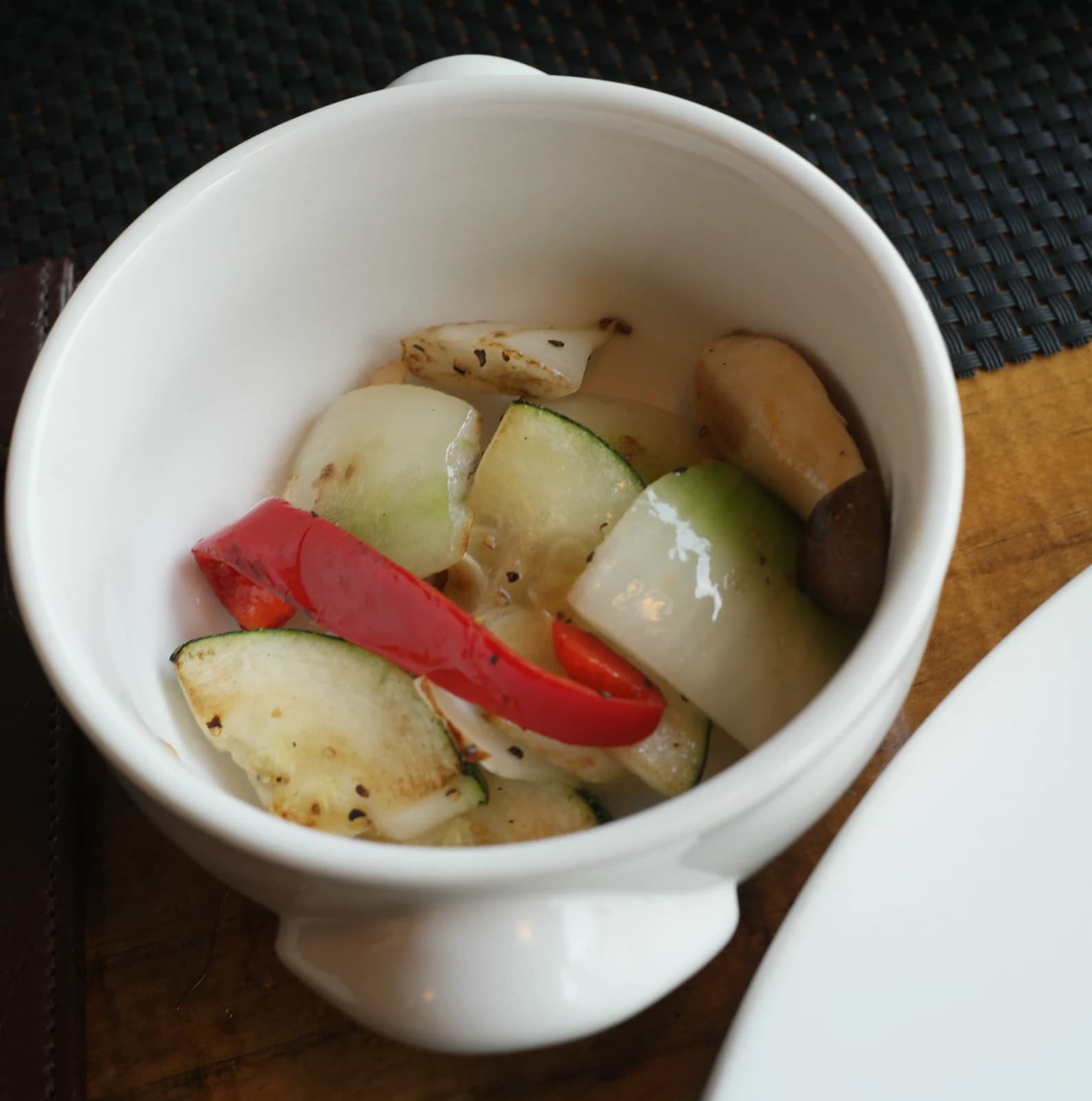
The side for the steak came separately, not on the same plate, but in a small bowl. Inside were grilled zucchini, onion, mushrooms and red chilli. They seemed to have been sautéed in oil, but there was barely any seasoning apart from a little pepper. If this had been a Korean BBQ restaurant, there would’ve been ten different side dishes on the table, but at a steakhouse this was it. Mum looked at it with an expression that said, “Is this all the side dish?” but western-style food is just like that, so fair enough. Still, when you keep eating only meat and your mouth starts to feel a bit heavy, picking at these vegetables does the job.
Cutting into the eye fillet
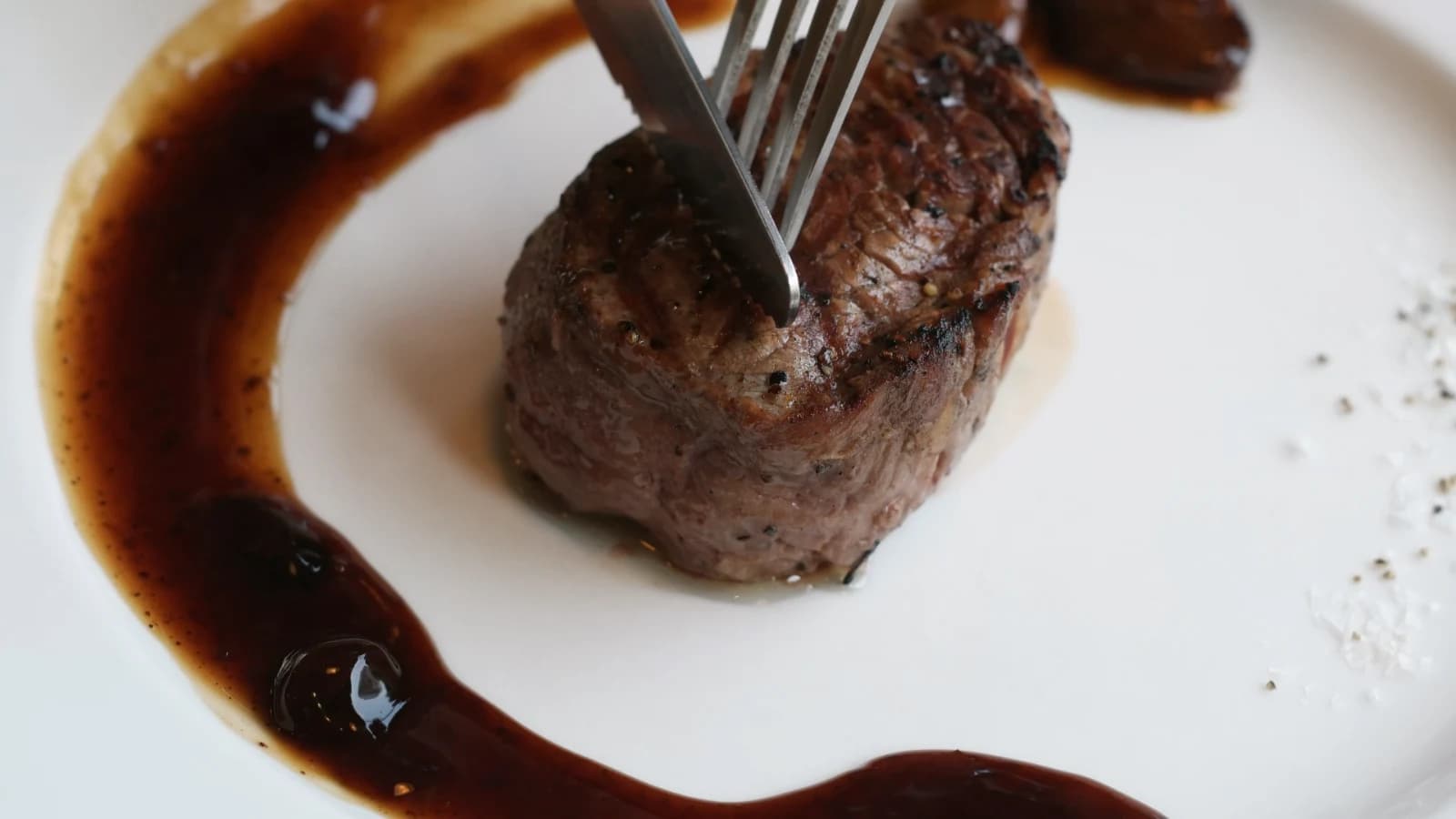
Right, time to cut into it.
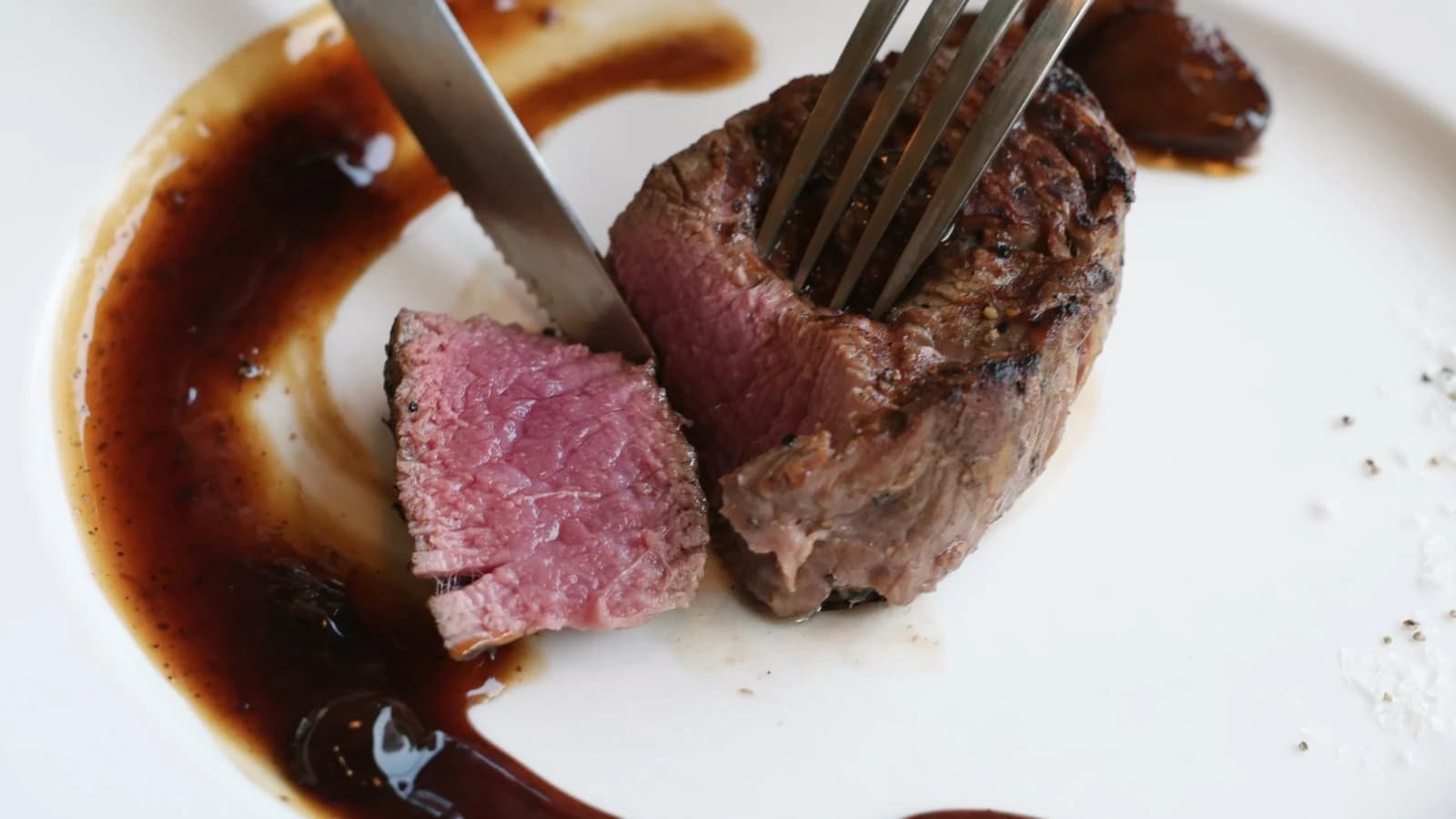
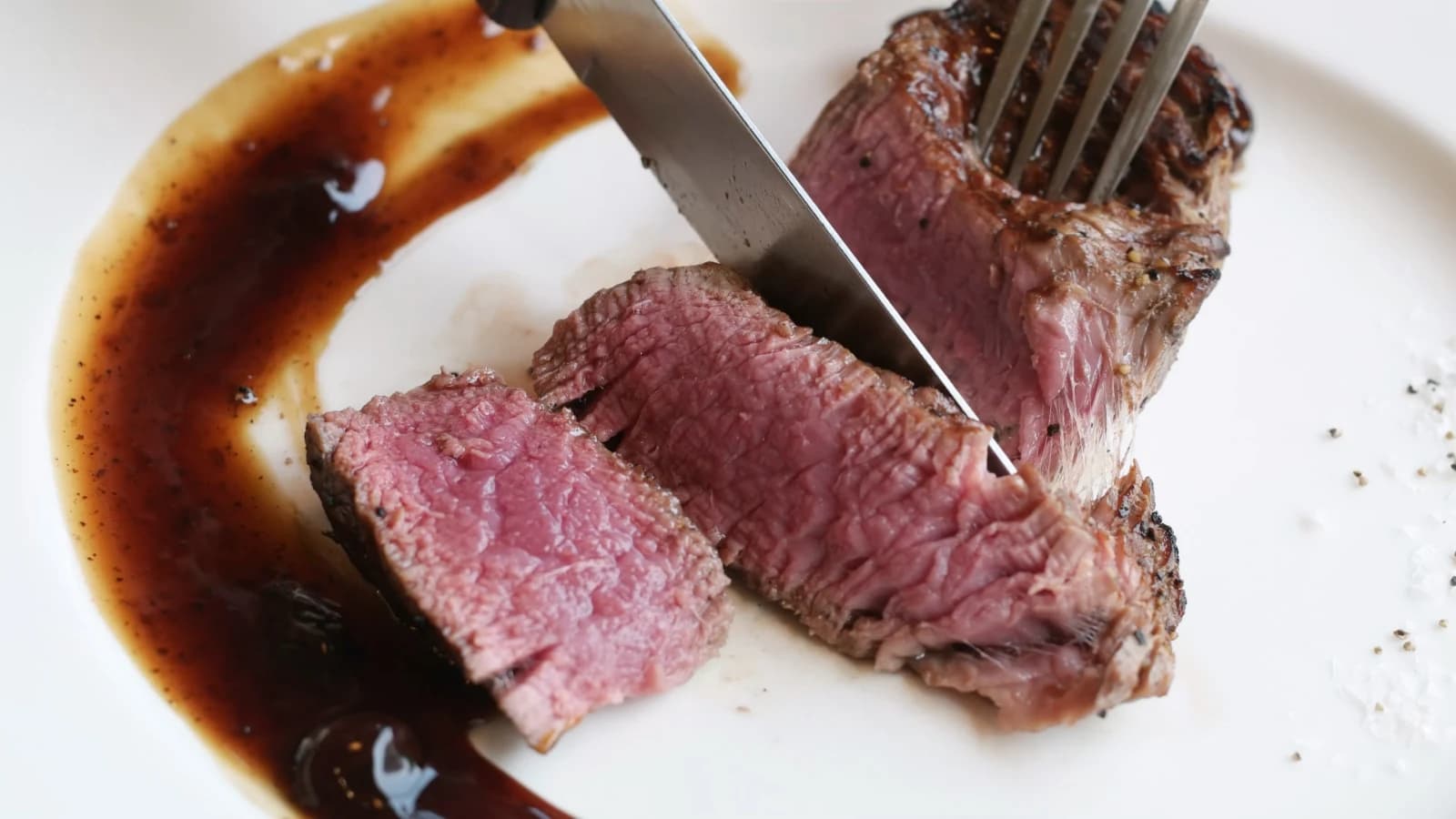
The moment I put the knife in, it barely needed any pressure. Eye fillet is already a tender cut, but this was at the level where the knife just slid through. Looking at the cross-section, the centre was a clear pink and the outside faded into brown in a neat gradient — exactly right for medium rare. When I cut another piece, you could see the juices pooling inside and spreading across the plate as they mixed with the sauce. Mum saw the red centre and said, “Isn’t this undercooked?” I told her to just try one piece, and she picked up her fork half-convinced, half-suspicious.
One piece dipped in sauce
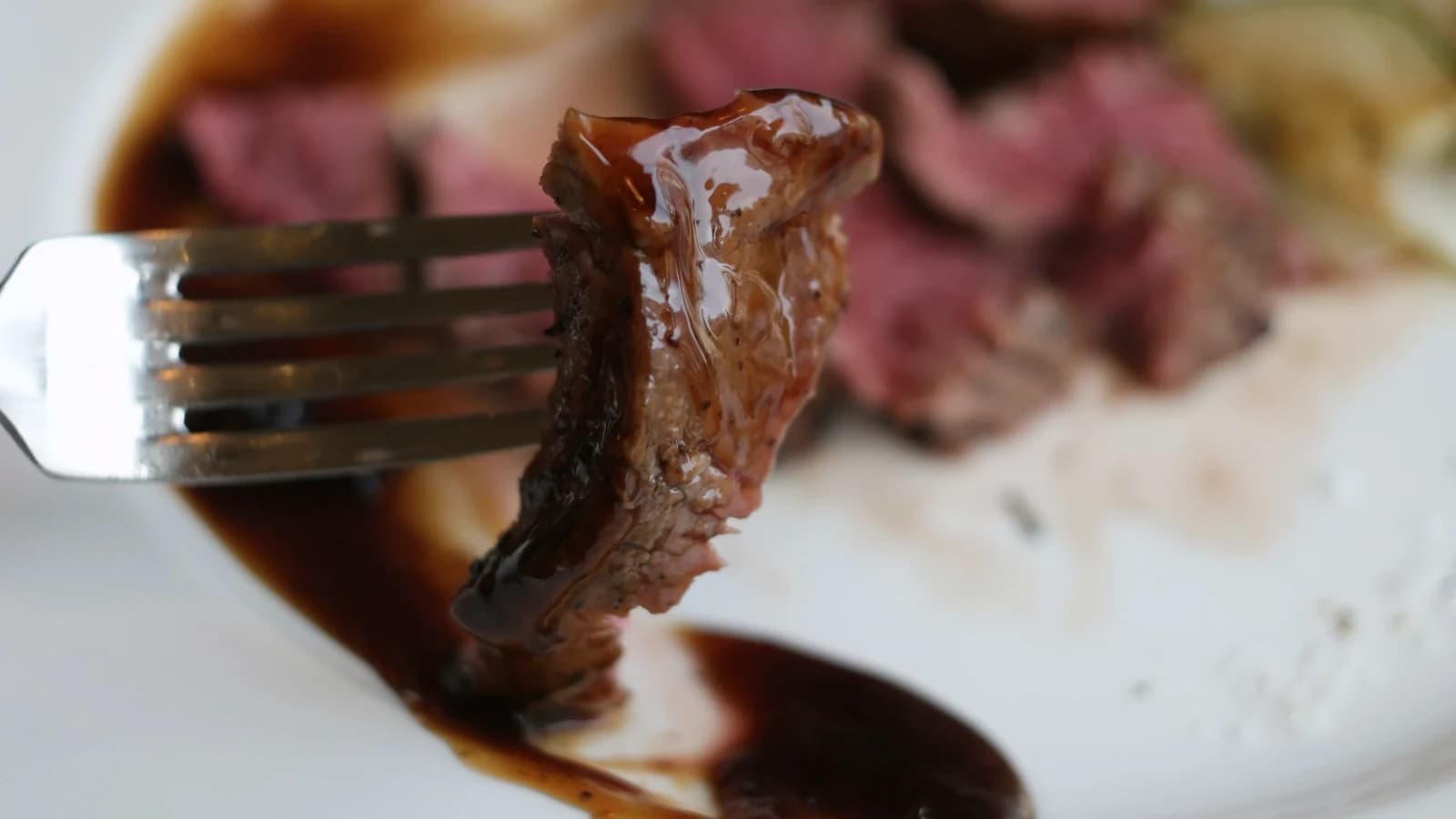
I cut one piece, dipped it properly into the sauce and lifted it up. The demi-glace ran down the surface of the meat, and once it went into my mouth, the clean flavour of the beef and the rich sweetness of the sauce arrived together. Eye fillet doesn’t have much fat, so it can feel a little plain if it isn’t handled well, but this sauce filled that gap perfectly.
The taste — beef that falls apart before you chew
Once it went into my mouth, the beef started falling apart before I even properly chewed. I’d already felt it when cutting with the knife, but on the tongue it just gave way without needing any effort. With only a little coarse salt and no sauce, the natural beef flavour came through clearly. With the sauce, the sweetness and savoury depth layered up. I kept alternating between the two. Going out for samgyeopsal after work is easy enough, but to eat steak properly like this, you really have to set aside the time and go out for it. That’s why meals like this feel precious when they happen.
The honest downside — the portion is small
The biggest thing that stayed with me after this meal was the portion size. On paper, the course looks pretty solid: soup, two types of salad, a side dish and the main. But the actual eye fillet, which was the main event, was less than 150 grams, so once I finished it, I still felt like I wanted more. Sure, by the time you’ve eaten the bread and salads you’re partly full, but that’s not the same as being full from beef. If you really love meat, that feeling of the main finishing before you’ve had enough lingers for a while.
Beef prices in Korea — why is it so expensive?
In Korea, if you want an eye fillet steak around this level, you usually need to pay somewhere between 30,000 and 40,000 won, roughly A$35 to A$47.
In Australia, a similar eye fillet can come out in the 20,000-won range, around A$23, and in the United States it’s also clearly cheaper than in Korea.
Korea, along with Japan, is one of the countries where beef prices sit among the highest in the world.
Korean hanwoo beef costs three or four times more than imported beef, and even when restaurants use imported beef, tariffs and distribution costs make it much pricier than it would be locally. But the thing is, when it’s expensive, the flavour usually backs it up. Hanwoo has fine, dense marbling, and if it’s cooked properly the juices burst out beautifully. Even imported beef, once it goes through the hands of Korean chefs, tends not to disappoint. My honest take is that beef in Korea is expensive, but it’s also a country where it often does feel worth the money.
Rare and medium rare — a world of divided opinions
I can eat rare, and I’m perfectly fine with medium rare, but this is definitely where people split. Even among Koreans, quite a few people can’t handle beef that’s red inside. Mum used to be one of them, but after she tried one piece that day, she kept eating without saying much. My wife doesn’t eat beef, so I basically never go out for steak with her. It’s always a bit of a shame that I can’t share this flavour with her, and maybe that’s why this day out with mum stuck in my memory even more.
The drive home
On the way home in the car, mum quietly said, “Bring me here again next time.” I laughed and said sure. I did think maybe next time I could try convincing my wife to come along too. Since she doesn’t eat beef, it probably won’t be easy, but the thought was there.