
Tenderloin Steak Course for $25 — A Dinner with Mom in Korea
Table of Contents
17 items
This was a while back, during the summer. My mom and I headed out to a steakhouse in Daejeon — a mid-sized city in central South Korea. We don't usually go out of our way to find a proper steakhouse; most nights, dinner's just whatever's close to home. But that day, I was seriously craving meat, and Mom happened to be free, so off we went. One thing about steakhouses in Korea — they don't just drop a slab of beef in front of you. You get a full course: soup, salad, bread, sides, and then the main. It's a totally different vibe from your typical American chophouse. The reason that meal still sticks with me? The filet mignon practically dissolved on my tongue — but I'll get to that.
The Scene Inside the Restaurant
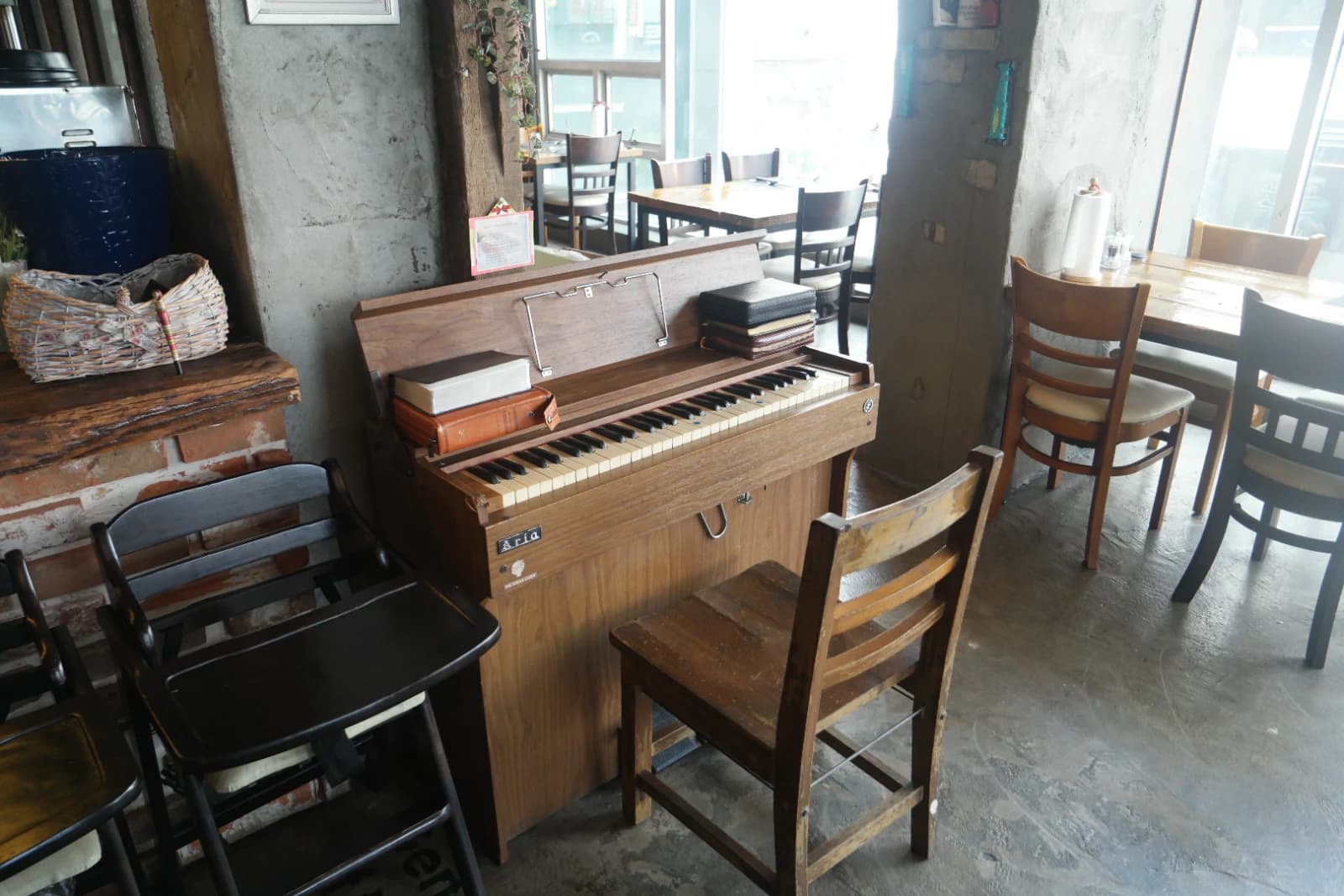
The first thing I noticed walking in was an old piano sitting against a bare cement wall. There were menus piled on top of the keys, so clearly nobody's playing Chopin here, but wedged between the concrete and the wooden chairs, it actually worked as decor. Light from the window was spilling across the top of the piano, and honestly, I wasn't expecting this kind of atmosphere from a neighborhood steakhouse. Back home, grabbing Korean BBQ after work is an everyday thing, but deliberately sitting down at a steakhouse? That's a different kind of occasion. Just being there felt a little special.
The Table Setting
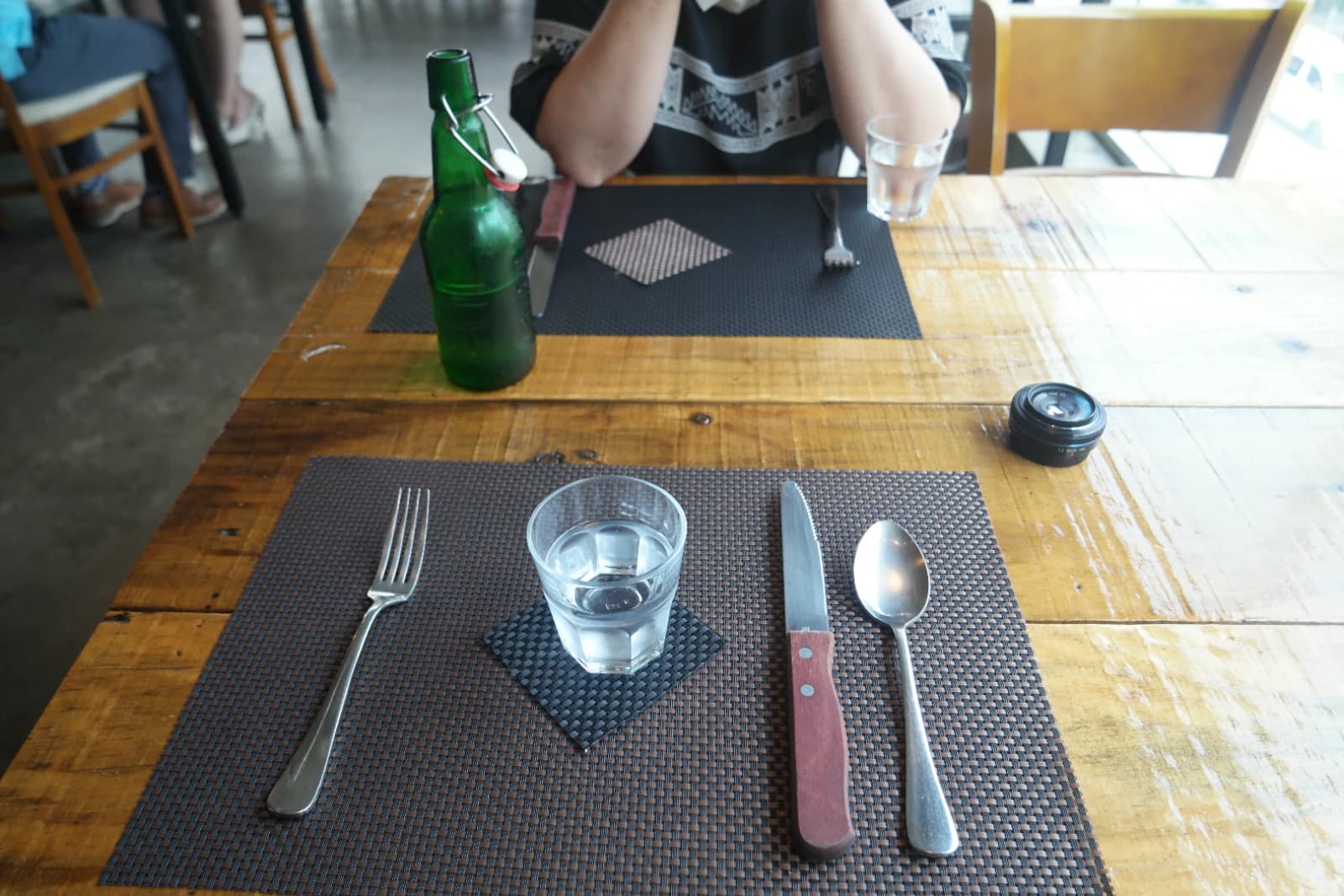
When we sat down, the table was already set up like this. A steak knife, fork, and spoon — all with wooden handles — were neatly lined up on a placemat, and the water came in a green beer bottle. Mom picked it up and said, "Is this alcohol?" I poured some out and nope, just water. Every table had the same bottles, so it must've been a house thing. Little touches like that really do set the mood, though.
The Course Begins — Soup and Bread
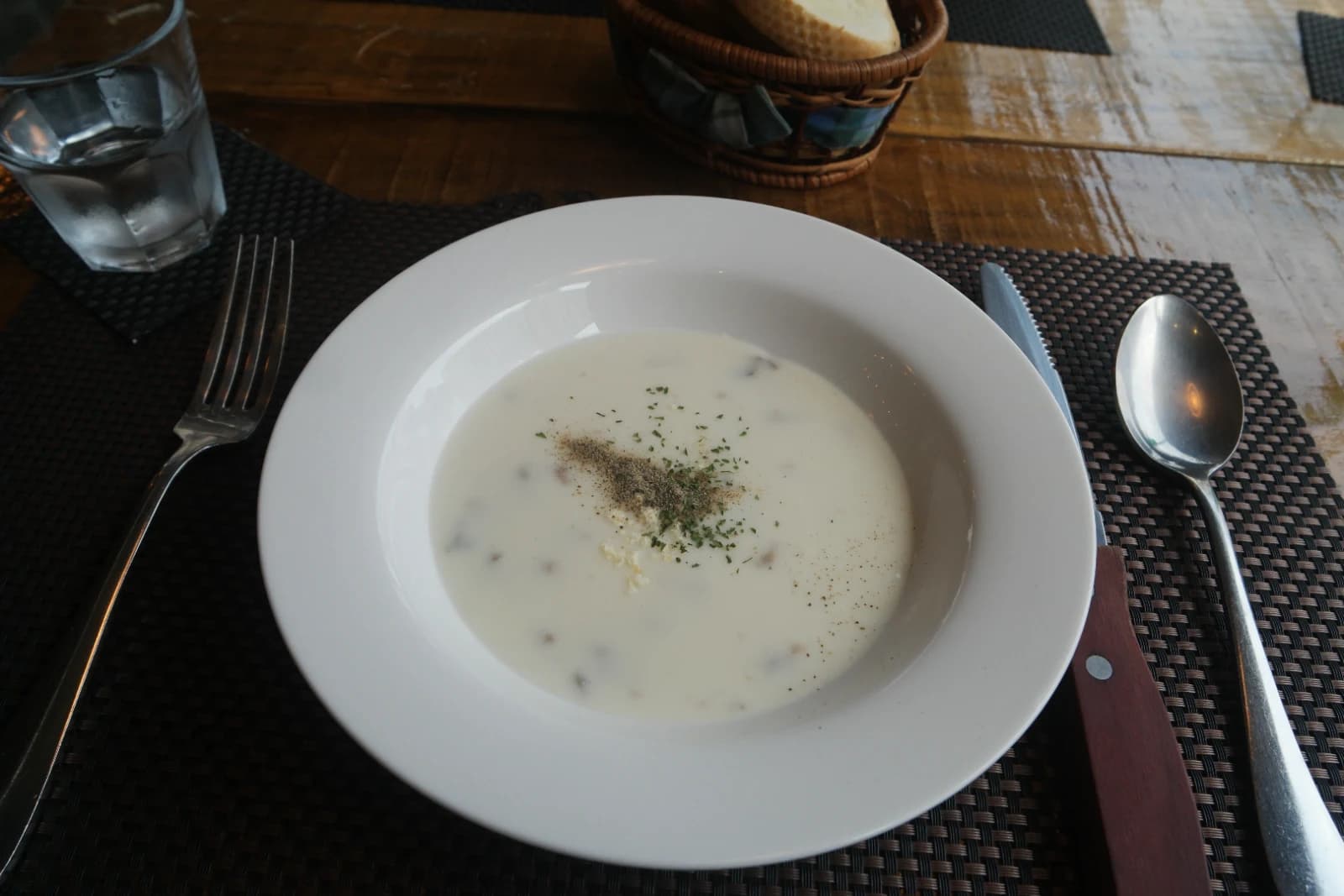
After ordering, the soup comes out first. That's pretty standard at Korean steakhouses — they bring everything out one dish at a time, course-style, building up to the main. This one was a cream soup with a light dusting of parsley and pepper on top and little chopped bits mixed in underneath. The portion wasn't big, but it's really just there to warm you up before the main event, so it was plenty.
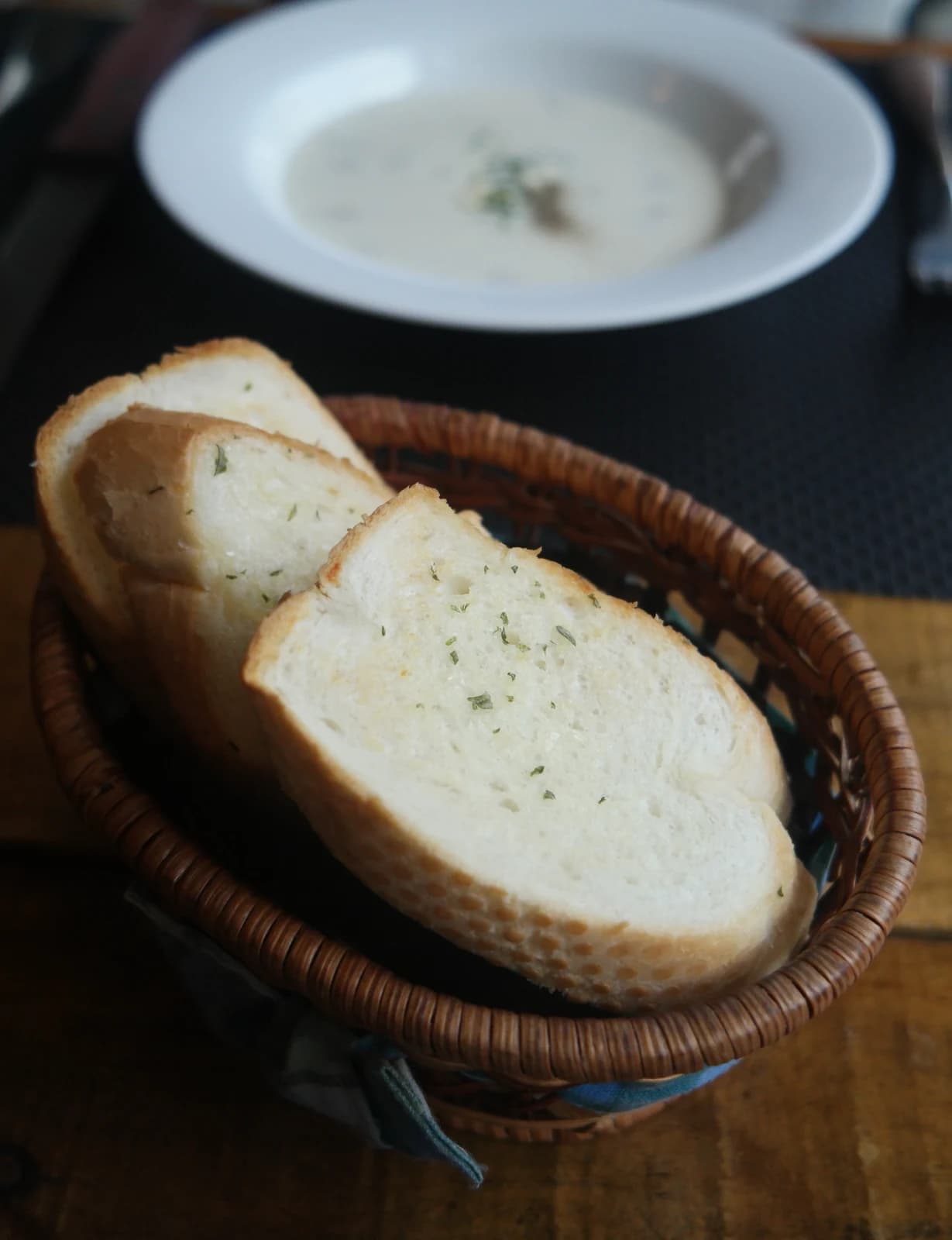
This came out alongside the soup. Two slices of baguette sitting in a rattan basket, dusted with parsley and showing traces of butter soaked in. That said, it wasn't the soft, garlicky style of bread that a lot of Korean steakhouses serve these days — this was a more classic baguette, crispy on the outside and a bit dense on the inside.
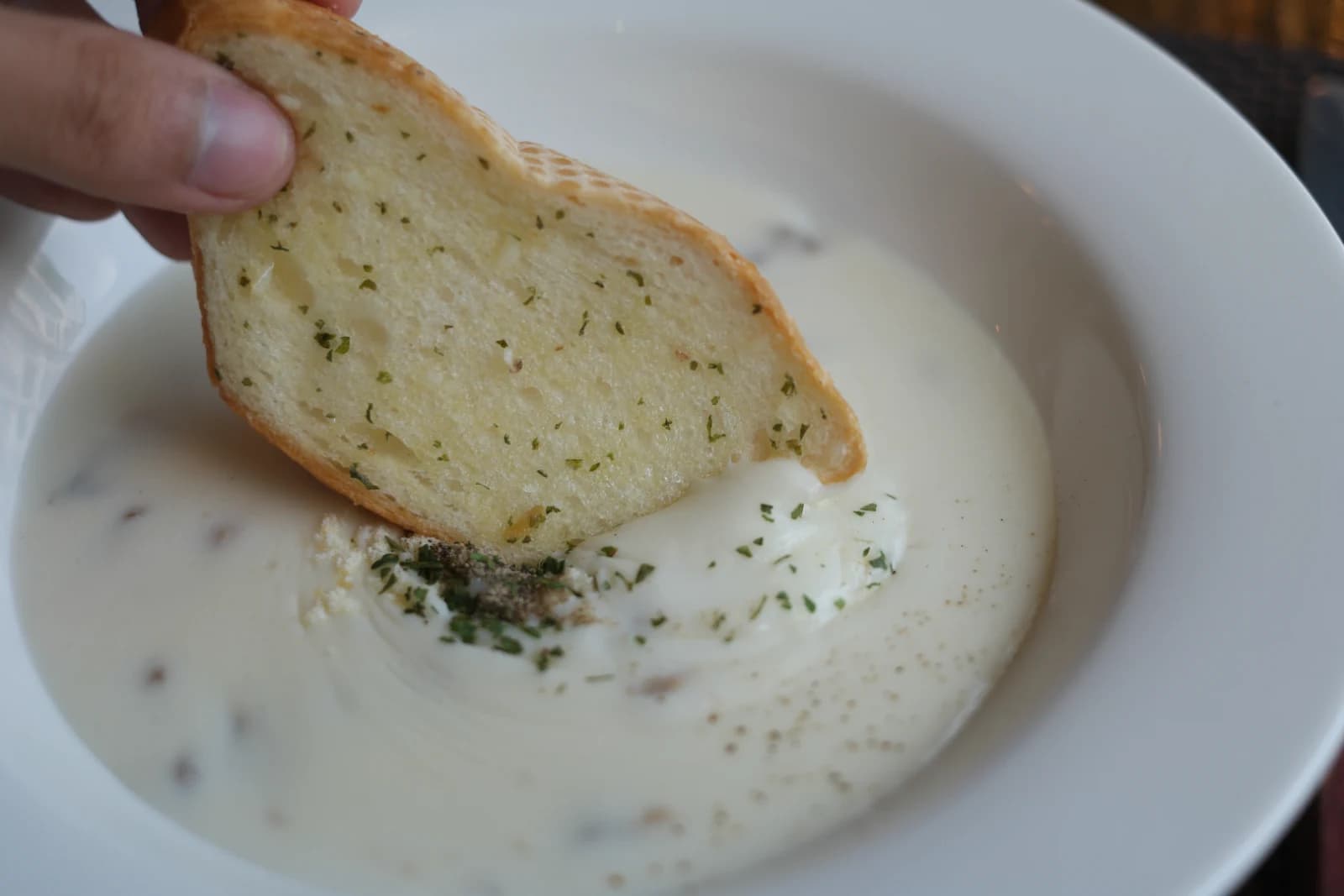
But dip it in the soup and everything changes. The cream soaks into that crusty exterior and the dryness just vanishes. That's exactly why Korean steakhouses always serve the soup and bread together. On their own, they're both pretty plain. Together, though, the combo really clicks.
Salmon Salad — Mom Claimed the Entire Plate
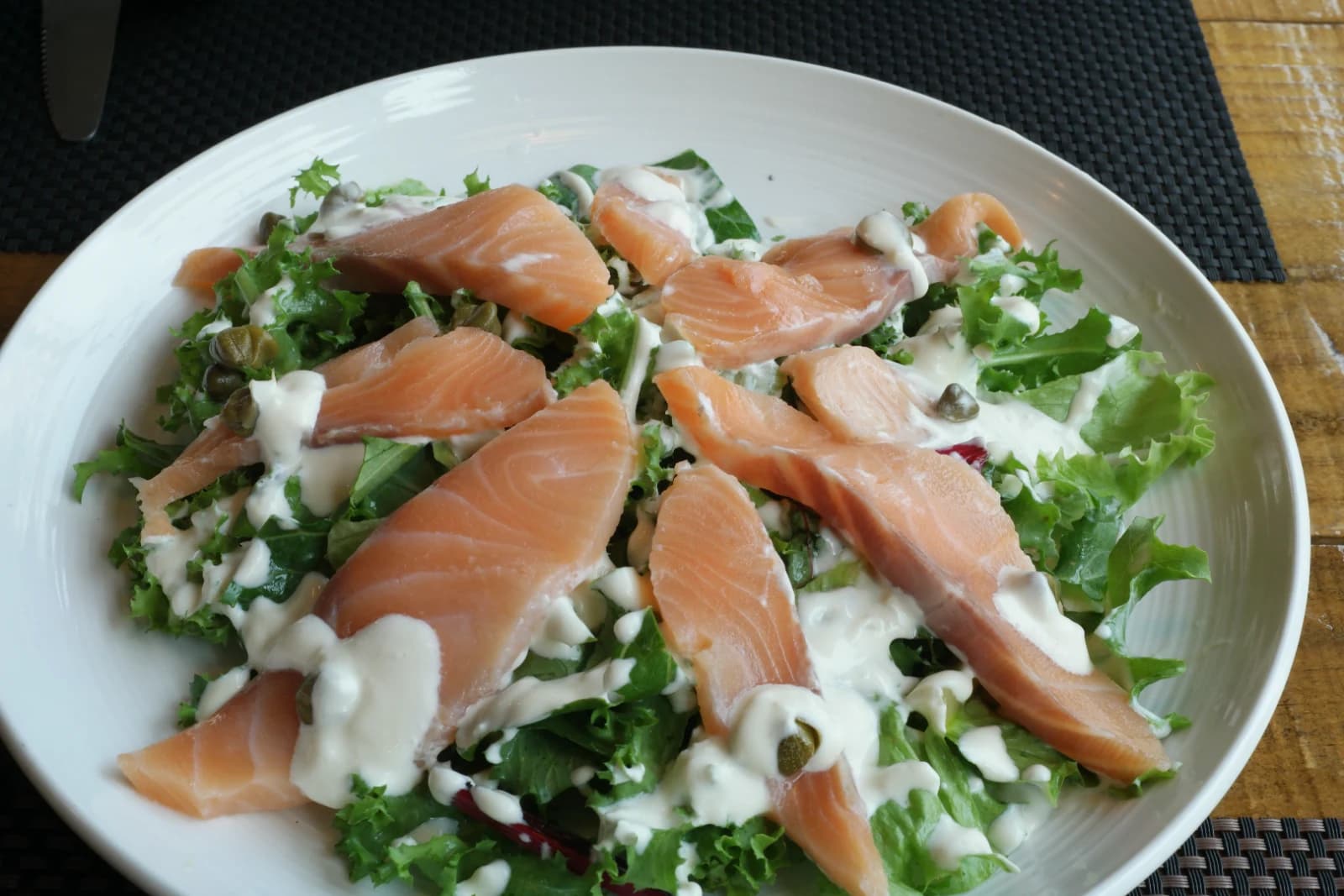
Next up after the soup was a salmon salad. At a Korean steakhouse, it's pretty common to get a salad course squeezed in before the main. This one had a bed of mixed greens topped with five or six generous slices of smoked salmon, with capers scattered throughout. The dressing was cream-based, and it blended nicely with the salmon's smooth flavor without getting too heavy. Now, my mom is a huge sashimi person, so she was ready to demolish this plate by herself. She kept spearing just the salmon with her fork, so I said, "At least eat some of the greens." She looked at me and said, "I came here for this."
Salmon Close-Up
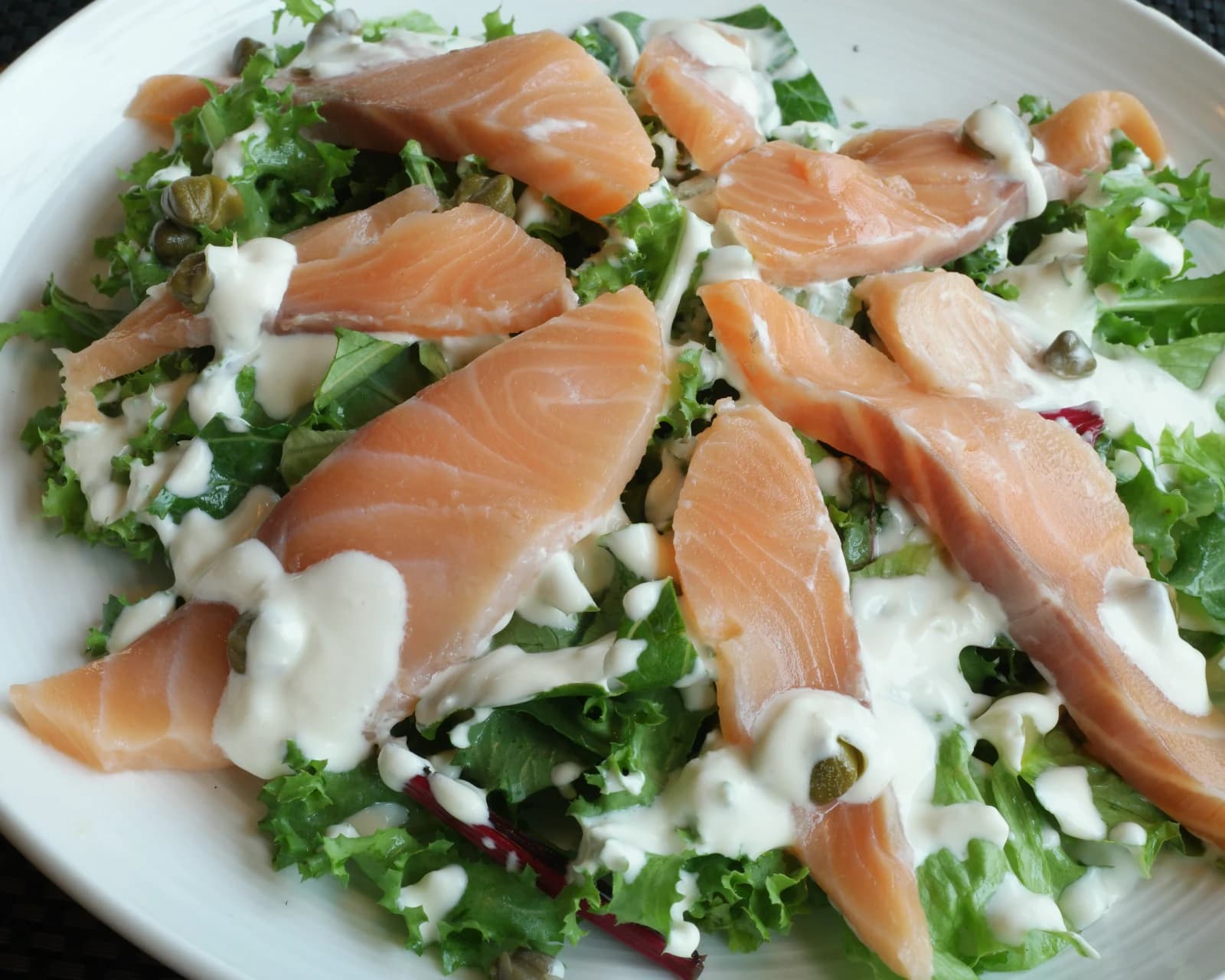
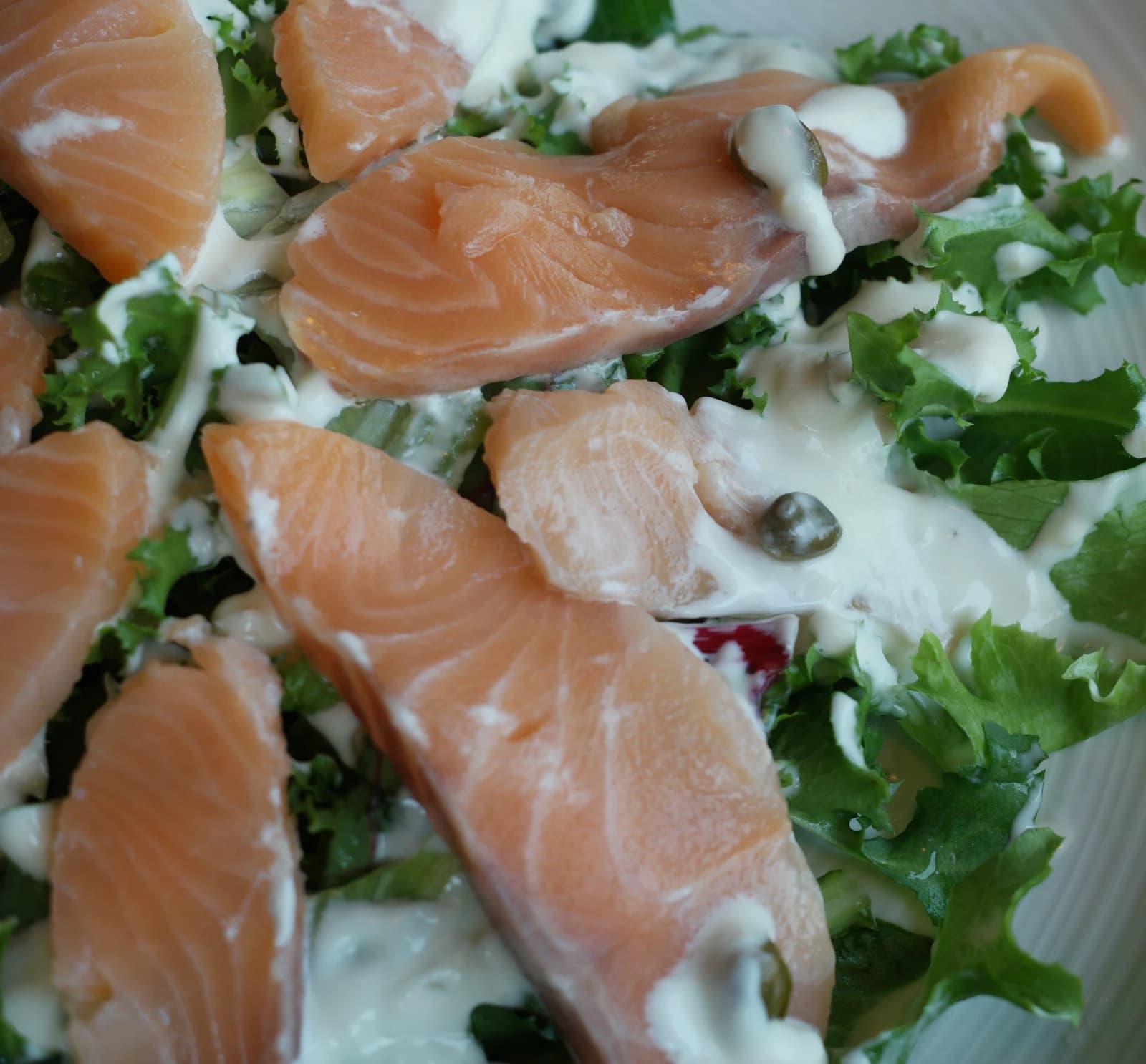
Up close, the salmon looked really good. The grain was clearly visible and the color was an even, rich orange. Each slice was cut thick enough to give you something to chew on. You can spot the capers hiding between the leaves, and every time you bite into one, it pops with a little burst of tartness. Without them, the cream dressing could get monotonous — the capers are what keep the whole thing balanced.
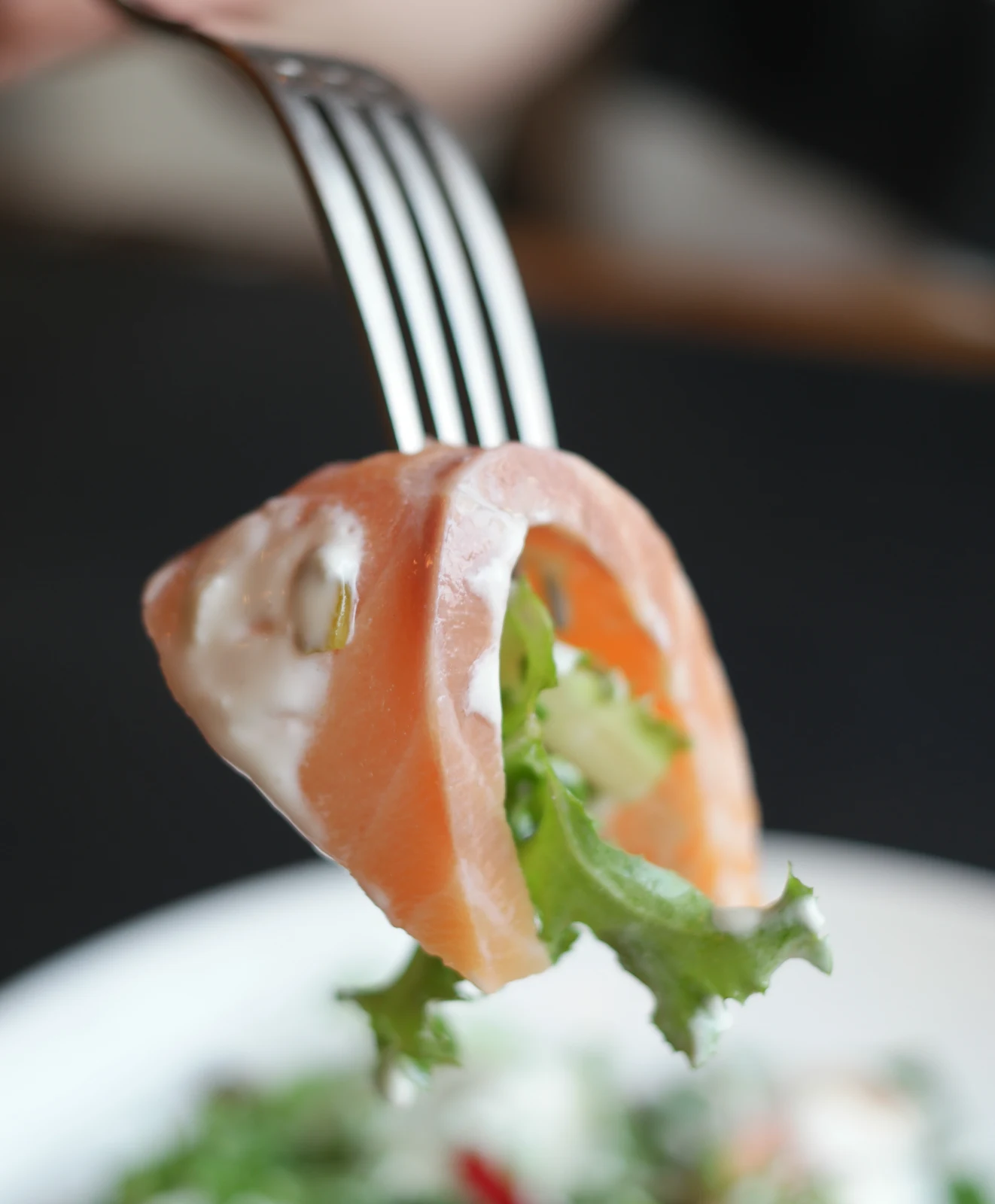
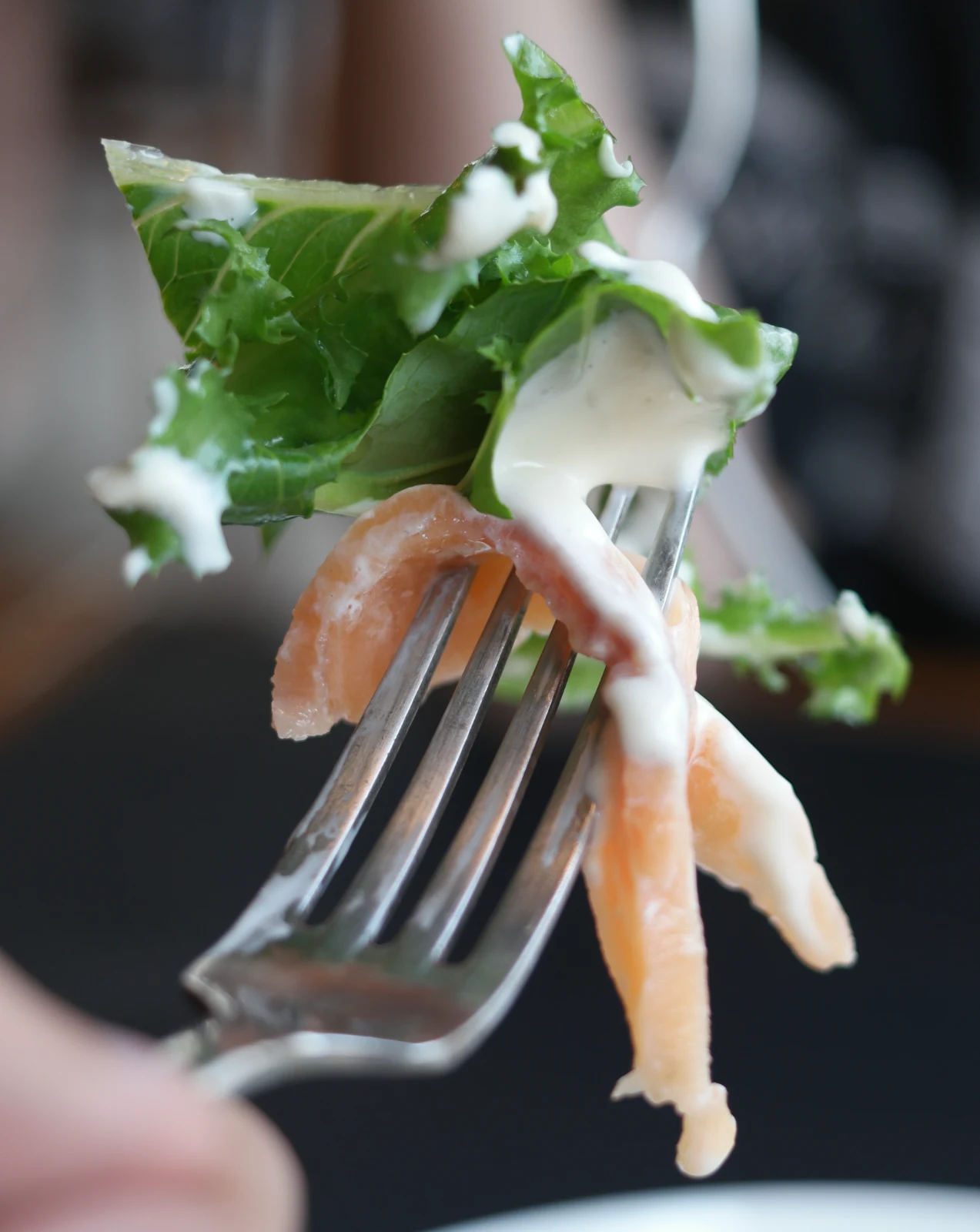
When you lift a slice of salmon with your fork, the greens come along for the ride and the dressing drizzles down in streams. The best way to eat it was wrapping the salmon around the greens and getting everything in one bite — the silky texture of the fish and the crunch of the vegetables hit your mouth at the same time. Mom, of course, skipped all that and just picked out the salmon pieces one by one.
Sirloin Steak Salad
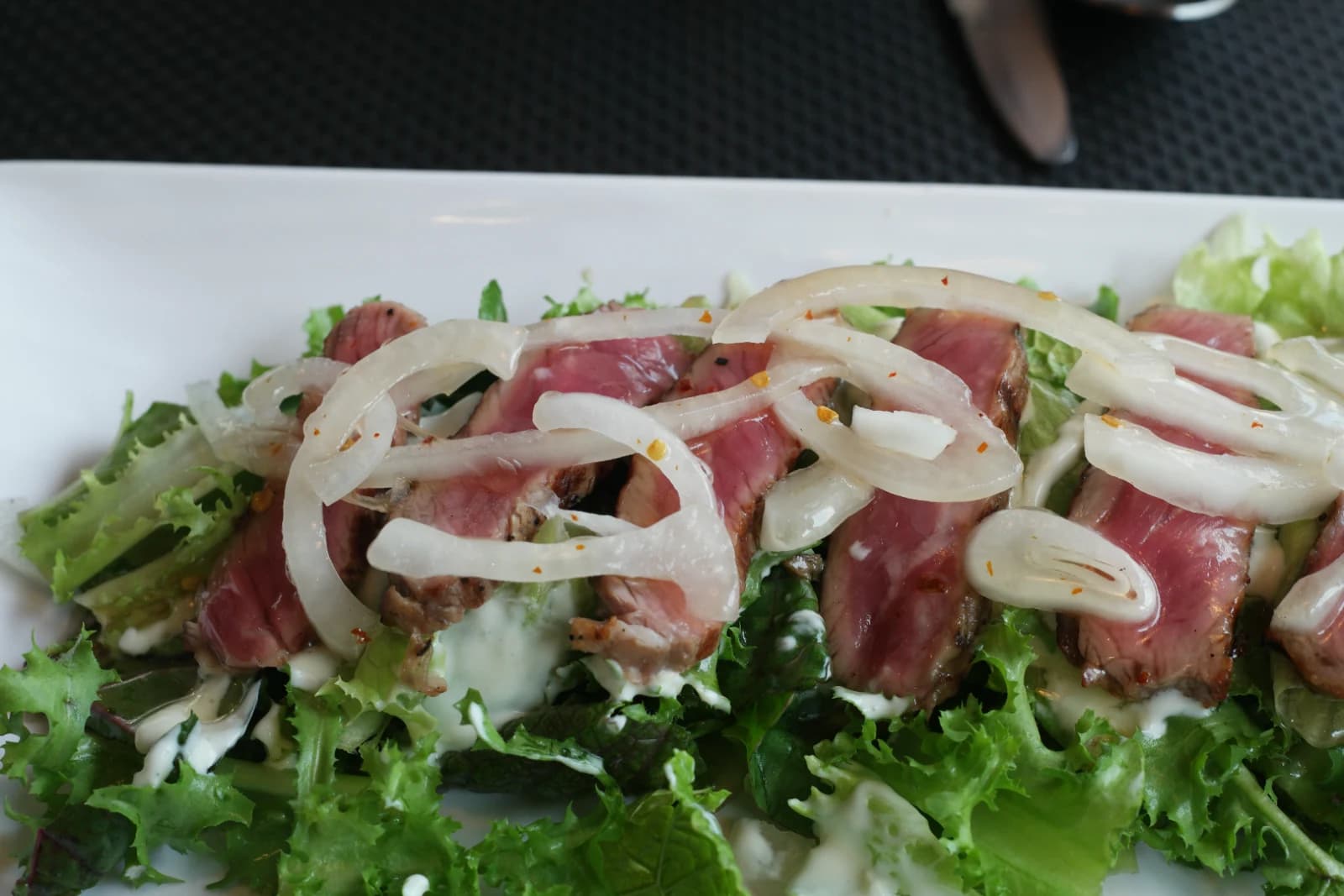
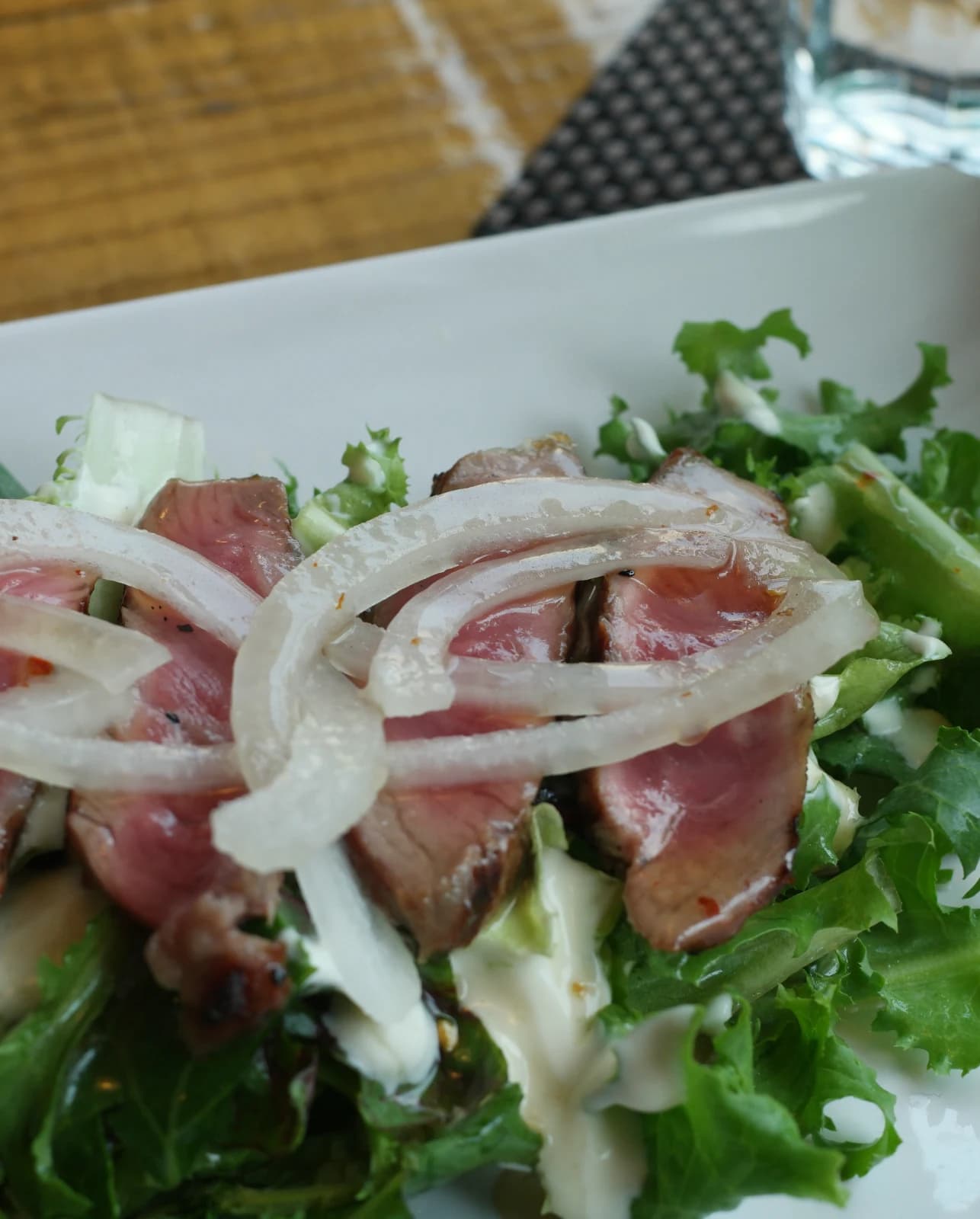
Right as we were nearly done with the salmon salad, the next plate arrived. This time it was sirloin — seared hard on the outside so the inside stayed pink, then thinly sliced and laid over a bed of greens. Onion slices were scattered across the top, and you could see little orange-ish spice granules on the surface of the meat, like some kind of seasoning rub. Getting this right after the salmon salad meant I was already starting to fill up before the main even came out. Looking closely, the cross-section of the beef was cooked right at medium — a charred brown exterior fading into a rosy pink center. My one gripe: there was a lot of onion. Enough that you'd sometimes bite into onion before the actual beef.
Sirloin Slice Close-Up
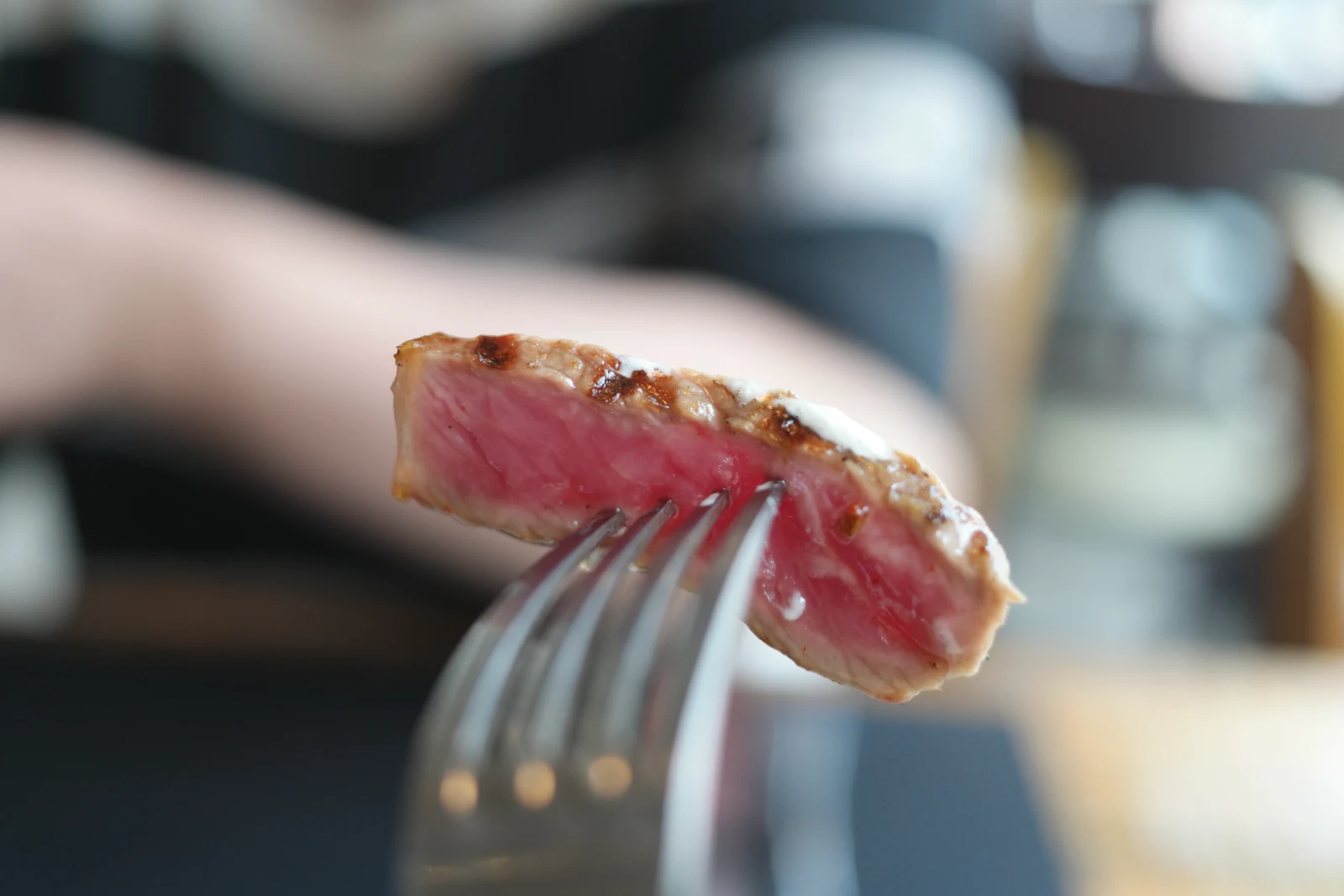
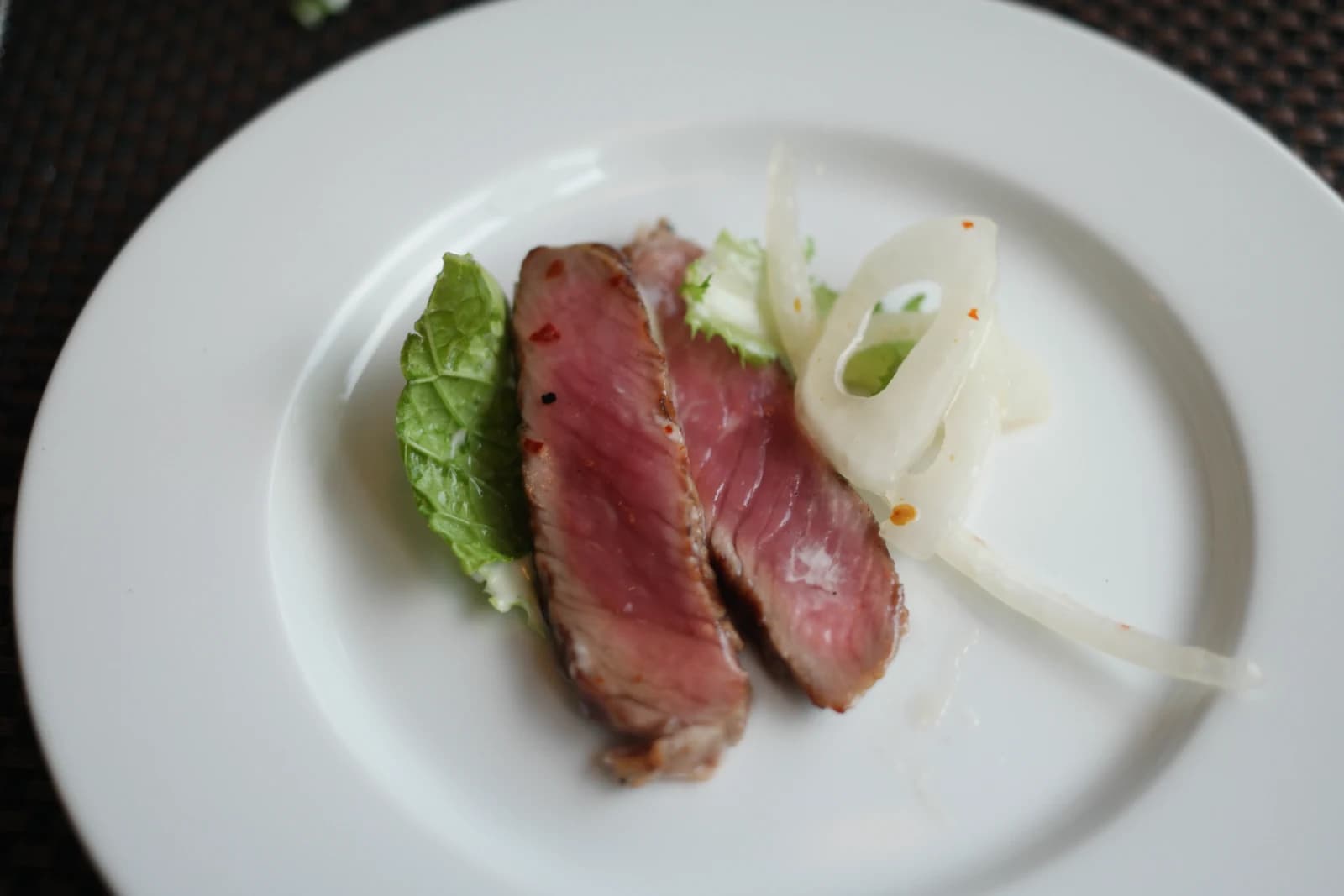
Spear a piece with your fork and the cross-section really pops. The outside is nicely charred brown and the inside is a vivid pink — closer to medium rare. Plated separately, you're looking at two slices of beef with some onion and greens. For a mid-course dish, that's about the right amount.
The Main Event — Filet Mignon Arrives
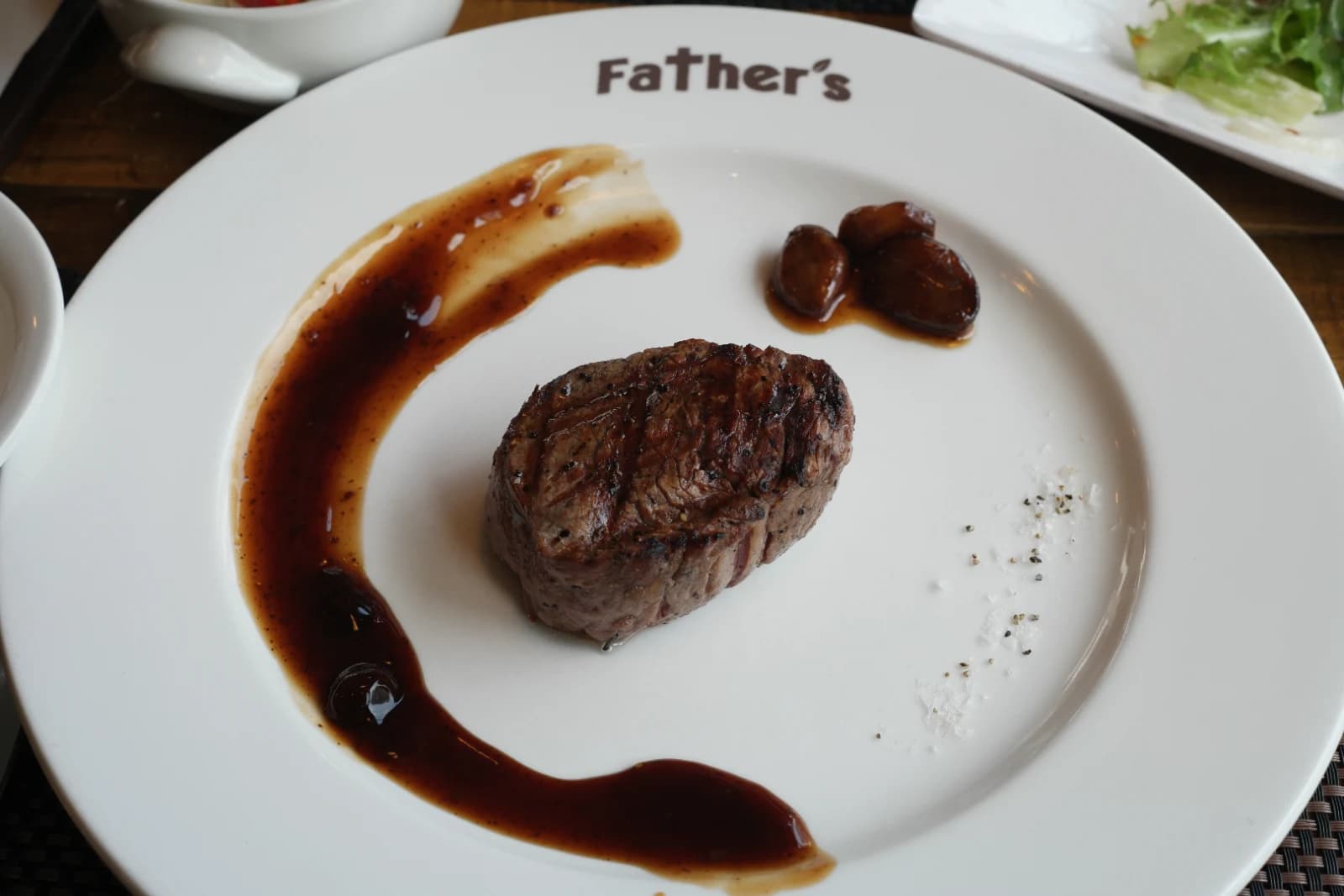
Finally, the main course. Filet mignon. A thick, gorgeous cut sitting right in the center of the plate, with a dark brown sauce drizzled in a half-moon around it. A couple of roasted whole garlic cloves clung to the edge of the sauce, and on the opposite side, coarse salt and cracked pepper were sprinkled across the plate. For anyone unfamiliar, tenderloin — or filet mignon — comes from the inner loin of the cow. It has almost no fat and is incredibly tender. It's the softest cut you can get for a steak, so the knife practically glides through it.
Tenderloin Details
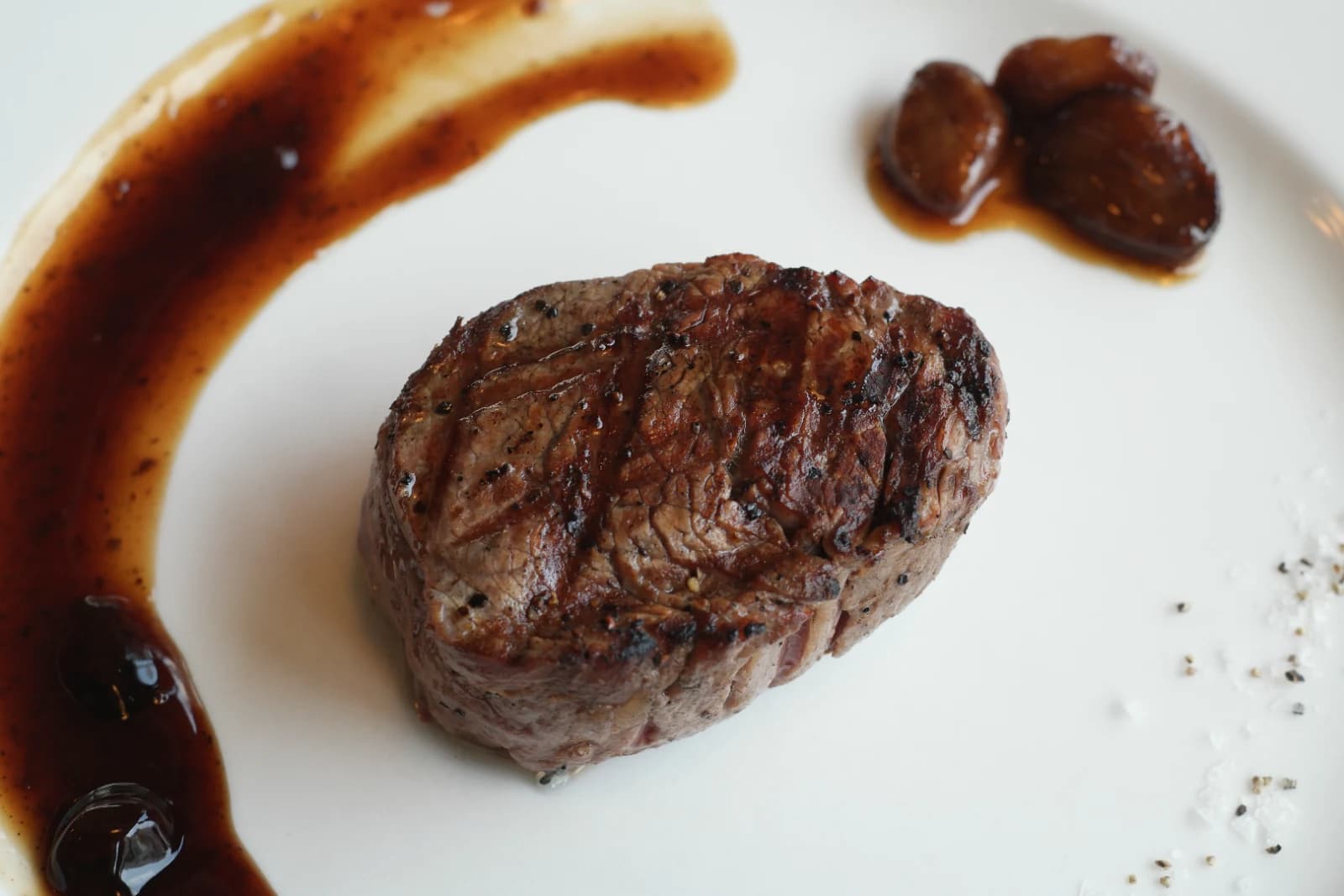
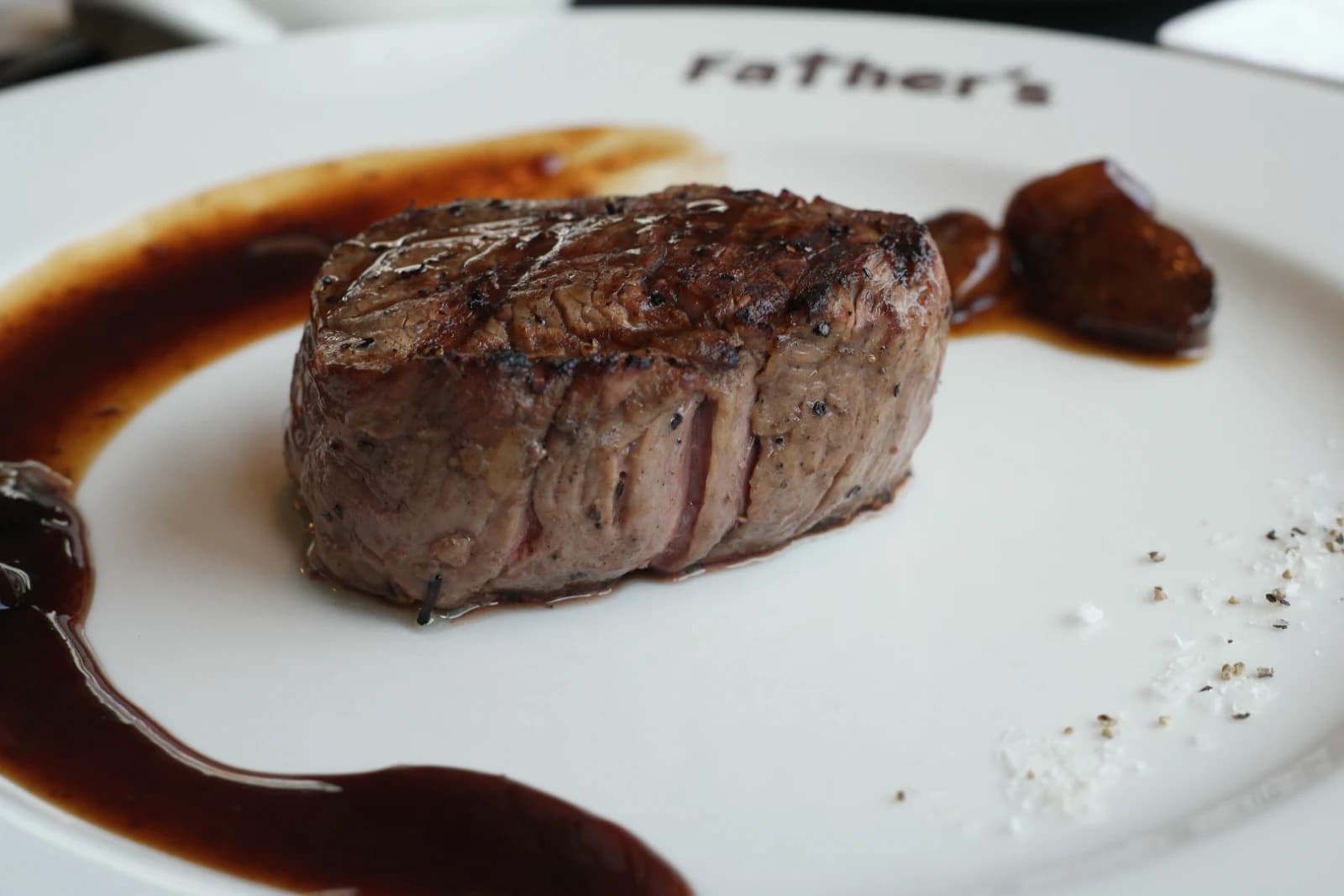
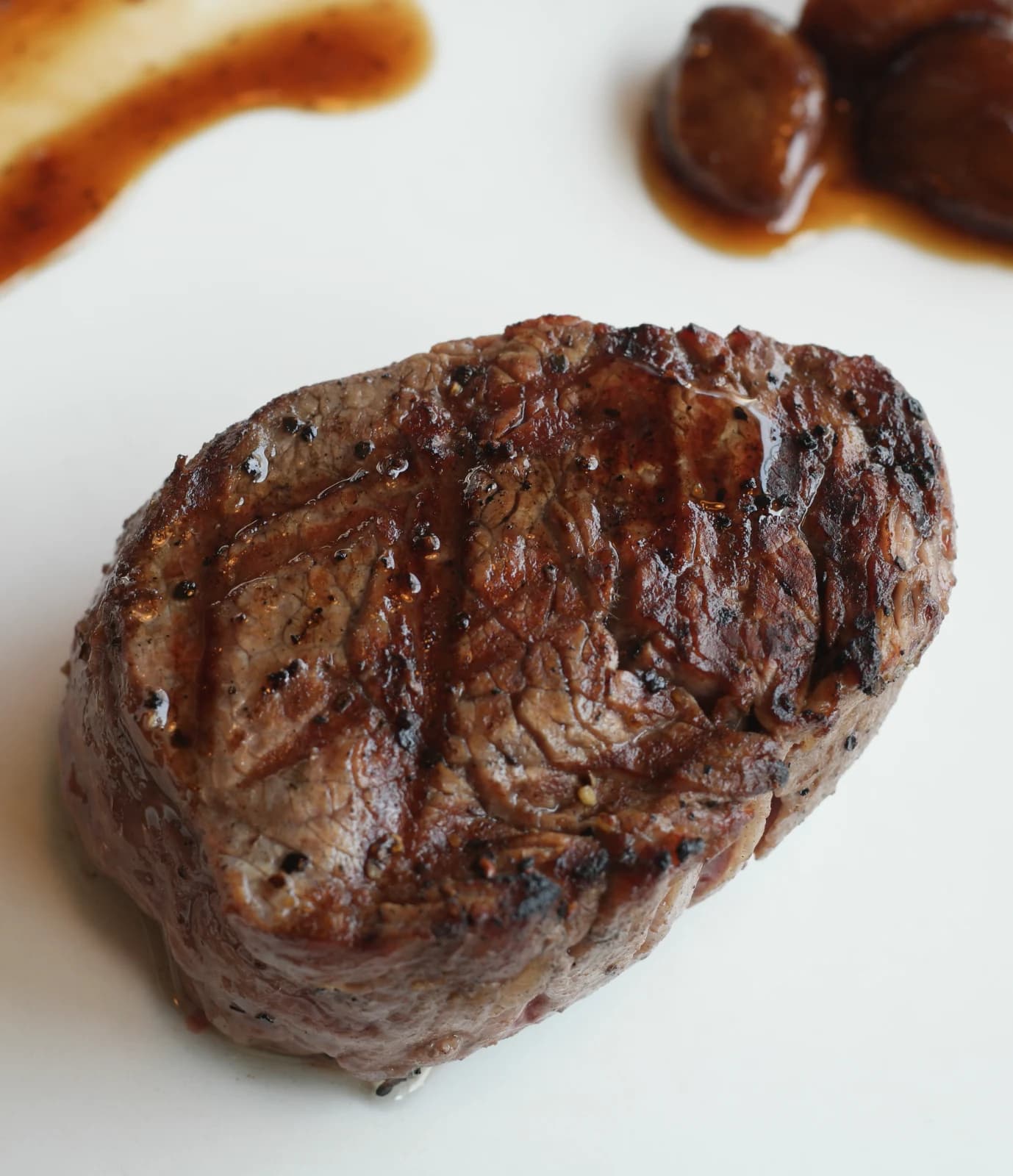
From above, you can see sharp grill marks stamped across the surface with peppercorns embedded here and there. From the side, the steak looked about two finger-widths thick, and it had that classic tenderloin shape — round and compact. A thin layer of rendered fat was glistening along the edge. Zoom in even further and you can really see how hard that sear is. Juices were actually beading up in the tiny cracks on the crust. The sauce was a deep brown demi-glace, and the roasted garlic cloves beside it were half-submerged in it, gleaming with a slick coat.
Side Dish — Grilled Vegetables
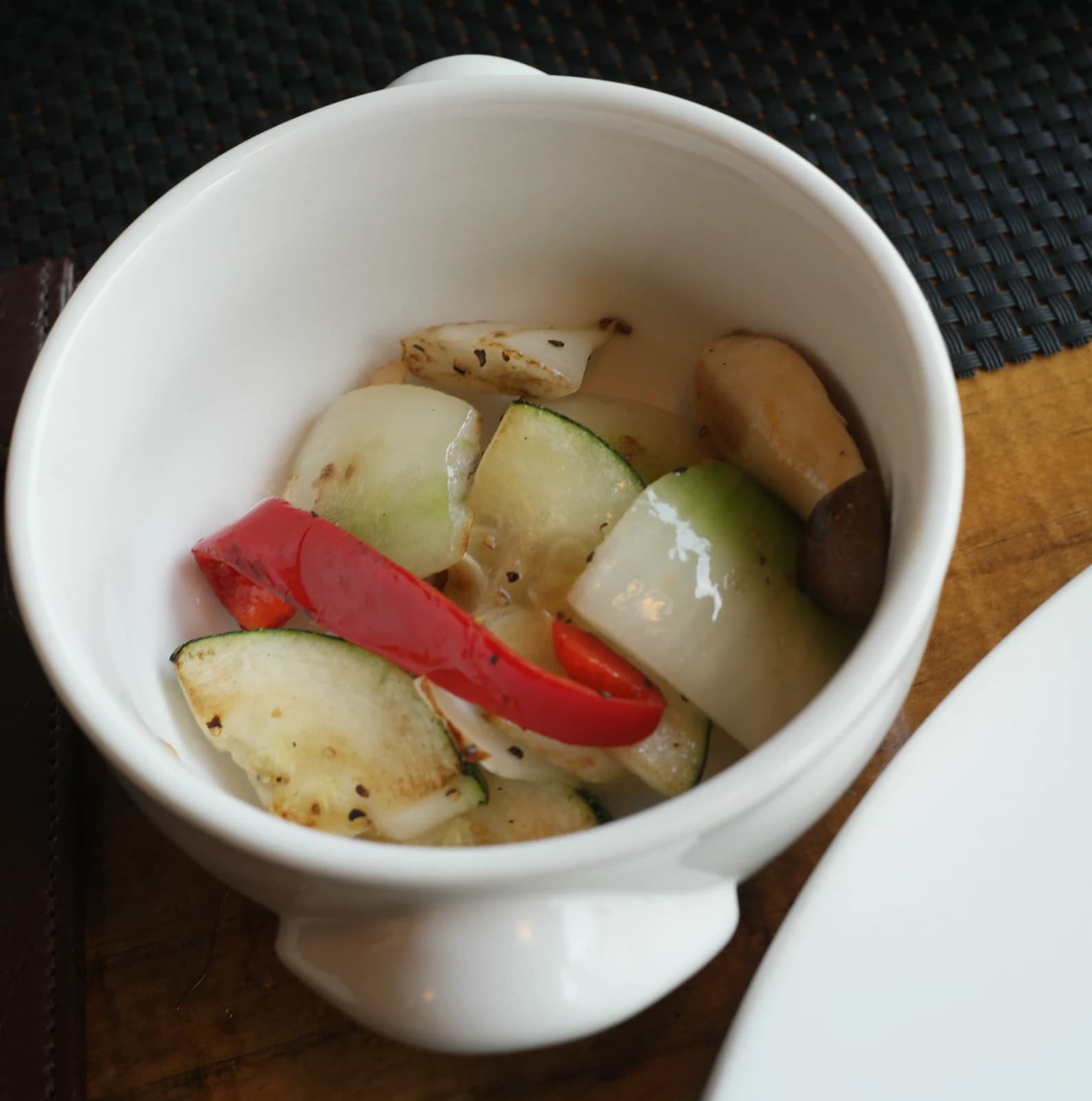
The steak came with a side, served in its own separate little bowl rather than on the same plate. Inside were grilled zucchini, onion, mushrooms, and red pepper. They seemed sautéed in oil with barely any seasoning — just a light hit of pepper. If this were a Korean BBQ spot, you'd have at least ten different banchan dishes spread across the table. At a steakhouse, this is all you get. Mom looked at it and gave me one of those "that's it?" faces, but that's just how Western-style dining works. Still, after eating nothing but beef for a while, your palate starts to get fatigued, and popping one of these veggies in your mouth at just the right moment does help reset things.
Cutting Into the Filet
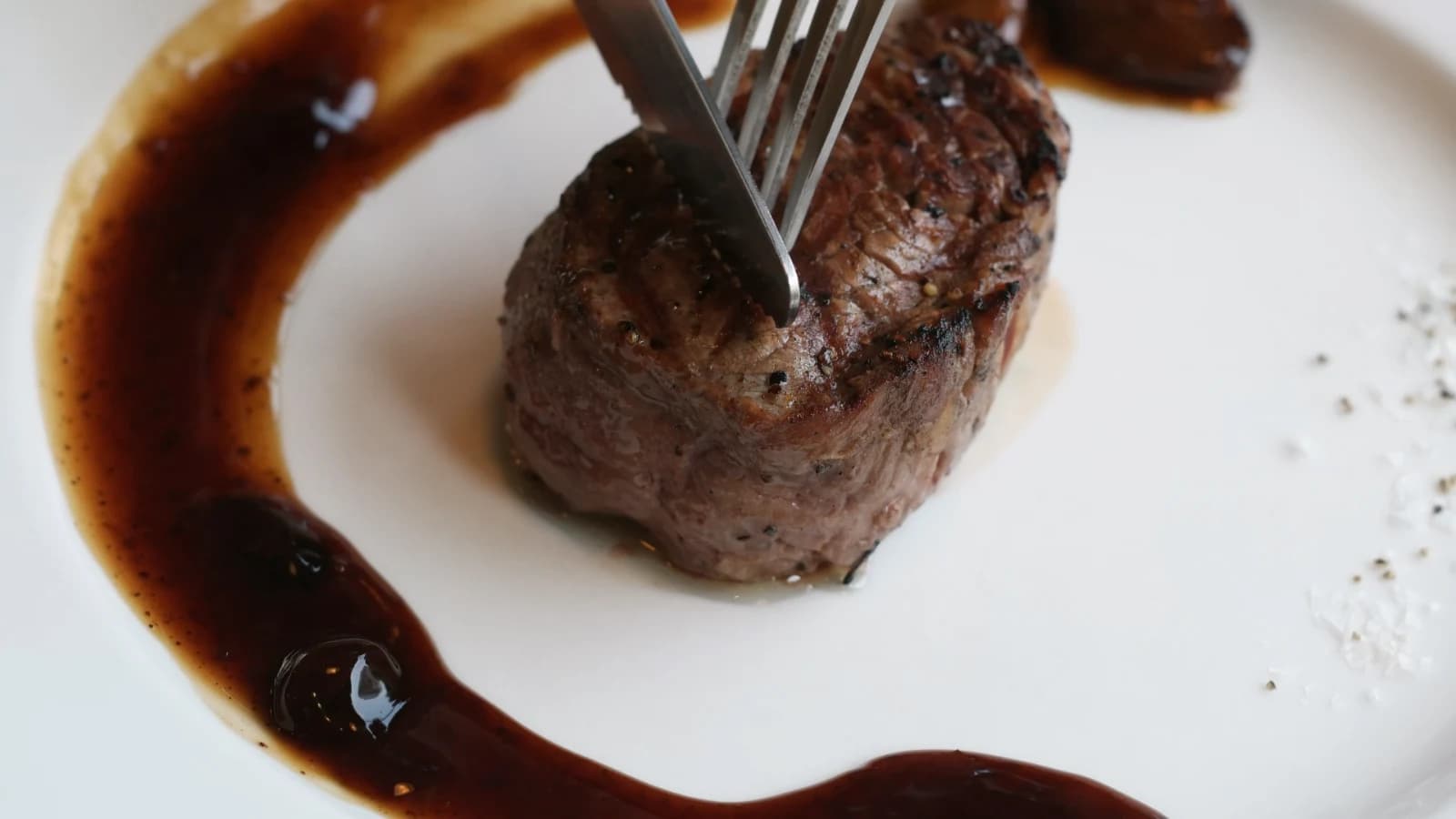
Alright, time to cut into it.
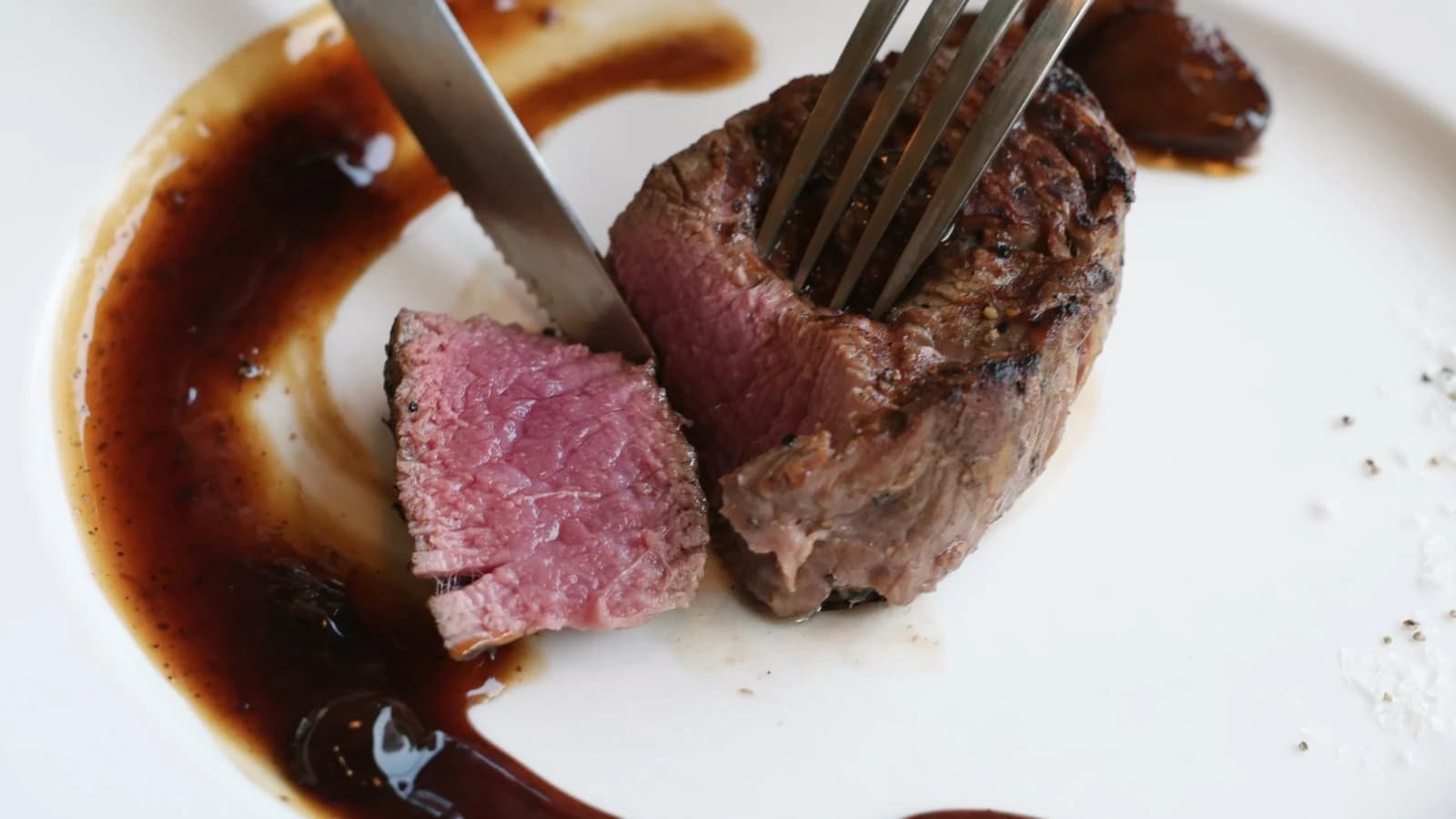
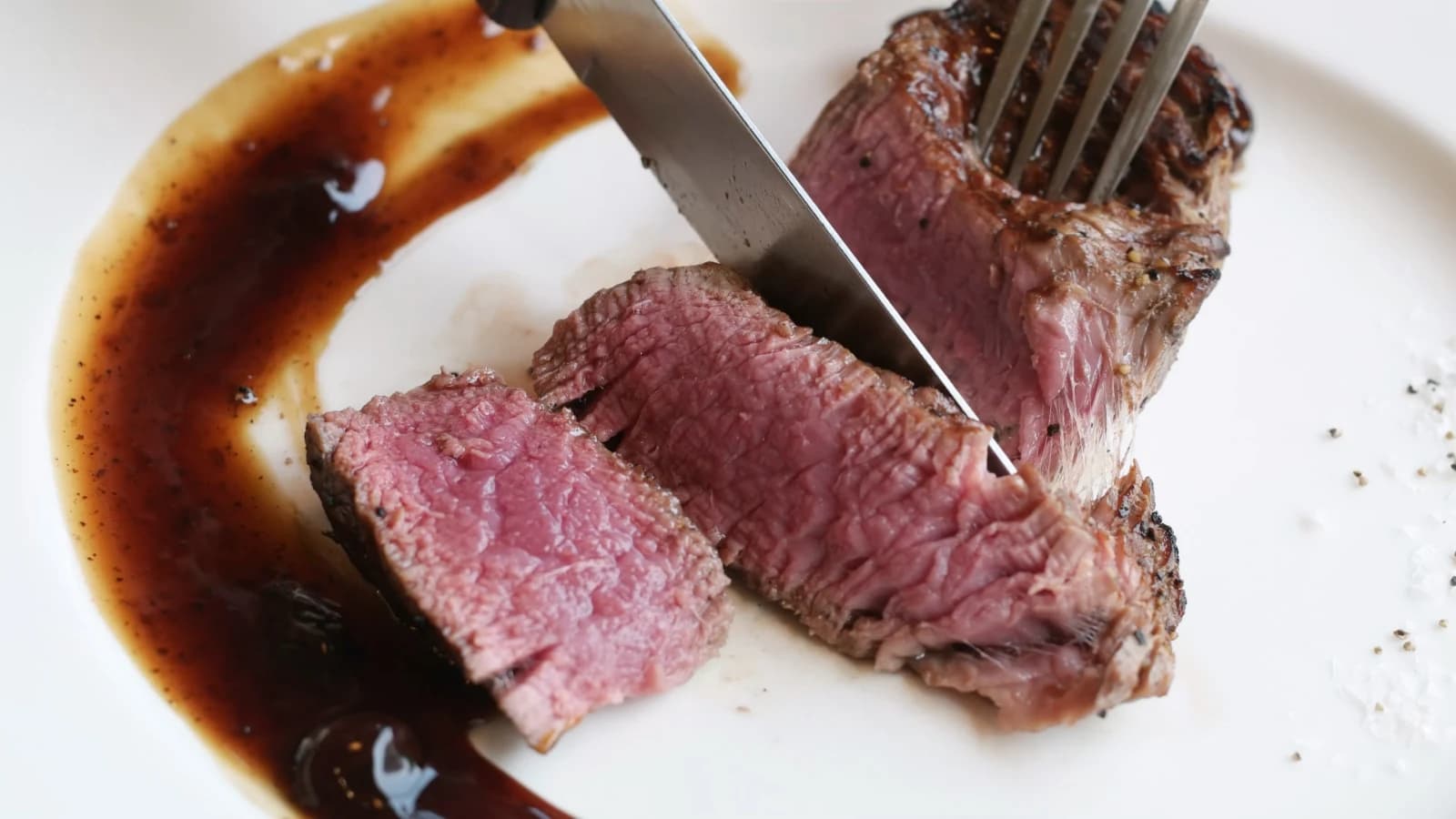
The moment I pressed the knife down, there was almost zero resistance. Tenderloin is naturally soft, but this was on another level — the blade just slid through like butter. The cross-section showed a bright, vivid pink in the center, gradually fading into brown toward the edges. Textbook medium rare. One more slice revealed juices pooling inside the meat, spreading out across the plate and blending into the sauce. Mom saw the pink center and immediately said, "Isn't that undercooked?" I told her to just try a piece. She picked up her fork, looking skeptical.
Dipped in the Sauce
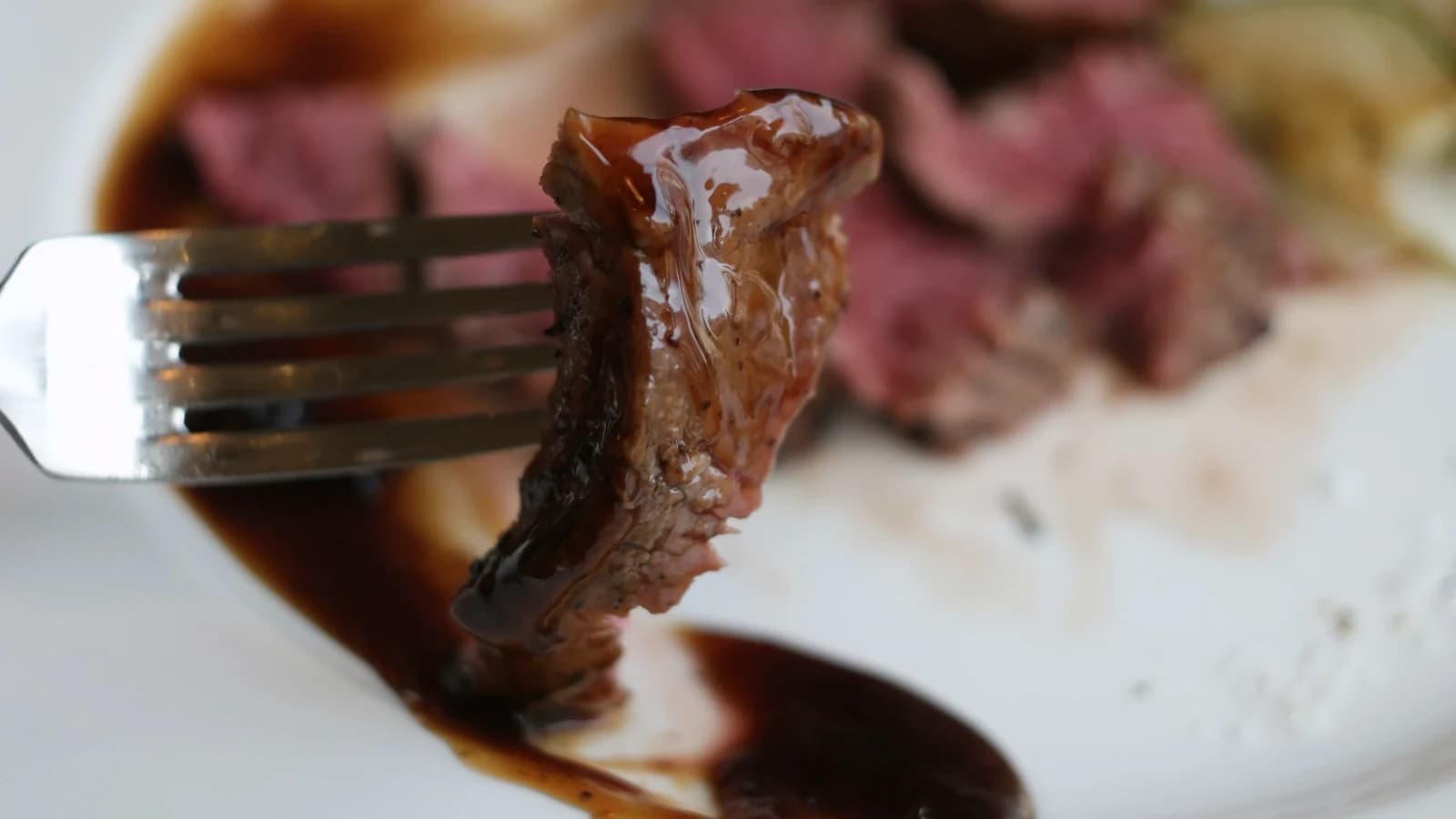
I cut off a piece and dipped it deep into the demi-glace. The sauce coated the surface and dripped down in streams. In your mouth, the clean, lean flavor of the beef and the rich sweetness of the sauce hit you simultaneously. Filet mignon is so low in fat that it can sometimes taste a little flat on its own, but this sauce compensated for that perfectly.
The Taste — It Falls Apart Before You Even Chew
Put a piece in your mouth and it starts falling apart before you even get a chance to chew. I felt it when I was cutting, but on my tongue, it just collapsed — no effort needed. Without any sauce, dipped in just a bit of coarse salt, the pure flavor of the beef came through clean and clear. With the sauce, layers of sweetness and umami stacked on top of each other. I kept alternating between the two. You know how it is — grabbing Korean BBQ after work is easy, but sitting down for a proper steak dinner like this? That takes planning. That's exactly why meals like this feel like something to be savored.
My Honest Complaint — The Portion Was Small
The biggest letdown of this meal was the portion size. On paper, the course lineup looks solid — soup, two salads, a side, and the main. But the actual filet mignon itself was barely over 5 ounces, so once you finish it, you're left wanting more. Sure, by that point your stomach has some food in it from the earlier courses, but that's bread-and-salad full, not meat full. If you're someone who lives for beef, that lingering "wait, is that all the meat?" feeling stuck around for a while.
Beef Prices in Korea — Why So Expensive?
In Korea, a filet mignon steak like this runs about $22 to $30 USD.
In Australia, you can get a comparable tenderloin for closer to $15–18, and in the US, it's definitely cheaper than Korea too.
Korea, along with Japan, has some of the highest beef prices in the world.
Domestic Korean beef — known as Hanwoo — costs three to four times more than imported beef, and even imported cuts come with tariffs and distribution markups that push prices well above what you'd pay locally in the US or Australia. But you do get what you pay for. Hanwoo has this incredibly fine, dense marbling, so when it's cooked right, the juices absolutely burst. And even with imported beef, Korean chefs know what they're doing — it rarely misses. My honest take? Beef in Korea is expensive, but it earns every penny.
Rare vs. Medium Rare — A Divisive Topic
I'm fine eating both rare and medium rare, but this is definitely one of those things people have strong opinions about. Plenty of Koreans can't handle the sight of pink in their beef. Mom was originally in that camp too, but after she tried one piece that day, she went quiet and just kept reaching for her fork. My wife, on the other hand, doesn't eat beef at all, so going out for steak together is just not something we do. It always bums me out a little that I can't share this kind of meal with her. Maybe that's part of why this particular dinner with Mom stands out so much in my memory.
On the Way Home
In the car on the way back, Mom said quietly, "Take me again next time." I laughed and told her I would. I'm actually thinking maybe next time I can drag my wife along too. She doesn't eat beef, so it'd be a tough sell… but it might be worth a shot.