Charcoal Grilled Chicken on a Mesh Grate — Korean Dakgalbi Over Live Coals
Table of Contents
13 items
Charcoal Grilled Dakgalbi — Not Stir-Fried, but Grilled on a Mesh Grate Over Live Coals
I'd written about the stir-fried iron plate version of dakgalbi before, but this time I went and ate something completely different. Back in early March, a mate of mine took me to a charcoal grilled dakgalbi spot in Daejeon, a major city about an hour and a half south of Seoul. He reckoned it was "nothing like the iron plate version," so I tagged along. And yeah — he was spot on. Charcoal grilled dakgalbi (sutbul dakgalbi, 숯불 닭갈비) is Korean chicken cooked directly on a perforated mesh grate over live charcoal, not stir-fried on a flat plate. Same name, same chook, but the cooking method, the way you eat it, and the flavour are all completely different.
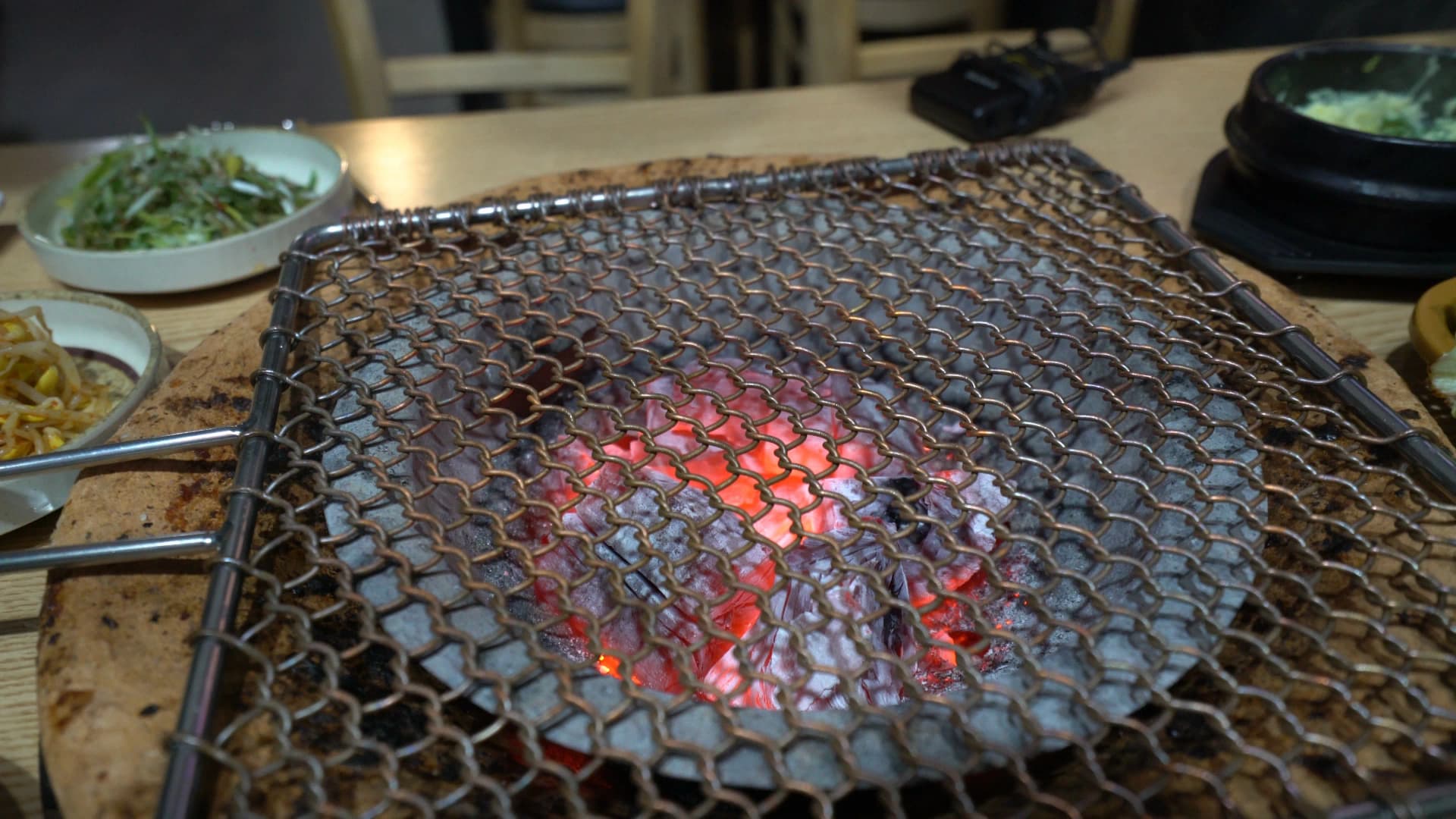
When you sit down, this is the first thing you see. Glowing red charcoal right in the middle of the table, with a metal mesh grate full of little holes sitting on top. It's not a flat iron plate — it's a grate. The heat from the charcoal rises straight through those holes, so the second you lay chicken down, the flames and smoke hit the meat directly. The moment I clocked this setup I knew it was going to be a completely different experience from stir-fried dakgalbi. If you've ever chucked chicken on a charcoal barbie in the backyard, picture that — but with Korean seasoning and a whole different lineup of dipping sauces on the side.
Charcoal Grilled Dakgalbi — The Chicken Comes Pre-Seared
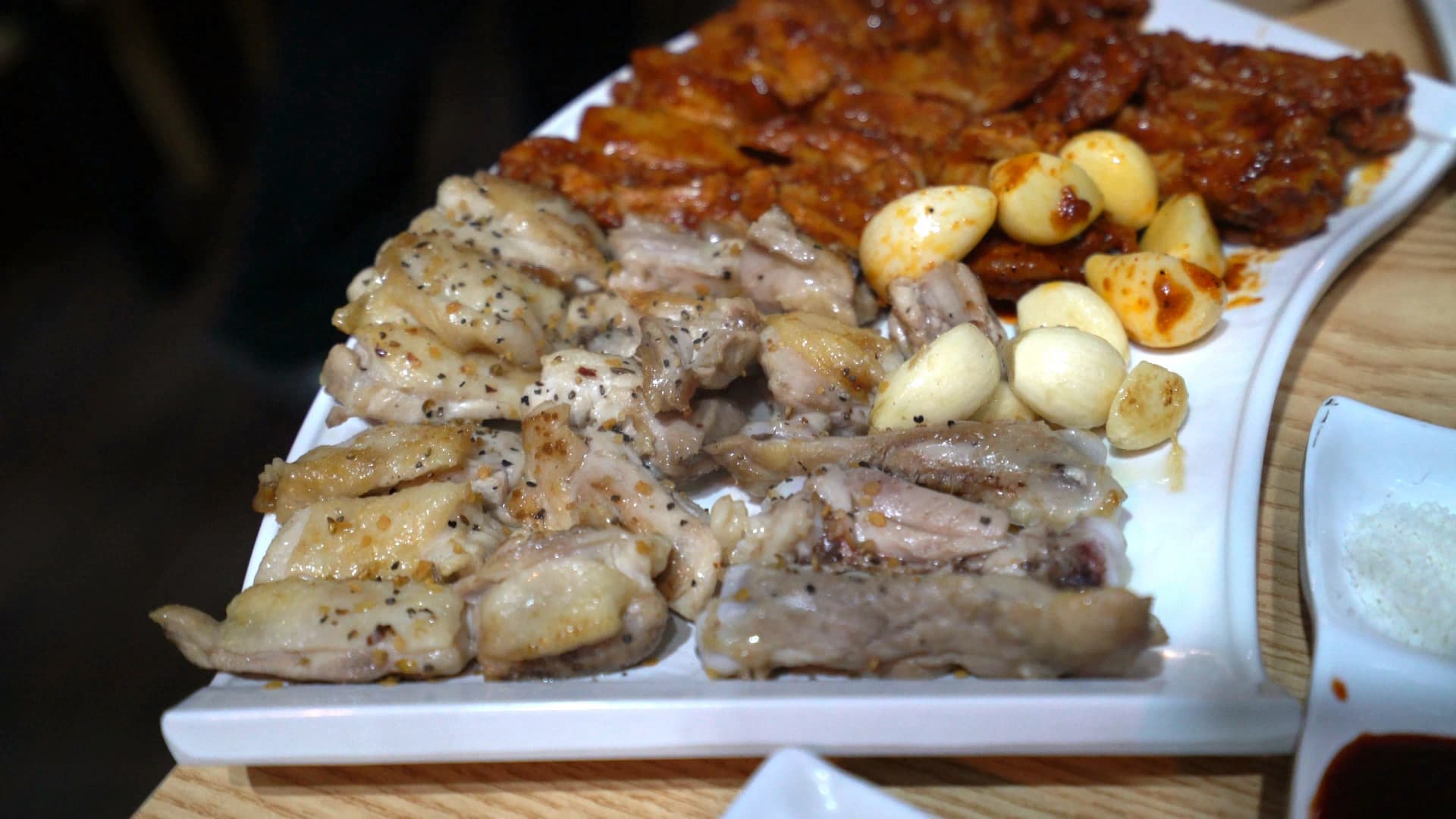
The chicken arrives pre-seared and split into two different flavours on one plate, ready to be finished over the charcoal. One side is bright red dakgalbi coated in gochujang (Korean chilli paste) marinade, and the other side is a simple salt-and-pepper seasoned chicken. Whole garlic cloves sit right in the middle. We ordered three serves — each serve is about 330g and costs around A$10 (₩10,000). Two of us splitting three serves was more than enough food. The key detail here is that this chicken isn't raw — it's been lightly pre-seared before it comes out. So all you have to do is finish the outside on the grate, and it's good to eat. Even if it's your first time trying charcoal grilled dakgalbi, you don't need to stress about cooking times at all.
Stir-Fried Dakgalbi (Iron Plate Style)
This is the classic version most people know. Cabbage, rice cakes, sweet potato, and other ingredients all go on a flat iron plate with gochujang sauce and get stir-fried together. Everything mixes into one big pile, and the sauce soaks into every single ingredient.
The cooking happens right on the iron plate at your table — either the staff stir-fries it for you, or you do it yourself. The standard move is to add rice at the end and make fried rice with the leftover sauce.
The whole point is that chicken + veggies + sauce all merge into one unified flavour.
Charcoal-Grilled Dakgalbi (Open Flame Style)
You place chicken pieces one by one on a perforated mesh grate over live charcoal and grill them yourself. Smoke from the charcoal rises through the mesh and infuses the meat with that unmistakable smoky flavour.
The chicken comes pre-seared, so you just finish the outside on the grate. You get both a marinated version and a salt-seasoned version at the same time.
The whole point is charcoal smoke + direct-fire texture. It's a style that really lets the chicken itself shine.
Salt-Seasoned Grilled Chicken Close-Up
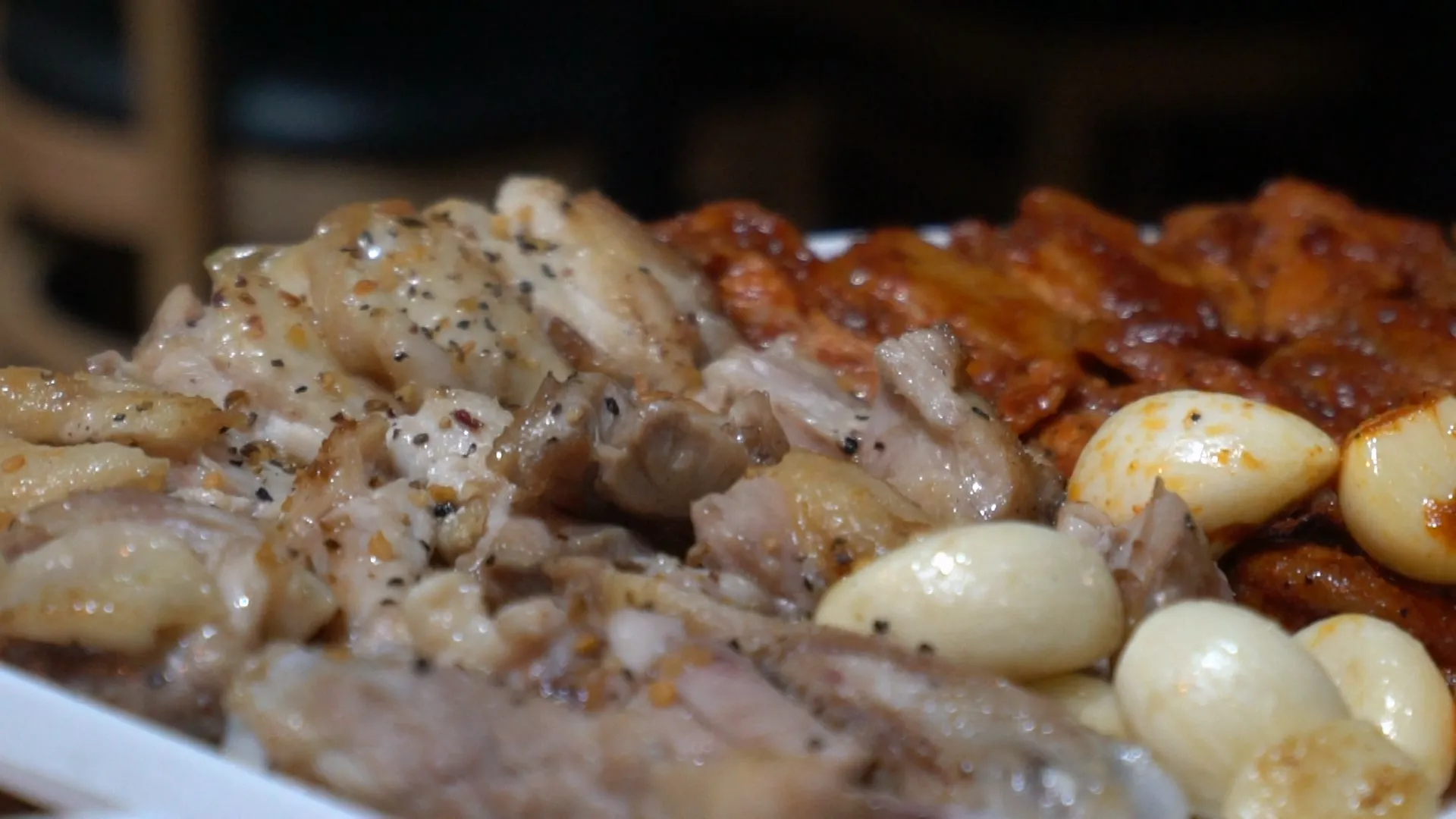
Here's a closer look. The salt-seasoned chicken has a thin sheen of oil on the surface, giving it a nice glossy look. Cracked black pepper is pressed right into the meat. Whole garlic cloves sit right next to it — when you toss those on the grate later, they get so soft inside you have to blow on them before biting in. The red stuff in the background is the gochujang marinated dakgalbi. Since both flavours come on one plate, my mate and I immediately started going back and forth — "let's hit the salt one first," "nah, the marinated one first" — fighting over the tongs like it was a comp.
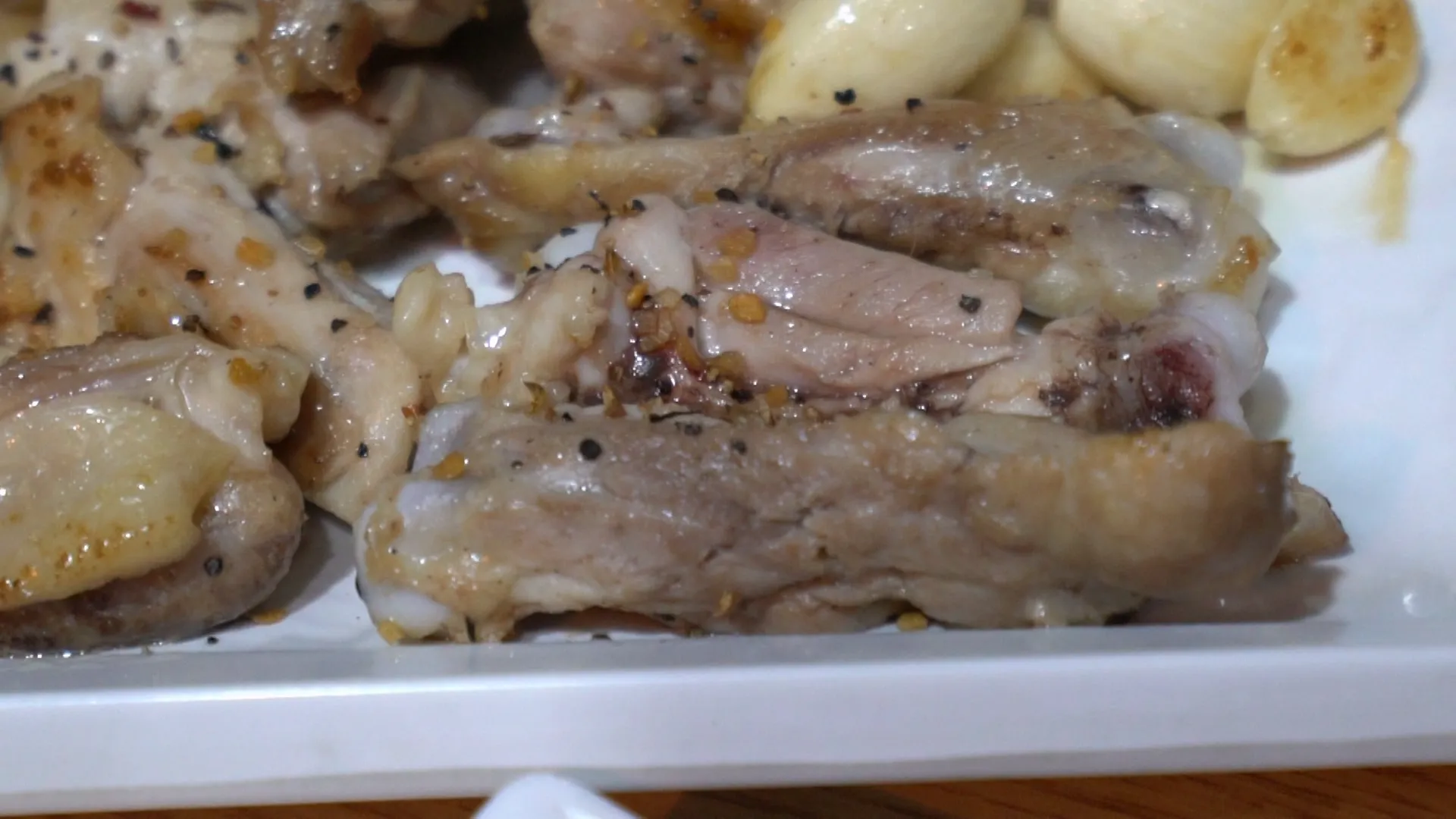
If you look even closer, you can see the cross-section of the chicken. Since it's pre-seared, the inside still has a slightly pink tint, while the surface is packed tight with cracked pepper and minced garlic. You don't eat it like this though — you put it on the charcoal grate and finish the outside one more time. That's what gets you crispy on the outside, juicy on the inside. Think of it like reverse-searing a steak, except the charcoal does all the heavy lifting on flavour.
Laying Chicken on the Charcoal Grate — The Fun of Grilling It Yourself
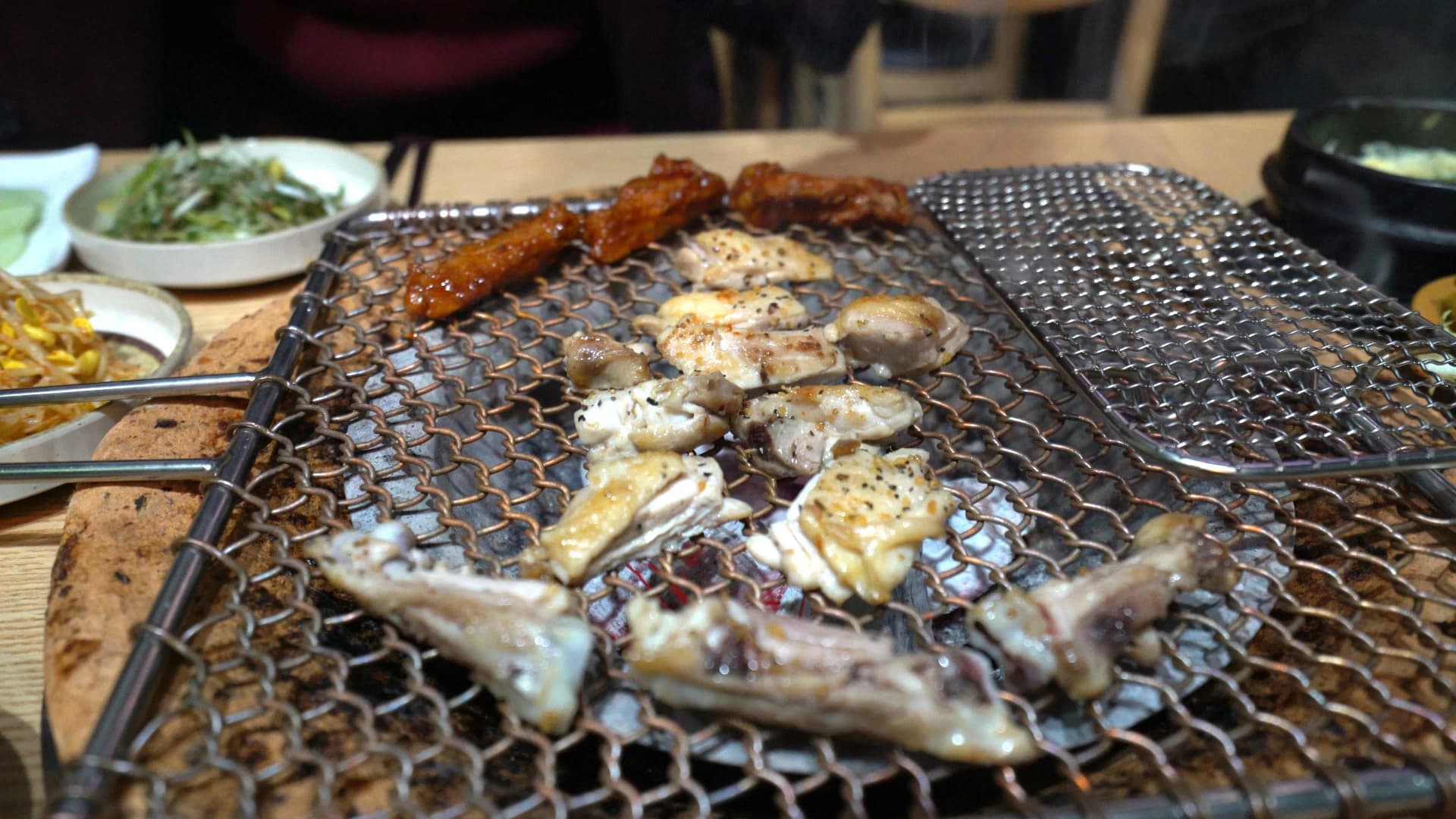
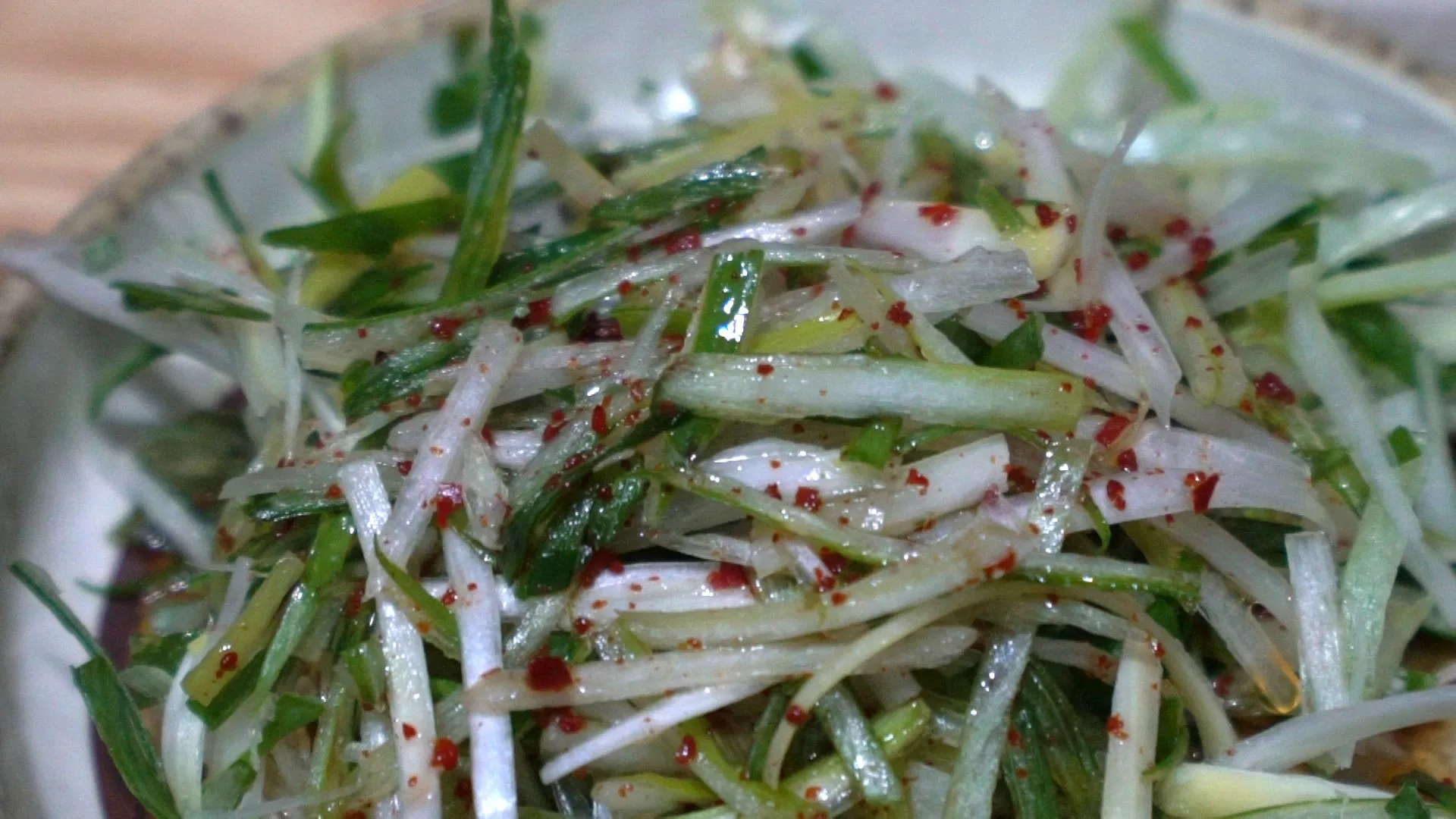
Time to start loading up the grate. You don't chuck everything on at once — you add a few pieces at a time and grill them gradually. That's how you eat charcoal grilled Korean BBQ chicken. The salt-seasoned pieces went on first, and one piece of the red gochujang-marinated dakgalbi snuck onto the upper left. You can see the charcoal glow peeking through the mesh as the bottom of each piece starts to slowly cook through. Bean sprouts, salad, and a little pot of doenjang jjigae (soybean paste stew) were all set out on the side — that alone makes the whole vibe completely different from stir-fried dakgalbi. My mate said "this is basically like grilling snags and chops at a barbie," and yeah, he nailed it. It's got that same hands-on, grill-it-yourself buzz.
Watching the Salt-Seasoned Chicken Cook Over the Coals
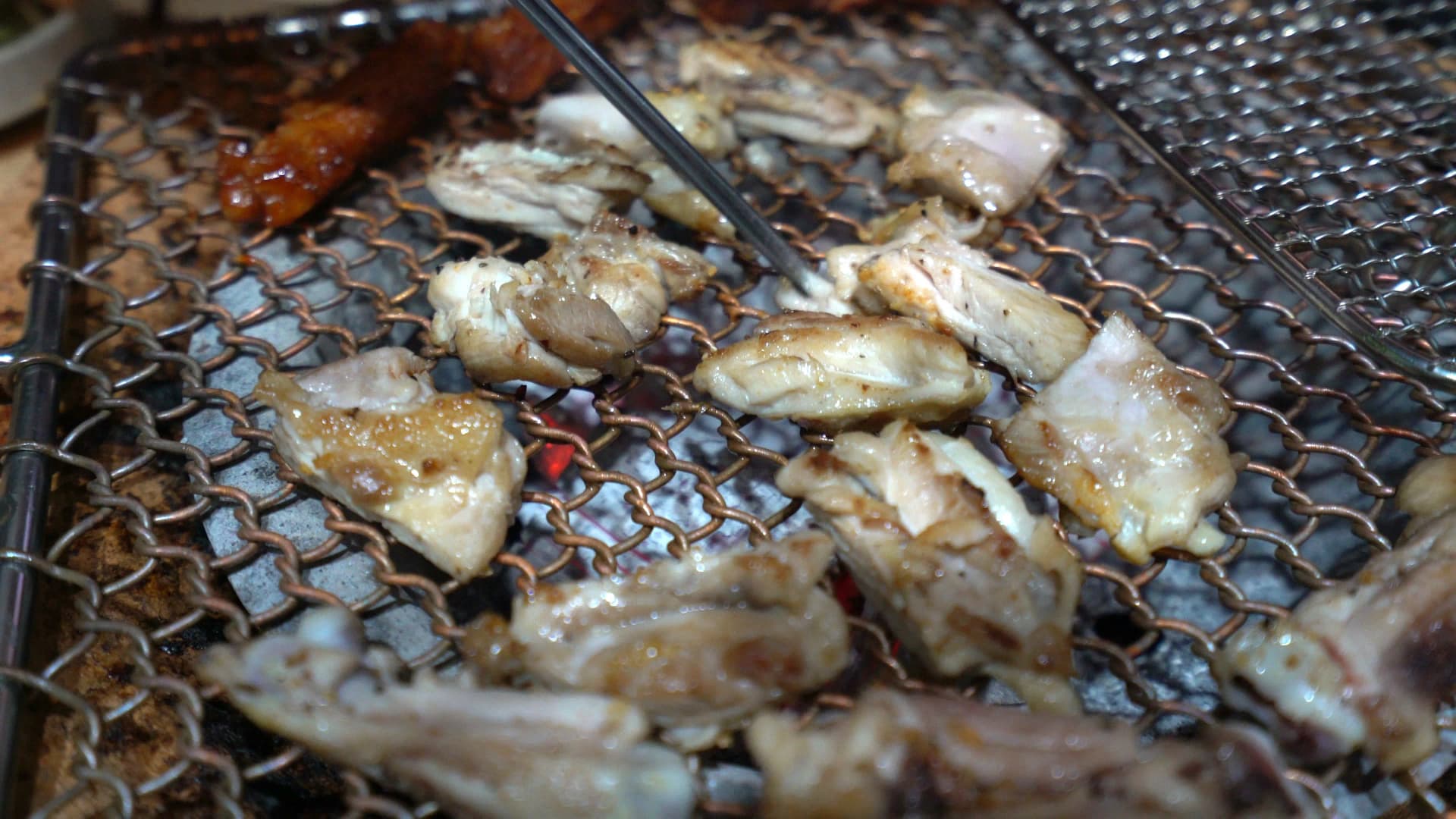
Now we're cooking. The chicken that was pre-seared just minutes ago is starting to turn golden-brown as the charcoal heat hits it. Fat is rendering out and dripping down through the grate, and the instant it hits the hot coals below, a burst of smoke shoots right back up. That smoke wrapping around the meat — that's the whole soul of smoky BBQ chicken done Korean-style. Flipping each piece one at a time with tongs is genuinely fun, like a little ritual. Over on the upper left, the gochujang marinated piece was already starting to caramelise, its surface turning shiny and glossy.
Gochujang Marinated Dakgalbi, Bubbling Away Over the Coals
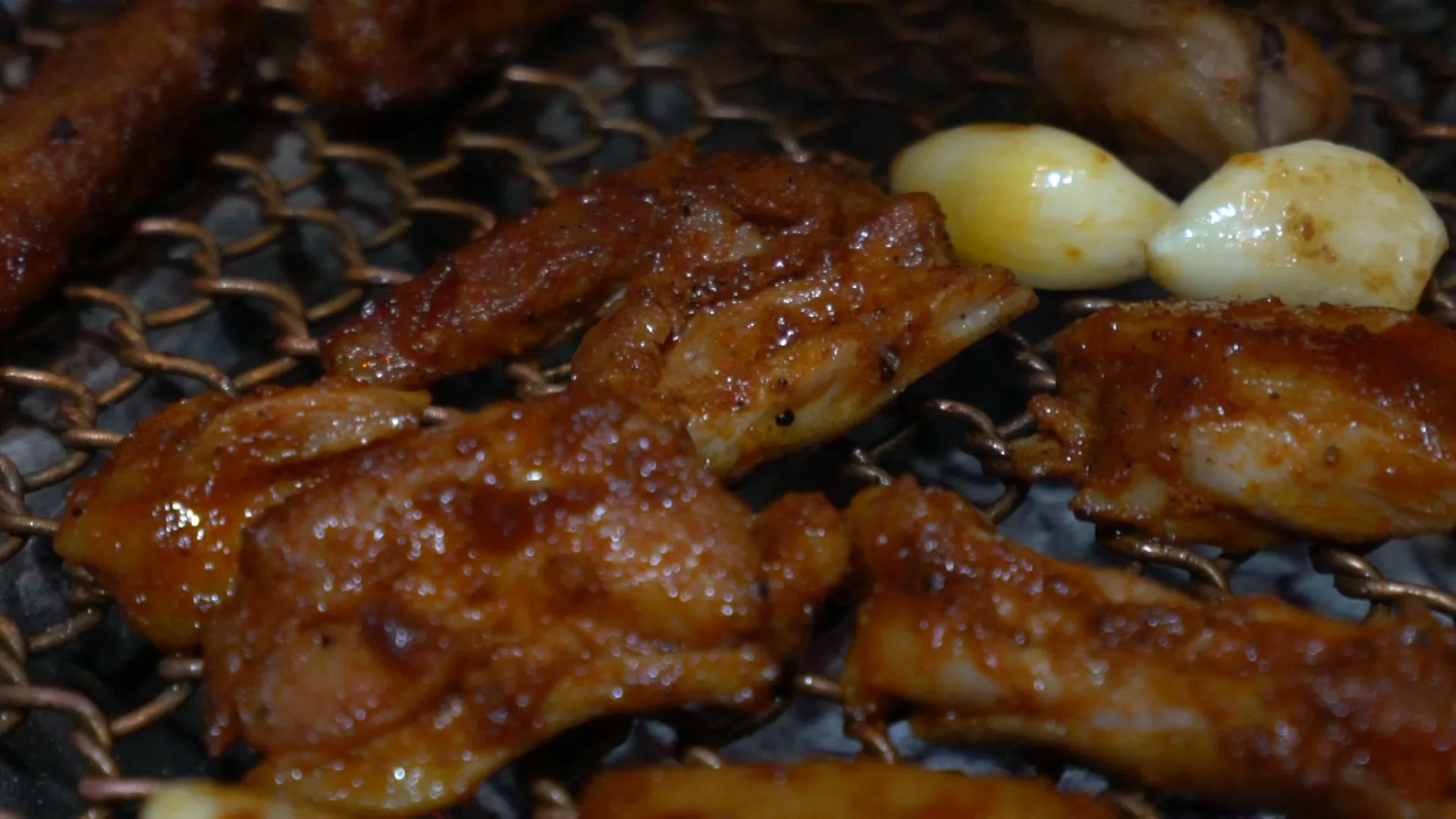
Now it was the gochujang grilled chicken's turn. Up close, you can see the marinade literally bubbling from the charcoal heat. Tiny blisters of sauce are forming on the surface as it boils and clings to the meat. The whole garlic cloves are grilling right alongside, picking up a little bit of that red sauce and turning a beautiful golden colour.
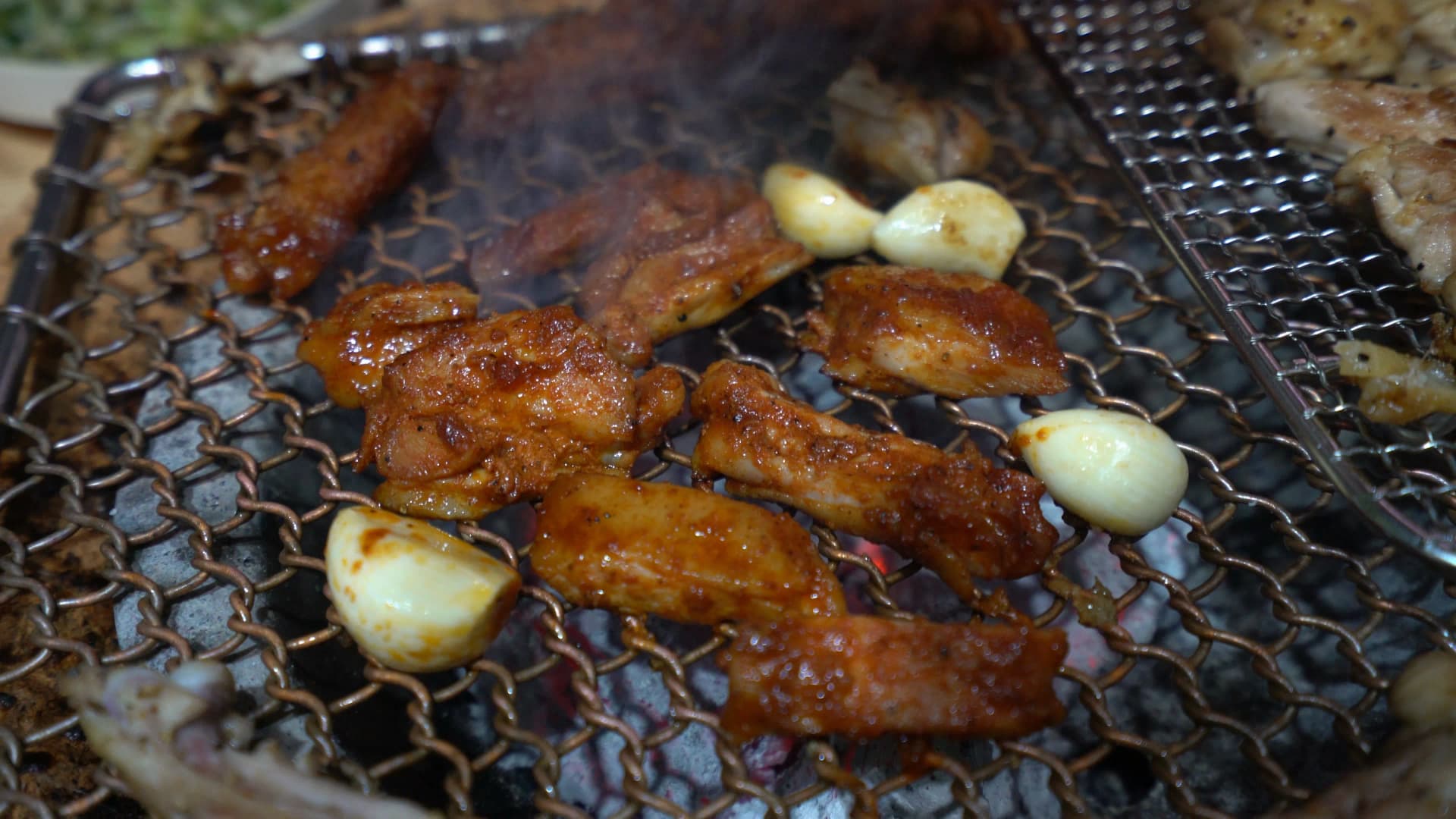
Pull back a bit and this is the full picture. Wisps of charcoal smoke are rising up and wrapping around the whole spread. On the right side, the salt-seasoned chicken is grilling on its own; on the left, the red gochujang marinated pieces have claimed their territory. This setup — two completely different flavours on one grate at the same time — is what makes it so good. When the spicy stuff has your mouth burning, you switch over to the salt side to cool down. When the mellow salt flavour starts feeling a bit plain, you swing right back to the gochujang side. Best of both worlds on a single grill.
The Marinated Dakgalbi Burns Fast — Why Timing Matters on a Charcoal Grill
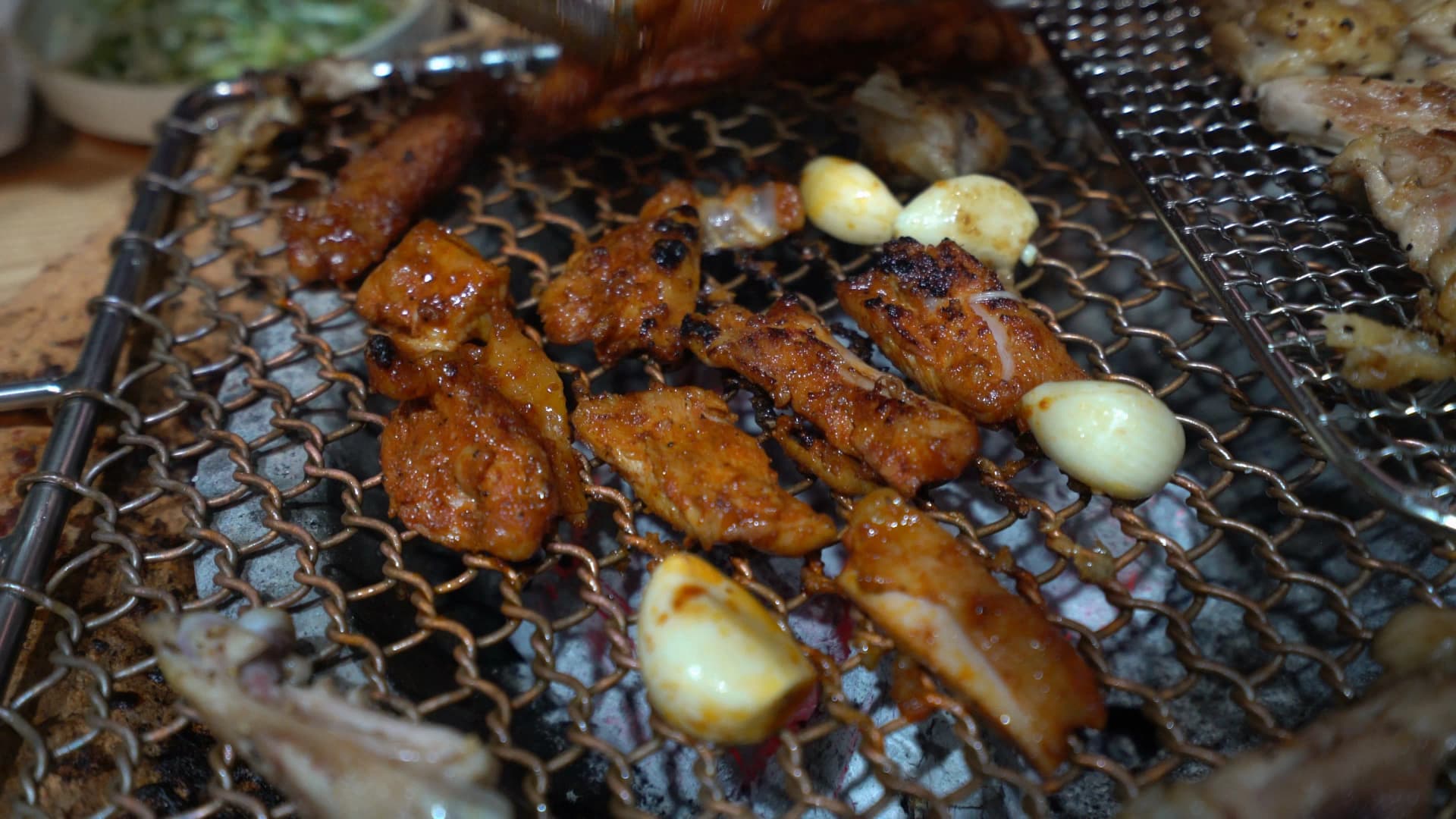
The marinated stuff — you seriously cannot take your eyes off it. Gochujang marinade has sugar in it, so it scorches fast over live charcoal. You can see in the photo that a couple of pieces already have blackened edges. But here's the thing: a little bit of char is actually delicious. Those caramelised edges where the gochujang hit the coals? Crispy, sweet-savoury, borderline addictive. It's that same Maillard reaction magic you get when BBQ sauce caramelises on the grill — except with Korean chilli paste. But if it genuinely burns all the way through, it turns bitter, so you've got to flip frequently with the tongs. My mate was handling the marinated side, and he was going "mate, you have to flip these every two minutes" while staying glued to the grill. The salt-seasoned chicken? You can take your time. But the gochujang side demands your full attention.
Salt-Seasoned vs Gochujang Marinated — Which Charcoal Grilled Chicken Tastes Better
Salt-Seasoned (Salt & Pepper)
Salt & Pepper Grilled Dakgalbi
Just black pepper and salt — that's it. This one lets the chicken speak for itself. When it hits the charcoal grate, the fat renders down through the mesh and the outside gets crispy while the inside stays juicy. There's almost zero greasiness, so you just keep reaching for more piece after piece.
The charcoal smoke gently infuses the meat, so even without heavy seasoning, the flavour is more than enough. The skin is the real star — once it goes crispy over the coals, one bite releases this burst of savoury, rich fat.
Dip it in the salt, the seasoning sauce, or the cream sauce that comes on the side, and suddenly one chicken gives you three totally different flavour experiences. Wrap it in pickled radish or perilla leaves and the freshness cuts through any richness while amping up the umami.
Best for: people who can't handle spice, anyone watching their intake, or anyone who just wants to taste the chicken itself.
Gochujang Marinated (Spicy)
Gochujang Spicy Grilled Dakgalbi
This one is soaked deep in gochujang marinade. Even before it hits the grill, the red sauce has already penetrated all the way through the meat. On the charcoal grate, the sugar in the marinade starts bubbling and boiling, and the surface caramelises into something sweet, spicy, and intoxicatingly fragrant.
The catch is that all that sugar means it burns way faster than the salt version. Look away for a second and you'll find blackened edges. Those slightly charred bits? Actually incredible — crispy and dangerously addictive. But if it goes fully burnt, you'll taste bitterness, so timing and frequent flipping are key.
Heat-wise, it's not face-meltingly spicy. It's that sweet-spicy gochujang flavour that pretty much anyone can handle. When the charcoal smoke meets the gochujang marinade, you get a depth of flavour that stir-fried iron plate dakgalbi simply cannot touch.
If you love a bit of heat and want to experience what gochujang really tastes like when it's kissed by live fire, this is the one to go for.
The Dipping Sauce Lineup — Salt, Cheese Powder, Seasoning Sauce, and Cream Sauce
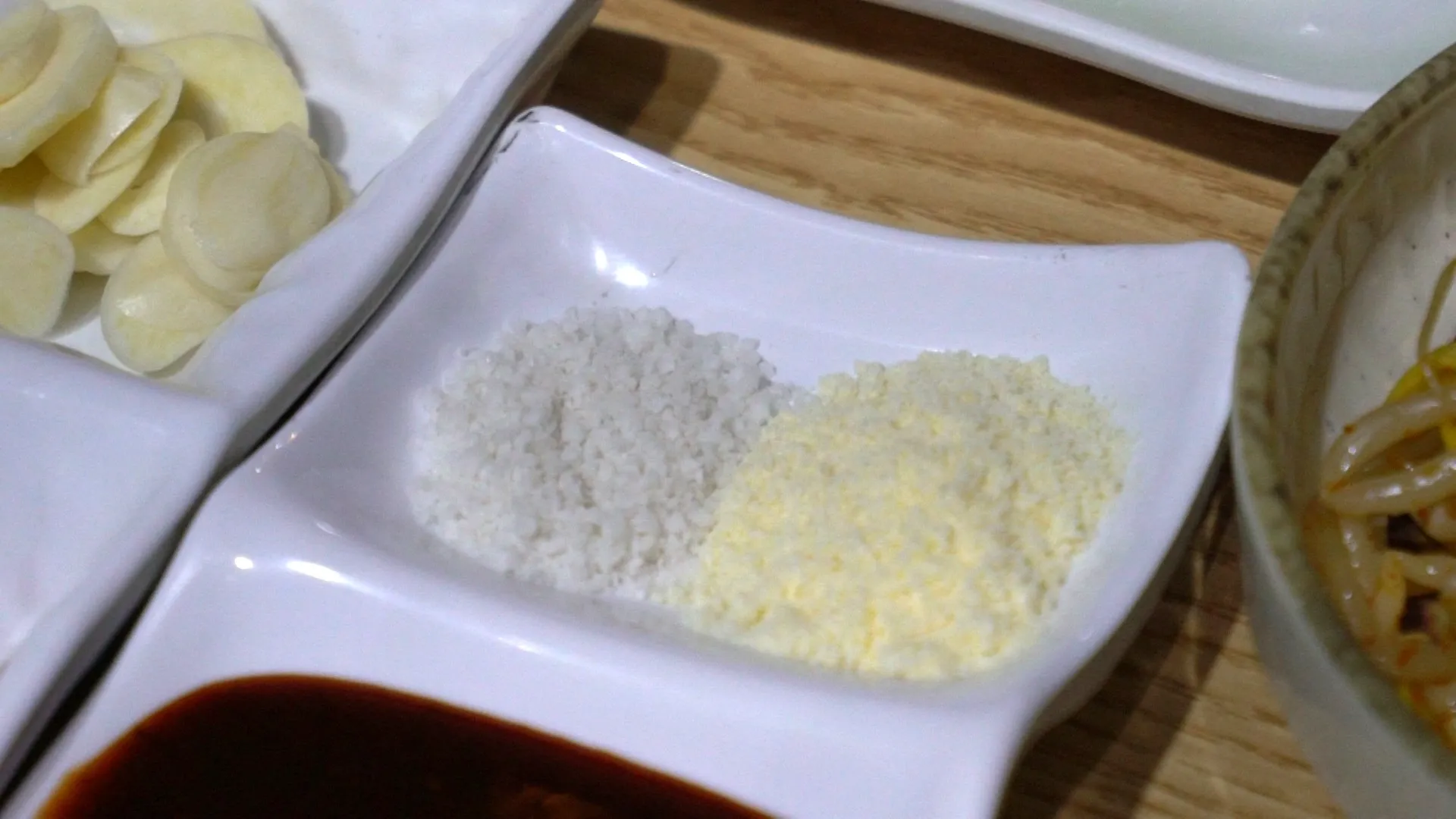
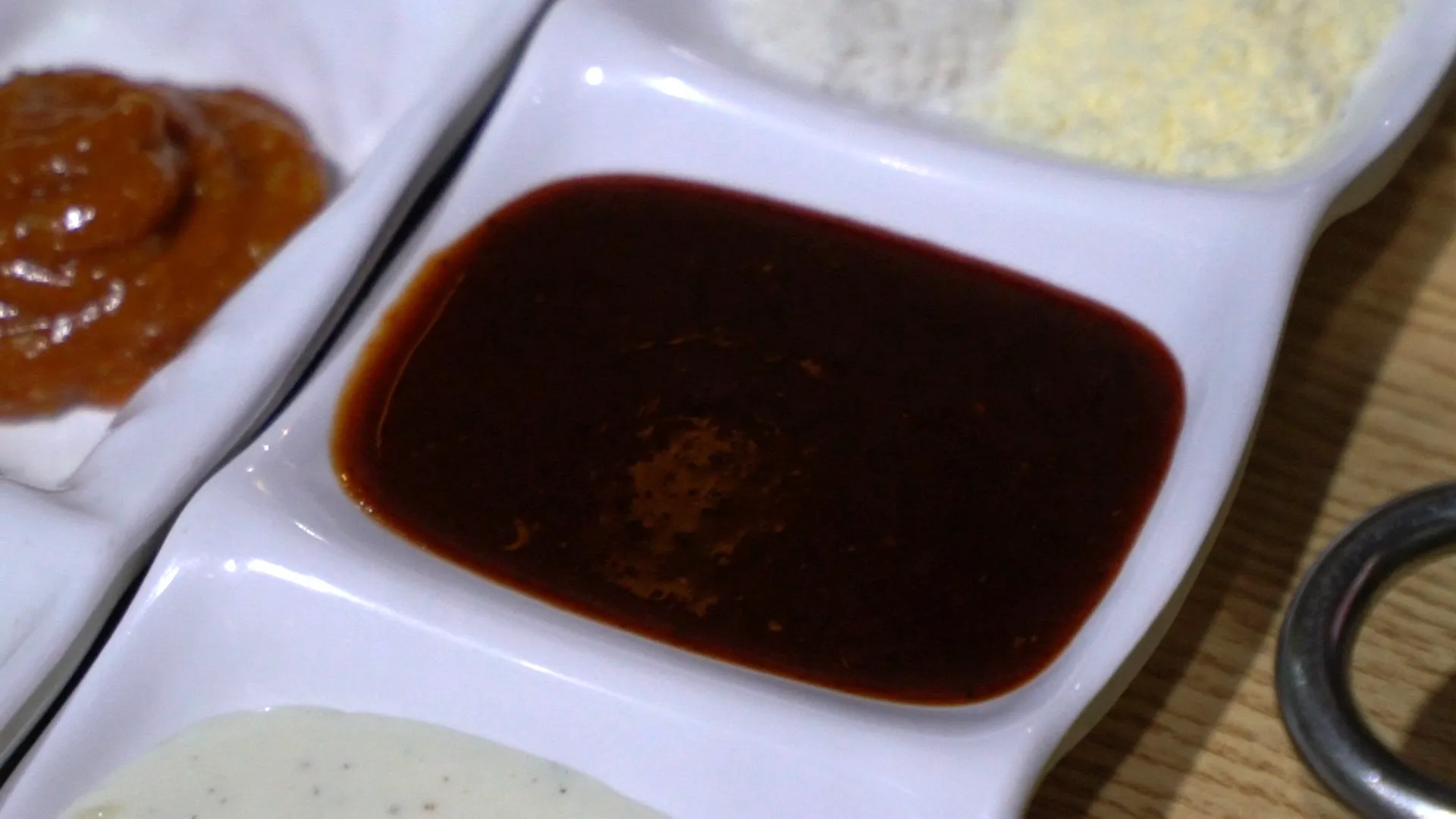
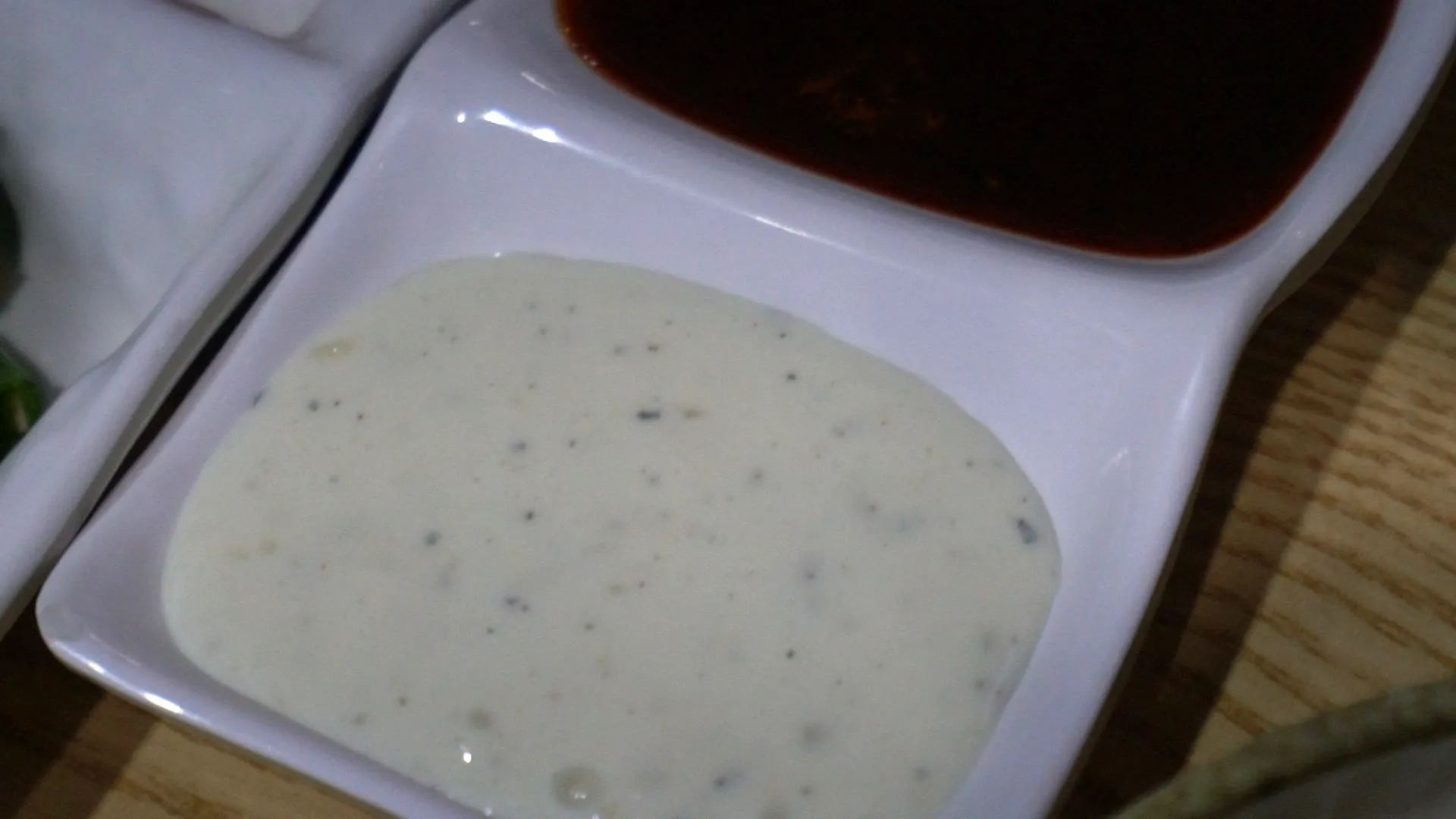
Charcoal grilled dakgalbi comes with a full set of dipping sauces. There's salt and cheese powder sitting side by side on one plate, with thin-sliced garlic laid out next to them. Dip the salt-seasoned chicken in the plain salt and you get a clean, minimalist flavour; dip it in the cheese powder and this wave of rich savouriness hits you. The dark brown sauce tastes like Korean fried chicken seasoning — sweet, a little spicy, and tangy. When the salt-seasoned chicken starts feeling a bit plain, you dip it in this and it instantly transforms into something that tastes like Korean fried chicken. The white cream sauce is a mayo-based, ranch-style dipping sauce with cracked pepper flecks throughout. When the spicy gochujang dakgalbi has your mouth on fire, one dip in this stuff and the heat just vanishes. Personally, the salt-seasoned chicken dipped in cheese powder was the best combo for me. My mate was all about the seasoning sauce though.
Cheongyang Chilli, Ssamjang, and Raw Garlic — The Korean Side Set
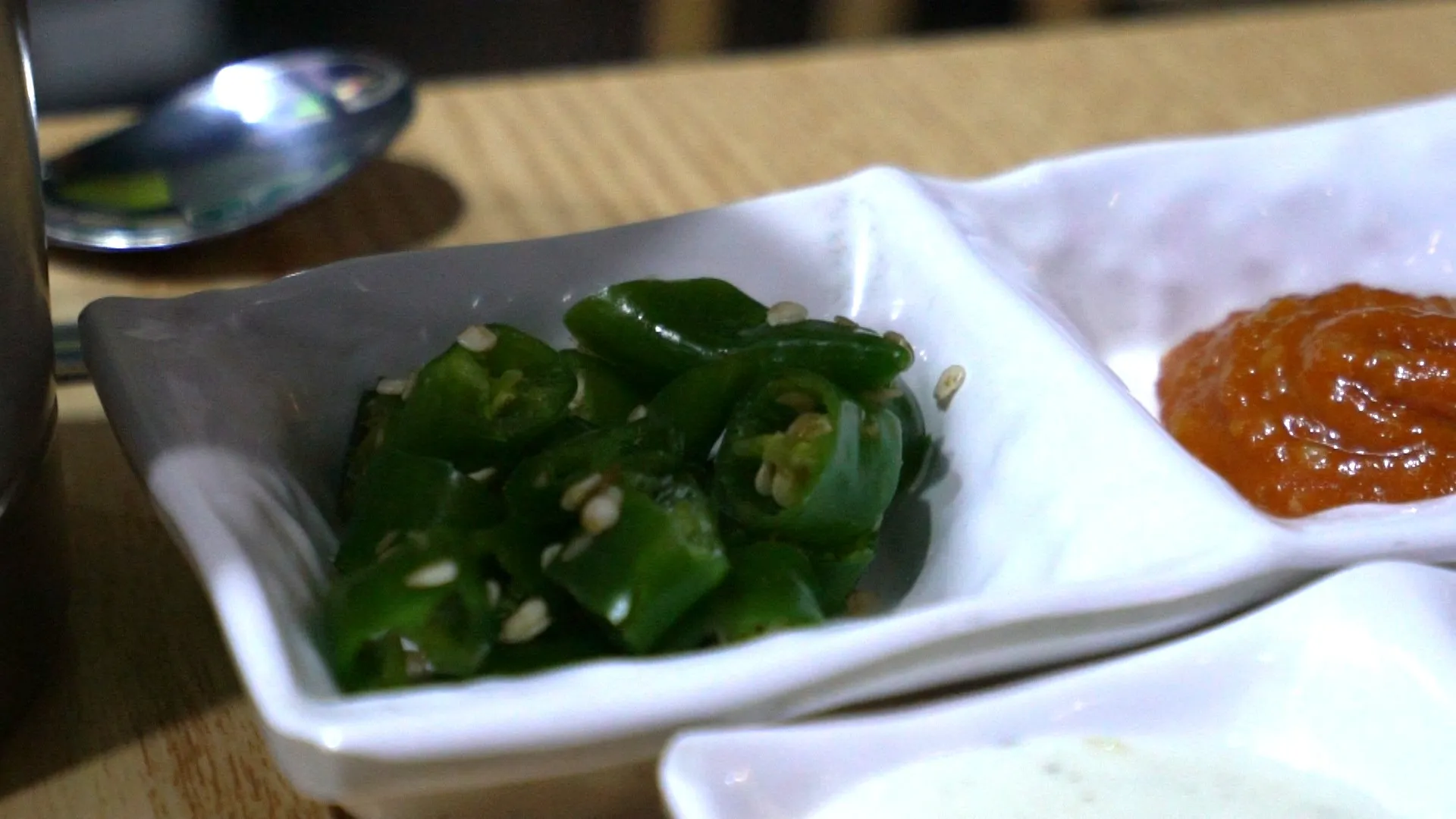
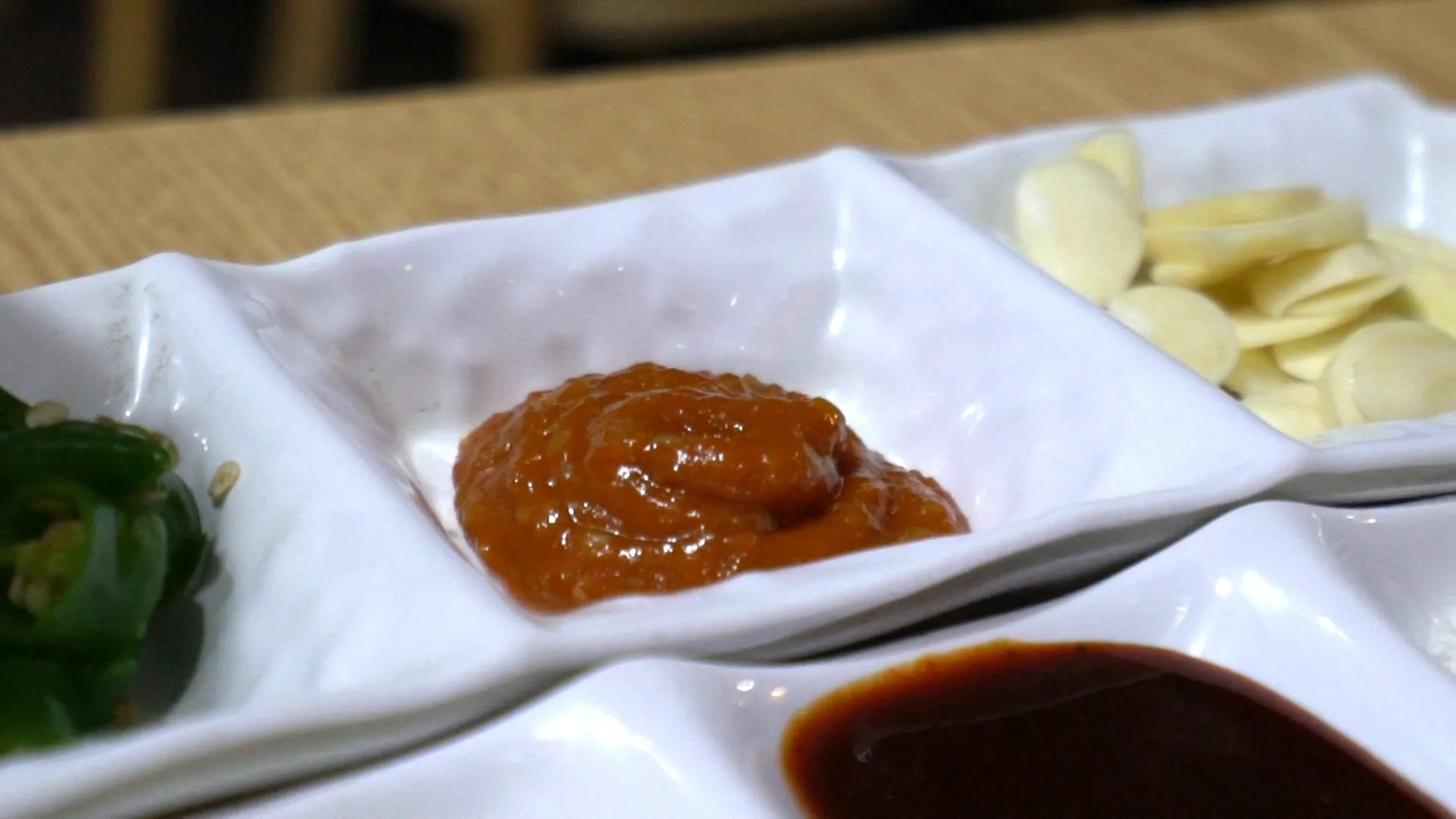
On the opposite side of the dipping sauces, you've got these. Chopped cheongyang chilli peppers — a Korean hot pepper — come with the seeds still in, so even a single slice packs serious heat. Koreans toss a piece on top of their grilled meat and eat it together, but if you're not used to real spice, honestly just skip these the first time. The orange-ish sauce is ssamjang — a Korean dipping paste made by blending doenjang (fermented soybean paste) and gochujang together. It's savoury, earthy, and a touch spicy. The classic Korean move is to grab a lettuce leaf or a perilla leaf (kkaennip), put a piece of chicken on it, drop a spoonful of ssamjang on top, and wrap the whole thing up. That's the proper way to eat it. There's also a plate of thinly sliced raw garlic. You can toss it on the grate to grill alongside the chicken, or just eat it raw with a piece of meat. Grilled, it turns soft and sweet. Raw, it's sharp and pungent — and it cuts right through the richness of the chicken fat.
Honest Review of Charcoal Grilled Dakgalbi — The Salt-Seasoned Was Better
I'll be straight with you — I liked the salt-seasoned version more. The gochujang marinated one was good, no question, but the salt version is where the charcoal grilling method really gets to show off. I had no idea chicken with just salt and charcoal smoke could taste this good. When I dipped a crispy-skinned piece of salt-seasoned chicken into the cheese powder and popped it in my mouth, my mate and I both said "that's the one" at the exact same time.
The Downsides
If there's one thing I'd flag, it's the ventilation. Since it's real charcoal, there's a heap of smoke. Your clothes will absolutely cop the smell. The next day, the jacket I wore still reeked of charcoal smoke. I'd recommend wearing something you don't mind getting smoky. Also, the gochujang marinated chicken burns quickly, so if it's your first time, I'd start with the salt-seasoned side first. Save the marinated one for after you've gotten the hang of the grill timing. No rush.
Charcoal Grilled Dakgalbi — A Totally Different Experience from the Iron Plate Version
All things considered, I'd give it a solid 90 out of 100. At about A$10 per serve for 330g of chicken, the value is great, and the salt-seasoned version genuinely exceeded my expectations. Grilling smoky charcoal chicken yourself over live coals and eating it piece by piece — that experience is just unmistakably different from stir-fried dakgalbi. My mate said "we're making this a regular spot," and I'm already planning my next visit. If you've only ever had the stir-fried iron plate version, you really need to try charcoal grilled dakgalbi at least once. It's the same dish in name, but it's hard to believe how different it can be.
This post was originally published on https://hi-jsb.blog.