
Thai Local Restaurant Menu Guide: Real Food from Rayong
Table of Contents
11 items
Thai Local Restaurants Feel Different the Moment You Step Outside
Back in 2022, when I was staying in Ban Khai, Rayong, Thailand, I found myself walking into local Thai restaurants almost every evening without thinking twice. A lot of people associate Thai food with pad krapao, yam woon sen, or som tam — but once you actually sit down at one of these places, you quickly realize it's less about ordering one dish per person and much more about spreading several plates across the whole table and sharing everything. This isn't a post that's going to oversell a single restaurant. What I wanted to show is what the food actually looks like when you walk into a local Thai spot, what comes out of the kitchen, and which dishes are the safest starting points if it's your first time. I went with my wife, and we liked this place enough that we went back a few days later.
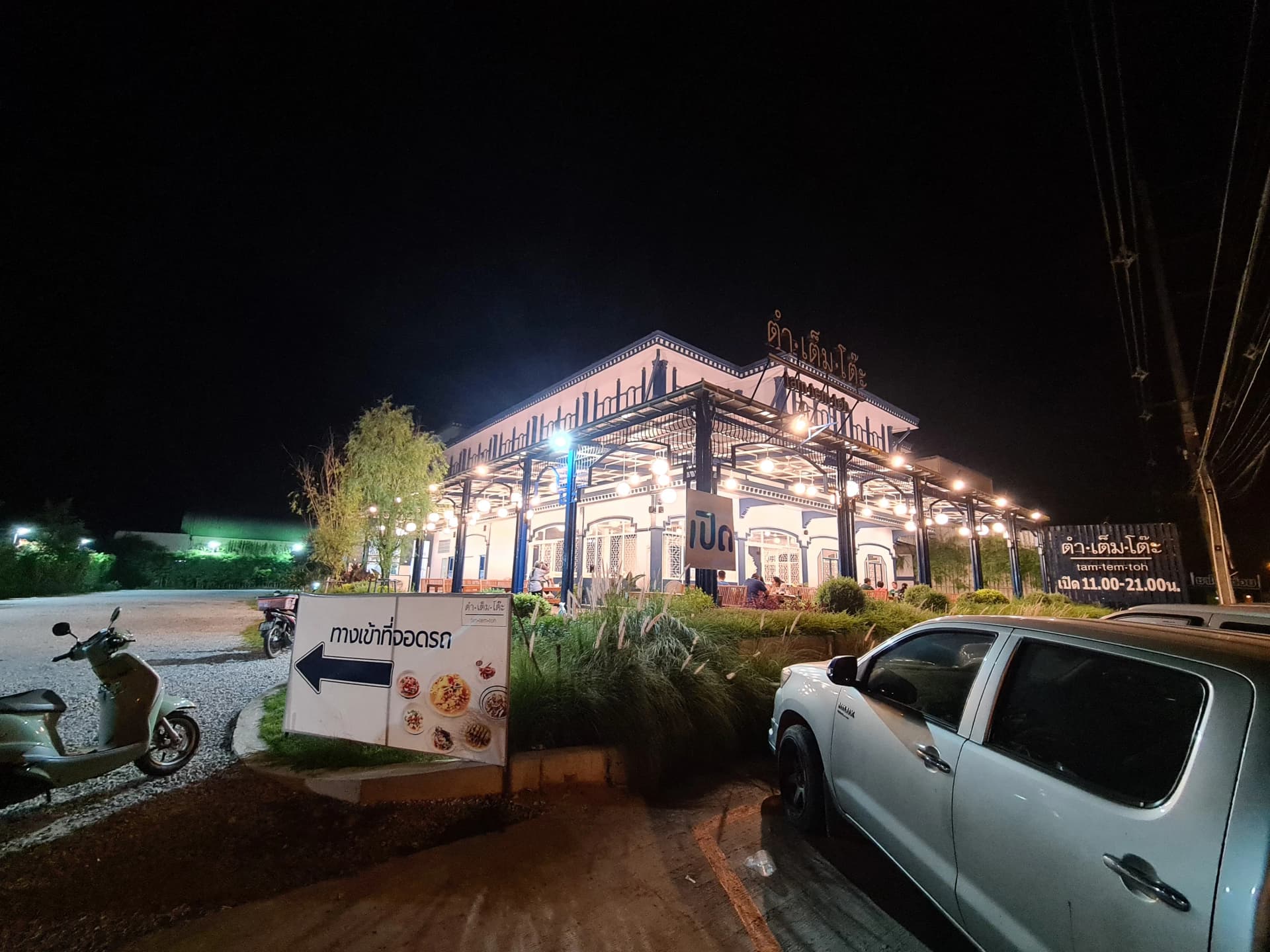
At night, this place was easy to spot from a distance. It didn't feel like a tiny hole-in-the-wall — more like the kind of neighborhood restaurant where locals pull up, have a proper dinner, and head home. The bold blue and white color scheme somehow made it feel inviting rather than flashy.
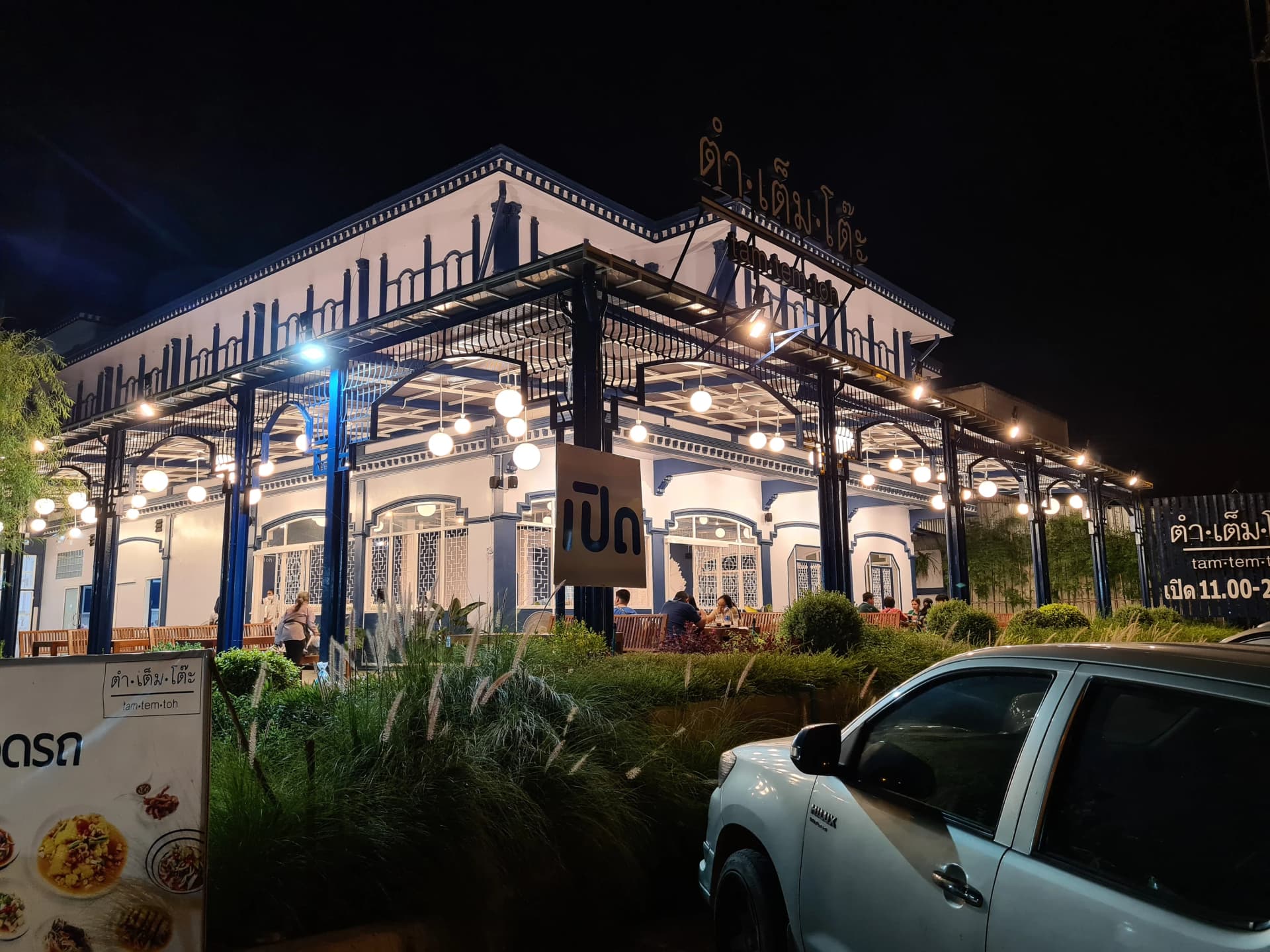
Getting closer, the vibe came through even more clearly. Not too rough around the edges, but not the kind of place trying too hard to look upscale either. There were already people seated inside when we walked up, which honestly helped — when a restaurant is completely empty, you second-guess yourself. Seeing other diners already settled in made it easy to just walk in.
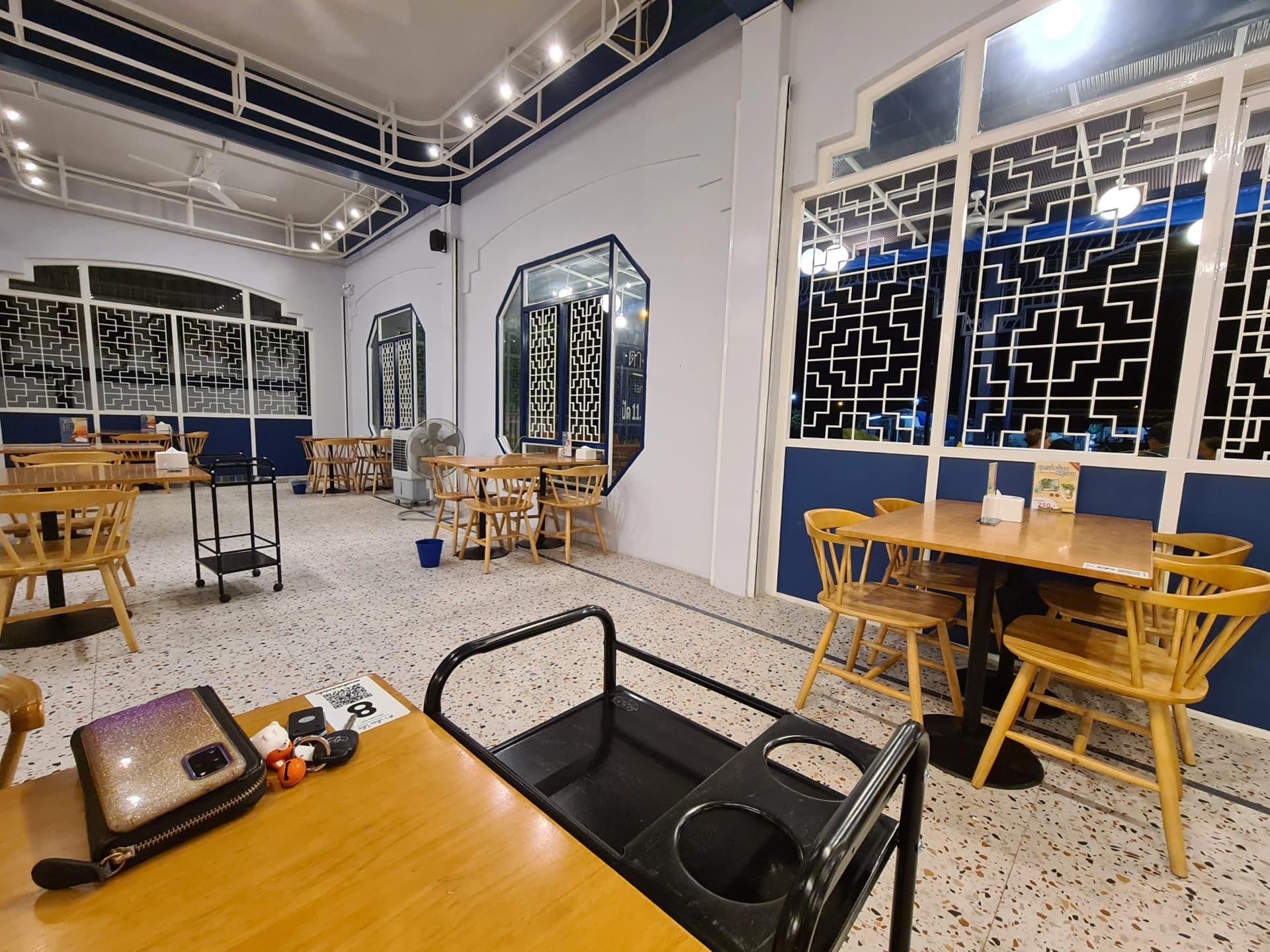
Inside, it was cleaner than I expected. The semi-open structure kept things from feeling stuffy, and the tables weren't packed together so tightly that you felt like you were sitting in someone else's conversation. There's that relaxed, easy Thai restaurant energy — but it wasn't chaotic. The kind of place where you actually want to sit for a while instead of rushing through your meal.
The 2022 Menu Photos Tell You a Lot About the Restaurant
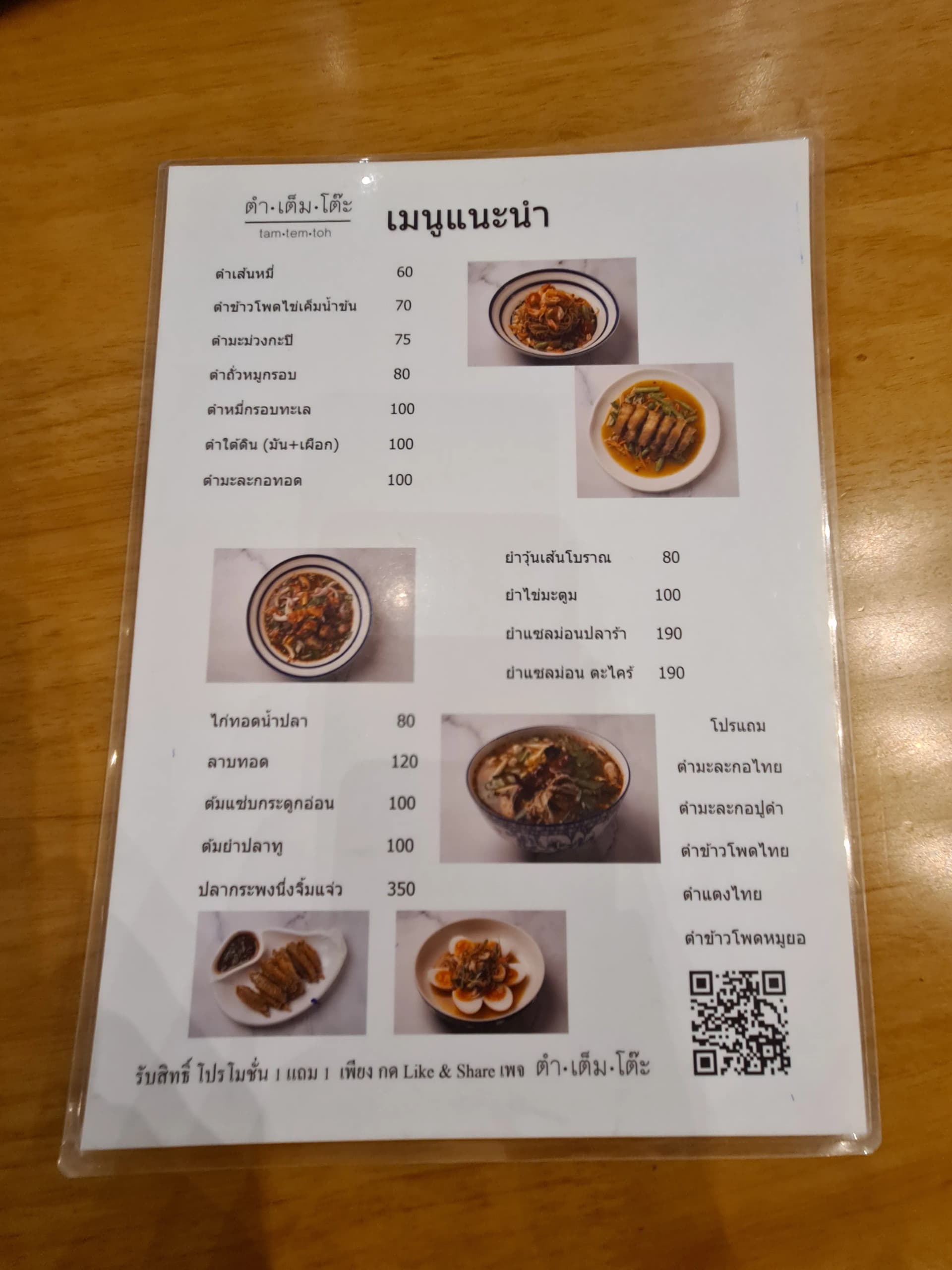
From here on, I'm working from photos I took of the menu in 2022. Things may have changed a little since then, but the pictures are a solid snapshot of what this place was about at the time. The restaurant was called Tam Tem Toh (ตำ-เต็ม-โต๊ะ), and what stood out immediately was that it wasn't just a som tam specialist. It was the kind of place covering the full range — yam salads, fried dishes, grilled meats, rice plates, and soup — all under one roof.
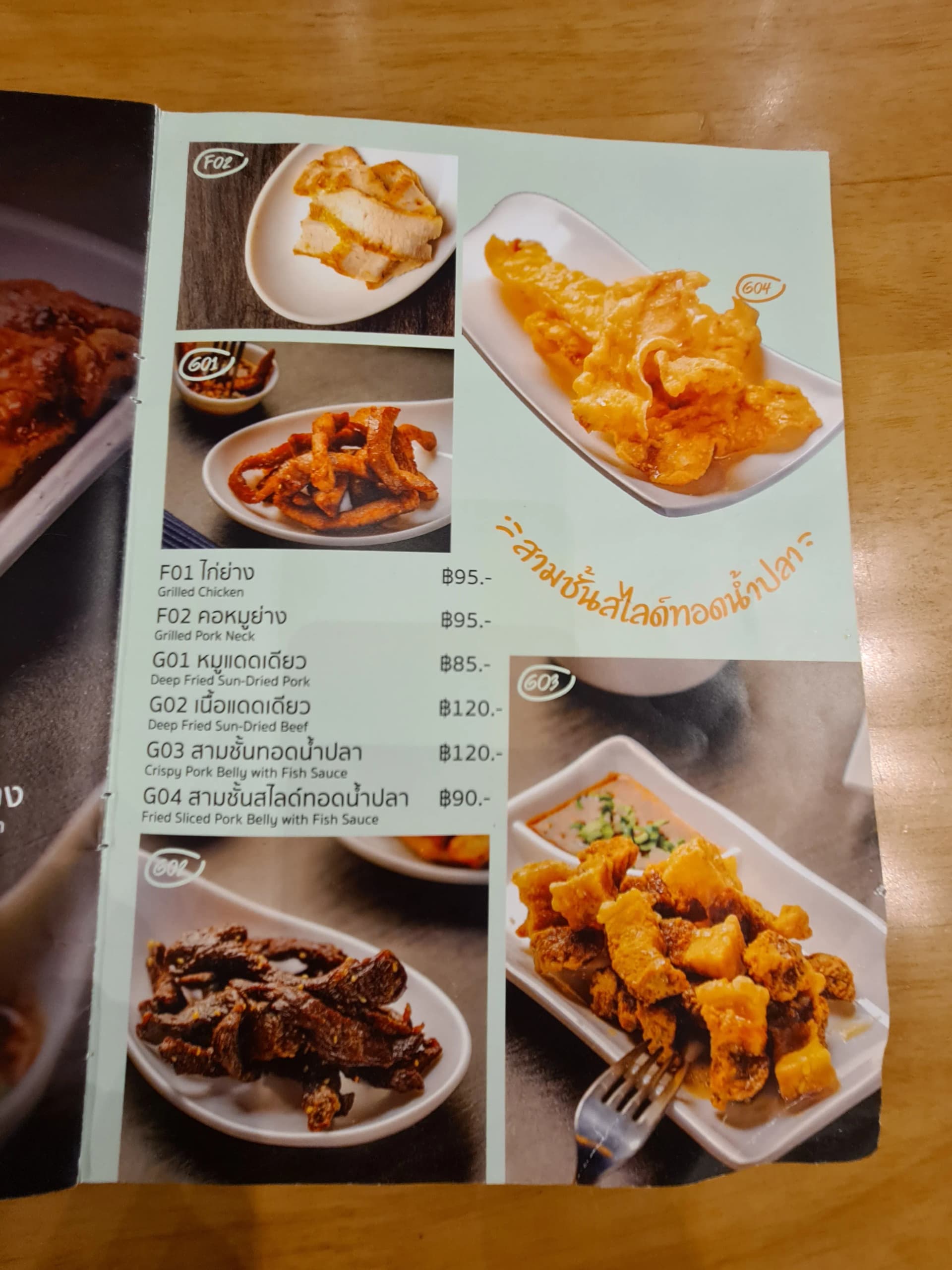
This page alone should put first-timers at ease. Grilled chicken, grilled pork collar, fried pork — these are dishes where the name alone tells you what you're getting. Thai food doesn't have to feel foreign and overwhelming right from the start. Some of these plates are exactly what they sound like, and they're genuinely easy to enjoy.
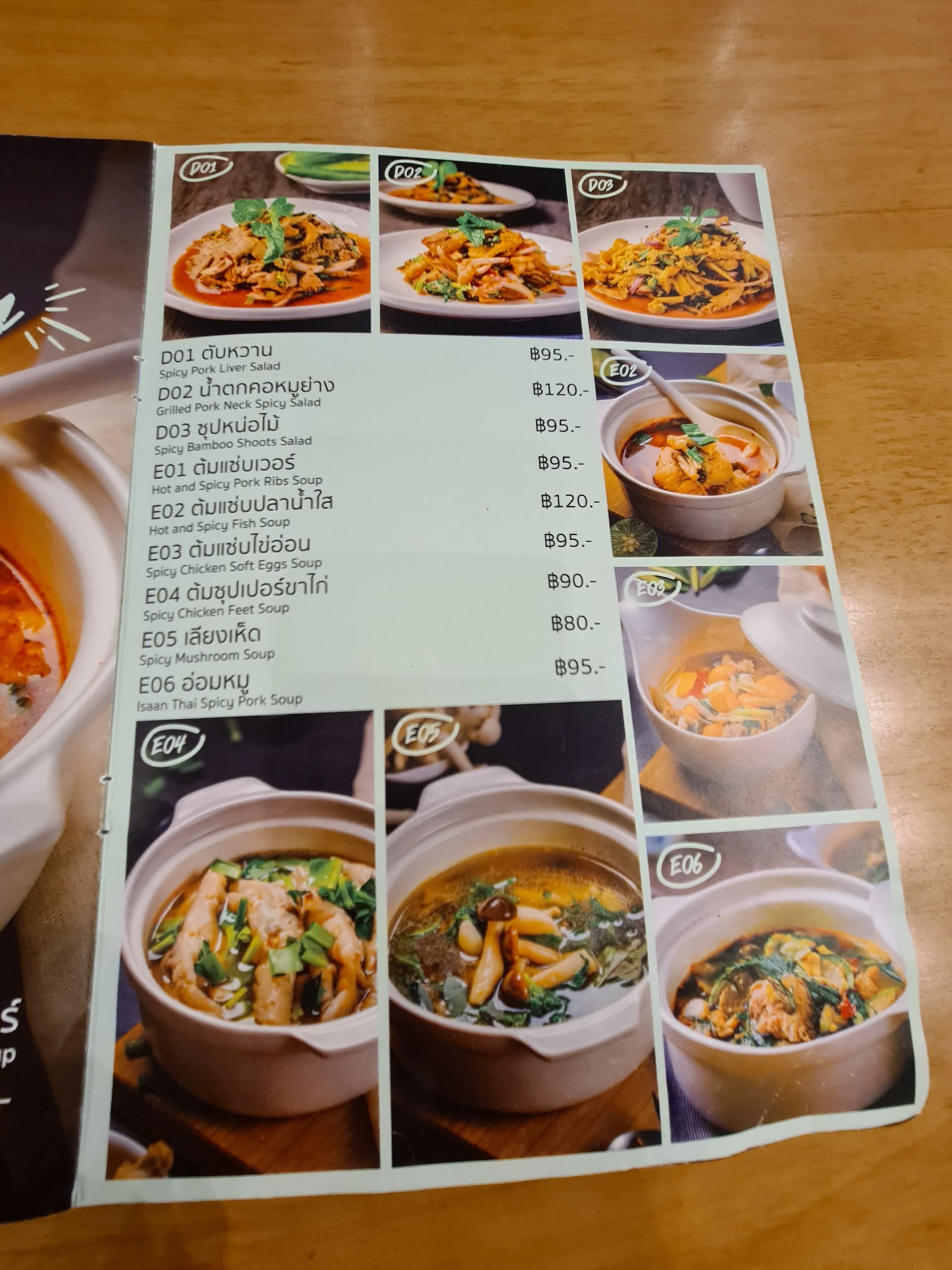
The other side of the menu pushed further into Isan-style territory. Spicy salads, broths, the kind of dishes where you might not be sure what you're getting just from the name. Seeing all of it together made it clear how Thai locals actually build a meal. If it's your first time, start with whatever has a photo. Ordering from the name alone when you don't know the dish is a gamble most newcomers don't need to take.
For First-Timers, Ordering This Way Saves a Lot of Guesswork
Always anchor the table with a rice dish. Something like pad krapao moo sap (ผัดกะเพราหมูสับ) gives the meal a backbone. Without it, the table can feel like it's missing its center.
Add something fresh and bright. Yam woon sen (ยำวุ้นเส้น) works really well here. If it's your very first time with Thai food, som tam Thai (ส้มตำไทย) is even more approachable as a starting point.
Include one fried or grilled dish. Something like tod mun goong (ทอดมันกุ้ง) or fried pork works as a kind of safety net — it grounds the table and gives you something familiar to come back to between bites of spicier dishes.
A soup is optional, but useful. When the table leans spicy, having a mild broth to sip between dishes makes a real difference. It lets you keep going without burning out halfway through.
The First Visit Was a Solid, Approachable Combination
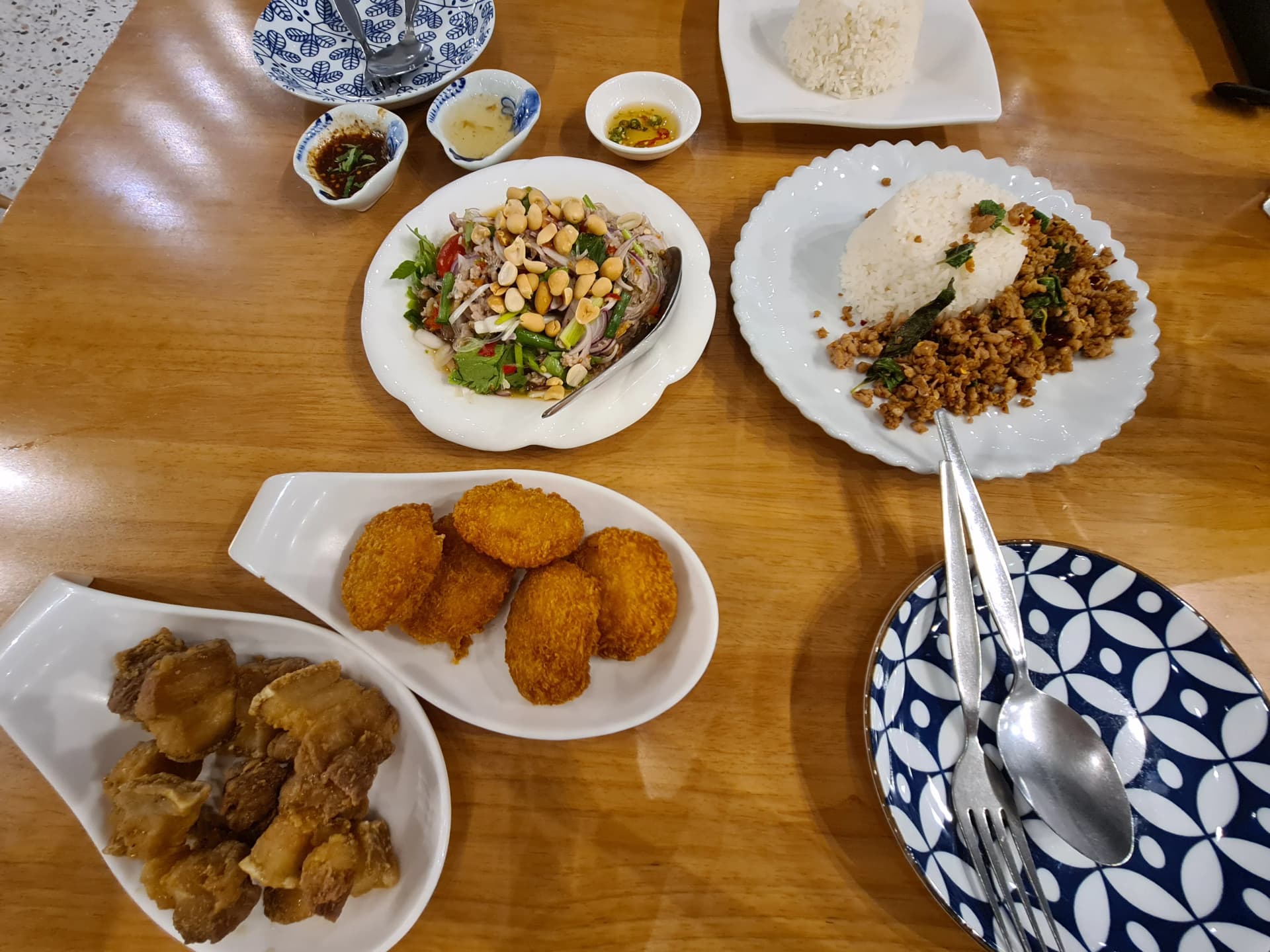
We didn't just go once and call it done. The first meal was good enough that we came back a few days later. On that first visit, we ordered yam woon sen (ยำวุ้นเส้น), tod mun goong (ทอดมันกุ้ง), pad krapao moo sap (ผัดกะเพราหมูสับ), and a fried pork dish. Something tangy, something to anchor the rice, something crispy. That combination is about as solid as it gets for a first visit — nothing on the table felt risky, and everything worked together.
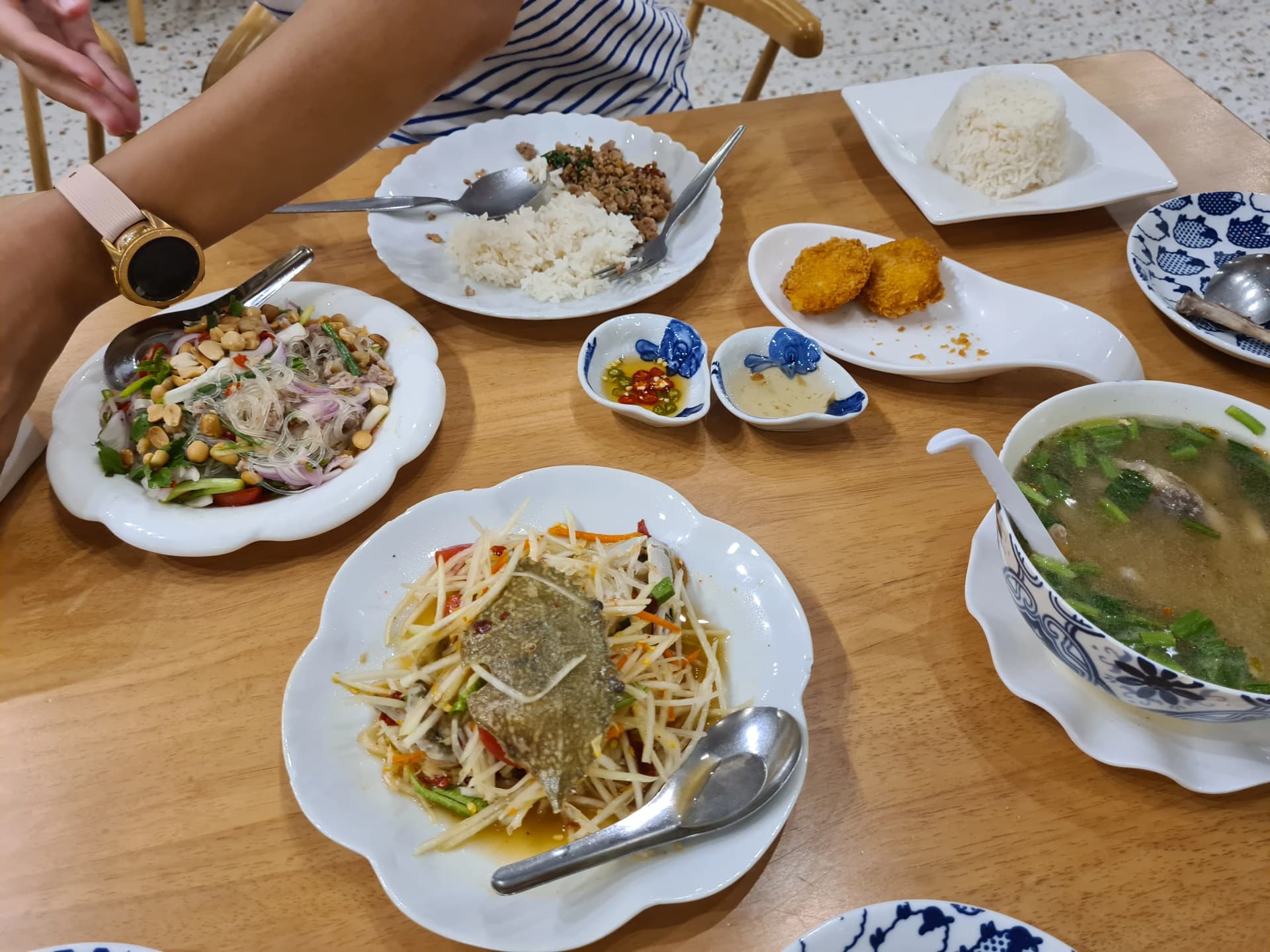
The second visit pushed things further. We ordered yam woon sen again, but swapped out the som tam for som tam poo pla ra (ส้มตำปูปลาร้า). The soup on the right that night was a spicy broth with chicken feet. After two visits, the contrast was obvious. The first spread was one that pretty much anyone could enjoy. The second one tasted much more like how the locals actually eat.
Tod Mun Goong (ทอดมันกุ้ง) Was Way Easier Than the Name Suggested
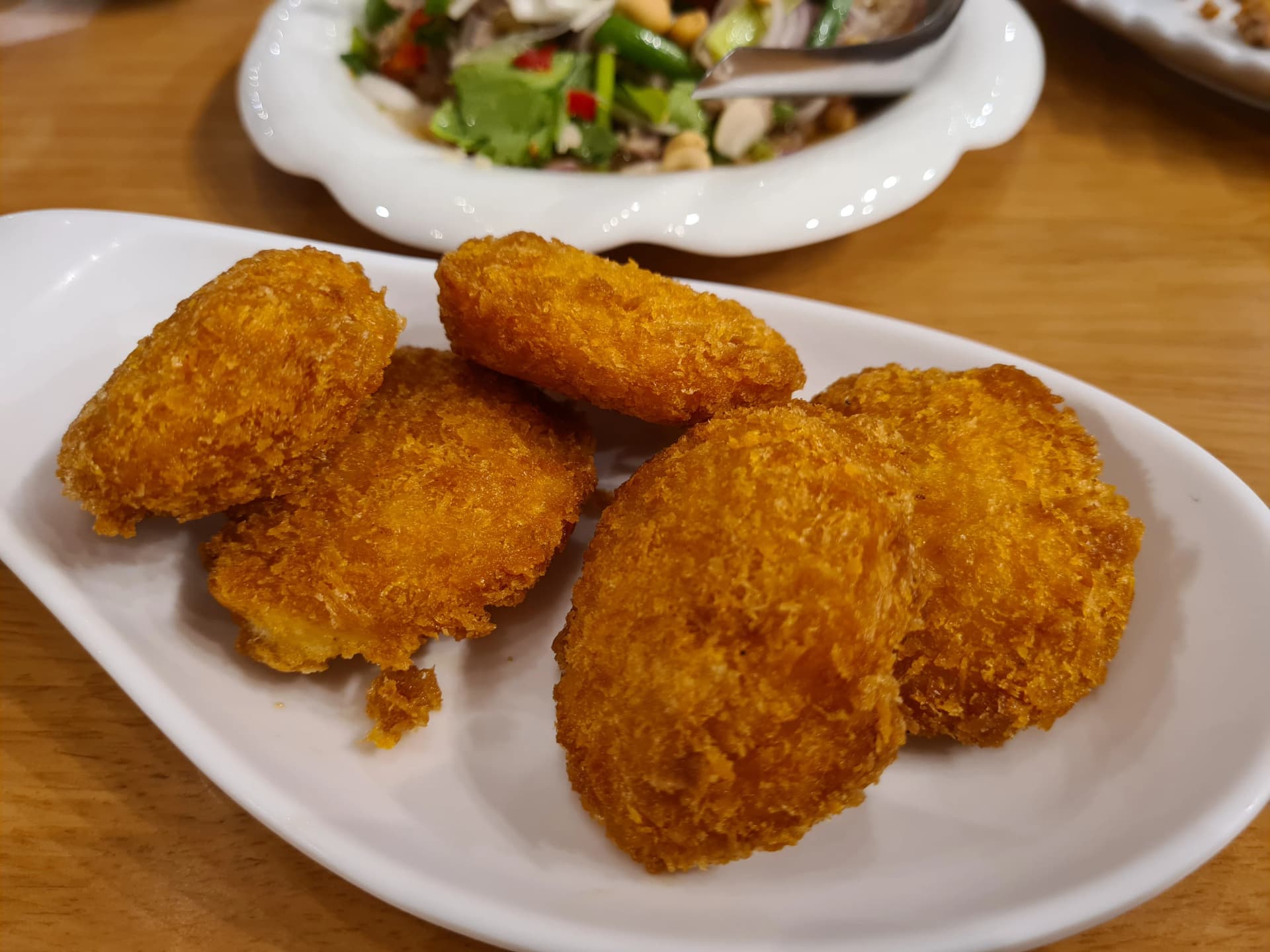
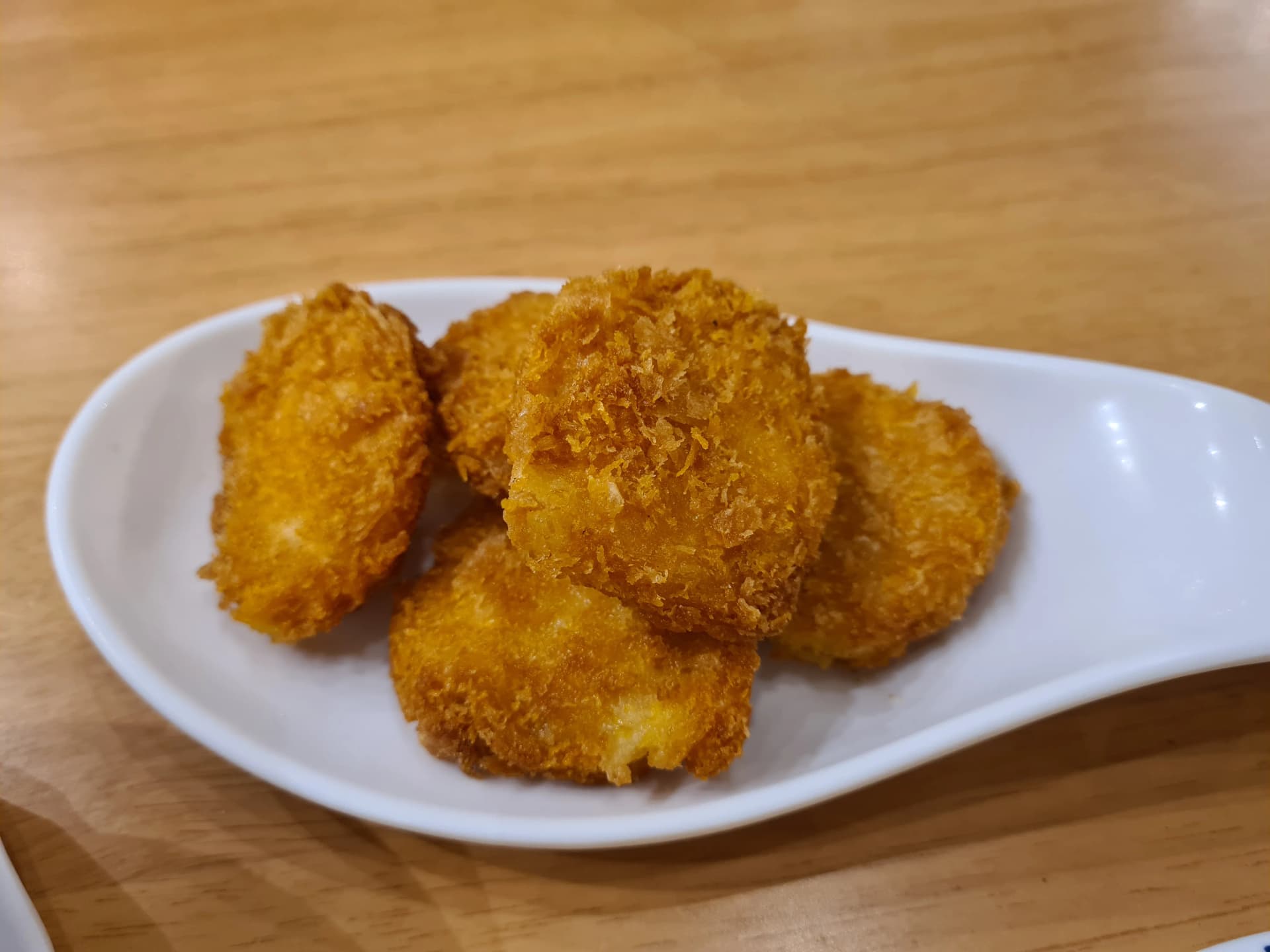
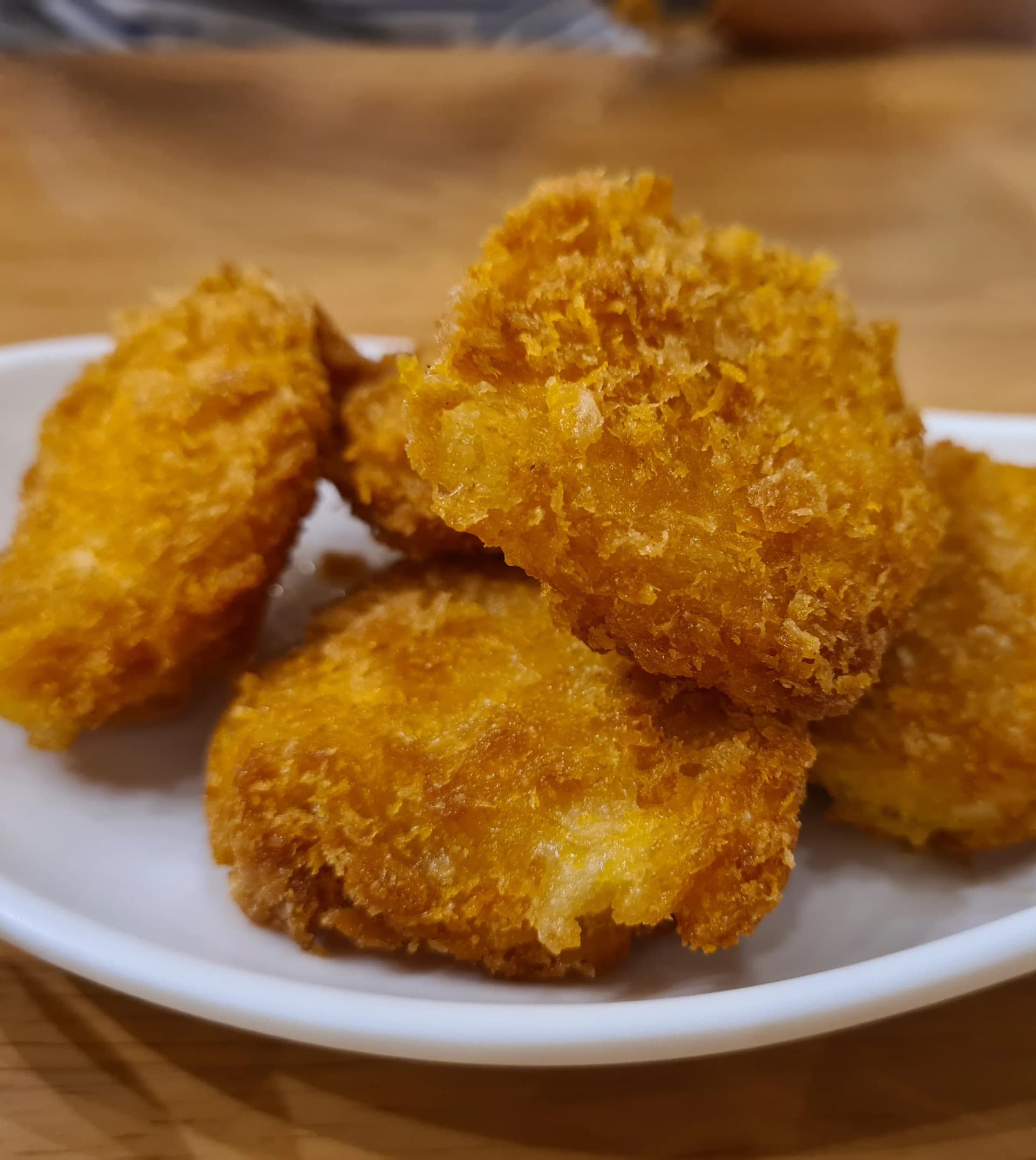
Ordering tod mun goong (ทอดมันกุ้ง) that first evening turned out to be a great call. The name looks unfamiliar on a menu, but when the plate hits the table it's immediately obvious what it is — crispy on the outside, bouncy and springy inside. Snacking on these between bites of spicier dishes felt completely natural. Think of it a bit like Southeast Asian-style fishcakes, but made with shrimp and with a noticeably lighter, bouncier texture. It's the kind of dish you could confidently order for someone who's never eaten Thai food before.
Tod mun goong is a shrimp paste patty that's deep-fried, which means the flavor direction is pretty intuitive — crunch and shrimp texture up front, no strong fermented or herbal notes taking over.
It's easy to mix this up with regular tod mun, but the two feel quite different. Tod mun goong is the easier version. Standard tod mun tends to use fish paste with stronger herbal elements, which pushes it much further into local territory. If you're new to Thai fried dishes, goong (shrimp) is the more comfortable place to start.
Yam Woon Sen (ยำวุ้นเส้น) Was the Dish That Kept the Table Balanced
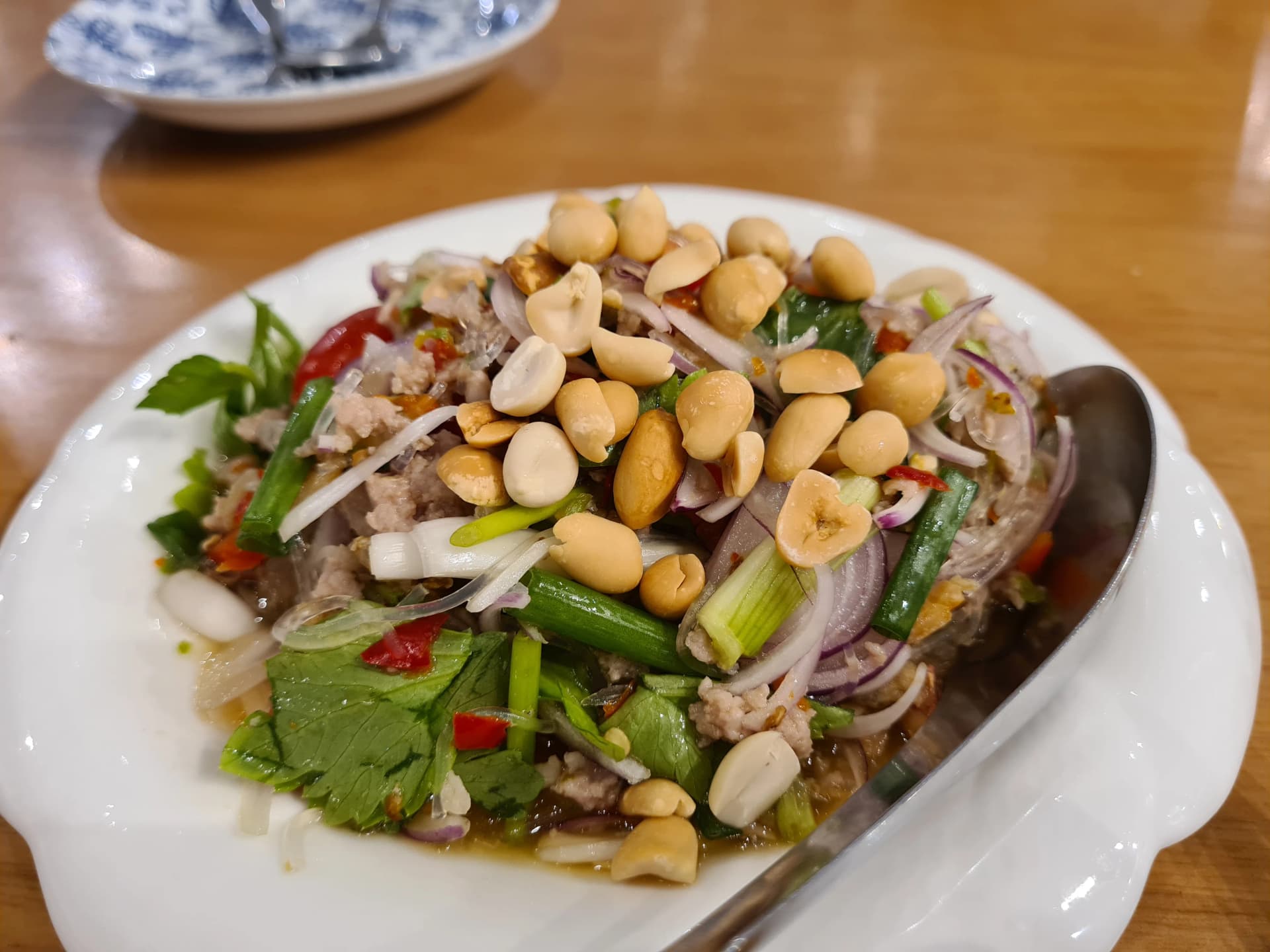
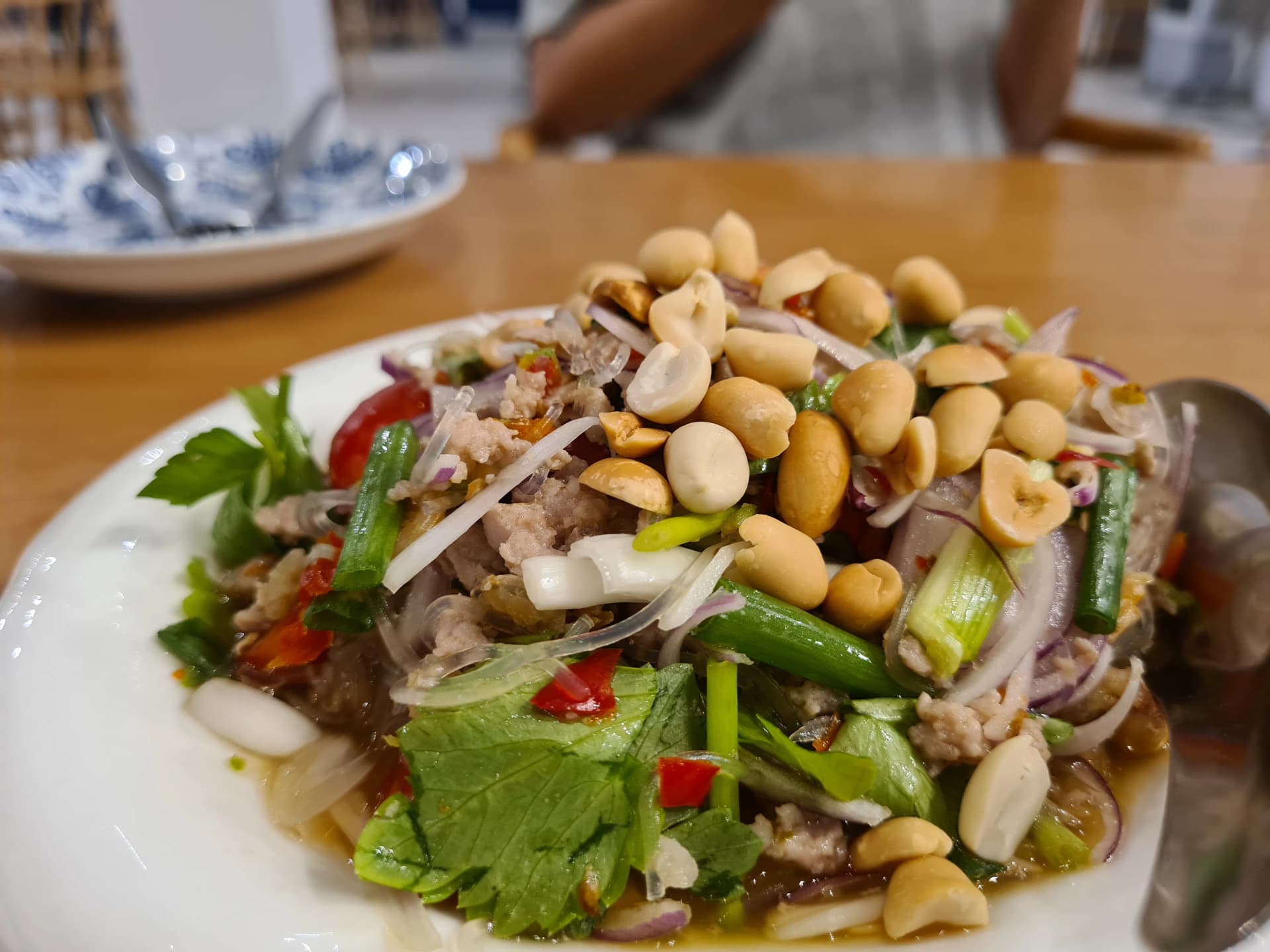
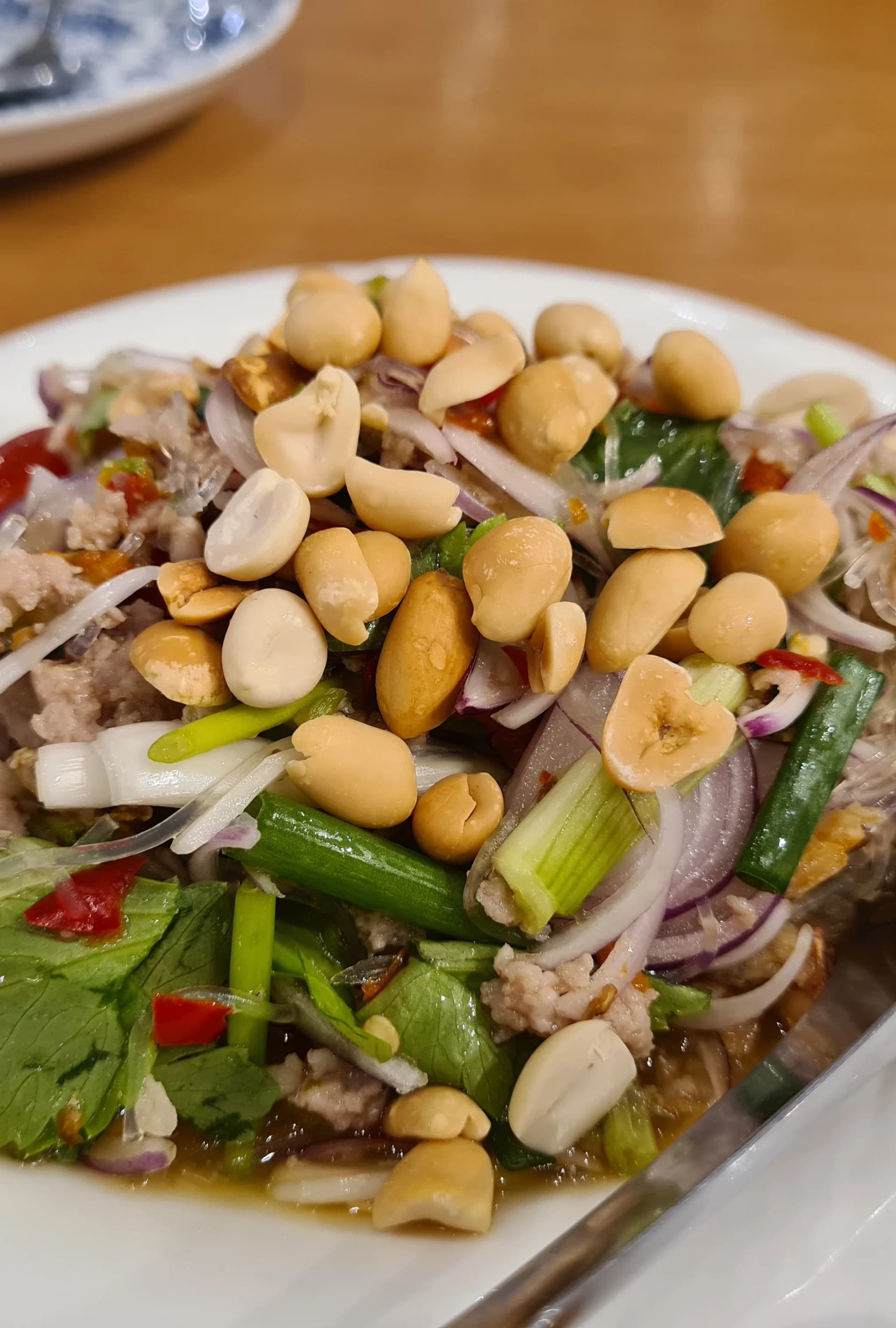
Yam woon sen (ยำวุ้นเส้น) was the dish I ordered both visits. If I was going to drop it after one try, I wouldn't have bothered again. When you're going heavy on meat and fried food, the table gets weighty fast — and this dish cuts through all of that. The glass noodles might make it look familiar at first glance, but it's nothing like a stir-fry. It's closer to a cold salad dressed in tangy, salty seasoning, which makes it genuinely refreshing between bites of heavier food.
Fair warning though: it's quite sour. Lime is right there at the front. If you're expecting something sweet and mild, the first bite might catch you off guard. That said, for most people it's not a difficult dish to get into — it's far more approachable than anything with heavy fermented funk, and the ingredients are recognizable. The spice level does vary a lot by restaurant, though. Some versions are just bright and tangy. Others bring serious heat. Worth keeping in mind.
Pad Krapao Moo Sap (ผัดกะเพราหมูสับ) — You Immediately Understand Why Everyone Orders It
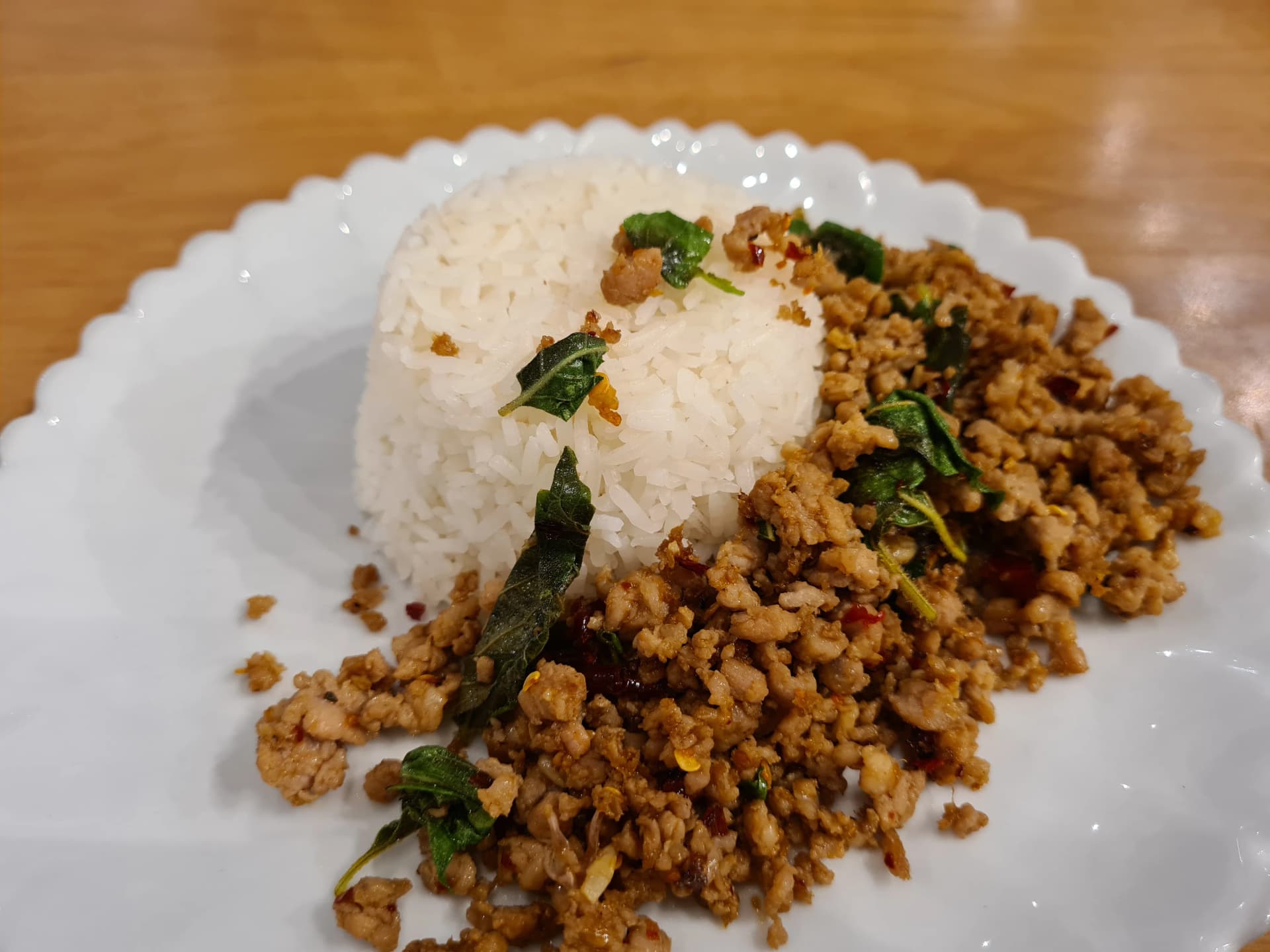
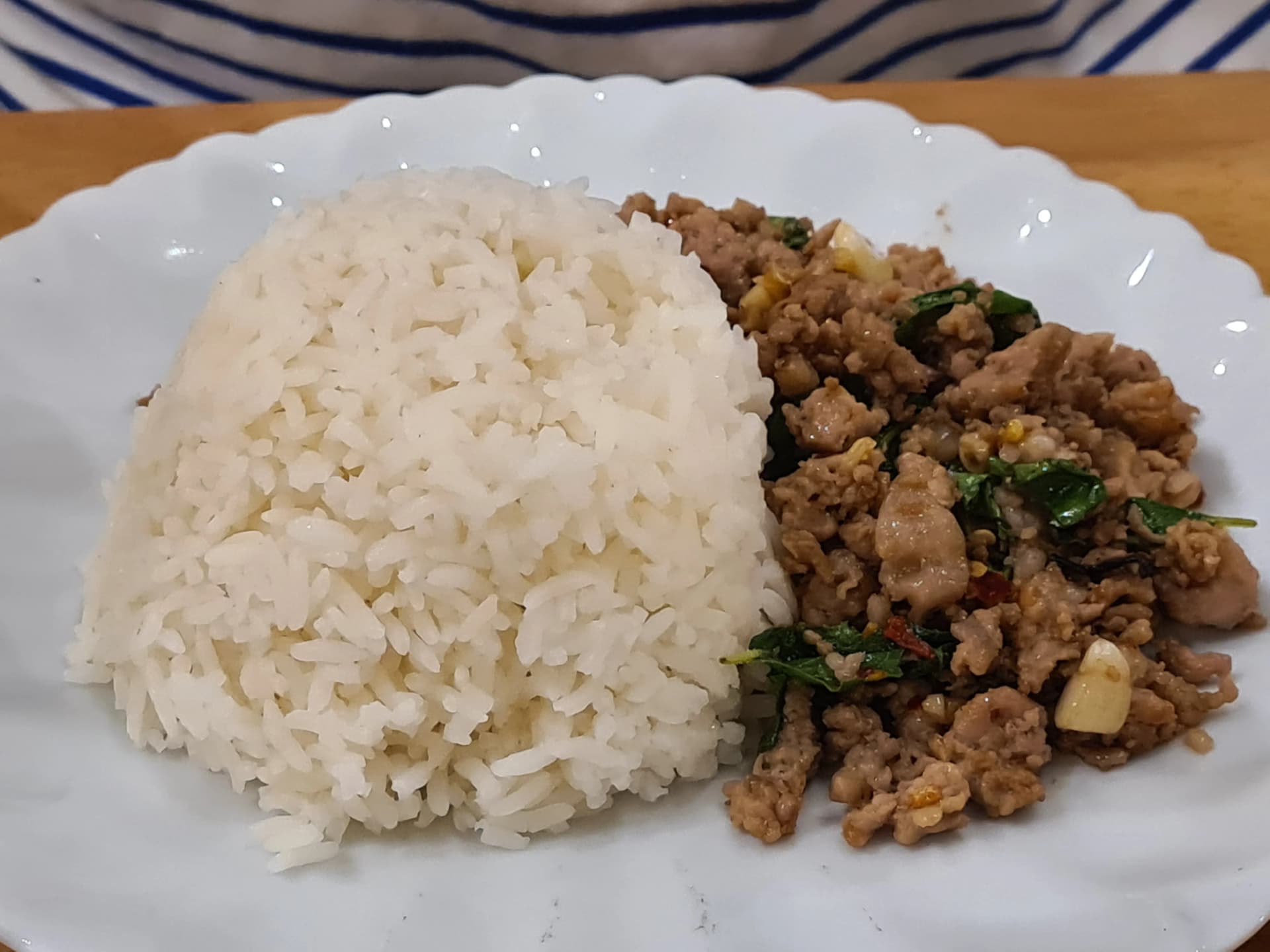
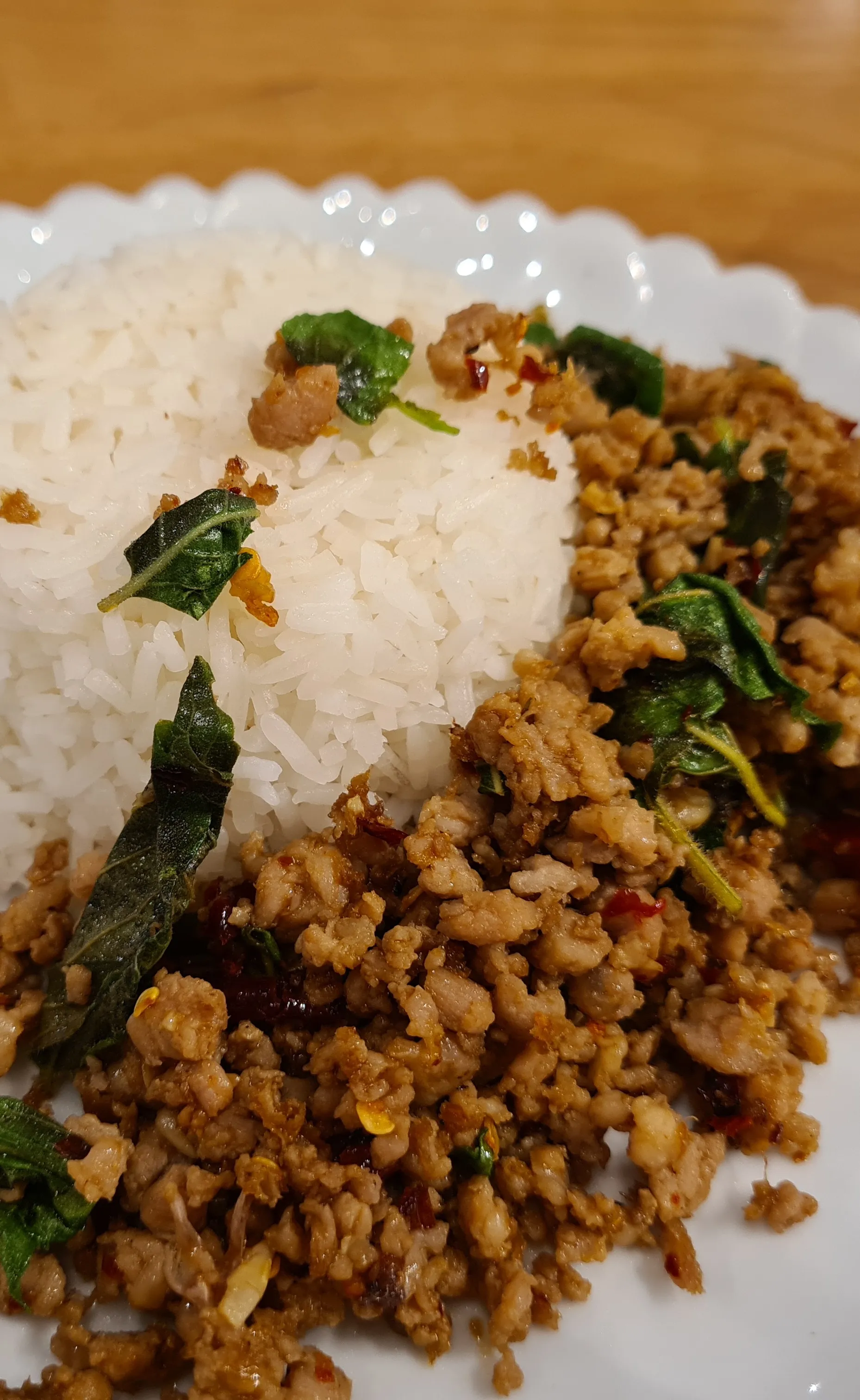
Pad krapao moo sap (ผัดกะเพราหมูสับ) is basically unavoidable at a Thai restaurant, and after one bite you understand exactly why. Ground pork stir-fried with garlic, chili, and holy basil, served over rice — on paper it sounds simple, but the actual taste is anything but. Savory, deeply umami, with a building spice kick that somehow keeps you going back for more. This is the kind of dish where the rice disappears alarmingly fast.
The holy basil aroma might feel a little unusual the first time. If the leaves feel too strong for your taste, you can push them aside — the stir-fry base is solid enough on its own that the core flavor holds up fine without them. Spice levels vary here too; some versions are a pleasant warm heat, others hit surprisingly hard. Overall, though, this is one of the more friendly entry points into authentic Thai restaurant cooking. If someone asked me to recommend one rice dish from a local Thai spot, this is what I'd point to first.
The Second Visit Pulled Us Toward More Local Flavors
The second visit had a different feeling from the start. Where the first night was about playing it safe, the second one had us reaching for the dishes that local Thai people actually eat day to day. Going to the same restaurant twice reveals something you can't get in a single visit — you start to understand what the place is really built around. And for us, the clearest version of that difference showed up in the som tam.
Som Tam Poo Pla Ra (ส้มตำปูปลาร้า) Is More of a Step-Two Dish Than a Starter
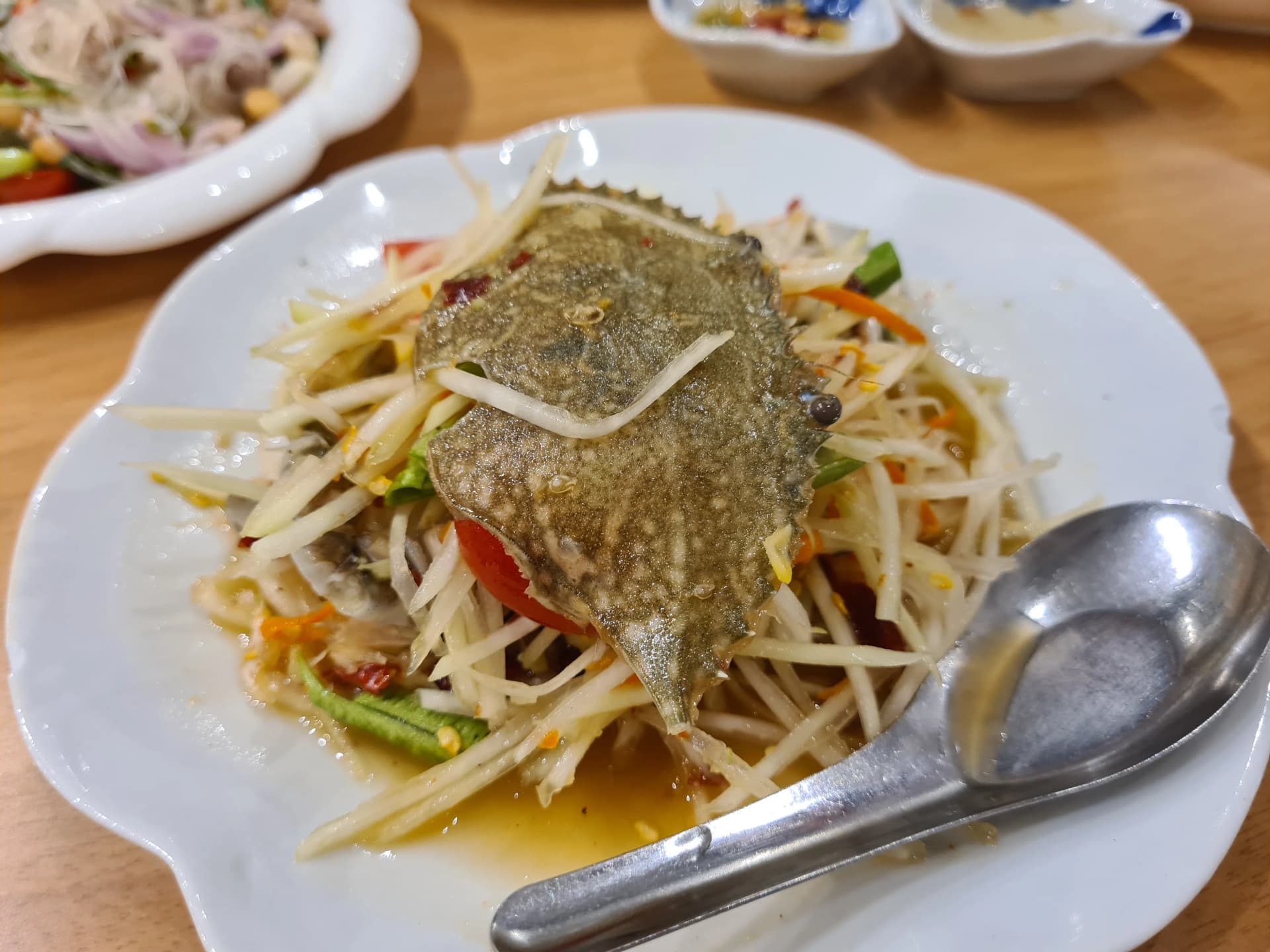
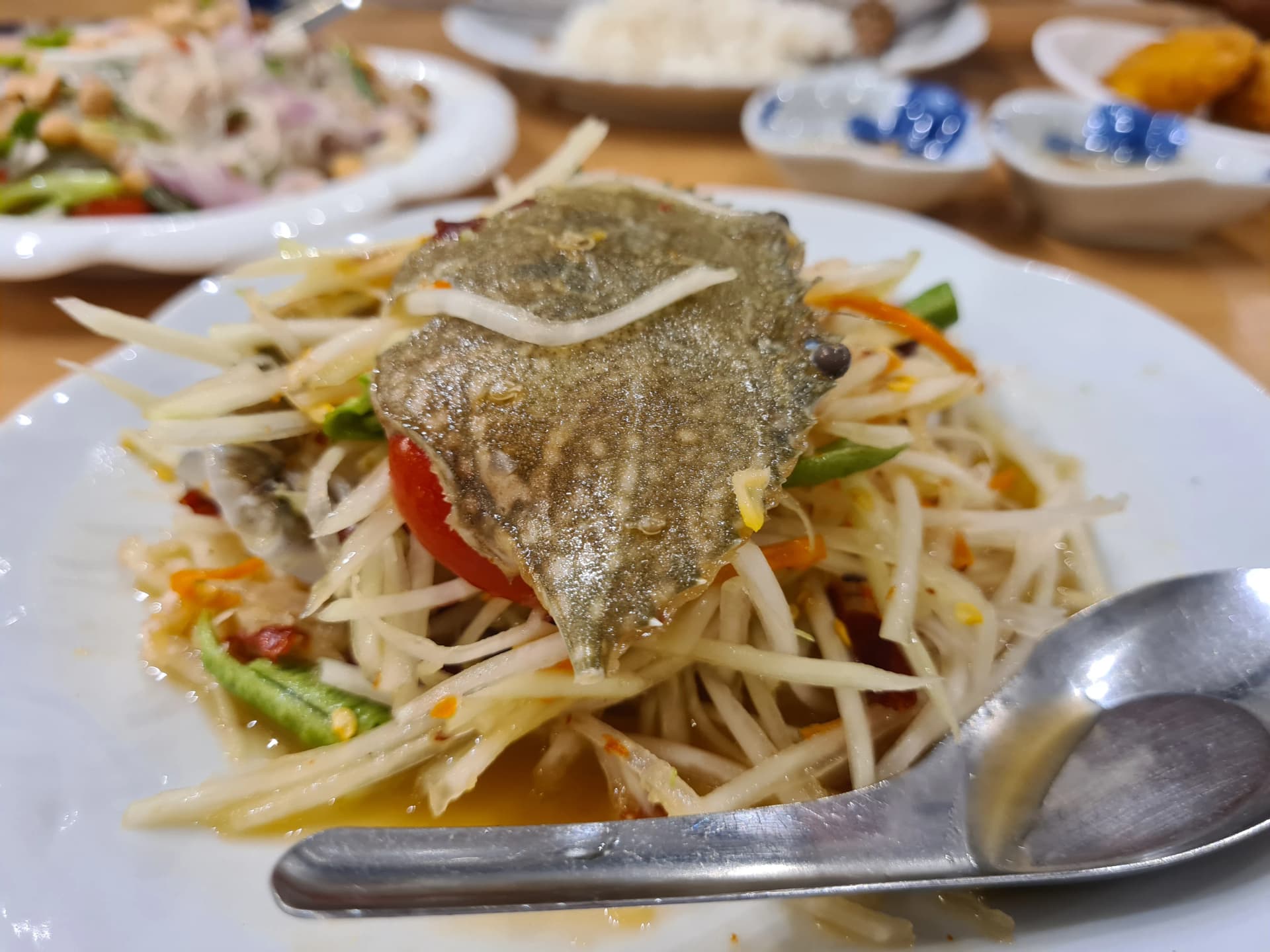
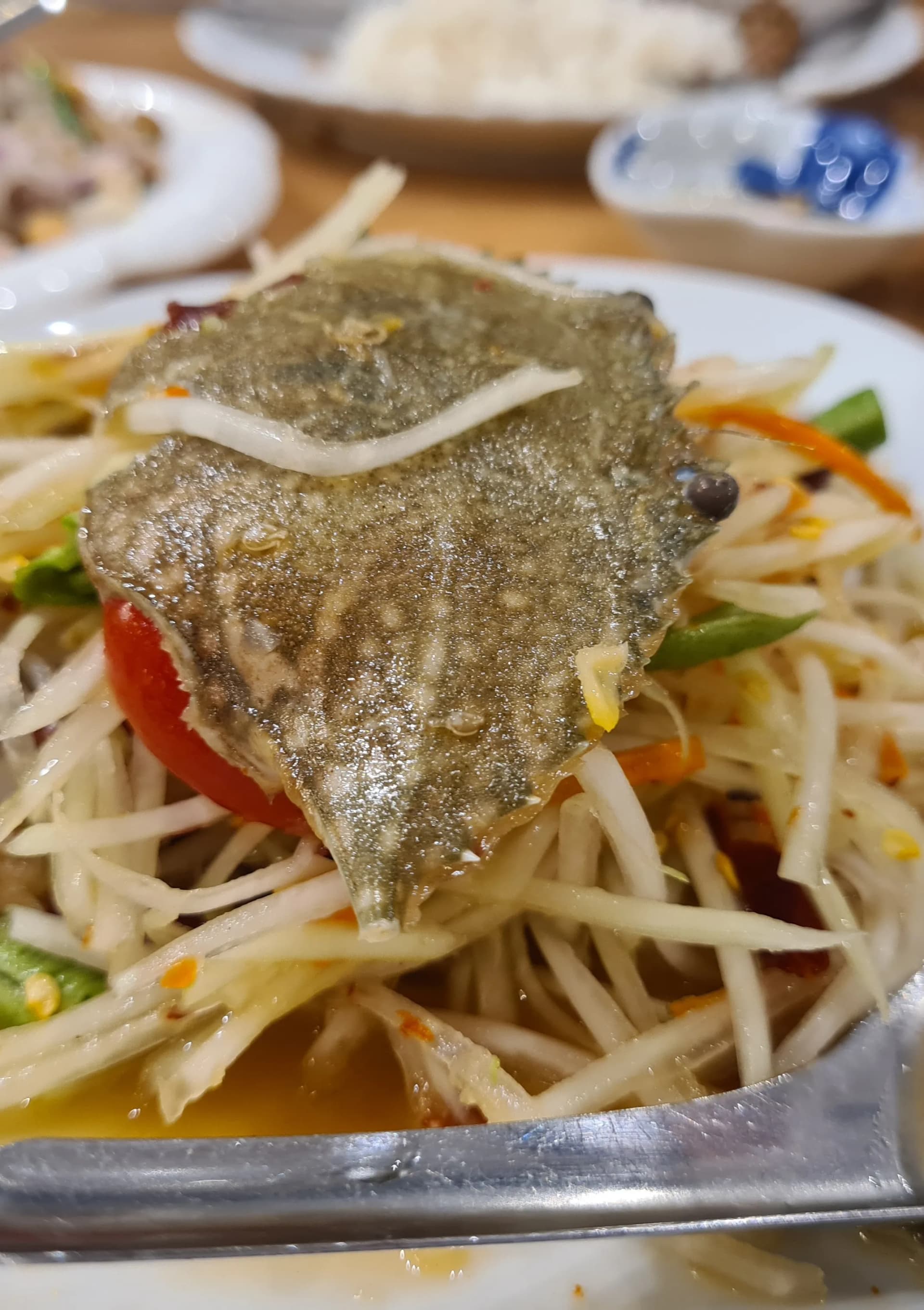
This is som tam poo pla ra (ส้มตำปูปลาร้า). Thai locals eat it constantly — but to be honest with you, if it's your first trip to Thailand, this one's a step up. It's a spicy green papaya salad with crab and pla ra (fermented fish sauce), and that fermented element shifts the whole dish firmly into local territory. It's not the bright, refreshing salad vibe you might expect from som tam. It's closer to a crispy shredded vegetable dish with a deep, funky fermented undertone — think somewhere between a tangy slaw and something with the funk of fish sauce dialed up significantly. I didn't want to just call it Thai kimchi, because that's not quite right either. For anyone coming from a Korean food background, the closest mental image might be something like radish salad with a much stronger fermented fish flavor layered in.
If it's your first time with som tam, go for som tam Thai (ส้มตำไทย). The sweet-sour balance is much friendlier, and it's easy to enjoy even early in a Thailand trip.
Som tam poo pla ra (ส้มตำปูปลาร้า) takes things significantly deeper with the fermented notes. It's not just spicier — it's a whole different flavor profile, much more rooted in local Isan-style eating. Better to get your bearings with som tam Thai first, then come back to this version once you've built up a feel for it.
Once Thai food started feeling more familiar, som tam poo pla ra became genuinely interesting to me. On the first try, you might wonder what all the fuss is about. But after eating it a few times, you start to get why Thai people reach for this flavor almost daily. That said, it's definitely not a beginner's first-choice dish — and I think it's worth being straight about that.
The Side Dishes We Rounded Out the Table With
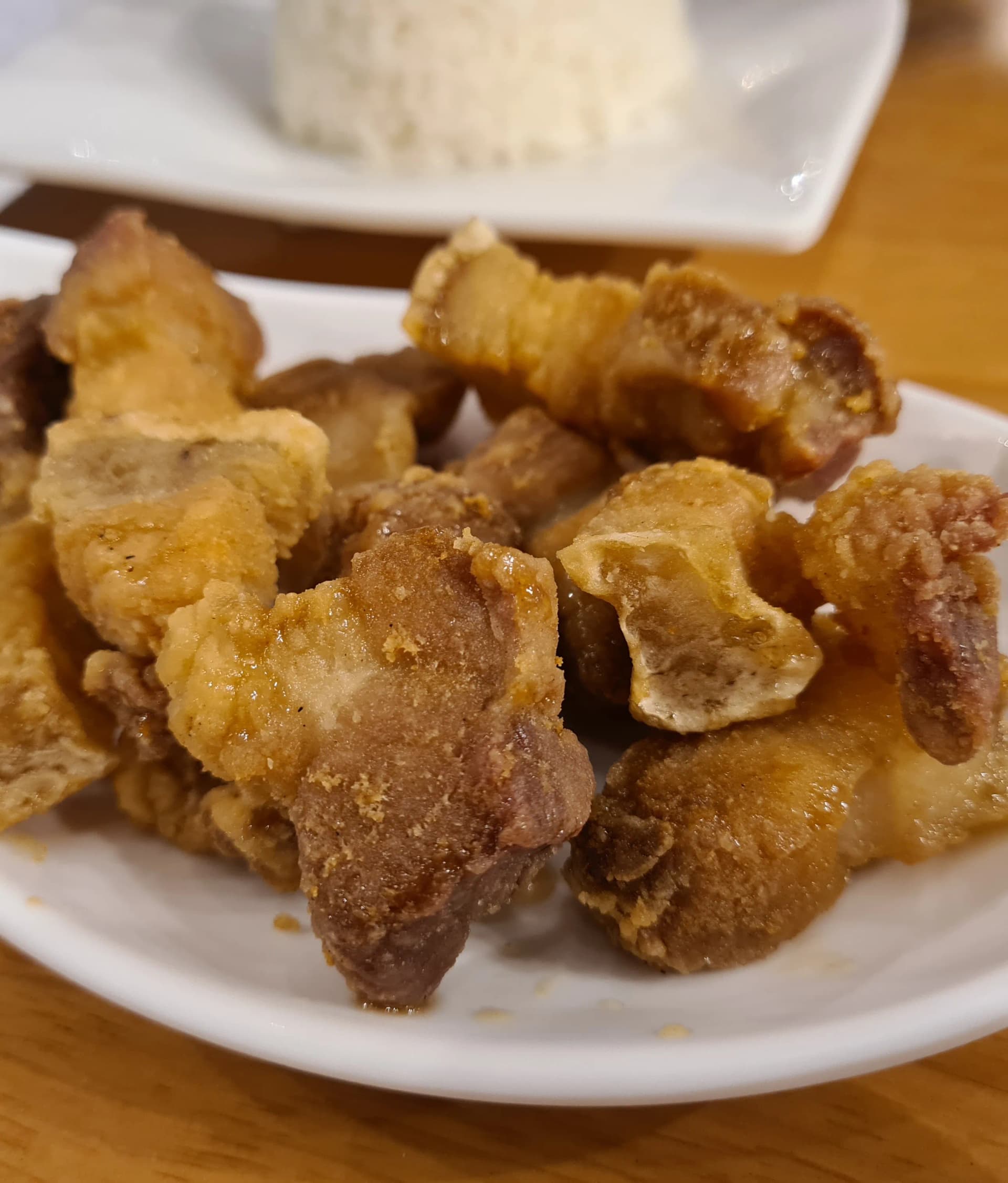
We also added a fried pork dish to round things out. This one doesn't need much explanation — it's the plate that chopsticks instinctively head toward first. Even if you're bringing someone who's never eaten Thai food before, this kind of dish doesn't cause any hesitation at the table.
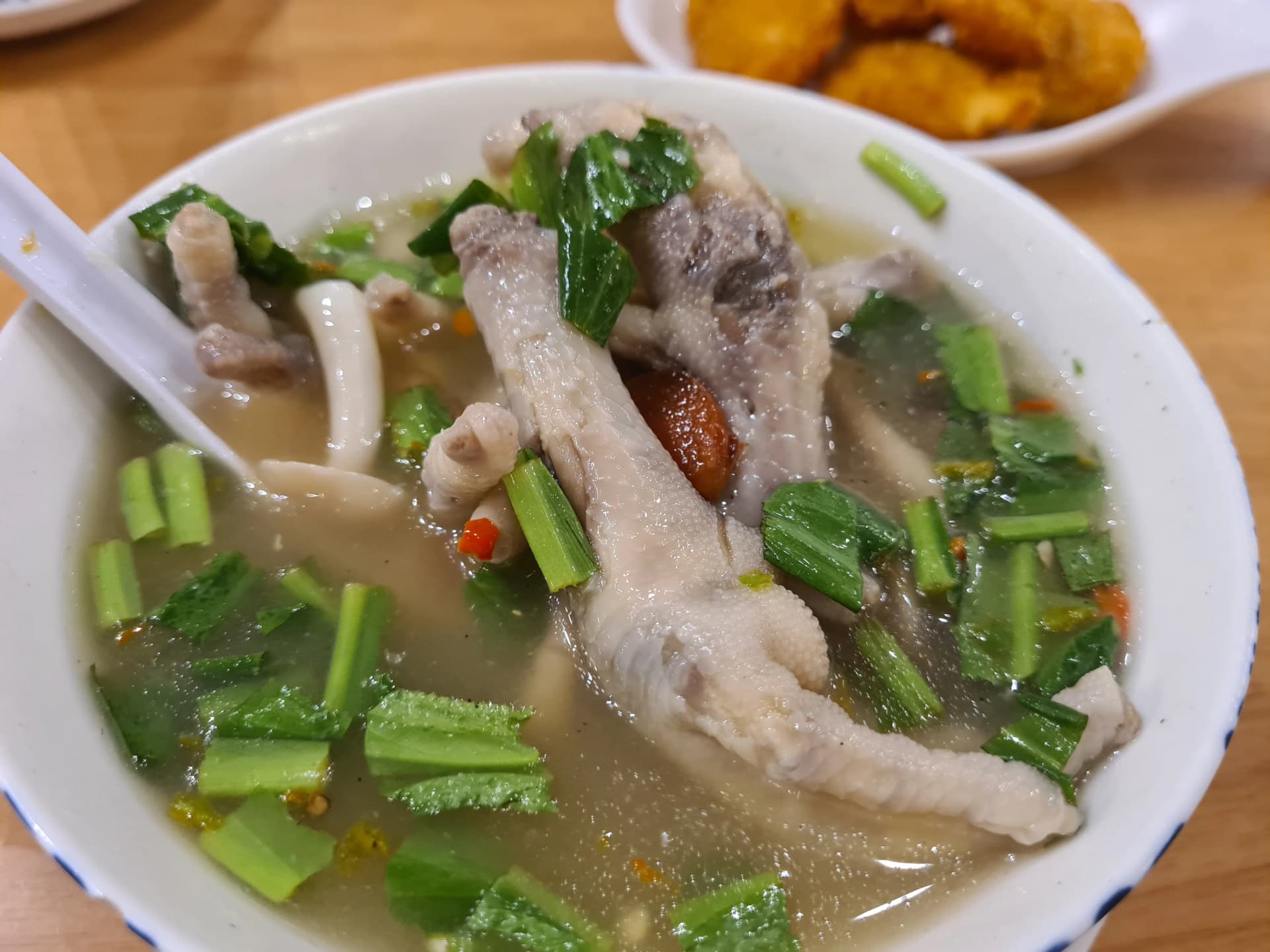
We also ordered a spicy broth with chicken feet. I won't go deep into this one — but at local Thai restaurants, it's pretty common to have a soup alongside the rest of the spread. If you're a chicken feet fan, this is a welcoming version of the dish.
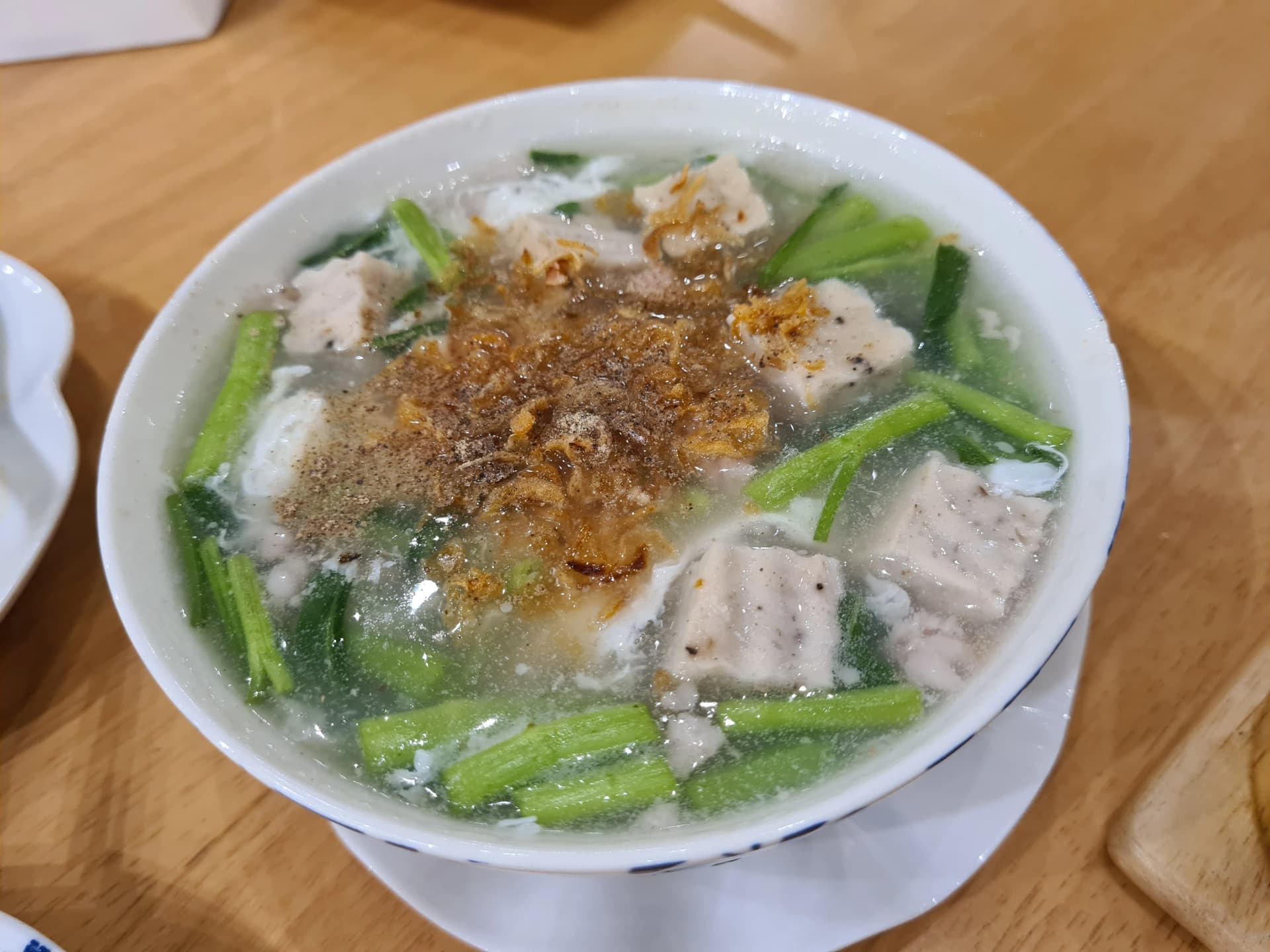
And this is the mild clear soup I mentioned earlier. It wasn't anything dramatic on its own — more gentle and understated than exciting. But when the rest of the table is running hot, having something like this to sip between bites is genuinely useful. Less of a highlight dish, more of a balancing act.
What You Actually Learn from Eating at a Thai Local Restaurant
Thai local restaurants have a much wider menu range than most people expect going in. If you walk in looking for just one famous dish, you're only seeing half the picture. There's yam woon sen to keep things light and bright, pad krapao moo sap to make rice disappear faster than you'd expect, tod mun goong to give the table a safe, crowd-pleasing anchor. And then there's som tam poo pla ra, which rewards you once you've spent some time getting comfortable with Thai flavors in general.
The names might look unfamiliar at first, but mixing approachable dishes with bolder ones goes a long way. I saw that clearly across two visits — the first night, the safer choices held the table together really well. The second night, the more local dishes pushed to the front. If you find yourself at a local Thai restaurant during a trip, my honest advice is: don't try to go too hard too fast. Start with a few easy dishes, get a feel for the flavors, and then gradually push further in from there. That approach left me far less confused and made for the meals I still remember most clearly.
This post was originally published on https://hi-jsb.blog.