
How to Eat Shabu-Shabu | Swish, Dip, and Devour
Table of Contents
17 items
Korean Shabu-Shabu — the Perfect Menu for a Family Gathering
If you're looking for a dish where you can enjoy both meat and seafood at the same time, shabu-shabu is hard to beat. On Children's Day in May 2026, my dad's side of the family got together for the first time in a while, so we took my grandmother to an all-you-can-eat shabu-shabu restaurant called Shabu Mania in the western part of Cheongju, a mid-sized city about two hours south of Seoul.
It had been ages since I'd seen my grandmother, and someone floated the idea of all getting a meal together. My wife was busy that day and couldn't make it, so it ended up being my parents and the rest of my dad's side of the family. Picking a restaurant was a whole ordeal on its own — my grandmother is over ninety, so the food had to be something she could actually eat: nothing too heavy, but still a proper meal. We'd been to places like Shabu All Day and Shabu Hyang before, but this time my dad suggested Shabu Mania, so that's where we went. We showed up around lunchtime without a reservation, and since we got there early enough, tables were still open. Surprisingly for Children's Day, the crowd was mostly adults with barely any kids in sight. The whole meal took about an hour and a half, and we parked in the building's underground garage.
Shabu Mania — the Building and Interior
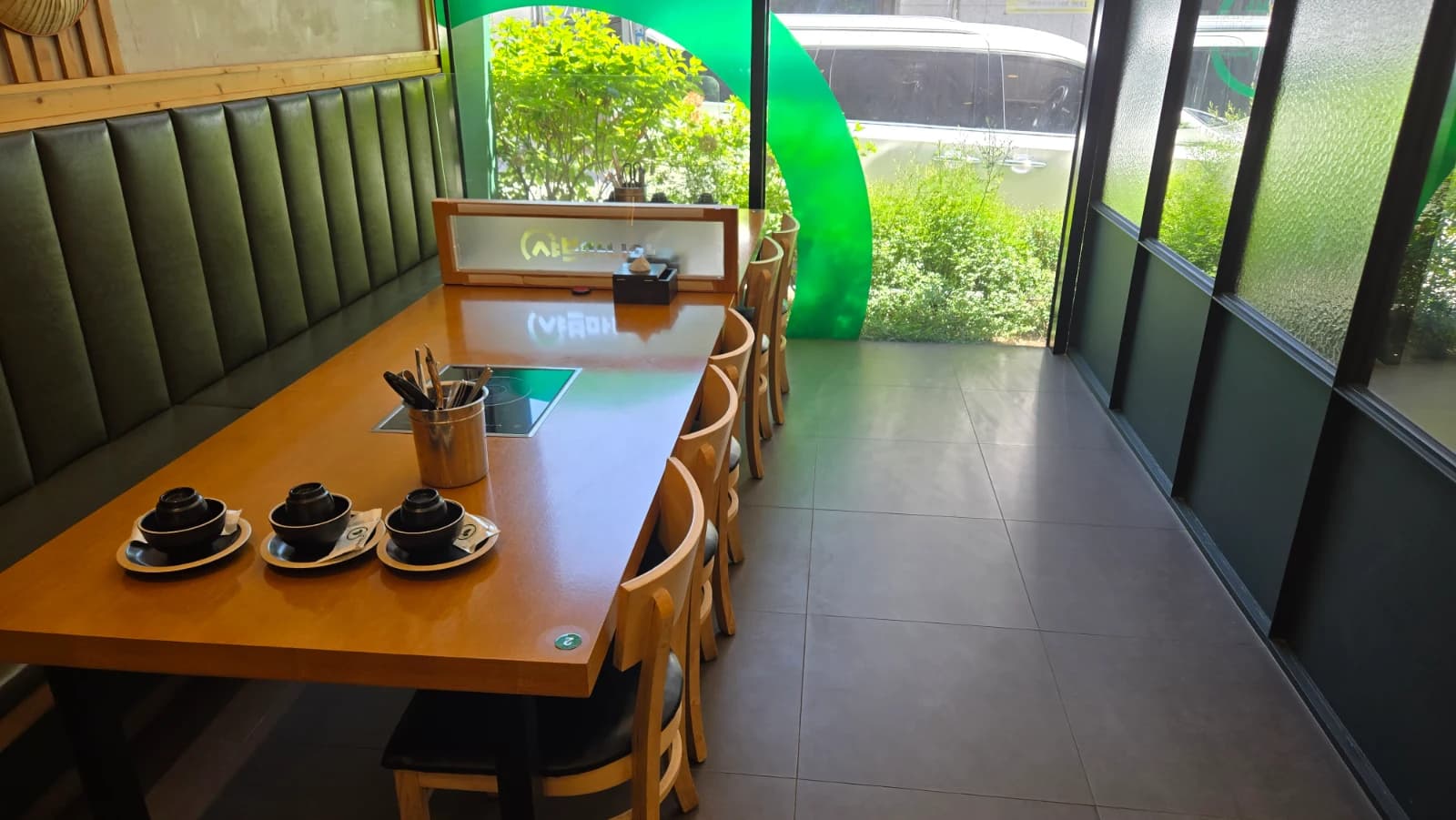
The Shabu Mania sign is mounted right on the brick exterior, and underneath it they've written "Our broth and sauces are truly delicious" — their own words. Normally that kind of self-promotion on a sign would make me cringe, but after eating there, I'll admit it wasn't a lie. Inside, the window-side seats have spacious tables with cushioned bench seating on one side and wooden chairs on the other. Each table has a built-in induction cooktop right in the center for boiling the broth, and since it's induction instead of a gas burner, you don't leave smelling like a kitchen. We had a decent-sized group, so we grabbed two tables side by side and split up.
What Is Shabu-Shabu (しゃぶしゃぶ)?
Shabu-shabu is a Korean-style hot pot where you briefly swish thinly sliced meat, seafood, and vegetables in boiling broth, then dip them in sauce before eating. The name comes from a Japanese onomatopoeia for the "swish swish" sound ingredients make in the broth. In Korea, shabu-shabu restaurants typically include a self-serve salad bar where you can get unlimited refills of noodles, vegetables, mushrooms, and more.
Meat & Seafood
Thinly sliced beef, shrimp, abalone, and more — briefly swished in broth, then pulled out and eaten
Self-Serve Salad Bar
Unlimited refills on noodles, vegetables, mushrooms, fish cakes, and more
Finishing Fried Rice
Rice and egg are added to the leftover broth — now packed with meat and seafood flavor — and fried to close out the meal
Shabu-Shabu Pricing and Main Ingredients
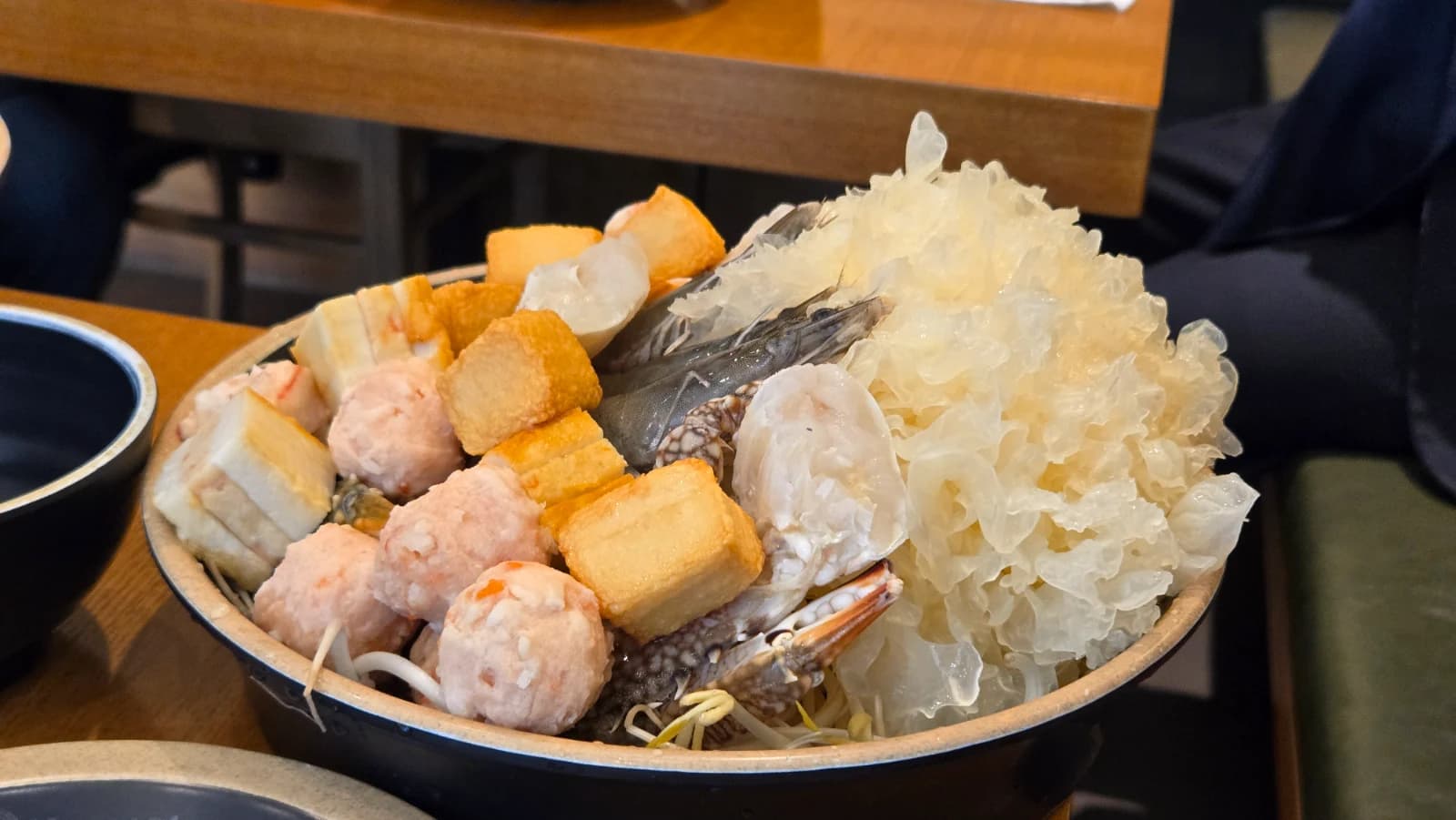
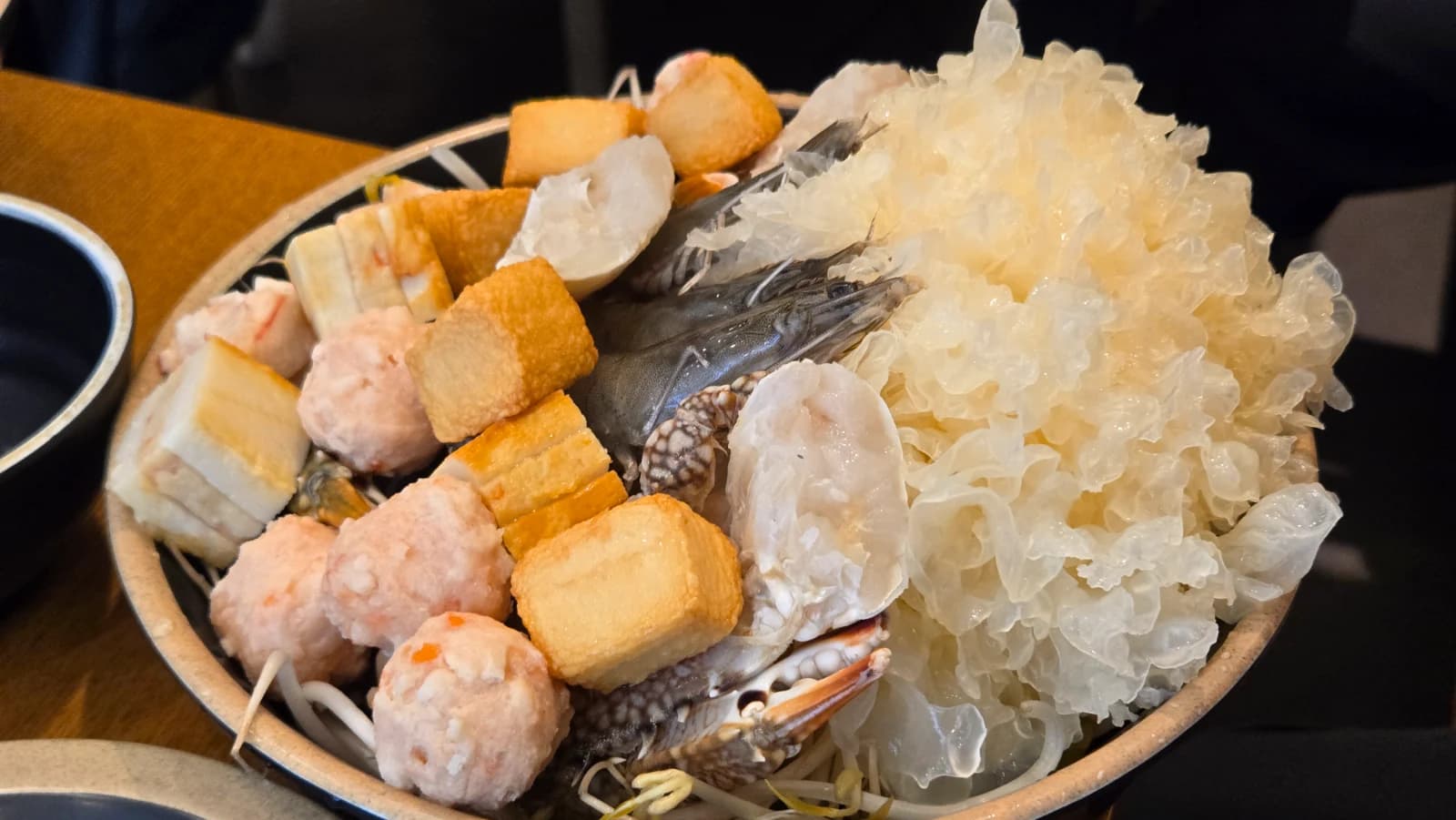
The shabu-shabu price varies depending on which set you order, but come on — when grandma's at the table, you're not going to order the cheapest thing on the menu. So we went with the seafood and beef shabu-shabu, which came out to about $19 per person (₩27,000). That's near the top of Shabu Mania's price range. It arrived in a big bowl heaped with shrimp, abalone, fried tofu pouches (yubu), shrimp balls, and white wood ear mushrooms — all piled into a single serving dish.
The Seafood & Beef Set and Rice Paper Veggies
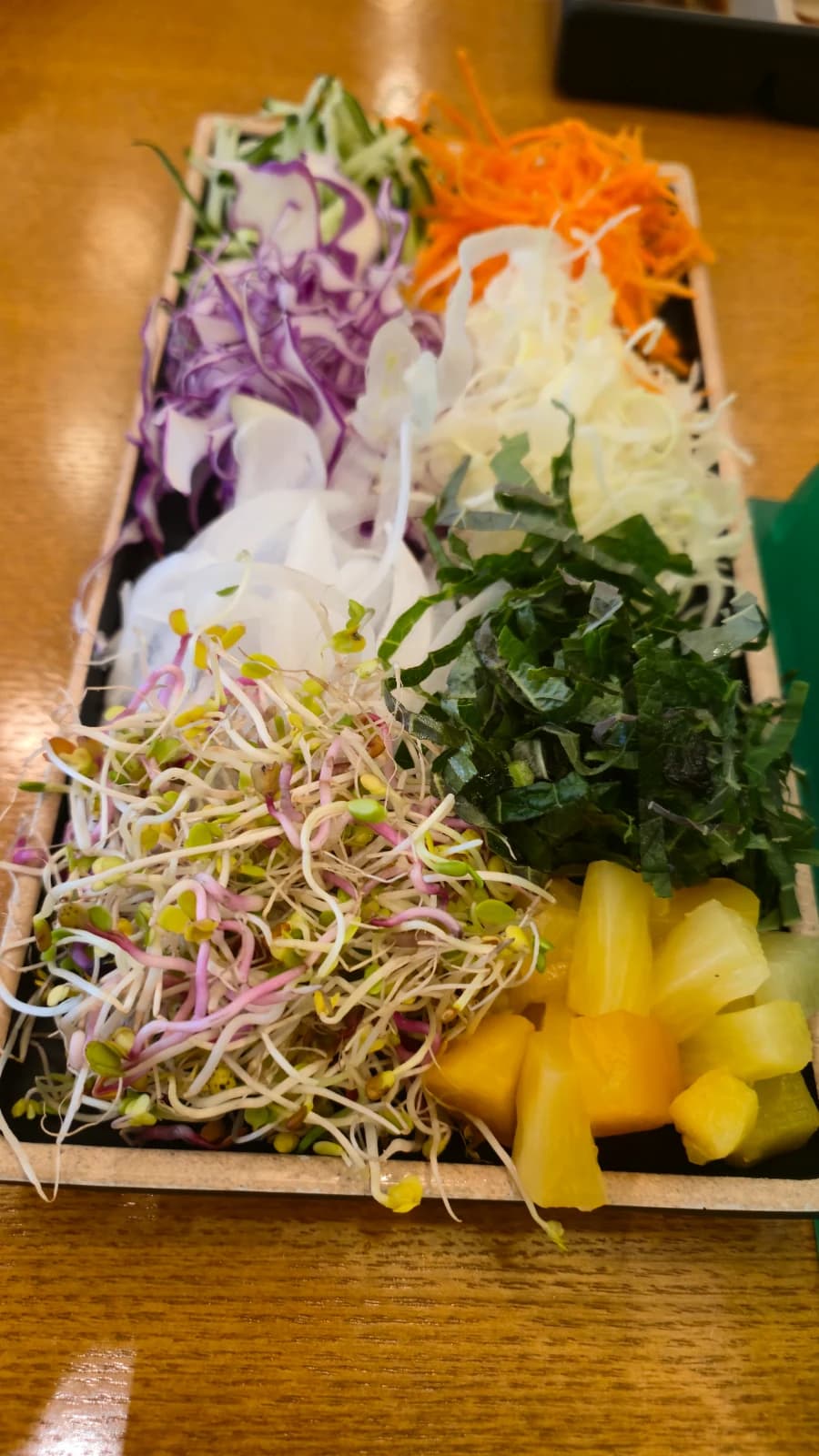
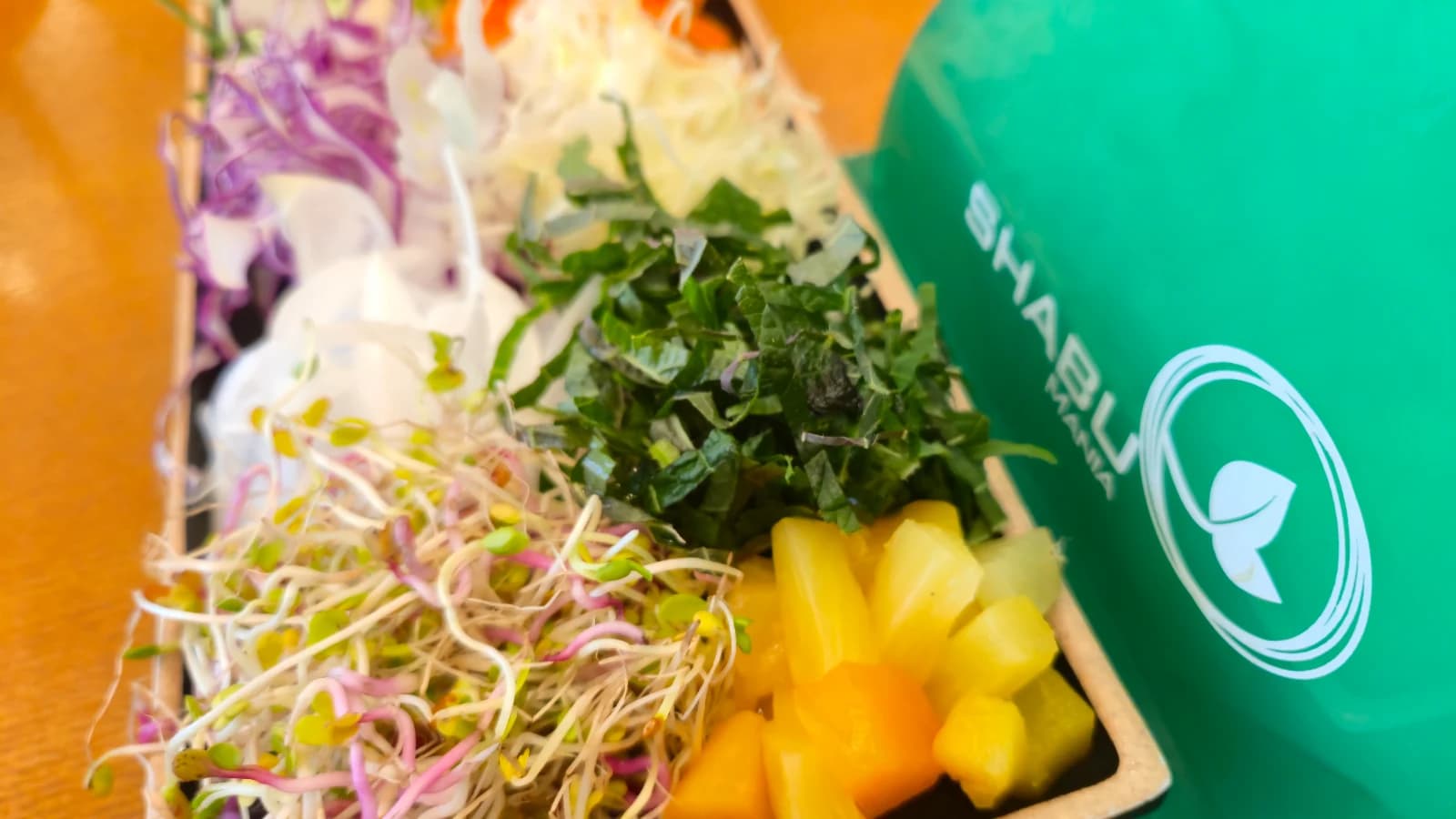
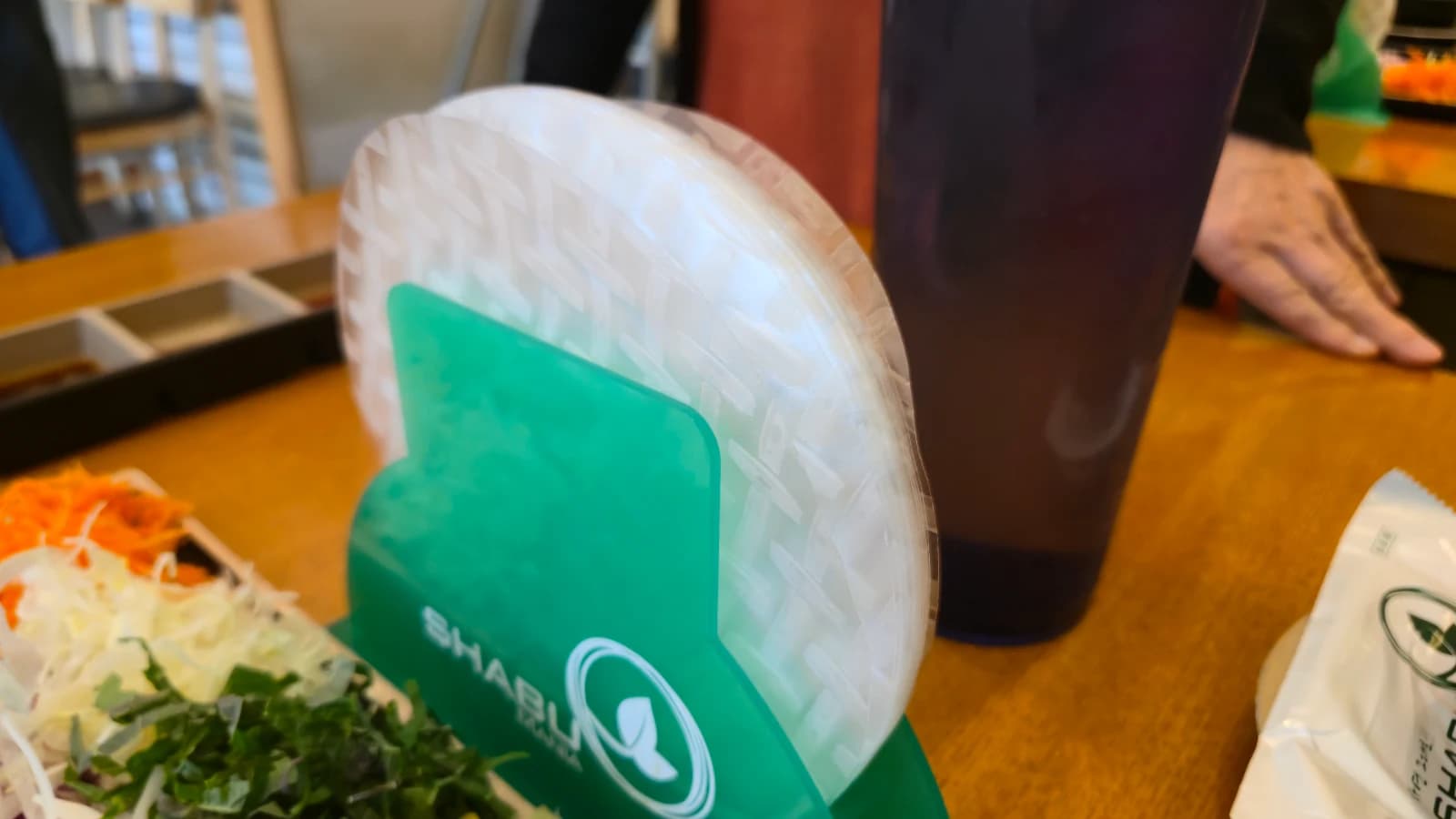
Alongside the seafood bowl, we also got a rice paper veggie set. A wooden tray came out with neatly divided sections of red cabbage, shredded carrot, regular cabbage, seaweed, baby sprouts, and even pineapple — all color-coded in their own little compartments. Next to it, sheets of rice paper were slotted into a green holder. Rice paper is a thin, translucent wrapper made from rice — you dip it briefly in water until it softens, then pile on your fillings and roll it up. My grandmother had never seen it before and asked, "What is this?" so my mom made one for her on the spot.
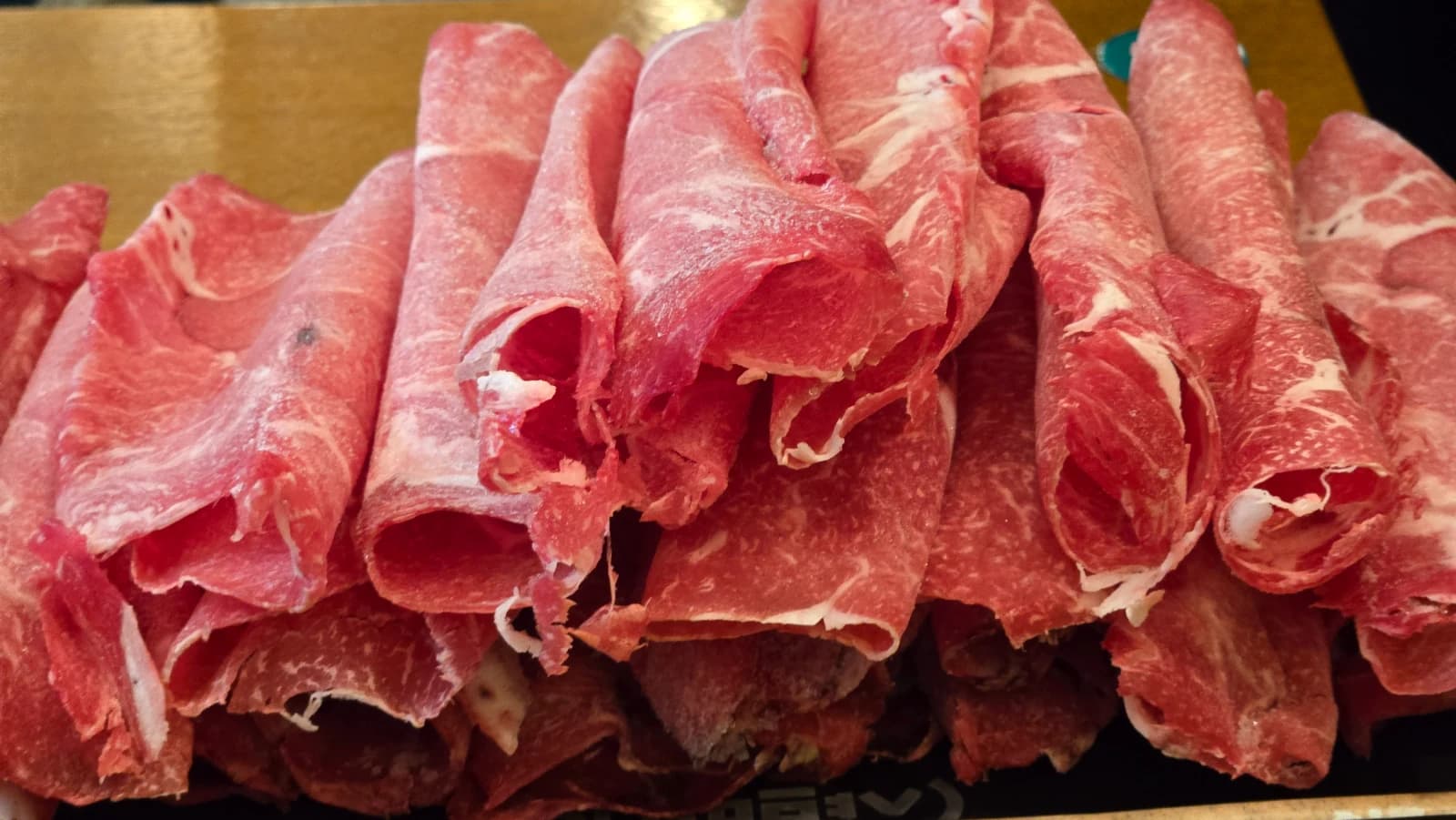
The beef came out too. Thin slices of beef were curled up and lined across a wooden plate, with pretty even marbling throughout. How to eat shabu-shabu is simple: pick up one slice of beef at a time with your chopsticks, swish it in the boiling broth, and once the color changes, pull it right out and dip it in sauce. Leave it in too long and the meat gets tough and chewy, so timing is everything.
Honestly, if this were all you got, $19 per person might feel a little steep. One bowl of seafood, one plate of beef, and a veggie tray — that's it? But Shabu Mania doesn't stop there.
The Self-Serve Salad Bar — the Heart of All-You-Can-Eat Shabu-Shabu
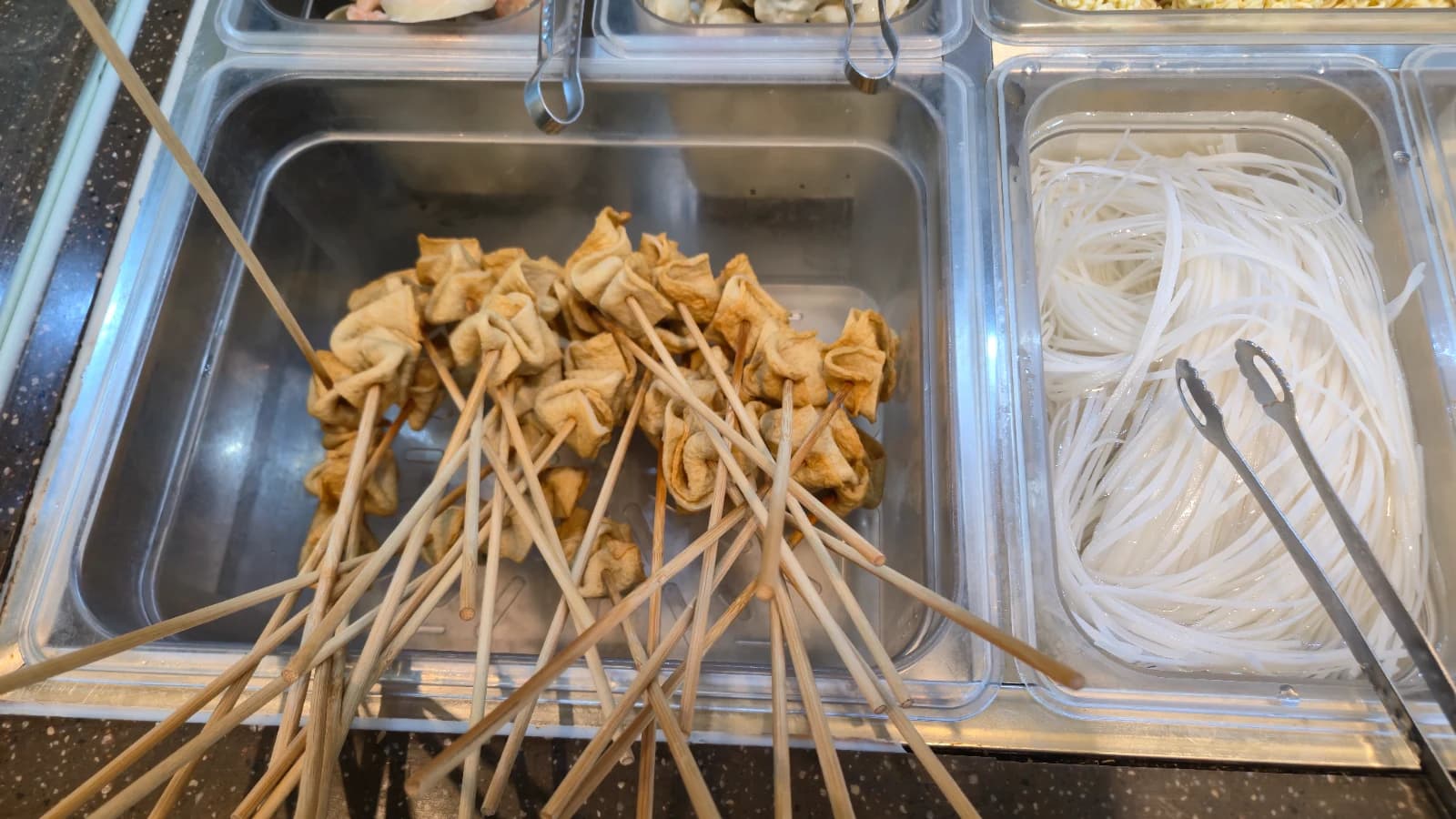
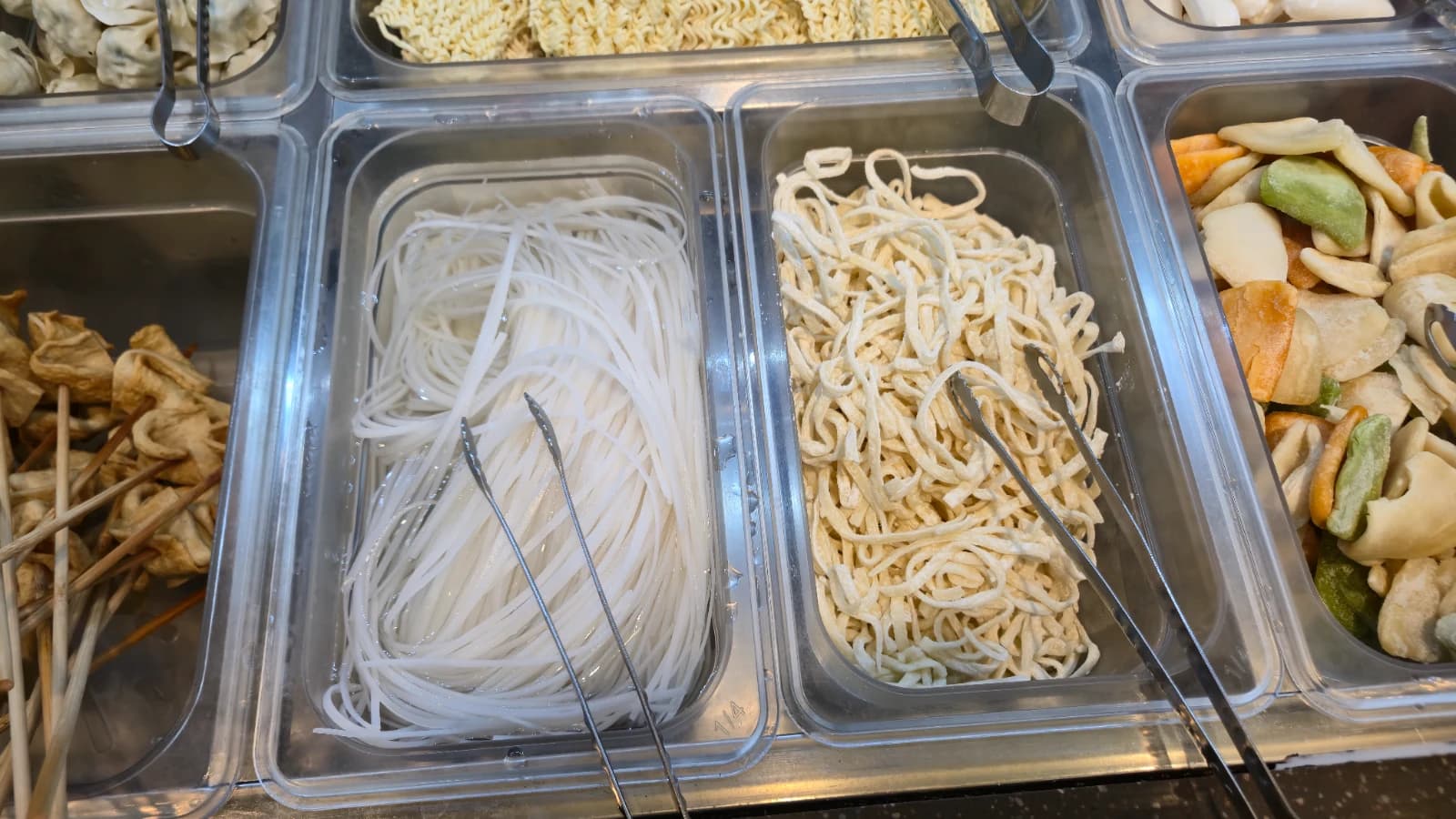
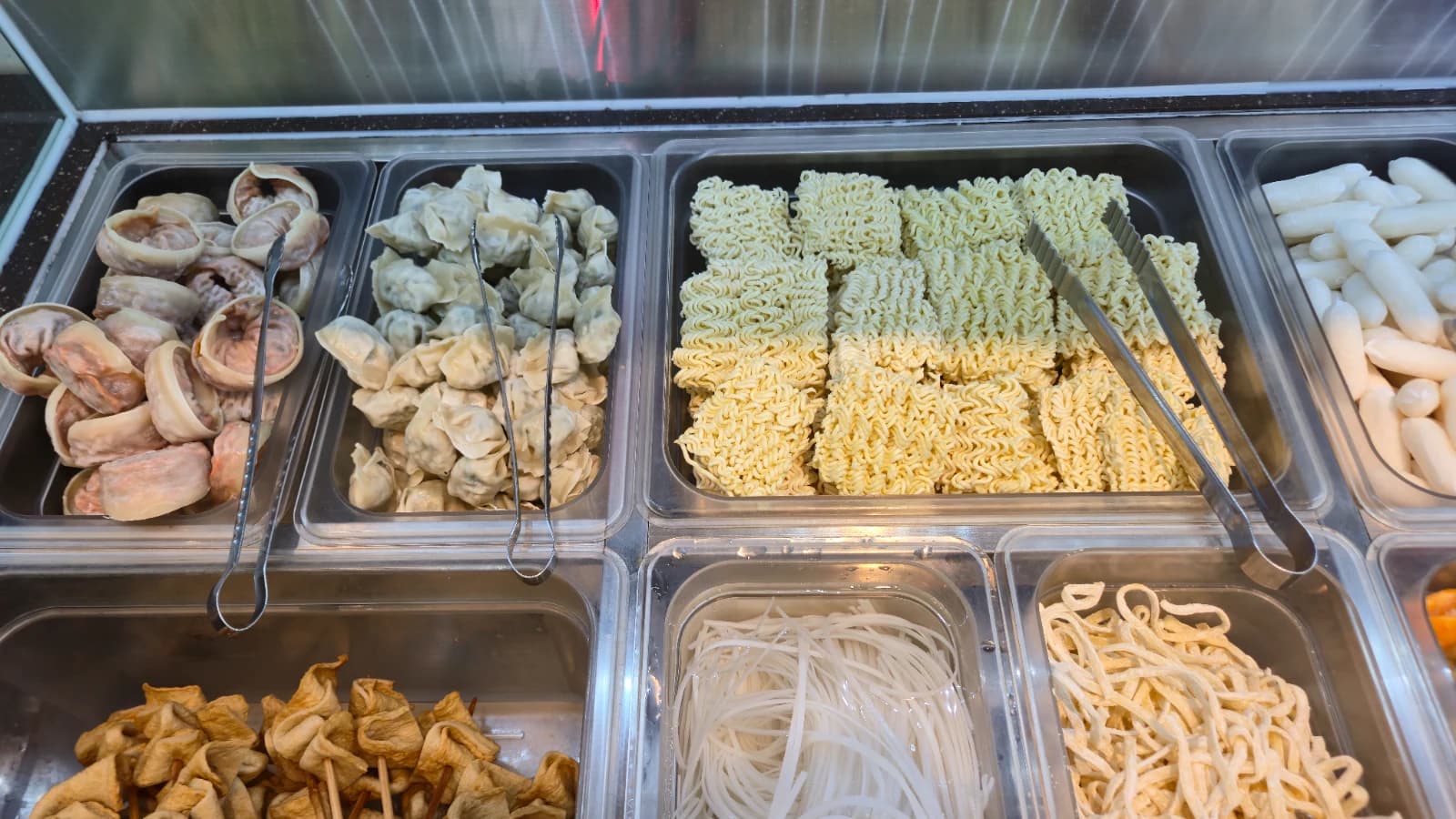
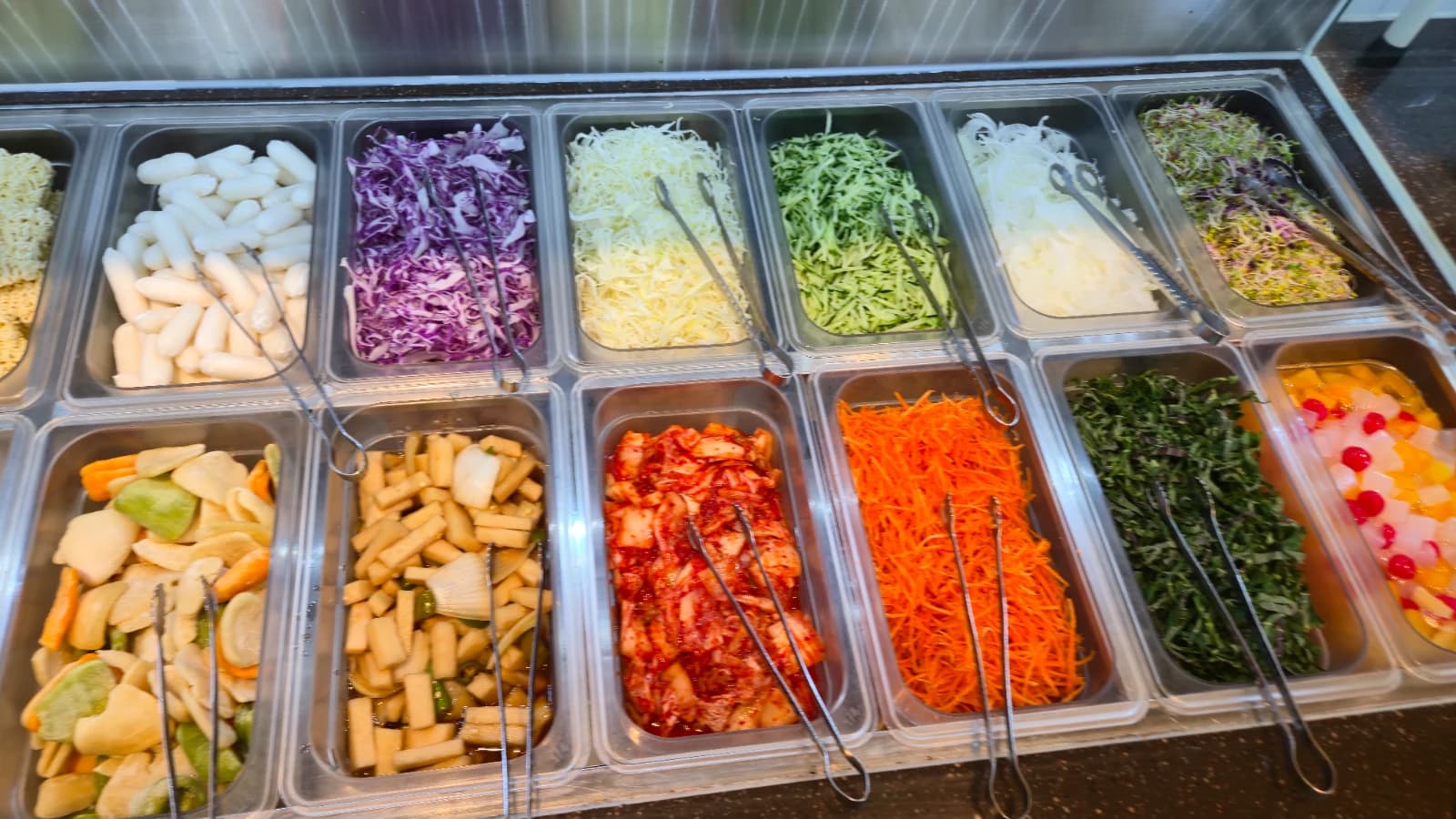
Shabu Mania's self-serve salad bar is all-you-can-eat. You can go back for noodles and veggies as many times as you want. Fish cake skewers, rice noodles, knife-cut noodles, udon, ramen noodles, dumplings, tteokbokki rice cakes, and all sorts of vegetables — the selection was surprisingly wide. The premium proteins like beef and seafood aren't at the bar (you only get what you ordered), but noodles and veggies are unlimited. My dad grabbed an armful of fish cake skewers, and my mom scolded him — "Why'd you take so many?" — while she herself came back carrying two big clumps of ramen noodles. Once I saw the salad bar, that initial sting of $19 per person started to fade pretty quickly.
Salad Bar Veggies & Mushrooms Up Close
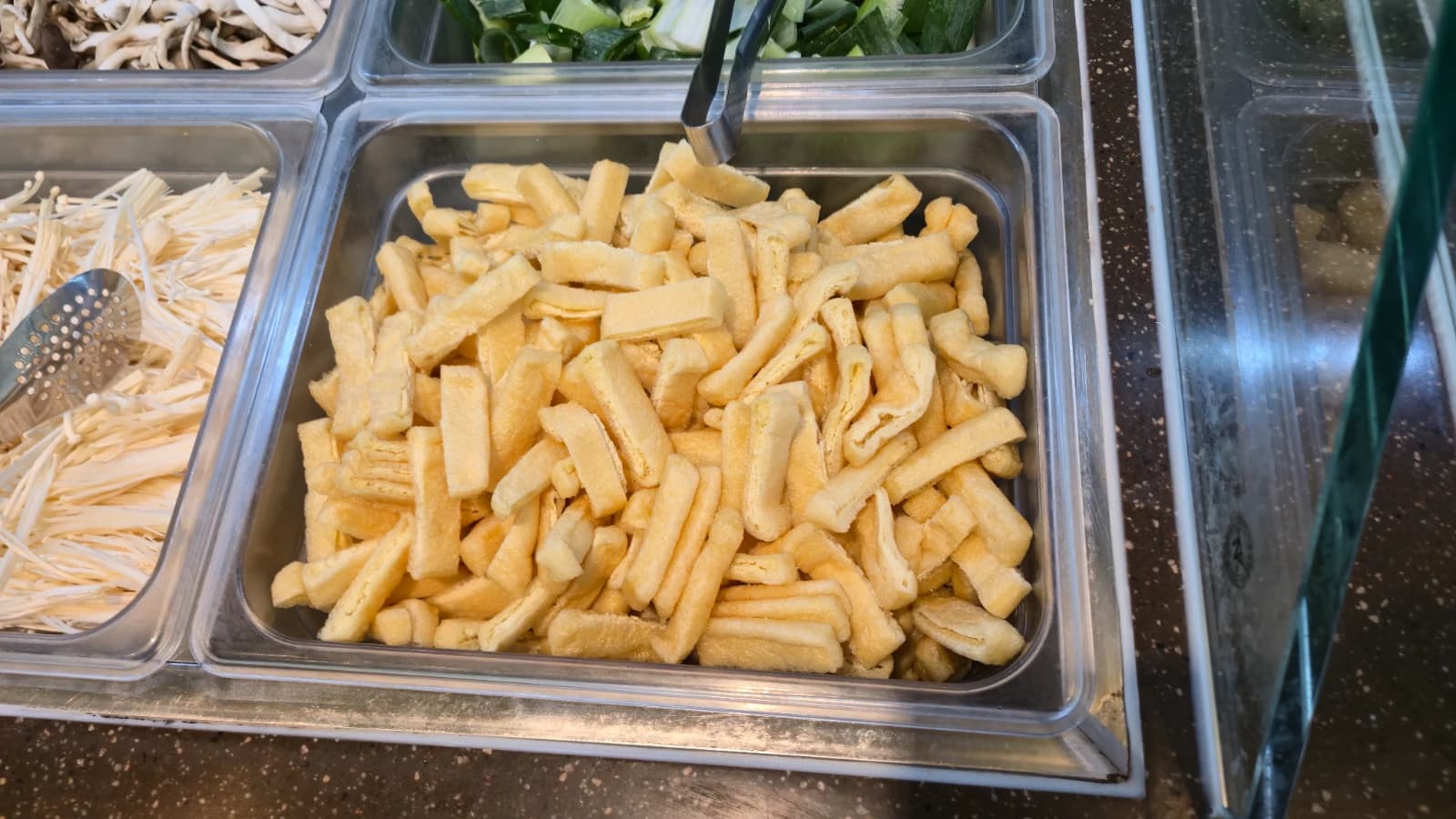
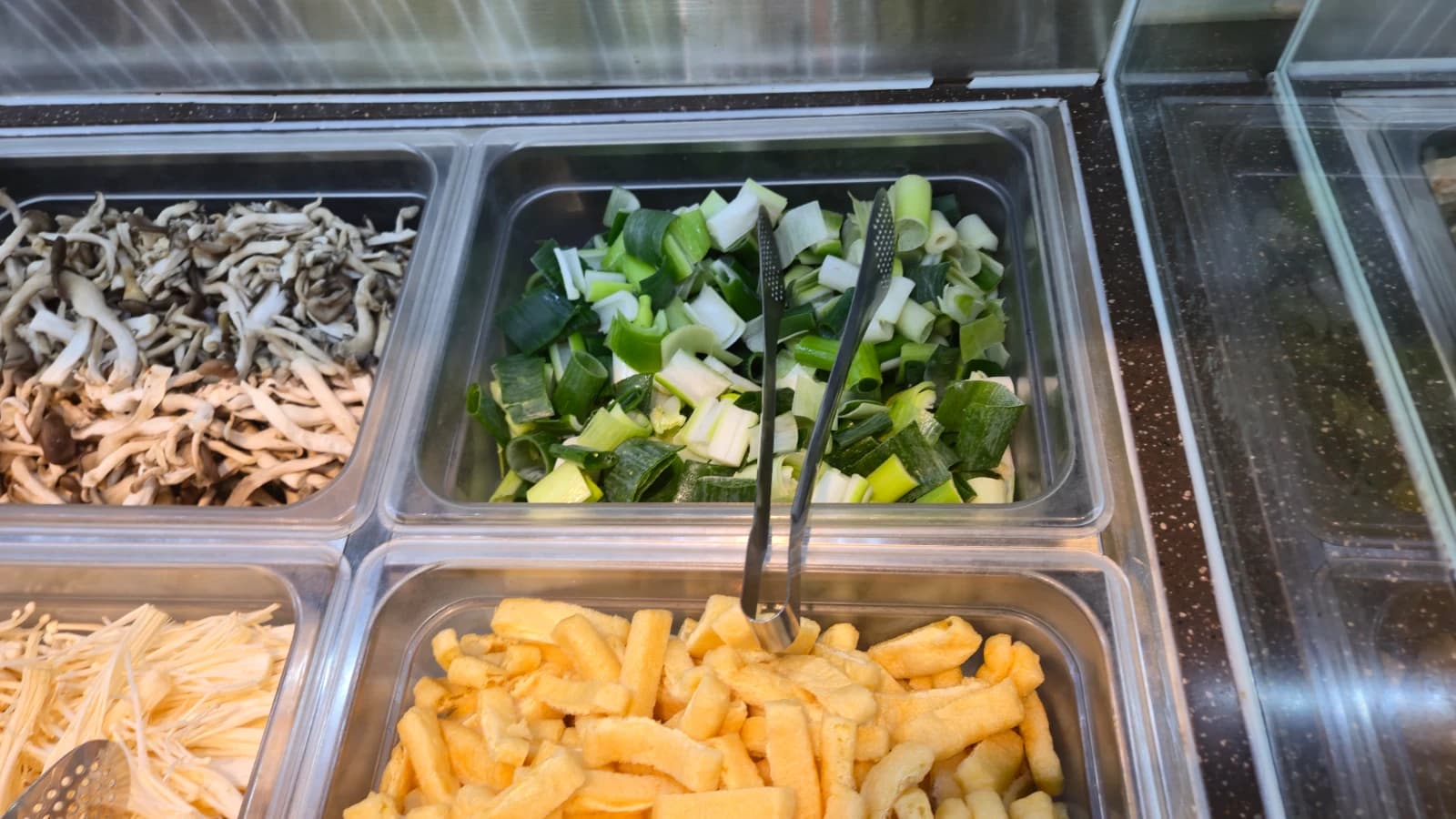
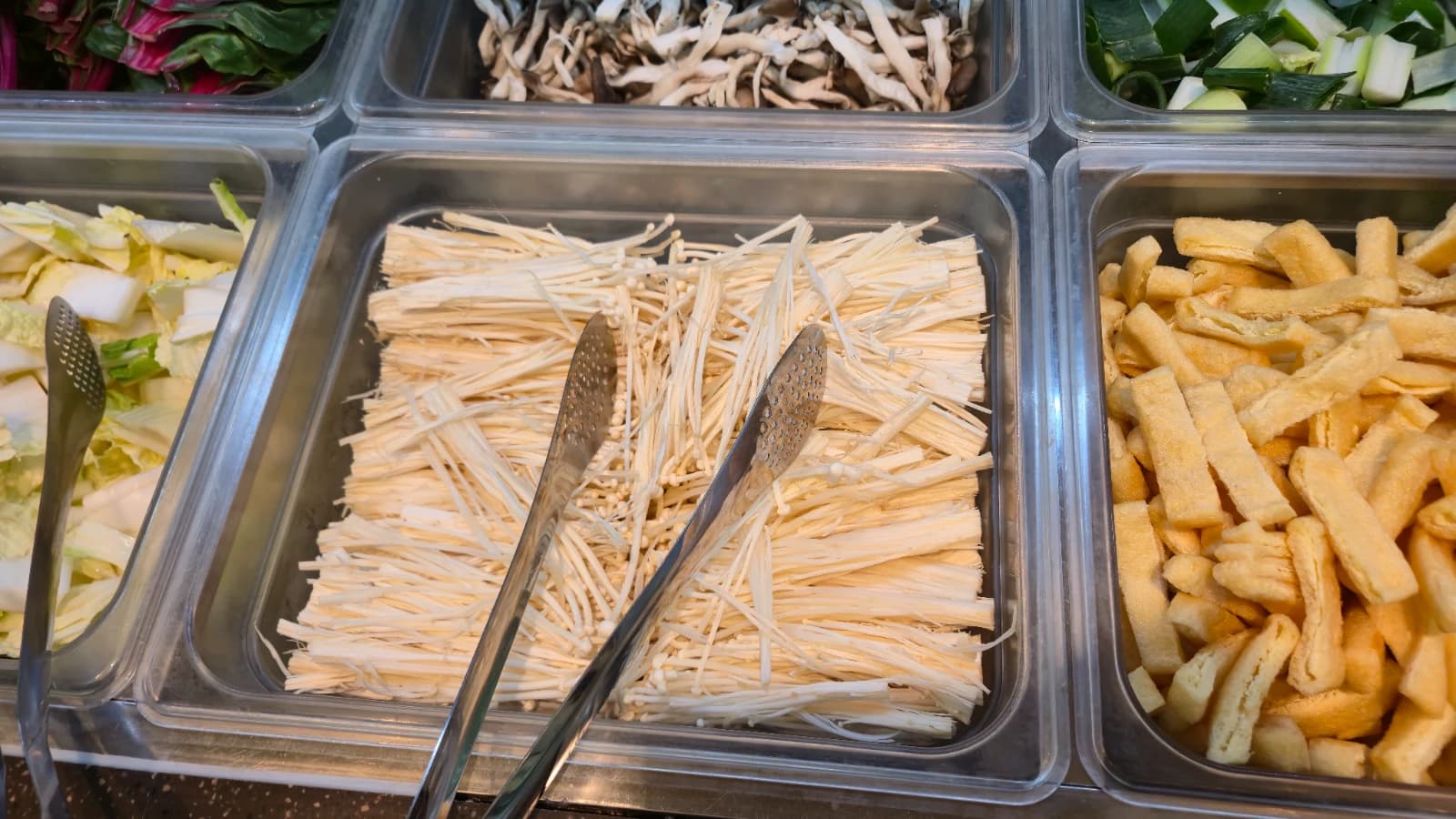
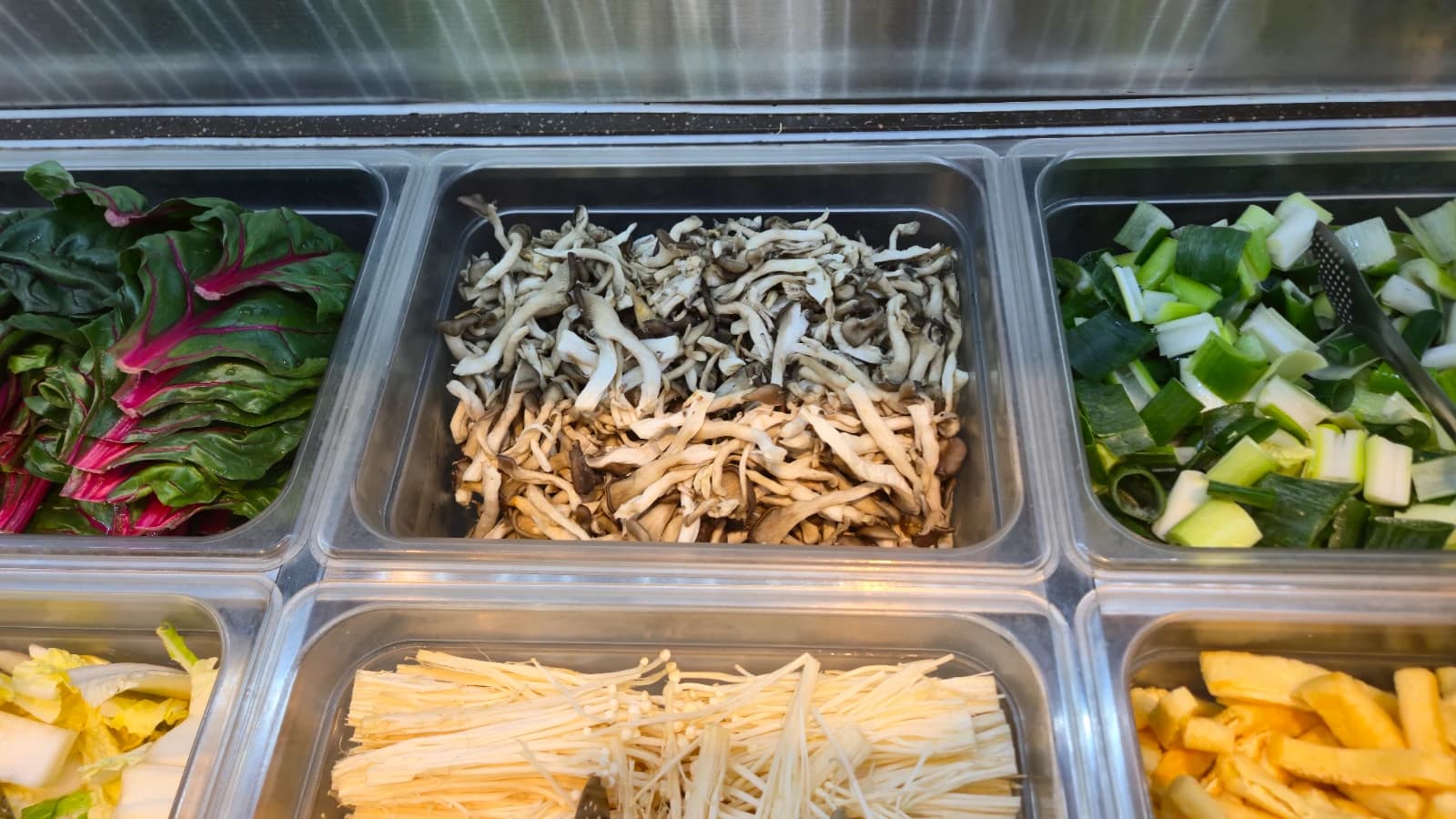
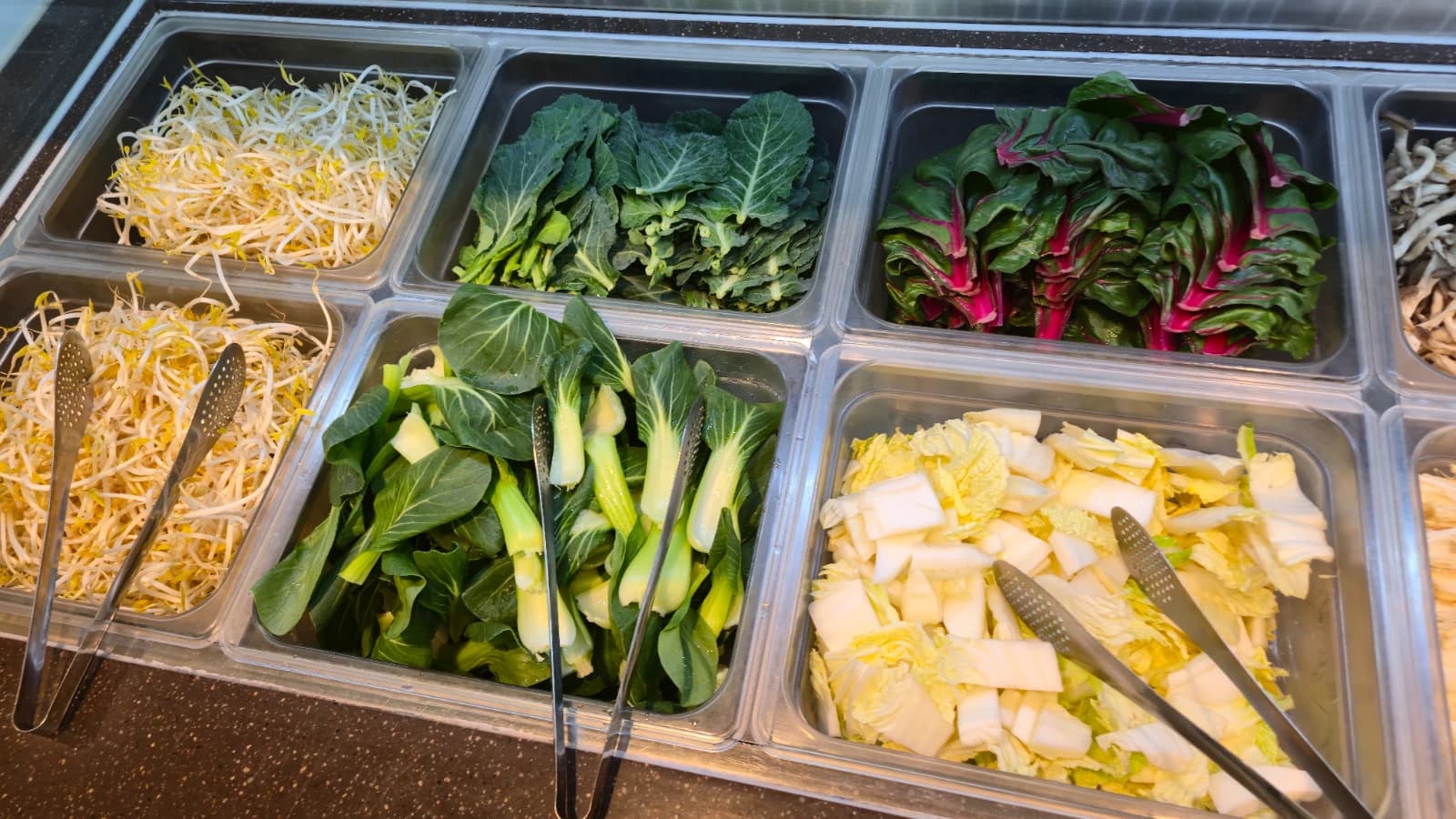
One section was piled high with tofu pouches, and next to them, enoki mushrooms, oyster mushrooms, green onions, and Swiss chard filled every compartment. Bean sprouts, baby bok choy, mini napa cabbage, kale — there were easily five or six kinds of leafy greens alone. My grandmother stuck mainly to mushrooms and cabbage, while my dad loaded up on tofu pouches. Those things soak up the shabu-shabu broth like a sponge — one bite and the savory stock floods your entire mouth. That said, not all the vegetables were perfectly fresh. The bean sprouts looked a bit wilted and limp, though whether that was because of the Children's Day rush or just their normal state, I couldn't tell.
Curry Fried Rice, Desserts, and Other Sides
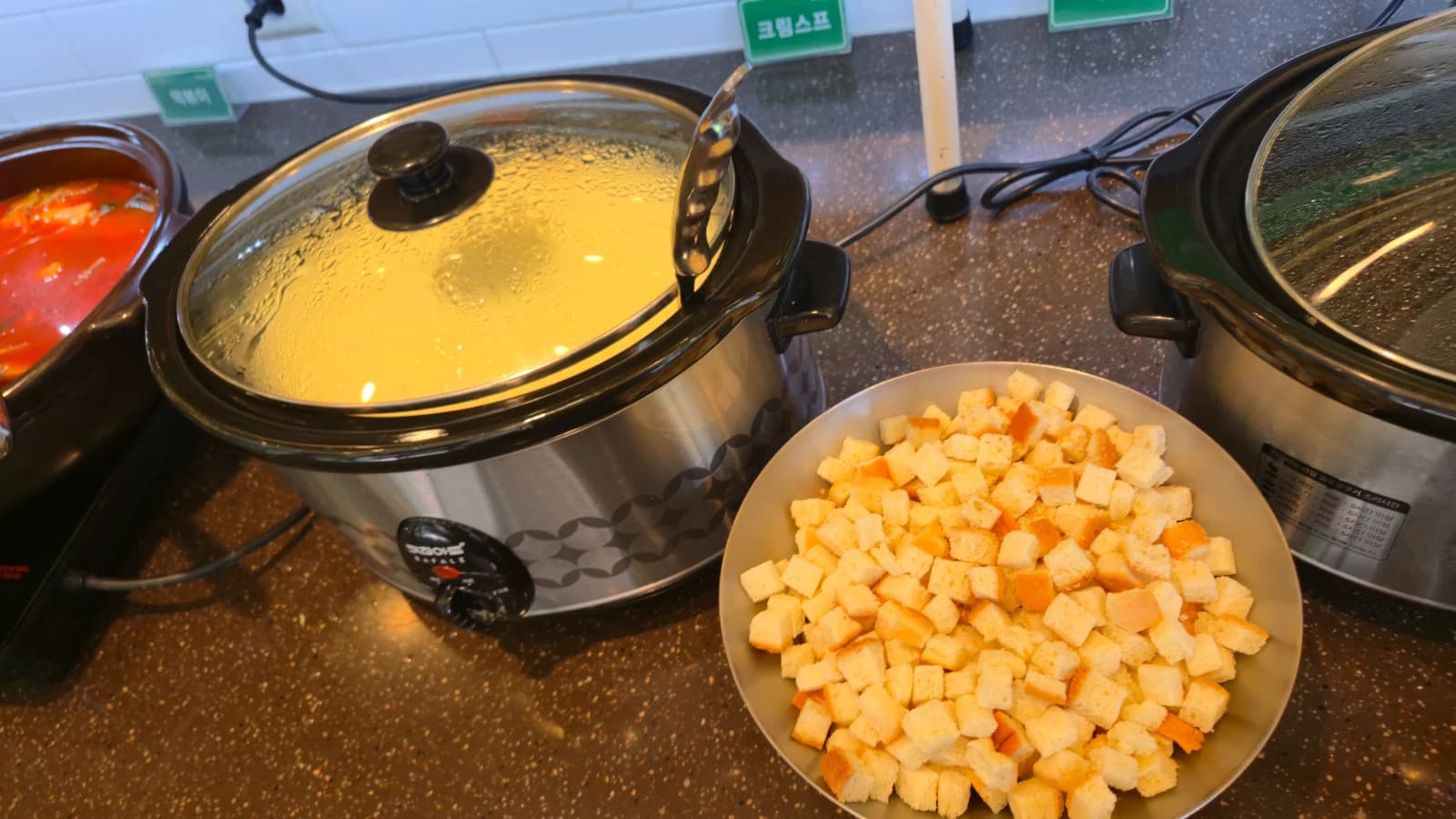
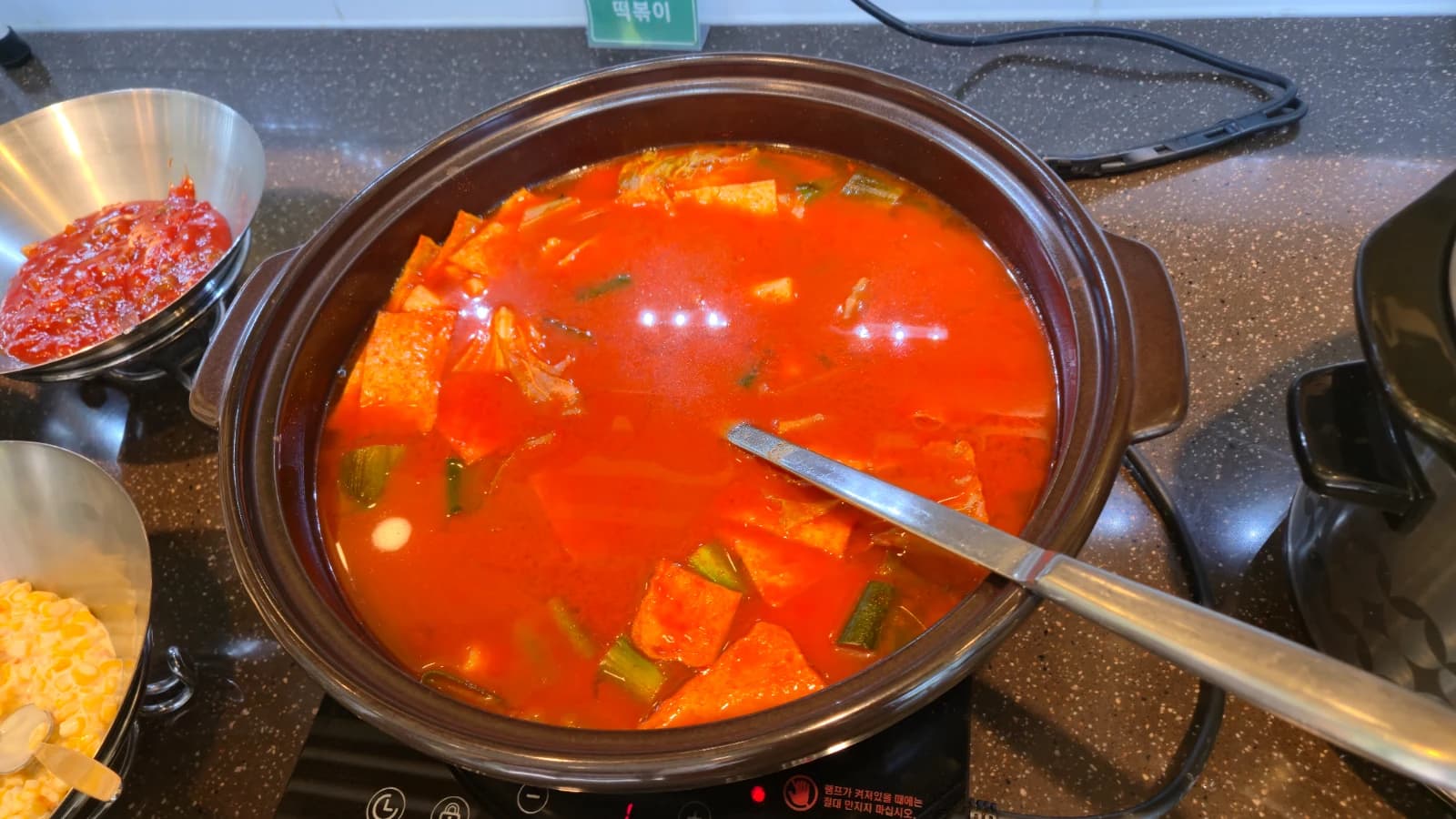
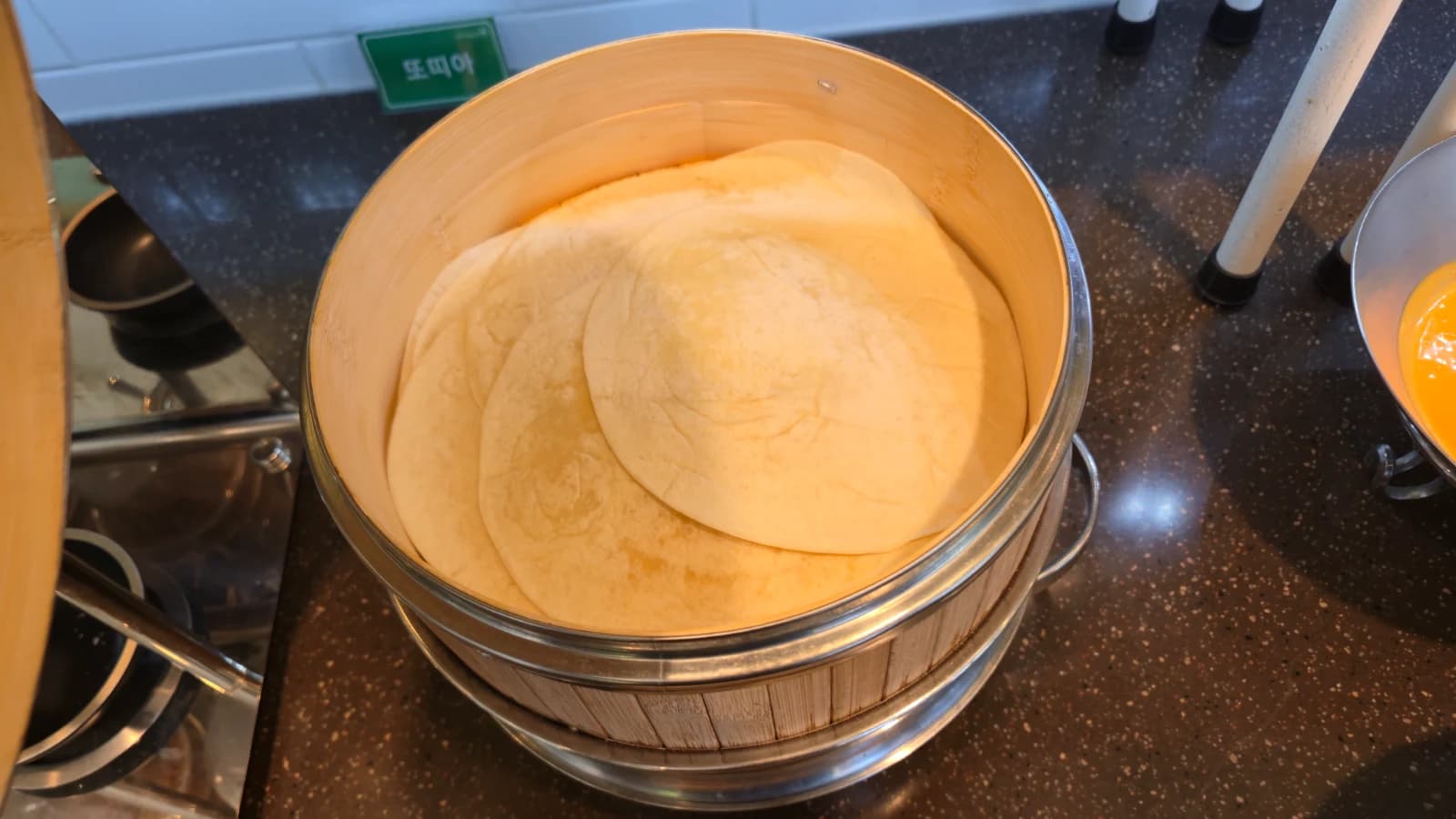
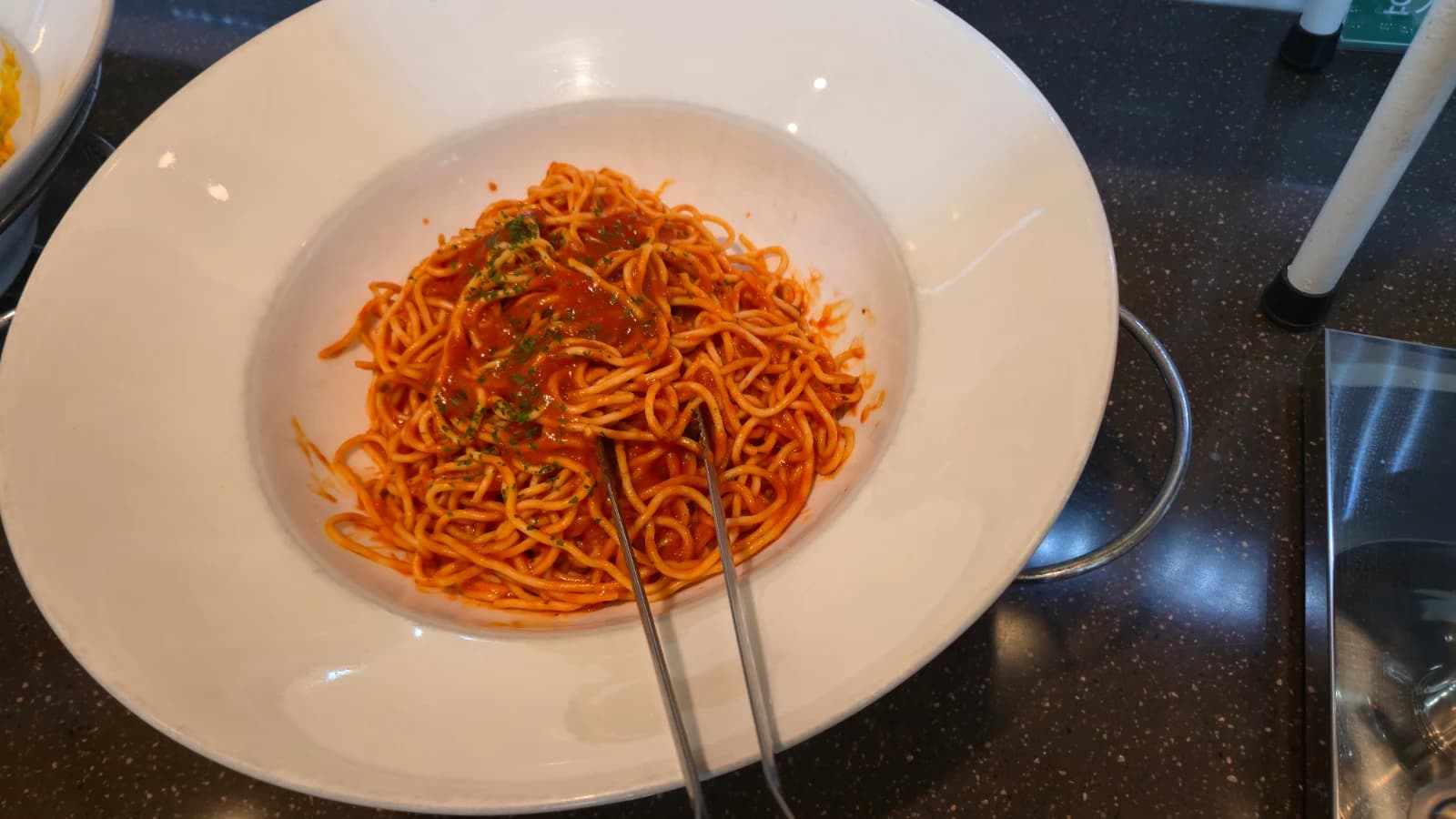
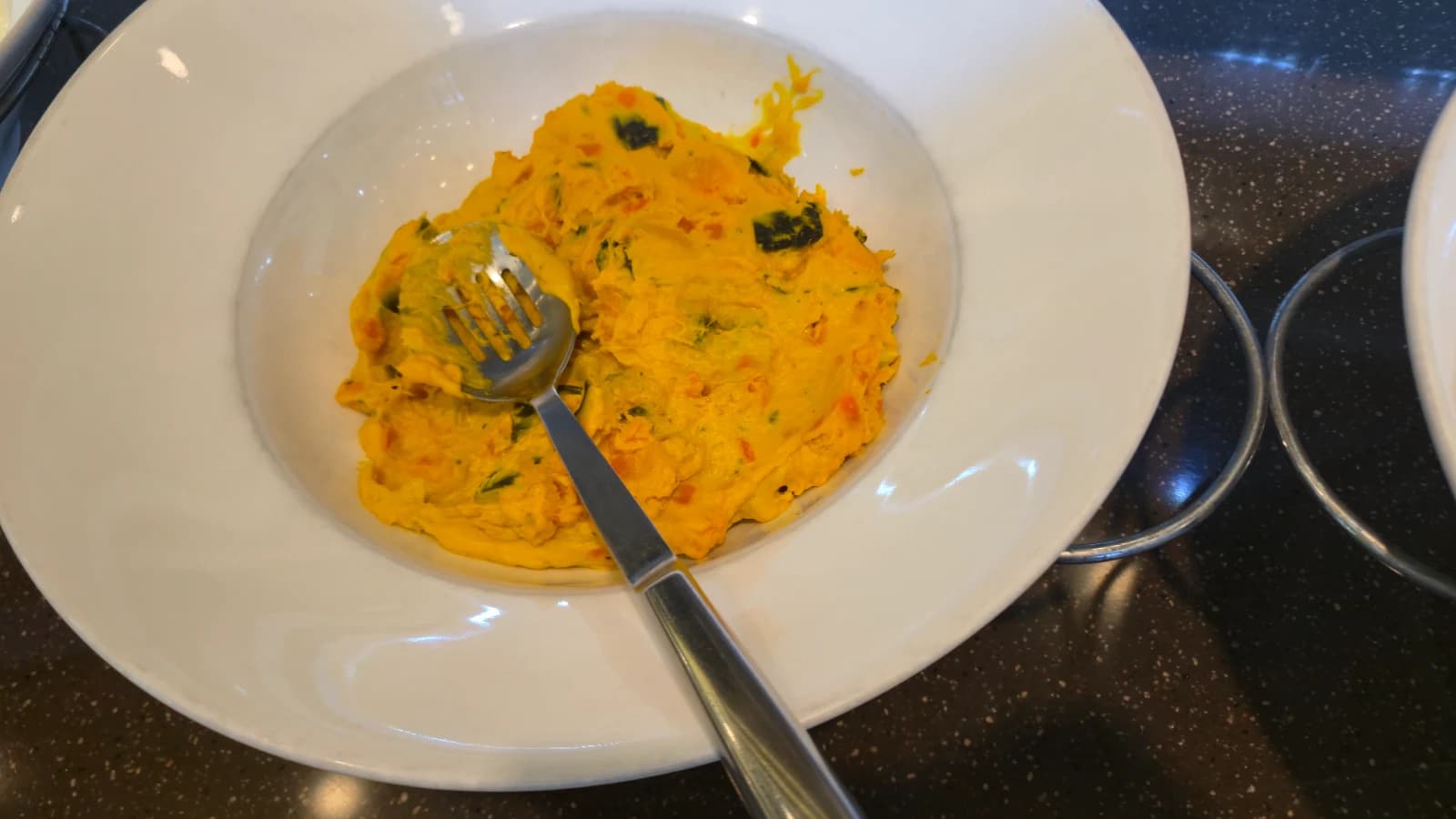
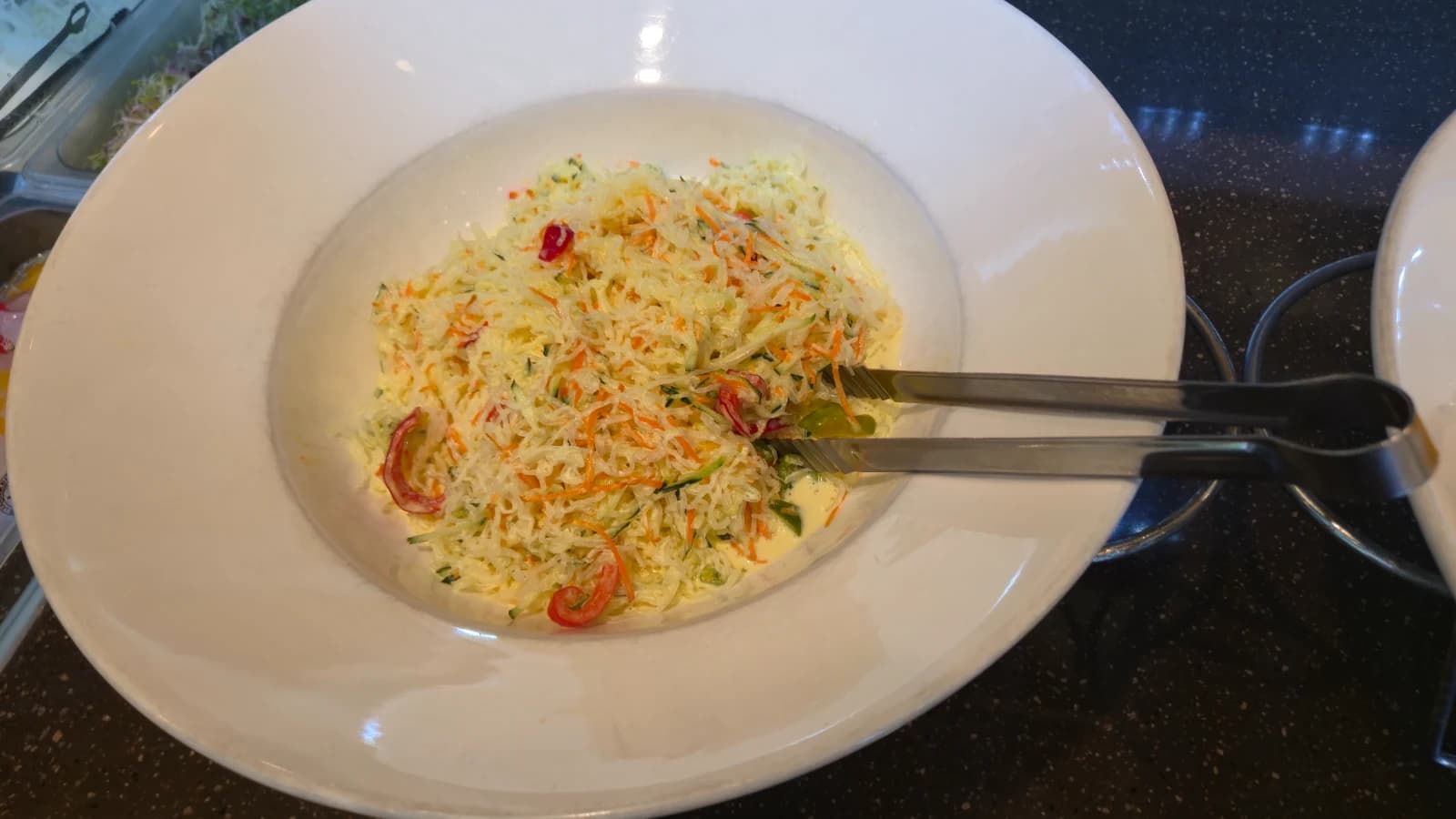
Beyond the shabu-shabu fixings, the salad bar had a decent spread of quick bites. There was curry fried rice on one side, three or four salad dressings, and a small selection of desserts like mini cakes and jellies. My mom scooped up a spoonful of the curry fried rice and said, "This is actually not bad," so I grabbed some too — it was decent. The catch with these sides, though, is that portions are small relative to the number of items, so if you don't time it right, you'll find nothing but empty dishes.
Boiling the Broth — We Went with the Clear Stock
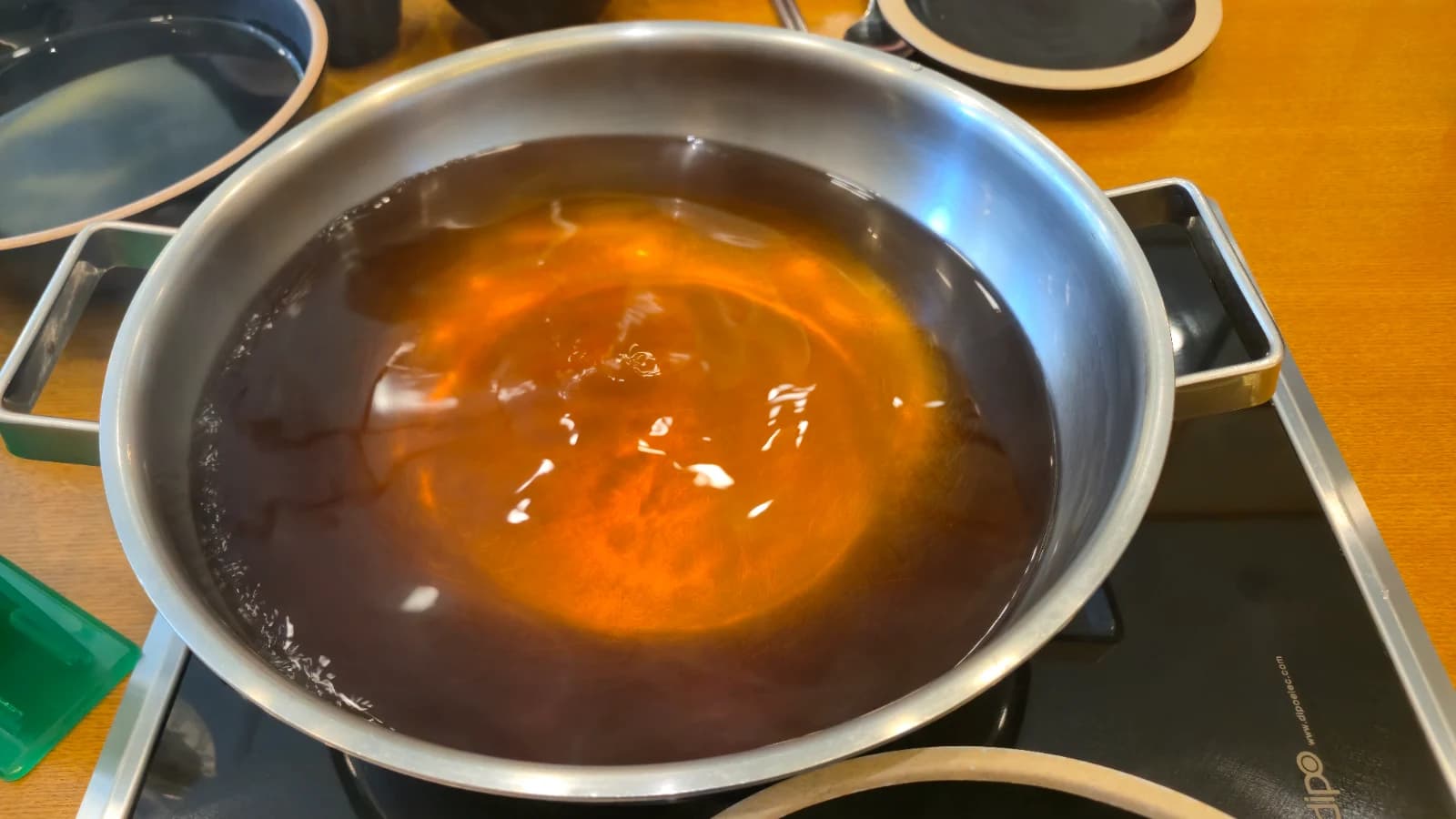
Once you sit down, there's already a wide pot on the induction cooktop, and they pour in the shabu-shabu broth to start boiling. Most Korean shabu-shabu restaurants let you choose between a clear broth and a spicy broth. Since grandma was with us, we went with the mild, clear option. As the broth started to bubble, she said, "That smells wonderful."
How to Eat Shabu-Shabu — Step by Step
- 1 Boil the broth — Choose clear or spicy broth and bring it to a boil in the pot on the induction cooktop
- 2 Vegetables first — Add items that take longer to cook: napa cabbage, bok choy, mushrooms, tofu pouches
- 3 Meat & seafood — Swish beef one slice at a time; pull it out as soon as the color changes. Add shrimp and abalone too
- 4 Dip in sauce — Choose from chili-vinegar paste, soybean paste sauce, or garlic soy sauce. Wrapping in rice paper is great too
- 5 Finish with fried rice — Add rice and egg to the leftover broth and stir-fry to close out the meal. More broth = porridge; less broth = fried rice
Adding the Veggies — Cabbage, Bok Choy, and Mushrooms First
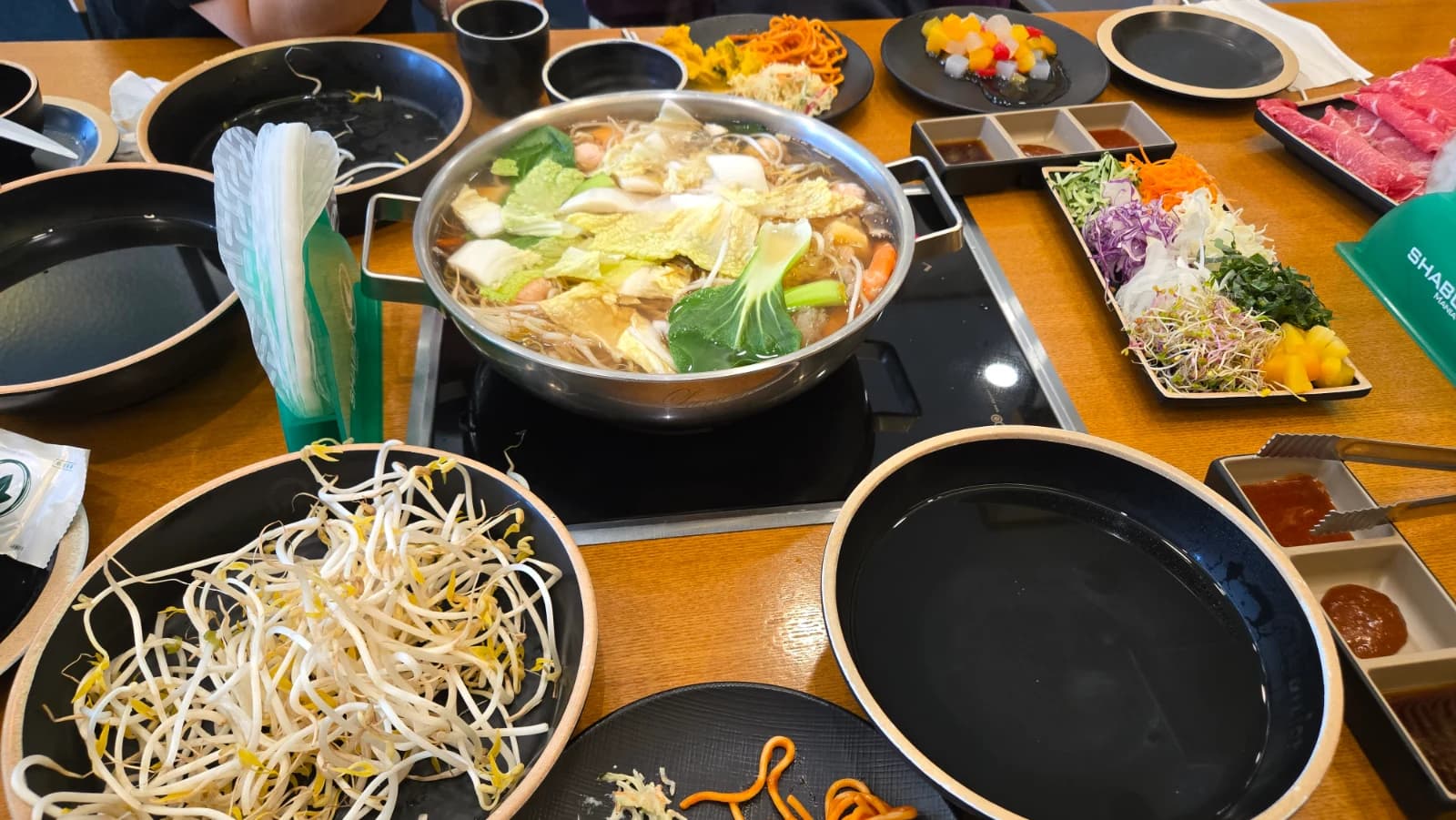
We started with the vegetables. Once the napa cabbage, bok choy, mushrooms, and tofu pouches went in, the pot was practically overflowing. Meanwhile, the table was covered: a plate heaped with bean sprouts from the salad bar, the rice paper veggie tray still more than half full, and the beef plate completely untouched. With dishes surrounding us on all sides, my grandmother looked around and said, "There's no way we're finishing all this food."
Bean Sprouts — You Absolutely Have to Cook Them Through
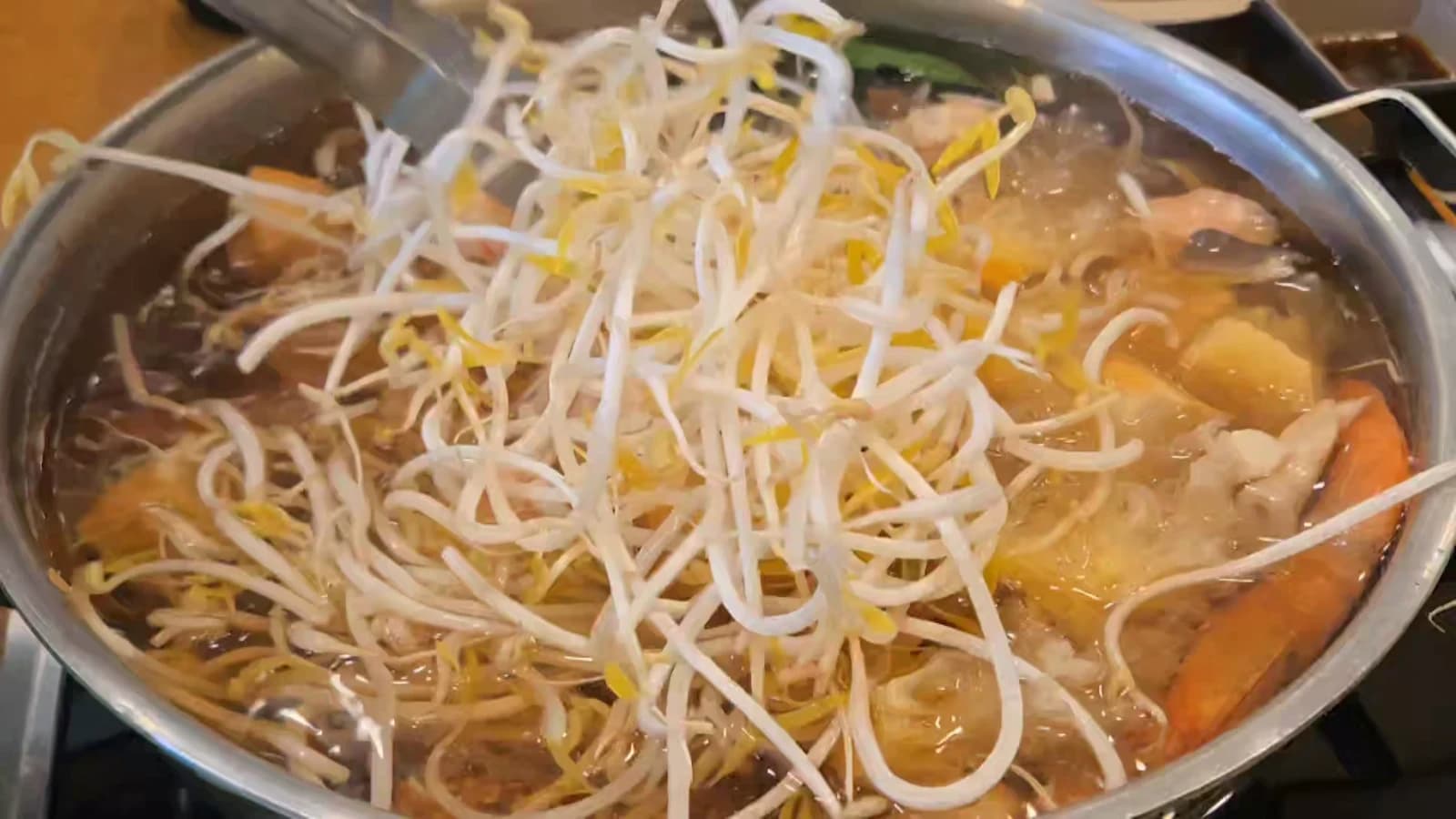
I dumped a big pile of bean sprouts from the salad bar into the pot. They sat on top of the broth like a little mountain, while underneath, the shrimp, tofu pouches, and mushrooms from earlier were bubbling away. Do not pull out bean sprouts right after adding them. Undercooked bean sprouts have a raw, beany taste that really kills the flavor. You need to cover the pot and let them boil for a good 5 minutes until they've completely wilted and gone translucent. Once they've fully softened, they come out with a nice gentle crunch, zero beany taste, and all the flavor of the broth soaked right through them — totally different from plain bean sprouts.
Beef and Seafood — the Moment the Broth Transforms
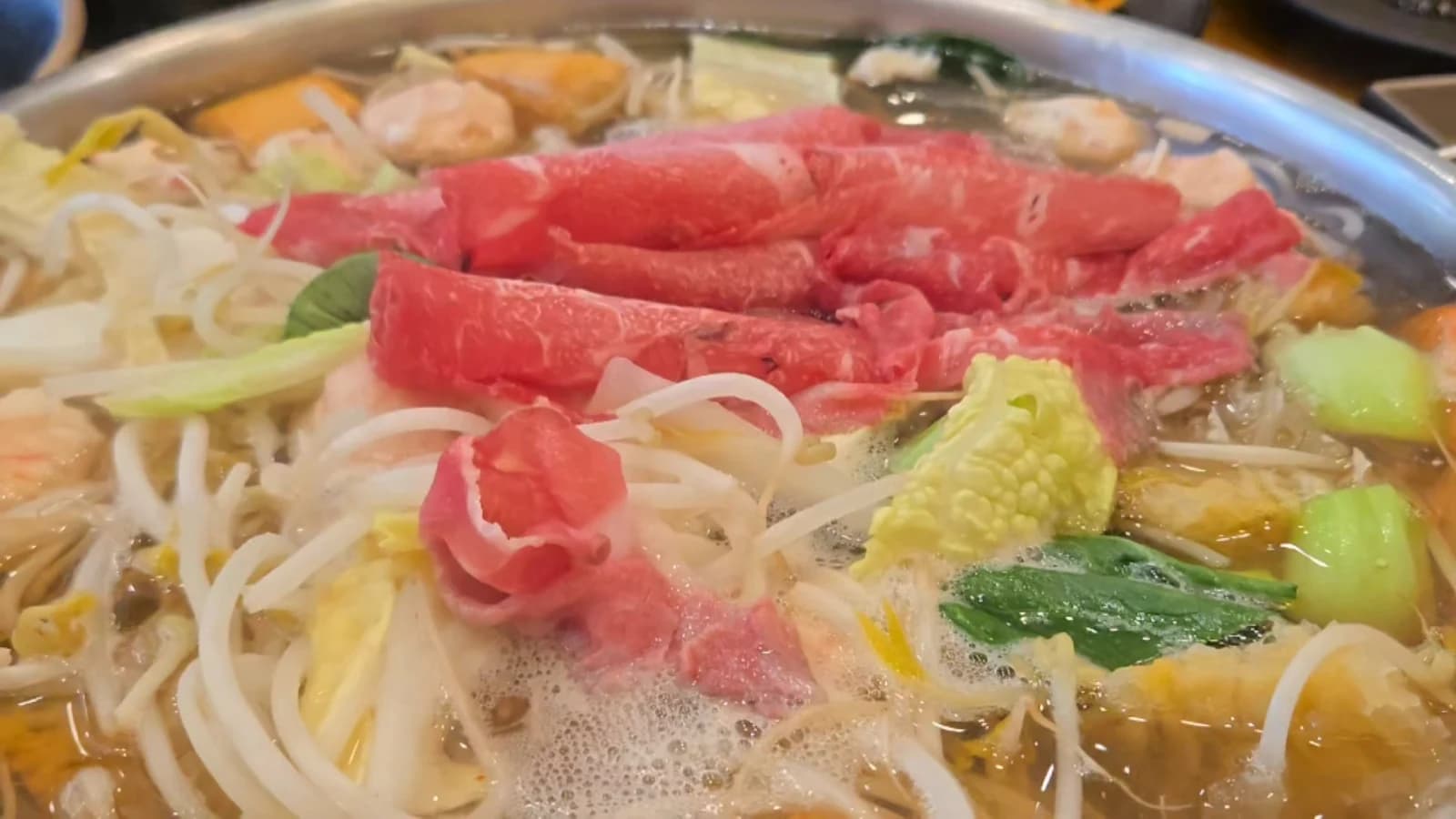
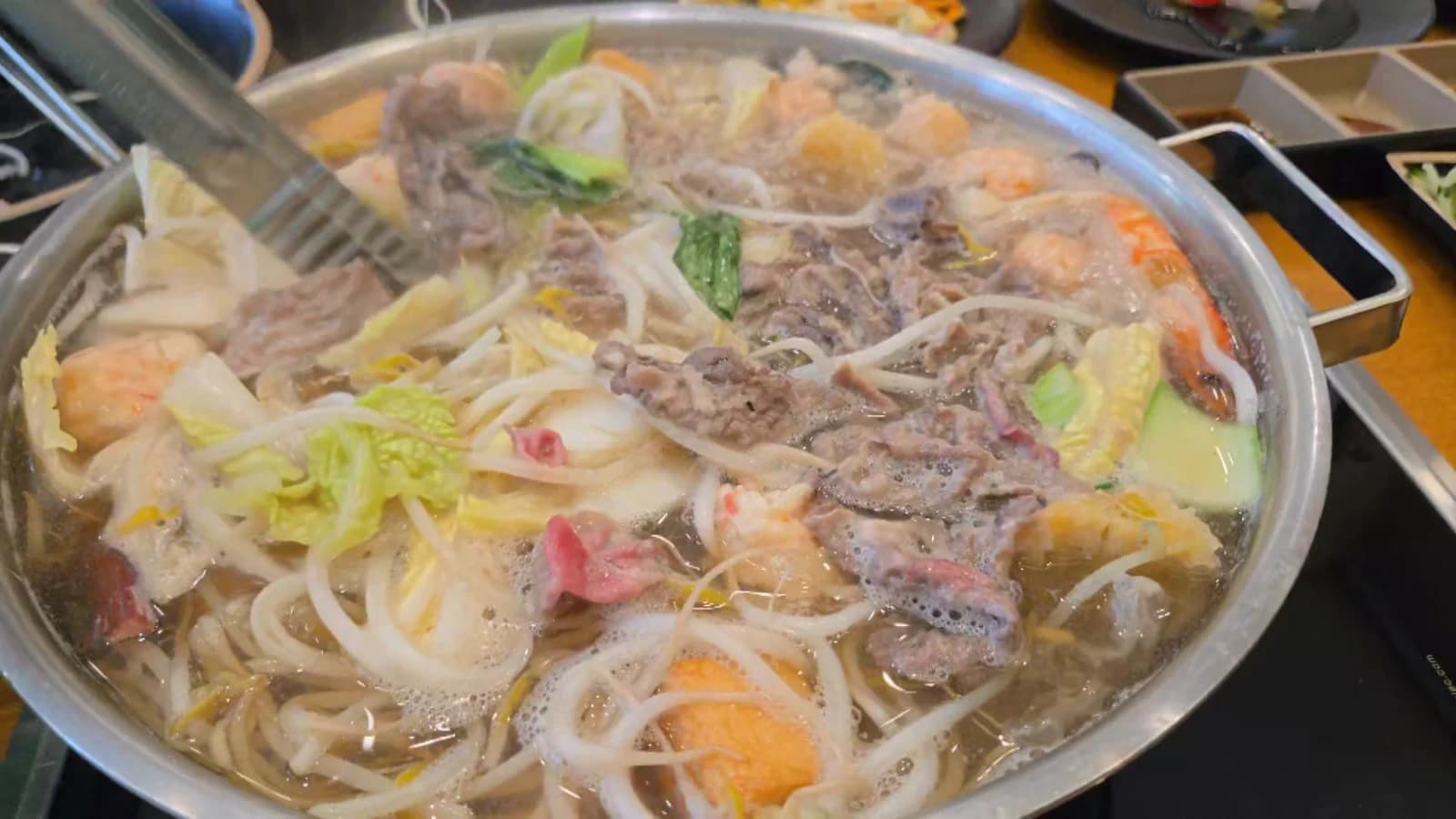
Once the bean sprouts were fully cooked, I laid the beef on top of the broth. Spreading the thin slices out, the bright red meat draped over the bean sprouts and napa cabbage. Below that red layer you could see white bean sprouts, pale yellow cabbage, green leafy vegetables, and orange shrimp balls — every color in one pot. But here's the thing: once you place the beef, it starts changing color in about 10 seconds flat. The bright red fades to gray-brown as the edges curl and cook from the outside in — that's when you need to grab it immediately. It's tender at that exact moment. Miss the window and the meat turns dry and tough.
Add the Seafood and the Broth Completely Changes
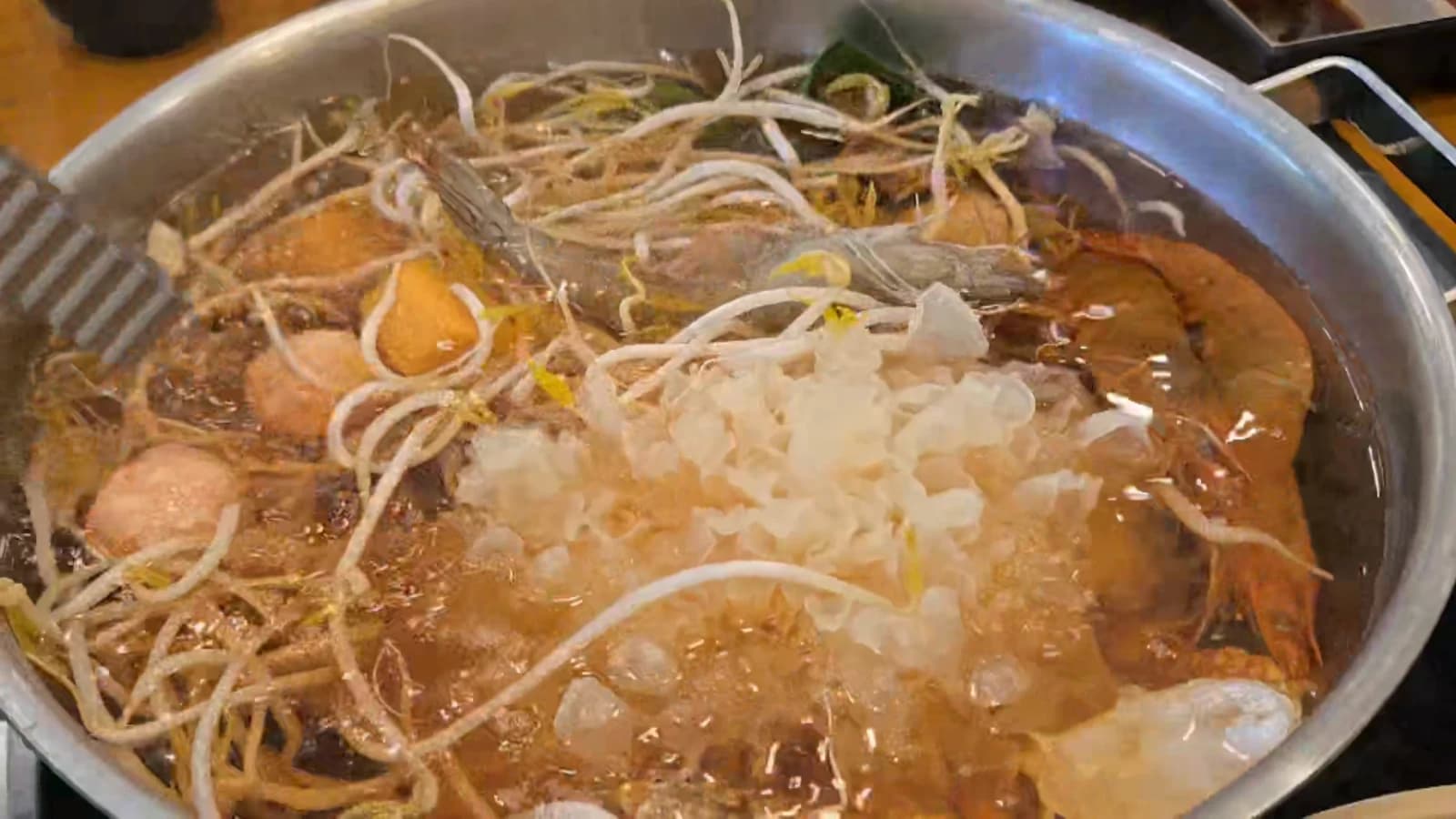
Next up: seafood. I added the white wood ear mushrooms along with the shrimp, and the mushrooms spread out across the surface of the broth like translucent flowers unfurling. Beside them, whole shrimp with heads still on bobbed in the stock, while bean sprouts and shrimp balls bubbled along underneath. After the seafood went in, the shabu-shabu broth flavor completely changed. Earlier, with just vegetables and beef, it had been a clean, mild stock. But once the umami from the shrimp heads dissolved into the liquid, the broth leveled up in a way you could taste immediately. My grandmother took another sip and said, "This is much more flavorful than before." The broth before and after the seafood was a completely different soup. Beef alone makes it clean and mild; seafood alone keeps it light. But together, the flavors layer on top of each other and build into something richer than the sum of its parts.
Wrapped in Rice Paper, Dipped in Sauce
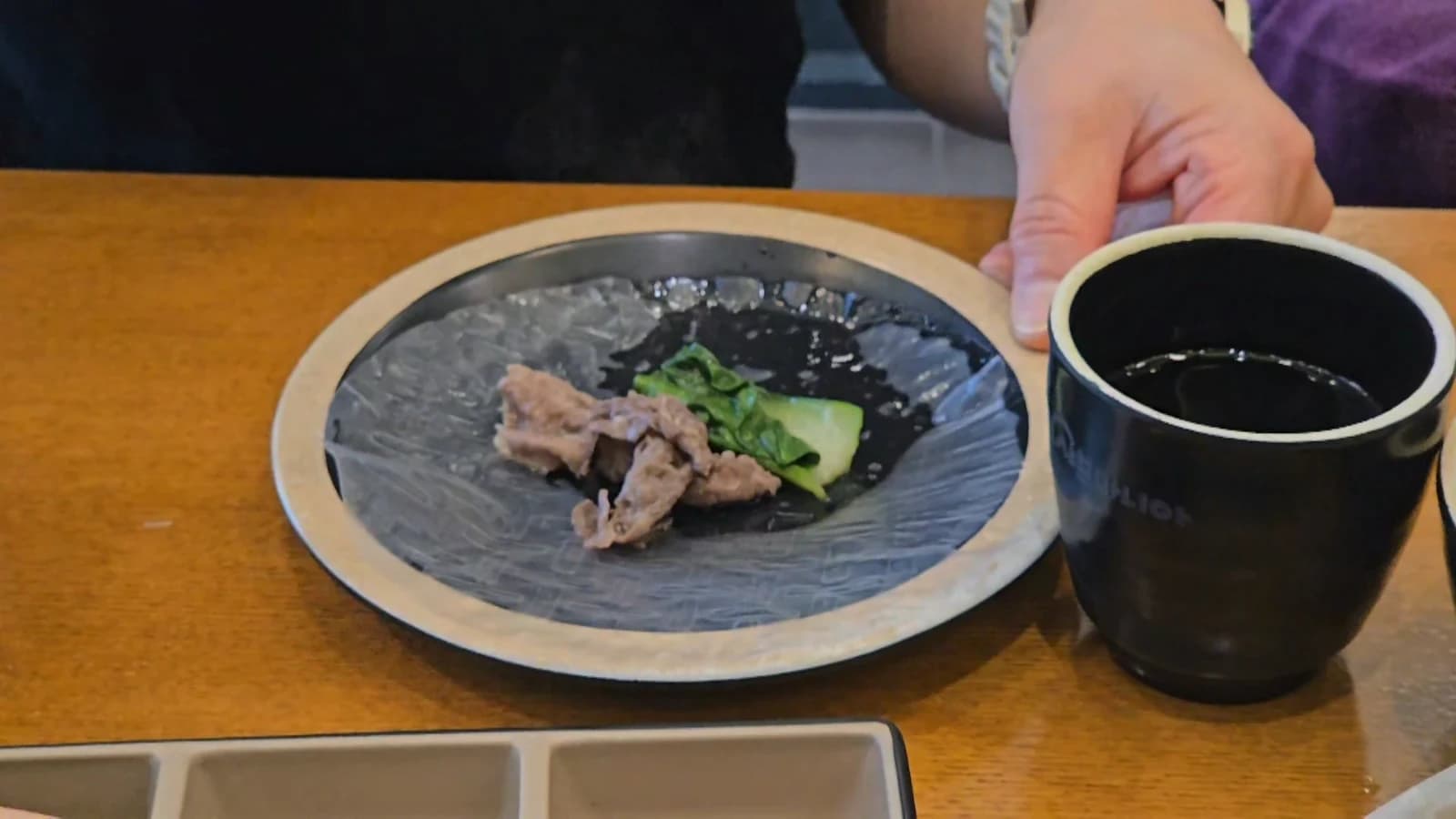
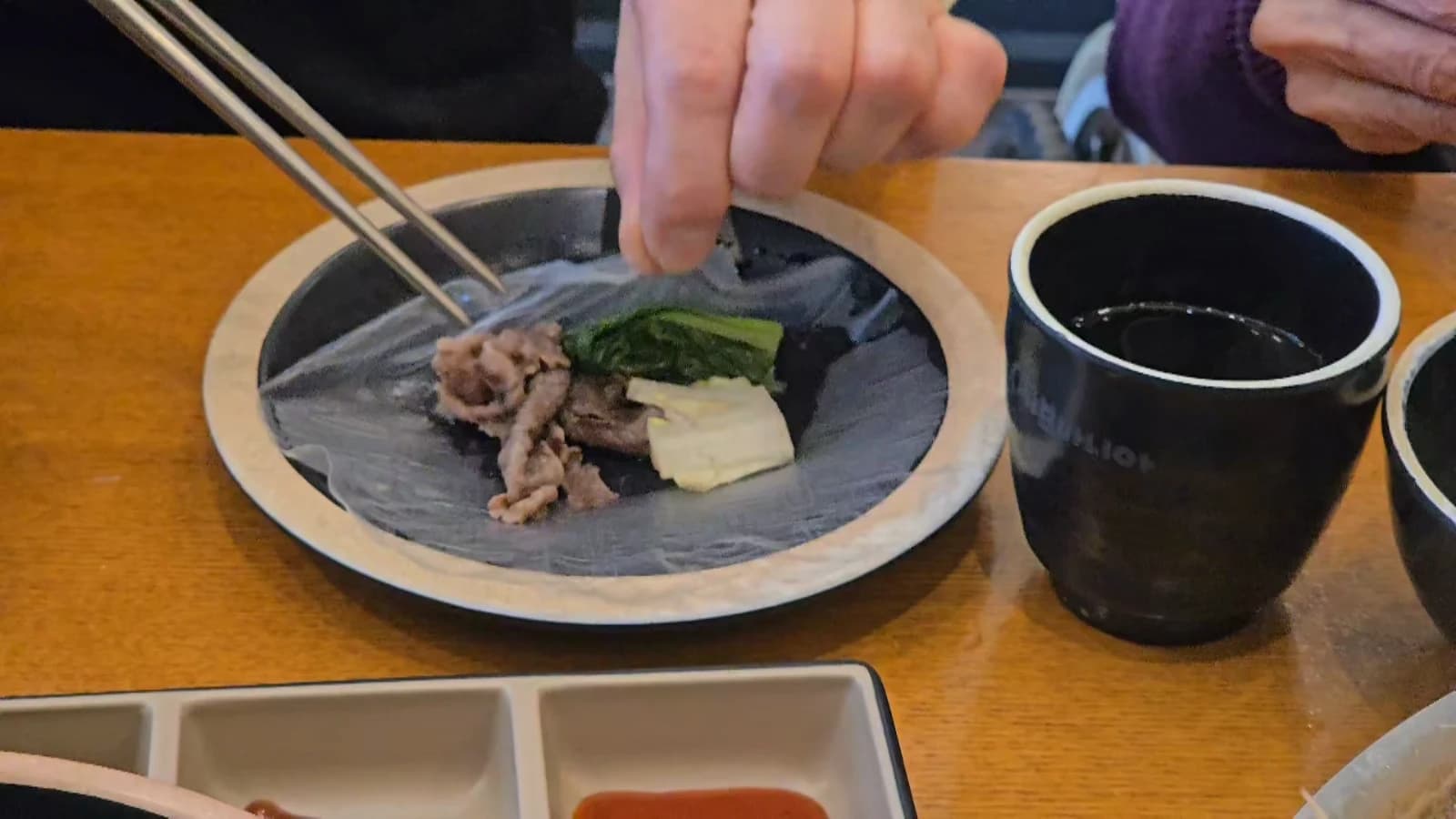
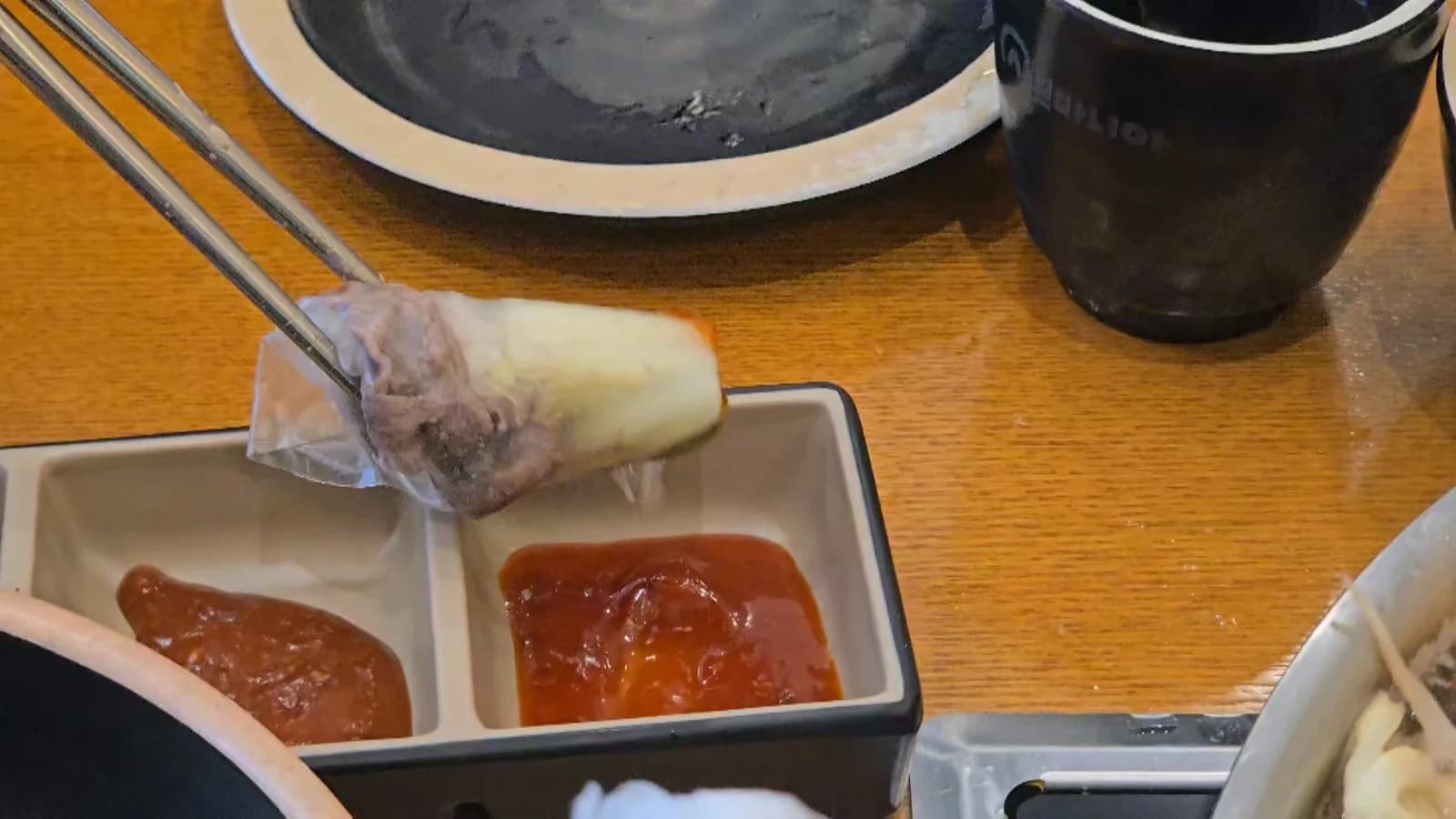
We pulled the cooked beef and bok choy onto a plate and started eating in earnest. Here's where the rice paper really shines. Take those rice paper sheets from earlier, dip one in water until it softens, then lay the cooked beef and veggies on top and roll the whole thing up — you can see the meat through the translucent wrapper. Dip that into the shabu-shabu sauce and take a bite: the chewy, slightly sticky texture of the rice paper, the tender beef, and the tangy-spicy sauce all hit at once. My grandmother had been eating without any sauce at first, so I suggested she try dipping. After that first dip, she didn't eat a single piece without sauce for the rest of the meal.
Three Shabu-Shabu Dipping Sauces — Pick Your Favorite
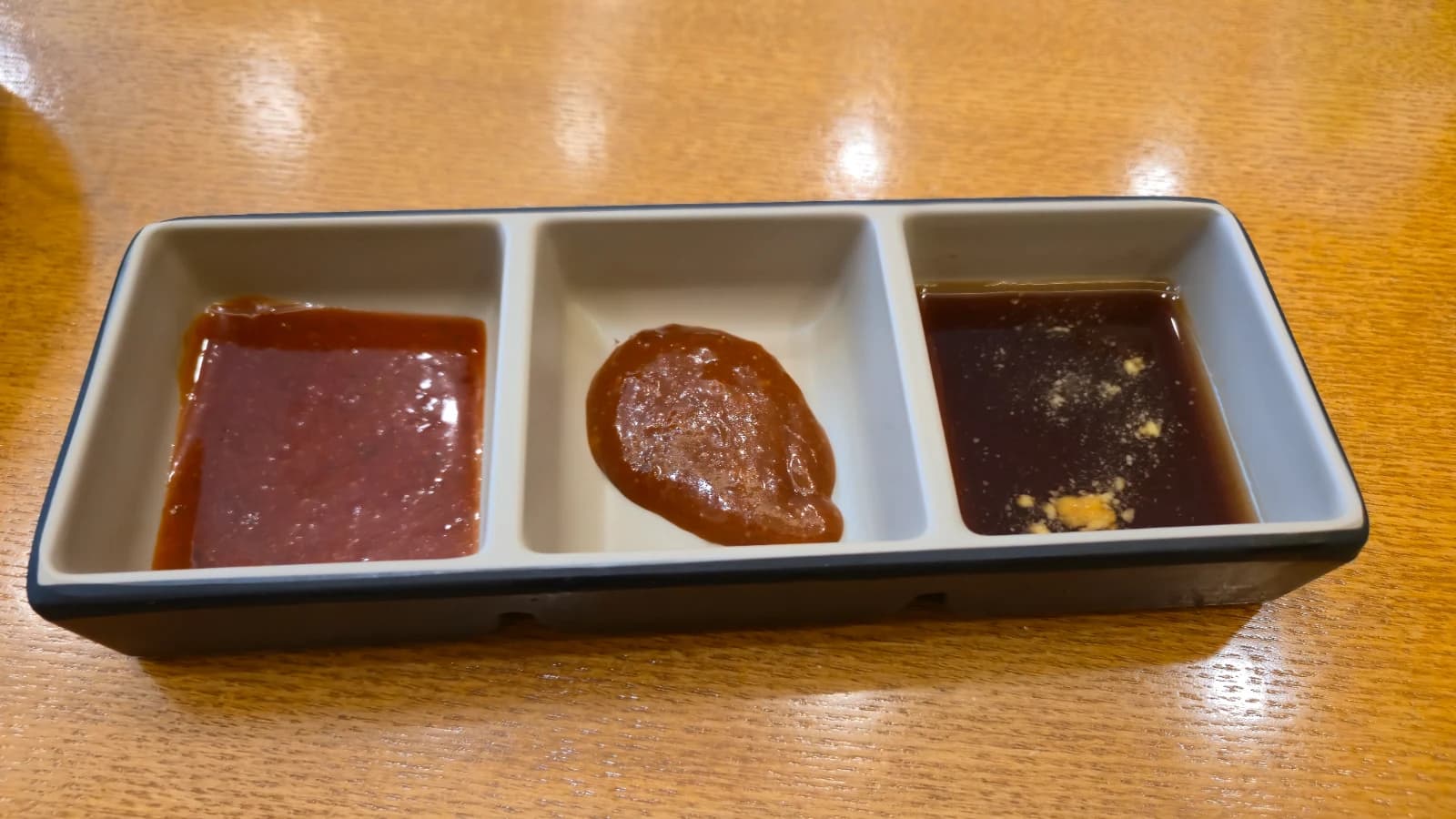
The sauces came in a three-compartment dish. From left to right: cho-jang (a tangy chili-vinegar paste), a soybean-based sauce in the middle, and a soy sauce with minced garlic floating on top on the right. All three are set on the table from the start, so you just pick whichever suits your taste. Personally, I liked beef with the garlic soy and seafood and veggies with the chili-vinegar paste. The garlic in the soy sauce really amps up the flavor when you're dipping meat.
The Three Shabu-Shabu Sauces
🔴 Cho-jang (Chili-Vinegar Paste)
Tangy and slightly spicy. Pairs perfectly with seafood and veggies — keeps things light without any greasiness
🟡 Soybean Paste Sauce
Nutty and savory. Goes especially well when you're wrapping things in rice paper
🟤 Garlic Soy Sauce
Soy sauce with minced garlic mixed in. Seriously elevates the flavor when you dip beef into it
Shabu-Shabu Fried Rice — Closing Out with the Leftover Broth
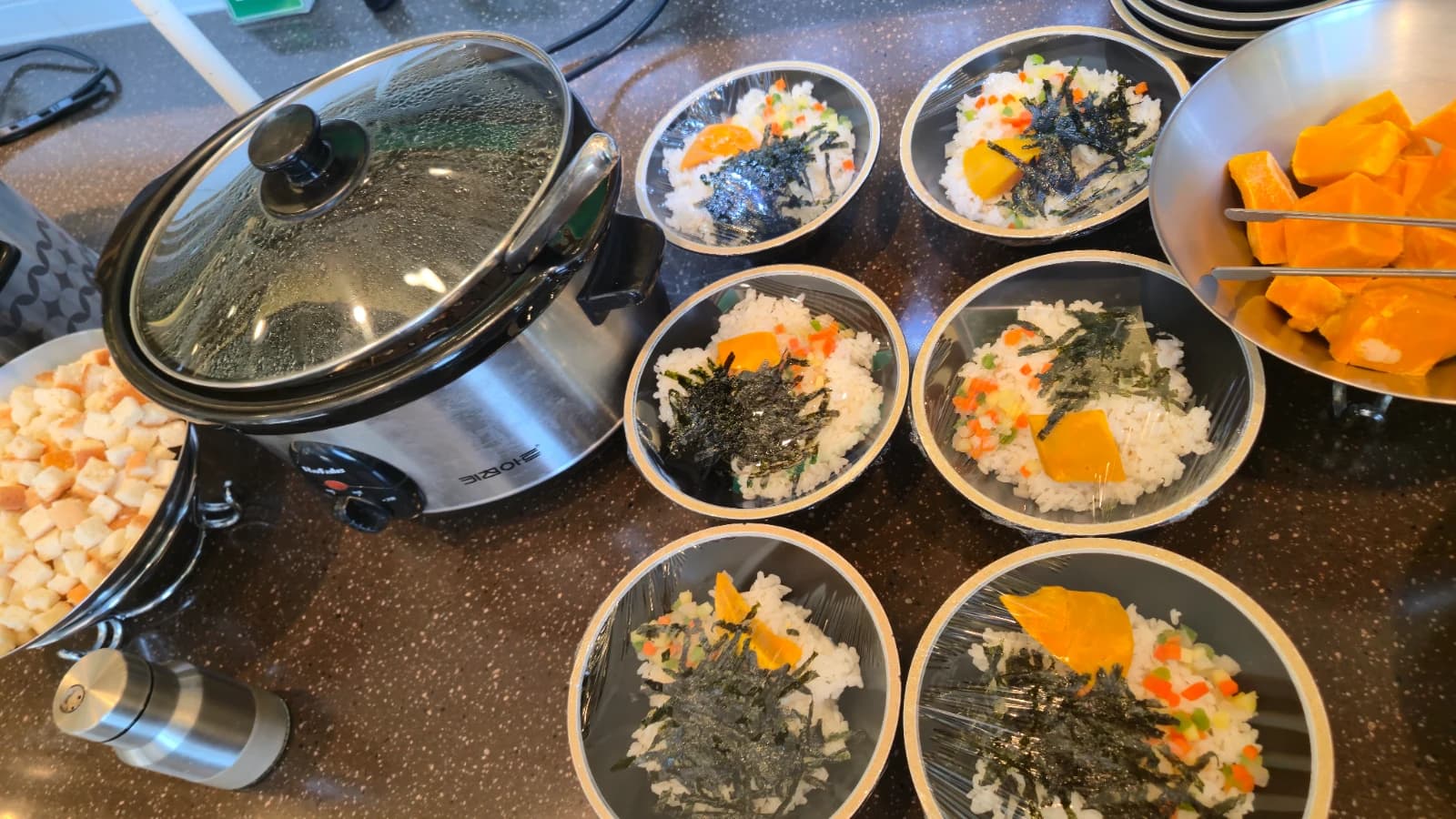
Over on one side of the salad bar, they had the shabu-shabu fried rice fixings all ready to go. Small bowls were pre-portioned with rice topped with seaweed flakes, diced pickled radish, vegetables, and an egg yolk — one serving per bowl. The idea is you take this back to your table, dump it into the leftover broth after you've finished eating, and stir-fry it right in the pot to make your finishing fried rice.
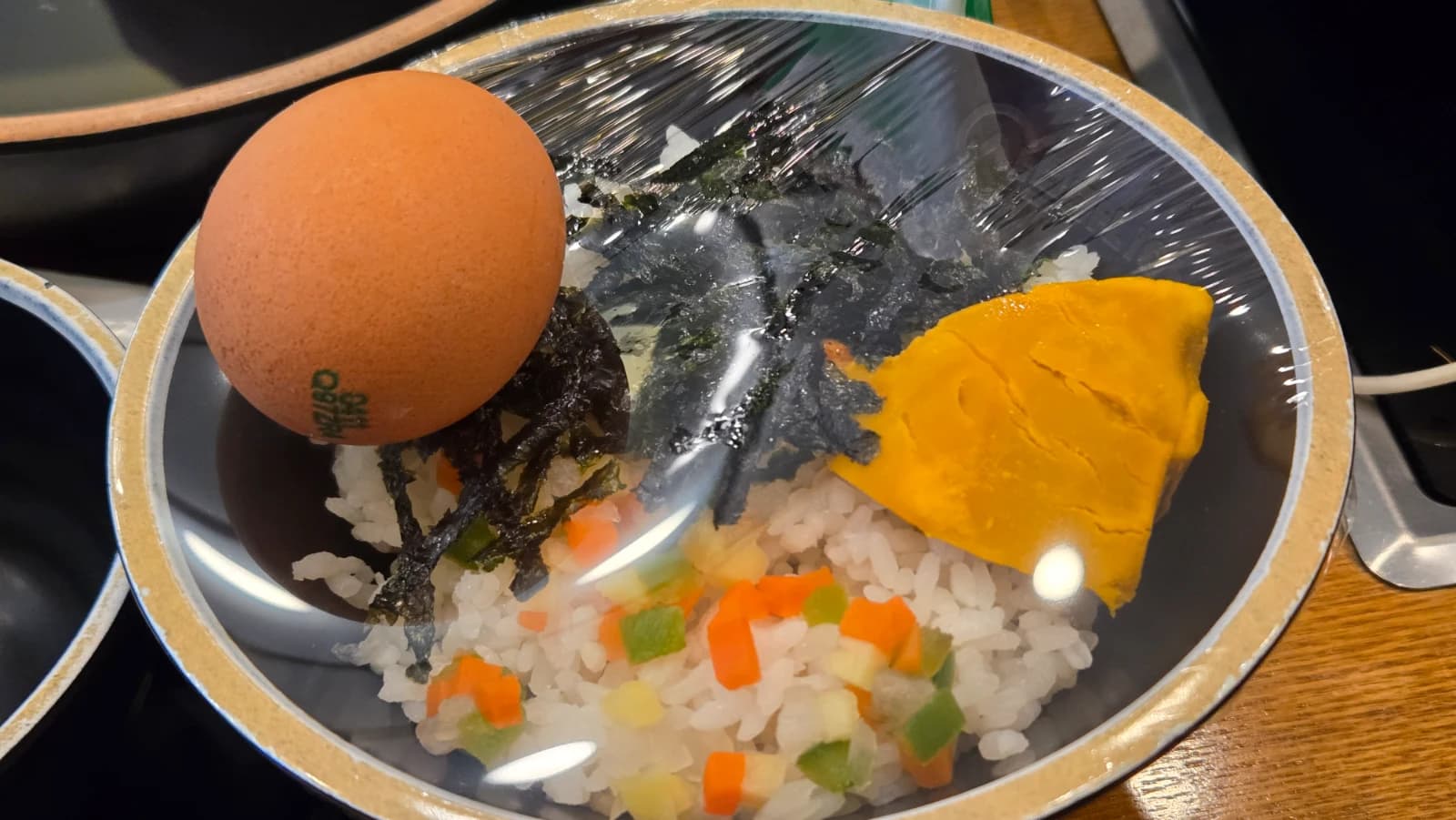
We brought the fried rice supplies back to the table. A small bowl held vegetable-flecked rice with seaweed flakes, a chunk of kabocha squash, and a whole egg on top, covered in plastic wrap. Diced carrots, bell peppers, and other vegetables were already mixed into the rice, so all we had to do was crack the egg into the leftover broth and stir-fry everything together.
The Finished Fried Rice — Made Porridge-Style for Grandma
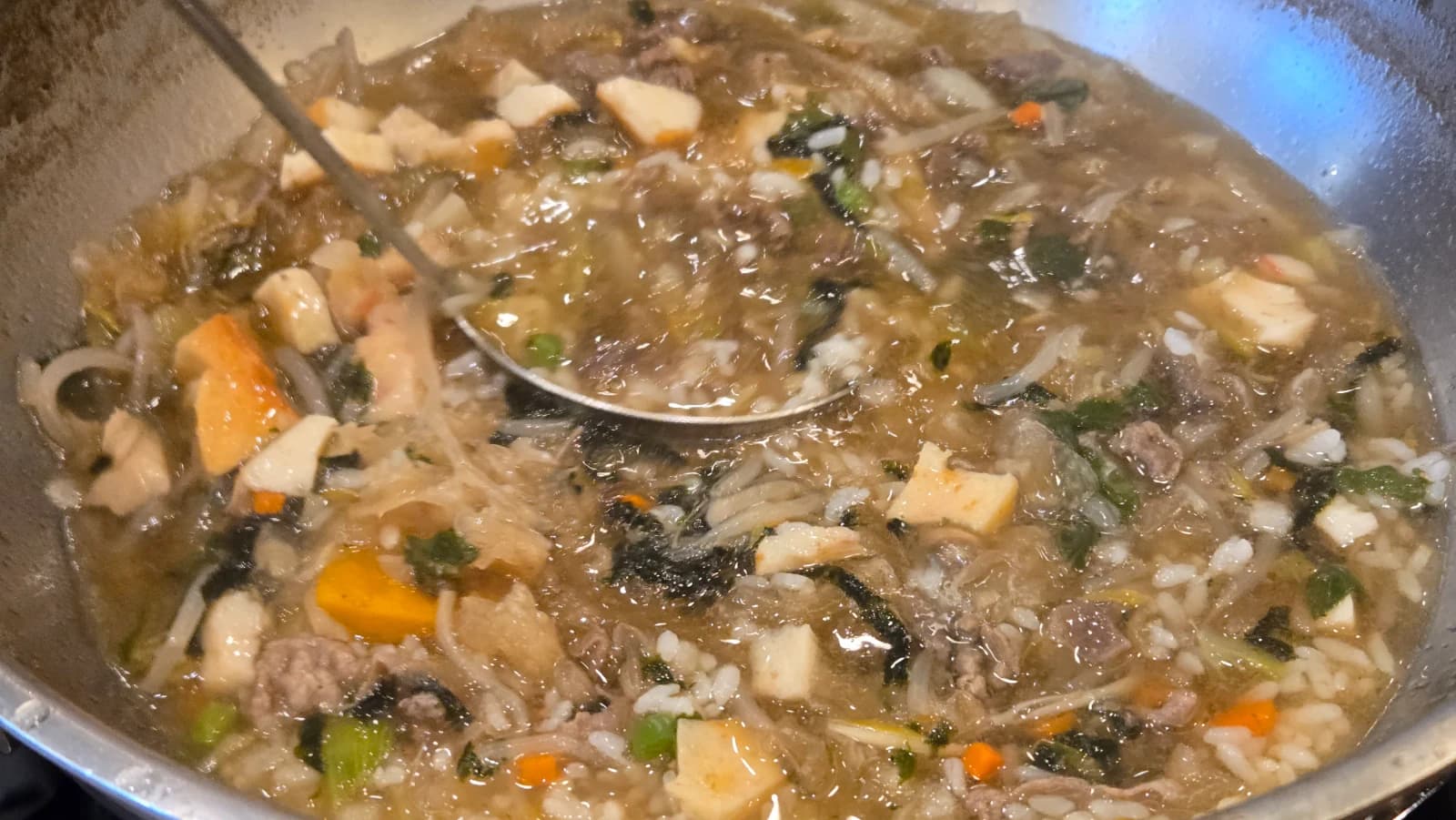
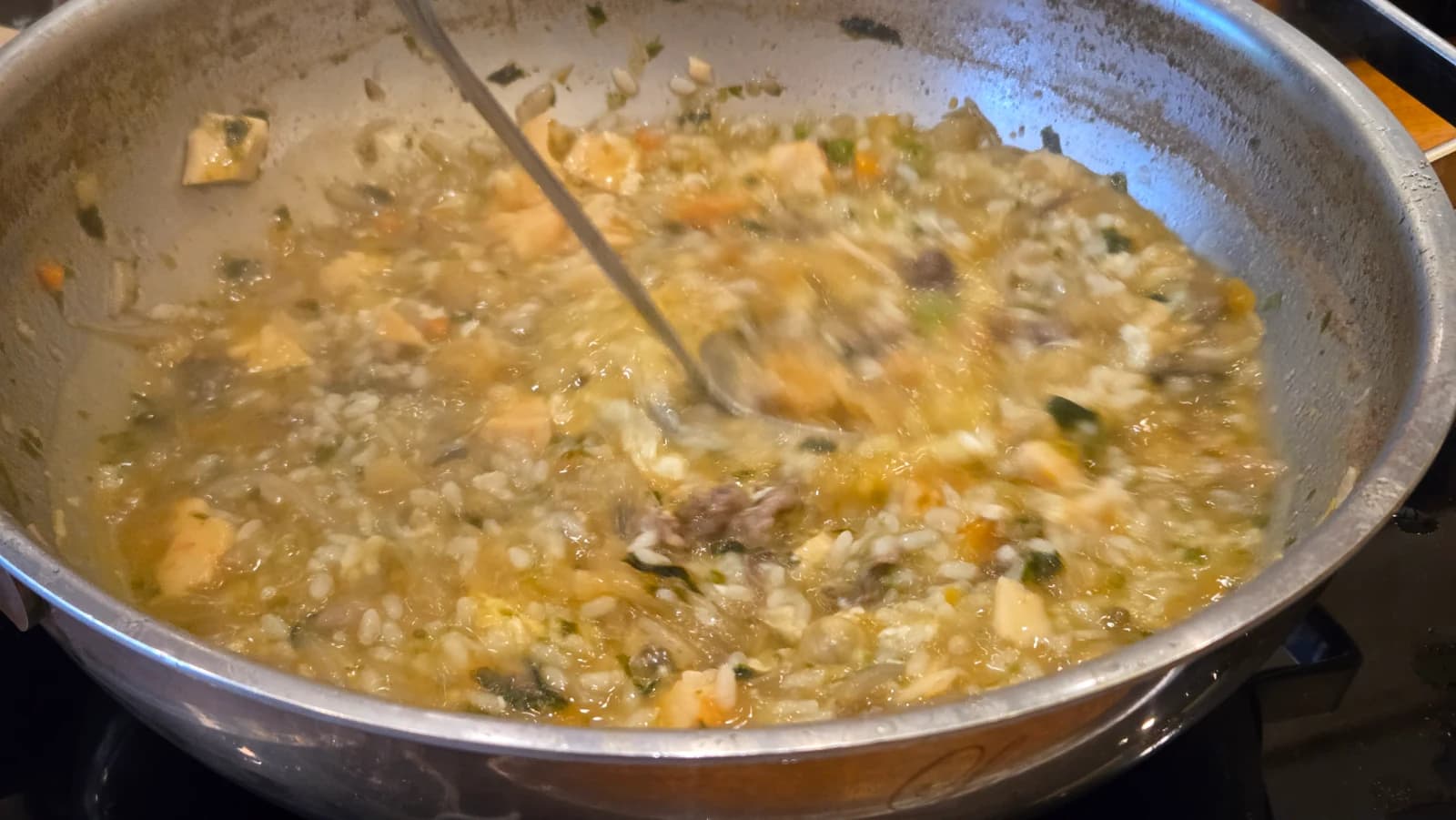
After finishing the hot pot, we drained most of the remaining broth from the pot, then added the fried rice fixings and started stir-frying. As the rice, egg, kabocha squash, and seaweed flakes all came together, little bits of leftover beef and vegetable scraps clinging to the bottom of the pot mixed right into the rice — no extra seasoning needed. Personally, I'm a fan of drier fried rice where every grain stays separate with a little crisp to it, but since grandma was going to be eating this, I left a bit more broth in the pot and kept stirring longer. More liquid left in = porridge; less liquid = fried rice — and since this was for grandma, I aimed somewhere in between. The kabocha squash broke down and turned the whole thing a soft golden yellow. She took one spoonful and said, "This is easy on the stomach," then slowly ate the rest. Hearing that one line made giving up my preferred texture totally worth it.
Korean Shabu-Shabu — My Honest Take
Between the seafood and beef shabu-shabu, the unlimited salad bar, and the shabu-shabu fried rice at the end, I was genuinely about to burst. I'll be honest — looking at the price tag of about $19 per person on its own, it's not exactly cheap. But when you factor in unlimited noodles and vegetables from the salad bar plus the fried rice finale, it stops feeling like a bad deal.
There were some downsides, though. A few of the salad bar vegetables — the bean sprouts especially — were a bit wilted, and the dessert portions were so small that if you didn't time it right, you'd find nothing but empty trays. Still, it's not the sensory overload of an all-out buffet, and it's not the stiff formality of a prix fixe dinner, either. There's something about huddling around a single pot, telling each other "try putting this in" and "grab that before it overcooks," that just works perfectly for a family meal. For this kind of gathering, I honestly can't think of a better fit.
As we were leaving, my grandmother said, "I ate well today — let's come back again." And honestly, that one sentence was all that mattered. I felt bad that my wife couldn't make it, and I told grandma we'd definitely bring her next time. She smiled and said, "Good — bring your wife along too."
Meal Summary
| Visit Date | May 5, 2026 (Children's Day in Korea), lunchtime |
| Restaurant | Shabu Mania (western Cheongju, South Korea) |
| Menu | Seafood & Beef Shabu-Shabu (about $19 / ₩27,000 per person) |
| Broth | Clear broth (spicy broth also available) |
| Salad Bar | Unlimited refills — noodles, veggies, fish cakes, dumplings, rice cakes, desserts |
| Time Spent | About 1 hour 30 minutes |
| Parking | Underground parking in the building |
| Reservations | Walk-ins welcome (there may be a wait during peak lunch hours) |
Most Korean shabu-shabu restaurants accept walk-ins, and many have parking garages either in the building or nearby, making them easy to visit with the whole family. All in all, it was a really great meal.