
Charcoal Pork Ribs Worth the Drive — Yuseong Galbi Review
Table of Contents
20 items
Walking Into a Rib Joint I'd Been Driving Past for Years
It was late summer 2025, and I was passing through Daejeon — a major city about 1.5 hours south of Seoul — when I finally walked into the rib place I'd been ignoring forever. I've eaten at plenty of Korean BBQ spots over the years, but Yuseong Galbi was always one I just drove past. When you're on the road through the Yuseong area, the sign catches your eye every single time. At first I thought it was just a random neighborhood joint. But it kept showing up. Not once, not twice — over and over. That day, my friend and I had zero plans in Daejeon, and I just thought, "Today's the day." So we walked in. This was a meat-focused visit, so every photo here is about the food. If you came looking for interior design shots, that's gonna have to wait.
Yuseong Galbi is a handcrafted pork rib franchise that's been running in Daejeon since 1996. They use domestic grade-1 pork ribs, hand-trimmed and marinated for 48 hours in a natural fruit-based sauce. This review is 100% self-funded. No sponsorship, no freebies.
Fresh Ribs vs. Marinated Ribs — What's the Difference?
Natural / Pure
Saeng Galbi (Fresh Ribs)
Just the meat, nothing else. If this tastes good with zero seasoning, it means the pork itself is high quality. All you do is dip it in salt or sesame oil sauce, and that simplicity is exactly what lets the natural flavor of the meat shine through.
Marinated / Bold
Yangnyeom Galbi (Marinated Ribs)
Soy sauce, garlic, pear, sesame oil… then 48 hours of marination. From the moment it hits the grill, the aroma is on another level. The trick is flipping at the right time so it doesn't burn, but honestly those slightly charred edges? That's the best part.
The Table Was Full Before the Meat Even Arrived
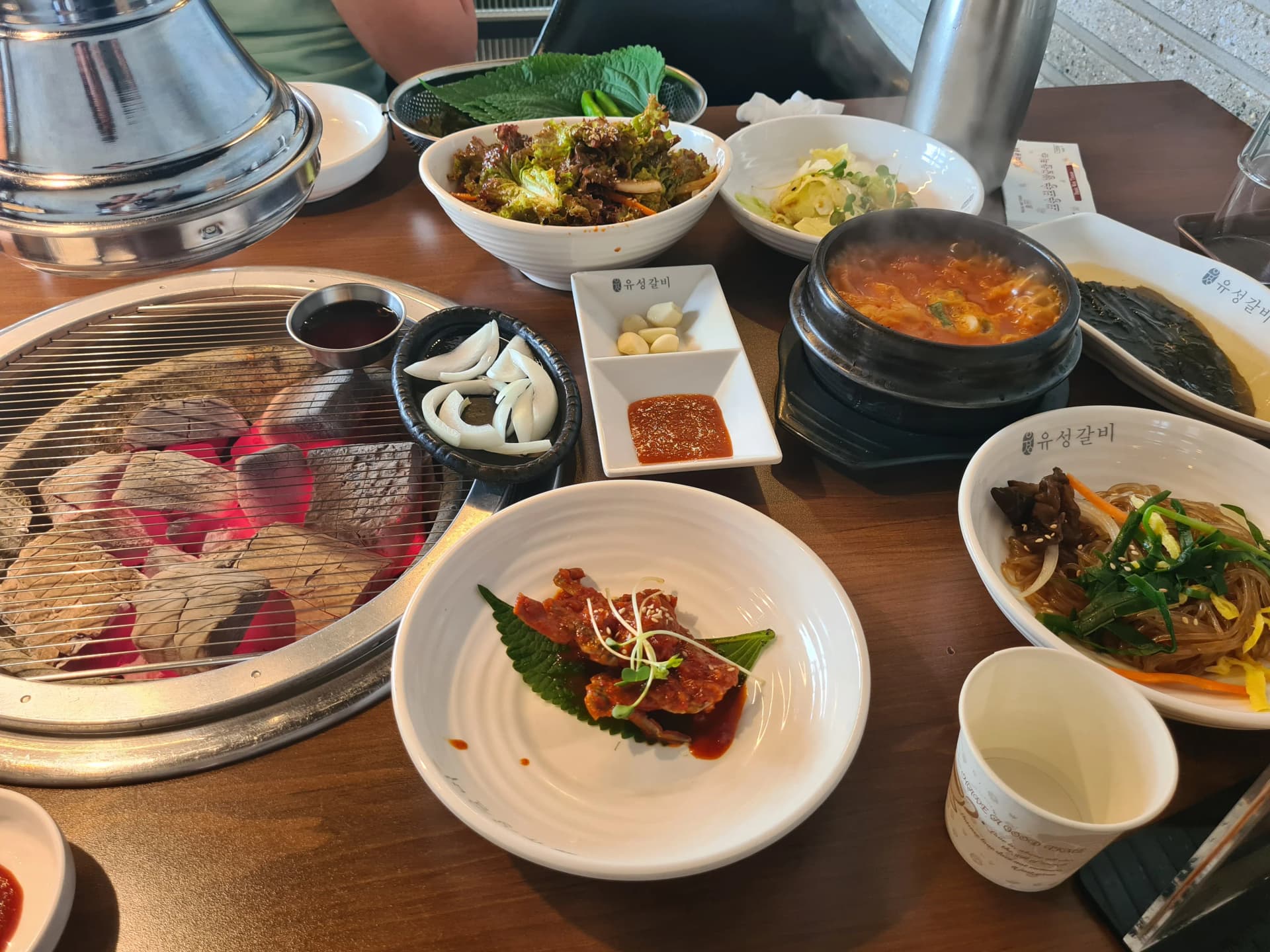
The table was loaded before any charcoal grilled pork ribs even showed up. We ordered the fresh ribs + marinated ribs combo set. When I told the server it was our first time, she said, "Start with the fresh ribs, and I'll bring the marinated ones out after." That advice turned out to be spot-on.
While the grill was heating up, side dishes started lining the table — doenjang stew, japchae, lettuce wraps, garlic, onion, ssamjang dipping paste. There was also a single piece of marinated rib plated up front as a teaser. The second it landed, my friend reached for it going, "Wait, is that a side dish?" I barely stopped him in time.
Worth noting: Yuseong Galbi is a franchise, but the menu varies by location. Some branches have combo sets, some don't. Check the specific branch's menu before you go.
The Side Dishes Were No Joke
At a Korean BBQ restaurant, meat is only part of the experience. Before the main event even arrives, the table is already packed with complimentary side dishes — all included in the price.
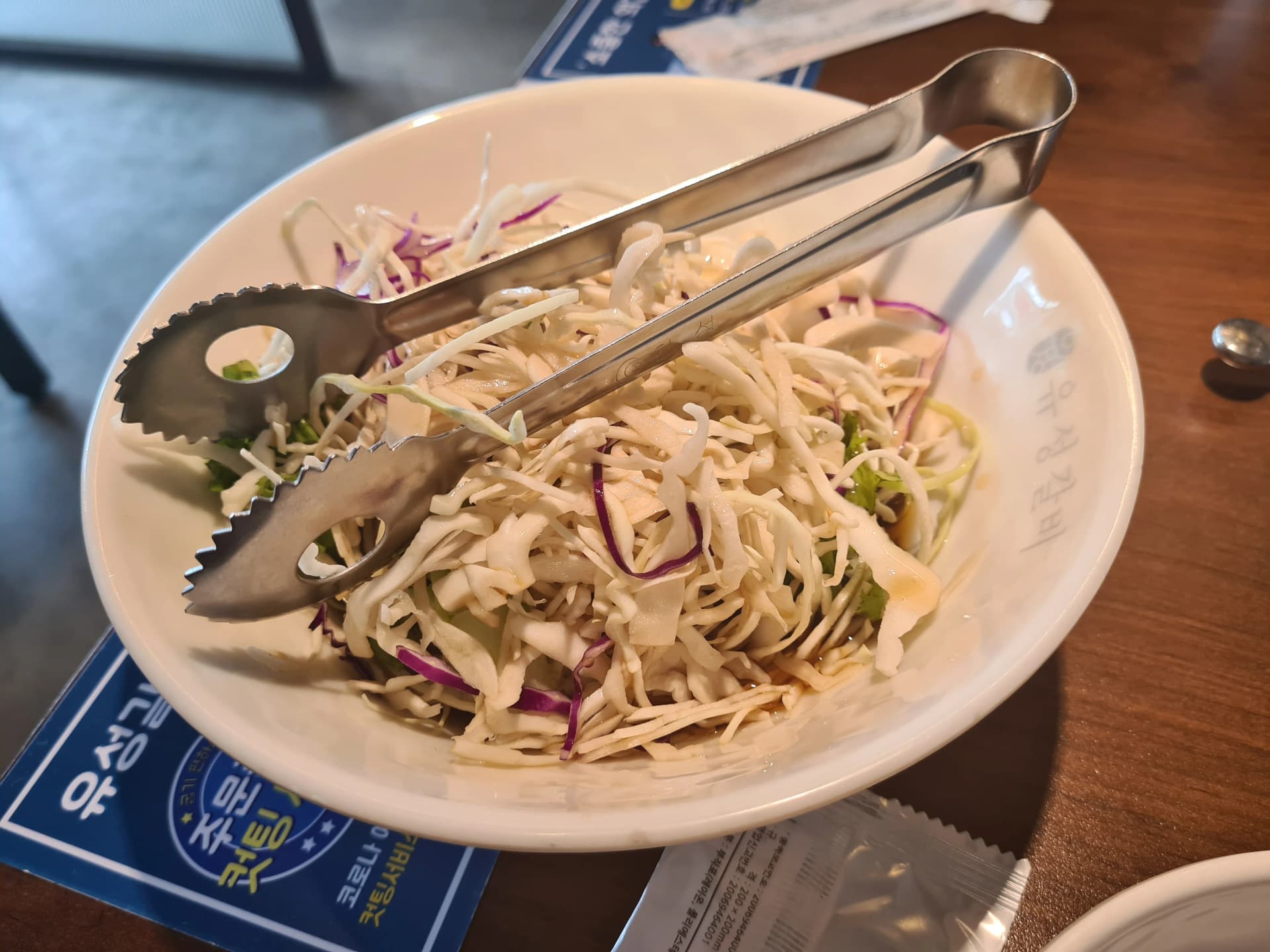
Shredded cabbage is pretty standard at any Korean BBQ place. Here it came mixed with red cabbage, which gave it a nice color contrast. Grabbing a bite between pieces of grilled pork cuts right through the richness.
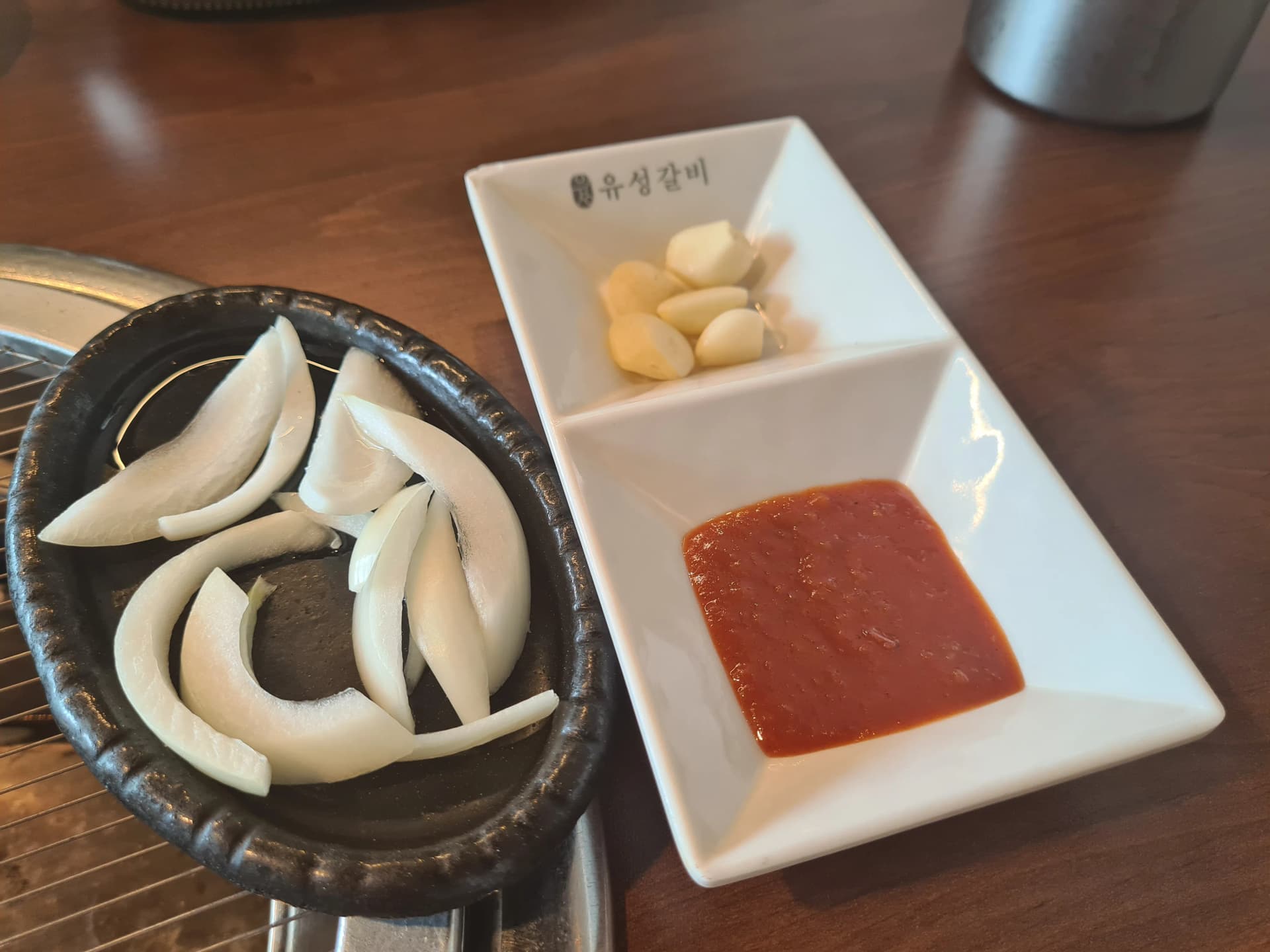
Onion, garlic, ssamjang. These three come out before the meat at every Korean rib joint. You toss the garlic on the grill to roast alongside the pork, and the ssamjang is for dipping when you wrap meat in lettuce. Easy to overlook if you don't know, but regulars never skip these.
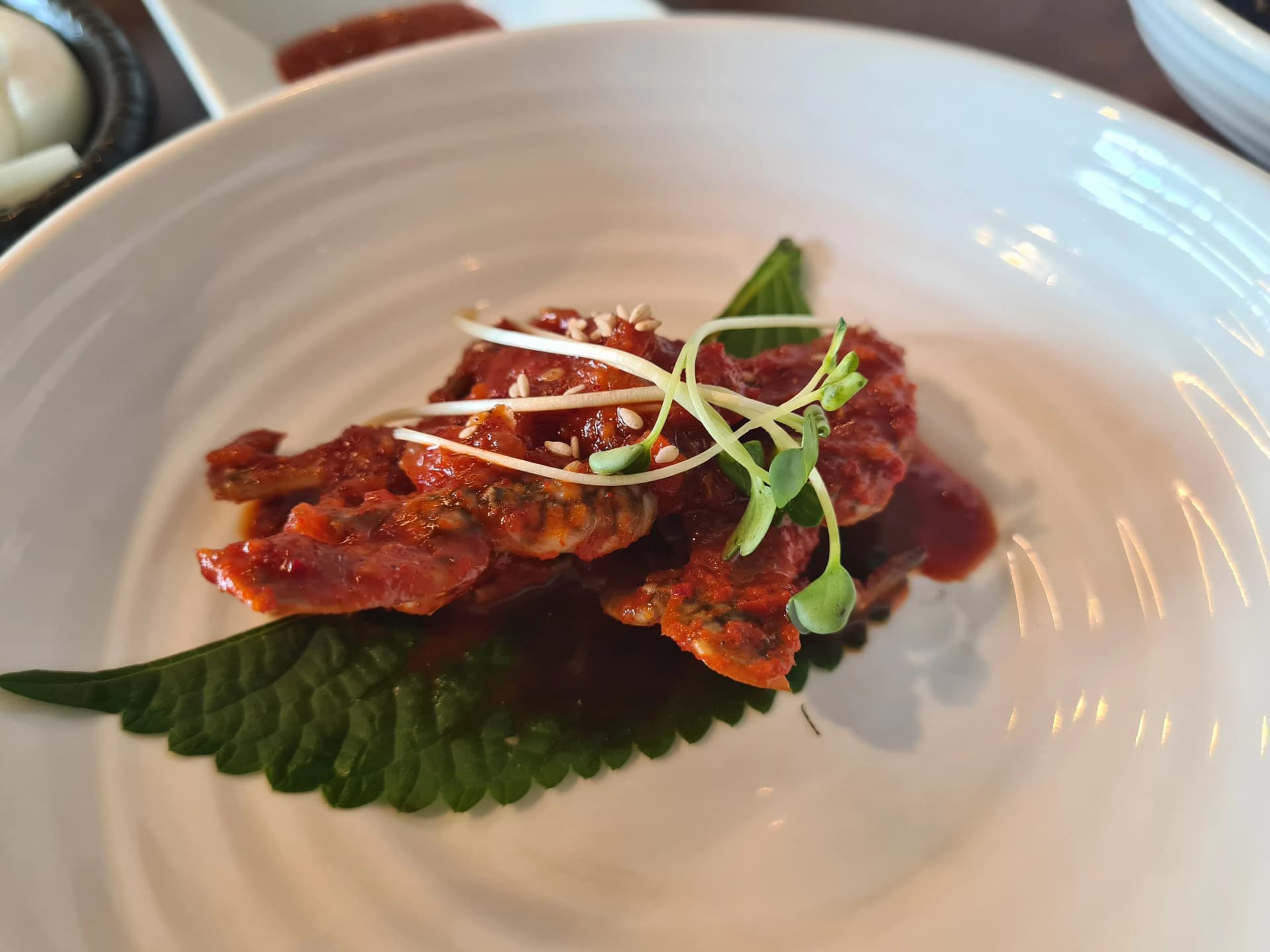
Marinated raw crab showed up as a side dish. We thought we were at a BBQ place, so when this landed, my friend and I both paused. In Korea, this dish is called a "rice thief" — it's so good it makes you eat way too much rice. Getting it free as a side at a grilled meat restaurant is seriously uncommon.
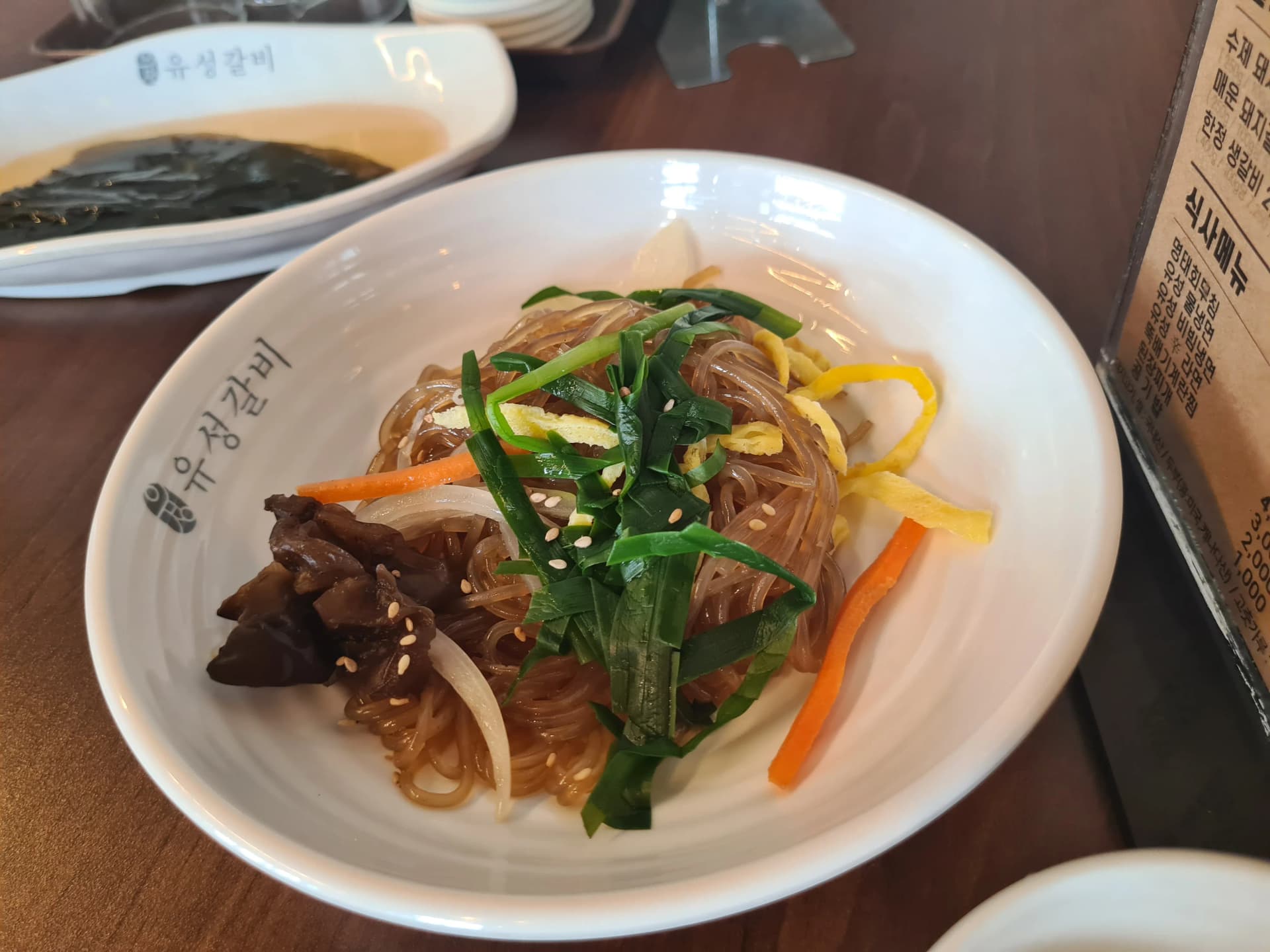
The japchae — glass noodles with mushrooms, carrots, scallions, and sliced egg on top. This is a dish you'd normally see at Korean celebrations and holiday spreads. Having it show up as a BBQ side dish felt like a step above.
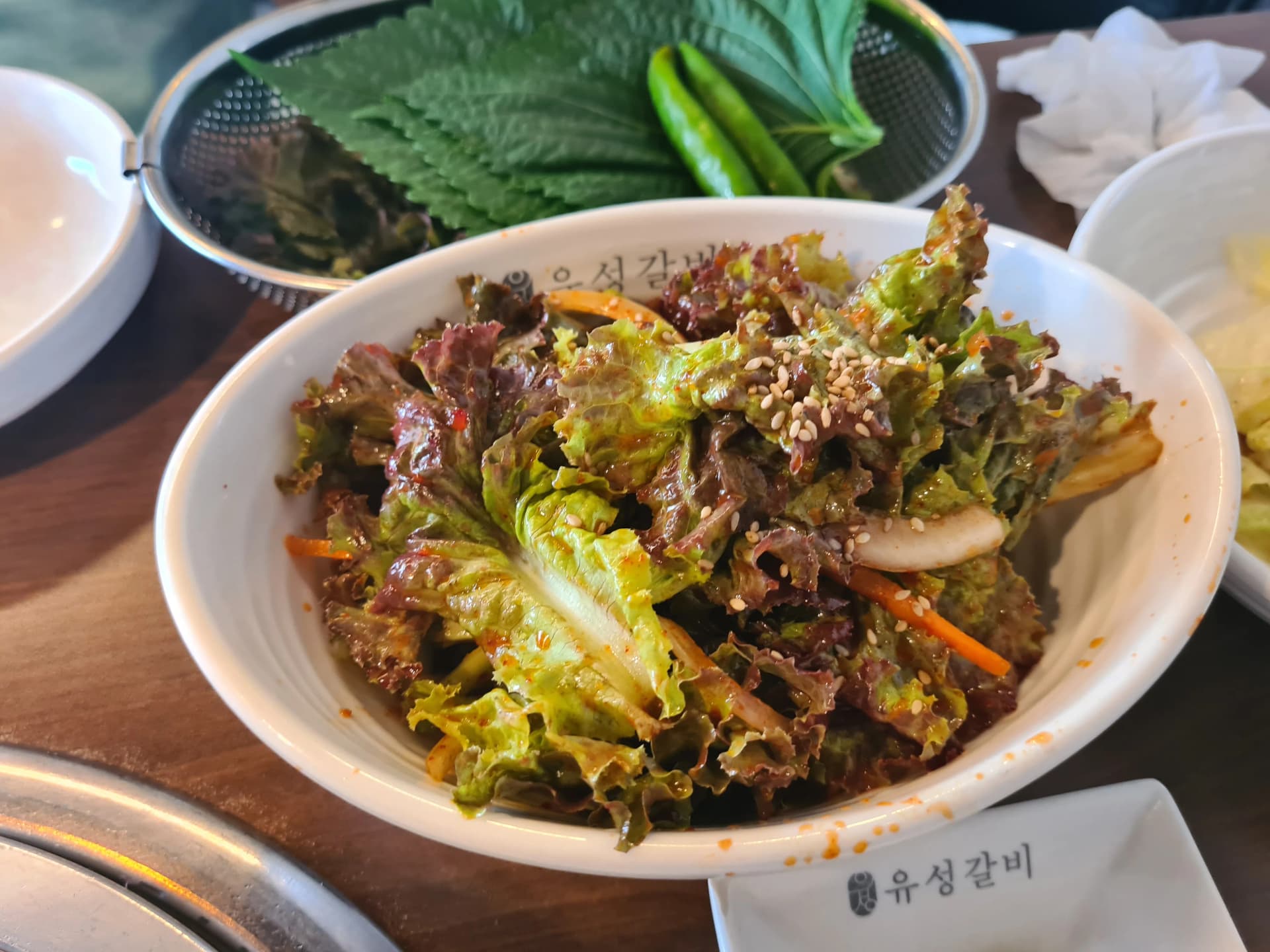
Seasoned lettuce — basically the same lettuce you'd use for wraps, tossed in a light dressing and served as a side. Behind it sat fresh lettuce leaves and green peppers, so you could do wraps AND eat the dressed version. Best of both worlds.
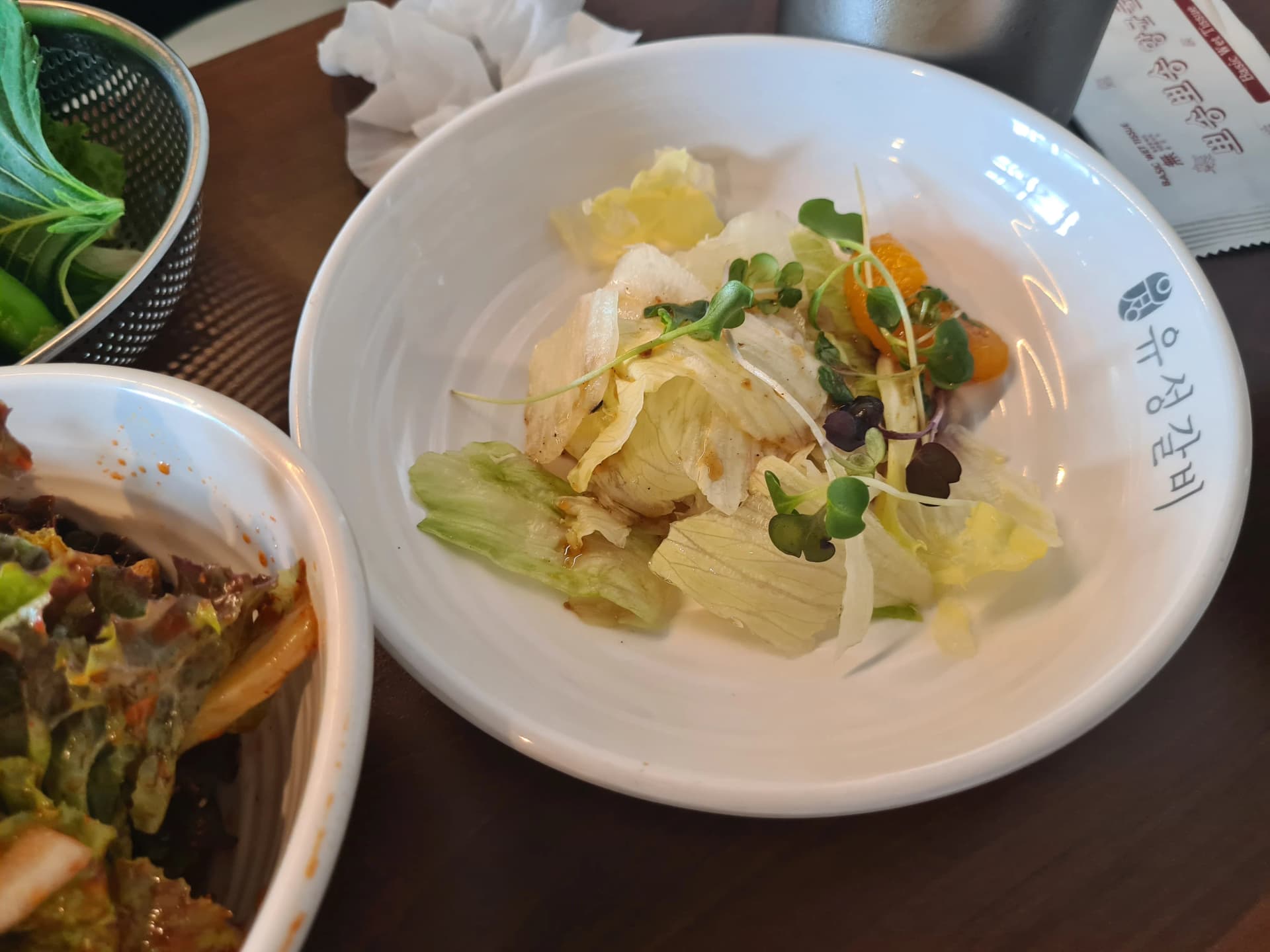
A tangy dressed cabbage salad topped with a mandarin slice and radish sprouts. For a meat restaurant side dish, the plating felt surprisingly deliberate.
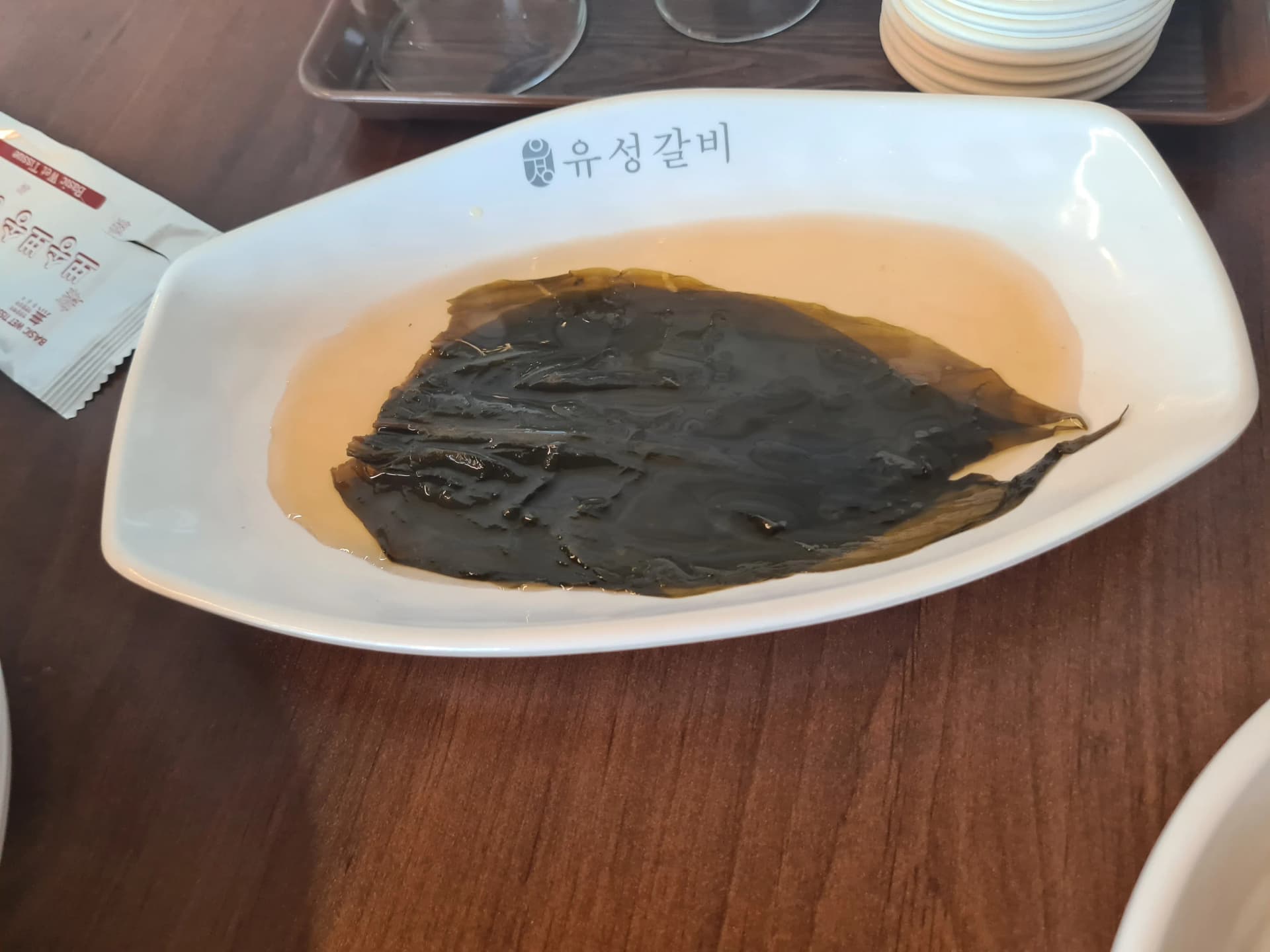
This is myeongyi namul — pickled wild garlic leaves, savory and slightly briny. Wrap a piece of grilled pork in one of these and that's the real deal right there. It might look unfamiliar if you've never seen it, but one bite and you'll keep reaching for more.
Charcoal vs. Gas Grill — Why It Actually Matters
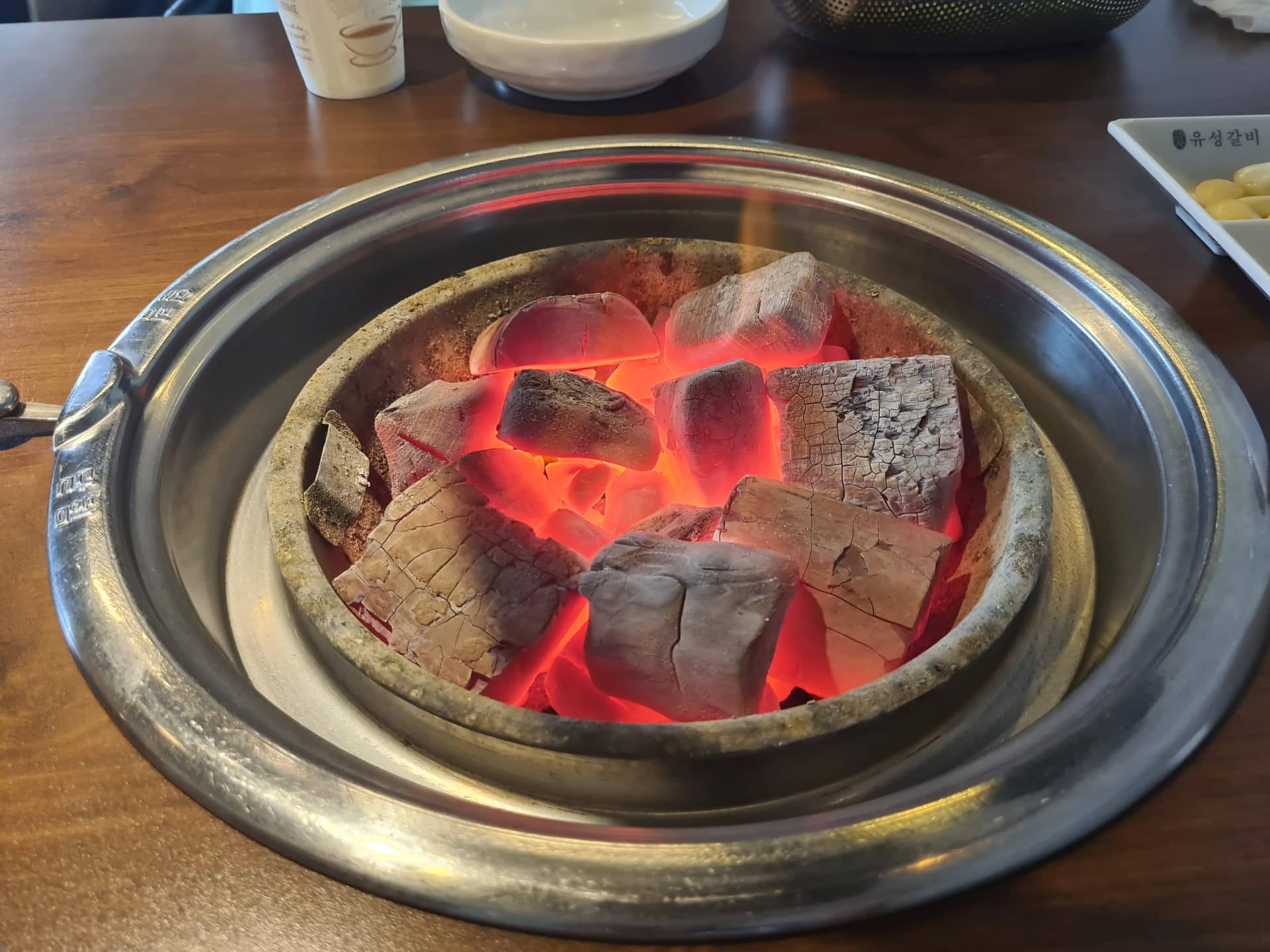
Yuseong Galbi uses real charcoal. The grill arrives with lump charcoal glowing bright red underneath. In summer it definitely adds some heat to the room, but meat grilled over charcoal tastes completely different from gas-grilled meat. It's all about that smoky char flavor.
Charcoal Fire
Sutbul Gui (Charcoal Grilling)
Cooked over real lump charcoal. You can't control the temperature. You can't dial it up or down, and if you miss the timing, the meat just burns. But there's a smoky depth you only get from this method. Gas can never replicate that flavor.
Gas Fire
Gas Gui (Gas Grilling)
You control the flame by hand. No risk of burning, and even beginners can manage just fine. It's convenient, sure, but you lose the smoky flavor entirely. If you want a clean, easy meal, gas is fine. But if you want the real Korean BBQ experience, you need charcoal.
There's a Reason You Grill the Fresh Ribs First
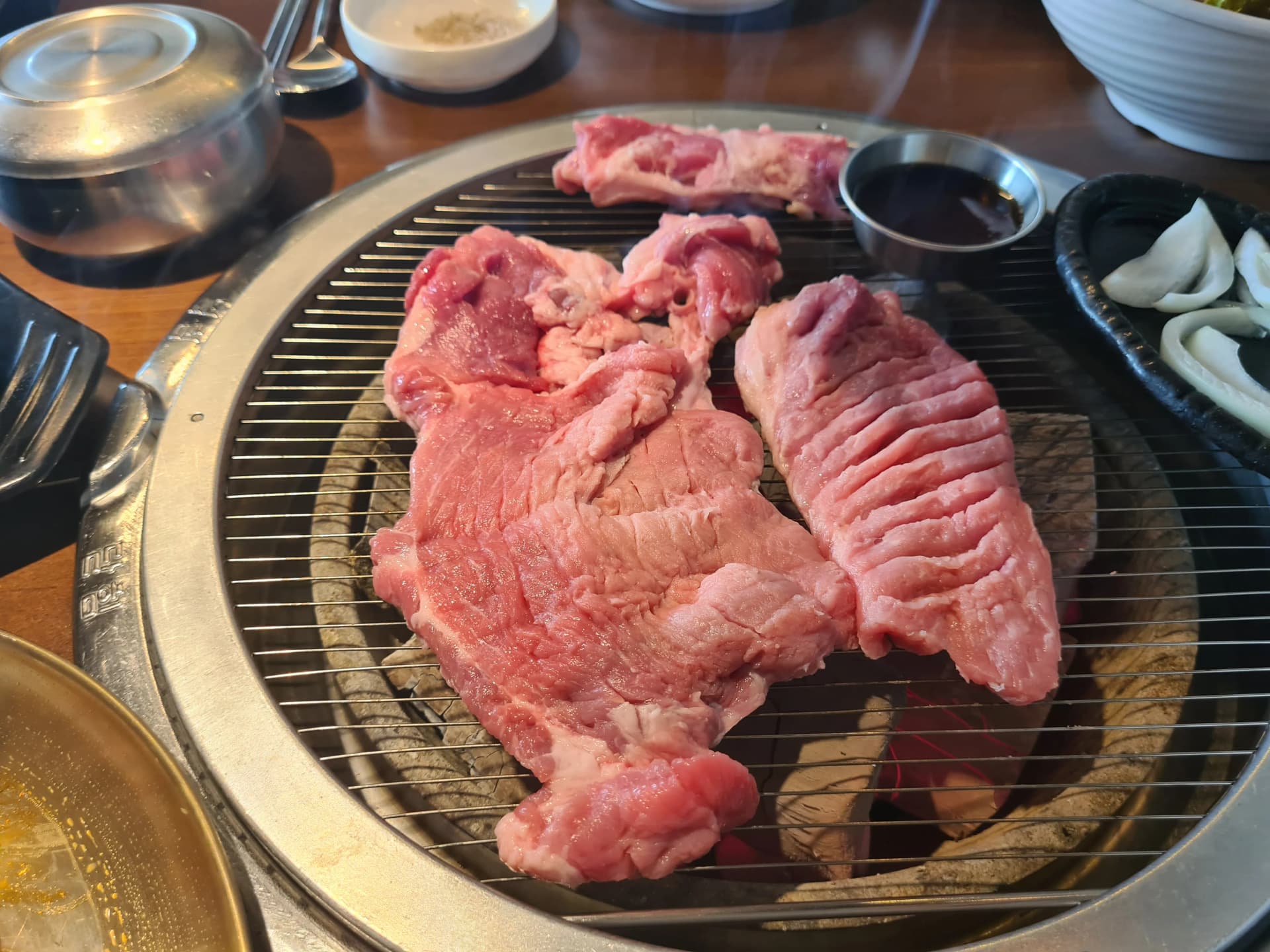
The fresh ribs finally hit the grill. There's a specific order to this. If you grill the marinated ribs first, the sauce burns onto the grate and transfers off-flavors to the fresh meat. For the cleanest taste, always start with the unseasoned ribs and save the marinated ones for after. Looking at the cut, you could see thin streaks of fat running between the lean muscle — not the pounded-flat kind of tenderness, but naturally soft meat from a good cut.
The Staff Grills the First Round for You
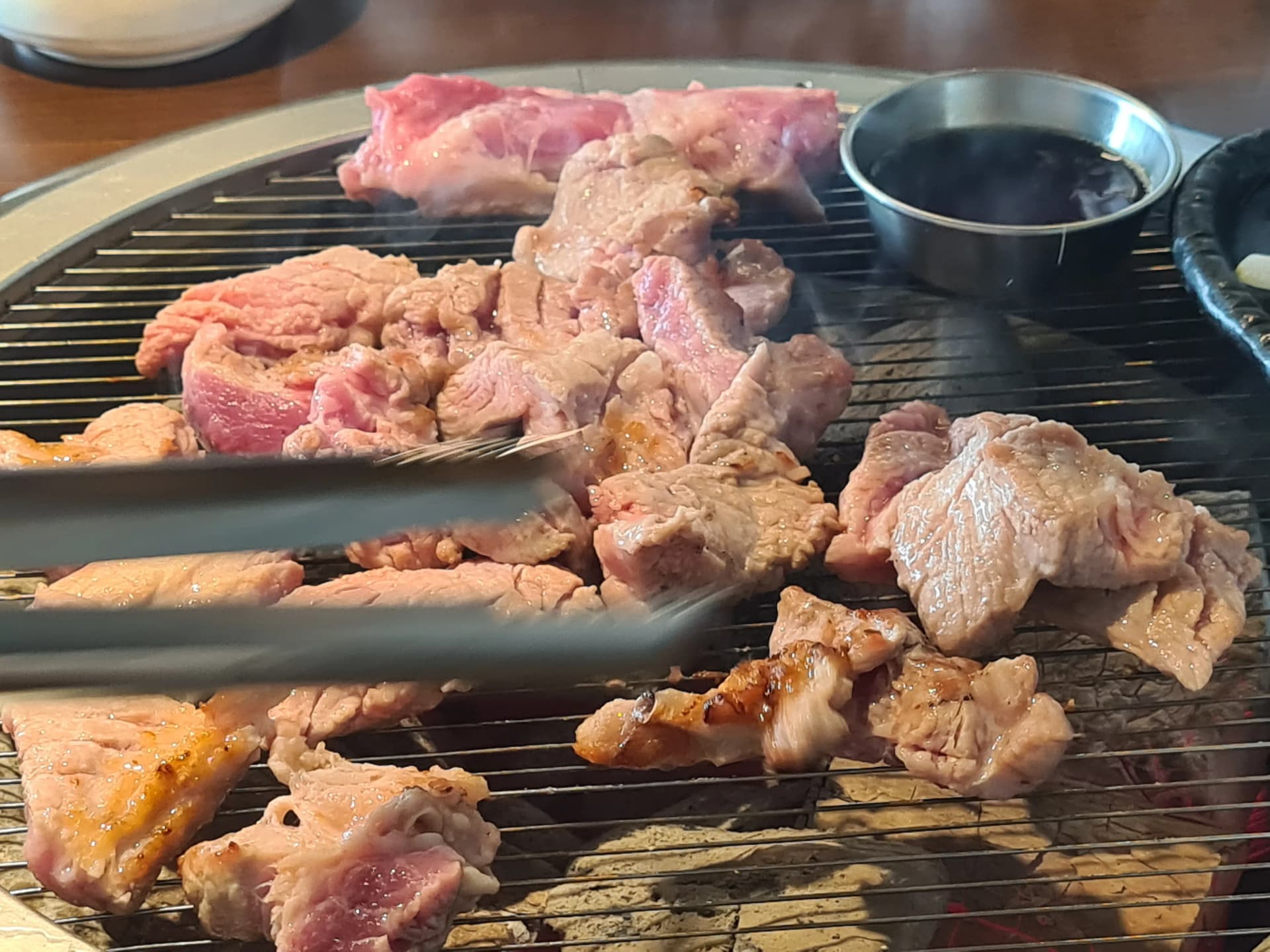
The moment the meat went on, a staff member grabbed the tongs and started flipping for us. At Yuseong Galbi, the staff handles the initial grilling. Charcoal grilling is different from gas — let your guard down and the meat burns fast. The flame is uneven and hits the meat directly, so you need to flip constantly. That's why first-timers don't need to stress here.
With Pork, Doneness Is Everything
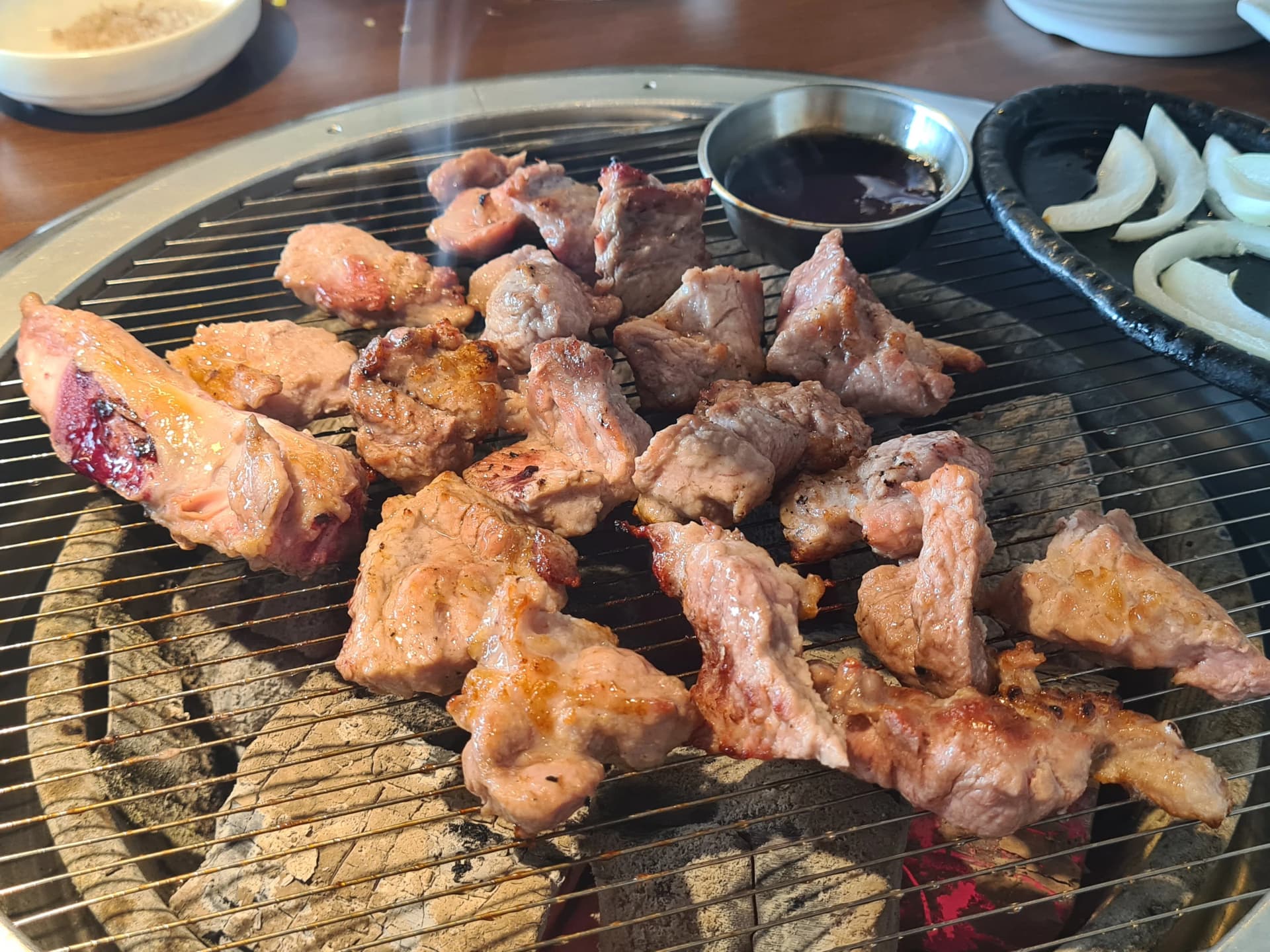
This was about 60% done. The outside had color, but the inside was still pink. Unlike beef, pork absolutely has to be cooked through. But you don't want to overdo it either — once all the moisture escapes, it turns dry and tough. Nailing that sweet spot between safe and juicy is the whole game.
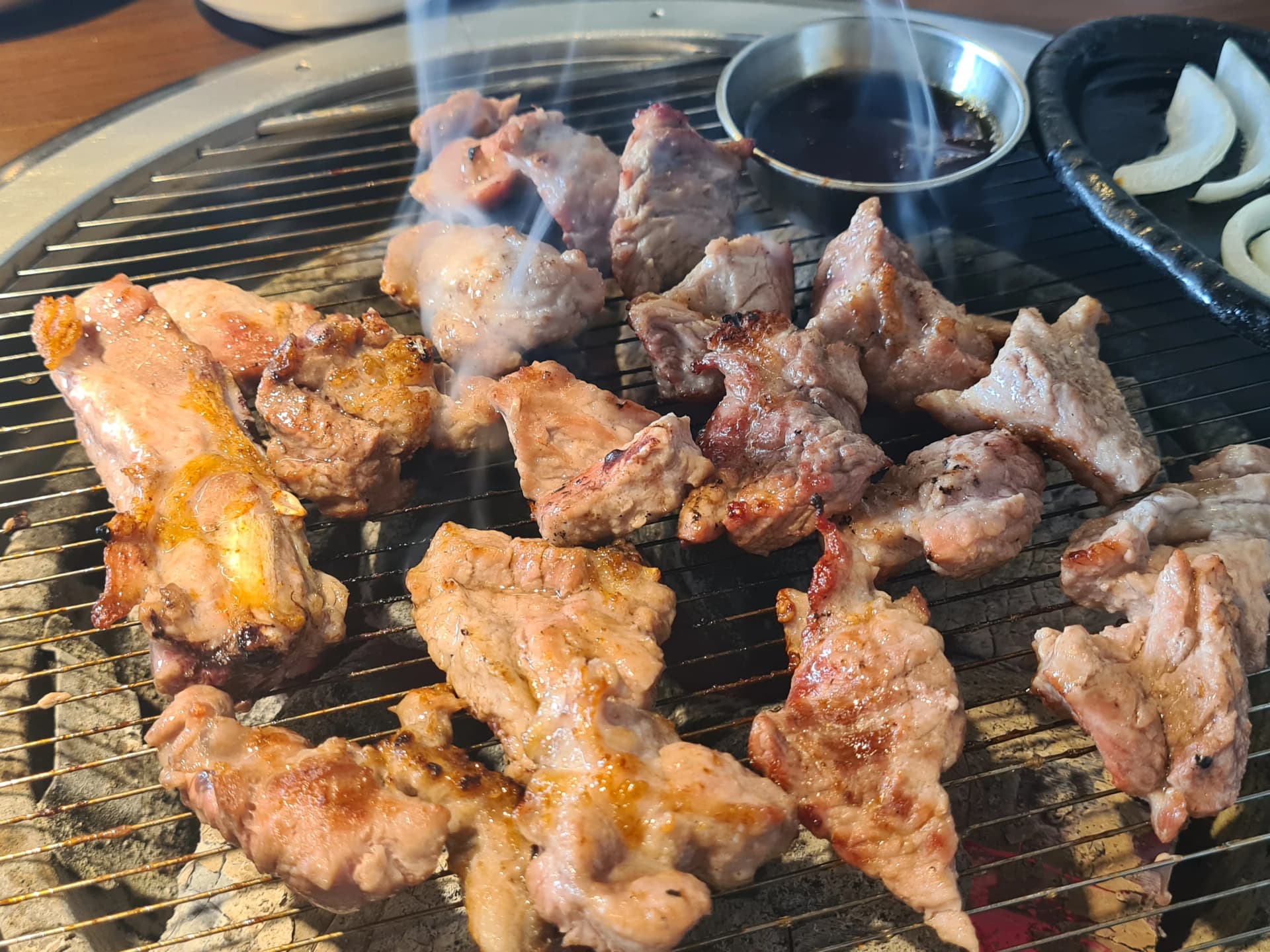
At this level of golden-brown, they were almost there. The surface had an even charcoal-kissed crust, and just enough fat had rendered out. My friend asked "Isn't it done yet?" about twice, but I told him to wait just a little longer. That was the right call.
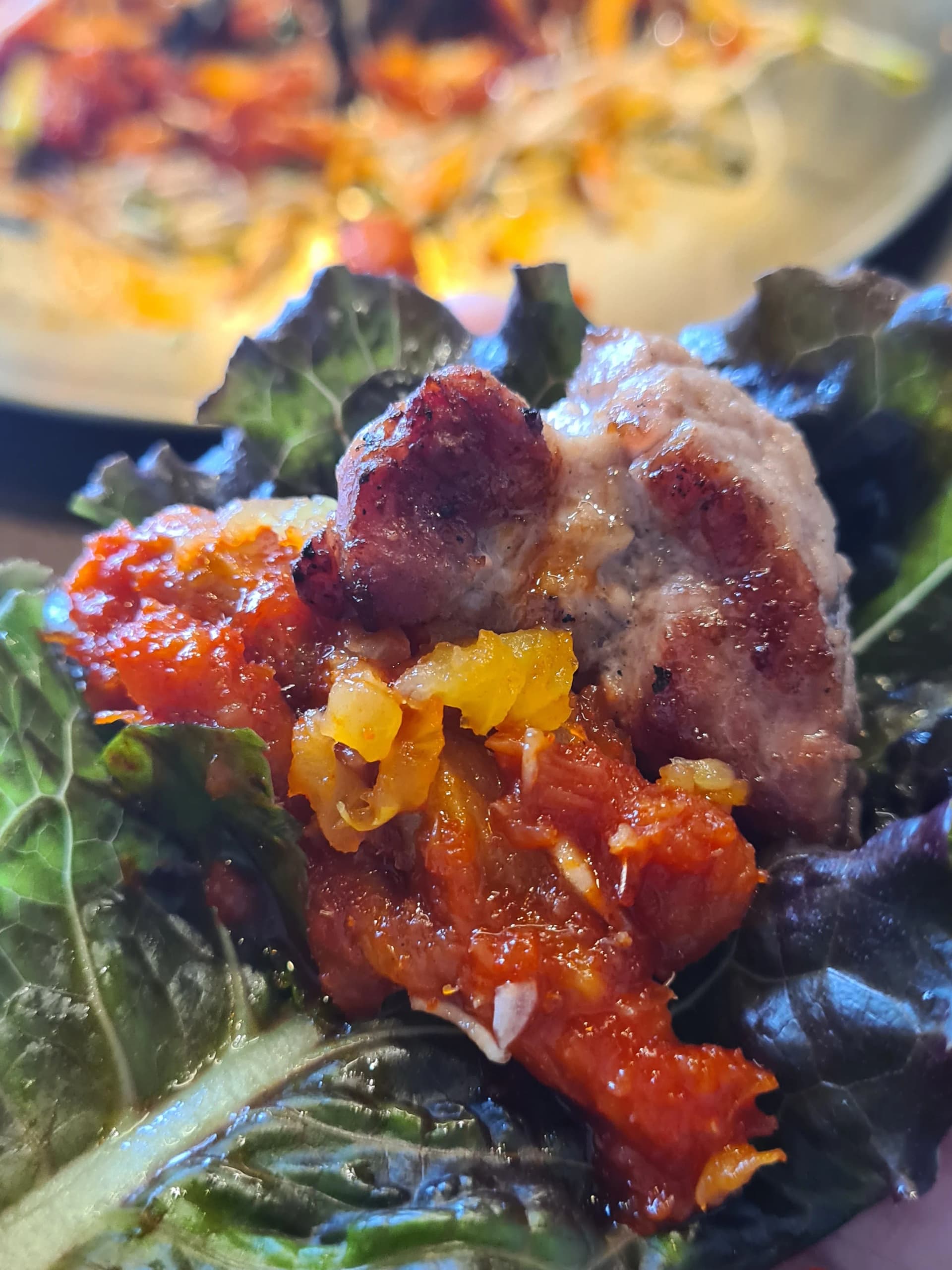
One perfect wrap. A piece of grilled fresh rib on a lettuce leaf, topped with ssamjang and stir-fried kimchi, then stuffed into your mouth in one go. Eating pork this way — wrapped with vegetables — changes the entire flavor profile compared to eating the meat solo. This is how Koreans eat their grilled meat, and once you try it, plain meat-on-a-plate feels incomplete.
The Fresh Ribs in One Word
The moment I put that first piece in my mouth, I was honestly a little surprised. I've had plenty of Korean BBQ pork ribs over the years, but fresh ribs this tender don't come around often. Zero chewiness — more like the meat just gently fell apart on my tongue. My friend silently grabbed two more pieces back to back without saying a word. That pretty much says it all.
Taste Review
One Bite of Fresh Ribs 🥩
Texture — Melt-apart tenderness
There's almost no chewing involved. Put it in your mouth and the grain of the meat just naturally separates. This isn't tenderized-by-force softness — the cut itself is inherently tender. That's what you get with hand-trimmed, grade-1 domestic pork ribs.
Smoke — That little extra from charcoal
With no marinade on the fresh ribs, the natural pork flavor comes through completely. Then the lump charcoal adds just a whisper of smoke to the surface — clean but not bland, with this subtle balance that gas grills simply can't achieve.
Juiciness — Not overcooking was the move
Because we didn't overdo the grilling, all that juiciness stayed locked in. Cook it too long and it all evaporates. The staff member flipping at just the right moments in the beginning definitely made a difference in the final result.
Seasoning — Salt dip is all you need
No marinade, no sauce — just a dip in salt or sesame oil. And honestly, that brought out the meat's flavor even more. Adding anything else would've felt like a waste.
Now It's the Marinated Ribs' Turn
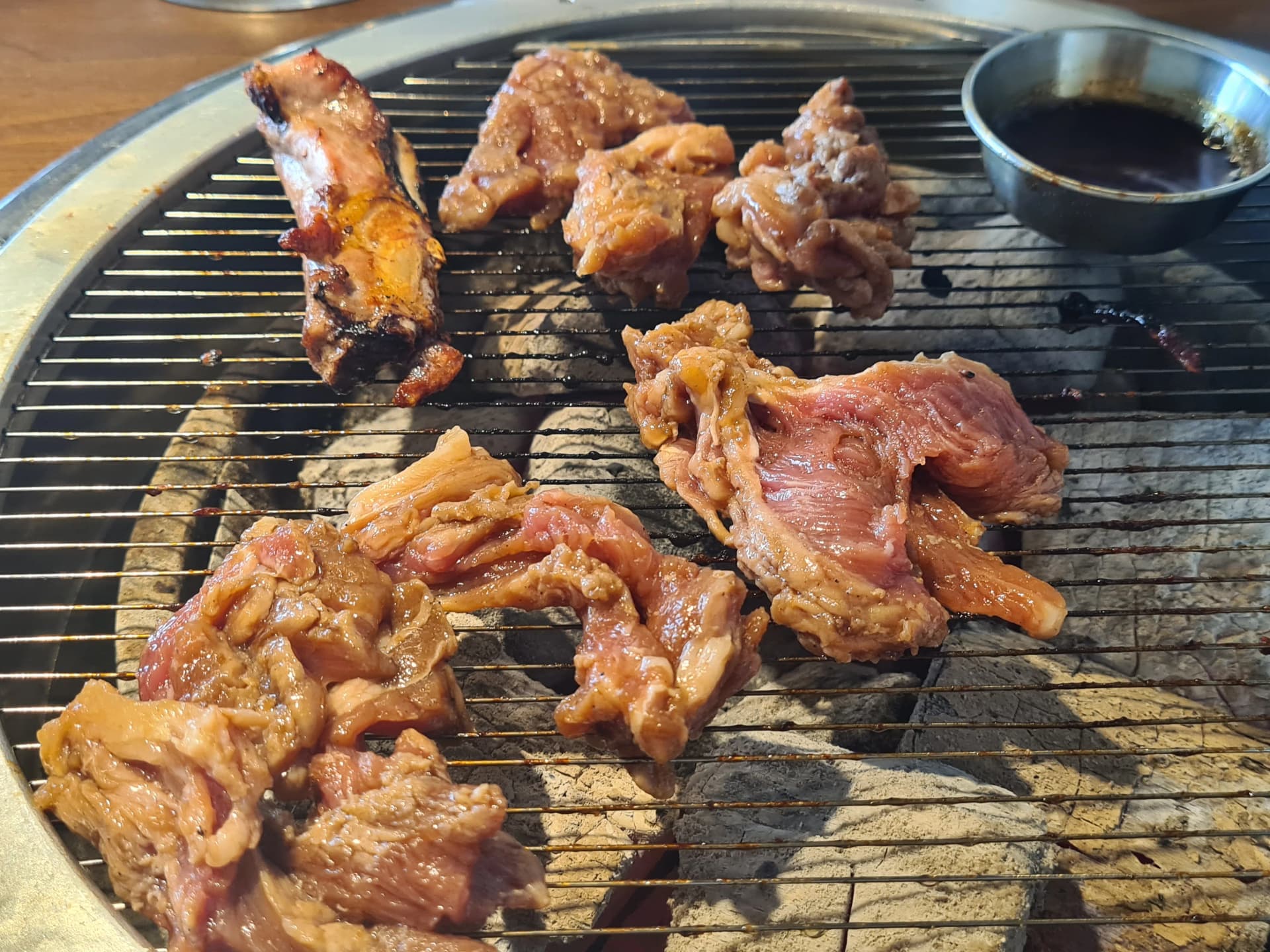
After finishing the fresh ribs, it was time for the marinated ones. The difference was obvious the second they hit the grill. As the 48-hour fruit marinade met the heat, this aroma started spreading across the table — my nose reacted before my brain did. My friend literally said, "This smell is insane."
Timing Is Everything with Marinated Ribs
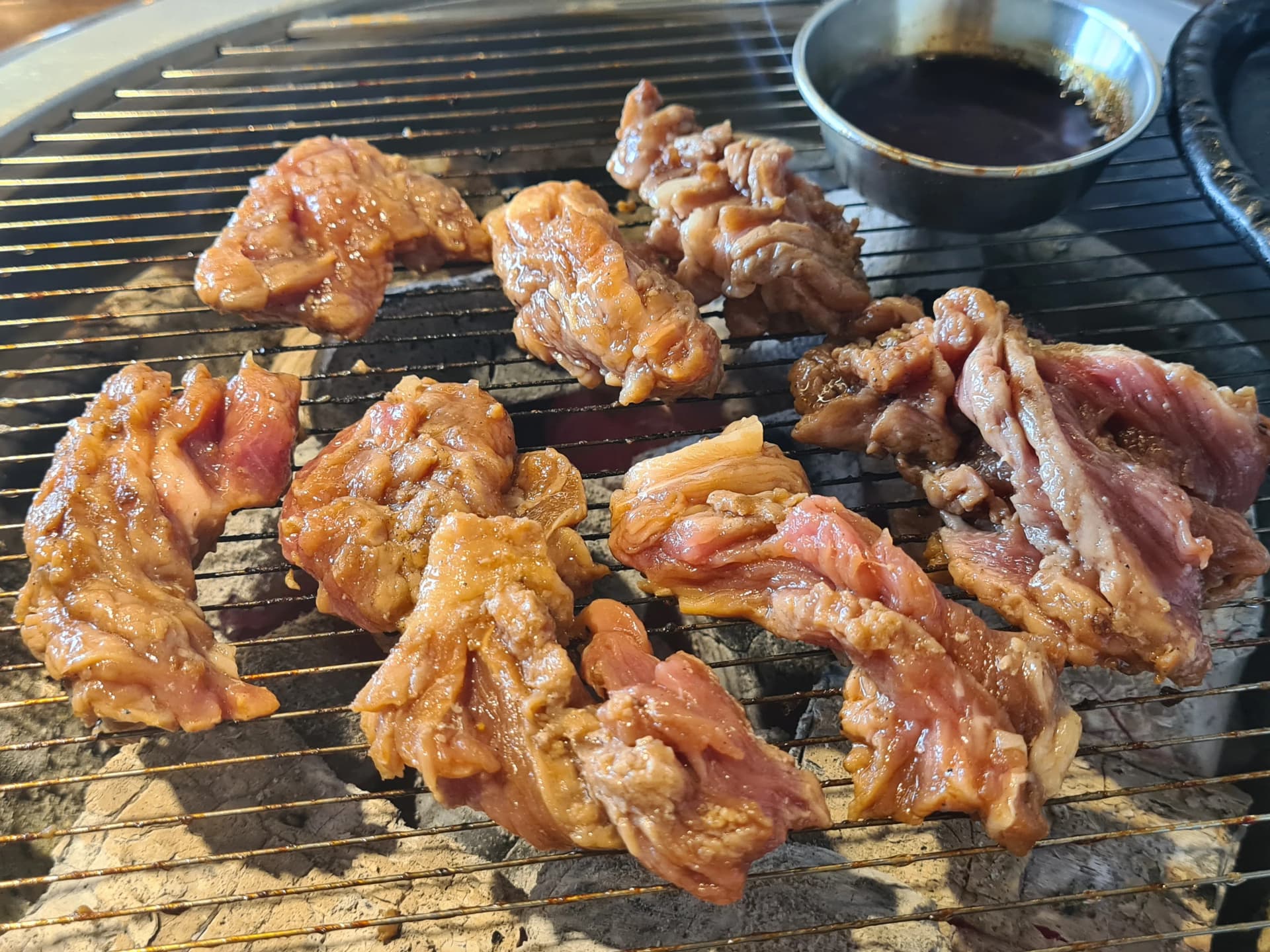
Marinated ribs need a bit more time on the grill than the fresh ones. Since the marinade has soaked deep into the meat, they take longer to cook through. That's both the advantage and the trap. The flavor deepens while you wait, but look away for a second and they'll burn right through.
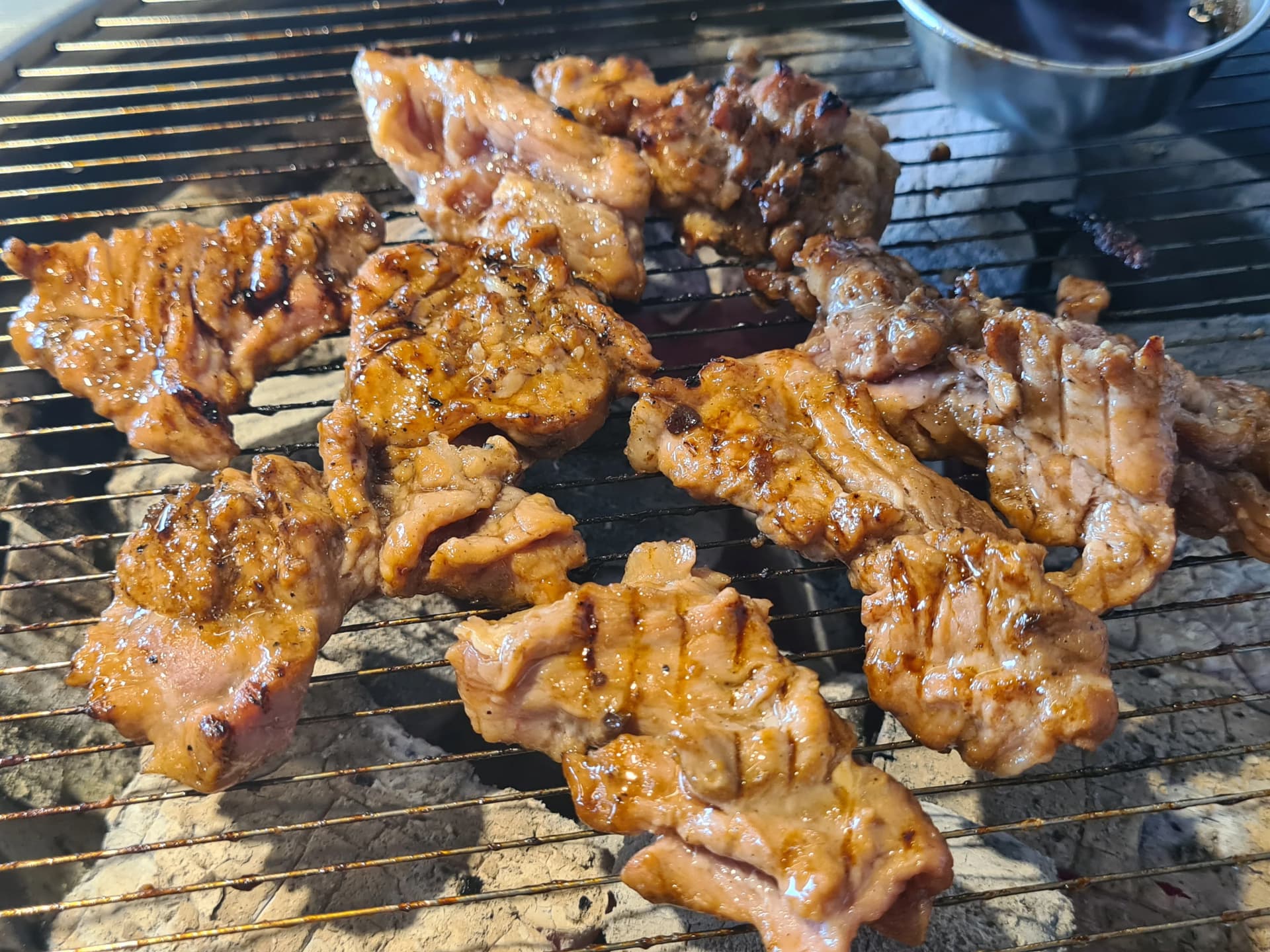
You could see the glaze starting to caramelize on the grill surface. At this exact moment, if your eyes wander even once, it's over. Burned marinade is something you can't come back from — it ruins the whole piece.
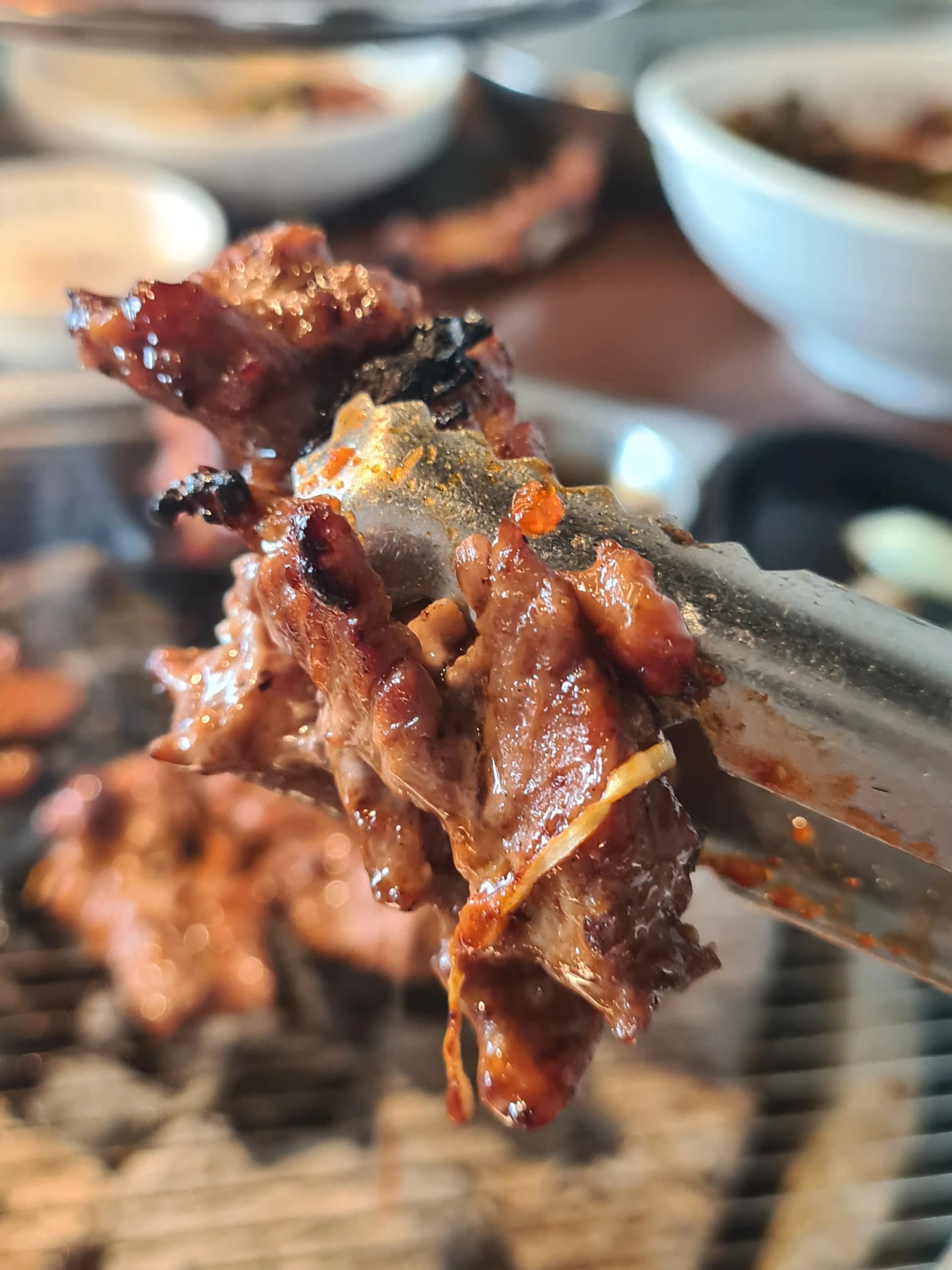
This was the finished product. The outside had a deep, smoky glaze coating the meat, and the inside stayed moist and perfectly cooked. As I lifted it with tongs, a little drip of rendered fat trailed off the edge.
How Did the Marinated Ribs Taste?
Taste Review
One Bite of Marinated Ribs 🔥
Sweetness — Natural fruit marinade, not sugar
This wasn't that artificial sugar-bomb sweetness. The natural fruit marinade aged for 48 hours creates something deeper and more subtle. It doesn't hit you up front — instead it builds the more you chew.
Smoke — The moment the marinade caramelizes
When the marinade hits charcoal, the surface gets this slight caramelization. That's where the magic happens for marinated ribs. It's a completely different smoky character from the fresh ribs — sweet and savory rising together.
Fresh vs. Marinated — If I had to pick just one
Personally, the fresh ribs won me over. The marinated version was good, but honestly, the flavor wasn't that different from other franchise rib places. Where Yuseong Galbi really sets itself apart is the fresh ribs. Order both, but start with the fresh ones first.
Price and Final Verdict
For two people, the total came out to around $40–45. Not exactly a casual quick-bite budget. But when you factor in the marinated crab, japchae, pickled wild garlic, and the full spread of sides, the price made sense.
One thing that bugged me: every branch has a different menu and different side dish lineup, so what we got here might not match what you'd get somewhere else. You could show up excited for a combo set and find out that location doesn't offer one. Some branches run weekday lunch sets too — but again, it varies. Call ahead to be safe.
I've eaten a lot of charcoal grilled pork ribs living in Korea, and judging by the fresh ribs alone, Yuseong Galbi is on a noticeably higher level. If you're ever passing through Daejeon, it's worth a stop. Not twisting your arm or anything — just saying it like it is.
How to Find a Yuseong Galbi Location
Yuseong Galbi operates mainly in and around Daejeon. Branches include Techno Gwanpyeong, Dunsan City Hall, Daeheung, Gwanjeo, Noeun, Mokdong, and more. Search "유성갈비" (Yuseong Galbi) on Naver Map or check their official website (yspig.co.kr) for the full list. Since each branch runs a little differently, it's worth making a quick phone call before visiting.
This post was originally published on https://hi-jsb.blog.